



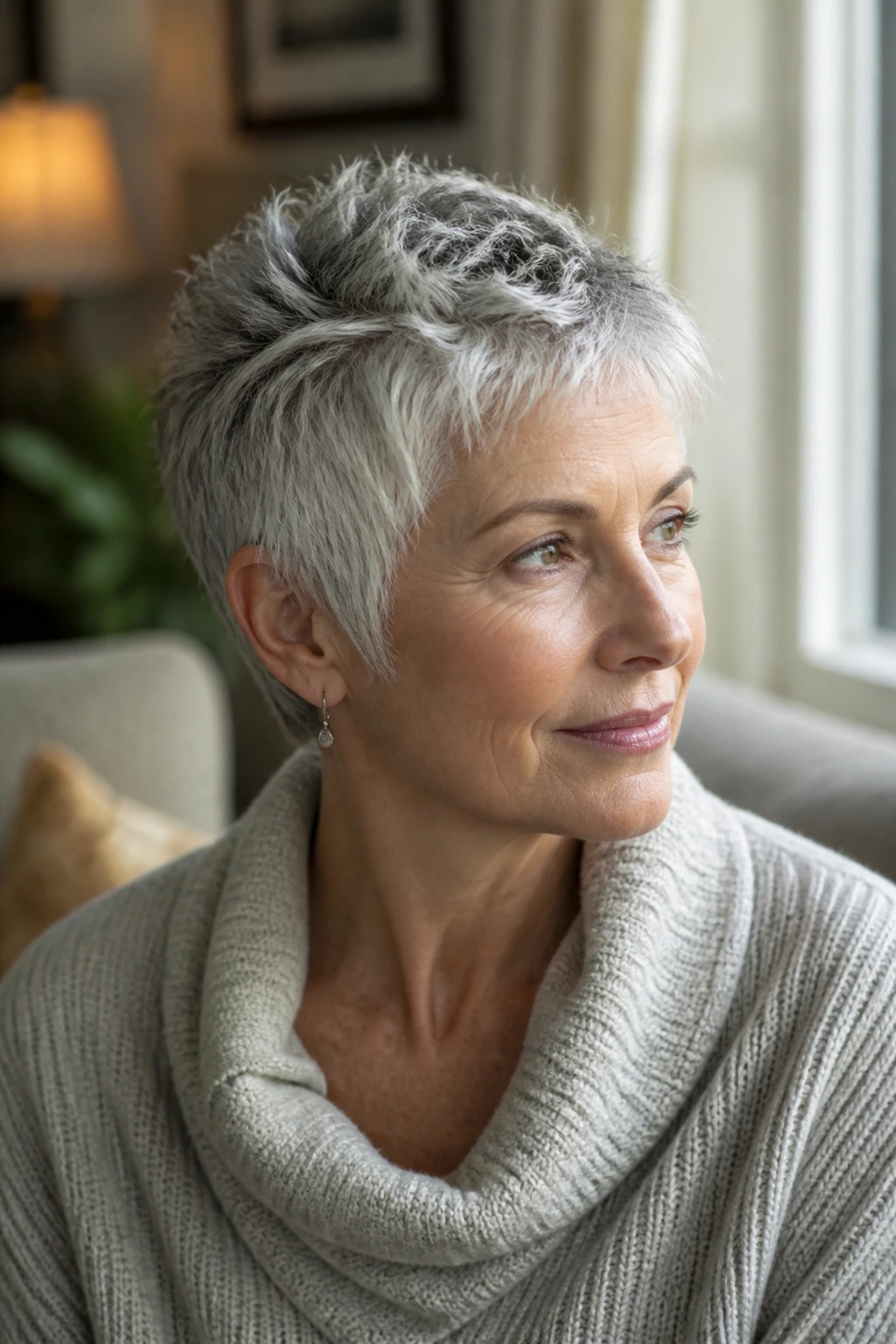
Pixie cuts for short hair over 60 work best when they respect the head that’s actually there — the real hairline, the real crown, the real cowlick that never quite surrendered, even after a very determined blow-dry. The cut isn’t about pretending hair never changed. It’s about shaping what’s there so it sits cleanly, moves softly, and doesn’t spend the morning flopping into your glasses or puffing up at the temples.
That’s the part I like most about a good pixie. It can be spare and neat, yes, but it can also be gentle, airy, and a little mischievous around the edges. A half-inch in the wrong place changes everything. So does the way the nape is tapered, how the fringe falls, and whether the top keeps enough length to breathe instead of lying flat like a helmet. That’s why the best cuts in this lineup are not all the same tiny crop with a different label.
Some of these styles give lift to fine hair. Some soften a strong jaw. Some make silver strands look glossy instead of washed out. A few are better if you want your glasses to sit cleanly without fighting the sides, and a few are for women who don’t mind a bit of product and enjoy a sharper shape in the mirror. The right one is the one that fits your texture, your face, and your morning patience. The next section sorts out why that matters so much.
Why These Pixies Earn Their Keep
-
They work with changing texture: Hair after 60 often gets finer in some spots and wirier in others, so these pixies lean into shape instead of pretending the texture is uniform.
-
They make silver, white, and salt-and-pepper hair look intentional: A clean neckline and a bit of crown lift keep gray hair from looking flat or fuzzy at the edges.
-
They cut blow-dry time down fast: Short sides and a controlled top usually need 5 to 10 minutes with a round brush, not a full salon-style blowout.
-
They play nicely with glasses: The better pixies leave enough room at the temples and sideburns so the frames don’t get swallowed by hair.
-
They can be soft, not severe: A pixie does not have to be spiky or harsh; a feathered fringe or rounded crown can make it feel light around the face.
-
They are easy to personalize: A quarter-inch more length on top, a deeper side part, or a tighter nape can shift the whole mood without changing the haircut’s bones.
1. Feathered Crown Pixie
A feathered crown pixie is one of those cuts that quietly earns compliments because it does a lot of work without looking busy. The crown stays soft and slightly lifted, with the ends point-cut so they don’t sit in one blunt line. Around the face, the feathers fall in a way that keeps the haircut from reading too stiff.
Why It Works
The feathering adds air between strands, which helps fine or medium hair look fuller without piling on product. It also gives the top a little swing, so the haircut doesn’t collapse the second you step outside or brush it once with your fingers. If your hair tends to flatten at the crown, this shape gives you a little height without trying to build a skyscraper on top of your head.
- Best length: Keep the crown around 1½ to 2½ inches.
- Best for: Fine hair, soft waves, and anyone who wants movement instead of crisp edges.
- Styling note: A pea-sized amount of lightweight mousse at the roots is usually enough.
- Tip: Blow-dry the top forward first, then lift it back with your fingers. That keeps the shape soft, not puffy.
Best trick: Ask for the ends to be feathered with scissors, not sliced too aggressively with a razor if your hair is already delicate.
2. Tapered Nape Pixie
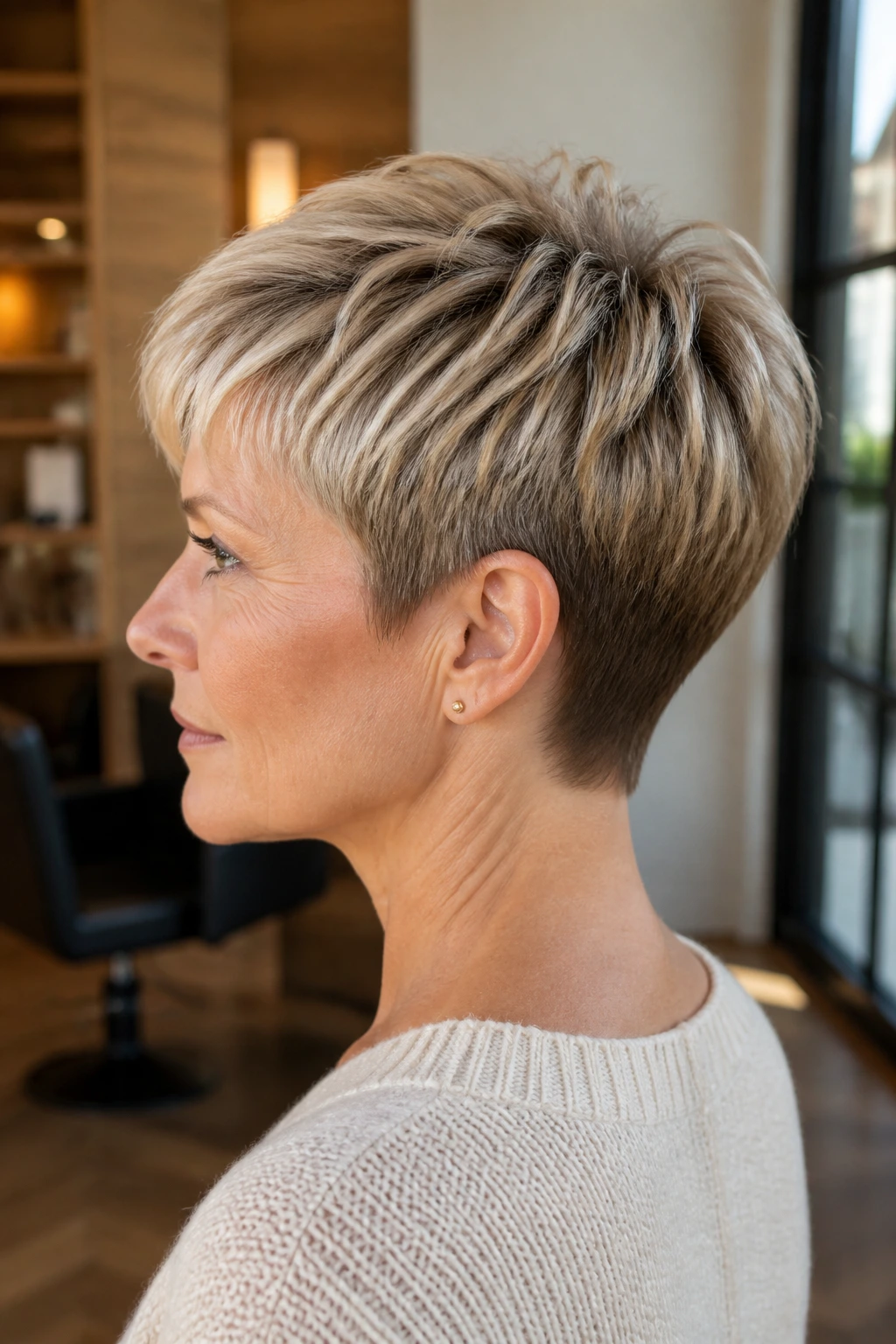
A tapered nape pixie is for the woman who likes the back of the head to look tidy from every angle. The neckline gets shorter and cleaner as it drops toward the nape, which makes the whole cut feel sharper and more lifted. It’s a small detail. It changes the silhouette completely.
The reason it works so well is simple: the eye follows the line up. When the nape is neat, the neck looks longer and the top looks lighter. That’s especially useful if your hair grows in thick at the back or if you hate that little collar of fuzz that can appear two weeks after a cut. Keep the sides soft if you want the look to stay elegant rather than strict.
If you wear high-neck tops, scarves, or jackets with collars, this shape sits better than a blunt crop. It doesn’t bunch. It just lies down where it should.
3. Side-Swept Fringe Pixie
Why does a side-swept fringe change a pixie so much? Because it gives the haircut a built-in softening line across the forehead, and that one diagonal can pull the whole face into a calmer shape. A straight-across fringe can feel bold; a side sweep feels friendlier and less fussy.
The fringe should be long enough to move, usually somewhere around eyebrow level or just below when dry. That length lets you tuck it, sweep it, or push it back if the weather gets mean. It’s also a useful choice if you want to soften forehead lines without hiding your face behind a heavy curtain of hair.
How to wear it
Brush the fringe across while the hair is still damp, then dry it in that direction with a small round brush or your fingers. If it keeps splitting, a tiny touch of styling cream at the roots will train it without making it greasy. A side-swept fringe also pairs nicely with earrings, because the asymmetry keeps the eye moving.
4. Silver Layered Pixie
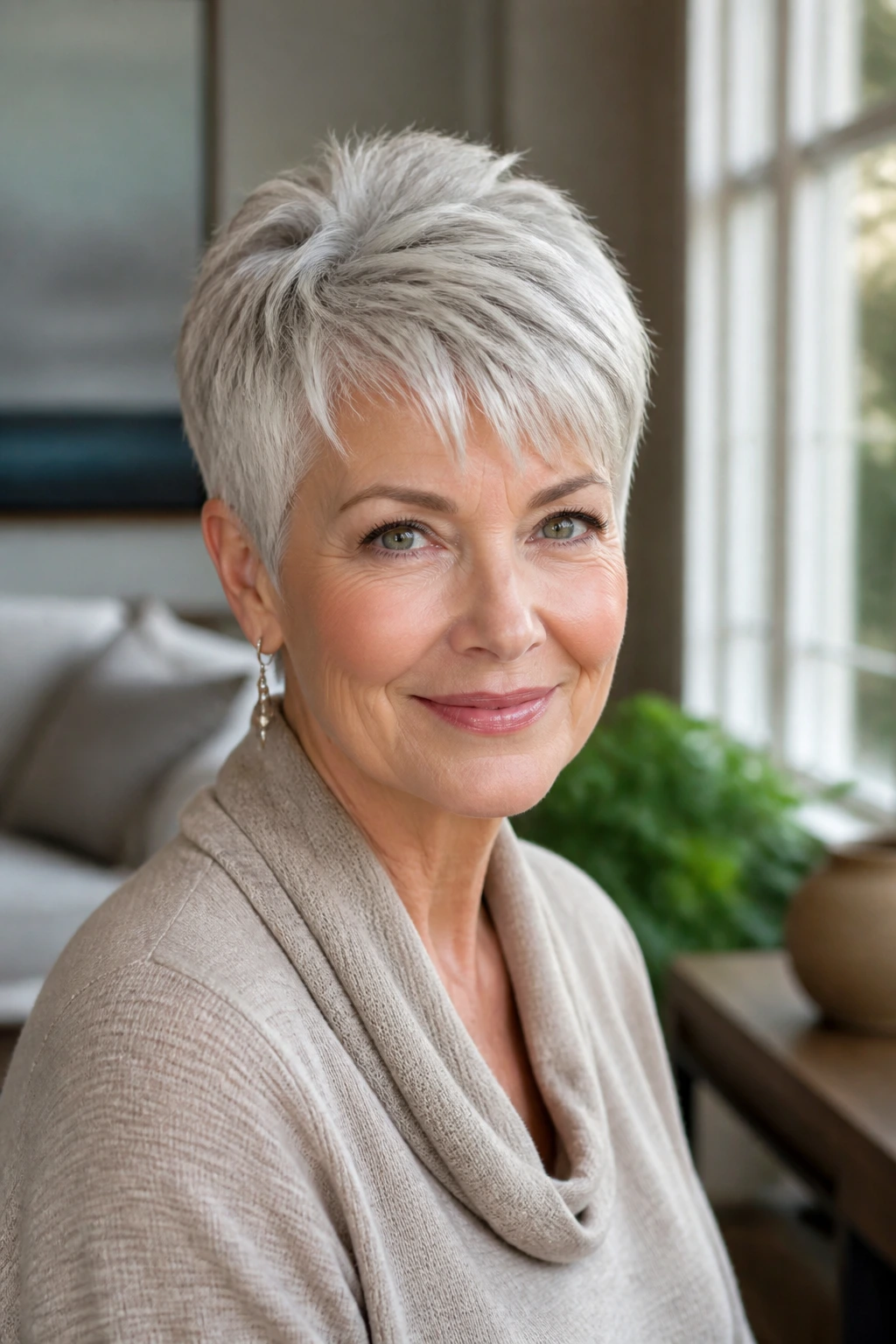
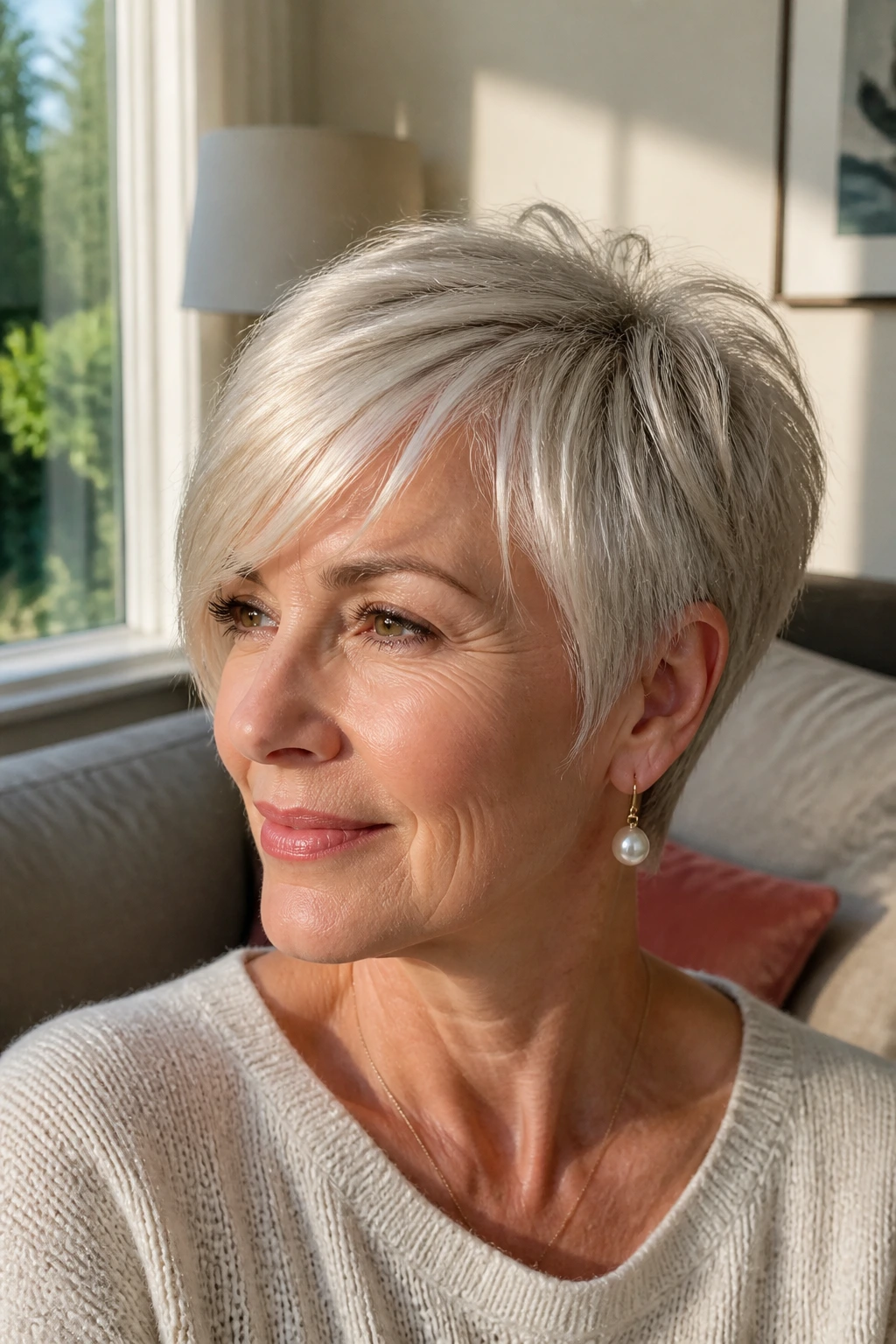
A silver layered pixie has a specific kind of shine when it’s cut right. The layers catch light differently across the head, so the color doesn’t sit as one flat sheet. That matters with gray and white hair, which can look stunning but also unforgiving if the cut is too blocky or too dense.
The best version keeps some softness on the sides and a little more movement on top. If the layers are chopped too short and too evenly, the haircut can start to look puffy. If they’re placed with a light hand, the silver reads almost luminous. That’s the word I keep coming back to. Luminous, not loud.
A silver pixie also forgives grow-out better than many people expect. The texture shifts a little, but the shape still works if the crown has enough length to keep the top from collapsing.
- Keep the top: Around 2 to 3 inches.
- Ask for: Soft layers rather than aggressive thinning.
- Use: Purple shampoo sparingly so the silver stays bright, not chalky.
- Skip: Heavy oils near the roots. They flatten the shine fast.
5. Choppy Textured Pixie
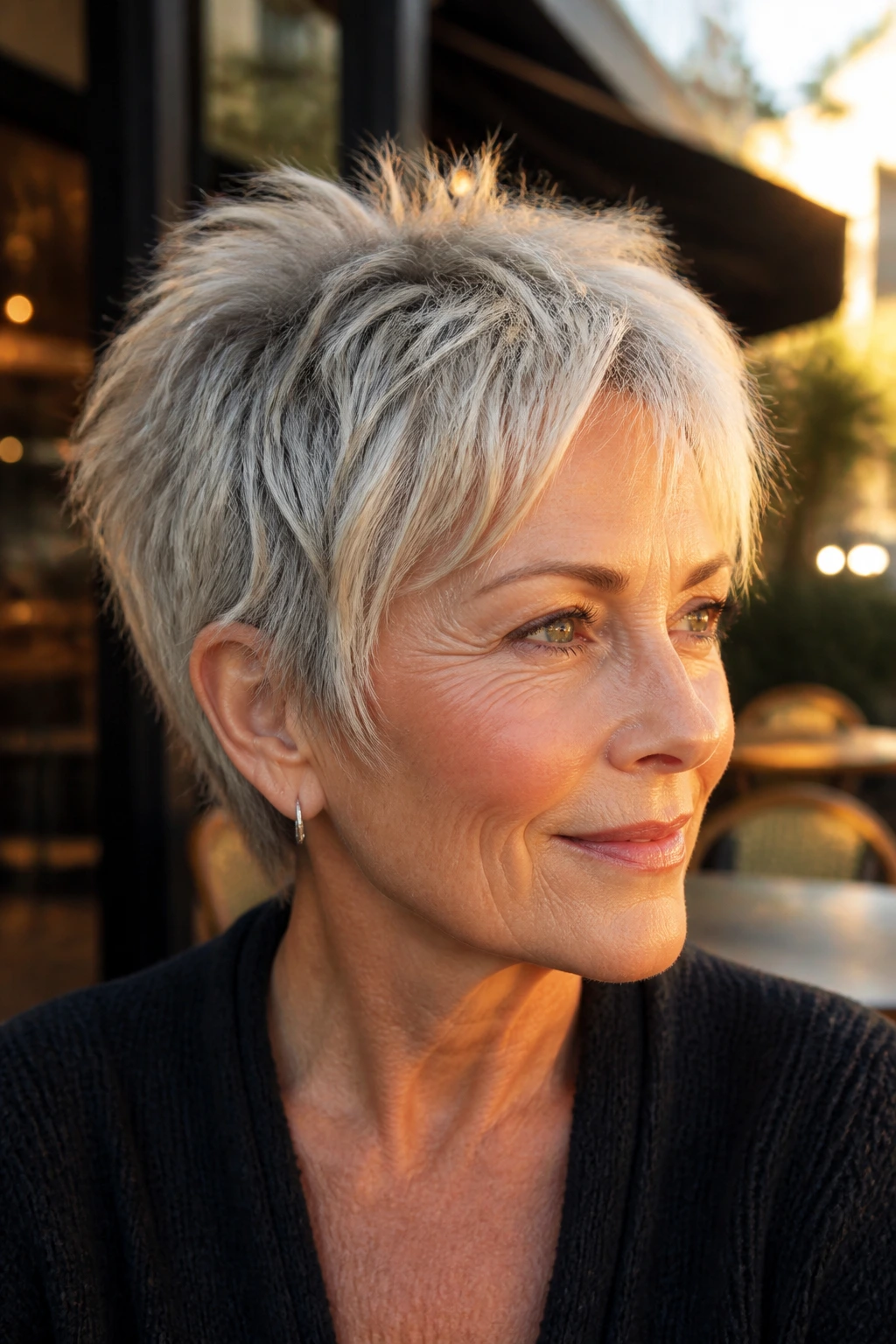
A choppy textured pixie has attitude, but not the cartoon version of it. The pieces are uneven on purpose, so the cut looks lived-in instead of polished to death. If your hair is straight and tends to sit too neatly, this shape breaks the line up and gives it some grit.
The thing to watch is density. Too much choppiness on already-thin hair can turn into see-through ends. On the other hand, if your hair is thick, those irregular ends can remove enough bulk to keep the top from ballooning out. I like this cut best when the texture is visible but the silhouette still feels controlled.
It’s also a good choice for women who don’t want to spend 20 minutes every morning fighting the same section near the forehead. A quick scrunch with matte paste or texturizing spray is often enough. No need to overthink it. The mess is the point, but it should be a clean kind of messy.
6. Curly Pixie Crop
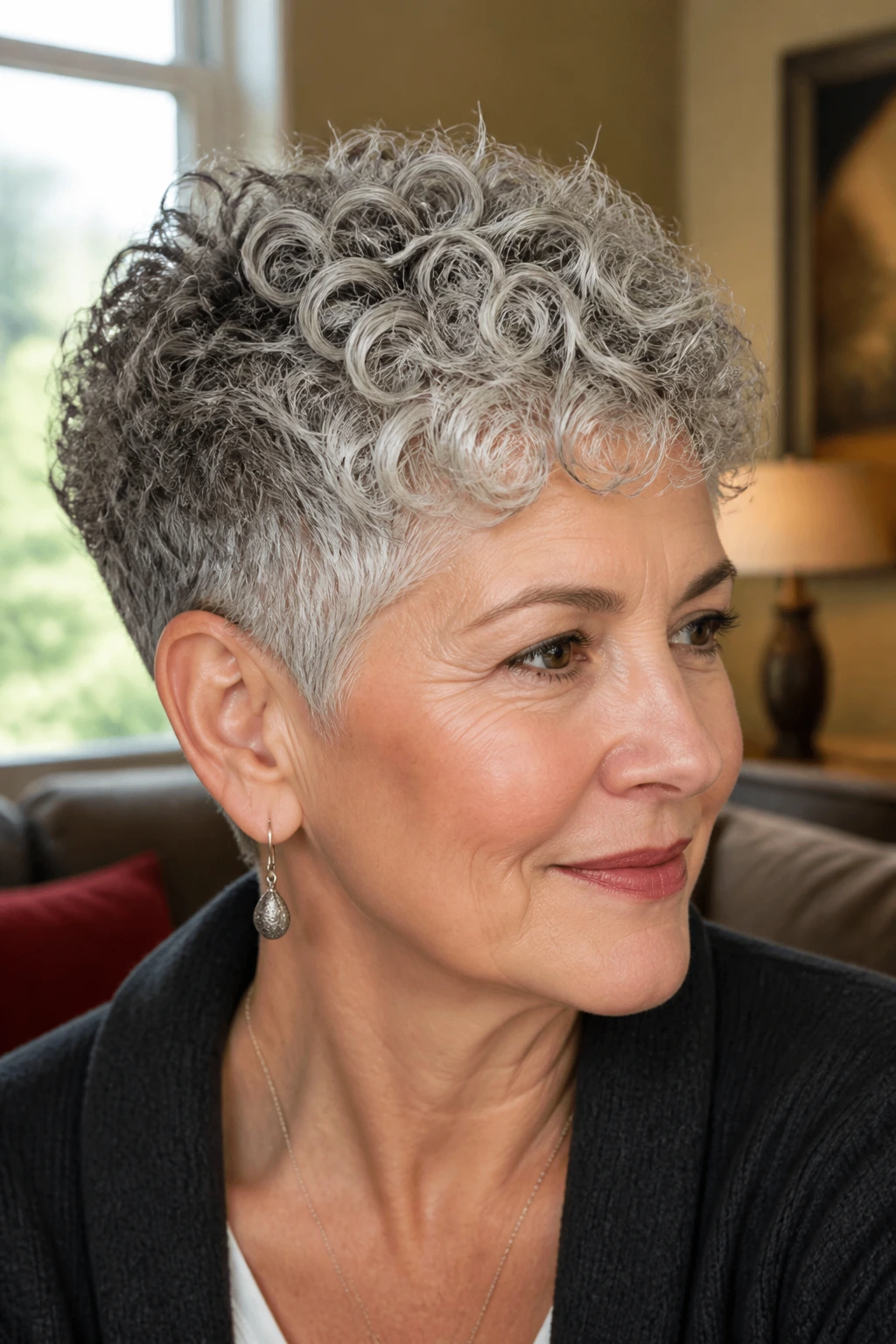
A curly pixie crop is not a compromise cut. It’s a shape that makes curls behave like they know what they’re doing. The sides stay shorter, the crown keeps enough length for the curl pattern to spring up, and the edges around the ears are left soft so the haircut doesn’t turn into a hard little puff.
The success of this cut depends on leaving enough room for curl movement. Cut it too short and the curls shrink up in a way that can feel tighter than you planned. Leave too much length and the shape loses its lift. A stylist who knows how your curl pattern dries will often cut it with the hair damp, then refine it once it’s dry and in its real shape. That second look matters.
Use curl cream, not a heavy butter that clumps everything together. And if your curls are looser on top and tighter near the nape, that’s fine. A good curly pixie should work with the differences, not fight them.
How to wear it
Diffuse on low heat or let it air-dry, then lift the roots with your fingertips once the hair is fully dry. Don’t touch it too much while it’s damp unless you want frizz to move in and stay awhile.
7. Long Top Pixie
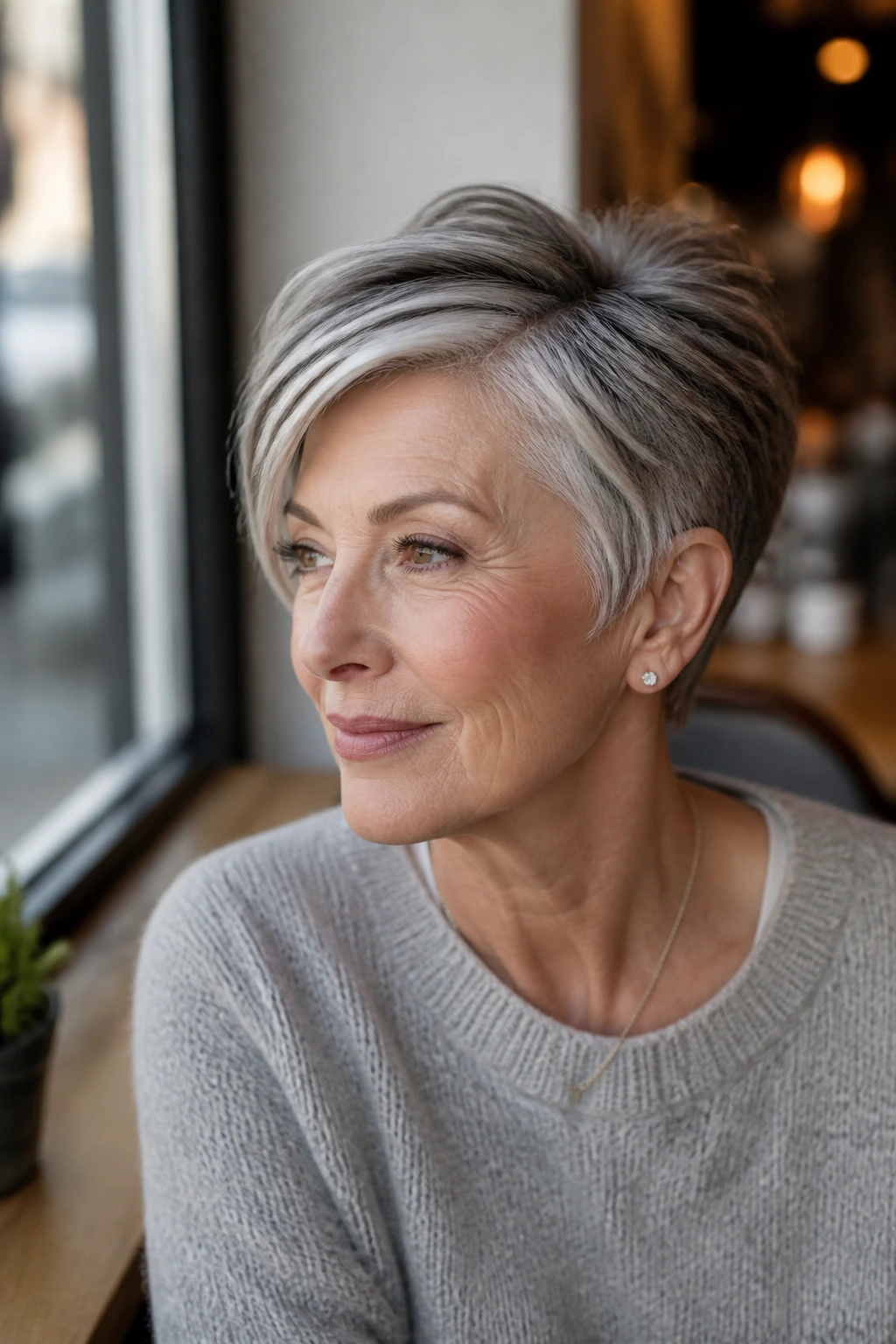
A long top pixie gives you options, and that’s the whole appeal. The sides and nape stay short enough to read as a pixie, but the top keeps enough length for a part, a sweep, or a little bend in the front. It’s a very practical middle ground if you want short hair without committing to a close crop.
That extra top length can also be a gift for finer hair. You can blow it up at the roots for volume, then smooth the ends just a bit so the cut doesn’t look spiky by accident. If your hair has a stubborn front section that always flips the wrong way, this style gives you enough room to redirect it.
It’s also one of the easiest pixies to grow out. The top can slide toward a short bob shape while the sides catch up, which saves you from that awkward “too short, too long” stage that makes people grab scissors on a bad day.
8. Undercut Pixie
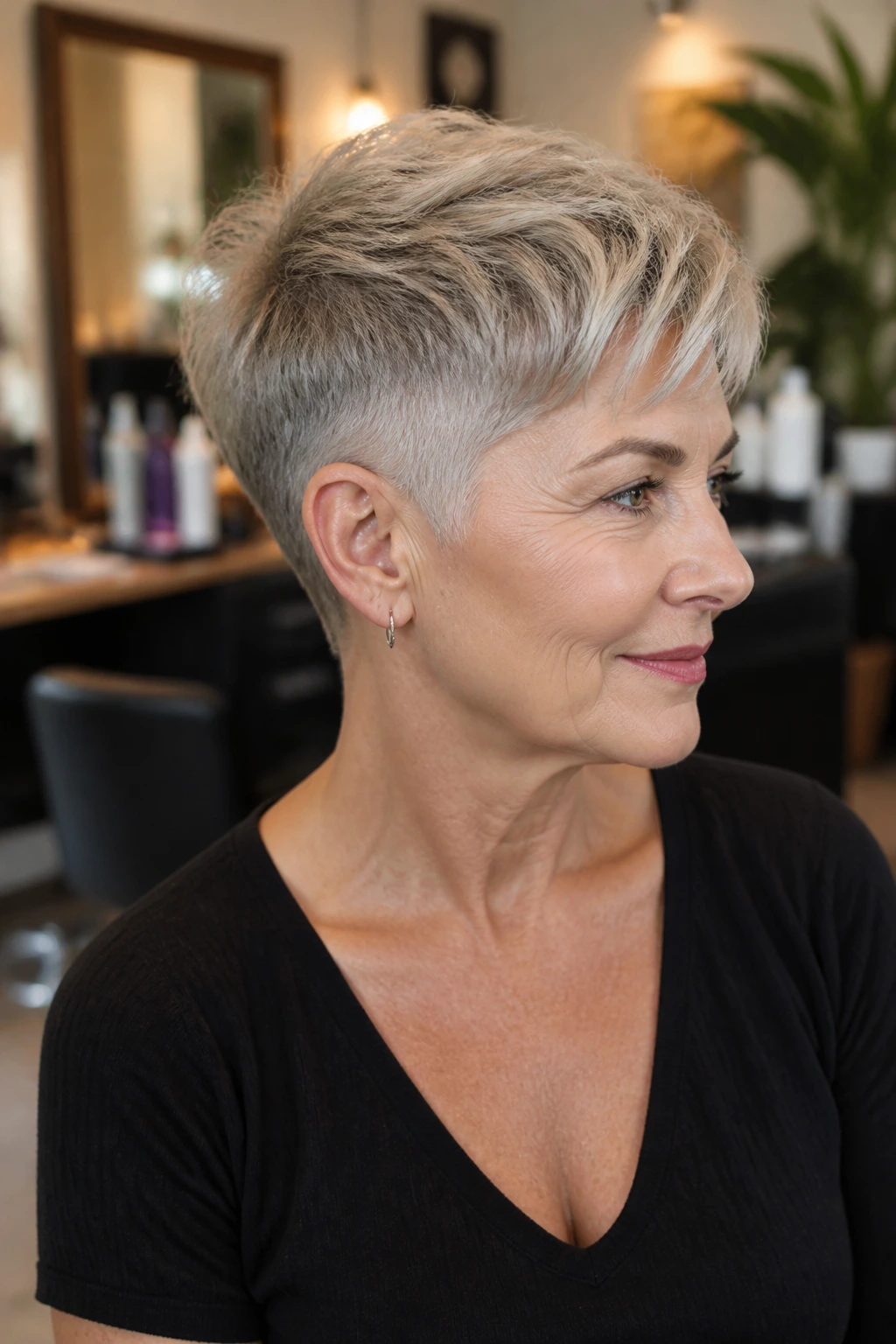
An undercut pixie doesn’t have to shout. In fact, the best version is often hidden just enough to reduce bulk where it matters — at the nape, behind the ears, or under the upper layers. That makes it especially useful if your hair is thick, triangular, or prone to puffing up at the sides.
The reason I like this cut for older hair is that it keeps weight off the bottom without sacrificing softness on top. You get a cleaner shape, but you don’t have to go full punk unless you want to. A subtle undercut can live under longer top layers and still make the whole style sit flatter and neater.
It is one of the few pixies that can make thick hair feel lighter the minute the cut is done. Not thinner. Just lighter. There’s a difference, and you can feel it at the back of the head when the hair stops pushing against collars.
9. Brushed-Forward Pixie
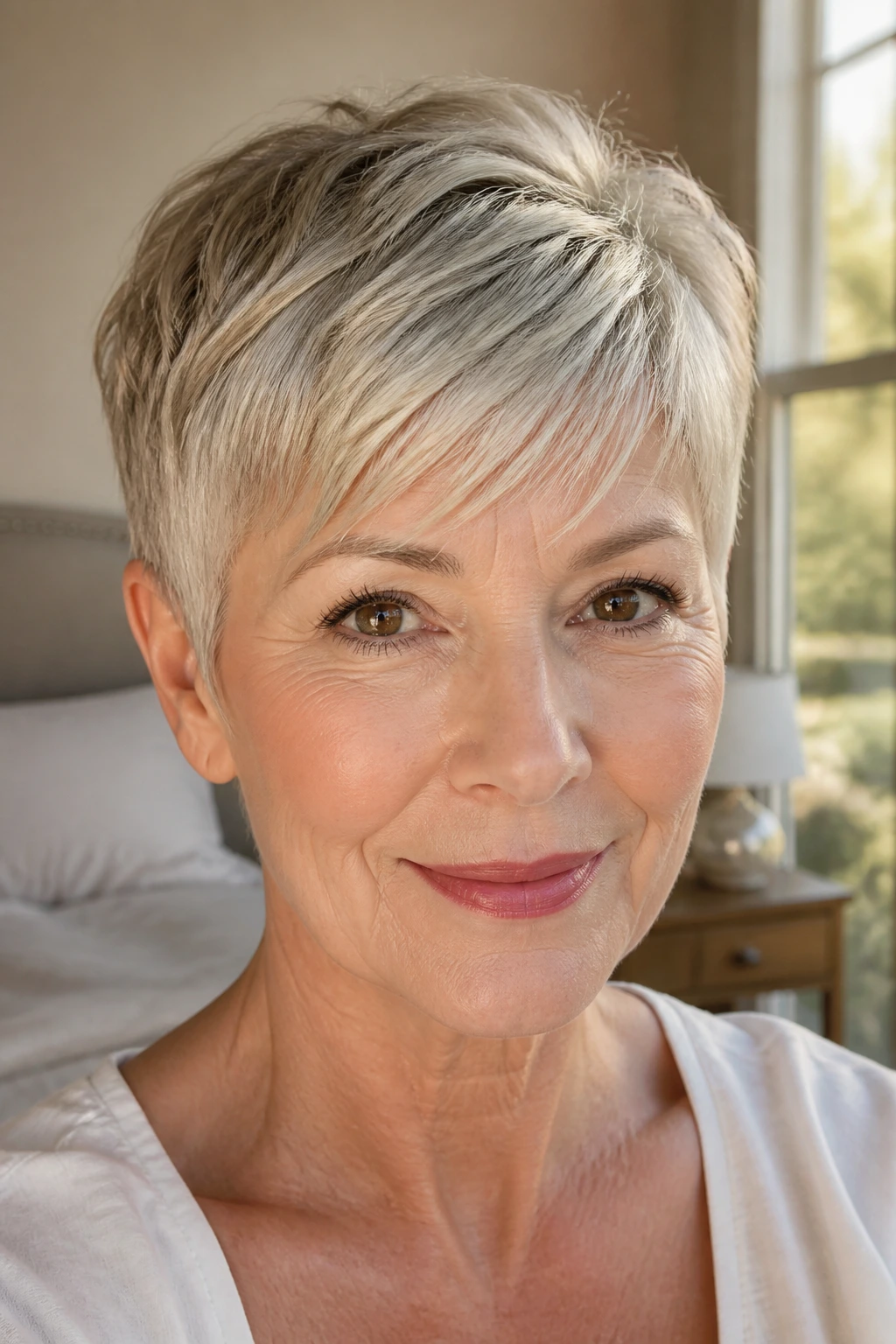
Why brush a pixie forward when so many cuts push the hair back? Because forward movement creates a soft line over the forehead and often makes fine hair look denser at the front. It can also tame a high hairline, soften a broad forehead, or simply give the haircut a more modern shape.
This cut works best when the top has enough length to fall forward in pieces, not one flat sheet. The front can sit just above the brows or skim them slightly, while the sides stay trimmed close enough to keep the shape clean. A light cream or paste helps the fringe stay in place without turning crunchy. No helmet hair. Please.
How to wear it
Comb the hair forward while damp, then blow-dry from the crown toward the forehead using your fingers to separate the ends. Finish by lifting the front just a touch with your fingertips so it doesn’t cling to the scalp.
10. Rounded Volume Pixie
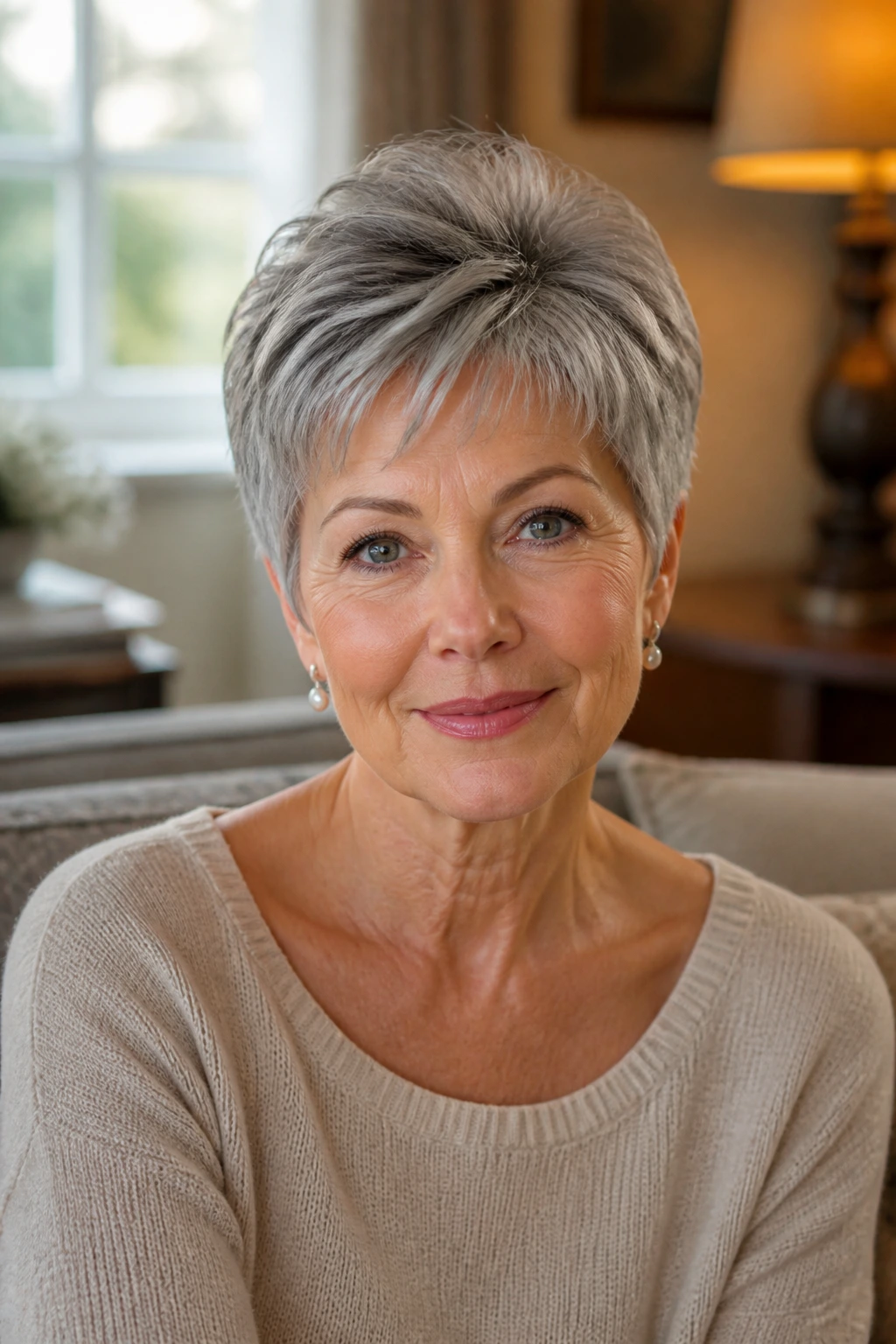
A rounded volume pixie is for the woman who wants height without sharp corners. The crown is softly lifted, the sides curve in, and the overall outline stays smooth rather than angular. It’s an easy way to give the head a more balanced look if the top has lost some fullness over time.
There’s a fine line here. Too much roundness and the haircut starts to look like a cap. Not enough and you lose the shape that makes it flattering. The sweet spot is a gentle curve that follows the skull, with the crown staying slightly fuller than the temples. That keeps the profile elegant, not stiff.
I think this cut is underrated. It looks especially good on women who like neat clothes, simple earrings, and a haircut that doesn’t fight the face for attention. Everything feels in proportion.
- Ask for: Crown layers and soft side tapering.
- Keep in mind: The back should curve, not stack up.
- Works well with: Fine to medium hair.
- Watch for: Over-thinning at the sides, which can make the shape collapse.
11. Piecey Micro-Layer Pixie
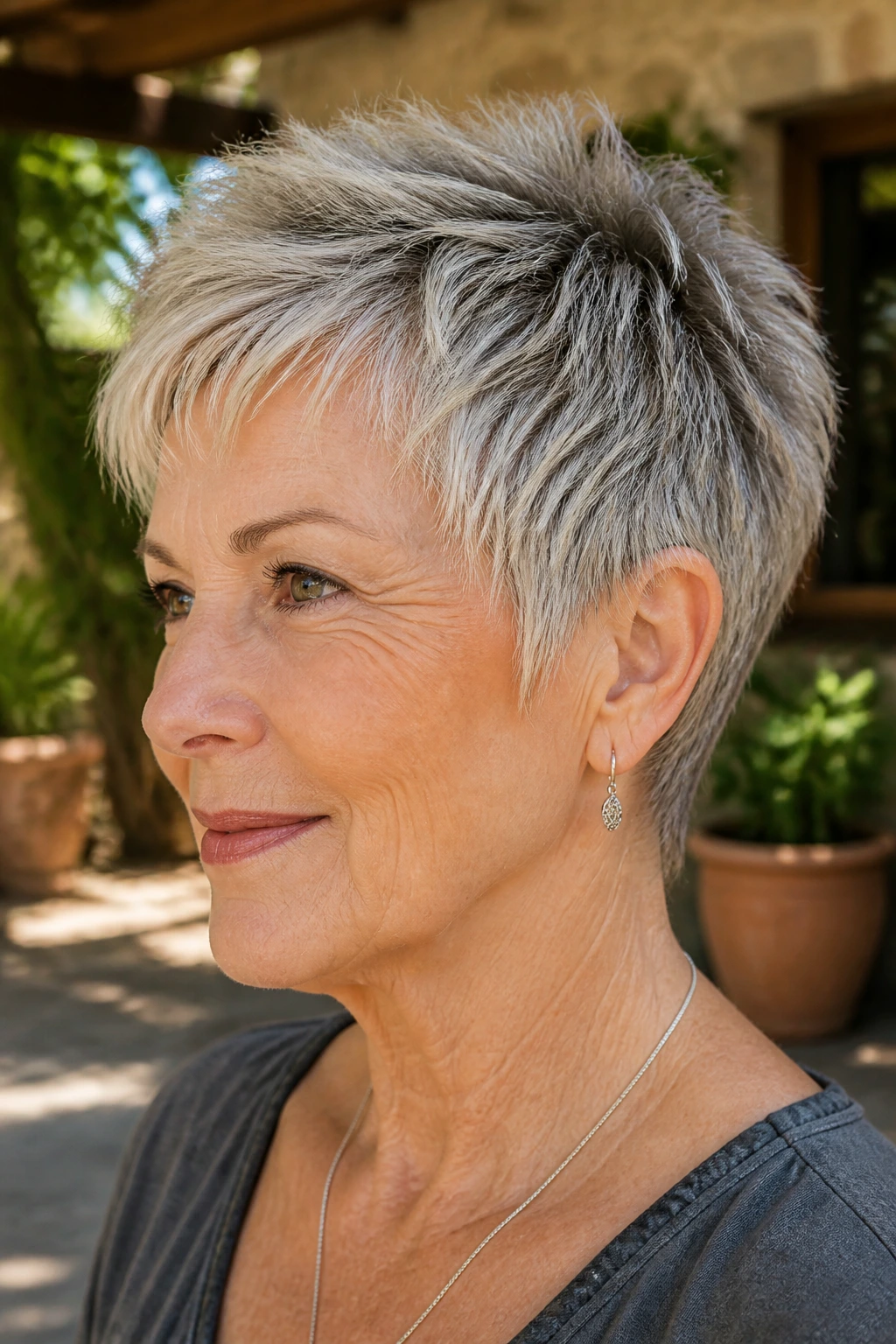
A piecey micro-layer pixie is all about tiny differences in length. The layers are short enough to separate into strands, not chunks, which gives the cut a more relaxed finish. It’s a smart choice if you want texture without obvious spikiness.
The best thing about micro-layers is that they keep the shape responsive. Run your hands through the hair and it shifts a little. Brush it flat and it calms down. A light styling wax or paste can define the pieces, but the cut should still look good even when you use very little product. That’s where this style earns its keep.
It also works well with hair that has a bit of natural bend. The micro-layers catch that bend and make the haircut move instead of sitting in one fixed shape. That matters on mornings when you don’t feel like negotiating with a blow dryer.
12. Classic Salt-and-Pepper Pixie
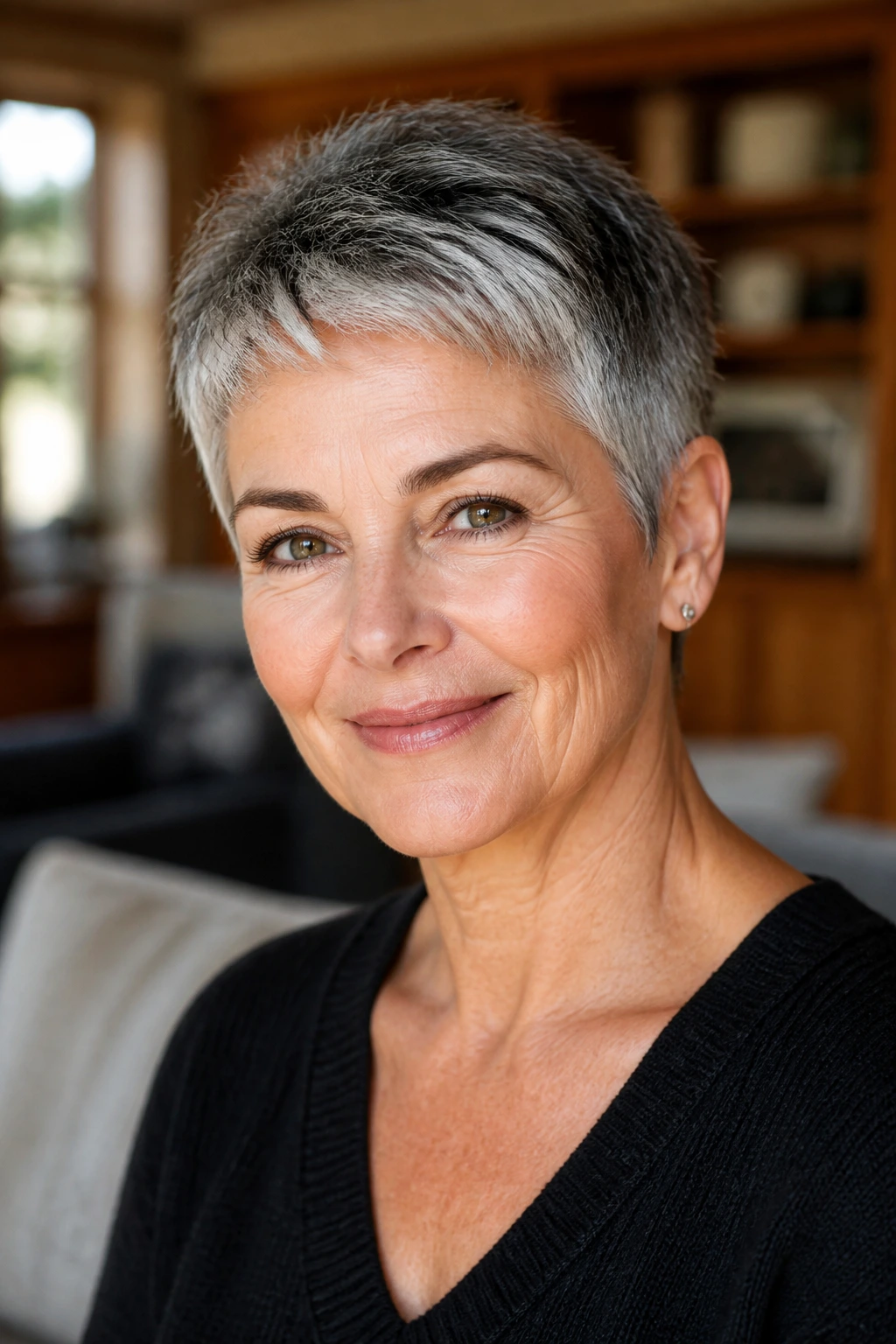
A classic salt-and-pepper pixie is not the same thing as “I stopped coloring and hoped for the best.” The cut matters. With a clean shape, the mix of dark and light strands looks deliberate, dimensional, and a little sharp in the best way. Without that shape, the same color pattern can read fuzzy.
This is the version for women who want the color to be part of the style, not hidden under too much layering. Keep the top soft, the sides neat, and the neckline clean. That lets the contrast between silver and darker strands show up in the hair rather than disappearing into a blob of texture.
It’s also one of the easiest short cuts to wear with minimal styling. A small amount of shine serum on the ends makes salt-and-pepper hair look richer. Use too much and the silver goes limp fast. A drop, not a pour.
13. Soft Wavy Pixie
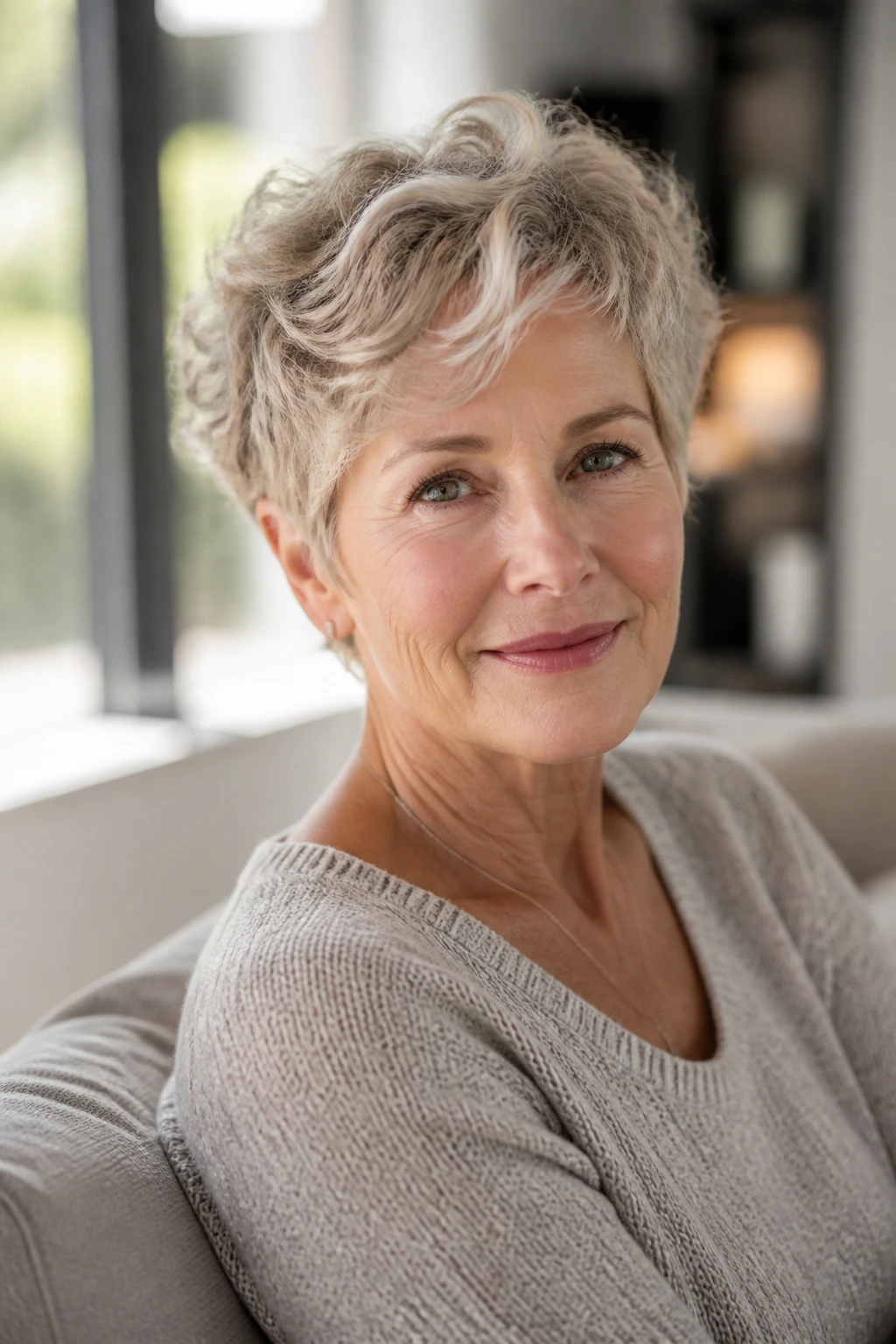
A soft wavy pixie takes the bend in your hair and makes it the whole story. The trick is keeping the shape loose enough for waves to settle without getting bulky at the sides. That usually means a little more length through the top and a careful taper near the ears.
Why It Works
Waves have their own rhythm, and a good pixie doesn’t interrupt it. The cut should let the wave pattern create movement while still keeping the silhouette close to the head. If the sides are too short, waves can stick out. If the top is too heavy, the curl loses its bounce and looks tired by lunchtime.
- Best styling product: A light cream or soft mousse.
- Best dry method: Air-dry or diffuse on low heat.
- Best shape: Slightly longer top, soft side taper, no hard corners.
- Best for: Hair with natural bend that resists straightening.
Small note: A few face-framing pieces around the temple make this style less severe and easier to wear with glasses.
14. Asymmetric Pixie
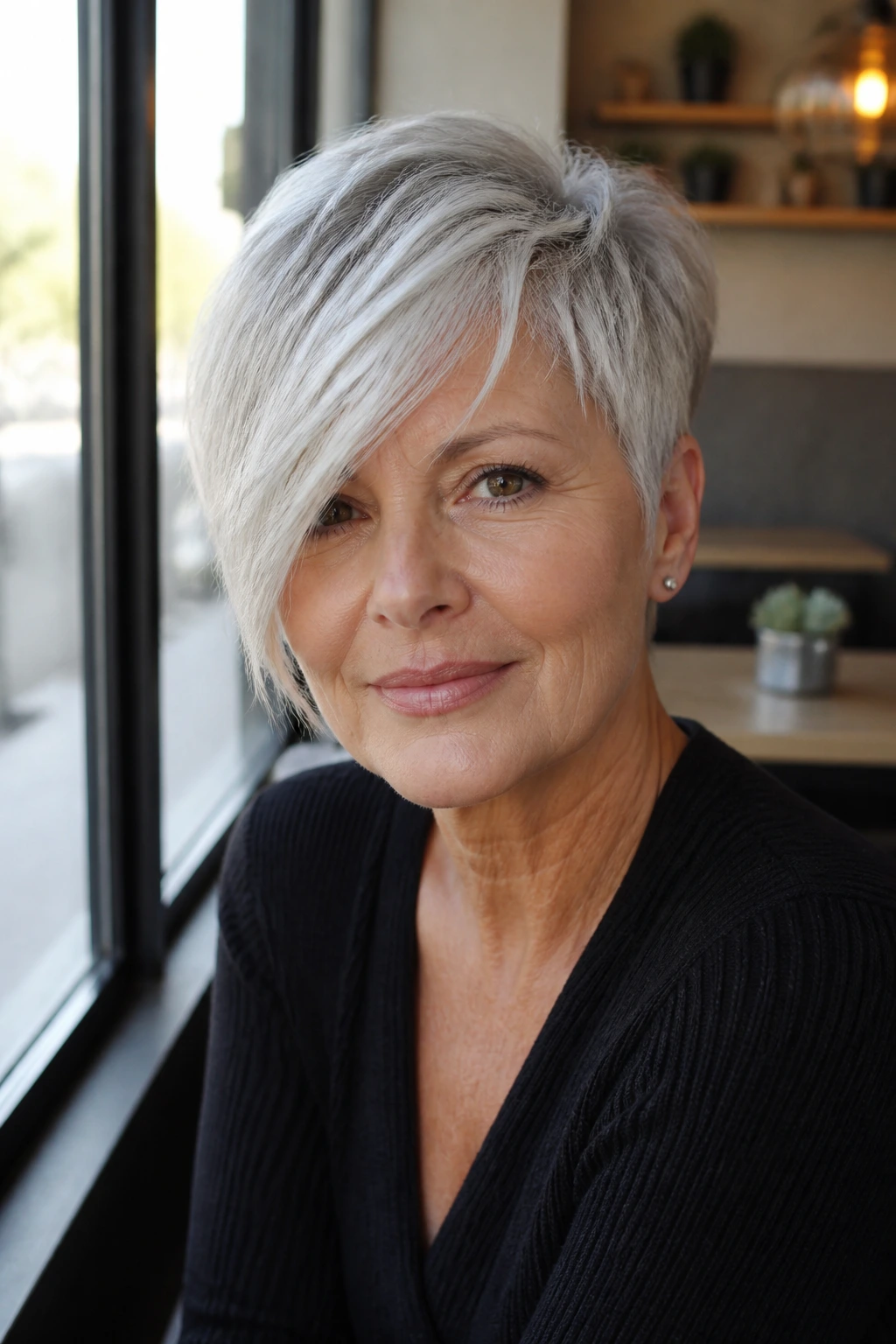
An asymmetric pixie does not need to be dramatic to work. One side can be just a little longer, or the fringe can sweep farther across one eye than the other. That slight imbalance gives the haircut movement and makes the face look more animated.
The reason it flatters so many women is that it redirects attention. A strong jaw feels softer. A broad forehead looks narrower. Even a simple profile gets more shape because the eye has somewhere to travel. You do not need a giant angle to get that effect. Sometimes a half-inch is enough.
This is a nice choice if you like clothing with clean lines or bold glasses frames. The haircut becomes part of the shape language instead of sitting there like an afterthought.
15. Spiky Lift Pixie
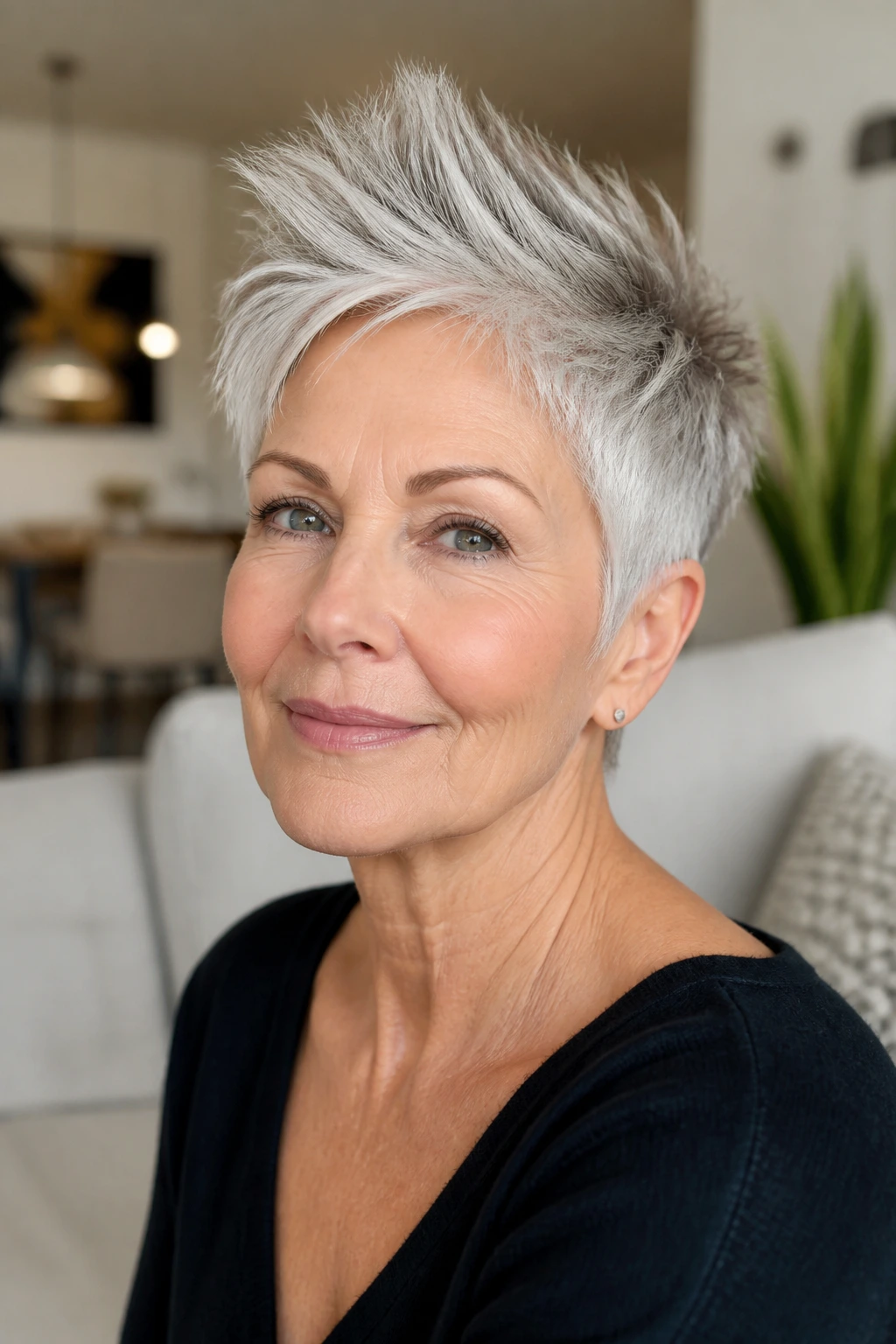
Is “spiky” always harsh? Not if you do it right. A modern spiky pixie keeps the pieces separated and lifted, but the ends stay soft, not frosted or gluey. That difference is why the style can look current on mature hair instead of stuck in a memory from a much earlier decade.
The top needs enough length to pinch and lift, usually about 1½ to 2½ inches. The sides should stay close, which keeps the shape clean and stops the crown from looking too big. Use a matte paste or a light styling clay, then work a tiny amount between your fingertips before pressing it into the hair. Press, don’t smear.
How to keep it soft
Leave the front slightly longer than the crown. That keeps the finish from becoming too stiff and gives you a more flattering line near the forehead.
16. Modern Rounded Crop
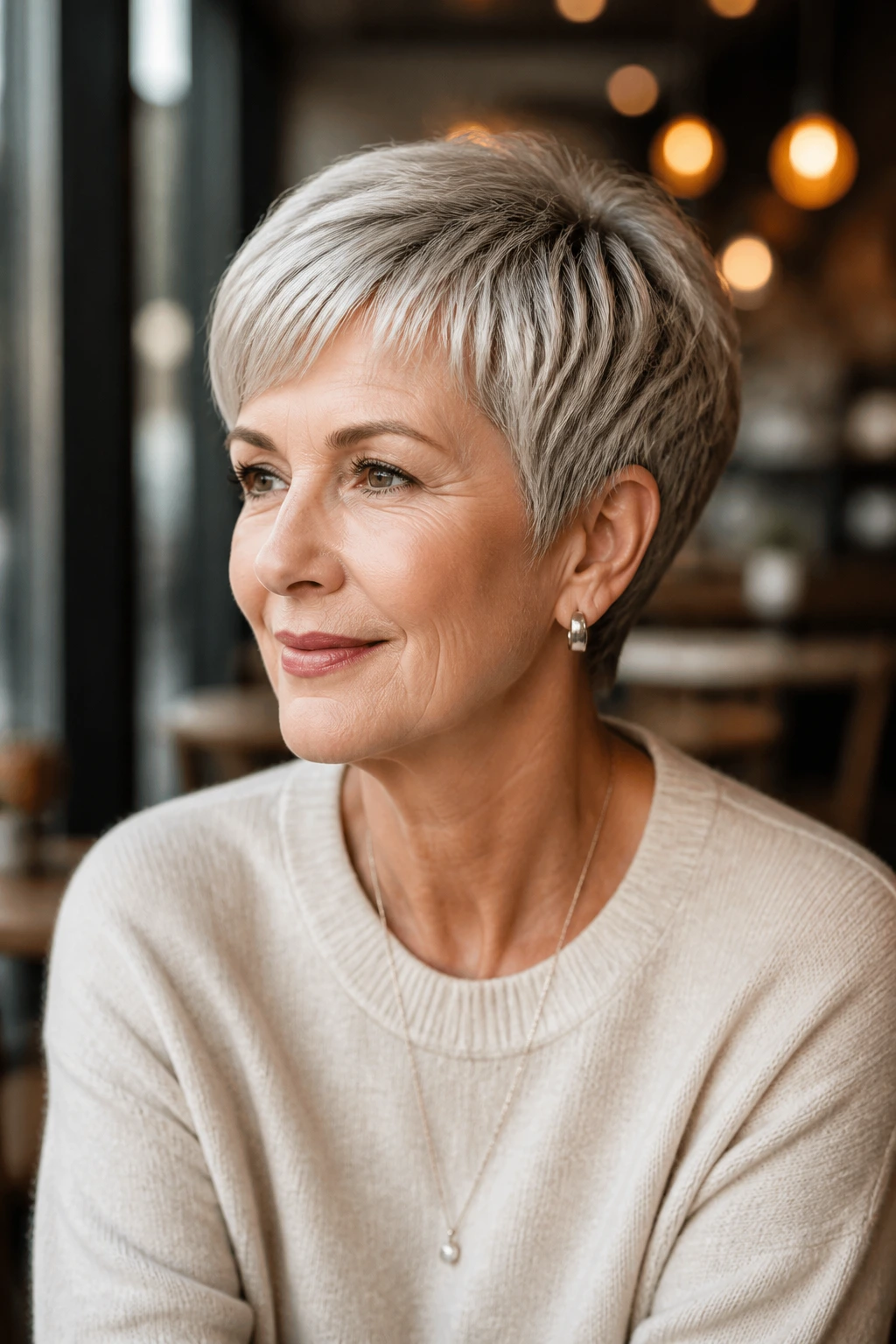
A modern rounded crop sits somewhere between a pixie and a close crop, and that’s exactly why it works. The shape follows the head with a smooth, soft curve, but there’s still enough texture on top to keep it from feeling severe. It’s neat without being flat.
If you’ve ever tried a very short haircut and felt it made every angle of your face look sharper, this is the antidote. The rounded shape softens the silhouette. A little lift at the crown keeps it from looking too close to the scalp, and a gentle taper around the ears cleans up the sides nicely.
I’d choose this cut for someone who wants polish and very little daily fuss. It looks intentional with a finger-combed finish, and it’s one of the easiest shapes to pair with statement earrings because the neckline stays open.
- Good for: Fine hair, straight hair, and strong jawlines.
- Ask for: A rounded outline, not a flat crop.
- Style with: Very light cream or a dab of mousse.
- Avoid: Heavy wax at the roots.
17. Pixie Bob Hybrid
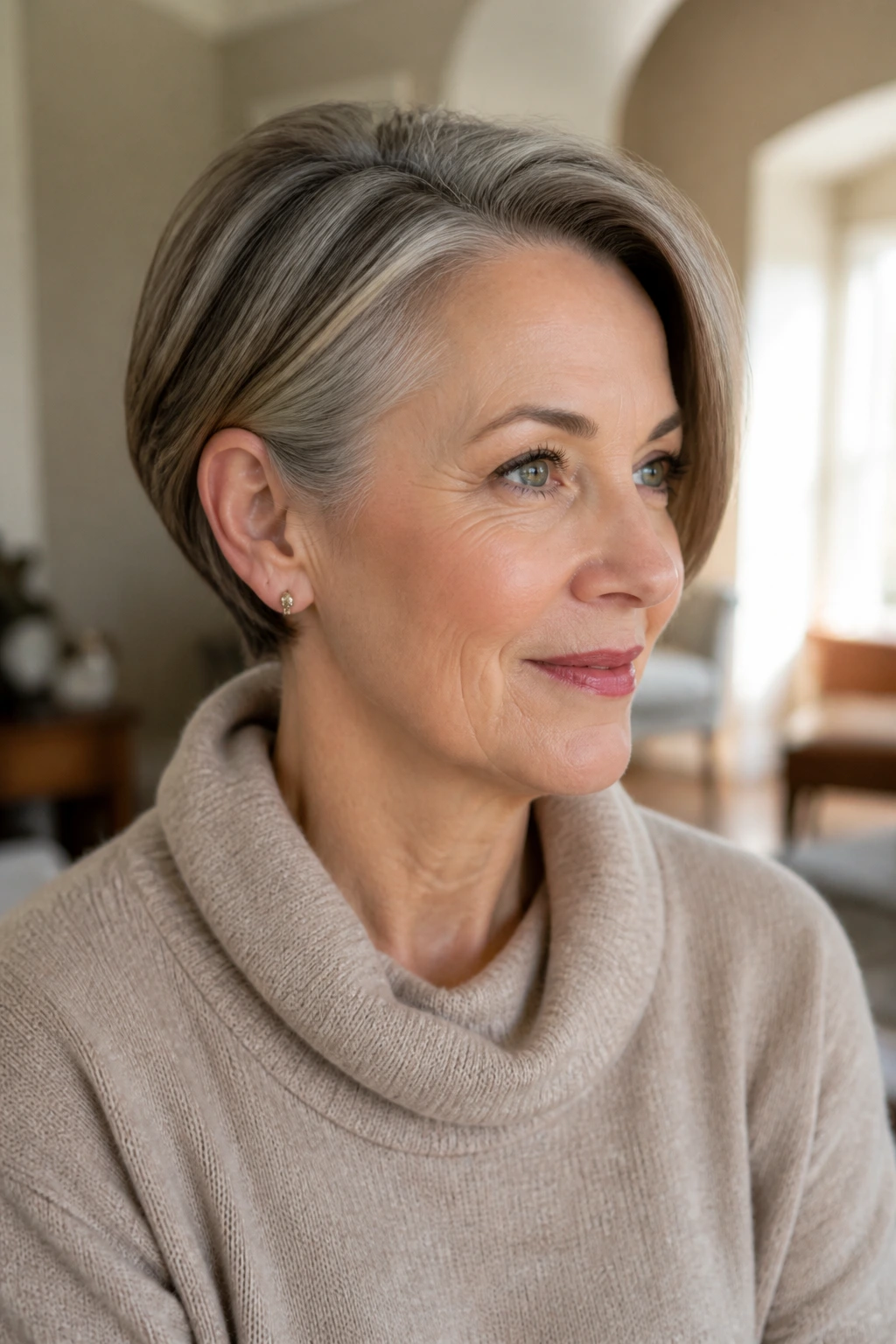
A pixie bob hybrid is the compromise nobody should be embarrassed to want. It keeps the back shorter like a pixie, but the front and sides hold enough length to tuck behind the ears or brush under the cheekbone. If a true crop feels too bare, this shape gives you a little more fabric to work with.
The beauty of this cut is how easy it is to wear in different moods. Tuck one side. Sweep it forward. Let the front skim the jaw. The haircut can look relaxed one day and polished the next without needing a complete restyle. That flexibility is worth a lot when you don’t want to visit the salon every few weeks.
It also grows out in a civilized way. That alone makes it a favorite.
18. Wash-and-Go Pixie
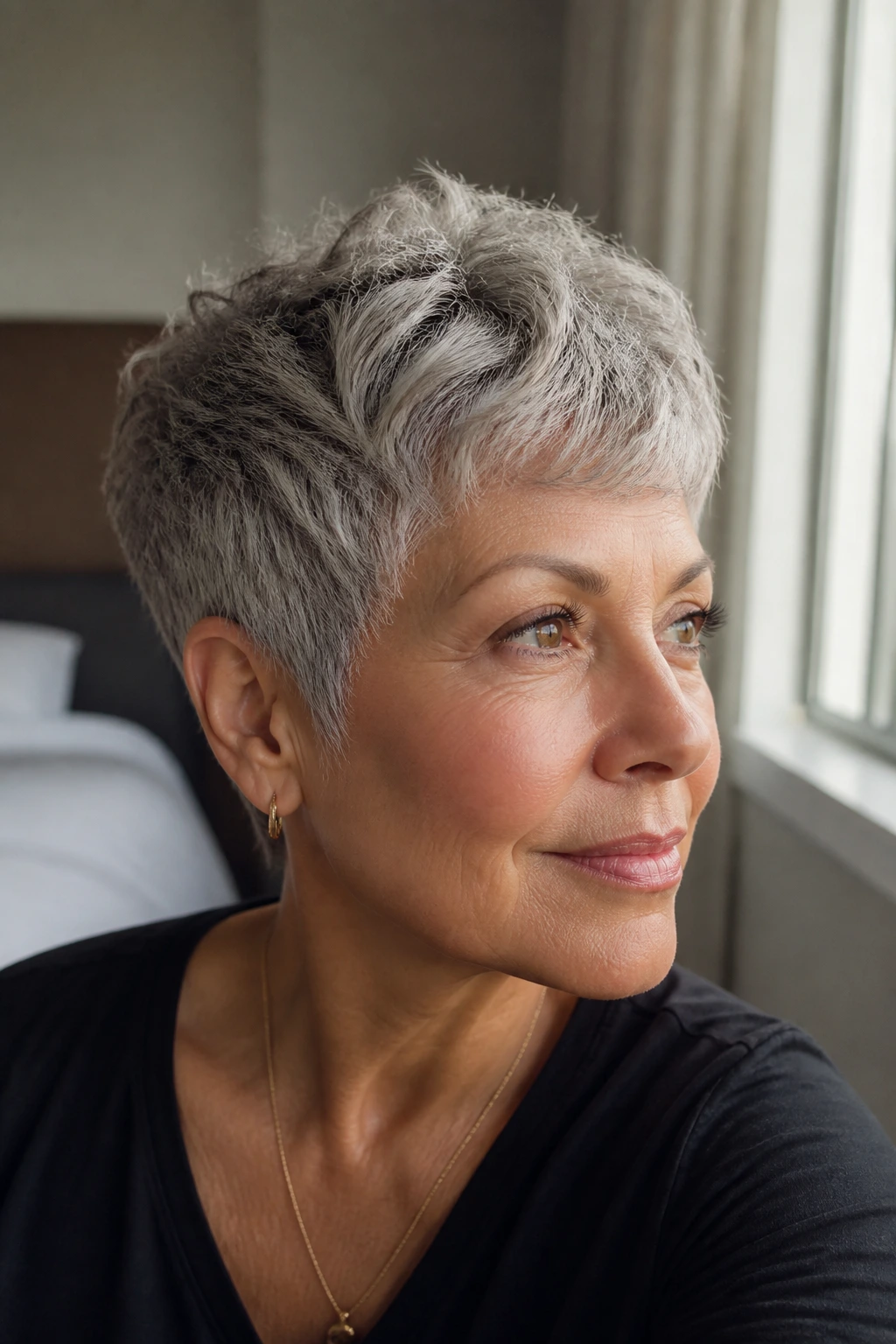
A wash-and-go pixie is less about being lazy and more about knowing your hair’s habits. The cut is shaped so your natural texture does most of the work. If your hair dries with a small wave, a slight cowlick, or a bit of bend around the fringe, this style uses that instead of fighting it.
The secret is keeping the haircut simple enough to behave without a styling session. The sides should be tidy, the top should have just enough length to settle on its own, and the fringe should not be so short that it sticks up in protest. A little leave-in cream is often enough. More than that, and the hair can go limp.
This is one of the most honest short cuts on the list. It does not promise glam every day. It promises a good shape with almost no drama.
19. Deep Side-Part Pixie
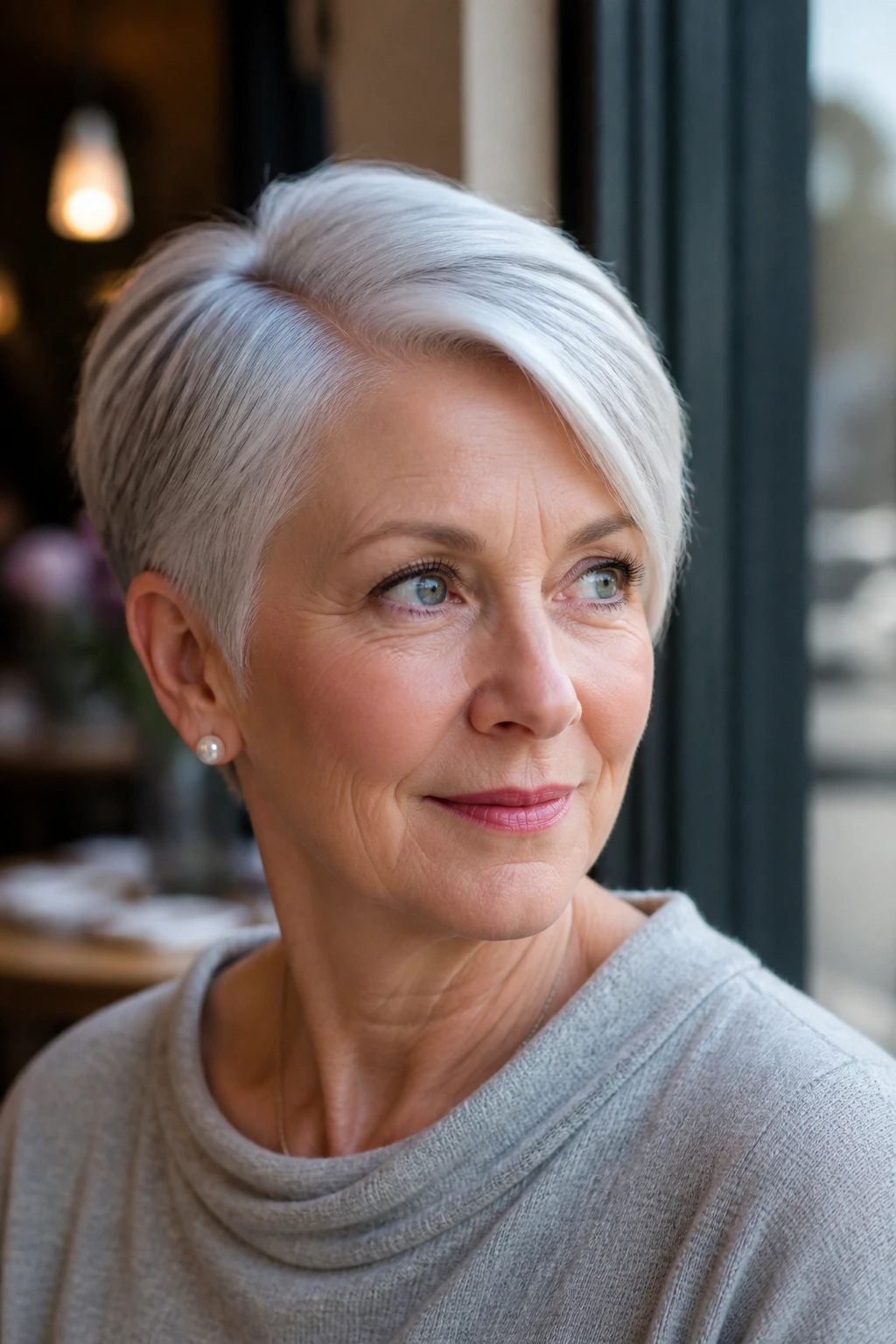
A deep side-part pixie has a way of making the haircut feel dressed up even when the rest of you is wearing a sweater and old earrings. The deep part gives height on one side and softness on the other, which creates a nice diagonal across the face. That line matters.
If your hair tends to go flat at the crown, the deeper part helps lift it. If one side of your face is a little stronger than the other, the asymmetry can soften that, too. The key is keeping enough length at the front so the part doesn’t disappear by noon.
Why it works on mature hair
A deep side part breaks up a solid block of hair at the top, which is useful when strands get finer or less cooperative. It also lets you control where the volume sits, instead of letting it appear wherever the cowlick decides.
Styling cue: Dry the root in the opposite direction first, then flip it into place. That extra second of rebellion gives the part more staying power.
20. Shaggy Pixie Crop
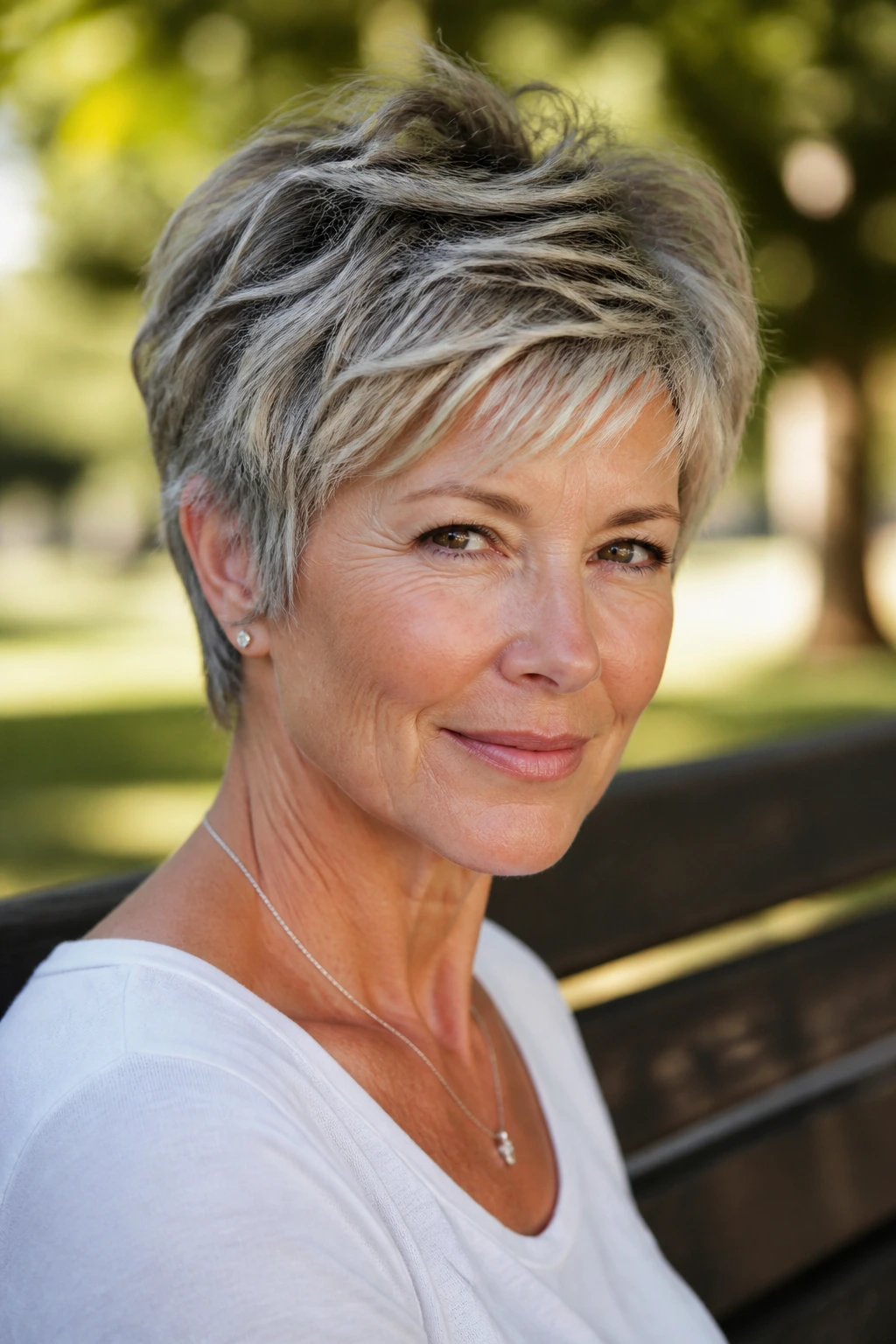
A shaggy pixie crop is for someone who doesn’t want the haircut to look too arranged. The layers are loose, the ends are choppy, and the top has enough unevenness to read as casual rather than formal. It borrows a little from the shag, which is why it carries motion so well.
This style is especially useful if your hair has been getting drier or more wiry. The irregular layers stop the ends from sticking together in blunt little chunks. They also make the haircut easier to reshape with your hands instead of a brush, which is handy when the morning has other plans for you.
Don’t confuse shaggy with sloppy. A good shaggy pixie still has a clear outline. The mess lives inside the shape, not outside it.
21. Blended Gray Pixie
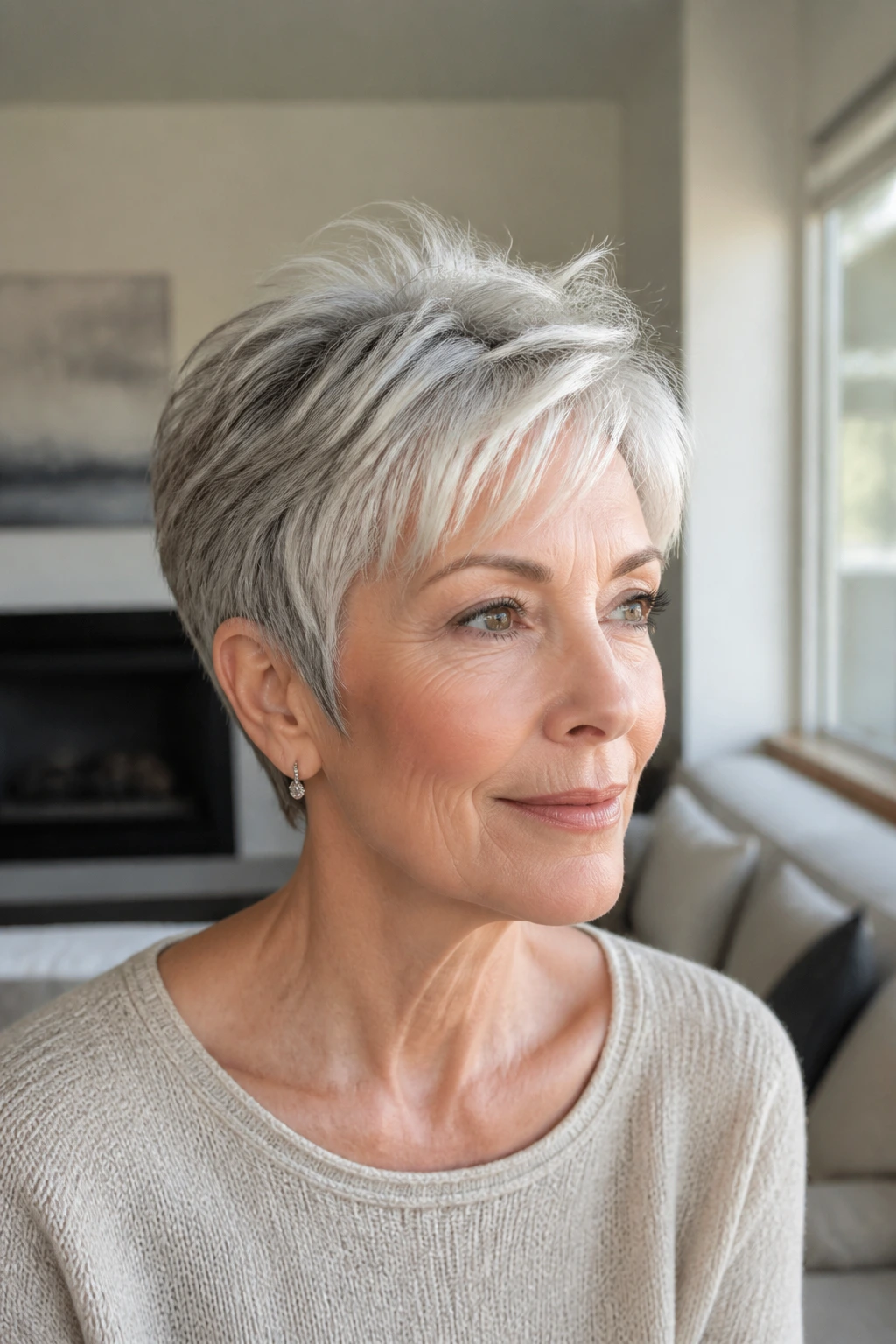
A blended gray pixie is about making different shades of gray, white, and darker strands work together instead of fighting each other. The cut should have enough layering to move the color around, but not so much that it frays at the ends. Shape first, color second. That order matters.
When gray hair is cut into a neat pixie, the contrast between strands shows up as texture. A few lighter pieces near the fringe can brighten the face. Darker strands near the nape can anchor the shape. It’s subtle, and that’s the point. You don’t need chunky contrast to get dimension.
If your hair has a mix of tones that you’ve never quite known what to do with, this is the cut that makes the mix look useful rather than random.
How to wear it
Use a lightweight glossing cream on the mids and ends, then comb a little volume into the top. The shine helps the gray read as deliberate, not dull.
22. Face-Framing Pixie
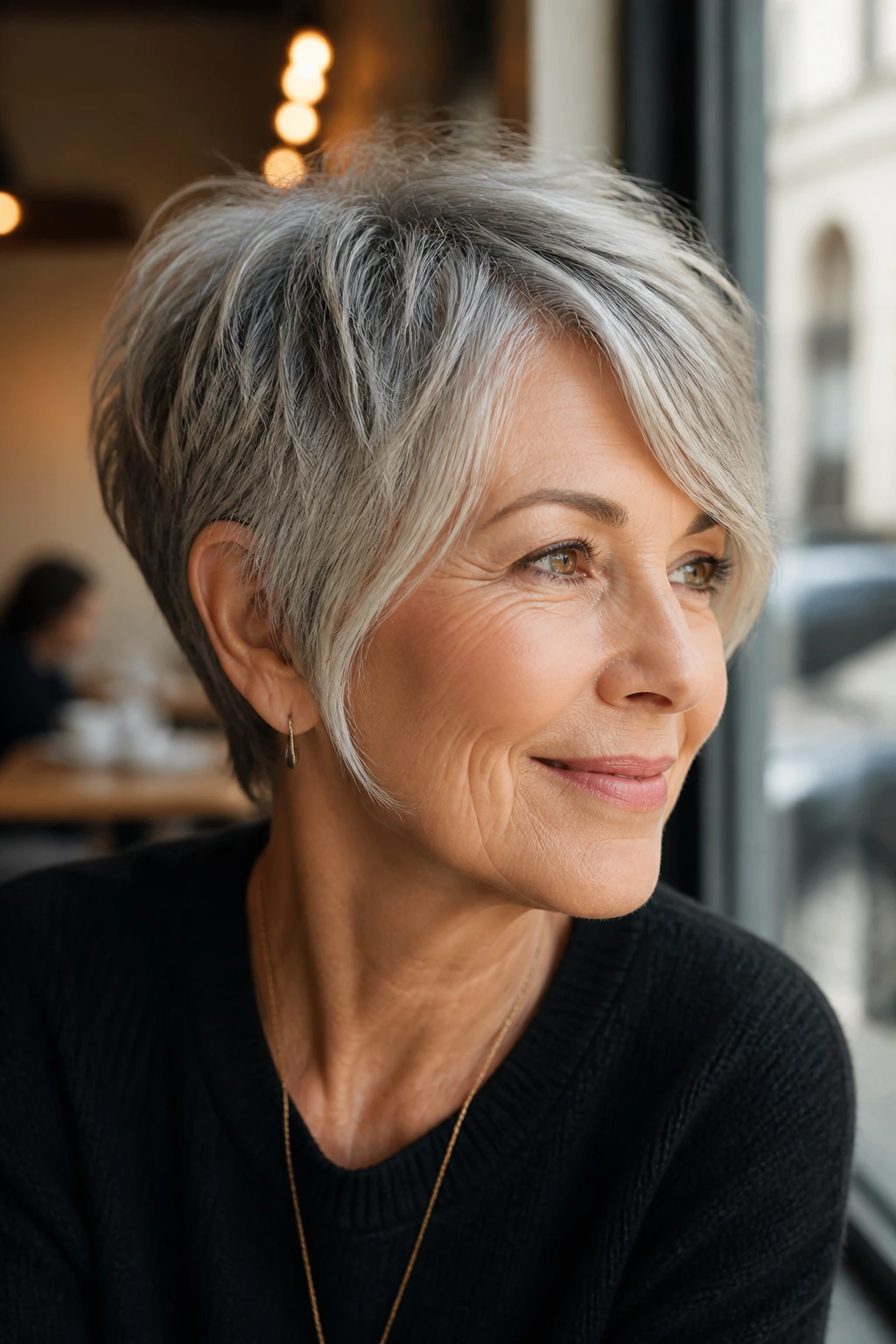
A face-framing pixie is built to do exactly what the name says. The front pieces are kept long enough to trace the cheekbones, skim the temples, or soften the jaw. The rest of the cut stays short and clean so the face-framing pieces don’t get lost in too much hair.
This is one of the most forgiving shapes if you want a short cut but still like seeing hair around your face. It can be adjusted easily, too. Move the length toward the eyes if you want a more romantic feel, or tuck it slightly shorter if you want less fuss around the forehead. The cut does not need to be severe to be neat.
It’s especially useful if you like wearing lipstick, glasses, or earrings, because the front pieces act like a soft border instead of a curtain.
- Works best with: Straight to lightly wavy hair.
- Ask for: Longer front corners and softer temple layers.
- Styling note: A round brush or a quick bend with a small iron can keep the face frame from curling awkwardly.
- Avoid: Cutting the front too short to begin with. There’s no easy fix for that.
23. Clean-Neckline Pixie
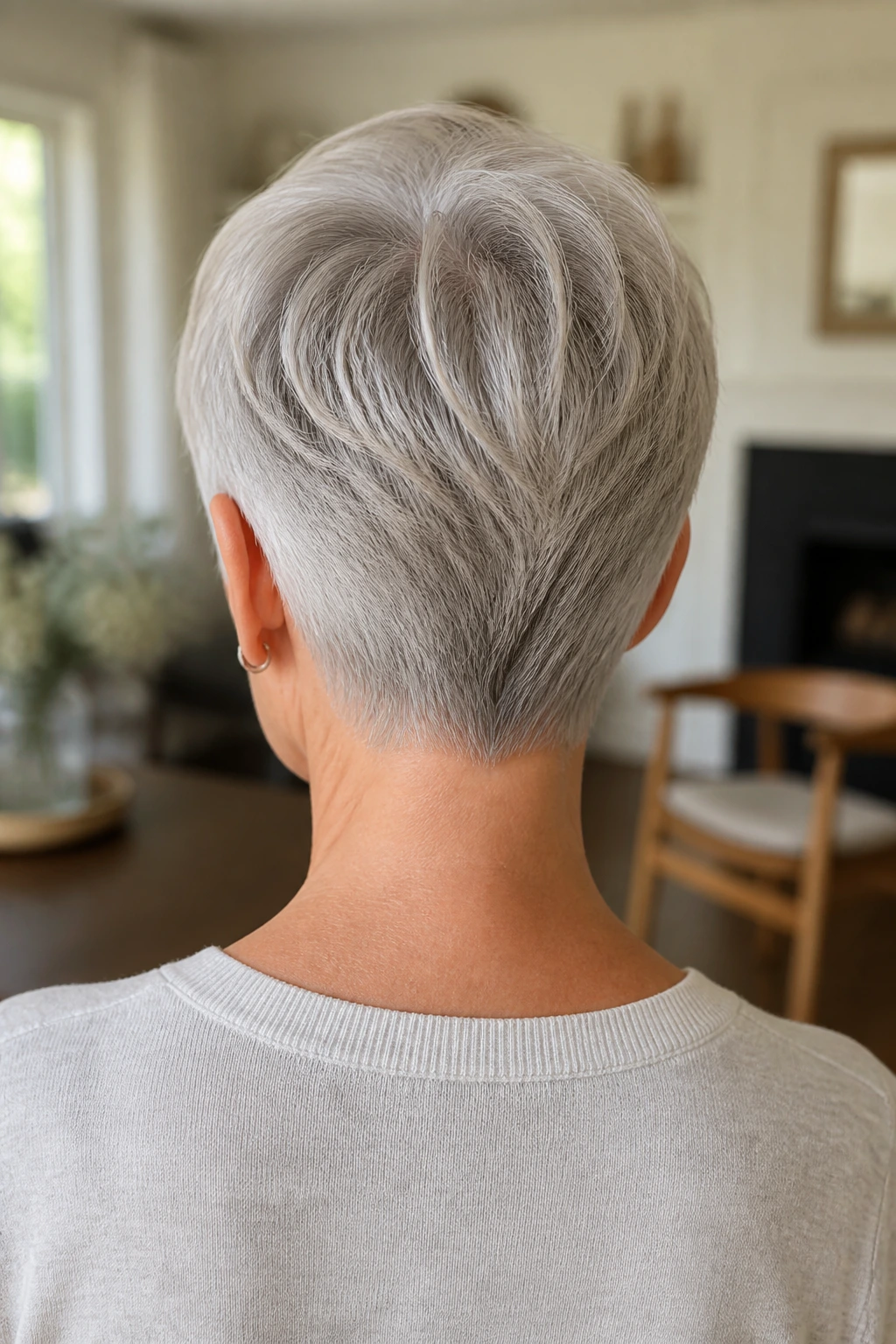
A clean-neckline pixie is the haircut that looks freshly done even when it’s been a couple of weeks since the salon. The nape is tapered neatly, the edges around the ears are shaped with a light hand, and the top keeps enough softness to stop the cut from feeling too strict. It’s precise, but not severe.
I like this cut for women who want their hair to look controlled from the back, because that’s the angle many people forget. A clean neckline makes shirts, collars, and sweaters sit better. It also keeps the cut from getting fuzzy at the point where short hair tends to misbehave first. That spot matters more than people think.
The front can be as soft or as sharp as you want. The real defining feature is the back. When the neckline is right, the whole pixie looks calmer.
Why Pixie Cuts Sit So Well on Mature Hair
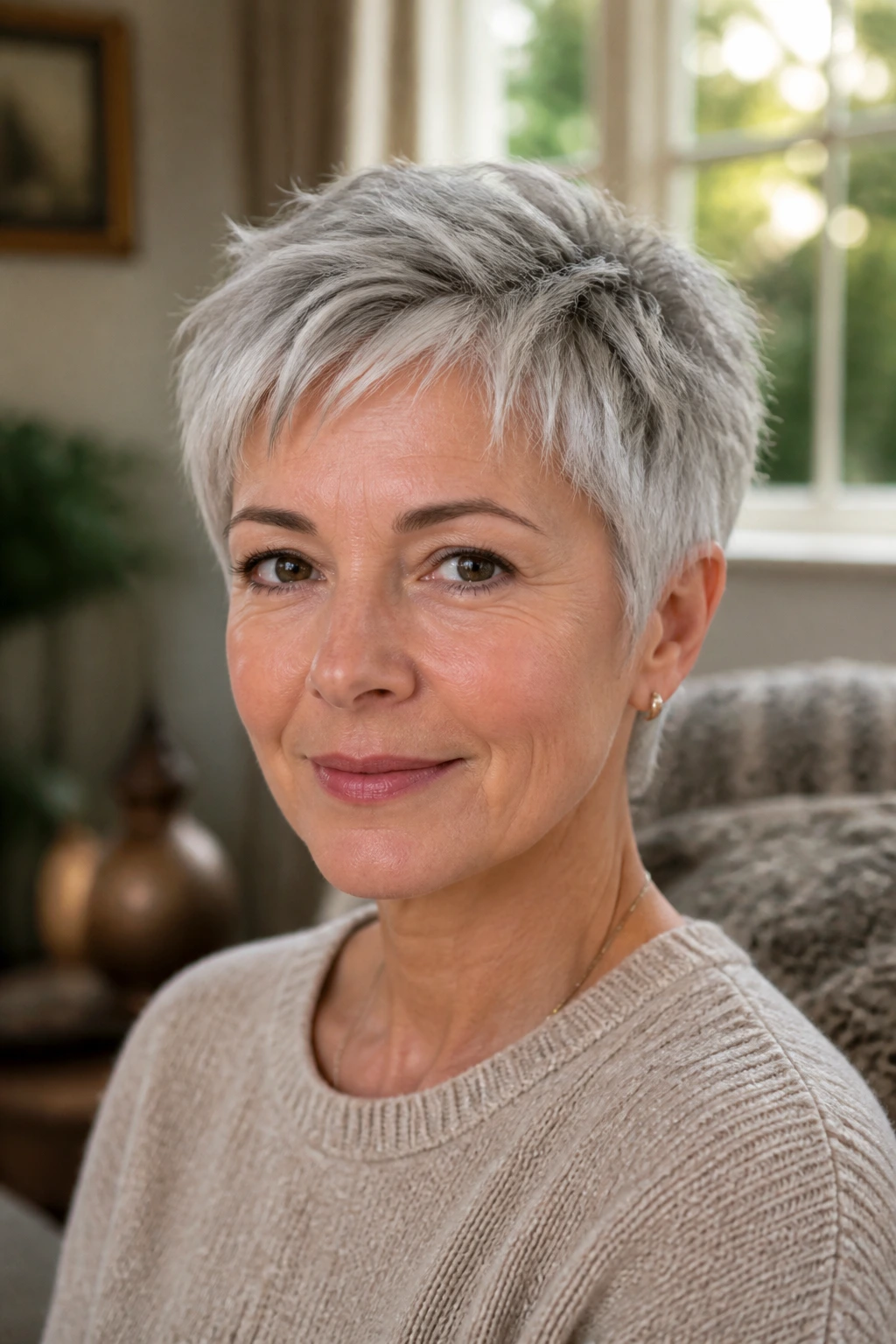
Short hair after 60 is not about “starting over.” It’s about working with what the hair is doing now, which is usually a little finer here, a little drier there, and a little more particular about where it wants to fall. A good pixie cut respects that. It trims away the parts that create drag and keeps enough shape to make the hair look intentional from every angle.
The best thing about these cuts is the way they handle contrast. A pixie can make silver hair shine, soften strong cheekbones, keep glasses from getting buried, and bring lift back to a crown that’s gone a bit quiet. That is a lot of payoff for a few inches of hair. Not every short cut can do that without turning fussy.
There’s also the practical side, which matters more than people admit. A neat pixie can make your morning routine feel lighter because you’re not spending twenty minutes drying hair that’s only going to do what it wants anyway. The right shape gives you a framework. The rest is a quick brush, a little product, and maybe one hand at the root. Good haircuts do part of the styling for you. The best ones do most of it.
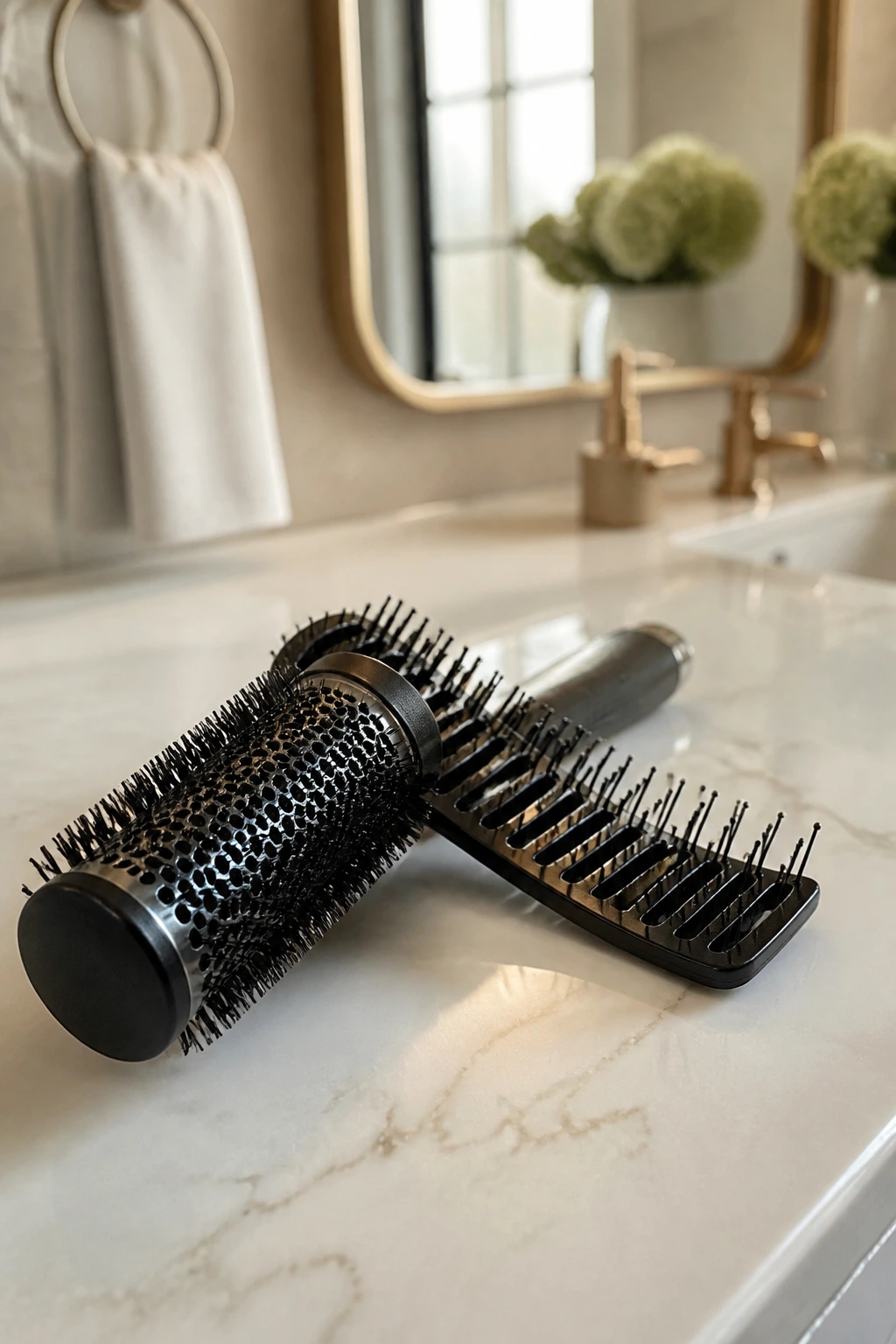
The Tools That Make Styling Easier
-
A small round brush, 1 to 1½ inches: Best for lifting the crown and bending the fringe without creating huge volume.
-
A vent brush: Useful when you want to dry the hair fast and keep the top from collapsing.
-
A fine-tooth tail comb: Helps with deep parts, clean sectioning, and smoothing the edges around the temples.
-
A blow dryer with a narrow nozzle: Concentrates the airflow so the roots go where you want them instead of exploding outward.
-
Lightweight mousse: Adds hold at the roots without turning fine hair sticky or heavy.
-
Texturizing spray: Good for piecey cuts, choppy layers, and any pixie that needs a little grit.
-
Styling cream or soft paste: Best for feathered, wavy, or brushed-forward cuts that need control without shine overload.
-
A small flat iron or mini iron: Handy for nudging one fringe piece or smoothing a stubborn side section.
-
Duckbill clips: Useful for setting the top while you dry the sides.
-
A satin pillowcase or sleep cap: Keeps a short cut from rubbing itself into a flat, fuzzy shape overnight.
How to Talk to Your Stylist Before the First Snip
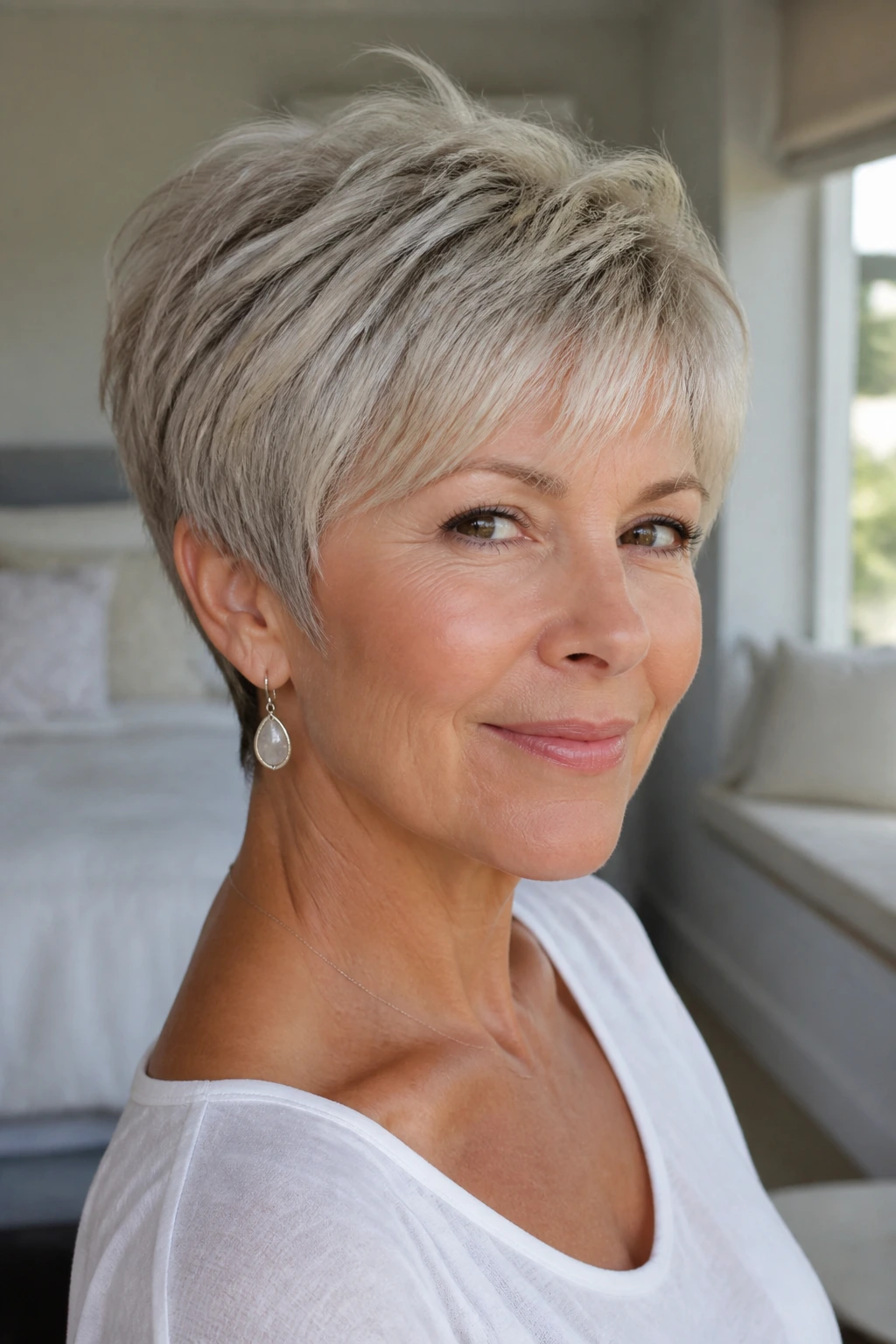
Bring photos, yes, but bring words too. Photos show shape; words show what you mean by that shape. Tell the stylist how much time you want to spend in the mirror, whether you wear glasses every day, and which part of the head gives you trouble — crown, nape, temples, or fringe. Those details matter more than saying you want “something youthful,” which is vague enough to mean almost nothing.
If your hair is fine, say so plainly and ask how the cut will keep lift at the root without exposing too much scalp. If your hair is thick, ask where the weight will be removed. Around the ears? At the nape? Through the interior layers? A good pixie depends on that weight control. Skip that conversation and you may end up with a shape that looks great for one day and puffs up on day three.
One more thing. Sit in the chair wearing your usual glasses if you can. A pixie can look perfect in the mirror and still fight with your frames at the temples. That’s the sort of problem easier to fix before the scissors come out.
Ways to Wear a Pixie Without Making It Stiff
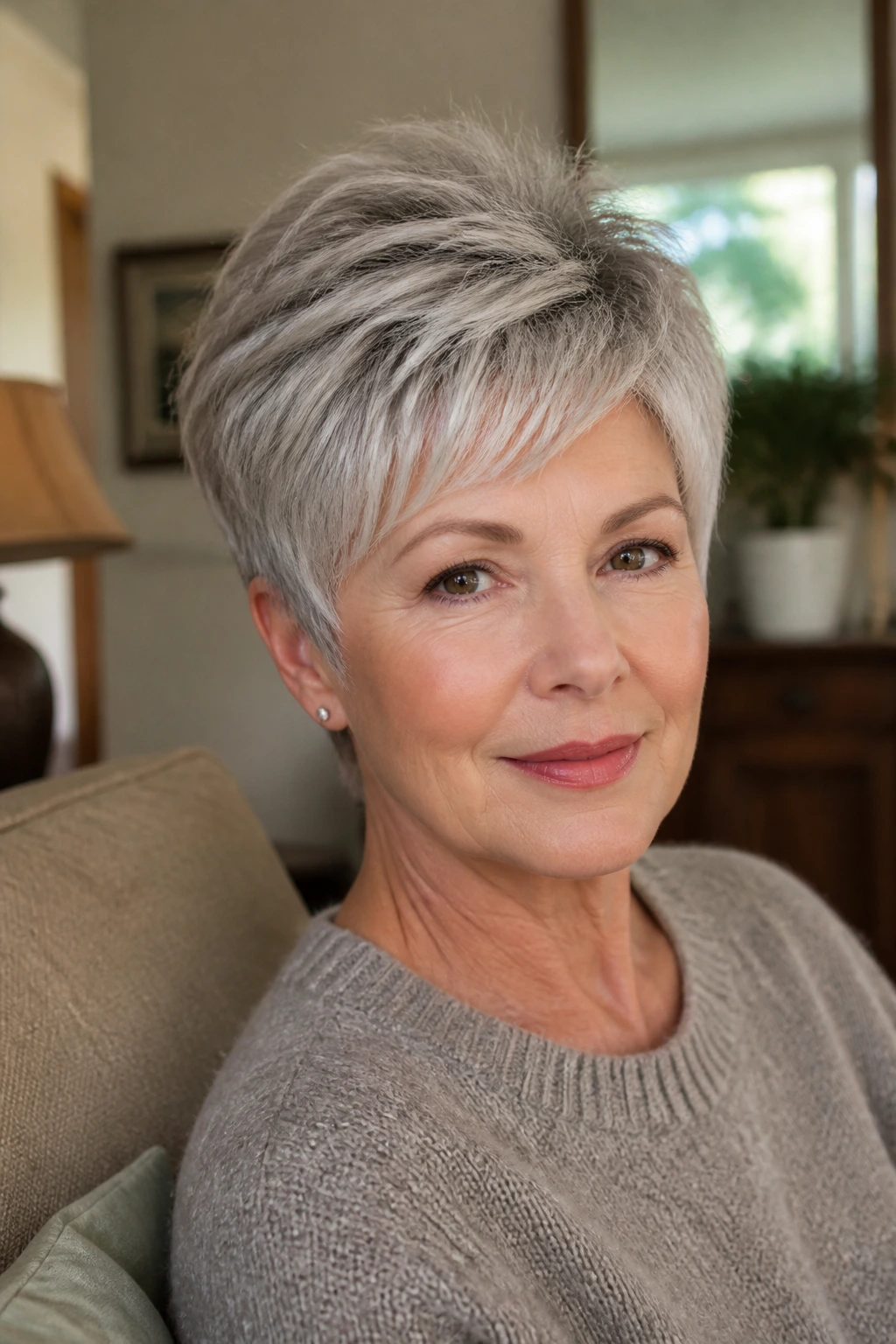
Shape: Let the haircut follow your head, but not cling to it. A little lift at the crown and a soft taper at the sides usually look better than a perfectly flat silhouette.
Texture: Decide whether you want the finish to be smooth, piecey, or slightly tousled, then use only one product family. A mousse plus a paste often turns the hair heavy. Pick one lane.
Parting: A center part is not the only option, and on many pixies it’s not the best one. A soft side part or a pushed-forward fringe can make the cut feel less severe.
Finish: Use fingers for a relaxed look and a brush only where it helps, like at the fringe or crown. Too much brushing can erase the character of the cut.
Extras: Earrings matter more than people think with short hair. So do collars, neckline shapes, and glasses frames. A pixie shows all of them.
Small Tweaks That Change the Whole Cut
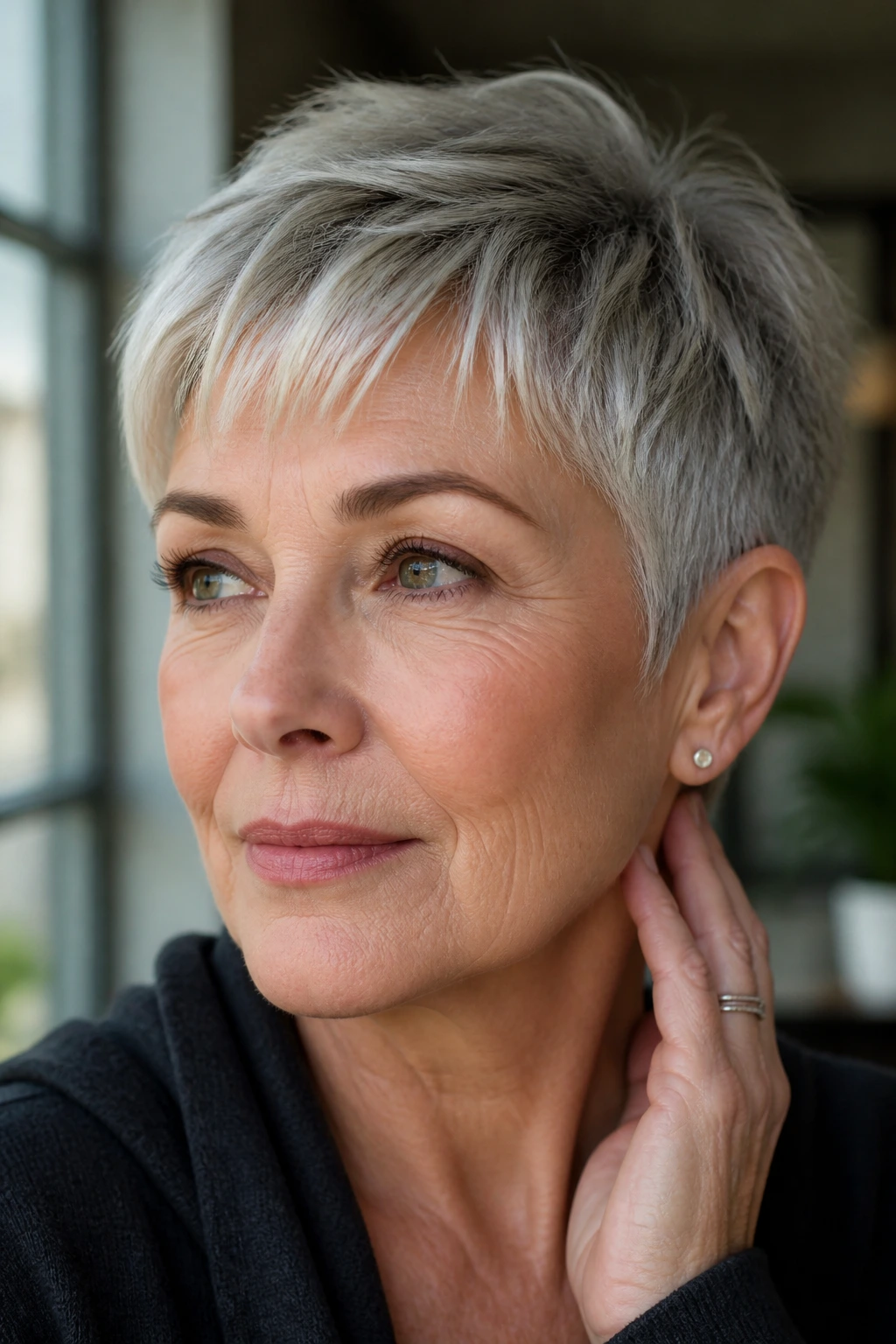
Root Lift: A puff of mousse at the roots before blow-drying changes the silhouette more than an extra layer ever will. Concentrate it at the crown and front hairline if your hair tends to lie flat.
Softness: Ask for point-cut ends around the face if you want the cut to feel gentle. That tiny texture around the temples keeps the style from looking carved.
Color Movement: A few lighter pieces on top can make silver or gray pixies look brighter, especially if the cut itself is very short. The haircut and the color should work together.
Fringe Control: If your fringe splits, give it a slightly longer starting length. Short bangs sound simple. In practice, they can be the most stubborn part of the whole cut.
Make-It-Yours: If you love a polished look, keep the edges tidy and the crown smooth. If you prefer movement, let the top stay longer and use a bit of texture spray. Same cut. Different mood.
Care, Trimming, and Grow-Out Timing
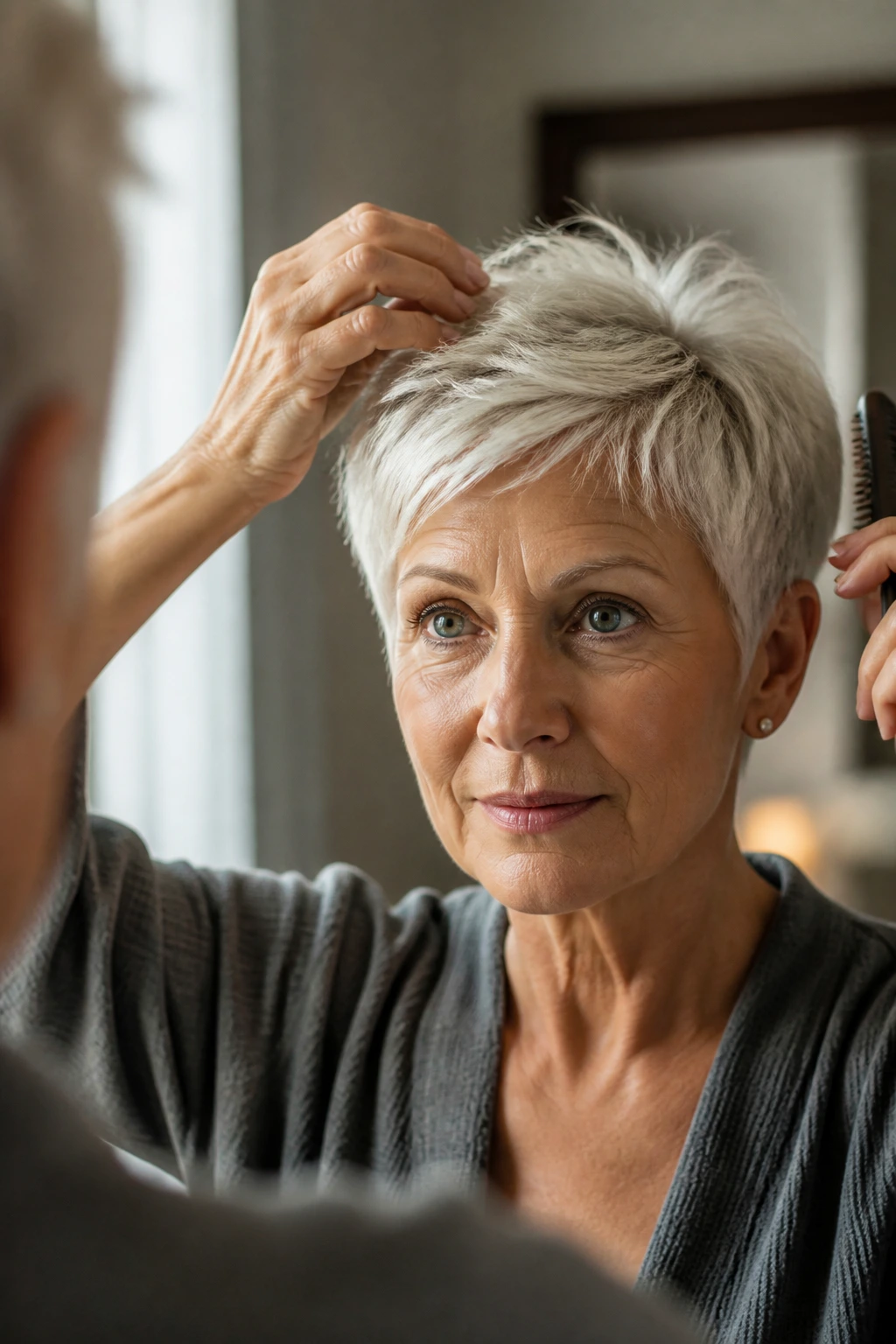
Pixies ask for regular trims, and there’s no clever workaround for that. A very short crop usually needs a cleanup every 4 to 5 weeks if you want the neckline and ears to stay crisp. Longer pixies can go 6 to 8 weeks, especially if the top has enough length to hide a little grow-out. Push much past that and the shape starts to lose its line, usually at the nape first.
Washing depends on texture. Fine hair often looks best washed every 2 to 3 days because oil shows up quickly and short hair sits close to the scalp. Dry, curly, or gray hair may be happier with fewer washes and a gentle refresh in between. On non-wash days, a little water mist and a pea-sized amount of product can wake the shape back up without starting from scratch.
Sleep matters more than people think. A satin pillowcase cuts down on friction, which helps the top stay smoother and keeps the fringe from going into full rebellion by morning. If you use heat tools, keep them on the lower side and use them only where needed. A pixie doesn’t need a full heat routine every day. It needs maintenance, not punishment.
Growing a pixie out works best in stages. After the first 6 to 8 weeks, let the top begin to lengthen while the sides are trimmed to keep the outline neat. If you want to move toward a bob, plan on a few months of gradual shape-shifting rather than one big awkward stretch. Slow is easier on the hair. And on your patience.
Variations and Adaptations to Try
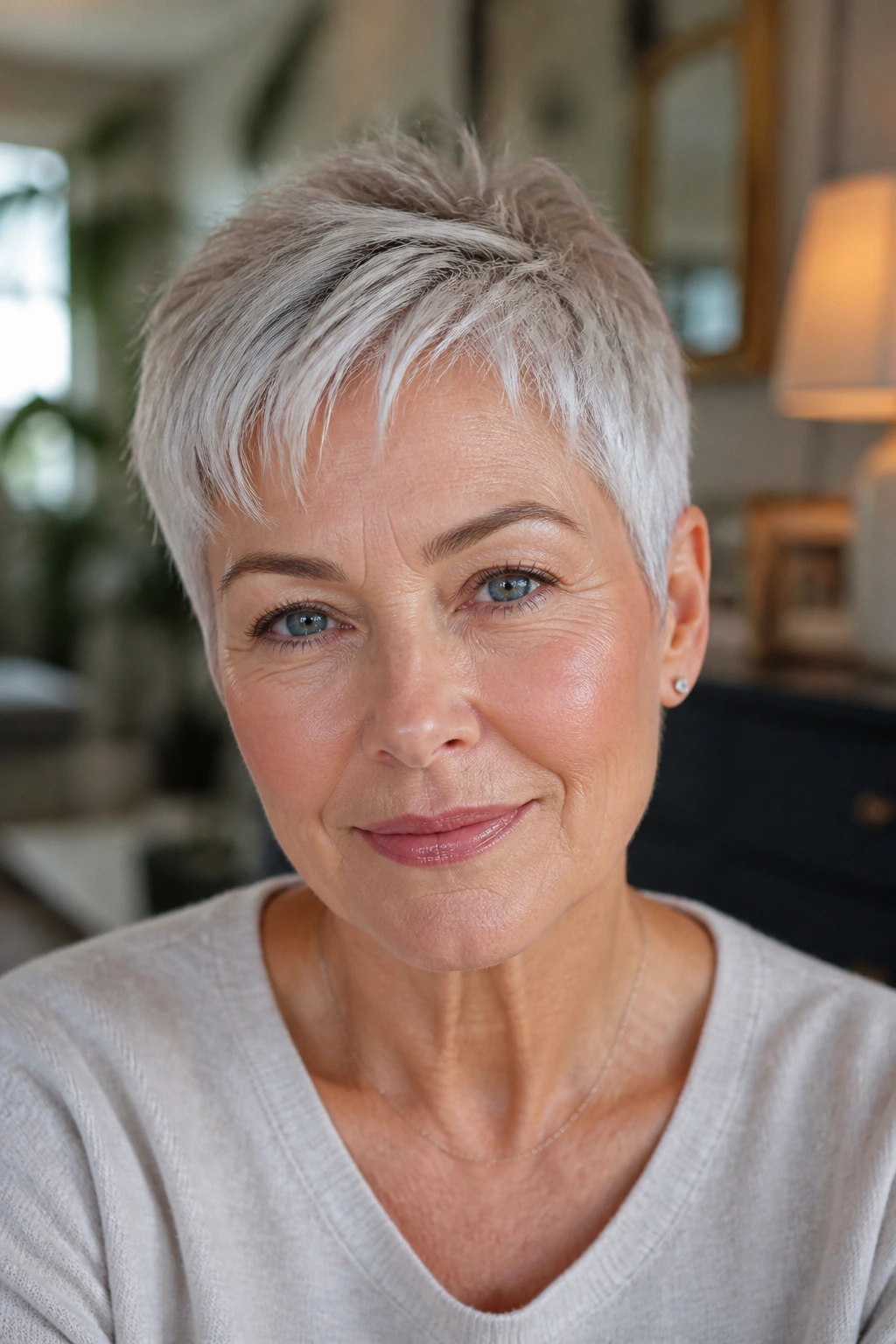
Fine-Hair Lift Version: Keep the sides close and the crown layers slightly longer, then finish with mousse and a root-dry. This version gives the illusion of density without piling on product. It’s the best choice when your hair goes limp by noon.
Curly-Friendly Version: Leave more length on top and around the crown so the curl pattern can spring up naturally. Ask for soft shaping rather than blunt cuts, because curls need room to move or they expand into a different haircut entirely.
Glasses-Friendly Version: Tuck the sides just enough to avoid bulk at the temples and keep the fringe above or beside the frame line. This keeps the haircut from competing with your glasses for attention. Good frames and a good pixie should meet politely, not wrestle.
Gray-First Version: Treat silver, white, and salt-and-pepper tones as the main event. A gloss or toner can keep the color clean, but the cut should do the heavy lifting by keeping the outline sharp and the crown airy.
Low-Maintenance Grow-Out Version: Choose a longer top, softer nape, and side lengths that can tuck behind the ear. This makes the haircut easier to stretch between trims and less annoying when it starts to grow.
Common Mistakes That Make a Pixie Harder to Wear
The first mistake is cutting too much off the fringe before you know how it dries. Short bangs can spring up, split, or sit higher than planned, and there is no quick fix besides waiting. Leave a little extra length, dry it properly, then trim again if needed.
The second mistake is ignoring the nape. A pixie can look tidy from the front and still feel messy from behind if the neckline is too heavy. Ask for the back to be tapered cleanly and checked in the mirror before you leave.
Heavy product is another trouble spot. Thick creams and waxes can flatten the crown and make short hair look greasy fast, especially on fine strands. Start with less than you think you need. If the hair still needs control, add a touch more at the ends, not the roots.
Cowlicks deserve respect. If your hair kicks out at the front or crown, the cut has to account for that pattern instead of fighting it into submission. Cut around the cowlick. Do not pretend it isn’t there.
And then there’s the “all over short” mistake, where every section gets chopped to the same length. That usually removes the shape that makes a pixie flattering in the first place. A good pixie has differences: a little more on top, a little less at the nape, a soft edge near the face.
Frequently Asked Questions
Which pixie cut is best for fine hair over 60?
A feathered crown pixie, long top pixie, or rounded volume pixie usually works well because they keep more lift at the top without adding bulk at the sides. Fine hair needs shape, not weight.
Can a pixie make my face look harsh?
Yes, if the cut is too tight around the temples and forehead. A side-swept fringe, soft face-framing pieces, or a slightly longer top usually fixes that fast by adding diagonal lines and softness.
How often should I trim a pixie cut?
Most short pixies need a trim every 4 to 6 weeks to keep the neckline and ears clean. Longer pixie shapes can stretch to 6 to 8 weeks, but the cut will start to lose its crisp outline if you wait too long.
What if my hair has a strong cowlick?
Tell your stylist where it lives and how it behaves when dry. A cowlick can be worked into the cut by leaving a little more length in that area and drying it in the direction it prefers.
Can I wear a pixie with naturally curly hair?
Absolutely. The cut just needs more room on top and softer shaping through the edges. Curly hair shrinks as it dries, so the dry shape matters more than the wet one.
Do pixie cuts work with glasses?
They can work extremely well, provided the sides and temples are cut with the frame line in mind. A glasses-friendly pixie leaves enough room so the hair doesn’t puff into the arms of the frames.
How do I grow out a pixie without looking awkward?
Keep the nape and sides trimmed while the top grows a little longer. That gradual plan keeps the shape controlled and avoids the lopsided stage that makes people reach for a hat.
What styling product should I start with?
A lightweight mousse is the safest first buy for most pixies. It adds root lift without making the hair stiff, and you can add paste or spray later if the cut needs more definition.
The Shape That Still Feels Like You
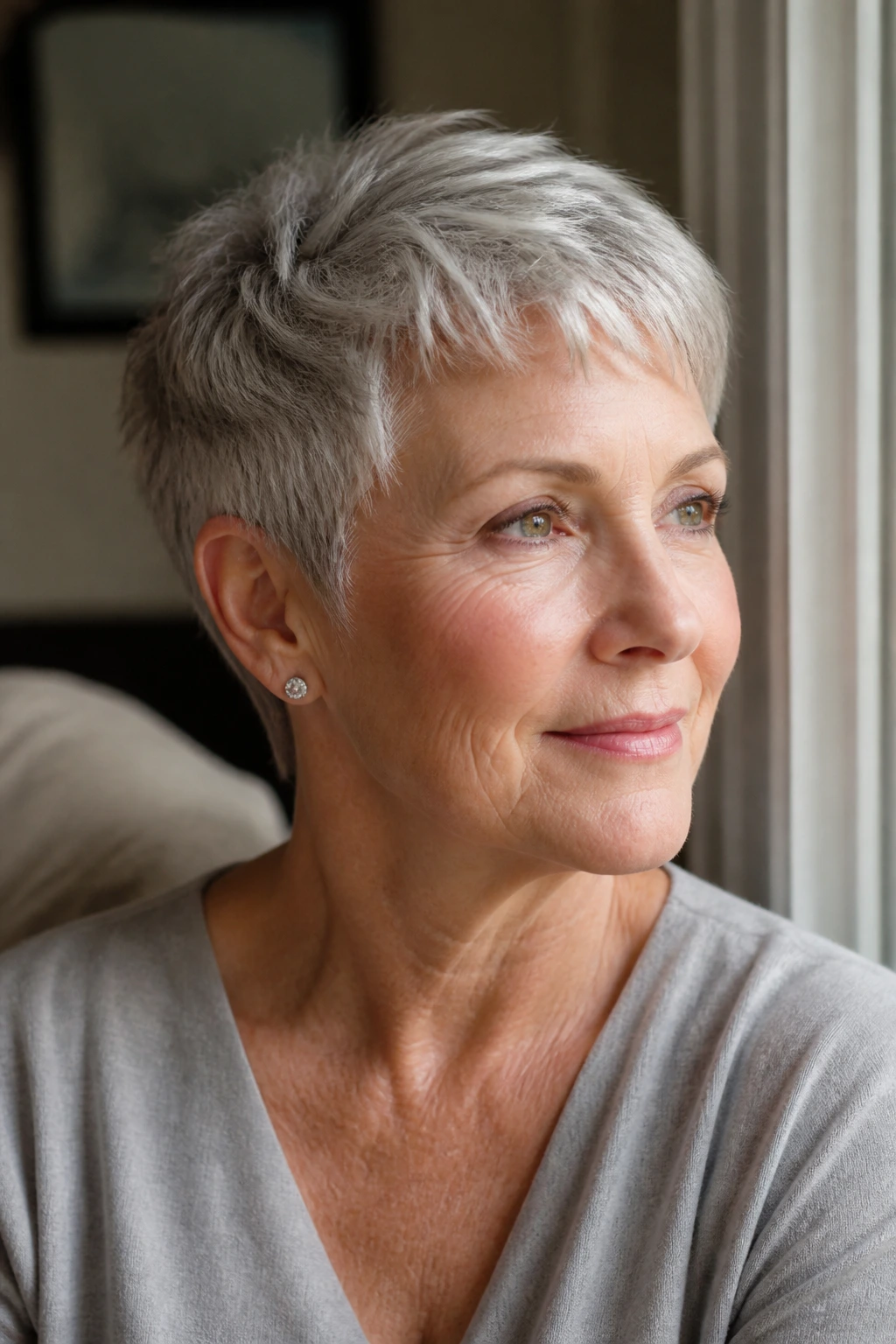
A good pixie after 60 does not try to erase the years, the texture, or the face that’s doing the wearing. It sharpens a few edges, softens a few others, and makes the whole head look considered instead of accidental. That is the real trick. Not youth. Not disguise. Just a shape that respects the hair you actually have.
The best part is how personal these cuts can be. One woman needs lift at the crown. Another needs the nape cleaned up so collars don’t catch. Another wants the fringe to graze the glasses in the right place and never, ever touch the lashes. All of those are solvable. The scissors only look small. The choices are not.
If a pixie has been sitting in the back of your mind, this is the kind of haircut worth bringing to the chair with confidence and a very clear idea of what your hair does on a bad day. That’s where the good versions start.
