



Shoulder-length hair and bangs sit in a sweet spot that a lot of haircuts miss. The length still moves. It still tucks behind one ear, still swings at the collarbone, still feels like hair you can work with instead of hair you have to manage. Then the fringe steps in and does the face-framing work fast — softening a forehead, sharpening the eyes, or taking some weight off a heavy jaw without needing a drastic chop.
The trouble is that bangs are not a small detail. They change the whole haircut. A shoulder-length cut with the wrong fringe can go puffy at the sides, hang in your eyes by noon, or cling to a cowlick like it has a personal grudge. The good versions have shape. They have balance. They know where to stop. That stopping point matters more than people think.
And that’s why shoulder-length hairstyles with bangs keep earning their place in salons. They can look tidy or undone, polished or roughened up, airy or dense. Straight hair, wavy hair, curly hair, thick hair, finer strands that need help pretending to be fuller — there’s a cut here that can work with the hair you actually have, not the hair in a smoothing ad. Some need round-brush styling. Some look better when you leave them a little imperfect. A few are fussy. A few are wonderfully lazy. The good ones are the cuts that make your mornings easier, not the ones that demand a ceremony every time you leave the house.
Why Shoulder-Length Hair and Bangs Keep Working So Well
They give you shape without taking away options. Shoulder length is long enough to pin, braid, half-up, or tuck, but short enough that the front pieces can hold a fringe without getting swallowed by the rest of the cut.
The fringe does the face-framing fast. Curtain bangs, side sweeps, and blunt fringes can change how your features read from the front, which is why these cuts can feel flattering without relying on heavy layering everywhere else.
They work with a real-life schedule. A shoulder-length cut usually dries faster than long hair and behaves better than a pixie on days when you do not want to fuss with every strand.
They let texture do some of the work. Waves, bends, curls, and even a bit of natural fluff can make these styles look richer instead of messy, as long as the bangs are cut with that texture in mind.
The grow-out is kinder. A good fringe at this length can drift into a face-framing layer instead of turning into a shape you have to hide for months.
They suit more than one mood. Same haircut, different finish. Air-dried and piecey on Tuesday. Smooth and tucked behind the ears on Friday. That’s a useful haircut, not a decorative one.
1. Blunt Collarbone Lob with Curtain Bangs
A blunt collarbone lob with curtain bangs has a very specific kind of presence: clean, but not severe. The length lands right around the collarbone, so the ends feel deliberate instead of accidental, and the curtain fringe breaks that line just enough to keep everything from looking too boxed in. On straight or slightly wavy hair, this is one of the easiest ways to get a haircut that looks expensive without needing a lot of layering.
Why It Works
The blunt edge makes the hair look denser at the bottom, which is a gift if your strands are fine or medium and tend to feel see-through when they get too long. Curtain bangs add movement at the cheekbones, and that soft opening in the middle keeps the fringe from feeling heavy across the forehead.
If you like a cut that can be worn sleek one day and bent with a flat iron the next, this one behaves. It also grows out with grace. The bangs lengthen into face-framing pieces instead of turning into an awkward shelf.
- Best on hair that falls naturally straight or with a slight bend
- Looks sharp with a center part or a very soft off-center part
- Usually needs a trim every 6 to 8 weeks to keep the ends crisp
- Works especially well when the bangs start around eyebrow level and open lower at the cheekbones
Pro tip: Ask for the curtain bangs to be cut dry or cut with your natural part visible. Wet bangs can look shorter than they really are, and that’s how people end up with a fringe that sits too high for two months.
2. Soft Shag with Bottleneck Bangs
This is the cut I reach for when someone wants movement without looking like they committed to a whole punk phase. The soft shag sits at the shoulders with layers that start around the cheek and fall into the length, while bottleneck bangs stay shorter in the center and taper out at the sides. The result is airy, a little broken up, and far less precious than a blunt cut.
The beauty of this one is in the unevenness. The layers stop the hair from lying flat against the head, and the fringe gives the face a softer frame without swallowing the eyebrows. If your hair gets puffy at the ends, a good shag can redirect that puff into shape instead of fighting it.
It’s also one of the better choices for naturally wavy hair. You don’t need every strand ironed into submission. A diffuser, a bit of mousse, and a few bends in the bangs usually do the job.
The one catch? The shag asks for a little attitude. If you want every strand in a neat place, it can feel too loose. If you like hair that looks better after you’ve lived in it for a few hours, it’s a strong pick.
3. Razored Lob with Piecey Side-Swept Fringe
Want something that looks undone on purpose instead of accidentally messy? This is it. A razored lob cuts into the shoulder zone with lighter ends, and the side-swept fringe breaks across the forehead in thin, separated pieces that move when you walk. It has edge, but not the stiff, helmet-like version some razor cuts can give when they’re overdone.
How to Wear It
Use a blow-dryer with a nozzle and a medium round brush if you want the fringe to sit softly away from the eyes. Or rough-dry the roots, then twist the front with a 1-inch iron for a more casual bend. The point is not perfection. It’s separation.
This cut flatters hair that has a bit of natural grit. Very silky hair can fall out of the piecey look unless you use a light texturizing spray or a dry paste at the ends. Medium density hair usually takes it beautifully.
It’s also a good option if you hate bangs that feel too full across the forehead. Side-swept fringe gives you the face-framing effect without the straight-across commitment.
4. Curly Shoulder-Length Cut with Curly Bangs
Picture curls that stop around the shoulders, spring up from the crown, and land in a fringe that follows the same curl pattern. That’s the whole appeal here. Nothing is fighting the texture. The bangs aren’t pretending to be straight. The length isn’t trying to stretch itself into something longer. It just lives in its own shape, and that honesty is what makes it look good.
Curly bangs work best when they’re cut dry or at least partly dry, curl by curl, so the stylist can see where the spring lands. If the fringe is cut too short while wet, it can bounce up above the brows in a way nobody asked for. And yes, curls shrink differently from section to section. That is normal. A good cut accounts for it instead of trying to flatten it out.
- Best for loose curls through tight ringlets with some natural bounce
- Works well when the front is shaped to avoid a pyramid effect
- Diffuser drying helps keep the fringe together instead of frizzing outward
- A light cream or gel on the bangs can keep them from splitting into five separate personalities
The nicest thing about curly bangs is that they give shoulder-length hair a face-first focus. You notice the eyes, the cheeks, the movement around the temples. The shape feels alive.
5. Sleek Glass Lob with Long Arched Bangs
A sleek glass lob is not the haircut for someone who wants to air-dry and walk out. It is the haircut for someone who likes a smooth line and is willing to spend a little time getting there. The length sits near the shoulders, the ends stay blunt and tidy, and the bangs are long enough to sweep in a soft arc rather than hang straight across the forehead. When done well, the whole thing has a reflective, almost liquid surface that makes the shape look even sharper.
This cut works especially well on hair that is naturally straight or only slightly wavy. The smoother the texture, the less effort it takes to keep the line clean. A flat iron on a low-to-medium heat setting, a heat protectant, and a fine mist of anti-frizz spray are usually enough. Not glamorous. Effective.
The long arched bang is the quiet star here. It opens the face without shouting for attention, and because it’s longer on the sides, it blends into the haircut rather than sitting on top of it. That makes the whole style feel more expensive than dramatic.
It does ask for upkeep. Flyaways show. Split ends show. But if you like hair that looks crisp and polished from the front and back, this is a very satisfying cut.
6. Feathered Blowout Cut with Brow-Skimming Bangs
Compared with a shag, this version keeps the volume more controlled. The layers are feathered, not chopped, and the bangs skim the brows without turning into a heavy curtain. The effect is lifted around the crown, soft through the sides, and a little bouncy around the ends. It has that salon-blowout energy even when you are not doing a full salon blowout.
Best For
- Hair that collapses at the roots but has decent density through the mid-lengths
- People who like movement but do not want broken, choppy ends
- A round brush finish with a 1.5-inch brush and a cool-shot blast at the end
- Hair that holds a bend better than a tight curl
The trick is in the direction of the brushing. Pull the bangs forward first, then roll them slightly under or slightly away from the face depending on how much openness you want. If you brush them straight down and stop, they can feel blunt in a way that fights the feathered layers.
This cut is one of the better choices if you want a flattering shape that still looks neat when pinned back for work or tucked under a headband.
7. Face-Framing Lob with Long Curtain Fringe
The easiest way to make shoulder-length hair feel intentional is to make the front pieces do the talking. A face-framing lob with long curtain fringe does exactly that. The layers start around the mouth or cheekbone, then drop into the length so the front seems to open and close around the face instead of sitting there like a blunt wall.
The nice thing about this style is how forgiving it is across face shapes. On rounder faces, the longer front pieces can lengthen the line. On longer faces, the softness around the temples keeps the whole cut from feeling too vertical. And if your hair has a little wave, those front sections bend in a way that looks natural, not staged.
It’s also a smart bridge cut if you are growing out full bangs. The fringe can sit at the bridge of the nose one week and at the cheekbone the next without looking wrong. That makes it a sane choice for people who want bangs but do not want a hard maintenance line at the eyebrow.
8. Wavy Lob with Wispy Micro-Fringe
Can short bangs and shoulder-length hair live in the same haircut? Yes, but only if the texture is handled with some restraint. A wavy lob with a wispy micro-fringe works because the waves keep the cut from feeling too severe, while the tiny fringe adds a sharp little hit of contrast right above the eyes. It’s playful. It’s specific. It is not the haircut you want if you’re hoping to hide your forehead completely.
What to Watch For
Micro-fringe looks best when it’s thin enough to break up a little at the ends. Heavy micro-bangs can read like a shelf, and that’s a fast way to make the haircut feel costume-y. Keep the fringe light, let the waves stay loose, and don’t over-smooth the top section.
This cut suits hair that has movement on its own. If your hair is dead straight and stubborn, the whole thing can look flat unless you add texture with a spray or a wave iron. On the flip side, if your hair is already wavy, this fringe can give the style an edge without making the rest of the cut louder.
It’s a strong choice for people who like a little oddness in their hair. Not chaos. Just enough surprise to keep it interesting.
9. Rounded U-Shape Cut with Sweeping Bang Blend
A rounded U-shape cut gives shoulder-length hair a softer perimeter than a blunt line, and that curve matters. The back sits a touch shorter, the sides drift forward a little longer, and the bangs melt into the front instead of stopping abruptly at the forehead. It feels fuller, especially when the hair is brushed out with a paddle brush and finished with a soft bend at the ends.
The shape is useful if your hair tends to kick out at the shoulders. A slight U keeps the ends from feeling like they’re all hitting the same point at once. The front layers help the bangs blend into the rest of the haircut, which can be a relief if you hate knowing exactly where your fringe begins and ends.
This is a smart option for medium-density hair that wants movement without losing its outline. It’s also a nice compromise if you want bangs but worry about a straight-across look feeling too blunt for your features.
One detail that matters: the bangs should not be too short. Let them sweep. That little bit of length is what gives the shape its softness.
10. Choppy Shoulder-Length Wolf Cut with Textured Fringe
This one has edge, and it knows it. A shoulder-length wolf cut keeps the crown lifted, the layers broken, and the fringe roughened up enough to look lived-in instead of heavily styled. The silhouette sits somewhere between a shag and a mullet, but when it’s done well at shoulder length, it reads as modern and wearable rather than extreme.
The textured fringe is the key. It should look separated, not thick. If it’s cut too blunt, the whole haircut loses the lightness that makes the wolf cut interesting. Let the ends stay choppy. Let the layers around the cheekbones move. This is not a precision bob with bangs; it’s a cut that likes a little grit.
Best for medium to thick hair, especially hair that refuses to lie flat. A quick scrunch with mousse or a diffuser can make the layers sit where they should. Straight hair can wear it too, but it benefits from a little bend, otherwise the shape can flatten out.
If you want something that looks good slightly messy and even better with a leather jacket, this is a safe bet.
11. Air-Dried Shoulder Cut with Split Bangs
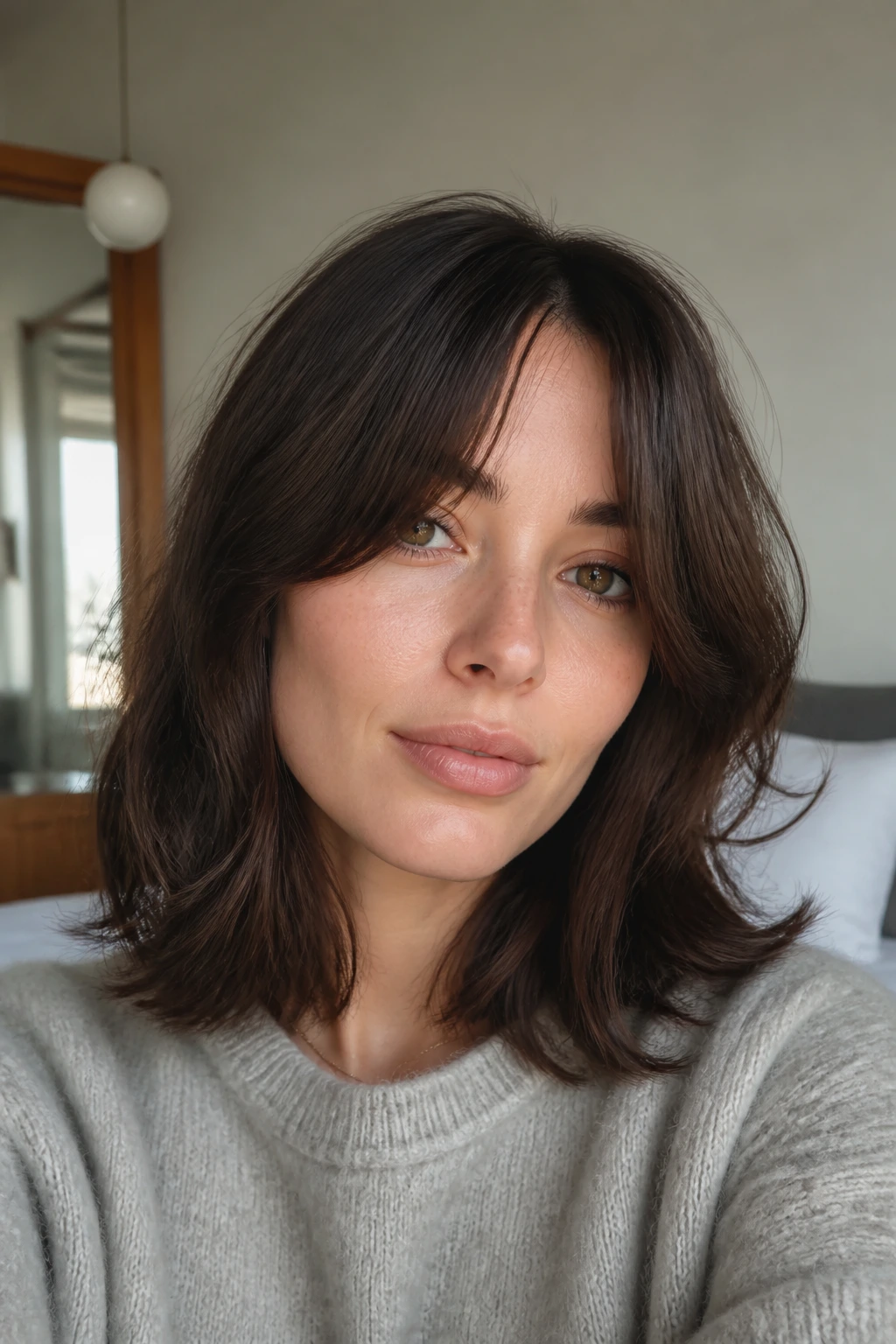
Some cuts are built for the blow-dryer. This one is built for the towel and the patience to leave well enough alone. An air-dried shoulder cut with split bangs uses natural texture as part of the design, not as a problem to solve. The bangs separate down the center or slightly off-center, and the lengths around the shoulders fall in soft, imperfect waves or bends.
The best part is how little ceremony it needs. A leave-in conditioner, a curl cream or lightweight styling milk, and maybe a small amount of gel through the fringe are often enough. Then you let it dry. Touching it too much while it dries is what usually makes it frizzier than it needs to be.
This cut suits people who have some natural wave, bend, or loose curl. Very straight hair can still wear it, but the shape depends more on product and a little twist at the front. Split bangs are also one of the easier bang shapes to grow out because they slide into face-framing layers without looking half-finished.
It’s a quiet cut. Not boring. Quiet.
12. Angled Lob with Side-Part Bangs
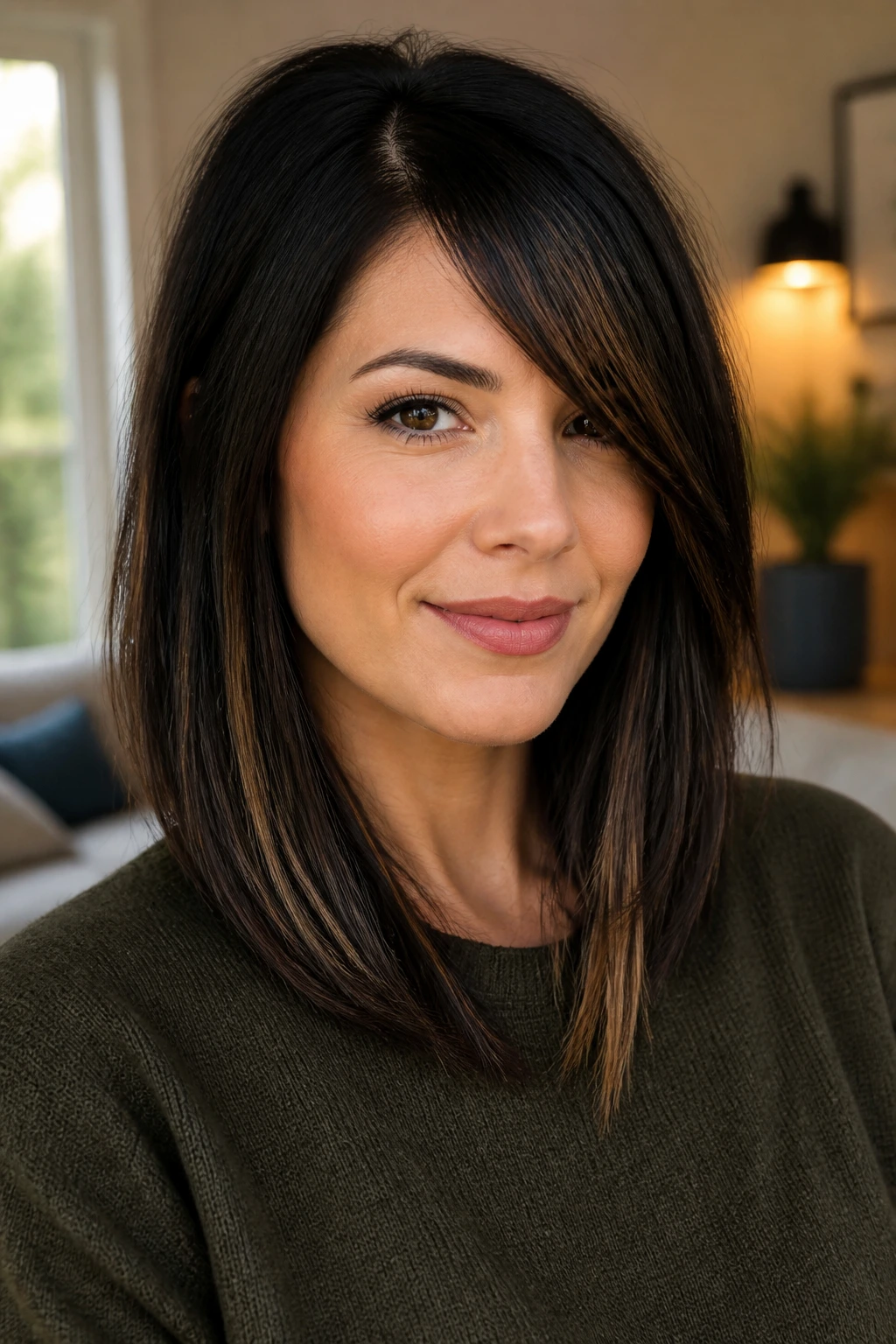
An angled lob leans slightly longer in the front, which gives shoulder-length hair a clean line that pulls the eye downward. Add side-part bangs, and you get a cut that feels directional instead of symmetrical. That asymmetry can be useful if you want to soften a square jaw, draw attention away from a high forehead, or simply make the haircut feel less expected.
Unlike a blunt lob, the angled shape gives a little visual lift. The front pieces brush the shoulders first, then the back sits just a touch higher. That subtle slope matters more in motion than in a photo. When you turn your head, the cut shifts.
Who It Suits Best
- Hair that naturally falls on one side or resists a center part
- Straight to wavy hair that needs a clean outline
- People who want bangs but not a heavy block across the forehead
- Busy mornings, because the side part often settles faster than you think
The side bangs should be soft, not chopped short. Let them blend into the longer front. That keeps the style from feeling dated or overly polished.
13. Bouncy Layered Cut with Long Peekaboo Bangs
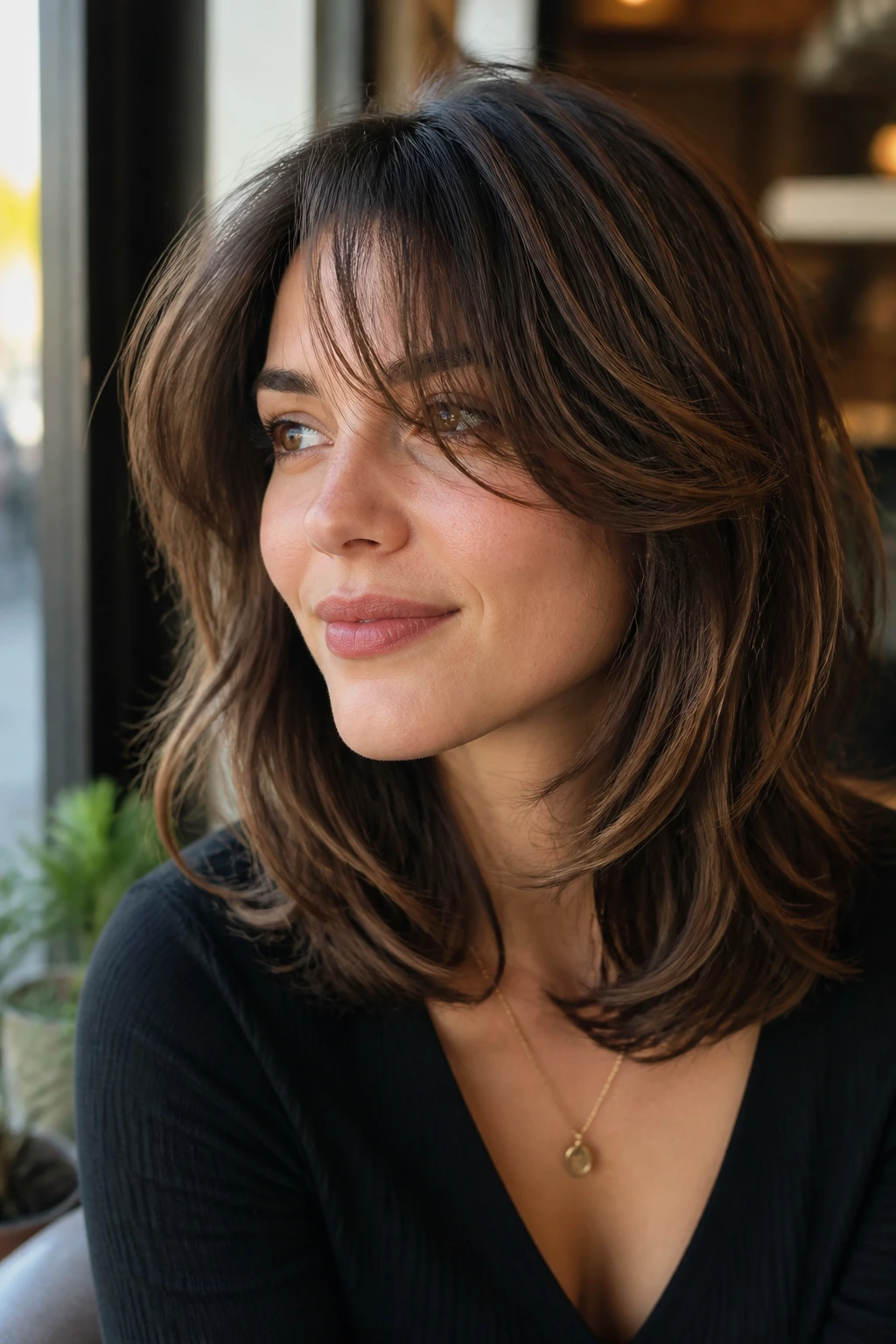
What makes this cut different is the lift. A bouncy layered shoulder cut creates movement through the mid-lengths, then the long peekaboo bangs drift across the face in a way that hints at a fringe without shouting about it. The bangs are long enough to tuck, push aside, or pin back, which makes this one very forgiving if you change your mind halfway through the day.
A round brush helps here, but not because you need curl. You want shape. The layers should spring away from the neck a little and curve around the shoulders rather than hanging flat. If your hair is thick, the internal layering matters; if it’s fine, the layers need to be handled more lightly so you do not lose too much weight.
The peekaboo fringe is a quiet trick. It frames the eyes, softens the forehead, and gives the cut a little mystery without turning it into a full bang situation. That’s helpful for people who have never fully trusted bangs but want the effect.
14. Classic Shoulder-Length Blowout with Full Fringe
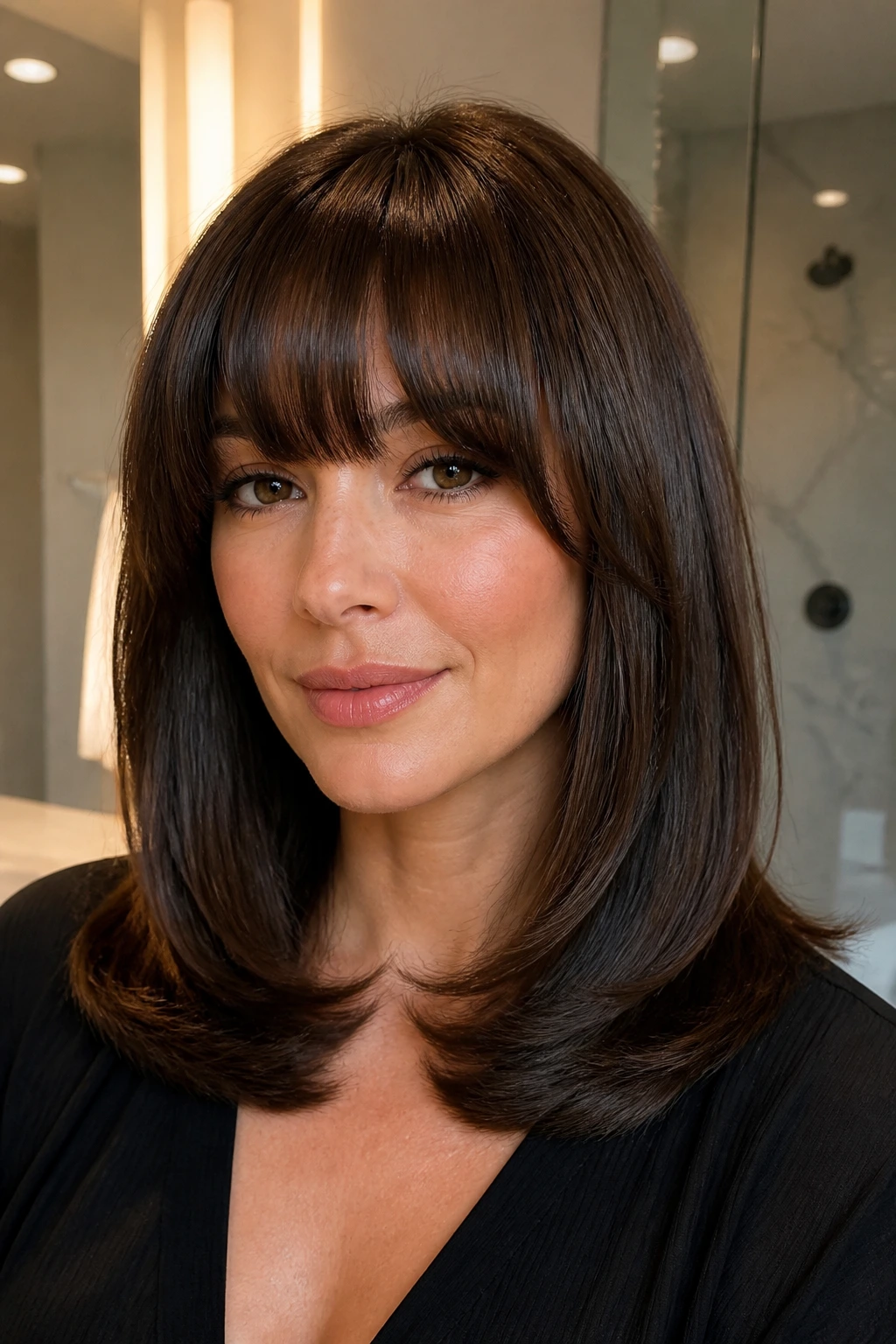
There is something satisfying about a haircut that looks like it was brushed into place by someone who knows exactly what they’re doing. A classic shoulder-length blowout with full fringe gives you that feeling. The ends curve under just a little, the crown has lift, and the bangs sit full enough to make a statement without flattening the forehead into a single line.
This style thrives on smoothness. It works best when the fringe is dense enough to read as a true bang, not a few polite wisps. A medium round brush, a blow-dryer with heat you can control, and a smoothing cream at the mid-lengths all help the shape hold together. The trick is not to overwork the front. Once the bangs are brushed into place, leave them.
A full fringe at shoulder length can be a very good choice if your hair has enough density to support it. Thin hair can wear it too, but the bangs need to be cut with care so they don’t look stringy. Thick hair usually carries the shape easily.
This is the cut for someone who likes a finished look. It’s a little classic, a little glossy, and very unbothered.
15. Razored Shoulder-Length Cut with Feather-Light Fringe
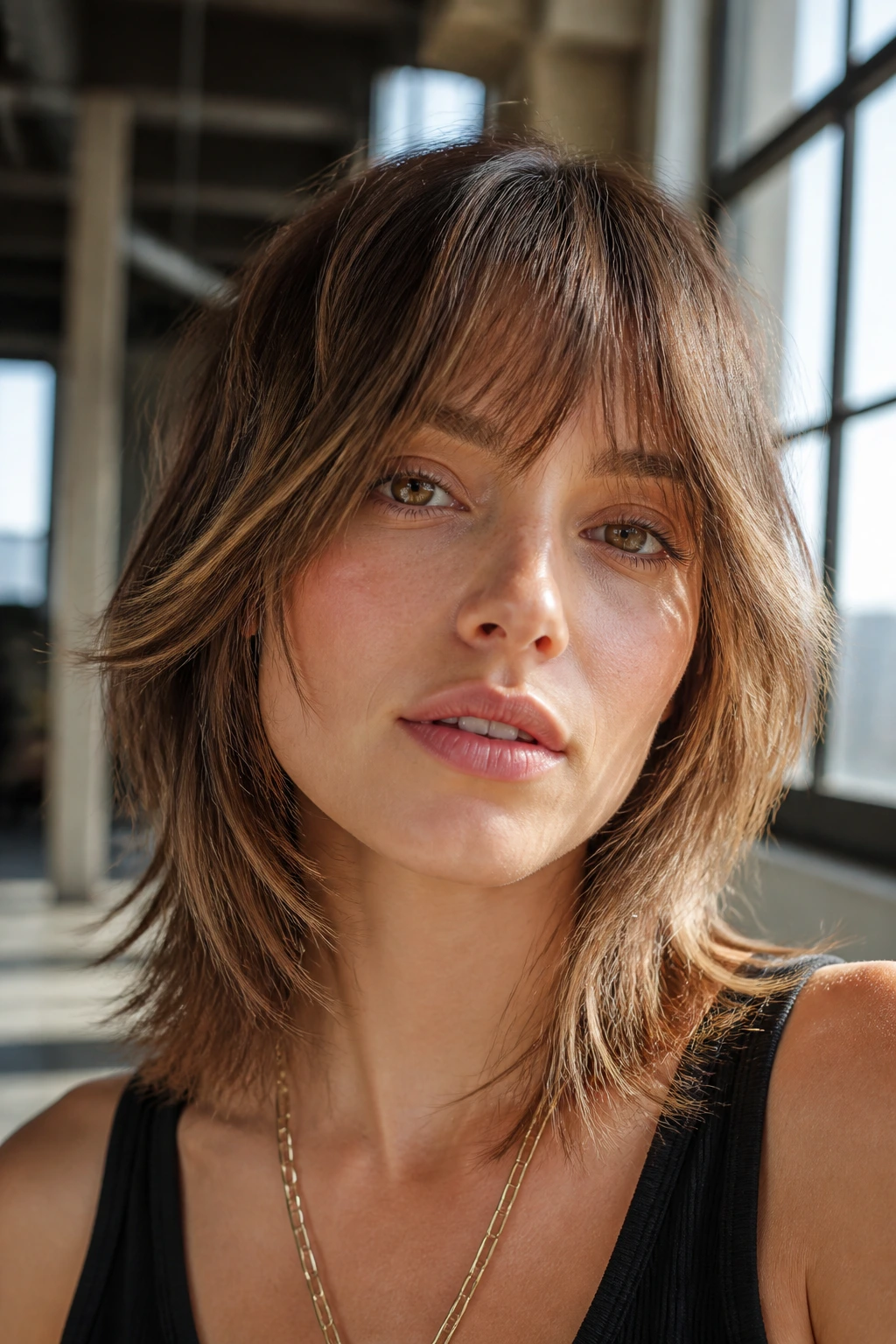
Here’s the blunt truth: some haircuts try too hard to look substantial. This one goes the other direction and wins because of it. A razored shoulder-length cut with a feather-light fringe keeps the perimeter soft and the bangs thin enough to move. The result is a cut that feels airy around the face and lightly shattered at the ends, never blocky.
That lightness helps thick hair a lot. Razor work can remove some of the bulk that turns shoulder-length hair into a triangle. For finer hair, though, the same technique needs restraint. Too much razoring and you lose the body that gives the haircut its shape. This is a cut that rewards a careful hand.
The fringe should sit like a veil, not a wall. You should still see some forehead through it. That transparency is what keeps the style from feeling heavy.
If you like clothing with clean lines and hair that has a bit of edge, this one is easy to love. It looks especially good when the ends are left a little undone rather than brushed into total perfection.
16. Shoulder-Length Cut with Deep Side Part and Soft Bang Sweep
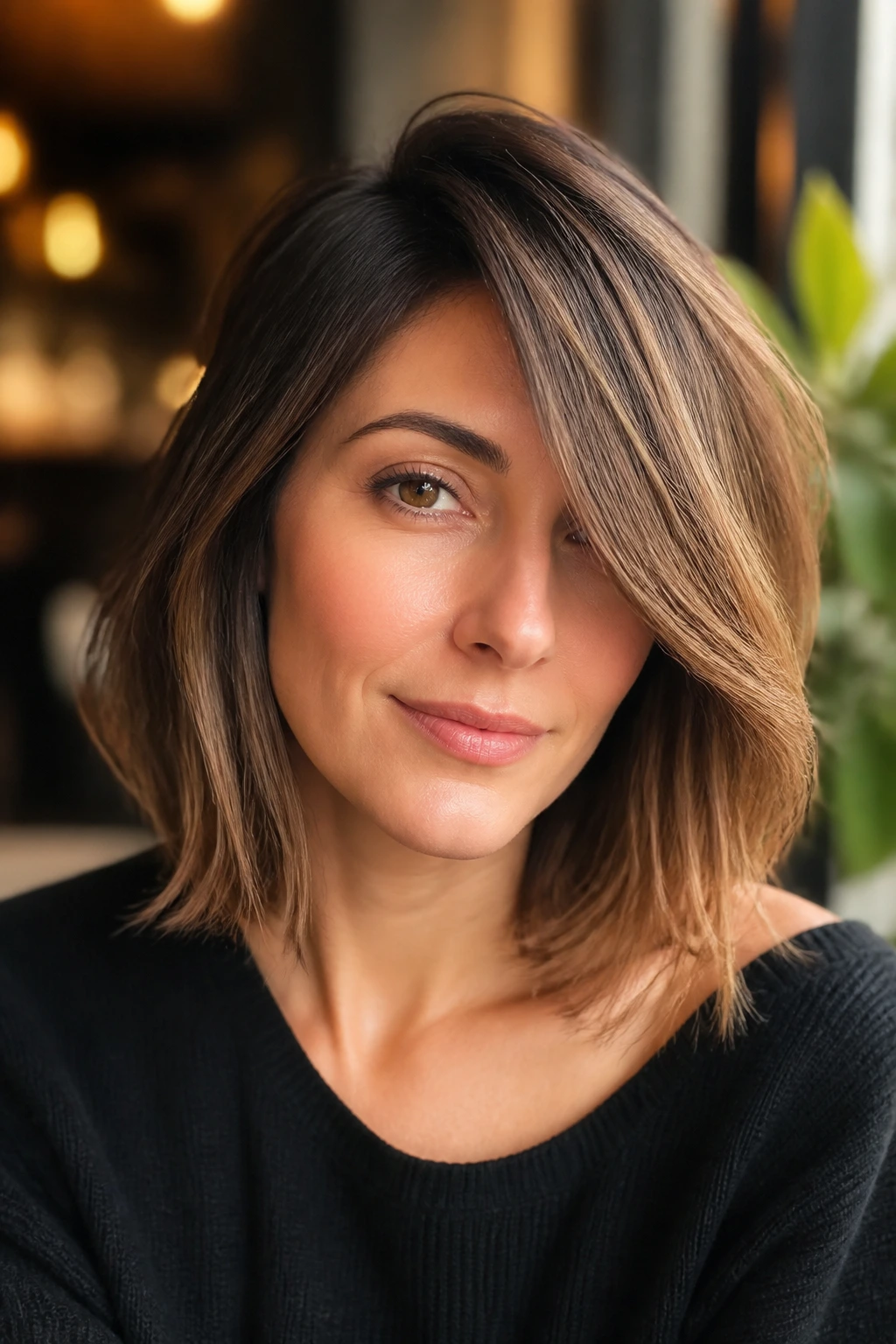
A deep side part changes the whole conversation. Add a soft bang sweep, and the haircut becomes less about the fringe itself and more about the line it creates across the face. The sweep can give lift at the roots, soften one side of the forehead, and create a shape that feels elegant without being stiff.
This is one of the easiest shoulder-length hairstyles with bangs to grow into if you’re moving away from full bangs. The front pieces can start out longer, the sweep can sit heavy one week and lighter the next, and the whole thing still looks deliberate. That makes it a nice choice for people who want low drama and a little polish.
It also plays nicely with volume products. A touch of root spray at the heavy side of the part, a quick lift with a round brush, and the front starts to sit where it should. If your hair collapses at the roots, this side part does some work for you.
Not flashy. Useful. Sometimes that’s the better haircut.
Why These Shoulder-Length Shapes Work Better Than a Random Trim
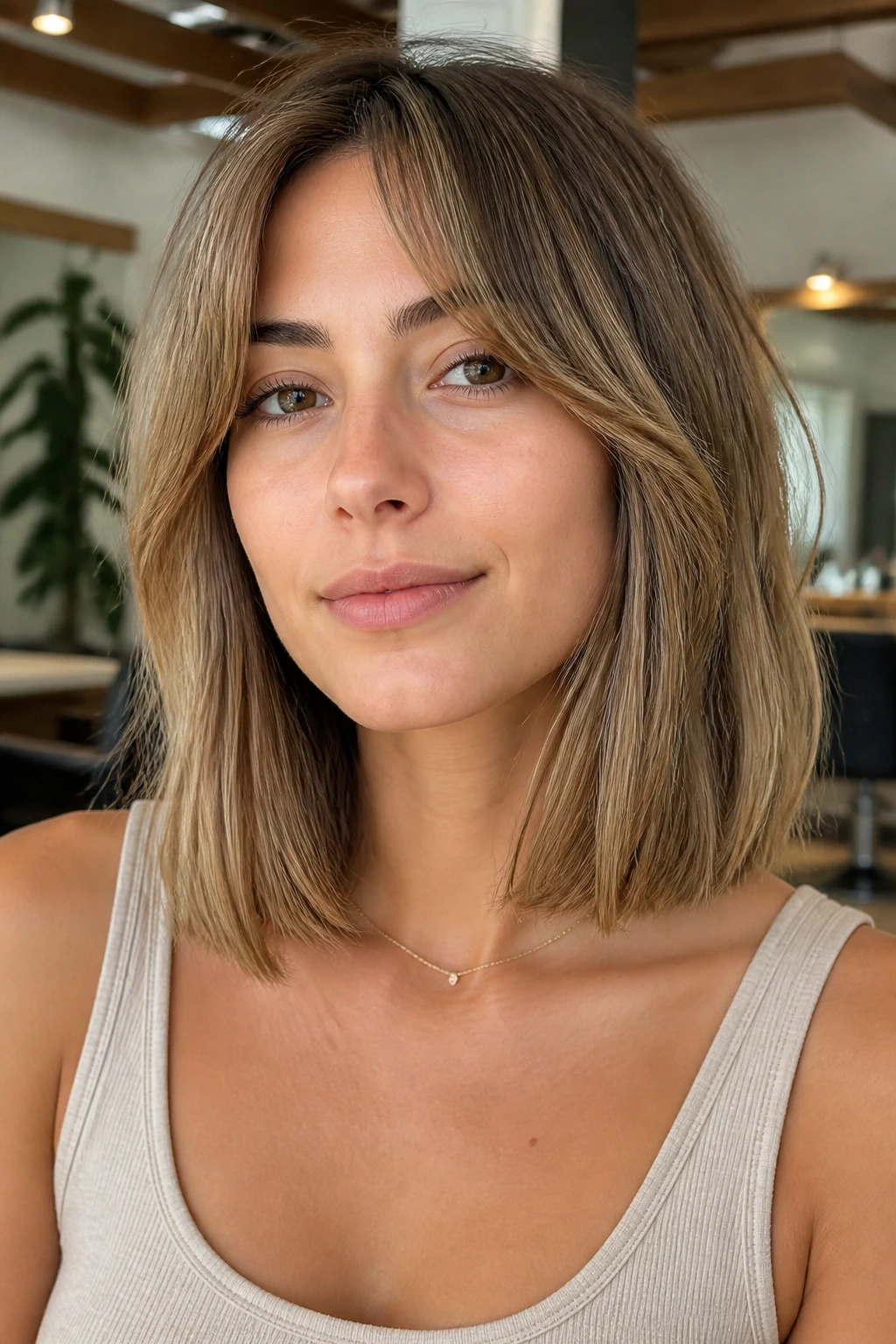
A shoulder-length cut with bangs is not just “medium hair plus fringe.” That sounds neat on paper and useless in real life. The reason these styles work is that the cut and the fringe are doing two different jobs at once. The length gives you movement, grazing the shoulders and collarbone instead of hanging into your elbows. The bangs control the front of the haircut, which is where people actually see your hair first.
That split of labor matters. If the front is too heavy, the whole cut feels boxed in. If the bangs are too thin, they disappear into the rest of the hair and stop doing anything useful. The best shoulder-length hairstyles with bangs keep one eye on balance and the other on texture. Smooth hair needs different framing than wavy hair. Thick hair wants weight removed in the right places. Fine hair wants the perimeter left dense enough to look like it has some body.
A good stylist will usually talk about where your hair falls when it air-dries, where the cowlick sits, and whether your fringe wants to split at the middle. Those details sound small. They’re not. They decide whether the cut lies flat by lunch or holds its shape long enough to matter.
Essential Tools for These Hairstyles
-
1-inch flat iron: Best for bending curtain bangs, smoothing a side sweep, or flipping the ends under without making the whole cut look overworked.
-
1.5-inch round brush: Useful for blowouts, especially on full fringe, feathered layers, and the front pieces of a lob.
-
Blow-dryer with a nozzle: The nozzle matters. It directs airflow so bangs dry where you want them instead of puffing out in all directions.
-
Diffuser: A must for curly, wavy, or textured hair if you want the fringe to keep its shape without frizzing up.
-
Heat protectant spray or cream: Non-negotiable if you use hot tools. Bangs sit right on the face and usually get the most heat.
-
Texturizing spray: Helps piecey fringes, shags, and razored cuts stay separated instead of clumping.
-
Lightweight mousse: Good for root lift and body, especially if your hair likes to collapse near the scalp.
-
Duckbill clips: Handy for setting bangs in place while they cool after blow-drying. That cooling step makes a bigger difference than people expect.
-
Wide-tooth comb and paddle brush: Each has its place; the comb is gentler on curls, and the paddle brush is faster for smoothing longer sections.
Smart Salon Notes and Product Picks
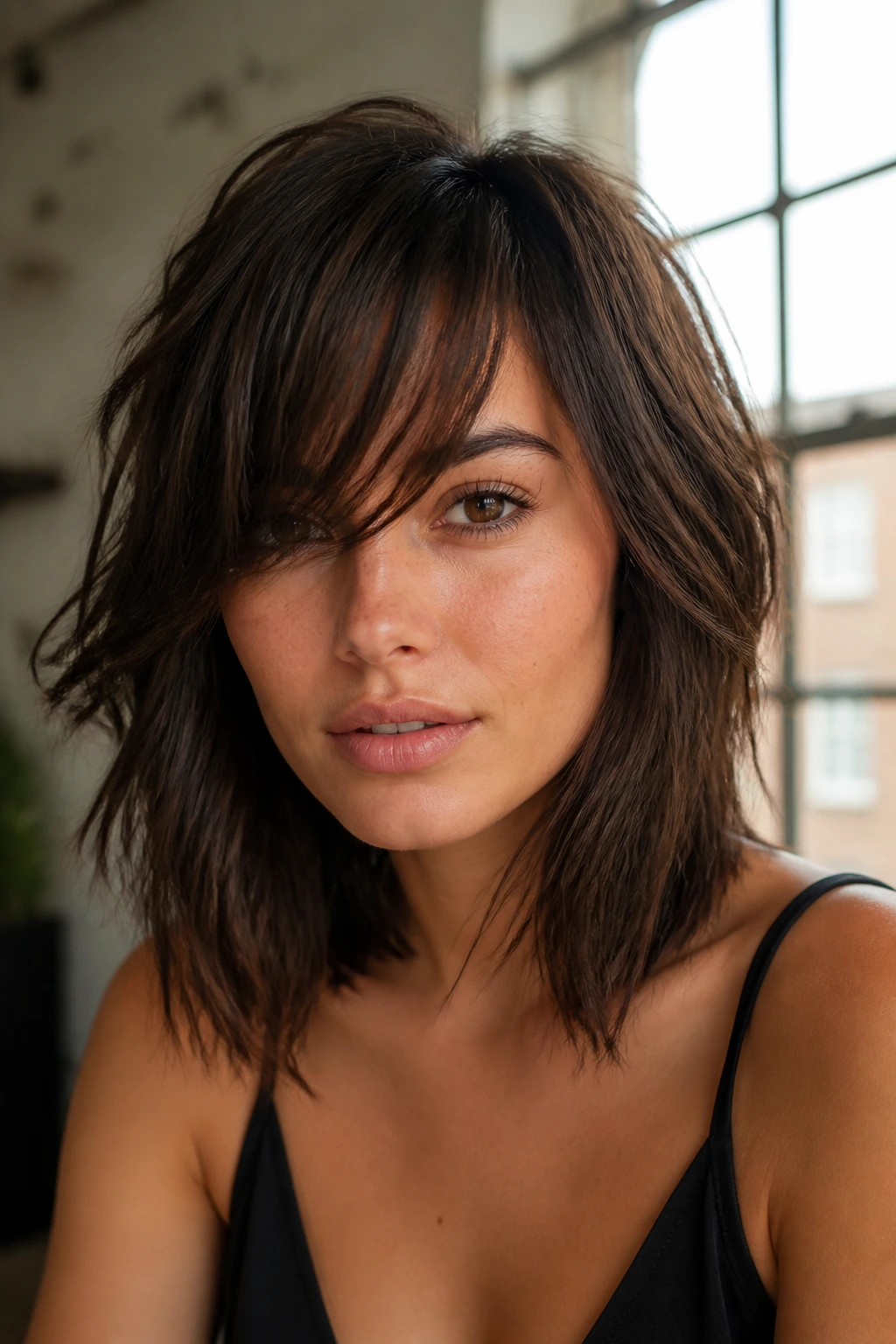
The most useful thing you can bring to a stylist is not one perfect photo. It’s two or three photos that show the same haircut from different angles, plus a plain statement about what your hair does when it’s left alone. Does the front split? Does the crown puff up? Do your bangs dry in five minutes or fifteen? That matters more than saying you want “something flattering,” which is too vague to help anyone.
For product choices, think in terms of weight. Fine hair usually needs mousse, root spray, or a light mist of texturizer, not a heavy cream that will make the bangs droop by noon. Thick hair often needs smoothing cream, a good blow-dry balm, or a little serum on the ends to keep the shape from expanding outward. Curly hair usually does better with curl cream, gel, or a soft hold foam that keeps the fringe together while it dries.
If you use dry shampoo, pick one that doesn’t leave a chalky cast unless your hair is light enough to hide it. Bangs pick up oil fast because they sit on the skin. That’s not a moral failing. It’s just hair touching a forehead all day. A small brush of dry shampoo at the roots of the fringe can buy you another day before washing.
And if you’re choosing bangs for the first time, do not ask for the shortest version of the photo you saved. Ask for the version that gives you room. Shoulder-length hair with bangs looks best when the fringe can breathe.
How to Style and Wear Them
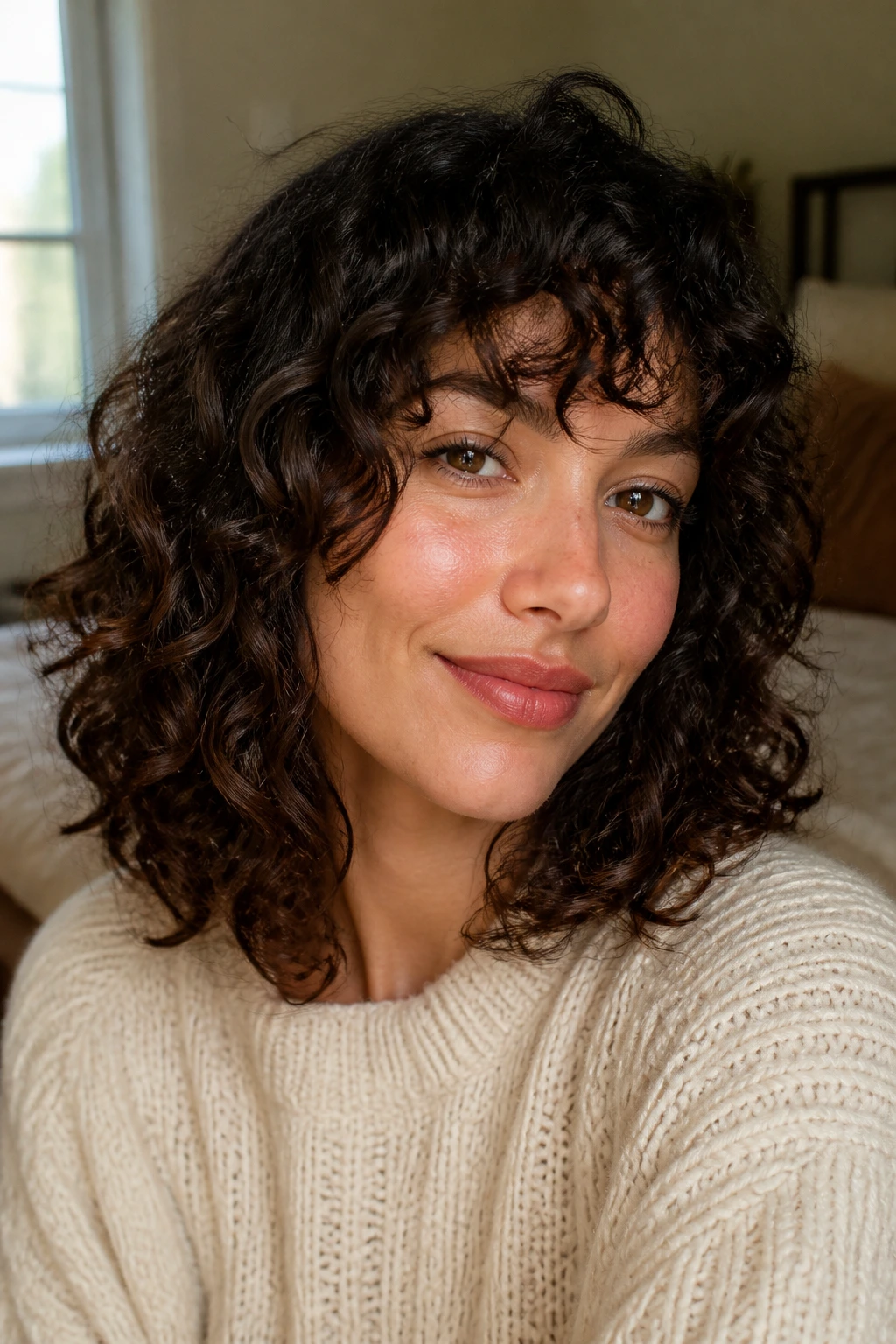
Everyday Finish:
For school runs, office mornings, or days when you want your hair to behave, keep the bangs soft and the ends controlled. A quick blow-dry at the front and a little curve at the shoulder line usually beats a full round-brush production.
Polished Finish:
If you want the cut to look sharper, smooth the top layers with a flat iron and tuck one side behind the ear. The shape reads cleaner when the bangs are separated from the rest of the hair by a defined part.
Texture Direction:
Wave-forward cuts like shags, wolf cuts, and razored lobs look best with some visible separation. That means texturizing spray through the mid-lengths, not a thick serum that glues everything together.
Best Pairings:
Hoop earrings, high necklines, and structured jackets all work well with bangs because they echo the framing at the face. A soft scarf can also be nice, as long as it doesn’t crush the fringe flat against the forehead.
A good rule: if the haircut is already full around the cheeks, keep the rest of your styling a little lighter. If the cut is sleek and blunt, you can afford a bolder makeup look or stronger accessories. The hair will hold the line.
Styling Tricks and Personal Tweaks
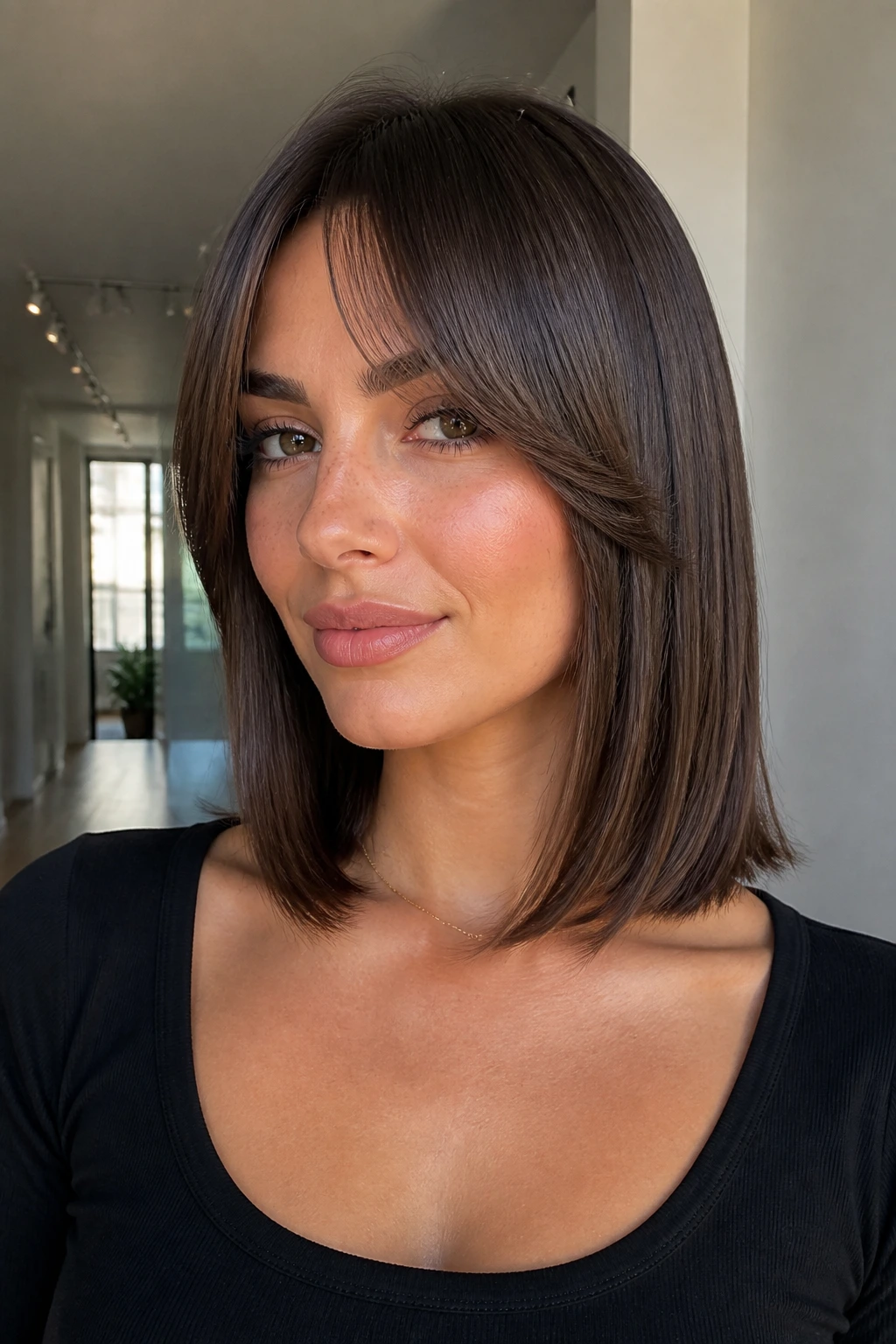
Volume Boost:
Flip the hair upside down for the first minute of drying, then finish the bangs with a round brush. That gives the roots lift without turning the fringe into a helmet.
Fringe Control:
If your bangs separate in the middle, clip them side to side while they cool. That tiny reset can calm a stubborn cowlick better than another round of heat.
Texture Play:
Use a dime-sized amount of paste on the ends of piecey cuts, then pinch the front sections with your fingers. Too much product turns the whole thing sticky. A little gives shape. A lot gives regret.
Make-It-Yours:
For fine hair, keep the bangs airy and the ends blunt enough to look full. For thick hair, ask for internal shaping so the shoulders don’t become a wide triangle. For curly hair, let the bangs be curly. Fighting that texture is a waste of time.
Color can help too. A few lighter pieces around the fringe can make curtain bangs and side sweeps stand out without needing extra heat styling. Darker roots with softer ends can add depth to shags and lobs. Small shifts. Big payoff.
Keeping the Cut in Shape Between Trims
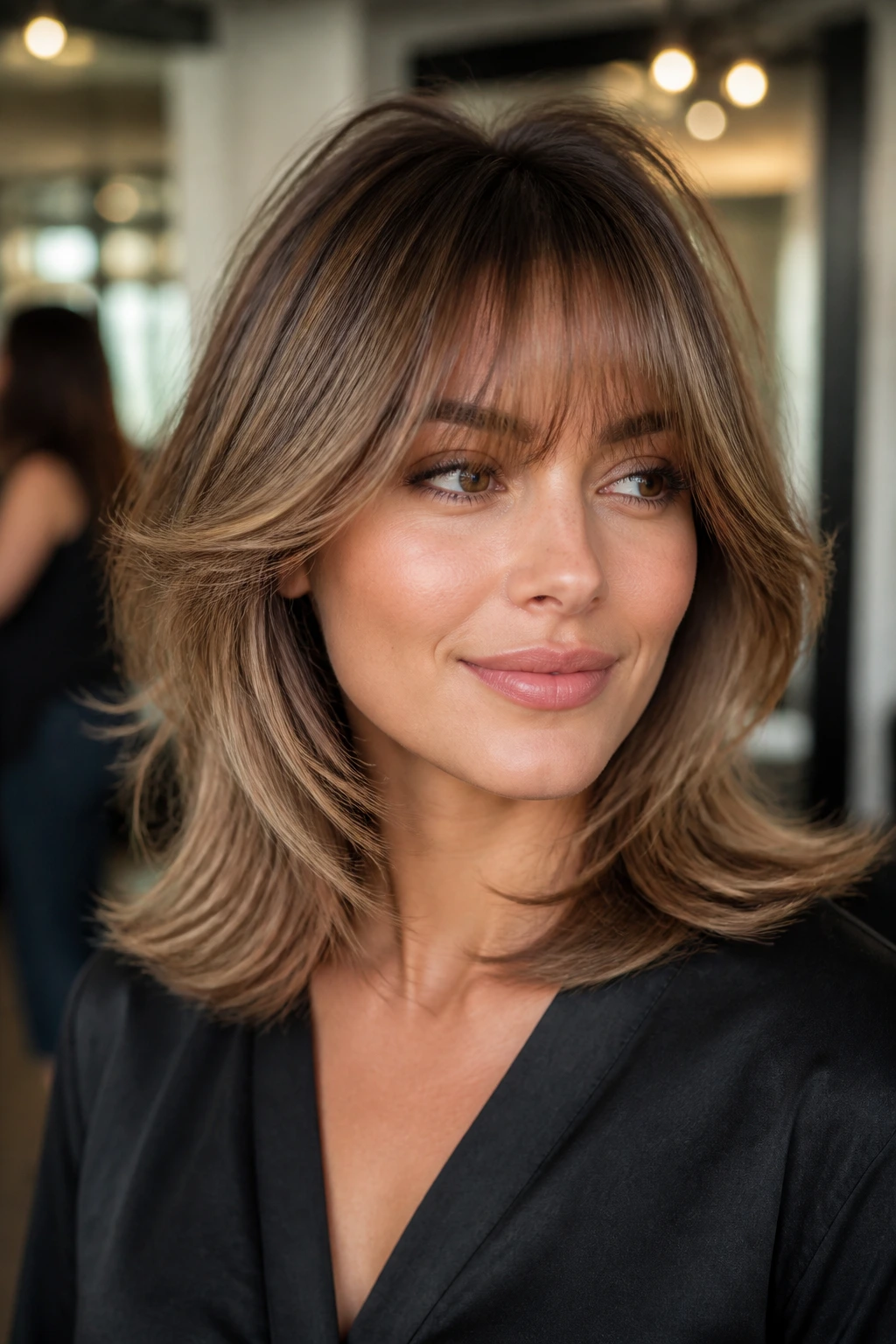
Bangs ask for more maintenance than the rest of the cut. That’s the deal. Full blunt fringe often needs a trim every 2 to 4 weeks if you want it to stay eyebrow-skimming instead of eye-grazing. Curtain bangs and side-swept fringe usually buy you more time, often 4 to 6 weeks, because the grow-out blends into the rest of the haircut. The shoulder-length body itself usually wants a refresh every 8 to 12 weeks, depending on how blunt or layered the shape is.
At home, the easiest way to stretch a style is to keep the fringe from getting greasy. Bangs touch skin, touch makeup, touch sweat, and collect oil faster than the rest of the head. A dry shampoo puffed lightly at the roots can keep them from sticking together. If you have curly or wavy bangs, mist them with water and a little leave-in before reshaping rather than dragging a brush through them dry.
Sleep matters too. If your bangs get flattened overnight, pin them back loosely or split them to either side before bed. A silk pillowcase helps, but it won’t save a fringe that was already stretched weirdly while you slept on it. On wash days, dry the bangs first. They set the tone for the whole look.
Common Mistakes That Throw the Shape Off
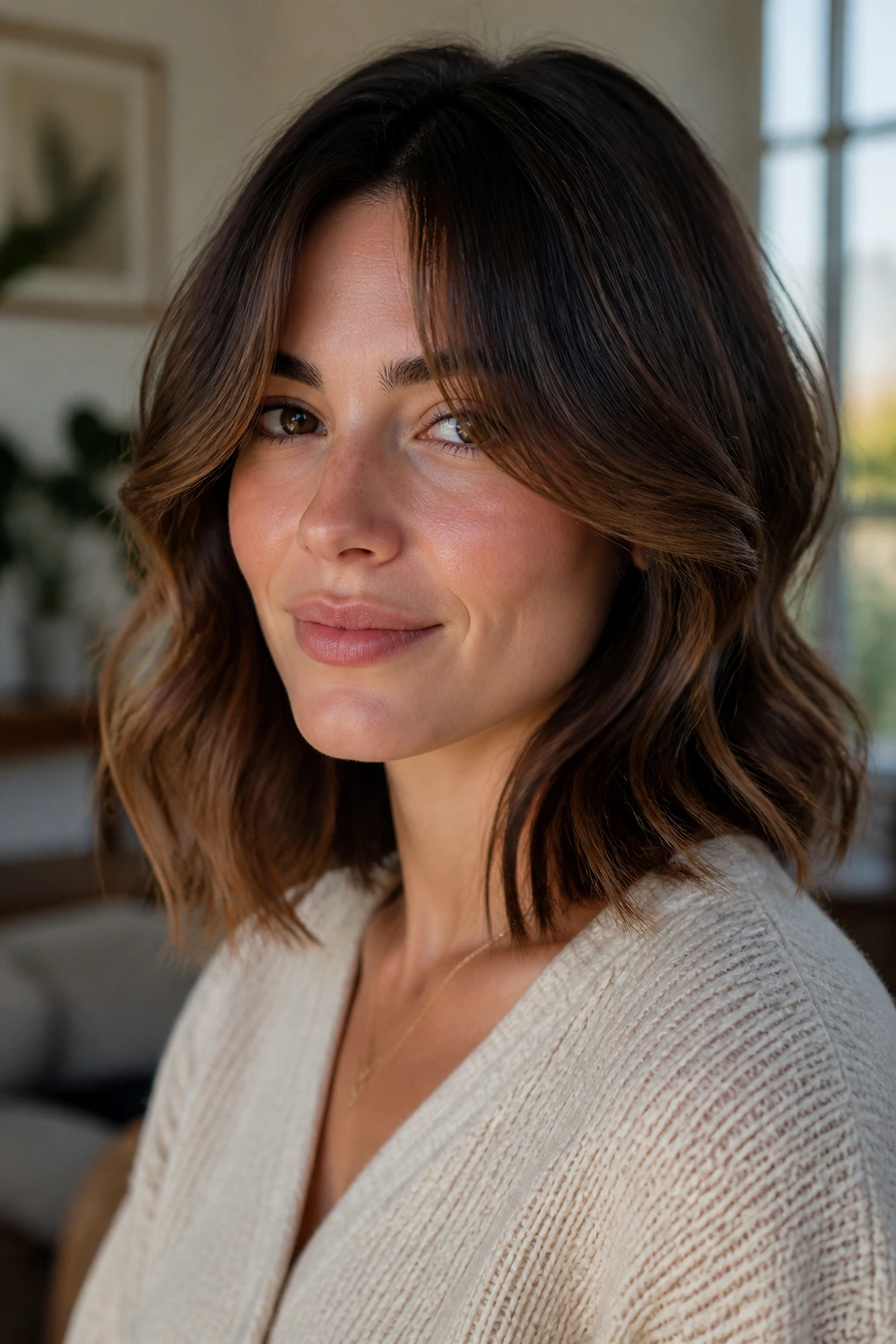
Cutting the bangs too short on wet hair is the classic misstep. Hair springs up as it dries, and what looked like a flattering fringe in the chair can turn into a too-short strip by lunchtime. Ask for a dry check if your hair has any wave, shrinkage, or cowlicks.
Letting the layers and the fringe fight each other is another one. If the front pieces are too heavy and the bangs are too blunt, the haircut loses its flow. The fix is balance: either soften the front or sharpen the fringe, but don’t stack heavy on heavy.
Using too much heat on the bangs can leave them flat, fried, or oddly puffy at the ends. They need less time than the rest of the hair. A few seconds of tension with the brush, then a cool shot, usually does more than repeatedly blasting them hot.
Skipping product on fine hair can make the whole style collapse. Fine strands often need a light mousse or root spray to keep the front from separating into thin wisps. Without that support, the bangs can disappear into the haircut.
Overloading thick hair with cream creates the opposite problem. The fringe gets heavy and the shoulders broaden out. Use smoothing product sparingly and keep the densest application at the mid-lengths and ends, not the roots.
Ignoring your part is the quiet one. A fringe that sits beautifully on one side may look wrong if you force it against a natural cowlick. Work with the part, not against it. Life is too short for a fight with your own hairline.
Variations and Adaptations to Try
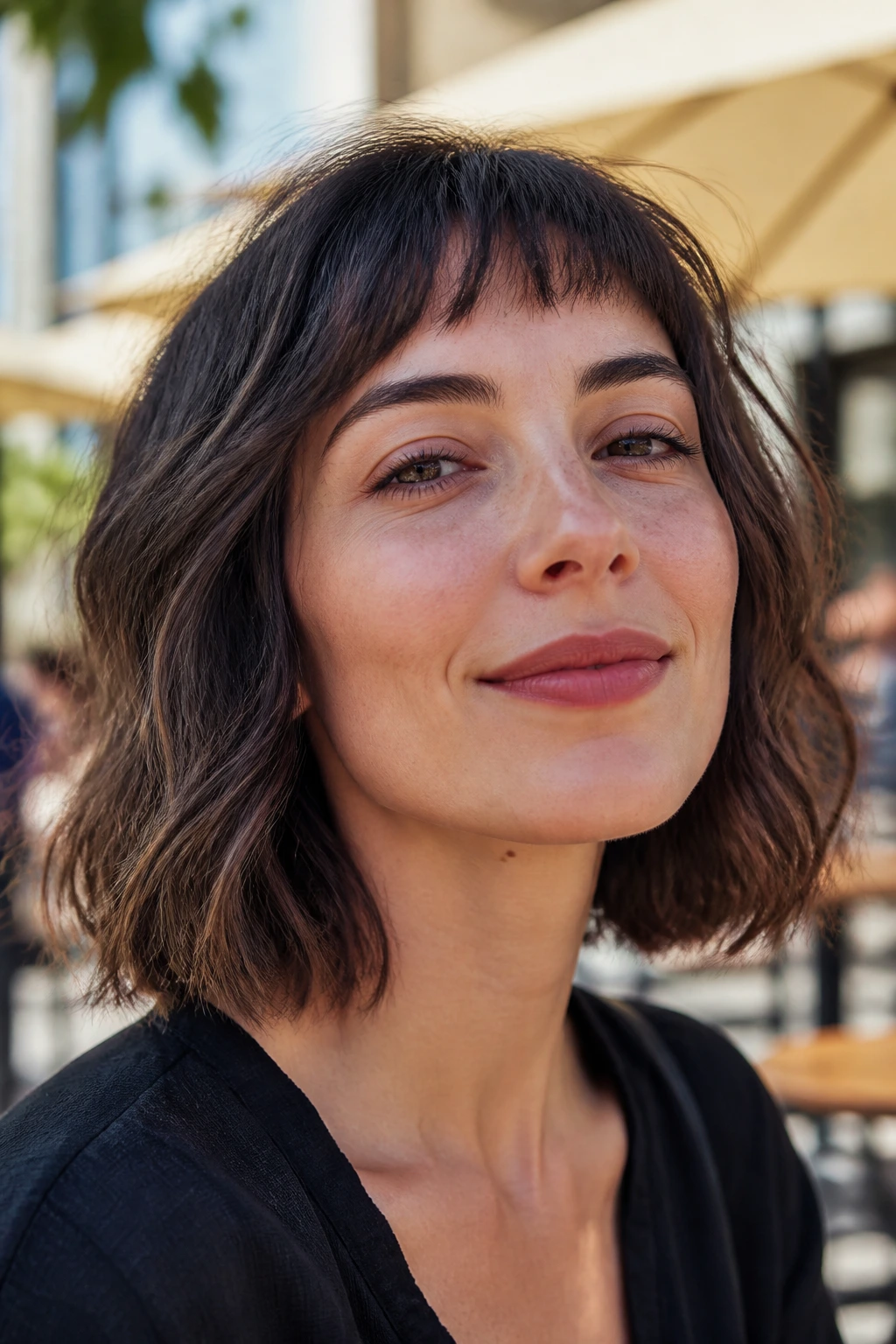
Soft Grow-Out Fringe:
If you’re between bang lengths, ask for face-framing pieces that start around the brow and taper to the cheekbones. This keeps the haircut looking intentional while the fringe lengthens.
Curly-Friendly Shape:
For curls, keep the shoulder length rounded and leave the fringe long enough to shrink into place. A dry cut is usually the safer call here, because curl spring changes everything.
Fine-Hair Booster Cut:
Keep the perimeter blunt, the layers minimal, and the bangs airy. This gives the illusion of density without dragging the haircut down.
Thick-Hair Tamer Cut:
Ask for internal weight removal and softer bang edges. Thick hair can handle a strong shape, but it needs space to move or the cut gets boxy.
Low-Heat Version:
Choose a cut that looks good air-dried: a soft shag, split fringe, or blended curtain bang. Then use a leave-in and a light cream instead of chasing a perfect blowout.
Edgy Street Cut:
Go for a wolfier shoulder line, more texture through the ends, and a piecey fringe. It’s bolder, but the shoulder length keeps it wearable.
Frequently Asked Questions
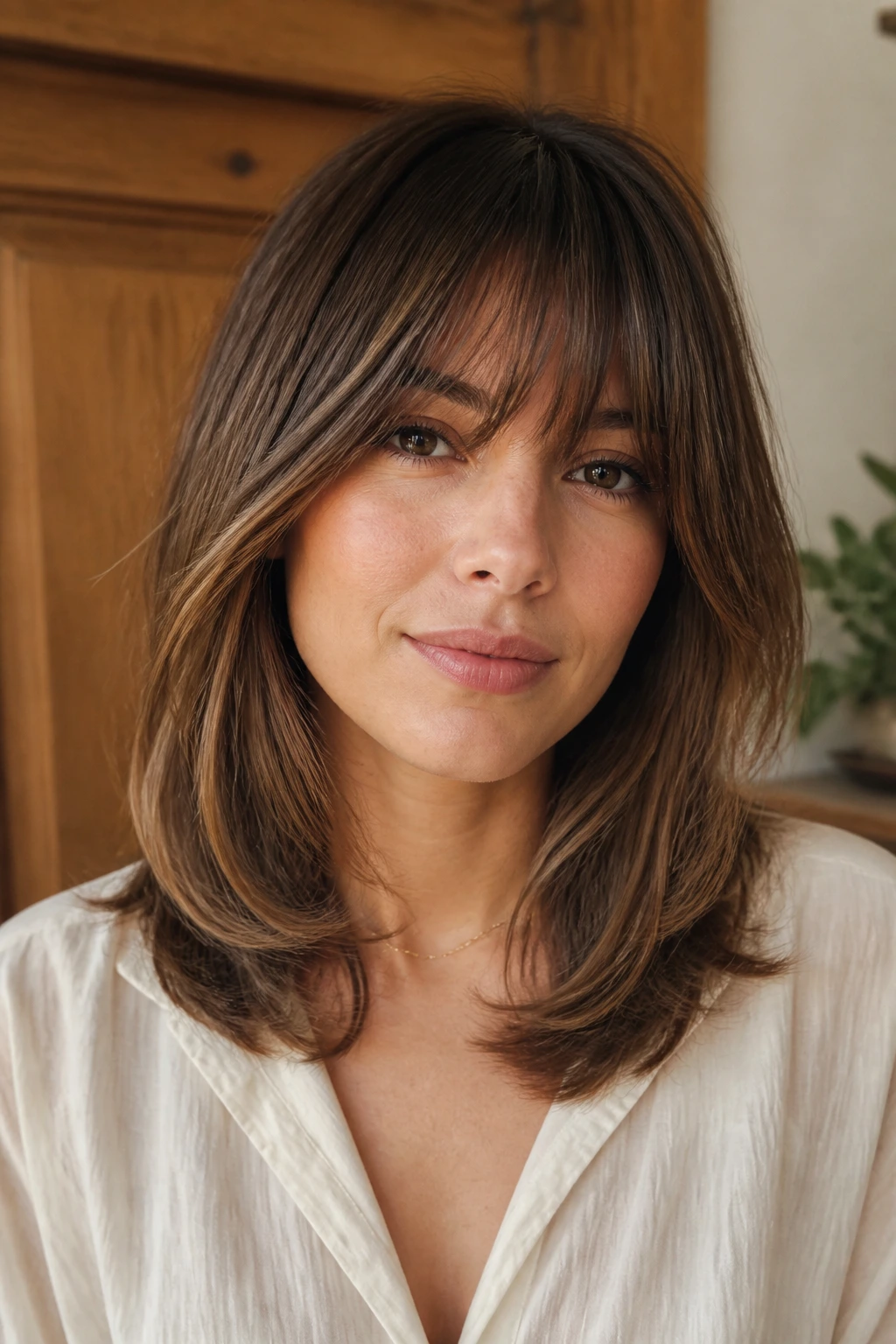
Which face shapes suit shoulder-length hair with bangs best?
Most face shapes can wear it if the fringe shape matches the features. Round faces often like curtain bangs or a side sweep, while longer faces usually do well with a fuller fringe or softer curtain shape that shortens the vertical line.
Are curtain bangs easier to maintain than blunt bangs?
Usually, yes. Curtain bangs grow out more softly and can be tucked into the rest of the haircut, while blunt bangs need more frequent trims to keep their line from dropping into your eyes.
Can curly hair pull off shoulder-length bangs without looking puffy?
It can, but the fringe has to be cut with the curl pattern in mind. A dry cut, light shaping, and the right product on the front pieces make a big difference; otherwise the bangs can spring up and spread out more than you want.
What if my bangs separate because of a cowlick?
Work with a centered or slightly off-center part and set the fringe with clips while it cools after drying. If the cowlick is strong, a softer curtain bang or side-swept fringe will usually behave better than a blunt straight-across cut.
How often do shoulder-length bangs need a trim?
Blunt fringe often needs attention every 2 to 4 weeks. Curtain or side-swept bangs can usually go longer, around 4 to 6 weeks, because the shape is more forgiving as it grows.
Can I wear this length if my hair is very thick?
Absolutely, but ask for internal shaping so the sides don’t balloon outward. Thick hair tends to look best when the bangs are softened just enough to move and the perimeter has some weight removed.
What’s the easiest shoulder-length style with bangs for air-drying?
A soft shag, split bangs, or a lightly layered lob usually gives the best result with minimal heat. Those cuts let your natural texture do the work instead of demanding a polished finish.
How do I stop bangs from getting oily so fast?
Dry shampoo at the roots helps, but so does simply keeping your fingers out of them. Bangs pick up oil from the forehead and from touch, so a quick mid-day refresh with a small brush and a little powder or dry shampoo can make them last longer.
The Shape That Earns Its Keep
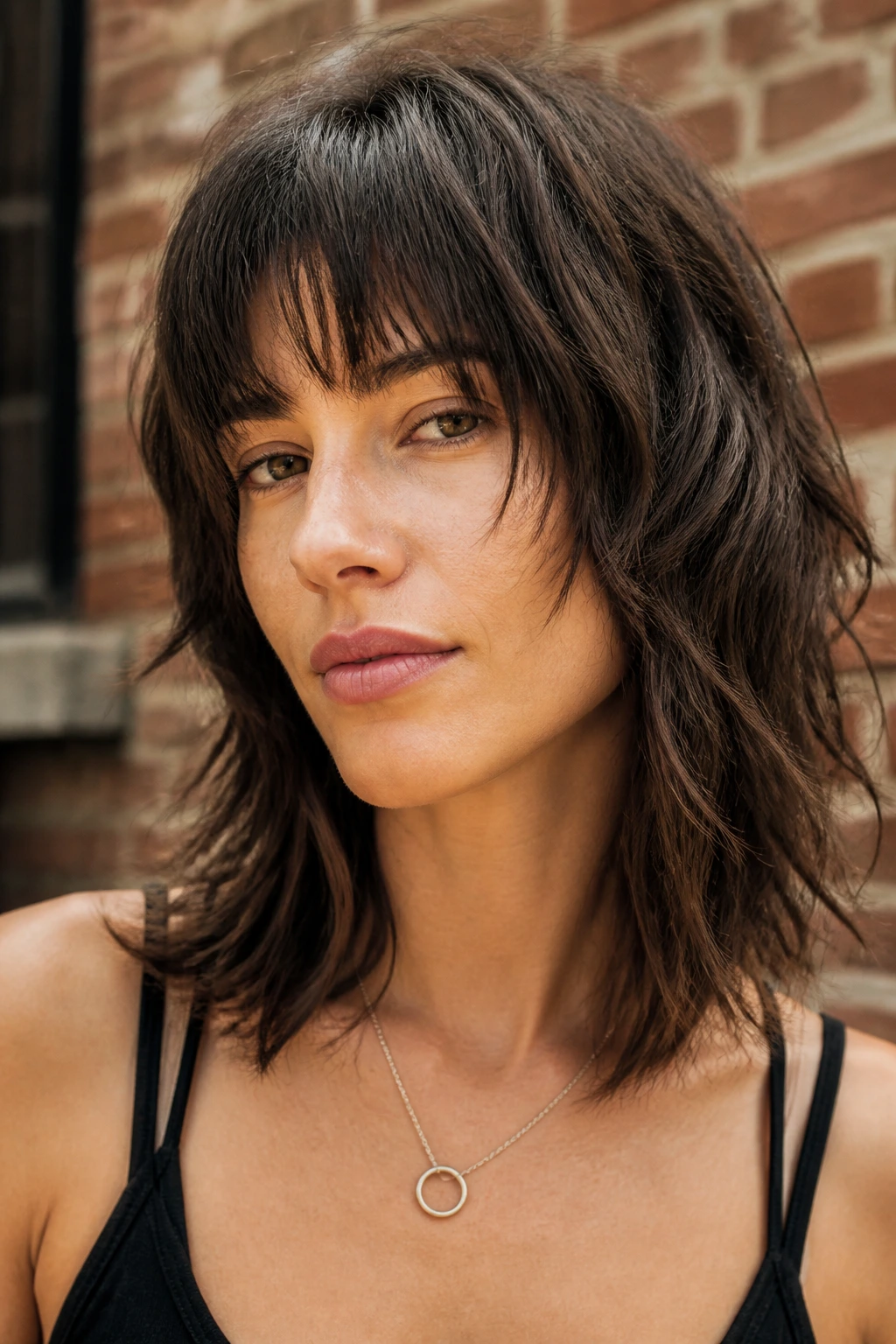
Shoulder-length hair with bangs keeps working because it gives you shape where it counts. The length is practical. The fringe changes the mood. Together, they can look sharp, soft, polished, or a little lived-in without asking for an entirely different routine every morning.
The best part is that the cut can be adjusted to the hair you already have. Straight hair, curly hair, thick hair, finer hair that needs a little support — the right version of this style does not force your texture into a fight it cannot win. It gives the front some personality and leaves the rest flexible enough to live with.
Bring a photo that matches your texture, not just your dream mood, and ask for the fringe to be cut with your actual part and cowlicks in mind. That small step saves a lot of bad bang energy later.
