



Curtain bangs on medium-length hair can do a lot of work without looking like they’re trying. The right fringe softens a strong jaw, breaks up a blunt lob, and gives shoulder-skimming hair a little swing around the face that plain length never quite manages on its own. The wrong fringe, though, lands in that awkward strip between brows and cheekbones and spends the next six weeks poking at your eyelashes.
Medium-length hair is a good partner for this kind of cut because it has enough weight to keep the bangs from floating apart, but not so much length that the front pieces get dragged flat. That balance matters. A curtain fringe needs room to bend away from the face, sweep back, and tuck behind the ear without turning into a random side bang that lost its way.
The real magic is in the shape. Some versions are soft and airy, some are dense and dramatic, and some barely announce themselves until you blow-dry them forward and let them fall open. A good stylist can shift the shortest point by half an inch and change the whole mood. Tiny difference. Big effect.
Why These 38 Curtain Bang Styles Work So Well on Medium-Length Hair
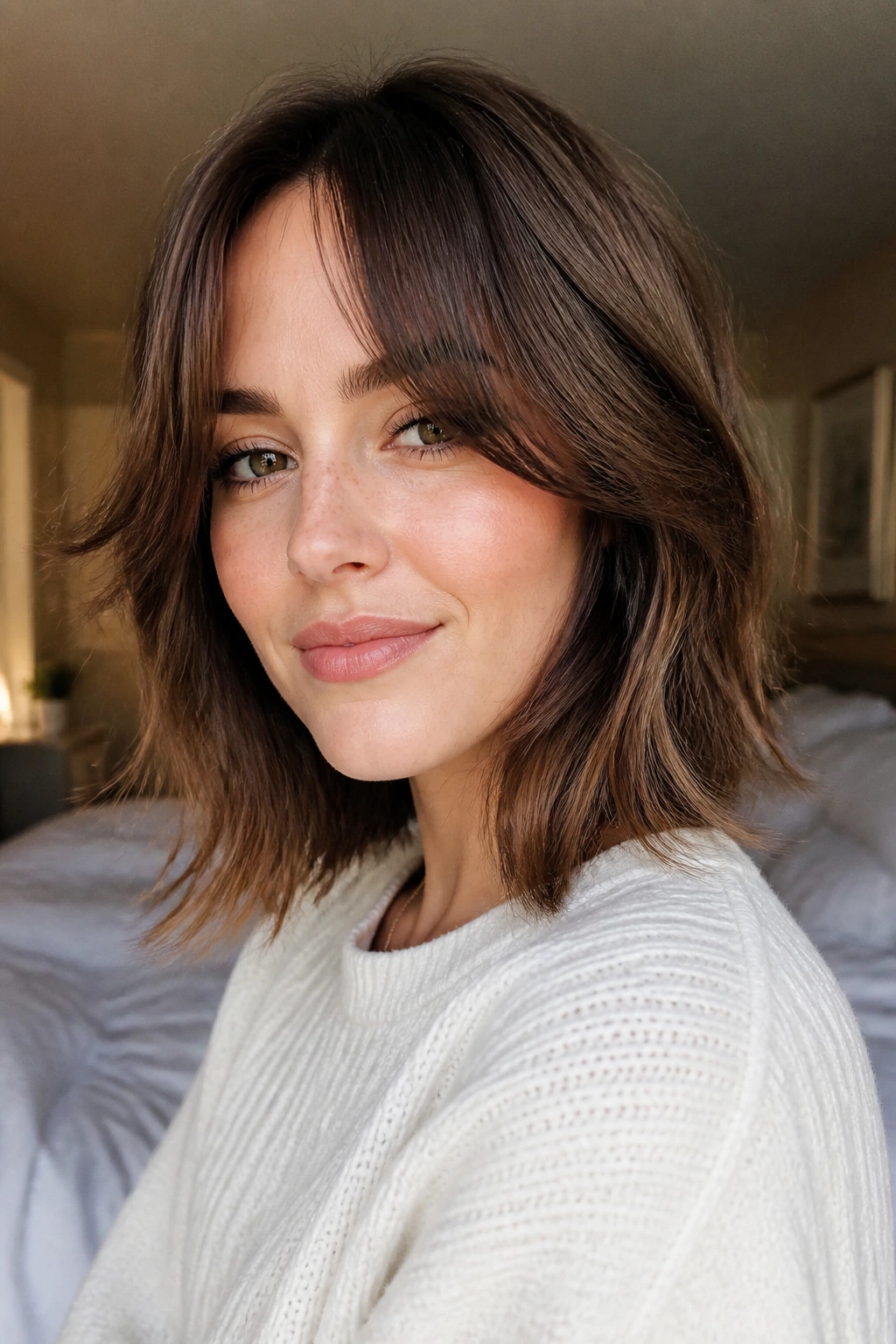
-
The length gives the fringe somewhere to land: Medium-length hair lets curtain bangs blend into the sides instead of hanging like a separate piece, which keeps the cut looking intentional as it grows out.
-
You can go soft or bold without a full haircut overhaul: A small change in where the split starts, how heavy the center is, or how far the sides drop can move the style from barely-there to high-drama.
-
They play nicely with lob cuts and layered shags: Shoulder-length and collarbone-length hair already has movement, so curtain bangs slot in without forcing the rest of the cut to change shape.
-
Styling can be quick or polished: A round brush and blow-dryer give a smooth bend in a couple of minutes, while air-drying with a little mousse creates a looser, piecey finish.
-
The grow-out is forgiving: Even when the bangs pass the “freshly cut” stage, they usually melt into face-framing layers instead of looking chopped off and stuck there.
1. Cheekbone-Skimming Curtain Bangs
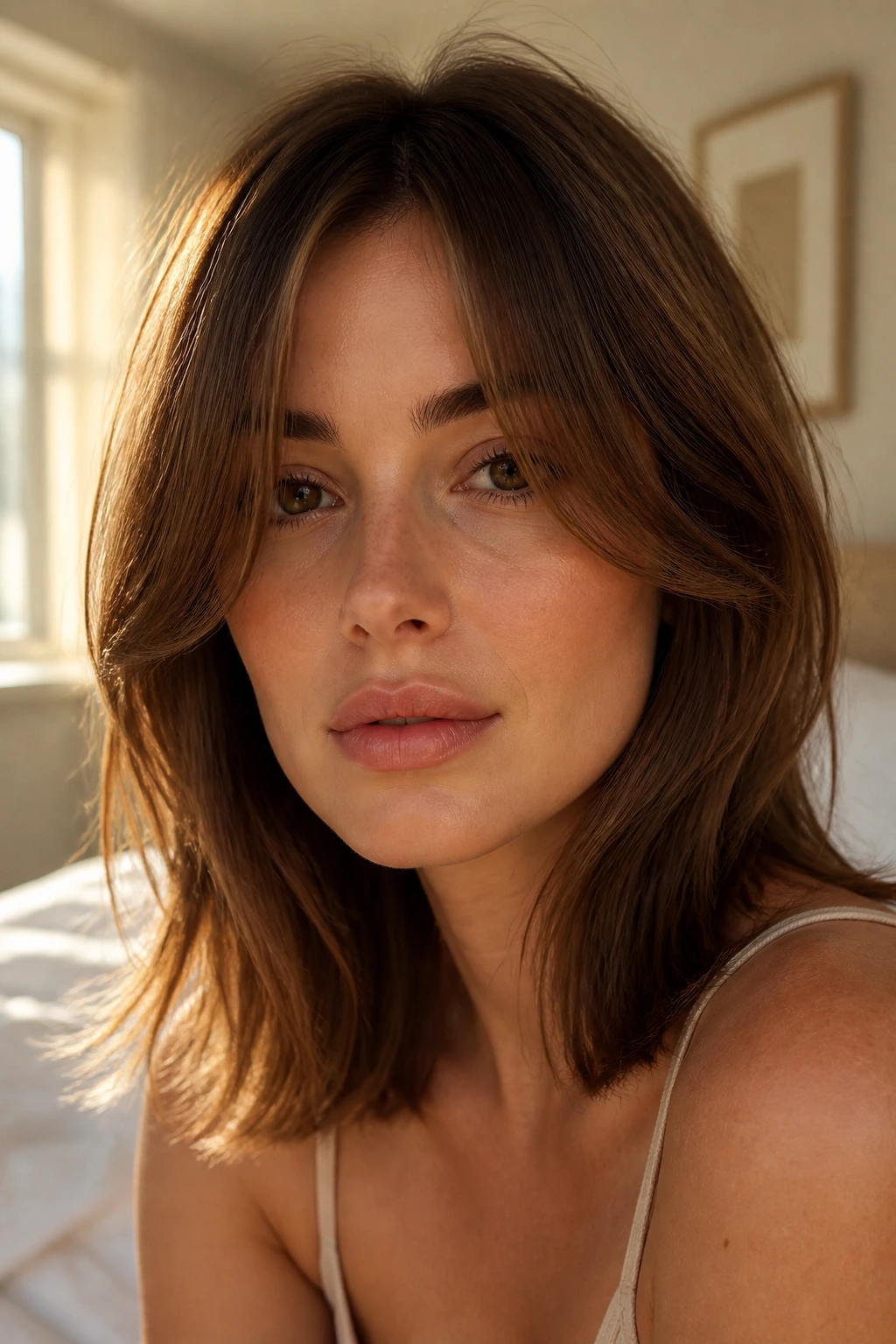
These are the cleanest starting point if you want curtain bangs on medium-length hair without going too short. The shortest pieces sit around the top of the cheekbone, so the fringe lifts the face instead of crowding it. It’s a soft shape, not a dramatic one, and that’s exactly why it behaves well with lob-length hair.
Ask for point-cut ends and a center opening that starts narrow at the top and widens below the eyes. That keeps the fringe from flaring out like a triangle. On wash day, a quick blow-dry with a medium round brush is enough to push the front pieces away from the forehead and let them curve toward the jaw.
2. Bottleneck Curtain Bangs
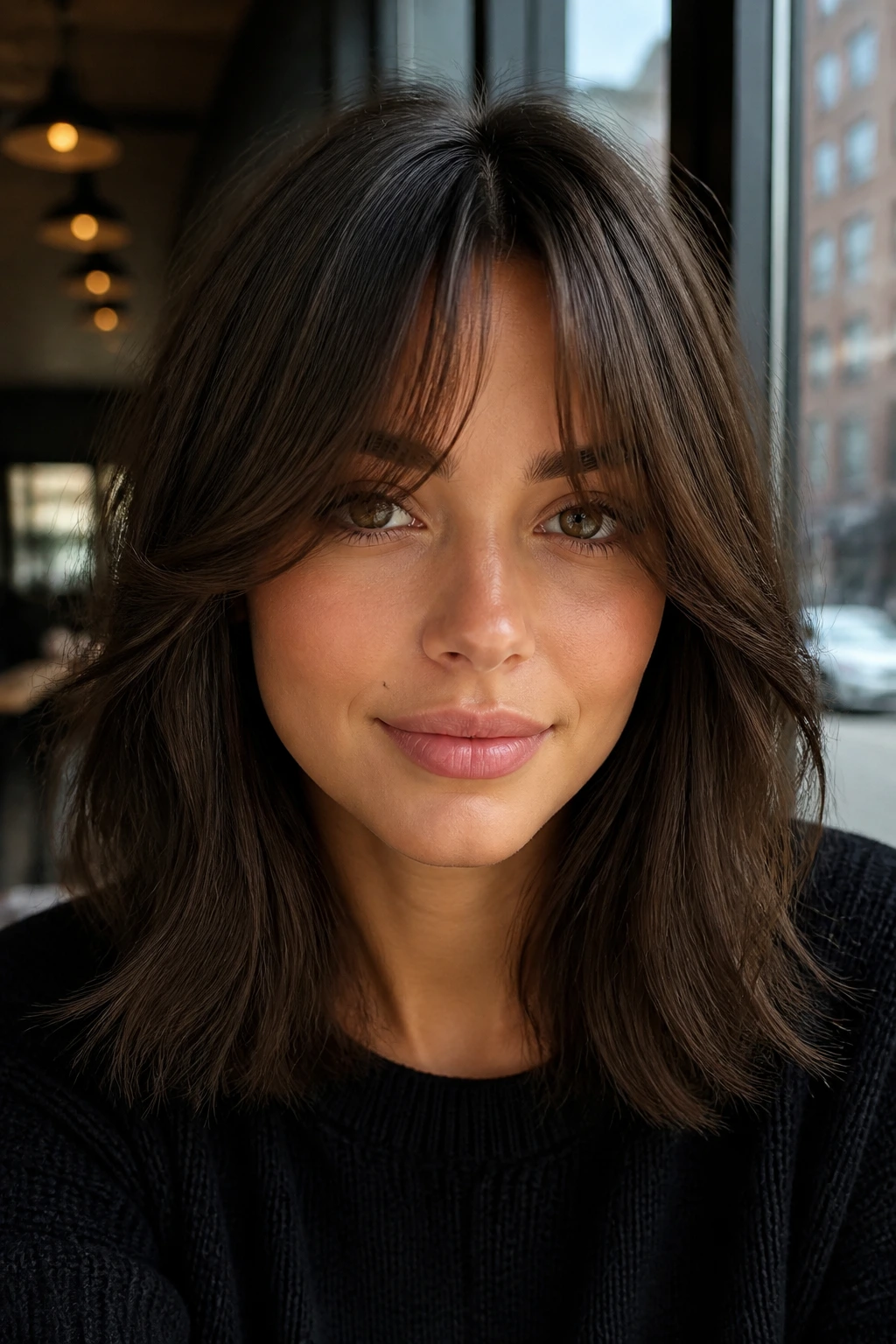
Bottleneck bangs narrow near the part and open farther out, almost like the shape of a bottle neck if you squint at it in a mirror. On medium-length hair, that shape gives you a little more fullness in the center without making the fringe look heavy. It’s a smart pick if you want something a touch more defined than wispy curtains.
The trick is keeping the center slightly shorter than the rest while the outer corners get longer and softer. That lets the bangs sit close to the brow before fanning outward over the cheekbones. The look reads polished even when the rest of the hair is air-dried and a bit messy.
3. The ’90s Blowout Fringe
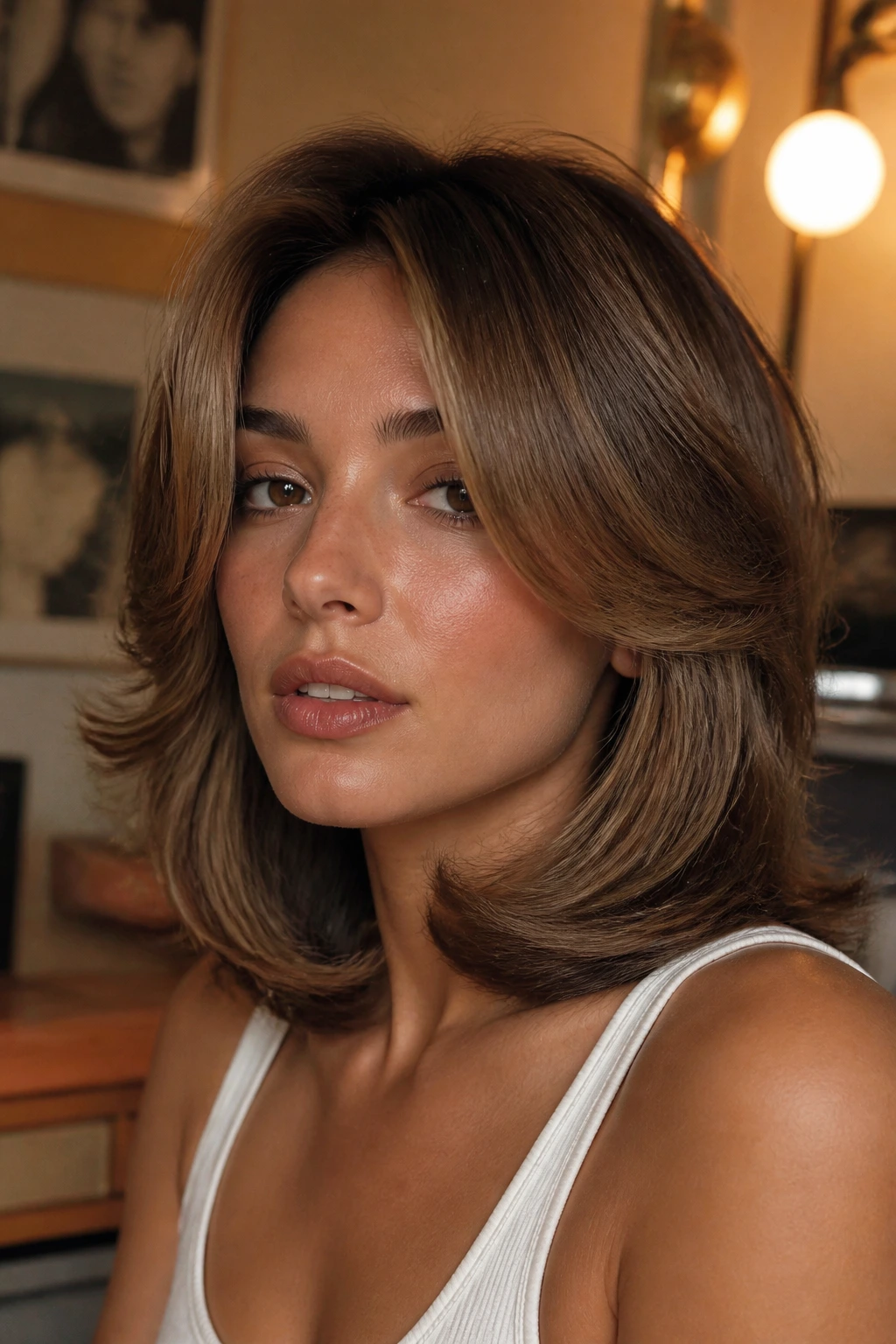
This is the version that looks like it has its own appointment with a round brush. The center opens neatly, the sides swoop away from the face, and the ends flip under just enough to catch the jawline. On medium-length hair, that shape makes even a plain one-length cut look like it has spent time in a good salon chair.
Why it works
The ’90s blowout version needs enough length in the front to hold a bend, which medium-length hair gives without a fight. If the fringe is too short, the flip can look stiff. Too long, and you lose the lifted shape.
Use a heat protectant and a brush that is about one and a half inches wide. Pull the bangs forward, then wrap each side away from the face for 10 to 15 seconds before setting them with a cool shot. That cooling step matters more than people think.
4. Razor-Sliced Curtain Bangs

Razor-sliced curtain bangs have a lighter edge and a slightly broken finish, which is useful if your hair is thick or stubbornly full through the front. The ends don’t sit in one solid line; they move in little pieces. That keeps the fringe from looking boxy against medium-length hair.
This style works best when the stylist removes weight without carving holes through the middle of the bangs. You want controlled softness, not hacked-up ends. The result is a fringe that can swing open naturally and still show some separation when you tousle it with your fingers.
5. Wispy Split Fringe
This is the gentlest version in the bunch. Wispy curtain bangs leave a bit of forehead visible and rely on lightness rather than width, so they’re a solid choice if you want to try bangs without committing to a dense block of hair. On medium-length hair, they keep the front soft while the rest of the cut does the talking.
A wispy split fringe needs to be cut with restraint. If a stylist over-thins it, the pieces go stringy fast. Keep the center just dense enough to frame the brows, then let the sides taper into the rest of the haircut. A touch of dry texture spray gives this style the faintest bit of grip without making it crunchy.
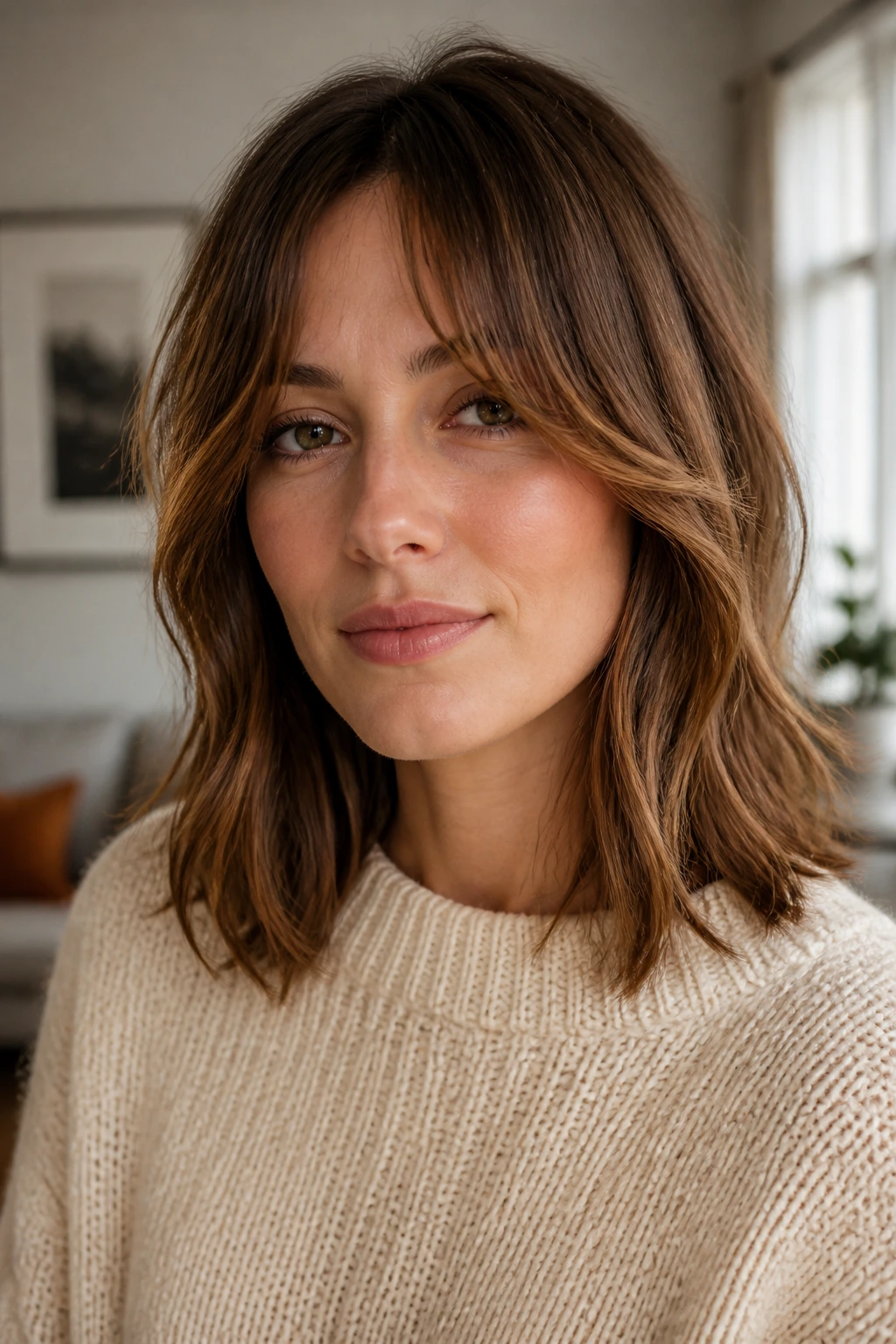
6. Feathered Curtain Bangs
Feathered curtain bangs are all about soft ends and a gentle sweep, like the front of the hair was brushed with a light hand instead of clipped into shape. That makes them especially good on medium-length layers, because the fringe and the cut can share the same movement pattern. Nothing fights for attention.
The feathering should start low, close to the cheek, not up near the brows. That keeps the fringe from looking too chopped. If your hair bends easily, this style is almost annoyingly cooperative. A quick round-brush pass and a small amount of smoothing cream will usually do it.
7. Collarbone Lob with Long Curtains
A collarbone lob gives long curtain bangs a proper stage. The front pieces skim the cheek and melt into the rest of the cut, so the bang doesn’t feel like a separate event. This is the version I reach for when someone wants face-framing without visible bang maintenance every morning.
Styling note
Ask for the shortest point to land somewhere between the outer brow and the top of the cheekbone, then let the sides fall toward the collarbone. That length gives you room to tuck the pieces behind the ear or push them aside when you don’t want to style them. It also means the fringe grows out in a graceful way, which saves you from that awkward in-between phase that many bangs create.
8. Brow-Grazing Curtain Fringe
Brow-grazing curtain bangs are a little bolder. They sit higher, show more of the eyes, and demand a neater trim schedule than the longer versions. On medium-length hair, that sharper placement can wake up a blunt cut that feels too heavy through the front.
The key is not making them blunt. They should still open at the center and soften toward the temples. If you wear glasses, this shape can work especially well because the fringe sits above the frames instead of getting caught in them. That’s a small thing. It changes the whole morning.
9. Chin-Length Face-Frame Curtains
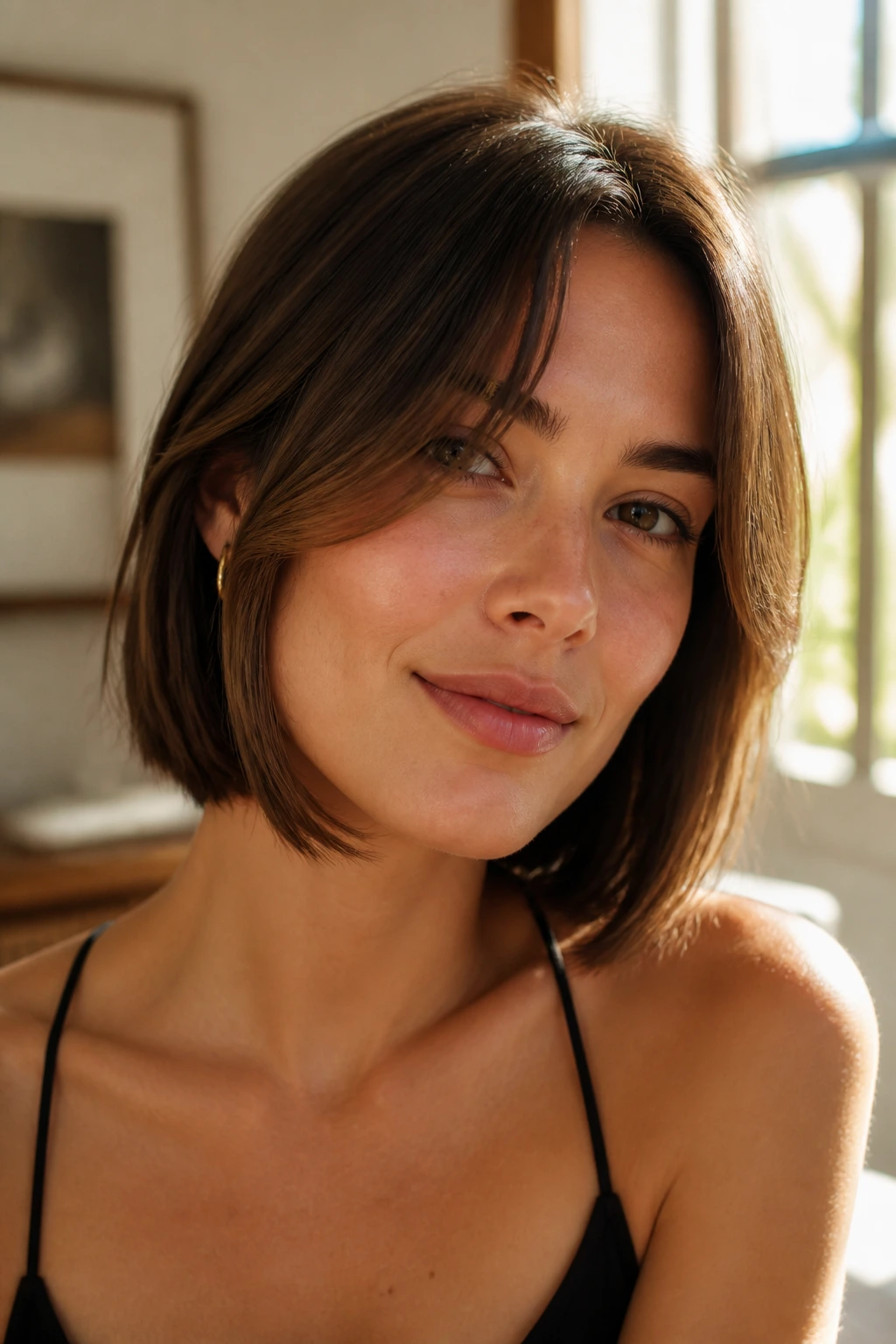
This style leans into length. The shortest pieces start higher, but the outer edges drop closer to the chin, almost like tiny front layers that happen to part in the middle. On medium-length hair, that creates a long vertical line through the face, which can make the whole cut look leaner and more deliberate.
It’s a strong choice for square or round faces when you want the front to move downward rather than spread wide. The style works best with a flat-iron bend or a soft round-brush curve so the ends don’t sit stiffly at the jaw. One pass too many, and the shape loses its easy swing.
10. Curly Curtain Bangs
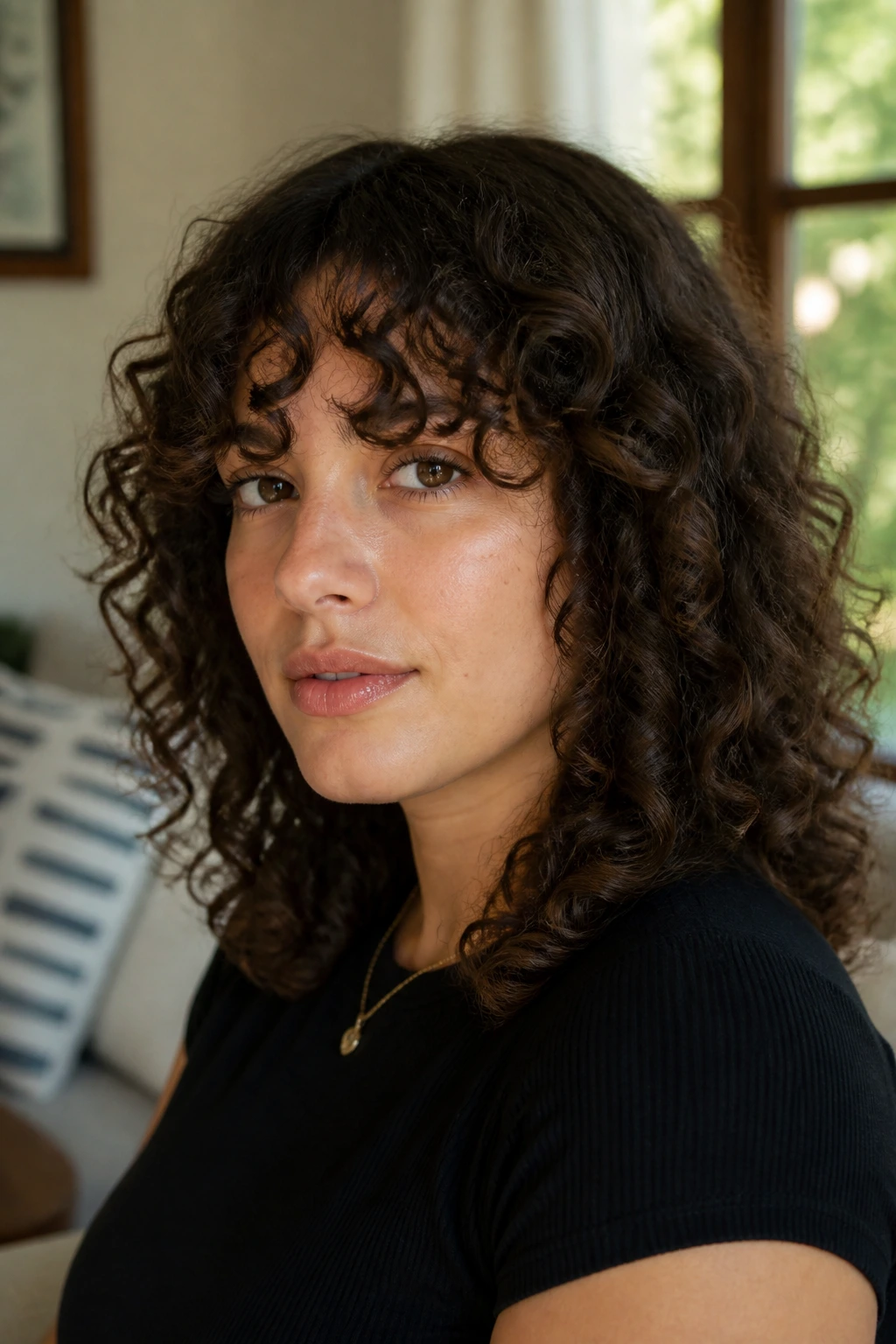
Curly curtain bangs need a different kind of respect. You cannot cut them like straight hair and expect them to behave. The split has to follow the curl pattern, and the front pieces need enough length to account for shrinkage once the hair dries. That rule matters even more on medium-length hair, where the rest of the cut already has movement.
A dry or nearly dry cut gives the best read on where the curls fall. Then you can shape the center opening with a little more confidence. If your curls spring up hard, leave the bangs longer than you think and let them settle for a wash cycle or two before making judgment.
11. Wavy Air-Dry Curtains

Wavy hair is almost cheating here. A soft curtain fringe on medium-length hair can air-dry into shape with very little help if the cut follows the wave pattern instead of trying to crush it flat. The result looks undone in a good way, not in the “I forgot to fix my hair” way.
A lightweight mousse at the roots and a pea-sized amount of cream through the ends is usually enough. Scrunch the front pieces forward, part them with your fingers, and leave them alone while they dry. If one side bends too hard, clip it away from the face for ten minutes. That tiny correction can save the whole shape.
12. Sleek Center-Part Curtains
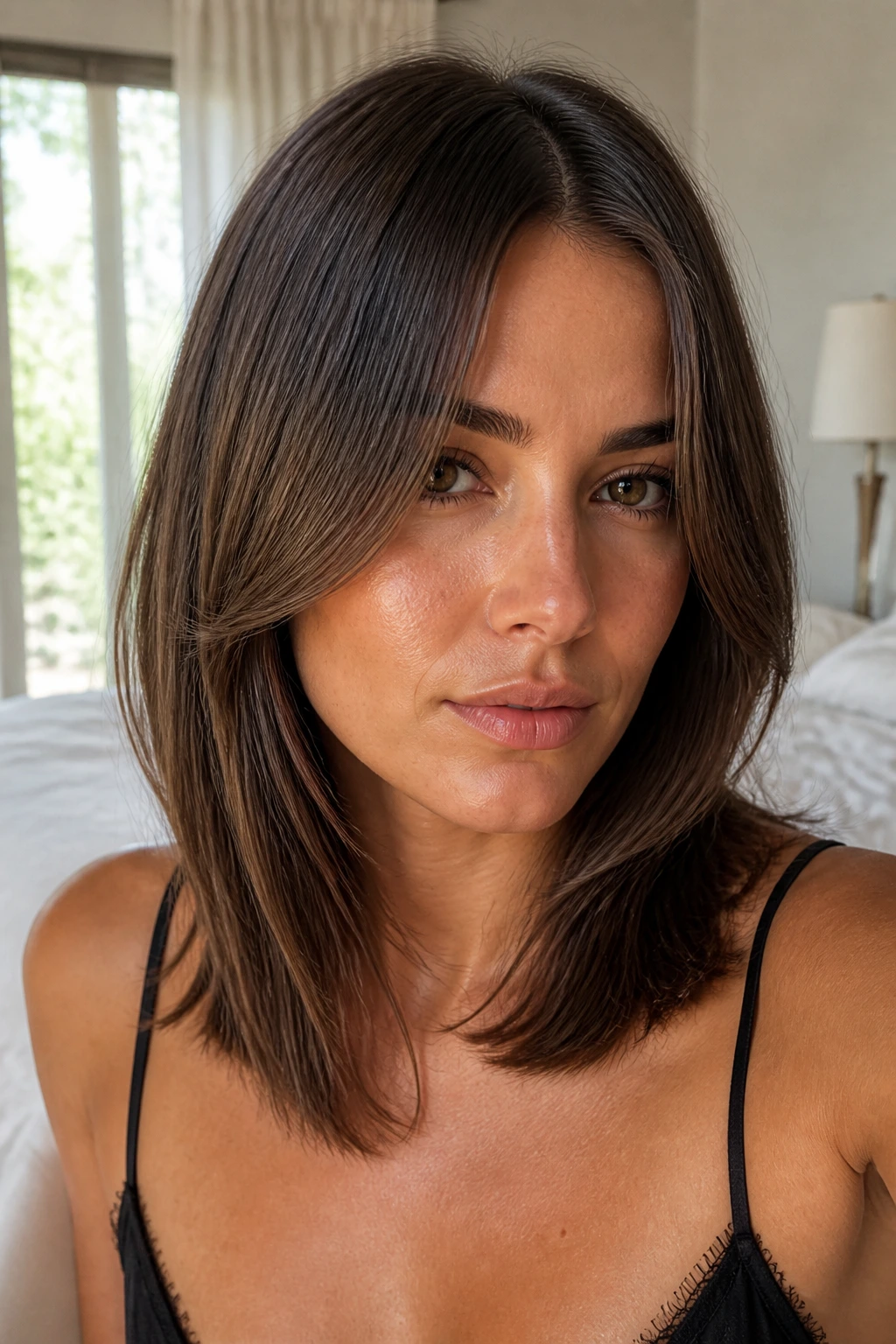
Sleek curtain bangs depend on clean lines and controlled bend. The fringe opens with a neat center part, and the sides fall like polished ribbons against medium-length hair. This is the version for people who like their hair smooth, glossy, and slightly structured.
What makes it different
The shape comes from heat, not volume. Use a flat iron to create a soft bevel at the ends rather than a hard curl, then brush everything through so the bend stays smooth. The middle should remain flat enough to frame the forehead without puffing up. If your hair is fine, a tiny root-lift spray at the front prevents the fringe from collapsing by lunch.
13. Feathered Layers with Long Front Pieces
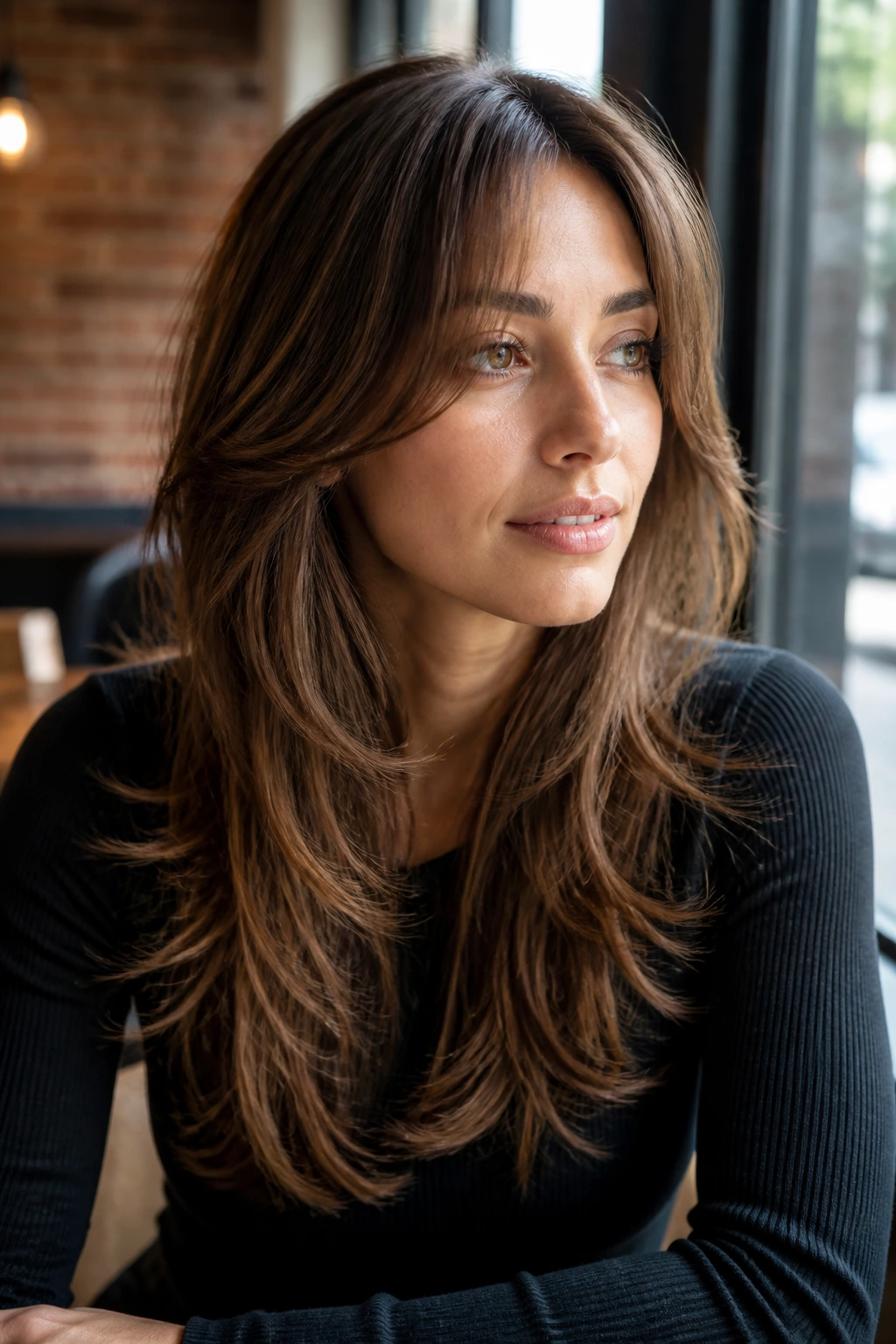
This is less of a “bang only” look and more of a whole haircut strategy. The front pieces start as part of the layers and then separate into curtain bangs as the hair falls. On medium-length hair, that blend makes the fringe feel built in rather than bolted on.
It works especially well if you hate obvious lines in a haircut. The front should move into the cheek and jaw, not stop suddenly at the eye. If you ask for too much density in the center, the style loses that soft drift. Keep the layers around the face light enough that they can fold back without standing out like a shelf.
14. Heavy Curtain Bangs with a Wide Opening
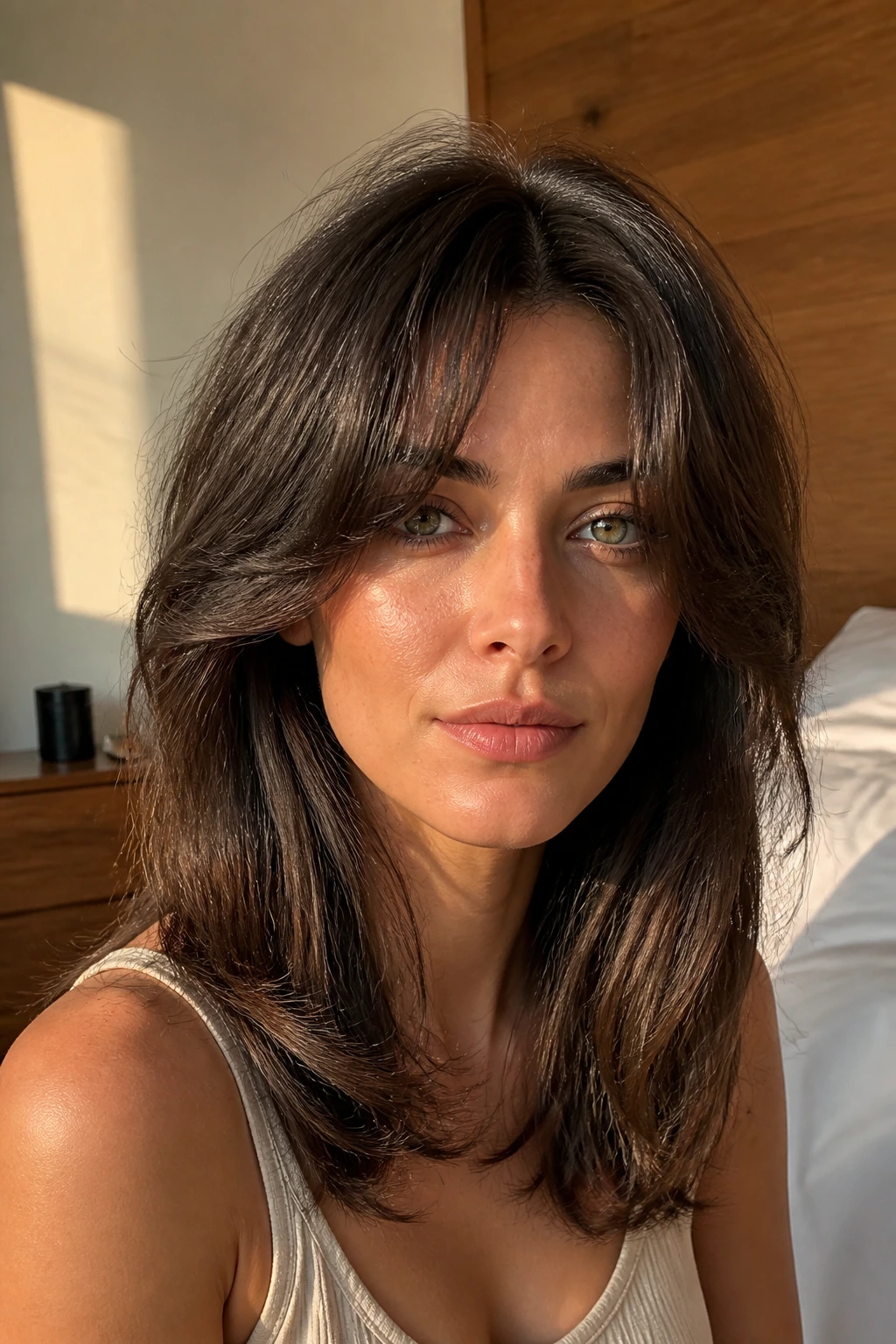
Heavy curtain bangs carry more hair in the center, which gives the fringe a fuller, more dramatic presence. The split still opens in the middle, but the overall look is denser and more weighted than wispy curtains. On medium-length hair, that density can balance a blunt or thick cut beautifully.
The trick is controlling the opening so it doesn’t turn into a curtain stuck halfway across your forehead. You want the center to move away from the face, not hover over it. Blow-dry the middle straight down first, then round the sides outward. That sequence keeps the bang from puffing up in the wrong place.
15. Grown-Out Curtain Bangs
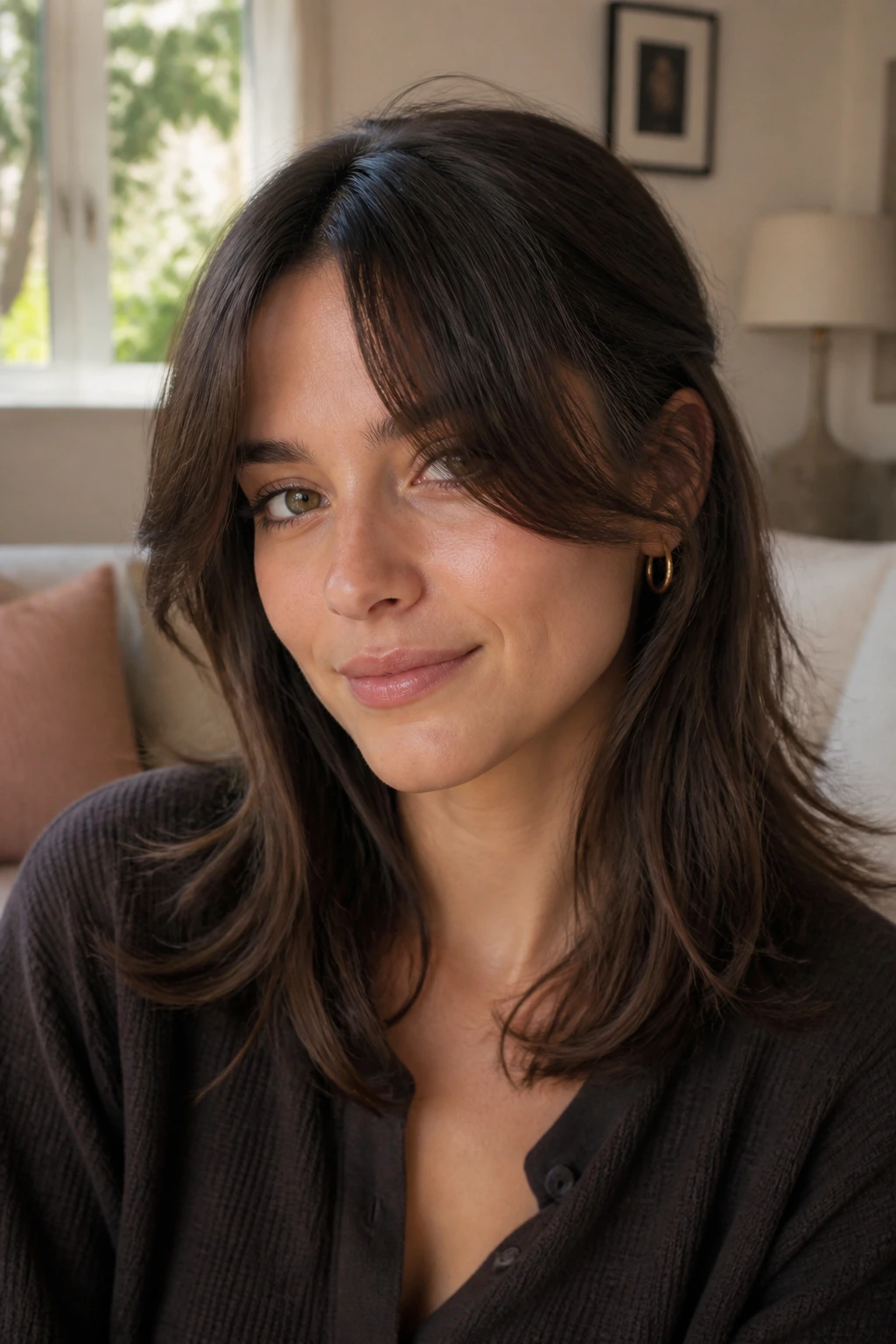
Some bangs look better a little longer. Grown-out curtain bangs are proof. They sit lower, often between the brow and the cheekbone, and they melt into medium-length hair with almost no resistance. If you like the idea of a fringe but do not want to babysit it every morning, this is the style to keep in your pocket.
Ask for a cut that already anticipates the grow-out, not one that starts too short and only looks good for ten days. The outer pieces should have enough length to tuck behind the ears or blend into the front layers. This is the sort of fringe that gets better after a few washes, which is rare and useful.
16. Hush Cut Curtains
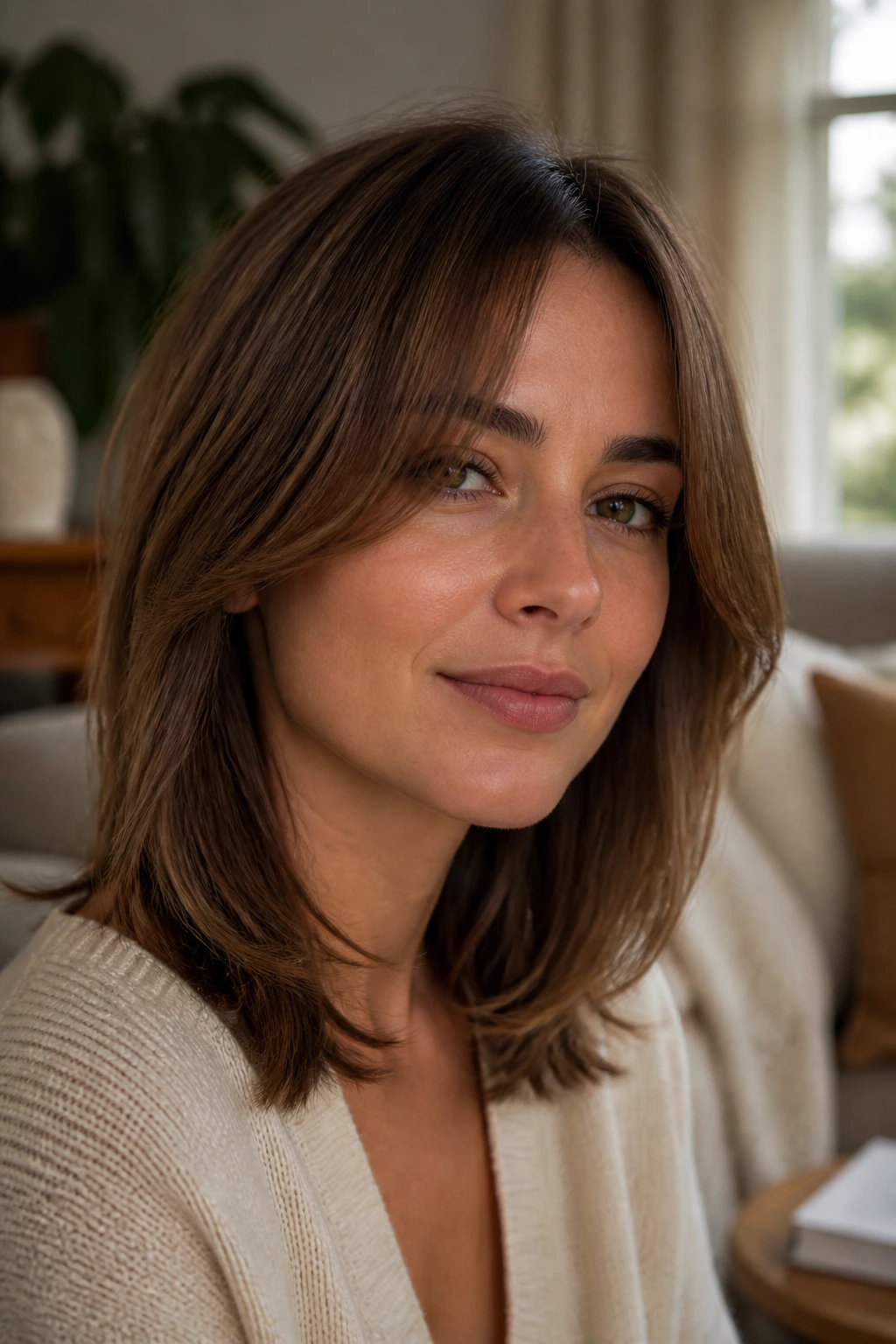
The hush cut is all about soft, hidden layering, and curtain bangs fit that mood well. The fringe stays light, the face frame is blurred, and the medium-length hair around it moves in a quiet, broken way. It’s not flashy. That’s the point.
Styling note
A hush cut curtain fringe should almost disappear when the hair sits still, then show itself when the head turns. That means the edges need to be cut with a soft point, not a blunt line. Use a small round brush or a bent paddle brush to create a mild curve at the ends, then leave the rest a little undone. If you make it too polished, the whole hush-cut feeling disappears.
17. Butterfly Cut Curtain Bangs
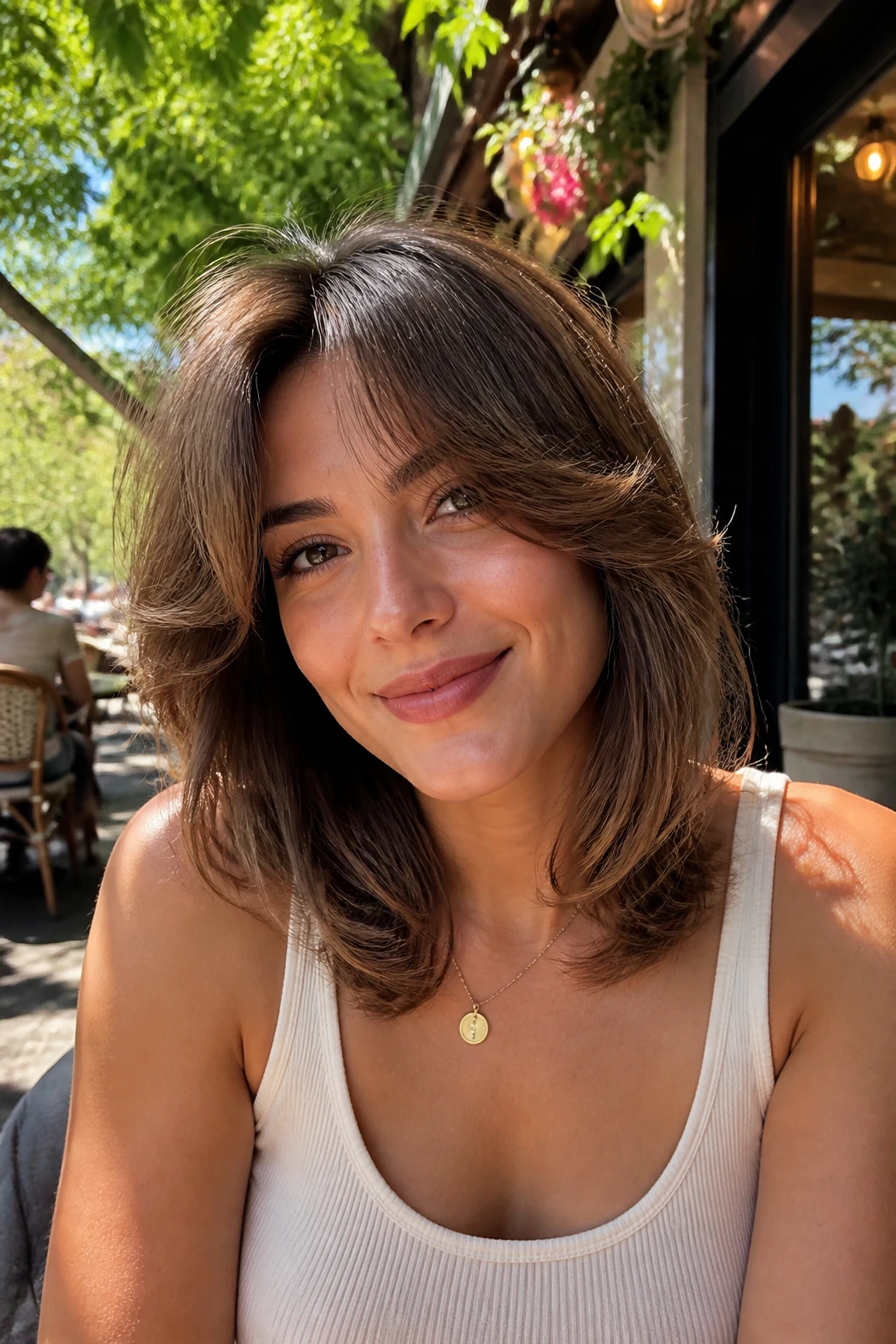
Butterfly cuts rely on big shape and lifted front sections, so the bangs need to keep up. Curtain bangs in this style are usually shorter near the center and longer at the sides, which helps create that blown-out, layered feel around medium-length hair. The face frame becomes part of the movement, not a separate layer on top of it.
This is a good cut if you like volume near the crown and air around the cheekbones. It does need styling, though. A round brush, hot rollers, or a velcro roller at the front can keep the fringe from collapsing into the cheeks. Skip the heavy cream here. It will flatten the whole thing.
18. Wolf Cut Curtain Fringe
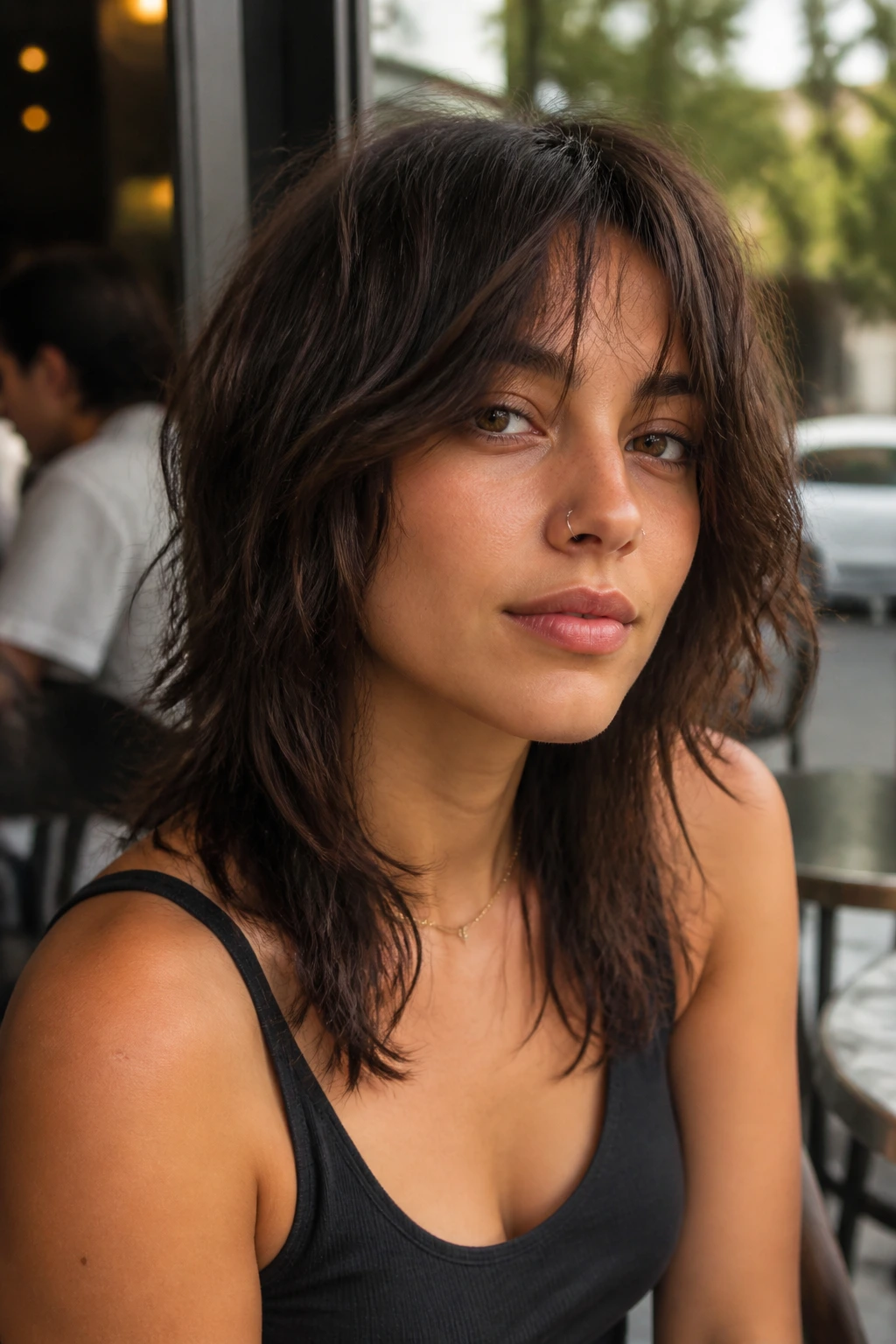
Wolf cut curtain bangs are messy on purpose. The edges are choppier, the layers are more visible, and the fringe sits inside a haircut that already has attitude. On medium-length hair, that rougher shape keeps the front from looking too neat or too precious.
The trick is balance. If the curtain pieces are too short, the style starts to drift toward a shaggy micro fringe. If they’re too long, the wolf-cut energy gets watered down. Keep the bangs broken up, not blunt, and let a few shorter face-framing bits sit inside the longer sides. It should look like motion, not damage.
19. Rounded Curtain Bangs

Rounded curtain bangs curve softly around the forehead and cheeks instead of dropping in a straight center split. That shape is useful when you want a gentler frame around medium-length hair. It softens high foreheads, sharp brows, and angular faces without hiding them.
The rounded version needs the shortest point to stay a little fuller at the center. If it gets thinned too much, the curve disappears and you end up with loose side pieces that do nothing. A round brush can help exaggerate the bend, but the haircut itself should already have that arc built in. Styling should support the shape, not create it from scratch every time.
20. Side-Tilt Curtain Bangs

Not every curtain fringe has to be perfectly even. Side-tilt curtain bangs shift the part just enough that one side carries a little more weight than the other. On medium-length hair, that small tilt can tame a cowlick or work around a brow that sits higher on one side.
The style still opens at the center, but the line is softer and less rigid. That makes it useful for people who want the feel of curtain bangs without a dead-straight middle part. If your hair naturally insists on moving one way, stop fighting it. A slight tilt can make the whole cut look easier and more natural.
21. Mini Curtain Bangs

Mini curtain bangs sit higher and shorter than the classic version, which gives them a lively, playful edge. They can show more forehead while still framing the face, and on medium-length hair they create a quick change without a heavy front section. Think of them as curtain bangs with the volume turned down and the shape turned up.
How to use them
Mini curtains work best when the sides are kept long enough to blend into the rest of the haircut. The center should not be so short that it feels like baby bangs. Blow-dry them forward first, then split them with a brush or fingers so the face frame opens naturally. If you wear them air-dried, expect a more irregular split and plan for that.
22. Full Fringe with a Center Split
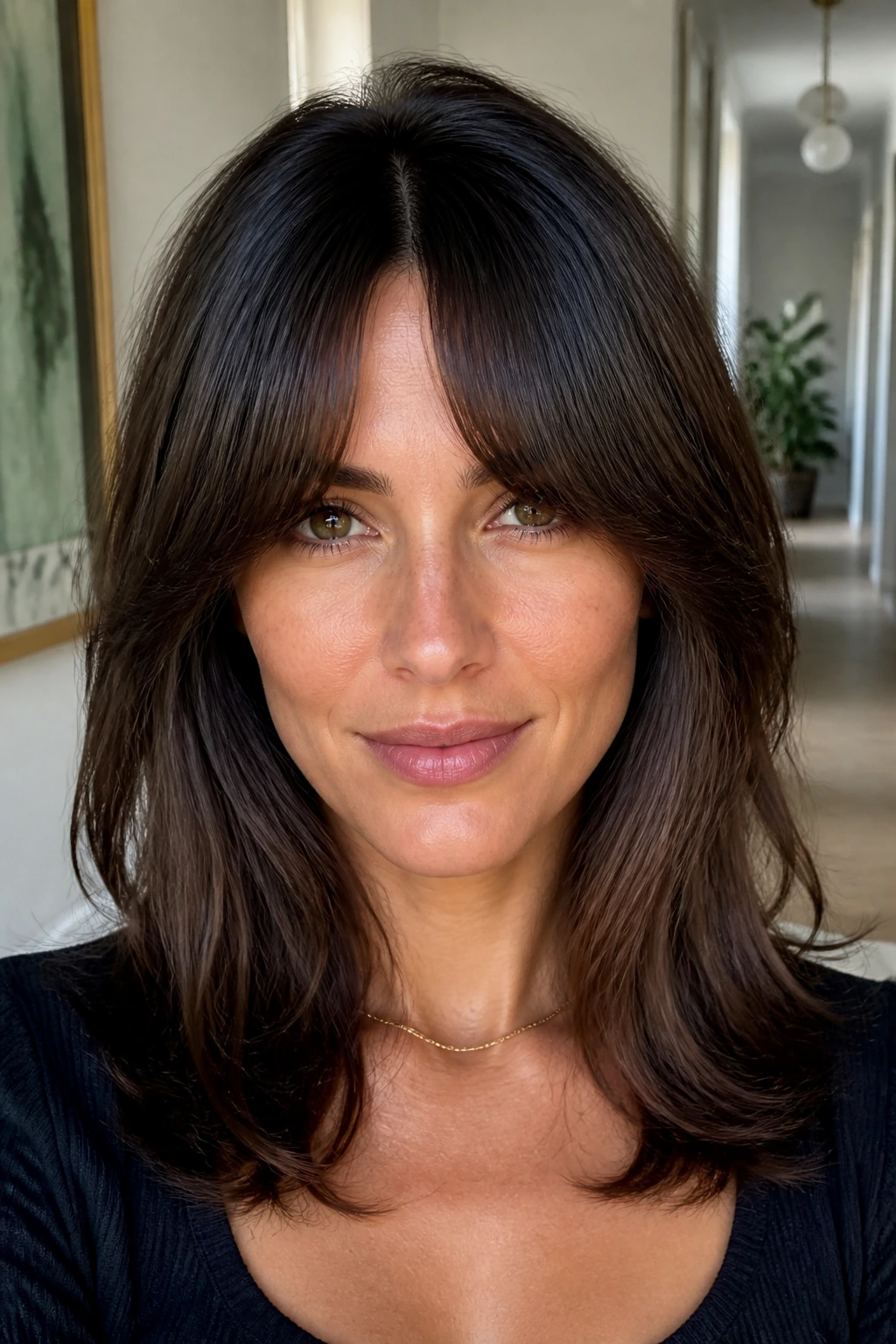
This version is denser than a standard curtain bang. It starts from a fuller fringe, then parts in the middle so the hair still opens away from the face. On medium-length hair, the result is substantial, clean, and a little more dramatic than the airy versions.
It’s a good move if you have thicker hair or want forehead coverage without losing the curtain shape. The center split should happen after the fringe is dry enough to show its true fall. If you part it too early while it’s soaking wet, the shape can lock in too straight and sit awkwardly. Give it a little room to move first.
23. French-Girl Curtain Bangs

French-girl curtain bangs have a looser, less polished feel. They’re not over-bent, not over-sprayed, and never too round. On medium-length hair, that undone softness works nicely with a blunt lob or a lightly layered cut, because the fringe brings the movement the rest of the hair refuses to fake.
The best version looks like it was styled with fingers and a brush, not a full production. A light styling cream and a rough blow-dry are enough. If you like hair that reads a little sleepy in the best possible way, this is the one. Keep the ends soft and resist making every strand behave.
24. Blunt Lob with Subtle Curtains
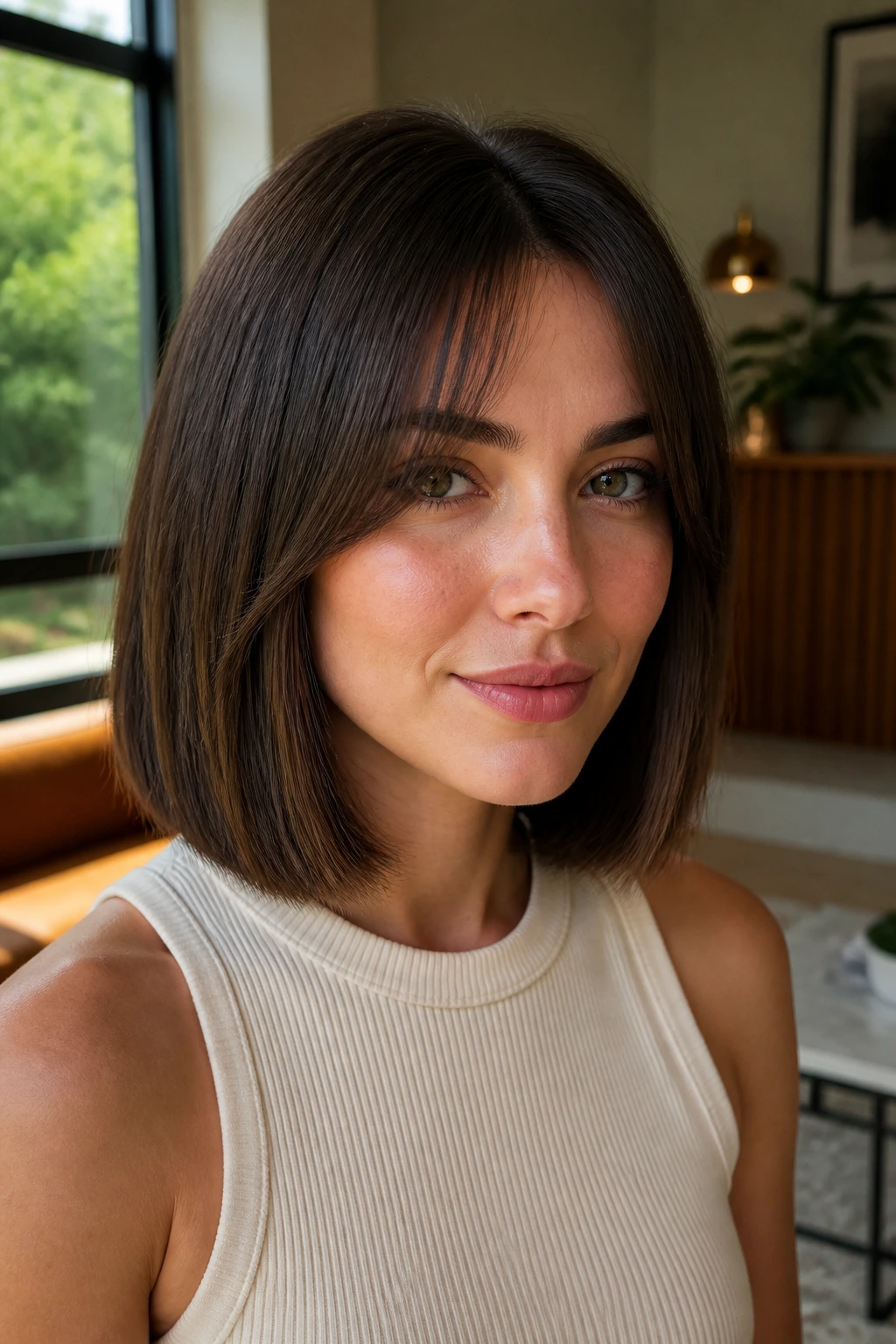
A blunt lob and curtain bangs can sound like opposites, but the pairing works because the bangs stop the cut from looking too square. The fringe stays subtle, the lob stays clean, and the whole shape feels balanced instead of severe. Medium-length hair is where this combo makes the most sense.
Styling note
Keep the curtain pieces narrow and long enough to fold into the blunt line of the cut. You are not trying to build a second haircut on top of the first. A soft bend at the front and a smooth finish through the lob keep the style neat. If the bangs get too fluffy, the blunt edge loses its clean look fast.
25. Tousled Beachy Curtain Bangs
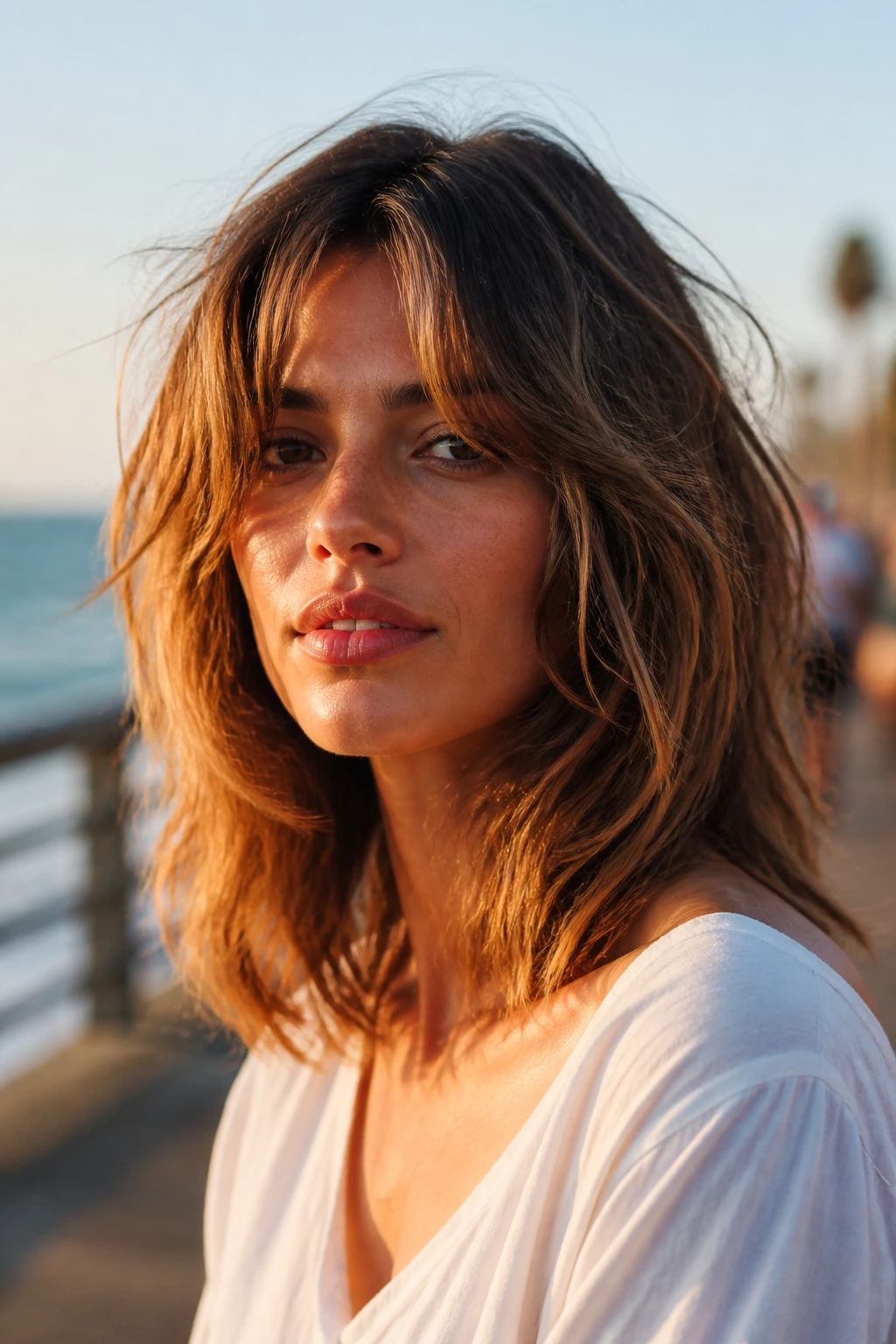
Tousled curtain bangs live on texture. They work when the ends are broken up and the front pieces have a little grit, not when everything is smooth and neat. On medium-length hair, that means the bangs can echo loose waves through the rest of the cut and still look coordinated.
Salt spray, a light mousse, or a texturizing mist can help, but don’t drown the front in product. The goal is separation, not stiffness. If the hair falls into clumps, finger-comb it once and walk away. The whole point is that it should look touched by wind, not over-managed.
26. Flat-Iron Curve Curtain Bangs
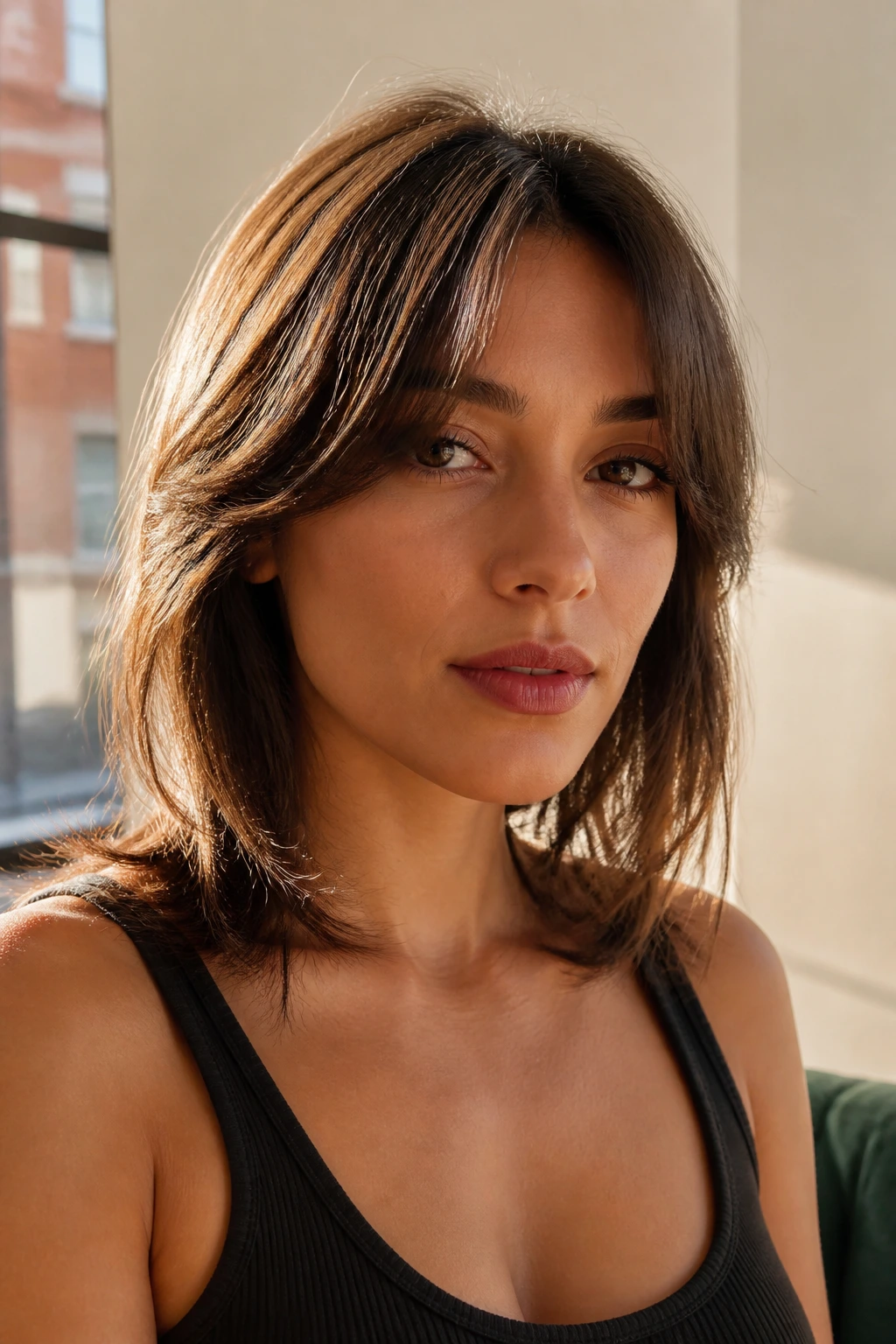
Some hair refuses to hold a round-brush blowout. A flat iron curve curtain fringe fixes that. You clamp a small section, bend the tool away from the face, and soften only the ends. On medium-length hair, that quick bend gives the front shape without making the whole style look overworked.
The key is keeping the iron moving. A tiny pause at the ends creates a smoother arc; a long pause can make a crease, and a crease is not the friend of curtain bangs. This method is fast, which makes it useful on days when you want the face frame to cooperate and leave the rest alone.
27. Low-Maintenance Grow-Out Curtains
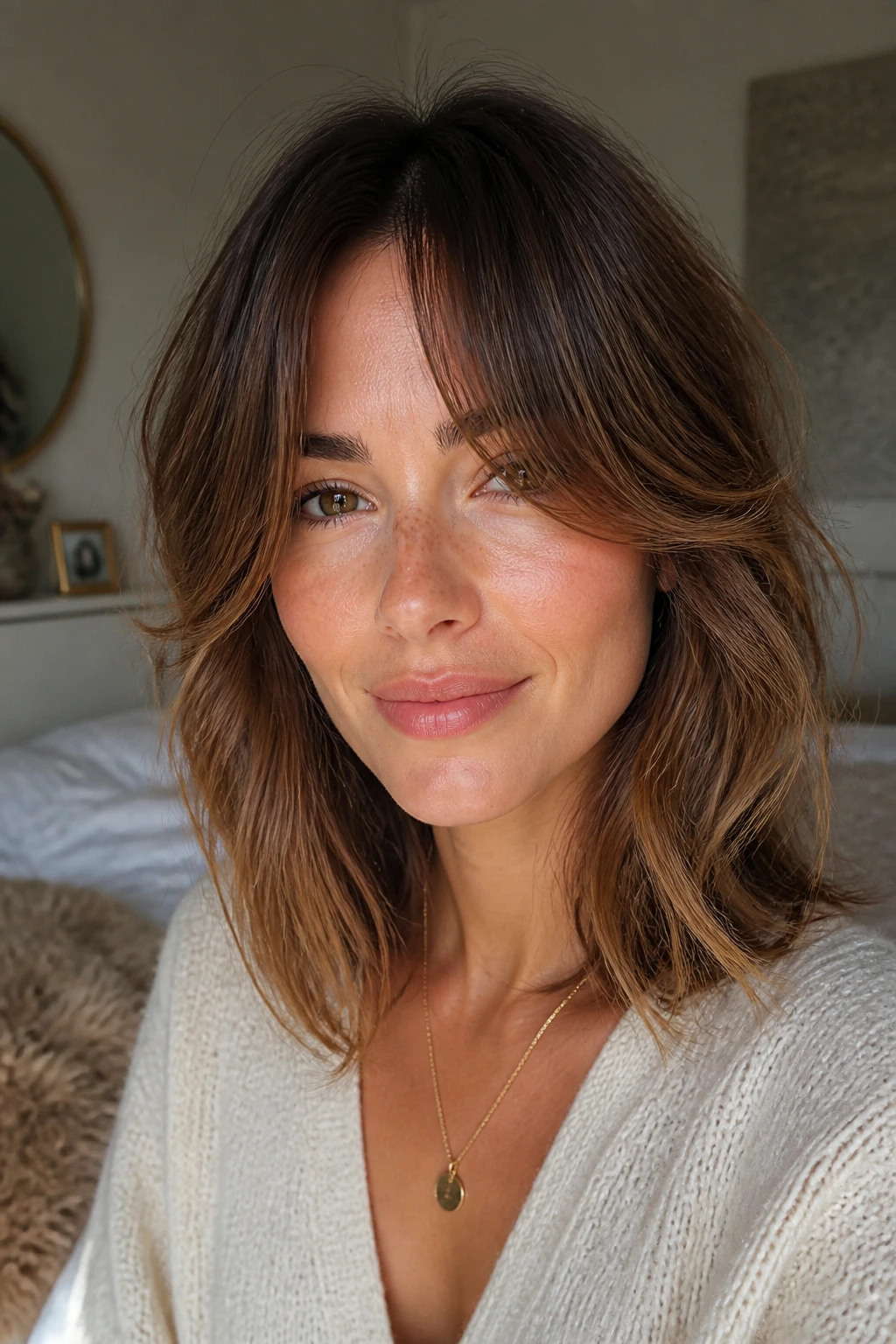
Low-maintenance grow-out curtains are designed to look decent long after the salon fresh feeling has faded. The center sits soft, the sides stay long, and the whole fringe can shift with your part without looking broken. On medium-length hair, that flexibility is worth a lot.
This is a good option if you know you’ll miss trims or if you want bangs without a strict schedule. The cut should already have some taper at the sides so the grow-out stage looks like a deliberate face frame. It’s the kind of fringe that lets you skip a wash day and still look fine. Rare perk.
28. Invisible Layer Curtain Bangs
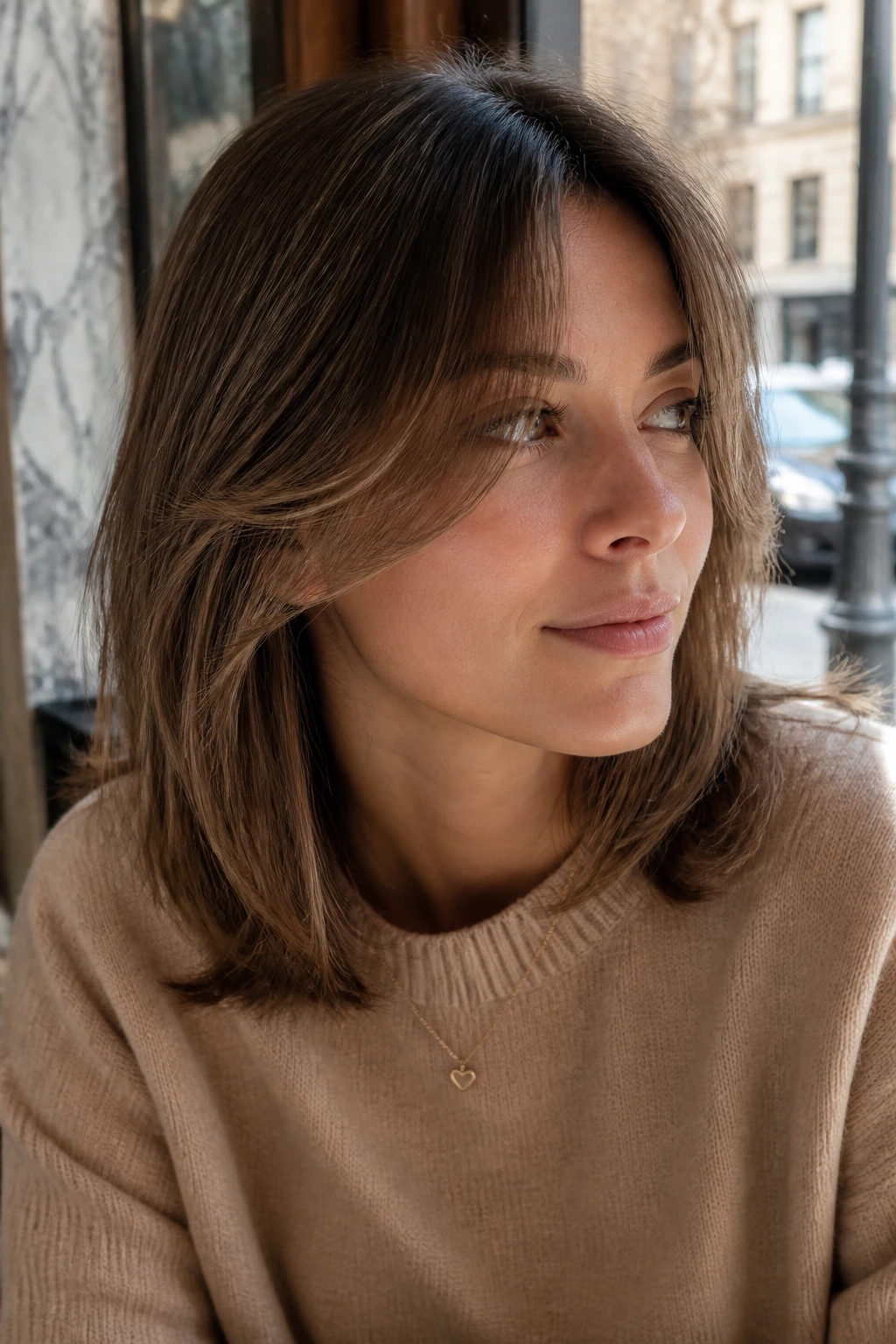
Invisible layers mean the bangs are there, but they don’t announce themselves with a sharp line. The front pieces blend into the haircut, and the movement shows up more when you turn your head than when you stand still. On medium-length hair, that subtlety keeps the style from feeling overcut.
The thing to ask for is softness through the connection points. The bangs should connect to the side layers with a light hand, not a hard corner. If your hair is straight, a tiny bend at the ends helps reveal the shape. If it’s wavy, the layers will usually do most of the talking on their own.
29. Soft Arched Curtain Fringe

Soft arched curtain bangs sit between rounded and split. The shape arches gently over the forehead before drifting down toward the cheekbones, which gives medium-length hair a polished but not stiff front. It’s one of the easier ways to make the face look framed without looking boxed in.
This style suits people who want structure but hate a hard center part. The arch softens wide foreheads and gives the hair a little lift near the brows. Keep the ends airy. If they get too solid, the arch turns heavy and loses its ease.
30. Retro Deep-Part Curtains
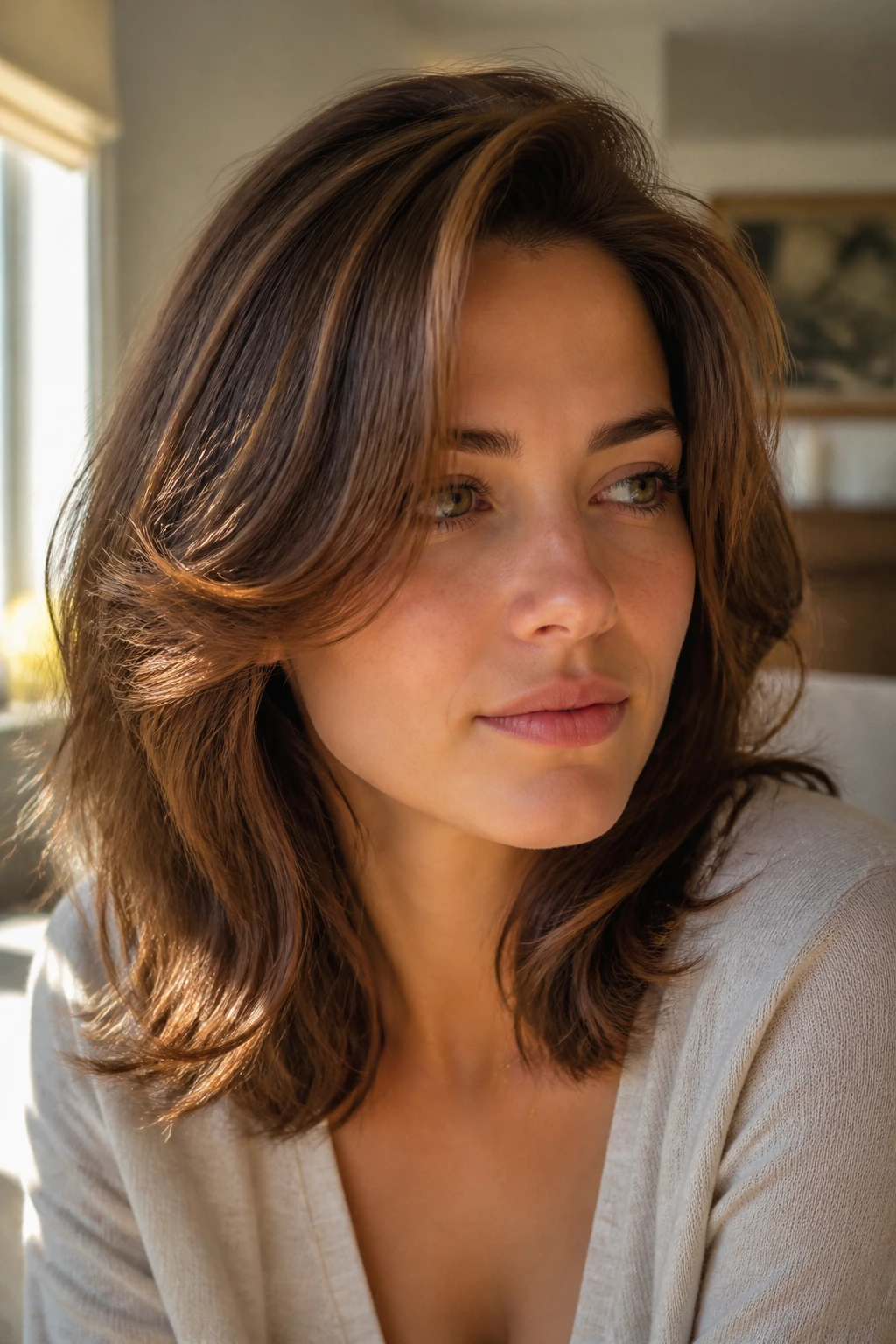
A retro deep-part curtain fringe borrows a little drama from old-Hollywood styling. The part sits a touch deeper, the front sweeps with more intention, and the ends curve around the cheek in a way that feels dressed up. On medium-length hair, it can make even a simple cut look more styled than it is.
What to watch for
The danger here is imbalance. If one side gets too heavy, the look turns into a side bang instead of a curtain style. Keep the opening visible and let the shorter center pieces support the sweep rather than hide inside it. A bit of shine spray can help here, especially if the rest of the hair is smooth and straight.
31. Face-Frame Heavy Curtain Bangs
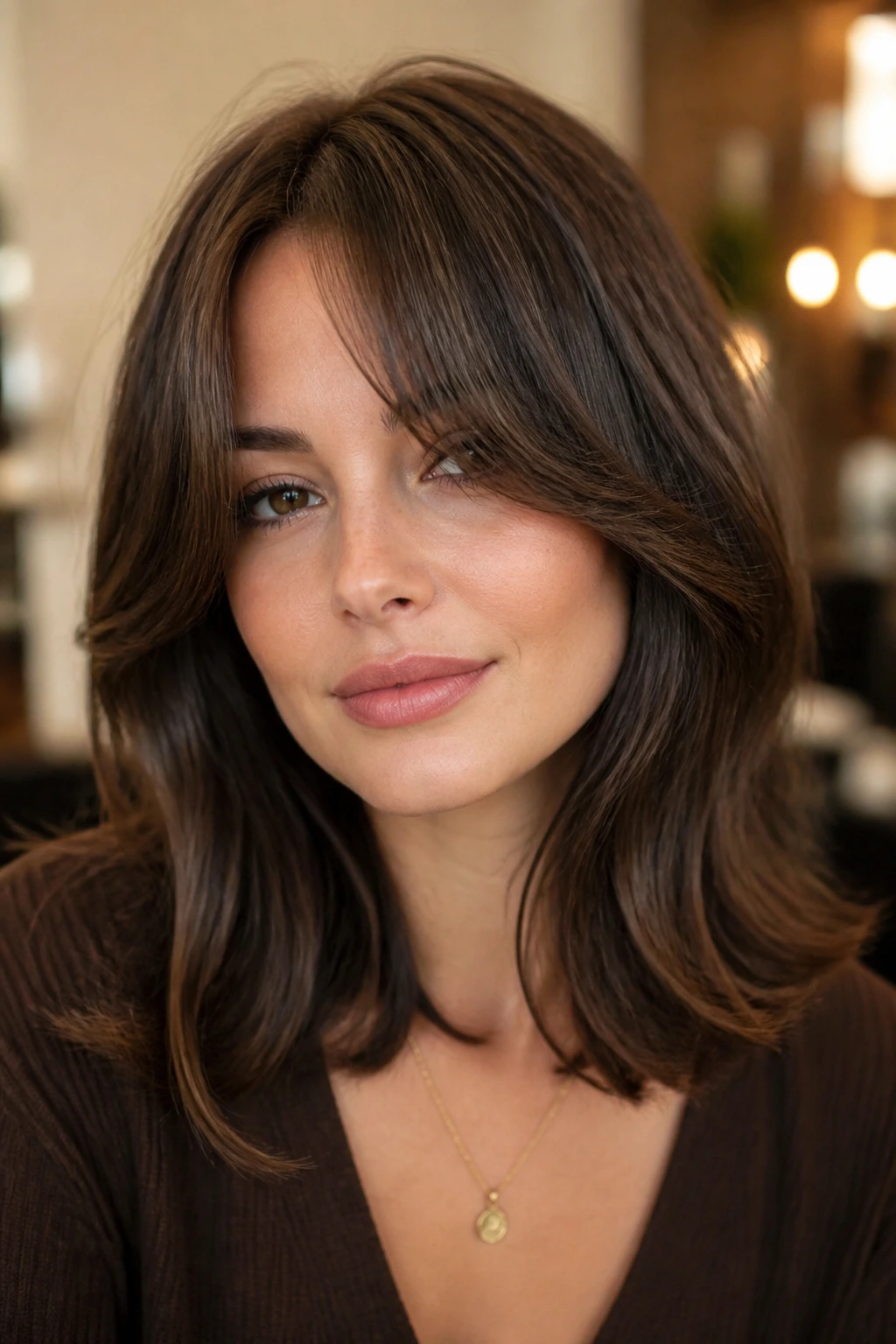
This version puts more weight into the front layers than into the center fringe itself. The bangs open, yes, but the stronger effect comes from the face-framing pieces that start near the temples and move down through medium-length hair. It’s a good choice when you want the front to slim and soften without losing density.
The cut should be long enough to tuck under the jaw or into the neckline of the haircut. That keeps the shape from feeling clipped. If you have a wider forehead or fuller cheeks, this kind of fringe creates a nice vertical line without forcing the center to do all the work.
32. Shattered-End Curtain Bangs
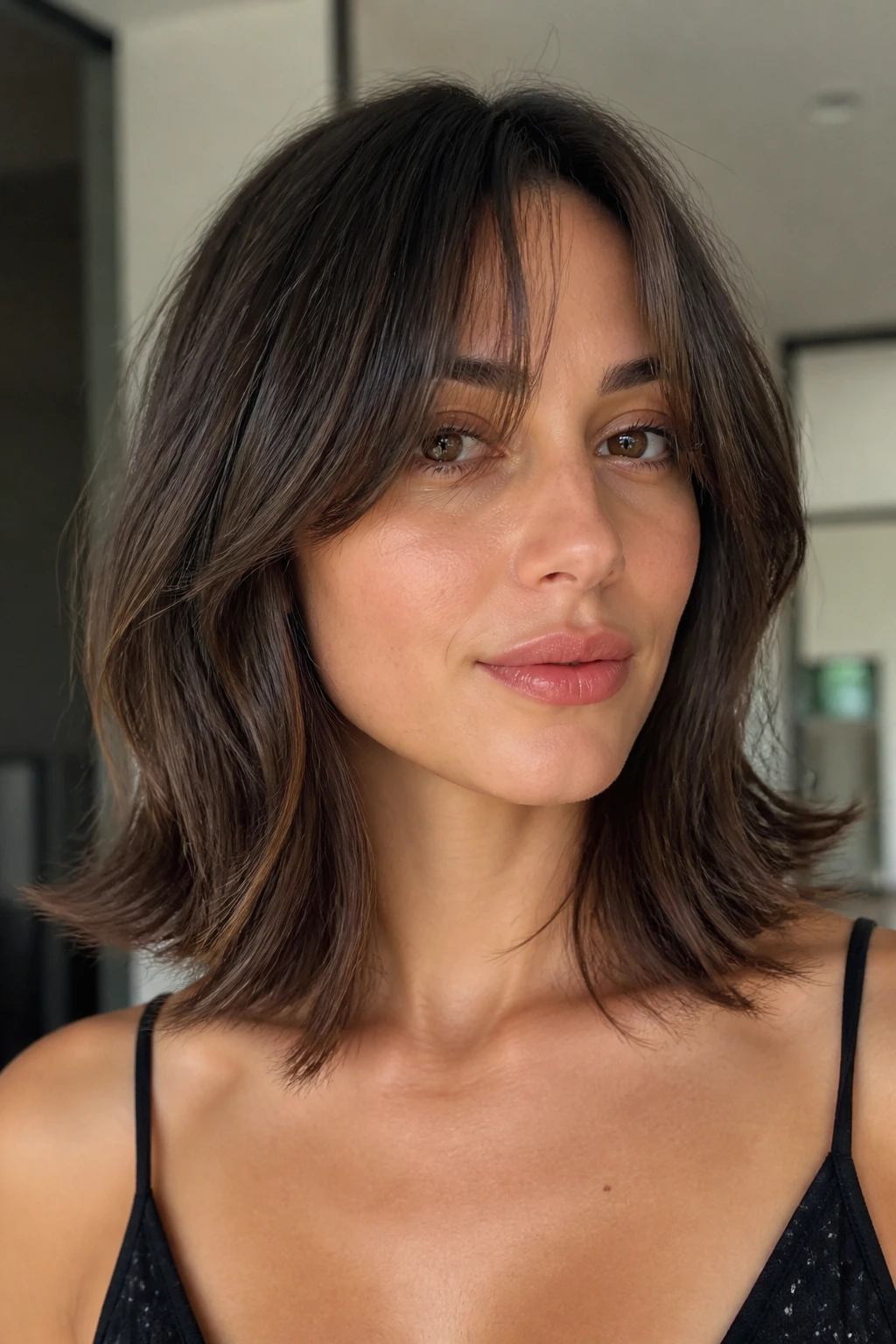
Shattered-end curtain bangs have little breaks at the tips, which keeps them from looking too smooth or too planned. The ends catch light in small pieces and move a little more freely through medium-length hair. That makes them useful if your cut leans textured already.
The haircut matters more here than the styling. You want those little broken ends built in, not created by overusing a texturizing spray. Too much product turns shattered ends into sticky, separated strands that stick in all the wrong directions. Keep the finish light and the movement intentional.
33. Root-Lift Volume Curtain Bangs
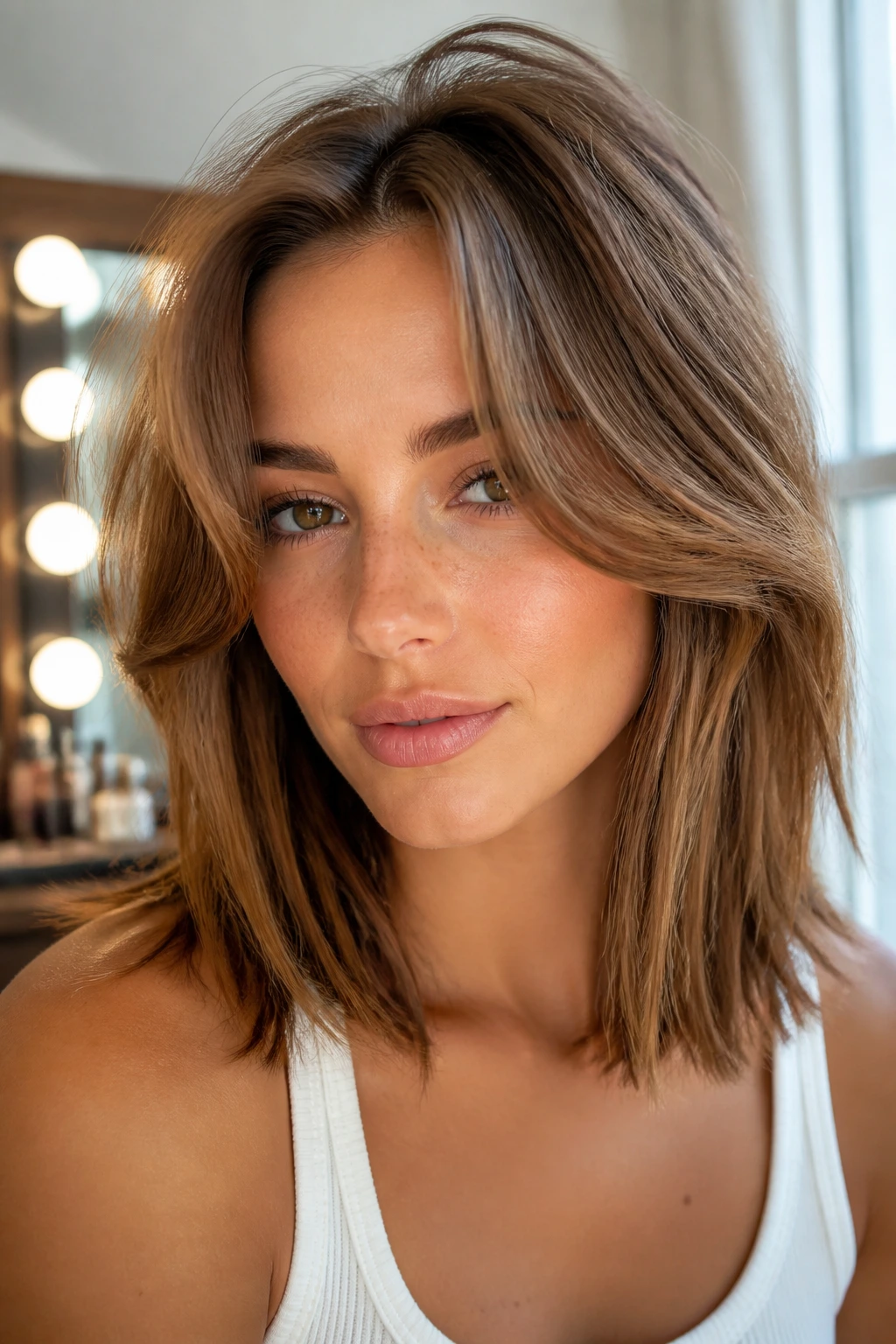
Root-lift volume curtain bangs are for hair that falls flat the minute gravity gets involved. The fringe needs lift at the base, then a soft bend through the sides, so the front pieces do not collapse into the forehead. On medium-length hair, that lift can make the whole style look fuller without adding bulk everywhere else.
Backcomb is not the answer. A better move is mousse at the roots, blow-drying the bangs forward and then back, and finishing with a cool shot. If you like rollers, a small velcro roller at the crown while you do your makeup can hold the lift just long enough to matter. It’s old-school for a reason.
34. Tucked Curtain Bangs
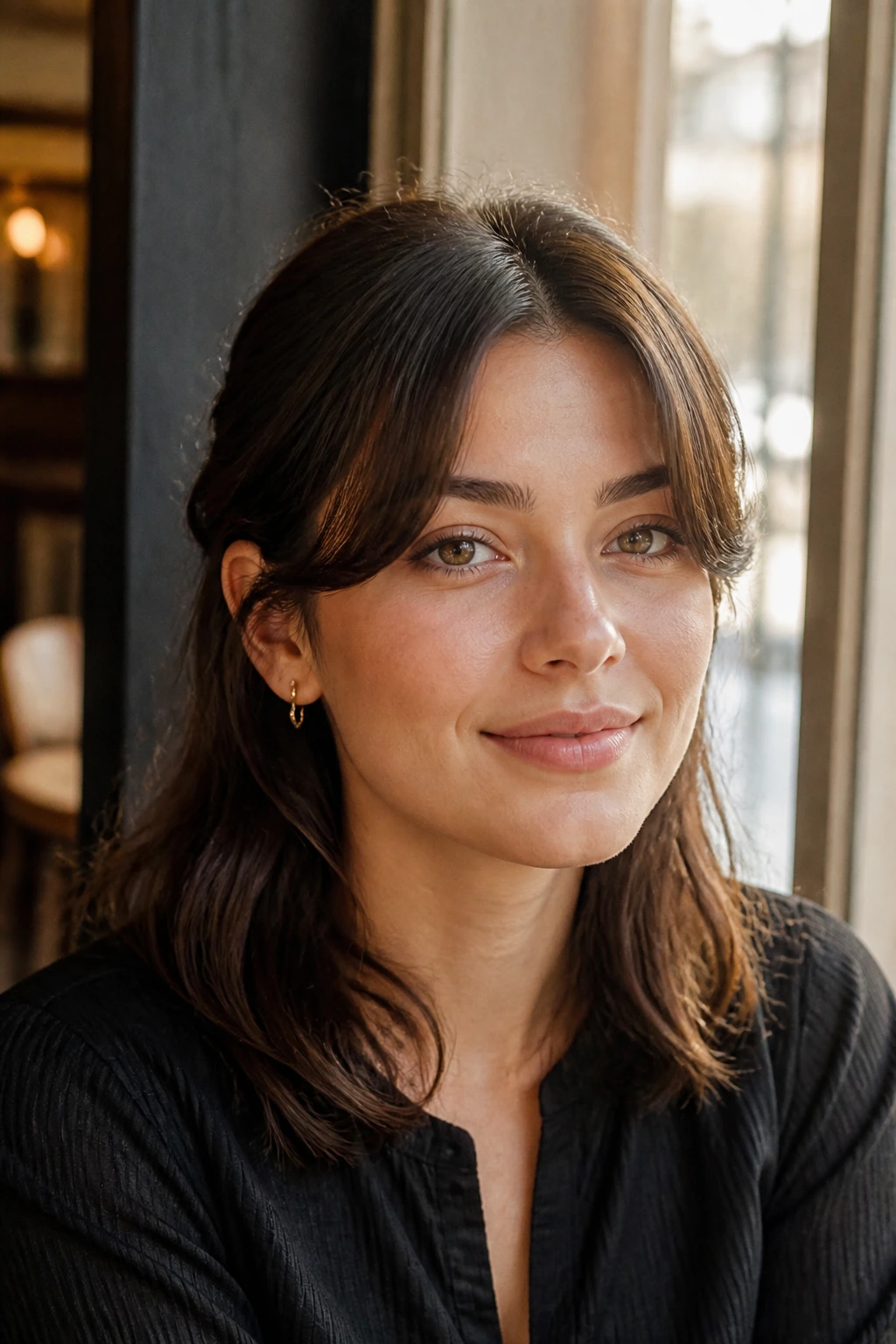
Tucked curtain bangs are built for people who like the option to wear the fringe off the face. The cut keeps enough length in the sides that you can sweep them back behind the ears and still have the shape fall nicely once you let them go. On medium-length hair, that kind of flexibility is gold.
The center should remain soft, not stiff, so the bangs can reopen after being tucked. A little wave or bend in the front helps them reset. This is a smart style if your workday changes a lot, since the same cut can look polished in the morning and casual by afternoon without needing a full restyle.
35. Peekaboo Curtain Bangs
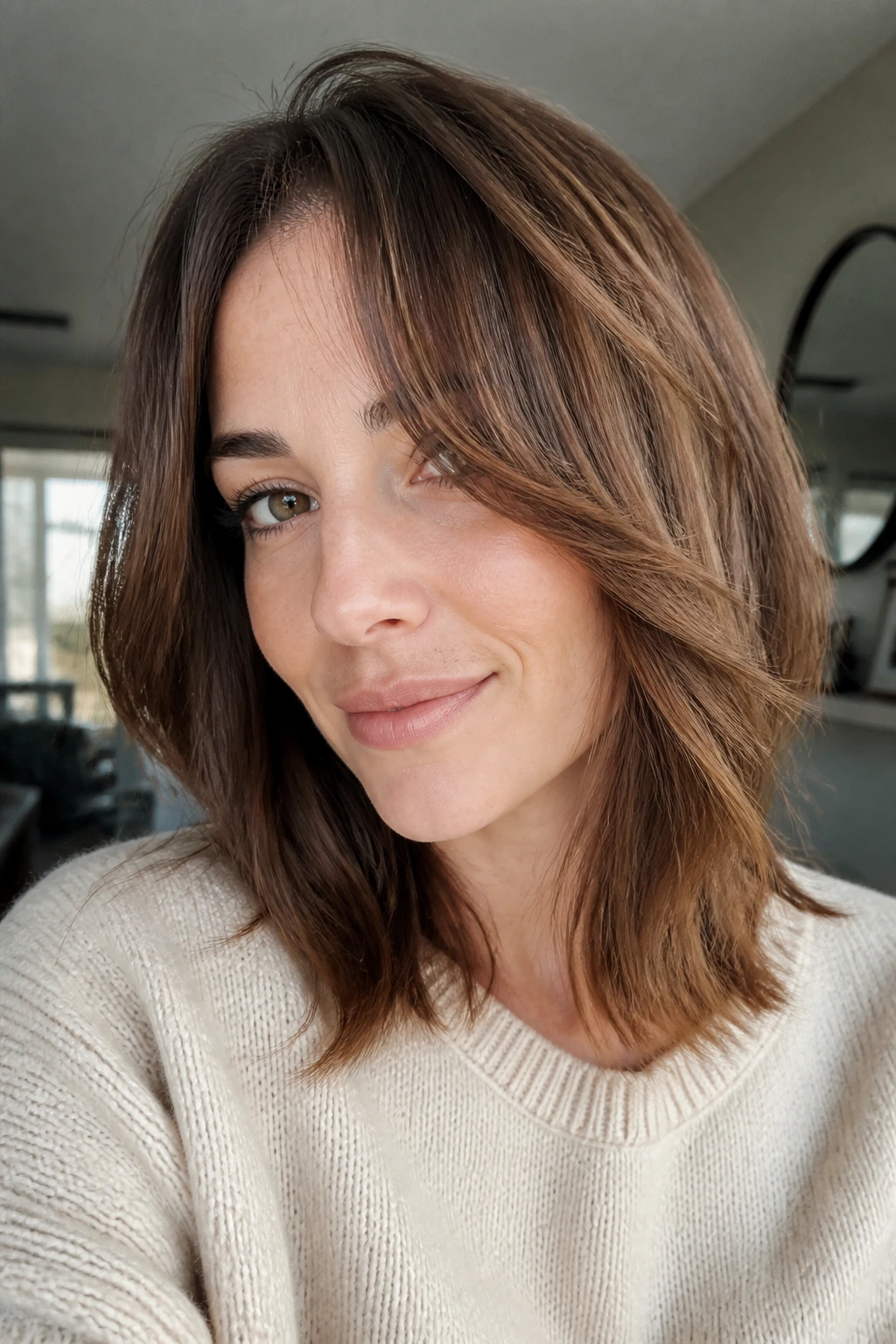
Peekaboo curtains use shorter front bits hidden under longer side pieces, so the forehead only shows in flashes. The effect is subtle, almost coy, and it suits medium-length hair that already has enough body to carry a layered front. You notice the movement more than the fringe itself.
This is a nice middle ground for anyone nervous about bangs looking too obvious. The style gives a little face framing without committing to a strong bang line. Keep the center pieces soft and the sides long enough to fall around the brows. If the shortest bits are too short, the “peekaboo” part turns into “oops, bangs.”
36. Thick-Hair Curtain Bangs
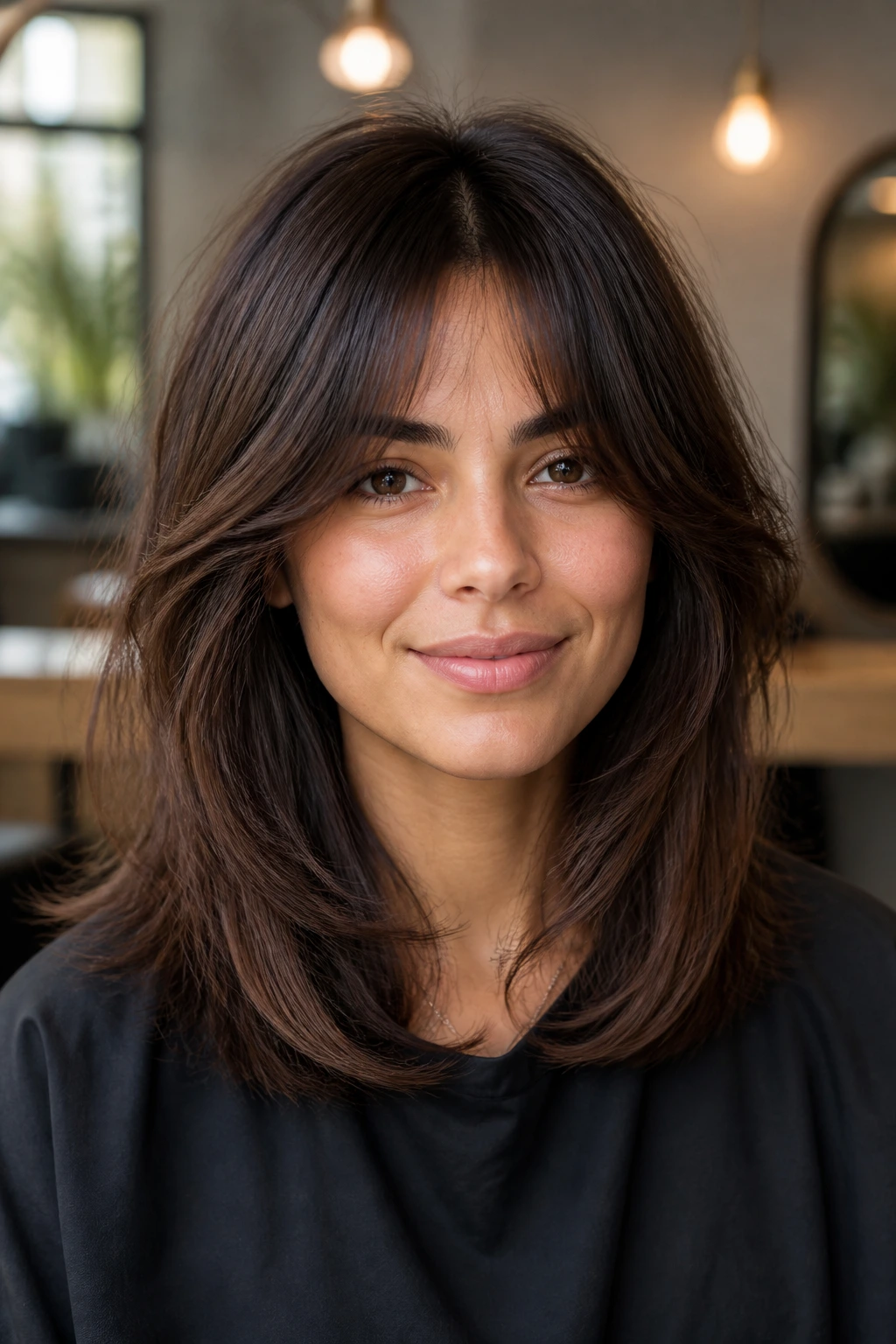
Thick hair needs room to breathe. Thick-hair curtain bangs should be debulked from the inside, not hacked at the edges, so the fringe can split and move without puffing out like a mushroom. On medium-length hair, that internal shaping keeps the front from overpowering the rest of the cut.
Ask for weight removal in the middle section and a clean but soft outline. A stylist who knows thick hair will usually keep the outer pieces longer and use point cutting rather than blunt chopping. That gives the fringe a cleaner fall and makes the center part behave instead of fighting you every morning.
37. Fine-Hair Curtain Bangs
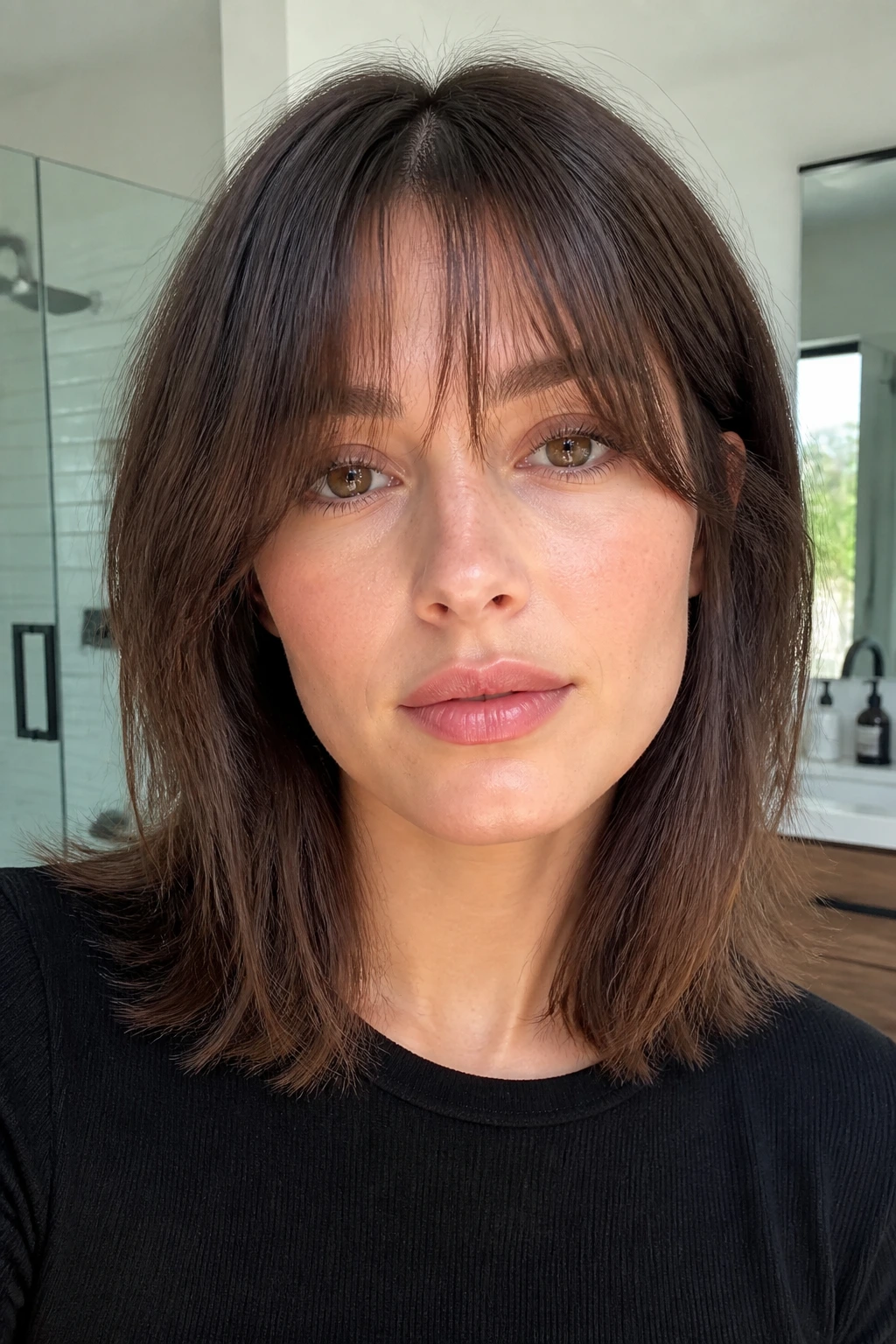
Fine hair needs a different strategy: keep the density, keep the shape, and do not thin the fringe to the point where it disappears. Curtain bangs on medium-length hair can still work on fine strands, but the shortest pieces need enough body to stay visible after blow-drying. If the bang gets too wispy, it vanishes fast.
Styling note
Use a volumizing mousse at the roots and dry the front pieces in a side-to-side motion so they don’t separate too early. A small round brush or a velcro roller adds enough bend to keep the shape awake. Skip heavy oils near the forehead. They flatten fine hair faster than humidity does.
38. Long, Light Curtain Bangs
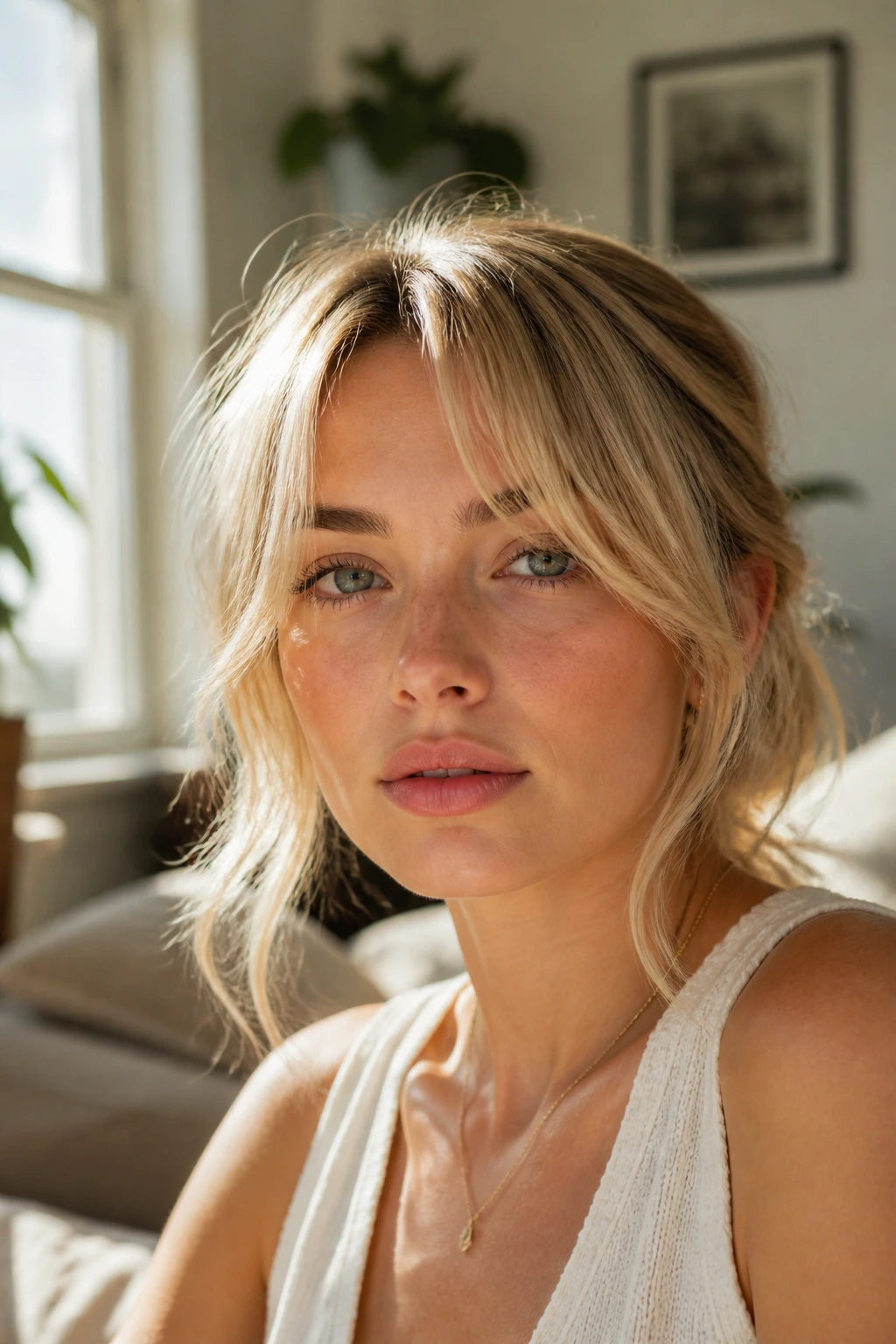
Long, light curtain bangs are the quietest version of the whole set. They fall lower, feel softer, and blend into medium-length hair with almost no hard edge. If you want a fringe that looks grown-up, easy, and a little romantic, this is the one that behaves best over time.
The length should graze somewhere between the cheekbone and the jaw, depending on the rest of the cut. That gives you a lot of room to style them into a blowout, tuck them away, or let them air-dry into a softer curve. They’re not the most dramatic version. They might be the most useful.
Why Curtain Bangs Keep Winning on Medium-Length Hair
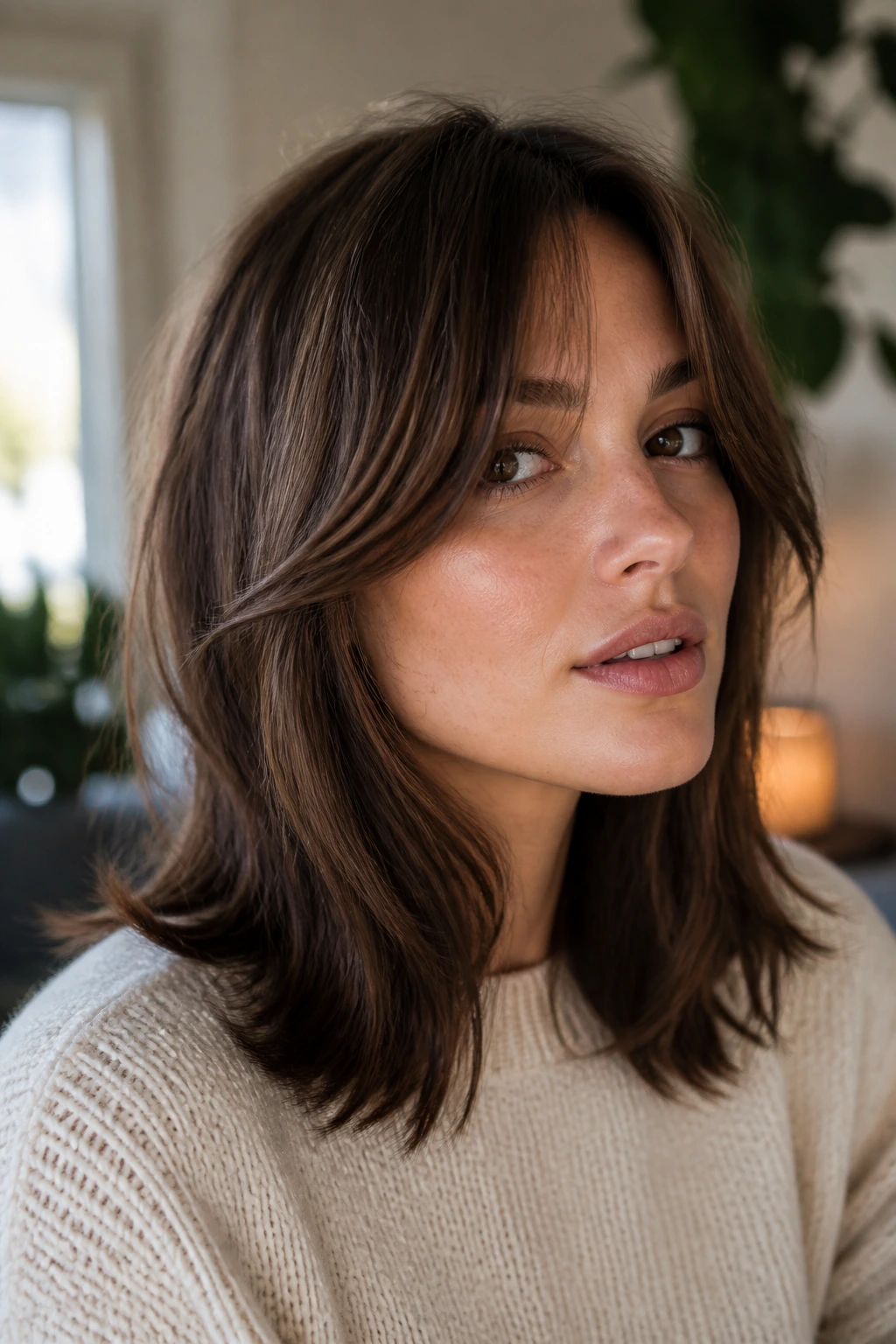
The reason this combo keeps showing up in salons is simple: medium-length hair has enough length to carry the front pieces, but not so much weight that they get lost. Curtain bangs can sit at the cheekbone, the brow, or the jaw and still make sense on this length. Shorter hair often needs more precision. Longer hair can drag the fringe flat. Medium length sits in the useful middle.
There’s also the grow-out factor. A lot of bangs look sharp for a few weeks, then start asking for help. Curtain bangs are different. They soften into face-framing layers, which means the haircut can keep working even after the first neat phase passes.
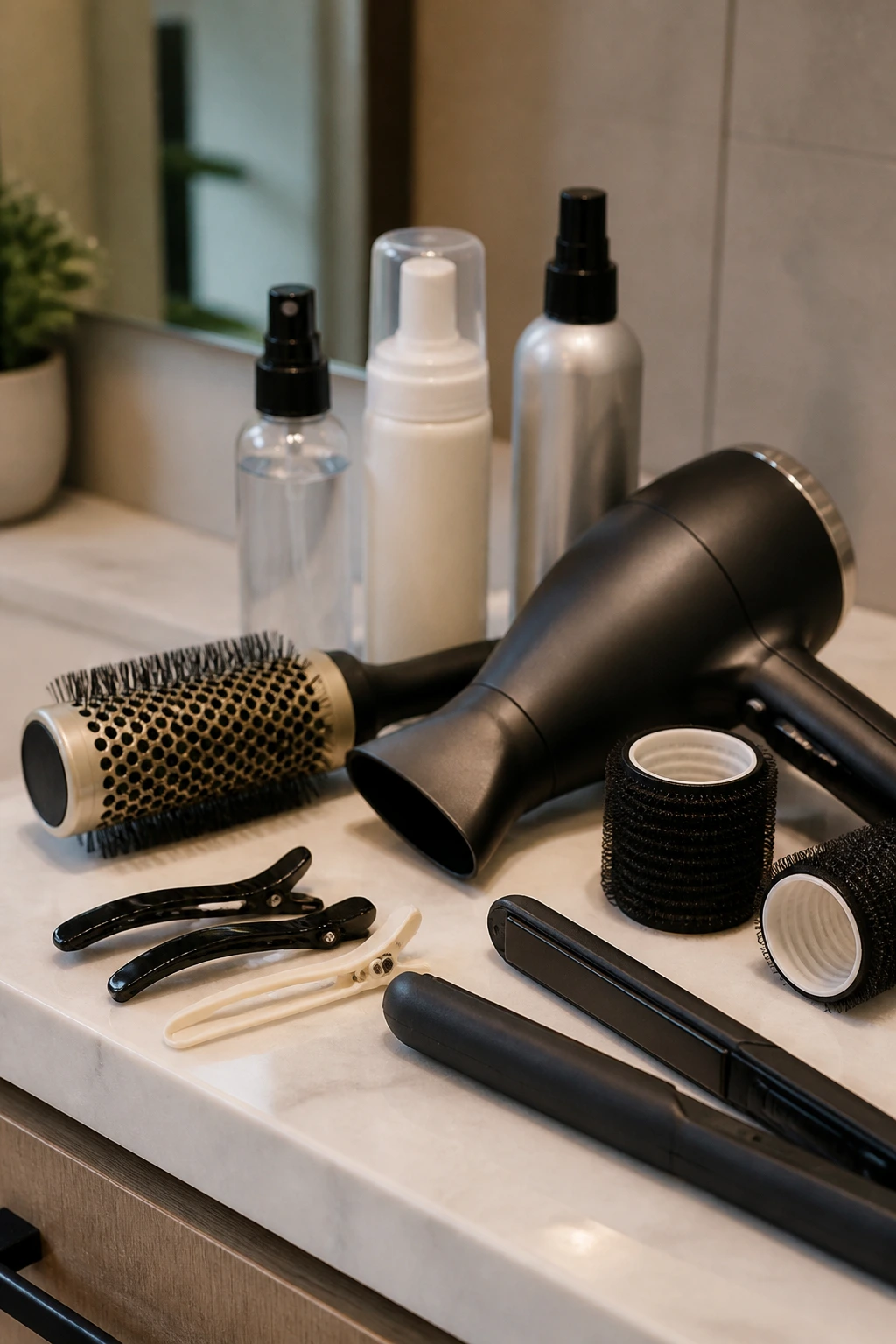
The Tools That Make Curtain Bangs Behave
-
A medium round brush: This gives the front pieces the bend that makes curtain bangs look like curtain bangs instead of random shorter layers.
-
A blow-dryer with a concentrator nozzle: The nozzle helps direct the airflow so the fringe goes where you want instead of puffing in five directions.
-
Heat protectant spray: Curtain bangs sit right by the face and get styled often, so they need protection every time you use heat.
-
A small flat iron: Handy for a fast bevel on the ends or for fixing one side that bends the wrong way.
-
Velcro rollers or a roller brush: These are useful when you want lift at the root without redoing the whole haircut.
-
Sectioning clips: They keep the rest of medium-length hair out of the way while you style the front, which saves time and improves the bend.
-
Light mousse or root lift spray: Good for fine hair, flat roots, or any fringe that needs a bit of memory.
-
Texturizing spray: Useful on shaggy, wolf-cut, or wispy versions where separation matters more than shine.
What to Ask for at the Salon
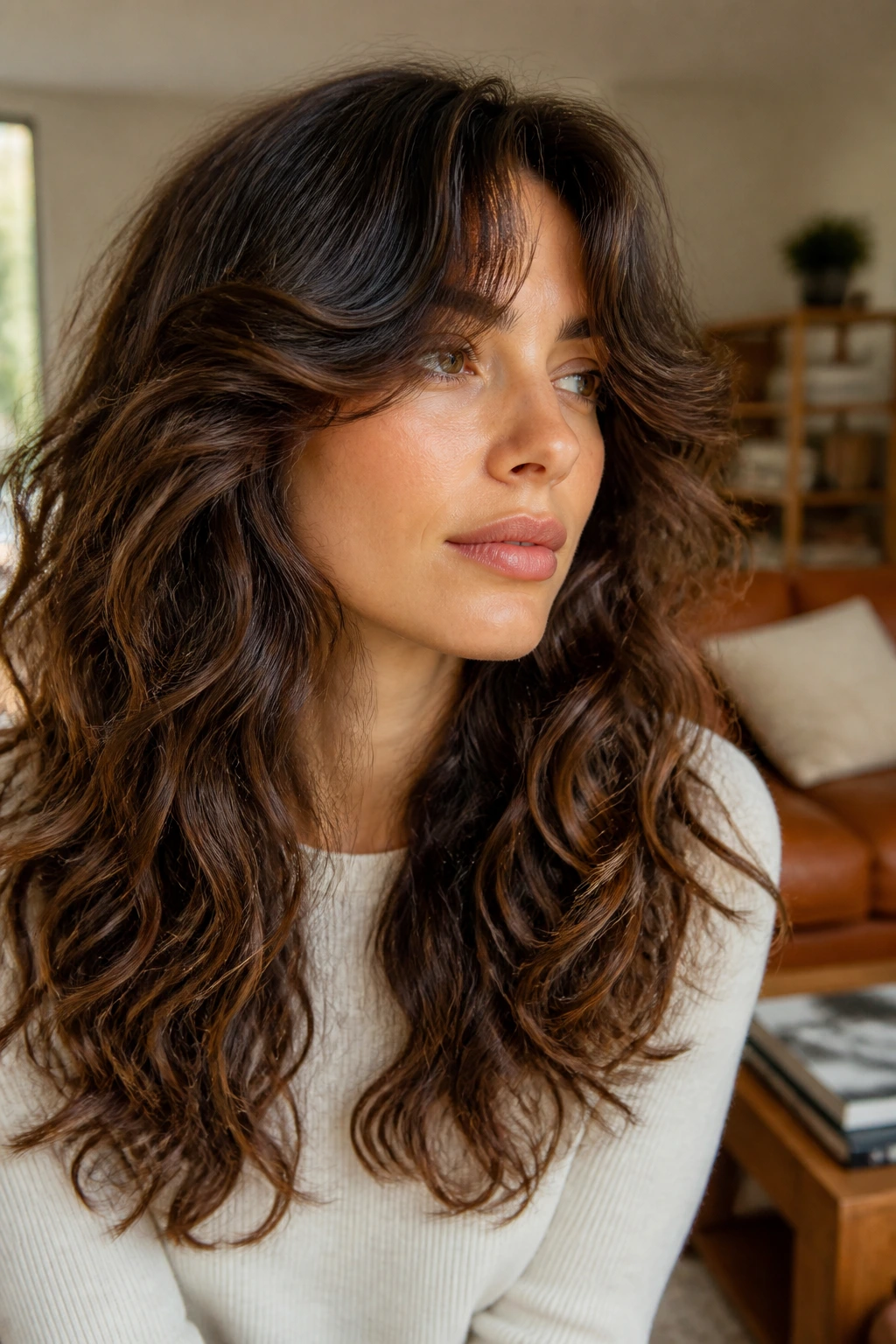
Bring a photo, yes, but also say where you want the shortest point to land. That detail matters more than the name of the style. “Cheekbone,” “brow,” or “jaw” tells a stylist more than “something soft” ever will.
Ask whether the cut will be done dry, damp, or fully wet. Many stylists prefer to refine curtain bangs when the hair is mostly dry because they can see how the pieces fall around the face. That matters on medium-length hair, where the rest of the cut can change the fringe’s behavior. If your hair has a cowlick, say so up front. Hidden cowlicks cause more bad fringe days than bad scissors do.
Product-wise, keep the front light. A little mousse, a heat protectant, and maybe a texture spray are enough for most versions. Heavy creams and thick oils often flatten the shape before lunch. If your hair is fine, ask for more density in the front. If it’s thick, ask where the weight will be removed. Those two conversations solve half the problem before the first snip.
How to Wear Them Without Fighting the Cut
Presentation: Let the shortest point sit where your face needs the most lift: cheekbone for softness, brow for visibility, jaw for length. A curtain fringe looks best when it opens enough to show a little forehead and enough side sweep to frame the cheeks.
Best Pairings: Lob cuts, shoulder-length layers, shags, butterfly cuts, and blunt mid-length bobs all work well. A clean one-length cut gives the bangs contrast; layered cuts let them blend. If the hair is very dense, pair the fringe with internal debulking so the front does not feel heavy.
Maintenance Load: Shorter versions need trim appointments sooner, often every 4 to 6 weeks. Longer, grow-out styles can ride 6 to 8 weeks with less drama. The styling load also changes: polished blowout versions need more effort than airy, air-dried ones.
Styling Mood: Choose the finish that matches how you actually wear your hair. If you live in a claw clip and a dry shampoo routine, go softer. If you enjoy a smooth blowout, pick a heavier, more sculpted curtain. The best version is the one you’ll keep doing on a Tuesday.
Extra Styling Moves That Change the Whole Look
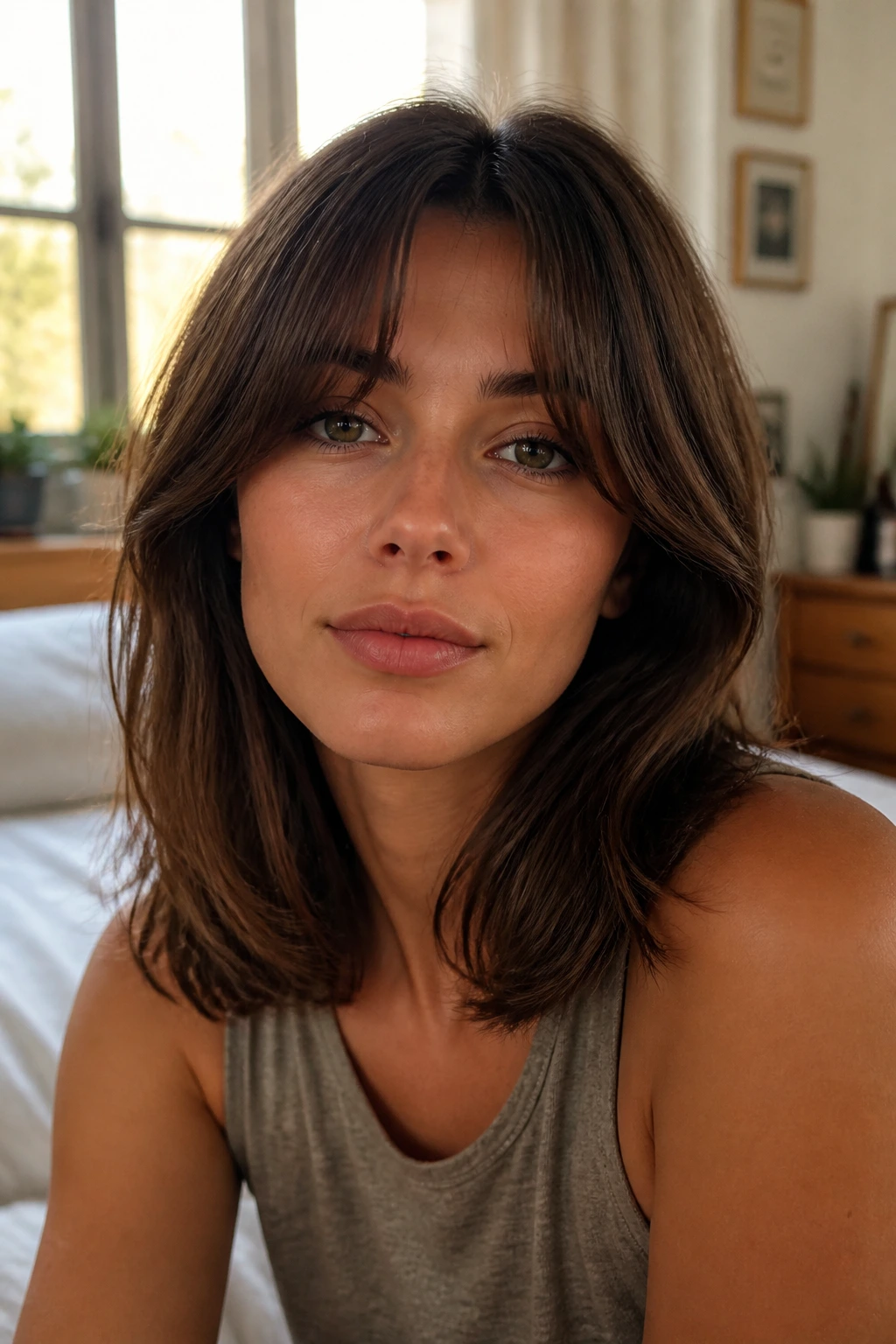
Volume Boost: Blow-dry the fringe side to side for the first 20 seconds, then finish with a cool shot. That simple motion gives the roots enough bend to stop the bang from lying flat against the forehead.
Texture Boost: Work a pea-sized amount of mousse or lightweight cream into damp front pieces before styling. It gives the fringe memory without turning the ends stiff. On shaggy or wolf-cut versions, follow with a touch of texturizing spray through the mid-lengths.
Polish Boost: Use a flat iron only on the last inch or two of the bangs and bend them away from the face. That tiny curve makes a big difference when you want the fringe to look shaped but not overdone.
Make-It-Yours: If your hair is fine, keep the center a little denser. If it’s thick, ask for internal weight removal. If your face is round, let the outer pieces lengthen closer to the jaw. If your face is long, keep the split a touch wider so the fringe doesn’t stretch the face out even more.
Common Mistakes That Flatten Curtain Bangs
-
Cutting the shortest point too short: On medium-length hair, a fringe that sits too high can lose the soft opening and start acting like a mini bang. The fix is simple: keep the center point at or just below the brow line and let the sides do the framing.
-
Over-thinning thick hair: If the fringe looks airy in the chair but puffs up at home, the stylist removed too much weight. Ask for internal debulking next time and keep the outer line intact.
-
Using too much oil or smoothing cream: One drop too many near the front can drag the bangs flat and separate them into greasy strings. Use the smallest amount possible and keep heavy product away from the roots.
-
Ignoring a cowlick: A cowlick at the front will push one side up or split the bangs in a weird place. Style the front while it’s damp, blow-dry it in the opposite direction first, then let it fall into the desired part.
-
Letting them air-dry with no shape: Curtain bangs can air-dry beautifully, but not if they’re left untouched. If you want a bend, give them a quick twist, a clip, or a brush-and-dry for the first few minutes.
Variations and Adaptations to Try
Curly-First Curtains: Cut these longer than you think and shape them dry, because curls shrink more than straight hair and need room. The split should follow the natural coil pattern, not force a center line that the hair refuses to hold.
Fine-Hair Lifted Curtains: Keep the front denser and a little shorter, then style with mousse and a roller at the root. This version is built to avoid the “where did my bangs go” problem that fine hair creates.
Thick-Hair Feather-Through Curtains: Ask for internal weight removal and soft point cutting so the fringe can split cleanly. This keeps the bangs from puffing up and lets medium-length hair keep its shape around the face.
Low-Heat Air-Dry Curtains: Use a light cream, clip the front away from the face while it dries, and stop over-styling the ends. This is the easiest version if you hate hot tools or need something that works with a rushed morning.
Grow-Out-Friendly Curtains: Keep the sides long enough to tuck and the center soft enough to part again after a few days. This version survives a missed trim better than the more polished cuts, and that alone makes it worth considering.
Keeping the Shape Between Salon Visits
Curtain bangs usually look best when they’re trimmed more often than the rest of medium-length hair. If you want a crisp shape, plan on a touch-up every 4 to 6 weeks. If you prefer a softer grow-out, 6 to 8 weeks is usually manageable before the fringe starts falling into your eyes.
Morning refreshes do not need to be complicated. A mist of water, a quick pass with a round brush, and a cool shot from the dryer can reset most bends in under 2 minutes. If your bangs bend the wrong way overnight, dampen only the front sections, not the whole head, then re-shape them while they’re still slightly damp.
Sleep habits matter more than people admit. Pushing the fringe back with a loose clip, soft headband, or even just sweeping it off the face before bed can cut down on the morning cowlick chaos. And yes, dry shampoo helps, but use it on the roots, not the ends. The front needs lift. It does not need powdery buildup.
Frequently Asked Questions
How short should curtain bangs be on medium-length hair?
A safe starting point is somewhere between the brow and cheekbone, depending on how bold you want the look. The shortest point should still have enough length to bend away from the face instead of sticking straight out.
Do curtain bangs work with curly hair?
They do, but the cut should be shaped with shrinkage in mind. Curly hair usually needs the front pieces longer than straight hair because the curl pattern lifts them once they dry.
Are curtain bangs hard to style every day?
Not if the cut is right. The polished versions need a blow-dryer or flat iron pass, but softer, air-dry styles can settle with a little mousse and finger shaping.
Can I cut curtain bangs myself?
You can trim them, but I would not recommend a full first cut at home unless you already know how your hair falls. A small bad cut in the center shows fast, and on medium-length hair it can take weeks to grow back into shape.
What if my curtain bangs split too wide?
That usually means the center is too light or too long for the rest of the fringe. Add a little density near the part next time and blow-dry the bangs forward before opening them.
Will curtain bangs make my face look wider?
They can if the sides stop at the cheek and flare out too much. If you want a slimming line, keep the outer pieces longer so they fall toward the jaw instead of spreading horizontally.
How do I style them without a round brush?
A small flat iron can create a soft bend at the ends, and a roller brush or velcro roller can give root lift without much skill. Even your fingers can work if the bangs are already cut with enough softness.
How do I grow curtain bangs out without the awkward stage?
Let the center stay soft and let the sides blend into face-framing layers. If the trim schedule slips, ask for a tiny cleanup at the temples rather than chopping the whole fringe back into place.
The Fringe That Earns Its Keep
Curtain bangs stay popular for one simple reason: they do the face-framing job without locking you into one fixed look. On medium-length hair, that flexibility matters even more. The cut can be soft, polished, shaggy, curly, heavy, or barely-there, and it still has room to move.
The best version is the one that matches how your hair actually behaves in the morning. Not the photo. Not the salon mirror. The real thing. If the length, density, and bend all line up, curtain bangs stop feeling like a separate haircut and start feeling like the part of your medium-length hair that finally makes sense.
