



Face-framing bangs can rescue a medium haircut that feels stuck between “too plain” and “too much effort.” A clean line at the shoulders is fine; a little movement around the cheekbones changes the whole mood. That’s why medium length hairstyles with face framing bangs keep showing up in salons and on real heads that have to live through wind, humidity, commutes, and the occasional bad brush-through.
The sweet spot is simple. Hair that sits from the collarbone to a few inches below the shoulders has enough weight to lie well, but enough swing to move when you turn your head. Add bangs that taper into the sides, and the cut stops reading like one block of hair. It starts to look shaped.
A good face frame is never random. The shortest piece might graze the cheekbone, skim the lip, or tuck toward the jaw, and that placement changes how the whole haircut falls. Get it right, and the front softens the face without stealing all the attention. Get it wrong, and you spend six weeks pinning things back.
Why This Collection Works So Well
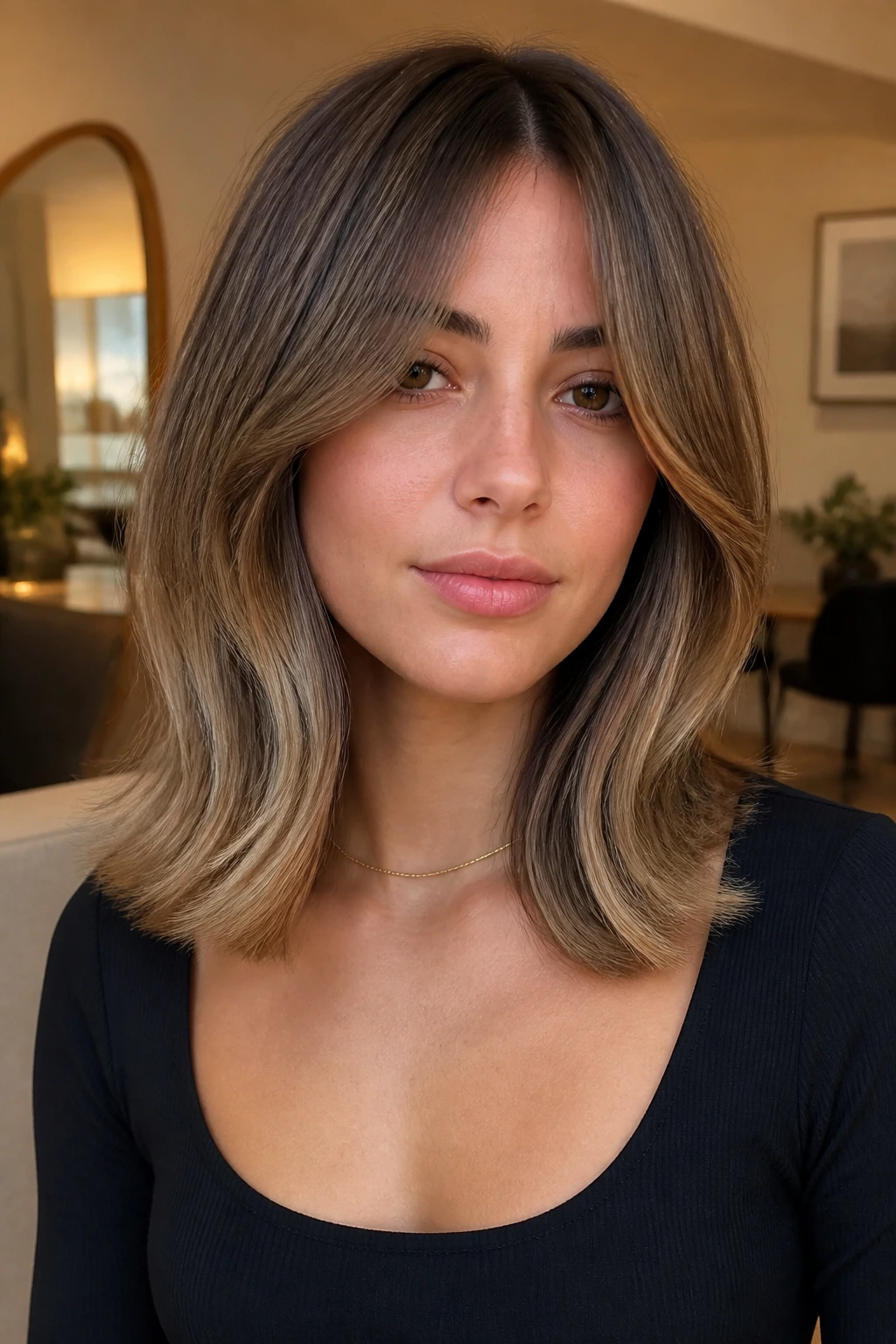
- Soft front lines: The bang area breaks up the perimeter so medium-length hair doesn’t sit like a sheet around the face.
- Easier grow-out: Collarbone and shoulder cuts can handle a fringe that grows an inch or two before it starts looking awkward.
- Built-in movement: The front pieces lift, bend, and swing with very little help, especially if your hair has even a hint of wave.
- Less commitment than blunt bangs: A face frame can be pinned back, tucked behind an ear, or blended into layers on days when you want less forehead.
- Better balance for medium length: The bangs keep the haircut from feeling bottom-heavy, which is a real risk once the ends start to thicken.
1. Collarbone Lob with Curtain Bangs
A collarbone lob with curtain bangs is the haircut I’d hand to someone who wants clean shape without looking over-finished. The length lands right where the collarbone makes hair kick out a little, and the center-parted fringe opens the face instead of closing it off. It’s tidy. Not stiff.
Why it works
The collarbone gives the ends a natural bend point, which means you get movement even on days when you don’t touch a curling iron. Curtain bangs start higher at the center and taper wider at the sides, so the forehead never feels boxed in. That balance matters more than people think.
Quick shape notes
- Ask for the shortest front piece to hit around the cheekbone, then let the sides drift to the lip.
- A slight bevel at the ends keeps the lob from looking flat.
- Blow-dry the fringe first, while the hair is still damp, or it will separate in weird little clumps.
- A 1.5-inch round brush is enough for most people; bigger brushes can make the front too round.
Best move: finish by tucking one side behind the ear. The cut looks instantly more casual, and the front pieces show their shape.
2. Textured Shag with Cheekbone Fringe
A textured shag with cheekbone fringe does something blunt cuts can’t: it looks intentional even when it’s a little tousled. The layers are broken up through the crown and around the face, so medium length stops feeling heavy. This is the haircut for people who hate the feeling of one solid block of hair sitting on their shoulders.
The fringe matters here. Keep it soft enough to split at the center, but not so wispy that it disappears into the rest of the cut. If the shortest pieces land right at the cheekbone, the eyes stay open and the cheek area gets a little lift without the bangs feeling severe.
This one is happiest with texture spray, a diffuse blow-dry, or a rough air-dry followed by a quick pass around the front with a brush. It is not a “comb it once and go” cut if your hair is very straight, and that’s fine. The point is the broken edge. The messy bits are part of the design.
3. Sleek Blunt Midi with Bottleneck Bangs
Why do bottleneck bangs look so sharp on medium length hair? Because they start narrow in the center, then open just enough to skim the cheekbones and jaw. That shape gives you the polish of a blunt cut without the hard wall effect that some straight mides can create.
The blunt midi itself keeps the outline strong. What softens it is the fringe: shorter in the middle, longer at the sides, and curved rather than chopped straight across. On hair that dries smooth, the contrast is gorgeous. On hair that swells a little, it still holds the line.
How to style it
Start by drying the bangs side to side until the roots are almost dry, then use a round brush to turn the ends away from the face. Leave the ends of the hair mostly straight if you want that cool, graphic finish. A tiny bit of serum on the mids and ends keeps the blunt line glossy, but go easy or the fringe will separate.
4. Wavy Clavicut with Split Fringe
If your hair flips at the ends the second it dries, a wavy clavicut with split fringe turns that habit into part of the look. The length hits right around the collarbone, where a soft wave can sit instead of collapsing. The split fringe falls open at the center and drapes outward, so the front feels light rather than crowded.
This cut is a friend to hair that already bends on its own. You’re not forcing much. You’re cleaning up the outline and giving the front pieces a direction. A little mousse at the roots, a touch of wave cream through the mids, and you’re done before the bathroom mirror starts to fog up.
- The collarbone length keeps the wave pattern visible.
- The split fringe softens a broader forehead without hiding it.
- A middle part keeps the shape balanced; a slight off-center part makes it looser.
- Let the hair air-dry to about 80 percent before you touch the front pieces.
The charm here is the movement. The cut looks best when it’s not trying to be perfect.
5. Feathered C-Cut with Long Face Frame
The feathered C-cut is the one I’d call quietly smart. The hair curves inward around the front, then bends back toward the shoulders in a soft “C,” which keeps medium length from feeling square. Add a long face frame, and the whole cut starts to pull the eye downward in a gentle line instead of stopping at the cheek.
The feathering matters because it removes bulk without creating choppy gaps. Thick hair benefits a lot from that. So does straight hair that tends to hang like a curtain. A few feathered layers near the front are enough to make the cut breathe.
Wear it smooth with a round brush if you want it polished, or bend the face frame away from the face for a softer look. Either way, the longest front pieces should almost brush the mouth. That tiny bit of length makes the front look grown-in, not over-cut.
6. Deep Side-Part Lob with Sweeping Bangs
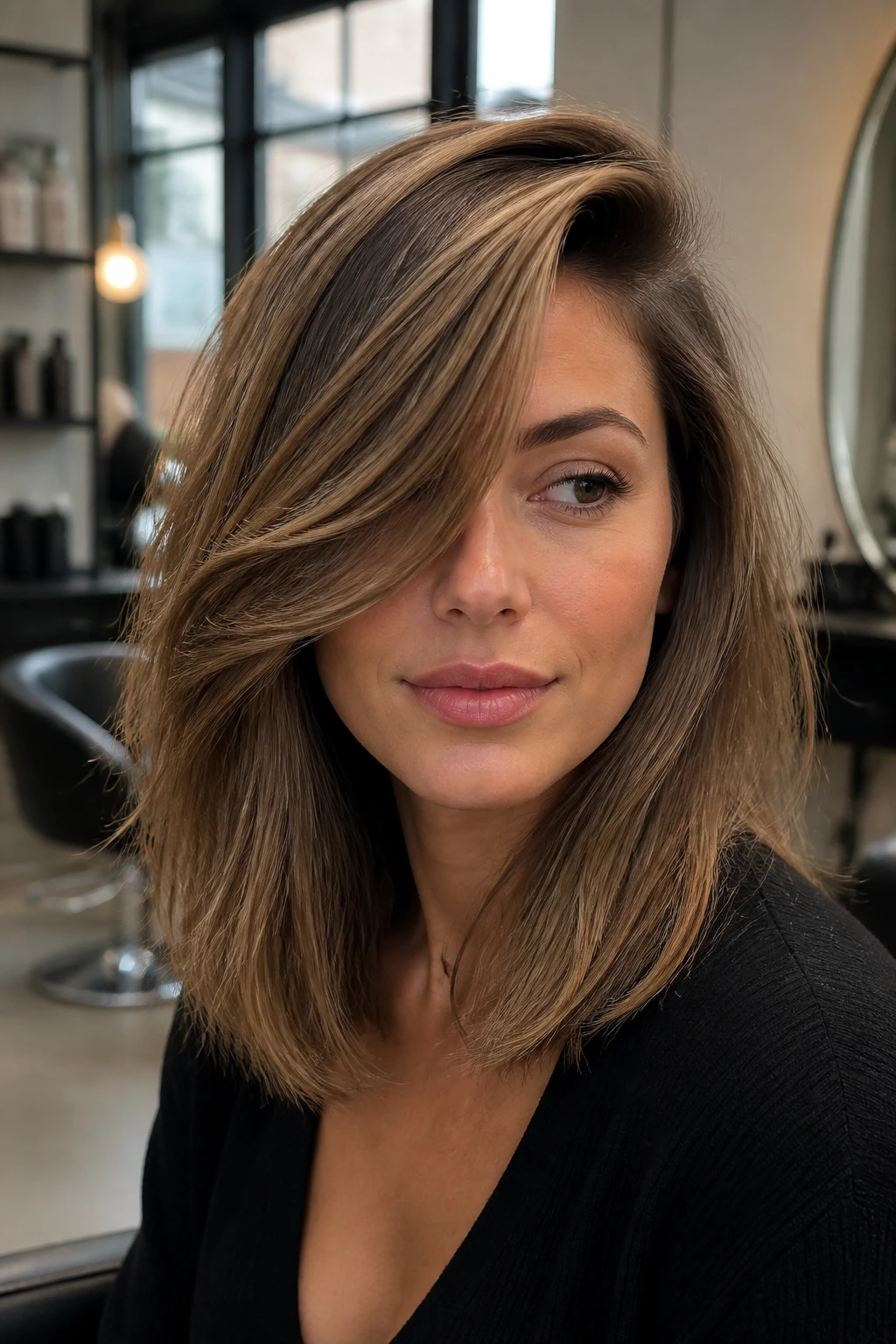
A deep side-part lob is not the same thing as a curtain bang cut, and I like it for that reason. The diagonal part creates a long line across the forehead, then the bangs sweep over to one side and melt into the rest of the cut. It’s a cleaner choice for anyone who hates the feeling of hair falling evenly on both sides.
This shape does two useful things at once. It gives volume at the root where the part sits, and it keeps the front from looking flat. If your hair has a cowlick near the front, a side part can be easier to live with than a center part that keeps fighting back.
Ask for the longest fringe pieces to hit around the cheekbone and the shorter side to skim the brow, not cut straight across it. The whole point is a diagonal line. Sharp enough to notice. Soft enough to move.
7. Airy Shoulder-Length Blowout with Lip-Length Fringe
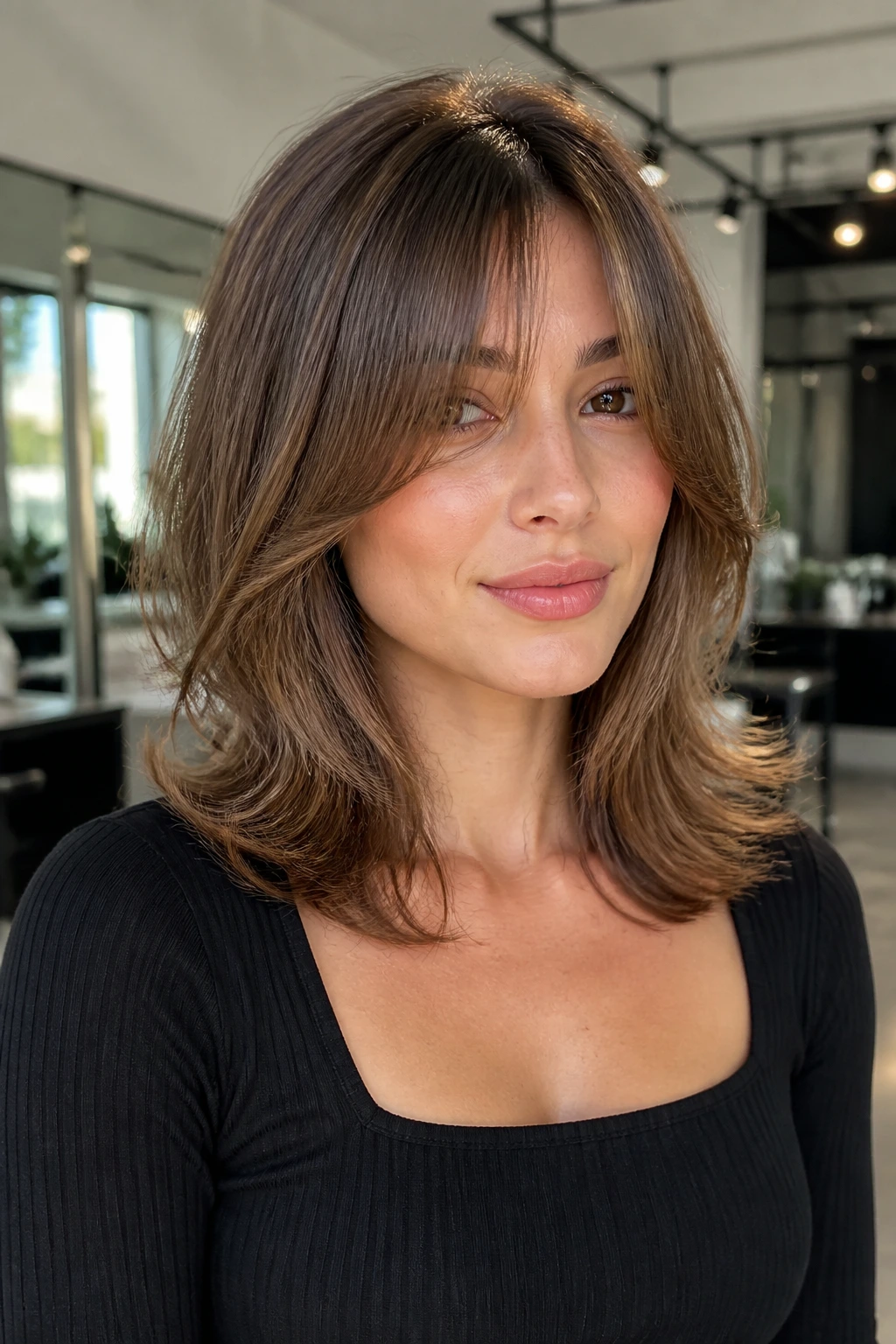
An airy shoulder-length blowout with lip-length fringe is the cut that looks like you spent more time on it than you did. The hair sits right at the shoulders, where a round brush can push the ends under or slightly out. The fringe lands near the lips, which keeps the front pieces long enough to blend with the layers instead of floating awkwardly above them.
Why it works
The length gives you room for bounce, and the fringe has enough weight to drape instead of frizzing apart. That matters on medium hair that falls somewhere between fine and dense. Too short, and the bangs puff up. Too long, and they vanish into the cut.
What makes it easy to wear
- Dry the bangs first, before the rest of the head steals your patience.
- Use a medium round brush, not a tiny one, or the front will curl too tightly.
- Let the ends turn under just a little; too much flip makes the shape look dated.
- A light mist of flexible hairspray on the bangs keeps them from separating in dry air.
The whole look has a soft, airy finish that still reads as deliberate.
8. Curly Shoulder-Length Cut with Curved Fringe

Curly hair and face-framing bangs can be a mess if the cut is too short. They can also be one of the best combinations in this whole list when the fringe is left long enough to curl naturally. A shoulder-length shape gives the curls room to spring, and the curved fringe follows the curl pattern instead of fighting it.
The trick is restraint. Short bang pieces on curly hair bounce higher than you expect, sometimes by a full inch or more once they dry. Keep the front pieces longer than you think you need, then let the curl pattern do the rest. A curved fringe that starts near the brow and opens toward the cheekbone looks softer than a blunt line ever will.
Diffuser heat helps, but so does patience. Scrunching too much product into the fringe can make the front piece stringy. A light cream and a little gel at the ends are usually enough. After that, leave it alone.
9. Razored Midi with Piecey Bangs
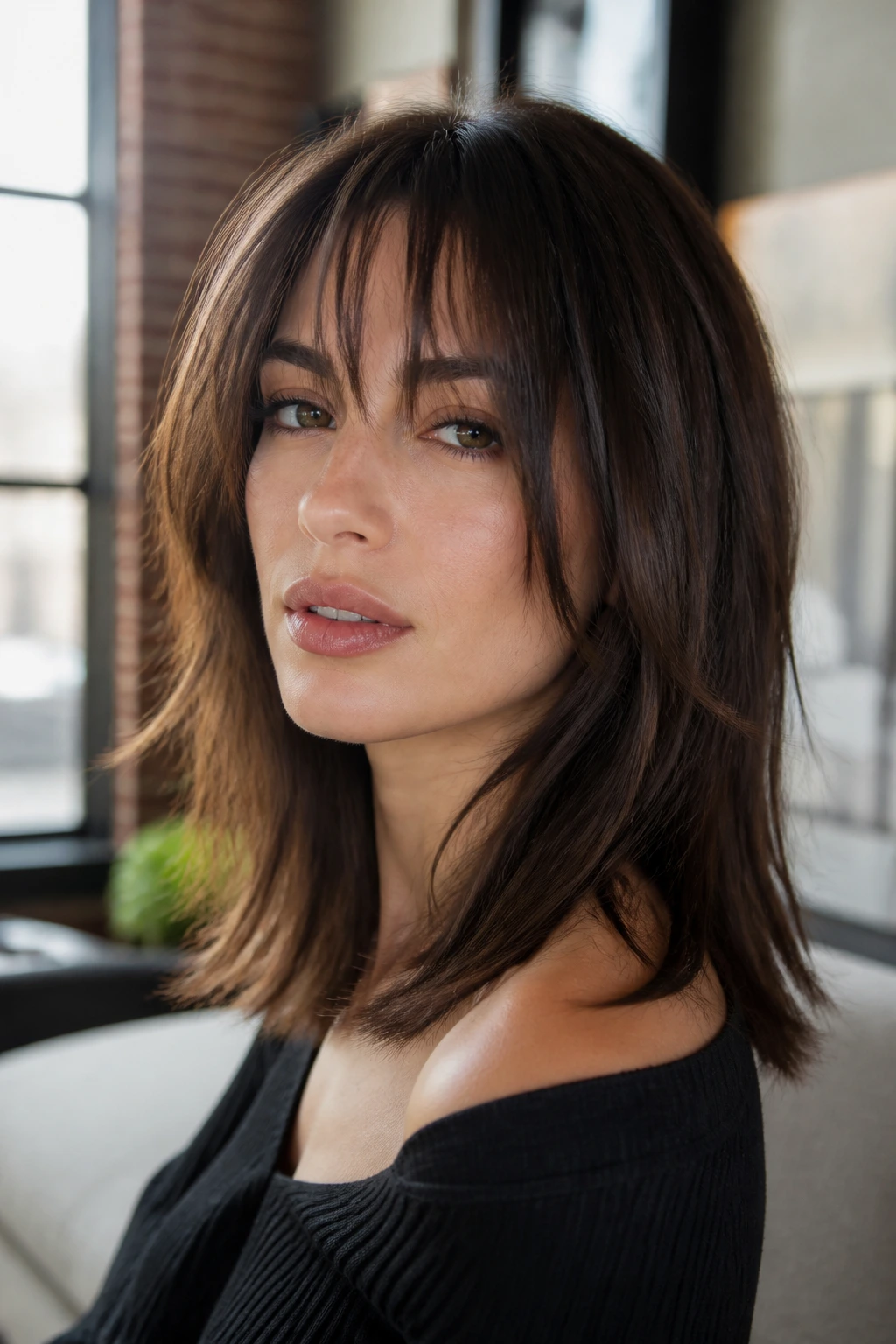
Can a mid-length cut feel sharp without turning harsh? Yes, and this is the version that proves it. A razored midi uses softer, sliced ends so the hair doesn’t sit as a solid block, while piecey bangs break the front into little directional sections that move independently.
This cut is good when you want the shape to look a bit undone on purpose. The razor work gives the ends a ragged edge, which can be brilliant on thick hair and risky on fine hair if the stylist goes too far. The bangs should still frame the cheeks, not vanish into a thin veil.
How to wear it
- Ask for texture where the hair needs release, not all over the head.
- Keep the bangs slightly longer on the sides so they can blend into the cheek line.
- Work a pea-sized amount of paste through the fringe only if you want separation.
- Blow-dry with your fingers first, then finish with a brush if you want the shape a little cleaner.
It’s a cut with grit. That’s the appeal.
10. U-Shaped Lob with Soft Front Ribbons
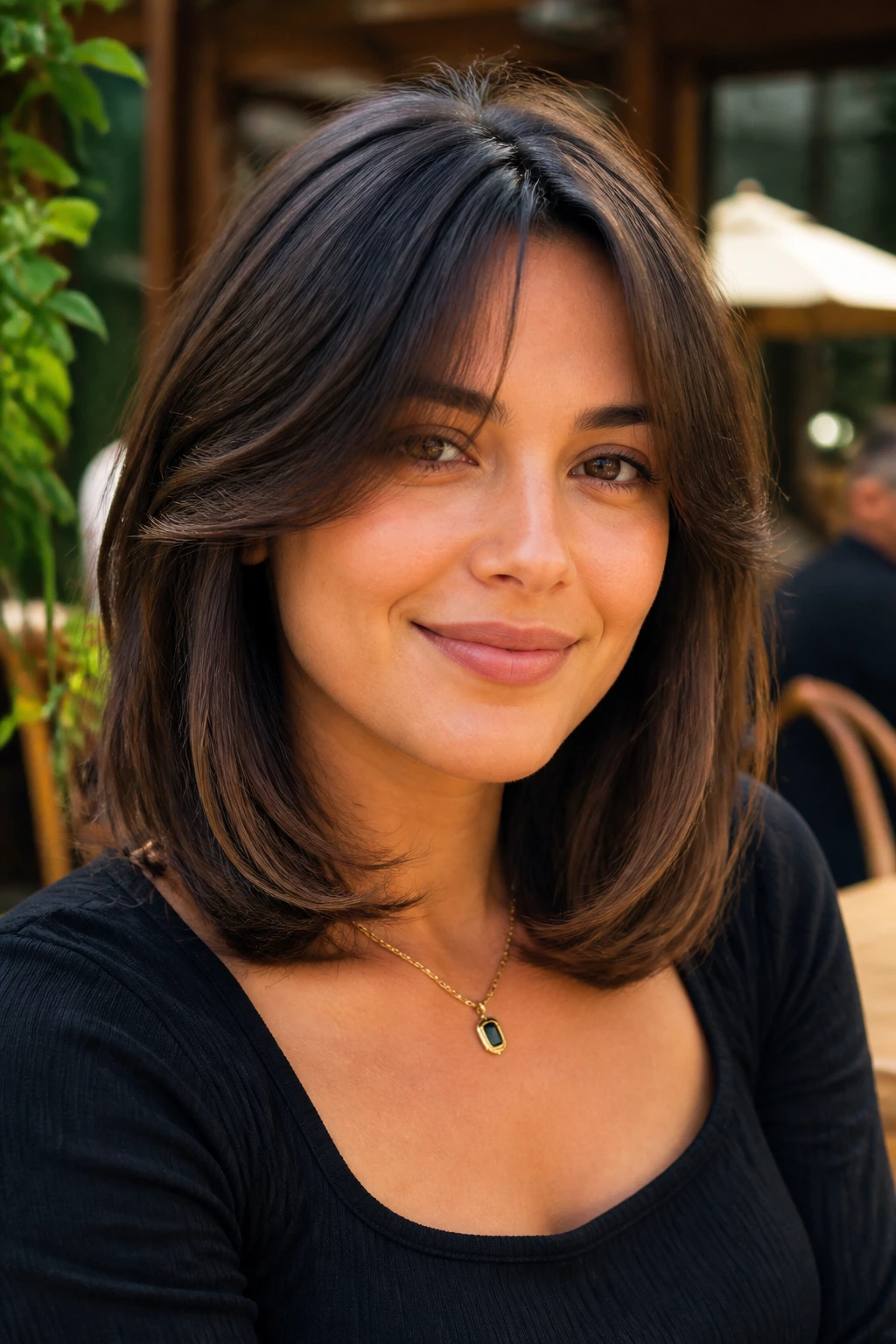
A U-shaped lob looks fuller at the back and softer at the front, which is exactly why face-framing bangs sit so well with it. The perimeter curves gently instead of cutting straight across, so the ends appear thicker and the front pieces can fall in long ribbons around the face.
The softness is in the balance. Medium length hair can sometimes feel too even from the front and too blunt from the back. The U-shape fixes that without pushing the cut into shag territory. It’s especially useful if your hair is naturally straight and needs a little visual shape to stop it from hanging dead-flat.
Keep the front ribbons long enough to tuck behind the ear without losing the face-framing effect. If they skim the jaw or graze the cheek, they’ll still do their job even when the rest of the hair is pulled back. That’s the detail I like most here.
11. Mid-Length Wolf Cut with Wispy Curtain Fringe

A mid-length wolf cut is for someone who wants motion first and neatness second. The crown gets volume, the layers get choppy, and the wispy curtain fringe keeps the front from turning into a heavy triangle. It’s messy in a controlled way. That’s harder to pull off than it sounds.
The fringe should stay light enough to split, but not so sparse that the forehead dominates. If you wear this cut with natural waves, the layers show up fast. On straighter hair, you’ll need a bend from a curling wand or hot brush to make the shape read clearly.
This is a good cut when your hair sits flat near the roots but puffs at the ends. The shorter crown layers lift the top, and the face frame keeps the whole thing from feeling too extreme. Still. It needs a little attitude.
12. Straight Midi with Brow-Grazing Bangs
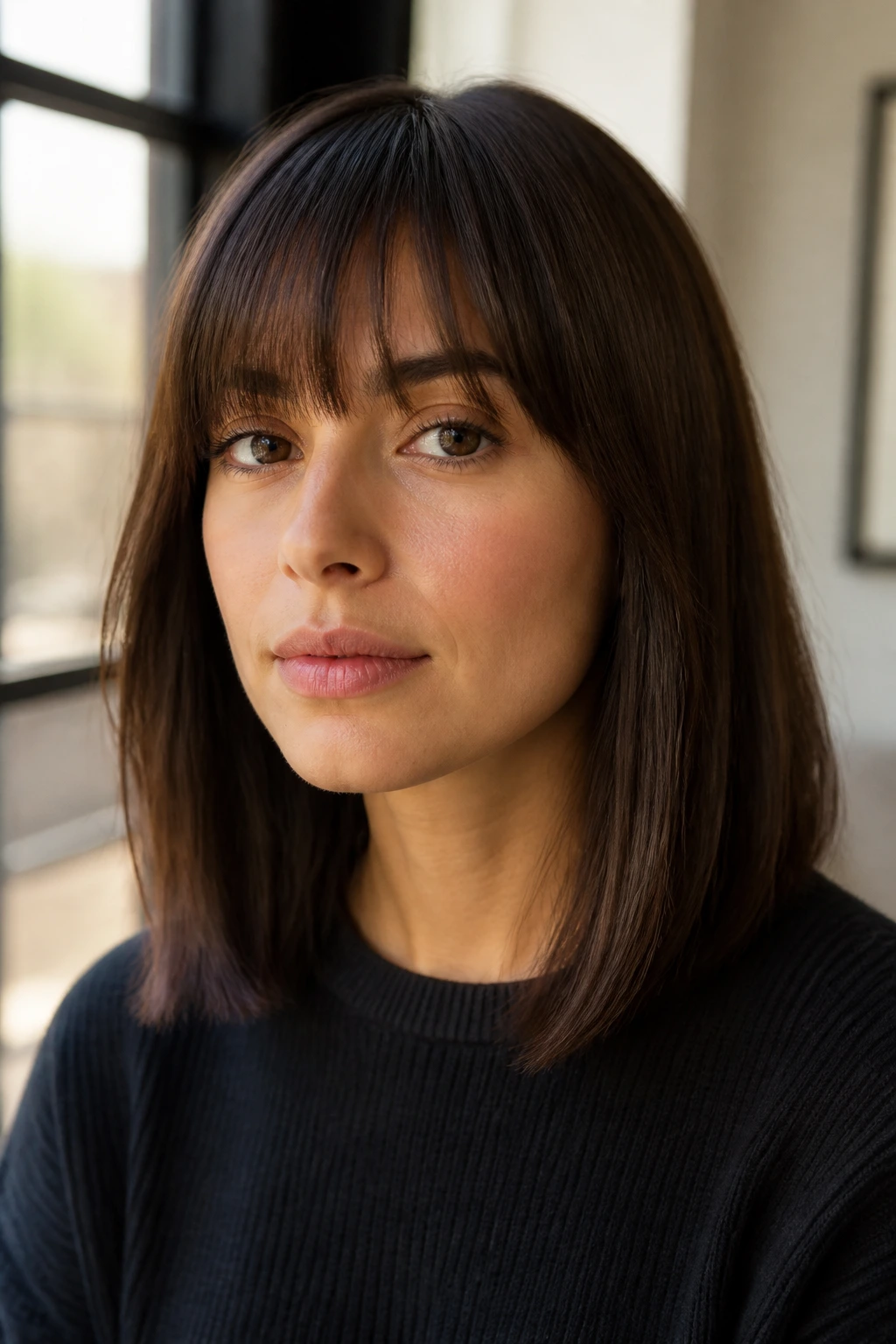
A straight midi with brow-grazing bangs is the cleanest look in the bunch, and I mean that as a compliment. The length stays even, the ends sit smooth, and the fringe skims the brows without crossing into full blunt-bang territory. It’s tidy without looking severe.
Compared with a shag or wolf cut, this one depends on precision. The line needs to be neat, the bangs need to be cut so they move rather than fold, and the ends should be kept blunt enough that the haircut still has weight. Too much texture here ruins the point.
This cut suits people who like hair that can be worn tucked, blown smooth, or pinned back with almost no drama. The brow-grazing fringe draws attention to the eyes, which is the whole trick. Ask for the ends to sit just below the shoulders if your hair is thick; a half-inch matters here.
13. Flipped-End Lob with Bottleneck Pieces
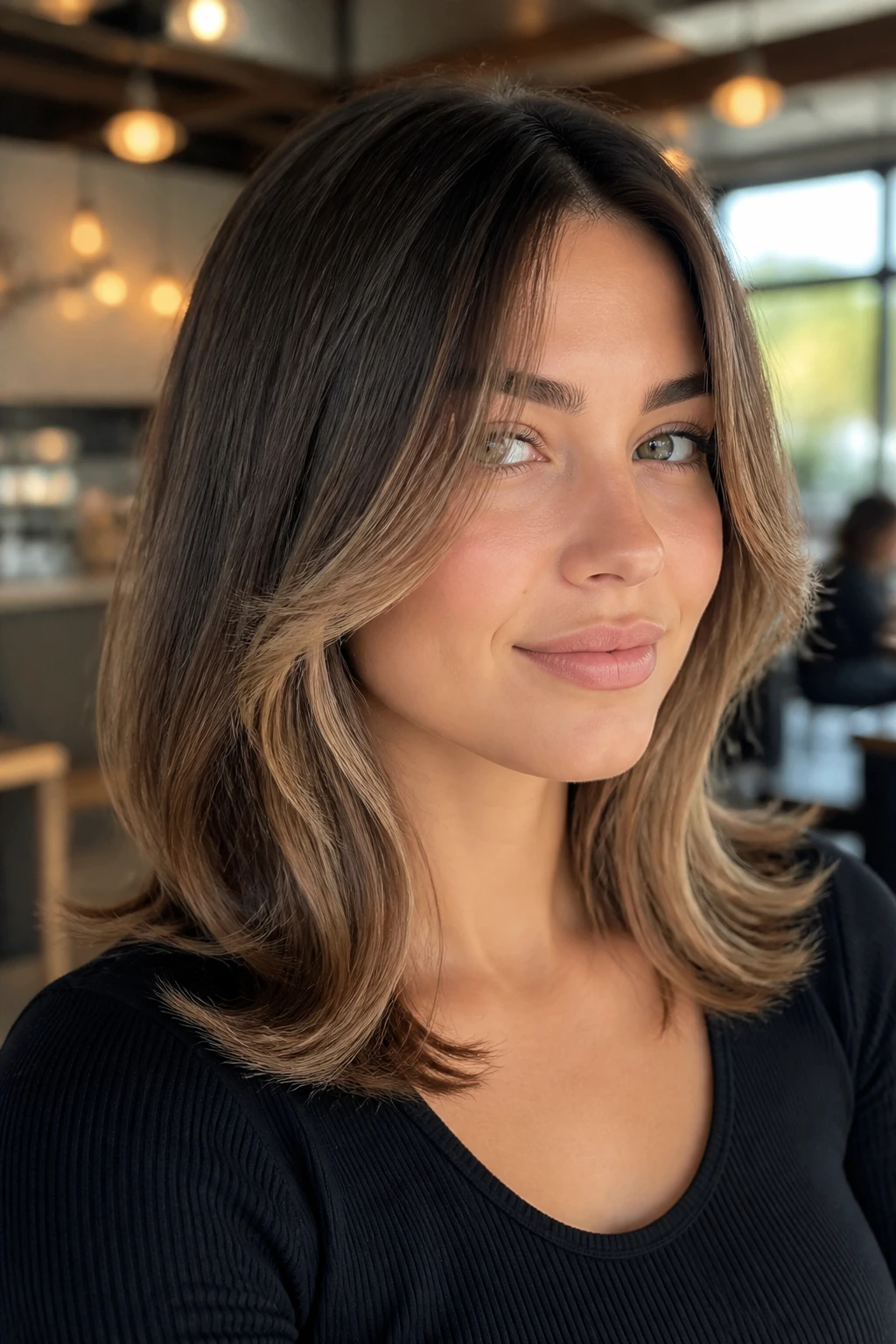
A flipped-end lob sounds simple until you see how much shape it can give medium length hair. The ends turn out just enough to create a little lift, and the bottleneck pieces in front narrow the forehead before opening softly around the cheeks. It’s a lively cut. Not fussy.
The flip at the ends works best when it’s subtle, almost like the hair changed its mind halfway through drying. If the flip gets too dramatic, the cut starts to look retro in a way most people do not want. Keep it soft. A round brush or a flat iron bend at the last two inches is enough.
The front pieces are the whole reason this shape works. They stop the outward flip from making the haircut feel too wide. Instead, the eye moves up through the center fringe and then out along the cheek line.
14. Fine-Hair Midi with Light, Long Bangs

Fine hair needs careful handling here. A fine-hair midi with light, long bangs works because the length adds enough visual weight while the front pieces stay long enough to avoid looking chopped to death. Short bangs on fine hair can separate too fast and show the scalp more than you want. Longer ones behave better.
The key is to keep the layers understated. Too many short pieces and the ends lose substance. A soft face frame from the lip down helps the hair look fuller around the jaw without removing the density from the perimeter. That matters more than big texture.
A mousse at the roots and a light serum on the ends is usually enough. If you blow-dry the bangs with too much tension, they’ll swing apart and show every cowlick. Gentle tension. That’s the whole game.
15. Thick-Hair Layered Cut with Internal Removal and Fringe
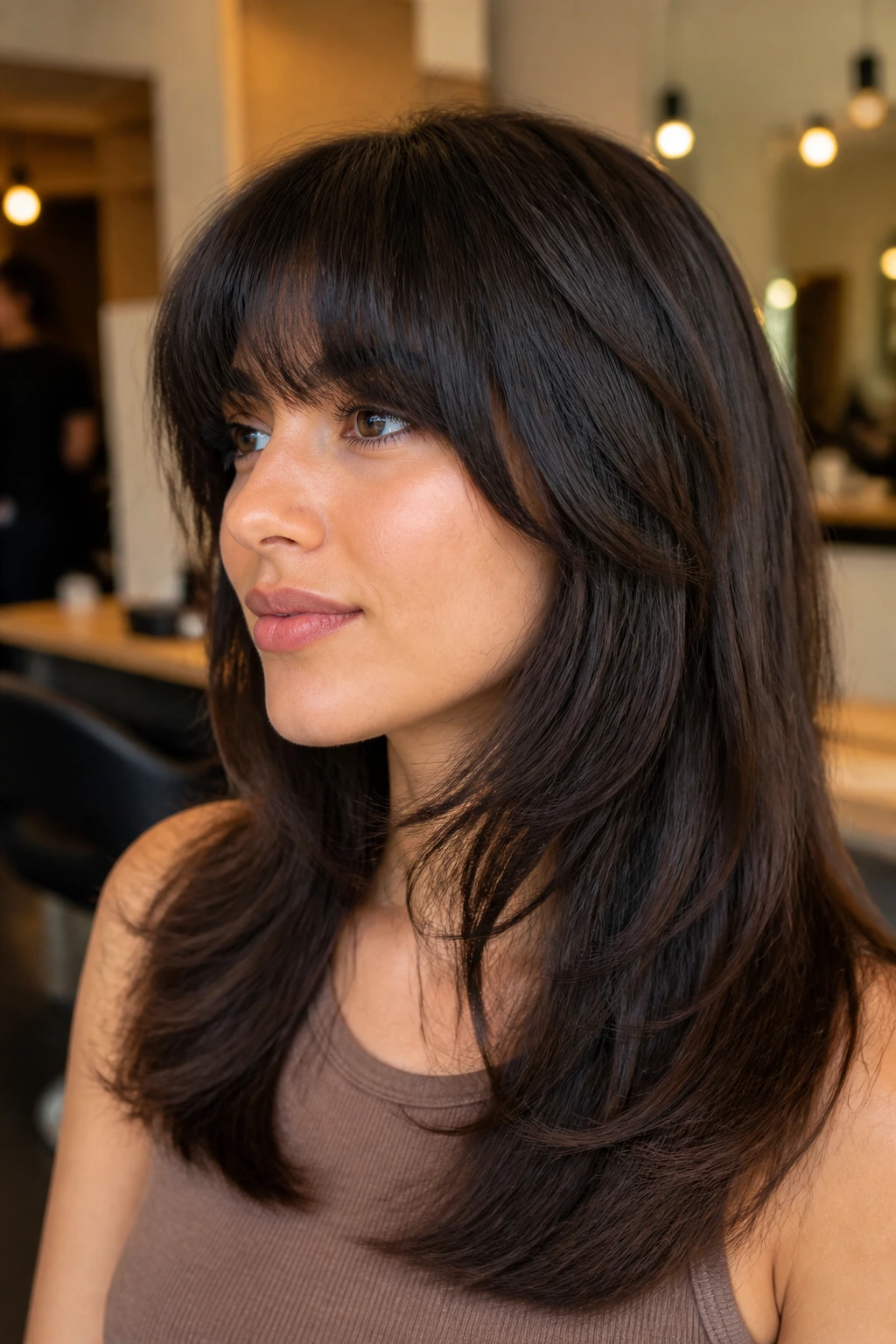
Thick hair wants internal weight removal, not a bunch of fluffy layers floating on top of each other. A layered medium cut with a fringe can look bulky if the inside isn’t opened up first. Done well, though, it sits with shape and movement instead of standing away from the head like a helmet.
The fringe should stay solid enough to hold its line. Too much thinning turns thick bangs into fuzzy edges that need constant taming. Ask for the inside of the haircut to be reduced first, then let the face frame stay longer and cleaner. That gives you control.
This is one of the best medium-length hairstyles with face framing bangs for people who want to wear their hair down most of the time. It also handles ponytails and clips well because the front pieces stay long enough to escape around the ears instead of disappearing under elastics.
16. Air-Dried Shoulder Cut with Soft Curtain Bangs

An air-dried shoulder cut with soft curtain bangs is the closest thing this whole list has to a low-maintenance day off. The length lands around the shoulders, where the natural bend can settle on its own, and the curtain bangs stay gentle enough to fall open without a blowout. It’s easy. But not sloppy.
The success of this cut depends on the dry pattern. If your hair dries with a strong part or a stubborn cowlick, set the bangs in the direction you want while they’re wet. Clip them for ten minutes if needed. That little bit of control beats trying to fix them once they’ve already dried wrong.
A light cream through the mids, a tiny bit of gel on the fringe, and hands out of the way. That’s the formula. Overtouching is what ruins it.
17. Polished One-Length Lob with Long Front Pieces
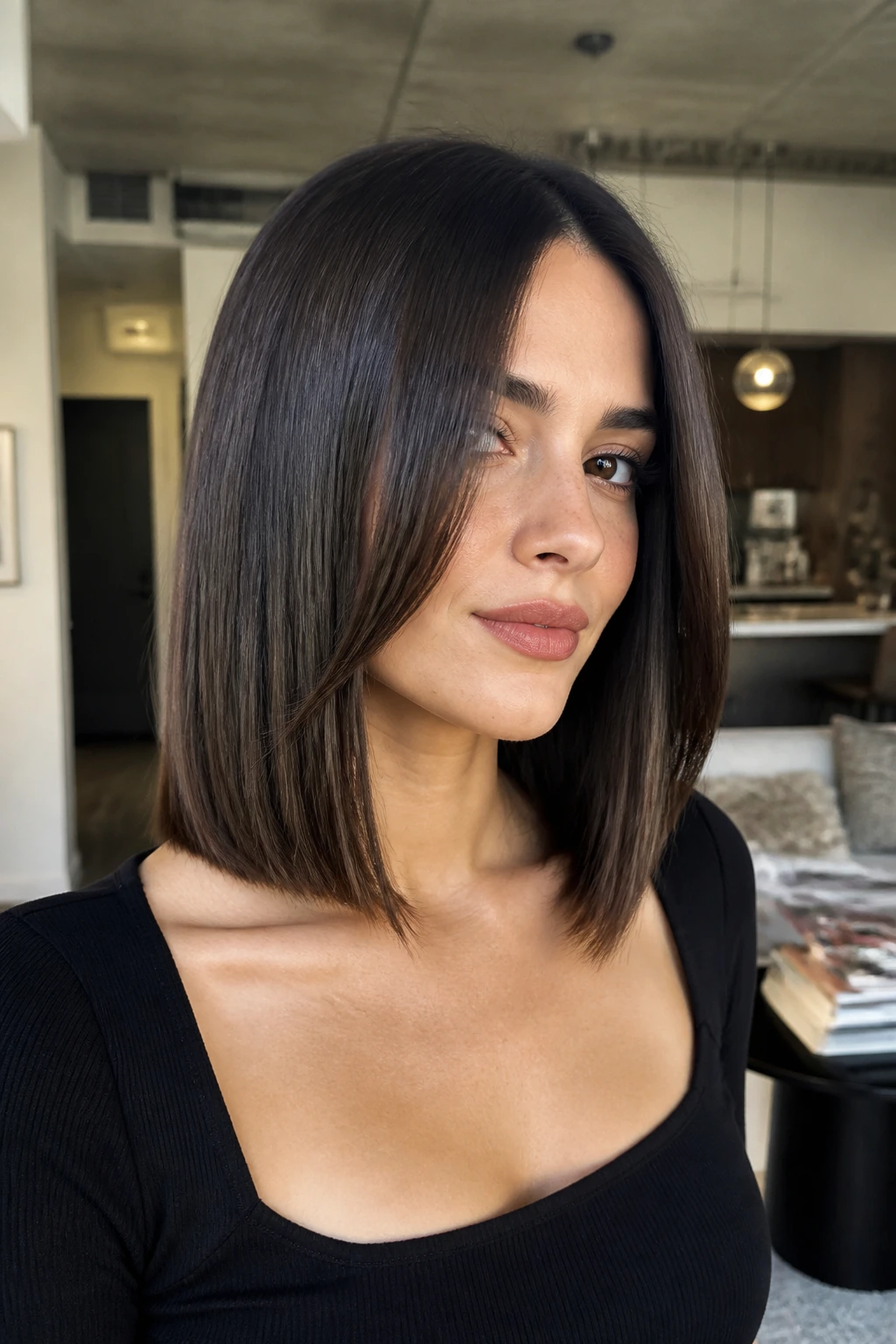
A polished one-length lob is for people who like structure and don’t want the haircut to look styled into submission. The body stays even, the perimeter is clean, and the long front pieces give the face a softer edge without introducing layers everywhere. It’s one of the simplest shapes here, which is part of why it holds up.
The front pieces are what keep the cut from feeling boxy. They should start somewhere around the cheekbone and fall forward toward the collarbone, depending on how much softness you want. Long enough to tuck. Short enough to matter.
This cut is especially nice if your hair has a naturally smooth texture. The less the hair fights, the better the line reads. Add a center part and a little bend at the front, and the whole thing feels finished without looking busy.
18. Grown-Out Bob with Sweepy Bangs
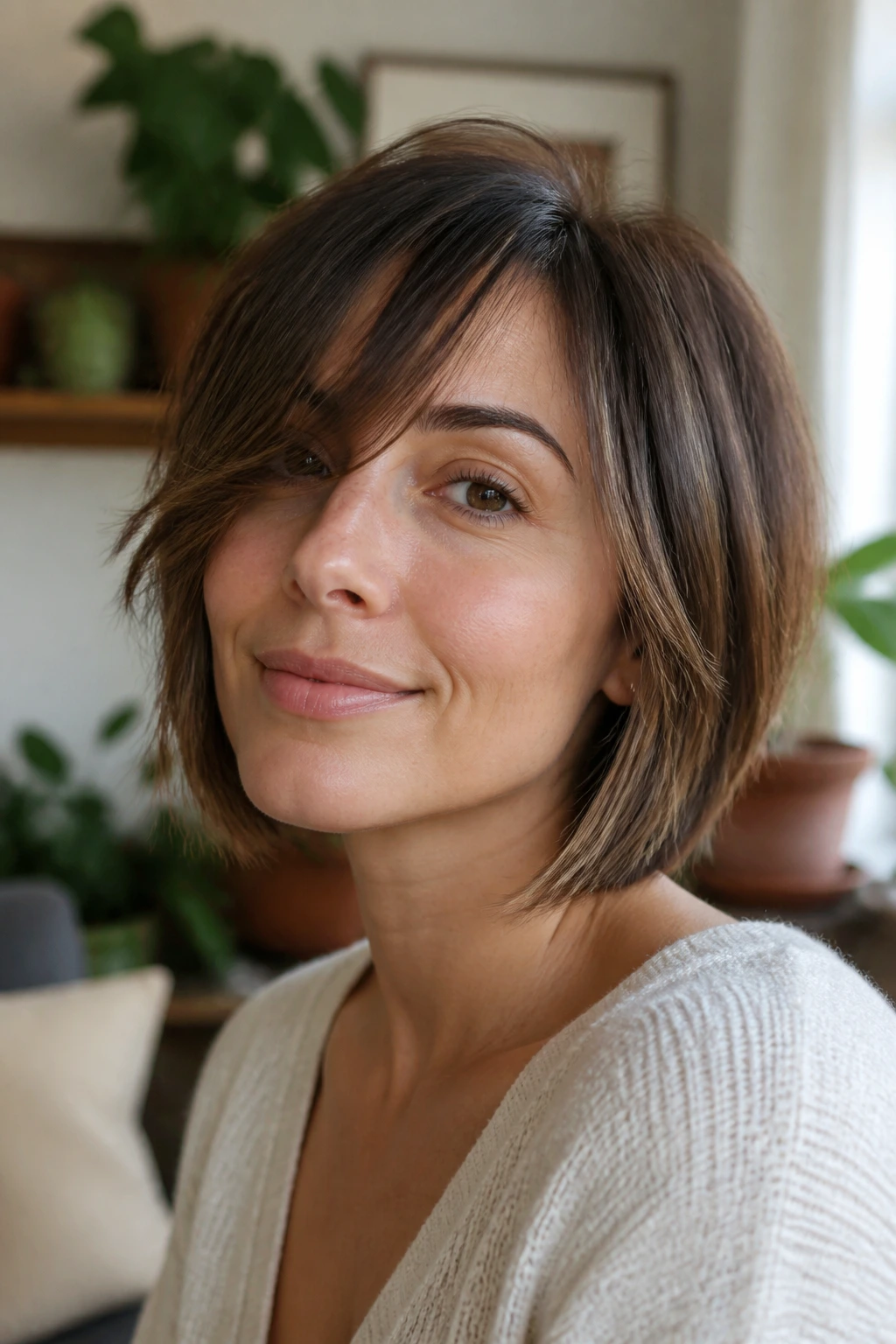
A grown-out bob is one of those cuts that can look accidental if it loses shape, or very chic if the front is handled with care. Sweepy bangs save it from the awkward middle stage. They create a diagonal line that bridges the short back and the longer front, so the haircut reads as intentional rather than stuck between lengths.
This is a smart option when you’re growing out a shorter cut and don’t want to jump straight to shoulder length. The bangs give you a reason to keep the front pieces soft while the back catches up. A little asymmetry helps here. Too much symmetry makes the bob look too square.
The sweep should start high enough to open the face, then slide toward the cheek and jaw. If the front pieces stop too high, the cut feels abrupt. If they get too long, you lose the bob’s shape. The middle ground is the whole story.
19. Tousled Mid-Length Cut with Face-Framing Texture

A tousled mid-length cut with face-framing texture lives in that easy lane between styled and slept-on. The ends are broken up just enough to avoid a heavy line, and the front pieces are textured so they catch on the cheekbone instead of lying flat against the sides of the face. It looks better after a little movement, which is a nice trait in real life.
This is one of the more forgiving choices if your hair shifts throughout the day. The texture means a stray wave or a bend at the front still fits the haircut. A light sea-salt spray can help, but don’t drown the hair in it. You want grit, not stiffness.
The face frame should be visible when the hair is worn loose and still make sense when one side is tucked. That’s the sign the cut was layered in the right place. If it only looks good from one angle, keep asking for adjustment.
20. Butterfly Layers with Floating Fringe

Butterfly layers are the most dramatic way to keep medium length hair light without giving up actual length. The shorter layers sit around the cheek and jaw, then drop into longer lengths below, which creates that lifted, wing-like shape people like to photograph from the side. The floating fringe keeps the front from feeling heavy or closed.
The trick is to keep the shortest pieces high enough to show movement but not so short that they start acting like a second set of bangs. The front should float into the rest of the cut, not sit on top of it. That’s what makes the butterfly shape feel airy instead of overworked.
This cut shines when you like volume at the crown and movement around the face. It is not a good choice if you want one simple line and zero styling. It wants a round brush, a little lift, and a bit of confidence.
Why Medium Length and Face-Framing Bangs Work So Well Together
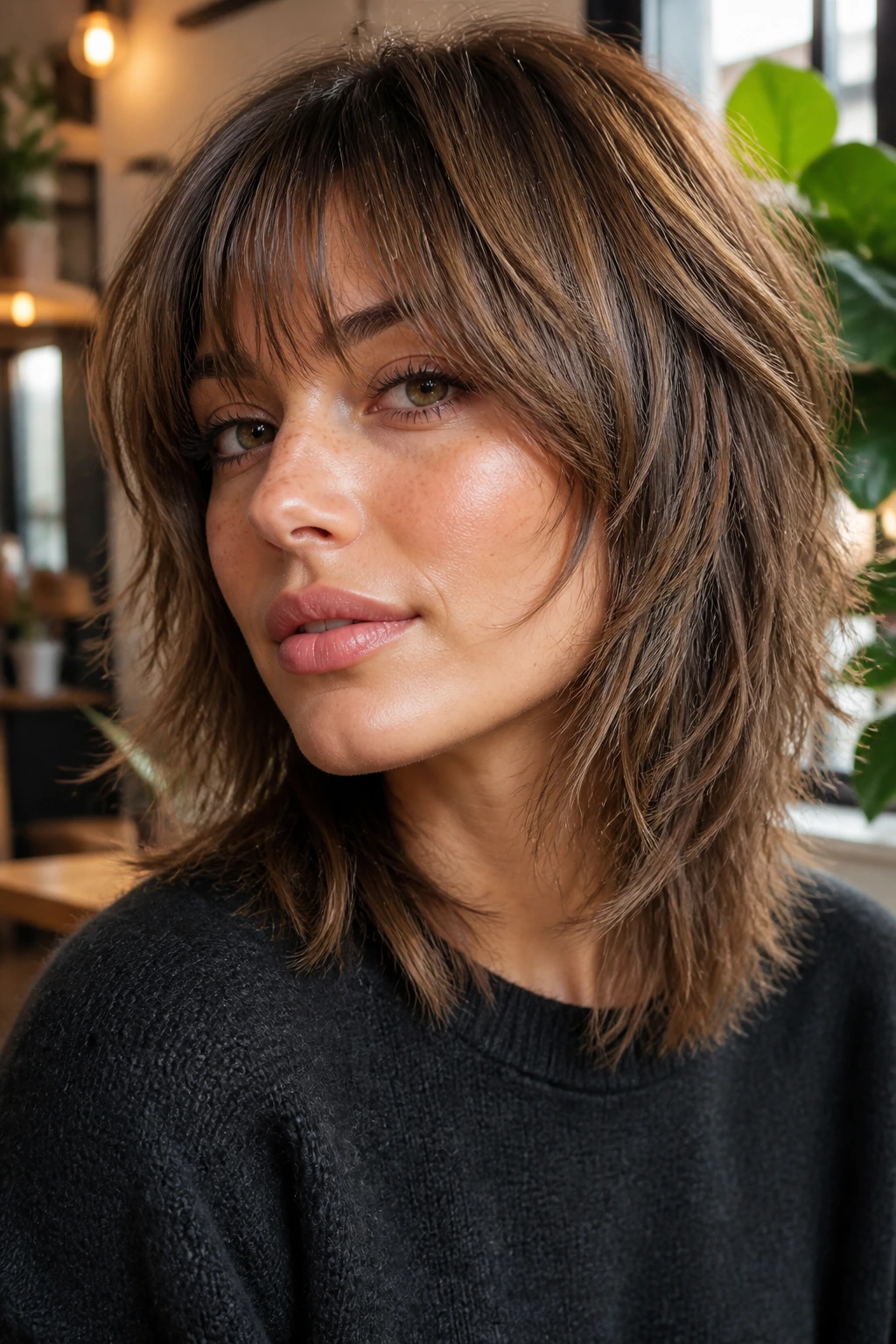
Medium length sits in a useful middle zone. It is long enough to pull into a clip, short enough to hold shape, and heavy enough that the front pieces do not fly apart the second a door opens. That combination gives face-framing bangs a chance to do real work instead of disappearing into a waterfall of hair.
The front pieces matter because they create direction. Hair that stops at the shoulders can look broad if the perimeter is one clean line from ear to ear. Add a curve from the cheekbone into the jaw, and the whole cut starts moving toward the face instead of sitting beside it.
There is also a grow-out advantage here. A strong fringe at eyebrow level can feel high-maintenance fast. Face-framing bangs can live a little longer, especially when the shortest point starts around the cheekbone or lip. That extra inch buys you time.
Medium length and face-framing bangs also play nicely with the way hair behaves during a normal day. It gets tucked. It gets pushed back. It gets caught in a scarf, a collar, a backpack strap. A cut that still looks good after all that is worth paying attention to.
The Tools That Make These Cuts Easier to Style
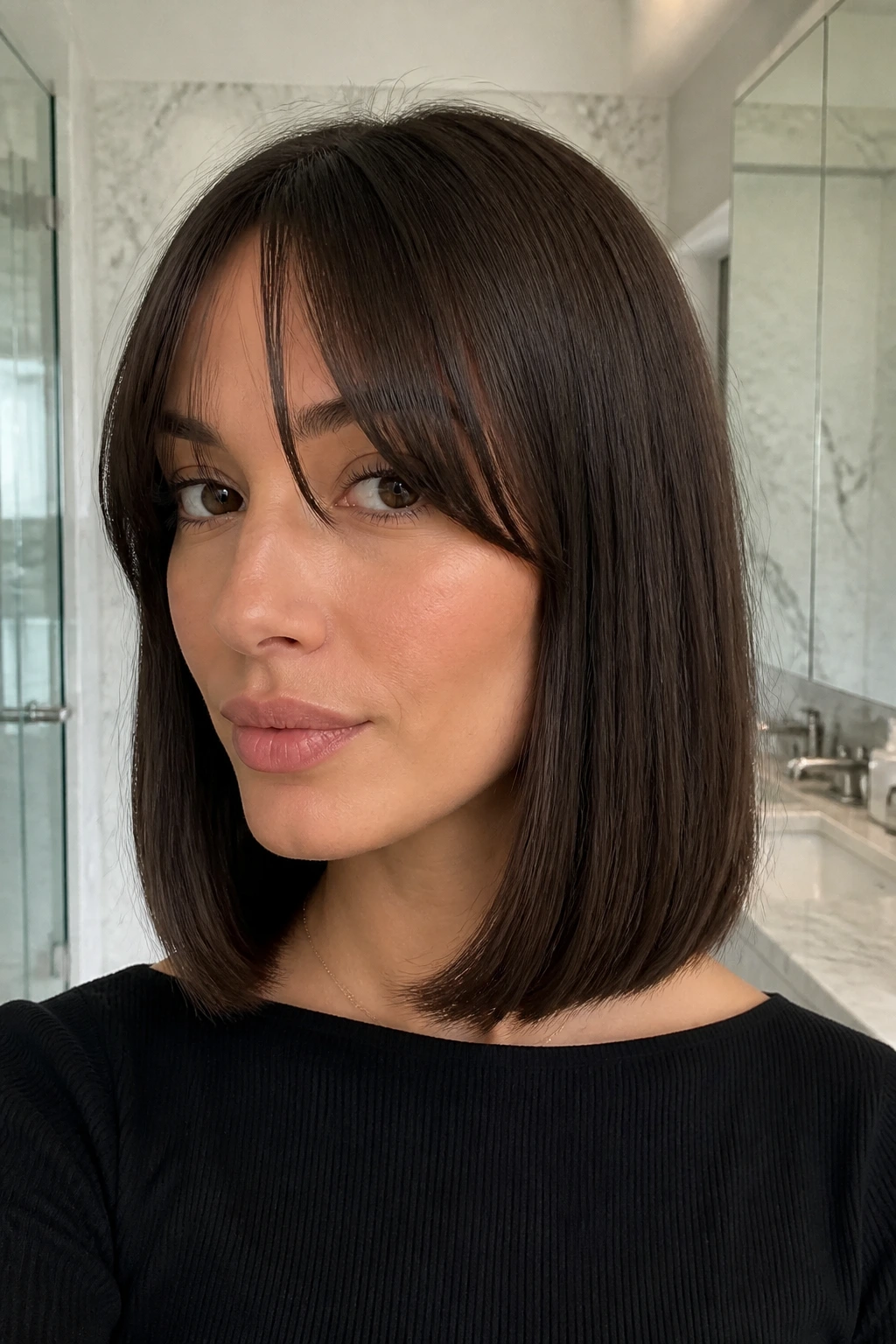
- 1.5- to 2-inch round brush: Big enough to smooth the front pieces without forcing them into a tight curl.
- Blow dryer with a nozzle attachment: The nozzle keeps airflow controlled, which matters when you’re directing bangs away from the face.
- Tail comb: Handy for setting a clean part and separating the fringe before you dry it.
- Duckbill clips or sectioning clips: These hold the back out of the way while you work on the front.
- Large velcro rollers: Optional, but they give the crown and bangs a better bend than a brush alone if your arms get tired.
- 1-inch curling iron or flat iron: Useful for adding a soft turn at the front pieces or a bend through the mids.
- Heat protectant spray: Non-negotiable if you use heat, even lightly.
- Lightweight styling cream or serum: A small amount keeps ends smooth without flattening the face frame.
- Dry shampoo: Best used at the roots near the fringe, where oil shows first.
- Wide-tooth comb: Gentle on waves and curls, and better than a brush when you want to keep the shape loose.
What to Tell Your Stylist Before the First Snip
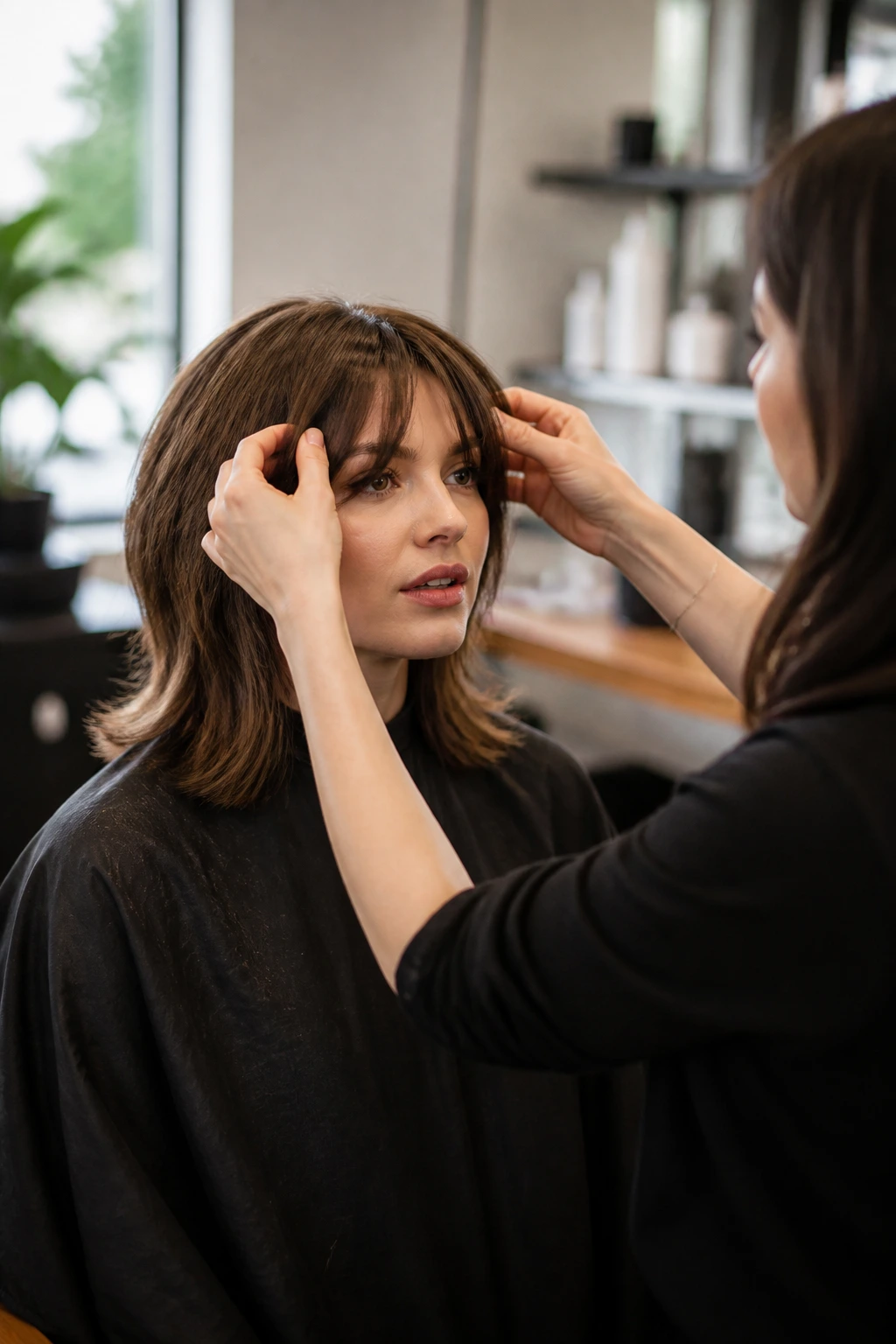
Bring photos, but bring the right kind. A front-facing photo tells one story; a side view tells another. Haircuts like these live in the space between both, so showing a profile shot matters more than people think. The angle of the front pieces can look soft from the front and wildly short from the side.
Say where you part your hair on an ordinary day. If you wear a middle part but your cowlick keeps drifting left, the fringe should respect that. Fighting the part line is a waste of everybody’s time. The haircut will win eventually, and usually not in your favor.
Ask where the shortest face-framing piece will land when the hair is dry. That point changes everything. Cheekbone-length gives a lift near the eyes; lip-length gives a slower, softer sweep into the rest of the haircut. If you wear glasses, mention that too. The front pieces need to clear the frames, not crash into them.
One more thing. Say whether you like to tuck one side behind your ear. If you do, the front should be cut so the tuck still leaves a small piece of framing hair out front. Otherwise the style loses shape the second you leave the chair.
How to Style Them So the Fringe Falls the Right Way
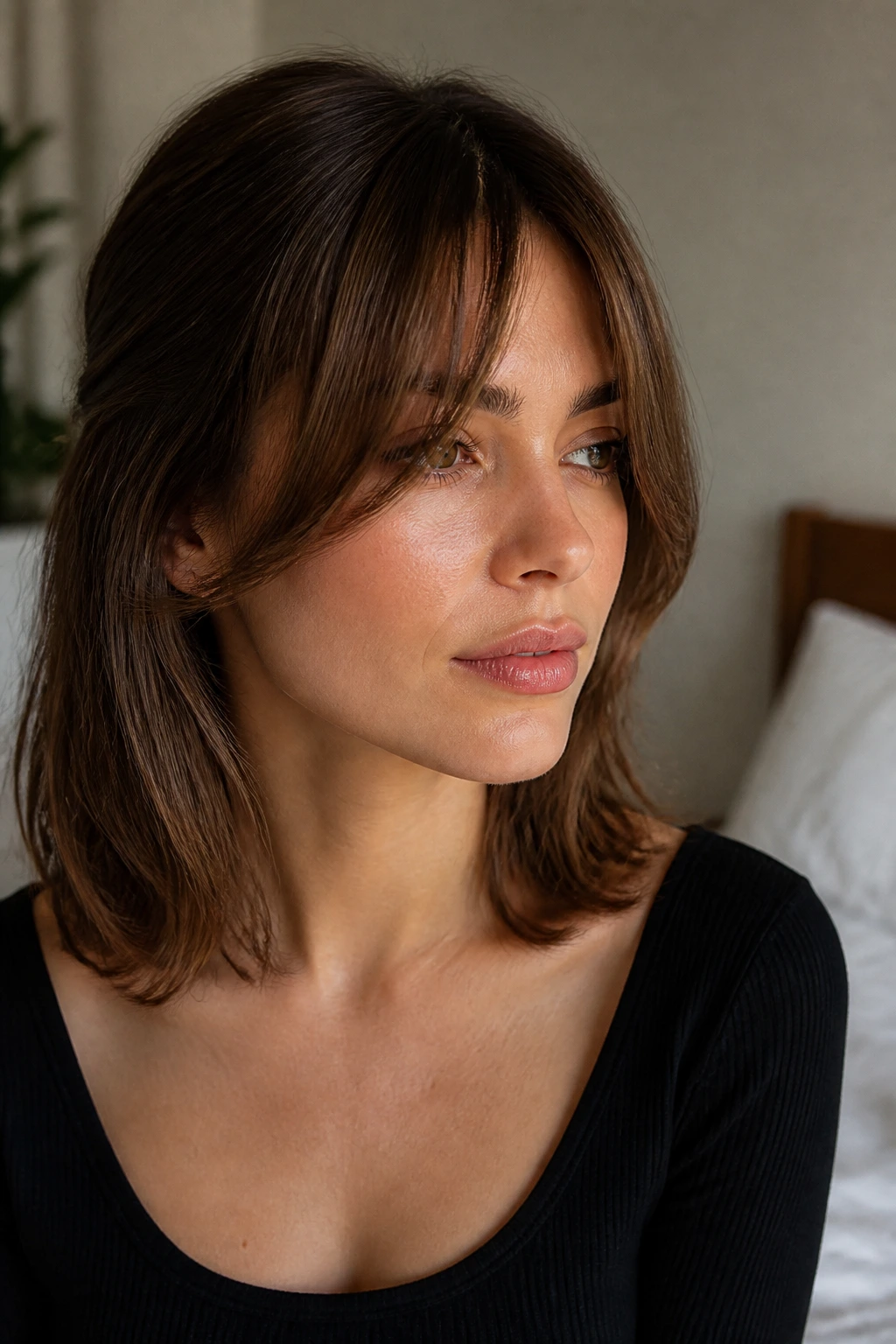
The smooth blowout
Start with the bangs. Not the back. The front pieces dry fast, and once they set in the wrong direction, you’ll spend the next ten minutes arguing with them. Blow-dry side to side at the root, then wrap the ends around a round brush and direct them away from the face.
A cool shot at the end matters. It locks the bend in place and keeps the fringe from falling flat against the forehead two hours later. If your hair is dense, clip the bangs up for a minute while you do the rest of the head; the extra lift helps.
The air-dried bend
Work a small amount of mousse through damp roots and a dab of cream through the mids. Twist each front section once or twice and pin it back while the rest of the hair dries. That creates a soft bend instead of a flat curtain.
When you unclip it, separate the front pieces with your fingers, not a brush. A brush can pull the bend out too fast. If the ends look too puffy, a tiny touch of serum on the very tips smooths them without killing the movement.
The soft wave set
Use a curling iron or flat iron to bend the front pieces away from the face, leaving the last inch or so out if you want a more relaxed finish. That gives the bang area enough shape to frame the cheekbone without turning into a ringlet. The rest of the hair can follow the same direction or alternate away from the face for a looser feel.
The goal is not perfect uniformity. It is a front section that looks like it belongs to the haircut.
Small Styling Moves That Change the Whole Finish
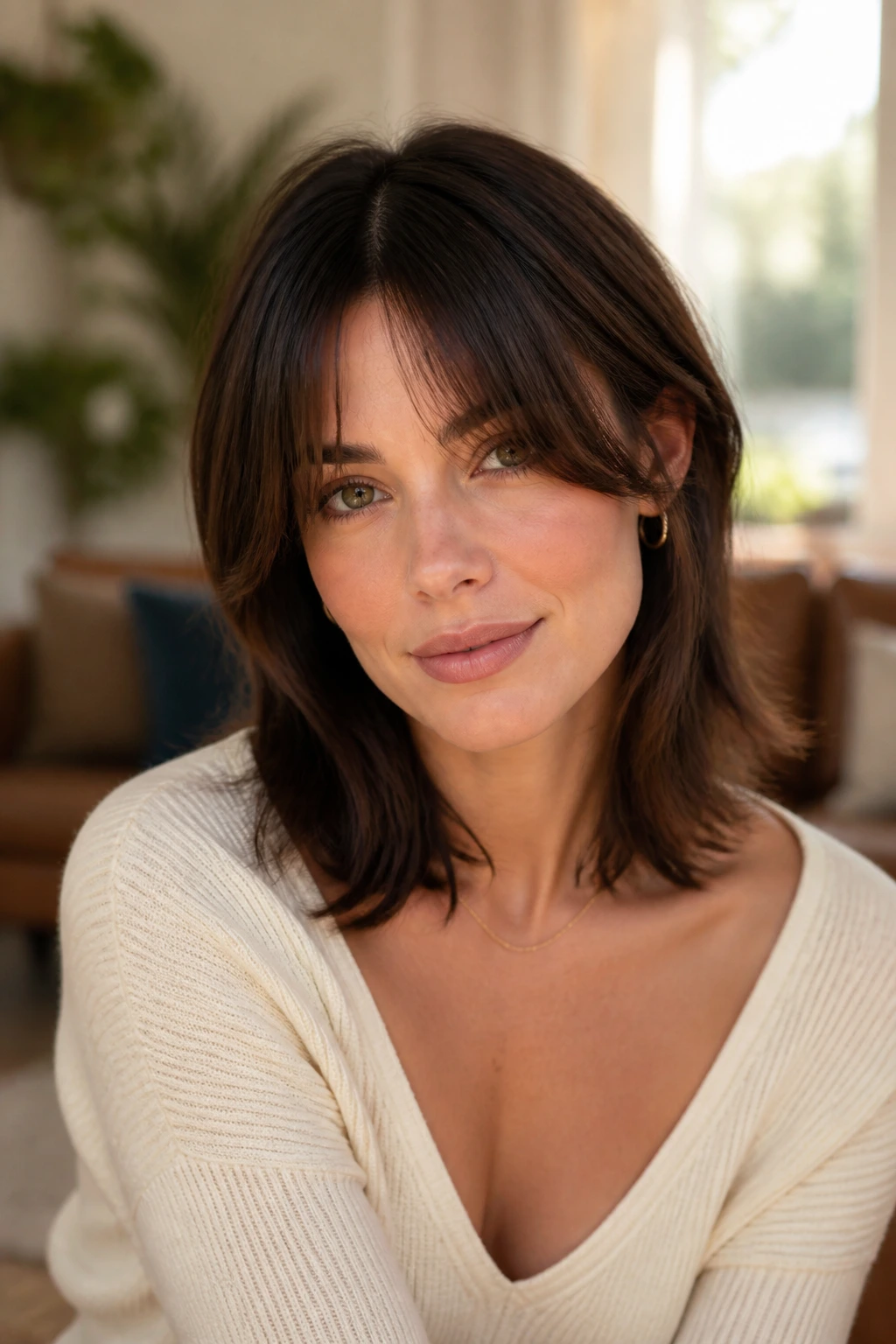
Lift at the crown: A little dry shampoo at the roots before styling can stop the top from going flat by midday. Put it in before heat, not after, if your hair tends to collapse.
Tighten the face frame: If the front pieces feel too loose, wrap just those sections around a round brush for an extra five seconds and let them cool. That small pause can change the whole line.
Soften the ends: A pea-sized amount of cream rubbed between your palms and pressed only into the bottom two inches keeps medium hair from fraying at the collarbone. Don’t touch the fringe roots with it.
Make the bangs behave on humid days: Clip the fringe in a large roller or Velcro roll for ten minutes after drying. It sounds fussy. It works.
Keep the texture on purpose: If your hair is naturally wavy, stop brushing the front pieces once they’re dry. Fingertips are kinder. Brushes make waves look accidental when you want them to look shaped.
Common Mistakes That Make Face-Framing Bangs Fight Back
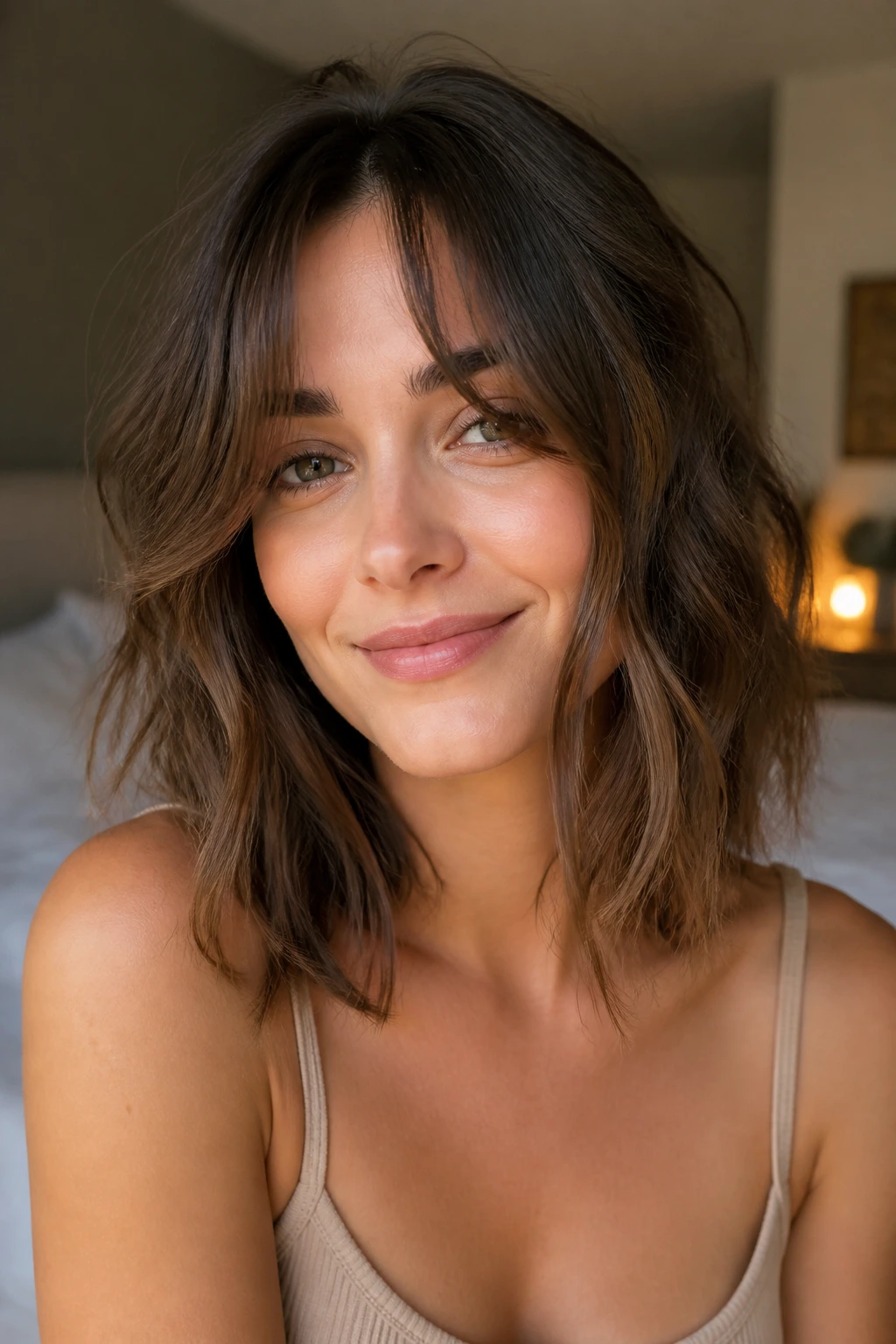
- Cutting the shortest piece too high on the forehead: The fringe starts acting like baby bangs and loses the soft frame. Ask for the shortest point to land lower, then build the angle from there.
- Thinning the bang area until it turns see-through: Fine hair can end up stringy, and thick hair can look frayed at the edges. The fix is a softer internal shape, not aggressive thinning.
- Drying the front straight down every time: That encourages the bangs to split in the middle or hook weirdly at the ends. Dry them side to side first so the root remembers where to go.
- Using too much oil or cream near the face: The fringe separates and clings to the forehead. Keep heavy products away from the root and use only a trace on the tips.
- Ignoring the natural part: A center part forced on a strong side part usually looks like a battle. If your hair resists, listen to it.
Variations and Adaptations to Try
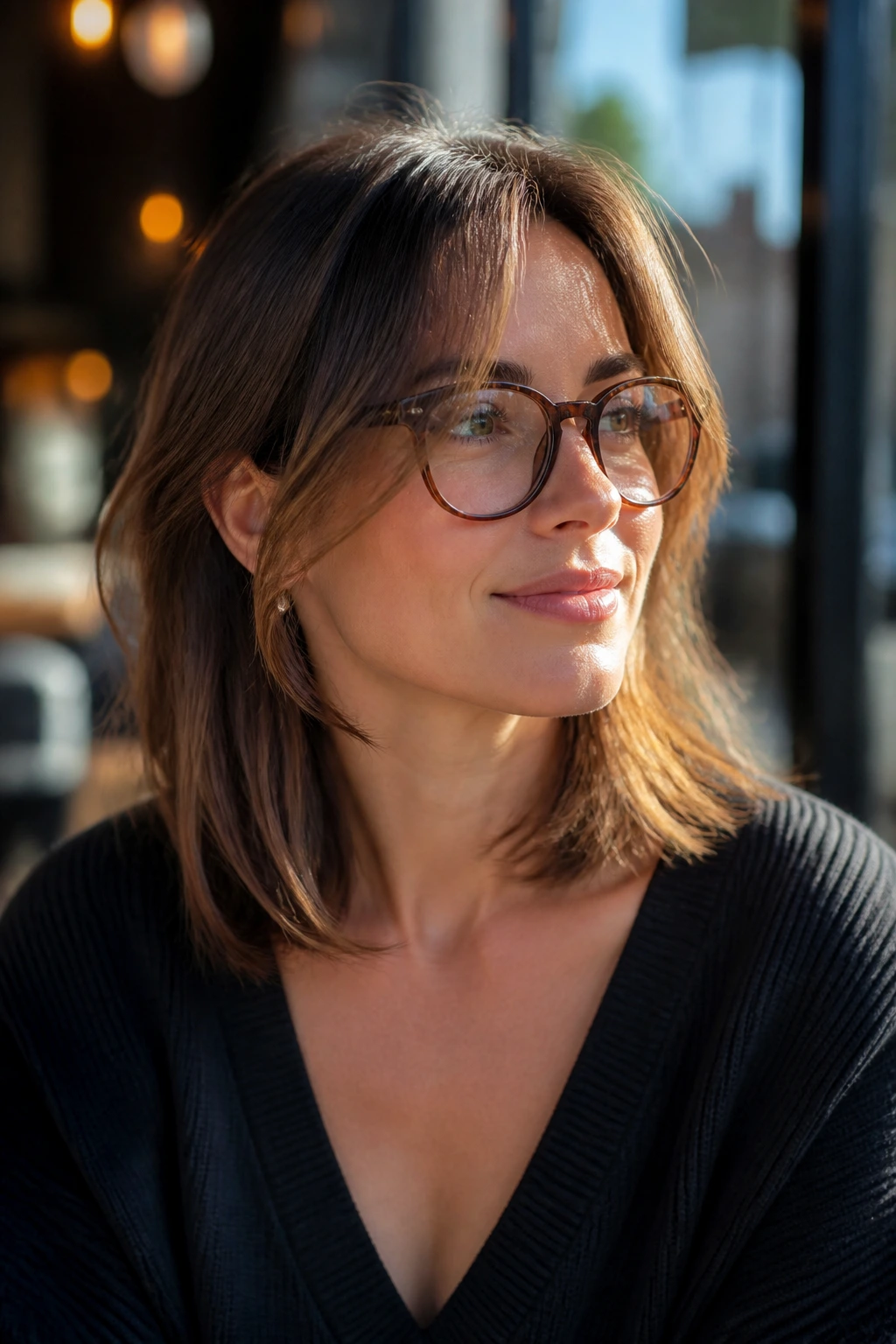
The Glasses-Friendly Sweep: Keep the shortest front pieces just below the frame line and angle them outward, not inward. That keeps the bangs from sticking to your lenses or crowding your eyebrows.
The Fine-Hair Float: Ask for long, whispery front pieces with minimal layer removal through the ends. Fine hair needs the illusion of movement without losing the density that makes the haircut look full.
The Thick-Hair Debulker: Request internal weight removal through the mids and a cleaner, longer face frame. That lets the hair sit closer to the head instead of flaring out at the sides.
The Curl-First Shape: If your hair is curly or wavy, keep the fringe longer than you think and let the curl pattern set the final length. Short front pieces on curls bounce up fast. Too fast.
The Easy Grow-Out: Start the face frame at lip length and let it drift into a collarbone cut. That gives you room to grow for weeks without the shape turning awkward.
How to Keep the Shape Between Haircuts
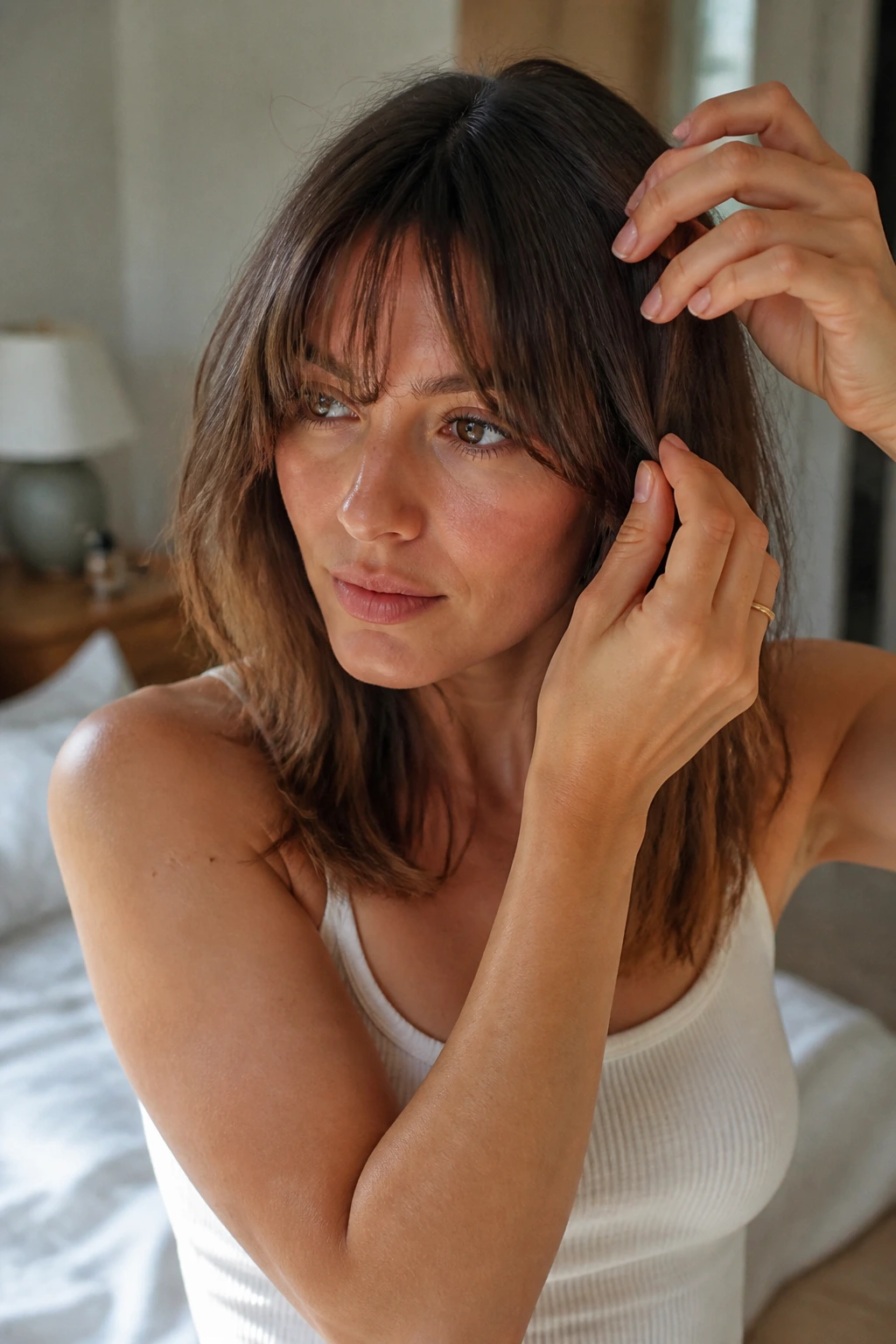
Bangs need attention more often than the rest of the haircut. That’s the annoying truth. The fix is to trim the fringe area every 4 to 6 weeks if you want the front to stay shaped, while the rest of the medium cut can usually go longer. If you let everything grow at the same pace, the front loses the sharpest part of the frame first.
The front pieces also get oily faster because they sit near the skin and get touched more. A little dry shampoo at the roots can buy you a day, but don’t overdo it or the bangs start feeling dusty. If the roots get heavy, the shape drops, and once the shape drops, the rest of the cut looks less intentional.
Night care helps more than people admit. If your bangs kink while you sleep, pin them up loosely with a soft clip or wrap them in a Velcro roller for ten minutes before you head out the door. That small reset is often enough. No full restyle needed.
If you trim at home, use proper hair-cutting scissors and cut dry, not wet. Wet bangs spring up when they dry, and that’s how people end up with a fringe that lives too high on the forehead. Tiny snips. That’s the rule.
Questions People Ask About Medium Length Hairstyles With Face-Framing Bangs
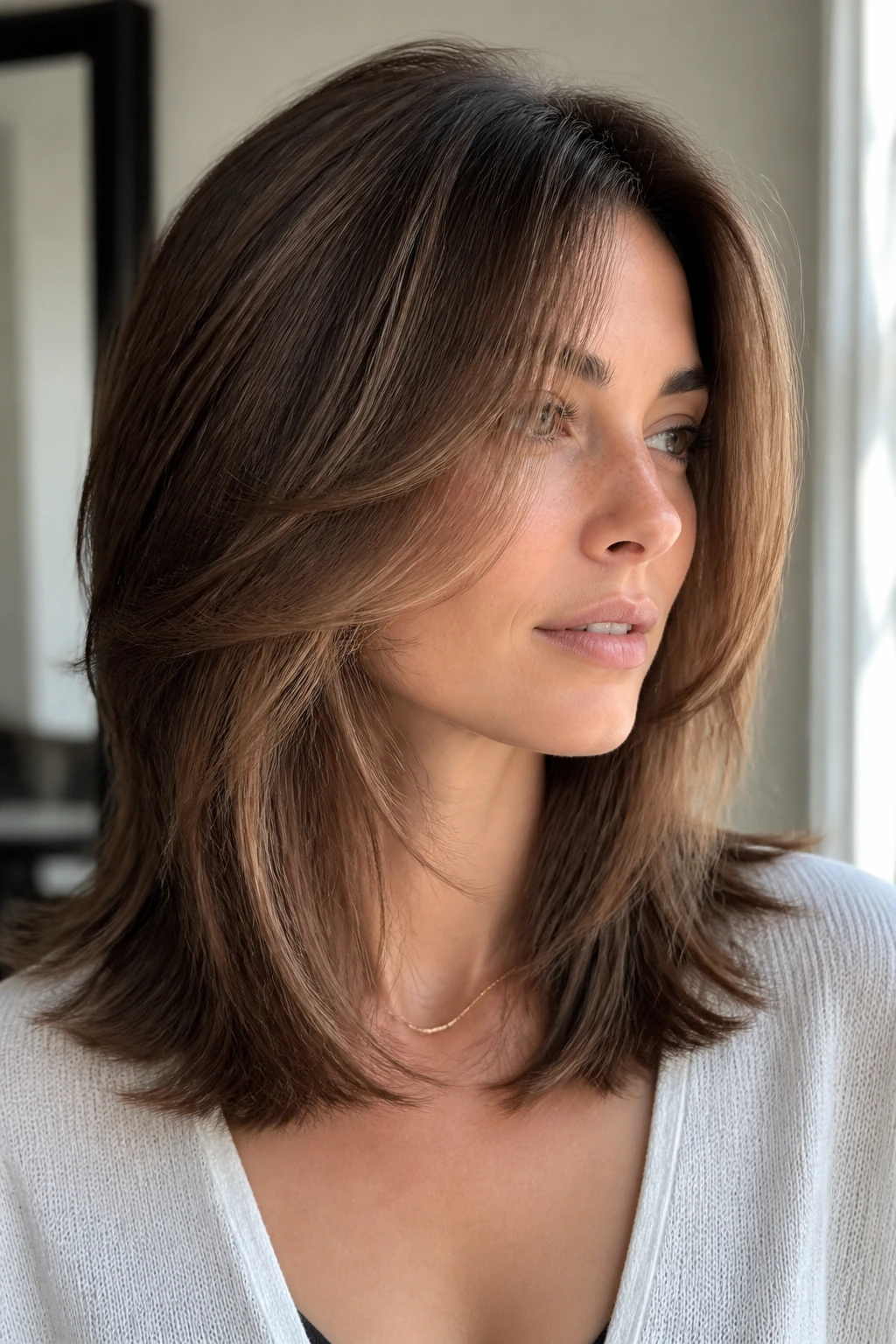
Are curtain bangs and face-framing bangs the same thing?
Not exactly. Curtain bangs are a specific kind of face-framing bang that usually splits at the center and opens from the middle outward, while face-framing bangs can be side-swept, bottleneck-shaped, wispy, or blended into layers.
Which face shape works best with this haircut?
Most face shapes can wear some version of it, but the placement changes. Round faces often do well with longer front pieces that start below the cheekbone, while longer faces may like a fuller fringe that opens around the cheek area instead of dropping too low.
Can fine hair pull this off without looking sparse?
Yes, if the fringe is kept long enough and the layers are restrained. Fine hair usually looks better with soft face framing and a little root lift than with lots of short, choppy layers that strip away density.
What about curly hair?
Curly hair can look excellent with face-framing bangs, but the cut has to be longer than a straight-hair version. Curls bounce up, especially around the forehead, so the shortest pieces need extra room.
How often do the bangs need a trim?
Usually every 4 to 6 weeks if you want the front to stay crisp. The main length can go longer, but the face frame loses its shape first, so the fringe needs more frequent attention.
How do I keep them from splitting in the middle?
Dry the roots side to side and set them with a cool shot. If the split still shows up, your natural part may be stronger than the style, and moving the part a little off-center often fixes it better than extra product does.
Can I wear these cuts up in a ponytail?
Yes, and that’s one of the reasons they’re useful. The front pieces can be left out around the face, which softens a ponytail or bun without needing a full style change.
Can I grow them out without looking awkward?
Yes, if you start with longer face-framing pieces and keep the shortest section from going too short. Pinning the fringe back, tucking one side behind the ear, and letting the front pieces blend into the rest of the cut make the grow-out much easier.
A Cut That Moves With You
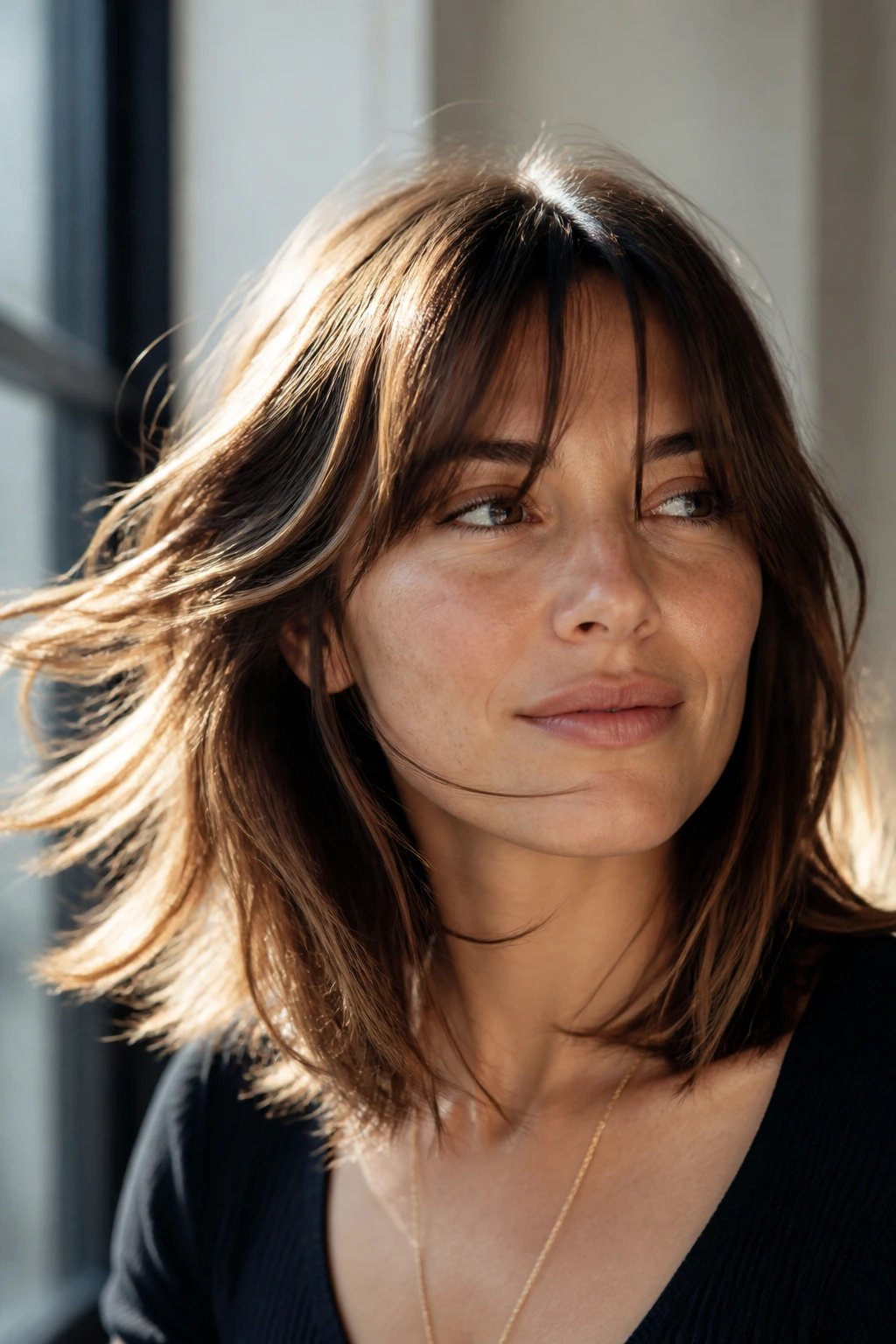
The strongest thing about medium length hairstyles with face framing bangs is not that they’re trendy. It’s that they behave like hair that belongs to a real life. They can be blown smooth, air-dried, pinned back, tucked under a scarf, or left a little messy without falling apart.
That matters when you want shape without babysitting every strand. A good medium cut with front pieces should make your face look softer the second you shake it out, then still look like itself at the end of the day.
If you want a haircut that keeps its lines while still moving when you move, this is the place I’d start.
