



Long hair can turn into a single flat sheet faster than people expect. Add long layered hair with curtain bangs, and the whole head starts moving again — at the cheekbones, through the ends, around the jaw. It’s one of those cuts that looks simple in a photo and then turns out to be a little more clever in real life.
The best versions do two jobs at once. They keep the length people like, but they break up the heavy curtain effect that long hair can fall into. A curtain fringe should split softly at the center and open around the face, not sit there like a stiff little shelf. The layers behind it should be long enough to swing, but not so aggressive that the ends look thin after two washes.
What makes this family of cuts worth paying attention to is how many directions it can go. It can look glossy and polished with a round brush, loose and lived-in with air-dried waves, shaggy with more texture, or sleek with almost no visible layering at all. The wrong version is easy to spot: fringe cut too short, layers starting too high, and a front section that has no idea what to do once it grows past the brows.
Why These 28 Looks Earn Their Place
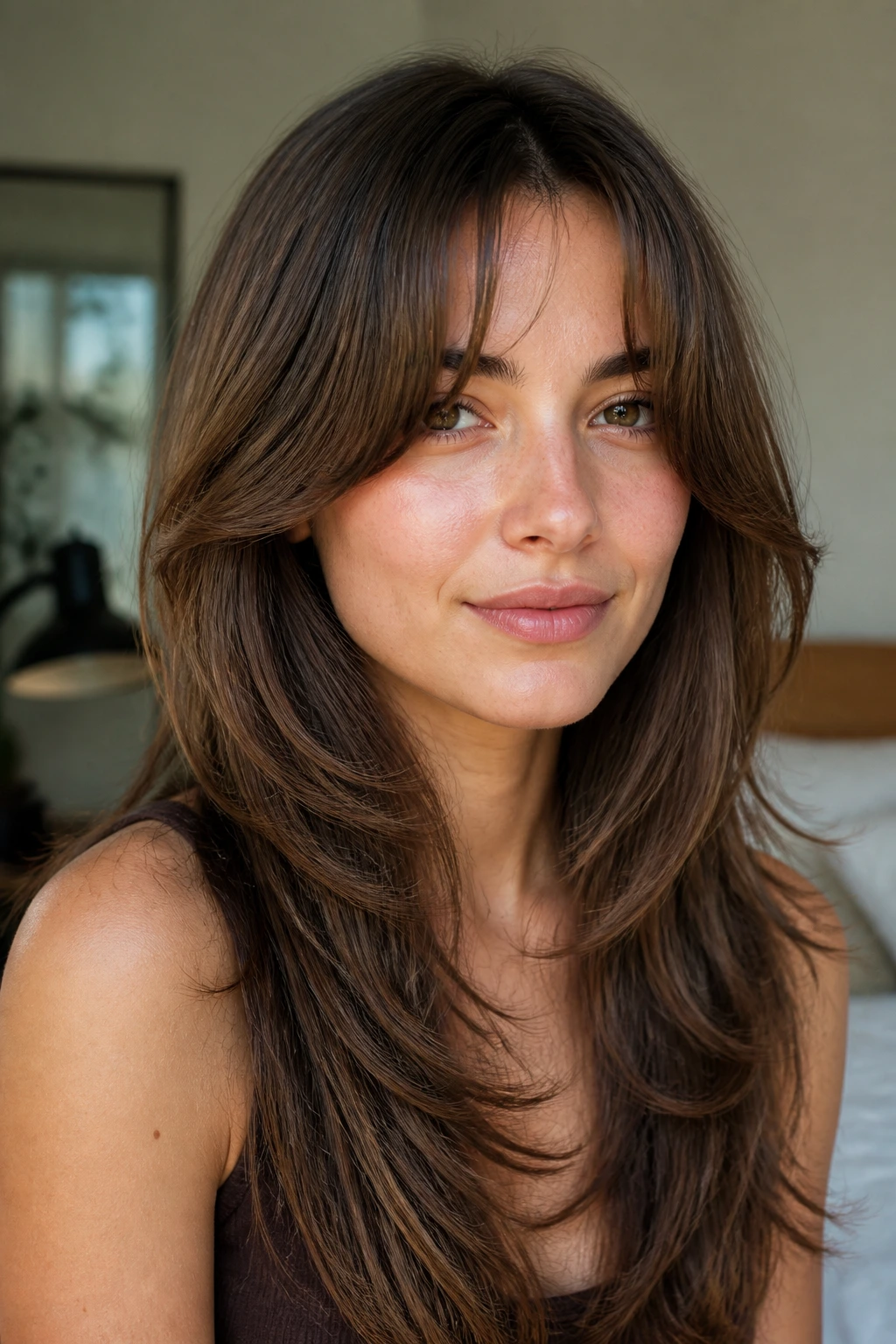
- Face framing without losing length: The front pieces open the face, but the back still reads as long hair, which keeps the cut from feeling drastic.
- Curtain bangs grow out in pieces: When they’re cut right, they don’t turn into one awkward block; they blend into cheekbone-length face framing.
- Layers give motion where long hair gets heavy: Even a few inches of shape can stop the ends from hanging like a single rope.
- The same cut can be styled three ways: Blow it out, wave it, or air-dry it, and the silhouette changes without another haircut.
- It works with different densities: Fine hair, thick hair, and curly hair all need different placement, but the basic idea still holds.
- It ages better than blunt fringe: As the fringe grows, the shape softens instead of fighting you every morning.
1. Waist-Length Long Layered Hair With Curtain Bangs
This is the version most people picture first, and honestly, it earns that place. The length stays dramatic, the layers stay soft, and the curtain bangs open just enough at the center to keep the face from getting swallowed by hair. When the shortest point of the fringe hits around the bridge of the nose or a touch lower, the whole cut feels balanced instead of overcut.
Why it stays flattering longer
The trick is restraint. The layers should begin low enough that the ends still look full, especially if the hair reaches past the ribs or waist. I like this cut when the front pieces are long enough to tuck behind the ears, because that gives you options on days when you want the fringe out of the way.
- Best for: people who want a classic long shape with a softer front.
- Ask for: curtain bangs that sit around cheekbone length when dry, not above the brows.
- Style with: a 1.25-inch curling iron or a round brush for a bend, not a full curl.
Small tip: dry the fringe first. If the front pieces dry in a weird direction, the whole haircut feels harder to manage.
2. Butterfly Layers That Start at the Cheekbones
If you want lift without giving up length, this is the one that usually makes people grin in the mirror. The crown reads lighter, the top layers move away from the face, and the curtain bangs tie the front together so the haircut doesn’t split into two unrelated parts. It’s especially good when long hair has been sitting heavy around the chest and you want shape back.
The reason this works is simple: the layers are high enough to make the top half feel airy, but the bottom stays long and steady. That contrast is the point. If the layers are cut too high, the ends start looking wispy. Too low, and you lose the butterfly effect entirely.
I reach for this look on hair that already likes a blowout. A big round brush, some tension at the roots, and a cool shot at the end make the whole shape pop into place. If you air-dry every day, the style can still work, but it needs a little more planning.
3. Rounded U-Cut With Feathered Front Pieces
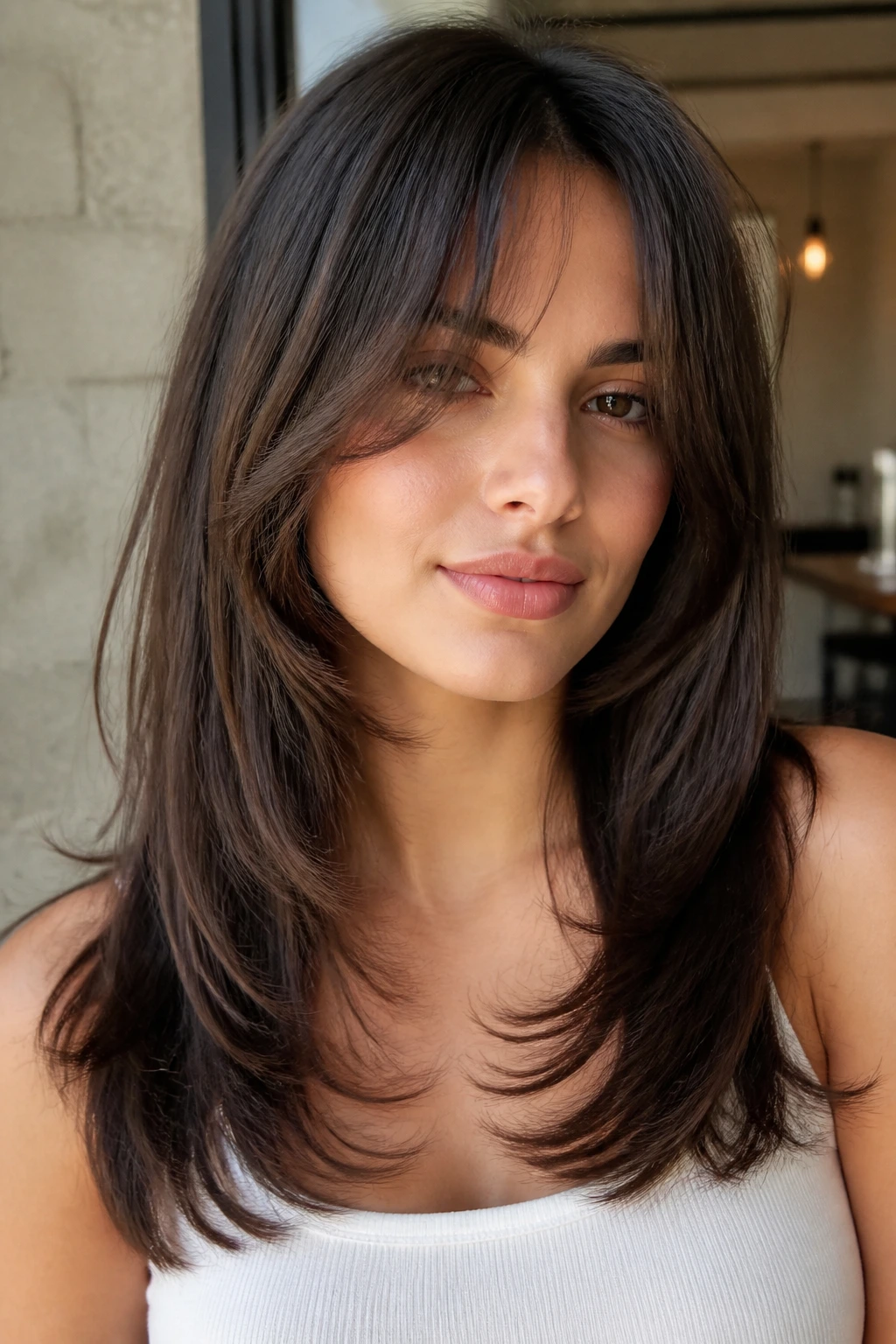
This is the cut for hair that feels boxy from the back. A U-shape keeps the perimeter soft, not blunt, so the length tapers gently instead of ending in one hard line across the back. Pair that with curtain bangs and feathered face-framing pieces, and the whole head looks more intentional.
If you wear your hair half-up a lot, the U-cut is a sneaky good choice. It keeps the sides from looking too sparse when they’re pulled back, which is where some long-layered cuts fall apart. The front can still drape around the face, but the outline stays full enough to hold up in a clip or elastic.
I’d ask for the feathering to stay soft, not shredded. A little point-cutting around the front is enough. Too much slicing and the ends start looking tired before they’ve even left the salon.
4. Fine-Hair Airy Layers and See-Through Curtain Bangs
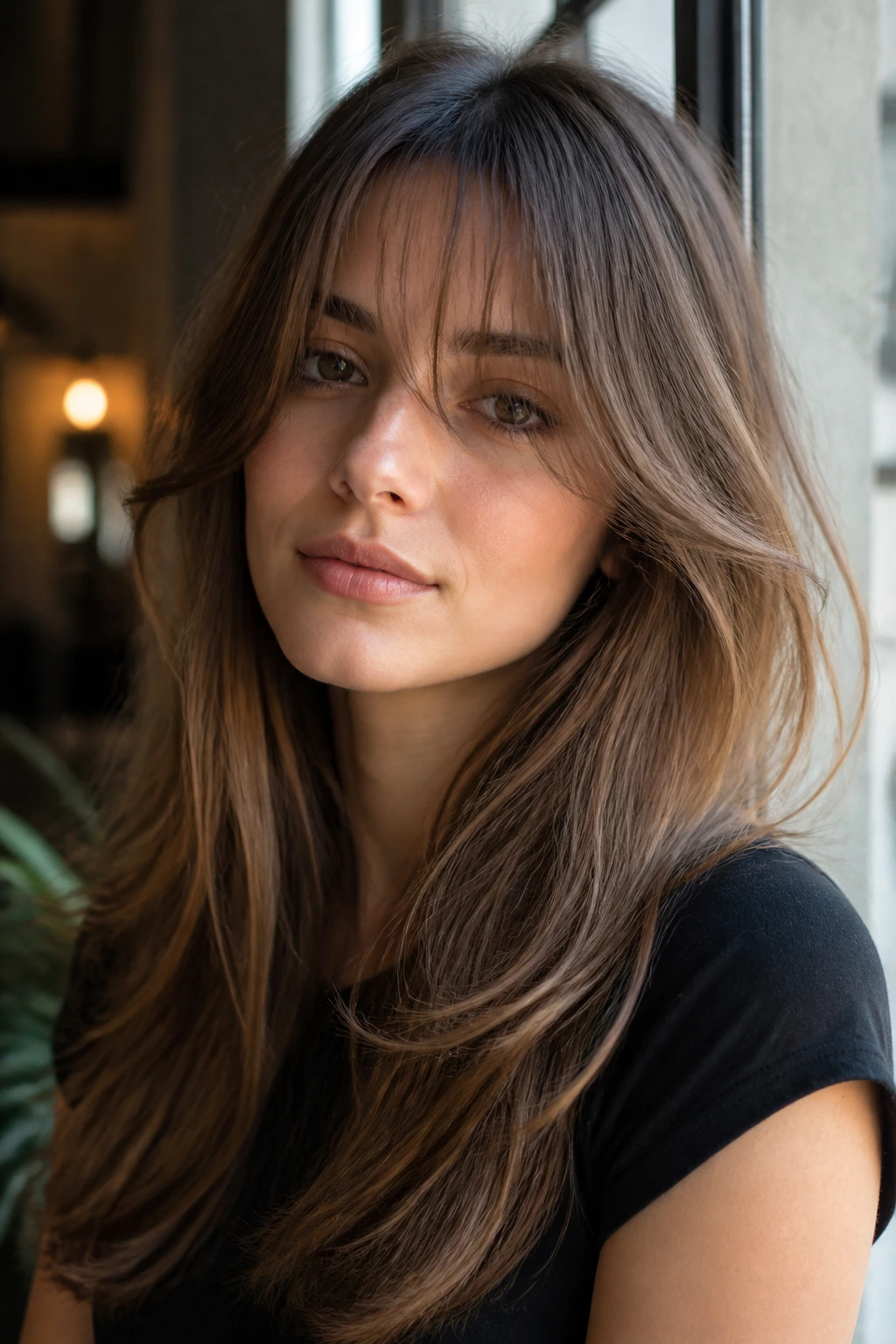
Can fine hair handle curtain bangs without looking see-through in a bad way? Yes — if the layers are long, low, and used with a bit of restraint. The fringe should feel light enough to split easily, but not so sparse that it disappears against the rest of the hair.
How to keep density where you need it
The mistake with fine hair is always the same: too much texturizing around the face. That turns the front into wisps and leaves the ends looking stringy. A better version keeps most of the movement below the cheekbones and leaves the perimeter with enough weight to stay visible.
- Best for: hair that collapses at the crown but still has decent length.
- Ask for: long internal layers, not short choppy ones.
- Style with: mousse at the roots and a very light round-brush bend at the front.
My opinion: this cut looks better with a little softness than with a lot of thinning. Fine hair needs shape, not a haircut that’s been aggressively thinned into submission.
5. Thick-Hair Weightless Layers With a Full Curtain Fringe
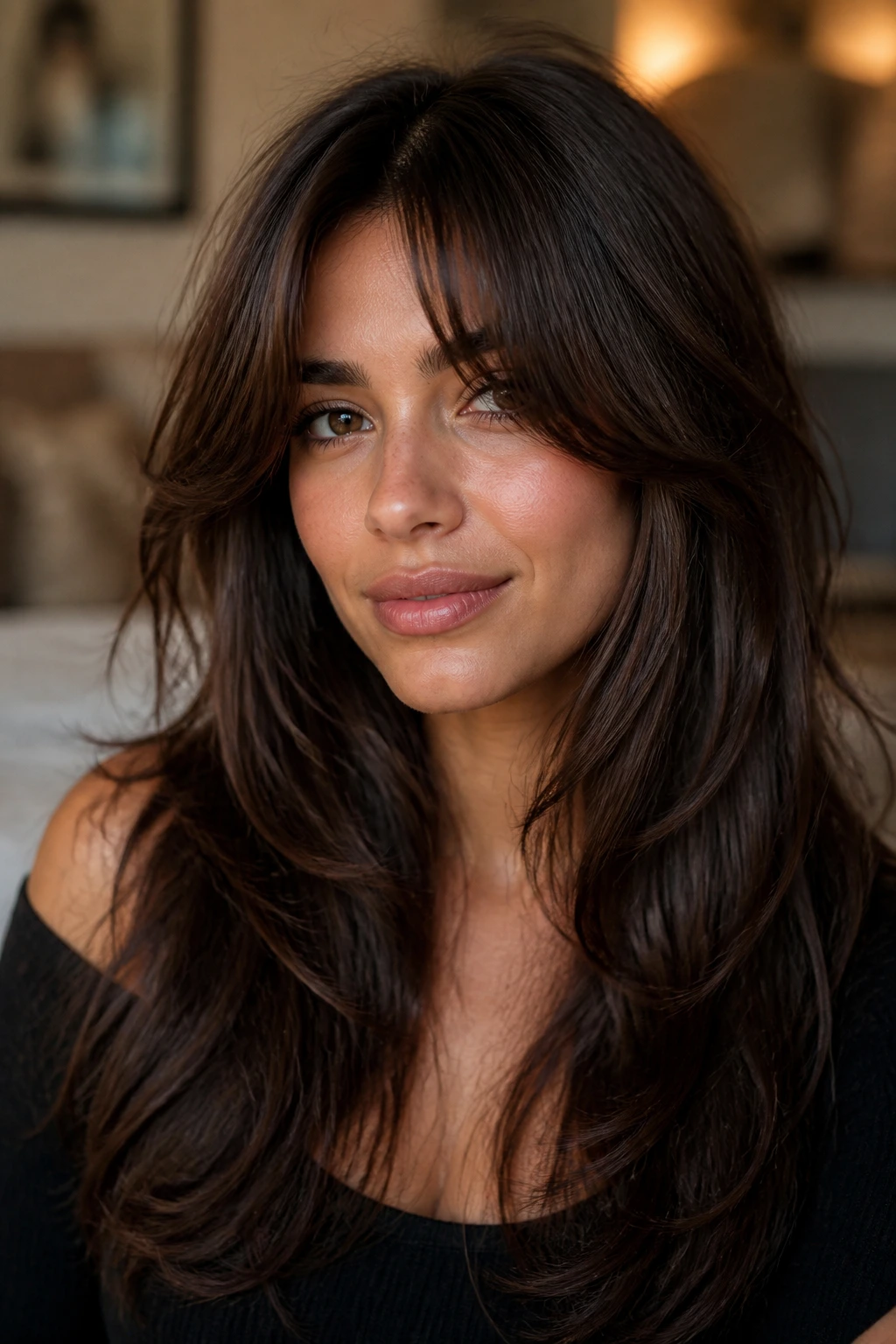
Thick hair needs weight removed, but not everywhere. That’s the whole game. A full curtain fringe can work beautifully here because the front has enough density to split cleanly, while the layers through the body of the hair take out bulk without making the ends look weak.
The salon mistake is over-thinning the perimeter. Once the bottom edge gets too feathery, thick hair starts puffing out around the shoulders and the whole shape turns triangular. Better to remove weight inside the haircut, especially through the mid-lengths and crown, and leave the ends a little stronger.
I like this version when the hair has a natural bend or wave. It gives the layers somewhere to go. Straight, dense hair can still wear it, but it often needs a bit more blow-drying to keep the fringe from sitting too flat against the forehead.
6. Blowout Layers With Flipped Ends
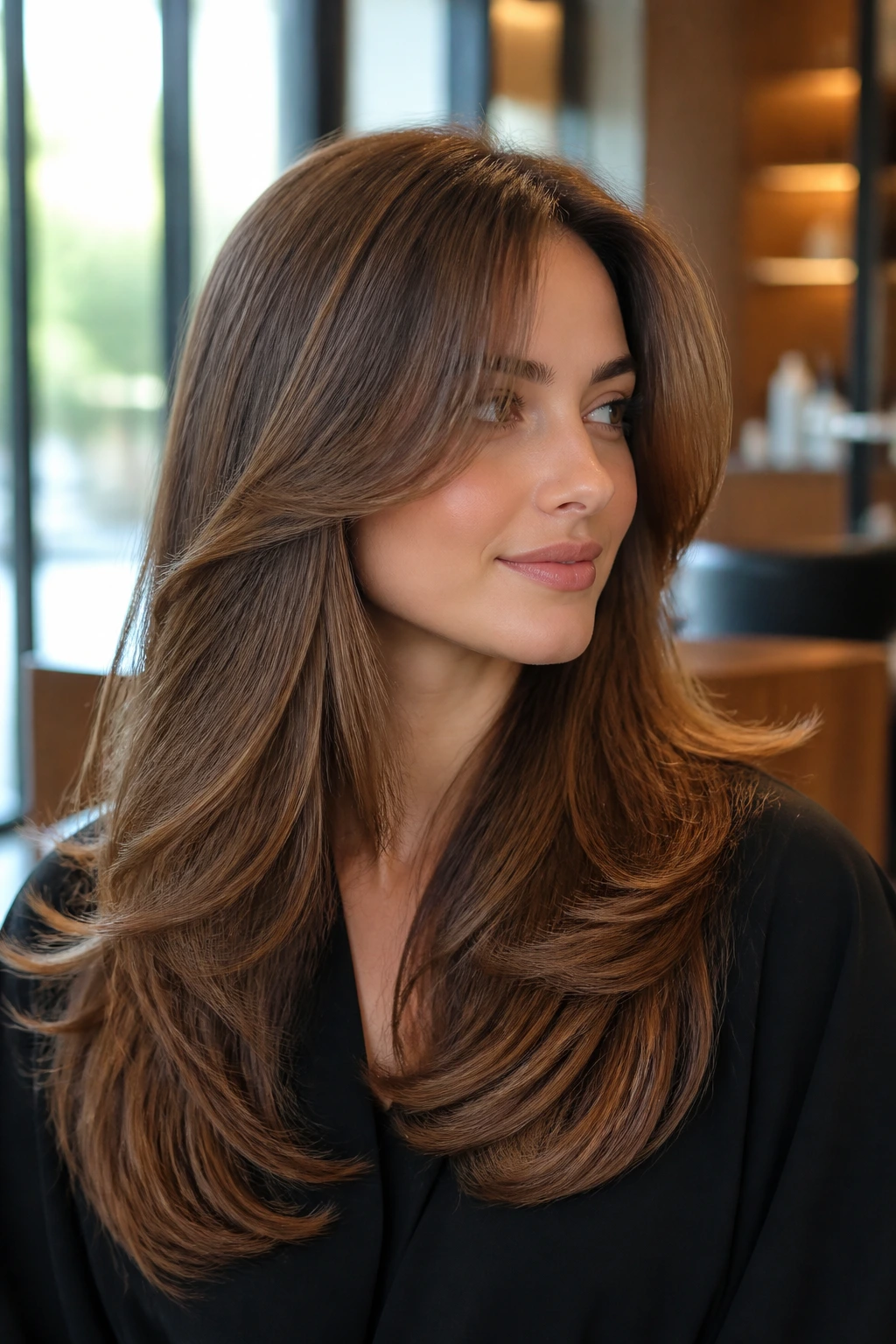
This is the polished cousin of the whole group. The layers are long and smooth, the curtain bangs curve away from the center, and the ends flip under or out just enough to catch movement when you turn your head. If you like a hairstyle that looks like you spent time on it — because you did — this is the one.
Compared with air-dried texture, the blowout version looks cleaner and a little more put together. It also holds its shape better on straight or medium-textured hair. A round brush, a nozzle on the dryer, and a cool set at the end make a bigger difference here than fancy products do.
I’d pick this for hair that tends to look flat at the roots but smooth at the ends. The cut gives you the framework; the styling gives you the finish. If you skip the round brush and try to rush it, the bangs usually lose the bend first.
7. Razor-Shaped Shag With Piecey Curtain Bangs
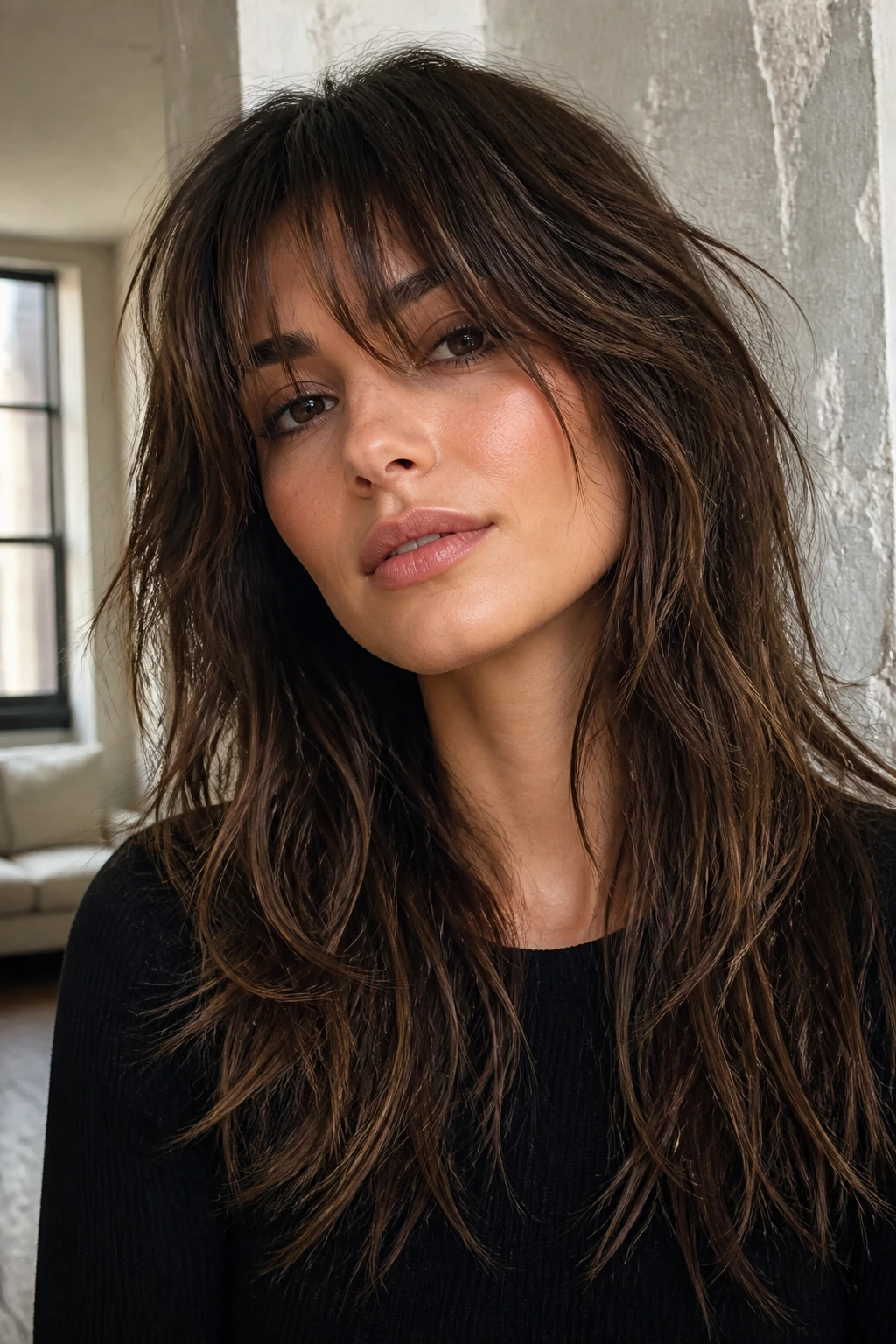
Not every long layered style with curtain bangs needs to look soft and polished. This one has a little edge. The ends are more textured, the fringe is piecey, and the whole cut feels more relaxed than formal. On wavy hair, especially, it can look like the hair has its own personality instead of sitting there waiting to be styled into obedience.
What makes it different
The razor work changes the finish. You get less bluntness at the ends and more separation in the layers, which can help if your hair naturally wants movement. The tradeoff is that it needs a stylist who knows how far to go; too much razor work on fragile hair and the whole shape can fray.
- Best for: medium to wavy hair that likes a lived-in finish.
- Ask for: texture through the mid-lengths, not a shredded perimeter.
- Style with: texture spray or a light mousse, then scrunch or wave in sections.
Small tip: keep heavy conditioner away from the roots if you want the pieces to stay separated. Soft is good. Limp is not.
8. Sleek Straight Lengths With Draped Bangs
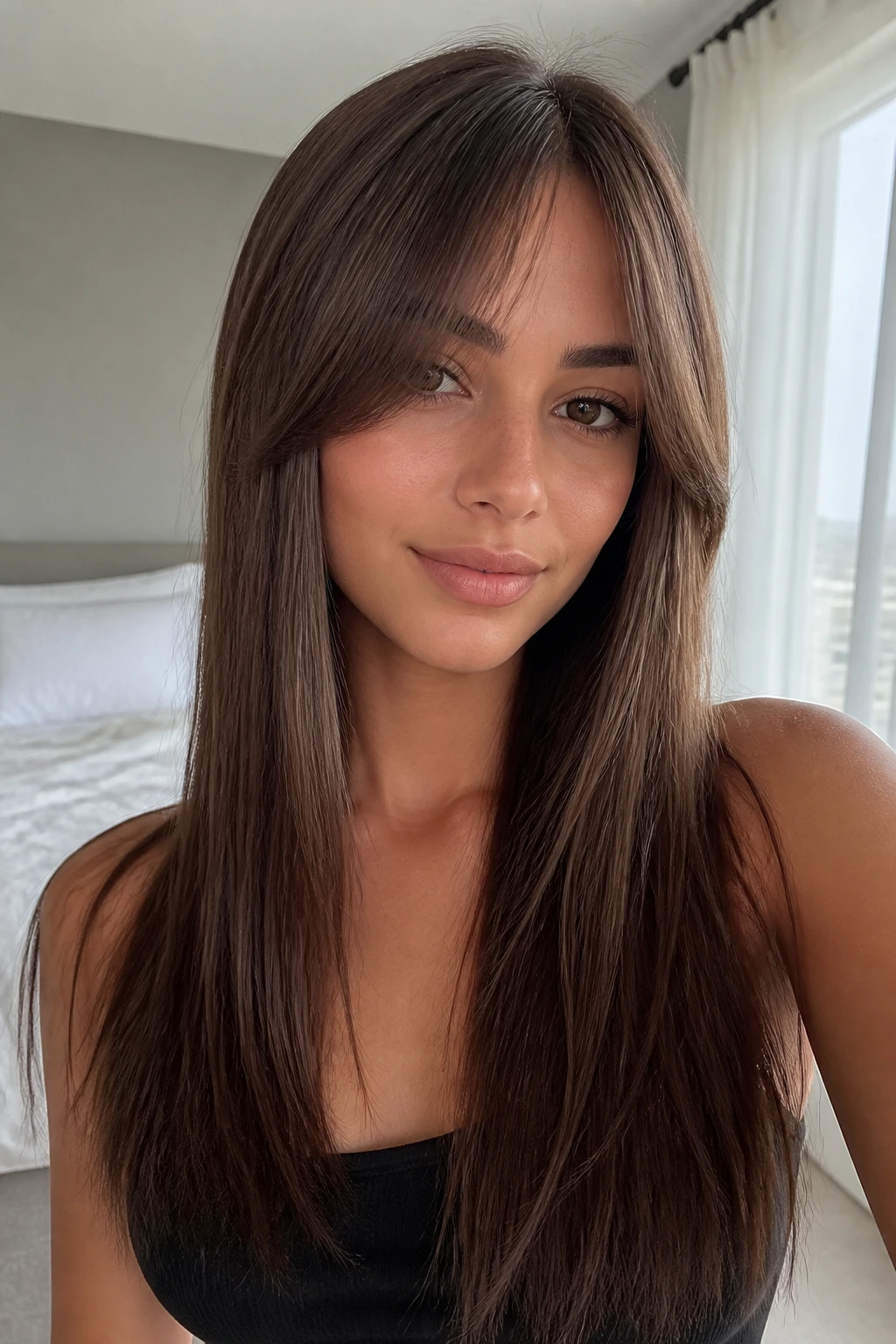
This is the sharpest version in the group. The layers are almost invisible until the hair moves, and the curtain bangs drape like fabric instead of popping out in a wave. If your hair is naturally straight or only slightly bent, this cut can look very clean without needing a lot of product.
The face frame should be long enough to travel past the cheekbone before it curves. Shorter than that, the front starts looking chopped. Longer than that, and the bangs stop being bangs and start behaving like ordinary layers. The sweet spot is that in-between space where the shape looks deliberate but not severe.
I like this version on dense straight hair because it avoids the blocky look long hair can get. A flat iron on the last two or three inches, plus a little serum through the lengths, is usually enough. No need to beat it into glass; a soft bend at the front is what keeps it from looking stiff.
9. Beach Waves and Loose Curtain Fringe
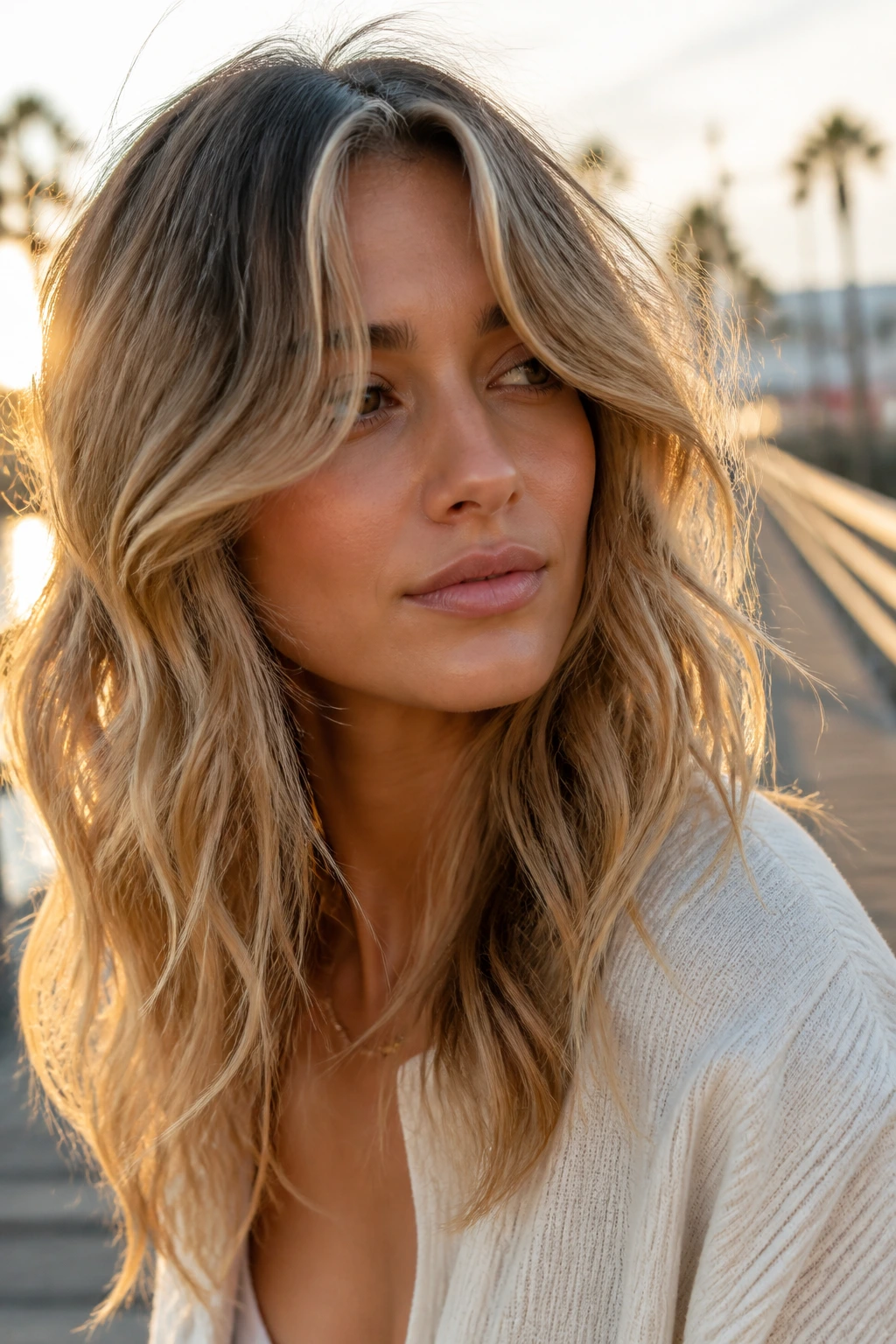
If you like hair that looks better after a bit of life has happened to it, this is the match. The waves loosen the layers, the curtain bangs melt into the front sections, and the whole haircut reads relaxed without looking unfinished. It’s the sort of shape that can survive a long day without needing to be perfectly smoothed back into place.
The key is leaving the last inch of the lengths out of the curling iron or wand. That little omission keeps the ends from becoming too polished and helps the layers separate naturally. A salt-free texture spray works better here than a gritty one, because you want bend, not crunch.
I’d call this the easy social haircut. It works with a denim jacket, a sundress, a blazer — all of it. The style doesn’t need to be perfect to look right, which is useful because perfect waves are annoying to maintain.
10. Curly Layers With Curly Curtain Bangs
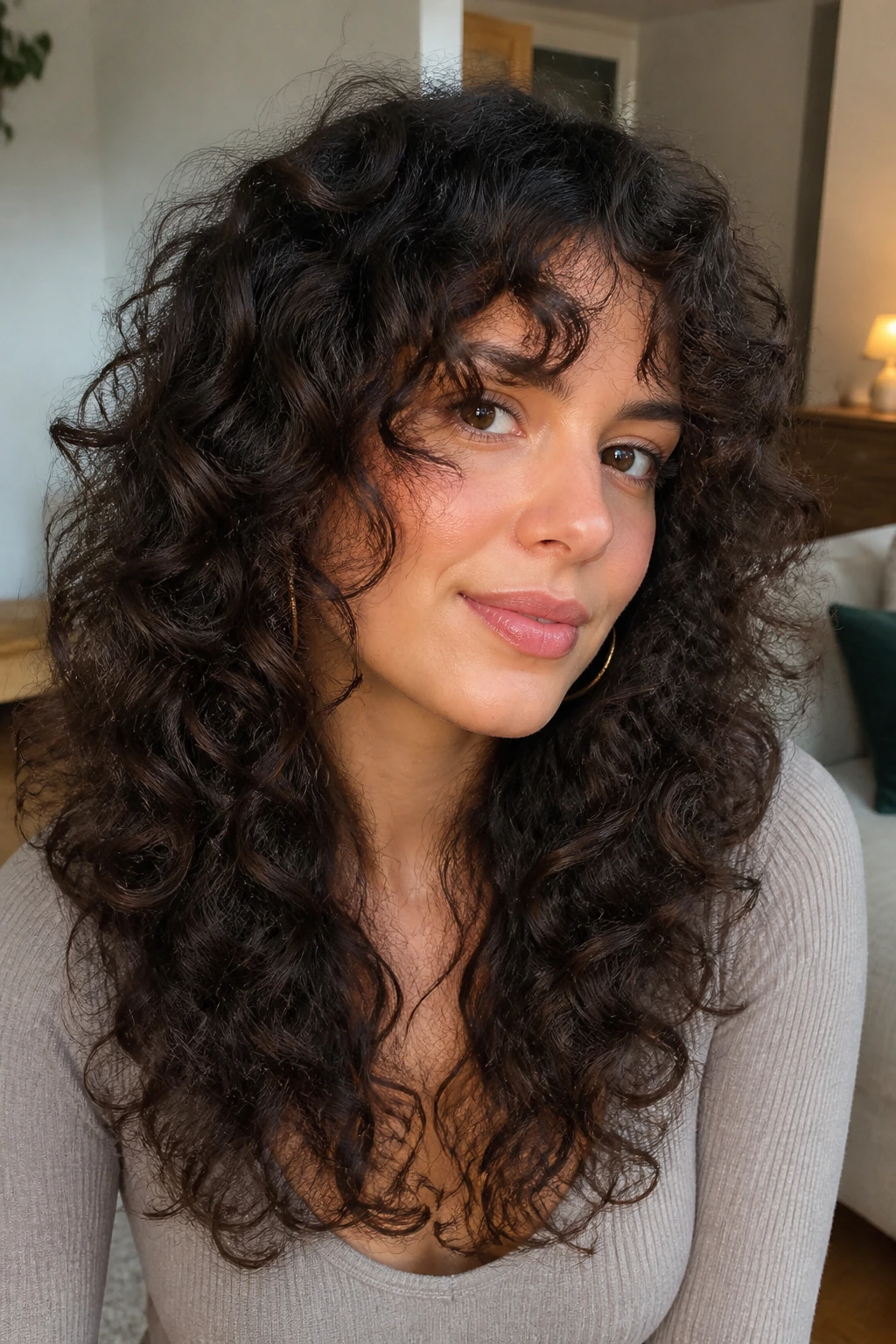
Can curtain bangs work on curls? They can, and when they’re cut properly, they’re one of the prettiest ways to frame a curly face. The trick is respecting shrinkage. A curl that lands at cheekbone length when wet may spring up far higher once it dries, so the cut has to be planned for the way the hair actually lives.
How to wear it
I like this version cut dry or mostly dry, with the stylist shaping around the curl pattern instead of fighting it. The front pieces should float, not sit in a heavy block across the forehead. If the curls are tight, the fringe may need to be longer than you first expect.
- Best for: loose curls, ringlets, and curls that bend strongly at the front.
- Ask for: dry shaping and face-framing pieces that follow the curl pattern.
- Style with: diffuser drying, curl cream, and a tiny bit of finger-coiling in the bangs.
My take: this looks best when the fringe is allowed to breathe. Overloading curly bangs with product makes them sit too heavy, and the whole front loses lift.
11. Deep Side-Part Curtain Bangs With Long Layers
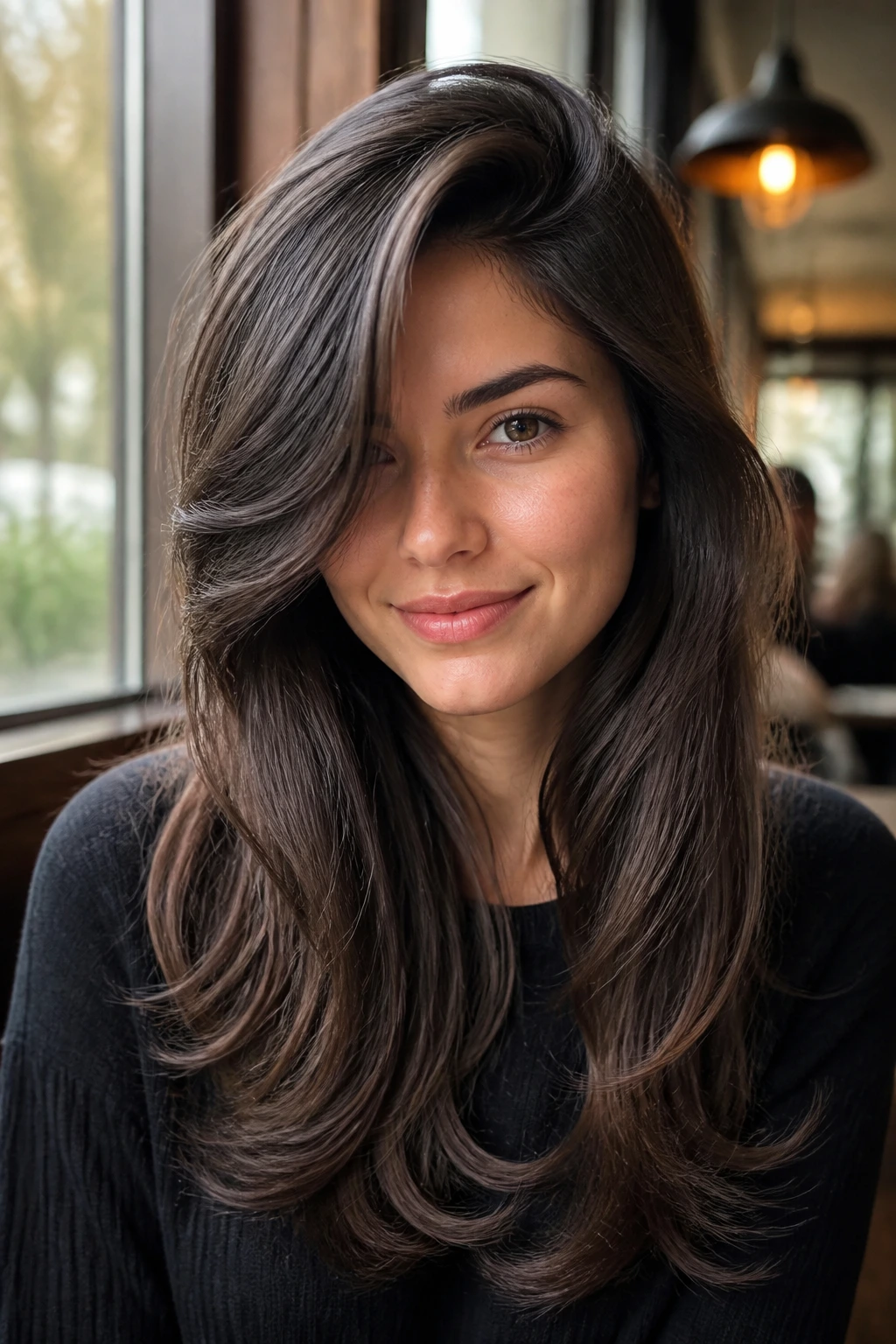
The middle part is not a law. An off-center part can soften a strong forehead, work around a cowlick, and make the front pieces feel a little more casual. The layers still move, but the curtain effect becomes a sweep rather than a strict split.
This is one of the smartest choices if your hair keeps separating in a stubborn way no matter what you do. Instead of forcing symmetry, you lean into the natural fall and let the bangs travel across the forehead. The result can be quieter than a center part, but also more flattering if your face likes diagonal lines.
I’ve always thought this version is underrated. It gives you the softness of curtain bangs without that dead-center, symmetrical look that some people find too tidy. A slight side sweep can make the whole haircut feel less fussy.
12. Bottleneck Bangs With Cascading Layers
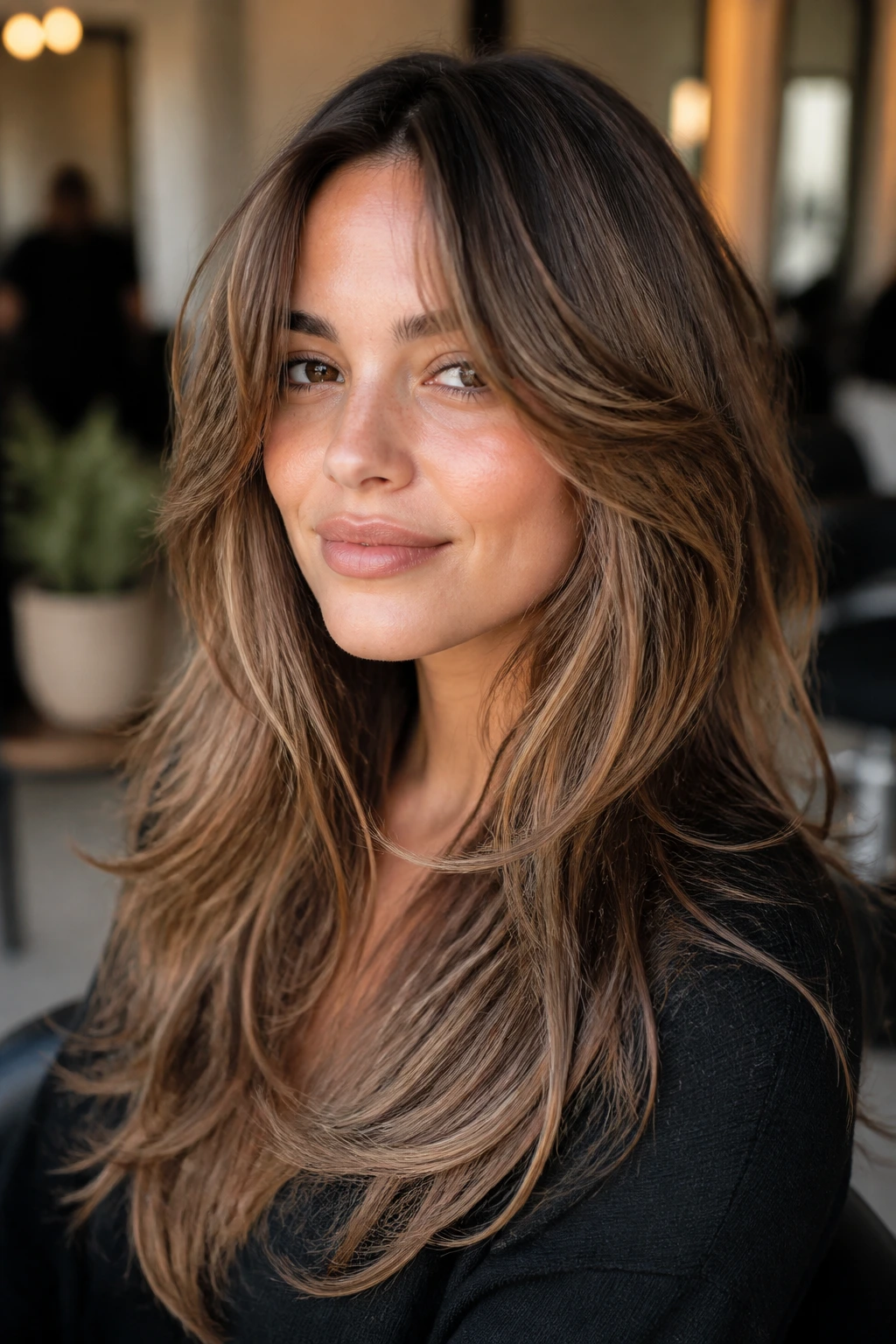
This cut sits halfway between curtain bangs and a more defined fringe. The center is a little shorter, the sides stretch longer, and the layers behind it cascade down the length. It has more shape at the front than a classic curtain bang, but it still grows out in a civilized way.
That makes it useful if you want the front to matter more. Maybe you like a haircut that reads a little stronger in photos, or maybe you just want something with a cleaner outline around the eyes and cheekbones. Bottleneck bangs do that without crossing into blunt-bang territory.
The one catch: they need trims more often than softer curtain bangs. If you let them grow too long, the shape loses its point. I’d keep the trim cycle shorter here than you would on a loose, airy fringe.
13. V-Cut Layers For Extra Swing
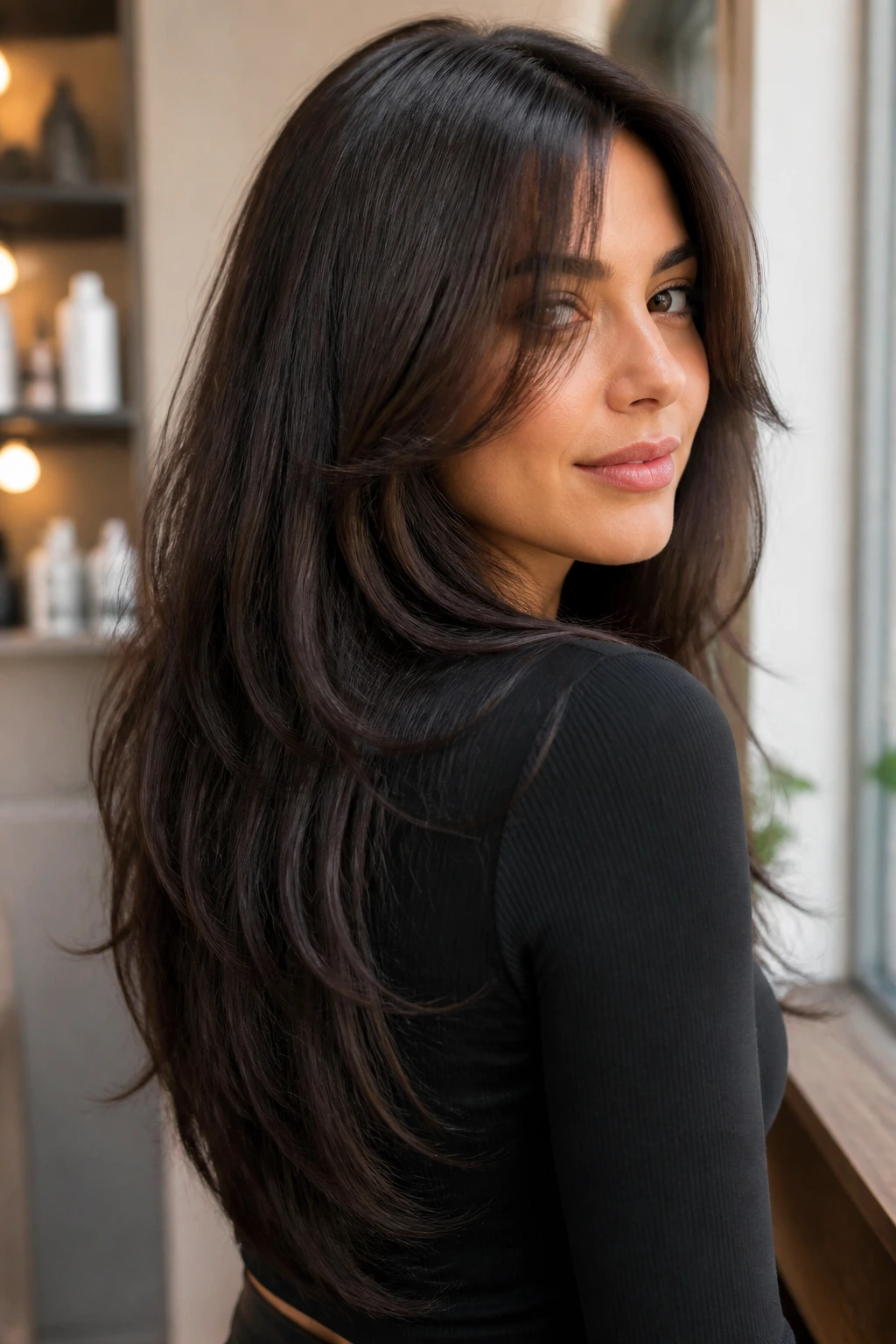
If your hair has been hanging straight down like a single curtain, a V-cut brings back some life. The back tapers into a subtle point, and the long front pieces keep the silhouette moving instead of forming one heavy wall. Curtain bangs make the front softer so the V-shape doesn’t look too sharp from the back.
Where it helps most
This shape is especially useful on thick or very long hair, where the ends can look blunt and heavy even when they’re healthy. The V makes the bottom edge read lighter, but only if the point is kept subtle. Too much point, and the haircut starts looking dated fast.
- Best for: long, dense hair that feels too solid at the ends.
- Ask for: a soft V, not a dramatic tail.
- Style with: waves or a blowout so the shape stays visible.
Small tip: if you wear your hair in ponytails often, a gentle V usually looks better than a harsh one because it leaves the sides fuller.
14. Air-Dry Texture Layers For Wavy Hair
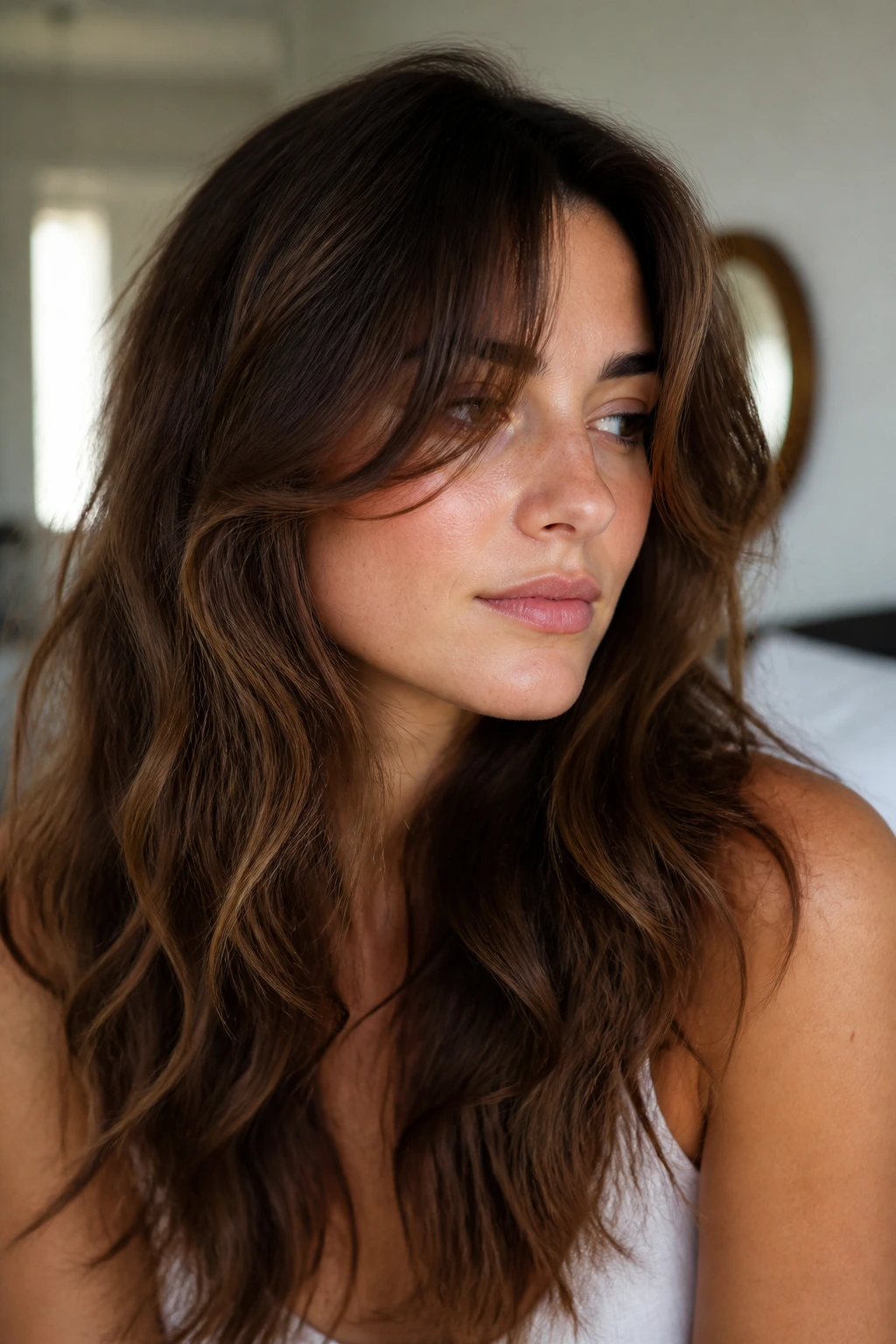
If your styling routine starts with “I don’t own a round brush,” this is the lane to live in. The layers are placed to work with the wave pattern, not against it, and the curtain bangs are left long enough to dry in a soft bend instead of a stiff flip. It’s one of the few low-heat versions that still looks shaped.
A little leave-in, a cream through the mids, and some scrunching usually do the job. The goal is to encourage the wave, then leave it alone. If you keep touching the front while it dries, the bangs separate into odd strings and the whole effect gets fussier than it needs to be.
This works best when the layers aren’t too short. Wavy hair needs room to move, and if you slice it too aggressively, it springs up in unpredictable ways. The longer version reads calmer and grows out better.
15. Glossy Formal Layers With Face-Framing Pieces
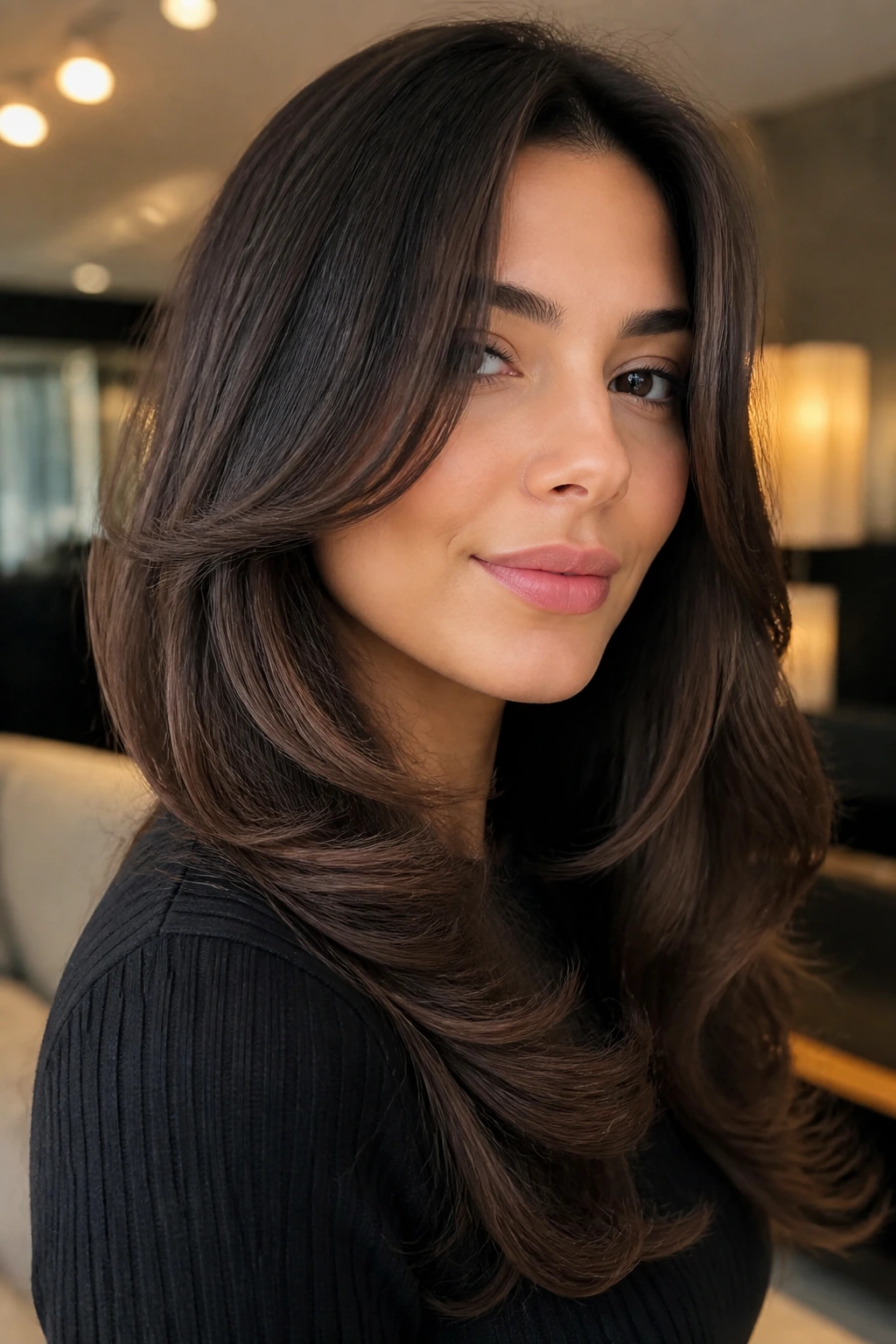
This is the dressed-up version of the cut. The layers are smooth, the face frame is clean, and the bangs drape in a way that looks arranged rather than accidental. It’s a strong choice if you want long hair that feels neat enough for work, dinners, or any setting where a tousled finish would feel out of place.
A big round brush and a light shine product do most of the work here. The curve should travel under the cheekbone and then continue down the lengths. Heavy oil is a mistake — it makes the curtain bangs collapse — but a small amount of serum through the mids can keep the finish sleek.
I like this version on hair that already has some density. The shape looks rich when the layers have enough body to hold the bend. Thin hair can still wear it, but the styling has to be gentle.
16. Brunette Dimension With Soft Money Pieces
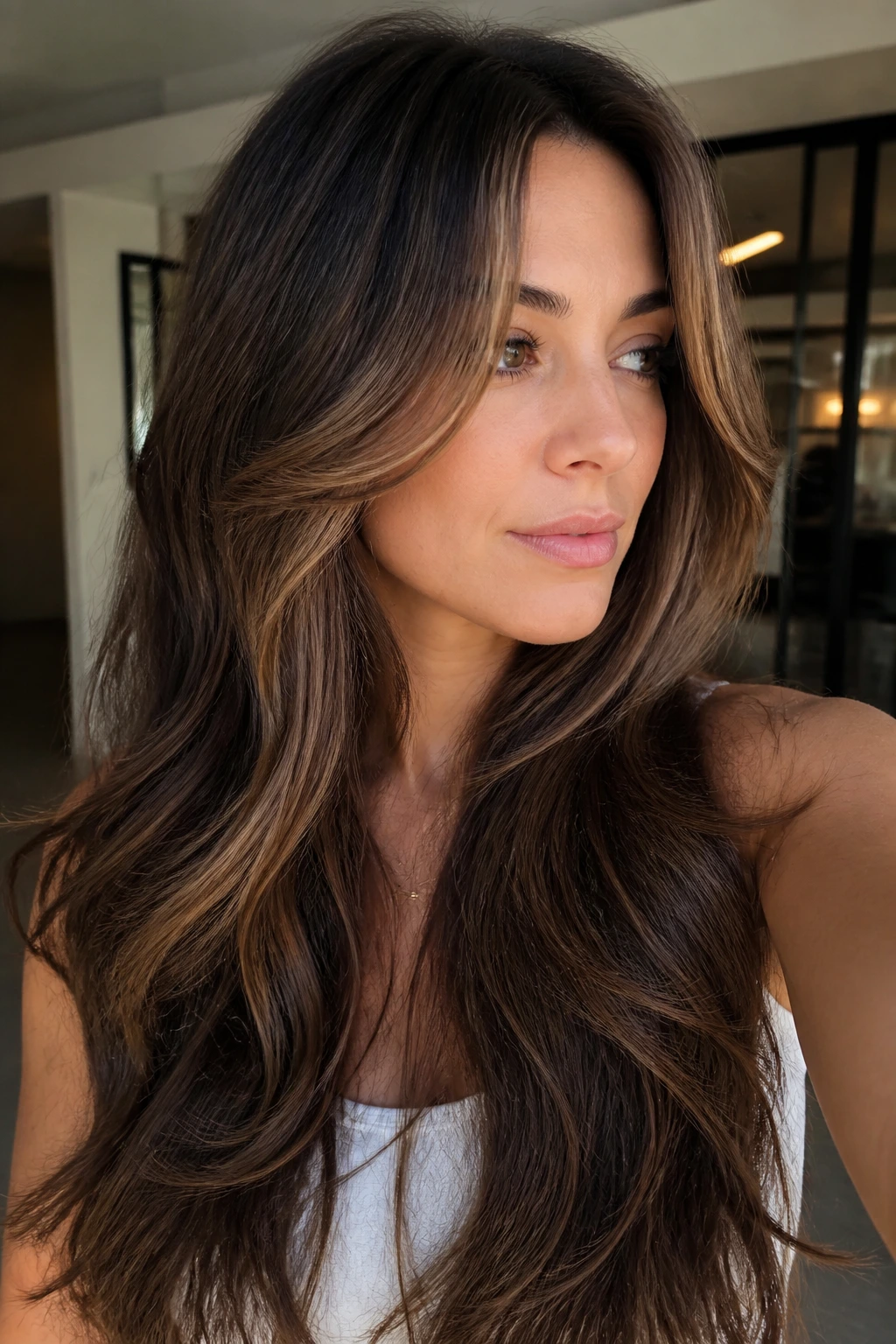
Why does this version feel richer than plain one-tone hair? Because the lighter front pieces make the layers readable. On brunette hair, a little dimension around the face pulls attention to the curtain bangs and keeps the haircut from disappearing into one dark sheet.
How the color changes the cut
The haircut itself doesn’t need to be more dramatic; the color does the work. Subtle lighter pieces around the cheekbones and front lengths give the fringe a clear outline, which is especially nice if the hair is very long. Too much contrast can look stripy, so the placement matters more than the amount.
- Best for: brunette hair that feels flat around the front.
- Ask for: soft lightening around the cheekbone area, not chunky streaks.
- Style with: loose waves or a clean blowout so the dimension shows.
My opinion: this is one of the easiest ways to make curtain bangs look more expensive without changing the cut much at all.
17. Blonde Ribbon Layers With Bright Curtain Bangs
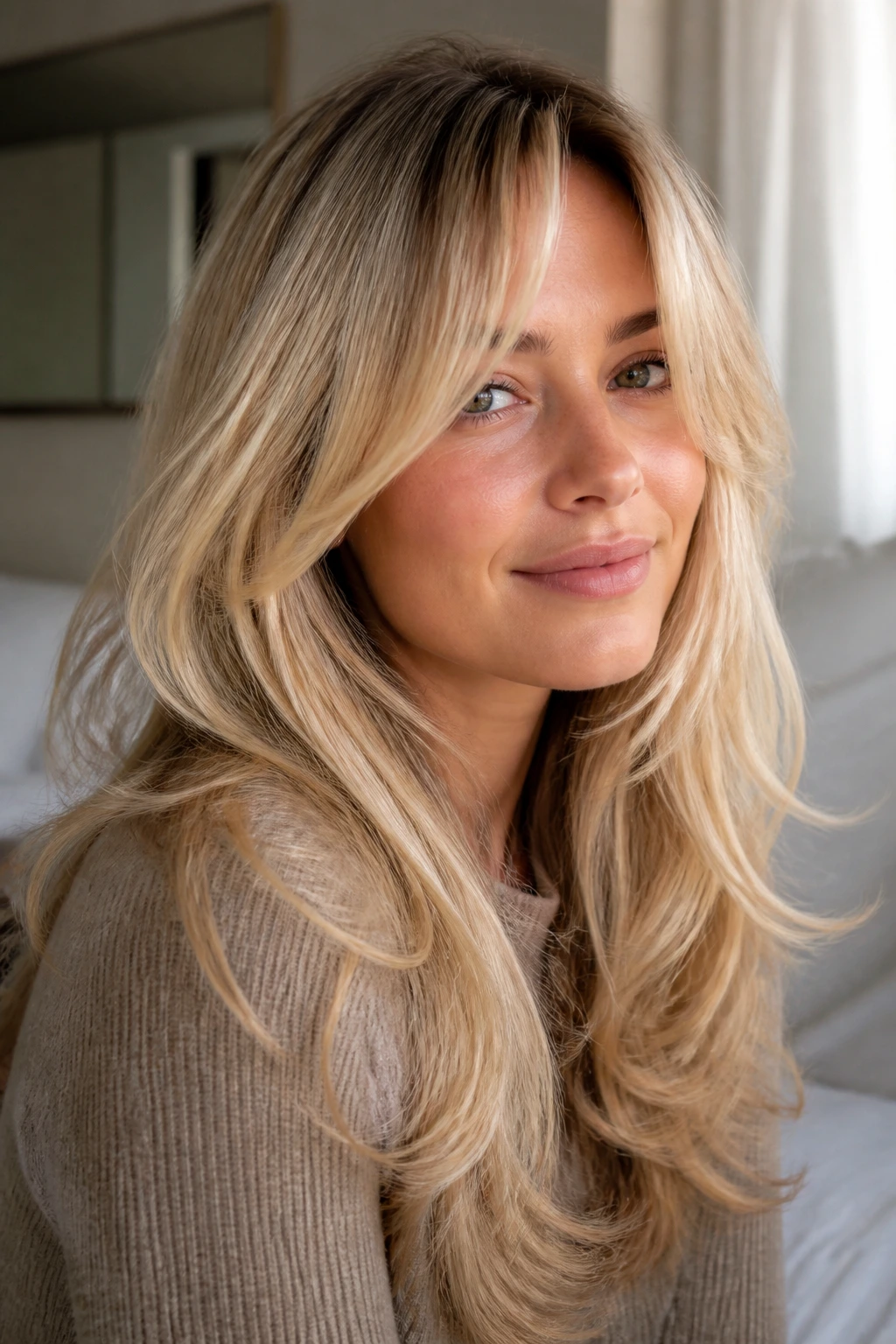
On blonde hair, the layers show up differently. Instead of deep contrast, you get ribbons of tone moving through the length, and the curtain bangs read brighter right at the front of the face. That can look beautiful, but it also means the shape depends on healthy ends and regular toning.
The fringe should not be lifted so pale that it loses depth. A little dimension at the root keeps the bangs from floating away from the rest of the haircut. The best blonde versions still have some shadow under the fringe and some warmth or depth through the mids — otherwise the front looks washed out.
This works especially well with a soft blowout or loose bend. Straight, one-length blonde hair can look thin fast. Layers keep the color from becoming one flat plane.
18. Copper and Red Layers With Blended Fringe
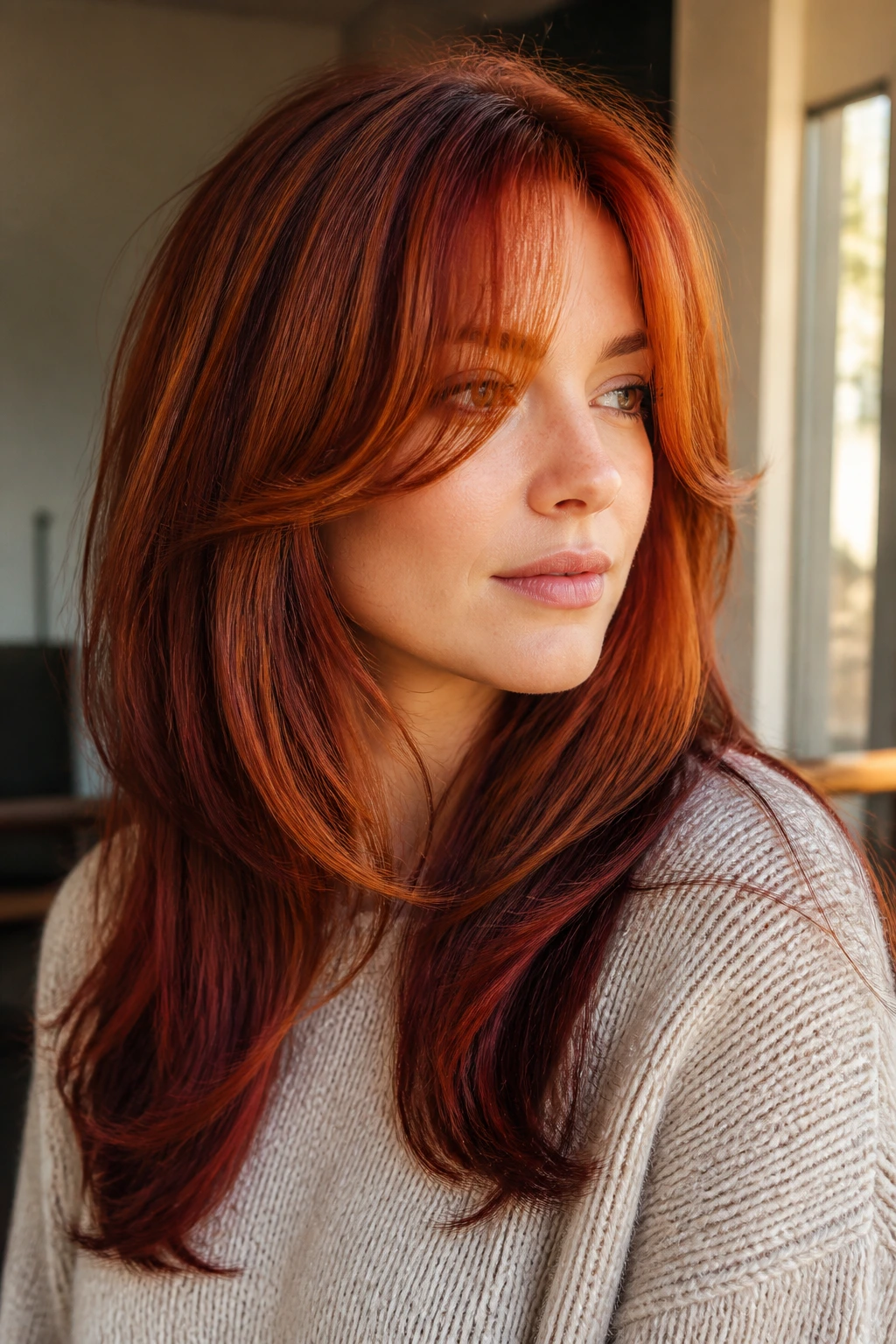
Warm colors like copper and red often look best when the haircut stays soft. Curtain bangs help with that. They break up the forehead just enough, and the layers let the color move instead of sitting there like a solid block of pigment.
Red tones show dryness fast, so the ends need regular cleanup. A soft layered shape helps because it keeps the hair from looking too bulky at the bottom. If the fringe is cut too sharply, the color can make the front feel intense in a way that isn’t flattering. Blended is better.
I’d recommend this version for hair that already has shine and a healthy surface. Warm shades pick up every rough edge, for better or worse, so the cut has to be smooth even if the style is loose.
19. Round-Face Slimming Long Layers

If your face reads widest through the cheeks, vertical movement matters. Long layers help pull the eye downward, and curtain bangs open the forehead without adding more width at the sides. The wrong version would stop right at the cheek line; the better version travels past it.
Where to keep the movement
The shortest face-framing pieces should land near the cheekbone, but not sit there like a hard marker. I’d keep the layers falling below the chin so the shape doesn’t flare out around the face. A little crown lift helps too, because it gives height without building volume at the cheeks.
- Best for: round or softly rounded face shapes.
- Ask for: length below the jaw and a gentle opening at the brow.
- Style with: volume at the roots, not width at the sides.
Small tip: if your fringe keeps widening the face, ask for the side pieces to fall more vertically rather than fanning outward.
20. Square-Face Softening Long Layers
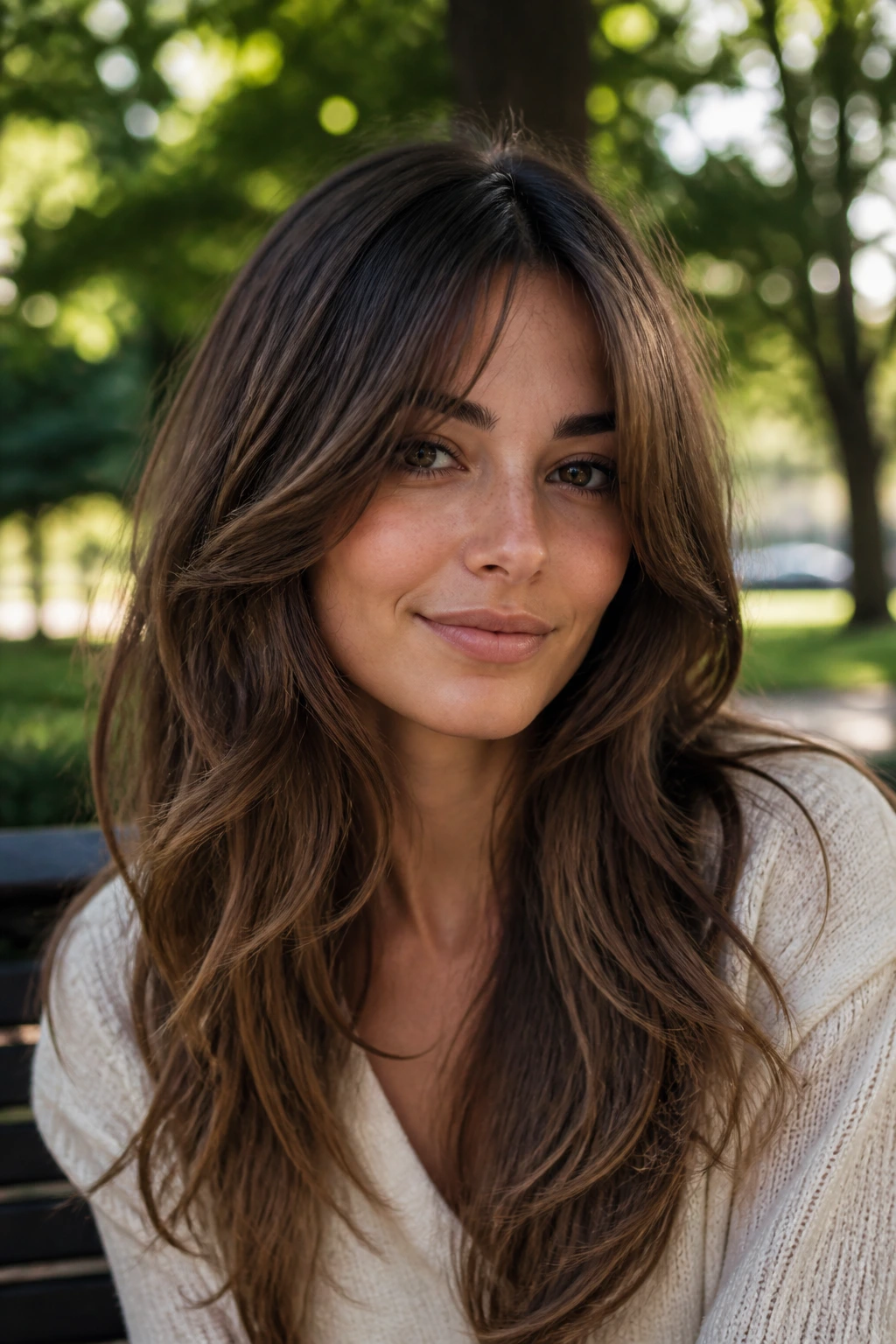
This shape is about curves. Square faces usually look better when the hair bends around the jaw instead of stopping right on it, and curtain bangs help soften the forehead without making the top of the face look heavy. It’s a good example of a haircut doing quiet work.
The layers should be long enough to curve under the jawline or skim past it. If they land right on the jaw, they can underline the square shape instead of softening it. Wavy styling helps here because a bend through the front pieces keeps the look rounded rather than sharp.
I like this on hair that can hold a little movement. Even one soft wave through the front can change the whole outline. The cut doesn’t need to be fluffy — just curved in the right places.
21. Heart-Face Balancing Layers
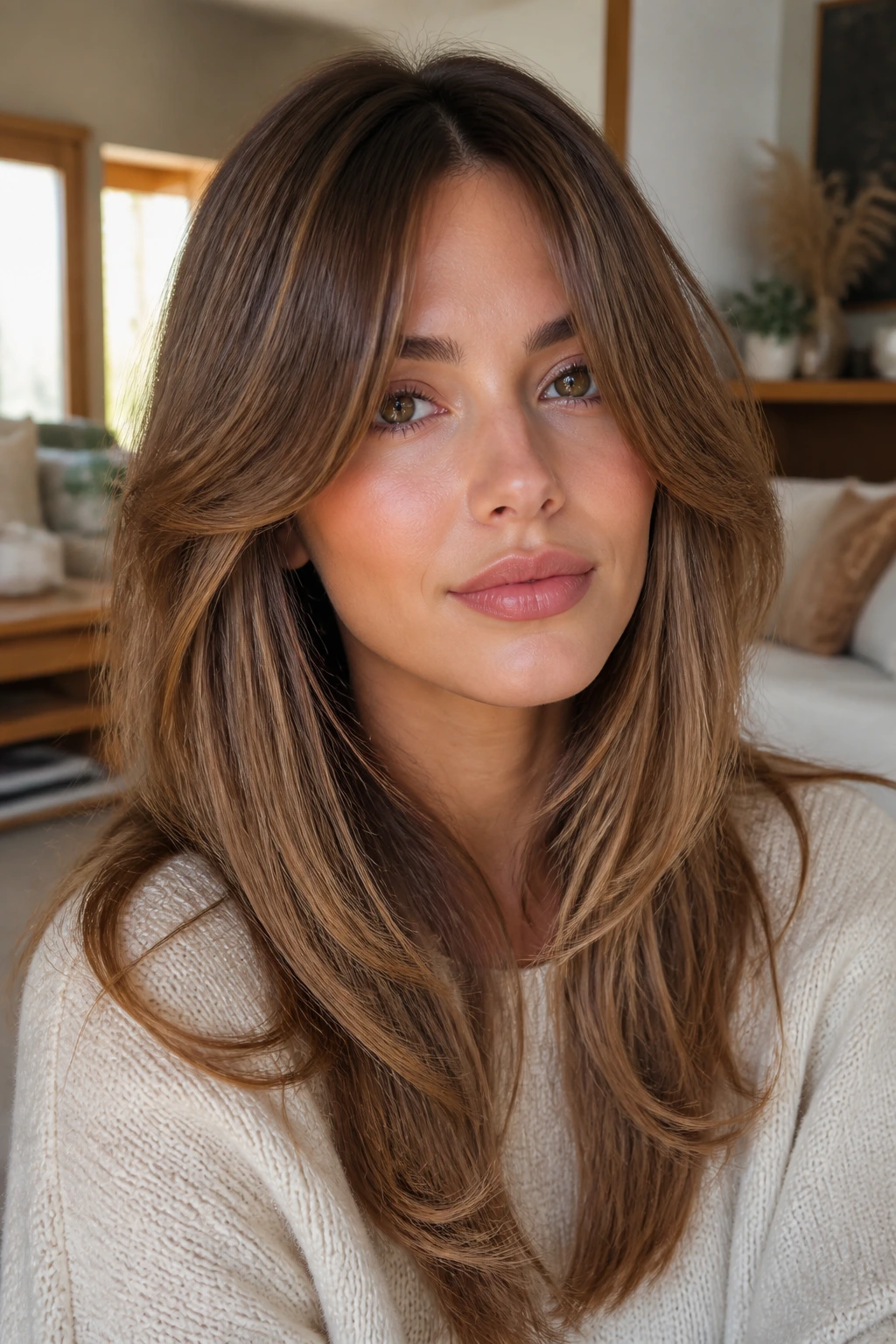
A wider forehead and a narrower chin need balance, not more volume at the top. Curtain bangs are useful here because they soften the upper face while the long layers add body lower down, closer to the jaw and collarbone. The shape becomes more even from top to bottom.
The key is to keep the temple pieces long enough to travel past the widest point of the forehead. If they’re cut too short, they can add width right where you don’t want it. The bottom half of the cut should carry enough fullness to keep the face from tapering too sharply.
For this shape, I like layers that feel plush at the ends rather than frayed. Softness below the cheekbones does more for balance than extra choppiness up top ever will.
22. Oval-Face Balanced Long Layers
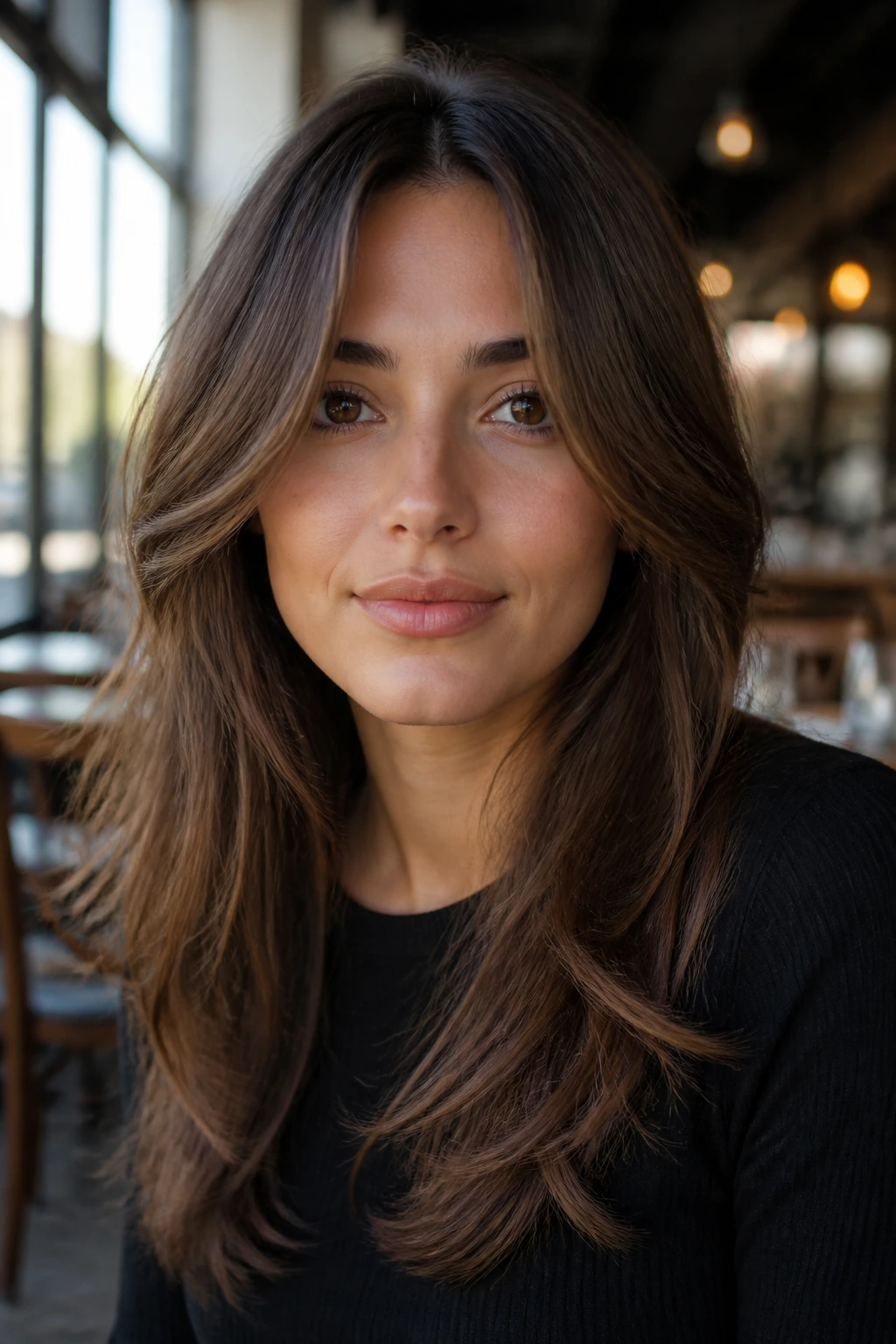
If your face is oval, the haircut doesn’t need to solve as much as it does for other shapes. The real question is mood. Do you want the fringe softer, the layers more dramatic, or the finish sleek and polished? That’s the part that changes the result.
Push the finish, not the shape
An oval face can hold a stronger curtain bang or a lighter one. It can take a deeper center part or a slight offset. What matters is how much movement you want around the face, because the shape itself is already balanced.
- Best for: people who want a flexible starting point.
- Ask for: the front pieces to be tailored to your styling habit.
- Style with: whatever finish you actually wear, not the one that looks best in theory.
My take: this is the easiest face shape for curtain bangs, but it’s also the easiest one to overthink. Pick a finish and let the haircut support it.
23. Thin-Hair Invisible Layers

This version is built to keep the ends looking full. Instead of obvious steps, the layers stay low and subtle, with most of the shape hidden inside the haircut. The curtain bangs stay light, but they shouldn’t be so sparse that they vanish into the rest of the hair.
The big mistake with thin hair is making every layer visible. Once that happens, the perimeter starts looking see-through and the whole cut loses substance. Invisible layers keep the movement inside the shape, which means the ends still read thick enough to matter.
A root-lifting spray and a round brush can make a big difference here. You’re not trying to fake thick hair. You’re trying to keep the hair you have from looking tired at the ends.
24. Dense-Hair Debulked Layers
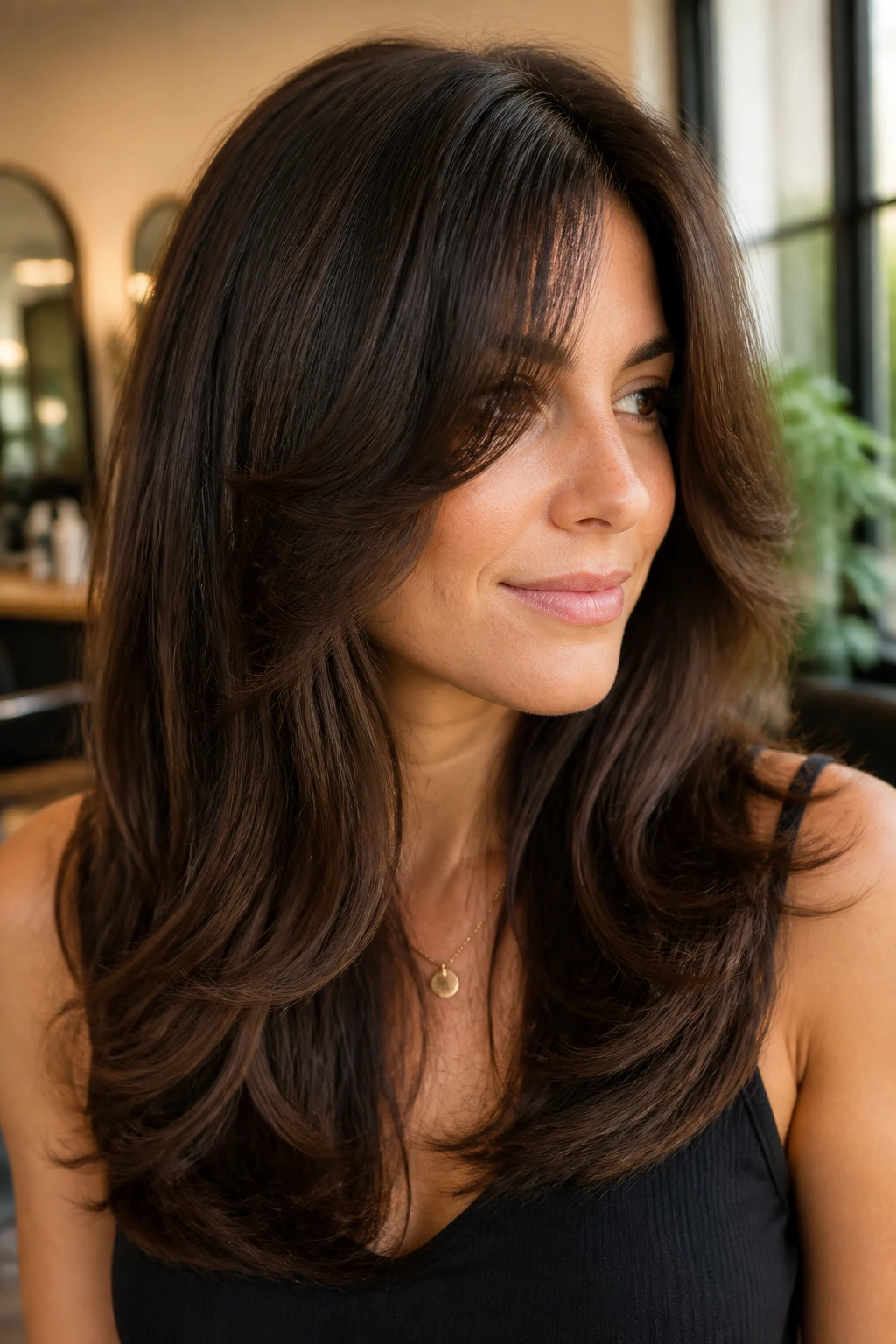
Dense hair needs weight removed where it stacks up, not where it hangs. That usually means the interior, the crown, and the mid-lengths — not the outer edge. Curtain bangs help because they break the density at the front so the whole cut doesn’t feel like a wall.
The danger is over-thinning the outside. Once the ends get too feathery, dense hair starts puffing in the humidity and the shape gets wider instead of lighter. Better to keep the outline strong and let the inside do the work.
This is the version I’d choose if hair tends to balloon out after a wash day. The cut should move, but it should also settle back down when you clip it up or tuck it behind your ears.
25. Heatless Overnight Wave Layers
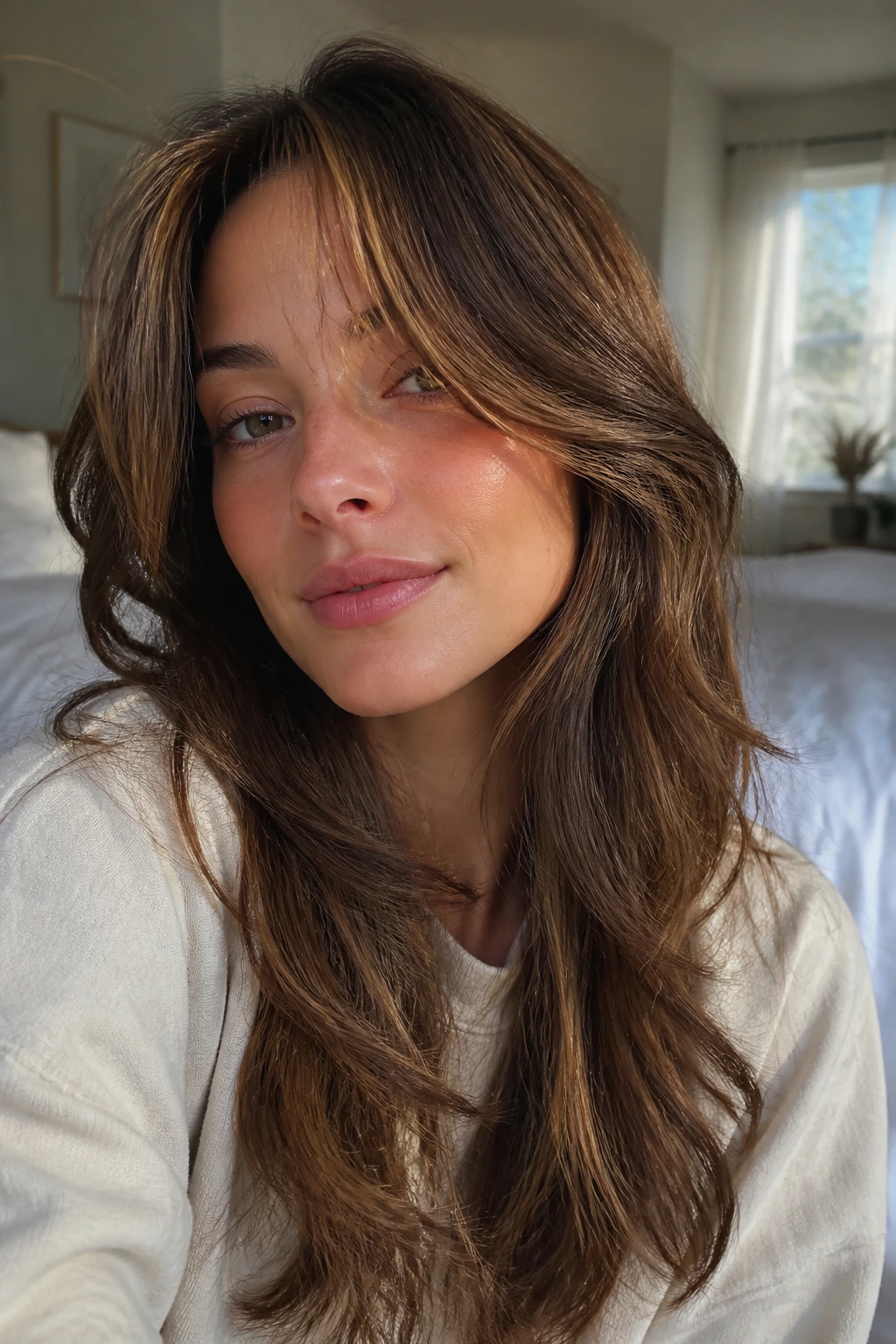
If your hair routine starts with braids, twists, or a satin pillowcase, this cut should cooperate with that. The layers need to be long enough to keep their shape once the waves drop, and the curtain bangs need enough length to bend softly instead of sticking up in weird directions.
How it should dry
A small roller at the fringe or a loose twist before bed can help the front pieces wake up with a bend. The goal is a shape that looks good with minimal intervention in the morning. Not perfect. Just cooperative.
- Best for: people who skip hot tools most days.
- Ask for: layers that still look polished when air-dried.
- Style with: a light leave-in, then separate the waves with fingers once they’re dry.
Small tip: if the bangs puff at the roots overnight, pin them flat while they cool or dry. That tiny step saves a lot of fighting later.
26. Long Layers With Curled-Under Ends
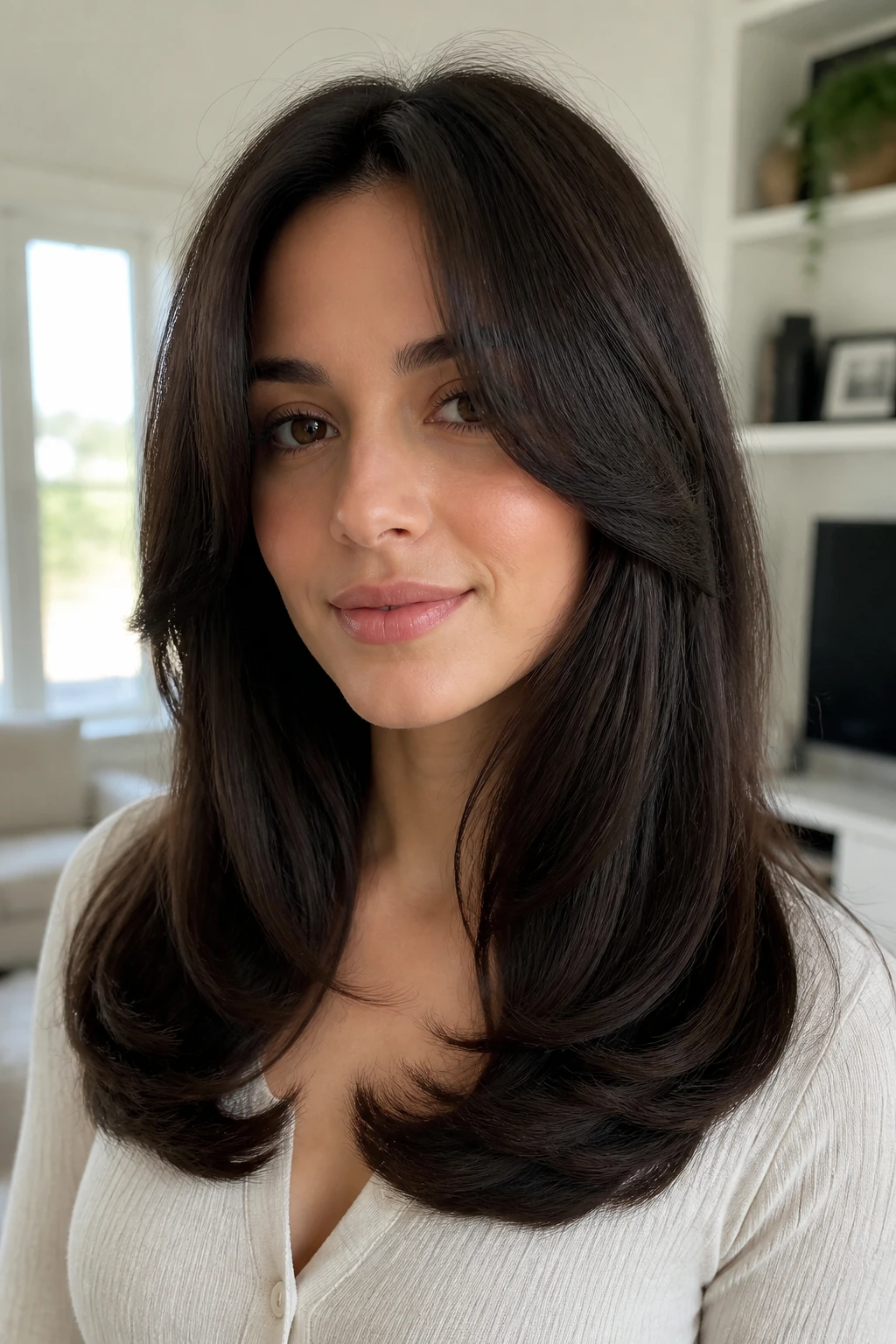
This is the neatest version of the whole family. The ends tuck inward, the layers stay soft, and the curtain bangs drape into the front like they were meant to be there. It’s a clean, classic finish that works well if you like hair to look orderly instead of undone.
Compared with the beach-wave version, this one is more controlled and a little more formal. It suits straight hair especially well because the bend at the ends creates shape without needing a lot of texture. A large round brush or oversized rollers can do most of the work.
I’d recommend this to anyone who likes a polished outline. It’s understated, but not boring. The front still moves, which keeps it from feeling stiff.
27. Long Layers With an Off-Center Curtain Sweep
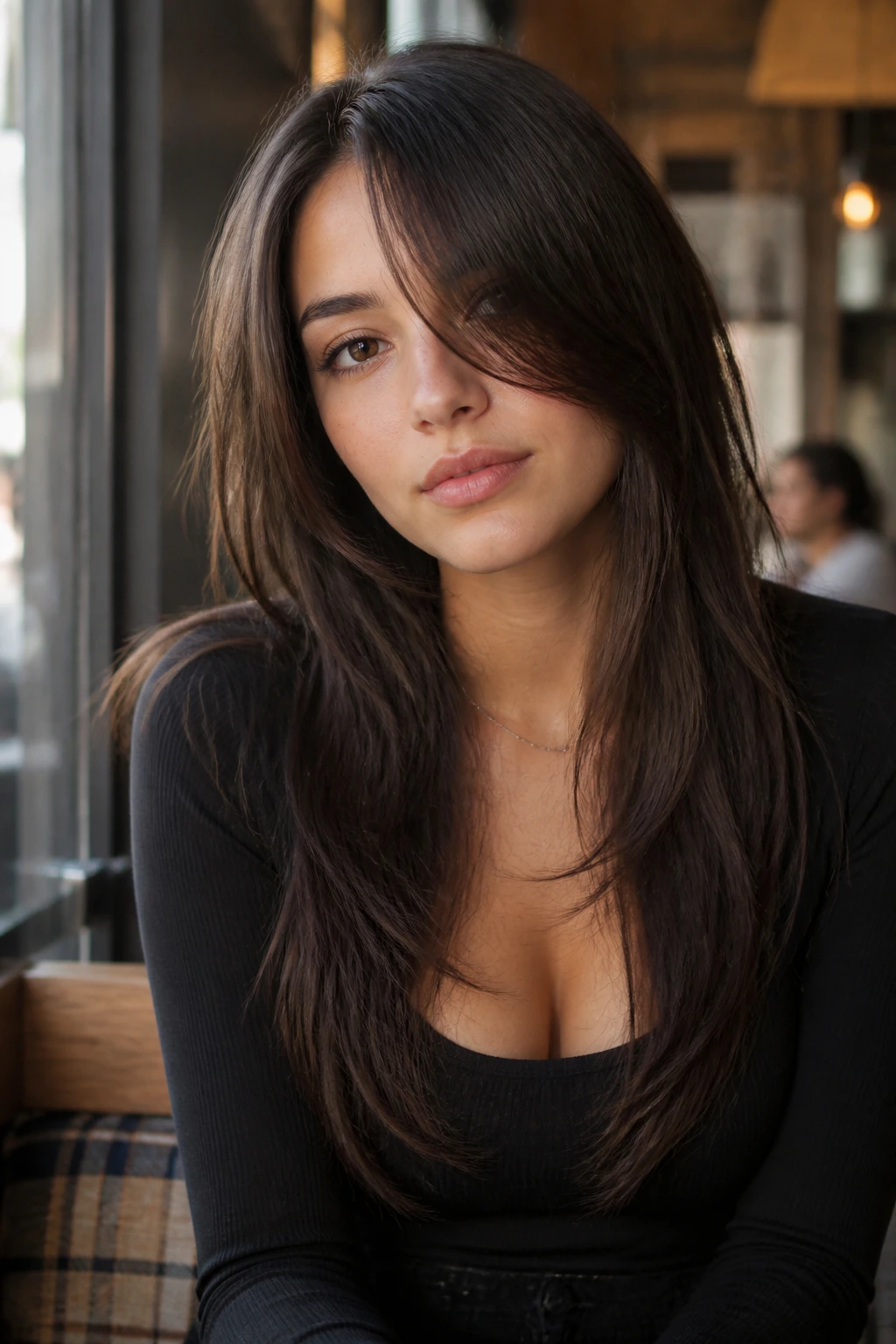
A dead-center part is not mandatory, no matter what the internet suggests. If your hair has a cowlick, a stronger growth pattern, or just looks better with a slight shift, an off-center curtain sweep can make the whole cut easier to wear. The bangs still frame the face; they just do it at an angle.
The side that starts slightly shorter should still land around the cheekbone when dry, and the longer side should have enough length to tuck or blend into the rest of the hair. That way the sweep looks deliberate, not lopsided. It’s a small adjustment, but it changes the mood a lot.
I think this version deserves more attention than it gets. It keeps the softness of curtain bangs while giving the front a little less symmetry, which can be a relief if perfect center parts make your hair behave like it’s in a fight.
28. Grow-Out Friendly Shoulder-To-Waist Blend
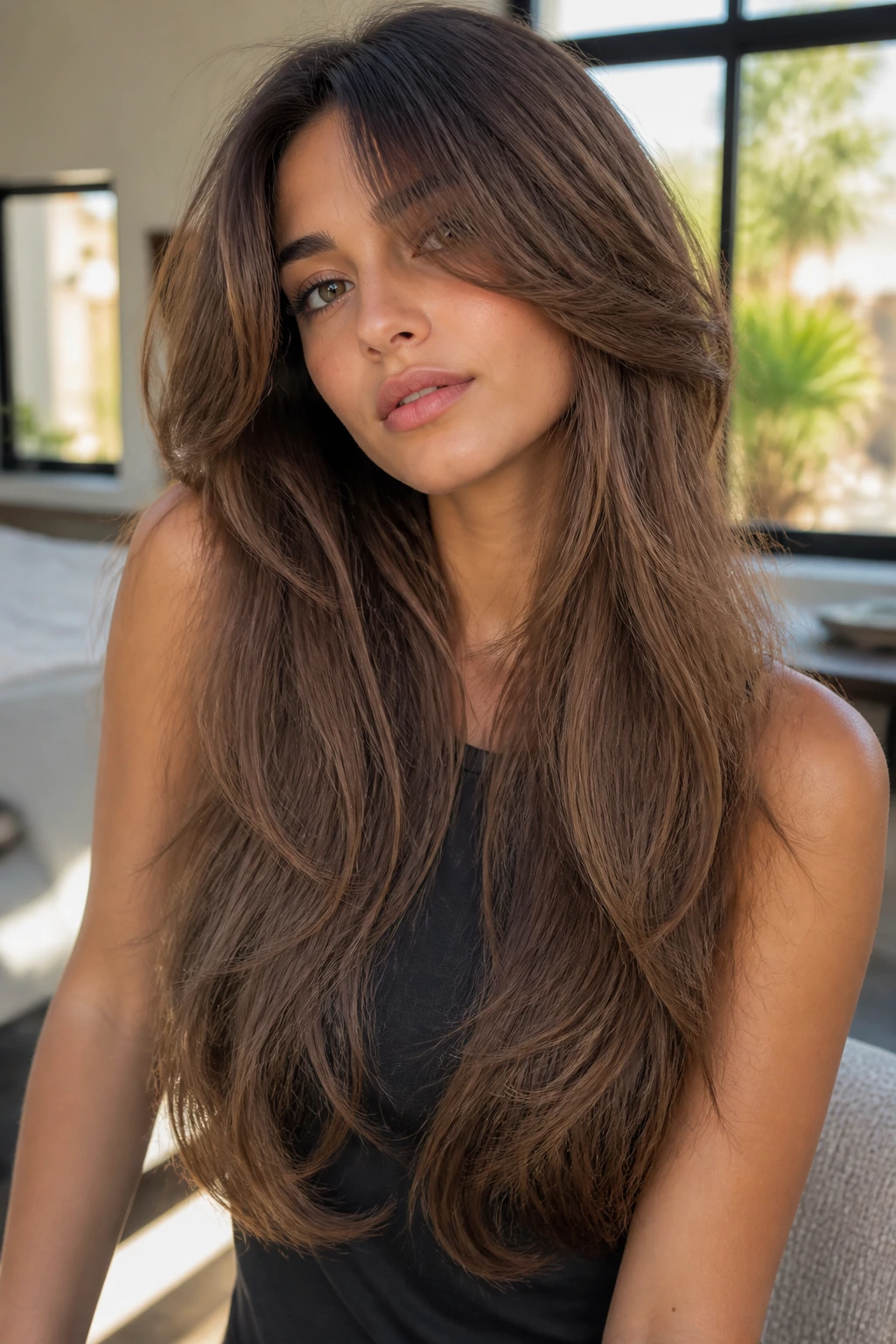
Want a haircut that still behaves when you miss a trim appointment? This is the one. The layers are long enough to keep growing without breaking the shape, and the curtain bangs are cut so they slide into face-framing pieces instead of turning into a blunt problem at eye level.
How it grows
The shortest front pieces should already live at a length that can travel into your cheekbones or lips as the weeks pass. That way the haircut gets softer, not messier. The layers below should stay gradual, so the silhouette doesn’t suddenly lurch from one length to another.
- Best for: busy schedules and people who don’t want to chase the salon every few weeks.
- Ask for: a low-maintenance fringe line and long blending layers.
- Style with: whatever you can repeat twice a week without hating it.
My opinion: this is the version that behaves like it has manners. It grows out without looking abandoned, which is more useful than any haircut that only looks good for ten days.
Why Long Layers and Curtain Bangs Work Together
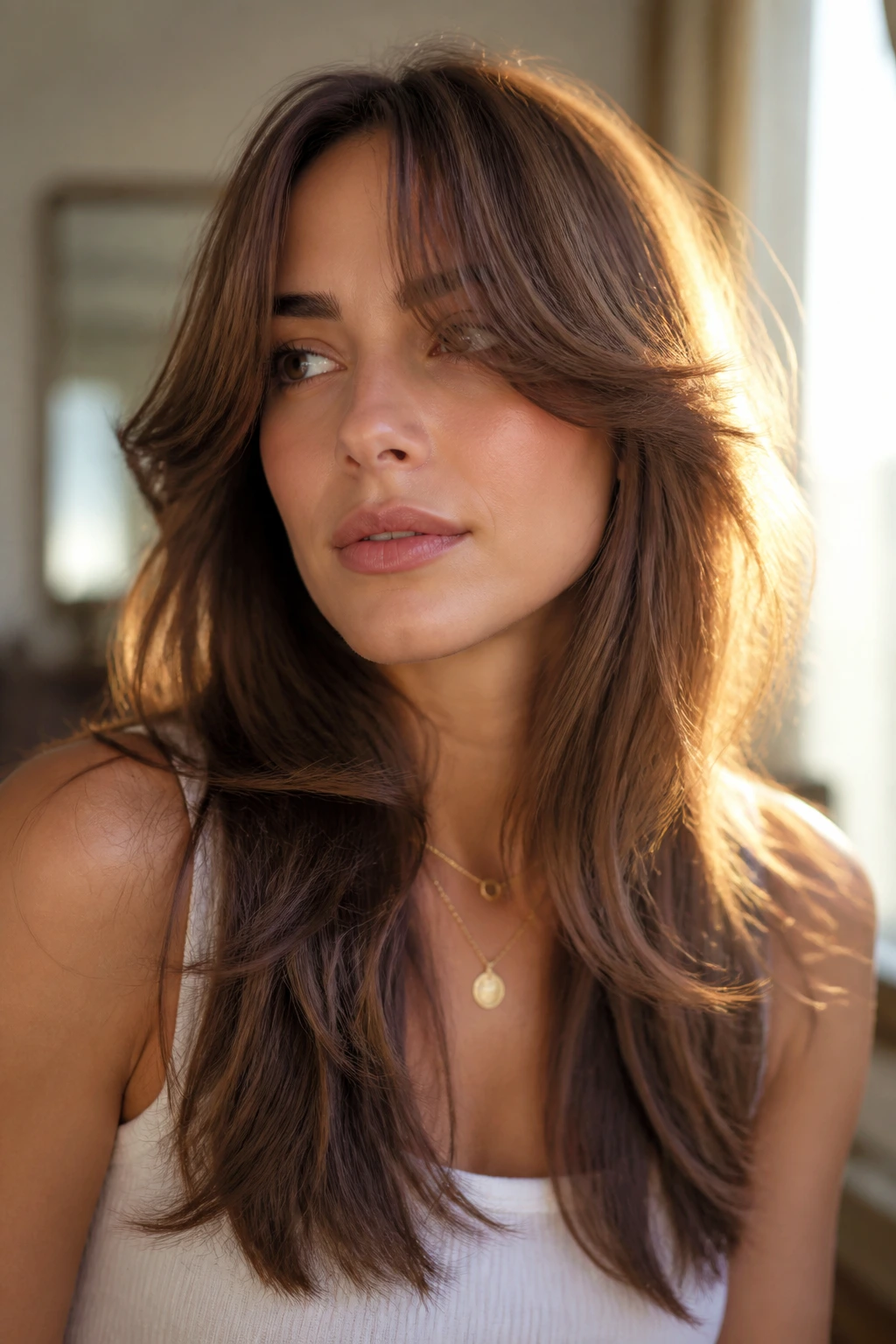
Long hair usually fails in one of two ways. It gets too heavy and hangs like a curtain with no shape, or it gets cut so aggressively that the ends go wispy and weak. Long layers and curtain bangs solve both problems when they’re placed with restraint. The fringe breaks the forehead line, and the layers keep the length from reading like one solid block.
That matters because the eye needs somewhere to travel. A center-split fringe creates a small opening at the front, then the layers guide the eye down the sides and through the ends. If the shortest pieces start too high, the front can look chopped. If the layers start too high, the length thins out fast and the cut loses that long, expensive-looking line.
Texture changes the result, but the logic stays the same. Straight hair shows every edge, so the blending has to be cleaner. Wavy hair can hide a less precise line, but it also expands faster if too much weight gets removed. Curly hair needs the most respect for shrinkage, which is why dry shaping matters so much there. The haircut is not one thing. It’s a shape made for your hair’s behavior.
I like this pairing because it still makes sense when it grows. A blunt fringe can become annoying at the wrong length. Curtain bangs, when cut well, just start behaving like face-framing layers. That’s a much easier problem to live with.
What to Say in the Salon Chair
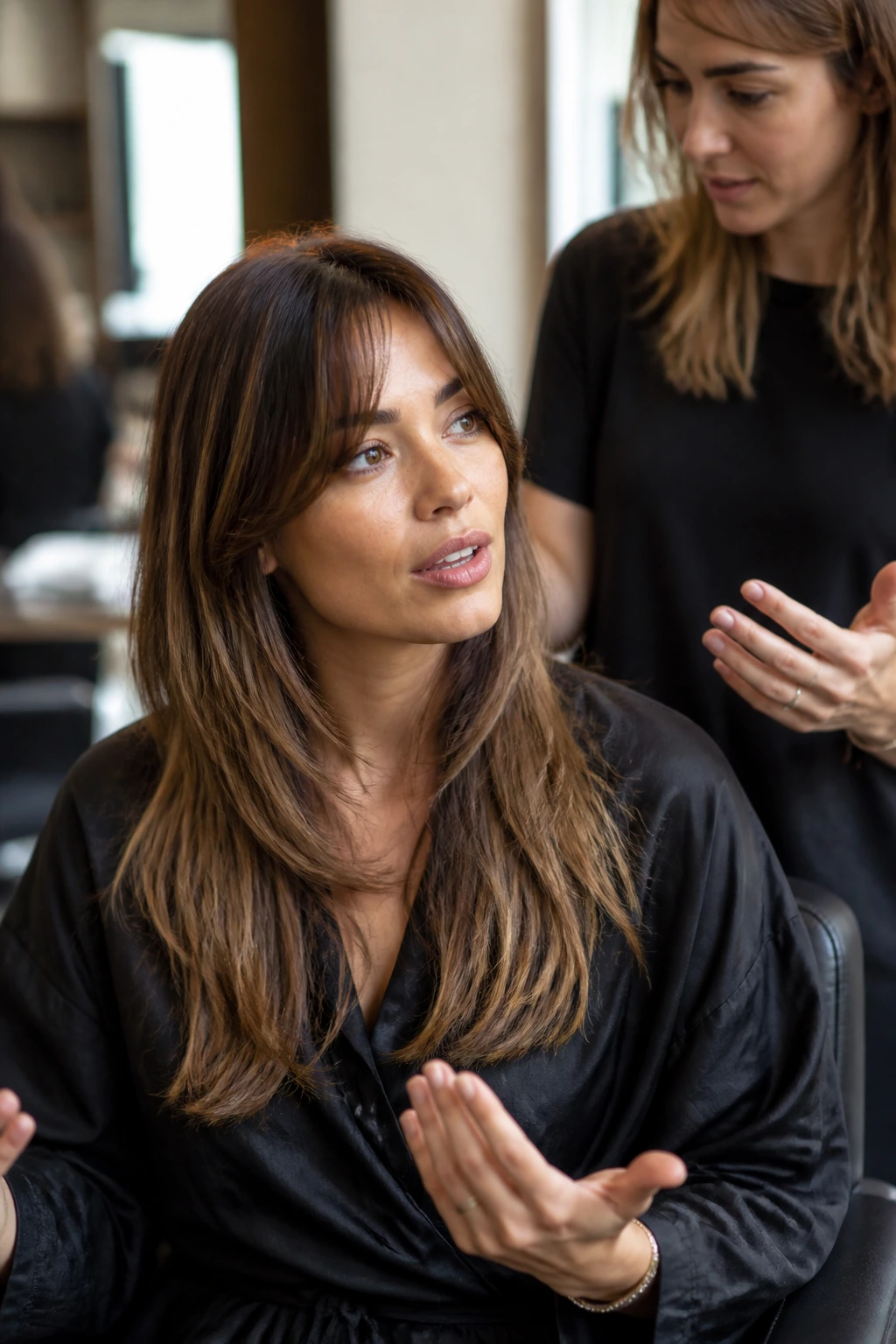
Bring more than one photo
One front-facing photo is not enough. Bring a shot that shows the side, and if you can, one that shows the haircut from a slightly lifted angle so the stylist can see where the layers start. The difference between a cheekbone-grazing front piece and a chin-length one is bigger than it sounds.
Say the shortest point out loud
Don’t say “short bangs” and hope for the best. Say something like, “I want the shortest piece to hit around the cheekbone when it’s dry,” or “I want it to open from the bridge of the nose.” That gives a real target. Bangs are a measurement problem as much as a style problem.
Talk about your daily routine
If you never blow-dry your hair, say that. If you wear it in a clip most days, say that too. A curtain fringe can be cut to work with a blowout, but it needs to be longer and softer if you’re mostly air-drying. Otherwise you end up with a style that only behaves in the salon chair.
Mention your part and growth pattern
Cowlicks matter. So do flat roots, heavy density, and the way your front pieces naturally split. A stylist can work around those things, but only if you say them out loud. Skipping that part is how you end up with bangs that keep trying to move in the wrong direction.
Essential Tools and Products
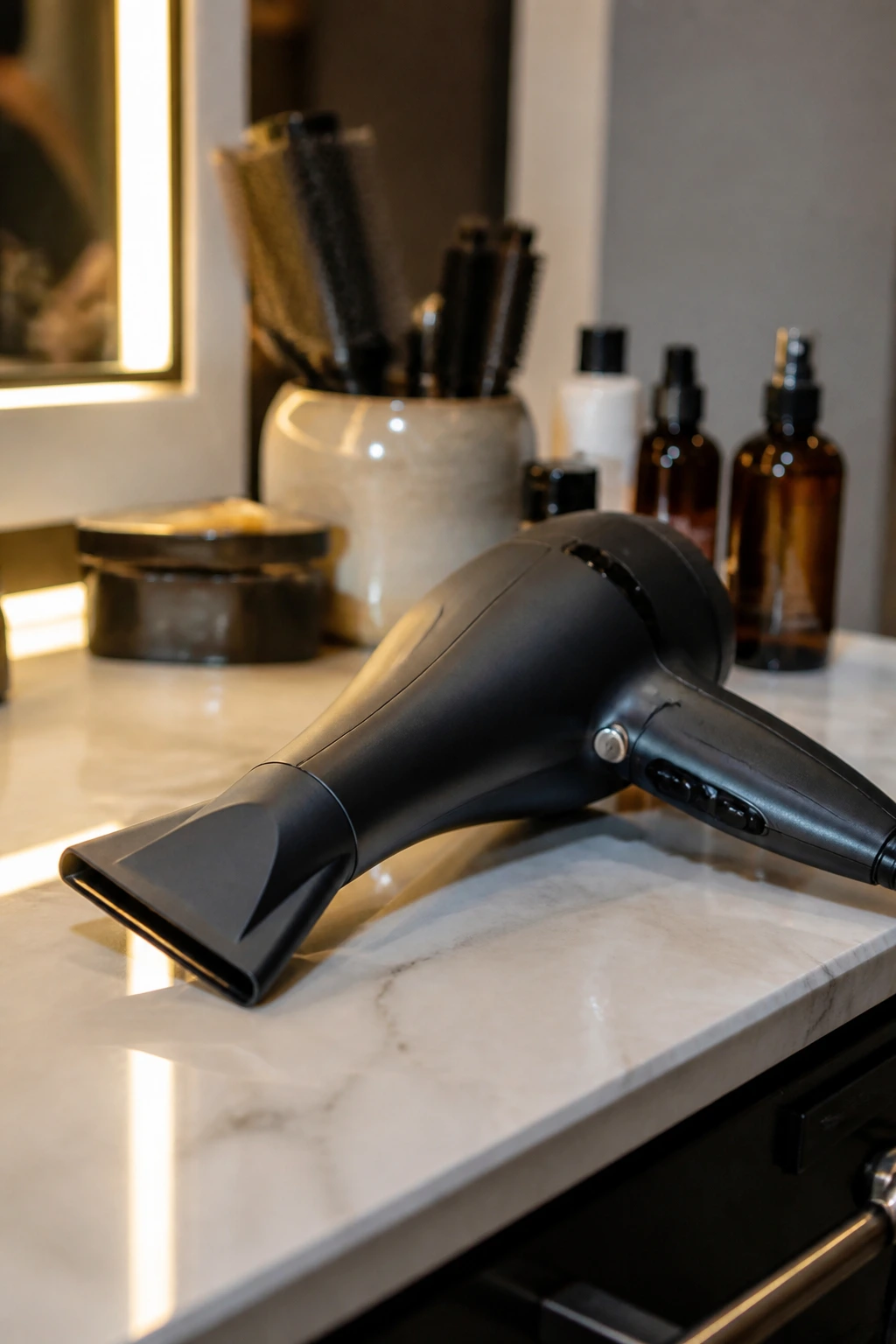
A good haircut still needs a few useful tools at home. None of this is fancy, but the right basics make the front pieces much easier to handle.
- Tail comb: Lets you set a clean center or slight off-center part without hacking at the front with your fingers.
- Sectioning clips: Keep the top layers out of the way while you dry the bangs and the front face frame.
- Blow dryer with a concentrator nozzle: Directs airflow so the fringe bends where you want it instead of puffing every which way.
- Large round brush, 2 to 3 inches: Best for long layers and curtain bangs because it makes a soft bend, not a tight curl.
- Heat protectant spray: Use it before every hot-tool pass. The front pieces get hit first and most often.
- Lightweight mousse or root lift spray: Helpful when the crown falls flat and the layers need a little body.
- 1.25-inch curling iron or wand: Good for beachy bends and loose shape through the lengths.
- Velcro rollers or clips: Useful for setting the bangs and front layers while they cool.
- Dry shampoo: Keeps the front from looking greasy too quickly, especially if you touch the fringe a lot.
- Wide-tooth comb: Worth keeping nearby for wavy or curly versions, where fingers alone can rough up the shape.
Small Styling Moves That Keep the Front Pieces Soft
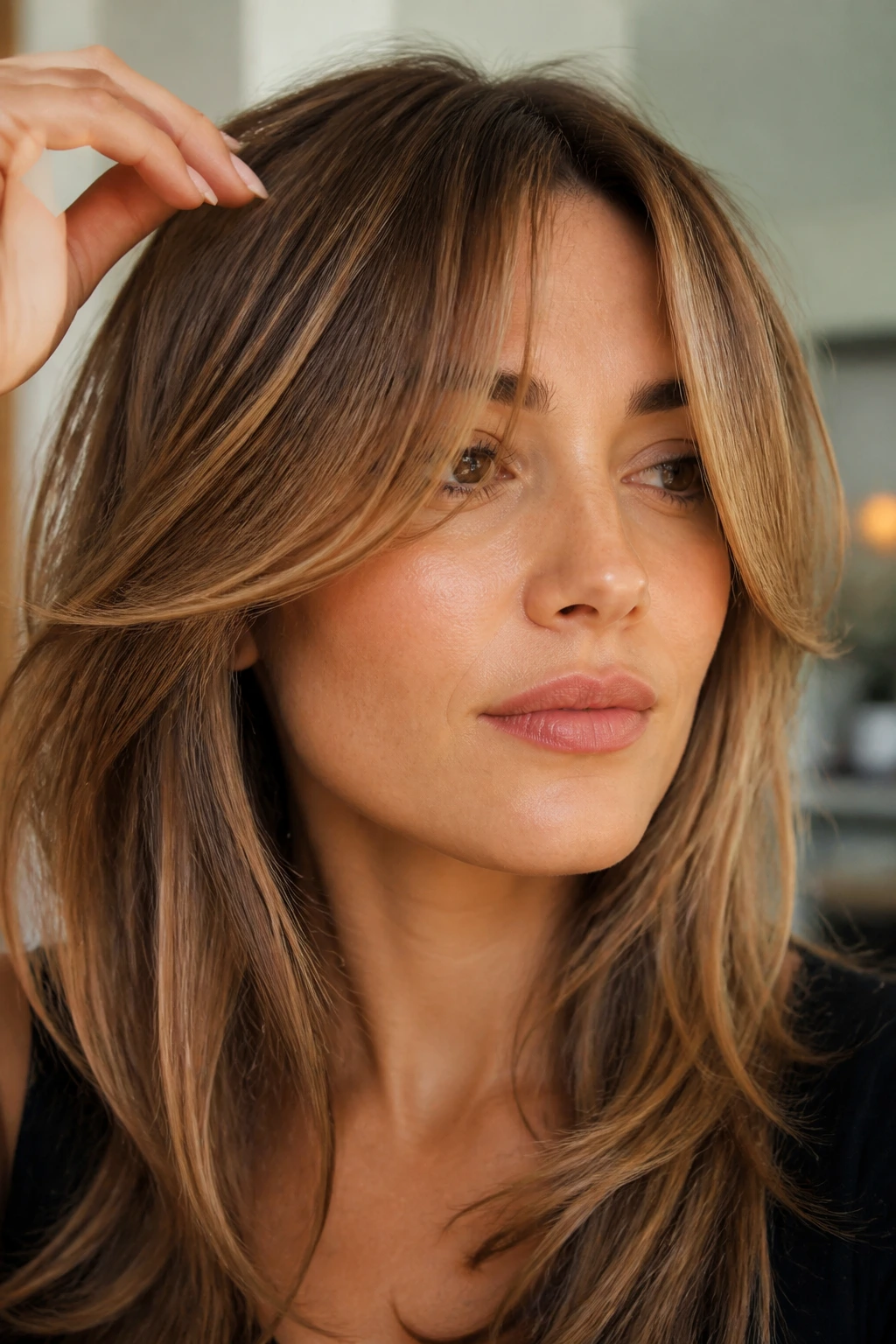
Dry the fringe first. That sounds simple because it is, but it matters. The bangs set the tone for the whole cut, and if they dry crooked, the rest of the style usually needs more fixing than it should.
Use tension, not brute force. Pull the round brush gently from roots to ends and aim the dryer down the hair shaft. That smooths the cuticle and helps the curtain pieces bend instead of puff. If you blast the hair from underneath, the front can go frizzy in ten minutes.
Pin the front while it cools. After the blow-dry, clip the bangs or roll them loosely away from the face for a few minutes. Cooling locks in the shape. Hot hair remembers the last curve you gave it; cold hair holds on much better.
Keep product away from the roots. Heavy creams or oils close to the scalp can make the fringe split in a greasy way by midday. Put richer product through the mids and ends, then leave the front lighter. That one habit helps more than people think.
Separate with fingers, not a brush. Once the cut is set, a brush can overblend the face frame and erase the movement you just built. Fingers keep the pieces a little more distinct, which is exactly what curtain bangs need.
Common Mistakes That Make the Cut Fight You
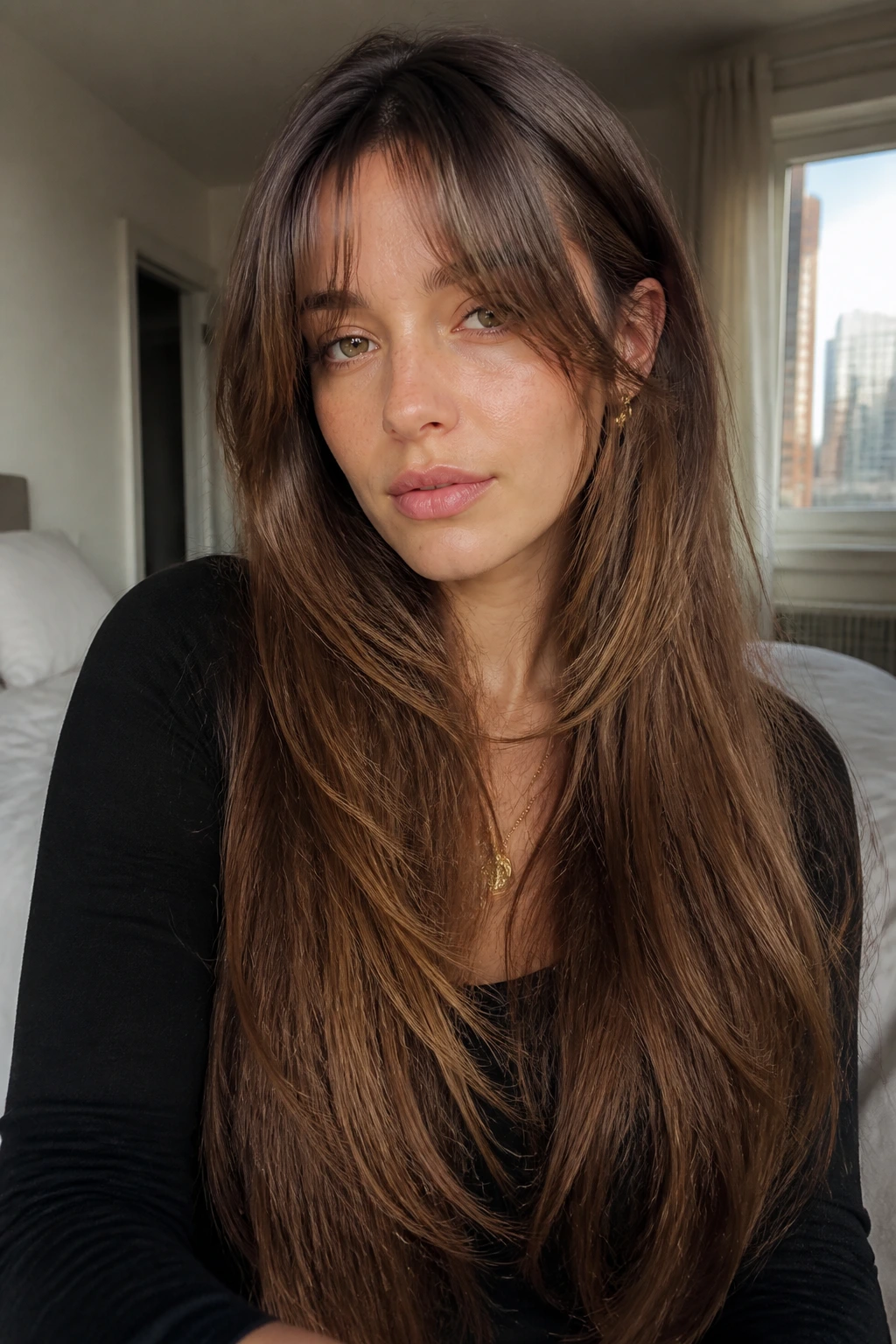
- Cutting the bangs too short: The front ends up sitting above the face frame instead of opening it. The fix is simple: keep the shortest point lower, usually around the bridge of the nose or cheekbone, and let the fringe earn its shape as it dries.
- Starting the layers too high: That makes long hair thin out fast, especially near the ends. If the layers begin around the temples or higher, the bottom can look frayed instead of full. Longer placement keeps the haircut strong.
- Over-thinning the fringe: Curtain bangs need enough density to split cleanly. If they’re thinned too much, they separate into stringy pieces and stop framing anything. Ask for soft blending, not aggressive texturizing.
- Ignoring your part and cowlicks: A perfect middle part on paper may be a stubborn mess on your head. If the front keeps swinging one way, adjust the part slightly and let the cut work with it.
- Styling the bangs before the roots are dry: Wet roots collapse later and make the fringe lose its bend. Dry the base first, then shape the ends. That order matters more than fancy products.
- Skipping trims on the front pieces: Curtain bangs grow fast enough to get annoying long before the rest of the haircut does. Letting them go too long can make the whole shape feel droopy.
Variations and Adaptations to Try

The Soft Butterfly Swap: Keep the layers a little higher through the crown, but leave the fringe long enough to brush the cheekbones. This gives you more lift around the face without turning the haircut into a full shag.
The Shag Lean: Add more texture through the mids and let the ends separate on purpose. This version fits wavy hair and low-maintenance styling, but it needs a light hand so it doesn’t look chewed up.
The Glass-Hair Version: Keep the layers long and minimal, then style the hair sleek and smooth. The curtain bangs still open the face, but the overall finish is polished and reflective rather than fluffy.
The Curly Halo Edit: Cut the front pieces dry and let the curtain bangs follow the curl pattern instead of forcing a straight split. This is the safest path for curls that shrink fast or spring unevenly around the face.
The Grow-Out Edit: Ask for fringe pieces that already sit at lip-to-cheekbone length, so they can drift into face-framing layers over time. This is the version for people who want the haircut to soften between visits instead of demanding constant upkeep.
How Long Layered Hair With Curtain Bangs Grows Out Between Appointments
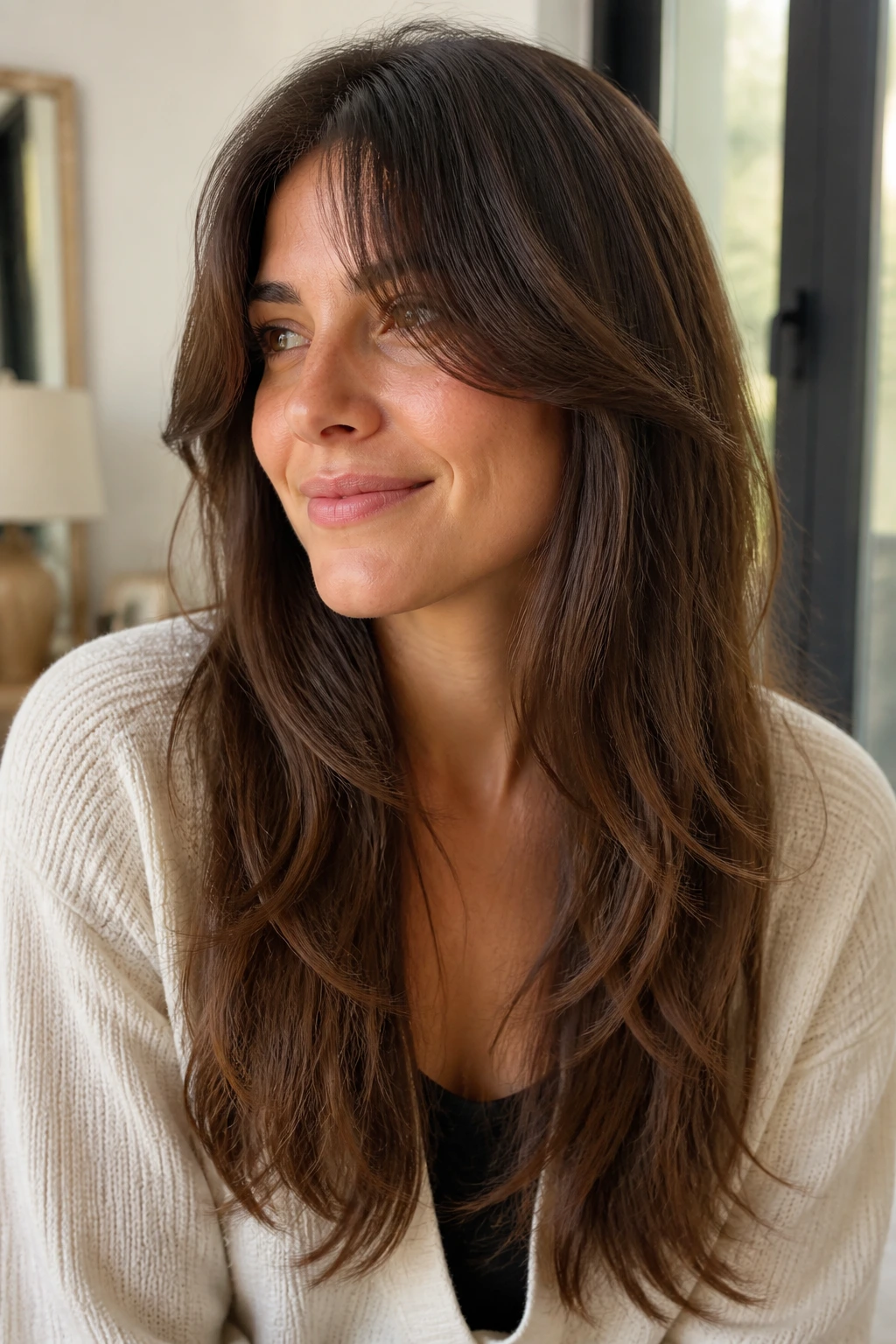
The front usually tells you first when it’s time for a trim. If the bangs start hitting the eyelashes, splitting awkwardly, or losing that soft opening at the center, they’ve moved past the sweet spot. The rest of the layers can often last longer, which is one reason this cut is so forgiving.
A good trim cycle is usually shorter for the fringe than for the length. Curtain bangs may need a touch-up every 4 to 6 weeks, while the long layers can often go 8 to 12 weeks before they need real reshaping. If your hair grows fast, or if you wear the front pieces down every day, trim sooner.
What helps between visits is simple. Use dry shampoo before the roots get greasy, clip the fringe back on no-wash days, and reset the front with a quick bend from a brush or roller. For curly hair, a water mist and a little leave-in can wake the front up again without starting from scratch.
If you want the grow-out to stay pleasant, ask your stylist to keep the front pieces long enough to become face-framing layers. That way the haircut gets softer as it grows instead of turning into a battle.
Frequently Asked Questions
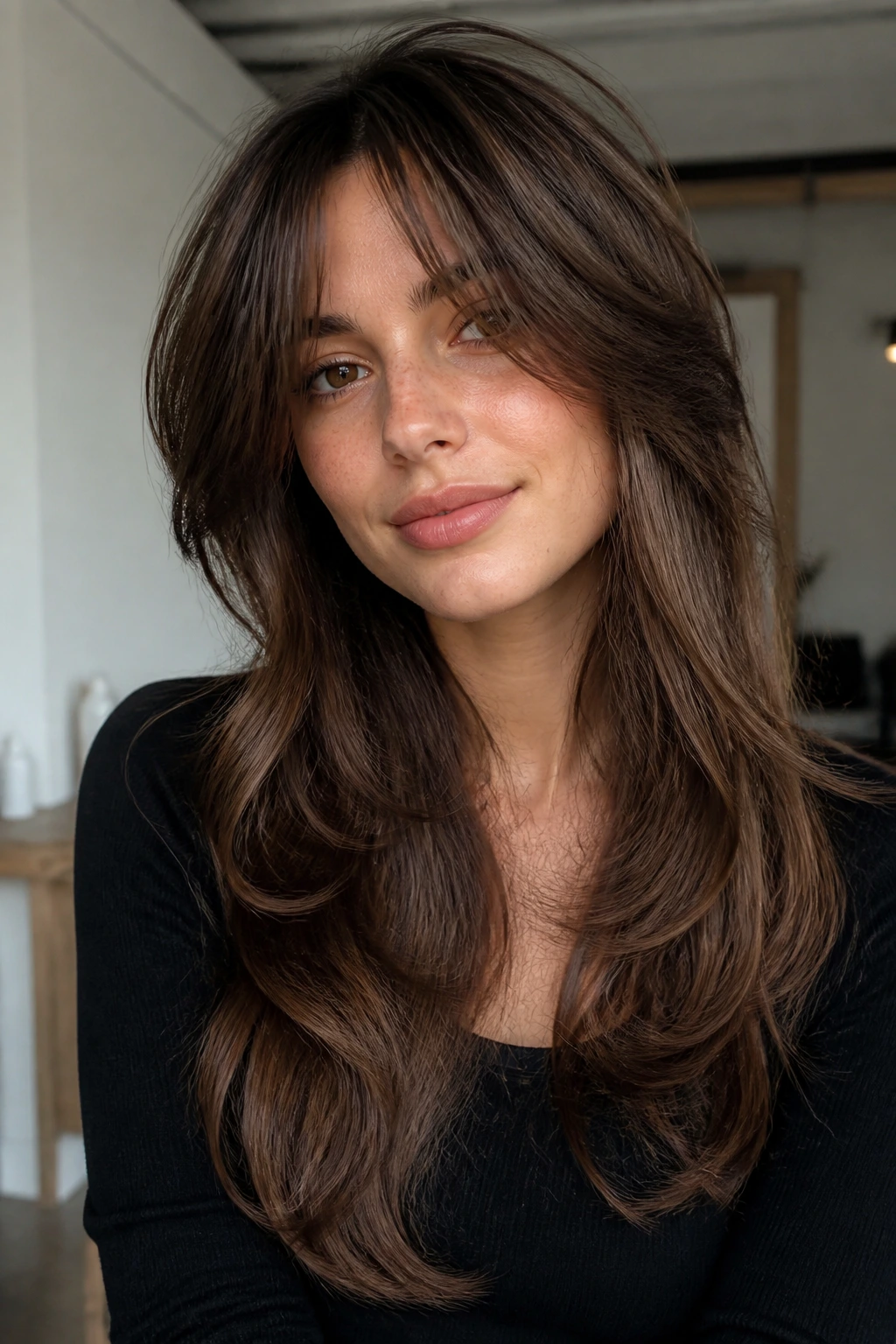
Are curtain bangs good with long layered hair?
Yes, especially when the layers and fringe are cut to work together instead of as separate ideas. The bangs break up the forehead line, and the layers keep the length from looking flat. The combination is one of the few that can feel soft on day one and still make sense several weeks later.
What face shapes work best with long layered hair and curtain bangs?
Round, square, heart, and oval faces can all wear this shape, but the details change. Round faces usually need longer layers below the jaw, square faces need softer bends, and heart-shaped faces often do well with fuller lower lengths. Oval faces get the easiest pass, which is unfair but true.
How short should curtain bangs be?
Short enough to frame, not short enough to boss your forehead around. I usually think in terms of cheekbone or bridge-of-nose length when the hair is dry. If the shortest point lands much above that, the bangs can feel chopped instead of soft.
Can thin hair wear this cut without looking sparse?
Yes, but the layers need to stay low and subtle. Fine hair usually looks best with invisible layering and a light fringe, not a lot of face-framing slicing. The perimeter should still feel full when the hair is tucked behind the ears.
Do curtain bangs work on curly hair?
They do, but they need a different cut. Dry shaping matters because curls shrink and move in ways straight hair does not. If the curl pattern at the front is uneven, the bangs may need to be longer and more flexible so they can settle into place.
How often should I trim curtain bangs?
Most people need a trim every 4 to 6 weeks to keep the front open and balanced. If the bangs sit in your eyes or flip strangely at the sides, that’s usually the sign. The long layers can wait longer, but the fringe is the part that asks for attention first.
Why do my curtain bangs split weirdly in the middle?
Usually because the roots are setting in the wrong direction, or the part doesn’t match your growth pattern. Dry the bangs with some tension, use clips or rollers while they cool, and don’t fight a cowlick by forcing a perfect center if your hair hates it. A slight off-center part can fix a lot.
Can I grow curtain bangs out without an awkward stage?
You can get close, which is better than most fringe styles can promise. The key is keeping the front pieces long enough to become cheekbone and lip-length layers as they grow. That way they stop reading as bangs and start behaving like part of the haircut.
A Shape That Keeps Its Swing
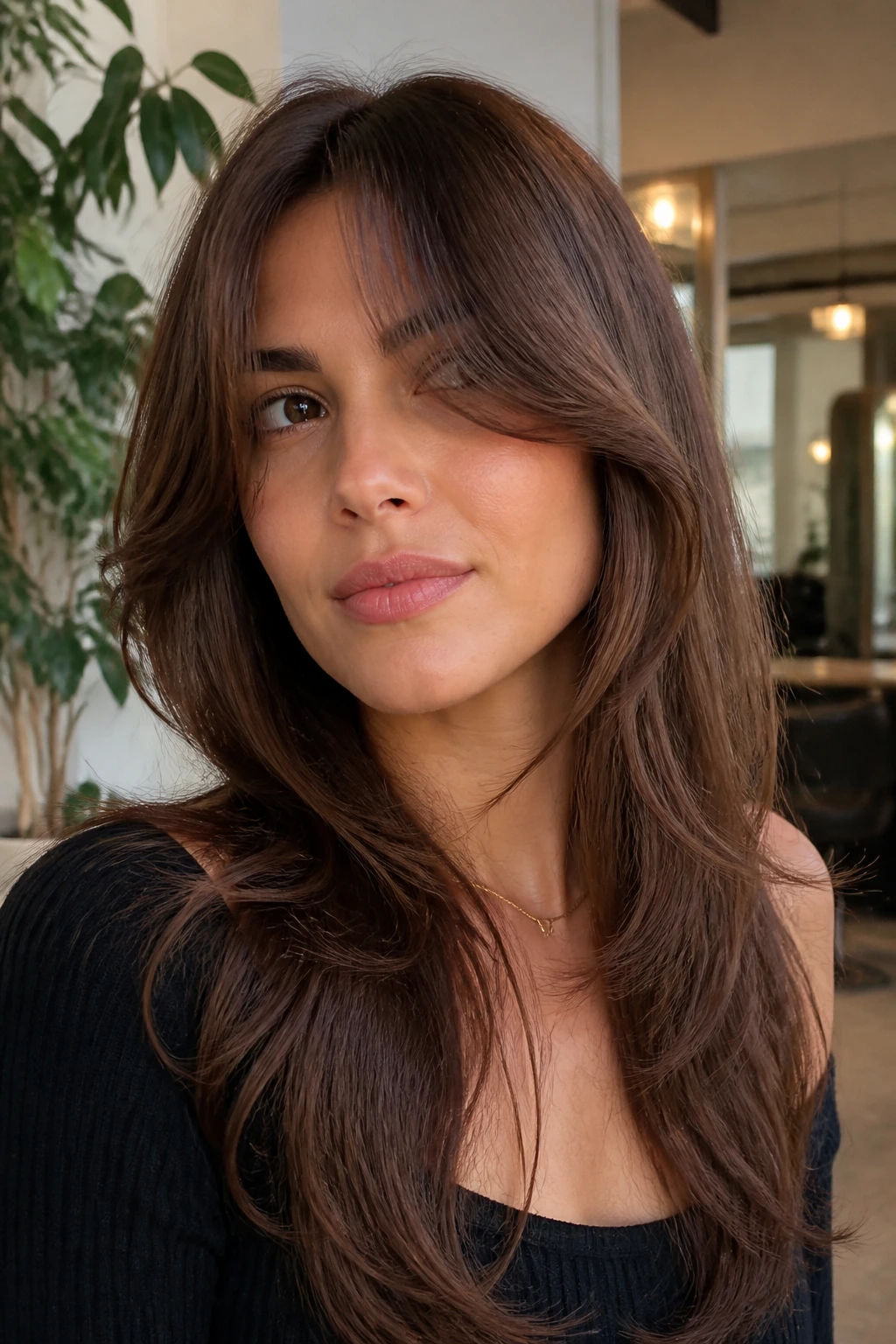
The reason this haircut keeps coming back is simple: it does not trap long hair in one hard silhouette. Long layers and curtain bangs give the face some movement, then let the rest of the length stay dramatic. That’s a better bargain than chopping everything off just to get a little shape.
I also like that the cut has room for personality. You can push it toward polished, shaggy, soft, curly, sleek, or barely-styled and still keep the same basic structure underneath. That flexibility is what makes it worth asking for carefully. The best version will still look like your hair — just with better behavior around the face.
If you want length that feels lighter without losing the length itself, bring one of these shapes to your stylist and be precise about where the front should fall. The haircut will do the rest if you give it enough room to breathe.
