



Wispy bangs on long hair do something blunt fringe rarely manages: they change the shape of the haircut without stealing the length you’ve worked to keep. The ends stay soft, the forehead stays open, and the whole look reads lighter the second the hair moves. That small bit of air around the face matters more than people think.
The catch is that wispy bangs are not one look. They can lean feathered, piecey, split at the center, brushed to one side, or cut so lightly that they almost vanish into long layers. The difference comes down to density, face shape, hairline, and how much styling you’re willing to do before coffee. A good wispy fringe should look easy. A bad one looks like someone thinned the front of your hair and walked away.
Long hair gives you more room to play, which is why this cut can be so satisfying. You can keep the length, keep the softness, and still get that little lift around the eyes and cheekbones that changes the entire haircut. The styles below cover the full range—from barely-there fringe to fuller feathering—so you can find the version that fits your texture instead of forcing your texture to behave.
Why These Wispy Bang Styles Work So Well on Long Hair
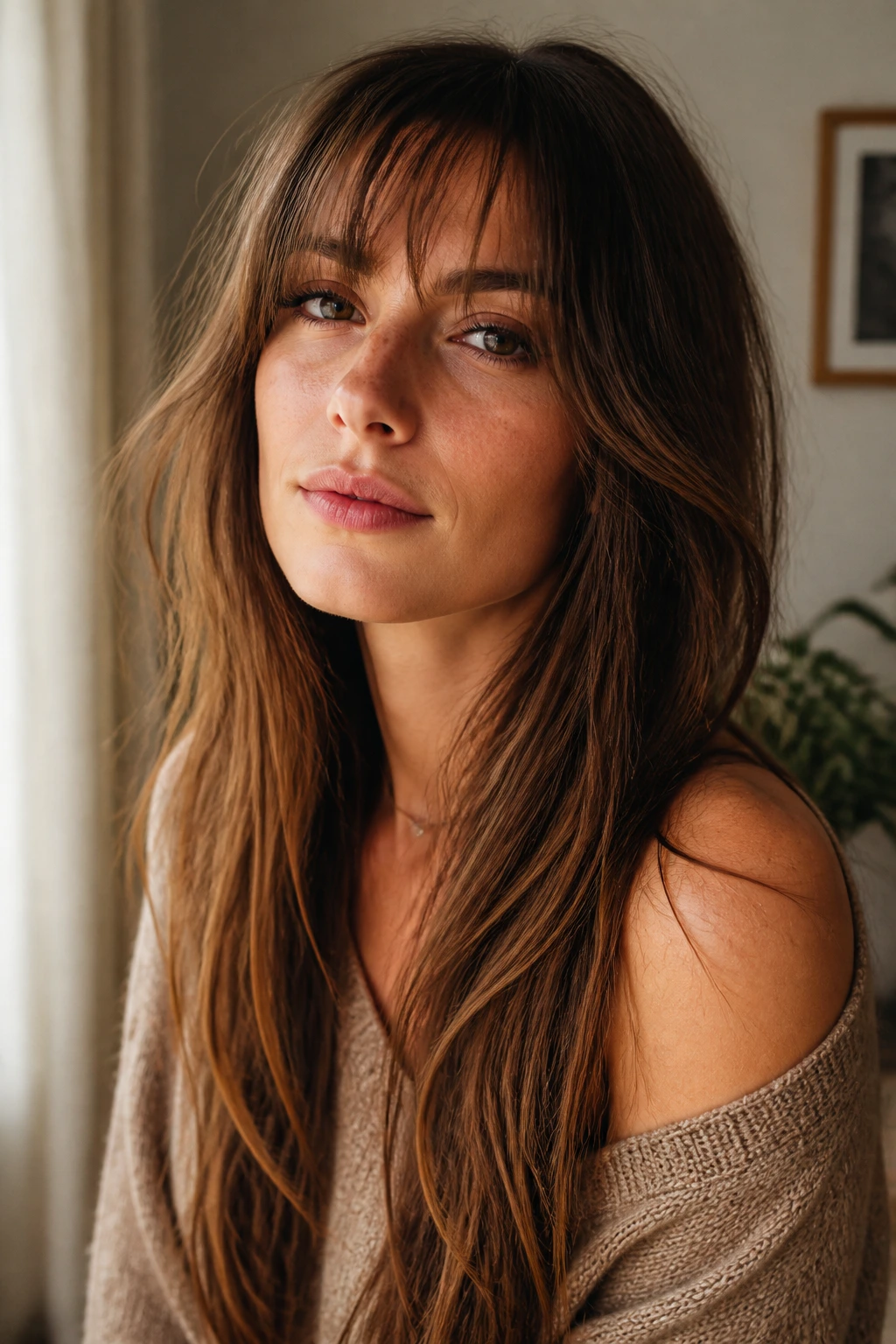
- They soften heavy length: Long hair can drag the face down when the front is one solid curtain, and a wispy fringe breaks that line up without making the haircut look chopped.
- They grow out more gracefully: A soft edge at the brow or cheekbone is easier to live with for 4 to 8 weeks than a blunt bang that sits like a shelf.
- They suit more hair textures than blunt bangs do: Fine, thick, straight, and wavy hair can all wear a wispy cut, as long as the density is matched to the strand type.
- They work with layers instead of fighting them: Long hair already carries movement through the ends, so a feathered front just extends that motion forward.
- They give you styling options: You can blow them flat, flip them into a side part, or bend them with a round brush and still keep the look soft.
- They hide a little maintenance: If one side grows faster than the other, wispy bangs usually keep their shape longer before they start feeling obviously off.
1. Feathered Curtain Wispy Bangs
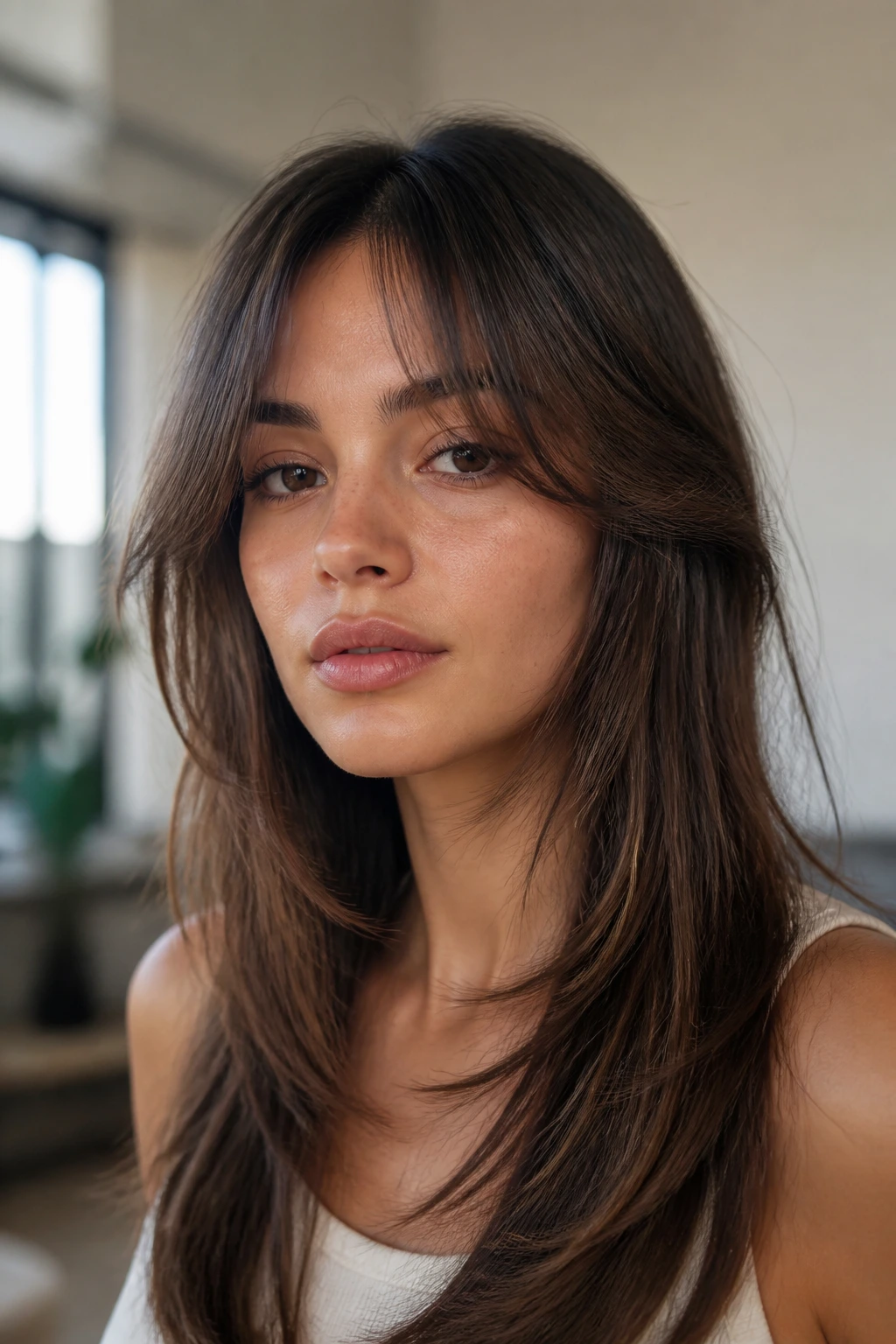
Feathered curtain bangs are the easiest place to start if you want fringe that feels light but still intentional. They part near the center, then sweep down and out toward the cheekbones, which keeps long hair from feeling bottom-heavy around the face. The ends should be point-cut, not chopped blunt, or they’ll sit too square and lose the airy finish.
Why it works
Ask for the shortest pieces to graze around the bridge of the nose, then let the sides fall longer toward the jaw. That shape gives you movement without a hard line across the forehead. On long hair, it reads soft from every angle, which is half the reason it photographs so well in real life—not because it’s dramatic, but because it moves when you do.
2. Bottleneck Wispy Fringe
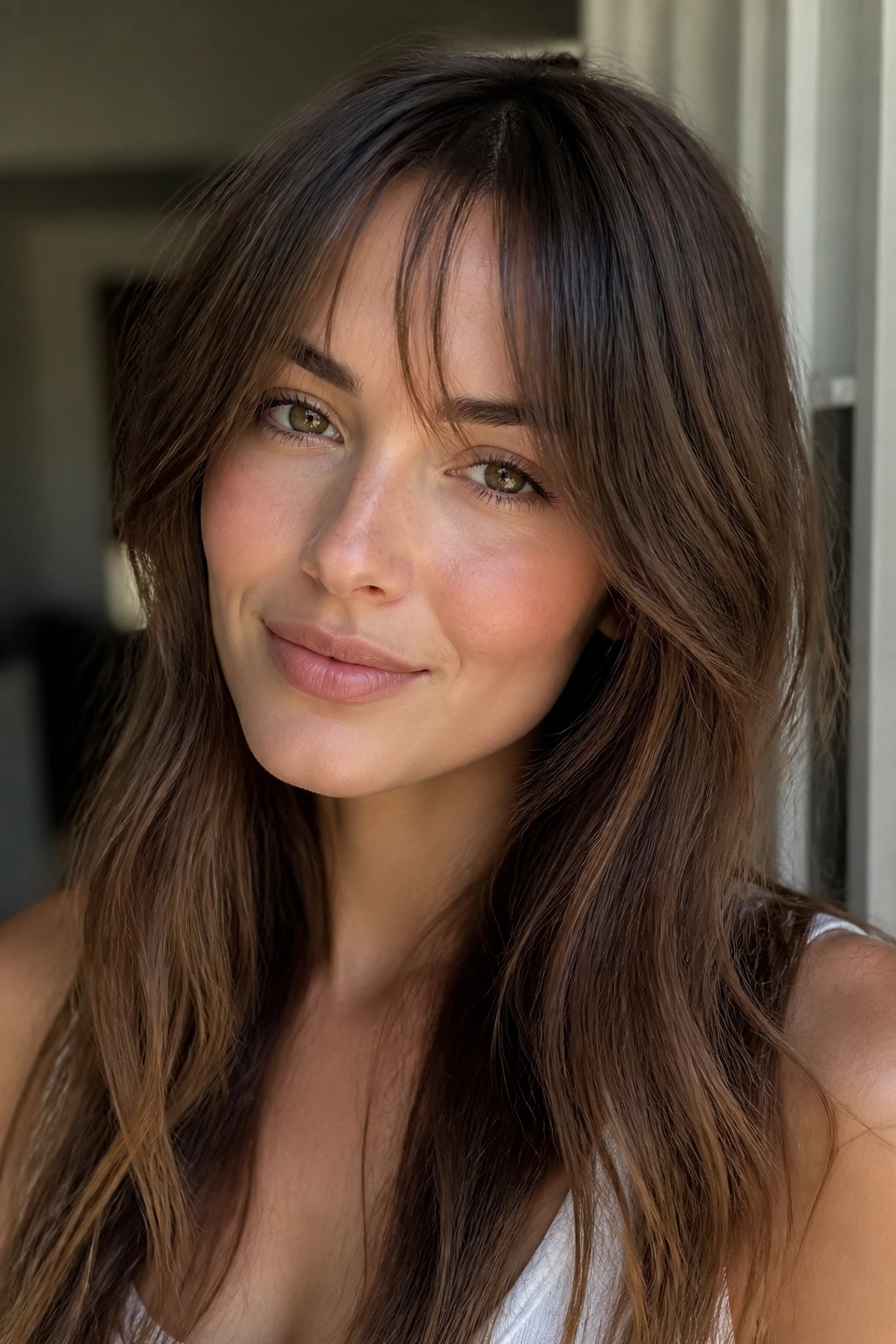
Bottleneck bangs start narrow in the center and widen as they drop toward the temples, which makes them a smart choice when you want face framing without a heavy fringe block. On long hair, they keep the front open enough to show the length while still giving the eyes a little shadow and shape.
Best for
- Medium to thick hair that can hold a soft bend
- Oval and heart-shaped faces
- Anyone who wants bangs that don’t need perfect center-parting every day
The trick is density. Too much hair and the bottleneck effect disappears; too little and the shape goes wispy in a flimsy way. A stylist should remove weight from the center first, then feather the sides so the bang melts into the first layer of hair. It should feel light, not sparse.
3. Side-Swept Whisper Bangs
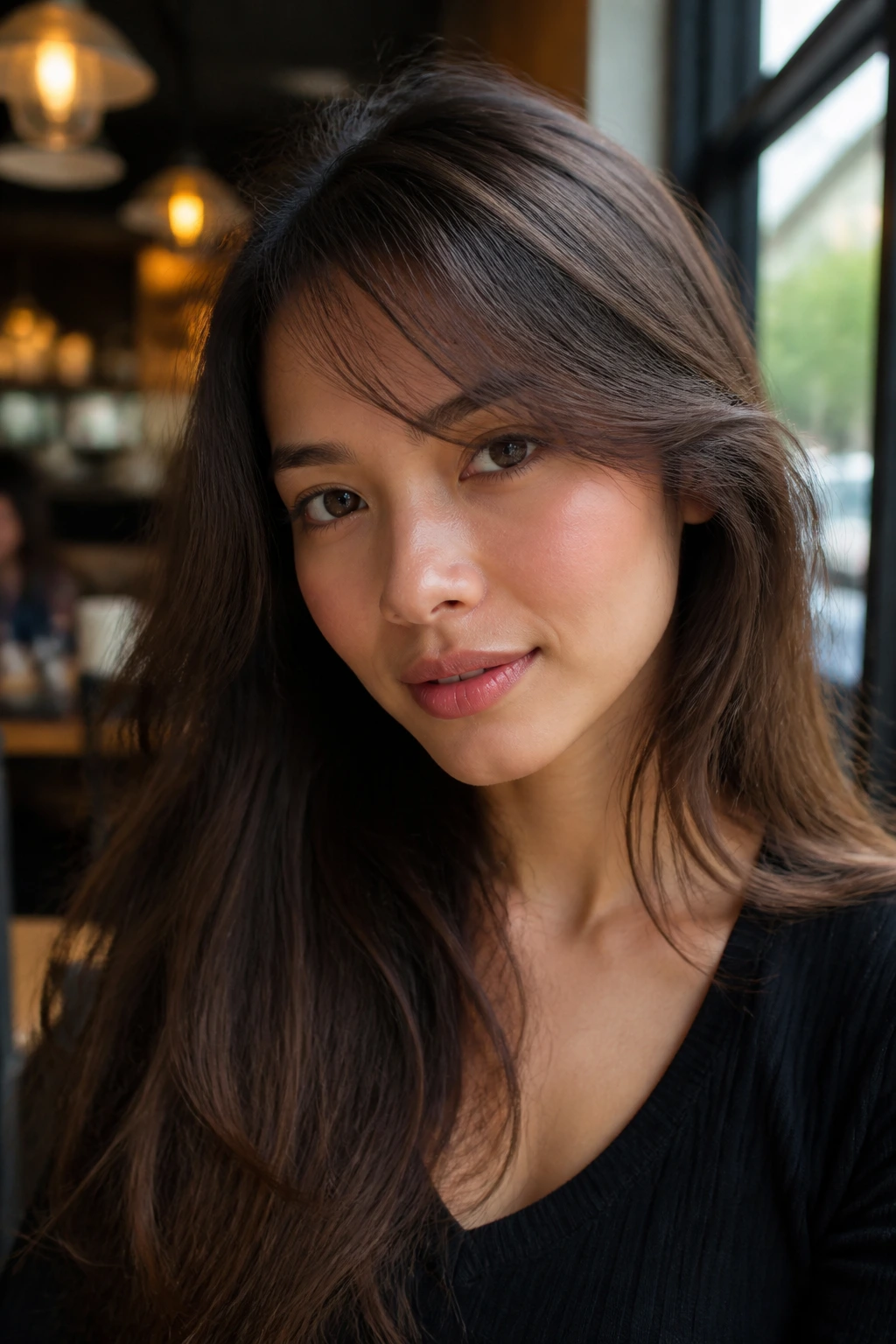
Side-swept wispy bangs are the low-commitment option for people who want fringe but don’t want to wake up to it every day. They sit diagonally across the forehead, skim one brow, and blend into long layers on the opposite side. That diagonal line is forgiving around cowlicks, which is one reason I like it for hair that fights straight-down styling.
The best version keeps the front soft enough to tuck behind the ear if needed. If your hair is thick, ask for internal weight removal at the roots, not just the ends, or the bang will look too puffy and lose that whisper-light finish.
4. Brow-Skimming Piecey Bangs
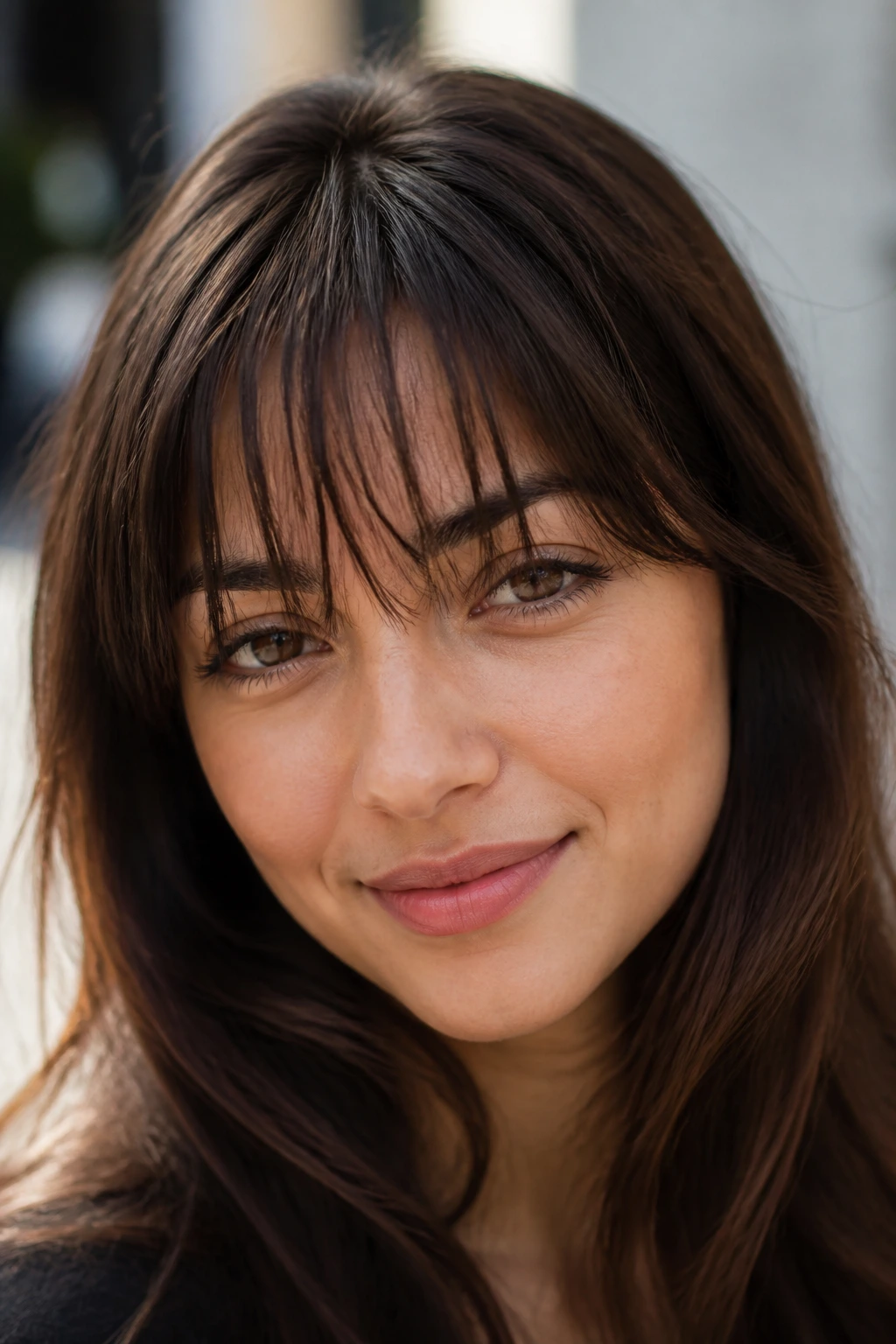
Brow-skimming piecey bangs are for the person who likes a little separation in the fringe instead of one smooth sheet. They sit right around eyebrow level, then break into soft strands that move across the forehead. On long hair, that slight messiness makes the whole haircut feel modern without looking overworked.
The key is styling product. Too much cream or oil and the pieces collapse into one sticky ribbon. A pea-sized amount of lightweight mousse, worked through damp bangs and blown dry with a small round brush, gives you that separated finish. You want the strands to look defined, not damp.
5. Long Blended Fringe With Layers
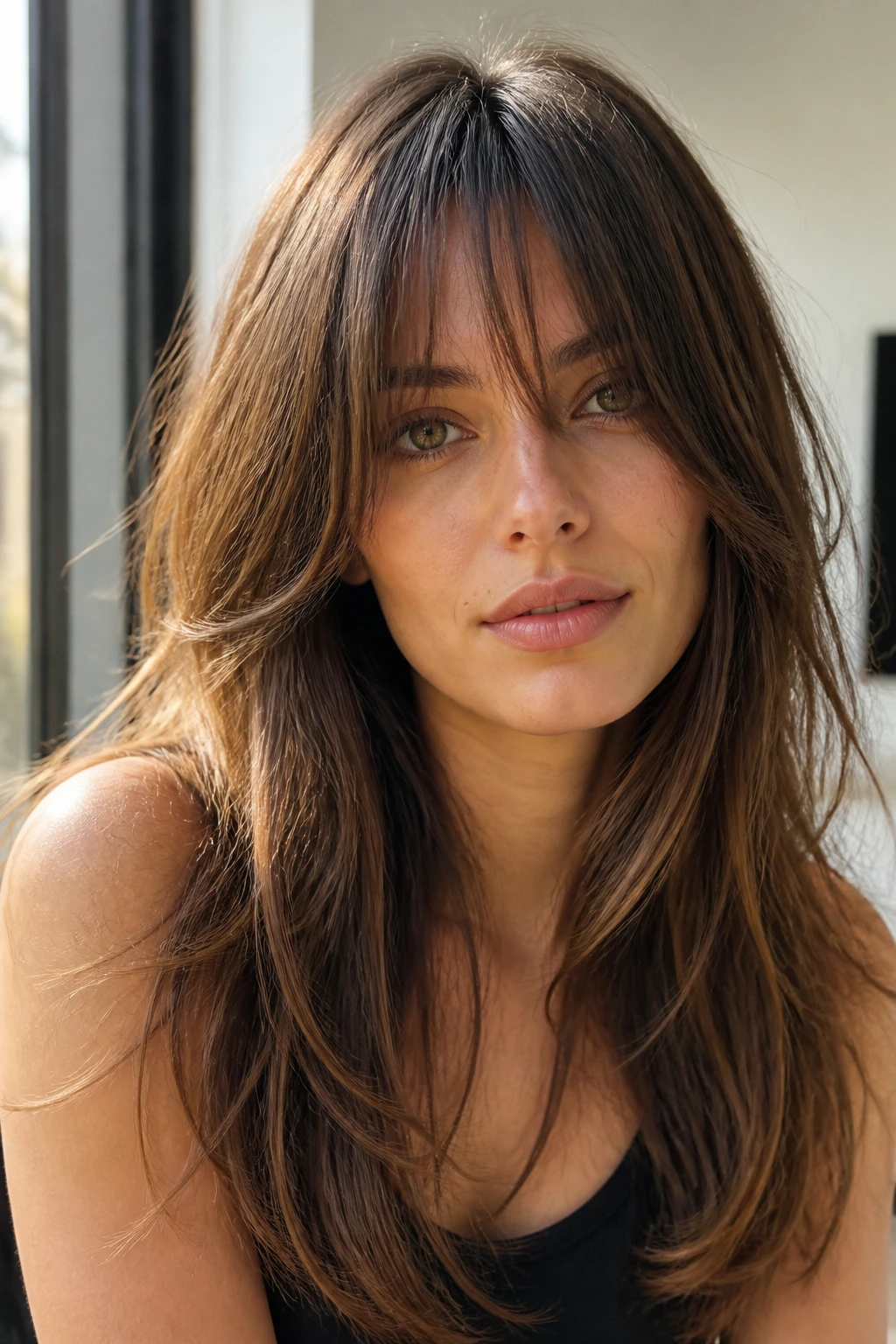
If you’re nervous about the idea of bangs at all, this is the version I’d point you toward first. The front stays longer and folds into the first layer of the haircut, so nothing feels abruptly cut off at the forehead. It’s more of a transition zone than a hard fringe.
This style shines on long hair because it keeps the silhouette continuous. You can wear it with straight lengths, loose waves, or a bend at the ends, and it never looks like it belongs to a different haircut. Ask your stylist to point-cut into the ends so the fringe melts instead of sitting on top of the rest of the hair.
6. Airy Shag Fringe
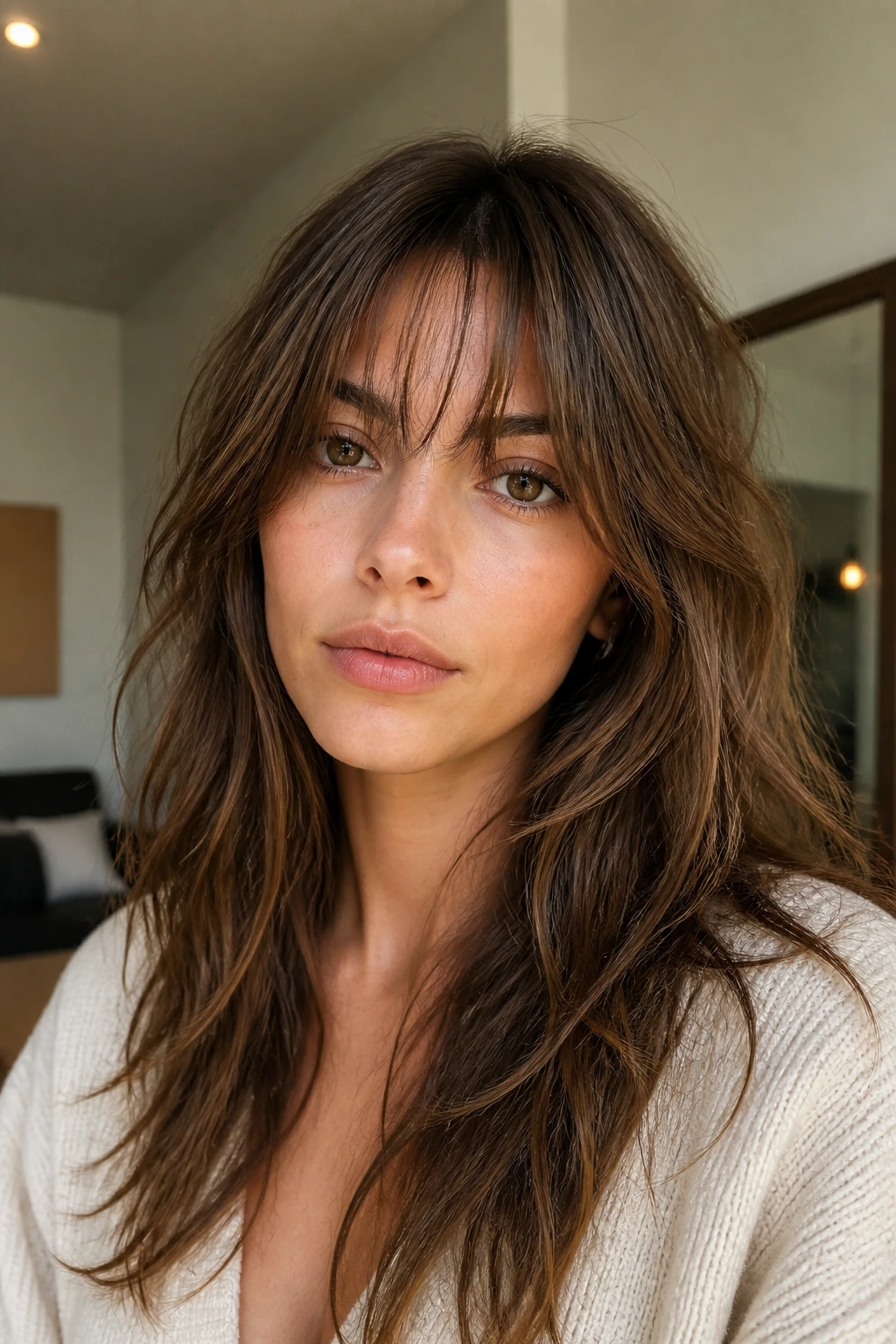
An airy shag fringe has a little edge to it, but not the heavy rocker-bang look people sometimes worry about. It’s cut to move with layered long hair, usually shorter in the center and softer at the sides, with enough texture that it doesn’t hang flat against the forehead. This is the fringe I like when the rest of the hair already has some bend or wave.
It works because the front doesn’t compete with the length. Instead, it echoes the texture through the ends. If your hair is dense, ask for interior point-cutting and avoid a blunt perimeter; that’s what keeps the shag fringe from turning bulky.
7. See-Through Korean-Style Fringe
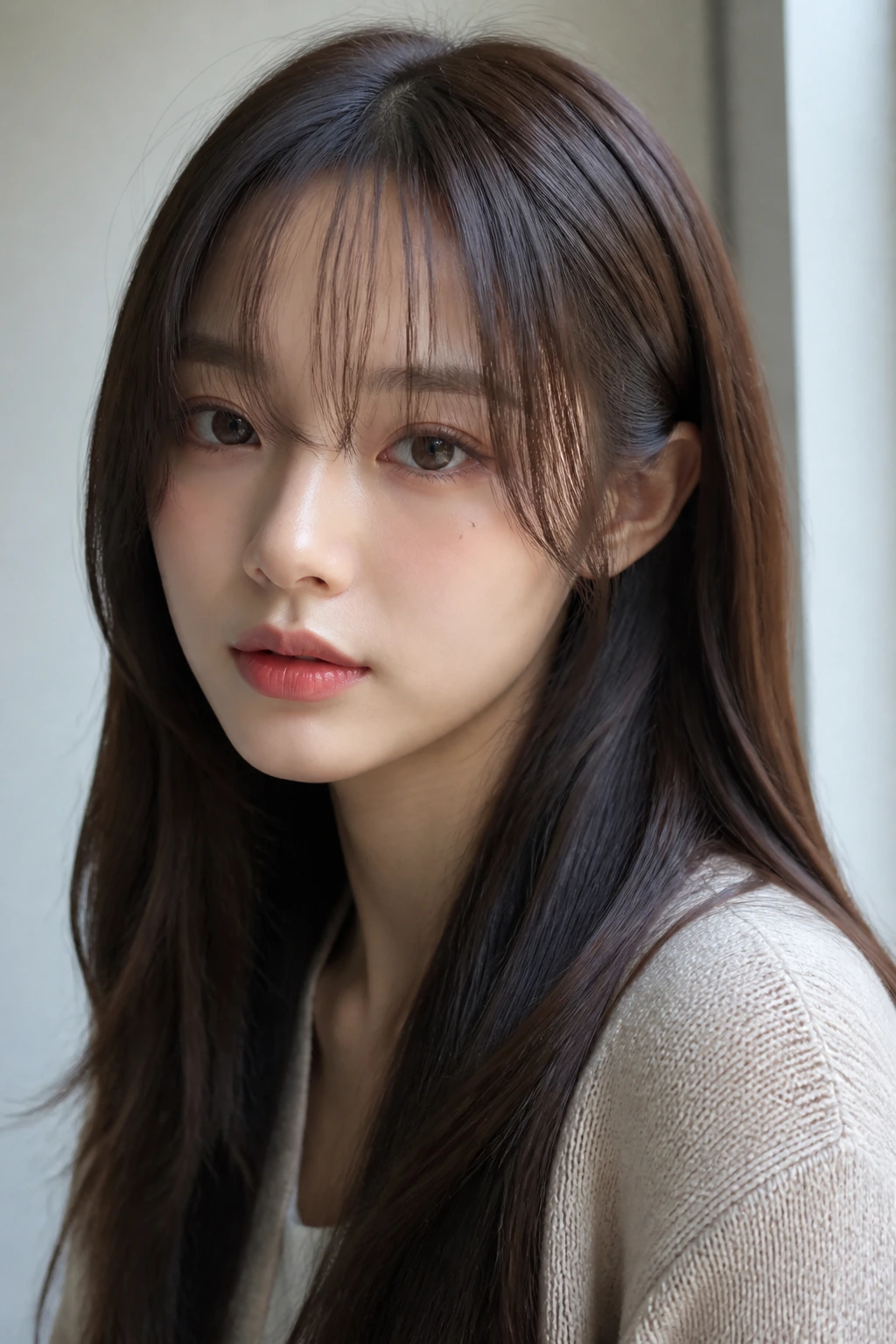
See-through fringe is all about leaving space. The bang is cut light enough that the forehead shows through, which gives long hair a delicate, almost floating front. It’s a sharp contrast to dense bangs, and on straight or softly wavy hair, it can look incredibly clean.
What makes it different
The cut should be soft from root to tip, not thinned only at the ends. If the density sits too low at the bottom, the fringe starts to look stringy. Keep the length around eyebrow level, use a round brush or flat brush to dry it forward, and finish with almost no product—just enough to keep flyaways from sticking straight out.
8. Center-Split Wispy Bangs
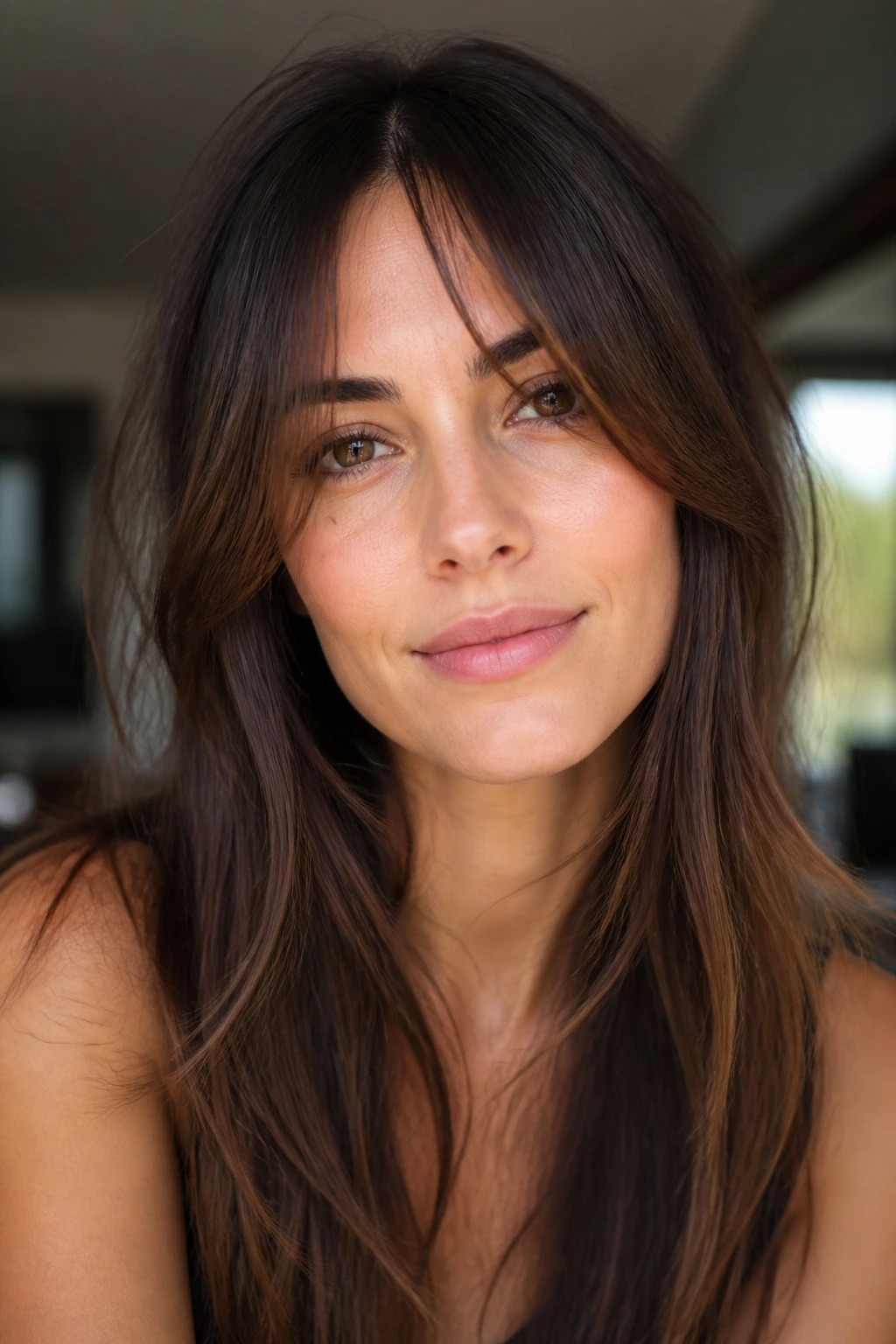
Center-split wispy bangs are what happens when curtain bangs get even lighter. The center opening stays obvious, and each side falls in a soft, broken line toward the cheeks. This is a good option if you already wear a middle part and want the fringe to feel like part of the haircut, not a separate event.
The best thing about this style is how it travels with long hair. It doesn’t matter if the rest of your hair is smooth, bent, or air-dried in a loose wave; the split fringe still makes sense. If you hate hair in your eyes, keep the shortest center pieces just below the brow and let the sides do the framing.
9. Face-Framing Arc Fringe
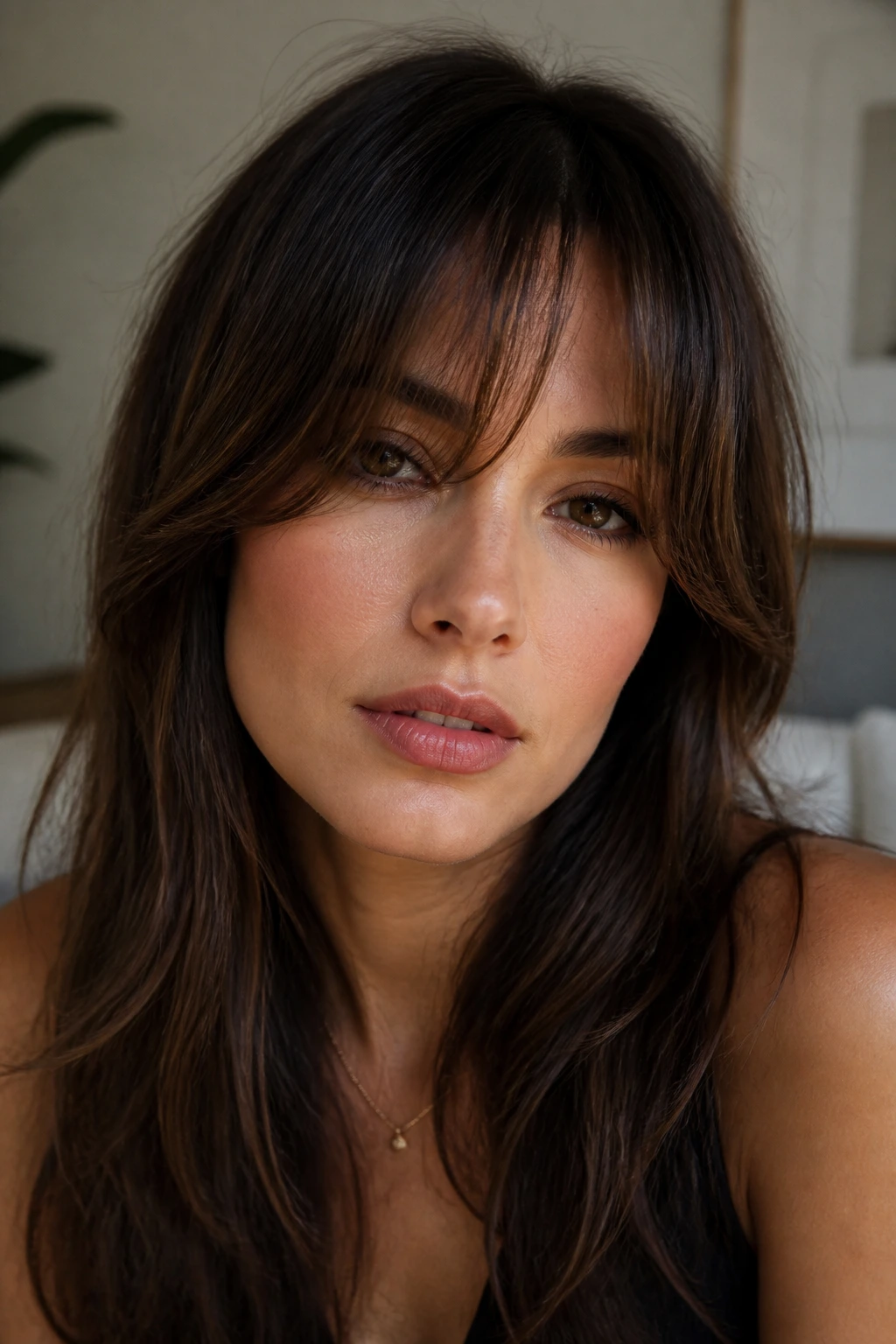
This is a quieter, more sculpted version of wispy bangs. Instead of dropping straight down, the front makes a soft arc around the face, starting shorter in the middle and lengthening toward the temples and cheekbones. On long hair, that curve helps draw attention upward without cutting the overall length into pieces.
It’s especially useful if you want your bangs to blend with cheekbone layers. The arc should look deliberate, not round in a helmet-like way. Ask for the front pieces to be overdirected slightly before cutting; that small technique keeps the fringe soft and prevents a shelf.
10. Soft Arched Wispy Bangs
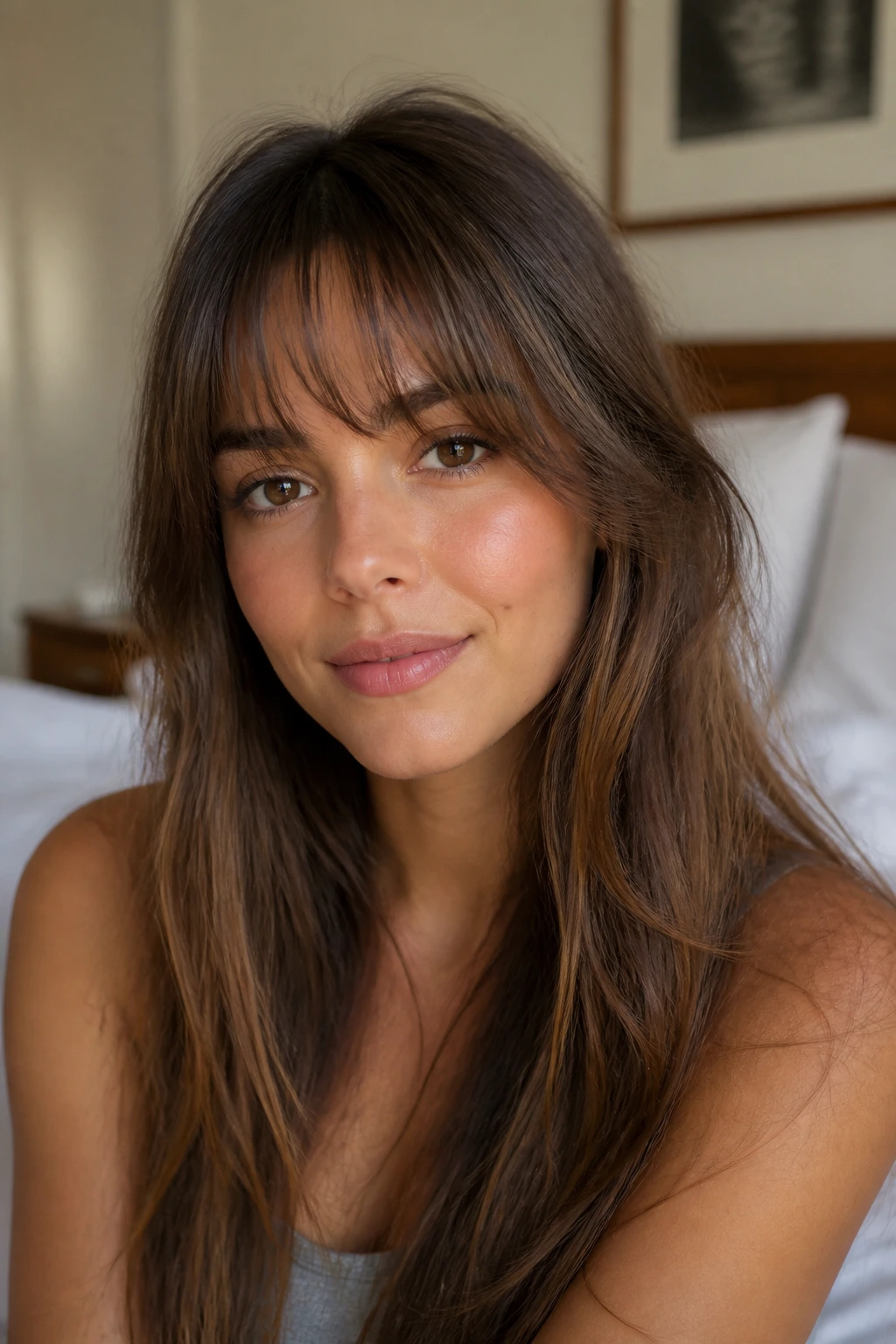
Soft arched bangs sit a bit more structured than curtain fringe, but they still keep the ends airy. The center comes down close to the brow, then the sides taper away in a gentle arch instead of a hard straight line. That arch is handy when you want the eyes to be the focal point.
This style works best when the length of the fringe is tailored to your forehead, not copied from a photo. A short forehead needs less drop; a longer forehead can carry a slightly deeper arch. Ask your stylist to dry the bangs before making final adjustments, because hair shrinks and swells differently once it’s dry.
11. Razor-Cut Textured Fringe
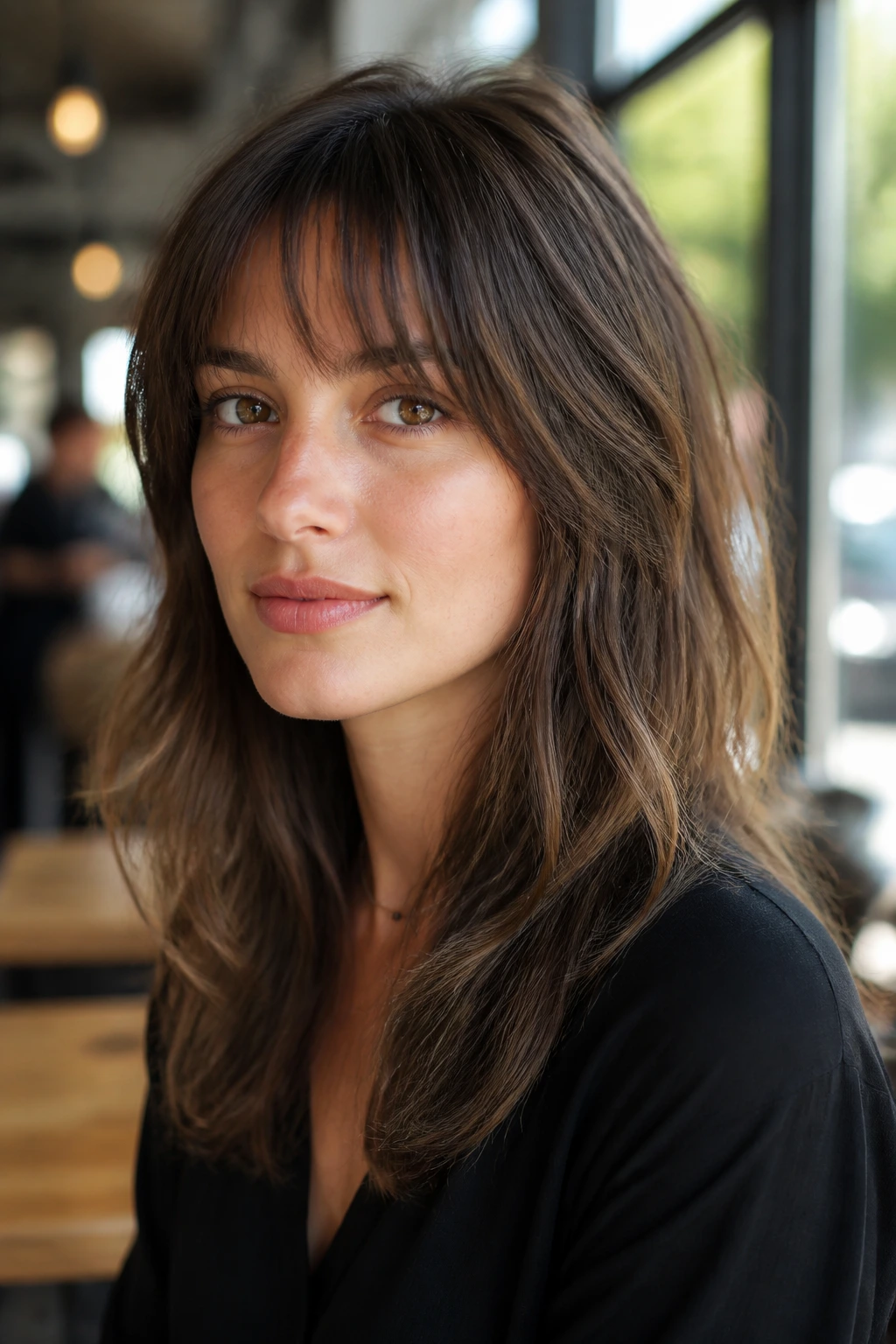
A razor-cut fringe has a different feel from scissor-cut bangs. The ends are softer, slightly separated, and full of movement, which can be lovely on long hair that already has texture in the mids and ends. It’s the fringe equivalent of a frayed hem: intentional, not sloppy.
The downside is that razor work is not a free-for-all. On very fine or damaged hair, too much razor cutting can leave the ends wispy in the wrong way. The sweet spot is a light hand with controlled texture, especially near the temple area where the fringe needs to blend into the rest of the haircut.
12. Rounded Blowout Curtain Bangs
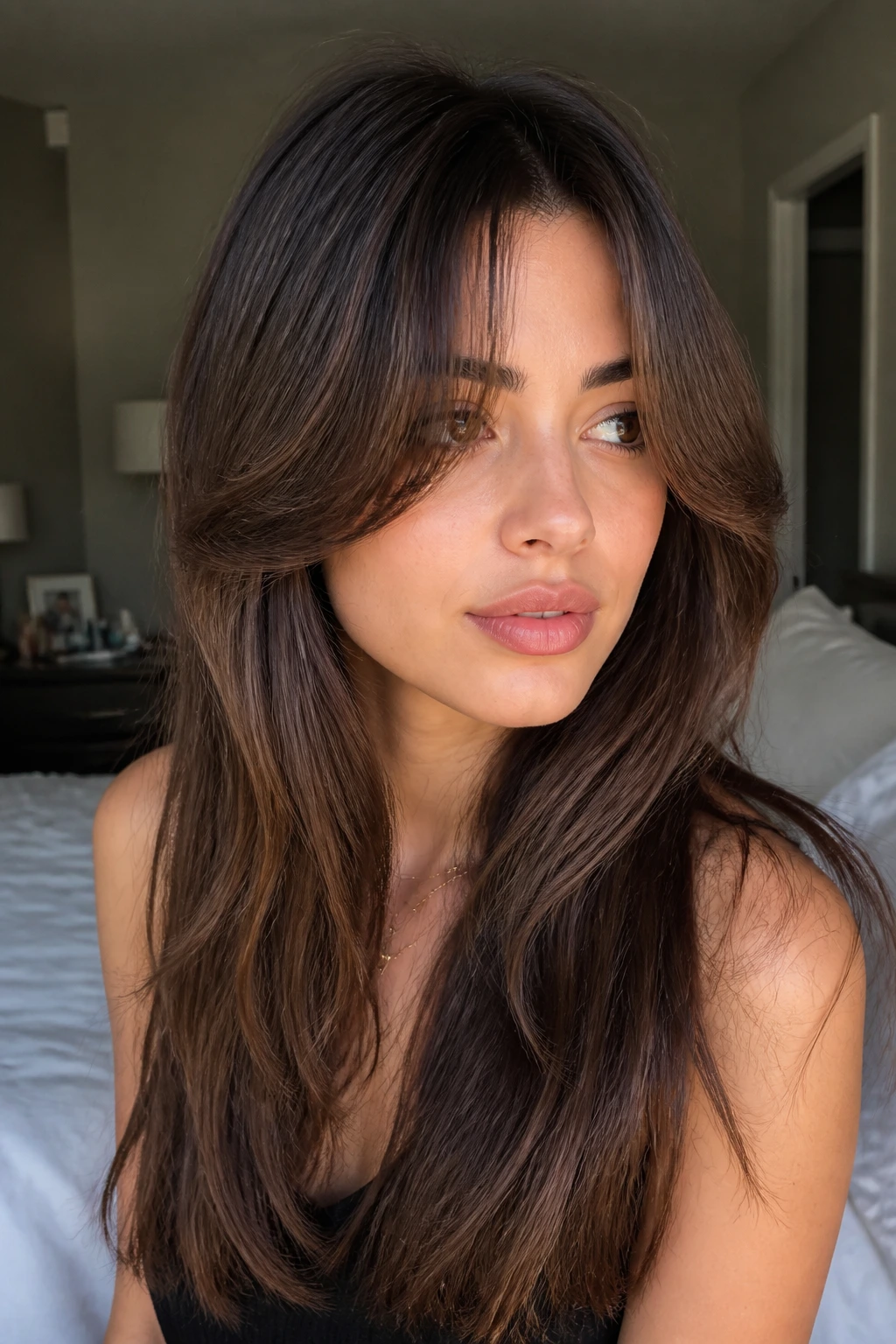
Rounded blowout bangs are for anyone who likes that soft salon bend at the front. The bang curves under slightly, then opens into the sides so the overall shape stays gentle. On long hair, this is one of the most polished versions of wispy fringe without turning blunt or stiff.
A medium round brush and a concentrator nozzle make the difference here. Dry the bangs from side to side, then finish with a cool shot so the bend stays loose instead of springing back flat. If you want a bit more lift, clip the roots forward for 5 to 10 minutes while the hair cools.
13. Bottleneck Layers With Feathered Ends
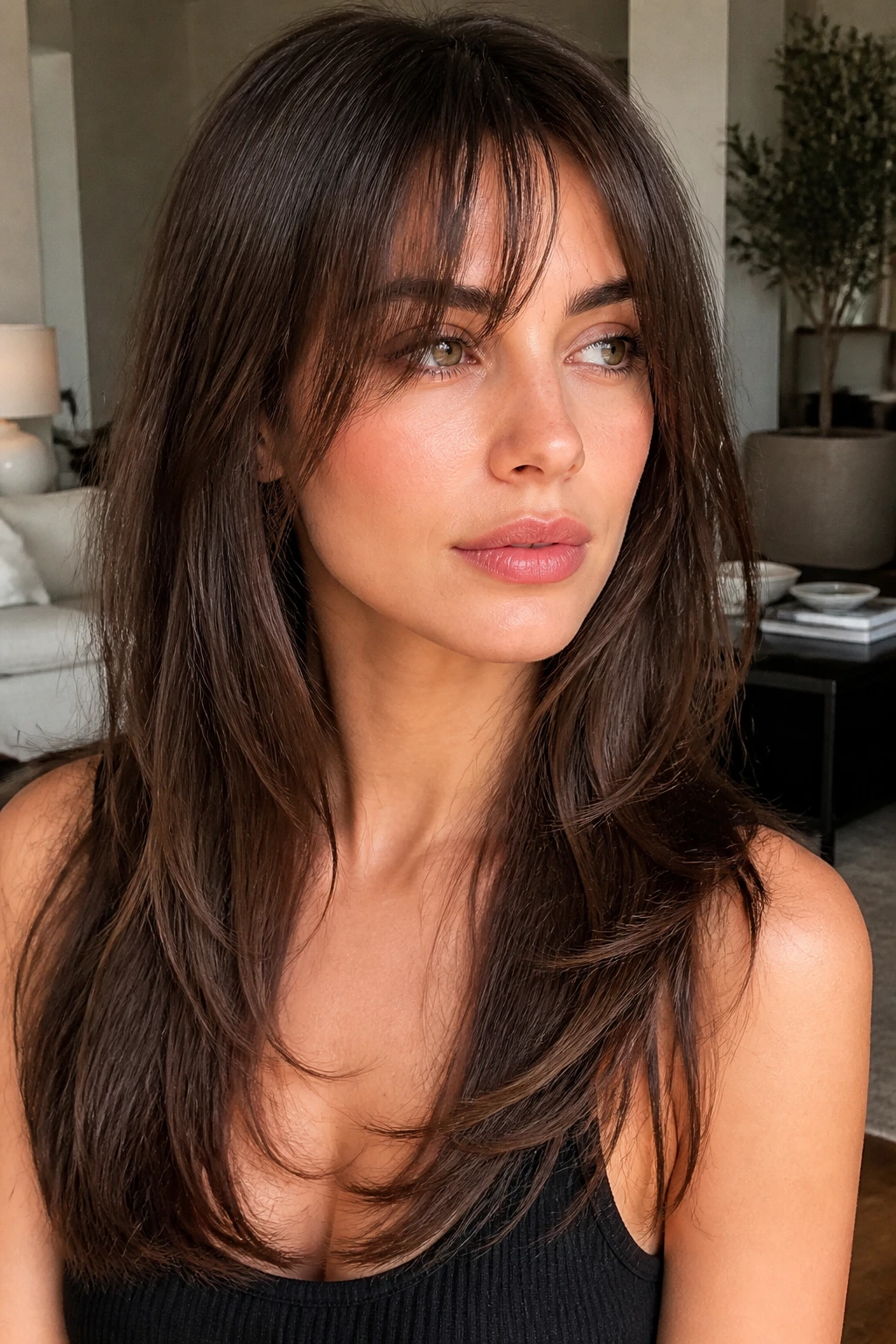
This style takes bottleneck bangs and stretches them into the first few inches of the haircut, which gives long hair a smoother front line. The center is lighter, the sides are longer, and the whole thing feels like one connected shape instead of bangs sitting on top of length. That matters when your hair falls below the shoulders and needs help moving.
Why it works
The feathered ends stop the front from looking heavy once it grows out. You can wear it with air-dried texture or a polished blowout, and it still blends. If your hair is thick, this is one of the most flattering ways to keep the front open without losing fullness everywhere else.
14. Wavy Hair Feather Fringe
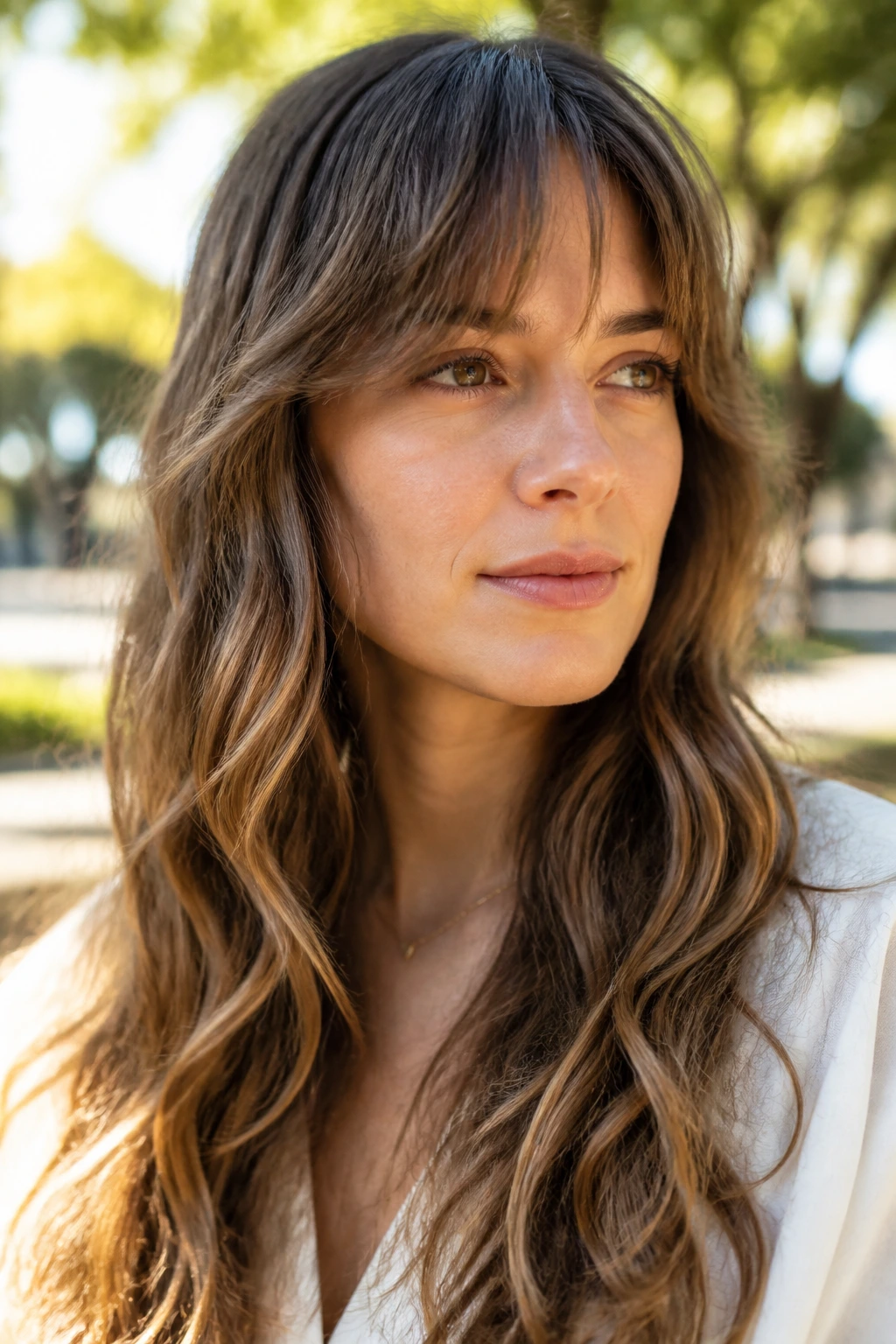
Wavy hair and feathered fringe are a very good match, provided the bang is cut with the wave pattern in mind. A soft fringe on wavy hair should be slightly longer than you think, because waves spring up when they dry. Cutting it too short is how people end up with bang pieces that sit above the brows and feel disconnected from the length.
Let the wave lead the shape. Scrunching in a tiny bit of mousse and diffusing on low heat can keep the fringe from separating in strange places. The goal is softness around the face, not perfect symmetry.
15. Straight Hair Airy Fringe
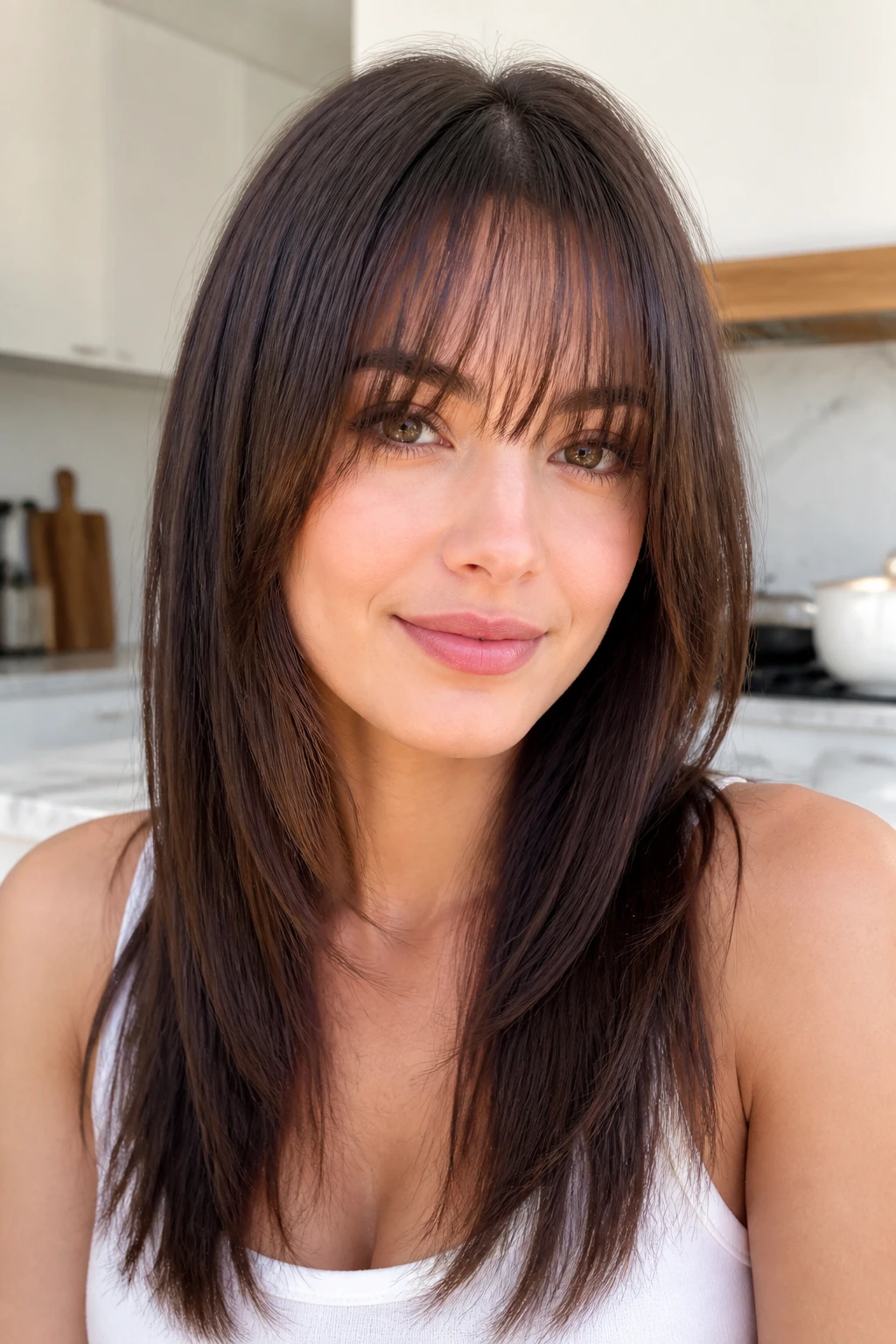
Straight hair can make wispy bangs look razor clean, which is a blessing if you like crisp lines and a nuisance if you hate anything that looks flat. The answer is texture at the very ends, plus a light round-brush bend at the roots. Without that, the fringe can sit like a curtain panel.
I like this style most when the cut is sparse enough to show forehead beneath the strands. That transparent quality keeps straight hair from looking severe. A touch of dry shampoo at the roots can help the bangs grip and stop separating into oily pieces by midday.
16. Curly Wispy Fringe
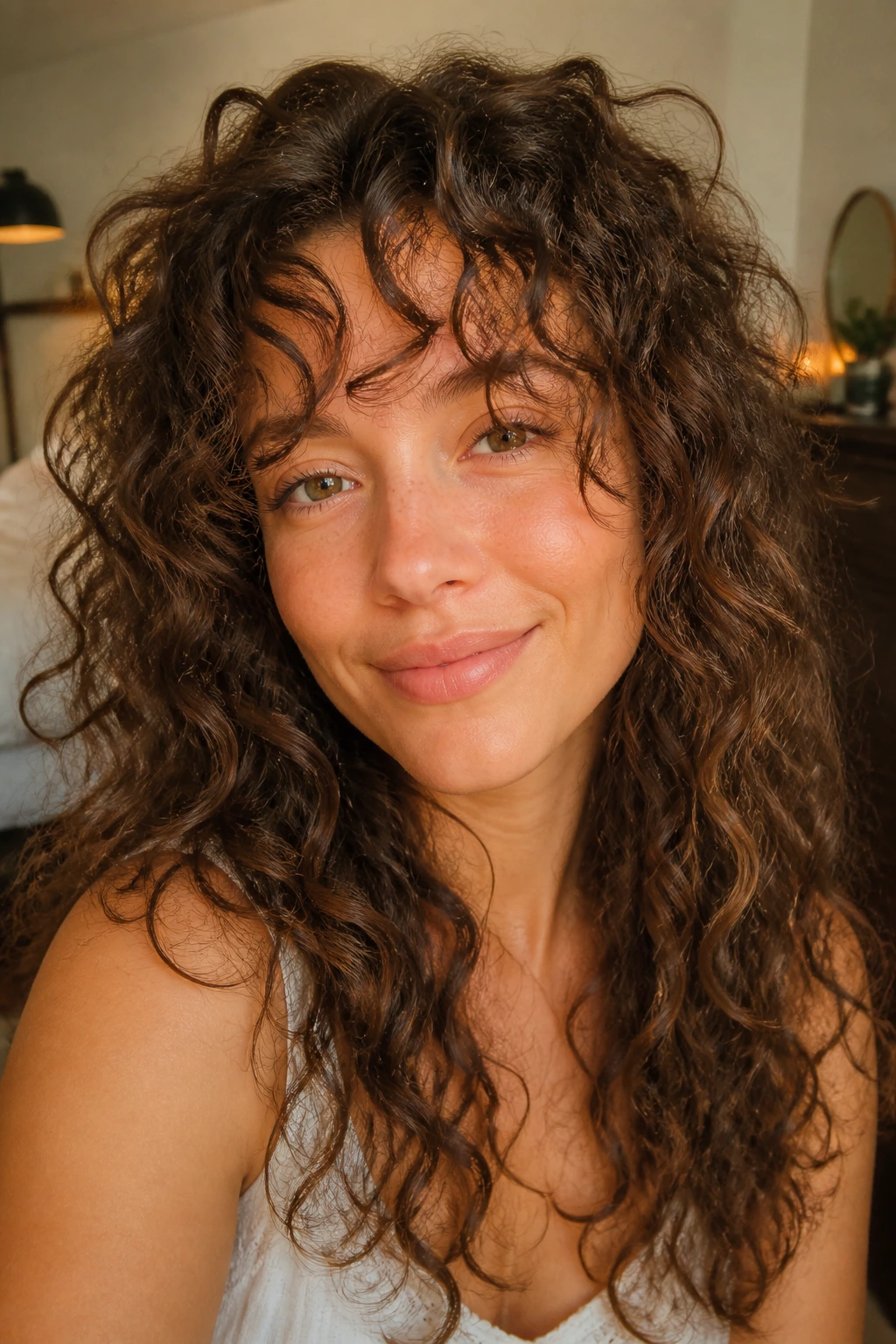
Curly wispy bangs work when the cut respects the curl pattern instead of trying to erase it. The fringe should be cut dry, curl by curl, so the length lands where the hair actually sits once it springs up. On long hair, this can look soft and romantic in a way straight bangs just can’t fake.
The main mistake is cutting too much density. Curly fringe needs room to breathe, or it turns into a heavy block around the forehead. Ask for the bangs to be shaped with the curl’s natural fall and blended into the front layers so they don’t pop out like a separate crop.
17. French-Girl Wispy Bangs
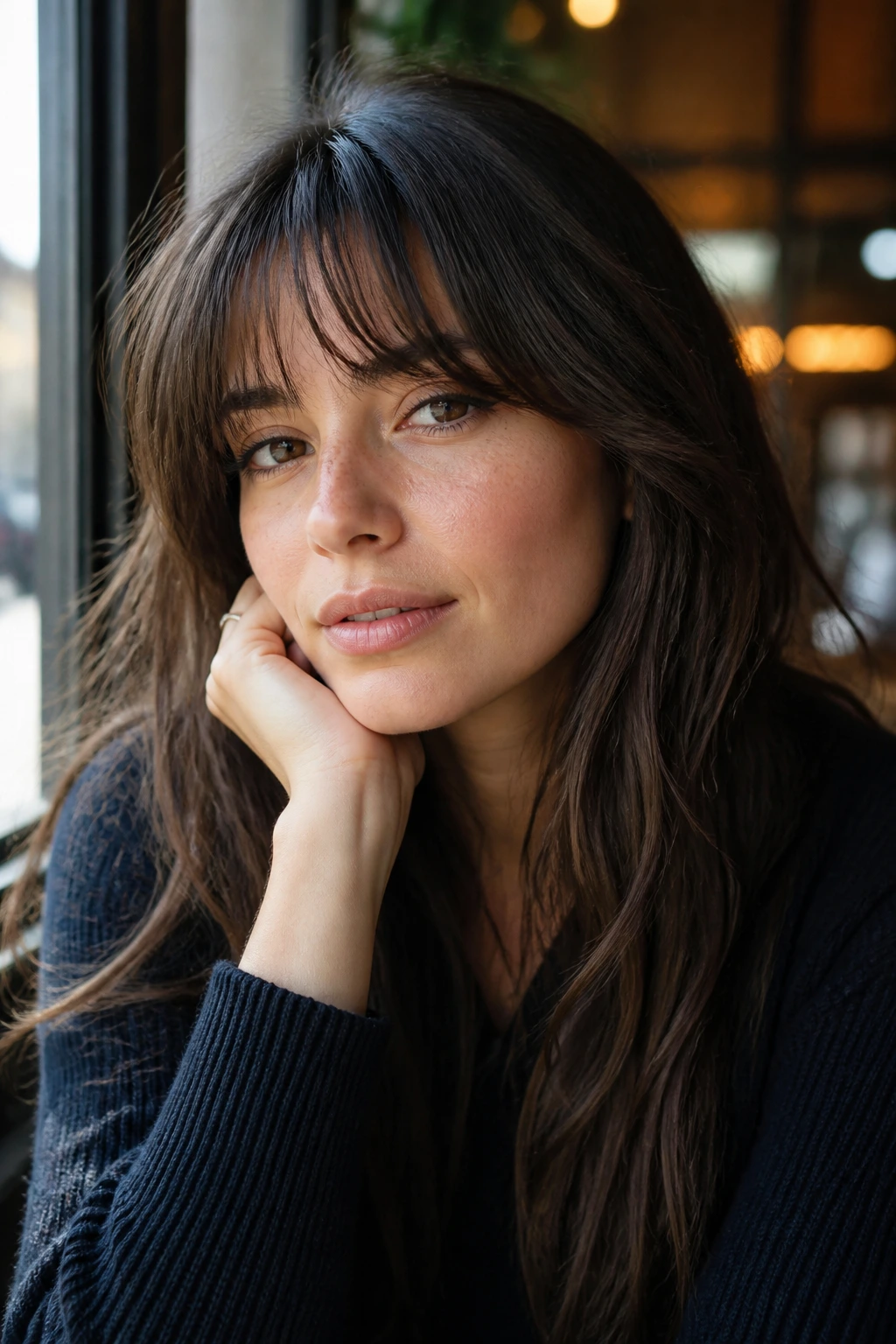
French-girl bangs are not about perfection. They’re about softness, separation, and a little bit of movement across the brow, which is why they pair so well with long, slightly undone hair. The look usually sits somewhere between brow-skimming and curtain-shaped, with enough texture to avoid looking rigid.
The charm here is in the finish. A light blow-dry, a quick finger rake, and maybe a mist of flexible spray are enough. If the fringe starts looking too neat, it loses the point. Keep it a bit lived-in, not polished to death.
18. Deep Side-Part Fringe
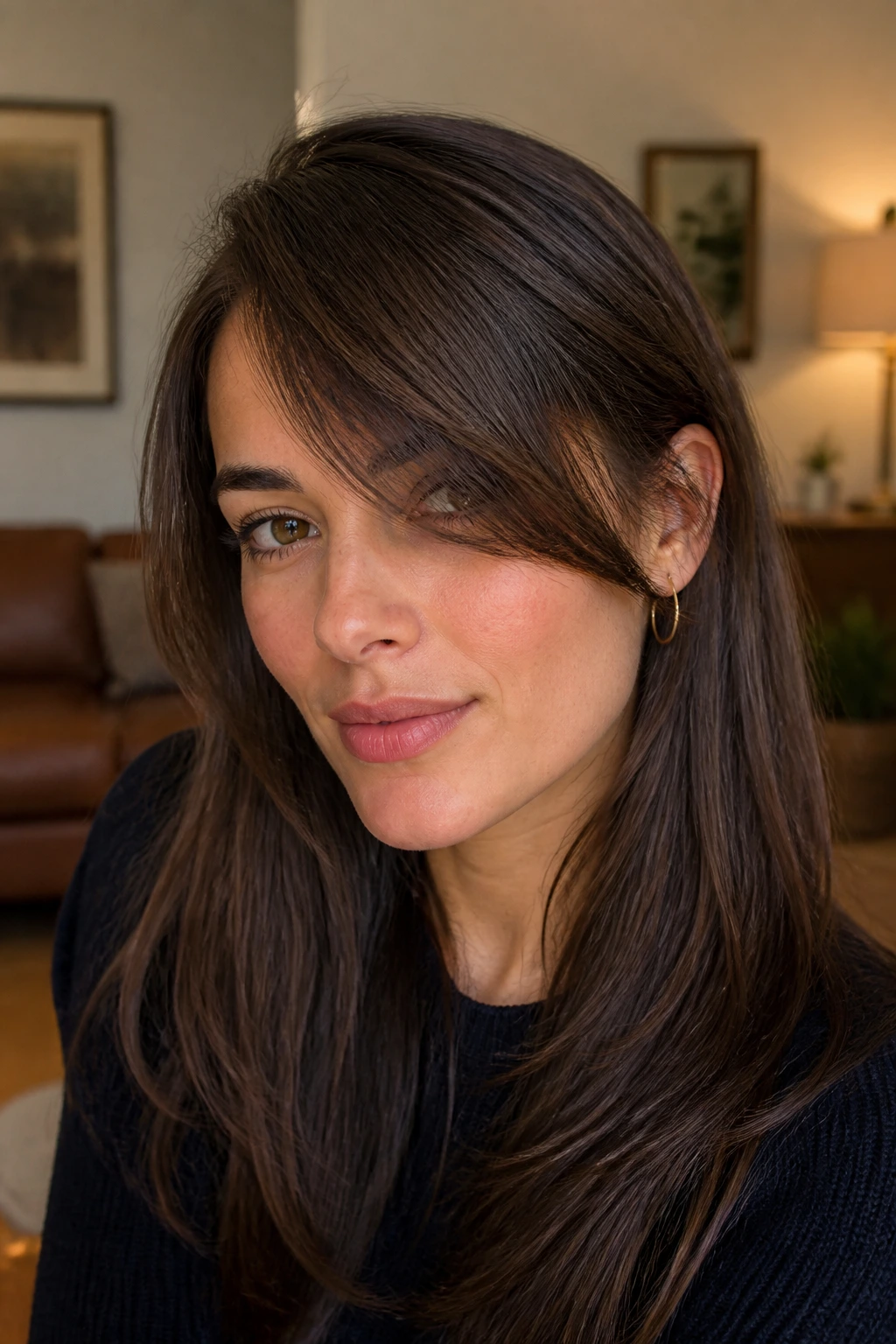
A deep side-part fringe is a quiet fix for long hair that needs a face frame but doesn’t want center-part bangs. The bang opens from a dramatic side part, then sweeps across the forehead in a soft diagonal line. It’s flattering on rounder faces because the direction creates a little length through the face.
The cut should leave enough length to tuck behind one ear. That way the style can shift depending on the day, the humidity, or how much patience you have. If your hairline is stubborn, this is often easier to control than a full center fringe because the parting gives the bang a place to fall.
19. Long Layers with Curled-In Bangs
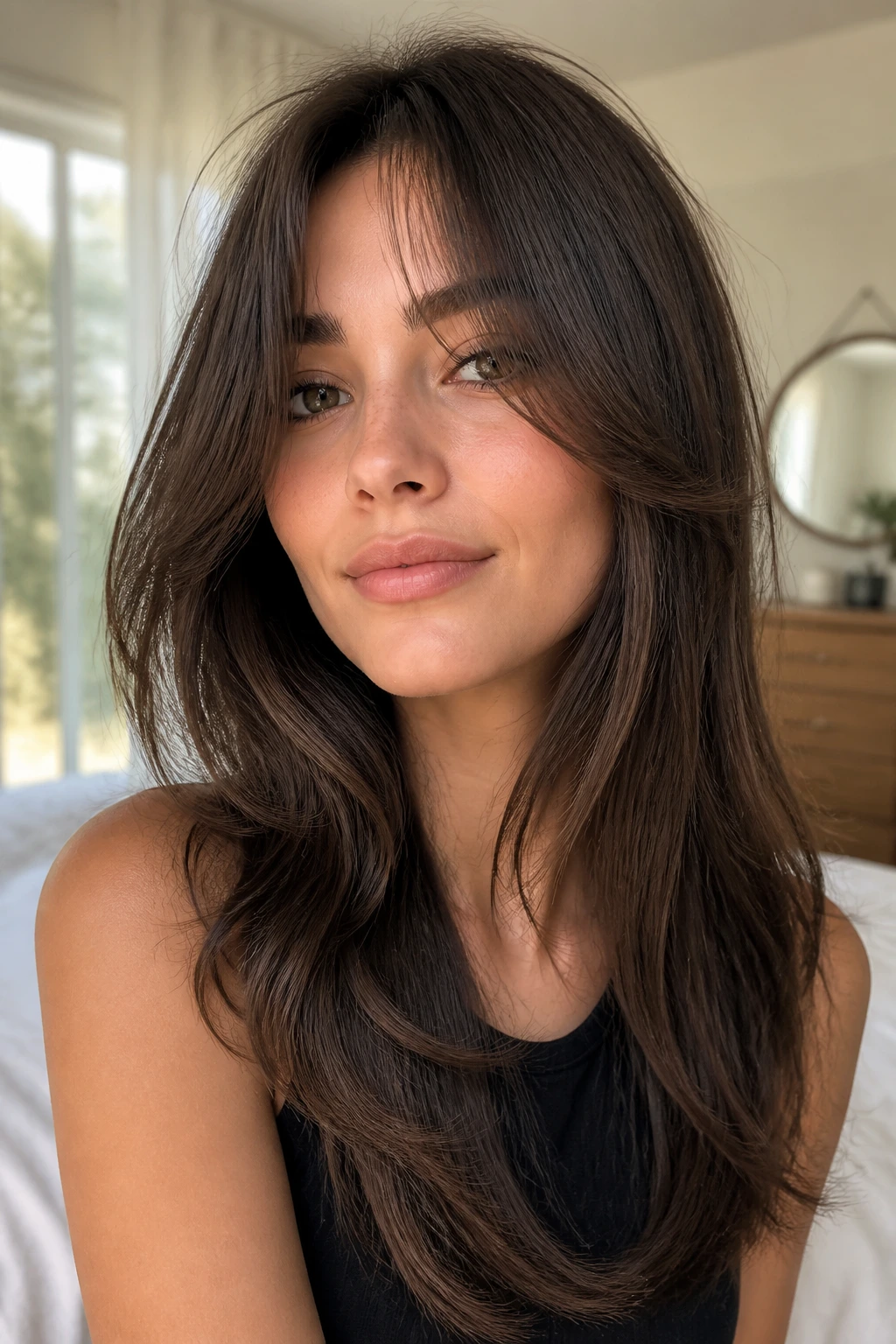
This style leans classic, but it still feels soft when the bang is light enough. The front is cut to curve inward toward the cheekbones, almost like the opening of a blowout from an older salon era, only thinner and less bulky. On long hair, the shape brings the face forward without making the fringe the main event.
What to watch for
The curl should be gentle. If the front bends too sharply under, it can read dated fast. A large round brush and medium heat are enough; you want a soft C-shape, not a tight roll. This is one of those cuts that improves if the layers around it are also lightly feathered.
20. Micro-Wispy Fringe
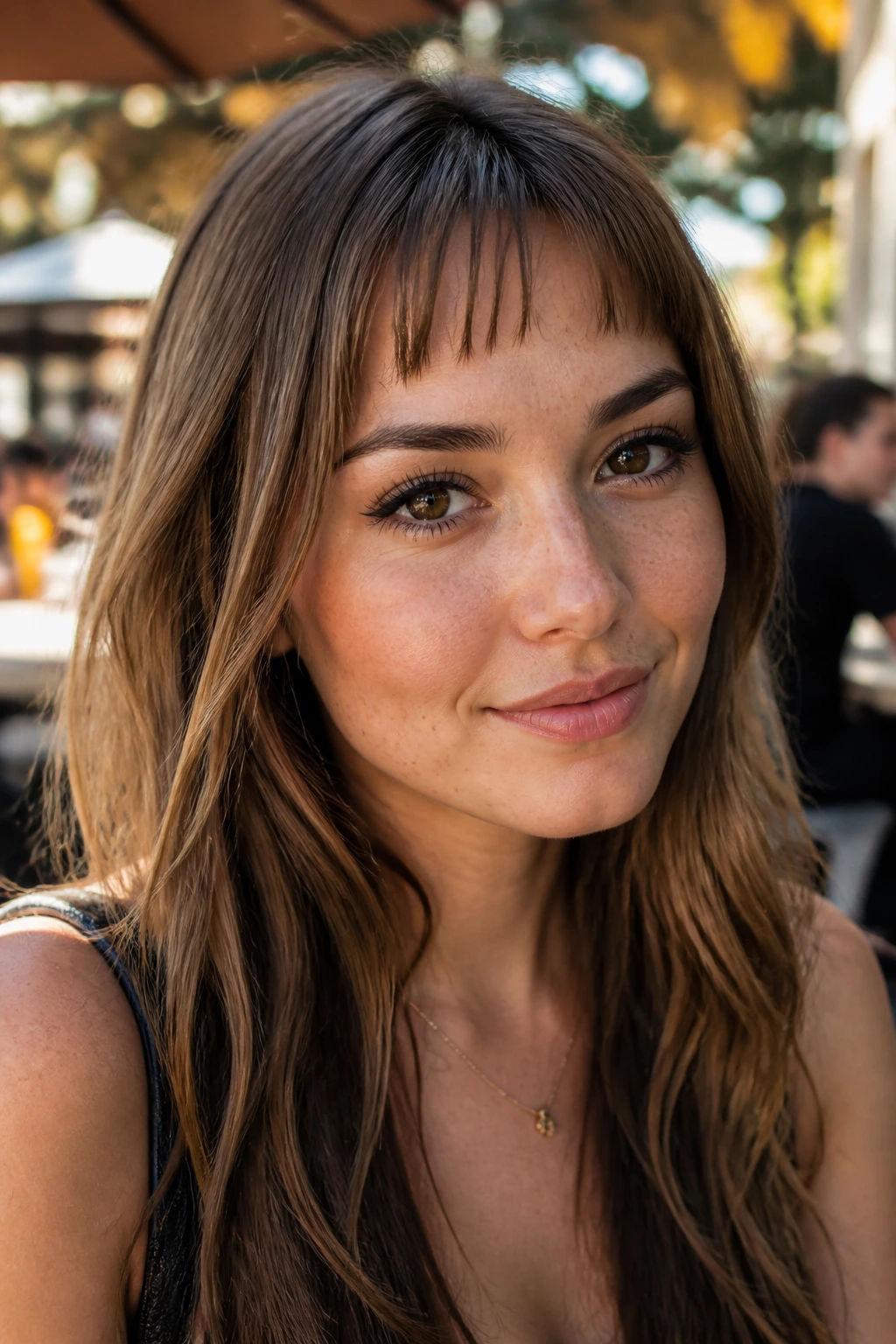
Micro-wispy fringe is for people who want the shortest possible bang without the weight of a blunt micro fringe. The pieces barely sit above the brows, but they’re broken and airy, which keeps the look from turning severe. On long hair, the contrast can be sharp in a good way.
It is not low maintenance, though. Short fringe shows every cowlick and every bit of oil near the roots, so this style works best if you’re willing to style it daily. If that sounds annoying, it probably is. Better to know that before the cut than after the first wash.
21. Grown-Out Bangs That Still Look Intentional
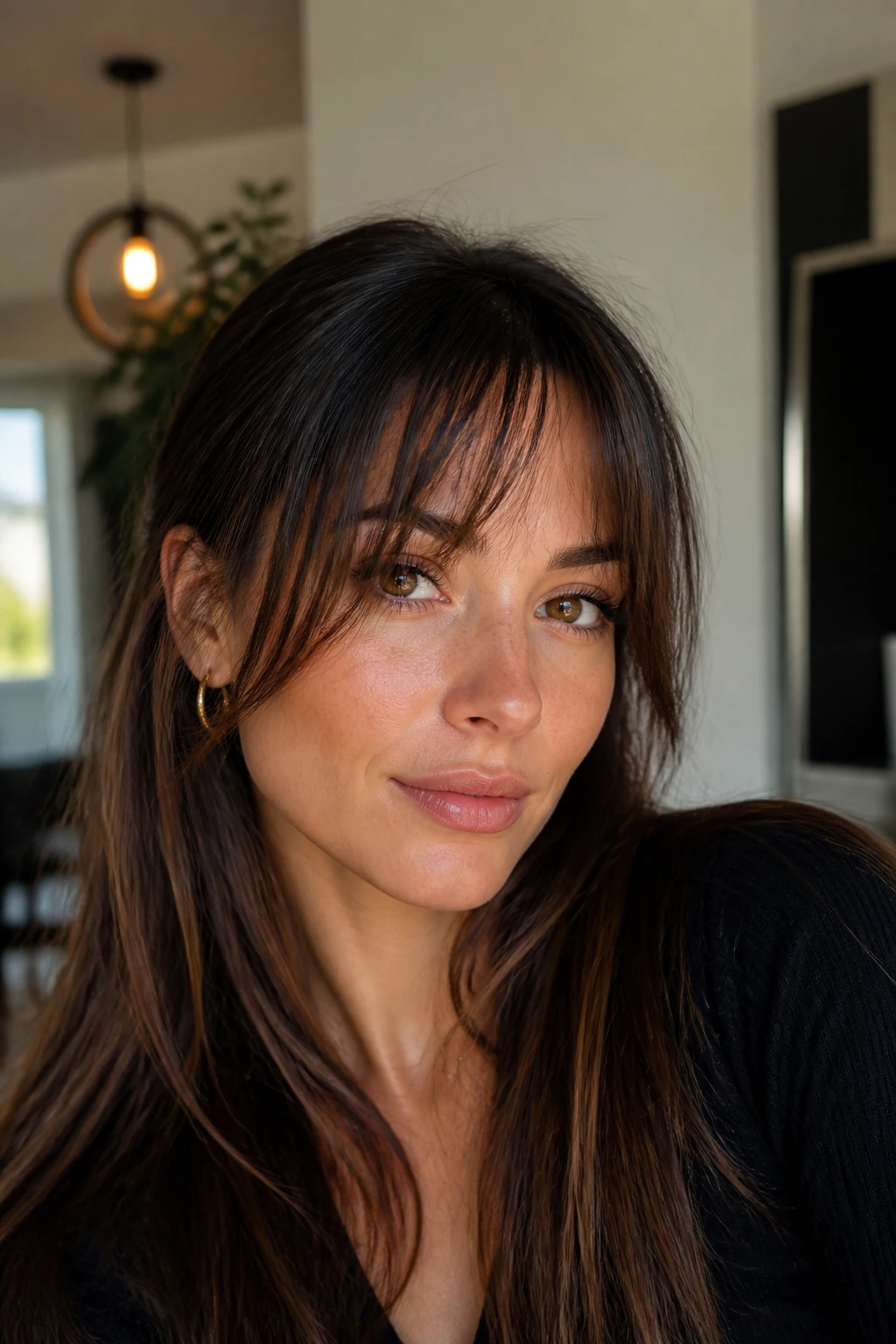
Grown-out bangs can look sloppy or brilliant. The difference is whether the layers around them are shaped on purpose. With long hair, a grown-out wispy fringe should fall between the brow and cheekbone, then blend into the front pieces so it feels like a deliberate step in the haircut rather than a mistake you’re waiting to fix.
This is the best transition style if you’re moving away from shorter bangs. Let the pieces settle into a center or off-center part, and keep trimming the longest pieces every 6 to 8 weeks. A little shape maintenance keeps the whole front from falling into your eyes in one awkward curtain.
22. Money-Piece Wispy Bangs
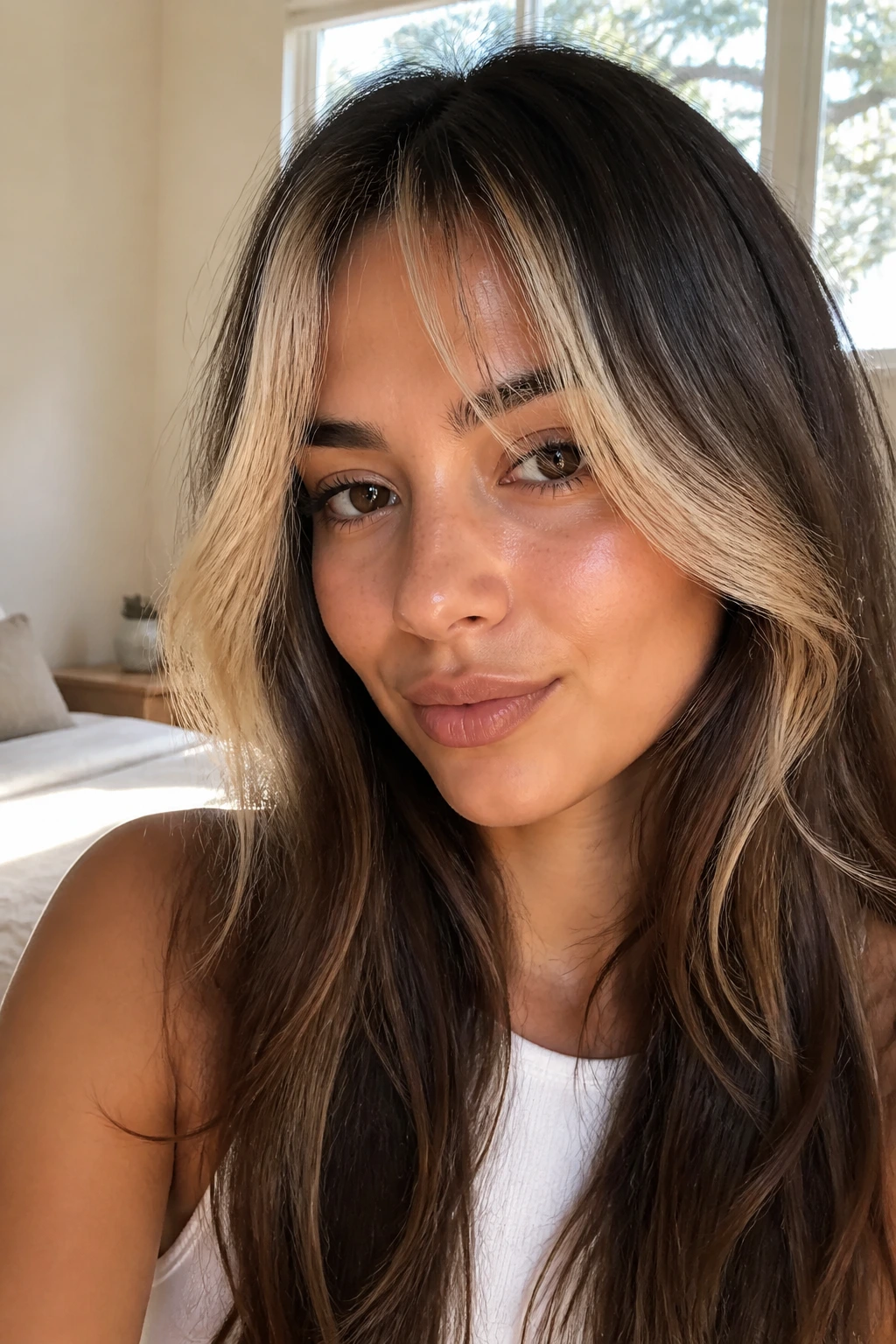
Money-piece wispy bangs are a brighter, more face-focused version of fringe. The lighter front pieces frame the face first, then the softer bang section sits just behind them. On long hair, that contrast can make the front feel lighter without sacrificing the richness of the length.
The best version doesn’t need harsh bleaching. Even a subtle lightening of the face-framing strands can make the wispy fringe look more dimensional. Keep the cut soft so the color has somewhere to live; stark cut lines and bright front pieces can look too hard next to long hair.
23. Collarbone Blend Fringe
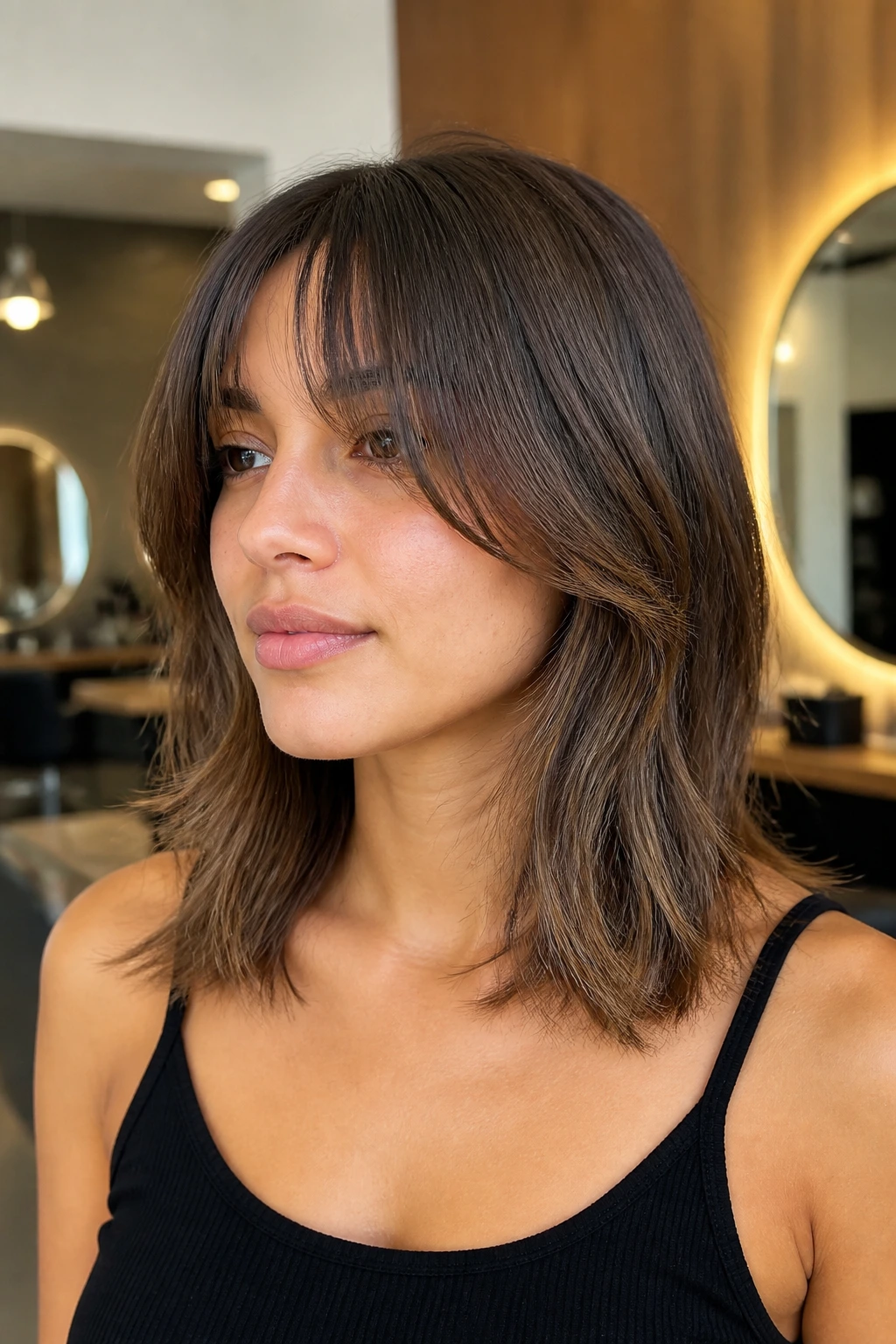
This one is for people who want bangs that belong to the haircut, not a separate headline. The fringe starts light, drops into collarbone-grazing layers, and creates a continuous line from forehead to mid-lengths. It’s especially useful on long hair that needs movement around the face but doesn’t want the front chopped short.
The blend matters more than the bang itself. Ask the stylist to connect the fringe to the first layer with point-cutting and overdirection, then check it dried in your usual part. If the transition looks seamless when the hair moves, the cut is doing its job.
24. Choppy Shag Wispy Bangs
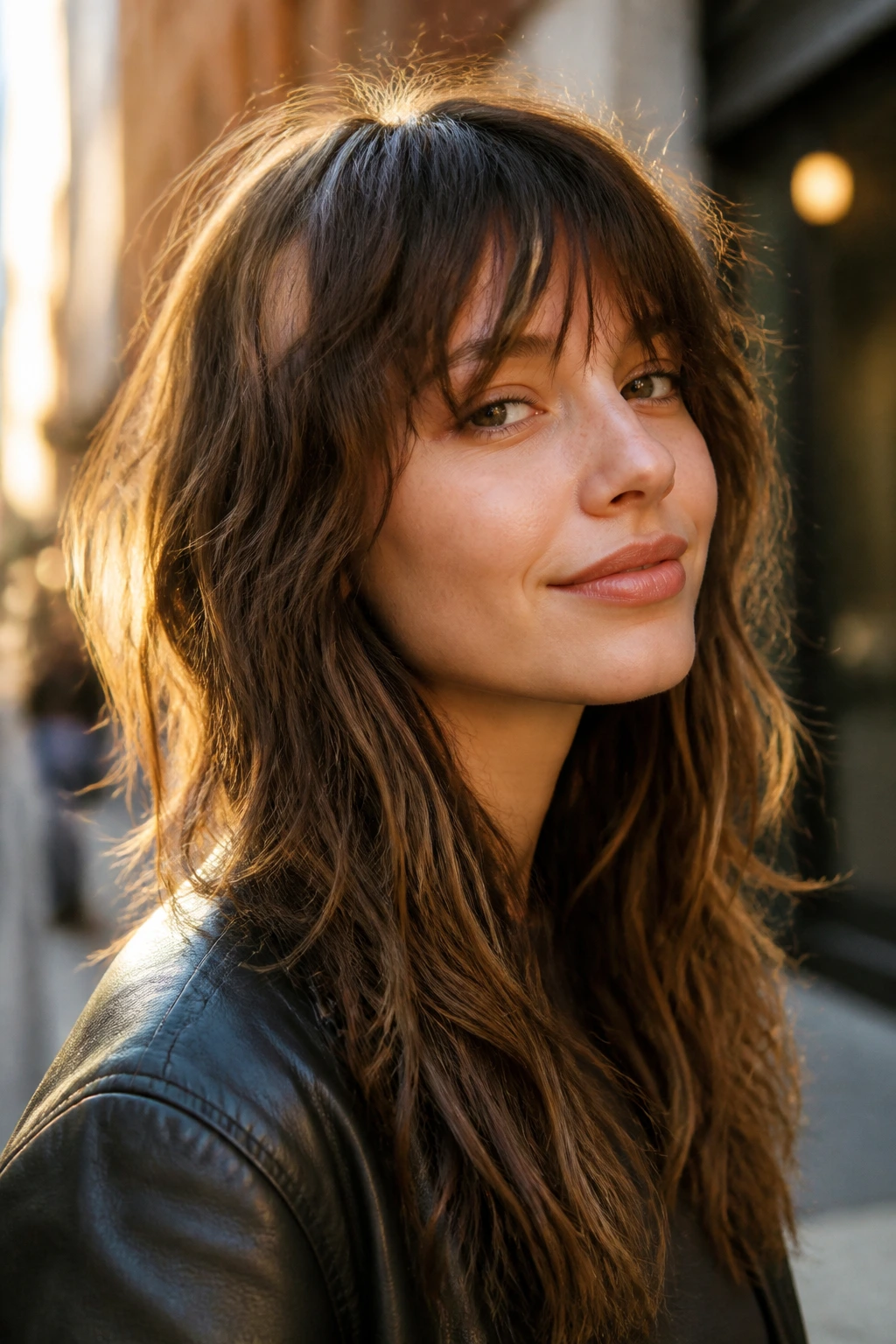
Choppy shag bangs carry a little more attitude than feathered curtain fringe, but they still stay soft enough for long hair. The pieces are uneven on purpose, which creates texture and motion at the front. This is the cut for people who like hair that looks better after a bit of movement, not less.
The front should never be so choppy that it falls into separate spikes. You want broken texture, not jagged edges. A light styling paste on the very tips can help define the pieces, but use too much and the fringe turns sticky fast.
25. Romantic Face-Framing Bangs
Romantic face-framing bangs are the softest option in the bunch. The fringe starts loose at the center, curves around the temples, and melts into longer front layers with almost no visible seam. On long hair, this is a lovely way to keep the haircut feeling feminine without leaning fussy.
Why it works
The shape pulls attention to the eyes and cheekbones while leaving the length intact. It’s a good choice if your hair has a slight wave or bends easily with heat styling. Keep the ends light and the center narrow; if the fringe gets too thick, the romance turns into bulk.
26. Invisible Brow-Skimming Fringe
Invisible fringe is what I’d call bangs that are present but barely announce themselves. They sit at brow level, but the density is so light that the forehead still shows through. On long hair, that restraint can be the whole appeal.
This style is great for cautious first-timers. You get the face-framing effect, but the cut grows out almost quietly. If you hate the feeling of hair touching your forehead all day, though, skip this one. It looks best when the strands are delicate enough to move out of the way on their own.
27. Beach-Wave Piecey Bangs
Beach-wave bangs are built for movement. The front is cut in separated, wispy chunks that can bend with loose waves instead of fighting them. On long hair with texture through the ends, this creates a laid-back front that feels easy without becoming shapeless.
The mistake here is over-styling. Once the bang is piecey, stop fussing with it. A salt spray or texturizing mist can help, but only if your hair can take it; on fine strands, too much texture product makes the fringe dry and rough.
28. Soft Swoop Bangs for Thick Hair
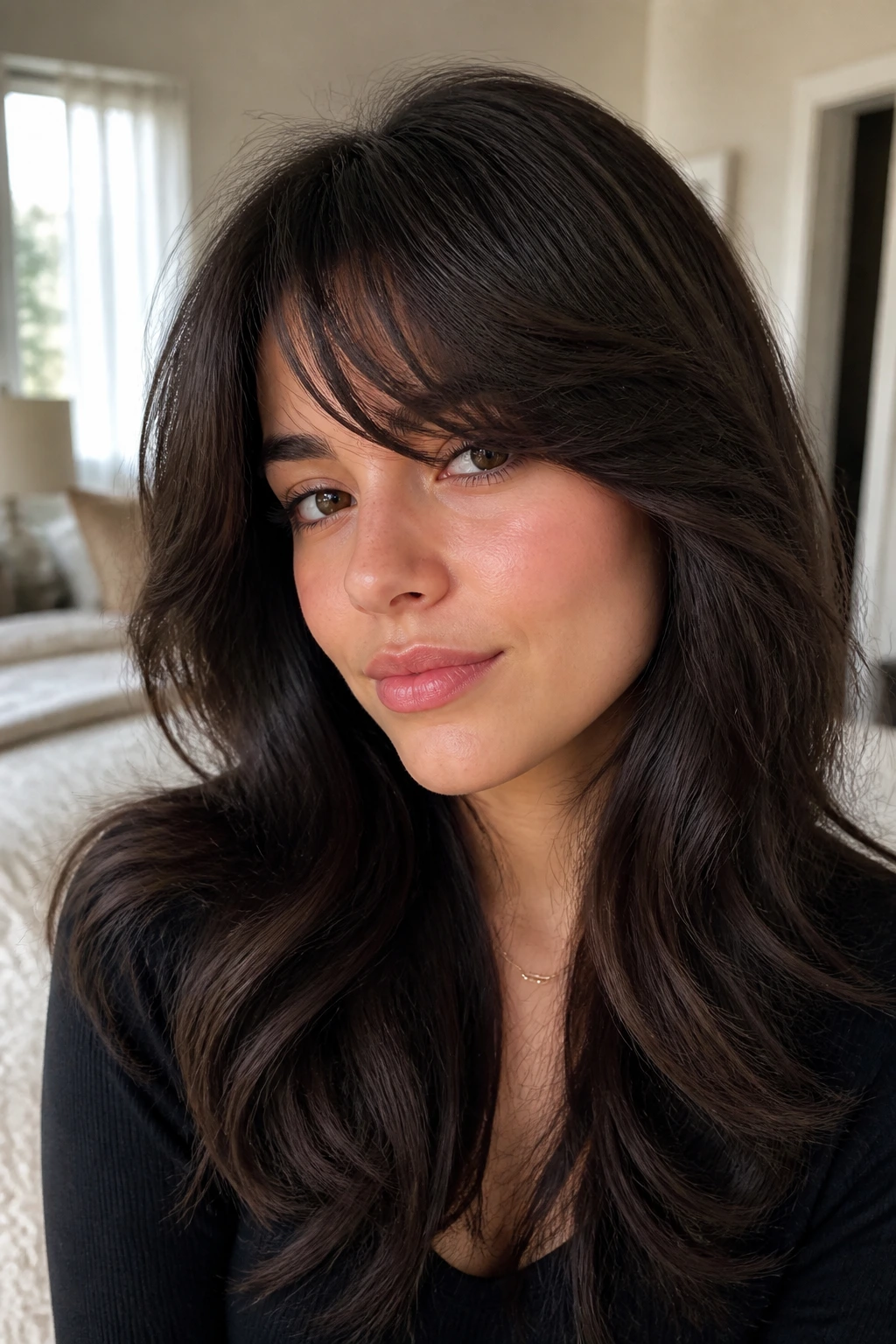
Thick hair needs a different strategy because density can turn a wispy bang into a padded wall. A soft swoop cuts down the bulk by directing the fringe across the forehead and into the sides, which keeps the line light. Long hair benefits from that because the front no longer competes with the weight of the rest.
Ask for internal weight removal and a gentle diagonal shape. If the stylist only thins the ends, the roots can still puff out. The swoop should move, not collapse. That’s the whole game with thick hair.
29. Light Fringe for Fine Hair
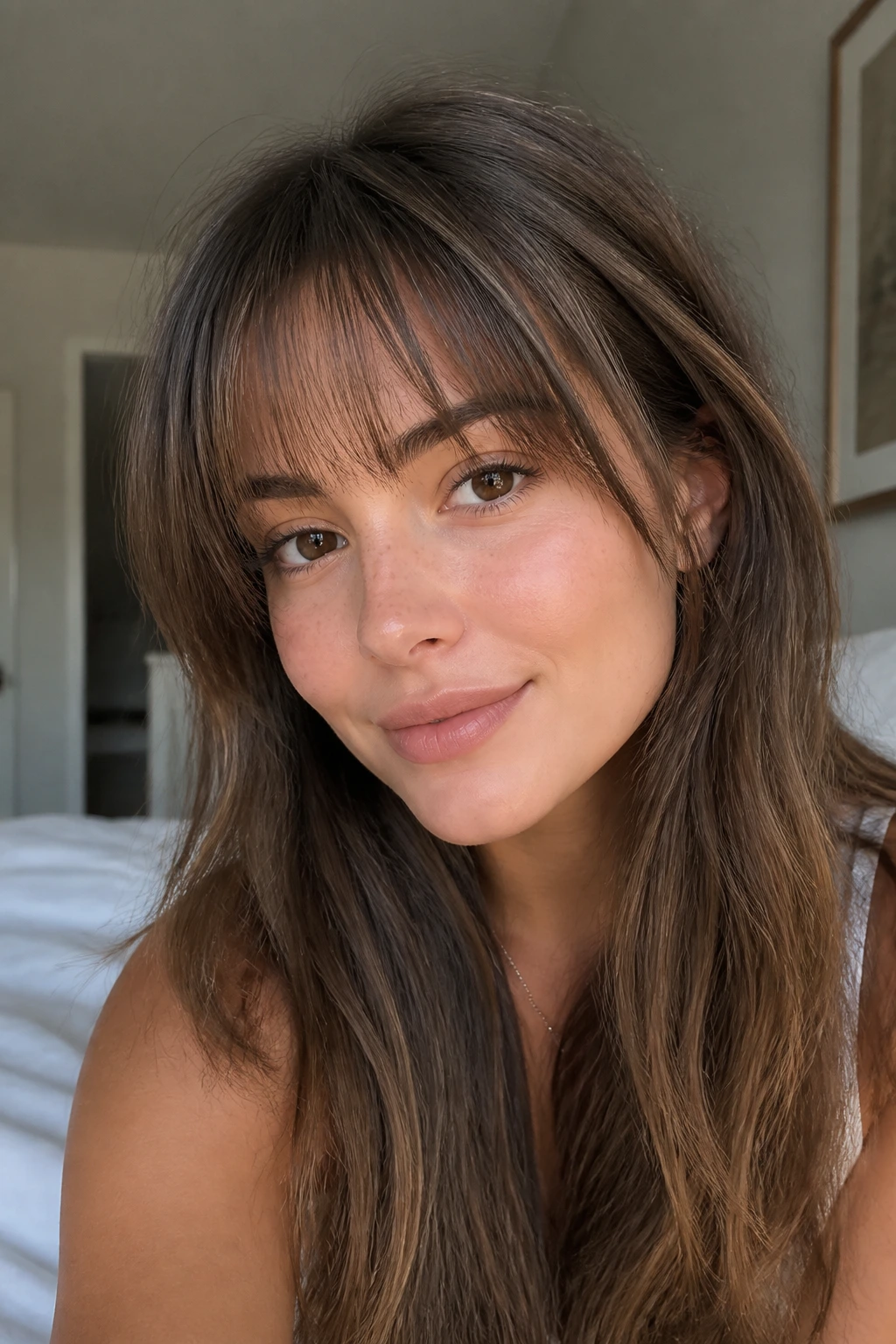
Fine hair wears wispy bangs well when the cut is careful, not over-thinned. A light fringe should keep enough density to show up, but not so much that it sits flat and stringy. On long hair, this can make the face look fresher without making the ends look even lighter than they already are.
The key is restraint with texturizing shears. Fine strands can go see-through faster than you expect, and once that happens, the fringe starts looking patchy. A blunt-ish soft edge with a little point-cutting usually works better than aggressive thinning.
30. Blowout Wispy Bangs
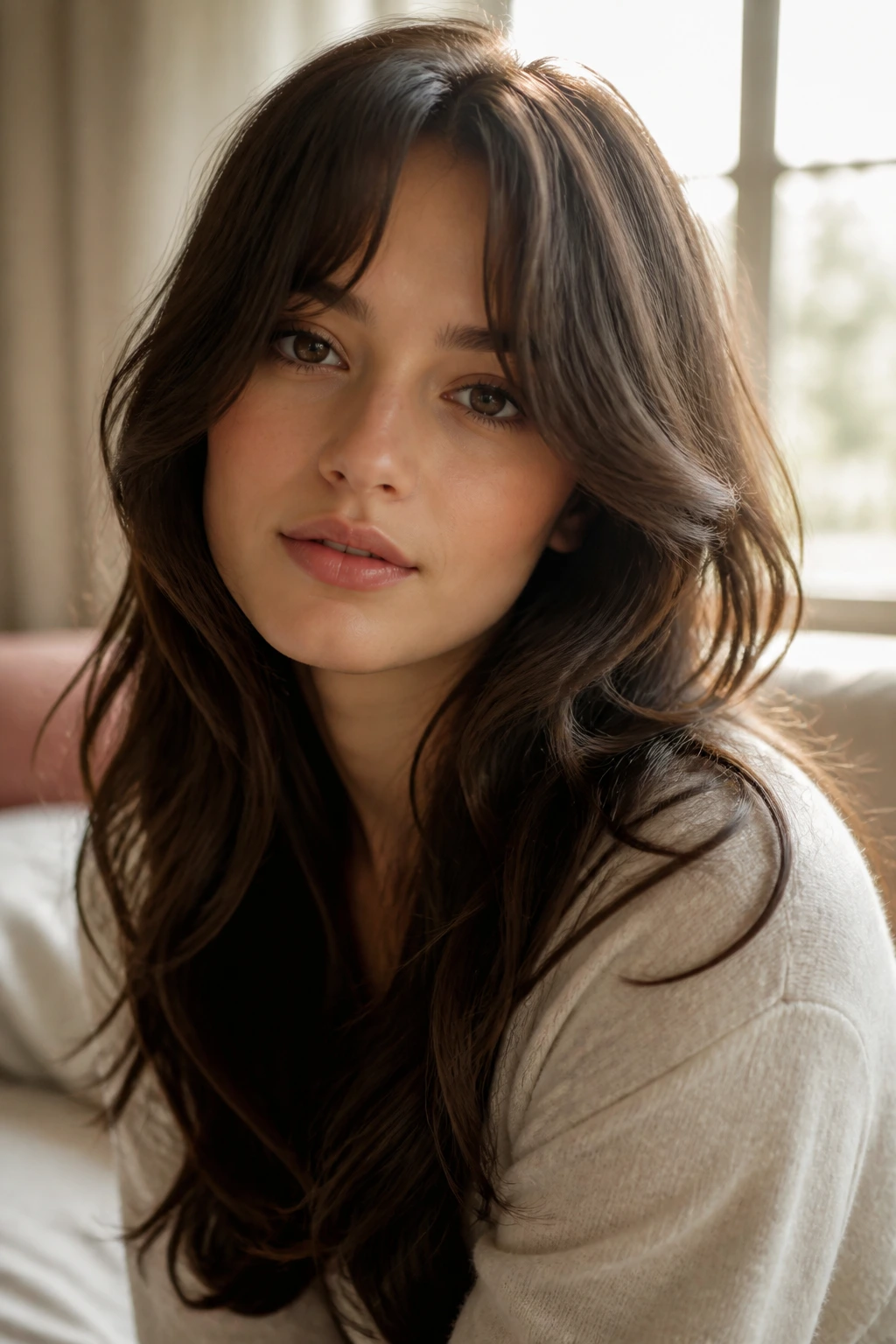
Blowout bangs are the glossy, bouncy version of the look. The fringe is cut to curve into a round brush finish, then styled so the ends turn under just enough to create shape. On long hair, this gives you a face frame that feels dressed up without needing a full salon set.
The easiest way to do it is with a small round brush and a low-to-medium heat setting. Pull the bangs forward, then roll them slightly and let them cool in the curve. If you skip the cooling step, they flatten fast. Annoying, yes. Necessary, also yes.
31. Tucked-Side Layered Bangs
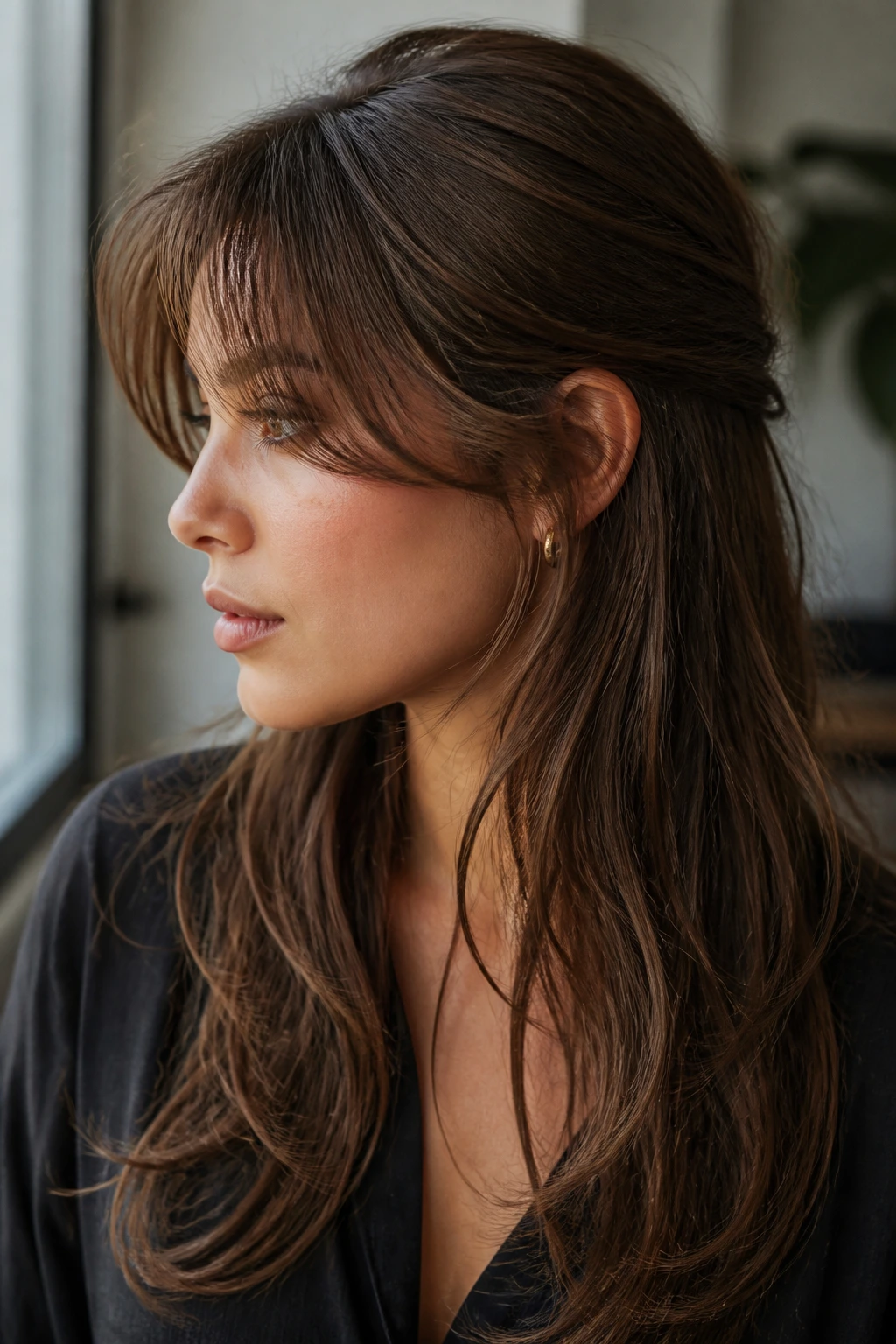
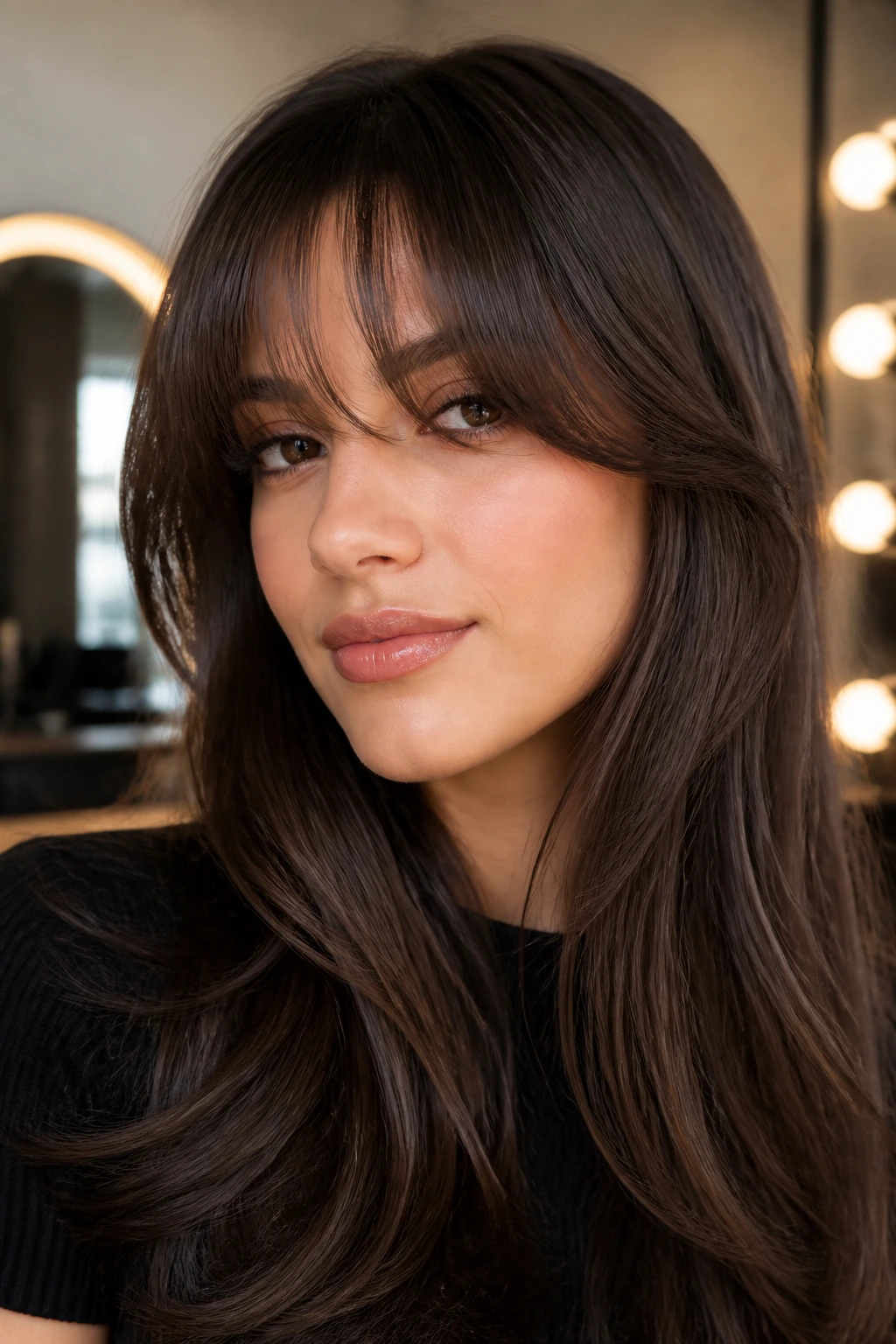
Tucked-side bangs are for people who like to wear hair behind one ear a lot. The fringe is cut to fall softly to one side, then blend into layers that can disappear into a tucked look without a visible line. That makes it one of the most wearable styles for long hair that gets swept back during the day.
How to get the most from it
The front pieces need enough length to move. If they’re too short, the tucked side looks accidental. A soft edge around the cheekbone and a slight bend at the ends keep the style from collapsing into a heavy swoop.
32. Brushed-Out Retro Fringe
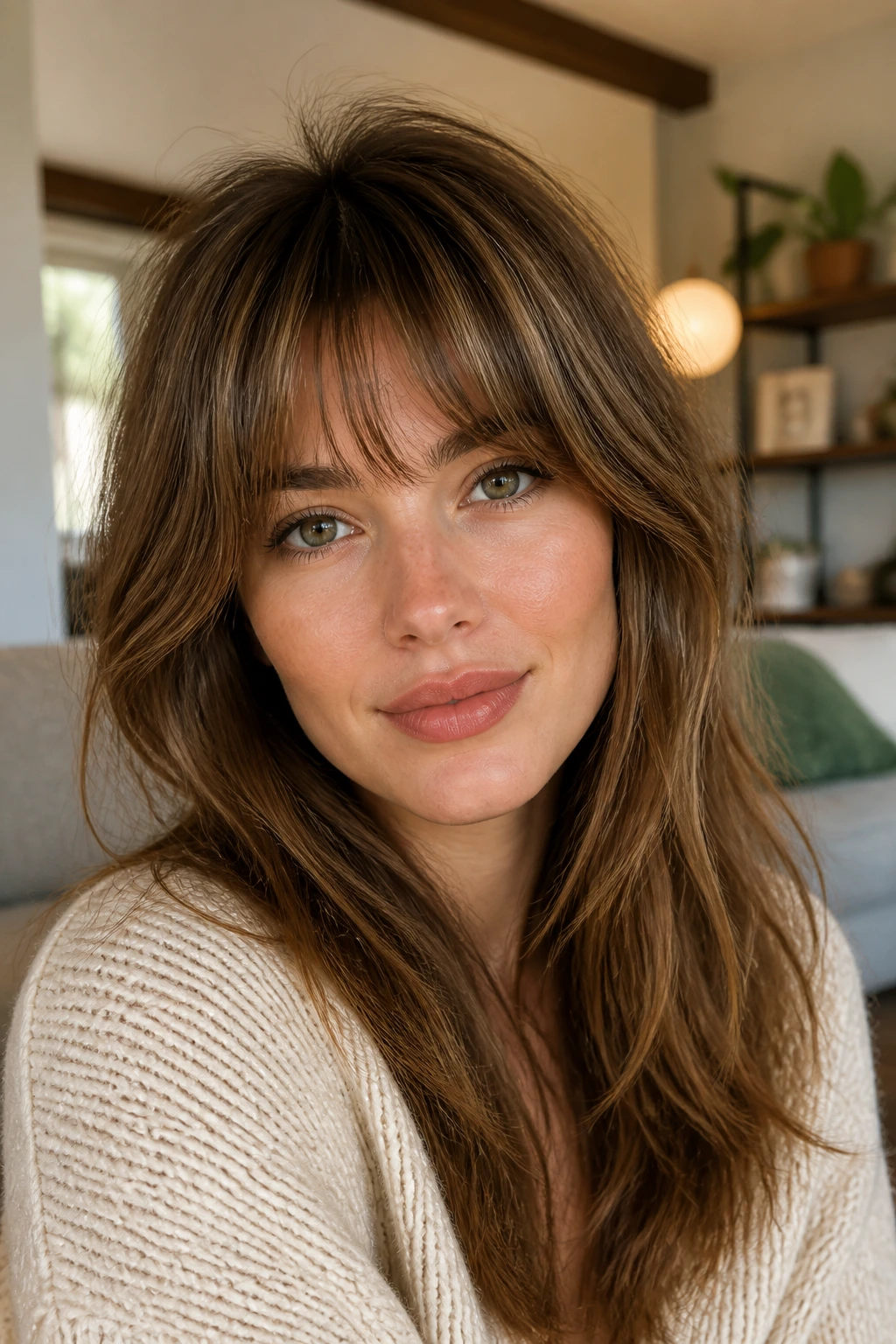
Brushed-out retro fringe has a wider shape and a little lift, but it stays wispy by keeping the ends light. It gives long hair a soft nod to older blowout styles without going full helmet. The result is open around the face and broad enough to balance very long lengths.
This look works best when the roots are lifted first, then the lengths are brushed away from the face. If you let the bang dry too flat, the retro shape disappears. A velcro roller for 5 to 10 minutes can help if your hair tends to lose volume fast.
33. Ultra-Soft Long-Hair Fringe
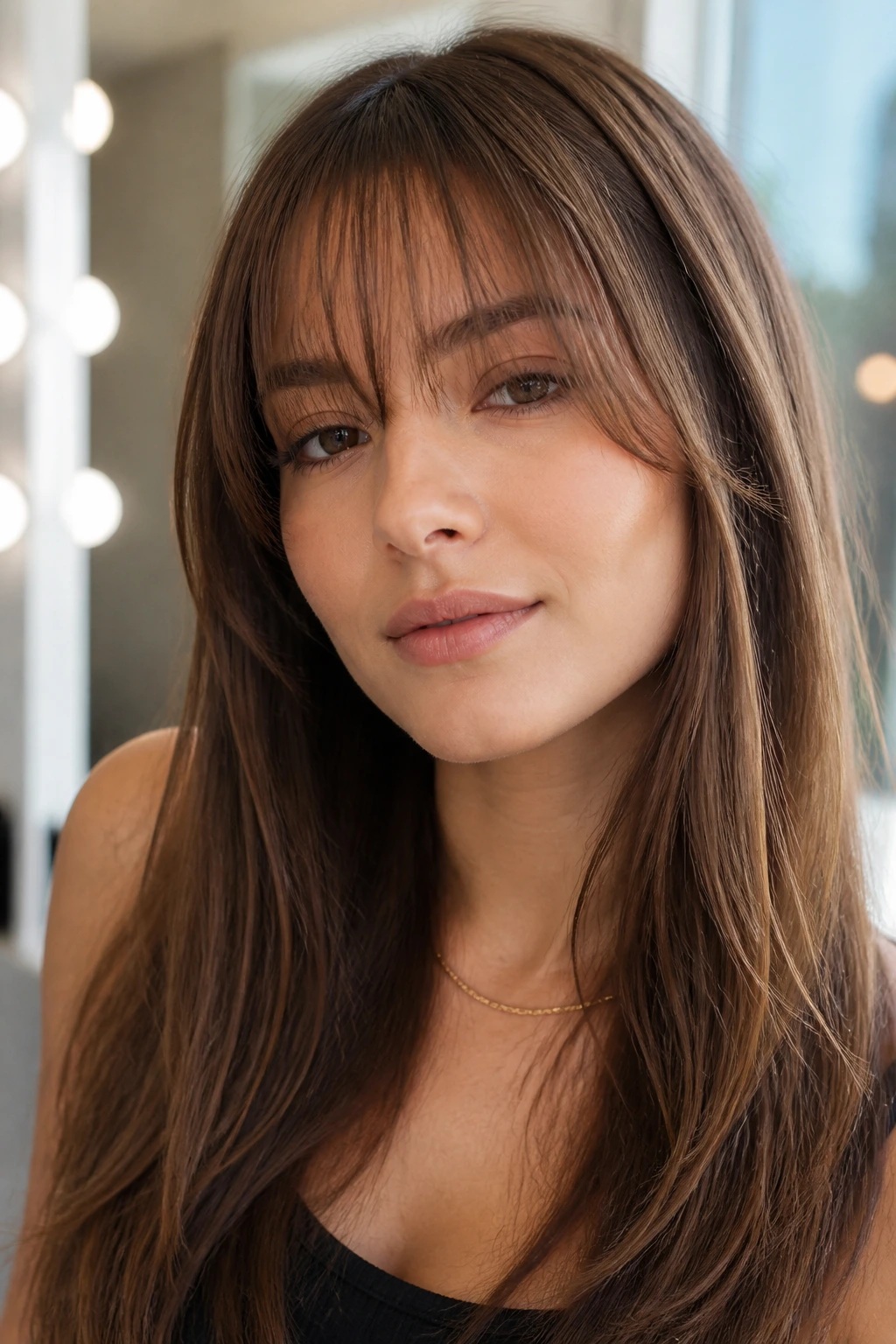
Ultra-soft fringe is the quietest version of all. The front is cut so lightly that it feels like the beginning of face-framing layers rather than a separate bang section. On long hair, that softness can be a relief if you want change without a dramatic cut.
The danger is making it too sparse. A fringe that’s cut too thin can separate into little strings and lose its shape by lunch. Ask for a light but balanced density, then dry it with a small brush and almost no product. If the fringe disappears into the haircut while still changing the face line, you’ve nailed it.
How to Keep Wispy Bangs Soft Instead of Limp
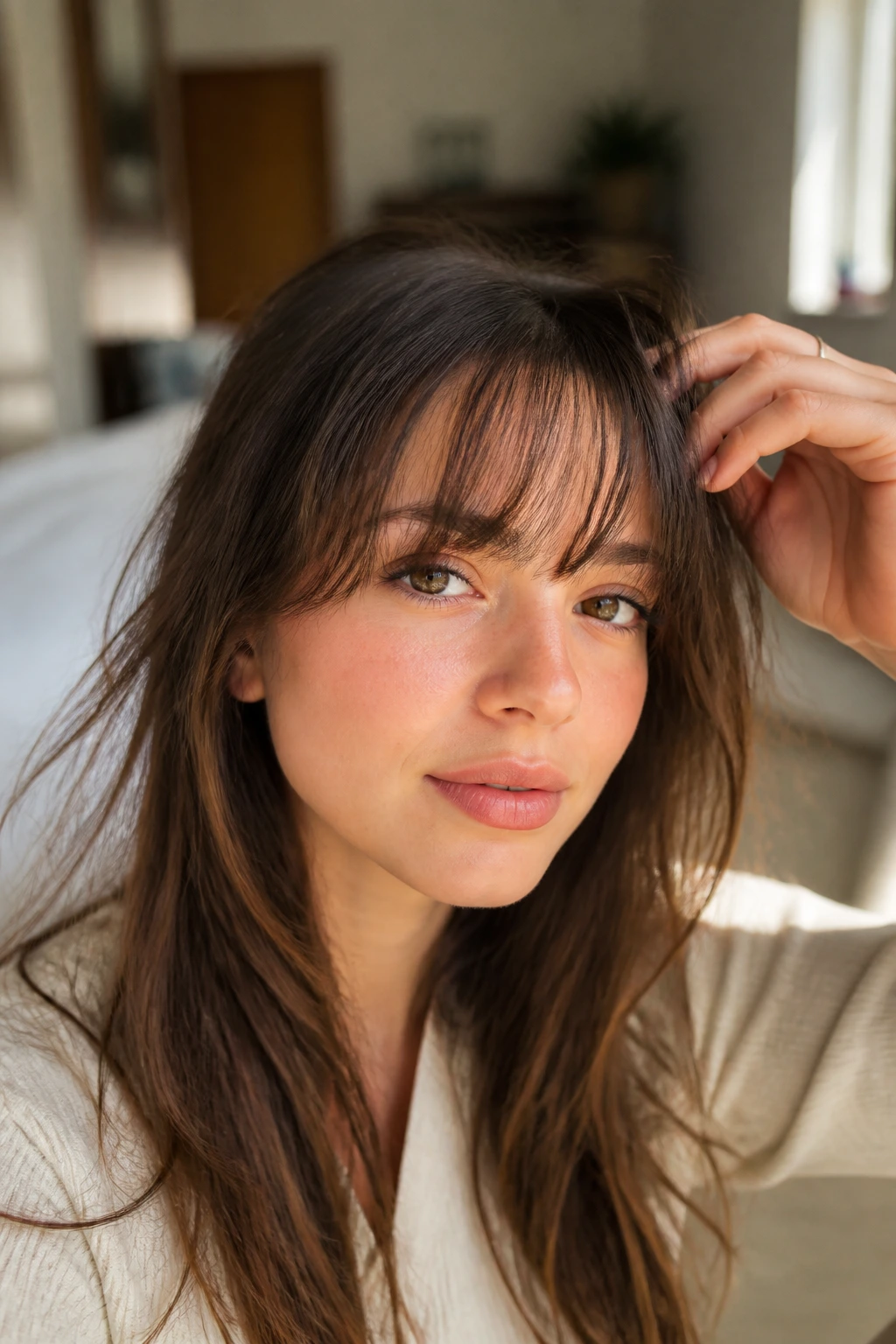
The front of the haircut needs more attention than the rest of the length, and that’s just part of the deal. Wispy bangs sit close to the face, so they pick up oil faster, lose shape faster, and show every mistake sooner. I usually tell people to think in terms of root control, not heavy product. A tiny bit of dry shampoo at the roots, plus a quick blast of cool air after styling, will do more than a thick cream ever will.
A round brush helps, but not every day needs a full blowout. If you’re short on time, dry the bangs forward with your fingers first, then use the brush only on the last 20% of the drying time. That gives shape without overworking the hair into a stiff curve.
What to Ask For at the Salon
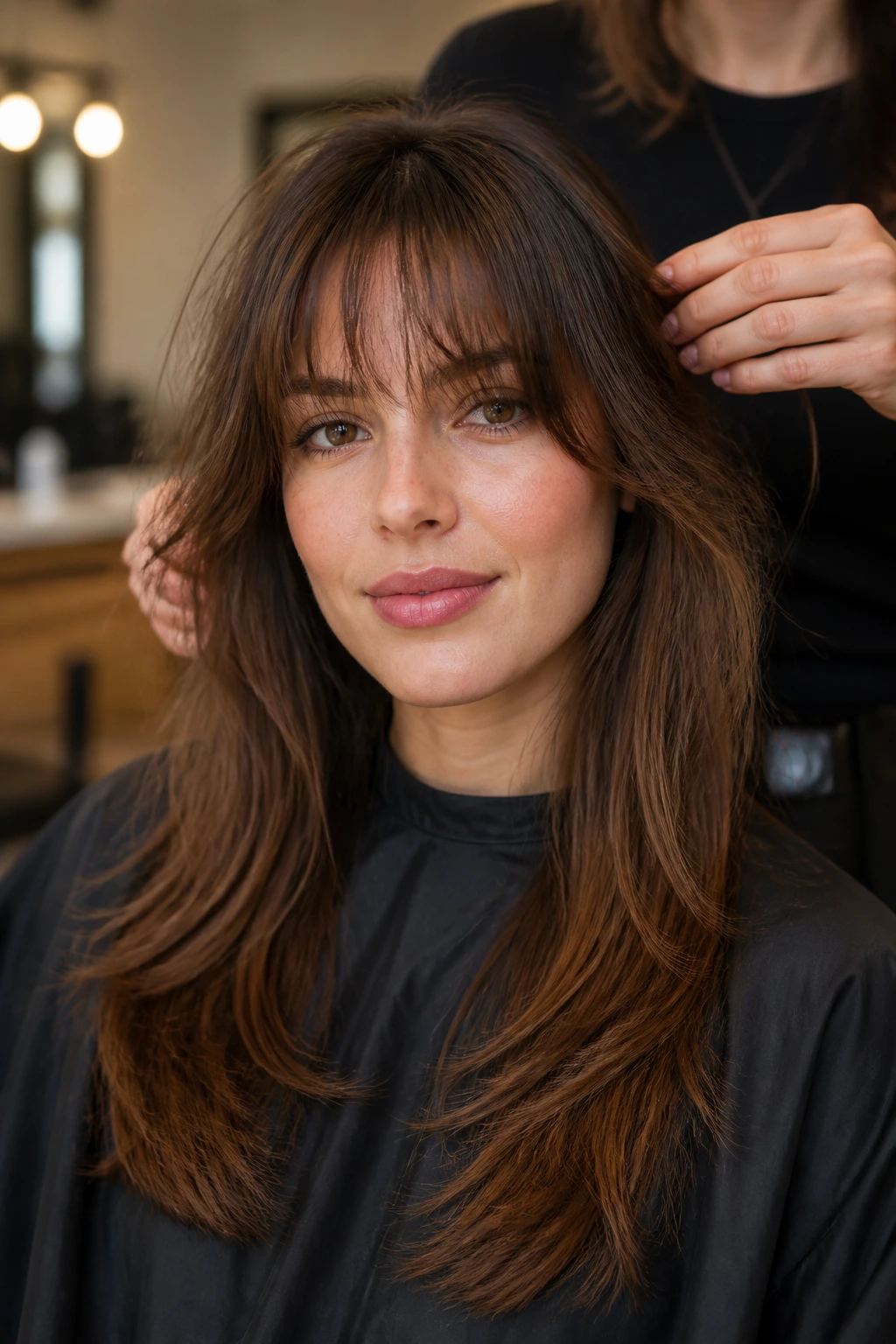
Bring photos, but also bring a sentence or two that explains how you live with your hair. Tell the stylist whether you wear a middle part, how often you heat-style, and whether your hairline has a stubborn cowlick on one side. That matters more than the photo of a model with perfectly obedient strands.
Ask for point-cutting, soft internal texturizing, and a length that can be worn both blown out and air-dried. If the stylist reaches for the thinning shears with a heavy hand, speak up. On long hair, bangs that are too aggressively thinned can go stringy in a week. You want softness with enough body to hold shape.
Essential Tools for Styling Wispy Bangs
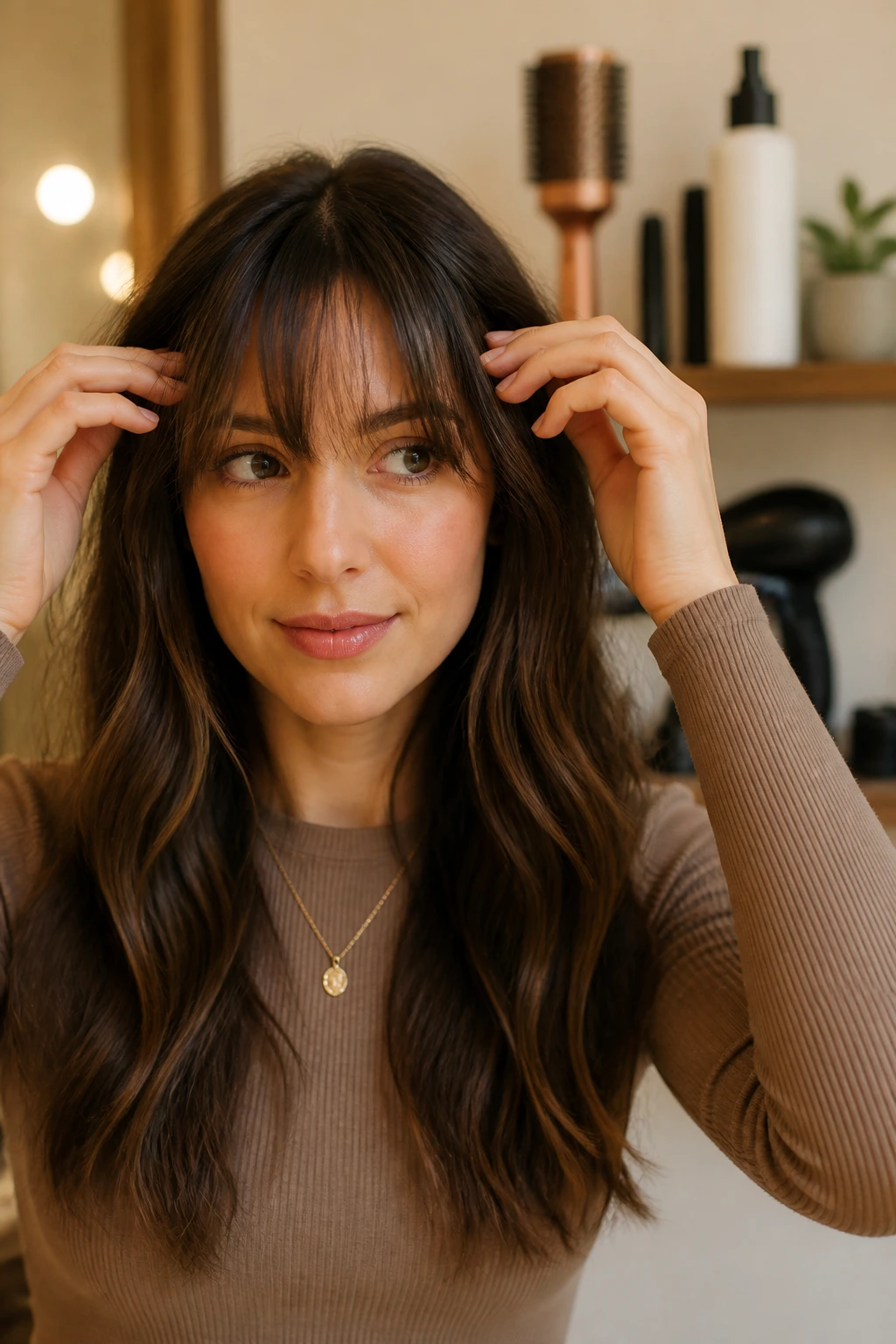
- Small round brush, 1 to 1.5 inches: Best for bending the fringe without overcurling it.
- Blow dryer with a concentrator nozzle: Sends air exactly where the bangs need it, which cuts down on frizz.
- Duckbill or sectioning clips: Useful for pinning the rest of the hair away while the front cools.
- Lightweight dry shampoo: Good at the roots when the fringe starts to separate or look oily.
- Flexible-hold hairspray: Keeps piecey styles in place without turning them crunchy.
- Texturizing spray: Works well on shaggy, beach-wave, and side-swept versions.
- Mini flat iron: Handy for a quick bend on coarse or stubborn fringe, but use it lightly.
- Velcro roller: A cheap fix for lift at the roots on blowout styles.
Common Mistakes That Make Wispy Bangs Look Wrong

The biggest mistake is cutting the fringe too thin at the ends. That seems like a safe move, but it often leaves the front looking scraggly by the second day. A wispy bang still needs a shape. It just needs softness around the edges.
Another one: using too much oil, cream, or serum near the forehead. The bang clumps, sticks, and then separates into oily ribbons. If you need product, keep it to the mids and ends of the length, not the roots of the fringe.
And then there’s the classic problem of ignoring how the bangs dry naturally. If your hair flips left, right, or straight up at the root, the cut has to account for that. A good wispy fringe is cut with the hair’s movement, not against it. Fight the cowlick and you’ll spend your mornings losing.
Variations and Alternatives to Try
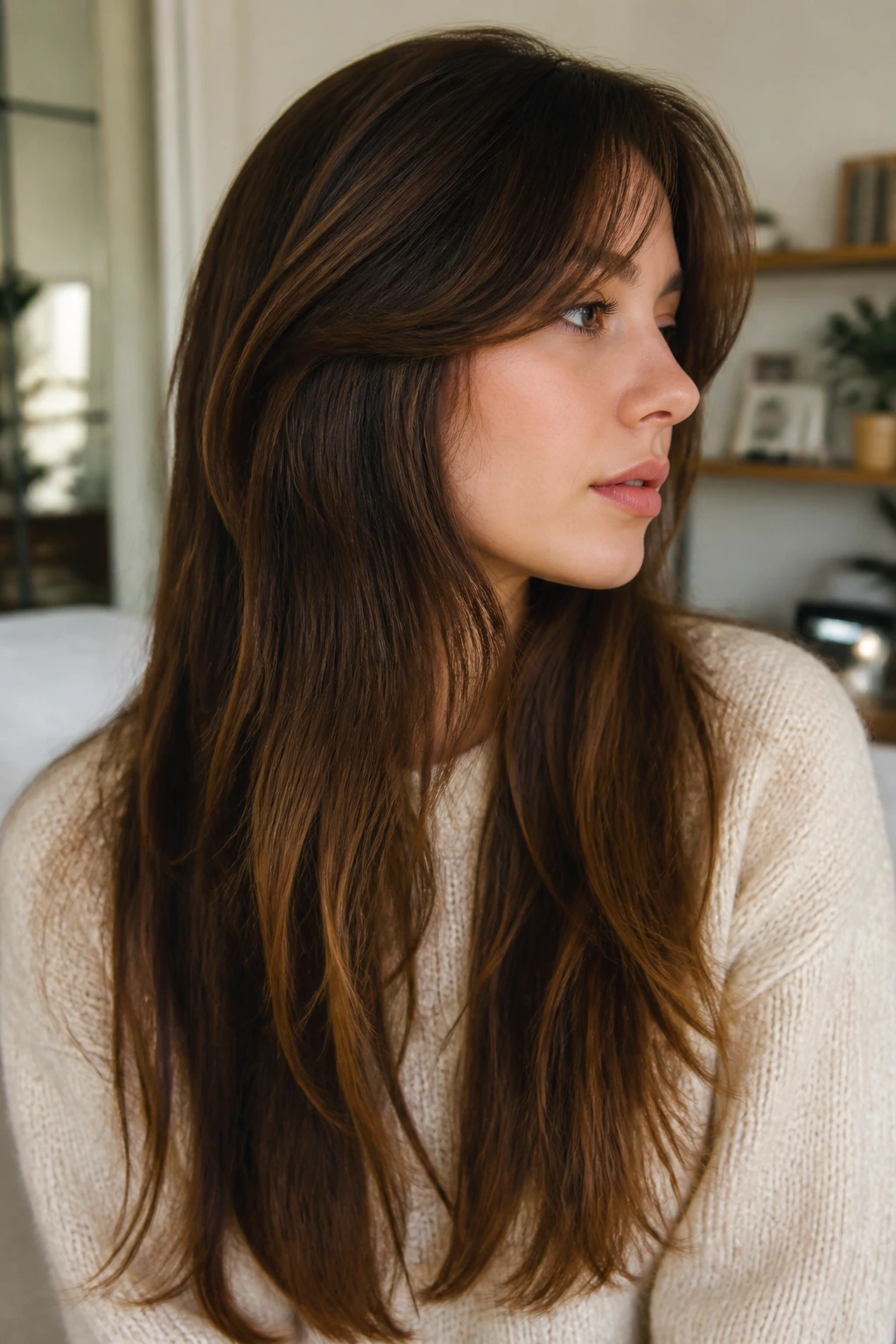
Curtain Fringe Only: If you want the easiest grow-out, stick with a longer curtain shape and skip shorter center pieces. It blends into long layers fast and gives you room to part it differently on low-effort days.
Side-Sweep Reset: If your face shape feels too long with center-part bangs, slide everything to one side and keep the shortest pieces just above the brow. It opens the face and softens the forehead without demanding symmetry.
Clip-In Trial Run: Not ready to commit? Clip-in fringe pieces can help you test density and length before the cut. They won’t mimic the exact texture, but they do show you whether bangs in your face feel flattering or annoying.
Long Face Frame Only: For people who like the idea of bangs but not the upkeep, ask for long face-framing layers instead of a true fringe. You still get movement near the eyes and cheekbones, just without regular bang trims.
Keeping Wispy Bangs Fresh Between Trims
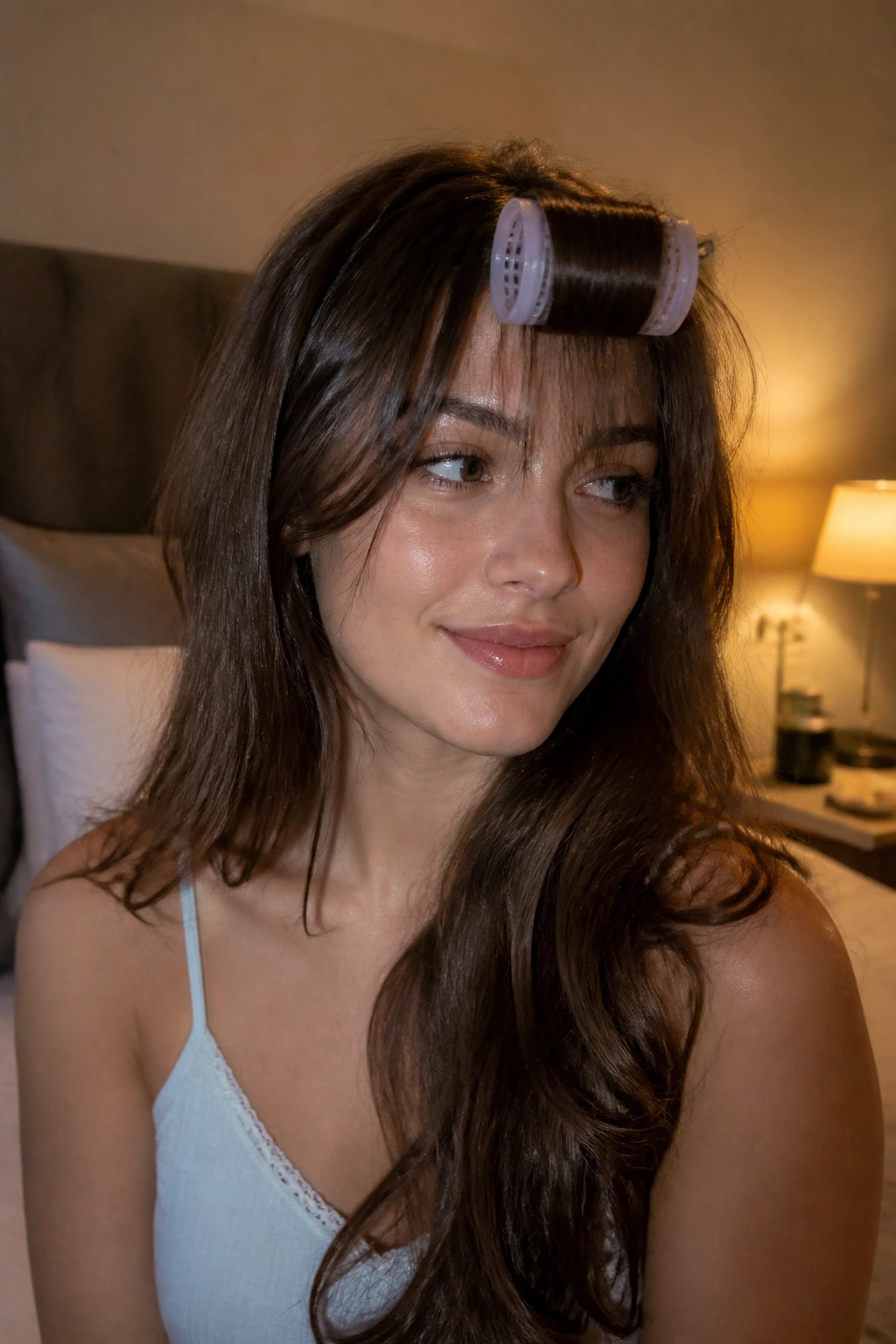
Bangs live shorter lives than the rest of long hair. That’s the trade. Most wispy fringes need a trim every 4 to 6 weeks if you want the shape to stay clean, though some longer curtain versions can stretch farther if you’re happy with a softer grow-out. If the ends start hitting your lashes in a way that makes you blink all day, it’s time.
Wash the fringe more often than the rest of the hair if it gets oily fast. A quick sink rinse or a tiny bit of shampoo at the front can make the whole haircut feel freshly styled again. At night, pinning the fringe apart or setting it with a loose roller helps it keep the root bend instead of waking up flat and bent in weird directions.
Frequently Asked Questions
Do wispy bangs work with very long hair?
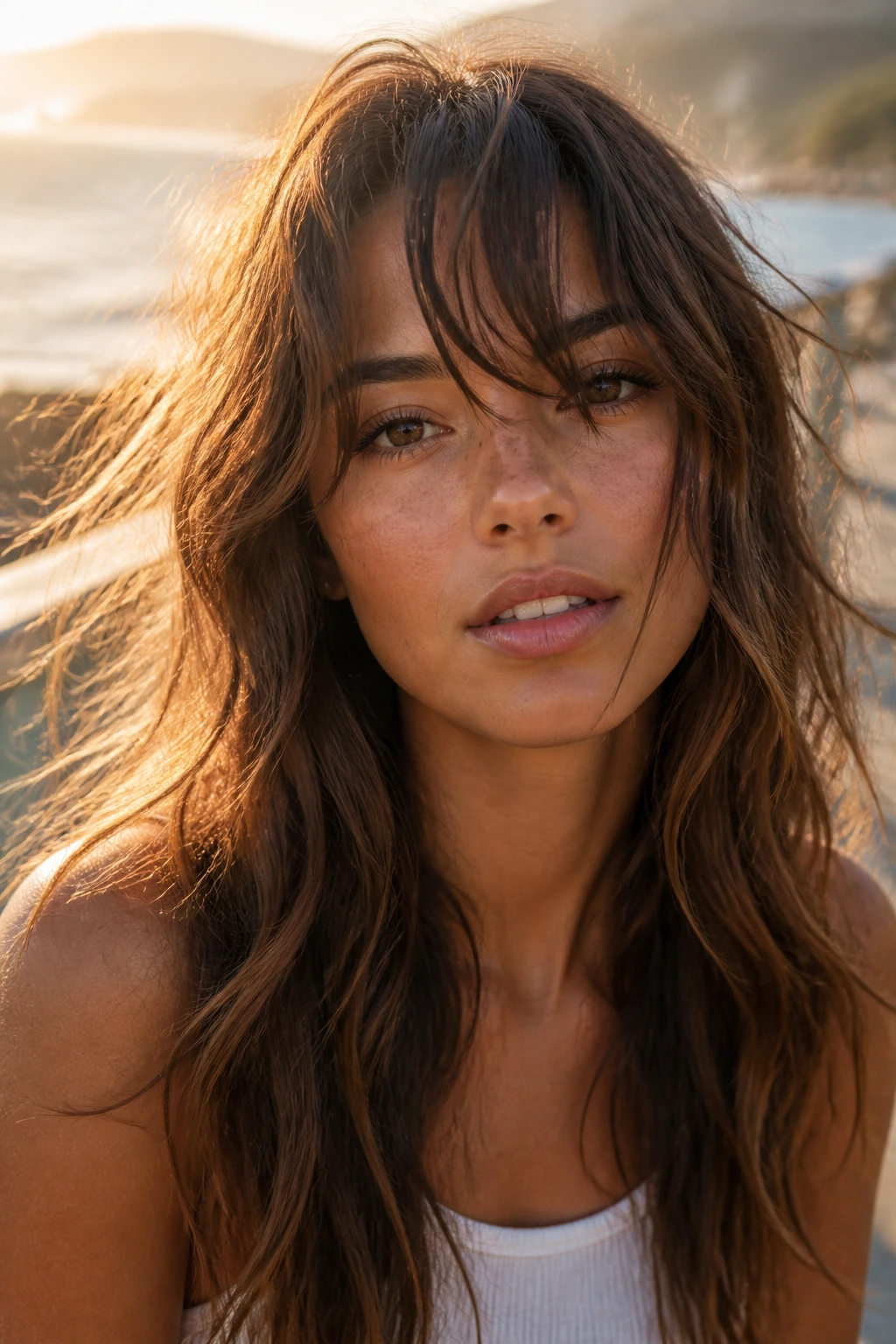
Yes, and they often work better than blunt bangs because they keep the front from overpowering the length. The lighter fringe gives shape near the face while letting the rest of the hair stay the main event.
How often should wispy bangs be trimmed?
Plan on every 4 to 6 weeks if you want the shape to stay crisp. Longer curtain-style versions can sometimes go 7 to 8 weeks, but the shorter the fringe, the faster it loses its line.
Can you have wispy bangs if your hair is curly?
You can, but they need to be cut dry and shaped around the curl pattern. Curly fringe that’s cut wet often springs up higher than expected and ends up too short.
What if my bangs separate in the middle?
That usually means the cut is too sparse at the root or the hair is too oily. A touch of dry shampoo at the root and a short blow-dry forward can help; if the separation keeps happening, the fringe may need a little more density.
Are wispy bangs good for fine hair?
They can be, as long as they aren’t over-thinned. Fine hair needs enough hair left in the fringe to show up on the forehead, or the cut turns patchy fast.
How do I style them without a lot of heat?
Blow-dry the roots forward for 30 to 60 seconds with your fingers, then pin the fringe lightly while it cools. That alone can give a softer bend without a full round-brush session.
Can I grow out wispy bangs without an awkward phase?
Mostly, yes. Keep the center pieces longer, trim the sides into face-framing layers, and let the fringe fall into a curtain shape. That transition is smoother than trying to grow out a blunt line all at once.
Soft Fringe, Long Hair, No Heavy Hand

The best wispy bang on long hair does not scream for attention. It trims a little weight off the front, opens the eyes, and makes the rest of the length look more alive. That’s the real trick: not a dramatic cut, just a smarter one.
If you keep one rule in mind, make it this—the fringe should move with the hair, not sit on top of it. Once the cut follows that idea, the styling gets easier, the grow-out gets kinder, and the whole haircut starts doing the work for you.
