



Straight bob haircuts do not hide anything. That is the whole thrill of them. A clean line at the jaw or collarbone can make hair look denser, shinier, and more deliberate in a way that layers often can’t match, but the same cut will also expose every uneven snip, every heavy corner, every end that refuses to sit still. There’s no curtain to disappear behind.
That’s why a straight bob feels so satisfying when it’s right. The perimeter does the talking. A blunt edge, a crisp part, and ends that fall with a little weight can make even plain hair look edited, almost architectural. A good bob doesn’t need tricks. It needs judgment.
The 18 straight bob haircuts below cover the range from jaw-grazing and sharp to longer, smoother shapes that grow out without turning awkward. Some are best for fine hair, some for thick hair, and some are really about the styling finish more than the cut itself. The details matter here. A quarter inch can change the whole attitude of the haircut.
Why These Straight Bob Haircuts Stand Out
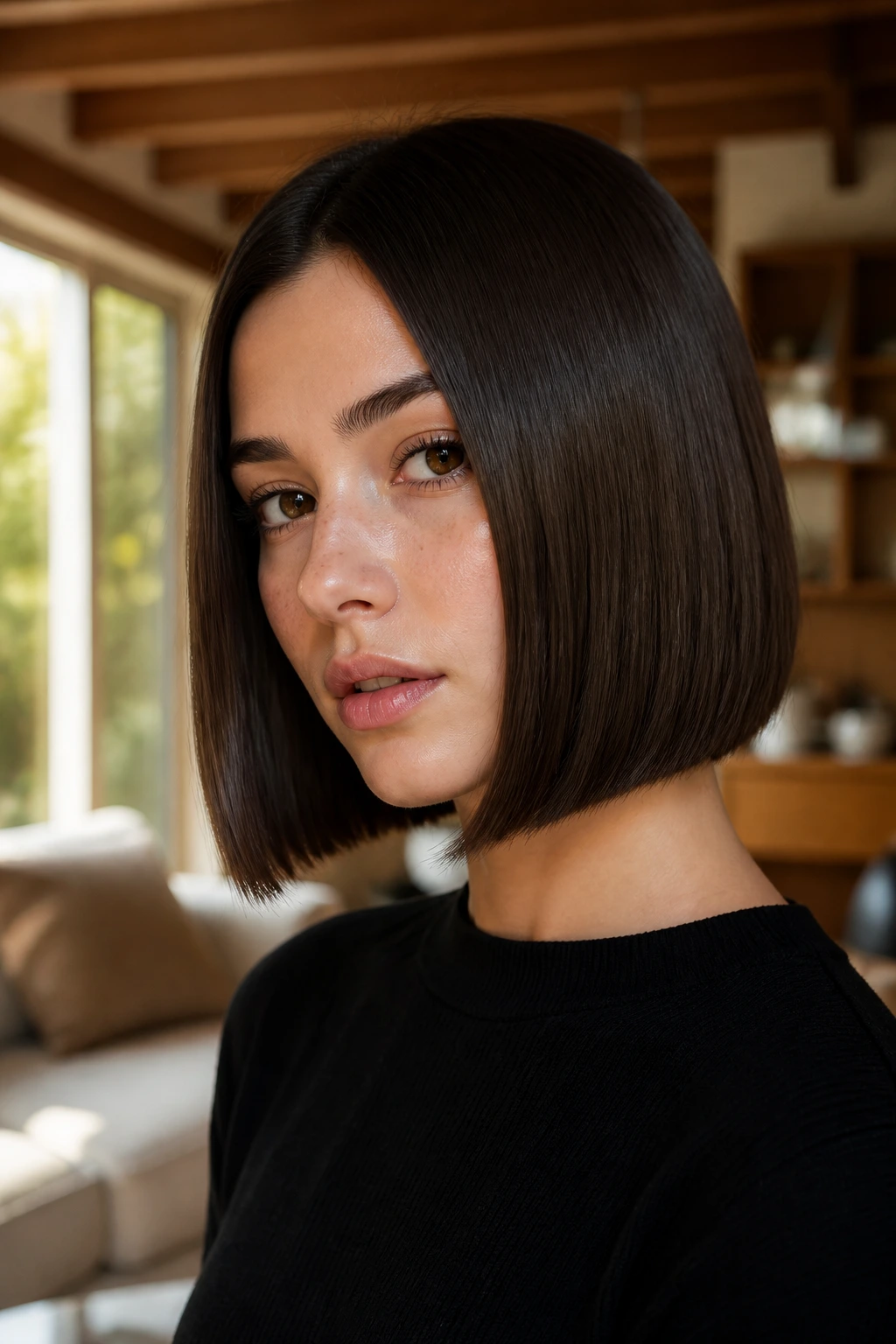
-
Sharp edges do the heavy lifting: Straight bob haircuts rely on the perimeter line, so the shape looks polished even when the styling is simple.
-
Fine hair gets instant density: A one-length bob makes the ends look thicker, which is where thin hair usually gives itself away first.
-
There’s room to tune the mood: A center part feels crisp and formal, a side part softens the face, and a slightly angled cut adds lift without losing the clean line.
-
They style fast when the cut is right: If the baseline is solid, a paddle brush and a flat iron can get you out the door in minutes, not half an hour.
-
They grow out better than people expect: Longer versions keep their shape longer, especially when the neck and shoulders do not interrupt the line.
-
They suit more hair textures than they get credit for: Pin-straight hair shows off the geometry, but thicker or slightly wavy hair can wear a bob beautifully when the ends are cut with enough weight.
1. Chin-Skimming Blunt Bob
This is the bob that makes the face look immediately sharper. The cut lands right around the chin, where the jawline starts to matter, and that blunt edge gives the whole head a neat, finished look. On straight hair, it reads almost severe in the best way. Clean. Compact. No stray drama.
What I like about this length is how little it asks from you in the morning. If the line is even and the ends are full, you can air-dry it and still look put together. A paddle brush and a quick pass of a flat iron are enough if your hair bends at the sides. The only real catch is maintenance: the chin area is unforgiving, so the trim schedule has to stay tight.
If you have a soft jaw, this cut gives it some structure. If you already have a strong jaw, it makes the whole look feel deliberate rather than fussy. That little difference matters. A chin-skimming bob can look sharp without feeling harsh when the ends are left blunt and not over-thinned.
2. Jaw-Length Micro Bob
A jaw-length micro bob has a little bite to it. The ends sit just below the ear and above the chin, which means the haircut lives right in the spotlight. It is the shortest version in this collection that still reads as a bob instead of a grown-out crop.
Why It Lands So Hard
The reason this cut works is simple: it clears the neckline and shows off the bone structure around the mouth and jaw. That makes it a strong choice if you like earrings, high collars, or anything that frames the face without competing with it. It also suits straight hair that falls flat at the root but keeps its body at the ends.
- Best for fine to medium hair that likes to lie smooth.
- Strong on oval, heart, and small round faces.
- Needs regular edging every 5 to 7 weeks.
- Looks especially clean with a tucked ear on one side.
There’s a tiny warning here. If your neck is very short or your jaw is already broad and you want softness, this cut can feel abrupt unless the front is left a touch longer. Ask for that adjustment. It changes everything.
3. Collarbone-Length Straight Bob
This one is the calmest cut in the bunch, and I mean that as praise. The length sits right near the collarbone, so the bob still has a defined shape, but it doesn’t box the face in the way shorter versions can. Straight hair falls through it like water over a ledge.
The collarbone bob is the cut I’d point to for someone who wants the polish of a bob but is not ready to lose too much length. It’s also forgiving when you’re growing out a shorter cut. The line stays neat even after a few weeks, and the ends don’t kick out as aggressively as they do when they hit the shoulders.
If your hair has a subtle wave, this is a smart landing zone. It’s long enough to let the wave settle, but short enough that the shape still feels intentional. Keep the ends blunt and resist the urge to add soft layers everywhere. That’s how you lose the clean look.
4. Angled A-Line Bob
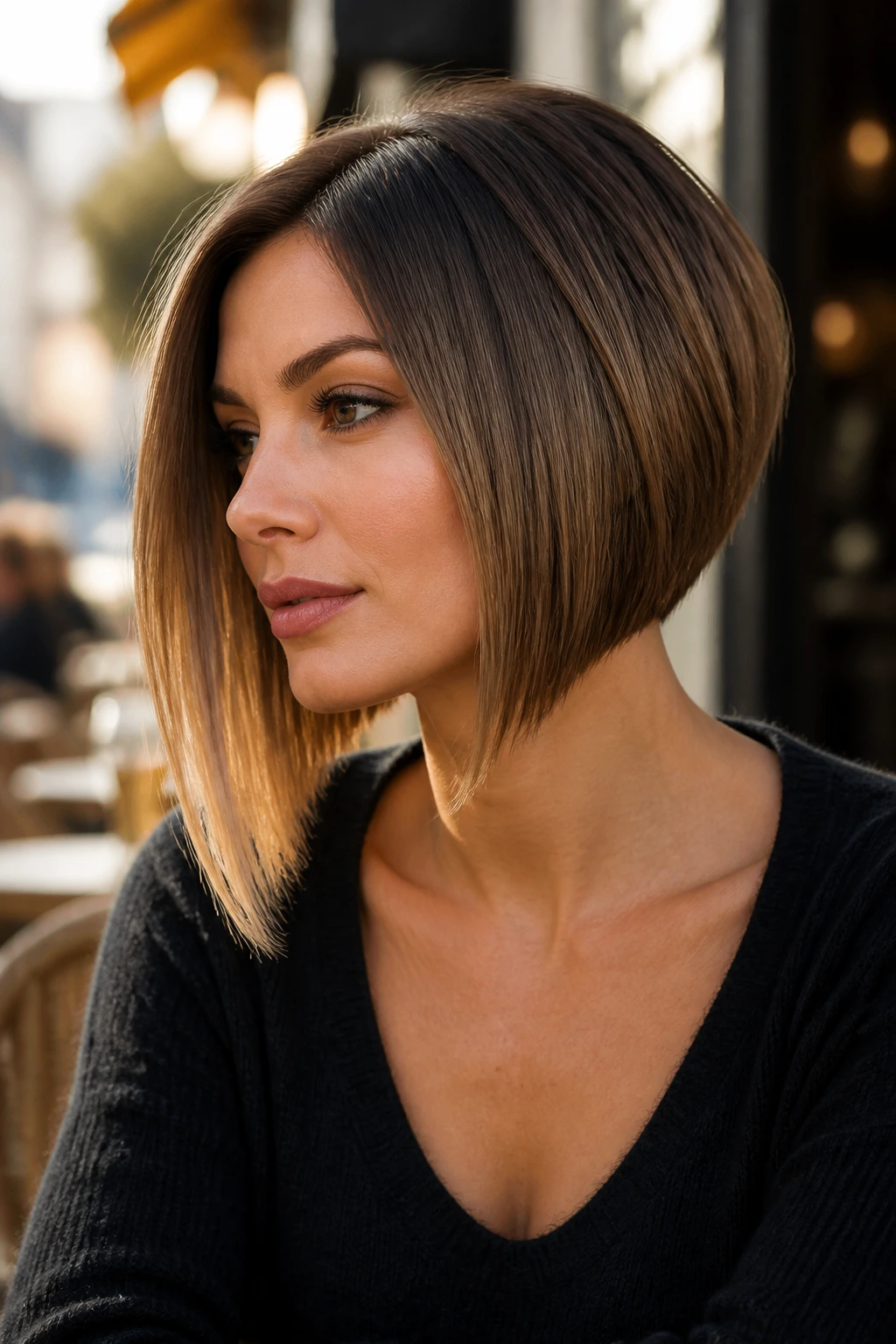
The A-line bob is all about direction. It’s shorter at the back and longer in the front, which creates a slant that pulls the eye forward and makes the neck look longer. On straight hair, the angle looks crisp instead of dramatic, and that’s the sweet spot.
This cut has a built-in sense of motion, even when the hair is flat. The front pieces can skim the jaw or slide past it depending on how sharp you want the angle to be. A slight angle feels modern and easy to wear; a steeper one leans more editorial and shows a little more personality.
Keep the back clean. That’s the part people often overcomplicate. If the nape gets too stacked or too fluffy, the whole bob starts looking old-fashioned. A good A-line bob should feel sleek from the side and tidy from behind, not puffy at the crown.
5. Center-Part Precision Bob
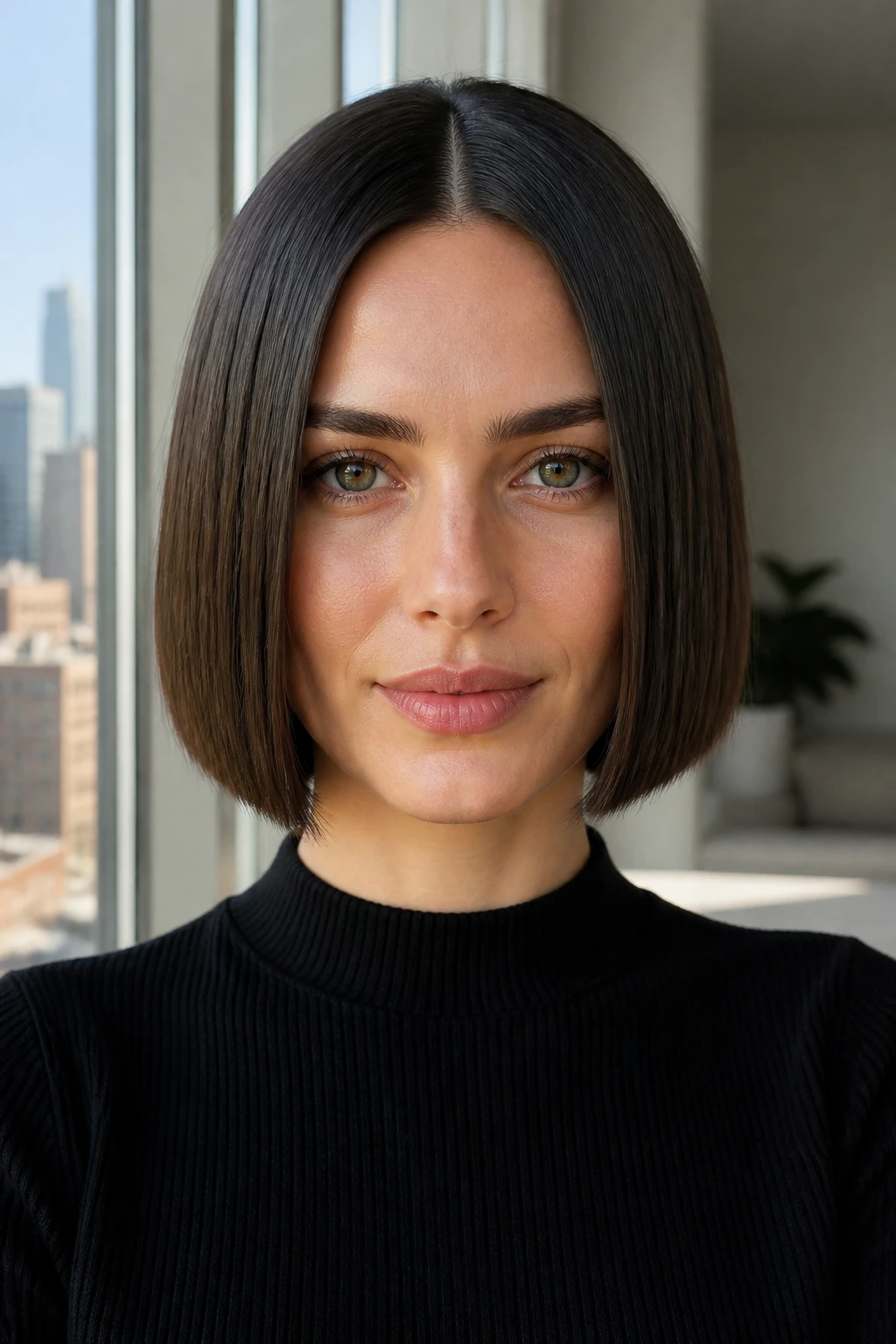
A center part changes everything. It turns a straight bob into something symmetrical and very controlled, which is why this cut feels so precise even when the styling is minimal. The hair falls in two clean panels, and the line at the ends becomes the main event.
What Makes It Work
The center-part precision bob is strongest when the hair density is even on both sides. If one side grows heavier than the other, the part will expose that immediately. But when the balance is there, the result looks polished in a way that is hard to fake with product.
A few details make this cut land better:
- The part should run straight back, not drift off-center.
- The ends need a blunt finish so the symmetry stays visible.
- Root lift at the crown helps avoid a flat helmet effect.
- A light serum at the mid-lengths keeps the surface smooth without making the roots greasy.
This is the bob for someone who likes clean clothes, clean lines, and a haircut that doesn’t chatter. It is quiet, but not bland. There’s a difference.
6. Side-Part Sleek Bob
A side part softens the whole mood. The same blunt bob that might look severe in the middle can suddenly feel more approachable when the weight shifts to one side. On straight hair, the part creates a little sweep over the forehead and gives the haircut movement without adding layers.
This is a useful trick if your face runs round, square, or especially balanced and you want a little asymmetry. The side part breaks the sameness of a straight bob and helps the haircut play with light in a more flattering way. One side gets a little lift, the other side drops cleanly against the jaw. Easy.
What I’d avoid is a dramatic part that looks forced. The best side-part bob has a natural tilt, not a comb-over feeling. Keep the root area smooth and let the bulk of the hair do the work. If the front pieces are cut too short, you lose the elegant line and end up with a bob that fidgets.
7. Tucked-Behind-the-Ears Minimal Bob

This is the haircut for people who want the face out in front and the hair behaving in the background. The length usually lands somewhere between the chin and jaw, with enough weight to stay tucked without spraying away from the ears the second you move. It’s neat, plain, and better than it sounds.
The tucked-behind-the-ears bob works because the cut still looks complete when the sides are pulled back. That means the perimeter has to be strong. If the front is wispy, the tuck exposes the weakness immediately. You want enough density at the ends to make the tucked shape feel deliberate rather than accidental.
I like this version with small hoops or studs, because it turns the ear into part of the style. The haircut itself becomes the frame. It’s especially good for office settings, dinners, or any day when you want the haircut to look tidy without looking overdone.
8. Glass-Hair Bob
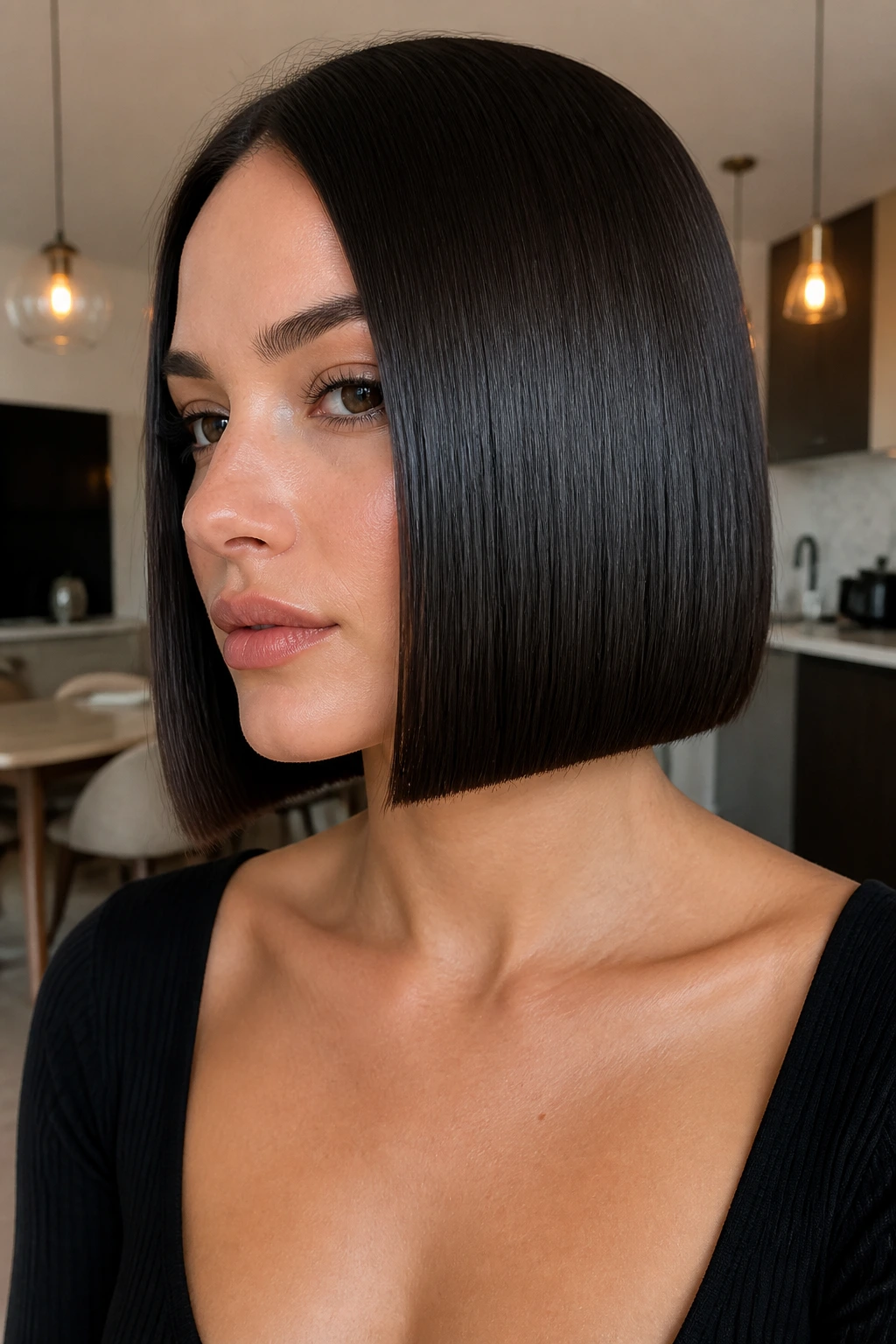
Glass hair is not a cut by itself, really. It’s a finish. But on a straight bob, the effect is so striking that it deserves its own slot. The hair lies flat, reflective, and almost mirror-smooth, with a surface that looks ironed in the best possible sense.
The secret is not drowning the hair in product. That is where people mess it up. A glass-hair bob needs a blunt perimeter, a careful blow-dry, and a flat iron that is used with restraint. Two passes are usually enough if the sectioning is clean and the hair is fully dry. More than that and the ends start to look cooked.
The Finish Matters Most
A boar-bristle brush helps here because it smooths the outer cuticle while keeping the shape close to the head. A pea-sized amount of serum on the mid-lengths and ends is plenty. If you can feel the product from three feet away, it’s too much.
This look is best when the bob is cut with precision. A bad line becomes obvious under that shine. A good line looks expensive. Plain and simple.
9. Rounded Undercurve Bob
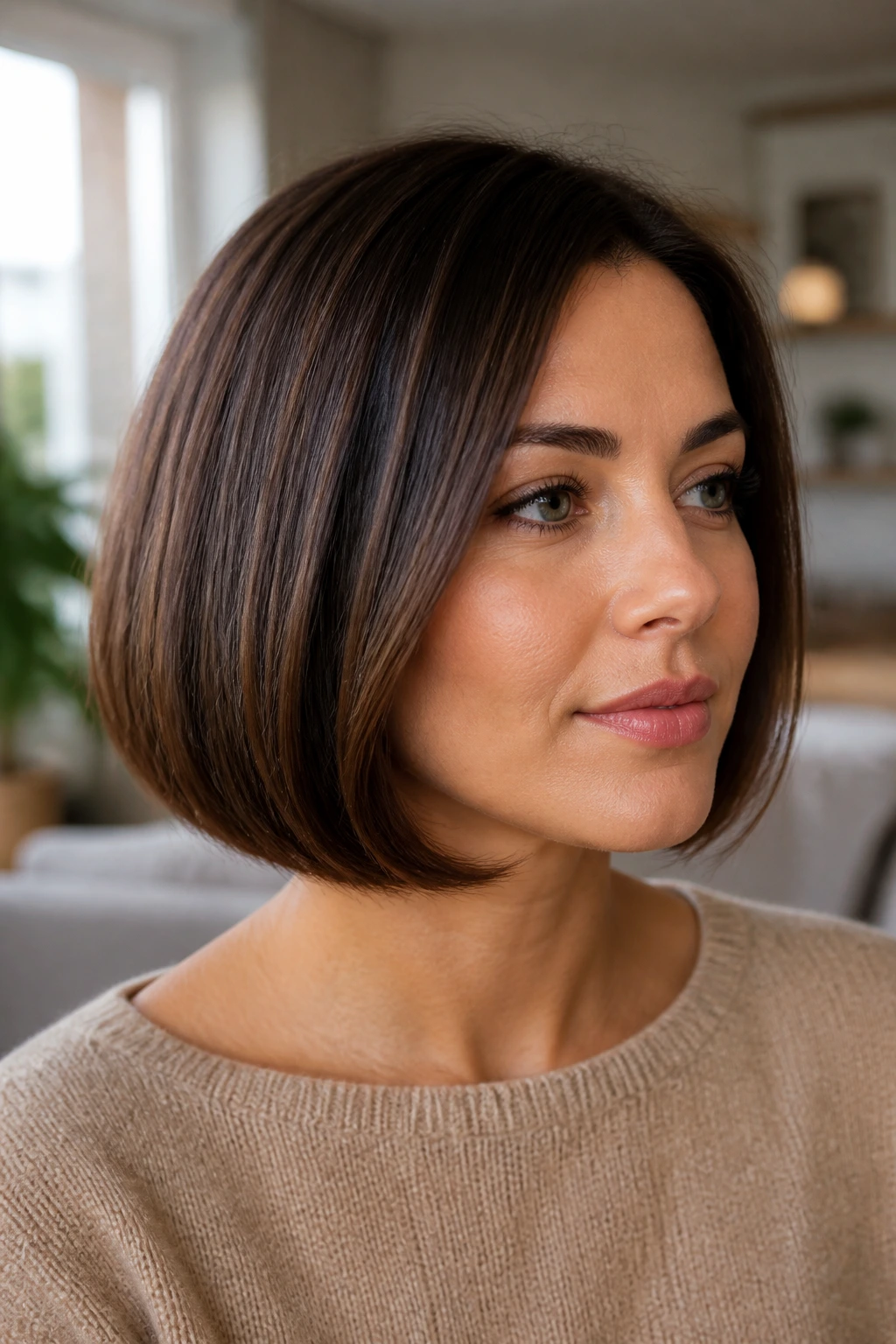
The rounded undercurve bob has a soft inward bend at the ends, so it feels gentler than a flat blunt cut but still counts as a straight bob. The edge curves under just enough to hug the jaw or neck instead of sticking out like a shelf.
This version is smart for coarse hair, because a slightly rounded finish can keep the ends from looking boxy. It also helps if your hair has a stubborn outward flip at the bottom. The shape guides the hair inward instead of fighting it all day. That is worth its weight in time saved.
A lot of stylists quietly favor this shape for people who want polish without the hard edge of a completely razor-straight line. It still reads as clean. It just has a little curve to it, and that curve can make the haircut feel more wearable on an ordinary Tuesday.
10. Shoulder-Skimming Long Bob

The shoulder-skimming bob, or lob, gives you the sleekness of a bob with less commitment to short hair. The length sits right at or just below the shoulders, which means the haircut keeps a clean outline while avoiding the awkward crash point where hair hits the shoulder and flips out.
That shoulder issue matters more than people think. If the ends sit exactly on the shoulder, they get bumped and turned all day. Move the line a little above or below that point and the hair behaves better. A small change. Huge payoff.
This is the cut for someone who wants to keep the neck visible but isn’t interested in a stark, jaw-length shape. It flatters thick hair nicely because the length gives the hair room to settle, and it also helps fine hair look longer and sleeker without losing body at the ends.
11. French Bob With Heavy Fringe

The French bob brings in a blunt fringe, and that fringe changes the whole story. The haircut usually sits around the jaw or just above it, while the bangs skim the brows or land right at them. On straight hair, the result feels crisp and a little romantic, but never fussy if the ends are kept clean.
This cut only works when the fringe is cut with real confidence. Wispy bangs make the whole thing look undecided. A heavier fringe gives the bob its point of view. It draws attention upward, which is useful if you want to emphasize the eyes and soften a longer face.
The maintenance is the trade-off. Fringe trims matter, and not everyone wants that appointment every few weeks. Still, if you like a haircut with personality and a strong front edge, this one has a lot of presence for such a compact shape.
12. Boxy Bob for Thick Straight Hair
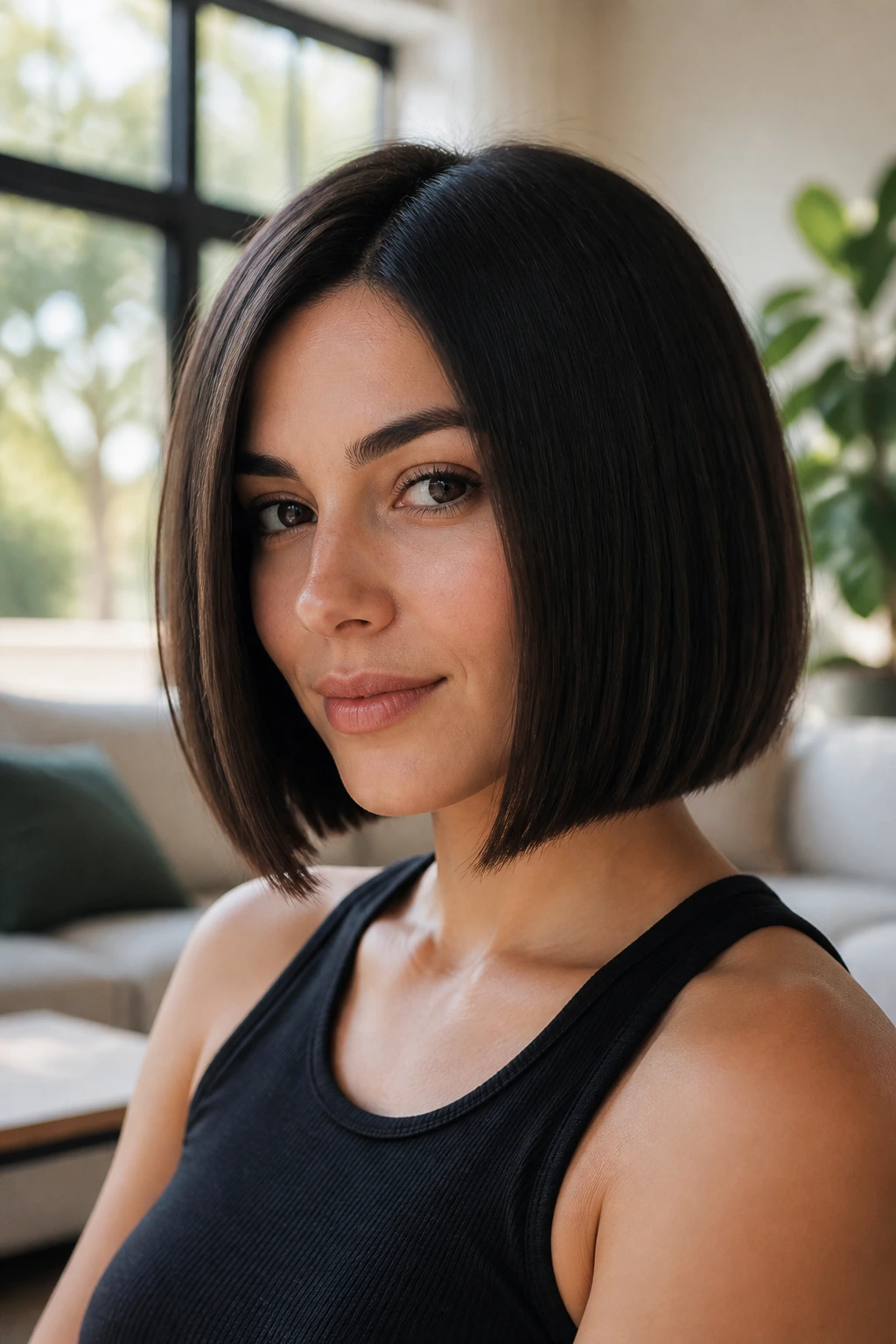
Thick hair loves a strong outline, and the boxy bob gives it one. Instead of trying to make thick hair look airy or feathered, this cut leans into density. The perimeter is blunt, the shape is full, and the hair sits with enough weight to stay controlled.
Why It Behaves Better Than a Thinned-Out Bob
A lot of people with dense hair get talked into too many layers, then wonder why the bob puffs out at the sides. This cut avoids that. The shape stays compact because the hair is removed carefully from the inside, not hacked away at the bottom edge.
The result is a bob that looks deliberate even when the hair has a lot of natural body. If your strands are coarse, this can be a relief. You get less triangle shape, fewer awkward flips, and a cleaner line around the face. Ask for internal weight removal, not a heavy layer story. That distinction matters.
It’s one of the best straight bob haircuts for hair that likes to spread out. Control first. Pretty second. In this case, they do go together.
13. Invisible-Layer Bob
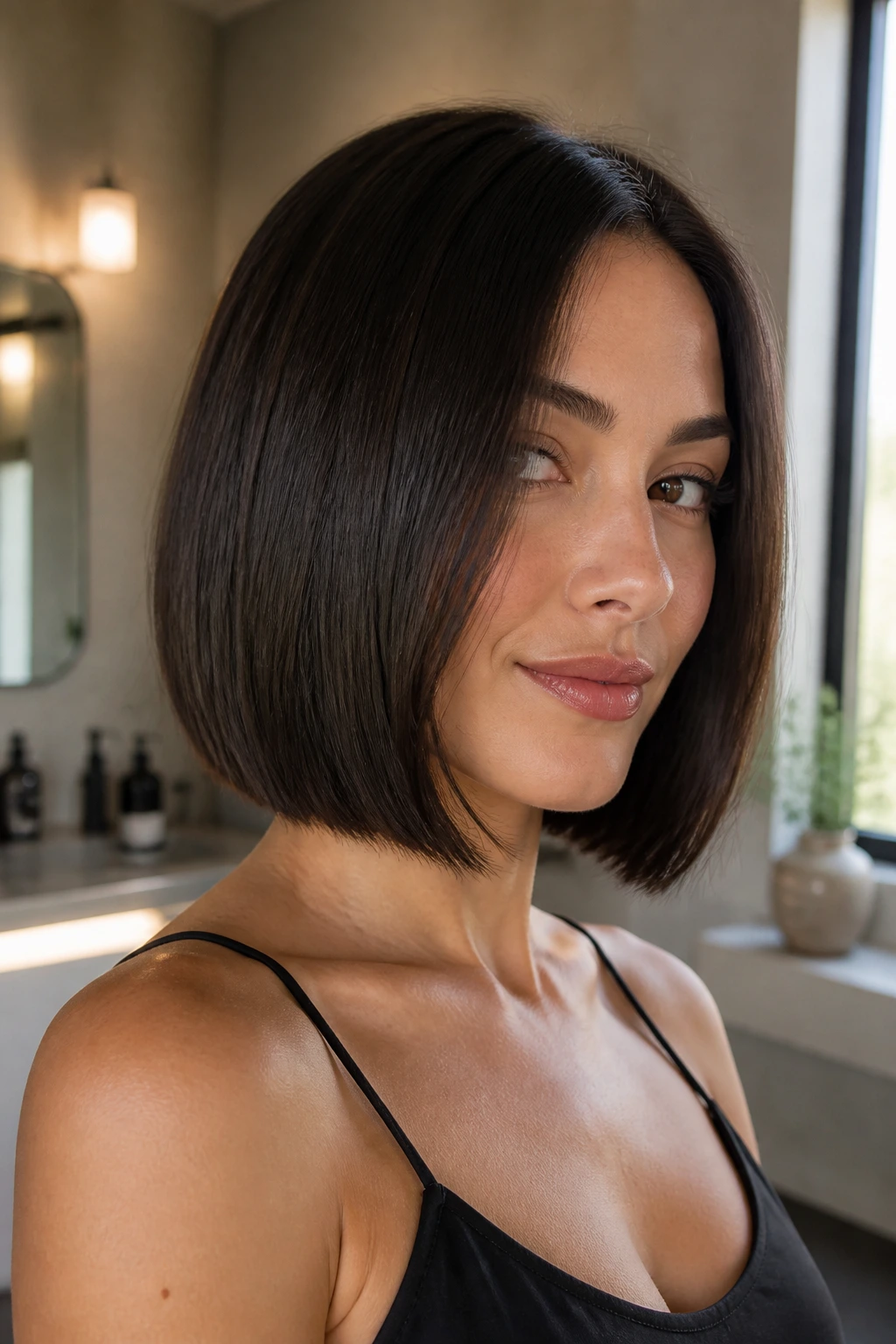
Invisible layers are the stylist’s quiet trick for keeping movement without giving up the straight silhouette. On the outside, the bob still looks one-length and polished. Inside, a few carefully placed layers remove bulk and help the hair fall a little better.
This is the sweet spot for people who want a sleek bob that doesn’t feel stiff. The movement is there, but it hides under the surface. You notice it when the hair swings or when you tuck one side behind the ear and the other side still falls cleanly into place.
The danger is overdoing it. Too many internal layers and the line stops looking straight. The cut starts to read soft, maybe even shaggy. The whole appeal here is that the bob keeps its exact outline while moving a bit more easily than a hard blunt cut. Subtle work. That’s the point.
14. Nape-Hugging Sharp Bob
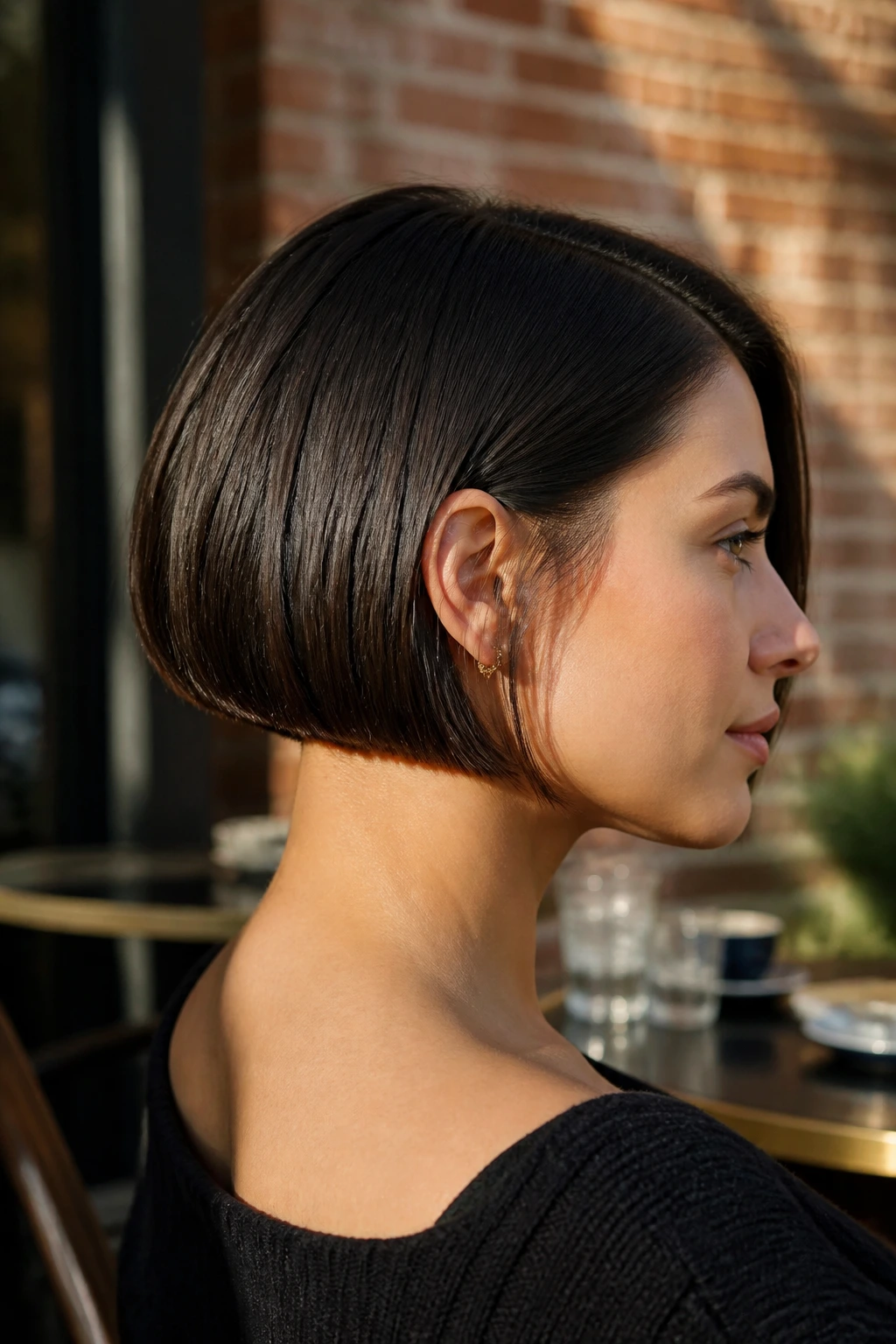
This bob sits close to the nape and curves in tight at the back, which gives it a crisp profile from the side. The front can still skim the jaw, but the back does the neatest work. It’s a very clean shape, almost tailored.
The nape-hugging version is especially good when you want the neck to look long and tidy. The cut clears the shirt collar and lays flat under a jacket without flipping everywhere. That makes it feel polished in a practical way, not just a photo way.
What to watch for: if the hairline at the nape is uneven, the cut has to be adjusted with care. A sharp bob shows every bit of that line. Good stylists work with the growth pattern instead of bulldozing it. You can tell the difference from across a room.
15. Deep Side-Part Power Bob
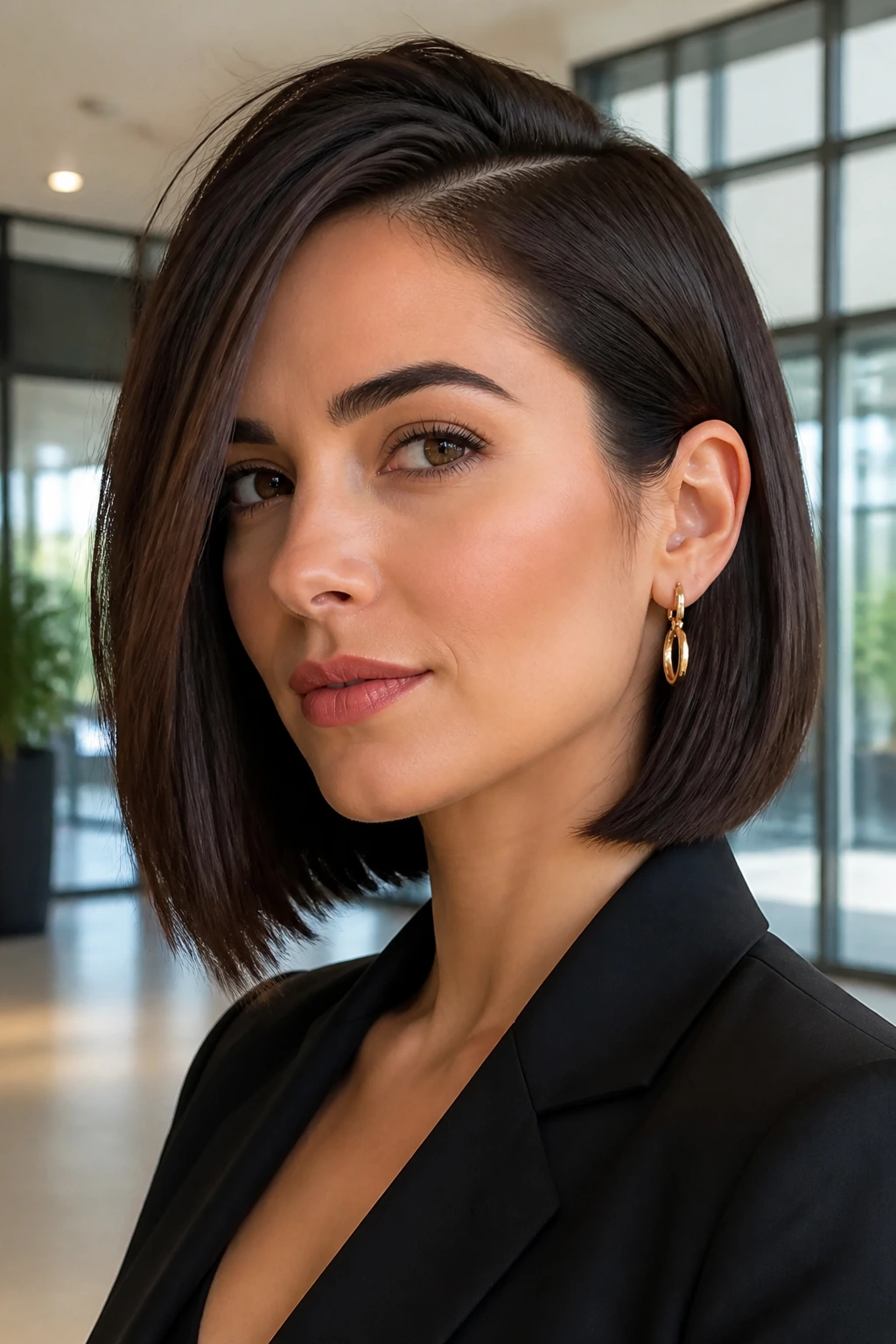
A deep side part gives a straight bob a little swagger. One side drops low, the other side lifts and tucks back, and suddenly the haircut feels less restrained. It’s a strong look without needing length, color, or layers to carry it.
This shape is useful when you want the bob to feel softer on one side of the face. It can break up a broad forehead, balance asymmetry, or just change the mood of a very blunt cut. The trick is keeping the ends clean enough that the part looks intentional, not like the hair is fighting itself.
I like this bob when it’s paired with a smooth finish at the roots and a little bit of bend only at the ends. Too much bend and the drama gets messy. Just enough and the haircut looks like it has opinions.
16. Full-Perimeter Bob for Fine Hair

Fine hair often looks better in a blunt bob than in a layered one, and this cut proves the point. The whole idea is to keep the perimeter full so the ends don’t look thin or see-through. Straight hair makes that line even more obvious, which is exactly why it works.
The best version lands somewhere between the chin and collarbone, depending on how much density the hair has. Shorter cuts can make fine hair look fuller, but they can also expose cowlicks and cowed little flyaways around the hairline. A slightly longer line often gives the hair a better chance to hang with weight.
This is a good candidate if you’re tired of haircuts that look airy in the salon and limp at home. A strong blunt edge gives the illusion of more hair. Not magic. Just smart geometry.
17. Grow-Out Friendly Straight Bob
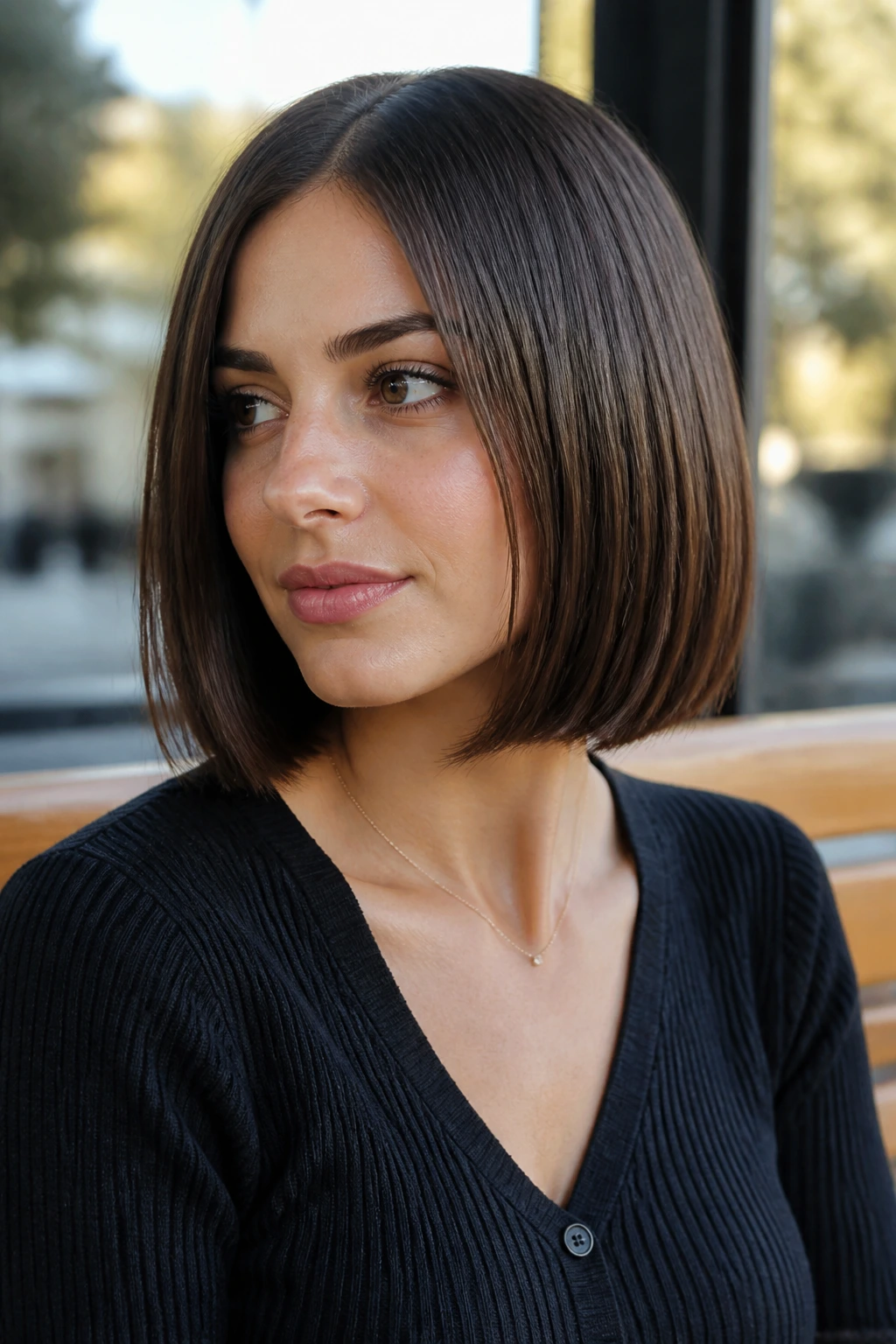
Some bobs are about the moment. This one is about the next six weeks. The grow-out friendly bob usually sits just below the chin or somewhere near the collarbone, which means it keeps shape as it lengthens instead of collapsing into a bad middle stage.
That makes it a decent choice if you do not want to be in the salon every month. The line stays readable, and the haircut can drift a little longer without losing its identity. For anyone who changes their mind about length halfway through, that matters more than it sounds like it should.
The best grow-out bob has enough structure to look neat on day one and enough flexibility to survive on day forty. Keep the line soft only where your face needs it. Keep the edges blunt everywhere else.
18. High-Gloss Event Bob
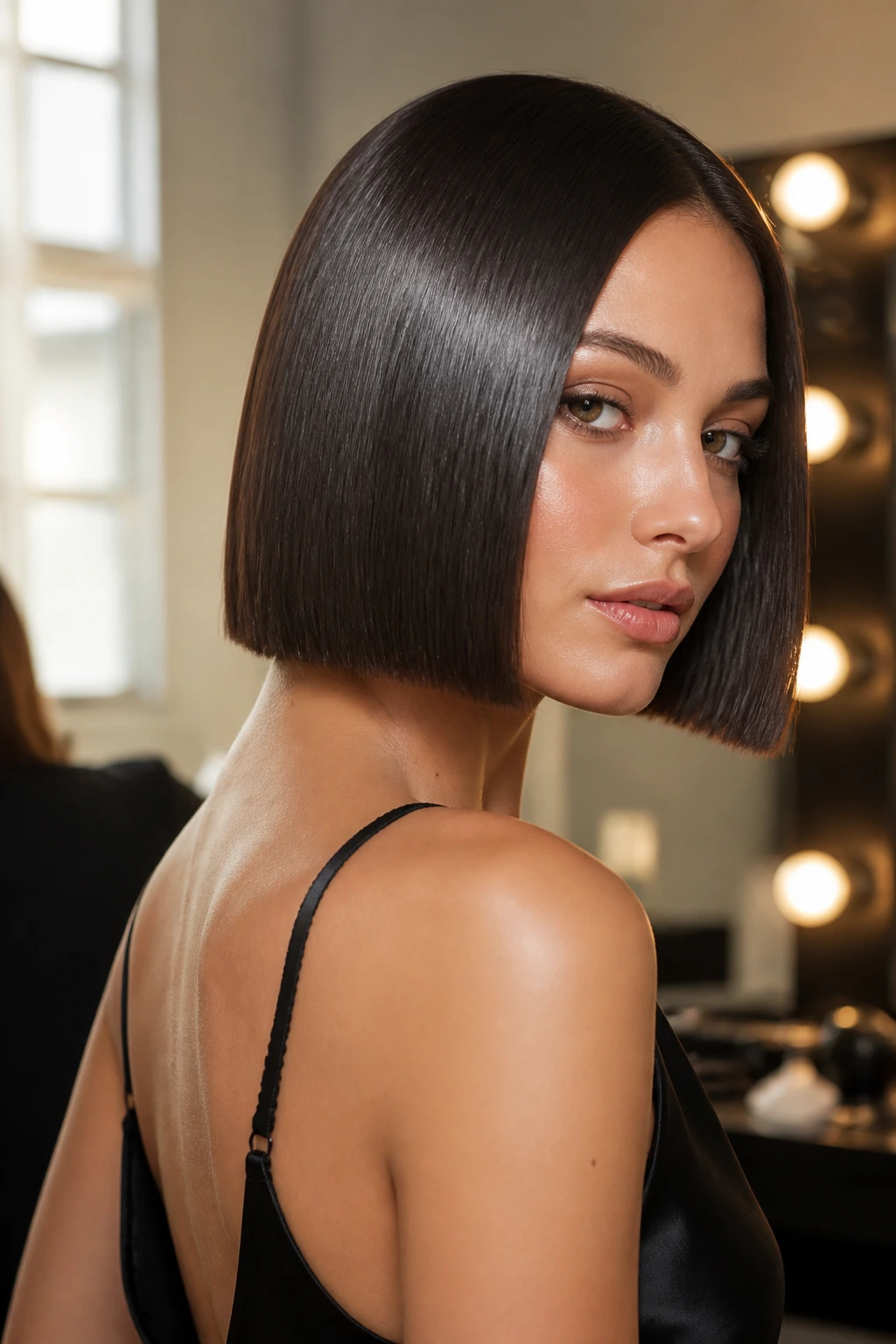
This is the bob that shows up polished and stays that way under bright light. The haircut itself is simple, usually a clean blunt line at the jaw or just below it, but the finish is where it earns the name. The surface is smooth, reflective, and tight around the face.
It’s a smart pick for dinners, photos, and dressier settings because the haircut looks intentional from every angle. Tuck one side behind the ear, leave the other side loose, and the line still reads. Add a little volume at the crown if your hair collapses flat; otherwise, keep it close and sleek.
The best part? You do not need waves or curls to make it feel special. Straight hair does the work here. All you need is a tidy cut, a controlled blow-dry, and a finish that doesn’t go crunchy or greasy by hour two.
Why Straight Bob Haircuts Look So Crisp on Day One
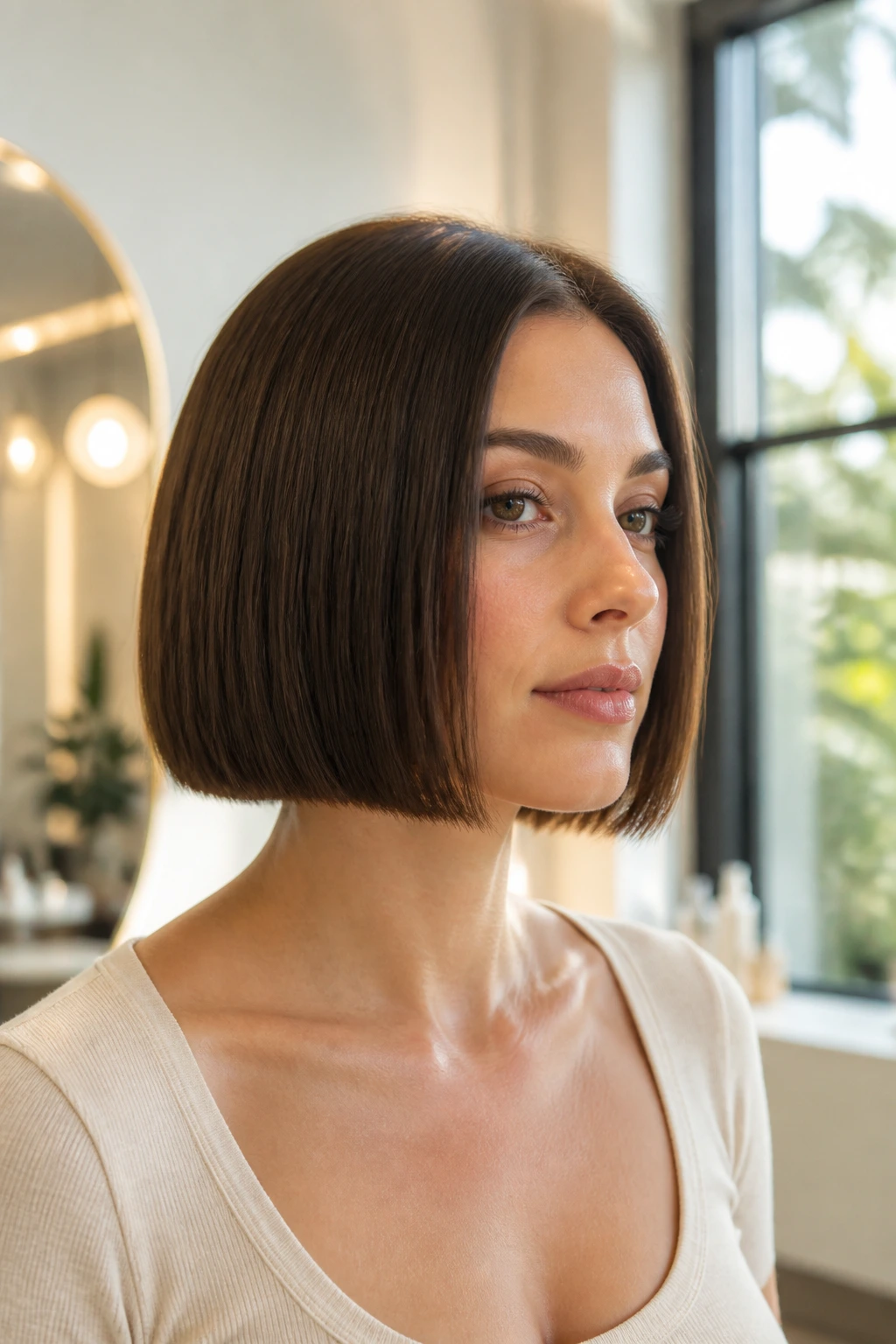
A straight bob starts with geometry. That sounds cold, but haircuts are built on geometry whether people admit it or not. The cleanest bobs have a strong baseline, balanced weight on both sides, and a front length that tells the eye where to stop. When those pieces line up, the haircut looks expensive even if you do very little to it.
The other reason these cuts look so good is that straight hair exposes the outline instead of blurring it. A wave can soften a bad line. Straight strands do not. That means the cut has to be accurate, but it also means the payoff is immediate. You see the edge. You see the shine. You see the shape.
A good straight bob also works with the head instead of floating around it. The nape sits cleanly, the jawline gets a little frame, and the sides fall where they’re supposed to fall. If your hair has a natural bend, the right bob can still work — it just needs the ends cut with enough thought that the bend becomes part of the shape instead of a problem to wrestle every morning.
A bad bob usually fails for one of two reasons: too much weight removed, or too much left in the wrong place. That’s why these haircuts seem simple but are not. The simplicity is earned.
Essential Tools for a Sleek Bob
-
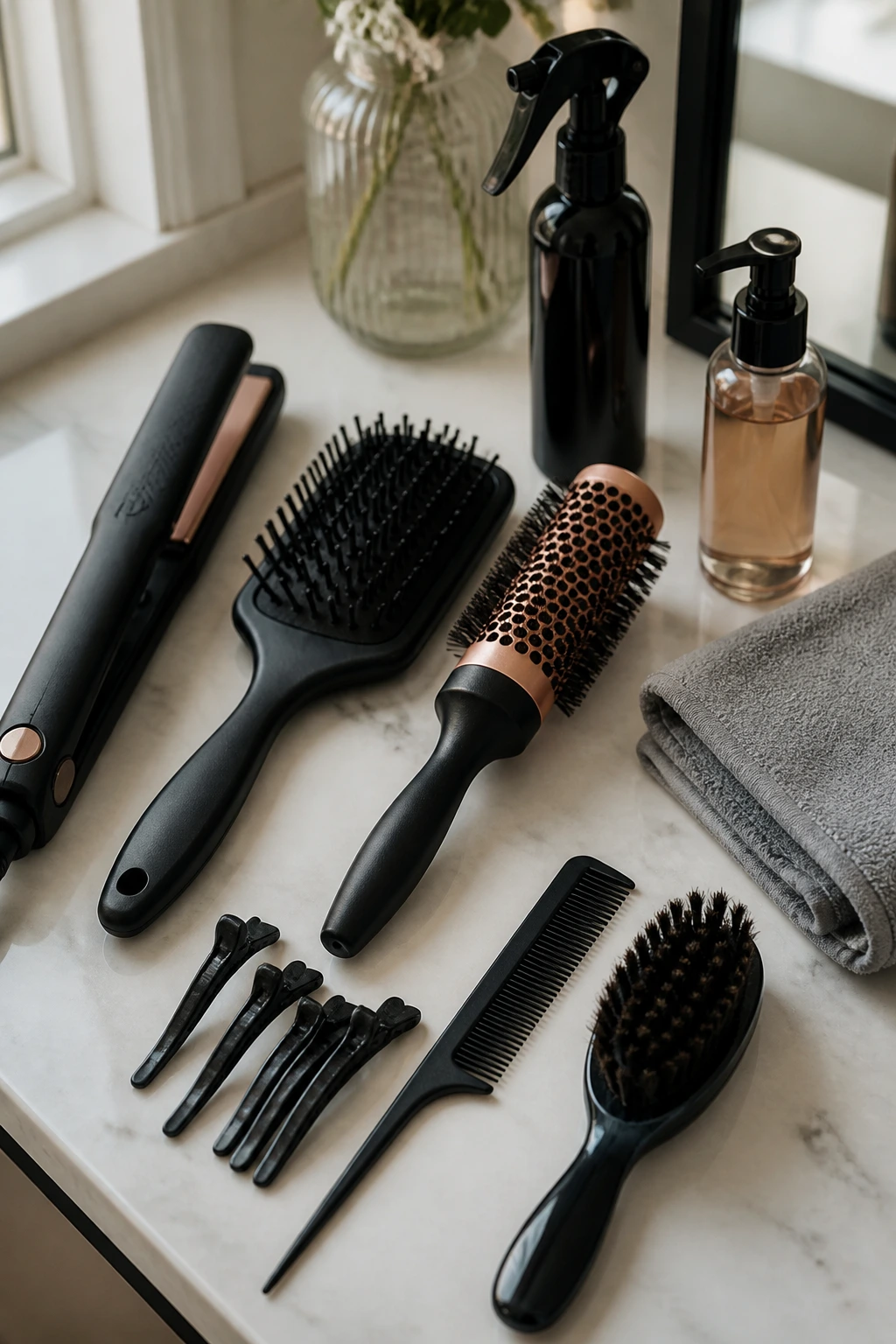
Flat iron with adjustable heat: You want control, not guesswork. Fine hair usually needs lower heat; coarse hair can handle a bit more, but the iron still needs to glide cleanly.
-
Paddle brush: This is the easiest way to smooth a straight bob without building a giant bend at the ends. It keeps the shape flat and tidy.
-
Round brush, 1 to 1.5 inches: Useful when you want a slight inward turn at the ends or a touch of root lift at the crown.
-
Heat protectant spray: Non-negotiable if you flat iron or blow-dry regularly. It also keeps the surface from looking fried after a few styling passes.
-
Fine-tooth tail comb: Great for setting a center part, separating sections, and cleaning up the line before heat hits the hair.
-
Sectioning clips: Helpful when your hair is thick or slippery. Clean sectioning makes the finish smoother and faster.
-
Lightweight serum or smoothing cream: A pea-sized amount is enough for most bob lengths. Use it on mid-lengths and ends, not at the roots.
-
Microfiber towel or soft T-shirt: Rough towels can fluff the cuticle and make a sleek bob look wider than it is.
-
Boar-bristle brush: Optional, but useful for a polished surface when you want that smooth, reflective finish.
What to Ask Your Stylist Before the First Snip
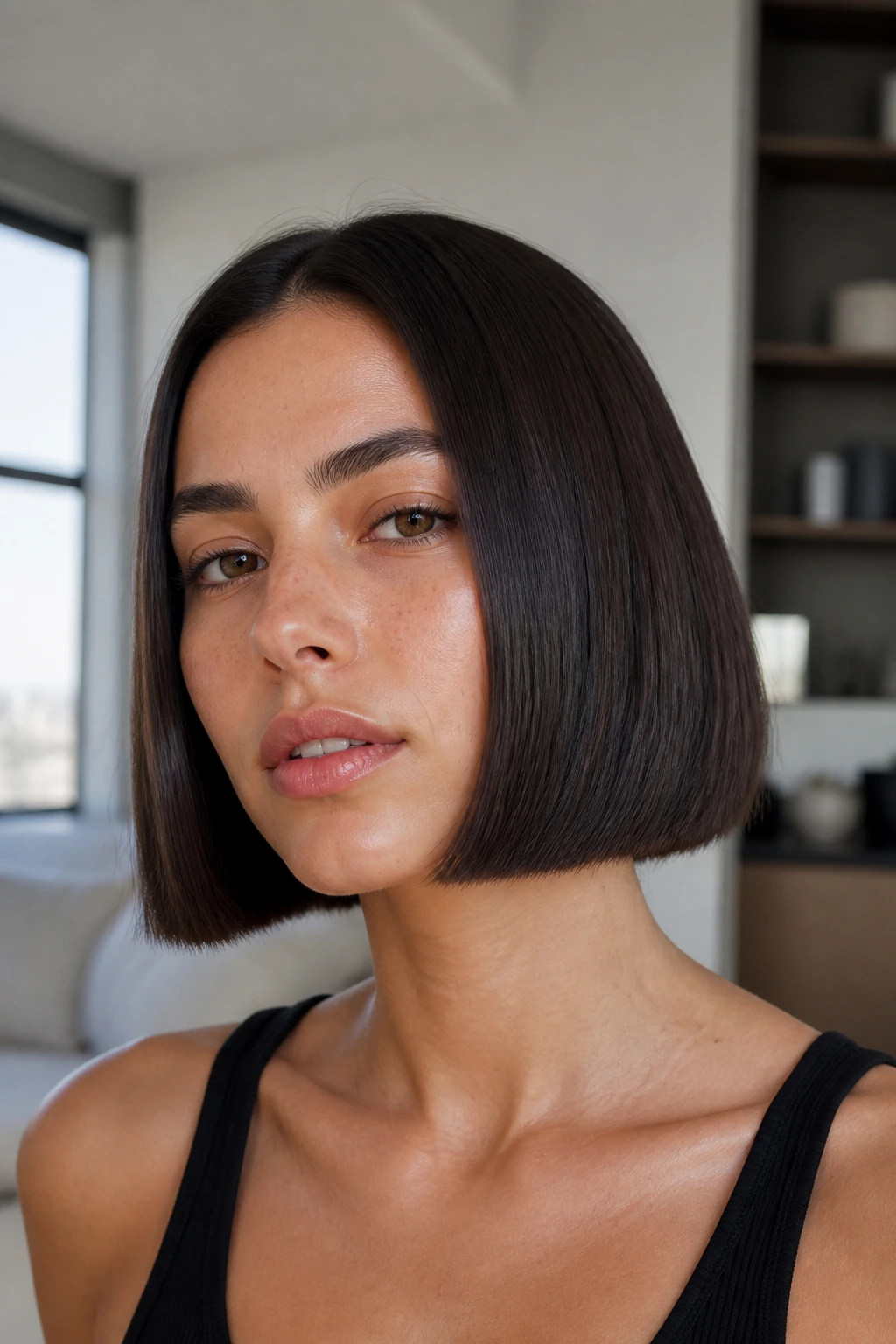
Bring photos, yes, but bring language too. A picture shows the shape you want; your words explain the parts you do not want. Say how short you’re willing to go at the front, whether you want the back to sit flat or stacked, and if you wear a center part or side part most days. That parting habit changes the whole haircut.
Be specific about your hair’s behavior. If the ends flip out at the shoulders, say so. If you have a cowlick at the crown or a strong growth pattern at the nape, say that too. Stylists can work with those things, but only if they know they’re there. Silence is where bad bob haircuts are born.
Length, Weight, and Finish
Ask where the cut should sit when your hair is dry, not just when it’s wet. Wet hair lies. Dry hair tells the truth. If your hair is straight but bends up at the ends, a dry cut or a carefully adjusted wet cut can keep the bob from popping outward later.
Also ask how much weight will stay at the bottom. A straight bob needs enough fullness in the perimeter to look intentional. If the ends get thinned too much, the whole shape starts to fray. That is the line between polished and puffy.
How to Style a Straight Bob Without Puffing the Ends

Heat Control: Keep your flat iron lower than you might think. Fine hair often does well around 300°F to 325°F; thicker or coarser hair may need a little more, but you still want the lowest setting that gives you a smooth pass. High heat makes the ends look crispy faster than people expect.
Brush Direction: Blow-dry the hair with the nozzle pointing downward and the brush moving from root to end in the same direction. Don’t yank the brush under too hard unless you want a big bend. A straight bob looks better when the ends are guided, not curled.
Product Load: Use less serum than your instinct says. One drop too many and the bob goes limp at the roots and stringy at the ends. Work the product into the middle and lower third of the hair, then stop.
Day-Two Fixes: A mist of water at the ends and a few strokes with a flat brush can reset the shape. If the roots are flat, a quick blast of dry shampoo at the part helps. Don’t pile on more oil to “fix” flyaways. That usually just makes the haircut look tired.
A neat bob is not about doing more. It is about removing the little things that make the line look fuzzy.
The Mistakes That Blur a Clean Bob

-
Too many layers: The symptom is a bob that puffs at the sides and looks thinner at the ends. The fix is a blunt or lightly layered perimeter, not a heavily razored finish.
-
Cutting the length right on the shoulders: If the ends keep bumping into your shirt collar, they’ll flip out all day. Ask for a line slightly above or below the shoulder, depending on the design.
-
Overusing heavy serum or oil: The bob starts looking separated and greasy instead of sleek. Use the smallest amount possible and keep it away from the roots.
-
Ignoring growth patterns: A cowlick at the crown or nape can send the whole shape sideways if the cut doesn’t account for it. A good stylist will adjust the line instead of pretending the growth pattern isn’t there.
-
Flat-ironing the ends into a harsh bend: The haircut loses its clean edge and starts looking dated. Glide through the ends with a smooth, straight motion and stop. No flicking unless you want it.
-
Waiting too long between trims: A clean bob depends on a fresh outline. Once the corners start drooping, the haircut stops looking crisp no matter how much product you use.
Variations and Adaptations to Try
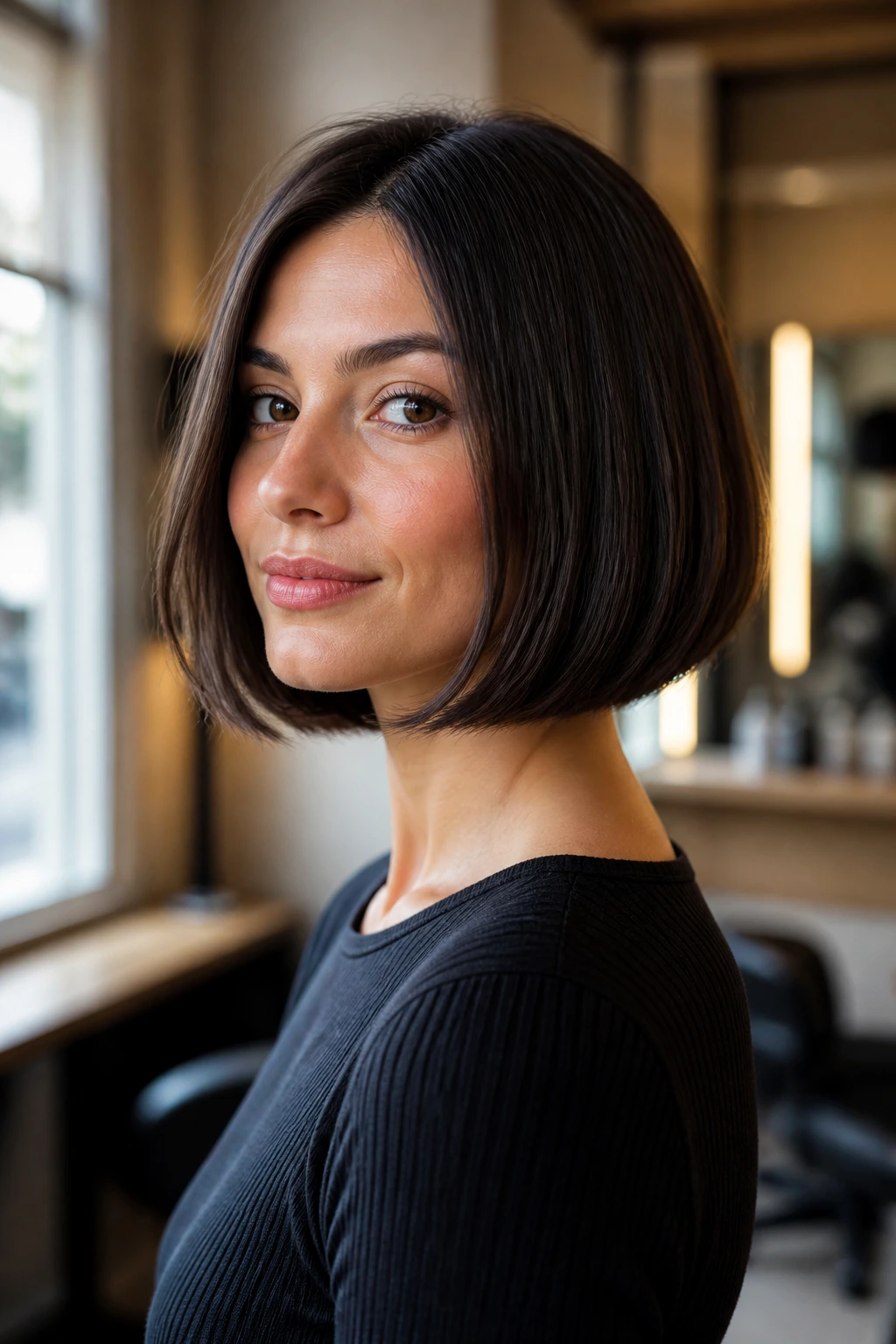
Soft Edge Bob: Ask for a blunt bob with a tiny bit of point-cutting through the ends. It keeps the line straight but removes that hard, helmet-like feeling some bobs can get. This works well if you want polish with a touch of softness around the jaw.
Thick-Hair De-Bulked Bob: Keep the perimeter strong, then remove weight from the inside only where the hair pushes out. This is the version for dense hair that balloons at the sides. It stays cleaner without turning into a triangle.
Fine-Hair Full-Line Bob: Leave the ends blunt and avoid too many internal layers. This creates the look of more hair at the bottom, which is where fine hair needs help most. A shorter chin length usually makes this variation look especially full.
Fringe-Forward Bob: Add blunt bangs or a heavy curtain fringe to a straight bob. The fringe changes the balance and makes the haircut feel more characterful. It’s a good choice if you like one decisive feature instead of an all-over sleek shape.
Air-Dry Bob: Keep the cut just a touch longer and ask for a perimeter that still falls well without heat. This version works if you want a clean shape that can live with your natural texture on lazy days. It won’t be pin-straight, but it can still look deliberate.
Keeping the Shape Sharp Between Trims
A straight bob needs routine more than it needs fuss. Wash as often as your scalp asks for it — for some people that’s every other day, for others it’s two or three days in between — but don’t let the ends sit greasy for long stretches. A slick root and clean ends make the haircut look intentional.
Trim timing matters more with shorter bobs. Around 5 to 7 weeks keeps most chin-length or jaw-length cuts crisp. Longer bobs can usually stretch a little farther, but once the corners start to sag, the haircut loses its edge fast. Fringe needs its own schedule. Bangs show wear first.
At night, a silk or satin pillowcase helps the ends keep their line. If your hair bends strangely while you sleep, a loose clip at the crown or a soft wrap can keep the shape calmer by morning. The goal is not perfection. It is reducing the amount of fixing you have to do before coffee.
Humidity is a nuisance, not a catastrophe. If your bob puffs in damp air, a tiny bit of smoothing cream at the ends and a quick pass with a blow-dryer can reset it. If you keep needing to fight the same section, the cut probably needs a trim rather than another layer of product.
Straight Bob Haircuts FAQ
Will a straight bob work on wavy hair?
Yes, if the cut is designed for how your waves fall when dry. A slightly longer bob or a blunt perimeter with a little internal weight often works better than a super-short line that fights the bend.
Is a center part or side part better for a straight bob?
A center part gives a cleaner, more symmetrical feel. A side part softens the face and hides small differences in density better. If you switch parts often, ask for a cut that can live with both.
How short is too short for a bob?
Once the hair is above the jaw and starts behaving more like a crop, you’re out of classic bob territory. That can still look great, but it changes the balance a lot. The jaw-length zone is the shortest point most people still read as a true bob.
Can fine hair wear a blunt bob without looking flat?
Absolutely. The trick is keeping the perimeter full and using just enough root lift at the crown. Too much layering usually makes fine hair look thinner, not lighter.
What if my hair flips out at the ends?
Then the cut probably lands right on a shoulder line, or the ends are too light. Moving the length slightly and keeping the bottom weightier usually fixes the problem better than more styling product.
Do straight bob haircuts need flat ironing every day?
No. A good blow-dry can do a lot of the work, especially if the cut is clean. Flat ironing is for refinement, not rescue.
How often should I trim a bob to keep it crisp?
Shorter bobs usually need attention every 5 to 7 weeks. Longer bobs can stretch longer, but once the line starts to blur, the whole haircut loses its point.
What should I do if the bob feels too severe?
Soften the front slightly, change the part, or add a fringe. You do not need to abandon the cut; usually one small adjustment changes the entire mood.
The Shape That Makes Everything Else Easier

A good straight bob has a funny kind of power. It looks simple from a distance, then reveals how much thought went into the line once you get close. That is what makes the shape satisfying: not the drama, but the control.
If you want one haircut that can be sharp, soft, grown-up, playful, or almost severe depending on how you wear it, this is the one to keep circling back to. Start with the perimeter. Get the line right. The rest tends to fall into place more easily than people expect.
