



A good bob haircut on Black women does more than sit at the jaw. It frames the face, respects shrinkage, and decides whether your style still looks deliberate after a long day, a head wrap, or a humid commute. The best bob haircuts for Black women know where the hair wants to live; they do not fight coils, curls, or a fresh silk press, they make a shape around them.
I have a soft spot for a bob that knows what it is. A blunt edge on dense hair can look clean and expensive. Too many layers, though, and the whole thing turns into a triangle that swallows the neck. The good ones understand weight, movement, and where the eye needs to land.
Some of these cuts are built for wash-and-go curls. Others want a flat iron, a hot comb, or a round-brush blowout. A few are protective, which means you get the bob shape without putting daily heat on your hair. That mix is the point.
Why These Bobs Feel Different on Black Hair
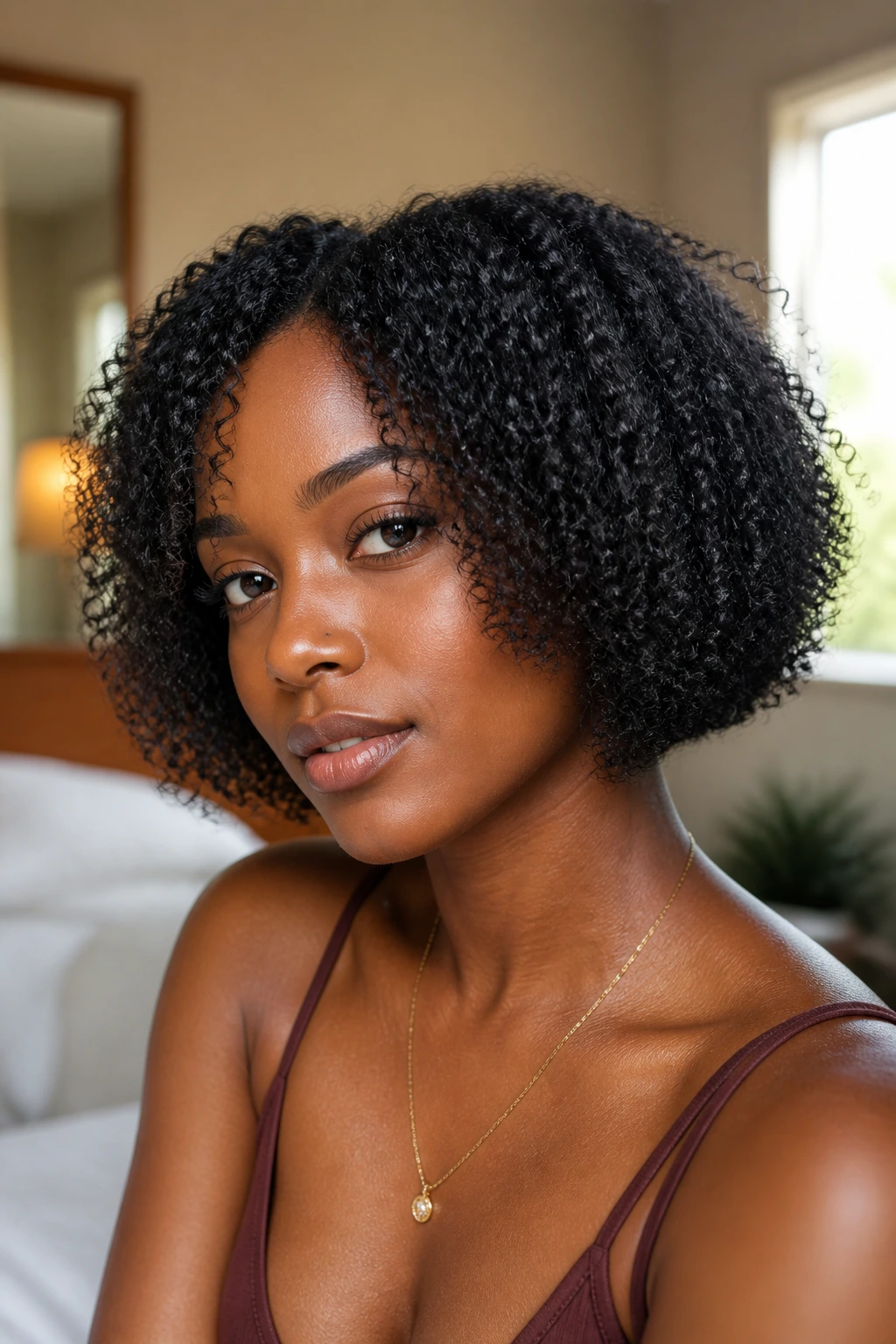
Shrinkage-aware shape: Black hair can lose a lot of visible length once it dries, so a bob has to be planned around the hair’s real behavior, not the length it shows in a stretched state.
Salon language included: Each look below gives you a shape, a finish, and a maintenance level, which makes it easier to explain what you want without waving around three different screenshots.
Texture-friendly options: Some bobs are meant for coils and curls, some are meant for pressed hair, and some can move between the two if you style them with a little intention.
Face-framing choices: A bob can sharpen a round face, soften a square jaw, or bring balance to a longer face without needing heavy layers everywhere.
Maintenance range: There are polished cuts that need regular trims and low-drama shapes that can grow out without getting sloppy by week two.
1. Chin-Length Blunt Bob
This is the cut that makes the jaw do the talking. A chin-length blunt bob on Black hair looks especially crisp when the perimeter is kept dense and the ends are cut in one clean line instead of being thinned out. On pressed hair, it lands with a sharp silhouette; on natural curls, it still reads polished, just a little softer around the edges.
Ask for the longest point to kiss the chin, not the cheekbone. That tiny difference changes the whole mood. If your hair is thick, keep the interior light on layers so the bottom line stays solid. If it’s fine, the blunt edge gives you the feeling of more body without padding it out with a lot of movement.
2. A-Line Bob With a Narrow Nape
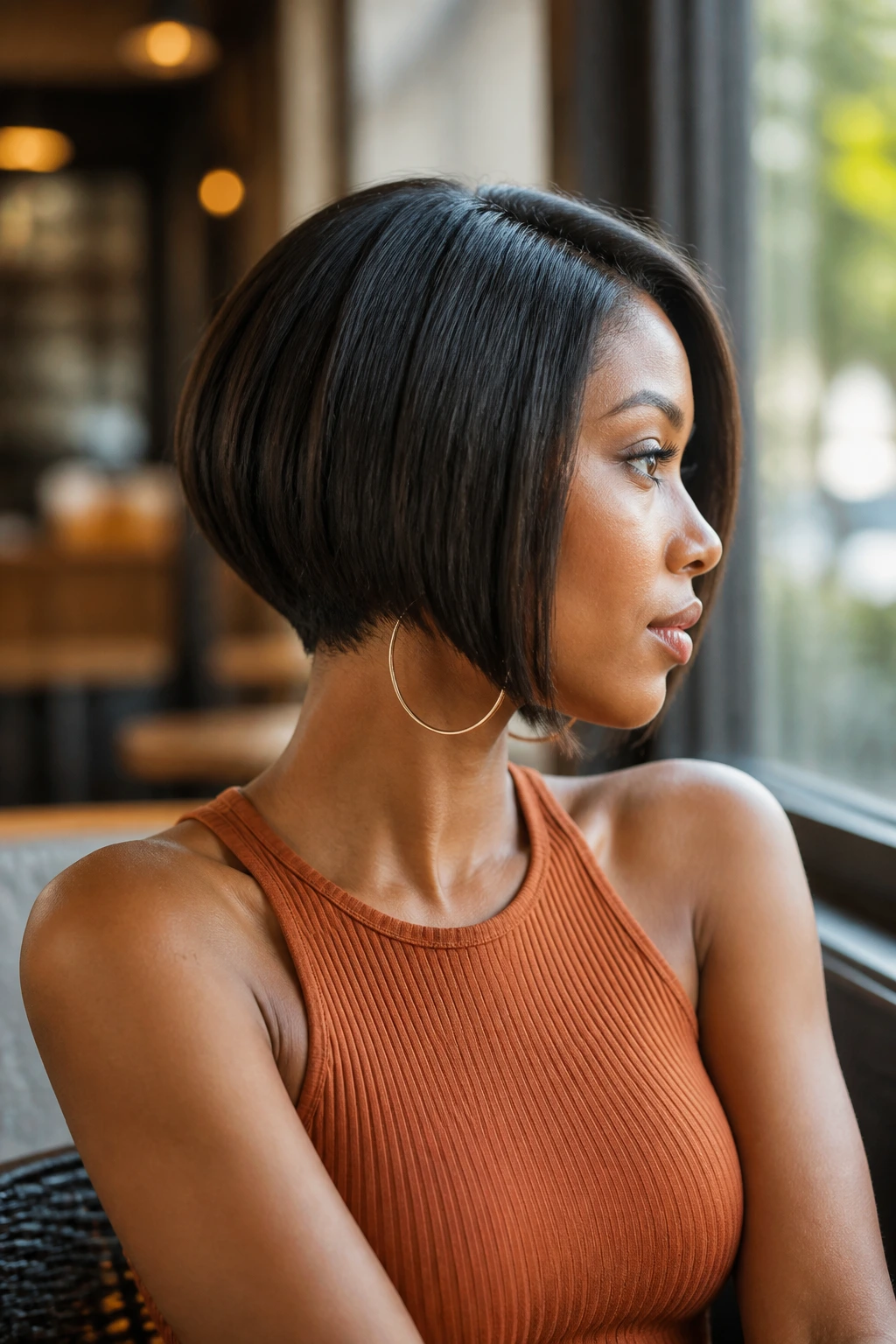
The A-line bob is the one that stays interesting from every angle. It sits shorter in the back and gradually gets longer toward the front, which gives Black hair a little built-in drama without needing a heavy side sweep or a lot of product.
What I like here is the way it trims bulk at the nape. If your hair tends to puff out at the back, this shape keeps the neckline neat while letting the front graze the jaw. It’s one of the better choices if you want a bob that looks sleek but not stiff.
3. Soft Asymmetrical Bob
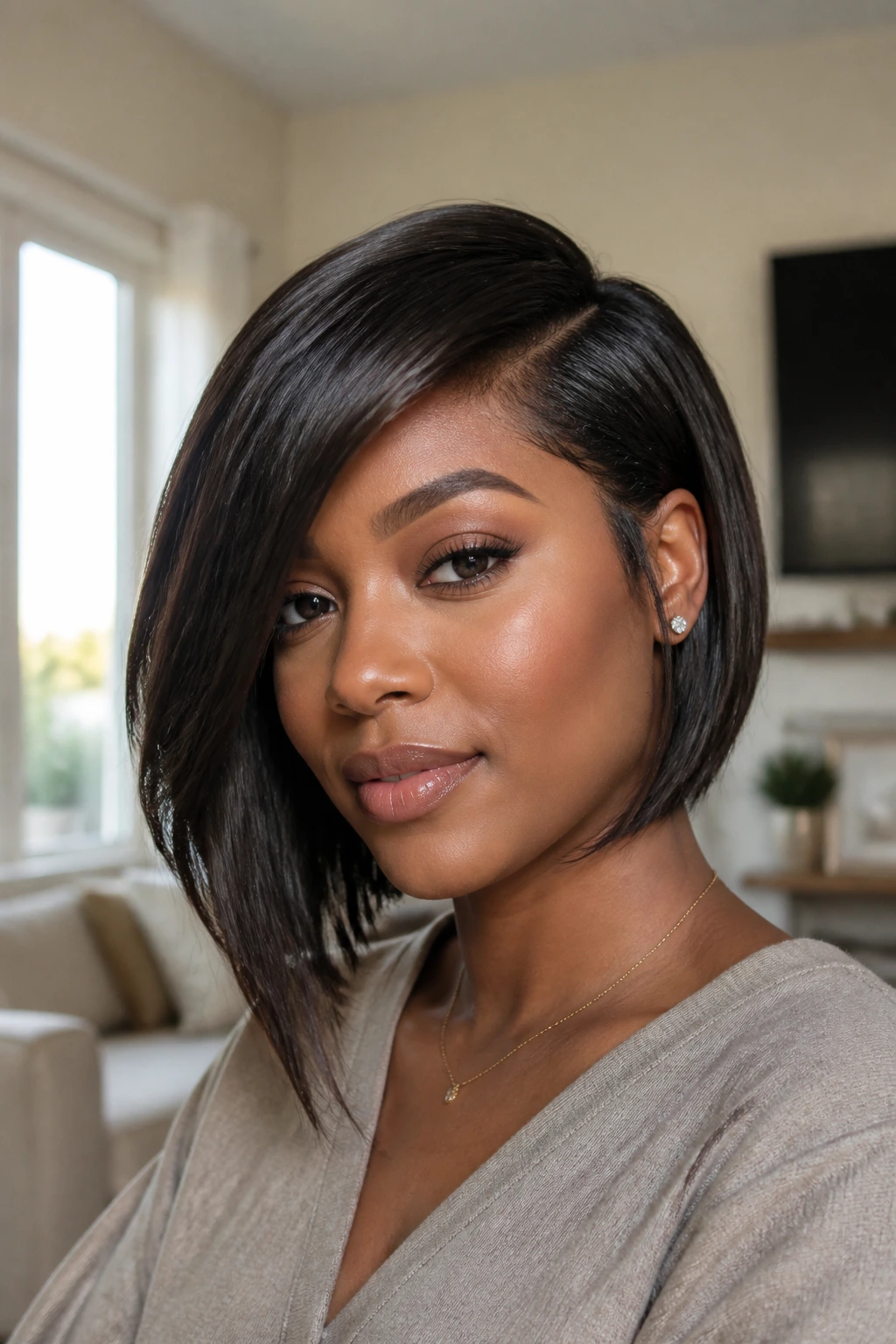
A soft asymmetrical bob works when you want a little attitude without looking like you tried to start a trend at the salon. One side hangs a touch longer than the other, but the shift is subtle enough that it still feels wearable for every day.
This is a good one if your face is round or softly oval and you want the cut to pull the eye diagonally. Keep the difference in length small if you wear your hair curly; too much asymmetry can get lost once the curls spring up. On straightened hair, the angle shows up immediately, which is half the fun.
4. Deep Side-Part Bob
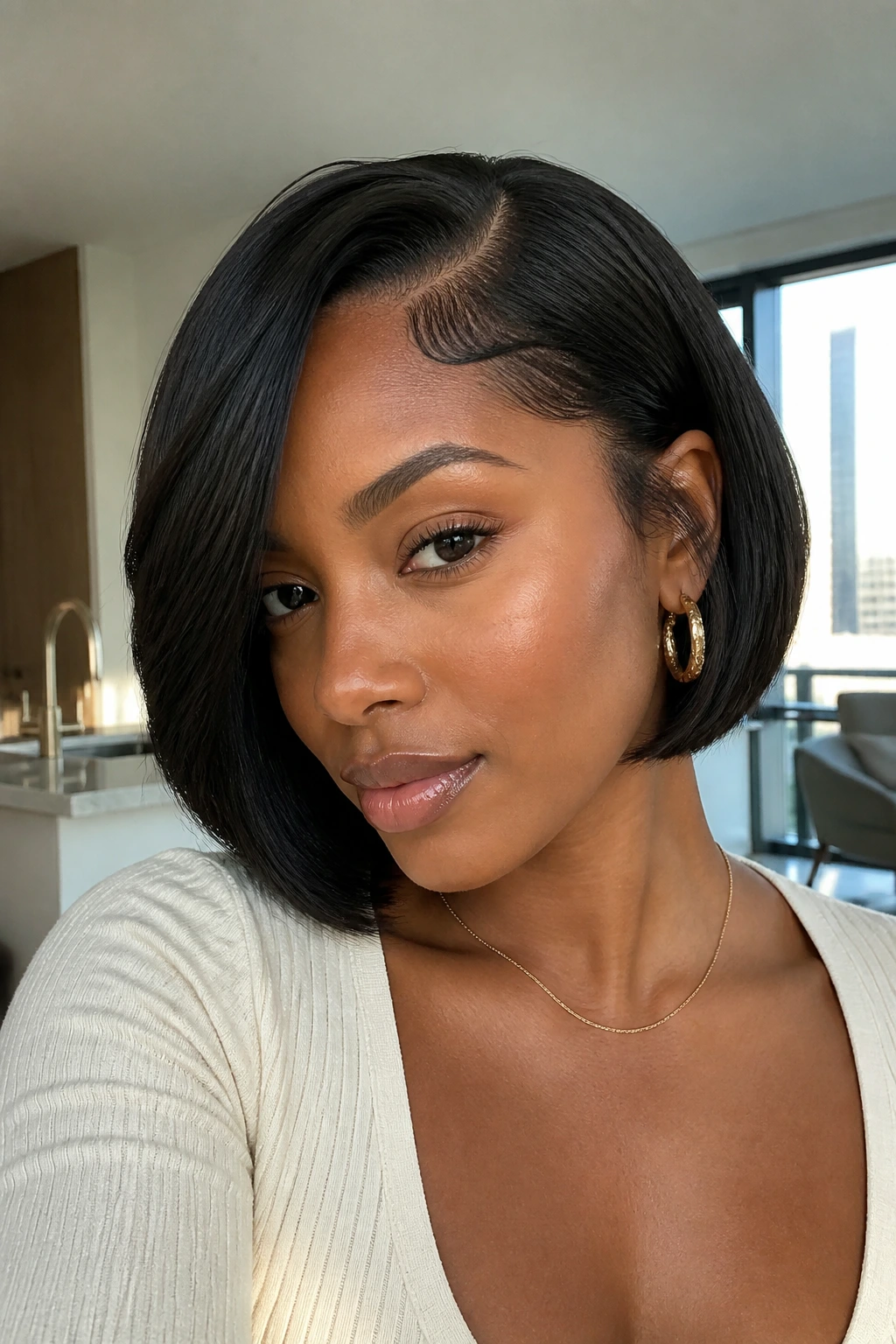
A deep side-part bob is pure shape. The part creates lift on one side and a clean fall on the other, which gives Black hair a polished, almost sculpted look when the roots are smoothed properly. It’s especially good if your hair has enough density to hold that side sweep without collapsing.
The trick is not overloading the front with layers. You want movement, not a face curtain. A deep side part paired with a bob that hits right at the jaw can make the whole style feel more expensive than the cut technically is.
5. Curly Wash-and-Go Bob
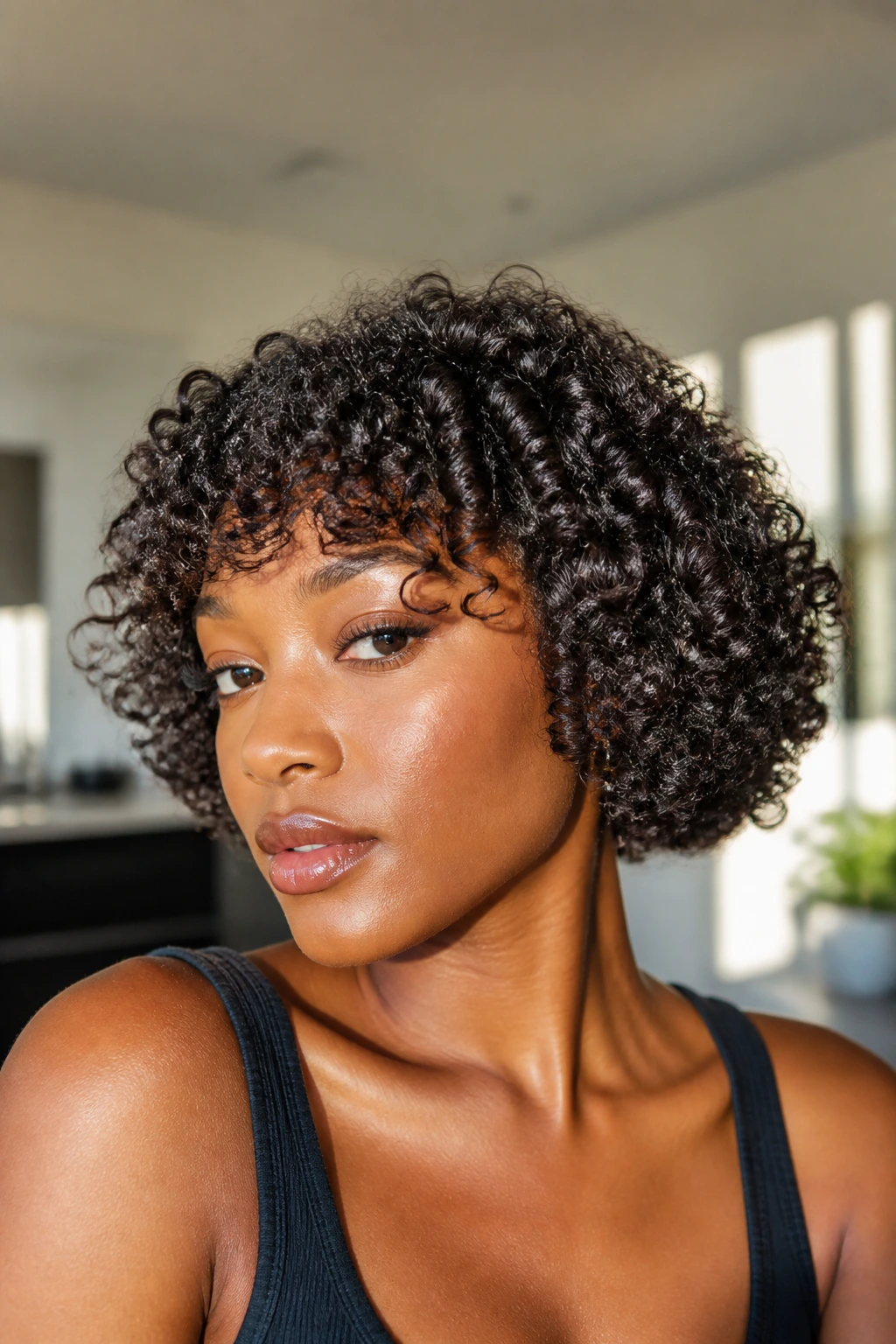
If you wear your curls out, this is the version that respects them instead of flattening them into a fake straight shape. A curly wash-and-go bob should be shaped so the curls stack neatly rather than ballooning outward at the sides. That often means a dry cut or a carefully stretched cut, because shrinkage changes everything.
This style looks best when the curl pattern is defined from root to tip and the ends are trimmed often enough to keep the outline even. A little gel and a good diffuser can turn a plain bob into a shape with real bounce. Not frizzy bounce. Controlled bounce.
6. Tapered Nape Bob
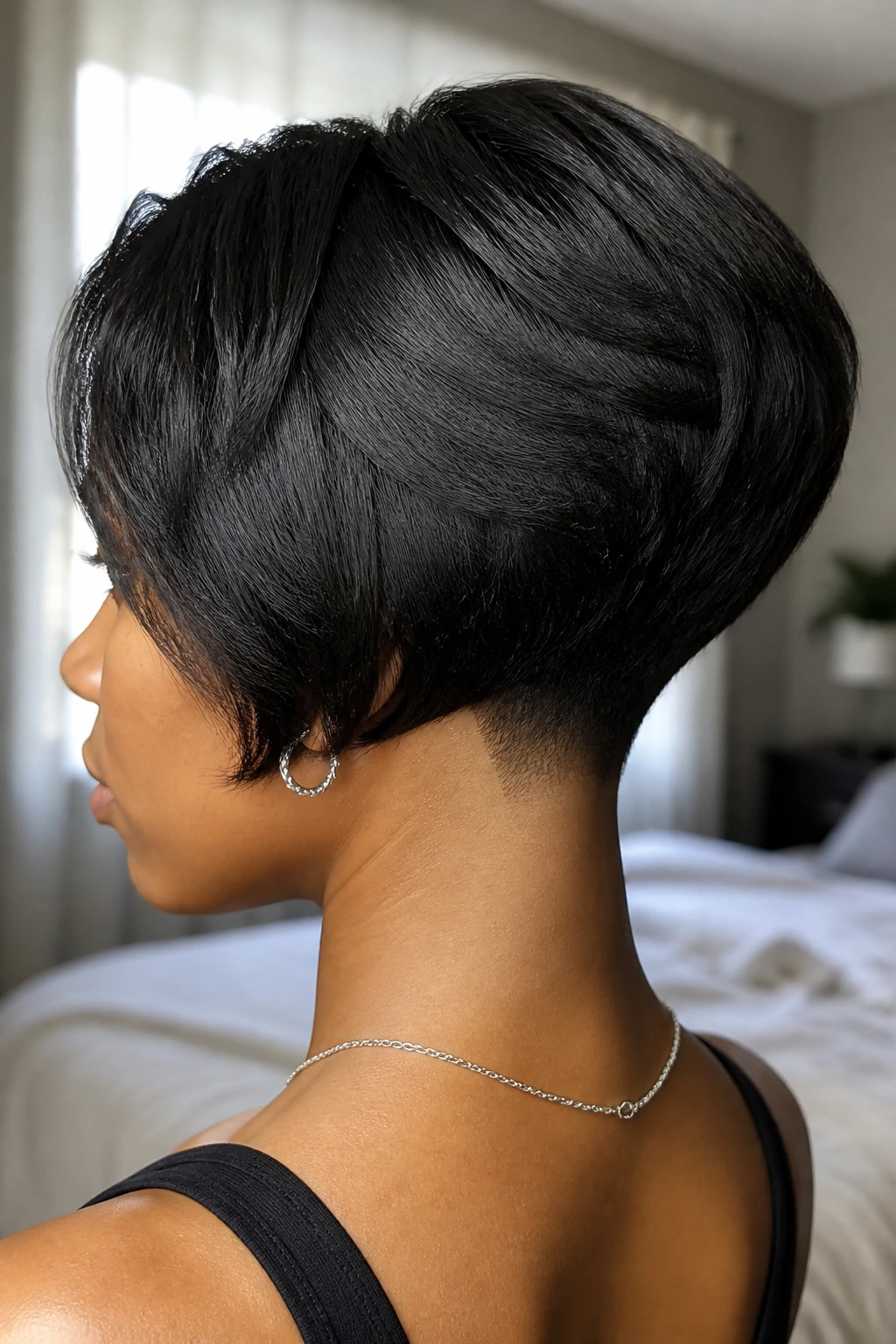
The tapered nape bob is a smart cut for thicker hair because it removes weight where you do not want it. The back sits close to the neck, almost tucked in, while the top and sides keep enough fullness to feel like a real bob instead of a helmet.
It’s also one of the cleanest choices for natural hair that likes volume. When the nape is tapered well, the neckline stays neat even if the rest of the style gets a little softer by day three. I like this one for people who want shape with less daily fuss.
7. Collarbone Lob With Invisible Layers
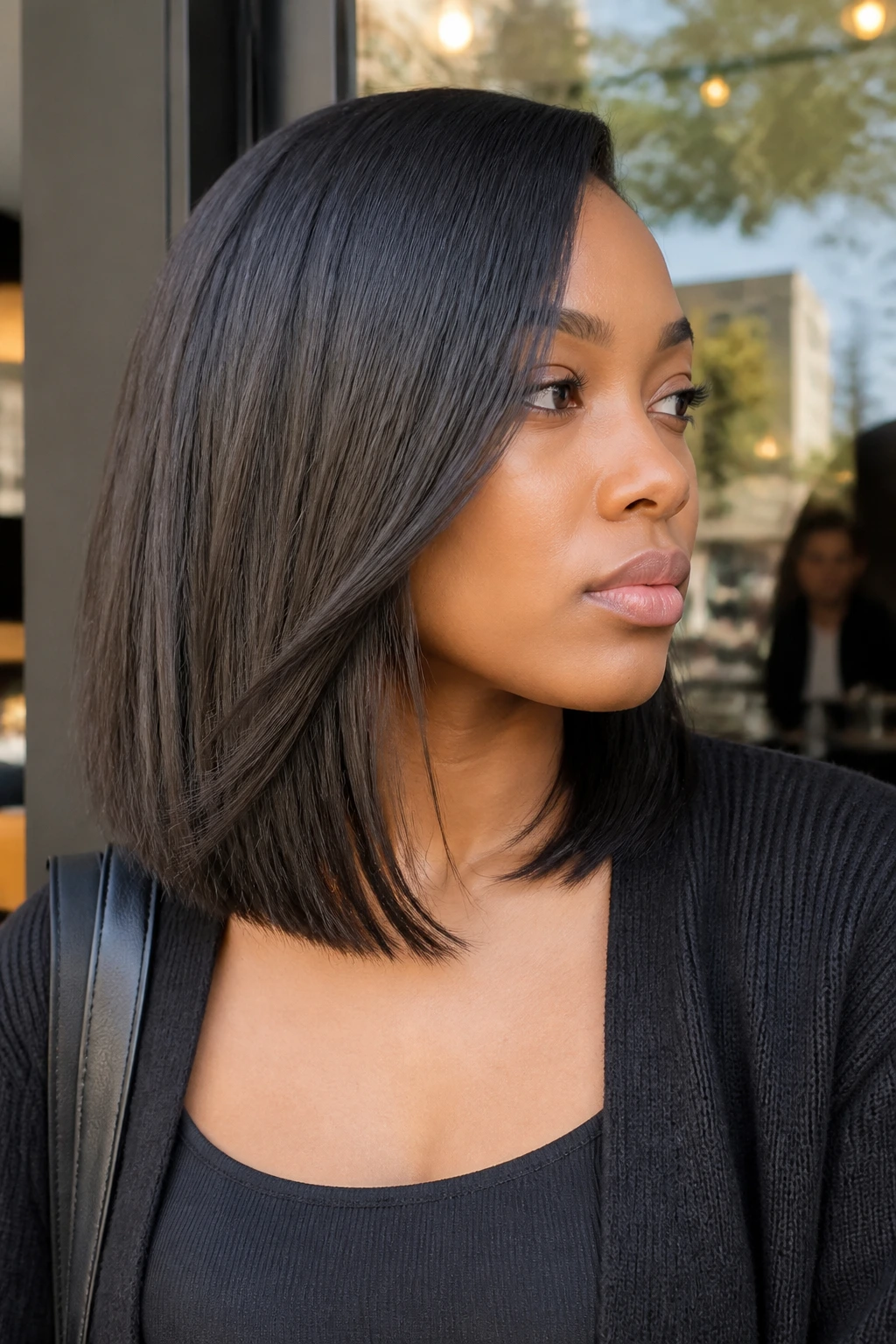
A lob is just a bob with more room to breathe, and that extra length matters if you’re not ready to go short-short. The collarbone version gives Black hair a swing that feels easy, especially when the ends are thinned with invisible layers rather than obvious choppy cuts.
Those hidden layers keep the shape from looking boxy while letting the hair move when you walk. It’s the safest cut in the bunch if you’re bob-curious but nervous about commitment. You still get the outline. You just get a little more hair to tuck behind your ear.
8. French Bob With Soft Bangs
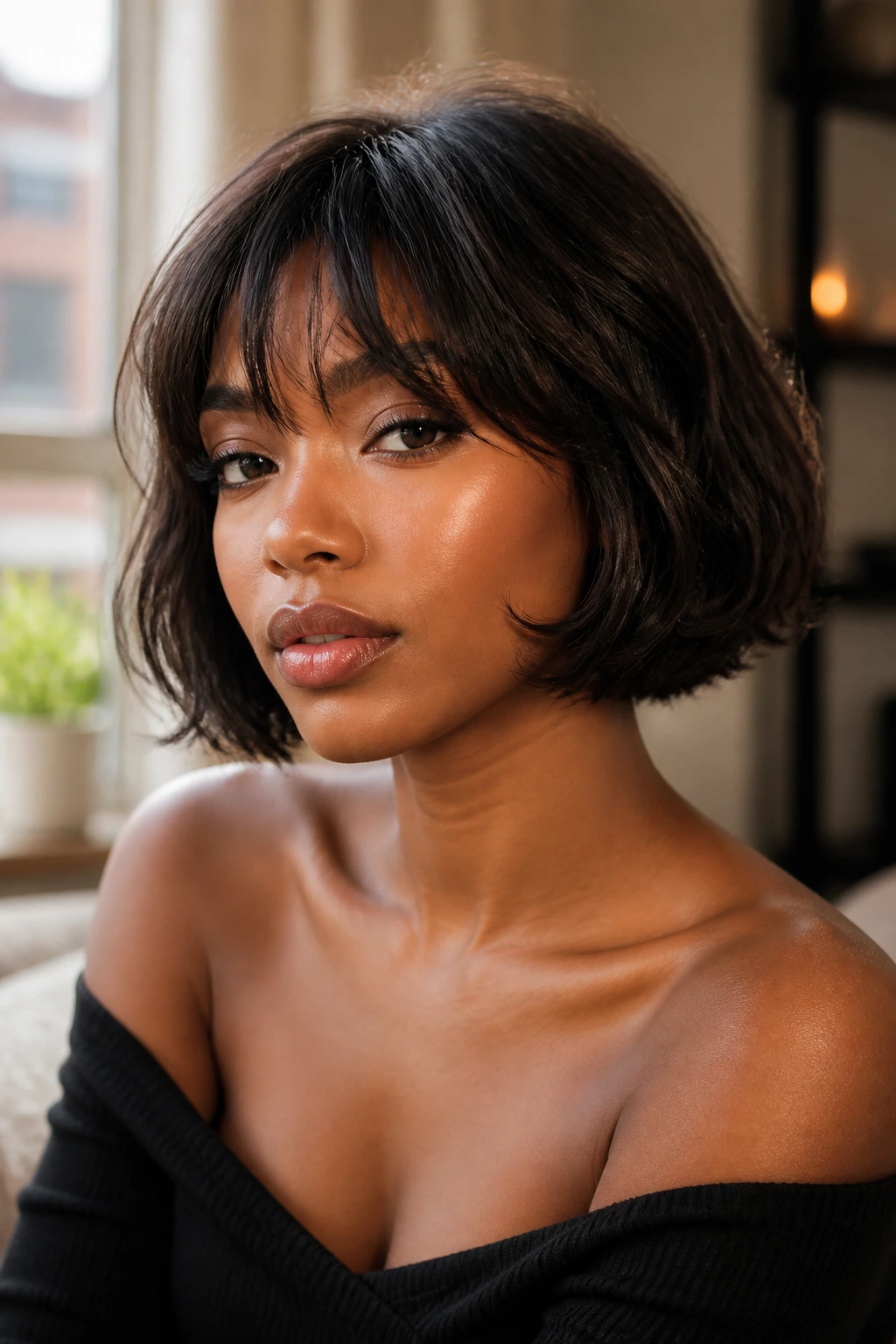
This one sits short, cheeky, and close to the face. A French bob with soft bangs can look sharp on Black women when the fringe is cut with enough softness to move with the hair instead of standing straight across the forehead like a ruler.
It works especially well on curls that can be shaped forward, or on pressed hair that has a little bend at the ends. Keep the bangs light. Heavy, blunt fringe on dense hair can get crowded fast, and the whole cut starts competing with itself.
9. Silk-Pressed Center-Part Bob
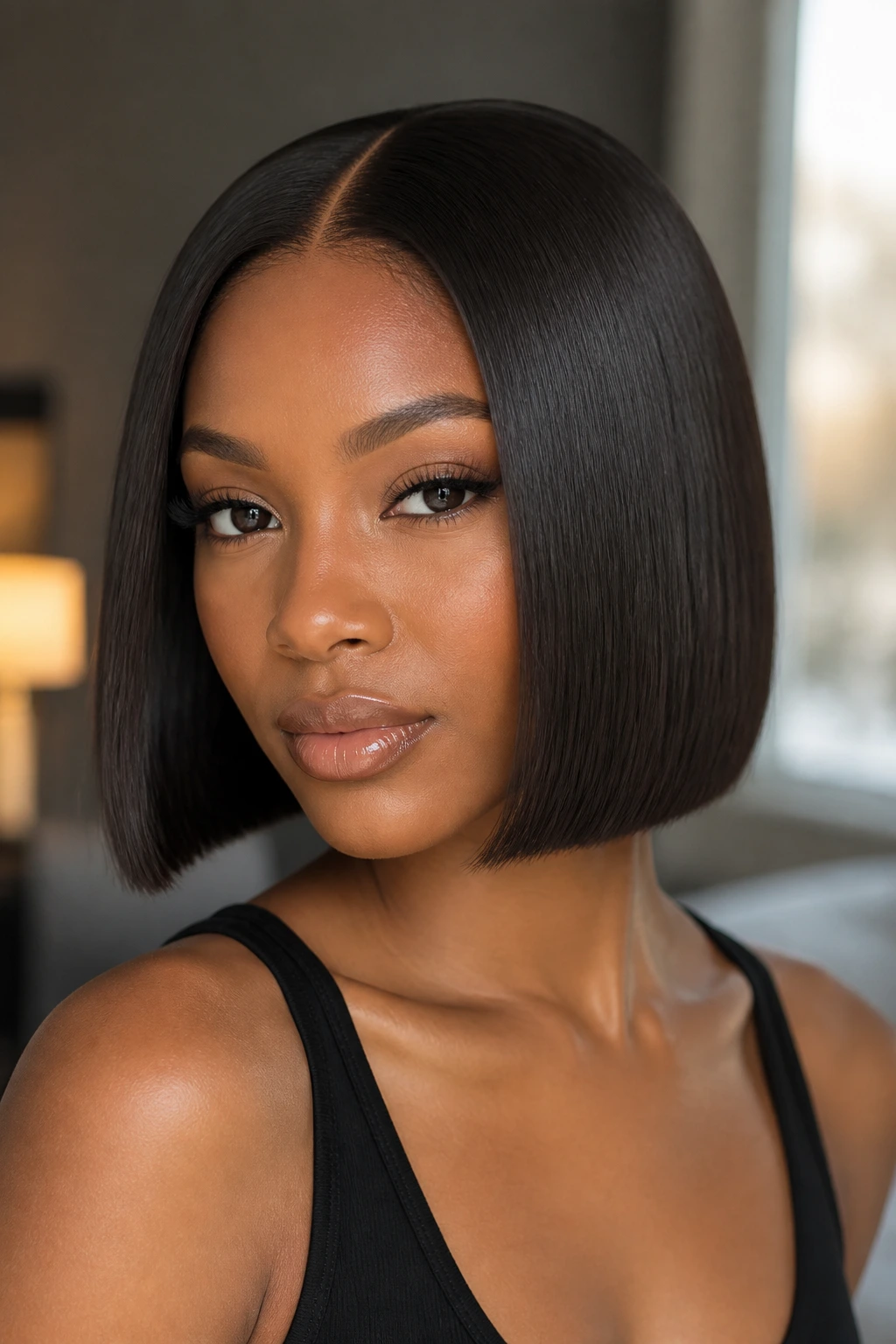
A silk-pressed center-part bob is all about line and sheen. The middle part creates symmetry, and when the hair is pressed flat and then beveled slightly at the ends, the whole shape feels clean in a way that can be hard to fake with styling products alone.
This is a strong choice for formal settings or for anyone who likes a bob that looks calm and controlled. The key is heat discipline: one good pass, proper protectant, and enough tension to smooth the roots without burning the life out of the ends. Chasing a glassy finish with too much heat is where people ruin it.
10. Feathered Bob With Airy Ends
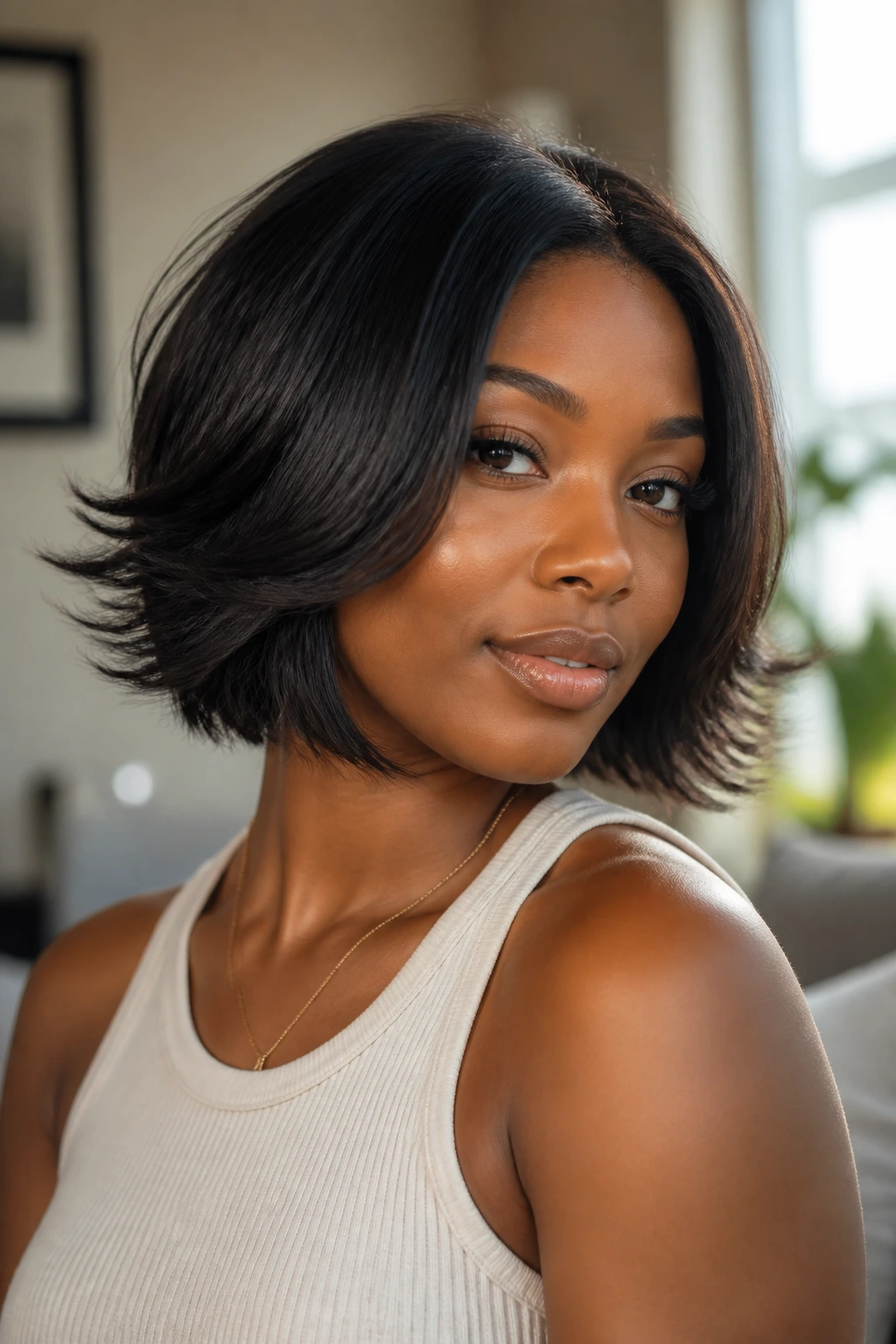
Feathered ends are for people who want softness instead of a hard edge. The bob still has a shape, but the ends are lightly texturized so they move more like fabric than cardboard. On Black hair with medium-to-high density, that can be a useful way to remove heaviness without turning the cut frizzy.
I like this on blowout-styled hair and on relaxed hair that needs a little lift around the face. The feathering should stay at the very bottom of the shape, not all through the cut, or you lose the clean bob outline. A little movement. Not a shag explosion.
11. Side-Swept Fringe Bob
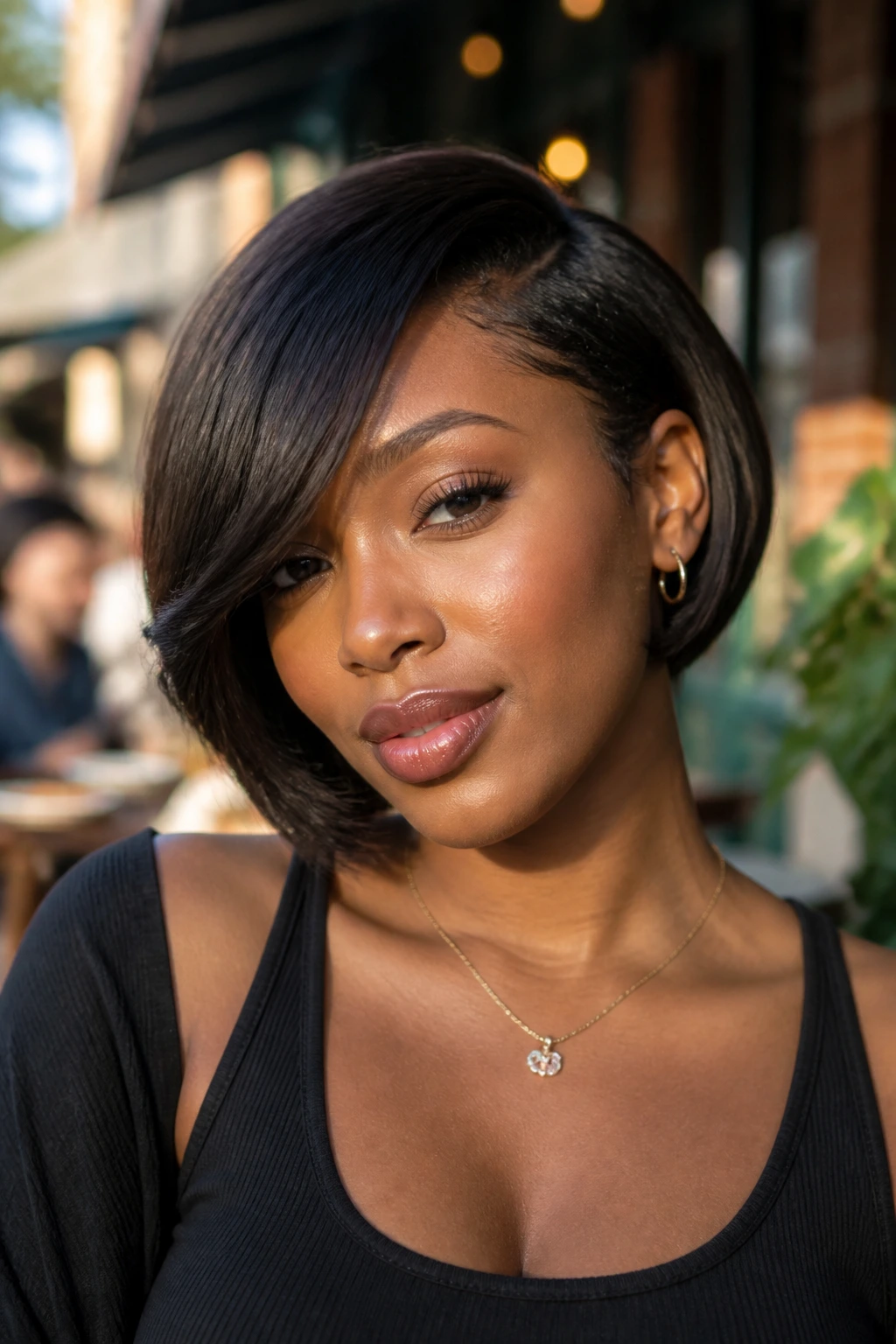
A side-swept fringe bob does a nice job of softening the forehead and drawing attention toward the eyes. The fringe should graze the cheekbone or fall just below it, with enough length to tuck back if you get tired of seeing hair on your face all day.
This cut plays well with both curls and pressed hair. On curls, the fringe should be cut longer than you think, because shrinkage will shorten it fast. On straight hair, the sweep looks sleek and a little glamorous without needing a full side part.
12. Rounded Bubble Bob
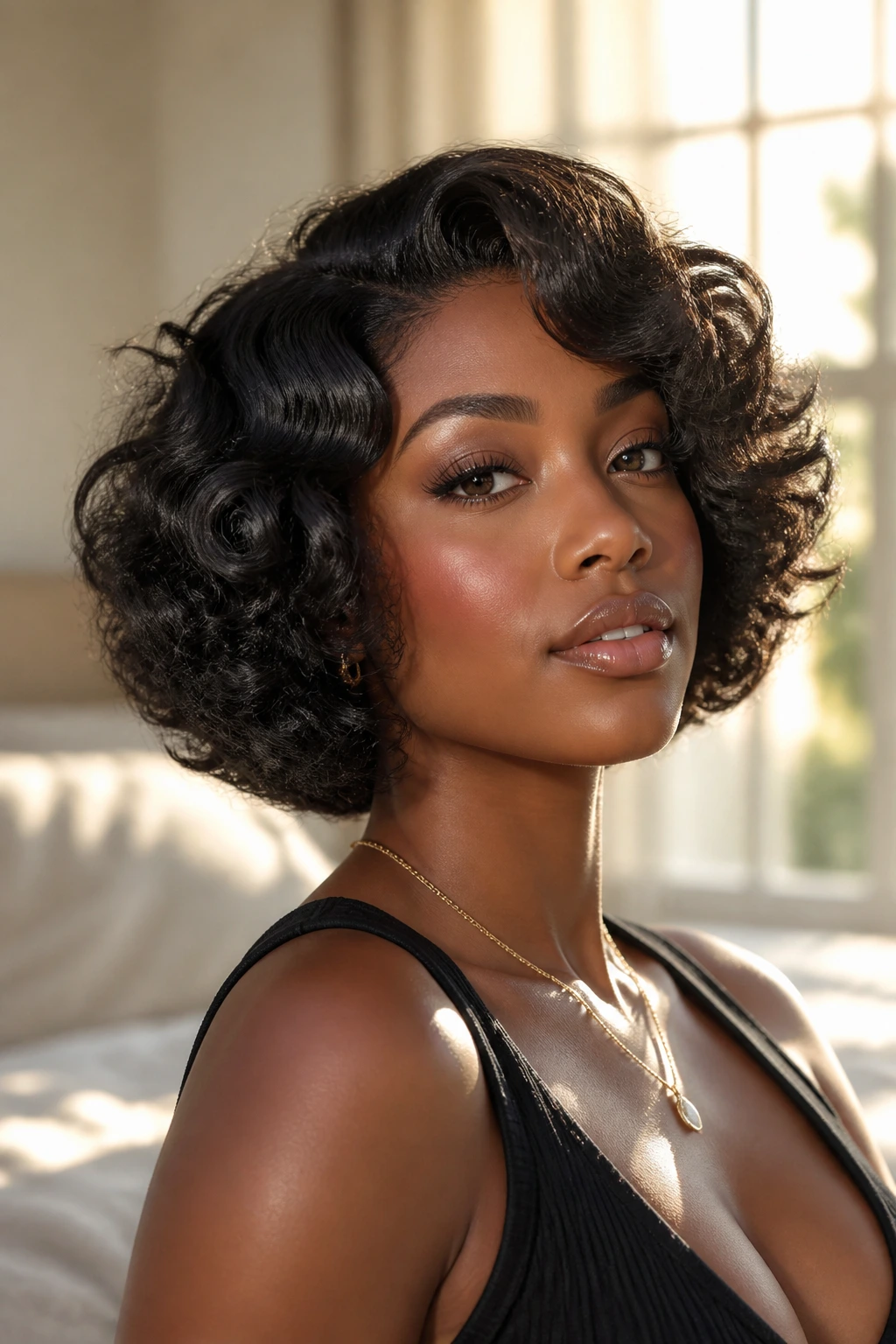
The rounded bubble bob is for someone who likes a bob with a little body at the sides. The silhouette curves gently under, which can make coily or curly hair look fuller and more intentional instead of wide in random places.
What makes it work is balance. The shape should be rounded, not puffy. That usually means keeping the outline trimmed regularly and styling with a round brush or a diffuser, depending on whether you wear it smooth or textured. It’s a very specific shape, and that specificity is the appeal.
13. Ear-Length Mini Bob
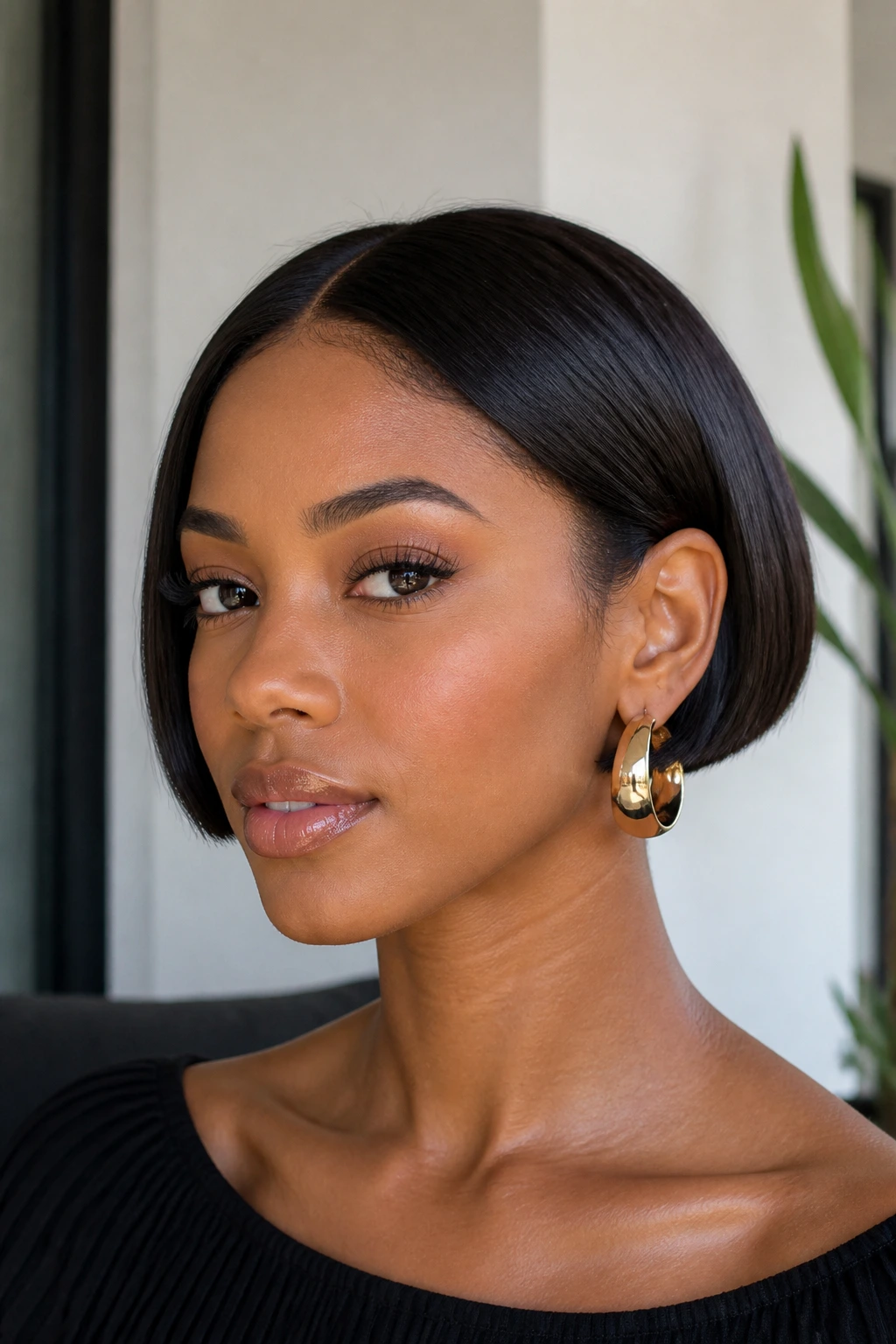
Short bobs are not for everybody, and that is part of their charm. An ear-length mini bob brings the focus straight to the face and neck, so the cut has to be clean. If the perimeter is uneven, you will know immediately.
This length looks especially good on women who like strong earrings, sharp brows, or a collarbone that deserves attention. Keep the ends blunt and the neckline tidy. A mini bob with frayed ends loses its edge fast, and at this length there is nowhere to hide.
14. Curly Shag Bob
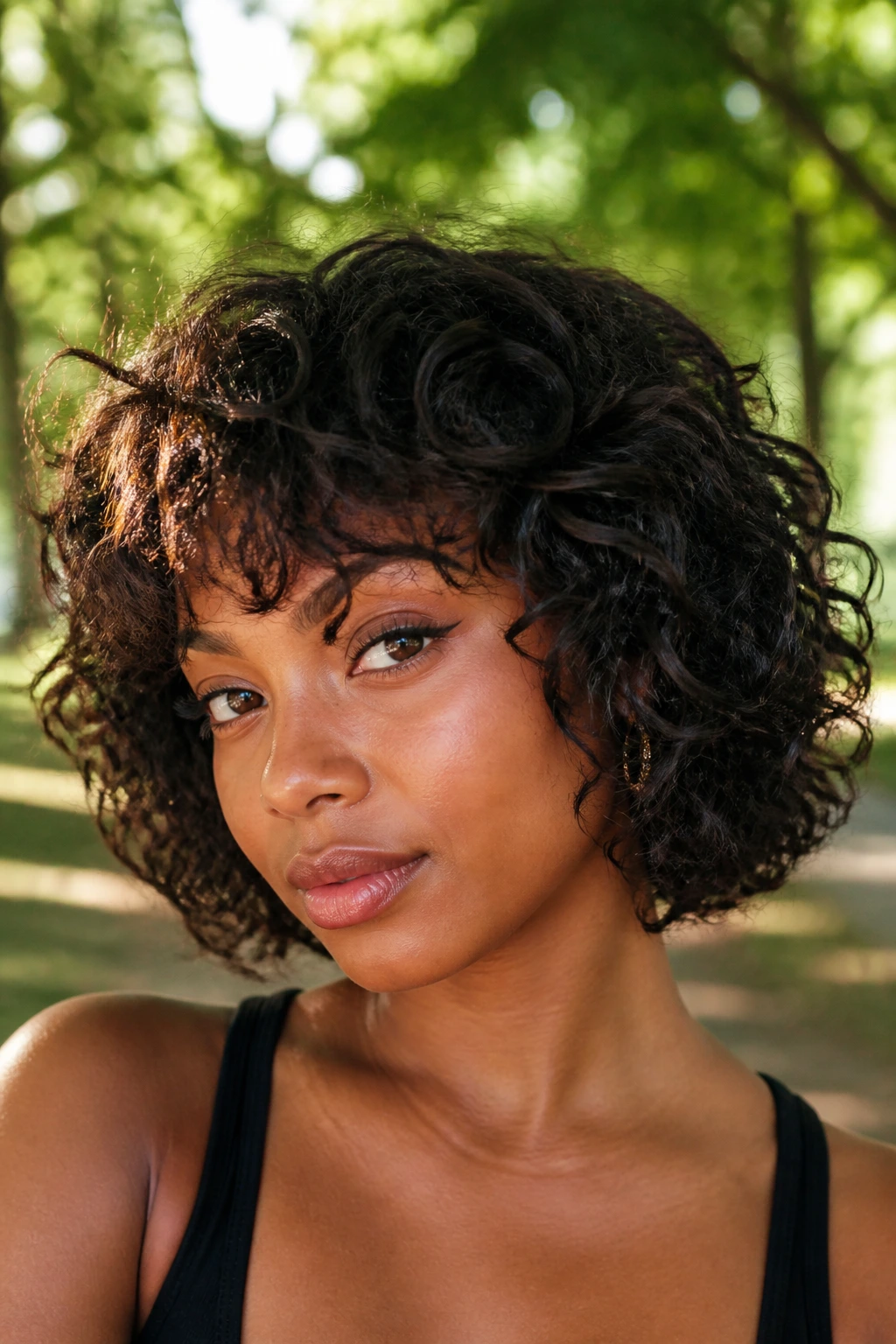
A curly shag bob is for the woman who wants movement more than precision. The layers are built to help curls stack and separate, which can be a gift if your hair gets heavy around the bottom when it’s one length all the way through.
It has a looser, lived-in feel than a blunt bob, but that does not mean it should look messy. The best version still has a shape, just a softer one. If your curls are tighter, ask for the layers to be long and gradual so the cut doesn’t lose too much body at the ends.
15. Braided Bob
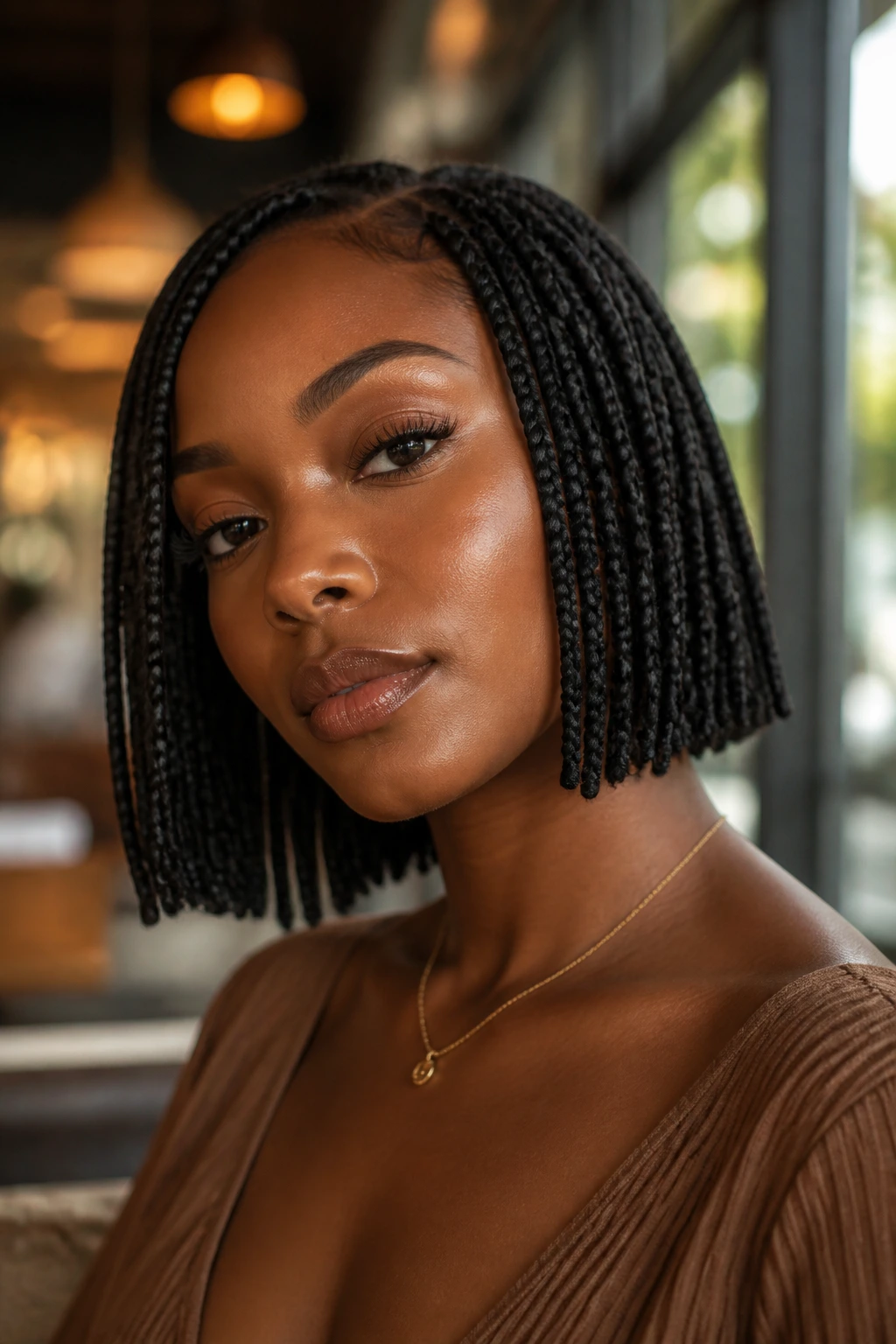
A braided bob gives you the bob silhouette without asking your natural hair to do all the daily work. Knotless braids, box braids, or even a sleek feed-in finish can be cut or installed at chin or shoulder length so the shape lands right where you want it.
The detail that matters most is the edge at the bottom. A braided bob looks best when the ends are trimmed into a clean line or finished so they sit evenly. If the braids are too long, the whole look turns into standard braids; the bob shape disappears.
16. Twist-Out Bob
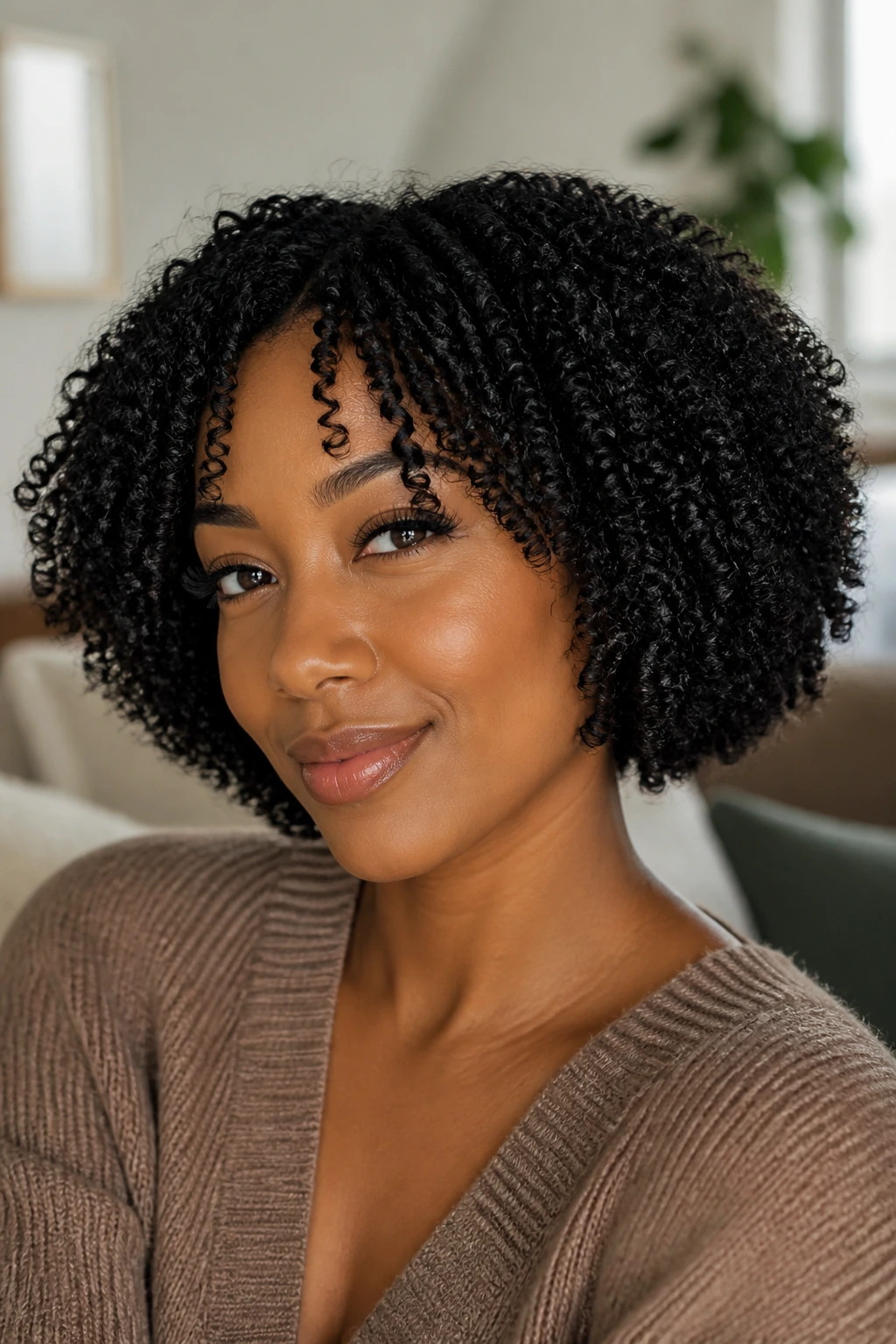
A twist-out bob is one of the softer versions in the whole group. The cut depends on how your coils fall after they’re unraveled, so it should be shaped with that spring in mind rather than cut as if the hair will hang straight.
This works nicely if you want a romantic, touchable bob that still has obvious structure. The ends should land even when the hair is fully fluffed out, not just when it’s freshly undone. A touch of cream or foam can help the pattern stay separated without turning crunchy.
17. Face-Framing Layered Bob

Face-framing layers are the quiet cheat code of bob haircuts. They let you keep length in the front while removing weight in the spots that would otherwise sit flat or boxy around the cheeks.
I like this cut for women who want the bob look but need a little softness around the face. The front pieces can hit the jaw or just below it, while the back stays a touch shorter. Done right, it makes the whole haircut feel lighter without looking thin.
18. Inverted Bob
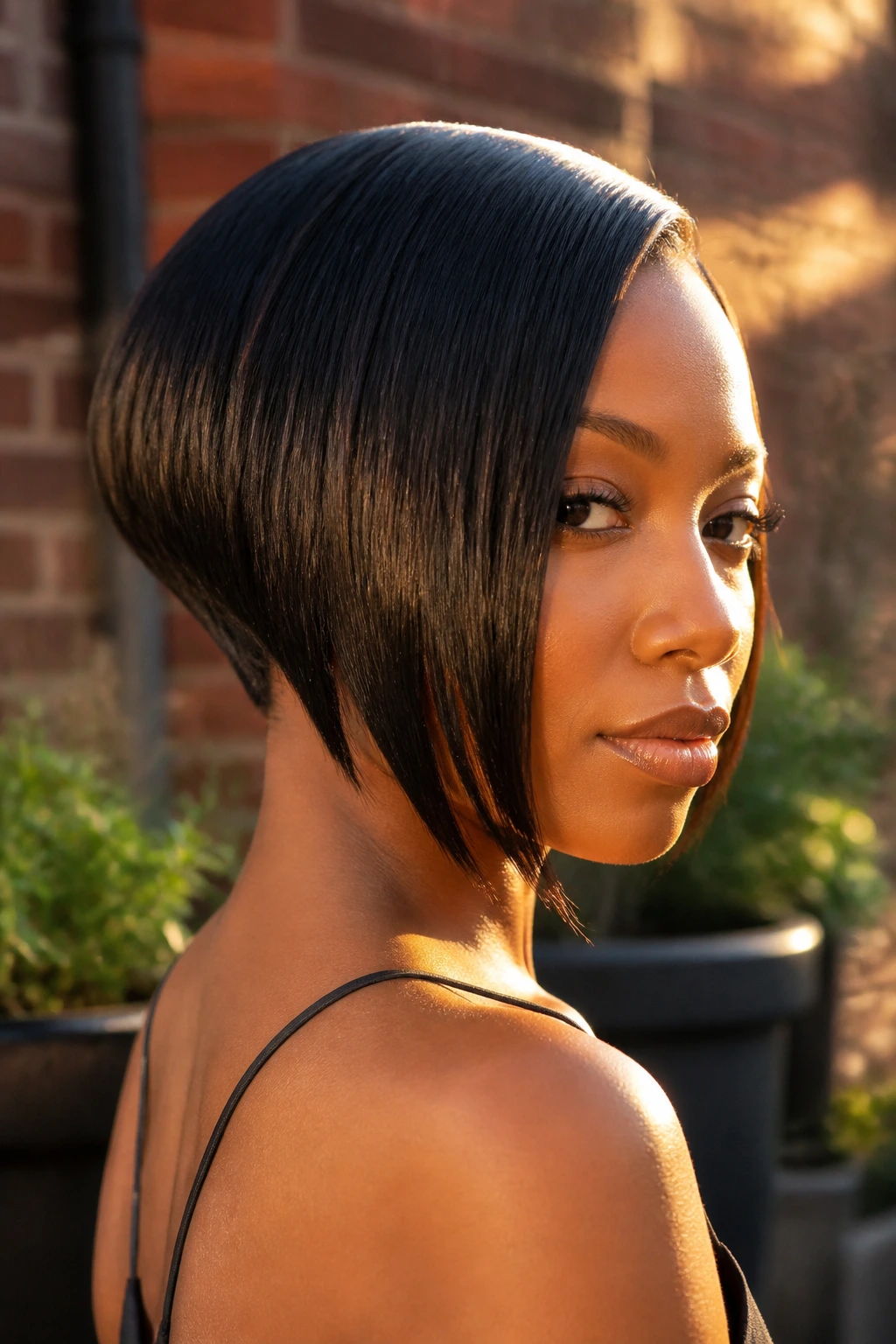
An inverted bob leans into shape hard: shorter in the back, longer in the front, and obvious about it. On Black hair, that angle can look very sharp if the nape is neat and the front pieces are cut to skim the jawline instead of hanging limp.
This one asks for precision. If the angle is too shallow, it reads as accidental. If it’s too steep, the front starts feeling disconnected from the rest of the head. The sweet spot is a clean slope that looks intentional from the side and the front.
19. Stacked Bob
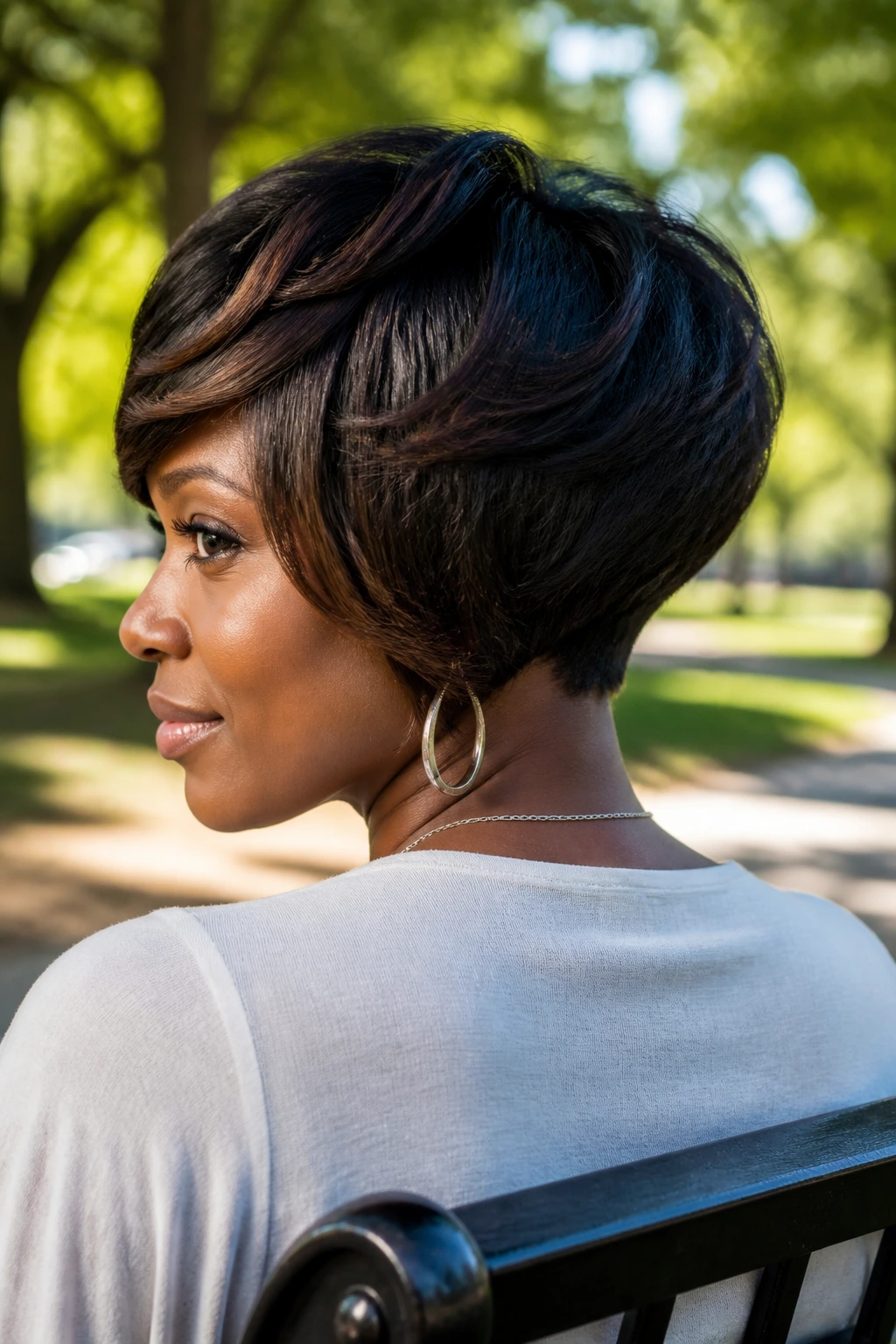
The stacked bob is built on graduation, which means the back has layers stacked one over another to build lift at the crown. That can be a gift for finer hair, but it also works for denser textures if you want the back to sit neatly instead of flaring out.
It’s a haircut with a bit of structure in it, the kind that looks polished even when you have not done much to it. Ask the stylist to keep the graduation controlled. Too much stacking and the back gets too puffy. Too little, and you lose the lift that makes the cut special.
20. Wet-Look Bob
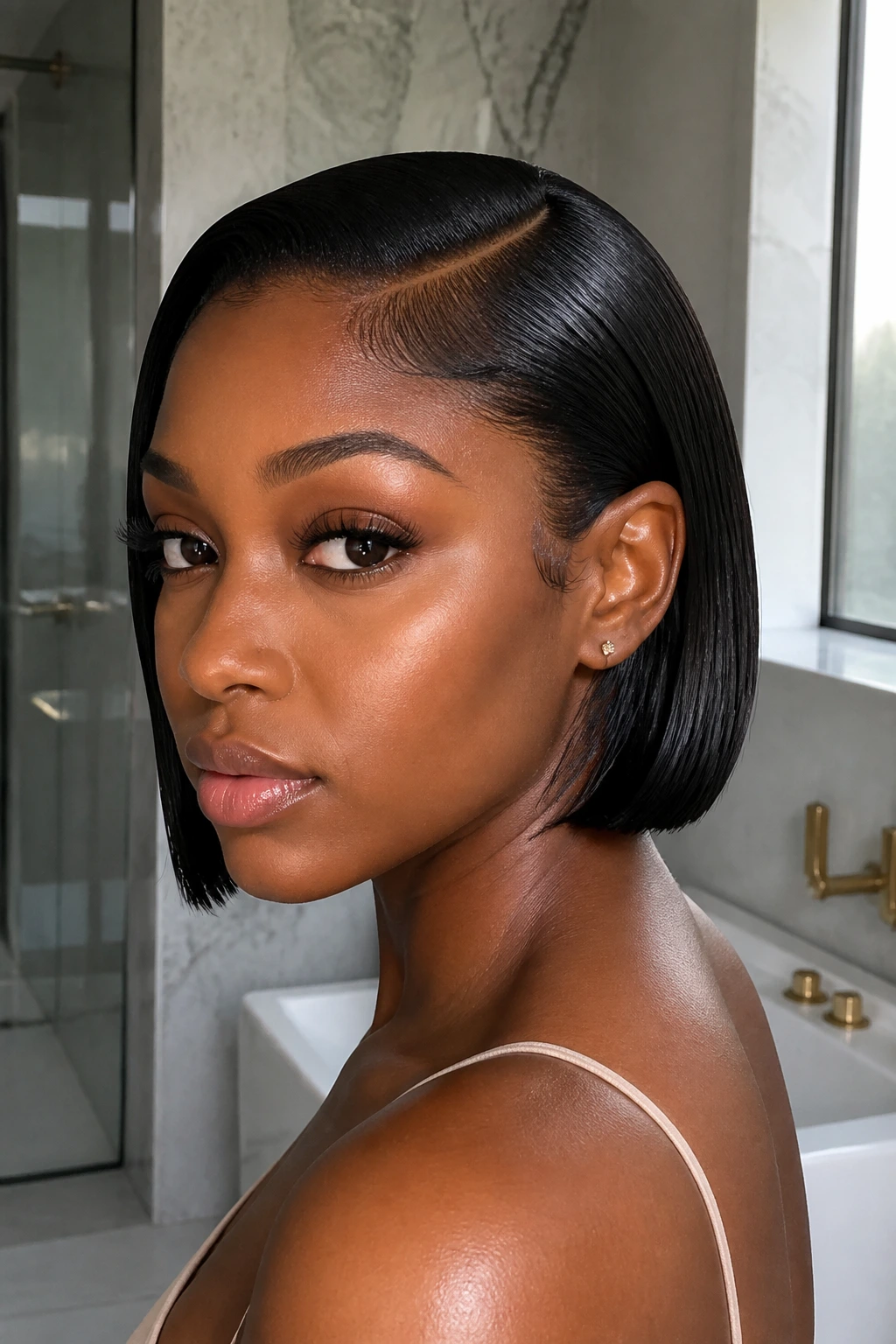
The wet-look bob is sleek, glossy, and not shy. It uses gel or styling cream to keep the hair close to the head with a high-shine finish, which makes the bob silhouette feel modern without needing extra length or decoration.
This is the kind of style that works best when the cut underneath is already clean. If the perimeter is ragged, the wet finish will reveal every bit of it. Use it when you want the hair to look sculpted, not soft. And yes, it can feel a little dramatic. That’s the point.
21. Old-Hollywood Side-Part Bob
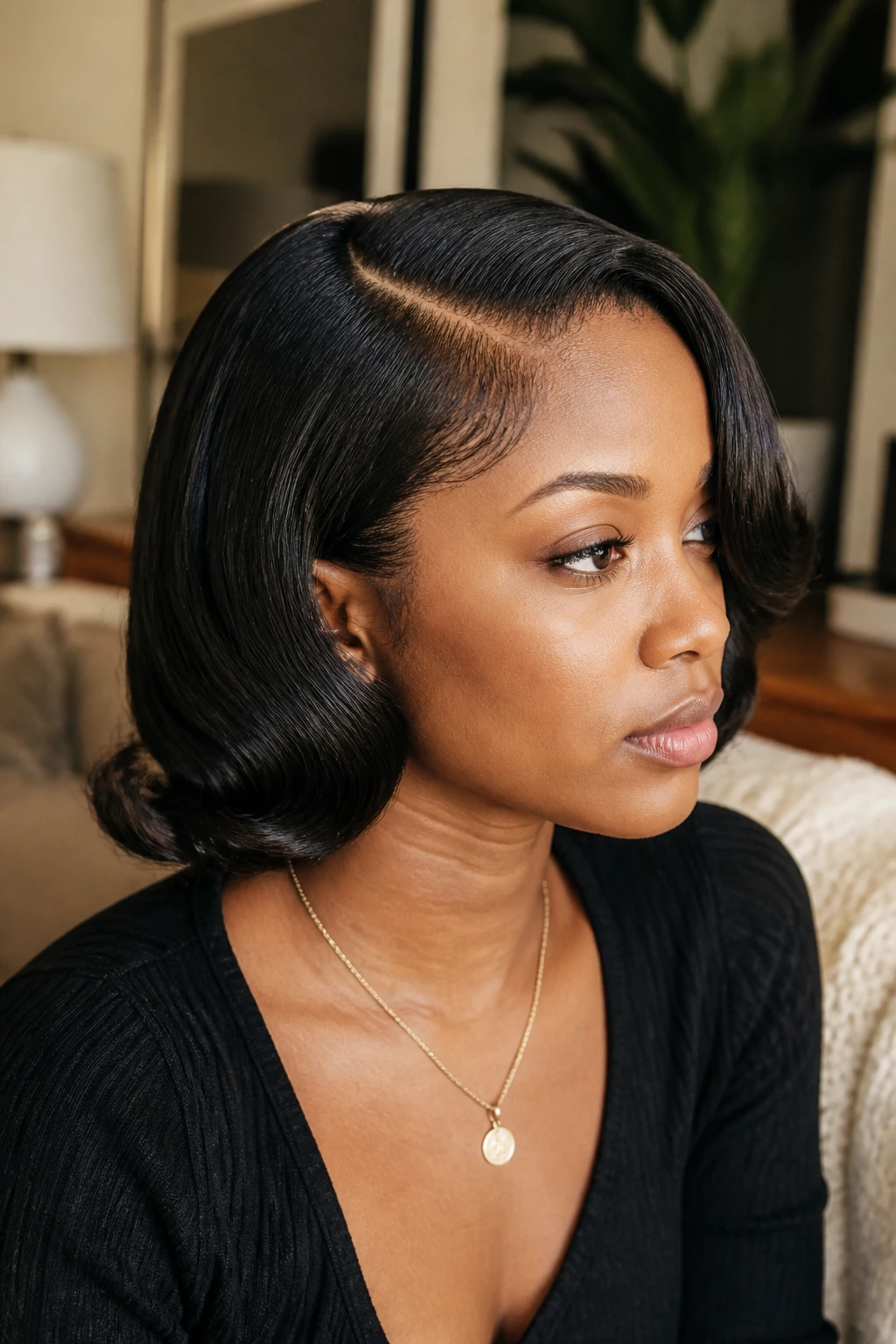
A side-part bob with a deep sculpted wave has a different kind of polish. It leans into shape, shine, and that smooth bend at the ends that makes the whole style feel deliberate from root to tip.
This version is lovely on relaxed hair or a good silk press because the wave pattern depends on the hair being able to hold a curve. You do not need a ton of volume here. You need control, a clean part, and ends that turn under instead of sticking out like they changed their mind halfway down.
22. Grow-Out Bob
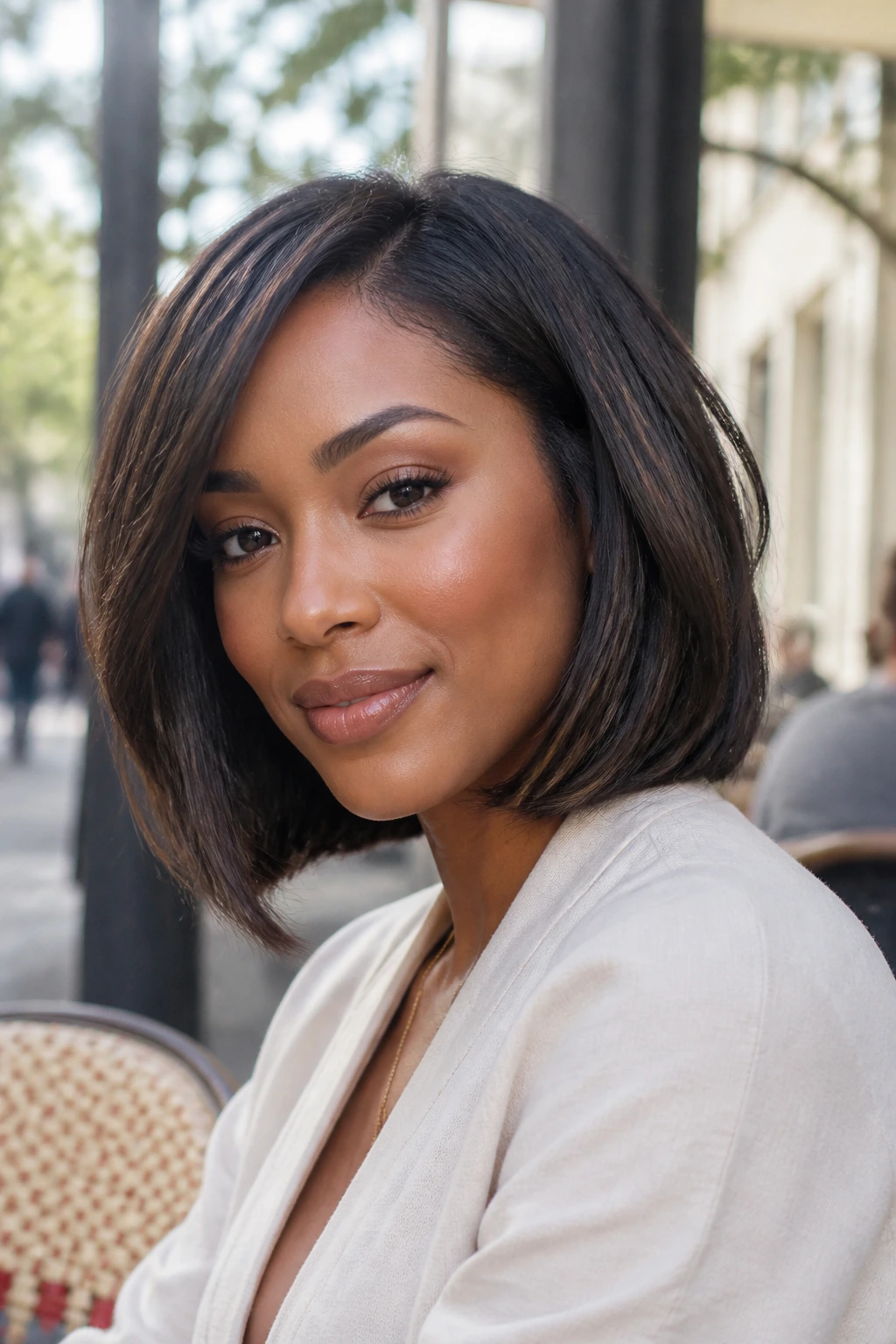
A grow-out bob is the one for people who hate awkward in-between stages. The cut is planned to stay good as it gets longer, which means the shape should still make sense when the ends drop an inch or two.
This often means softer edges, a little layering, and a length that sits between the jaw and collarbone. If you know you won’t get to the salon on a strict schedule, this is a smarter bet than a razor-clean precision bob. It ages better. Simple as that.
23. Deep-Angle Bob
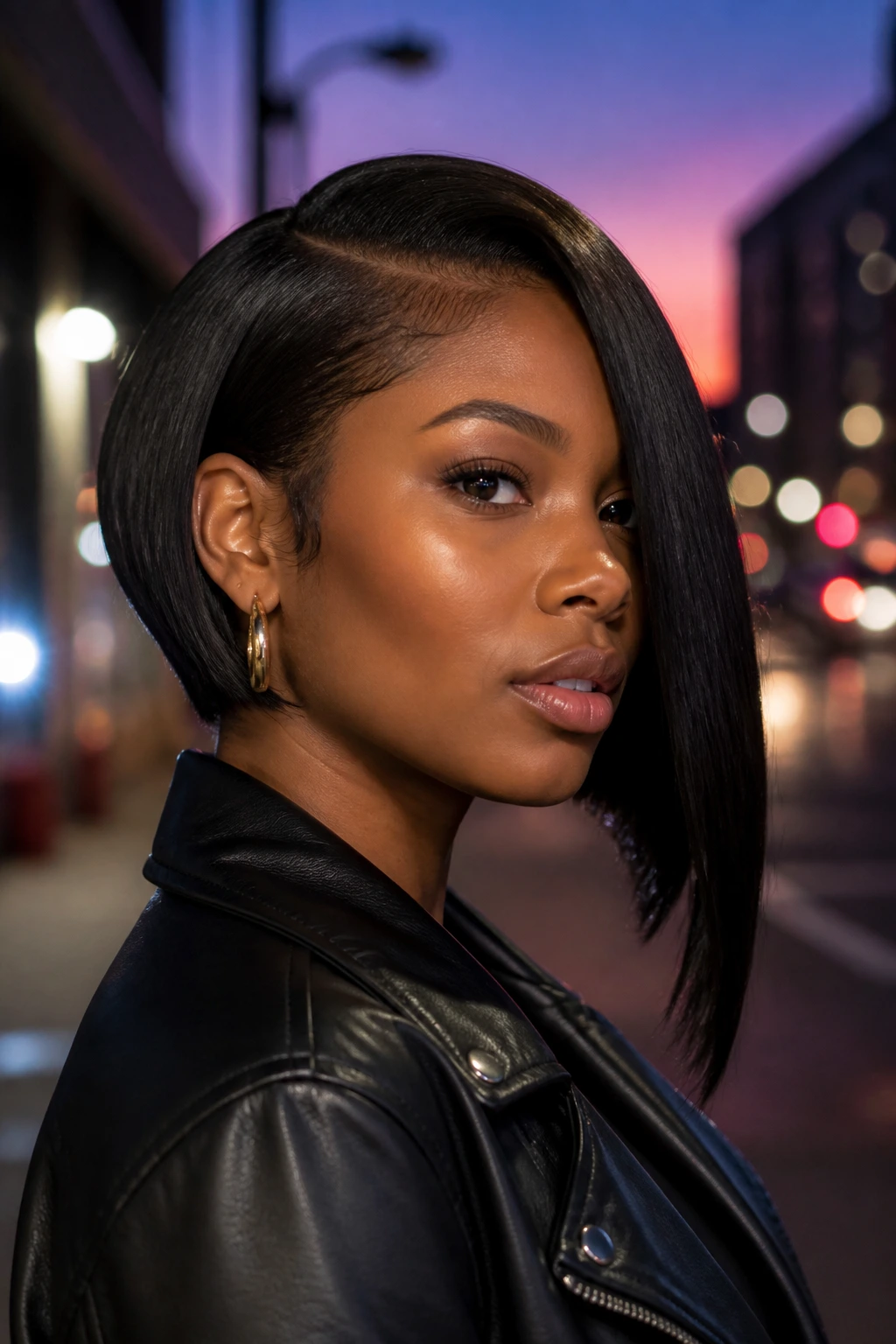
A deep-angle bob pushes the front longer and keeps the back short enough to show the slope clearly. Compared with a softer A-line, this version has more attitude and a more visible line from the ear forward.
It works well if you want your bob to look bold even when you wear minimal makeup or simple clothes. On coily hair, the front length should be left a little longer than your first instinct, because shrinkage will pull it up. If the angle is too severe, it can eat up the balance of the whole cut.
24. Curved-Under Bob
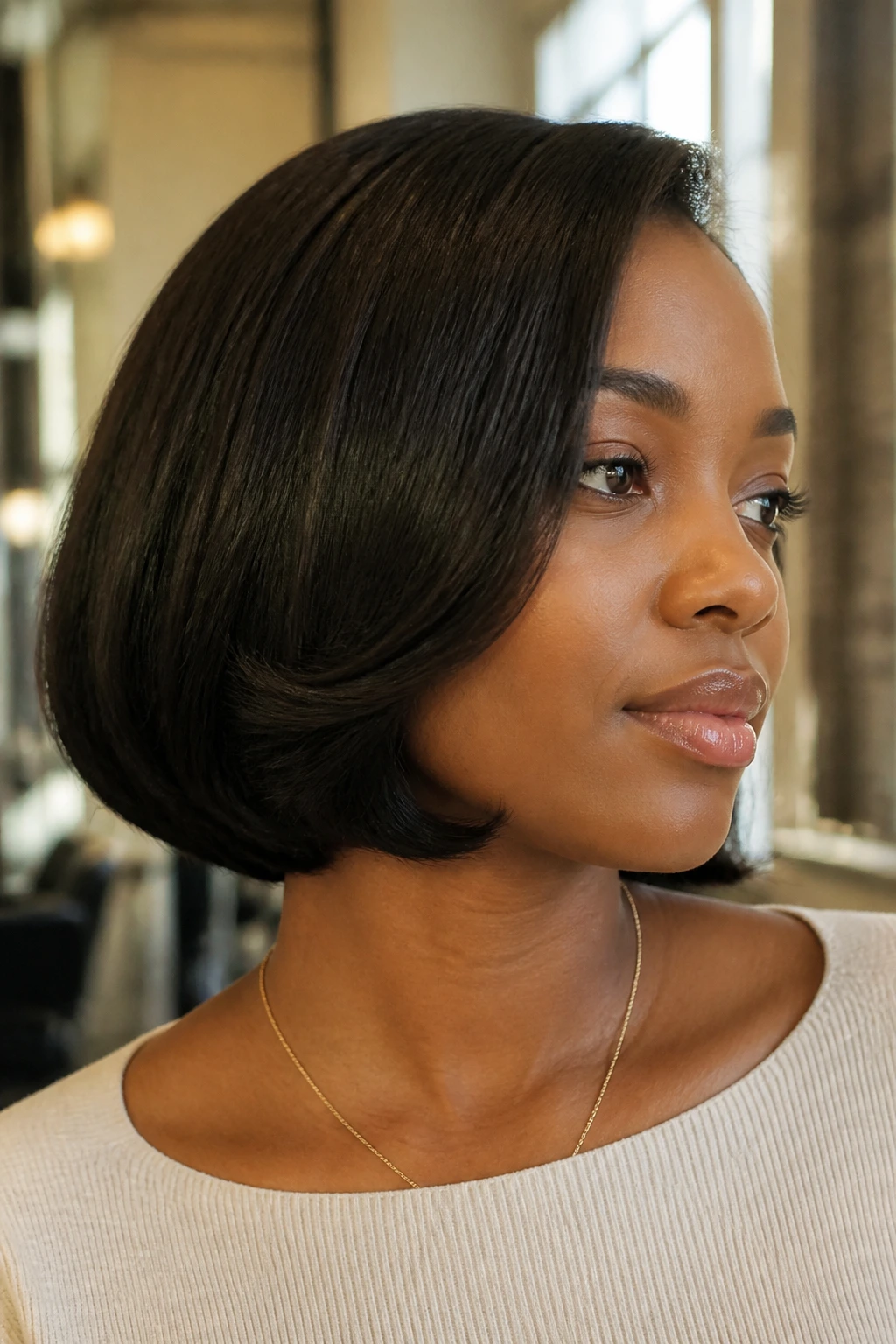
A curved-under bob is all about the ends turning in just enough to frame the neck. It’s a subtle shape, but subtle does not mean boring. On Black hair, that bend under the jaw can make the cut look especially clean when it’s pressed or blow-dried smooth.
The curve works best when the cut has been trimmed to fall naturally inward, not forced with too much heat after the fact. If your hair fights the turn-under, ask for a slightly shorter back or less bulk at the ends. The shape should happen with a brush, not a wrestling match.
25. Honey Money-Piece Bob
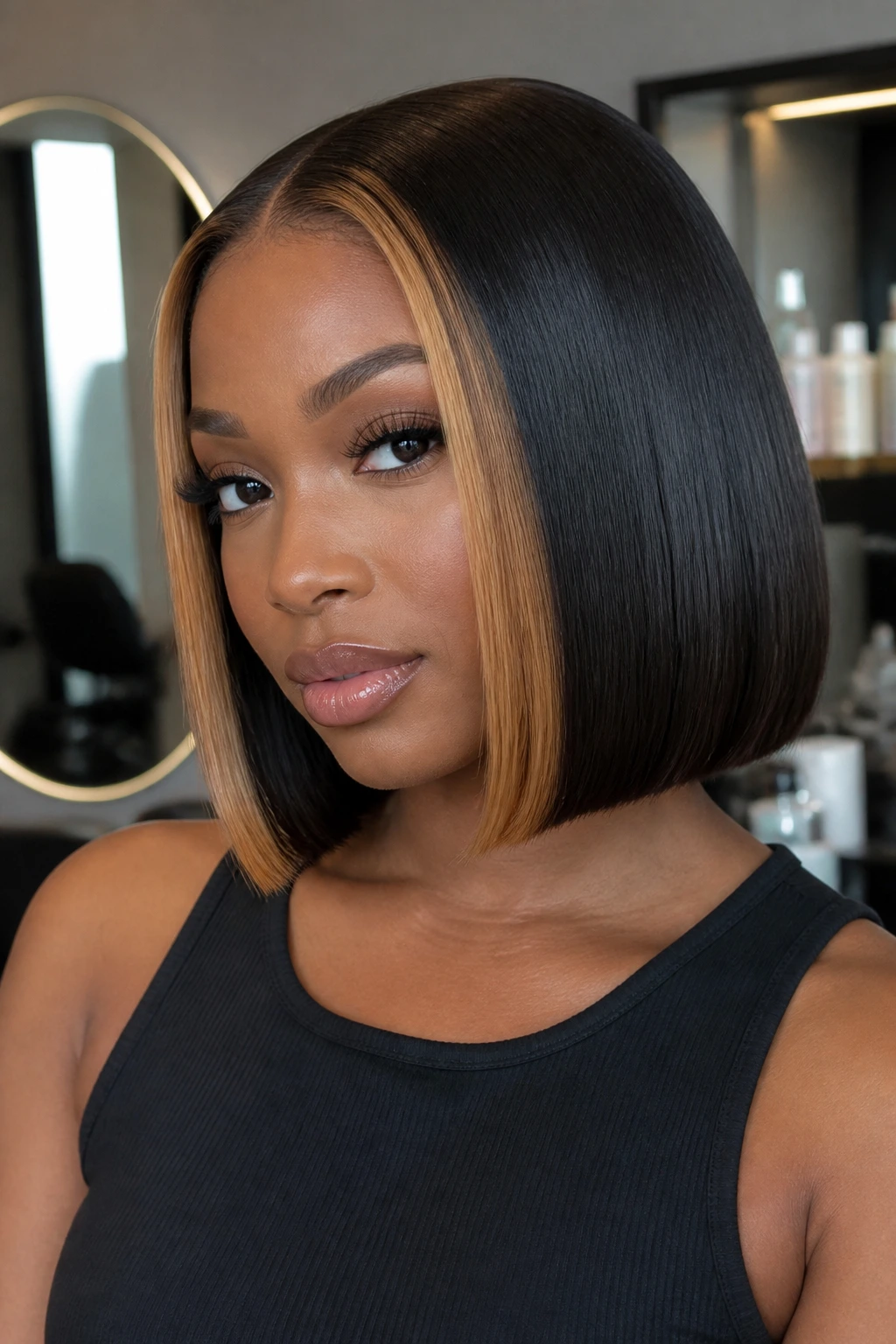
A money-piece bob adds bright face-framing color at the front, which can make the cut look more defined without changing the haircut itself. Honey, caramel, or soft copper around the face can light up the perimeter and make a blunt bob feel less severe.
This is a good way to test color without committing to a full head of highlights. The front pieces do the work, and the rest of the bob stays grounded. It especially flatters darker base colors because the contrast is immediate, and the haircut suddenly looks more deliberate.
26. Boxy Square Bob
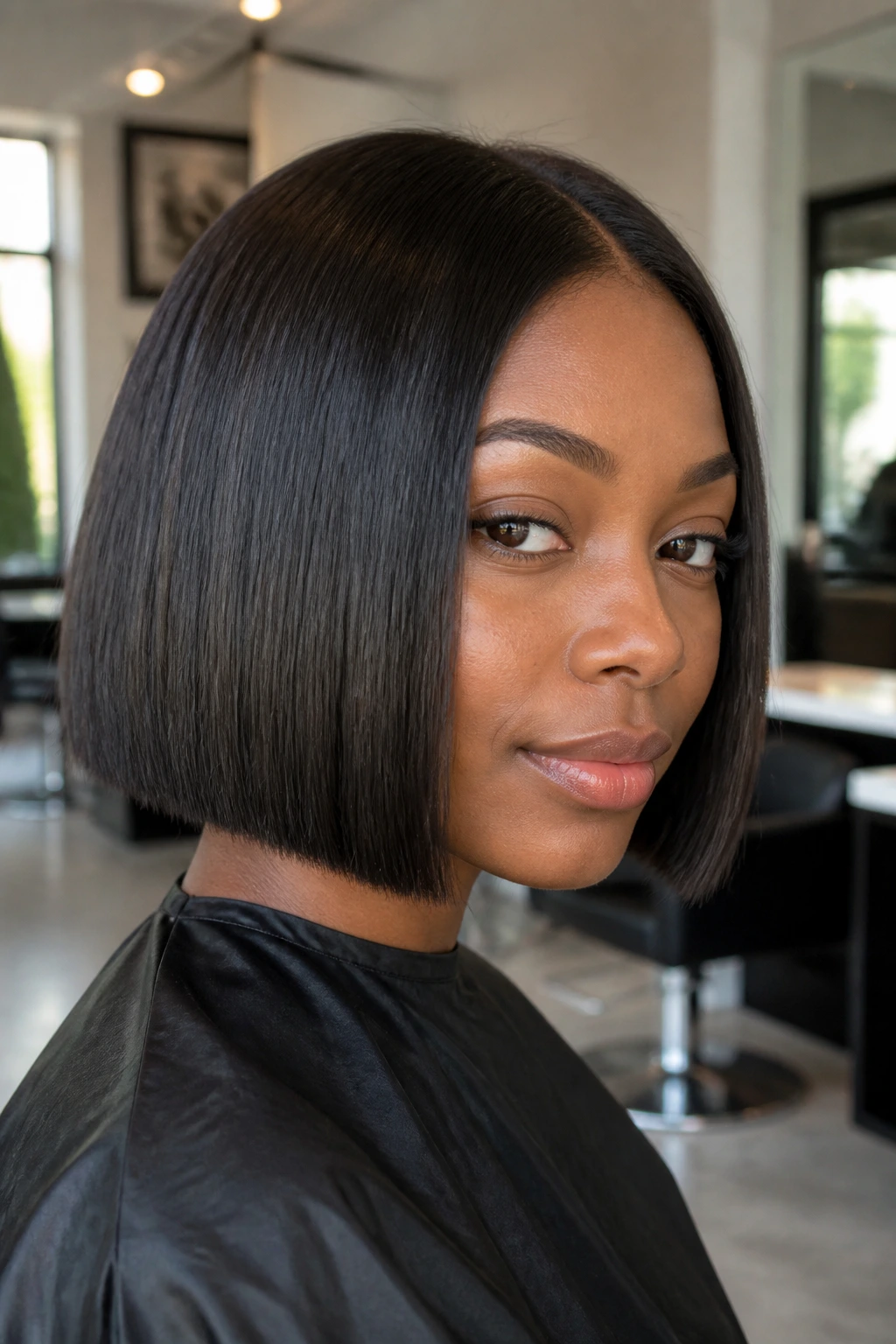
A boxy square bob sounds strict, and honestly, that is part of the appeal. The bottom line is kept flatter and the sides are built to give the cut a squared-off feel, which looks striking on dense, straightened hair.
This shape is not for someone who wants movement everywhere. It is for someone who likes clean geometry and does not mind looking a little sharp. The key is balance at the jaw and neck. If the box gets too wide, it can overwhelm the face, so the perimeter needs to be exact.
27. Tuck-Behind Bob
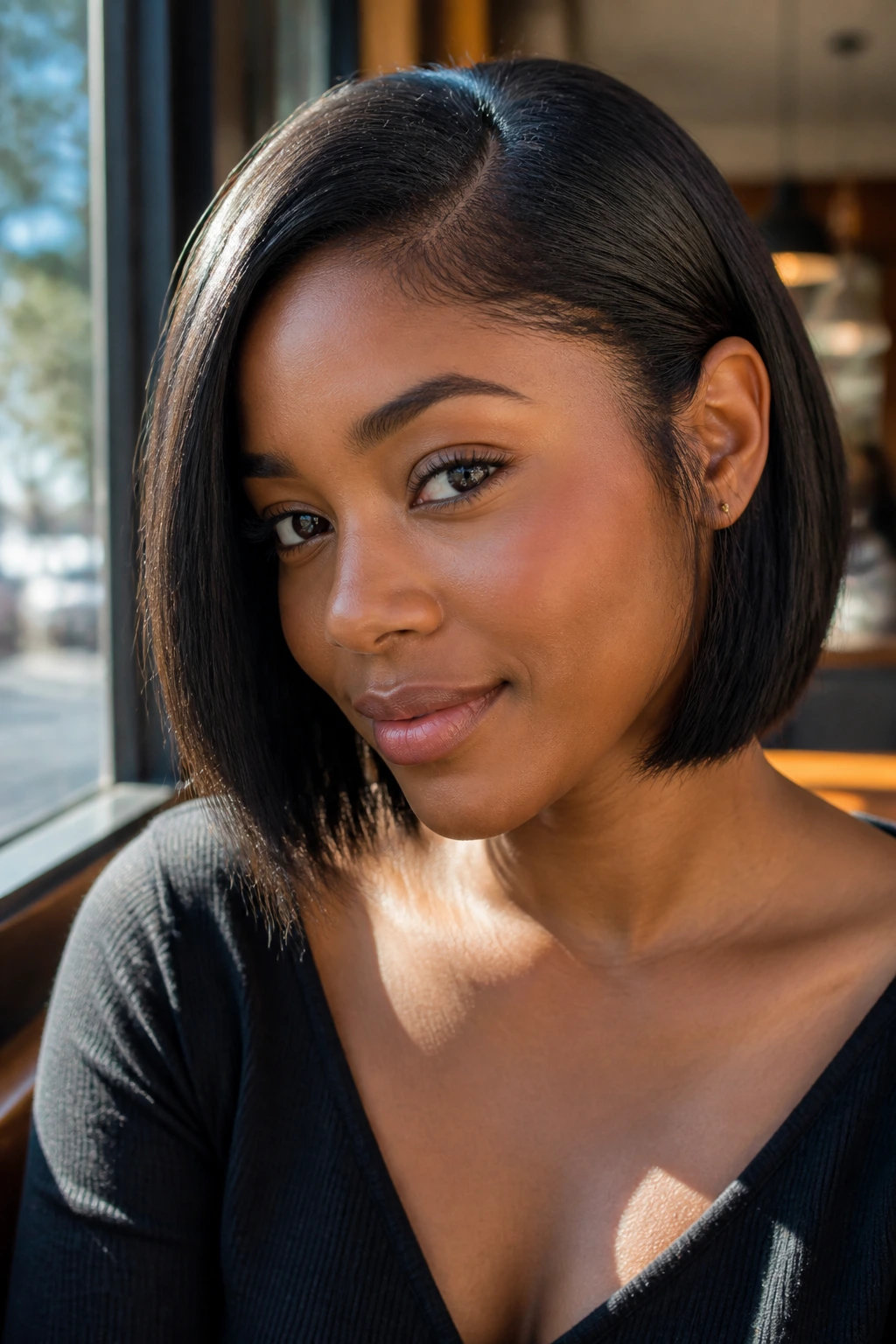
A tuck-behind bob is cut with enough length at the front to slip behind the ears cleanly, which means the sides should not be too bulky. That tiny detail changes how you live in the cut, because you can wear it tucked, loose, or half-secured without the whole thing fighting back.
I like this one for women who are always tucking hair behind one ear when they talk. The haircut is built for that habit instead of punishing it. It works best when the sides are slim and the front hits just below the jaw so the tuck feels easy.
28. Glassy Precision Bob
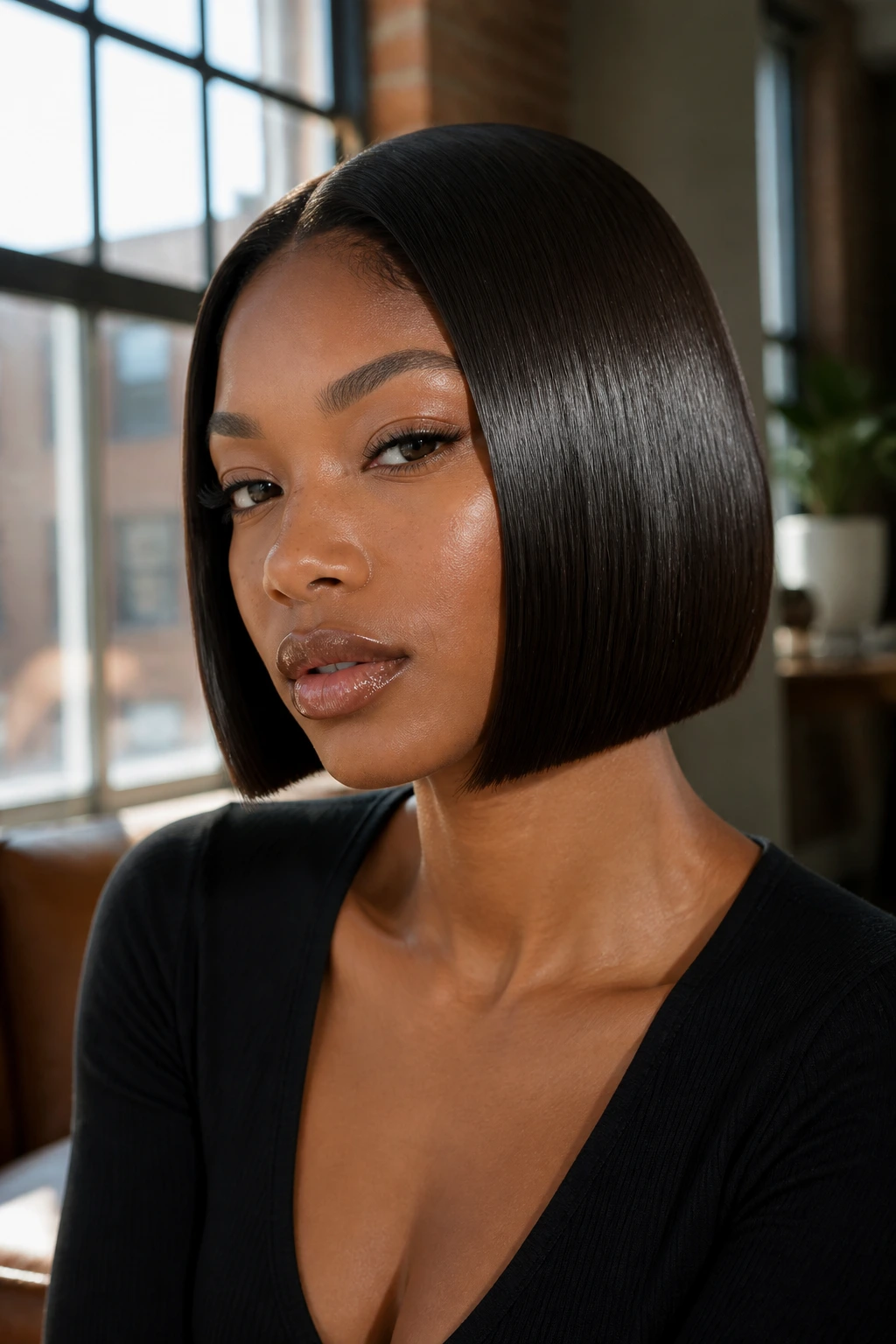
A glassy precision bob is the sleekest thing on this list. The line is sharp, the surface is smooth, and the whole cut depends on the perimeter being trimmed with care. If you want a bob that looks like it has a plan, this is the one.
This style pairs best with pressed hair or a very smooth blowout. It does not forgive lazy trimming, and it does not love frizz. The upside is obvious: when the finish is right, the bob looks crisp enough to stop traffic in a quiet way.
Why Bob Haircuts for Black Women Work So Well on Coils, Curls, and Pressed Hair
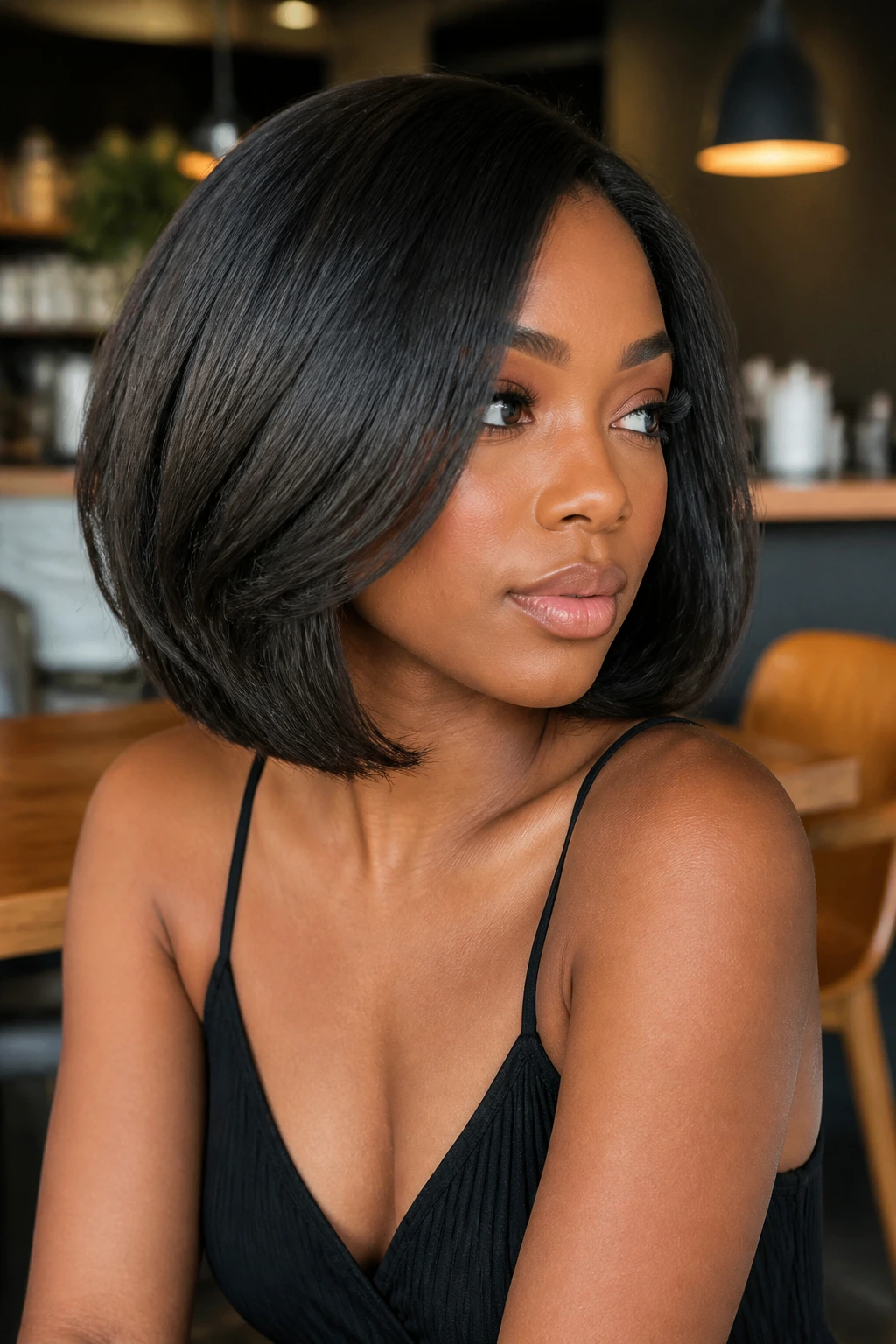
Black hair has a way of changing the rules. A bob that looks neat on straight hair can swell, shrink, lift, or tuck into a completely different shape once coils and curls get involved. That is not a flaw. It is the whole design challenge, and once the shape respects it, the cut starts working with the hair instead of against it.
The best bobs give the hair a clean perimeter to live inside. That is why blunt cuts, curved-under ends, and shaped angles show up so often in styles for Black women. They make density look intentional. They also give curls somewhere to land, which matters when you want a style that still reads as a bob after washing, diffusing, or air-drying.
There is also the practical side. Some women want heat. Some do not. Some wear protective styles most of the time and want a bob when the braids come out. Some need a cut that survives a quick wrap at night and a fast unwrapping in the morning. A good bob gives you room to choose without making the hair look unfinished.
How to Talk to Your Stylist So the Cut Lands Right
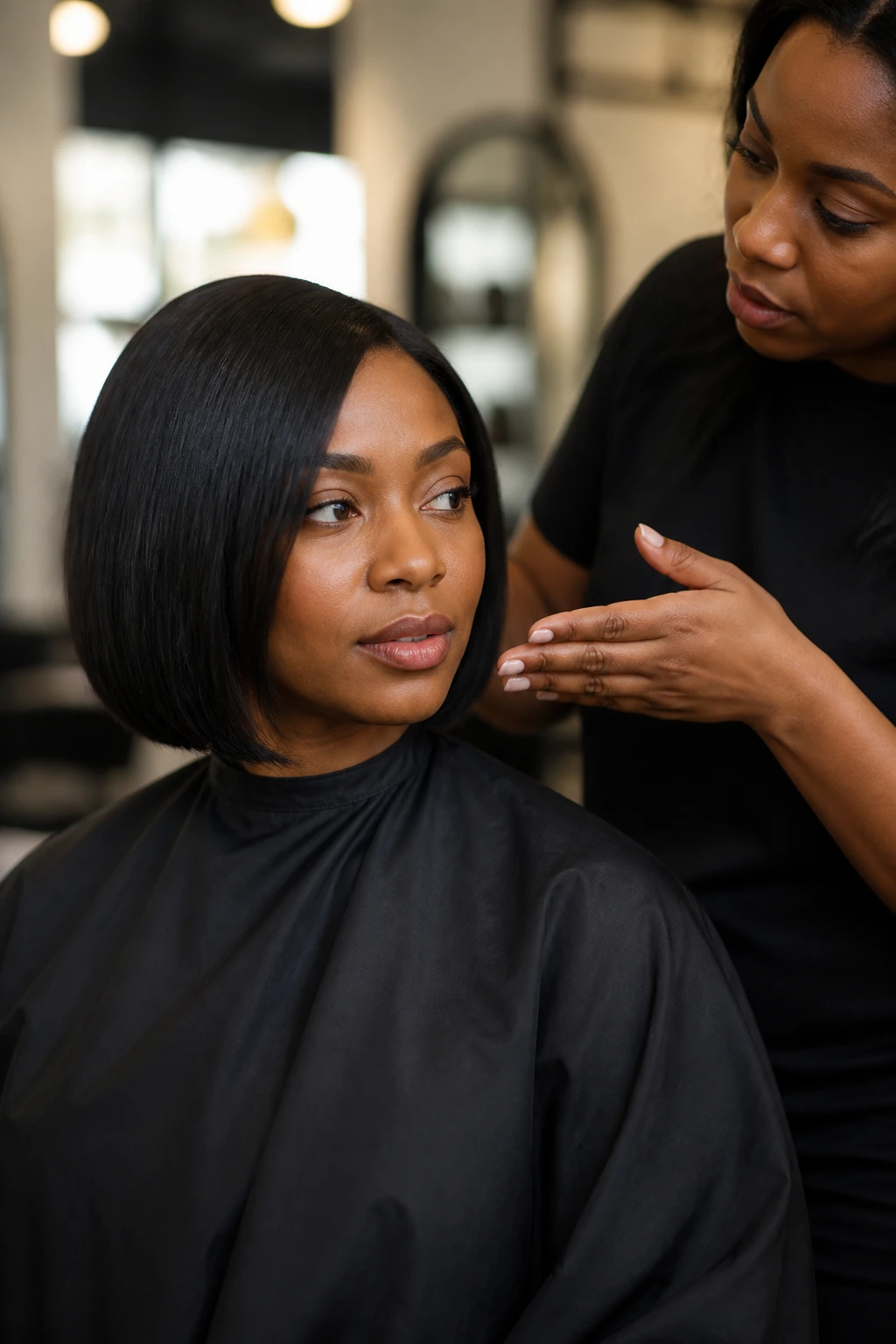
A bob can go sideways fast if the conversation stays vague. “I want it short” is not enough. Short where? On pressed hair or in its natural state? Blunt or layered? These details change the final cut by a lot more than people expect, especially with shrinkage in the mix.
Say the Length in Body Terms
Point to where you want the hair to land on your face: chin, jaw, cheekbone, collarbone. If your hair is curly or coily, add whether that length should be in its natural state or after a blowout. A chin-length bob on stretched hair can become a very different look once the curls dry up.
Bring One Photo, Then Name the Parts You Like
Bring a reference photo if you want, but do not hand it over like a magic spell. Say what you like about it: the blunt line, the side part, the tucked nape, the rounded front. That keeps the stylist from copying the wrong thing on your head, which happens more than people admit.
Agree on Maintenance Before the Shears Open
If you do not want to flat iron every week, say so. If you need a bob that grows out gracefully, say that too. A precision glass bob and a low-maintenance wash-and-go bob are not the same haircut dressed in different clothes. They need different bones.
Tools and Products That Keep a Bob Sharp
-
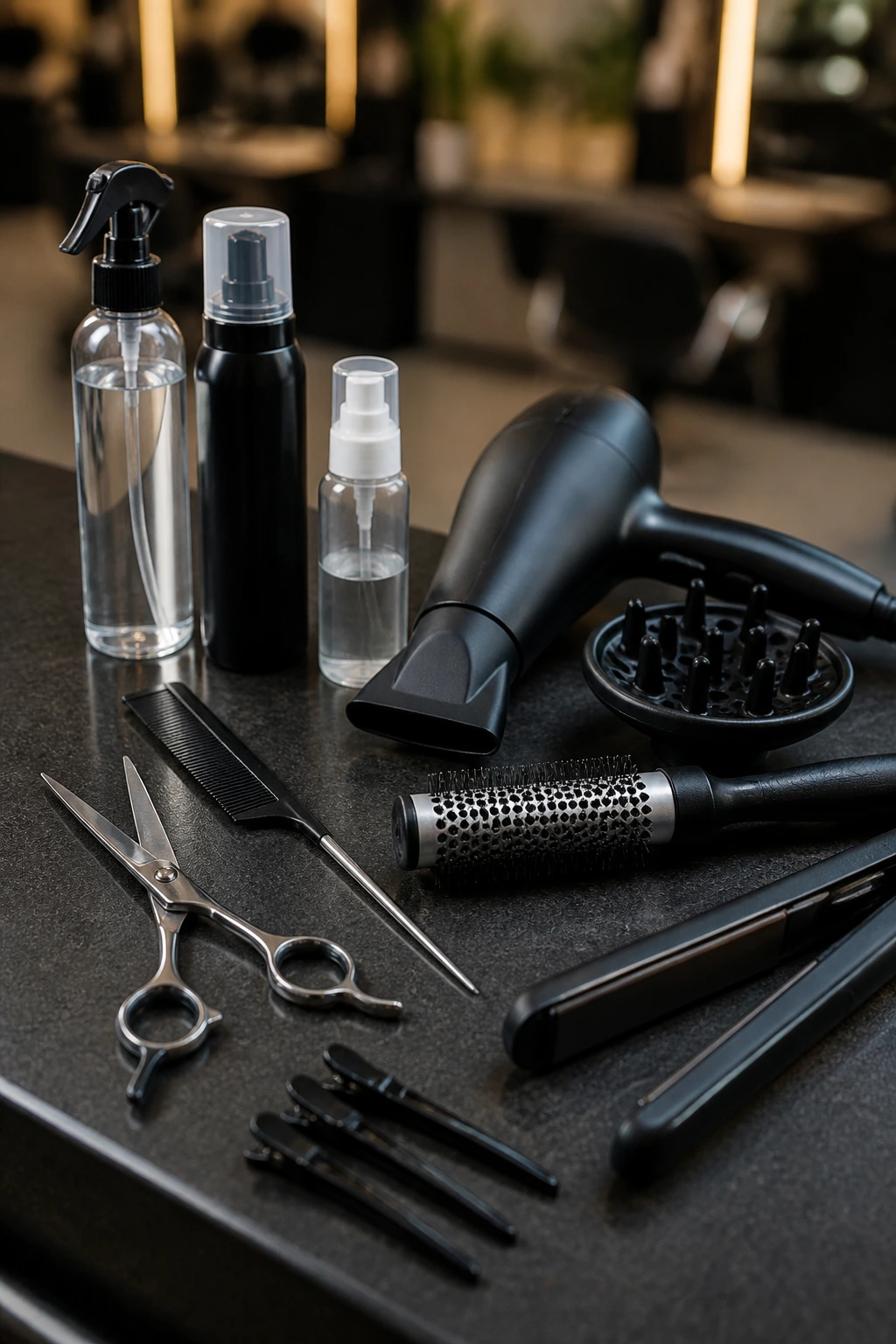
Sharp salon shears: A real bob depends on clean ends; dull scissors bend the hair and leave a ragged line.
-
Rat-tail comb: Parts, sections, and precise lines all start here, especially for center-part and side-part bobs.
-
Sectioning clips: Thick hair needs control while you smooth, blow dry, or press each piece.
-
Blow dryer with nozzle attachment: Helpful for stretching curls and directing the hair into the shape you actually want.
-
Round brush or paddle brush: Use a round brush for curve and polish; use a paddle brush for smoother, flatter bobs.
-
Diffuser: A must for curly wash-and-go bobs if you want definition without blasting the curl pattern apart.
-
Flat iron or hot comb: Best reserved for pressed or silk-pressed styles where you want a polished finish.
-
Heat protectant spray or cream: Put this on before any hot tool, especially around the front and ends.
-
Mousse or foam wrap lotion: Great for curly, twist-out, and wet-look bobs that need hold without crunch.
-
Lightweight serum or oil: A few drops help the perimeter look smooth; too much makes the cut look greasy fast.
-
Edge control gel: Useful for sleek bobs, side parts, and any style with a clean hairline.
-
Silk scarf or bonnet: Protects the shape overnight and keeps the ends from rubbing rough.
-
Satin pillowcase: Good backup if scarves never stay on your head.
How to Keep the Shape Between Salon Visits
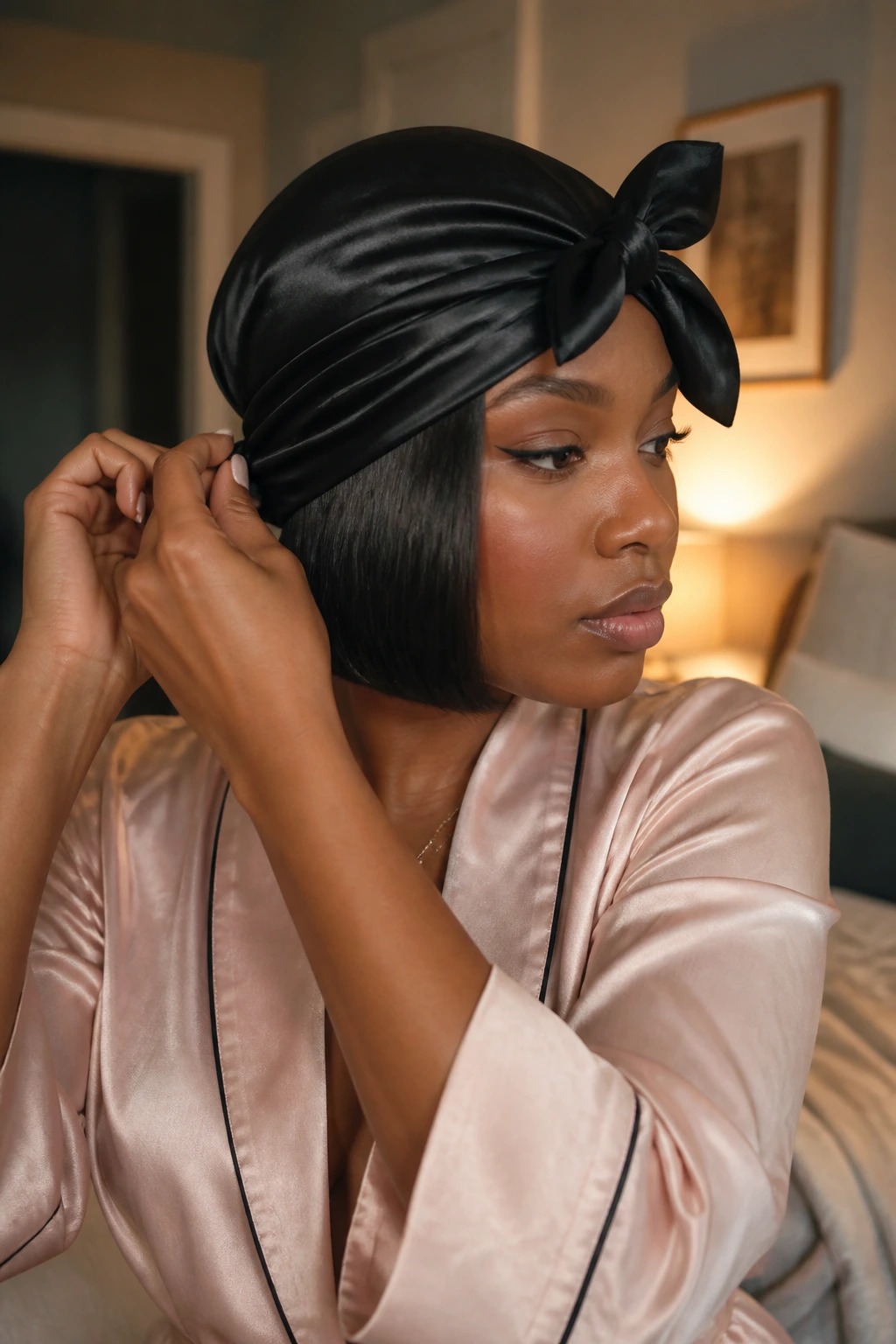
A bob looks sharp only if you protect the line that made you want it in the first place. Precision cuts need trims more often than people think, usually every 4 to 6 weeks if the perimeter is blunt or angled. Layered, curly, and grow-out-friendly bobs can stretch closer to 6 to 8 weeks, but even then you want to watch the ends before they turn fuzzy.
For pressed bobs, the biggest enemy is bending the hair in the wrong places overnight. Wrap it, pin-curl it, or tuck it under a scarf so the front keeps its curve. A quick pass with a flat iron on the roots and perimeter can refresh the style, but repeated full-head heat is what fries the ends and makes the bob lose its clean line.
Curly bobs need moisture control, not heavy product. Refresh with a light water-and-foam mix or a little leave-in and scrunching, then diffuse on low heat if needed. Do not drown the hair in cream every day. That is how a neat bob becomes a soft puff with no perimeter.
Braided and twist bobs need a different kind of maintenance. Check the tension at the roots, rewrap at night, and trim or dip the ends if they start looking uneven. A bob made from braids should still look shaped a month later, not like the style wandered off on its own.
Common Bob Mistakes and the Fast Fixes
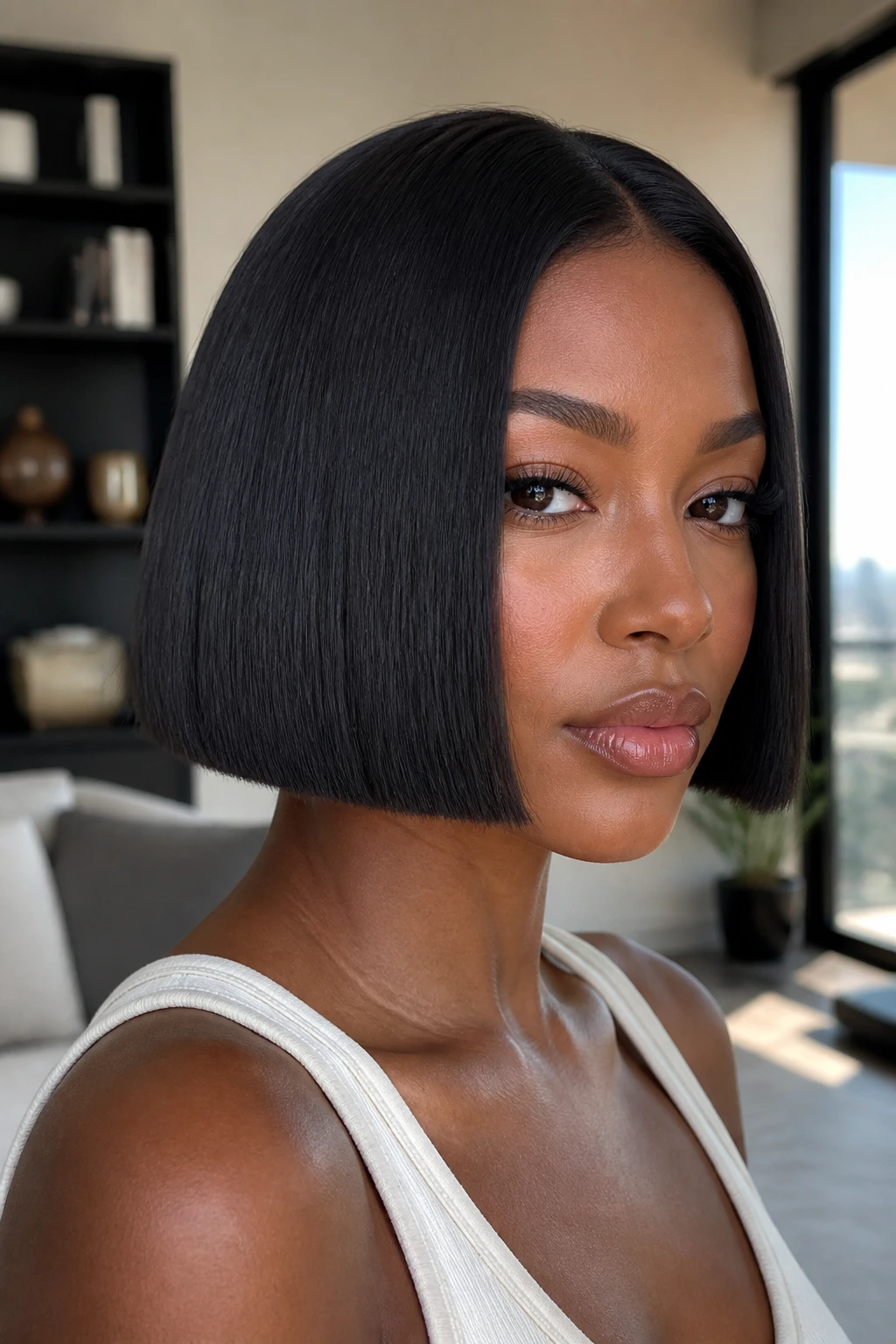
Cutting a shrinkage-heavy bob too short while it’s wet. The hair looks longer in the chair, then springs up and lands above the jawline. Fix it by cutting with the real finish in mind — dry, stretched, or at least lightly blown out if that is how you wear it most often.
Over-layering dense hair. Too many layers can turn a bob into a mushroom or a triangle, especially around the sides and back. Ask for weight removal only where it helps the shape, not all over the head.
Ignoring the nape. A messy neckline can ruin an otherwise clean bob. Keep the back trimmed and shaped regularly, especially if you wear the hair tucked up or pinned behind the ears.
Choosing fringe you will not style. Bangs look good in the mirror and annoying on day four if you hate touching them. Go lighter and longer if you want flexibility.
Forgetting that heat changes the cut. A silk press bob and a wash-and-go bob are not styled the same way, and the same haircut may need different finishing details for each. Tell your stylist how you live in your hair, not how you wish you lived in it.
Ways to Change the Mood Without Changing the Cut
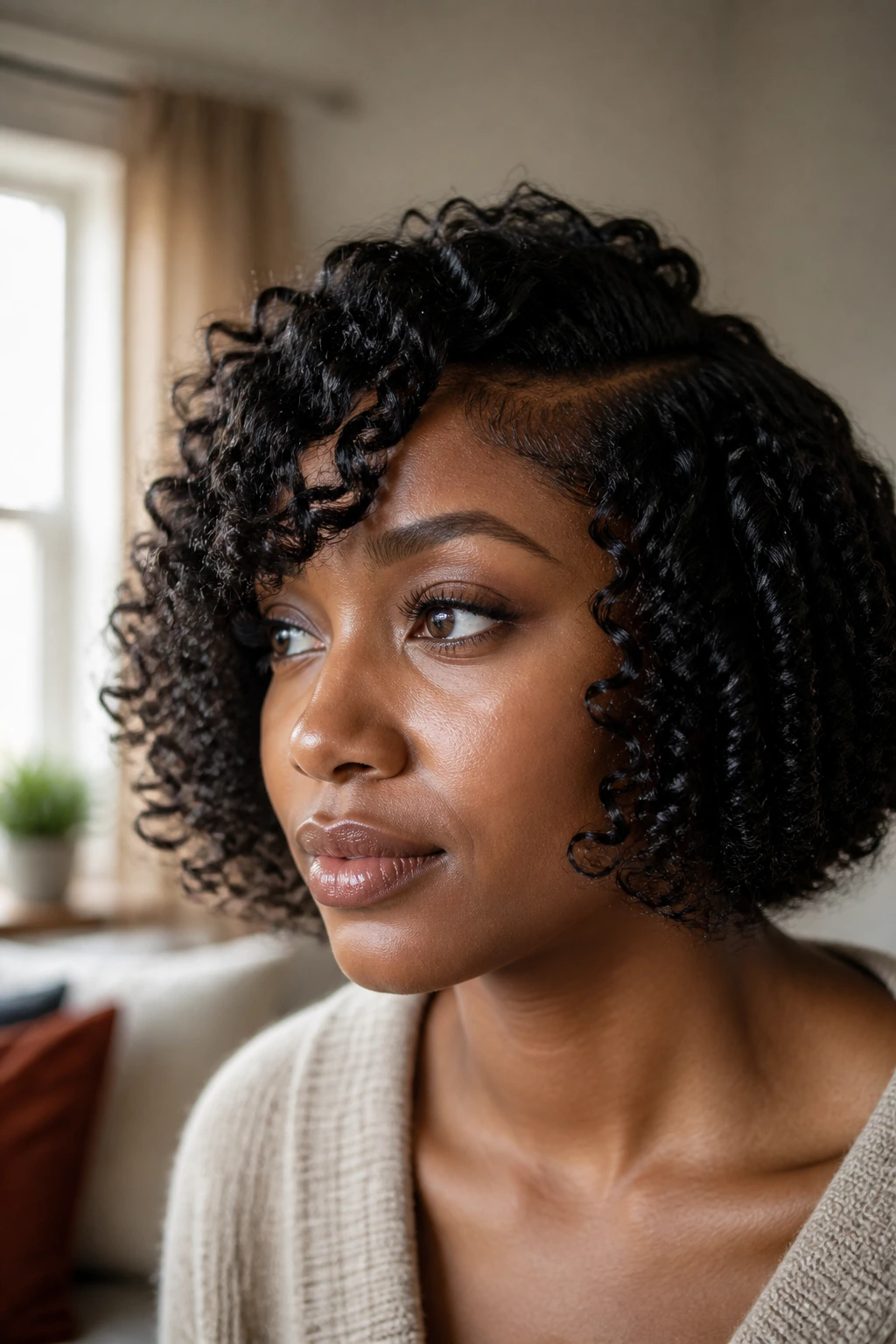
Soft Coil Mode: Let the bob live in its natural curl pattern and shape it with mousse, finger coiling, or a diffuser. This softens sharp edges and works best when you want movement more than gloss.
Glass Finish Mode: Press the hair smooth, add a clean center part, and finish with a tiny amount of serum at the ends. The cut becomes sleek, strict, and polished enough for a dressier setting.
Protective Mode: Turn the bob shape into braids or twists cut to chin or shoulder length. You keep the silhouette, but your real hair gets a break from daily styling.
Side-Part Drama Mode: Shift the part deep to one side, tuck one side behind the ear, and let the front sweep across the cheekbone. The haircut suddenly feels sharper and more styled without changing the length.
Color-Accent Mode: Add honey pieces, caramel ribbons, or a bright front frame. Color changes how the bob reads more than people expect, especially on dark base colors where contrast shows up fast.
Questions People Ask Before They Cut the Bob
Which bob works best if my hair shrinks a lot?
A chin-length blunt bob, a rounded bob, or a layered curly bob usually handles shrinkage better than a severe asymmetrical cut. Ask the stylist to cut with your hair in the state you actually wear it, because a bob that looks right stretched can land much shorter once it dries.
Should a bob be cut on wet hair or dry hair?
For highly textured hair, dry or stretched cutting often gives a truer read on length and shape. Wet cutting can work, but it’s easier to misjudge the real finish when curls spring back.
Can I wear a bob without heat?
Absolutely. A curly wash-and-go bob, twist-out bob, curly shag bob, or braided bob can all give you a bob shape without pressing the hair flat. The key is choosing a cut that respects the texture instead of trying to erase it.
What bob is best if I have a round face?
An A-line bob, a soft asymmetrical bob, or a deep-side-part bob usually adds angles that help break up roundness. You do not need to hide your face; you just want the shape to create a little length or diagonal movement.
How often should I trim a bob?
Precision bobs usually need a clean-up every 4 to 6 weeks. Softer layered or curly bobs can go longer, but once the ends start looking frayed or the neckline loses shape, it is time.
What if my bob looks uneven after I wash it?
First check whether one side is sitting differently because of parting, shrinkage, or sleeping on that side. If the cut still looks off once it’s dry and styled, the perimeter may need a small correction instead of a full re-cut.
Can a bob work with braids or twists?
Yes, and it can look very sharp. Just keep the length within the bob range and make sure the ends are finished cleanly so the style reads as a bob instead of ordinary long braids.
Will a bob suit thick hair?
Thick hair can carry a bob beautifully, but it needs shape control. Blunt edges, tapered napes, and careful weight removal keep the style from ballooning outward.
A Bob That Still Feels Like You
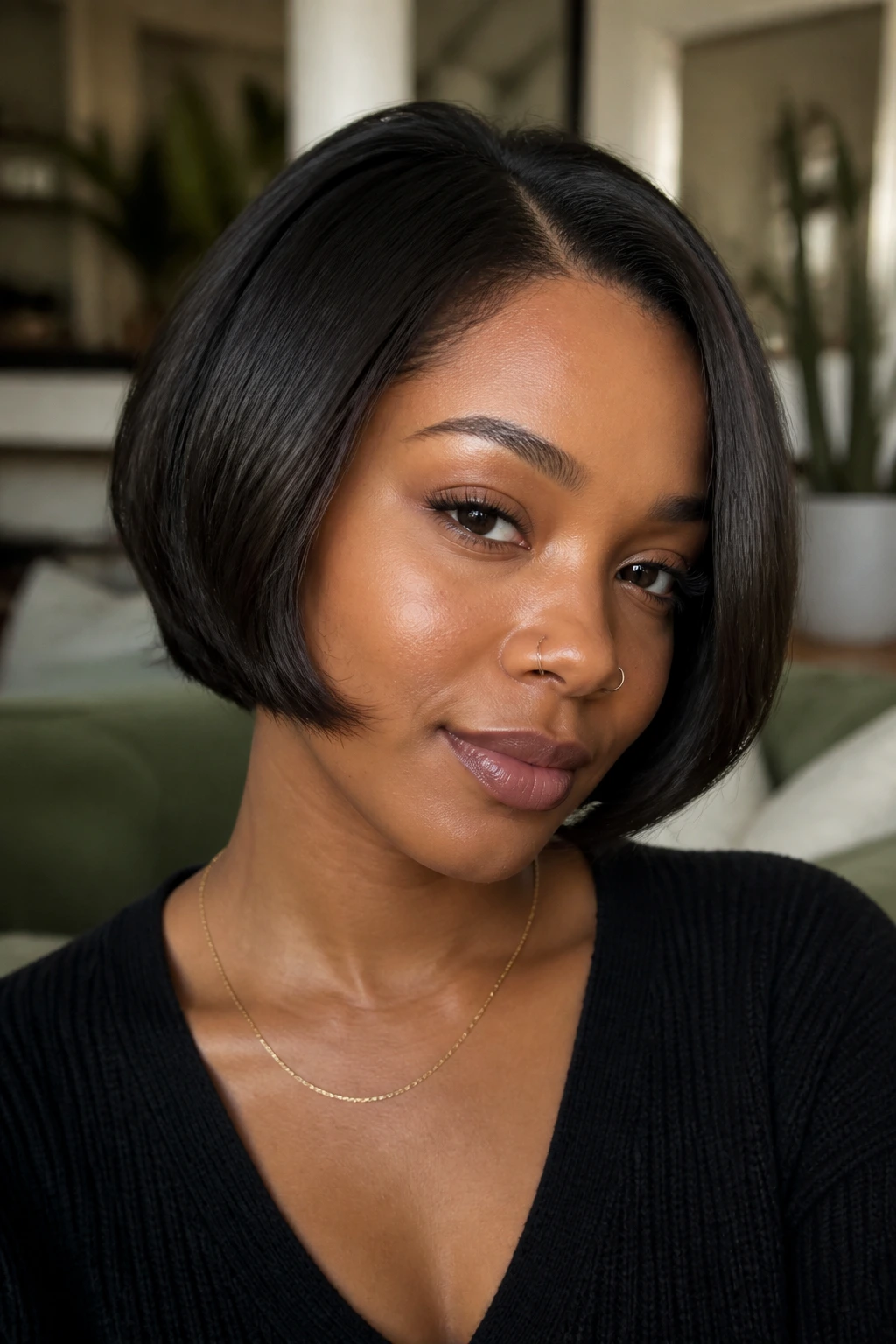
The nicest thing about a bob is that it can look strict, soft, glossy, or easy without losing its backbone. That is rare. A good cut gives you room to be polished one week and low-key the next, and it still has to look like the same person wore it both times.
Pick the shape that matches the way you actually wear your hair, not the version that only behaves in a salon mirror. That small decision changes everything, and it is usually the difference between a bob you fight and a bob you keep reaching for.
