



Choppy bangs for thick wavy hair solve a very specific kind of problem: you want fringe, but you do not want a solid wall of hair sitting across your forehead by lunchtime. Thick waves have their own agenda. They bend, swell, split, and occasionally puff out in the exact spot you were hoping would look neat.
The answer is not to flatten them into obedience. That usually ends badly. The better move is to cut enough shape into the fringe that the hair can break apart on purpose, so the texture reads as movement instead of bulk. A good choppy bang on this hair type has a little air between the strands, a little roughness at the ends, and enough length to survive a wave pattern that changes its mind after you leave the chair.
What I like about this category is how much range it gives you. Some versions are soft and cheekbone-skimming. Some are blunt in outline but sliced through the middle so they never feel heavy. A few are a little punk. A few are almost shy. The trick is choosing the one that works with your density, your cowlicks, and how much styling you are willing to do on an average morning.
Why Choppy Bangs Work So Well on Thick Wavy Hair
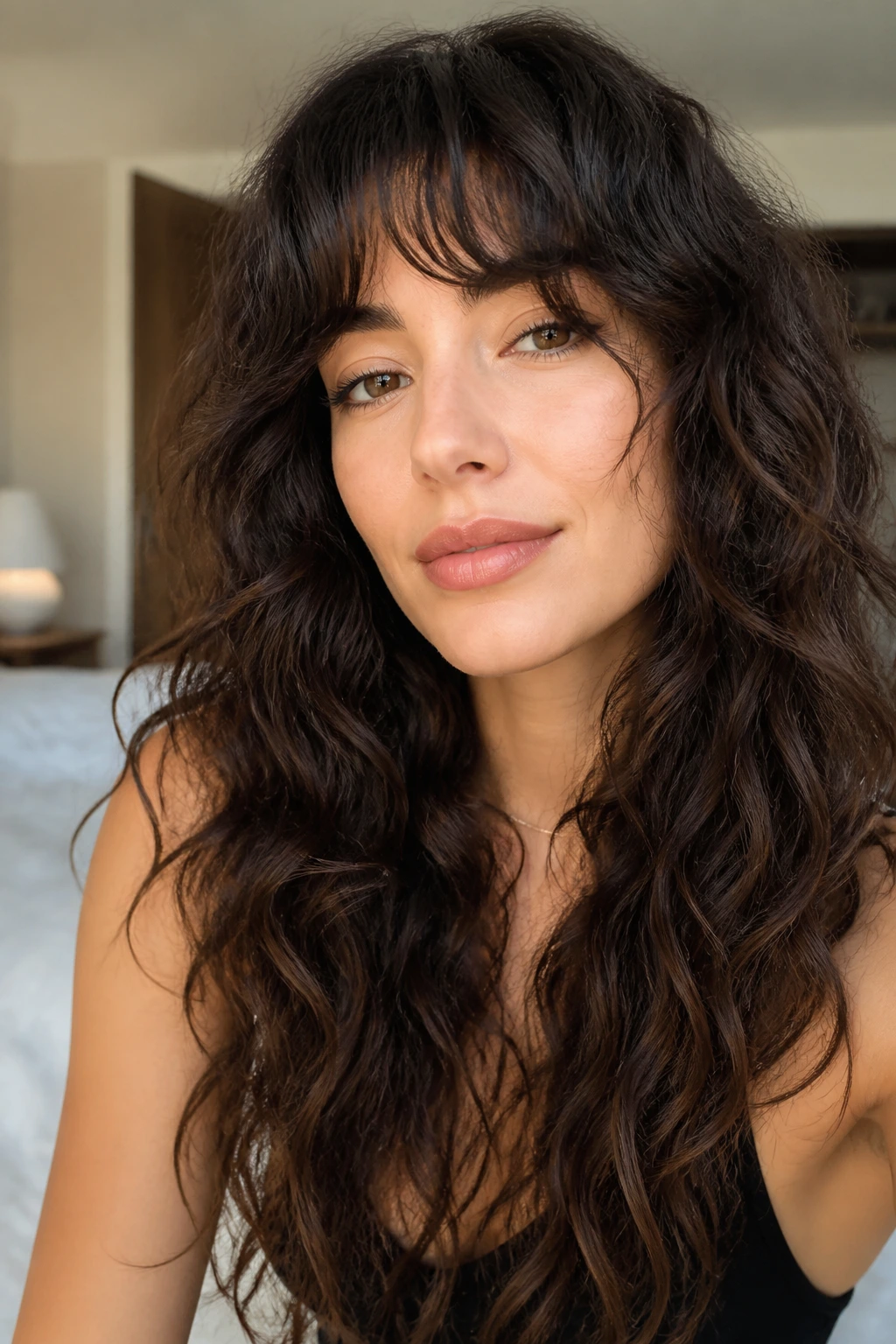
Weight without the shelf: Choppy ends remove enough bulk that the fringe does not sit like a hard ledge on the forehead, which is the main problem with blunt bangs on dense waves.
Natural bend, not forced smoothness: Thick wavy hair already wants to curve, so a broken edge lets the wave show up instead of fighting it with a flat, rigid line.
Forgiving grow-out: When the trim starts to lengthen, the uneven pieces blend into the rest of the wave pattern instead of looking like a failed haircut.
Less morning drama: A fringe with texture can usually be finger-shaped, misted, or re-dried in a minute or two; it does not demand a polished round-brush finish every day.
Better face framing: The chopped pieces can open around the brows and cheekbones, which keeps the front of the haircut from looking heavy even when the hair itself is dense.
If you have ever had bangs feel too thick by the third week, you already know why this matters. The shape has to breathe.
1. Curtain Bangs with Broken Ends

Curtain bangs with broken ends are the safest starting point if you want fringe that moves with your wave pattern instead of sitting there like a helmet. The center split gives the hair room to fall away from the face, and the choppy ends keep the sides from collapsing into one heavy sheet.
Why it works on dense waves
The center opening works with the natural bend most wavy hair already has, especially if your hair parts a little off-center on its own. Ask for the fringe to land somewhere between eyebrow and cheekbone length when dry, because thick waves shorten fast once they dry.
- Keep the center longer so it can split cleanly.
- Let the outer pieces graze the cheekbones.
- Point-cut the ends so they do not read as blunt.
Stylist note: Ask for the bang area to be cut dry, or at least checked dry before the last snip. Wet thick waves lie.
2. Brow-Skimming Piecey Fringe

This is the fringe I reach for when I want a little more forehead coverage without the commitment of a full, heavy bang. The line sits close to the brows, but the pieces are separated enough that you still see skin between strands.
The shape matters here. On thick wavy hair, a piecey brow-skimmer keeps the front of the haircut from feeling dense, especially if your waves swell at the root. It also gives you a nice little shadow across the eyes without turning the whole face into one dark strip of hair.
I like this cut best when the ends are broken with point cutting and the center is left just a touch shorter than the sides. It feels deliberate, not fussy. And if you wear your fringe with a dab of lightweight cream on damp hair, you can usually air-dry it and move on with your day.
3. Micro Choppy Bangs for a Bold Forehead Line

Can micro bangs work on thick wavy hair? Yes, but only if you let them stay rough around the edges. A tiny, chopped fringe on this hair type needs texture first and polish second, or it will puff into a little shelf.
This cut sits higher on the forehead and shows off the density of the hair rather than hiding it. Because the length is short, every wave matters. I would not recommend it if you hate re-shaping your bangs with your fingers during the day, because they do shift.
How to wear it
Keep the sides slightly longer than the middle so the shape does not look like it was cut with a ruler. A matte paste, used sparingly, gives the ends enough separation to stay piecey instead of fuzzy. Skip heavy oil on the front.
4. Long Side-Swept Choppy Bangs
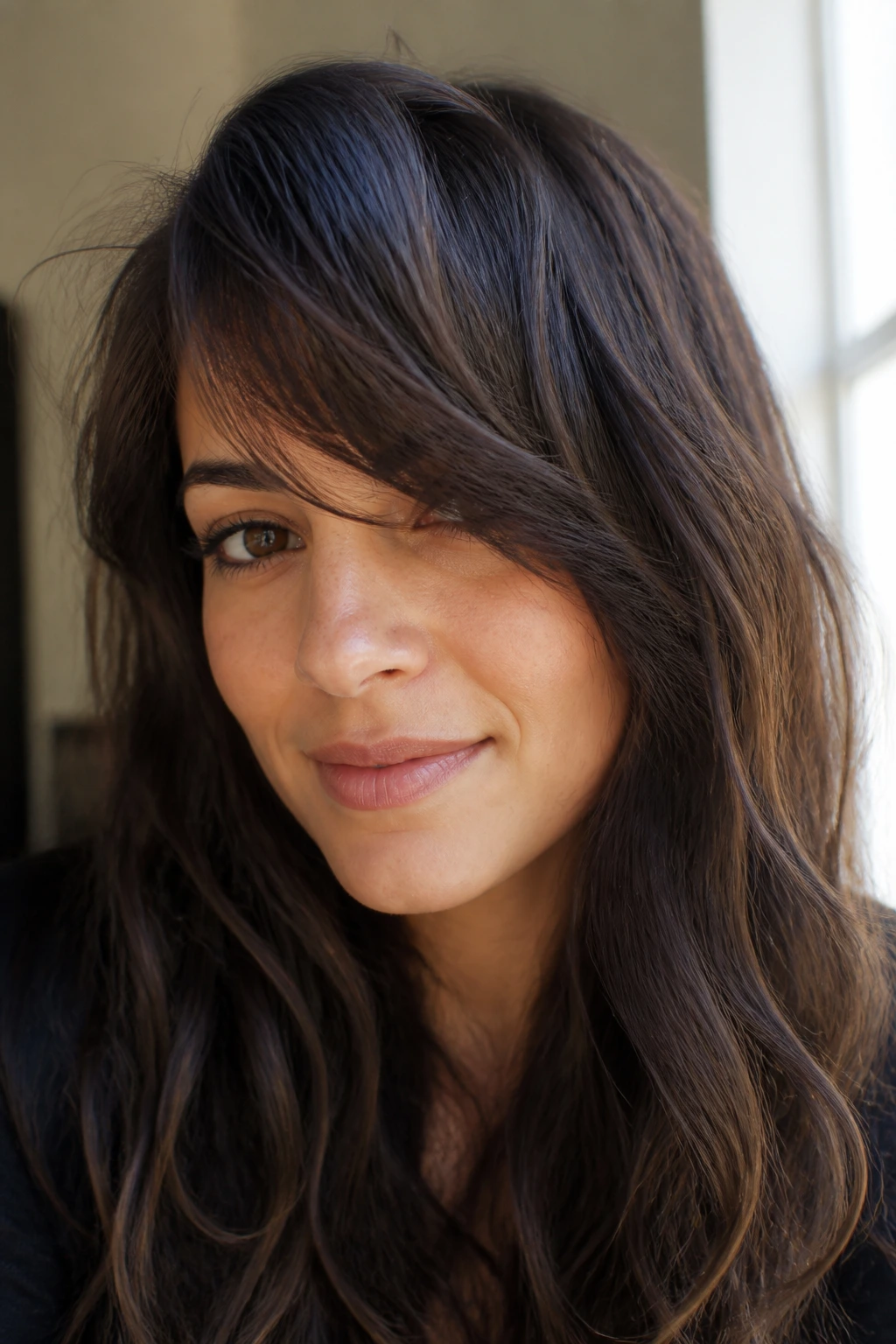
If you want bangs but do not want to think about them every single morning, long side-swept choppy bangs are the easy answer. They sit lower than brow-skimming fringe and sweep across one side, which gives thick waves a place to fold without building bulk right in the center.
This shape is especially useful if your hair has a stubborn cowlick near the hairline. The diagonal direction works with that bend instead of arguing with it. It also plays nicely with ponytails and clipped-back sides, which matters more than people admit.
A good cut here keeps the shortest point around the brow and the longest point skimming the cheekbone. That angle stops the bang from feeling like a grown-out mistake. It feels like a plan.
5. Shaggy Full Fringe with Internal Texture

A shaggy full fringe is for people who like bangs that look a little lived-in from day one. The outline is fuller, but the inside is sliced and broken up so the hair does not sit as one dense block.
This is one of the better choices for thick wavy hair because the volume is working for you instead of against you. The front can be wide enough to matter, but the texture keeps it from feeling hot or sealed onto the forehead. If you have a high density at the front hairline, this shape can take it.
Ask for internal layering rather than aggressive thinning at the base. That keeps the fringe from getting wispy at the roots and heavy at the ends. It should look plush, not stripped.
6. Bottleneck Bangs with Tapered Sides
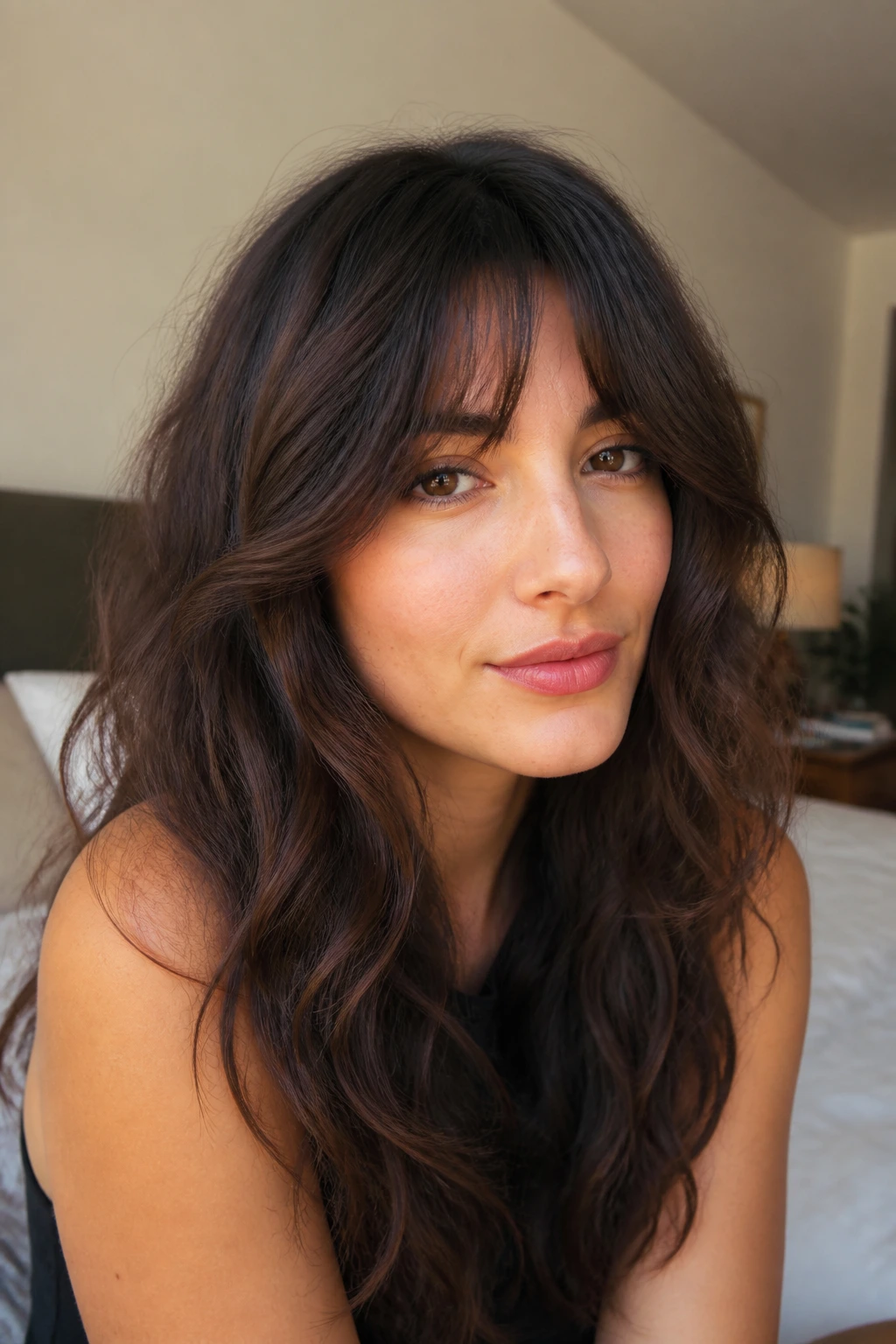
Bottleneck bangs are one of the smartest shapes for thick waves because they start narrow at the center and widen as they move outward. The result is softer than a blunt fringe, but more structured than curtain bangs.
The choppy part comes from the ends, not from making the whole bang see-through. That matters if your hair is thick enough to hold a clean line without looking blocky. The inner section can sit close to the brows while the sides slide into the rest of the haircut.
This is the kind of fringe I suggest to someone who wants a face-framing effect without constant part switching. It grows out gracefully, and the tapered sides let you tuck the fringe behind glasses or clip it back without a fight.
7. Rounded Choppy Bangs

Rounded choppy bangs are a nice middle ground between soft and strong. The edge curves gently along the forehead instead of cutting straight across, which helps thick wavy hair avoid that hard, shelf-like look.
What makes them work is the balance: enough width to feel like true bangs, enough texture to keep them light. They suit wavy hair that expands a little at the root and then bends through the mid-lengths. If the front of your hair tends to separate into chunks, the rounded shape can make that separation look intentional.
Best styling cue
Blow-dry the center first, then push the outer edges slightly forward with a small round brush. You want a soft arc, not a curl. If the bangs feel too puffy, a quick mist of water and a five-second re-dry usually settles them.
8. Feathered Wisp Fringe
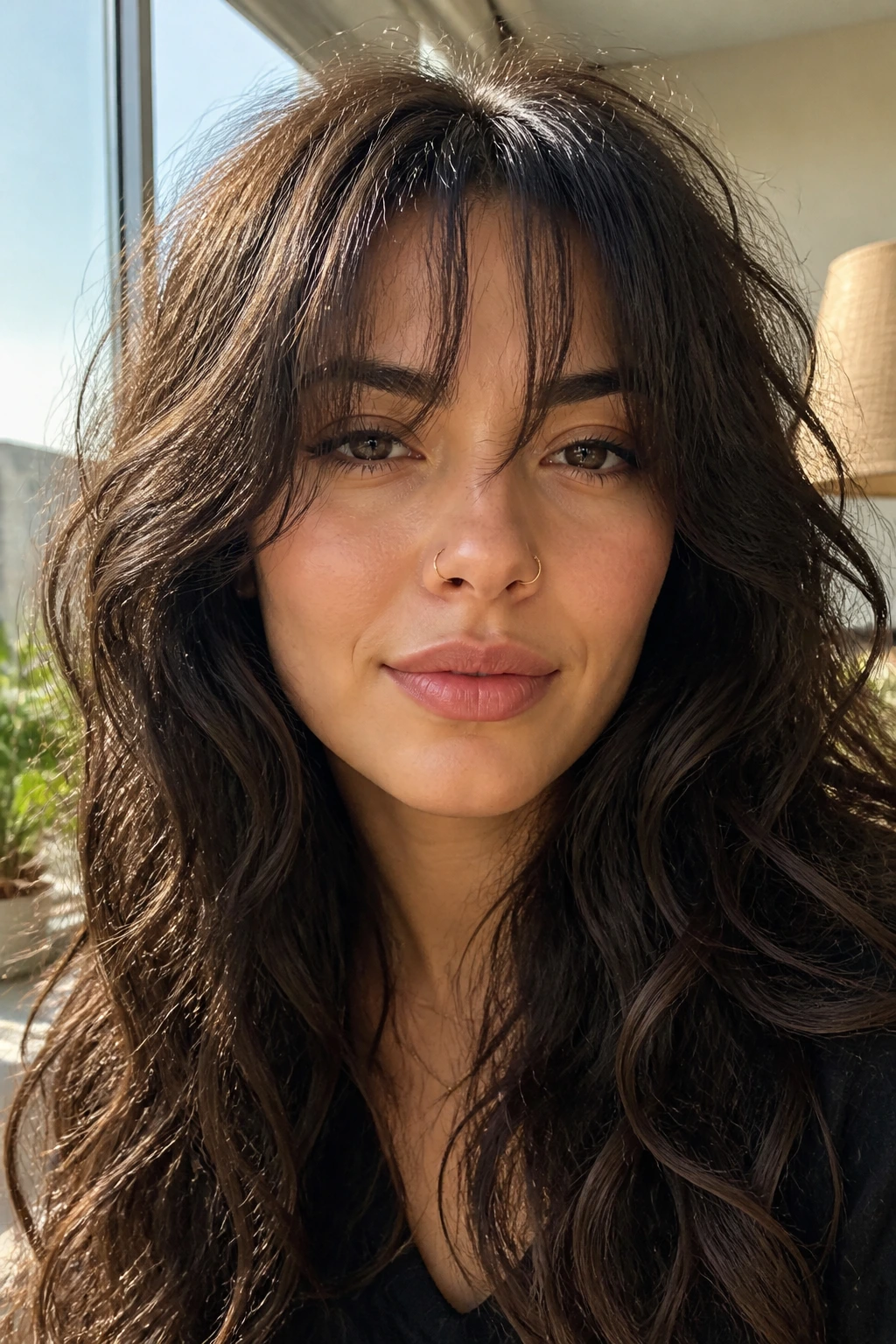
Feathered wisps are the opposite of heavy fringe, and that is exactly why they work on dense waves. The hair is sliced into airy little sections so the forehead shows through and the bangs never sit like a solid panel.
This style is best when you want movement more than coverage. It is especially nice if your wavy hair is thick but not coarse, because the softer texture helps the wisps separate without turning frizzy. I would not over-style it. A little bend is better than a polished curl.
- Ask for a light point cut through the ends.
- Keep the center narrow.
- Let the side pieces blend into the front layers.
One small warning: if your hair is very coarse, use less product than you think. Too much cream will make wisps clump.
9. Wolf Cut Bangs with Heavy Movement
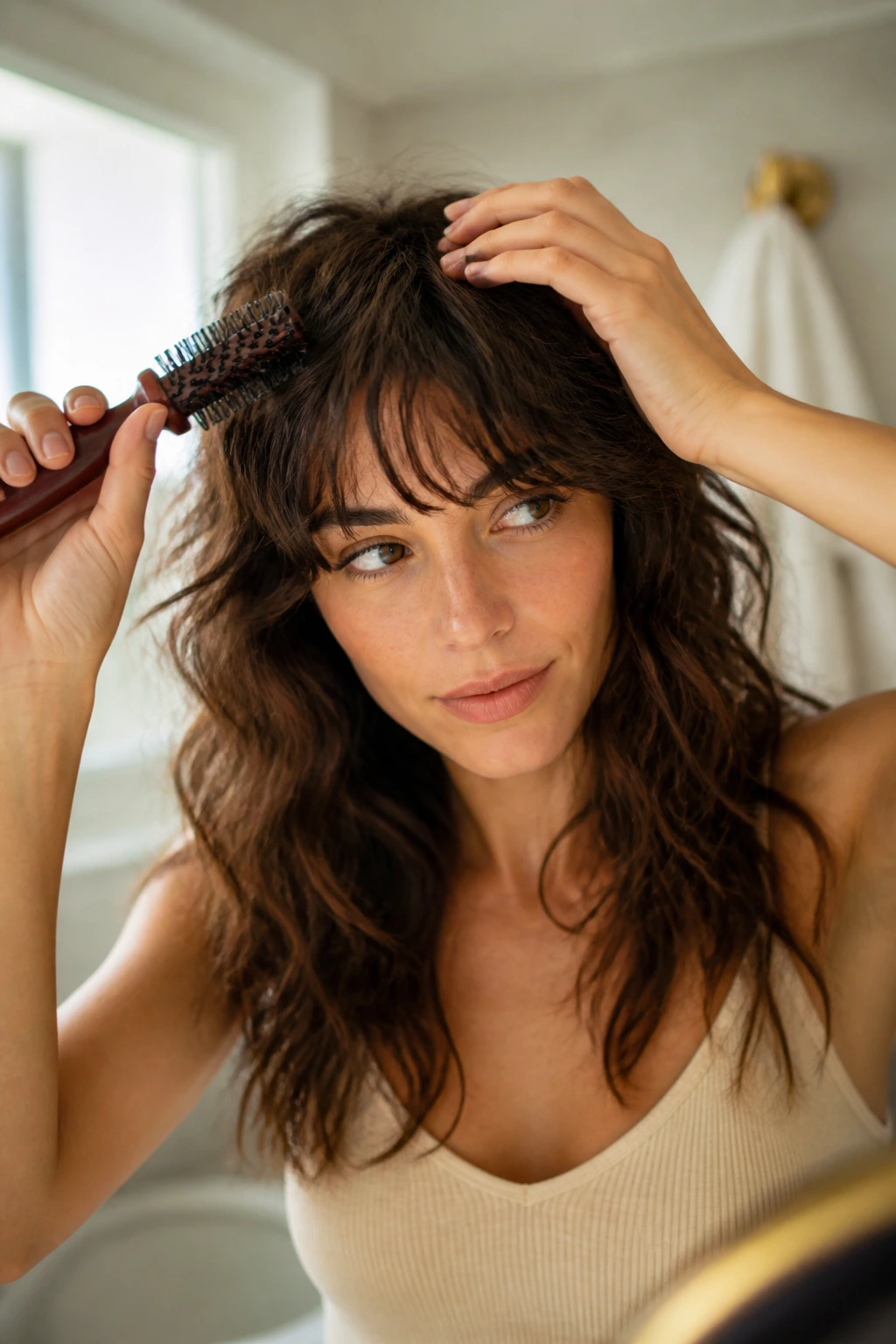
Wolf cut bangs are built for people who like a little mess in the front and a lot of shape through the rest of the haircut. On thick wavy hair, the fringe should feel connected to the layers around the crown, not separated like an afterthought.
The bang itself is usually short-to-medium and highly textured, which means it works best when the rest of the cut has movement too. You do not want a polished bottom with chaotic bangs. That contrast can look awkward.
This is a strong choice if your hair is dense enough to hold volume but you still want the fringe to sit away from the eyes. A diffuser, low heat, and a scrunch of lightweight mousse can bring the shape up without making the ends crunchy.
10. Split Center Fringe

A split center fringe gives you the drama of bangs with a built-in escape hatch. The center part opens the forehead, while the chopped edges fall down each side and blend into the rest of the hair.
The cut is especially good if your wave pattern changes from the roots to the mid-lengths. Instead of forcing everything forward, the fringe can slide apart and follow the texture. That reduces the triangle effect thick hair sometimes creates at the hairline.
Keep the shortest pieces at eyebrow length or a touch lower, unless you want to style daily. If the fringe is too short, the split can pop open too wide and expose more forehead than you intended. A soft, uneven edge keeps it from looking stiff.
11. Textured Birkin Bangs

Birkin bangs work when you want a heavier fringe without the crispness of a blunt cut. The textured version keeps the outline soft and broken, which is much kinder to thick wavy hair.
I like this shape because it has presence. It covers the brow line enough to feel like a real bang, but the choppy surface means it does not sit like a block. The best version has a slightly rounded base and light slicing through the ends.
What to ask for
Tell your stylist you want the fringe to feel full but not flat, with softness through the middle and slightly longer corners. That wording matters. You want the density, not the weight.
12. Razored Airy Fringe

A razored fringe can be beautiful on thick waves when it is handled lightly. The idea is to thin the bulk without shredding the hair into frizz. Done right, it creates a soft, feathered edge that moves instead of puffing.
This cut suits hair that is very dense at the front and resists falling in a straight line. The razor creates a bit of separation, which lets the wave pattern show through. I would not use it on fragile ends or very dry hair. If the hair is already fuzzy, a heavy razor pass can make the front feel wispy in the wrong way.
The best styling is almost nothing: a little cream, a quick dry, and finger-combing. If you can feel the bangs turning crisp before they dry, you used too much product.
13. Grown-Out Fringe That Still Looks Intentional
A grown-out fringe is not a mistake when it is cut with enough movement in the first place. In thick wavy hair, the grown-out phase can be one of the best phases because the extra length starts to mingle with the layers around the face.
This style works especially well if you are between bang appointments or you want a softer entry point into fringe. The ends should already be a little irregular, so when they lengthen, they still look shaped. That is the whole game.
- Keep the perimeter soft and uneven.
- Let the shortest bits just brush the lashes.
- Clip them to the side when you want them out of your face.
Best for: people who love bangs in theory but do not want a hard maintenance schedule.
14. Bardot Bangs with Choppy Ends
Bardot bangs are all about that open, loose, face-framing finish, but the choppy version gives them the grit thick wavy hair needs. They usually part in the center or slightly off-center and sweep away from the brows.
This is a good cut when you want softness around the eyes and cheekbones without the heavy curtain effect. The broken ends make the fringe feel lighter, which helps if your hairline is dense. You still get the shape, but not the weight.
I think this version looks best when the front layers are left a little longer too. If only the bangs are textured and the rest of the haircut is blunt, the front can look disconnected.
15. Uneven Indie Fringe
An indie fringe is supposed to look a touch imperfect. That is the point. On thick wavy hair, the uneven length helps the texture read as deliberate, not unruly.
You do not want symmetry to the millimeter here. A slightly shorter middle, longer corners, and a few broken pieces around the temples give the fringe an easy, lived-in shape. It can look cool with glasses, with long layers, with a messy bun — basically with anything that would make a smoother bang feel too proper.
A good rule
If you can see every strand trying to behave the same way, it is too tidy. A little irregularity helps the wave pattern breathe.
16. Full Fringe with Hidden Layers
A full fringe does not have to look heavy. Hidden layers inside the bang let the outline stay solid while the inside stays airy, which is a very good trick for thick wavy hair.
This is for someone who wants more coverage across the forehead but hates the look of a single blunt sheet. The outer line can still feel decisive, but the internal slicing keeps the fringe from dragging your whole face down. It is one of the best options if your hair is thick enough to tolerate a stronger shape.
I would ask for the layers to be cut subtly, not aggressively. Too much thinning turns a full fringe into scraggly pieces too fast, and that is a hard look to recover from.
17. Choppy Bangs with Long Face-Framing Pieces

This version is practical in the best way. The bangs live in the front, but the longest pieces slide into the cheekbones and jaw, which means the fringe can change the face shape without taking over the whole haircut.
It works nicely on thick wavy hair because the extra front length helps the wave fall naturally. If you have a broader forehead or a strong jaw, the long framing pieces soften the line in a way that feels easy. No hard edges. No helmet effect.
- Shortest point: around the brows.
- Longest point: near the cheekbone.
- Finish: loose, bent, and slightly separated.
Styling tip: a quick twist with your fingers while the hair is damp keeps the longer pieces from flaring out.
18. Sliced Fringe with a Deep Side Part

A deep side part changes everything. Instead of letting thick waves pile up at the center, you shift the weight and let the fringe fall diagonally across the front. The sliced ends keep the line from feeling solid.
This is a strong choice if your waves naturally fall to one side already. Fighting that part is a waste of time. The diagonal shape lets the bang move with the hair instead of asking for daily correction.
The look is a little sharper than curtain bangs, a little softer than a straight fringe. I like it for readers who want movement but not softness all the way around. It has a bite to it.
19. Tapered Temple Bangs

Temple bangs are all about the corners. The fringe sits lighter at the center and gets more weight as it drifts toward the temples, which is useful when your thick waves like to puff in the outer third of the face.
The choppy detail lives in the taper. You do not need a lot of forehead coverage for this to work. In fact, too much coverage can make the front feel crowded. The tapered corners let the haircut breathe near the hairline and open the eyes at the same time.
This is one of those styles that looks better when it is not over-styled. If the ends are a little broken and the roots have a little lift, the shape reads as soft and smart rather than overdone.
20. Retro Rounded Fringe
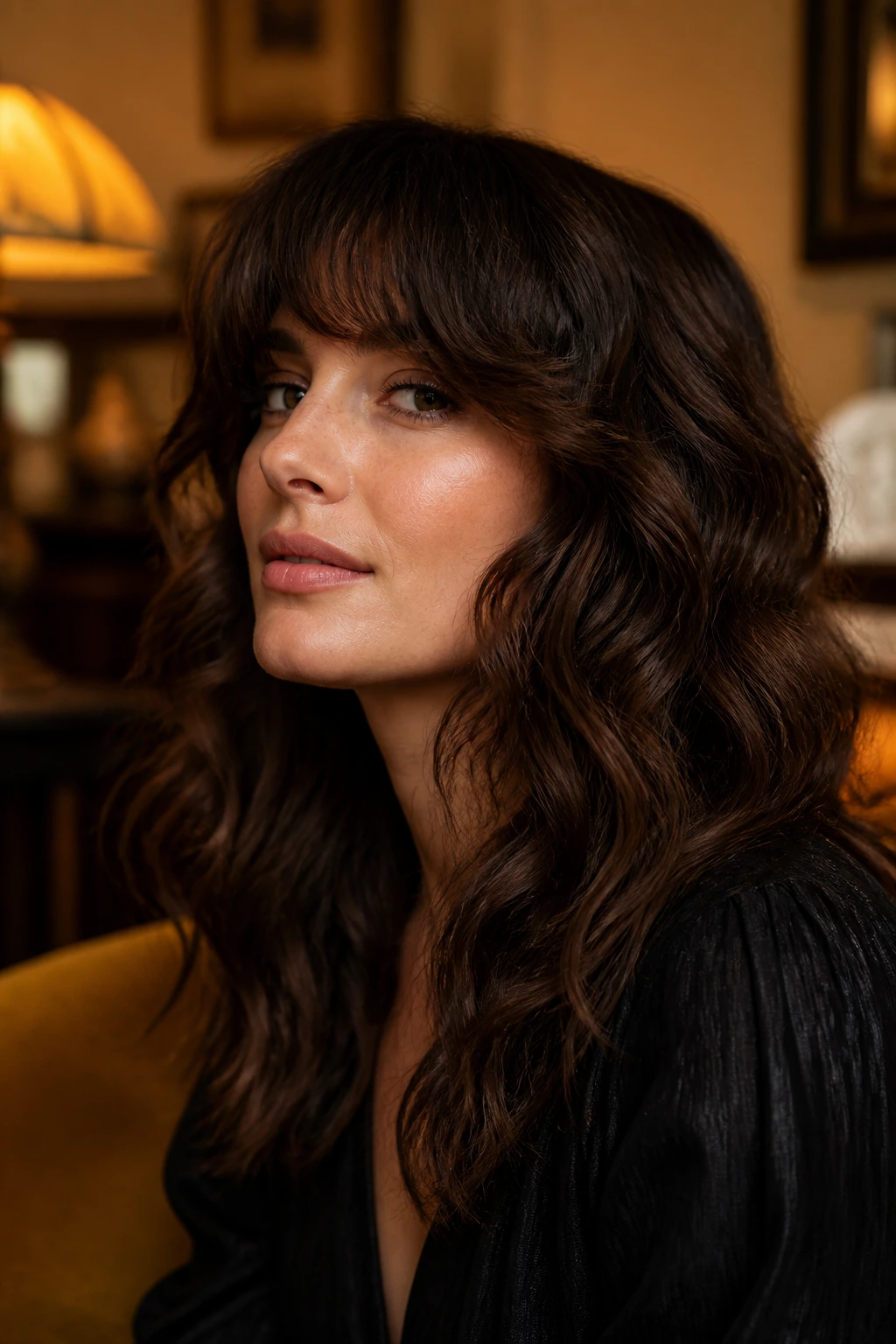
A retro rounded fringe can be gorgeous on thick waves when the shape is softened and the ends are broken up. The curve gives a nod to vintage hair, but the texture keeps it modern enough that it does not feel costume-y.
The key is not to let the fringe get too dense through the middle. Thick wavy hair can easily make this style look too heavy if the internal weight is left intact. A bit of point cutting across the bottom edge changes the whole thing.
Who this suits
If you like the idea of structured bangs but your hair has enough movement to refuse a hard line, this is the sweet spot. It feels polished in photos and a little undone in real life, which is honestly a better combo.
21. Peekaboo Bangs Under Wavy Lengths
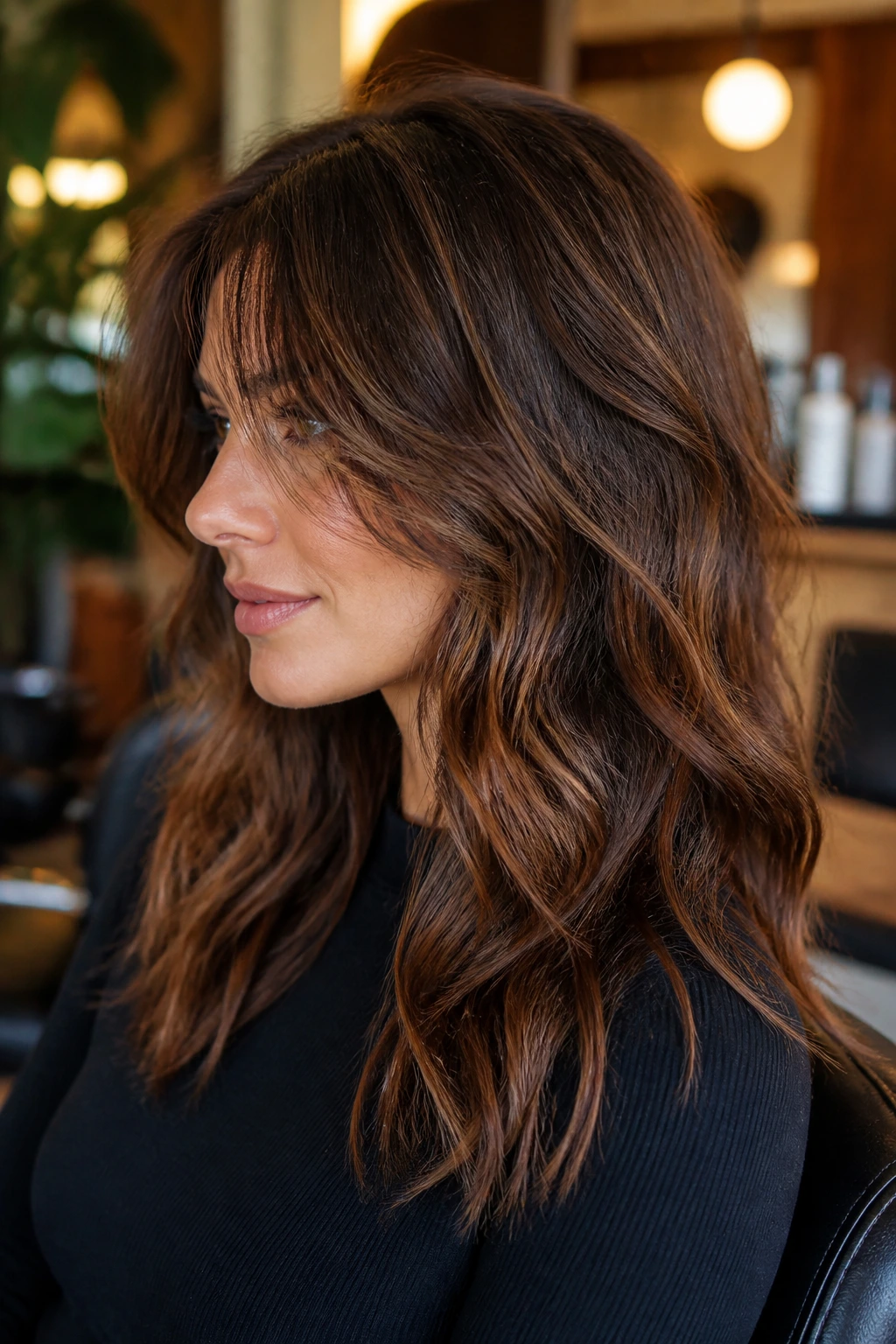
Peekaboo bangs sit just beneath the surface of the haircut. They peek out from under the longer front layers instead of announcing themselves loudly, which is a nice fit for thick wavy hair that gets bulky fast.
This shape is useful if you want the feeling of fringe without the full commitment of forehead coverage. The bangs can be tucked, flipped, or hidden when you want them out of the way. That flexibility matters more than people realize.
A few broken ends around the eyes help the style look intentional even when the waves loosen during the day. I would not cut this too short. The whole point is that it should slip in and out of the rest of the hair.
22. Tousled French Fringe

A tousled French fringe wants to look like you did very little, even if you didn’t. On thick wavy hair, that only works if the cut is done with restraint and the ends are left soft enough to bend.
The front should sit close to the brows but never feel carved in. A tiny amount of separation goes a long way here. If the waves are strong, the fringe can actually look better after it has been touched and lived in a little.
I like this cut when the hair around the face is layered lightly, because the fringe then has somewhere to fall. A heavy one-length perimeter would make it feel too boxed in.
23. Jawline-Length Fringe
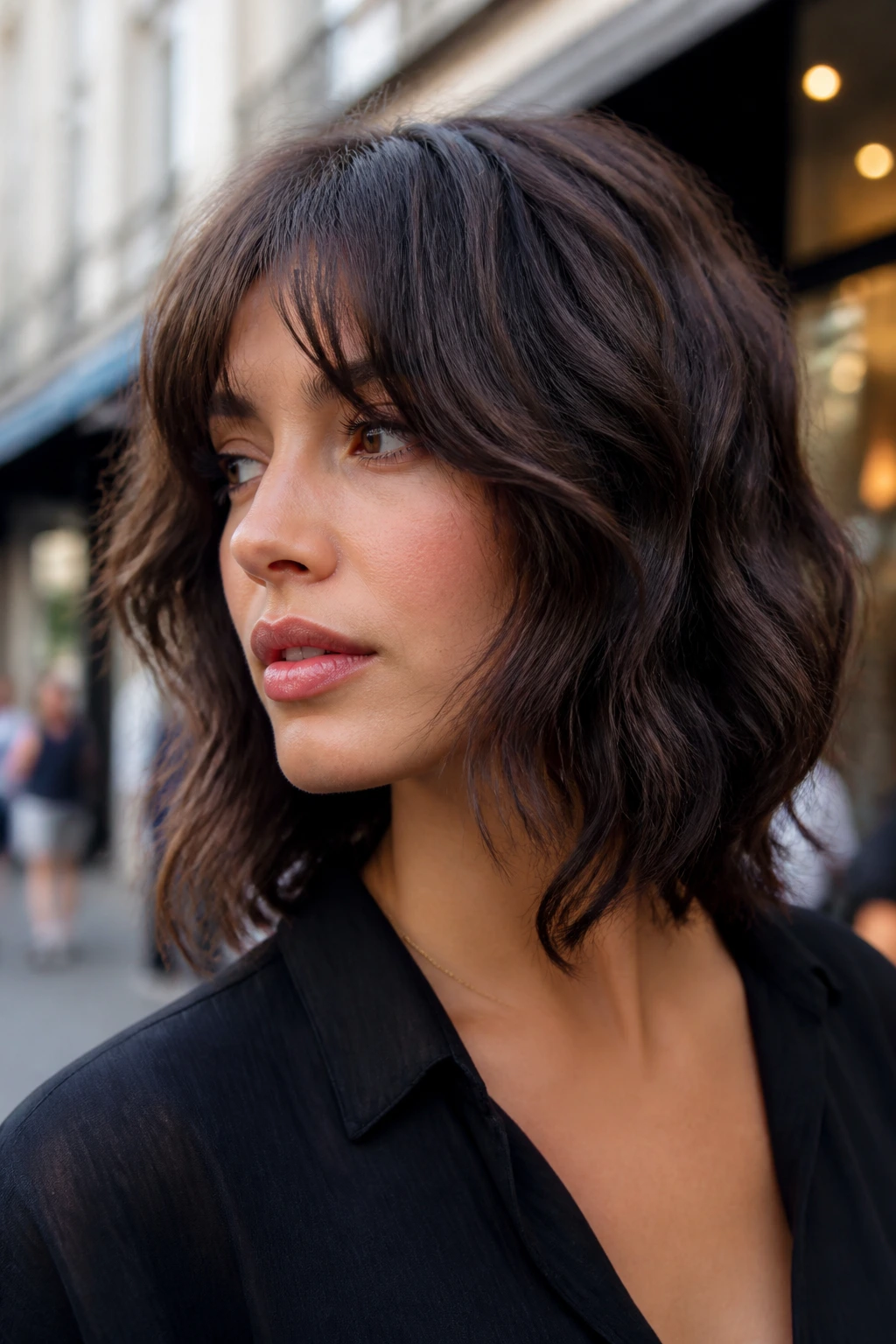
Jawline-length fringe gives you a long front shape that can move between bangs and face-framing layers. On thick wavy hair, that length is a gift because it avoids the abrupt line a shorter bang can create.
The pieces can start near the brow and continue down toward the jaw, which means the hair has room to wave without bulking up. It is a forgiving choice if you are nervous about the forehead feeling exposed. You get the frame without the pressure.
This style looks especially good with side tucks and half-up looks. The front pieces can travel a little, and that is the point.
24. Soft Blunt-Choppy Hybrid Bangs
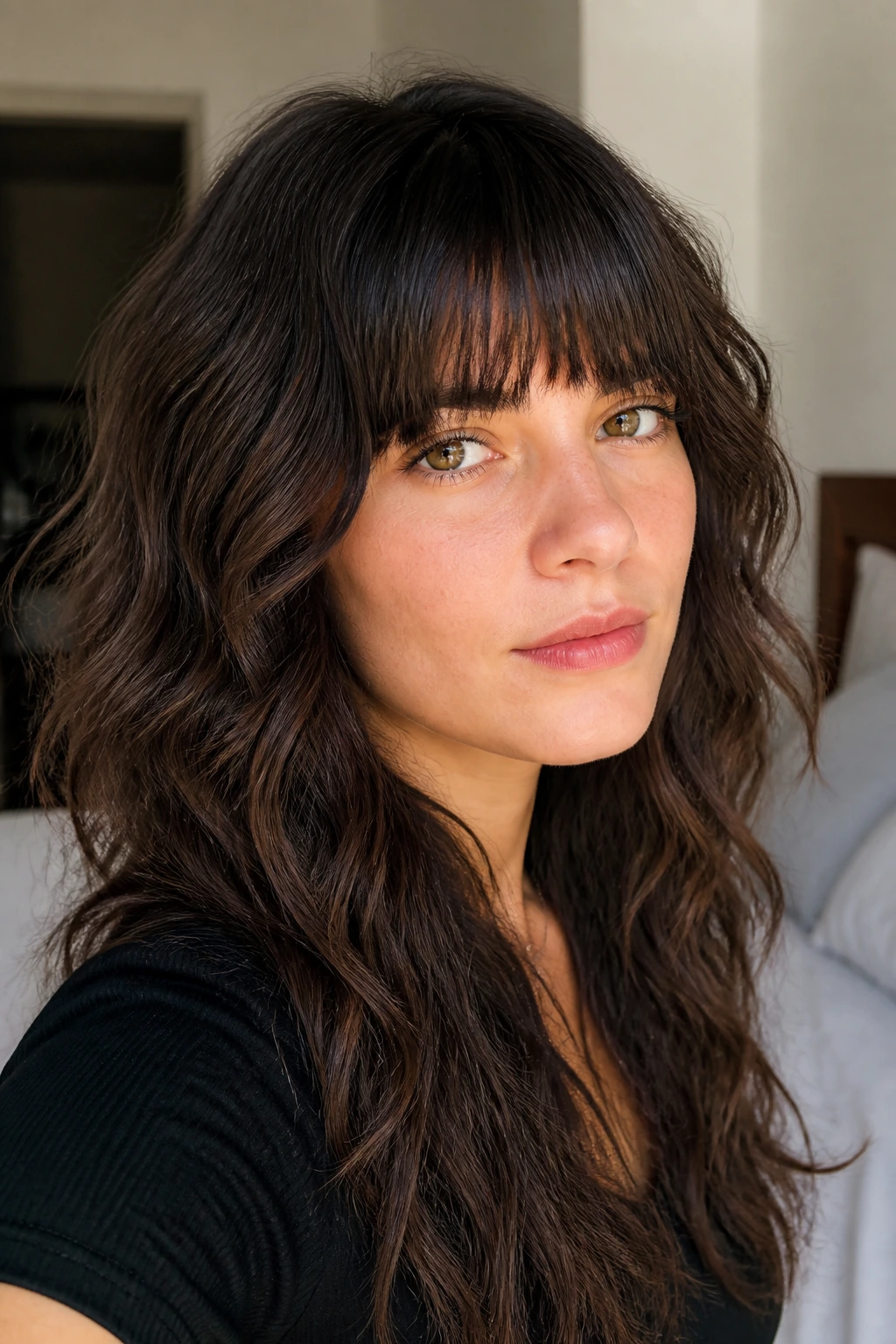
This cut is for someone who wants the visual line of blunt bangs but not the stiffness. The edge looks full at first glance, then the texture breaks it up just enough that thick wavy hair can breathe.
I would call this the practical compromise. You get the presence of a straight fringe, but the interior slicing and jagged ends stop it from becoming a block. If your hair is dense and you want your bangs to read clearly from across the room, this is a smart move.
- Keep the outline straight enough to matter.
- Add broken texture inside the line.
- Avoid over-thinning the roots.
My take: this looks best when the fringe is styled just a little messy. Too smooth and it loses the point.
25. Wispy Heavy Fringe

That sounds contradictory, and that is why it works. A wispy heavy fringe has enough total density to cover the forehead, but the individual pieces are thin enough to stay light through the day.
This is a strong choice for thick wavy hair that feels too big when it is all one weight. The wispy texture breaks the surface into softer sections, so the bangs move instead of sitting as one mass. It can be especially nice if your hairline is very full.
The trick is to keep the ends irregular while preserving enough hair in the fringe to hold shape. If the stylist thins it too much, you lose the “heavy” part and get sparse pieces. That is not the same thing.
26. Slash Bangs with Visible Motion

Slash bangs are cut to angle across the forehead rather than fall straight down, and the choppy finish makes the diagonal line feel lively. On thick wavy hair, that motion is the whole advantage.
The shape can soften a square forehead, pull attention to the eyes, and keep the front from feeling static. Because the line is directional, it also works well when your waves naturally sweep one way. You are not asking the hair to go against itself.
I like this style on hair that has a clear bend and a bit of shine. The angle looks cleaner when the wave clumps are not too fuzzy. A small amount of styling cream and a directional blow-dry are usually enough.
27. Dense-Hair Slice-Cut Fringe

If your fringe tends to feel like a curtain made of wool, slice cutting is where the weight comes off. This version is especially good for very dense thick wavy hair because the internal slices let air move through the front.
The cut is not supposed to look shredded. That is the trap. You want clear pieces, lighter ends, and enough separation that the wave pattern shows. If the hair is over-sliced, it can lose body and start frizzing at the tips.
The sweet spot
Ask for reduction in the interior, not just at the surface. The fringe should still look full from the front, but feel less bulky when you touch it. That is the part most stylists know how to do well.
28. Air-Dry Twist Bangs
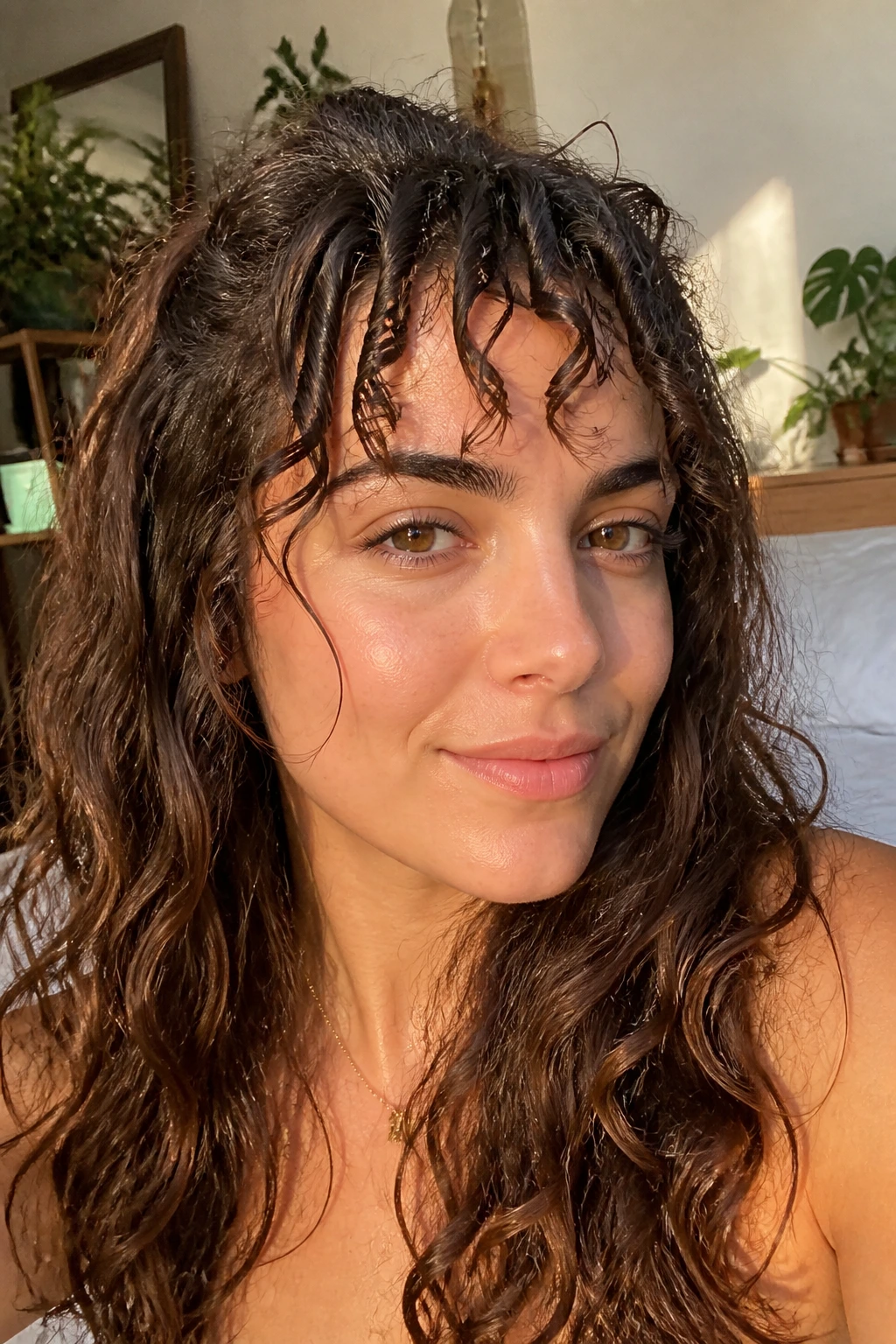
Air-dry twist bangs are made for mornings when you refuse to stand over a hot tool. The front is cut with enough texture that you can twist the damp fringe in small sections, let it dry, and get a soft broken shape with almost no fuss.
This works well on thick wavy hair because the twist encourages the wave to settle instead of spreading out. I like it for people whose bangs separate naturally into two or three chunks. The hair is already trying to do the work for you.
- Mist lightly, not heavily.
- Twist each front section once or twice.
- Let it dry fully before touching it.
Useful detail: if you keep touching it while it dries, you lose the shape fast.
29. Crown-Heavy Shag Fringe
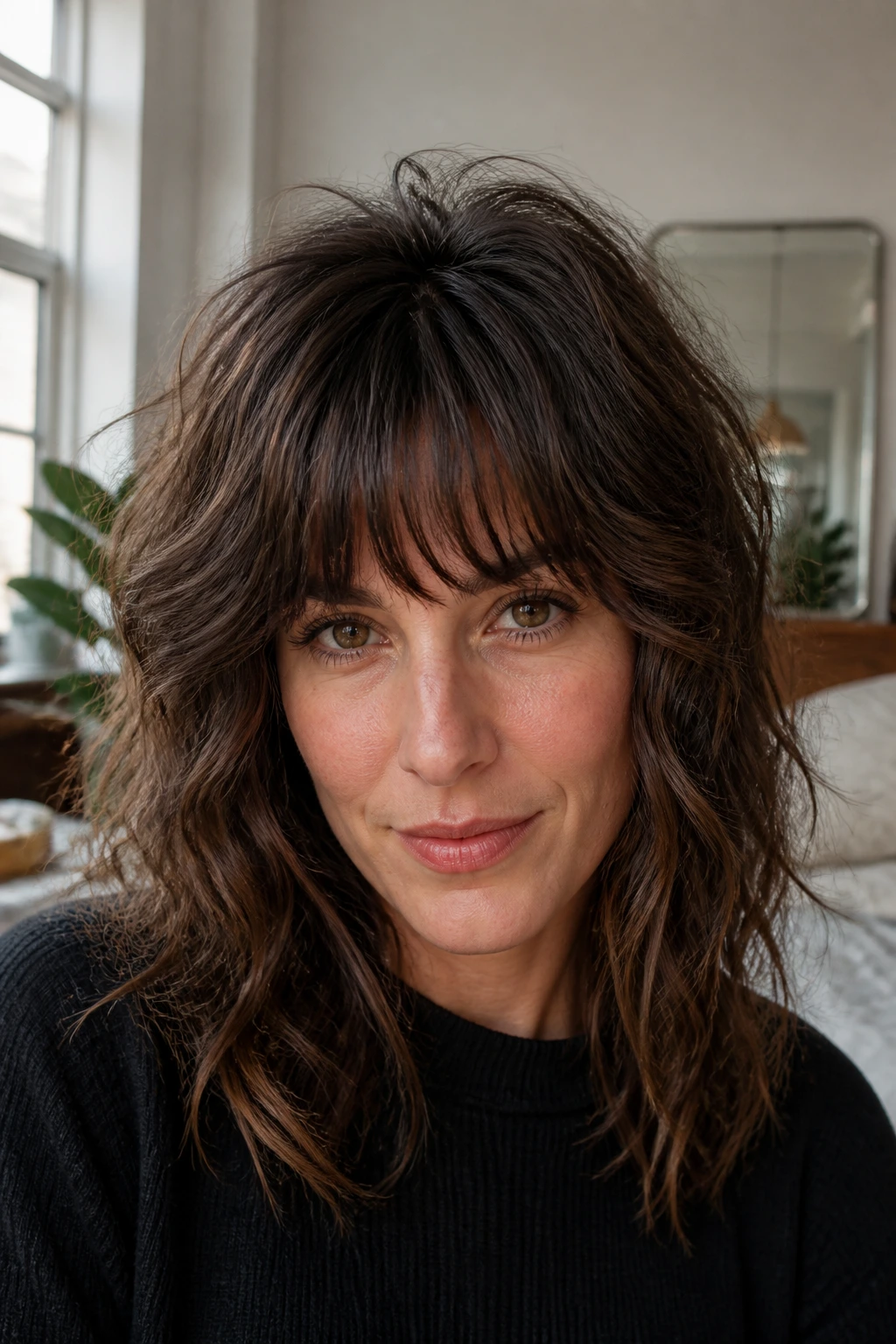
A crown-heavy shag fringe pulls volume from the top and releases it through the front. On thick wavy hair, that means the bangs feel connected to the haircut instead of isolated.
The fringe itself can be choppy and irregular, but the bigger story is the relationship with the layers above it. If the crown carries too much weight, the bangs will collapse. If it is too thin, the front can look weak. Balance matters here.
This is a cut I like when the wearer wants movement everywhere. It does not sit politely. It has a little lift, a little mess, and enough shape to keep the whole front from disappearing into the rest of the hair.
30. Off-Center Bottleneck Bangs
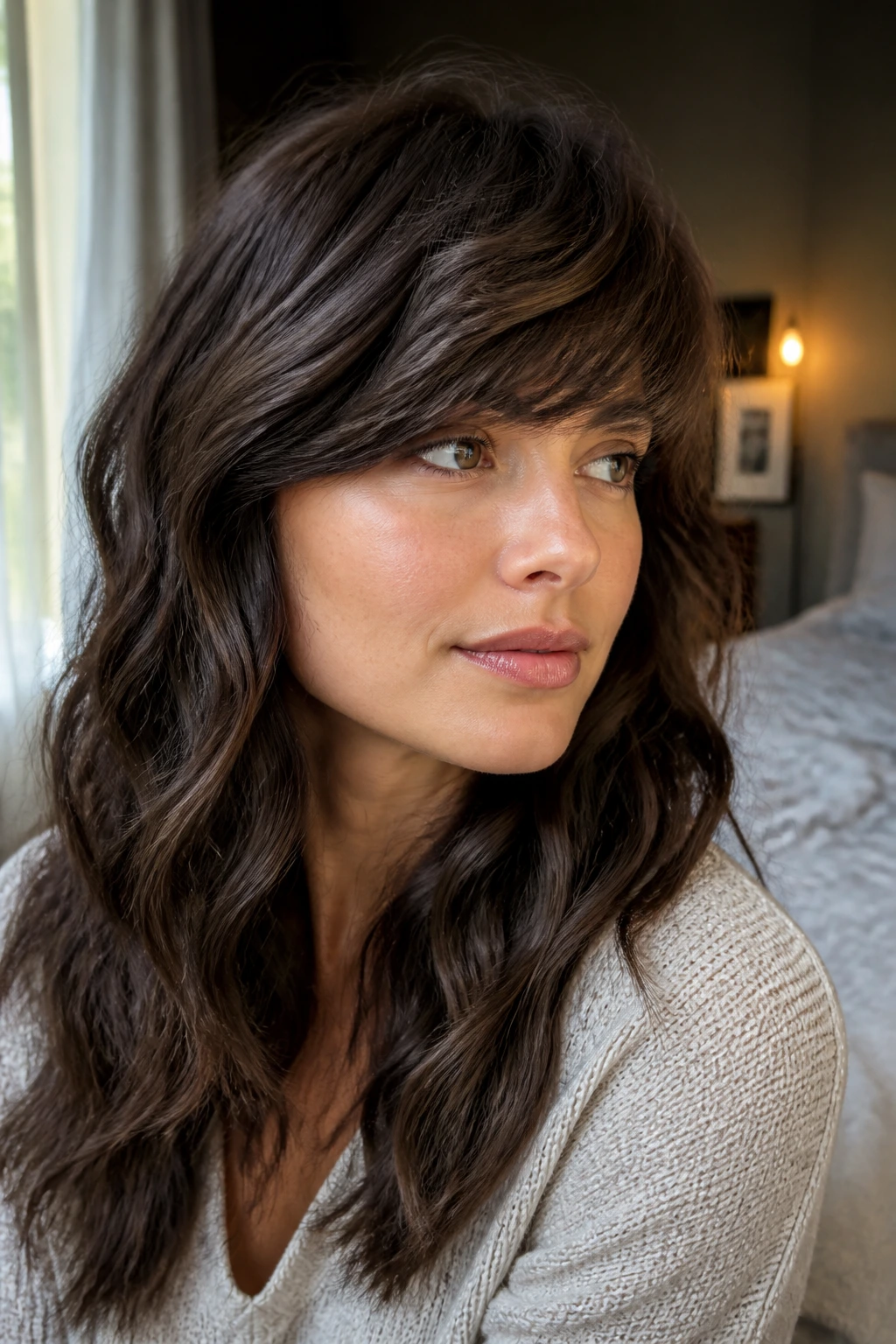
An off-center bottleneck fringe changes the balance just enough to feel fresh. The opening is still narrow near the center, but the part shifts slightly, which helps thick waves fall in a more natural direction.
That small shift can solve a lot of problems. Cowlicks calm down. The fringe does not split so dramatically in humid weather. And the face-framing pieces land in a more relaxed way, which is useful if you do not want the symmetry of a center part.
It is a subtle style, but not a shy one. The shape still has structure. It just does not insist on standing perfectly in the middle of your face.
31. Glasses-Friendly Broken-Line Fringe

Glasses and bangs can be excellent together, but only if the fringe does not crowd the frames. A broken-line fringe leaves a little openness around the eyes, which keeps thick wavy hair from competing with your glasses.
The ends should skim above or just at the frame line, not crash into it. That means you need a bit of separation at the center and softer corners near the temples. I would not go too thick here, or the front will look heavy in real life even if it looks fine in a photo.
- Leave a slight gap over the bridge.
- Keep the sides light enough to tuck.
- Use a tiny bit of dry shampoo at the roots if the fringe starts to sit on the lenses.
32. Long-Layer Blended Fringe

A long-layer blended fringe is the most casual version of the whole bunch. The bangs melt into the front layers so well that the line almost disappears, which is a relief if you want movement more than a statement.
This cut suits thick wavy hair because it removes the hard edge without losing the shaping effect. The front still opens the face, but the transition into the rest of the haircut is so smooth that it can grow out for a long time before it looks awkward. That is a rare quality.
If you want one version that survives lazy styling, late trims, and the occasional bad hair day, this is it. The hair can fall wherever it wants and still look considered.
Why the Cut Matters More Than the Blowout
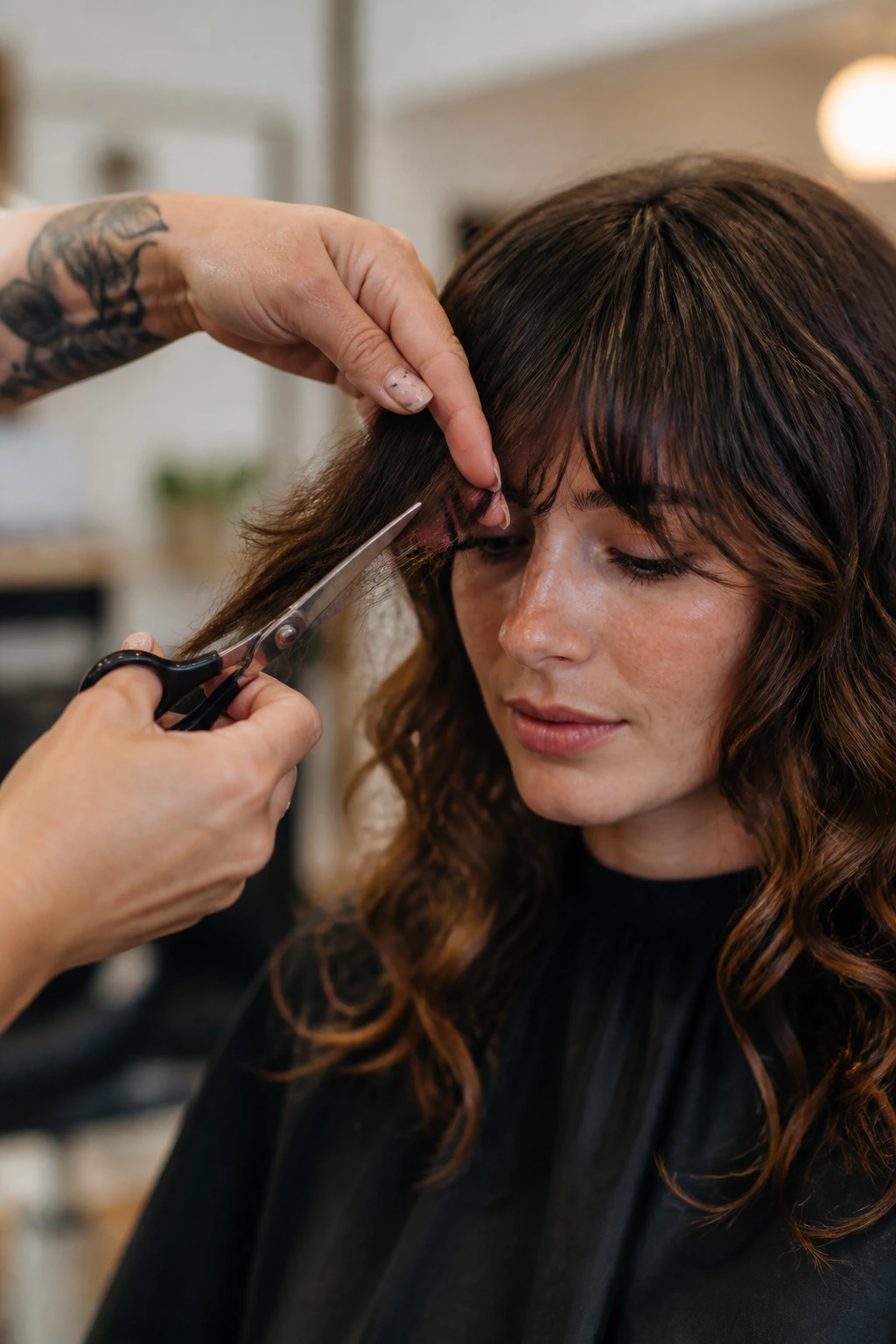
The shape you ask for does most of the heavy lifting. A thick wavy fringe can be styled beautifully and still look wrong if it was cut too blunt, too short, or too dense at the base. That is why the best choppy bangs start with the right removal of weight, not with a fancy finishing spray.
Dry cutting is usually the smartest move for this hair type. Wet waves lie about length, and they lie with confidence. A fringe that looks fine soaking wet can spring up half an inch once it dries, and half an inch is the difference between a cool face frame and a bang that keeps grazing your eyebrows in the wrong way.
I also trust point cutting more than aggressive thinning shears on thick wavy fringe. Point cutting breaks the edge without tearing the surface to pieces, which matters when the hair already has texture of its own.
The Tools That Keep a Fringe From Puffing Up
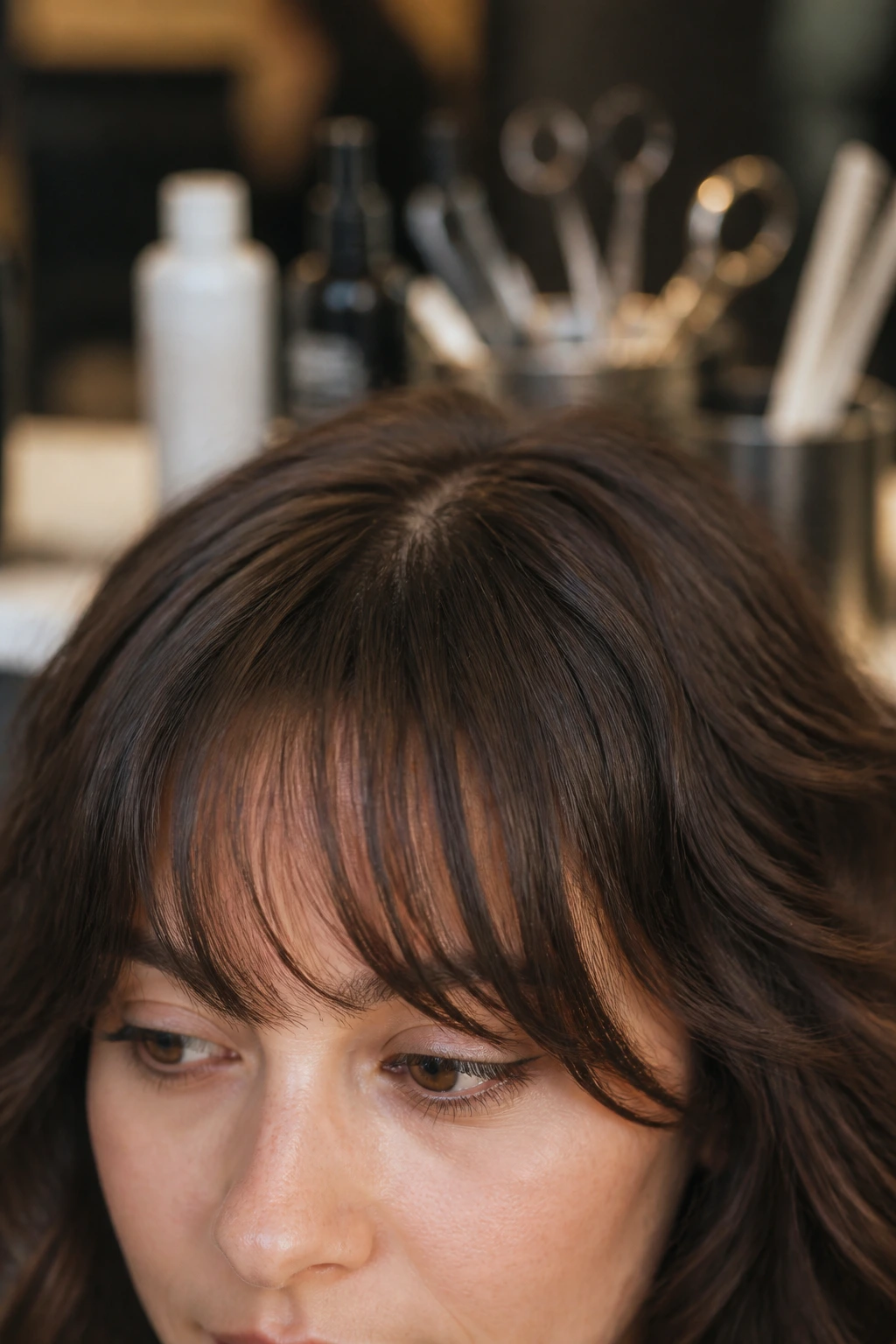
Sharp haircutting shears: These matter if you are trimming a fringe at home or asking for a clean finish at the salon; dull blades crush the ends and make thick waves frizz faster.
Fine-tooth comb: Useful for separating the bang area cleanly before drying or trimming, especially when the front section wants to merge with the rest of your hair.
Small round brush or vent brush: A 1-inch brush gives enough bend for bangs without turning them into a giant curl, while a vent brush is faster if you want a looser finish.
Blow-dryer with a concentrator nozzle: The nozzle keeps the air moving in one direction, which helps thick waves lie where you want them instead of blowing apart.
Sectioning clips: These save you from styling the whole head while trying to tame just the fringe.
Light mousse or root spray: Pick one lightweight product that gives hold without sticky buildup. Heavy creams make thick bangs sag.
Dry shampoo: A small amount at the roots keeps the fringe from collapsing by midday and buys you an extra day between washes.
How to Choose the Right Fringe Shape for Your Wave Pattern
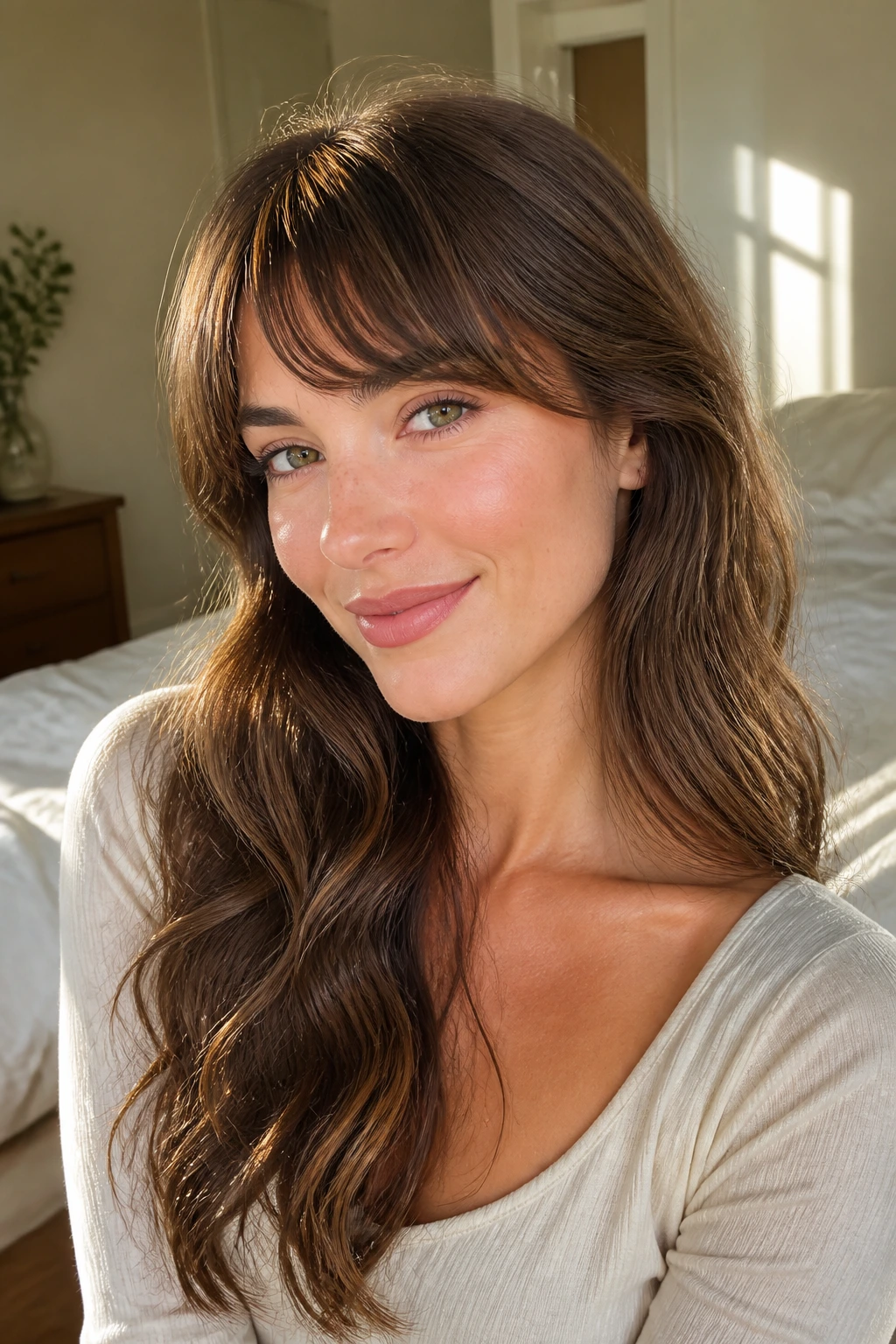
The same cut does not behave the same way on every head. Loose waves, coarse waves, and dense waves all need a different balance of weight and air.
If your waves bend softly
Go for curtain bangs, Bardot shapes, or long blended fringe. Softer waves usually need a little more outline so the fringe does not disappear into the rest of the haircut. Keep the ends broken, but not shredded.
If your waves are springy and thick
Bottleneck bangs, shag fringe, and slice-cut shapes tend to behave better. They have enough structure to hold their place, but enough removal of bulk that the hair does not sit in one solid slab. I would avoid anything too short unless you love re-shaping every morning.
If your crown is flat but your fringe puffs
A deeper side part or an off-center bottleneck can help. You want to redirect the weight instead of fighting it straight on. That usually means less product, more direction, and a cut that has room to move.
How to Style Them on Busy Mornings
A fringe does not need a salon-level blowout to look good. It needs direction, a little root control, and enough drying time to set the shape before you touch it.
Air-dry: Twist the damp bang area once or twice with your fingers, then let it dry without fussing. When it’s about 80 percent dry, separate the pieces with a dab of lightweight cream.
Blow-dry: Dry the fringe first, before the rest of your hair gets weighty. Aim the nozzle from root to tip and use a small round brush or vent brush to bend the ends under or away from the face.
Refresh on day two: Mist the front lightly with water, hit the roots with a thumbprint of dry shampoo, and re-shape the ends with a quick pass of low heat. Thirty seconds is often enough.
If the bangs puff out: Stop adding product. Use less, not more. A heavy front on thick wavy hair usually means you need more direction in the dry, not more cream at the finish.
Additional Tips and Texture Boosters
Root Lift: Dry the fringe in the opposite direction for the first 10 seconds, then sweep it back where it belongs. That tiny trick keeps the front from sticking flat to the forehead.
Piece Separation: Rub a pea-sized amount of styling paste between your fingertips and pinch only the mid-lengths and ends. Don’t go near the roots unless you want them greasy by noon.
Humidity Guard: A light mist of flexible hairspray at the very end helps the choppy pieces hold their shape without turning stiff.
Glasses Fix: If the fringe keeps touching your frames, ask for a slightly narrower bang section or a softer temple taper. The haircut, not the glasses, usually needs the adjustment.
Make-it-yours: If you like a softer look, add a few longer front pieces. If you like more edge, shorten the center by a quarter inch and keep the sides ragged.
Common Mistakes That Turn Thick Wavy Bangs Into a Mess
Cutting them too short on wet hair: Wet waves shrink, and then they shrink again when they dry completely. The fix is simple: leave more length than feels safe, then trim in tiny steps.
Over-thinning the front: When the fringe gets stripped too much, the ends fray and the roots puff. Ask for point cutting or light slicing instead of a heavy thinning-shear pass.
Using too much cream or oil: Thick hair can swallow product fast, but the bangs will still show it first. If the front feels sticky, go back with dry shampoo or start over with less.
Ignoring the cowlick: A strong front cowlick will push the fringe where it wants to go. If your bangs keep splitting, change the part or shift the shape to a curtain or bottleneck style.
Styling only the ends: The root is where thick wavy bangs win or lose the day. Give the roots direction first, then worry about texture.
Variations and Adaptations to Try
Soft Office Fringe: Keep the outline conservative, with broken ends and a longer center. It reads polished without needing perfect styling, which is useful if you wear bangs five days a week.
Statement Micro Fringe: Shorten the center and keep the edge jagged. This version has a sharper personality and works best when you’re willing to restyle it after a nap or a humid commute.
Glasses-Friendly Sweep: Build the fringe off-center and leave the temple pieces softer. It keeps the frames visible and stops the bangs from crowding your eyes.
Grow-Out Side Sweep: Let the shortest pieces sit lower and angle the entire fringe to one side. This is the easiest way to move from bangs back into layers without a blunt awkward stage.
Curly-Wave Hybrid: If your waves border on curls, keep the bang area longer and ask for very light interior slicing. That preserves bounce while preventing the front from ballooning.
High-Drama Shag Fringe: Pair a choppy fringe with shorter crown layers and strong face framing. It has more attitude, more movement, and a little less neatness. Good.
Frequently Asked Questions About Choppy Bangs for Thick Wavy Hair
Do choppy bangs really work on very thick wavy hair?
Yes, and in some cases they work better than on finer hair because the density helps the fringe hold shape. The key is removing bulk in the right places so the front can move instead of stacking up.
Should they be cut wet or dry?
Dry is safer for thick waves. Wet hair stretches, then springs back later, which makes it easy to cut too short or leave too much weight in the wrong spot.
How often will I need trims?
Most choppy fringes need attention every 4 to 6 weeks if you want them to stay above the eyes. If you prefer a longer, softer shape, you can stretch that a bit.
Can I air-dry them?
Yes, and some of these styles look better with air-drying than with aggressive blow-drying. Twist the damp fringe lightly, let it set, then separate the pieces with clean fingers.
What if my bangs split in the middle?
That usually means the cut is fighting your natural part or cowlick. Try a curtain or bottleneck shape, or dry the roots in the opposite direction for a few seconds before setting them back.
Are choppy bangs good with glasses?
They can be excellent with glasses if the fringe is kept a little lighter at the temples and not too wide. The broken-line shapes are usually easiest because they don’t crash into the frames.
Can I ask for this if I hate daily styling?
Yes, but pick a longer, softer version like curtain bangs, a blended fringe, or a bottleneck shape. Micro bangs and very short shag fringes ask for more maintenance than most people expect.
How do I keep them from getting greasy so fast?
Use less product at the root than you think, and keep dry shampoo in the front hairline from the second day onward. Bangs touch skin, move in and out of sweat, and pick up oil faster than the rest of the head.
A Fringe That Moves
The best choppy bangs on thick wavy hair do not flatten the texture or hide it. They make the texture look chosen. That is the whole point, really: a fringe that bends, breaks apart, and keeps its shape long enough to get you through an ordinary day without a full styling battle.
Start a little longer than you think you need. Ask for softness where the hair is densest, and let the wave pattern have the final say. If the front can breathe, the whole haircut feels lighter, sharper, and much easier to live with.
