



A good bob haircut for women with fine hair does one thing better than almost any other cut: it makes the ends look heavier than they really are. Fine strands don’t need to be bullied into volume. They need a shape that keeps the perimeter honest, the crown from collapsing, and the outline from fraying into wisps by noon.
The wrong bob tells on itself fast. Too many short layers near the top, and the crown goes see-through. Too much thinning at the ends, and the whole cut starts looking airy in the bad way — not light, just sparse. The best versions work because they treat the hair like fabric with a weave you can’t change. You don’t try to invent density. You create the illusion of it with line, length, and restraint.
I’m especially fond of bobs for fine hair because the good ones are practical in a way long layered cuts often aren’t. A blunt edge, a tiny bevel, a careful side part, a face-framing angle that doesn’t shred the perimeter — those small decisions change everything. The list below leans hard into those details, from chin-length classics to softer lob variations, because the right bob isn’t about following one rule. It’s about picking the version that works with how your hair actually falls.
Why These Bobs Hold Up So Well on Fine Hair
-
A clean edge does the heavy lifting: When the ends land in one solid line, the eye reads more density, even if the hair itself is fine and soft.
-
Small length changes matter: Moving the cut up or down by half an inch can shift weight toward the jaw, neck, or collarbone in a way that changes the whole silhouette.
-
Restraint beats aggressive layering: Fine hair usually looks fuller when the stylist leaves the bottom strong and only removes weight where it truly helps.
-
Styling stays realistic: These bobs work with a round brush, a flat iron bend, or a quick air-dry routine, not a 45-minute salon setup.
-
Grow-out is part of the design: Several of these cuts still look intentional after a few weeks, which matters when you don’t want a haircut that falls apart the second it grows.
1. Blunt Chin-Length Bob
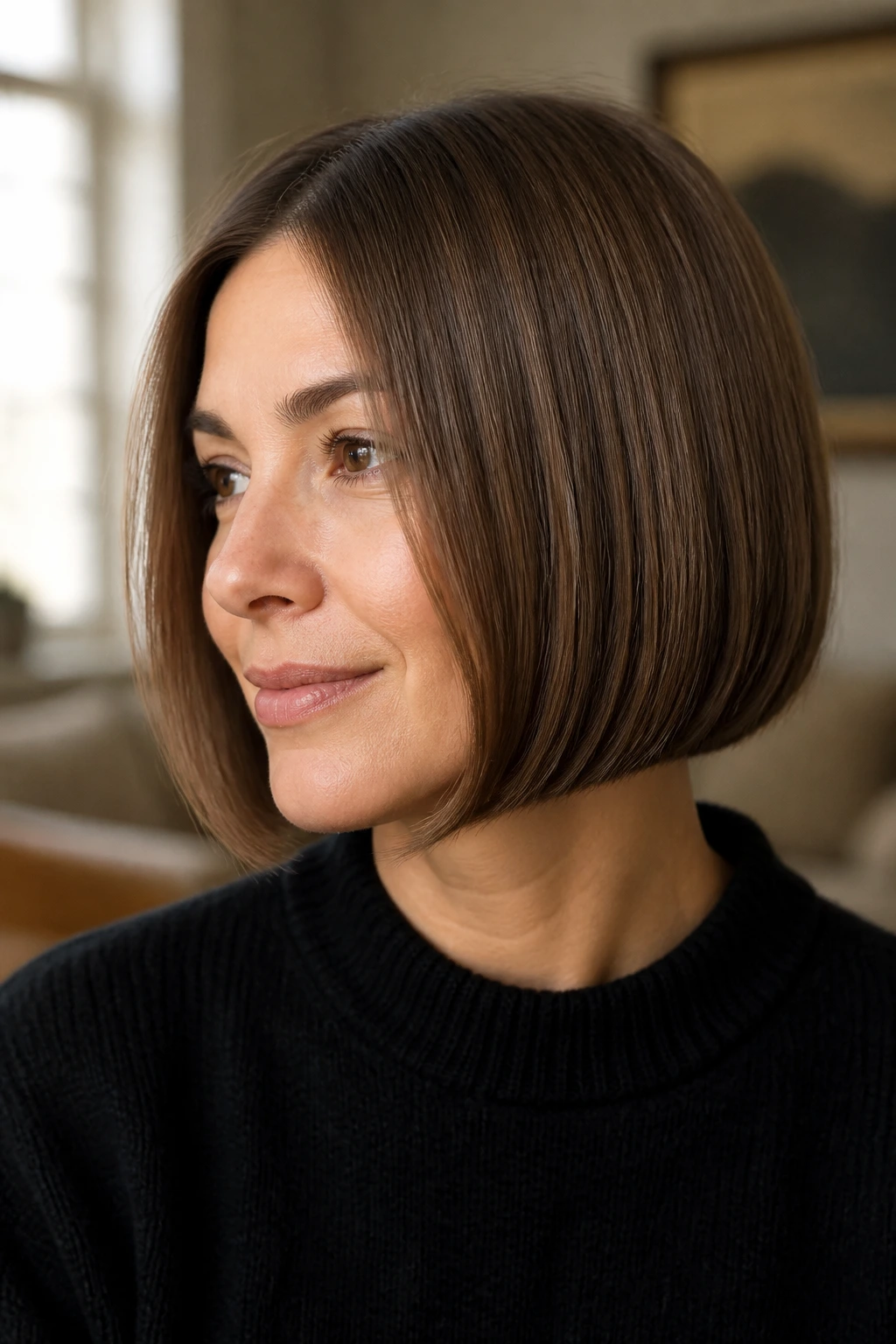
The blunt chin-length bob is the one I’d hand to a woman with fine hair who wants the safest possible place to start. The cut lands right at the chin, which gives the hair a strong anchor point and keeps the ends from drifting into stringiness. That firm line is the whole trick. It makes the hair look like it has more of it.
Why It Works
The chin is a useful stopping point because it gives the eye a clear boundary. A bob that ends there doesn’t need a lot of internal layering to feel shaped; the perimeter is the shape. Ask for the bottom to stay blunt and for the stylist to avoid point-cutting the last inch into little wisps. Those wisps are cute for about five minutes, then they start reading as thin.
Styling Note
A quick bend under the ends with a 1-inch round brush is enough. If your hair is very straight, a single pass of a flat iron, turned just slightly inward, will keep the line crisp without flattening the crown. Keep product light. A pea-sized amount of smoothing cream through the ends is plenty.
2. Soft French Bob with Micro Fringe
Want a shorter cut that still feels a little romantic? This is the one. The French bob with a micro fringe sits around lip to cheekbone length, then adds a tiny fringe that puts focus right on the eyes and upper face. On fine hair, the shorter length keeps the silhouette compact, so the ends don’t go see-through.
How the Fringe Changes the Shape
A small fringe draws attention upward and gives the whole haircut a more deliberate outline. The trick is not to make it heavy. You want a fringe that looks airy and broken up, not a thick wall of hair sitting on the forehead. Fine hair can carry that softness well, especially if the rest of the bob is kept blunt.
Best For
This cut works beautifully if you like a little texture around the face and don’t mind a trim every few weeks. It’s not the best choice if your forehead cowlick has a mind of its own. For the right face and hairline, though, it’s sharp, chic, and surprisingly forgiving.
3. Jaw-Length Side-Part Bob
A jaw-length side-part bob is a small masterclass in visual balance. Instead of parting the hair in the center and exposing every flat spot, you shift the part to one side and let the front pieces fall in a longer line near the cheekbone. That extra sweep creates lift at the root and a little shadow where fine hair usually needs it.
Why the Side Part Helps
Fine hair often looks thinner where the part opens too wide. A side part narrows that exposed scalp area and gives the crown a better chance to rise. I like this cut for women whose hair goes limp around the temples but still has enough body through the mid-lengths to hold a bend. It’s a small move with a big payoff.
Quick Styling Cue
Use a blow-dryer nozzle and direct the front section opposite the part for the first 30 seconds of drying. That tiny trick trains the roots to stand up before they settle. If you tuck one side behind the ear, leave a few face-framing strands loose so the style doesn’t lose its shape.
4. Angled A-Line Bob
The angled A-line bob is a smart choice when you want the back to feel neat and the front to carry more presence. The line starts a little shorter at the nape and lengthens toward the front, which means the hair appears fuller where it hangs around the jaw. On fine hair, that front weight is useful. It keeps the ends from looking ragged.
What Makes the Angle Work
A strong A-line shape gives you built-in movement without relying on lots of layers. The front pieces can skim the collarbone or chin, while the back stays a touch shorter so the shape doesn’t collapse against the neck. The result is clean, not stiff. That matters.
If your hair tends to kick out at the ends, ask for a soft bevel rather than a severe stack. Too much graduation can make fine hair look exposed. A mild angle is usually enough.
5. Collarbone Lob with Invisible Layers
This is the bob for anyone who wants to keep a little length without letting the hair drag itself flat. A collarbone lob with invisible layers sits right where the shoulder and chest create natural support. The layers stay tucked inside the haircut, so the ends still look thick.
Why It’s a Good Transition Cut
If you’re growing out a shorter bob, this shape is forgiving. The perimeter remains strong, but the internal structure keeps the hair from feeling helmet-like. Fine hair often looks better when the movement happens inside the cut rather than through the bottom line. That way, you keep the density illusion intact.
Styling Tip
Blow-dry the top smooth, then use a large-barrel iron or a round brush only through the last two inches. You want a bend, not curls. The cut looks best when the front slightly brushes the collarbone and the ends still feel connected.
6. Inverted Bob with a Light Nape Stack
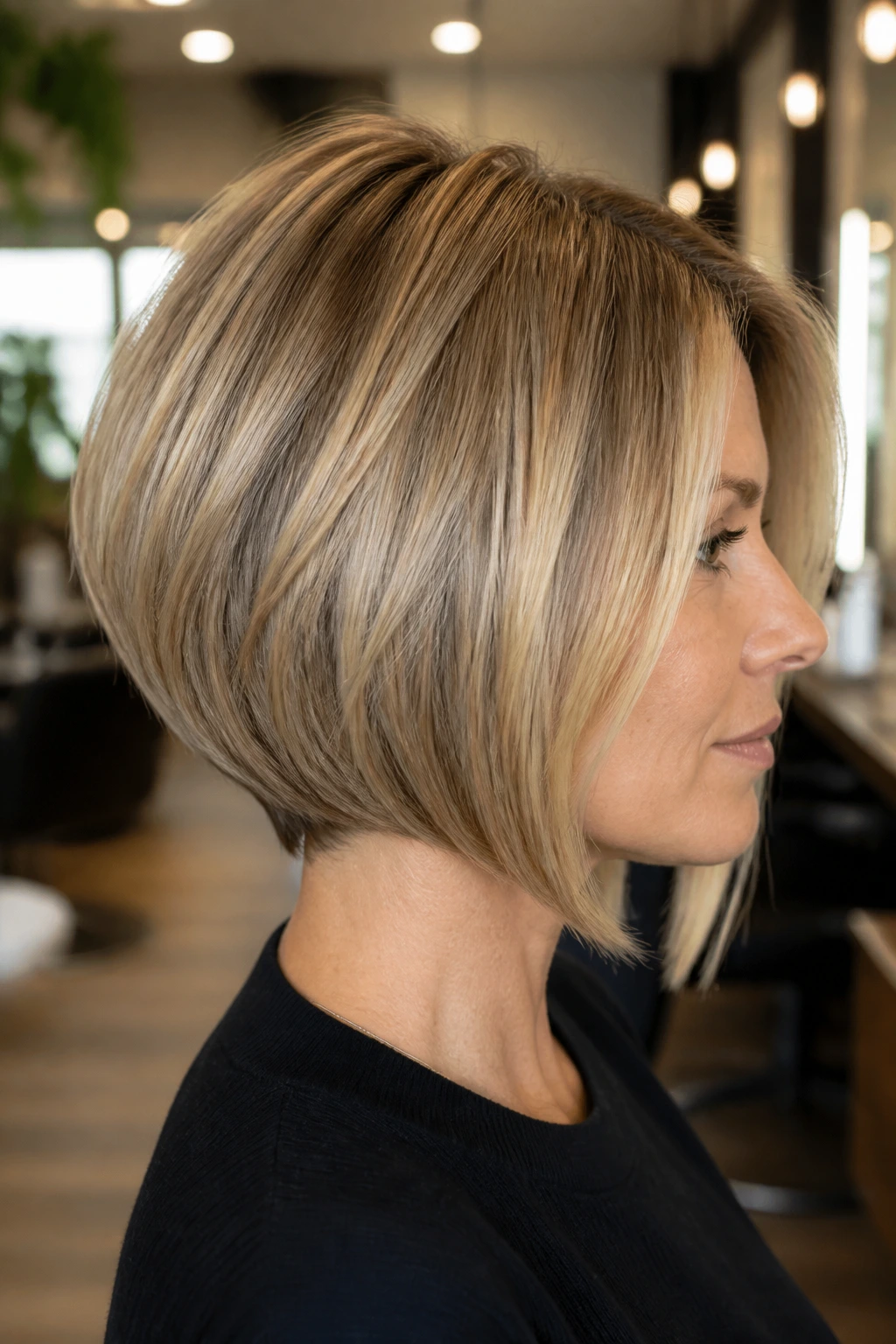
An inverted bob gives you the classic short-back, longer-front shape, but the fine-hair version needs restraint. The nape gets a little stack, not a mountain of it. That small graduation lifts the crown and makes the top feel less flat, while the longer front pieces keep the face framed.
What to Ask For
Tell the stylist you want light stacking at the back and a soft angle toward the front. Too much graduation can expose the scalp at the crown, which is the last thing fine hair needs. The best version looks clean from the side and a bit fuller from behind.
A tiny nape stack also helps if your hair grows in stubbornly around the neckline. It keeps the haircut from flipping out in weird directions. Good geometry. That’s the whole game here.
7. Italian Bob
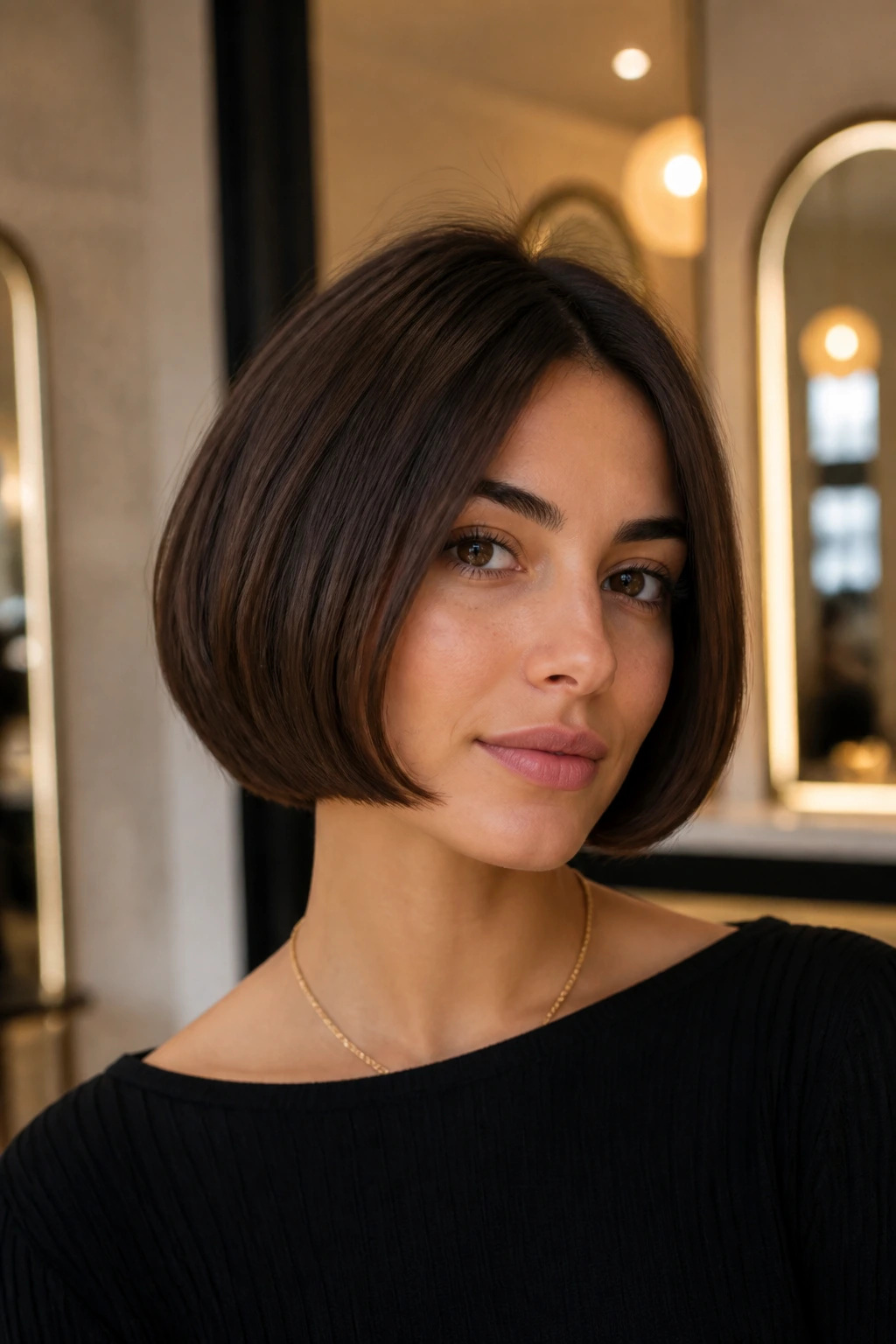
The Italian bob has a little drama in the best possible way. It’s usually cut at jaw length or just below, with a fuller outline and a slightly curved shape that gives the ends weight. Fine hair likes this because the cut keeps the bulk where you can see it. No shredded ends. No overworked texture.
Why It Reads Thicker
The silhouette is broad and deliberate. Instead of tapering too much at the edges, the haircut keeps a solid line that sits close to the head. A little volume at the crown and a bend through the mid-lengths make the hair look lush, even when the individual strands are delicate.
It works especially well if you like a polished blowout. A medium round brush and a heat protectant are enough to keep the finish smooth. If your hair naturally falls straight but soft, this is one of the easiest ways to make it look finished without looking overstyled.
8. Rounded Bob
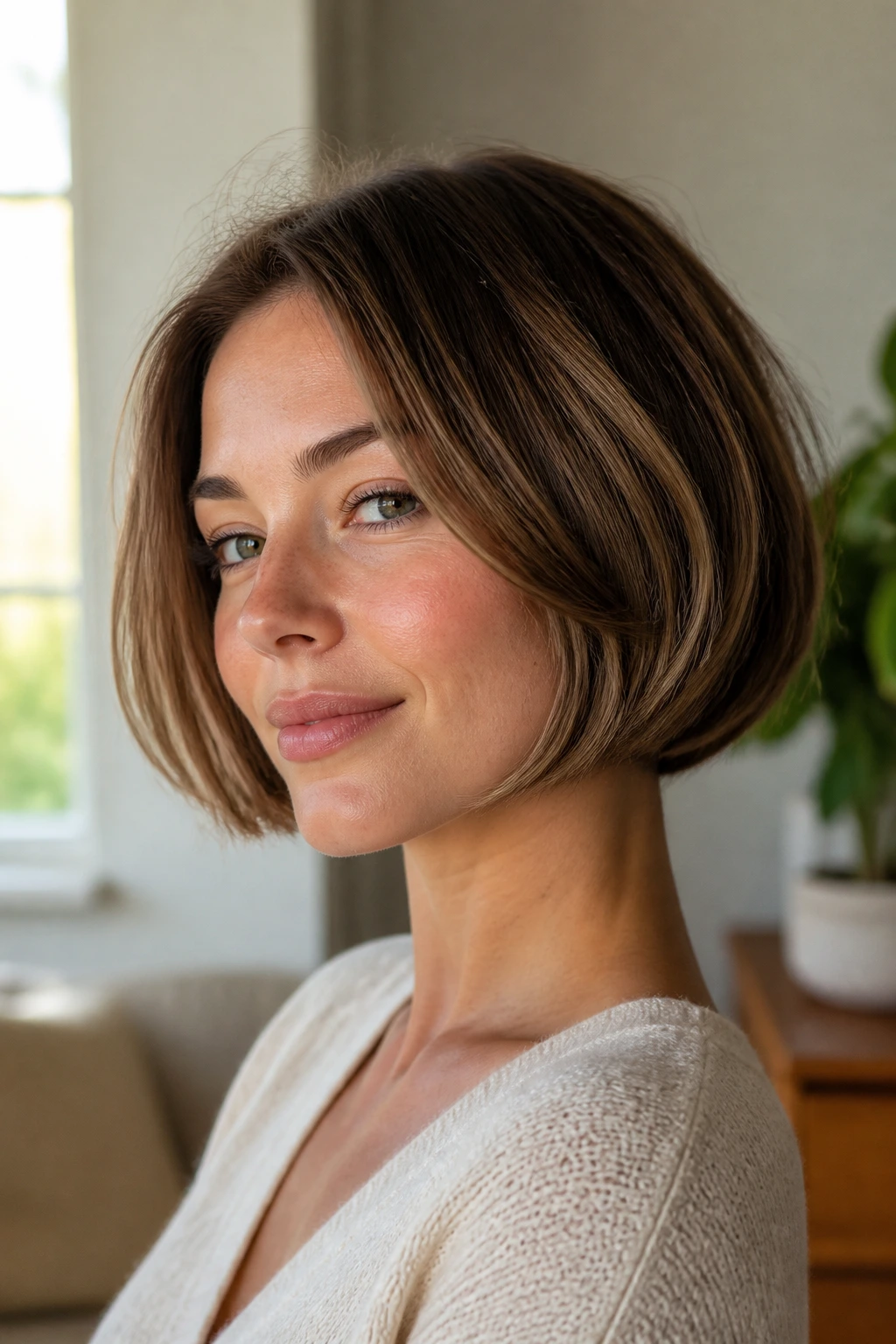
Picture a bob that curves gently under the jaw instead of hanging straight down. That’s the rounded bob, and it’s a quiet hero for fine hair. The curve adds the feeling of fullness around the face and keeps the outline from going flat against the neck.
The Shape Behind the Look
Roundness is doing a lot here. When the ends are blown under, the eye sees a softer, more substantial shape. That matters if your hair has a habit of separating into little see-through sections. A rounded bob keeps everything pulled into one coherent shape.
Best for: women who want softness around the jaw, especially if their hair is straight and fine but not pin-straight.
Less ideal for: very coarse wave patterns that want to flip out in every direction.
Styling move: finish with a cool shot from the dryer to lock the bend in place.
9. Box Bob
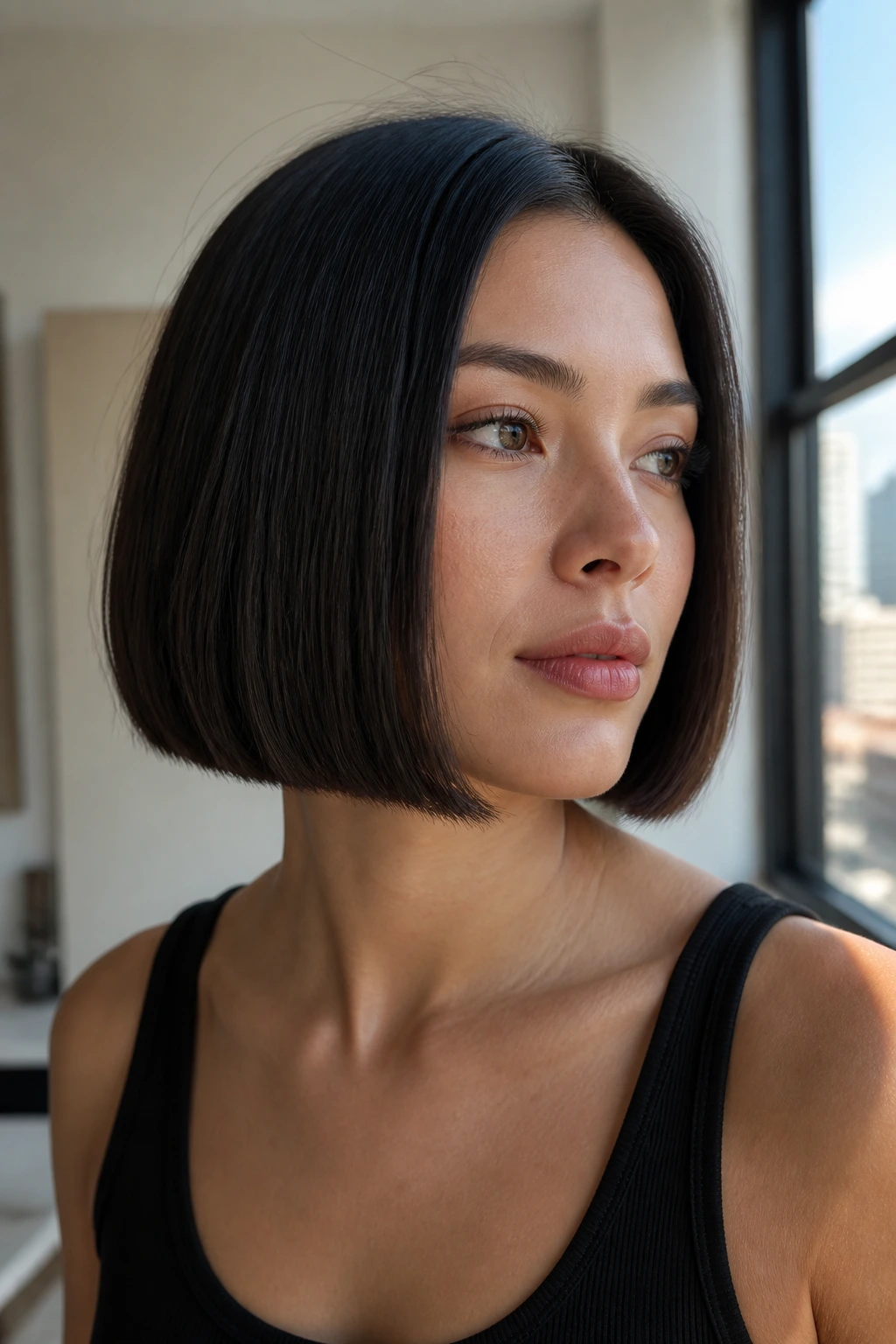
A box bob sounds severe, but on fine hair it can be one of the most useful cuts in the room. The outline is square and compact, with the sides and bottom kept close to the same visual weight. That clean geometry makes the hair look denser because there’s no visual taper eating away at the ends.
Who It Suits
This is a strong choice for straight hair that falls limp under too many layers. The box shape gives the hair a little attitude and a lot of structure. It also looks good with a center or side part, depending on whether you want the style to feel sharper or a bit softer.
The catch is maintenance. If the ends start to fray, the square shape loses its punch. Keep the trim schedule tidy, and don’t let a stylist thin it out just to “add movement.” That defeats the whole point.
10. Curtain Bang Bob
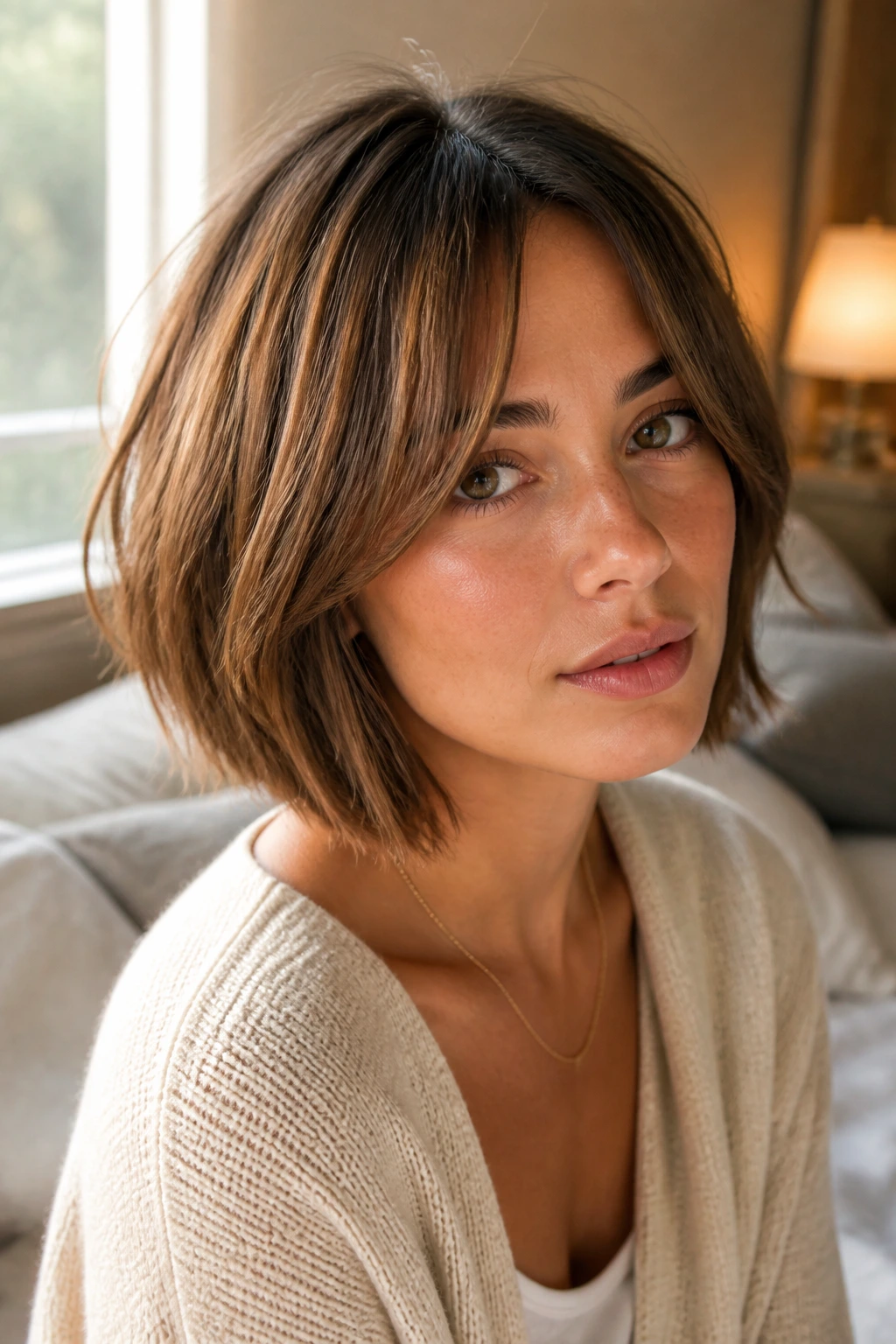
Curtain bangs can do a lot for fine hair when they’re cut with restraint. Paired with a bob, they create width across the top half of the face and soften the transition from forehead to cheekbone. The bob itself can stay fairly simple. The fringe does the interesting work.
How to Wear It
The key is keeping the bangs long enough to split naturally and blend into the front pieces. If they’re too short, they can make the hair look sparse. If they’re too heavy, they swallow the face. The sweet spot usually sits around the cheekbone.
This is a good option if you want some softness around the eyes without giving up the density at the ends. It also works well when you like to tuck your hair behind the ears. The bangs keep the cut from disappearing completely when you do that.
11. Side-Swept Fringe Bob
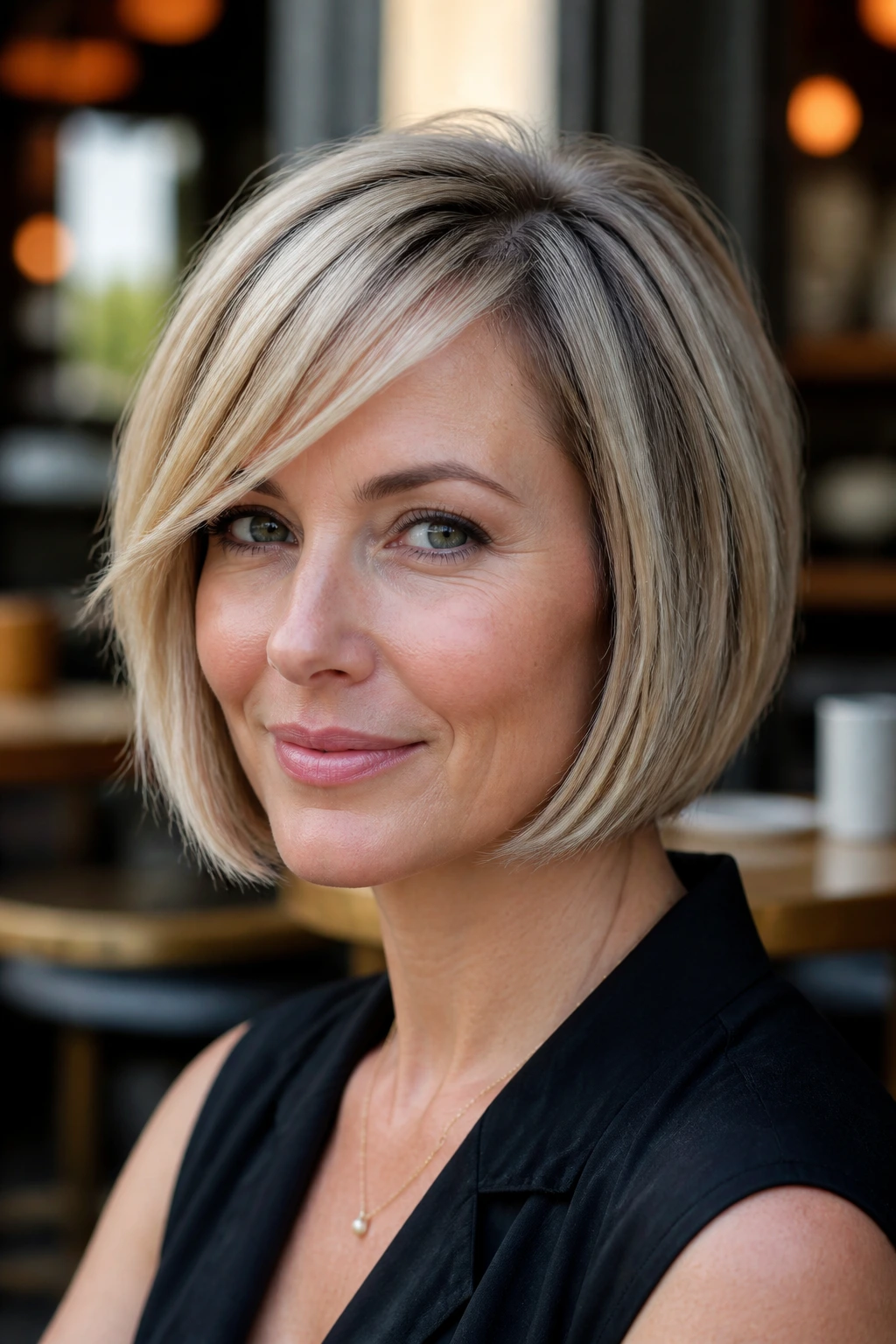
If curtain bangs feel like too much maintenance, a side-swept fringe bob is the calmer cousin. The fringe sweeps diagonally across the forehead, which creates lift at the root and lets the rest of the bob stay neat. Fine hair often looks better with this kind of diagonal line than with a blunt fringe.
Why the Diagonal Matters
A side-swept fringe doesn’t cut the face in half. It opens the forehead enough to give shape, while still adding a little extra fullness where the hair is usually softest. It’s especially handy if your hairline is uneven or one side tends to sit flatter than the other.
Keep the fringe long enough to tuck behind the ear if needed. That way, you can change the look without waiting for it to grow out. Short bangs on fine hair can be charming, but they are a commitment. This version gives you more room to breathe.
12. Ear-Length Crop Bob
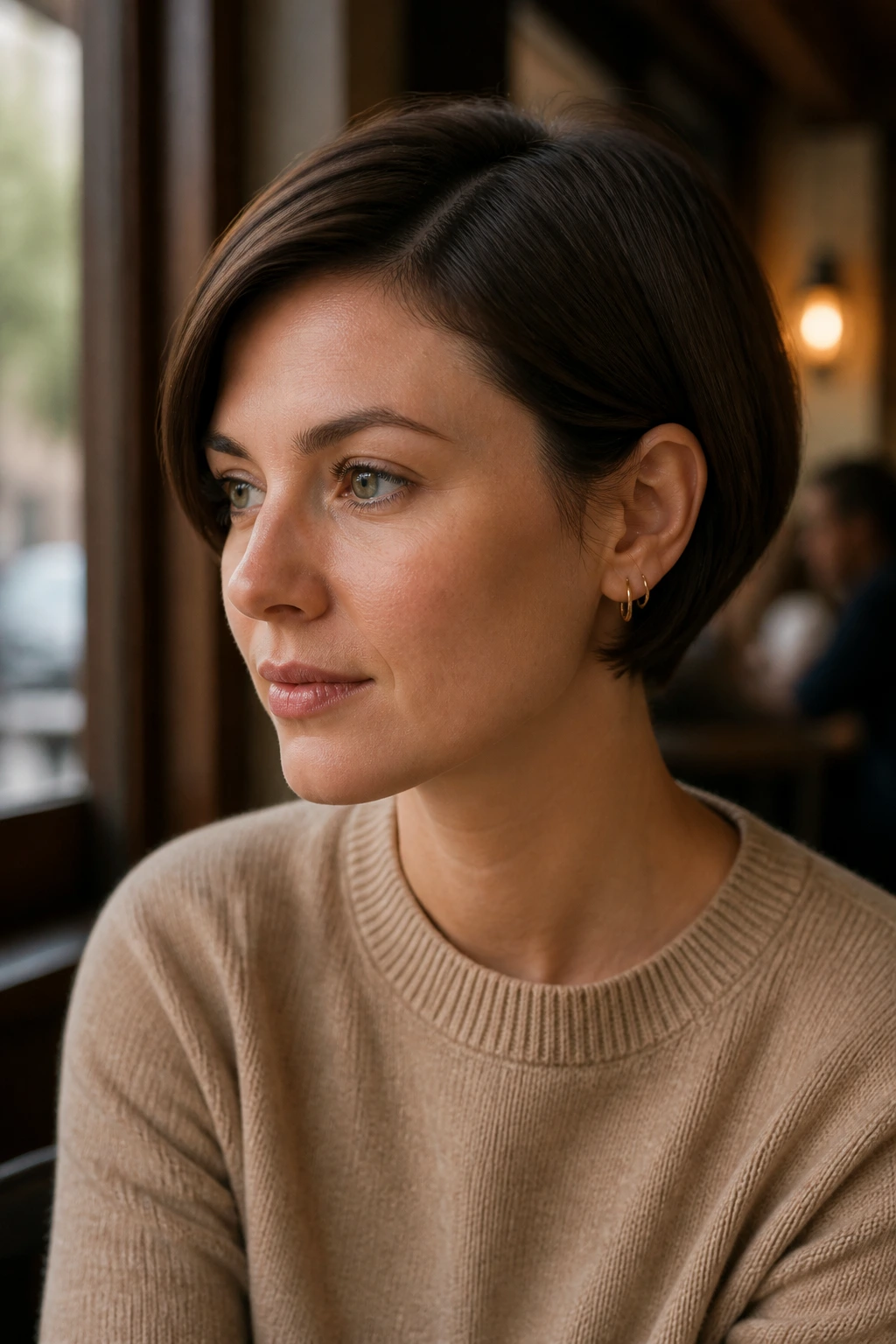
Can a bob go this short and still look full? Absolutely, if the cut is crisp. The ear-length crop bob sits above the jaw and keeps everything close to the head, which sounds risky on fine hair until you see how dense the outline can look when the edges are controlled.
Where It Works Best
This cut shines on women with neat necklines and a bit of natural lift at the crown. The shorter length means the hair doesn’t have to support much weight, so it can stand away from the scalp a little more easily. A clean side part helps, too.
The downside is obvious: it shows growth fast. But if you like a sharp silhouette and don’t mind regular trims, it has real personality. Keep the finish smooth and the edges intentional. Anything fuzzy will show immediately.
13. One-Length Sleek Bob
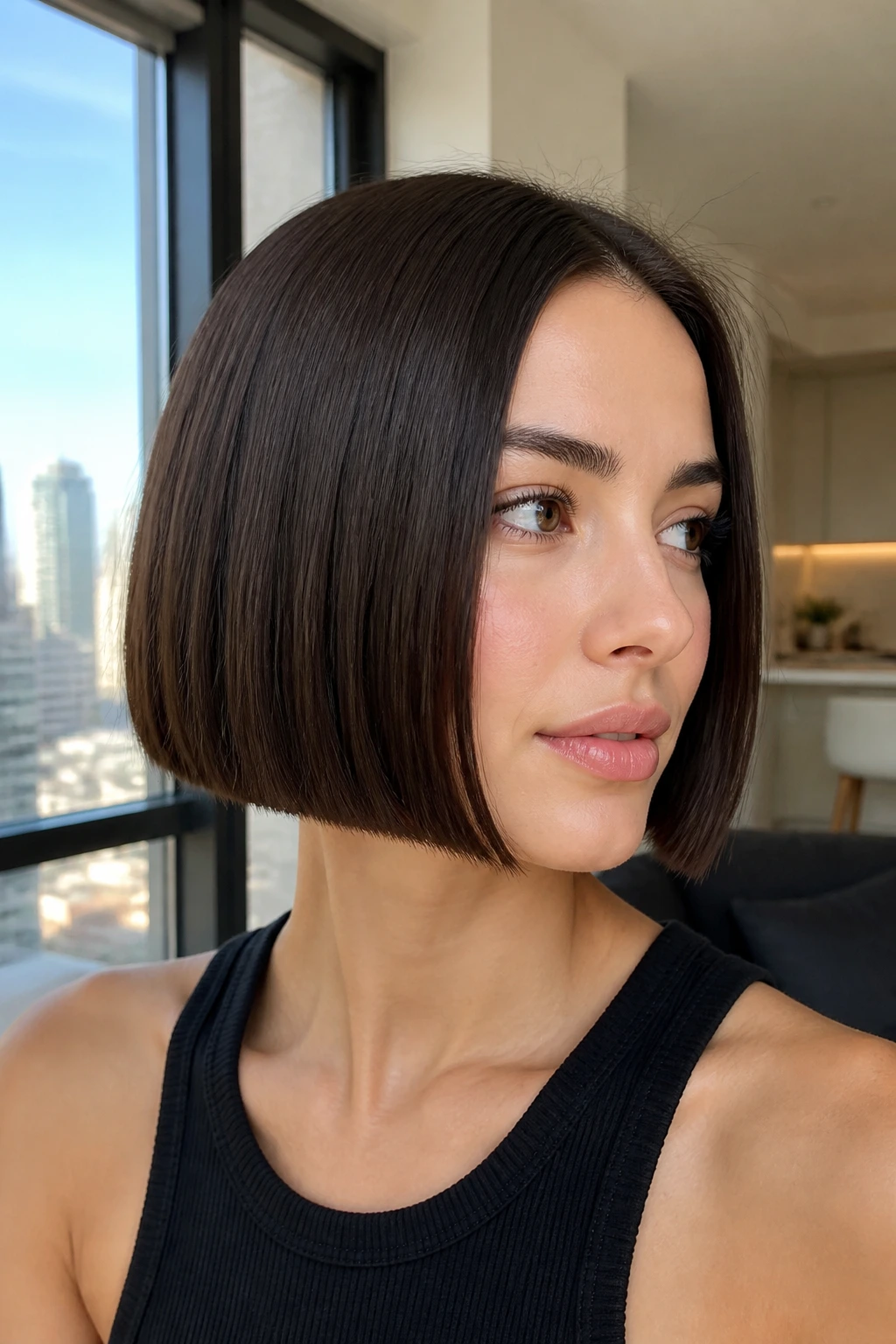
When fine hair is being difficult, a one-length sleek bob often solves more problems than layers ever could. The entire cut stays at one level, which keeps the ends looking thick and connected. There’s nowhere for the density to disappear. That alone makes this cut worth knowing.
Why Simplicity Wins Here
A one-length bob lets the hair mass collect at the perimeter, which is the place the eye notices first. If your strands are fine but you have a decent amount of them, this cut can read as rich and polished. It’s a little unforgiving if the hair is unevenly dense, so the cut has to be precise.
A flat iron pass at a low-to-medium heat setting can make it look glassy, but don’t overdo it. Too much heat makes fine hair limp faster. One smooth pass is usually enough. Let the line do the work.
14. Wavy Textured Bob
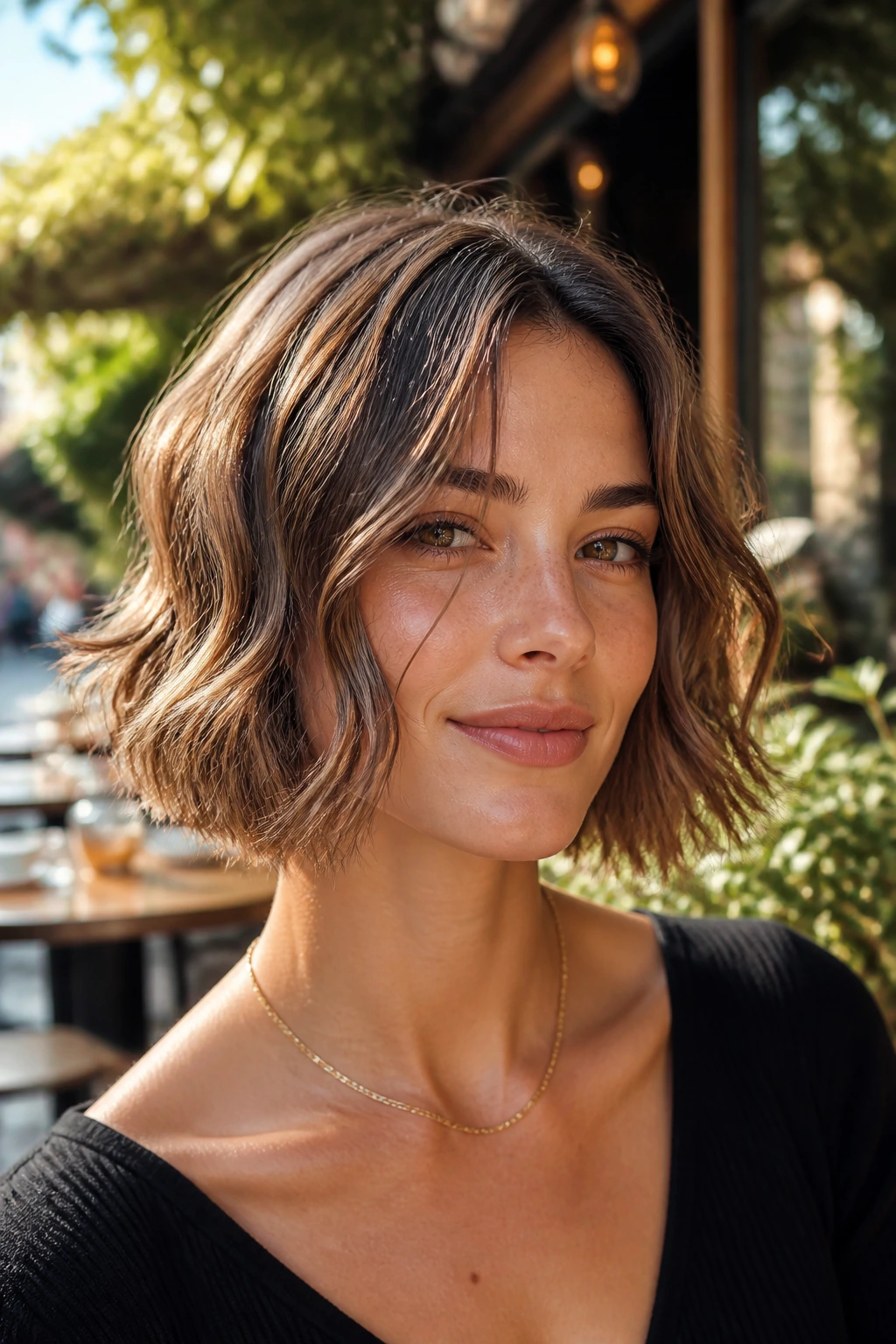
Some fine hair is straight. Some has a quiet wave that only shows up when you stop fighting it. The wavy textured bob is built for the second group. It keeps the length around the jaw or collarbone, then lets the hair bend and separate just enough to create body.
What Makes It Different
The texture isn’t coming from aggressive layering. It comes from the hair’s own movement, with a cut that leaves the ends heavy enough to stay together. That balance is what keeps it from looking frizzy or over-sheared. You want visible bends, not little flyaway pieces everywhere.
A touch of mousse at the roots and a light cream through the mid-lengths is usually enough. Scrunch, air-dry to about 80 percent, then decide whether the ends need a quick pass with a curling wand. Often they don’t. That’s the charm of it.
15. Curved Under Bob
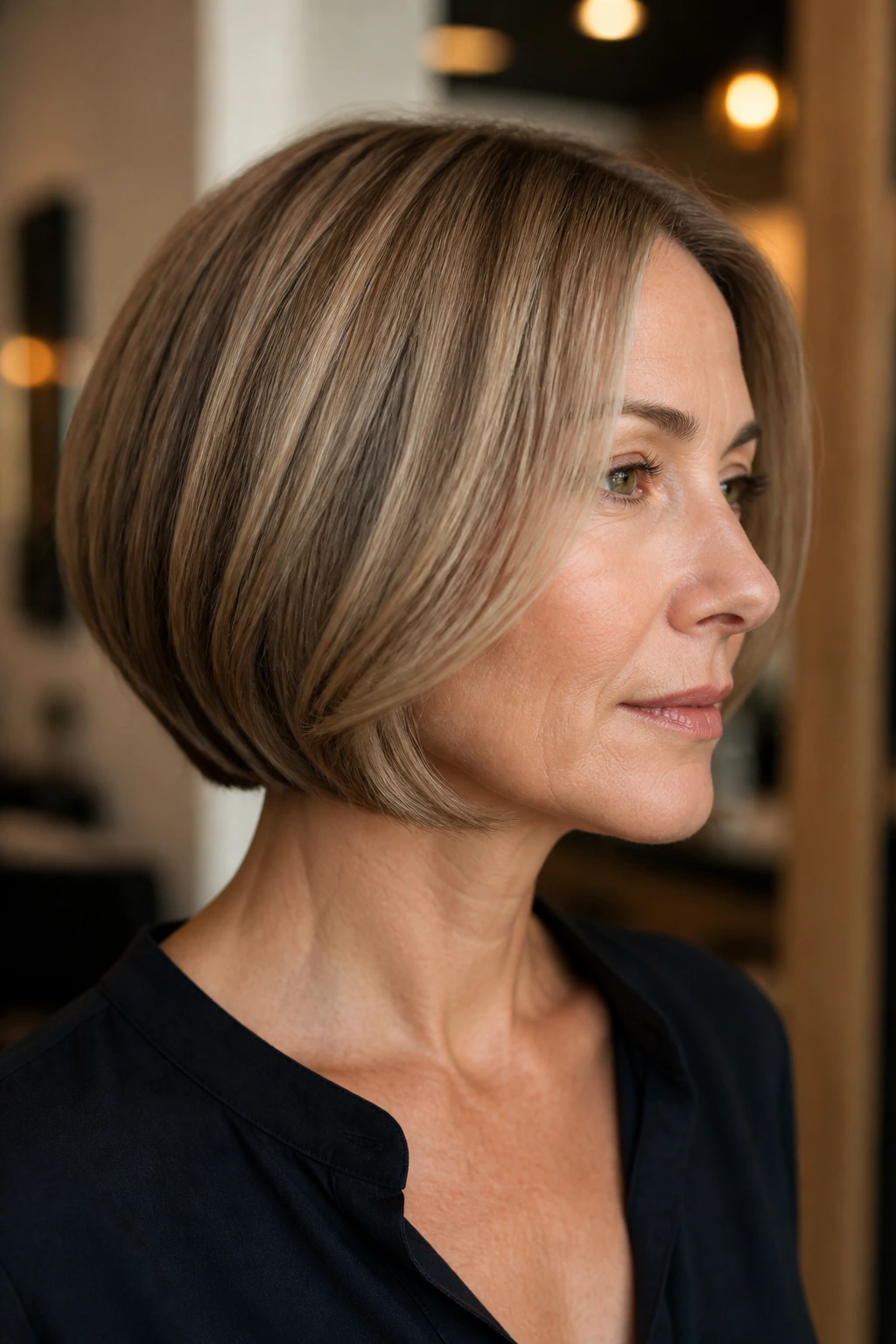
The curved under bob is basically a polished version of the classic bob shape. The ends bend inward toward the neck and jaw, which gives the haircut a compact, tucked shape. On fine hair, that inward curve creates the feeling of fullness because the line is kept close and controlled.
Why It Flatters Fine Hair
A curved under finish hides the see-through quality that fine hair can get at the ends. Instead of letting strands hang straight and separate, the style pulls them into one soft arc. It’s especially nice if your neck is long or your jawline is angular and you want the haircut to soften that.
This is the kind of bob that looks expensive when the blowout is neat, but it doesn’t need a full salon finish to work. A round brush, a nozzle, and a little patience are enough. The curve should look relaxed, not curled into a hard flip.
16. Invisible-Layer Bob
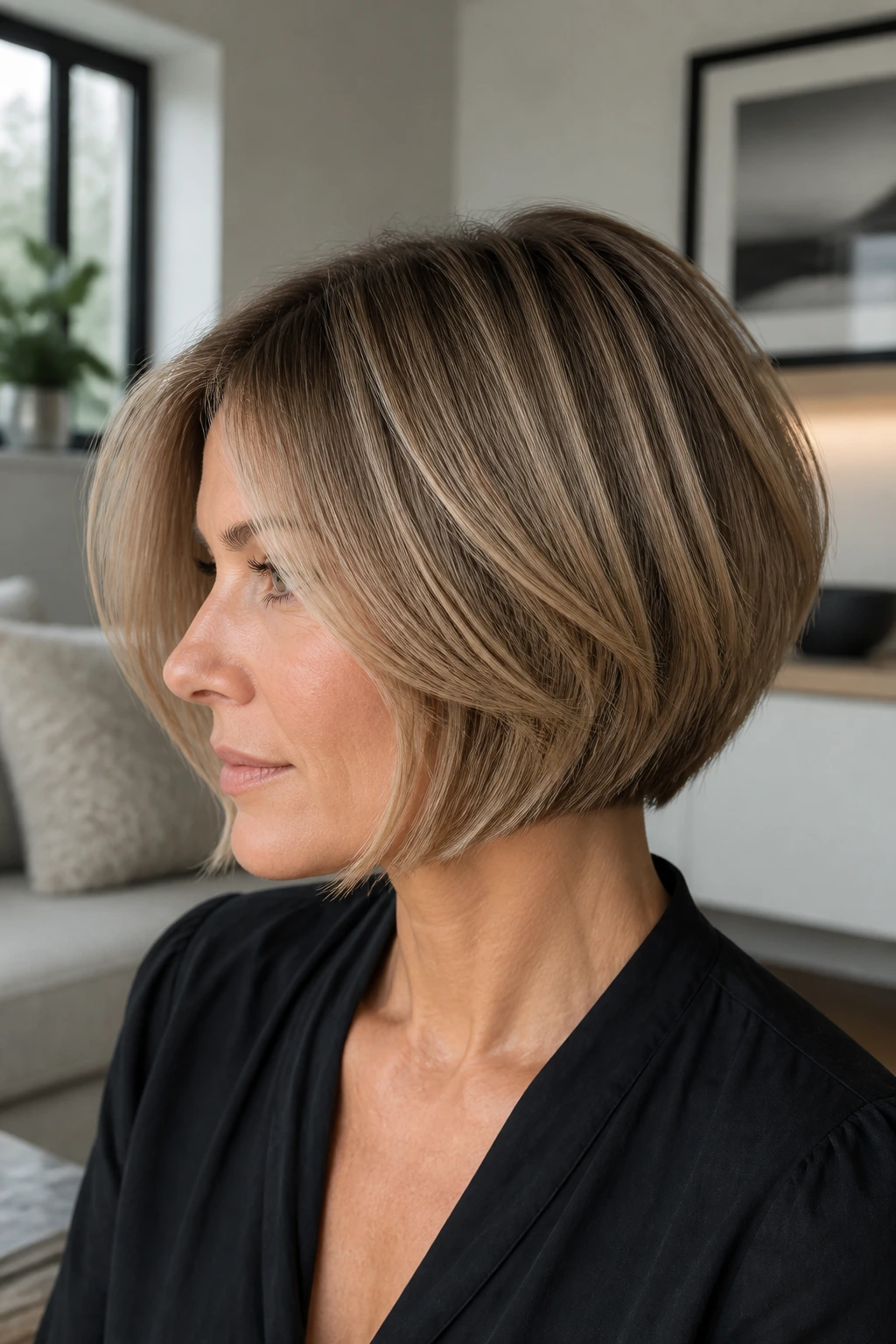
Invisible layers are one of my favorite things to ask for on fine hair, because the name sounds fussy and the result is usually simple. The stylist removes a little weight from the interior of the cut without touching the perimeter much. So the bob moves, but the outline stays thick.
The Point of Internal Shape
This is not the same as a heavily layered cut. You’re not trying to create volume by shredding the ends. You’re giving the hair enough space to move without losing the solid bottom edge. That distinction matters more than people think.
Ask for layers that start lower, around the cheekbone or lower jaw, if you want a gentle bend. If the shortest layers live too high, the crown can go airy. Fine hair has a short fuse with bad layering. Internal shape is the safer bet.
17. Bubble Bob

The bubble bob has a rounded silhouette that feels almost sculpted. The sides curve outward slightly, then tuck back in around the jawline or neck, which gives the haircut a soft fullness that fine hair often lacks on its own. It’s a little more fashion-forward, but not in a way that breaks daily life.
Why It Works
The trick is the silhouette. By keeping the shape rounded, the cut avoids the flat, hanging look that can make fine hair seem sparse. It also creates a nice profile from the side, which matters more than people expect. Side view is where a lot of fine hair bobs either shine or fail.
A bubble bob looks best with smooth styling and just enough root lift to keep the crown from collapsing. If you like straight hair with a bit of shape, this is a fun one. If you prefer messy texture, it may feel too neat.
18. Asymmetrical Bob
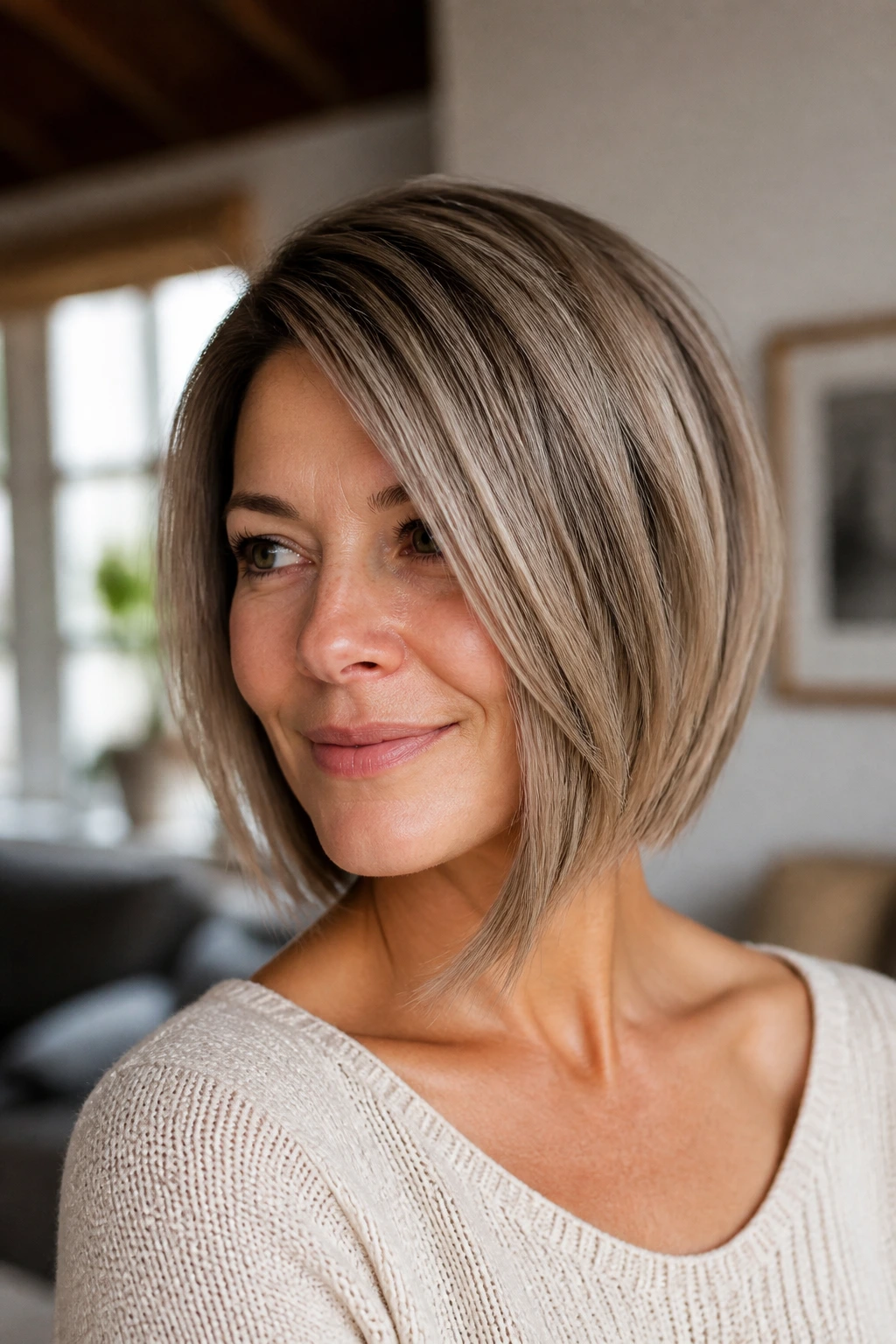
An asymmetrical bob gives the eye something to follow, and that’s useful when your hair is fine and prone to looking static. One side is a little longer than the other — sometimes only by half an inch, sometimes by more — and that slight imbalance creates movement without demanding a ton of volume.
When to Choose It
If one side of your hairline is weaker, or your part always falls heavier on one side, this cut can disguise that beautifully. The longer side pulls attention away from any flat spot, while the shorter side helps the overall shape feel deliberate. It’s a clean trick.
Keep the difference subtle. A dramatic asymmetrical line can feel edgy, but on fine hair it can also expose the lack of density if the cut is too aggressive. A quiet asymmetry usually looks richer.
19. Nape-Hugging Graduated Bob
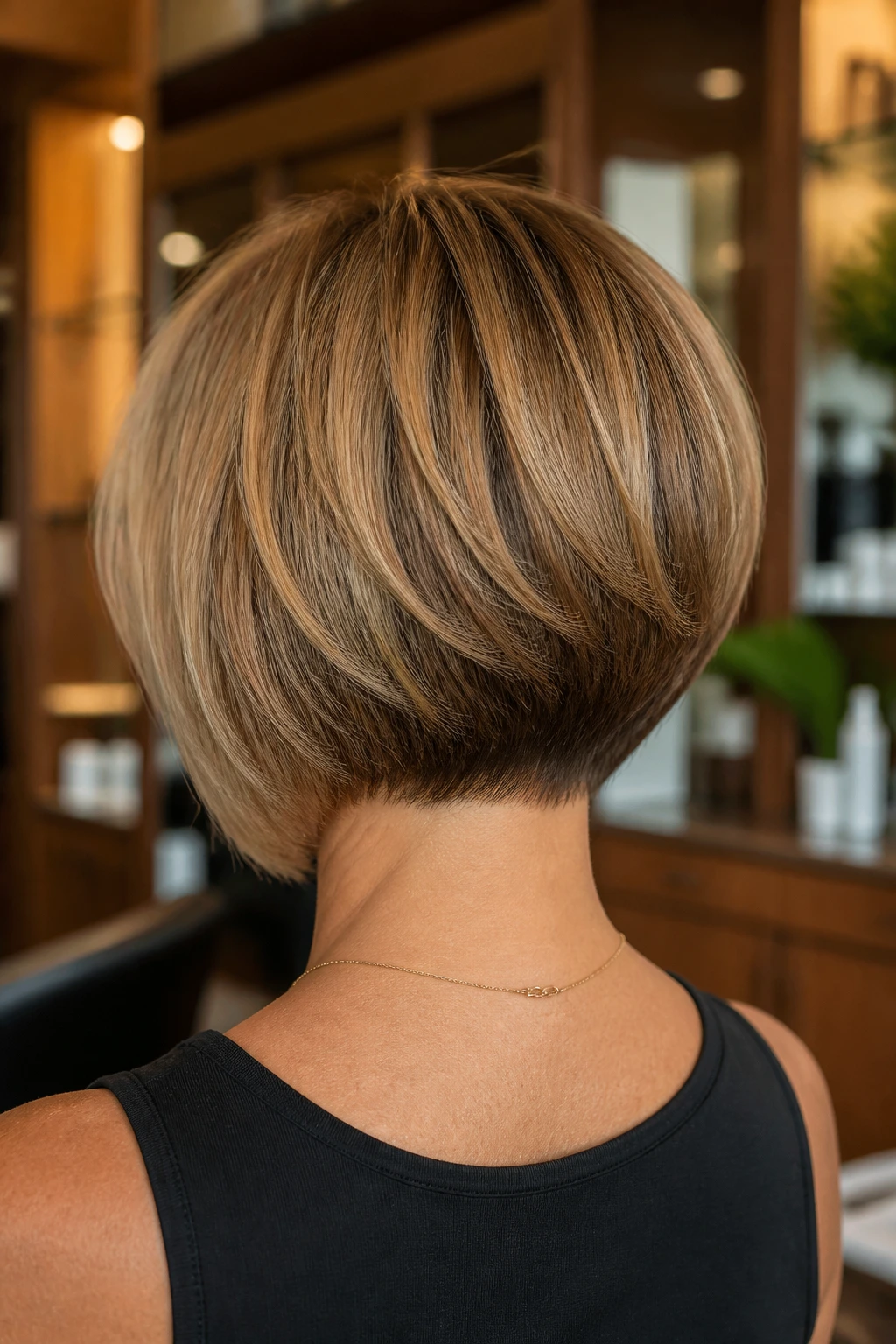
This is the cut for women who want a crisp back view and a little lift at the crown without going full stacked bob. The nape hugs close to the neck, and the graduation builds a gentle rise toward the back of the head. Fine hair often benefits from that small lift.
Why the Graduation Helps
A gentle graduation makes the haircut feel supported from underneath. It gives the illusion of structure where fine hair sometimes just falls flat. The key is “gentle.” Too much stacking creates a hollow spot at the crown, and that’s not a look anyone wants.
This bob usually needs a trim schedule that stays honest. Let it grow too long, and the nape starts kicking out. If you like structure and clean lines, that’s a fair trade. If you hate salon maintenance, skip this one.
20. Blown-Out Bob
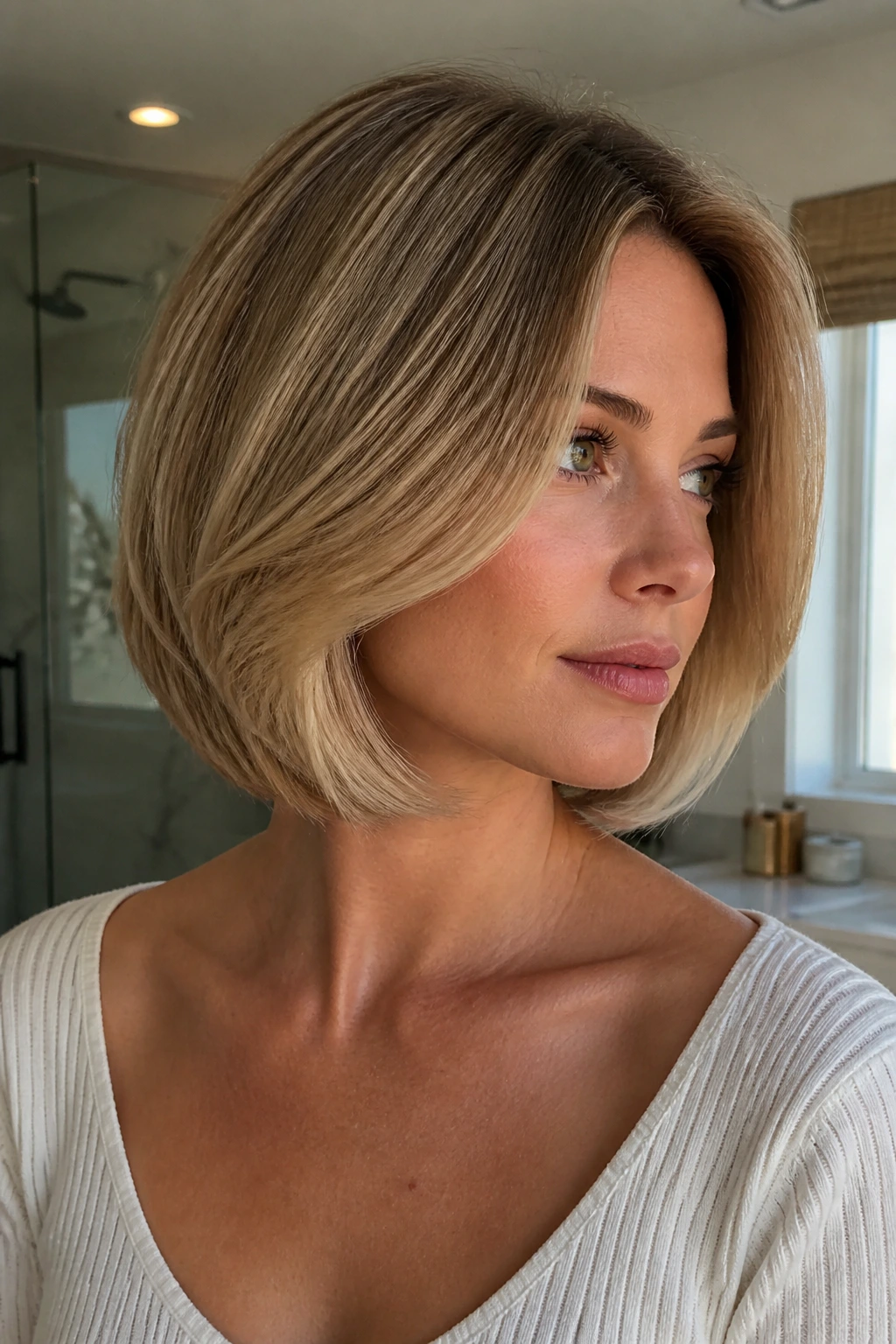
A blown-out bob isn’t just a styling method. It can also be a haircut built to support that shape. The ends are usually beveled and the crown has enough room to lift, so when you use a round brush, the whole haircut expands a little without losing its line.
The Shape Behind the Finish
This style is great for women who want polished hair that still looks full after an hour of wear. The volume comes from the roots and the smooth bend through the ends, not from teasing or heavy product. That keeps fine hair from turning sticky or dull.
I like this bob with a medium round brush and a concentrator nozzle. Dry the roots first, then wrap the ends under for the last few passes. If you skip the root work, the blowout dies early. The finish depends on that foundation.
21. Center-Part Gloss Bob
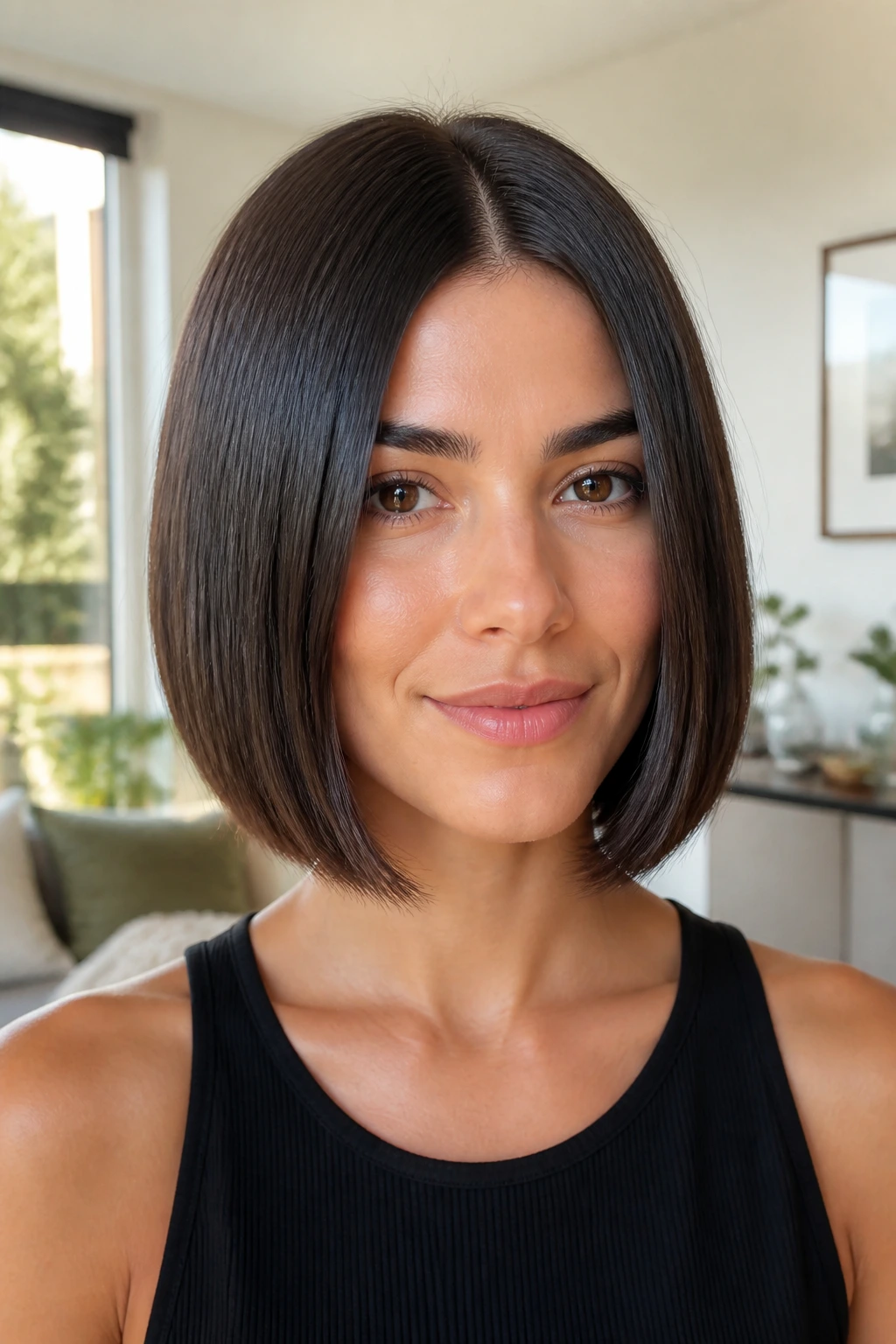
A center-part gloss bob can look very clean on fine hair, especially if the hair is naturally straight. The middle part creates symmetry, while the glossy finish makes the ends look intentional rather than wispy. It’s a sharp look. Not loud. Sharp.
Who It Flatters
This cut works best when the face can handle a bit of balance down the middle. The center part shows off a neat hairline and gives the bob a modern feel. On fine hair, the most important part is keeping the front corners full enough that the style doesn’t disappear into the jaw.
A lightweight shine spray can help, but don’t coat the hair. You want reflection, not grease. If your hair gets oily quickly, keep shine products away from the roots and focus on the ends only.
22. Tousled Lob
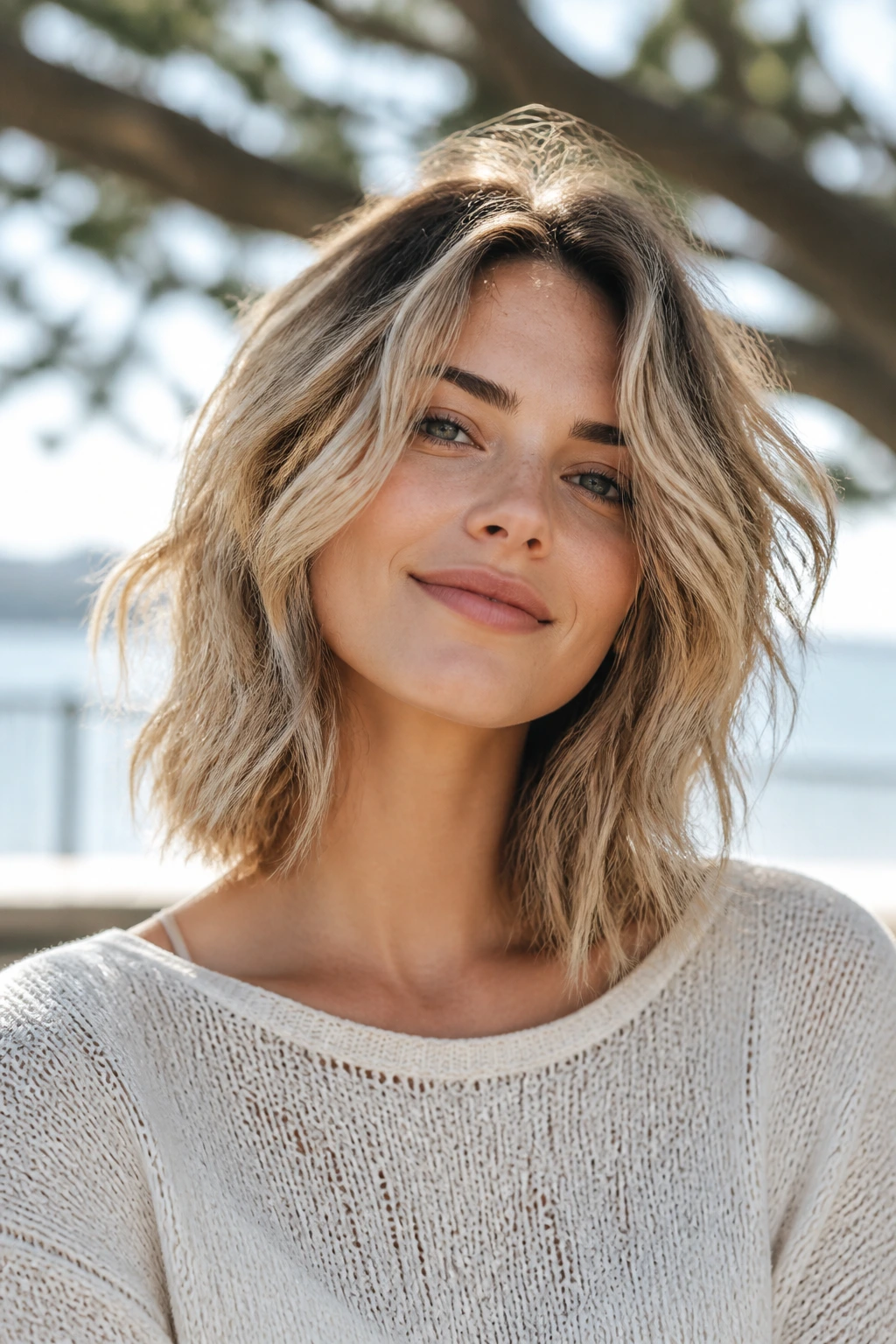
The tousled lob is a good choice if you want movement without sacrificing too much length. It sits around the collarbone, which gives the hair a little more room to move, but the ends are still close enough together to read as thick. Fine hair often behaves better at this length than it does at mid-neck.
Why It’s Easy to Live With
The shoulder area is tricky. Hair that lands right on the shoulder can kick out and separate. A lob that sits just above or just below that point avoids the problem. When you add loose bends through the mid-lengths, the whole cut feels softer and fuller.
Keep the texture controlled. A few bends with a curling wand are enough. If you make every section equally curled, the style can start to look busy, and fine hair does not need extra chaos.
23. Bixie Bob
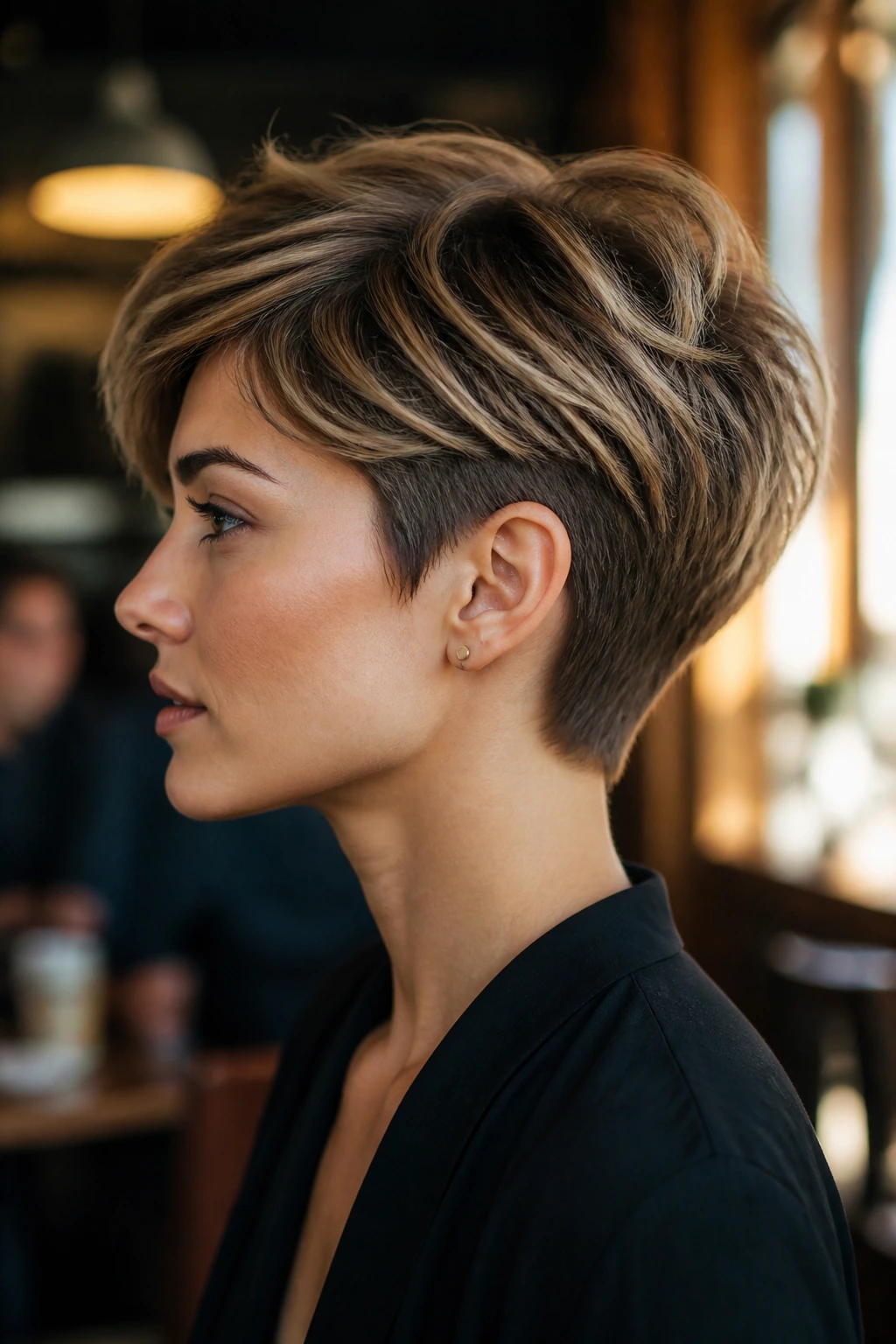
The bixie bob lives between a bob and a pixie, and that makes it a bold option for women with fine hair who want less length and more shape. It keeps some bob softness around the sides and back, then lets the crown stay a little lifted. Fine strands can handle shorter cuts when the outline is crisp.
Why It Can Work
This cut removes some weight, which sounds scary until you realize that weight is often what drags fine hair down. By shortening the sides and keeping the top a bit longer, the bixie bob creates a lift that feels modern and easy to style. The key is balance. Too short at the wrong spots, and it gets choppy in a bad way.
Best if you’re willing to keep up with trims every 4 to 6 weeks. The shape is the point. Let it overgrow, and it loses the whole effect.
24. U-Shaped Bob
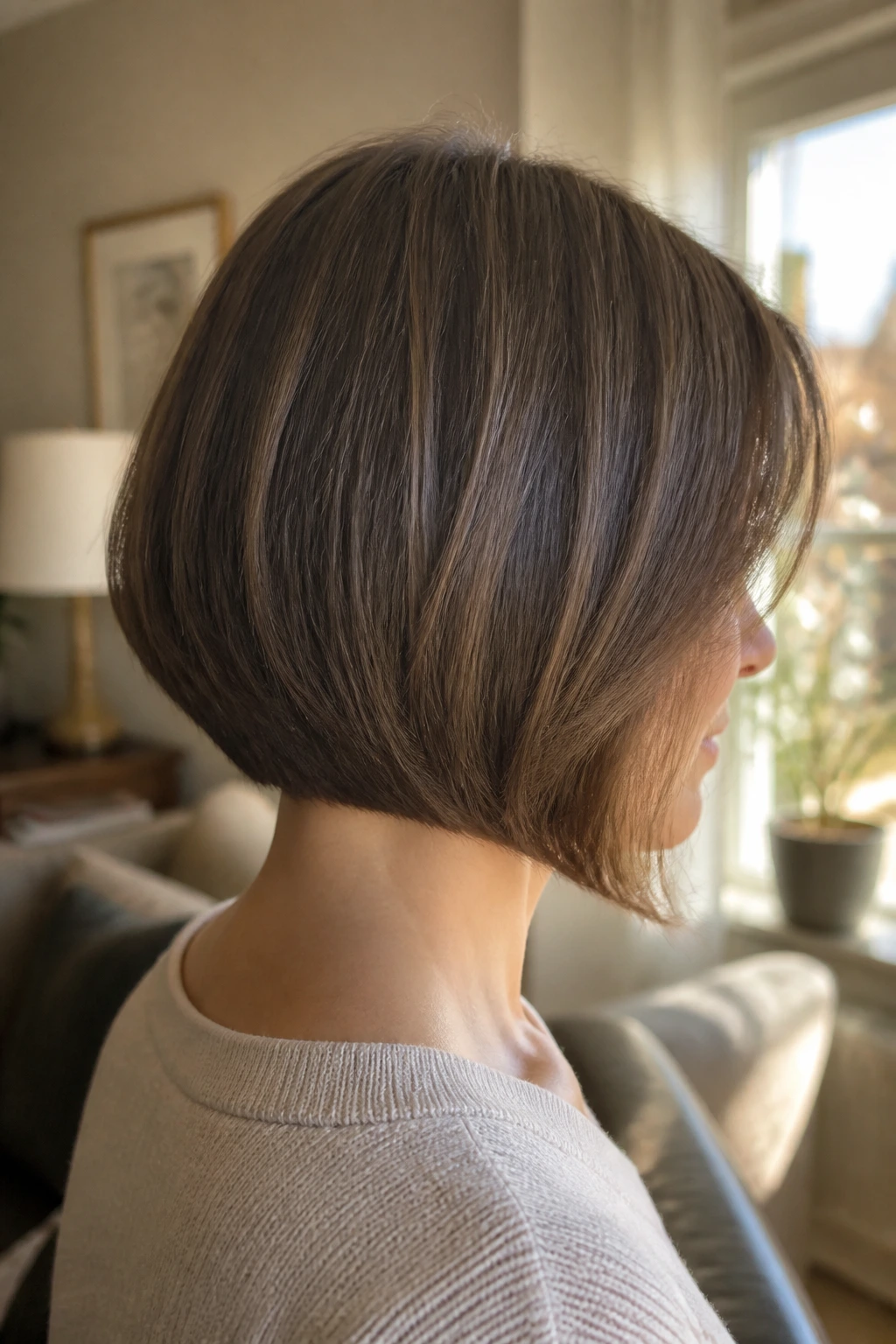
A U-shaped bob curves gently at the back and leaves the front slightly longer, which gives the cut a softer outline than a harsh straight line. On fine hair, that gentle curve helps the ends look connected rather than bluntly chopped. It feels feminine without becoming fussy.
Why the U Shape Matters
The U shape creates a natural fall that follows the head rather than fighting it. That helps the hair sit more neatly at the nape and around the shoulders. If your hair tends to tuck under on its own, this shape makes that tendency look polished.
It’s also a good compromise if you want something between a blunt bob and a longer lob. You get weight in the back and a little movement in the front. That’s a nice place to live if you’re not chasing drama.
25. Flipped-Under Bob
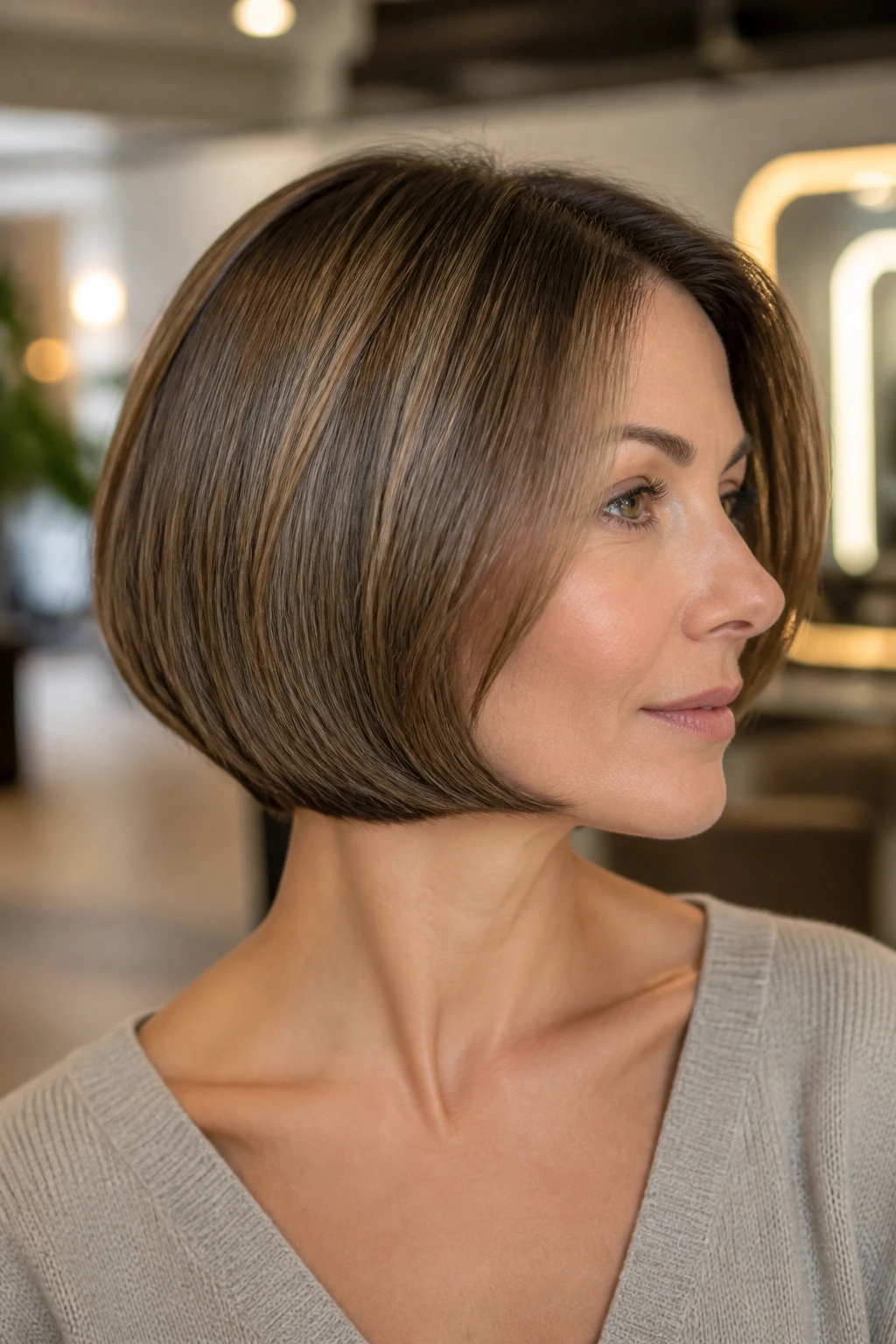
The flipped-under bob leans into a classic, almost retro finish. The ends curve inward more intentionally than in a regular rounded bob, which gives the haircut a neat, tucked shape. Fine hair benefits because the flip creates the impression of a denser edge.
Styling Detail
A medium round brush works better here than a giant one. You want enough tension to turn the ends under, but not so much that the roots go flat. A little mousse at the crown before drying can help the top stay lifted while the ends are being shaped.
This is one of those cuts that looks more polished than it is difficult. If your hair likes to behave, the style comes together fast. If it resists curves, keep the length a touch shorter so the bend holds.
26. Soft Shag Bob
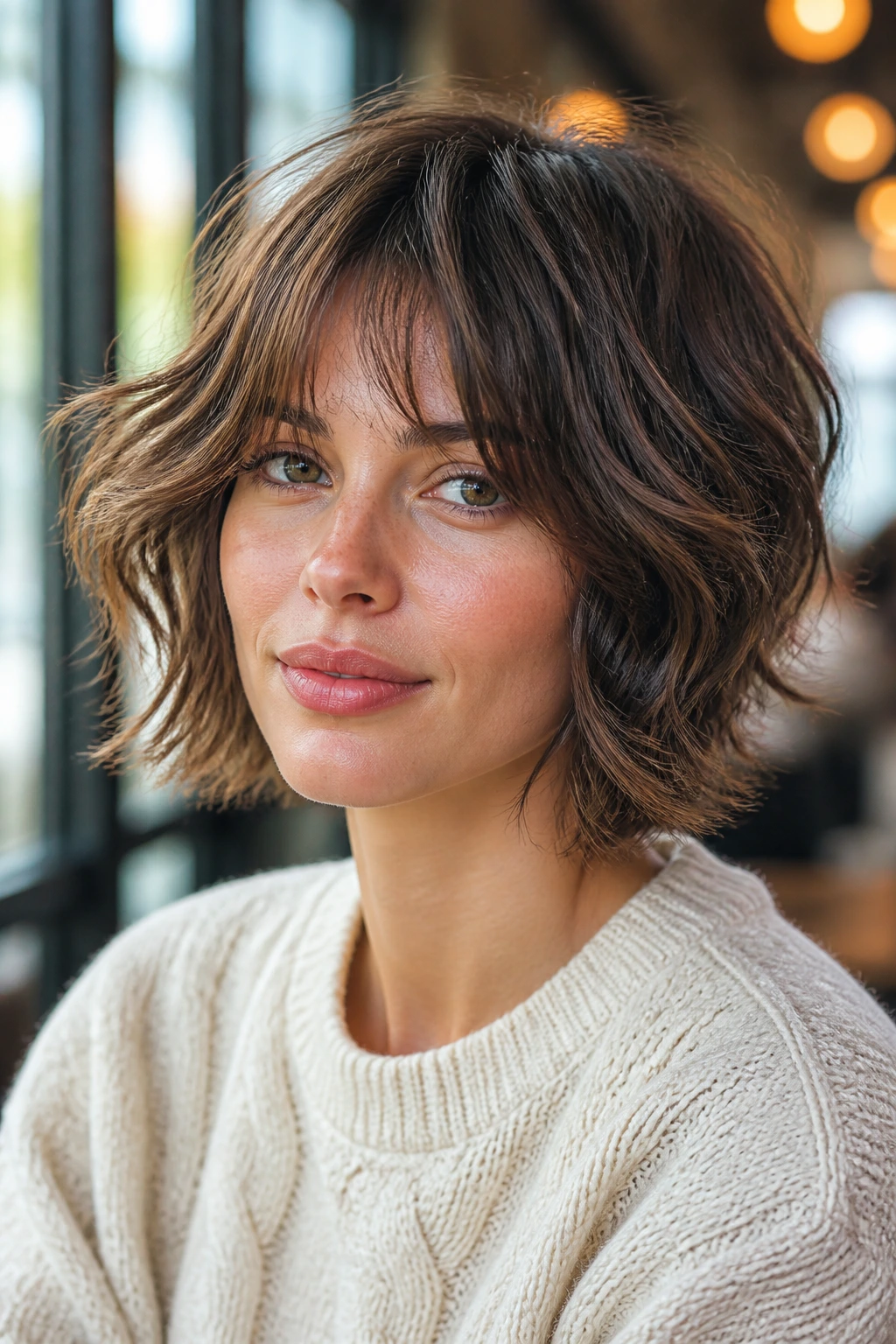
A soft shag bob is for fine hair that has some natural wave or bend and doesn’t want to be bullied into a strict line. The layers stay soft and longer than a classic shag, so the cut keeps some fullness at the bottom while allowing movement through the top.
What to Watch For
The danger with any shag on fine hair is over-layering. If the stylist gets too enthusiastic at the crown, the top goes wispy and the ends lose their weight. A soft shag bob avoids that by keeping the layers stretched out and the fringe light.
This is a good choice if you want a little texture around the face and don’t mind a more casual finish. It usually looks better a bit imperfect than too polished. That’s the point.
27. Piecey Micro-Bob
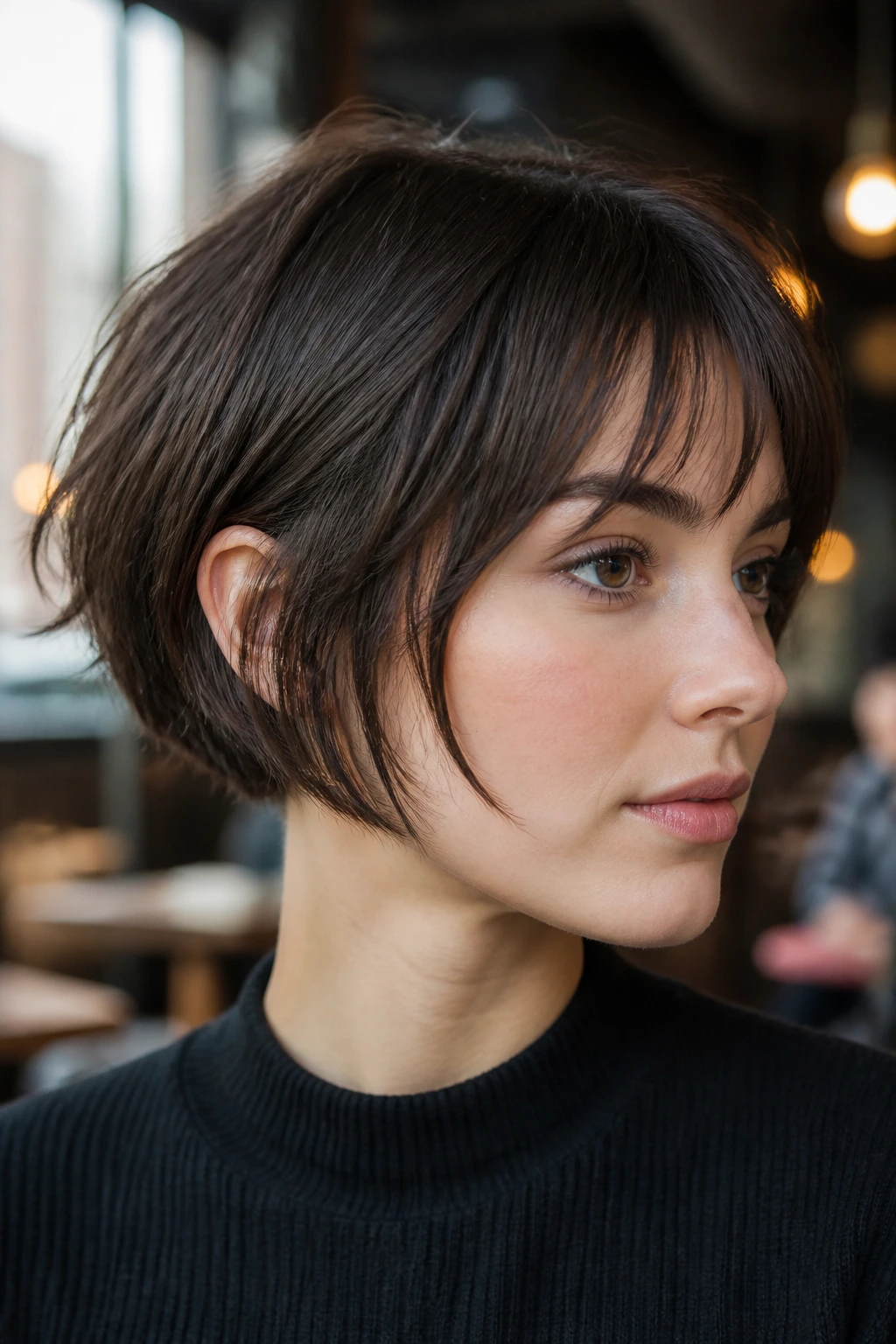
The piecey micro-bob is short, sharp, and a little playful. It sits well above the jaw and uses separated pieces around the front and sides to keep the haircut from looking blocky. For fine hair, that separation can create the feeling of movement without needing a lot of hair.
Why It’s Different
This cut is not about density in the old sense. It’s about making each section count. The pieces have to be deliberate, not shredded. If the hair is cut too randomly, it starts looking sparse. If the pieces are shaped with care, the whole bob feels edgy and compact.
A dab of styling paste on the ends is enough. Work it through dry hair with your fingers, not a brush. The shape should feel touchable and neat, not crunchy. That line between piecey and messy is thin.
28. Feathered Collarbone Bob
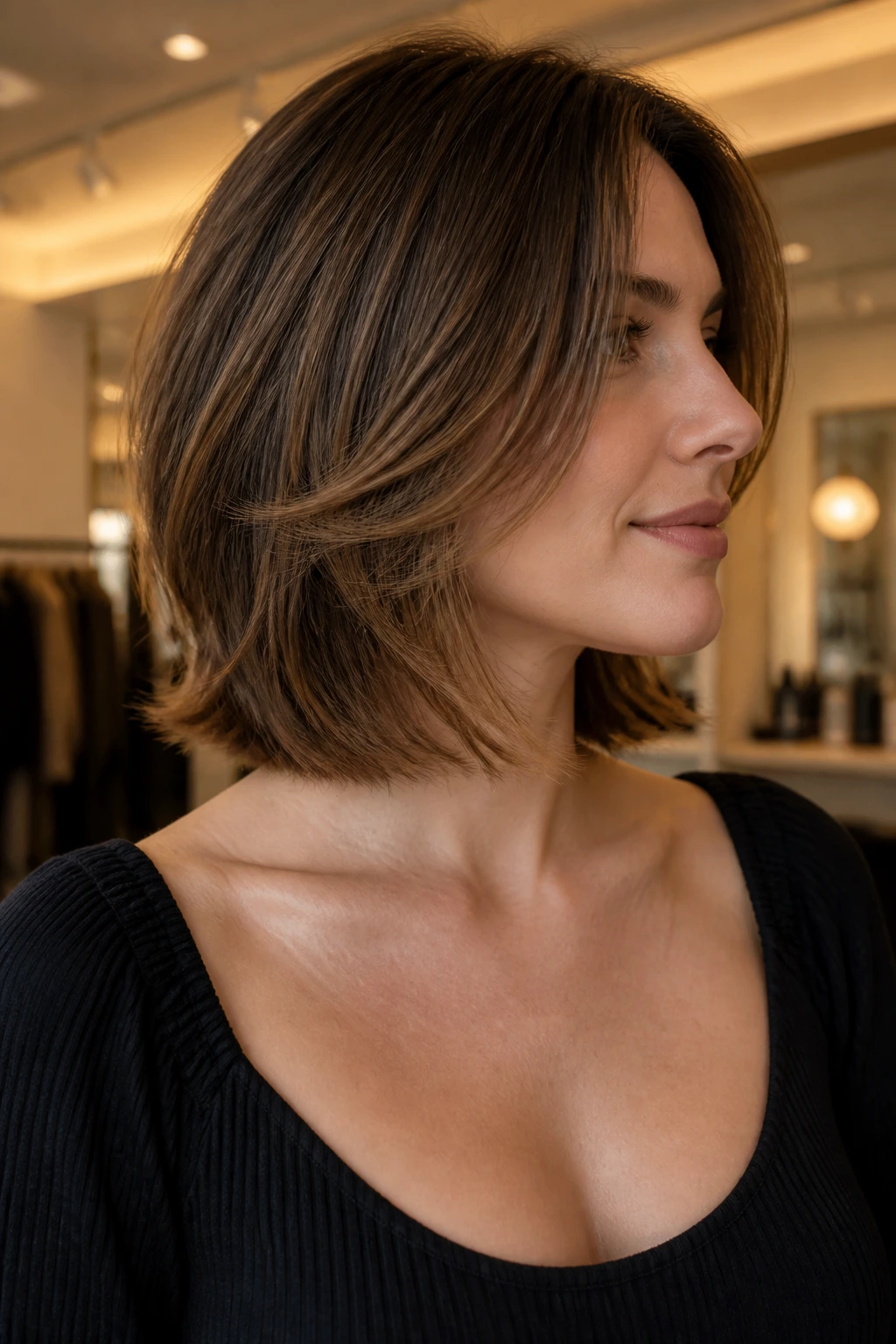
The feathered collarbone bob gives you the comfort of length with a softer edge than a blunt lob. The ends are lightly feathered, the layers stay long, and the whole cut moves around the collarbone instead of hanging dead straight. It’s a nice option if your hair is fine but you still want swing.
Why It Deserves a Spot Here
Feathering can go wrong fast on fine hair, but in this version it’s controlled. The stylist keeps the perimeter strong while only softening the very ends and a little around the face. That gives the haircut motion without turning the bottom into string.
This is one of the best “live with it” cuts in the group. It grows out neatly, works with air-drying, and doesn’t demand a perfect blowout every time you leave the house. That matters more than people admit.
Why the Bob’s Outline Matters More Than the Amount of Hair
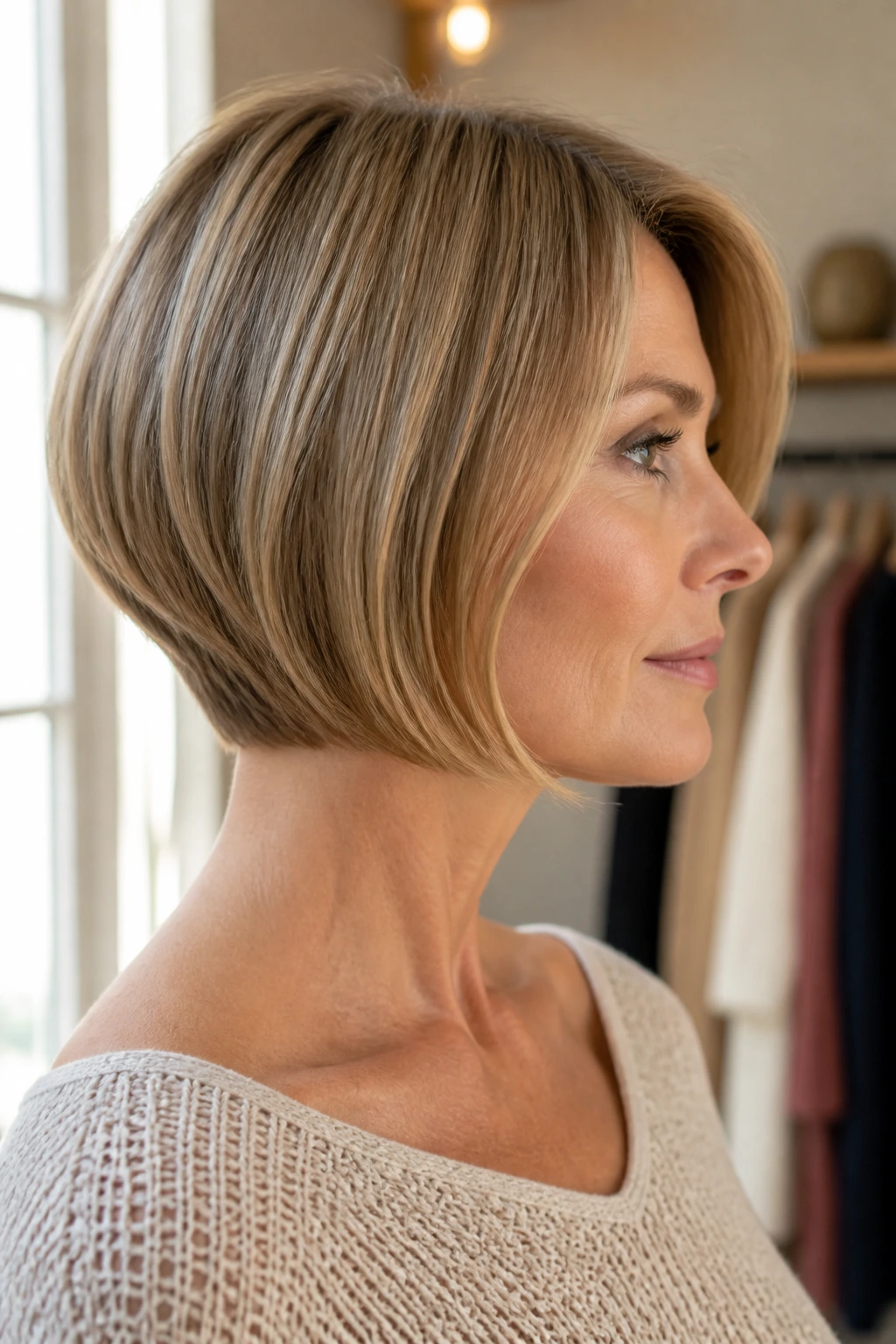
Fine hair gets blamed for a lot of things it didn’t do. Usually the haircut is the real problem. The strand diameter may be thin, but the shape can still look rich if the perimeter is disciplined. That’s why blunt edges, clean angles, and careful graduation matter so much. They give the eye something solid to hold onto.
Perimeter First
If the bottom line is strong, the hair reads as fuller from across the room and in the mirror. A blunt edge at the chin or jaw keeps the shape from breaking apart into little see-through ends. That doesn’t mean every bob has to be blunt. It does mean the outline should be the first thing your stylist protects.
Weight Line Second
The weight line is where the haircut carries its body. On fine hair, that line usually works best when it sits at the jaw, chin, or collarbone. Too high, and the crown can look sparse. Too low, and the whole cut may drag downward. That little shift is why one bob can look lush and another can look tired.
Texture Last
Texture is the garnish, not the base. A little bend, a little wave, a little piecey movement can help, but only if the underlying shape is already doing its job. If the haircut is too shredded, no amount of mousse will save it. Honestly, that’s one of the most common mistakes people make.
What to Tell Your Stylist Before the Scissors Come Out
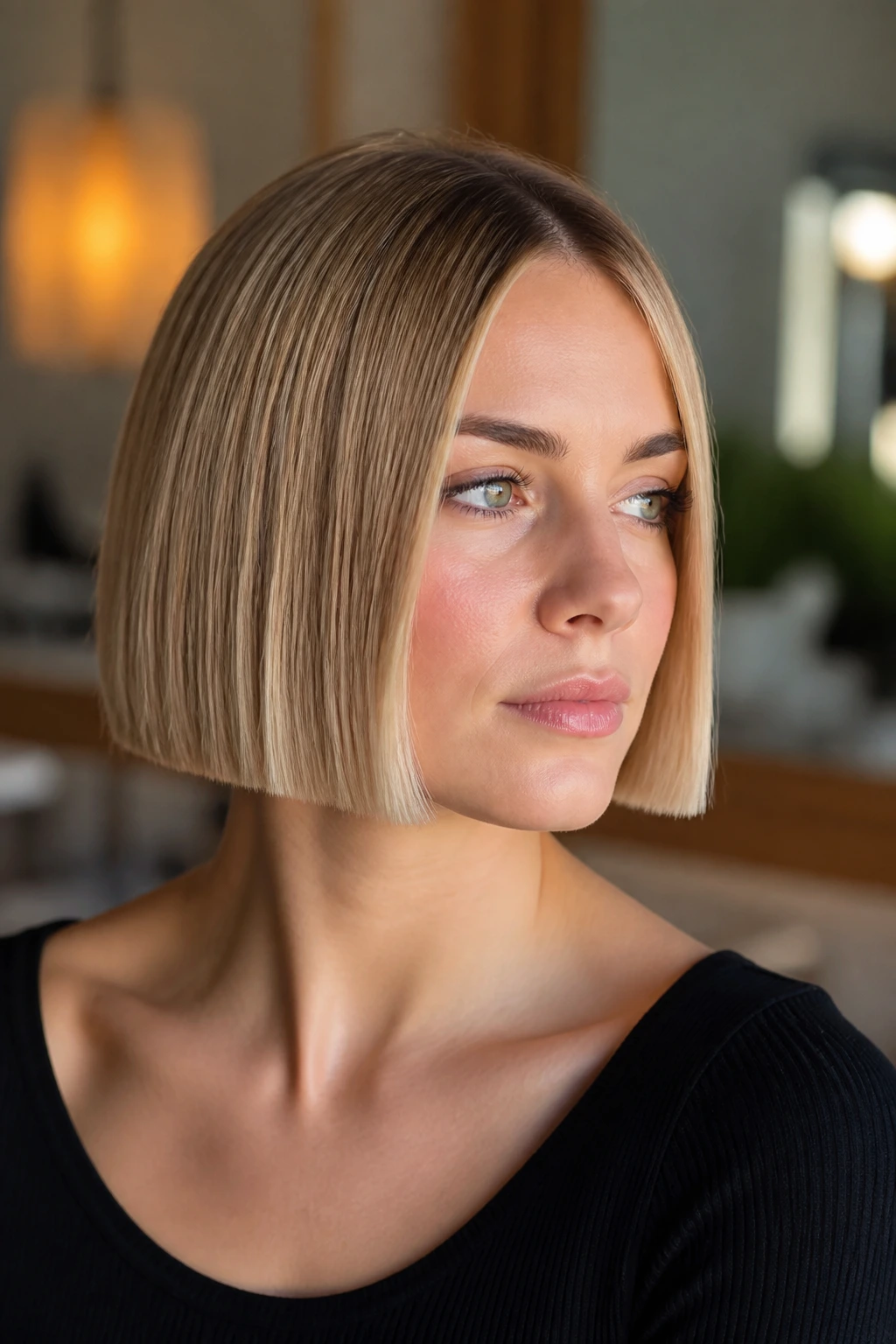
Bring photos, yes, but also bring a few facts about your hair. Tell the stylist whether you air-dry, how often you’re willing to trim, and where your hair parts when left alone. Those details change the cut more than a vague request for “something volumizing.”
- Say where your crown goes flat. If the top collapses at the back, the cut needs different graduation than if the sides fall flat near the temples.
- Mention your parting habit. A center part and a deep side part need different balance.
- Explain your heat routine. A bob that needs a curling iron every morning is not the same as one that works with a brush and a dryer.
- Tell them what you hate. If your hair goes stringy when thinned out, say so bluntly.
- Ask how the cut will grow. A good bob should still look decent a few weeks later, not only on day one.
Essential Tools and Products for Fine-Hair Bobs
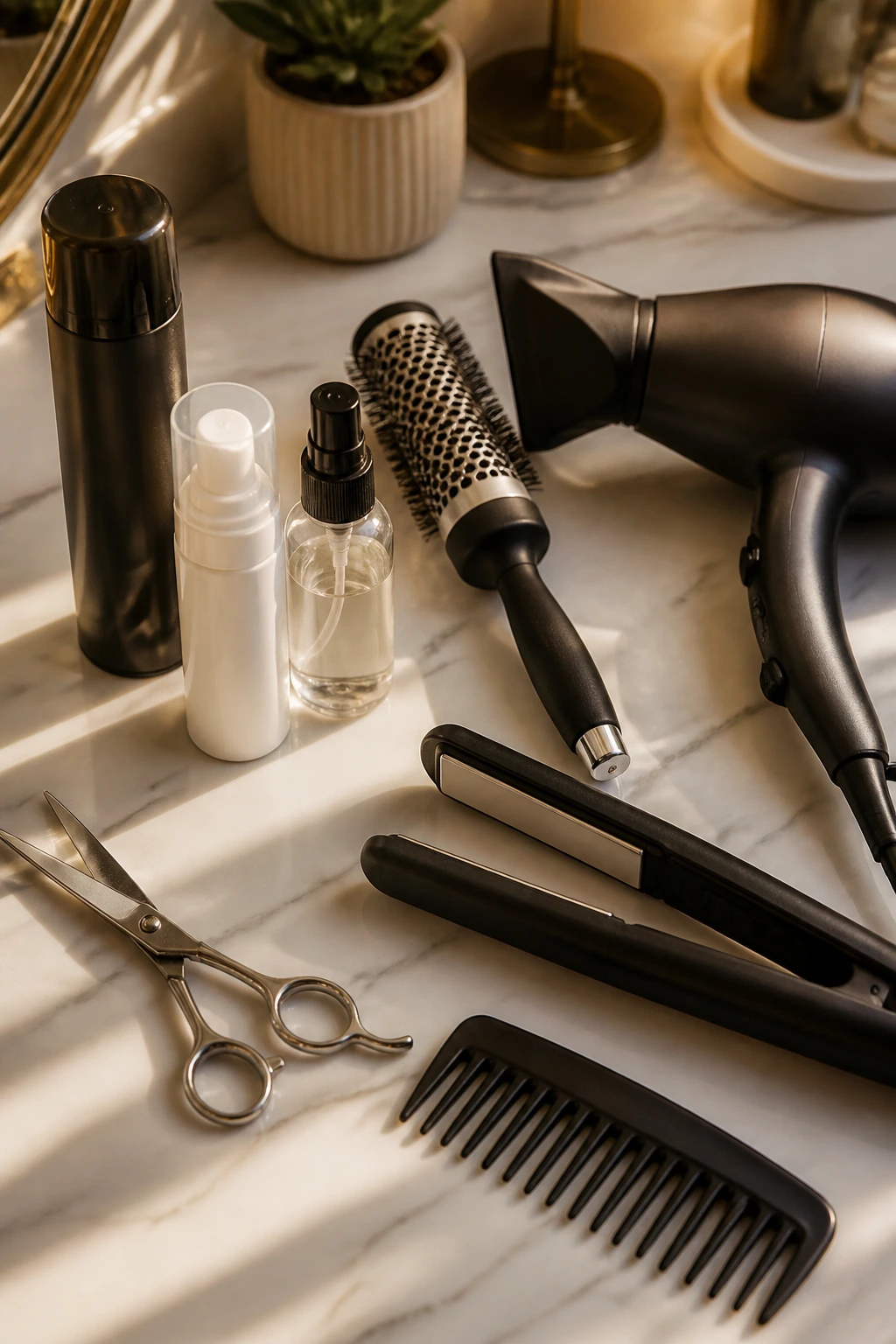
- A sharp pair of haircutting shears: A clean edge matters more on fine hair, and dull scissors chew the ends.
- A blow dryer with a concentrator nozzle: The nozzle helps direct the roots up and the ends in the right direction.
- A small to medium round brush: This is the easiest way to build a bend without making the hair puffy.
- A 1-inch flat iron or curling iron: Use it for soft bends, not tight curls.
- Lightweight mousse: Put it at the roots while the hair is damp; it helps the crown stay up.
- Heat protectant spray: Fine hair burns and frays fast under heat, so this is non-negotiable.
- Dry shampoo: A little at the roots keeps the cut from sliding flat on day two.
- Microfiber towel or soft T-shirt: Rough towels can rough up delicate strands and make the ends puff out.
- Wide-tooth comb: Better than ripping through damp hair with a brush.
- Light finishing cream or shine spray: Use the smallest amount possible, mostly through the ends.
How to Match a Bob to Your Face Shape and Hairline
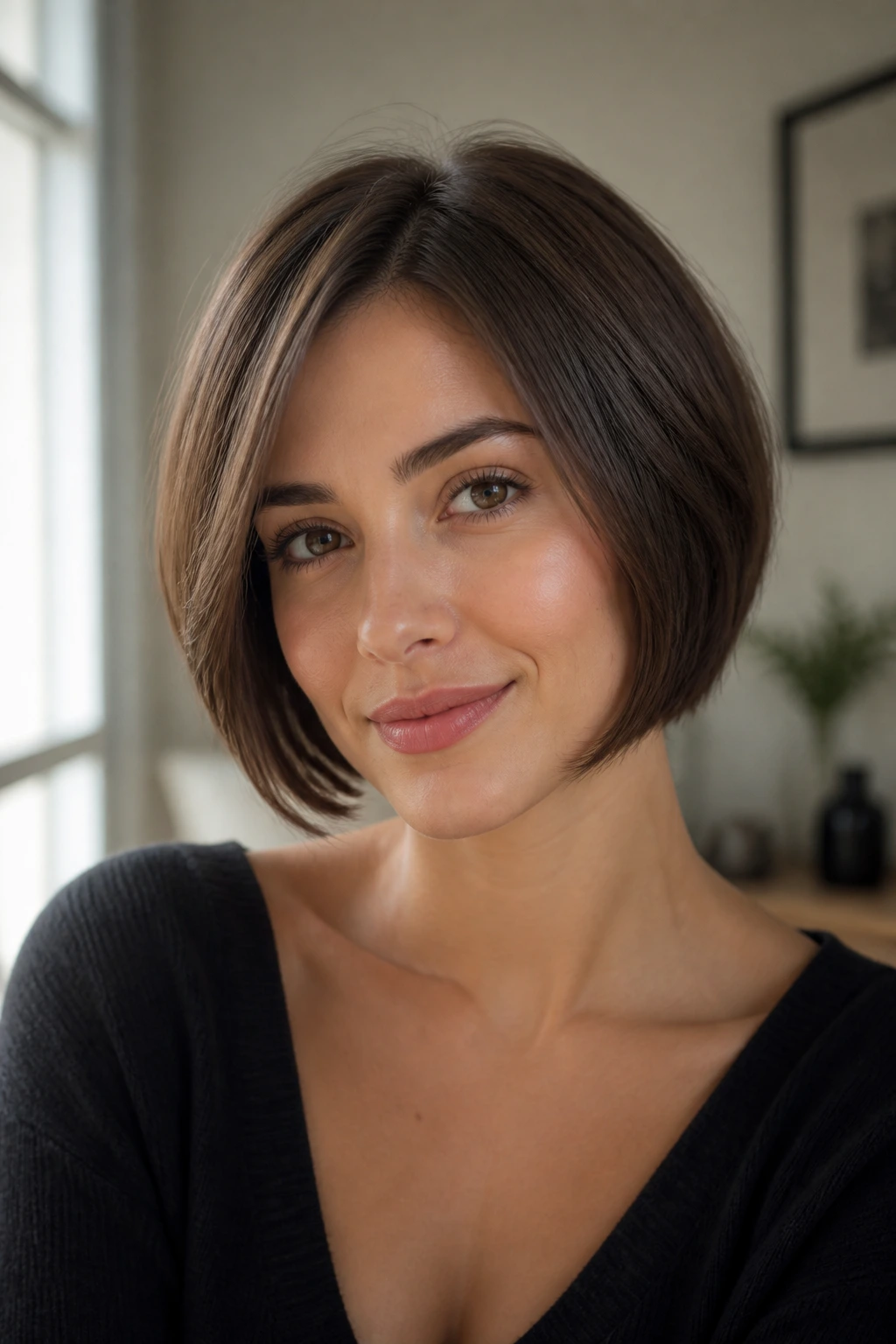
The best bob for fine hair is not always the shortest one. It’s the one that works with the places your hair already wants to go. That means looking at face shape, hairline, and even how your cowlick behaves at the crown. Those things matter more than trend photos.
Round and Soft Faces
A jaw-length A-line or a longer lob can help draw the eye down and keep the shape from widening at the cheeks. Side parts are useful here because they create a little lift and avoid a flat wall across the forehead.
Longer Faces
A rounded bob, curtain bang bob, or French bob can add width across the face. The horizontal line of fringe or the tucked-under curve makes the face feel less stretched. Keep the top from getting too tall or the effect disappears.
Square or Angular Faces
A curved under bob or feathered collarbone bob softens the edges without losing the clean line that fine hair needs. The goal is not to hide the jaw. It’s to keep the haircut from echoing it too hard.
Cowlicks and Uneven Hairlines
If one side lifts more than the other, don’t fight it too aggressively. Use the natural direction and choose an asymmetrical or side-parted bob that works with the pattern. That’s usually cleaner than forcing symmetry that won’t stay put.
How to Style Fine-Hair Bobs Without Overloading Them
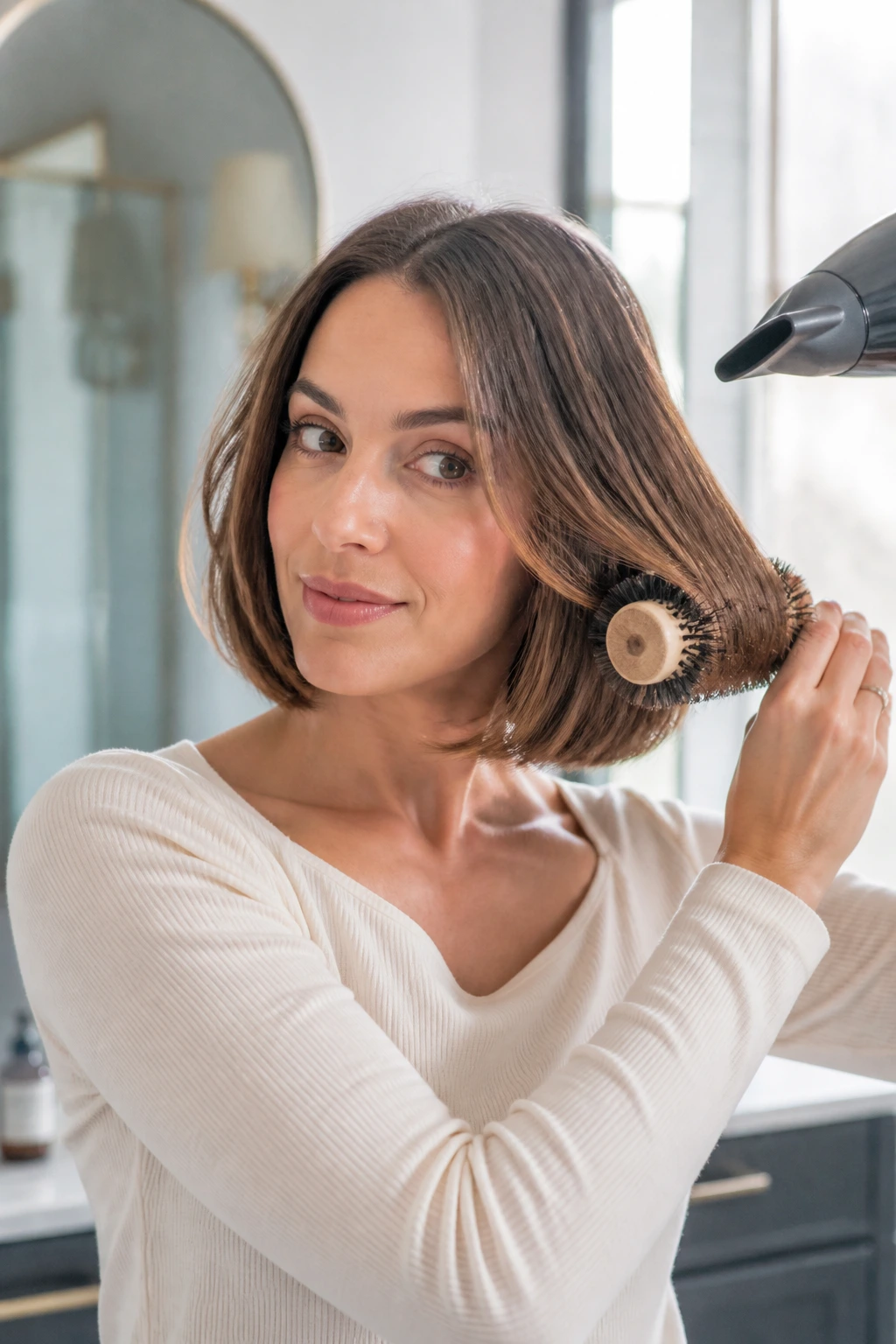
Root lift comes first. Put mousse or root spray only at the roots while the hair is damp, then blow-dry with the head tilted so the crown gets lift before the ends are finished. If you spray everything, the hair can go sticky and lose movement.
Bend the ends, don’t curl the whole head. A bob on fine hair usually looks best when the ends turn slightly under or away, while the mid-lengths stay smooth. One pass with a flat iron or a round brush is often enough. More than that can make the style collapse.
Choose one product and be loyal to it. Mousse, cream, or spray — not all three at once. Fine hair gets weighed down quickly, and heavy layering of products turns the cut limp. If you need extra grip, use dry shampoo at the roots the next day instead of piling on more styling cream.
Treat day two like a reset, not a rescue. A quick mist of water, a blast of the dryer at the crown, and a touch of dry shampoo behind the ears can wake a bob up fast. That’s usually enough. Trying to re-style every section from scratch is a waste of time.
Keeping the Shape Sharp Between Salon Visits

A bob on fine hair lives or dies by its trim schedule. A blunt chin-length cut often needs a cleanup every 5 to 6 weeks to keep the line from breaking. Lobs can stretch a bit longer, usually 7 to 8 weeks, because the extra length hides growth better.
Bangs need their own attention. Curtain bangs and side fringe often need a tiny trim or shaping sooner than the rest of the cut. If you wait too long, they start dropping into the eyes or splitting in awkward places. Annoying. Easy to fix, though.
At home, keep the neckline neat by brushing hair off the nape after washing and checking how it dries there. Fine hair can get fuzzy at the edges faster than you expect. A quick pass with a flat iron on just the perimeter keeps the line crisp without redoing the whole head. I’d rather do that than over-style the crown every day.
Common Mistakes That Make Fine Hair Look Thinner
-
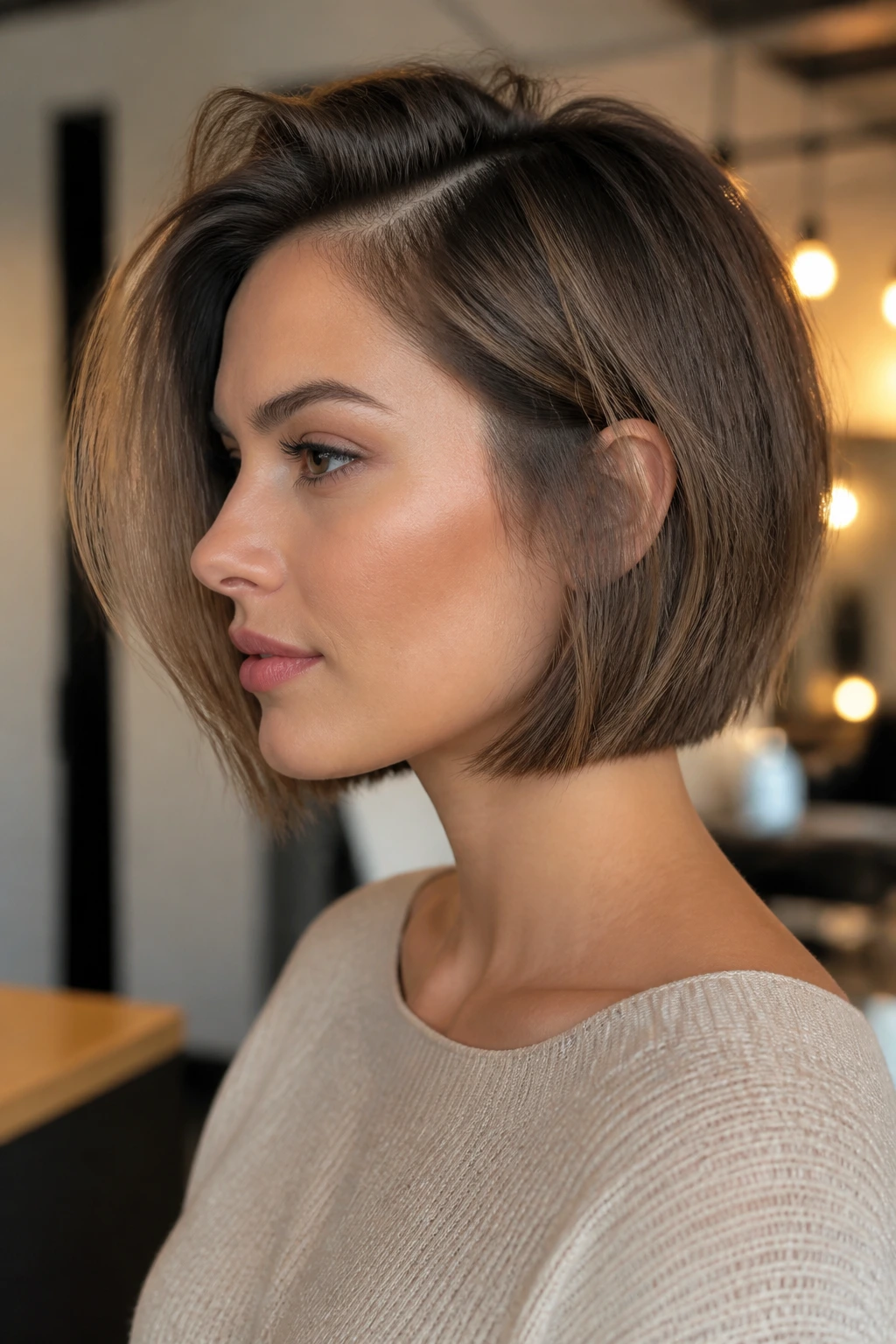
Too many short layers at the top: The symptom is a see-through crown and ends that fall apart. The fix is longer internal shaping with a stronger perimeter.
-
Thinning the ends to “remove bulk”: On fine hair, this usually makes the haircut look wispy. Ask for blunt or beveled ends instead.
-
Letting the cut get too long: Once a bob slides past the collarbone and loses its weight line, fine hair can hang flat and tired. Trim before it crosses that line.
-
Loading the roots with heavy product: Oils and thick creams near the scalp crush lift fast. Keep rich products on the ends only.
-
Using the wrong heat size: Huge barrels can smooth the hair, but they don’t always give a bob enough bend to hold shape. A smaller brush or 1-inch iron usually works better.
-
Ignoring the part: A part that’s too wide or too deep in the wrong spot can expose scalp and make the cut look sparse. Shift it by an inch and see what happens.
Variations and Alternatives to Try
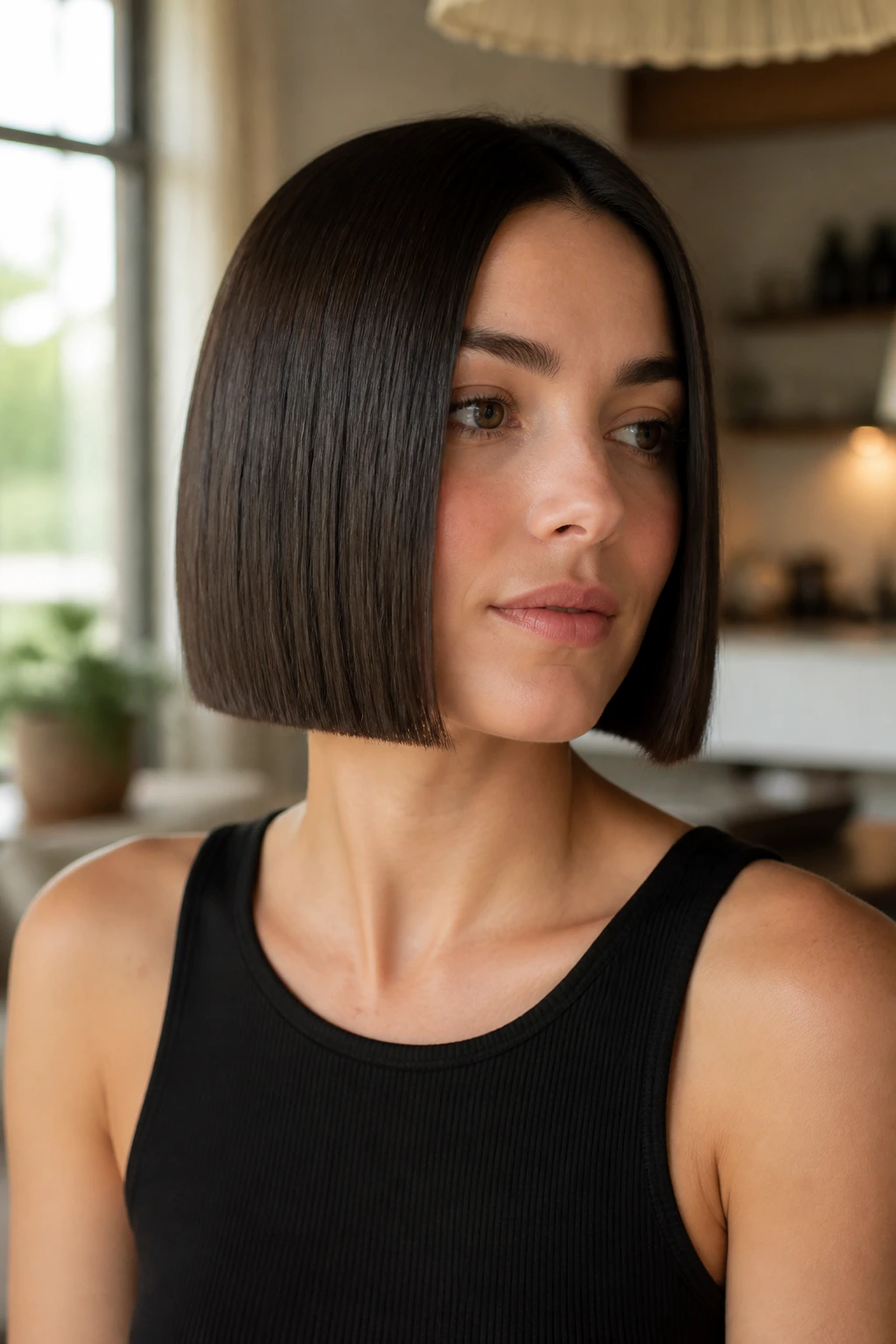
The Glass-Line Bob
This version keeps the perimeter blunt and the finish smooth, with almost no visible texture. It’s ideal if your hair is naturally straight and you like a polished line that shows off the cut itself.
The Air-Dry Bob
A slightly longer bob with soft internal shaping, designed to dry without much heat. It works best if your hair has a little bend and you want a cut that doesn’t rely on brushing and spraying every morning.
The Glasses-Friendly Bob
Sits just below the chin with softer sides and no heavy fringe. It keeps hair from crowding the frames and lets the glasses stay part of the look instead of fighting with it.
The Wave-Friendly Bob
Longer layers are kept low and the ends stay full, so natural wave can move without frizzing out the bottom edge. Good for hair that bends on its own but hates heavy layering.
The Low-Maintenance Grow-Out Bob
A collarbone cut with a gentle U-shape and only a slight bevel at the ends. This is the one to choose if you want a shape that still looks decent after a month of growth.
Frequently Asked Questions
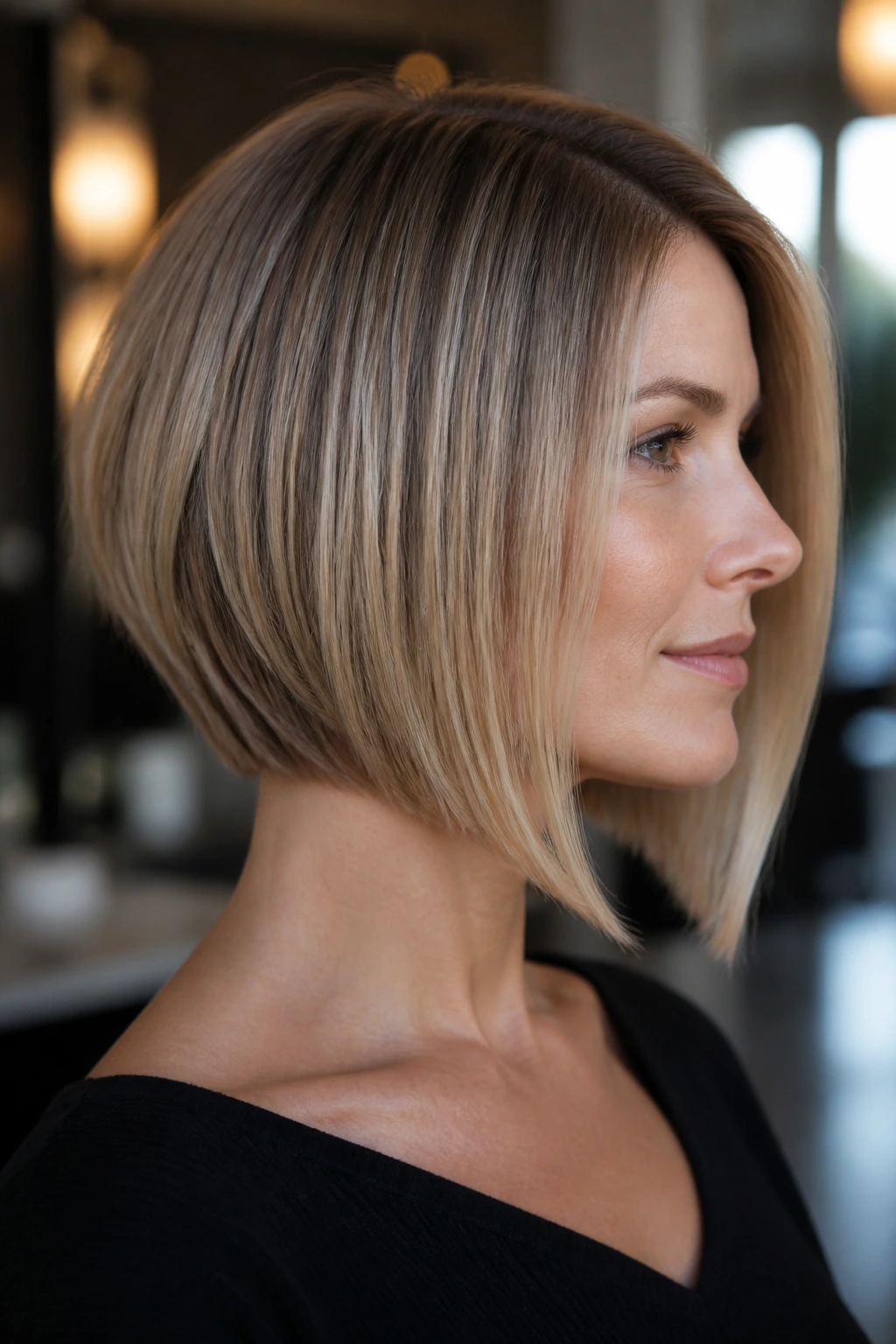
What bob length makes fine hair look thickest?
Usually chin length to just below the jaw works best because the ends land on a stronger visual line. That said, a collarbone lob can also look dense if the perimeter stays blunt and the layers are kept low.
Are layers bad for fine hair?
Not always, but short layers at the crown are risky. Fine hair usually looks fuller when the layers are long, subtle, and placed low enough to keep the bottom edge strong.
Is a blunt bob better than a textured bob?
For most fine hair, blunt wins first. Texture can help if the hair has natural bend, but too much pieceiness at the ends often makes the cut look thinner than it is.
Can I wear bangs with fine hair?
Yes, if the fringe is kept light and shaped to match the rest of the cut. Curtain bangs and side-swept fringe tend to work better than a heavy, straight-across bang on fine hair.
How often should I trim a bob on fine hair?
Every 5 to 8 weeks is a good range, depending on the length and how clean you want the line to stay. Shorter, sharper bobs need more frequent maintenance than collarbone versions.
What if my hair is flat at the crown?
Choose a cut with a little lift built in at the back or a side part that breaks up the flat area. Then style the roots first with mousse or root spray before touching the ends.
Can fine wavy hair wear a bob without looking frizzy?
Yes, if the cut leaves enough weight at the bottom and doesn’t over-shred the surface. A wavy bob tends to look better with controlled bend than with lots of tiny layers.
What should I ask the stylist to avoid?
Ask them not to thin the ends aggressively and not to carve too much off the crown. On fine hair, those two things are often what make a bob look sparse instead of full.
The Cut That Holds Its Line
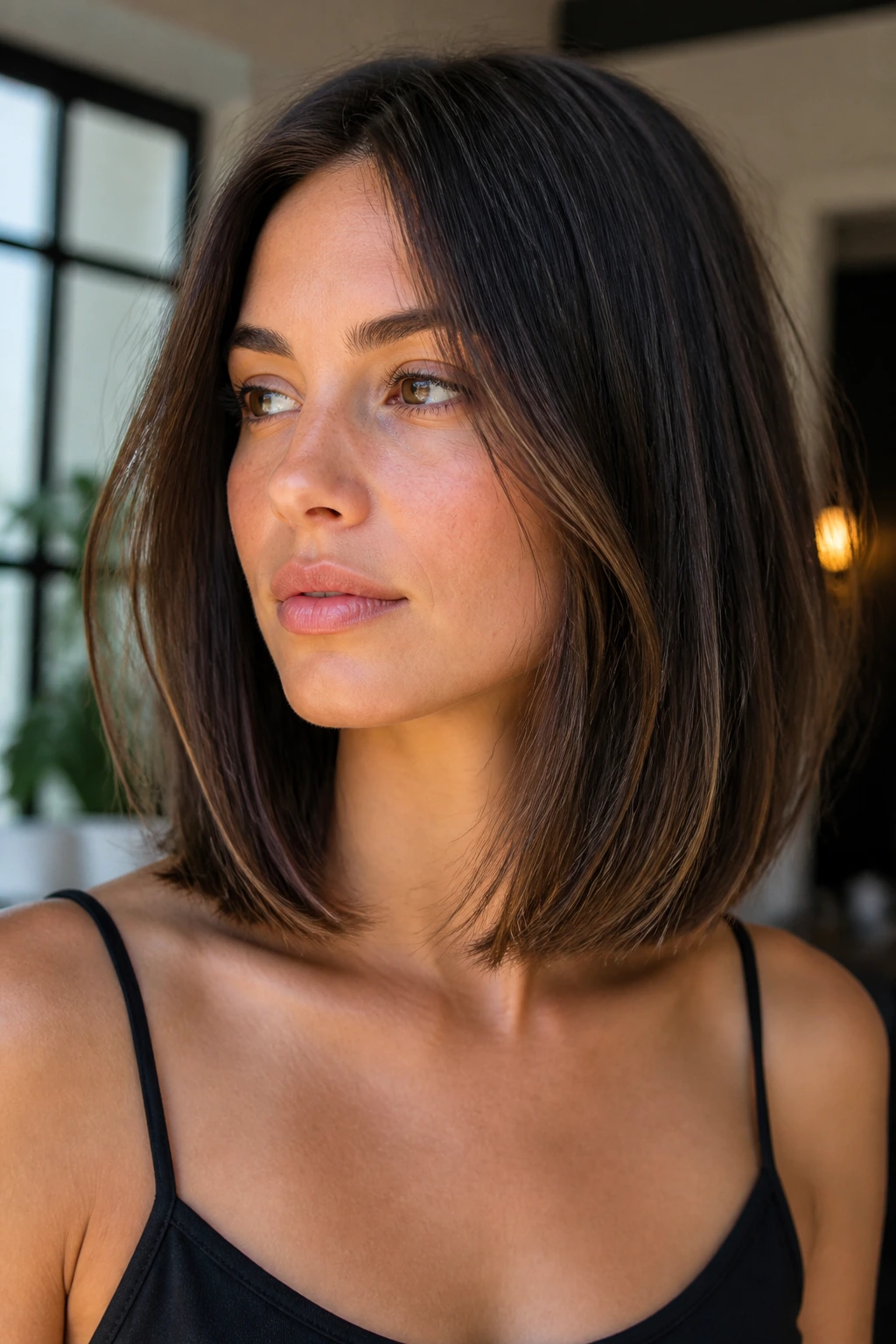
The best bob haircuts for women with fine hair don’t chase volume with tricks. They build shape with line, weight, and a little discipline. That’s why a blunt chin-length bob can look richer than a heavily layered one, and why a collarbone lob can feel calmer and still hold its own.
If your hair has always been treated like it needs rescuing, a good bob is a nice correction. It doesn’t ask the hair to become something else. It just puts the strand thickness in a shape that works with it, not against it. And that, more than anything, is what makes the cut worth wearing.
