



Brunette hair can go flat in a hurry, which is why shag haircuts with highlights for brunette hair keep earning their place in the salon chair. The cut brings the movement; the color brings the lift. Put them together and the whole head reads lighter, sharper, and far less heavy around the face, even when the base stays deep brown.
That balance matters more than people think. A brunette shag can look gorgeous when the layers are feathered and the highlights are placed with a light hand, but it can also go wrong fast if the top gets over-thinned or the color is dragged through every strand. Then you get puffiness at the sides, weak ends, and highlight stripes that fight the haircut instead of working with it. No one wants that. Not in this cut.
The sweet spot is dimension. Caramel, honey, copper, chestnut, ash brown, walnut, beige-brown — each one changes how the layers move when light hits them. The right placement can make a shoulder-length shag look airy, make curls pop, and make a thick brunette bob stop looking like one solid block of color. That’s the fun of it, really. The shape does one job, the color does another, and neither has to scream.
Why These Shag Haircuts Light Up Brunette Hair
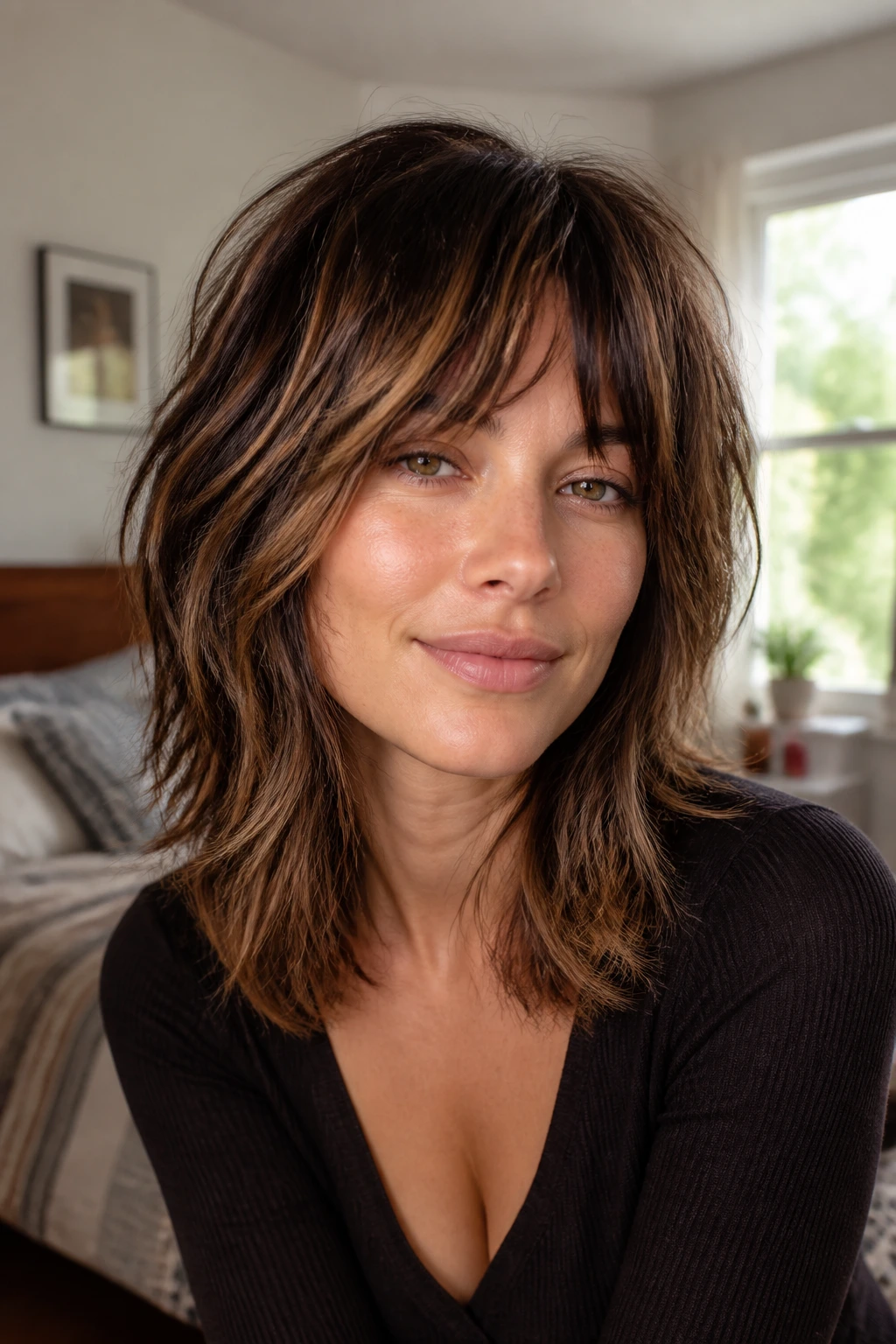
-
Dimension at the crown: Dark brown hair can look dense near the roots, so lighter ribbons through the top layers stop the whole shape from reading as one flat sheet.
-
Movement without bluntness: The shag’s choppy ends and feathered interior layers break up the outline, which makes brunette highlights show up in flashes instead of stripes.
-
Better grow-out: A rooty, layered brunette style grows out more softly than a blunt cut with all-over lightening, so you can go longer between salon visits.
-
Room for warmth or cool tones: Brunette hair holds caramel, copper, beige, ash brown, and mahogany differently, which gives you a lot of control over the mood.
-
Works across textures: Straight, wavy, and curly hair all pick up dimension in a shag, though the layer pattern needs to respect the texture instead of fighting it.
1. Soft Curtain Shag with Caramel Ribbons
Caramel ribbons are the least dramatic way to wake up a brunette shag, and that’s exactly why they work so well. The curtain fringe falls away from the face, the layers skim the cheekbones, and the lighter threads sit where the hair naturally bends, so the color shows up as movement instead of obvious streaks.
Ask for the shortest face-framing layers to start around the cheekbone, with longer interior layers that keep the shape soft through the shoulders. The caramel should be only one or two levels lighter than your base if you want depth left intact. A warm beige gloss on top keeps it from looking orange, which matters more than people admit when brunette hair gets lightened.
For styling, a 1-inch curling iron or wand makes a loose bend through the ends, then a quick finger comb keeps the curtain pieces from clumping together. This one is especially good if your hair is medium density and you want a shag that still feels polished on day two.
2. Feathered Wolf Shag with Honey Balayage
Want a shag that leans a little wilder? This is the one that gives you that slightly undone, high-movement finish without asking for a full commitment to a mullet. The wolf-shag shape keeps the top layers shorter and the perimeter a bit longer, so the honey balayage has room to flash when the hair swings.
The trick is placement. Honey belongs through the surface layers, temples, and the top of the cheekbone area, not painted into every hidden section. On brunette hair, that gives you lift where people actually look first. If your base is a deep level 4 or 5 brown, keep the honey soft and warm; if the base is darker, a brighter honey can go brassy fast unless the toner is clean.
Best fit for the cut
- Thicker hair: The shorter crown layers remove weight without turning the shape into a puffball.
- Wavy texture: Air-dried bends make the highlight pattern look intentional.
- Low effort styling: A little mousse and a diffuser are usually enough.
This cut has some attitude, but it still behaves.
3. Collarbone Shag with Chestnut Lowlights
A collarbone shag with chestnut lowlights does something clever: it adds depth instead of chasing brightness. That makes it a strong choice for fine brunette hair, because the darker threads can make the hair look fuller through the mids and ends, not thinner.
Tell your stylist you want lowlights tucked under the top layers and around the interior of the cut, not scattered everywhere. The goal is to create shadow behind the lighter surface pieces so the texture reads from across the room. Chestnut is a good choice when you want the color to stay in the brown family rather than drifting toward copper or gold.
The shape itself should stay soft at the collarbone, with the shortest layers grazing the jawline. If the layers climb too high, the whole cut can lose that easy swing and start flipping in awkward places. This version is one of my favorites for people who want dimension without looking like they spent half the day in a chair.
4. Curly Brunette Shag with Cinnamon Highlights
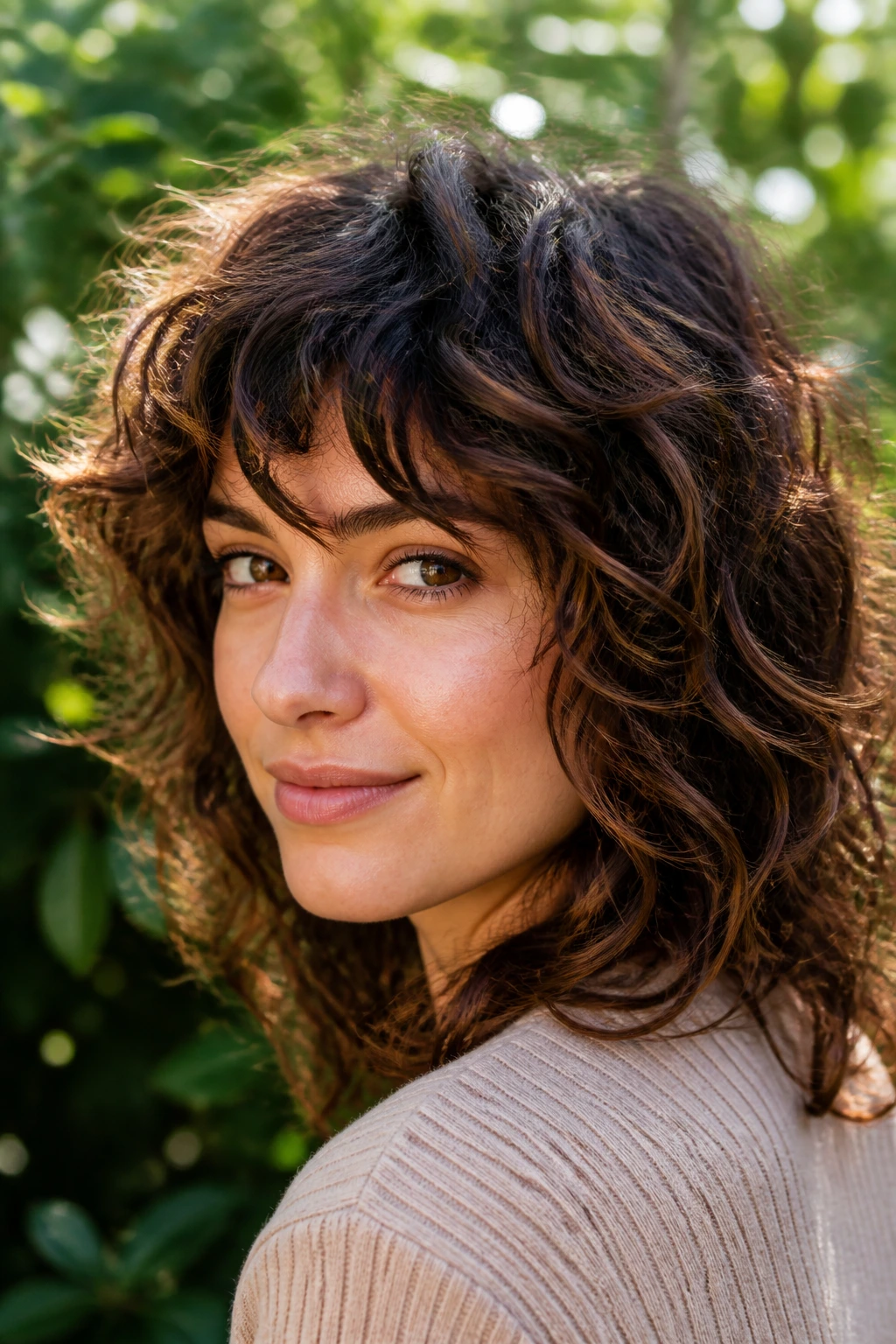
Curls do not need more volume everywhere. They need shape where the curl actually lands, and that’s why a shag works so well on curly brunette hair. Cinnamon highlights on the outer curl clumps add warmth and sparkle without making the hair look streaky once it dries.
Keep the layers longer than you would on straight hair. Curl springs shrink, and if the shortest pieces are cut too high, the crown can balloon while the ends collapse. The best cinnamon placement sits on the surface of the curls and around the front, where the bend opens up and catches light. A little too much foil near the bottom can make the shape look busy.
Diffuser first, hands off second. That’s the whole mood here. Scrunching in too much product after the hair is half dry just weighs down the curl pattern and flattens the brighter pieces. When this cut is right, the curls form little pockets of copper-brown light, which is a very good look.
5. Micro Bang Shag with Espresso-to-Toffee Melt
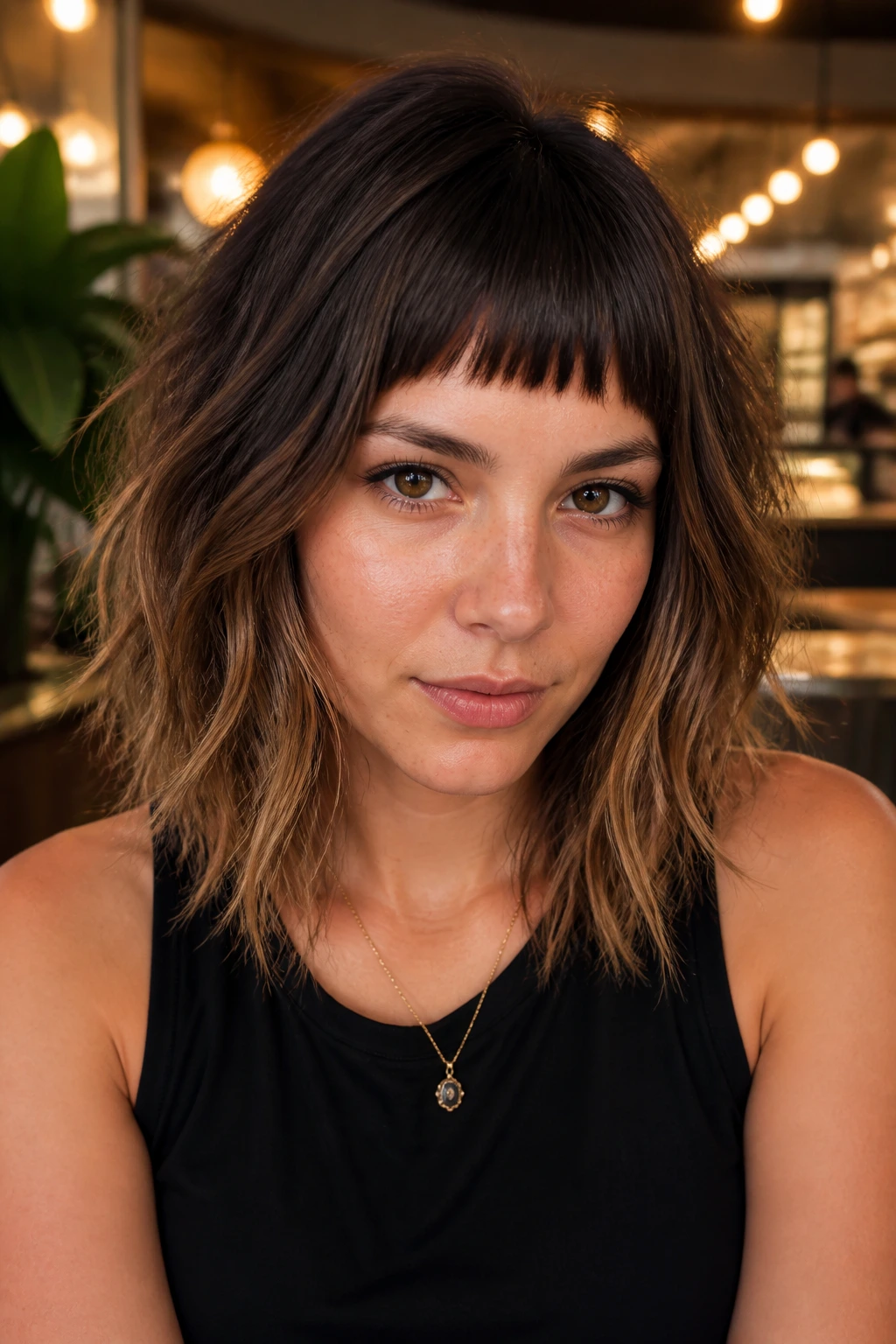
Micro bangs change the whole mood. They make the shag feel sharper and a little more fashion-forward, especially on brunette hair where the dark fringe can frame the eyes like a hard line before the softer layers take over. The espresso-to-toffee melt keeps the cut from looking severe.
The color needs a clean gradient. Deep espresso at the root and crown gives the upper half some anchor, then toffee or warm beige toward the ends softens the finish so the bangs don’t steal every bit of attention. If the face-framing pieces are too light, the fringe can look disconnected from the rest of the cut. Keep the contrast deliberate.
This style works best on straight or softly wavy hair, because super-tight texture can make micro bangs fight back. You also want a stylist who knows how to texturize fringe without making it wispy in a cheap way. The right version feels crisp. The wrong one looks like a haircut that got interrupted.
6. Razored Midi Shag with Bronze Face-Framing Pieces
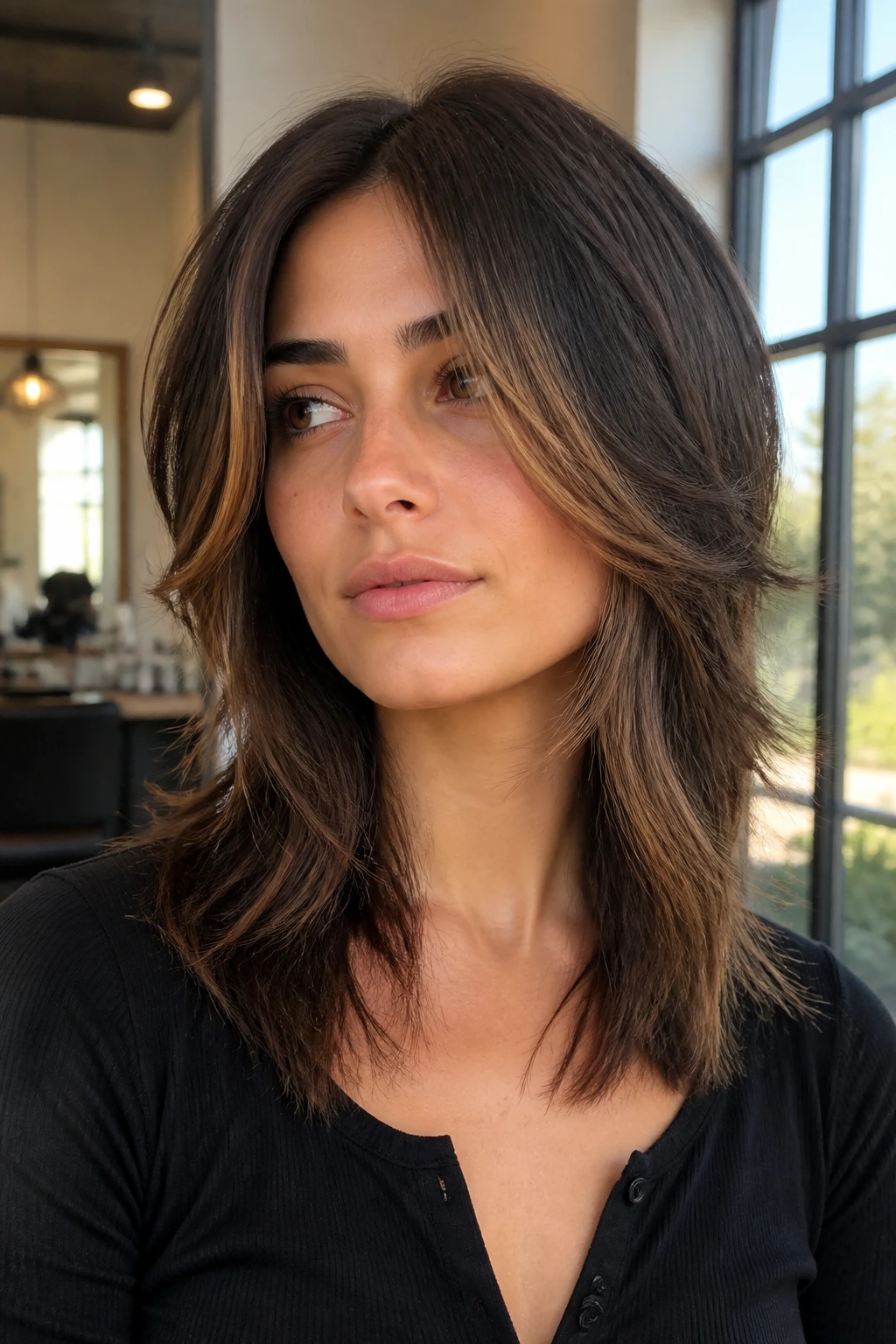
A razored midi shag gets its personality from the ends. The line stays somewhere around the upper chest, but the razor work softens the perimeter so the hair moves instead of hanging like a curtain. Bronze pieces around the face wake the whole cut up without pulling the brunette base too far toward copper.
The face frame should be the star here. Ask for bronze ribbons starting near the cheekbone and sliding into the front layers, with the rest of the highlight work kept lighter and more scattered. That way the color reads as a glow, not a block of brightness. The razored ends also help thick or coarse brunette hair lose some of its boxy shape.
What to ask for at the salon
- Razor texture through the lower half, not the whole head.
- Bronze highlights concentrated around the face and top layers.
- A soft, movable finish rather than blunt weight at the hem.
This is one of those cuts that looks better when it’s slightly imperfect.
7. Long Boho Shag with Sunlit Beige Brunette Highlights
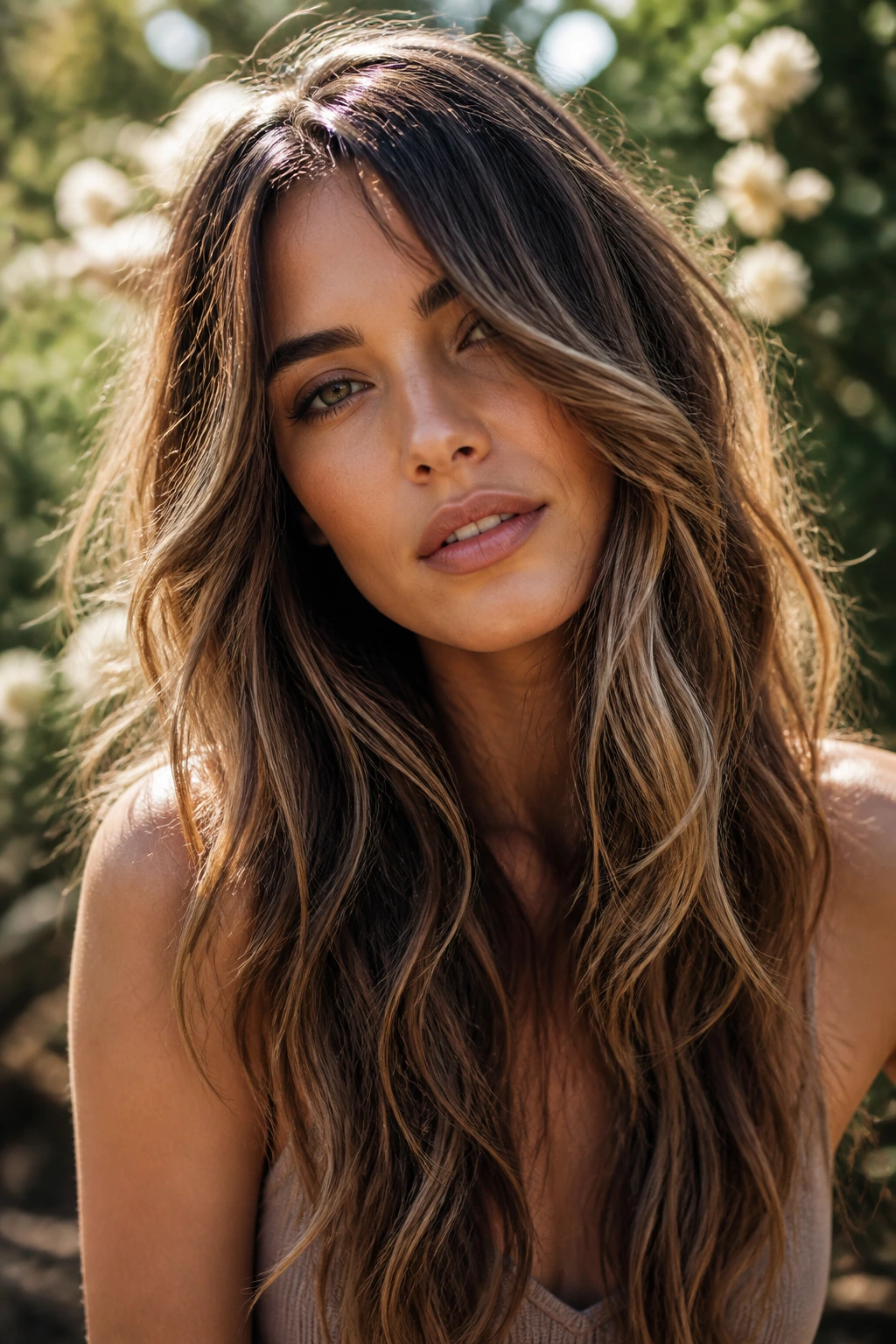
Long brunette hair can swallow subtle color if the layers are too tidy. That’s why the boho shag works: it gives the length a messy little architecture, and the beige highlights follow the movement instead of sitting there like decoration. The result feels sun-touched, not overworked.
Keep the longest layers past the chest if you want the boho effect to register. The shorter pieces should live around the cheekbone and collarbone so the hair still has shape when worn loose. Beige highlights suit this cut because they brighten without shouting. If the base is dark brown, ask for the lightest pieces only on the upper surface and face frame.
This style loves soft waves and a dry texture spray more than a glassy blowout. If you straighten it too neatly, you lose the whole reason to wear a boho shag in the first place. A little mess is part of the charm. A lot of mess is not. There is a difference.
8. Italian-Inspired Shag with Walnut Gloss
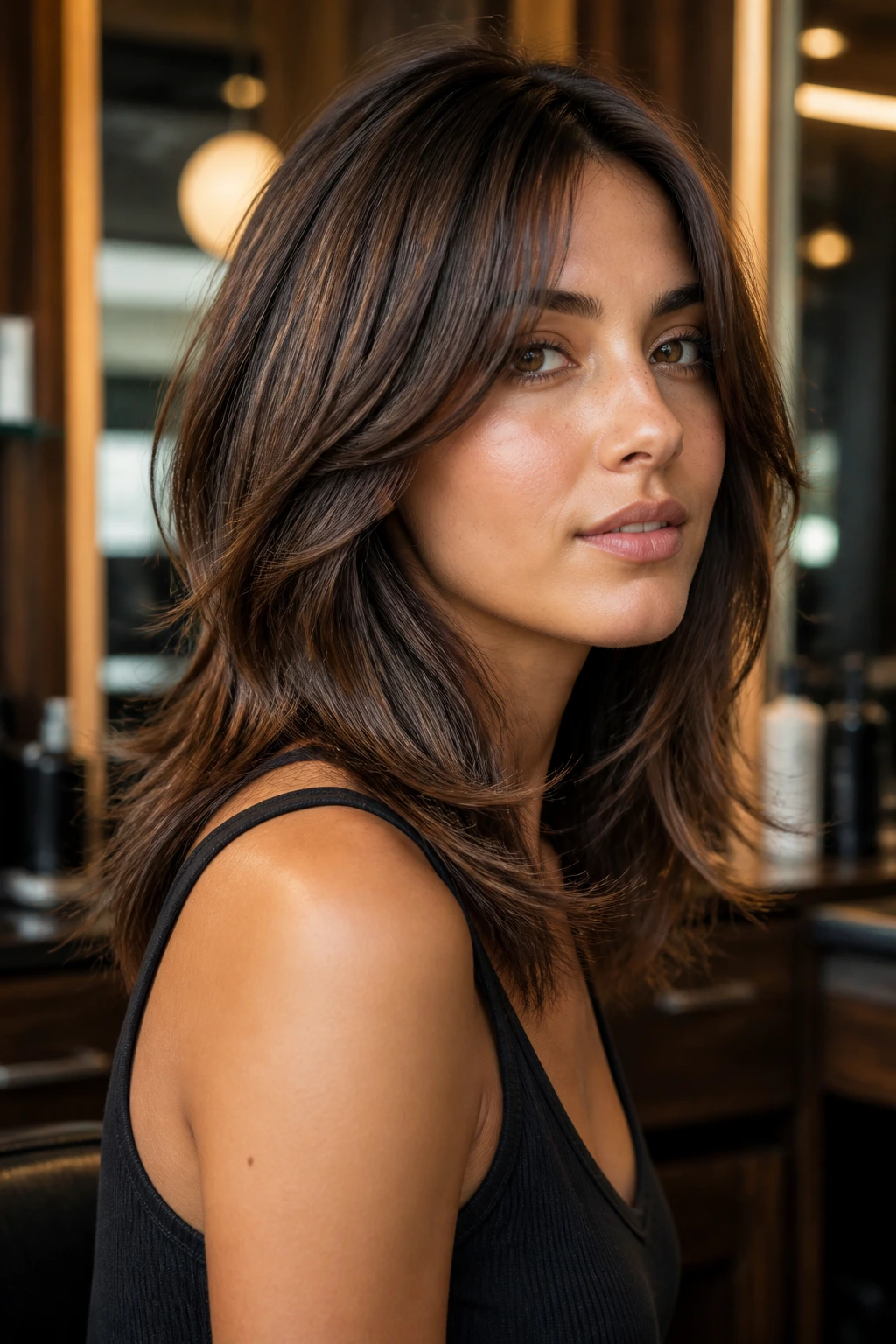
This is the polished cousin of the shag. The layers are there, but they’re smoother and more deliberate, with a blowout finish that bends the ends under or away from the face instead of making them explode outward. Walnut gloss on brunette hair keeps the color rich and reflective without tipping into obvious highlight territory.
Ask for movement around the bottom third of the hair and longer face-framing pieces that open up near the cheekbones. The gloss should sit in the brown family, maybe one shade deeper than your natural level if you want that glossy salon finish. It’s a smart choice for people who like structure but do not want a blunt cut.
The styling matters here more than on a rougher shag. A round brush, a nozzle attachment, and a medium heat setting can make this look expensive in the best possible sense — although the real magic is that the cut still looks fine even when you air-dry it halfway and walk away. That flexibility is the point.
9. Textured Pixie Shag with Mocha Peekaboo Highlights
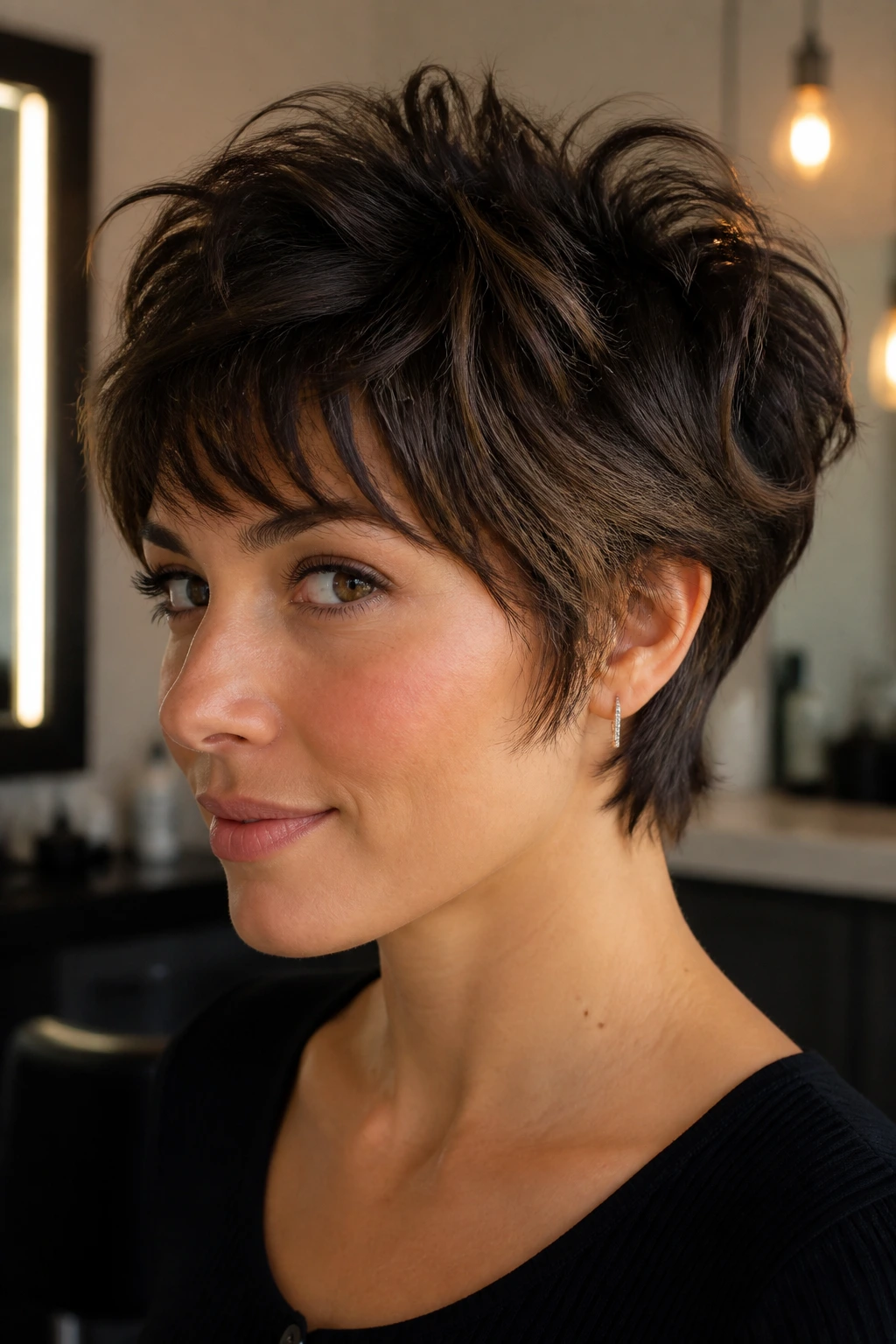
Short brunette hair needs color in hidden places. Peekaboo highlights tucked under the top layers let the movement show only when the hair shifts, which is what keeps a textured pixie shag from looking flat or over-bleached. Mocha tones are a good fit because they stay in the brown family and add depth instead of a hard contrast.
The cut should stay tight around the ears and nape, with more piecey texture on top. That top section is where the color gets to play. A few mocha ribbons under the crown and near the temple can flash when you tuck the hair back or push it to one side. It’s a clever little trick, not a loud one.
This is a strong option if you want less hair around your neck and more shape around your eyes. Use a paste or soft wax sparingly. Too much product turns a good pixie shag into a helmet, and that is not the effect anyone is chasing.
10. Shoulder-Length Shag with Copper and Caramel Streaks
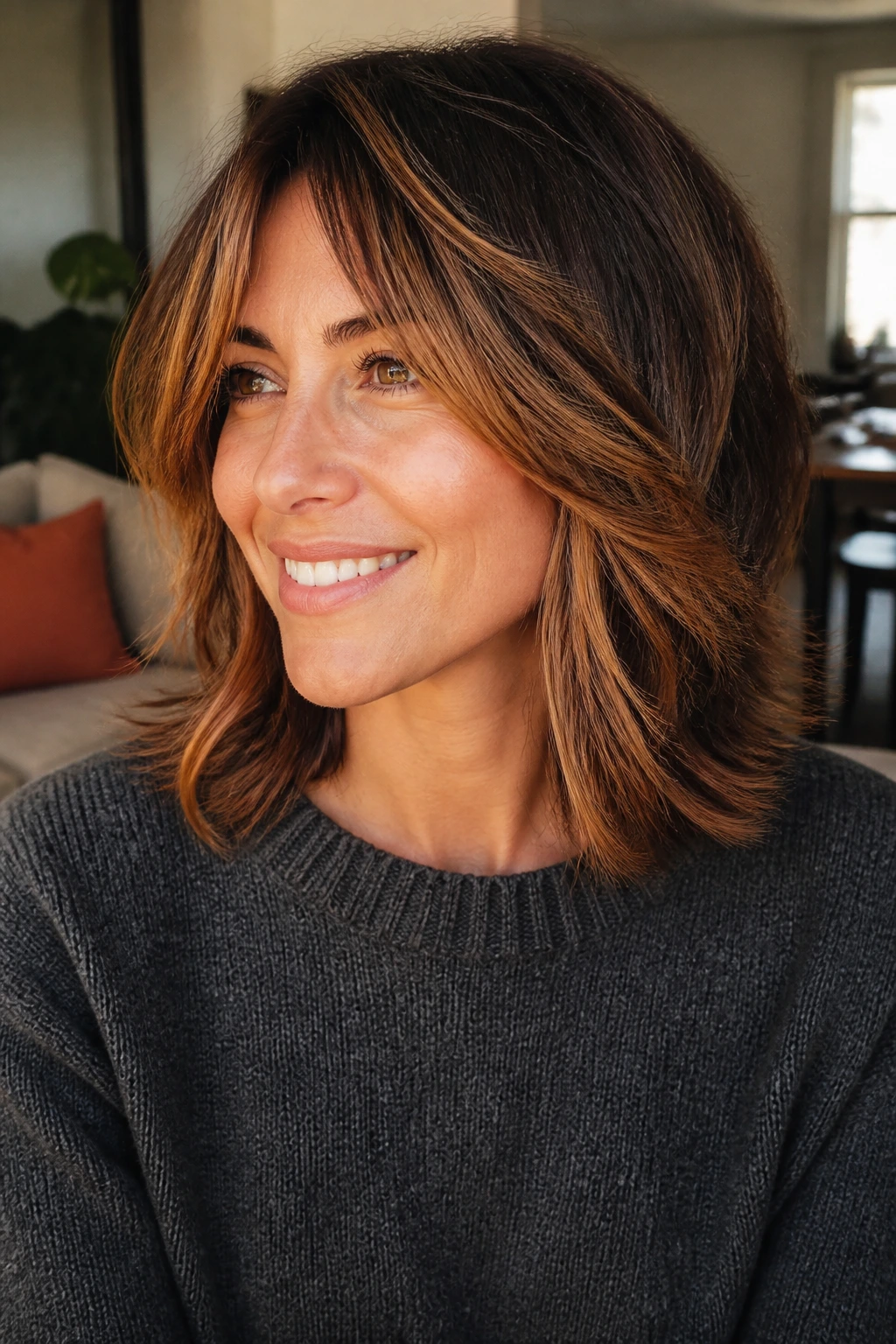
Copper and caramel streaks have a little more attitude than a plain brown blend, and shoulder-length hair gives them enough room to breathe. The cut lands in that easy zone where the layers are visible, the styling is manageable, and the highlight placement still has space to move when the hair swings.
The color should be broken up in two tones, not one. Copper works through the inner and middle layers, while caramel lives around the face frame and top surface. That mix keeps brunette hair from going flat in daylight. If everything is the same warm shade, the result can look blocky.
This cut is a good middle ground for someone who wants a bit of drama but not a full color overhaul. It also grows out well if the base is kept rooted and the lighter pieces are scattered rather than packed in. A shoulder-length shag with this color story looks especially good when the ends are flipped slightly outward.
11. Airy Shag with Soft Ash Brown Dimension
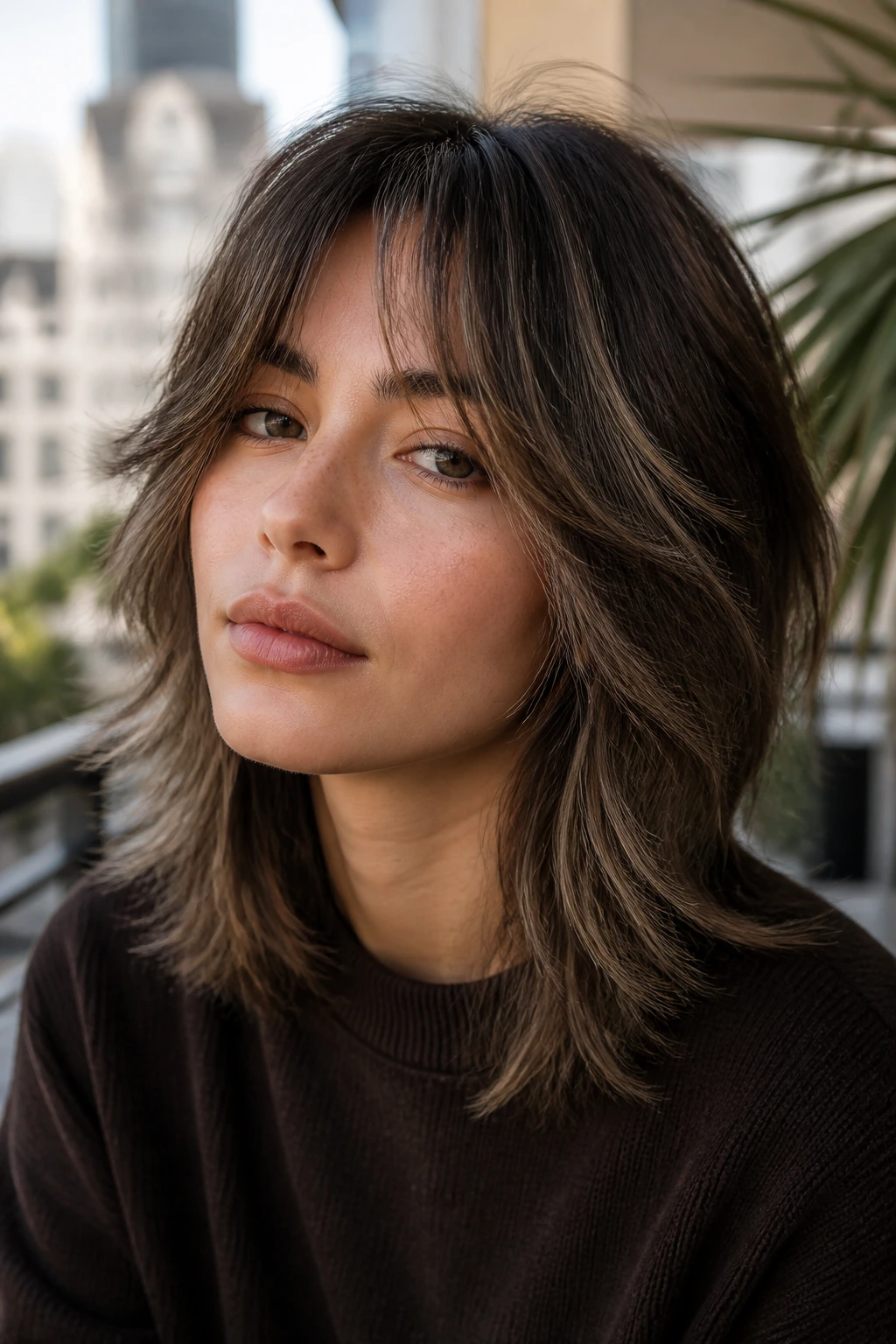
Ash brown highlights are for brunettes who hate warmth, or at least tolerate it in small doses. This airy shag stays light through the ends and crown, but the dimension comes from cool, smoky brown ribbons rather than honey or gold. The whole thing feels quieter, which is a nice change if your hair tends to pull red when lightened.
The layer pattern should be soft and open, not choppy to the point of frizzing out. Ash tones are honest; they show every rough edge, so the cut needs to be clean. Ask for face-framing pieces that narrow toward the chin and internal layers that remove bulk without creating a patchy finish. If your base is very dark, the ash pieces may need a neutral glaze so they don’t go muddy.
This style has a calm, almost expensive-looking restraint to it. Not flashy. Not cold. Just controlled. If you like low-contrast brunette hair but still want people to notice the shape, this is a smart place to land.
12. Razor-Cut Shag with Smoky Beige Balayage
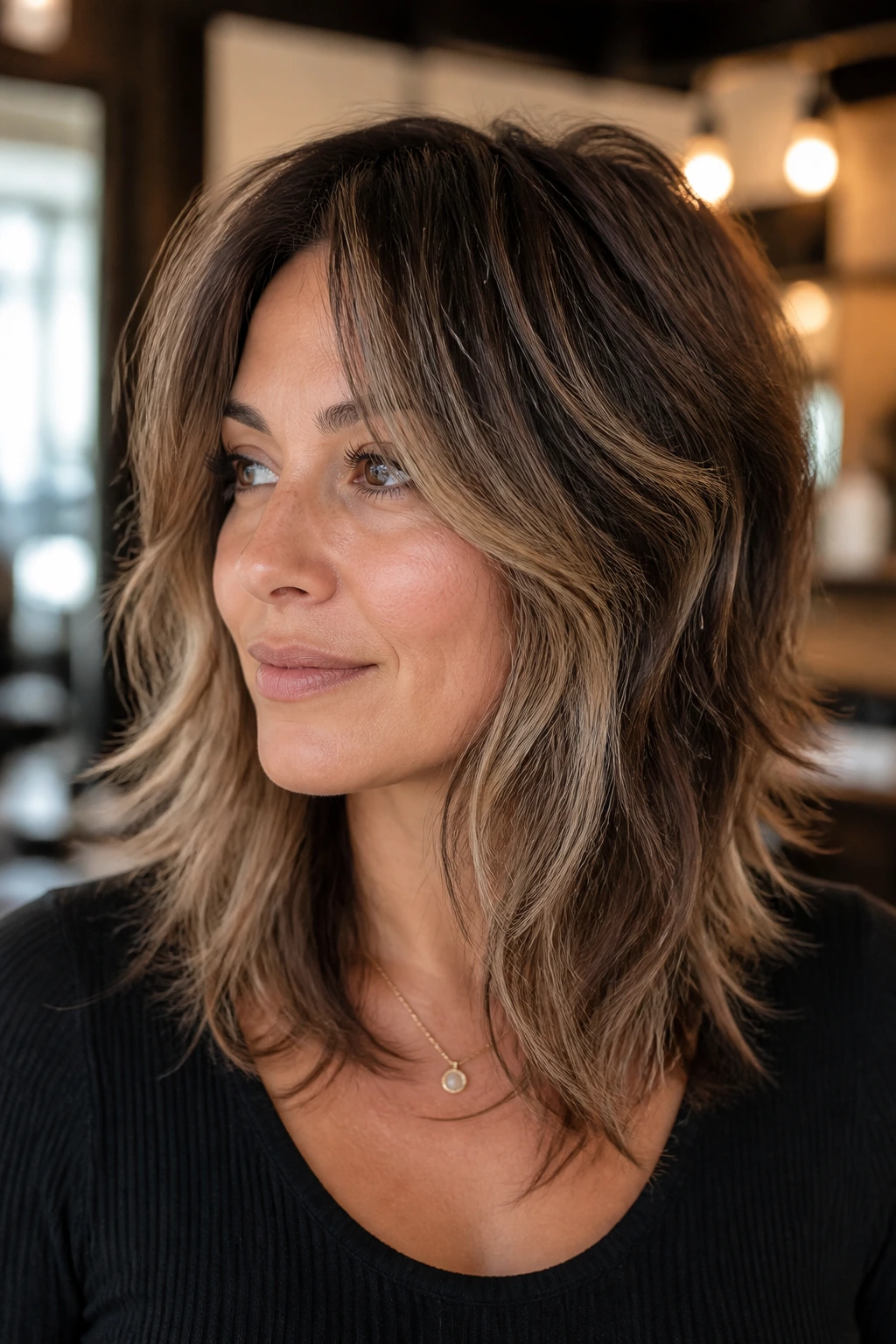
A razor-cut shag behaves differently from a scissor-heavy cut. The ends get softer, the layers feather out faster, and the silhouette looks a little more broken up around the edges. Smoky beige balayage suits that texture because it keeps the color in a muted lane instead of fighting the choppy finish.
The balayage should sit mainly on the top layers, the face frame, and the ends that flip outward. That placement lets the smoky beige catch light in thin flashes when the hair moves. On brunette hair, beige can go too bright if it’s lifted too far, so a softer smoke tone helps the result stay believable.
This cut is especially good for someone who wants texture but not volume for the sake of volume. A razor shag can get frizzy if the stylist goes too high with the slicing. Keep the weight lower, keep the highlight placement selective, and the shape will look light without looking thin.
13. 70s-Inspired Shag with Golden Tan Ends
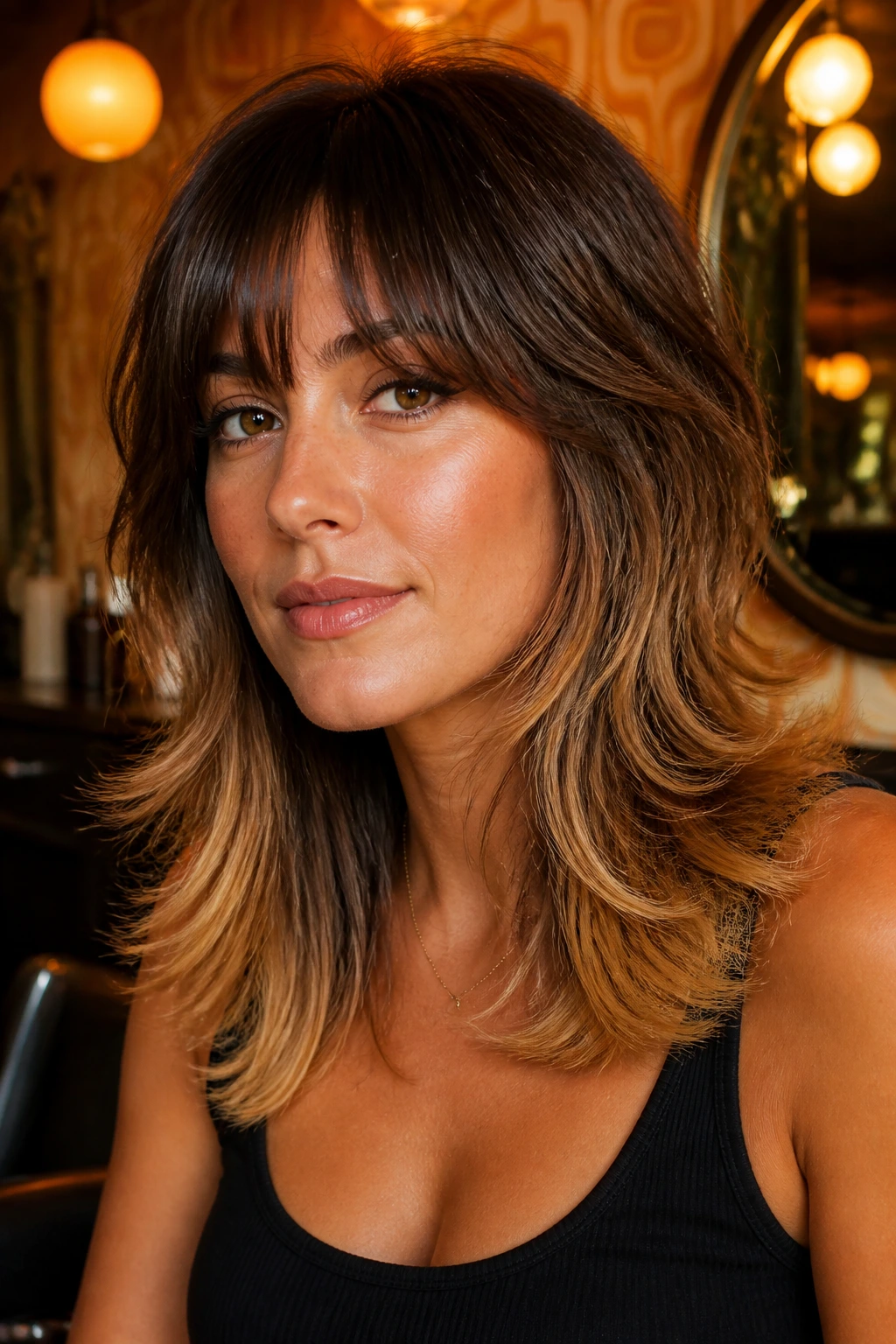
There’s a reason this shape keeps coming back. The 70s-inspired shag gives the ends a flip, the fringe a little swing, and the whole haircut a loose, easy attitude that still looks deliberate. Golden tan ends add the kind of brightness that shows up on brunette hair without making the roots feel disconnected from the rest.
Ask for more movement around the cheekbones and jaw, then let the lower layers fan out softly toward the shoulders. The tan pieces should live toward the bottom half of the length, where the finish can look sunlit rather than stripey. If you bring this cut too close to a modern blunt line, it loses its whole personality.
A round brush blowout makes this shape sing, but a large barrel iron can do the job too if you want more bend and less polish. Either way, the fringe should stay soft and slightly separated. The shine is nice. The swing is better.
14. Layered Lob Shag with Mahogany Dimension
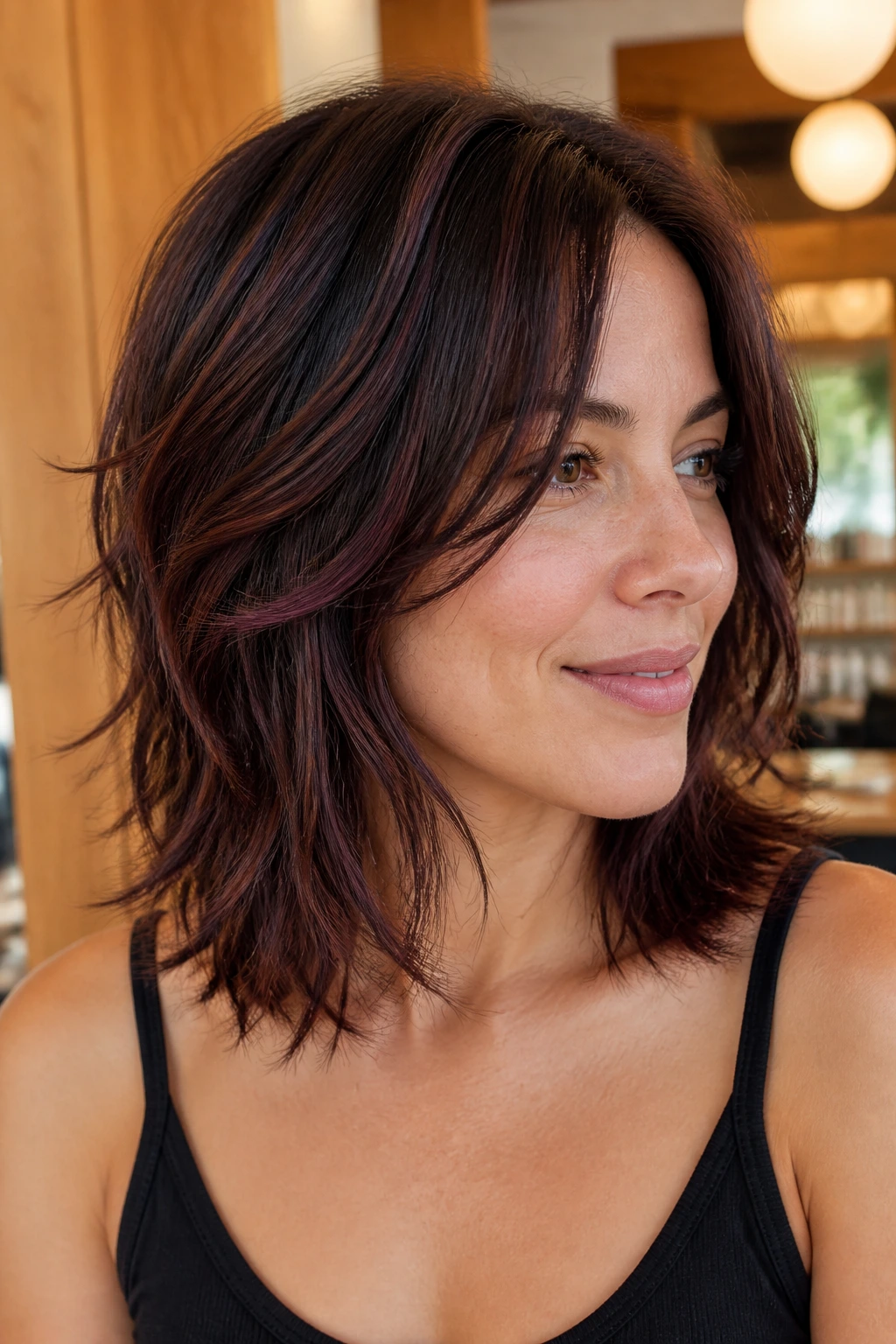
A layered lob shag is the safer cousin of the full shag, and that’s not an insult. It gives you movement without pushing the layers so short that the shape starts jumping around when you turn your head. Mahogany dimension keeps brunette hair rich, deeper, and a little more dimensional in low light.
The color here should be less about brightness and more about tone. Mahogany lowlights tucked through the interior and around the underlayers add warmth that feels mature rather than flashy. If the hair already has red undertones, keep the mahogany soft and cool enough to avoid a brick note.
This cut suits people who like to tuck their hair behind one ear, wear it half-up, or let it fall in a neat collarbone line. It’s versatile in the real way — not the empty way people use that word when they mean “fine for lots of things.” The shape works because it’s tidy enough to live with and still has enough movement to feel like a shag.
15. Tousled Shag with Rooty Blonde Balayage
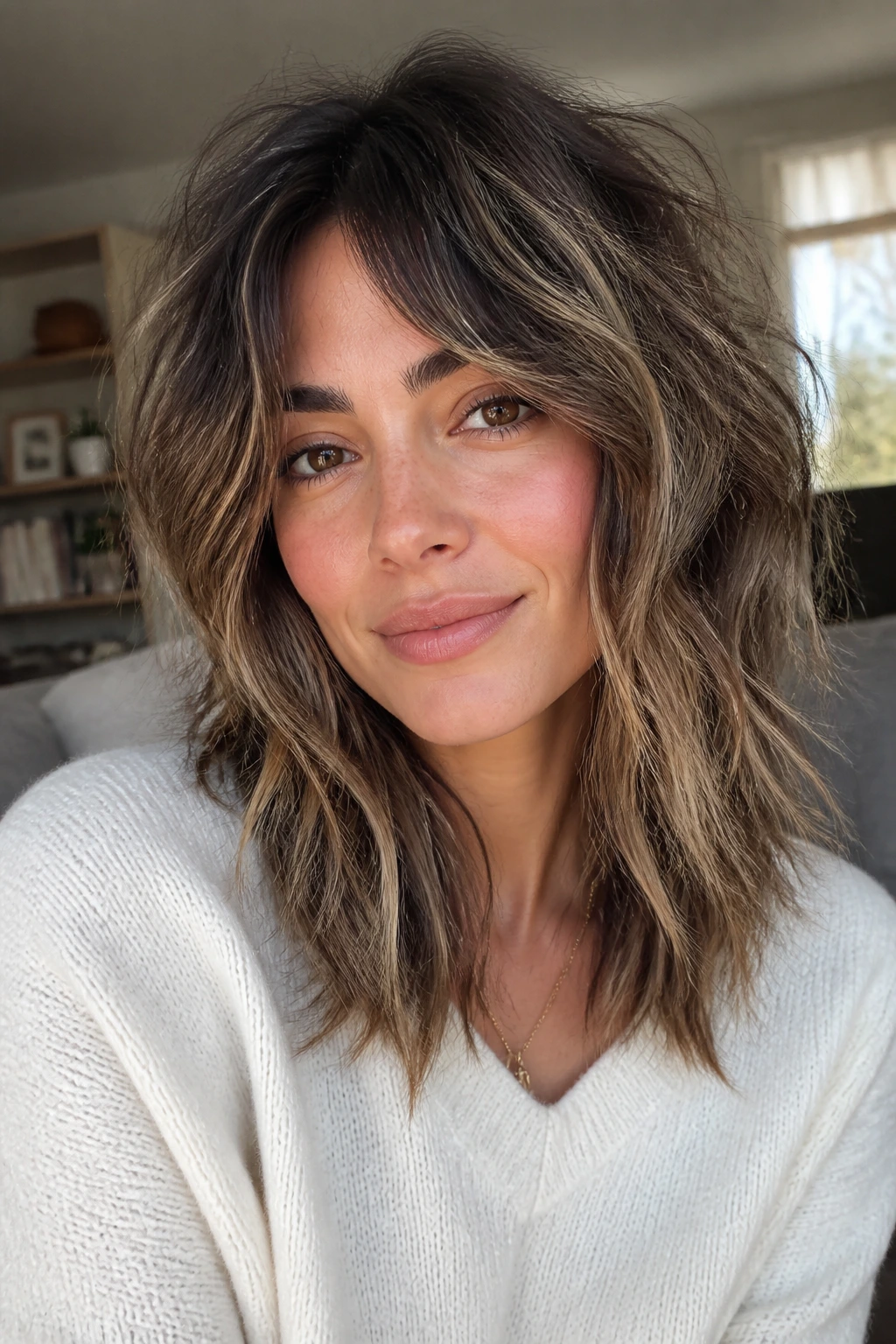
Rooty blonde balayage on brunette hair lives or dies on the grow-out. Done well, it looks lived-in from the start. Done badly, it turns into a stripey mess that needs a salon rescue. The shag shape helps because the layers break up the blonde and stop it from reading as a solid block.
Keep the roots deep and a little shadowed, then let the blonde appear on the mid-lengths and ends where the hair naturally bends. On a brunette base, the lightest pieces should never be so bright that they steal the whole haircut. The point is contrast, not escape velocity.
This one suits people who want a low-maintenance color story with a more relaxed, undone feel. Air-dried waves make it even better, especially if the ends are chipped and piecey rather than rounded. It’s a little surfy, a little messy, and that’s the charm.
16. Wavy Shag with Auburn Veils
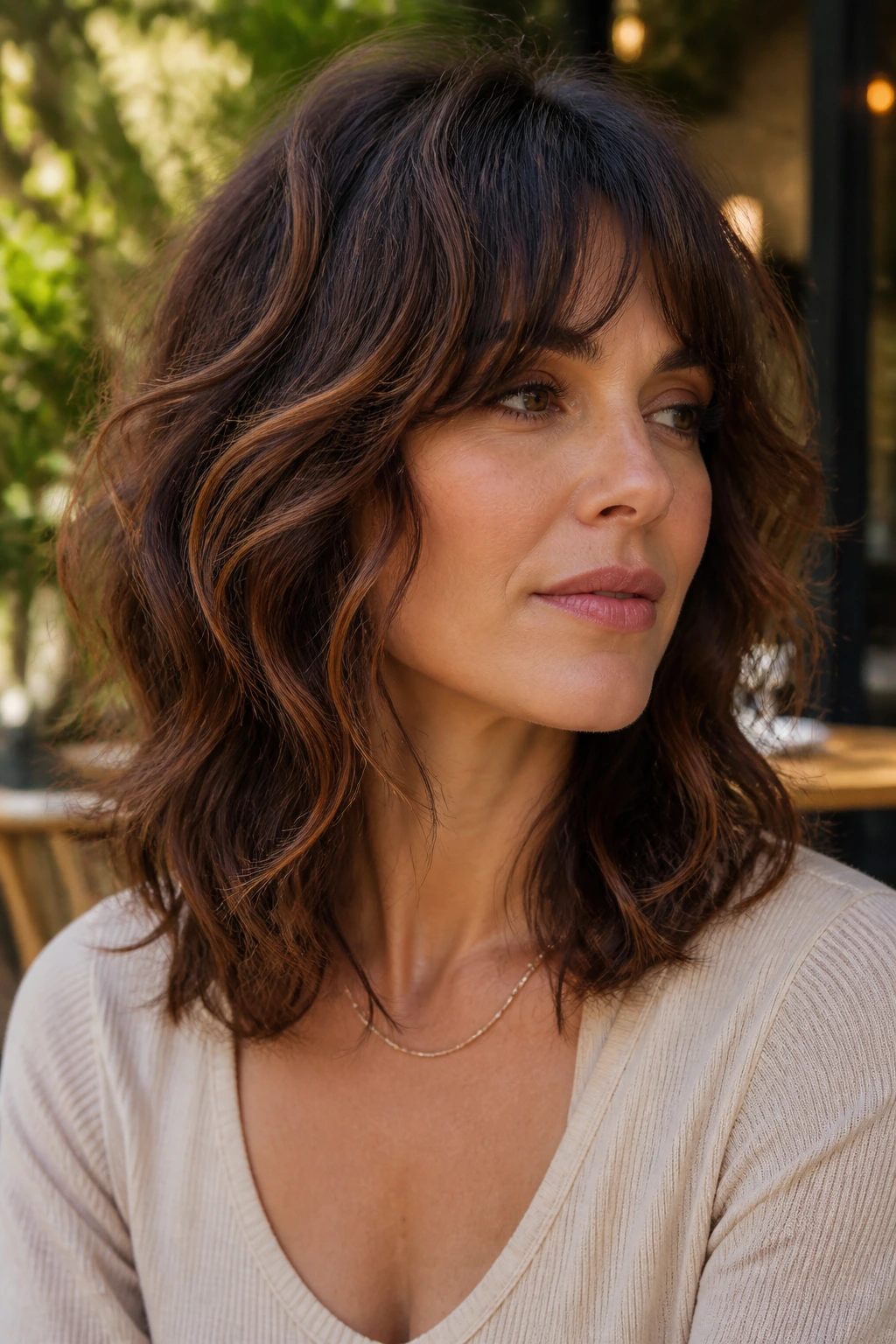
Auburn veils are for brunette hair that wants warmth without going copper all the way. The wavy shag gives the color something to sit on top of, and the auburn pieces thread through the bends like tiny flashes of dried leaf and wood tone. It’s earthy, not loud.
Keep the highlights thin and somewhat scattered through the outer waves. If you pack too many auburn panels into the underneath layers, the color can look heavy instead of soft. The cut itself should be loose through the mids and more tapered around the face so the waves fall in long, irregular pieces.
This works especially well if your natural brunette base already has a bit of red in it. The auburn then looks like a richer version of what’s there, not a dramatic switch. That’s the kind of color story that holds up on a Tuesday morning, not just under salon lights.
17. Chunky Layer Shag with Mocha Money Piece
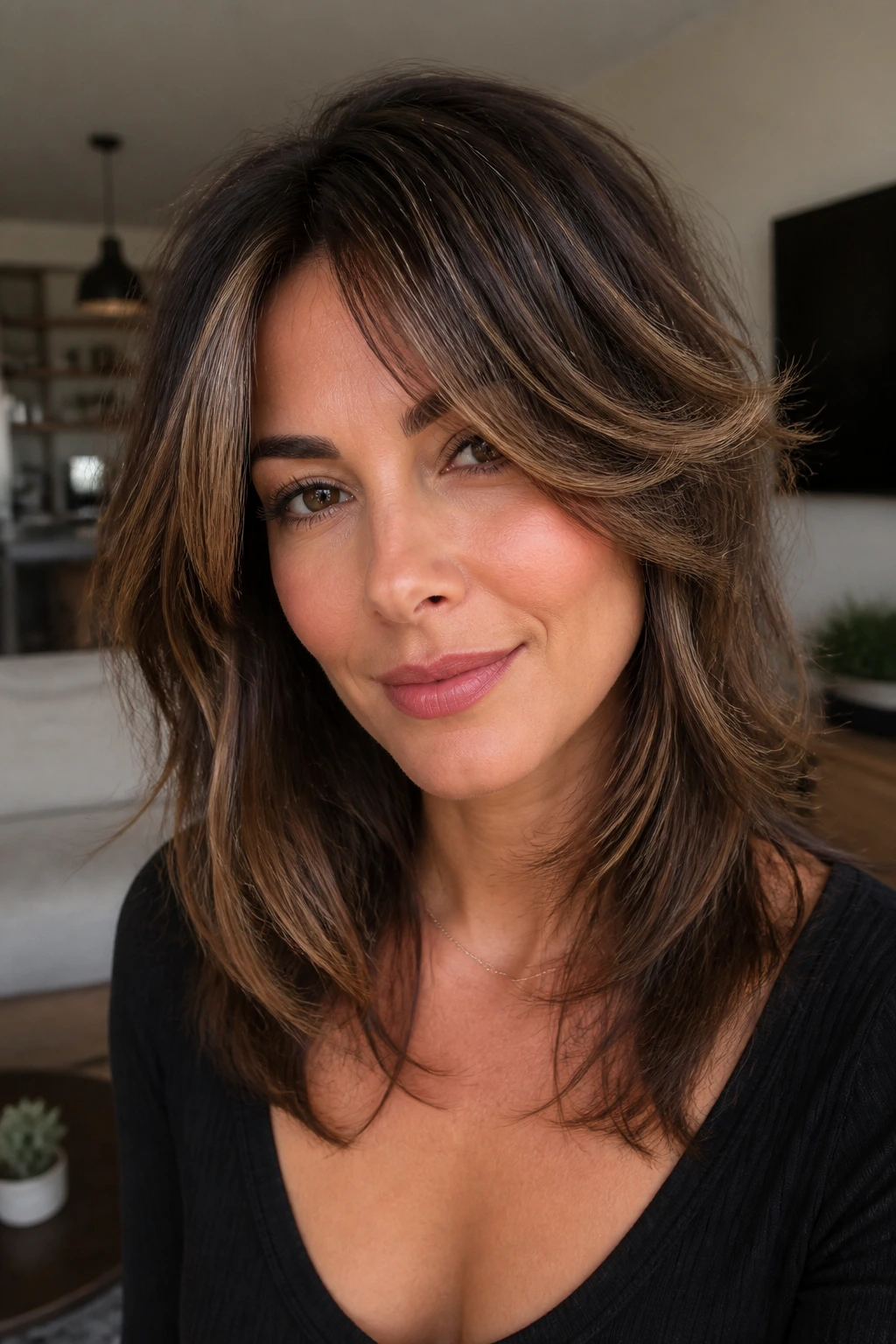
Chunky layers can feel dated if the styling is sloppy, but when they’re cut with purpose they add a lot of shape to brunette hair. A mocha money piece at the front gives the haircut a clear focal point without pushing the whole head into high contrast. It’s the kind of look that says, yes, there was intention here.
The money piece should be a softer mocha or light chocolate tone, not a blonde strip. Keep it broad enough to frame the eyes and cheekbones, but not so wide that it separates from the rest of the cut. Around the back, the layers can stay darker and chunkier to keep the volume under control.
This is a smart pick for medium to thick hair that needs movement but not too much thinning. The strong front pieces help when you wear your hair parted in the center, but the cut still works off-center because the shape isn’t built on symmetry alone. That matters more than people realize.
18. Soft Mullet Shag with Warm Toffee Highlights
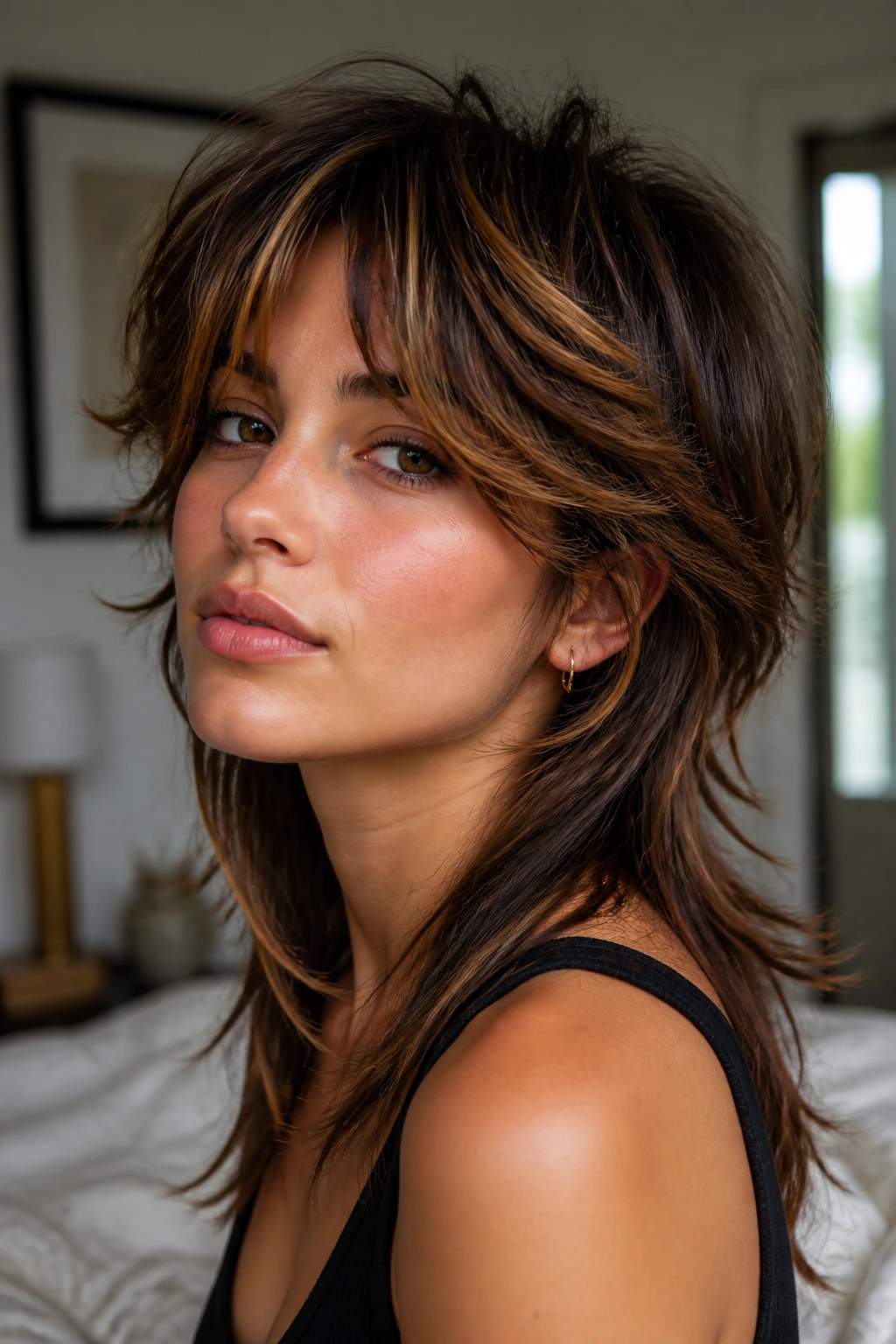
A soft mullet shag sounds scarier than it is. The back stays a bit longer, the crown stays lifted, and the sides taper enough that the whole thing feels modern rather than costume-y. Warm toffee highlights soften the edge and keep brunette hair from reading too dark through the lower lengths.
Color placement matters here. The toffee should appear through the crown, front pieces, and a few interior layers near the shoulders. If the back is left entirely dark, the cut can feel bottom-heavy. If the back gets over-lightened, it loses the whole point of the soft mullet shape.
I like this on hair that has a little natural wave and some roughness. That texture helps the shorter top layers stand up a bit and lets the longer back pieces lie flat enough to avoid a puffy outline. It’s not a precious cut. It looks best when it’s a little lived in.
19. Thick-Hair Shag with Multitone Chocolate Balayage
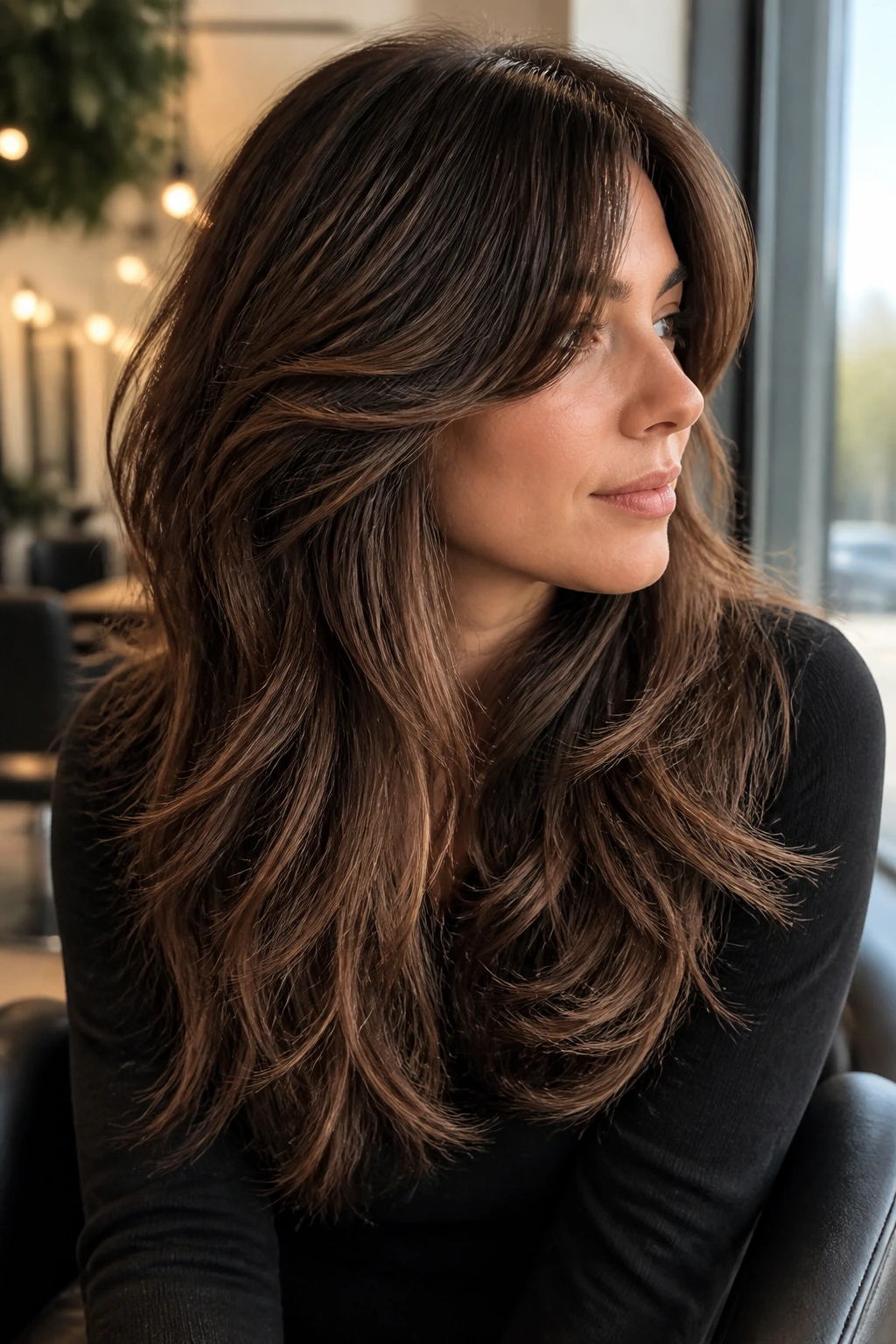
Thick brunette hair often needs depth, not just lightness. A multitone chocolate balayage does the job by breaking the hair into dark cocoa, milk chocolate, and slightly warmer brown notes, so the shape looks lighter without losing weight. That’s a better strategy than trying to bleach thick hair into submission.
The layers should remove bulk from the interior, not carve holes near the surface. Thick hair likes structure, but it hates being over-thinned at the ends. The color pattern can help the cut feel lighter by creating shadows between the layers. That means the shag moves without puffing out at the sides.
This is one of the most practical shags on the list. You can wear it blown out, tucked, clipped, or scrunched, and the dimension still shows. If your hair gets bulky around the crown, ask for a little more compression in that area and keep the brighter pieces focused on the front and top third of the head.
20. Fine-Hair Shag with Micro-Layered Caramel
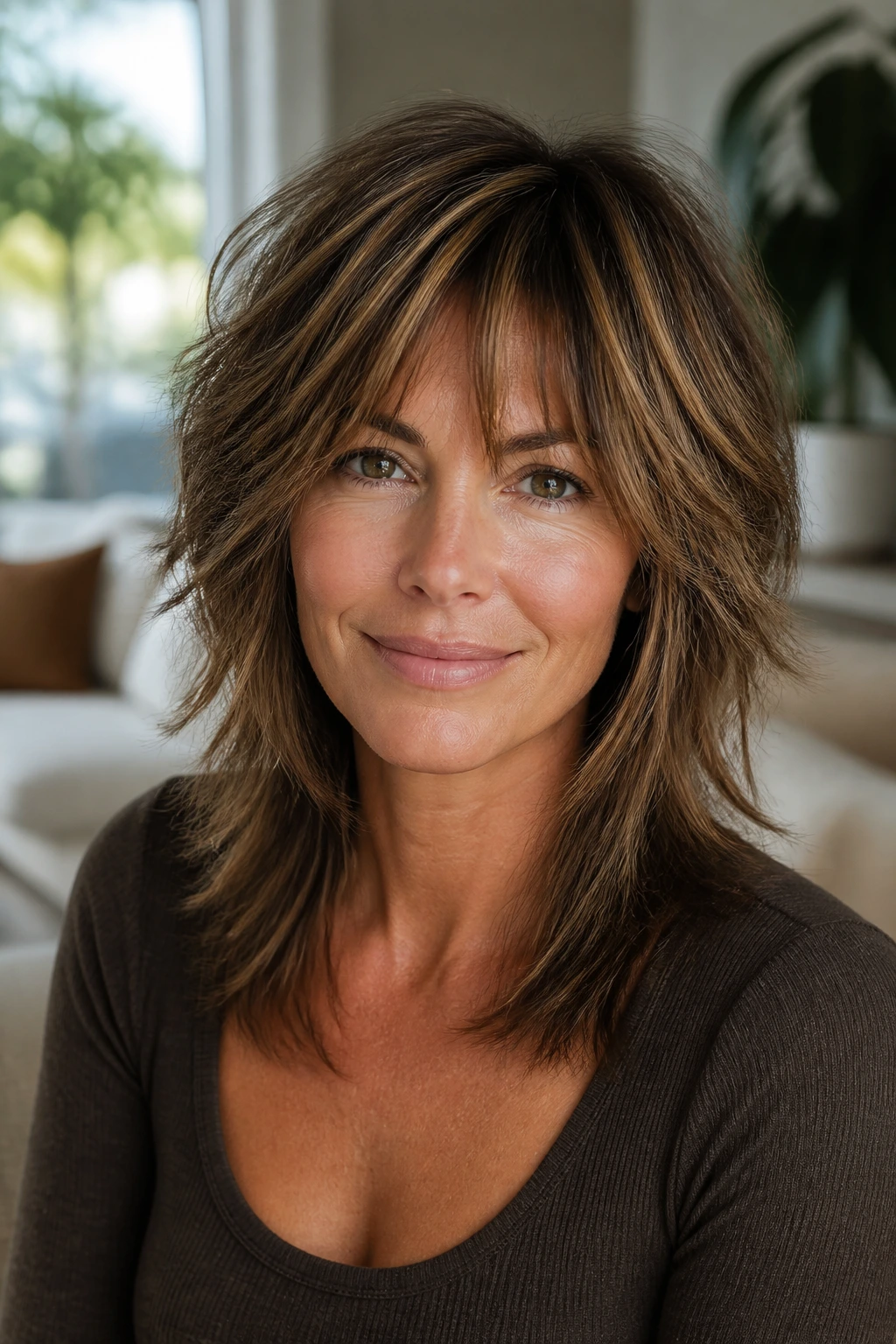
Fine brunette hair needs a gentler hand. Too many short layers can turn it see-through, which is a bad trade when what you wanted was movement. Micro-layered caramel keeps the cut soft and airy without removing so much weight that the ends disappear.
The caramel should be painted in very thin sections, mainly around the crown and face frame. The idea is to create the sense of thickness through color, not through heavy highlighting. Fine hair often looks richer when the roots stay deeper and the light pieces are tiny and precise. Big streaks can overwhelm the whole head.
This shag works best when the perimeter is kept a little fuller and the texture is built with soft bends rather than aggressive teasing. A lightweight mousse and a small round brush at the root give just enough lift. No giant barrels. No heavy creams. Fine hair complains when you overfeed it.
21. Face-Framing Shag with Rosewood Tones
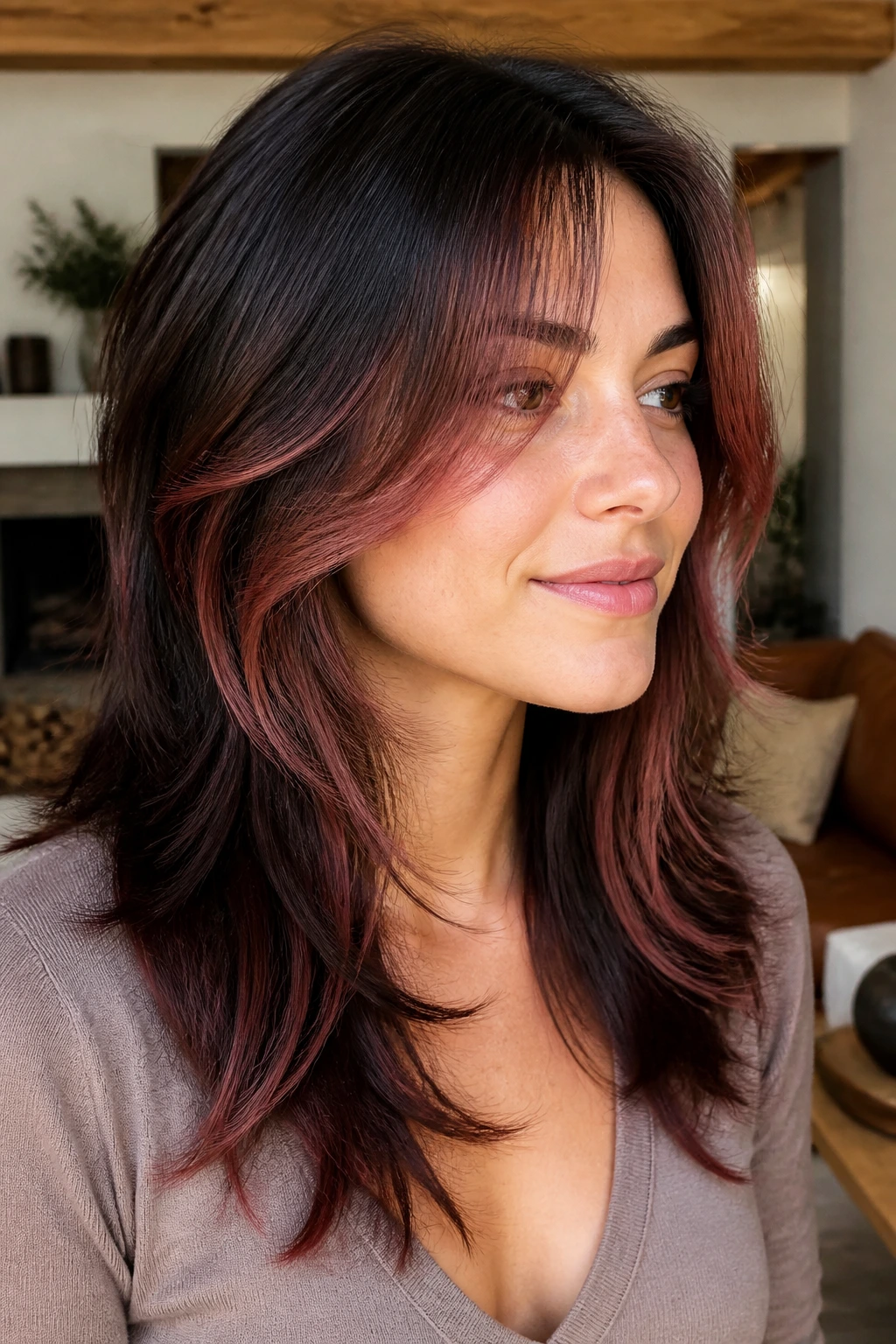
Rosewood tones give brunette hair a muted warmth that feels a little softer than copper and a little richer than neutral brown. A face-framing shag lets those tones sit right where the eye lands first, so the haircut gets brightness without needing full-head lightening.
Keep the shortest pieces around the cheekbones and jaw, then let the rest of the layers stay long enough to feather out. Rosewood works best when the color is concentrated in the front and lightly repeated through the top layers. Too much of it in the back can make the whole look lean red, which changes the mood fast.
This is a nice choice if you want a flattering frame around the face but do not want a chunky money piece. It’s softer, less obvious, and honestly more wearable for most people. The cut still has the shaggy movement, but the color keeps it from feeling too dark at the root.
22. Long Layered Shag with Mushroom Brown Highlights
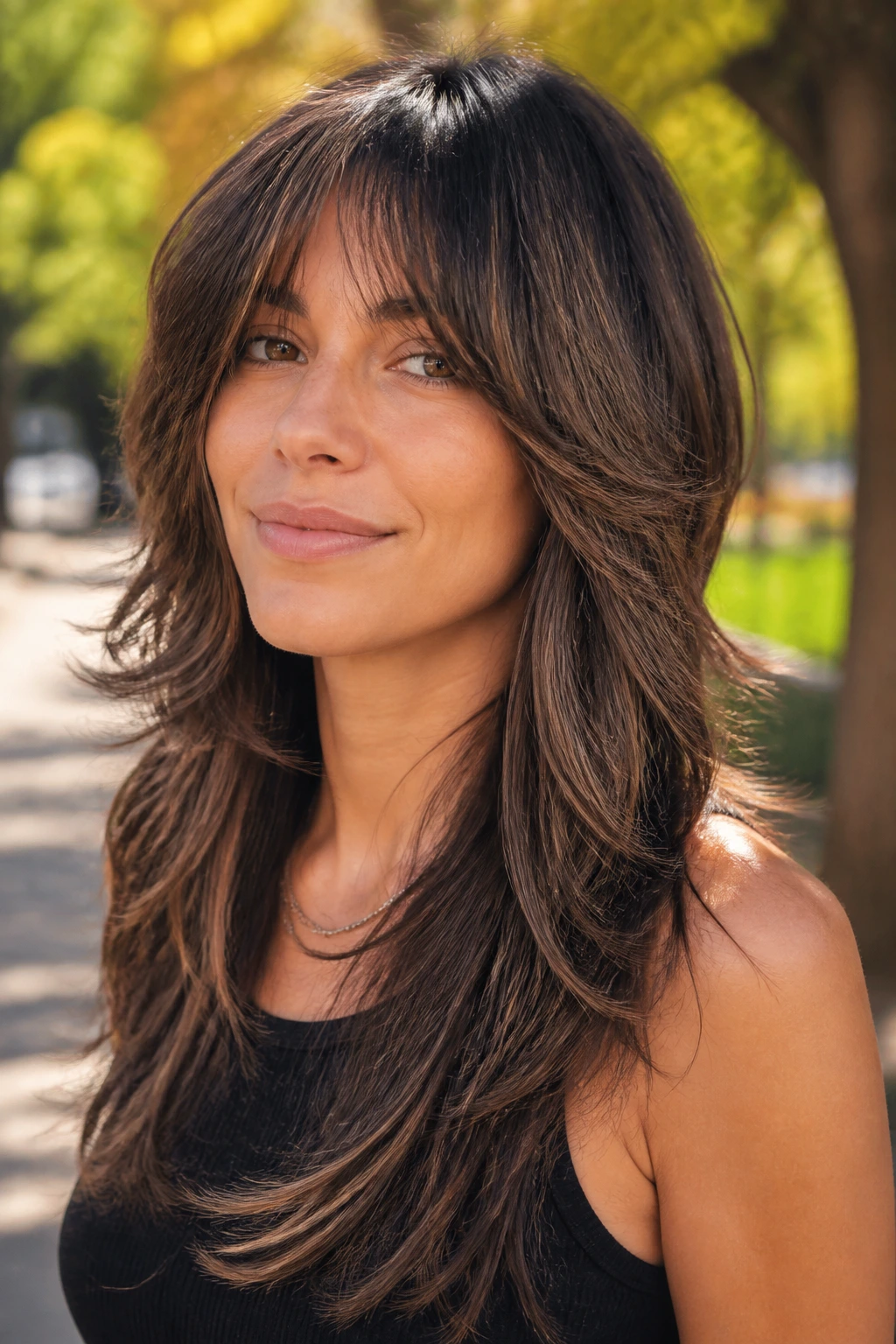
Mushroom brown is one of those tones that sounds odd until you see it against brunette hair. It’s cool, earthy, and slightly smoky, which makes it a smart option when you want dimension but not warmth. On a long layered shag, the result feels grounded and modern without looking icy.
The layers should sweep away from the face and drift through the lower lengths so the hair doesn’t lose too much density. Mushroom brown highlights work best when they sit in the mid-lengths and surface layers, where the movement can reveal them. If you push the color too far down into the ends, the look can go flat.
This cut suits someone who likes a softer outline and usually wears hair down with maybe a half tuck or loose clip. It’s not flashy. That’s the point. The color makes the layers visible, and the layers make the color feel deliberate.
23. Curly Wolf Cut Shag with Copper Pop
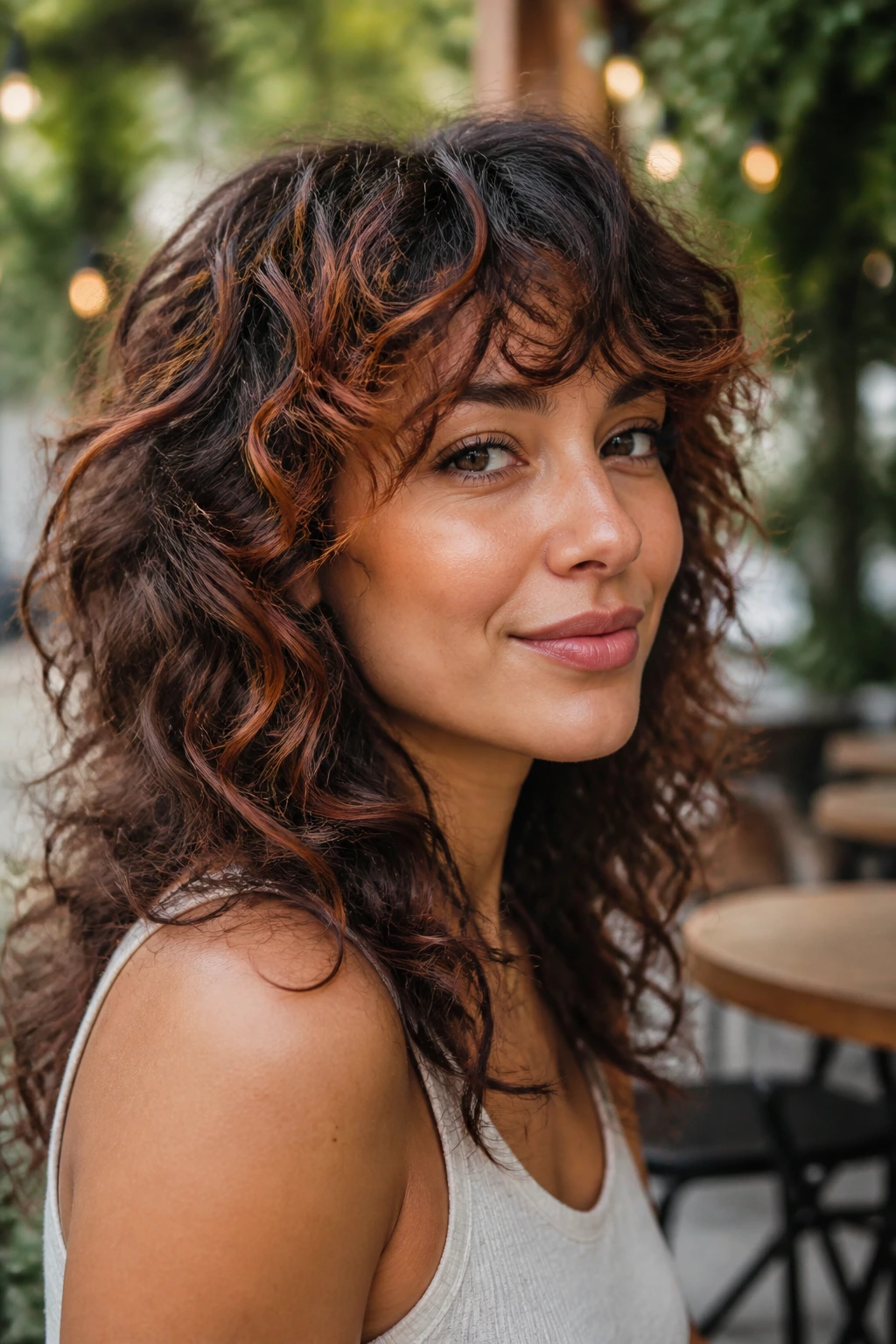
Curly hair can handle a wolf cut when the layers respect the curl pattern, not when they chop right through it with no plan. Copper pop highlights bring warmth to the outer curls and make the shape look lively instead of bulky. On brunette hair, copper reads as energy, not distance from the base.
The shorter top layers give the cut some lift, while the longer sides and back keep the silhouette from turning into a triangle. Copper should live on the most visible curl clumps, especially around the face and crown. That way the color appears where the hair already bends.
Use a diffuser, yes, but do not blast the hair until it’s frizzy. Dry it in sections, then stop touching it. Curly wolf cuts work best when they’re allowed to settle into their own shape, and the copper highlights help that shape show up even when the light is low.
24. Soft Rounded Shag with Cinnamon and Espresso Depth
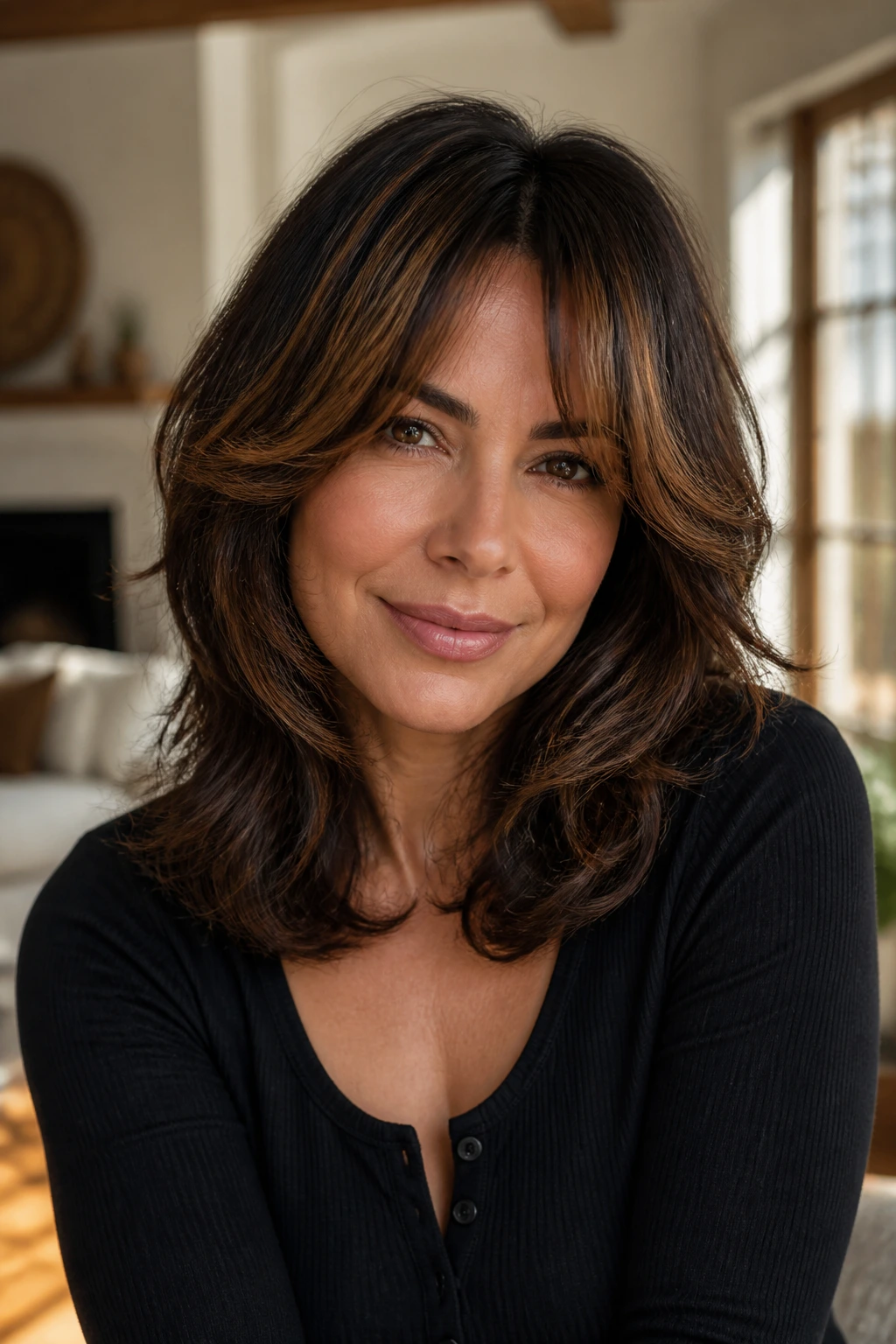
A rounded shag is a little gentler than the sharper versions people often imagine. The outline keeps some curve through the sides, which helps brunette hair feel plush rather than shredded. Cinnamon and espresso together create a deep, dimensional brown that still has warmth where you want it.
Ask for a rounded perimeter and long, blended layers through the interior. The cinnamon pieces should sit near the face and top layers, while the espresso stays deeper underneath to keep the cut from looking too light. That mix is especially useful on medium-density hair, which can look a little one-note when all the color sits at the same level.
This is the kind of cut that looks calm from a distance and interesting up close. You notice the movement first, then the color shifts. That’s a good order. Not every shag needs to shout.
25. Shoulder-Grazing Shag with Chestnut Ribbon Highlights
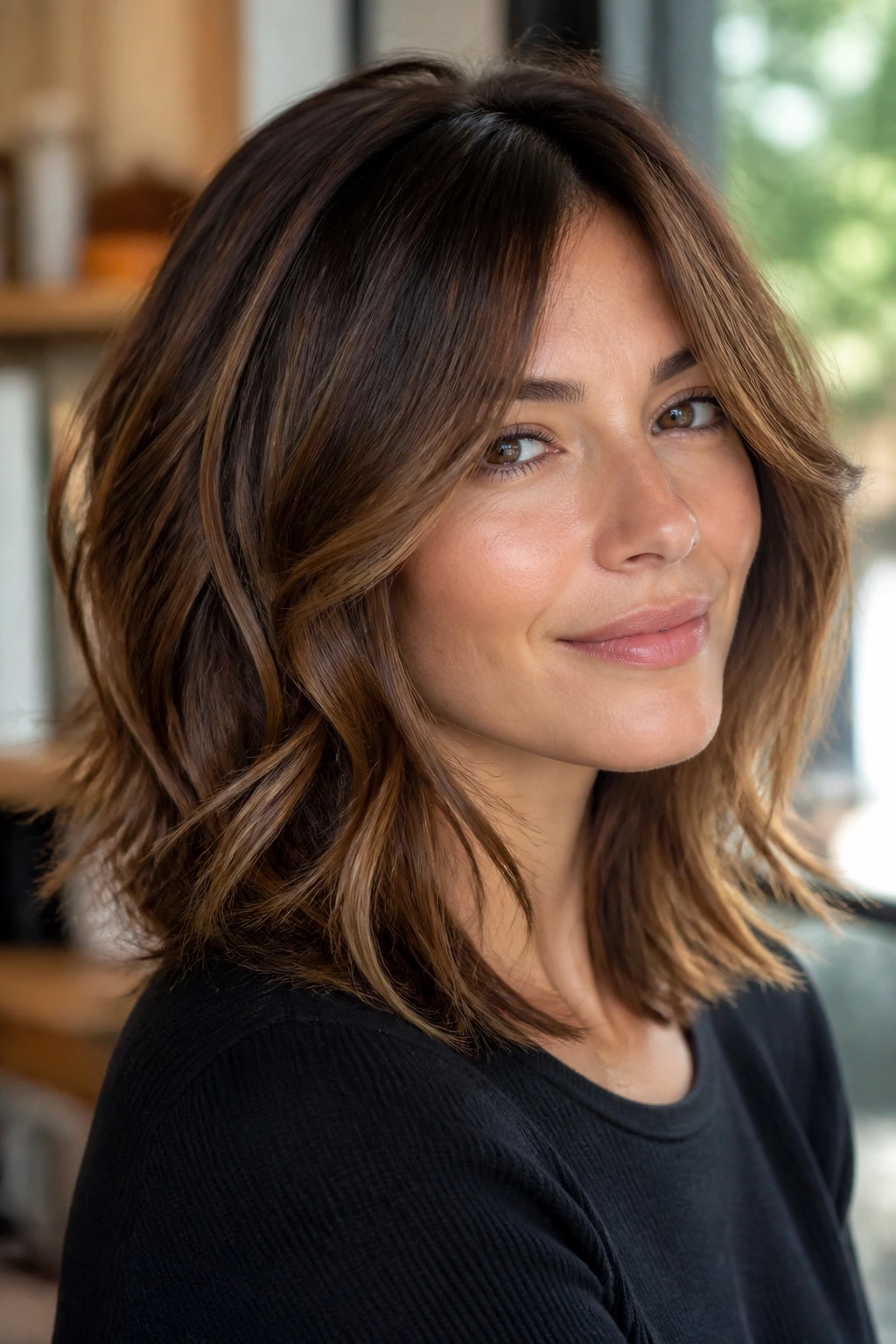
Shoulder-grazing length gives a shag enough movement to feel modern while still being long enough to pull back if you need it. Chestnut ribbon highlights are a tidy way to build dimension into brunette hair without going bright or high contrast. The ribbons show up especially well when the layers bend around the shoulders.
Keep the cut soft at the ends and avoid chopping the layers too high into the crown. You want lift, yes, but not a halo of uneven pieces that stick up in humidity. Chestnut is a good tone for this because it keeps the palette grounded and adds warmth without a copper edge.
This style is an easy workhorse. It wears well straight, wavy, or clipped half-up. If you’re deciding between a bob and a longer shag, this is the point where the two options meet and shake hands.
26. Choppy Bob Shag with Buttery Brunette Dimension
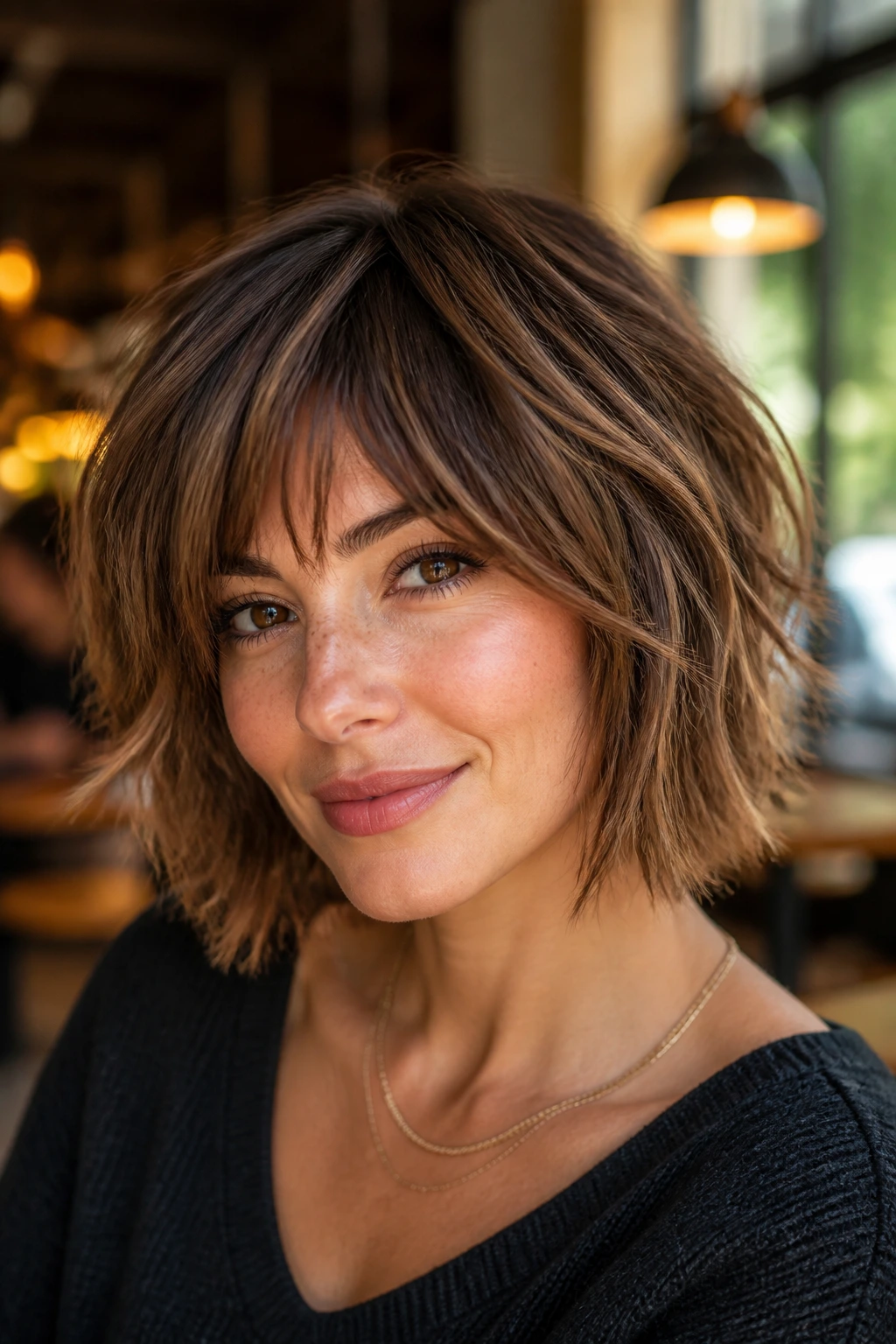
A choppy bob shag has edge, but it doesn’t have to feel harsh. The cut sits around the jaw or just below it, with piecey ends that keep the shape from becoming boxy. Buttery brunette dimension — that softer beige-brown lift — adds light without turning the bob into a blonde experiment.
The lighter pieces should be kept around the front, top layers, and a few end sections where the hair naturally flicks out. If you overload a short shag bob with too many highlights, the shape can start looking busy. Less is better here, especially when the cut already has texture.
This one is good for people who want a short haircut with some swing. It also makes cheekbones look sharper than a blunt bob does, which is a small but satisfying detail. Short hair can be punchy. It can also be practical. No law says it can’t be both.
27. Glam Shag with Glossy Mocha and Gold
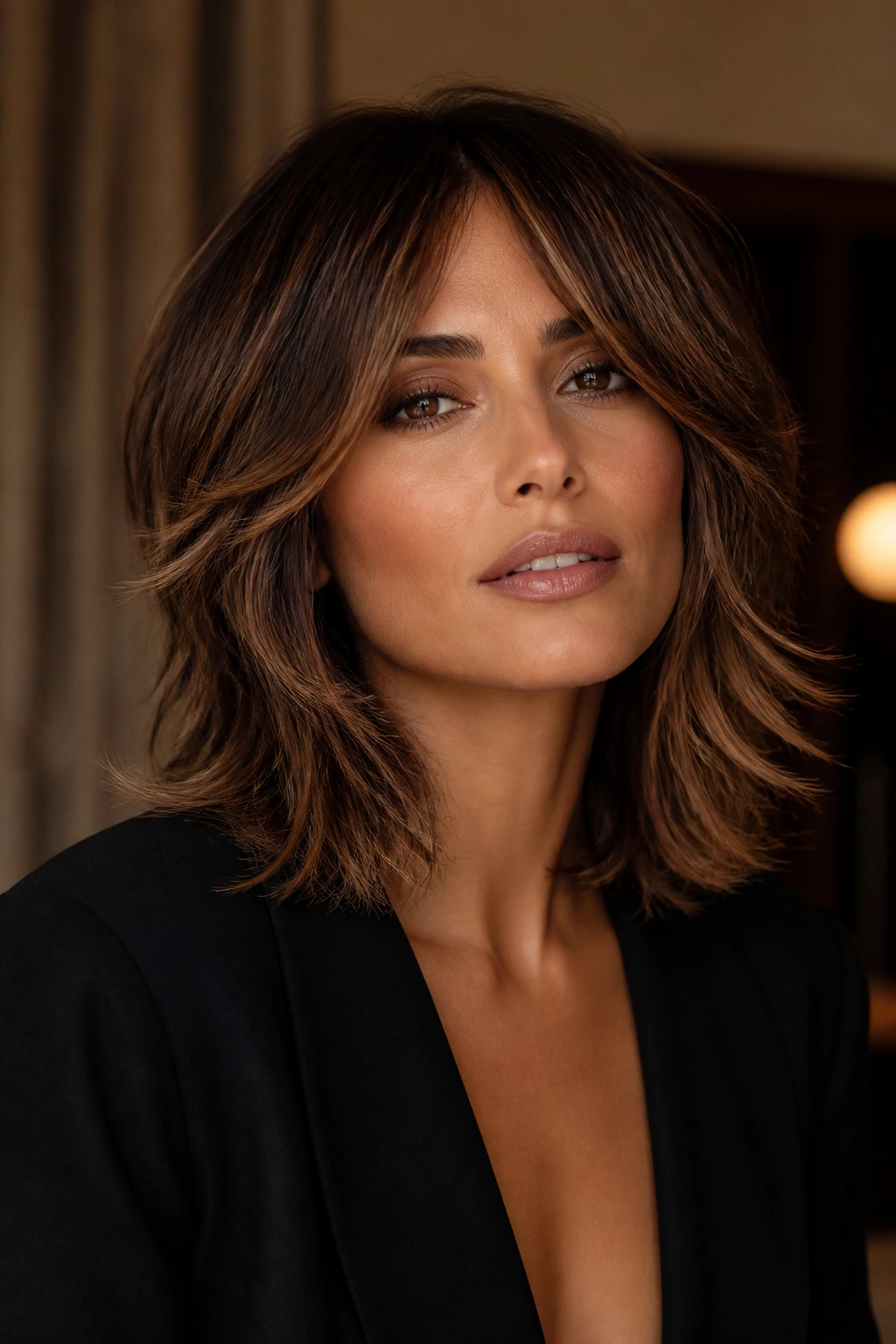
Some shag haircuts want to look messy. This one wants to look finished. The glam shag keeps the layers soft, but the styling is smoother, with a shiny blowout and mocha-gold dimension that gives brunette hair a richer, more dressed-up feel. It’s not stiff. It’s controlled.
Gold should be used sparingly and placed where the light naturally hits: the front sections, the surface layers, and the ends that curve under. The mocha underneath keeps the color from drifting too bright. If the hair is layered but the finish is too matte, the whole effect falls apart, so a gloss or shine serum matters here.
This is a good choice when you want a shag that can still work with a dressier wardrobe. It’s a little more polished than the airy, beachier versions, and that changes how people read it. Same haircut language. Different accent.
28. Minimalist Shag with Barely-There Beige Highlights
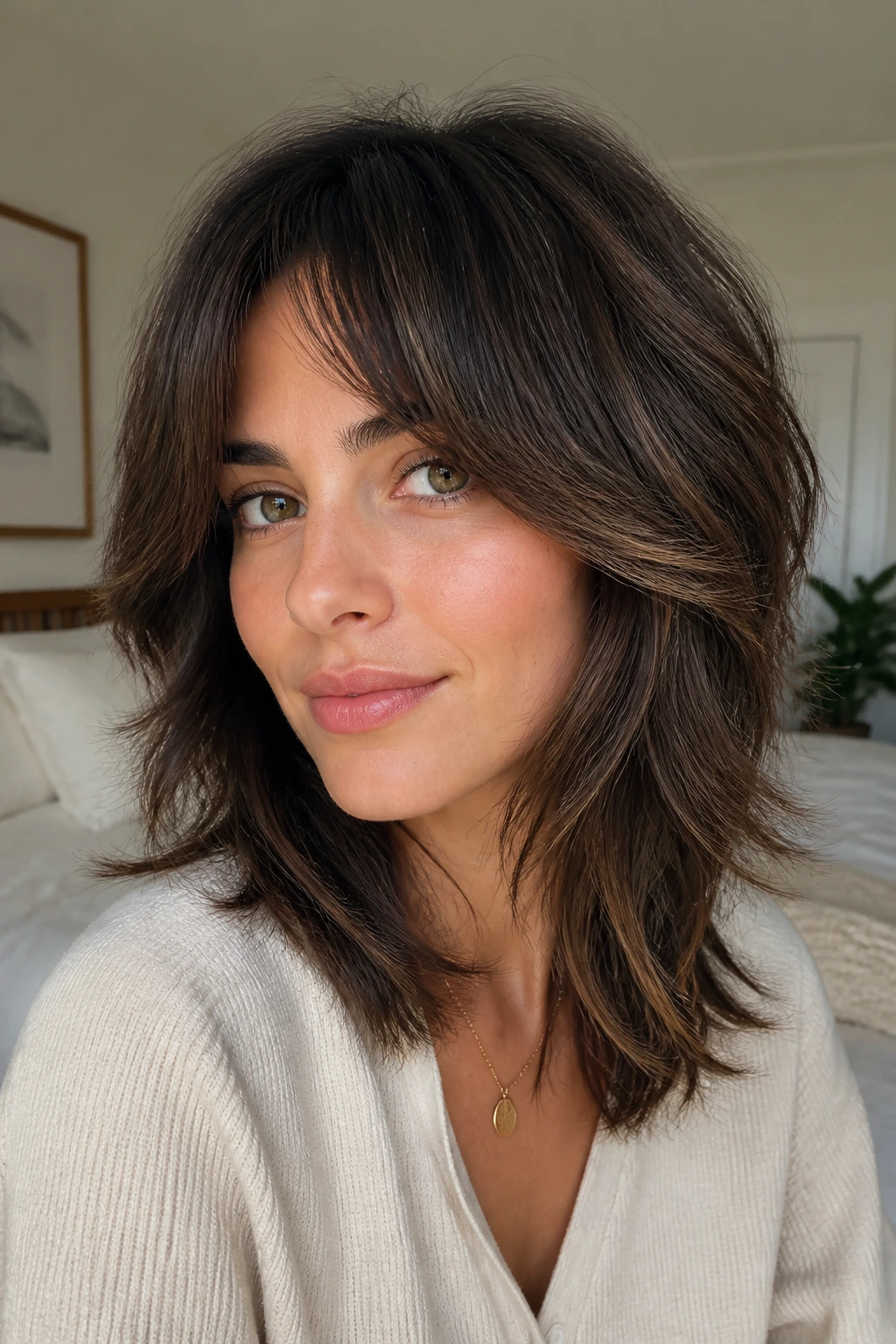
Not everyone wants a highlight story that walks into the room first. A minimalist shag with barely-there beige highlights keeps the brunette base dominant and lets the layers do the talking. The highlights are there mostly to soften hard edges and catch light in the front.
Tell your stylist you want the beige placed very softly through the top third of the head and around the face frame, with lots of brown left untouched. This is the cut for people who hate obvious grow-out lines. It still counts as dimension, but it behaves like a whisper.
That restraint is the whole appeal. The haircut looks expensive because it doesn’t try too hard. And yes, the shortest layers should still have movement; otherwise you’d just have plain brown hair with a small trim. The beige is there to make the shag breathe a little.
29. Heavy Fringe Shag with Walnut Lights
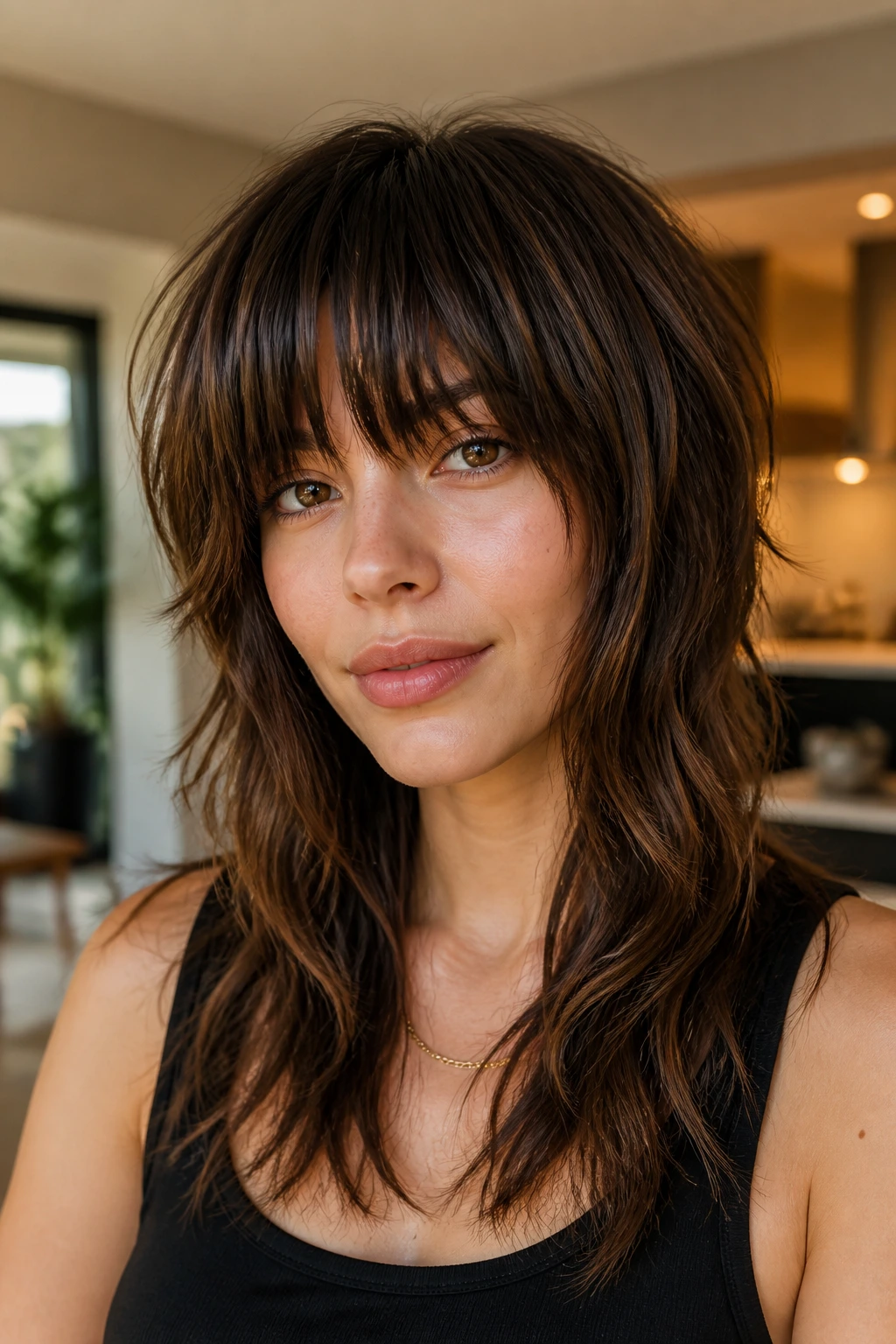
Heavy fringe changes the silhouette fast. It pulls attention up to the eyes and makes the rest of the shag feel more dramatic, which is why walnut lights work so well here. The walnut tone keeps brunette hair deep and rich while still giving the fringe and sides some variation.
The fringe should be dense enough to matter but textured enough to move. If it gets cut too blunt, it can overpower the rest of the hair. Walnut lights should live through the sides and longer layers, not just the bangs, so the whole head feels connected. That little detail saves the cut from looking top-heavy.
This is one of those styles that looks best when the finish is a bit lived in. A round brush at the fringe and a bit of dry texture spray through the mids is enough. Too much polish flattens the point of the whole thing.
30. Soft Razor Shag with Bronde Accents
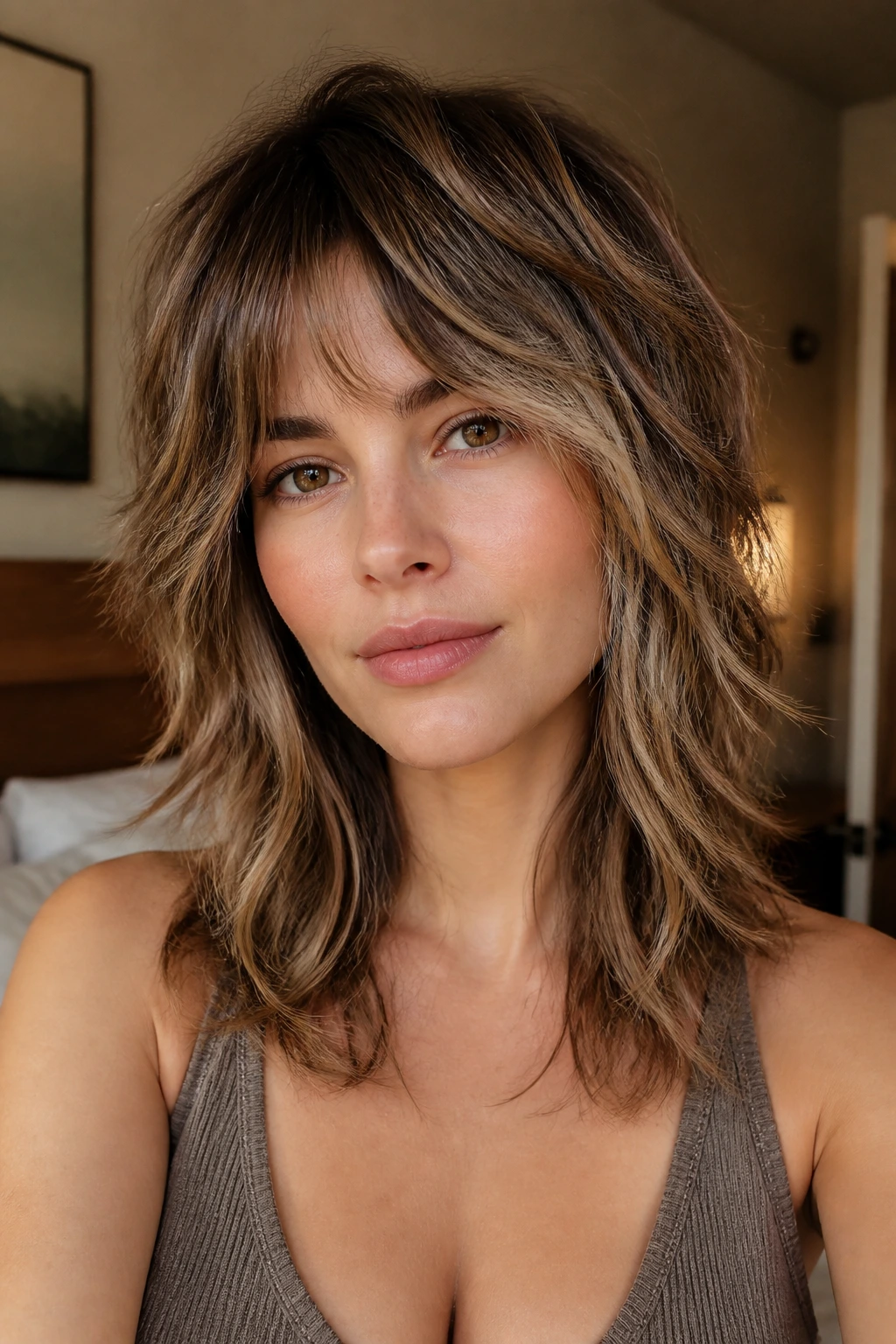
Bronde accents — that brown-blonde in-between zone — can be tricky on brunette hair, but a soft razor shag makes them feel more natural. The razor work breaks up the line, and the lighter pieces blend into the movement instead of sitting on top like stripes. That matters a lot when the goal is softer contrast.
Keep the bronde concentrated around the face, crown, and upper layers. If you push it too far into the lower lengths, the cut can start reading patchy instead of dimensional. The soft razor finish also keeps the ends airy so the lighter pieces look like part of the texture rather than a separate color block.
This is a good fit for someone who likes a little brightness but doesn’t want to tip into full blonde territory. It has a casual, slightly sun-struck feel. Nothing stiff. Nothing overcontrolled.
31. Air-Dried Shag with Natural Cocoa Dimension
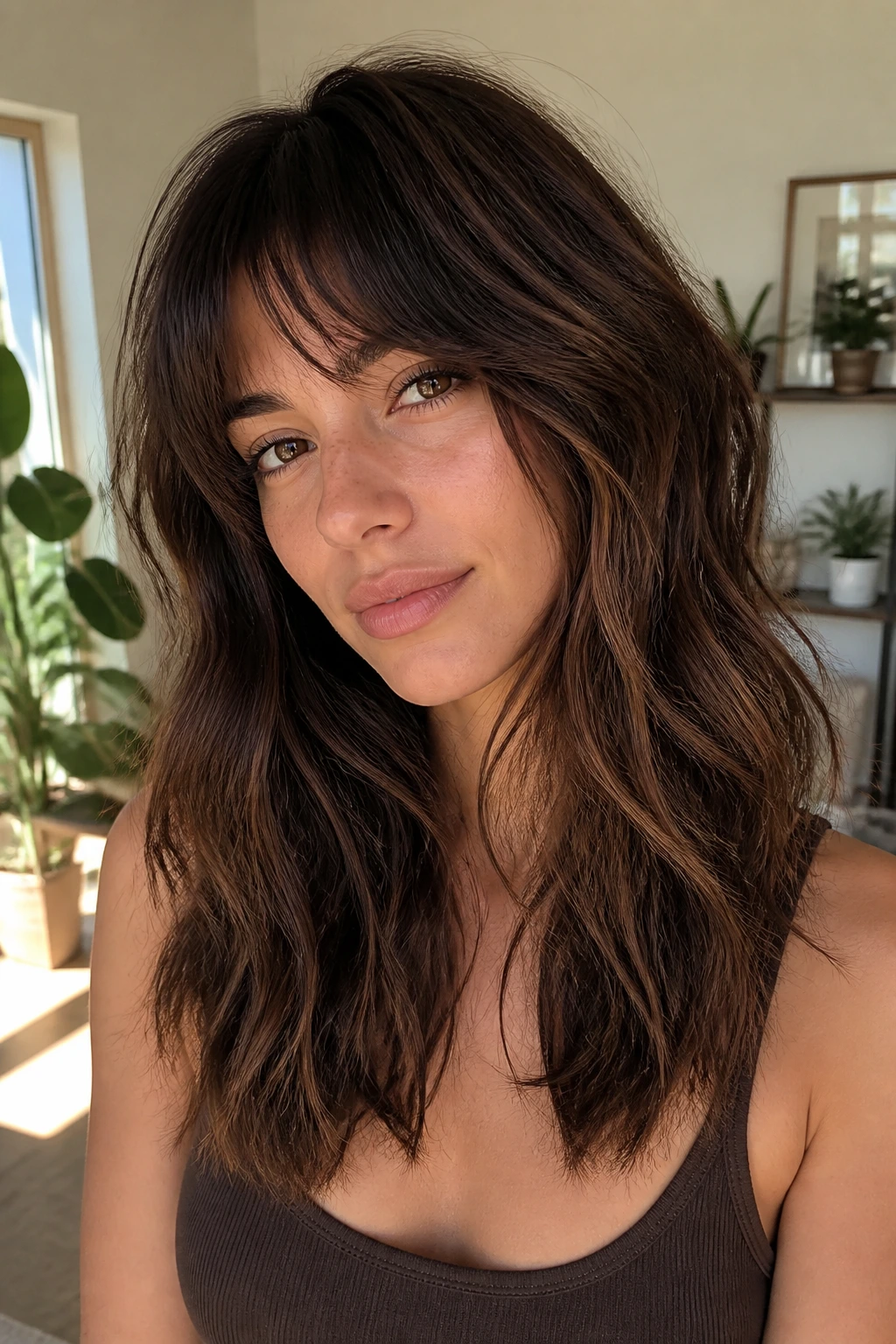
Natural cocoa dimension is for the brunette who wants the haircut to look like it belongs to the hair, not the other way around. The layers are soft, the color stays close to the natural base, and the whole thing works best when it’s air-dried and slightly imperfect. That’s the point.
Ask for light internal layering and very selective dimension through the top and front. The cocoa pieces should be only a shade or two lighter or deeper than the base, depending on whether you want lift or shadow. On wavy hair, this keeps the texture from frizzing into a halo. On straighter hair, it creates the feeling of movement without the need for daily heat.
This is one of the easiest shags to live with. If you want a cut that can be washed, scrunched, and left alone, it earns its keep. The color doesn’t fight the hair; it follows it.
32. U-Shaped Shag with Caramel Sweep
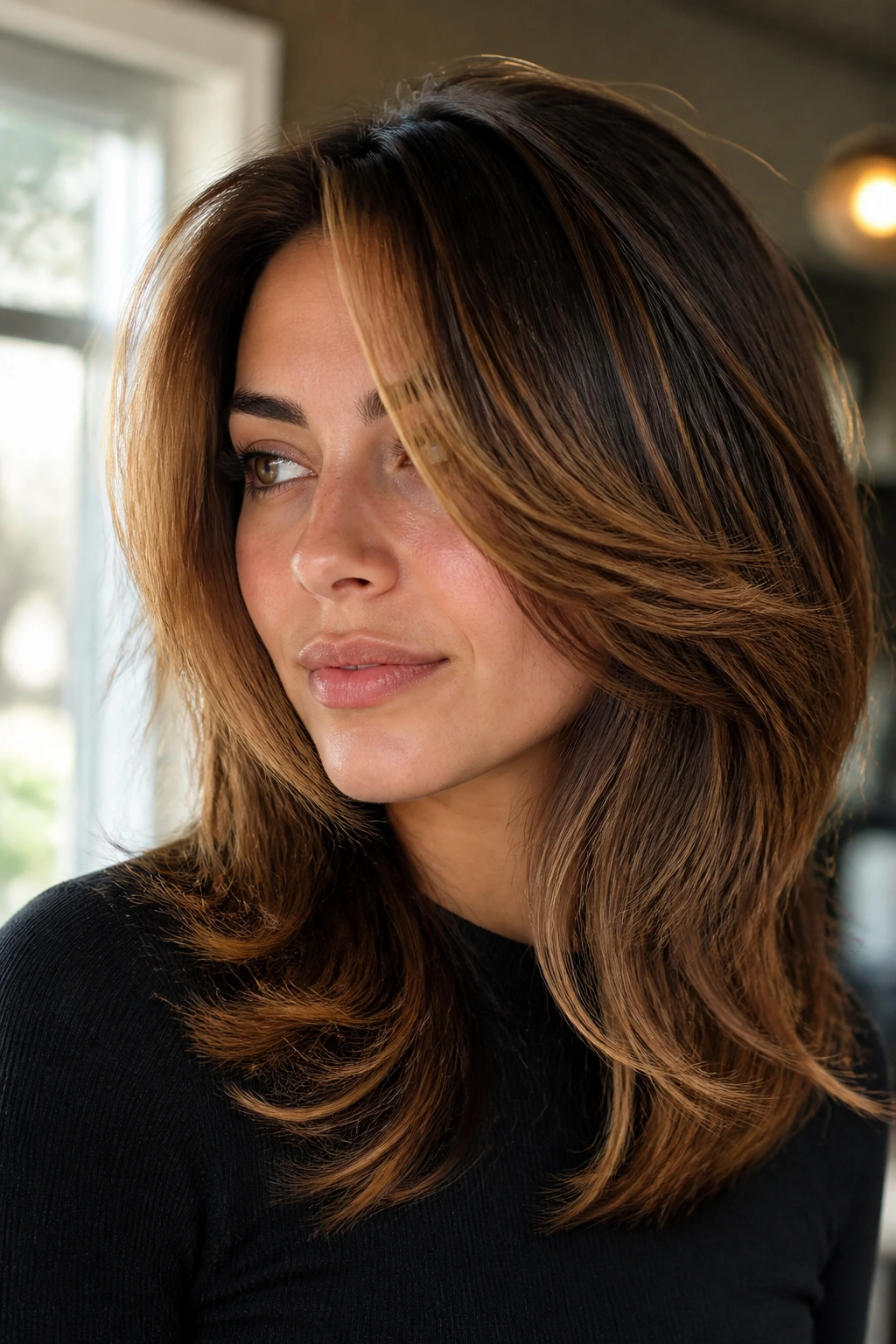
A U-shaped shag keeps the longest length in the back while the sides pull forward in a soft arc, which gives brunette hair a little more elegance than a straight-across hem. Caramel sweep highlights move through the front and upper layers, where the curve of the cut can show them off.
The U-shape matters because it preserves a sense of length. Without it, a shag on long brunette hair can start to feel too broken up. Caramel sweep placement keeps the face frame bright and the rest of the hair deep, which is a very useful contrast if your natural color is dark or medium-dark brown.
This cut works well on hair that you still want to tie back, braid, or clip. It gives you the shag movement without giving up the long silhouette. That compromise is often the best one.
33. Modern Farrah Shag with Warm Hazelnut Pieces
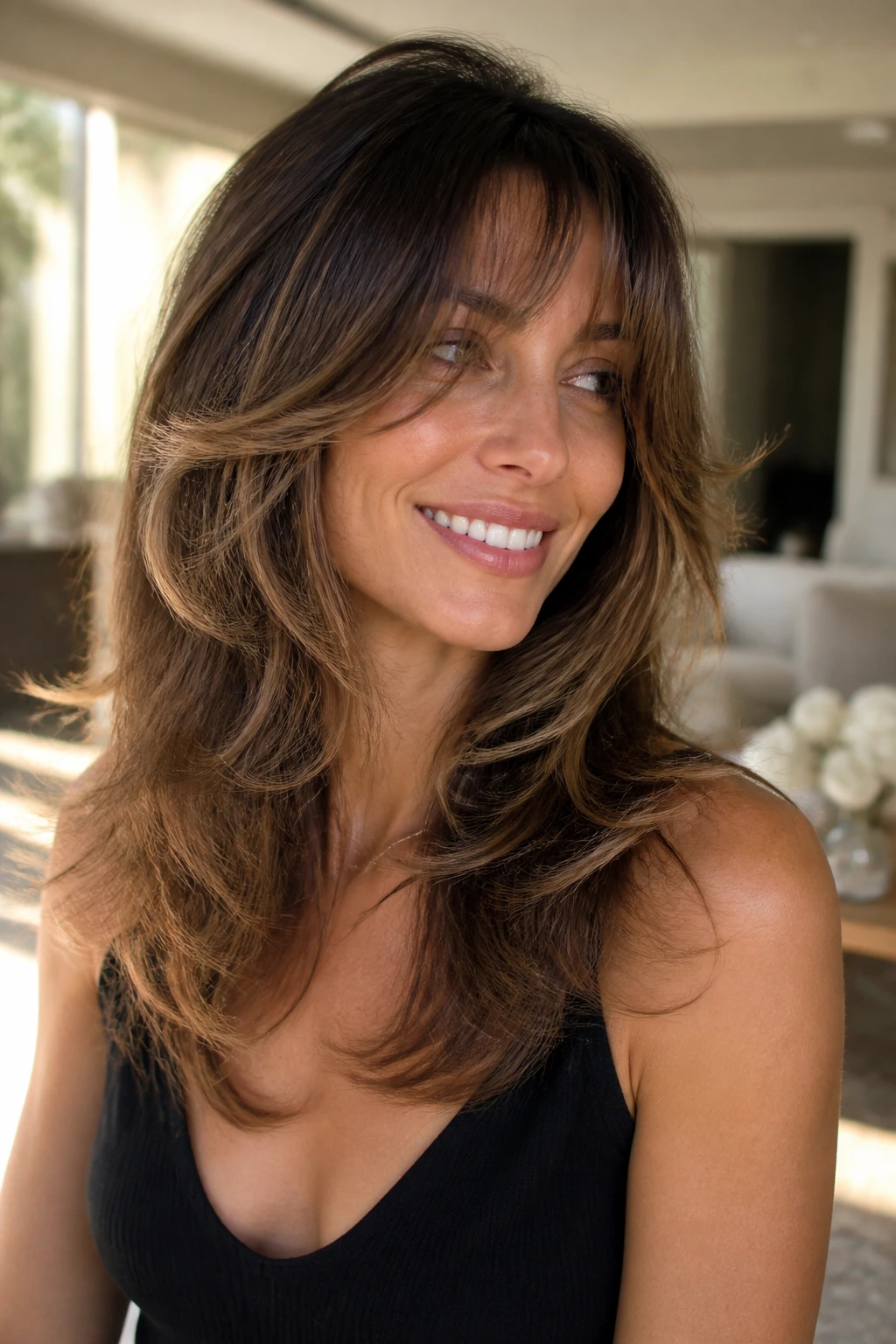
This is the blowout cut. The modern Farrah shag borrows the feathered movement of the old-school shape, but it feels cleaner and less theatrical. Warm hazelnut pieces brighten brunette hair in a way that keeps the softness intact while still showing off the layers.
The front should open away from the face, with the shortest pieces around the cheekbones and longer feathered sections through the sides. Hazelnut works especially well when it’s focused on the outer layers and the ends that flip outward. Too much brightness at the root would kill the whole retro sweep.
A large round brush or a roller-set style finish can bring this cut to life. It’s the kind of shag that looks best when the ends are moving away from the jaw, not hanging heavy beside it. There’s a little drama here, but it’s a controlled one.
34. Shag with Piecey Bangs and Amber Highlights
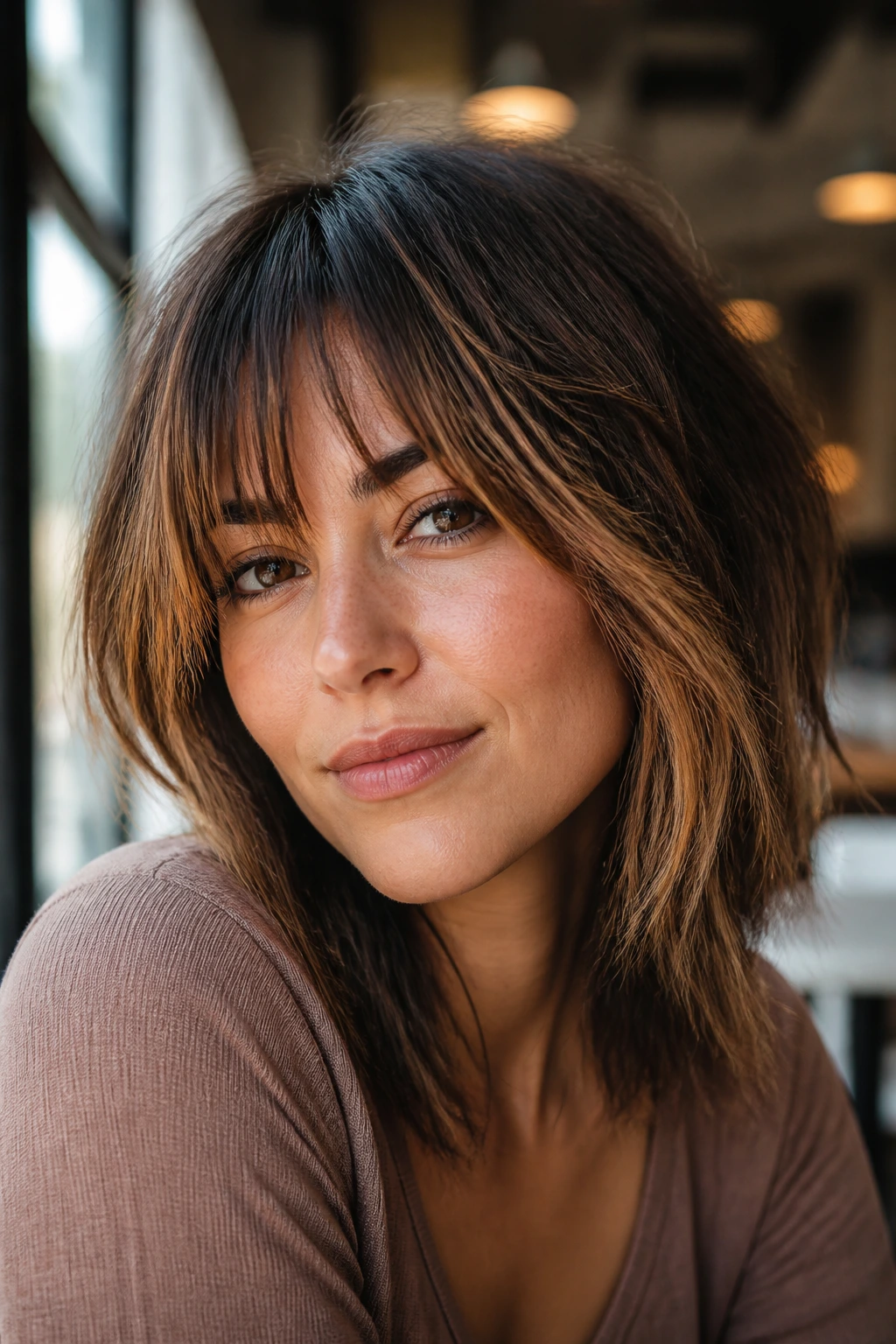
Piecey bangs can make a shag feel current fast, because they break up the forehead area and keep the cut from looking too round or too heavy. Amber highlights add warmth without going full copper, so brunette hair gets glow where the bangs and front layers sit.
Keep the bangs separated, not dense. They should fall in little broken sections that show skin between the strands. The amber pieces should be concentrated near the front and lightly echoed through the sides. That keeps the color from feeling disconnected when the bangs move across the forehead.
This style is especially nice if your hair tends to fall flat by midday. The bangs bring attention up, while the highlights keep the front from disappearing into the base color. It’s a lively cut, and a very flattering one when the fringe is cut with restraint.
35. Low-Maintenance Shag with Dimensional Latte Brunette
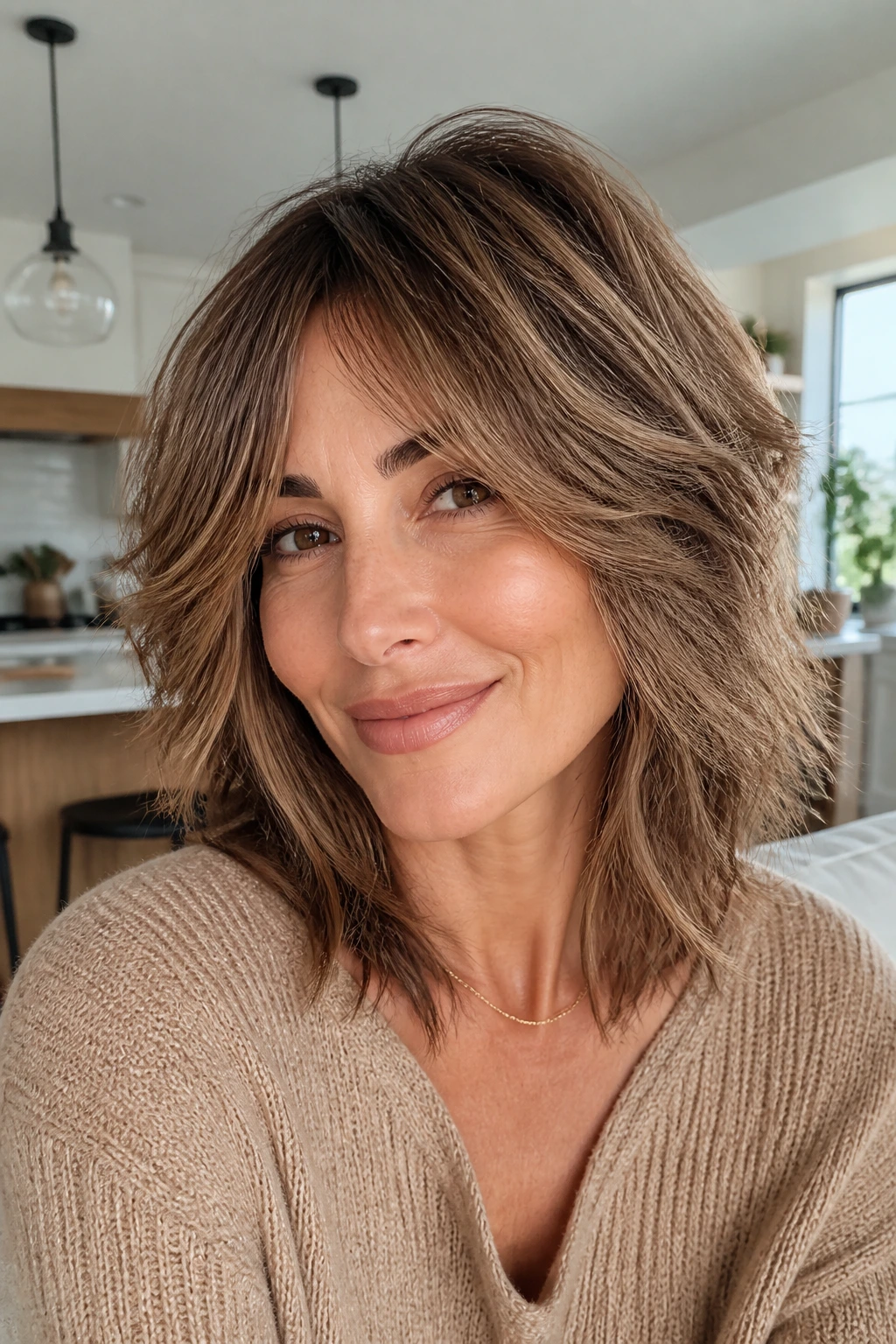
Dimensional latte brunette is the easy answer for people who want the shag shape without a dramatic color commitment. The tones stay in the brown family — creamy beige-brown, soft mocha, a little root depth — so grow-out stays quiet and the haircut carries most of the interest.
Keep the layers soft, especially around the crown, and make the face-framing pieces long enough to tuck behind the ears. The latte dimension should sit mainly on the surface layers and around the front, where it catches light when you move. On brunette hair, that small shift is often enough to keep the whole cut from feeling heavy.
This is the one I’d point to if someone wants to try the shag but doesn’t want to babysit it. It has shape. It has movement. It does not ask for constant attention, which is a better promise than most haircuts make.
Why Shag Layers and Brunette Highlights Work So Well Together
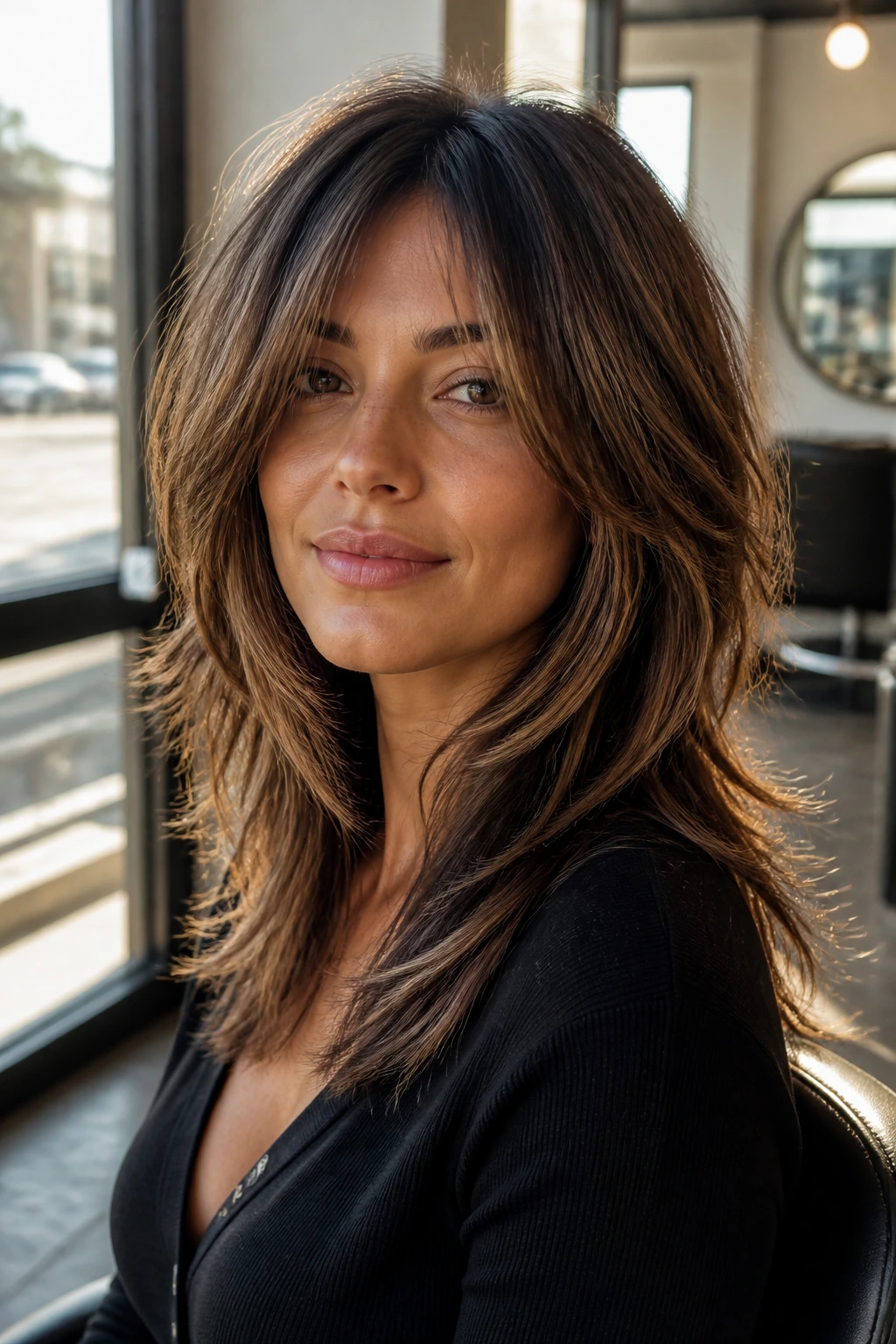
Brunette hair has a way of holding onto depth, which is lovely until the whole head starts reading as one solid block. Shag layers solve that by building little ledges for the light to land on. The eye catches the shorter pieces first, then the mid-lengths, then the ends, and the color changes as it moves through each zone.
That’s why highlight placement matters more here than on a blunt cut. If the lightest pieces are dropped everywhere, you lose the rhythm of the haircut. If they’re placed near the face, crown, and surface layers, the shag does half the work for you. Caramel warms the movement. Ash softens it. Copper makes it feel lively. Chestnut and mocha keep it grounded.
The other piece people underestimate is maintenance. A shag with brunette dimension grows out more kindly when the root stays a little shadowed and the highlight pattern is broken up. That doesn’t mean the cut is low effort in the lazy sense. It means the shape gives you more grace between trims, which is a much better deal.
Essential Styling Tools for These Looks
-
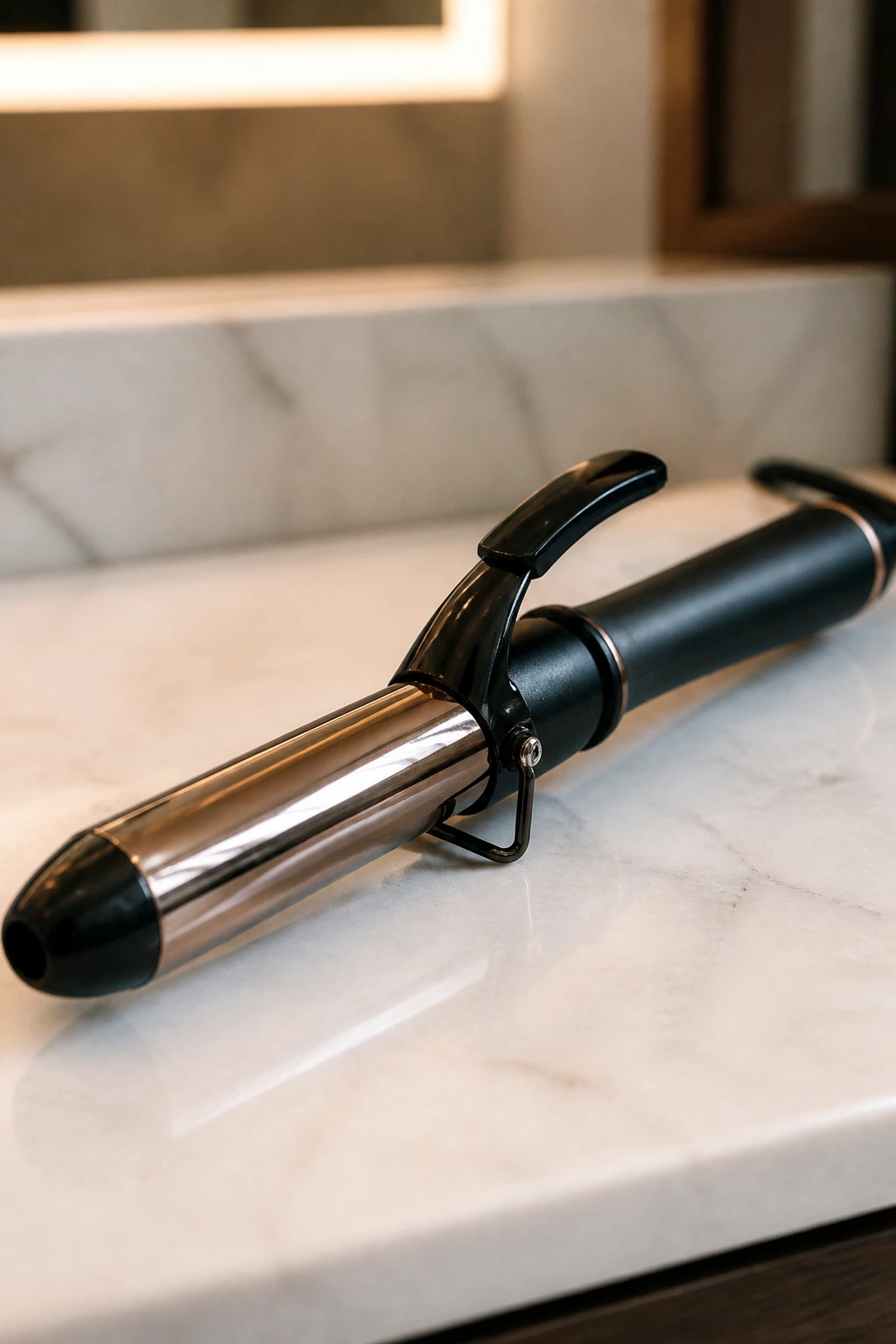
A 1-inch curling iron or wand: Best for creating loose bends in the shorter layers and face frame without making the hair look curled to death.
-
A blow dryer with a nozzle attachment: Helps control the top layer and keep the fringe from puffing up in every direction.
-
A round brush, medium size: Good for smoothing curtain bangs, flipping the ends, and giving the crown some lift.
-
A diffuser: The easiest way to keep wavy and curly shag cuts from frizzing into a fuzzy cloud.
-
Heat protectant spray: Use it before any hot tool; brunette highlights show damage faster when the ends get fried.
-
Texture spray or dry shampoo: Gives the choppy layers grip so they separate instead of collapsing.
-
Lightweight mousse: Useful for air-dried styles, especially on fine or wavy hair that needs a little root support.
-
A wide-tooth comb: Better than a brush for shaping wet hair before it dries into a giant knot.
-
Hair clips: Handy for sectioning the crown and front pieces when you style in layers.
Smart Salon Consultation and Color Placement Tips
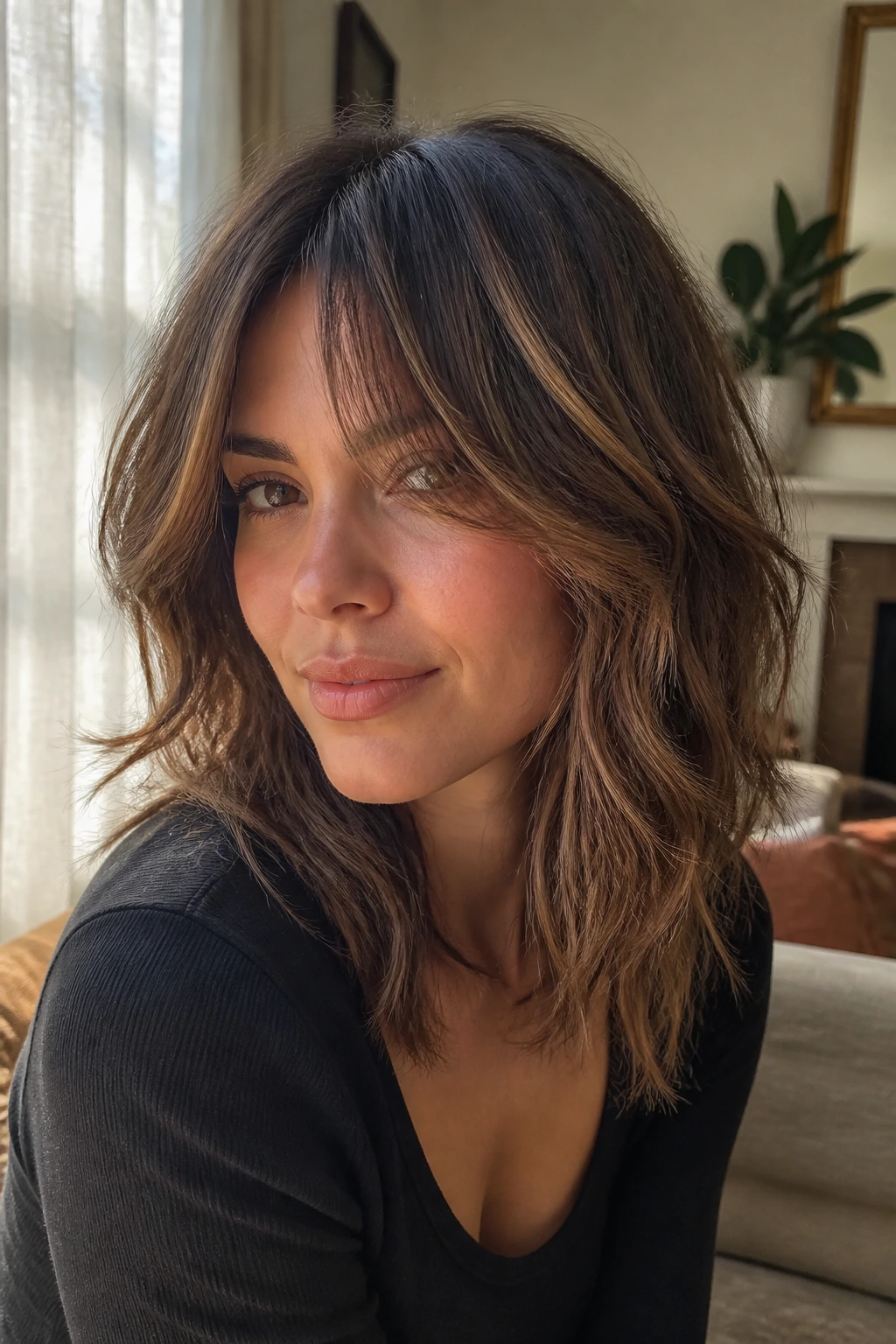
Bring photos, but bring the right photos. A picture of a shag with brunette highlights tells your stylist how the color and cut should feel, not just how the surface looks. If you can, bring one image for the cut shape and one for the color placement. That tiny bit of clarity saves a lot of “almost” results.
Color level matters, even if you never talk in level numbers at home. Deep brunettes — around level 3 or 4 — usually look best with caramel, copper, chestnut, or mocha dimension, because those tones sit close enough to the base to look rich. Medium brunettes can take beige, honey, or soft blonde ribbons more easily. If you push a very dark brunette too light, the contrast can look sharp in a way the shag does not need.
Ask for placement, not just color. Face-framing pieces should sit where the layers already bend, and the crown should keep some depth so the haircut doesn’t lose shape. A soft root shadow of about half an inch to an inch helps the grow-out read smooth instead of stripy. And if your hair is thick, ask for some of the lightness to be placed inside the cut so the top doesn’t flare out like a triangle.
How to Style Them for Soft Waves, Air-Dried Texture, or a Smoother Finish
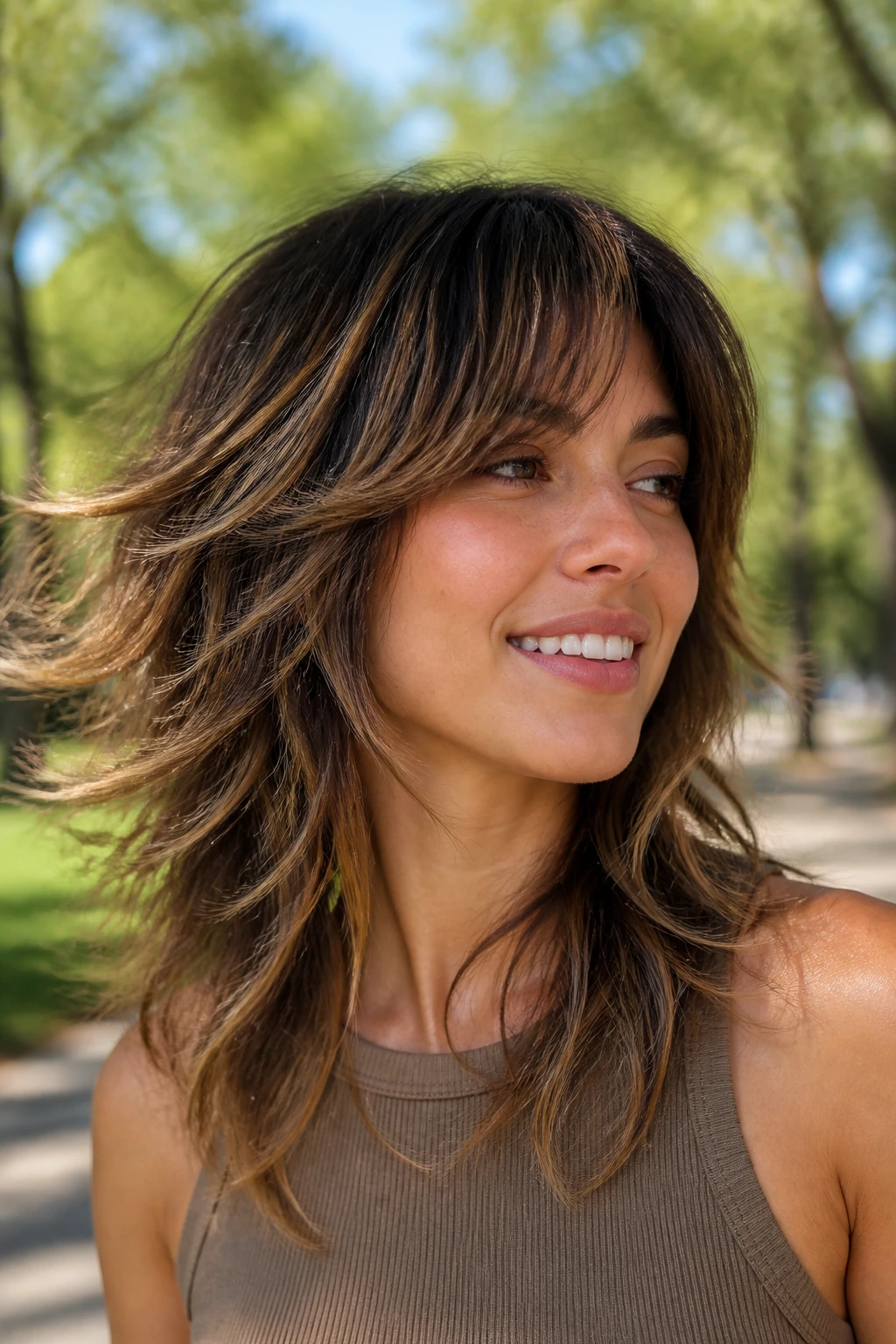
Air-Dried Texture: Work a lightweight mousse through damp roots and mids, then scrunch the ends with your hands and leave them alone until the hair is almost dry. If you keep touching it, the lighter pieces clump together and the shag loses its broken-up shape. A tiny bit of cream on the ends is fine. Too much is a mistake.
Heat-Styled Waves: Use a 1-inch wand and alternate the direction of each section, leaving the last inch or so straight if you want that piecey shag finish. That little straight tail keeps the wave from turning too polished. Once the hair cools, shake it apart with your fingers rather than brushing it smooth.
Smoother Finish: Blow-dry with a nozzle and round brush, directing the front pieces away from the face and the crown slightly up and back. The goal is clean shape, not stick-straight hair. A pea-sized serum on the ends adds shine without flattening the layers.
Fringe and Crown Lift: Dry bangs first. Seriously. If the fringe dries in the wrong direction, it can dictate the whole haircut. A quick pass with low heat and a cool shot keeps the front from collapsing into the eyes.
Additional Tips and Shine Boosters
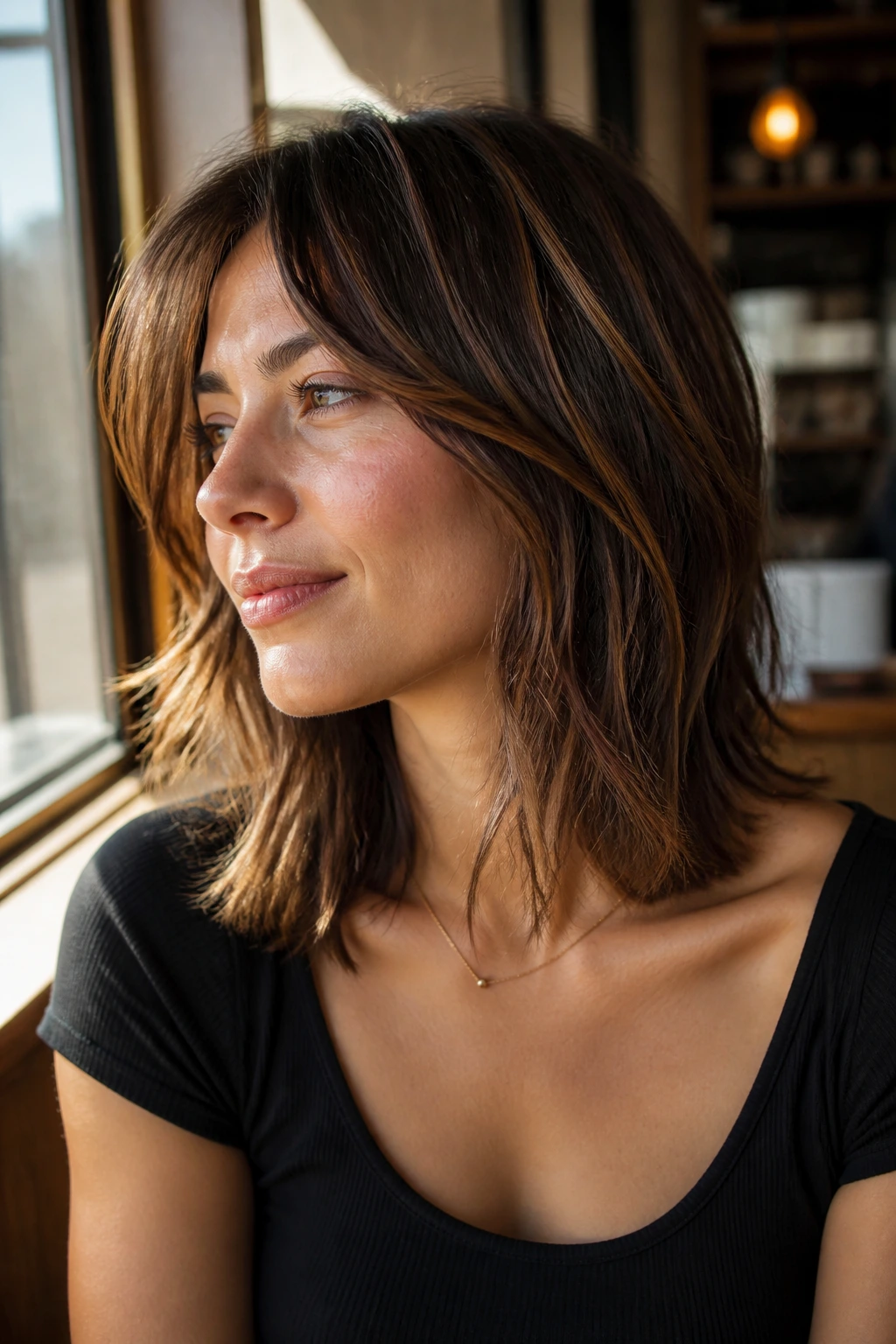
Gloss Boost: A clear or beige gloss every 6 to 8 weeks keeps brunette highlights from looking dusty, especially if you lean warm and want the caramel, honey, or copper pieces to stay lively.
Customization: If you love contrast, keep the face frame a shade or two lighter than the rest. If you prefer a quieter finish, make the highlights thin and move more of the dimension into lowlights and root shadow.
Serving Suggestions: Clip one side back with a small barrette, tuck the other side behind the ear, or let the fringe fall loose and separate naturally. Those small choices change the whole read of the cut.
Make-It-Yours: Fine hair usually benefits from softer layering and lighter color placement on the top surface. Thick hair usually looks better with more internal removal and a deeper root shadow. Curly hair needs longer layers and highlights that follow the curl pattern instead of crossing it.
Maintenance, Trims, and Color Refresh Timing
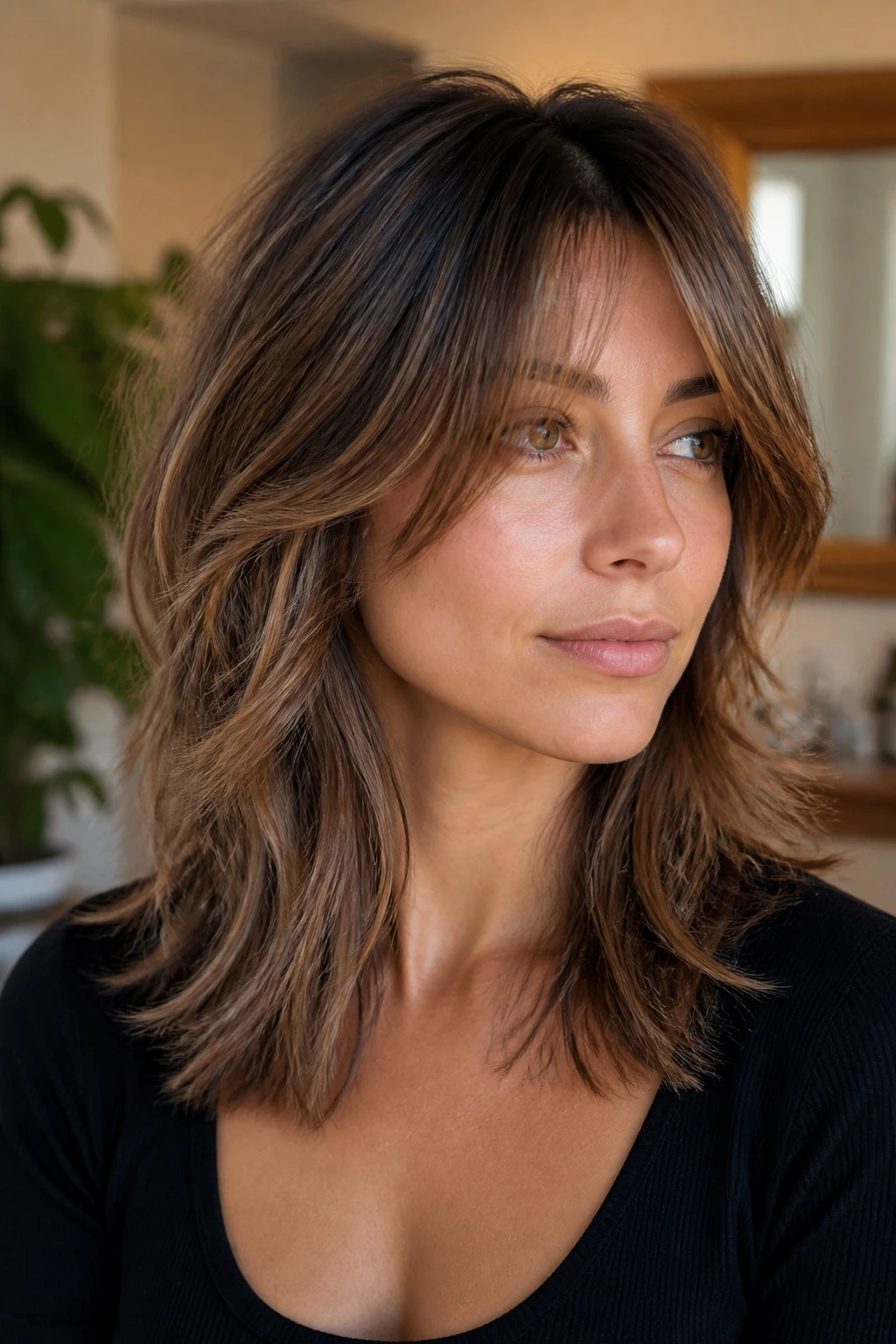
A shag is forgiving, but it is not self-maintaining. Shorter versions — pixie shags, bob shags, micro-fringe cuts — usually need a trim every 6 to 8 weeks if you want the shape to stay crisp. Medium and longer shags can stretch to 8 to 12 weeks before the layers start losing their intended swing. Past that, the shape doesn’t disappear so much as it drifts.
Color has its own rhythm. Bright caramel, honey, copper, and beige pieces usually need a gloss or toner refresh every 6 to 8 weeks if you want the tone to stay clean. If you like a rooty brunette look, you can wait longer between full lightening services and just refresh the ends or face frame as needed. That approach is kinder to the hair, and it keeps the color from looking overdone.
Product choice matters between salon visits. Brunette highlights can go brassy in hard water or from too much heat, so a color-safe shampoo, a light conditioner, and a heat protectant are not optional extras. If the tone starts looking warm in a way you don’t like, a blue-toned brunette shampoo can help mute orange cast without turning the hair dull. Use it sparingly. Once a week is plenty for most people.
Variations and Adaptations to Try
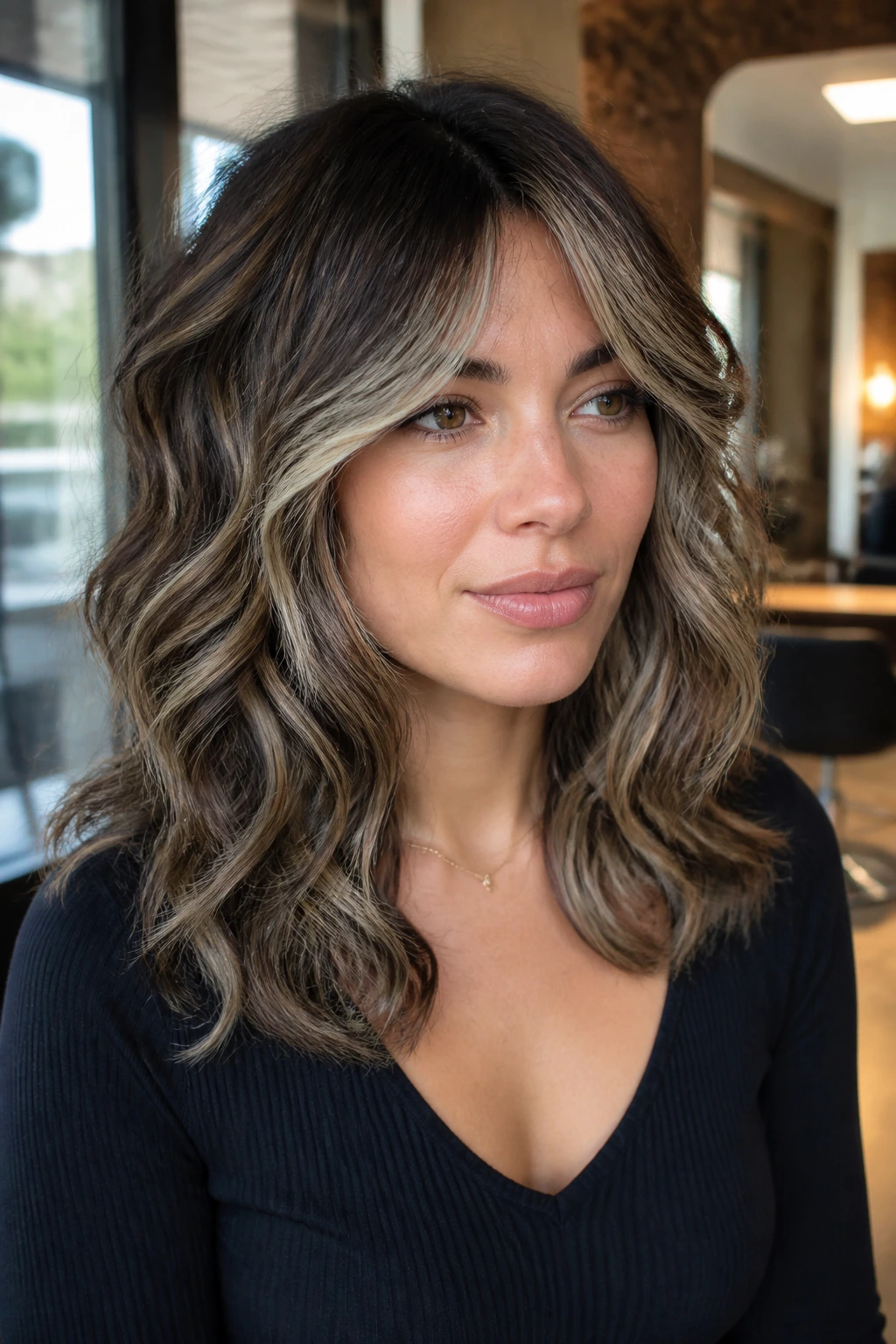
Soft-Texture Shag: Keep the layers longer, the fringe lighter, and the highlights very fine. This version works well if you want movement without the choppiness that makes some shags feel too edgy.
High-Contrast Money Piece Shag: Brighten the front panels more than the rest of the hair, then keep the interior and back deeper. It gives brunette hair a clear frame around the face and works well when you wear the front pieces loose.
Curly-Friendly Shape: Leave the lengths longer, cut the layers to match your curl pattern, and place highlights on the surface curls only. That stops the cut from collapsing into a triangle and keeps the color visible where the curls open up.
Low-Maintenance Rooted Brunette: Ask for a shadow root and a soft blend from root to end, with the brightest pieces only around the face and crown. The grow-out is gentler, and the salon visits can stretch out a bit.
Cool-Tone Swap: If warm highlights pull too orange against your brunette base, switch to ash brown, mushroom, or smoky beige. The cut stays the same; the mood changes completely.
Common Mistakes to Avoid
-
Too many short layers at the crown: The symptom is a puffed-up top that won’t lie down. The fix is to keep some weight in the crown and let the shortest pieces live around the face instead.
-
Over-lightening dark brunette hair: If the highlights turn orange or yellow before they look bright, the color is too ambitious for the base. Ask for a softer caramel, mocha, or chestnut tone instead of chasing blonde in one appointment.
-
Chunky highlights everywhere: The haircut starts looking striped instead of dimensional. Keep the light pieces focused on the face frame, top surface, and visible bends.
-
Heavy styling cream on fine hair: The hair goes limp and the layers disappear. Use mousse or texture spray first, then a tiny bit of serum only on the ends.
-
Ignoring the fringe: Bangs that dry in the wrong direction can make the whole shag feel off. Dry them first, then shape the rest of the cut around them.
Frequently Asked Questions
Will a shag haircut work on fine brunette hair?
Yes, if the layers are kept soft and the perimeter stays full enough to hold shape. Fine hair usually looks best with micro-layering and very thin highlights, because too much texturizing can make it look sparse.
Are balayage highlights better than foils for a shag?
Balayage often works better when you want the color to move with the layers, since it gives a softer, more lived-in finish. Foils can still be useful for a brighter money piece or a more defined face frame.
How often do brunette highlights need to be refreshed?
Most brunette highlights stay nicest with a gloss or toner every 6 to 8 weeks, though rooted, low-contrast color can stretch longer. The cut may need a trim sooner than the color needs a full refresh.
Can curly hair wear a shag without turning into a triangle?
Absolutely, but the layers need to follow the curl pattern and stay longer than you might expect. The highlights should sit on the outer curls and crown, not buried so deep that they disappear.
What if my brunette highlights turn brassy?
Use a color-safe shampoo and a blue-toned brunette wash once a week if the tone skews orange. If the brass is strong, a salon gloss with a cooler brown or beige toner will fix it faster than home product alone.
What face shape looks best with a shag and highlights?
The cut can be adjusted for almost any face shape. Round faces usually do well with longer face-framing pieces, while square faces often look softer with curtain bangs and bent layers around the jaw.
Can I ask for a low-maintenance version?
Yes. Keep the root shadow deeper, use fewer foils or a softer balayage, and leave the layers longer through the back. That gives you the shag shape without constant upkeep.
What if my hair is thick and the shag feels too puffy?
The crown probably needs less removal, not more. Ask for interior shaping and keep some weight at the bottom so the layers fall instead of expanding outward.
Why This Combo Keeps Working
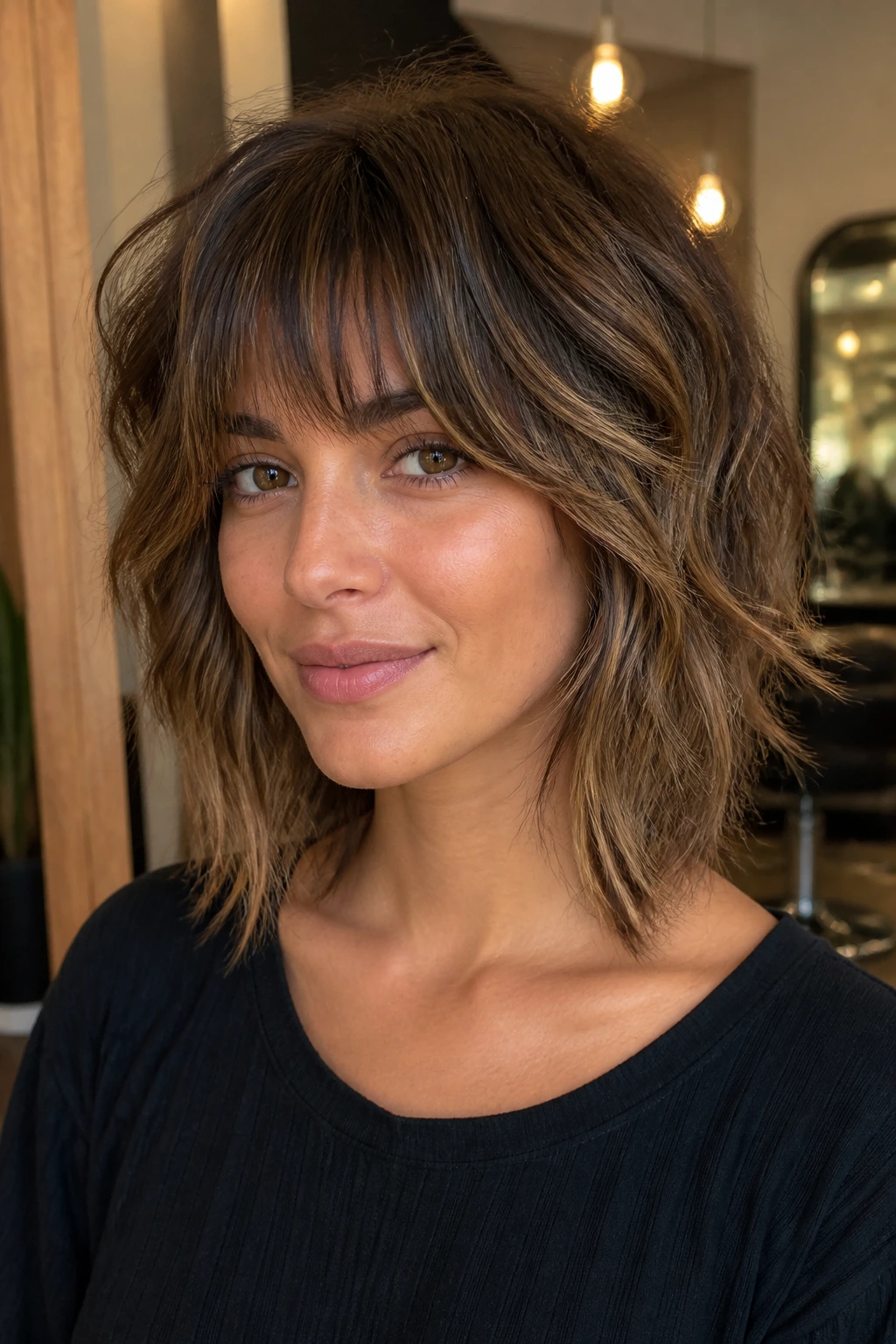
Brunette shag haircuts with highlights keep coming back for a reason: they solve two problems at once. The layers break up the density, and the color gives those layers something to catch. That’s a cleaner fix than piling on product or chasing a dramatic cut that only looks good for the first week.
The nicest versions are the ones that respect the base color. You do not have to bleach brunette hair into submission to make it interesting. A few well-placed caramel ribbons, a smoked beige glaze, a chestnut lowlight, or a copper veil can do more than a full head of bright pieces ever could.
Pick the version that fits how you actually wear your hair. If you air-dry, choose a softer shape. If you love a blowout, lean feathered and glossy. If you want the least possible fuss, keep the root shadow and let the shag grow with you. That is the version worth taking to the chair next.
