



Long hairstyles for little girls have one job before they have any right to look lovely: they need to stay put. A braid that survives recess, a ponytail that doesn’t sag by lunchtime, a half-up style that still looks tidy after someone has leaned against a backpack for forty minutes — that’s the real test. If you’ve ever brushed out a tiny rat’s nest behind one ear after a school day, you already know the deal.
Long hair on a child is a funny thing. It looks soft and easy from a distance, then you get your hands in it and realize there are cowlicks, flyaways, elastic tantrums, and a front section that refuses to stay where you put it. The best kids’ hairstyles respect that reality. They keep the hair comfortable, keep the scalp calm, and don’t demand a half-hour of negotiations before breakfast.
The styles that work best usually share the same quiet virtues: they’re gentle at the hairline, quick to redo, and sturdy enough to survive movement. A style can be sweet without being fussy. It can be playful without becoming a daily battle. And on long hair, that balance matters more than the ribbon color.
Why this collection earns a place in the morning rotation:
- School-proof hold: These styles are built to stay neat through writing, climbing, lunch, and whatever happens at the bottom of the playground slide.
- Gentle on the hairline: Most of the looks use soft tension, which matters when a child’s scalp is tender and the same ponytail spot gets worn too often.
- Works on different textures: Straight, wavy, curly, thick, fine — there’s a version here that doesn’t fight the hair’s natural behavior.
- Fast to repeat: The smartest long hairstyles are the ones you can do again without needing a fresh set of hands and a third cup of coffee.
- Pretty without being fragile: Braids, twists, bubbles, and wrapped ponytails hold shape better than styles that depend on perfect stillness.
- Grows out gracefully: When a few pieces loosen, these styles still look intentional instead of falling into full chaos.
1. Sleek High Ponytail
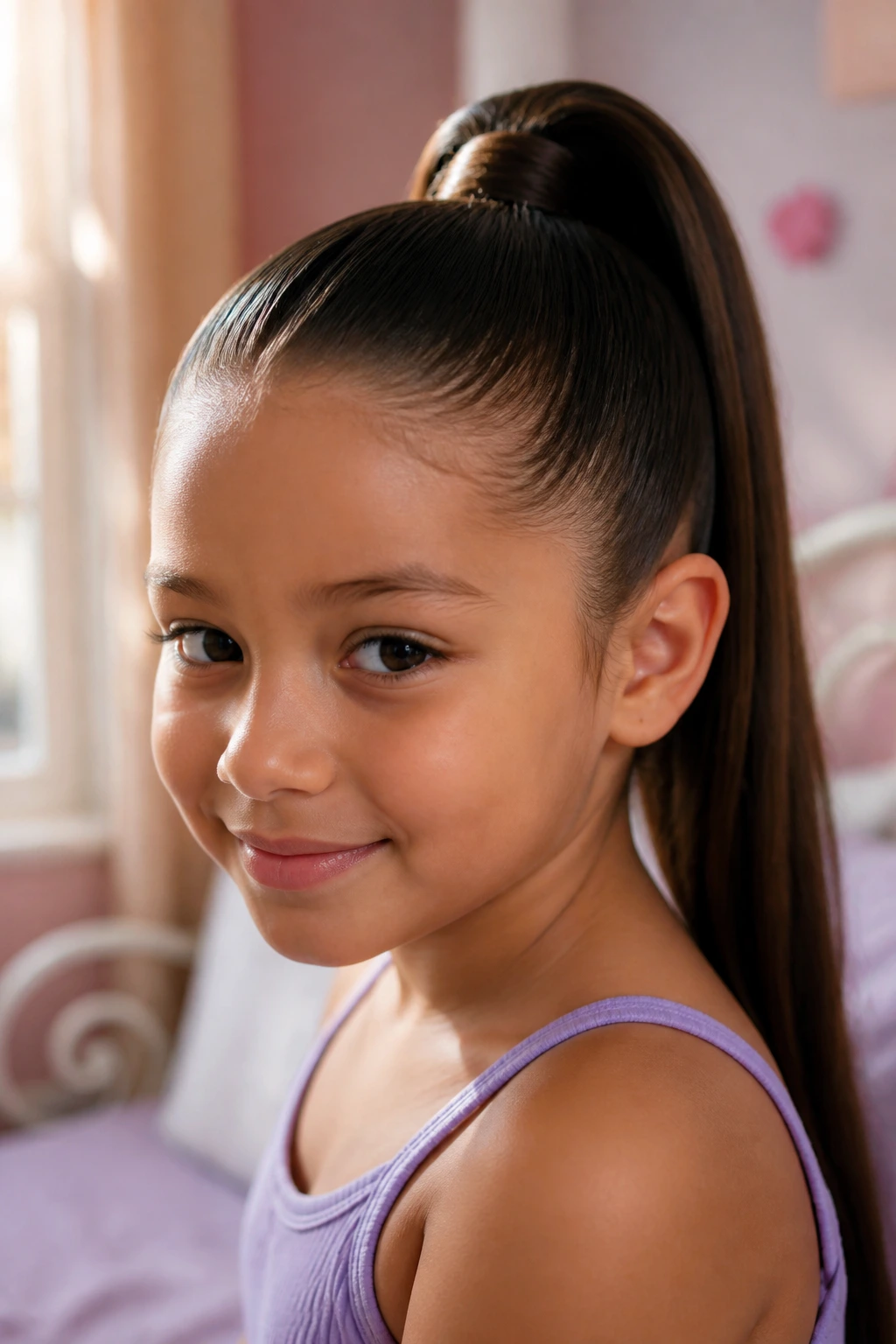
A high ponytail on long hair does one thing better than almost anything else: it gets all that length up and out of the way. When it’s done neatly, it has a clean line from the forehead to the crown, and the tail swings with enough movement to make even a plain tee look finished.
The trick is the base. Brush the hair upward in sections, not all at once, or you’ll drag the top flat and make the sides puff out in odd places. A little water on the hairline helps, and a pea-sized bit of styling cream or gel can keep the baby hairs from standing up like they own the place. If the ponytail feels loose, use two elastics stacked on top of each other. That usually holds better than yanking one elastic tighter than it should go.
Best for: picture day, dance class, hot weather, and children who spend half the afternoon tossing their heads around.
2. Bubble Ponytail
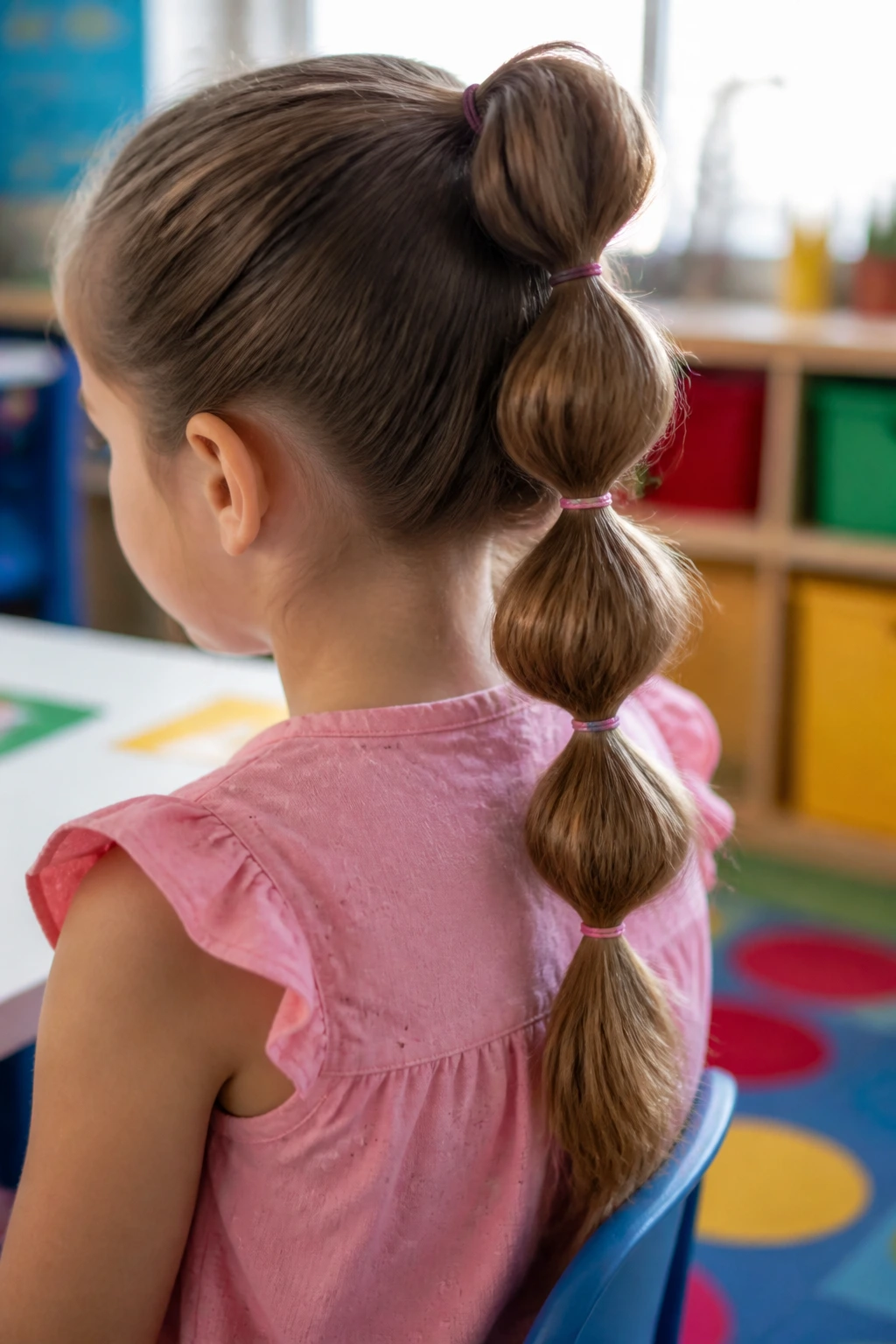
A bubble ponytail looks fancy from three feet away and takes far less skill than a braid. That’s why it’s such a useful long-hair style for little girls. You gather the hair into one ponytail, then add small elastics every 2 to 3 inches down the length, gently pulling each section wider so it rounds out into “bubbles.”
How to keep the bubbles even
- Use clear elastics or tiny fabric ties so the style doesn’t look bulky.
- Start with a snug ponytail at the crown or mid-height.
- Tug each section outward with your fingertips, not hard enough to stretch the elastic, just enough to make the hair puff.
- Leave the last 2 to 3 inches smooth so the ends don’t fray out.
It’s especially good on long, thick hair because the bubbles show off the length instead of burying it under a braid.
3. Half-Up Braided Crown
This one gives the hair a neat frame without taking all of it away. You braid a section from each side of the head — usually starting just above the temples — then bring the two braids across the back and secure them together. The rest of the hair stays down, which keeps the style soft and a little dressy.
What I like about this look is that it handles growing-out layers well. A few loose pieces at the front don’t ruin anything. They make the style look lived-in in a good way. If the hair is very slippery, mist the sections with water before braiding so the strands hold together. For very fine hair, a tiny clear elastic at the end of each braid stops the ends from unraveling before you pin or tie them back.
It’s one of those styles that works for church, family photos, or any day when you want the hair to look cared for without feeling stiff.
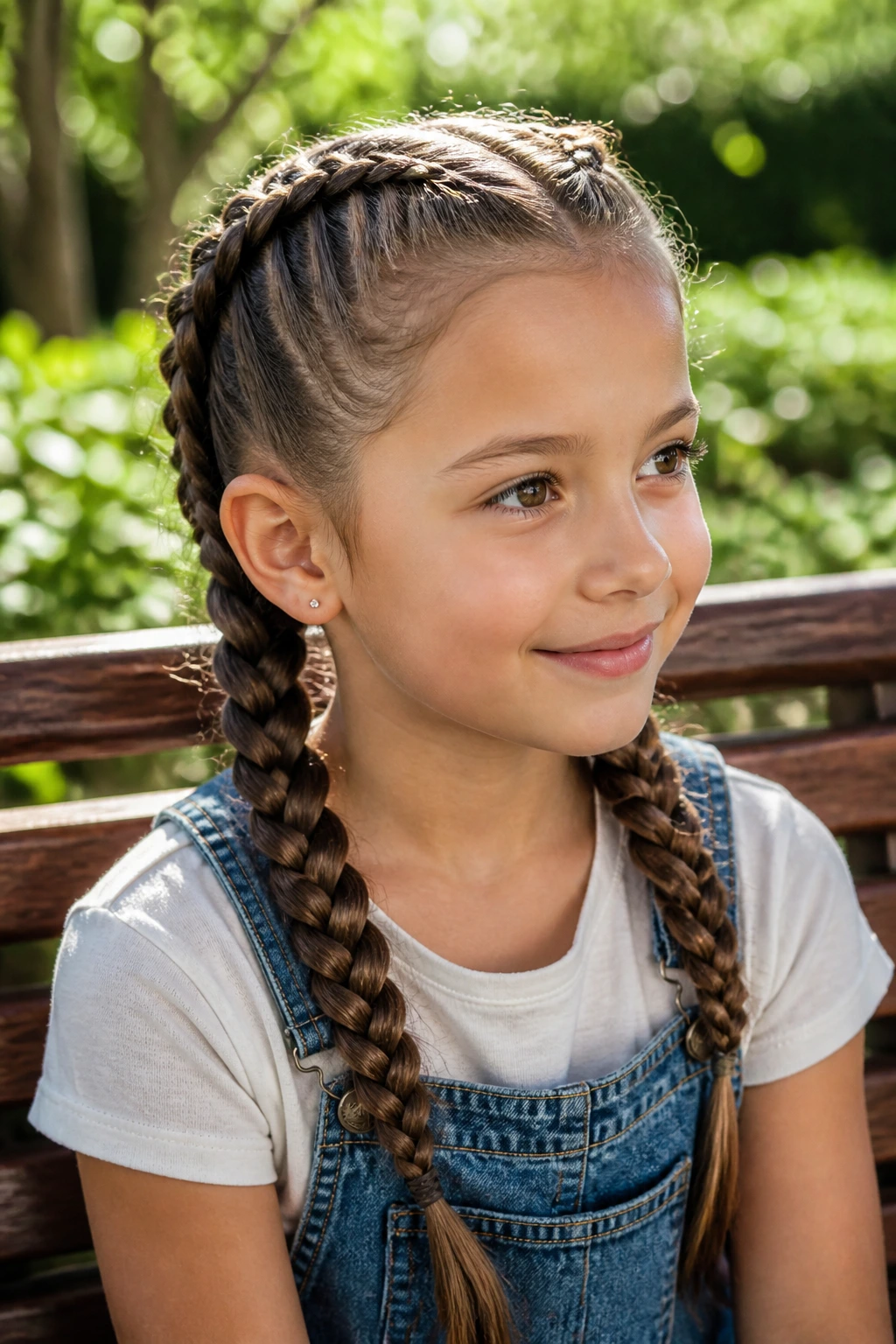
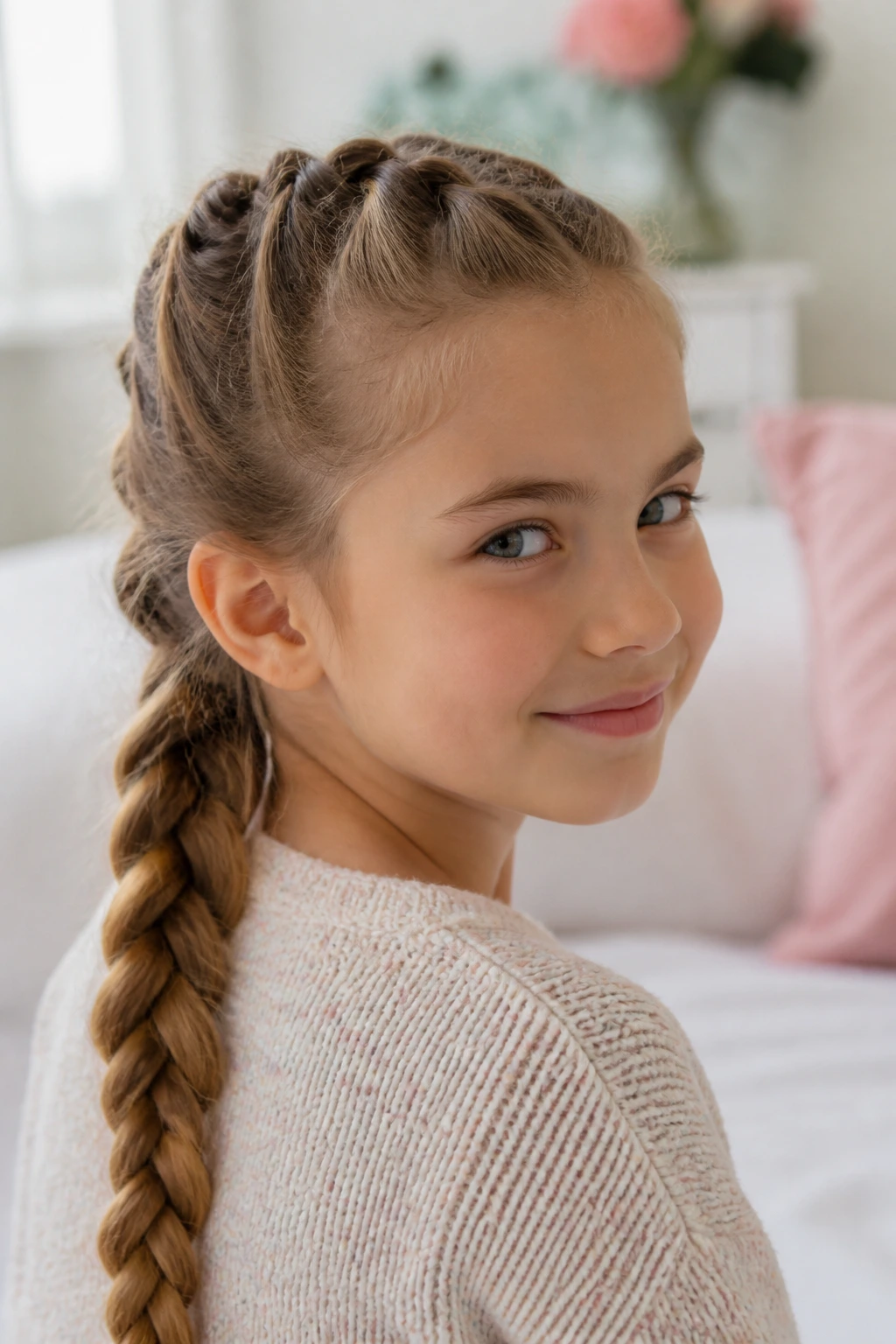
4. Double Dutch Braids
Double Dutch braids are the workhorses of long hairstyles for little girls. They sit close to the scalp, keep every section under control, and hold up through a long day better than most loose styles. The underhand braid pattern makes the braids stand up a little from the head, which gives long hair more shape and makes the style easier to see from the front.
The key is even tension. Pull each section snug, not tight. A braid that feels sore at the scalp is already too tight, and it will usually loosen badly later anyway. If the hair has layers, tuck the shorter pieces into the braid as you go instead of chasing every stray strand with your fingers.
When this style shines
- Sports practice
- Busy school mornings
- Travel days
- Hair that tangles fast at the nape
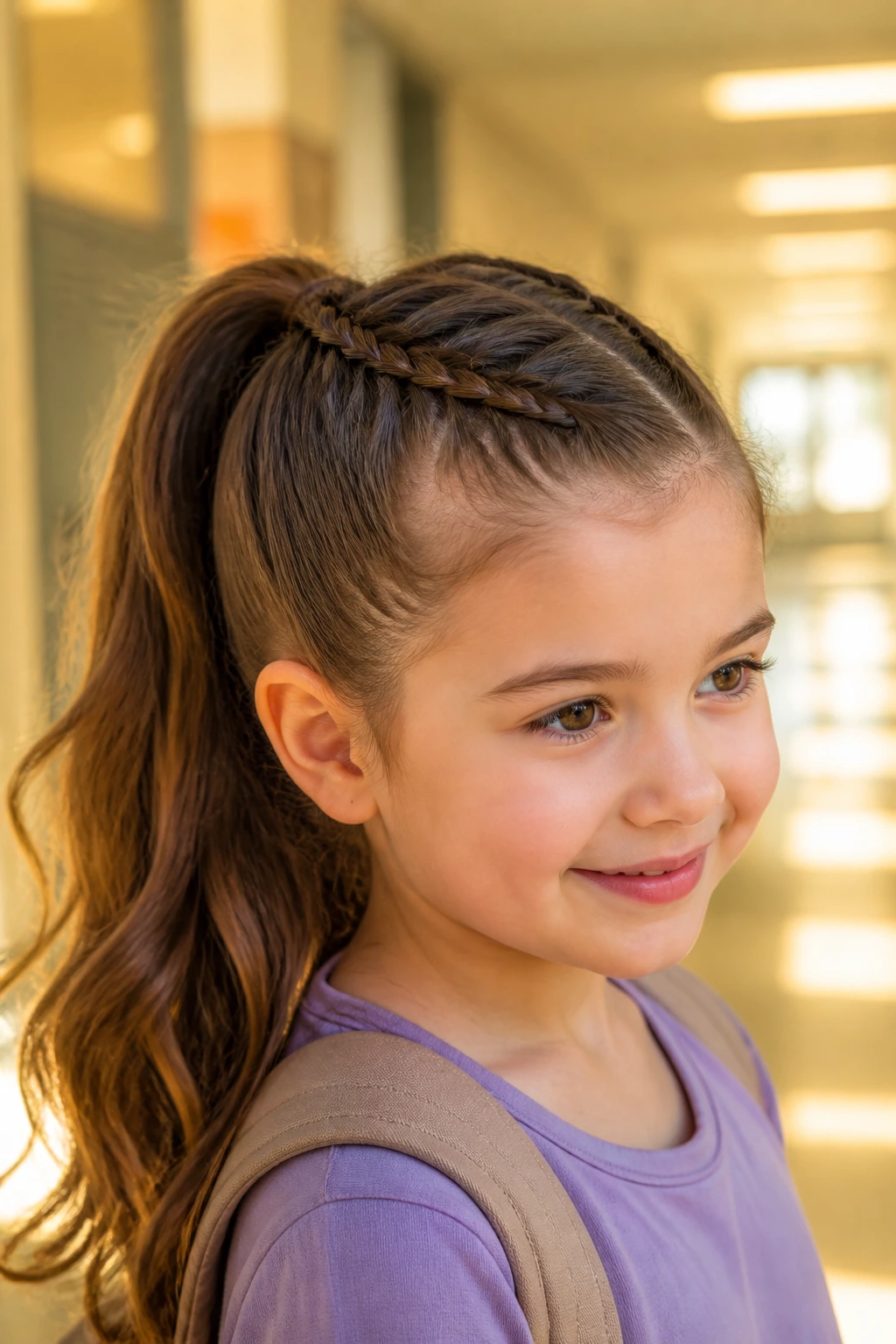
5. French Braid into Ponytail
This is the style you reach for when the front needs to be controlled but you still want the length to swing freely. Start the braid at the hairline, work down the center or slightly off-center, then stop around the crown and gather the rest into a ponytail. The front stays smooth, and the ends stay easy.
It’s a smart choice for kids with bangs that are growing out. The braid keeps those shorter pieces from falling into the eyes every ten minutes. If the ponytail looks flat, lift the braid just a bit at the crown before tying the tail; that tiny puff makes the whole style look fuller without turning it into a pouf.
You can leave the ponytail straight, curl it lightly if the child already has a routine for that, or add a ribbon around the elastic and call it done.
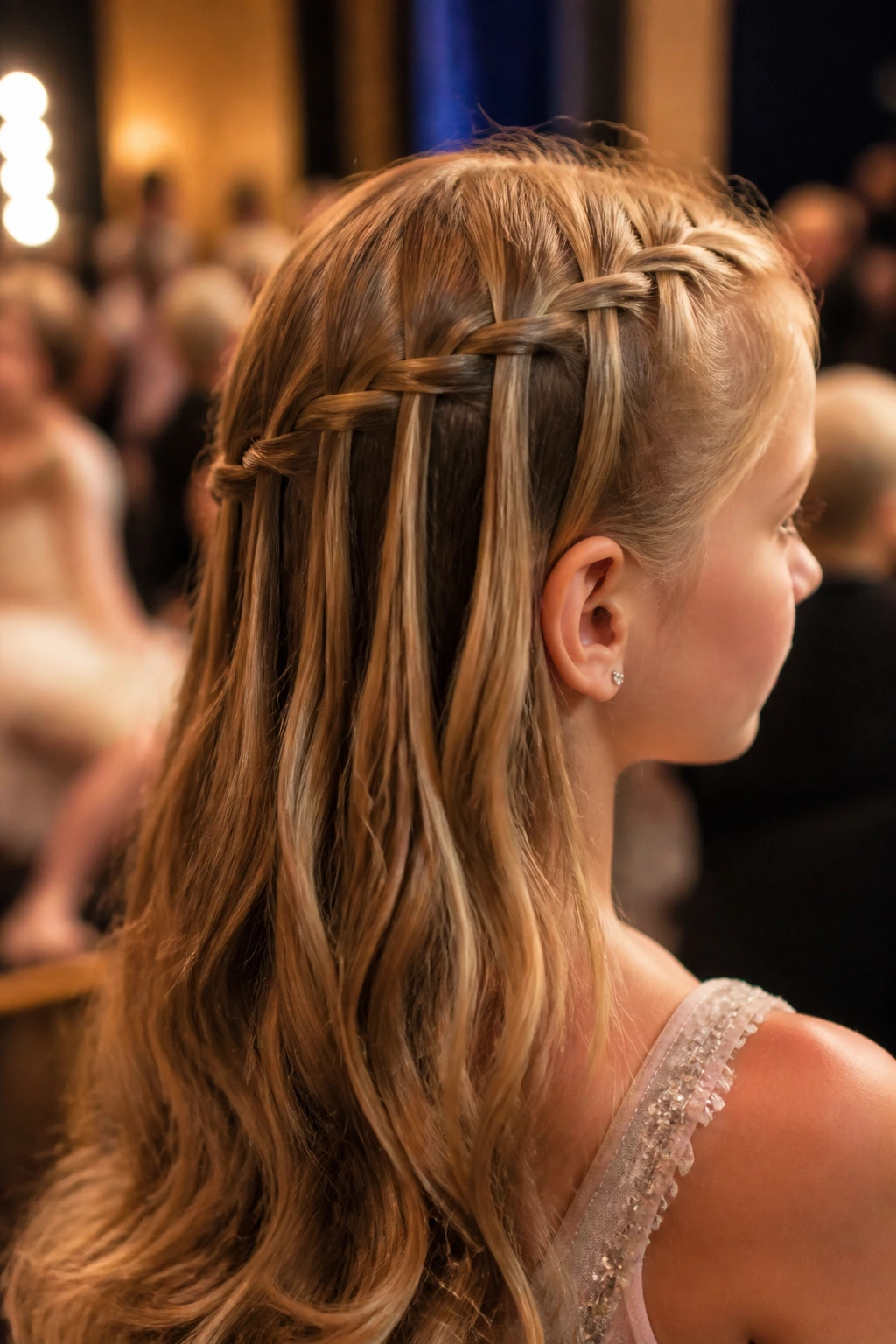
6. Waterfall Braid
A waterfall braid is a more decorative choice, and it has that delicate look that shows up well in photos. The braid runs along the side or back, but every third section drops down and becomes part of the loose hair below, creating that airy “ribboned” effect.
It’s not the strongest style for hard play. I would not choose it for a field trip unless you’re happy with a few loosened strands by lunchtime. But for a party, recital, or family dinner, it looks beautiful without needing a full head of braids. Keep the sections clean and even, and use a small pinch of texturizing spray or a little water if the hair slips apart too fast.
The best waterfall braids are never too perfect. A tiny bend in the braid makes the whole thing look soft instead of rigid.
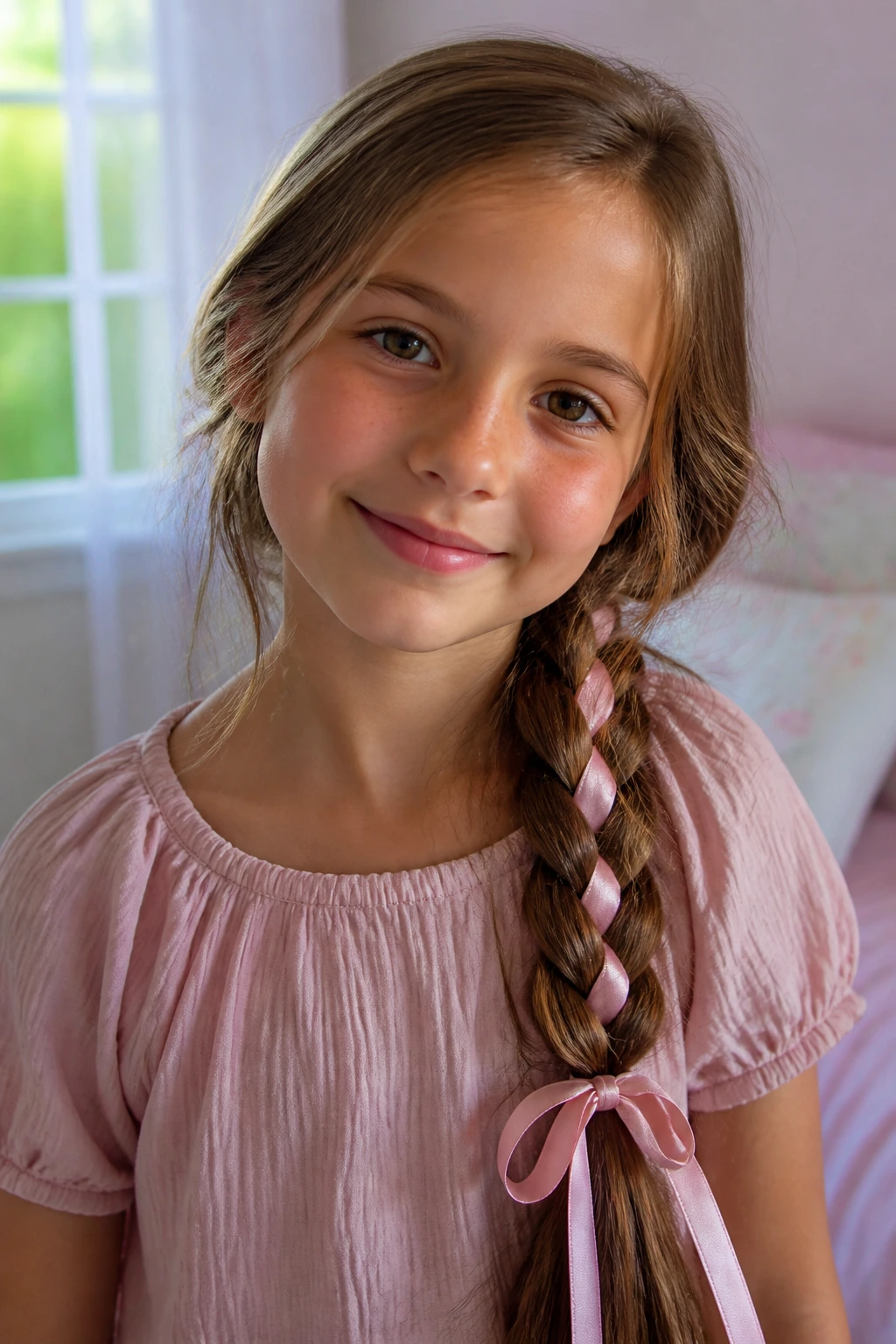
7. Side Braid with Ribbon
A side braid with ribbon has a very simple charm to it. Pull the hair over one shoulder, work a three-strand braid down one side, and weave a ribbon through one of the sections or tie it at the end. The long tail hangs forward where the child can see it, which tends to make them oddly fond of the style.
The ribbon matters more than people think. Satin slides nicely and looks polished, while grosgrain grips a little better if the braid is slippery. If you want the ribbon to stay visible, choose a color that actually contrasts with the hair — pale pink on dark hair, navy on blonde hair, red on chestnut brown.
This one works well when you want the hair down but not loose everywhere. One shoulder gets the full show, and the other side stays clear.
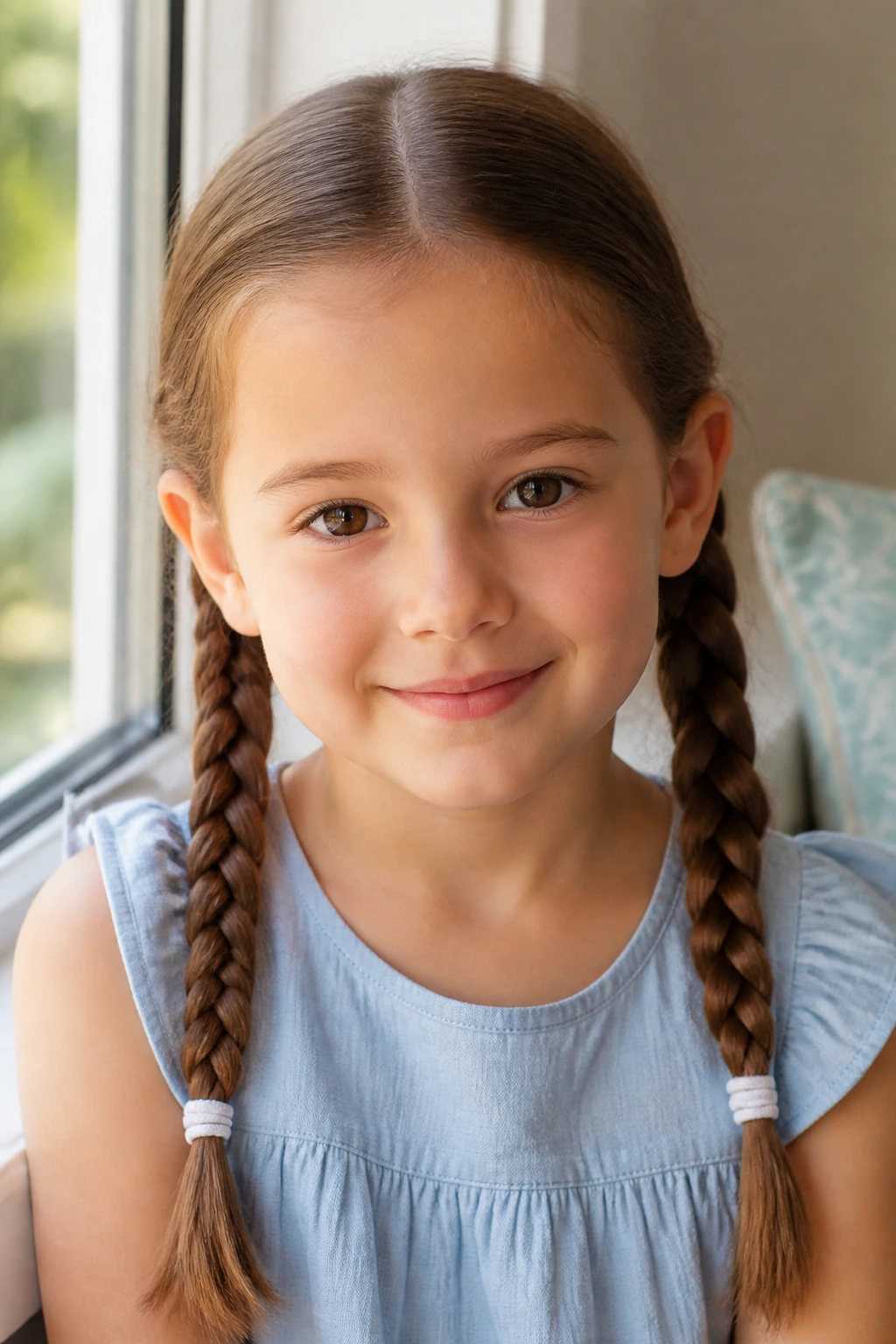
8. Two Low Braids
Two low braids are the kind of style that looks plain until you realize how well it behaves. Center part the hair, gather each side low near the ears or just behind them, and braid the lengths down evenly. The look is tidy, balanced, and easy to redo if one side gets messy.
For very long hair, the ends can be tied with soft elastics and then tucked under a bow, which keeps them from dragging on jackets and school chairs. On curly hair, leave the braids a touch looser so they don’t squeeze the shape out of the curl pattern. On fine hair, start with a little dry detangler so the sections don’t slip apart while you braid.
It’s not the flashiest style in the bunch. It is, however, one of the easiest to trust.
9. Twisted Half-Up Pigtails
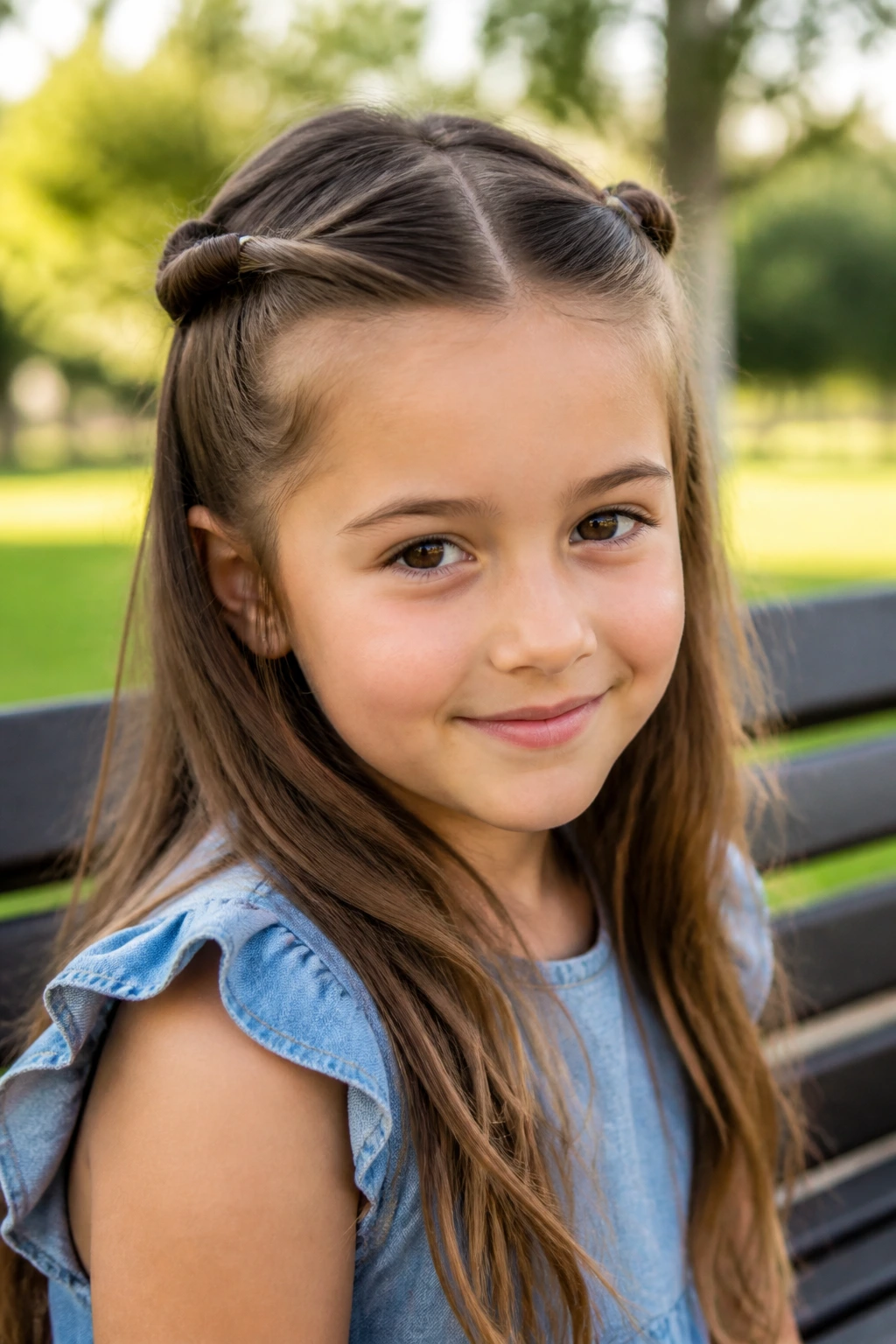
This style feels playful without being overbuilt. Take two front sections, twist each one back toward the crown, and secure them into small pigtails or mini ponytails. The rest of the hair falls loose, which keeps the look soft and easy to wear.
Twists are friendly to little girls who dislike the tension of full braids near the hairline. They also work well on hair that is too layered for a clean braid, since a twist can catch shorter strands more easily. If the hair is very fine, a small clip can hold the twist in place before you add the elastic, which stops the section from sliding out while you work on the other side.
The result is light, sweet, and fast enough for a morning when nobody wants a complicated conversation.
10. Crown Braid
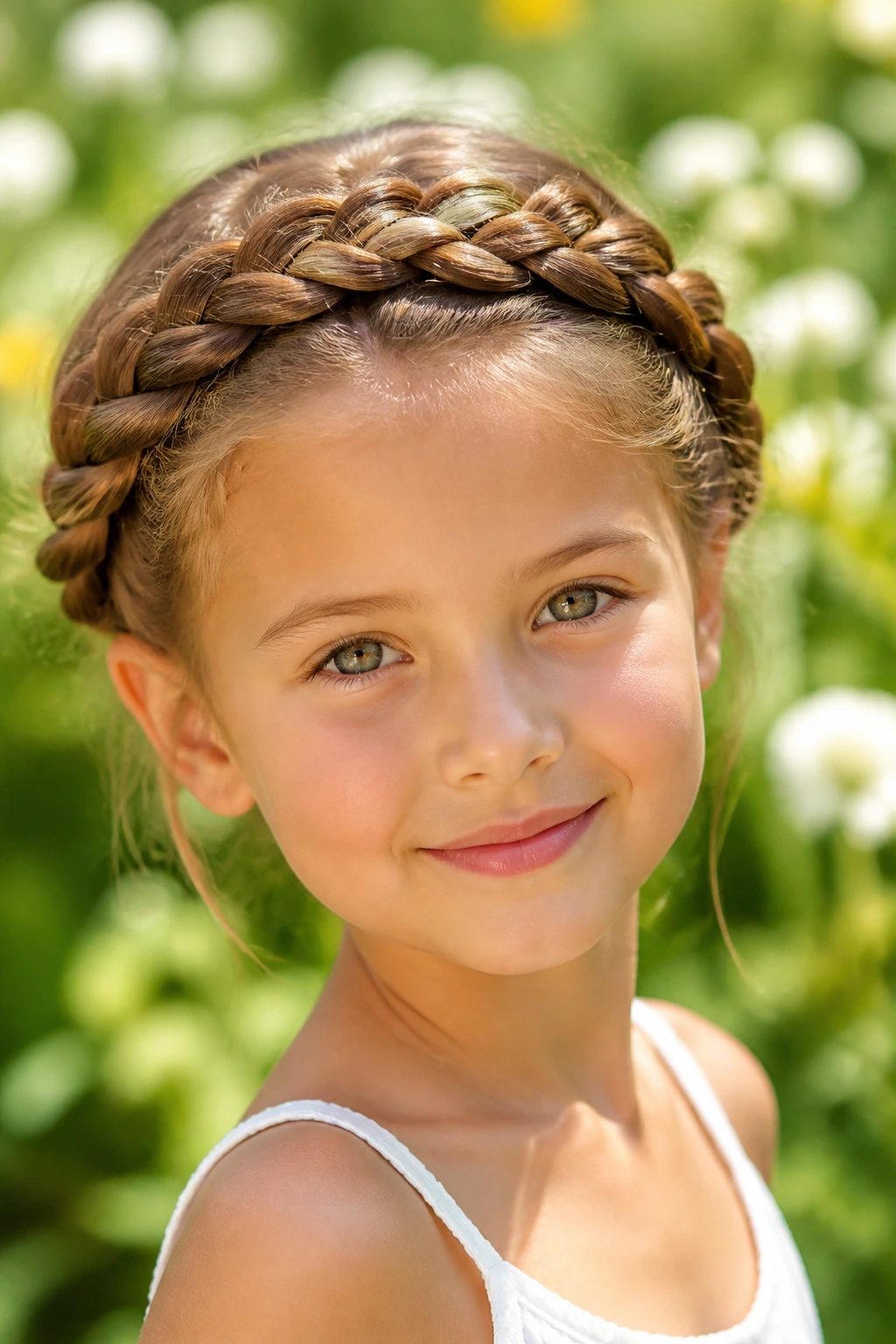
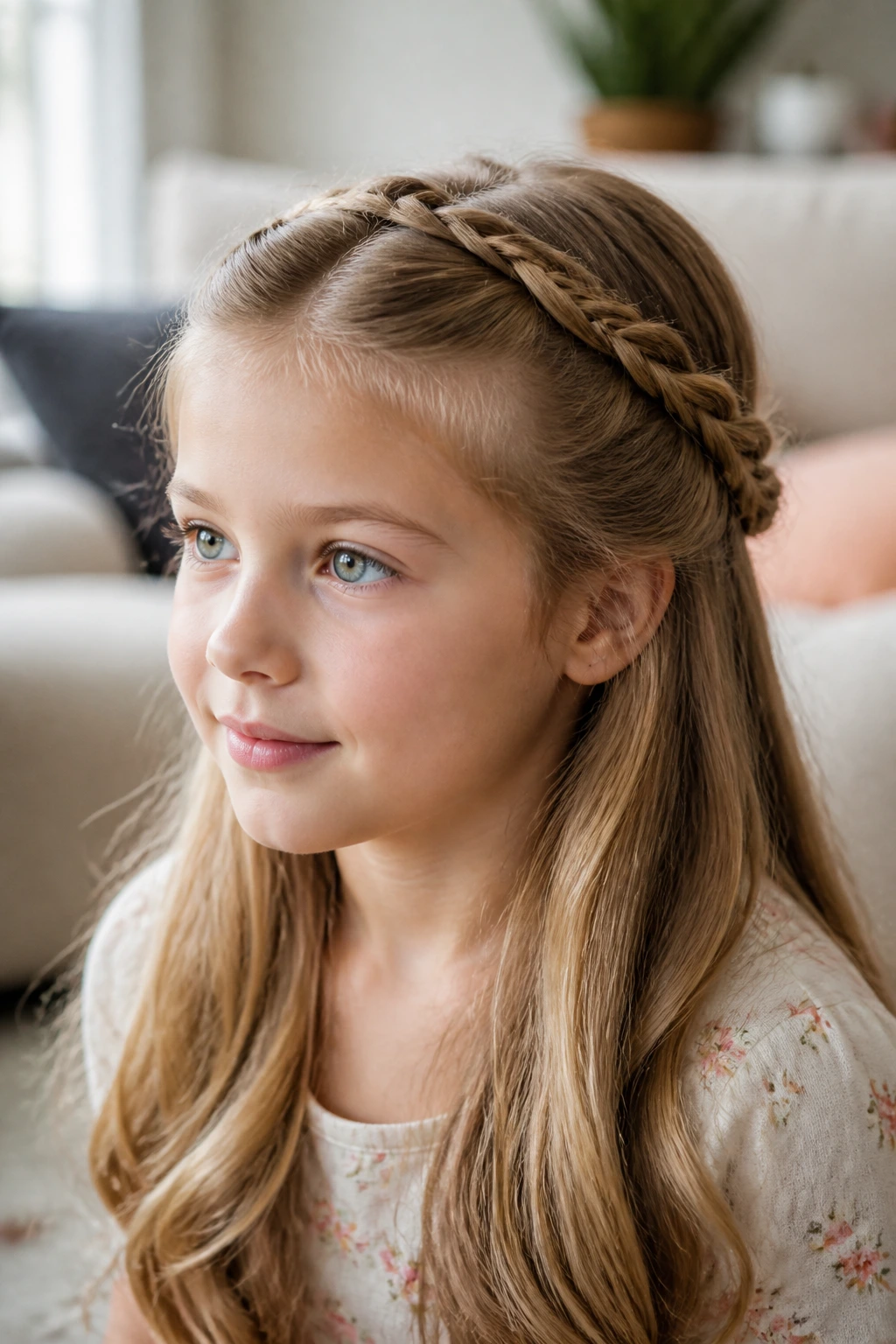
A crown braid wraps around the head like a band of woven hair, and on long hair it has real presence. You can braid all the way around the hairline or make two braids that meet in the back and pin them into a circular shape. Either way, the style keeps the front clear and gives the hair a dressed-up feel.
Because this braid sits higher on the head, it needs a little patience. Parting has to be clean, and the braid should follow the shape of the head instead of cutting across it in a straight line. If the child has a tender scalp, keep the braid slightly loose and set it with discreet pins rather than pulling it tight.
This is one of those hairstyles that feels special the minute it’s finished. It doesn’t need much else.
11. Rope Braid Ponytail
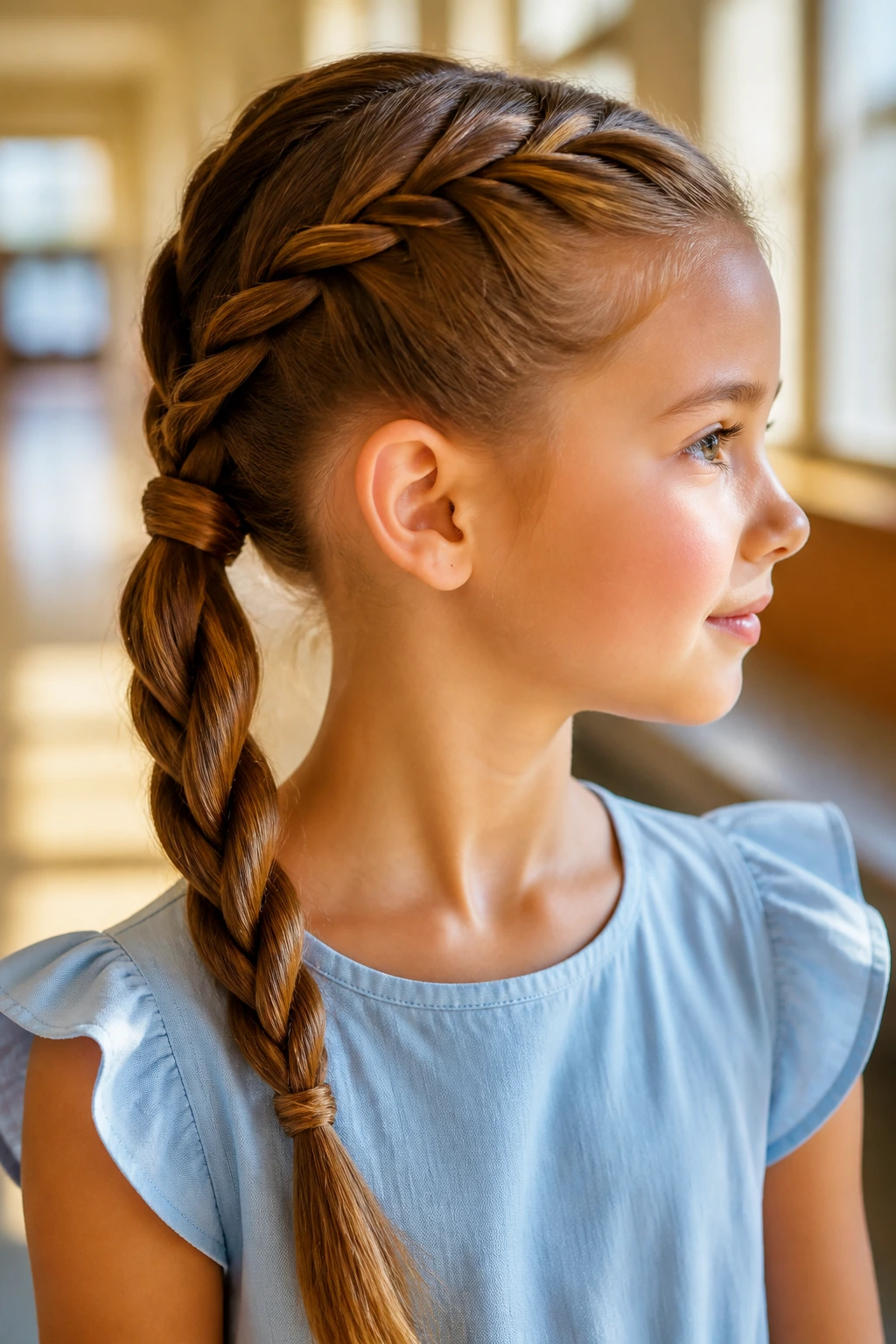
A rope braid looks more intricate than it is. Split the ponytail into two sections, twist each one in the same direction, then wrap them around each other in the opposite direction. That opposite twist is what keeps the rope braid from simply unraveling into a curly mess.
It’s a good choice for hair that refuses to stay smooth in a regular three-strand braid. The twist pattern can hold slippery strands better, especially if the hair has a silky texture. A wrapped elastic at the base helps anchor everything, and a second elastic at the end keeps the braid tidy all day.
I like this one when the goal is polished but not stiff. It has movement. It also doesn’t shout for attention, which can be a relief on days when the outfit already has enough going on.
12. Messy Top Knot with Face-Framing Pieces
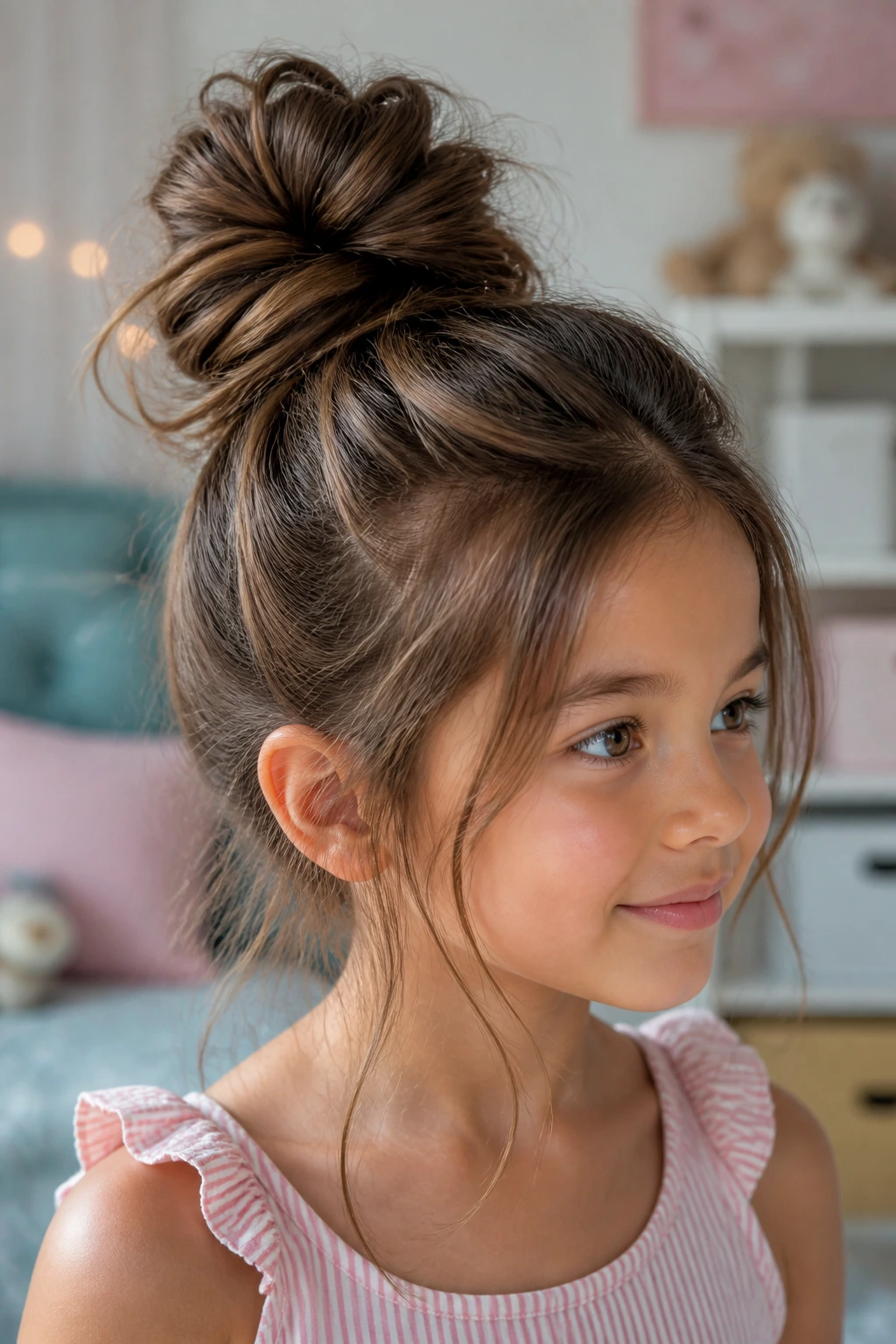
A top knot on long hair can be neat or deliberately loose, and for little girls I usually prefer the version with a little softness around the face. Gather the hair high, twist it into a bun, and let a few front pieces fall free. The result is casual, light, and good when the hair needs to stay off the neck.
The trick is to stop before the bun gets too heavy. Long hair can drag a top knot downward if you pile every strand into it. Secure the base first, then wrap the remaining length around it. If the bun wants to sag, split it into two smaller loops instead of one big one. That usually balances the weight better.
This is the style that gets asked for when the weather turns warm or the child decides hair touching the neck is suddenly unbearable.
13. Low Twisted Bun
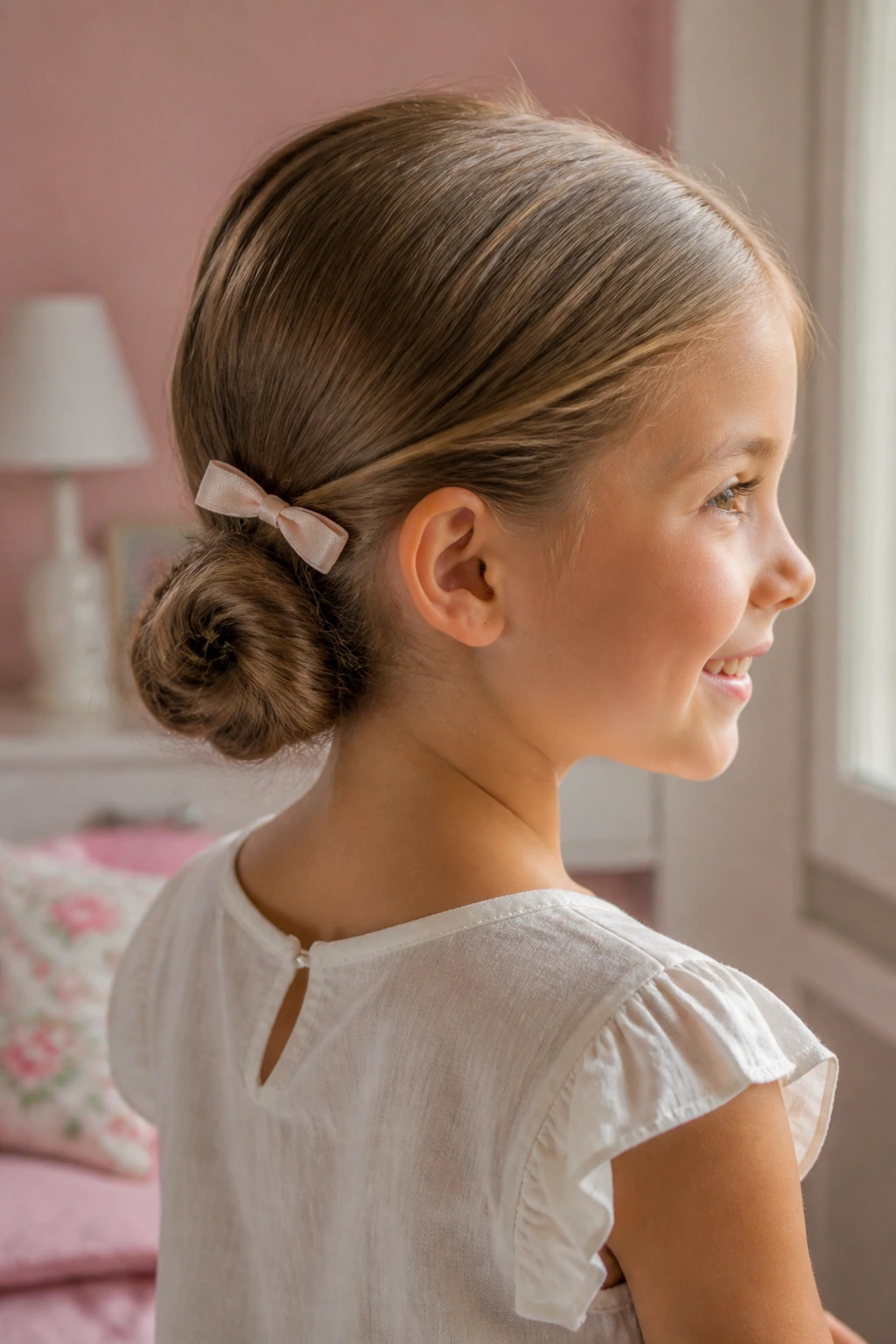
Low buns are underrated on kids’ hair. Gather the hair at the nape, twist it into one coil, and tuck it into a bun that sits close to the head. It stays neat under coats, doesn’t catch as much as a high style, and looks especially good with a ribbon or bow pinned just above it.
A low bun is easier when the hair has a little grip. Freshly washed hair can slide out, so day-two hair often works better. If the ends keep poking through, use a second elastic around the bun or a couple of crisscrossed pins to pin the shape down.
It’s a calm hairstyle. No drama. Just tidy hair that behaves.
14. Bubble Half-Up Style
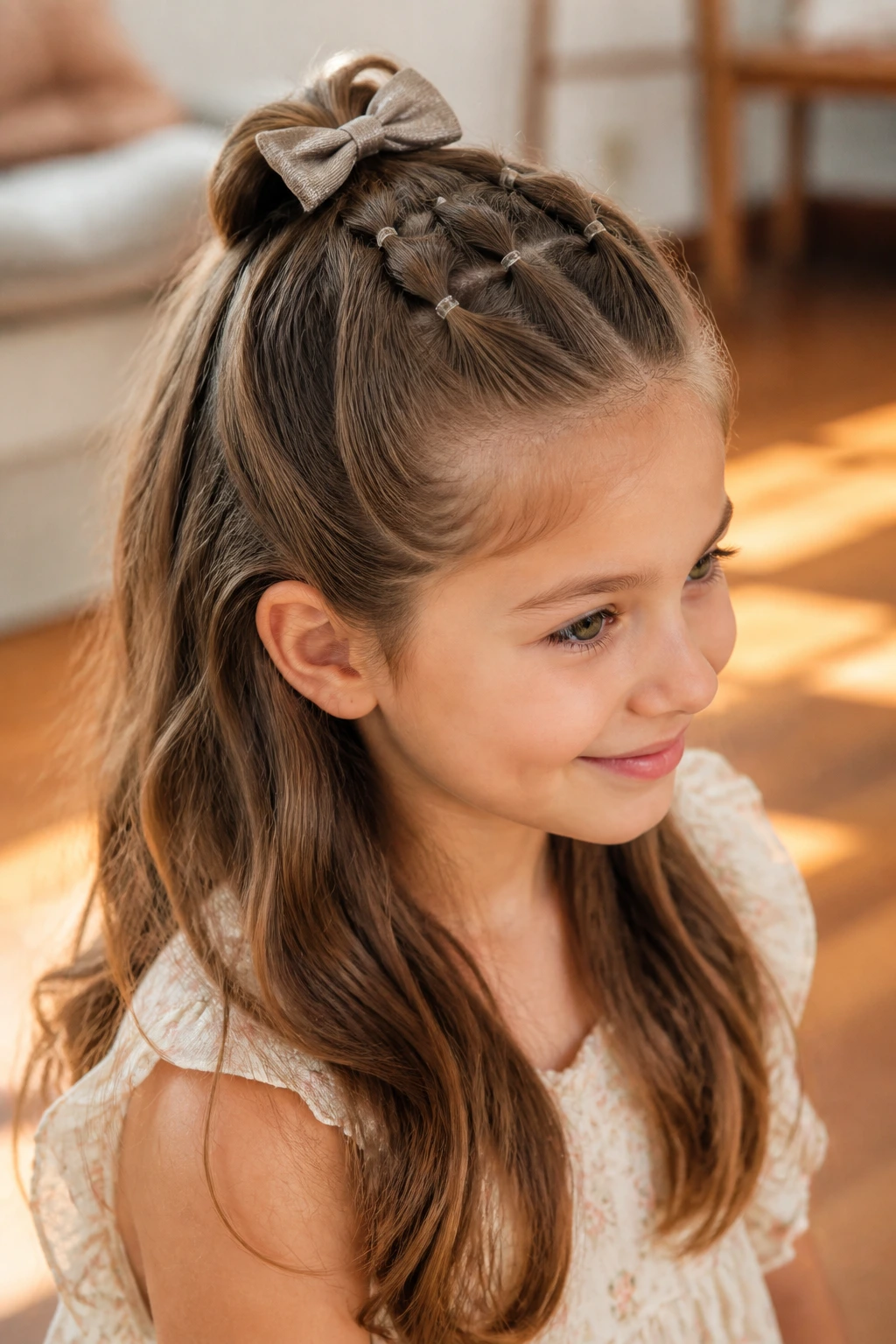
This one gives you the fun of bubbles without giving up the length. Pull the top half of the hair back into a half-up ponytail, then add elastics every few inches down that section and gently widen each pocket. The loose hair underneath keeps the style soft, while the bubble top gives it some lift.
The style is especially useful for thick hair. A full bubble ponytail can feel heavy, but a half-up version spreads the weight more comfortably. If the child has layers around the face, leave them out on purpose instead of trying to trap them. That small decision often keeps the style from looking overdone.
A bow at the top elastic can turn this from everyday to party-ready in about ten seconds.
15. Pull-Through Braid
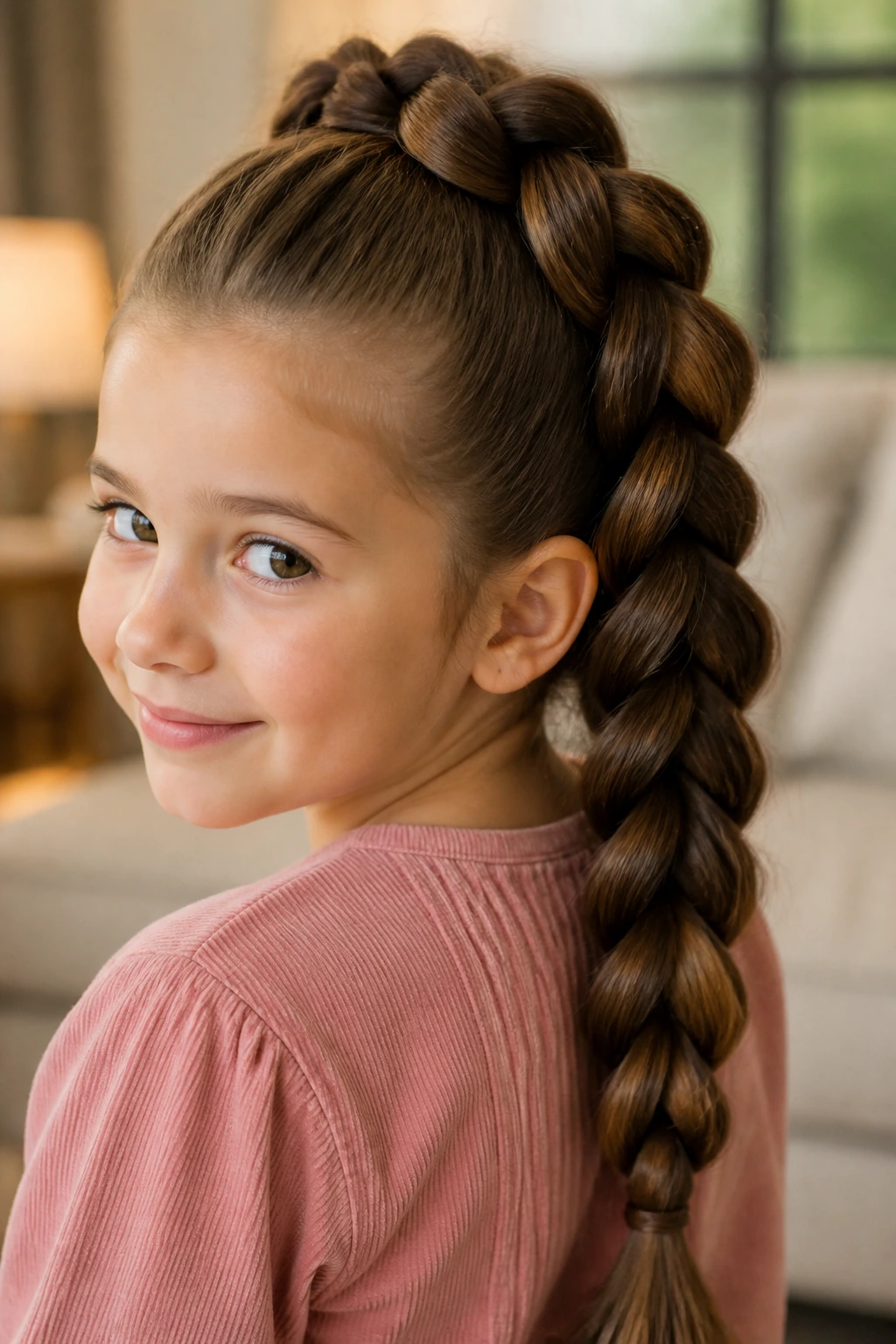
A pull-through braid is the braid for people who like the look of a thick, braided tail but don’t want to fight with three separate strands. You build it with sections tied one over the other, then pull the loops apart to create the illusion of a large braid.
It takes more elastics than a regular braid, and yes, it is a little fussy the first time. But the finished result is bold, full, and very good on thick hair. It also keeps long hair from looking flattened at the back, which happens with some tight braids. Use clear elastics or the smallest snag-free bands you can find.
If the child has a birthday party, a recital, or just a strong opinion about “fancy hair,” this one earns its keep.
16. Lace Braid Accent
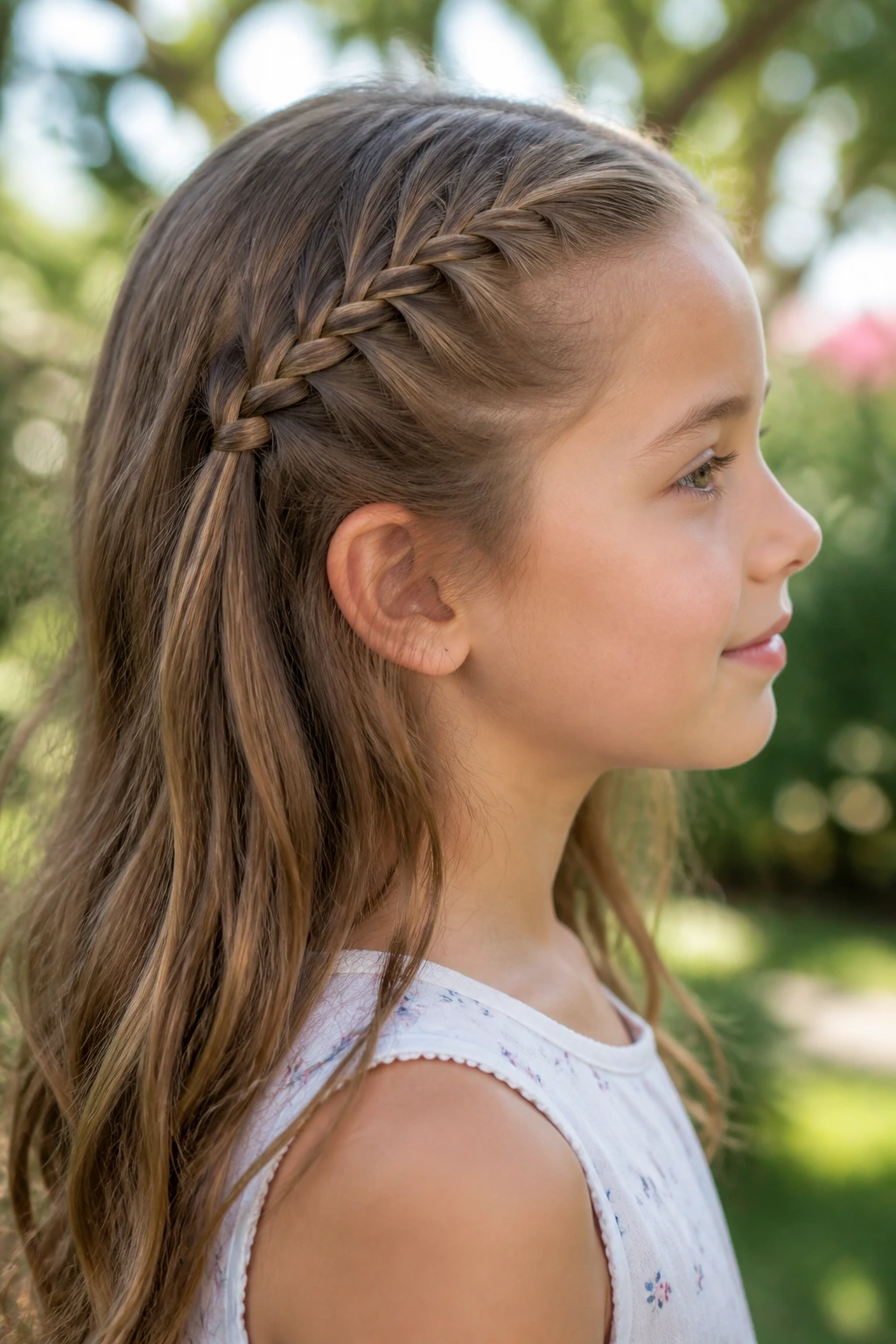
A lace braid is a braid that feeds in hair from one side only, leaving the other side to fall loose. It creates a gentle curve along the head and keeps the front section under control without committing to a full braid. On long hair, it works as a small accent that changes the whole look.
This style is good when one side of the hair is always falling into the face. Instead of pinning that side back in a hard line, the braid smooths it into the rest of the hair. It also pairs nicely with waves or straight hair, because the contrast between the braided section and the loose length gives the style some shape.
Keep the braid low and soft if you want it to feel relaxed. Pull it tight and it starts looking severe fast.
17. Braided Headband
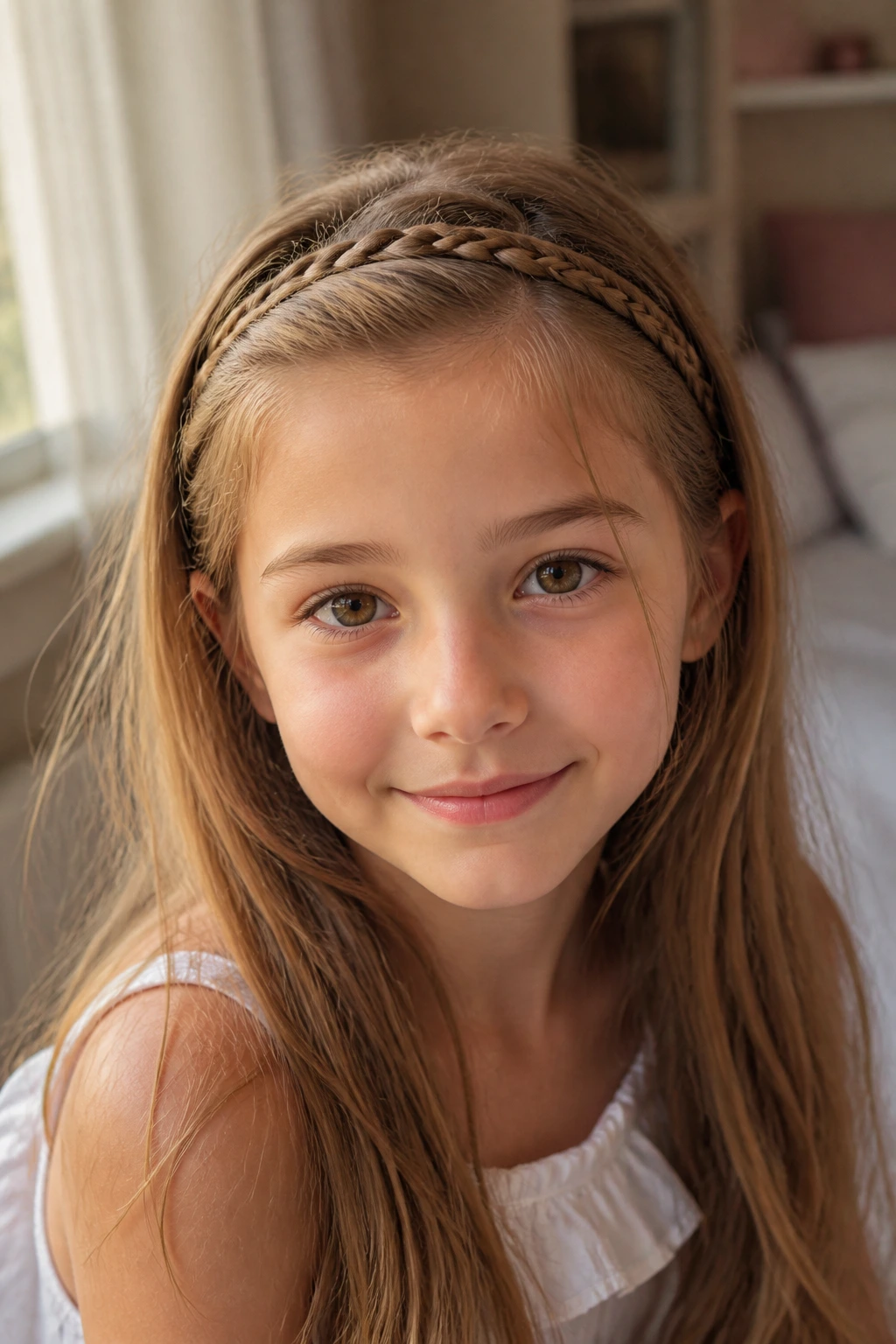
A braided headband runs across the front of the head like a built-in accessory. It’s a smart fix for grown-out bangs, flyaways, or a child who keeps touching the front of her hair. Braid a section from one side, bring it across the hairline, and pin it behind the opposite ear.
The braid should sit close enough to hold the front pieces, but not so close that it feels like a headband digging in. A little lift behind the braid helps keep the style from looking glued to the scalp. If the hair is very silky, tiny pins hidden under the top layer can stop the braid from creeping backward.
This one has a neat little trick to it: it makes the hair seem styled even when most of the length is left alone.
18. Pigtails with Braided Bases
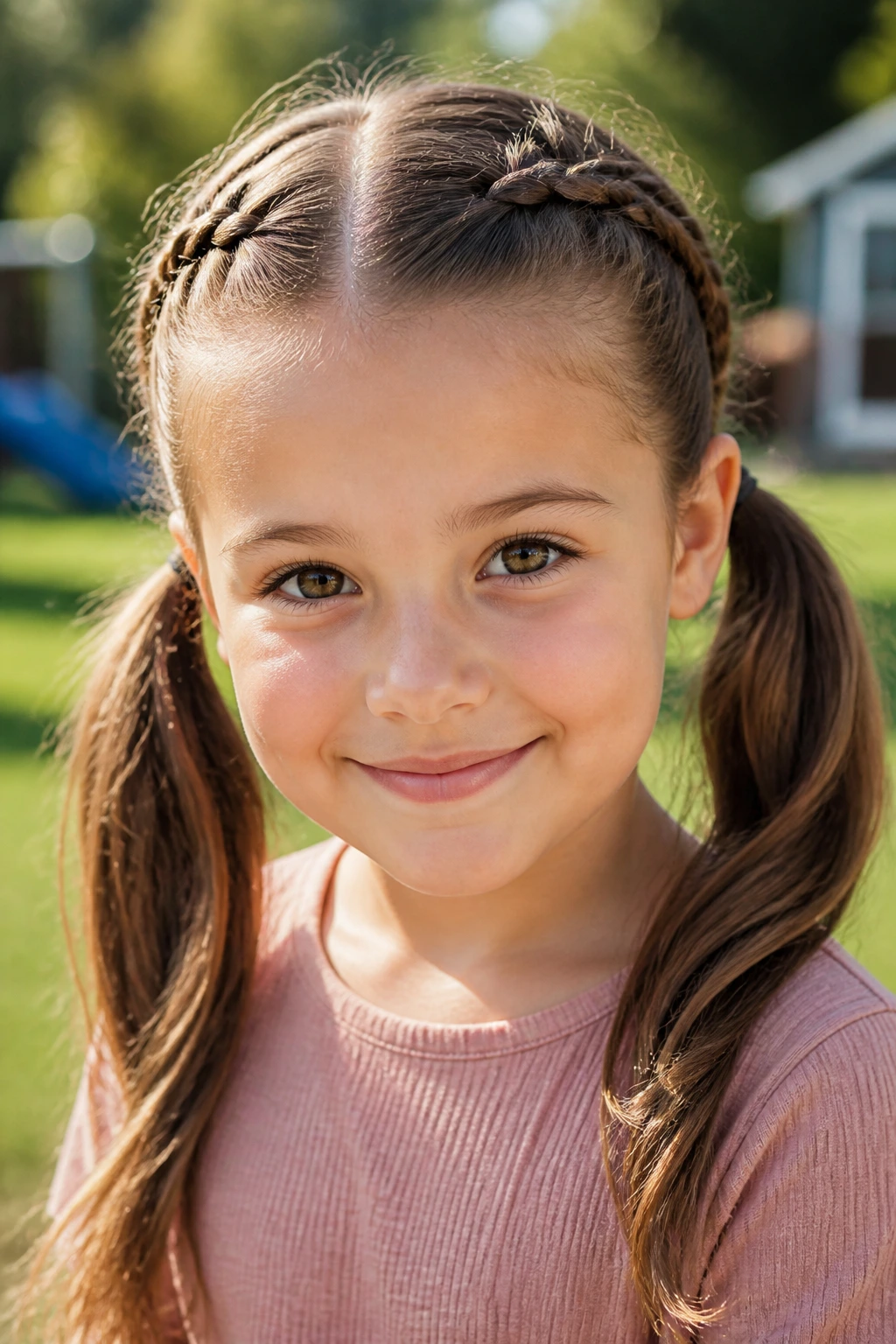
Pigtails with braided bases solve a very normal problem — the roots need control, but the ends still deserve some movement. Braid the first few inches on each side, then secure the rest into low or mid pigtails. The top stays tidy, and the tails bounce around with less chance of tangling right at the scalp.
This style is especially good for active kids because the braid base anchors the section where most slipping happens. If the hair is thick, braid a little farther down before tying the pigtails. If it is fine, keep the braid short so the style does not feel too weighted at the sides.
A pair of matching bows can make the whole thing look intentional instead of purely practical. Which, honestly, is useful.
19. Side-Swept Braid Ponytail
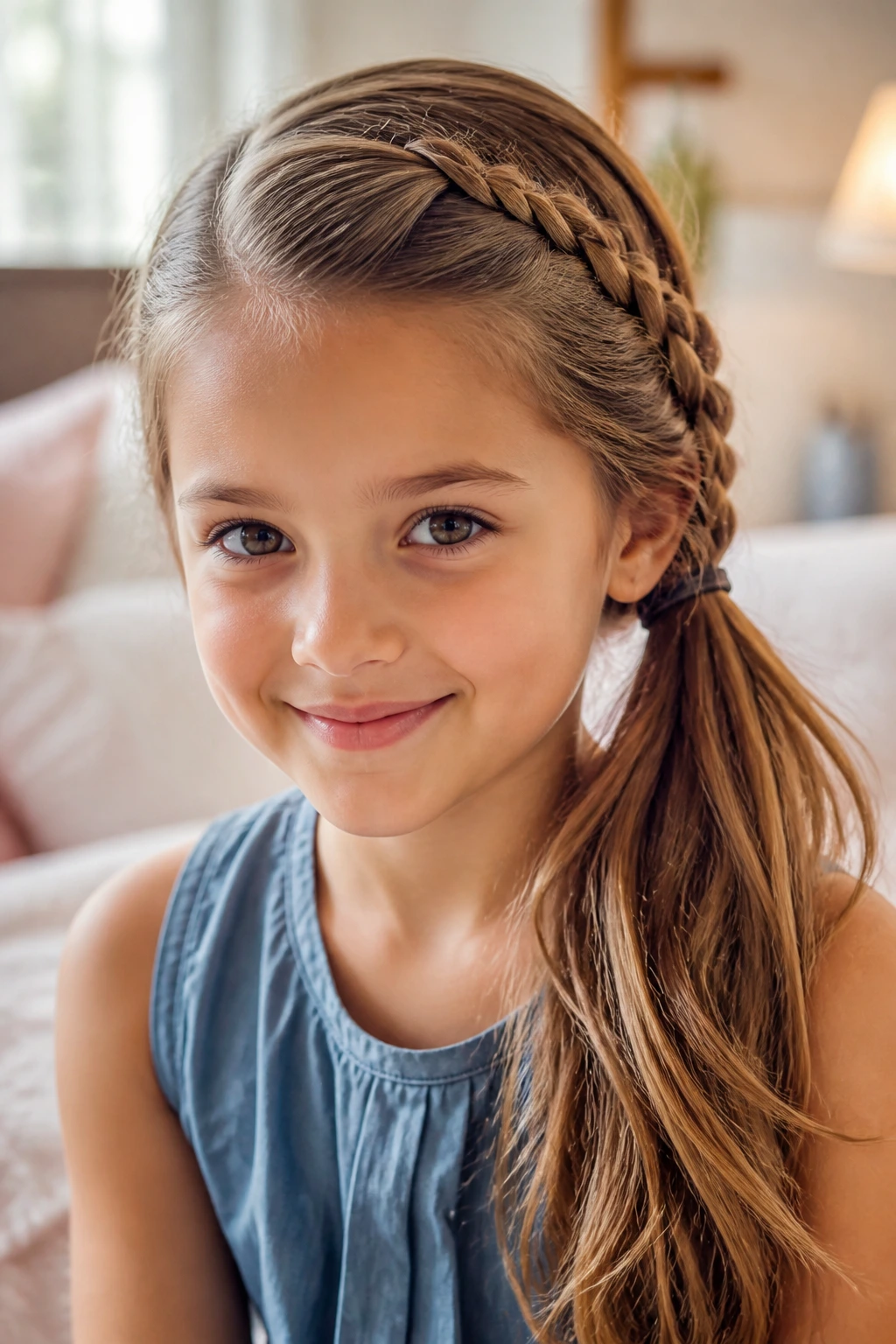
A side-swept braid ponytail has a nice asymmetry to it. Pull a deep side part, braid the front section along one side, and gather everything into a ponytail over the opposite shoulder or just off-center at the back. It moves away from the face but still gives the long hair a chance to be seen.
I like this look for days when a straight center part feels too plain. The diagonal line of the braid changes the shape of the face a little and softens the whole style. It also works well with ribbons tied around the ponytail base, since the side angle gives the ribbon more visibility.
If you want the braid to stay crisp, braid the front section before the hair gets tangled from brushing. That tiny sequencing change helps more than people expect.
20. Fishtail Braid
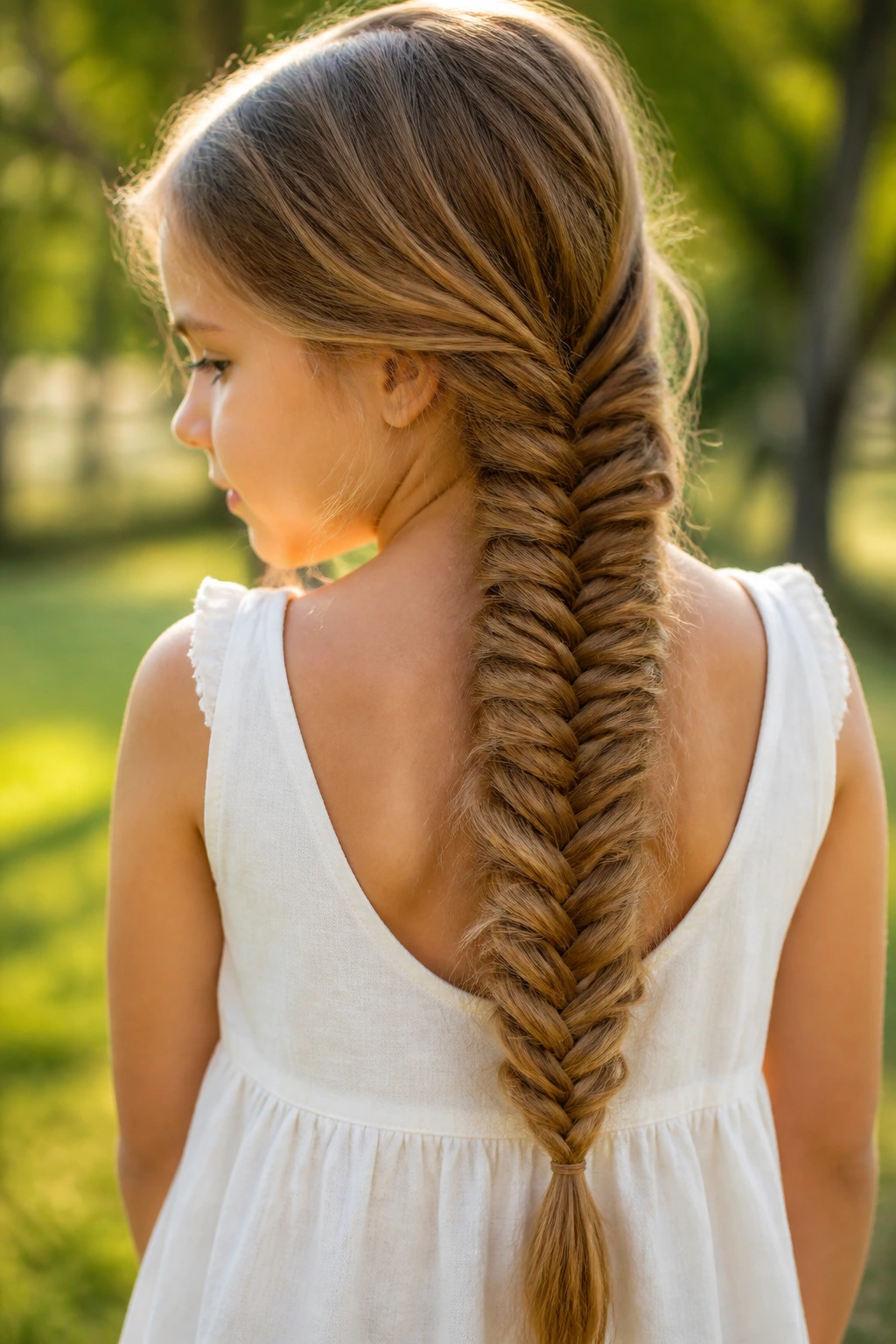
The fishtail braid looks like it took forever. It usually didn’t. That’s part of its charm. Split the hair into two sections, then keep taking tiny pieces from the outside of one side and crossing them over to the other. The smaller the pieces, the tighter and more detailed the braid looks.
This style shines on long hair because the length gives the fishtail pattern room to show. On very layered hair, it may need a light mist of water or a touch of leave-in to keep the shorter pieces from slipping loose. It also tends to look better when the braid is gently pulled apart after it’s finished, because that gives it width and keeps it from looking thin.
It is polished. It is also the braid people stare at a second longer.
21. Braided Bun Combo
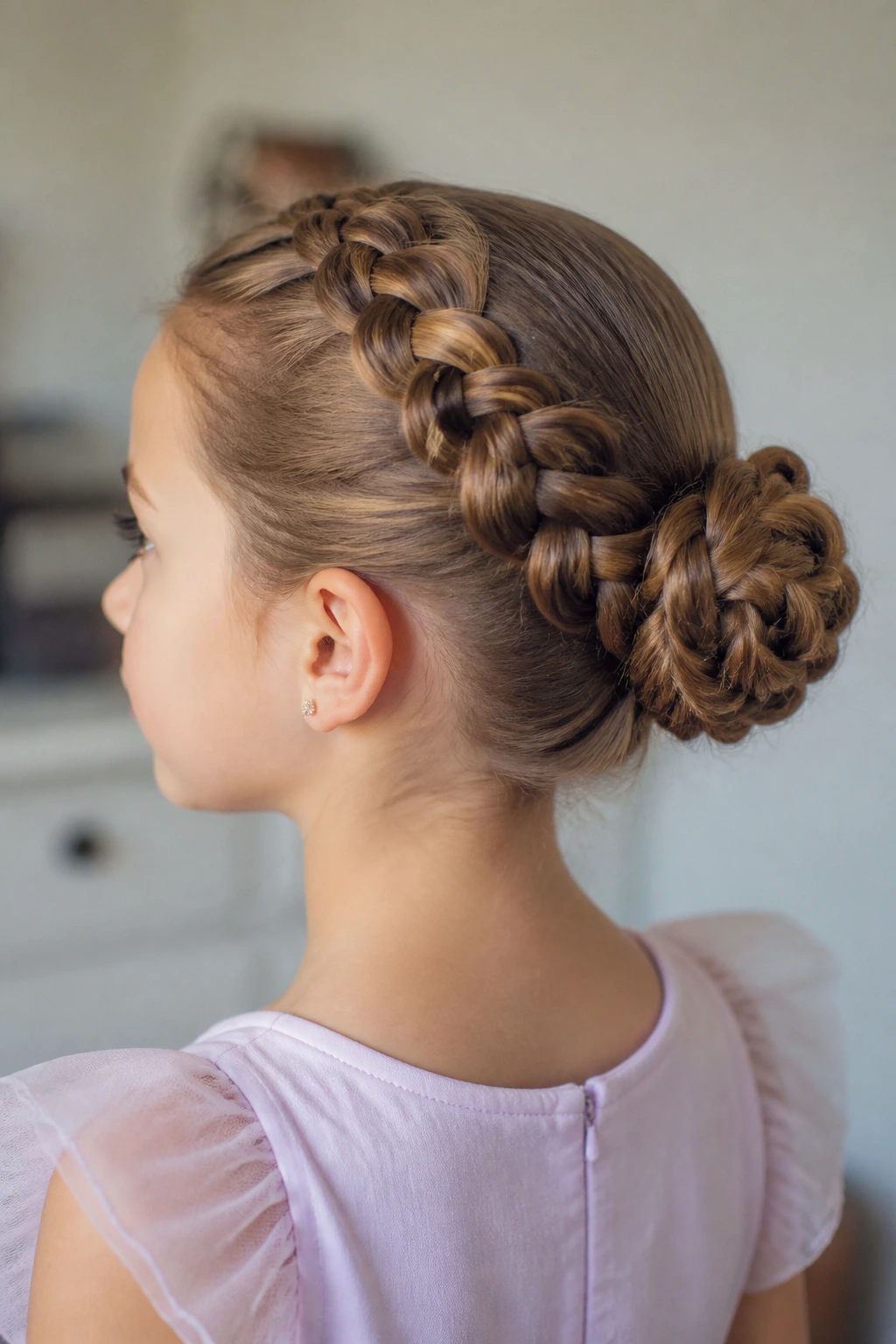
A braided bun combo starts with a braid and ends with a bun, which gives you the strength of one style and the neat shape of the other. Braid the hair all the way down, coil the length at the back of the head, and pin or wrap it into a bun. It’s a strong choice for performances, formal events, or a day when hair in the face is not allowed.
The braid helps manage long hair before it gets tucked away, which is especially useful if the tail is thick. If the bun feels bulky, twist the braid a little tighter before wrapping it. If the child has fine hair, a small bun donut can add shape without needing a ton of pins.
This one feels especially good when you want the hair secured but still want the braid visible.
22. Half-Up Space Buns
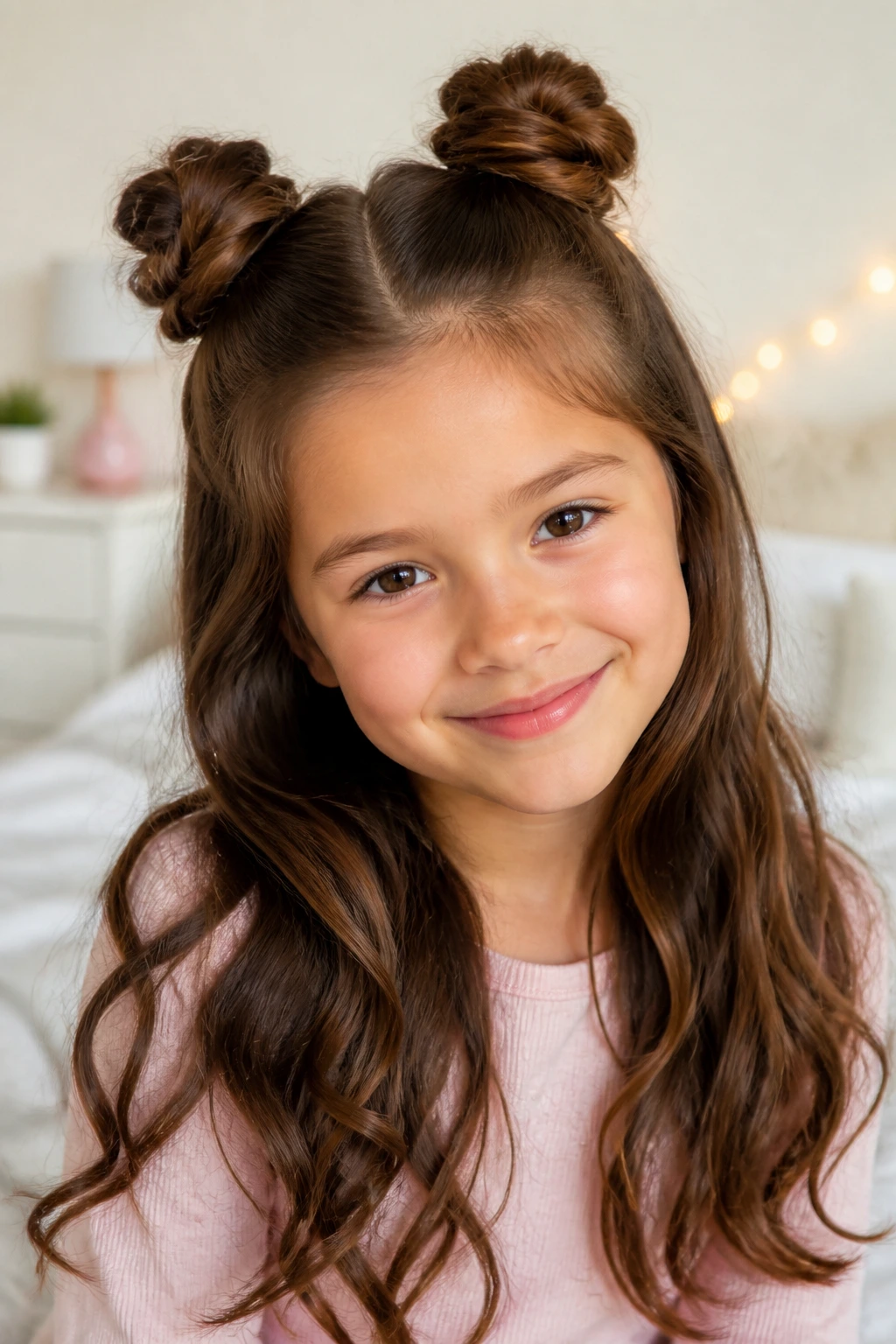
Half-up space buns are playful and a little bold without going full costume. Divide the top half of the hair into two sections, twist each one into a small bun, and leave the rest of the length down. The buns sit high and fun, while the loose hair keeps the style from feeling too tight or serious.
They work best when the hair has enough length to make the buns visible but not so much that they become heavy. On very long hair, keep the buns small and let the ends tuck in neatly. If you want extra hold, secure each bun with a second elastic before pinning or looping it.
This is the kind of style that gets smiles before the child even leaves the house. Which is half the point.
23. Loop Ponytail
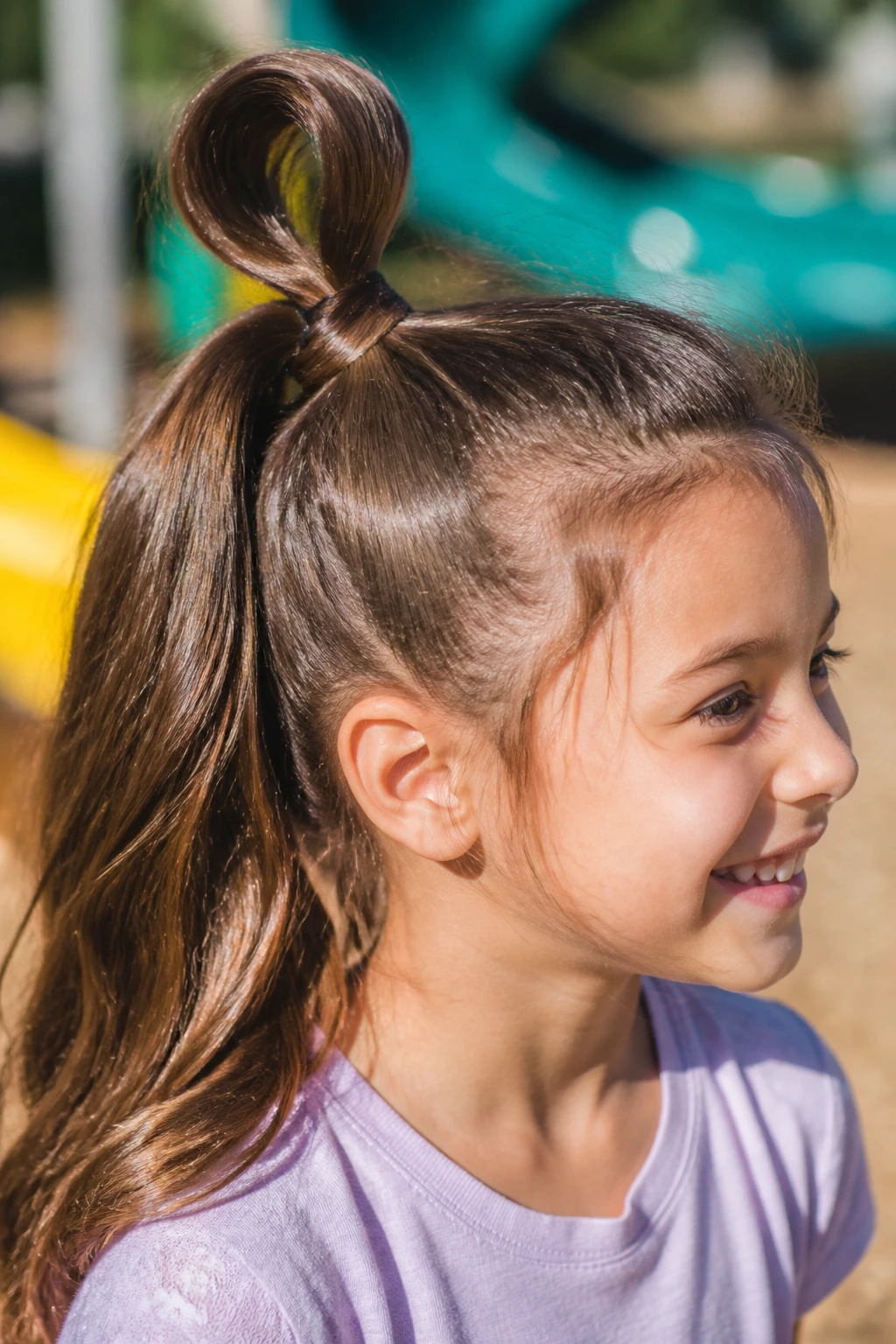
A loop ponytail, sometimes called a topsy-tail style, gives a plain ponytail a little twist — literally. After securing the ponytail, make a small opening above the elastic and flip the tail through it. You can do this once for a tidy loop or repeat it for a longer, more textured look.
It’s a good option when the hair is too slippery for braids but too long to leave hanging loose. The flip creates shape without much effort, and it tends to hold better than people expect, especially if the base is secure. If the hair is thick, leave the loop slightly loose so the tail doesn’t pull at the crown.
This is the kind of style that looks more thoughtful than the time it takes. Useful. Always useful.
24. Four-Strand Braid
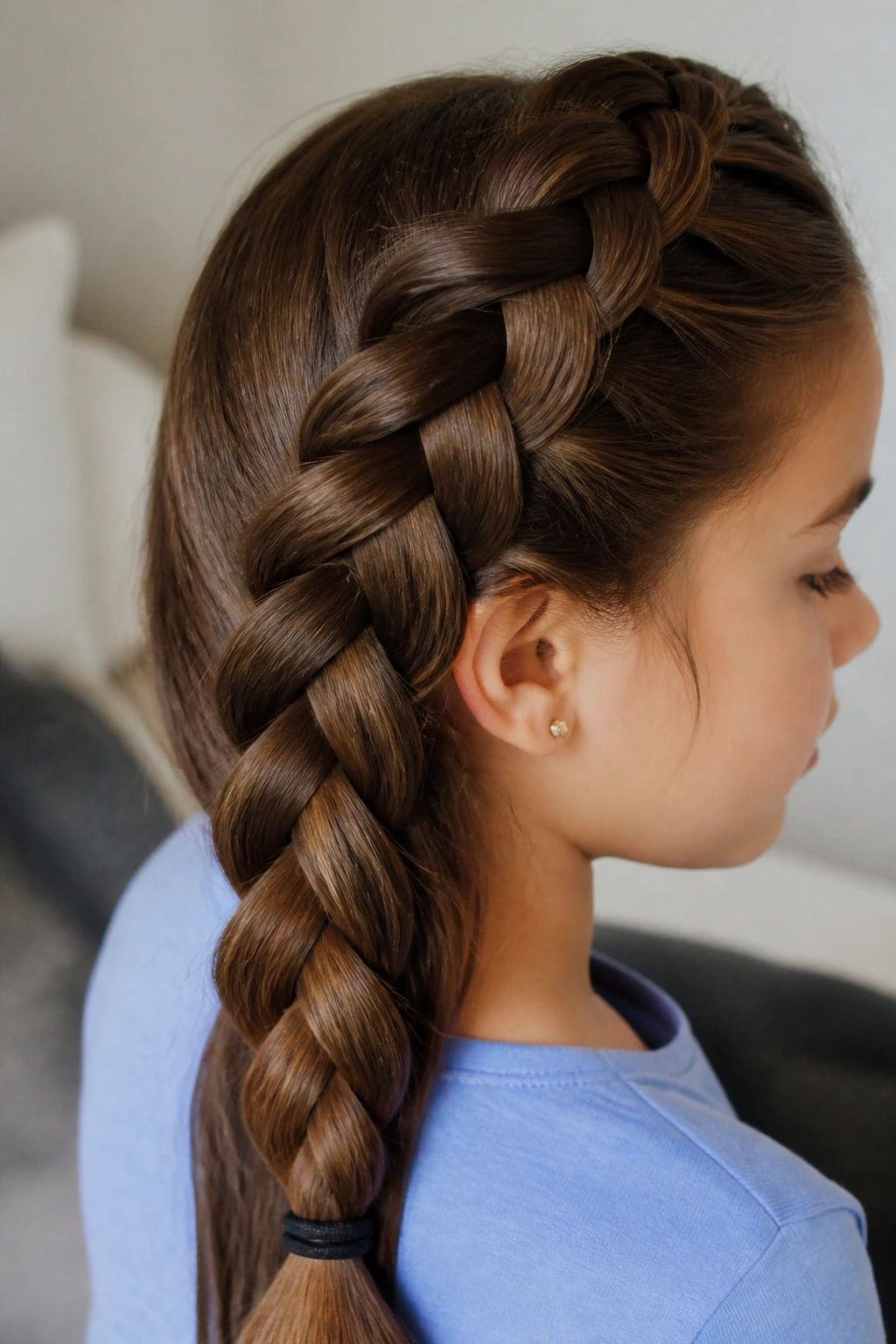
A four-strand braid has a wider, flatter look than the usual three-strand version, which makes it especially pretty on long hair. It takes a little practice because the strands have to cross in a specific pattern, but once you get the rhythm, the braid has a richer texture and a more woven look.
I would use this one for a day when the hair can be the centerpiece. It suits thick hair especially well because the braid shows off all that volume instead of compressing it. If the sections start to mix together, pause and comb each one before continuing. Messy four-strand braids get confusing fast.
It’s not a rushed-morning braid. It is a “we have a little time and we want the hair to look special” braid.
25. Mini Braids into One Ponytail
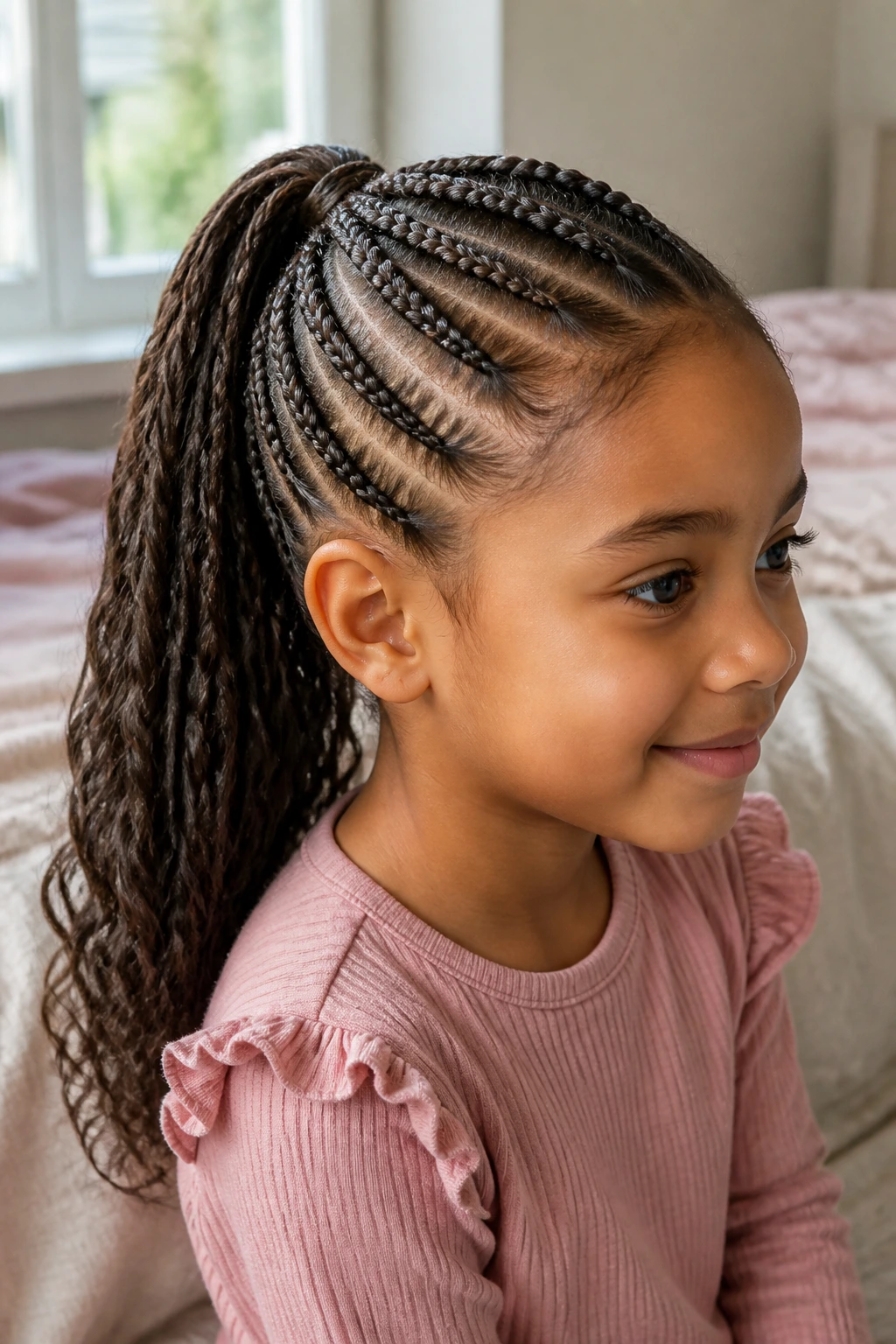
This style uses several small braids across the front or sides, then gathers them into one ponytail at the back. It keeps the front tidy, adds texture, and lets you work with the hair in little pieces instead of trying to tame everything at once.
It’s especially handy for layered hair, because each mini braid can catch a shorter section that would otherwise fall out of a single larger braid. Once the braids are secured, pull the rest into a ponytail and let the tail be as smooth or as textured as you like. A wrapped strand around the base finishes it off cleanly.
The whole style has a fun, slightly stacked look. Not overdone. Just busy in a good way.
26. Ribbon-Woven Braid
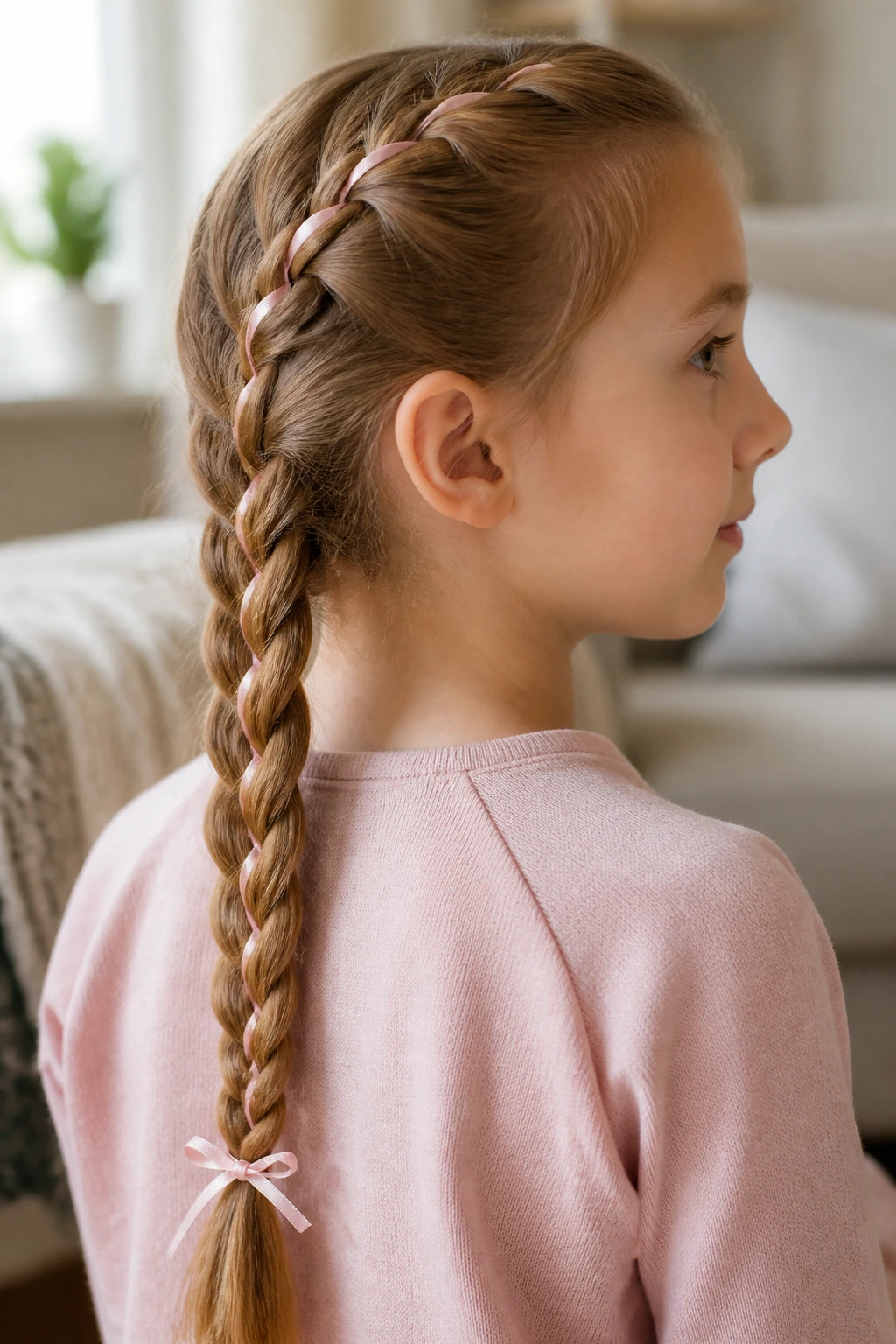
A ribbon-woven braid turns a plain braid into something a child will probably admire in the mirror. Choose a ribbon that is soft enough to bend but not so slippery that it slides out of the braid. Satin works, grosgrain works, even a narrow velvet ribbon can look lovely if you want a richer texture.
The ribbon can replace one of the strands or be threaded through the braid after the first few crossings. Either way, keep the width narrow so the braid still bends naturally. Wide ribbon can make the braid stiff and awkward, which defeats the point.
This style is best when you want a little color without clips everywhere. It’s one piece of fabric. That’s enough.
27. Soft Waves with Braided Front Pieces
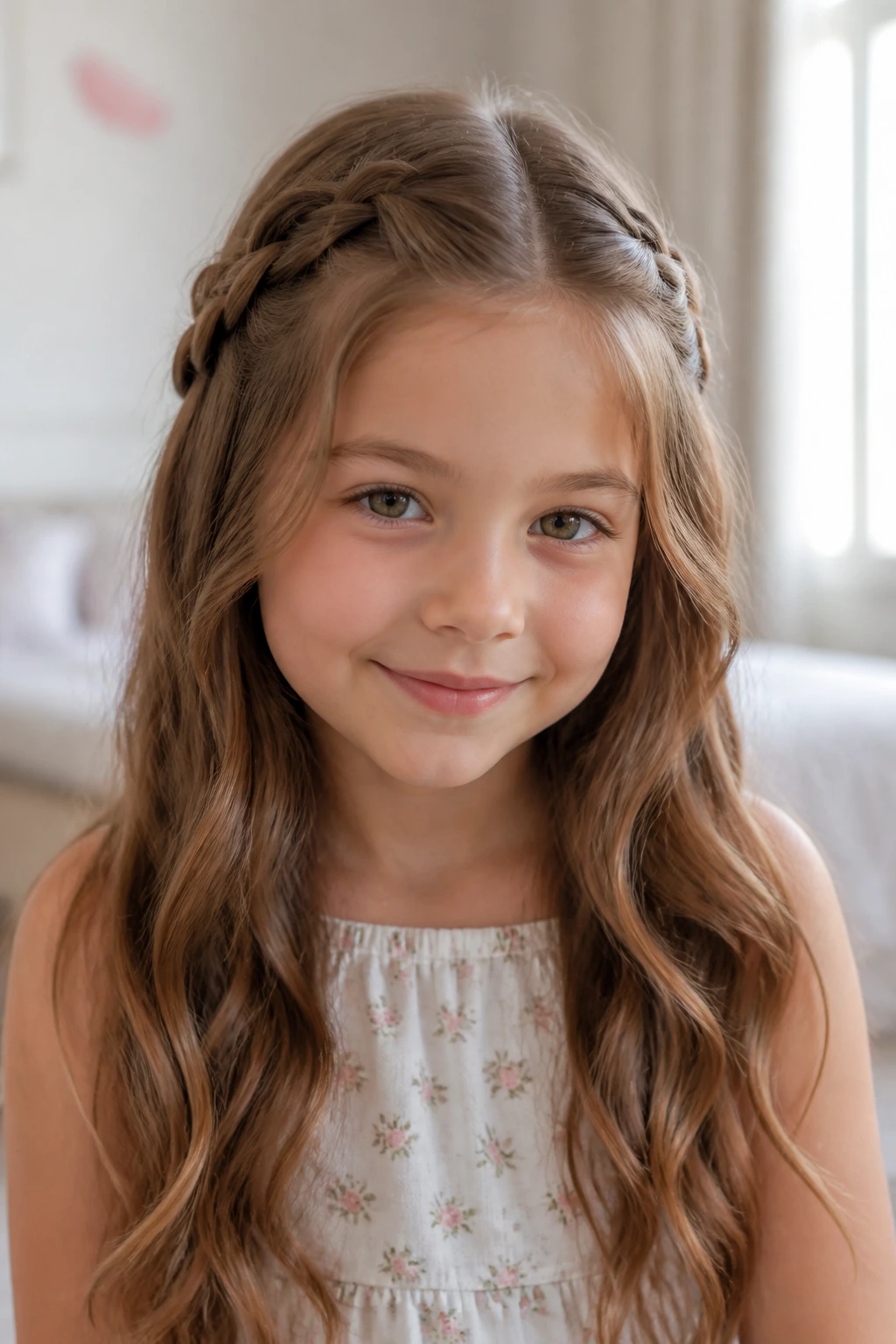
Not every long hairstyle for little girls needs to pull the whole head back. Soft waves with braided front pieces keep the hair mostly down, while a pair of small braids or twists at the front holds the face-framing sections out of the way. The result is relaxed, light, and good for children who don’t like the feeling of a full updo.
If the hair already has a natural wave, leave it alone and work with it. If it’s straight, a loose braid left in for a while can create texture without heat. Either way, the front braids keep the look from sliding into “plain hair that got brushed” territory.
This is a nice compromise style. The child still gets movement. You still get order. Rare, frankly.
28. Straight-Back School Braid
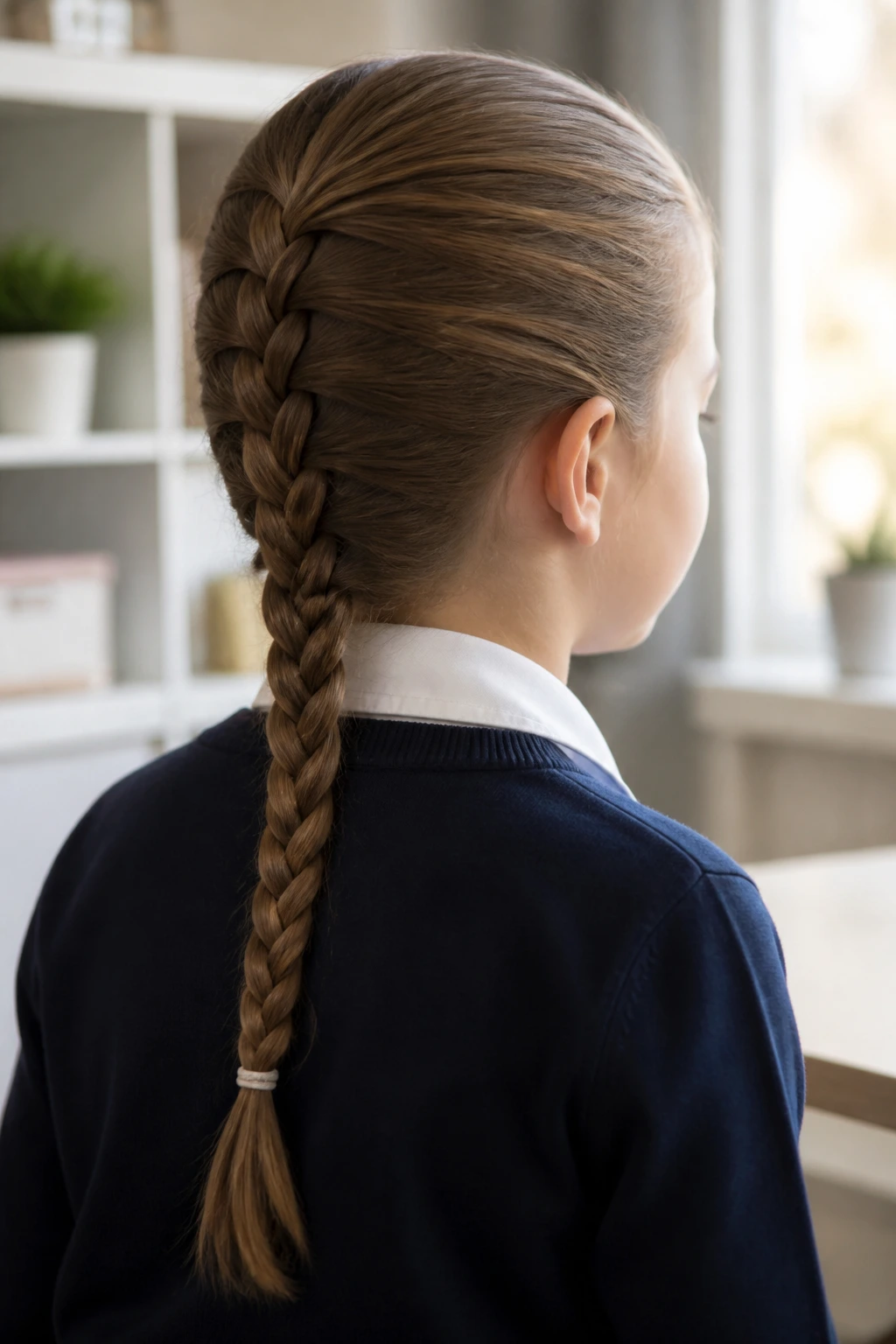
A straight-back braid is the simplest style in the bunch, and that’s exactly why it belongs here. Part the hair down the center or slightly off-center, gather it at the nape, and braid straight down the back. No side sweep, no fancy finish, no extra parts that need babysitting.
This braid is the one I’d trust for a long school day, a car ride, or any morning where the child is already halfway late before you’ve found the missing sock. It keeps the length contained, the scalp comfortable, and the ends from dragging across desks and coats. If the hair is very long, finish with a soft tie or bow near the bottom instead of trying to make the braid too tight at the base.
Plain is not a flaw here. It’s a feature.
Why Long Hair on Little Girls Needs a Different Routine
Long hair on a child behaves differently from grown-up hair, and not only because the head is smaller. The scalp can be more sensitive, the hairline is often finer, and the person wearing the style is going to run, roll, lean, nap, and probably tug at one side if something feels odd. That means a good style has to be comfortable first and decorative second.
The American Academy of Dermatology has long warned against repeated tight tension in the same spot, and that advice matters here. A style that pinches at the temples or pulls hard at the crown might look neat for an hour, then turn into a fussy mess by afternoon. I’d rather see a braid with a little looseness than a sharp, sore ponytail that makes the child want it out before recess.
Long hair also tangles in the places where it rubs: the nape, the collar, the back of the shoulders. Styles that lift the hair away from those friction points tend to last longer and stay cleaner-looking. That’s why braids, twists, buns, and ponytails with controlled ends earn so much space in the rotation.
The best part? You do not need a different plan every day. You need a handful of styles that match real life, then repeat the ones that behave well.
Essential Tools for These Hairstyles
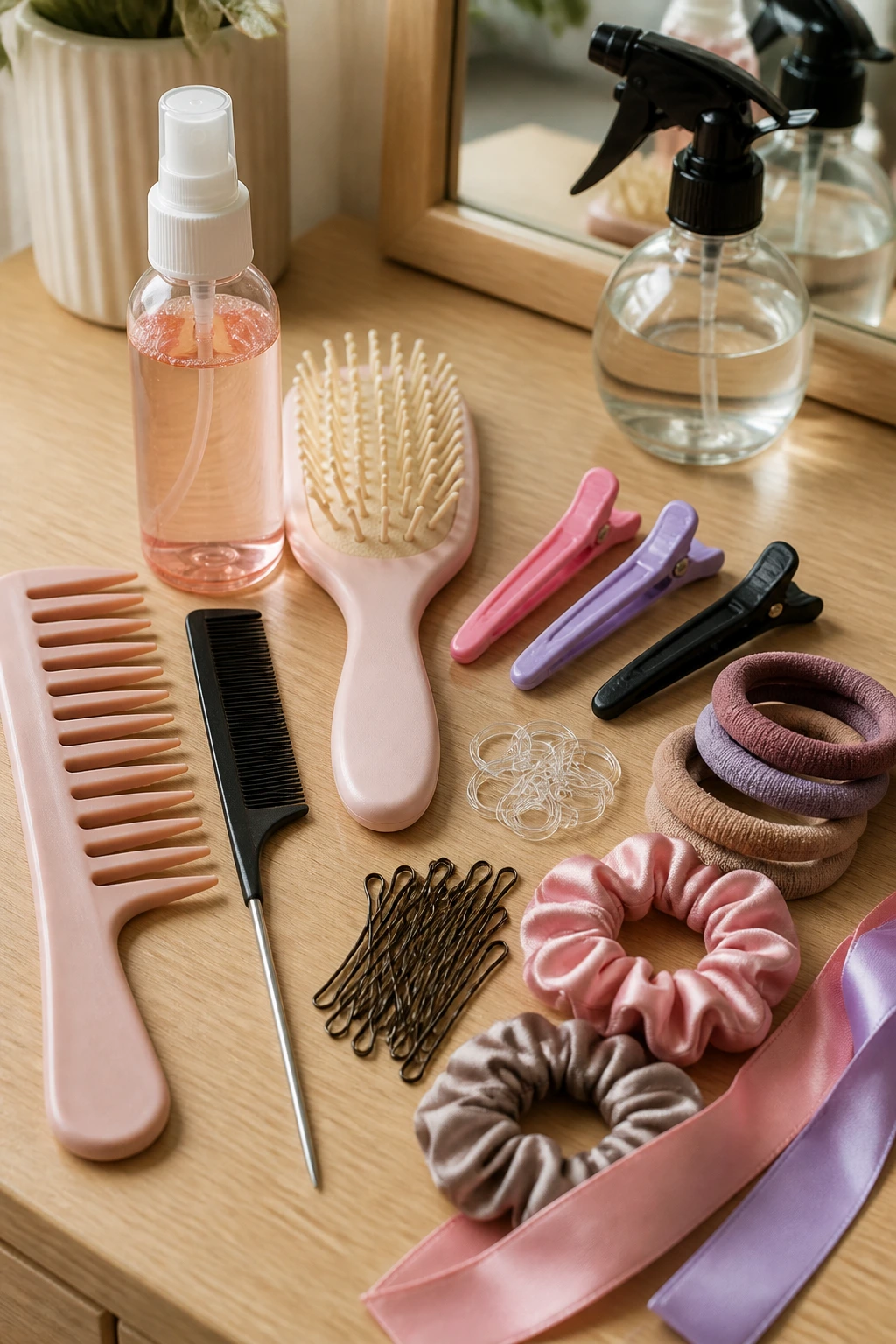
- Wide-tooth comb: Good for detangling long hair without tearing through knots at the ends.
- Rat-tail comb: Makes cleaner parts, which matters more than people think for braids and half-up looks.
- Detangling spray: Helps with knots near the nape and makes braid sections less slippery.
- Soft-bristle brush: Smooths ponytails and top knots without roughing up the hairline.
- Sectioning clips: Keep front pieces out of the way while you work on the rest.
- Clear elastics: Best for tiny braids, pull-through styles, and ribbon details where bulk gets in the way.
- Snag-free fabric bands: Gentler than plain rubber bands for daily ponytails.
- Bobby pins: Useful for crown braids, twisted buns, and any style that needs a hidden anchor.
- Satin scrunchies or ribbons: Reduce tugging and add a finished look without hard edges.
- Water spray bottle: A light mist helps tame flyaways and gives the hair a little grip for braiding.
Smart Hair Product and Ribbon Picks
Not every product belongs in a child’s hair. Heavy creams, sticky gels, and thick oils can make long hair collapse at the roots or feel coated by lunchtime. A small amount of leave-in detangler on the ends is usually enough, and a light styling cream on the hairline is plenty if the goal is to smooth flyaways.
The safest shopping rule is simple: buy for grip, not for shine. A braid needs some slip at first so you can section the hair, then enough hold that it doesn’t slide apart while you’re working. That’s why many parents keep both a spray detangler and a tiny bit of styling cream on hand. One helps the comb move. The other helps the style stay where you put it.
Ribbons matter too, especially on little girls’ long hairstyles. Satin looks polished, but it can be slippery. Grosgrain is a little sturdier and tends to stay tied. If the child likes bows that don’t budge, choose a ribbon with some texture. If the style is for photos or a party, softer ribbon tails are nicer because they drape instead of sticking out stiffly.
And one small opinion from the practical side: buy elastics in more than one size. Tiny clear bands are perfect for braids, but a ponytail on thick hair usually needs a stronger band. Trying to force one elastic to do every job is a fast way to create frustration.
How to Wear These Styles to School, Parties, and Playdates
School mornings: Choose styles that keep the front clear and the base comfortable. Double Dutch braids, a straight-back braid, a bubble ponytail, or braided pigtails are the workhorses here because they survive backpacks, lunch, and movement without needing constant fixing.
Playdates and park time: Soft styles do better than stiff ones. A loop ponytail, twisted half-up pigtails, or soft waves with braided front pieces gives some structure but still lets the child move without worrying about hair in her face.
Birthday parties and family photos: This is where ribbon-woven braids, crown braids, waterfall braids, and braided buns earn their keep. They look intentionally dressed up, even if the rest of the outfit is simple.
Hot or sweaty days: Put the hair up, but keep the tension light. High ponytails, bubble styles, top knots, and braided buns help keep the neck clear without turning the scalp into a sore spot.
When the child wants to pick: Offer two or three choices only. Too many options turn a ten-minute hair task into a tiny committee meeting.
Small Tweaks That Change the Whole Look
Flyaway control: A damp toothbrush or small smoothing brush with a speck of styling cream can tame the front hairline without flattening the whole style. Use almost nothing. More product on kids’ hair tends to look heavy fast.
Volume: If a braid feels too flat, gently tug the outside edges after it’s finished. Don’t yank. Just widen the braid a little so it looks fuller and more relaxed.
Color without damage: Ribbons, bows, and soft fabric elastics add color without dye, chalk, or anything that needs washing out later. I prefer this route because it’s easy to change tomorrow.
Texture support: On fine hair, a little dry texture spray or a mist of water gives the strands enough grip to stay in place. On curly hair, a leave-in conditioner on the ends can help the style slide less and break less.
Fast fix: If a hairstyle starts slipping at school, a single hidden bobby pin can save the whole thing. One. Not twelve. Twelve usually means the style needs to be redone.
Keeping the Style Neat Overnight and the Next Morning
Long hair rarely stays exactly where you left it, which is why bedtime matters. Braids and twists are the easiest styles to preserve because they don’t flatten as badly as a ponytail. If the child can tolerate it, a satin pillowcase or soft bonnet cuts down on friction and helps keep the ends from fuzzing out by morning.
For next-day wear, styles usually fall into three categories. Braids can often be worn again with a quick finger-comb and a tiny mist of water. Ponytails and bubble styles may need the elastic shifted a half inch higher because the weight of the hair drags them down overnight. Buns tend to loosen at the crown, so a fast pin or rewrap in the morning is usually enough.
If you’re trying to stretch a style for a second day, work from the ends up. Detangle the tail first, then smooth the middle, then touch the roots last. That order keeps you from turning one small knot into a full-brush argument.
The honest truth: some styles are one-day styles. A waterfall braid with loose pieces around the face usually looks best fresh. A straight-back braid, on the other hand, can hold together for the next school morning if it was done cleanly the first time. Learn which is which and life gets easier.
Ways to Adapt These Styles for Curly, Fine, Thick, or Tender Scalps
Curly-Coil Friendly: Skip aggressive brushing and work with damp hands, leave-in conditioner, and finger detangling. Braids and twists will hold better if you respect the curl pattern instead of trying to flatten it into submission.
Fine-Hair Lift: Use smaller sections and lightweight elastics so the style doesn’t slip. Fine hair often looks better with a little texture, so a light mist of water or a gentle detangler is usually enough.
Thick-Hair Control: Divide the hair into more sections than you think you need. Thick hair looks beautiful in braids and pull-through styles, but it needs room to move or the base turns bulky fast.
Tender-Scalp Version: Keep the parting clean but the tension soft. Low braids, loose half-up styles, and soft buns are better than hard slicked-back looks if the child complains about pulling.
Ribbon-Ready Party Hair: If the child wants more color, use satin ribbons, small bows, or fabric-wrapped elastics. That gives a dressed-up result without making the style any harder to remove later.
No-Braid Backup Plan: If the hair is tangled or the child is done cooperating, a smooth ponytail or low bun with a ribbon is still a valid result. Not every morning needs a masterpiece.
Common Mistakes to Avoid
The first mistake is pulling the hair too tight at the hairline. You can usually spot it by the child rubbing her temples or asking for the style to come out within an hour. The fix is to loosen the base and shift the tension lower, especially around the crown and edges.
Another common one: styling tangled hair from the top down. That just pushes knots into the ends and makes the braid lumpy. Start at the bottom, detangle in small sections, and move upward only after the lower half is smooth.
Slippery elastics are another headache. If the band keeps sliding off the ponytail or braid, it’s the wrong size or the wrong material. Swap to a snag-free fabric tie or use a second elastic for thick hair instead of pulling one band tighter and hoping for the best.
The last mistake is overloading the hair with product. A little smoothing cream can help. A lot turns the roots greasy and the braid limp. Kids’ hairstyles need control, not a shellacking.
Questions Parents Ask in the Bathroom Mirror
Which long hairstyle lasts the longest on little girls?
Usually a tight-ish braid style with a secure base — double Dutch braids, a straight-back braid, or a braided bun combo. Those styles keep the hair anchored away from the nape and hold better through movement.
What if my child has fine hair that slips out of everything?
Use a light mist of water, tiny clear elastics, and smaller sections. Fine hair usually stays better in bubble ponytails, loop ponytails, and braided headbands than in heavy buns.
Can these styles work on curly hair?
Yes, and some look better on curls than on straight hair. Use your fingers more than a brush, keep the tension soft, and let the curl pattern stay visible instead of trying to iron it flat with brushing.
Is it better to braid wet or dry hair?
Slightly damp hair usually braids more neatly, but dripping-wet hair can stay damp too long and feel uncomfortable. A light mist is enough for most styles; you want control, not soaked hair.
How do I stop flyaways around the forehead?
A small amount of styling cream on a toothbrush or edge brush usually handles the front without turning the whole head greasy. Smooth once, then stop. Repeated brushing just wakes the flyaways back up.
What if the hairstyle starts falling apart before pickup?
Carry a couple of clear elastics and one bobby pin in your bag. Most failing styles can be rescued by tightening the base once, not rebuilding the whole thing from scratch.
Are tight styles bad for kids’ hair?
Repeated tight styles in the same place can stress the hairline and make the scalp sore. Rotate between braids, buns, ponytails, and looser half-up looks so one spot isn’t doing all the work every day.
How often should I redo a braid or ponytail?
If it still feels comfortable and the base is holding, one school day is usually fine. Once the scalp starts feeling sore or the hair looks frayed around the edges, it’s time to redo it instead of trying to squeeze another day out.
Styles That Stay Cute Past Lunch
The best long hairstyles for little girls are the ones that don’t ask for constant rescue. They hold the front pieces, keep the ends out of the way, and still look like someone meant to do the hair on purpose. That’s the sweet spot — neat enough to feel finished, soft enough that the child can move without thinking about it.
If you only keep a few styles in regular rotation, make them the ones that respect the hair’s texture and the child’s tolerance level. A good braid, a reliable ponytail, and one dressier style with ribbon or twists can cover almost every ordinary day. The rest is just swapping details.
Pick the styles that fit the hair, not the ones that fight it, and the whole morning gets quieter.
