



Bangs can make wavy hair look expensive, or they can make it look like you lost a small battle with a hairdryer. The difference usually has less to do with the wave itself and more to do with where the fringe sits, how much weight it carries, and whether the front pieces are cut to move with the rest of the hair. Wavy hairstyles with bangs work best when the fringe and the bend are allowed to cooperate instead of fighting for the same space on your forehead.
That’s the part people miss. A blunt line cut straight across a strong wave pattern can puff, split, or flip in all the wrong places. A softer shape — curtain bangs, bottleneck fringe, wispy pieces, side-swept lengths — gives the hair somewhere to go when humidity shows up, when your cowlick takes over, or when you’re three hours past wash day and the roots have started telling the truth.
I’m partial to cuts that look better after they’ve lived a little. Waves should move. Bangs should not sit there like a ruler. The smartest styles here lean into texture, trim the bulk where it matters, and keep the front from turning into a separate project every morning. Some are easy and forgiving. Some are sharper and more styled. All of them have a place, if you know what you’re looking at.
Why This Collection Works So Well
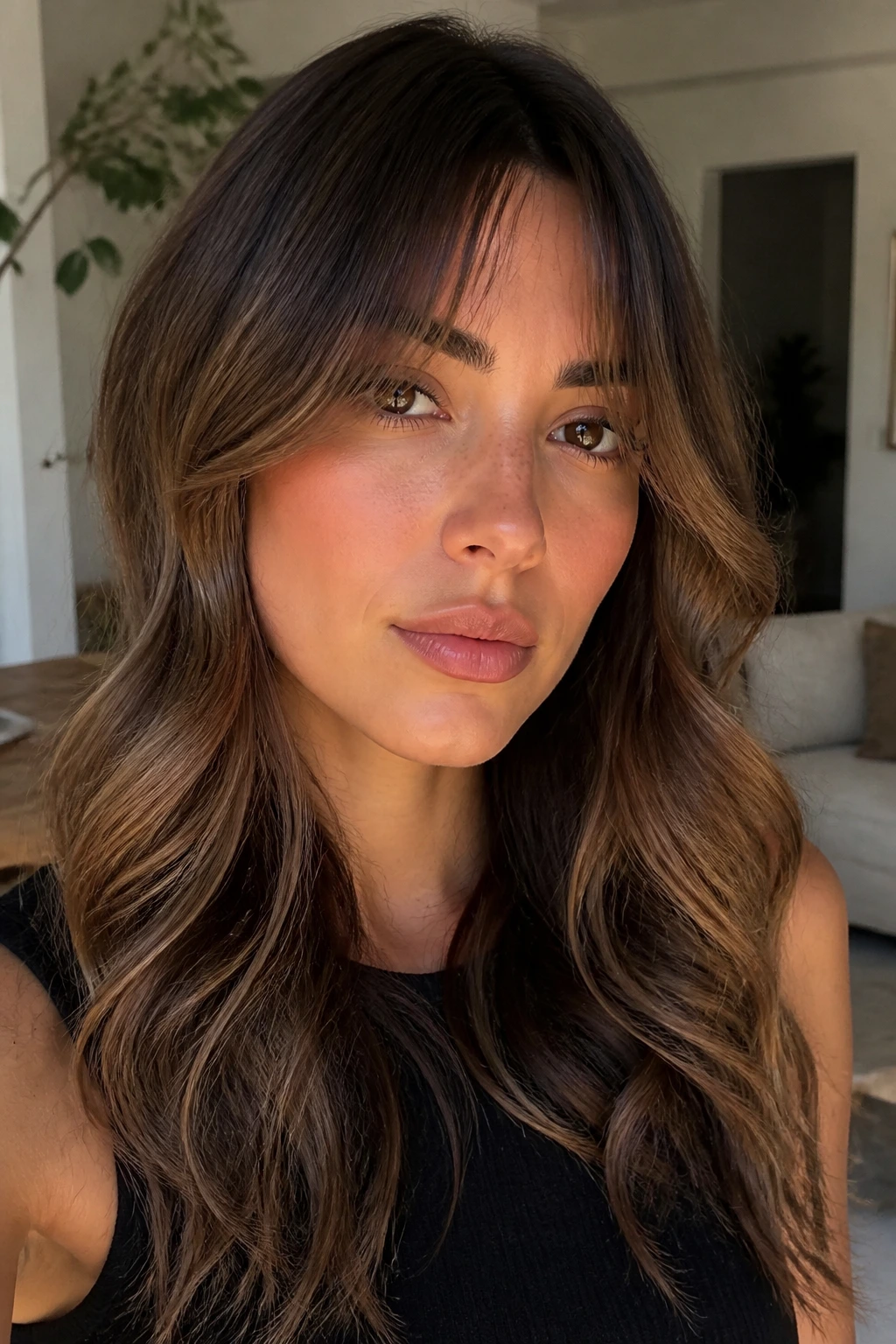
- Face-framing without fuss: The right bang shape pulls attention to the eyes and cheekbones, but it does it with soft bends instead of a hard, helmet-like line.
- Texture-friendly by design: These cuts work with wave pattern, cowlicks, and shrinkage instead of pretending hair dries in a perfect straight sheet.
- Low-heat options included: Several looks can be air-dried, twisted, or set with a quick bend at the front rather than a full blowout.
- Short, medium, and long lengths all show up: You do not need waist-length hair to make bangs work with waves, and you do not need a bob to keep the shape interesting.
- Salon language gets easier: Once you know the difference between curtain, bottleneck, wispy, and side-swept bangs, the cut conversation gets much more useful.
- Day-two hair stops being the enemy: A good wavy fringe can look even better after it loosens up a little, which is one reason these styles age so well between washes.
1. Soft Curtain Bangs with Loose S-Waves
Soft curtain bangs are the easiest way into the whole bangs-and-waves thing, and I mean that in the best possible way. The fringe splits at the center, slides off the forehead, and blends into long face-framing pieces, so the hair never has to sit in one rigid line. The wave pattern gets to keep its own rhythm.
Why It Works
A center part gives the front pieces room to fall naturally, which matters a lot when your hair wants to bend the second it dries. If the bangs are cut to hit around the bridge of the nose or just below it, they can open up around the brows instead of bouncing right above them. That little bit of extra length is what keeps them from looking too short when the wave pattern kicks in.
I like this shape on medium-density hair because it gives softness without stealing too much weight from the front. Use a 1.25-inch curling iron or a round brush to add a bend away from the face, then let the rest of the wave stay loose. The result should look casual, not careless.
Best For
- Oval, heart, and long faces
- Hair that air-dries with an obvious bend
- Anyone who wants bangs but does not want to babysit them all day
Tip: Keep a tiny bit of dry shampoo at the root of the fringe. The front area gets oily first, and curtain bangs will fall cleaner if the roots have a little grip.
2. Brow-Grazing French Fringe with Airy Waves
This is the cut that looks effortless from across the room, but it’s quietly doing a lot of work. The fringe sits just at or slightly below the brows, with enough softness on the ends that it never feels blunt in the forehead area. Pair it with airy waves and the whole style gets that lived-in, slightly undone edge.
The trick is density. A French fringe should have enough weight in the middle to feel intentional, but not so much that it blocks your eyes like a curtain. On wavy hair, the outer edges can be feathered a little shorter so they tuck into the temples instead of flaring out. That matters more than most people think.
I’d reach for this if you like a little drama without a lot of styling fuss. It looks especially good when the waves are brushed out softly, not held in tight spirals. There’s a reason this shape keeps showing up on low-key chic cuts: it reads strong and relaxed at the same time.
3. Wispy Bangs with Long Layered Waves
Wispy bangs are the answer when you want fringe but not the weight of a full front line. The ends are point-cut, the center stays airy, and the whole thing blends into longer layers that move around the collarbone. On wavy hair, that softness keeps the front from puffing into a heavy triangle.
What Makes This One Work
The real advantage here is flexibility. A wispy fringe can sit slightly off-center, split in the middle, or sweep to one side without looking like the haircut has gone wrong. That means it plays nicely with waves that are looser at the crown and fuller at the ends.
If your hair is fine, this is one of the safest bang choices because it does not remove too much mass. If your hair is thicker, ask for the fringe to be thinned only at the ends, not from the top. Too much thinning near the root can make the front separate and piece out in ugly little strings.
- Best with a lightweight mousse at the roots
- Works well on shoulder-length or longer cuts
- Needs a trim more often than curtain bangs if you want it to stay neat
A small warning: wispy does not mean sparse. You still need enough hair in the fringe to see the shape.
4. Bottleneck Bangs on a Shoulder-Length Lob
Bottleneck bangs are one of the smartest fringe shapes for a lob, especially when the hair has a natural wave. They start a little narrower at the forehead, then open up around the temples and cheeks, which gives the face a soft frame without boxing it in. On shoulder-length hair, that shape keeps the whole cut from looking too round.
How to Style It
I’d style this with a round brush or a medium wand, keeping the bend soft and directional. The center is usually the shortest point, but not so short that it sits high above the brows. If your waves are strong, leave the front a touch longer when the cut is finished dry. That extra length gives you room for shrinkage.
This is a good cut when you want something modern but not fussy. The lob keeps the ends blunt enough to look clean, while the bottleneck fringe adds movement where the eye naturally lands. It’s one of those styles that looks expensive with very little actual drama.
5. Shag Cut with Piecey Bangs
If your hair has a mind of its own, the shag is usually the haircut that stops acting offended by it. Piecey bangs pair beautifully with a shag because the whole cut is built on layers, movement, and a little bit of mess. Nothing needs to sit in one exact spot.
The fringe here should not be too thick or too tidy. You want separation. You want little chunks of hair to fall in different directions, because that’s what makes the front feel part of the texture instead of pasted on top of it. A bit of mousse at the root and a dab of cream through the ends is usually enough.
This is my pick for people who hate blow-drying every day. Diffuse the hair halfway, twist a few front pieces with your fingers, and let it dry the rest of the way. The cut does the heavy lifting. You just keep it from getting overworked.
6. Side-Swept Bangs with Polished Hollywood Waves
Side-swept bangs are underrated because they solve a very specific problem: what if you want waves, but you also want the front to behave? A deep side part shifts the weight of the hair across the forehead and lets the fringe sweep into the wave pattern instead of sitting across it.
The polished version of this look asks for more structure. Think brushed-out waves, a clean side part, and a front section that’s bent away from the face and clipped while it cools. If you leave the side-swept pieces loose too early, they’ll collapse before they set. A duckbill clip or two makes a real difference here.
This style is one I reach for when the hair needs to look finished. It’s sharp enough for events, but it still has softness at the brow and temple. The waves should look glossy and deliberate, not crunchy. The bangs should feel like a fold in the fabric, not a hard border.
Best styling note
Use a boar bristle brush lightly at the front, then stop. Too much brushing and the bend vanishes.
7. Micro Bangs with Tousled Texture
Micro bangs are not subtle, and that is the point. The tiny fringe sits high on the forehead, leaving most of the face open while the rest of the wave pattern does its own loose, tousled thing. It’s a contrast cut — sharp at the front, messy through the body — and that contrast is what makes it work.
This one is not for anyone who wants to forget their bangs exist. Micro fringe asks for regular trims, often every three to four weeks, because half an inch changes the whole mood. But on wavy hair, the short length can be a gift. The front stays separate from the rest of the texture instead of getting swallowed by it.
I like this cut on shorter waves and on people with strong brows. It throws attention upward in a way that feels intentionally graphic. And because the waves below are left loose, the whole look avoids turning too severe.
8. Wolf Cut with Feathery Fringe
The wolf cut is what happens when a shag gets a little wilder and stops apologizing for volume. Feathery fringe fits that energy perfectly. The bangs are sliced soft at the ends, the layers jump around the crown, and the wave pattern gets room to spread out instead of being squeezed into a single shape.
A good wolf cut has built-in movement in the crown and around the ears, which keeps the fringe from looking isolated. That matters, because a heavy bang line would kill the whole point. You want texture from root to end, and you want the front to look like it belongs to the rest of the haircut.
This is one of the best choices for thick or coarse wave patterns. It removes bulk without flattening the outline. Air-drying works, though a diffuser helps if the crown tends to dry in awkward directions. The fringe can be finger-styled with a tiny bit of styling cream, then left alone. Honestly, that’s the beauty of it.
9. Arched Bangs with Beachy Waves
Arched bangs follow the brow line with a gentle curve, which gives the forehead area a softer shape than a straight fringe. Pair that with beachy waves and the cut suddenly feels clean but not stiff. The front opens up just enough to show the eyes, while the sides keep the shape grounded.
The Curve Matters
An arched bang needs to be cut with the wave pattern in mind, especially if your hair springs up when it dries. A fringe that looks a touch long when wet may land perfectly once the hair is dry. That little bit of planning prevents the bangs from ending up too short and too round.
Beachy waves around this fringe should stay loose, not uniform. A few bends can be deeper than others. That inconsistency is part of the charm. If every wave is identical, the bangs start to feel separate from the rest of the cut.
- Best on medium-textured hair
- Good for round and oval faces
- Works well with a side part or a slight center part
My opinion: this is one of the most forgiving shapes if you like your bangs to stay visible but not blunt.
10. Feathered Bangs with Blunt Ends
This combo works because the softness of the front balances the discipline of the ends. Feathered bangs keep the forehead area light, while blunt ends make the waves look deliberate rather than vague. It’s a neat contrast, and I like it more than people expect to.
The key is not over-layering the whole head. If the ends are too thinned out, the haircut loses its shape and the waves start drifting. A clean hem gives the eye something to hold onto, which is especially useful if your hair is fine and tends to disappear at the bottom.
Feathered bangs can be brushed forward or split slightly in the center, depending on the day. They’re a good middle ground when you want fringe but do not want to commit to a strong curtain shape. The blunt ends keep the style from reading too casual, so it still works for dressier settings.
11. Half-Up Waves with Long Face-Framing Bangs
This is less about a permanent cut and more about a very usable styling pattern. The bangs and front layers stay long enough to tuck into a half-up look, which makes it a smart move for anyone growing out fringe. The waves keep moving through the lower half, while the front pieces soften the face.
The trick is to leave the shortest front sections around cheekbone length rather than trying to force them into a full bang line. That length gives you options. You can wear them forward, twist them into the half-up, or let them fall out on purpose so the style feels less fixed.
This is one of the most practical looks on the list. It’s especially useful if you like your hair off your neck sometimes but still want the face-framing effect of bangs. A few bobby pins near the temples can change the whole shape in thirty seconds.
Best when
- Your fringe is growing out
- You want a low-tension updo
- You like a softer front with a little movement around the cheeks
12. Deep Side Part with Long Sweeping Bangs
A deep side part changes everything. The bangs stop acting like a front-facing curtain and start behaving like a long sweep that crosses the forehead and slides into the waves. It creates a little drama without needing a big haircut move.
This style is especially good if one side of your hair has a stronger cowlick or a flatter root. The side part gives the front a direction, and that direction helps the waves follow through the rest of the cut. I also like it on long faces because the sweep softens the vertical line without making the hair feel heavy.
You do need some root control here. Blow-dry the front in the opposite direction for a few seconds, then flip it back to the part and finish with a cool shot. That tiny detour at the root keeps the sweep from collapsing by noon.
13. Razor-Cut Layers with Bottleneck Fringe
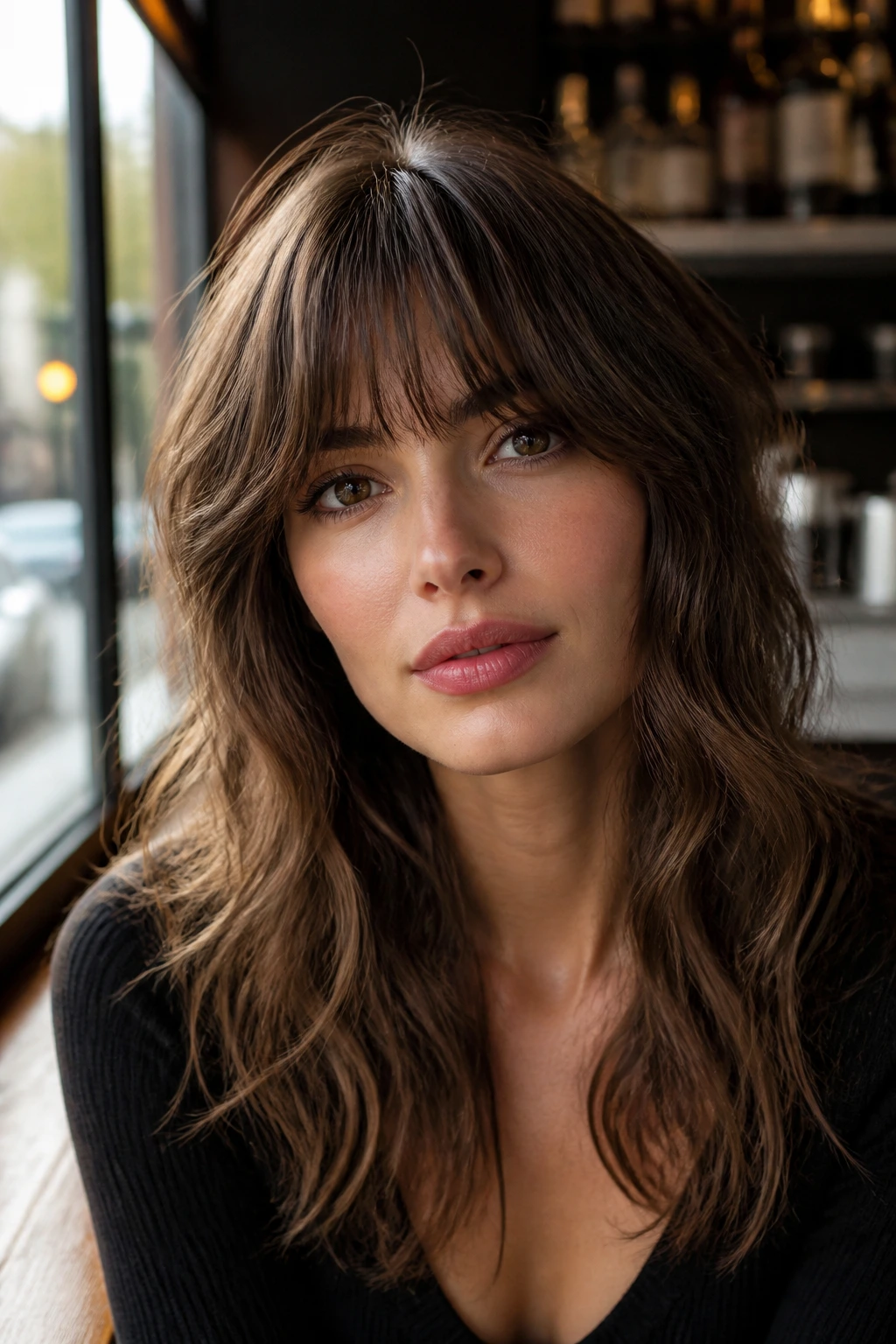
Razor-cut layers bring a different kind of softness to wavy hair. The ends look airy, the layers feather out instead of stacking, and the bottleneck fringe gives the front enough structure to keep the cut from drifting into fluff. It’s light, but not fragile.
I like this shape on medium to thick hair because the razor work can remove bulk while preserving motion. The fringe should still have some weight at the center, especially if the hair bends strongly when it dries. Too much thinning near the forehead can make the bangs split in unattractive little strands.
A good fit if you want:
- Motion without a shaggy outline
- A fringe that opens around the temples
- Waves that dry with less puff at the ends
The big caution here is technique. A razor cut needs a hand that knows where the hair will fray and where it will stay smooth. If your ends are already dry or porous, point cutting may be a better choice than a razor. Same shape, less risk.
14. Pixie-Bob with Short Textured Bangs
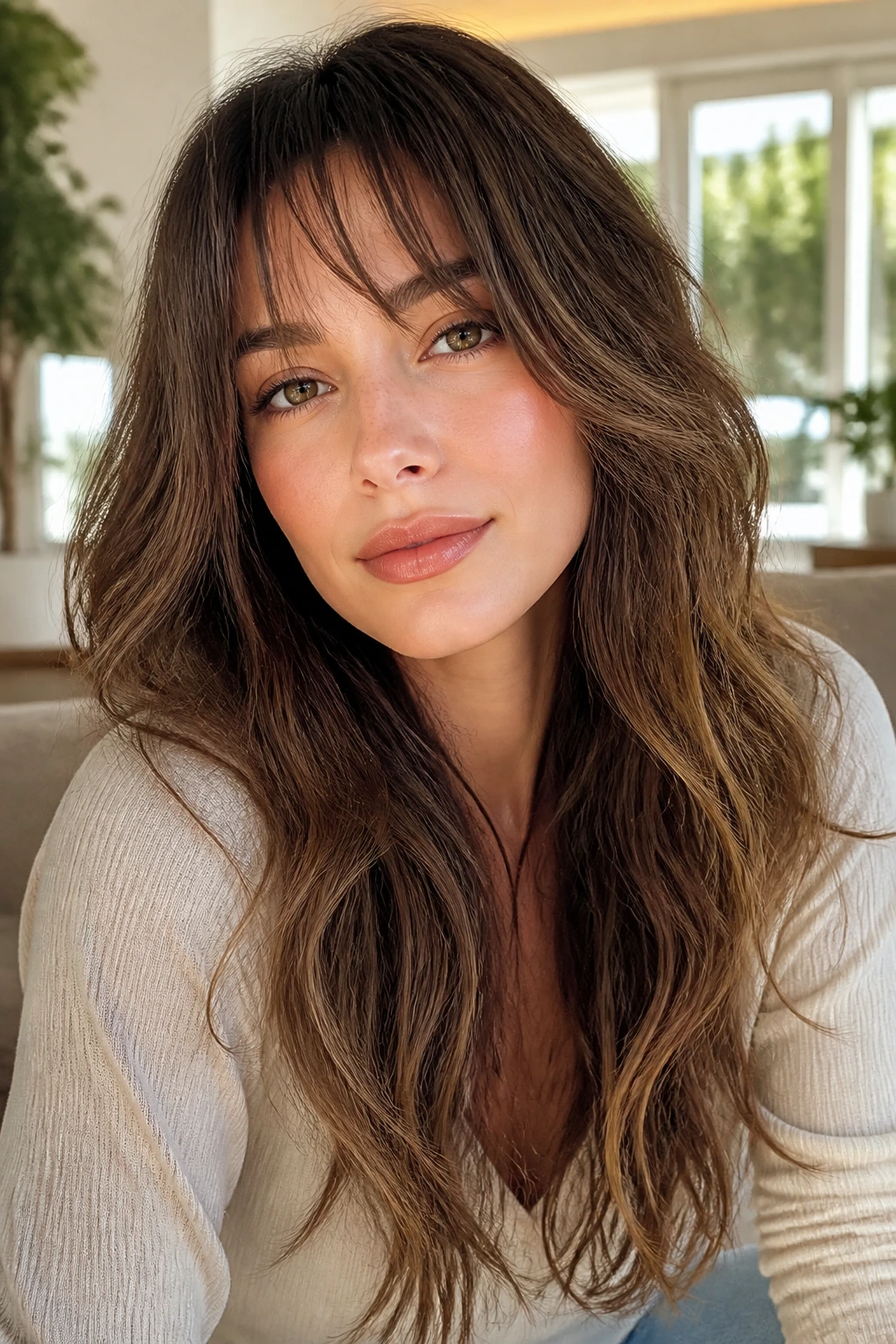
Short hair with bangs and waves can look sharp instead of sweet, and the pixie-bob is proof. The length sits somewhere between a long pixie and a cropped bob, with enough wave left in the top and crown to keep the shape from going flat. Short textured bangs add a little attitude at the front.
This cut is best when the texture is concentrated rather than evenly loose everywhere. You want lift at the roots and a bend through the top layers. A tiny amount of texturizing spray or dry wax can define the front pieces without turning them stiff. Work it in with your fingers, not a brush.
The payoff is speed. This is one of the fastest looks on the list to style, and it looks polished even when it’s a little imperfect. If you’ve been wearing longer waves and want to cut time out of your morning, this is a strong move.
15. Mermaid Waves with Center-Part Curtain Fringe
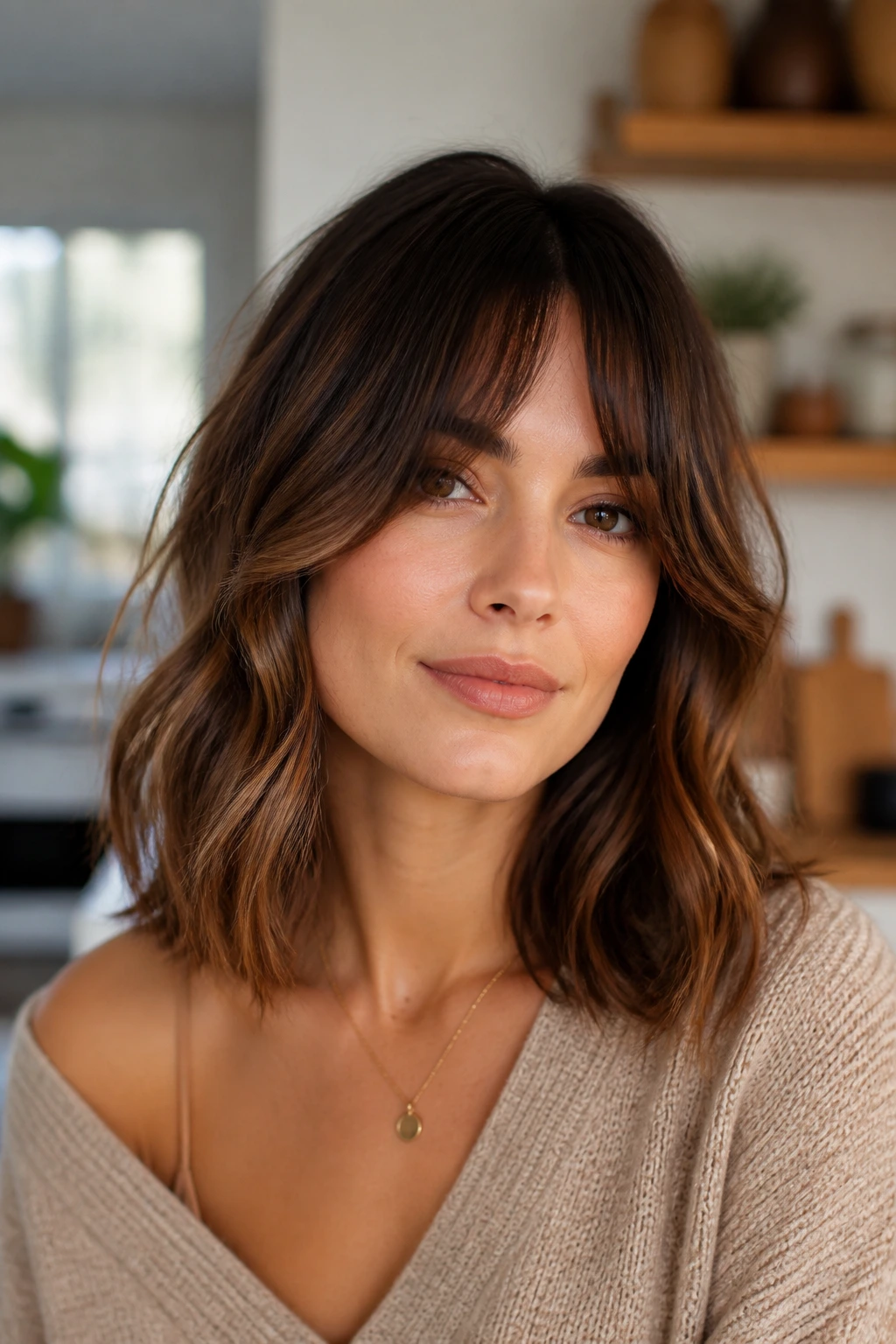
Mermaid waves are all about length, softness, and that slow cascading bend that starts higher than the ends. Add a center-part curtain fringe and the face gets framed without breaking up the long line of the haircut. The bangs drift open and blend into the front layers, which keeps the whole style graceful instead of heavy.
This look wants density. If your hair is very fine, you may need extensions or a lot of strategic layering to get the full effect. But on thick hair, it’s gorgeous because the waves can stack over one another without losing shape. The fringe should be cut so it can open naturally, not cling to the forehead.
I prefer this style when the waves are shaped with a larger wand, around 1.5 inches, or set with loose braids and then brushed out. The front can be bent away from the face with a round brush and then left to fall. It’s a little romantic. It’s a little dramatic. It never needs to look overworked.
16. Sleek Roots and Bendy Ends with Choppy Bangs
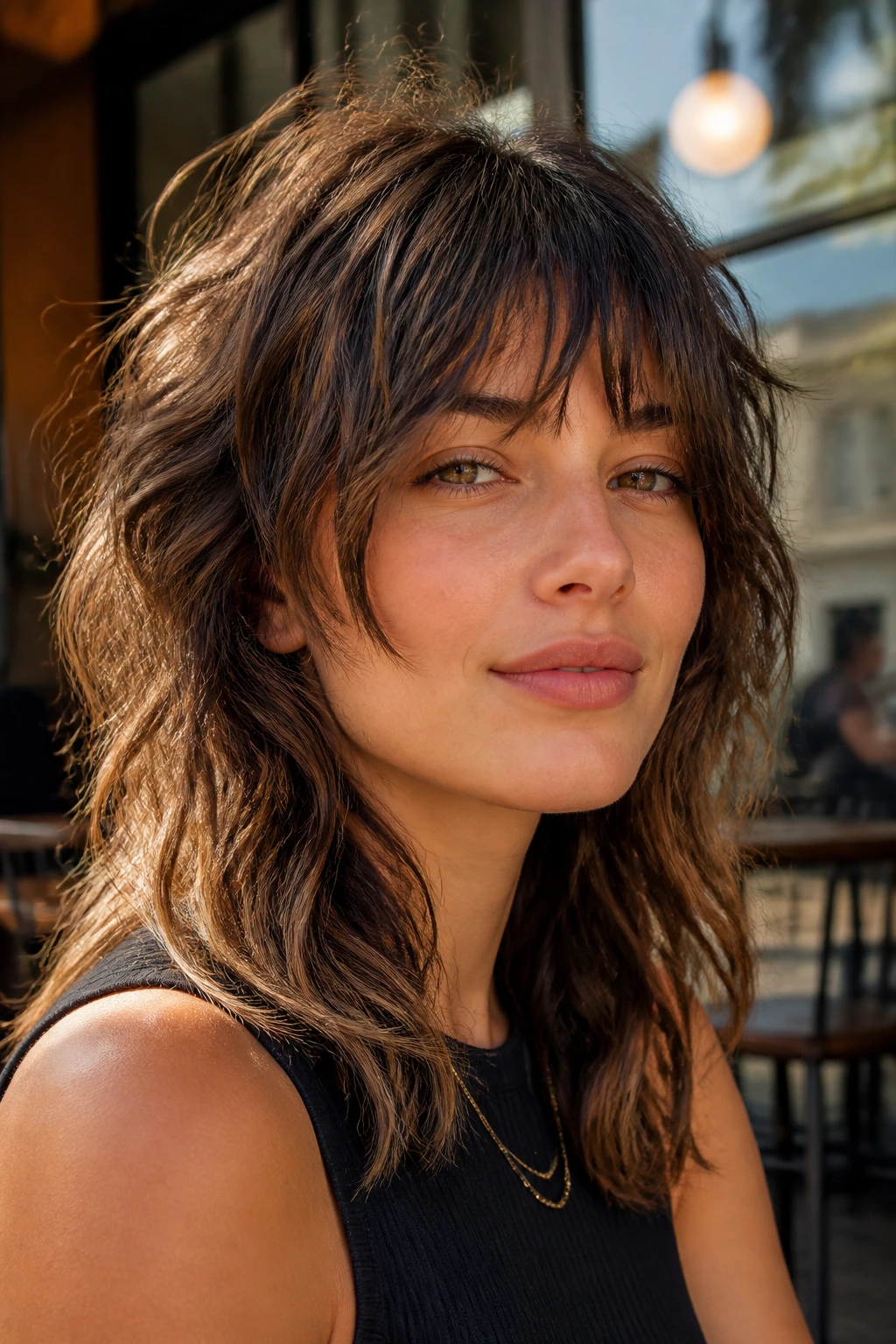
This is the answer when you want the front to stay cleaner than the rest. The roots are smoothed down, the mid-lengths and ends keep a bend, and the choppy bangs add texture without turning into a straight block across the forehead. It looks controlled, but not stiff.
That contrast is what gives the style its edge. Smooth roots keep the top from puffing, which is useful if your wave pattern gets frizzier near the crown. Meanwhile, the ends still show movement, so the haircut does not lose the wave identity. I think of it as a neat front with a looser back half.
This style does ask for a blow-dryer and a brush, even if only for a few minutes. The bangs need direction first, then they can soften a little. If you skip the root step, the choppy fringe can separate too much and start looking accidental.
17. Retro Flipped Waves with Rounded Bangs
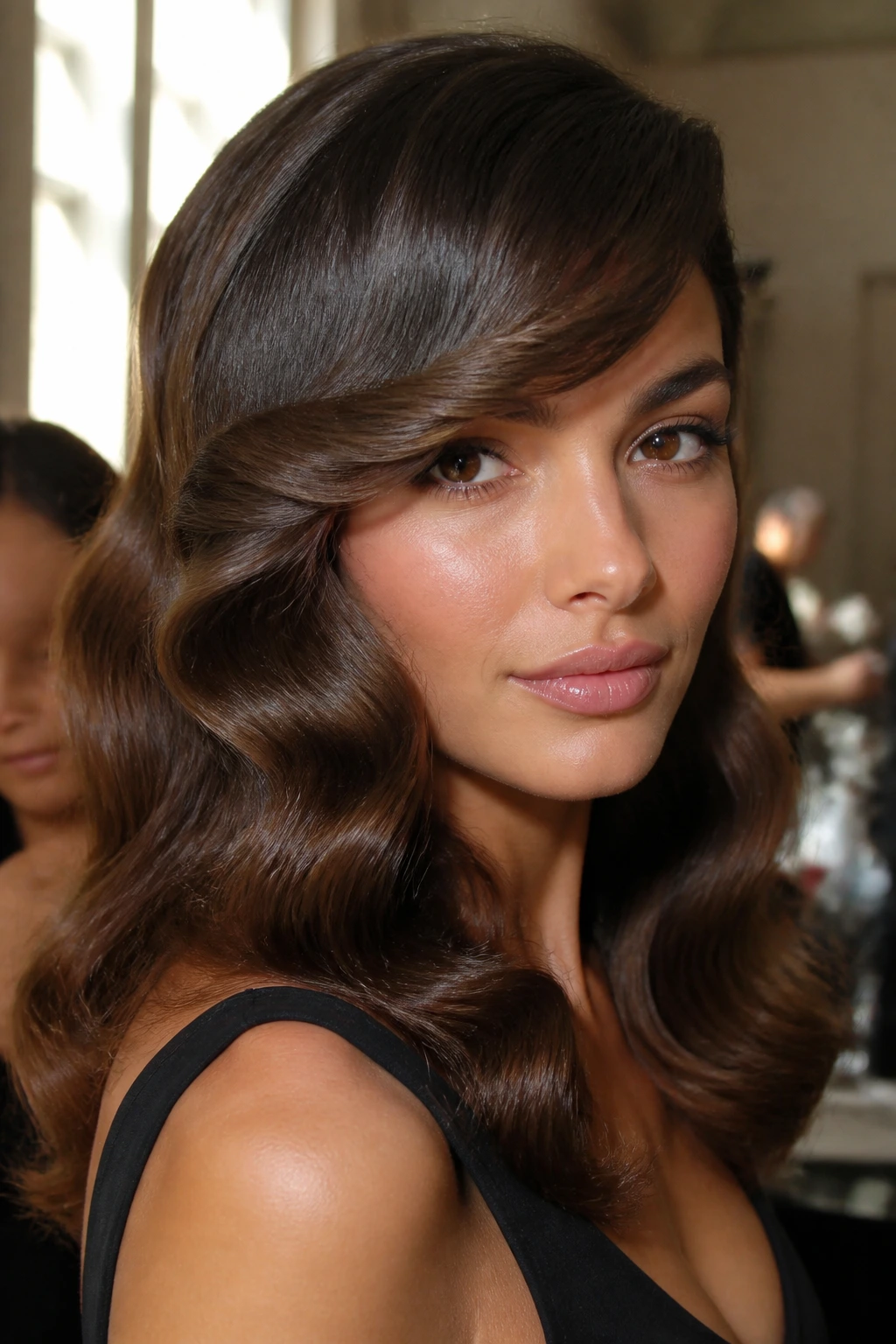
There’s a strong vintage line running through this cut, but it doesn’t have to feel costume-y. Rounded bangs curve softly across the forehead, and the wave pattern flips out at the ends instead of folding under. Done well, it looks like a polished throwback with modern texture.
The rounded fringe works best when it follows the natural arch of the brows. Keep it a touch longer at the corners so it doesn’t become a hard semicircle. The waves below should be brushed into a flip or bend, not a uniform curl. That loose structure keeps the style from looking overdone.
This is a good choice if you like your hair to have shape. It photographs well, sure, but more importantly it keeps its structure through a full day of wear. The flip at the ends gives the whole cut a bit of lift, which is useful if your waves tend to fall flat on the shoulders.
18. Twist-Set Waves with Soft Fringe

Heatless waves and bangs can live together, and this style is the proof. The hair is set in loose twists or wrapped sections, then released into soft, rope-like bends that look relaxed rather than uniform. The fringe stays light and touchable, so the front does not compete with the rest of the hair.
I like this for people who want movement without the daily heat. The bangs can be dried separately with a small round brush or a velcro roller while the rest of the hair dries in twists. That one small split in technique keeps the front from doing its own weird thing while the lengths build texture.
The beauty of this look is the lack of pressure. It does not demand perfect symmetry. It does not care if one wave is a little looser than the next. It just needs enough shape at the front to keep the bangs from collapsing into the eyes.
Why Bangs and Waves Need a Different Cut
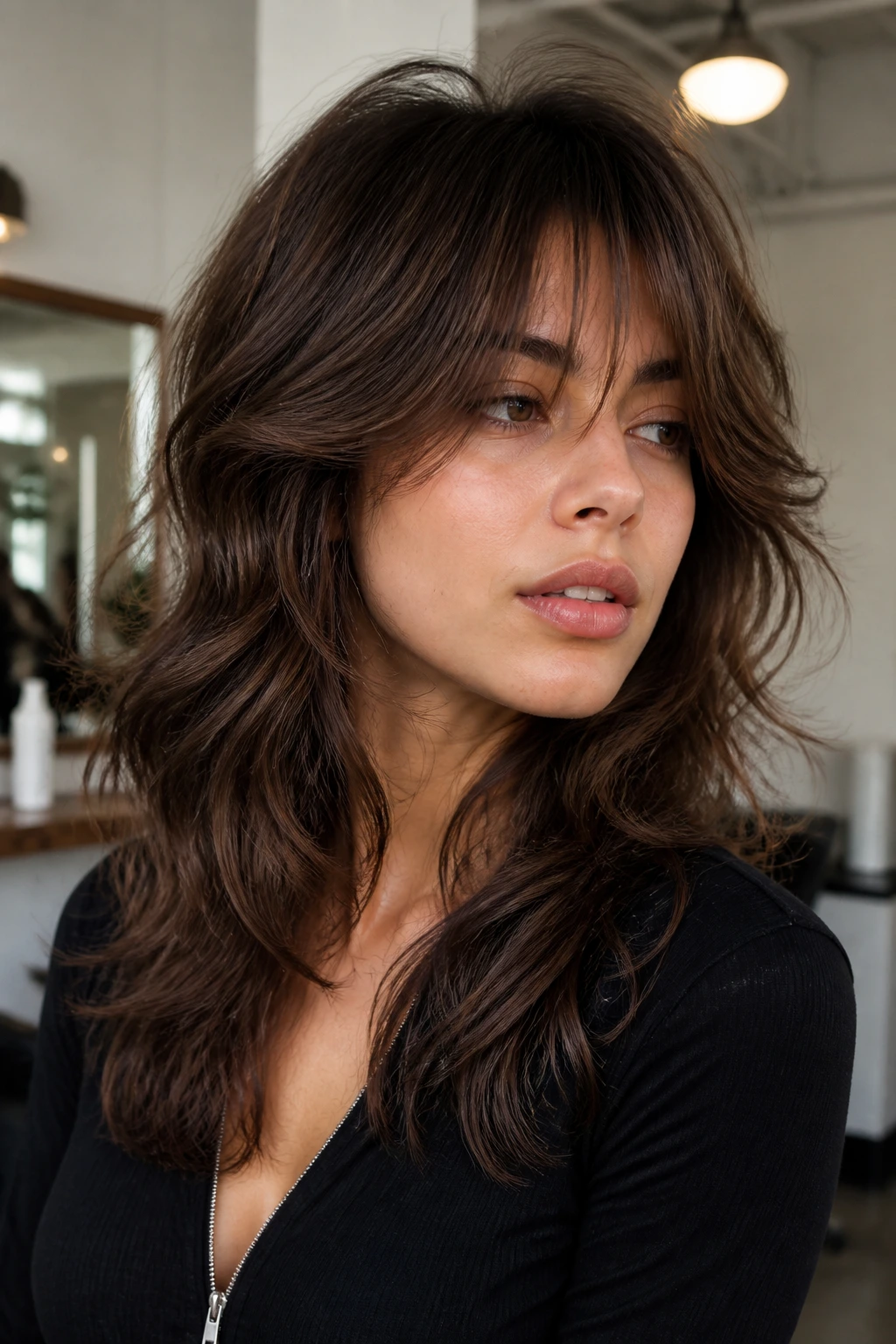
Wavy hair is not straight hair with an attitude problem. It has its own bend pattern, its own shrinkage, and its own habits at the crown and hairline. That means bangs need to be cut with movement in mind, not only with a comb and a wet line across the forehead.
The front section of the hair is often the first part to dry and the first part to get oily. It also sits right where cowlicks tend to push against the fringe. If you cut bangs too short while the hair is still wet, they can spring up half an inch or more once they dry. If you cut them too thick, they can trap heat and sit like a shelf.
A dry check matters. So does point cutting and a little face-frame graduation. On waves, the safest fringe is often a touch longer than you think you need, because the hair will take up space once it gains texture. The right cut respects that. The wrong one pretends the hair is going to behave because you asked nicely.
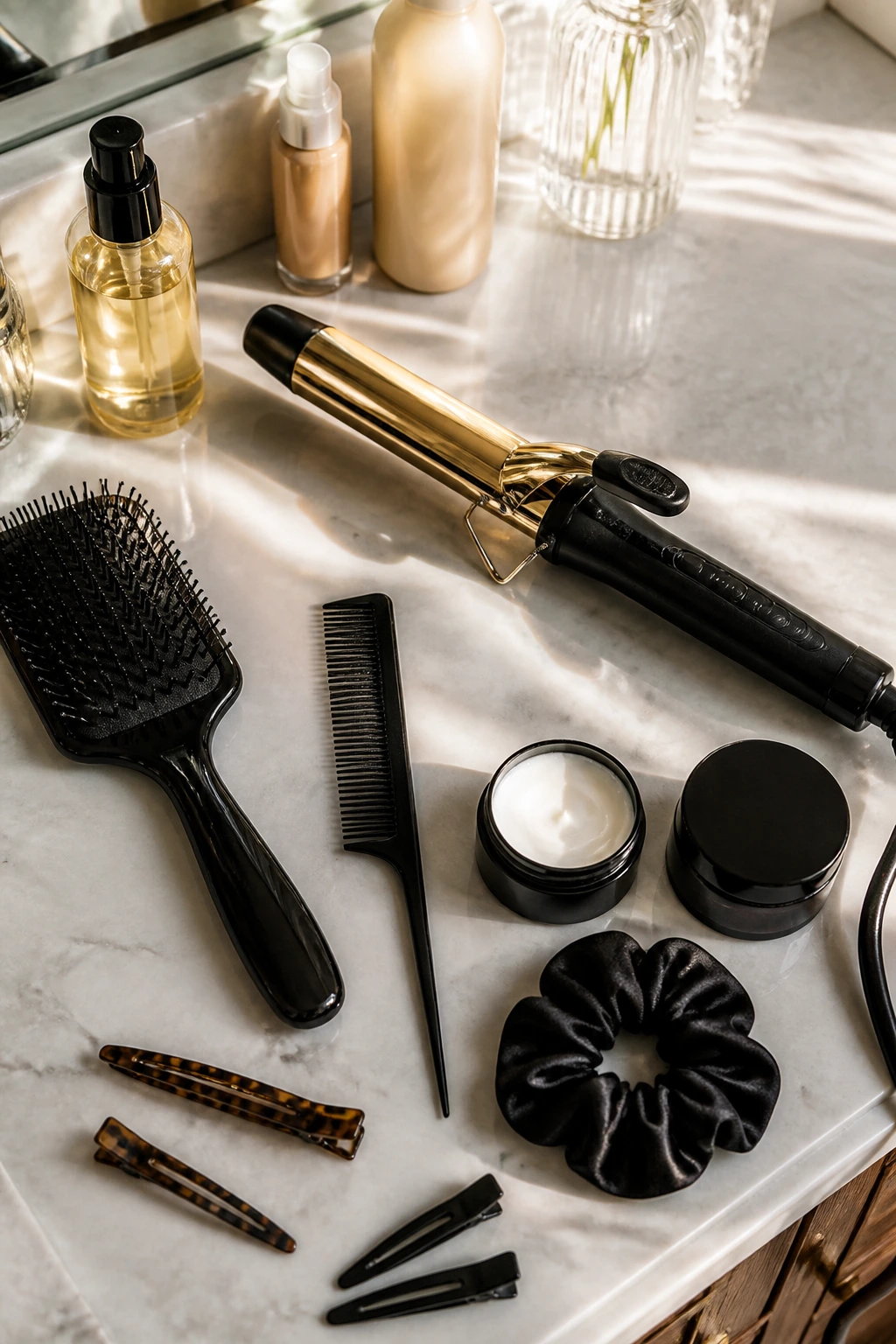
Essential Tools for These Looks
- 1-inch curling iron or wand — Small enough to bend bangs and face-framing pieces without making the front look over-curled.
- 1.25- to 1.5-inch round brush — Useful for smoothing the fringe and giving the ends a soft bevel.
- Blow dryer with a concentrator nozzle — Directs air so the bangs dry flat at the root instead of puffing upward.
- Duckbill or sectioning clips — Keep the fringe in place while it cools, which helps the bend set.
- Velcro rollers — Excellent for setting curtain bangs or side-swept pieces without adding a hard crease.
- Heat protectant spray — Non-negotiable if you’re touching the front with hot tools.
- Lightweight mousse — Gives waves memory and keeps the front from collapsing.
- Flexible-hold hairspray — Holds the shape without making the bangs crunchy.
- Dry shampoo — Helps the bangs stay fresh for a second day, sometimes a third if the weather behaves.
- Wide-tooth comb and tail comb — Handy for separating the fringe without ripping through the wave pattern.
How to Pick the Right Bang Shape for Your Face and Texture
A lot of bad bang cuts happen because someone asks for a photo without asking how their hair lives. That sounds blunt, but it matters. A brow-grazing fringe on loose waves behaves differently from the same fringe on coarse, springy bends, and the difference shows up fast after the first wash.
If your waves are loose and your hair is fine, curtain bangs, wispy bangs, and side-swept shapes usually sit the easiest. They do not need much product, and they won’t eat up too much density at the front. If your waves are strong or your hair is thick, a bottleneck fringe, shag, or wolf cut often works better because the layers can take out weight without flattening the whole shape.
Face shape matters too, but not in a rigid, one-size-fits-all way. Round faces often benefit from longer fringe pieces that open around the temples. Long faces can handle a bit more width across the forehead, especially with side-swept or arched bangs. Square faces often look softer with broken-up fringe and curved wave patterns near the cheekbones. Heart-shaped faces usually do well with curtain bangs that start a little lower and spread out gradually.
Cowlicks deserve their own category because they are not a minor detail. They are the whole front line. If your hair splits in the center no matter what you do, a deep side part or a longer curtain bang will save you more grief than a blunt front. If the front wants to flip under, cut for the flip instead of fighting it.
Styling Products That Actually Earn Counter Space
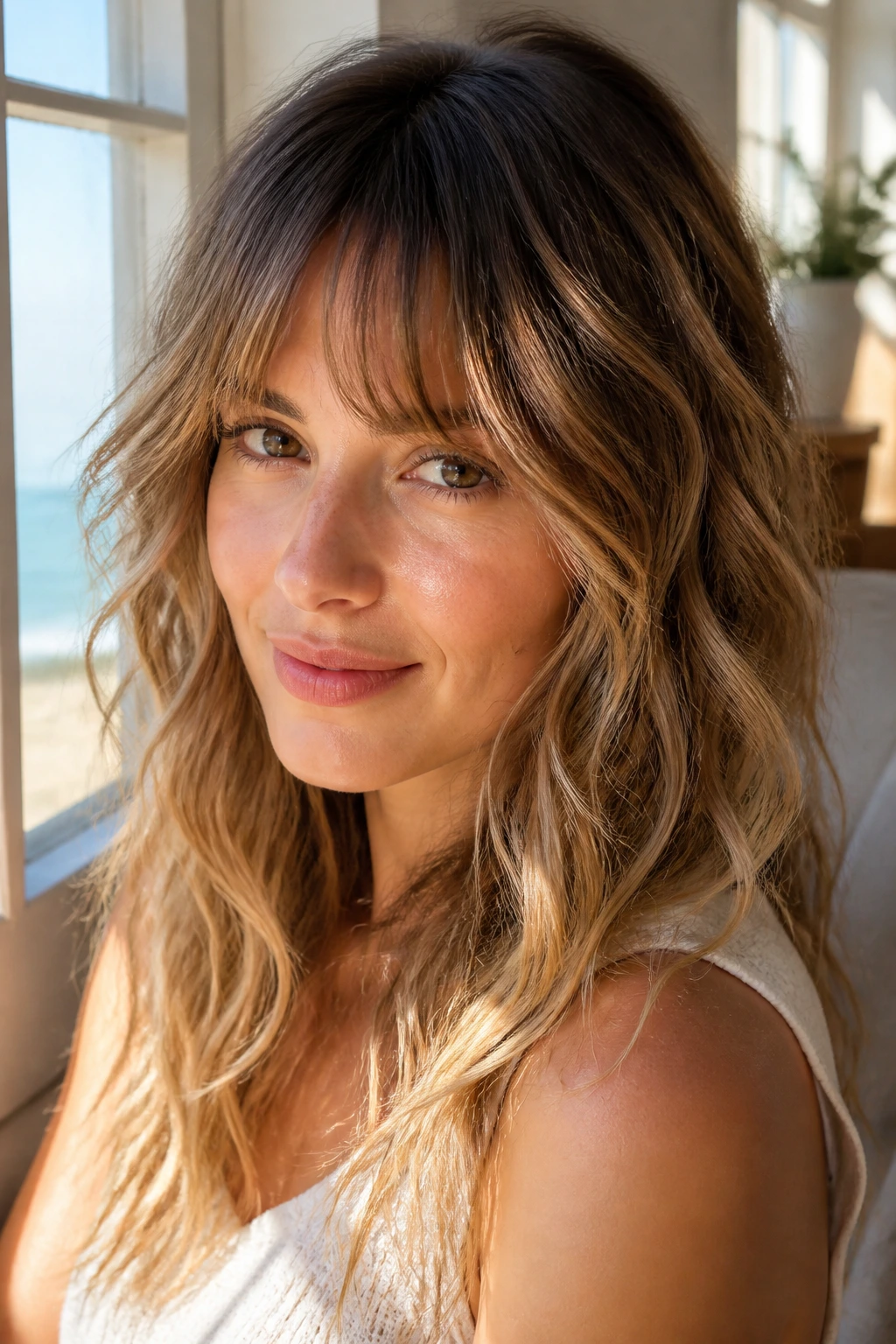
There’s a reason some styling shelves stay crowded while others gather dust. A wavy fringe does not need ten products. It needs the right four or five, used in the right order.
Start with a heat protectant if you’re touching the front with hot tools. A light spray is enough; you do not need to soak the hair. Then choose between a mousse and a cream depending on the texture. Mousse gives lift and a bit of grip, which helps bangs stay put. Cream softens frizz and works better on coarse or dry ends, but it can flatten fine hair fast.
For the bangs, I’d keep dry shampoo and a flexible hairspray close by. Dry shampoo is less about grease and more about friction. Bangs slide when the roots are too clean and too soft. A little powder gives them bite. Flexible spray helps the shape hold while still letting the front move when you blink or tuck it aside.
If you’re talking to a stylist, ask for a cut that’s designed for your dry texture, not only your wet hair. Say whether you air-dry, diffuse, or blow-dry the front every day. Say where your cowlick sits. Those details matter more than a vague request for “face-framing bangs,” which can mean almost anything.
How to Wear These Styles from Morning to Night
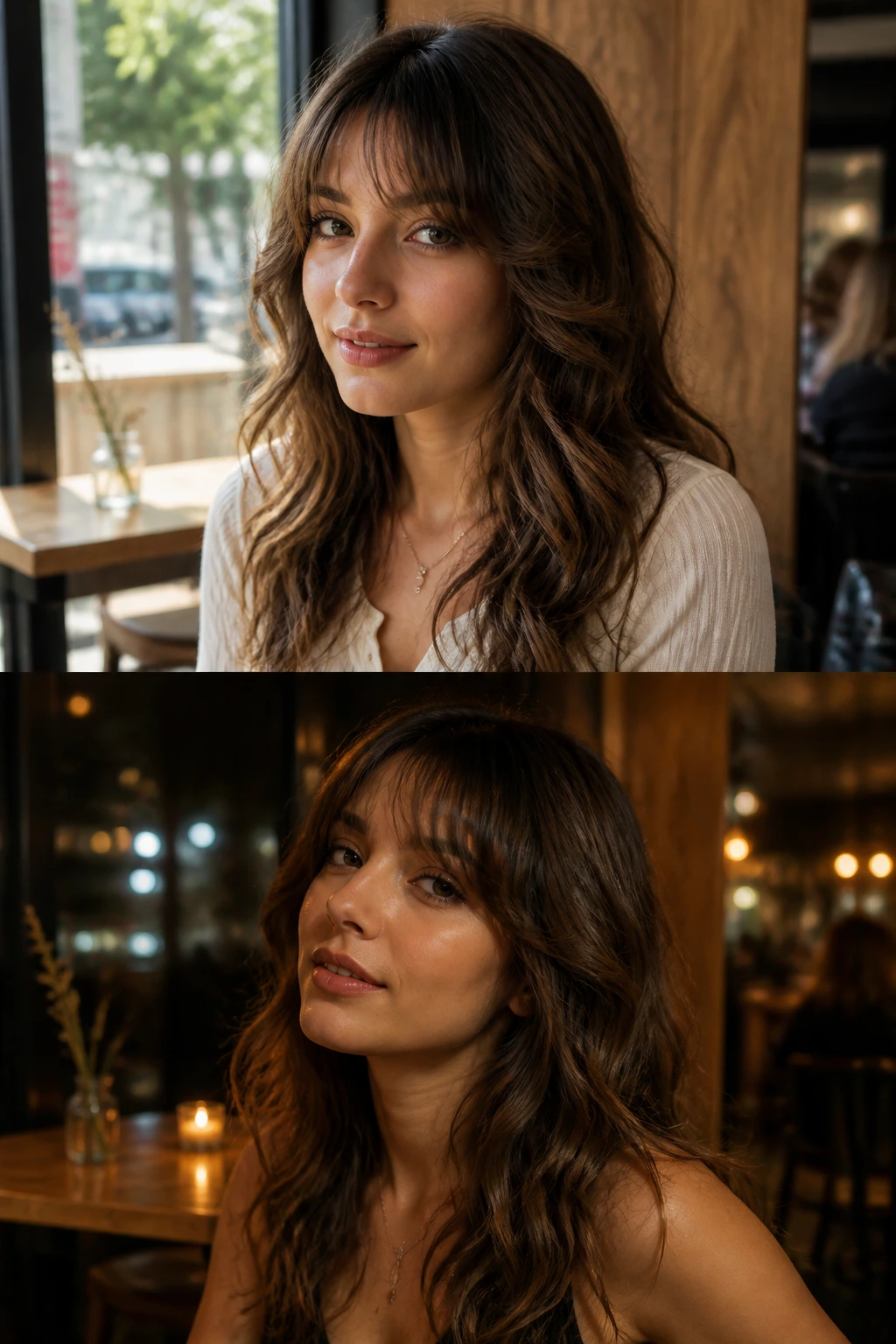
Presentation: For day-to-day wear, let the bangs fall where they want after a quick root bend. Curtain bangs, bottleneck fringe, and side-swept pieces all look better when they keep a little motion. If you want a cleaner finish, bend just the first inch or two of the front and leave the rest loose.
Accompaniments: Earrings, glasses, and collar shapes change how these cuts read. Big hoops make short or wispy bangs feel more finished. A high neckline works well with longer curtain pieces. If you wear glasses, avoid bangs that sit exactly where the frame line hits; that’s where the hair starts to feel crowded.
Scale: Shorter cuts like the pixie-bob or micro fringe need less styling product but more regular trimming. Longer styles like mermaid waves or a lob with bottleneck bangs ask for more shape through the lengths, not more product at the brow. If your hair is thick, keep the fringe area a little wider so it blends into the sides.
Finish: For evening polish, round-brush the front, let it cool, and mist the bangs from a distance of about 8 to 10 inches with flexible spray. That tiny bit of structure keeps the front from splitting before you get to the door.
Extra Tips for Smoother Bangs and Better Waves
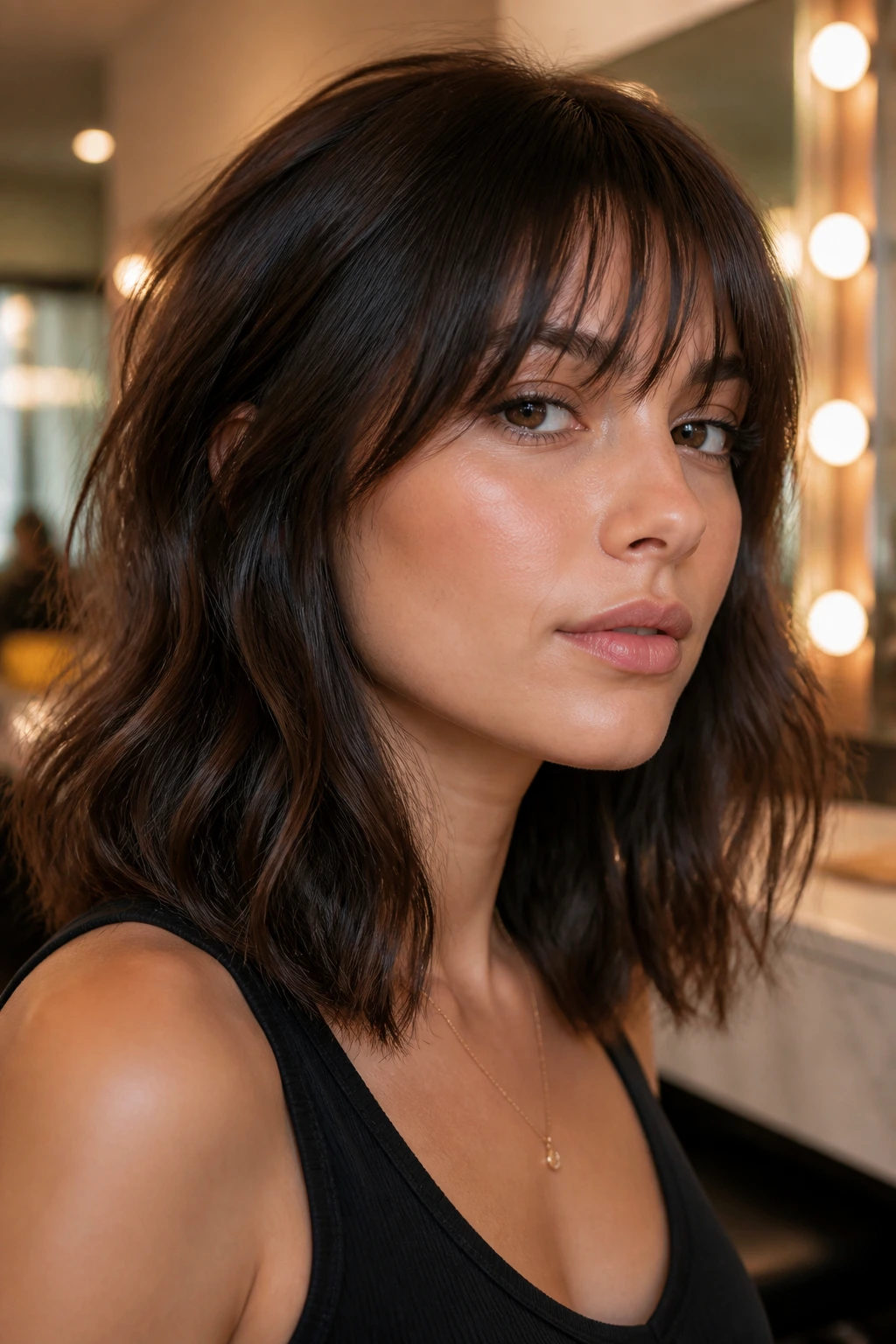
Root Lift: Clip the fringe up while it cools after blow-drying. Even five minutes can change how the bangs sit by the time you finish the rest of your hair.
Fringe Separation: Rub one drop of lightweight serum between your palms, then skim only the outer layer of the bangs. If you go straight to the roots, they can collapse by lunch. Keep the product mid-length and lower.
Wave Memory: Twist the front pieces away from the face while they’re still damp, then let them set before you shake them out. That gives the bangs a directional bend instead of random puff.
Make-It-Yours: Fine hair usually wants mousse and not much else. Thick hair can take a little cream or balm on the ends. Coarse hair often needs a smoother finish at the bang line, not more hold.
Humidity Shield: If the air is heavy, blow-dry the fringe until it is almost dry, then stop. Over-drying the front into a crisp little strip makes it frizz faster once it hits moisture again.
Common Mistakes That Make Bangs Puff Up or Split
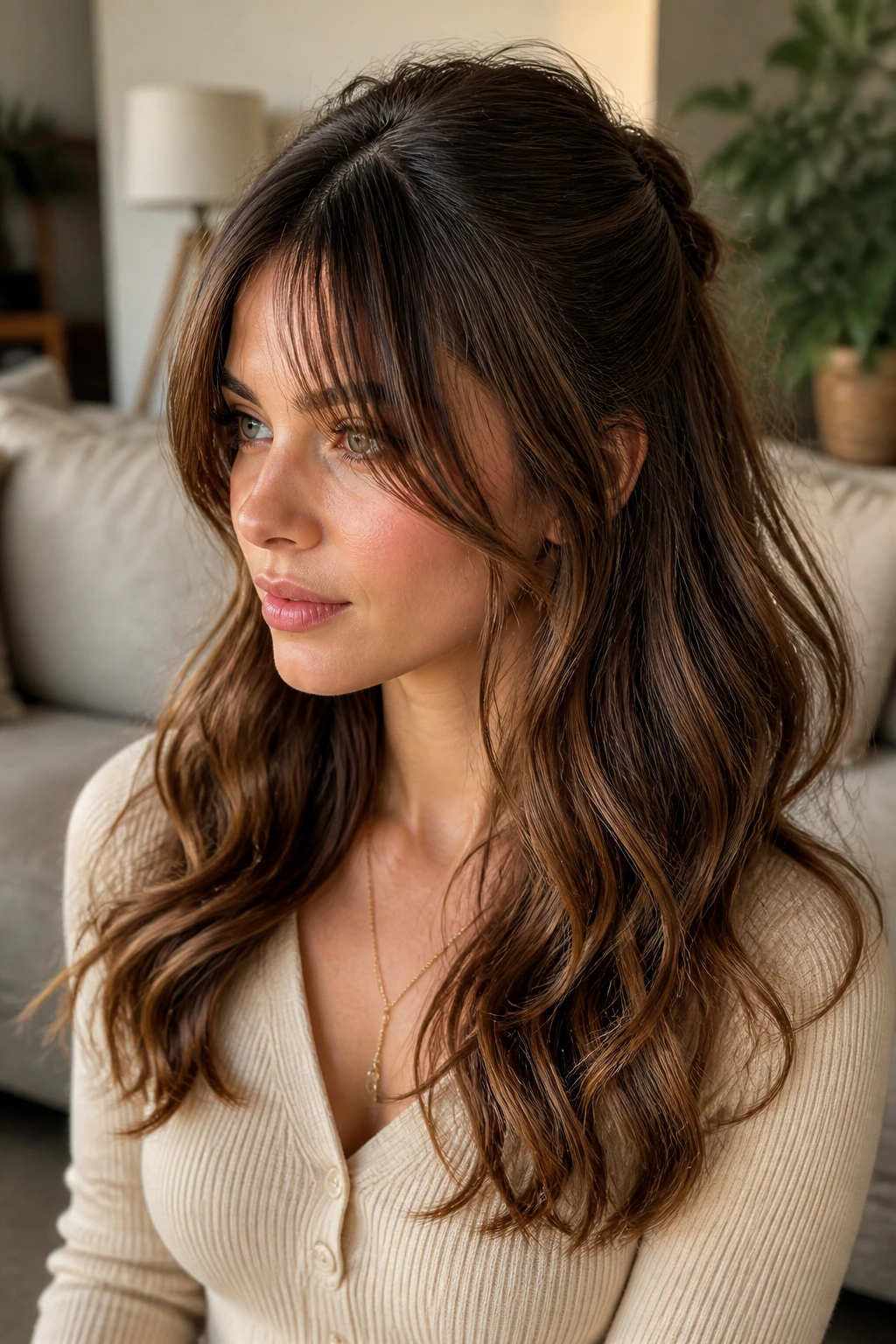
- Cutting the fringe too short while it’s wet: Waves shrink when they dry, and bangs can jump upward fast. The fix is to leave the first cut longer than you think and check the dry shape before committing to the final line.
- Using rich conditioner near the roots: The bangs go limp, oily, and separated by midday. Keep heavy conditioner off the hairline and use only a small amount of cream on the ends if you need softness.
- Blow-drying the bangs straight down every time: That creates a shelf shape that fights the wave pattern. Instead, direct the front slightly side to side, then cool it in the position you actually want.
- Ignoring a strong cowlick: The fringe splits, flips, or leaves one side sticking up. Train it with clips while it cools, and if the growth pattern is strong, pick a bang shape that parts naturally.
- Over-curling the front pieces: The bangs start to look like a separate curl pattern from the rest of the hair. Use a softer bend, leave the last inch out of the iron, and stop before the front turns into ringlets.
- Skipping trims for too long: Bangs that should be curtain pieces turn into face-framing layers with no shape. If you want the line to stay clear, trim often enough to protect it.
Variations and Adaptations to Try
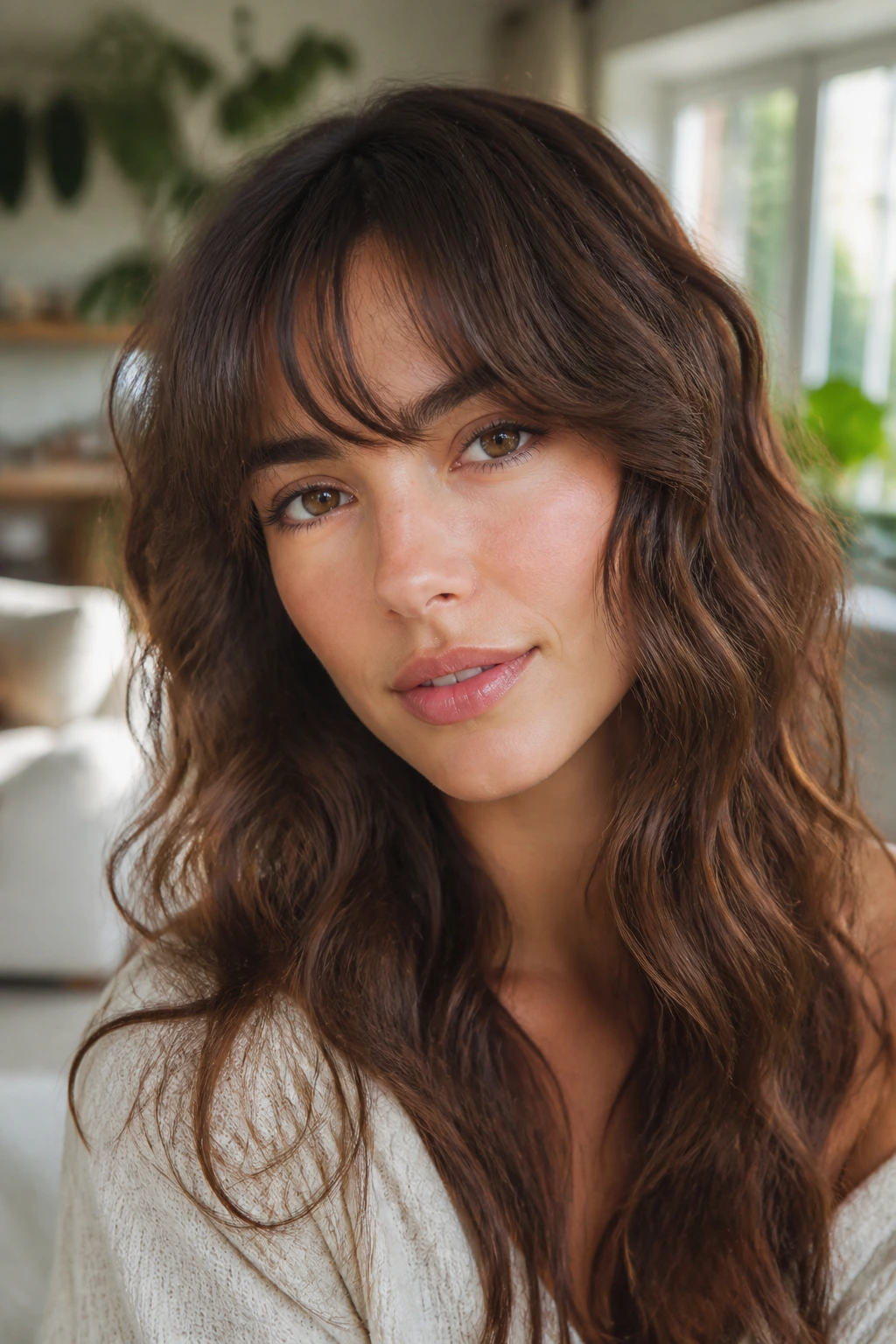
Heatless Ribbon Waves: Set the lengths in loose braids or twists, then let the bangs dry separately with a roller or clips. This keeps the front from going flat while the rest of the hair builds texture without heat.
Fine-Hair Airy Version: Ask for longer layers and a lighter fringe so the front does not eat the whole haircut. Use mousse at the root, skip heavy oils, and let the waves stay soft rather than trying to force volume everywhere.
Thick-Hair Relief Cut: Request internal layering and a wider bang triangle so the fringe has enough room to move. This stops the front from feeling dense and lets the waves fall instead of ballooning out.
Curly-Wave Hybrid: Keep the bangs longer and point-cut the ends so they can live with a curlier bend. A gel-cream or light curl cream can help the front stay defined without turning crunchy.
Grow-Out Rescue: Part the bangs slightly off-center and blend them into cheekbone-length layers. It’s a practical in-between stage when you’re growing fringe out but still want shape around the face.
Low-Maintenance Office Version: Choose curtain or side-swept bangs and keep the waves loose. This version needs the least morning work and still looks polished after a quick root refresh.
Keeping Wavy Bangs Fresh Between Washes
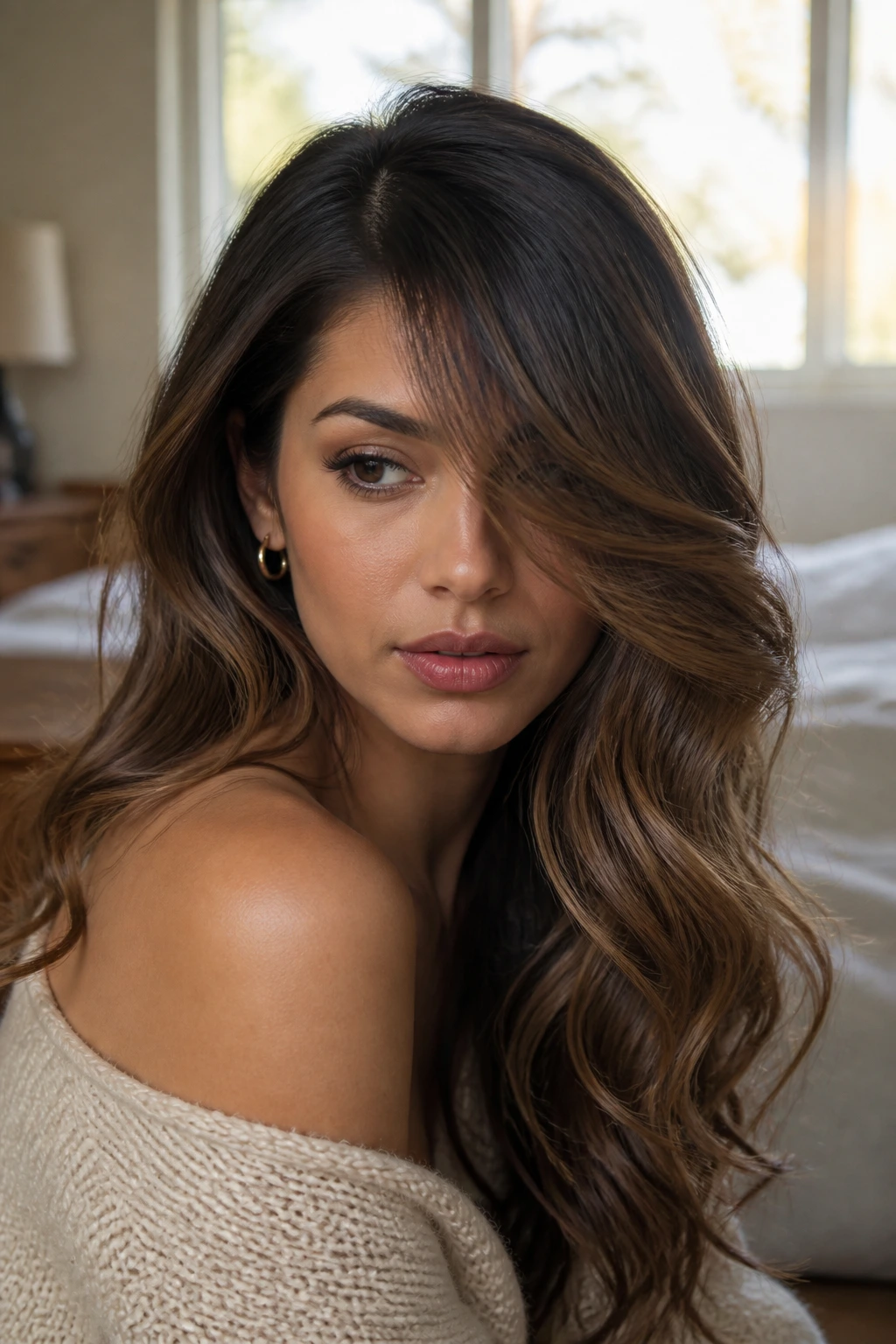
Bangs get oily faster than the rest of the head because they sit on the forehead and collect skin oils, product, and a little sweat. That is not a moral failing. It’s geometry.
For most wavy fringe styles, a trim every 3 to 6 weeks keeps the shape from wandering. Micro bangs sit at the shorter end of that range. Curtain bangs and bottleneck fringe can stretch a little longer, especially if you like them slightly grown out. Full haircut shaping around the face usually needs attention every 8 to 12 weeks if you want the layers to keep their line.
Between washes, the front can be refreshed with a mist of water, a tiny blow-dry, and a dab of dry shampoo at the root. If your waves look good but the bangs went flat, refresh only the front. You do not need to restart the whole head. That’s one of the nicest things about these cuts: the repair job is small.
At night, a loose clip, a soft twist, or a satin bonnet can keep the fringe from getting smashed. In the morning, let the bangs sit for a minute before you touch them. They often settle better than they look right after you wake up. Sleep hair is dramatic. Wait it out.
Frequently Asked Questions
Which bang style is easiest with naturally wavy hair?
Curtain bangs and bottleneck bangs are usually the easiest because they can separate and soften as they dry. They do not need perfect symmetry, which is a gift when the front wants to bend on its own schedule.
Can I air-dry bangs, or do I need a blow-dryer?
You can air-dry them, but the front usually behaves better with at least a small root bend from a dryer or roller. If you air-dry, clip the bangs in place for the first ten minutes so they don’t settle into a split you didn’t ask for.
How short should wavy bangs be cut?
Shorter than straight bangs? Not usually. A good wavy fringe is often cut a touch longer than the final target because the hair will spring up and move once it dries. Brow-grazing is safer than truly short unless you want a micro fringe on purpose.
Do these styles work on fine hair?
Yes, but keep the fringe lighter and avoid packing on heavy creams. Wispy bangs, side-swept shapes, and soft curtain pieces tend to work best because they do not steal too much density from the front.
What if my bangs split in the middle no matter what I do?
That usually means a cowlick or a strong growth pattern is pushing the hair apart. Try drying the front in the opposite direction first, then clip it into the part you want while it cools. If the split still wins, choose a bang shape that parts naturally instead of fighting it.
Are side-swept bangs still a good idea?
Absolutely. A side-swept fringe with waves can look sharper than a blunt front because it follows the hair’s movement instead of cutting across it. The trick is softness at the ends and enough volume at the root to keep the sweep from collapsing.
How often should I trim bangs when I wear them with waves?
Shorter bangs may need a trim every three to four weeks. Longer curtain, bottleneck, or side-swept styles can usually go a bit longer, but once the front starts covering your eyes or losing its shape, it’s time.
Can thick, coarse waves wear bangs without looking puffy?
Yes, but the cut needs to remove bulk in the right places. Ask for a fringe that is shaped dry or refined dry, plus internal layering around the face so the front can move instead of ballooning out.
The Shape That Stays With You
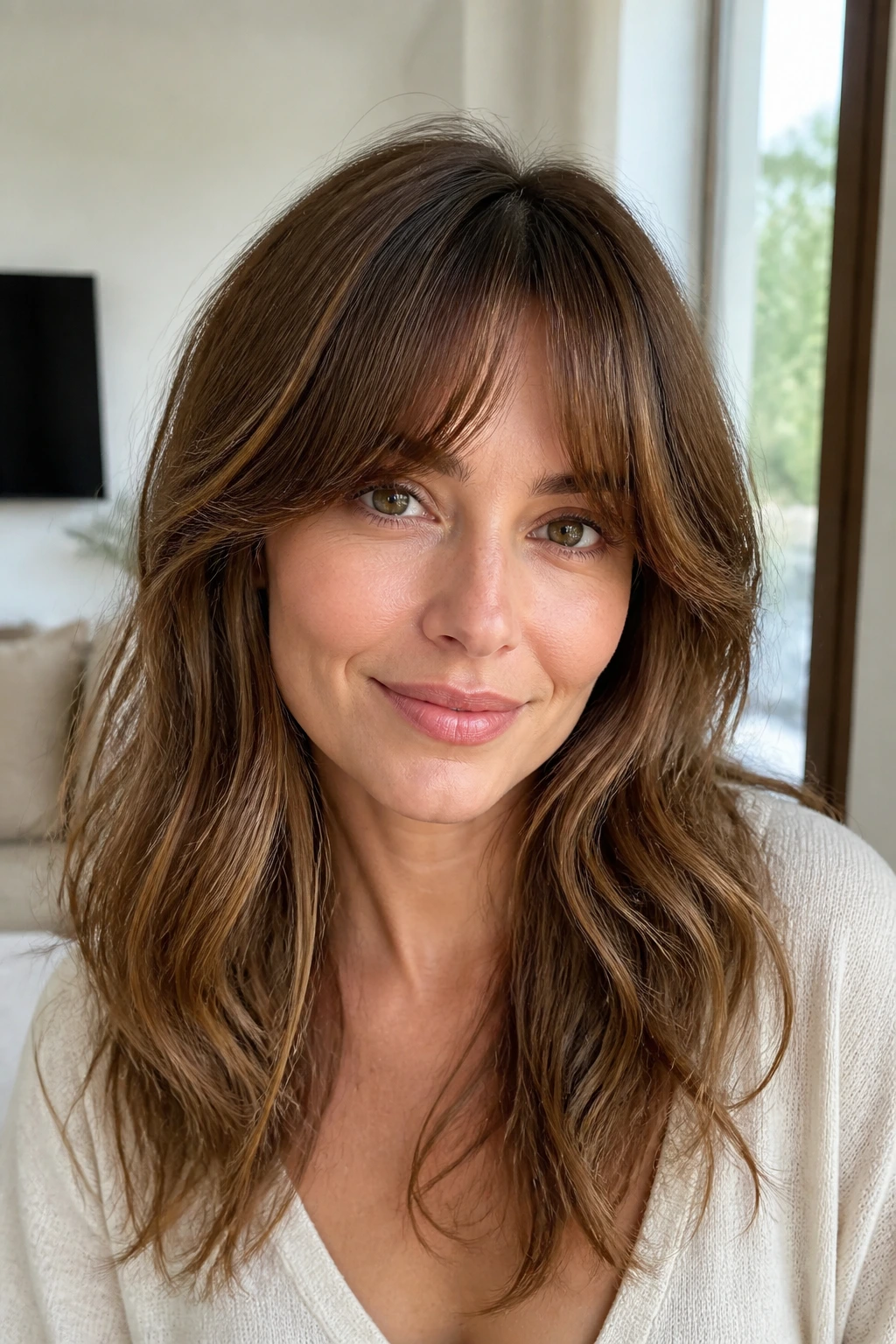
The best wavy hairstyles with bangs are the ones that keep working after the first wash, the first humid day, and the first time you sleep on them wrong. That is why the cut matters so much more than the styling photo. A good fringe should bend with the wave, not sit on top of it like a separate accessory.
If you choose the shape with your texture in mind — and if you give the front a little room to shift — these looks can be far less fussy than people assume. Some will feel soft and easy. Some will feel sharp and deliberate. A few will sit somewhere in the middle and that’s usually where the real sweet spot lives.
The nice part is that you do not have to guess forever. Once you know whether your hair wants curtain softness, bottleneck structure, shaggy texture, or a side-swept sweep, the rest gets much easier. Then the bangs stop being the thing you manage and start being the thing that makes the whole cut sing.
