



A good short haircut on a kid has to survive cereal spills, bike helmets, sticky fingers, and the kind of growth spurt that makes bangs look shorter every week. The best short hairstyles for kids do more than look neat at the mirror; they cut morning detangling time, tame cowlicks at the crown, and still leave room for a nap without turning into a puffball. There’s a big difference between a cut that looks sharp in the chair and one that still looks like a haircut at 4 p.m.
Texture matters more than the name of the cut. A blunt bob on fine hair sits one way, while the same bob on dense curls makes a whole different shape. That’s why some parents swear by a pixie, others by a crew cut, and plenty of families end up loving a soft crop that never would’ve looked exciting on a salon mood board.
The smartest short cuts leave a little room for growth, keep the ears and nape from puffing out, and don’t demand twenty minutes of styling before breakfast. A child should be able to run, climb, twist, and yank a hoodie on and off without the whole shape collapsing. That’s the real test. Not the selfie. Not the salon cape. The cafeteria line.
Why These Cuts Make Life Easier
Less brushing, fewer tears: A cut that clears the neck and ears can turn a 10-minute detangle into a 30-second finger comb.
Built around hair texture: Fine straight hair, thick waves, curls, coils, and starter locs all behave differently, so each style here has a reason it sits the way it does.
Growth that still looks deliberate: Styles with soft edges, tapers, or a little extra length on top stay tidy for 4 to 6 weeks instead of turning into a lopsided helmet after 10 days.
Easy to explain at the salon: You can ask for a 1/2-inch taper, a brow-grazing fringe, or a chin-length bob without needing barber jargon.
Friendlier for busy mornings: The best short styles need water, a brush, and maybe a pea-sized dab of cream — not a blowout and a prayer.
1. Classic Pixie Cut
The classic pixie is the one I think of when a kid wants hair off the face but not shaved down to stubble. It keeps the sides and nape close, leaves a little softness on top, and can be swept forward, side-parted, or finger-tousled in under a minute. On straight hair, it looks neat and airy; on wavy hair, it gets a bit of lift and movement that saves it from looking flat.
Why It Works on Most Hair Types
A pixie cut gives you shape without bulk. Ask for the top to stay around 1.5 to 2.5 inches and the sides to taper tighter around the ears, and the haircut grows out in a way that still reads as intentional for several weeks. That extra bit on top helps hide cowlicks, which matters more than most parents expect.
- Best for: fine to medium hair that gets puffed up by too many layers.
- Maintenance: a quick trim every 4 to 5 weeks keeps the outline crisp.
- Styling: a pea-sized dab of light cream or water alone is usually enough.
Pro tip: Keep the fringe a touch longer than you think. If it lands right at the brow when dry, it will seem much shorter once the hair springs up.
2. Textured Crop
A textured crop is the antidote to hair that falls flat by lunch. The top stays short — usually in the 1 to 2 inch range — but the ends are cut in a choppy way so the hair has movement instead of sitting as one solid sheet. It’s the cut I’d choose for a kid who hates fuss but still wants something that looks modern rather than clipped to the head.
The magic is in the texture, not the length. On straight hair, the broken-up ends keep the style from looking helmet-like. On wavy hair, the texture helps the natural bend show up without making the whole thing explode outward. It’s a good fit if your child wears hats, plays sports, or pulls at their hair when they’re thinking.
A tiny amount of matte paste or a damp-finger scrunch is enough. If the top gets too polished, the shape loses its point. Keep the sides clean, leave the crown slightly messy, and let the cut do the work.
3. French Bob
Want a short cut that looks polished without acting delicate? The French bob has that easy, straight-from-the-chair shape: chin-skimming or just under the jaw, often with a soft fringe that lands near the brows. It’s sharper than a shag, softer than a blunt boxy bob, and it has enough movement to keep from feeling stiff.
How to Ask for It
Tell the stylist you want the line to sit around the chin, with the front a touch fuller and the bangs soft rather than heavy. A little undercurving at the ends makes the bob tuck in instead of flipping wildly at the cheeks. That small detail matters more than the name.
For kids with straight or slightly wavy hair, this cut sits beautifully with a simple side part or center part. It can also survive growing out for a couple of weeks without turning sloppy, which is not true of every short bob out there.
4. Blunt Bob
A blunt bob is what you reach for when the hair is fine and you want the ends to do the heavy lifting. One clean line at the bottom gives the illusion of thickness, which is exactly why this cut shows up on so many kids with straight hair that tends to hang limp. It’s tidy. It’s honest. It doesn’t pretend to be anything else.
The Shape That Makes It Work
Keep the line at the chin or just above it, and ask for minimal layering through the bottom. Too many layers defeat the point. The bob should swing when your child turns their head, not fray out into little wisps around the jaw.
- Line: one solid perimeter gives the hair weight.
- Length: chin to just under chin keeps it short without flipping too aggressively.
- Finish: tuck behind one ear or add a narrow clip for school.
A blunt bob is one of those cuts that can look grown-up on a kid without looking fussy. That’s the sweet spot. Not overstyled. Not childish. Just clean and direct.
5. A-Line Bob
An A-line bob is shorter in the back and gradually longer toward the front, which gives the haircut a neat little slope instead of a square block. On a child, that slope is useful because it keeps the nape from puffing out while still leaving enough hair in front to frame the face. It’s the kind of cut that looks calm even when the rest of the day is not.
This one works especially well on straight and lightly wavy hair. The angle shows up best when the hair is blown dry with a brush, but it does not need a salon finish to read correctly. If your child’s hair kicks up at the back, the shorter nape helps the whole shape stay close to the head.
I like this cut on kids who tug at the front of their hair but don’t want a full fringe. The angled front can be swept off the face, clipped back, or tucked behind an ear. That flexibility buys you time between trims, and time is the whole game.
6. Buzz Cut
A buzz cut is the most direct answer to “I want this hair out of the way.” It’s all one short length, usually done with clippers and a guard in the #1 to #4 range, depending on how close you want it. Compared with a crew cut, it’s shorter, simpler, and easier to keep even all around.
Why It’s Different From a Crew Cut
A buzz cut shows the head shape more clearly, so it looks sharp on some kids and too bare on others. That’s the trade. If your child has a strong cowlick, a prominent swirl at the crown, or a sensitive scalp, start longer than you think. A #3 or #4 guard gives you room to see whether the shape works before going shorter.
It’s also one of the few cuts that can be done with almost no styling products at all. A quick rinse, a towel dry, and you’re done. For kids who hate hair touching their neck or ears, that’s a relief you can feel immediately.
7. Shaggy Bob
A shaggy bob looks like the haircut equivalent of a kid who’s never entirely still. The ends are light, the layers are soft, and the whole cut has that slightly undone movement that makes it forgiving on mornings when nobody has time for a perfect brush-out. It’s not messy in a bad way. It’s busy in a good way.
What makes this bob work is the layering around the lower half of the head. Keep the length somewhere around the jawline, then let the stylist soften the perimeter so the hair breaks up instead of hanging in one heavy curtain. On wavy hair, the result is a little bend and lift. On straight hair, the cut needs a bit of scrunching or a side part to avoid looking too flat.
This is one of my favorites for kids who hate the “helmet” feeling some bobs can create. It still gives shape, but it doesn’t feel rigid. A light leave-in spray and a quick shake with the fingers are usually enough.
8. Curly Bob
A curly bob is one of those cuts that looks best when nobody tries to bully the curls into behaving. The shape should sit around the jaw or slightly below it, with enough room for shrinkage so the finished haircut does not pop up to the ears the moment it dries. That part is where a lot of at-home optimism goes wrong.
Cut It for the Curl, Not the Wet Length
Ask for the hair to be shaped in its natural curl pattern, ideally dry or lightly damp if the stylist knows curly hair well. The goal is a rounded outline that follows the curl rather than chopping straight across and hoping for the best. A curly bob should move when the child turns their head, not wedge itself into a triangular puff.
This style is a gift for kids with defined curls who need something short but not stripped down. A curl cream or light gel, scrunched through wet hair, can keep the shape tidy without turning it stiff. The best version of this cut looks alive. That’s the whole point.
9. Crew Cut
A crew cut sits between a buzz cut and a proper short style with more shape on top. The sides stay short and tapered, while the top keeps enough length — often around 1 to 1.5 inches — to brush slightly upward or to the side. It’s neat without being severe.
This cut makes sense for kids who need something clean for school, sports, or summer hair that won’t melt under a cap. It’s also a good compromise when a child wants short hair but isn’t ready for a full buzz. The top gives just enough texture to avoid that “all one note” look.
If your child’s hair grows in a swirl at the crown, a crew cut can hide it better than a shorter clipper cut. Ask for the top to be left a little longer in the swirl area and blended down toward the back. That tiny adjustment keeps the cut from standing up at the wrong moment.
10. Tapered Afro
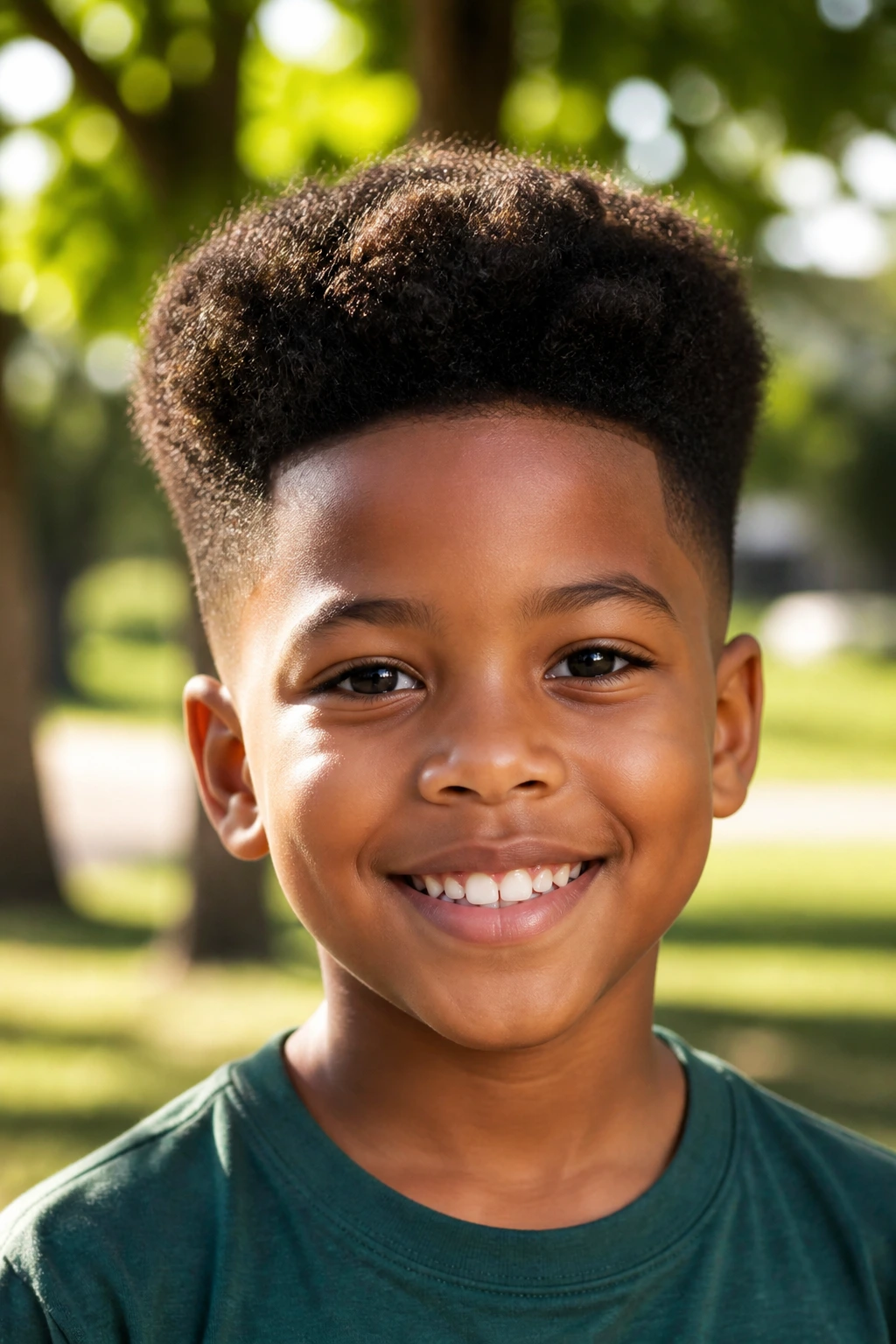
A tapered afro keeps the sides and nape shorter while leaving the top rounded and full, which gives coils and tight curls room to do their thing. It’s a shape cut, not a punishment cut. The difference matters.
The taper keeps the outline clean around the ears and neckline, which makes the style easier to maintain than a full rounded afro for some families. Meanwhile, the top stays soft and lifted. If your child’s hair shrinks a lot as it dries, the stylist should cut with that in mind — usually leaving more length than the wet hair suggests.
This cut looks especially good when the top is shaped into a gentle dome rather than chopped flat. A little pick at the roots, or even just a finger fluff after washing, is enough. Don’t crush the curls under heavy cream. That usually makes the whole shape sink instead of lift.
11. Bixie Cut
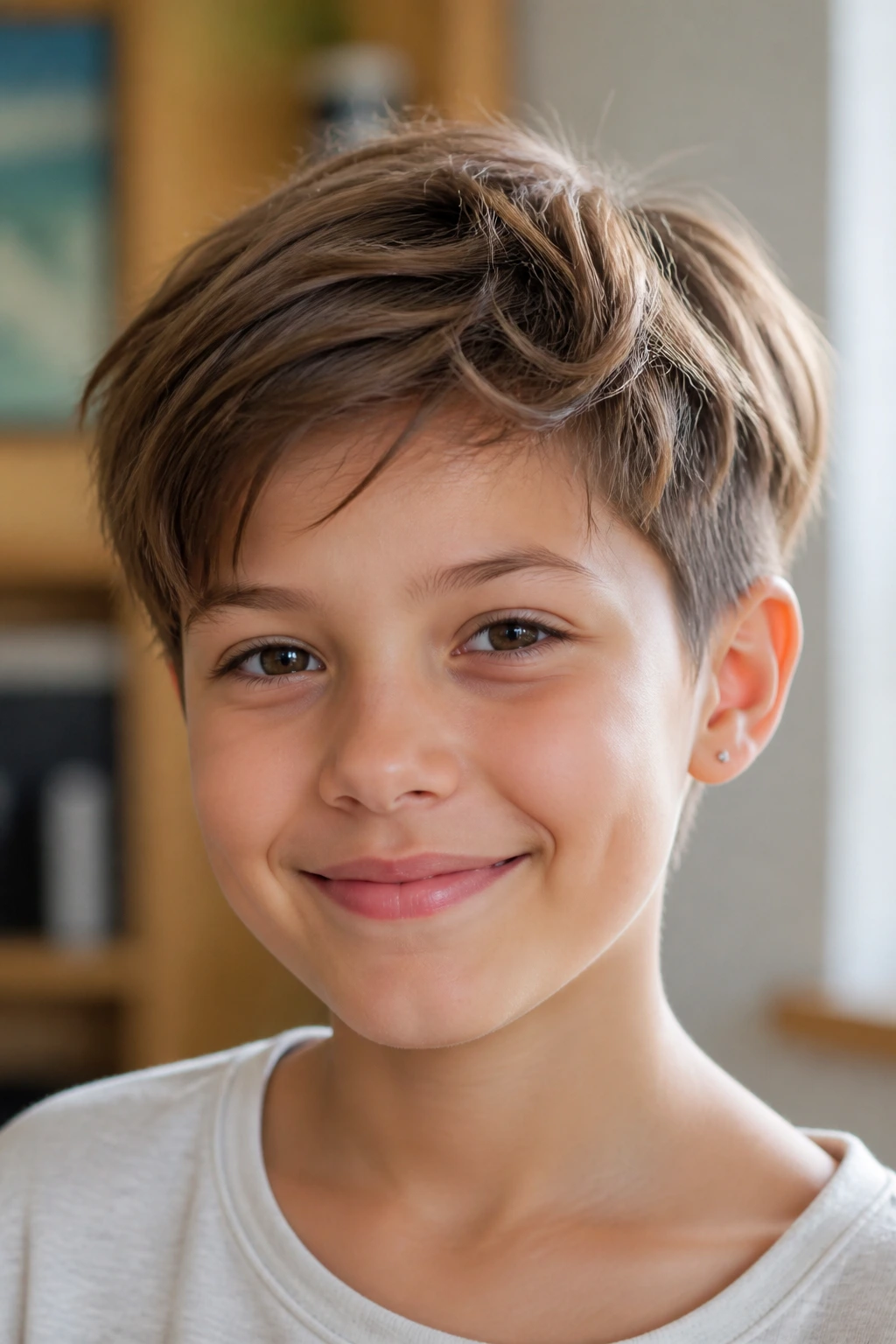
The bixie cut sits right between a bob and a pixie, and that middle ground is why so many parents end up liking it. It’s short enough to stay light around the ears and neck, but it still leaves more hair than a classic pixie on the top and sides. If your child wants short hair without going super short, this is a good lane.
The bixie usually works best with soft texture at the ends. That keeps it from looking like a chopped-off bob that changed its mind halfway through. On straight hair, a side part gives the shape a little movement. On wavy hair, the bixie naturally feels a bit playful without needing much styling.
It’s also one of the easier cuts to grow out. That’s no small thing. A pixie can hit an awkward stage fast; a bixie usually softens into a crop or short bob with less drama.
12. Asymmetrical Bob
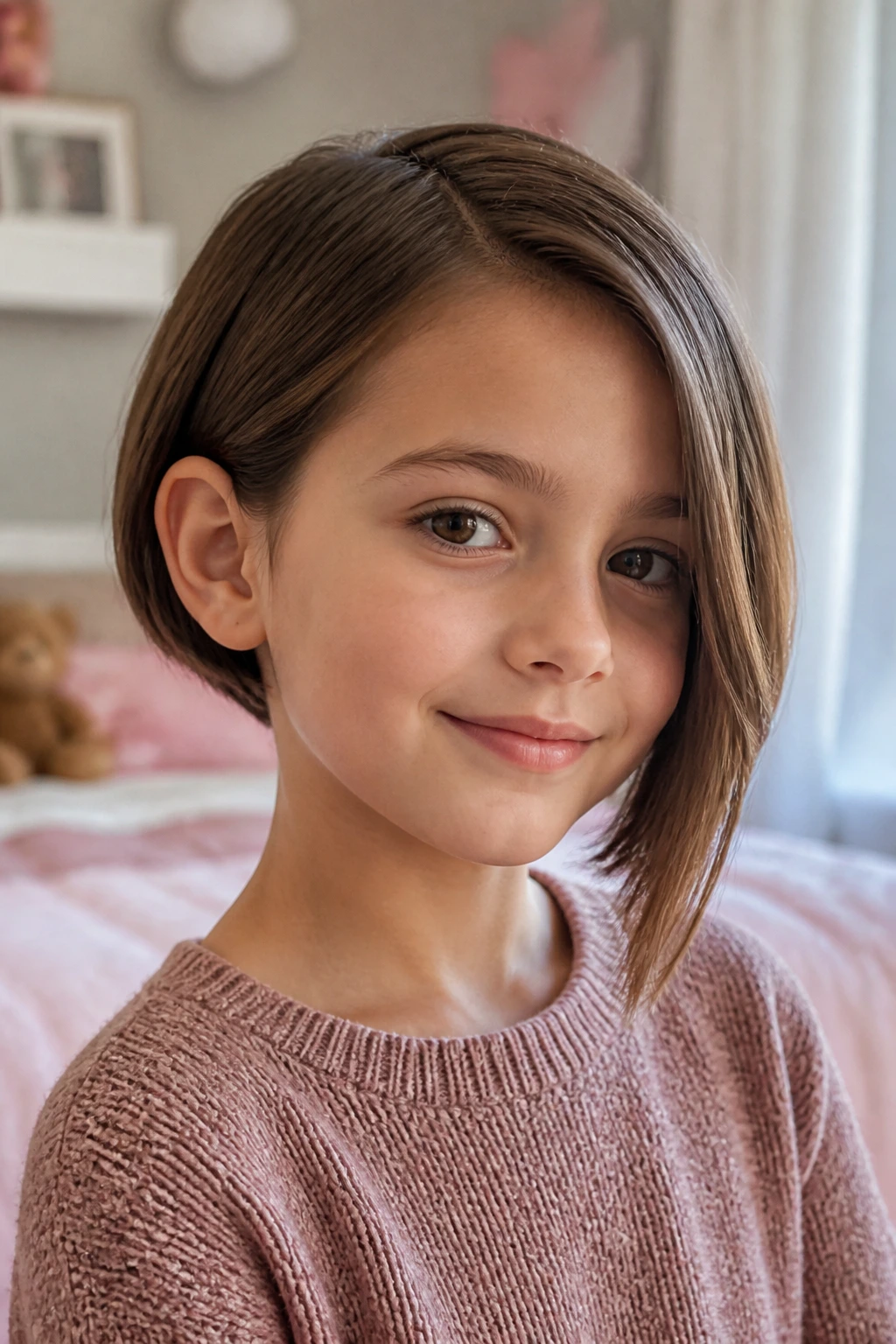
An asymmetrical bob gives a kid a haircut with a little attitude without requiring a lot of upkeep. One side sits longer than the other, usually by an inch or two, and that small difference is enough to make the whole shape feel intentional. It’s neat from one angle, interesting from another, and surprisingly practical if the longer side can tuck behind the ear.
What Makes It Work
The cut depends on clean lines. If the asymmetry is too subtle, it just looks uneven. If it’s too dramatic, it grows out fast and starts to feel fussy. The sweet spot is a visible but modest difference that still lets the haircut sit around the chin or jaw.
This style is best on straight or slightly wavy hair, where the line actually shows. Pair it with a center part for extra contrast, or a deep side part if you want to soften the look. Either way, it’s a good example of a haircut that looks a little more styled than it really is.
13. Caesar Cut
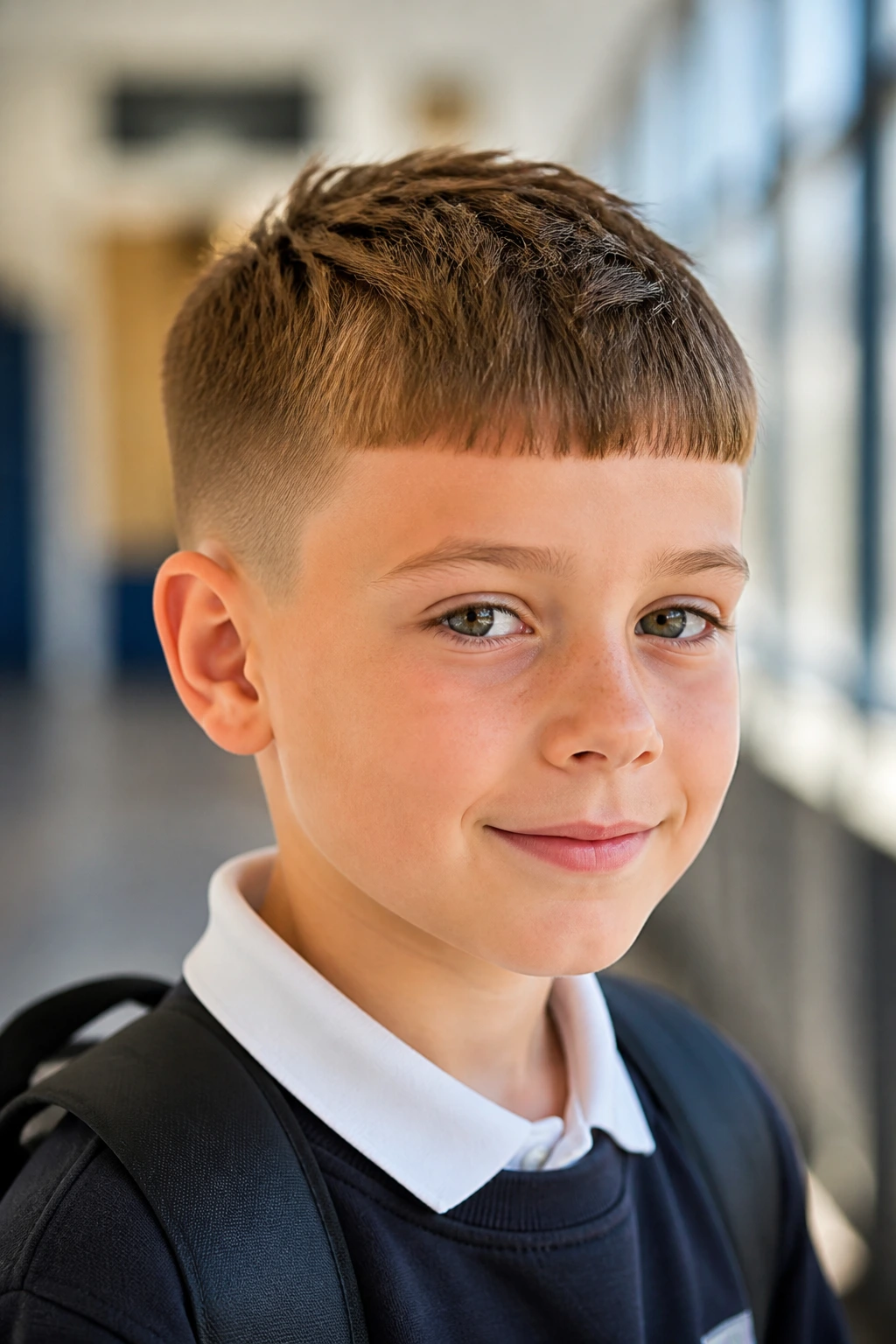
The Caesar cut is all about that short fringe pushed forward over the forehead. It usually keeps the top short — around 1 to 1.5 inches — with a tidy shape and short sides. On kids, it’s useful because it keeps hair from falling into the eyes while still looking like a real haircut, not just a clipper pass.
A Caesar cut is especially handy when a child has a strong cowlick at the front. The forward fringe can help guide the growth instead of fighting it. It also suits straight hair well because the short fringe sits cleanly without curling up into a mess of its own.
Keep the top textured, not bluntly squared off. A little softness in the fringe makes the cut easier to wear as it grows. If it’s too sharp, the line can look severe fast.
14. Mini Frohawk
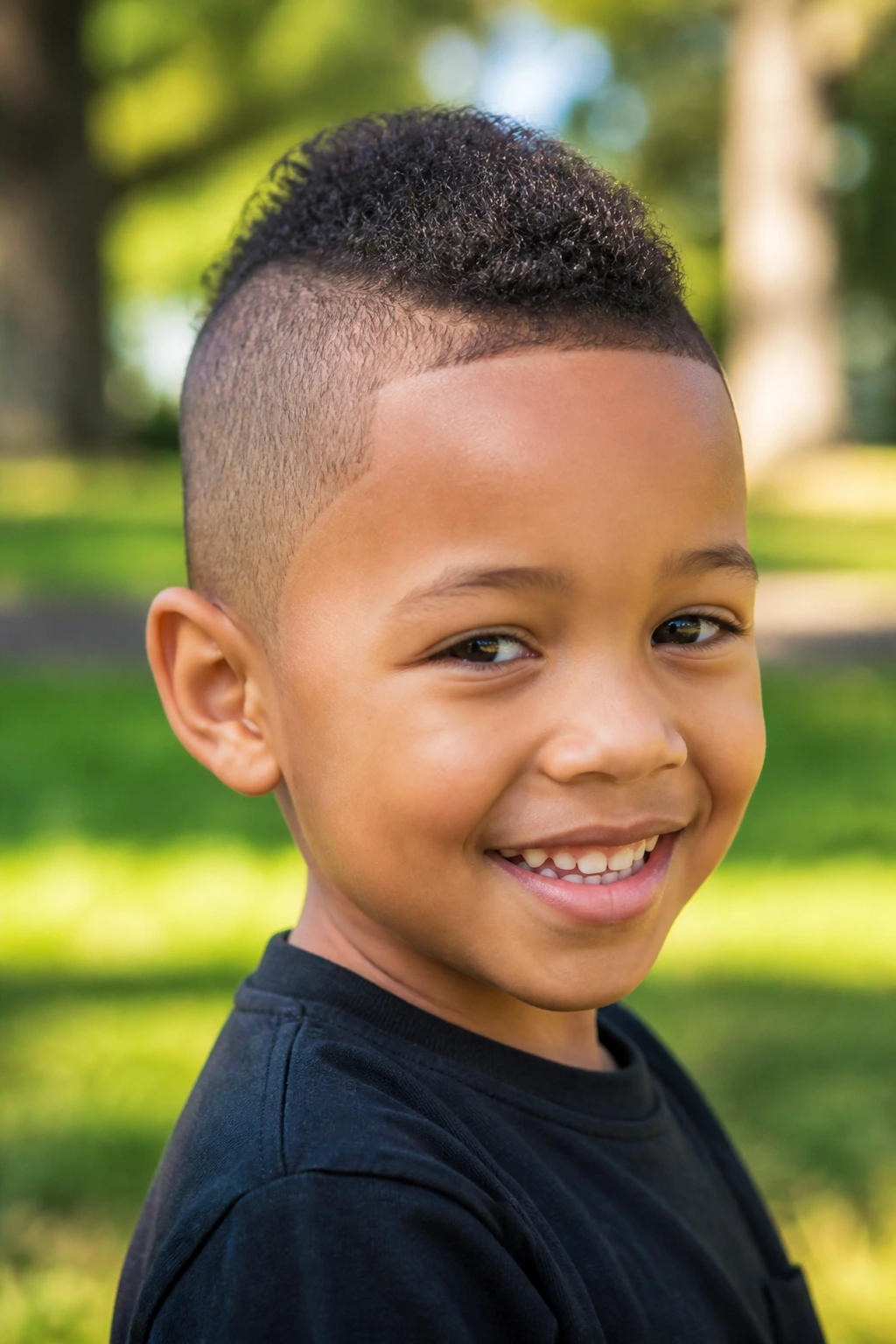
A mini frohawk takes the bold shape of a mohawk and softens it into something a kid can wear without looking like they’re trying to make a statement at the grocery store. The sides are tapered down, and the center strip stays fuller and rounded. On coils and curls, that center line creates a lovely little ridge of texture.
Who It Suits
This cut works best when the sides are kept low and clean but not bare. That preserves contrast without making the top look too isolated. If your child has dense curly hair, the center strip can be kept just long enough to stand up on its own with a bit of curl cream.
It’s a fun option for kids who like hair that feels different from the usual crop or bob. But it still behaves well under a hat and can be flattened down with water and fingers on calmer days. That flexibility is why I’d choose it over a full mohawk for most families.
15. Faux Hawk
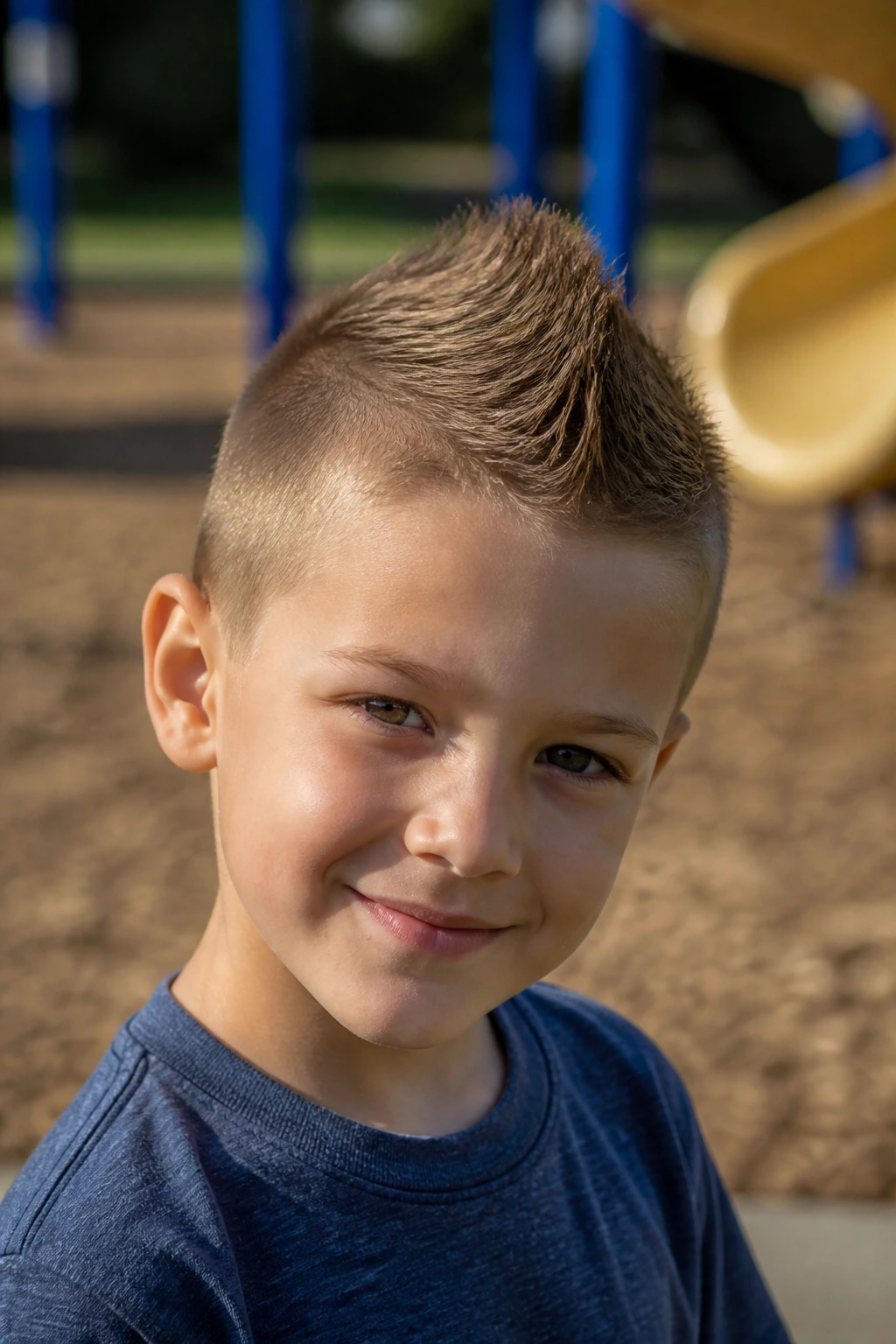
A faux hawk gives you the energy of a mohawk without forcing the haircut into a permanent point. The sides are shorter, the center is longer, and the top can be brushed upward or worn softer and flatter. It’s one of the few cuts that can look sporty one day and gentle the next.
The trick is restraint. Leave enough length through the middle to build shape, but not so much that it topples over without a full styling session. On straight hair, a tiny bit of gel or mousse helps the ridge stand up. On wavy hair, the natural bend does half the work.
I like this cut for kids who enjoy a little personality in their hair but do not need a high-maintenance shape. If the style grows out, it usually falls into a short textured crop instead of a disaster zone. That’s a useful outcome.
16. Pixie with Undercut
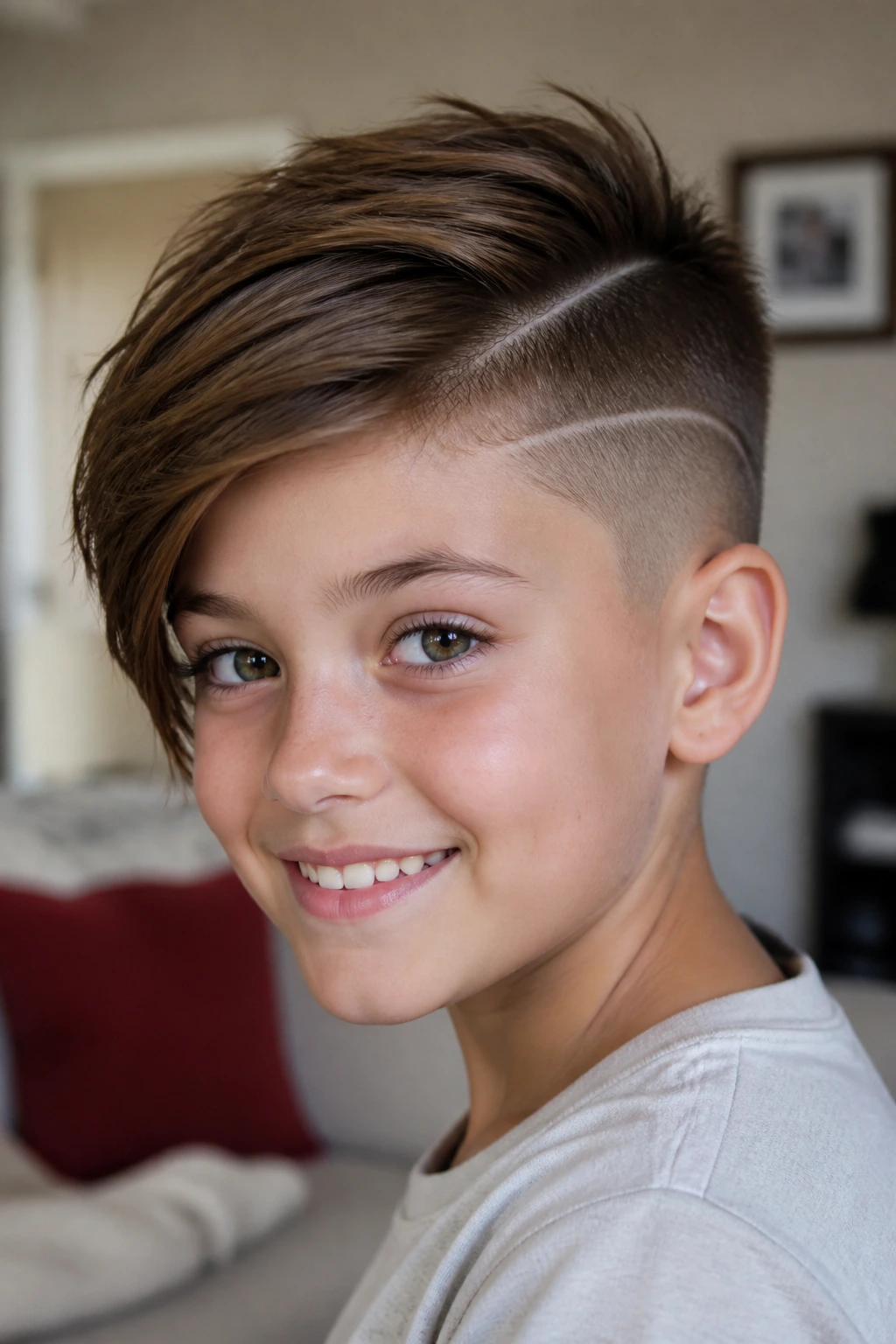
A pixie with an undercut is the sharper, more deliberate cousin of the classic pixie. The nape and often the sides are cut very short — sometimes clippered — while the top stays longer and can be swept forward or to the side. It’s dramatic in a clean way.
This cut is for families who don’t mind regular upkeep. The undercut grows out quickly around the ears and neckline, so the shape needs attention every 3 to 4 weeks if you want it looking crisp. On the other hand, the top can stay longer, which gives styling choices that a full buzz or crop never will.
It’s a strong look on straight hair and a pretty neat one on wavy hair. If your child likes hair that feels light around the neck but not flat on top, this is a smart compromise. Just know it asks for a firmer hand from the barber or stylist.
17. Pageboy Cut
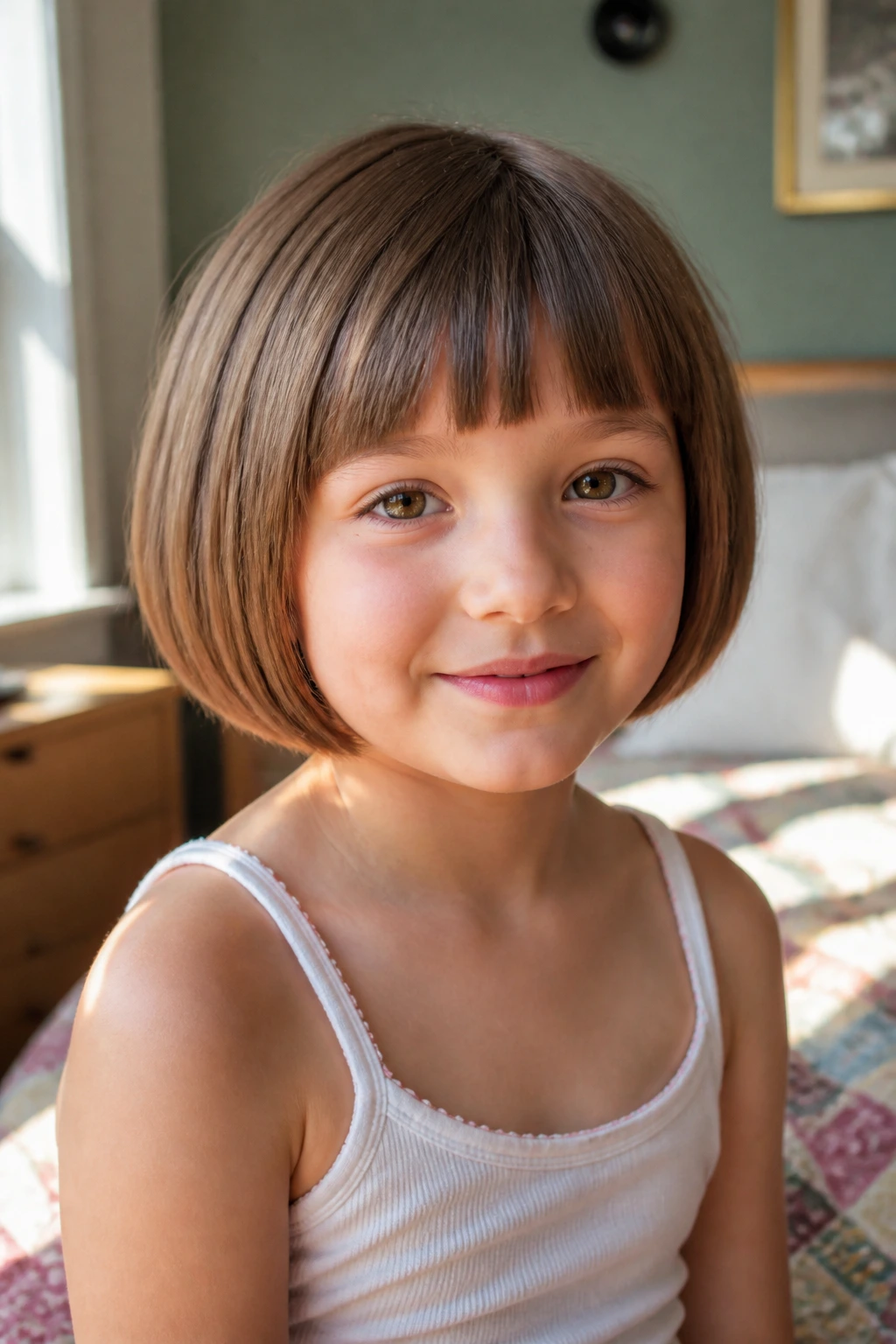
The pageboy cut has that rounded, tucked-under edge that makes it look polished even when the rest of the day is chaos. It usually falls around the jaw or slightly below, with the ends curved inward and a fringe that can be blunt or softly feathered. It’s tidy without being stiff.
This style works best on straight hair, where the under-turn at the ends actually shows up. It can also suit wavy hair if the stylist keeps the layers controlled. Too much internal layering ruins the clean shape, and then the pageboy loses the very thing that makes it useful.
I like it for kids who need hair off the face but still want something a little classic. It also tucks neatly under hats and barrettes. That sounds small. It isn’t. Small conveniences are what keep a cut in the rotation.
18. Mushroom Cut
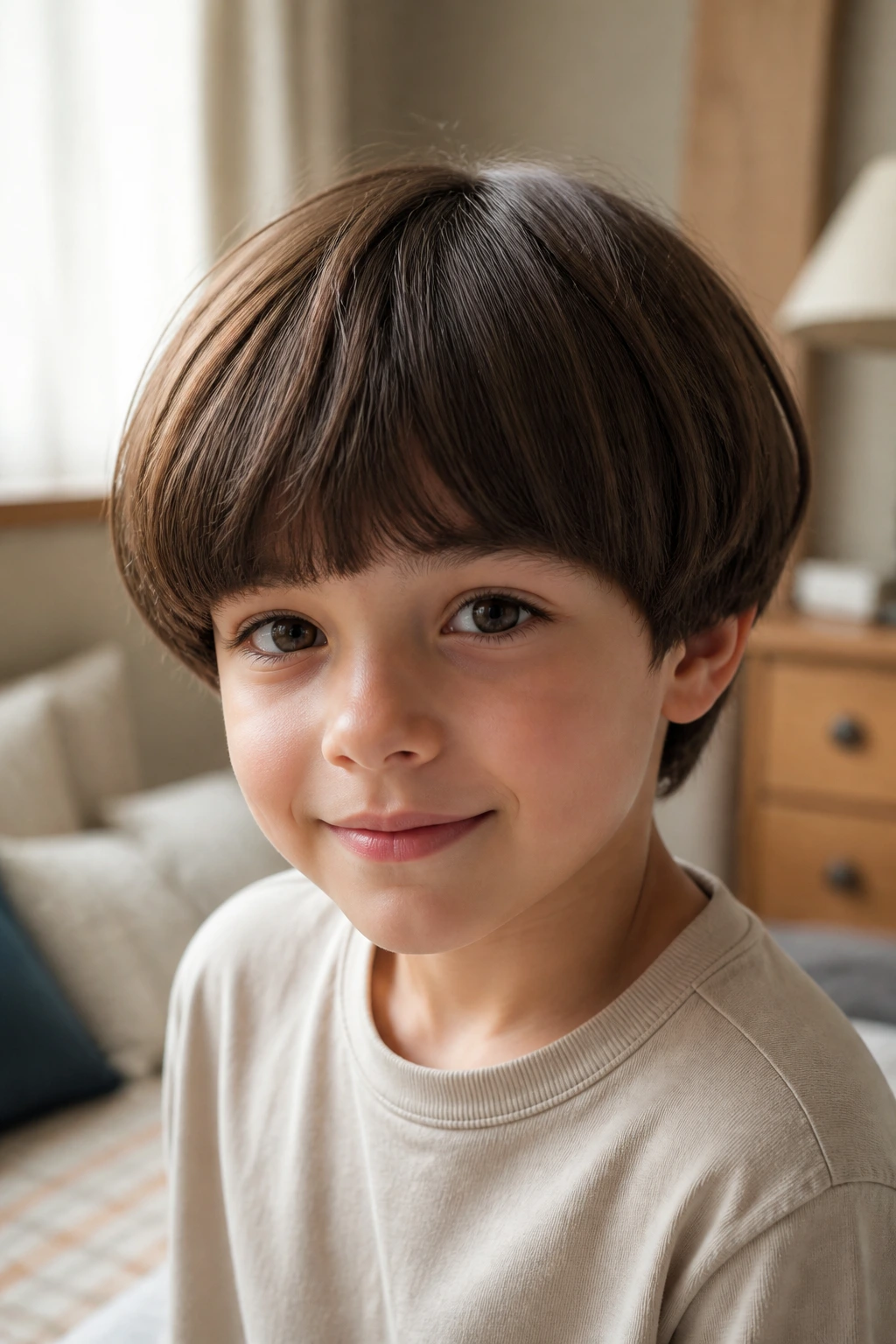
The mushroom cut gets a bad reputation because people remember the old version — stiff, round, and too exact. A softer mushroom on a kid can be charming in the best sense: rounded at the crown, full around the head, with edges that are feathered instead of blunt. It has shape without feeling frozen.
The key is softness at the perimeter. The sides should not form a hard shelf. Ask for gentle graduation and a fringe that blends into the front rather than sitting like a line cut with scissors and no second thought. On straight hair, the round shape reads clearly. On curls, it can become a little dome of texture, which is appealing when it’s shaped right.
This cut suits kids with fine to medium hair especially well because the rounded form makes the hair look denser. Just keep the outline soft, or it will slide straight into costume territory.
19. Flip Bob

A flip bob has ends that turn outward a little, which gives the haircut movement and a cheerful edge. It usually sits around the chin or just above, and the flip comes from the cut itself as much as from styling. That matters. You do not want to rely on perfect blow-drying every morning.
How It Behaves on Real Hair
Straight hair gives the flip the cleanest finish. A slight bevel on the ends helps the hair curl away from the neck and jaw. If the hair is wavy, the flip gets looser and more casual, which can be even nicer because it doesn’t look overdone.
It’s a smart choice for kids who like hair that feels light but not choppy. A little round brush work or a quick twist with a blow-dryer will set the edges. Or skip the dryer and let the hair do its own version. Both can look right, which is rare enough to matter.
20. Short Shag
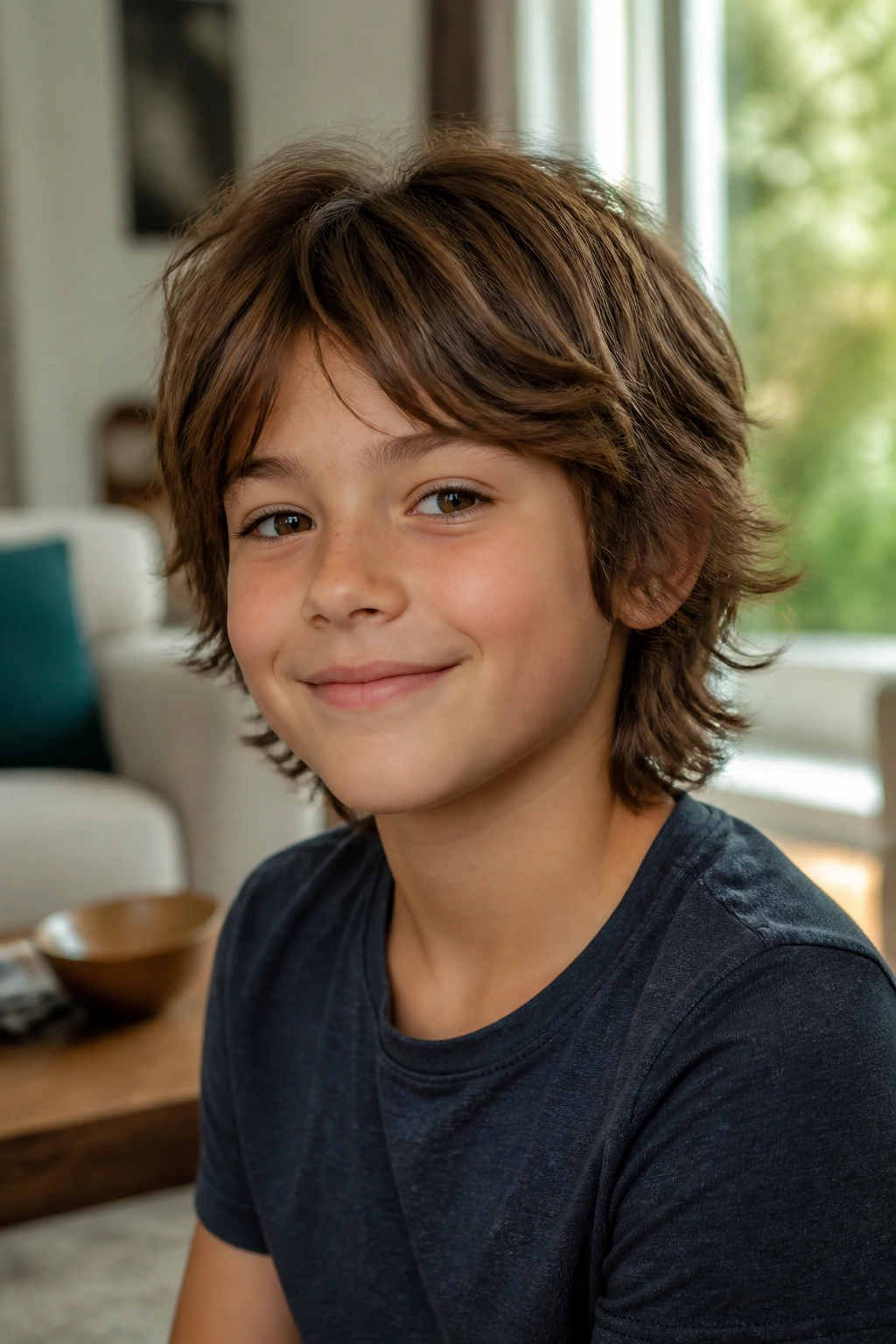
A short shag is built for movement. The layers are broken up, the ends are feathered, and the whole cut has a little lift around the crown and sides so it never sits too flat. If your child’s hair gets strange after sleeping on it, this cut tends to forgive that.
What I like about a short shag is that it doesn’t ask hair to behave like one smooth surface. The texture is the point. It works especially well on wavy hair, but straight hair can carry it too if the layering is done with enough care. The wrong shag becomes a frizz cloud. The right one has shape and a little swing.
Tell the stylist you want softness, not chop. That distinction helps more than asking for “lots of layers.” Too many layers at one length create a wild triangle around the head. Controlled, feathered layers are the useful version.
21. Two-Strand Twist Crop
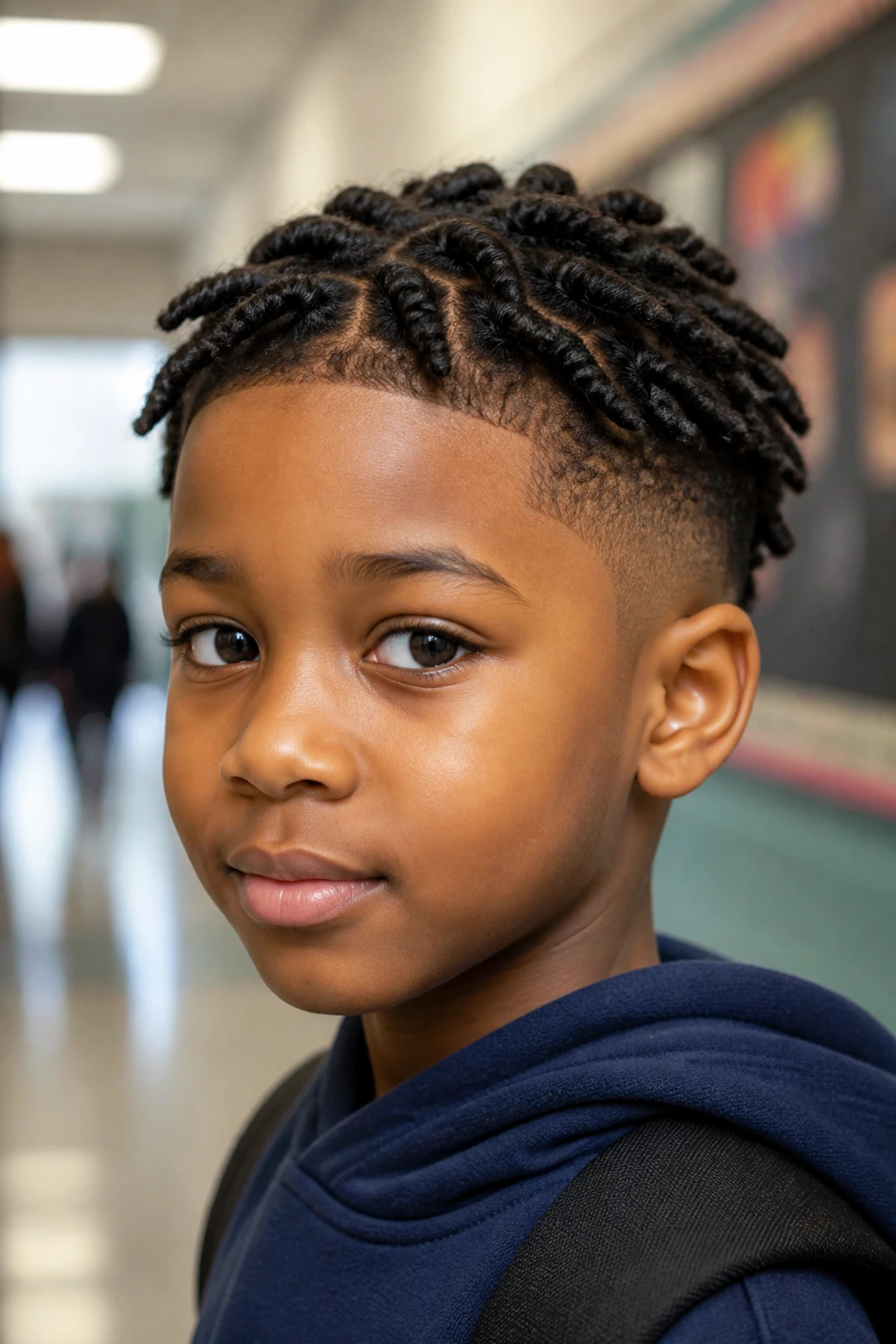
A two-strand twist crop keeps the hair short in a way that still gives coily hair style and protection. The twists can sit close to the scalp or slightly lifted, with the sides tapered down for a clean edge. It’s a practical choice when you want something neater than loose curls but not as locked-in as braids.
This style works best when the twists are not too tiny or too tight. Small twists last longer, but they also take longer to install. Medium-sized twists often hit the sweet spot for kids because they’re quicker to refresh and easier to sleep on. A satin bonnet or pillowcase helps the style stay neat between washes.
It’s also a style that grows out with grace. When the roots loosen, the look becomes softer rather than messy. That’s a good trade for busy families who do not want to be back in the chair every two weeks.
22. Starter Locs Taper
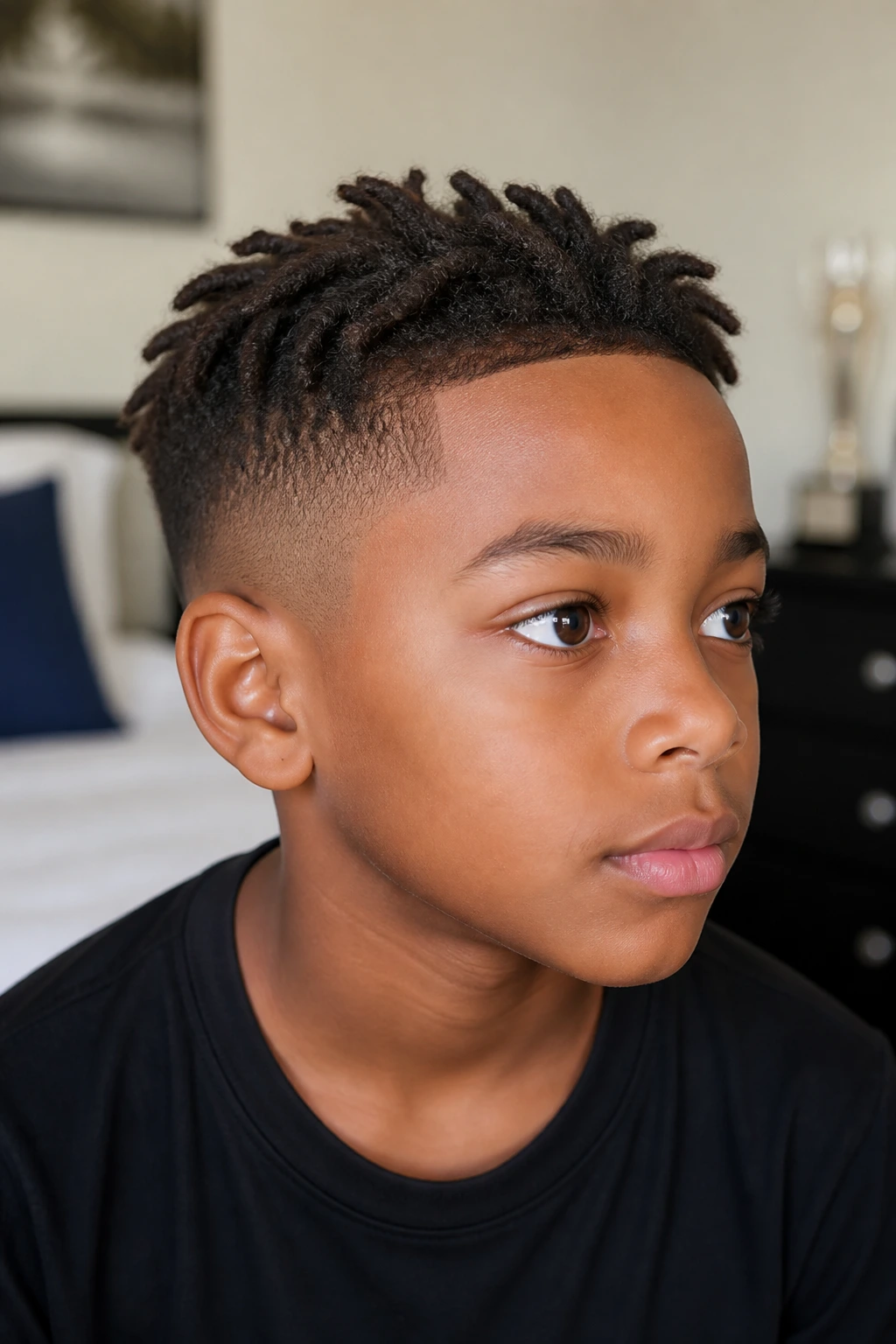
Starter locs with a taper give a neat outline while the loc journey is beginning to take shape. The sides and nape are kept short so the overall cut stays clean, and the locs on top or throughout the head remain the focus. It’s a style that looks orderly even in the early awkward stage.
The taper matters because it keeps the haircut from feeling bulky around the edges. It also makes routine cleaning and retwisting easier. If the locs are young, a gentle product and a careful palm roll or retwist schedule help keep the base tidy without pulling on the scalp.
This is not the place for heavy product. Sticky waxes build up fast and make the hair feel greasy long before they’ve done any useful work. A lighter hand keeps the style healthier and much easier to live with.
23. Short Cornrows
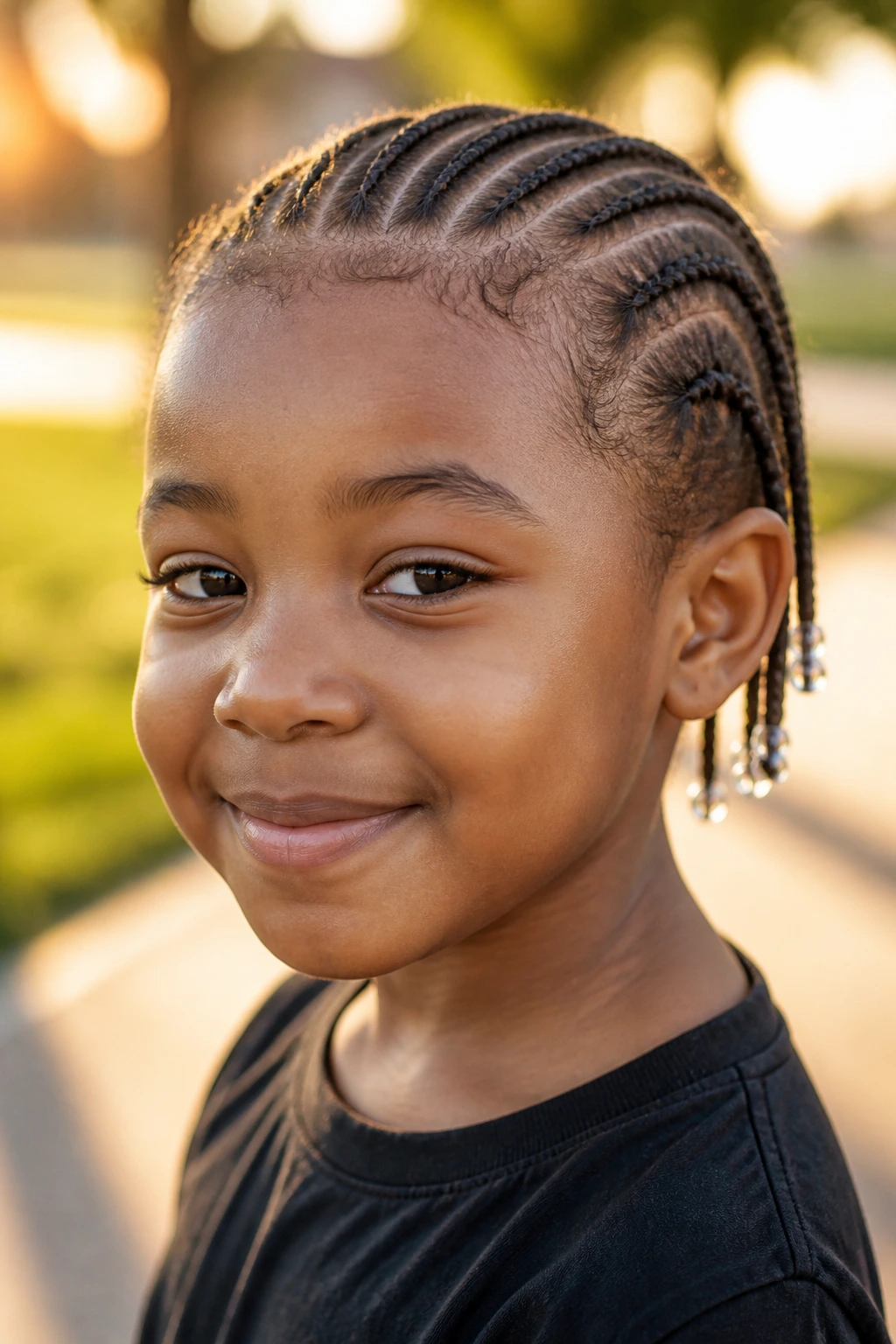
Short cornrows are a good answer when you want the hair close to the head, protected, and out of the way. The pattern can be simple — straight back, curved rows, a small center design — and the finished style stays neat through active days better than loose hair ever could. It’s one of the most practical short protective styles for kids.
The important part is tension. Cornrows should be snug, not painful. If the scalp is sore when you touch it, or the braids pull at the hairline, they’re too tight. That matters because kids may not always say the braid is hurting until after the damage is done.
Short cornrows also give you a lot of styling freedom. Beads, cuffs, or just a clean pattern all work. I’d rather see a simple braid done gently than an elaborate pattern pulled too hard.
24. Slicked-Back Taper
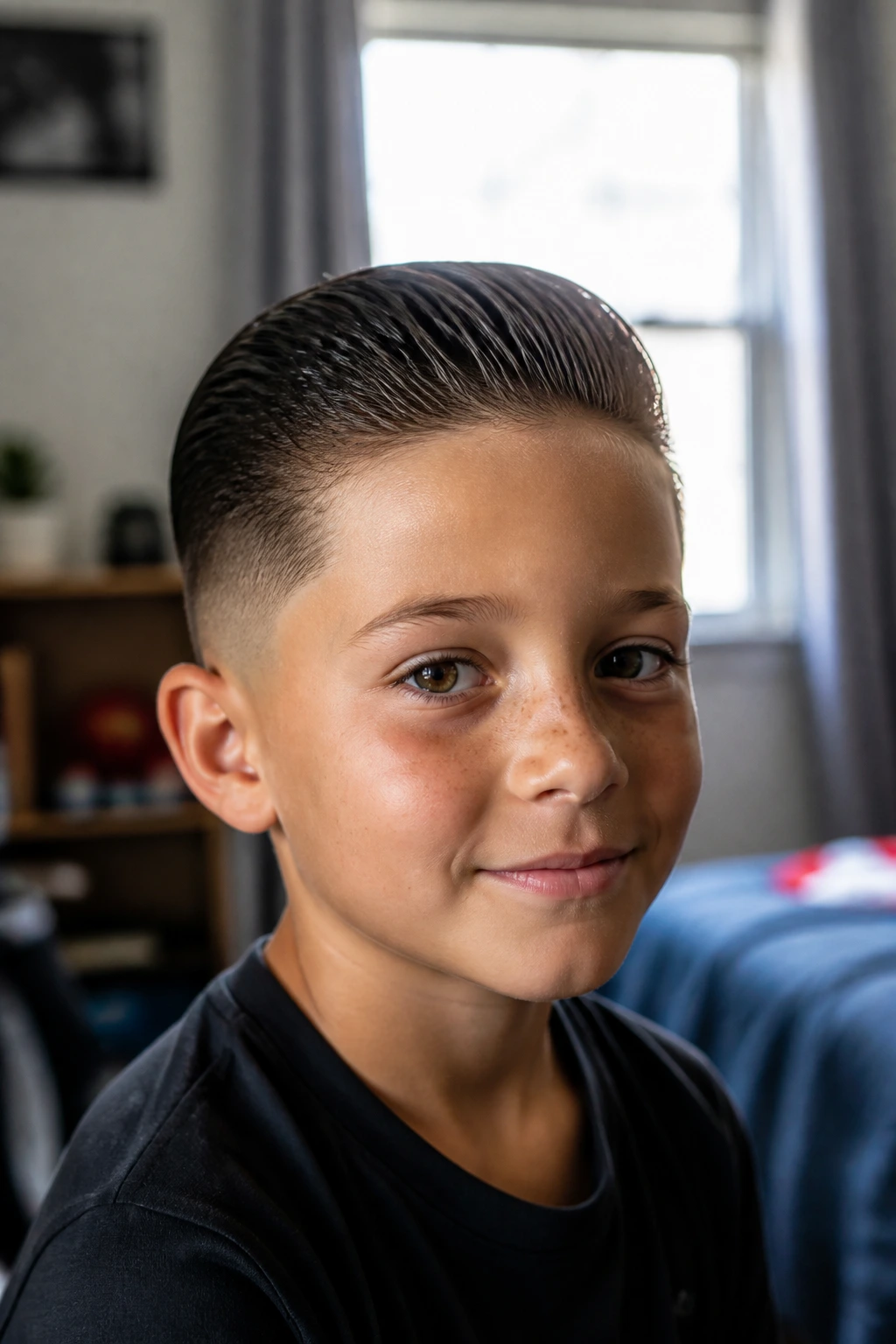
A slicked-back taper is a tidy little cut that keeps the sides and nape short while leaving enough on top to brush straight back. It’s a clean shape for kids with straight or wavy hair, especially when you want something that can pass for neat without much effort. The taper keeps the outline soft around the ears, which saves the haircut as it grows.
A Good Fit for Fast Mornings
Use water-based gel or a light styling cream, not a thick pomade that turns the hair greasy by noon. A damp comb through the top, a quick brush backward, and the hair sits in place. That’s the entire point of the style.
It also works well for kids who hate hair falling forward into their eyes. The hair stays off the face, but it doesn’t have to be shaved to the scalp. If the crown has a cowlick, the taper can help the top sit more predictably.
25. Mini Pompadour
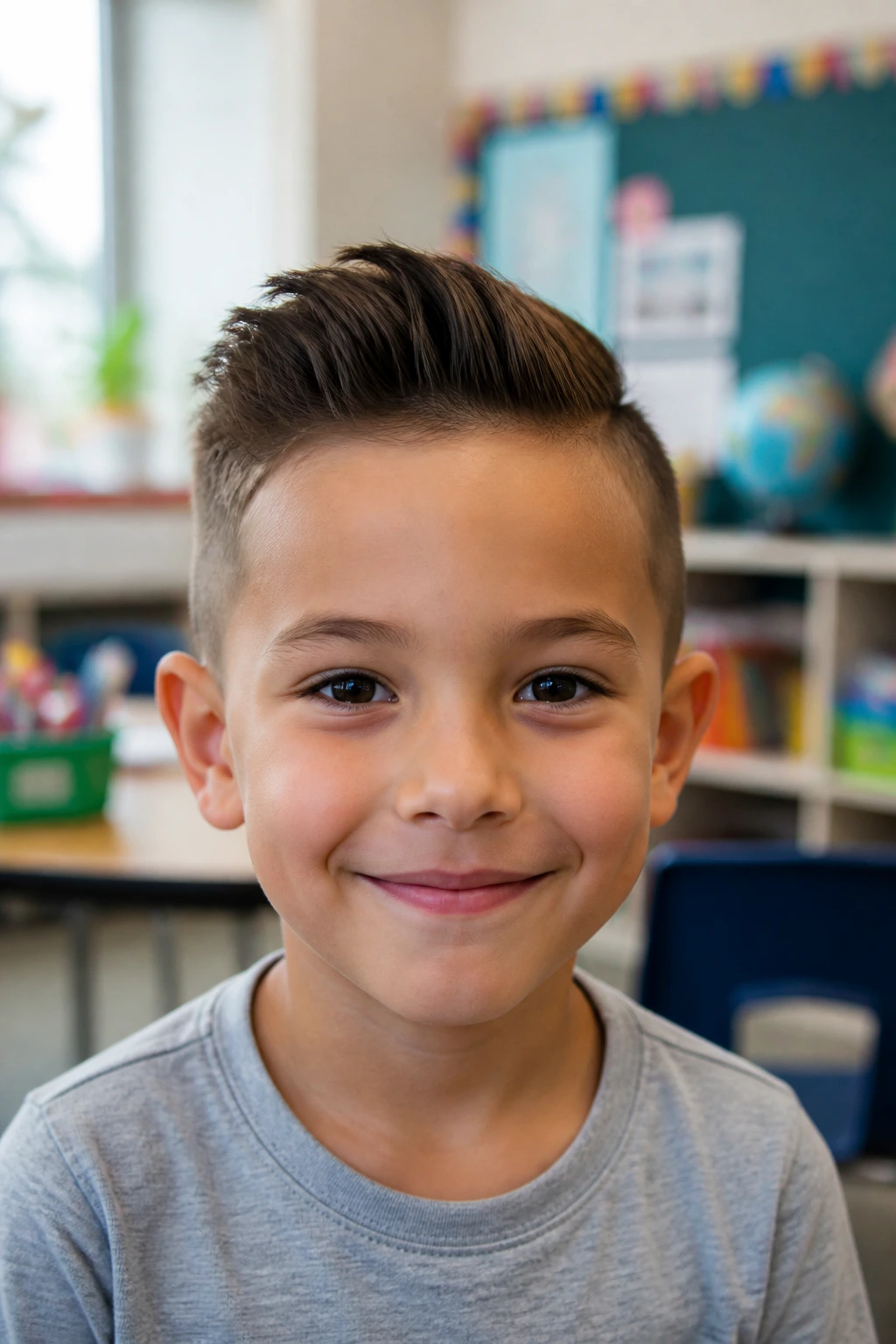
A mini pompadour is the playful cousin of the classic slick-back. The front is lifted just enough to make a small wave or roll, while the sides stay short and tidy. It’s a kid-friendly way to get a little height without turning the haircut into a costume.
The lift usually comes from a small round brush, a comb, or even just the fingers and a bit of water. For straighter hair, a tiny amount of mousse or light gel helps the front hold. Keep the shape small. If the pompadour gets too tall, it stops looking like a child’s cut and starts looking like a dare.
I like this style for photo days or special events when you want the haircut to feel a bit dressed up. It still needs a practical side, though. The sides should be short enough that the style doesn’t collapse into the ears.
26. Rounded Curly Crop
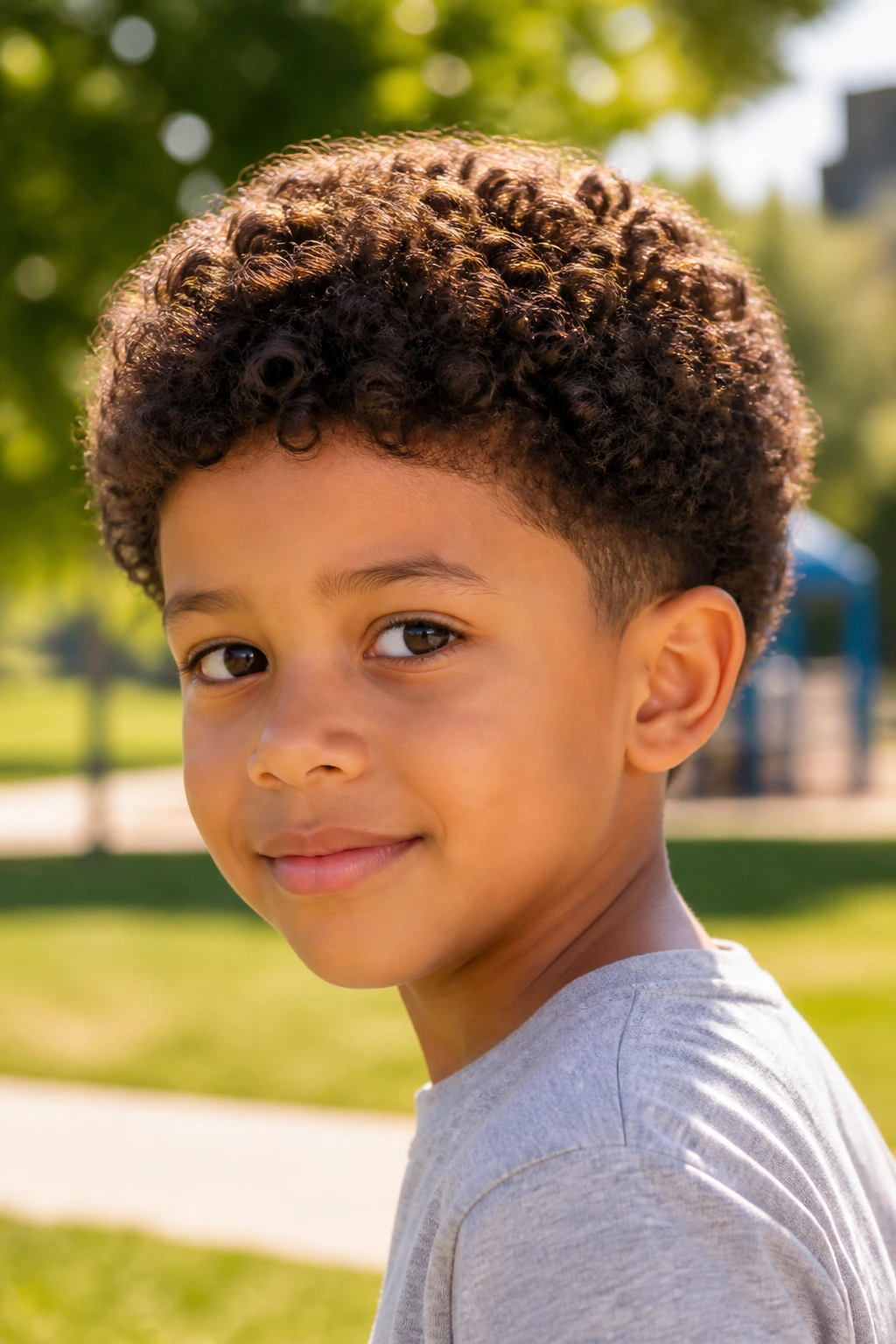
A rounded curly crop lets curls keep their shape while keeping the outline compact. Think of it as a clean dome of curls with the sides and nape trimmed tighter so the whole cut looks balanced. It’s a strong choice for tight curls or coils that naturally build width.
The rounded shape matters because it keeps the haircut from getting square or mushroomy in the wrong way. Ask the stylist to shape around the head rather than cutting the top too flat. When curls are left with enough length, they spring up into a soft, even halo instead of a jagged line.
This cut is one of the easiest to wear if your child’s curls have their own opinions. The haircut doesn’t fight them. It just gives them a frame.
27. Layered Crop with Micro Bangs
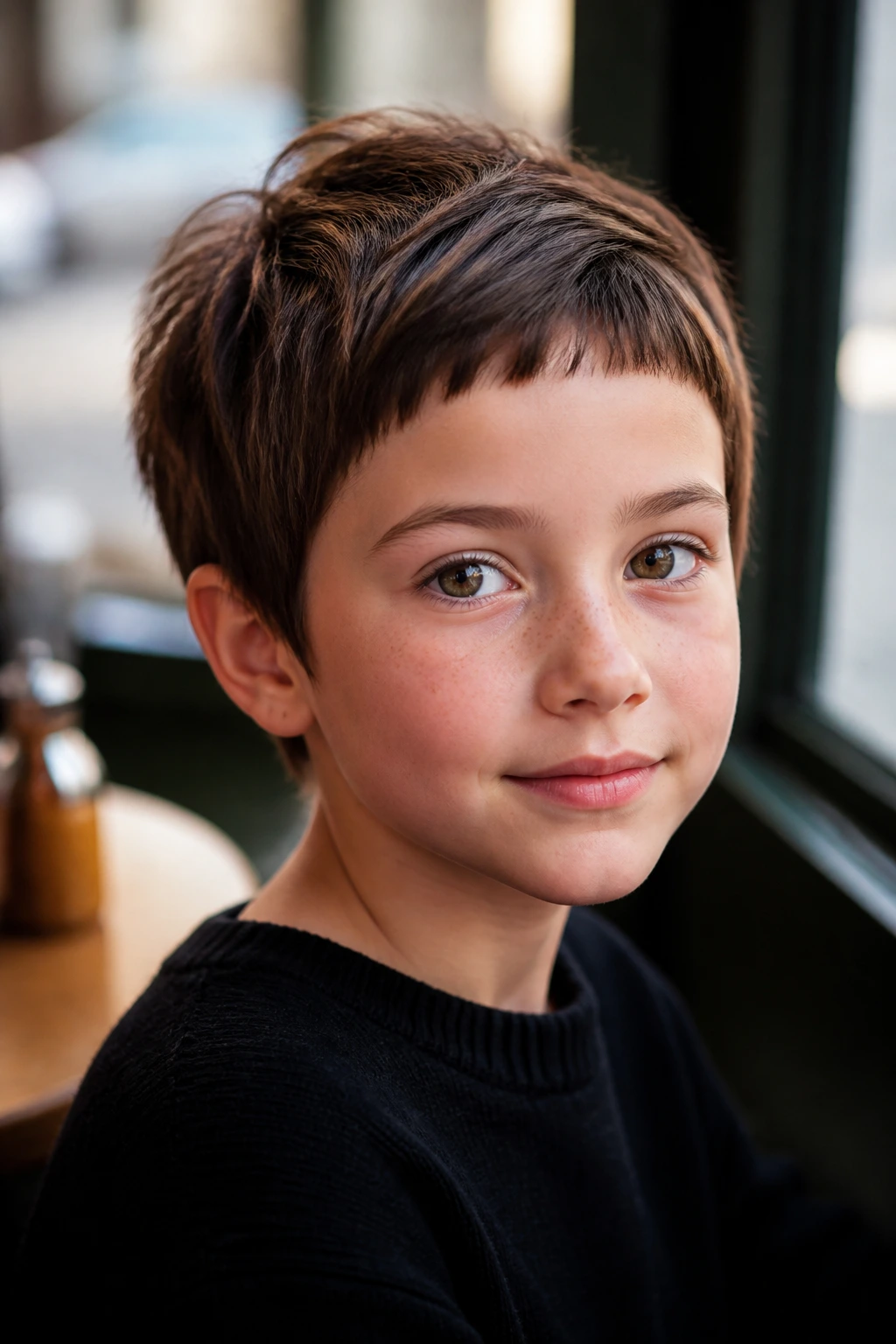
A layered crop with micro bangs is a little bolder, and that’s exactly why some kids love it. The crop itself stays short and textured, while the bangs are cut short enough to sit above or just at the brows. It gives the face a crisp frame without needing a long fringe that falls into the eyes.
What Makes It Different
Micro bangs are not forgiving if they’re cut too high, so the stylist has to leave a touch more length than the final look might suggest. On a kid, that means starting cautiously and refining later. The layers through the rest of the cut keep the shape from looking boxy.
This style is best for families who don’t mind a haircut with personality. It’s not the easiest grow-out, and that’s the honest truth. But when it’s cut well, the result is sharp, tidy, and a little artsy without trying too hard.
28. Skin Fade with Texture on Top
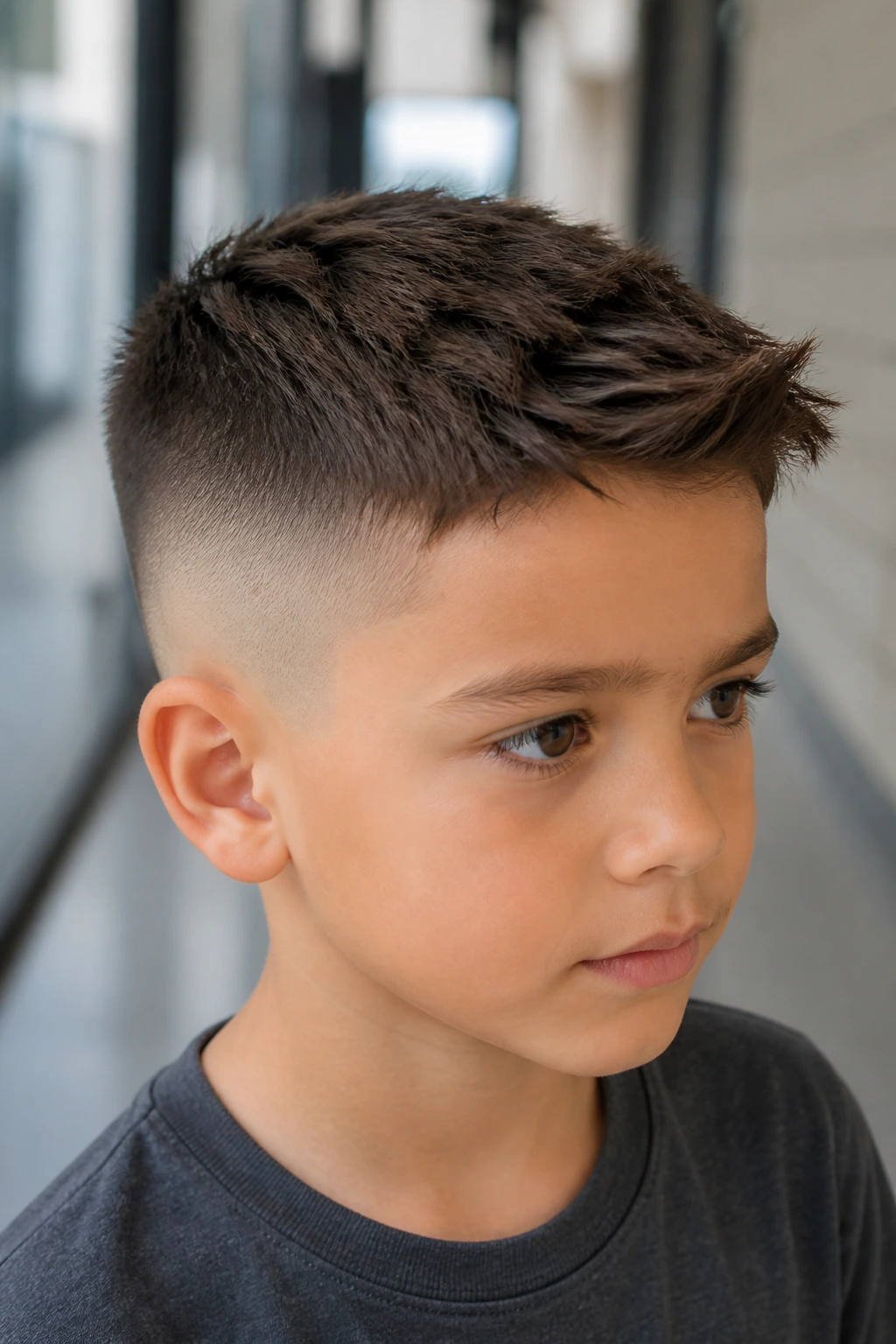
A skin fade with texture on top is one of the cleanest short hairstyles for kids who like a sharp outline. The sides taper all the way down to the skin or very close to it, while the top stays longer and broken up with texture. The contrast is the point.
It works especially well on dense straight hair or curly hair with strong shape on top. The fade keeps the haircut neat around the ears and neckline, and the texture up top prevents the style from looking too severe. If the top is left around 1.5 to 3 inches, it can be worn forward, brushed up, or swept to the side.
This one needs more upkeep than a soft crop. The fade grows out fast and loses its clean edge around the ears first. If your child dislikes frequent trims, that’s worth thinking about before you commit.
29. Tapered Curls with Bangs
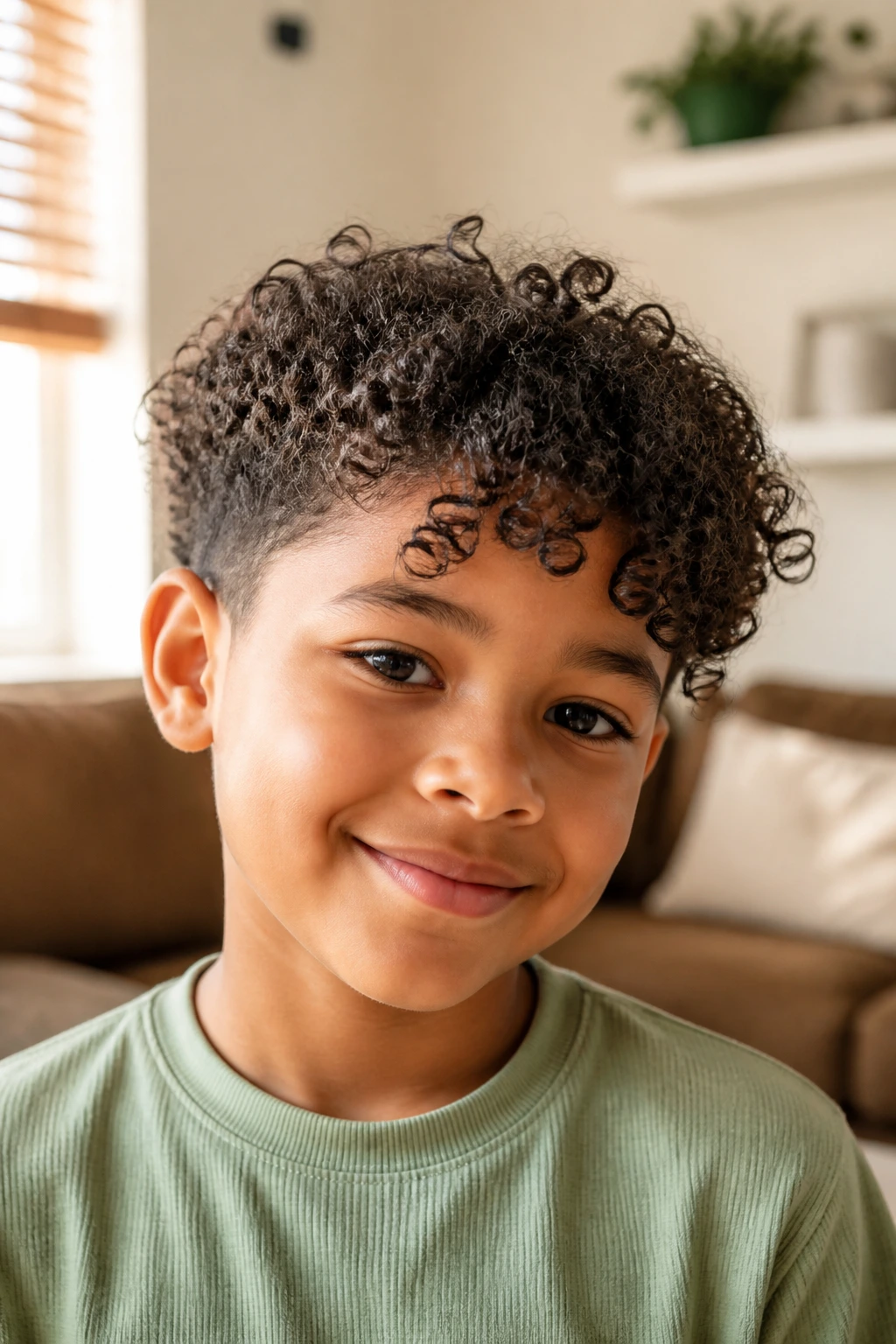
Tapered curls with bangs give curly hair a frame without forcing the curls into a square. The sides and back are tapered, while the front keeps enough length for a soft fringe of curls to fall over the forehead. It’s a lovely way to keep curls short but still expressive.
The bang area needs a little caution. Curls shrink, and they shrink in uneven ways. A fringe that looks eyebrow-length when wet may bounce up to mid-forehead once dry, so the stylist should cut with the dry shape in mind. That’s the part that saves people from surprise micro-bangs.
This style is a sweet spot for kids who want hair off the neck but don’t want their curls chopped into a flat shape. It frames the face and still moves easily. That combination is rarer than it should be.
30. Scissor-Only Mop Top
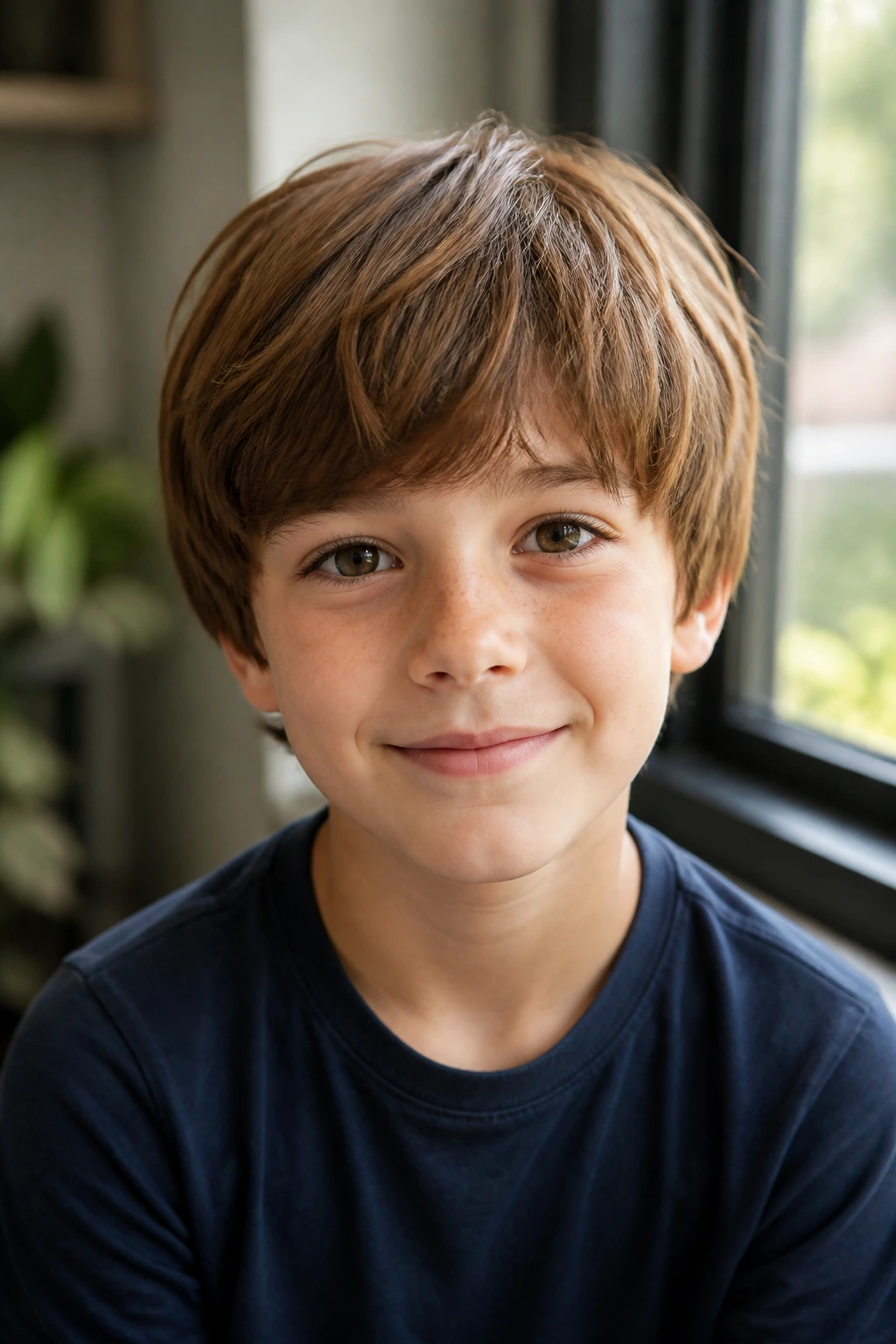
A scissor-only mop top is the one I’d pick for a child who cannot stand the sound or vibration of clippers. The hair stays soft and rounded, usually with enough length on top and around the sides to create a loose, shaggy shape. It has the feel of a classic kids’ cut, but without the buzz cut energy.
Because everything is done with scissors, the finish tends to look more natural around the edges. That helps if your child has a sensitive scalp or just plain hates the barber chair. It also gives the stylist more room to shape around cowlicks, which can make a big difference around the crown and bangs.
This is the cut to choose when you want short, but not severe. It’s forgiving, easy to grow out, and much less likely to trigger a full haircut meltdown.
31. Side-Part Taper
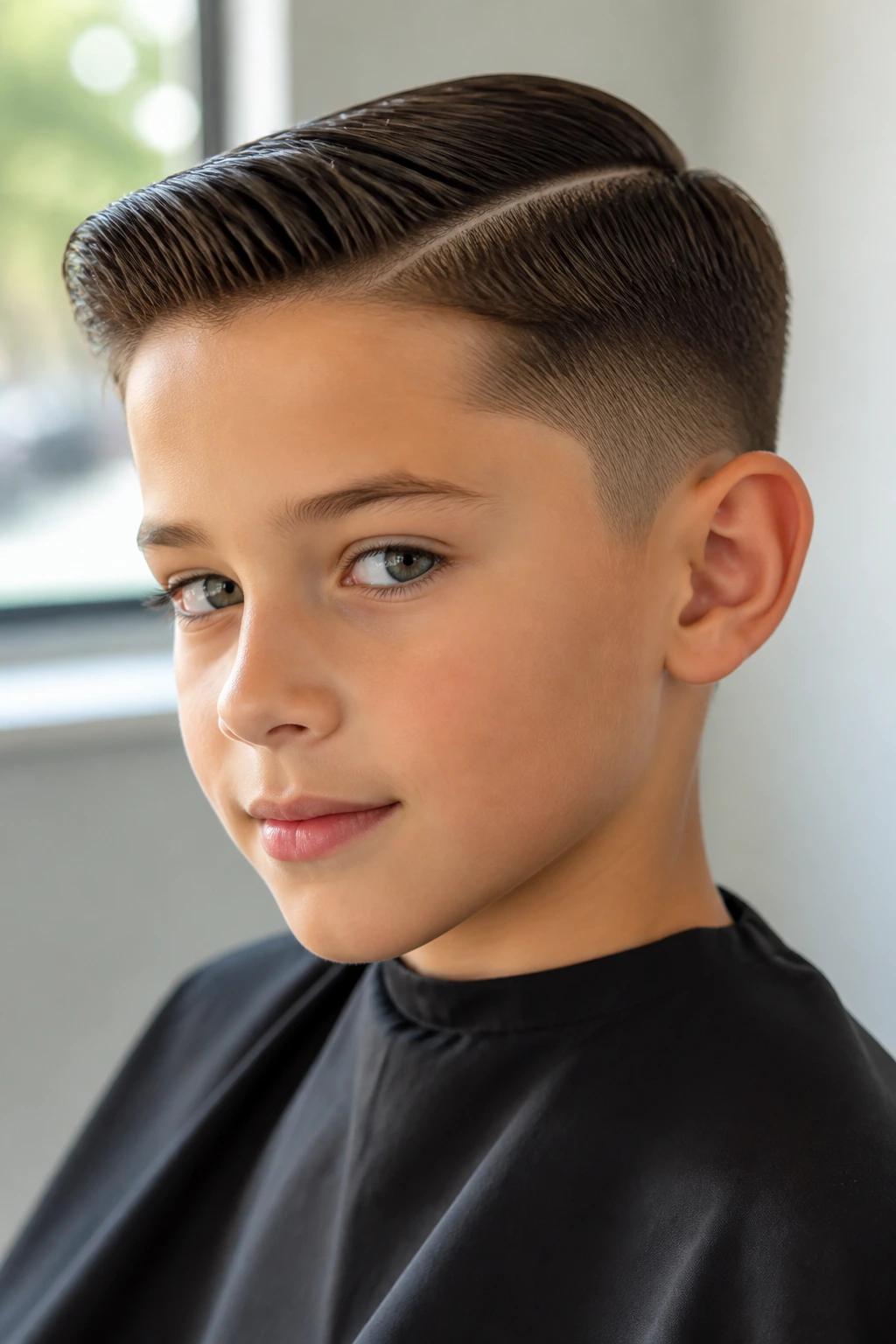
A side-part taper is a clean, school-friendly haircut that never looks overworked. The sides are tapered close, the top is left long enough to part, and the whole cut sits tidy without needing a heavy product load. It’s simple in a good way.
Why It Stays Useful
The side part gives the cut direction. That direction matters because it helps flatter a cowlick or a stubborn front section that wants to stand up. Ask the stylist to leave enough length on top for the part to hold — usually around 2 inches or a little more, depending on texture.
This cut fits a lot of kids because it can be worn neat for events and looser for regular days. A comb, a bit of water, and a light cream are usually enough. It’s a calm haircut. Some days, that’s exactly what you need.
32. Tapered Bowl Cut
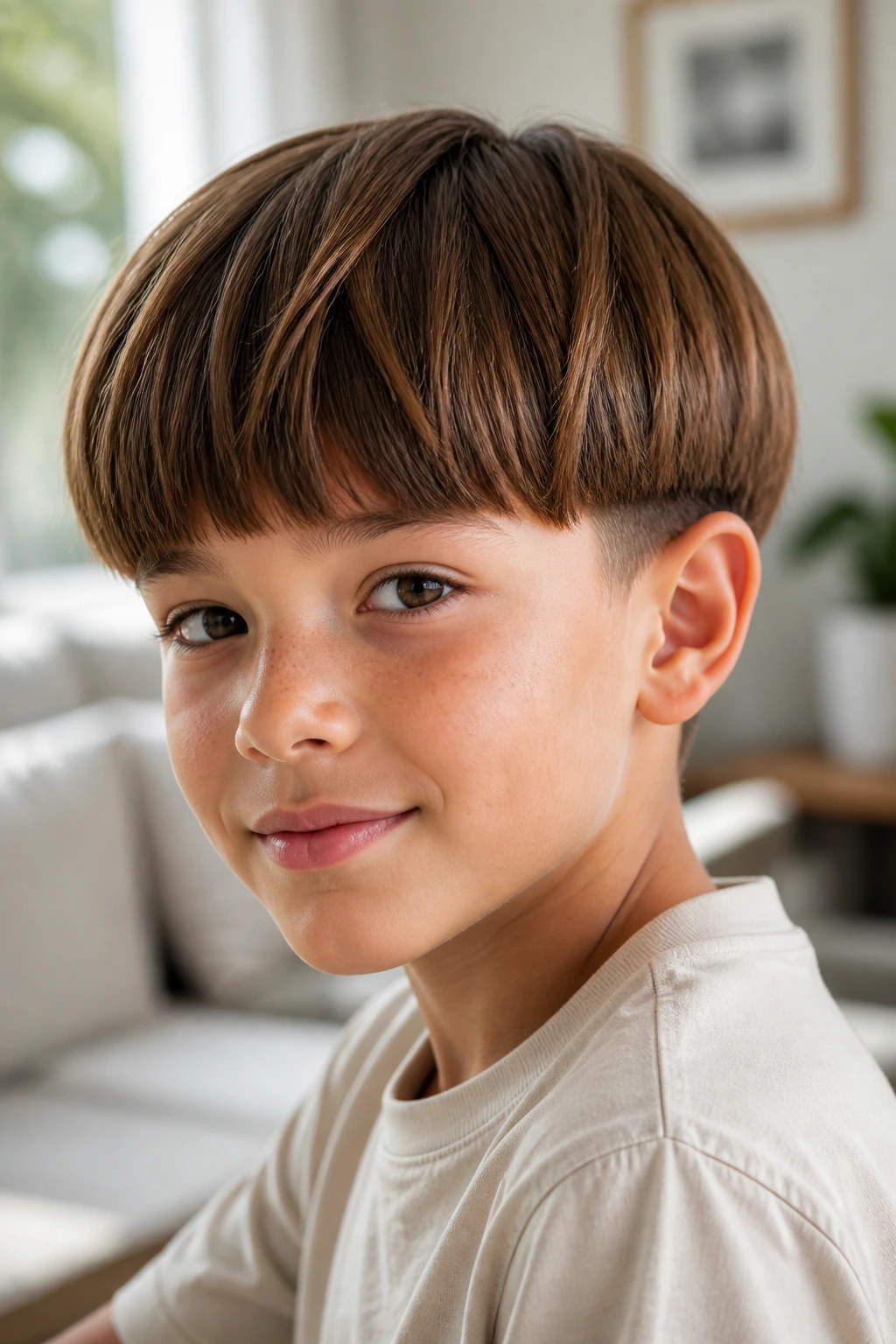
A tapered bowl cut is the modern way to keep the rounded shape without making the haircut feel frozen in the 1990s. The outline stays full around the head, but the sides and nape are softened with a taper so the cut sits better as it grows. It’s cleaner than the old hard-line version and easier to live with.
The important part is the edge. You want a smooth curve, not a blunt shelf. If the hair is straight, the shape reads neatly and boldly. If the hair has a little wave, the taper keeps the sides from flaring out and making the whole cut look too wide.
This style works best when the stylist is willing to soften the perimeter and leave some movement at the fringe. It’s one of those cuts that either looks intentional or awkward, with not much middle ground. The taper is what keeps it on the right side.
What Makes a Short Cut Behave on Real Kids
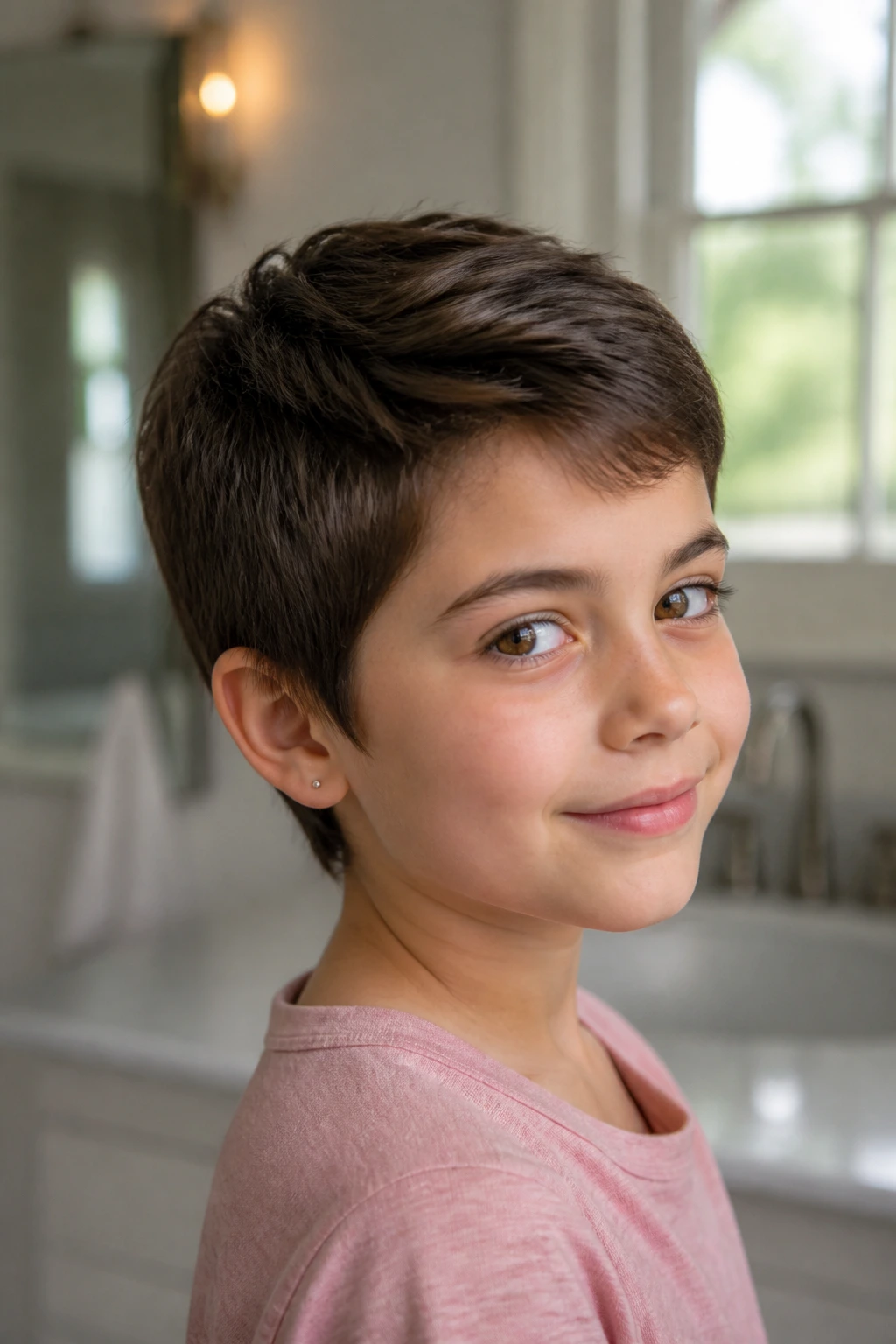
Short hair sounds simple until you run into the details. Cowlicks, crown swirls, ear shape, hair density, and how fast a child’s hair grows all affect whether a haircut keeps its shape for 3 days or 6 weeks. A neat photo can lie. The head underneath never does.
The smartest haircut choices start with texture. Fine hair often needs blunt edges or very gentle layering to look fuller. Thick straight hair benefits from a little internal debulking so it doesn’t puff up around the ears. Curls and coils usually behave better when they’re shaped dry or cut in a way that respects shrinkage, which is another reason a one-size-fits-all approach fails so often.
Ask the stylist how the cut will grow out. That question tells you more than “Will this look cute?” ever will. A good short haircut should still look like a haircut after the first sleep, the first hat, and the first growth month. If it only looks good on the day of the appointment, it’s not the right cut.
What to Bring to the Salon Chair
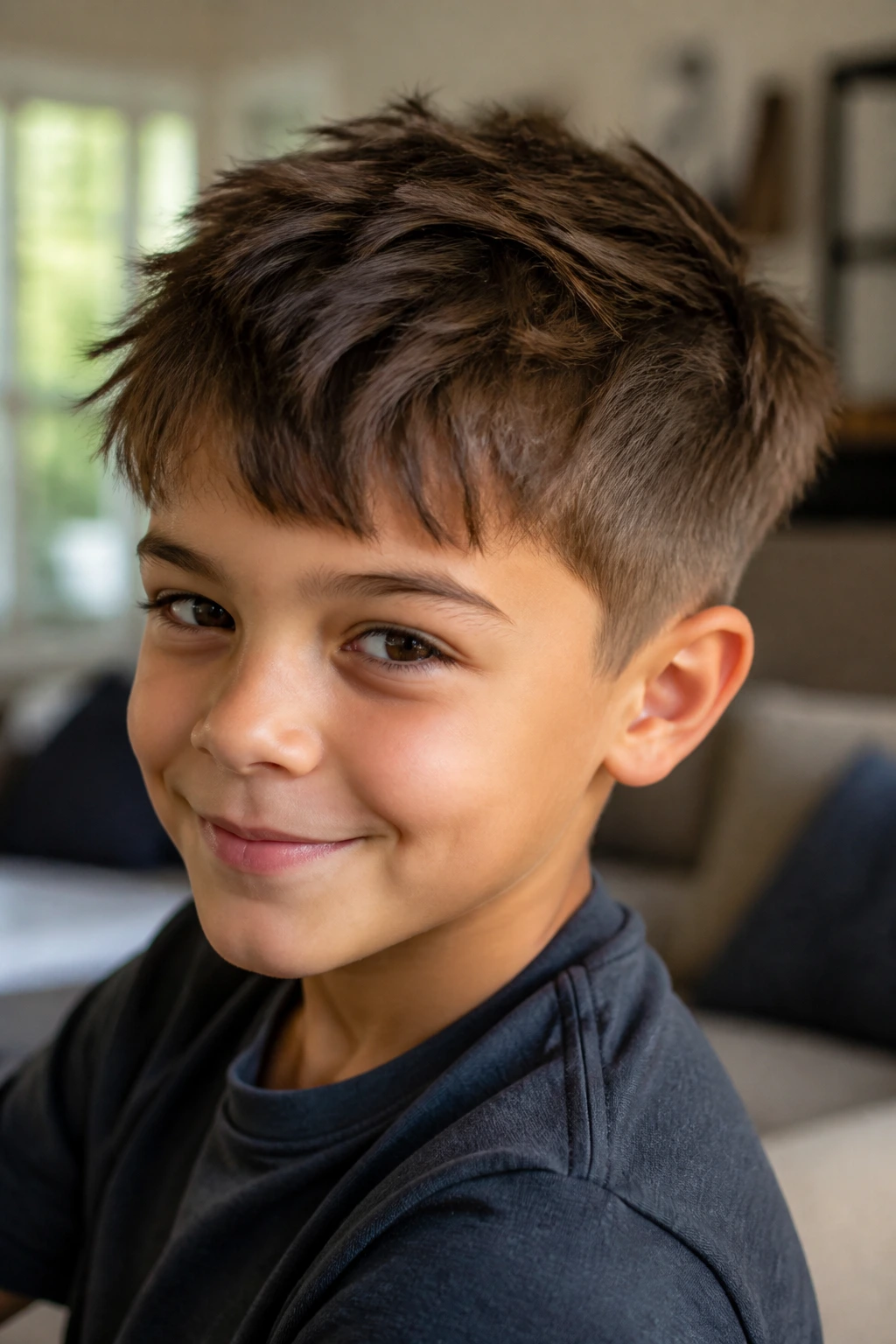
Bring more than one reference photo. One photo is a wish. Three photos tell a story. Show the stylist a front view, a side view, and something that gets close to the exact texture you want — straight, curly, shaved, layered, or softly rounded. A photo of a child with completely different hair texture is not useless, but it needs explanation, not imitation.
Write down the practical details before you go. How often are you willing to trim? Does your child hate clippers near the ears? Do bangs need to stay above the eyebrows, or can they skim them? Can the neckline be tapered, or do you want it left soft? Those answers shape the haircut more than the style name does.
A good parent prep list is tiny and helpful: clean hair if possible, no giant knots, a snack, and a picture of the outline you want. That’s enough. You do not need a salon spreadsheet.
Essential Equipment for These Hairstyles
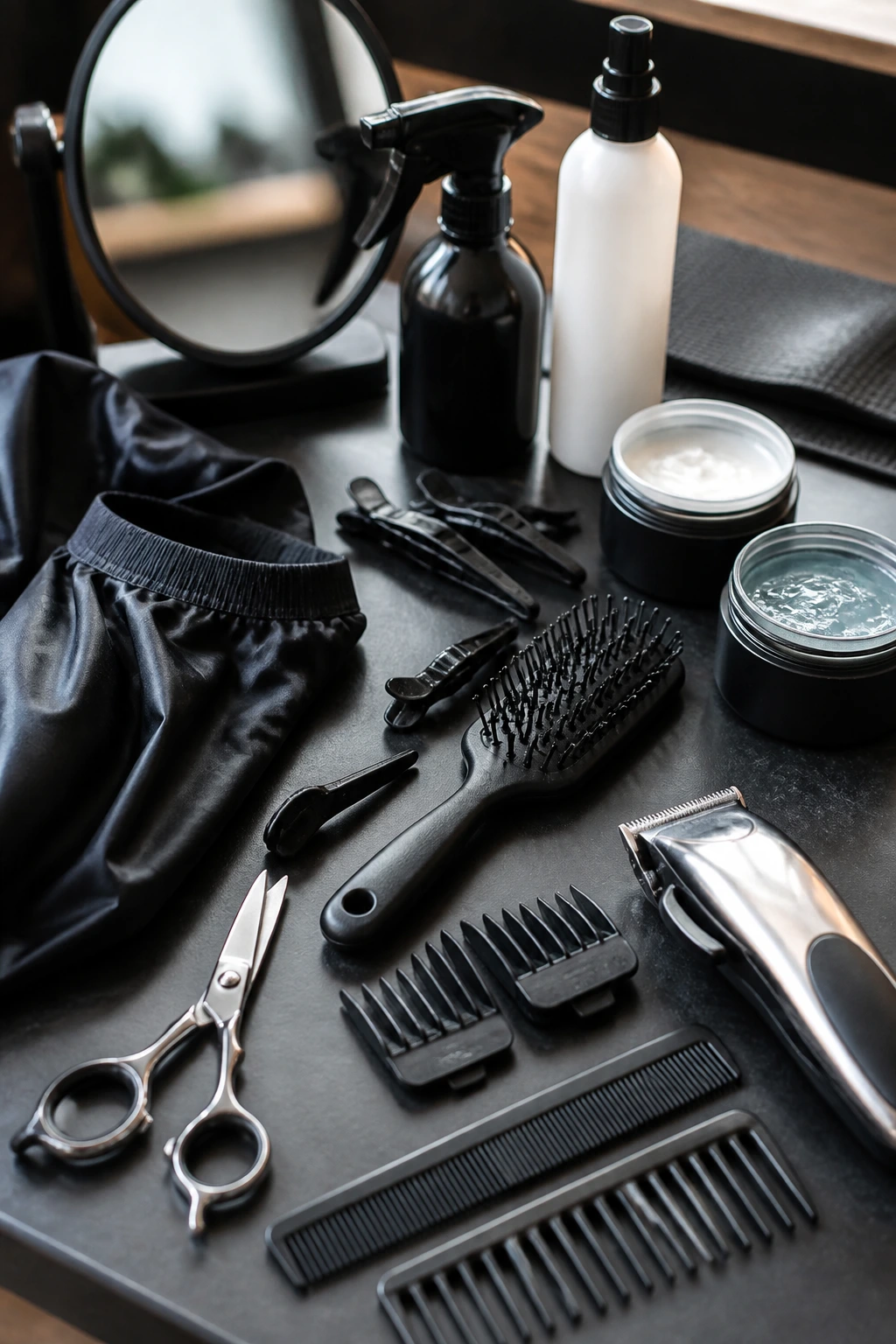
- Sharp haircutting shears: Dull scissors chew the ends and make short cuts look frayed.
- Clippers with guards #1 through #4: Handy for fades, buzz cuts, tapers, and clean necklines.
- Fine-tooth comb and wide-tooth comb: The fine comb helps with sectioning; the wide comb is kinder to curls and tangles.
- Spray bottle with water: A light mist resets bedhead, refreshes parts, and helps scissor-only cuts sit flat.
- Sectioning clips: Useful when you’re working around bangs, crown layers, or curly sections.
- Barber cape or old towel: Keeps loose hair from sliding down the neck and into clothes.
- Detangling brush: Pick one with flexible bristles so it doesn’t yank at damp hair.
- Light leave-in conditioner or curl cream: Best for short curly crops, rounded cuts, and soft shag styles.
- Water-based gel or matte cream: Good for slicked-back cuts, faux hawks, and side parts.
- Small mirror: Useful for checking the back of the head, especially with fades and tapers.
How to Choose the Right Short Cut for Your Child’s Hair

The right haircut starts with the hair that’s already there. Straight fine hair usually needs shape and bluntness so it looks fuller. Thick hair often needs removal of bulk around the sides and crown so it does not balloon outward. Curly and coily hair need enough length to form their natural pattern, even when the ends look longer wet than they do dry.
Think about the daily routine, not just the appointment. If your child hates combing, choose a shape that can be refreshed with water and fingers. If hats, helmets, or sports are part of the week, keep the sides and nape clean enough that they won’t rub into a sweaty mess. If clippers cause stress, scissor-only styles are worth the extra minute in the chair.
And then there’s grow-out. That part gets ignored too often. A good short haircut should slide into the next stage without creating a triangle, a shelf, or a weird mound at the crown. If you know you’ll wait six weeks between cuts, pick a style that still has an outline when the edges soften.
Small Styling Moves That Change Everything
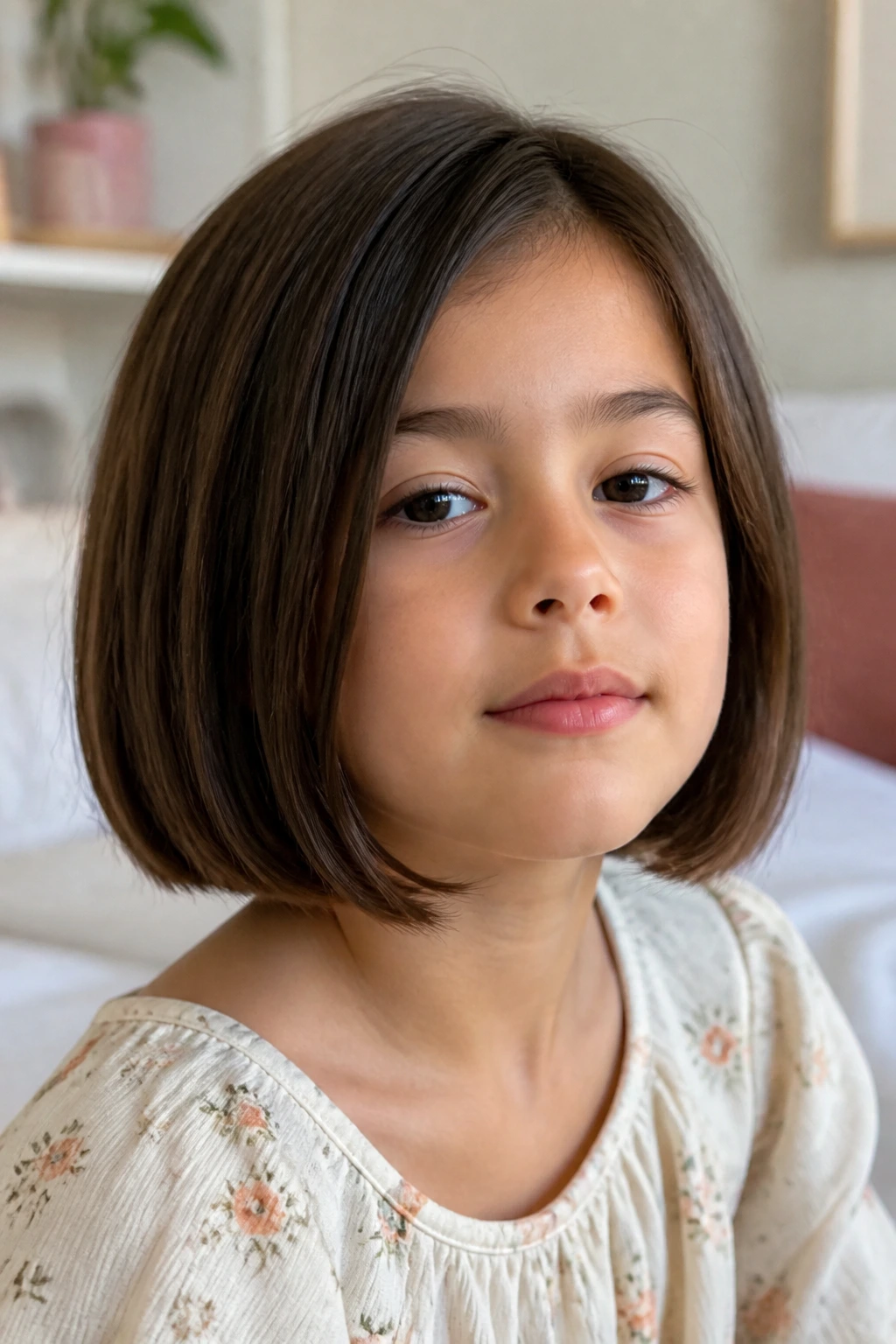
Texture Boost: For straight or wavy cuts, mist the top with water and scrunch it with your fingers instead of brushing it flat. That tiny move gives a pixie, crop, or shag a better shape.
Part Switch: Moving the part half an inch to the side can calm a cowlick that keeps pushing bangs into the wrong direction. Small shift. Big payoff.
Accessory Trick: Narrow clips, soft headbands, and snap barrettes can rescue a growing fringe without forcing a trim too early. Use the smallest accessory that does the job; giant bows on a very short cut can feel like overkill.
Grow-Out Trick: If a cut is getting too wide, ask for cleanup around the ears and neckline instead of shortening the top. That keeps the style looking purposeful while the length catches up.
Common Mistakes to Avoid
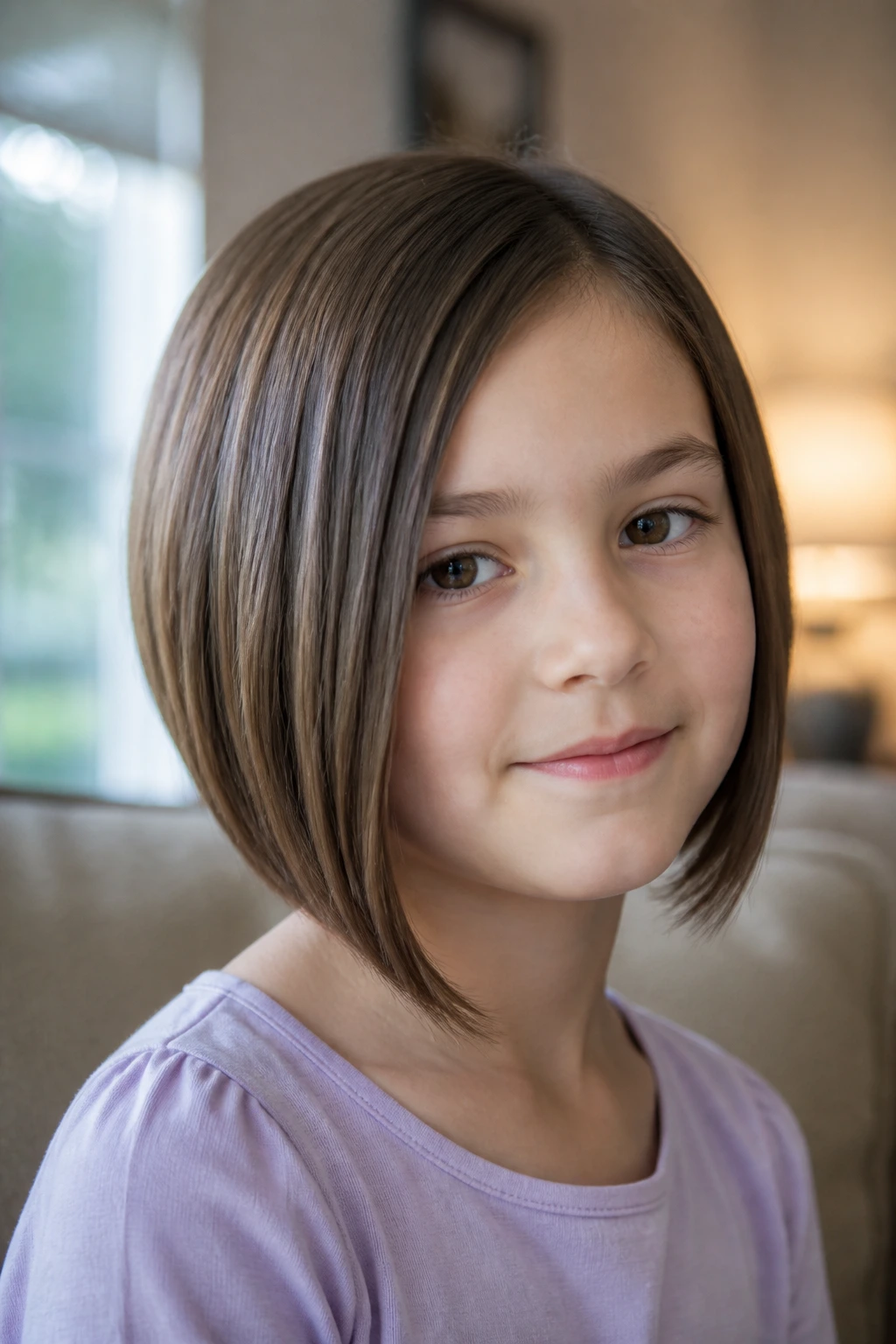
The first mistake is cutting bangs too short on the first pass. Hair springs up when it dries, and it springs up even more on curls. If the fringe looks barely long enough in the chair, it’s probably already too short.
Another one is ignoring the cowlick at the crown. A cut can look tidy from the front and still stand straight up in back. The fix is to leave a little more length where the swirl lives, then shape the hair around it instead of fighting it.
Too much product is a quieter problem, but it shows fast. Heavy gel, wax, or pomade can make short hair collapse into greasy chunks, especially on fine hair. Use the smallest amount that gives the shape you need, then stop.
Parents also get burned by picking a style that needs upkeep they won’t do. A fade that looks great on day one can turn fuzzy around the ears in 10 days. If you want low maintenance, choose a softer taper, a bob with room to grow, or a scissor-only crop.
Variations and Adaptations to Try
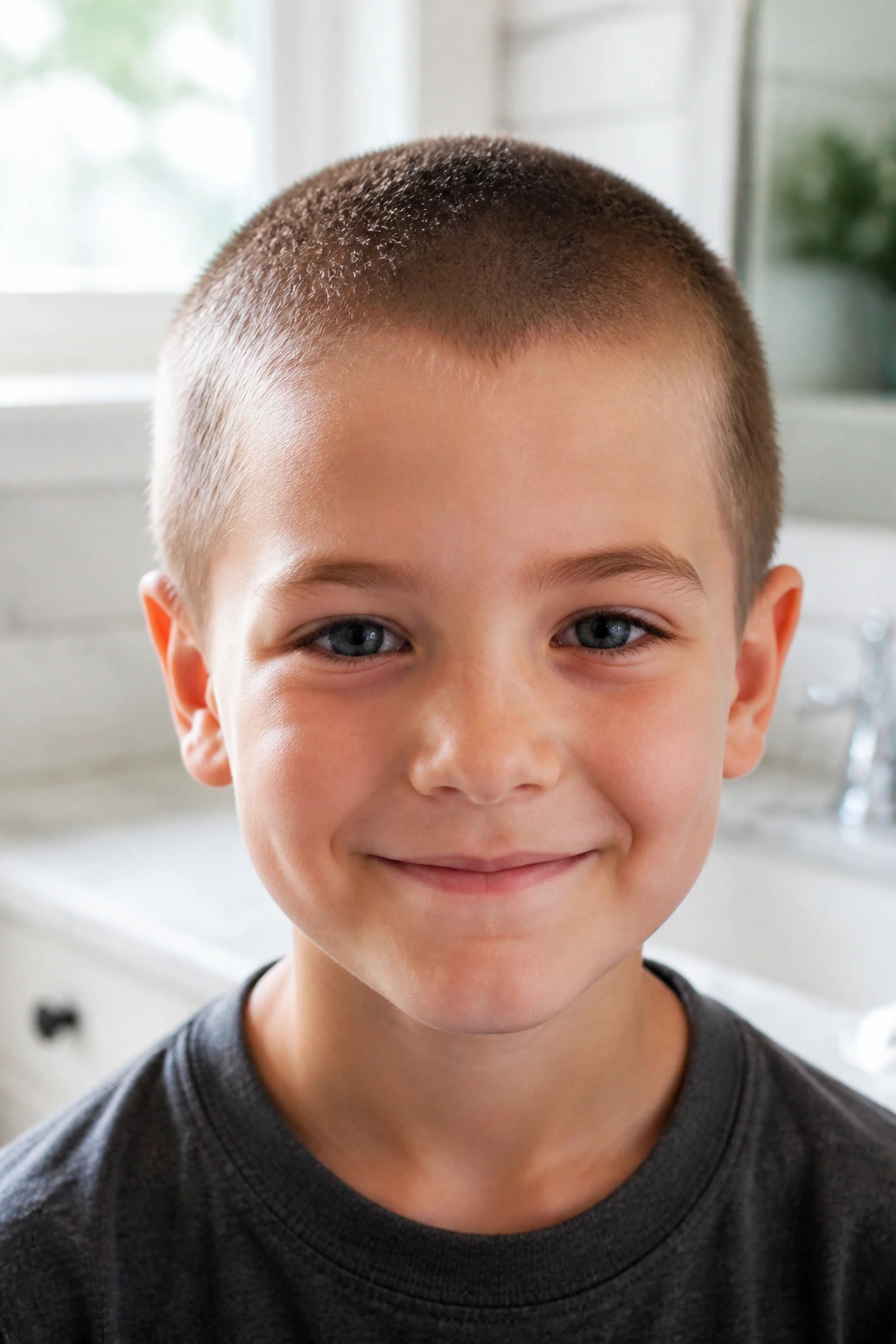
Cowlick-Friendly Version: Keep a little extra length at the crown and front hairline, then shape the sides tighter. This helps the hair settle instead of fighting the swirl every morning.
Sensory-Friendly Version: Choose scissor-only shaping and avoid clipper edges near the ears and nape. A soft mop top, pageboy, or rounded crop often feels easier for kids who dislike buzzing sounds or vibration.
Sport-First Version: Go shorter at the neck and around the ears, then leave just enough on top for a quick brush-back or side sweep. This works well when helmets, swim caps, and constant movement are part of the week.
Grow-Out-Friendly Version: Ask for soft edges, not hard lines, and keep the fringe slightly longer than the final shape seems to need. The cut will lose its outline more gracefully, which buys you an extra week or two.
Curl-Respecting Version: Let the haircut follow the curl pattern rather than forcing one blunt shape on all sections. The result is usually rounder, softer, and much easier to maintain.
How to Keep Short Hair Looking Good Between Cuts

Short hair often needs less washing than parents think. For fine straight hair, a rinse every 1 to 3 days can be enough. Curly and coily hair usually do better with less frequent shampoo and more targeted moisture, because over-washing strips the shape and leaves the ends rough. If the scalp is clean and the hair still sits well, you do not need to wash it just because it’s short.
Trims matter more than styling in many of these cuts. Buzz cuts and fades usually need cleanup every 2 to 3 weeks if you want the edges crisp. Pixies, bobs, and crops can stretch to 4 to 6 weeks before they start losing the original shape. Braids, twists, and starter locs depend on the style and growth, but the scalp should still be checked regularly for tension and buildup.
Night care is underrated. A satin pillowcase or bonnet keeps curls from frizzing and helps short hair keep its shape longer. For straight cuts, it also reduces the weird flattened ridge that shows up after a rough sleep. And if the back starts to puff out, a light mist of water and a quick finger reset usually fix it faster than a full wash.
Frequently Asked Questions
Which short hairstyle is easiest for fine hair?
Blunt bobs, classic pixies, and side-part tapers tend to work best because they keep weight at the ends or shape at the crown. Fine hair looks fuller when the outline is clean, not overly layered.
What if my child hates clippers?
Choose scissor-only cuts like a soft pixie, pageboy, mop top, or bob. Tell the stylist in advance so they don’t start the appointment with the buzzing sound near the ears.
How short can bangs go without becoming a problem?
Short bangs should usually stay a little longer than brow level at the first cut, especially on straight or springy hair. Once hair dries, it often sits shorter than expected, so leaving room is safer than going too high.
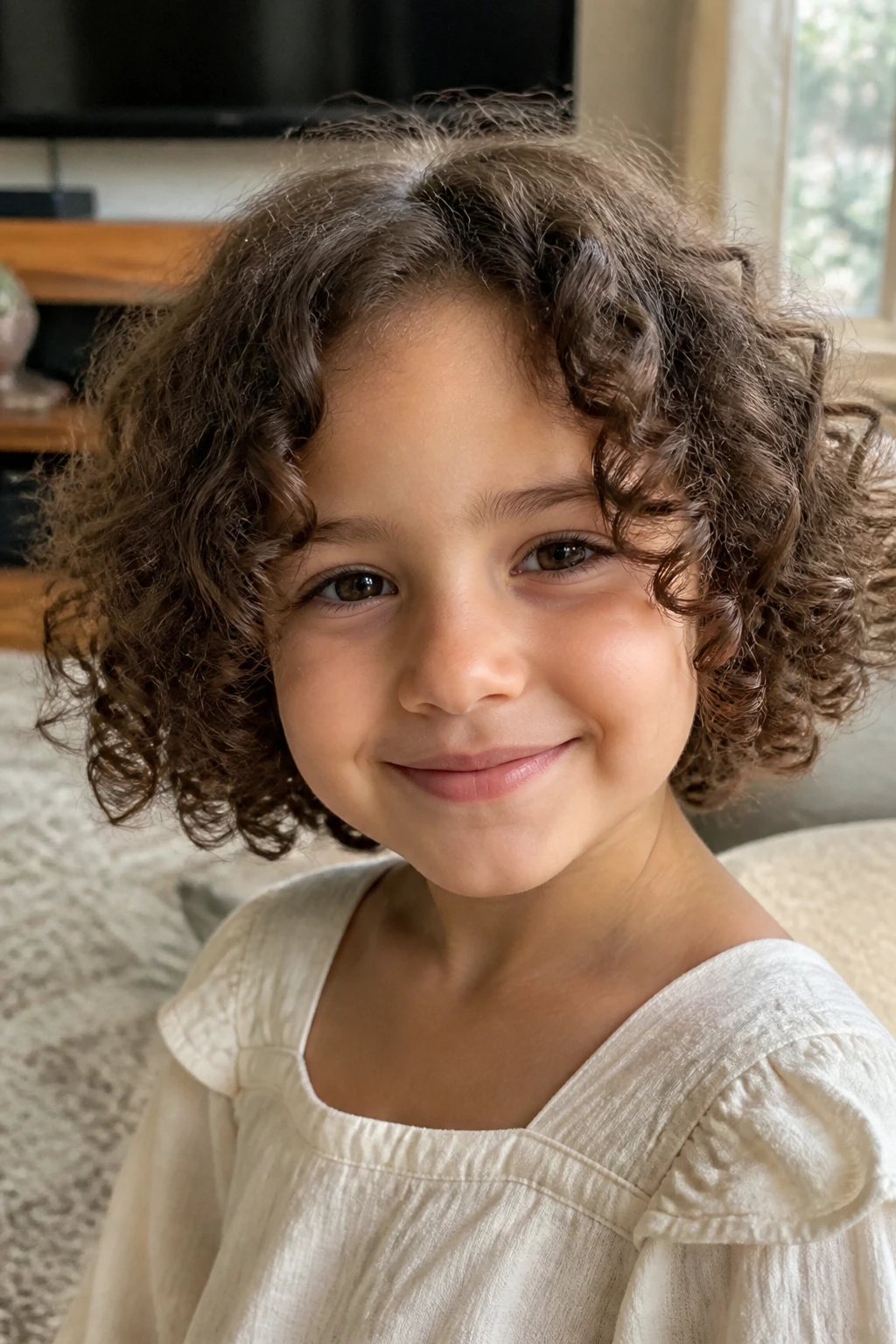
Can curly hair be cut short without turning into a puffball?
Yes, but the shape has to respect shrinkage and curl pattern. Rounded crops, curly bobs, and tapered curls with bangs usually behave better than blunt, one-length cuts on curls.
How often do fades and buzz cuts need touch-ups?
Most look best with cleanup every 2 to 3 weeks, because the perimeter around the ears and neckline softens fast. If you stretch that longer, the cut will still be fine, just less sharp.
Should a short haircut be cut wet or dry?
Straight hair can be cut wet or damp. Curly and coily hair often do better with some dry shaping, because wet length can hide how much bounce and shrinkage the hair has.
What’s the easiest style for school mornings?
Crew cuts, buzz cuts, short crops, and scissor-only mop tops are usually the fastest. They need very little more than a brush, a little water, or a quick finger comb.
How do I grow out a short haircut without the awkward stage?
Ask for clean-up around the neckline and ears while leaving the top alone. That keeps the shape from widening too fast and helps the haircut stay intentional while it grows.
Are short hairstyles still okay for dress-up events?
Absolutely. A pixie with a clip, a slicked-back taper, or a side-part bob can look neat for formal moments with almost no effort. The trick is choosing the right accessory, not adding more hair.
What should I tell the stylist if I only have one photo?
Describe what you like about it: the fringe, the length at the ears, the texture, or the neckline. A single photo gets more useful when you explain the parts you want, not just the style name.
A Cut They Can Actually Live In

The best short haircut for a kid is the one that still looks like itself after a nap, a hoodie, and a wild run across the playground. That’s the standard I keep coming back to. Not perfection. Not salon-polished every second. Something neat enough for the school photo and forgiving enough for the rest of the week.
Hair grows. That’s the annoying truth and the useful one. If you pick a shape that works with the growth pattern instead of fighting it, you get a style that feels easier almost immediately — and stays that way long enough to matter.
