



Braiding a child’s hair is one of those jobs that sounds simple until you’re halfway through a part and the kid has turned into a wriggling little pretzel. The best braid hairstyles for kids do three things at once: they keep hair out of eyes, they survive the school day, and they do not feel like a punishment to wear. That last part matters more than most adults admit.
A braid that’s too tight at the temples can look neat for ten minutes and then turn into a headache. A braid that’s too loose can unravel before lunch. The sweet spot is a style with enough grip to stay put, enough softness to stay comfortable, and enough personality that the child actually wants to keep it in. Fine hair needs one kind of prep. Curly hair needs another. Coily hair has its own rules, and the sooner you stop pretending every head behaves the same, the easier braiding gets.
What I like most about kids’ braid styles is how much range they give you. Some are plain and fast. Some feel dressy without being fussy. Some are built for recess, soccer, and the back seat of a car. A few are the kind you save for picture day because they ask for a steadier hand and a little patience. Keep a spray bottle close. Keep a rat-tail comb nearby. And keep your expectations sane — a braid does not need to be perfect to look good.
Why Braid Hairstyles for Kids Earn Their Keep
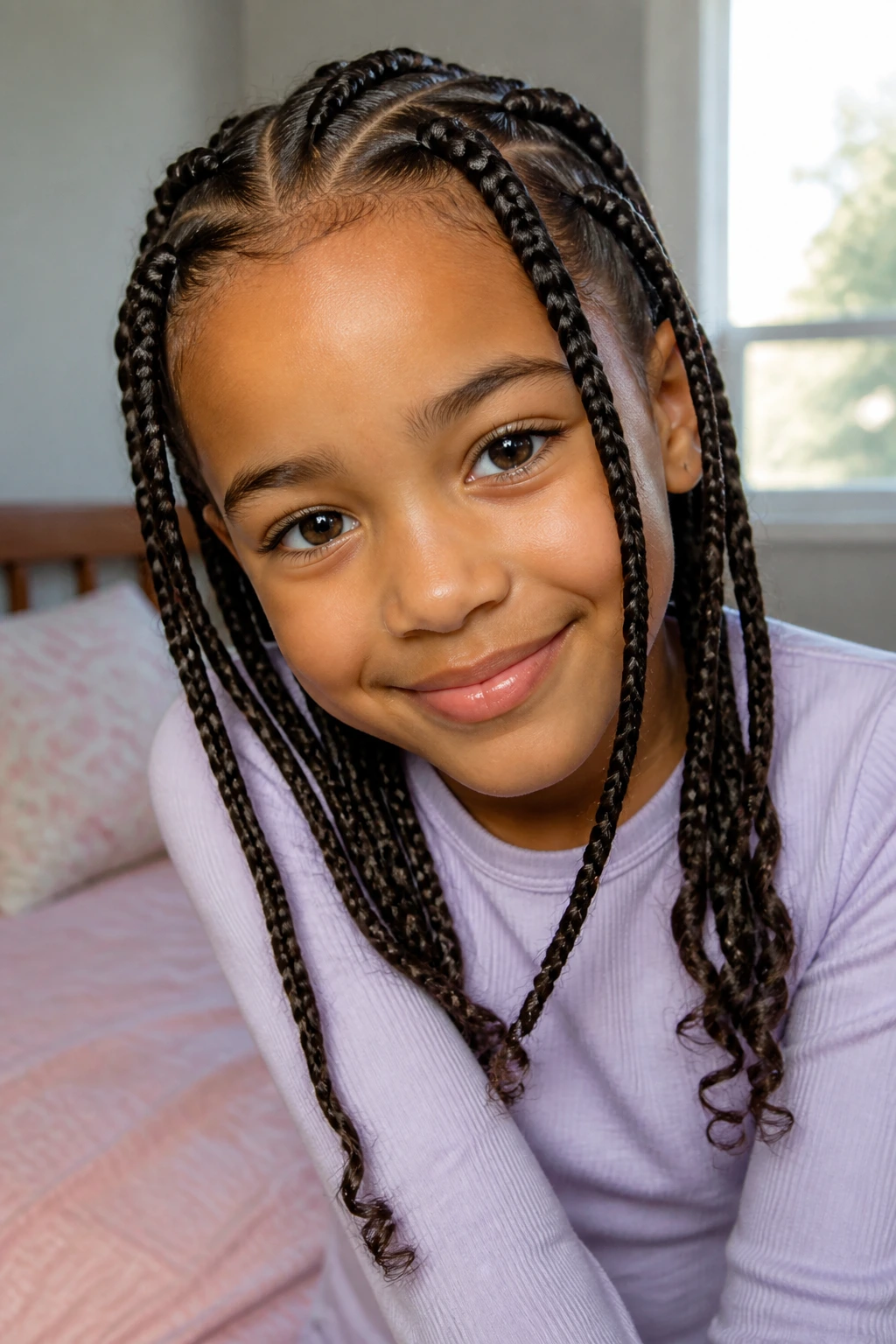
- They keep hair off the face: A braid pulls bangs, flyaways, and loose ends away from lunch trays, worksheets, and sweaty foreheads.
- They work on more than one hair type: Straight, wavy, curly, and coily hair all take braids differently, which means there’s room to choose a style that fits the child instead of forcing the hair to behave.
- They can be gentle when done right: A firm braid is not the same thing as a tight braid, and a well-sectioned style can hold without yanking at the hairline.
- They scale from plain to dressy: The same braid can be a school-day style with a plain elastic or a party look with ribbon, beads, or a bow.
- They buy you time: A clean braid can carry a child from breakfast to bedtime with only a quick finger-comb and a satin scarf at night.
- They let you work with texture, not against it: A little slip, a little puff, or a few wispy ends can look intentional instead of messy when the braid is chosen well.
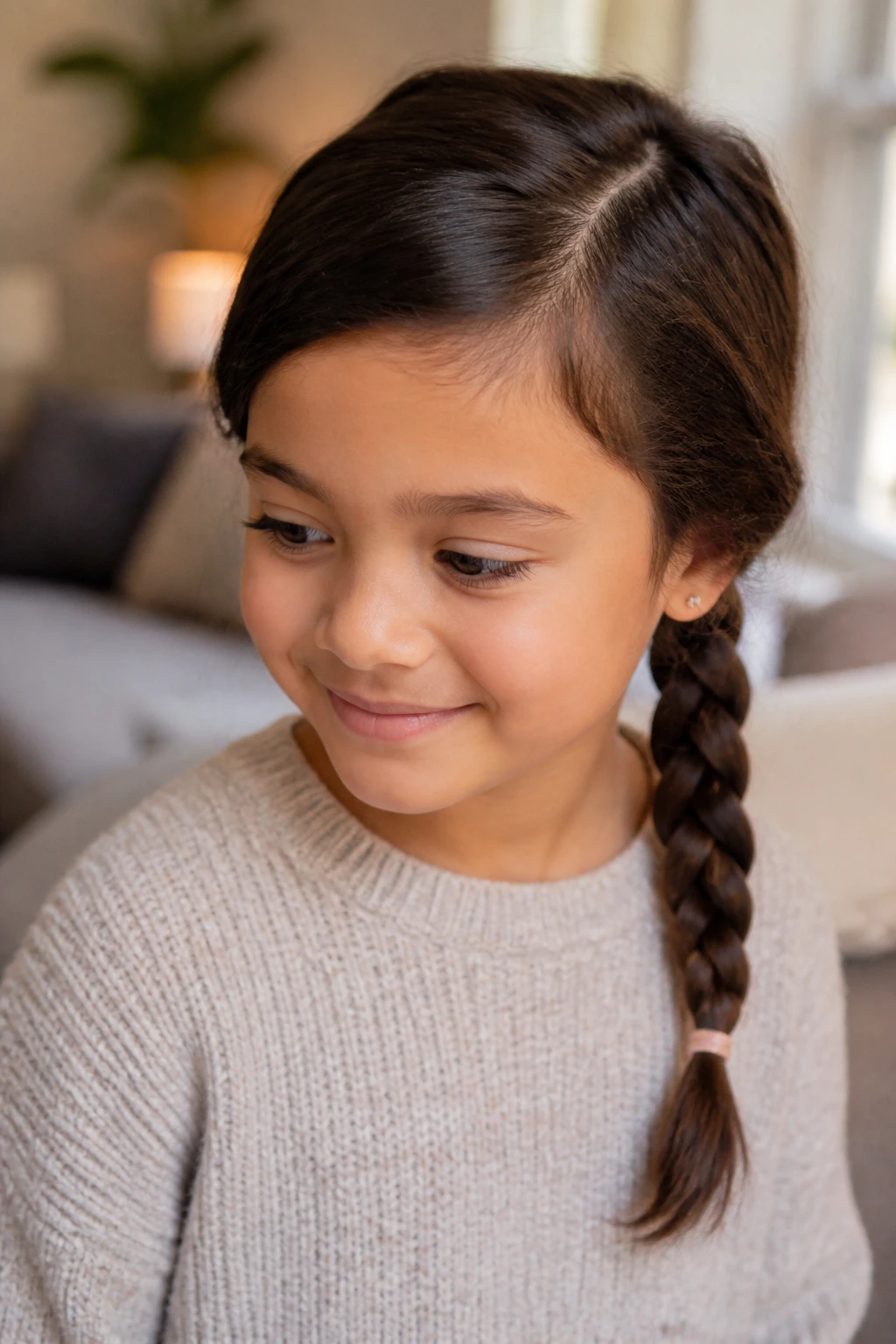
1. Classic Three-Strand Side Braid
This is the braid I reach for when the morning has already gone sideways. It’s simple, low-stress, and forgiving if the part isn’t dead straight. A side braid keeps the hair gathered over one shoulder, which makes it easier to manage than loose hair and softer than a tight ponytail.
I like it most on medium to long hair that has a little grip from a light mist of water or leave-in. On fine hair, use a tiny bit of texturizing spray at the roots so the sections do not slide apart. On curly hair, keep the braid a little looser and let the ends stay soft instead of forcing every strand flat.
2. French Braid Down the Center
Why does this one stay so useful? Because it starts with control at the hairline and keeps that control all the way down the head. A center French braid keeps hair flat and neat, which is exactly what you want for school, games, and any day when you do not want a child pawing at the front of their hair every five minutes.
This style looks clean on straight hair, but it also handles wavy and curly textures well if you work in small, even sections. If the child has a sensitive scalp, keep the braid snug enough to stay together and loose enough that you can slide a finger under the first few rows without resistance. That little check matters.
3. Dutch Braid Pigtails
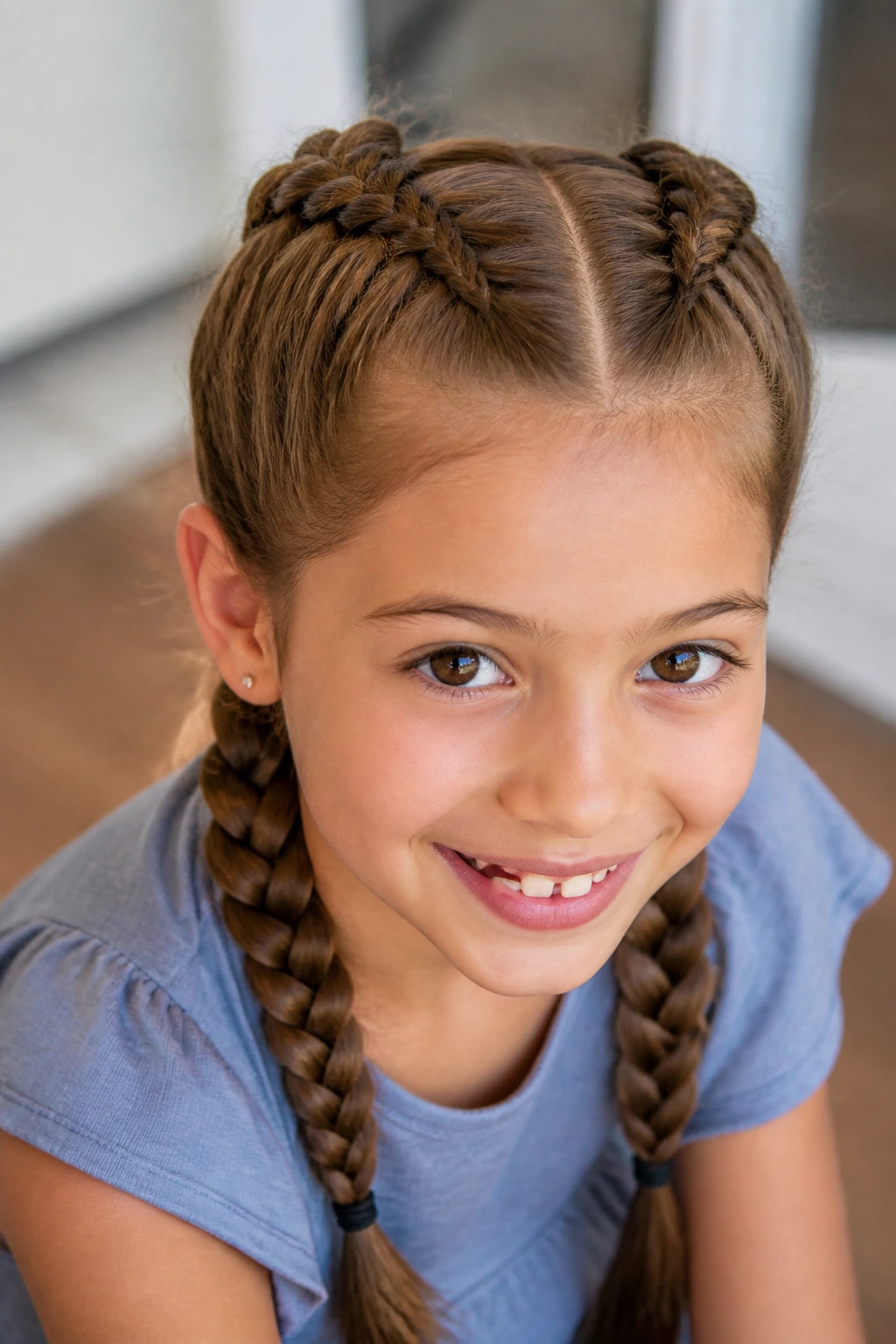
Dutch braids sit on top of the head instead of sinking into it, so they read bolder right away. That raised texture is the whole point. On a kid’s head, twin Dutch braids look energetic and tidy at the same time, especially when the part is clean and the ends are secured with small elastics.
I prefer this style for thick hair and active afternoons because the braids have a lot of structure. If your child hates hair falling forward when they bend, these braids help. You can finish them at the nape or keep going into low pigtails, depending on how much movement you want left in the hair.
4. Twin French Braids
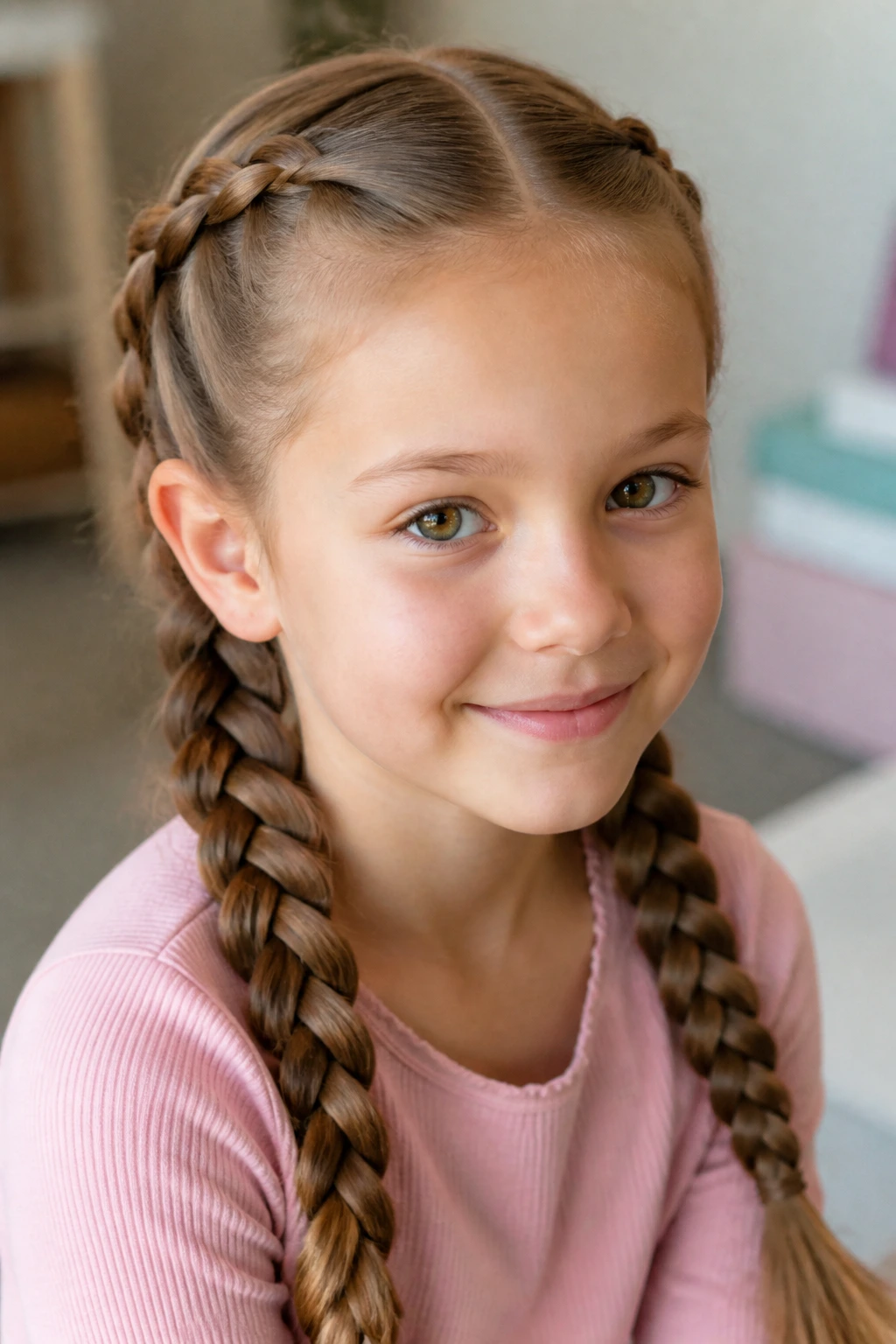
This is the polished cousin of the classic pigtail. Twin French braids sit flatter than Dutch braids, which makes them a little calmer visually and a touch less bulky under hats or hoodies. They’re a good choice when you want the hair controlled without making the style look heavy.
On little kids, I like these when the hair is fine or medium thickness, because the braids do not need a ton of volume to look balanced. If the hair is slippery, anchor each braid with a clear elastic and finish with a tiny dab of styling cream on the ends. Not much. Just enough to stop the tails from fuzzing up.
5. Crown Braid Halo
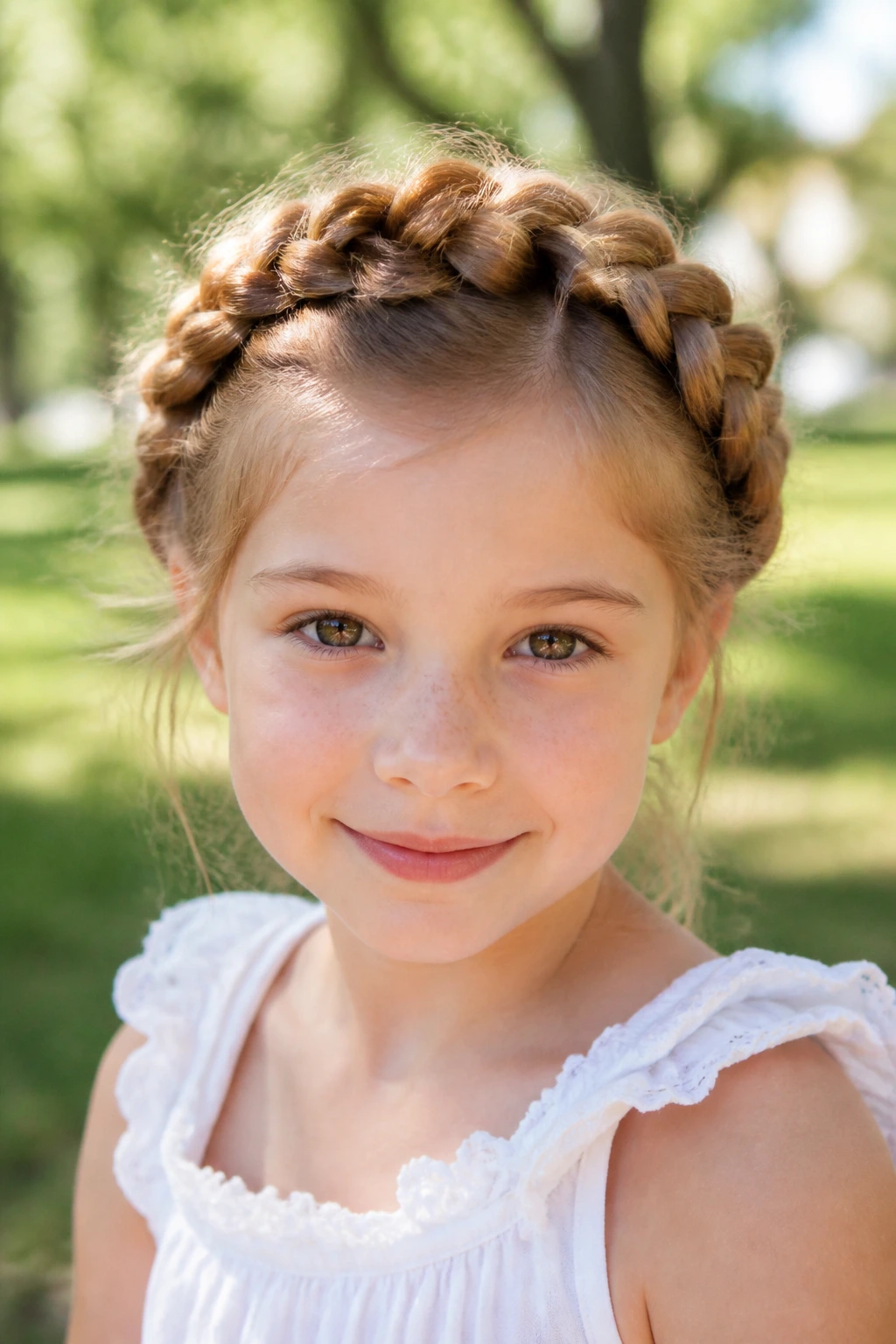
A crown braid wraps around the head like a soft frame, and it has a very different feel from braids that hang down the back. This is the one that turns a plain outfit into something a little more finished without asking for curls, irons, or a huge time commitment.
The braid works best on medium to long hair, and it looks especially good when the braid is slightly loosened after it’s secured. That soft pull at the outer edges gives the halo shape. If your child has wispy pieces around the face, leave a few on purpose. It keeps the style from looking stiff.
6. Braided Ponytail
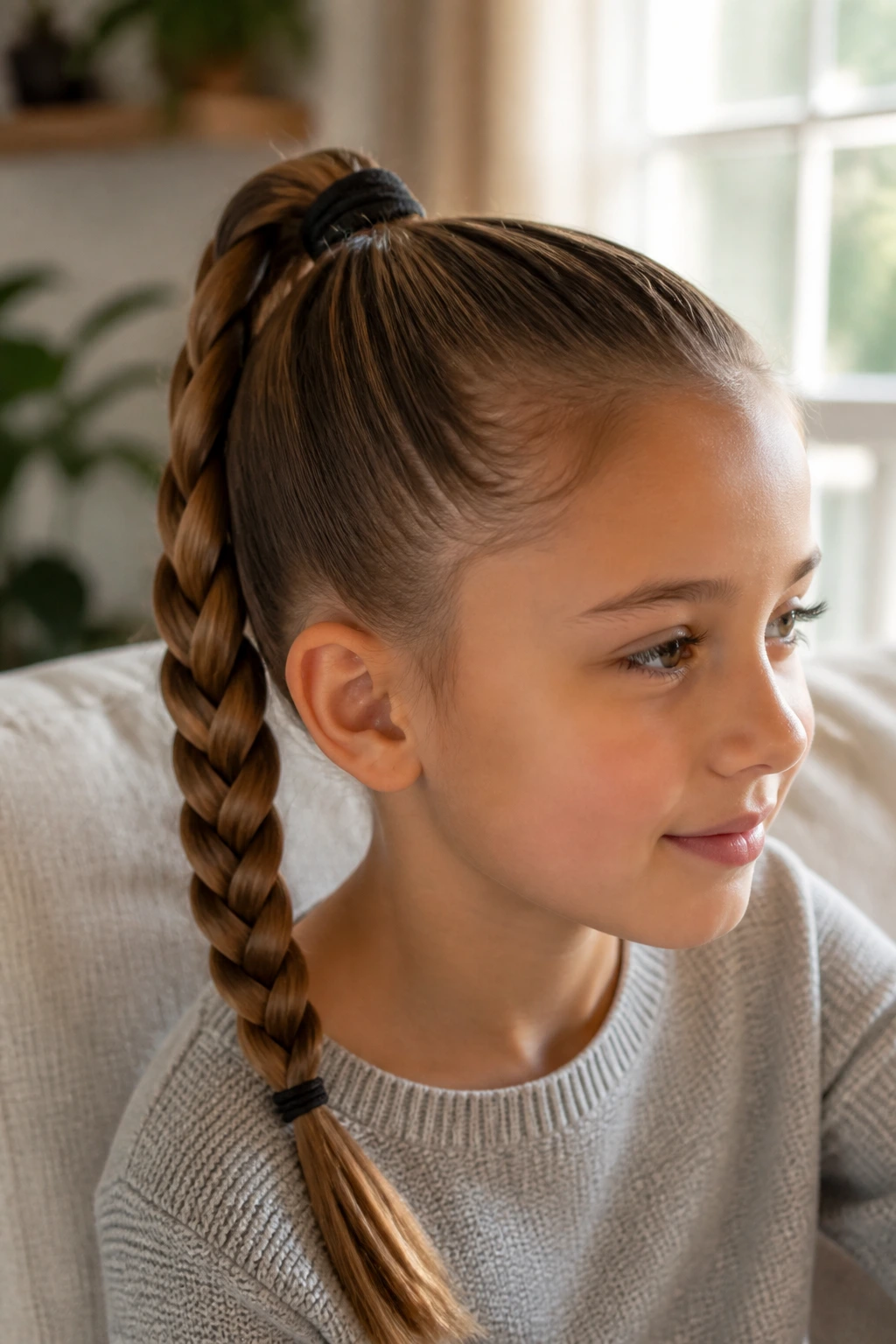
A braided ponytail is one of those practical styles that gets ignored because it sounds too ordinary. I think that’s a mistake. When the braid starts at the base of the ponytail, the top stays smooth and the length feels contained, but the hair still swishes when the child moves.
It’s a smart pick for kids who like having some length visible. You can braid all the way down or stop halfway and tie off with a ribbon. If the hair is thick, secure the ponytail first with a strong elastic, then braid. That order helps the style hold shape instead of sagging at the crown.
7. Fishtail Side Braid
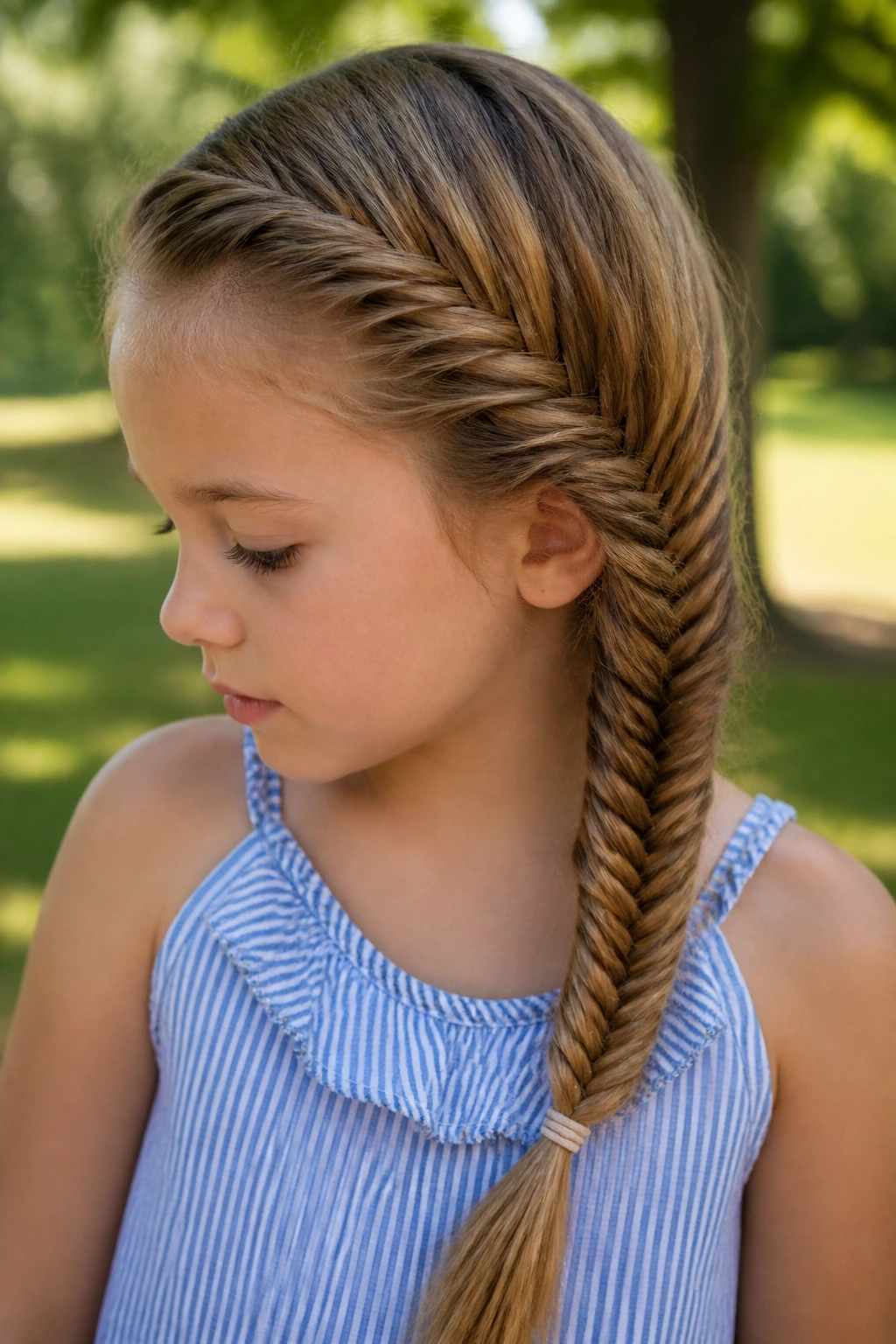
A fishtail braid looks intricate, but it has a clean, rope-like finish that holds up nicely on longer hair. The texture is the selling point. It creates a tighter visual pattern than a three-strand braid, so even a modest amount of hair can look dressed up.
I like fishtails for older kids who can sit still a little longer. It is not the fastest braid on this list, and it can loosen on very silky hair unless you prep the lengths with a bit of mousse or texturizing spray. Once it’s done, pinch it apart slightly for a fuller shape. That small tug makes a big difference.
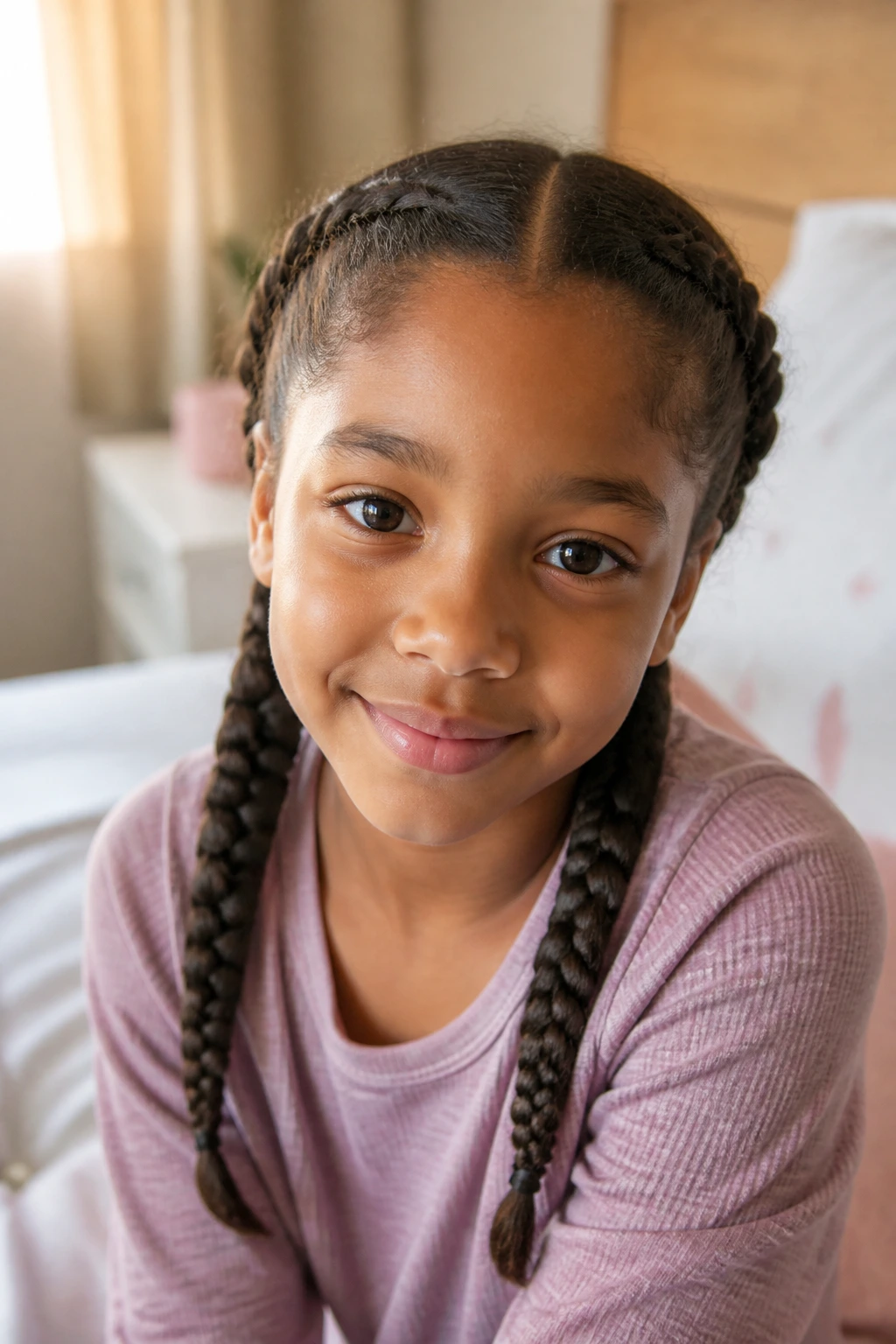
8. Boxer Braids
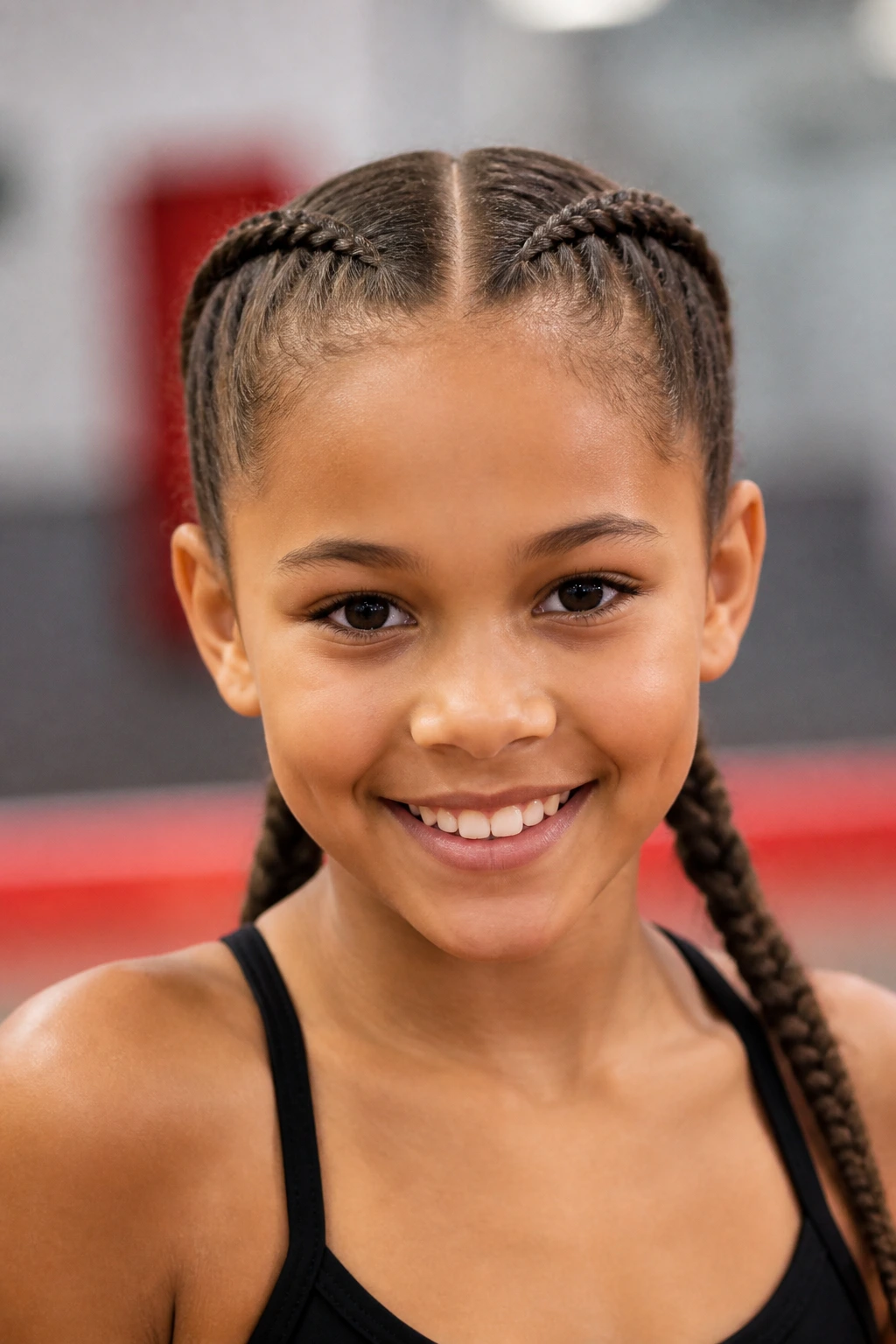
Boxer braids are basically tight, symmetrical braids that sit close to the scalp and stay put through more activity than most loose styles can handle. They are especially good for sports, dance class, and kids who spend half the day upside down on the playground.
What makes them useful is the clean hold. The braids do not flop into the face, and they tend to survive a lot of motion before needing a refresh. If your child has a tender scalp, keep the tension even and do not yank the first rows too tightly. A neat braid should feel secure, not sharp.
9. Waterfall Braid
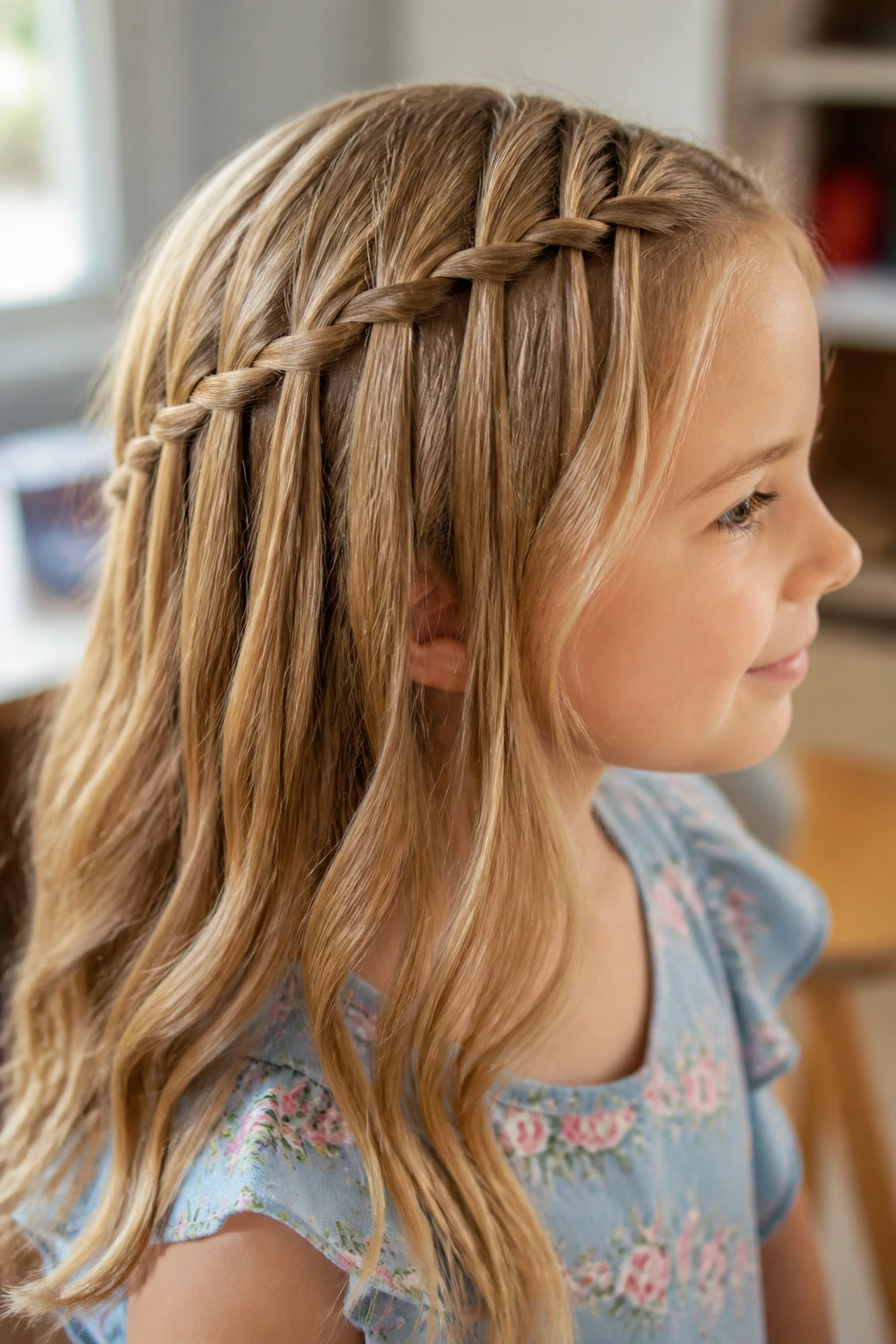
This is the braid I save for when the goal is more decorative than rugged. Pieces of hair are dropped through the braid so they fall like little streams, which gives the style a lighter, more open look. It’s pretty on long hair and works especially well when the rest of the hair is smooth.
The tradeoff is obvious: it is not the most durable braid for a full day of rough play. I would use it for a family event, a school concert, or a day when the child will mostly be sitting still. If the hair is layered, keep the dropped pieces slightly thicker so they don’t fray apart.
10. Rope-Twist Pigtails
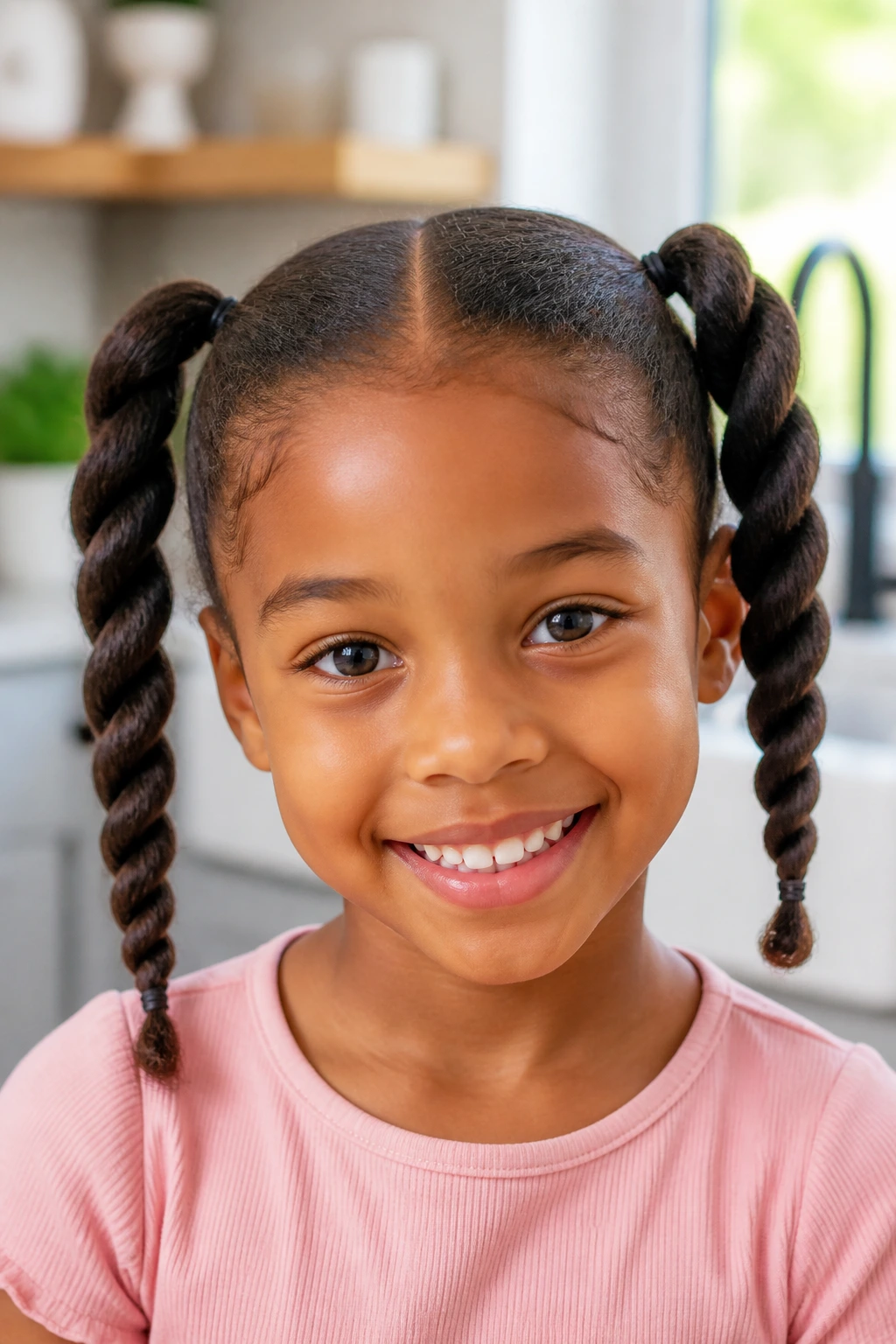
Rope twists are easier than they look. Two strands are twisted around each other instead of three sections being woven, which makes them a friendly option for younger children or for mornings when your hands are moving faster than your brain.
They work well on straight and wavy hair, and they can also be used on curly hair when you want a softer, springier finish. The ends should be secured tightly because twists like to unwind if the elastic is too loose. For a playful finish, tie each tail with a small ribbon rather than a bulky bow.
11. Bubble Braid with Accent Plaits
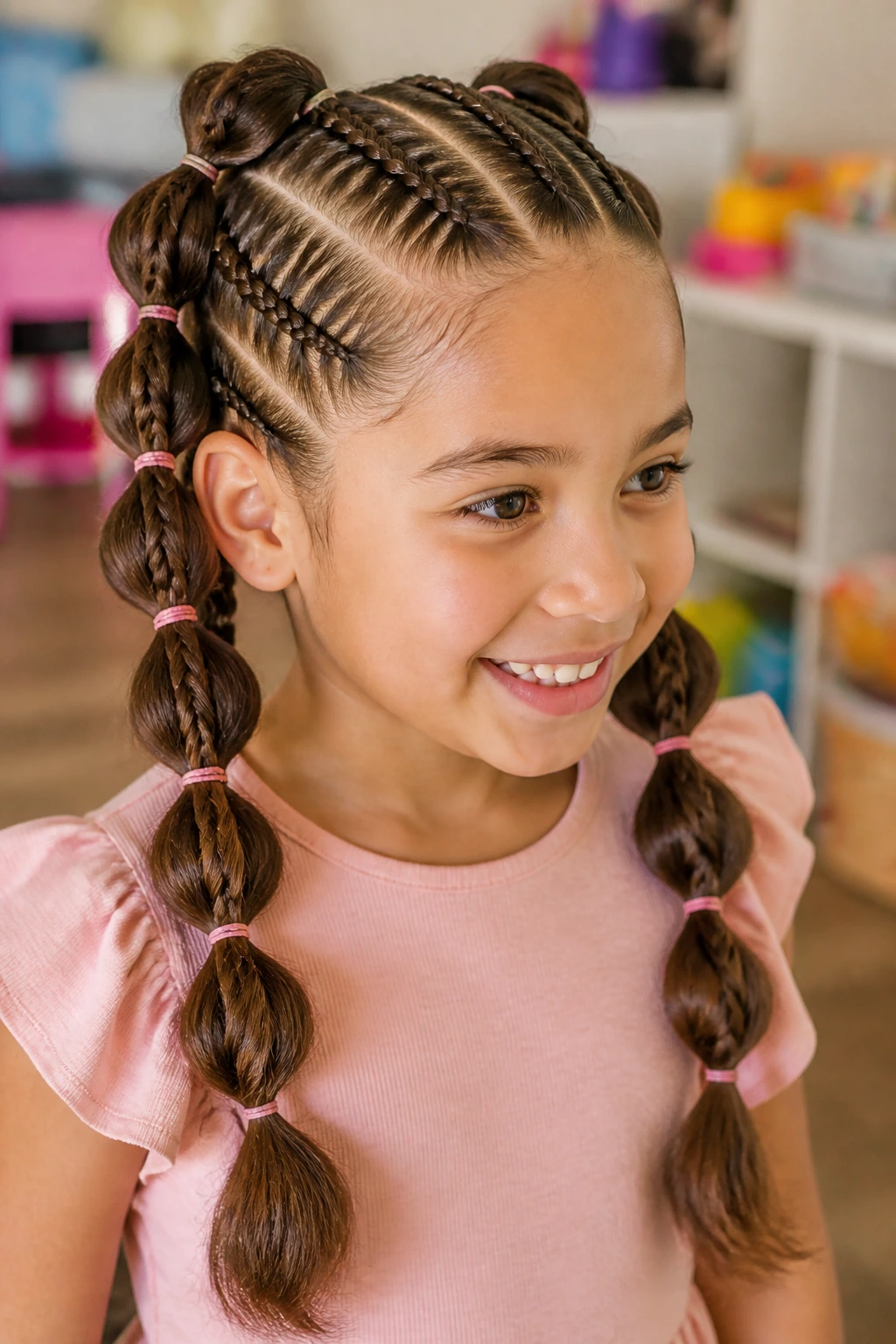
This style is all about elastic placement. The hair is pulled into one long ponytail or a series of sections, then spaced with small bands so each segment puffs into a bubble. Adding tiny accent plaits between the bubbles gives the style a little more structure and keeps it from feeling too plain.
It’s a good pick for kids who like hair that looks fun without being fussy. I like it for parties and school spirit days because the shape reads from across a room. If you use bright elastics, keep the rest of the braid simple so it does not turn chaotic.
12. Cornrow Rows
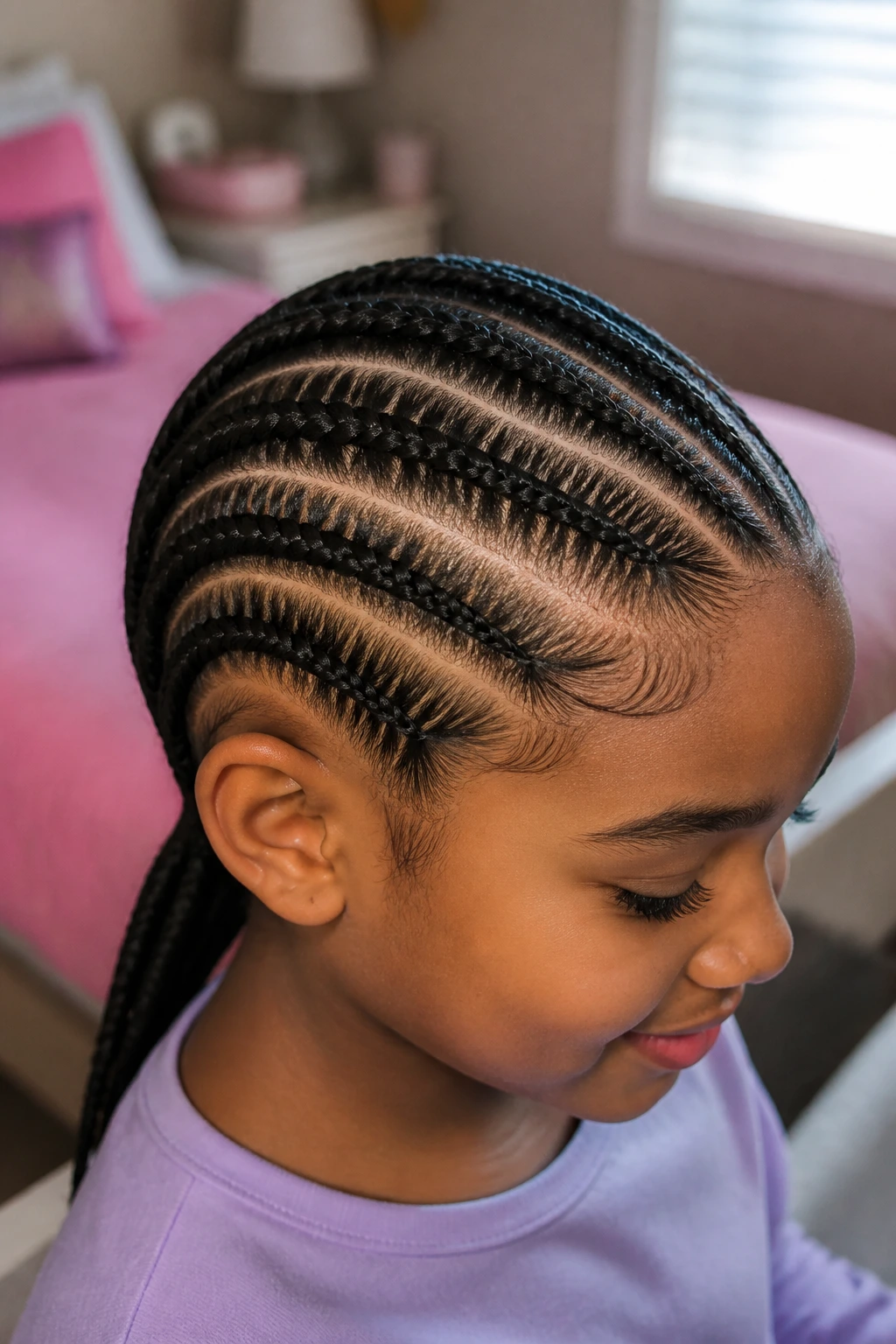
Cornrows are one of the most useful braid styles for kids with curly or coily hair, but they ask for careful hands. The braid sits flat against the scalp in clean rows, which keeps hair controlled and makes the style easy to wear for days. That flatness is the point.
Best on textured hair
If the hair is very soft or slippery, you’ll want a little grip from leave-in or styling cream before sectioning. Clean parting matters here more than almost anywhere else on the list. A crooked row can still work, but a neat one looks deliberate and lasts better.
What to watch for
Do not pull the hairline too hard. Cornrows should feel secure, not painful. If a child complains about tightness near the temples or behind the ears, loosen and reset that section. A good cornrow keeps the scalp calm while still holding the style together.
13. Feed-In Braids
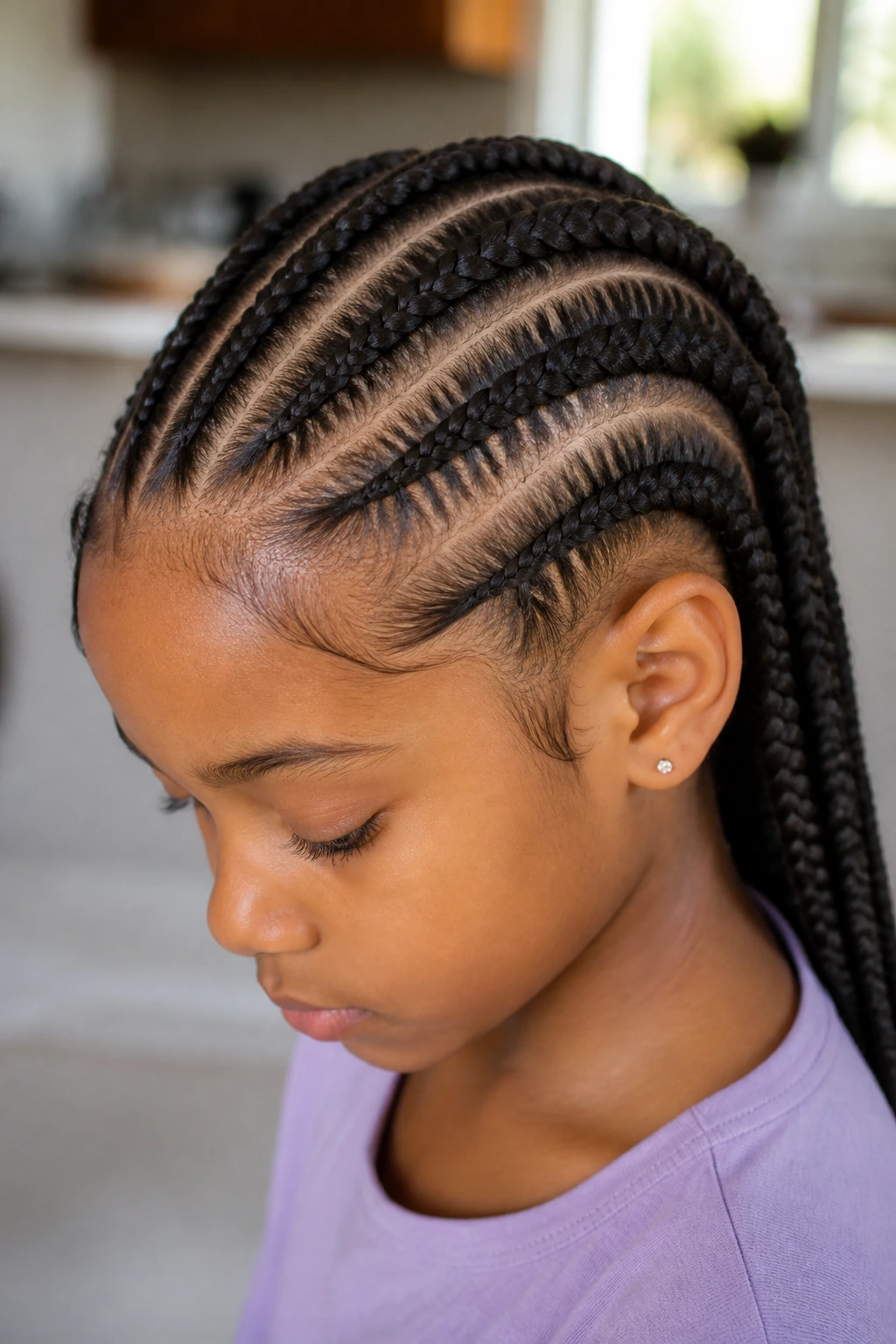
Feed-in braids create a smooth start at the scalp by adding hair in gradually instead of beginning with a bulky knot at the base. That softer beginning matters on kids’ heads, where a thick lump at the root can feel uncomfortable fast. The braid grows fuller as it moves down, which gives it a clean, polished line.
This style is especially nice when you want a protective look that still feels refined. The gradual build keeps the braids from looking heavy right at the hairline. If you’re doing these at home, use small, even sections and keep a clip handy so the unused hair doesn’t tangle back into the braid.
14. Braided Bun
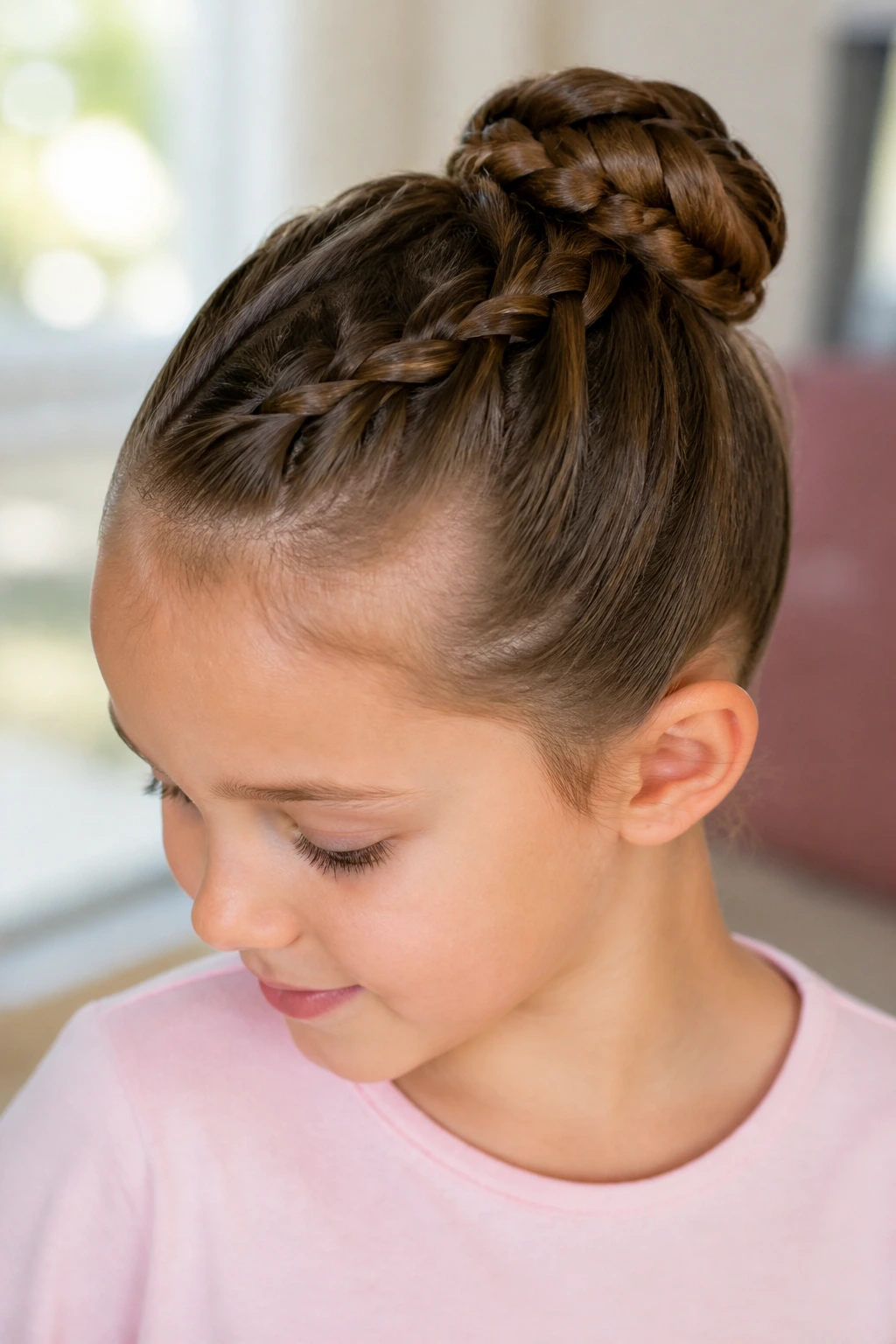
A braided bun is one of the best ways to get the hair completely out of the way without sacrificing shape. You braid the length first, then wrap or tuck it into a bun at the back or top of the head. It feels tidy and a little dressy at the same time.
I like this one for recitals, picture day, and school events where the hair needs to stay controlled but still look finished. If the child has thick hair, use bobby pins that actually grip — the flimsy ones slide out by lunch. And don’t bury every strand; a few soft edges around the bun keep it from looking severe.
15. Half-Up Braided Crown
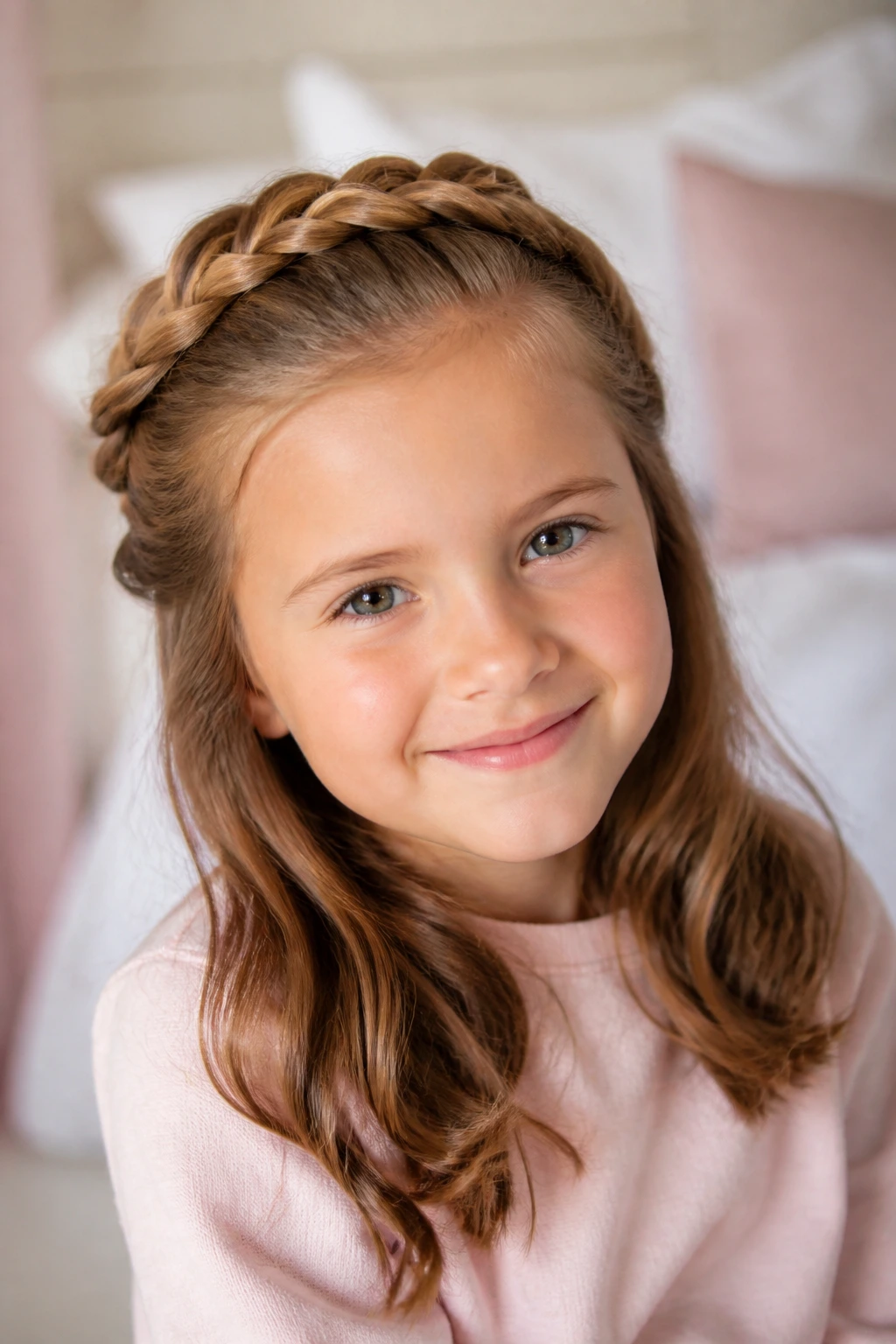
This style solves a common problem: kids want some hair down, but you want the front kept away from the face. A half-up braided crown handles both. The braid wraps across the top half of the head, while the rest of the hair stays loose underneath.
It works nicely on medium to long hair and gives a softer look than a full crown braid. If the child has curls, let the lower section keep its natural shape instead of brushing it flat. That contrast between the braided top and the loose bottom is what makes the style work.
16. Ladder Braid
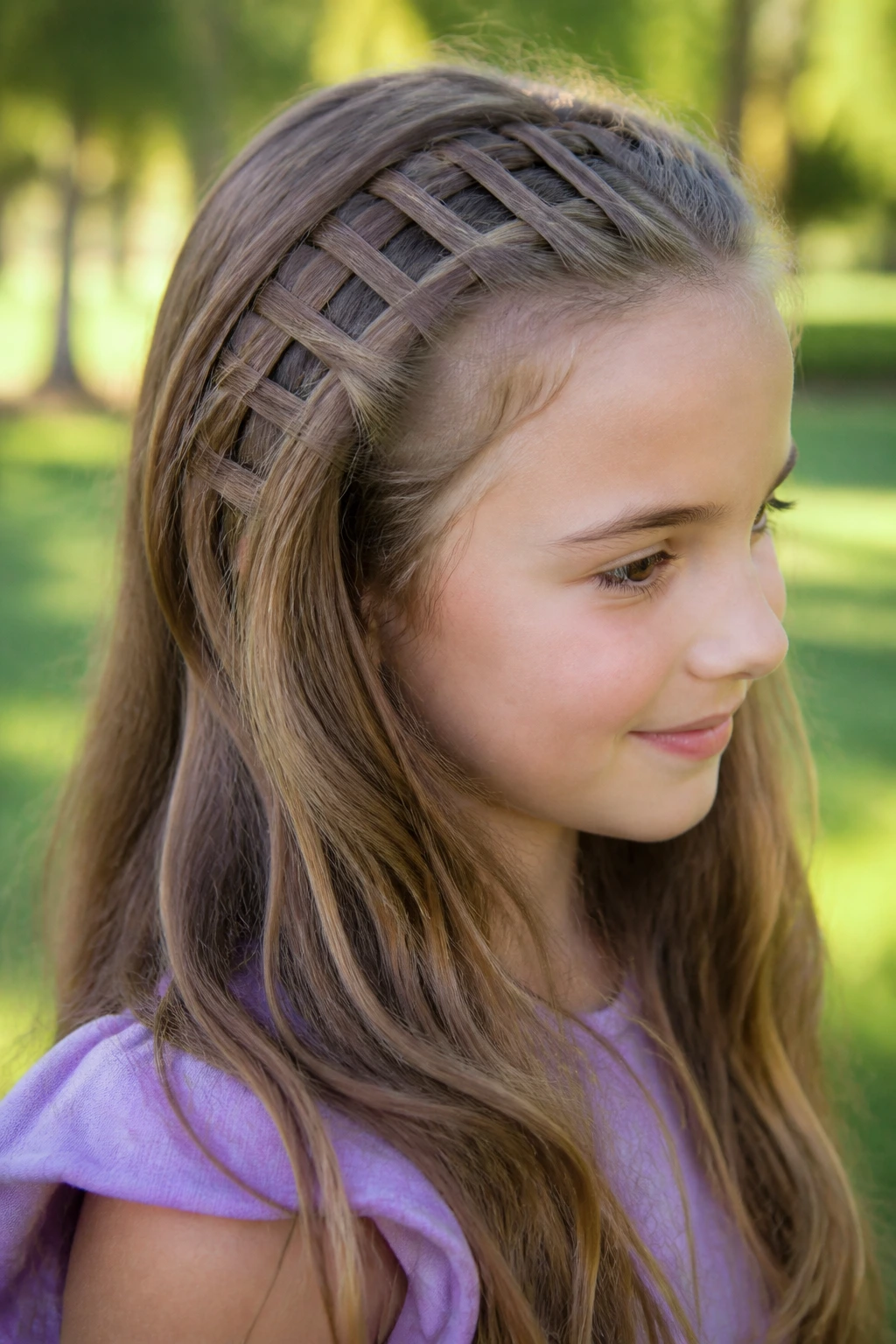
The ladder braid looks fancy because the braid crosses over itself in little “rungs,” almost like you’re building a tiny woven bridge down the hair. It needs more length than a basic braid, and it’s one of those styles that rewards patience.
I would save this for older kids or for a day when you have a few extra minutes. It’s not the fastest choice, but it looks unusual in a way that kids tend to notice. The sections need to stay even, or the ladder effect gets muddy, so a rat-tail comb is worth having out for this one.
17. Pull-Through Braid
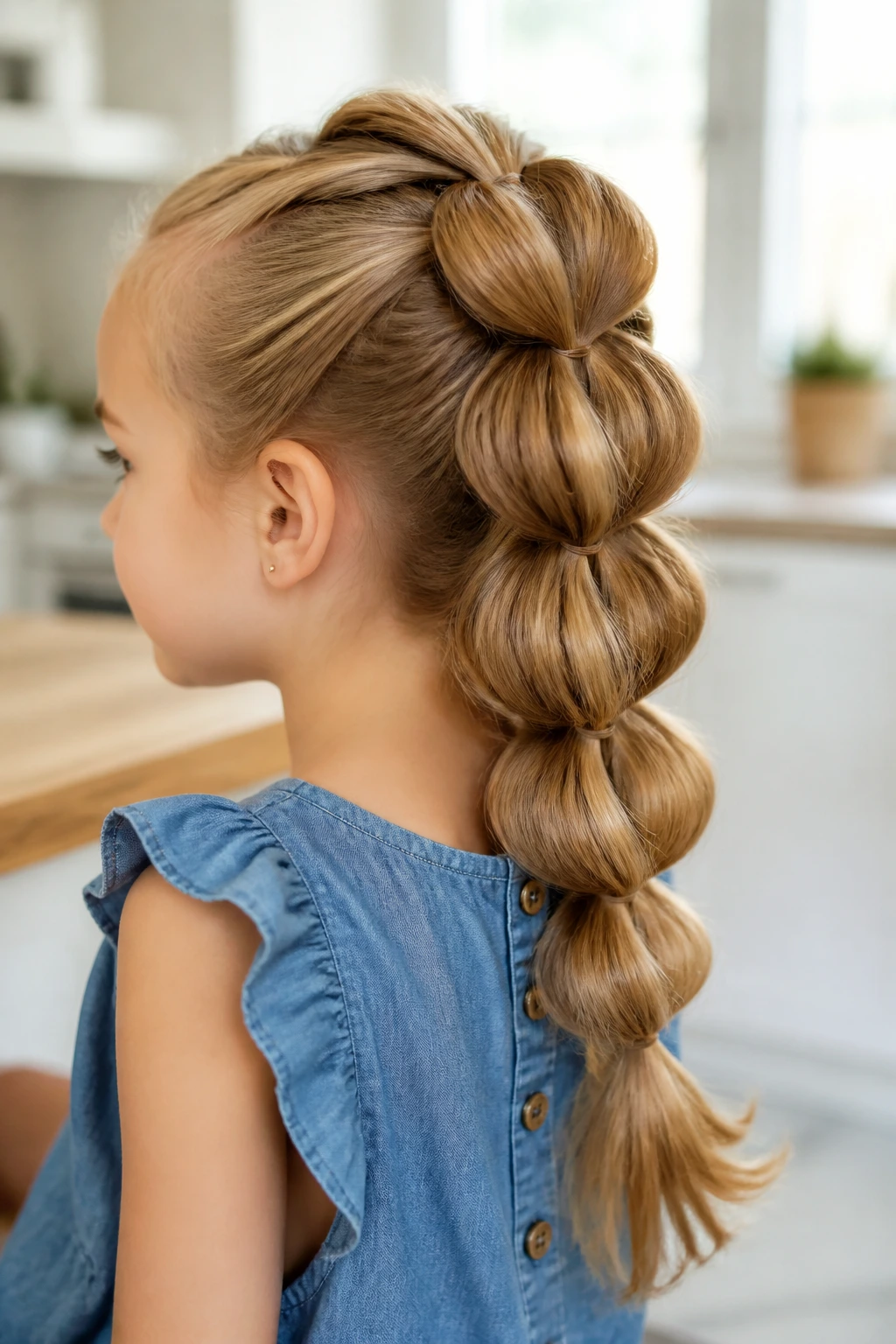
The pull-through braid is a cheat code for volume. It uses a stack of ponytail sections to create the look of a thick braid, which is a gift if the child has fine hair or if you want a full-looking style without a lot of intricate weaving.
Why it helps fine hair
Each section gets a bit of shape from the elastic, so the braid feels sturdy even if the hair itself is soft. That makes the style easy to see from a distance and less likely to collapse by the end of the school day. It also gives you a chance to stop midway if the child gets restless.
How to finish it
Once the sections are in place, gently tug the bubbles to widen them. Do not yank. Just pinch and loosen until the braid looks full but still secure. A ribbon at the end works better than a tiny elastic if you want a softer finish.
18. Lace Braid
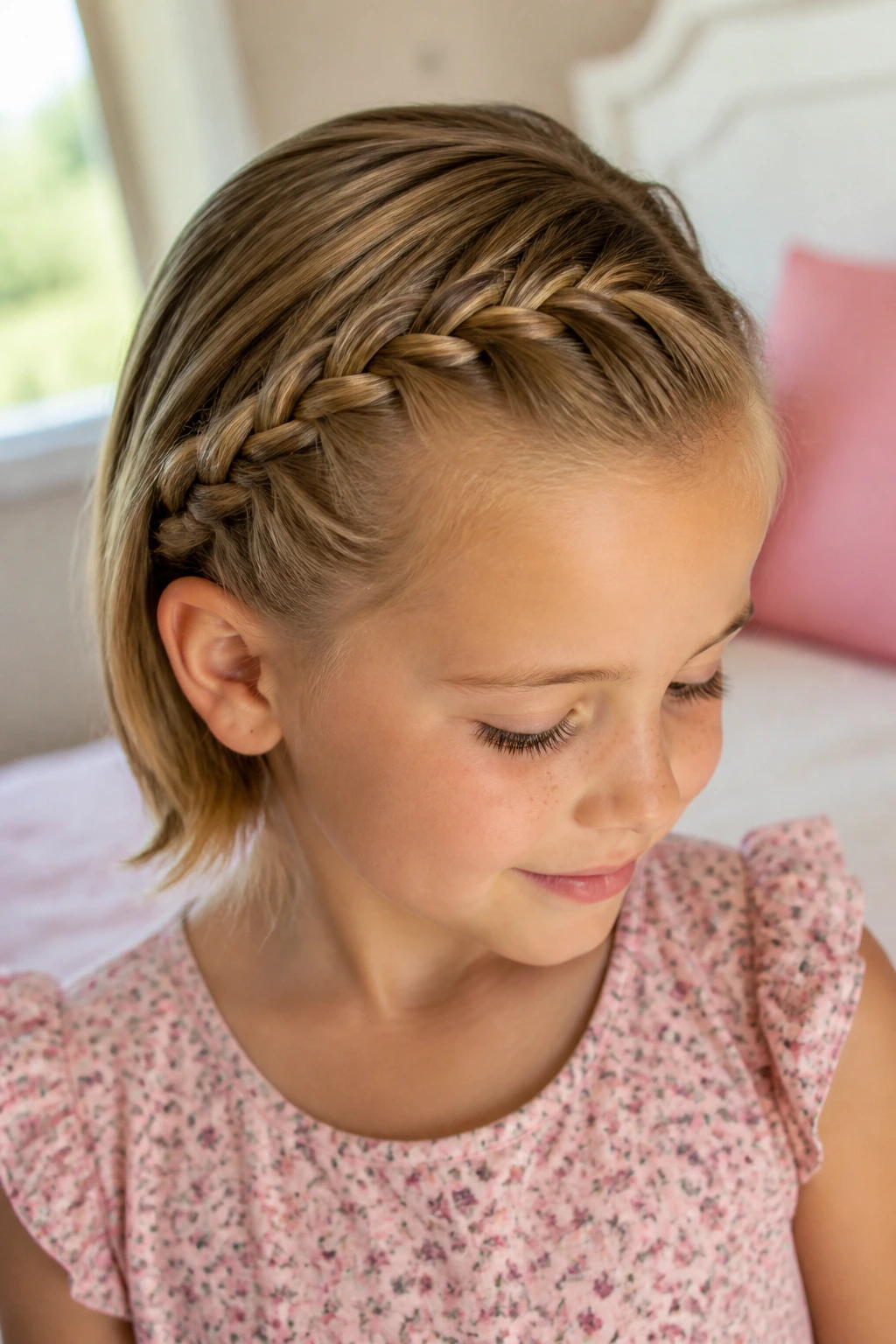
A lace braid is like a French braid that only gathers hair from one side as it moves. That makes it feel lighter and more side-swept than a full braid, which is useful when you want some hair down but still want the front pulled back.
It’s a good option for shorter medium-length hair that can’t quite handle a long crown braid. The braid hugs the head neatly, and the rest of the hair falls loose behind it. On younger children, it’s a nice compromise between “done” and “still soft.”
19. Four-Strand Braid
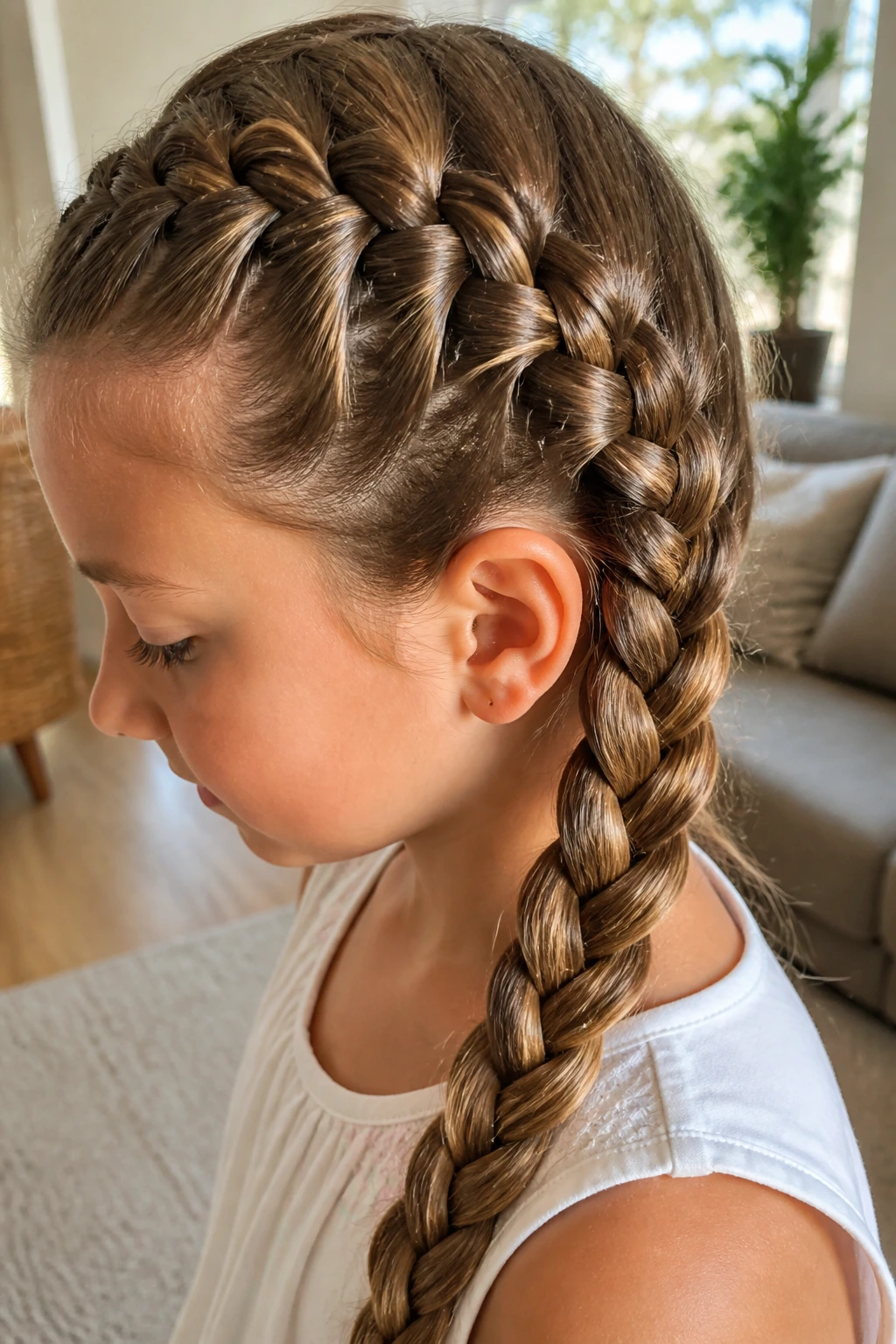
A four-strand braid gives you a thicker, more braided-looking finish than a standard three-strand version. It’s a little more advanced, but not absurdly so, and the result has a ropey texture that kids often find interesting to watch in the mirror.
This is a good choice when the hair is long enough to show off the pattern. The extra strand means the braid feels fuller, which helps on medium-density hair that might look thin in a standard braid. Keep the tension even as you work. A four-strand braid gets messy fast if one side is pulled tighter than the other.
20. Puff-and-Braid Mix
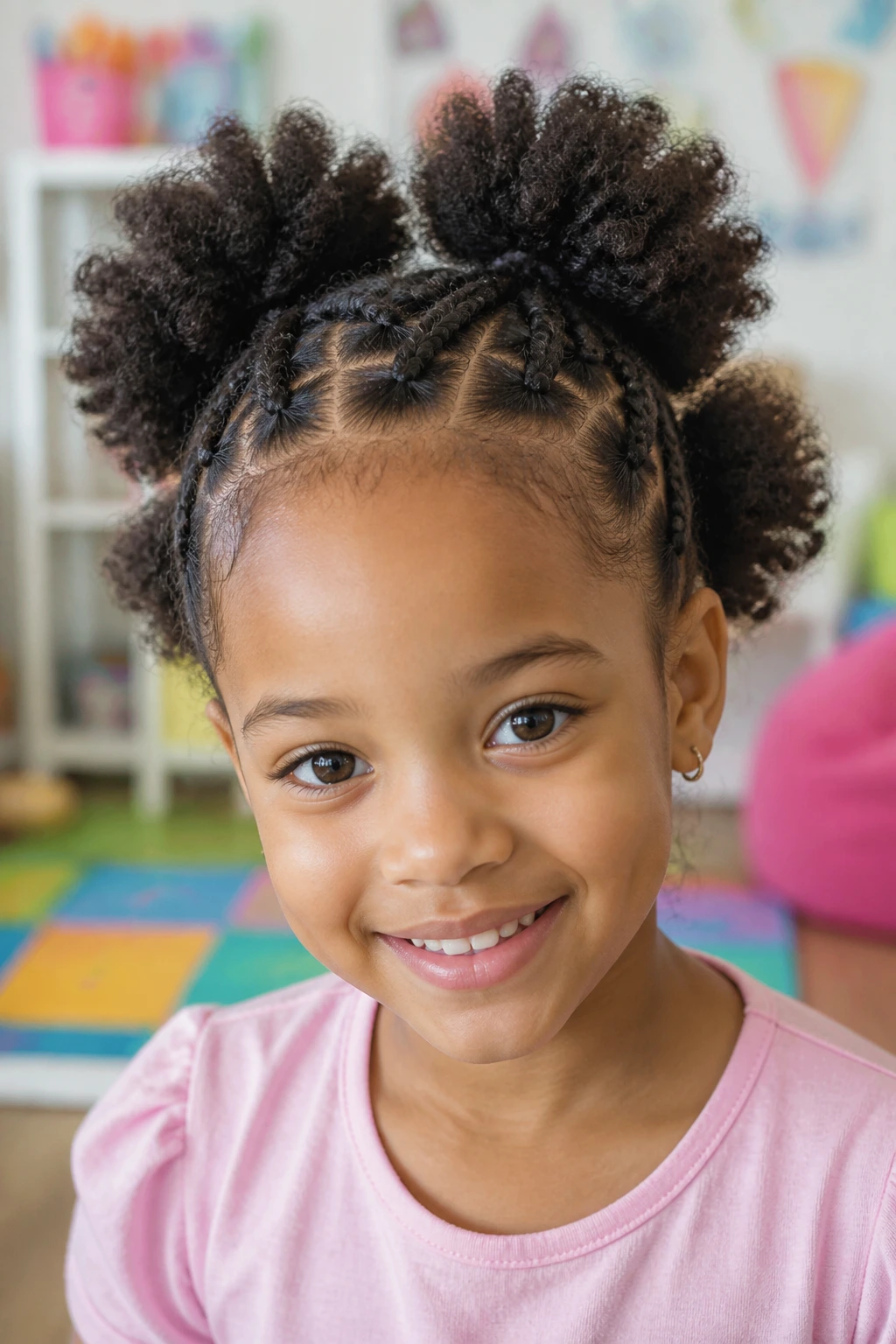
This style leans into texture instead of flattening it. Small braided sections lead into puffed sections, so the hair gets shape in layers rather than being forced into one smooth line. It’s especially nice for curly and coily hair because the natural puff becomes part of the design.
I like it for kids who want something playful and not too formal. The braids frame the face or crown, and the puffs keep the style lively. If you use small elastics, make sure they are snag-free. Tiny bands that pull at curls are a headache to remove later.
21. Braided Space Buns
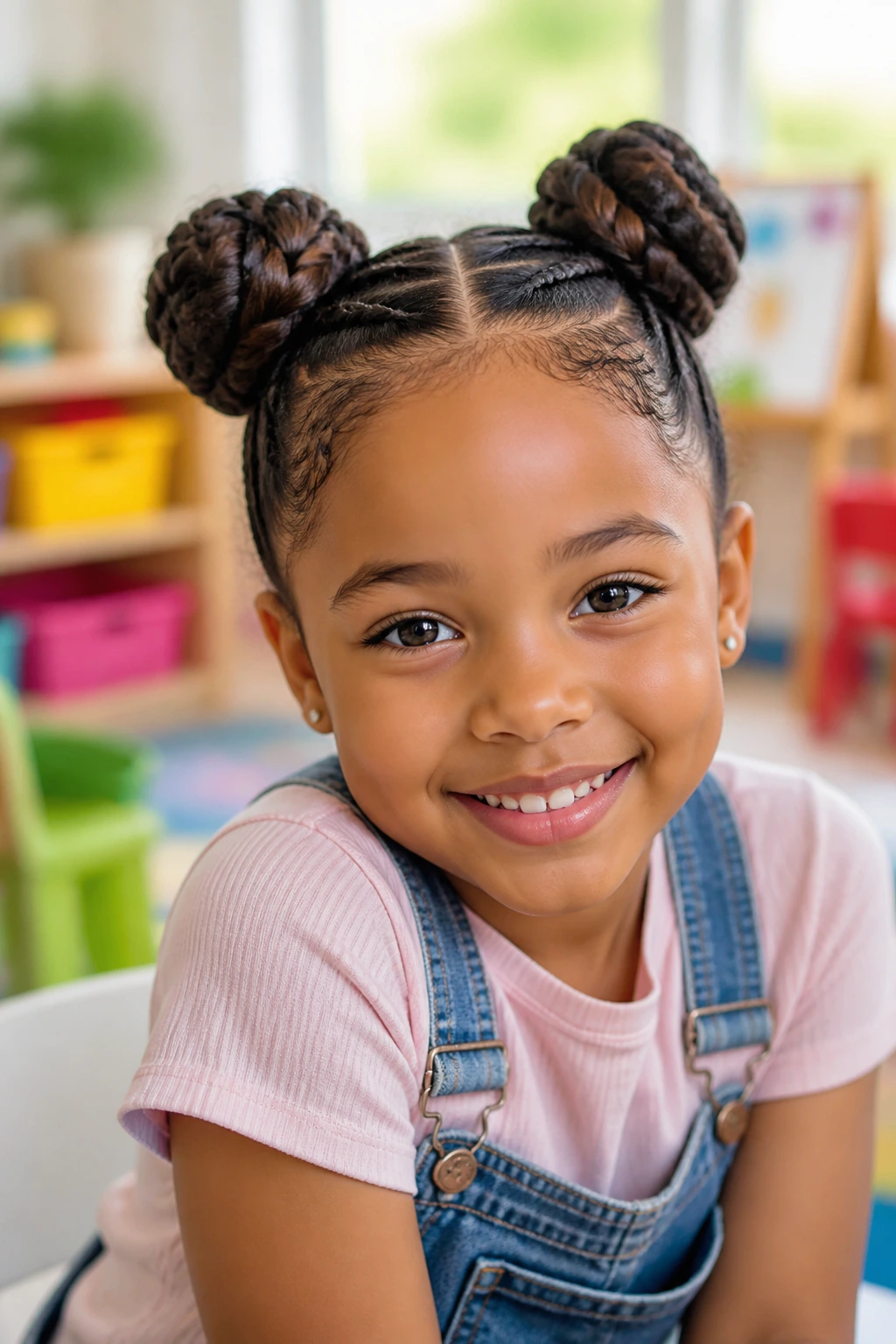
Braided space buns are pure fun. The hair gets parted into two sections, braided, then coiled into buns on either side of the head. The result is playful, balanced, and much more secure than loose pigtails if the child is active.
This style works best when the braids are not too tight at the base, because the buns already give you enough hold. I like it for birthdays and dance class. Add a bow or a pair of small clips if you want the buns to feel more festive, but keep the accessories light so they do not dig into the scalp.
22. Mohawk Braid
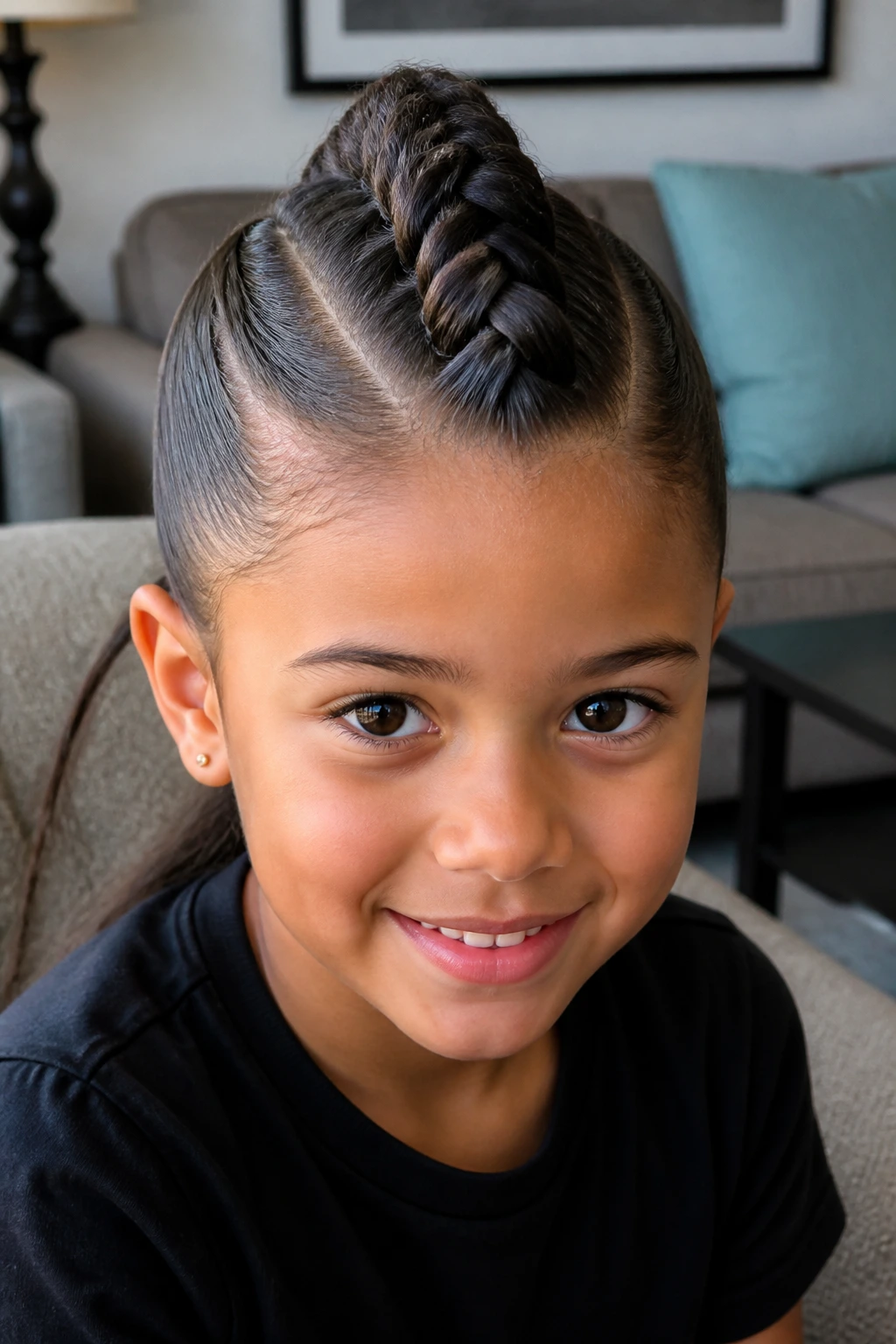
A mohawk braid runs down the center of the head with the sides smoothed, pinned, or braided back. It has a little attitude, but it can still read neat if the parting is clean and the braid is centered.
This one is great when a child wants a style that feels a bit different from standard pigtails. It holds hair away from the face and gives the middle section some height. If the sides are very short or very layered, use a small amount of gel or styling cream to keep the loose pieces from popping out at the temples.
23. Zigzag-Part Braids
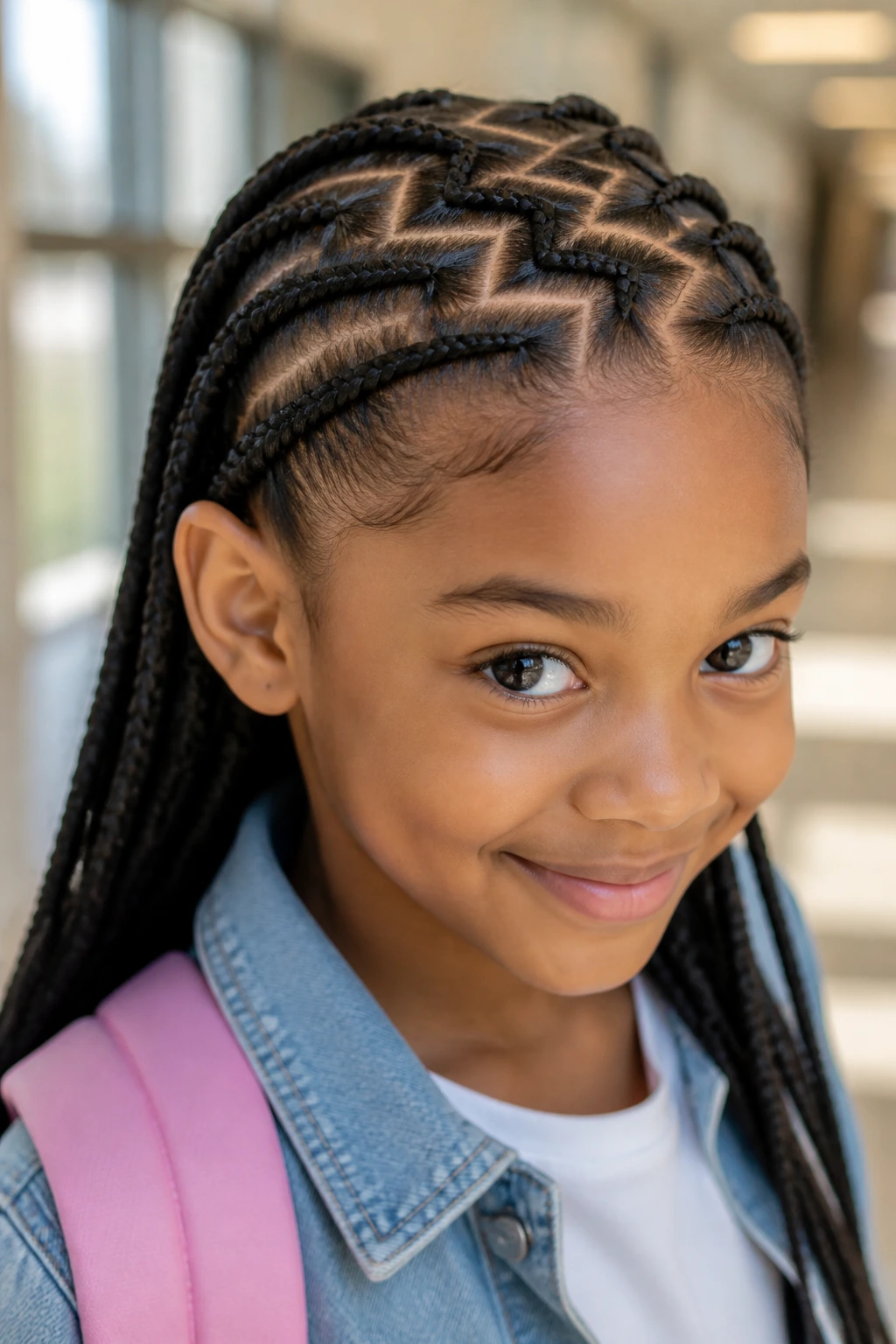
The braid itself may be simple, but the part is the star here. A zigzag part turns a basic set of braids into something that looks custom made, and the effect is more fun than a straight line without demanding a complicated braid pattern.
I like this on kids who enjoy seeing the parting design before the braid even starts. It works with pigtails, cornrows, or small braids, and it’s a smart way to make an ordinary school style feel a little special. Use the tip of the comb and take your time. Zigzags look better when they are crisp.
24. Heart-Part Braids
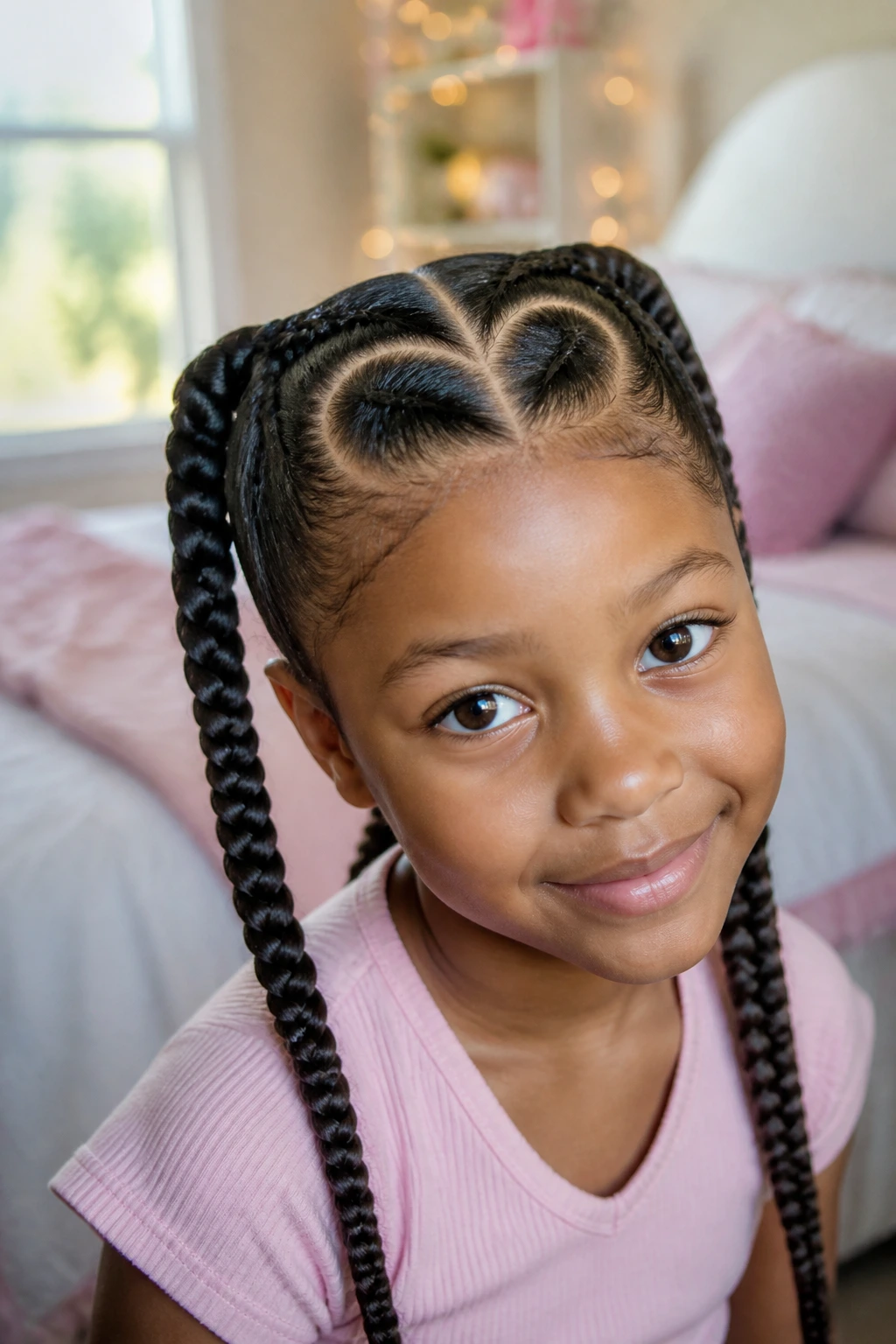
Heart parts are the kind of detail that kids notice immediately. The braid can be simple after that, because the part itself does the visual work. It’s a nice choice for birthdays, Valentine-themed classroom days, or any time you want a braid style that feels more personal.
The trick is keeping the heart clean enough to read without making the scalp too tight. I would not force the shape if the hair is very thick or the child is impatient. A half-heart or a softened curve can still look sweet and is often easier to draw in cleanly.
25. Side-Swept Dutch Braid
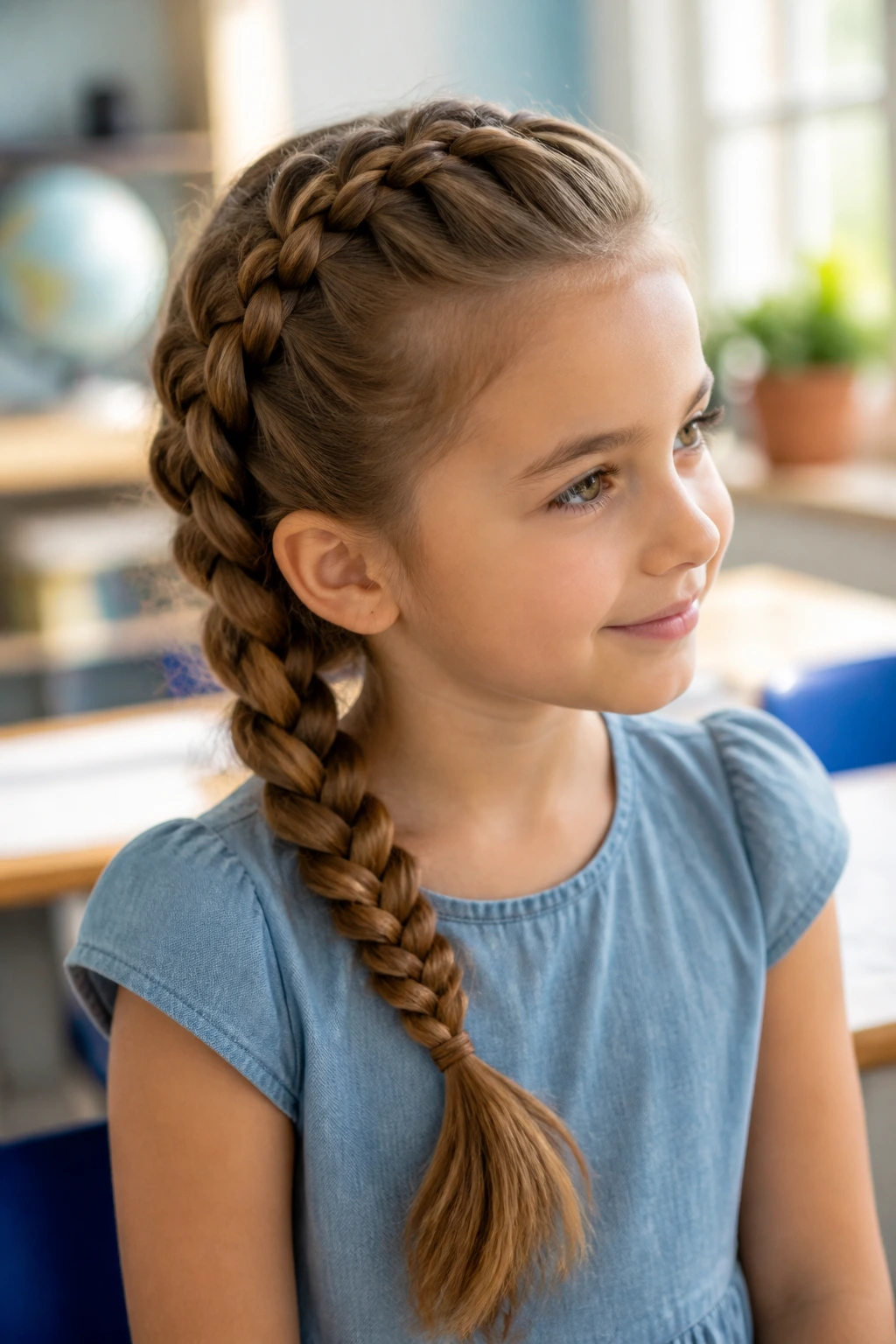
A side-swept Dutch braid has a little drama without getting fussy. It starts on one side, moves across the head, and rests over the shoulder in a thick raised line. The braid has more presence than a flat side braid because it sits off the scalp.
It suits longer hair especially well, and I like it when the child wants something visible but still practical. If the hair is layered, tuck the shorter pieces into the braid as you go rather than trying to smooth every strand out first. That keeps the shape from splitting apart halfway down.
26. Twisted Front Braids into a Ponytail
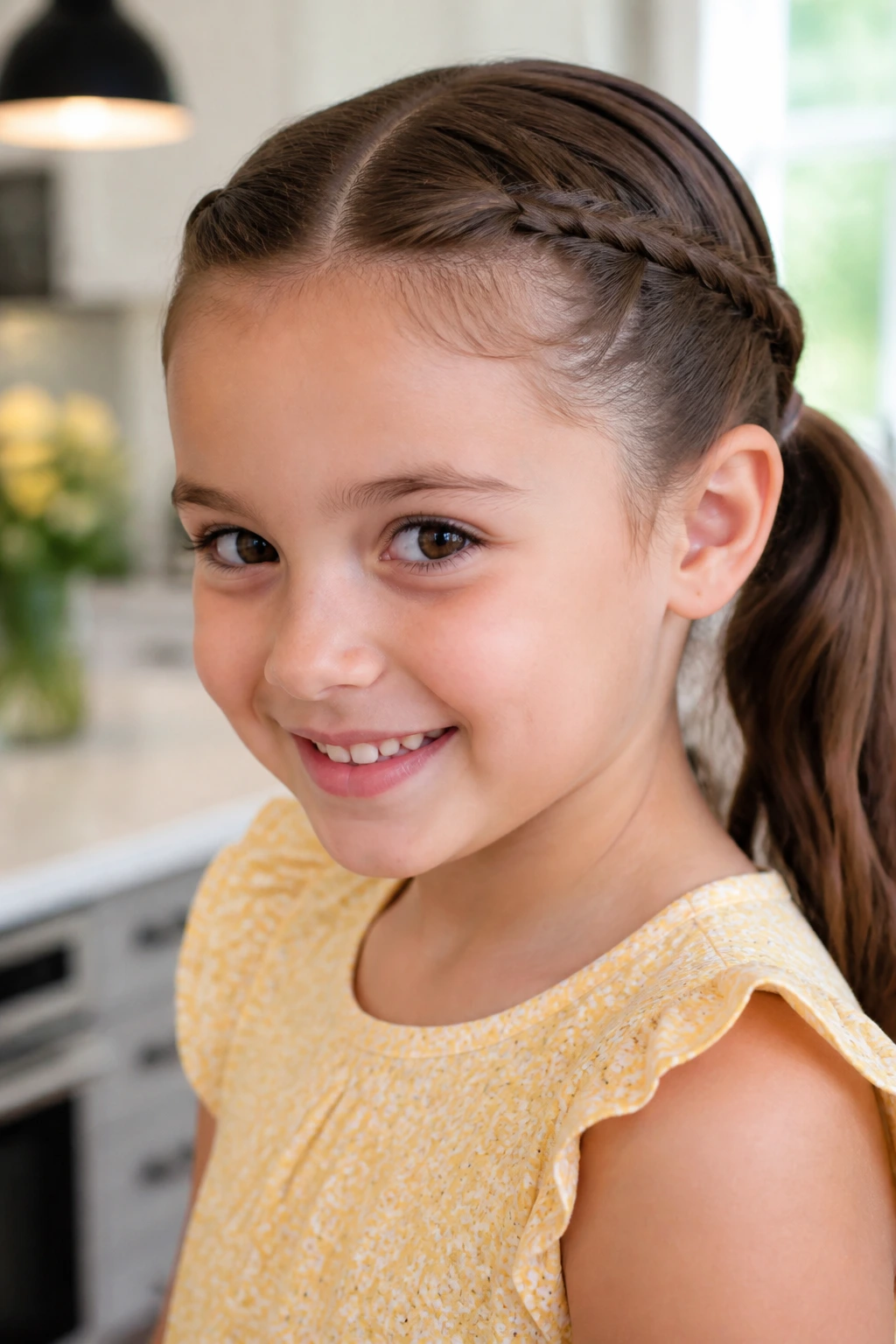
This is one of the fastest ways to clean up the front of the head without braiding everything. Two smaller front sections are braided or twisted, then joined into a ponytail at the back. It keeps the face clear and leaves the rest of the length free.
I reach for this style on mornings when the child wants to wear the hair long but I still need some control at the hairline. It’s also a good bridge style for kids who are not ready to sit through a full head of braids. A little smoothing cream at the front makes the parts look sharper.
27. Mermaid Braid
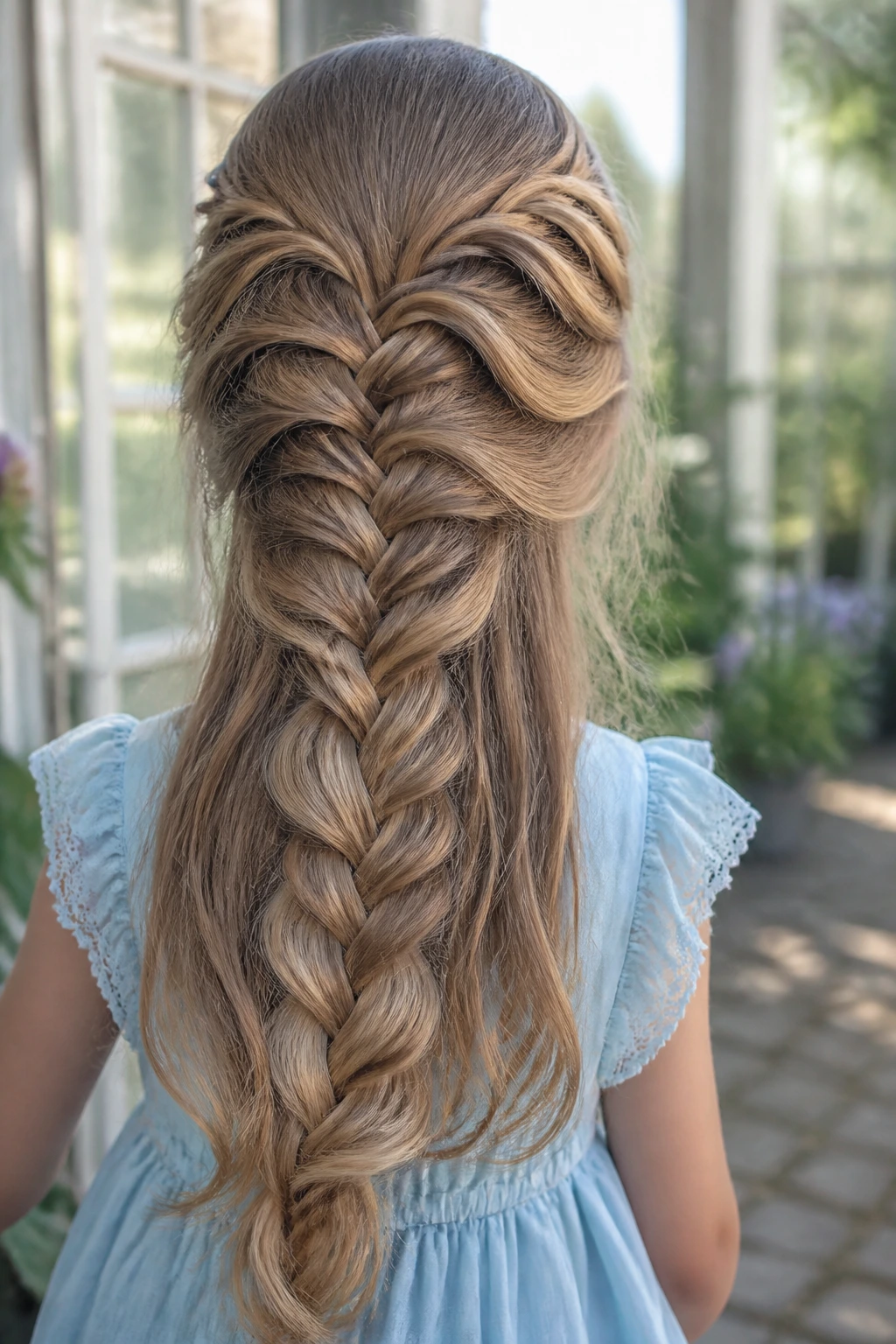
A mermaid braid has a soft, layered look because it uses smaller sections that feed into a broad braid down the back. It feels romantic without being stiff, and it looks especially nice on very long hair that needs something other than a standard plait.
The braid benefits from clean detangling beforehand, because tangled ends can make the pattern look fuzzy. I like to loosen the finished braid just a touch so it spreads out like a thick ribbon. Too much pulling will collapse the structure, so go slowly.
28. Ponytail Wrap Braid
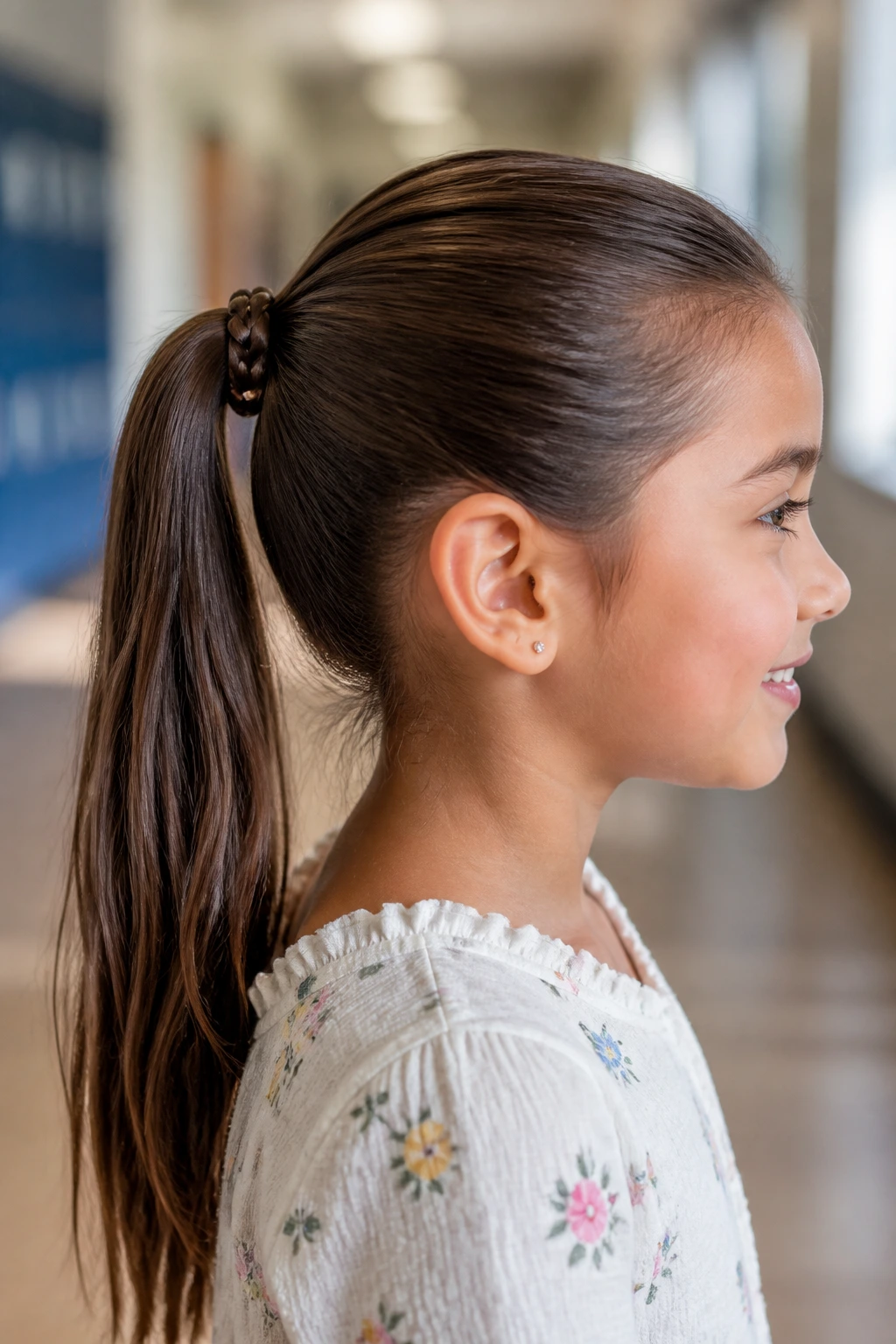
This one fixes a tiny problem that annoys me more than it should: the visible elastic at the base of a ponytail. A braid wrap hides that band by circling around the base and finishing neatly underneath or along the side. It’s a small detail, but it makes a simple ponytail look intentional.
It works on medium to long hair and is a smart choice for school pictures or events where you want the style to look a little neater than usual. If the child has slippery hair, pin the wrap under the ponytail with a bobby pin that matches the hair color.
29. Two-Layer Braid Ponytail
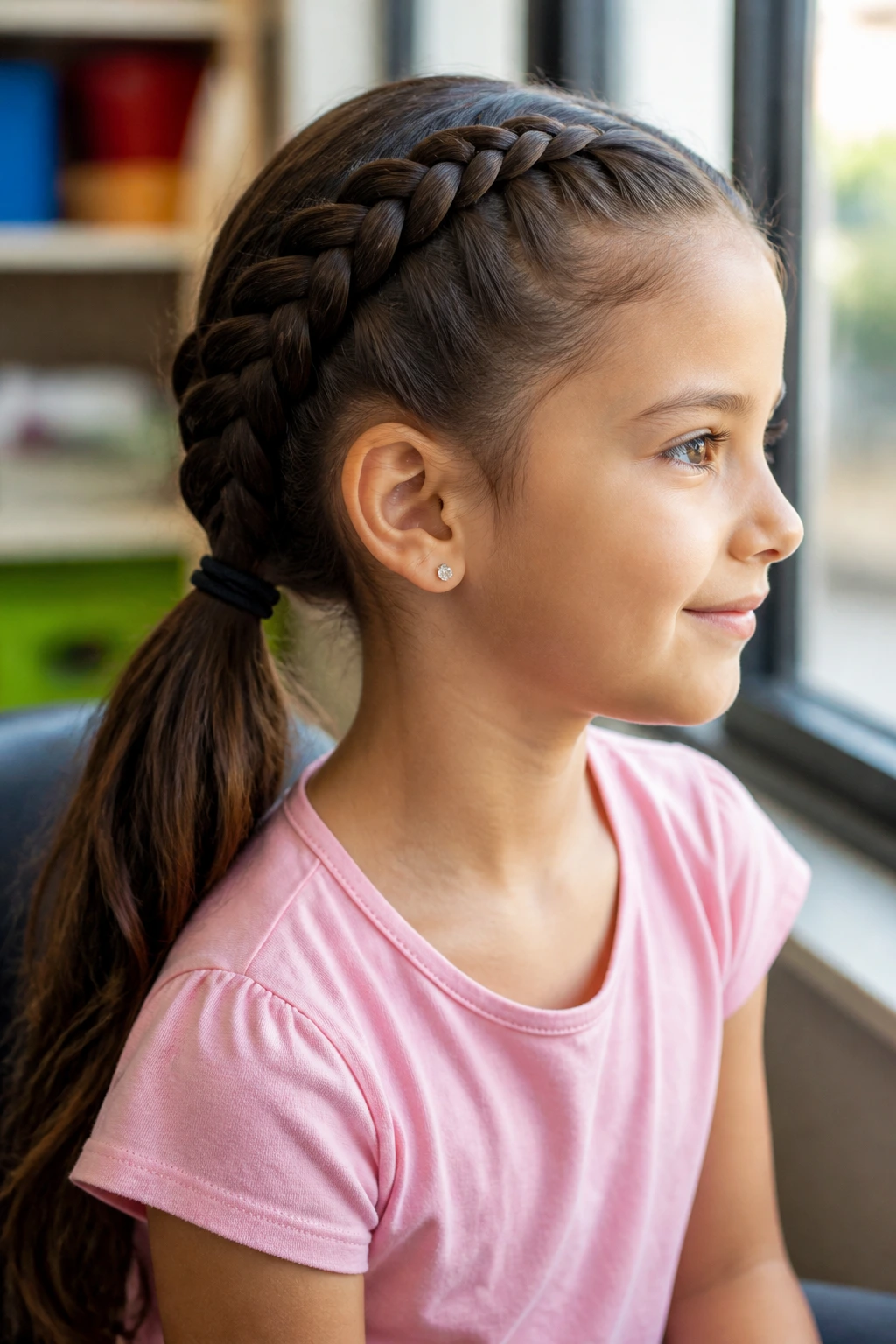
This style uses two levels of interest: the upper hair is braided or partially braided, and the lower length is gathered into a ponytail. The result has more shape than a plain ponytail and less weight than an all-over braid.
I like it for children who want some hair down but still need the top controlled. It’s especially helpful if the hair around the crown gets frizzy while the ends stay smooth. Keep the top braid neat and let the ponytail hang naturally. The contrast is what gives the style its balance.
30. Beaded Braids
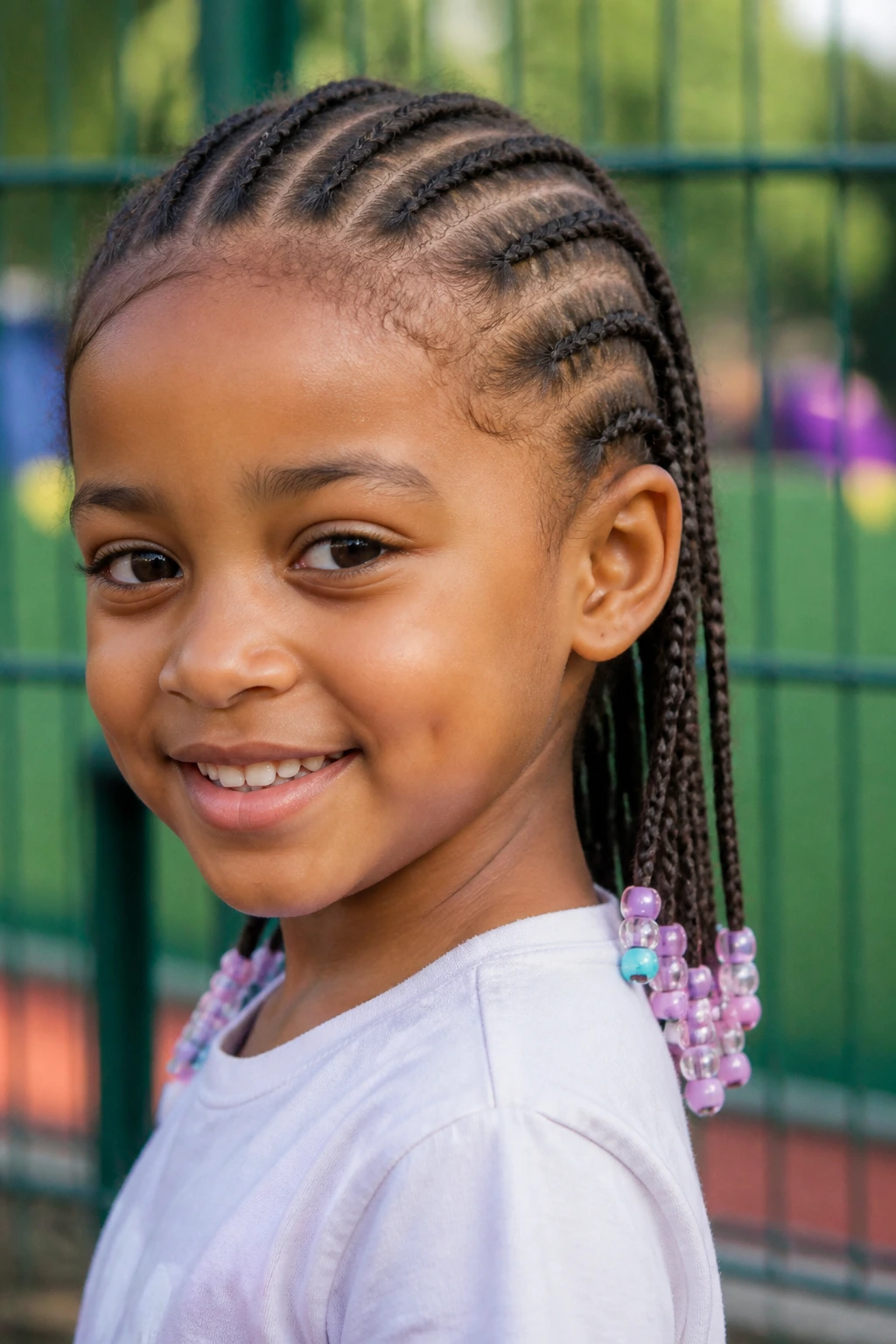
Beads add sound, movement, and a little personality to a braid, which is why kids tend to love them. A row of beads at the ends can turn a simple braid into something that feels decorated without changing the braid pattern itself.
The practical part matters here. Use lightweight beads so they don’t pull on the ends, and make sure the openings are smooth enough not to snag. I’d keep heavy beads for older kids and save softer, lighter pieces for little ones. Too much weight at the end can make the braid sag.
31. Triangle-Part Box Braids
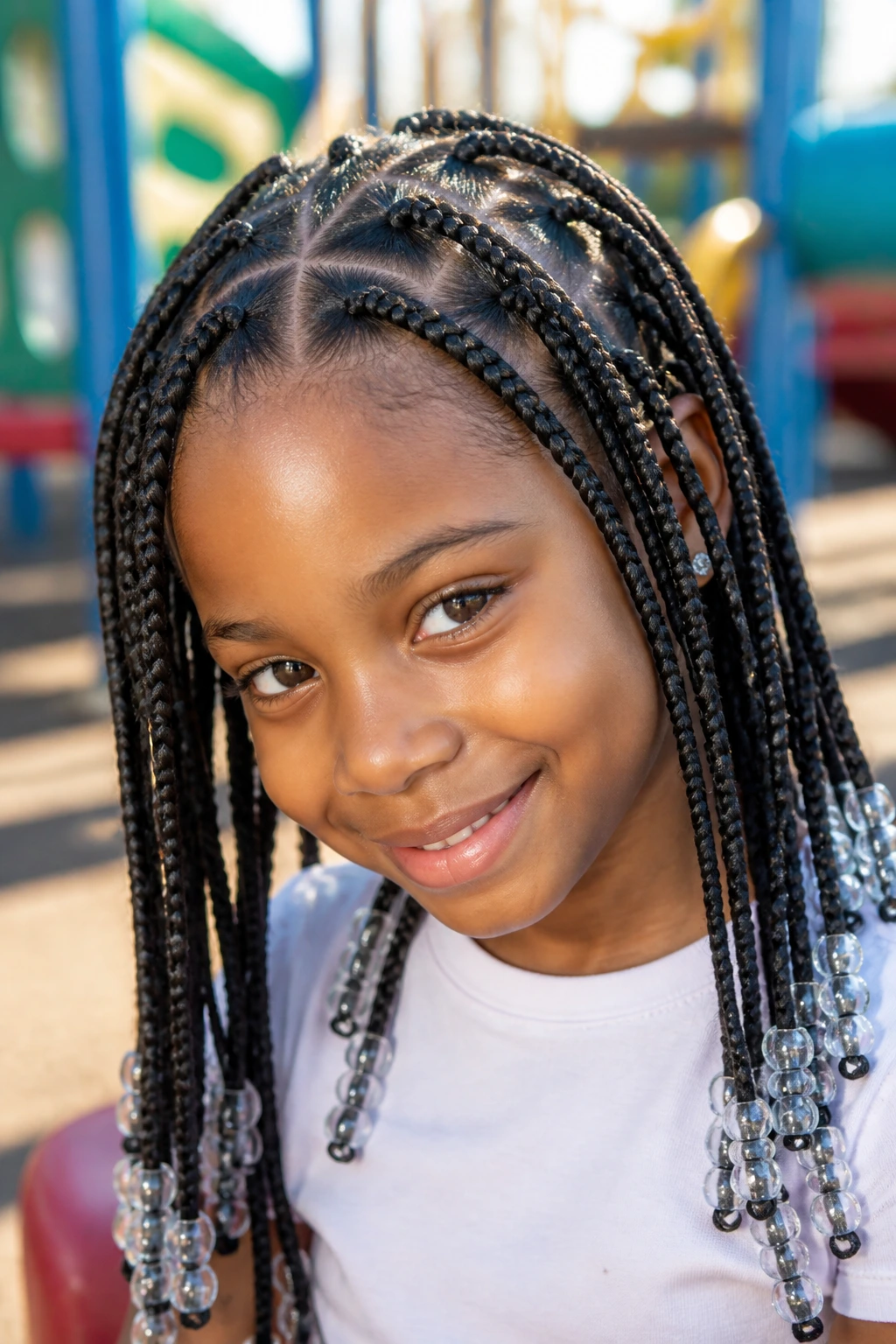
Triangle parts give box braids a sharper, more modern-looking section pattern. The shape reads immediately, which is why it works so well when you want the parting to carry some of the visual interest instead of relying only on the braid length.
These braids can be worn for a longer stretch than many loose styles, which makes them practical for busy weeks. They do ask for careful sectioning at the start, so this is not a style to rush. If you’re braiding a child’s hair at home, part everything before you begin. That saves time and keeps the lines cleaner.
32. Jumbo Side Braid
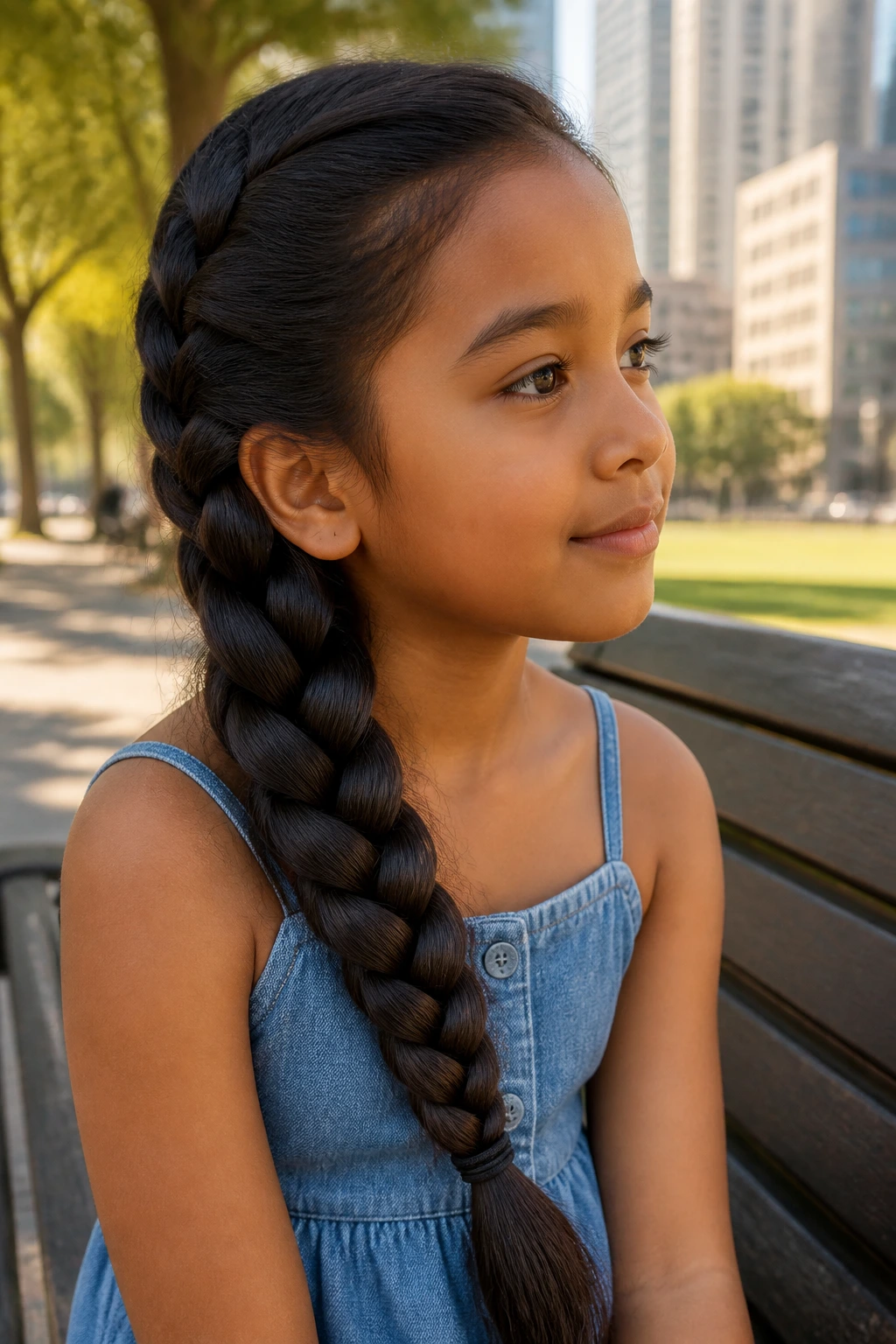
A jumbo side braid gives you the bulk of a full braid without needing tiny, fussy sections. It is fast, bold, and especially useful on thick hair that wants to hold a bigger shape. The larger braid also looks softer than a tight, narrow plait.
I like this when the child has a lot of hair and wants it controlled in one easy sweep. Use a wide part, smooth the crown, and let the braid sit over one shoulder. If the ends puff out, wrap them with a ribbon instead of trying to force them perfectly flat.
33. Braided Headband
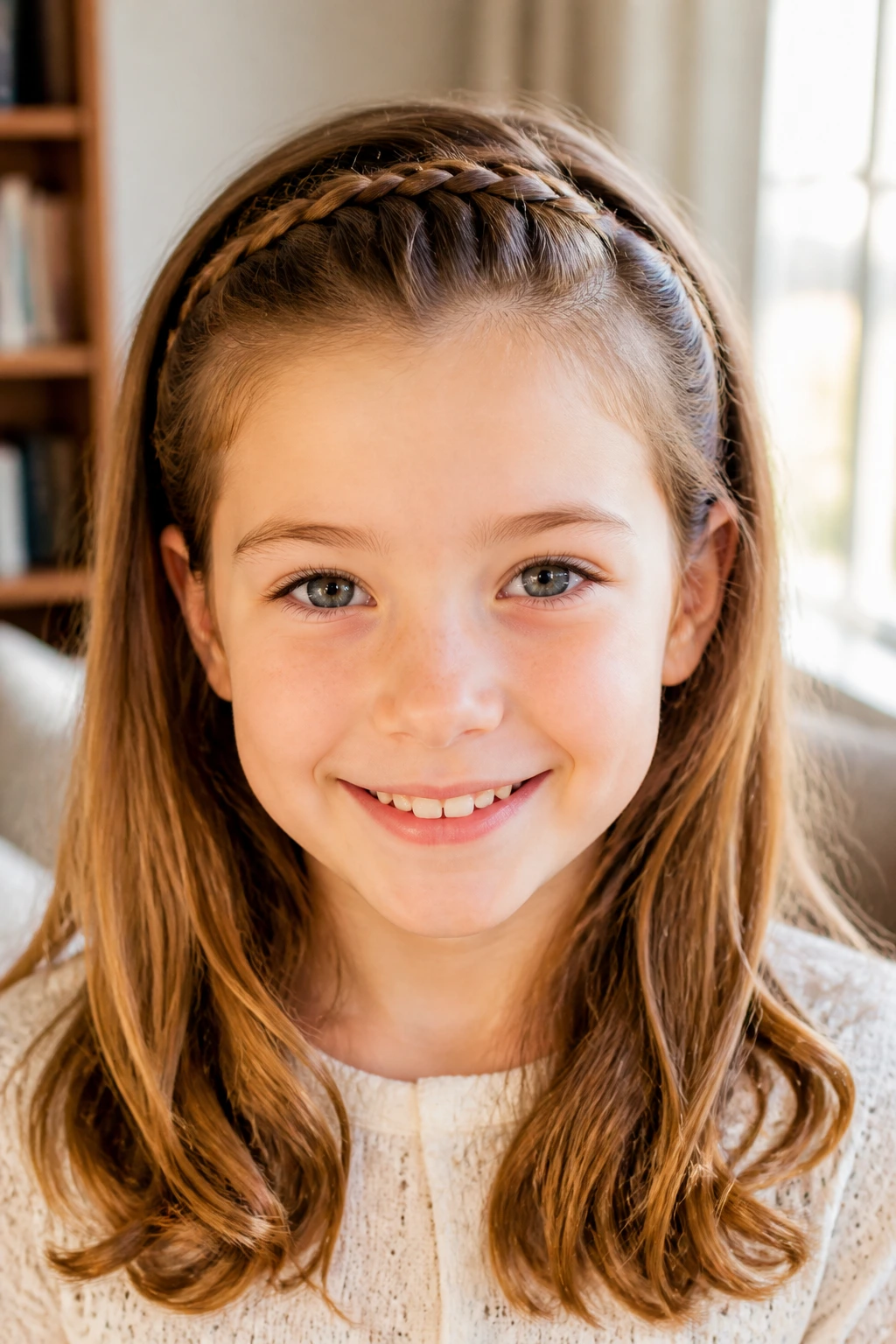
A braided headband keeps the front of the hair off the face while leaving the rest loose, which is a nice middle ground for kids who do not want all their hair tied back. The braid sits across the hairline like a band, and the rest of the style stays soft underneath.
This one works especially well when bangs are growing out. It also buys you a cleaner front without losing length around the shoulders. If the braid slips, pin it behind the ears with two bobby pins instead of one. Two small anchors hold better than one obvious one.
34. Side Cornrow into Puff
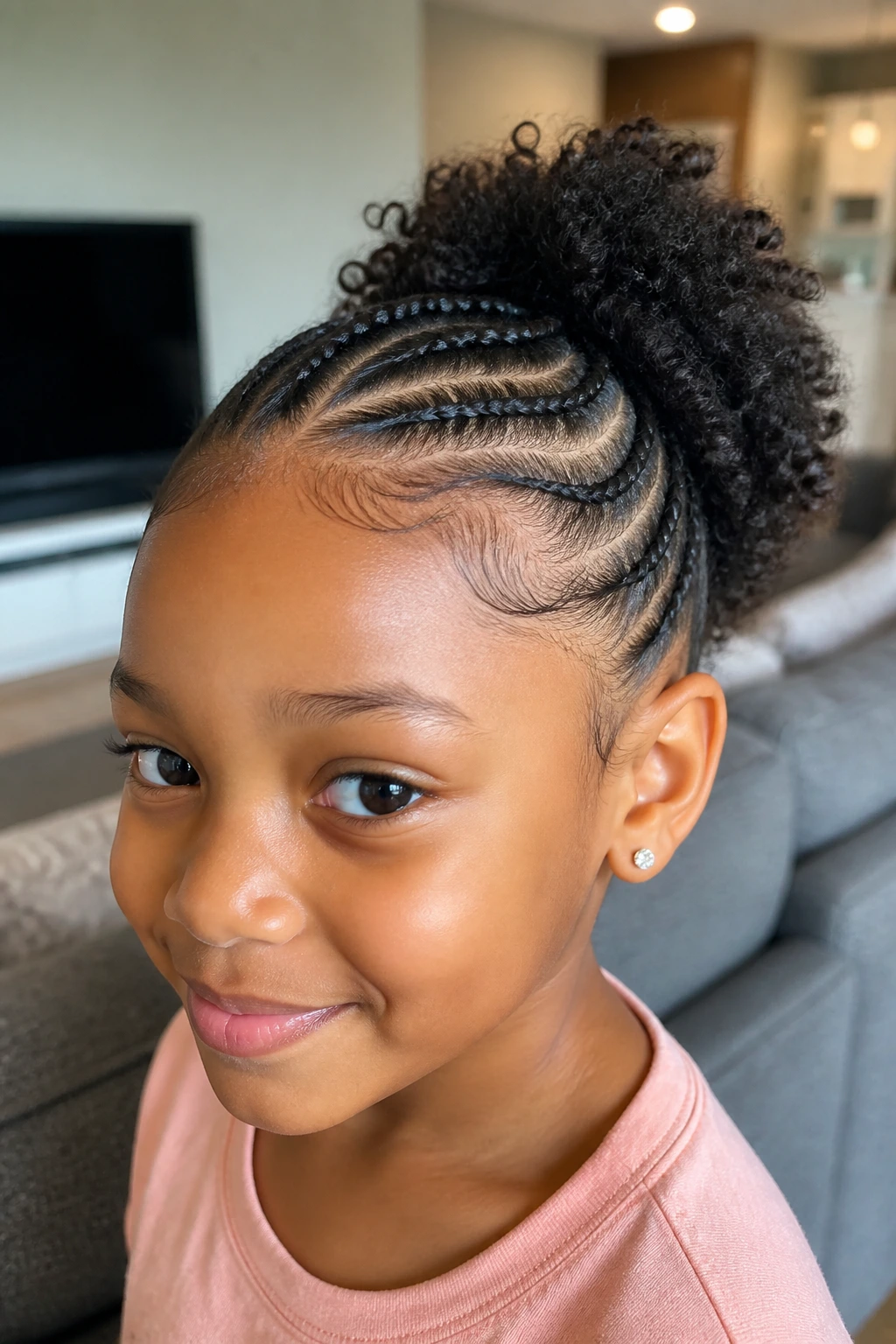
This style mixes sleek control with natural volume. A small cornrow or braid runs along one side and leads into a puff or ponytail, so the look starts neat and ends with movement. It’s a good choice when you want the front to stay tidy and the back to keep some life.
It works beautifully on curly and coily textures because the puff becomes part of the style rather than something to tame away. I like to keep the braiding side smooth and the puff fluffy. That contrast gives the whole style more shape than a uniform braid would.
35. Mini Accent Braids
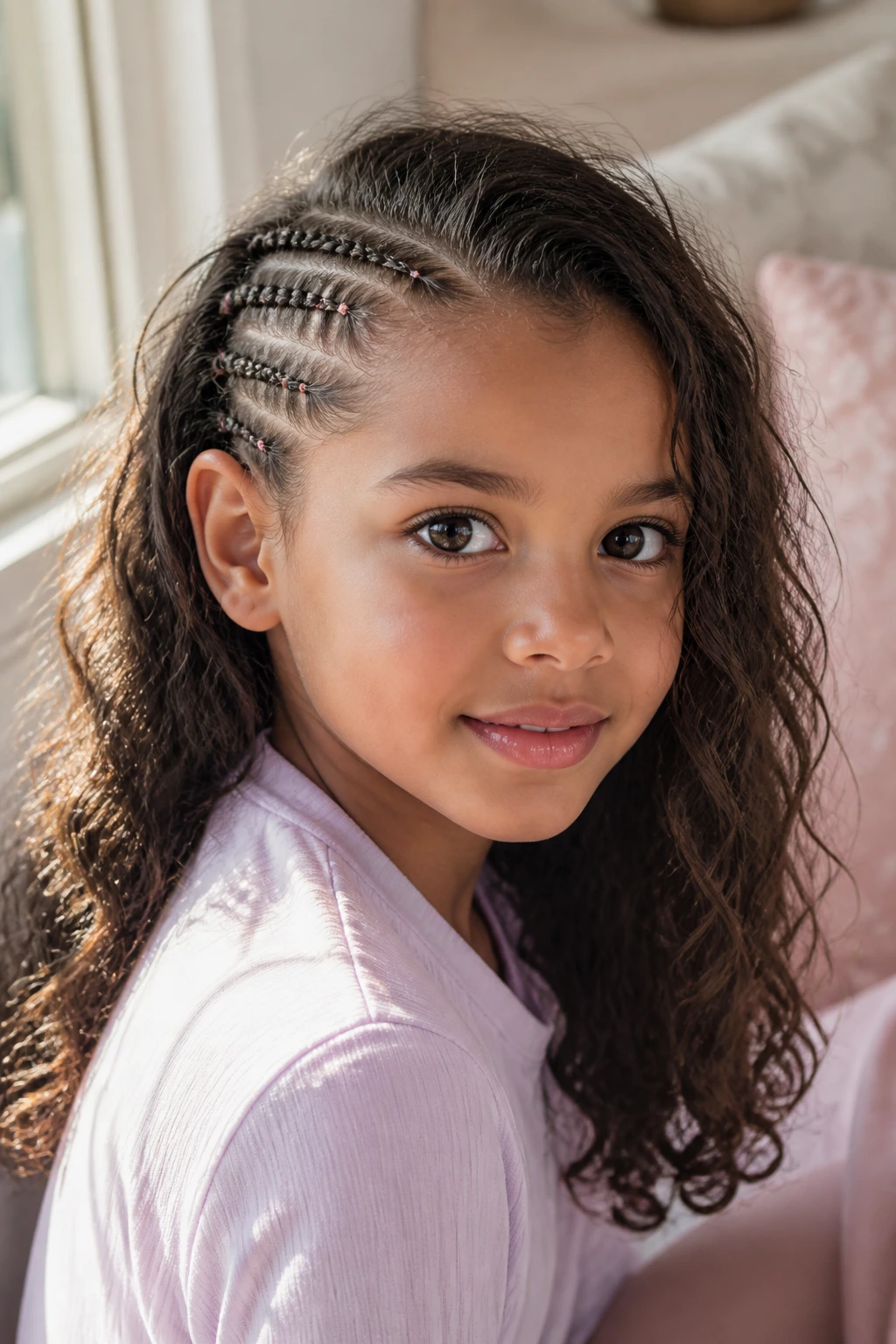
Tiny accent braids are the sort of detail that can change a whole hairstyle without taking over the head. They can live near the temple, along the part, or tucked into loose hair to add texture and interest. The rest of the hair can stay down, which makes this style feel light.
This is a great choice for kids who like their hair mostly loose but still want something braided. A couple of small braids near the face can keep the front controlled and give the whole style a little edge. If the hair is very fine, keep the accents small so they do not dominate the look.
36. Crisscross Braids
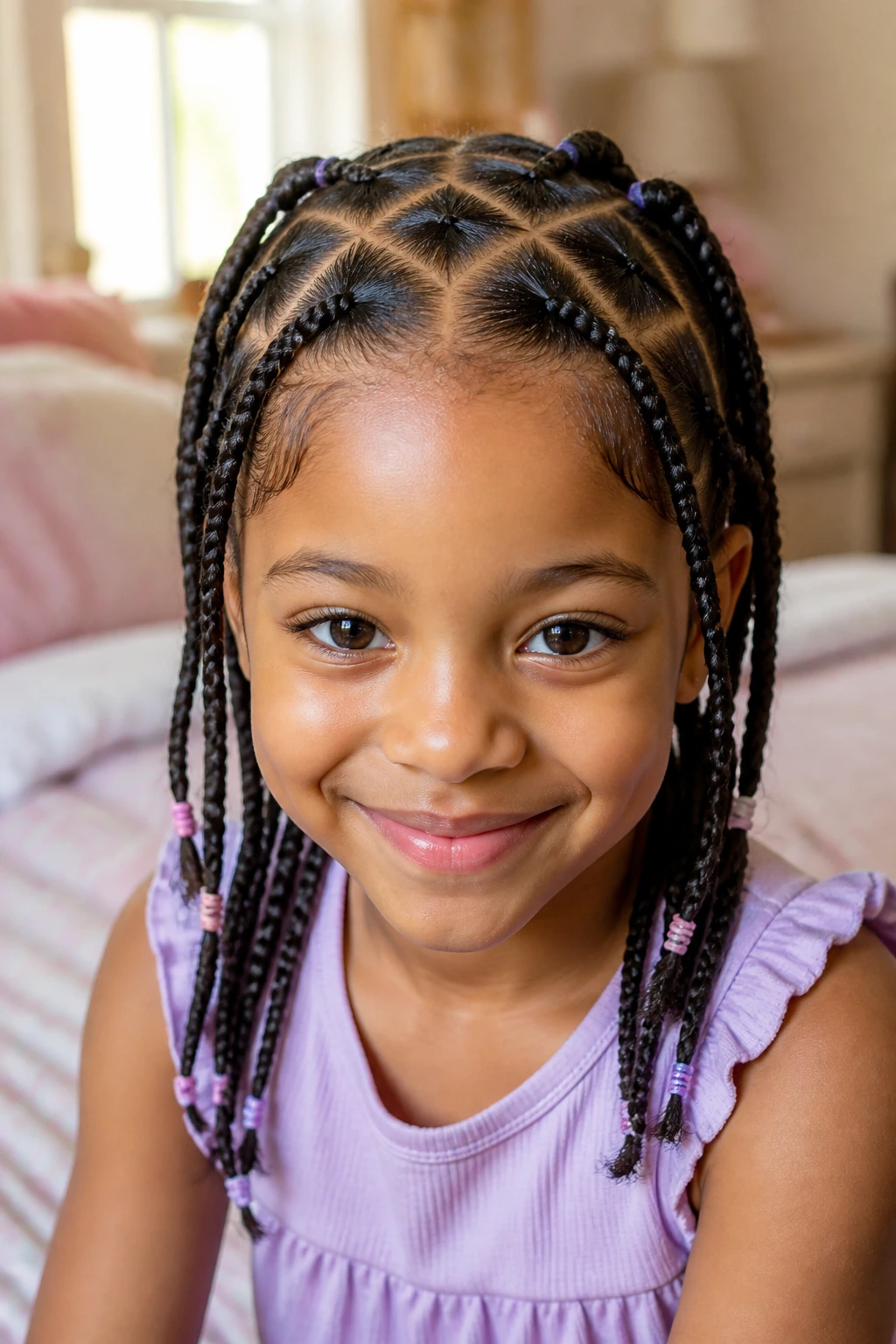
Crisscross braids are all about the way the sections cross over each other before they’re braided or pinned into place. That crossing pattern creates a clear visual design, and it can be done in a way that feels playful or neat depending on how tight the sections are.
I like this style when you want something more interesting than straight lines but do not want a complicated full-head braid. It works best when the parting is planned first. Draw the lines, clip the sections, then braid. If you try to wing it, the pattern can drift and lose its shape.
37. Braided Low Chignon
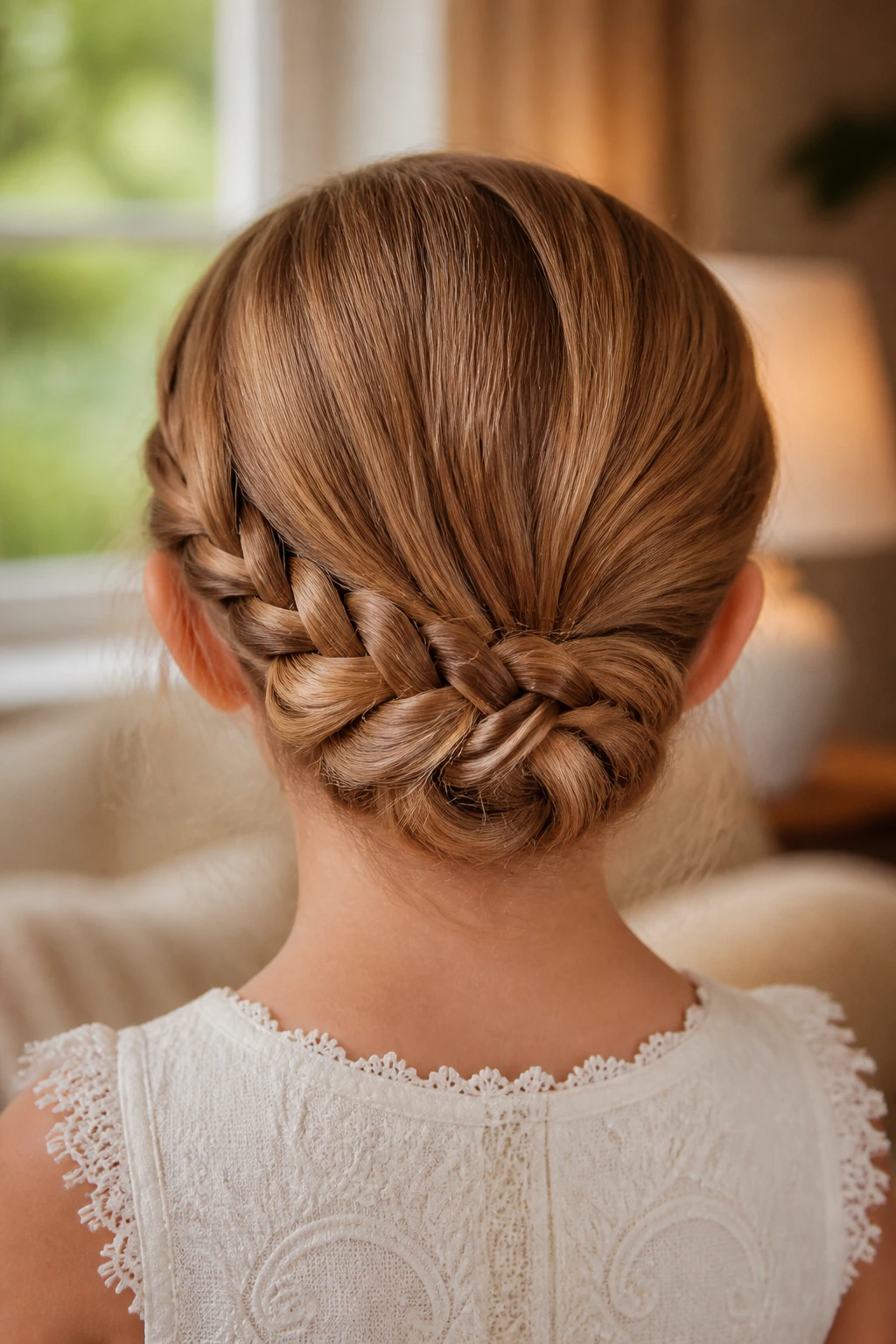
A braided low chignon is the refined option on this list. The braid wraps or coils into a low knot at the nape, which keeps the style tidy and out of the way. It’s one of the best picks for formal events because it looks finished without needing heat.
This style works on medium to long hair and can be dressed up with a ribbon or a small barrette. I like it when the child needs to sit still for a while and you want the hair to stay calm. Leave the bun slightly soft around the edges so it doesn’t look like it was pulled into place with a ruler.
38. Infinity Braid Ponytail
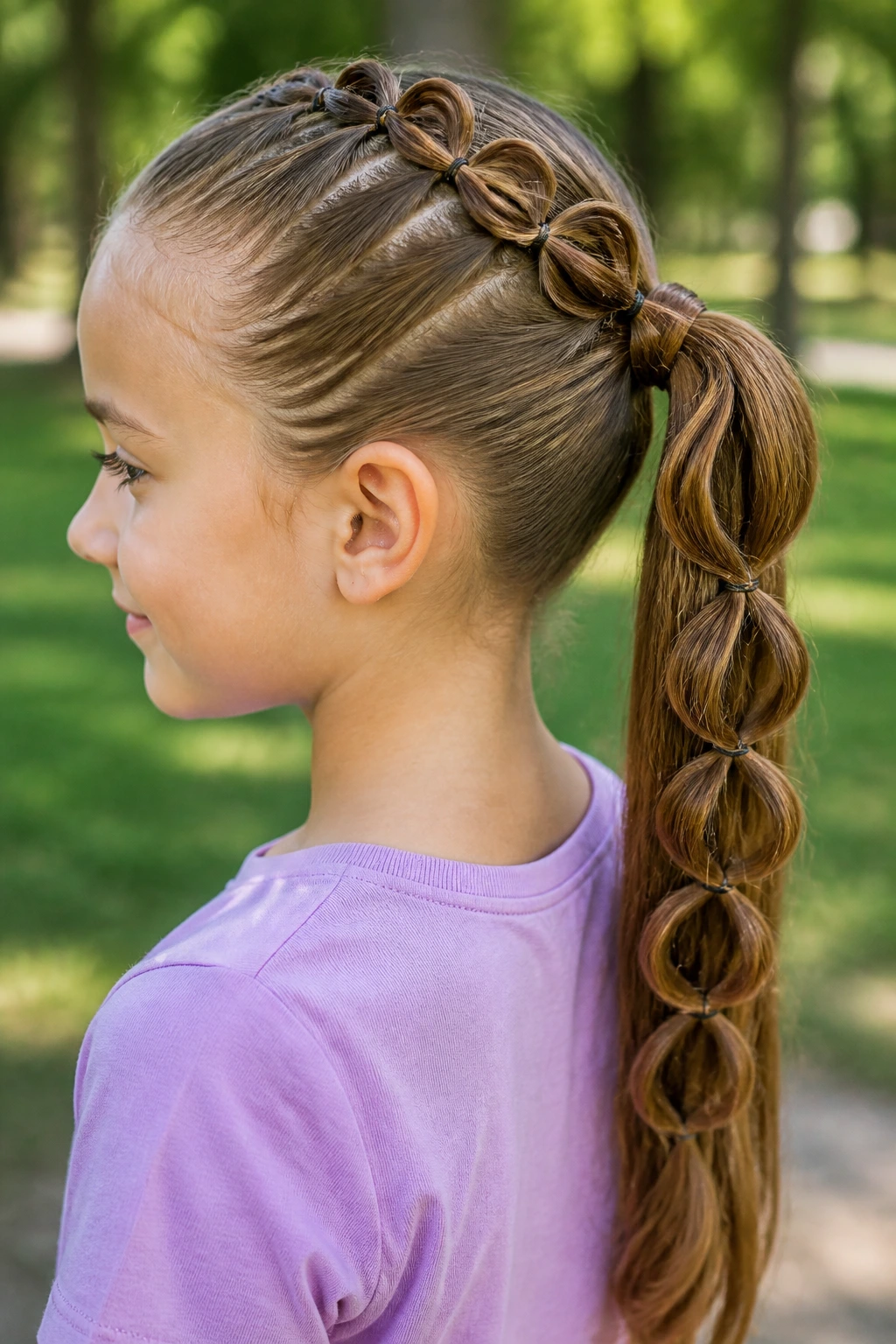
An infinity braid ponytail has a looped, woven look that makes a plain ponytail feel much more interesting. It’s a smart choice for older kids with longer hair because the repeating loop pattern reads clearly and gives the braid a little movement.
The key is keeping the sections even, which sounds obvious until the braid starts to drift. Use small elastics to anchor the shape, then smooth the tail at the end. If the hair is very slippery, a light mist of texturizing spray helps the loops hold their form instead of sliding apart.
Braids That Hold Their Shape Without Fighting the Morning
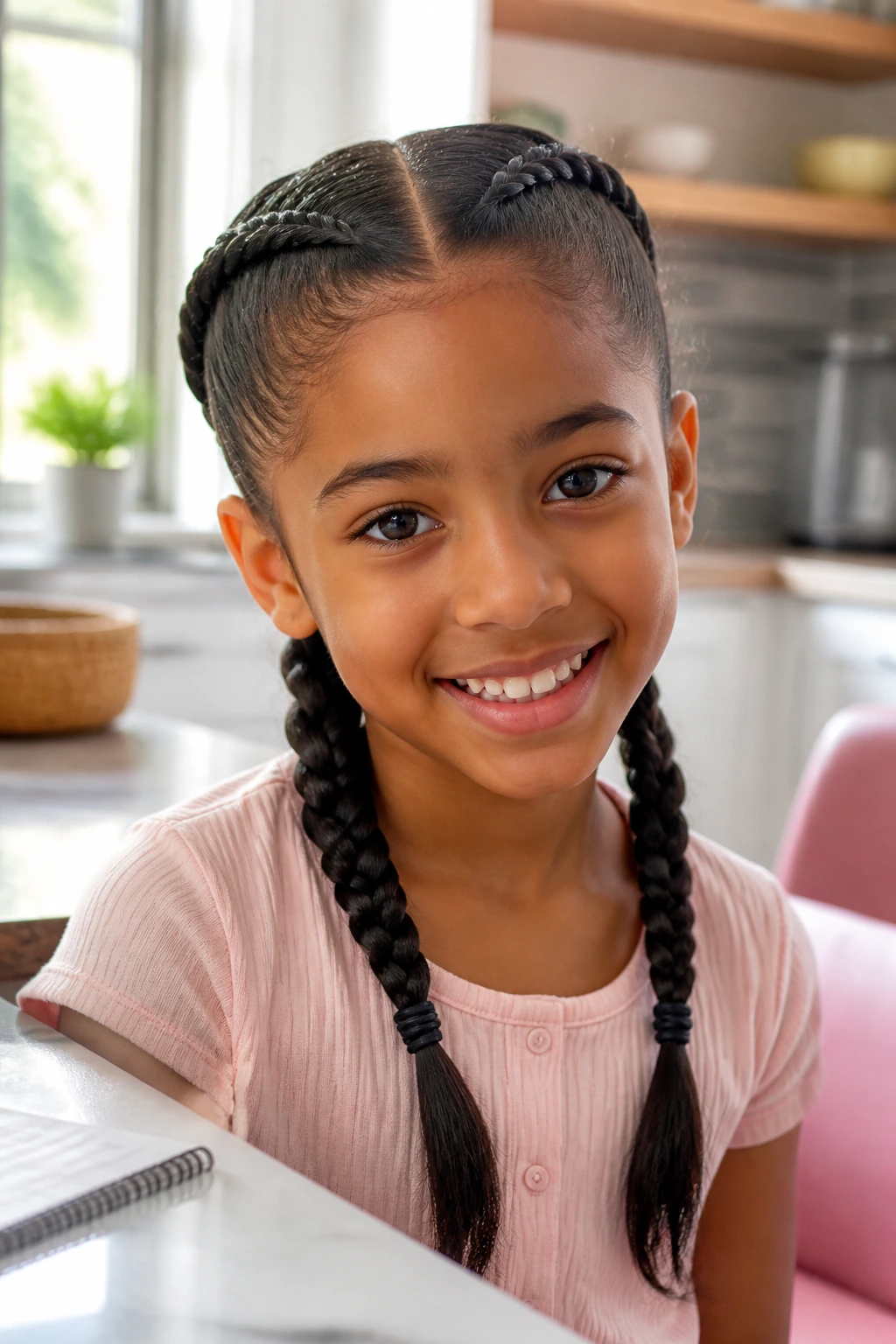
The styles that last are usually the ones that respect how kid hair actually behaves. Hairline tension, section size, and the amount of grip at the roots matter more than whether a braid looks complicated in a photo. A simple braid with clean parting and a decent elastic often outperforms a fancier style that was rushed.
What I notice most in real life is that kids do better with braids that match the day. A dance recital braid can be tighter and more polished than a playground braid. A school braid should keep the face clear and the scalp comfortable. A birthday braid can be playful, and a protective braid can stay in place longer if the child is old enough to sit through the setup.
A braid is not a costume. It’s a working hairstyle. Once you start thinking about it that way, the choices get much easier.
What You Actually Need at the Sink and Mirror
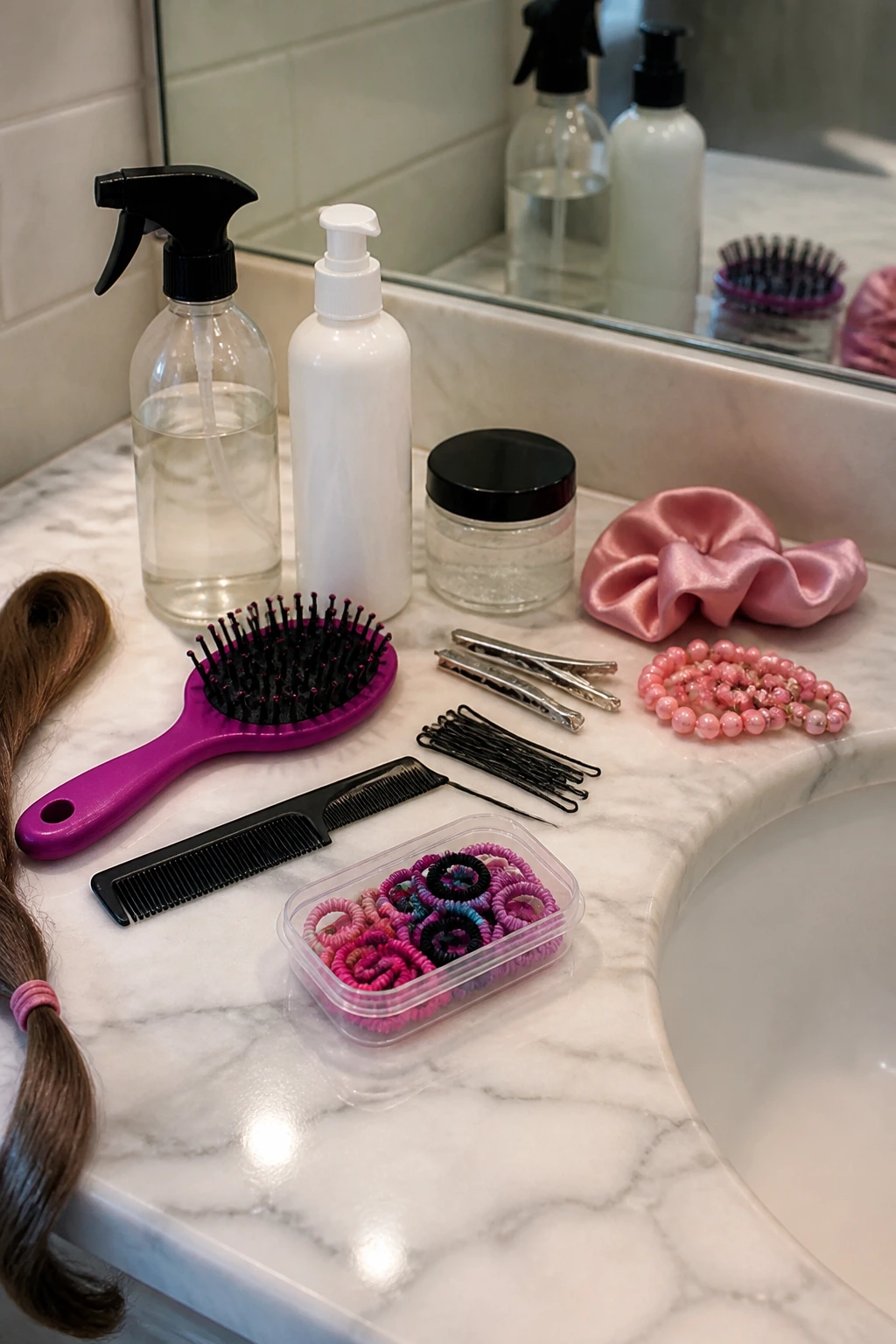
- Rat-tail comb: The thin tail makes clean parts and zigzags much easier than using your fingers alone.
- Wide-tooth comb or detangling brush: Use this first so you are not braiding through knots.
- Spray bottle with water: A light mist gives grip and helps sections stay together without soaking the whole head.
- Leave-in conditioner: A small amount on mid-lengths and ends softens friction and makes braiding smoother.
- Snag-free elastics: These hold ends in place without chewing up the hair like cheap rubber bands do.
- Bobby pins: Helpful for buns, wraps, crowns, and any braid that needs a hidden anchor.
- Hair clips: Clip away the sections you are not using so the rest of the hair doesn’t tangle back in.
- Styling cream or light gel: Use a thin layer on the hairline or parts when you want cleaner sections.
- Satin scarf or bonnet: This is the overnight fix that keeps braids from frizzing up by morning.
- Ribbon, bows, or beads: Optional, but they make simple braids feel special without changing the structure.
Smart Hair Prep and Product Picks for Braid Hairstyles for Kids
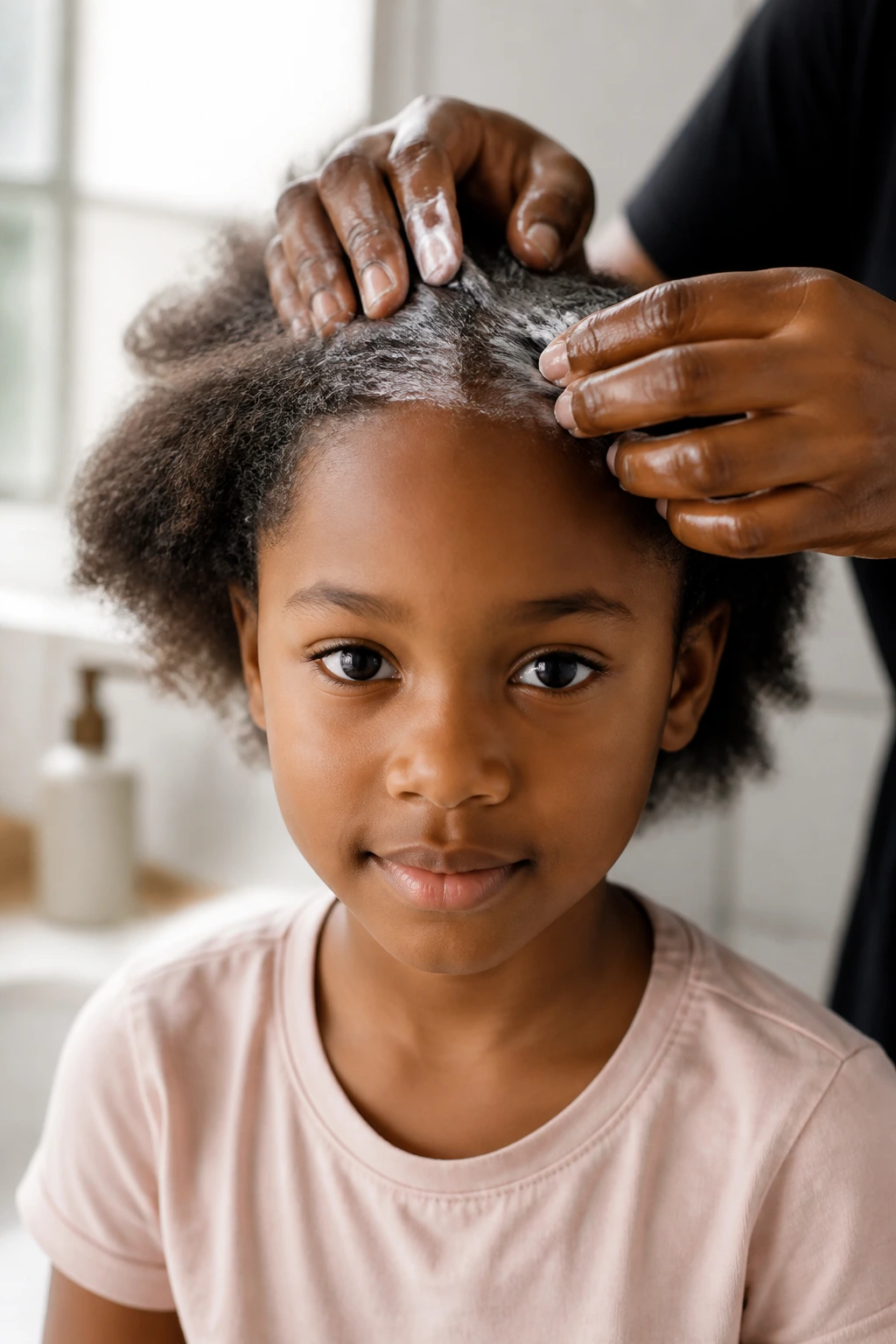
Good braid prep is not about piling on product. It’s about giving the hair a little control so your sections stay clean. I like to start with detangled hair that has a touch of leave-in conditioner through the lengths, then add a tiny bit of styling cream at the roots if the hair is especially slippery. Too much product makes the hair mushy and harder to grip.
For straight or fine hair, a light texturizing spray or a bit of dry shampoo at the roots can help the braid hold. For curly and coily hair, a water-and-leave-in mix often works better than dry brushing, because it keeps the hair flexible while you work. If you’re braiding after wash day, wait until the hair is fully detangled first. Wrestling with knots while sectioning is how part lines go crooked.
Accessories matter more than people think. Snag-free elastics are worth buying in bulk, and lightweight ribbons or beads are easier on little heads than bulky clips. If the child has a sensitive scalp, skip anything that adds weight at the front. The prettiest braid in the room is not worth a tugging headache.
How to Wear These Braids for School, Sports, and Special Days
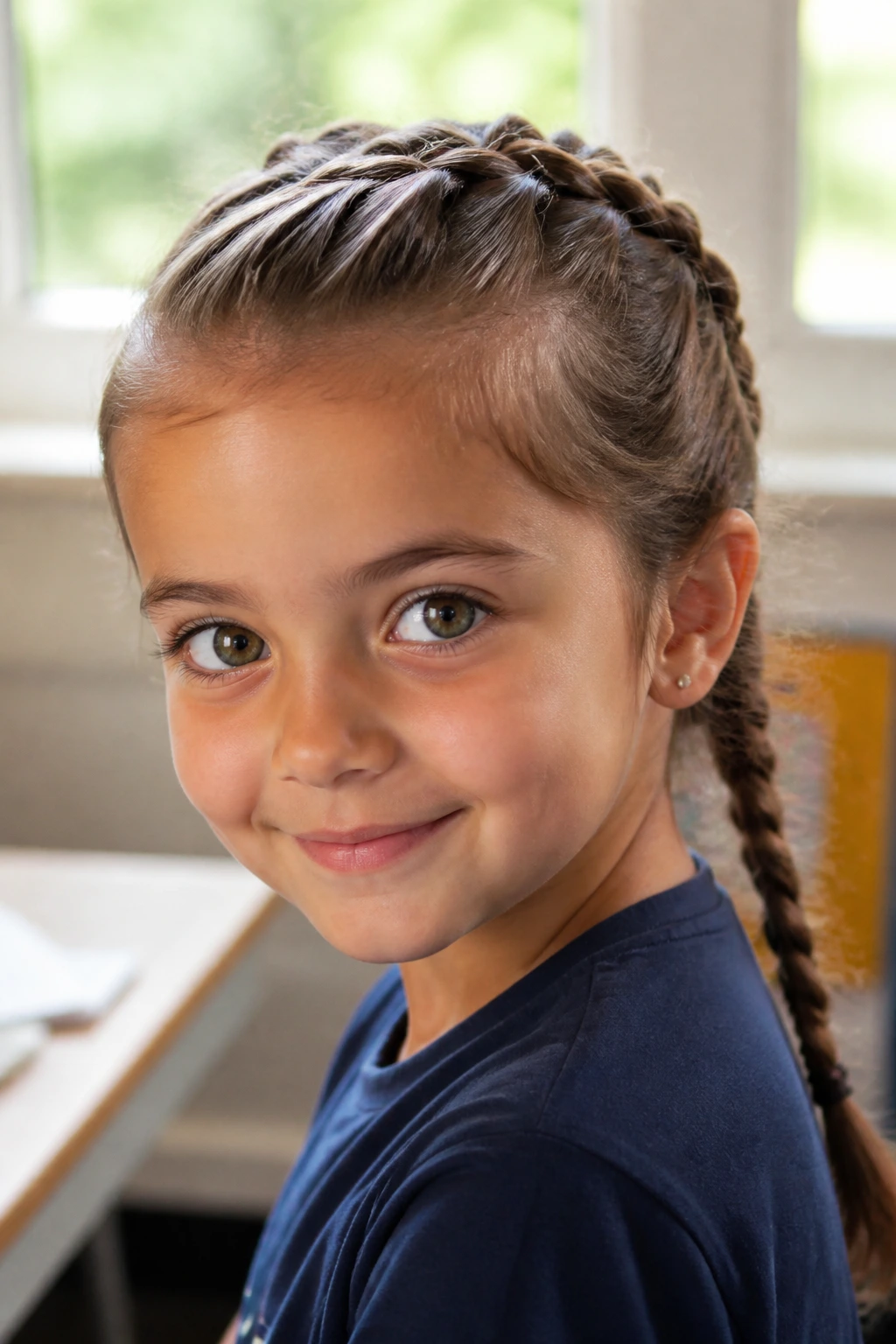
School Days: Keep the front clear, the parting neat, and the accessories light. A French braid, side braid, braided ponytail, or braids with a soft ribbon usually feels right for a regular school day because they stay out of the face without looking overstyled.
Play and Sports: Choose styles that sit close to the scalp or tuck the ends away. Boxer braids, Dutch pigtails, cornrow rows, and braided buns hold up better when a child is running, rolling, or climbing. Loose ends are what get in the way first.
Special Days: This is where crowns, waterfall braids, heart parts, and beads earn their place. A little shine cream, a clean center part, or a single ribbon can make the whole style feel finished. Do not overdo the accessories. One good detail usually looks better than four competing ones.
Hair Length and Texture: Shorter hair usually needs styles that hug the head or use small accents. Longer hair can handle fishtails, ladders, and mermaid braids. Curly and coily hair often looks best when the braid works with natural volume instead of flattening it.
Easy Ways to Change the Look Without Starting Over
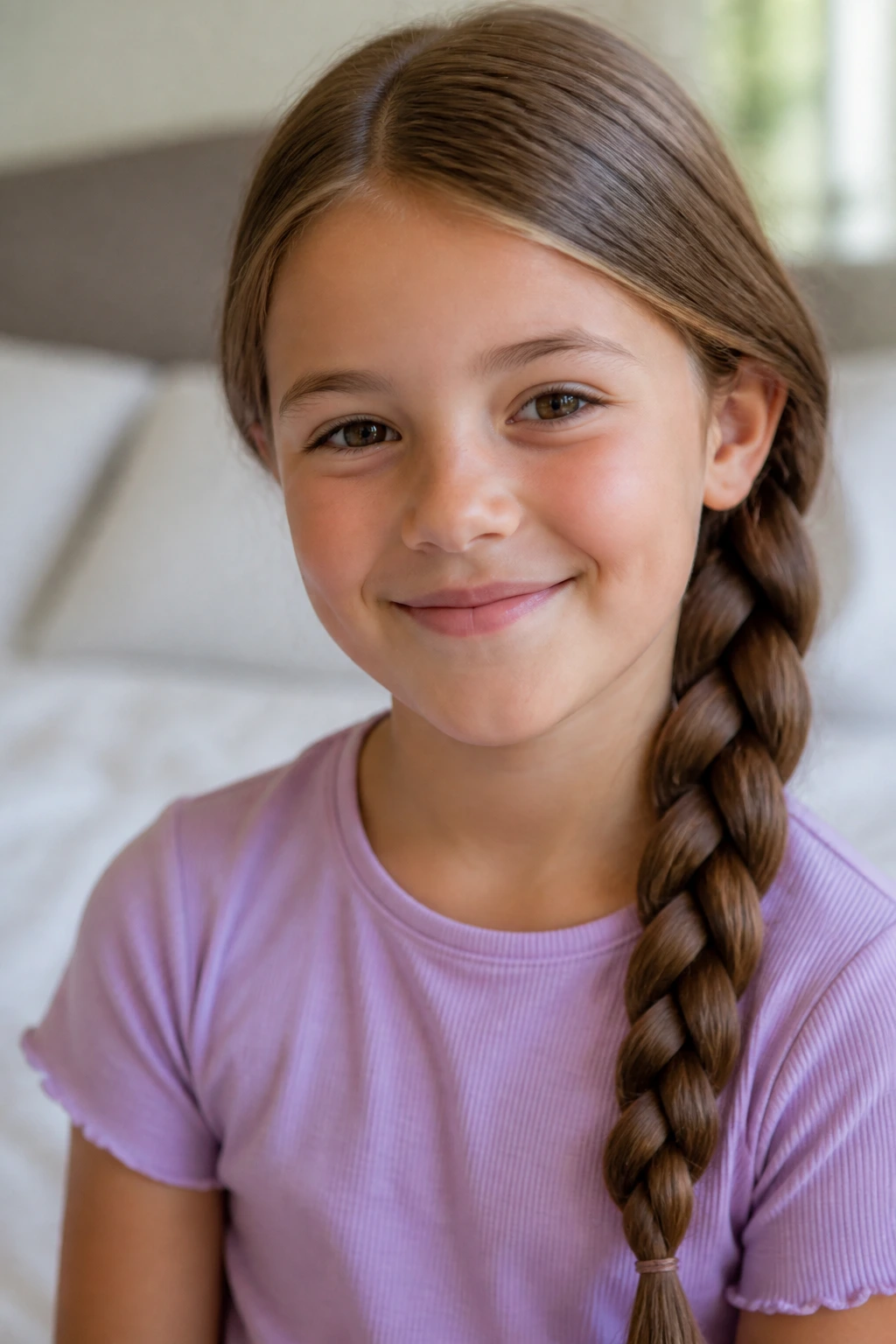
Ribbon Swap: A plain elastic can turn into a school-day ribbon, a velvet bow, or a satin tie in seconds. That one swap changes the whole mood of a braid.
Parting Trick: A straight center part feels formal, a side part softens the face, and a zigzag part gives a simple braid more character without changing the braid pattern itself.
Accessory Move: Beads at the ends, clips near the temple, or a single cuff on one side can shift the style from everyday to dressy. Use one accent and stop there. More than that starts to look busy.
Texture Trick: Smooth styles can be loosened a little after braiding to give them width, while curly styles can be left with a softer edge to keep the braid from looking too stiff. That little adjustment makes a big difference in how the style reads.
Make-It-Yours: For kids who like a say in their hair, let them choose the color of the elastics or the ribbon. That tiny bit of control can mean the difference between a happy chair and a full-scale negotiation.
Keeping Braid Hairstyles for Kids Fresh Overnight
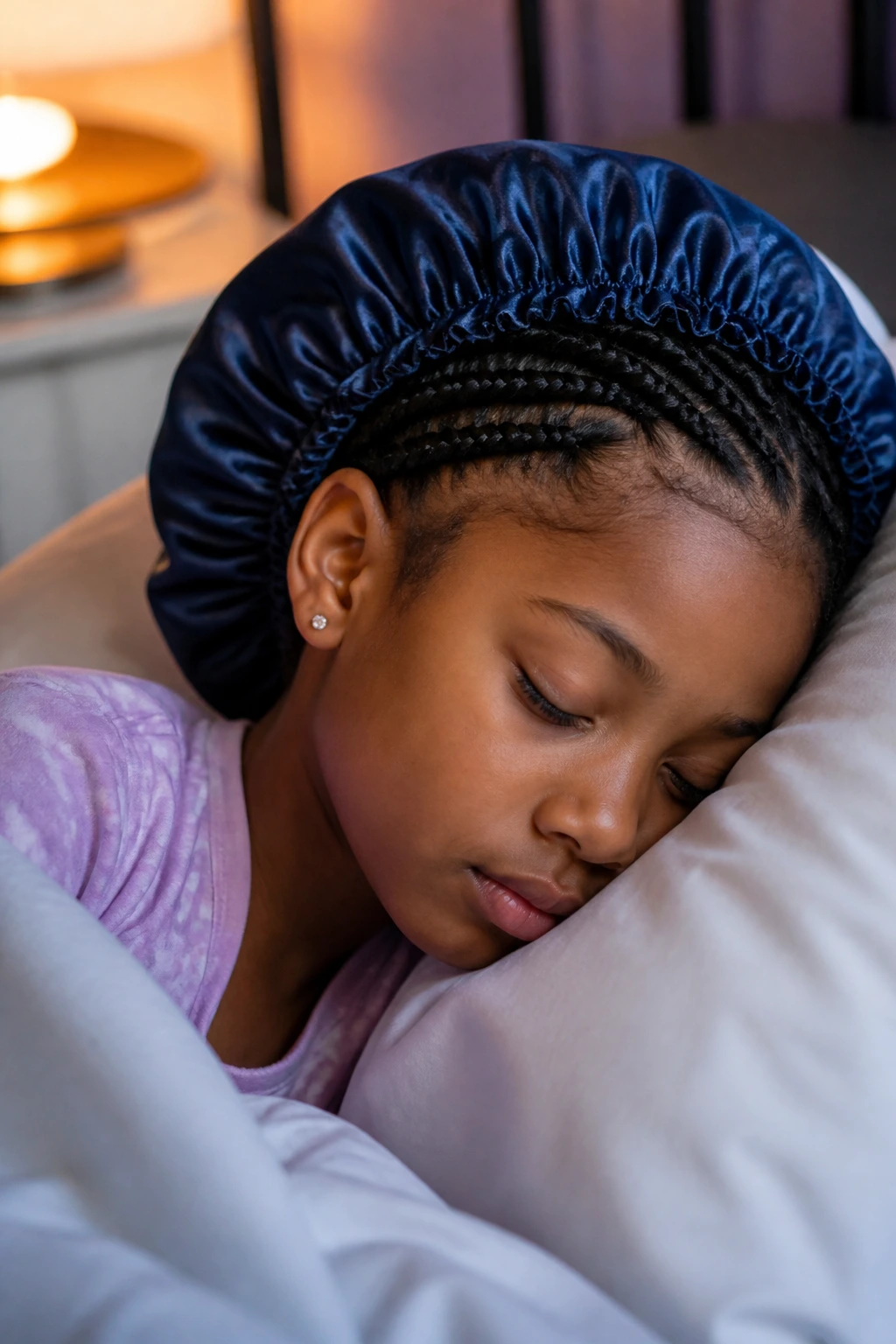
Most braid styles hold up better if they get a little night care. A satin bonnet or scarf keeps the surface from rubbing on cotton pillowcases, which is where a lot of frizz starts. For longer braids, tuck the length into a loose braid, bun, or satin wrap so the ends do not get rough while the child sleeps.
If the braid is meant to last more than one day, a light morning refresh helps. A few spritzes of water or a leave-in mix around the hairline is usually enough. Do not soak the braid. Wetting the whole style can make it puff up and lose its shape. A small touch-up at the front and a quick finger-smooth at the ends is usually all you need.
Most simple braids can be worn for a day or two with minor refreshing. Protective styles can last longer, but the scalp still needs to be checked for comfort and buildup. If the child starts scratching or the roots look stiff, it’s time for a reset. A braid that lasts well is one that still feels good the next morning.
Common Mistakes to Avoid With Kids’ Braids
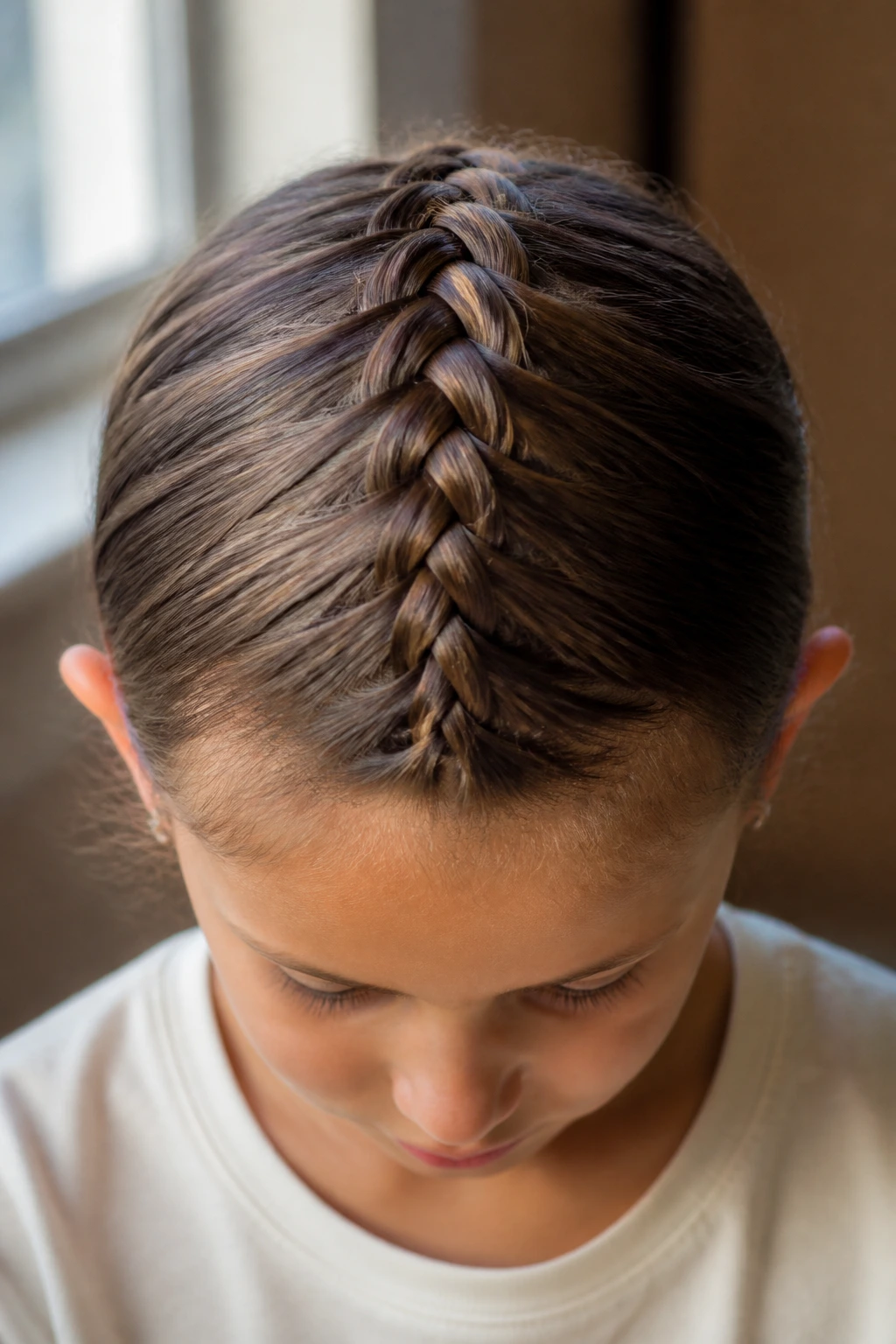
The first mistake is pulling too hard at the hairline. That’s the one that gives you neat rows and a miserable child. If the temples look flattened and the child keeps touching their head, the braid is too tight. Loosen the section and redo it before the style gets locked in.
Another common one: braiding tangled hair. The braid may look okay for an hour, but the knots underneath will show up later as frizz, bumps, and grumpy tears when it comes time to take the style out. Detangle first, then braid. Always.
Using the wrong elastic causes a different kind of trouble. Cheap rubber bands snap, snag, or leave the ends looking chewed up. Snag-free elastics hold the braid without shredding it. And if a style is supposed to stay in for a few days, do not overload it with heavy product at the roots. That makes the hair look greasy and attracts lint fast.
Braid Variations That Are Easy to Adapt
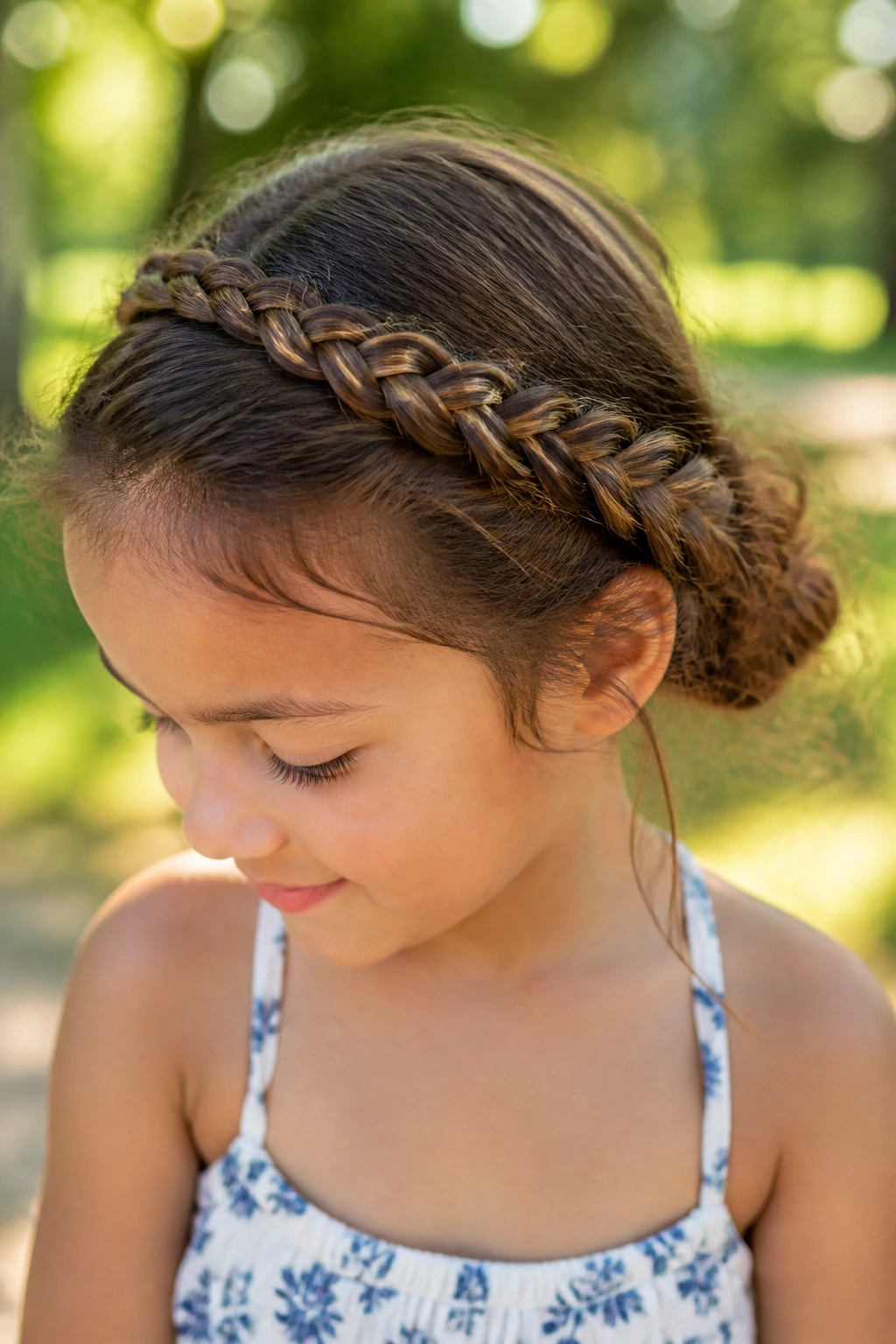
Curly-Hair Friendly Version: Use a wetter prep mix, keep the braid looser, and leave a little volume around the scalp so the texture still shows.
Fine-Hair Fix: Add a touch of dry shampoo or texturizing spray at the roots before parting. It gives the sections enough grip to stay together instead of slipping out.
Short-Hair Workaround: Use smaller braids, braided headbands, or accent plaits near the front when the length won’t support a full style. Short hair can still look finished without pretending to be long.
Dress-Up Version: Add ribbon, beads, or a polished part for picture day or a family event. One accessory is usually enough.
Low-Fuss School Version: Keep the braid close to the scalp, skip heavy accessories, and choose styles that tuck the ends away. The goal is comfort first, neatness second.
Questions Parents Ask All the Time
How do I keep my child’s braids from frizzing out by lunchtime?
Start with detangled hair, use only a small amount of product, and finish the style with a satin scarf if you have time before leaving the house. Frizz usually comes from friction or rough sections, not from the braid itself.
What braid styles work best on short hair?
Braided headbands, mini accent braids, twin French braids, and small cornrow rows tend to work best when the length is limited. If the ends are too short to hold, hide them with a clip or stop the braid where it can still stay secure.
Can you braid kids’ hair every day?
Yes, as long as the tension stays comfortable and you rotate the style instead of pulling the same spots day after day. The hairline needs breaks. That part matters.
Should kids’ braids be done on wet or dry hair?
Lightly damp hair is easier to section and braid, especially if the hair is curly or very slippery. Soaking wet hair is harder to control and takes forever to dry, which can make the style puff and shift later.
What’s the best way to take braids out without causing tangles?
Start at the ends, remove elastics carefully, and separate each braid before combing. A little detangling spray helps, and you should work from bottom to top instead of yanking straight through.
Do braids hurt if they’re done correctly?
They shouldn’t. A braid should feel secure, maybe snug, but not sharp or tugging. If a child says their scalp hurts, believe them and loosen the style.
How do I make a braid look fuller on fine hair?
A pull-through braid, a loosened Dutch braid, or a fishtail gently pinched apart at the sides can all create more volume without adding extensions. A little texture spray at the roots helps too.
What if my child won’t sit still long enough for a complicated braid?
Use styles with short sectioning time: side braids, braided ponytails, twisted front braids, or rope-twist pigtails. Save the more detailed designs for days when patience is actually available.
Braids That Make Mornings Easier
The styles that stay in a family’s regular rotation are usually not the flashiest ones. They’re the braids that can handle a backpack, a playground, a hat, and a child who changes mood three times before lunch. That’s the real test. Not the mirror. Not the photo. The actual day.
A good kids’ braid should feel like a helper, not a project. If you keep the tension sensible, choose the right style for the hair type, and stop pretending every morning has to produce a masterpiece, braiding becomes a lot less dramatic. Which is a relief. For everybody involved.
