



Medium length hair is the sweet spot for men who want options without living in the barber’s chair. Long enough to push back, part, curl, or tie up, short enough to keep clean around the ears, it can look sharp or casual depending on what you do with it. That gap between “grown out” and “styled on purpose” is tiny, which is exactly why medium length hair rewards a little planning.
These hairstyle ideas for men with medium length hair work because they respect the length you already have instead of pretending it should behave like a buzz cut or a full shoulder-length mane. A good medium cut should still show shape when the product wears off at lunch. If it only looks good under perfect lighting and half a can of spray, it is the wrong haircut.
Texture matters. So does weight. Straight hair needs a different trick than coarse curls, and thick hair needs different handling than fine hair that slumps by noon. Keep that in mind as you read through the looks below, because the best version is usually the one that works with your growth pattern, not against it.
Why Hairstyle Ideas for Men With Medium Length Hair Work So Well
-
You get more than one look from the same cut. A 4- to 6-inch top can become a side part on Monday, a loose curtain on Friday, and a tied-back style when you skip wash day.
-
The shape lasts longer between trims. Medium hair can grow an extra week or two before it starts looking sloppy, especially if the sides are tapered instead of left boxy.
-
Texture does real work here. Wavy, curly, and even slightly coarse hair can build shape on its own, which means less fussing with heat and less product than shorter styles often need.
-
It lets you correct the head shape a bit. More height can soften a long face, wider sides can balance a narrow face, and a fringe can hide a hairline you’re still learning to live with.
-
It plays well with both casual and cleaner dress codes. A medium cut can look relaxed with a sweatshirt and still pass in a blazer if the neckline and part are kept neat.
-
It gives you room to pivot. If you decide you want curtains instead of a quiff, or a bun instead of a sweep-back, you do not have to start from zero.
What Medium Length Hair Needs Before It Looks Intentional
A medium cut rarely fails because the hair is the wrong length. It usually fails because the shape is missing. Hair that sits somewhere between the ears and the collar needs a little structure around the sides, a little weight removed from the bulk, and a top that has been cut with movement in mind.
That means the barber’s scissors matter more than the clippers. Blunt ends can make medium hair look like a helmet, especially if your hair is thick or straight. Soft layering, point-cutting, and a clean taper around the ears and nape give the hair somewhere to fall. Without that, you end up pushing the same heavy section back every morning and wondering why it never stays.
Product matters too, but not in the way a lot of guys think. Medium hair usually looks best with a matte cream, a lightweight clay, a sea-salt spray, or a touch of paste. Heavy gel can lock it into a flat shell. Extra-shiny pomade can be fine for one or two styles, but on most heads it reads as greasy by noon. Pick the finish that matches the haircut, not the one that sounds strongest on the shelf.
1. Clean Side Part with Soft Texture
A clean side part is the haircut equivalent of a crisp white shirt: plain on paper, strong in practice. With medium length hair, it has enough movement to avoid looking stiff, but enough control to keep the front from puffing up into a mess. That combination is hard to beat.
Why it works
Medium length gives the part something to hold. If the top is too short, the hair snaps back too easily. If it is too long, the whole style starts to fall sideways and loses the line. Aim for about 3 to 5 inches on top, with a low or mid taper so the sides do not compete with the shape.
Ask your barber for a scissor-cut top and a soft taper around the temples and neckline. If the top is point-cut rather than chopped bluntly, the side part will break into clean, movable pieces instead of sitting as one flat sheet.
- Best on: straight or slightly wavy hair.
- Style with: lightweight cream or matte paste.
- Watch for: a hard, painted-on part line that looks like you measured it with a ruler.
- Quick rule: let the front dry in the direction you want before you touch it with product.
A good side part should still move when you run a hand through it. If it looks shellacked, you used too much product or chose the wrong finish. This one works because it looks neat, not frozen.
2. Loose Curtain Fringe
Curtains are the style men think they cannot pull off until their hair grows to the point where it naturally splits in the middle anyway. Then it suddenly makes sense. On medium length hair, the curtain fringe frames the face in a way that feels relaxed without looking unfinished.
The trick is not to force a perfect middle line. Let the hair fall where it wants after a quick blow-dry, then nudge the front sections apart with your fingers. The best curtain looks have a bend at the cheekbone, not a sharp dip over the eyes. If the fringe hangs in your lashes, it needs either a cleaner cut or less length in front.
Use a sea-salt spray on damp hair, rough-dry the roots, and finish with a pea-sized amount of cream. Straight hair gets a little movement this way. Wavy hair gets that soft split that makes curtains look expensive instead of accidental.
Curtains are especially kind to guys with a strong jaw or narrow forehead. They soften the face without hiding it. And if you’re in that annoying grow-out stage where the front keeps falling into your mouth, this cut turns the problem into the point.
3. Slick Back with Movement
A slick back on medium length hair should never look like a helmet. That shiny, glued-down look belongs to different hair and different mood. What works here is a softer back-sweep that still shows a little texture when you tilt your head.
The best version starts with a clean taper on the sides and enough length on top to brush back without forcing it. Think 4 to 6 inches, depending on density. If your hair is dense, a bit of layering keeps the shape from ballooning. If it’s fine, a blow-dry with root lift makes the front behave without begging for too much product.
How to keep it from looking wet
Use a medium-hold cream pomade or a very light clay. Warm it between your palms, work it through damp hair from front to back, and then push the front up slightly before smoothing it back. That tiny bit of lift keeps the style from flattening against your scalp.
- Best on: thick, straight, or slightly wavy hair.
- Avoid: heavy gel unless you want a hard, high-shine finish.
- Good detail: leave the top a little loose around the crown so the style moves instead of sitting like a cap.
This one is useful when you want polish but not fuss. It looks good with a jacket, and it does not fall apart the minute the wind hits your forehead.
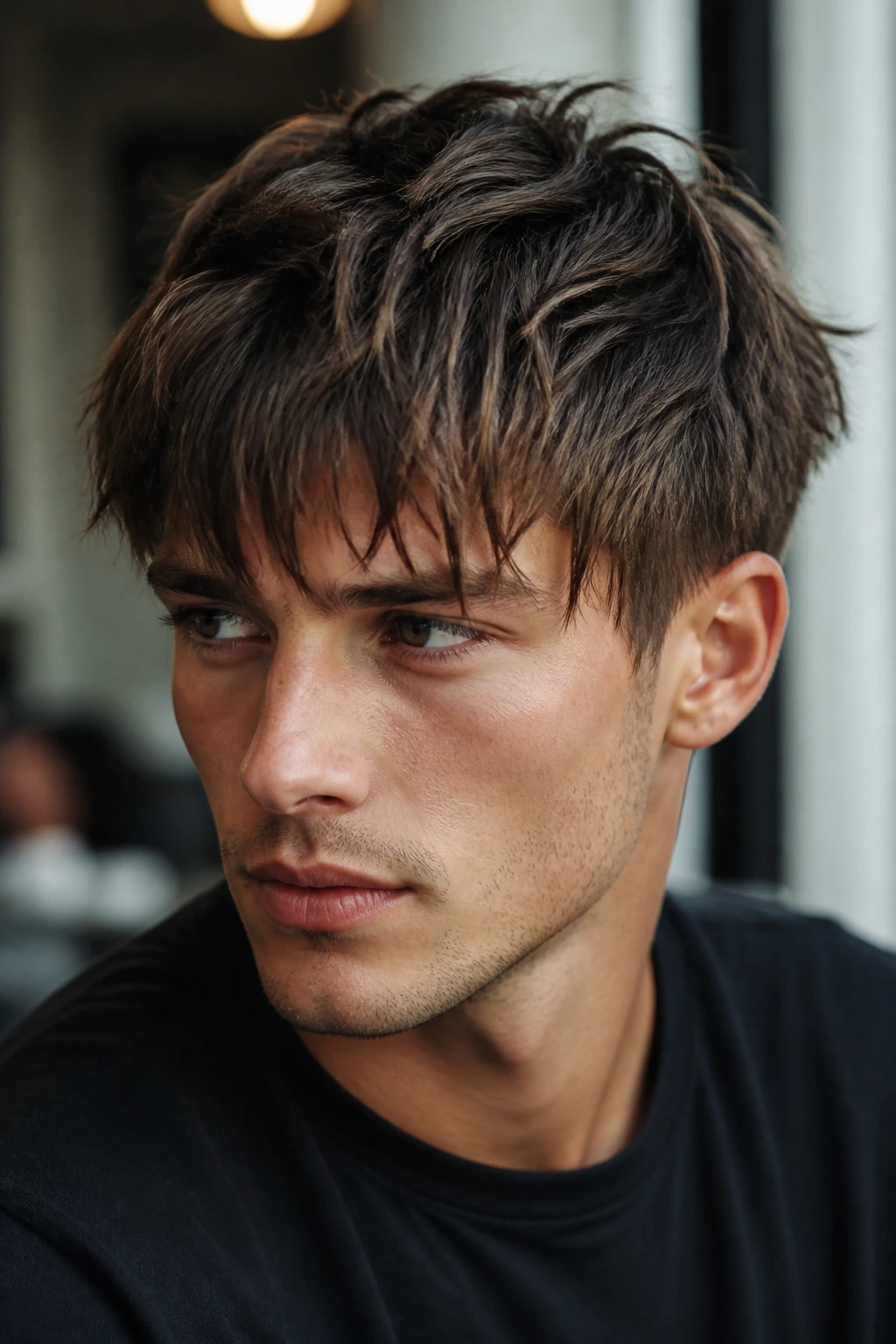
4. Piecey Fringe with Choppy Ends
A piecey fringe is the haircut for guys who want their medium length hair to look lived-in instead of combed to death. It keeps the front textured and a little messy, which is exactly the point. The hair falls forward, but not in one heavy curtain.
This style needs a barber who is willing to remove bulk without erasing the shape. Ask for choppy, point-cut ends through the fringe and a softer taper on the sides. The top should still have enough length to push forward and split into pieces. If the fringe is cut too bluntly, it turns into a block. If it is too thin, it looks stringy.
A matte paste works better than a glossy product here. Rub a small amount into dry or nearly dry hair, then pinch sections at the front between your fingers. Do not comb it perfectly. That kills the whole effect.
Piecey fringe is especially good if your forehead feels a little tall or if your hairline is in that awkward “I’m not quite sure what I’m doing yet” phase. The fringe gives you coverage without hiding your face.
5. Modern Shag with Broken Layers
The modern shag has a little attitude, and medium length hair is where it really starts to make sense. The top is layered, the ends are broken up, and the whole cut moves in a way that feels airy rather than heavy. It is one of the few medium styles that actually looks better when it is not over-styled.
This cut works best when the barber leaves visible layers through the crown and keeps the perimeter soft. You want the hair to collapse into shape, not sit as one block. Wavy hair eats this style up. Straight hair can wear it too, but it usually needs a touch of sea-salt spray and a rough blow-dry to get some bend into the top.
A shag is not lazy hair. That’s the mistake. It takes a cut that has enough internal texture to fall the right way. Without those layers, you get a puffy middle and flat sides, which is a bad trade.
A few fingers of leave-in cream on damp hair can help, especially if your ends dry out fast. The goal is movement, not control. If your hair sways when you walk, the cut is doing its job.
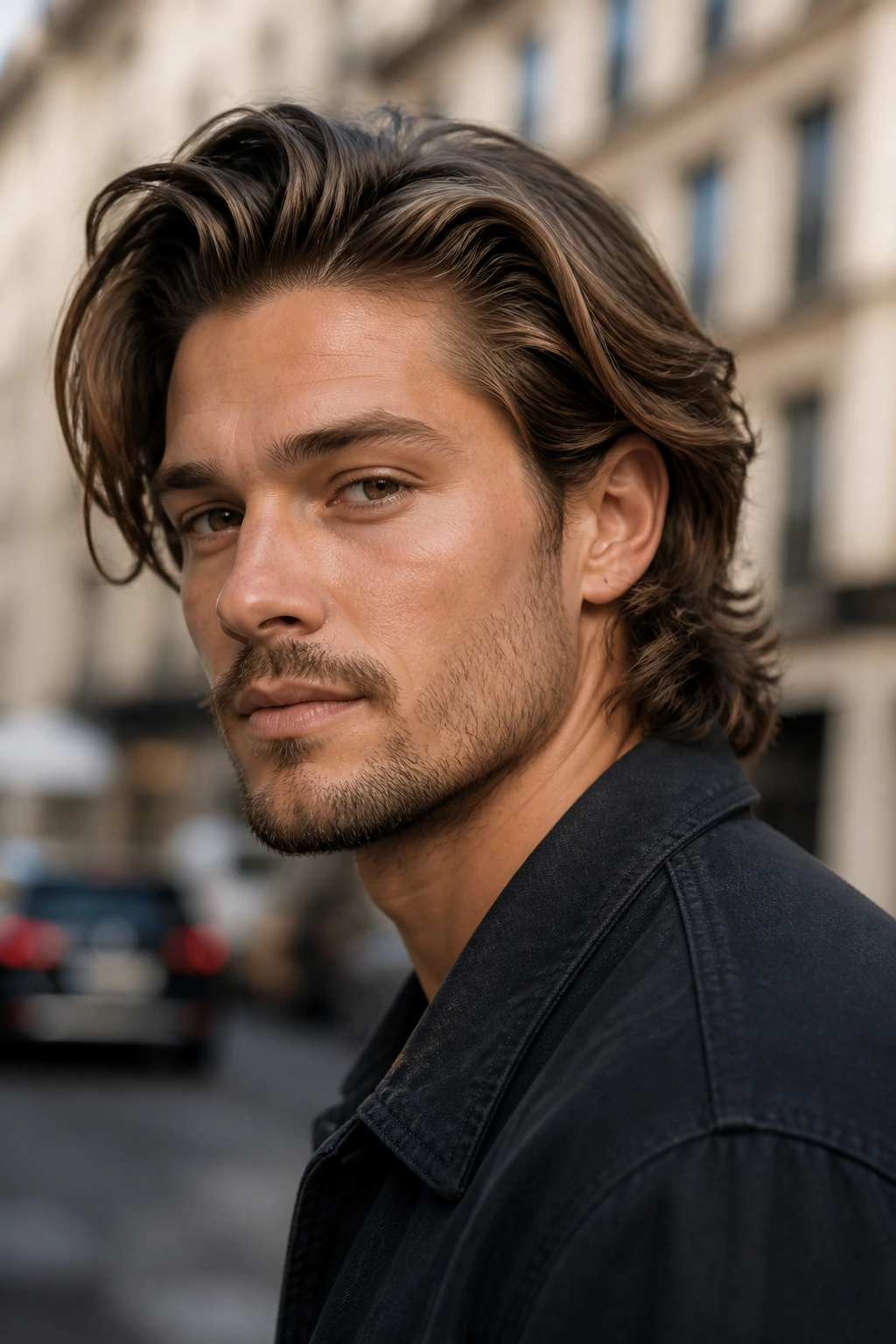
6. Bro Flow with Natural Lift
The bro flow gets mocked because people picture an overgrown surfer head of hair and stop there. That misses the whole point. A proper bro flow is a medium-to-long sweep that follows the shape of your head and collar, and when it’s cut right, it looks clean even when it’s not perfectly styled.
It works because medium length hair can graze the ears and neck without collapsing into a triangle. The sides should be lighter than the back, and the layers should be long enough to keep the ends from snapping outward. If your hair is wavy, this look can be almost insultingly easy. A little cream, a quick comb-through, done.
The back matters more than people think. If the neck area is left too bulky, the flow turns into a mop. A clean neckline keeps the style from drifting into “I forgot to get a haircut” territory.
Bro flow suits guys who want movement with a little edge. It pairs well with denim, boots, and a beard that isn’t carved into a cartoon line. It also survives a skipped wash better than tighter styles. Sometimes that is the appeal.
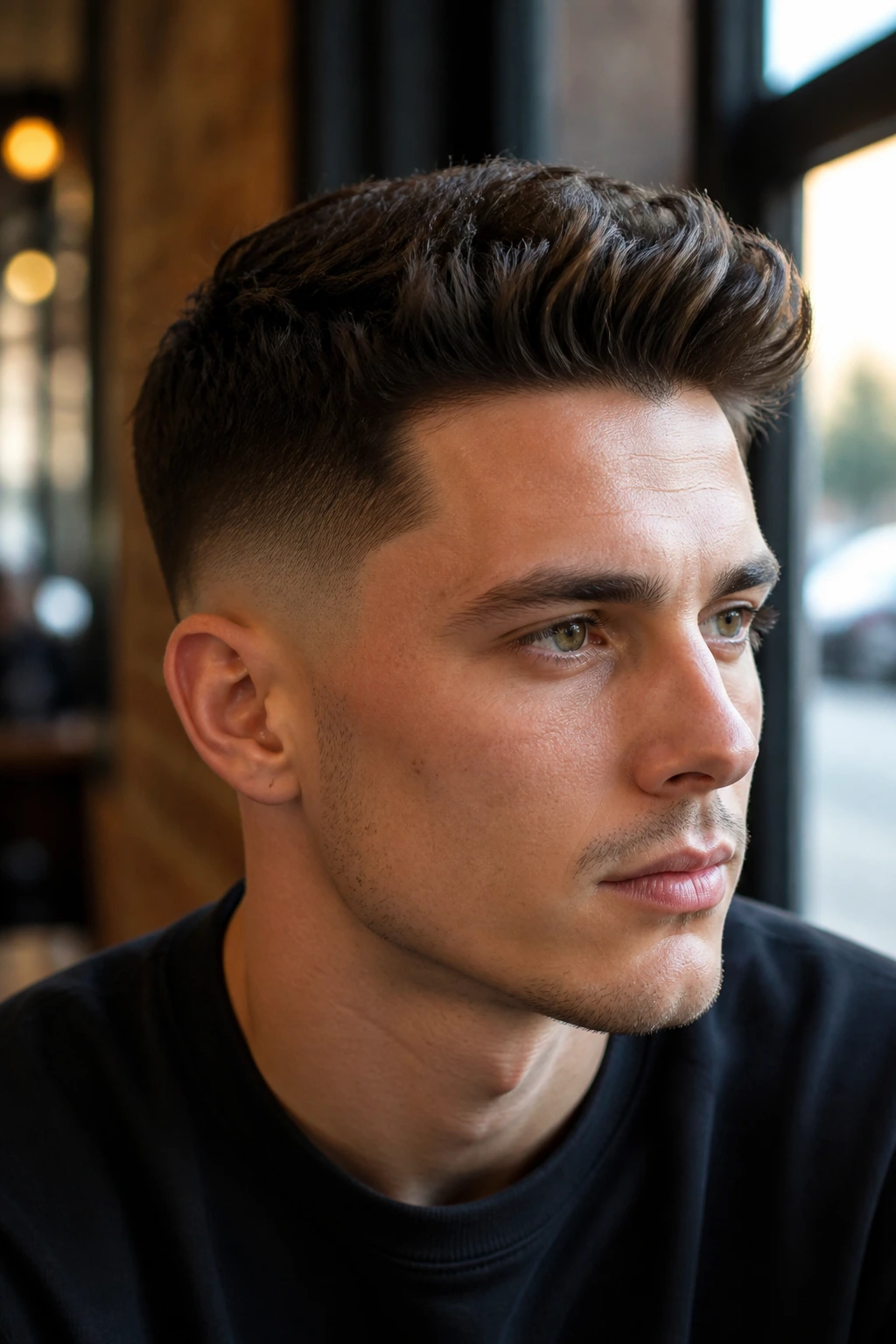
7. Textured Quiff with a Low Fade
Three to five inches at the front is enough to build a real quiff. Not a fake one that flops over by lunch. A real one. The front rises, bends back, and keeps a bit of texture so it does not look like a hard shell.
The low fade matters because it keeps the base clean while the top does the work. If the sides are too full, the quiff loses its lift. If the top is too blunt, the front can stand up but it will look stiff. Ask for longer length at the front, shorter toward the crown, and enough layering to let the hair move backward in sections.
A round brush and blow dryer help here, but you do not need to become a sculptor. Lift the front at the roots for 15 to 20 seconds, aim the dryer back, then use a small amount of matte clay to keep the shape. The key is root direction before product. Product alone will not save flat hair.
What makes it different
The quiff has more height than a side part and more shape than a brush-up. It sits right in the middle, which is why it works so often for medium length hair. It gives you a little drama without turning into a costume.
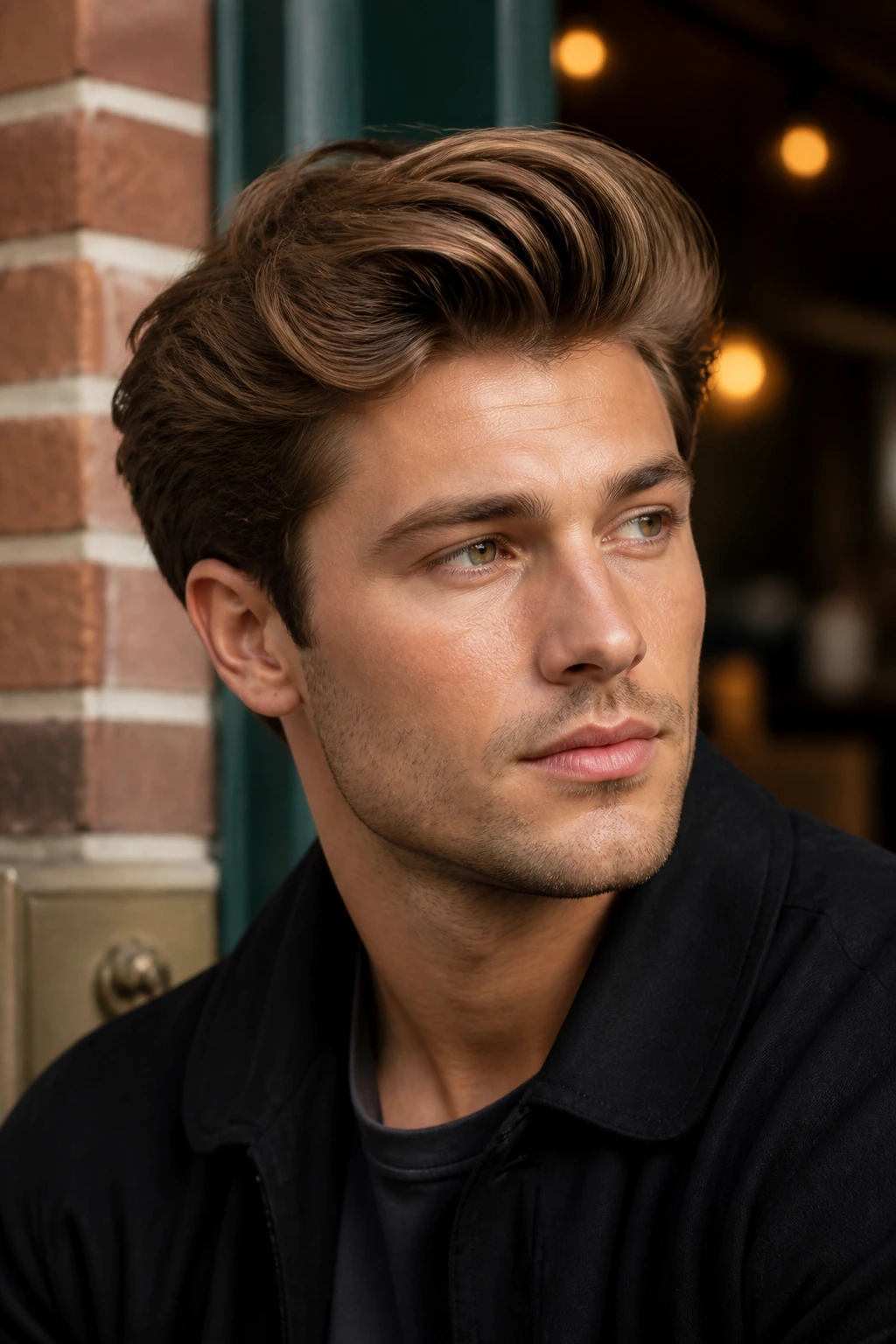
8. Medium Pompadour with Rounded Height
A medium pompadour is a cleaner, broader version of the quiff. The front still rises, but the shape curves back with more polish and a bit more presence. On medium length hair, it can look refined without looking vintage in a try-hard way.
The cut needs a tapered side and a top that is longer in front than in back. That length gradient matters. If everything is the same length, the front has nothing to lift with. If the crown is too heavy, the shape collapses backward. Ask for structure, not uniform length.
Styling takes a little patience. Blow-dry the front up and slightly back while lifting at the root with a brush or your fingers. Then use a small amount of medium-hold product. Too much product flattens the curve. Too little and the pompadour slides down by noon.
This style works well for formal events, dinner plans, and any day when you want to look like you own a decent jacket. It also helps balance a face that feels a touch long, since the height gives you a stronger top line.
9. Layered Sweep-Back
A layered sweep-back is not a slick back. That distinction matters. Instead of pressing the hair down, you let medium length layers move backward in soft waves or straight bends, so the top has life instead of shine.
This style is especially useful for thick hair that tends to puff out when it gets longer. Layers remove enough bulk to let the hair settle backward more naturally. If the top is left one length, the sweep can balloon at the crown. That is the part most people notice first, and usually not in a good way.
The styling is simple. Start with towel-dried hair, work a lightweight cream or paste through the mid-lengths, and blow-dry backward with your fingers or a vent brush. Stop before the hair gets perfectly flat. A little bend looks better than a helmet.
You can wear this cut with facial hair or clean-shaven, and it handles a work shirt as easily as a black T-shirt. It is one of those medium length hairstyles that looks more expensive than it is. I like that in a cut.
10. Long French Crop with a Shorter Fringe
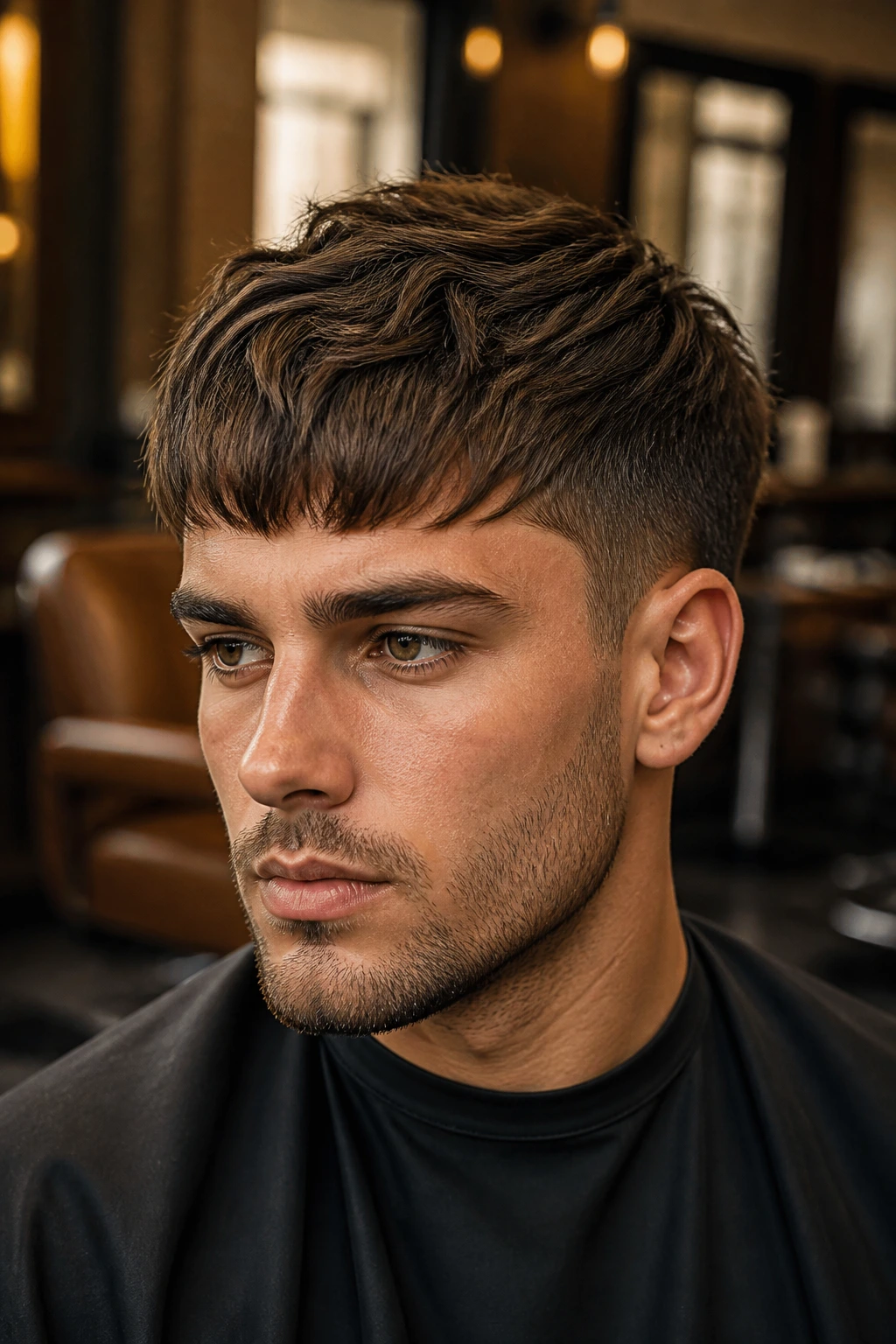
Clean, choppy, and low fuss. That is the appeal here.
A long French crop keeps the fringe in play but trims enough bulk through the sides and crown to stay easy. The front is short enough to sit forward, but long enough to show texture instead of looking like a blunt block. On medium length hair, this works best when the top has a broken surface and the fringe is cut with a slight edge rather than a perfect straight line.
This style is a good answer for guys who do not want to spend five minutes reshaping their hair every morning. Put a matte paste or clay into dry hair, push the fringe forward with your fingers, then break up the front pieces a little. That is basically the whole routine.
It’s also a smart move if your hairline is changing. The crop gives you some coverage without leaning on a heavy fringe. And because the sides stay tidy, the whole style reads sharper than a full shag or a loose flow.
11. Half-Up Style for Busy Days
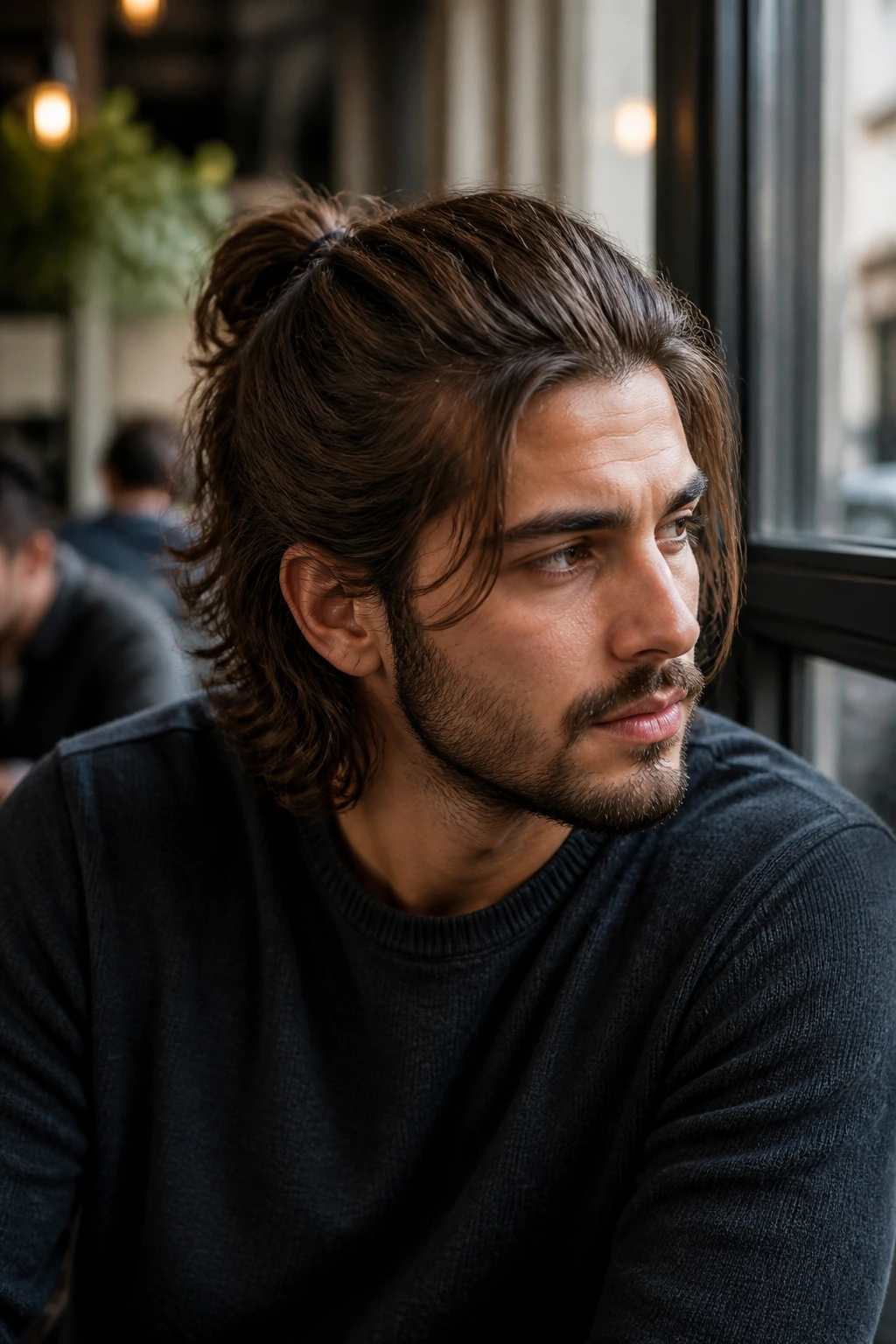
There are days when hair just needs to get out of your eyes, off your neck, and stop behaving like a pet. The half-up style handles that with less drama than a full bun and more intention than a random clip.
This one works best when the top is long enough to gather cleanly from temple to crown. If the sides are too short, you get flyaways that keep escaping. If the top is too thin, the tie looks apologetic. Medium length hair usually hits the sweet spot where the top can be pulled back but the lower layers still fall loose.
Use a small elastic, not a giant band. Tie the top section once or twice and leave a little slack so it does not pull the hairline back. A dab of cream at the crown can calm the stray bits. If you make it too tight, the style starts looking like you are headed to a climbing wall.
The half-up style is practical, sure, but it also gives the cut a little shape. It reveals the face while keeping the length visible. That balance is the reason it keeps showing up in real life, not just in glossy haircut photos.
12. Loose Man Bun with a Soft Finish
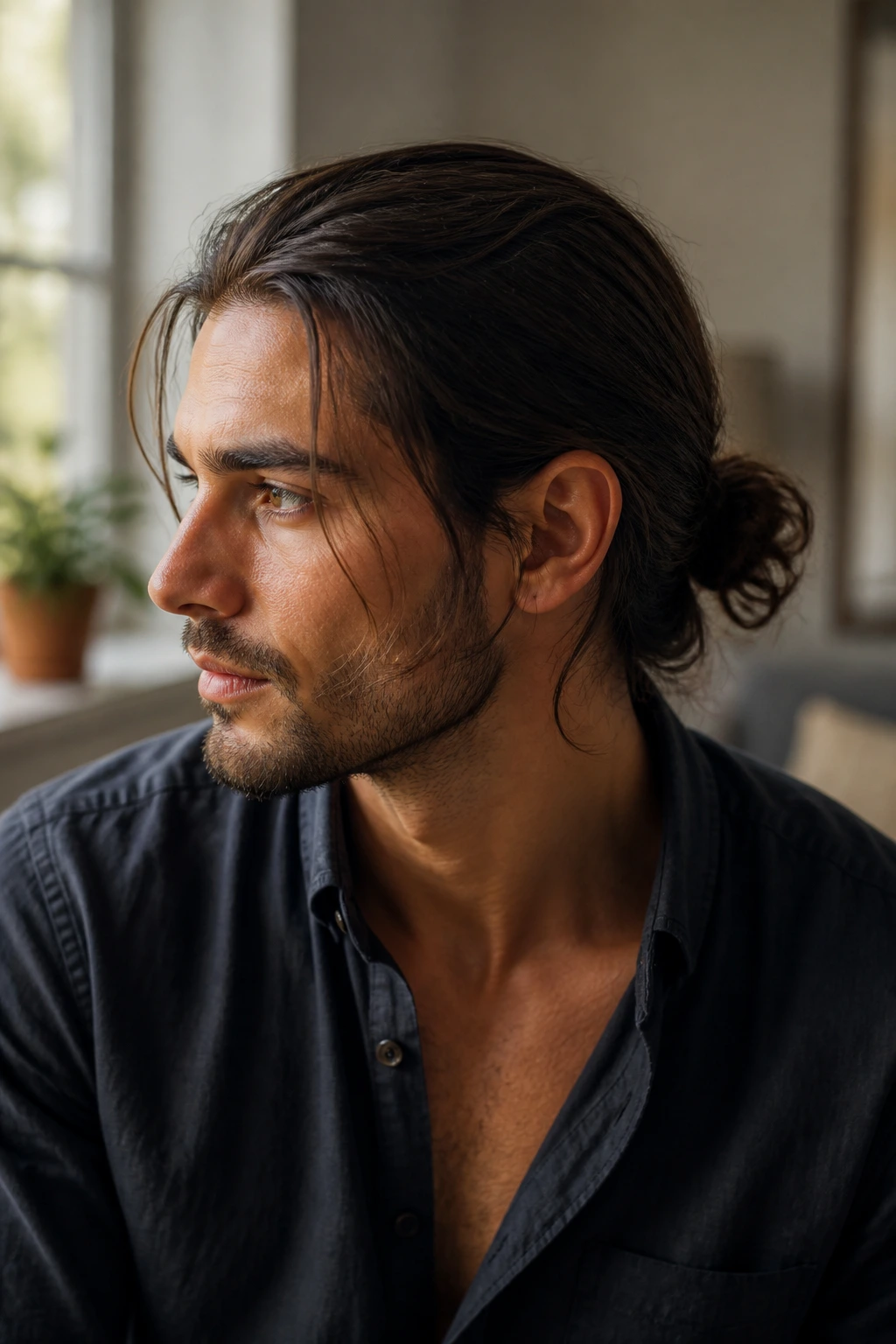
A loose man bun is one of the few tied-back styles that can still look relaxed rather than severe. The key word is loose. If the bun is pulled tight enough to wrinkle your forehead, you’ve gone too far.
Medium length hair can usually reach a low bun once the top and back are long enough to gather at the crown or just below it. You do not need every strand to stay in place. A few pieces falling out around the temples make the style look less formal and more natural. That is usually a better look anyway.
Use a light cream or leave-in conditioner before tying it back. It reduces frizz and helps the hair slide into the tie without snagging. A low bun at the nape looks tidier, while a mid-height bun feels more casual. Pick the one that matches the day.
This is a good fallback style when your hair is in the in-between stage. Not long enough for a slick look. Too long to ignore. The loose man bun solves that problem with almost no argument.
13. Wavy Mullet with Tapered Sides
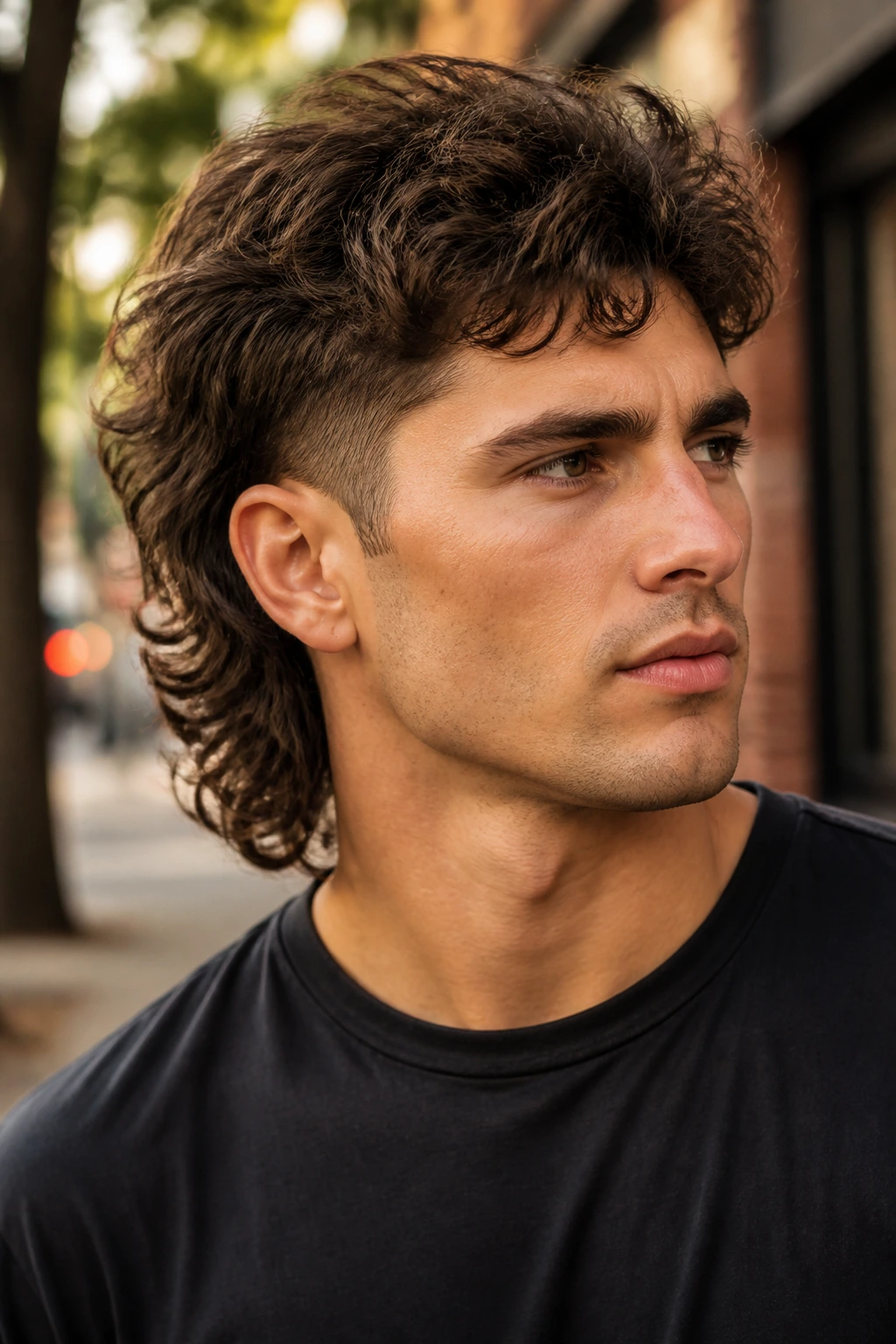
A wavy mullet is not subtle. That’s the point. On medium length hair, it becomes a style with shape, movement, and a little bite, especially if the sides are tapered instead of disconnected in a harsh way.
The front and crown stay layered and textured, while the back keeps enough length to show the flow. If your hair has natural wave, this cut can look surprisingly easy. If it is straight, you’ll probably need a texture spray or a bend from the blow dryer to keep the shape from going limp.
Ask for a tapered side and a perimeter that is softer at the back, not a blunt tail. The modern version of this cut should feel controlled, not cartoonish. That is where a lot of bad mullets go wrong. They lean too hard into the joke and forget to look good from the side.
The wavy mullet suits a guy who wants personality in the cut itself. It is not a neutral hairstyle. It says something, whether you meant to or not.
14. Curly Taper with Controlled Volume
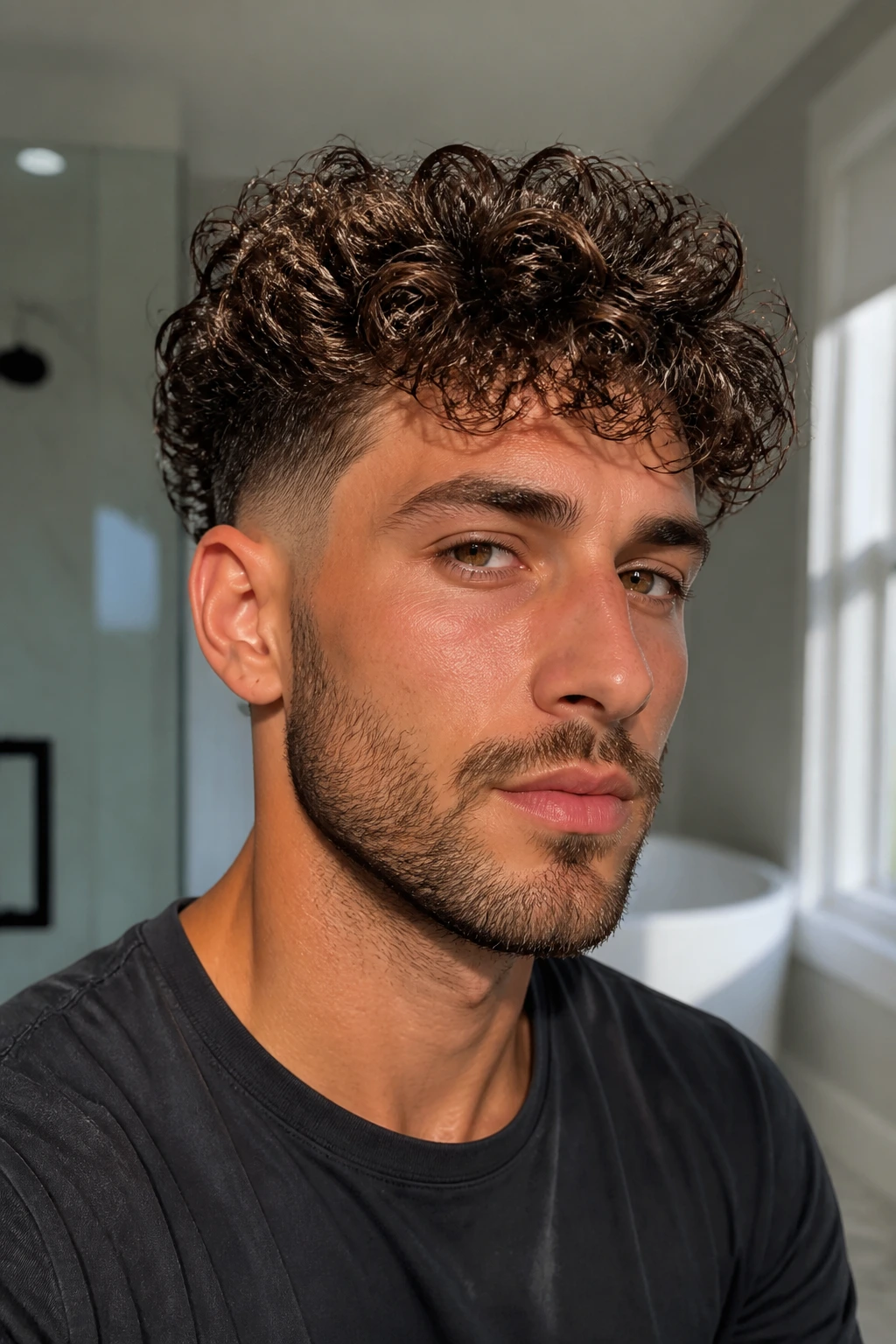
Curly hair at medium length can look incredible when the sides are cleaned up and the top is allowed to keep its shape. A curly taper does exactly that. It trims the temples and neckline, then leaves the curls on top with enough room to spring up instead of flatten out.
The most important part is respecting shrinkage. Curly hair always looks shorter once it dries, so the barber needs to keep more length than you think on the top. If the curls sit around 4 to 6 inches wet, they might tighten into something much shorter once they dry. That is not a mistake. That is curl math.
Use curl cream or a lightweight gel on soaking-wet or damp hair, then scrunch or diffuse until the curls clump neatly. Do not rake a brush through dry curls unless you want the whole thing to puff apart. A good taper keeps the edge clean, but the volume belongs on top.
This style works because it controls the perimeter without killing the curl pattern. You get a neat outline and a head of curls that still looks like hair, not a helmet.
15. Natural Afro Shape-Up with Medium Top Length
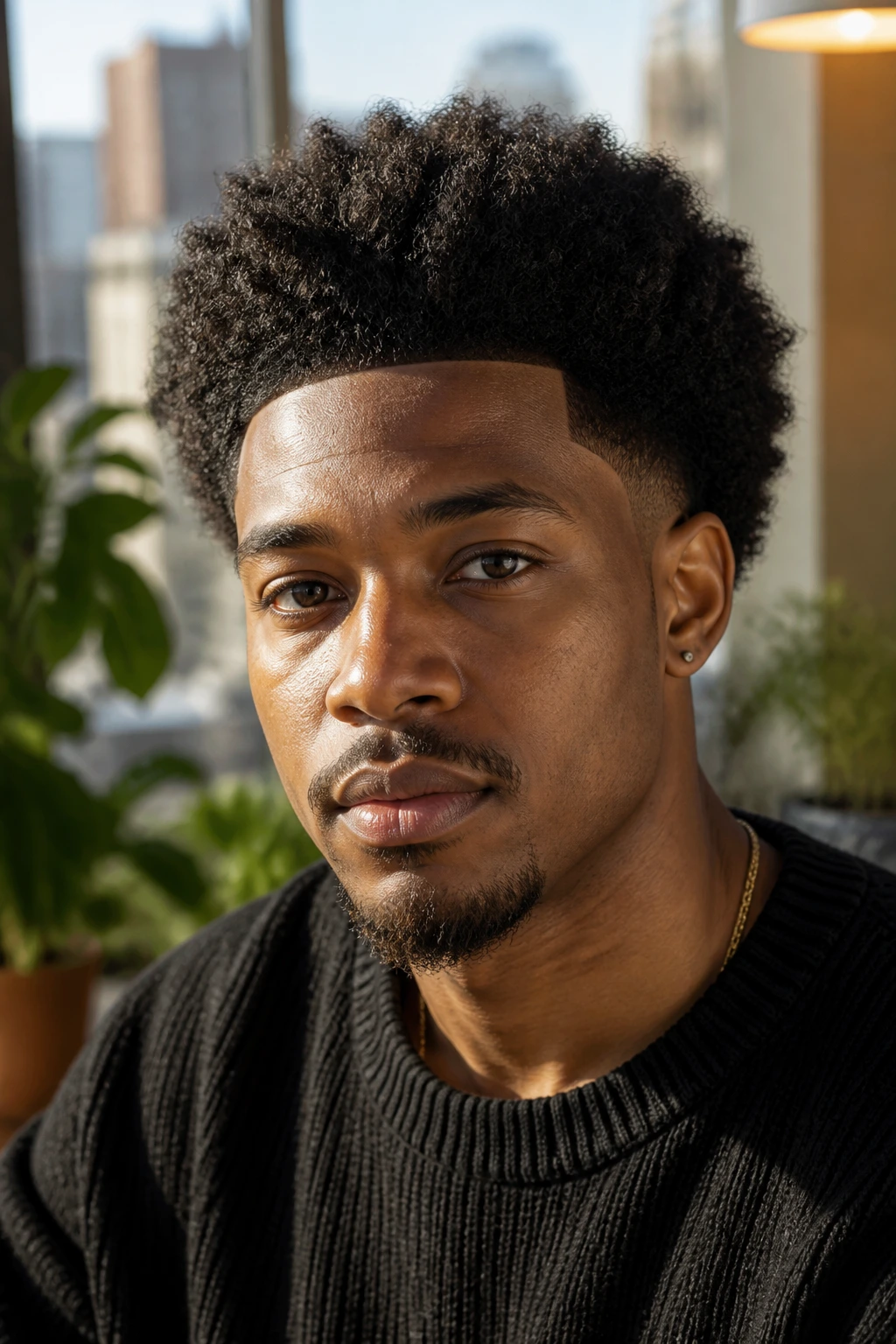
A clean shape-up changes everything on coily hair. Medium length on top gives the style room to breathe, while the lined-up hairline and tidy sides keep the shape from drifting outward into a blur.
This look is strongest when the top is rounded instead of forced into a flat plane. Ask for enough length on top to keep the natural height, plus a crisp edge around the temples and neckline. If the top is cut too short, the shape can lose its body. If it is left too wide at the sides, the whole thing starts to look bigger than you planned.
Moisture matters more than styling tricks here. A leave-in conditioner and a light oil or cream keep the hair soft and help the shape hold. If you want a little extra texture, a sponge can define the top, but it is not required. The cut should already do most of the work.
The appeal is simple: structure at the edges, freedom in the middle. That balance keeps the style looking finished instead of overworked.
16. Brush-Up Blowout with Lift at the Roots
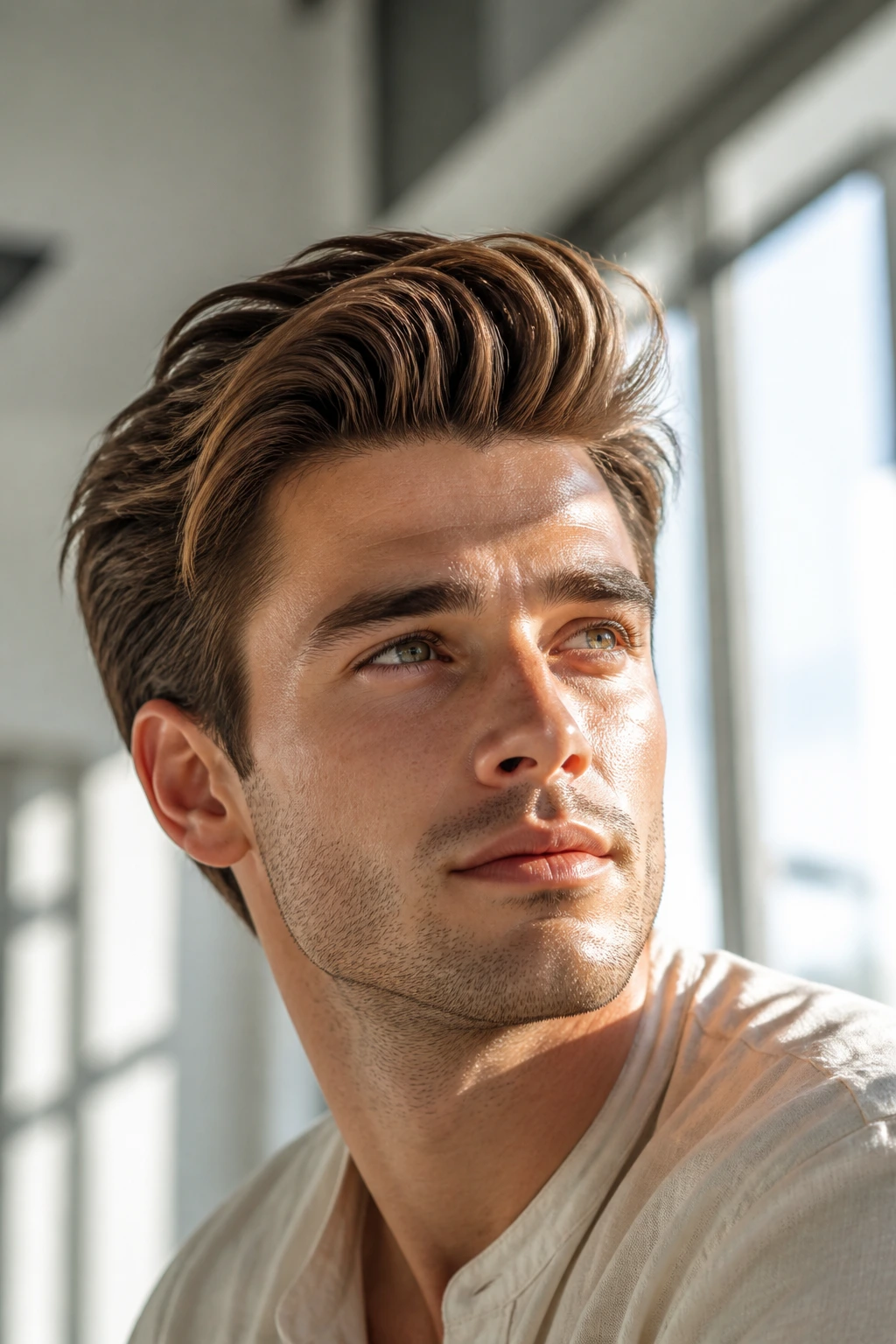
Four words: volume without a hard shell.
The brush-up blowout is a medium length style that uses the dryer to create height first and product second. That order matters. If you paste the hair down before drying, the roots never get the lift they need. Start with a volumizing spray or a light mousse on damp hair, then blow-dry upward with a vent brush or even your fingers.
This style works especially well on fine or straight hair that tends to collapse. The top can be lifted at the front and crown, then directed back just enough to keep it from standing straight up. A matte clay or powder at the end helps the lift stay in place without turning the hair sticky.
- Best for: flat hair that needs shape.
- Ask for: layered top, tighter sides, and enough front length to build height.
- Skip: heavy oils before styling.
- Watch: the crown, which can sink if you only focus on the front.
The brush-up is one of those styles that looks simple until you do it wrong. Then it looks very wrong. A few seconds at the roots make the whole thing behave.
17. Air-Dried Waves with Tucked Ends
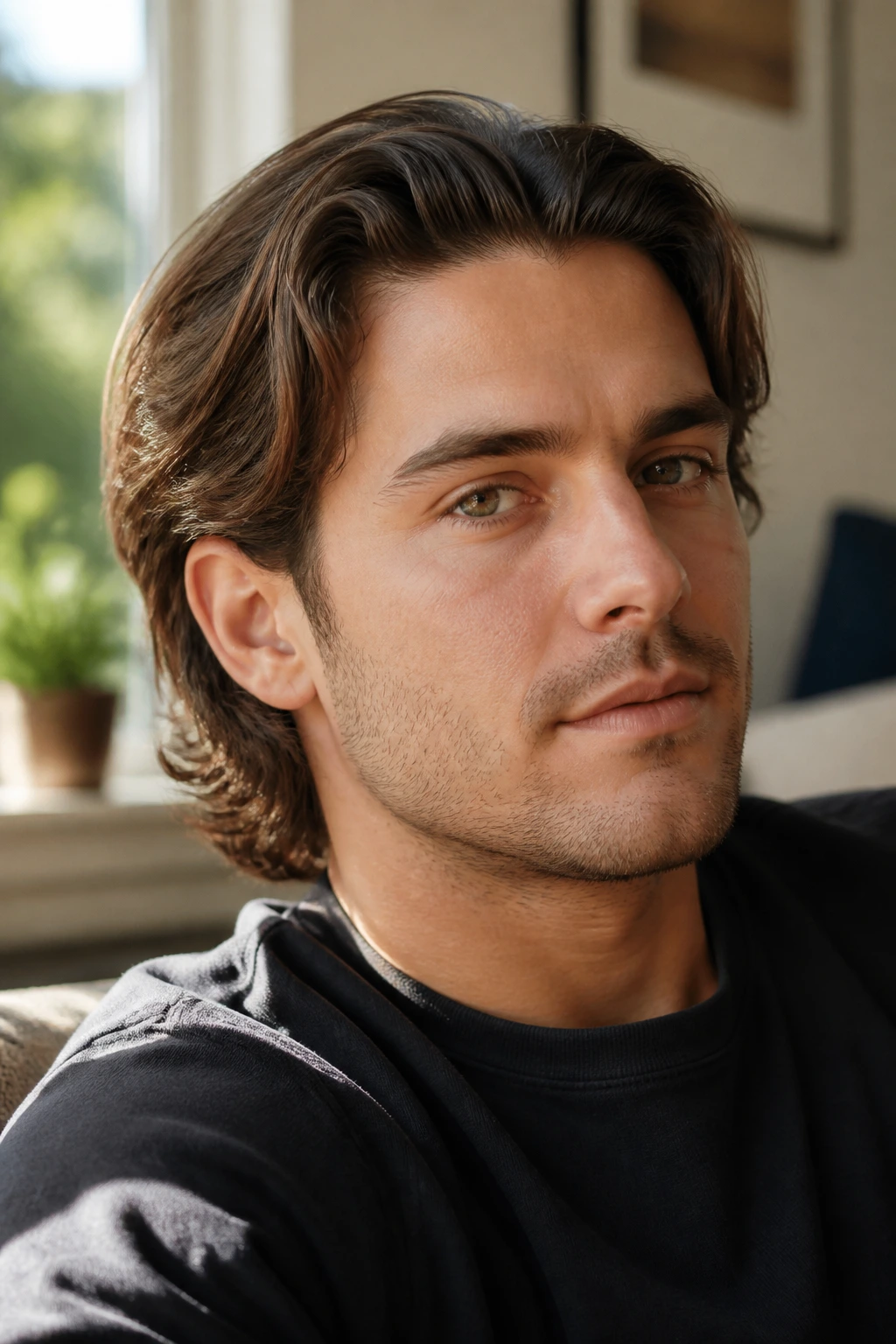
Sometimes the nicest medium length hairstyle is the one that barely announces itself. Air-dried waves with tucked ends keep the hair loose, soft, and slightly undone, but the tucked sides stop it from drifting into chaos.
This works best when the hair has a natural bend. After a shower, blot the hair with a towel, work in a small amount of cream or leave-in, and let it dry with a center part or loose off-center split. Once it is mostly dry, tuck the sides behind the ears so the front opens up the face. It sounds small. It changes the whole look.
The style is easy to wear, but it still needs a decent cut underneath. Soft layers help the waves fall. A blunt, one-length cut can make the ends hang heavy. If your hair gets puffy, use less product and avoid rubbing it dry. If it falls too flat, a touch of salt spray at the roots helps.
This is the kind of style that looks especially good when the hair is healthy and the shape is quiet. No drama. No over-styling. Just enough direction to make the length work.
What Medium Length Hair Needs Before It Looks Intentional
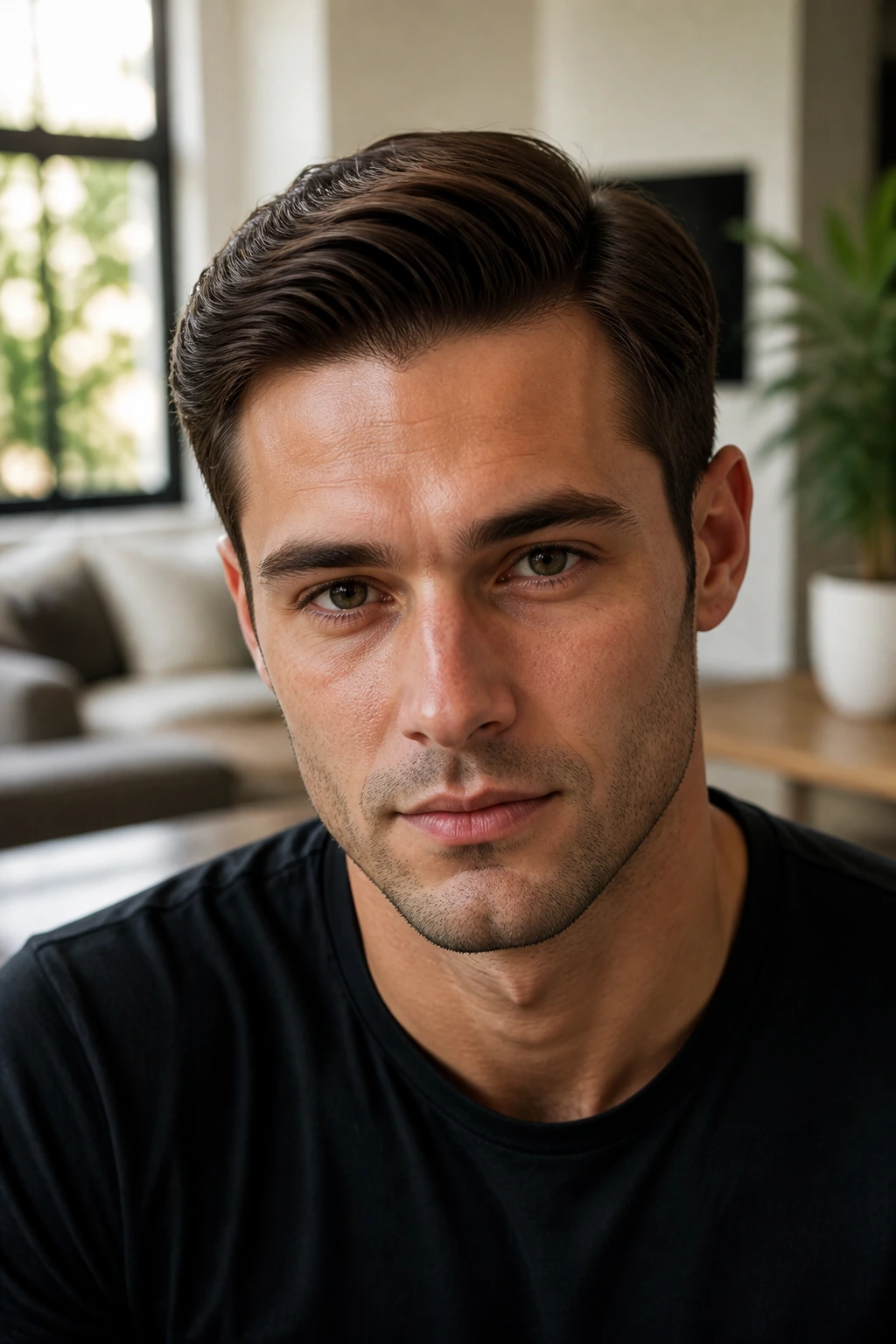
A medium cut rarely fails because the hair is the wrong length. It usually fails because the shape is missing. Hair that sits somewhere between the ears and the collar needs a little structure around the sides, a little weight removed from the bulk, and a top that has been cut with movement in mind.
That means the barber’s scissors matter more than the clippers. Blunt ends can make medium hair look like a block, especially if your hair is thick or straight. Soft layering, point-cutting, and a clean taper around the ears and nape give the hair somewhere to fall. Without that, you end up pushing the same heavy section back every morning and wondering why it never stays.
Product matters too, but not in the way a lot of guys think. Medium hair usually looks best with a matte cream, a lightweight clay, a sea-salt spray, or a touch of paste. Heavy gel can lock it into a flat shell. Extra-shiny pomade can be fine for one or two styles, but on most heads it reads as greasy by noon. Pick the finish that matches the haircut, not the one that sounds strongest on the shelf.
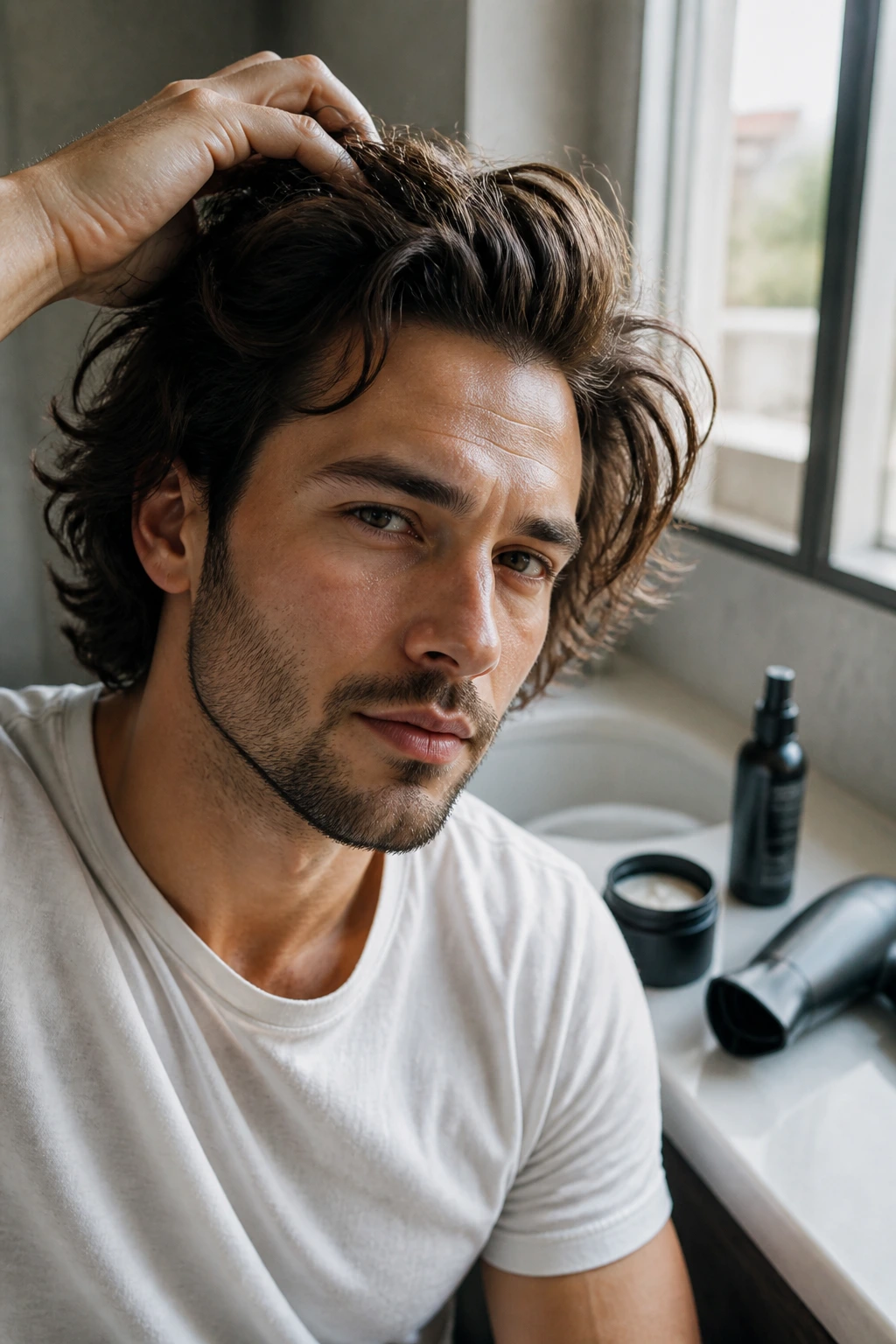
Essential Tools for Styling Medium-Length Hair
-
Blow dryer with a nozzle attachment — The nozzle helps direct airflow where you want lift, which matters more than people think on medium hair.
-
Vent brush or medium round brush — A vent brush is easier for quick lift and rough drying; a round brush helps with quiffs, pomps, and smoother fronts.
-
Wide-tooth comb — Best for curly or wavy hair when you want to keep the pattern intact without ripping through it.
-
Matte clay or paste — Good for side parts, messy fringe, quiffs, and sweep-backs that need hold without shine.
-
Lightweight cream — Useful when you want movement and less stiffness, especially on curtains, bro flow, and air-dried waves.
-
Sea-salt spray — Adds grit to fine or straight hair and helps medium hair hold texture after drying.
-
Heat protectant — Worth using whenever the dryer gets close to the hair for more than a minute or two.
-
Small hair ties — Needed for half-up styles and loose buns; avoid oversized bands that snag and stretch the hair.
-
Hair clips — Handy for sectioning while you dry or style the front separately from the back.
-
Microfiber towel or soft T-shirt — Better than rough towel rubbing, especially if your hair frizzes or curls.
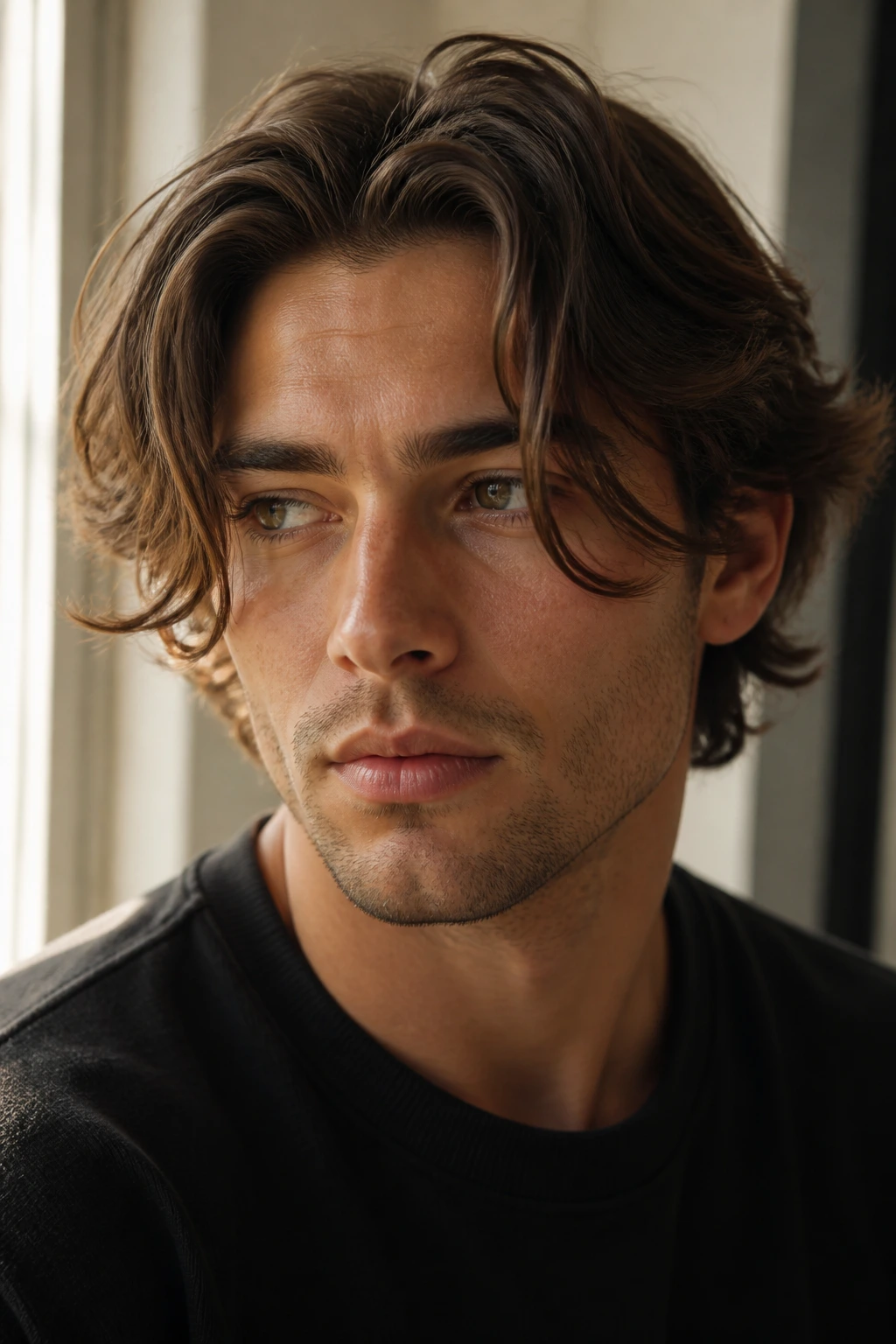
How to Wear These Looks for Work, Weekends, and Dressier Moments
Office: Go for the side part, slick back, brush-up blowout, or medium pompadour. Those styles keep the neckline tidy and the front controlled, which reads clean without looking stiff. A low-shine cream or matte paste usually gives the best result.
Weekend: This is curtain hair, bro flow, modern shag territory. Let the hair move, keep the product light, and lean into the texture your hair already has. If the cut has shape, the style does not need much help.
Dressier moments: A polished slick back, rounded pompadour, or neat sweep-back works well here. The goal is a clean silhouette and a quiet finish. Think less “styled to the hilt,” more “the hair is behaving on purpose.”
Hot, busy, or sweaty days: Half-up styles, loose man buns, and tucked waves keep hair off your face without asking for much time. These are the styles you reach for when you do not want to fight the mirror before leaving the house.
Small Moves That Make Medium-Length Hair Look Better
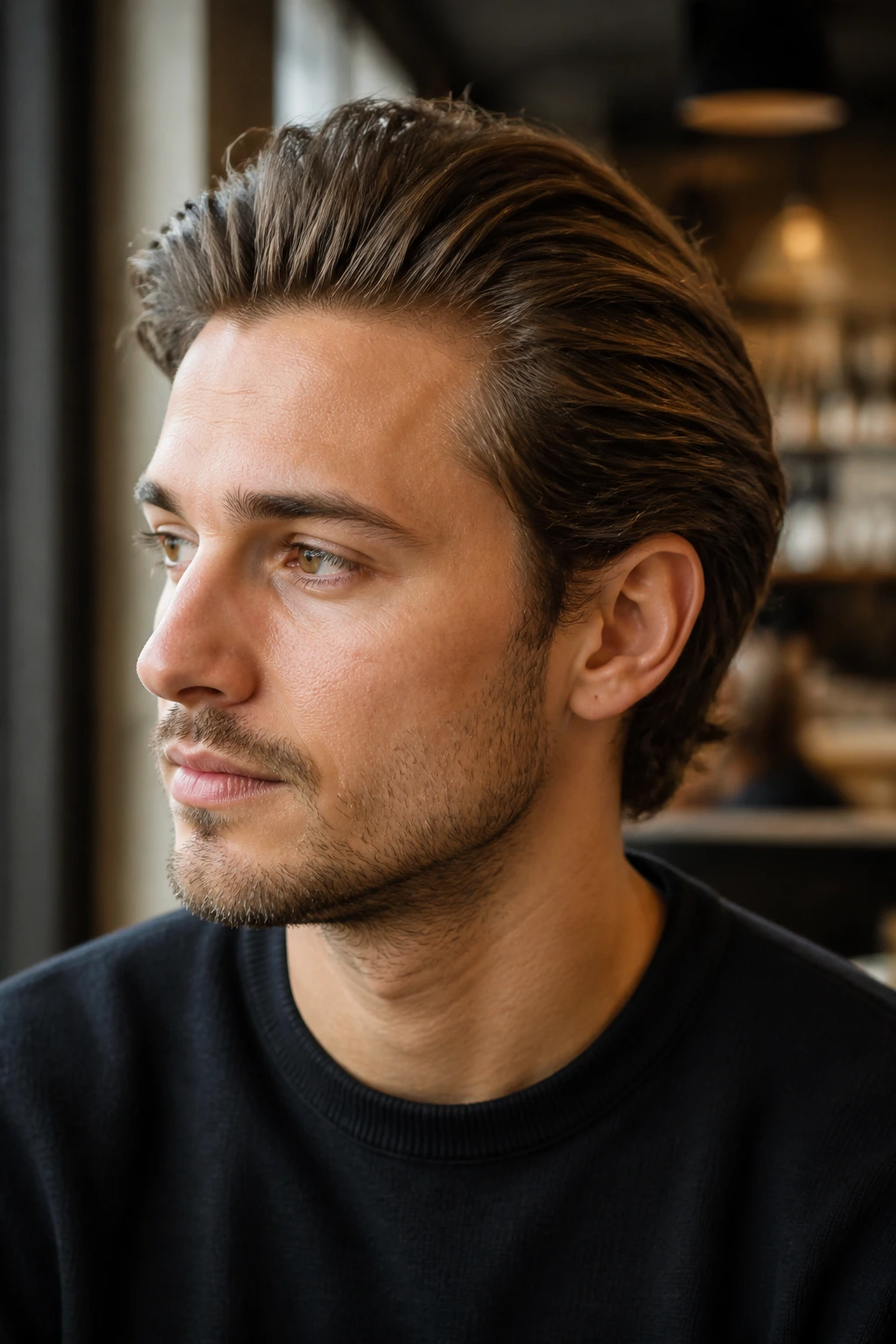
Texture boost: Put sea-salt spray on damp hair, then rough-dry the roots for 30 to 60 seconds before shaping anything. That tiny bit of grit gives medium hair somewhere to sit, especially if it tends to fall flat.
Cleaner finish: Use less product than you think. Start with a pea-sized amount, then add another half pea if needed. Medium length hair can be weighed down by a lot less product than most guys expect.
Pro move: Dry the front first. The front hairline sets the tone for the whole style. If the front is flat or frizzy, the entire cut looks unfinished even if the rest is behaving.
Cost-saver: Do not fight your natural texture every day. If your hair wants to wave, let the wave show in the cut. If it wants to curl, stop pressing it into a fake straight shape. You will use less product and spend less time in the bathroom.
Humidity fix: A tiny bit of cream on the ends can calm puffiness, but only after the hair is mostly dry. Put it on too early and you trap moisture where you do not want it.
Mistakes That Make Medium-Length Hair Look Half-Done
The first mistake is leaving the sides too wide. Medium hair needs some taper or it spreads out at the temples and makes the head look boxy. If the cut feels heavy around the ears, that is usually the problem, not the top.
Too much product is another common one. A medium-length side part that looks greasy by 10 a.m. probably has too much pomade or cream in it. Start with less. You can always add another small amount, but you cannot easily remove the extra shine once it is in.
Skipping the blow-dry can also hurt more than people expect. Air-drying is fine for some textures, but if your hair is fine, flat, or stubborn at the front, a minute or two with the dryer sets the shape before gravity wins. That is the difference between a style and a compromise.
The last trap is cutting the top too bluntly. Medium hair needs some movement through the ends. When everything is left one length, the style sits like a plank. Layers do not need to be dramatic. They just need to exist.
Variations for Straight, Wavy, Curly, Thick, and Fine Hair

Straight Hair, Extra Texture: If your hair lies flat, lean toward the brush-up blowout, textured quiff, or piecey fringe. These styles create movement with drying and product instead of waiting for natural bend that may never show up.
Wavy Hair, Softer Shape: Curtains, bro flow, modern shag, and the layered sweep-back usually look best here. Wavy hair wants motion, so a cut with a little layer and a little room is far easier to wear than a tight, polished style.
Curly Hair, Clean Edges: The curly taper and the natural afro shape-up are the safest bets. They keep the outline tidy while letting the top do its thing. A fringe can work too if it is cut to account for shrinkage.
Thick Hair, Less Bulk: Sweep-backs, side parts, and pompadours need internal layering to stay under control. If your hair is thick, ask for weight removal where the hair bulges, not just shorter sides.
Fine Hair, More Lift: Brush-up styles, light side parts, and a loose curtain can all work if you keep the products light. Heavy wax makes fine hair collapse. A root-lift spray or mousse usually does more good than a dense clay.
What to Ask for at the Barber Chair
Bring a photo, yes, but also bring a sentence about your hair’s habits. Say whether it parts on its own, whether the front falls flat, whether the crown sticks up, and whether you want to style it in under five minutes. That gives the barber more useful information than a dozen screenshots.
Ask for a scissor-cut top with texture if you want movement. Ask for a taper around the ears and neckline if you want the style to stay clean between visits. If you want a quiff, pompadour, or brush-up, ask for more length in the front and a little graduation toward the crown. If you want curtains or a shag, ask for layers that support the fall.
Do not let “medium length” turn into “same length everywhere.” That is where a lot of bad grown-out cuts come from. The sides need shaping, the top needs intention, and the back needs enough cleanup to keep the silhouette from puffing out.
Maintenance, Wash Days, and Trim Timing
Medium length hair is forgiving, but it is not maintenance-free. If you keep a taper or fade around the sides, plan on a trim every 3 to 5 weeks. If the look is more shaggy, flowy, or bun-friendly, you can usually stretch that to 6 to 8 weeks before the shape starts losing its line.
Wash rhythm depends on your scalp and product use. If you use clay or paste most days, washing 2 to 4 times a week is a reasonable starting point. Curly hair often likes less frequent shampooing and more conditioner on the mid-lengths and ends. If your hair feels coated or dull, a clarifying shampoo every couple of weeks helps reset it.
At night, medium length hair does better when it is not crushed into the pillow all night. A loose tie, a soft scrunchie, or even a quick brush-back before bed keeps the front from waking up in a knot. If your hair frizzes easily, a satin or silk pillowcase cuts down on roughness. Small change. Big difference.
Frequently Asked Questions
What counts as medium length hair for men?
Usually anything from about 3 to 6 inches on top, with enough length on the sides or back to shape into a part, sweep, fringe, or small tie-back. The exact number matters less than what you can actually do with it.
Which hairstyle ideas for men with medium length hair work best on wavy hair?
Curtains, bro flow, shag cuts, and layered sweep-backs usually make the most sense because they let the wave shape the style instead of flattening it. Wavy hair looks best when the cut keeps some movement in the ends.
Can I wear these styles without blow-drying?
Yes, but some of them will look softer and less controlled. Air-dried waves, loose curtains, bro flow, and shag styles can do fine without heat. Quiffs, pompadours, and brush-up looks usually need at least a little dryer time to hold their shape.
What product should I use if my hair is fine?
Start with a light mousse or root-lift spray when the hair is damp, then finish with a small amount of matte paste or powder if needed. Heavy wax usually makes fine hair sink, and shiny pomade can make it look thinner.
How often should medium length hair be cut?
If you want the shape to stay sharp, every 3 to 5 weeks is a good target. If the style is supposed to look longer and looser, you can stretch the trim a bit more. The moment the sides start spreading outward, the cut is overdue.
What if my hair gets puffy instead of textured?
That usually means the cut is too blunt, the sides are too wide, or you’re using too much moisture-heavy product. Ask for layering and a cleaner taper, then use less cream and more controlled drying at the roots.
Can these styles work if my hair is thinning in front?
Yes, but some are better than others. Side parts, textured fringes, and loose curtains can soften the hairline, while high-shine styles often expose thinning more clearly. A barber who understands density can leave the right length where you need it most.
How do I stop medium length hair from falling flat by noon?
Lift the roots while drying, use less conditioner near the scalp, and choose lighter products. A quick rework with damp hands and a little more texture spray can revive the shape without adding another layer of grease.
Keeping Medium-Length Hair Sharp
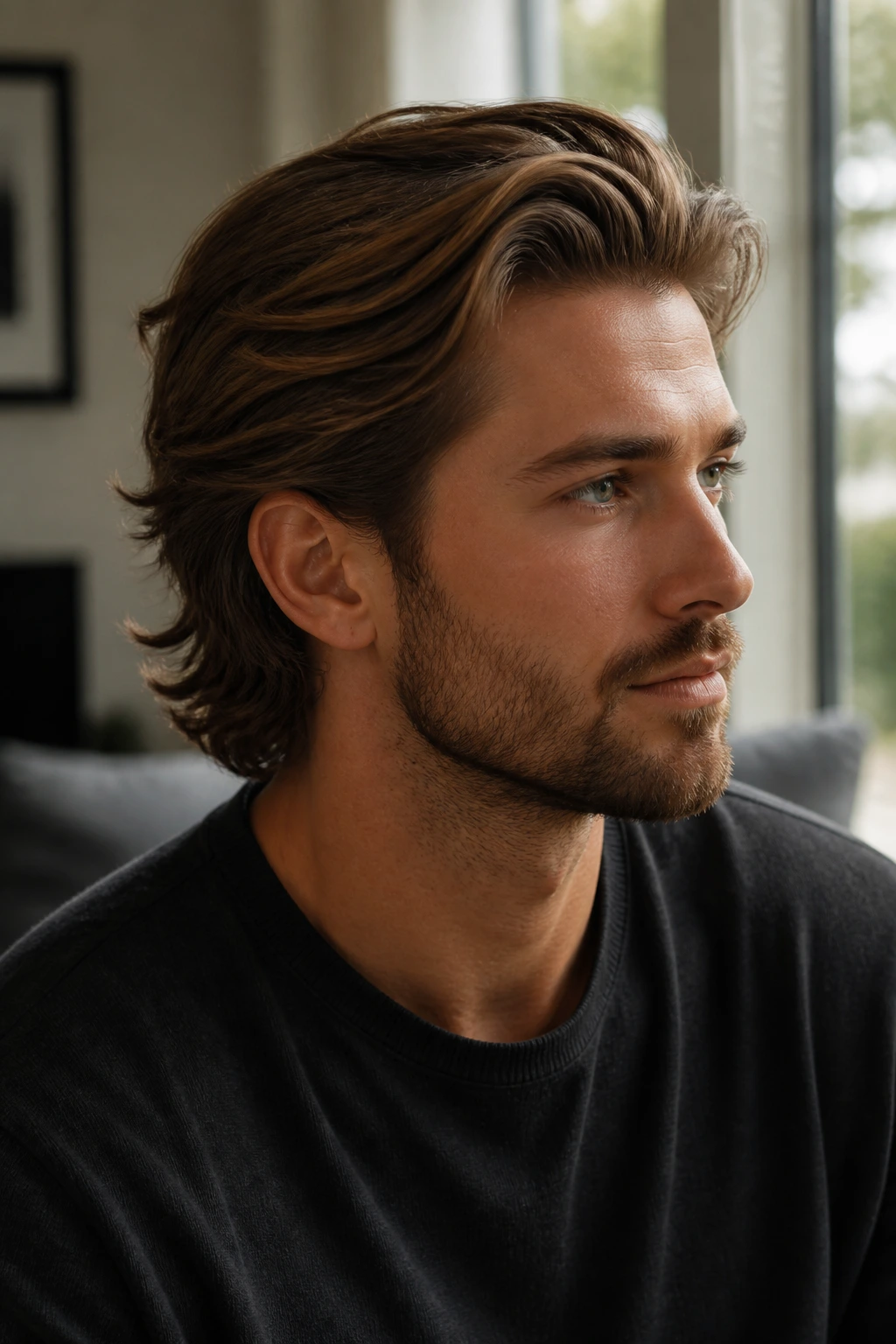
Medium length hair works because it gives you choices, but those choices only look good when the cut has shape underneath them. A clean taper, a little layering, and the right finish on top will do more than any fancy product ever could. That is the part a lot of guys miss. They keep changing the styling cream and never touch the haircut.
Pick one or two looks from the list that suit your hair texture, then wear them a few times before you decide they are not for you. Most of these styles only start making sense once the cut and the product are working together. After that, medium hair gets easier, not harder.
