



A lob haircut on thick, wavy hair lives or dies by shape. Get the perimeter right and the cut falls in that sweet spot between blunt and soft — enough weight to keep the wave from exploding, enough movement that the ends don’t sit there like a helmet. Get it wrong and you end up with the two things thick, wavy hair does best when it’s annoyed: a triangle at the bottom or a puffed-out shelf around the chin.
That’s why lob haircuts for wavy hair and thick hair need more thought than “shoulder length, please.” The best versions respect the bend in the hair, work with the density instead of attacking it, and keep the outline clean enough to look intentional when you air-dry. A good lob doesn’t argue with your texture. It gives it a lane.
And there’s a reason this length keeps showing up in salons. A long bob can lighten heavy hair without stripping away the swing people actually want. It can read polished, undone, sharp, shaggy, or soft depending on where the weight lands and how the ends are cut. That’s the trick. Not every lob is built for thick waves, and the difference between flattering and fussy is often just a few inches, a smarter layer pattern, or one blunt line that holds the whole thing together.
Why These Lob Haircuts Work So Well on Thick, Wavy Hair
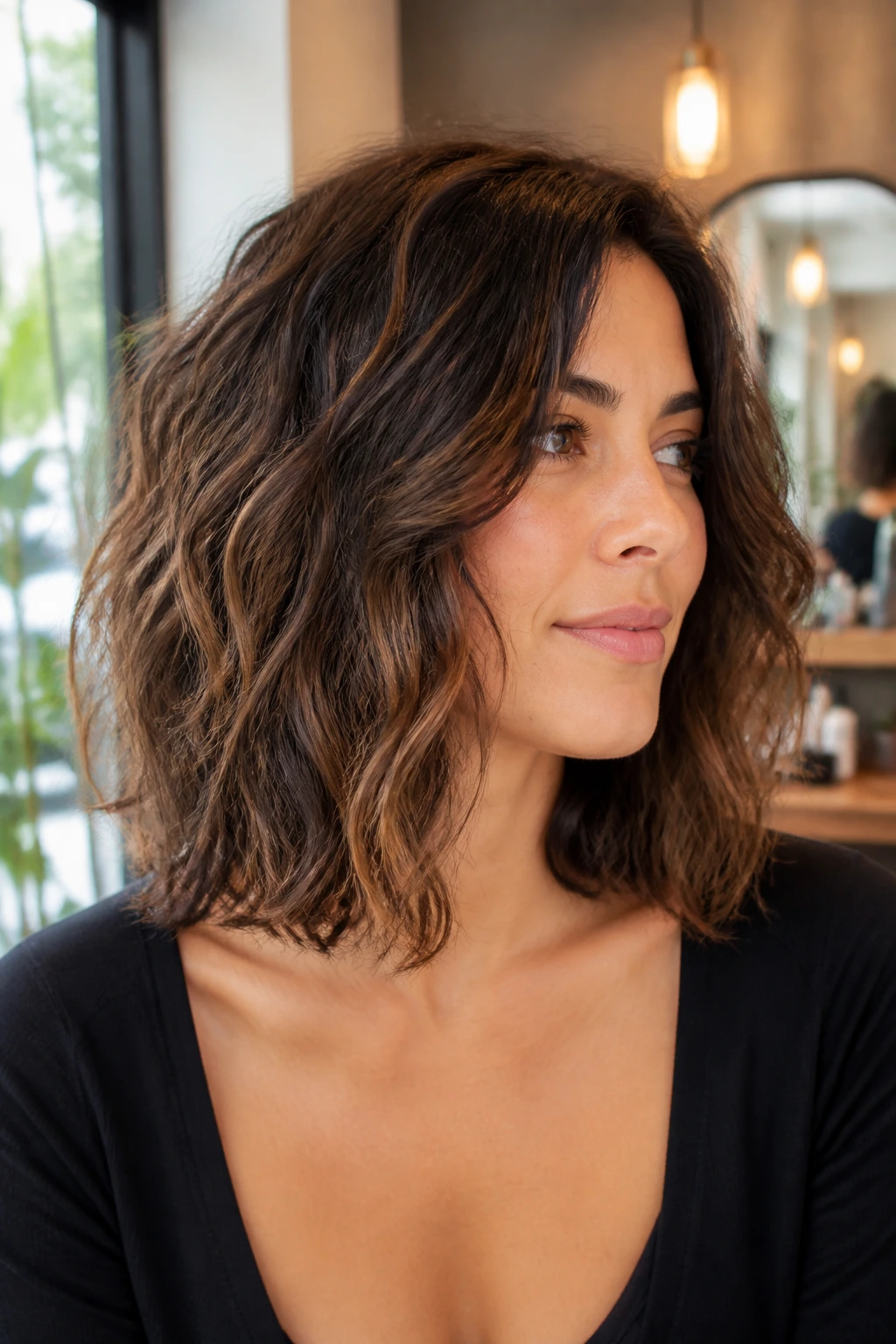
- They remove the heavy-bottom problem: Thick wavy hair loves to spread out at the ends, and a collarbone-length lob keeps that width in check before it turns into a triangle.
- They leave enough length for the wave pattern to bend: If the cut is too short, the wave gets springy and wide. A lob gives it room to fall.
- They make air-drying easier: A good long bob can look finished with a little cream, a quick scrunch, and a few minutes of patience.
- They still work when you style them: Straightened, curled, brushed out, or diffused — the length doesn’t box you in.
- They grow out better than a blunt bob: Thick hair hides the awkward in-between stage better when the cut already has shape.
1. The Collarbone Blunt Lob
A blunt lob that lands right at the collarbone is one of the safest bets for thick, wavy hair, and I mean that in the best way. The line is strong enough to hold the wave, but not so short that your hair starts flaring out at the sides like it has opinions. When the ends sit evenly, the whole cut looks cleaner and heavier in a good way.
Why It Works
The blunt edge keeps the weight where thick hair needs it most: the perimeter. That matters because wavy texture naturally wants to expand once it dries, and a sharp line helps it fall instead of puff. Ask for the length to skim the collarbone, not sit above it. That extra inch changes the whole mood.
Best for: people who want their lob to look polished even when they do almost nothing to it.
Styling note: a pea-sized amount of wave cream, scrunched into damp hair, is usually enough. Too much product here makes the ends look greasy before they ever look defined.
2. The Soft Layered Lob with Face-Framing Pieces
This is the lob for anyone who wants movement without giving up shape. The perimeter stays long enough to control the density, while the front opens up around the cheekbones and jaw. It feels lighter near the face, which is where thick hair can start to feel heavy fast.
What to Ask For
- Keep the length around the collarbone or just below.
- Start face-framing layers around the cheekbone or upper lip, not higher.
- Keep the back full enough that the cut does not collapse into a narrow wedge.
A lot of people overdo face-framing on thick hair. That’s where the cut starts looking stringy. The better version has long, soft pieces that bend with the wave instead of separating into little frills. If your hair tends to spring up, ask the stylist to leave the front slightly longer than they think.
3. The Choppy Wavy Lob
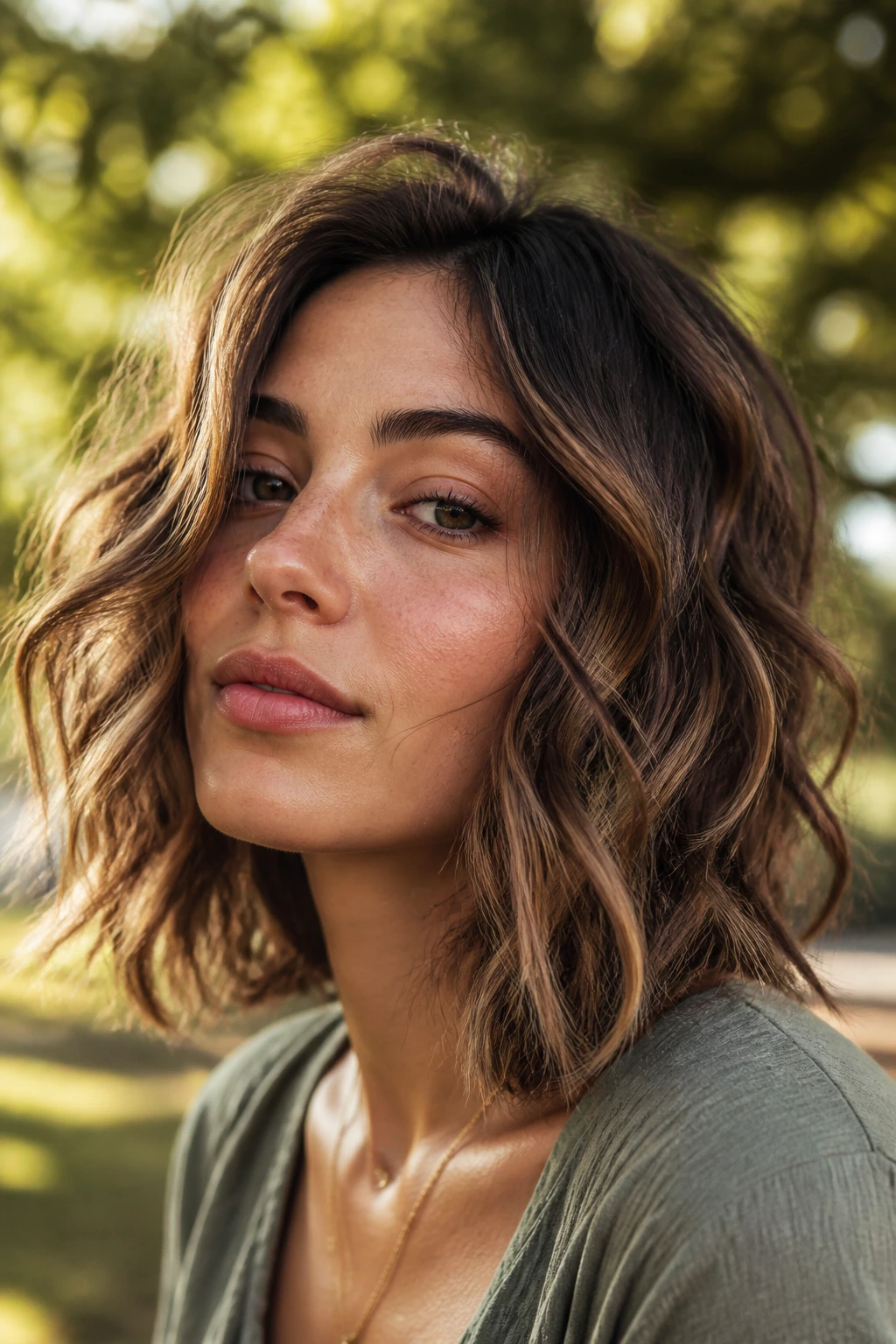
A choppy lob gives thick waves some breathing room. Instead of one neat, heavy edge, the ends are lightly broken up so the cut feels looser and more lived-in. It’s not messy in a careless way. It’s messy in the way good hair often is after you’ve touched it once and walked away.
What Makes It Different
The choppy finish works because it cuts down the visual bulk at the bottom without sacrificing the body through the middle. That’s important for dense hair, which can turn into a block if every strand ends at exactly the same spot. I like this version when the wave pattern is strong and the hair wants movement anyway.
Styling It
Use a lightweight mousse at the roots and a touch of cream through the mids. Scrunch, diffuse for a few minutes, then stop fussing. The more you rake through it, the faster the wave separates into fluff.
4. The Curtain Bang Lob
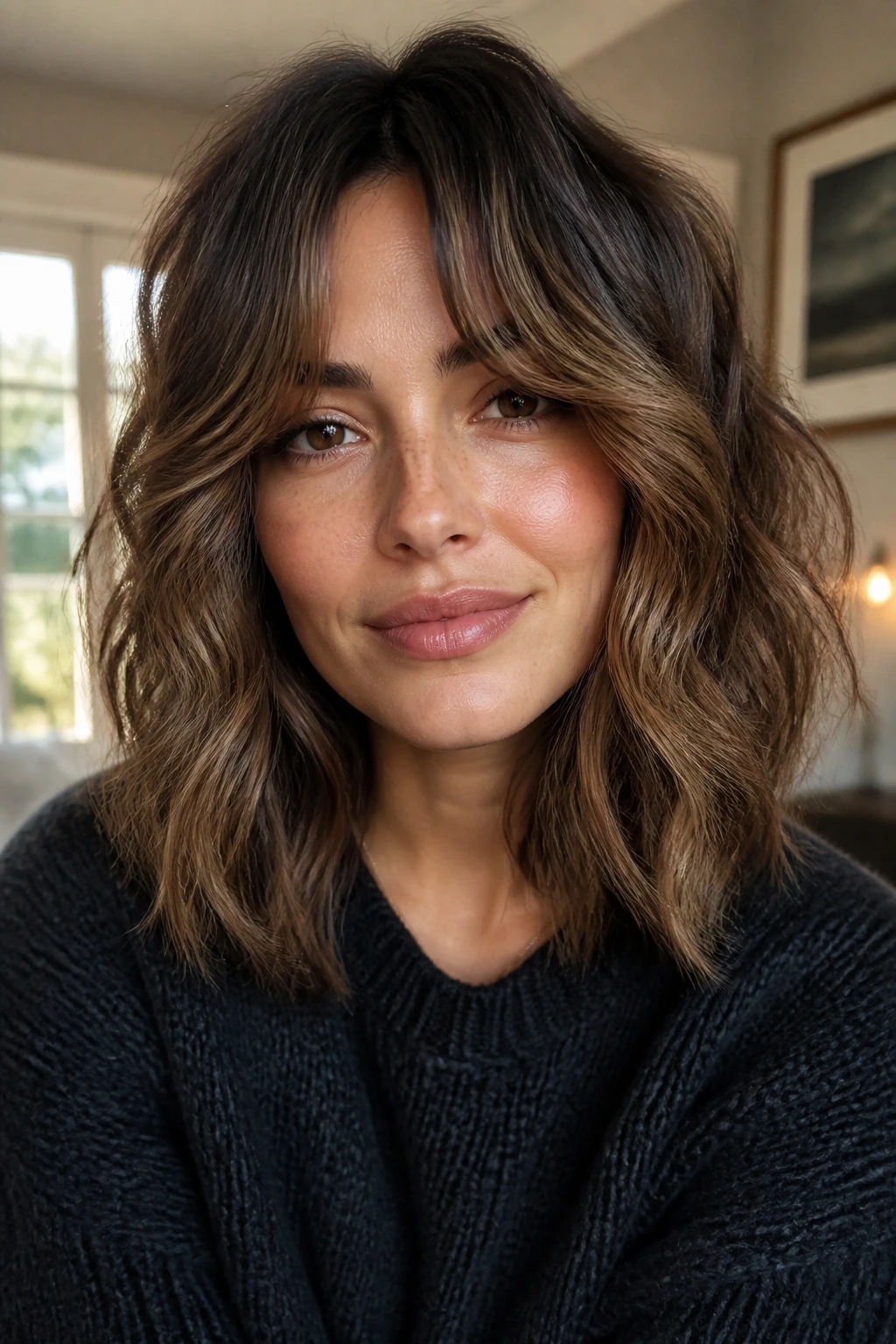
Curtain bangs can make a lob feel softer almost immediately. The center opening gives thick hair a bit of shape around the face, and the longer sides blend into the lob instead of cutting across it. When the bangs are cut to work with the wave pattern, they sit in that easy middle ground between fringe and face-framing layer.
The catch? Curtain bangs need honest maintenance. Not fussy maintenance. Just enough that they don’t grow into your eyelashes and start doing their own thing. If your wave pattern is strong, keep the shortest point of the bangs a little longer than you would on straight hair.
Good for people who want:
- Less weight around the forehead
- A little softness without losing length
- A cut that looks intentional even when air-dried
5. The Deep Side-Part Lob

A deep side part changes the whole architecture of a lob. Thick hair often has a lot of natural lift at the root, and a side part gives that volume a place to go instead of stacking everything dead center. The result is a little asymmetry, a little drama, and less of that mushroom shape thick wavy hair can pull toward in the wrong cut.
This is one of my favorite fixes when a middle part makes the hair sit too wide. The side part also lets one side fall closer to the cheek and neck, which gives the face a longer line. Simple. Effective. No gymnastics.
If your waves flatten fast at the crown, use a root spray at the part line and blow-dry just that section upward with your fingers. You do not need to blow out the whole head to get the benefit.
6. The Invisible-Layer Lob
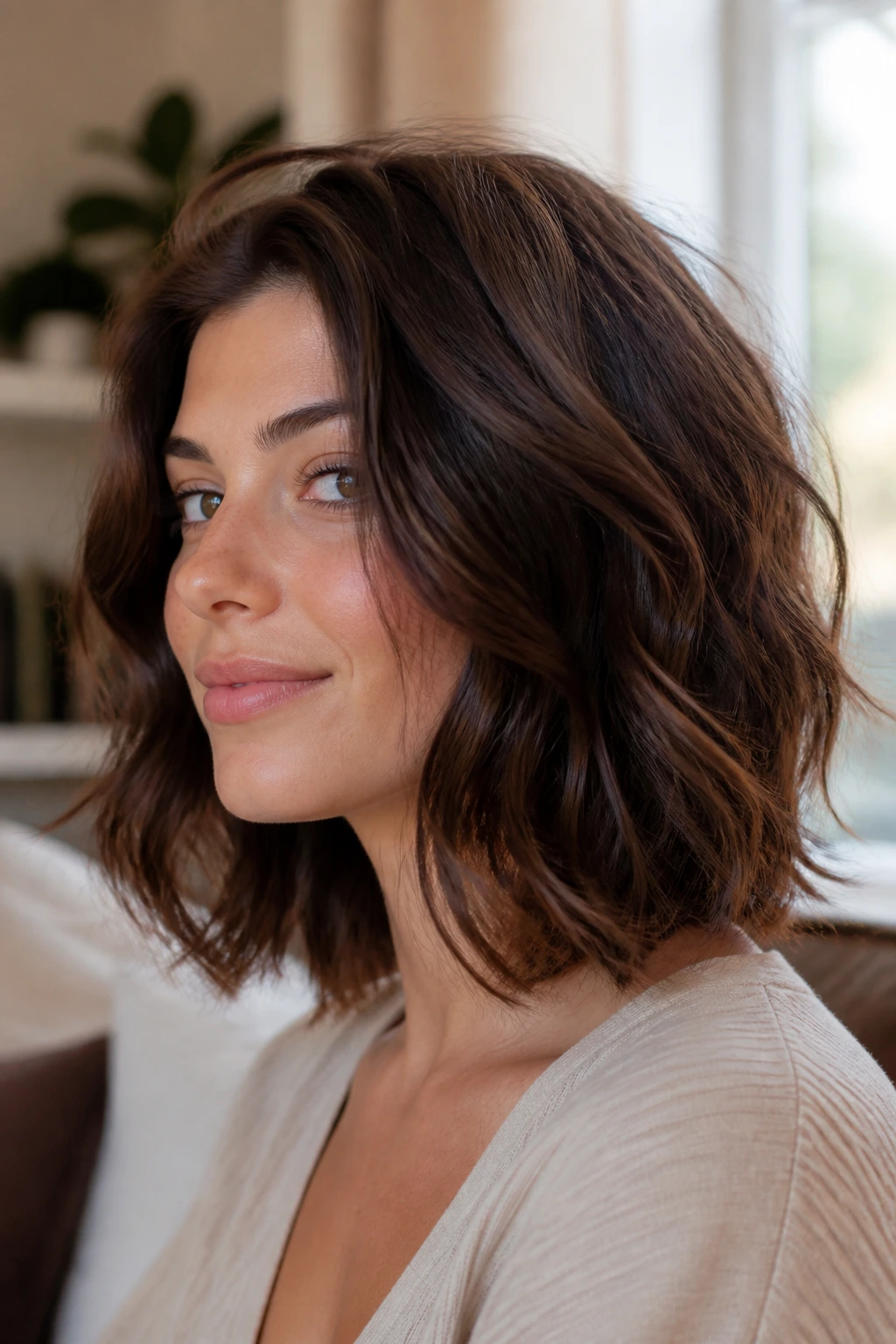
Invisible layers are the quiet hero move for thick hair. The layers are placed inside the cut, not stacked on the outside, so the perimeter still looks clean while the bulk gets removed from within. The surface stays smooth. The shape stays controlled. And the ends do not look choppy unless that’s the point.
Why Thick Hair Loves This Cut
Thick wavy hair often needs weight removed, but visible layers can turn the shape into a pyramid if they’re too short. Invisible layers solve that by taking density out of the middle without chopping the silhouette into pieces. If your hair feels heavy when it’s wet and huge when it’s dry, this is a strong option.
Ask for internal layers, not “lots of layers.” Those are not the same thing.
7. The Angled A-Line Lob

The A-line lob is shorter in back and longer in front, which gives thick wavy hair a sleek edge without making it severe. The angle helps the front pieces fall cleanly around the face while the back keeps enough lift to avoid a flat, boxy look. It’s sharp, but not stiff.
Best When You Want
A little visual length in the front.
A neckline that feels lighter in back.
A cut that still looks good with a natural wave.
The angle should be subtle on thick hair. Too steep, and the front starts dragging while the back feels cropped. A small difference — maybe an inch or two — is usually enough.
8. The Shaggy Lob with Razor Ends

A shaggy lob is for the person who likes texture and does not mind a little edge. The razor-soft ends break up thickness, the layers move around the face, and the whole thing has that slightly undone shape that thick wavy hair can wear better than almost any other texture. It can look cool in five minutes and better in fifteen.
That said, this is not the lob I’d hand to someone who wants a tidy outline every day. Razor ends can fray if the hair is very coarse or dry, so the technique matters. Done well, the cut falls apart in a flattering way. Done badly, it just looks thin at the tips.
If you heat-style often, keep a good heat protectant on hand. Razor cuts and too much flat-iron heat are not friends.
9. The Long-Bang Lob

Long bangs — the kind that skim the cheekbones or brush the lashes when dry — give a lob some shape without the maintenance of a full fringe. On thick wavy hair, they blend easily into the side sections and soften the cut around the face. That blend matters. It keeps the front from looking chopped off.
How to Wear It
- Part the bangs slightly off-center if your waves kink at the middle.
- Use a round brush only on the fringe if the rest of the hair air-dries well.
- Keep the longest bang pieces close to the jaw so they can disappear into the lob when needed.
This version is a solid bridge for anyone growing out shorter bangs.
10. The French-Girl Lob

The French-girl lob is less about a strict formula and more about restraint. The shape is usually collarbone length, the layers are soft or nearly invisible, and the styling stays loose enough that the wave pattern can do most of the work. It’s the haircut version of not trying too hard, except there is still real technique underneath.
What I like here is the lack of over-refinement. Thick wavy hair can look stuffy if every strand is blown straight and sprayed rigid. This cut says, fine, let it move. Let it bend a little. That freedom is what makes it feel good.
A little leave-in conditioner, a touch of cream, and air-drying are usually enough. If the ends start puffing, smooth a tiny bit of serum just there — not from roots to tips.
11. The Rounded Lob with Internal Layers

A rounded lob curves slightly inward at the ends, which keeps thick hair from flaring out at the shoulders. The shape reads softer than a blunt edge, but it’s still controlled. Internal layers keep the volume from building into a wide shelf, which is the thing nobody wants when their hair is dense and wavy.
The Shape in Practice
When this cut is done well, the outline looks almost tailored. The back nestles in a little. The front curves gently toward the jaw. It’s a good choice if you want movement but hate a shaggy finish.
A rounded lob can be especially good if your hair tends to get bigger in humid air. The inward bend gives it a better chance of staying tidy without needing constant heat.
12. The Bottleneck Bang Lob
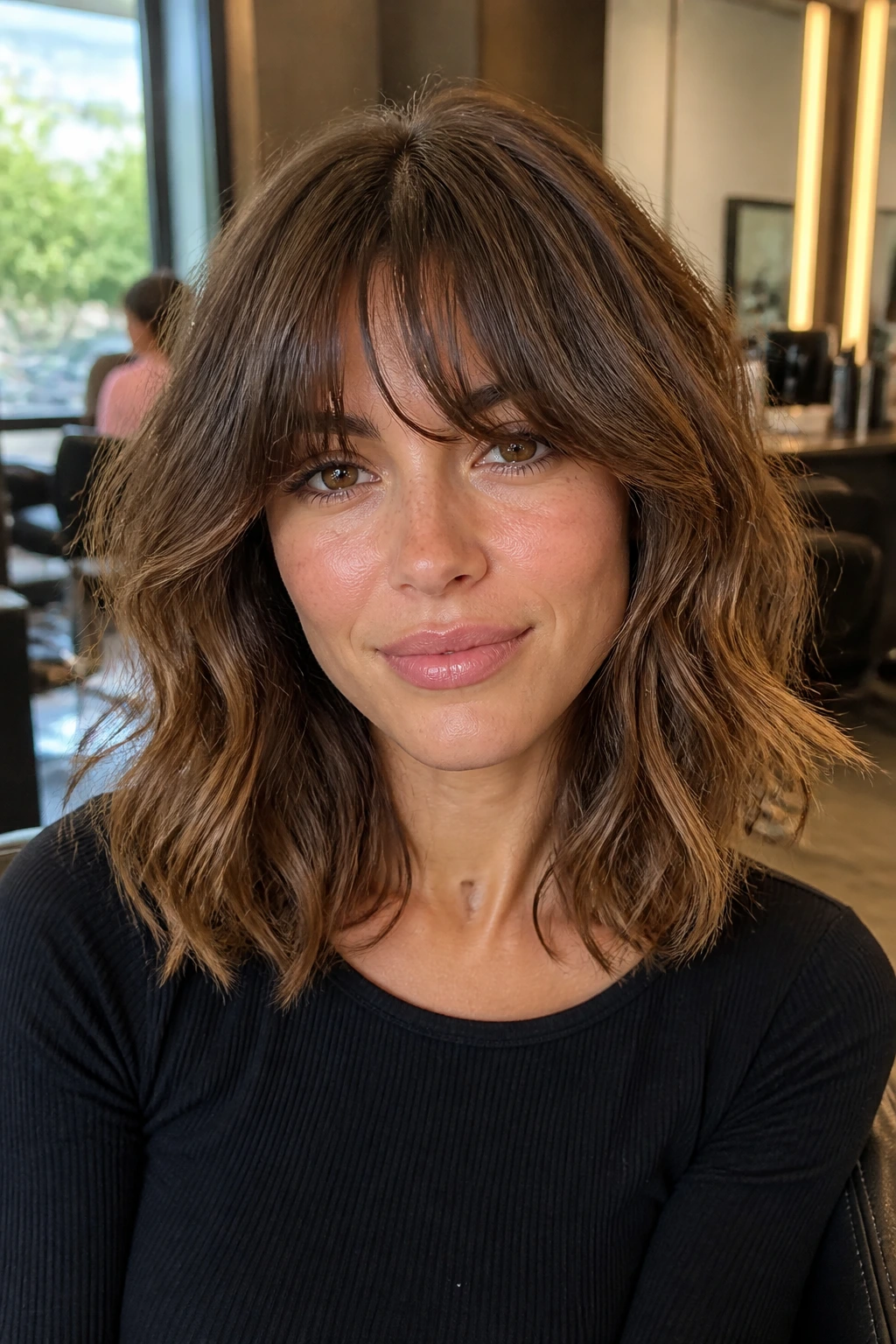
Bottleneck bangs start narrow near the center and open wider as they move outward, which makes them a smart companion for a lob on thick hair. They bring attention to the eyes without sitting across the whole forehead in a heavy line. On wavy textures, they also soften the transition between fringe and layers.
The thing people often miss is balance. Thick hair can make bangs look bulky if they’re cut too blunt or too short. Bottleneck bangs solve that by thinning the visual weight near the center and letting the sides blend.
Quick salon note
Ask your stylist to cut them dry or finish them dry. Wavy fringe behaves differently once it settles, and you want the final shape, not the wet guess.
13. The Tapered-End Lob
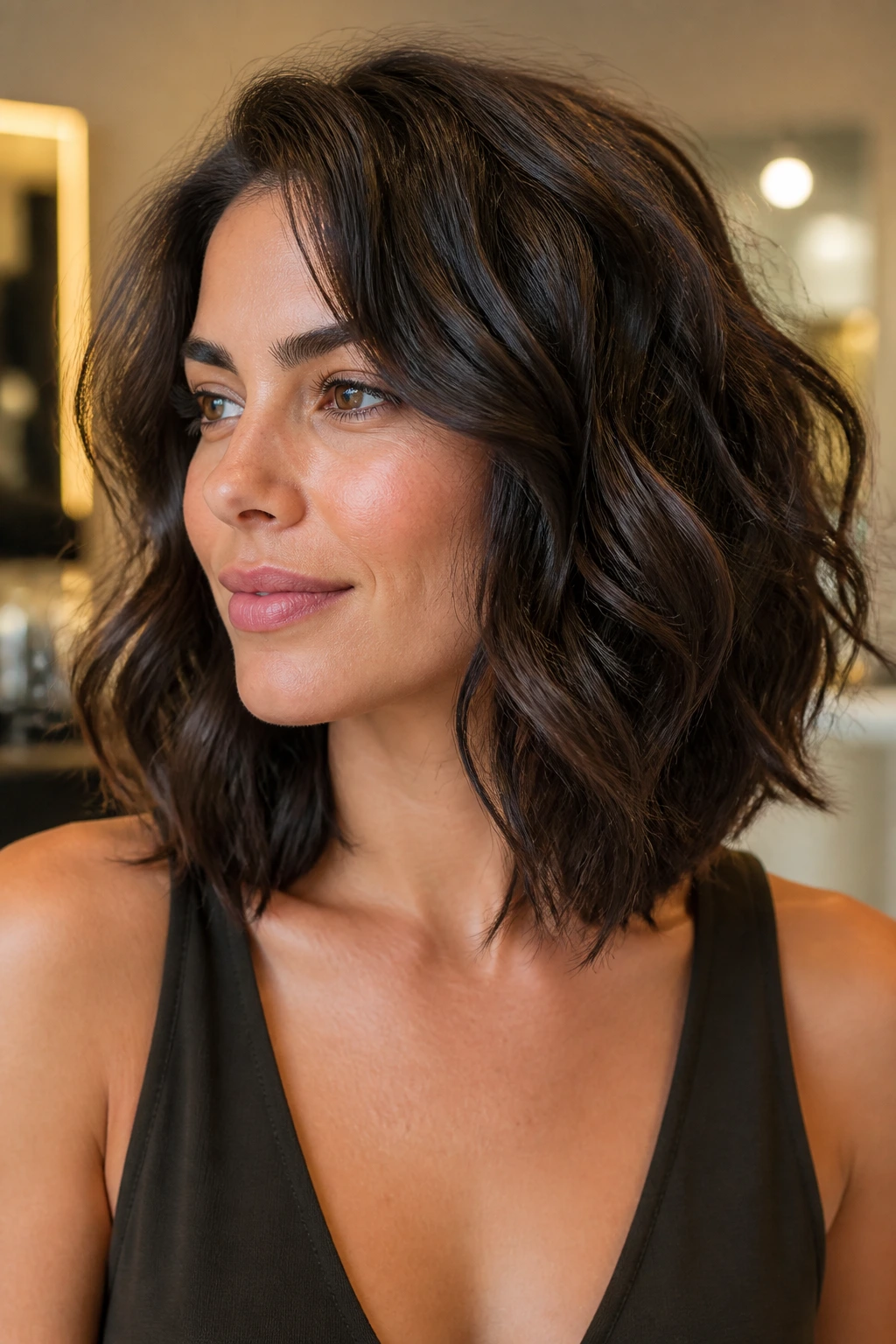
A tapered-end lob narrows gently toward the tips, which helps dense hair avoid that wide, rectangular shape at the bottom. The taper is subtle — no dramatic point, no sharp V. Just enough narrowing to keep the cut from sitting heavy on the shoulders.
This one works well when the wave pattern is more horizontal than springy. The tapered finish lets the hair fall close to the neck and collarbone instead of fanning outward. It’s a small adjustment with a big visual payoff.
If your hair is coarse, ask for the taper to happen through the interior, not by aggressively thinning the very ends. Coarse hair needs structure more than it needs to be chewed up.
14. The Sliced-Layer Lob
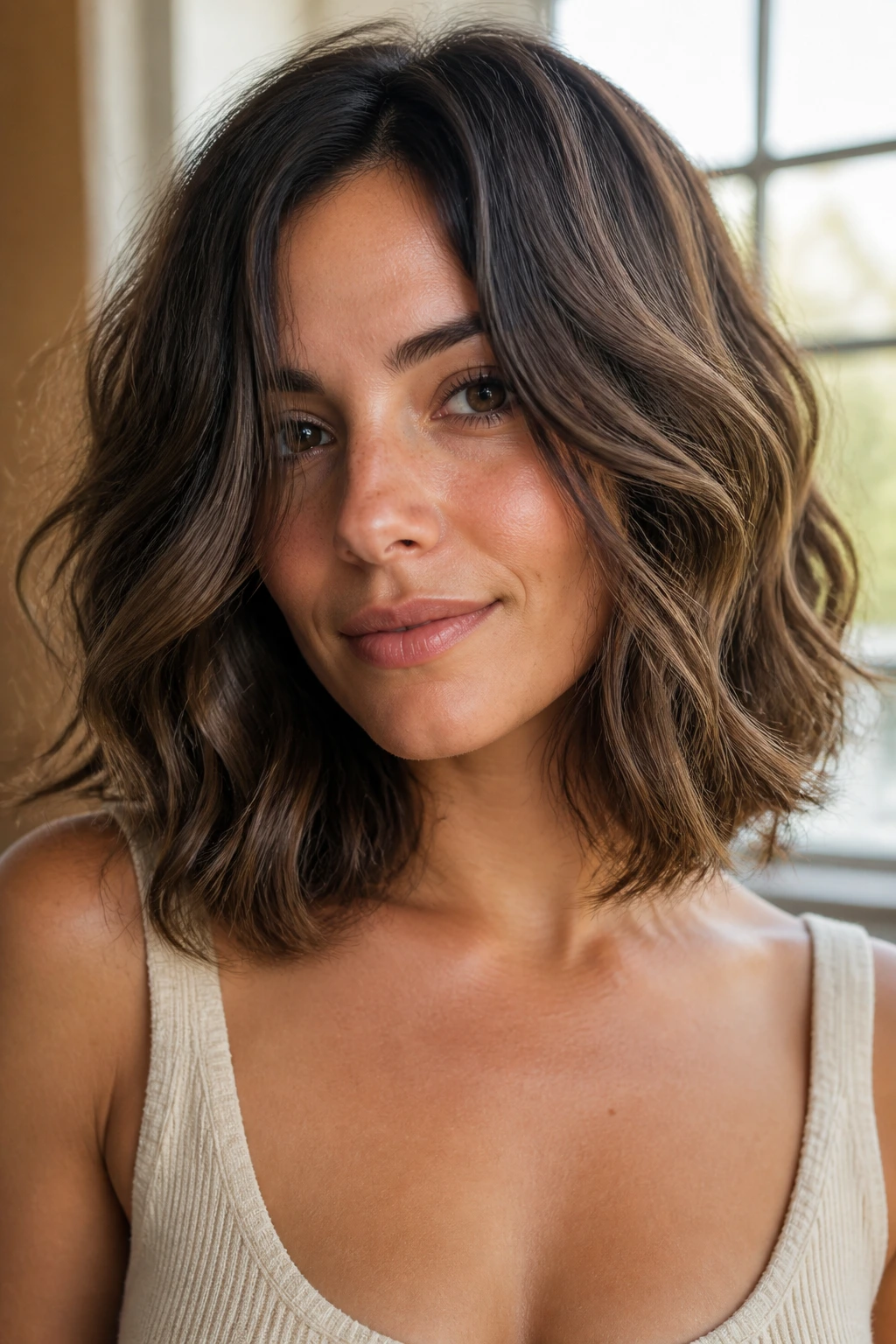
Slicing is a technique that removes weight in a softer, more fluid way than blunt chopping. On a lob, it gives thick wavy hair movement without turning the layers into obvious steps. The result is airy, but not wispy.
I like this approach when someone wants their hair to swing. Sliced layers let the ends move while the middle stays full enough to keep the cut from collapsing. That balance is hard to get if the hair is very dense and all one length.
Where it fits
- Hair that looks too boxy after blunt cuts
- Waves that need lightness, not a lot of short layering
- Anyone who wants a softer finish without losing body
15. The Air-Dry Center-Part Lob

If you live for air-drying, this is the lob to pay attention to. The center part keeps the shape even on both sides, and the cut is built to fall naturally instead of depending on a round brush. Thick wavy hair loves a shape that respects its own bend, and this one does.
The key is not over-layering. Too many short pieces around the front can make the wave pop in odd directions once it dries. A clean perimeter with a few longer interior pieces usually works better.
What to ask for
A length around the collarbone, soft internal shaping, and no aggressive thinning at the ends. Then leave room for the wave to settle. That part matters more than people think.
16. The One-Length Lob with Soft Ends

A one-length lob can be a gift for thick wavy hair, especially when the ends are softened just enough to keep the line from feeling severe. The base stays full, the wave pattern holds, and the whole cut looks dense in a healthy way rather than dense in a bulky way.
This is the most straightforward option on the list, and that’s not a bad thing. Some hair wants a strong frame. If your waves already have good movement, a one-length lob lets the texture do the styling for you. No extra drama needed.
The softening at the ends should be gentle. You want a perimeter that looks clean from six feet away and still feels touchable up close.
17. The Razor-Soft Piecey Lob

This is not the same as a shag. A razor-soft piecey lob keeps a lob shape but uses texture to create separation at the ends and around the face. On thick wavy hair, that separation can stop the cut from reading like one solid block.
The trick is restraint. A little pieceiness goes a long way when your hair is already full. Too much and the shape starts looking overworked, especially if the wave pattern is inconsistent from root to end.
If you want this look, ask for texture mainly through the outer edges and the face-framing pieces. That keeps the shape intact while still giving you some movement.
18. The Subtle Underbevel Lob
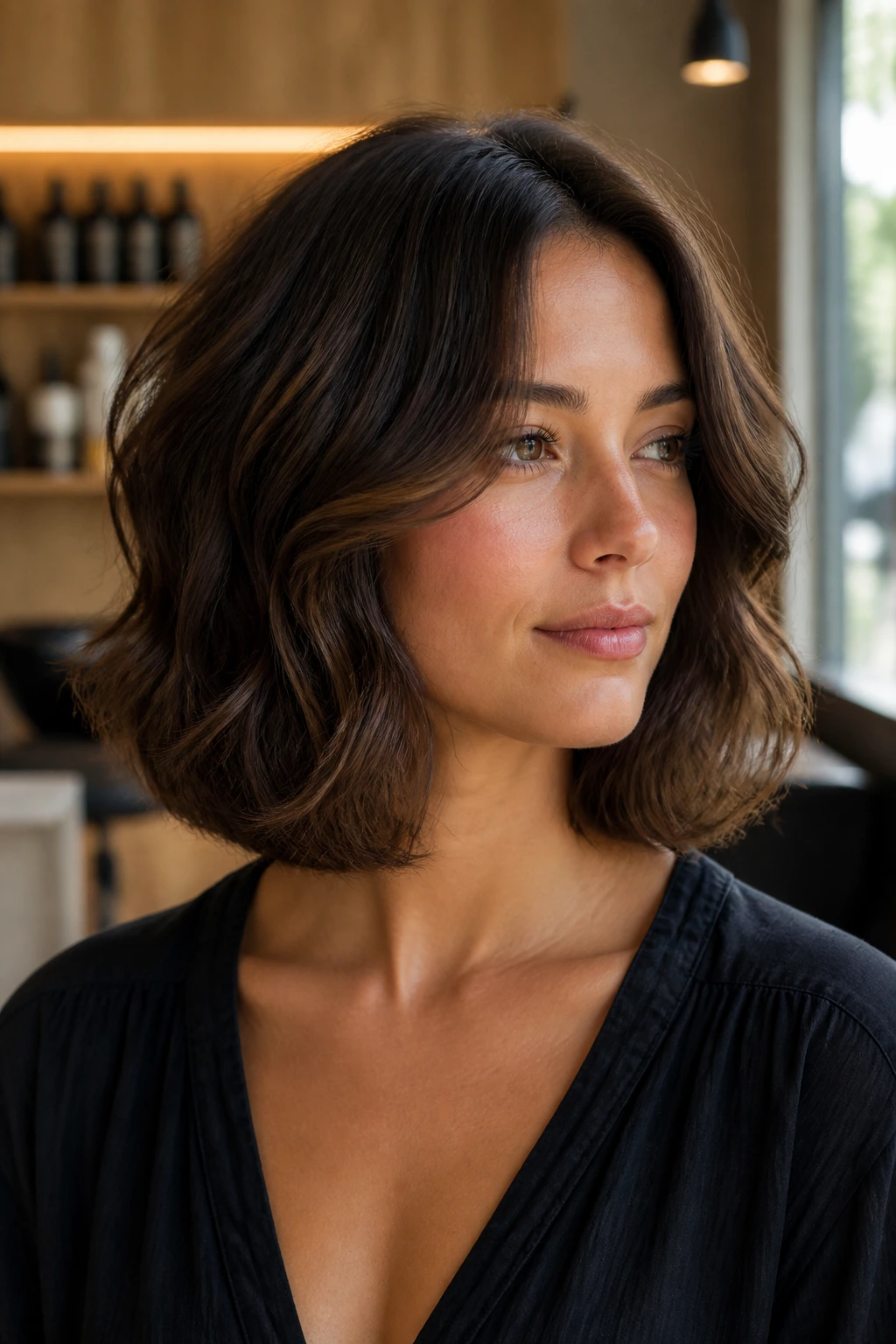
A subtle underbevel tucks the ends slightly under the head shape, which is a quiet but very useful move for thick hair. It keeps the perimeter from flaring outward, especially if the hair naturally gets big around the shoulders. The cut looks smoother, cleaner, and a little more controlled.
This is one of those cuts that sounds boring until you see what it does in motion. Then it makes sense. A heavy, wavy lob with an underbevel tends to sit closer to the neck, which is often the difference between “nice haircut” and “why is my hair doing that?”
A round brush helps, but the shape should still hold without one.
19. The Hidden Undercut Lob
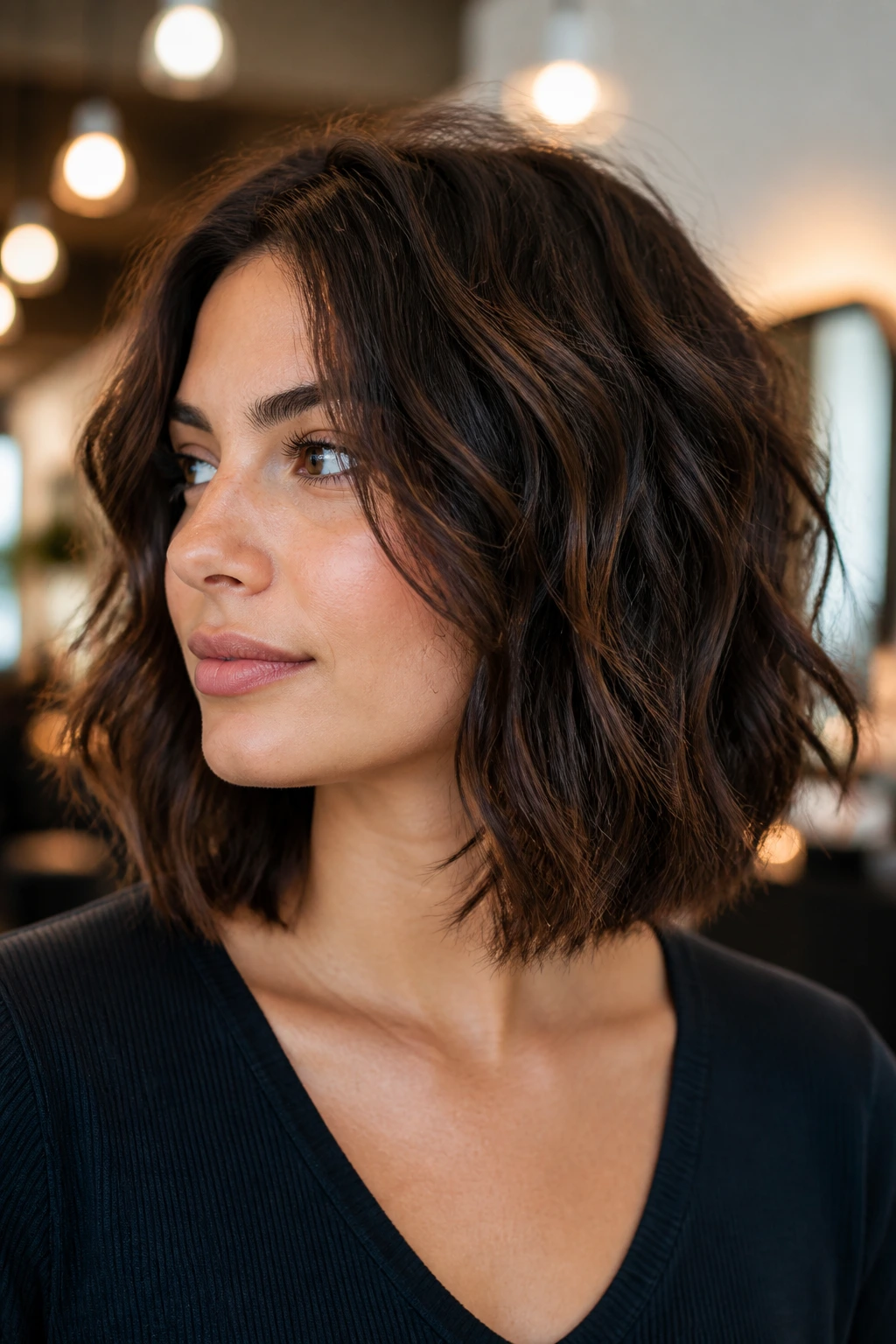
For very thick hair, a hidden undercut can be a sanity saver. The top layers keep the look of a full lob, while the lower interior gets removed so the whole cut doesn’t feel like a blanket on your head. You can wear it down and still get the lighter feel.
When it makes sense
If your hair takes forever to dry.
If your ends spread wide no matter what.
If your neck gets hot and heavy under all that density.
The undercut should stay hidden unless you want to show it. A good stylist will keep it tucked beneath the surface so the haircut still looks normal when worn down.
20. The Side-Bang Lob

Side bangs bring movement to a lob without committing to a full fringe. They work especially well on thick wavy hair that needs a little direction around the face. The sweep of the bang breaks up the width at the forehead and gives the cut a softer entry point.
This is one of the easiest styles to grow out, which matters more than people admit. Side bangs can be pushed across, pinned back, or blended into layers if you get tired of them. That flexibility makes them low-risk.
Use a small round brush or even a finger twist when drying the front pieces. The rest of the cut can stay loose.
21. The Polished Blowout Lob
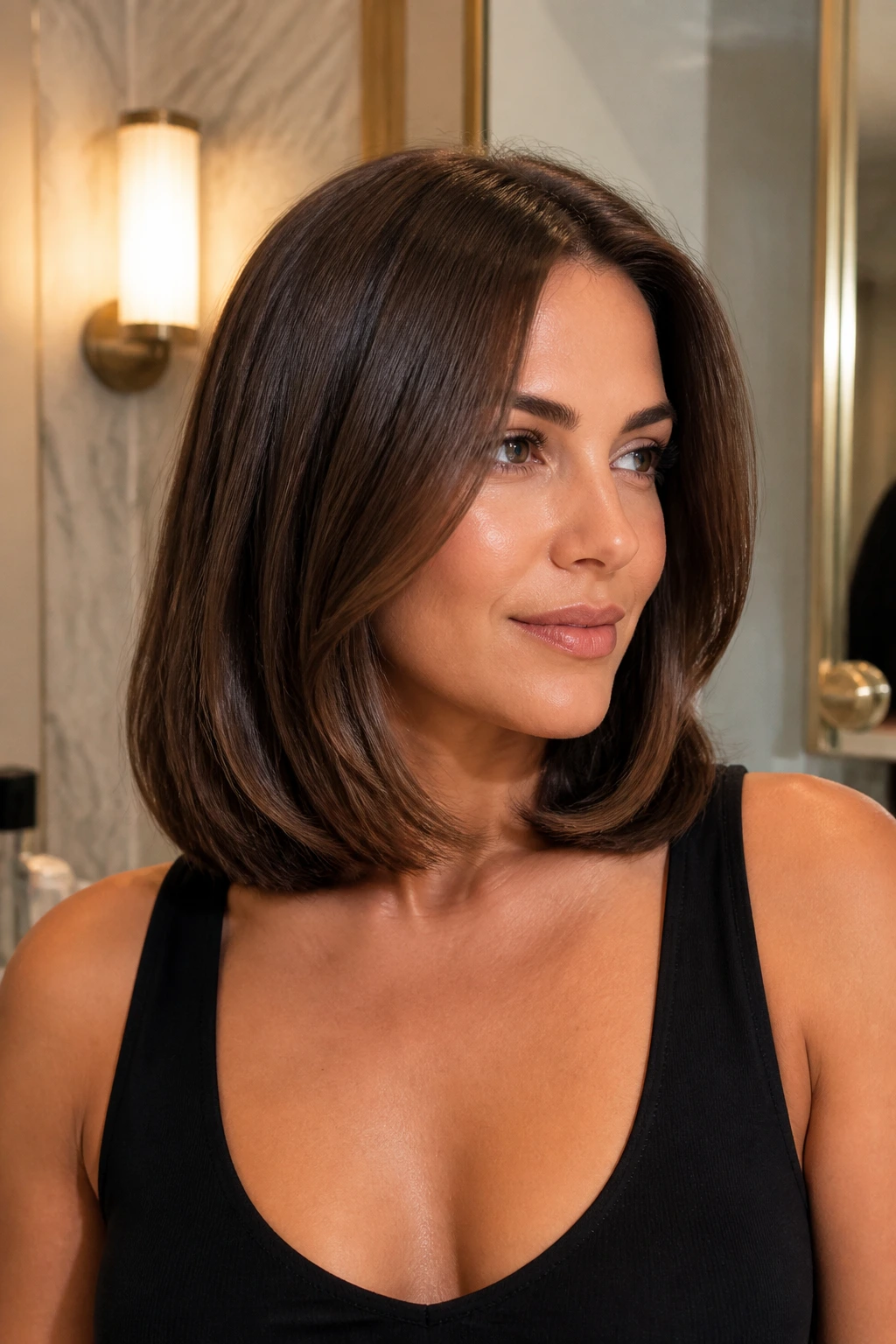
Not every lob has to live in the air-dry camp. A polished blowout lob is built for thick wavy hair that you sometimes like to smooth out and swing. The cut usually has a clean perimeter, balanced layers, and enough weight to hold shape under a brush.
This style is lovely when the ends are beveled and the face-framing pieces are kept long. It gives you that soft bend at the bottom instead of a flat, straight sheet. Thick hair often holds a blowout better than fine hair anyway, so you might as well let it do the heavy lifting.
A medium round brush and a nozzle on the dryer help a lot here. So does patience.
22. The Grow-Out Lob

A grow-out lob is the most underrated haircut in the bunch. It sits at that in-between length where long hair starts becoming manageable again, and a smart cut keeps the transition from feeling awkward. The best version for thick wavy hair has soft layers, a clean bottom line, and enough length to tuck behind the ears when you need it.
Why it’s worth considering
If you’re coming from longer hair, a grow-out lob gives you shape without a shock to the mirror. It also handles uneven wave patterns better than shorter chops, because the extra length helps smooth out the difference between curlier and flatter sections.
It’s the kind of cut that looks like a plan, not a compromise. That alone is worth a lot.
Why Lob Haircuts Fit Thick, Wavy Hair Better Than Short Bobs or Long Layers
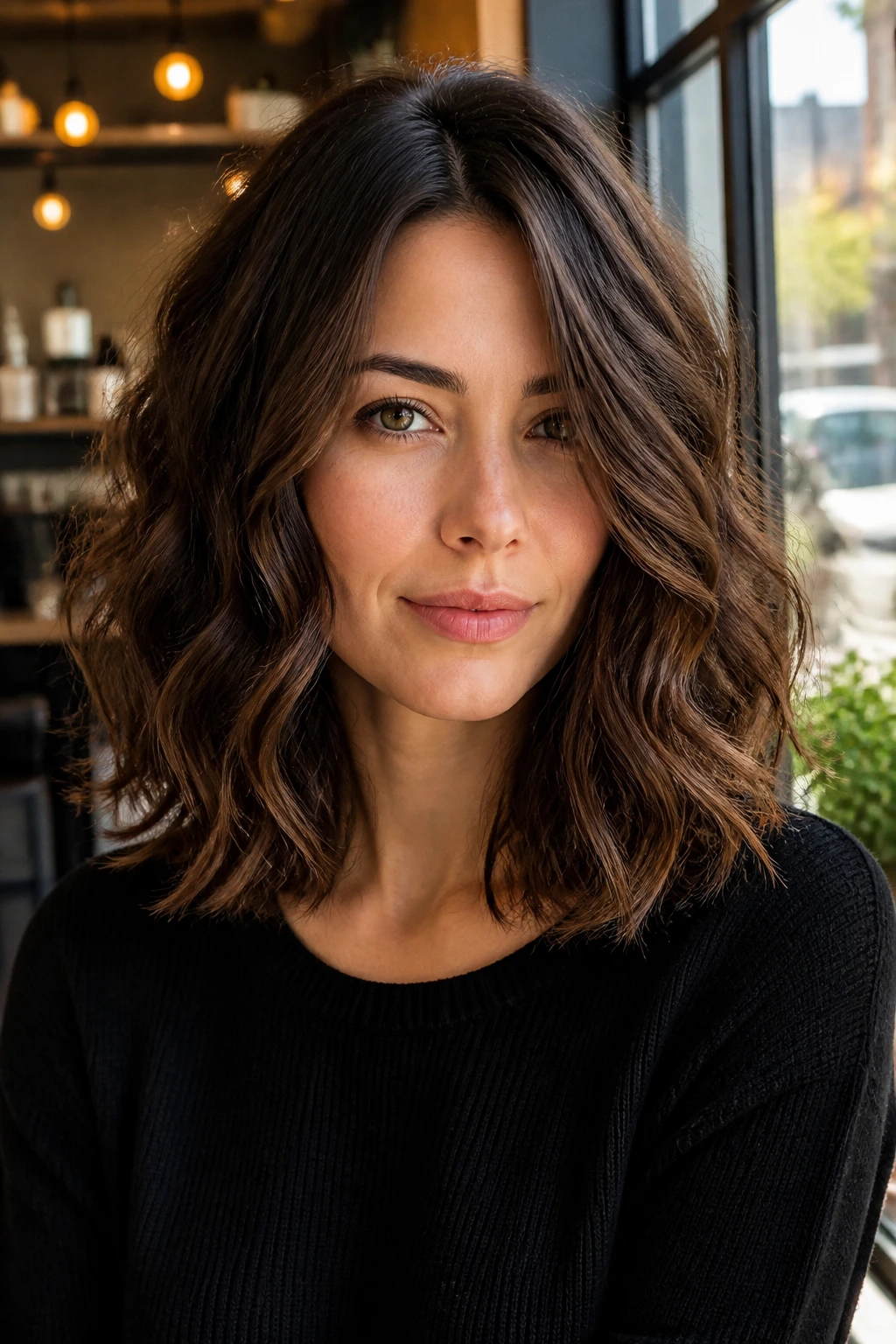
Thick wavy hair has a habit of asking for one thing and giving you another. Cut it too short and the wave gets wide. Keep it too long and the weight drags the pattern down until it looks flat at the crown and huge at the ends. The lob sits in the middle, which is exactly why it works.
A long bob gives the wave enough length to form, but not so much that the ends become a curtain. It also gives stylists a place to remove bulk without carving the hair apart. That’s the part a lot of people miss. Thick hair doesn’t just need “layers.” It needs the right kind of weight distribution.
One more thing. The best lobs on wavy hair are usually cut with the haircut’s final shape in mind, not just the hair when it’s wet. Waves shrink. They kick. They settle unevenly. If the cut ignores that, you end up with a line that looks fine only in the salon chair. Drying the section, checking the front, and adjusting before the scissors go away can make all the difference.
The Right Tools for Styling and Trimming a Lob at Home
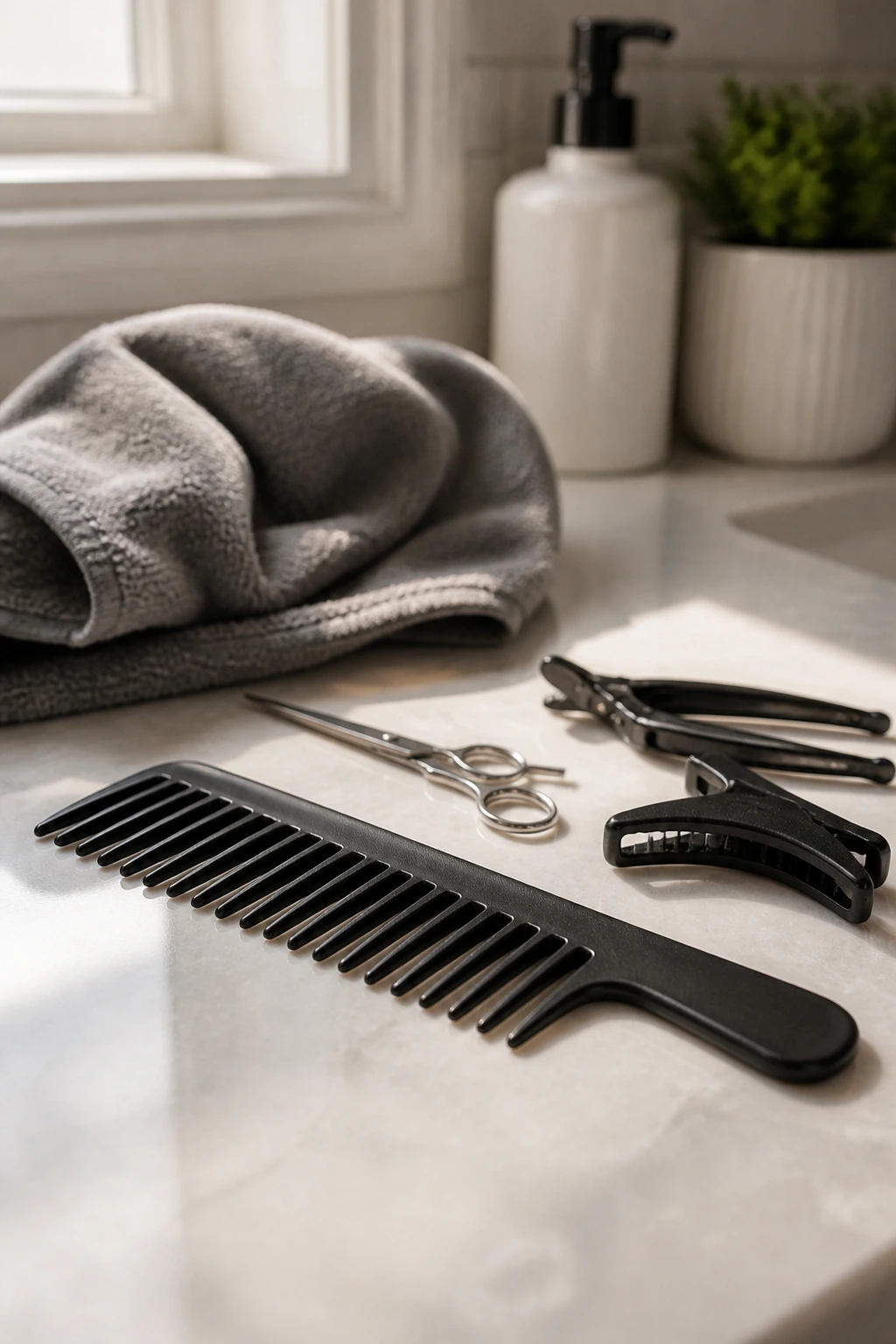
You do not need a bathroom cabinet full of styling gadgets to keep a lob in shape. You do need a few tools that actually respect thick, wavy hair instead of flattening it into submission.
- Wide-tooth comb: Good for detangling damp hair without ripping apart the wave pattern.
- Sectioning clips: Useful when you’re diffusing, blow-drying, or just trying to get product through dense hair evenly.
- Microfiber towel or cotton T-shirt: Helps cut down on frizz before the hair starts to dry.
- Leave-in conditioner: Adds slip and keeps thick ends from feeling rough.
- Wave cream or curl cream: Best for soft definition when you want movement rather than hard hold.
- Mousse: Gives lift at the roots without making the hair feel heavy.
- Light gel: Helpful if your waves fall apart fast and need a little structure.
- Diffuser attachment: Worth it if you blow-dry often. It keeps the wave from getting blasted into fluff.
- Round brush, medium size: Good for polished bends, face-framing pieces, and quick smoothing around the ends.
- Heat protectant: Non-negotiable if you use any hot tool at all.
The main thing is restraint. Thick wavy hair can be over-padded with product fast. Pick one product for slip and one for hold, then stop there unless the hair actually needs more.
What to Tell Your Stylist Before the First Snip
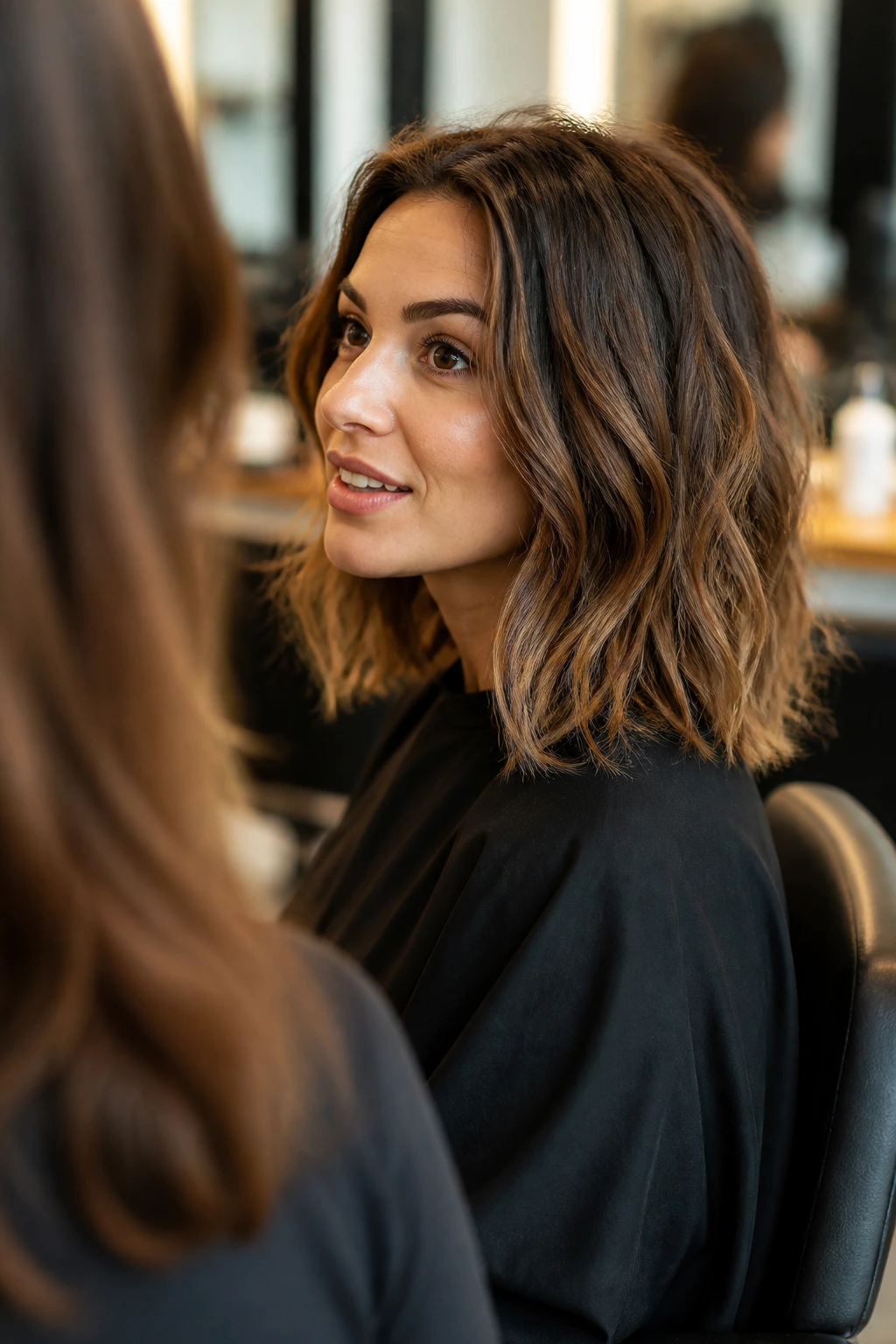
A good lob starts with a boring conversation, and I mean that kindly. Bring photos, yes, but also explain how your hair behaves when it’s dry, not just when it’s wet and cooperative in the chair. Tell the stylist whether you air-dry, diffuse, blow out, or let it do a little of everything.
Say where your hair starts to feel bulky. Tell them if the ends widen out when they reach your shoulders. If your wave pattern is uneven — maybe loose on top and tighter underneath — mention that too. That tells the stylist where to keep length and where to remove weight.
The most useful sentence you can say is this: “I want the shape to work when it’s dry, not just when it’s freshly cut.” That changes the conversation fast. It tells them you care about the finished haircut, not salon-day only.
Also ask whether they plan to cut it wet, dry, or do a dry check at the end. Thick, wavy hair often benefits from some dry refinement because the wave pattern can hide trouble spots until it settles.
How to Style a Lob on a Busy Morning

The fastest lob routine is the one that keeps the wave pattern intact instead of trying to erase it. Start with damp hair, not soaking wet hair. That alone saves time, because thick hair takes forever to dry if you drench it at the roots.
Work in a small amount of leave-in conditioner through the mids and ends, then add mousse at the roots if you want lift. Scrunch once or twice with your hands. Not twenty times. You’re encouraging shape, not forcing it into curls it doesn’t have.
If you’re diffusing, keep the airflow low and move the dryer around instead of parking it in one spot. If you’re air-drying, clip the top section at the crown for a little lift and let the rest fall. Once the hair is about 80 percent dry, stop touching it. That’s where frizz sneaks in.
A tiny bit of serum on the ends, a finger twist around a stubborn front piece, and you’re done. Hair does not need a speech.
Additional Tips for Volume, Shine, and Wave Definition
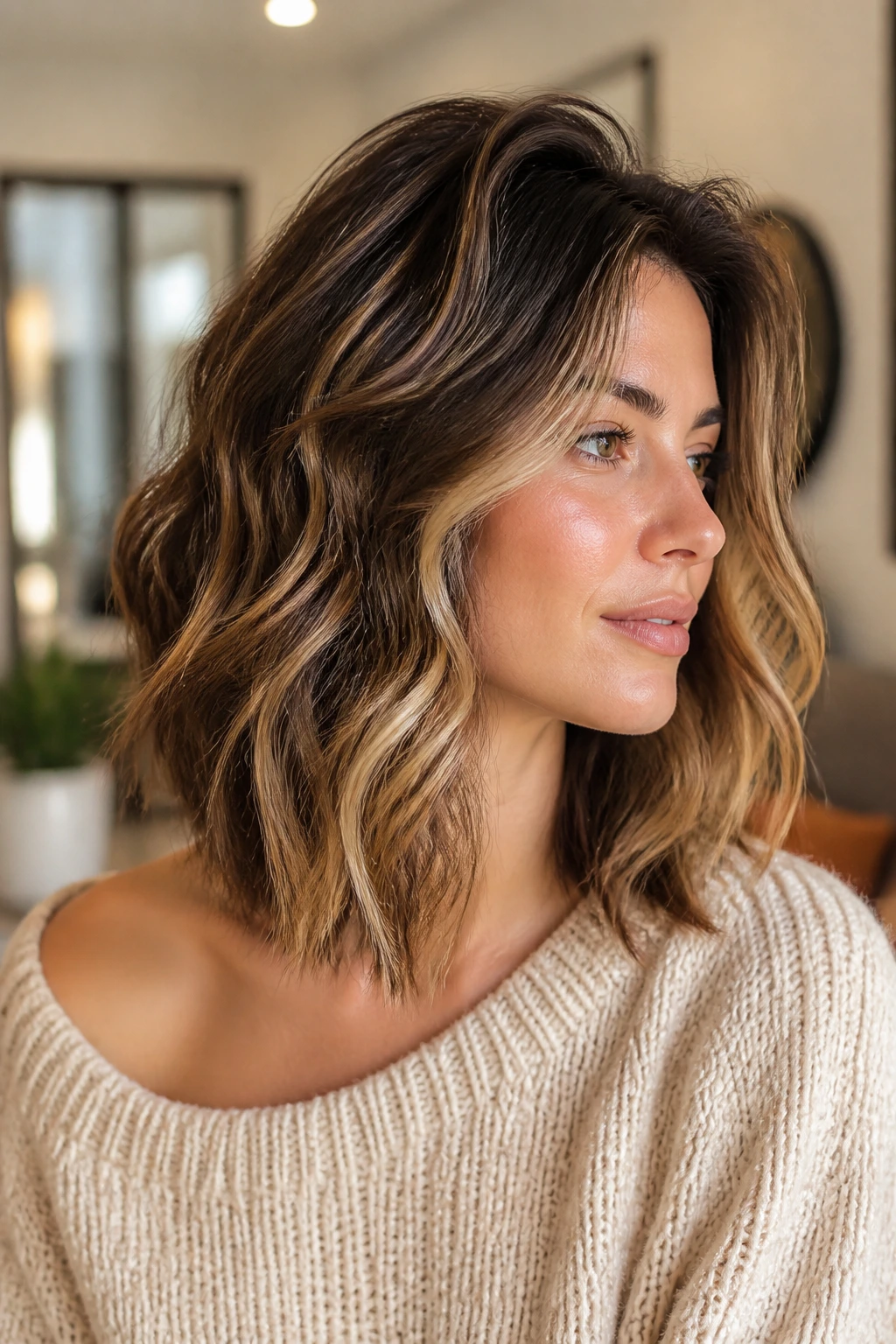
Flavor Enhancement: A drop of lightweight oil on the very ends can make thick, wavy hair look smoother, but only after the hair is dry. Put it on damp hair and you risk flattening the wave before it forms.
Customization: If your waves disappear by lunchtime, pair mousse at the roots with a light gel through the mid-lengths. That combo gives the hair enough hold to keep its shape without feeling crunchy all over.
Serving Suggestions: A clean middle part sharpens a blunt lob. A deep side part adds lift. A soft bend around the front pieces gives the whole cut a little face-lightening movement without making it look styled to death.
Low-effort polish: Sleep with your hair in a loose topknot or a couple of large satin scrunchies so the ends don’t get crushed. The next morning, mist the hair lightly with water, scrunch the front pieces, and warm the roots with the dryer for a minute. That’s often enough.
For extra density: Ask your stylist to remove bulk in the interior, not by thinning the ends into wisps. Thick hair needs structure first. Texture comes second.
Common Mistakes That Make Lob Haircuts Puff Out
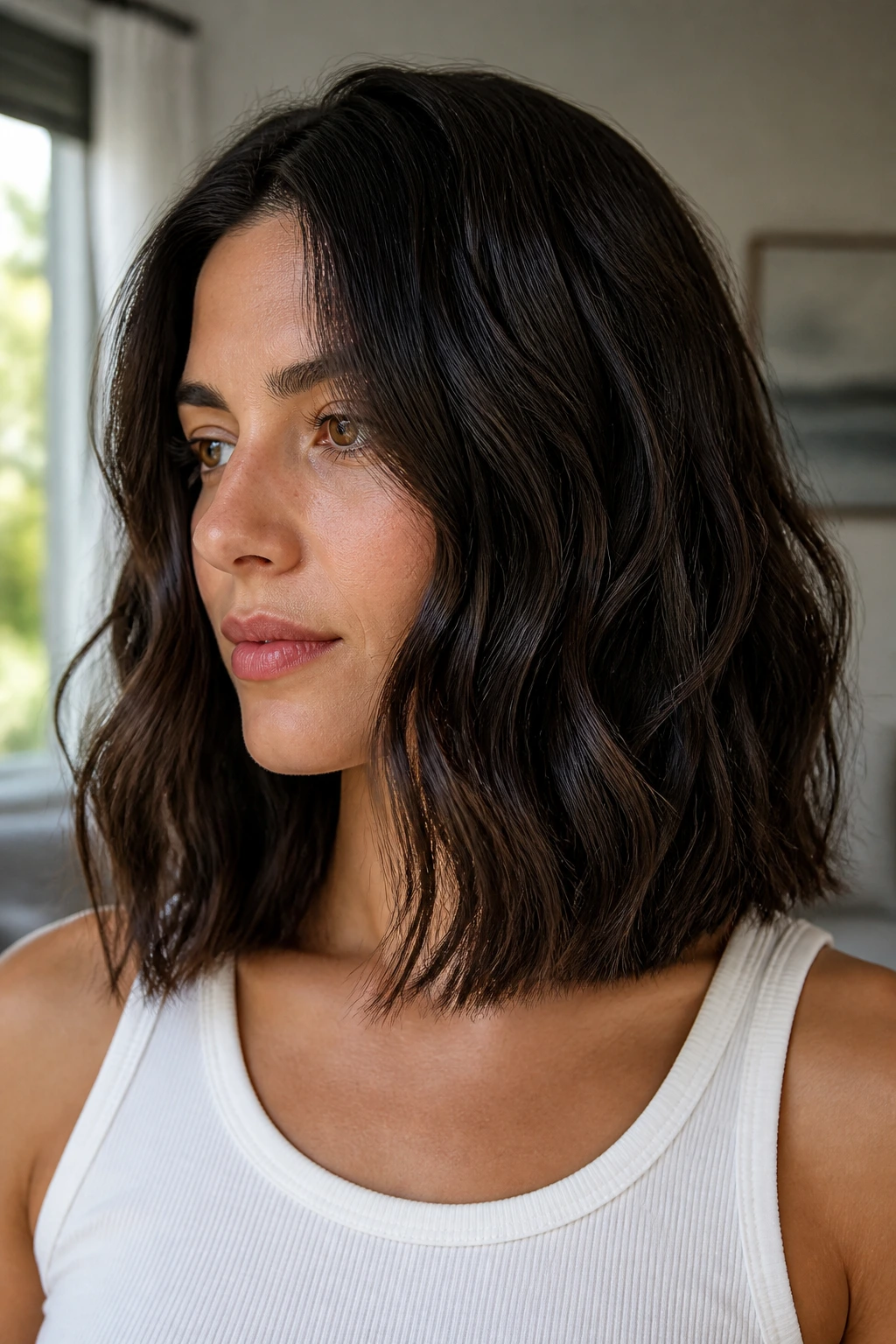
The first mistake is taking too much weight off the outside line. When the ends get over-thinned, thick wavy hair loses the clean edge that makes a lob look intentional. The result is a fuzzy triangle that expands every time humidity shows up.
The second mistake is cutting the hair only wet and trusting the mirror too much. Wet waves lie. They stretch out, then spring back with a vengeance once they dry. If your stylist does not check the shape dry or at least account for shrinkage, the finished cut can land too high around the chin.
Third, people often ask for layers when what they really need is internal weight removal. Those are not the same thing. A stack of short layers can make thick hair sit wider at the sides, while internal shaping keeps the outline smooth.
And then there’s product overload. Thick wavy hair does need support, but too much cream or oil can make the wave collapse into limp bends and greasy ends. Start light, then add only if the hair actually asks for more.
Variations and Alternative Lob Approaches
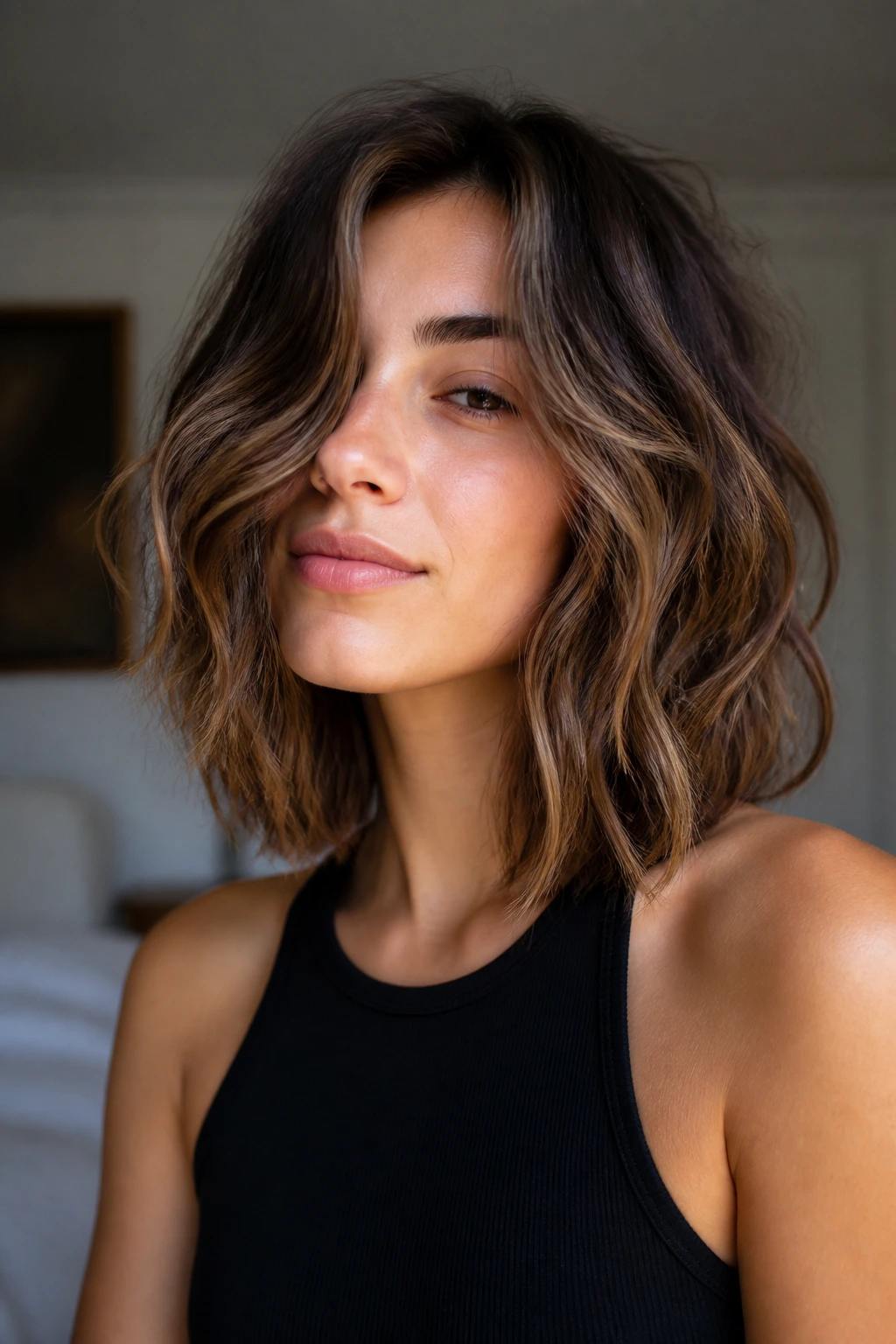
The Air-Dry Lob: This version leans into natural texture with soft internal shaping and a clean perimeter. It’s a smart pick if you want the cut to look decent with almost no heat styling, and it usually works best when the stylist keeps the front a touch longer than the back.
The Blowout Lob: Built for smooth bends and polished movement, this cut keeps enough weight through the outline to hold a round-brush finish. If you like hair that flips under at the ends instead of airing out on its own, this is the cleaner, more structured choice.
The Face-Frame Lob: Long pieces around the cheekbones and jaw make this one feel lighter around the face without turning the whole cut into a shag. It suits people who want softness near the front but still need the back to stay full and controlled.
The Minimal-Layer Lob: Thick wavy hair can wear a nearly one-length lob better than most textures because the density itself creates movement. This variation works when you want to keep the outline clean and let the wave do the work.
The Grow-Out Lob: If you’re moving from long hair to shorter hair, this is the safest landing spot. It keeps enough length to tie back, tuck behind the ears, or pin up, while the shape still feels deliberate instead of halfway to a bob.
Keeping the Shape Between Salon Visits
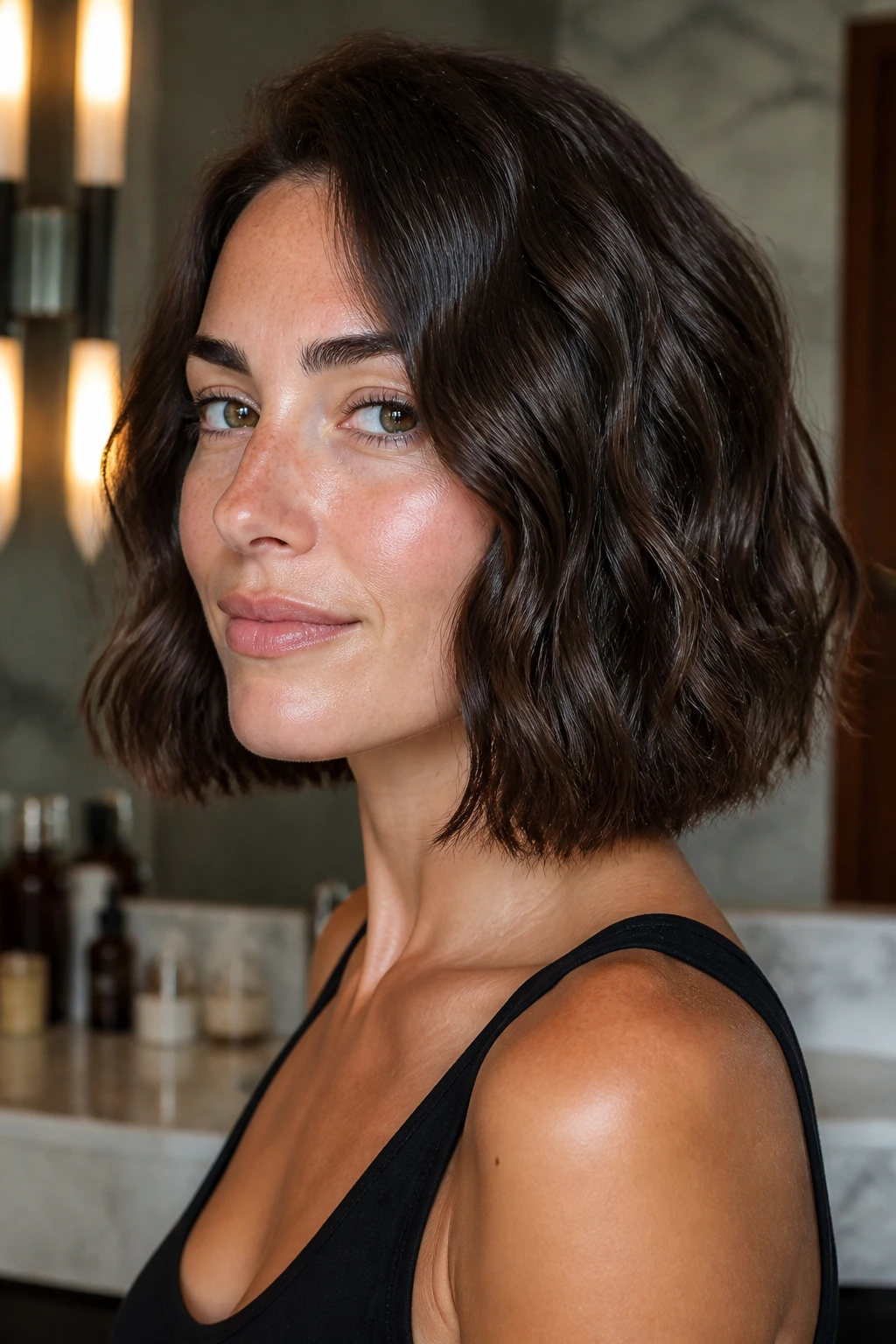
A lob on thick, wavy hair does best with regular trims before the shape gets sloppy. For most people, that means every 8 to 10 weeks if you want the outline to stay crisp. If you wear curtain bangs or side bangs, those front pieces usually need attention sooner, around every 4 to 6 weeks.
The grow-out phase matters too. Thick hair can disguise a lot, which is nice until the bottom starts flipping out and the front gets long enough to drag. At that point, a small dusting cut is usually better than waiting for a dramatic rescue job. Tiny trims keep the shape alive.
Between visits, refresh the hair with a light mist of water or a leave-in spray, then rework only the front sections and the crown. You do not need to re-style the whole head every morning. And if the ends feel rough, a tiny amount of serum at the last inch of hair usually beats piling on more cream.
Frequently Asked Questions About Lob Haircuts for Wavy Hair and Thick Hair

What length counts as a lob on thick, wavy hair?
Most lobs sit somewhere between the chin and the collarbone, but thick wavy hair usually looks best when the ends graze the collarbone or fall just below it. That gives the wave room to move without letting the outline blow out at the sides.
Are layers good or bad for thick wavy lob haircuts?
Layers can help, but only if they’re placed with restraint. Thick hair often needs internal weight removal more than obvious short layers. Too many short layers can make the cut bigger, not lighter.
Should a lob for wavy hair be cut wet or dry?
A mix works best. Wet cutting helps create the overall shape, but dry refinement shows how the waves actually settle. If your hair shrinks or bends unevenly, a dry check is worth asking for.
Will a blunt lob make thick hair look too wide?
Not if the length is right and the cut has enough internal shaping. A blunt line can be one of the best choices for thick hair because it keeps the weight at the edge instead of letting it explode into frizz. The problem is usually the length or the lack of interior balance, not the bluntness itself.
How do I stop my lob from flipping out at the ends?
That flip usually happens when the cut sits at an awkward shoulder length and the hair hits your clothes. A slightly longer lob, a subtle underbevel, or a cleaner blunt line often fixes it better than more styling products.
Can a lob work if my waves are uneven?
Yes, and honestly, many are. Uneven waves just need a cut that doesn’t force both sides into the same behavior. Slight asymmetry, longer face-framing, and a dry finish check can help the whole cut feel balanced.
How do I style a lob without heat and still keep it neat?
Use leave-in conditioner, a touch of mousse or cream, then scrunch and let it dry with as little touching as possible. A center part or soft side part usually helps the shape settle evenly. If one side behaves badly, clip it at the root while it dries.
What if my thick hair feels heavy even after the lob?
That usually means the interior still has too much bulk. The fix is not more layers everywhere. It’s smarter weight removal inside the cut, plus a styling product that gives lift at the roots instead of dragging everything down.
How often should I trim a lob to keep it looking clean?
Every 8 to 10 weeks is a good rhythm for most thick, wavy lobs. Bangs or shorter face-framing pieces may need a quicker tidy-up if they start landing in your eyes or folding oddly at the cheek.
The Lob Sweet Spot
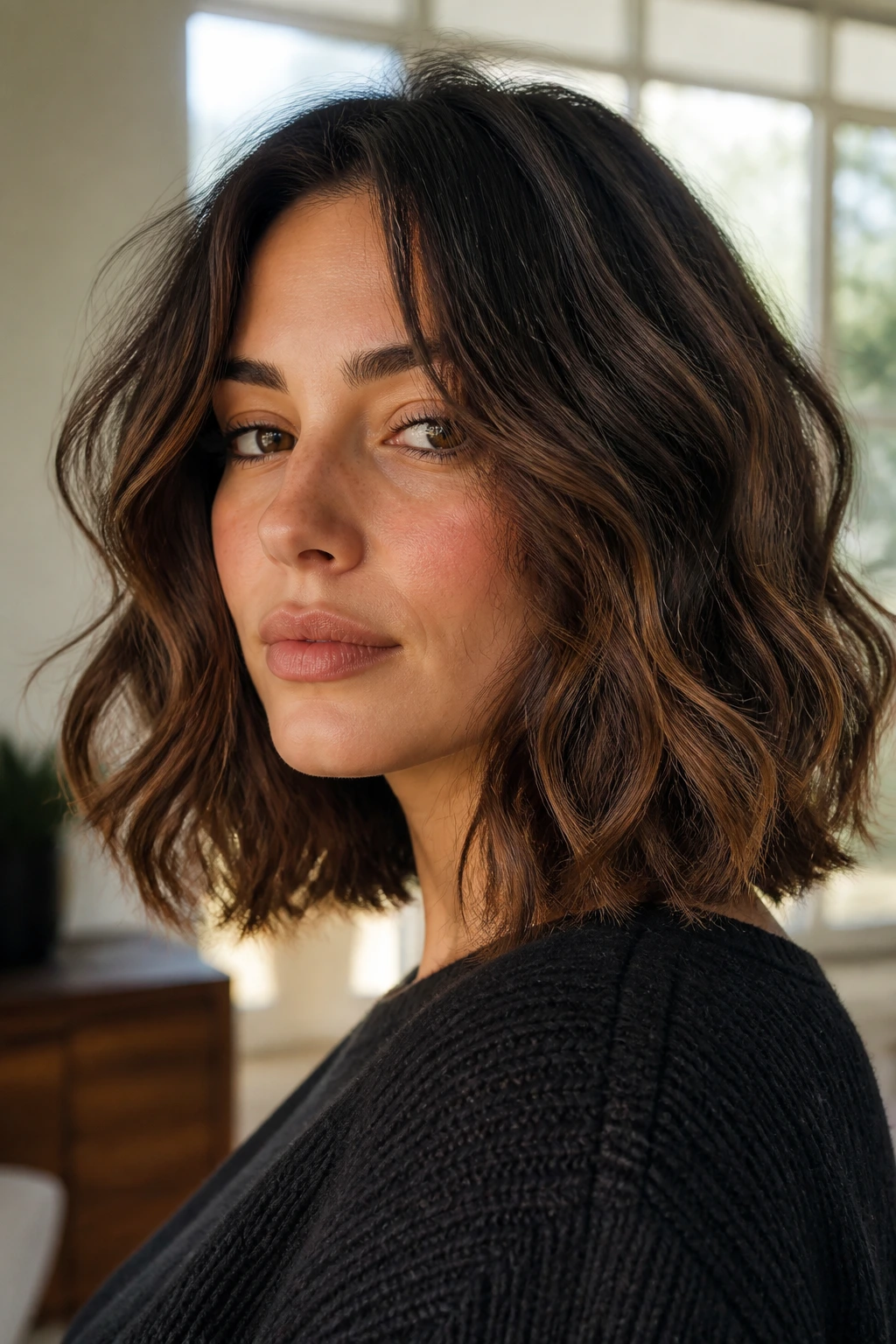
The best lob haircut on thick, wavy hair doesn’t try to tame the texture into something else. It gives the hair a shape that makes sense when it’s moving, when it’s damp, when it’s dry, and when you’ve got ten minutes and a mirror that’s a little too honest. That’s the real appeal.
If you keep one idea from all of this, make it the shape-first rule: decide whether you want blunt, soft, shaggy, polished, or air-dried, then let the layers serve that shape instead of decorating it. Thick, wavy hair is forgiving in some ways and brutally obvious in others. A good lob respects both.
And when the cut is right, it does that lovely thing hair should do and not need much help doing. It falls into place.
