



Long hair on men looks best when it looks chosen. Not swept back by accident. Not tied up with the nearest rubber band because the front pieces kept falling into your eyes. Chosen.
That’s the real difference between hair that looks grown out and hair that looks styled. A few inches of length can change the whole read of a face — sharpen a jaw, soften a hard brow, hide a high forehead, or make a plain T-shirt feel deliberate. The catch is that long hair has weight, movement, and a habit of doing its own thing when you ignore it.
So the goal isn’t to find one magic look and cling to it forever. Better to build a small rotation: one clean style for work, one easy one for heat or gym days, one loose shape for when you want the length to show, and one or two braided or tied options for the days your hair feels too loud. That’s where long hair on men starts to look confident instead of accidental.
Why These 21 Looks Earn Their Keep
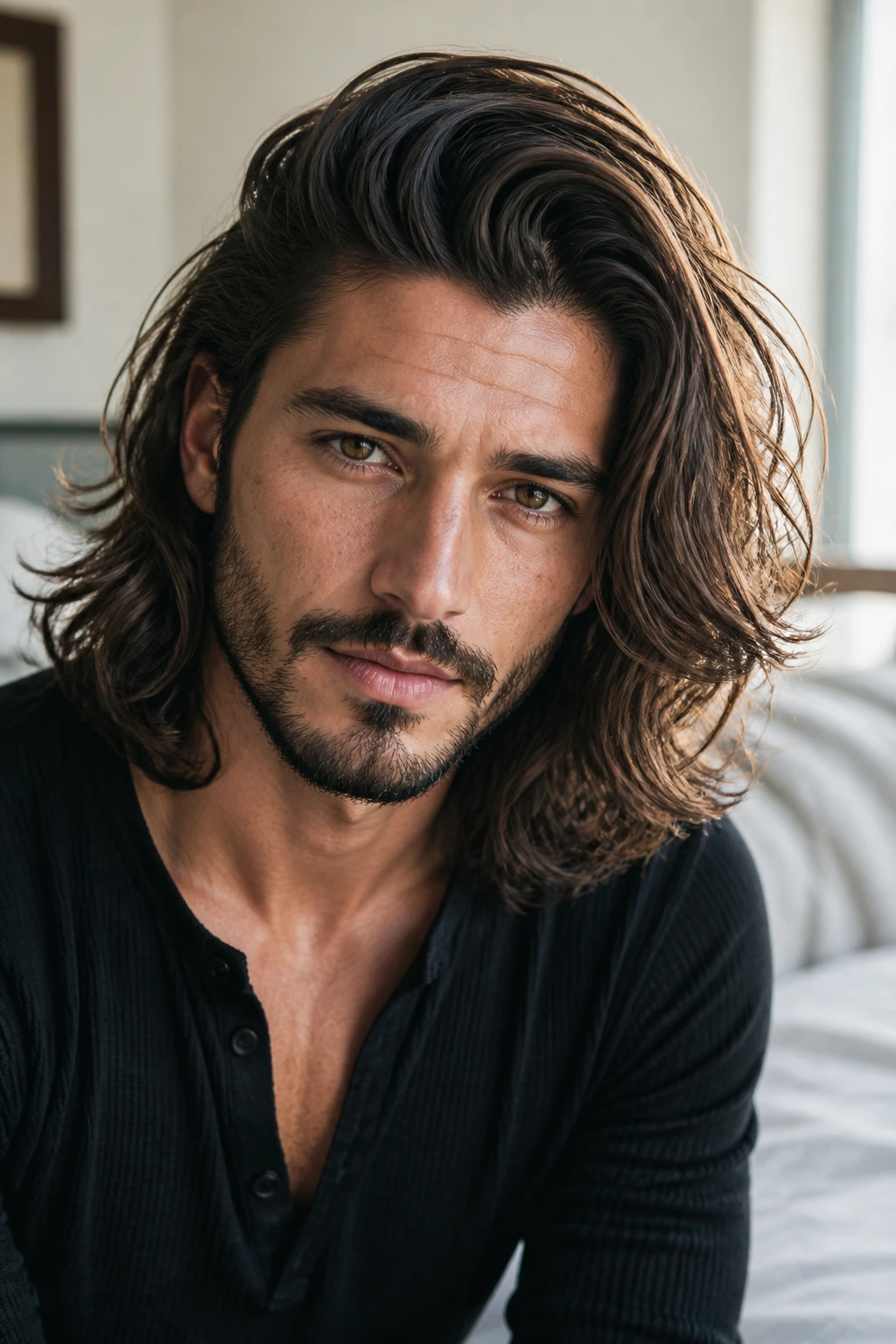
- They manage weight, not just shape: Long hair gets heavy at the ends, and these styles use that weight instead of fighting it.
- They work with real life: Commuting, sweating, hat hair, wind, collars — every style here handles at least one of those problems.
- They don’t all need the same texture: Straight, wavy, curly, thick, and finer long hair each get a lane here.
- They give you range: You can go polished, messy, tied, braided, or loose without cutting it all off.
- They help you look intentional fast: A comb, a tie, and the right part can change the whole read in under five minutes.
- They respect the hairline and the neckline: The best long styles look good from the front and from behind. That matters more than people admit.
1. Low Ponytail With a Center Part
A low ponytail with a center part is the cleanest way to show long hair without letting it take over your face. The part keeps the front pieces balanced, and the low tie at the nape keeps the silhouette calm instead of bouncy. If your hair hits the shoulders or slightly past them, this style can look almost sharp.
Why It Works
The low tie pulls the eye downward, which makes the face look a little longer and tidier. That’s useful if your hair is thick or has a blunt hem at the bottom, because the tie gives the shape somewhere to settle. A center part adds symmetry, but it only works when the hair is hydrated enough to lie flat instead of puffing out.
- Best hair types: Straight, wavy, and medium-thick hair.
- Best length: Collarbone to mid-back.
- Product: A pea-sized amount of matte cream or light leave-in.
- Finish: Keep the tie at the nape, not halfway up the back of the head.
- Quick fix: Smooth flyaways with damp hands rather than more product.
One small thing: if the part keeps wandering, set it while the hair is still damp and clip the front sections for 3 to 5 minutes.
2. Loose Half-Up Knot
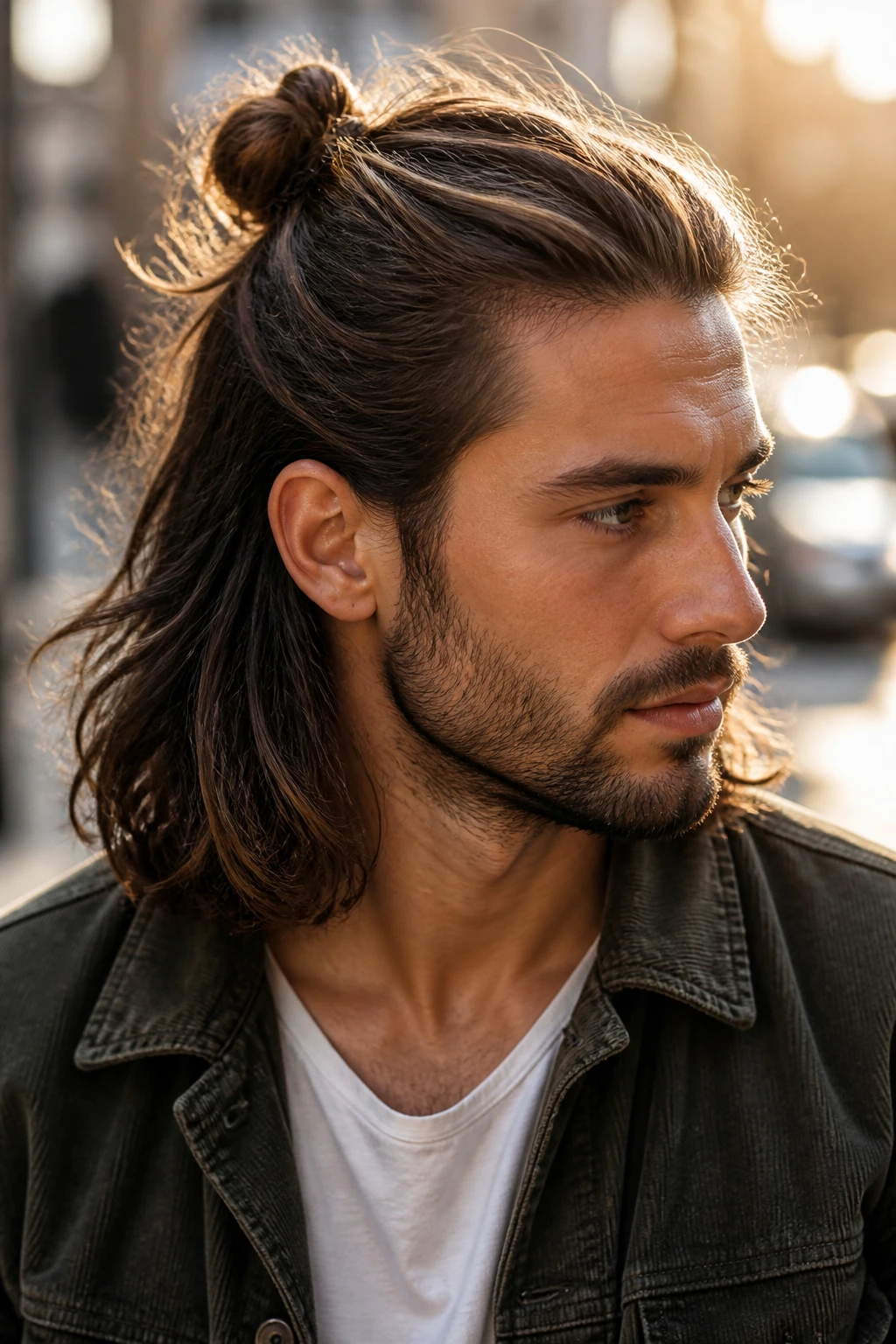
A half-up knot is what I reach for when the front of the hair has become the problem but I still want the length visible. It keeps the eyes clear, leaves the rest of the hair down, and avoids the severe look of a full bun. On men with thick hair, it can be a lifesaver on humid days.
The best version is loose. You want the top section gathered from temple to crown, twisted once or twice, then tied just enough to stay put. Pulling it too tight makes the knot tiny and strange, like it’s trying too hard. Leave the lower section free and let it move.
You’ll get the most out of this style when the top layers are a little textured. Sleek, slippery hair can slide out unless you add a touch of paste or use a snag-free tie. Wavy hair tends to make the knot look fuller with less effort, which is probably why this style keeps showing up on men who are growing their hair out but aren’t ready to commit to a full updo.
If your hair is fine, keep the knot small and slightly messy. If it’s thick, don’t fight the volume — use it. The whole style depends on that contrast between control on top and softness underneath.
3. Loose Man Bun
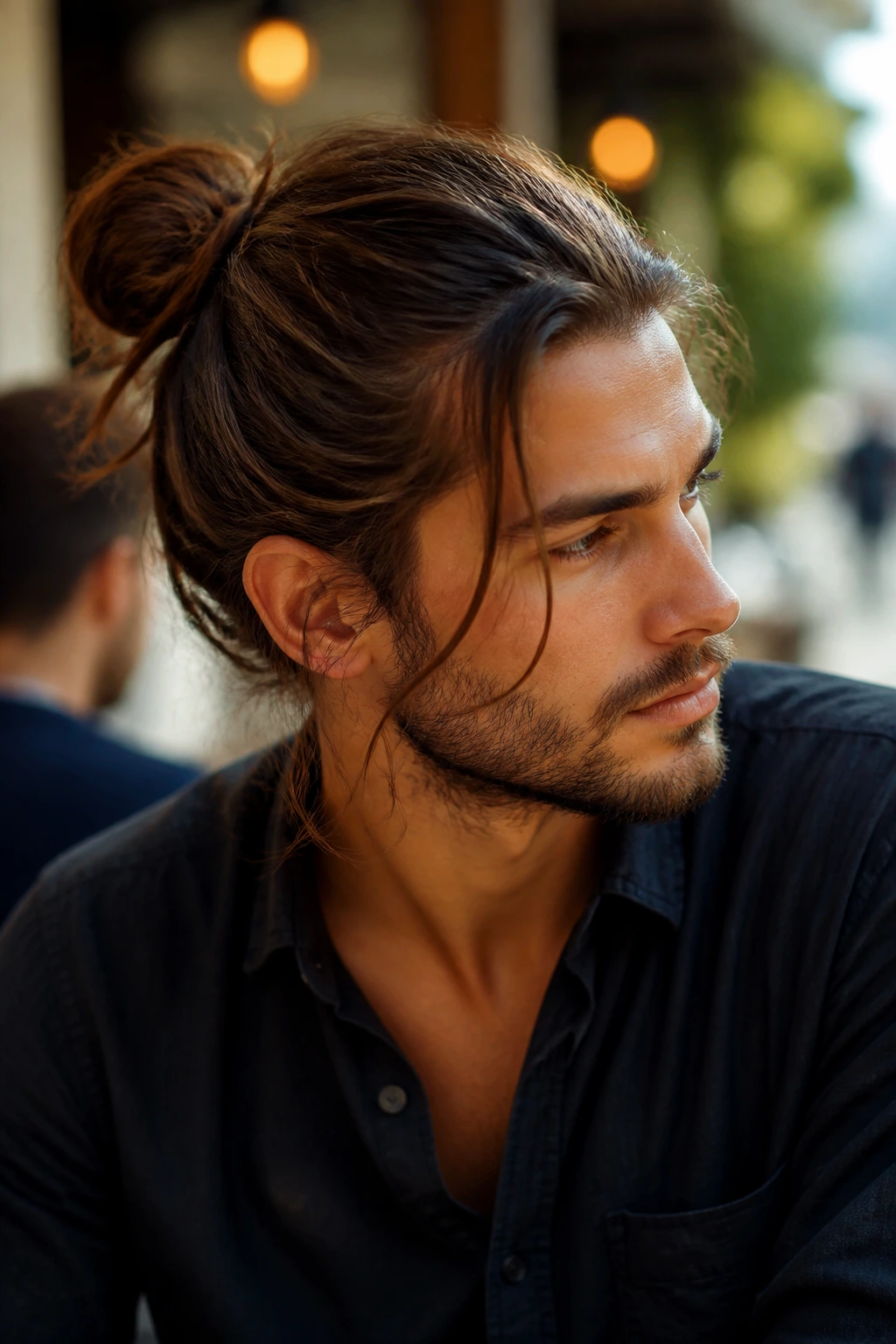
If long hair keeps brushing your neck and you don’t want it loose, the loose man bun is the obvious answer. Not the tight little knot that leaves a dent in your head. A looser bun, held low or mid-crown, keeps the length intact while still taking the weight off your shoulders.
A good bun should look like the hair was gathered, not squeezed. That means you leave a little slack at the base, loop the hair once or twice, and stop before the ends get pulled too deep into the tie. A few stray pieces are fine. A severe bun on long hair often looks younger than the guy wearing it.
- Best for: Dense hair, shoulder-length hair, and anyone who works, moves, or sweats in long hair.
- Best tie placement: Mid-crown for casual wear, low at the nape for a calmer look.
- Product: A light cream or water-based pomade if the hair slips.
- Avoid: Over-tightening, which can stress the hairline.
- Worth knowing: A bun that’s too small usually means the hair is still too short for this shape.
A loose bun is useful because it gives you the option to let the hair down later without strange bends. That alone makes it one of the smartest long-hair styles in the bunch.
4. Middle-Part Curtains
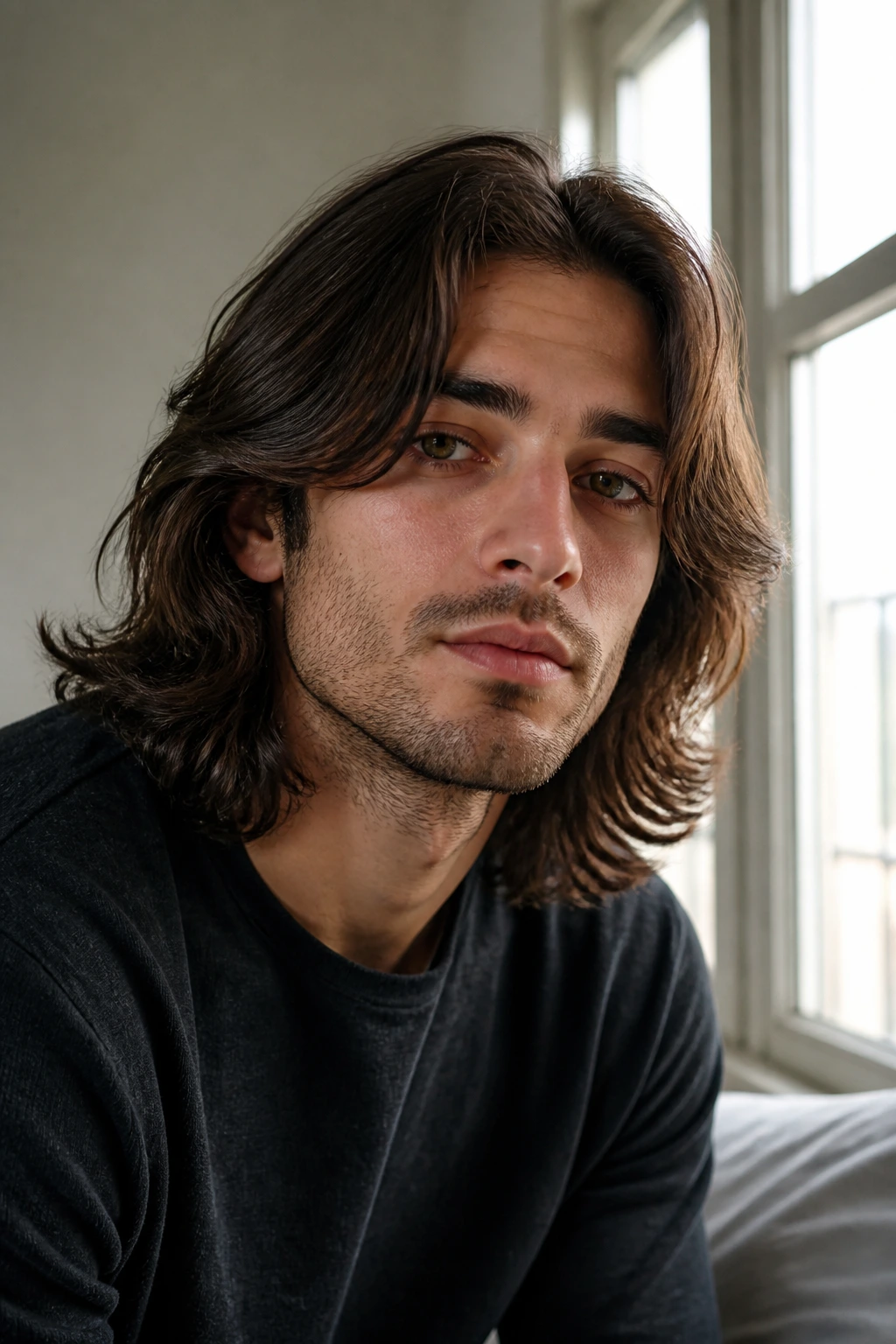
Why do middle-part curtains keep coming back? Because they make long hair look like a haircut instead of a compromise. The front pieces fall away from the face, the length hangs clean, and the whole style has a little movement even when the hair is still.
The trick is balance. If the part is too sharp and the hair too flat, you get a sad center split. If the top is too fluffy, you get a mushroom. The sweet spot is hair that’s been dried with the part set, then pushed lightly out from the temples so the front pieces bend instead of sticking straight down.
How to Wear It
Use a wide-tooth comb on damp hair and let the front sections fall naturally. A small amount of leave-in conditioner or a soft cream keeps the ends from fraying and gives the curtains that smooth bend at the cheekbones. On wavy hair, a diffuser can help the shape stay open without turning puffy.
This style is best when the haircut underneath has some layers. Without them, the front can look heavy and the sides can collapse into the cheeks. With the right cut, though, it’s one of the easiest long styles to wear every day.
5. Bro Flow
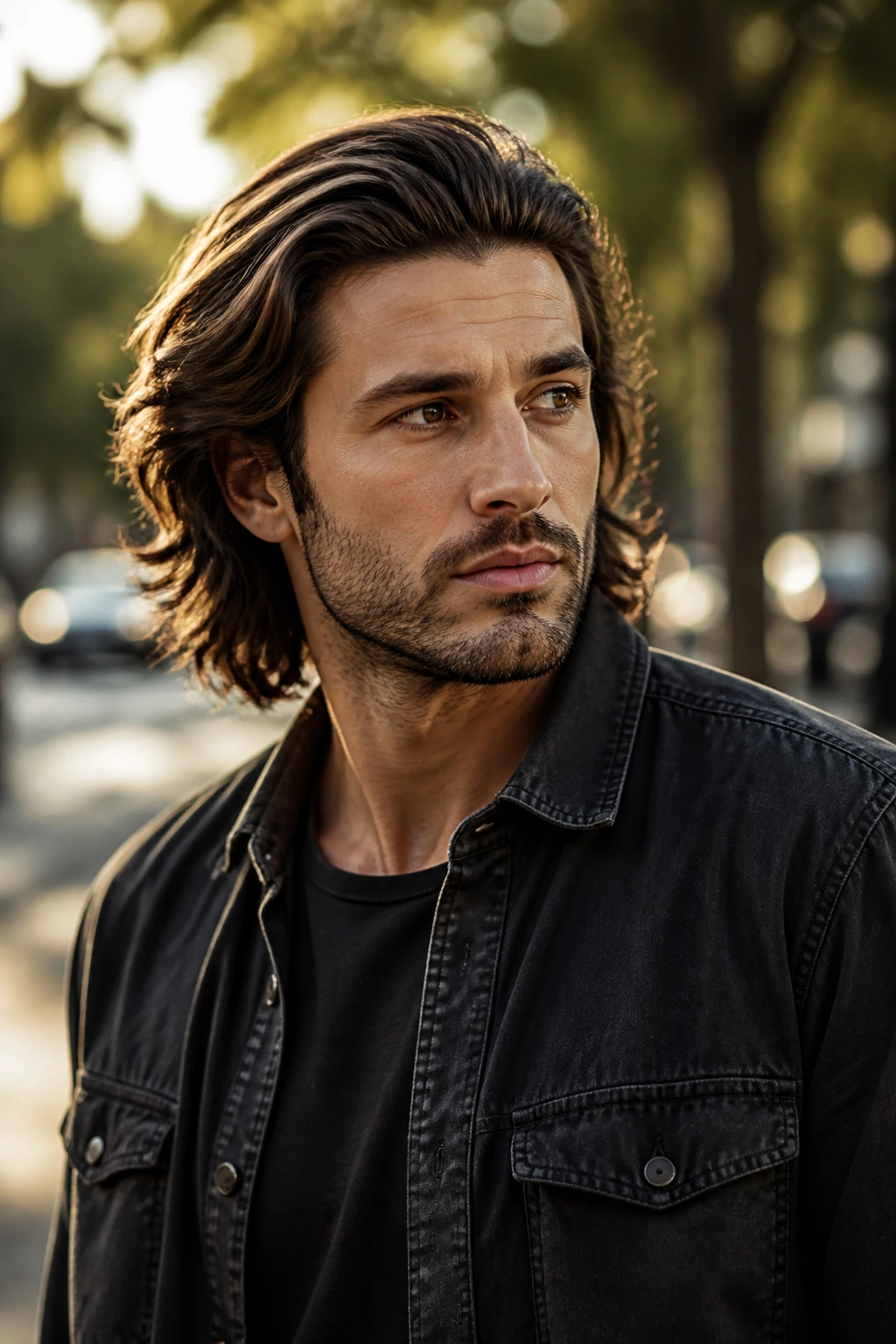
The bro flow is the style people describe as effortless when what they mean is “the haircut was done with restraint.” Hair flows back from the face and over the ears, usually with enough length to tuck behind them when needed, and enough layer to avoid a curtain of dead weight. It works because it looks like movement.
This is a better choice than a ponytail if you want the length to stay visible. The hair sits on the shoulders, lifts a little in the wind, and moves when you turn your head. That movement is part of the appeal. Still, it needs shaping. A blunt, one-length cut turns the same idea into a helmet.
The best bro flow has soft layers around the crown and sides, with the ends skimming the collar rather than hanging in one heavy line. A little sea-salt spray on damp hair can add bend, but don’t drown it. Too much product kills the float that makes the style work.
If your hair is naturally wavy, this is a gift. Straight hair can wear it too, but it usually needs a blow-dry with fingers lifting the roots, not a brush flattening everything down. The style is casual, yes. Lazy, no.
6. Slicked-Back Shoulder-Length Hair
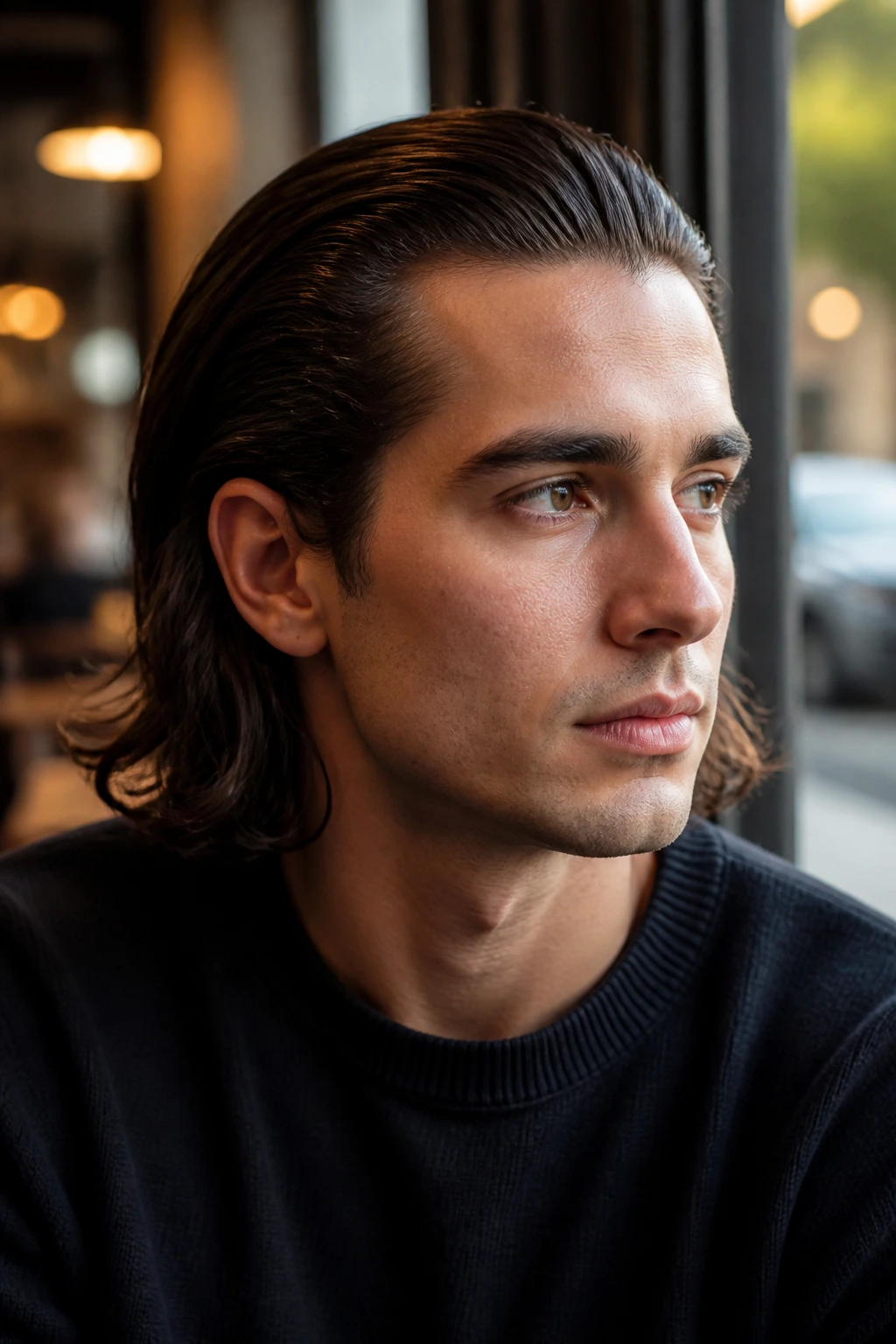
Unlike a bun, slicked-back long hair keeps the full length visible. Unlike loose flow, it takes the face out of the blast zone. That middle ground is why it looks good on men who want polish without chopping off the dramatic part.
The important thing is control without crunch. Start with damp hair, rake in a small amount of gel, cream-gel, or light pomade, then comb it straight back from the hairline. Stop before the ends look wet all the way through. You want sheen at the front and softness farther down.
This style loves straight or slightly wavy hair. Very curly hair can do it, but the result becomes more controlled than sleek unless you blow-dry first. The haircut underneath matters too: if the ends are too blunt, the back can look heavy. A few interior layers keep the whole thing from sitting like one sheet.
Best use case? Dinner, meetings, events, anything where you want the length to look deliberate and not bohemian-by-accident. Keep a comb in the bag. Wind does not care about your plan.
7. Textured Waves With Sea-Salt Cream
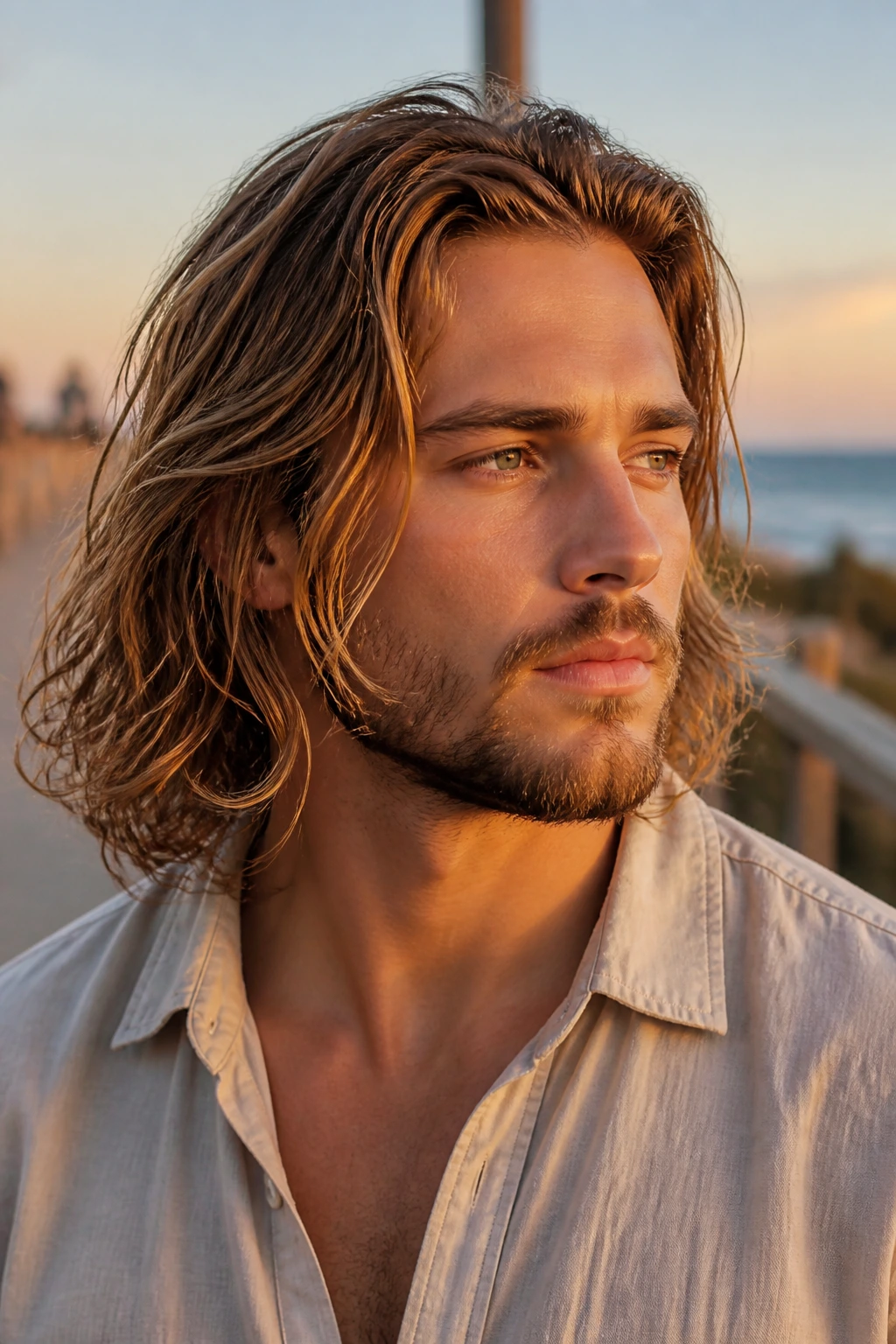
Textured waves are the style for men who want long hair to look touched by air, not dragged through a styling routine. It should read soft, separated, and a little rough around the edges — not frizzy, not crispy. The right product makes that line easier to hit.
Start with towel-dried hair and work in a sea-salt cream or spray from mid-lengths to ends. Scrunch or twist sections with your hands, then let the hair air-dry or diffuse on low heat. The trick is stopping before the waves get too uniform. Uniform waves look fake on men’s hair. Slight irregularity looks better.
What Makes It Work
This style depends on texture more than shape, so it’s forgiving when the haircut has some unevenness or the length isn’t identical all the way across. It suits wavy and curly hair especially well, but straight hair can fake it if the cut has enough layer and the product is light enough to hold a bend.
- Best product: Sea-salt cream if hair dries puffy; spray if hair is dense and heavy.
- Best drying method: Air-dry or diffuse on low.
- Best cut: Soft layers that remove bulk from the ends.
- Avoid: Heavy oil near the roots.
If you want long hair that looks relaxed but not abandoned, this is one of the smartest moves on the list.
8. Single Side Braid
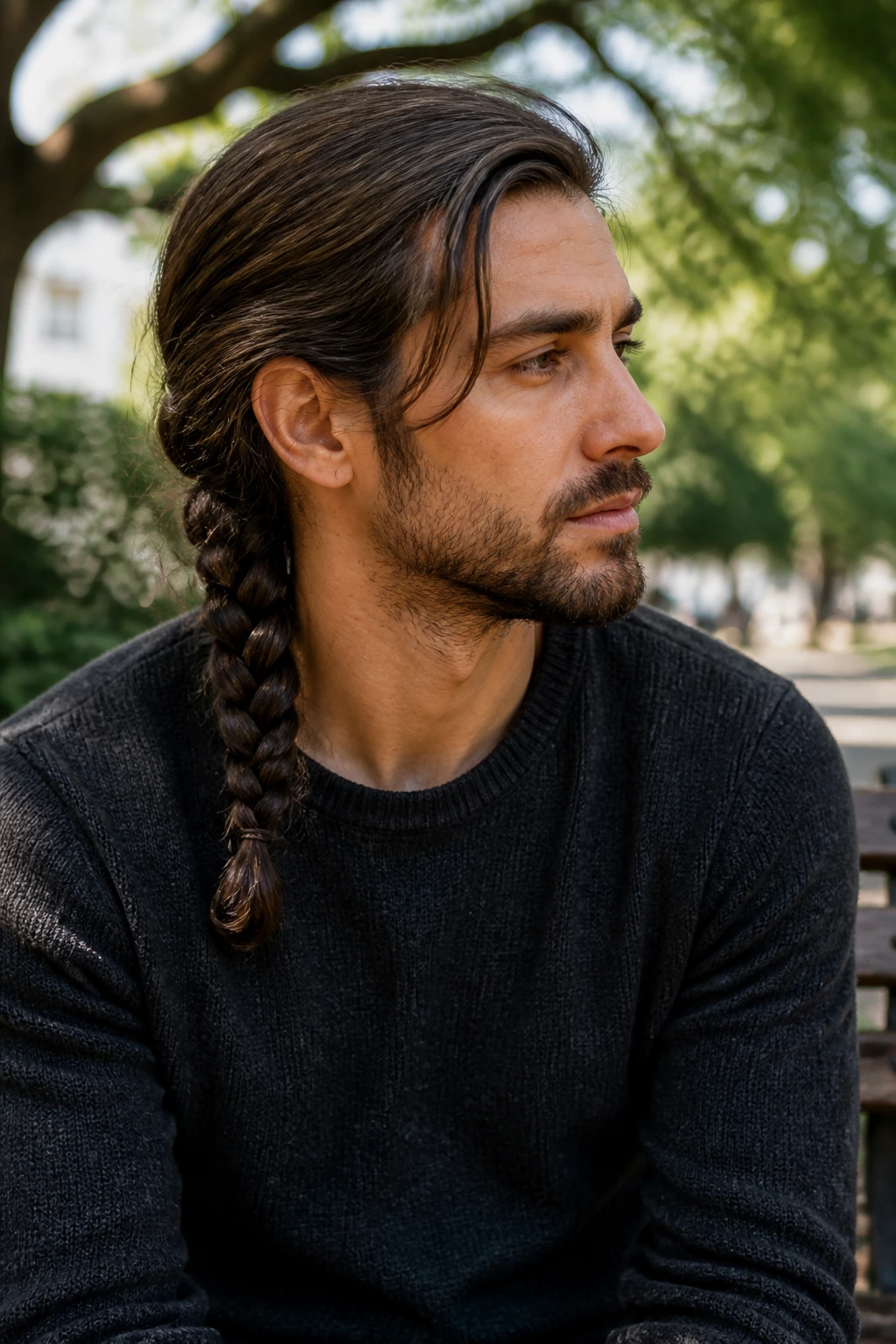
A side braid is useful when you want the hair secure but don’t want to disappear it into a bun. The braid gives the style structure, and because it falls over one shoulder, it keeps the length visible. It also solves a common problem: hair that constantly slides forward on one side.
This works best when the braid begins low, near the ear or just behind it, and stays loose enough that the pattern reads. Too tight, and it starts looking severe. Too loose, and the braid falls apart by lunch. Find the middle.
You can keep the braid simple — a standard three-strand braid is enough. If the hair is layered and slippery, mist the lengths lightly with water or apply a tiny bit of leave-in before braiding. That helps the strands grip. Thick hair makes a fuller braid; fine hair looks better when the braid is small and a little imperfect.
Wear it when you want the practical benefit of a tie-back but still want a visible shape. It’s one of those styles that quietly solves the whole “what do I do with this hair” question.
9. Undercut With Long Top
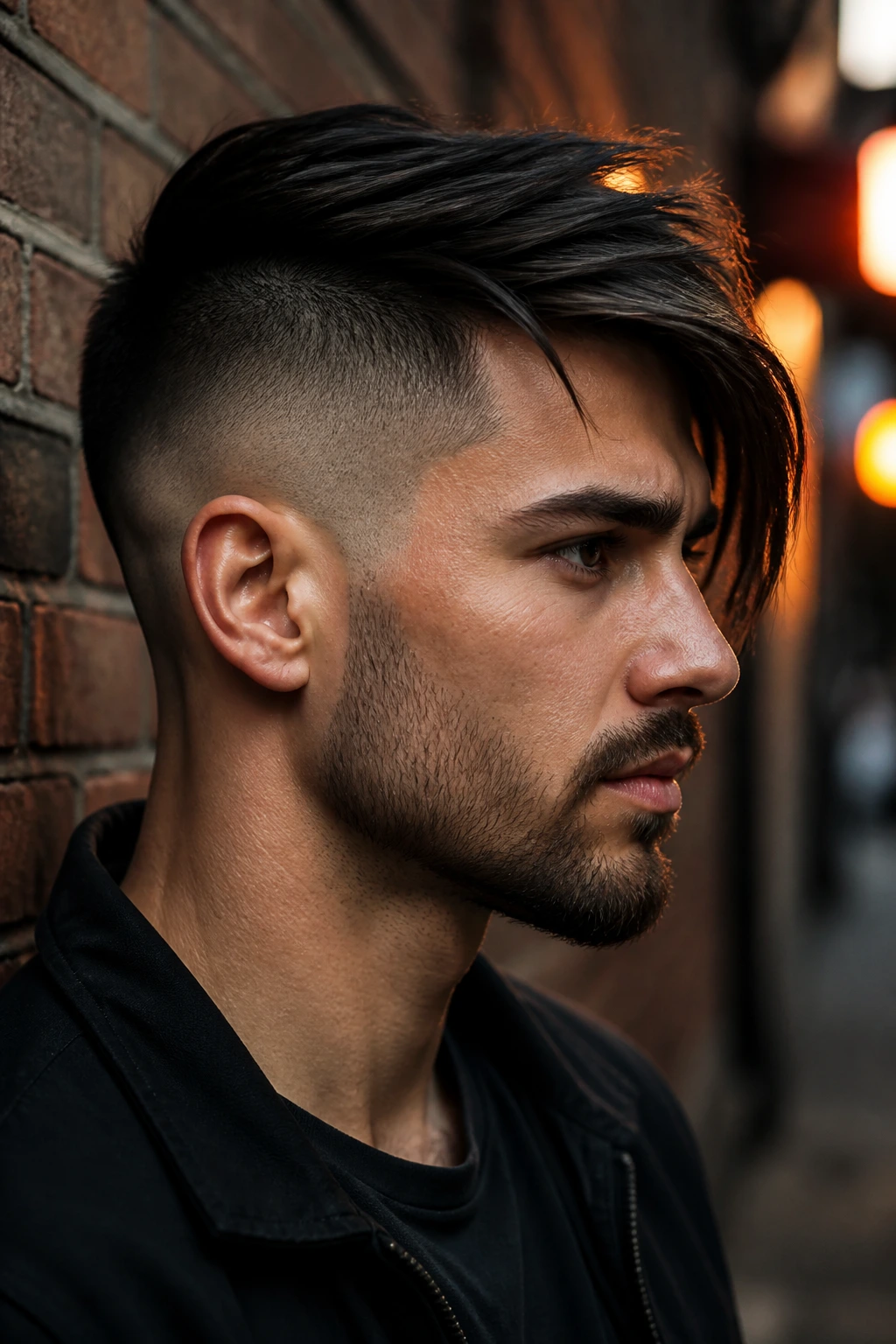
When the sides are short and the top stays long, you get options. A lot of them. The undercut with long top lets the long hair sit forward, back, or tied up while the sides stay neat and cool. The contrast is sharp, and that’s the point.
This style is especially useful if your hair is thick. Taking the sides down removes bulk where long hair often gets too wide, which makes the top easier to style. You can slick it back, part it down the middle, or pull it into a small bun. Same haircut. Different mood.
- Maintenance note: The sides usually need a trim every 3 to 5 weeks if you want the contrast to stay crisp.
- Best for: Dense hair, strong growth patterns, or anyone who likes a clean frame around the face.
- Product choice: Matte paste for texture, gel for slickness.
- Face shape note: The short sides can sharpen round faces and bring attention to the jaw.
The catch is that the undercut grows out faster than people expect. Once the sides start to blend into the top, the whole silhouette changes. Some guys like that. Some do not. If you want the contrast, plan for the upkeep.
10. Curly Push-Back
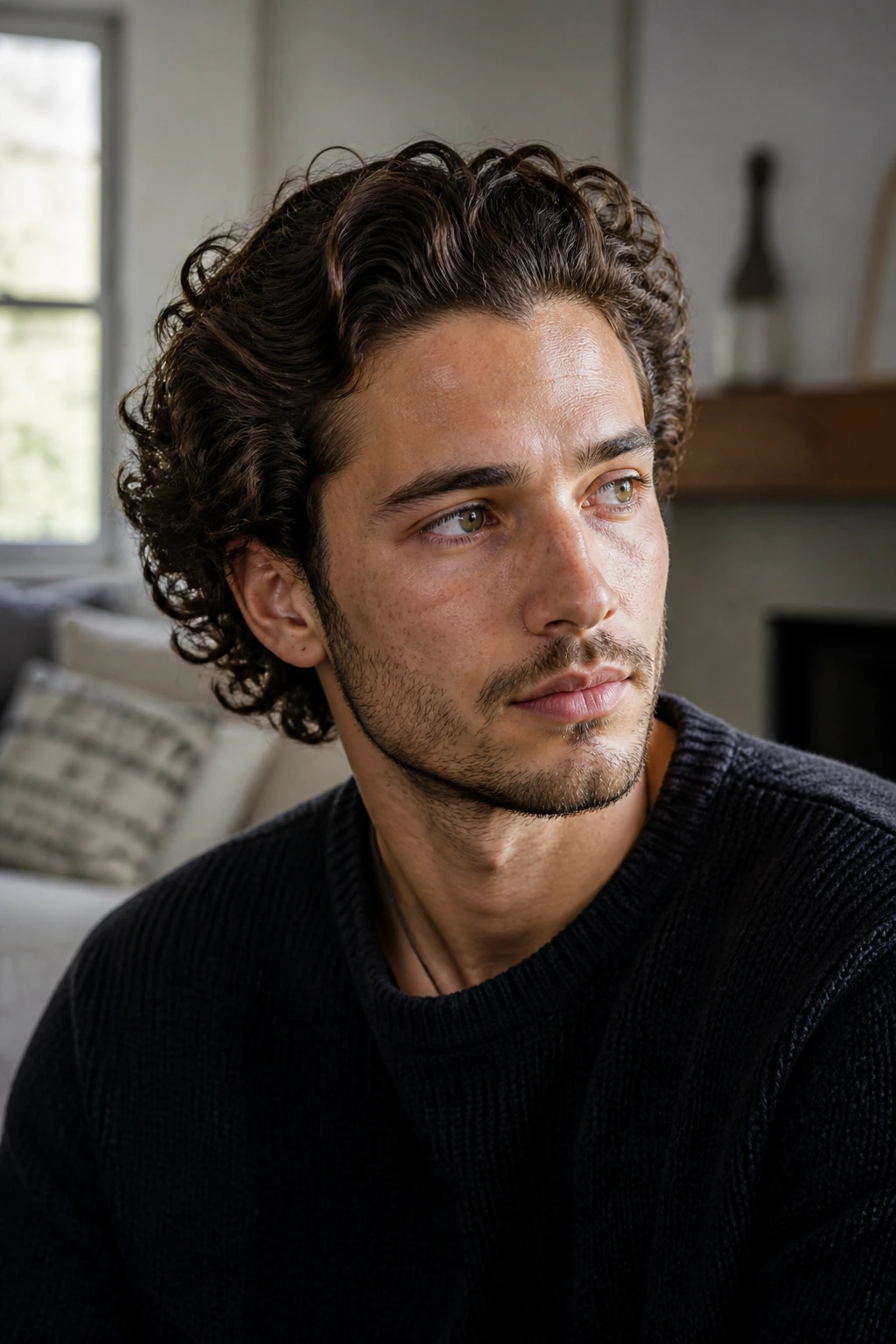
Why does a curly push-back work so well? Because curls hate being forced into narrow shapes, but they do great when you guide them instead of pinning them down. Push the hair back from the forehead, let the curls settle where they want, and the style keeps the face open without flattening the texture.
The best version starts with damp hair and a leave-in conditioner. Use fingers, not a brush, to move the curls back from the front hairline. A diffuser on low heat can add lift at the roots if the hair tends to collapse forward. The front should sit back, but not glued there.
How to Use It
Think of this as direction, not control. A curl cream or light gel gives enough hold to keep the front pieces out of the eyes, while the rest of the hair keeps its spring. If your curls are looser, a touch of sea-salt spray can add grip. If they’re tighter, skip the salt and lean on moisture.
This is one of the best styles for men who want to show curl pattern instead of hiding it. It looks good with a little mess. It does not look good when overcombed.
11. Samurai Knot
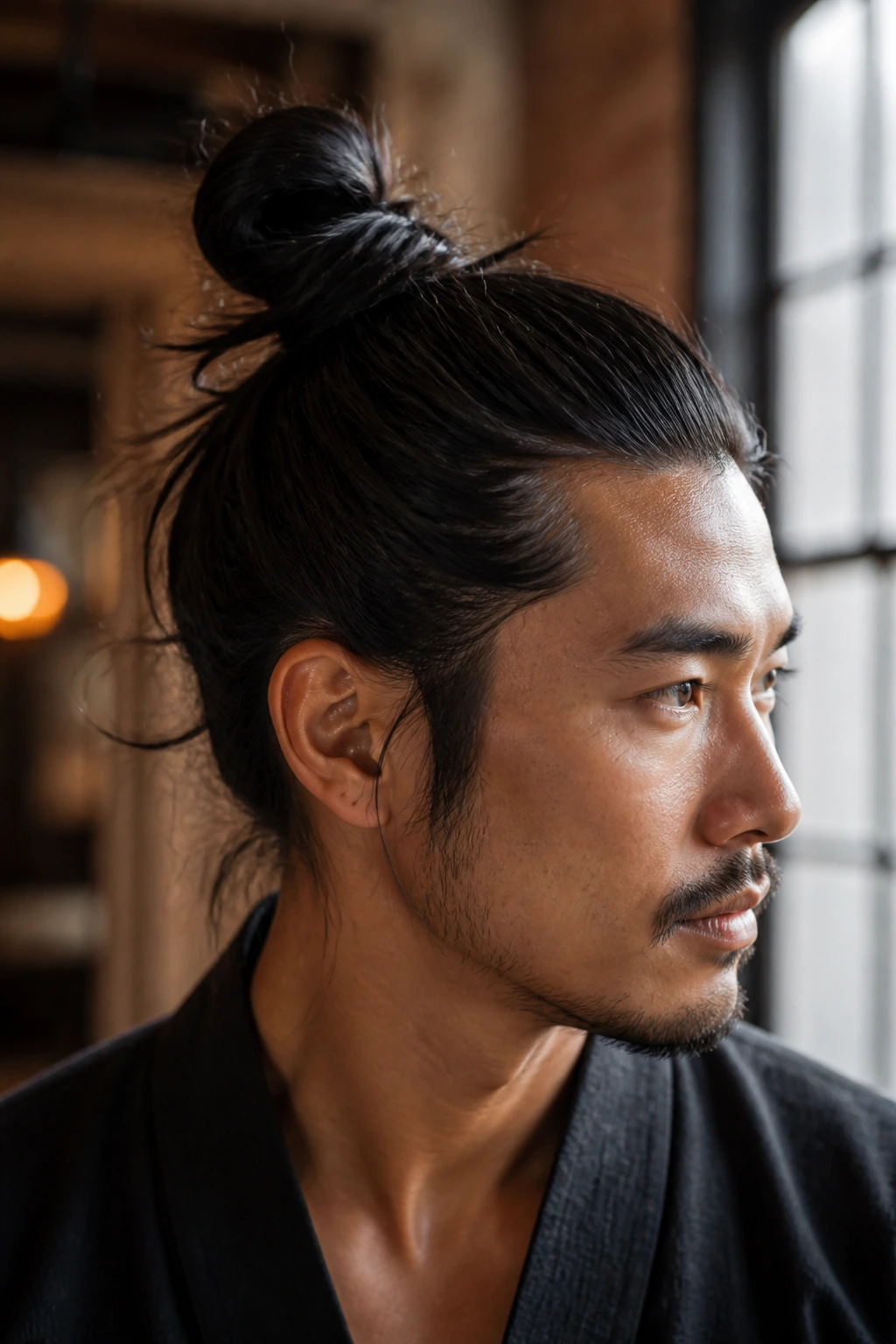
The samurai knot sits higher than a standard bun, and that higher placement changes everything. It reads more architectural, a little harder, and more purposeful — the kind of style that works when you want the hair completely off the neck but not swallowed into a low knot.
The best samurai knot starts from hair that’s long enough to wrap cleanly at the crown or just behind it. Pull the hair up, twist once, then loop it into a knot that’s secure but not squashed flat. A few loose ends are fine, but the overall shape should stay compact.
This style can feel too tight if the tie is overused or if the knot sits too long in one spot. So rotate where you anchor it. Don’t keep the knot in the exact same place every day. That’s how you avoid tension headaches and weird dents in the hair.
It works especially well when you want a strong silhouette from the side profile. That’s the part many people forget. A good knot looks one way from the mirror and another way in motion.
12. Side-Swept Layers
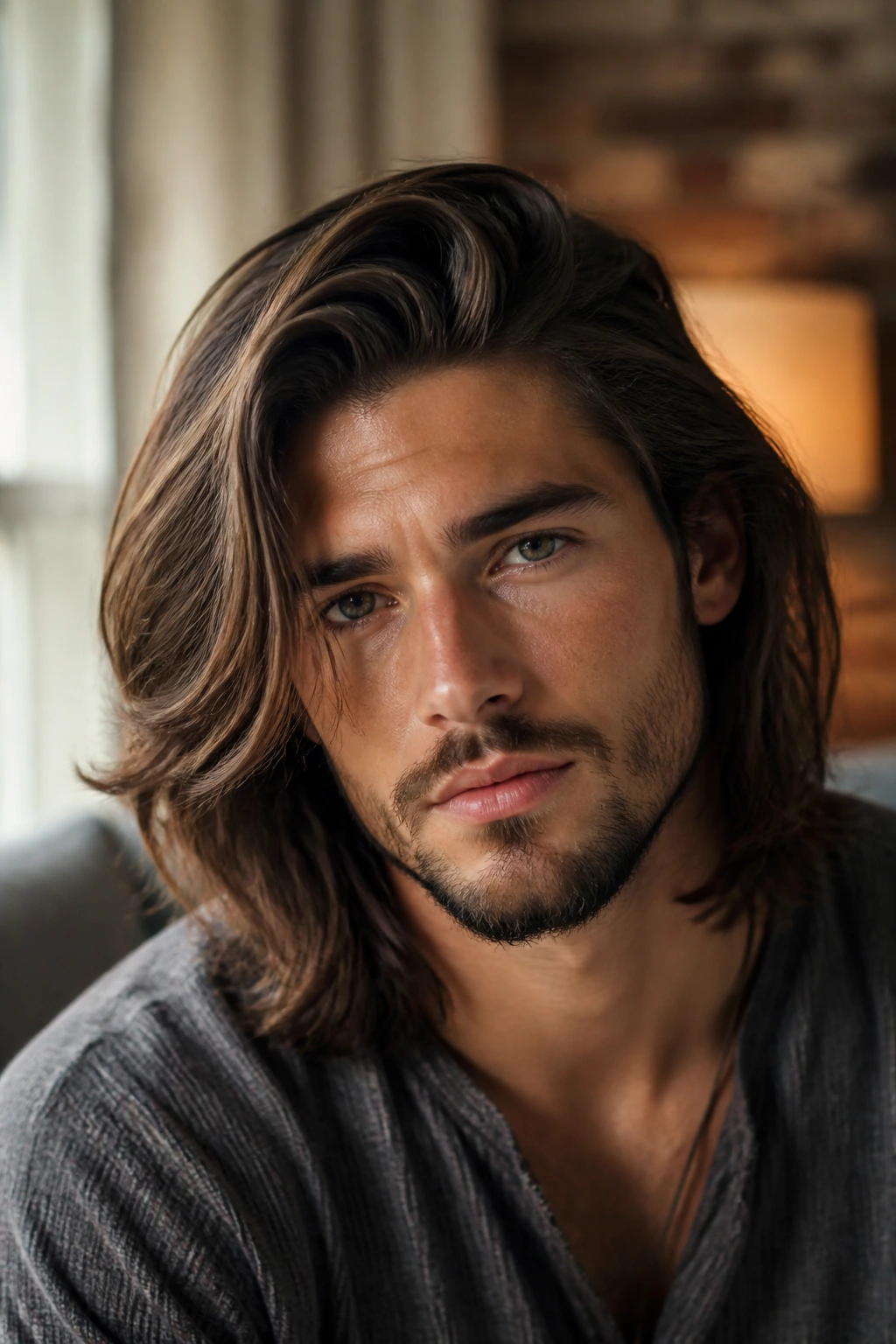
Compared with a center part, side-swept layers soften the whole face. Compared with a bun, they keep the length out where it can still move. That’s why this style is such a solid fallback for men with long hair that feels too heavy down the middle.
The shape depends on a side part that is not too aggressive. Sweep the top across one side, then let the lengths fall into layered pieces rather than one block. If the front keeps falling back into the eyes, the layers probably need a little reshaping at the barber.
Best for men with medium to thick straight or wavy hair, especially when the hairline is uneven or one side grows flatter than the other. A light cream helps the sweep stay together without making it look frozen in place. Blow-dry the top in the direction you want while lifting the roots slightly with your fingers.
What to Watch For
If the side sweep is too deep, it starts looking like a comb-over. Keep it relaxed. The difference is subtle in theory and obvious in a mirror.
13. Tucked-Behind-Ears Shoulder Length
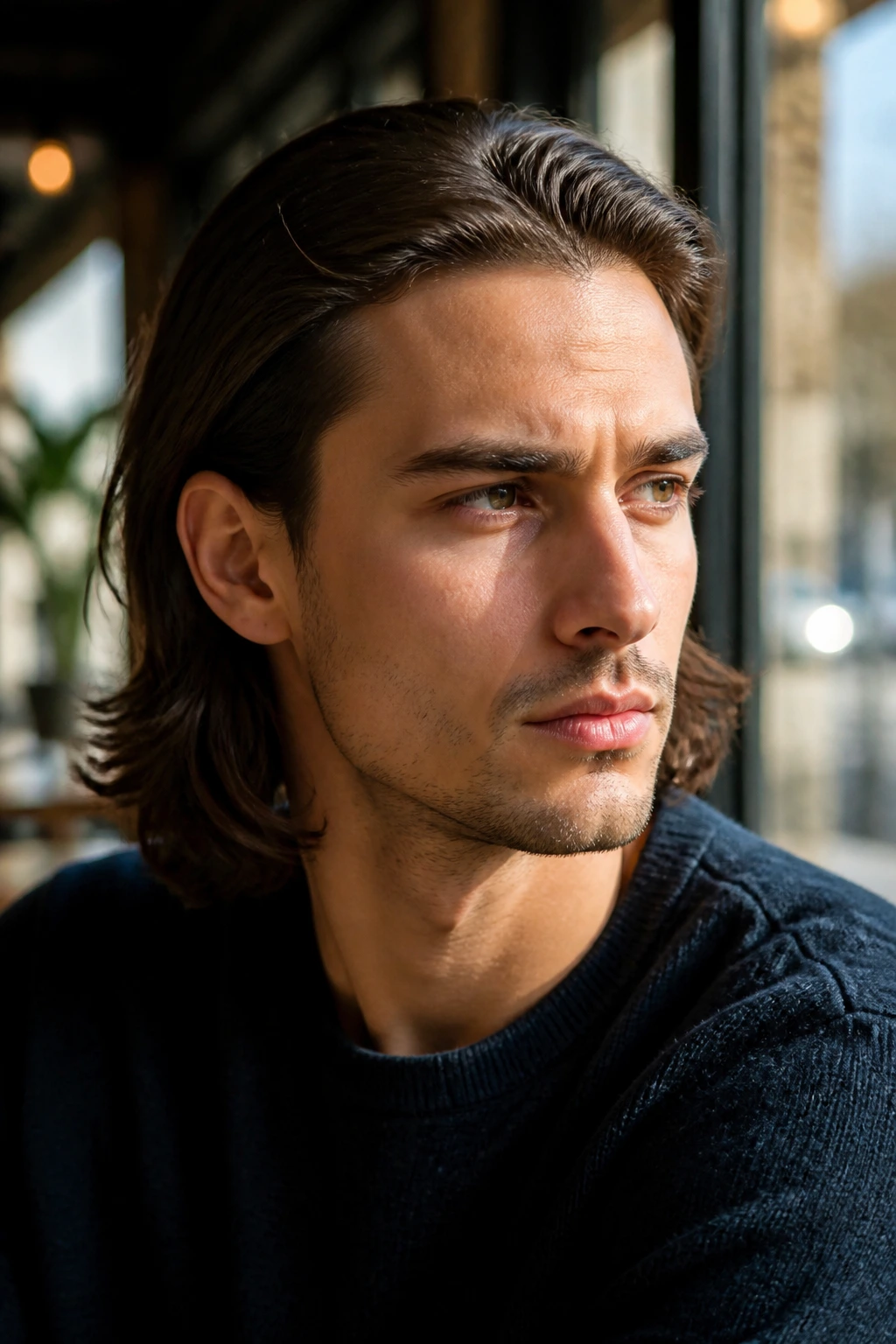
Shoulder-length hair tucked behind the ears is one of those styles that looks simple until you see it done badly. Then you notice the details. The tuck changes the frame around the face, shows the jawline, and keeps the front out of the way without adding a tie or braid.
This works best when the hair has some natural bend or a blunt but soft perimeter. If the ends are too thin, the style can look stringy. If they’re too bulky, the ears disappear and the head looks wider than it is. The sweet spot is clean sides and ends that move when you turn.
- Use when: You want a low-effort daytime style that still shows the length.
- Product: Tiny amount of cream or oil only on the ends.
- Best detail: Tuck one side behind the ear and leave the other side loose for a little asymmetry.
- Maintenance: Trim every 8 to 12 weeks to keep the ends from looking frayed.
A lot of men overthink this one. Sometimes the best move is just setting the part, tucking the hair, and leaving it alone.
14. Two-Strand Twist Back
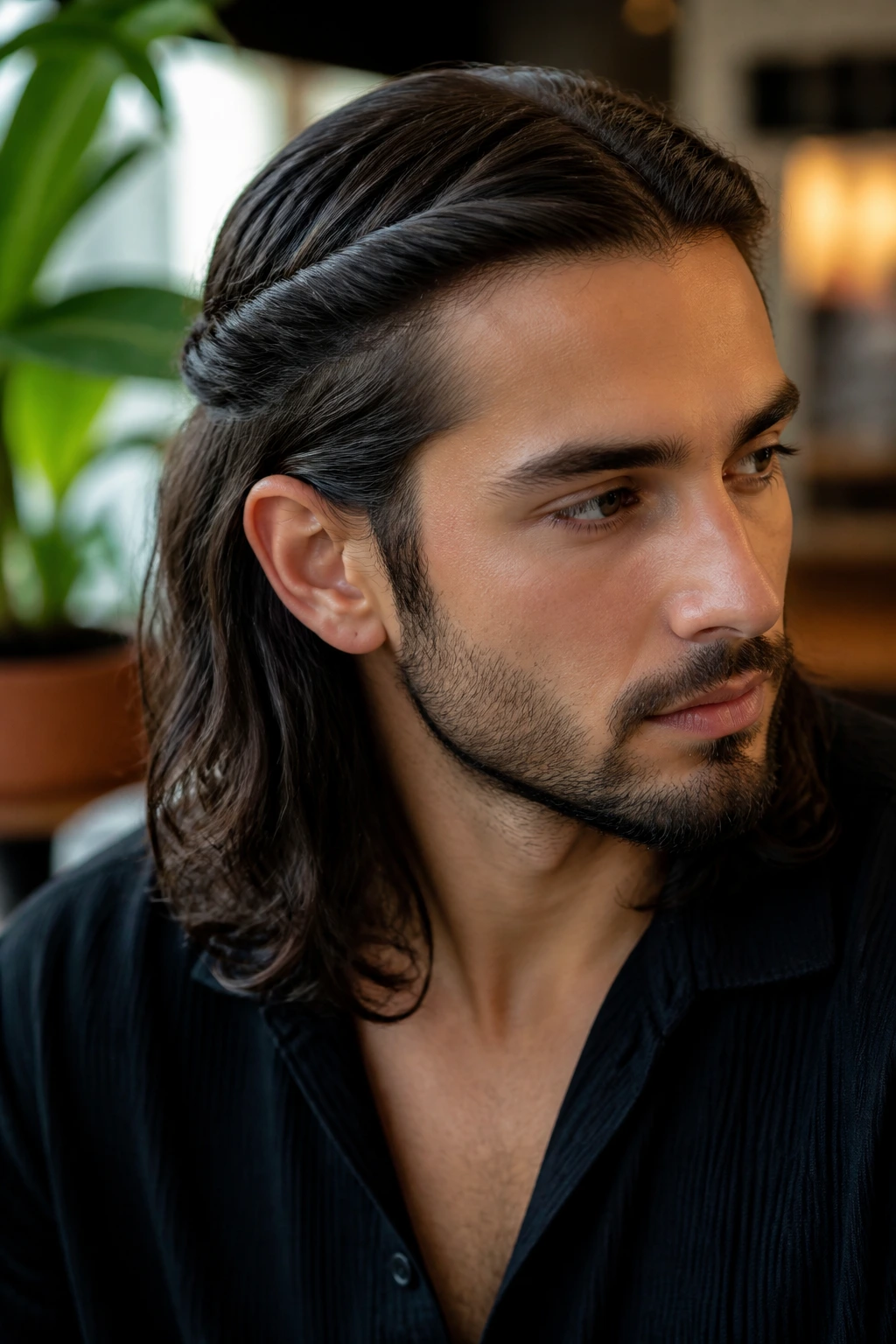
A two-strand twist back is quieter than a braid and faster than a bun. It’s the sort of style that looks like you know what your hands are doing, even if you only learned it last week. The twist also works well when the hair is thick enough to hold shape but not so long that braiding feels like a chore.
Take two sections from the front or temple area, twist them away from the face, then connect them at the back with a tie or small clip. The rest can hang loose, or you can gather it lower. This gives the front structure and leaves the length in play.
It’s especially useful on wavy hair. The twist has enough grip to stay put, and the natural bend in the hair makes the pattern visible. Fine hair can do it too, but you may need a little texturizing spray first. Too much product makes the twist feel sticky. Too little, and it slips apart.
This style is not flashy. That’s the whole appeal. It gives the front of the hair a job and lets the rest behave.
15. Dutch Braid Crown
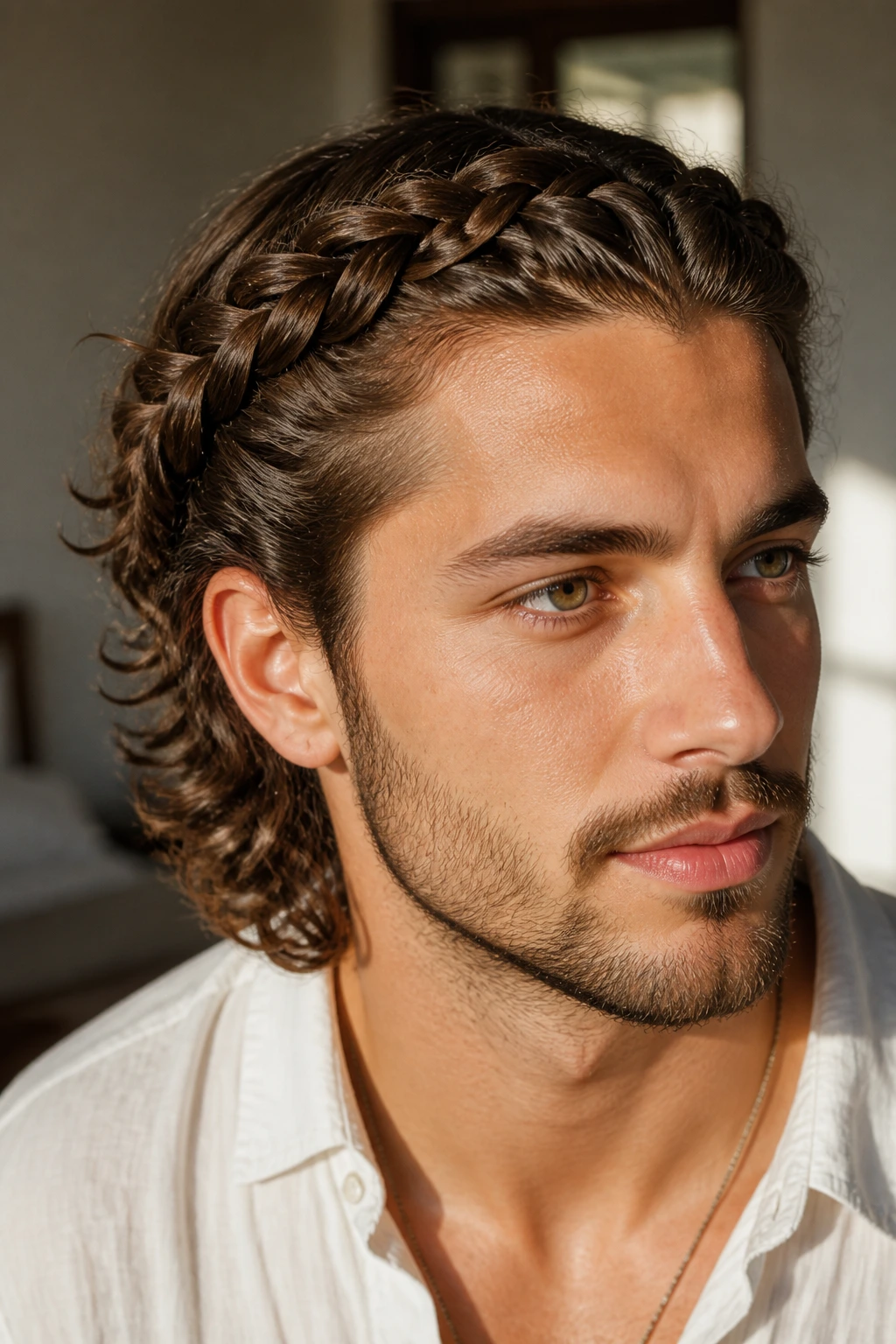
When you want the hair pinned away from the face but don’t want the sides shaved or the length hidden, a Dutch braid crown does the job. It follows the hairline, keeps the forehead open, and has enough visual structure that it doesn’t get lost in long hair.
The braid sits along the perimeter, not down the middle. That matters. A crown braid is all about edge control and symmetry around the face. On thick hair, the braid needs to be a little loose or it can feel heavy and pull at the scalp. On finer hair, a bit of grip spray helps the sections hold together.
Why It Stands Out
It looks more built than tied-back styles. The pattern gives the hair a clean frame, especially when the rest of the length hangs down the back. It’s also practical for humid days, workouts, or travel, because the braid keeps the front pieces from wandering into your face every five minutes.
A small note: if your hairline is uneven, loosen the braid slightly around the temples. A too-tight crown braid can expose exactly the spots you’d rather soften.
16. Shaggy Wolf Cut
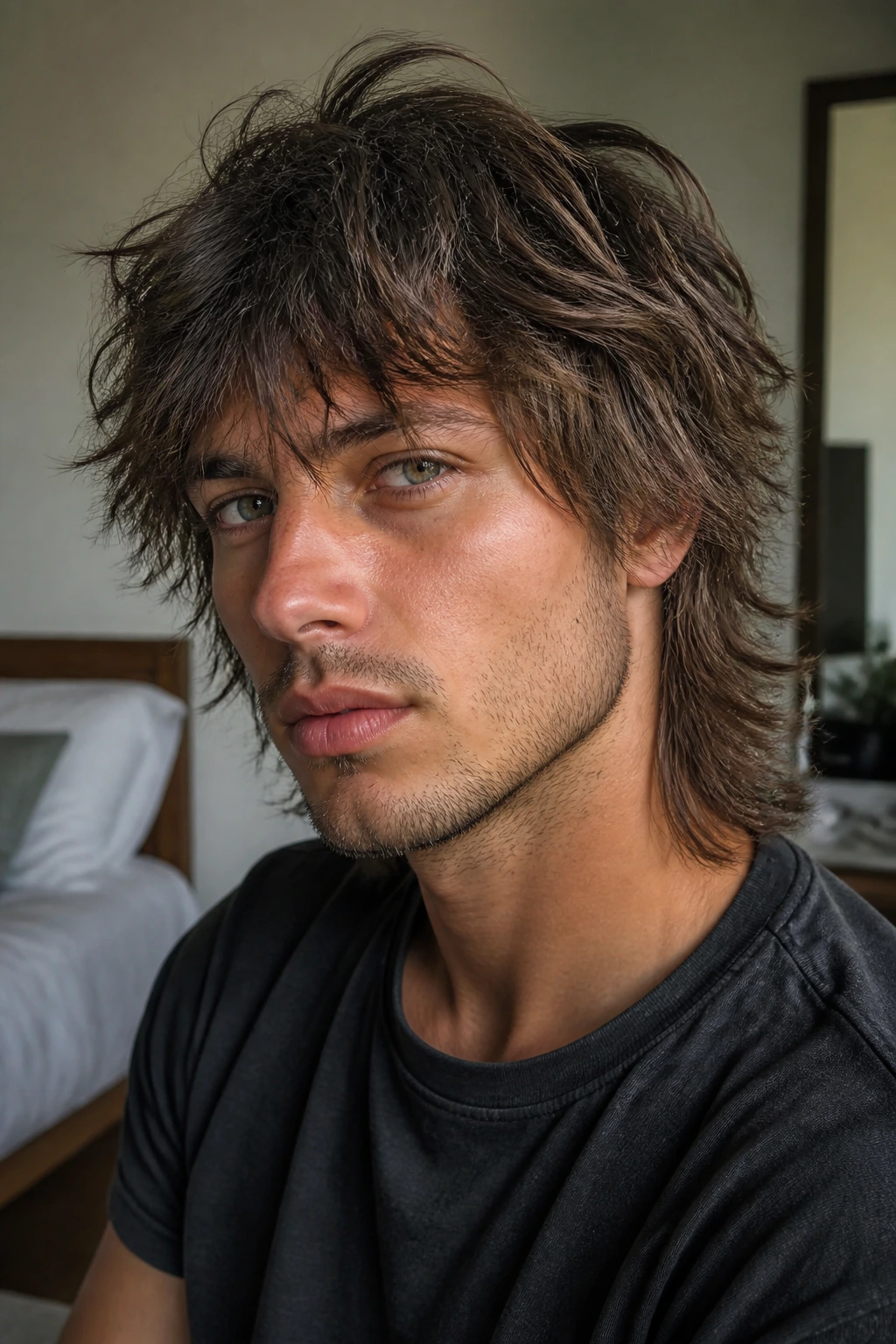
What is the wolf cut doing on a list of long hairstyles for men? Making length look messy on purpose. That’s the answer. The shaggy layers create movement at the crown, extra texture at the ends, and a little built-in chaos that works well when straight, heavy long hair needs relief.
The wolf cut sits somewhere between a shag and a mullet. Shorter layers up top, more length in back, broken edges all the way through. It’s not neat. It’s not supposed to be. The haircut is the style, which means you don’t have to spend half the morning trying to force hair into shape.
How to Ask for It
Tell the barber or stylist you want long layers with a heavier top and soft, choppy ends. If the hair is curly or wavy, the layers should be handled carefully so the bulk doesn’t puff out too much. Fine hair needs a softer version; otherwise, the cut can look sparse at the ends.
Use a small amount of matte paste or texture cream and push the hair where it wants to go. The charm of this cut is that it looks best when it’s slightly off-center, slightly uneven, and not overworked.
17. Tapered Nape Ponytail
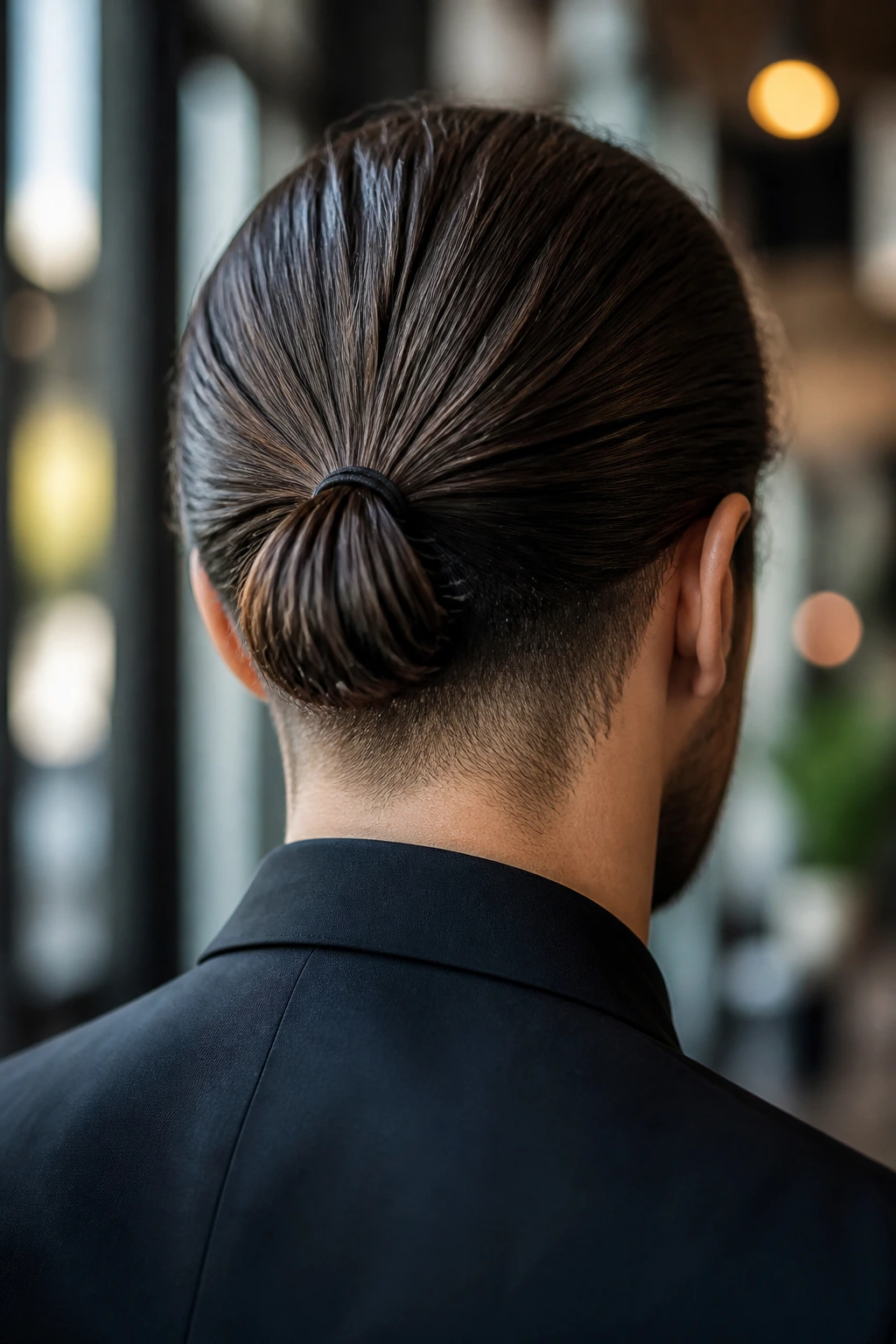
A tapered nape ponytail is a cleaner, more finished version of the basic ponytail. The difference is in the neckline. When the nape is tapered or softly blended, the ponytail sits on top of a shape that already feels trimmed and deliberate.
That matters more than people think. Without some cleanup at the back, a ponytail can look like the hair was only tied up to get it out of the way. With a tapered nape, the same ponytail looks like it belongs to the haircut.
This style is a strong choice for men who wear collars, jackets, or work shirts often. The hair sits low, avoids bulk at the neck, and doesn’t fight the collar every time you move. If the hair is thick, keep the ponytail low and a little loose. If the hair is fine, a small amount of volumizing spray at the roots gives the tie more presence.
The haircut underneath does a lot of the work. That’s why this one feels polished without asking for much daily effort.
18. Low Bun With Face-Framing Pieces
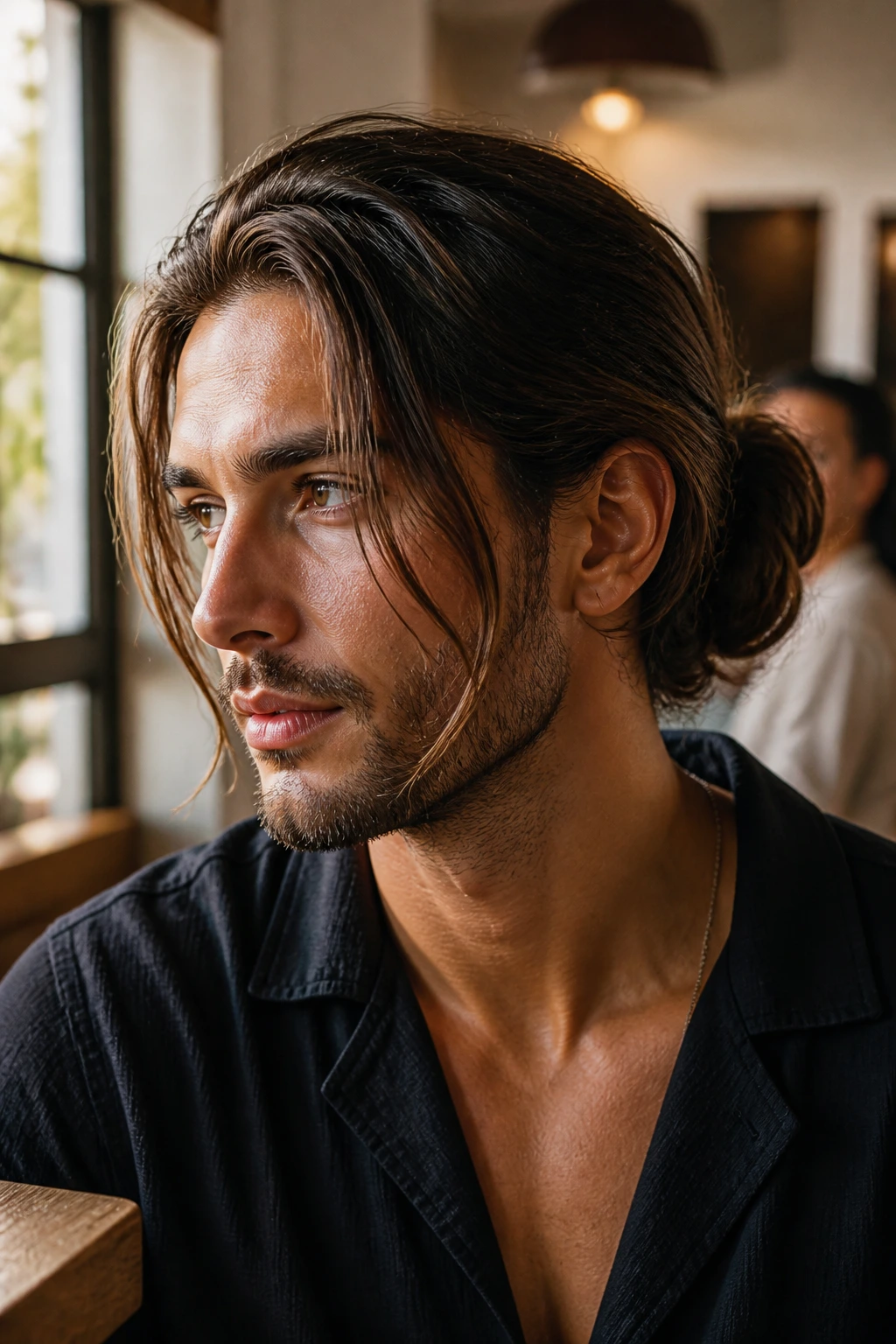
A low bun with a few loose front pieces is the antidote to the severe, all-back knot that can make long hair feel too tight. The bun stays low and tidy, while the face-framing strands soften the front and keep the style from looking boxy.
This is especially good if your face reads narrow, long, or sharp. A strict bun can exaggerate those shapes. Loose front pieces — even just a couple of tendrils around the temples — make the whole thing feel warmer. It’s a small shift with a big visual effect.
- Best use: Dressier days, dinner, events, or anytime you want the bun to look less utilitarian.
- How much to leave out: Usually two thin pieces near the temples are enough.
- Product: Light cream on the front pieces only.
- Tip: Curl or bend the face-framing bits slightly if they fall dead straight.
This style can look sloppy if the loose pieces are too thick. Keep them deliberate. There’s a difference.
19. Rope Braid
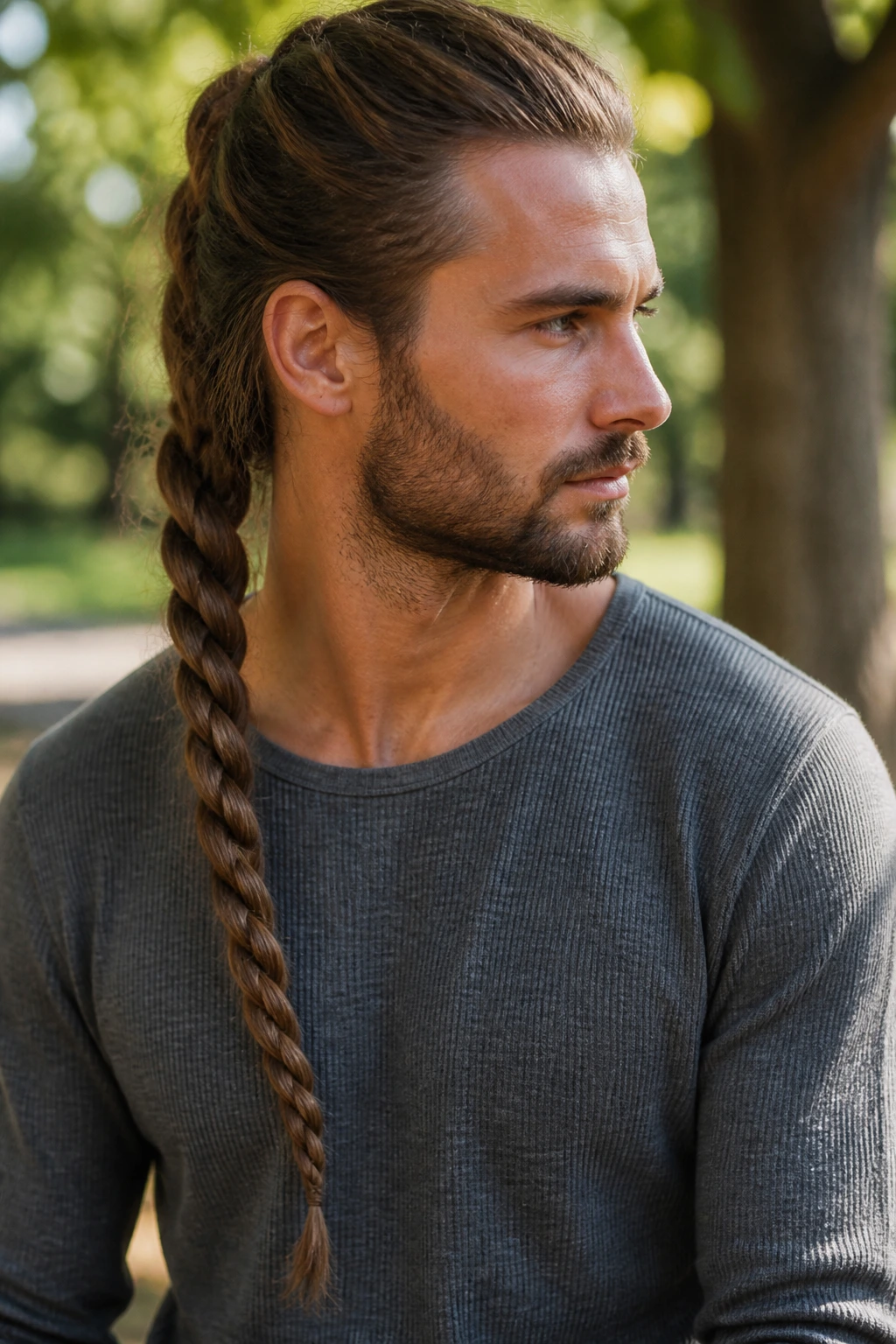
A rope braid has a cleaner, more geometric look than a standard braid. It’s made by twisting two sections around each other, which gives the final shape a tighter spiral and a little shine. On long men’s hair, that texture is the whole point.
It works best when the hair has enough grip to hold the twist. Straight hair may need a touch of texturizing spray first. Wavy hair usually cooperates more easily. The braid can hang down the back or sit off one shoulder, depending on how much you want to show.
Why It Works
The rope braid holds better than it looks like it should. That twisted structure resists unraveling, which makes it useful for long days, travel, or hair that tends to slip out of bigger braids. It also looks less bulky than a Dutch braid, so if your hair is thick and you want something neater, this is a strong pick.
Keep the twist even from top to bottom. Uneven tension makes the braid bulge in one spot and collapse in another. Once you do it a few times, the motion becomes easy enough to do without a mirror.
20. Wet-Look Comb Back
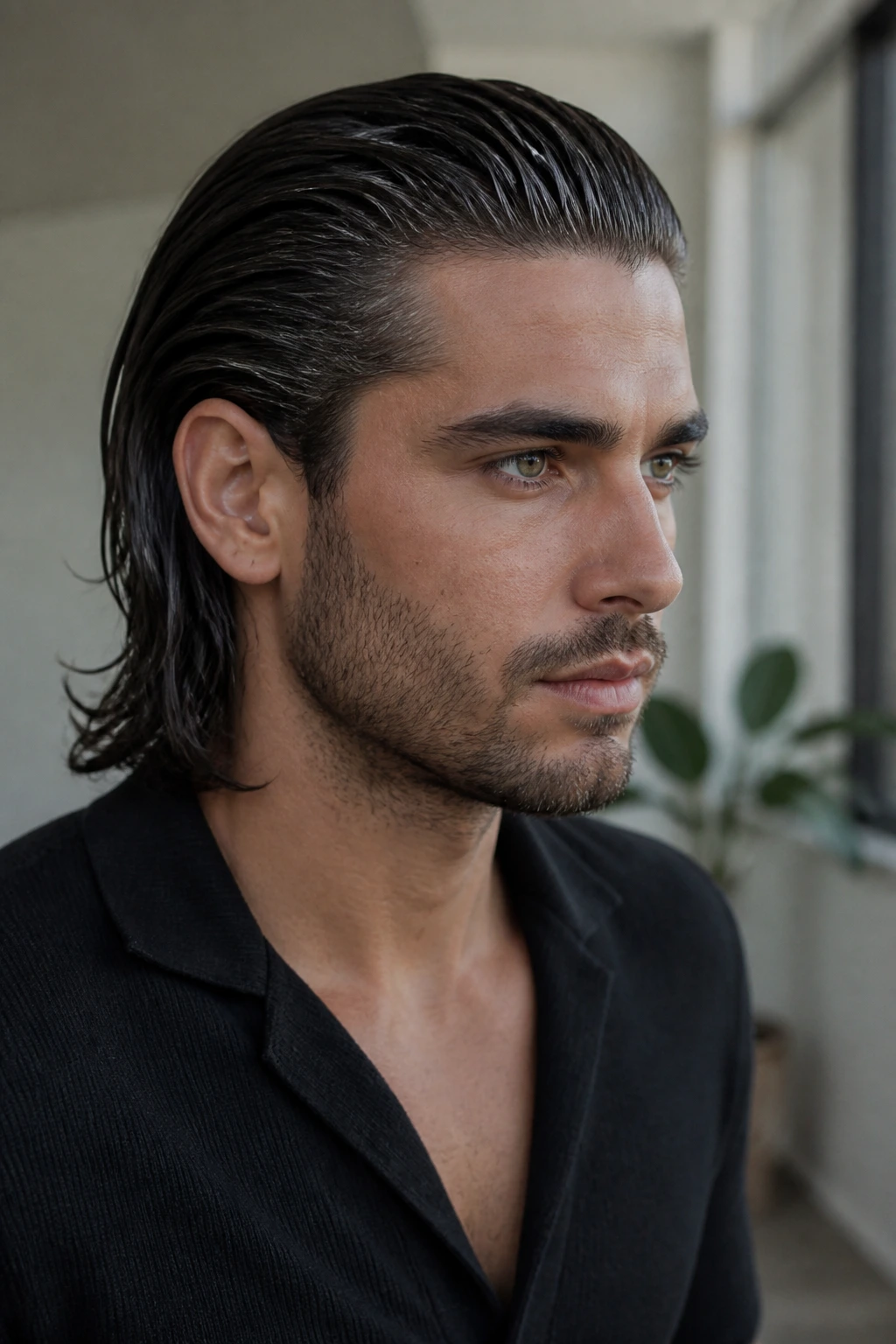
A wet-look comb back is not for people who want subtle hair. It’s for men who want the length to look sleek, dark, and intentionally controlled. The style is direct: hair combed back from the front with enough product to hold shape and shine.
The mistake most people make is using too much product, then ending up with a stiff, greasy helmet. Better to start on damp hair, work in a small amount of gel or cream-gel, and comb everything back evenly. The front should look smooth. The ends can stay a little softer so the whole style doesn’t freeze.
This style looks best on straight or slightly wavy hair with a clean cut around the edges. If the neckline is messy, the contrast is brutal. Clean shape matters. So does the finish around the ears. Even a slick style needs a tidy outline.
It’s a sharp choice for nights out, formal settings, or any time you want the long hair to stop reading as casual. No fuss. Just shine, direction, and a little attitude.
21. Deep Side-Part Flow
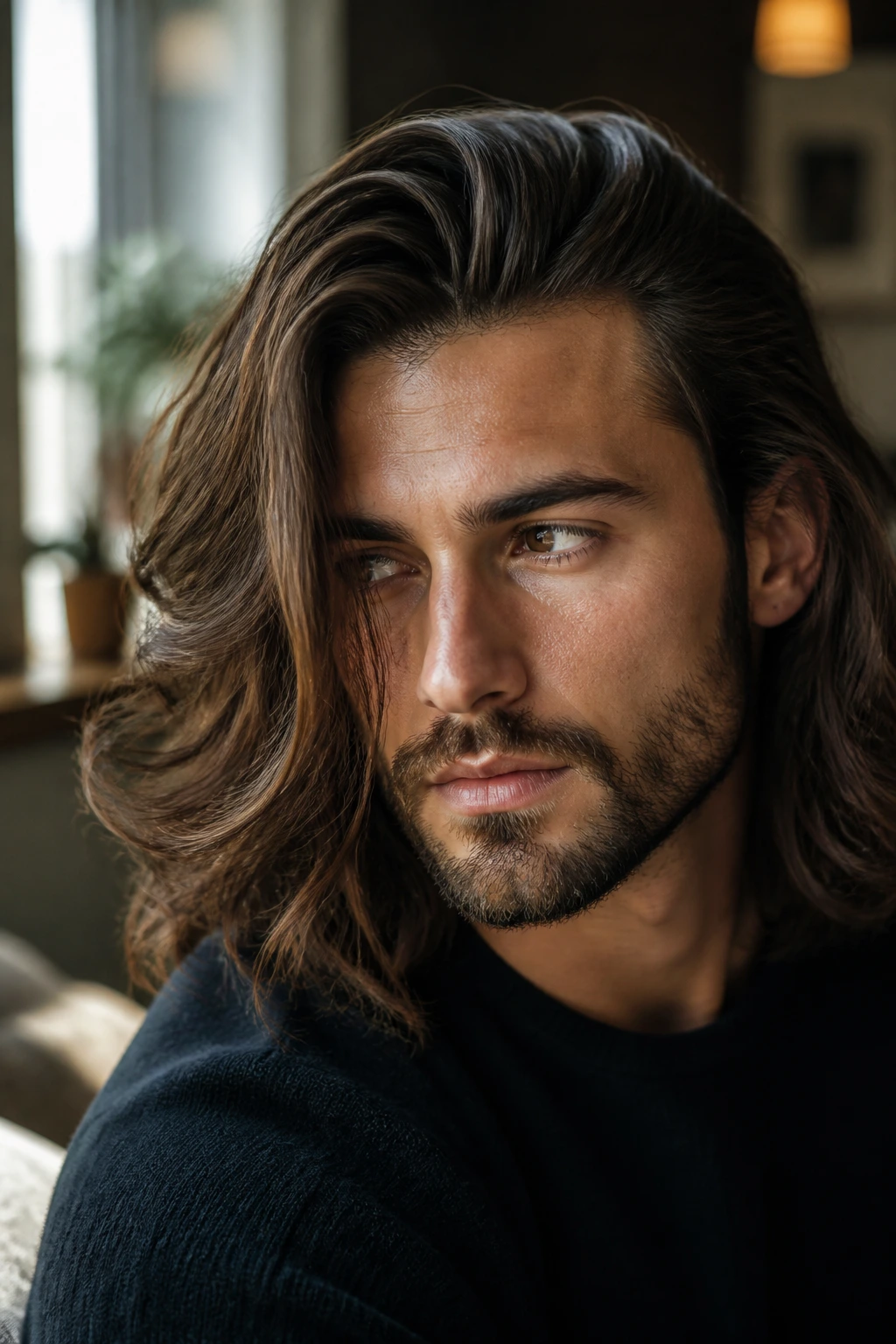
A deep side-part flow is what you do when a center part feels wrong, the cowlick keeps arguing with the mirror, or you simply want the hair to swing a little more dramatically. The part sits well off-center, and the length falls across the face in a softer, more directional way.
This style can be a real fix for men whose hair grows flatter on one side or who have a forehead they’d rather not emphasize. The deep part shifts the focus and gives the hair a natural line to follow. It also keeps the style from turning too symmetrical, which helps if the face is already balanced and you want a little movement.
- Best hair types: Straight to wavy, with medium density.
- Best cut: Layers that let the front sweep instead of hanging in one flat sheet.
- Product: Light cream or a small amount of mousse at the roots.
- Styling tip: Blow-dry the front in the opposite direction first, then sweep it back over. That gives the part more lift.
This one works because it feels relaxed without looking undecided. That’s a rare thing.
Why Long Hair Works Better When It Has a Shape
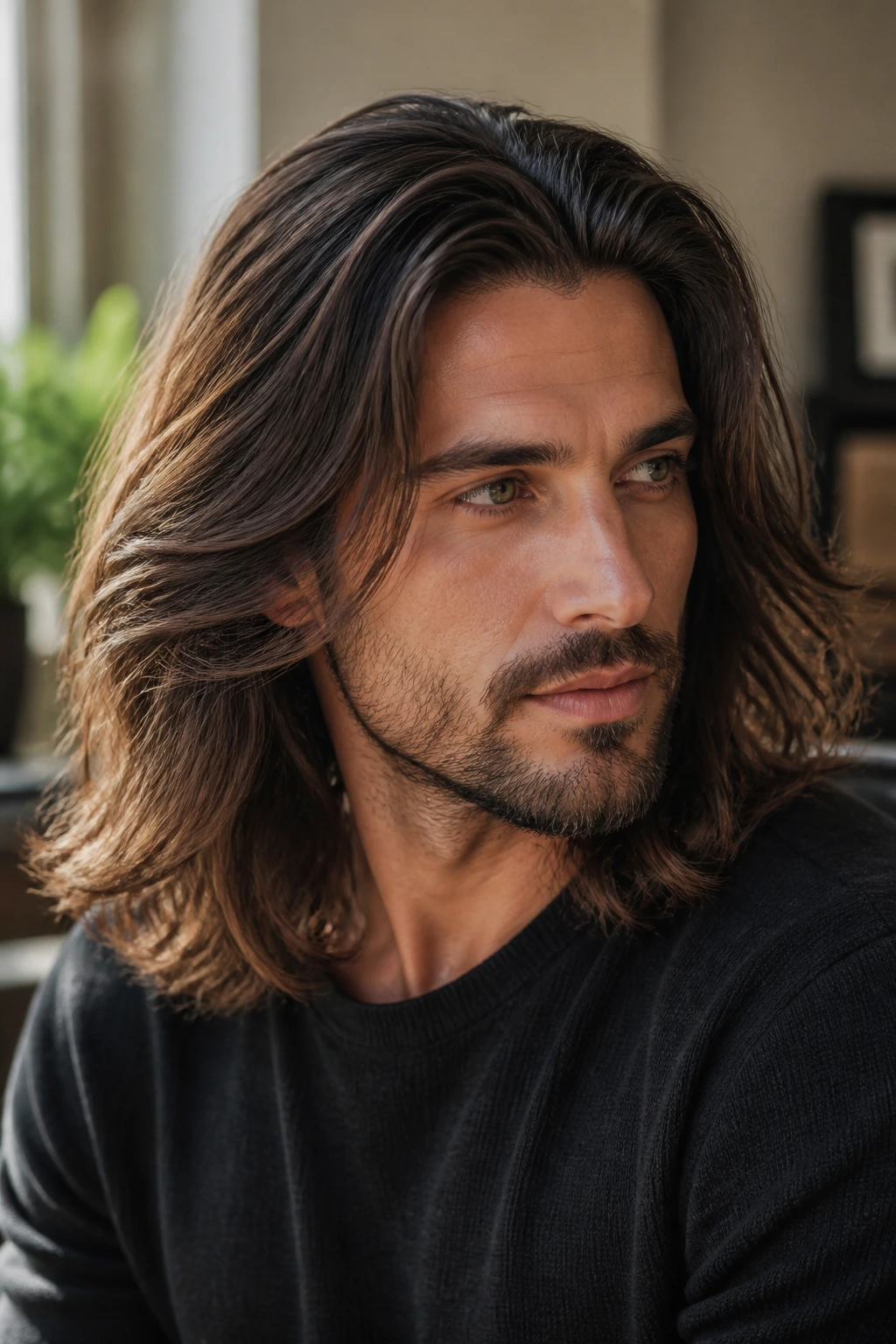
Long hair on men gets into trouble when the ends are allowed to do all the thinking. The weight at the bottom starts pulling the face down, the roots flatten, and the whole thing begins to look like growth instead of grooming. A shape fixes that. Sometimes the shape is a part. Sometimes it’s a bun. Sometimes it’s a braid, a taper, or a loose sweep over one side.
The important part is understanding what your hair already wants to do. Thick hair wants bulk control. Fine hair wants lift and a little body at the root. Curly hair wants room to curl without being crushed. Straight hair usually needs some texture so it doesn’t slide into a flat sheet by noon. Once you know which way your hair behaves, the styles stop feeling random.
Face shape matters too, but not in the internet-quiz way. A low ponytail can lengthen a round face. A side sweep can soften a broad forehead. A middle part can make long faces look longer, which is fine if that’s what you want and less fine if it isn’t. Small shifts in where the hair sits change the whole effect.
And yes, the neckline matters. A tidy nape is underrated. A rough neckline can ruin an otherwise clean style, which is why long-hair grooming is never only about the front.
Tools and Products That Make Styling Easier
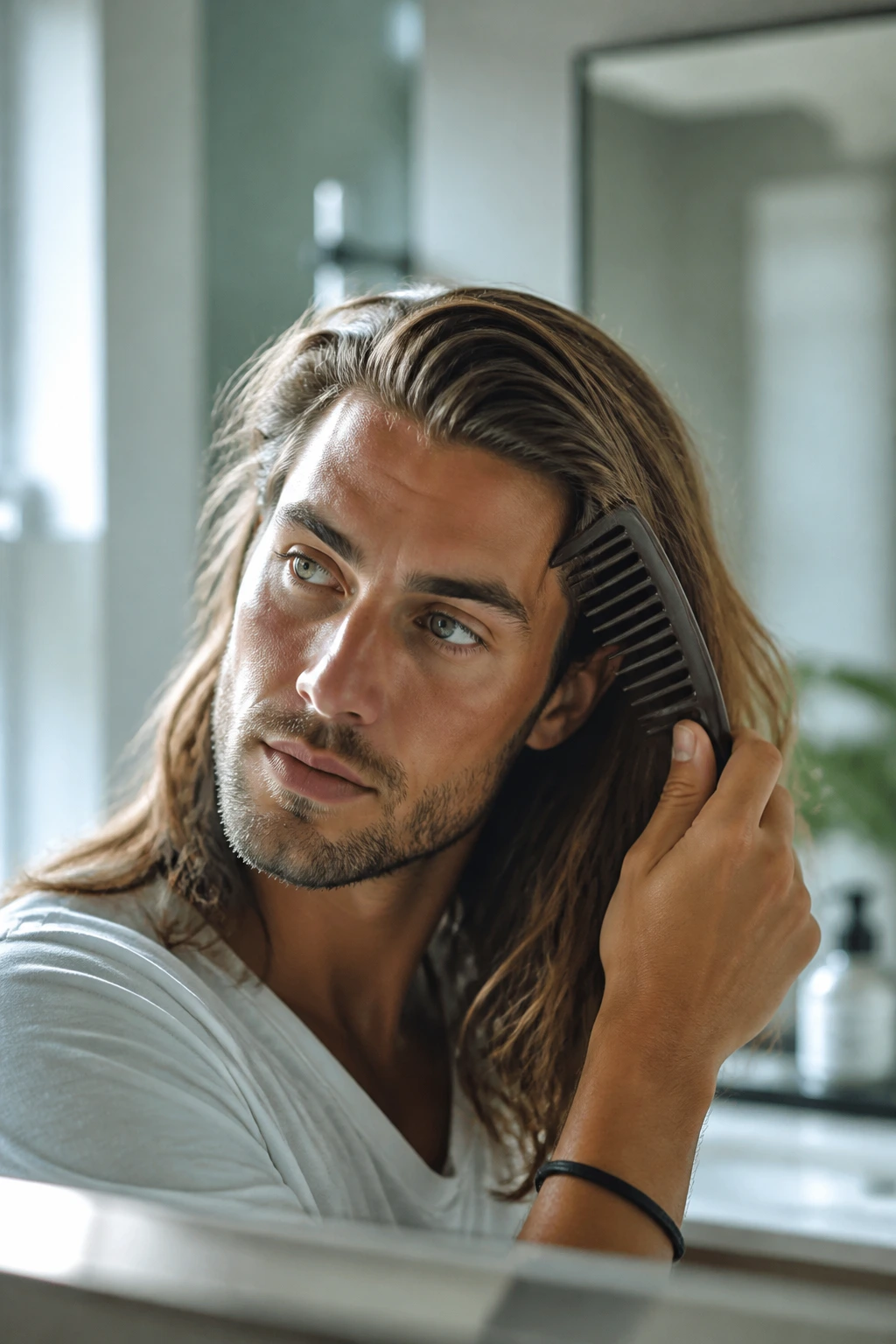
- Wide-tooth comb: Good for damp detangling and setting parts without tearing through the hair.
- Tail comb: Useful for clean center parts, side parts, and sectioning for braids or twists.
- No-crease hair ties: Better than tight elastic bands because they leave fewer dents and pull less at the root.
- Snag-free clips: Handy when you’re sectioning the top half for knots, braids, or a blow-dry.
- Microfiber towel or old T-shirt: Cuts frizz better than rough terry cloth when you’re drying long hair.
- Leave-in conditioner: Keeps the ends softer and helps long hair move instead of fraying.
- Matte cream or light paste: Good for control without shine; best for buns, slick-backs, and parts.
- Sea-salt spray: Useful for waves and texture, but don’t overdo it or the ends can get scratchy.
- Hair oil: Use on the last few inches only if the hair feels dry or frayed.
- Blow dryer with diffuser: Especially helpful for curly or wavy long hair when you want shape without flattening it.
Choosing the Right Style for Your Hair Texture
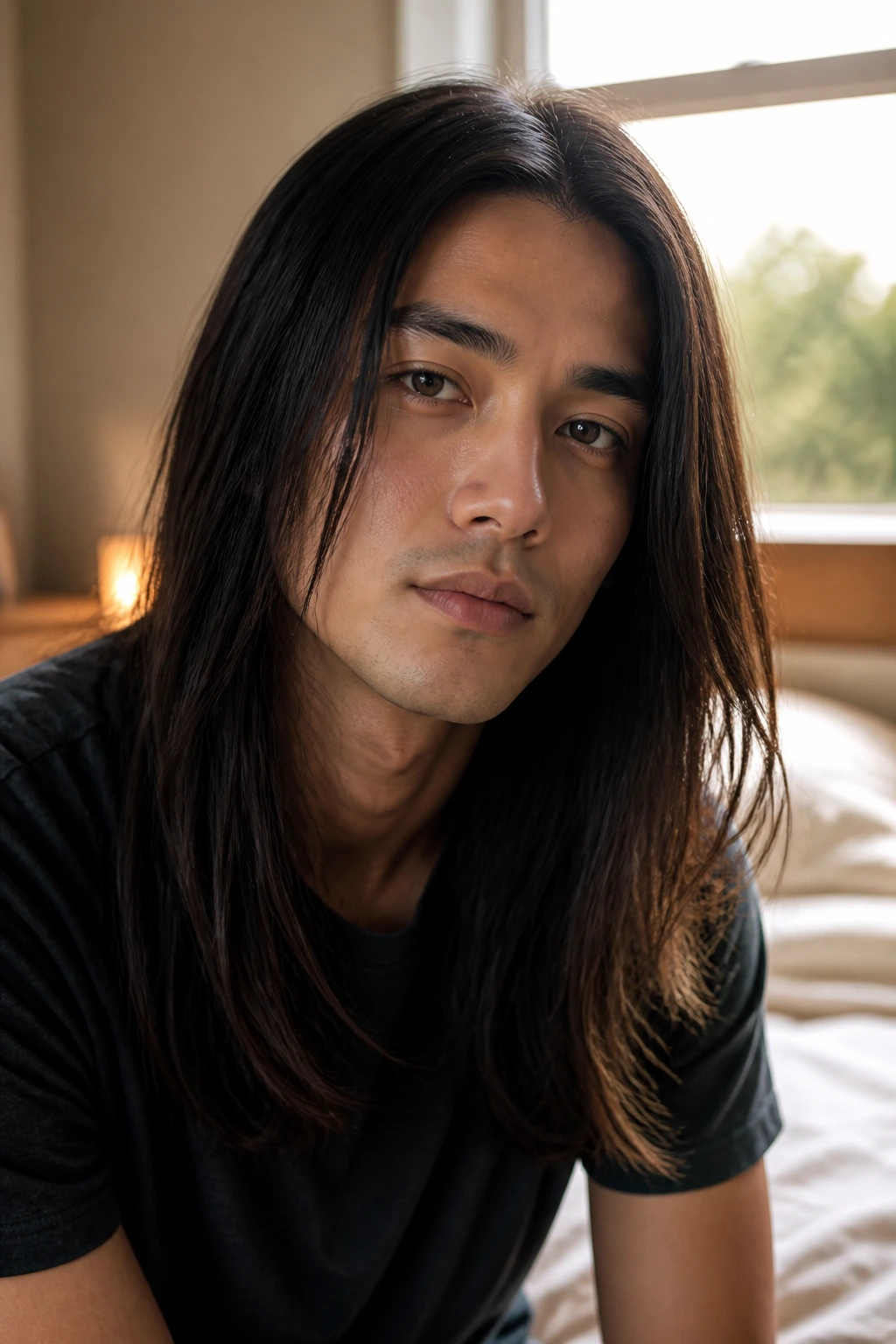
Straight hair usually needs direction more than moisture. A ponytail, slick-back, deep side part, or undercut can all work well because the hair sits cleanly once it’s set. The catch is slip. Straight long hair can fall apart fast unless you use a little product or a tie that actually grips.
Wavy hair gets a lot of the easiest wins. Bro flow, curtains, textured waves, and the loose man bun all look natural on waves because the bend in the hair carries the shape for you. You still need a haircut with layers, though. Without them, waves can puff at the bottom and sit too heavy at the ends.
Curly hair wants room. The curly push-back, low bun, and side braids work because they don’t bully the curl pattern into submission. If you brush curls too hard, they fluff up and lose the shape that makes them interesting. Fingers, leave-in conditioner, and a diffuser tend to do better than a brush.
Coily hair often looks best in braid-based or tied styles that respect shrinkage and tension. Rope braids, Dutch braids, twists, and low buns can all work if the hair is kept moisturized and the tie isn’t too tight. Tension is the enemy here. So is dryness.
How to Wear Long Hair and Still Look Put Together
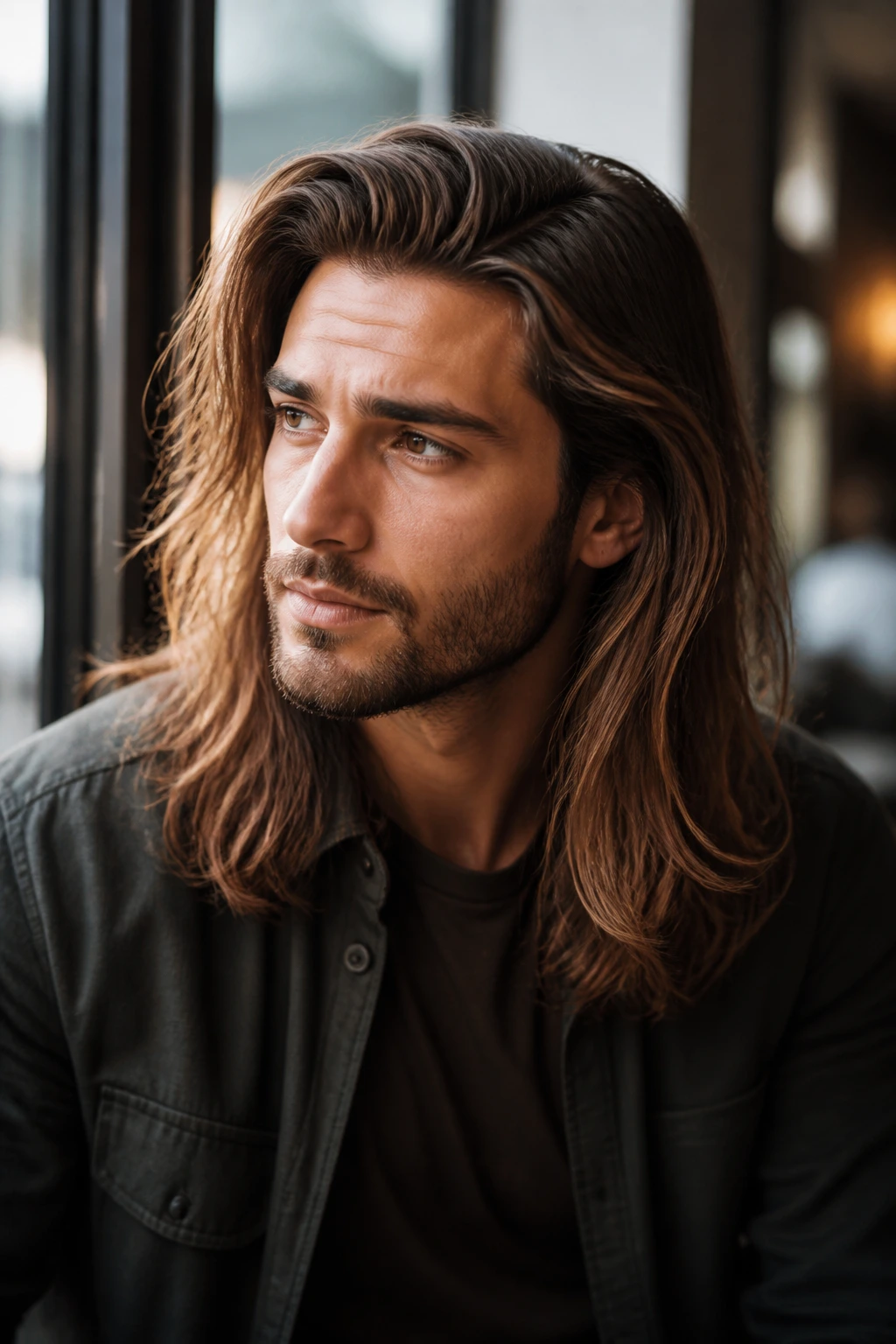
Presentation: Start with the outline. Clean part, tidy neckline, and the first inch around the forehead. If that area looks intentional, the rest of the style can be looser and still read as styled.
Outfit Pairings: Long hair looks strongest when the clothes don’t fight it. Crew necks, open collars, denim jackets, and plain tees give the hair room. Busy collars, bulky hoods, and high necklines can make the whole thing feel crowded.
Timing: Give yourself five extra minutes on days when the style needs a part, a twist, or a braid. Long hair always takes less time than a full cut, but more time than a short crop. That middle ground is where the routine lives.
Finish: Pick one finish and stick with it for a week — matte, soft sheen, or clean shine. Mixing all three on the same head usually looks confused. A dab of cream on the ends and a bit of product at the roots is usually enough.
Common Mistakes That Make Long Hair Look Messy
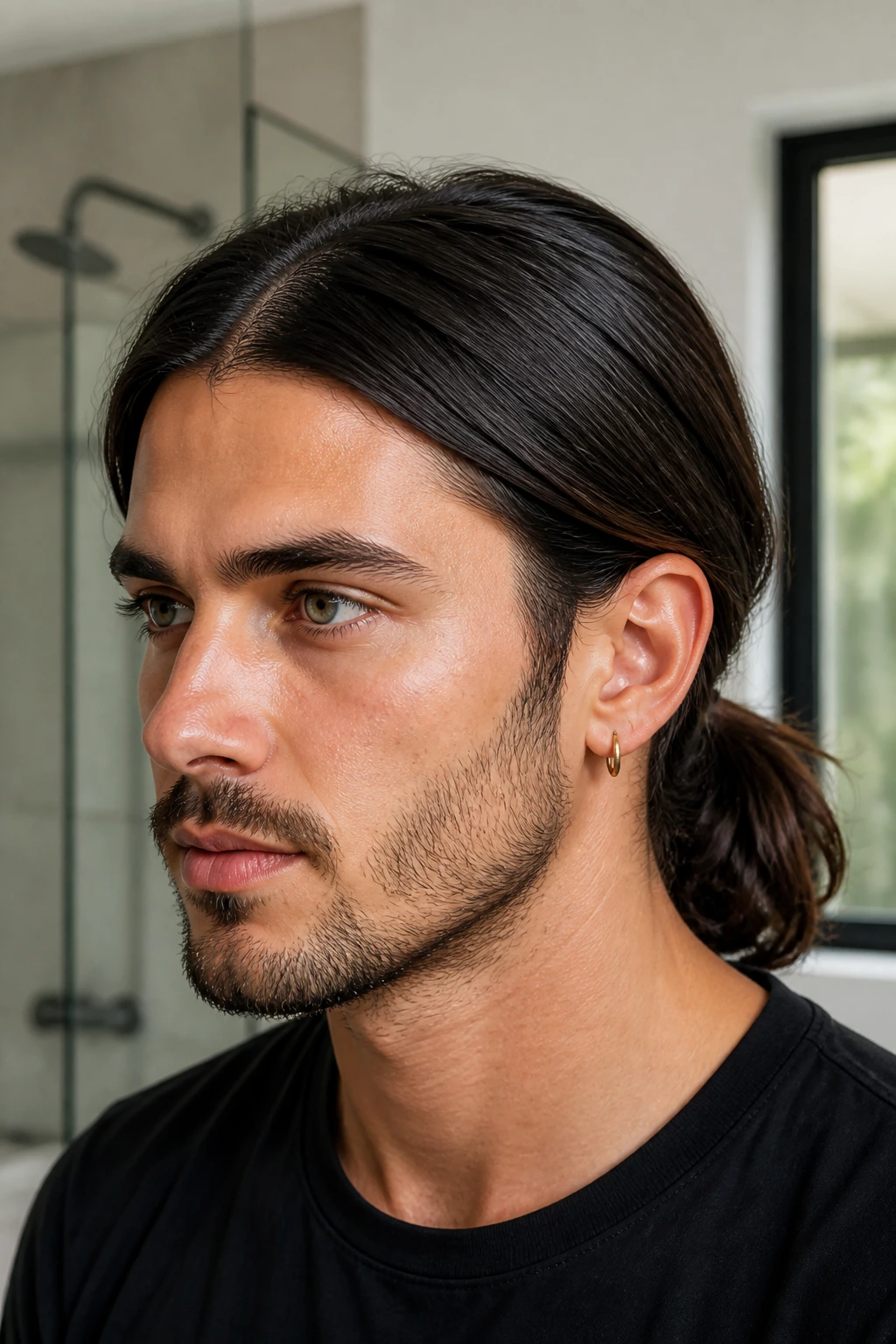
Tying the hair while it’s still soaking wet is a classic mistake. The tie creates a bend, the hair dries in that shape, and you end up with a dent that lasts all day. Dry or nearly dry hair holds style better and breaks less.
Using tiny elastics is another bad habit. They cut into the hair, snag when you pull them out, and make the ponytail look pinched. A wider, softer tie spreads the tension and leaves less damage behind.
Ignoring the neckline is the third one. Long hair can be clean at the front and rough at the back, and that contrast is brutal once someone sees you from behind. A quick trim around the nape changes the whole silhouette.
Overloading on product causes trouble too. Heavy cream, thick oil, and too much gel make long hair collapse, separate strangely, or go shiny in the wrong way. Start with less. You can always add another half-pea-sized amount; you cannot easily take too much out.
Finally, forcing a part against the way your hair grows usually ends in a fight you lose by noon. Work with the cowlick, not against it.
Variations and Alternatives to Try
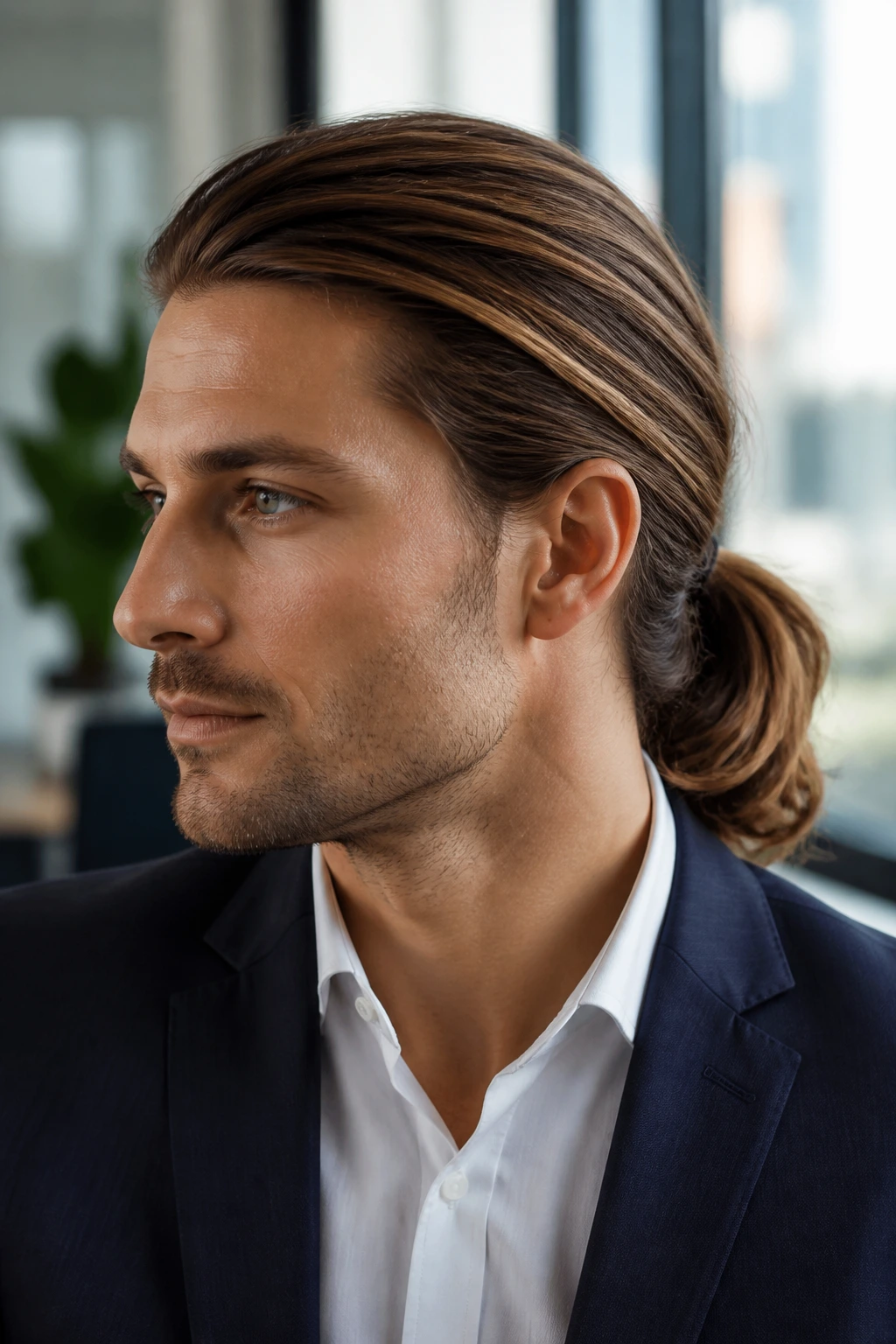
Office Tidy: Use the low ponytail, slick-back, or side part when you need the hair off your face and out of your collar. Keep the finish light and the edges clean, and the style reads sharp without turning severe.
Gym-Ready Tie-Back: The loose man bun, half-up knot, and low ponytail are the easiest sweat-day options. The key is a secure tie that doesn’t yank the roots when you move.
Curly First: For curly or coily hair, lean into the push-back, braid, twist, or low bun styles instead of forcing everything flat. Moisture and shape matter more than shine here.
Fine Hair Lift: If the hair is fine, choose styles that create the illusion of density: side sweeps, deep side parts, textured waves, and half-up knots. Heavy oils and thick creams usually make fine hair collapse.
No-Heat Air-Dry: When you want to avoid the dryer, use leave-in conditioner, a little cream, and a part set while the hair is damp. Let the shape dry naturally, then touch only the flyaways.
Keeping Long Hair Clean, Tangle-Free, and Easy to Restyle
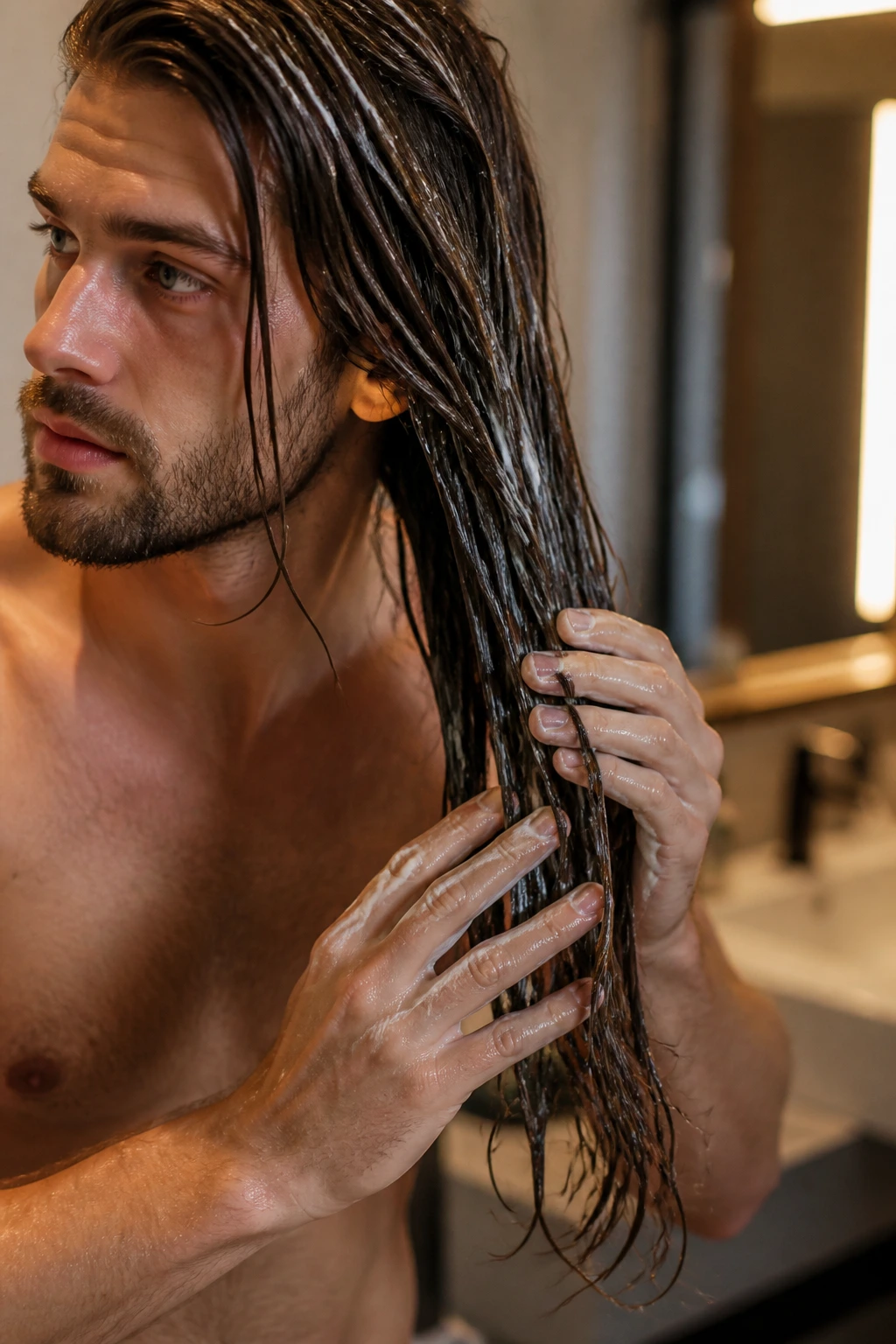
Long hair gets harder to style the longer it goes between trims and the more product sits on it. Most men do well with a trim every 8 to 12 weeks, even if they’re keeping the length. The point isn’t to shorten the hair. It’s to keep the ends from turning thin, scraggly, and impossible to shape.
Wash frequency depends on scalp oil, sweat, and product load. A lot of guys can go 2 to 4 days between washes if they’re not using heavy styling product every day. If the scalp gets greasy fast, rinse more often and use shampoo only where it matters — at the roots and scalp, not dragged through the ends.
Conditioner belongs on the mid-lengths and ends, not piled at the scalp. That one move keeps the hair softer without flattening the roots. If you use sea-salt spray, mousse, or paste often, a clarifying wash every couple of weeks can keep buildup from making the hair dull and stiff.
Night care matters. A loose braid, low tie, or silk scrunchie keeps the hair from knotting while you sleep. A satin or silk pillowcase helps too. Wake up with less frizz, fewer tangles, and a much better chance of pulling off the same style again without starting from zero.
Questions Men Ask Before Growing It Out

How long does hair need to be for a man bun?
Usually you need enough length to wrap around itself at least once without the tie biting into the scalp. For most men, that means somewhere around shoulder length or longer, depending on thickness.
Can long hair look good if it’s thin?
Yes, but it needs smarter styling. Side parts, deep sweeps, half-up knots, and textured waves usually work better than heavy buns or center parts that expose the scalp.
Should I use conditioner every wash?
For long hair, usually yes. Conditioner keeps the ends from drying out and splitting, which matters more when the hair has to carry its own weight over time.
What if my center part keeps splitting open?
That usually means the hair wants a side part, or the roots are too flat to hold the split. Set the part on damp hair, blow-dry the roots in place, and try a slightly off-center line if the cowlick keeps winning.
Do braids damage long hair?
Not if they’re done with reasonable tension. Tight braids pulled from the scalp can cause stress, but loose-to-medium tension braids are often gentler than constant combing and reties.
How do I stop long hair from looking greasy?
Use less product, keep conditioner off the roots, and don’t overload the ends with oil. If the hair is oily at the scalp but dry on the ends, you’re probably using the wrong amount in the wrong places.
Can I wear long hair to work without looking too casual?
Yes. Low ponytails, slick-backs, neat buns, and side parts all read cleaner than loose hair if the neckline and edges are tidy.
The Shape That Fits
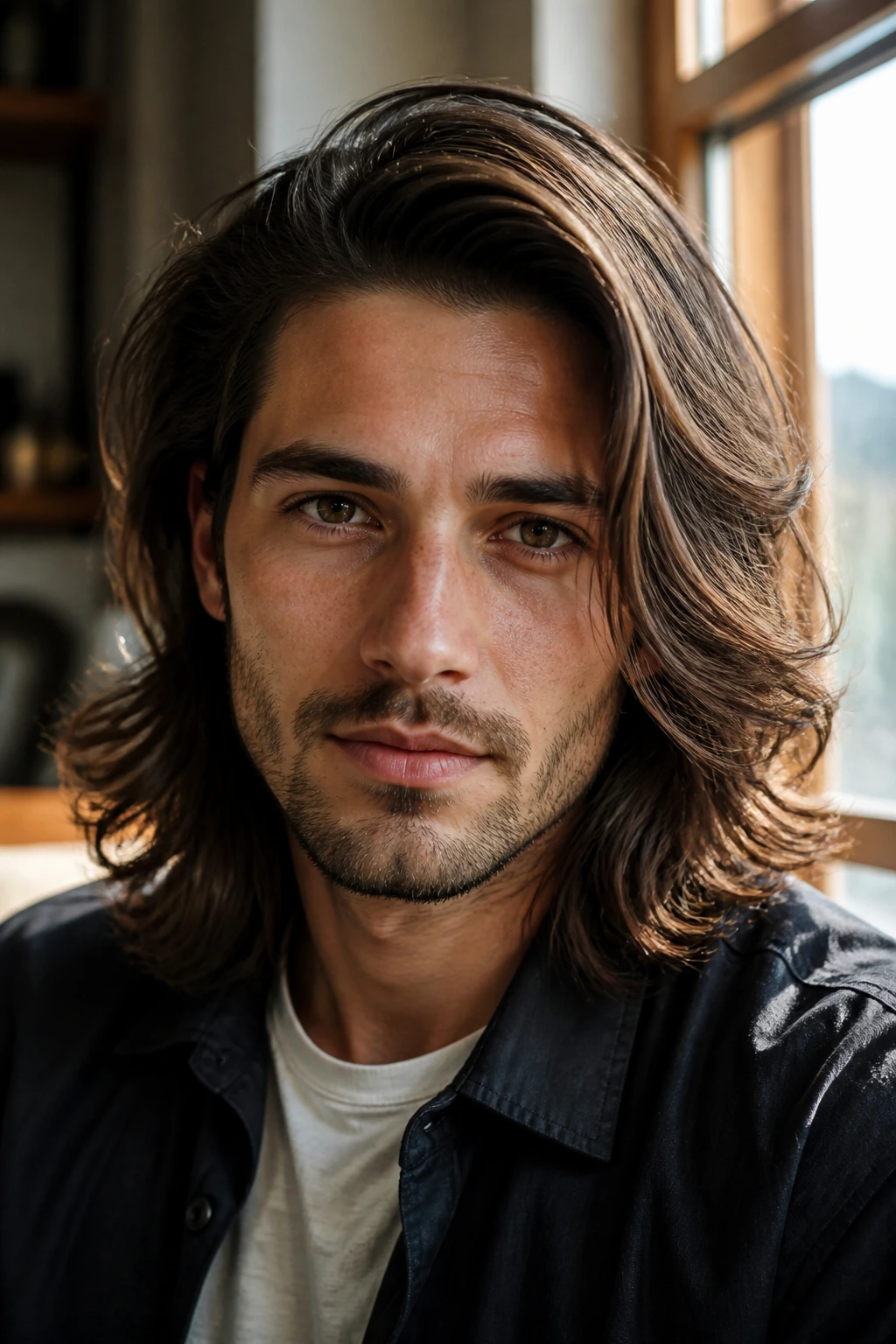
Long hair on men doesn’t need to be one thing. That’s the whole point. A well-placed part, a low tie, a braid, or a soft layer cut can change how the same hair reads from one day to the next. Some styles are practical. Some are sharper. Some are there because the hair simply behaves better when you let it.
What matters most is that the style matches the hair you actually have — not the hair you wish you had, and not the version that looks easiest on a model with perfect density and no cowlicks. Pick the shapes that solve your real problems first. The good looks tend to follow.
Start with one style that fits your texture, then add another for the days when the first one stops working. That’s how long hair becomes a system instead of a hassle.
