



Fine hair can look polished at 8 a.m. and tired by lunch. Add the wrong layers, or bangs that were cut too thick, and the whole shape goes soft in the worst way—flat at the crown, fuzzy at the ends, and oddly heavier through the front than it should be. That’s exactly why layered haircuts with bangs for fine hair need a different rulebook than the one used for thick, dense hair.
Fine hair is not the same thing as thin hair. You can have a full head of fine strands, or very sparse fine strands; the haircut changes a little depending on which camp you’re in, and a good stylist should notice the difference before the scissors open. The best versions keep enough weight at the perimeter to make the hair look full, then use bangs or fringe to build shape where the eye lands first.
The cuts below lean on long layers, internal removal, face framing, and bangs that can be styled in under five minutes with a small round brush or a bit of bend from a flat iron. Some are soft and clean. Some are choppy and a little shaggy. All of them solve the same problem: making fine hair look intentional instead of apologetic.
Why These Layered Cuts Earn Their Place
-
They keep the ends looking dense: The smartest versions remove weight inside the haircut, not from the outer line, so the perimeter still reads as full.
-
They give the front of the haircut a job: Bangs pull attention to the eyes and cheekbones, which makes the whole style feel more complete even when the back is quiet.
-
They work with fast-drying hair: Fine strands usually dry quickly, which is a blessing if the cut only needs a round brush, a clip set, or a little bend at the ends.
-
They grow out more gracefully: Soft curtain pieces, bottleneck bangs, and face-framing layers do not turn into a hard shelf the way a blunt fringe can.
-
They let you choose your amount of drama: You can go sleek, airy, shaggy, or polished without giving up the basic advantage of a cut that flatters fine strands.
-
They make styling look more expensive than it is: A good layer pattern and a well-placed fringe can fake volume better than a drawer full of heavy products ever will.
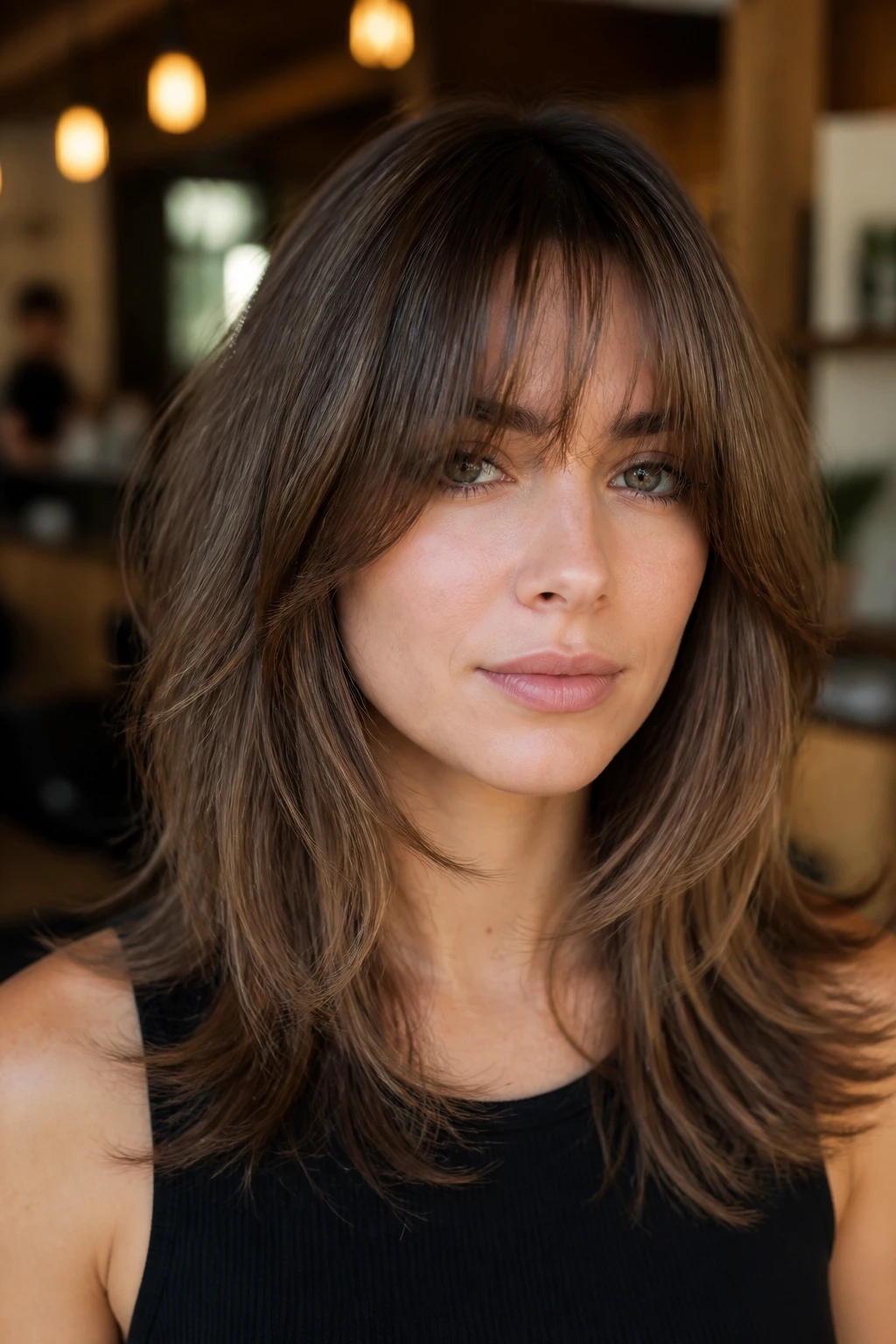
1. Collarbone Layers with Curtain Bangs
This is the cut I’d hand to someone who wants movement but still wants to feel like they have hair at the ends. The collarbone length gives fine hair something to hang on to, while the long layers keep the shape from falling into one flat sheet. Curtain bangs split the difference between full fringe and face framing, which matters when your strands are delicate and don’t love too much removal.
The trick is restraint. Keep the shortest layers below the chin so the top doesn’t go wispy, and ask for the bangs to open from around the cheekbone, not from the middle of the forehead. That little shift keeps the front soft without making the whole cut look sparse.
Best for: straight to slightly wavy fine hair that needs lift without a big styling routine.
Styling note: bend the curtain pieces away from the face with a 1-inch round brush, then let them cool before touching them.
My honest take: this is one of the safest choices in the entire list. Safe doesn’t mean boring. It means the haircut keeps working even on day three, which is more useful than a dramatic cut that only looks right for half an hour.
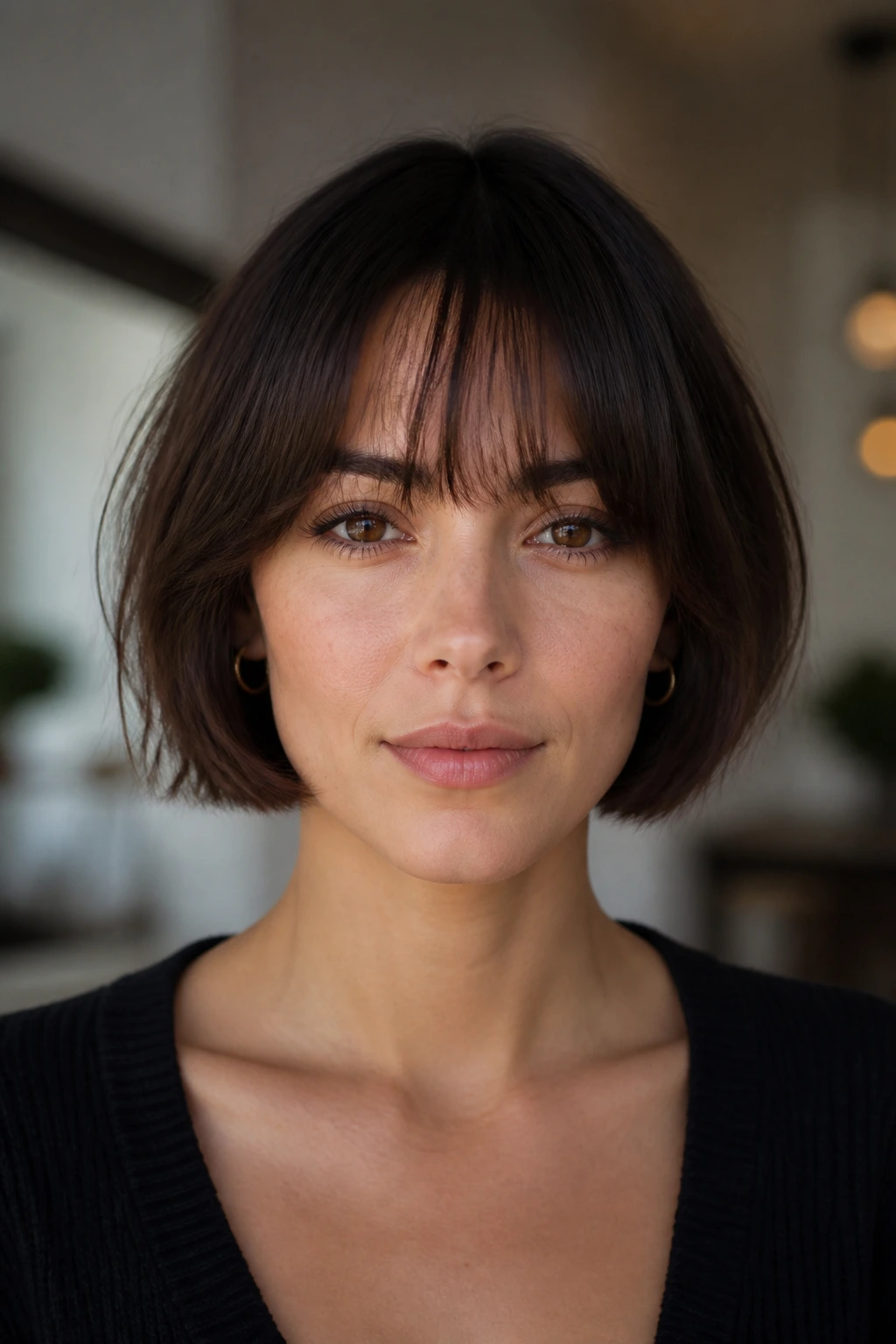
2. French Bob with Eyebrow-Grazing Fringe
Nothing makes fine hair look denser faster than a crisp bob that stops near the jaw and carries a clean edge. The French bob works because the line does most of the work for you. Add a soft eyebrow-grazing fringe, and the cut suddenly has shape in front, not just a blunt line in back.
The fringe should not be so thick that it sits like a wall. On fine hair, that usually looks heavy and a little stiff. Ask for a softer center with gentle tapering at the temples so the bangs still move when you blink.
- Keep the length between the cheekbone and jaw if you want the fullest look.
- Ask for a slight undercurve at the ends instead of a hard shelf.
- Dry the fringe first, before the rest of the head, so it does not separate in weird little ridges.
If your hair is pin-straight, this bob gives you a sharp outline with almost no effort. If your hair bends a little, even better. The tiny curve at the ends makes the whole cut look more lived-in, which is useful when fine hair tends to lie flat the minute it meets humidity.
3. Butterfly Cut with Long Curtain Bangs
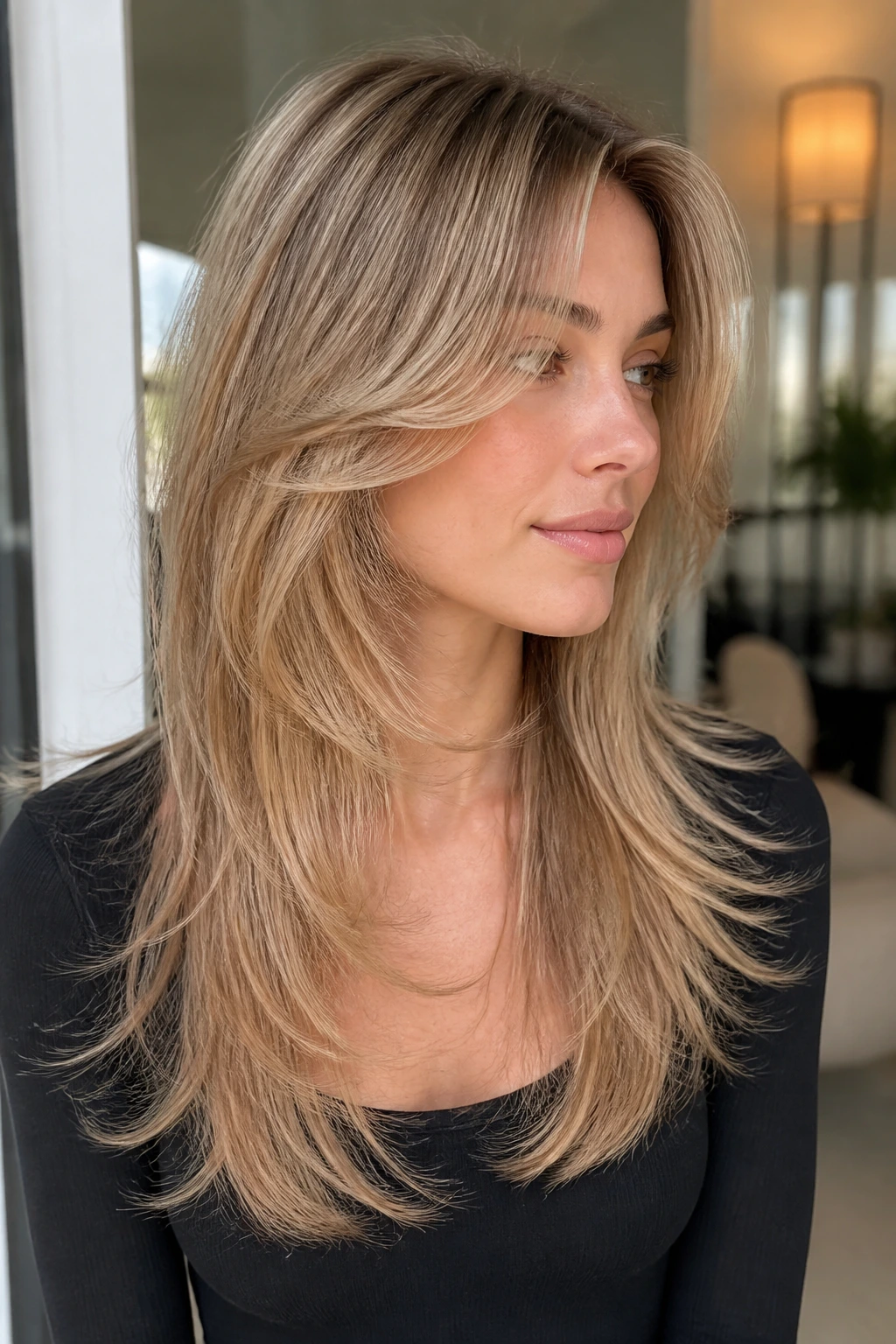
Why does the butterfly cut show up so often in conversations about fine hair? Because it solves a very specific problem: it gives you lift up top while preserving the feeling of length below. The shorter layers around the crown and cheekbones build movement where the eye needs it, and the longer bottom section keeps the haircut from disappearing.
The long curtain bangs are what make this version work on finer strands. They blend into the face-framing layers instead of sitting on top of them, which helps the front look softer and fuller at the same time. That blend matters. A harsh disconnect can make fine hair look chopped to pieces.
What to ask for
Ask your stylist to keep the shortest layers around the cheekbone, not the forehead. That gives the cut the swish people like without shaving too much off the top. If your hair is very fine but fairly dense, the crown can take a little more layering. If it is fine and sparse, keep the top longer.
How to wear it
A blowout with a medium round brush gives the butterfly cut its shape, but you do not need a salon-level finish. A little bend at the front and a lifted root at the crown are enough. That’s the whole deal. Not more.
4. Soft Shag with Choppy Fringe

There’s a particular kind of shag that doesn’t eat fine hair alive. This is that one. The difference is in the control. The layers are soft and staggered, not hacked to bits, and the fringe stays piecey instead of shredded into near-nothingness.
Fine hair can wear a shag beautifully when the stylist leaves enough density in the outline. The cut should feel loose around the cheekbones and collarbones, but the ends need some body. If the whole head gets too many short layers, the shape starts to fray by lunchtime.
- Best when you want movement without a polished blowout.
- Works especially well on hair with a natural bend.
- Can look thin if the crown is over-textured.
I like this version for someone who keeps reaching for dry texture spray and a quick scrunch, then wonders why the top looks flat. The soft shag gives that messy finish a structure. It looks a little cool in a real-life way, not a forced one.
5. Lob with Invisible Layers and Bottleneck Bangs
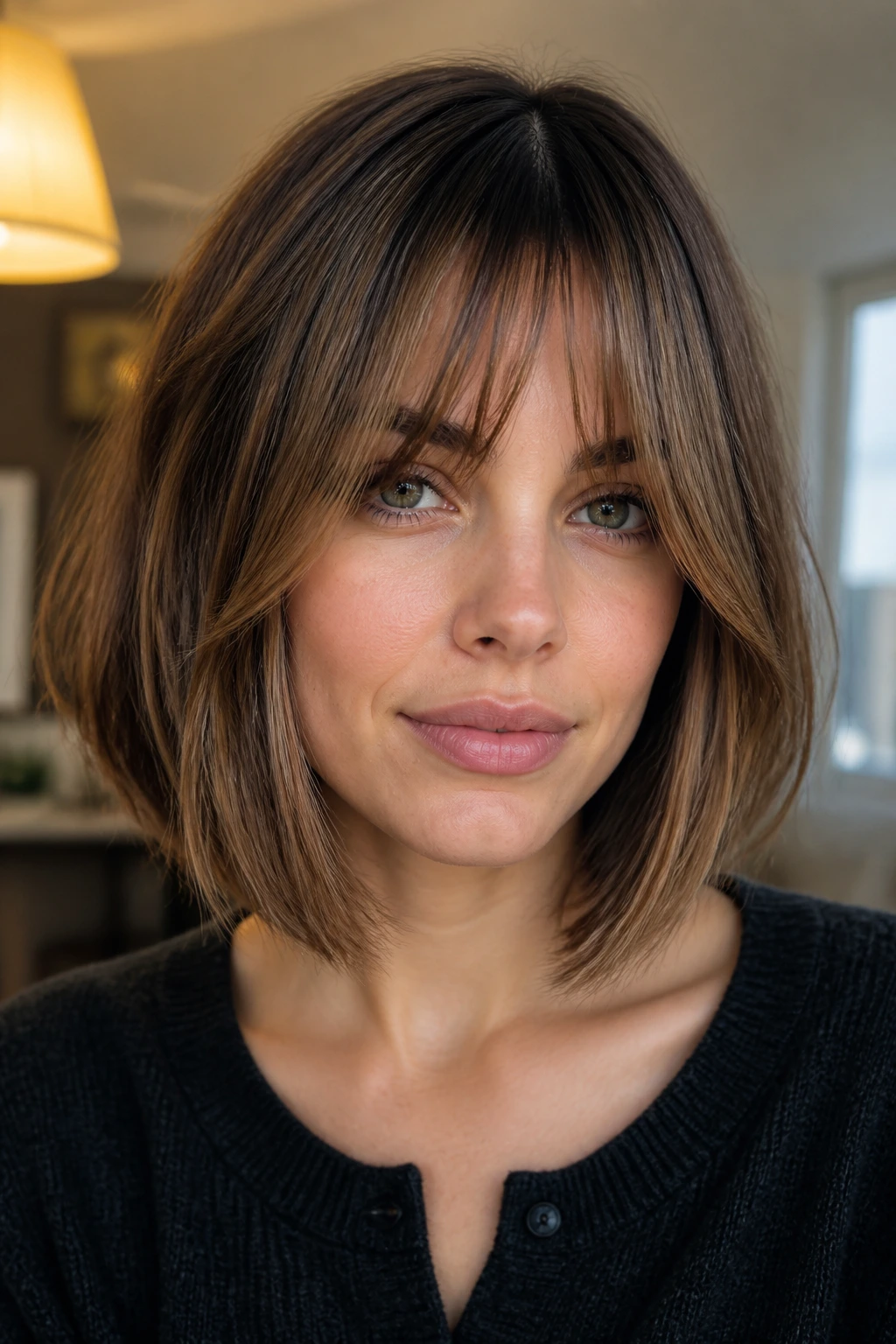
Unlike a heavily layered cut, this lob keeps the perimeter clean and hides the movement inside the shape. That’s the whole appeal. Fine hair often looks better when the eye reads one solid line first, then notices the softness underneath. Invisible layers do exactly that.
Bottleneck bangs are the right fringe for this because they start narrow at the center, then widen softly at the cheekbones. On fine hair, that gives you a bang that looks deliberate without eating the front density. They’re gentler than full blunt bangs and more current-looking than a plain side fringe.
If your hair tends to split at the center, this cut is still workable. Dry the fringe forward, then guide it apart with your fingers while it’s warm. The pieces settle more naturally than if you force them from wet to perfect. Wet styling can lie to you. Dry hair tells the truth.
6. Bixie with Wispy Side Fringe
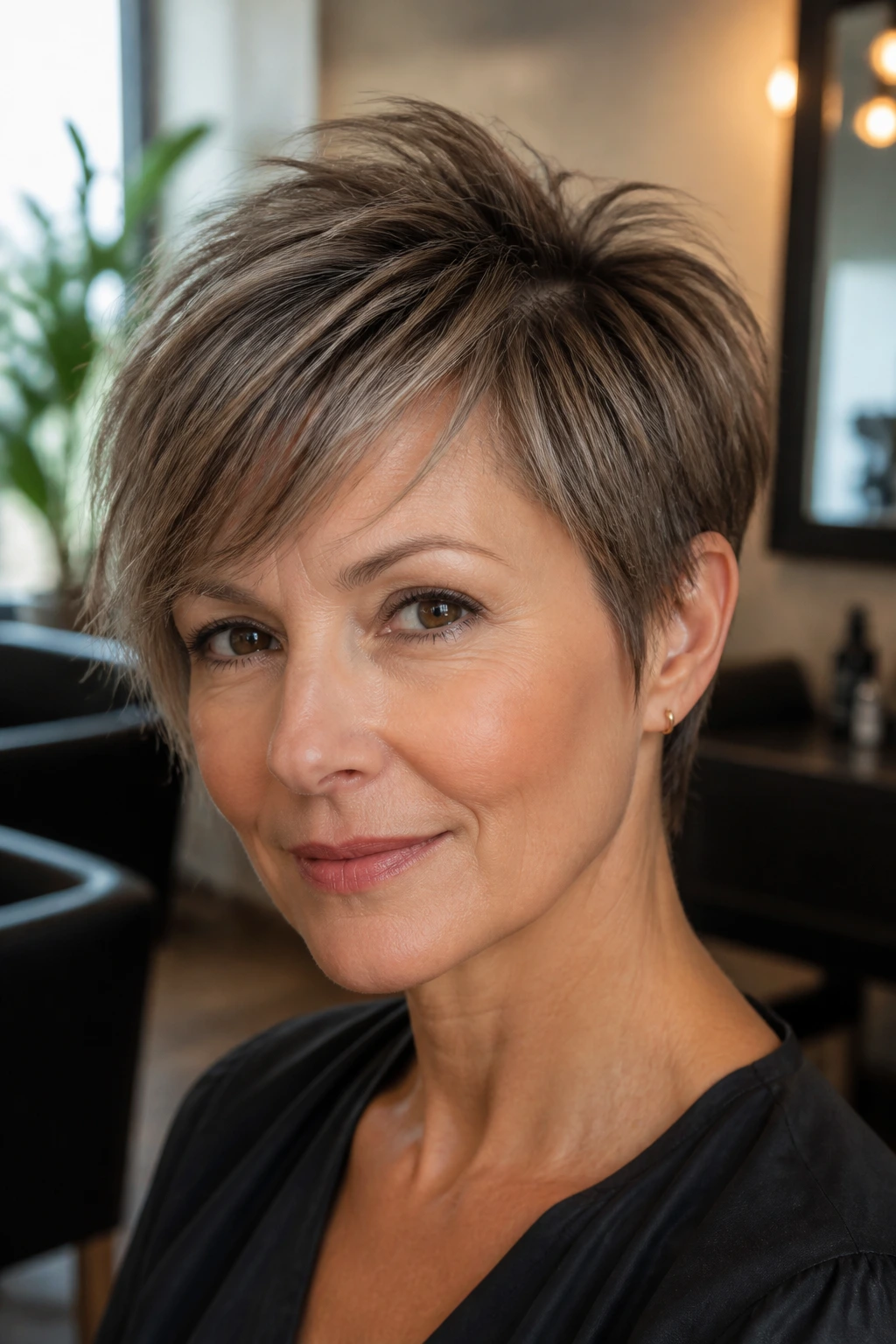
A bixie is the small, sharp haircut that sits between a bob and a pixie, and it can be brilliant on fine hair when the crown needs help. The reason is simple: you get a lifted top, tapered sides, and enough length in the front to keep the face from looking exposed. The wispy side fringe softens the whole thing so it doesn’t tip into severe territory.
This cut is a strong choice if your hair lies down too easily behind the ears or if the crown collapses no matter what mousse you buy. It gives you height where fine hair usually refuses to stay up.
- Ask for volume at the crown, not heavy layering on the ends.
- Keep the fringe longer so it can sweep instead of spike.
- Use a pea-sized amount of styling cream, not a thick wax.
The bixie does need maintenance. That’s the trade-off. But the upside is a sharp, modern line that makes fine hair look fuller than it has any right to look.
7. Shoulder-Length C-Cut with Airy Full Bangs
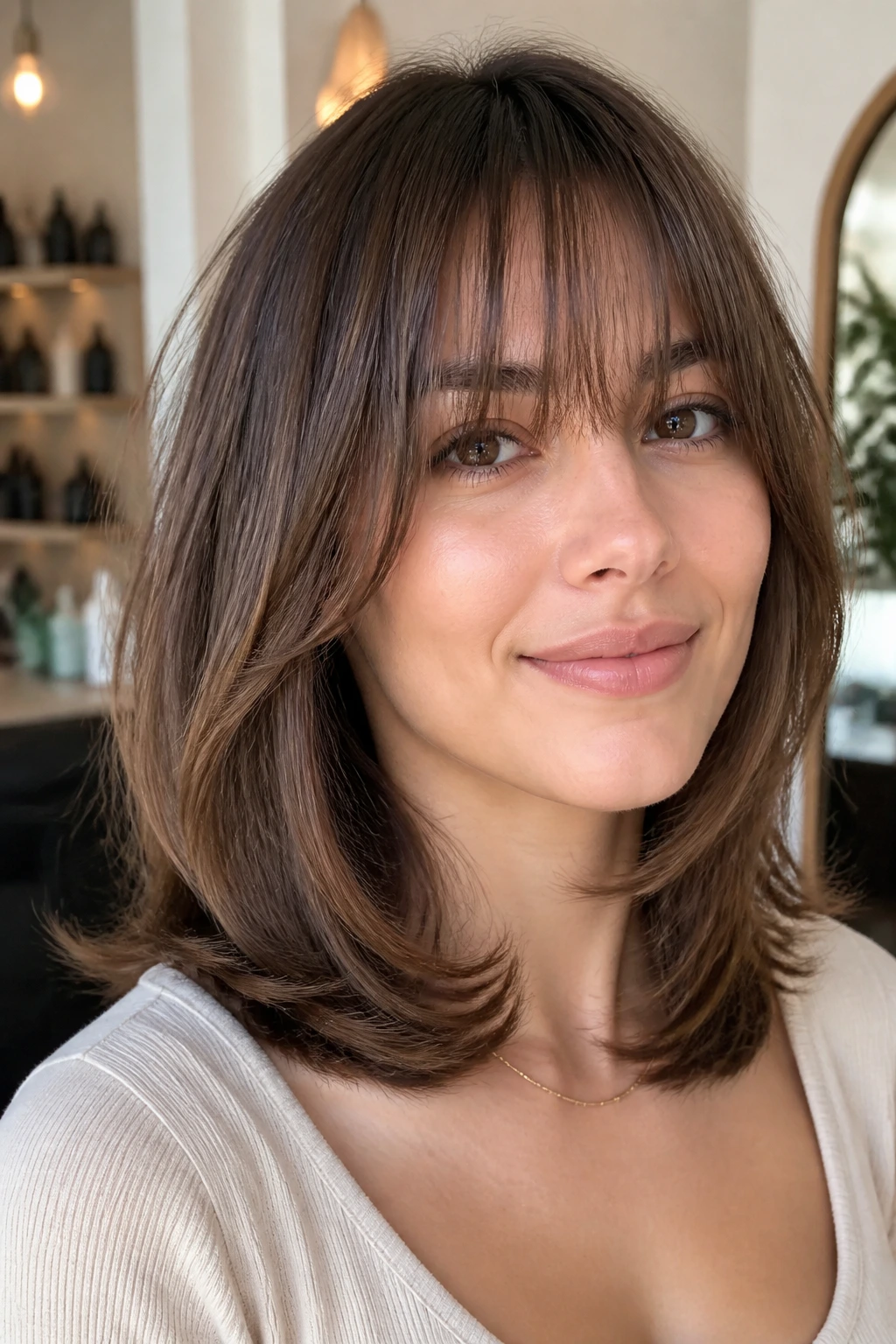
The C-cut gives the haircut its name by curving the layers around the face and shoulder, and that bend matters on fine hair. It keeps the perimeter from feeling boxy while still giving the ends a visible line. Airy full bangs complete the shape, but “full” here does not mean bulky. It means there’s enough hair in the fringe to read as a fringe.
The softness has to be built in. Ask for the ends of the bangs to be point-cut or lightly feathered so they sit against the forehead instead of hovering over it like a curtain rod. On fine hair, bangs that are too blunt can look heavy for the first hour and broken by the third.
This is a good option if you wear sweaters, button-downs, or glasses a lot. The shoulder line keeps everything neat, and the curved face frame stops the haircut from looking static. There’s movement, but no chaos. That balance is harder to get than people think.
8. Long U-Cut with Split Bangs
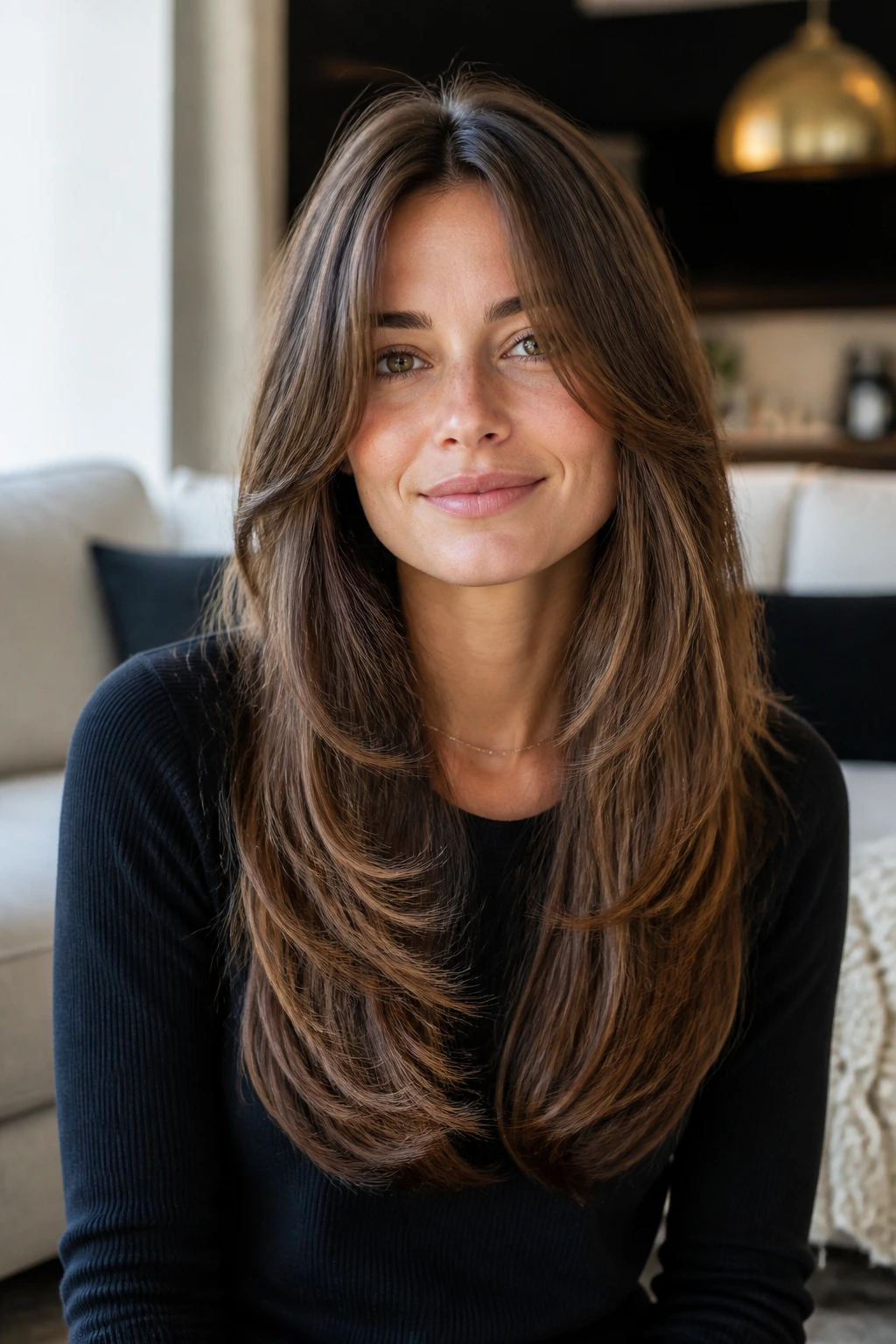
If you’re attached to length, the U-cut is a friendlier choice than a deep layered chop. The shape keeps the hair fuller through the bottom while creating a gentle taper down the sides. Fine hair often looks better with that softer outline because the ends stay together instead of fraying into a thin point.
Split bangs—essentially a softer, longer fringe that parts near the center—bridge the gap between bangs and face framing. They let you get the feeling of bangs without committing to a heavy block of hair on the forehead. That matters if your hairline is delicate or your forehead cowlicks are a little dramatic.
Why it works
- The U-shape preserves weight at the back.
- The split bangs frame the face without crowding it.
- The layers are long enough to grow out cleanly.
How to style it
Blow-dry the front pieces forward first, then sweep them apart while they’re still warm. If you let them air-dry parted from the start, they often separate too much and start looking stringy. A quick clip at the roots for five minutes can change the whole finish.
9. Softened Wolf Cut with Bottleneck Bangs
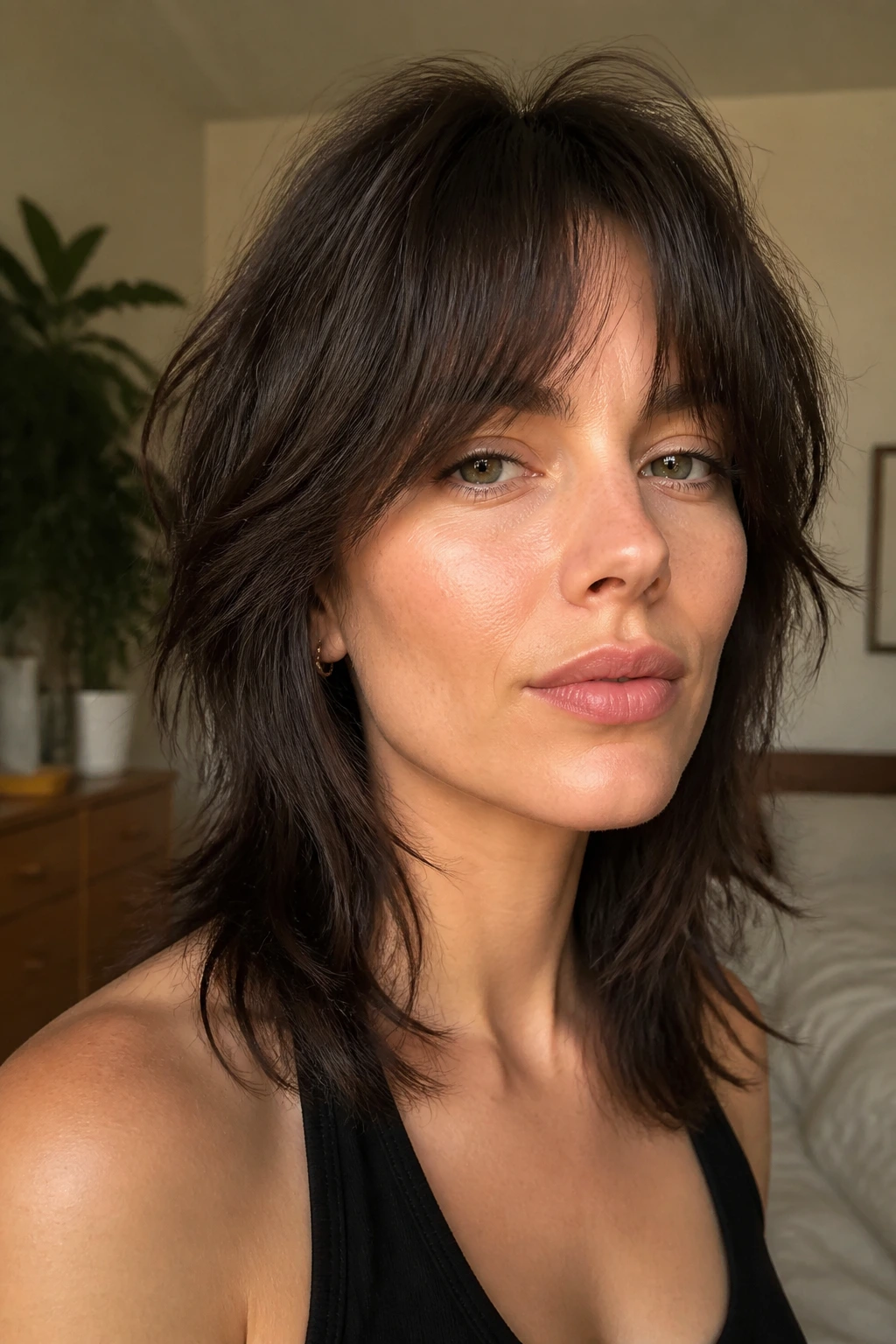
A wolf cut can be rough on fine hair if it’s taken too far. Too many short crown layers and the ends start looking like they’ve been shaved out of the picture. The softened version keeps the spirit of the cut—lift, edge, movement—but it reins in the chaos.
That’s why the bottleneck bang works so well here. It gives the front a gentle center opening and keeps the rest of the fringe blended into the sides. The result feels a little cool, a little undone, but not shredded. That last part matters. Fine hair does not need extra help looking thin.
Use this version if you like texture spray, air-drying, and a bit of swing in the layers. It’s not the haircut for someone who wants a polished salon blowout every day. It is the haircut for someone who wants movement and doesn’t mind a slightly messier finish.
10. Razor-Cut Midi with Side-Swept Bangs
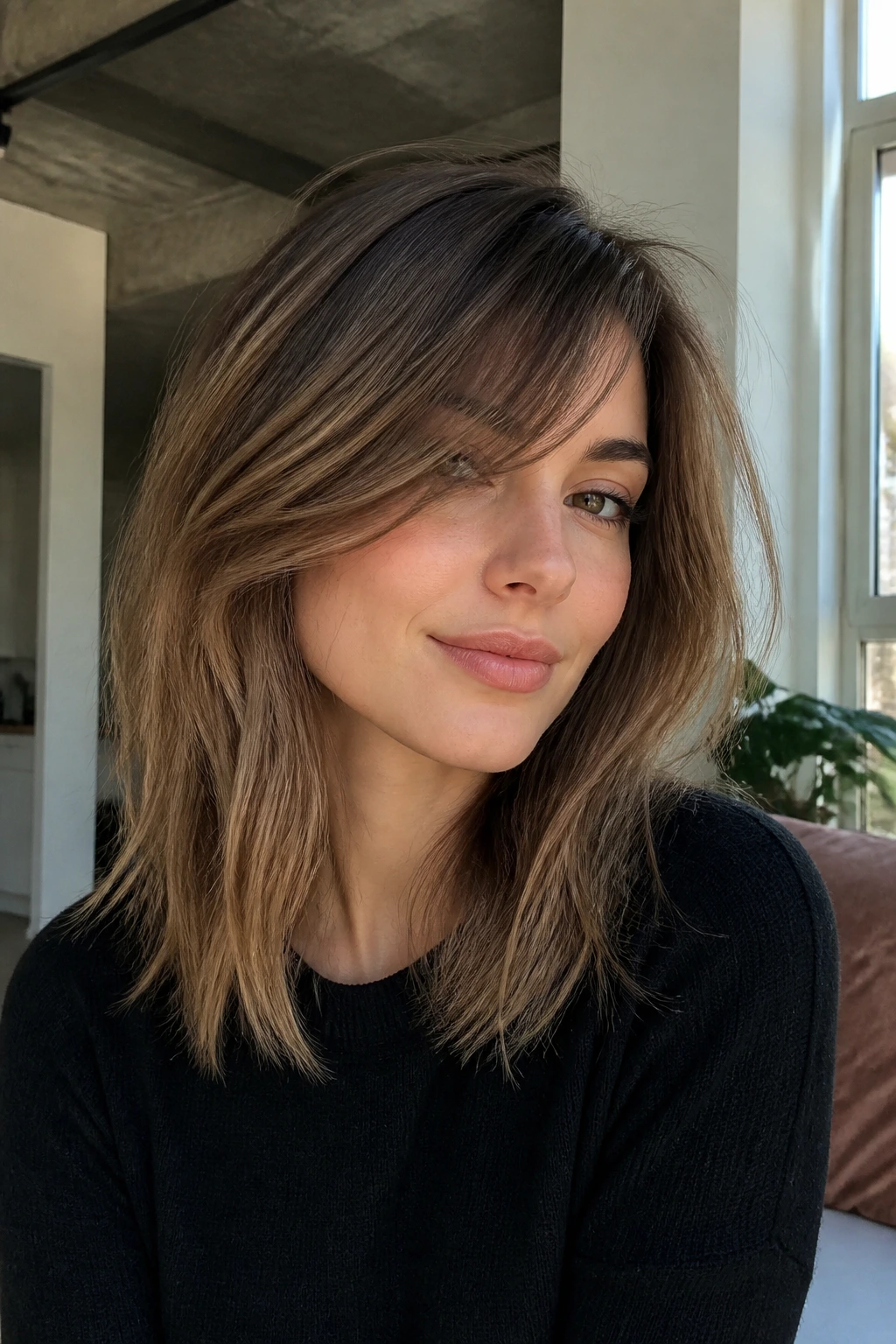
Razor cutting on fine hair is a gamble, and that’s why it needs restraint. Done well, it gives the ends a light, airy edge that moves easily and doesn’t look blocky. Done badly, it frays the hair and makes every split end in the room show up early. So yes, this cut can work. No, it should not be overdone.
The side-swept bangs help keep the look softer than a middle-part fringe. They move with the rest of the haircut instead of stopping it. On a midi length, that matters because the whole style depends on bend and direction more than blunt structure.
If your hair is stick-straight, ask for the razor only at the very ends. If you have a gentle wave, you can usually take a bit more texture through the mid-lengths. Either way, the goal is movement, not shredded edges. There’s a difference, and you can see it from across the room.
11. Blunt Bob with Internal Layers and See-Through Bangs
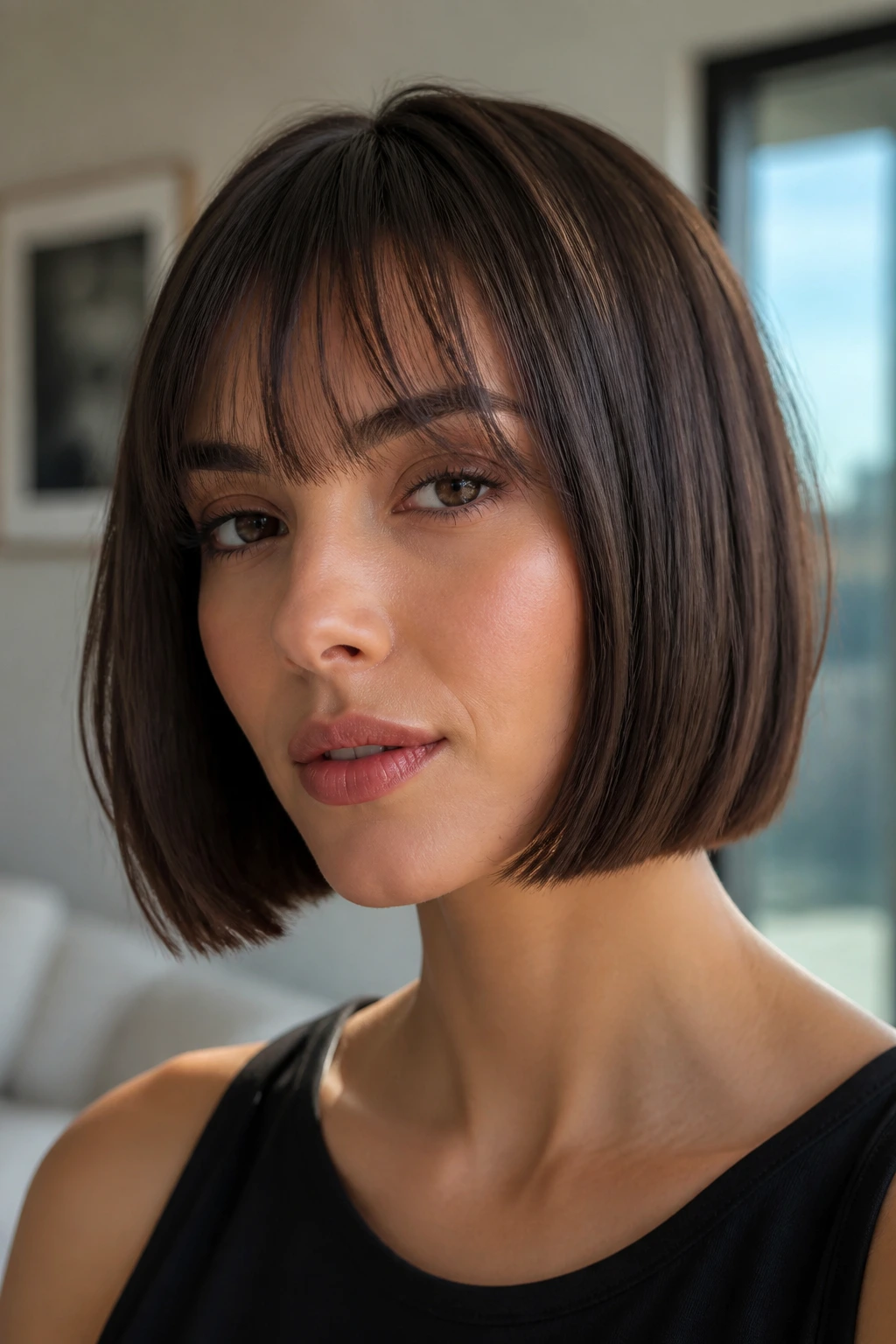
A blunt bob sounds simple, and that’s exactly why it flatters fine hair. The solid line gives the illusion of density. Internal layers do the quiet work underneath, removing just enough weight so the hair doesn’t puff out or collapse in odd places. See-through bangs finish the job by adding shape without taking too much from the front.
This is one of my favorite choices for people who want their hair to look crisp rather than soft. It has a neat edge. It has a little polish. And because the bangs are intentionally light, the whole style avoids that heavy helmet feeling that can happen when a fringe is cut too thick on delicate strands.
- Best for straight or softly bent hair.
- Keep the internal layers low and subtle.
- Ask for the fringe to sit a touch above the brows if your hair shrinks when dry.
The cut looks especially good tucked behind one ear. That asymmetry gives the eye a place to rest, and the line through the jaw reads stronger.
12. Tapered Pixie with Crown Layers and Long Fringe
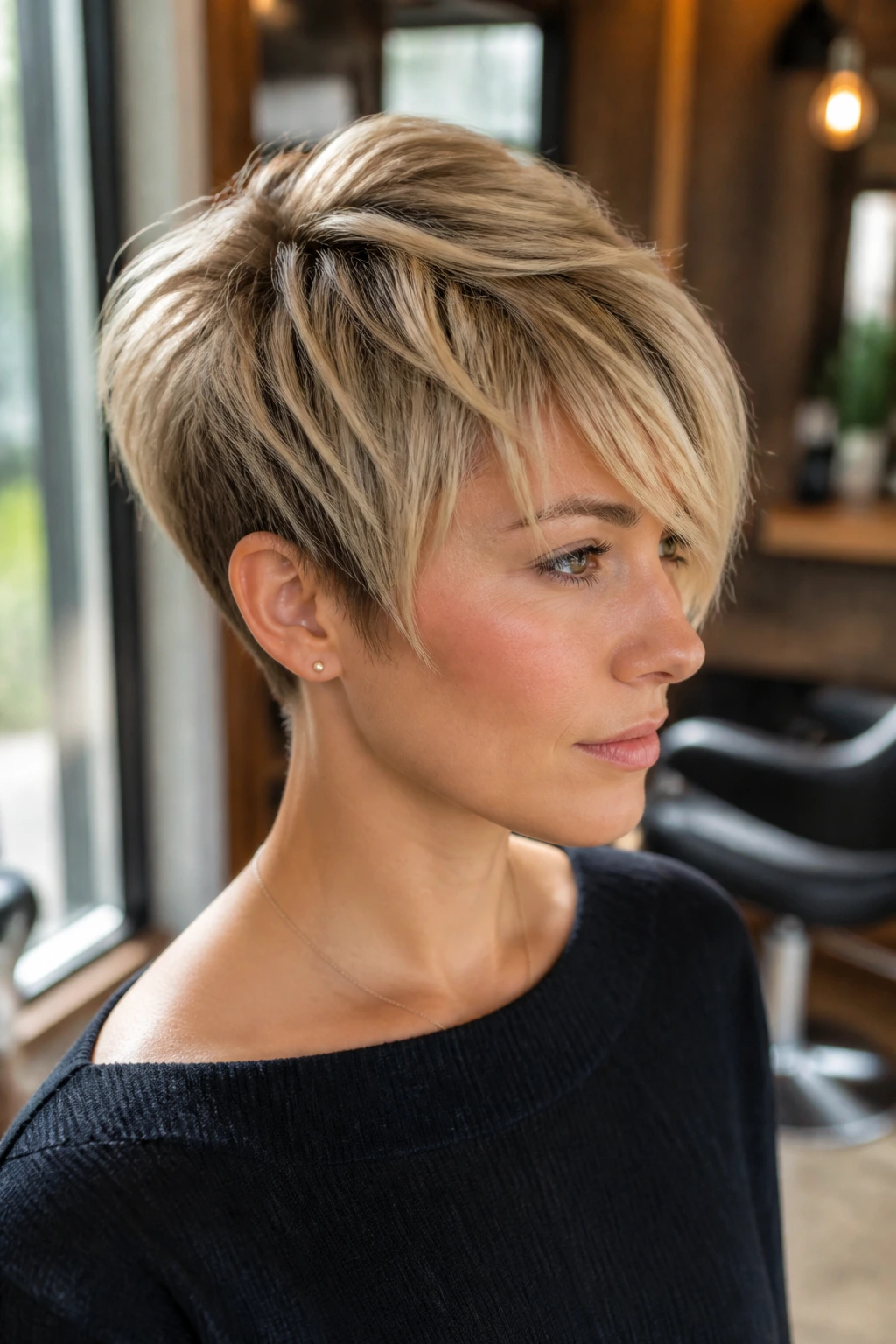
Short hair and fine hair can be a very good match when the cut is shaped with purpose. The tapered pixie gives the sides and nape a close, tidy finish, while crown layers add lift where fine hair tends to go limp. The long fringe keeps the look soft enough to wear every day.
The crown is the whole story here. If it’s left too flat, the cut feels close to the head in the wrong way. If it’s over-layered, the top goes wispy and fragile. The sweet spot sits in between—short enough to create lift, long enough to keep the shape visible.
A few things this cut does well
- It opens the face without making the forehead feel bare.
- It dries fast.
- It shows off glasses, earrings, and bone structure without trying too hard.
You will need trims more often than with a lob. That’s the price of the shape. But if you want a fresh, airy cut that does not drag the hair down, this one has real backbone.
13. Long Layers with Face-Framing Pieces and Curtain Bangs
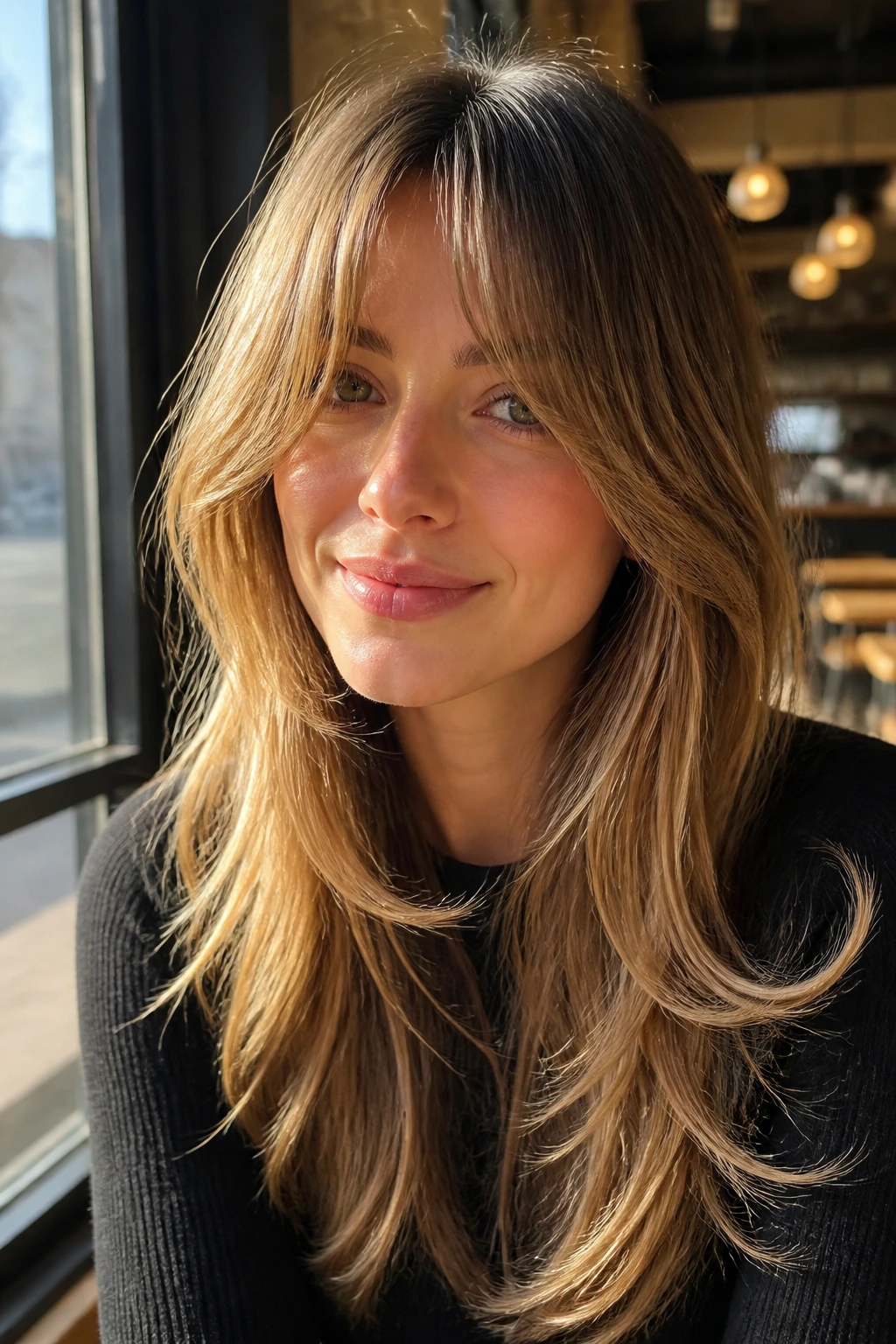
If you refuse to cut your hair much shorter, this is the version that usually makes the most sense. Long layers can give fine hair movement without making it look stringy, as long as they stay long. The face-framing pieces bring shape forward, and curtain bangs keep the front from feeling heavy.
The temptation with long fine hair is to add too many layers in the hope of “volume.” That usually backfires. The ends start looking thin, and the haircut loses its line. Better to keep the longest length intact and let the movement happen around the face and collarbone.
This cut is especially good if your hair is fine but you have a decent amount of it. The density can support the longer shape, and the curtain bangs soften the transition from fringe to layers. That blend is what keeps the haircut from reading as flat from the side.
14. Flipped-End Midi with Textured Bangs
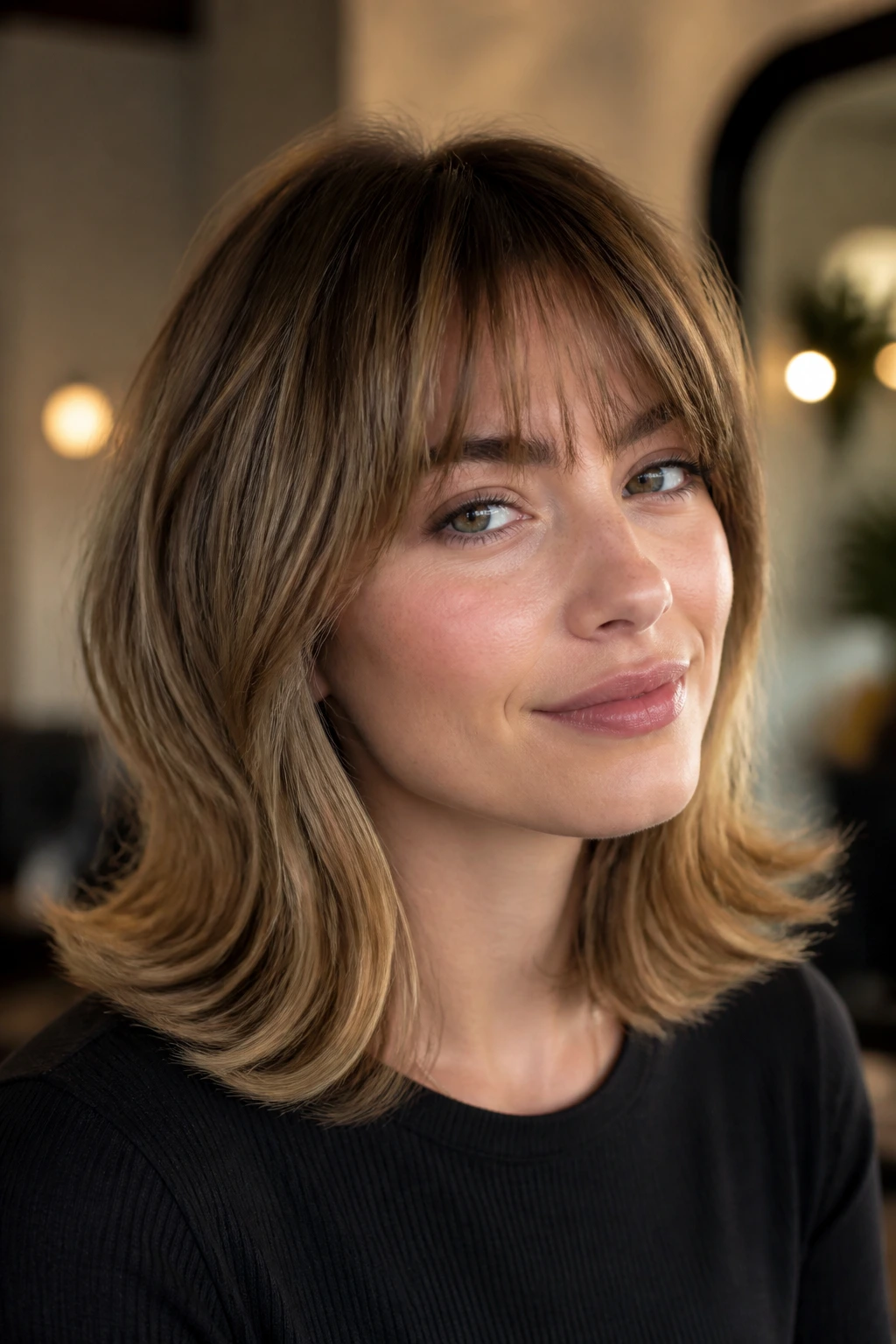
A flipped-end midi can look very polished on fine hair because the bend at the bottom gives the illusion of body. The ends turn under or out just enough to show that the hair has shape, and the textured bangs keep the top from looking severe. It’s a nice middle ground between sleek and playful.
This cut likes a round brush, a vent brush, or even a hot roller on the ends if you’re in the mood to fuss a little. You do not need big volume all over. You need one clean bend where the eye lands. That’s enough to change how full the hair reads.
It suits people who like a little retro movement without committing to a full blowout. The fringe should stay piecey, not blunt, so it doesn’t fight the soft flip through the lengths. If the bangs are too dense, the whole shape starts to look top-heavy.
15. Asymmetrical Bob with Sweeping Fringe
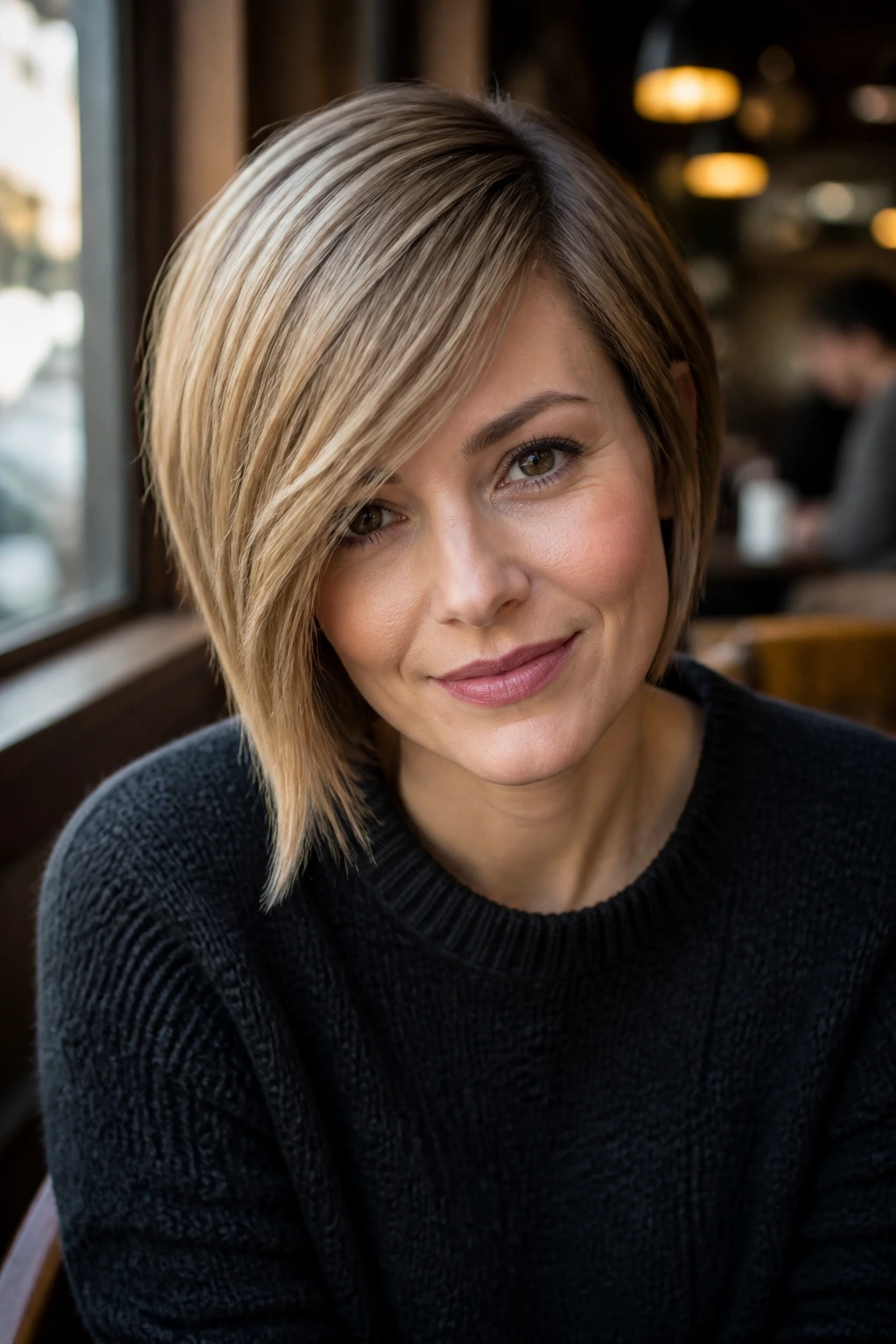
There’s something useful about a line that refuses to be even. A slight asymmetry gives fine hair a stronger read because the cut no longer sits like a box. One side can drop a little longer, the fringe can sweep in the same direction, and the whole shape suddenly feels deliberate.
This cut is smart if your hair grows out in odd ways or if one side tends to lie flatter than the other. Instead of fighting the imbalance, the haircut leans into it and turns it into style. That’s a better use of a natural quirk than trying to force total symmetry.
- Keep the difference subtle, usually less than an inch.
- Ask for the fringe to blend toward the longer side.
- Use a flat brush to direct the sweep, then set it with a light mist of spray.
It’s sharp without being severe, and the side movement gives fine hair more personality than a standard chin-length bob.
16. Tapered Shaggy Lob with Feathered Fringe
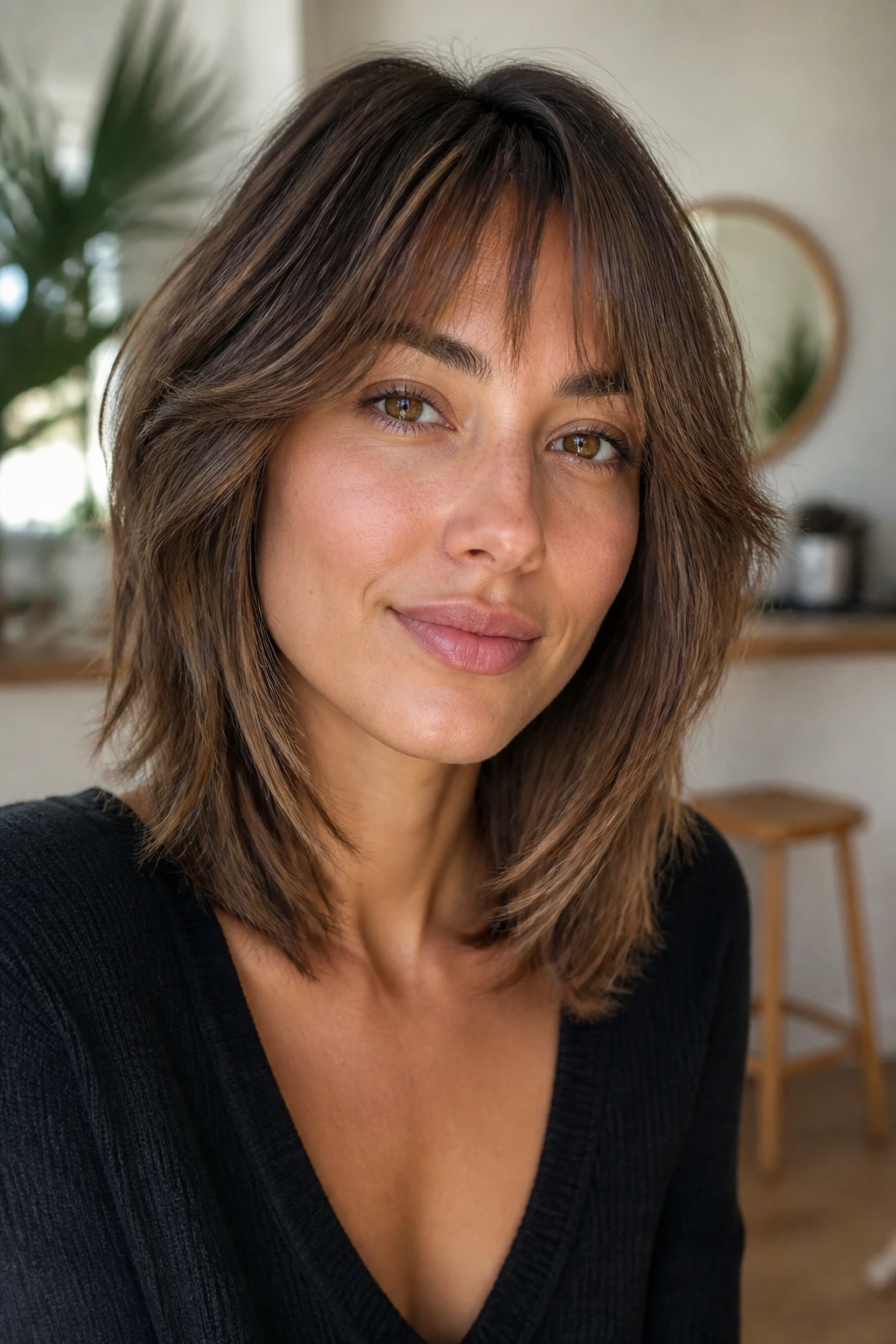
This is the lob for fine hair that wants texture but not too much attitude. The tapering keeps the ends from feeling bulky, while the shag-inspired layers create a little swing through the mid-lengths. Feathered fringe ties it together with softness at the front.
The key is leaving enough weight at the bottom. A shaggy lob goes wrong when the stylist over-textures the top and nicks away the perimeter. Then the haircut looks airy in the worst possible way. Keep the shape intact, and the movement reads as easy instead of sparse.
This cut likes a diffuser if you’re wavy, or a quick round-brush bend if you’re straight. Either way, the fringe should sit a little loose, not glued to the forehead. Loose looks better here. Stiff bangs throw off the whole thing.
17. Soft Maxi-Length Layers with Brow-Skimming Bangs
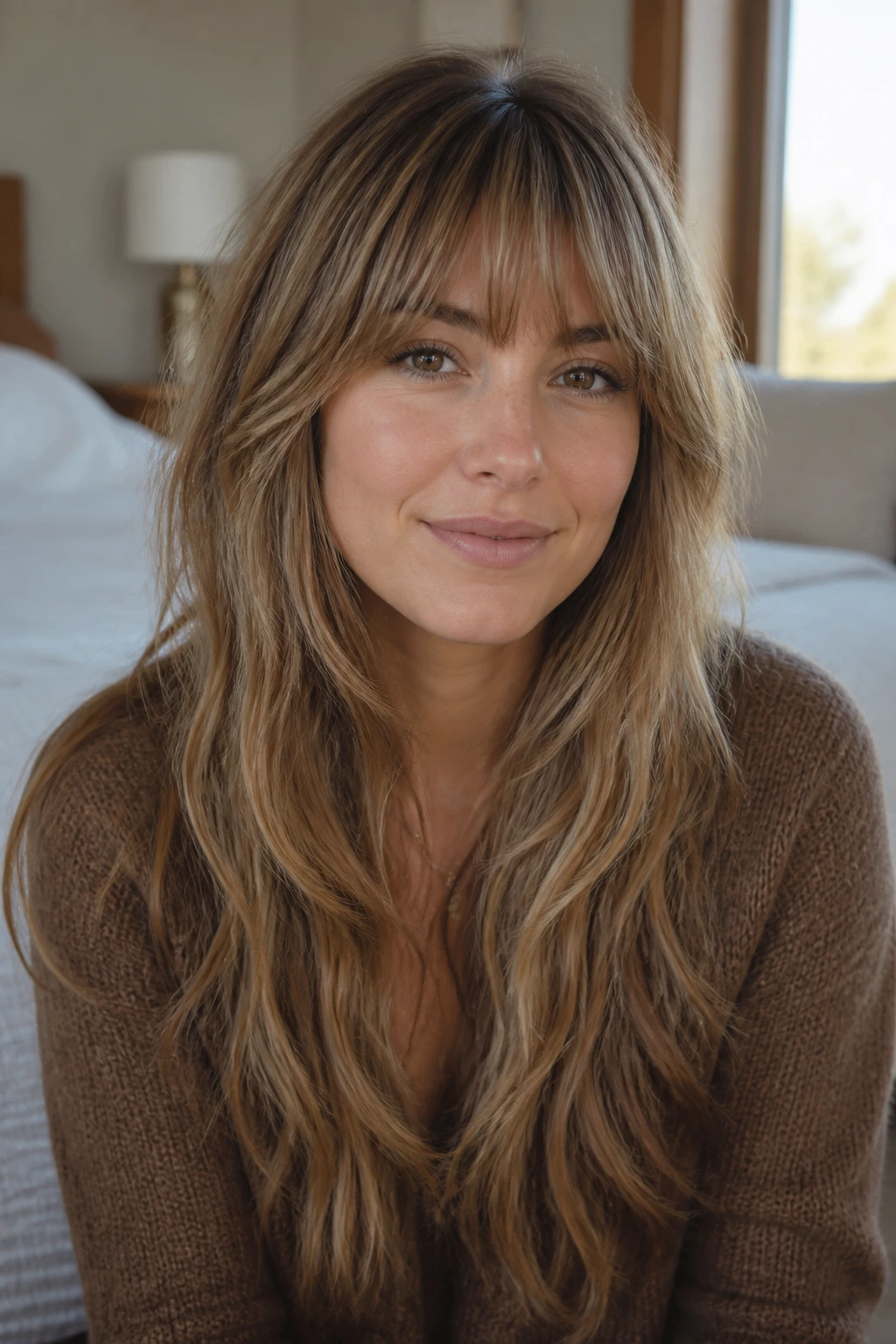
If you love long hair and do not want to give it up, this is the gentlest way to build shape. The layers stay long and soft so the ends keep their thickness, while the brow-skimming bangs give the front some life. It’s a practical compromise, which is not a bad thing at all.
Very fine hair can go limp fast when the layering gets too aggressive. That’s why this version keeps the shortest pieces controlled. The bangs add a visible front line, the layers add a little bend, and the rest stays intact. The result is less “haircut with a lot of movement” and more “hair that still looks like hair.”
This cut is best if you style with a blow-dryer more often than not. The bangs need a quick daily reset, but the rest of the length can stay simple. If you want the least dramatic change with the most face-framing payoff, this is the one I’d point to first.
Why Layered Haircuts With Bangs for Fine Hair Need Weight in the Right Places
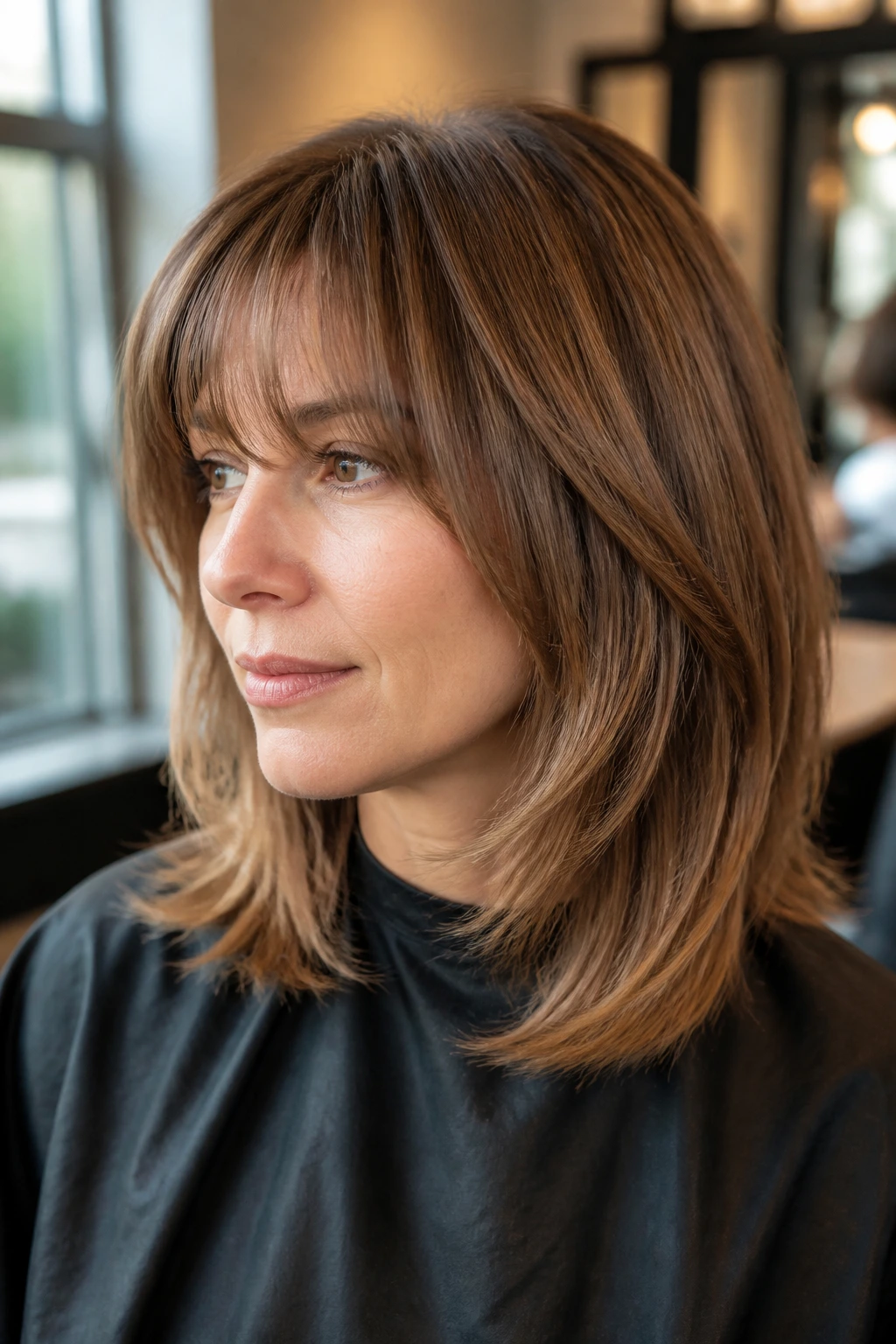
Fine hair has a sneaky problem: it can lose visual density long before it actually loses hair. That’s why the haircut matters so much. If the stylist removes too much from the ends, the hair doesn’t just look lighter—it looks see-through, especially from the side and in the back where there’s no fringe to distract the eye.
The smartest layered haircuts with bangs for fine hair keep a solid perimeter and put the movement inside the shape. That lets the hair swing a little without fraying into nothing. Bangs help because they create a denser-looking front line, which gives the whole cut more presence. Even a light curtain fringe changes how full the style reads.
The blunt edge still matters
A blunt line at the ends does not mean the haircut has to be stiff. It means the ends have somewhere to stop. Without that stop, fine hair drifts into wisps, and the style starts looking tired before you’ve even left the house.
Internal layers beat aggressive thinning
Over-thinning is the fastest way to ruin fine hair. Thinning shears can be useful in the right hands, but too much removal near the ends or crown leaves gaps that no amount of mousse can fix. Internal layers, point cutting, and soft graduation usually give a cleaner result.
Bangs do more than frame the face
They change the whole read of the haircut. A fringe puts visual weight in front, which balances out the lightness elsewhere. That balance is why a fine-hair haircut can look fuller with bangs than without them, even if the total amount of hair never changed.
What to Tell Your Stylist So the Cut Doesn’t Collapse
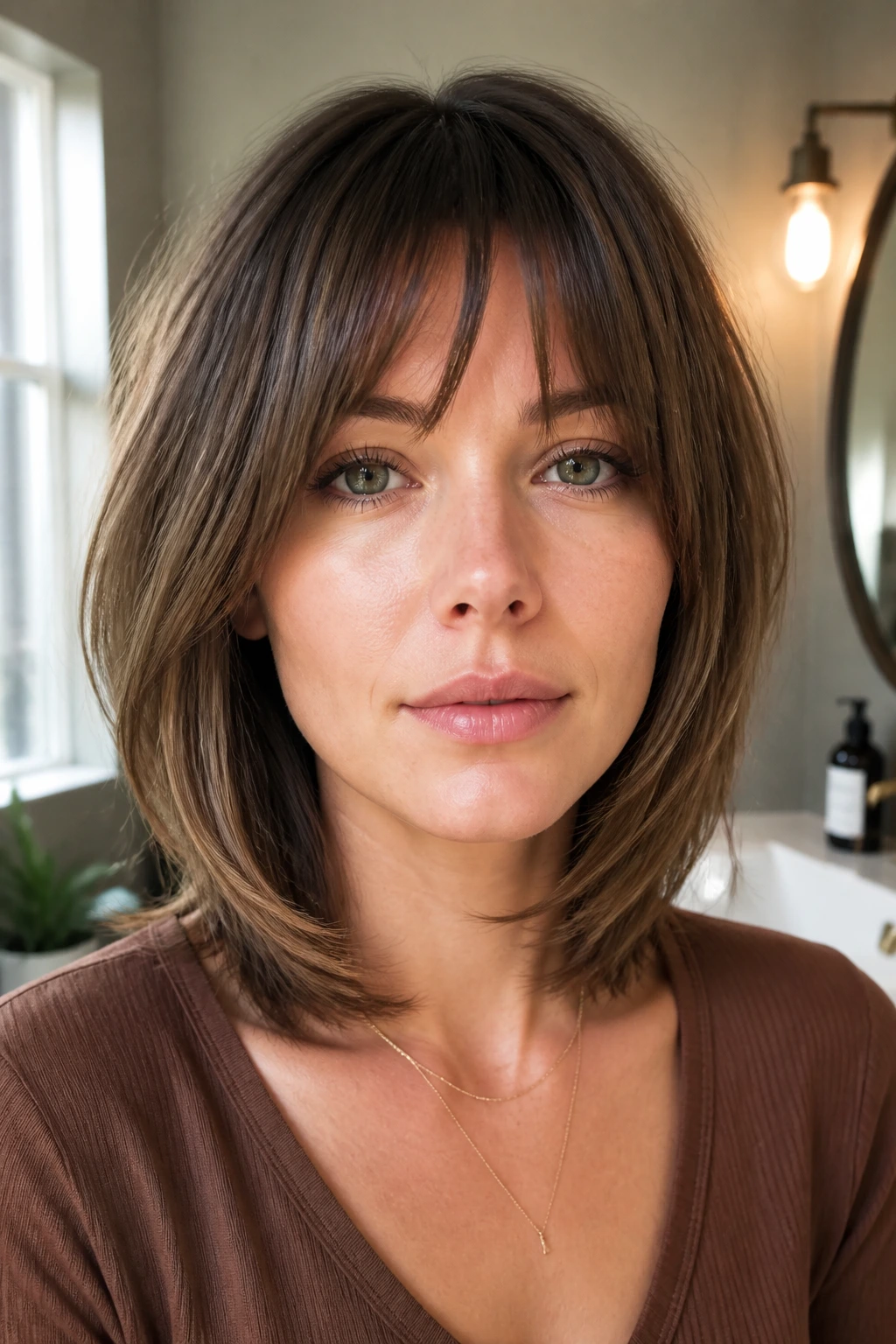
Bring photos, yes, but also bring words. Photos show shape. Words explain behavior, and behavior is what matters with fine hair. Tell the stylist how your hair dries, where it goes flat, and how much you actually want to style it. That conversation saves more bad haircuts than any inspiration board ever could.
Start with the strand, not the trend
Say that your hair is fine, and be clear about whether it’s also sparse. Those are different things. Fine hair can be dense; sparse hair can be coarse. If your stylist hears the difference, the cutting plan usually changes too.
Use real-life limits
If you do not blow-dry every morning, say so. If your bangs split at the center unless you clip them, say that too. If your crown collapses after two hours, tell them. A good cut should fit your habits, not a fantasy version of your routine.
Ask for these specifics
- Keep the perimeter full.
- Use soft layering, not aggressive removal.
- Blend bangs into the sides so they grow out smoothly.
- Avoid heavy thinning at the ends.
- Leave enough weight around the jaw or collarbone to keep the shape visible.
That list sounds simple because it is. The hard part is not knowing what you want. The hard part is saying it out loud in salon language.
Tools That Help Fine Hair Hold Its Shape
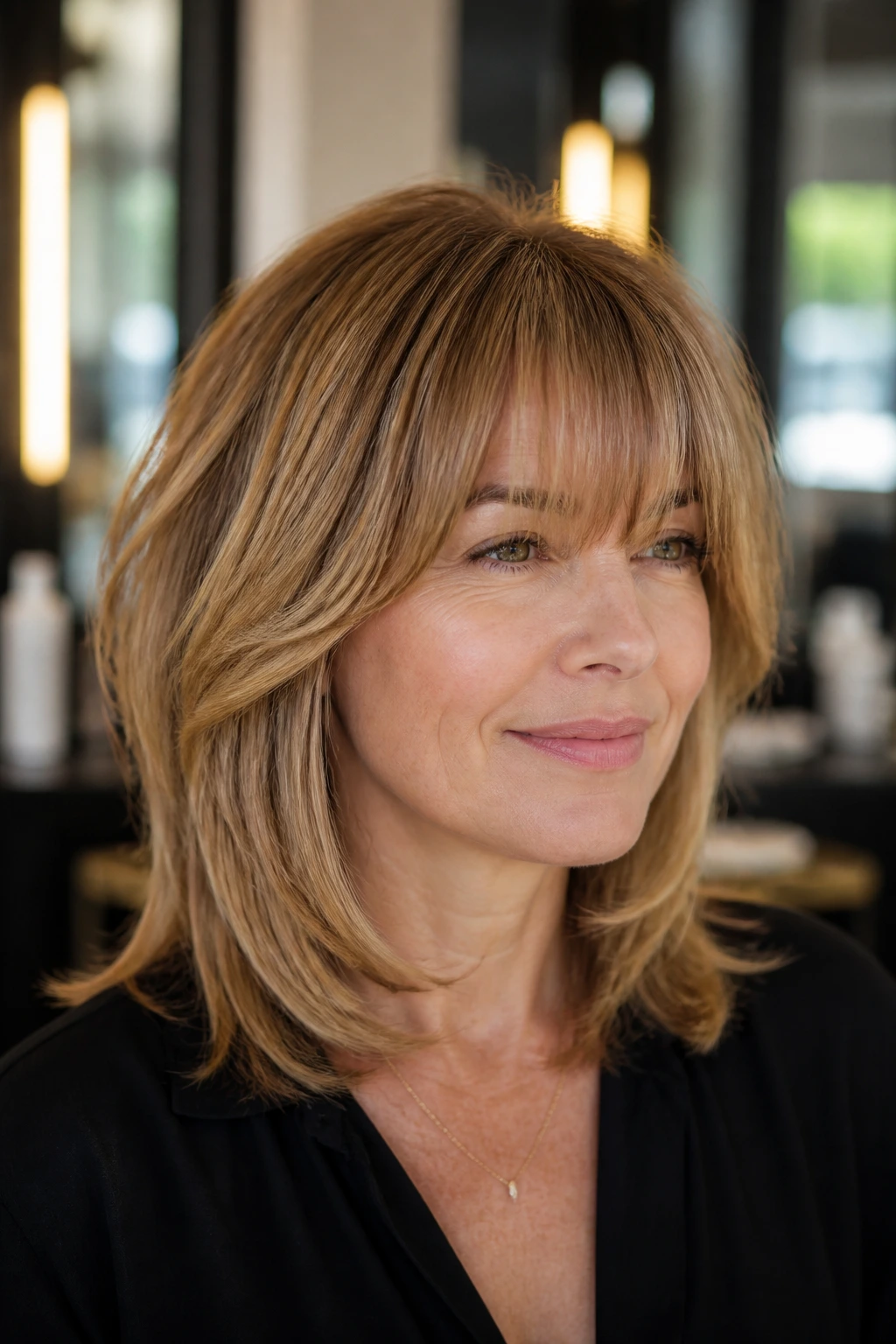
-
Blow dryer with a nozzle attachment: The nozzle focuses air at the root and keeps the bangs from blowing every which way.
-
1-inch round brush: Small enough to shape curtain bangs, fringe, and bends at the ends without over-stretching fine hair.
-
Vent brush or paddle brush: Good for fast drying when you want body, not a curled finish.
-
Lightweight mousse: Builds touchable lift at the roots without leaving the hair sticky or crunchy.
-
Root-lifting spray: Best at the crown and around the part line, where fine hair usually collapses first.
-
Heat protectant: Non-negotiable if you’re using a round brush, flat iron, or rollers near the face.
-
Dry shampoo: Useful on day two, but also handy at the roots at night if your scalp gets oily fast.
-
Velcro rollers or duckbill clips: These are old-school for a reason. They train the fringe and crown while the hair cools.
-
Flexible-hold hairspray: Keeps movement in the layers instead of freezing them into a helmet.
How to Style the Cut So It Holds Up Past Breakfast
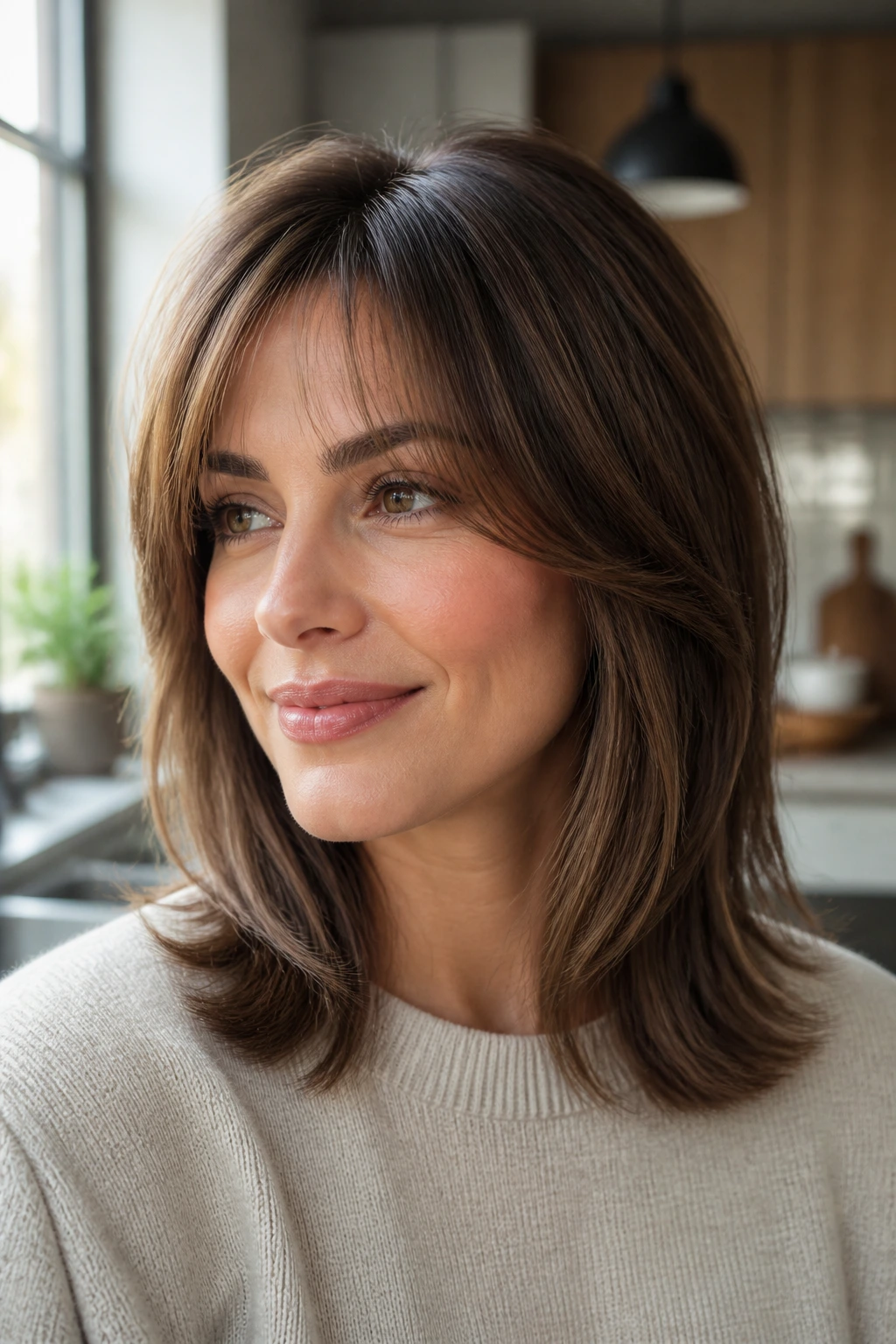
Fine hair usually behaves better when you style in stages. Dry the bangs first. Set the crown second. Finish the lengths last. That order matters because the front is what people notice first, and the roots lose shape fast if you ignore them.
For straight fine hair, lift the roots with mousse or spray, then wrap the front sections around a round brush and let them cool before brushing them out. If you skip the cooling step, the bend falls out faster. That’s where a lot of people go wrong. The hair looked good for thirty seconds, and then it told the truth.
Wavy fine hair likes less fuss. A quick rough-dry to about 80 percent, then a few clips at the crown and a little bend through the bangs, usually does more than a long blowout. If the wave is loose, a diffuser can help, but use low speed. High air flow can scatter fine strands and make them puffy at the edges.
Second-day hair is where these cuts pay off. A tiny bit of dry shampoo at the root, a quick re-bend of the fringe, and a small twist with a flat iron on the front pieces can reset the whole style in under five minutes. Not glamorous. Very useful.
Small Styling Moves That Change the Whole Finish
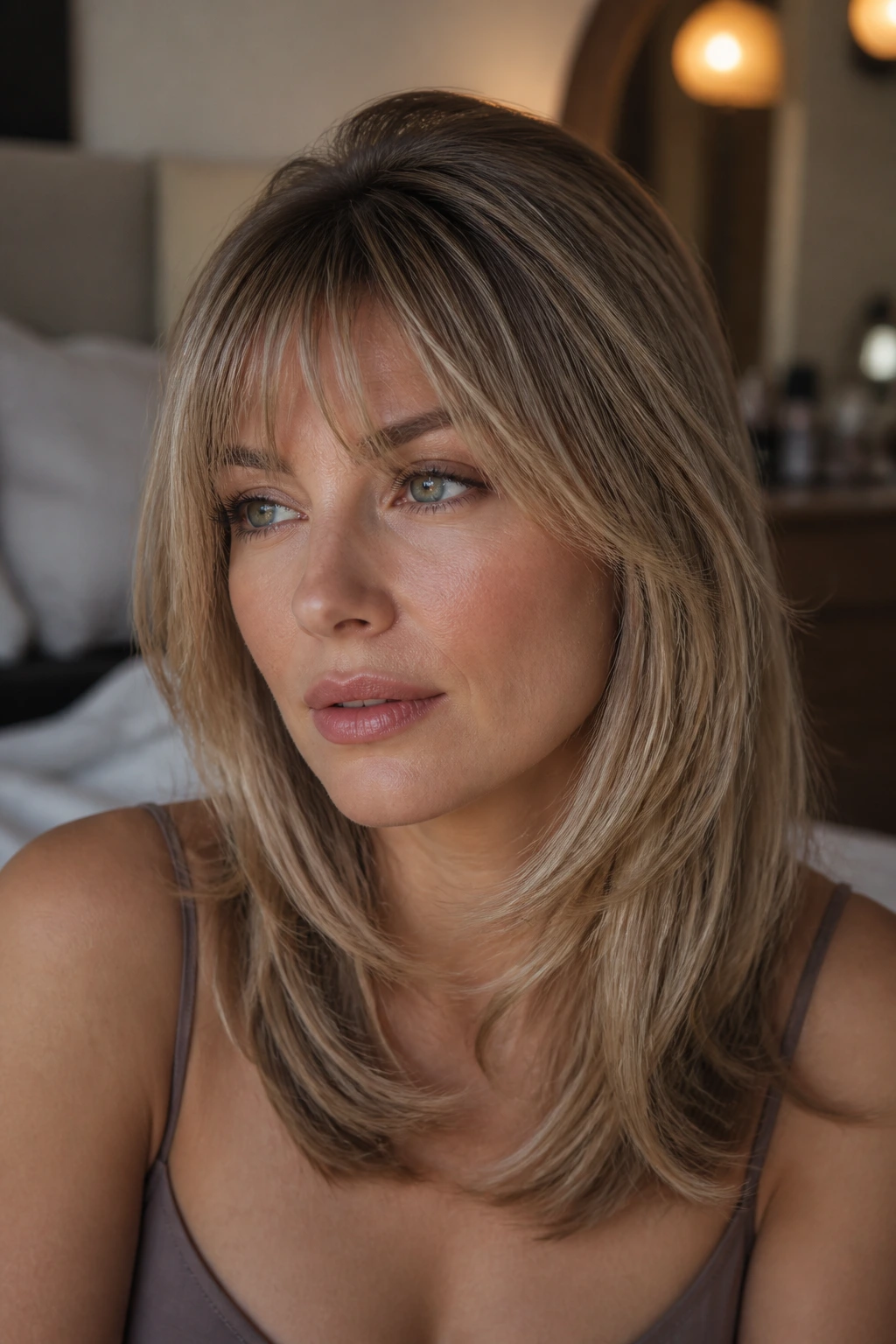
Root lift: Blow-dry against your natural part for the first minute, then switch it back. That tiny change gives fine hair a little standing room at the crown.
Bang control: Clip the fringe to one side while it cools if it keeps splitting down the middle. Fine bangs often need a shape memory, not more product.
Texture without grit: Use texture spray only on mid-lengths and ends. If you spray the bang line, it often goes dry and fuzzy by noon.
Gloss without flattening: Put one drop of serum between your palms and tap it on the last two inches of hair. Never flood the roots. Fine hair cannot hide that mistake.
Make it yours: If you wear glasses, keep the fringe slightly lighter so it doesn’t bump the frames. If you like earrings, a cleaner face frame keeps the shape visible around the jaw.
Common Mistakes That Make Fine Hair Look Flatter
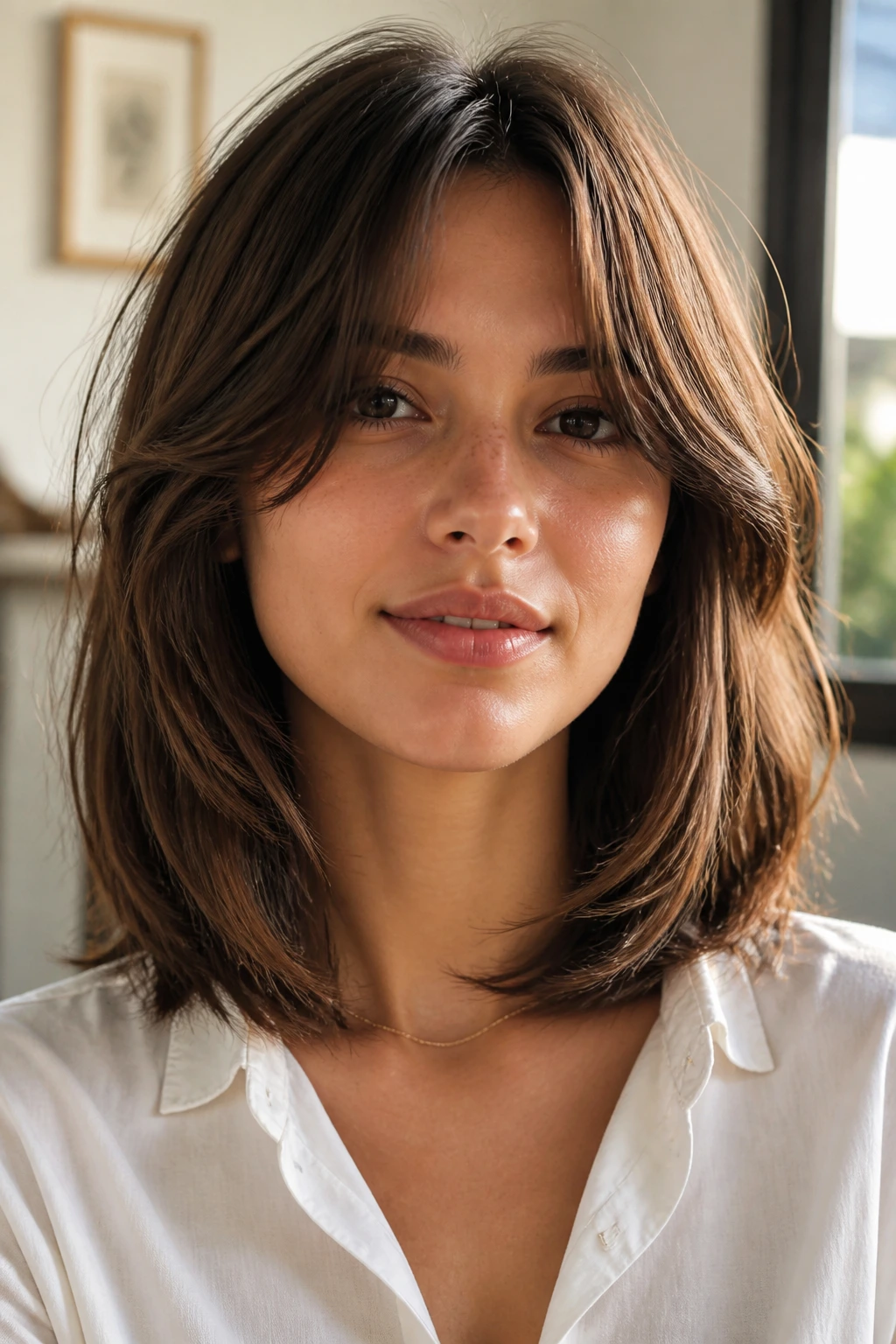
The fastest mistake is over-layering. When the top gets too chopped up, the hair stops reading as full and starts reading as feathery in a bad way. The fix is boring but effective: keep the shortest layers longer, and preserve the outline.
Another problem is bangs that are cut too thick. Heavy fringe on fine hair can look bulky for a day and then separate into weird strings as soon as the natural oils show up. Ask for soft removal instead of a solid block unless your density is genuinely high.
Heavy products are their own trap. Creams, oils, and rich leave-ins can make fine hair feel slick for ten minutes and then limp for the rest of the day. Use less than you think you need. Then use even less.
- Over-thinning the ends: The haircut starts strong, then the bottom looks transparent. Ask for point cutting or soft internal layers instead.
- Ignoring cowlicks at the fringe: Bangs split and fight the forehead. Dry them in the direction they want to go, not in the direction of a photo.
- Skipping bang trims: Even a good fringe gets annoying when it brushes the lashes and folds weirdly over the eyes. Keep the front line fresh.
Variations and Adaptations to Try
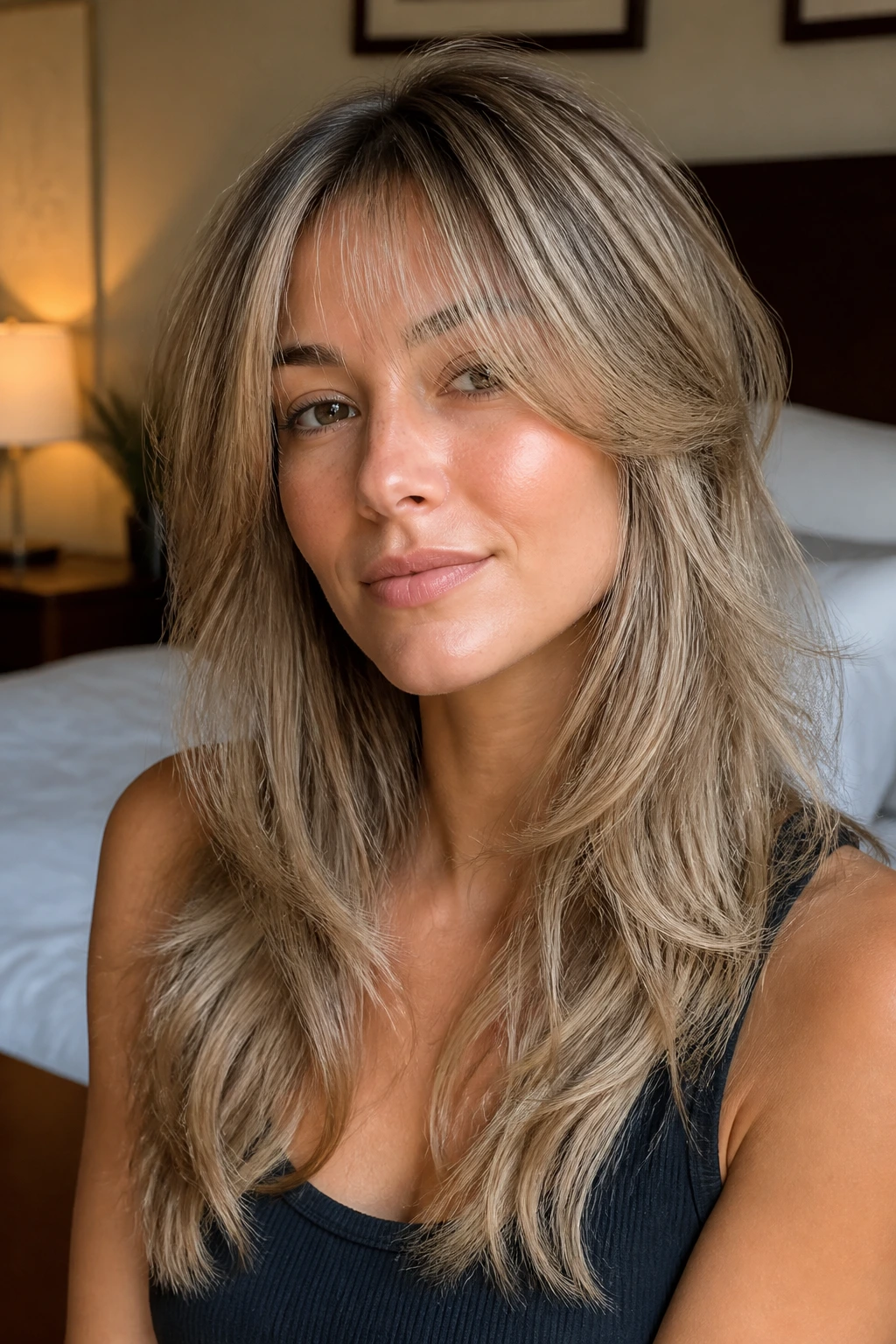
The Cowlick-Friendly Curtain: Keep the center of the fringe longer and let the outer pieces swing wider from the cheekbones. This version behaves better if your hairline wants to push bangs apart no matter what you do.
The Air-Dry Lob: Choose the collarbone or lob shapes with invisible layers and skip the blowout. A light mousse and a quick finger twist at the front are enough for hair that dries with a soft bend.
The Polished Blunt Version: Go for the blunt bob with see-through bangs if you want the cleanest possible outline. It’s the best pick when you want the hair to read thicker from across the room.
The Textured Wavy Version: Choose the softened shag, shaggy lob, or wolf cut if your hair has a natural bend and you like a piecey finish. The shape holds better when the movement is already there.
The Long-Length Version: Stick to long layers with curtain bangs or the soft maxi-length cut if you hate losing length. These versions keep the ends intact while still changing the front view enough to feel new.
The Short-and-Sharp Version: Pick the bixie or tapered pixie if you want lift without blow-drying a lot of length. These cuts need more maintenance, but they can make fine hair look surprisingly lively.
Keeping the Shape Between Salon Visits

Fine hair usually tells on a haircut fast, which is why maintenance matters. Bangs often need a trim every 2 to 4 weeks if you wear them full across the forehead, or about every 4 to 6 weeks if they’re curtain-style and more forgiving. Layers can usually go 8 to 12 weeks before they start losing their shape, though short crops and pixies may need attention sooner.
The best at-home habit is not complicated: dry the fringe the right way, keep the roots from getting overloaded, and reset the front pieces when they start to split. A quick bang trim at home with proper shears can work for very minor dusting, but if your fringe sits directly over the brows or you’re growing it out carefully, a salon touch-up is safer.
Sleep matters more than people think. A loose clip at the crown, a satin pillowcase, or simply avoiding sleeping with wet bangs can save you from the weird morning bend that fine hair loves to develop. Wet fine hair also stretches and breaks more easily, so let it dry before you go to bed if you can.
If the cut starts falling flat between appointments, do not jump straight to more layers. Start with the styling. Sometimes all you need is a lighter product, a cleaner part, or a two-minute round-brush reset at the front.
Frequently Asked Questions
Can fine hair really wear bangs without looking sparse?
Yes, if the fringe is cut with enough thought. The trick is keeping the bang line light enough to move, but not so thin that it disappears into the forehead. Curtain bangs, bottleneck bangs, and soft side fringe usually behave better than a heavy blunt block.
Do layers make fine hair look thinner?
They can, if the stylist removes too much from the ends or crown. Long, soft layers usually help fine hair because they keep movement inside the cut while preserving the outer line, which is where fullness reads most clearly.
Which bangs are best for very fine hair?
Curtain bangs and bottleneck bangs are usually the safest starting points. They frame the face without demanding a huge amount of hair across the front, and they grow out more cleanly than a dense straight fringe.
How often should I trim bangs on fine hair?
Short bangs or full fringes often need a trim every 2 to 4 weeks. Longer curtain pieces can go a bit longer, especially if they’re blended into the sides. If the fringe starts touching the lashes or splitting badly, it’s time.
Can I air-dry these cuts, or do I need a blowout?
Some of them air-dry well, especially the lob, shaggy lob, and softened wolf cut. Others—like the French bob, blunt bob, and pixie—usually look sharper with a quick dry and a little bend at the front.
What if my bangs keep splitting in the middle?
That’s usually a parting habit or a cowlick problem, not a bad haircut. Clip the fringe while it’s warm, blow-dry it in the opposite direction for a minute, and use less product at the roots. If the split is severe, ask your stylist to leave the center longer next time.
Is a shag too much for very fine hair?
A hard, over-textured shag can be too much. A softened version works better because it keeps enough weight at the perimeter and avoids that see-through, frayed finish that fine hair gets so easily.
Should I ask for thinning shears?
Only with caution. On fine hair, thinning shears can create gaps where you wanted softness. Point cutting and gentle internal layering are usually safer, especially around the ends and fringe.
The Shape That Sticks
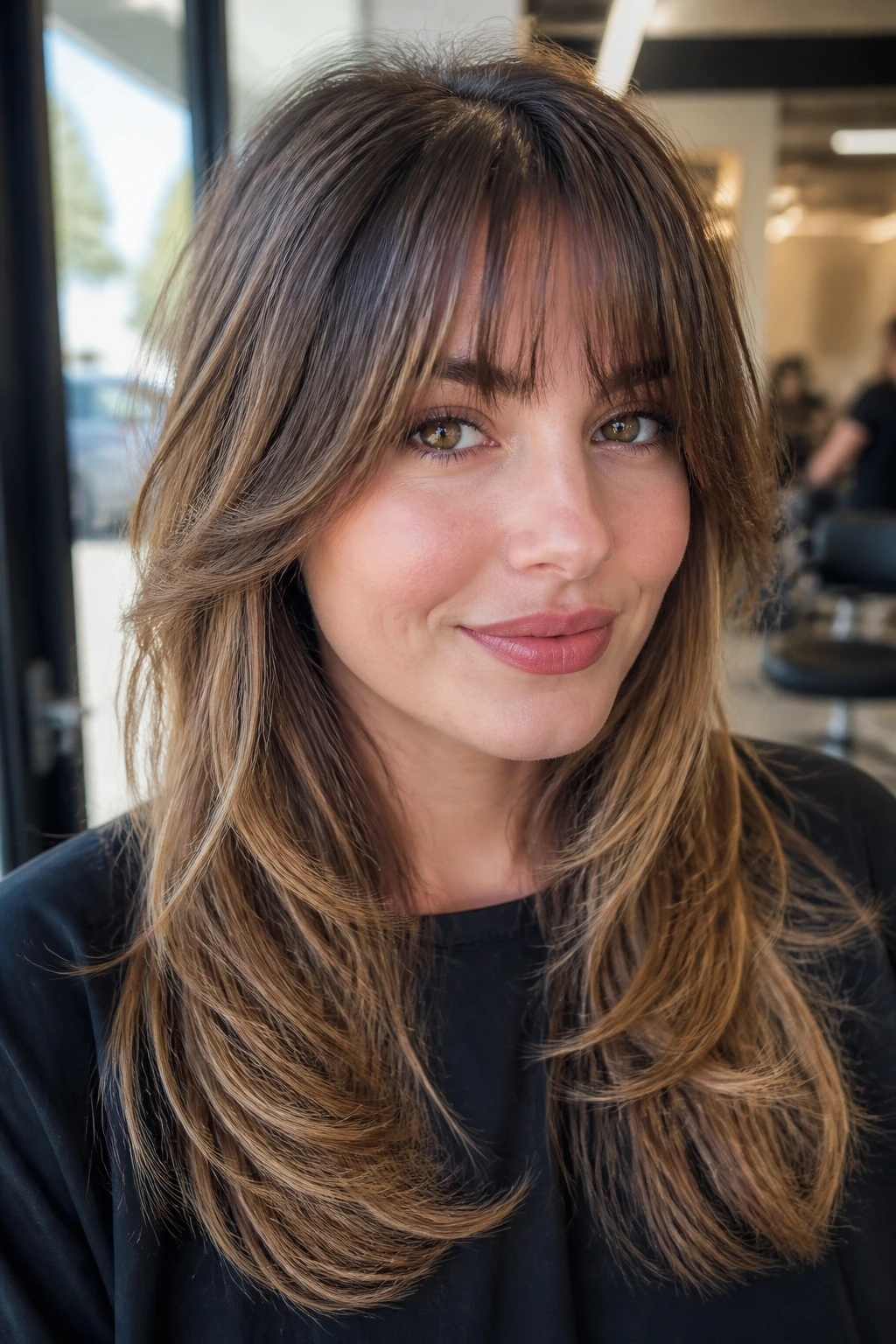
The best cut for fine hair is not the one with the most layers. It’s the one that keeps enough weight to look full, then uses bangs to give the front some purpose. That’s the part people notice first, and it’s the part that can make a haircut feel finished even when the rest is light.
Bring a photo, yes. Bring your real morning routine too. Those two things together matter more than any trend name, and they’re what turn a nice-looking style into a cut you can actually live with.
