



Curtain bangs on straight hair have a way of looking deliberate before you even touch a styling tool. The center split softens the face, the straight lengths keep the outline sharp, and the whole shape lands in that rare spot between polished and relaxed without turning mushy.
That balance is harder to get than it looks. Straight hair shows every line in the cut, which is why a curtain fringe can either save the whole style or expose every awkward layer around the face. If the bang is too short, it puffs out. Too blunt, and it loses the softness that makes it worth having. Too thin, and it disappears into the rest of the hair by lunch.
Straight hairstyles with curtain bangs work when the fringe does real shape work: it opens the face, narrows the forehead a little, and lets the eye travel down the length of the hair instead of stopping at a heavy block of bangs. That is the trick. Clean shape first. Softness second. Frizz nowhere near the crown.
Why These Straight Hairstyles With Curtain Bangs Stand Out
- They sharpen the outline without making the face look boxed in. A center-split fringe breaks up straight lengths so the whole haircut feels intentional, not flat.
- They give you options at different lengths. You can keep a chin-length bob, a collarbone lob, or long hair past the chest and still use the same fringe idea.
- They grow out with less drama than blunt bangs. Curtain pieces can slide into layers instead of turning into a hard line you regret two weeks later.
- They make straight hair look expensive without a lot of fuss. A clean part, a smooth bend at the bangs, and tidy ends do most of the work.
- They work with more face shapes than people expect. The fringe can sit higher, lower, wider, or narrower depending on where the cheekbones land.
- They still look like hair. Not helmet hair. Not a blow-dry that forgot how to move.
1. Glassy Center-Part Lob with Curtain Bangs
A glassy lob with curtain bangs is the neatest, cleanest place to start. The cut usually hits somewhere between the jaw and collarbone, and the fringe opens right at the cheekbones so the face gets shape without losing that crisp straight line.
Why it works: The blunt perimeter gives fine to medium hair a thicker edge, while the curtain bangs keep the front from looking severe. On straight hair, that contrast matters. You want the ends to look deliberate, not stringy, and a lob makes that easy.
If you like hair that feels edited, this is the one. No extra fluff. No big bend at the ends. Just a smooth center part, a little softness at the front, and a line that lands exactly where you want people to look.
Best for: people who want a low-drama shape that still reads as styled.
Styling note: Run a flat iron through the lengths in one clean pass, then bend the bangs outward with a round brush or a large velcro roller for 5 to 8 minutes.
2. Long Pin-Straight Layers That Fall Past the Chest
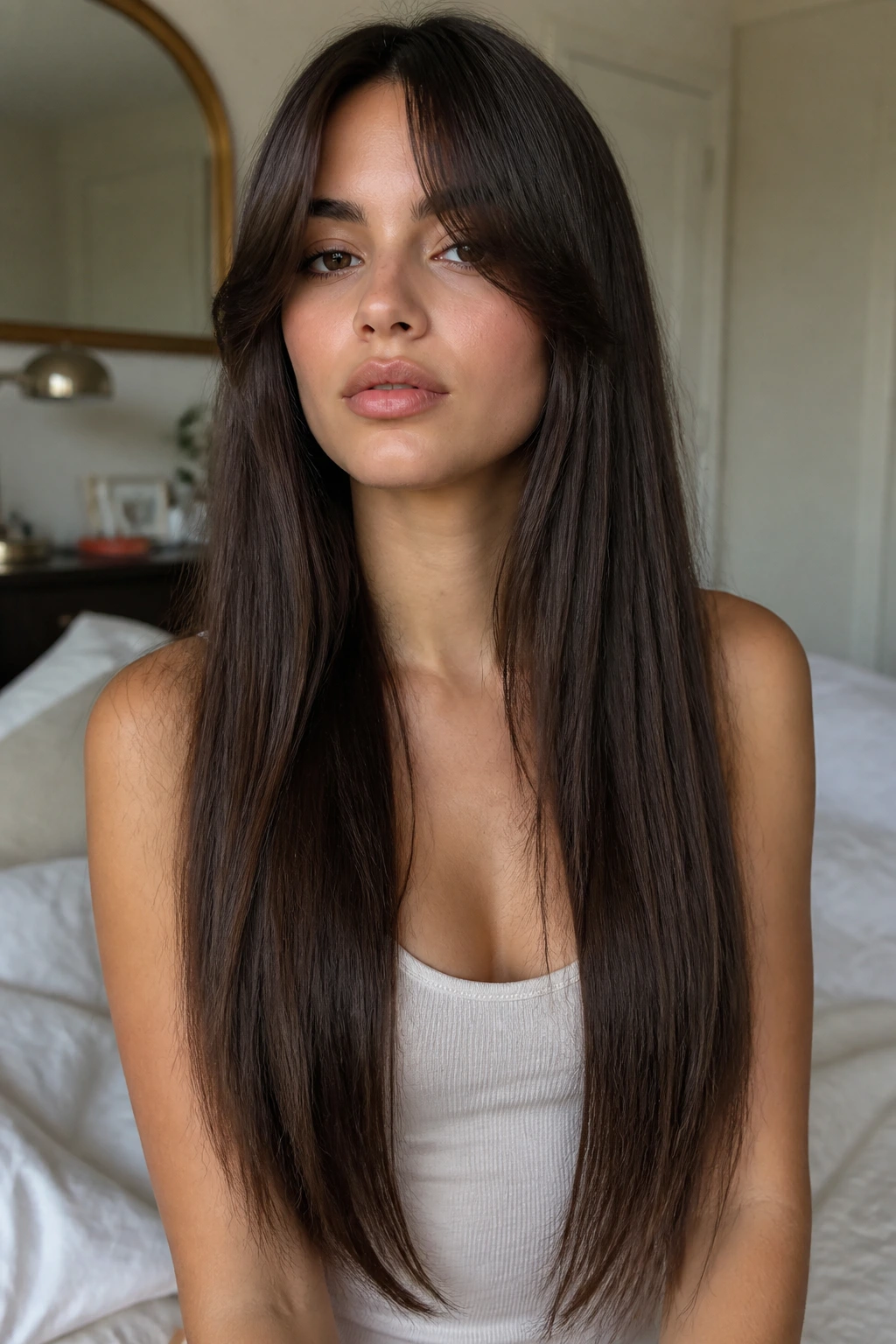
Long, straight layers are not there to add volume for the sake of volume. They’re there to keep heavy hair from hanging like a curtain in the wrong way. With curtain bangs cut a little shorter than the first face-framing layer, the whole look moves from blunt to balanced.
Why It Works
The length keeps the hair feeling sleek, but the layers stop it from collapsing into one heavy sheet. That matters most if your hair is thick, coarse, or stubbornly flat at the roots and puffy at the ends. The curtain bangs connect the front to the rest of the haircut so the face doesn’t look dropped into a long wall of hair.
A good version of this cut usually keeps the shortest face-framing piece near the lip or cheekbone and lets the longest layers sit lower, around the bust line. That spacing gives straight hair some shape without sacrificing length.
- Best for thick straight hair: yes, especially if the ends tend to bulk up.
- Styling time: 10 to 12 minutes if you smooth it with a blow dryer first.
- Trim rhythm: every 8 to 10 weeks keeps the layers from wandering.
Pro tip: Ask for layers that start lower than you think. If they begin too high, the hair loses weight fast and the ends can look wispy.
3. Blunt Collarbone Bob and Barely There Bangs
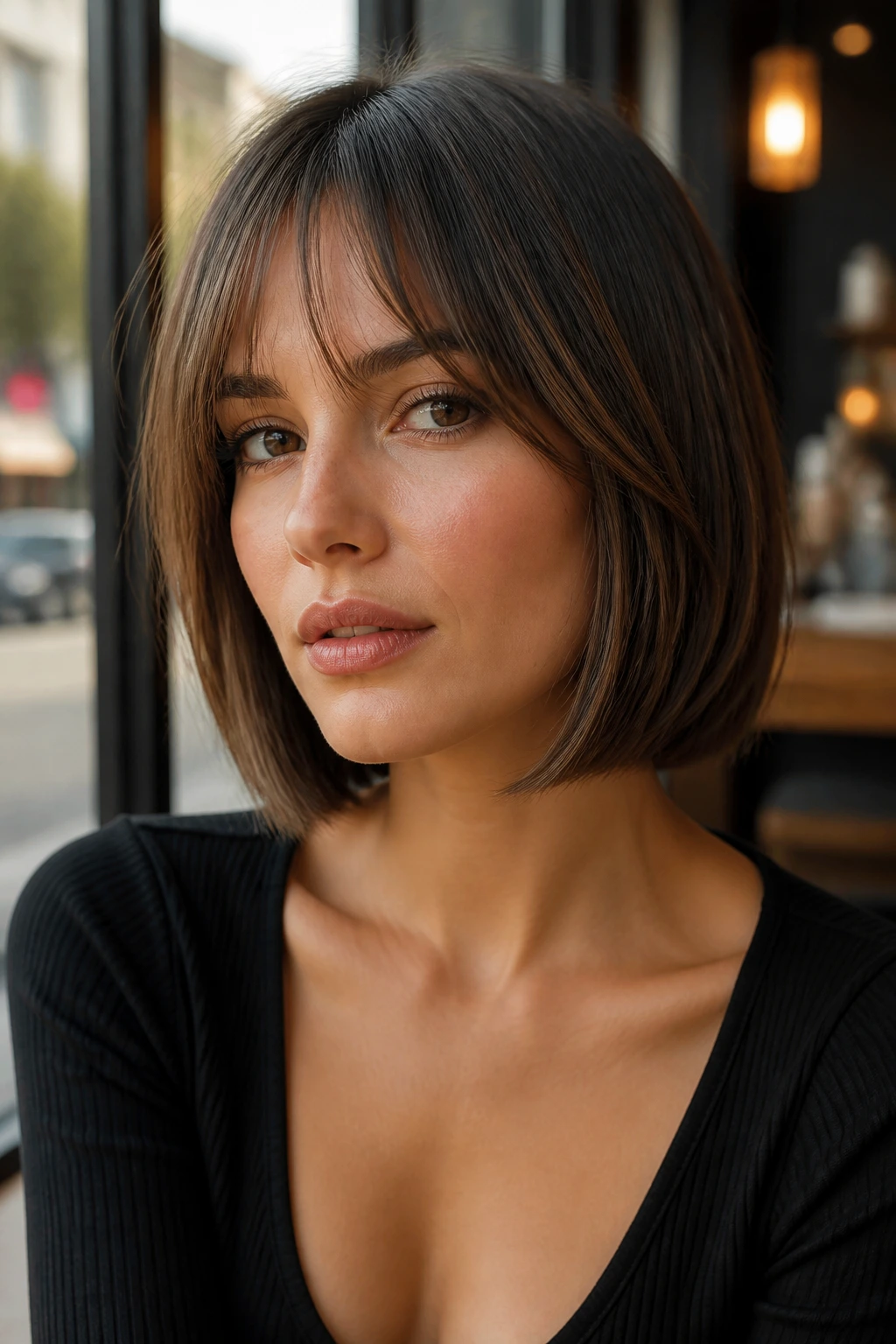
A collarbone bob with curtain bangs is what I reach for when someone wants structure but refuses to look overstyled. It sits right at that sweet spot where the hair can be tucked, flipped, or left alone and still look finished.
You know the kind of hair that falls flat by noon? This cut handles that better than a longer shape because the blunt line keeps the bottom edge visible. The curtain bangs stay soft, but they don’t have to do all the work. The bob carries some of the shape on its own.
Quick Facts
- The length usually lands just above or right at the collarbone.
- The bangs are longer at the sides, shorter in the middle, and should graze the brow or cheekbone.
- A slight inward bend at the ends keeps the bob from looking boxy.
- It suits glasses well because the fringe frames the face without crowding the lenses.
Closing thought: If your hair naturally hangs straight, this is one of the few short cuts that still feels calm rather than harsh.
4. Feathered Curtain Bangs with Sleek Mid-Length Ends
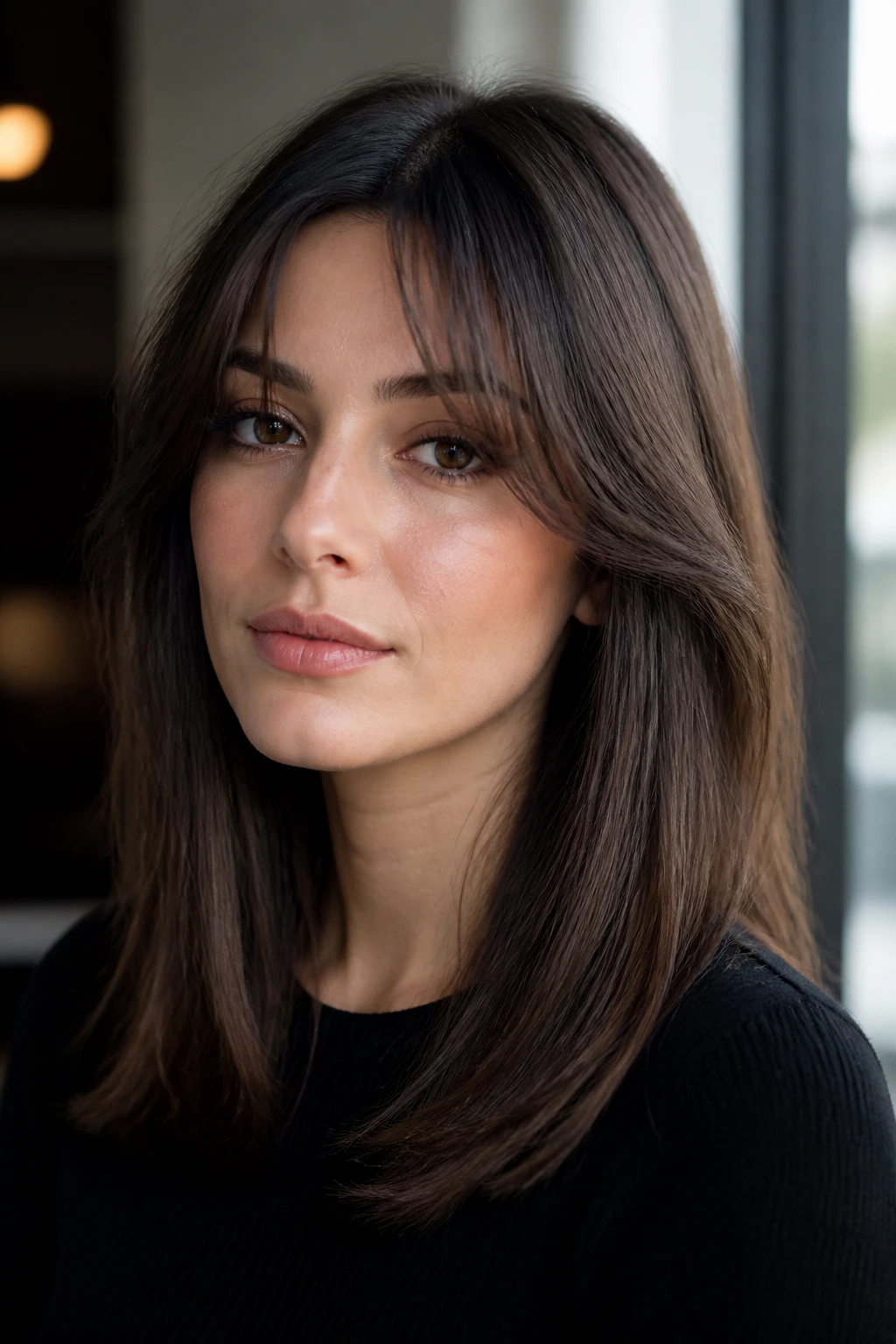
Can curtain bangs look soft without making the whole haircut fluffy? Absolutely. The trick is to keep the fringe feathered and the rest of the hair sleek, so the softness stays where it belongs instead of spreading everywhere.
The mid-length cut usually lands around the shoulders or just below, and that gives the bangs room to open properly. If the main body of the hair is ironed smooth, the fringe becomes the focus. That’s the whole point. You get movement at the face and clean lines through the rest of the cut.
How to Wear It
- For work: tuck the sides behind the ears and keep the bangs loose.
- For weekends: let the fringe fall open and leave the lengths dead straight.
- For a dressier look: bend the last inch of the ends inward so the whole shape feels finished.
How it feels in real life: light at the front, tidy through the body, and easy to refresh with a quick pass from a round brush.
5. Straight Shag with Quiet Texture Through the Crown
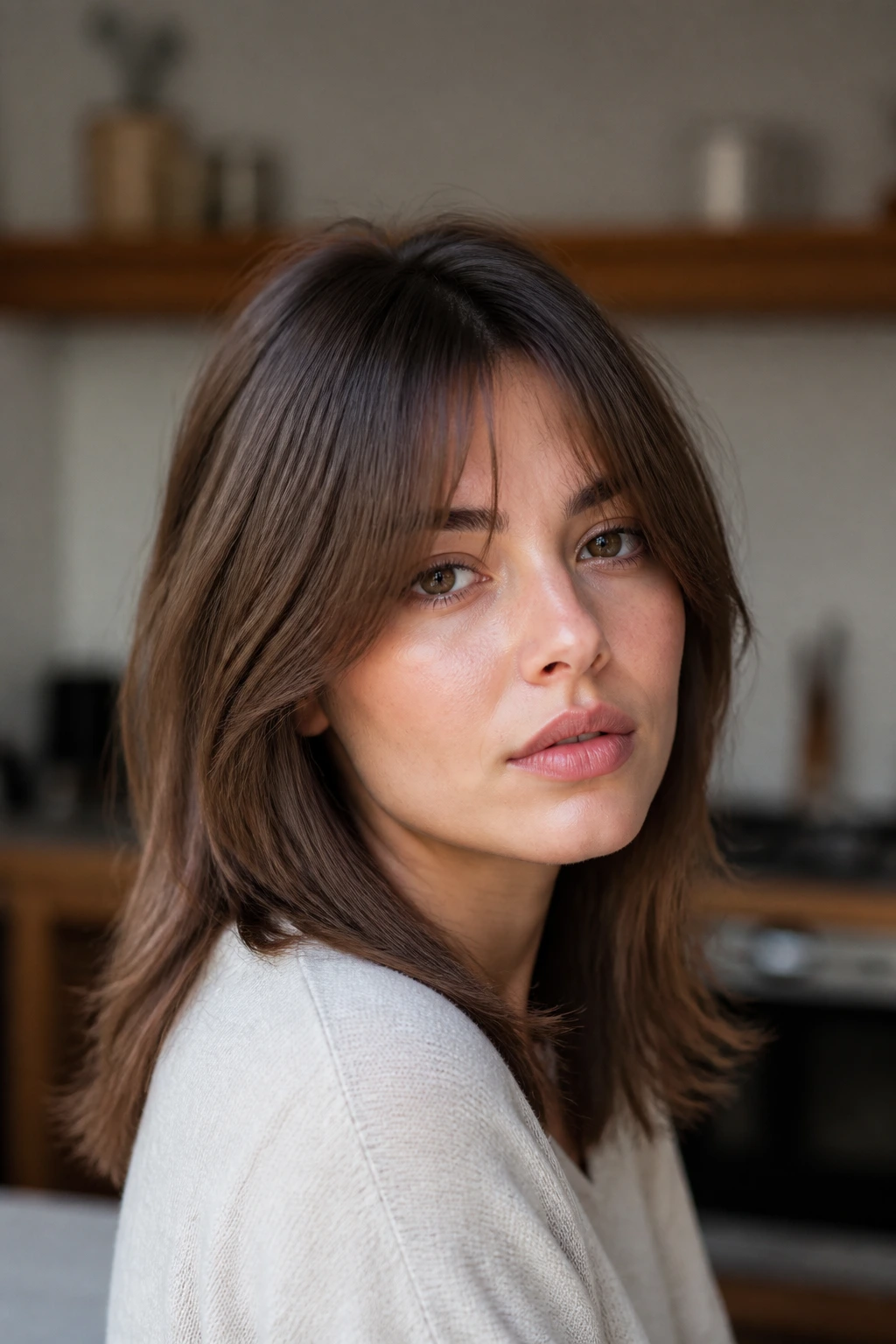
This is the cut for someone who likes a little edge but hates crunchy, over-textured hair. A straight shag with curtain bangs keeps the layers visible, but the styling stays smooth, so the finish looks controlled instead of wild.
The crown gets more movement than the ends, which is where the shape comes from. That tiny lift near the top stops straight hair from falling completely flat, and the curtain bangs connect that lift to the face. When it works, the haircut has swing without looking messy.
I like this version on dense hair that feels heavy around the ears. The layers take pressure off the middle of the head, and the straight styling keeps the result modern rather than retro. If you want a cut that looks a little lived-in but still tidy enough for a blazer, this one earns its keep.
6. U-Shaped Long Cut That Keeps Length But Lifts the Sides
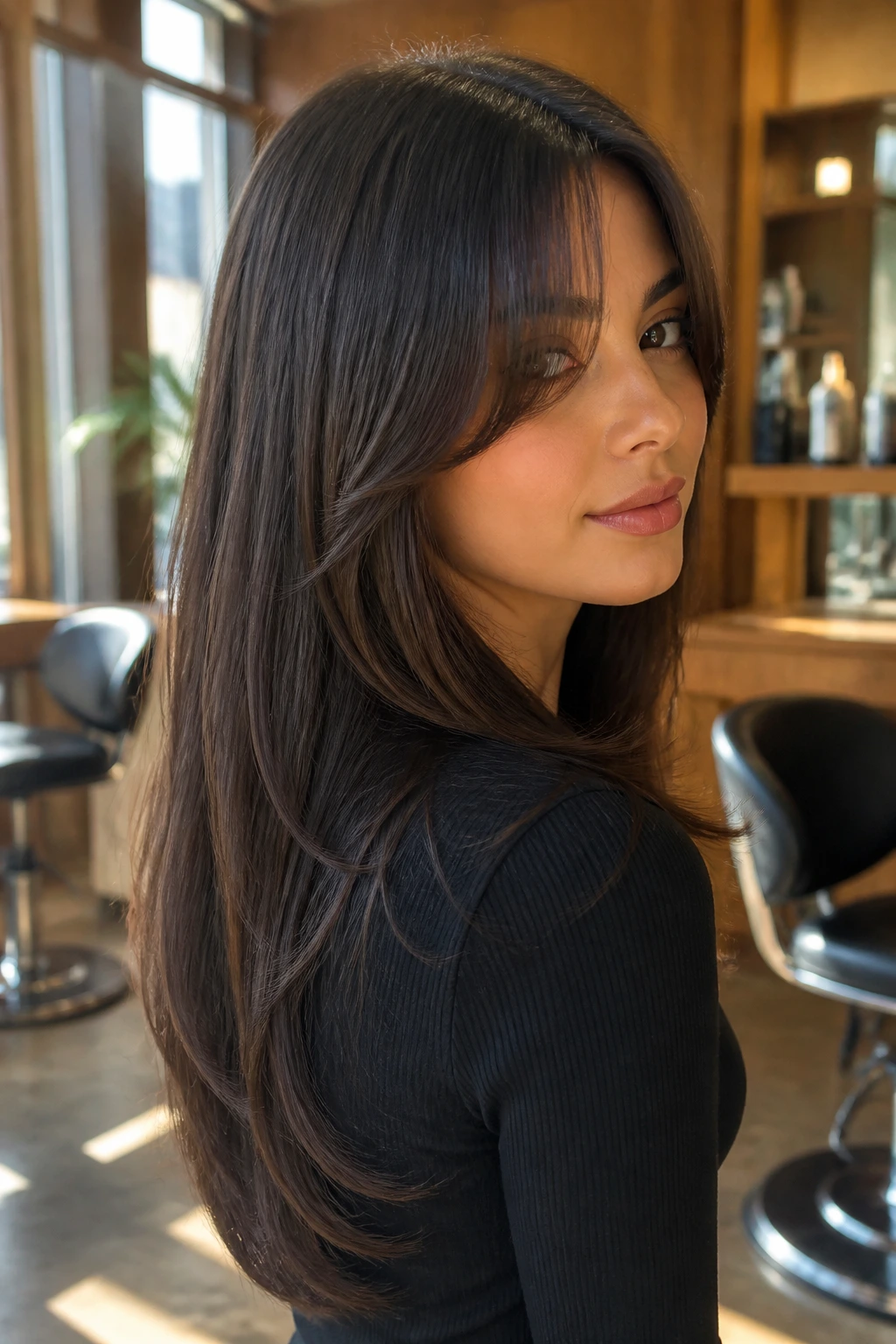
A U-shaped cut is better than a one-length curtain of hair when you want the sides to look softer without giving up the length in back. The outline dips gently at the center back, and the curtain bangs echo that curve at the front.
That shape matters because straight hair can get heavy in the middle and limp at the sides. A U-cut keeps the perimeter from feeling like a hard line across the back. The front pieces pull attention toward the face, then release it again. Clean, simple, no fuss.
What Makes It Different
Unlike a flat one-length cut, the U-shape gives the eye a path to follow. That makes thick hair feel less blocky and long hair feel less static. It also means the bangs don’t have to carry the entire job of softening the face.
Best for: people who want long hair but don’t want the back to look like one big sheet.
7. A-Line Lob with Longer Front Pieces
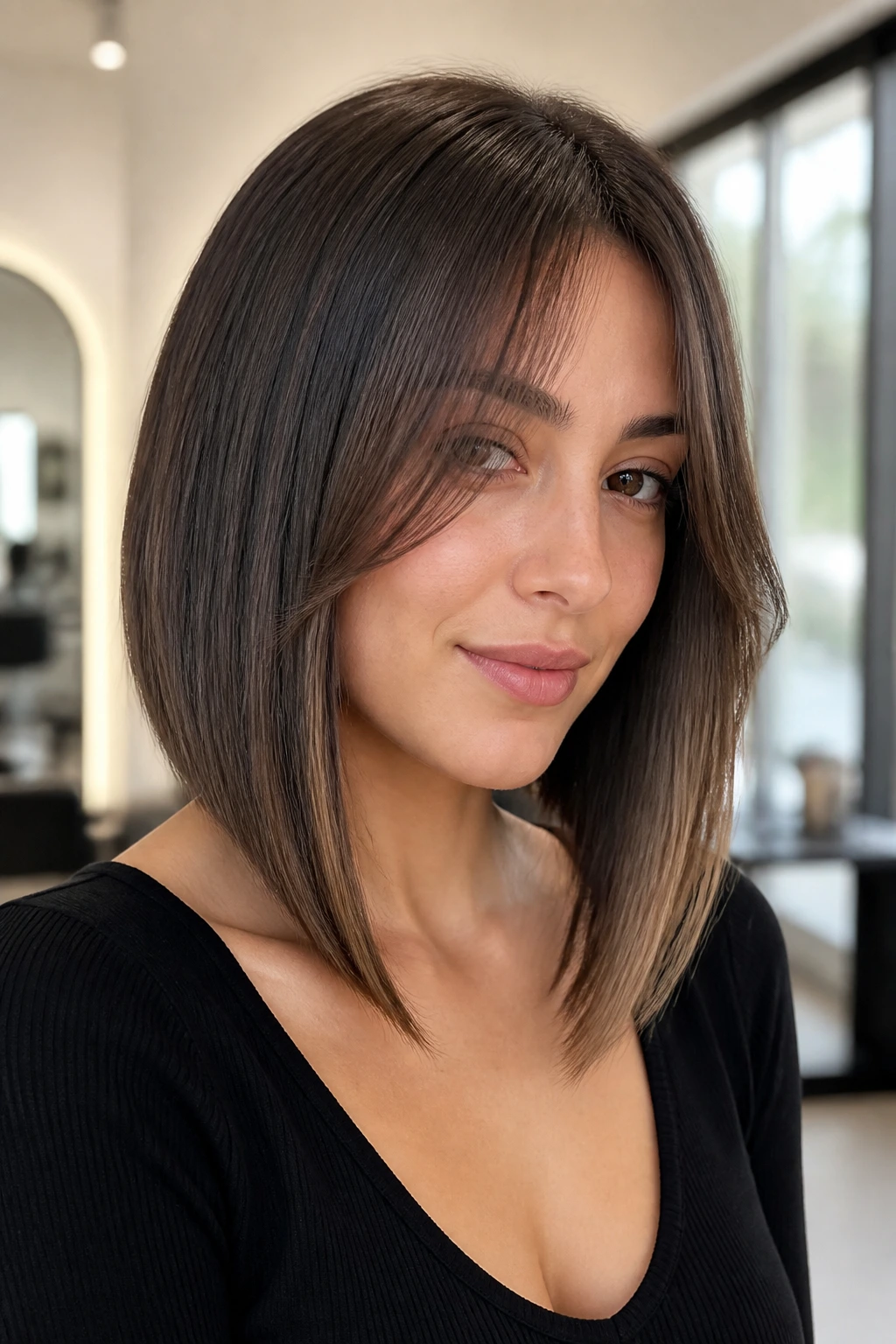
An A-line lob leans forward a little: shorter in the back, longer in the front, and enough angle to make straight hair look sharper than it actually is. Pair that with curtain bangs and you get a face frame that feels tidy from every angle.
The front pieces usually skim the collarbone, while the back stays lighter and a touch shorter. That angle gives the cut movement even when the hair is ironed straight. The fringe should blend into those front pieces instead of sitting like a separate layer.
If your jawline is strong, this cut can be kind. If your face is round, it can stretch the shape a little. And if your hair tends to flip out at the ends, the A-line actually helps because the length in front has somewhere to go.
Practical note: this cut looks best with a slight bevel at the ends, not a hard curl.
8. One-Length Long Hair and Bottleneck Bangs
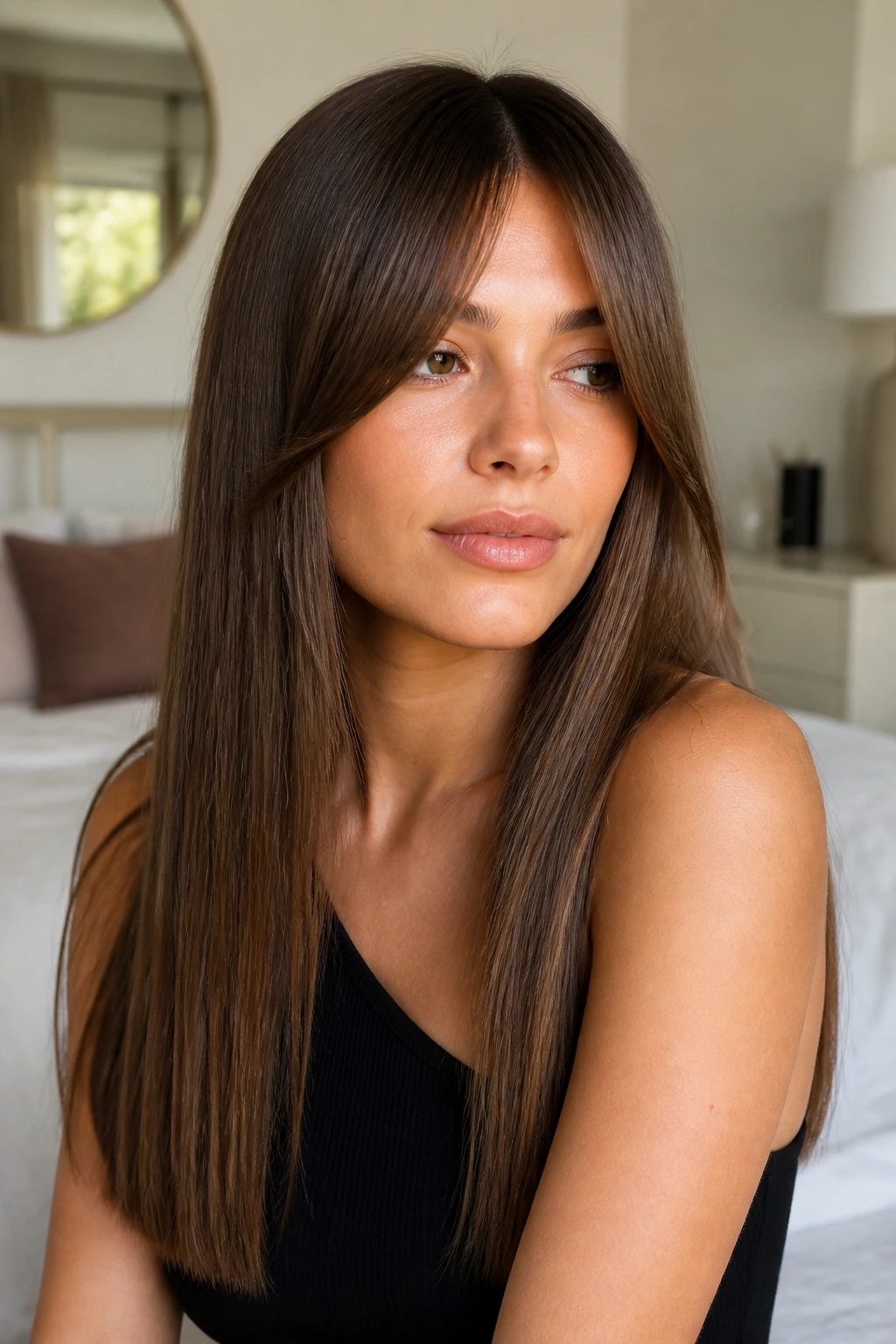
One-length long hair can sound boring until you pair it with bottleneck bangs. Then the whole thing changes. The length stays sleek and heavy, while the fringe narrows near the top and opens wider around the cheekbones, which gives the face a more sculpted outline.
Bottleneck bangs are a little more refined than classic curtain bangs because they start slimmer and flare later. On straight hair, that shape is useful. You get softness at the front without removing too much density from the rest of the hair.
This version is especially good if you love length and do not want layers scattered through the ends. The hair can still be blunt, polished, and easy to brush through. The fringe does the framing.
Tiny warning: if your forehead is very short, keep the shortest part of the fringe longer. Too much narrowing at the center can look cramped.
9. Tucked-Behind-the-Ears Midi Cut with Soft Framing
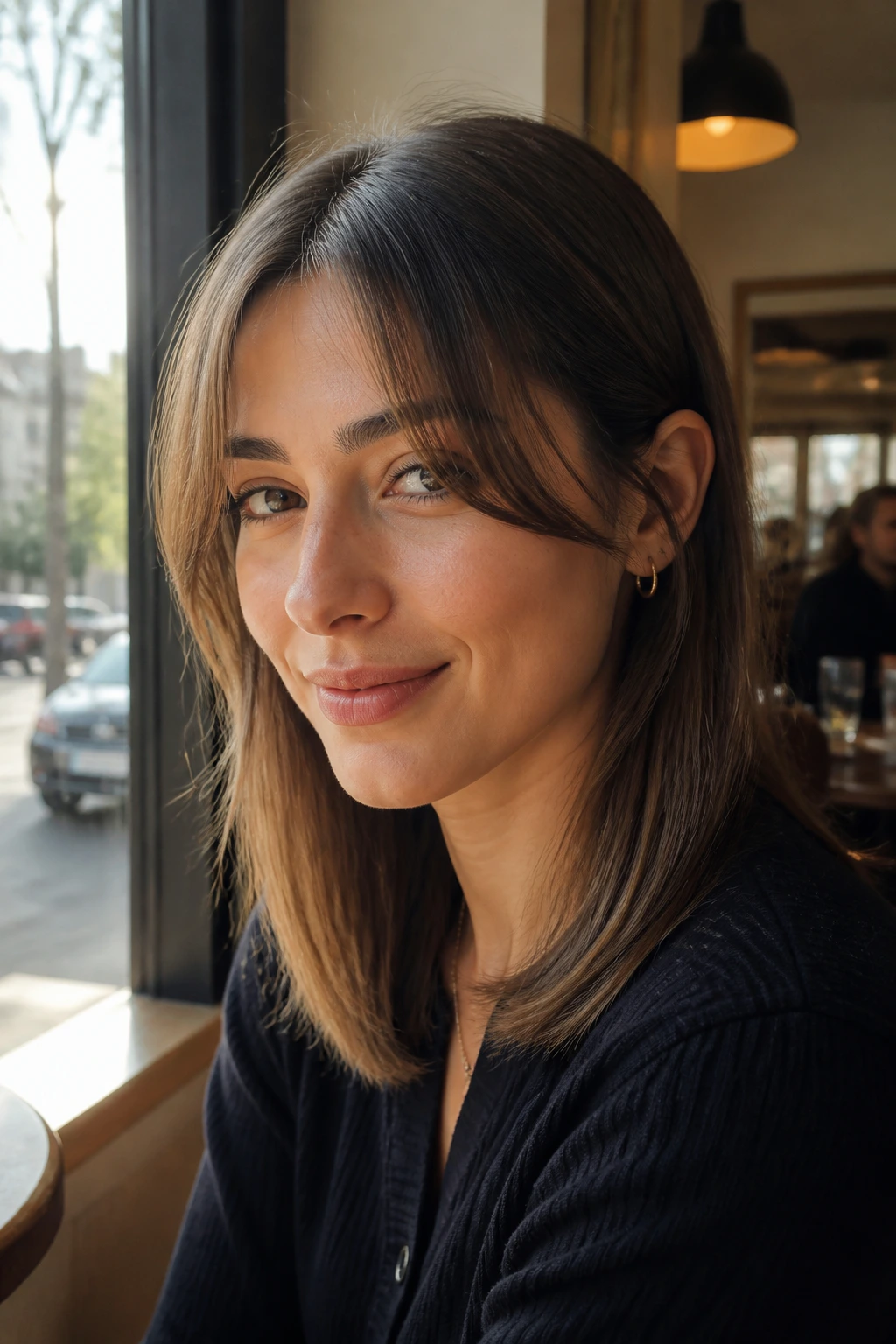
Some haircuts only really come alive once you tuck them behind the ears. This is one of them. A midi cut that lands between the jaw and the shoulders looks plain until the curtain bangs sweep forward, then the whole shape starts to make sense.
The point here is the contrast. The lengths stay neat and straight, but the fringe keeps the face from feeling exposed. When you tuck one or both sides back, the cheekbones show up more and the bangs become the soft part of the picture. It’s a good look for people who like to change the silhouette during the day without restyling everything.
Best Details to Ask For
- Bangs that reach the outer corners of the eyes when parted.
- A clean, slightly beveled edge at the ends.
- Enough length at the front to stay visible after tucking.
My take: this is one of the easiest straight hairstyles with curtain bangs to wear if you work in a setting where hair needs to look controlled.
10. Face-Framing Layers Starting at the Cheekbones
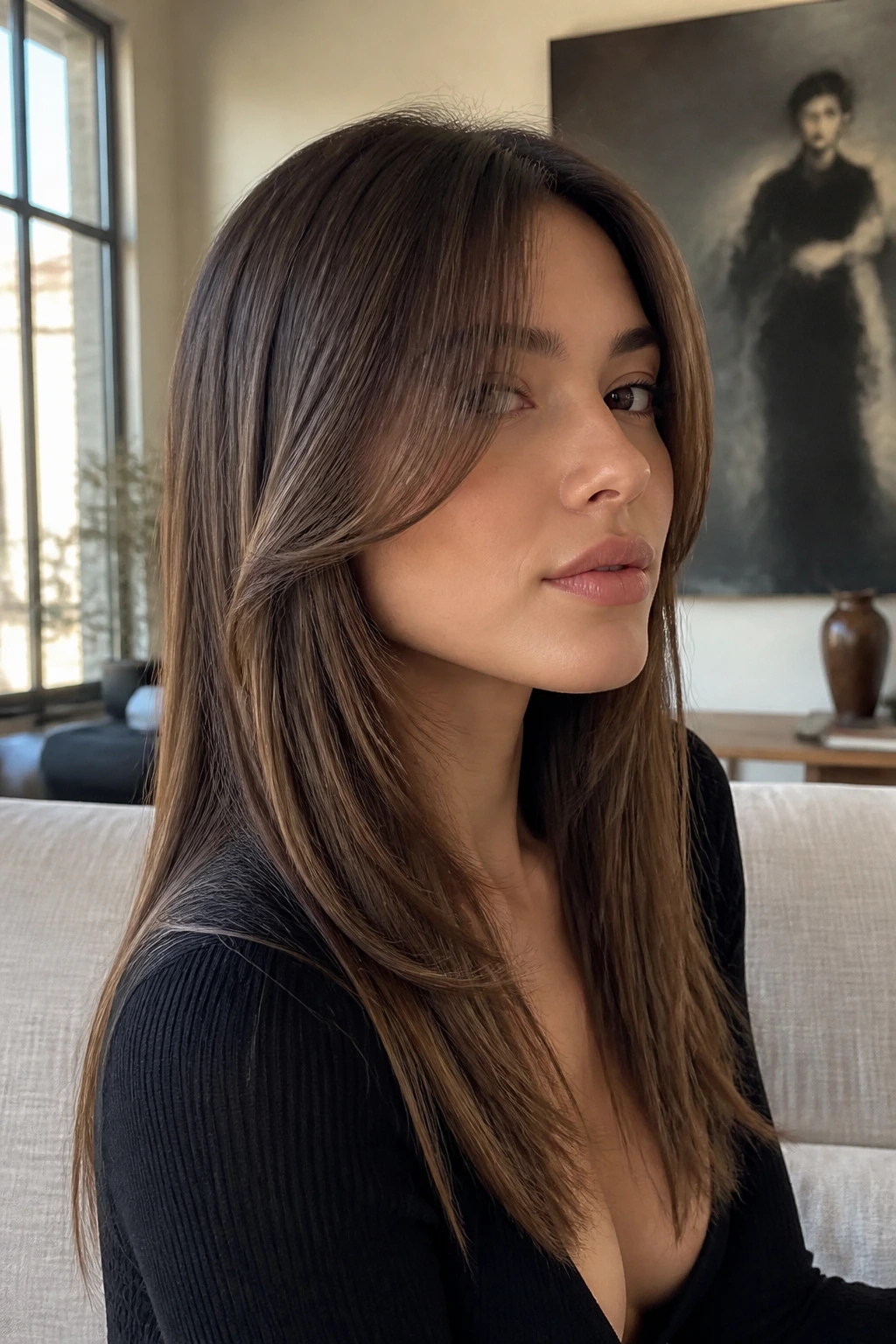
Why do some straight cuts look flat even when the fringe is good? Usually because the framing starts in the wrong place. If the first layer lands too high, the hair gets wispy. Too low, and the bangs feel disconnected.
Cheekbone-start layers fix that. They give the eyes and cheekbones a clear path, which is especially useful on longer faces or anyone who wants a little width around the middle of the face. The lengths stay straight, but the front gets some shape that feels deliberate instead of decorative.
I like this cut when the curtain bangs need to do more than sit there and look soft. The layers should blend from the fringe into the side lengths in a way that feels almost seamless. Not invisible. Just clean.
How to Use It
Style the bangs forward and outward with a medium round brush, then keep the rest of the hair smooth and tucked behind the shoulders. That keeps the face frame visible instead of swallowed by the length.
11. Chin-Length Bob with a Longer Curtain Fringe
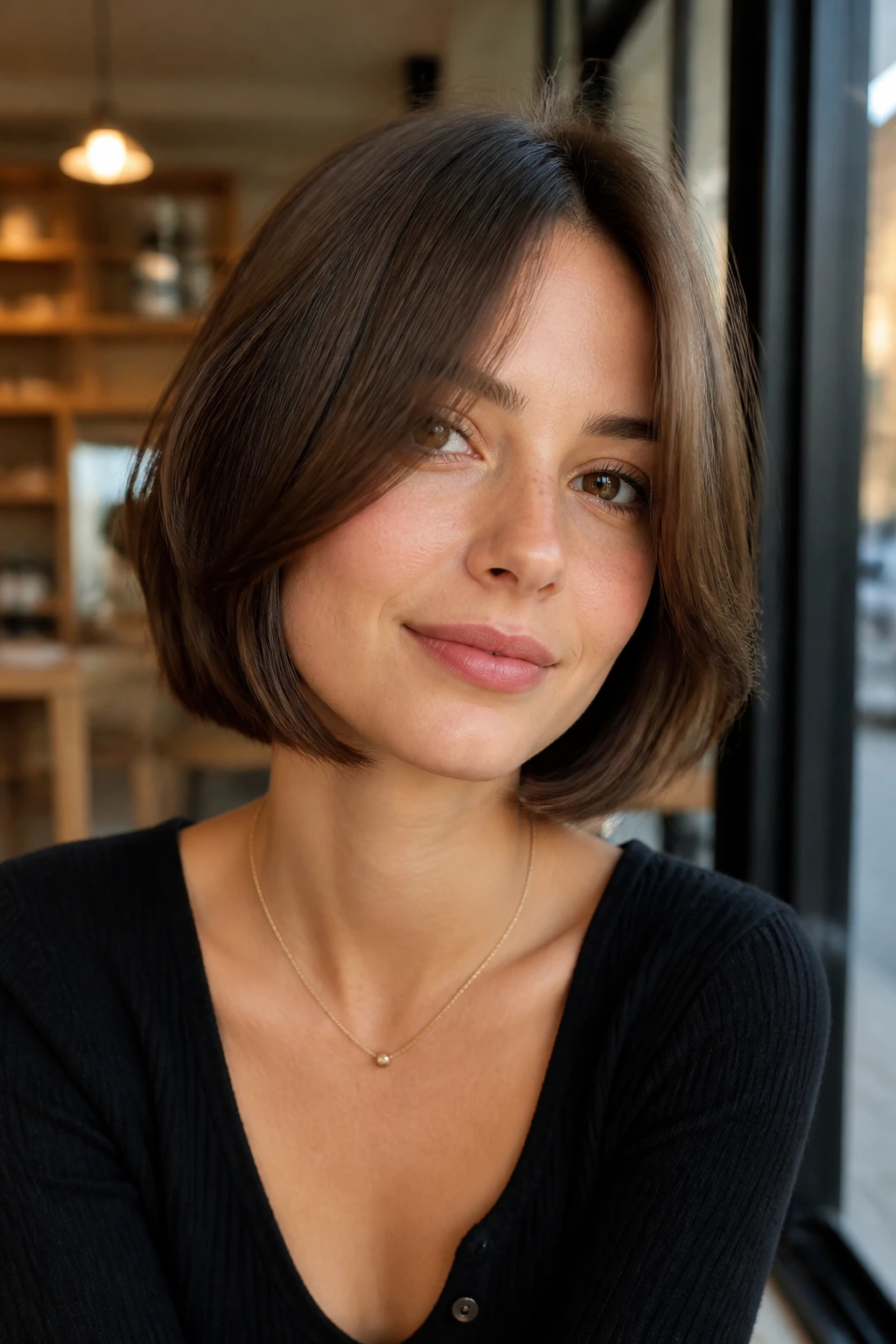
A chin-length bob can be harsh on straight hair if the line is too blunt and the bangs are too short. The fix is a longer curtain fringe that drops into the cheek area and softens the whole front.
The bob itself stays compact. That is part of the charm. But the fringe changes the mood from strict to approachable, which is why this cut works on strong jawlines and narrow faces especially well. It gives you the neatness of a short cut without the sharp bite.
The best version usually has a very slight bend under at the ends. Nothing dramatic. Just enough to keep the bob from looking like it was cut with a ruler.
Worth knowing: this is a trim-hungry shape. The fringe and bob both lose their line fast if you ignore them for too long.
12. Razor-Soft Midi Cut with Airy, Lightweight Ends
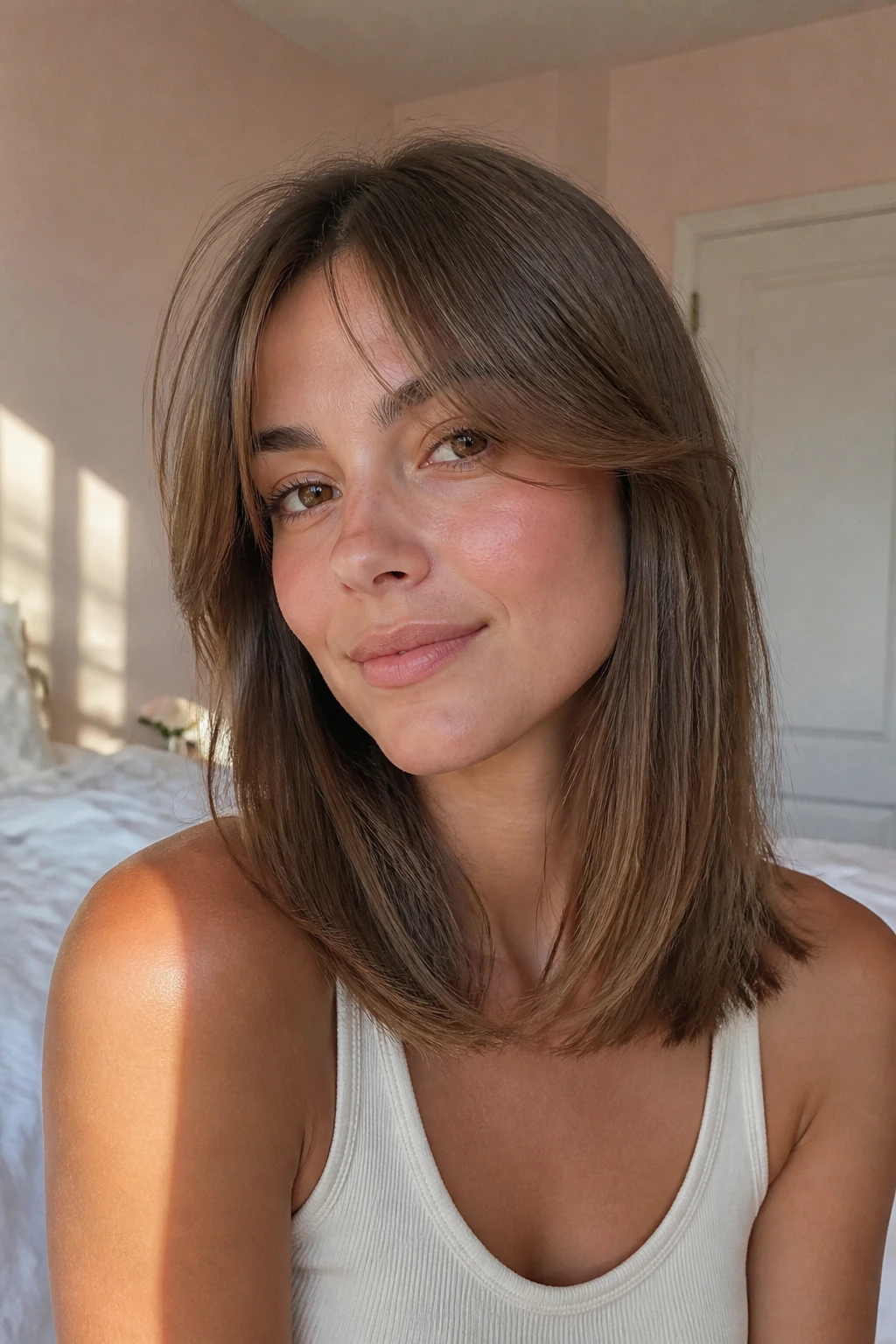
A razor-soft midi cut sounds edgy, but in practice it’s about removing enough weight to keep the ends from hanging like a curtain rod. On straight hair, that matters more than people think.
Unlike a blunt midi cut, this version has movement in the last inch or two of the lengths. The curtain bangs echo that lightness, so the front feels airy without turning see-through. It works best when the haircut is smooth at the root and just a touch looser at the ends.
This is the one I’d point to if someone says their straight hair always looks heavy by the time it reaches the shoulders. The line becomes less boxy, the fringe blends better, and the overall effect stays tidy.
Good fit for: medium to thick straight hair, especially if it puffs outward at the bottom.
13. Straight Wolf Cut with a Cleaner Finish
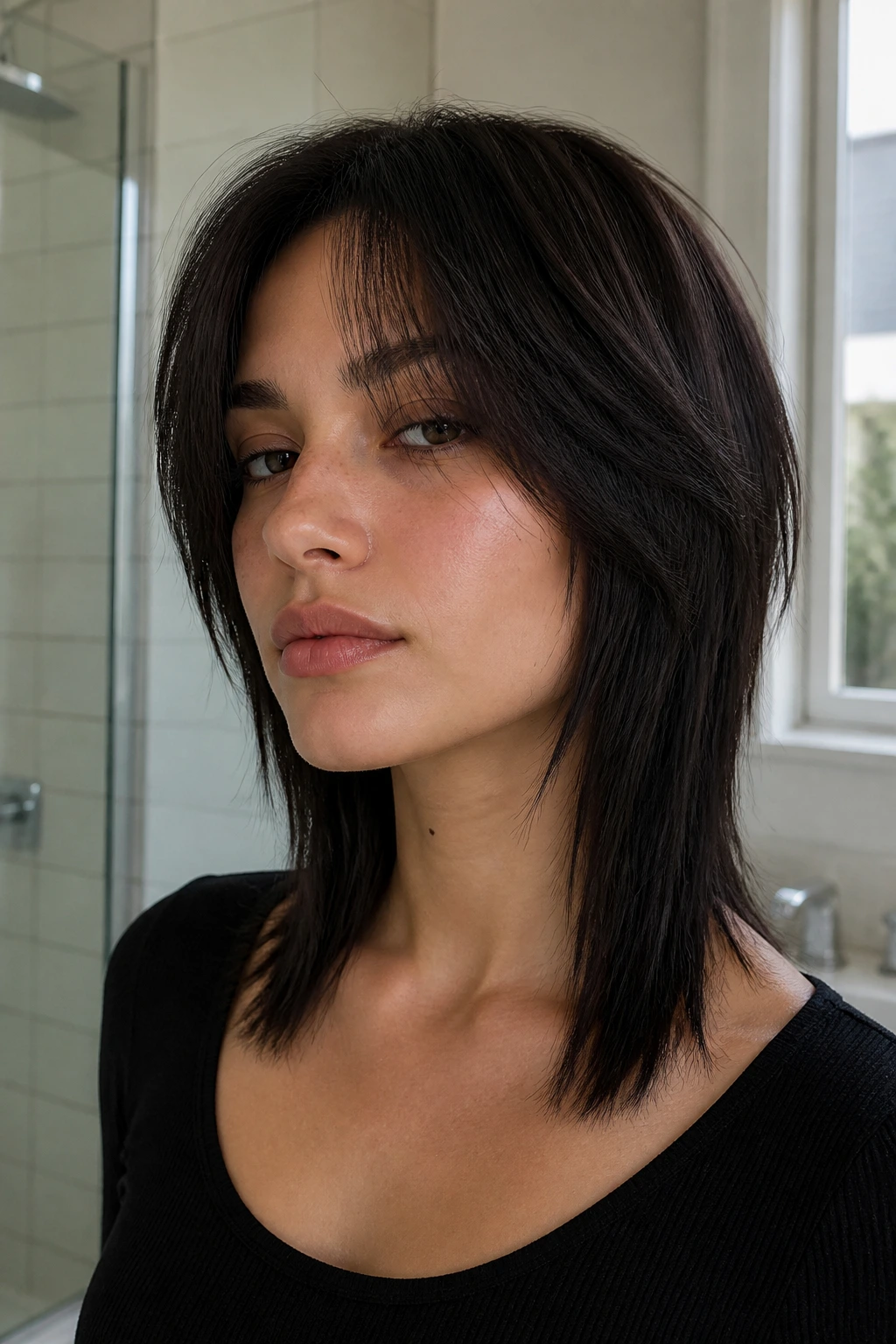
A wolf cut does not have to look rough. On straight hair, the cleaner version keeps the crown layers and curtain bangs, then smooths the rest so the silhouette feels intentional rather than shaggy for the sake of shaggy.
What Makes It Softer
The trick is restraint. The top gets some lift, the side layers stay visible, and the lengths keep enough weight to avoid the mullet effect. If the curtain bangs are cut with a little extra length, they bridge the gap between the crown and the rest of the hair instead of floating on their own.
- Use a round brush only at the bangs and crown.
- Leave the lower lengths straight and sleek.
- Keep the layers longer than you would in a messy shag.
- Ask for texture that removes bulk, not chunks.
This is a good pick if you want something with shape and a little attitude, but you still need it to look clean at a glance.
14. Deep Side-Part Straight Style with Sweeping Curtain Bangs
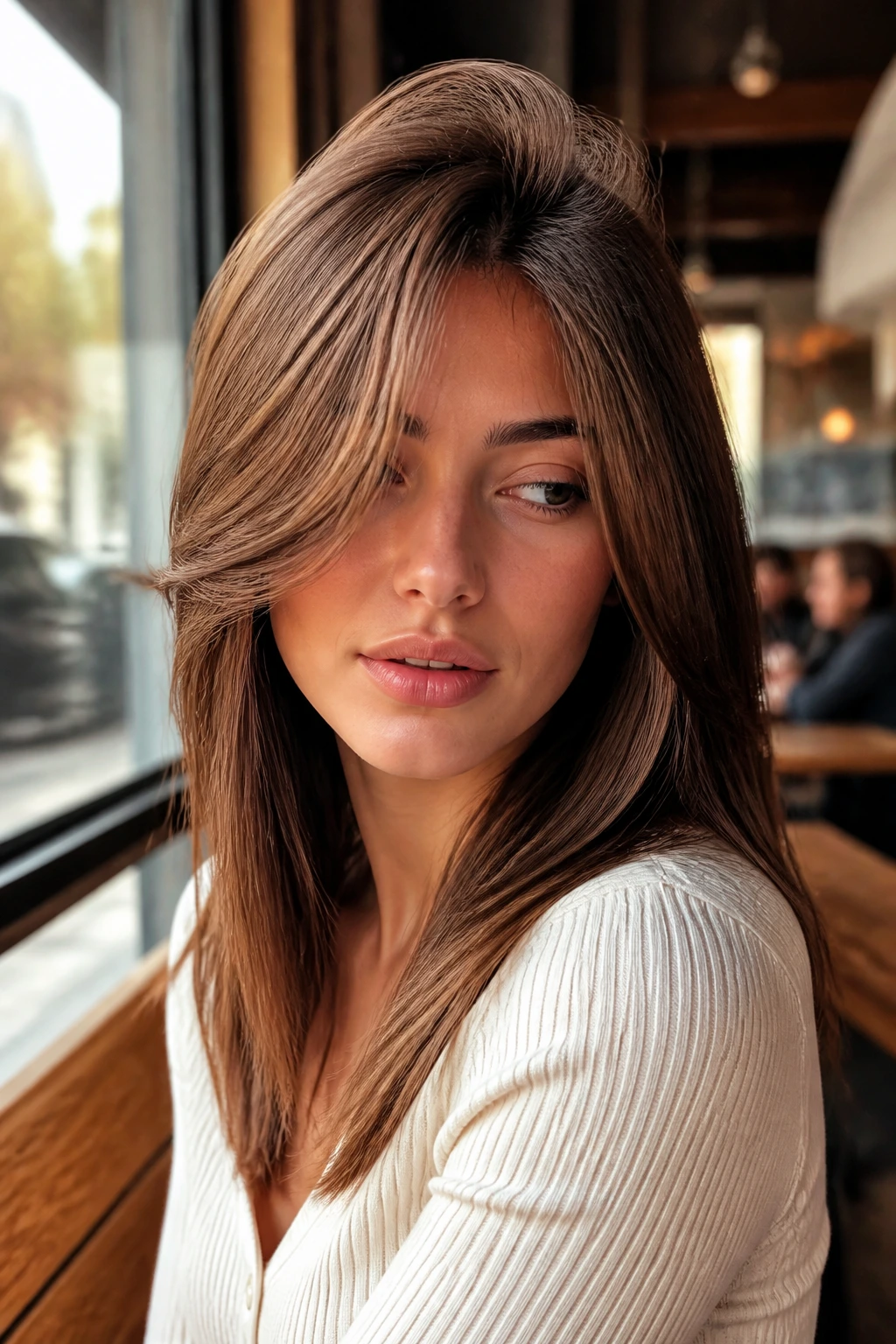
Curtain bangs do not need a perfect center part to work. A deep side part can give the same soft front shape, just with more sweep and a little more drama.
On straight hair, this version helps if you have a cowlick that keeps fighting the center line. The bangs can still split, but they fall farther to one side, then sweep back toward the cheekbone. It makes the face look a touch longer and a little more sculpted.
I like this version when somebody wants a softer version of a side part without giving up the fringe entirely. You still get the movement of curtain bangs, but the part itself feels more decisive.
Small detail that matters: lift the heavier side at the root with a round brush or root spray, or the style can collapse into one flat sweep.
15. Flat-Ironed Long Hair with Curved-Under Ends
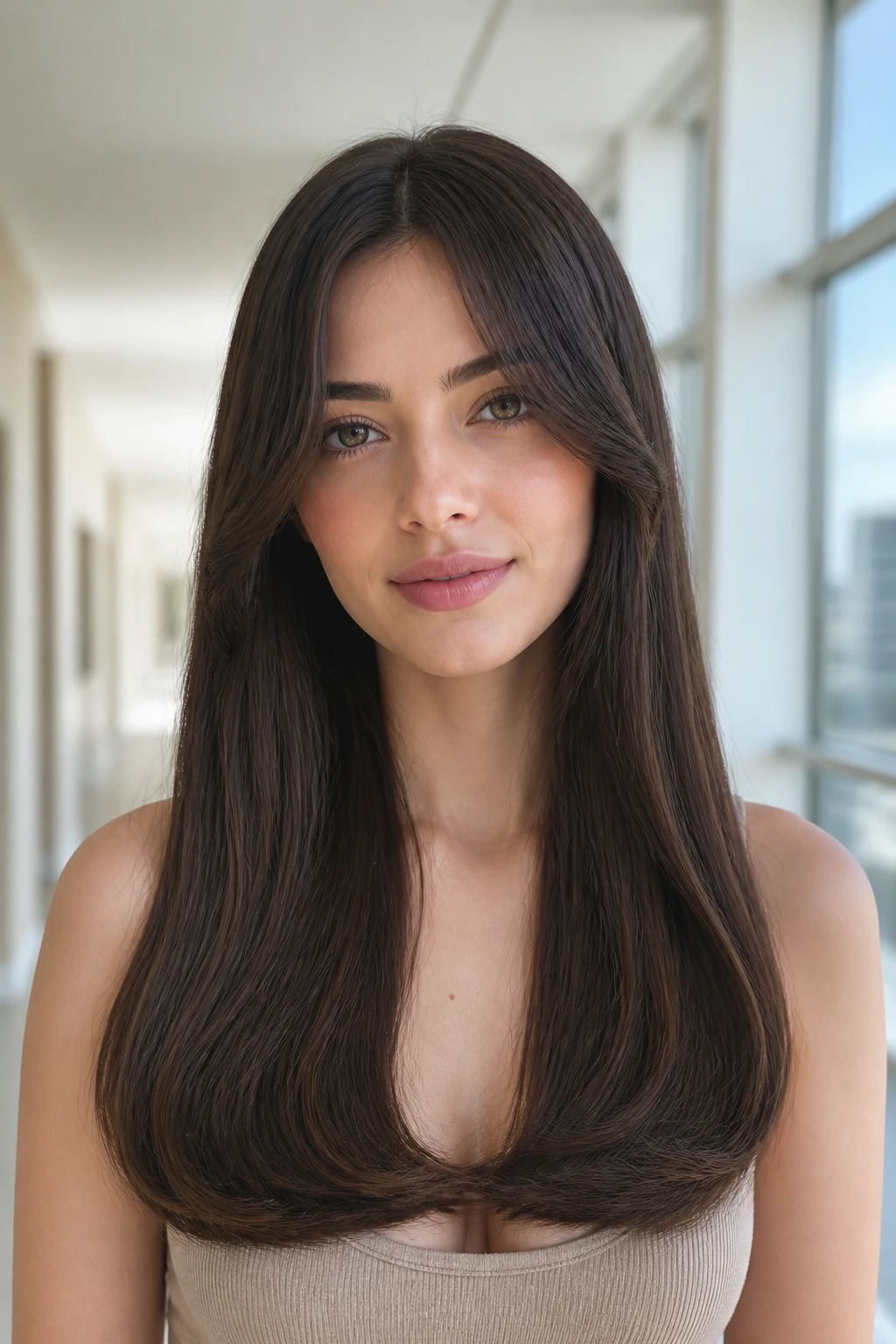
This is the look that turns straight hair into a polished event style without asking it to become curly. The lengths are ironed smooth, and the ends bend under just enough to give the cut a finished edge.
The curtain bangs should follow the same logic. Straighten the middle, then round the outer pieces so they skim the temples and cheekbones. That gives the fringe a little softness instead of a rigid split right down the center.
It’s a sharp look, but not severe. That distinction matters. The curve at the ends keeps the hair from looking too stiff, and a shine serum on the mid-lengths and tips gives it that smooth reflective finish that straight styles live or die on.
Best for: dinners, photos, or any day you want the haircut to look more intentional than casual.
16. Minimalist Crop with Long, Split Curtain Bangs

A minimalist crop keeps the body of the hair short and clean, then lets the curtain bangs carry the softness. That contrast is the whole appeal. The short cut shows off the neck and jaw, while the longer fringe keeps the face from feeling exposed.
This works best when the crop sits around the jaw or just below it, not too high. Straight hair makes the lines look crisp, which can be lovely if you like a sharp silhouette. The bangs should be long enough to break around the cheekbones so they don’t look chopped off.
No extra texture needed. Seriously. The strength of this cut is the clean shape against the split fringe, and if you start adding too much bend or spray, the balance gets muddy.
Good if: you like short hair but still want hair falling around the face.
17. S-Curve Layers for Hair That Wants Movement
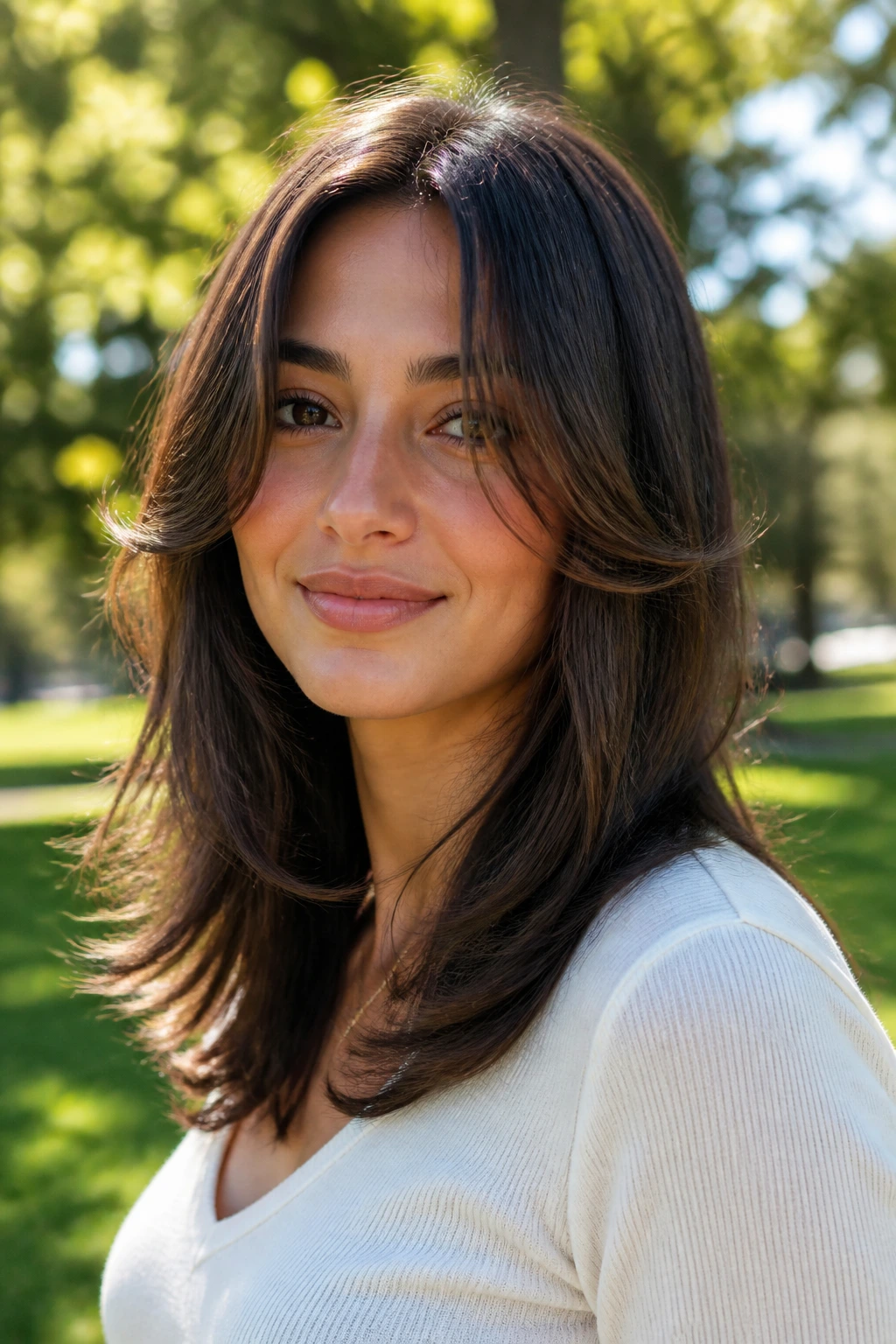
How do you keep straight hair from looking flat without turning it into waves? S-curve layers. The shape comes from a gentle bend through the mid-lengths, not from curls or lots of product.
The curtain bangs feed into that shape by opening first, then following the bend out toward the sides. It gives the haircut movement that feels built in. You can wear it smooth one day and add a little extra curve with a brush the next.
How to Get the Most From It
- Blow-dry the roots upward first.
- Wrap the front pieces around a large round brush.
- Keep the ends loose, not curled.
- Use a light mist of flexible spray so the bend stays soft.
This is one of the better options if you want the hair to feel alive without looking overly styled.
18. Thick Hair Cut with Internal Layers and Curtain Bangs
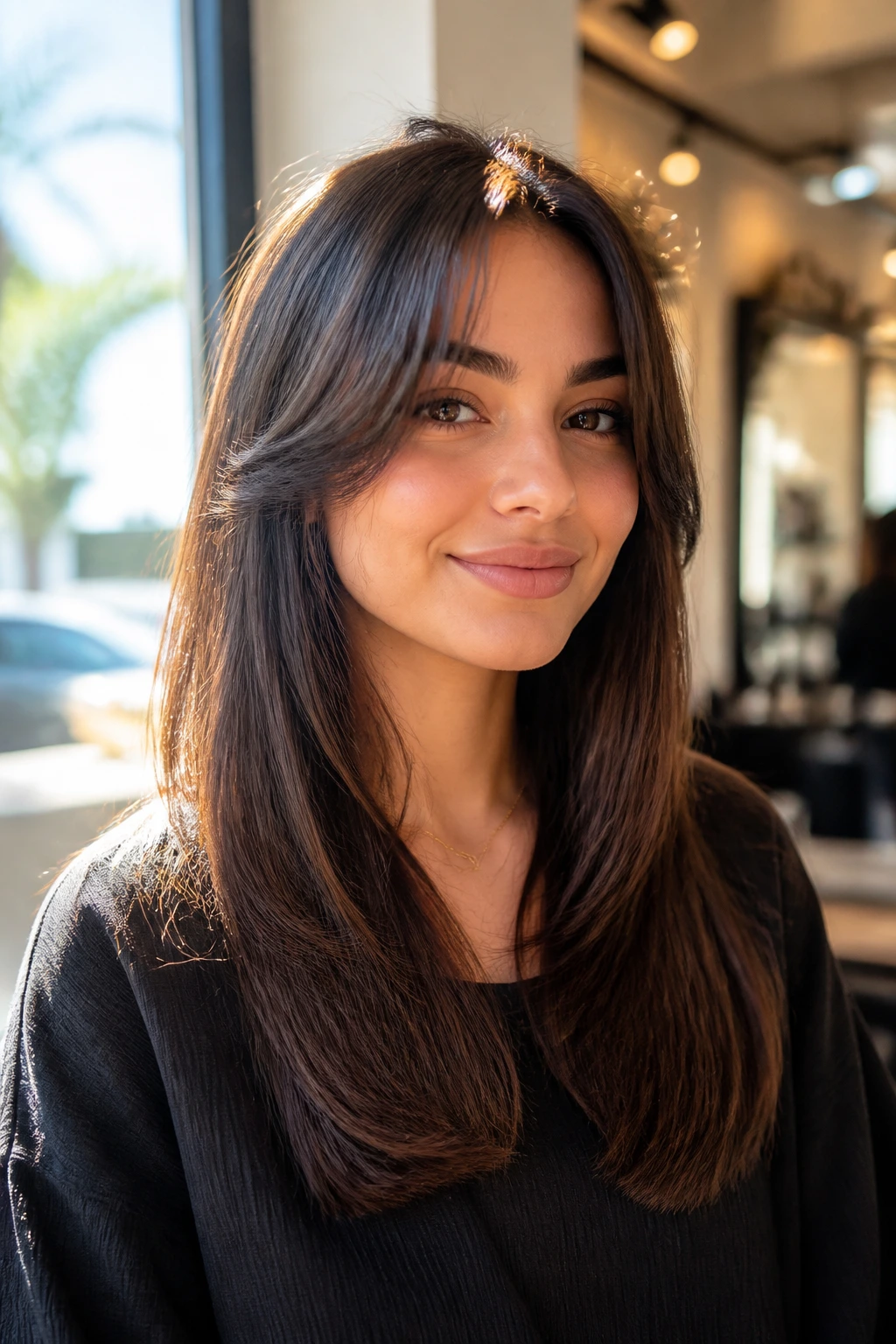
Thick straight hair can look luxurious or it can look like a triangle. The difference is usually in the layers. Internal layers remove bulk from underneath, while the outside line stays clean and full.
Curtain bangs help too, because they break up the front without stealing too much density. The fringe should feel light enough to move, but not so thin that the forehead starts peeking through in a weird way. That balance is the whole game with thick hair.
Unlike visible shag layers, internal layers hide the weight removal where it belongs. The shape still reads as full, just less heavy through the middle. If your hair swells around the ears or collapses at the roots, this cut makes life easier.
Salon note: ask for bulk removal underneath, not razor-thin ends all over the head.
19. Fine Hair Made Fuller with Piecey Curtain Bangs
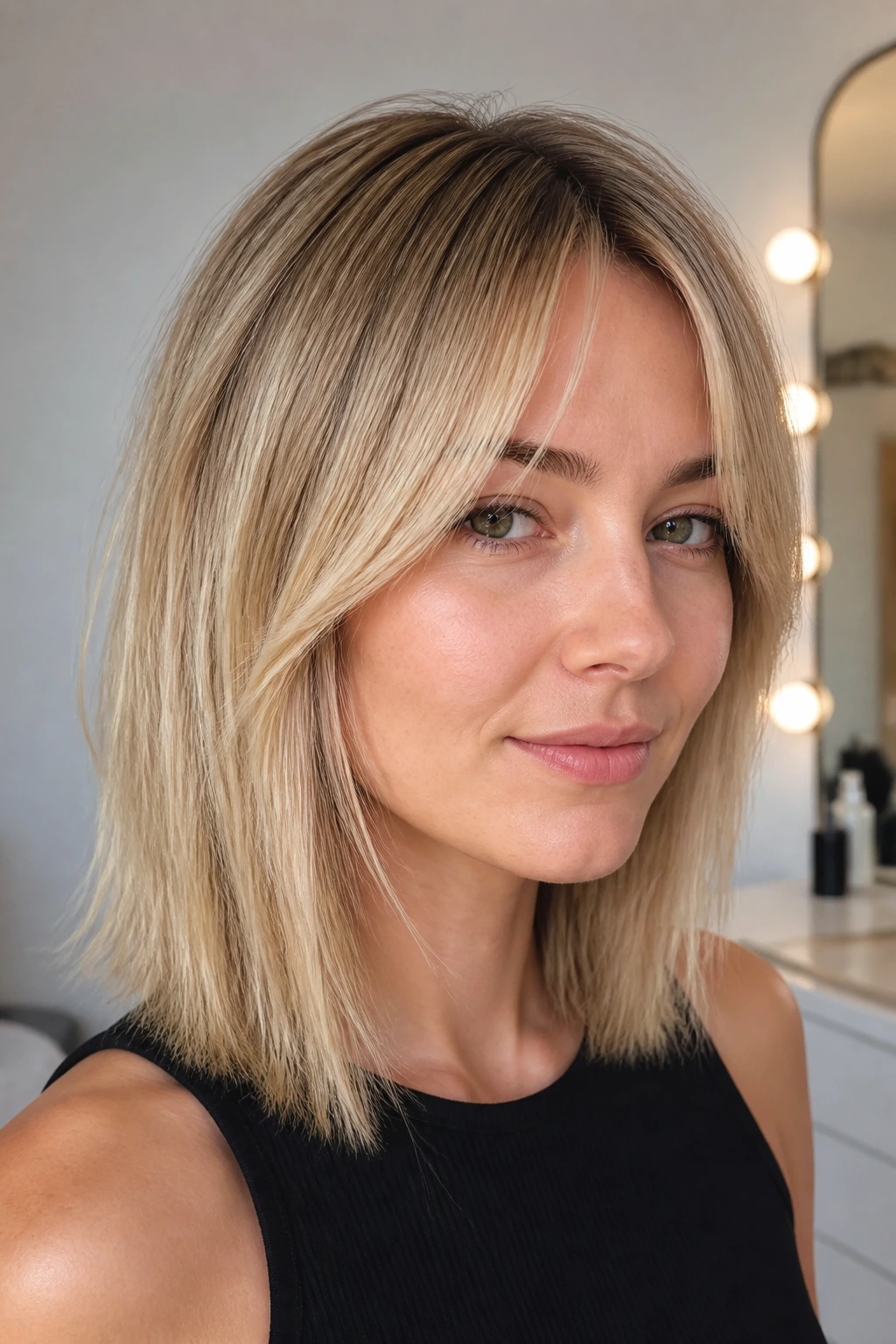
Fine hair needs a different strategy. Too many layers and it starts to look sparse. Too little shape and it falls limp. The answer is a blunt outline with piecey curtain bangs that give the face some movement without stripping away the body.
Why It Helps
The fringe breaks up the front in small sections, which creates the look of texture even when the hair itself is straight and soft. A blunt perimeter at the ends helps the overall haircut look thicker, while the bangs keep the style from turning heavy. That combination is hard to beat on fine hair.
- Keep the fringe a little longer than eyebrow length.
- Use dry shampoo at the roots, not the ends.
- Finish with a tiny bit of texture spray only on the fringe pieces.
- Avoid heavy oils near the front.
My opinion: this is one of the smartest ways to wear curtain bangs if your hair goes flat the minute humidity shows up.
20. Polished Long Cut with a Soft V-Shape Back
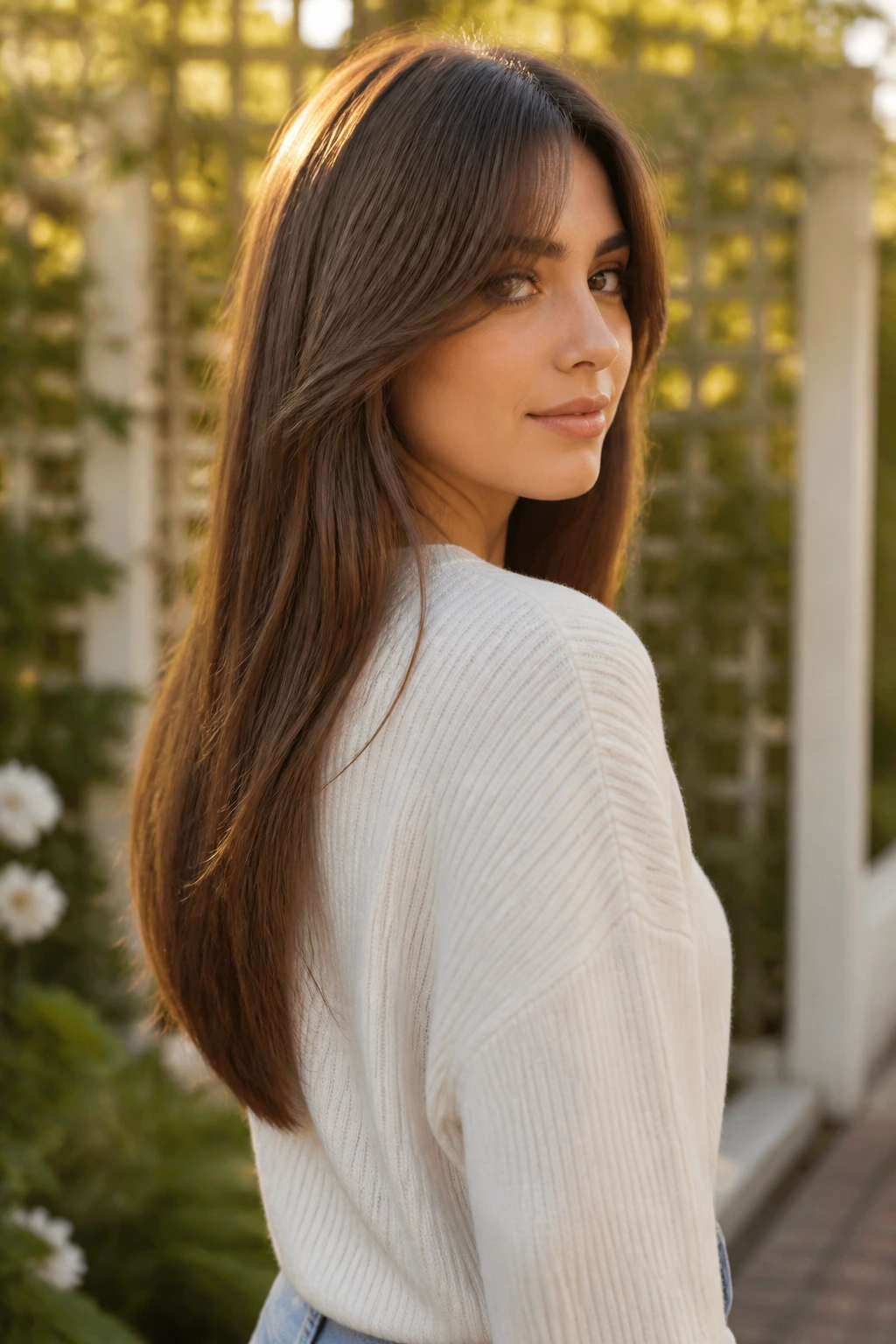
A soft V-shape through the back is a good compromise for people who love long hair but hate how dead-straight ends can make it look. The point in the back adds direction, and the curtain bangs pull the front forward just enough to keep the whole thing from feeling one-note.
The shape is understated. That is why it works. You still get long lengths, but the outline is less blocky and the face frame has a clear purpose. On straight hair, a slight V also makes the hair fall a little more gracefully over the back and shoulders.
This is the version I’d choose if someone told me, “I want long hair, but I need it to look like it was cut on purpose.” That is exactly what it does.
Best finishing move: bend the front pieces away from the face and keep the rest sleek. The contrast gives the cut its shape.
Why Straight Hair and Curtain Bangs Look So Clean Together
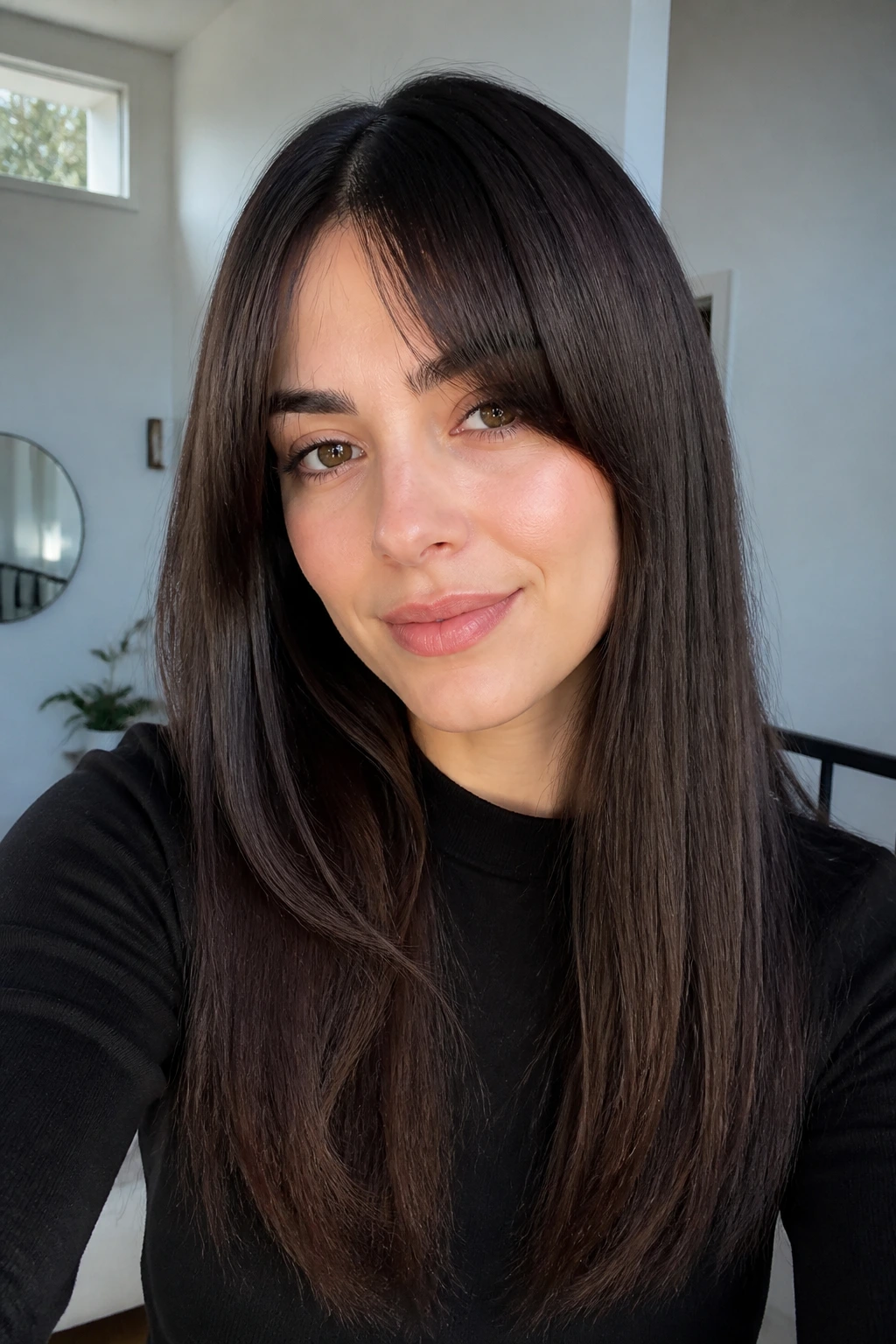
Straight hair is unforgiving in the best way. It shows the cut exactly as it was made, which means curtain bangs either look crisp and thoughtful or they expose every odd angle in the shape. There’s no curl pattern to blur the line, and no wave to hide a weak perimeter. You see the whole thing.
That is also why curtain bangs make such good partners for straight styles. A split fringe breaks the hard front edge of the haircut, opens up the forehead, and gives the eye somewhere to travel before it lands on the lengths. On a flat, one-length cut, that small shift matters a lot. The bangs add motion without forcing the rest of the hair to become busy.
The best versions usually land around the cheekbones, lip, or outer eye rather than stopping too high on the forehead. Too short, and the bangs can look abrupt. Too long, and they stop framing and start disappearing into the rest of the hair. The middle ground is where the shape lives. Clean part. Soft bend. Straight lengths that still have a little personality.
Essential Tools for These Looks
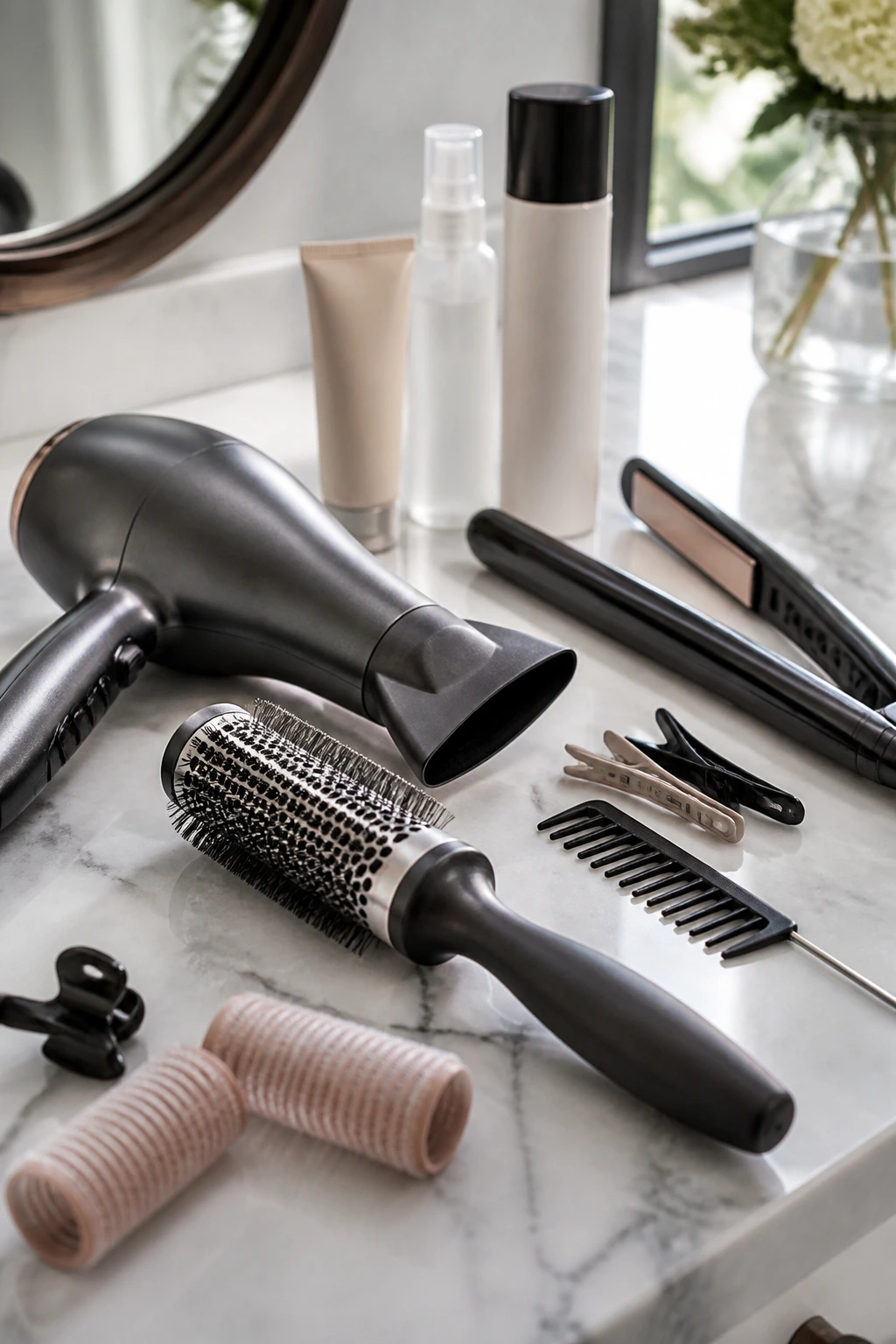
- A blow dryer with a concentrator nozzle: This keeps the airflow pointed where you want it instead of blasting the bangs in every direction.
- A round brush, 1.25 to 1.75 inches: Smaller sizes give more bend at the fringe; larger ones keep the ends smoother.
- A flat iron with adjustable heat: You need control, not one scorching setting for every hair type.
- Heat protectant spray or cream: Use it from mid-length to ends, then lightly on the fringe if your hair tolerates it.
- Sectioning clips: Curtain bangs are easier to shape when the front is clipped away from the rest of the hair.
- A fine-tooth comb: Useful for setting the center part and smoothing the bang section before you dry it.
- Lightweight serum or smoothing cream: A pea-sized amount on the lengths keeps straight hair from looking dry or puffed.
- Dry shampoo: Keep it for the roots and fringe area on the days when the bangs start to separate.
- Velcro rollers, optional: Handy if you want the curtain pieces to hold a bend without a lot of heat.
How to Ask for the Right Cut and Product Choices
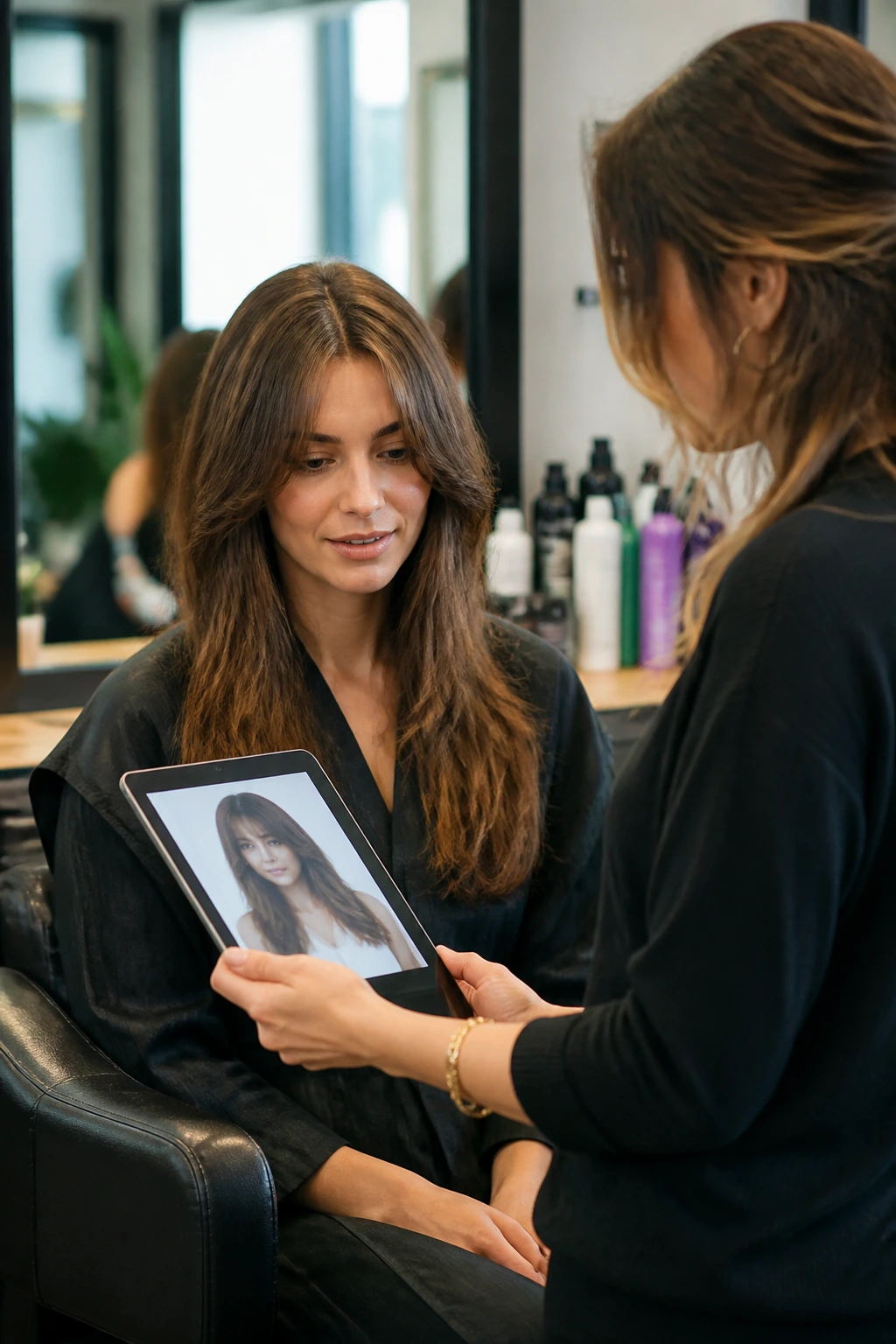
The salon conversation matters more than most people think. Bring one photo of the overall shape and one photo of the fringe. Those are not the same thing, and the best cuts usually come from splitting those references instead of expecting one picture to do everything.
For the bangs, say where you want the shortest point to land. Cheekbone, outer eye, or lip are useful landmarks. “Somewhere soft” is not. On straight hair, a half-inch changes the whole mood, and your stylist needs a real target. If your hair is thick, ask how much weight they plan to remove from the face frame. If it’s fine, ask them to keep the perimeter blunt enough to hold density.
Products should match the texture, not the fantasy. Fine hair usually likes a light mousse at the roots and a tiny bit of dry texture spray in the bangs. Thick hair usually needs a smoother cream or serum on the mids and ends, then a stronger heat protectant before flat ironing. If your hair is already very straight, skip anything heavy near the forehead. That’s where the grease shows first.
One more thing. If you hate spending ten minutes on the fringe every morning, say so. A good cut can be shaped to need less styling, but only if the person holding the scissors knows you’re not going to babysit it daily.
How to Wear These Looks From Morning to Night
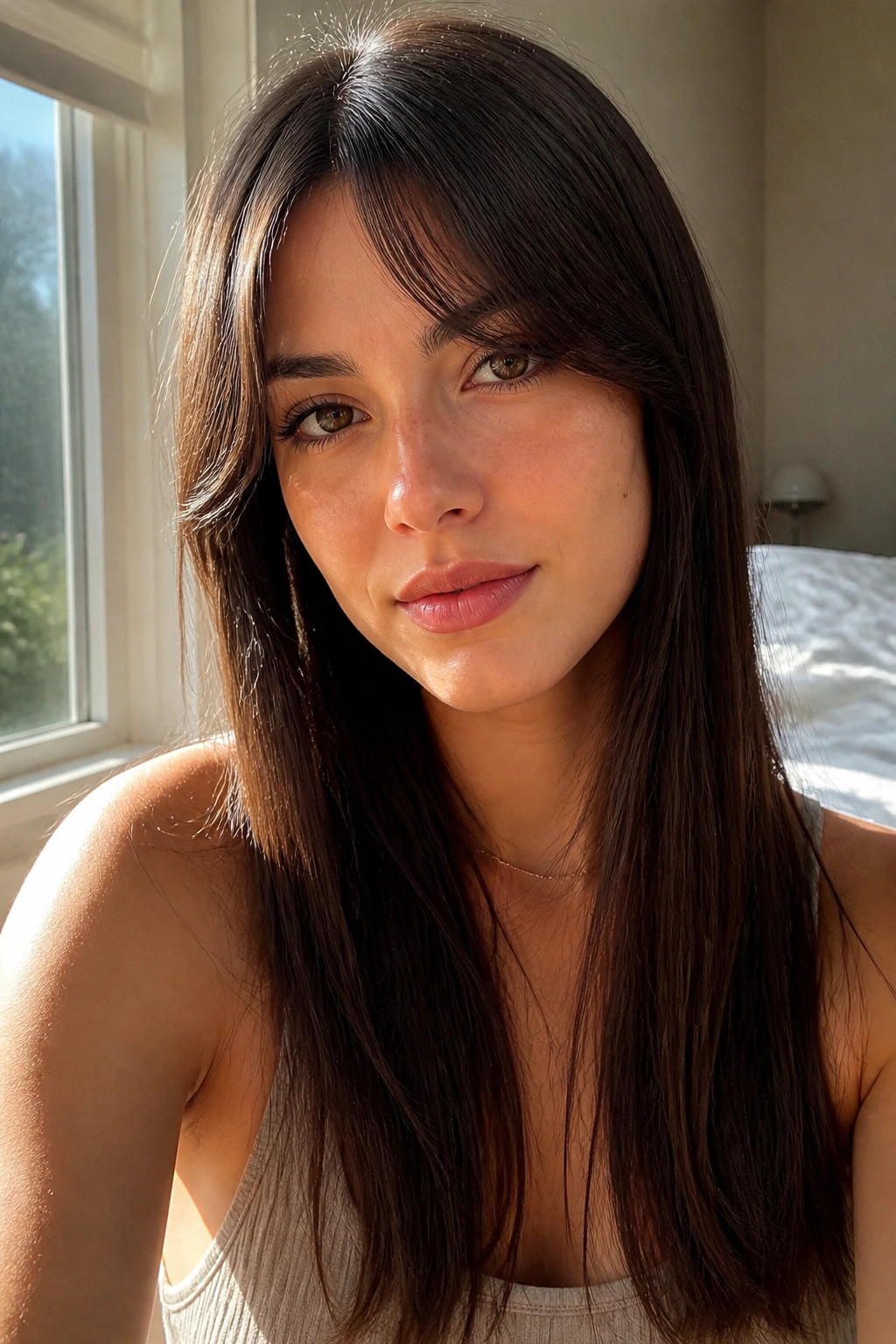
For workdays: Keep the body smooth and the fringe soft. A side tuck behind one ear is enough to make a straight cut look finished without making it fussy.
For weekends: Let the bangs fall open and leave a little texture at the ends. Straight hair does not need to be perfect to look good; it just needs clean parts and a shape that holds.
For evenings out: Bend the front pieces away from the face and use shine spray on the mid-lengths, not the roots. That gives the haircut a reflective finish without making it greasy.
For hot or humid days: Work the bangs first, then the rest of the hair. If the fringe looks right, the whole style usually feels right too. If the length starts to puff, a flat brush and a 90-second touch-up are enough to bring it back.
Practical Tips for Getting More From Straight Hairstyles With Curtain Bangs
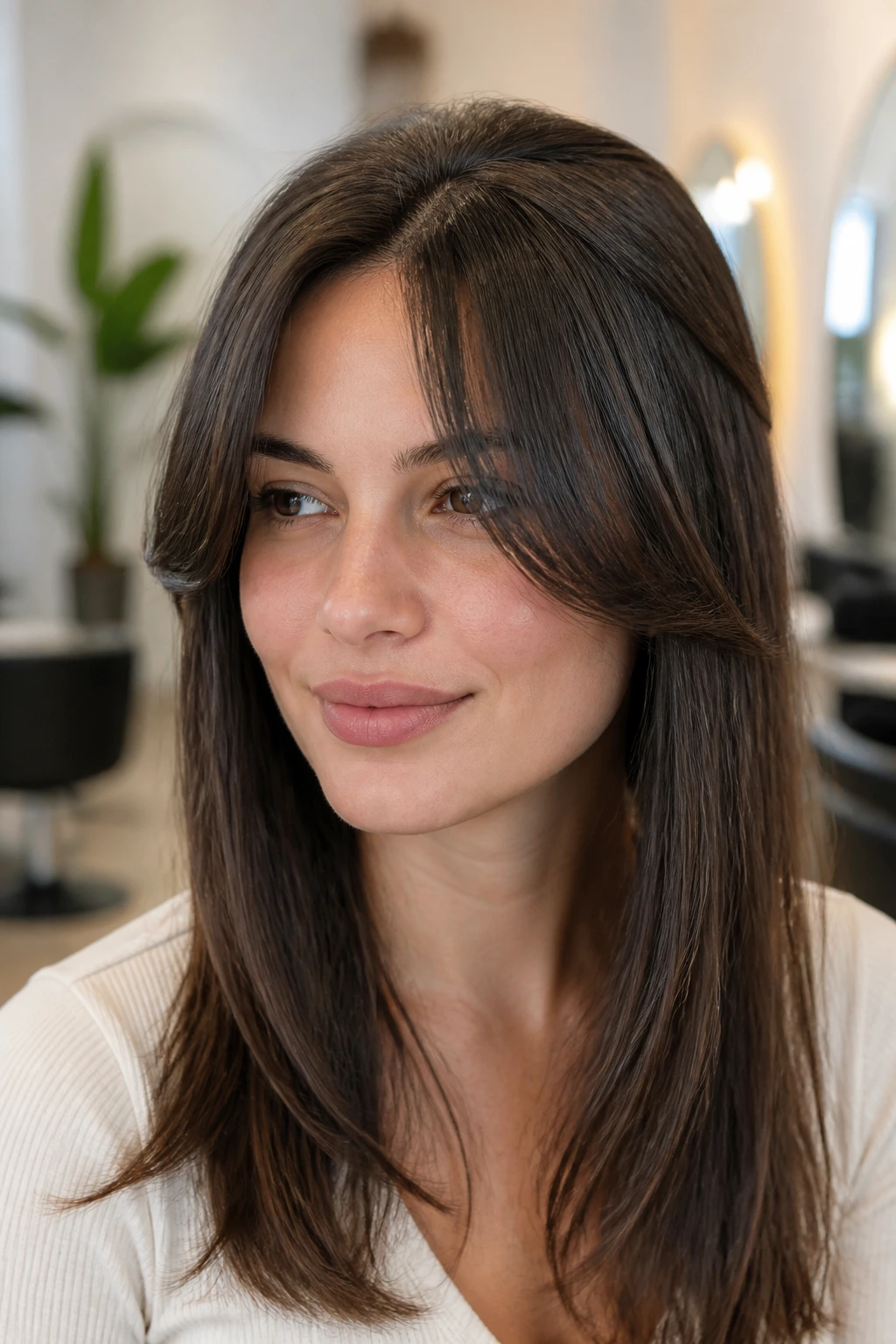
Use the right bend, not a full curl: Curtain bangs look best when they skim the face in a soft arc. A hard curl at the ends turns them into retro flips, which is a different look entirely.
Keep heavy products away from the fringe: Oils and thick creams near the front flatten the split and make the bangs separate in odd places. Save the richer products for the mid-lengths and ends.
Trim the fringe before it gets annoying: Once curtain bangs hit the bridge of the nose and start covering the eyes, you end up fighting them all day. A small trim every 4 to 6 weeks keeps the shape useful.
Set the part while the hair is damp: If the center line dries wrong, the bangs will follow that direction for the rest of the day. Use a comb early and let the front dry the way you want it to fall.
Common Mistakes That Flatten the Fringe or Puff Up the Ends
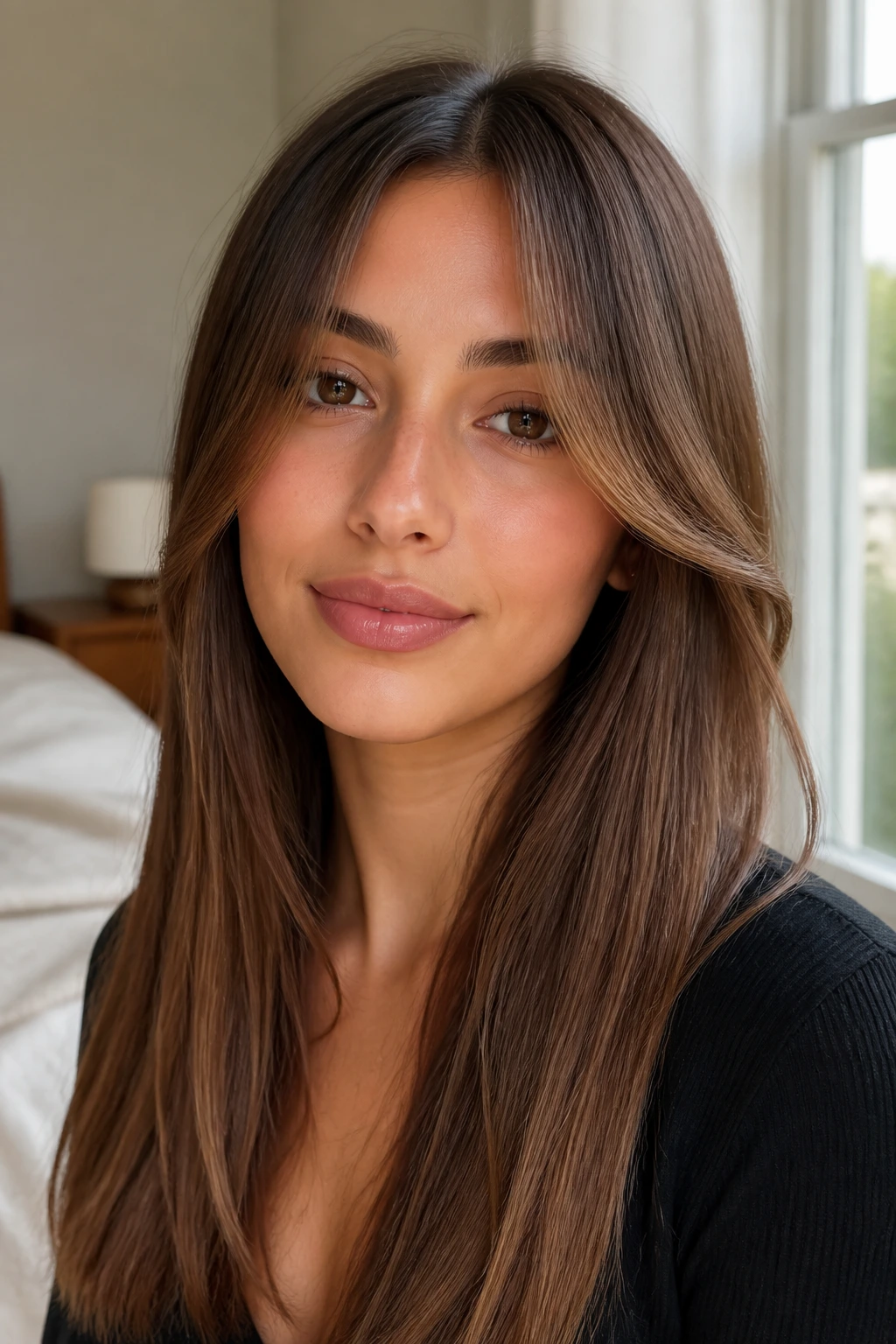
- Cutting the curtain bangs too short. The symptom is a fringe that stands away from the forehead and loses its soft split. The fix is to keep the shortest point long enough to graze the cheekbone or outer eye.
- Drying the bangs straight down. That makes them separate weirdly or sit too heavy in the middle. Blow them forward first, then sweep each side away from the face with the brush.
- Using too much serum near the roots. The hair gets shiny at the top but limp at the front, and the bangs start sticking together. Put products on the mids and ends first.
- Removing too much bulk from thick hair. The shape can collapse into wisps and expose the perimeter. Ask for internal shaping, not all-over thinning.
- Leaving the ends too blunt on very fine hair. The cut can look sparse if the line is too sharp and the layers are too light. Keep the outline full and keep the layers subtle.
- Ignoring cowlicks at the hairline. If the fringe keeps flipping, you need the part and the bang length adjusted, not more spray.
Variations and Alternatives to Try
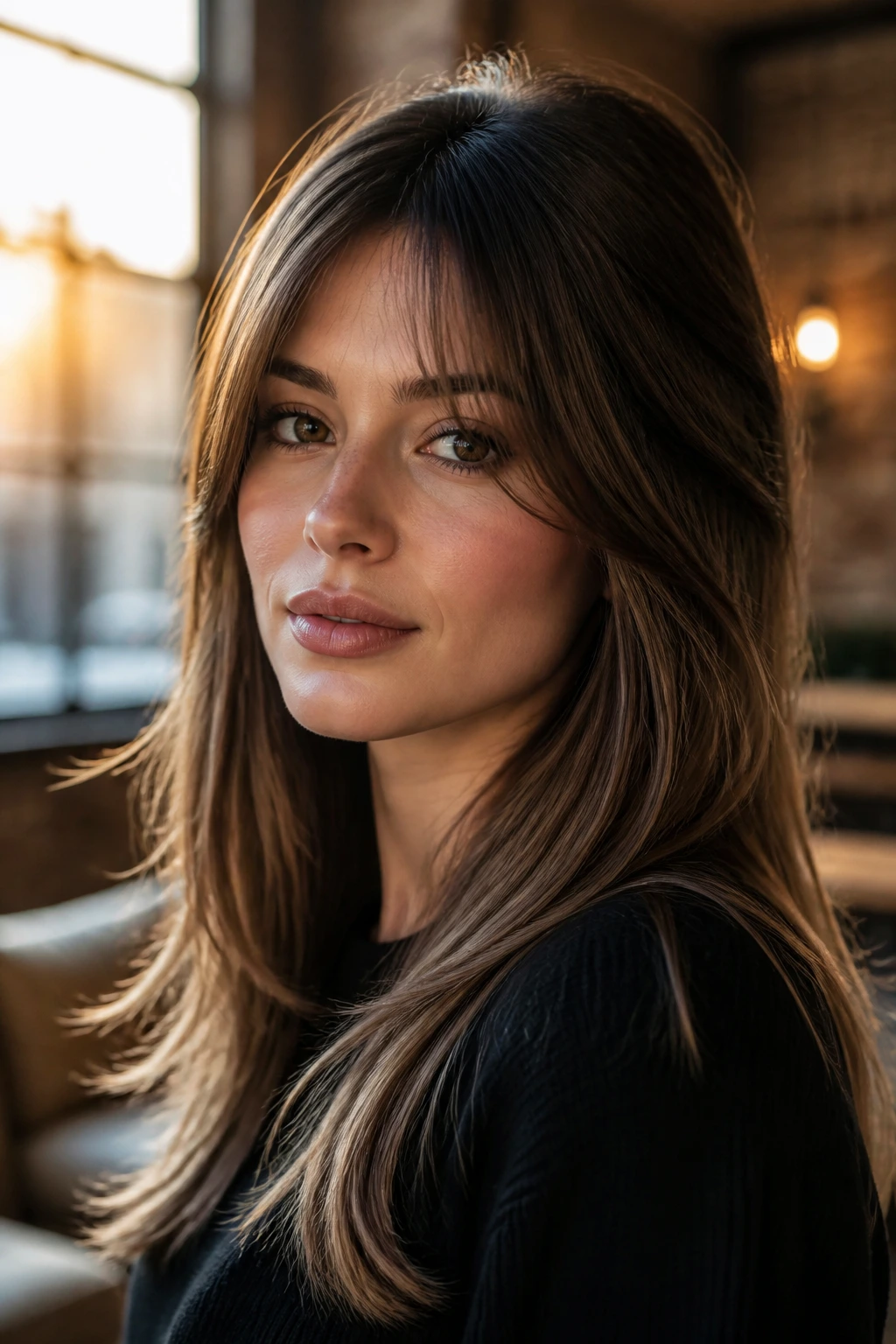
The Soft Blowout Version: Keep the same straight shape, but use a large round brush and a little root lift at the crown. The curtain bangs will have more body, which suits rounder faces or anyone who wants a fuller front.
The Minimalist Version: Strip the layers back and keep the cut blunt from the collarbone down. This version works when you want the fringe to be the only soft part of the look.
The Thicker-Hair Control Version: Add internal layers and keep the perimeter clean. It reins in bulk without making the ends look see-through, which is the main problem thick straight hair throws at you.
The Fine-Hair Lift Version: Use a blunt line, a light piecey bang, and very little texture on the lengths. The goal is density, not movement everywhere.
The Grow-Out-Friendly Version: Ask for curtain bangs that start near the cheekbones instead of the brow. They blend into layers more easily and stay wearable longer between trims.
Keeping Curtain Bangs Fresh Between Washes
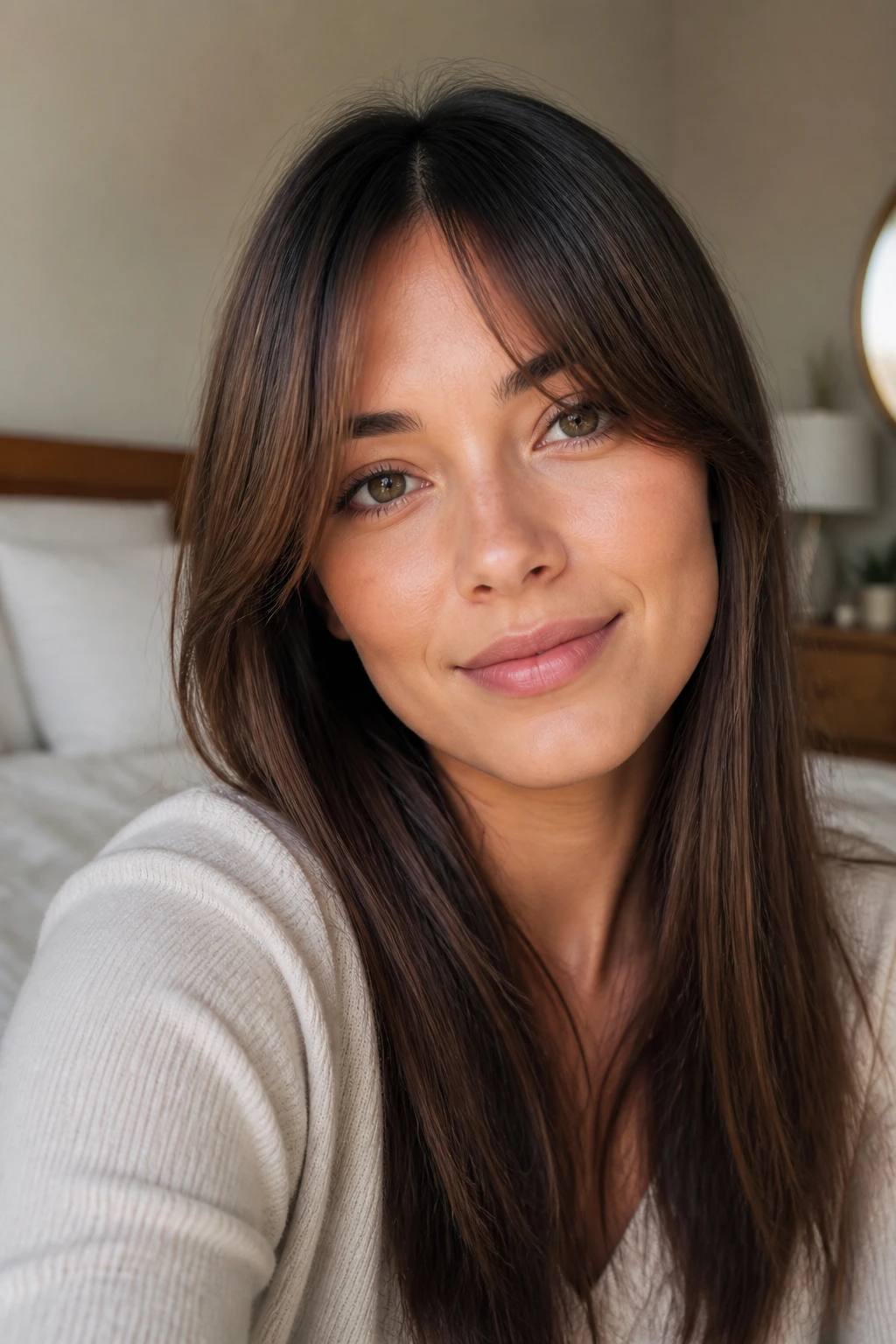
Straight hair can start looking tired fast when the roots get oily or the bangs lose their bend. The best habit is simple: refresh the front first, then decide whether the rest needs help. A full wash is not always necessary.
Curtain bangs usually need the most attention on day two. A light mist of water at the roots, followed by a quick blow-dry for 60 to 90 seconds, often resets them better than more product. If the bangs are only a little bent out of shape, a velcro roller or a round brush can fix them in less time than it takes to wash your face.
For the rest of the cut, dry shampoo can buy you an extra day or two, especially if your hair is fine. Use it at the roots and let it sit for a minute before brushing through. Heavy brushing right away just moves the powder around.
Trim timing matters too. Curtain bangs usually need a tidy-up every 4 to 6 weeks. The cut itself can go longer — about 8 to 12 weeks for a shape check — but the fringe is the part that makes or breaks the style. At night, a loose clip or a soft bend away from the face helps keep the part from sticking up in the morning.
Frequently Asked Questions
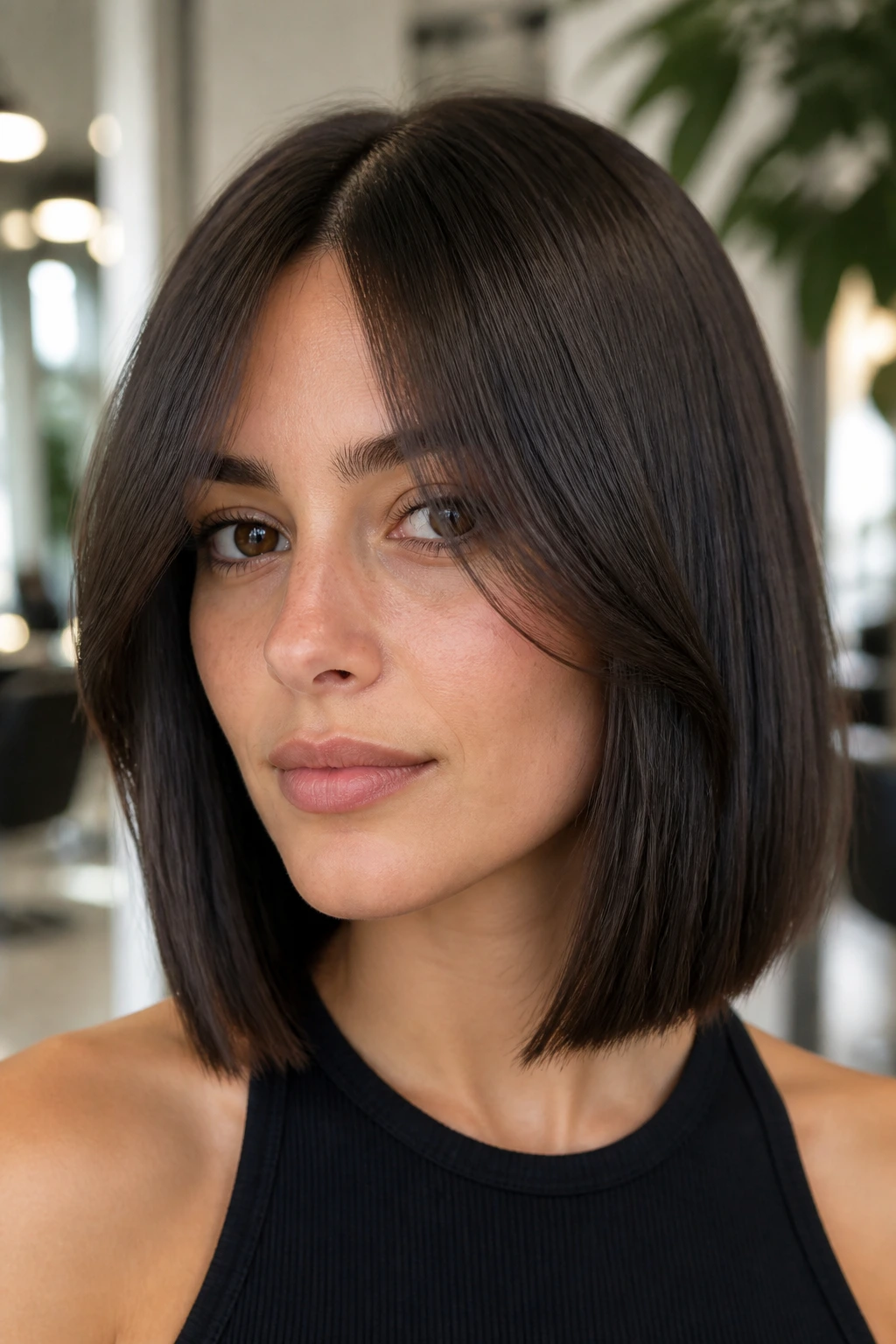
Do curtain bangs work on very straight hair?
Yes, and they often look cleaner on straight hair than on wavy hair because the parting and the face frame stay visible. The key is keeping enough length in the fringe so it bends instead of sticking out.
What face shape looks best with curtain bangs?
They’re especially useful on round, square, and longer faces because the split fringe softens the forehead and frames the cheekbones. That said, the exact length matters more than the face shape label; a good stylist adjusts the line to your features.
Can I keep curtain bangs if my hair is fine?
You can, but the cut should stay light at the front and fuller at the perimeter. Too many layers will make the hair look sparse, so ask for shape without stripping away density.
How often do curtain bangs need trimming?
Usually every 4 to 6 weeks if you want them to keep sitting in the right place. If you let them grow past the cheekbones, they start blending into layers, which can still look good but changes the whole effect.
What if my bangs keep splitting in the wrong place?
That usually means the cowlick or root pattern is winning. Try drying the fringe from the opposite side first, then reset the center part while the hair is still warm and slightly damp.
Can I air-dry straight hair with curtain bangs?
You can, but the fringe often dries with a bend in the wrong direction unless you train it. A quick blow-dry on the front section usually gives a better result than hoping the air does the right thing.
Are curtain bangs hard to grow out?
Not usually. That’s one of their main advantages. As they get longer, they slide into face-framing layers instead of turning into a hard shelf across the forehead.
Should I flat iron the bangs every day?
Not if you can avoid it. A round brush and a quick blow-dry are gentler, and if you do use heat, keep it low to medium so the fringe stays soft instead of crisp and brittle.
A Shape Worth Keeping
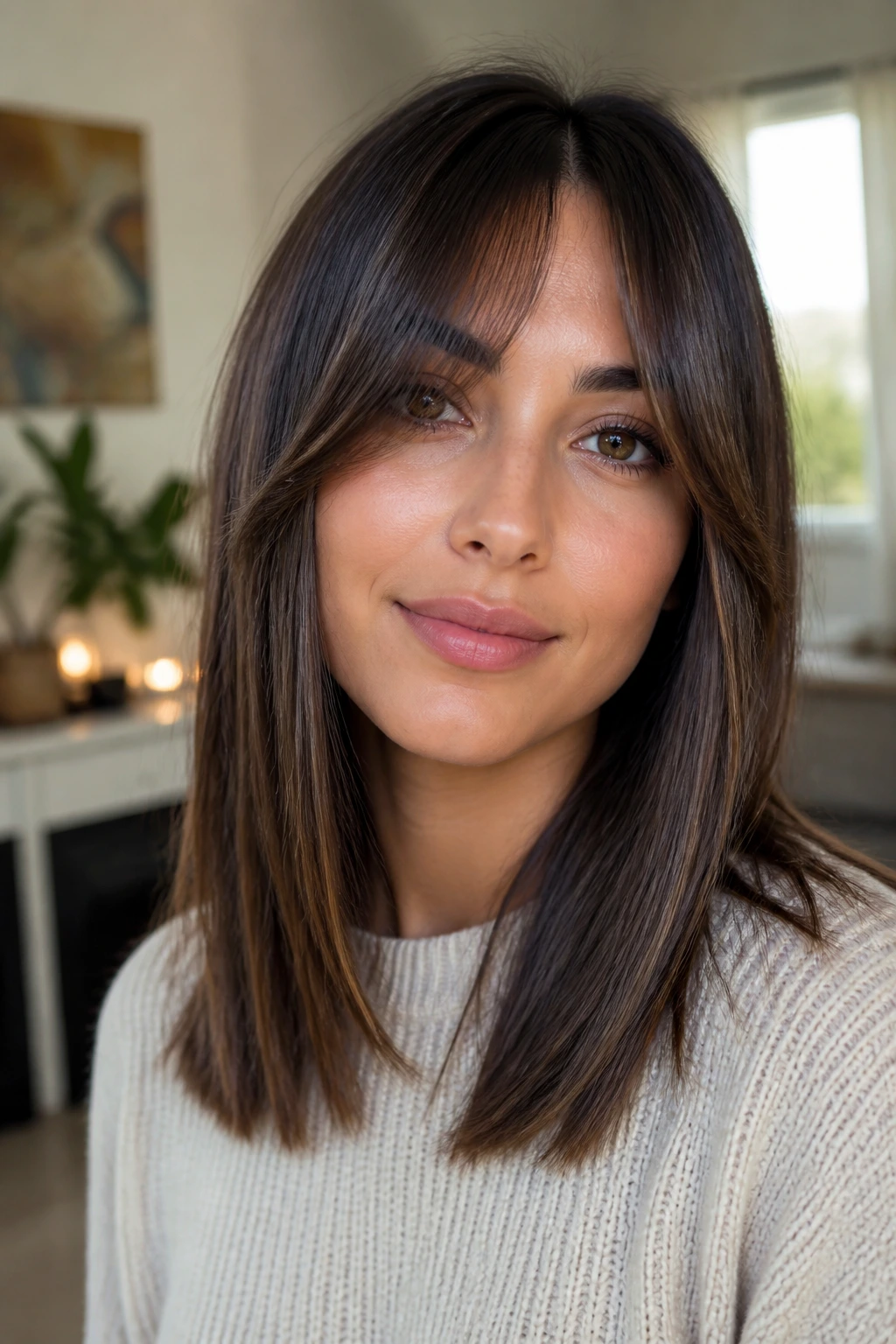
Straight hair does not need a lot of help to look clean. It needs a smart cut, a good part, and a fringe that understands where the face actually lives. Curtain bangs do that better than most people expect, especially when the rest of the style stays simple and the ends are shaped with a little care.
The best part is how many directions you can take it. Long, short, blunt, layered, tucked, polished, a little undone — the same basic idea can move across all of them without losing its identity. Bring the version that matches your density and length to a stylist who knows how straight hair falls, and the haircut will do more work than the styling ever will.
