



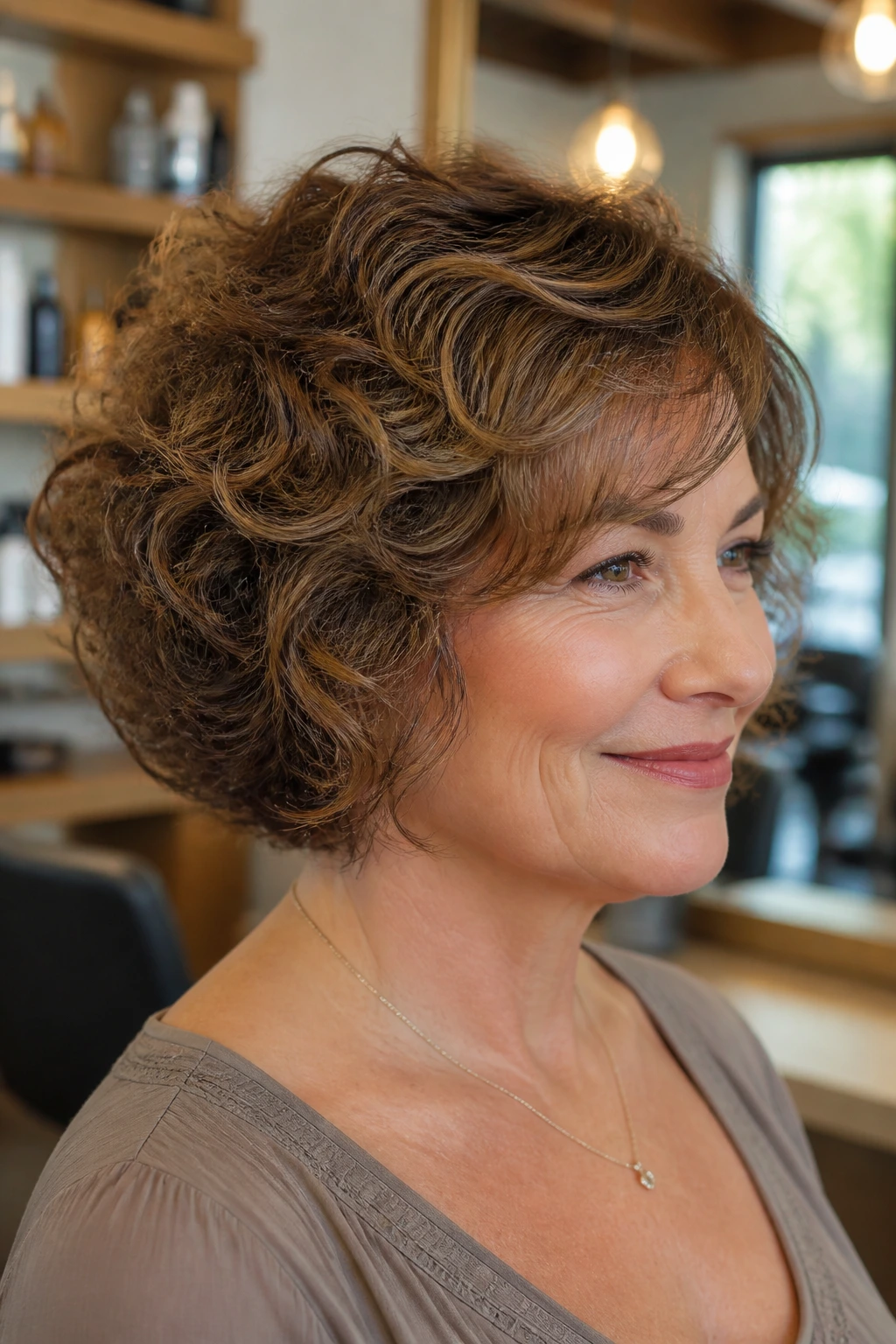
Rounded curls do something straight hair rarely can: they soften the jaw, fill out the sides, and give bangs somewhere to live instead of letting them hang there like an afterthought. That’s why rounded curly cuts with bangs for older women keep showing up in the salon photos I save and the shape notes I actually trust. They have a built-in balance that flatters changing hair texture, silver streaks, and the little shifts in density that happen with time.
The trick is not making curls look “young.” That word misses the point. The real goal is to give the hair a curve that follows the face instead of fighting it, especially when the crown has lost a little lift or the temples have gone softer. A good round shape can make a face look more open, not more hidden. And a bang that bends with the curl pattern can take away that awkward helmet line you get when fringe is cut like it belongs on straight hair.
I’ve always liked curly cuts that respect shrinkage instead of pretending it doesn’t exist. If the hair springs up two inches when it dries, the cut has to leave room for that. If the curls are fine, the shape needs internal support. If they’re dense, the ends need weight removal in the right places or the whole thing balloons out like a dandelion. That’s the difference between a cut that sits there and one that actually wears well.
Why Rounded Curly Cuts Hold Their Shape So Well
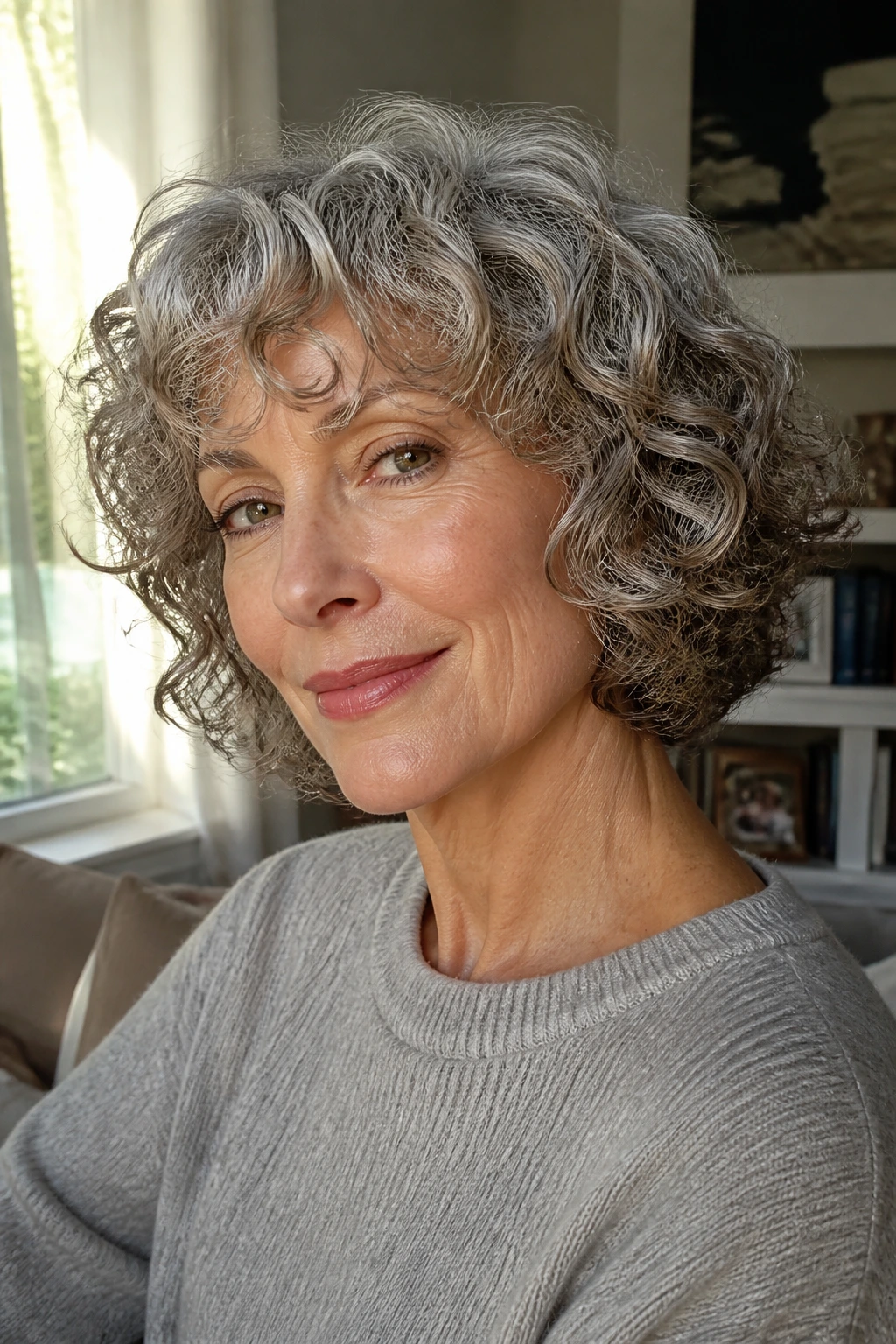
Softness: A rounded outline keeps curls from spreading too wide at the jaw, which matters when you want movement without that triangular bulk.
Bangs that behave: Curly bangs look more intentional when they follow the curl pattern, so you get fringe that bends and opens instead of crashing straight onto the forehead.
Easy lift: The curve in these cuts creates a natural shape around the cheeks and temples, where many mature faces benefit from a little motion.
Works with silver hair: Gray and white curls often have more wiry texture, and a round cut keeps that texture from feeling rough or puffy at the edges.
Less daily fuss: A solid rounded shape means you spend less time forcing curls into place every morning; the haircut does the heavy lifting.
1. Chin-Length Curly Bob with Brow-Skimming Fringe
This is the cut I reach for when someone wants structure without losing softness. The length sits right at the chin, which gives the face a clean frame, and the bangs skim the brows instead of sitting heavy on them. On 2C to 3B curls, that little bit of forehead coverage can be the difference between “done” and “fussy.”
It works because the rounded perimeter keeps the curl stack from flaring out at the jaw. If your hair has a habit of puffing at the sides, this shape reins that in without flattening the curl pattern. Ask for the fringe to be cut a touch longer than straight-across bangs would be; curl shrinkage is not a small detail. It’s the whole game.
If you wear glasses, this cut can still work. Keep the fringe light and let a few pieces break naturally around the frames instead of trying to force a single curtain line. The result feels polished, but not stiff. And stiffness is the enemy here.
2. Rounded Lob with Curtain Bangs
A curly lob can look a little too safe when it’s cut flat. Round it out, then add curtain bangs that split softly at the center, and the whole thing starts breathing. The shape falls around the collarbone, which gives enough weight for curls to hang without turning into a helmet.
I like this cut for women whose curls have gotten looser over time. The longer length gives the hair room to settle, while the face-framing fringe keeps the front from dragging the whole style downward. It’s especially good if your hair is 2A to 3A and tends to stretch on day two. You don’t need a dramatic chop to get lift.
The bangs matter here. Curtain bangs should be cut so the shortest pieces hit around the cheekbone when dry, not when wet. That little detail saves you from a fringe that vanishes after one shampoo. If you want a cut that can look neat with a simple side tuck, this one earns its keep.
3. Soft Curly Shag with Rounded Bangs
A shag can go wild fast. The rounded version keeps the edge off that wildness, which is why I like it on women whose curls need freedom but not chaos. Rounded bangs soften the front, and the layers get distributed in a way that keeps the crown from collapsing.
This cut shines on denser curls and on hair that has a little natural frizz. That frizz stops being a problem when the overall shape is intentional. The trick is to keep the shortest layers high enough to lift the silhouette, but not so high that the sides balloon. A good stylist will point the layers toward the curve of your head, not straight out from it.
There’s also a nice side effect: this shape makes silver, salt-and-pepper, or highlighted curls look more dimensional, because the layers catch light at different lengths. It’s not loud. It just has movement. And movement is what keeps older curl cuts from looking carved into place.
4. Tapered Curl Crop with Feathered Fringe
Short hair with curls can look a little too square if the sides are left heavy. A tapered crop fixes that by narrowing the nape and keeping the crown softly rounded. Add a feathered fringe, and you get a shape that feels light around the face without exposing every line or plane.
This is a strong option for women who want less hair on the neck and shoulders but still want curl texture up top. The taper at the back keeps the cut from mushrooming, which is a common problem with short curly styles. If your hair is thick, ask for internal removal rather than blunt thinning. Blunt thinning can leave odd gaps that show up more when curls dry.
The fringe should be point-cut or sliced lightly so it breaks into pieces. Heavy bangs on short curly hair can look like a curtain dropped too low. Feathered fringe moves. Heavy fringe sits there. One of those is easier to live with.
5. Stacked Curly Bob with Side-Swept Bangs
A stacked bob gives you shape in the back before you even pick up a diffuser. The graduation lifts the neck area and creates a rounder silhouette through the crown, which is handy if your hair has gotten softer at the top. Side-swept bangs keep the front open and avoid the “too much forehead, too much fringe” problem.
This one works best on medium-density curls that need direction. If the hair is too fine, too much stacking can leave the back feeling hollow. If it’s very thick, the stack helps remove bulk where it would otherwise puff out. That’s why this cut is less about trends and more about geometry.
A good side bang on curly hair should fall with a little bend, not a stiff arc. When I see side bangs cut too blunt, they end up fighting the rest of the curl pattern. The cut should look intentional even if you twist it with your fingers and let it dry on its own.
6. Collarbone Curl Cut with Bottleneck Fringe
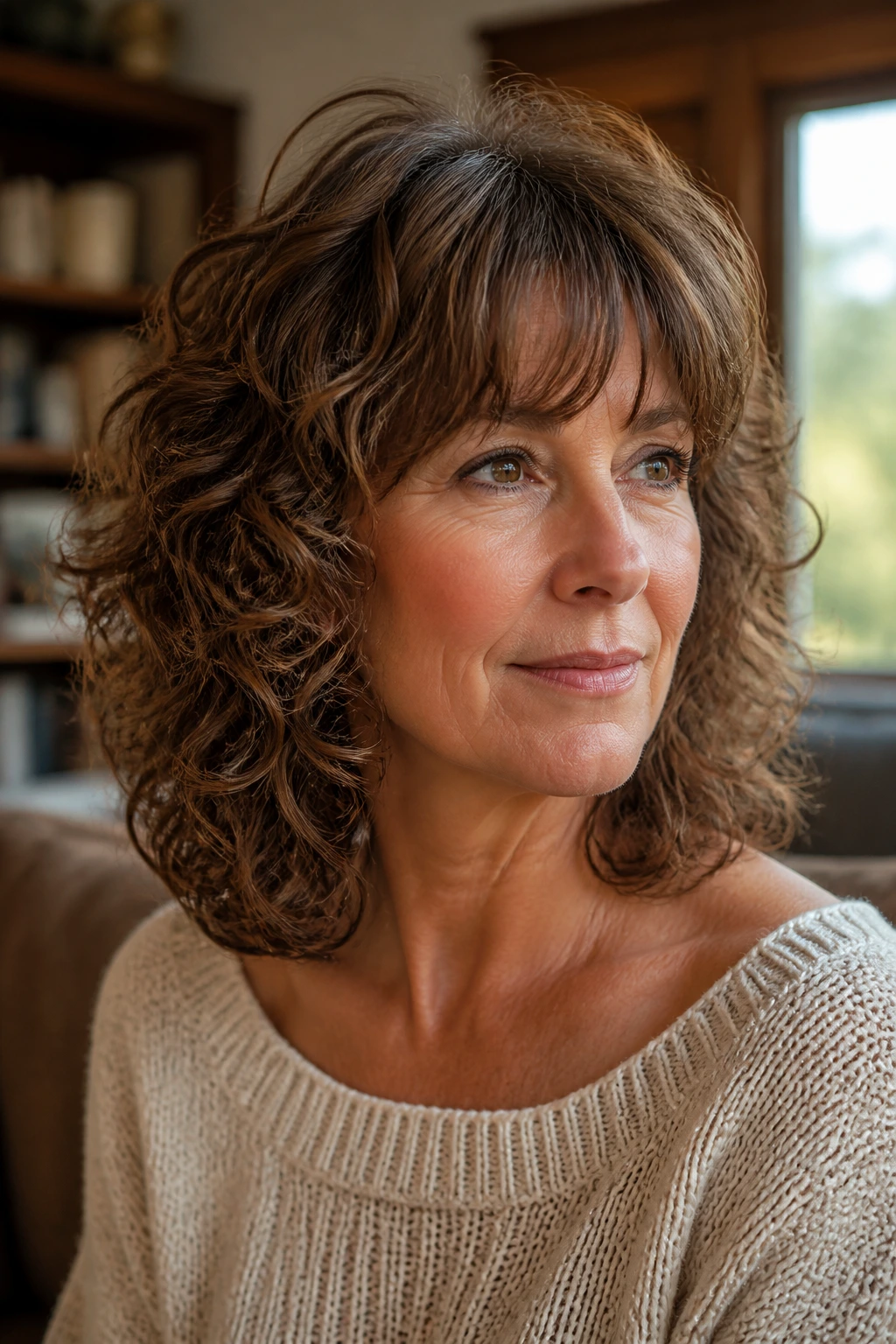
Bottleneck bangs are one of those shapes that make more sense once you see them dry. Shorter in the center, longer on the sides, they open the forehead a bit while still giving soft coverage. Paired with a collarbone-length rounded cut, they create a face frame that feels easy rather than edited.
This is a smart choice for women who want a little bang but not a full wall of hair across the forehead. The collarbone length keeps enough weight in the cut to let curls settle, which helps the fringe behave. On finer curls, a little mousse at the roots can keep the top from falling flat by noon.
What I like most here is the way the bangs transition into the sides. There’s no hard line. That matters with curly hair, where hard lines can look chopped instead of styled. If you like a cut that grows out gracefully, this one is a quiet winner.
7. French Curly Bob with Airy Bangs
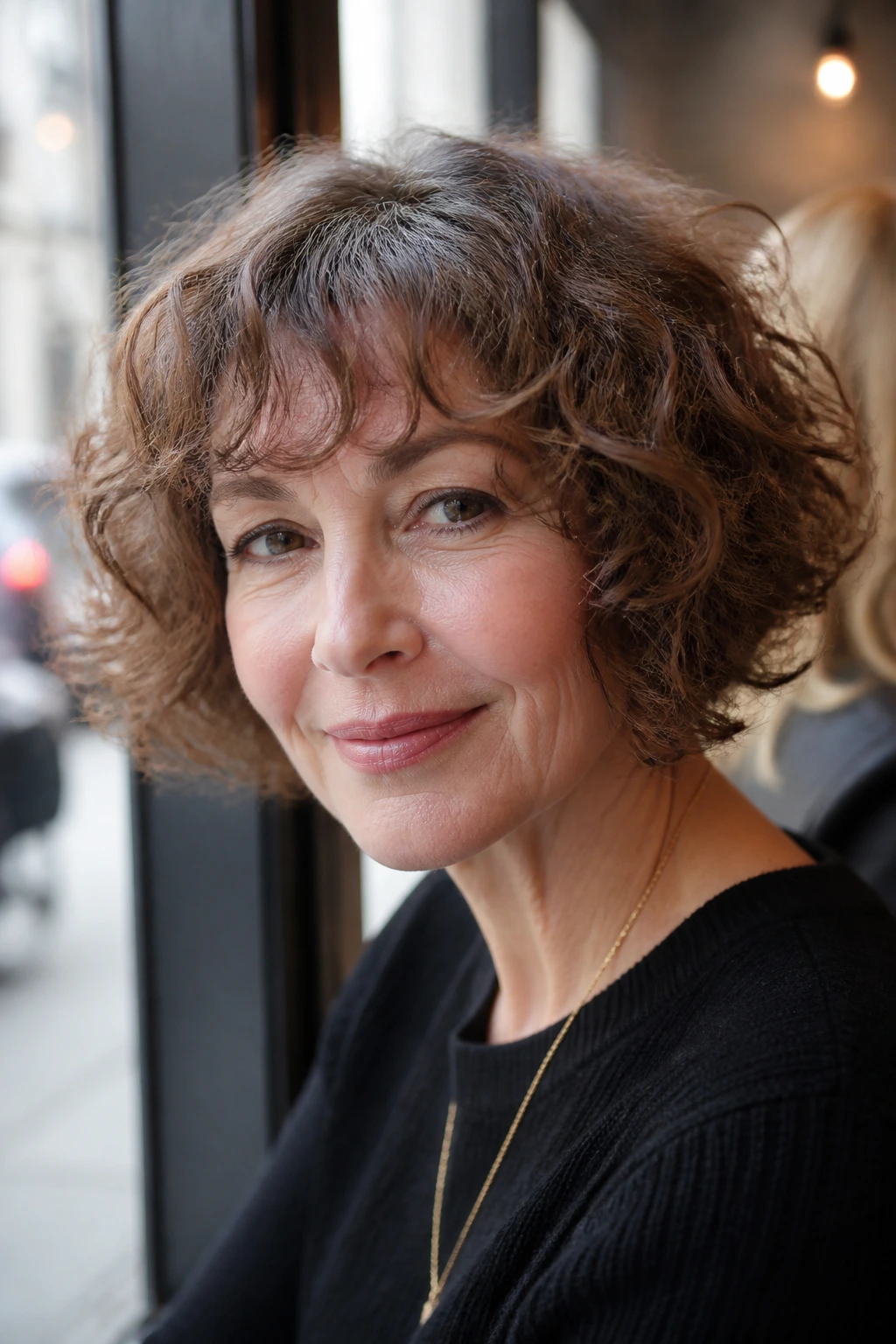
A French bob on curls sounds tidy, and it can be, but the rounded version feels softer and a lot more wearable. The length usually sits around the mouth or jawline, and the airy bangs keep the front light enough that the style doesn’t tip into heaviness. It’s chic without being severe, which is exactly the balance many women want.
This cut is especially good for looser curls and waves that want a compact shape. The round outline gives the bob body, while the airy fringe keeps the face from disappearing behind hair. You do have to respect shrinkage here. Dry curls will sit higher than you expect, and a bang that looks cheeky wet can become tiny once fully dry.
Ask for the bangs to be point-cut into a soft line, not shaved into wisps. Too much texturing can make the fringe fray at the edges. A little softness goes far enough.
8. Rounded Pixie Bob with Piecey Fringe
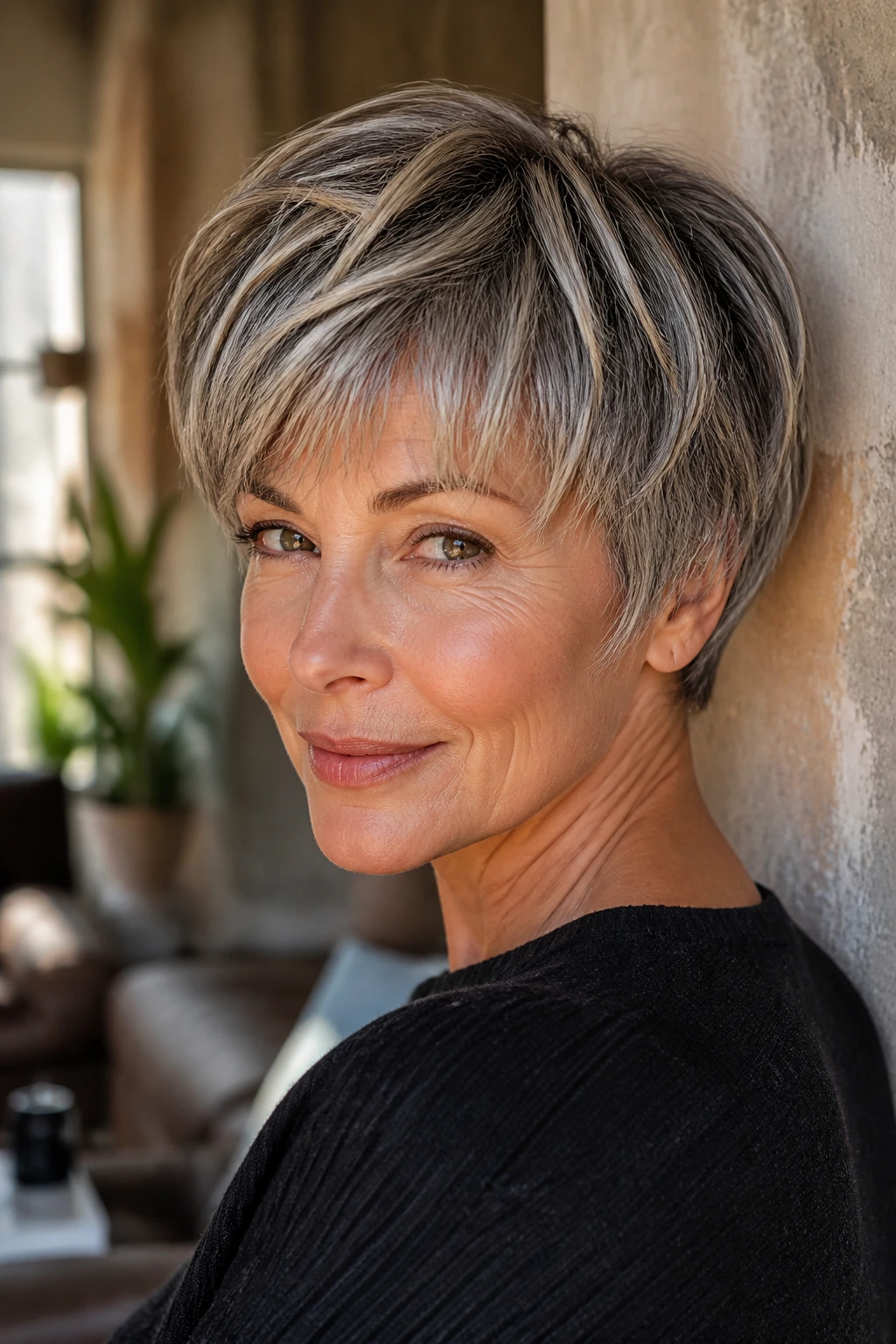
This one lives between a pixie and a bob, which is why it feels fresh without becoming difficult. The shape hugs the head at the sides, keeps a soft roundness through the back, and leaves enough length on top for curls to show themselves. Piecey fringe gives the forehead some movement and keeps the cut from looking too clipped.
I like this on women with strong cheekbones or smaller faces, because the shape adds detail without swallowing features. It also works well with salt-and-pepper hair, where texture can do a lot of the visual work. When the fringe is broken into pieces, the eye moves around the face instead of locking onto one blunt line.
The main caution is over-layering. A pixie bob can turn fuzzy if the stylist gets too aggressive with thinning shears. You want definition, not air holes. Ask for curl-by-curl shaping around the front and a slightly fuller crown so the cut keeps its curve as it grows.
9. Mid-Length Halo Cut with Full Curly Bangs
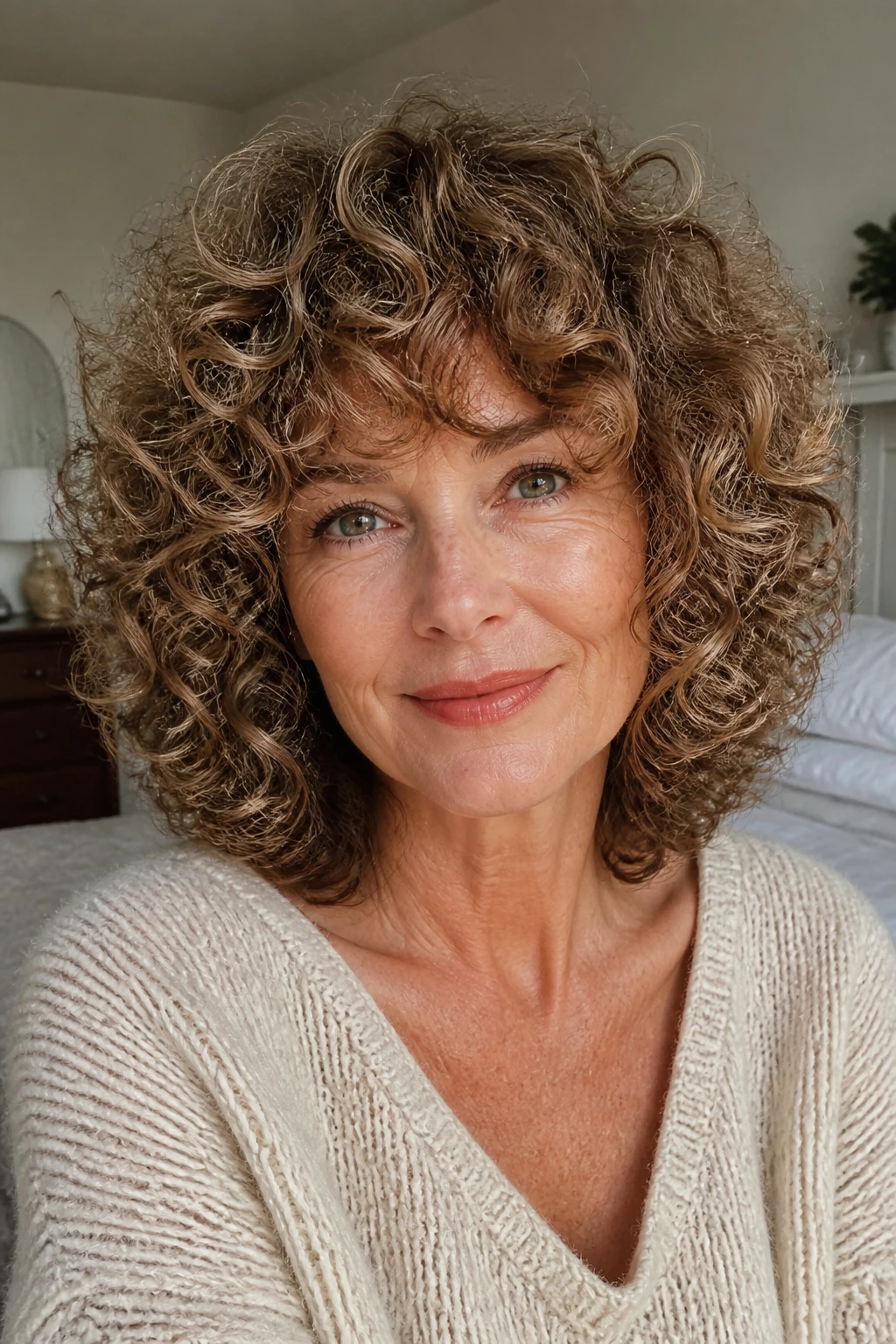
A halo shape is what happens when the curls follow the head instead of spreading outward from it. Mid-length gives the hair enough weight to hang in a circle around the face, and full curly bangs complete the look without making it hard. The result feels soft, rounded, and very forgiving.
This cut is lovely on denser curls that need an outline. It gives the hair room to move while keeping the perimeter controlled. Full bangs can sound heavy, but with curl they often land as a soft fringe that breaks apart naturally. That broken edge is what makes it wearable. Straight bangs on the same hair would feel much harsher.
If you like a style that can be dried with a diffuser and left alone, this one is a good candidate. It does not need perfect parting or elaborate styling. It needs a solid cut, a little root lift, and restraint with product.
10. Inverted Curly Bob with Cheekbone Bangs
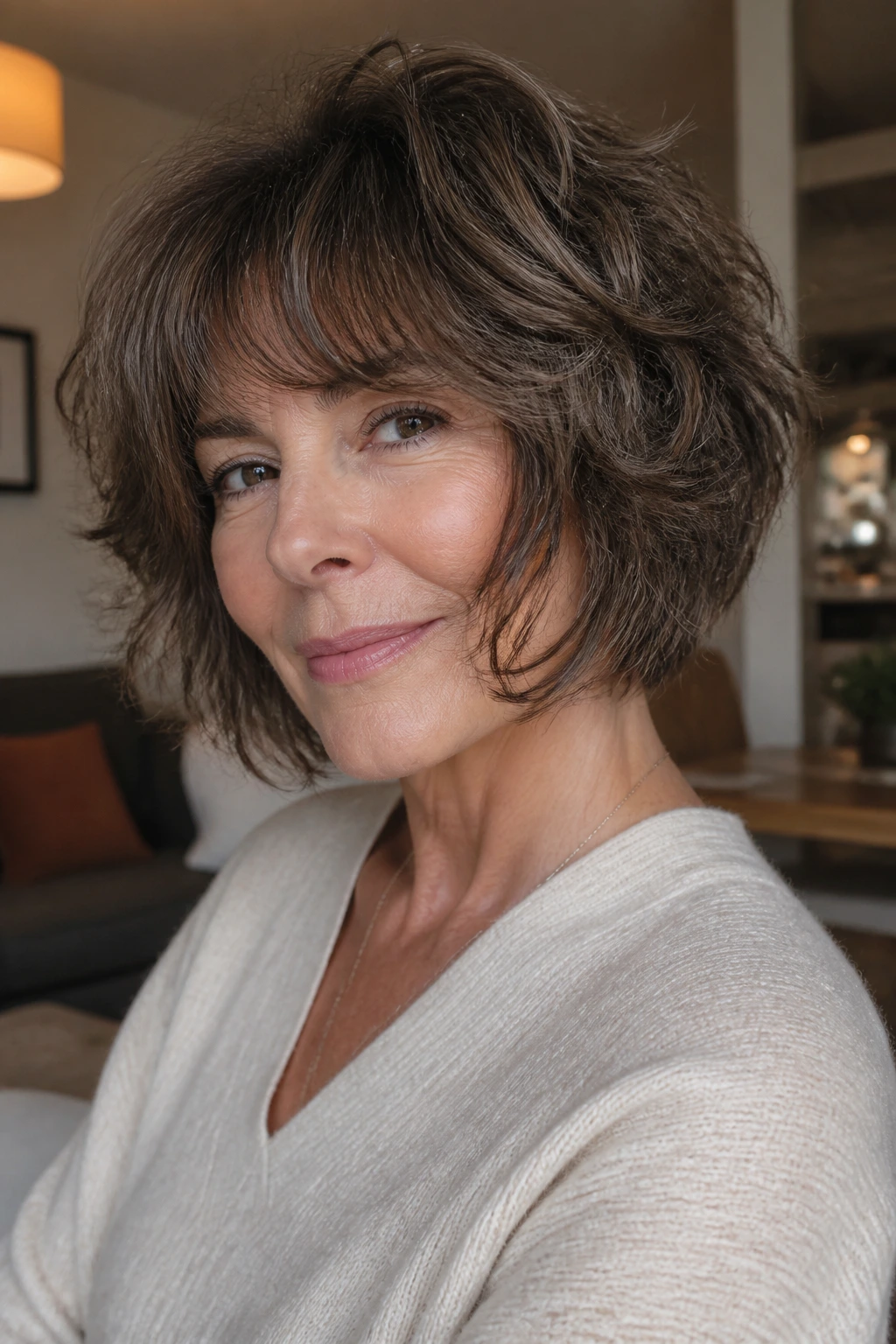
The inverted bob has more length in the front and a tighter line in the back, which gives curly hair a sense of direction. When the front pieces are rounded to the cheekbone, the style frames the face in a way that feels lifted. It is a strong choice if you want shape without the haircut sitting all one length.
This cut can be especially flattering for women whose hair feels fuller around the jaw than at the crown. The shorter back helps relieve weight, and the forward angle guides the eye upward. Bangs that land near the cheekbone pull the whole look into one clean curve.
I would not cut this too sharp on very curly hair. The angle should be soft enough that the curl pattern can follow it. If the line gets too severe, the front and back start arguing with each other, and that is not a fight worth having.
11. Shoulder-Length Round Layers with Curly Curtain Fringe
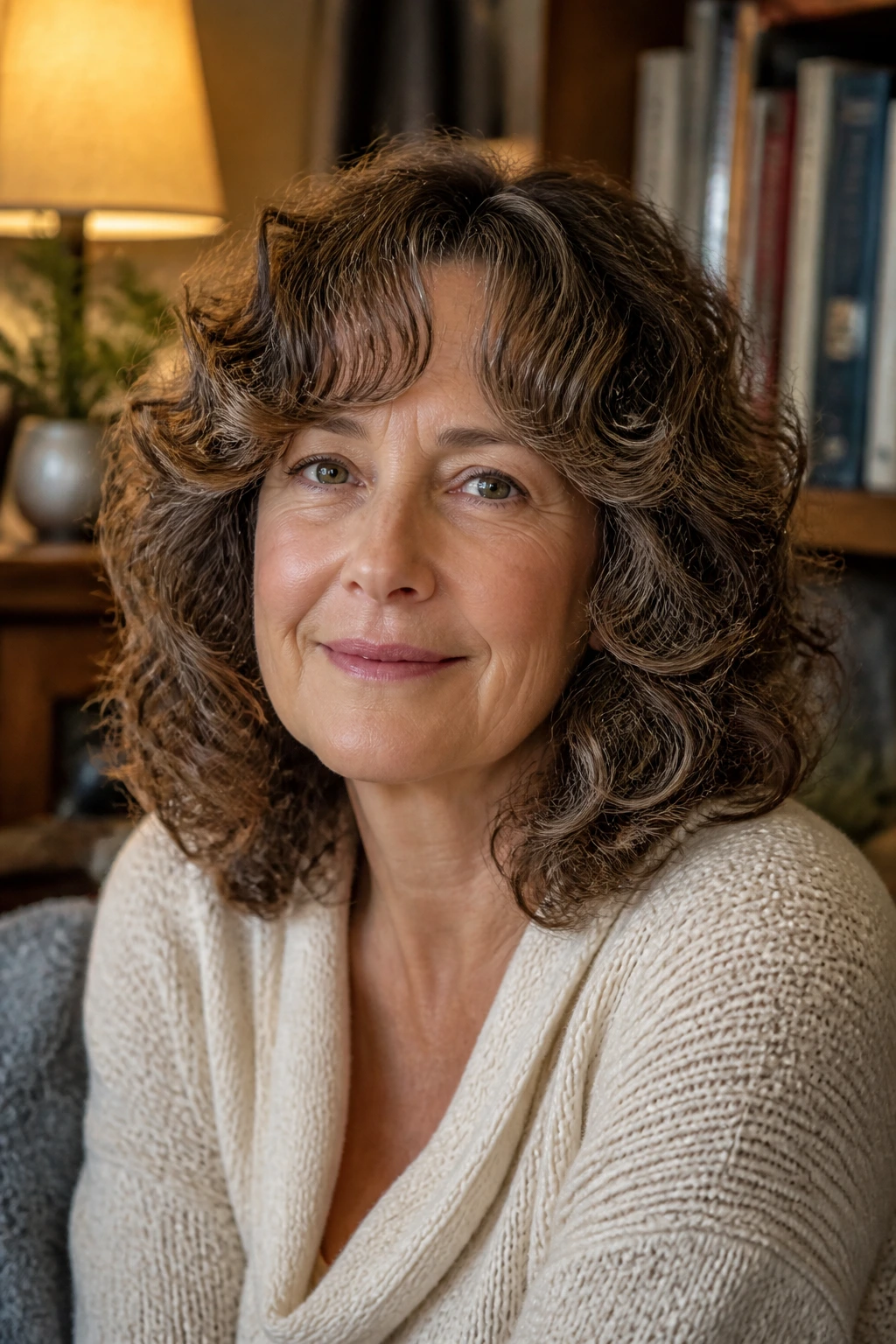
Shoulder length is a sweet spot for a lot of curly hair. It gives the hair enough length to settle, but not so much that the curl pattern gets dragged down. Rounded layers keep the perimeter soft, and curtain fringe opens the front in a way that flatters glasses, cheekbones, and fuller faces.
This is one of the easiest shapes to live with if you still want movement. The layers should be cut to encourage a curve around the shoulders rather than a pyramid. If the hair is fine, keep the layers longer so the ends hold together. If it is thick, some internal shaping helps the layers stack without puffing.
Curtain bangs on this cut should be left long enough to tuck behind the ears on a bad day. That tiny bit of flexibility matters more than most people think. Hair that can be moved around a little is hair you can actually enjoy.
12. Salt-and-Pepper Rounded Crop with Wispy Bangs
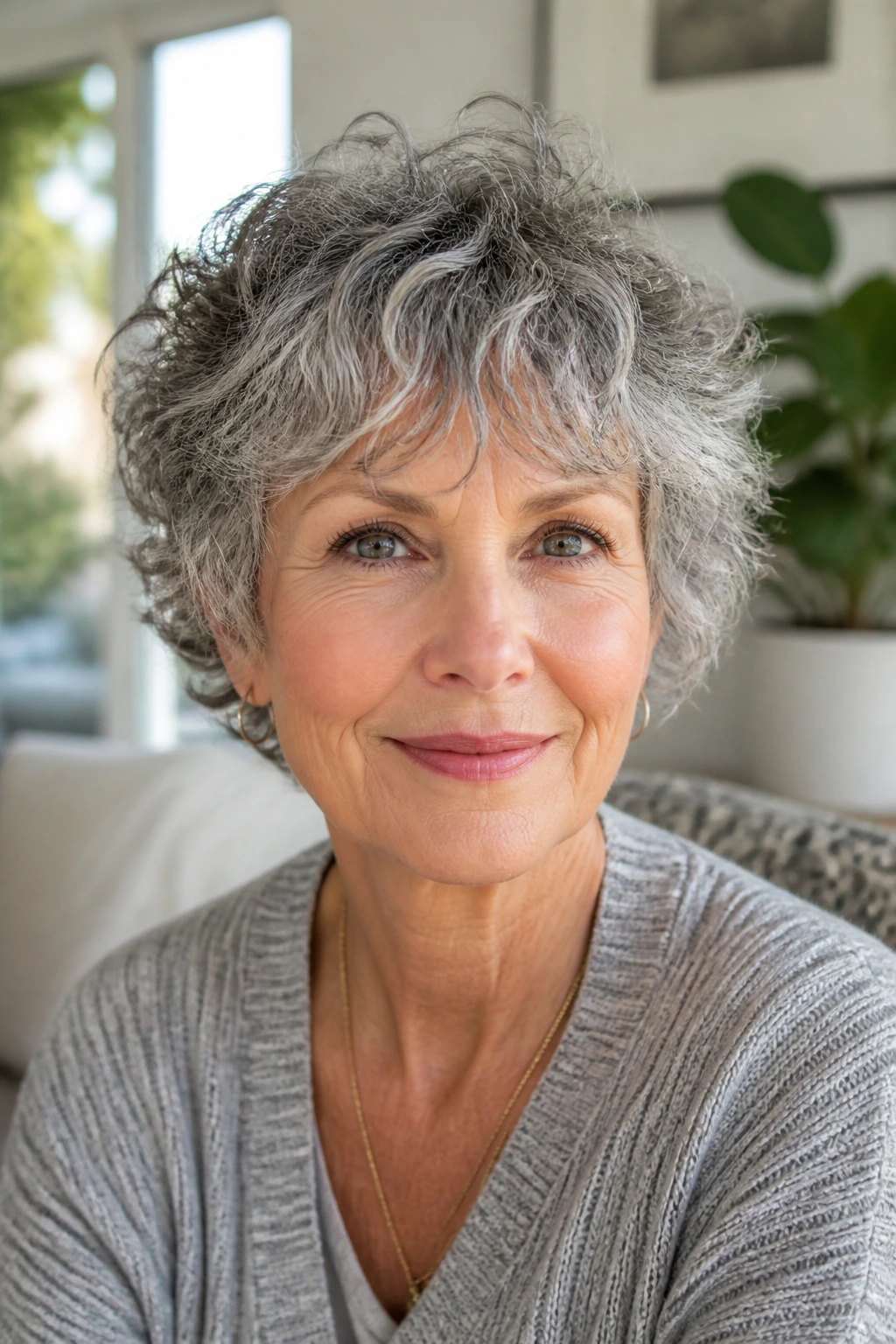
Gray curls have opinions. They frizz faster, catch humidity differently, and often feel drier at the ends. A rounded crop with wispy bangs handles that texture well because it keeps the cut light and controlled. The silhouette stays close to the head, which prevents the halo effect from getting too wide.
Wispy bangs are a smart move here because they let the forehead breathe. On silver or salt-and-pepper hair, too much fringe can look dense in a way that steals the softness from the face. Wispy does not mean thin to the point of nothing; it means broken up enough that the bangs fall in pieces, not in one sheet.
I’d keep the back tidy and the crown softly full. That combination makes gray curls look deliberate, not accidentally grown out. The cut also pairs nicely with a side part, especially if the hair has a cowlick near the front.
13. Deva-Inspired Round Cut with Face-Framing Bangs
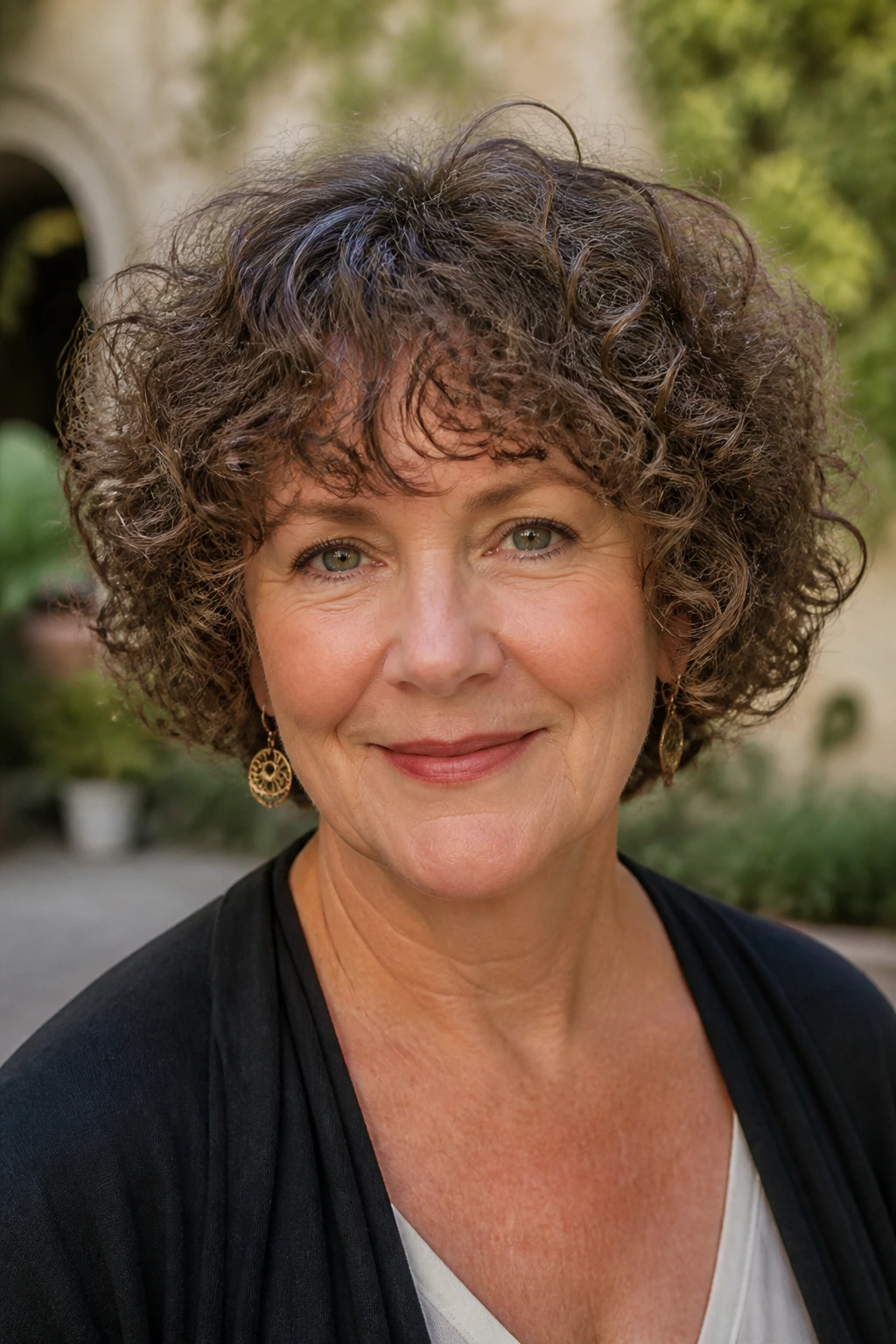
A Deva-inspired cut respects how each curl wants to sit. That matters more with mature hair than people admit, because texture often changes from one area of the head to another. The round shape gives balance, and the face-framing bangs are cut to follow the actual curl springs instead of pretending they’re straight.
This is a good option if your curl pattern is inconsistent. Maybe the back is tight and the front is loose. Maybe the crown is flatter than the sides. A curl-by-curl approach lets the stylist adjust each zone. The bangs can be a little longer at first and then refined once dry, which is usually the sane thing to do.
What gives this cut its appeal is the way it grows out. A lot of shapes go lumpy after six weeks. This one usually just gets softer. That is a useful kind of attractive.
14. Rounded Wedge Cut with Clean Fringe
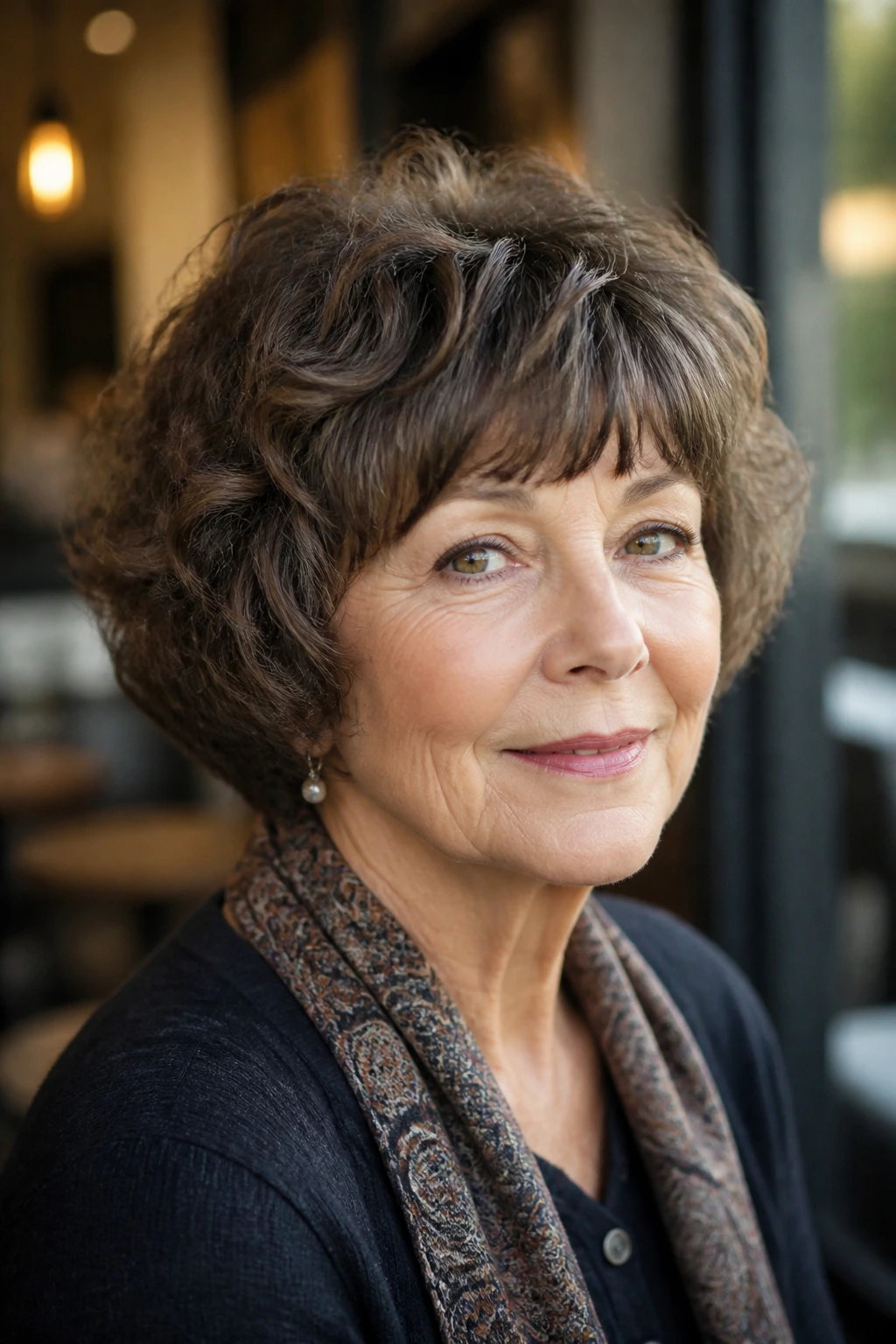
A wedge cut is all about a strong curve through the back, and on curly hair that curve can look very polished. The rounded version softens the geometry, while a clean fringe adds a straight-line counterpoint up front. The contrast is neat without being severe.
This cut works best when the curls are compact and springy, not too loose. The back needs enough texture to hold the wedge shape, and the fringe should be trimmed carefully so it does not spread wider than the face. If your hair is very dense, the wedge can take away a surprising amount of visual weight. If it is fine, the structure may feel too hard unless the layers are left soft.
I like this one on women who enjoy a more defined haircut. Some curls want to look airy. Others want a line. This cut gives you a line, but a curved one.
15. Thick-Curl Cloud Cut with Long Bangs
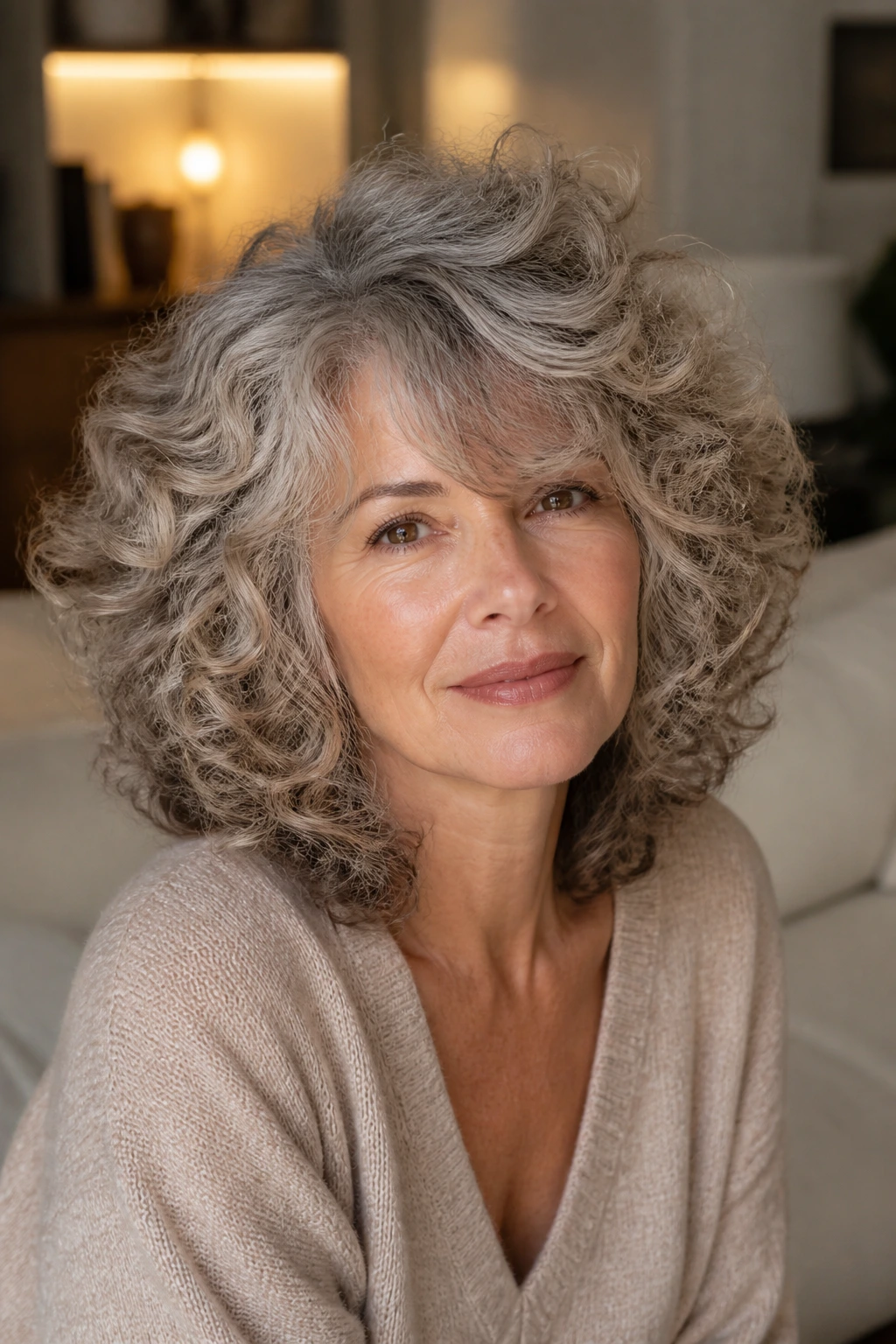
This is for the women with big, rich curls who are tired of being told to “tame” them. Don’t tame them. Shape them. The cloud cut keeps volume on purpose and rounds the outer edge so the hair reads full rather than bulky. Long bangs let the front participate without dominating the face.
The success of this cut depends on good weight removal in the interior. Thick curls can look boxy when all the bulk is left at the perimeter. You want the silhouette to round upward and inward, almost like the curls are folding toward the face. Long bangs help because they can blend into the side layers and keep the front from feeling chopped.
This is not a low-effort cut, but it is a low-argument cut. The hair gets to be large in a controlled way. That’s a nice compromise.
16. Fine-Curl Rounded Cut with Light Bangs
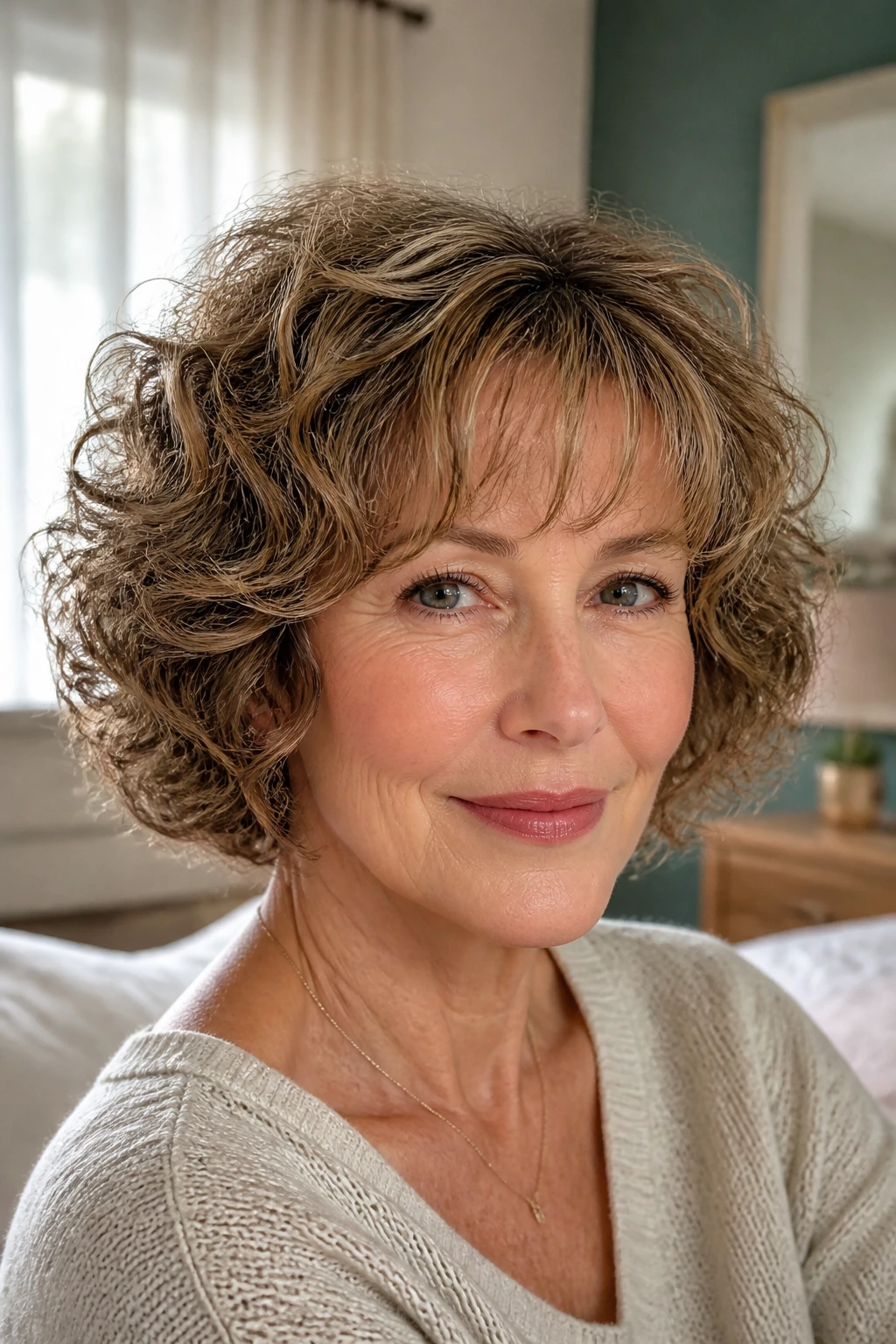
Fine curls need a slightly different strategy. Too many layers and they disappear. Too much bang and the front goes sparse. A rounded cut with light bangs gives shape while protecting density. The hair stays fuller through the ends, and the bangs add a soft frame without draining the front.
This is the cut I’d suggest when the hair has lost some thickness but still has enough curl to hold a curve. Keep the longest layers close enough to preserve weight. Light bangs should be sliced rather than hacked at, so they fall in a broken line that still feels intentional.
Product matters here more than people think. Heavy creams can weigh fine curls down fast. A light mousse or foam at the roots and a small amount of leave-in at the ends usually does more good. Fine curls can look flat in a heartbeat, so the cut and the product have to cooperate.
17. Glasses-Friendly Curly Lob with Soft Side Fringe

If you wear glasses, you already know the wrong fringe can make the whole face feel crowded. This lob solves that by keeping the length at the collarbone and the fringe swept softly to one side. The rounded shape gives the curls a soft edge, while the side fringe keeps the frames visible.
This cut works because it opens the center of the forehead a little. That small opening helps the glasses sit in the face instead of fighting the hair for space. On 2C to 3A curls, it’s especially forgiving, since the fringe can be tucked, pinned, or left to fall naturally depending on the day.
I’d keep the side fringe long enough to move. Anything too short tends to pop up above the frame and create a little puff of its own. Not ideal. The goal is a shape that works with your glasses, not one that asks them to disappear.
18. Rounded Wolf Cut with Curly Bangs
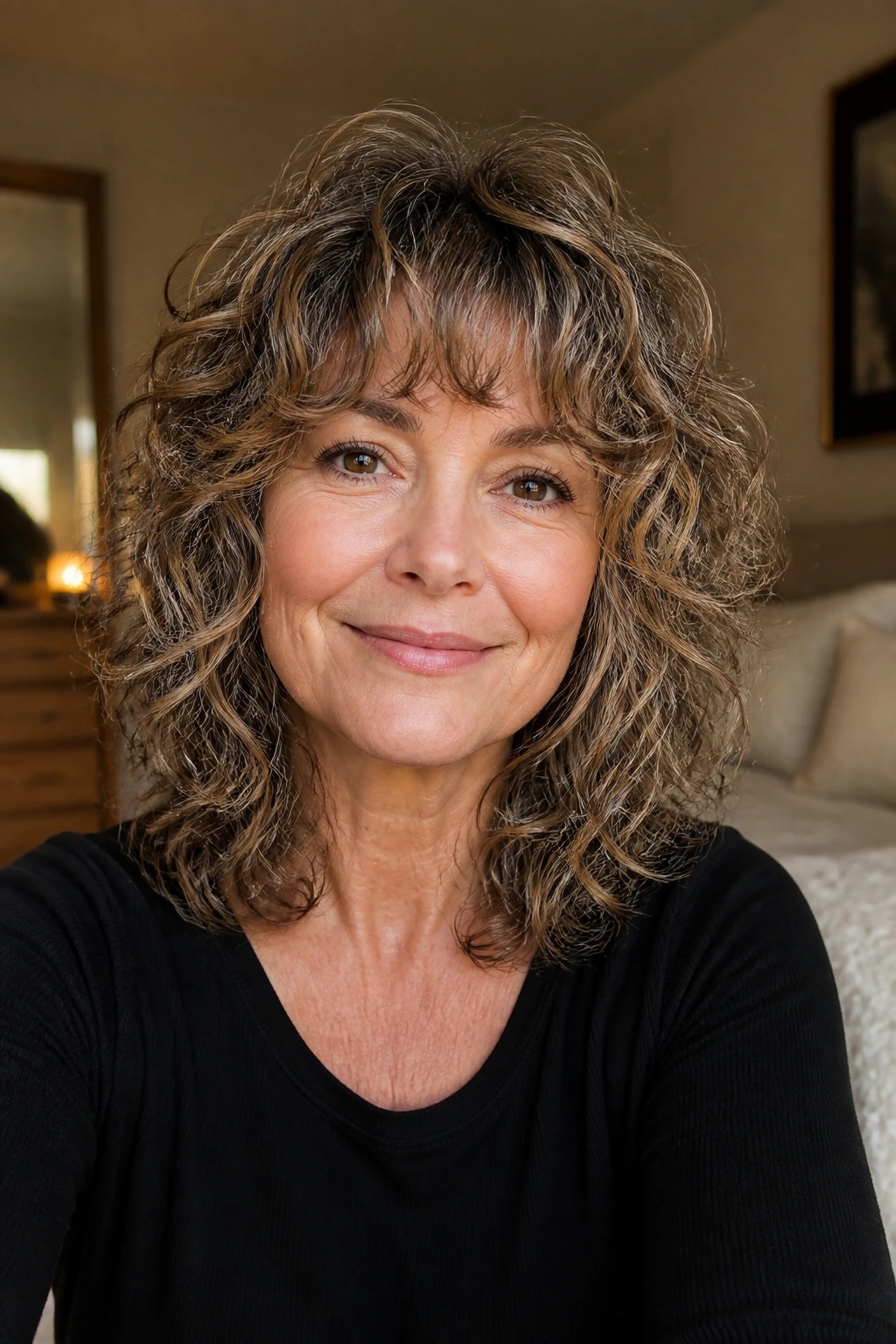
A wolf cut can go aggressively messy if nobody reins it in. The rounded version makes it softer, which is what makes it wearable for mature curls. You still get the movement and the layered texture, but the outer edge follows a curve instead of a jagged line. Curly bangs finish it off with a little edge.
This is a strong pick for women who like personality in a haircut. The layers can bring out natural texture in a way that feels modern without being overworked. It suits thicker curls best, especially if the hair has some wave at the crown and more spring at the ends.
The bangs should not be cut too blunt. On a wolf cut, blunt bangs can make the whole thing feel costume-like. Keep them textured, soft, and a little longer than you think. Curly fringe tends to rise once it dries, and there’s no point pretending otherwise.
19. Neck-Length Rounded Cut with Tucked Fringe
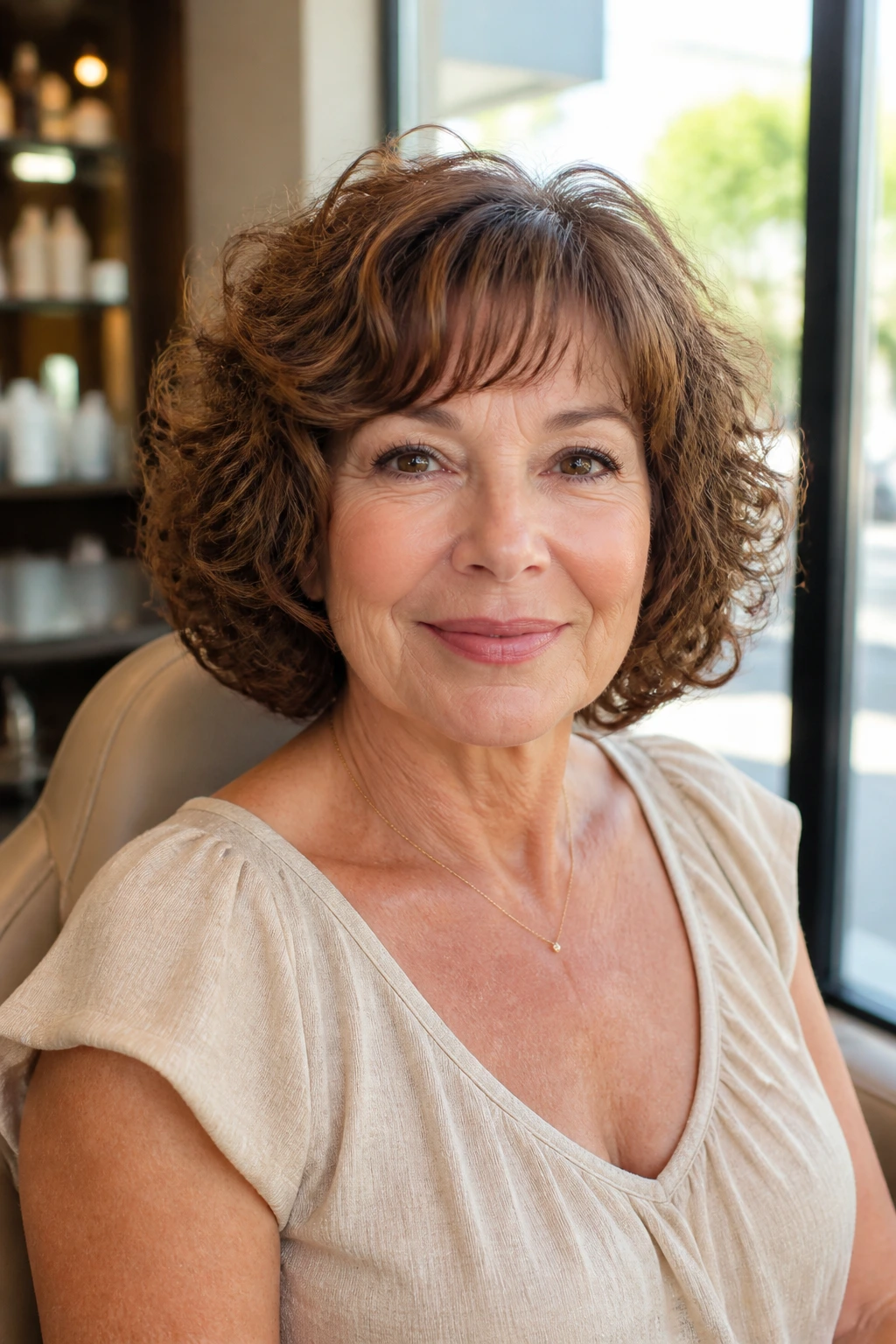
A neck-length cut keeps the silhouette neat without going short-short. Rounded layers at this length create a bubble of curl around the face and ears, while tucked fringe gives the front a gentle opening. It’s a good solution for women who want a little neck clearance but still want to see curl movement.
This cut is useful when hair is thick enough to need control but not so thick that it needs a major structural haircut. The fringe can be tucked behind the temples or worn forward depending on mood, which gives it more range than it looks like on paper. The trick is not cutting the bangs too short at the start. They need room to move.
If your hair grows outward at the nape, ask for a softer taper there. That keeps the back from kicking out in the wrong direction. A clean neck line can do a lot for the whole haircut.
20. Tapered Afro with Soft Curly Fringe
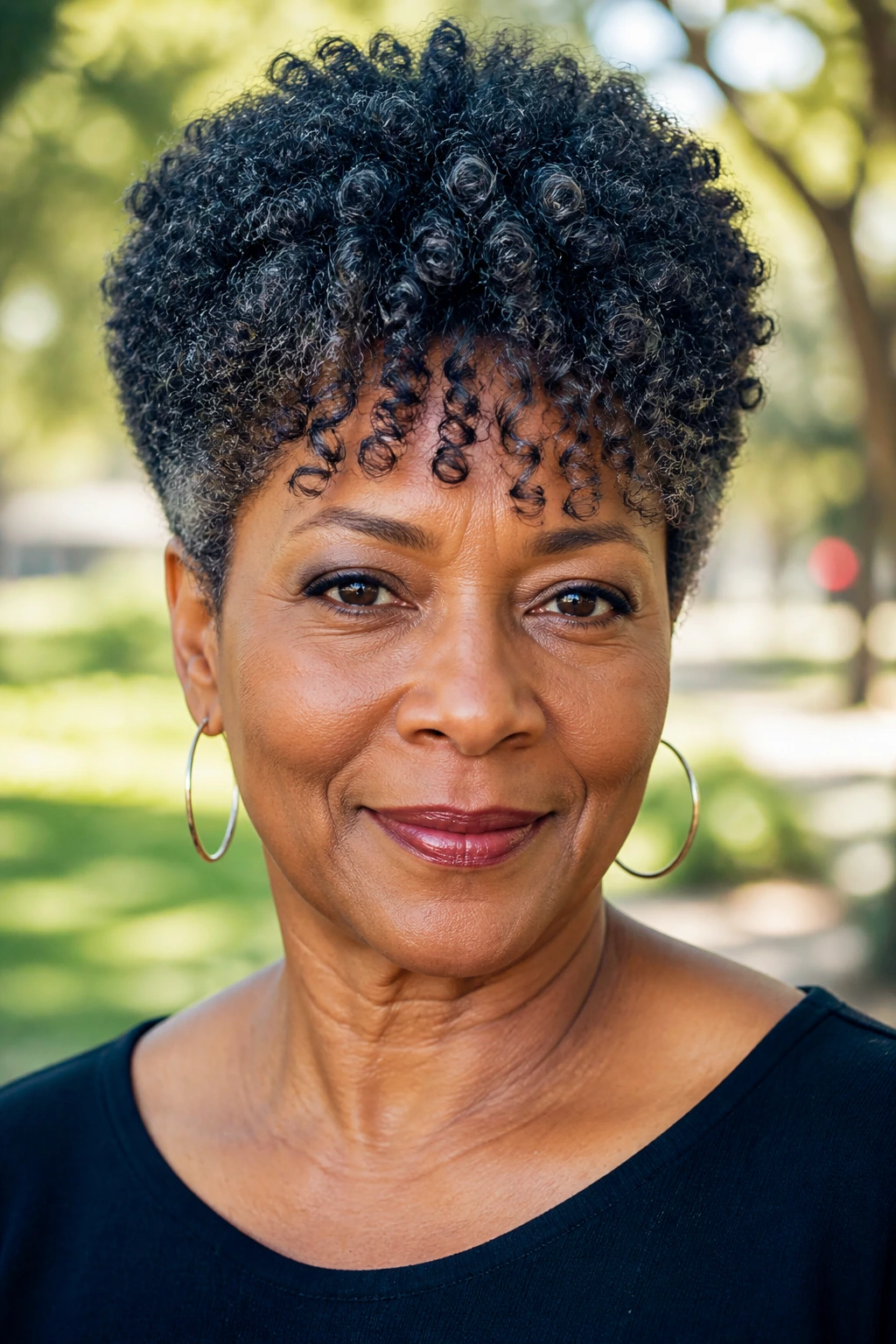
Tapered curls with fringe deserve more attention than they usually get. The taper keeps the shape close and round, while the soft fringe brings the focus to the eyes and forehead. On coily or tightly curled hair, this cut looks especially elegant because the curve is built into the shape itself.
What makes it work is balance. If the sides are too full, the cut loses definition. If the top is too flat, it loses energy. A soft fringe keeps the front from feeling harsh while still leaving enough texture to feel alive. It’s a strong choice for women who want their natural texture to do the styling.
Moisture matters a great deal here. Coily curls can shrink and dry fast, so a good leave-in and a little sealing product help the fringe sit properly. Without that, the front can look dry before lunch.
21. Pageboy-Inspired Curly Cut with Eyebrow Bangs
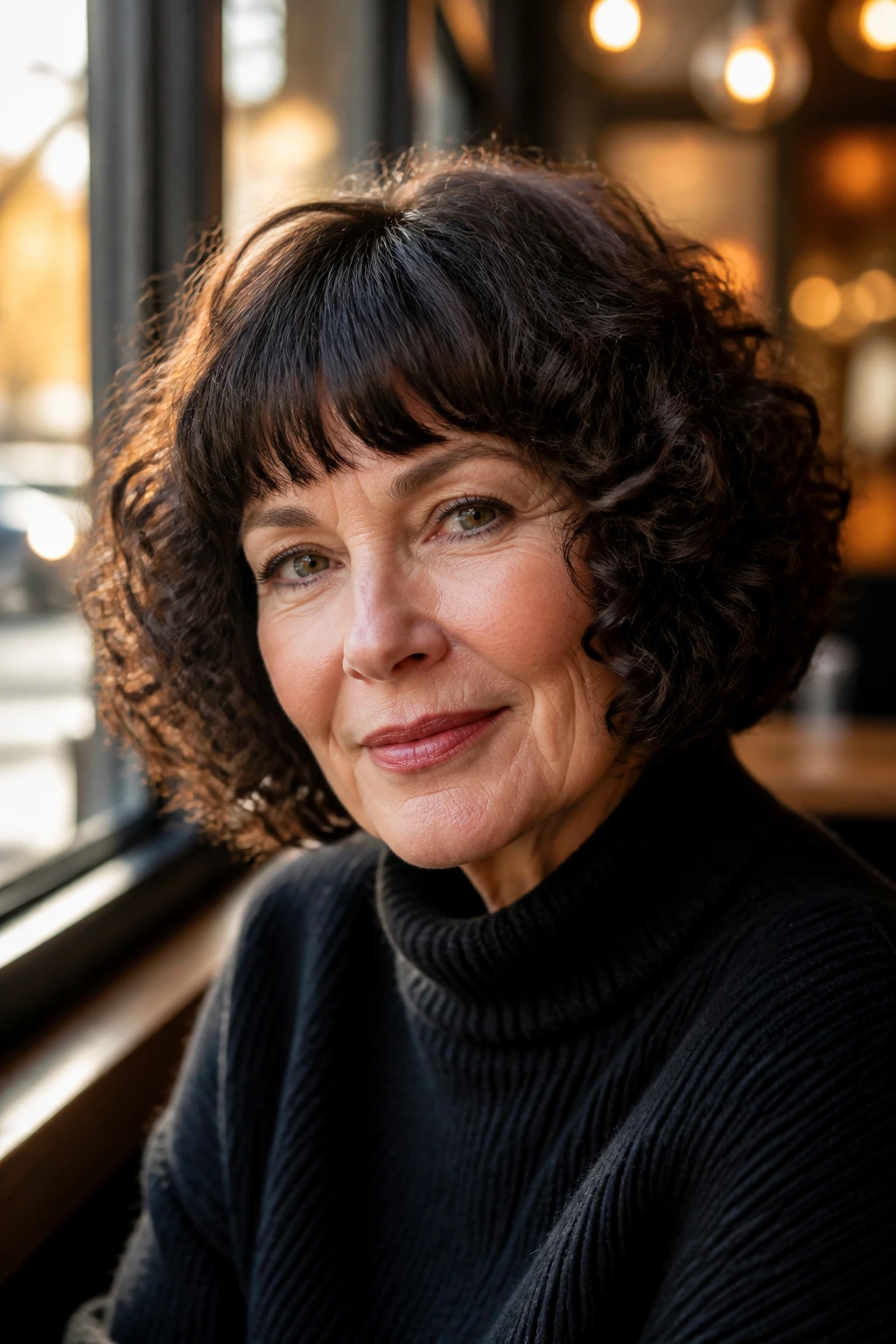
A pageboy cut on curls sounds old-fashioned until you see the rounded version. Then it makes sense. The hair curves under softly, usually around the jaw or just below, and the eyebrow bangs give the face a neat, readable frame. There’s a little retro feel to it, but the curl texture keeps it from becoming costume-y.
This cut is strongest when the curls are medium density and have a smooth bend rather than a very tight coil. The rounded bottom edge creates the pageboy silhouette, while the bangs should be cut just long enough to graze the brows when dry. Too short, and they spring too high. Too long, and the whole thing loses its shape.
I like this cut for women who want a haircut with structure. It behaves well with a side part and works nicely with a simple lip color and earrings, which sounds trivial until you see the whole look come together. Small things matter.
22. Soft Round Cut with Grow-Out-Friendly Fringe
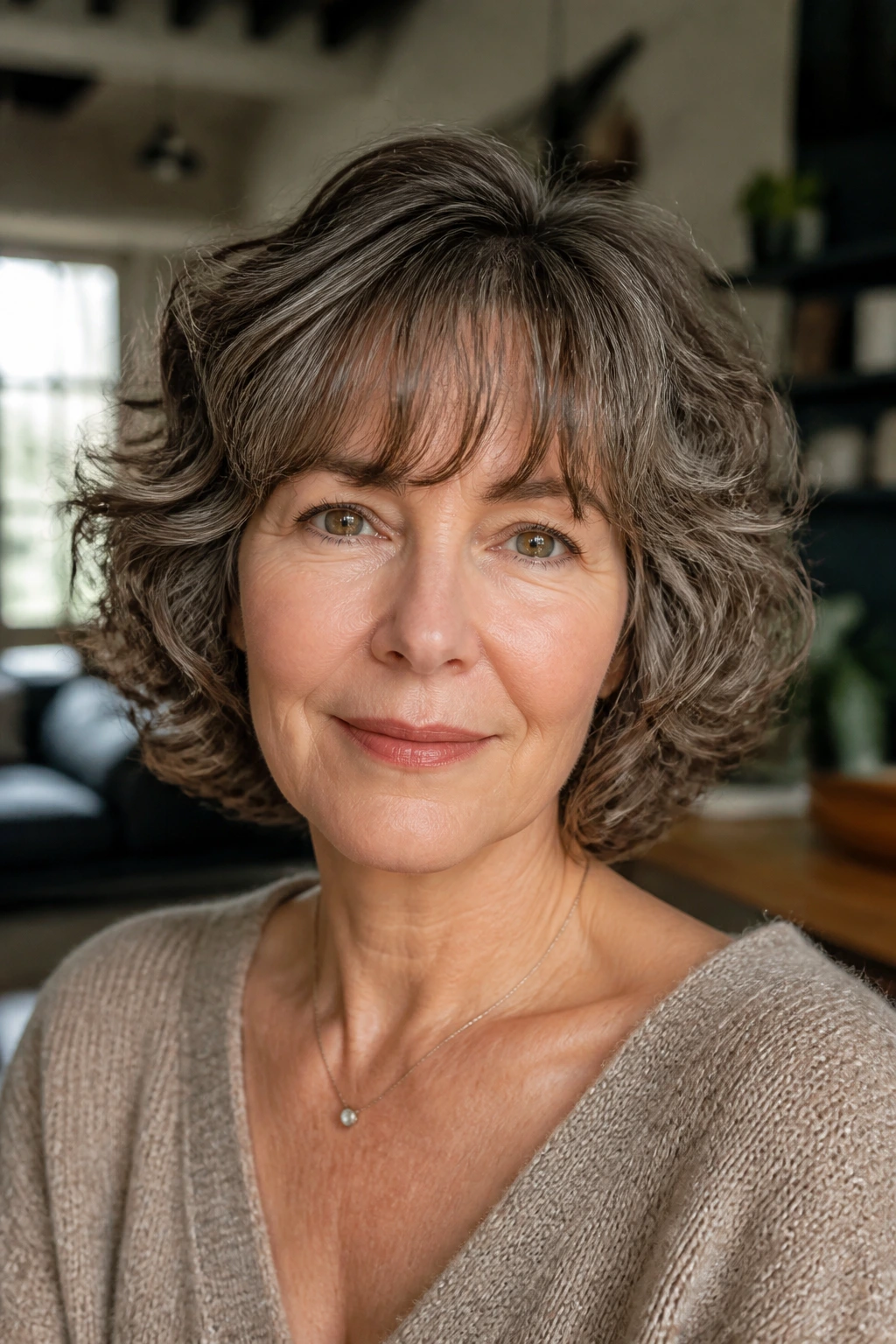
Some cuts look sharp only on the day they’re done. This one grows out with a little dignity, which is worth a lot. The rounded shape keeps the silhouette full without going wide, and the fringe is cut soft enough to shift from bangs to face-framing pieces as it lengthens.
That grow-out friendliness makes this a practical choice for women who do not want salon visits every few weeks. It works on a wide range of curl patterns because the shape is not fighting for perfection. The bangs can be parted, pinned, or brushed forward with a little water and curl cream, and the haircut still makes sense.
If you want one cut that can survive humidity, glasses, and a busy week, this is the kind of shape I’d put on the shortlist. It doesn’t demand attention. It earns it.
Why the Rounded Shape Makes Curls Look Intentional
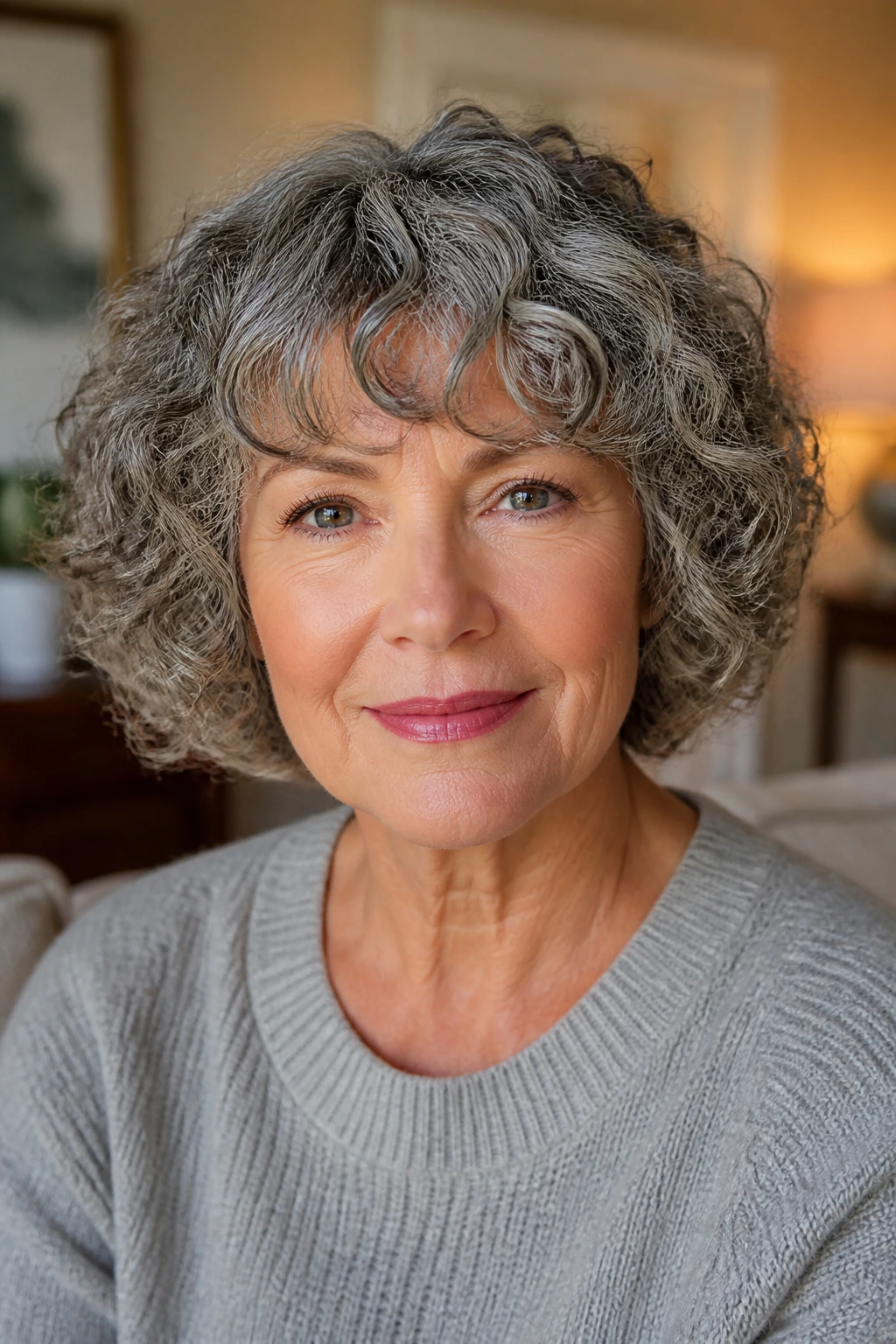
A round silhouette gives curly hair a boundary. That boundary matters because curls naturally want to expand outward, especially when they dry in humid air or when product gets a little too heavy. A rounded cut keeps that expansion in check without forcing the hair into a straight line it never wanted.
The other piece is movement around the face. Bangs, side fringe, and face-framing layers can soften the forehead and bring the eye to the cheekbones. That is useful on mature faces, where hair sometimes gets finer near the temples or loses a bit of width at the sides. The cut restores that balance without looking hard.
You also get better grow-out. A blunt shape loses its manners fast on curly hair. A rounded one can blur a little and still look like a haircut. That’s the part people don’t talk about enough.
How to Ask for the Cut Without Losing the Curl Pattern
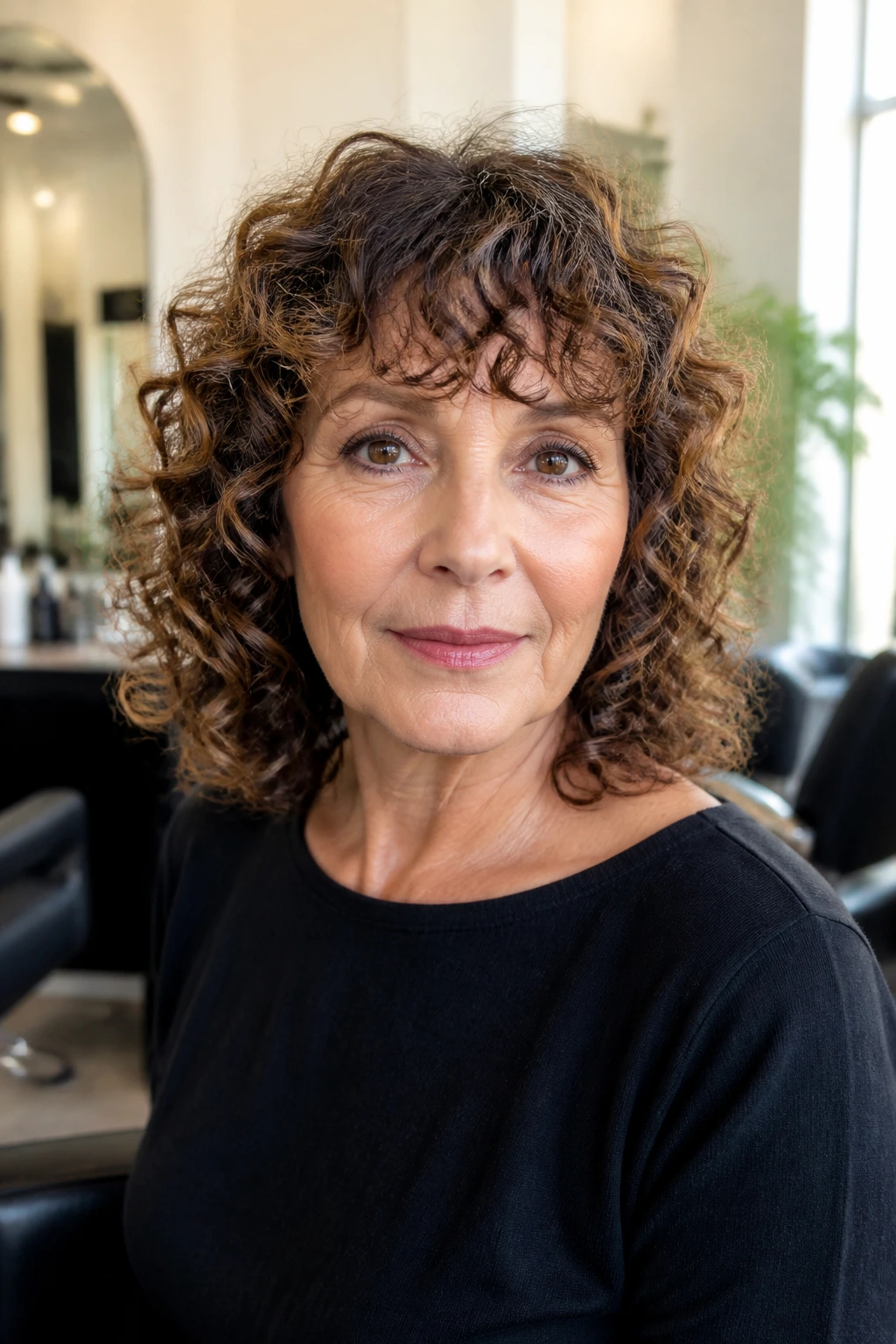
Bring photos, yes, but bring better information than that too. Tell the stylist how much your curls shrink, where the hair feels flat, and whether your bangs tend to separate or puff. If you know your curl pattern, say it. If you do not, describe it in plain words: loose waves, springy curls, tight coils, or a mix of all three.
Photo checklist: show one photo of the shape from the front, one from the side, and one with the fringe length you want. One image is never enough. The sides and crown are where confusion lives.
Length note: agree on the dry length, not just the wet one. A curl that looks eyebrow-long when wet can land halfway up the forehead when dry.
Texture note: ask for point cutting or curl-by-curl shaping around the bangs if you want softness. Blunt cutting can work, but it needs a very steady curl pattern.
If the stylist talks only about “removing bulk,” press for details. Where? At the interior? At the nape? Around the ears? Those answers matter.
Tools That Make Styling Easier at Home
-
Diffuser attachment: A bowl-style diffuser helps dry curls without blasting them apart, especially around the fringe and crown.
-
Spray bottle: A light mist resets bangs in the morning without requiring a full wash.
-
Microfiber towel or cotton T-shirt: Squeezes out water without roughing up the curl cuticle the way a bath towel can.
-
Wide-tooth comb: Useful for distributing conditioner and lifting bangs into place while the hair is still wet.
-
Duckbill or root clips: These keep the crown from drying flat, which is the quickest way to lose the rounded shape.
-
Light mousse or foam: Better than heavy cream for many fine or medium curls; it supports the fringe without weighing it down.
-
Leave-in conditioner: Good for coarse, dry, or silver curls that need slip and less frizz at the ends.
-
Small styling brush or Denman-style brush: Helpful if you like to define the bang pieces one by one.
-
Satin pillowcase or bonnet: Keeps the fringe from kinking overnight.
Daily Styling Moves That Keep the Fringe Light
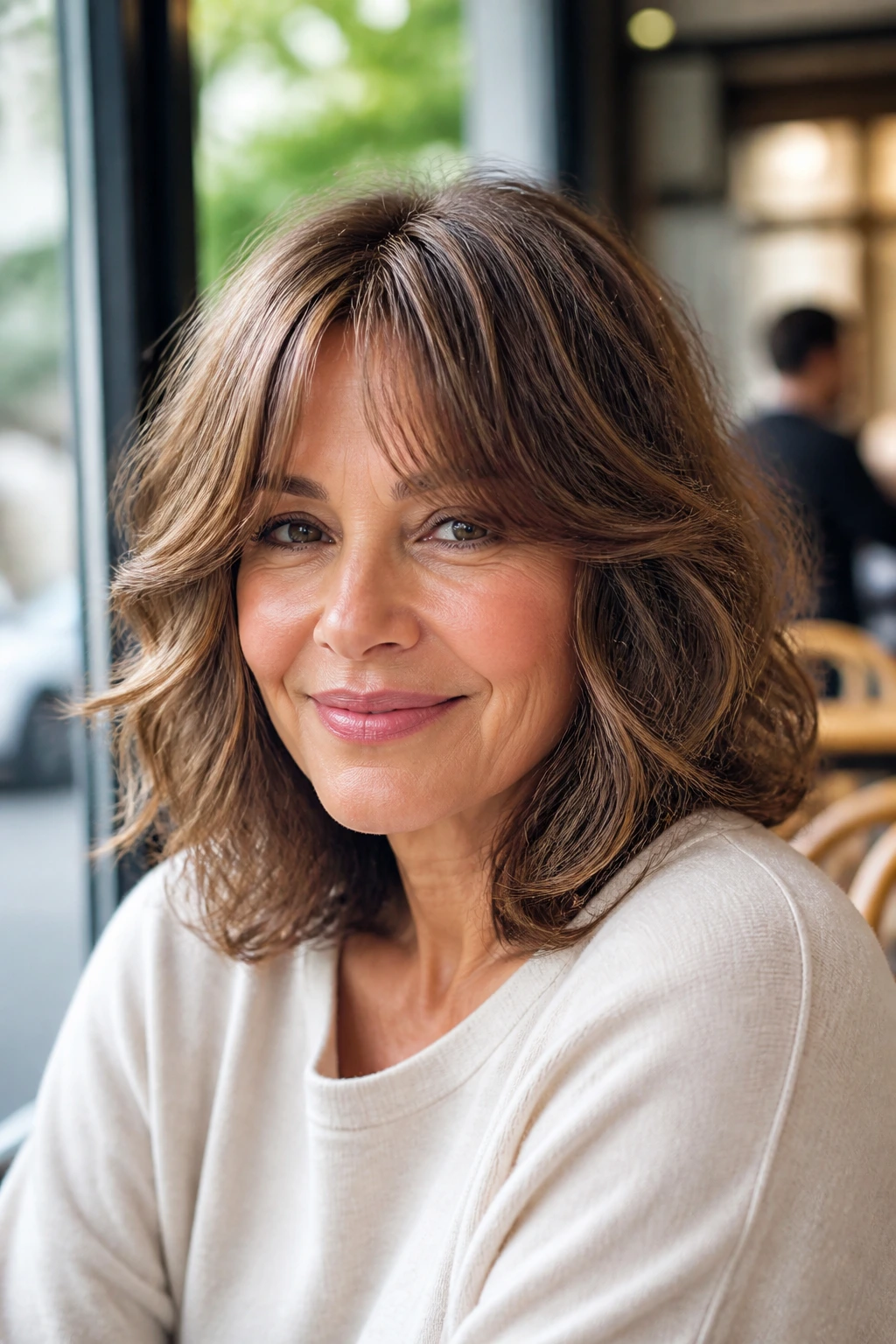
The fringe is where these cuts either sing or sulk. If the bangs are too wet when they’re left to dry on their own, they tend to separate in awkward clumps. If they’re overhandled, they frizz. The sweet spot is modest: wet enough to reshape, dry enough to hold.
Root lift: Clip the crown for 10 to 15 minutes while the hair dries. That tiny lift can save the whole rounded outline.
Fringe control: Twist the bang section lightly with your fingers, then let it dry in the direction you want it to fall. Don’t keep pulling at it.
Product control: Use less cream near the fringe than on the lengths. Bangs collect product fast, and once they’re heavy, they lose all shape.
Morning reset: Mist only the front section, not the whole head. Then scrunch the curl clumps back into place and leave them alone.
Humidity days need less touching, not more. That sounds backward, but it’s true. The more you fuss, the faster the shape breaks apart.
Common Mistakes That Flatten the Shape
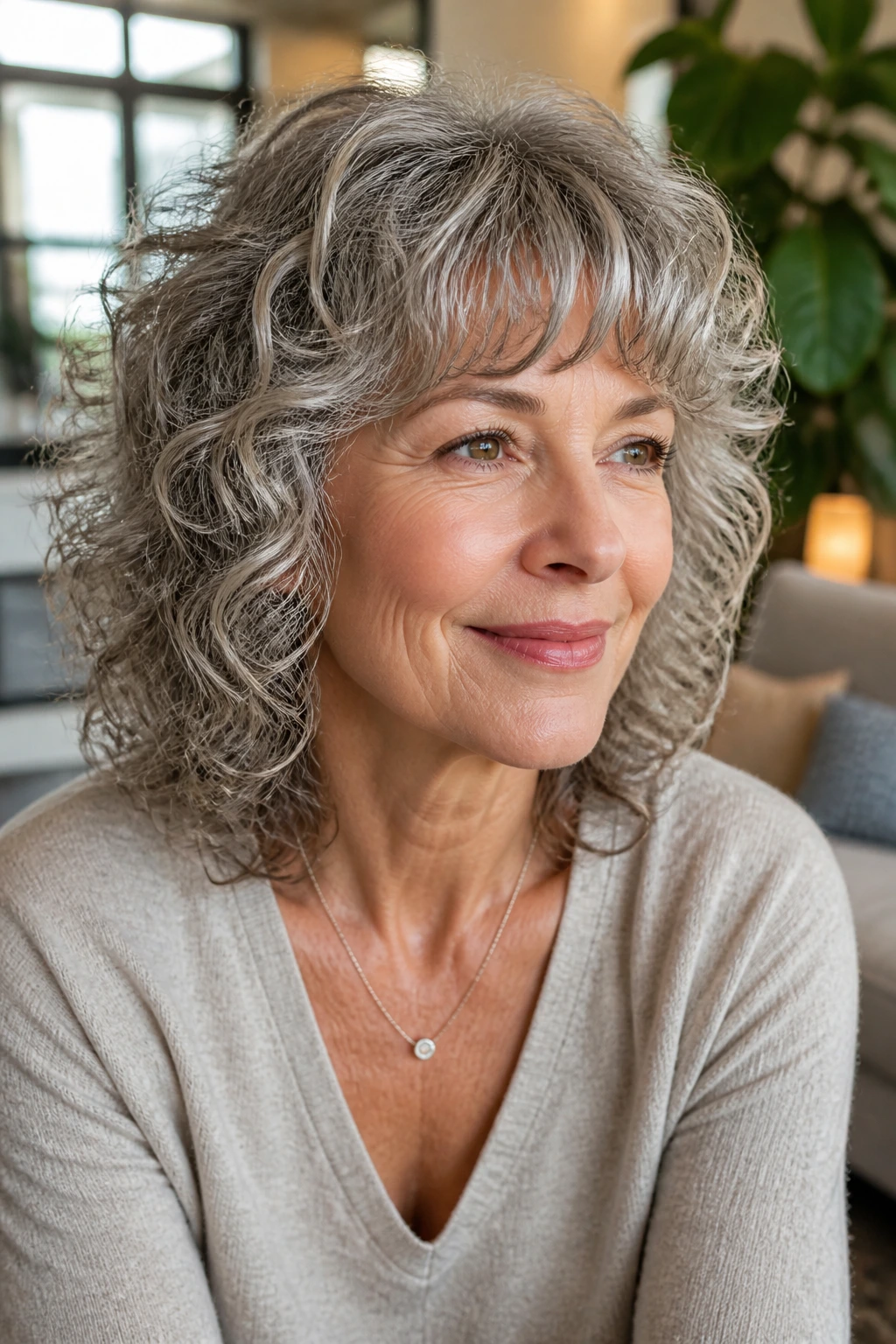
Cutting bangs as if the hair were straight: Curly bangs need extra length and a softer line. If they’re cut too short wet, they can spring up hard and sit away from the forehead.
Thinning the ends too much: Over-thinning makes curls look see-through at the perimeter, especially on fine hair. The fix is softer internal shaping, not aggressive texturizing.
Ignoring crown lift: Rounded cuts rely on a little root support. Without clips, mousse, or diffusing at the roots, the top can collapse and the sides will start to look wider than they should.
Using too much cream on the fringe: Heavy product drags bangs down and makes them separate in stringy chunks. A pea-sized amount is usually enough for the front.
Skipping the shrinkage conversation: A stylist may see one length; your curls may show another. Always talk about the dry finish, not only the wet haircut.
Letting the back grow too long: Once the nape gets heavy, the round shape can tip backward and lose its curve. A small trim at the back often restores the whole style.
Variations for Different Curl Types and Face Shapes
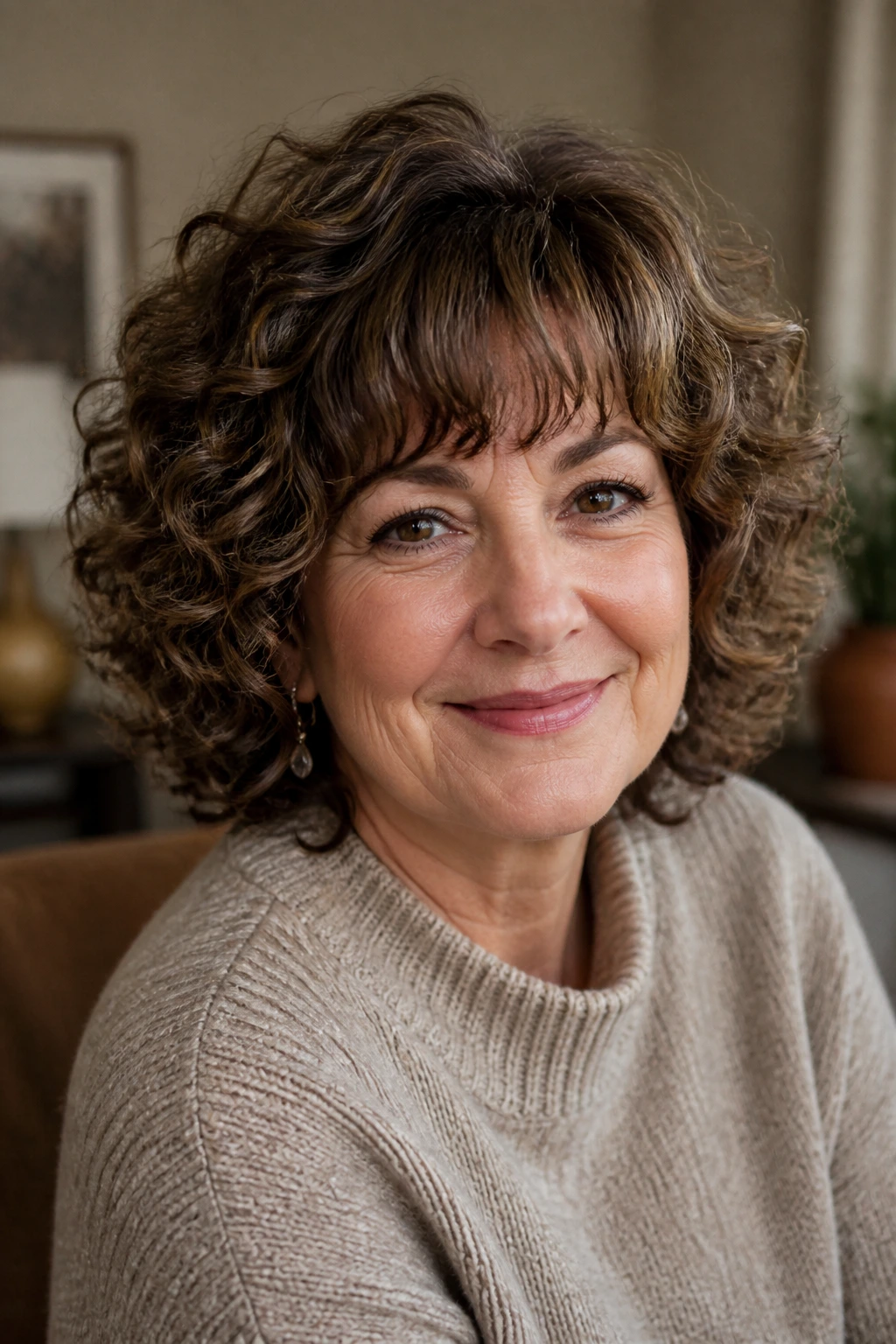
Fine-Curl Feather Frame: Keep the layers long and the bangs light, with a soft point-cut edge. This version gives lift without stripping out density, which is the main trap for finer curls.
Thick-Curl Cloud Halo: Ask for a round outline with controlled interior reduction. The hair stays full, but the bulk moves inward so the silhouette doesn’t flare out at the jaw.
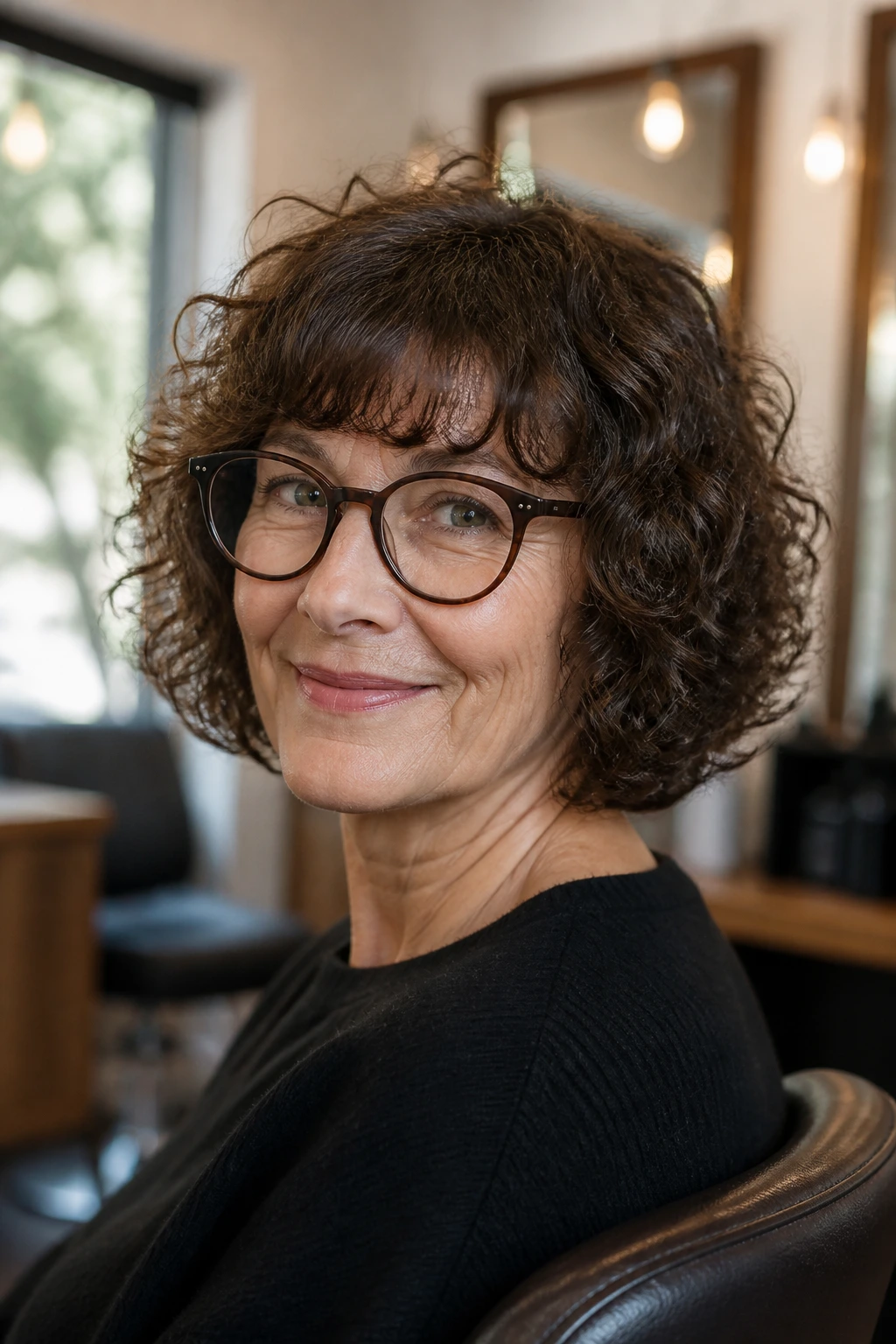
Glasses-Friendly Sweep: Choose side fringe or longer curtain bangs that sit above or beside the frames. This keeps the front from crowding the face and makes the haircut easier to wear every day.
Silver-Curl Soft Curve: On gray hair, use a rounded shape with a little extra softness around the temples. The texture can be wiry, so keeping the edge airy stops the style from looking boxy.
Tight-Curl Sculpted Round: For coils and tighter curls, keep the perimeter tidy and the fringe short enough to curl up in place, but not so short that it springs into a line. Shape matters more than length here.
Trim Rhythm, Refreshing, and Overnight Care
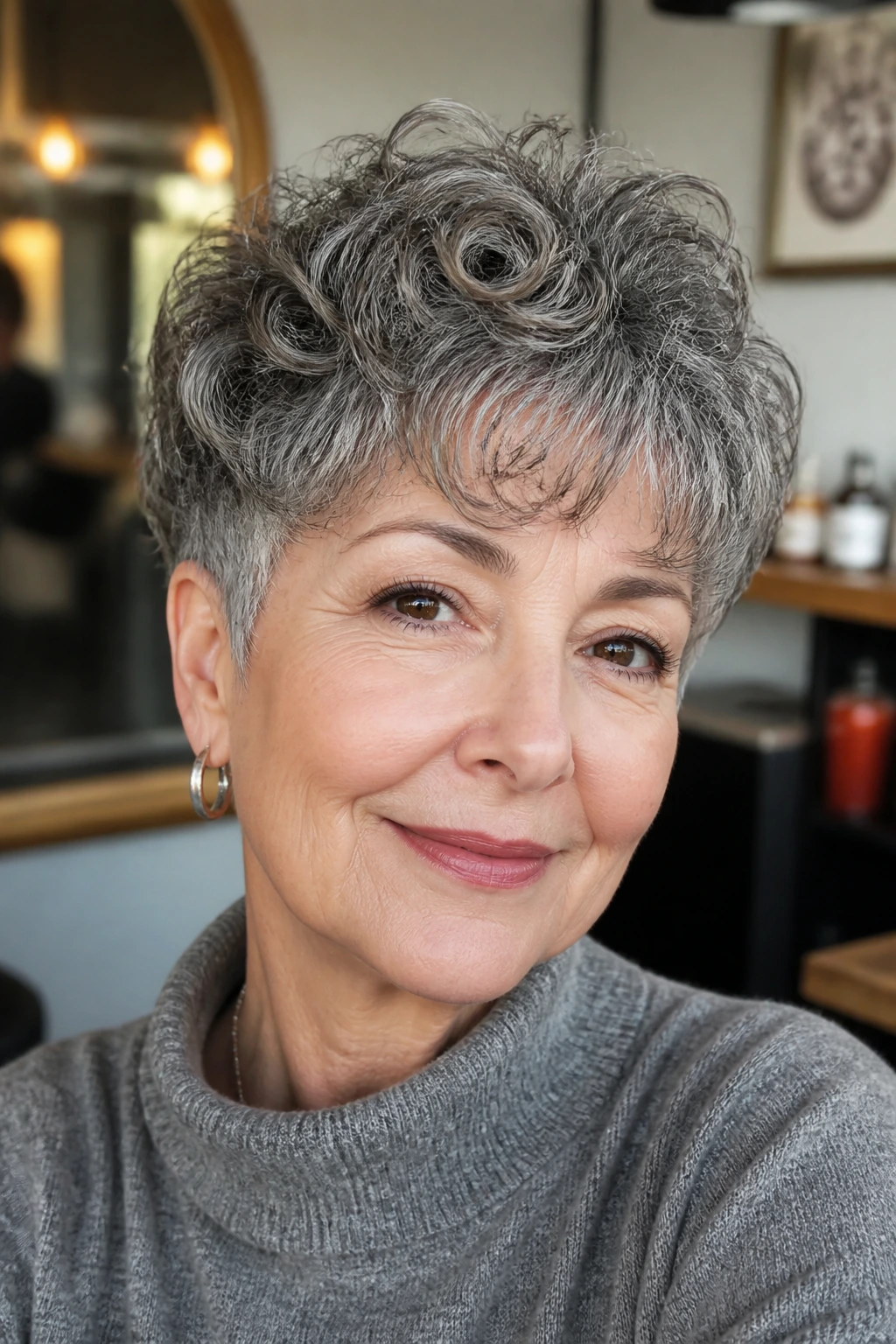
Bangs usually need attention before the rest of the haircut does. A fringe trim every 4 to 6 weeks keeps the front from dropping into the eyes or splitting into odd pieces. The overall rounded shape can usually go 8 to 12 weeks between shape-ups if the layers were cut well and the curl pattern is stable.
For daily care, sleep matters more than people think. A satin pillowcase reduces friction, and a loose pineapple or clip at the crown keeps the fringe from getting mashed. If your bangs are especially short, you may want to pin them back very loosely at night so they do not wake up with a hard bend.
On wash day, refresh the front first. That’s the section that gets the most oil from the forehead and the most friction from glasses, hands, and pillowcases. A light mist, a bit of leave-in, and a small touch of mousse can revive the shape without starting over. If the cut is good, you will not need to rebuild it every morning. That’s the real point.
Frequently Asked Questions About Rounded Curly Cuts With Bangs for Older Women
Should curly bangs be cut dry or wet?
Dry cutting gives the stylist a better read on shrinkage and curl pattern, which is why it often works better for fringe. Wet cutting can still work, but only if the stylist leaves extra length and knows how your curls behave when they dry.
Can these cuts work on fine hair?
Yes, but the layers need to stay longer and the bangs need to be light. Too much texture can make the hair look sparse, so the cut should build shape without stripping away density.
What if I wear glasses every day?
Choose curtain bangs, side fringe, or longer soft fringe that clears the frames. The worst option is a heavy bang that lands right on the top edge of your glasses and creates friction all day.
How short should the bangs be?
Short enough to frame the eyes, long enough to survive shrinkage. For many curly heads, that means cutting a little longer than seems necessary and checking the dry result before trimming more.
Can I grow out curly bangs without wrecking the cut?
Yes, if the fringe was cut with a soft edge and some side blending. During the grow-out, you can part the bangs, pin them back, or let them merge into the face-framing layers.
Do gray curls need different products?
Usually they do. Gray hair often feels drier and can get frizzier at the ends, so a lighter leave-in plus a richer conditioner at wash time tends to work better than piling on heavy stylers.
How often should I restyle the whole cut?
Most people can refresh the fringe daily and rework the full shape only after washing. If the cut is rounded correctly, a light mist and a little root lift are often enough between washes.
What if my curls are uneven from front to back?
That is normal. A good rounded cut should be adjusted to the different zones on your head, not force every curl to behave the same way. The front may need more length, while the back may need more weight.
The Shape That Keeps Its Balance
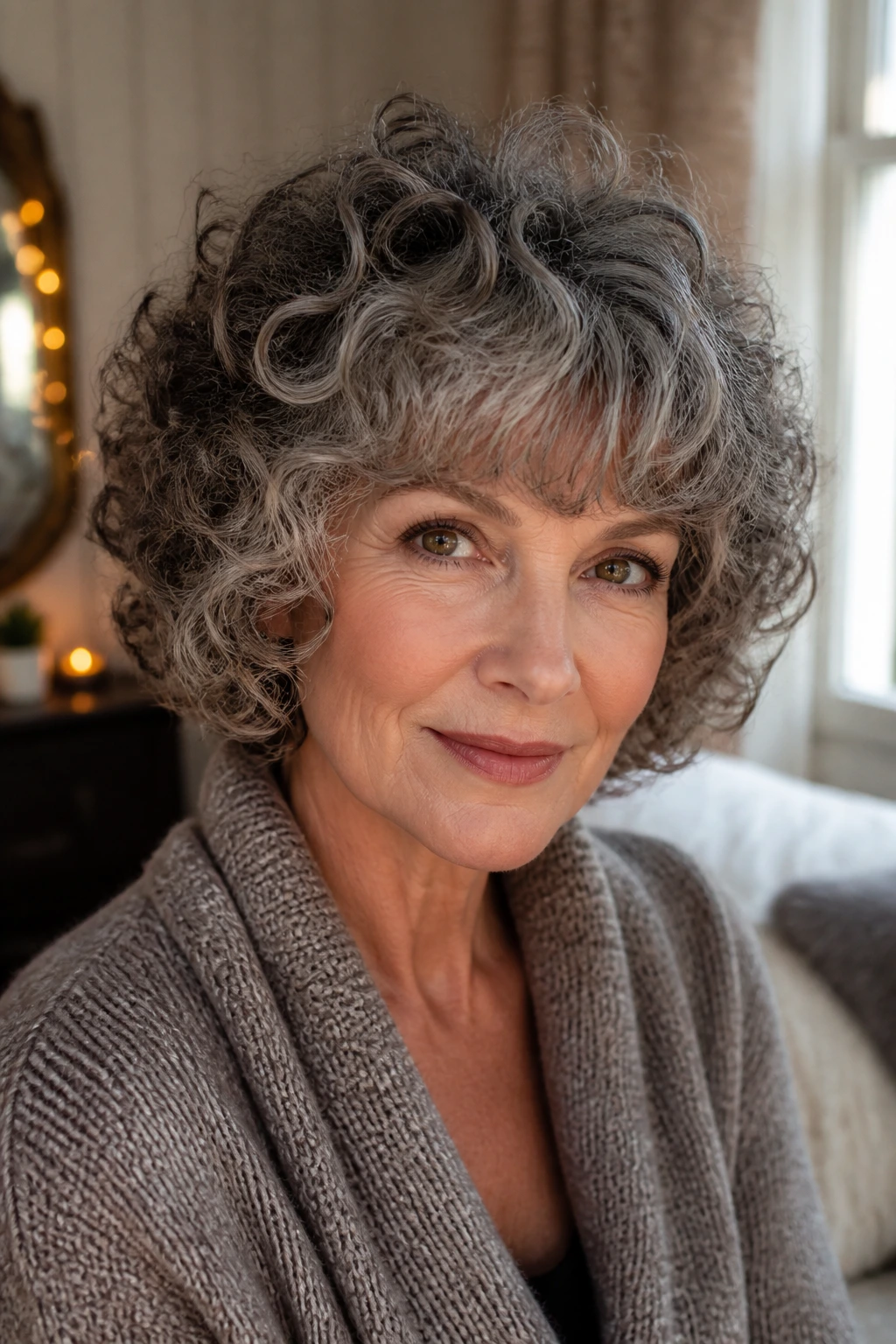
Rounded curly cuts with bangs work because they respect what curly hair actually does. They build in curve, give the fringe room to move, and avoid the hard edges that usually fight mature texture. That is why these cuts look settled rather than overstyled.
If you are taking one thing from all of this, make it the shape. Not the trend. Not the label. The shape. A good round silhouette can make curls look fuller, softer, and far less temperamental, especially when the bangs are cut with shrinkage in mind.
Bring a photo, yes. Bring a clear sense of how your curls behave, too. That combination gets you much closer to a cut you can live with, not just one you can admire in the mirror for ten minutes.
