



Long hair can be a blessing and a little bit of a trap. It looks polished when it’s freshly brushed, then the weight settles in, the ends go flat, and suddenly the whole shape feels heavier than it should. A good lob haircut changes that fast. It takes the bulk off without stealing the length, and on many Asian hair textures — especially straight, thick, glossy, or fine hair that refuses to hold a random cut — that balance matters more than people admit.
The trick is not “cut it shorter.” The trick is cutting it smarter. A lob that lands at the collarbone, skims the shoulders, or angles just enough to open the neckline can make the hair look denser, cleaner, and more deliberate. It also gives you a much better range of styling options than a blunt long layer that has been hanging around for too long and behaving like a curtain.
Hair texture varies a lot across Asian communities, of course. Some hair is pin-straight and fine, some is coarse and heavy, some bends at the ends, some grows with a stubborn cowlick at the crown. That’s exactly why lob haircuts for Asian women with long hair deserve a real, careful look instead of a one-size-fits-all answer. The right lob works with the way your hair actually falls. The wrong one just sits there, waiting for a ponytail.
Why These Lobs Work Better Than a Random Chop
-
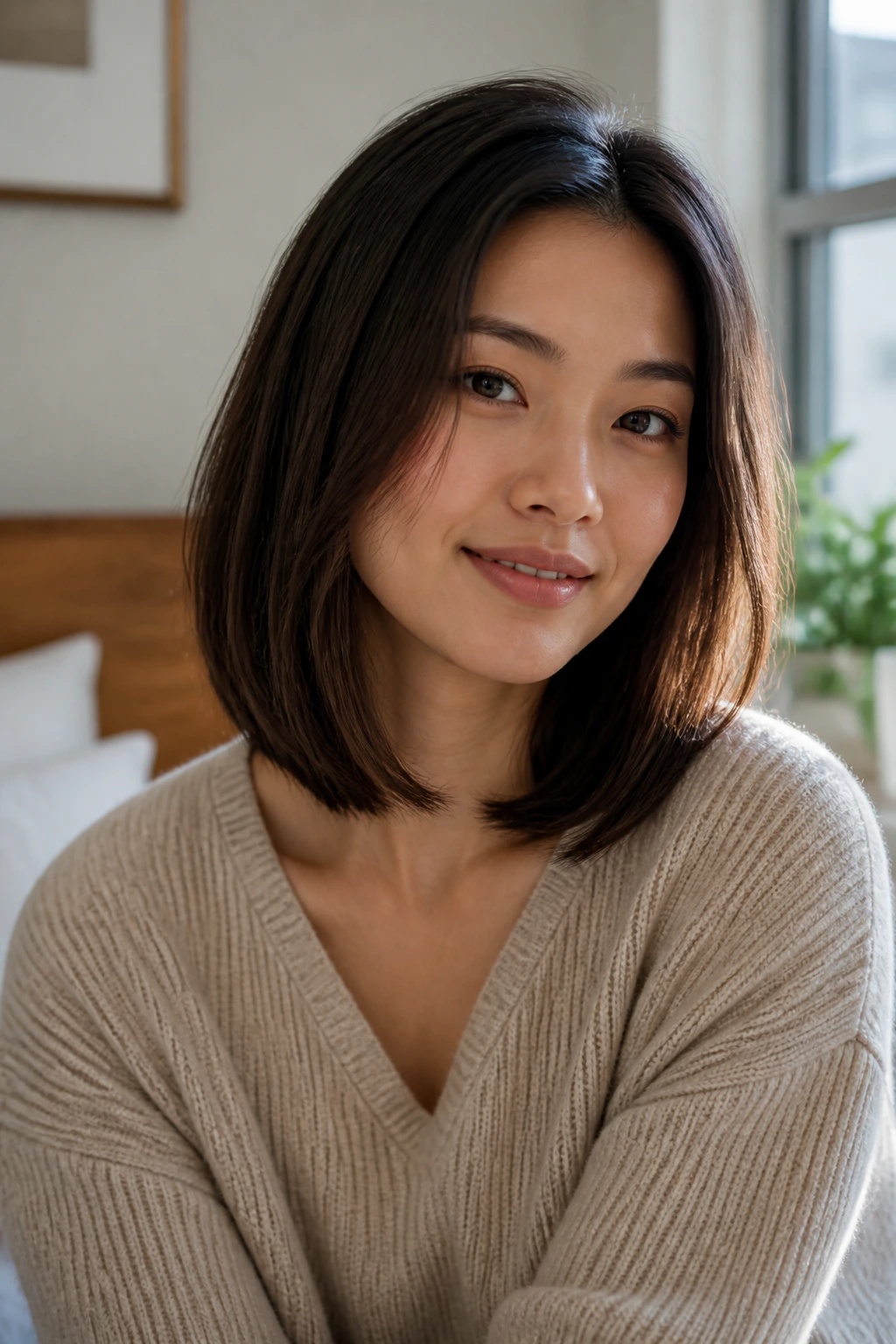
They keep the length story intact: A collarbone or shoulder-grazing lob lets you keep the feeling of long hair while removing the part that usually gets stringy and tired.
-
They give straight hair a real outline: On sleek textures, a blunt edge or a soft angle creates shape fast. Without that line, long hair can collapse into one flat sheet.
-
They handle density more cleanly: If your hair is thick, a lob removes weight from the lower half so the ends do not turn into a heavy block that flips out at the wrong time.
-
They make bangs easier to wear: Curtain bangs, bottleneck bangs, and wispy fringe all sit better with a lob than with very long lengths because the cut line is closer to the face.
-
They grow out without panic: A lob buys you time. When it starts to lengthen, it usually still looks intentional for a while, which is more than I can say for a badly timed trim on waist-length hair.
-
They can be styled two ways: Sleek and polished in the morning, loose and airy later. That flexibility is the real selling point.
1. The Blunt Collarbone Lob with a Center Part
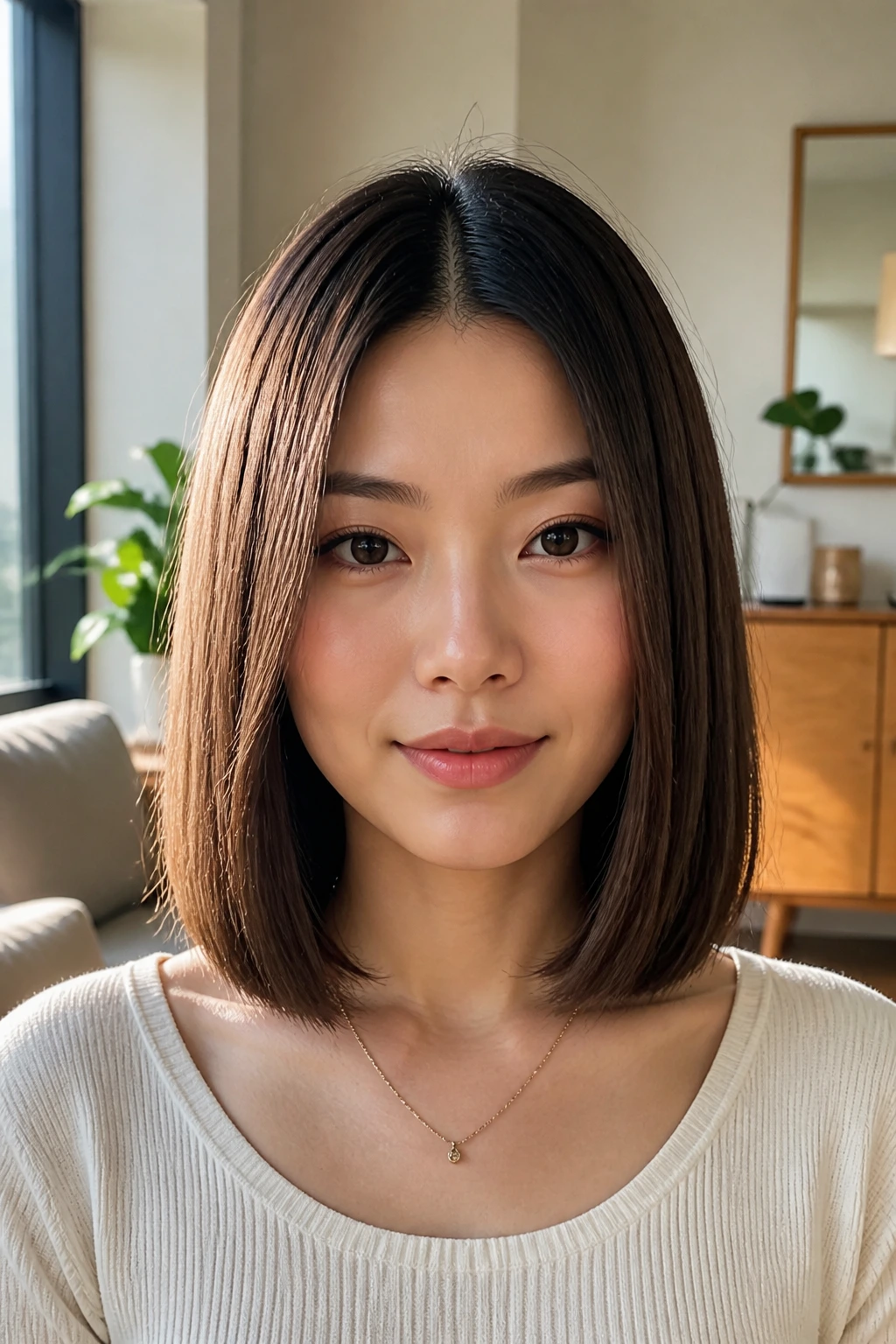
This is the cut I recommend first when someone wants change without chaos. It lands right around the collarbone, keeps the perimeter clean, and gives straight or slightly wavy hair a sharp outline that looks expensive even when the rest of the styling is minimal. On dense Asian hair, the blunt line stops the ends from looking thin and wispy. On finer hair, it creates the illusion of more weight where you want it.
Why It Works
The collarbone is a sweet spot because the hair can move without brushing the jawline all day. That matters. Once a cut sits too high, every tuck, flip, or wind gust starts to feel fussy. This version avoids that. The center part adds balance and makes the blunt edge look deliberate instead of severe.
Ask for the perimeter to be cut straight across with very light refinement at the ends, not choppy layering. If your hair is thick, a stylist can remove a touch of internal weight underneath without breaking the line. That keeps the silhouette crisp while taking away the helmet effect.
A center-part blunt lob is also one of the easiest cuts to dress up or down. Air-dry it, and it reads relaxed. Blow it out with a round brush, and it looks polished enough for a blazer, hoops, and a clean neckline.
2. The Soft Layered Lob with Curtain Bangs
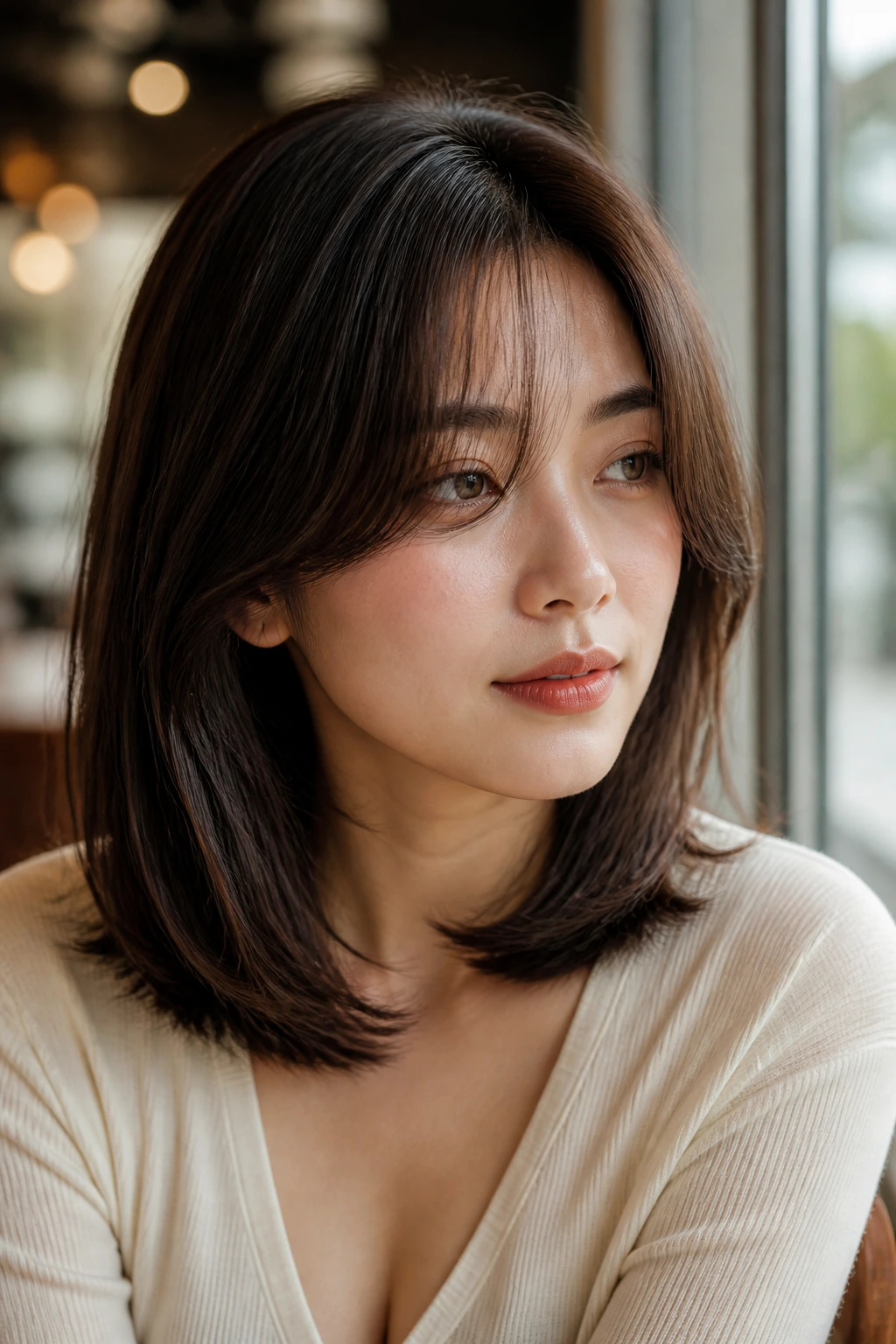
If blunt edges feel too strict, this is the softer answer. The length stays around the shoulders, but the ends are broken up with long, face-framing layers and curtain bangs that separate at the center and fall away from the face. The result feels lighter around the cheekbones, which is useful if your hair tends to sit heavy near the temples.
Why It Works
Curtain bangs do a lot of quiet work here. They bring the eye upward, make the forehead look narrower if that’s useful, and blend the top half of the haircut into the lob so the whole shape feels connected. The layers should start around the cheekbone or just below it, not too high. If they start at the temples, the cut can go thin fast.
This is one of the better lob haircuts for Asian women and long hair if you want motion without losing a clean outline. The layers move when you turn your head, but the bottom still has enough weight to hold shape. That matters for hair that tends to hang flat after an hour.
I like this version most on medium to thick hair with a little natural bend. It looks especially good when the bangs are blow-dried with a round brush and left a touch loose. Not perfect. Better than perfect, actually.
3. The Angled Lob That Keeps the Front Longer
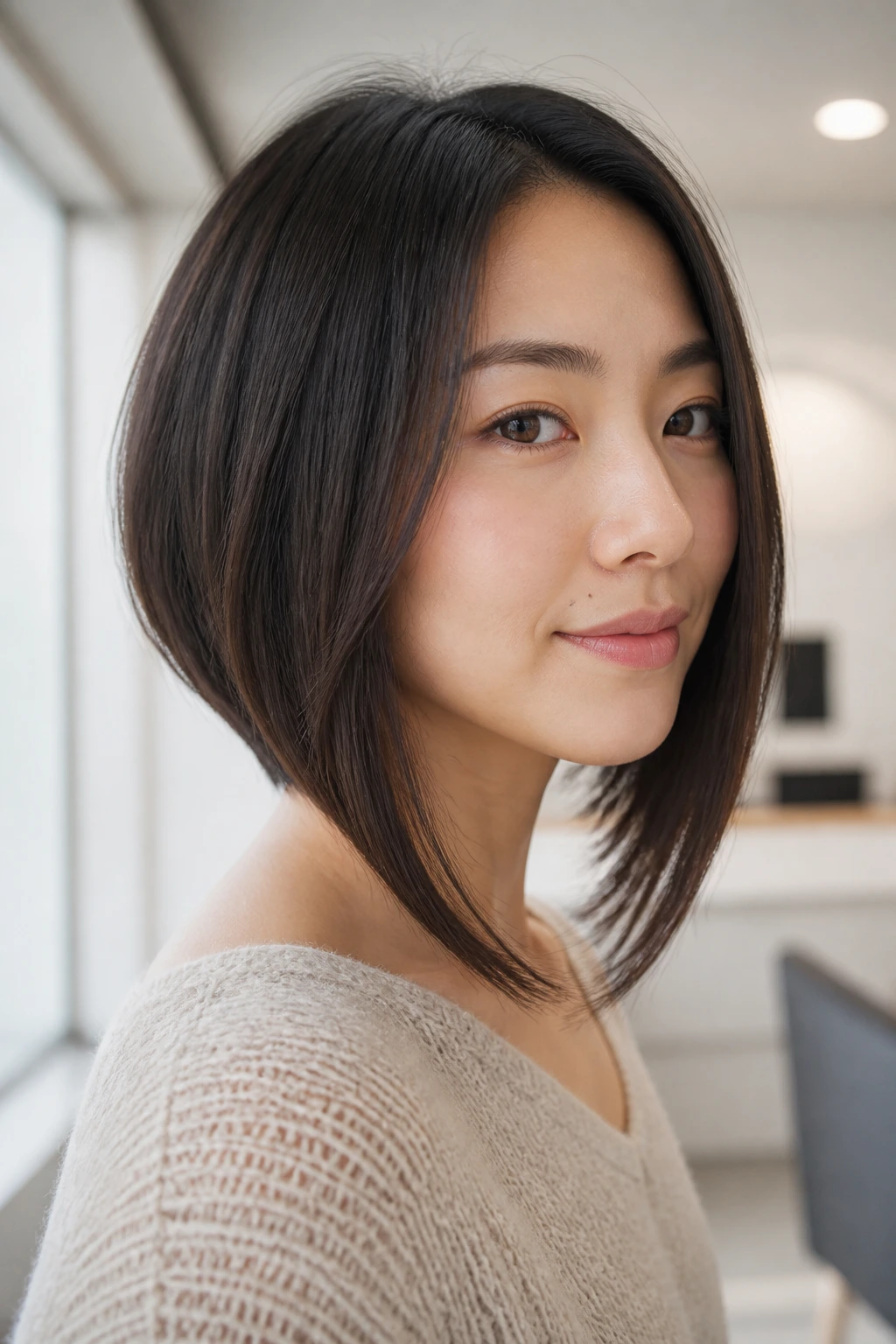
There’s something satisfying about a lob that does not pretend to be symmetrical. This one sits shorter in the back and gradually lengthens toward the front, so the front pieces brush the collarbone or even the upper chest while the nape feels neat and lifted. It’s a smart cut if you want to keep the feeling of long hair around your face while reducing bulk where it usually gets annoying.
Why It Works
The angle gives the neckline breathing room. On thick, straight hair, that can prevent the back from ballooning into a square shape. On finer hair, the longer front pieces create a little drama without requiring a lot of styling. The geometry is doing the work.
This cut is especially useful if you wear a lot of side tucks, low ponytails, or half-up styles. The front pieces fall out in a flattering way and keep the look from feeling severe. It also gives the illusion of length even after several inches come off the back.
Tell your stylist how dramatic you want the angle to be. A subtle slope is easy to live with. A steeper one is more noticeable, but it can also look a little more fashion-forward and a little less “I just needed a trim.”
4. The Glass-Like One-Length Lob
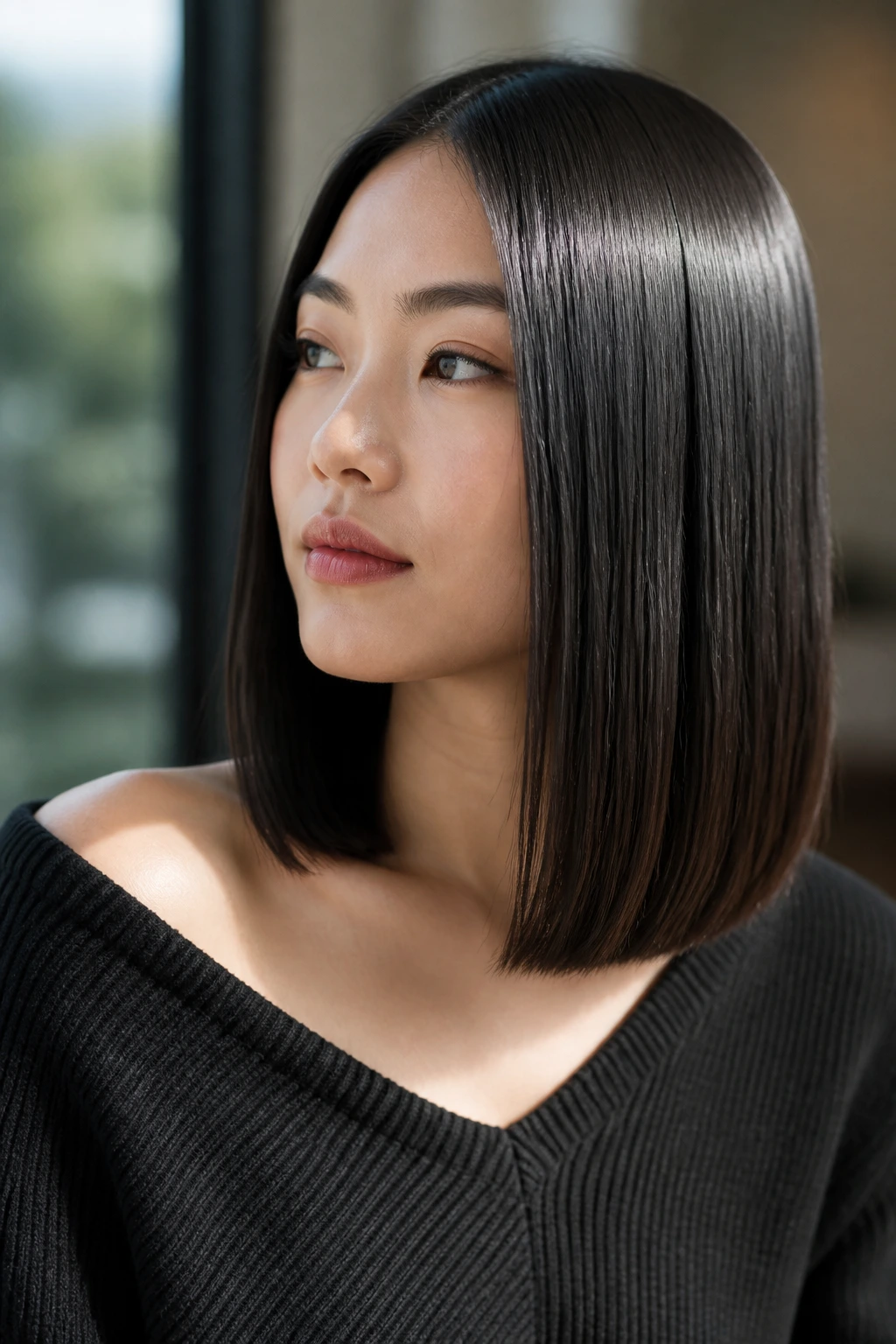
This is the sharp, sleek one. No choppy layers. No obvious texture. Just a clean, even line that sits around the collarbone and shines when it’s blown out properly. If your hair naturally leans straight, this cut can look almost architectural. If your hair has some wave, you can still wear it, but you’ll need a little heat or a very disciplined blow-dry.
Why It Works
A one-length lob is one of the best choices for fine hair that tends to split into see-through ends. The uniform line makes the hair look denser from root to tip. It also plays well with darker shades, because the shine shows every bit of the cut.
The key is not overworking the finish. Too much texture spray will ruin the effect. Too much curling will soften the outline until the whole point of the cut disappears. Keep it clean. Keep it smooth. Let the shape do the talking.
If your hair is very thick, ask for minimal internal debulking underneath so the cut does not puff out at the sides. You still want that sheet-like finish on top, but you do not want the lower half to stick out like a shelf.
5. The Feathered Lob with Airy Face Framing
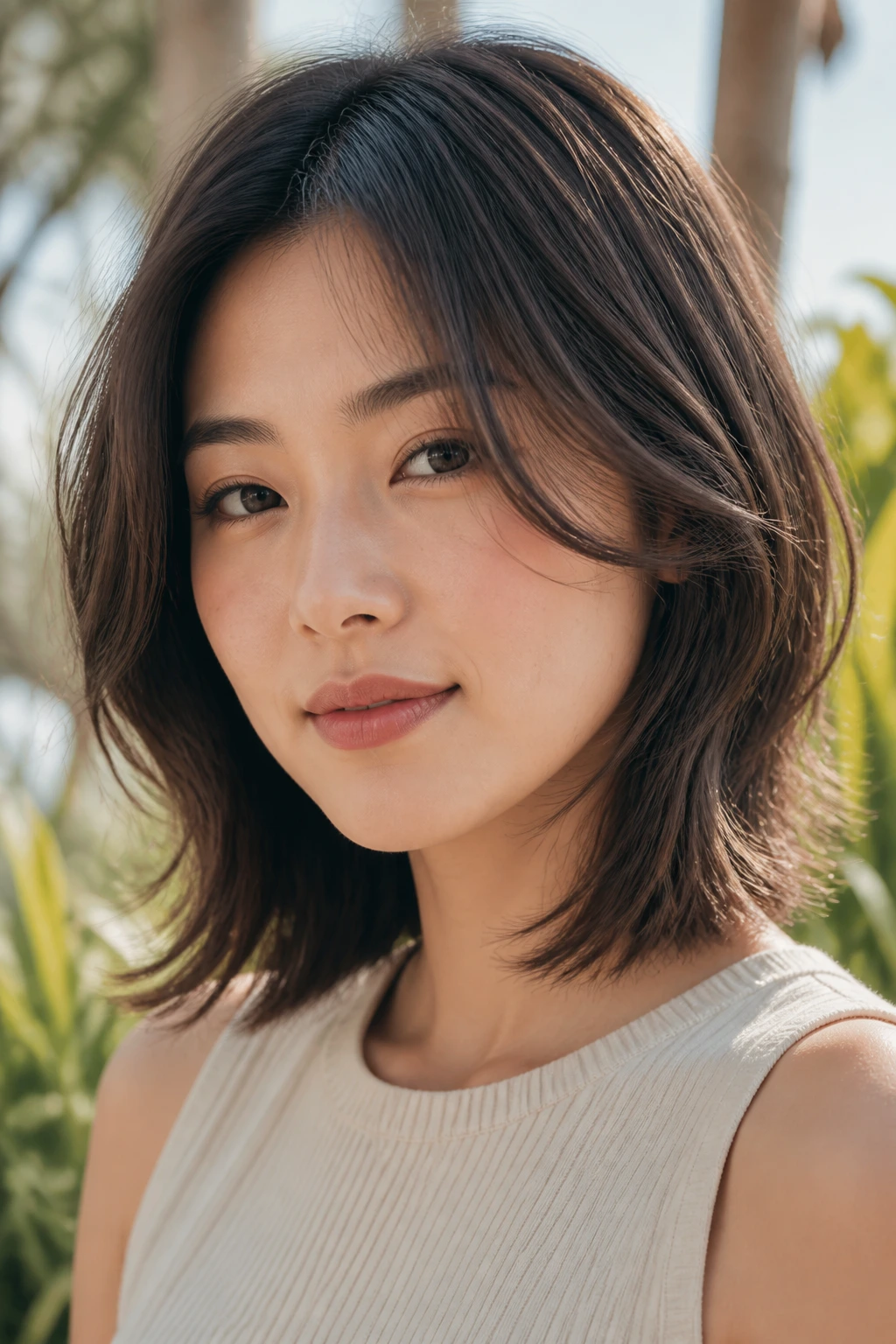
This version feels lighter around the edges because the stylist uses soft feathering and gentle point-cutting to break up the perimeter near the face. It’s not a shag. It’s not a mullet. It’s a controlled, grown-up lob that moves when you turn your head and does not sit like one solid block.
Why It Works
Feathering can be a lifesaver on hair that is thick through the mid-lengths but flat at the crown. A few soft pieces near the cheekbone and jaw help the haircut breathe. That keeps the outline from feeling heavy, especially if you spend most of the day with your hair down.
It also works with side parts and off-center parts because the face-framing pieces fall naturally and do not fight the part line. If your hair has a little bend, the pieces near the face can curl inward just enough to make the cut look intentional without any extra styling.
I’d choose this if you want movement but hate looking “layered.” There’s a difference. This cut keeps the perimeter readable while softening the edges, which is a much better balance than people usually think to ask for.
6. The Textured Lob for Natural Waves
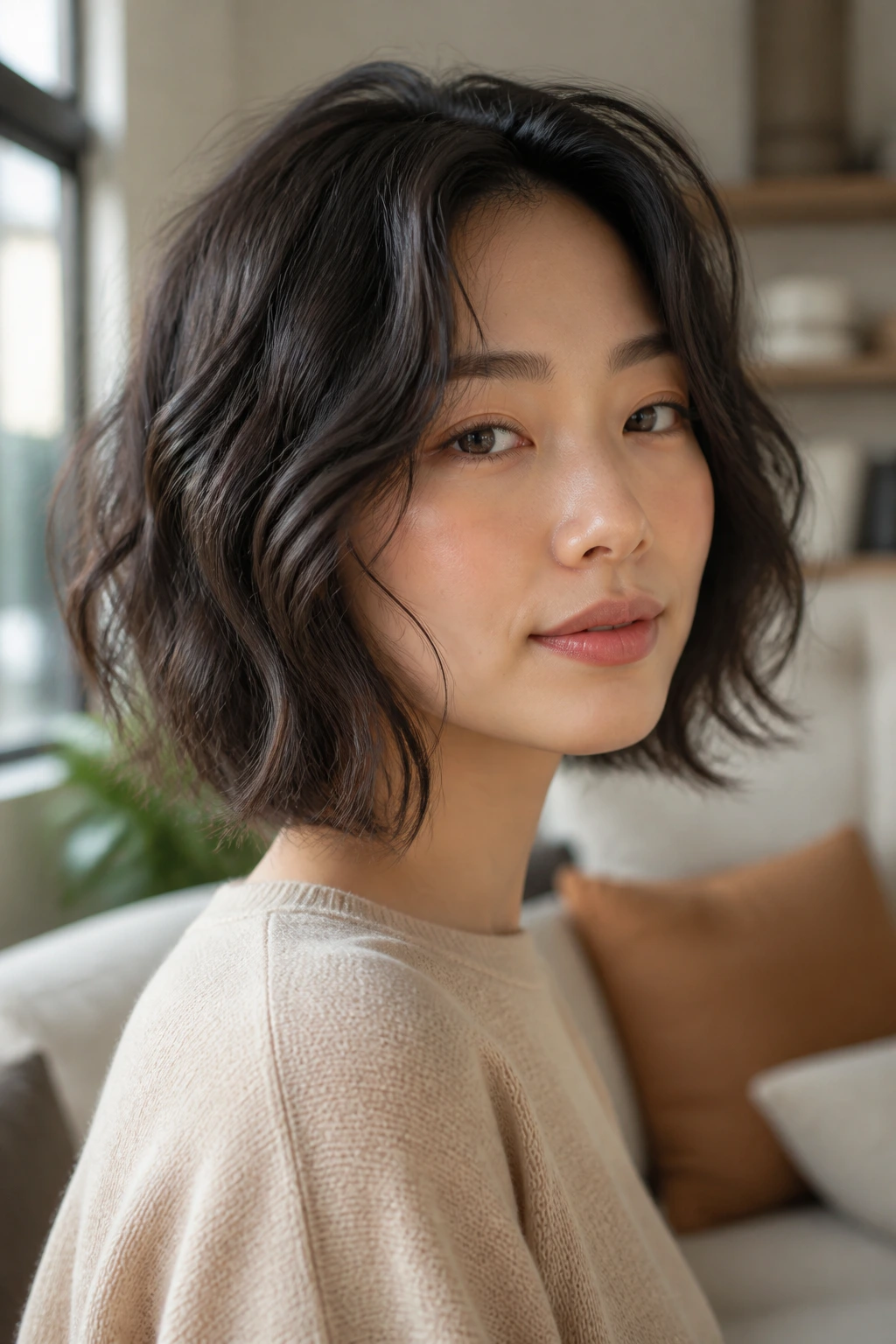
Some hair does not need to be forced into a sleek shape. If your long hair bends naturally, this lob leans into that instead of flattening it. The ends are lightly textured, the layers are cut to encourage movement, and the whole thing works best when it’s air-dried or diffused rather than ironed into submission.
Why It Works
The biggest mistake with wavy Asian hair is cutting it too blunt and then wondering why it flips out strangely at the ends. A textured lob solves that by giving the wave a shape to sit in. The length usually lands between the chin and the collarbone, which gives the wave enough room to form without collapsing.
This is one of the few cuts where a little mess looks better than a lot of polish. Use a curl cream or lightweight mousse, scrunch gently, and let the waves settle. If you want more definition, bend a few front pieces with a 1-inch iron and leave the rest alone. That contrast keeps it from looking overdone.
It’s a good choice for hair that gets frizzy when brushed too much. The cut keeps the movement soft and the routine mercifully simple.
7. The U-Shaped Lob That Preserves Length in Back
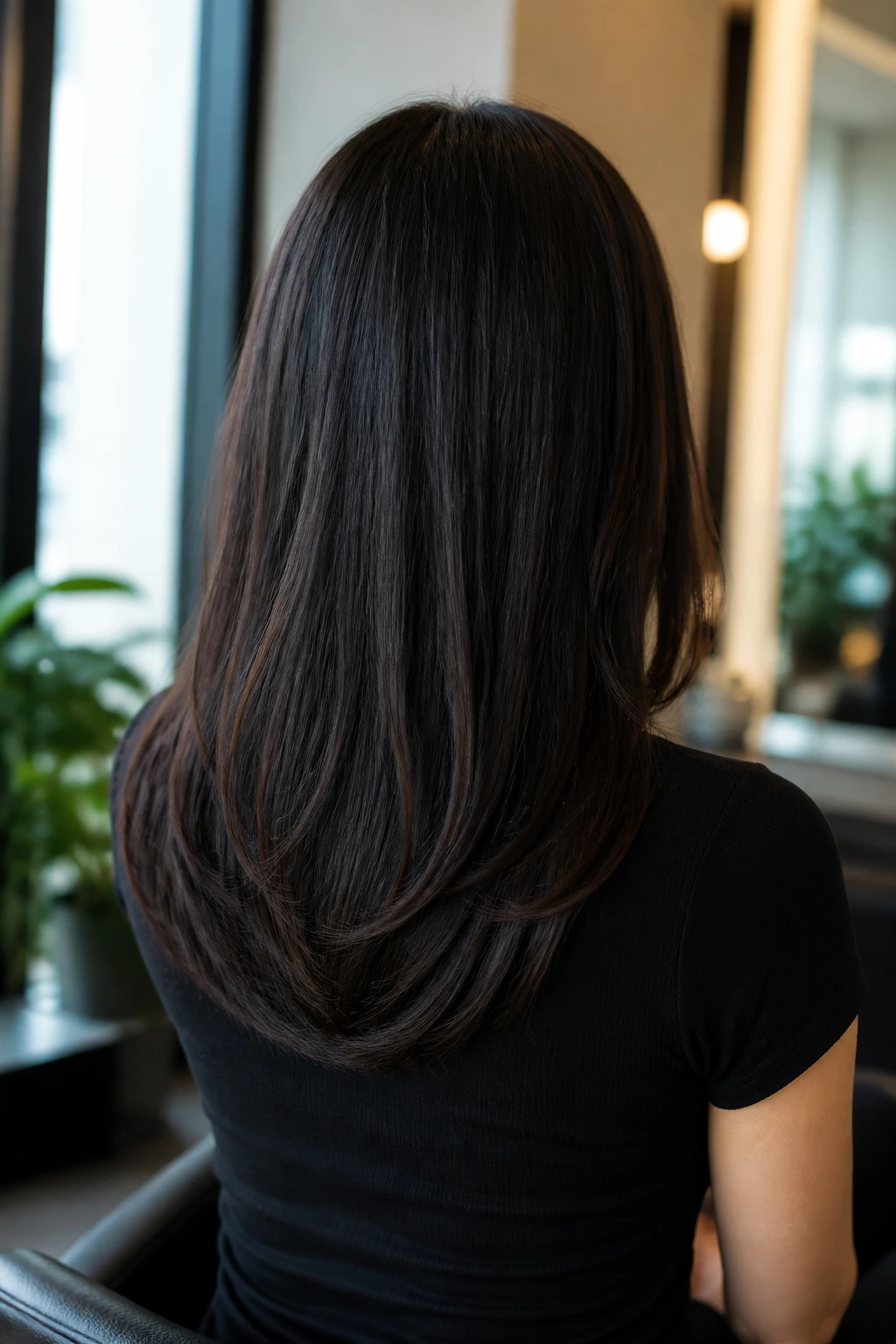
A U-shape sounds subtle, and that is the point. The back sits just a touch longer than the sides, creating a soft curve when viewed from behind. It’s a very flattering way to keep the feeling of long hair while making the front lighter and more workable.
Why It Works
The U-shape gives the haircut a sense of flow. Instead of stopping in one hard line across the back, the ends dip slightly, which keeps the silhouette from looking blocky. On thick hair, that curve can make the whole cut feel less heavy. On straighter hair, it adds softness without needing obvious layers.
This is especially useful if you like wearing your hair down but want it to look good from every angle, not only head-on. The back shape matters. People forget that. Then they turn around and the cut looks flat or square. A soft U avoids that problem.
Tell your stylist not to overdo the dip. Too deep, and the shape starts to look dated. Keep it gentle, more curve than point, and you’ll get a lob that still feels feminine without leaning syrupy.
8. The C-Shape Lob with Rounded Ends
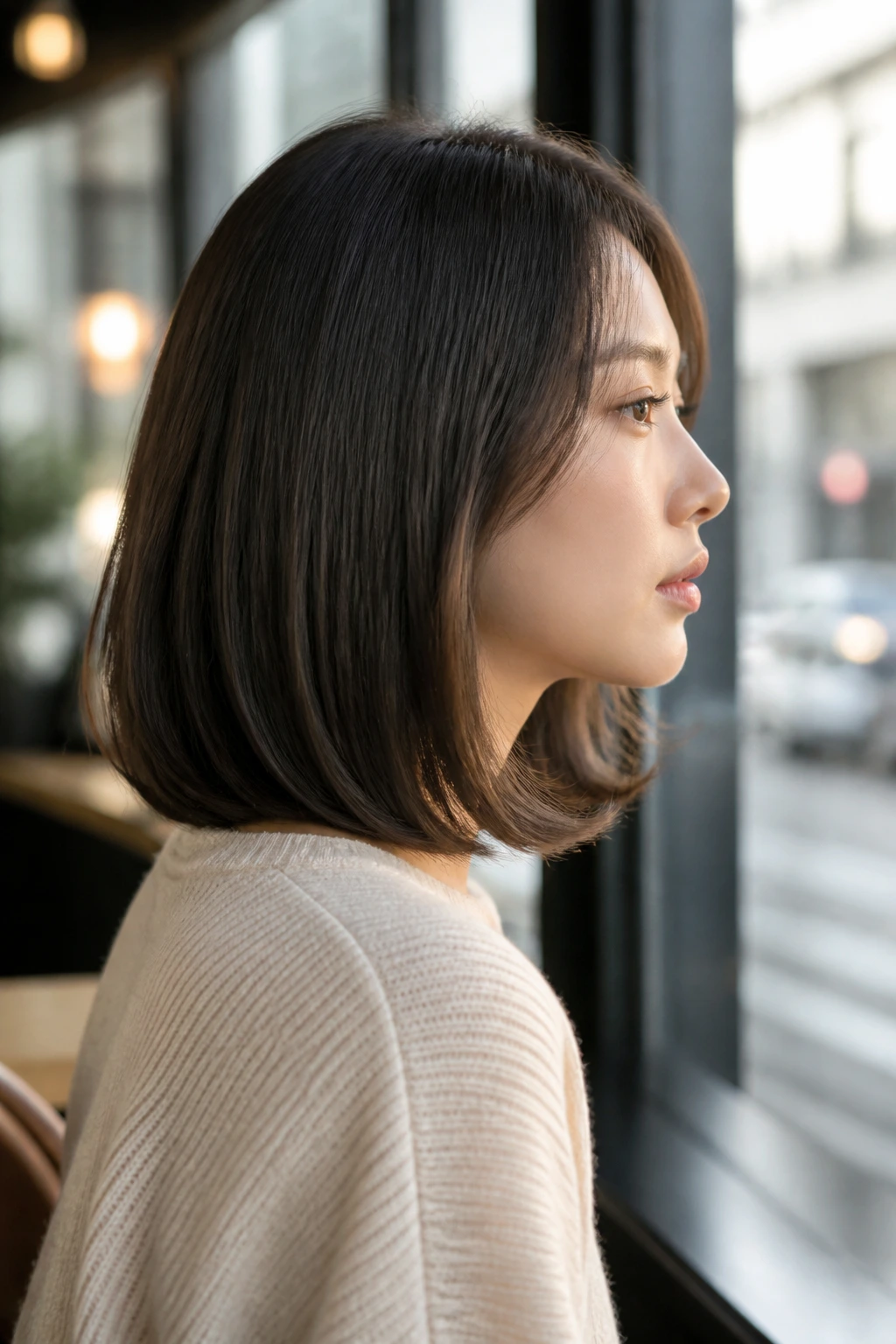
This one is about finish. The haircut itself can be simple, but the shape is designed to bend slightly inward at the ends, usually with a round brush or large-barrel styling tool. That rounded perimeter gives the cut a smooth, clean line that looks especially good with straight Asian hair.
Why It Works
A C-shape keeps the ends from sticking straight out or flipping awkwardly. That tiny inward curve changes everything. It softens the jawline, makes the neck look a little longer, and gives the haircut a polished edge even when the rest of the styling stays minimal.
I like this cut on medium-density hair that needs a bit of structure but not a full layer situation. It also suits people who wear turtlenecks, button-ups, or high necklines because the rounded ends keep the hair from fighting the clothing line.
If you blow-dry with a brush, curve the ends under just once. Don’t keep wrapping them. You want a bend, not a curl. That small difference is what keeps the style modern instead of overly set.
9. The Shag-Soft Lob with Wispy Bangs
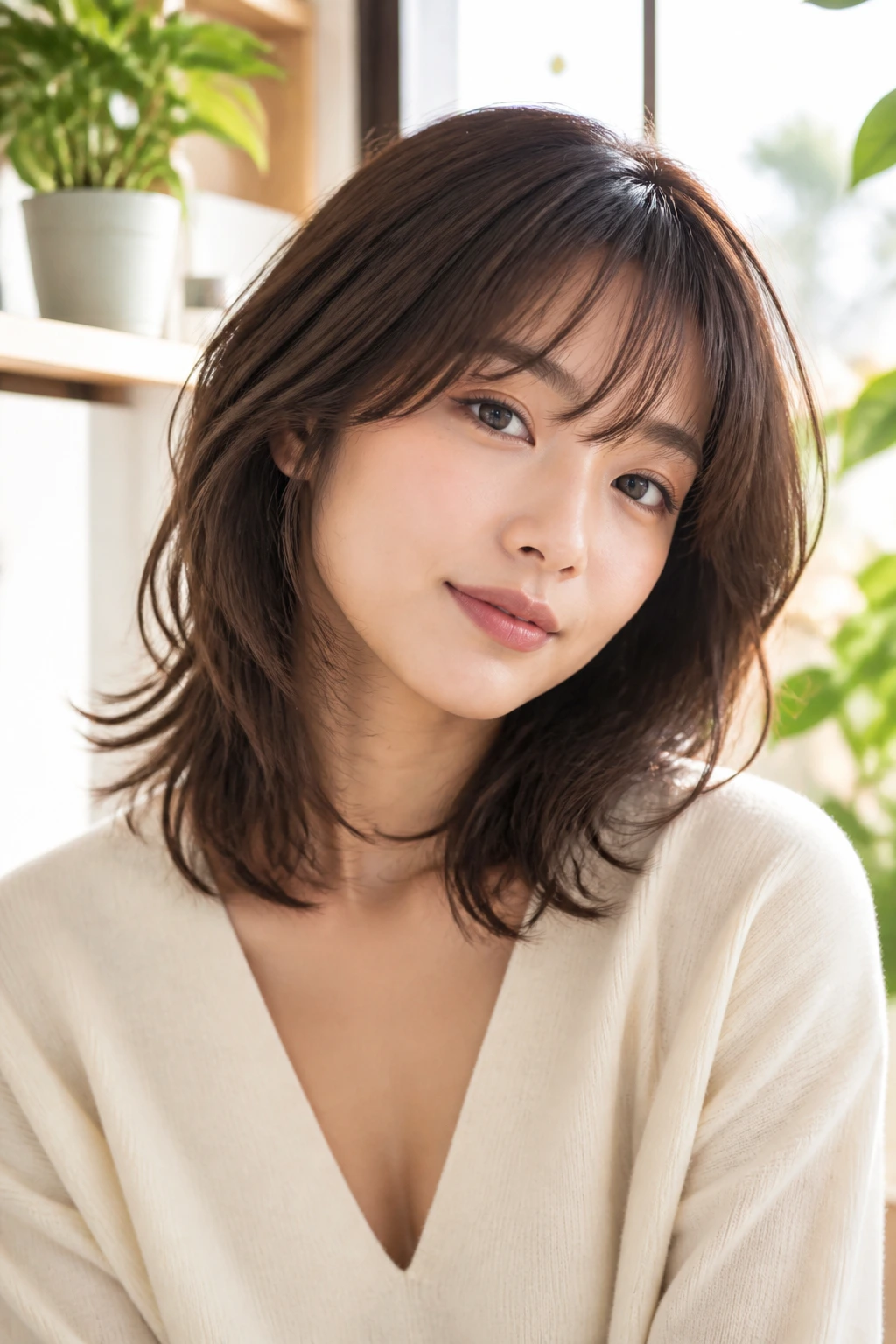
This is the lob for someone who wants movement and is not precious about every strand sitting in place. It borrows a little from the shag — soft layers, some texture around the crown, wispy fringe — but it stays far cleaner and more wearable than a full shag cut.
Why It Works
A shag-soft lob takes the weight off thick hair fast. The internal layers stop the bottom from looking like a shelf, and the wispy bangs make the cut feel younger and less formal without turning it into a costume. That matters. There is a line between “effortless” and “I hacked at it myself with kitchen scissors.”
This cut looks best when the bangs are light enough to move. If they’re too thick, the whole top can feel heavy. Keep them soft, almost see-through at the ends, and let the longer side pieces frame the face. The result feels airy, not choppy.
It is also one of the more forgiving cuts if you do not like frequent trims. The texture hides small imperfections. A lot of people could use that mercy.
10. The Inverted Lob for Lift at the Nape
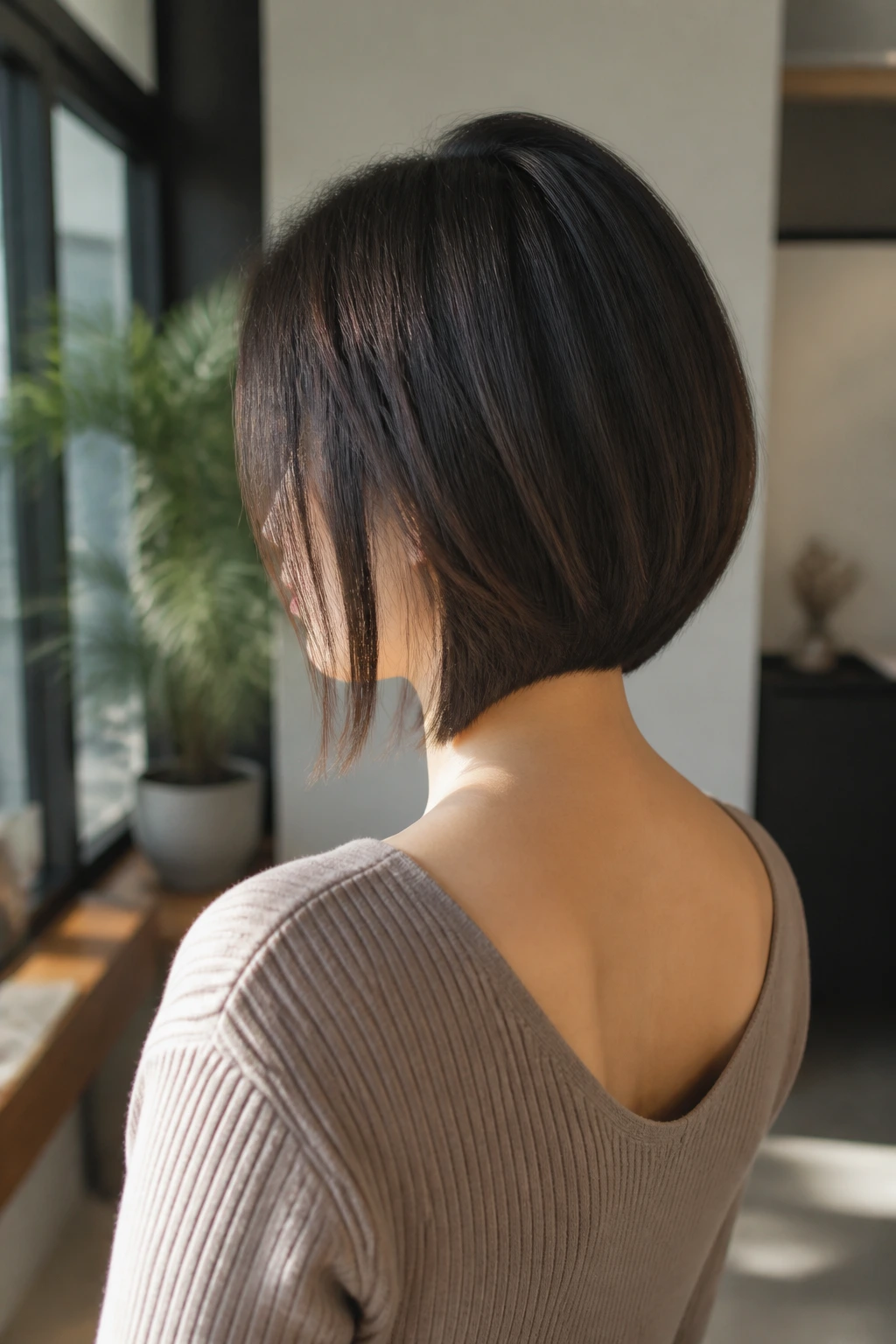
If your hair is dense and tends to fall flat around the crown while puffing at the bottom, an inverted lob can help. The back is shaped a bit shorter and higher at the nape, then it gradually lengthens toward the front. The effect is clean, lifted, and a little sharper than a basic bob.
Why It Works
This cut creates the illusion of a stronger jawline and a longer neck because the front angles down while the back hugs the head. It’s a smart choice for straight Asian hair that wants to sit heavy. The shorter back removes weight where you don’t need it, and the front pieces keep the length alive.
You do need a stylist who understands balance. If the angle is too steep, the haircut starts to look dated very quickly. If it’s too subtle, you lose the whole point. The sweet spot is a visible but not dramatic slope.
I like this for people who still want a clean silhouette but are tired of a uniform shoulder-length shape. It has a bit more personality than a classic lob, which is the whole reason to wear it.
11. The Tucked-Under Lob with Polished Ends
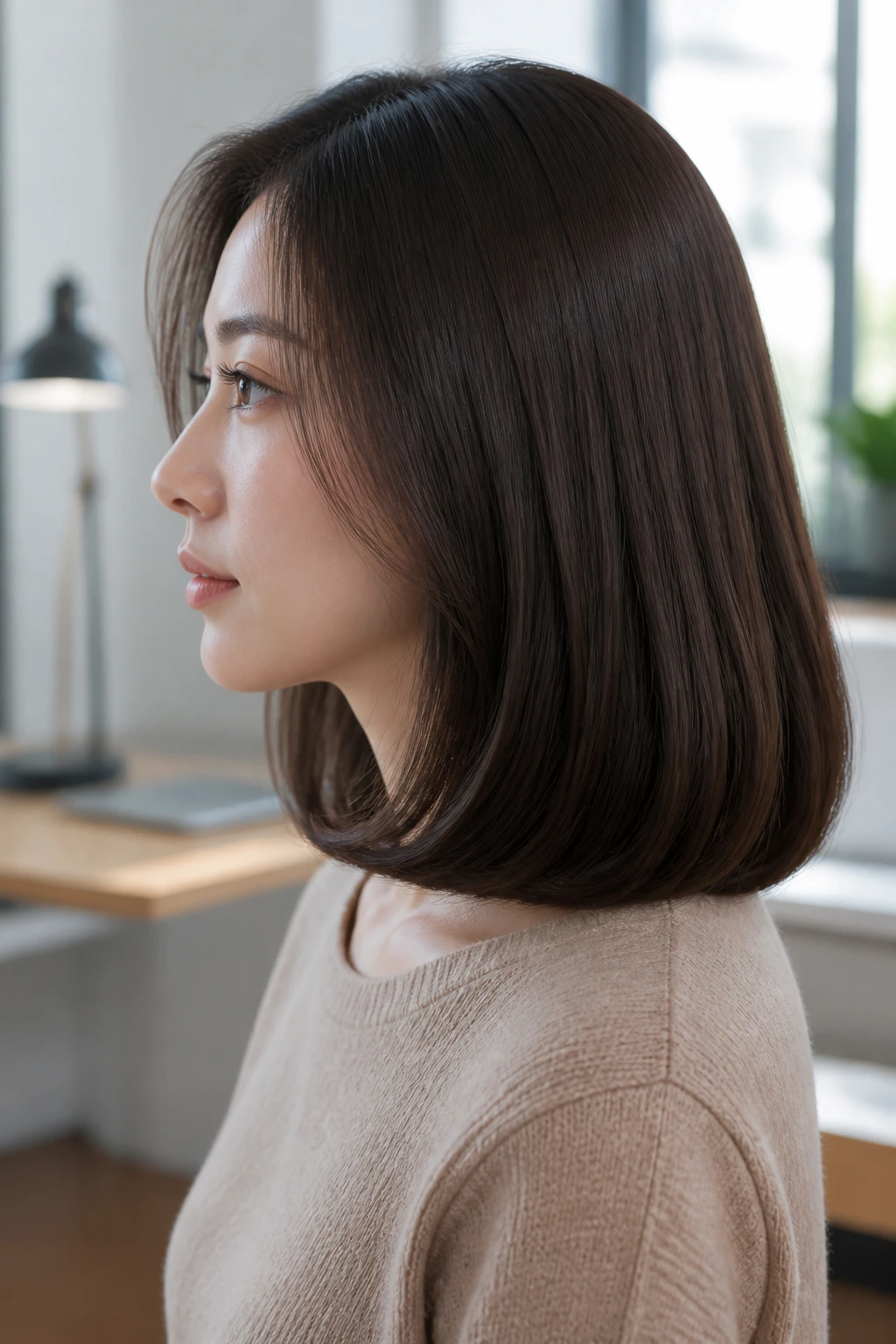
This one looks almost sculpted when done well. The cut itself is usually a blunt or slightly layered lob, but the styling is what gives it its identity: the ends are blown under so the hair curves neatly around the collarbone. It feels tidy without being stiff.
Why It Works
A tucked-under finish is one of the easiest ways to make a lob look expensive without relying on a lot of product. It works especially well on straight, heavy hair because the rounded ends keep the perimeter from jutting outward. That soft curl at the bottom makes the whole cut read as finished.
This is a great option if you wear earrings, structured jackets, or square-neck tops. The rounded line sits well against clean clothing shapes. It also photographs in a calm, steady way, though I’m more interested in how it looks in a mirror on a rushed weekday morning. And there, it still holds up.
Use a large round brush or a flat brush with a dryer nozzle, then bend the ends inward just once. A little smoothing cream helps. A lot of it makes the hair look greasy by noon.
12. The Side-Part Lob That Frames the Cheekbones
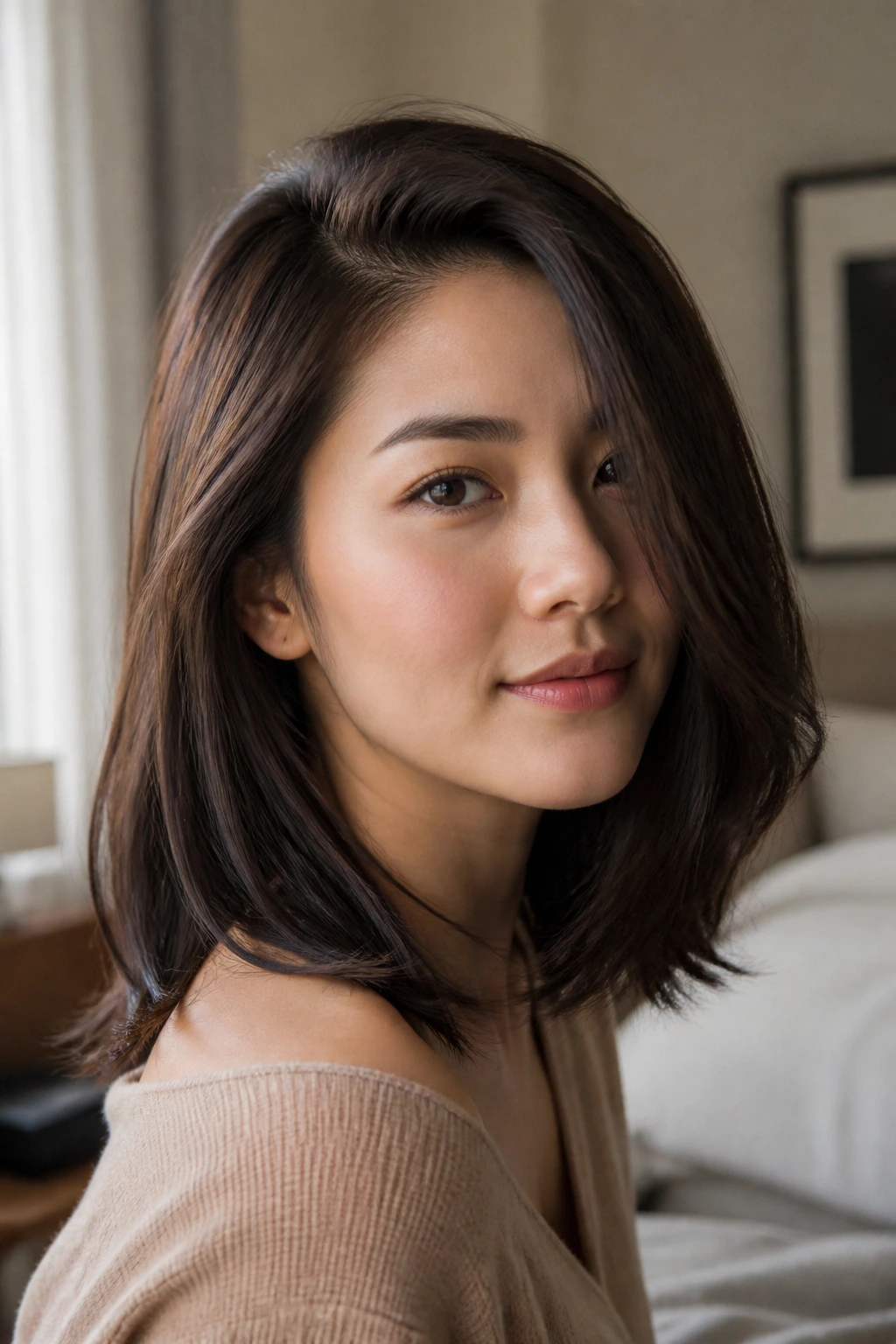
A deep or slightly off-center side part can change the whole mood of a lob. It lifts one side, lets the front pieces sweep across the cheekbone, and softens the shape if you have a strong jaw or a broad forehead. It’s one of the most useful adjustments you can make without changing the cut itself much.
Why It Works
The side part creates asymmetry, which is often exactly what a straight, even lob needs. Too much symmetry can make the hair sit flat against the sides of the face. A side part breaks that up and adds some height at the crown. That little lift matters more than people think.
This cut works particularly well if your hair tends to fall naturally to one side anyway. Fighting your cowlick is a waste of energy. Let it help. The longer front section can be tucked behind one ear, pinned back with a small clip, or left loose so the cheekbone-framing effect stays visible.
If your face is round or square, this can be a very flattering direction because it draws the eye diagonally instead of straight across. Diagonal lines are doing a lot of heavy lifting here.
13. The French Lob with Grown-Out Fringe
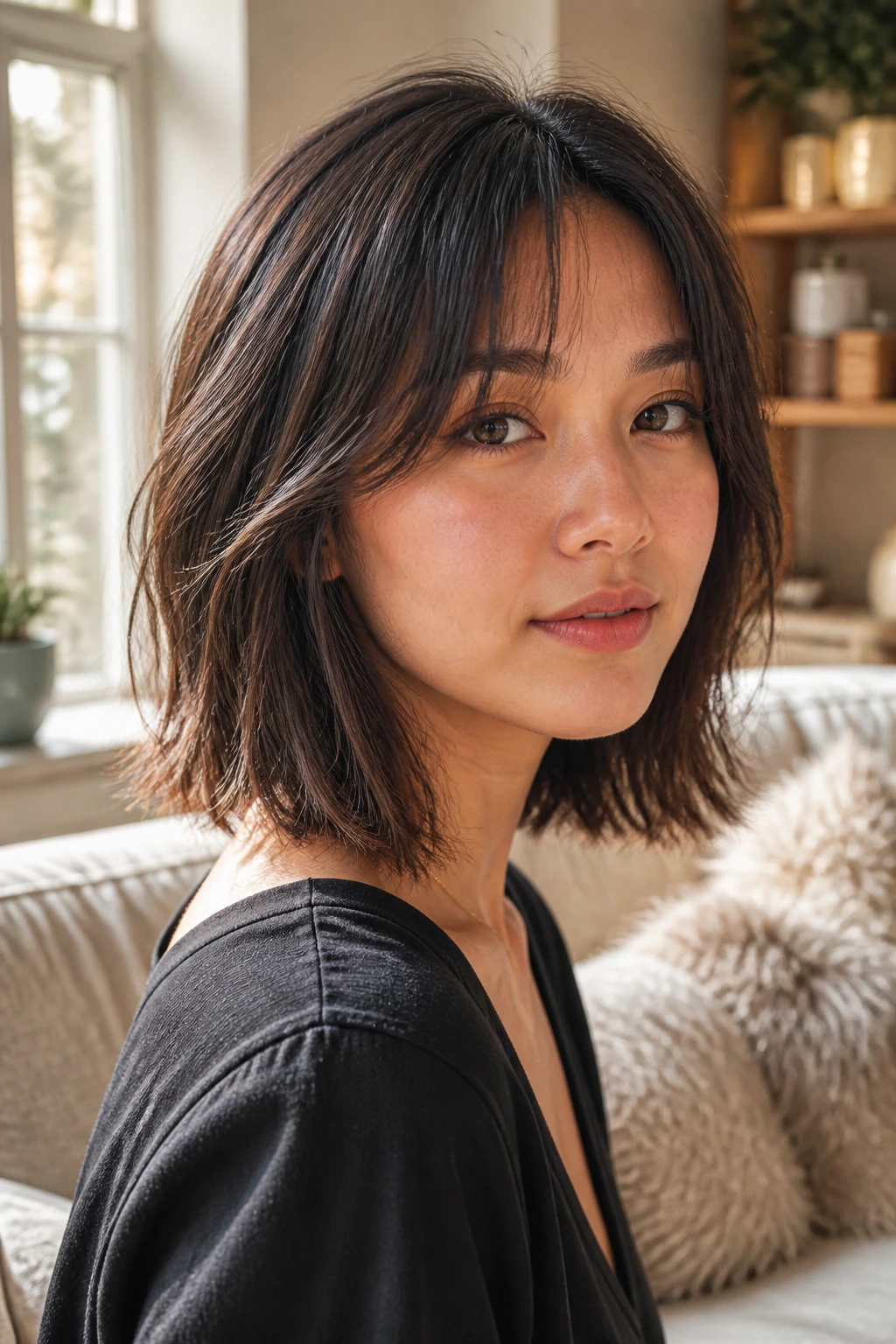
This one feels a little softer, a little less engineered. The length usually sits around the chin to collarbone range, the fringe is grown out enough to fall into the rest of the hair, and the overall finish looks lived-in rather than freshly carved. That relaxed quality is the whole point.
Why It Works
A grown-out fringe gives the haircut movement without turning the front into a full bang situation. On straight Asian hair, that can be a relief. You still get a frame around the face, but you do not have to commit to blowing bangs dry every day.
The French vibe comes from the texture and the ease, not from pretending the haircut is casual when it clearly took work. The best version has soft ends, a slightly uneven part, and a little lift at the roots. Nothing too slick. Nothing too precious.
It suits people who want a lob that looks good after a long day, not only right after a salon blowout. If that’s you, this is a strong candidate.
14. The Long Layered Lob for Thick Hair
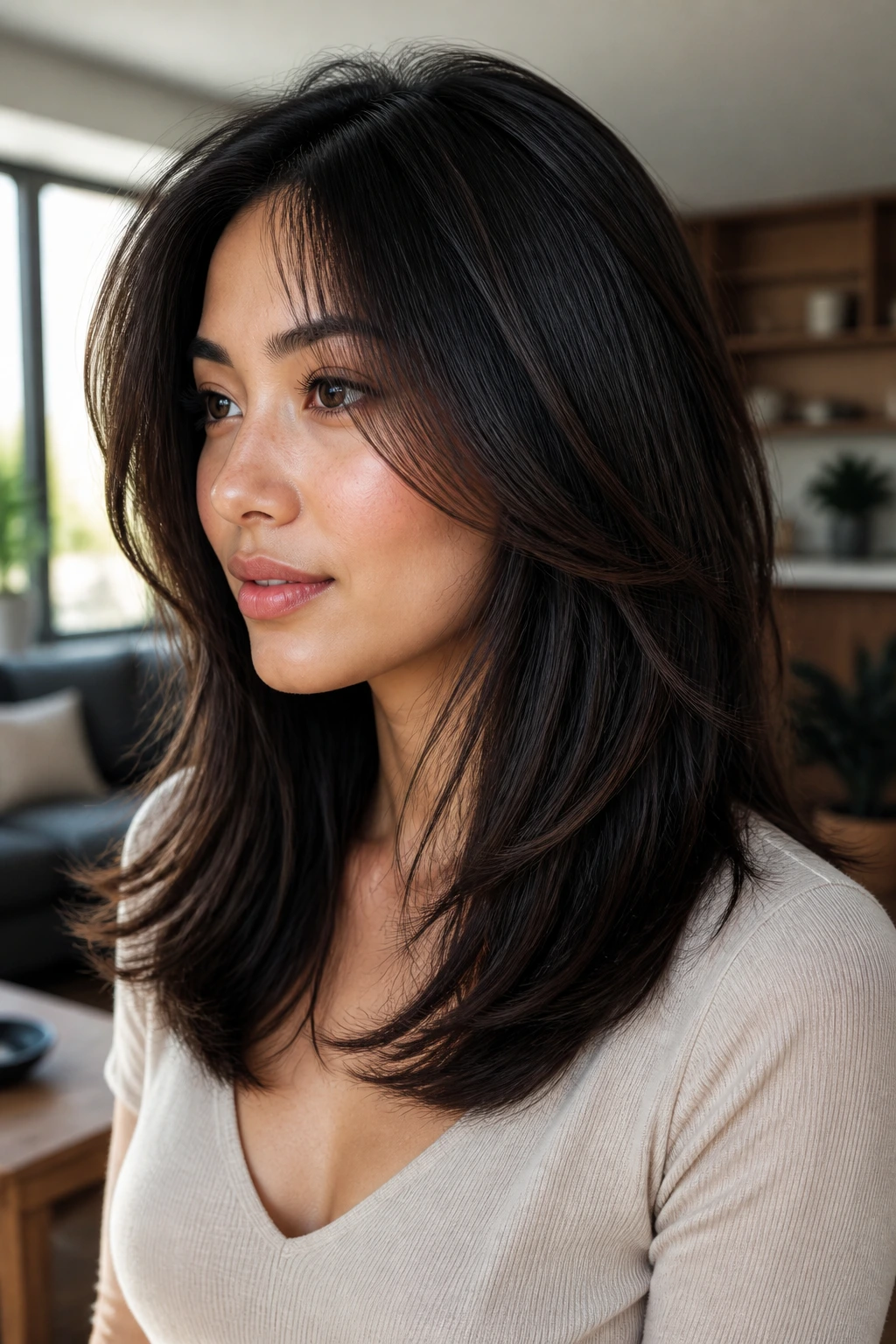
Thick hair needs shape, not just removal. If the cut is too blunt, it can turn into a heavy rectangle. This layered lob keeps the length around the shoulders or collarbone but removes bulk through long, blended layers that stop the hair from looking like a curtain.
Why It Works
The goal here is not to thin the hair to death. That is a bad habit some stylists still have, and it leaves the ends looking frayed. Instead, ask for long layers that release weight from the interior while preserving a solid perimeter. The hair keeps its body, but it moves better.
This is one of the best lob haircuts for Asian women and long hair if the texture is dense and the ends tend to puff outward. The layers reduce that puff without making the cut look choppy. It can also be styled straight or waved, which is useful if you do not want to change your routine every morning.
If your hair is very thick, this cut may need more regular shaping than a blunt lob. Worth it. The payoff is a haircut that feels lighter on your neck and less like a blanket.
15. The Minimalist Lob for Fine, Straight Hair
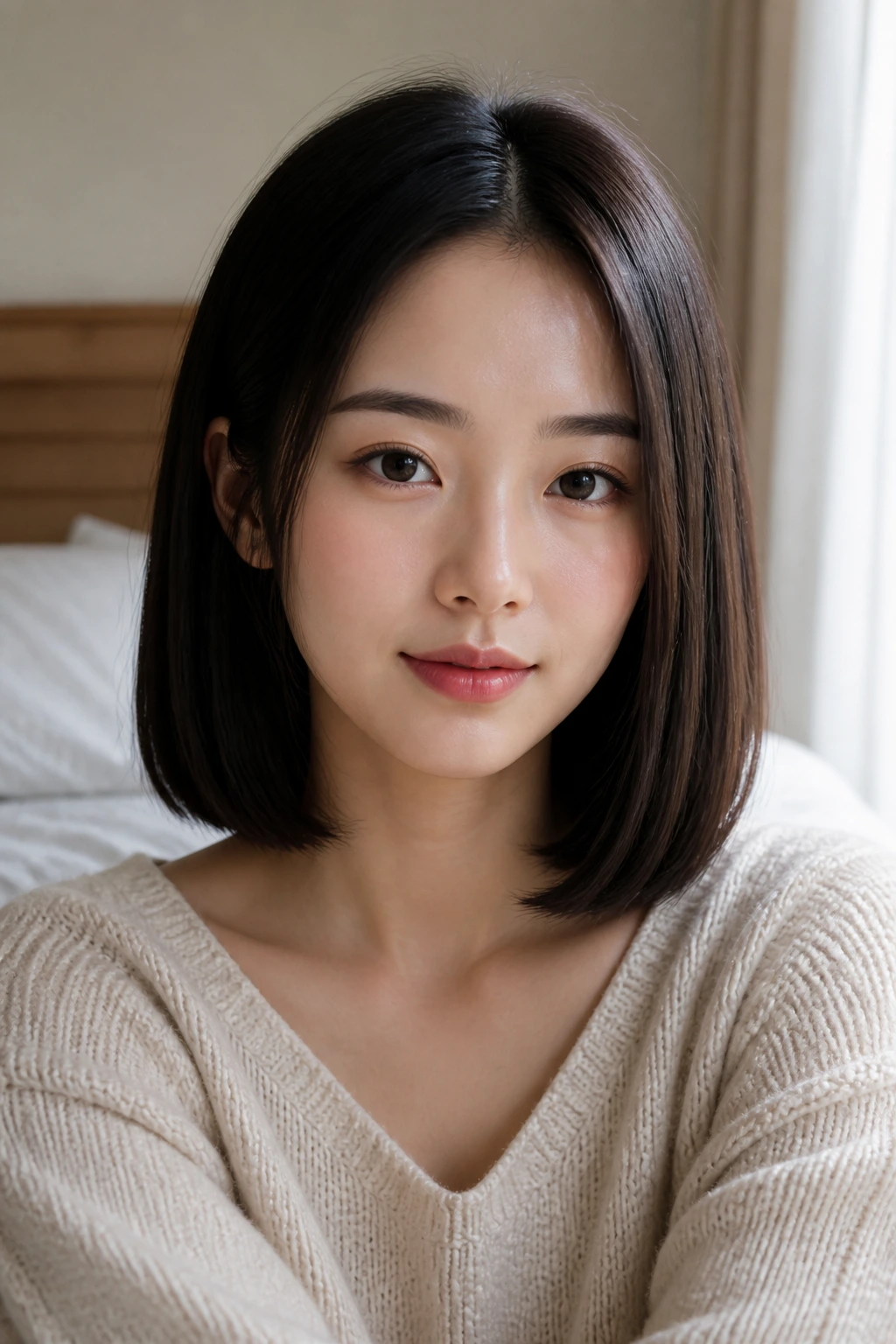
Fine hair often looks better with discipline than with too many layers. This minimalist lob keeps a mostly blunt perimeter, avoids heavy interior texture, and uses the cut line itself to create fullness. It is clean, spare, and a lot more forgiving than people expect.
Why It Works
Too many layers on fine hair can leave the ends looking see-through. That is the fast road to disappointment. A simpler lob creates more visual weight at the bottom, which makes the whole head of hair appear denser. That’s why this cut is so useful.
You can still add a tiny bit of internal softening if the hair is slippery or too flat at the crown, but the structure should stay mostly intact. Blow-dry with a root-lifting product at the top and keep the ends smooth. Over-texturizing this kind of hair is usually a mistake.
This is a particularly good choice if your hair grows straight and flat and you want a shape that doesn’t require a lot of product to hold. The haircut should do the lifting. Not the can of spray.
16. The Collarbone Lob with Bottleneck Bangs
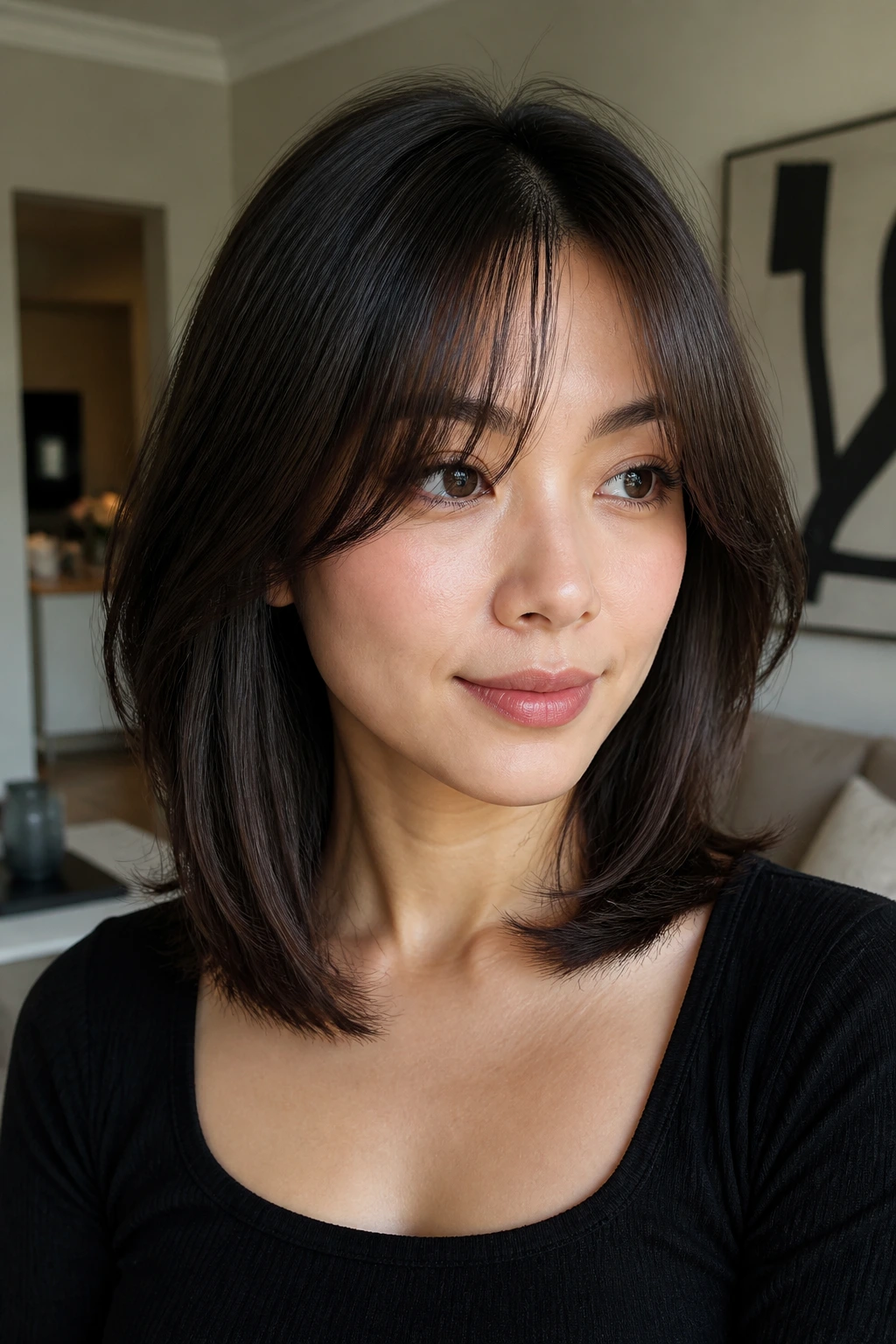
Bottleneck bangs sit somewhere between curtain bangs and a soft fringe. They are shorter in the center, then widen near the cheekbone and taper into the sides. Paired with a collarbone lob, they create a frame that feels modern without being severe.
Why It Works
The bottleneck shape is useful because it opens the face without making the forehead feel bare. On straight Asian hair, the bangs have enough structure to hold a shape, but they still move. That’s the sweet spot. Too heavy, and they sit like a shelf. Too thin, and they disappear.
This cut is especially flattering if you want softness near the eyes and cheekbones. The bangs guide attention upward, while the lob keeps the length grounded. You get movement in two places without losing the clean outline of the cut.
I would not choose this if you hate blow-drying fringe. It’s a great haircut, but it does ask for a little attention. The payoff is that the face frame looks thoughtful rather than forced.
17. The Low-Maintenance Air-Dry Lob
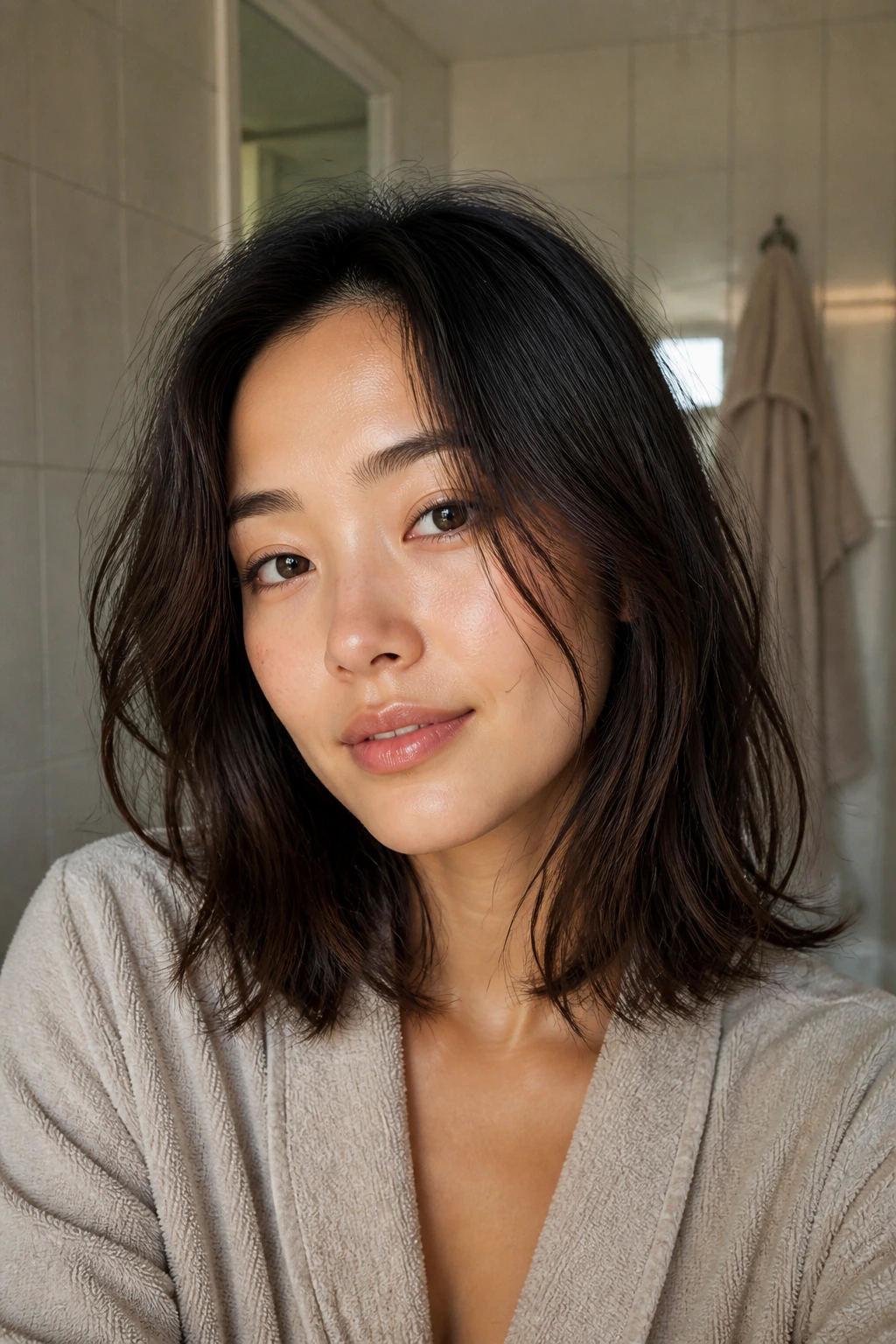
Not every lob has to be styled into submission. This version is cut to work with your natural bend, your cowlicks, and your own texture pattern. The perimeter is usually soft, the layers are minimal, and the whole thing is meant to settle nicely after a towel blot, a little cream, and a few minutes of hands-off drying.
Why It Works
An air-dry lob is ideal when you want the haircut to cooperate instead of starting a daily negotiation. The shape should be forgiving enough that it looks decent without heat, but still structured enough that it does not collapse. That means the length and layer placement matter a lot.
The best versions usually sit a touch longer than a dramatic bob, because extra length gives the hair room to bend without springing up too much. If your hair is wavy, this can be a sweet spot. If it is pin-straight, you may need a little root product or a bend from a diffuser to keep it from hanging too flat.
This is the cut I suggest for people who like the idea of a polished lob but do not want to spend 20 minutes with a dryer every morning. Fair enough. Most people don’t.
What Makes a Lob Sit Right on Straight, Thick, and Silky Hair
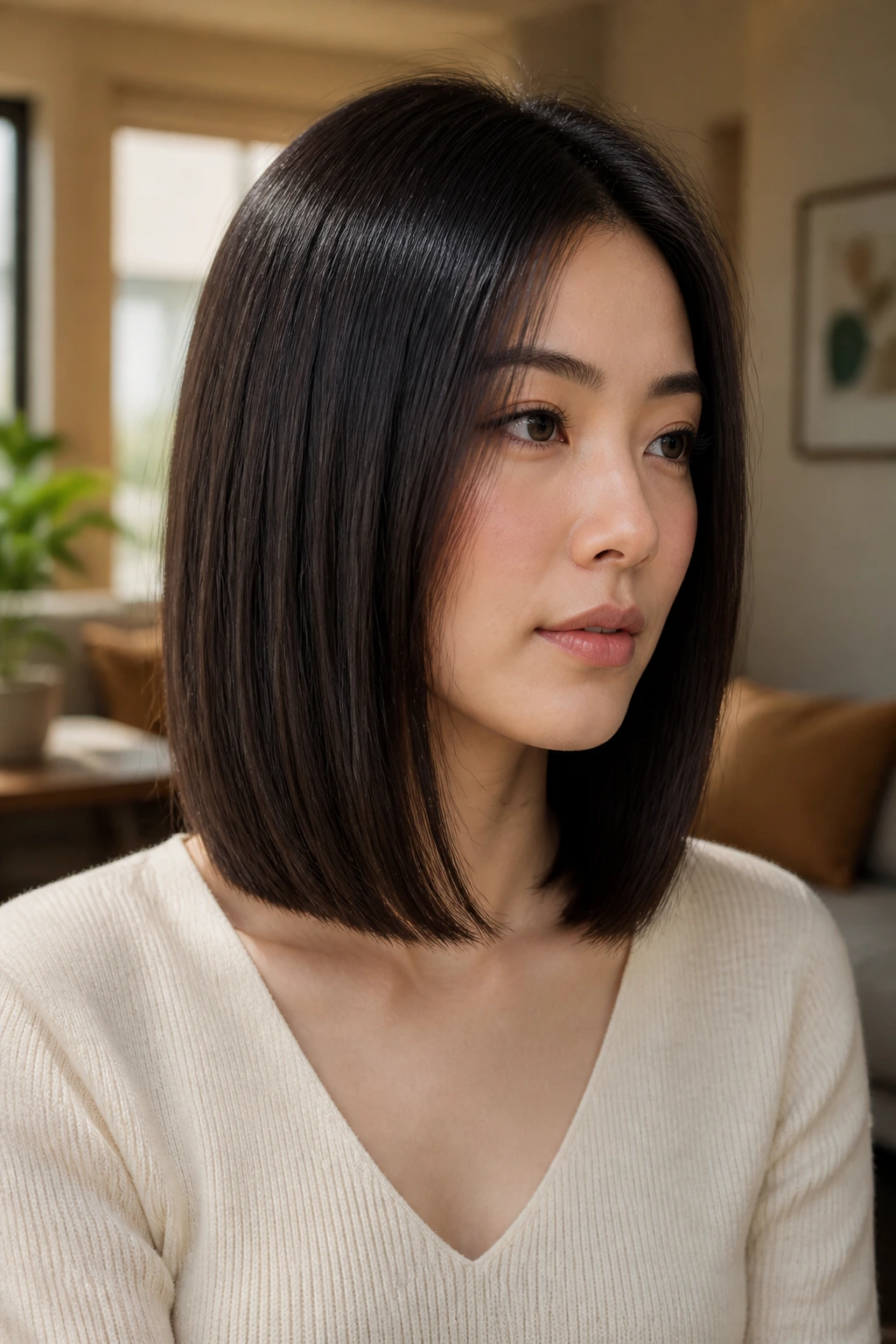
Straight Asian hair can look sleek and expensive, but it can also expose a bad haircut in a way that wavy texture sometimes hides. Every line shows. Every imbalance shows. That is why the geometry matters so much here. A good lob creates a strong perimeter, then uses just enough layering or angle to stop the cut from looking like a solid block.
Thick hair needs weight removal in the right places. Not everywhere. Just enough internal shaping to keep the sides from puffing out and the ends from turning blunt in the wrong direction. Fine hair usually needs the opposite treatment: fewer layers, more structure, and a line that makes the hair look fuller than it is.
The other piece people miss is the neck and shoulder line. A lob that ends at the wrong spot can keep flipping into your coat collar, your necklace, or your shirt seams. Collarbone length is popular for a reason. It sits in a zone that feels long, but not annoying. That’s a practical reason, and practical reasons are often the best ones.
Essential Tools for Styling and Maintaining These Lobs
-
Tail comb: Useful for clean parts, sectioning, and keeping the top neat while you blow-dry the ends.
-
Blow dryer with a nozzle attachment: The nozzle directs air so the cuticle lies flatter and the lob looks smoother with less frizz.
-
Medium round brush: Best for the C-shape, tucked-under finish, and soft volume at the crown.
-
Paddle brush: Good for straightening while drying if you want a sleeker, flatter finish.
-
1-inch to 1.25-inch curling iron or wand: Handy for adding a subtle bend, not tight curls, to the front pieces.
-
Flat iron: Useful for glassy, blunt lobs and for smoothing the ends without puff.
-
Heat protectant spray: Non-negotiable if you use hot tools. Straight hair can still get fried.
-
Lightweight smoothing cream or serum: Helps polish the ends without flattening the crown.
-
Root-lifting mousse or spray: Especially useful on fine hair or when the lob feels too close to the scalp.
-
Texturizing spray or soft-hold mousse: Better for wavy or layered versions than dry shampoo alone.
-
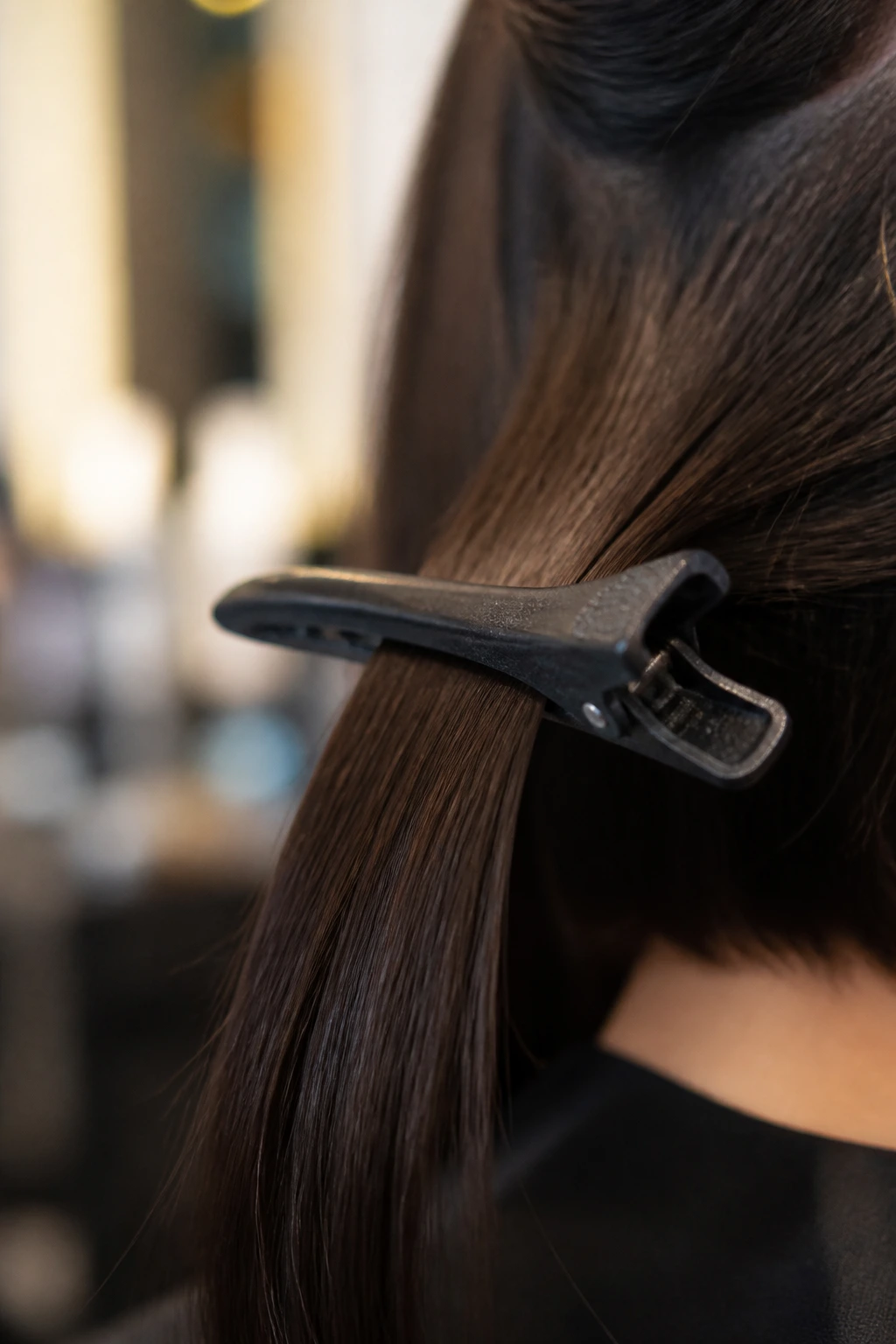
Duckbill clips: Nice for setting the crown while the rest of the hair cools into shape.
-
Silk or satin pillowcase: It reduces bedhead and keeps the ends from roughing up overnight.
What to Tell Your Stylist Before the First Snip
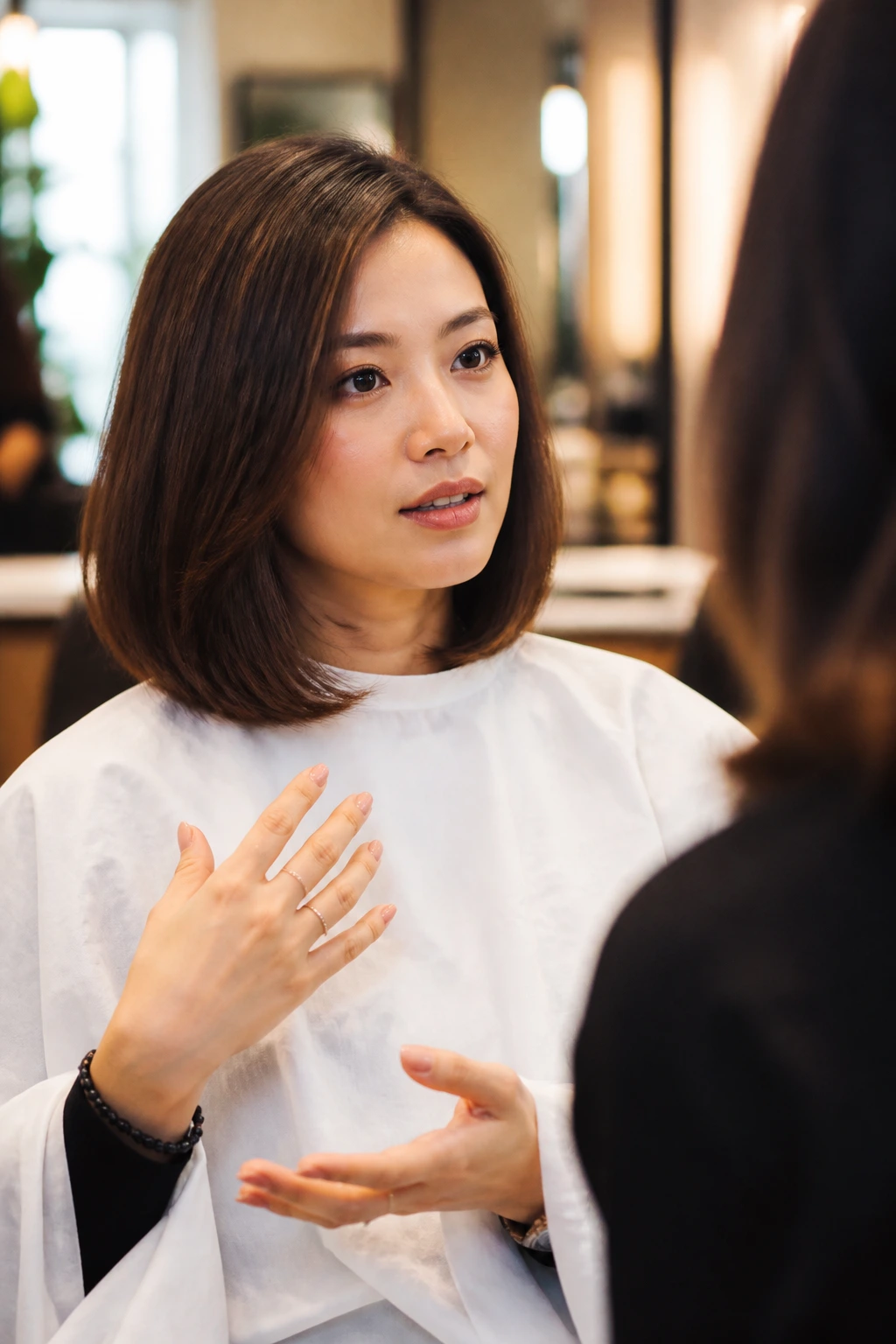
Bring a photo, but do not stop there. Photos are helpful because they show proportion, not because they magically explain your hair. You still need to talk about where the cut should hit on your neck, whether you want the front pieces to graze the collarbone or stop at the jaw, and how much layering you can live with when the hair is dry.
Mention how your hair behaves on a boring Tuesday. That matters more than how it looks right after a salon blowout. If your hair flips at the ends, say so. If it falls flat at the crown by lunchtime, say that too. If you have a cowlick, a widow’s peak, or a side part that refuses to move, your stylist needs to know before the scissors come out.
Use plain words: blunt, soft, angled, face-framing, airy, layered, heavy, light, polished, lived-in. You do not need salon poetry. You need a haircut that matches your actual routine. And if you plan to air-dry most of the time, say that up front. A lob cut for heat styling and a lob cut for air-drying are not the same animal.
How to Style a Lob Without Fighting Your Hair Texture
Sleek versions are easiest when you work in sections and dry the roots first. Aim the nozzle downward, keep the brush taut but not strained, and bend the ends under only at the very last pass. If you try to force the shape too early, the hair tends to spring back before it cools.
For movement, wrap only the front pieces around a medium barrel iron or brush them into a loose curve with a round brush. The rest can stay smoother and flatter. That contrast keeps the lob from looking overdone. A little bend near the face goes a long way.
Air-dry versions need restraint. Squeeze out water with a towel, not a rough rub. Apply a pea-sized amount of cream or mousse through the mid-lengths, then leave the crown alone until it’s about 80 percent dry. If you keep touching it, you’ll create frizz that no product can fully fix. Sometimes the best styling move is simply not interfering.
Common Mistakes That Make a Lob Look Accidental
-
Cutting it too short for your neck and shoulder line: If the ends sit right on the widest part of the jaw or bounce constantly against your coat, the haircut starts to feel awkward. Aim a little below or above that zone.
-
Over-layering fine hair: Too many short pieces leave the ends looking thin and piecey. The fix is a stronger perimeter and only the lightest internal shaping.
-
Leaving thick hair one-length with no debulking: The result is often a heavy block that flips outward at the ends. Ask for weight removal below the surface, not a chopped-up outline.
-
Ignoring the part line and cowlicks: If your hair insists on parting one way, work with it or adjust the face-framing accordingly. Fighting it every day is a waste of time.
-
Using too much texturizing product on sleek cuts: A glassy lob depends on clean edges. Dry texture spray can make it look dusty fast.
-
Skipping the finish check from the back: A lot of bad lobs look fine in the mirror from the front and strange from behind. Turn around before you leave the salon. Seriously.
Five Ways to Rework the Same Lob
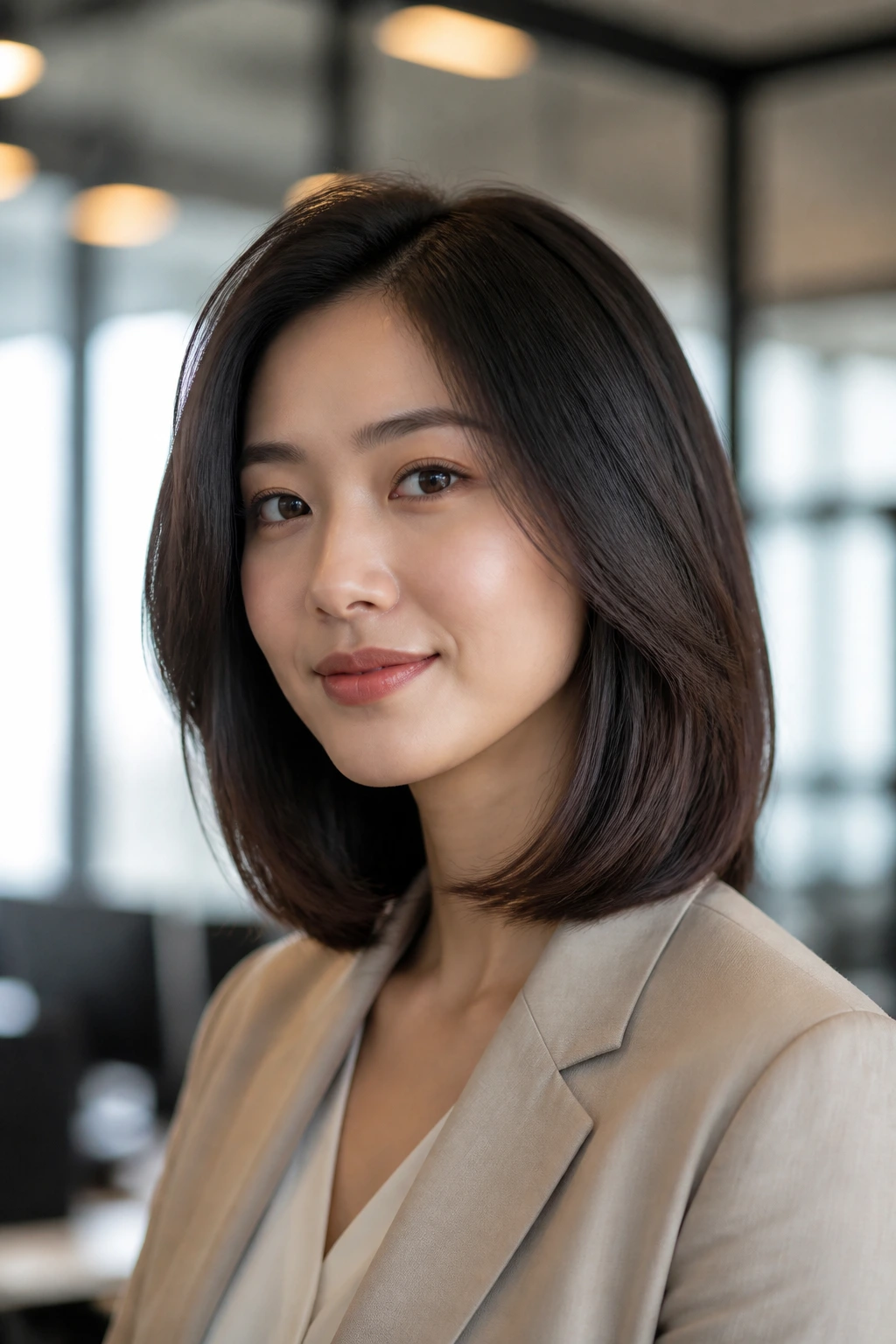
The Sleek Office Lob: Keep the cut blunt, part it neatly, and wear the ends tucked under. This version works when you need the haircut to look tidy with a blazer or button-up and you don’t want much daily fuss.
The Soft Weekend Lob: Add curtain bangs or long face-framing pieces, then wear the ends with a loose bend. It’s looser and a little less formal, but still shaped enough to look intentional.
The Air-Dry Lob: Choose a slightly longer length and minimal layers so the hair can dry into its own shape. This is the one for low-effort days, humid weather, and people who would rather not hear the sound of a blow dryer every morning.
The Thick-Hair Lob: Keep the perimeter strong but ask for internal weight removal and long blended layers. The goal is to reduce bulk without making the ends see-through. That distinction matters a lot.
The Fine-Hair Lob: Stick to a blunt or nearly blunt line and let the cut create density. Avoid too much slicing or feathering. Fine hair usually looks best when the shape is clean enough to hold its own.
Keeping the Shape Between Salon Visits
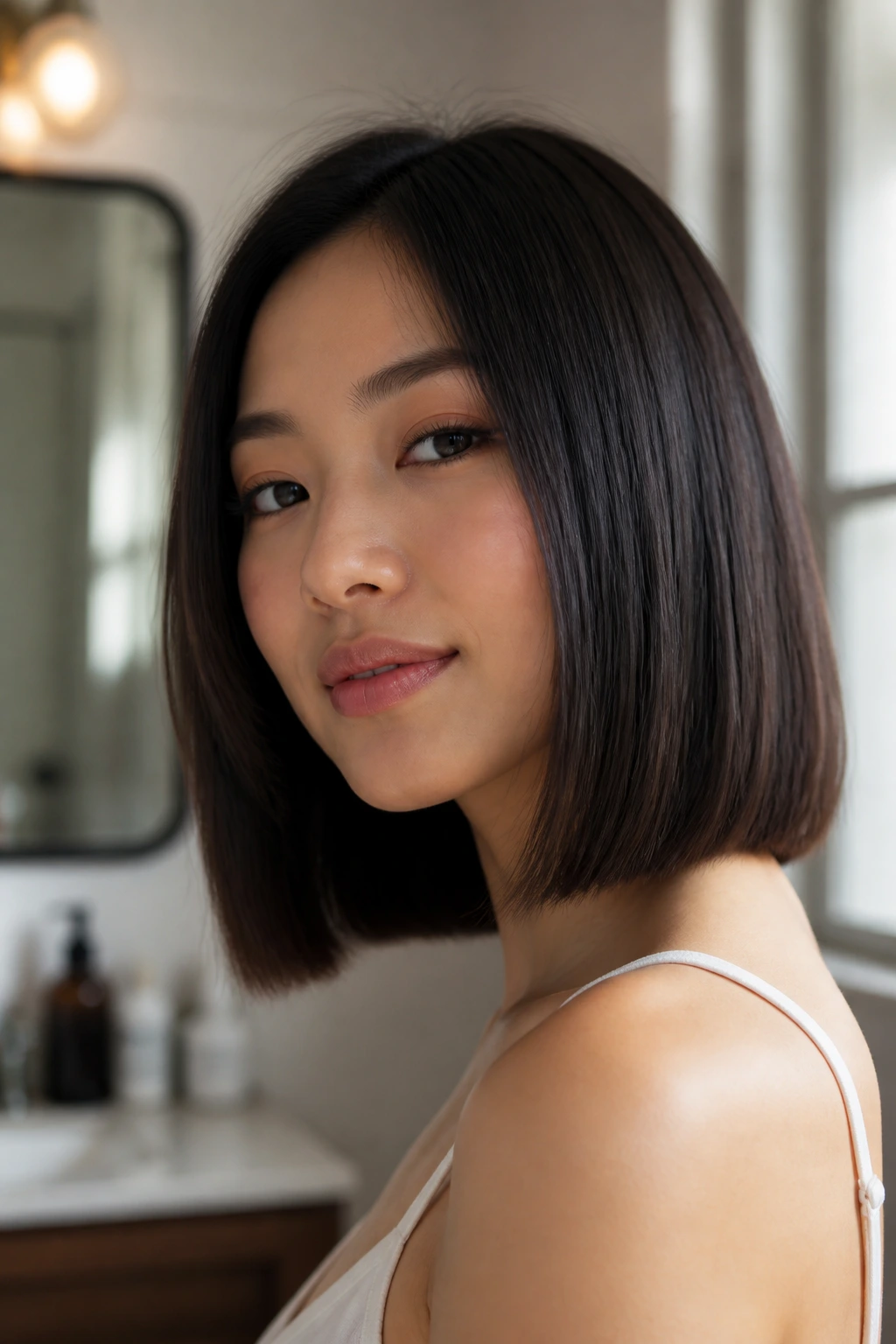
A lob grows out better than many short cuts, but it still needs some attention if you want it to keep its line. Most people do well with trims every 6 to 8 weeks for a blunt version, and every 8 to 10 weeks if the cut is softer and layered. Wait much longer, and the shape starts dropping past the collarbone into that awkward in-between zone where styling gets harder.
At home, the simplest maintenance trick is to keep the ends smooth. A tiny bit of serum on dry hair, focused only on the bottom inch, helps the cut look fresh. If you use heat often, keep a heat protectant nearby and use it every time. Skipping it once in a while sounds harmless until the ends start looking dry and fuzzy in bright light.
Night care matters more than people think. A silk pillowcase or loose sleep braid cuts down on friction, and that means fewer tangles, fewer bent ends, and less morning puff around the crown. If you wear the lob with a center part, set that part cleanly after washing so it doesn’t split into a weird zigzag as it dries.
Frequently Asked Questions
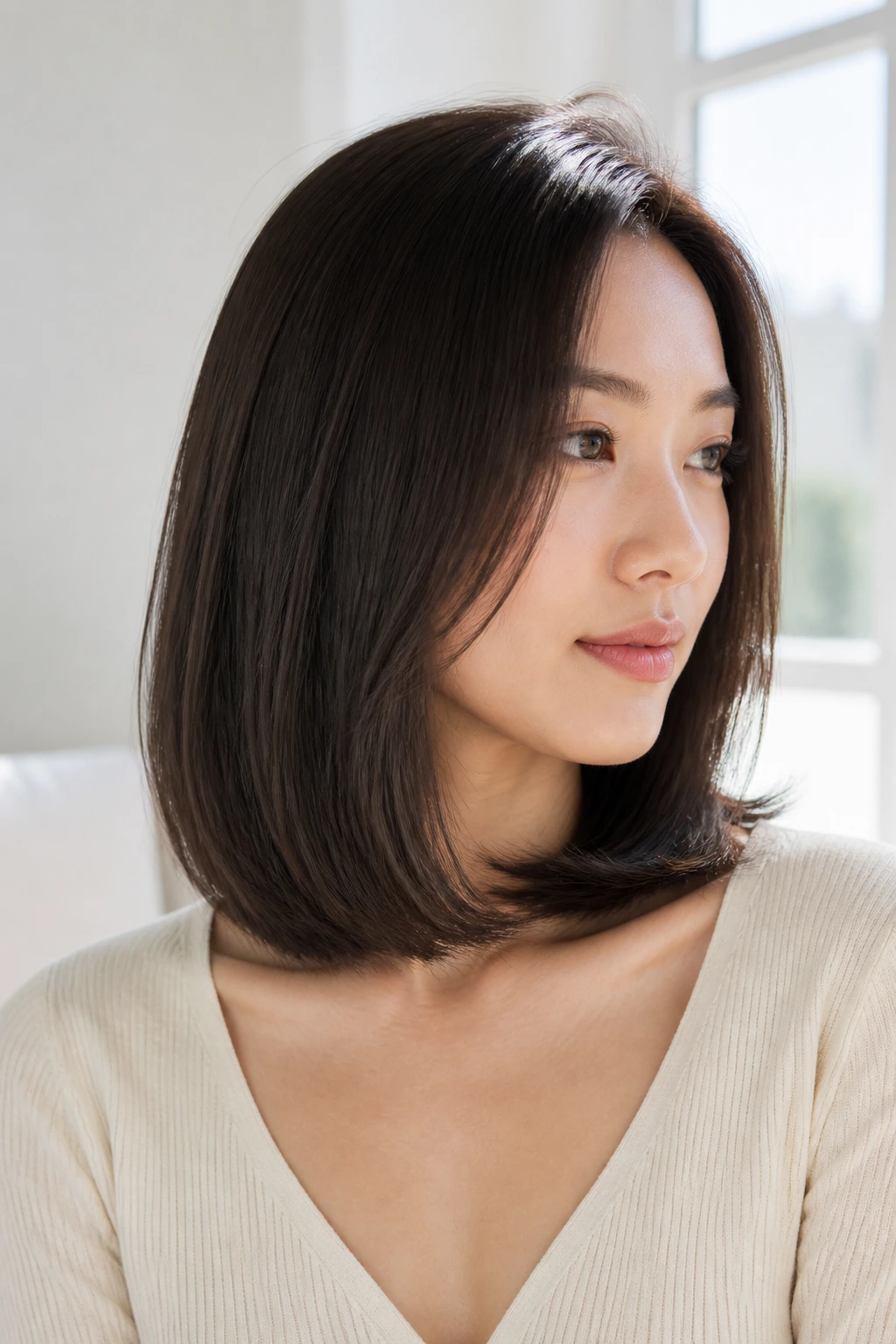
Does a lob work on very straight Asian hair without looking flat?
Yes, but the cut has to create the shape for you. A blunt edge, a slight angle, or a bit of internal weight removal can keep straight hair from collapsing into one thin sheet.
Which lob is best if my hair is thick and heavy?
A long layered lob or a soft angled lob usually works well because both remove bulk without wrecking the outline. Too many short layers can make thick hair puff out, so keep the shaping controlled.
What if my hair is fine and barely holds a bend?
Choose a cleaner, blunter lob. Fine hair usually looks fuller when the ends are solid, and heavy texturizing can make it look stringy. A little root lift at the crown helps more than a lot of layers.
Can I wear bangs with a lob if I have a high forehead?
Absolutely. Curtain bangs, bottleneck bangs, and a grown-out fringe are all good options because they soften the forehead without creating a heavy block across the brow. Ask for a version that opens near the cheeks.
How short should a lob be if I still want to tie my hair back?
Aim for a collarbone length or slightly below it. That gives you enough length for a low bun, small clip-up, or a short ponytail without the whole front falling out immediately.
Is an angled lob hard to grow out?
Not if the angle is subtle. A steep angle can feel awkward after a few weeks, but a gentle slope usually grows into a softer shoulder-length cut without much drama.
How do I stop the ends from flipping out weirdly?
Use a round brush or flat brush to direct the ends inward while drying, then let them cool in that shape. If the flip is still strong, the cut may be sitting at a collarbone point that catches on your shoulders, so ask your stylist to adjust the length slightly.
Can I air-dry a lob and still have it look neat?
Yes, if the cut is designed for it. A low-maintenance lob with soft layers or a forgiving perimeter can air-dry well, especially if you add a little mousse or cream and leave the hair alone while it sets.
A Lob That Keeps Its Shape
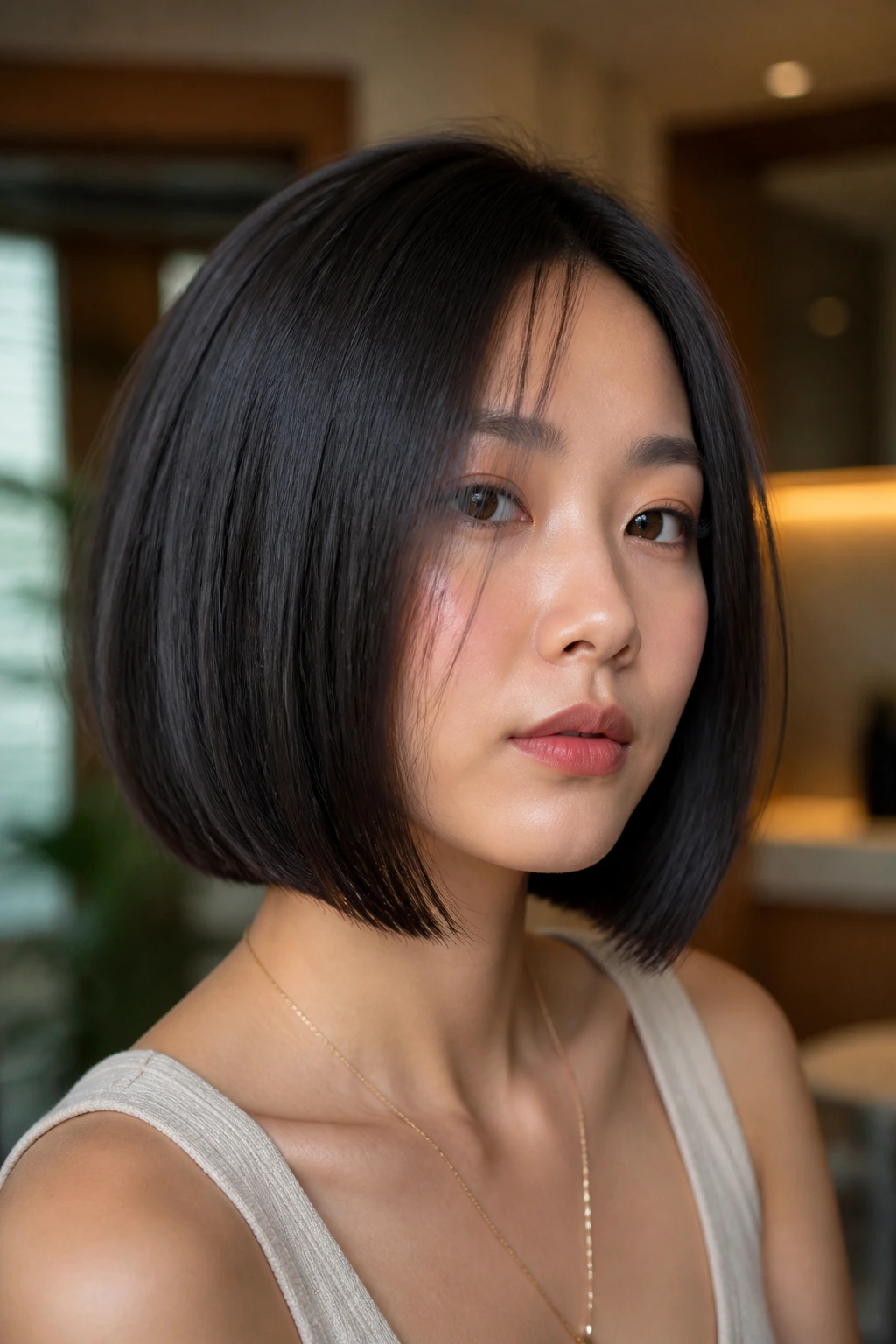
A good lob does something a long cut often cannot: it gives your hair an outline you can trust. That matters whether your strands are silky and straight, thick and heavy, or fine and stubbornly flat. The point is not to look shorter for the sake of change. The point is to make the hair sit better on your head.
What makes these lob haircuts for Asian women and long hair worth saving is that they respect length without letting length run the show. Some are blunt and crisp. Some are soft and layered. Some are built for air-drying and some need a brush. None of them are random.
If you’ve been staring at long hair that feels tired at the ends, a collarbone-length cut with the right shape can reset everything without asking you to start over. That’s the good part. You keep the hair. You lose the drag.
