



Straight hair tells on a haircut. There’s nowhere to hide a crooked hem, a rough layer, or a front piece that was cut too short because somebody got generous with the shears. That’s why lob haircuts for straight hair can look razor-sharp and deliberate when they’re done well — and weirdly limp when they’re not.
A long bob is one of the few cuts that actually benefits from that honesty. On sleek strands, the line shows up. The angle shows up. A blunt edge can make fine hair look denser, while a softer perimeter can keep thick hair from turning into a blunt little helmet. The trick is choosing the version that works with your density, your part, and how much time you want to spend with a blow-dryer in your hand.
The best part is that this length has range. It can sit at the collarbone and feel polished, drift a little longer and look easy, or tilt into side parts, bangs, beveled ends, and invisible layering without losing its shape. The cut does the heavy lifting, which is exactly what most people want from hair that lies flat and shows every decision.
Why These Lob Haircuts Work on Straight Hair
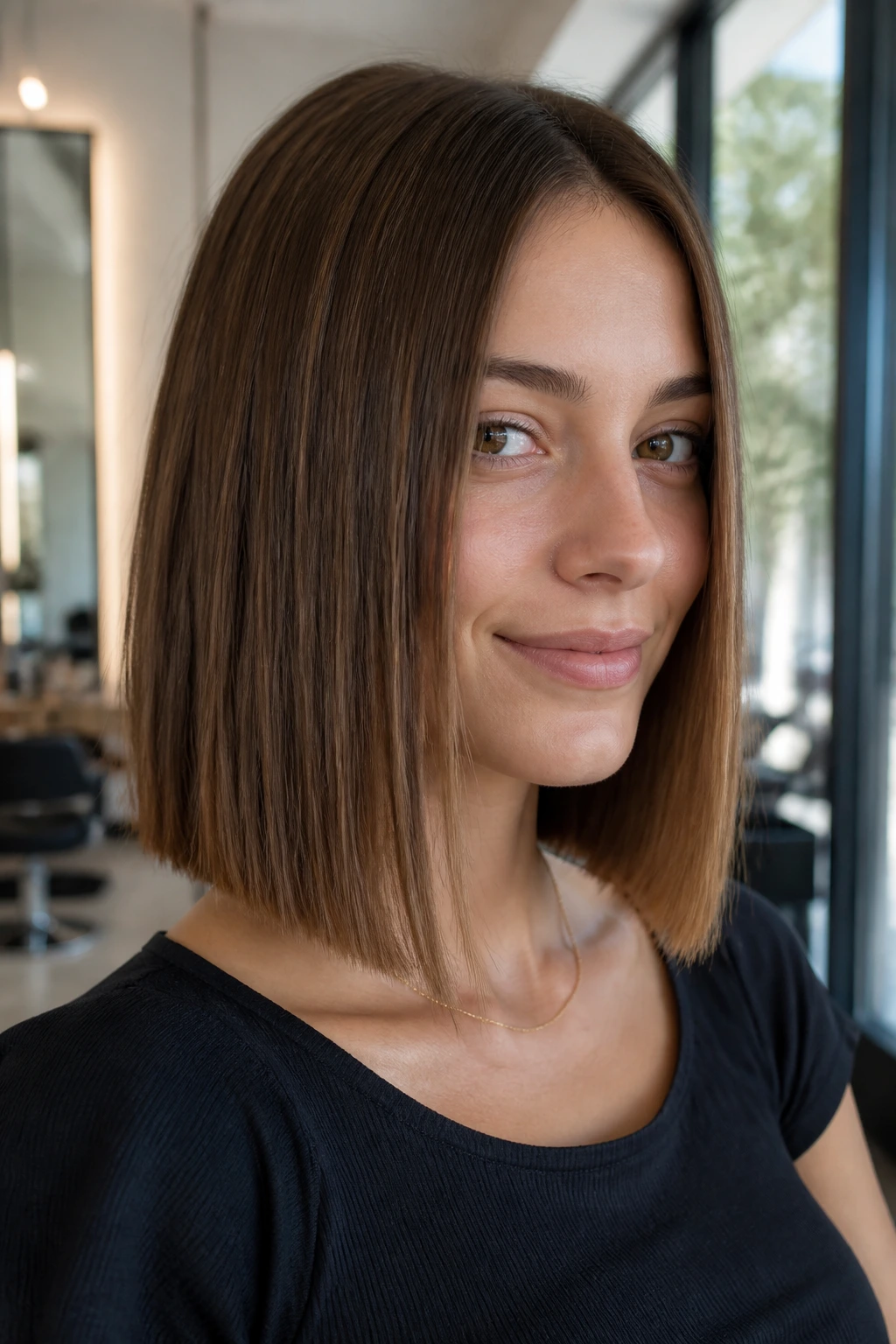
-
The outline stays visible: Straight hair does not blur the silhouette the way waves do, so a clean perimeter reads as intentional the second you walk out of the chair.
-
Small changes matter more here: Move the part half an inch, soften the ends, or shift the front by 1 to 2 inches, and the whole cut changes.
-
Length gives you room to fix flatness: A collarbone-grazing lob usually has enough weight to fall neatly, but enough swing to avoid that chin-length shelf effect.
-
Fine hair gets help from bluntness: A one-length edge can make the bottom look thicker than it really is, which is why so many straight-haired people end up liking the blunt version best.
-
Thick hair gets relief without losing shape: Internal layering, a subtle angle, or a U-shaped hem can take out bulk while keeping the cut clean.
-
The grow-out is kinder: When a lob starts to grow, it usually just becomes a longer lob. That is a lot easier to live with than a haircut that turns awkward after two trims.
1. Blunt Collarbone Lob
A blunt collarbone lob is the straight-haired classic for a reason. The hem lands right around the collarbone, where the cut can skim the shoulders without flipping into them every time you turn your head. On fine hair, that blunt edge makes the ends look heavier; on medium hair, it gives the whole shape a dry, crisp line.
Ask for the back to sit right at the collarbone and the front to stay within an inch of that length. If the stylist starts talking about lots of texture, slow them down a little. This cut works because the bottom edge is clean, not shredded.
Best for: hair that lies flat and needs a little more visual weight.
Tip: keep the ends trimmed every 6 to 8 weeks or the line loses its snap fast.
2. A-Line Lob
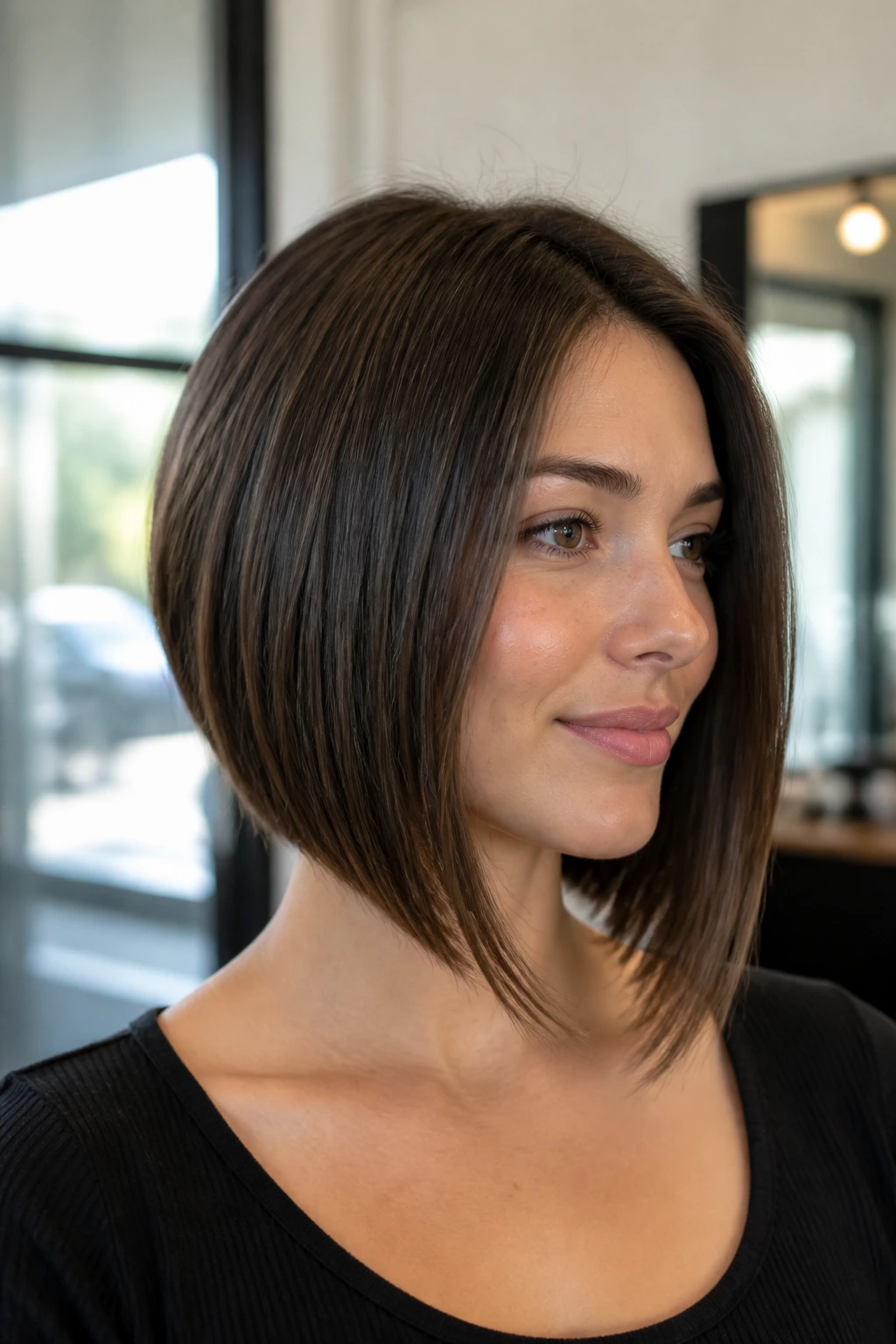
Short in the back, longer in the front. That’s the whole point, and it works especially well when your hair is straight enough to show the angle without fighting it. An A-line lob gives the front pieces a bit of forward motion, which helps if you want the cut to soften the jaw without drifting into a full bob.
The angle does not need to be dramatic. In fact, the best version is usually subtle — think half an inch to 1.5 inches longer in the front, not a sharp diagonal that looks like it was drawn with a ruler. It should feel like the hair is easing forward, not shouting about it.
3. Center-Part Glass Lob
Want a lob that looks like it was pressed into place and left alone? This is that cut. A center-part glass lob depends on a blunt perimeter, smooth roots, and a finish that reflects light without looking stiff. On straight hair, the center part makes the symmetry obvious, which is exactly why this style feels so sharp.
What It Needs to Work
A paddle brush, a blow-dryer with a nozzle, and a flat iron pass at around 300 to 350°F are usually enough. Don’t drown the hair in serum. A pea-sized amount through the mids and ends is plenty; too much and the whole thing goes stringy at the temples.
The cut itself should be precise. Ask for the front to hit near the collarbone and for the ends to be beveled just enough that they don’t look blunt in a boxy way. The finish should feel smooth, not frozen.
4. Deep Side-Part Lob
A deep side-part lob brings lift to straight hair without asking for layers everywhere. The part creates height at the crown, and the longer side gives the face some movement, especially if your hair tends to collapse flat on one side by lunch.
This is the lob I’d point to if somebody says their hair feels too “heavy” but they do not want a chopped-up look. The shape is still clean. It just has more drama at the top and more swing through the front. If your face is long or narrow, this cut can also keep the overall look from stretching too much.
5. Face-Framing Lob
The face-framing lob is what happens when you want softness around the front without giving up the edge of a lob. The front pieces start around the chin or just below it, then angle into the longer line in back. On straight hair, those front strands lie neatly instead of puffing out, which makes the shape read cleanly.
This one works well if your cheekbones need a little spotlight or if you wear your hair behind your ears half the time anyway. Keep the framing pieces long enough to tuck; too short, and they start fighting your jawline instead of flattering it. A little movement goes a long way here.
6. Invisible Layer Lob
Invisible layers are the quiet fix for straight hair that feels heavy but still needs a clean silhouette. The layers sit inside the cut, so the outside perimeter stays blunt while the inside loses some bulk. It’s a very good trick for thick hair, especially if the ends tend to balloon out into a triangle.
The whole point is to keep the haircut looking full from the outside. If you can see every layer from the mirror, they’re too obvious. Ask your stylist to remove weight underneath and leave the top line intact. The result is smoother, lighter, and much less boxy.
7. Textured-End Lob
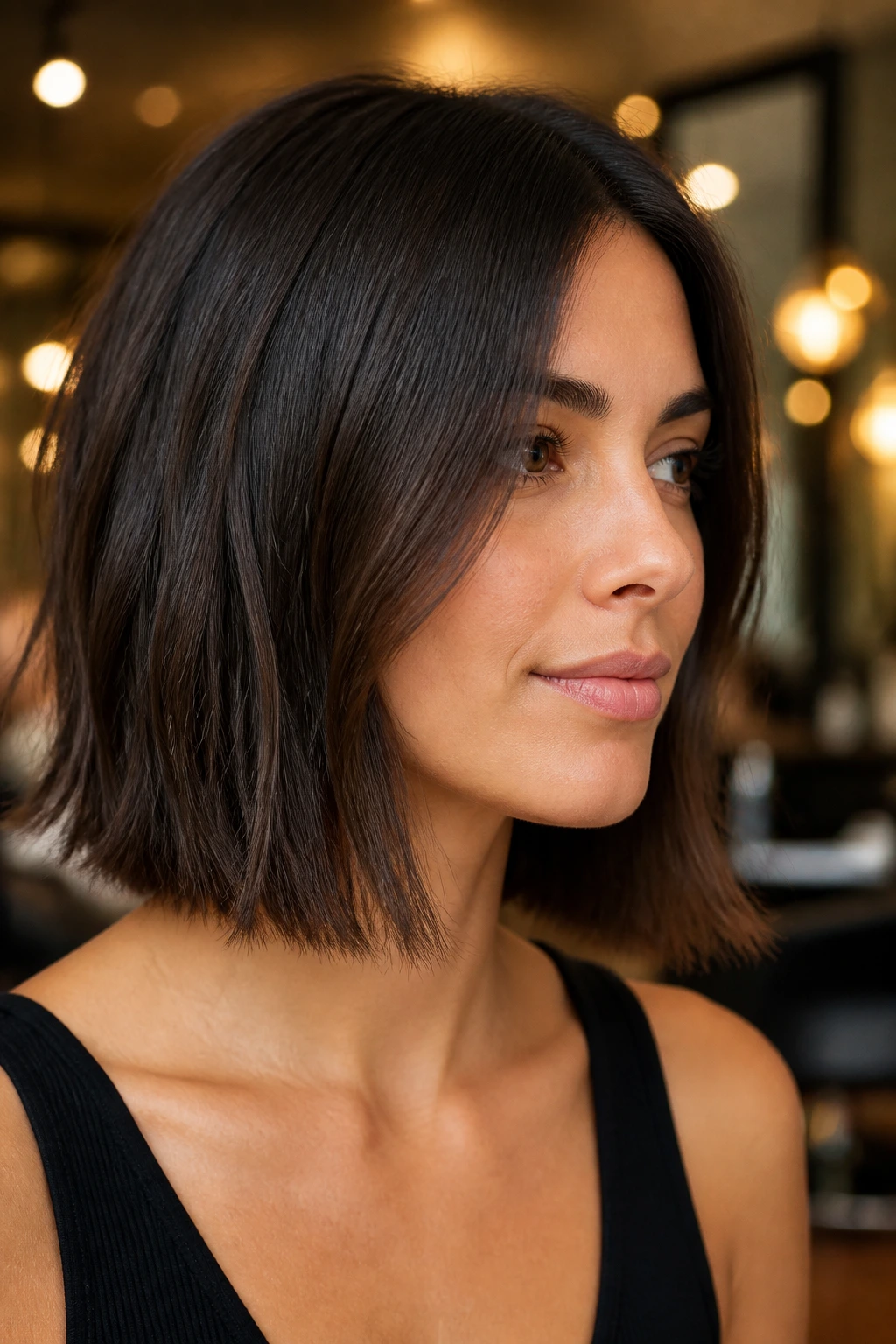
A textured-end lob is for people who like a little movement at the bottom edge. The ends are point-cut or lightly sliced so they separate instead of lying in one hard sheet. On straight hair, that extra breakup can keep the haircut from looking too severe.
The warning is simple: too much texture turns sleek hair into frayed ends fast. You want enough softness to keep the line from feeling rigid, not so much that the hem looks thin. A few subtle pieces around the front and a slightly softer edge in back usually do the job.
8. French Fringe Lob

A French fringe gives a lob a little personality without wrecking the shape. The bangs usually sit around the eyebrows or just below them, with a full, soft line that makes straight hair look tidy around the face. If your forehead feels too exposed in a center-part lob, this is a clean fix.
The trick is balance. If the fringe is heavy and the lob is blunt, the whole look can get dense fast. Keep the ends crisp and let the bangs do the talking. On straight hair, the fringe will lie where you put it, which is half the charm and half the reason it needs regular trims.
9. Curtain Bang Lob

Curtain bangs and a lob are a sensible pair, mainly because both pieces of the cut want to move. The bangs split at the center and bend back toward the temples, which softens the front without closing off the face. On straight hair, that shape reads very clearly.
Tell your stylist to keep the shortest point around the bridge of the nose or slightly below, then let the edges slide toward the cheekbones. If the fringe is cut too short, it can sit like a shelf. The best version feels easy, not fussy, and it grows out in a way that still looks deliberate.
10. Rounded Lob

A rounded lob curves gently under the jaw and through the shoulders, which keeps straight hair from looking too boxy. Instead of hanging in a flat rectangle, the shape folds inward a little, usually with the help of a round brush or a soft bend from a flat iron.
This works well if your jawline is sharp and you want the cut to feel a bit softer. It also suits hair that flips outward at the ends, because the rounding fights that. The silhouette should feel smooth and controlled, not curled under in an old-school salon way.
11. Choppy Lob
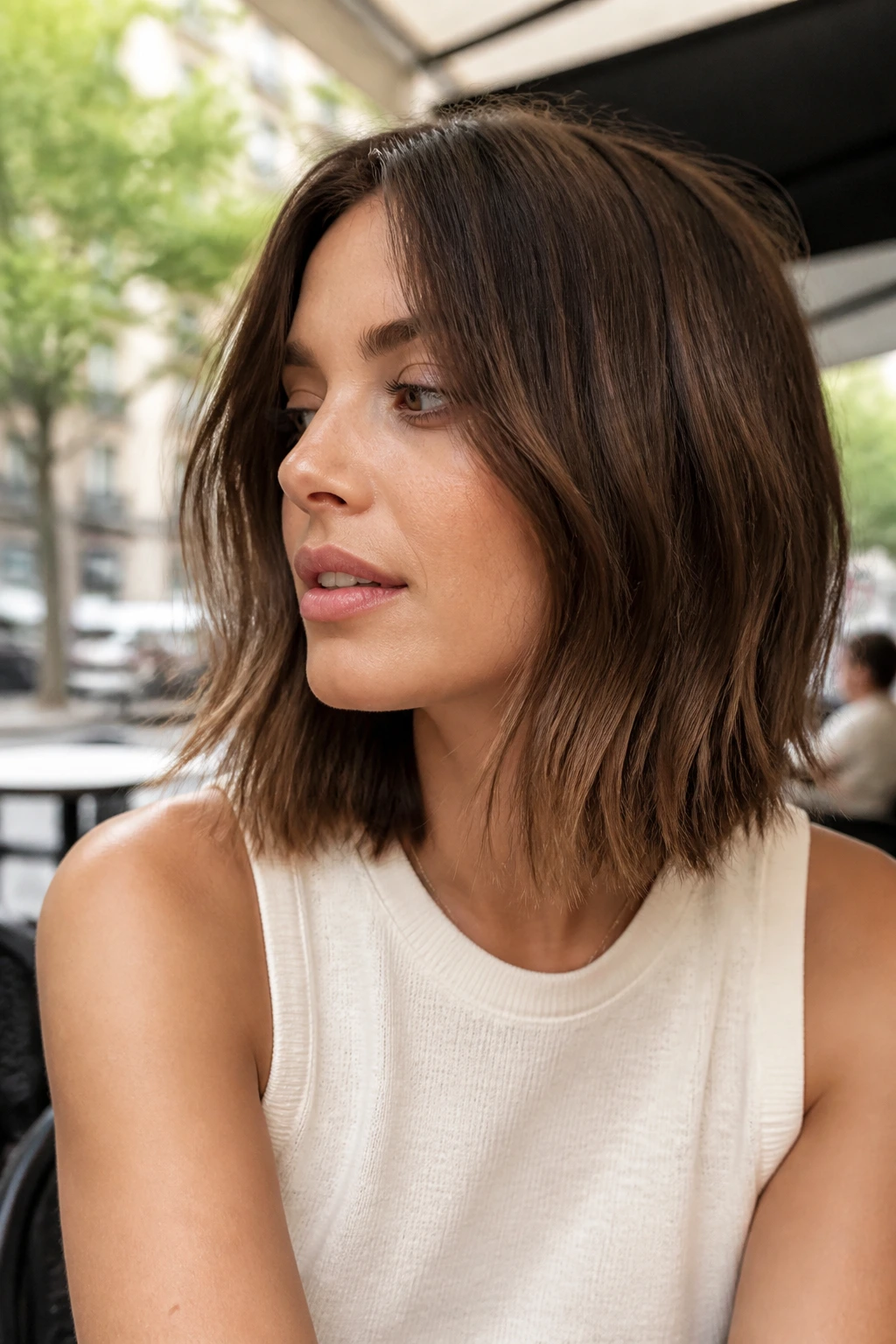
A choppy lob brings movement to straight hair that looks too solid when left alone. The ends are broken up into little pieces, so the cut feels lighter and a bit more casual. That can be a very good thing if your hair has a dense, heavy drop and no natural bend at all.
Just don’t confuse choppy with hacked. The layers should still connect. If the bottom looks too shredded, the cut loses its shape and starts to look tired in a week. The best choppy lob still has a perimeter you can trace with your eye.
12. Asymmetrical Lob

An asymmetrical lob gives straight hair something to do. One side sits a little longer than the other, and that slight mismatch creates movement even when the hair is perfectly smooth. Straight strands make the asymmetry obvious, which is why this style feels bolder than it sounds on paper.
Keep the difference subtle unless you want the haircut to become the whole outfit. A one- to two-inch shift is usually enough. More than that and the cut stops reading as a lob and starts feeling like a statement piece that needs constant styling to behave.
13. U-Shaped Lob
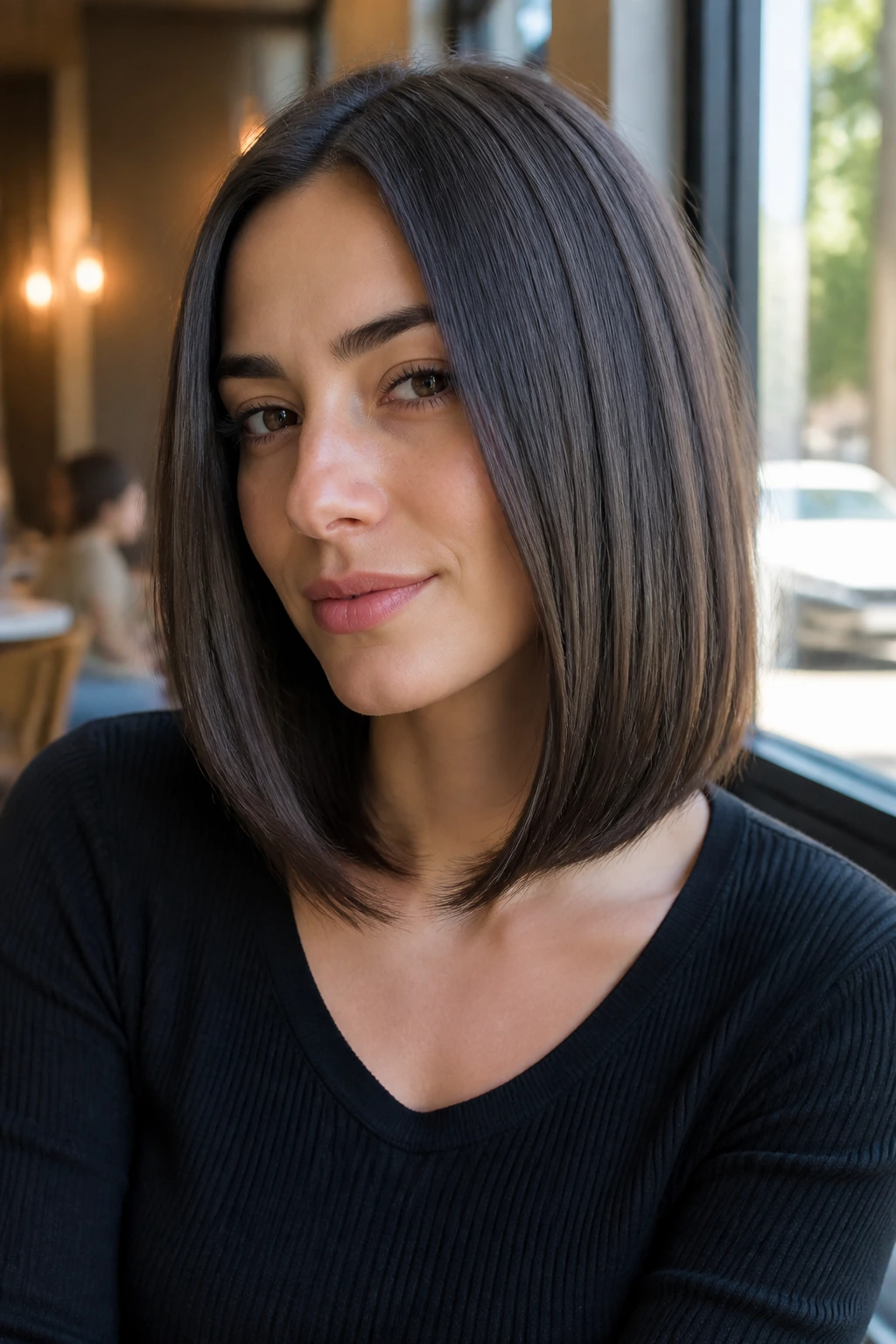
A U-shaped lob keeps the center slightly longer and rounds the sides into a soft curve. On straight hair, that shape can keep the cut from feeling flat across the bottom while still preserving the polished line people usually want from a long bob.
This is a smart choice if you like length but hate the blunt shelf effect that some straight cuts get around the shoulders. The curve should be gentle. If it gets too steep, the front can start to droop and the back disappears. A subtle U is easier to live with and easier to grow out.
14. Boxy Precision Lob
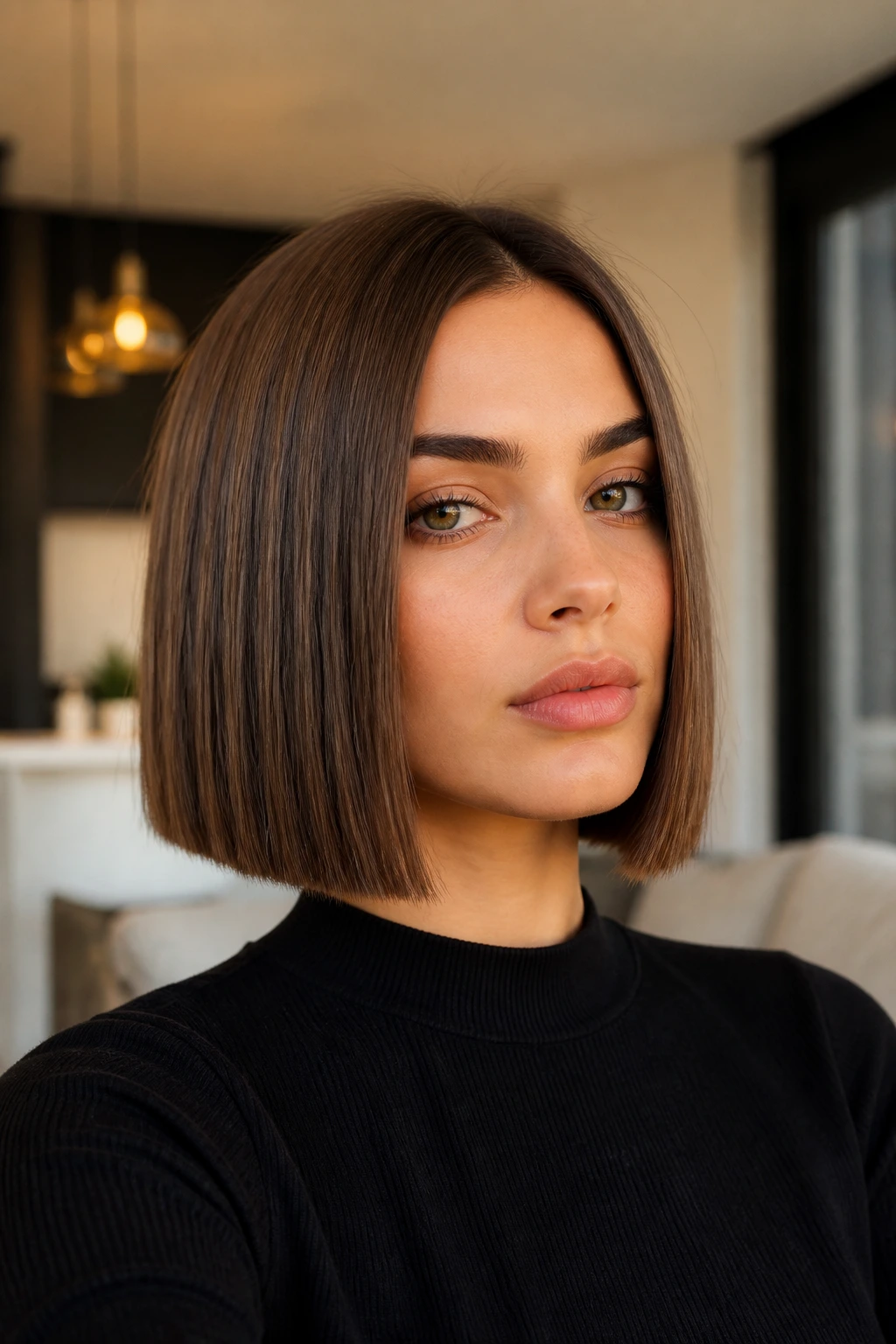
This one is sharp. No fluff, no soft edges, no “we took a little off and hoped for the best.” A boxy precision lob leans into a square perimeter that makes straight hair look dense and deliberate. It’s especially good if your strands are fine but plentiful enough to hold a clean line.
The tradeoff is honesty. Split ends, rough color, and dryness show up faster here because the cut is so exact. If you want this shape, keep the edges in good condition and don’t overload it with texture cream. The beauty is in the line itself.
15. Shoulder-Grazing Lob

A shoulder-grazing lob gives you a little more length to play with, which helps if you’re not ready to fully commit to a shorter hem. Straight hair at this length can tuck, swing, and still be clipped up without much drama. It’s the “I still want options” version of the lob.
The trick is keeping the ends from colliding with the tops of the shoulders in a bad way. If your hair flips out at that length, ask for a soft bevel or a small internal adjustment so it lands cleaner. A tiny change in angle can save you from daily irritation.
16. Wet-Finish Lob
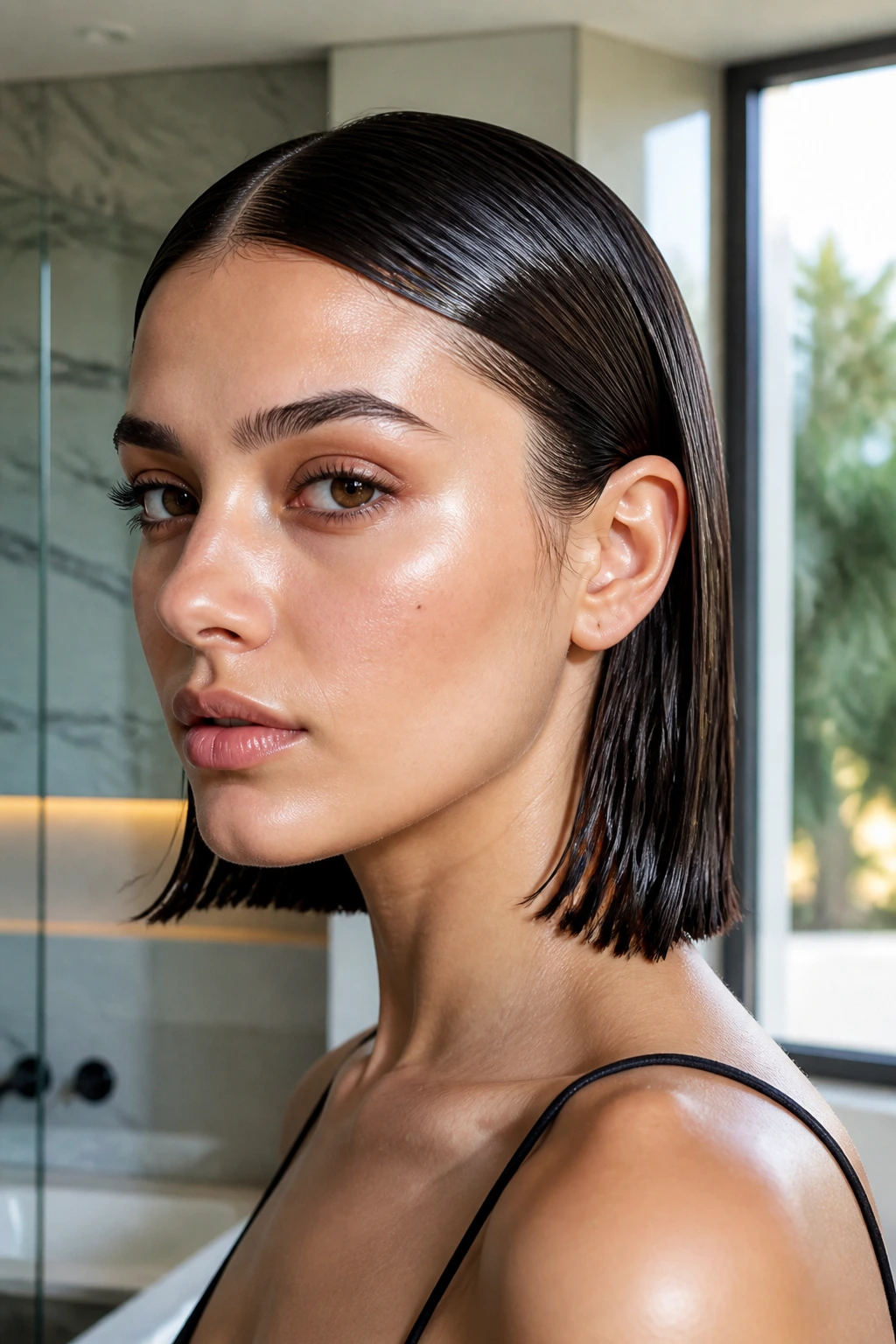
A wet-finish lob leans sleek on purpose. The hair is styled smooth with gel, cream, or a light mousse, then combed into a glossy line that looks controlled instead of blown out. On straight hair, the finish can look almost architectural.
Where It Shines
This is the lob I’d reach for when the outfit is sharp and the haircut needs to hold its own. A middle part and a tucked side make the shape look even cleaner. Use product sparingly near the roots and a touch more through the ends if they tend to separate.
It is not the most forgiving finish, though. If the ends are fried or the cut is uneven, the wet look will show it. That’s the price of a glossy surface. There’s no camouflage in it.
17. Swept-Over Side Bang Lob
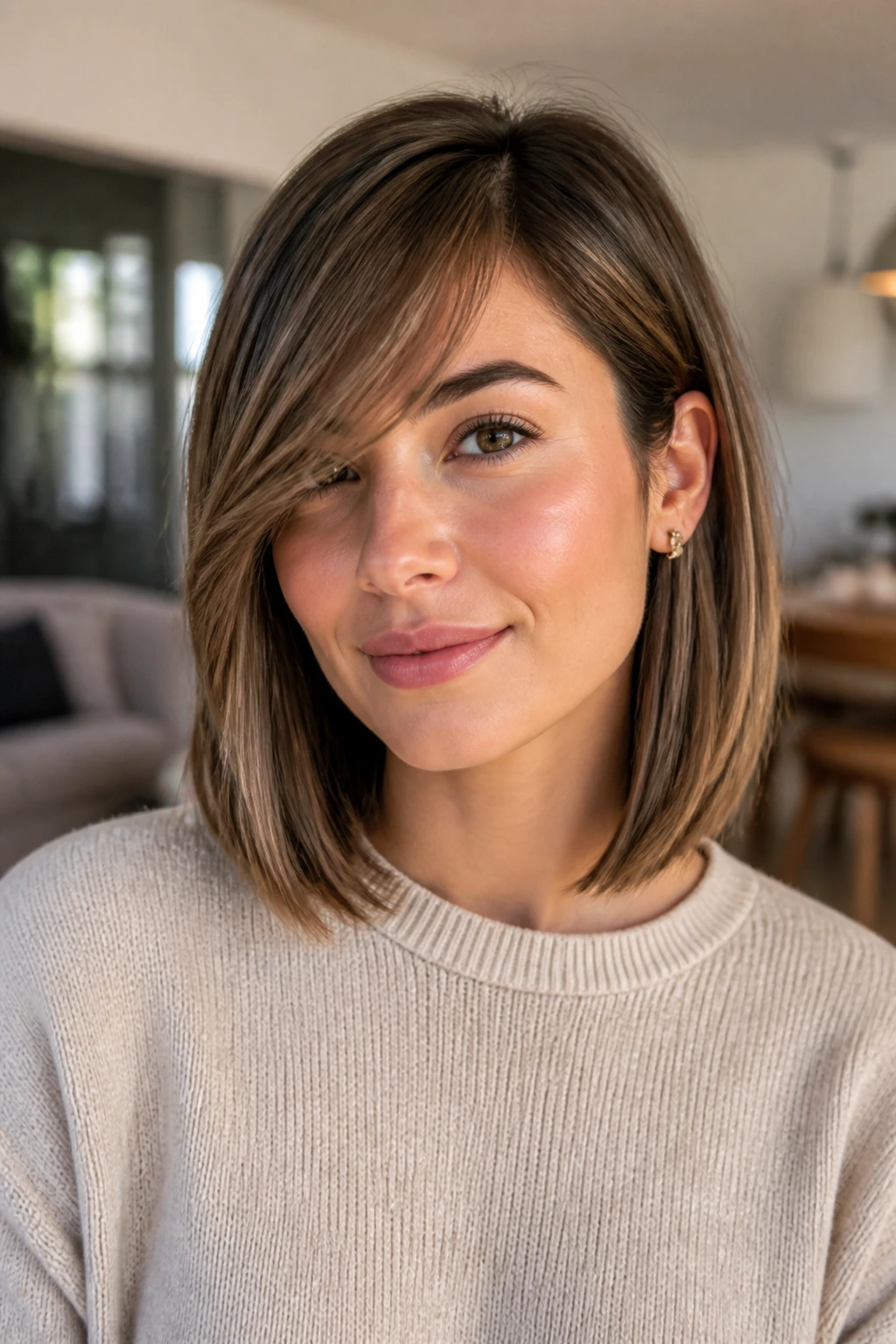
A swept-over side bang can soften a lob without adding a lot of volume around the face. The longer fringe falls across the forehead and blends into the front pieces, which gives straight hair a little movement at the top while the rest of the cut stays simple.
I like this version on people who want to hide a high forehead or create a bit of diagonal motion in a very straight hairstyle. The bang should be long enough to tuck behind the ear or blend back if you get tired of it. Short side bangs can be fussy. Long ones tend to behave better.
18. Micro-Layer Lob
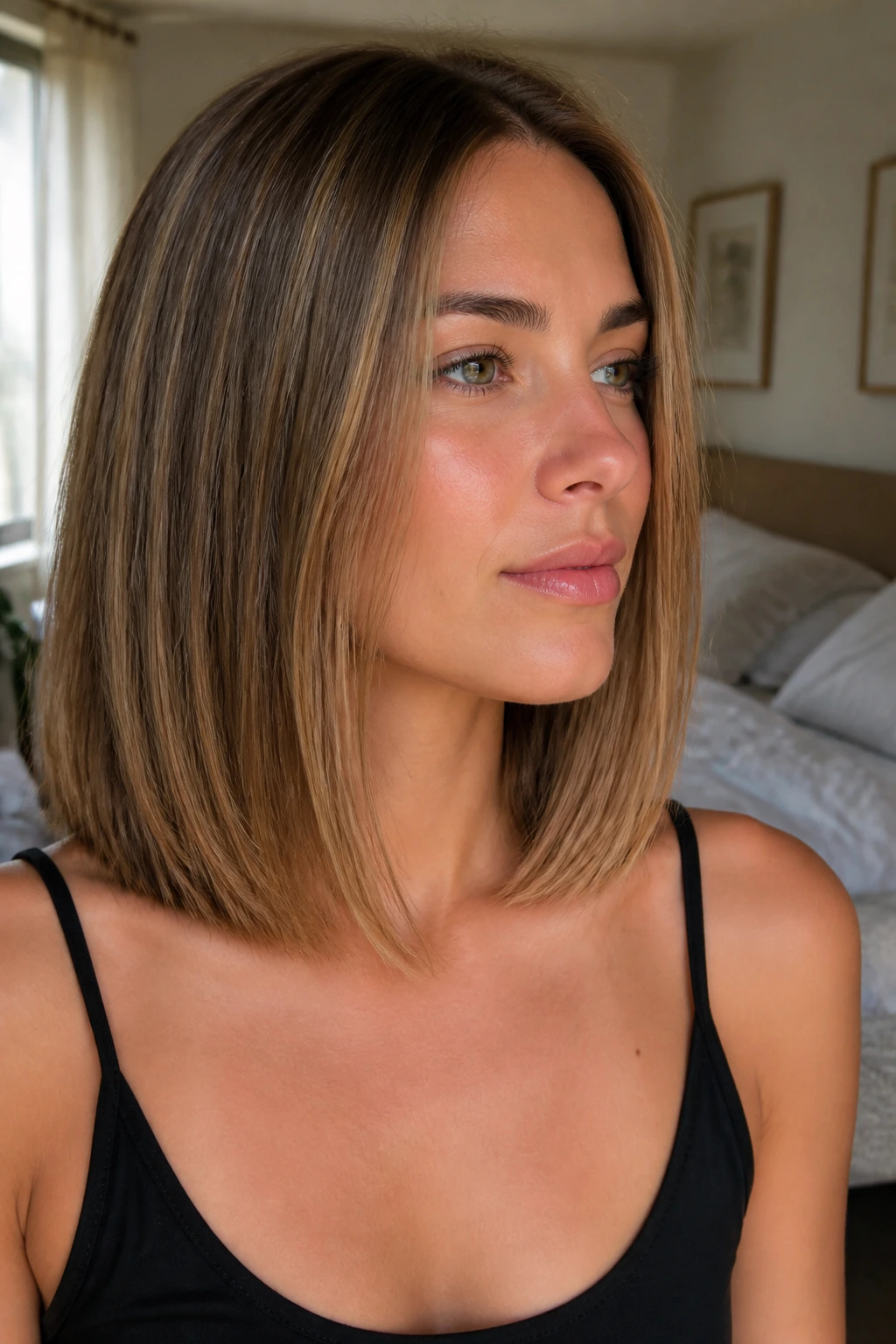
Micro-layers are tiny, internal shifts that loosen a thick lob without making it look choppy. The outside still reads as a long bob, but the inside has enough movement to stop the hair from sitting in one heavy block. Straight hair with a lot of density usually benefits from this kind of quiet weight removal.
The key is restraint. If the layers are too short or too many, the bottom starts to thin out and the shape gets ragged. A good micro-layer lob should still look mostly one-length from the front. The movement is there, but only when the hair moves.
19. Money-Piece Lob

A money-piece lob is part haircut, part color play. The cut is usually clean and simple, but the brighter pieces around the face change the whole mood. On straight hair, those front highlights stay visible in a way they sometimes don’t on wavier textures, so the effect is crisp.
Where the Color Matters
The lighter sections should frame the face, not drag down past the jaw unless you want a bolder stripe. Keep the cut itself blunt or lightly beveled so the color line looks neat. If the hair is already very light, this can feel too busy; a softer shadow root or lowlight can calm it down fast.
20. Grown-Out Bob Lob

This is the lob for people who did not mean to grow a bob, liked the halfway stage, and decided to keep it. A grown-out bob lob usually sits a little softer around the edges, with enough length to feel current and enough structure to still read as a haircut.
It can be one of the easiest straight-hair cuts to live with because the grow-out is already baked in. Ask the stylist to clean up the perimeter and leave the front pieces a touch longer than the back. That small adjustment keeps it from looking like you simply forgot to book another appointment.
21. Clavicle Angle Lob
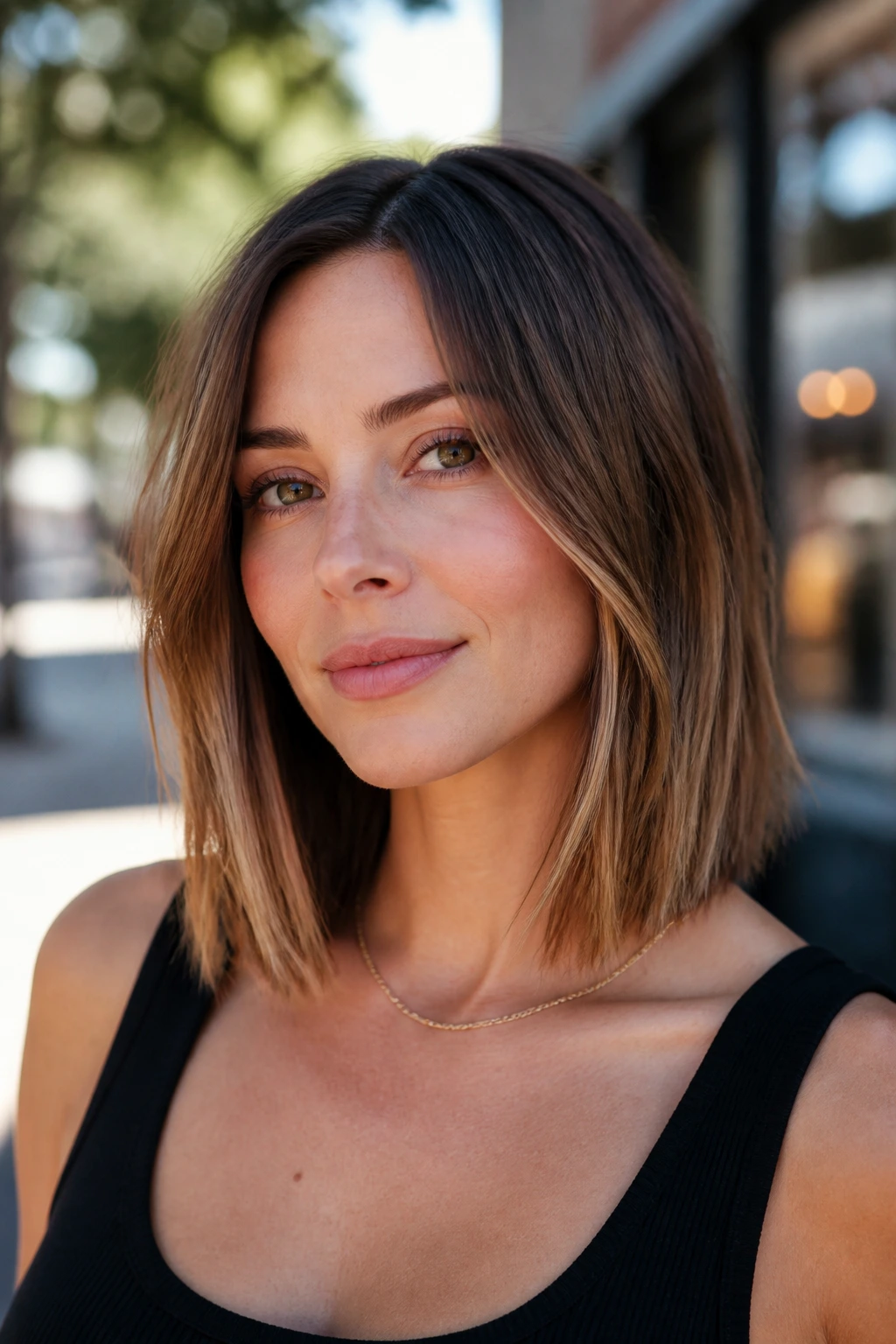
A clavicle angle lob sits around the collarbone and slopes just enough to follow the shape of the body. It’s subtler than a hard A-line, which makes it a nice middle ground for people who want movement but not a dramatic angle. Straight hair shows that slope neatly.
The cut can be especially useful if your neck is long and you want the shape to feel a little softer around the shoulders. Keep the front pieces long enough to graze the collarbone, not sit above it. That little bit of length keeps the whole style from getting boxy.
22. Bottleneck Bang Lob

Bottleneck bangs start narrow in the middle and open wider near the temples, which is a smart choice when you want fringe without a heavy curtain. Straight hair makes that shape look tidy, almost tailored, because the pieces fall exactly where they’re cut.
This is one of the best fringe choices for a lob if you want the face framed but still want room around the eyes. The center should be short enough to matter and long enough to blend. If it starts looking too much like baby bangs, the shape loses the whole point.
23. Air-Dry Lob

An air-dry lob is cut to look decent with almost no heat, which sounds simple until you try it on straight hair and realize the perimeter has to carry the style. The ends need just enough bevel to avoid sticking out in a hard, dry line, but not so much shaping that they turn fuzzy.
What Makes It Behave
Light cream or leave-in spray is enough for most versions. You are not trying to hold curl. You are trying to keep the line smooth and the ends from splitting into awkward little angles. This cut is a good fit if you hate daily heat styling and want something that still looks considered when it dries on its own.
24. Tucked-Behind-Ear Lob
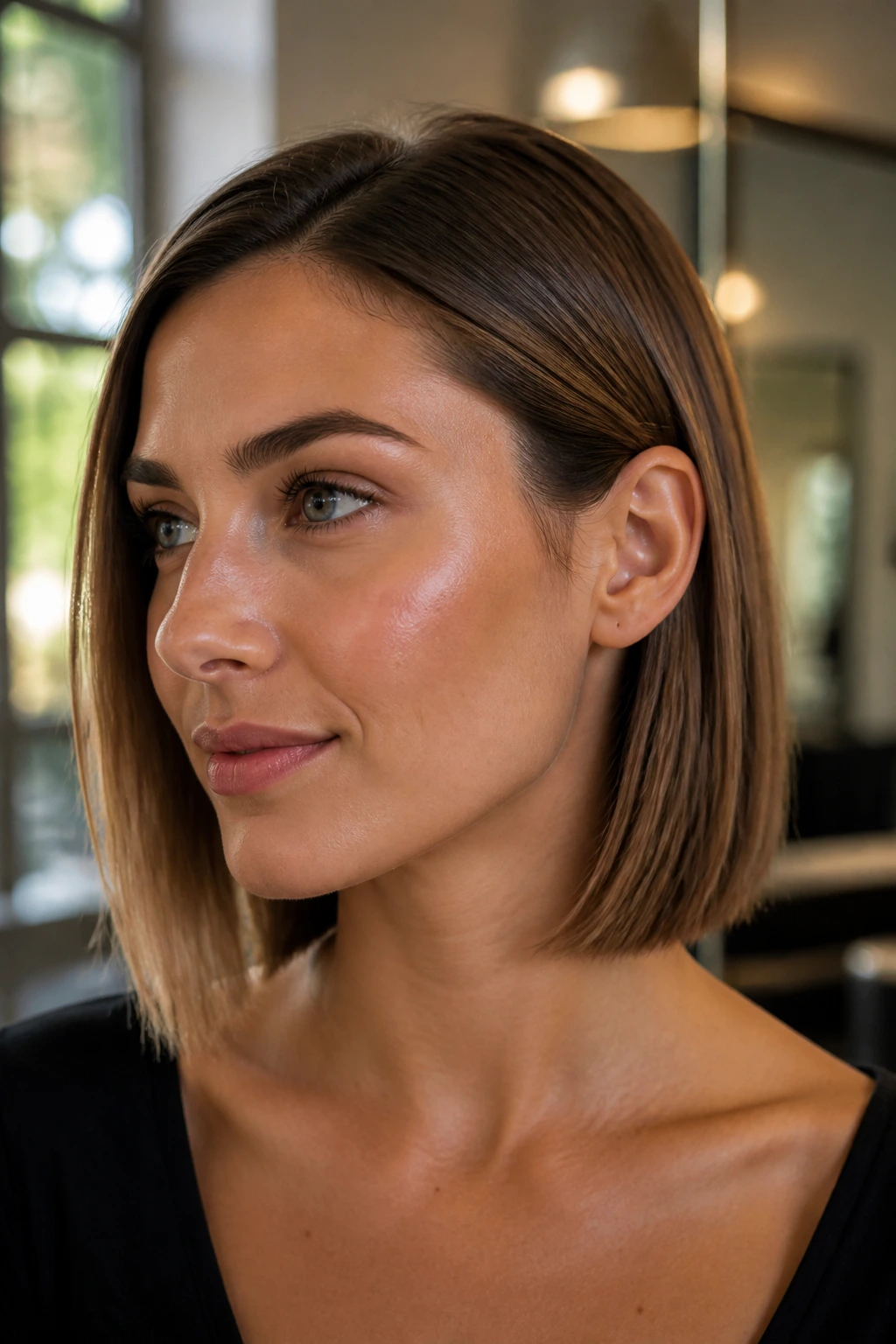
A tucked-behind-ear lob is one of the easiest ways to make straight hair feel polished with almost no effort. The cut needs enough length around the face to tuck cleanly, but not so much that the whole front collapses behind the ears and disappears.
This works especially well with glasses, hoop earrings, or a strong neckline. The ears become part of the shape. Ask your stylist to leave the side sections at least to the cheekbone, maybe a little longer, so they can tuck without popping loose in strange little gaps.
25. Internal Layer Lob
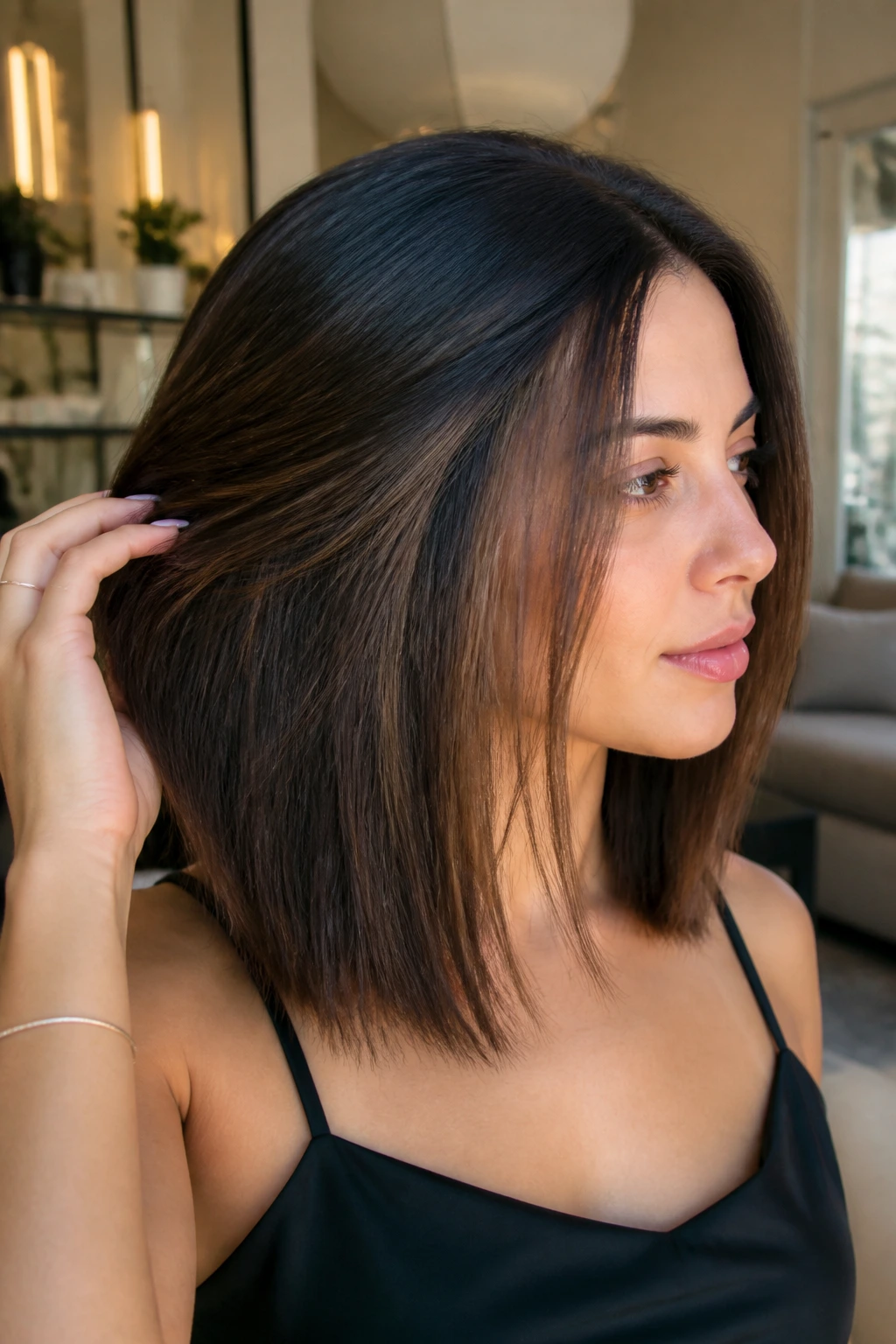
Internal layers are the quiet answer to heavy straight hair. The exterior still looks sleek and controlled, but the inside loses enough bulk to keep the shape from puffing out. If your hair feels thick but stubbornly flat, this is often the cut that makes daily styling less annoying.
The best version keeps the top layer clean and smooth. If the internal work shows too much, the haircut starts looking thin. You want the benefit — lighter movement, less bulk, easier drying — without letting the skeleton of the cut show through.
26. One-Length Lob
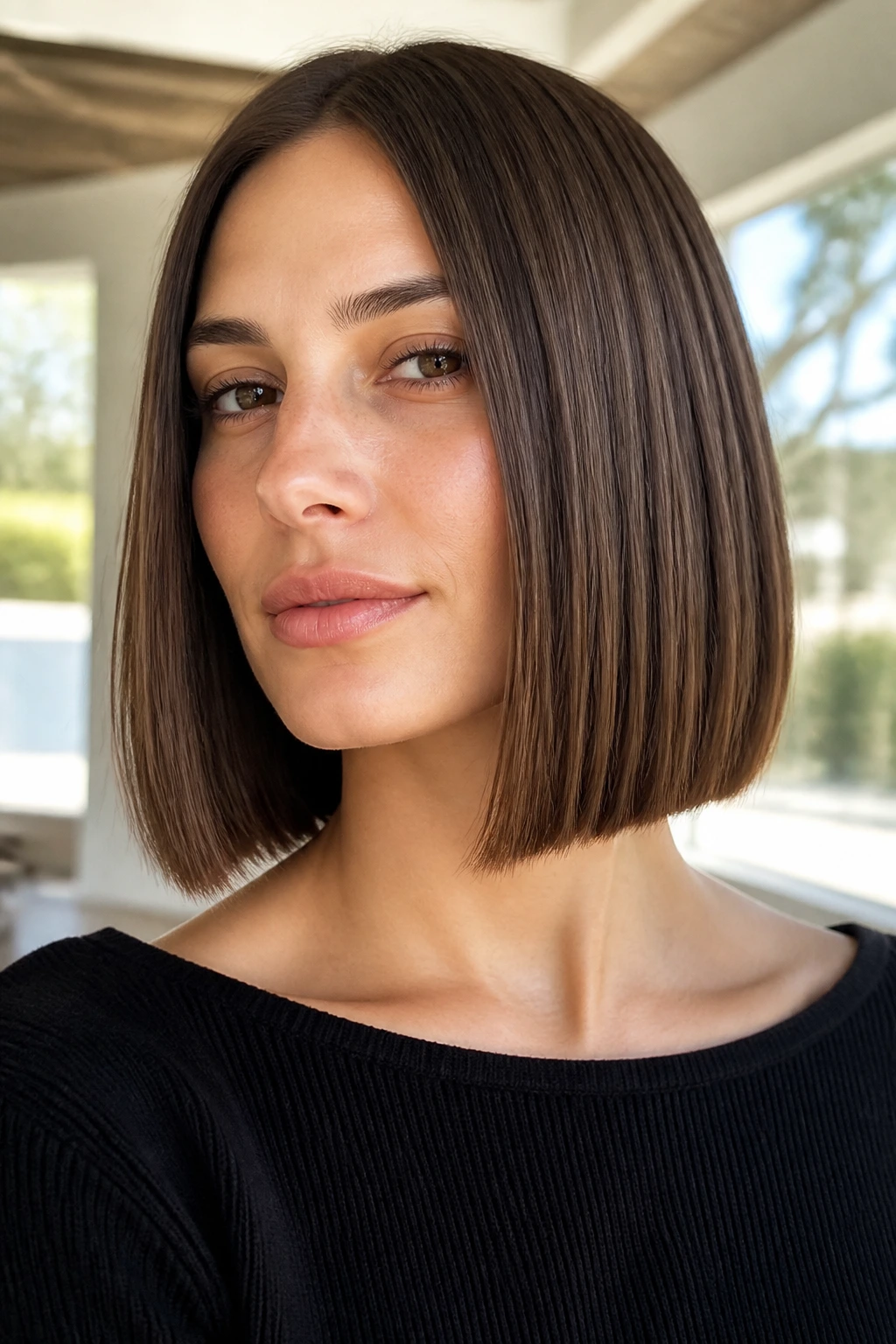
No angle. No visible layers. No drama. A one-length lob is the bluntest option in the bunch, and straight hair is almost tailor-made for it because the cut line stays visible all the way around. On fine hair, that can make the ends look fuller than they really are.
The catch is maintenance. A one-length lob exposes dryness and split ends faster than softer cuts do, so it asks for regular dusting. If your hair is healthy and you like crisp edges, this is a very clean place to land. If your ends are rough, the line will tell on you.
27. Feathered Lob
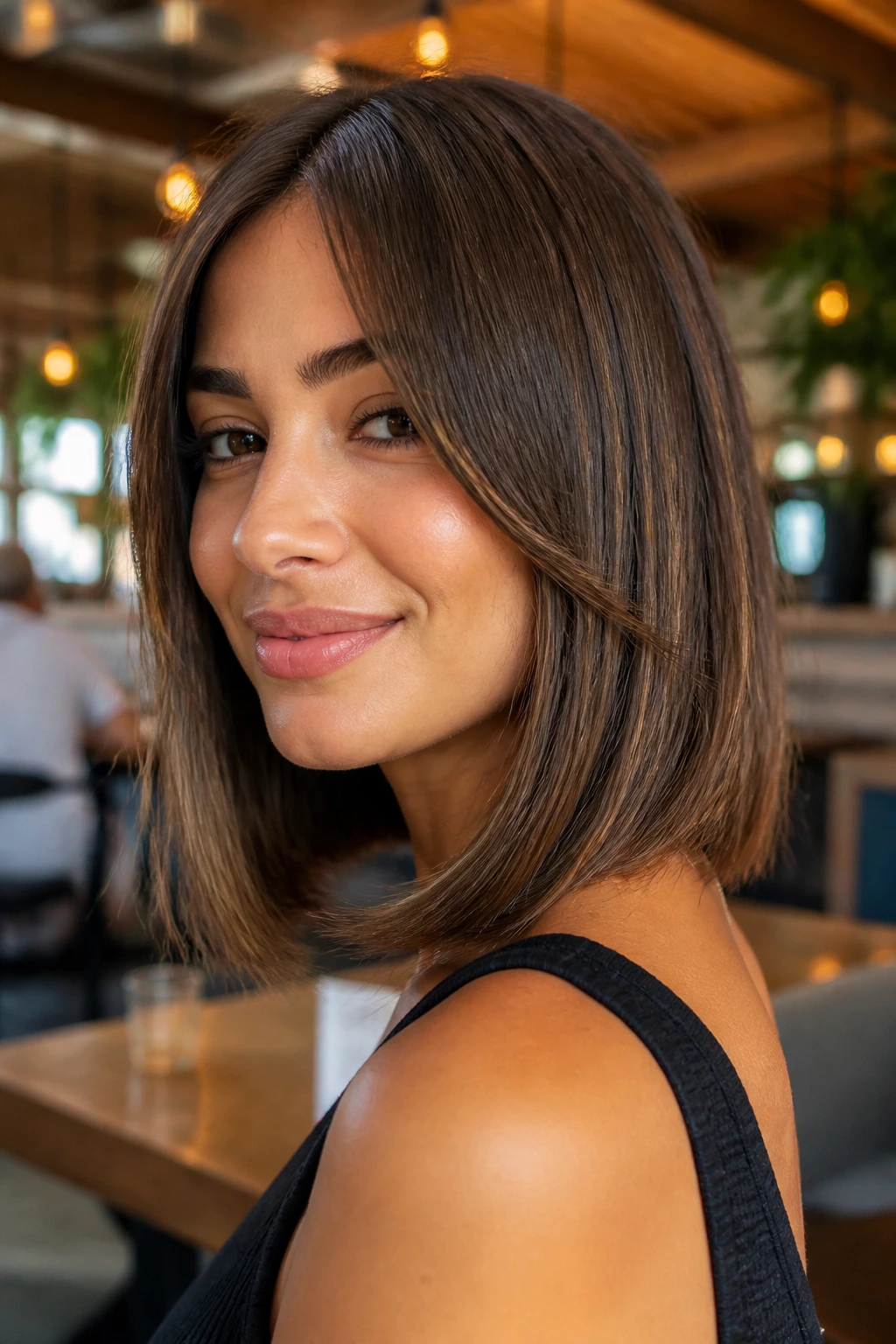
Feathering takes the edge off a straight lob without making it look shaggy. The ends taper softly, which can be a relief if blunt cuts feel too hard around the face. On straight hair, feathering can keep the bottom line from looking like a single heavy slab.
This is one of the better options if you wear a side part or if your hair has a lot of density but not much bend. The feathering should be light enough that the cut still looks finished. If it becomes wispy all the way through, you’ve gone too far.
28. Wispy Bang Lob

Wispy bangs are the low-pressure way to add fringe to a lob. They sit lighter on the forehead, so they do not swallow the face the way a dense bang can. On straight hair, they stay piecey and soft, which is part of their charm.
The tradeoff is that wispy bangs need a little attention in the morning. A dab of cream and a quick blow-dry usually keep them from splitting into two strange little curtains. If your forehead is very short, keep the bangs longer and softer; otherwise the cut can feel crowded fast.
29. Scandi Minimal Lob
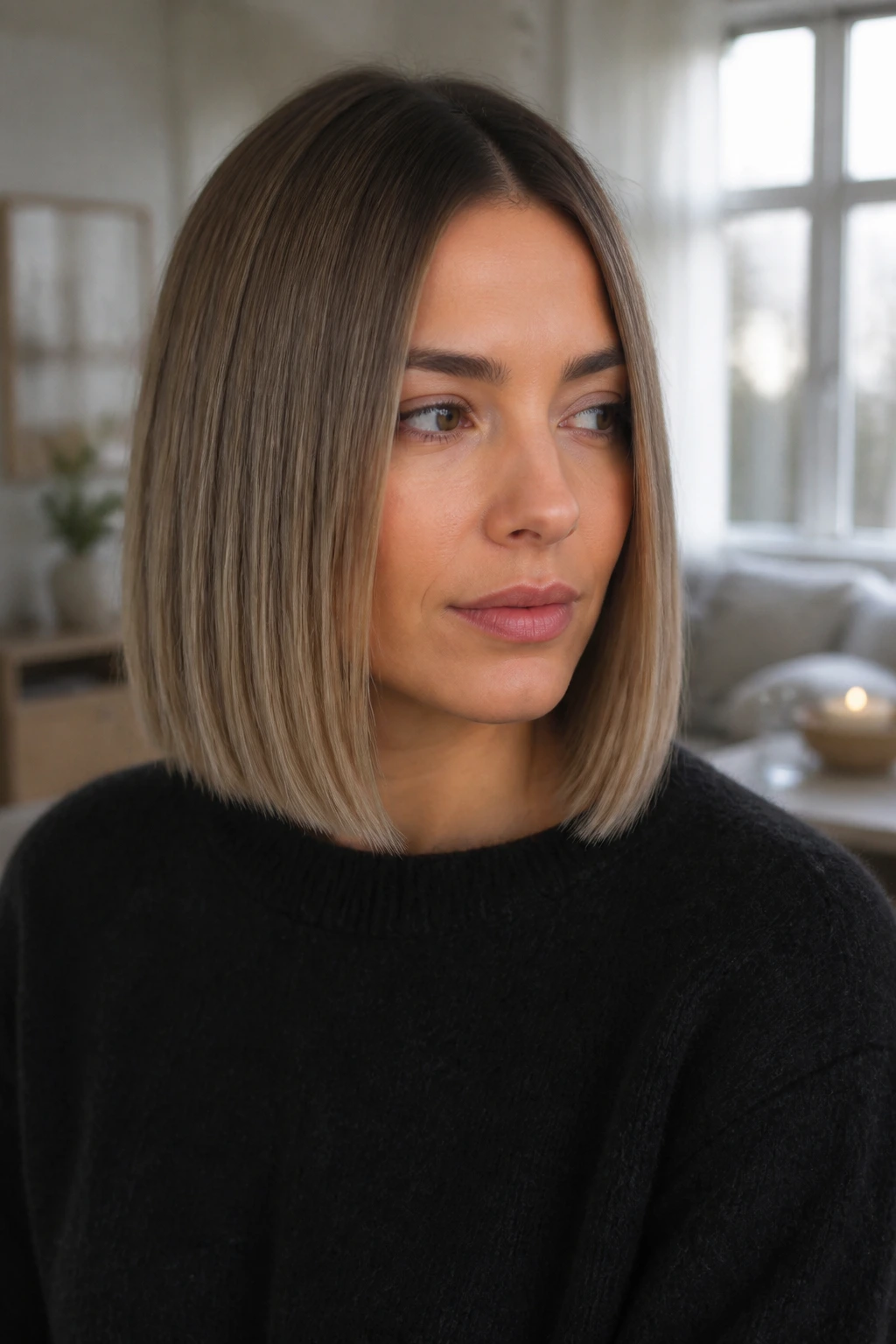
Clean, spare, and exact. That’s the whole mood. A Scandi minimal lob relies on a precise line, a calm part, and almost no visible fuss around the ends. Straight hair makes this look especially tidy because the texture stays out of the way and lets the cut do the work.
Why It’s So Effective
This is the kind of cut that looks best when the hem lands in exactly the right place — usually around the collarbone or a touch above it. If the length is off by even half an inch, the whole thing can feel less intentional. The less you pile onto it with product, the better it behaves.
30. Sliced-End Lob
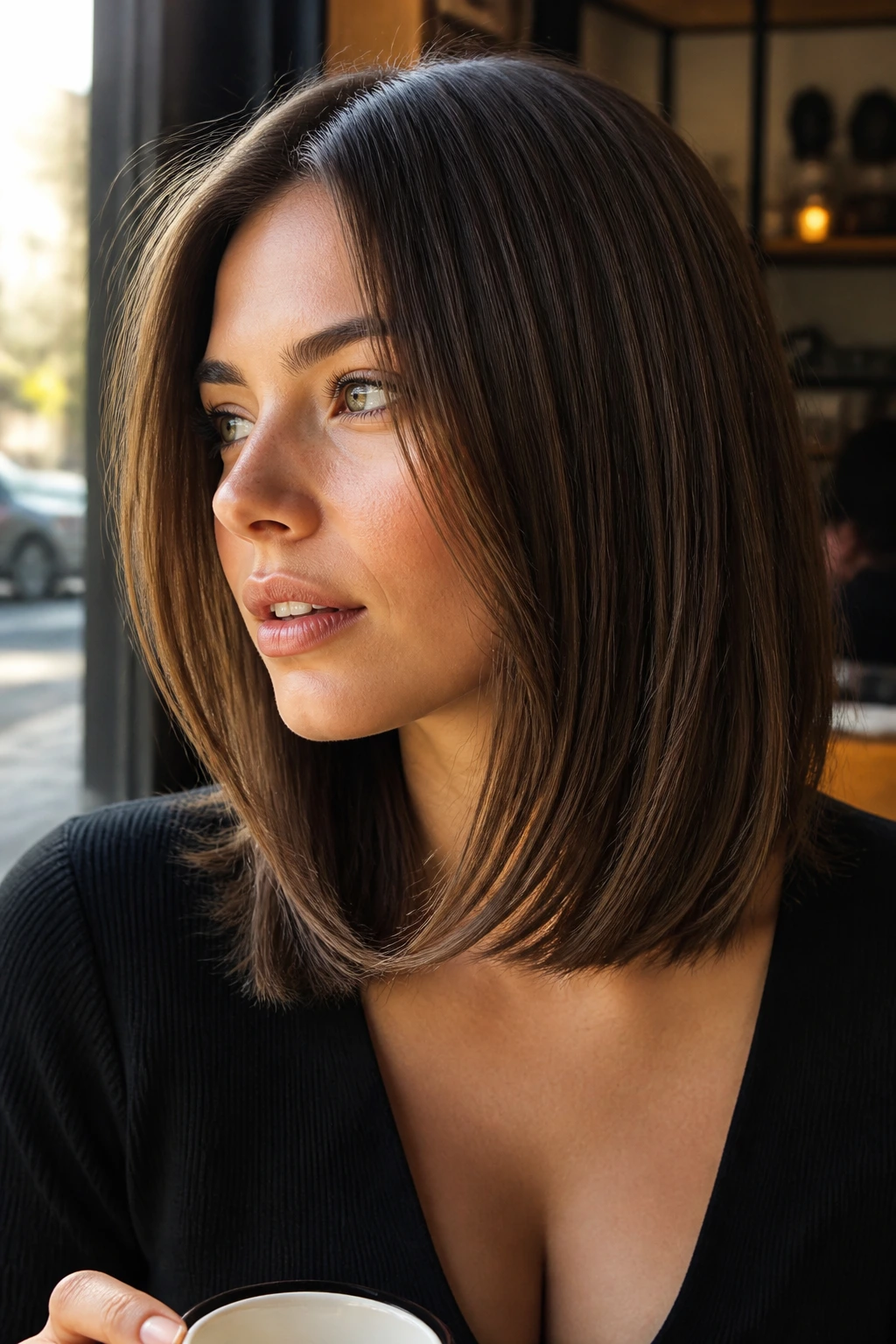
Sliced ends create softness without the blunt, chopped look. A stylist uses a more gliding cutting motion so the ends move a little more freely. On straight hair, that can keep the hem from feeling too square while still preserving a finished shape.
This is a good choice if you like your hair smooth but not stiff. The warning is simple: slicing should not turn into thinning at the bottom. If the ends start looking airy in a bad way, the cut has gone too far and the line will feel weak.
31. Graduated Lob

A graduated lob brings a touch of shape to the back of the head without turning into a full stacked bob. The nape sits slightly shorter, which gives lift, while the front keeps its length. Straight hair shows that graduation cleanly, so the profile looks neat.
It works well if the back of your hair tends to lie flat or if you like a little roundness through the crown. Keep the graduation subtle. Too much stacking and the cut starts acting like a bob from the early stages of a grow-out, which is a different mood entirely.
32. Slight-Bend Lob

This is the version that looks best with one smooth pass of a brush or flat iron, creating a tiny bend at the ends instead of a full curl. Straight hair can look a little severe when every strand hangs in a ruler-straight sheet, and this cut softens that without changing the overall shape.
I like it for people who want movement but do not want to fight their texture. The bend should start low, about an inch from the ends, so the hem still looks neat. Anything more dramatic and you’re building a style rather than wearing a cut.
33. Low-Maintenance Grow-Out Lob
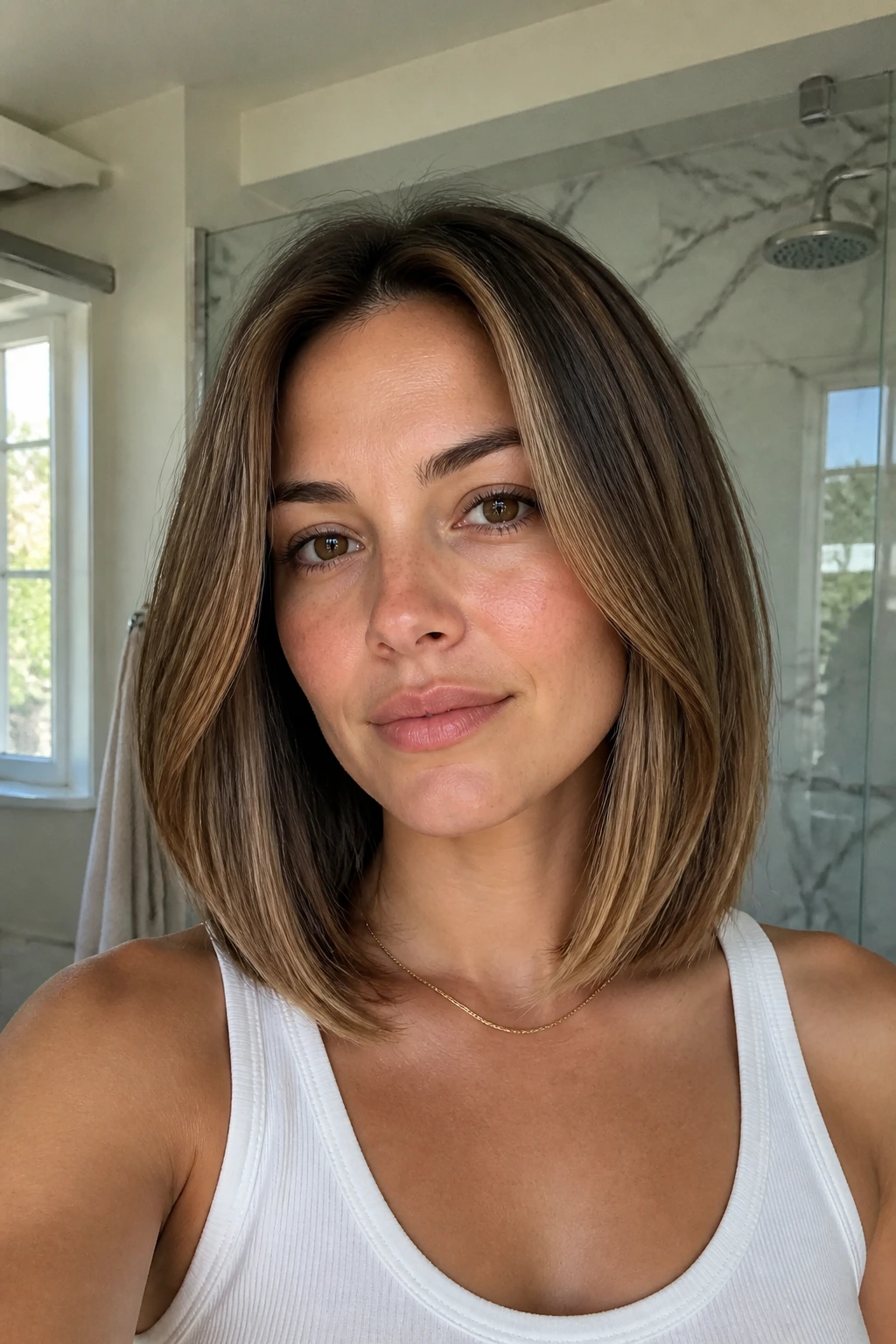
A low-maintenance grow-out lob is designed to stay readable even after a few months. The perimeter is soft enough to age well, the length sits in that collarbone zone where it can keep getting a little longer without looking abandoned, and the front pieces are left with enough room to move.
This is the one to ask for if you hate emergency trims. It should still look like a lob at 10 or 12 weeks, not a missed appointment. That usually means keeping the angle mild, avoiding aggressive face-framing, and leaving the ends clean enough to hold their shape as they grow.
Why Straight Hair Gives a Lob Its Best Shape
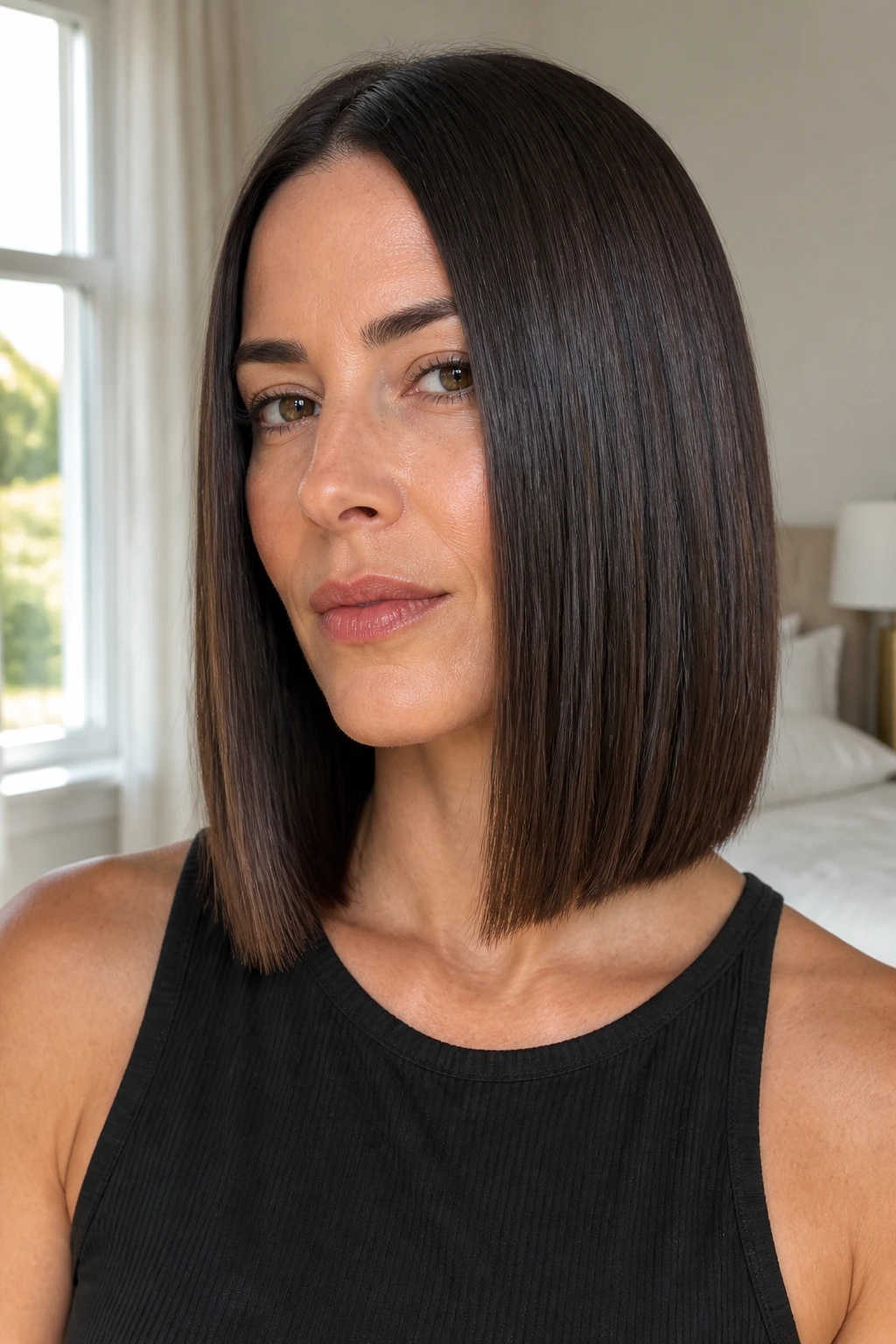
Straight hair is honest about a haircut’s structure, and that can be a blessing if the cut is built well. A lob depends on line, weight, and where the ends land. On straight strands, you see all of it at once — the crispness of the perimeter, the angle of the front, the exact way the hair tucks against the neck.
The blunt versions look denser because there is no wave pattern to break up the edge. The softer versions stay sleek because the hair does not puff around the line. That’s why the same lob can look sharp on one person and flat on another: the difference is usually weight placement, not the cut name itself.
Blunt vs. beveled
A blunt edge creates the strongest visual weight. A tiny bevel, though, can stop the cut from looking boxy when the ends brush the shoulders. That small detail matters more on straight hair than most people realize. Too much bevel and the cut loses density; too little and the hair can flare out at the bottom.
Why the front changes everything
Move the front half an inch, and the face changes with it. A lob on straight hair is not just about length; it is about where the front lands against the chin, collarbone, or cheekbone. That’s why the best versions feel tuned to the face rather than simply trimmed to a number.
What to Tell Your Stylist Before the First Cut
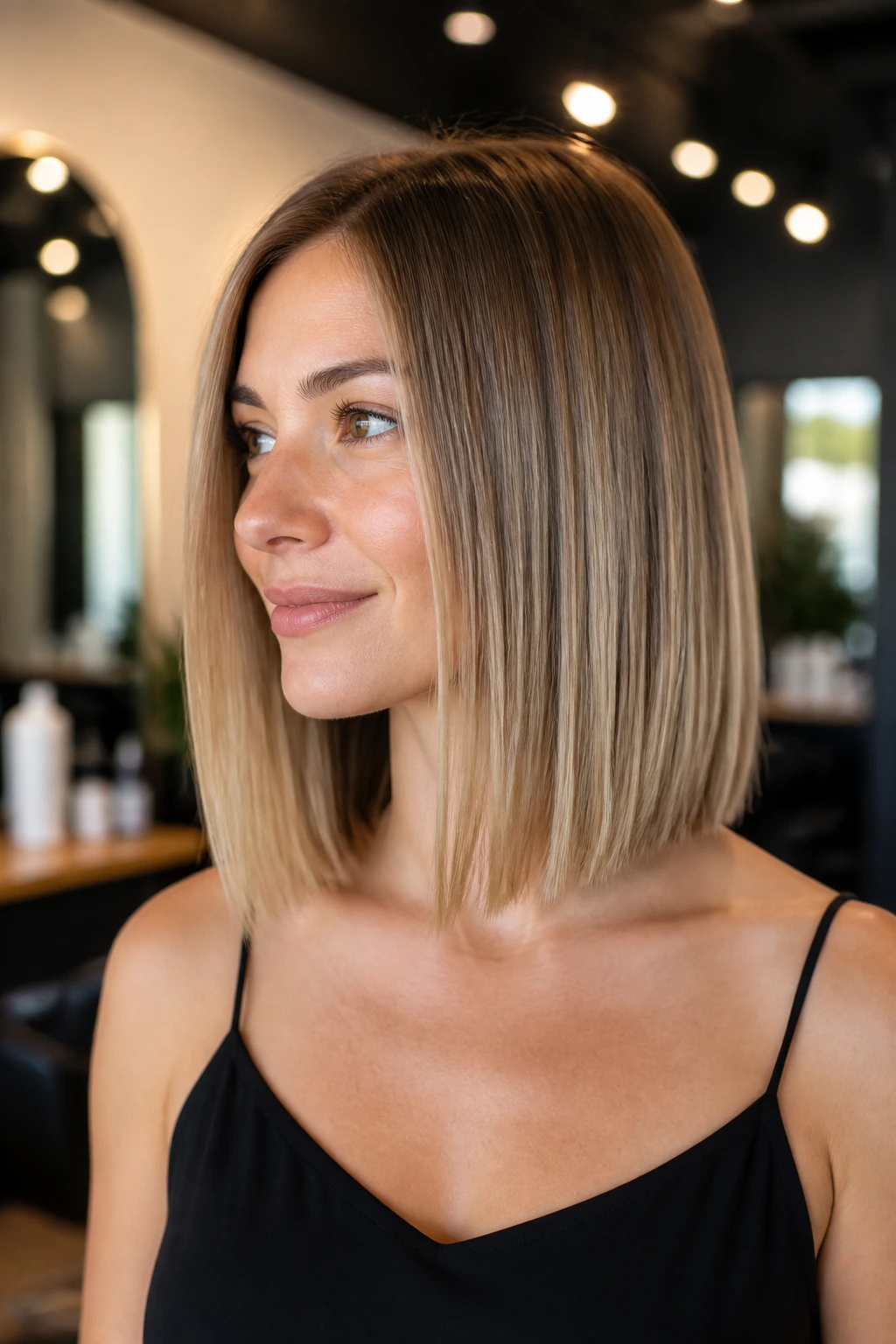
Bring photos, yes, but bring useful photos. A front shot is fine, yet the side view is the one that tells the truth about angle and length. If you can, bring one picture of the cut when it’s freshly styled and one of it lived in a bit. Those two together save a lot of guessing.
Tell your stylist how your hair behaves on a bad day. If one side flips out, say so. If your part is stubborn, say that too. A lob on straight hair can go wrong when the natural fall pattern gets ignored, because the ends will remind you every morning.
Be plain about how much styling you’re willing to do. A blunt, glassy lob needs a different daily routine than a softly feathered one. If you prefer air-drying, ask for a cut that still has a slight bevel at the hem. If you heat-style, say so up front and let them build the shape around that.
Tools That Make Styling Easier
-
Blow dryer with a concentrator nozzle: It keeps air pointed where you want it, which matters when you’re trying to smooth a straight lob instead of rough-drying it into puffiness.
-
Paddle brush: Best for sleek blowouts and for keeping the length flat at the collarbone.
-
Small round brush, about 1 to 1.5 inches: Useful if you want a slight bend under the ends or a little lift at the front.
-
Flat iron with adjustable heat: Straight hair usually needs less heat than people think; start around 300°F and only go up if the hair is coarse.
-
Heat protectant spray: Non-negotiable if you use hot tools. Mist from mid-lengths to ends and comb through.
-
Light serum or cream: A tiny amount smooths flyaways and keeps the ends from looking dry.
-
Tail comb: Handy for exact parts and for clean sectioning around the face.
-
Sectioning clips: Make blow-drying and flat-ironing easier, especially if the hair is dense.
-
Dry shampoo: Useful at the roots on day two or three so the lob doesn’t go limp at the crown.
How to Wear These Lobs in Real Life

Presentation: A straight lob looks cleanest when the finish matches the cut. A blunt version wants a smoother blowout, while a textured one can handle a slight bend or a tucked side. If the hem is precise, keep the styling precise too.
Pairings: Bangs, glasses, hoop earrings, and strong necklines all change how a lob reads. Curtain bangs soften a center-part cut. A tucked-behind-ear version leaves room for earrings and sharp collars. A side part works well when you want the face to feel less symmetrical.
Length: Collarbone length gives the most flexibility. Chin-to-collarbone cuts feel a touch lighter. Shoulder-grazing versions keep more tie-back room, but they need a cleaner bevel so the ends do not kick outward.
Routine: If you only want to spend 10 minutes on your hair, keep the shape simple — one-length, blunt, or slightly beveled. If you enjoy styling, go for side parts, fringe, or more internal shaping. The cut should fit the time you actually have, not the time you imagine on a calm Tuesday.
Small Tweaks That Change the Whole Cut
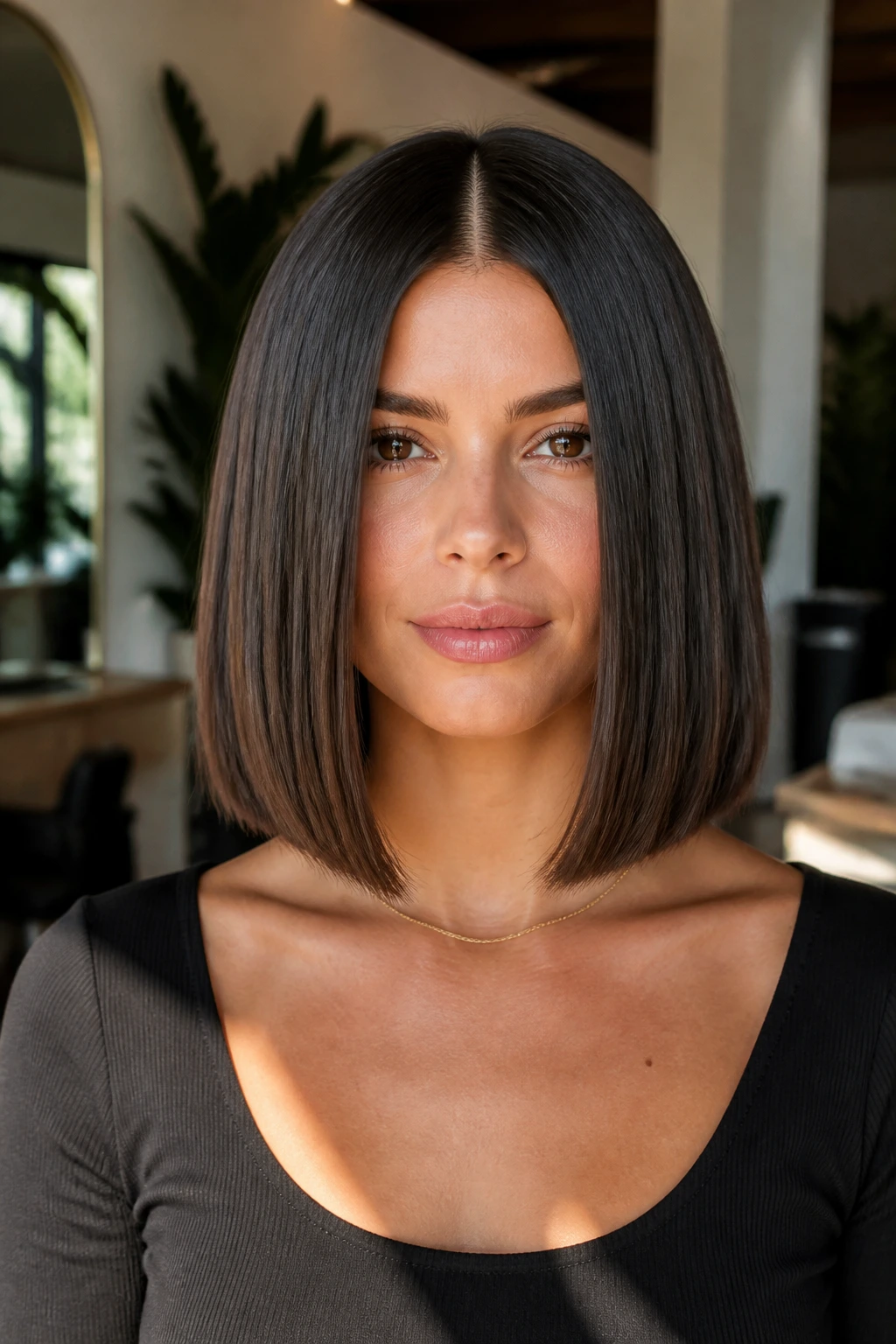
Gloss: A drop of serum on the last 2 inches of hair changes the finish more than people expect. It makes the line look polished without coating the roots, which is where a lot of straight hair gets greasy fast.
Movement: A tiny bend at the bottom can soften a strict lob. You do not need curls. A 1-inch bend from a flat iron or a round brush is enough to keep the edge from feeling too rigid.
Customization: Micro-layers, curtain bangs, or a subtle angle can change the mood without giving up the basic lob shape. Pick one change, not three, unless you want the cut to start competing with itself.
Make-It-Yours: Fine hair usually needs a blunt edge or a boxier shape. Thick hair often behaves better with internal layering or a soft U-shape. If you wear glasses, leave more room around the temples so the frames and the haircut do not crowd each other.
Keeping the Shape Sharp Between Trims

Straight hair shows when a lob gets tired. The ends start turning, the front loses its line, and the whole thing looks a little slumped. A trim every 6 to 8 weeks keeps the perimeter from fraying, while bangs usually need a touch-up every 3 to 4 weeks if you’re wearing fringe.
The daily routine should stay light. Use heat protectant before any flat iron or blow-dryer pass, and keep serum only on the last few inches. If your hair gets weighed down easily, clarify every 2 to 4 weeks to strip away product buildup. A clean root makes the cut look sharper, even when you haven’t touched the length.
Sleep matters more than people admit. A silk or satin pillowcase cuts down on friction, and a loose clip at the nape can keep the front from folding into weird bends overnight. If the ends are starting to kick out in the morning, that is the haircut asking for a small trim, not a sign that you styled it wrong.
Common Mistakes to Avoid
-
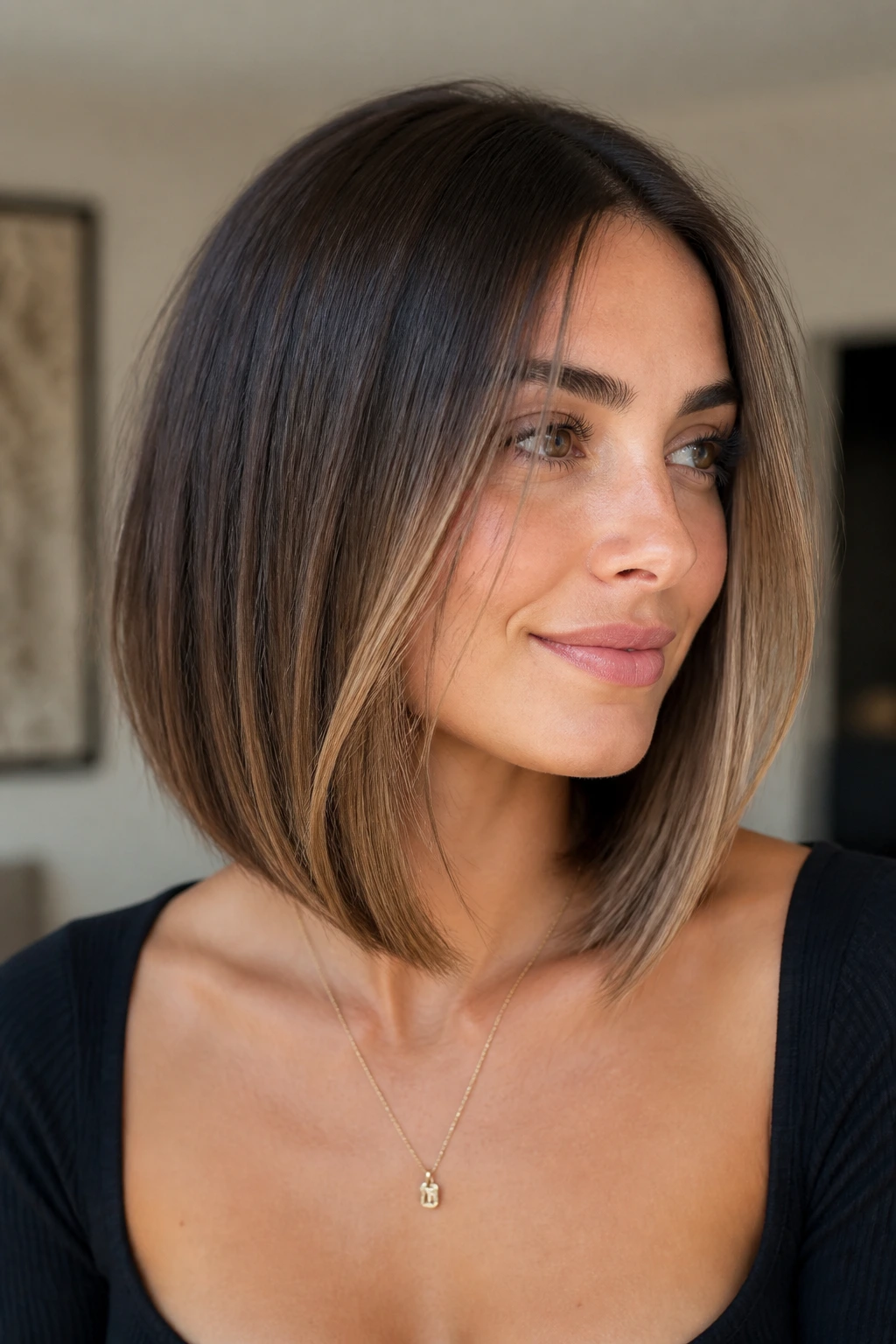
Cutting the front too short around the chin: On straight hair, a short front can widen the jaw and make the whole lob sit in the wrong place. Keep the front at or below the collarbone unless you want a sharper, more obvious angle.
-
Thinning out fine hair too much: If the stylist removes too much weight, the ends go see-through fast. Fine straight hair usually needs bluntness, not heavy texturizing.
-
Ignoring your natural part: A lob that fights your part will spend every morning collapsing in the same spot. If your hair wants a side part, don’t force a center part just because it looks tidy in a photo.
-
Overloading with product: Straight hair gets greasy and stringy fast when serum, cream, and oil all show up at once. Pick one finish product and use a small amount.
-
Letting the ends get rough: Split ends show immediately on a straight lob. Once the perimeter starts looking fuzzy, the entire cut looks older than it is.
Variations and Adaptations to Try

Fine-Hair Frame: Keep the line blunt, leave the layers out, and ask for a very slight bevel at the ends. This version makes the hair look fuller without asking it to do more than it can.
Thick-Hair Control: Add internal layering or a soft U-shape so the cut does not balloon outward. The outside should stay clean, while the inside handles the bulk.
Fringe Swap: Change the whole mood with bangs — curtain, bottleneck, wispy, or side-swept. Each one shifts how the lob sits on the face without touching the length.
Gloss-Forward Finish: If you like a polished look, keep the cut blunt and style it smooth with a center part. A flat iron and a light serum are enough; anything heavier starts to feel sticky.
Low-Heat Routine: Ask for a cut that air-dries neatly, with a little built-in bevel and no aggressive layering. It will not look as slick as a hot-tool finish, but it will look like the cut belongs to your life, not the other way around.
Frequently Asked Questions
What length counts as a lob?
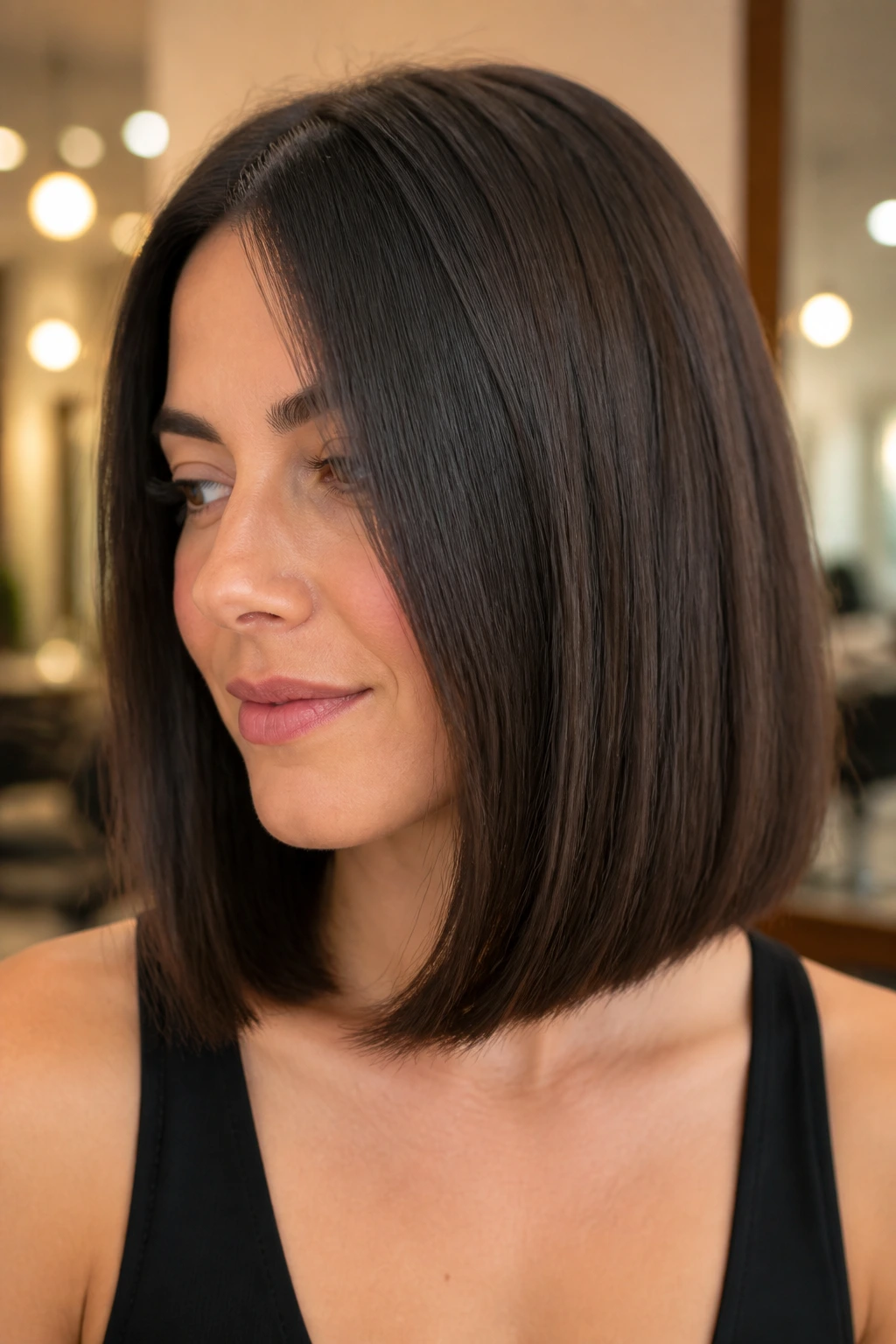
Most lobs sit somewhere between the chin and the collarbone, though shoulder-grazing versions still count if the shape reads as a long bob. The sweet spot is usually where the hair still moves, but it’s long enough to tuck or tie back.
Is a blunt lob too harsh for straight hair?
Not if the balance is right. Straight hair often looks best with a blunt hem because the ends appear fuller, and you can soften the face with a side part, curtain bangs, or a slight bevel.
Can a lob work on very fine hair?
Yes, and blunt is usually the friendliest option. Keep the layers minimal, avoid heavy texturizing, and ask for a line that lands around the collarbone so the hair keeps enough visual weight.
What if my hair flips out at the shoulders?
That usually means the cut is hitting the shoulder in a bad spot. Ask for a small angle, a softer bevel, or a slightly longer hem so the ends clear the shoulder line instead of bouncing off it.
How often should I trim a straight lob?
Every 6 to 8 weeks is a good rhythm for keeping the line clean. If you wear bangs, plan on a fringe trim sooner, usually every 3 to 4 weeks.
Can I add bangs to any lob?
Mostly, yes. The trick is matching the fringe to the density of the hair and the amount of styling you’ll actually do. Heavy blunt bangs and a blunt lob can look strong together, so if you want softness, go with curtain, bottleneck, or wispy bangs.
Does a lob need heat styling every day?
No, but the cut should be built with your routine in mind. If you do not want daily heat, ask for a shape that air-dries cleanly and keep the ends lightly beveled rather than heavily layered.
What should I avoid if I want the cut to grow out well?
Skip extreme angles and overdone face-framing. A softer perimeter around the collarbone usually grows out into another clean long bob instead of an awkward middle stage.
The Lob That Sticks Around

A good lob on straight hair does not rely on tricks. It relies on the right length, the right edge, and a shape that works with the way your hair actually falls. Get those three things lined up, and the haircut starts doing what people always hope a haircut will do: make the morning easier and the mirror less annoying.
That’s why this length keeps hanging around. It can be blunt, angled, feathered, tucked, bangy, minimal, or a little lived-in, and still feel like the same family of cut. Bring one honest photo, say what your hair does when nobody is looking, and the rest gets much simpler from there.
