



Thick hair can look like a blessing right up until the wrong cut turns it into a helmet. One blunt line across the bottom, too much weight around the cheeks, or a stack of short layers in the wrong place, and suddenly the whole shape sits there like it’s arguing with your head. Layered hairstyles for thick hair solve that problem when they’re cut with a plan instead of a pair of scissors and optimism.
The trick is not “more layers.” It’s the right layers. Thick hair needs weight removed where it piles up, but not so much that the ends go wispy and the top turns fluffy by noon. A good layered cut changes the way the hair falls: it lets the crown breathe, softens the outline, and keeps the length from feeling like a heavy curtain. A bad one does the opposite. You can usually spot the difference the minute the hair moves.
Dense straight hair, coarse waves, and thick curls do not want the same layering map, either. That’s the part a lot of generic haircut advice skips. The best layered haircut for thick hair respects texture, face shape, and how much time you’re willing to spend with a brush in your hand. That’s where the useful ideas start.
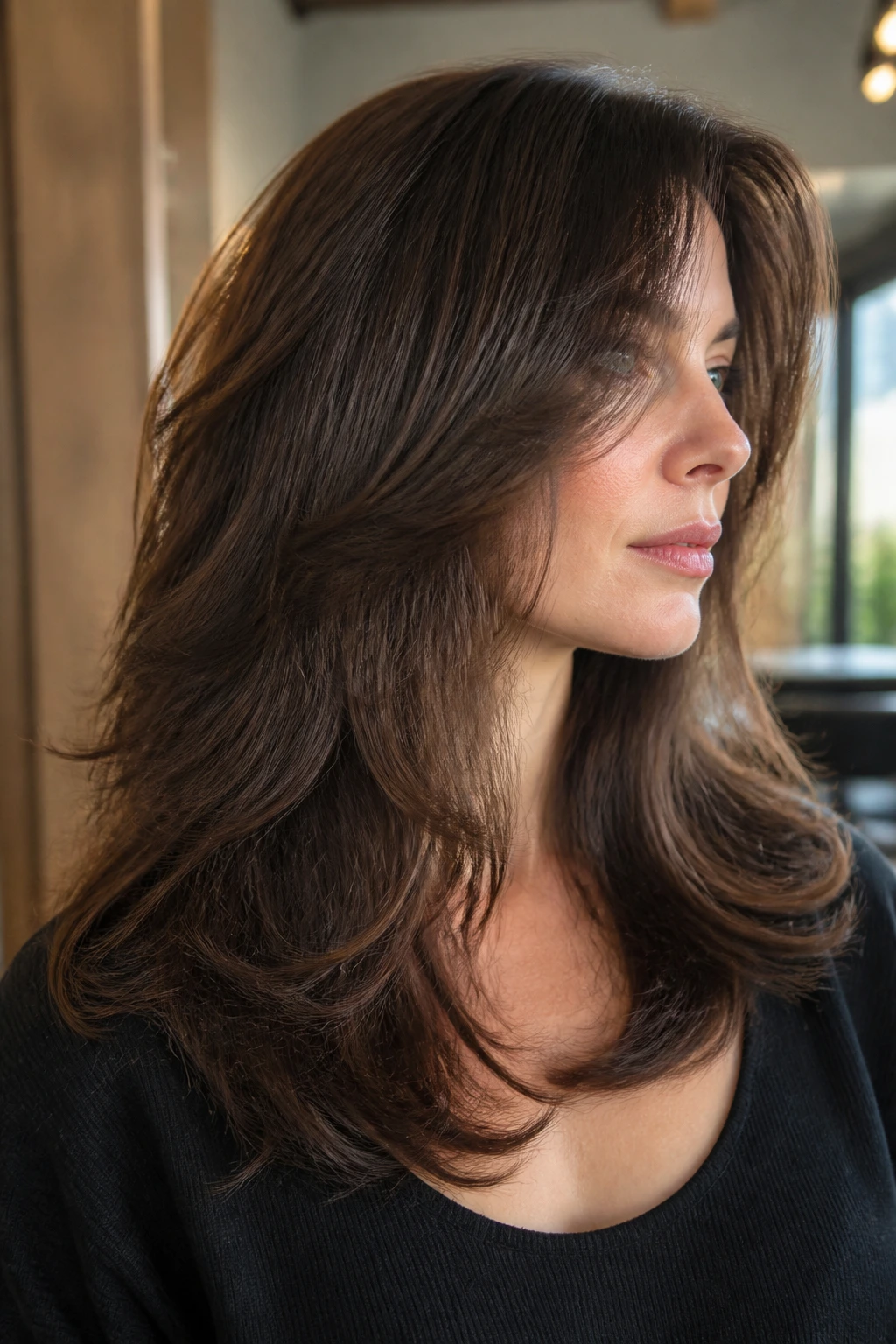
Why These Layered Cuts Make Thick Hair Easier to Wear
-
They remove bulk where it collects: Thick hair usually swells around the back, under the occipital bone, and at the sides of the jaw, so the right layers take weight off those zones instead of hacking at the ends.
-
They keep the outline clean: A smart layered shape still gives you a strong perimeter, which matters if you hate the “mushroom” look that comes from over-thinning.
-
They work with texture instead of fighting it: Waves get bounce, curls get space, and straight thick hair stops hanging like a single heavy sheet.
-
They make styling faster: A haircut with interior movement needs less brute-force blow-drying, which means fewer passes with the brush and less heat on the hair.
-
They age better as they grow: Layers that are placed well keep their shape for weeks, not days, so the cut doesn’t fall apart the moment it grows half an inch.
-
They let you choose your finish: Sleek, blown out, tousled, air-dried — thick hair can do all of it when the cut supports the look instead of fighting it.
1. Long Face-Framing Layers That Start at the Cheekbone
The nicest thing about this cut is how much it changes with very little drama. The length stays long, but the front pieces slip away from the face and skim the cheekbones, which keeps thick hair from swallowing your features. It’s one of those layered hairstyles for thick hair that looks polished even when you barely do anything to it.
Why It Works
The layers start high enough to shape the face, but low enough to avoid that over-chopped, staircase feel. That matters. Thick hair needs movement near the front and weight at the back so the whole style still hangs together.
Ask for a soft point-cut through the front, then longer layers that blend into the sides. If your hair tends to puff at the jaw, this cut stops the sides from ballooning out.
Best for: round faces, square jawlines, and anyone who wears their hair loose most of the time.
Watch for: too-short front pieces that sit like bangs gone rogue.
2. Butterfly Cut With Big Interior Wings
The butterfly cut gets used as a buzzword, but on thick hair it earns its keep. The top layer falls around the collarbone or jaw, while the longer bottom layer keeps the length. The shape creates that airy, split-level look without chopping off the ends you worked to grow.
On thick hair, the interior “wings” matter more than the pretty name. They pull weight upward, which keeps the hair from dragging straight down and making the head look wider than it is.
Wear it with a round-brush blowout if you want the shape to pop, or leave it air-dried and let the layers separate a little. Either way, the cut gives you a visible shape even when the day is not cooperating.
3. Curtain Bangs and Collarbone Layers
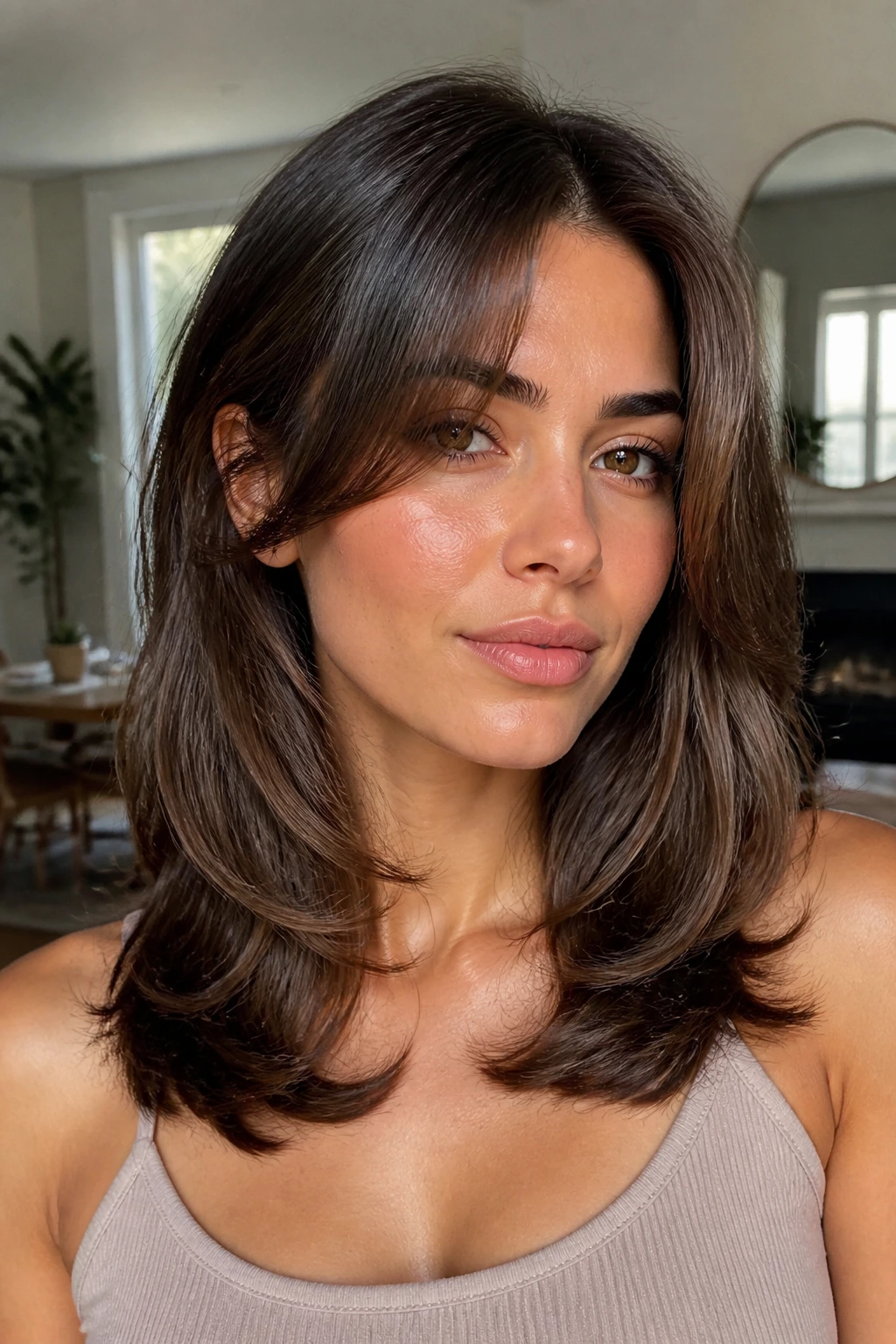
Can bangs work on thick hair? Yes, if they’re cut with enough room to breathe. Curtain bangs split at the center, open around the eyes, and slide into collarbone layers so the front of the haircut feels intentional instead of heavy.
The best version keeps the fringe long enough to tuck behind the ears when you’ve had enough of it. Thick hair with blunt bangs can look like a wall. Curtain bangs soften the front, then the layers carry that movement down through the sides.
How to Wear It
Blow-dry the bangs forward first, then split them with a round brush so they curve away from the face. If your hair is wavy, a little bend in the bangs looks better than a perfect curl.
A strong middle part makes this cut feel modern. A slightly off-center part makes it feel softer and easier.
4. Soft Shag With Choppy Ends
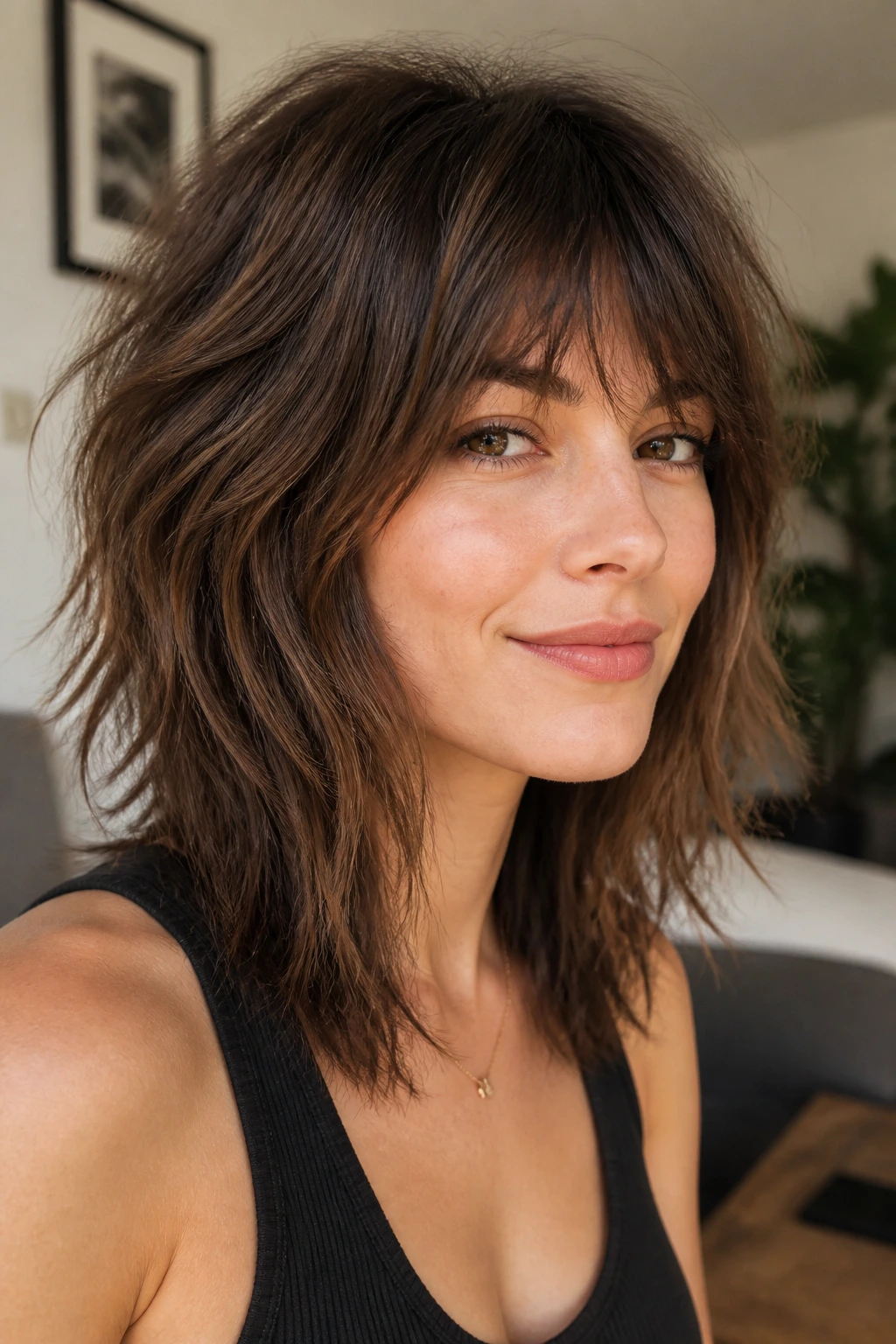
A shag on thick hair can go wrong fast, so the soft version is the smart one. Keep the crown loose, add texture through the mid-lengths, and let the ends stay shaggy rather than thin. You want movement, not a haircut that looks attacked by lightning.
This works especially well if your hair already has a little wave. The choppy pieces break up the heaviness that thick hair naturally carries, and the whole cut lands with a bit of attitude.
A good shag does not need to look messy. It just needs a little edge. Leave the perimeter soft, keep the texture controlled, and don’t let the stylist over-layer the top unless you want a lot of lift.
- Good for: wavy thick hair, square faces, and people who like texture spray.
- Not ideal for: very sleek hair that refuses to bend unless you style it every morning.
5. U-Shaped Layers for Long Length
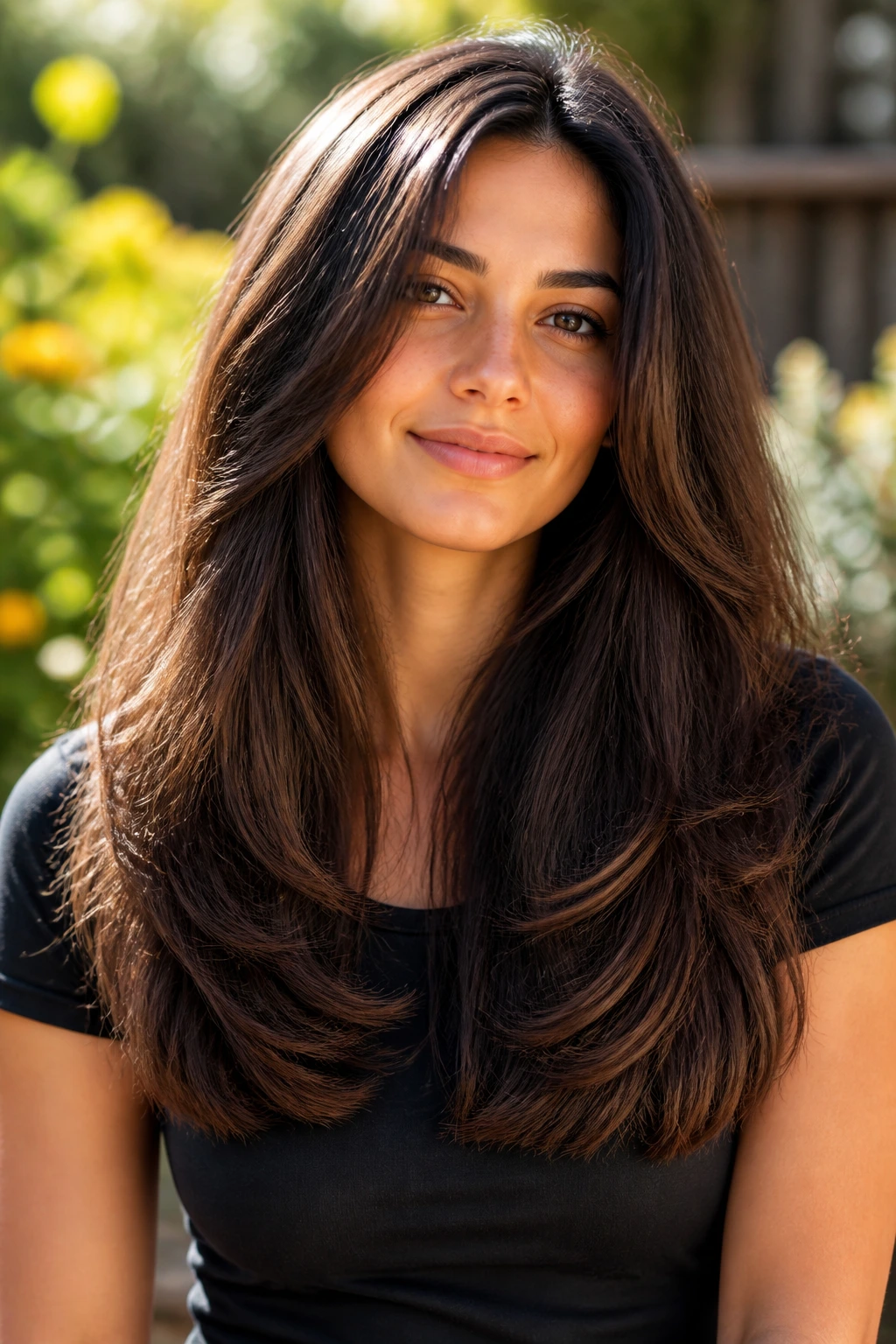
This is the quiet workhorse of the group. The U-shape keeps the longest pieces rounded instead of blunt across the back, so thick hair has a softer fall when it’s worn down. The layering is subtle, which is exactly why it works.
Long hair can get heavy in the middle and flat at the crown. The U-shaped outline fixes that by giving the hair a smoother arc from shoulder to shoulder. It looks especially good when the ends are kept healthy and the layers begin below the collarbone.
If you want movement but hate obvious chopping, this is your lane. The shape is there. You just don’t see every line of it.
6. V-Cut Layers for Drama Without Bulk
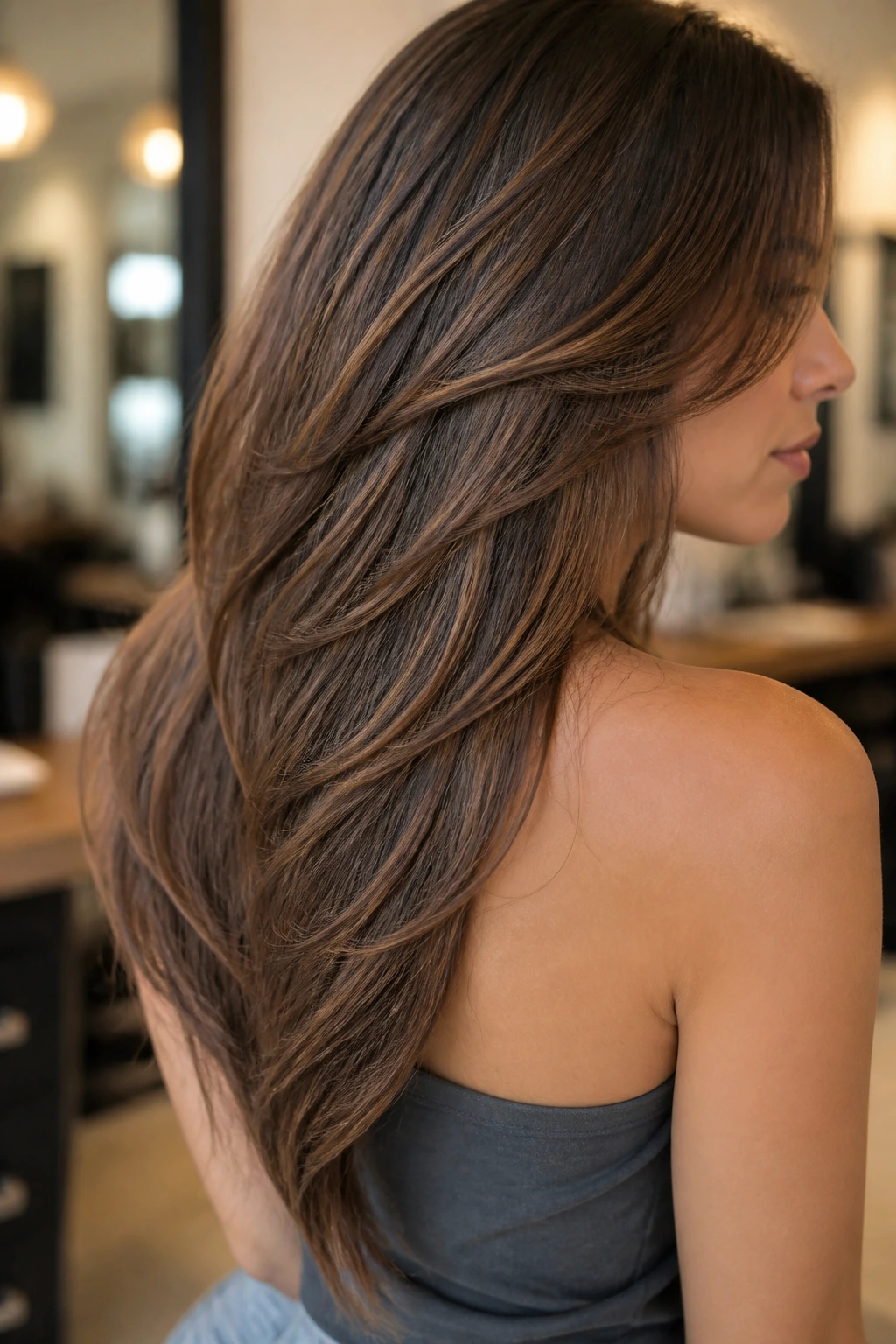
The V-cut brings the ends to a point at the back, which sounds dramatic because it is. Thick hair often looks best with that kind of strong silhouette, especially when you want long length but don’t want the back to feel like a blanket.
Compared with a blunt hemline, the V shape removes visual mass from the ends. Compared with a shag, it keeps the line cleaner. That makes it a nice middle ground for people who want shape, not chaos.
It’s especially useful if your hair is dense at the bottom and feels heavy when you braid it or tie it in a low ponytail. The point at the back gives the length a little swing.
7. Feathered Blowout Layers
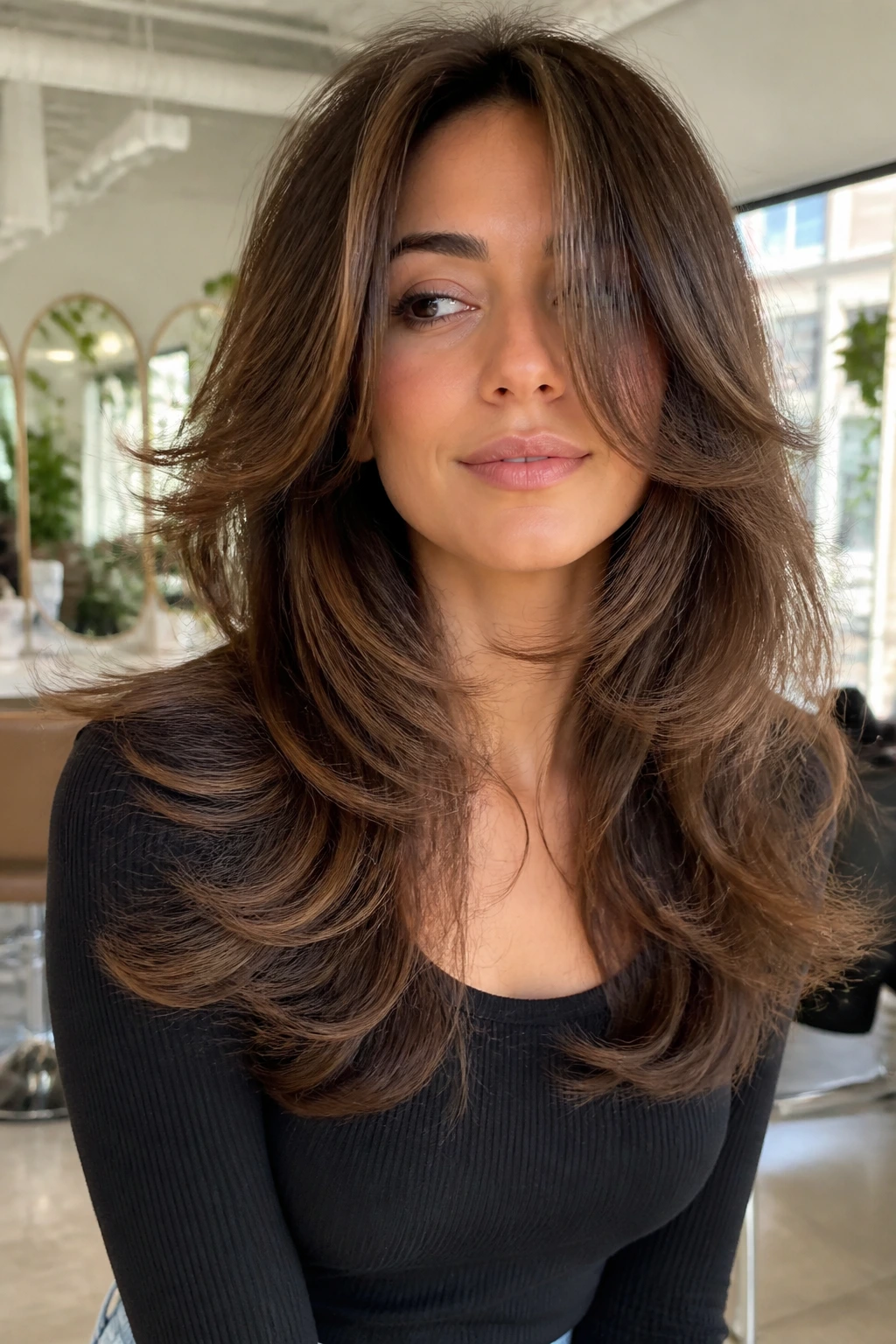
Feathering is one of those old-school techniques that keeps coming back because it works. On thick hair, feathered layers create soft edges that bend away from the face and move when you turn your head. The cut looks best with a round brush, but it still makes sense on days when you air-dry and stop trying so hard.
The layers should be sliced or point-cut so the ends taper lightly, not shaved into thin strips. Thick hair can carry that softness. Fine hair often can’t. That’s the difference.
If your favorite look is smooth, bouncy, and a little bit glossy around the edges, feathered layers are worth the maintenance. They take a touch more styling than a blunt cut, but they give back more shape.
8. Choppy Textured Lob
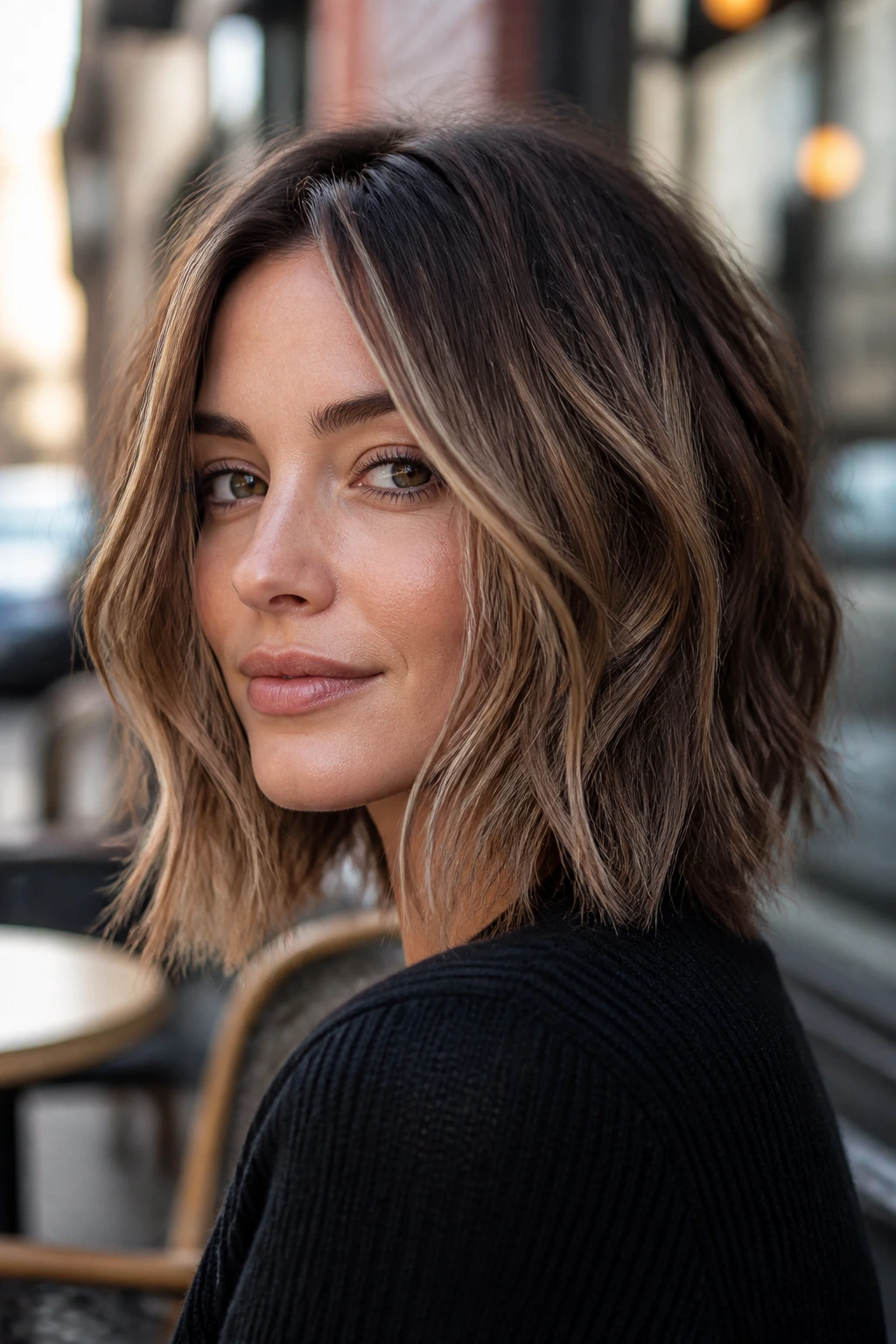
A thick-haired lob can get boxy fast. Choppy layers fix that by breaking up the bottom edge and adding movement through the mid-lengths. The cut sits around the shoulders or just above them, which keeps thick hair from feeling like it’s sitting on your collarbones all day.
This is a good choice if you want a cleaner outline than a shag but more life than a blunt lob. The trick is keeping the layers visible enough to move, not so short that the ends start flipping out in every direction.
A center part makes it feel sharper. A side part softens the weight and gives the front pieces a little sweep.
9. Razor-Cut Mid-Length Layers
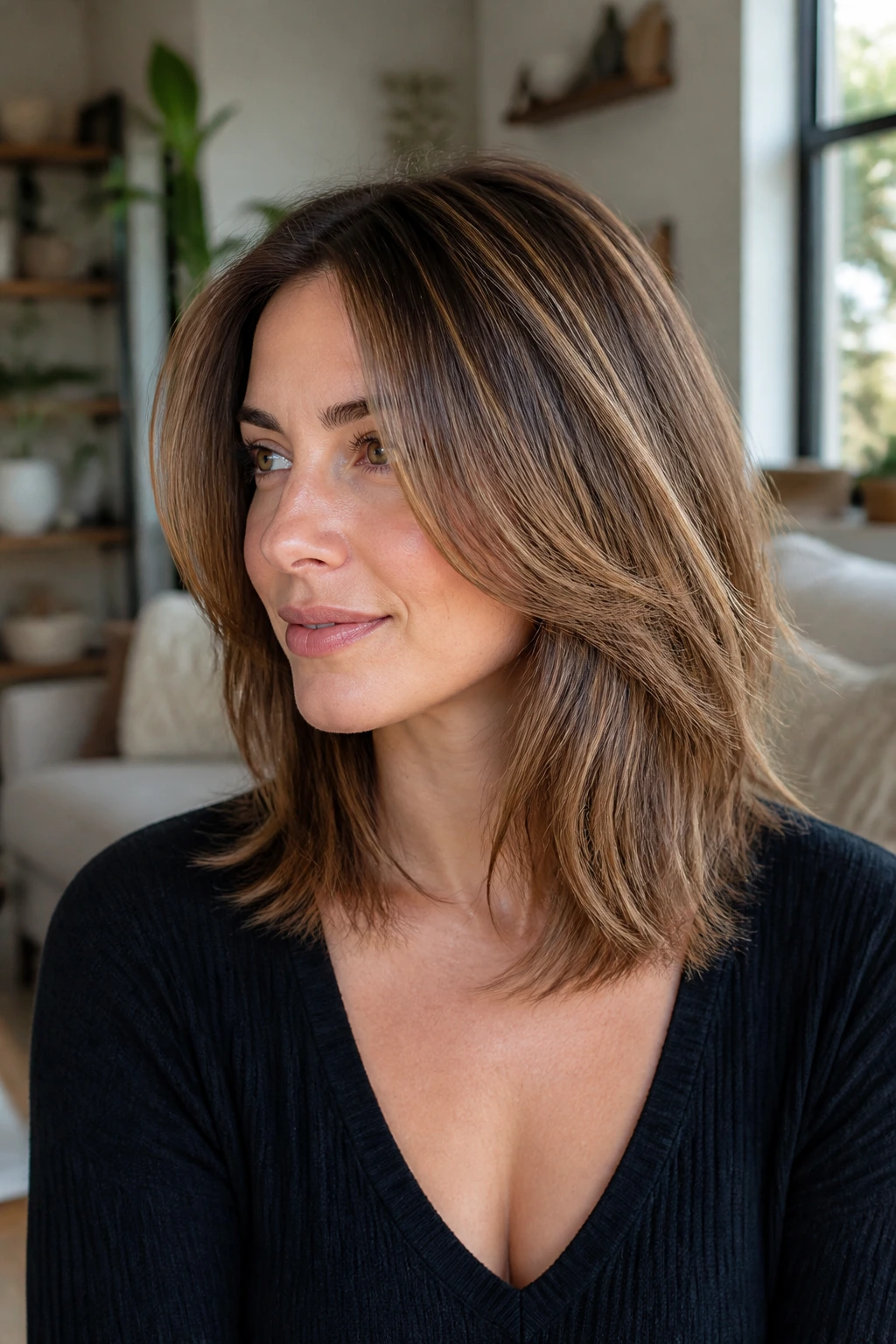
Razor cutting gets a mixed reputation because it can go very wrong on the wrong head of hair. On thick hair, though, it can remove weight with a nice loose edge if the stylist knows where to stop. The result is lightness through the mids, not fraying at the ends.
This cut suits hair that feels dense but not coarse. If the strands are strong and the surface tends to lie flat, razor work can add a little swing without taking away too much length. The shape feels lived-in from the start.
The danger is overdoing it. Too much razor work on thick hair can make the ends fuzzy. The good version looks soft and airy; the bad one looks chewed.
10. Mermaid Layers for Long Wavy Hair
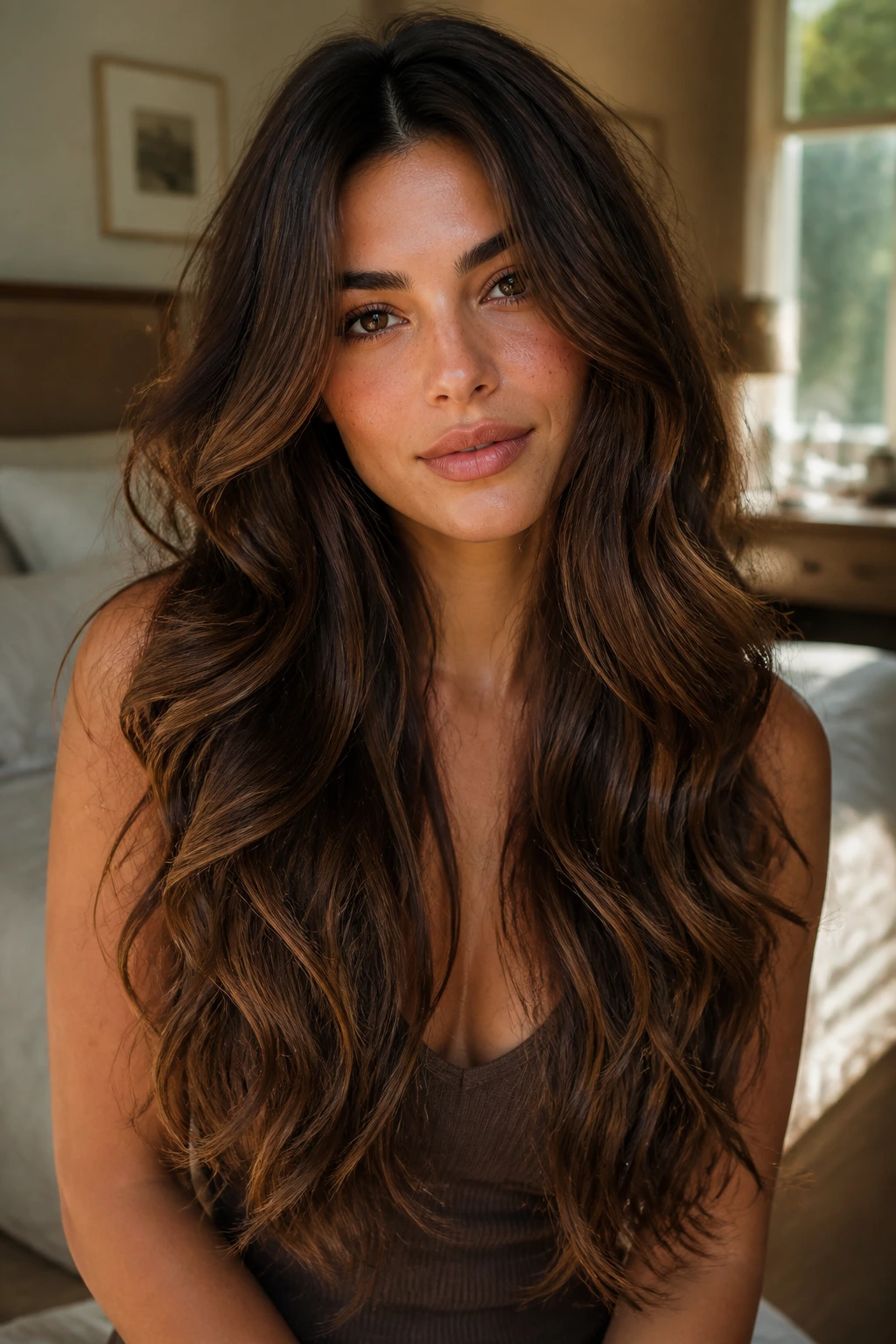
Long, thick waves can get gorgeous and unruly in the same afternoon. Mermaid layers let the waves fall in long ribbons instead of one heavy sheet, which gives the hair a water-like movement that looks especially good on length that reaches past the chest.
This cut works because the layers are long. Short layers on thick wave patterns can puff up fast. Long layers keep the bulk under control and still let each wave bend independently.
It’s a smart cut if you like to wear your hair down, half-up, or twisted back with a claw clip. The length does the drama. The layering keeps it from dragging.
11. Rounded Layers for Curls and Coils
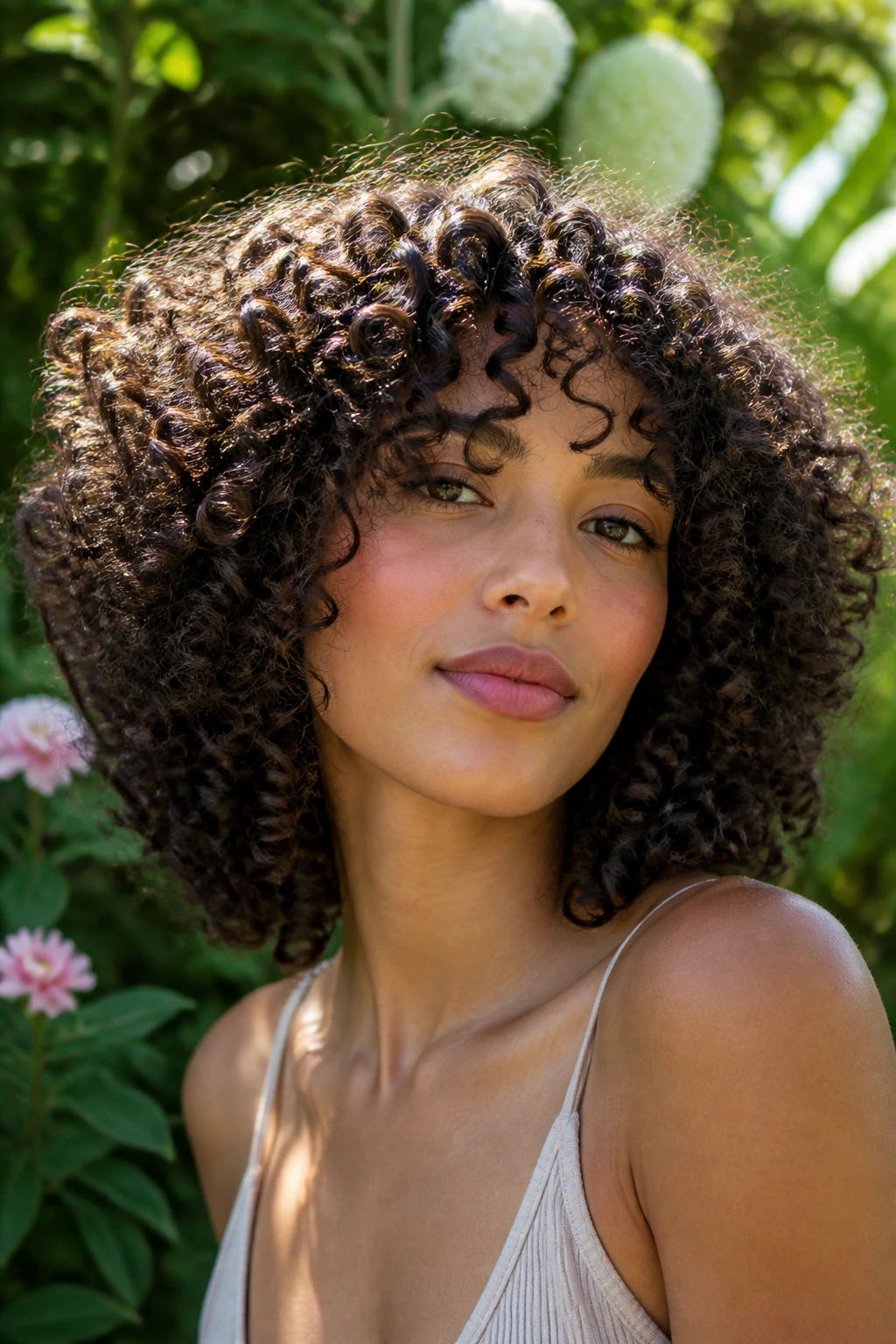
Curly thick hair needs shape that follows the curl pattern, not a random staircase of chopped lines. Rounded layers do that job well. They remove weight from the center and sides, then keep the silhouette soft instead of triangular.
The goal is balance. Too much layering makes curls explode upward. Too little leaves the bottom too heavy and the roots flat. Rounded layers sit in the middle, which is where most curly heads want to be.
Dry cutting often helps here because it lets the stylist see how the curls sit in real life. Wet curls lie. Dry curls tell the truth.
12. Invisible Layers for Straight Thick Hair
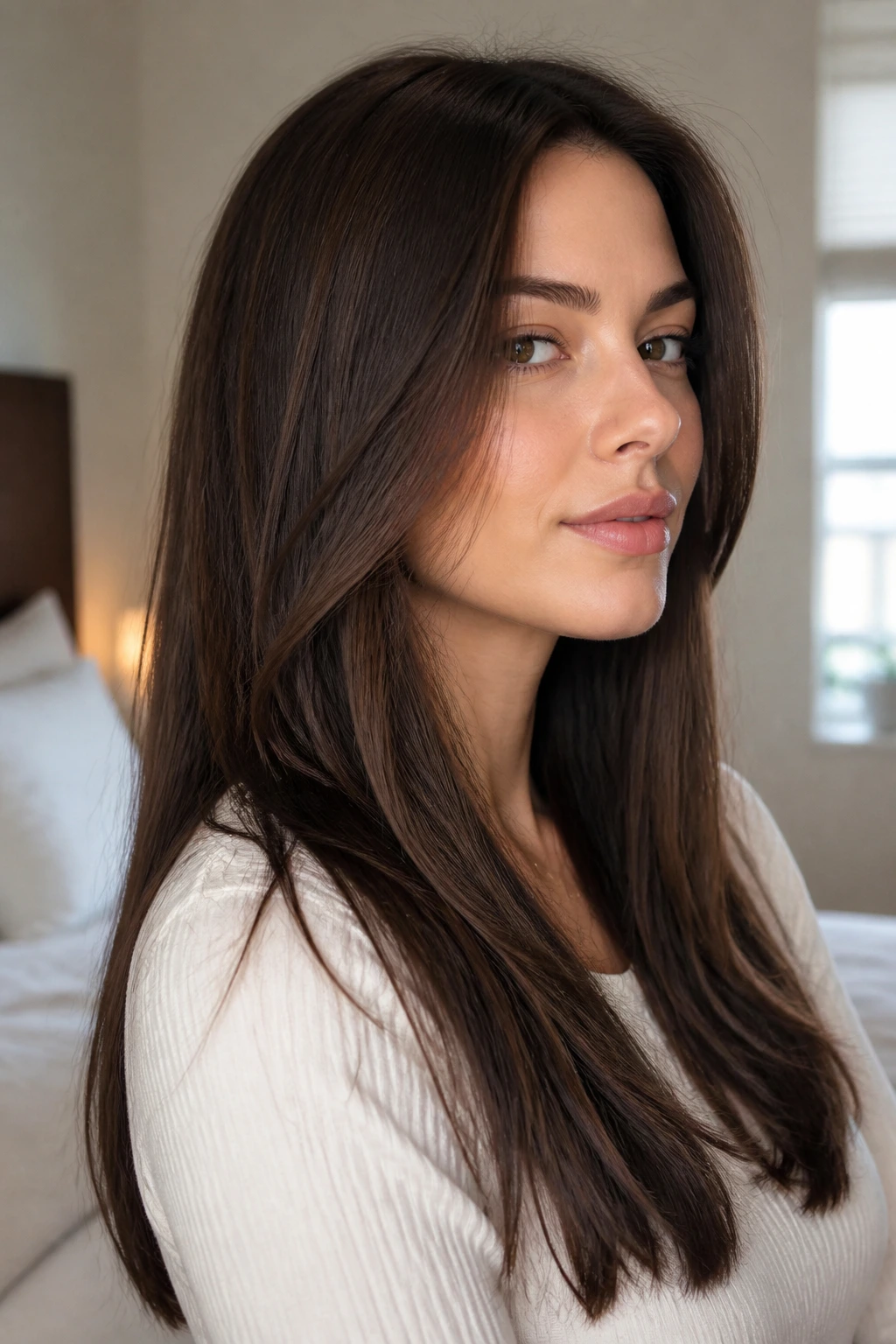
Straight thick hair can hide a lot, which is nice until the whole cut looks like one giant slab. Invisible layers solve that by removing weight inside the haircut while leaving the outside line calm and clean. You get movement only when the hair swings or turns.
Compared with obvious choppy layers, this is the more polished choice. The outline stays blunt enough to feel full, but the inside has room to breathe. That makes it a strong option for people who want a tidy look at work and a little bounce when the hair is down.
Ask for internal layering, point-cut ends, and no aggressive thinning. That last part matters. Straight thick hair can take a long time to grow out if the ends get shredded.
13. Bottleneck Bangs With Airy Layers

Bottleneck bangs narrow near the center and open wider at the sides, which makes them easier to wear than a blunt fringe on thick hair. They give you the face-framing effect of bangs without committing to a heavy shelf across the forehead.
Paired with airy layers, the bangs help the haircut feel lighter from the front. Thick hair often looks massive in the mirror when all the weight sits at the temples. This style trims that visual bulk right away.
It’s a clever choice if you want something stylish but not fussy. The fringe grows out better than a straight-across bang, which saves you from trim panic every few weeks.
14. Bixie With Crown Volume
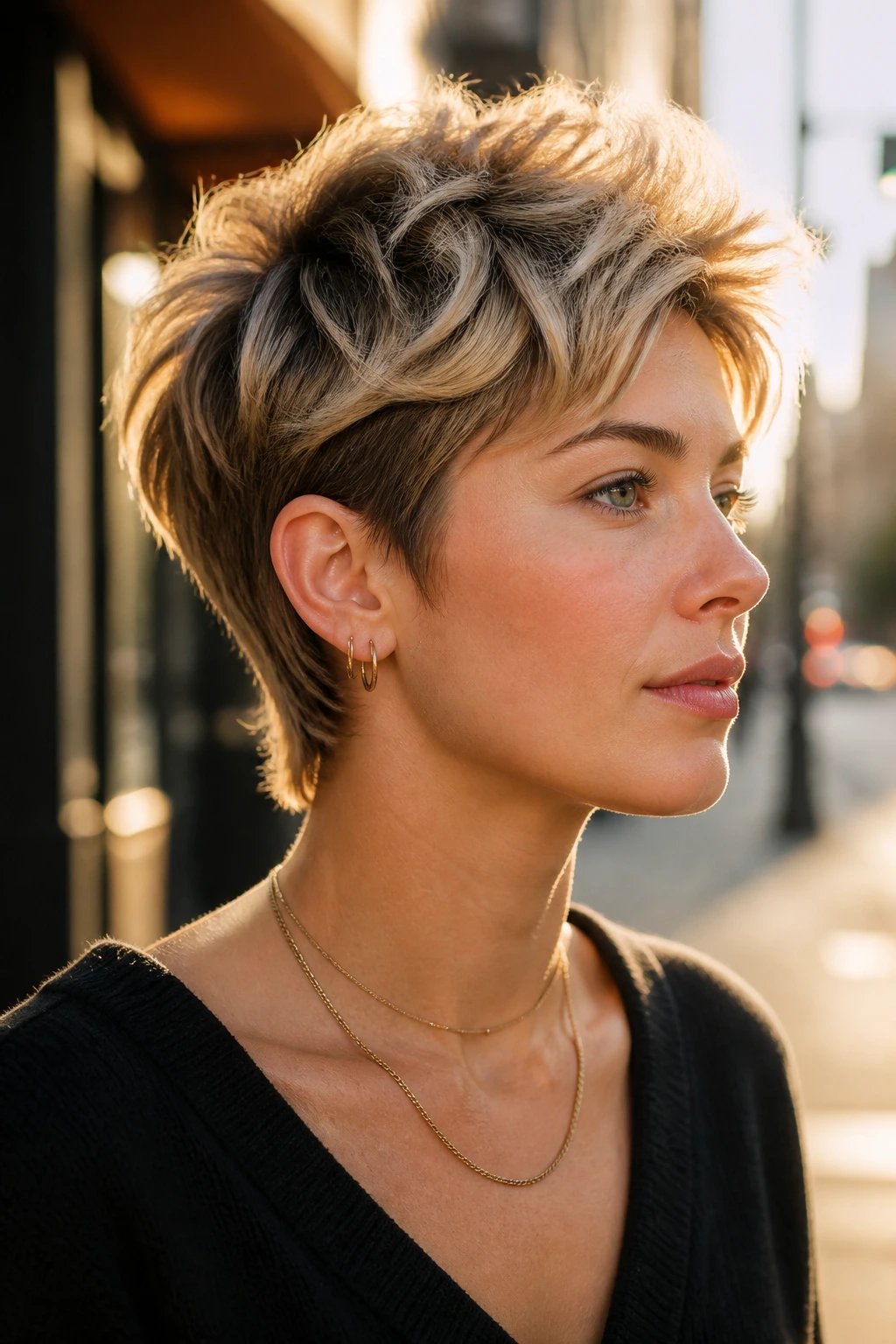
Short hair and thick hair can be great friends when the cut is sharp. A bixie — somewhere between a bob and a pixie — lifts the crown, trims the sides, and keeps enough length on top to style with fingers or a small brush. On thick hair, it takes a lot of weight off the neck.
This is not a timid haircut. It needs confidence and a decent stylist. The payoff is shape: the hair sits up, moves, and doesn’t hide your jawline under a pile of bulk.
If you’ve been thinking about shorter hair but worry it will turn into a triangle, this is a strong answer. Keep the top soft, the sides tapered, and the neckline clean.
15. Collarbone Cut With Internal Layers
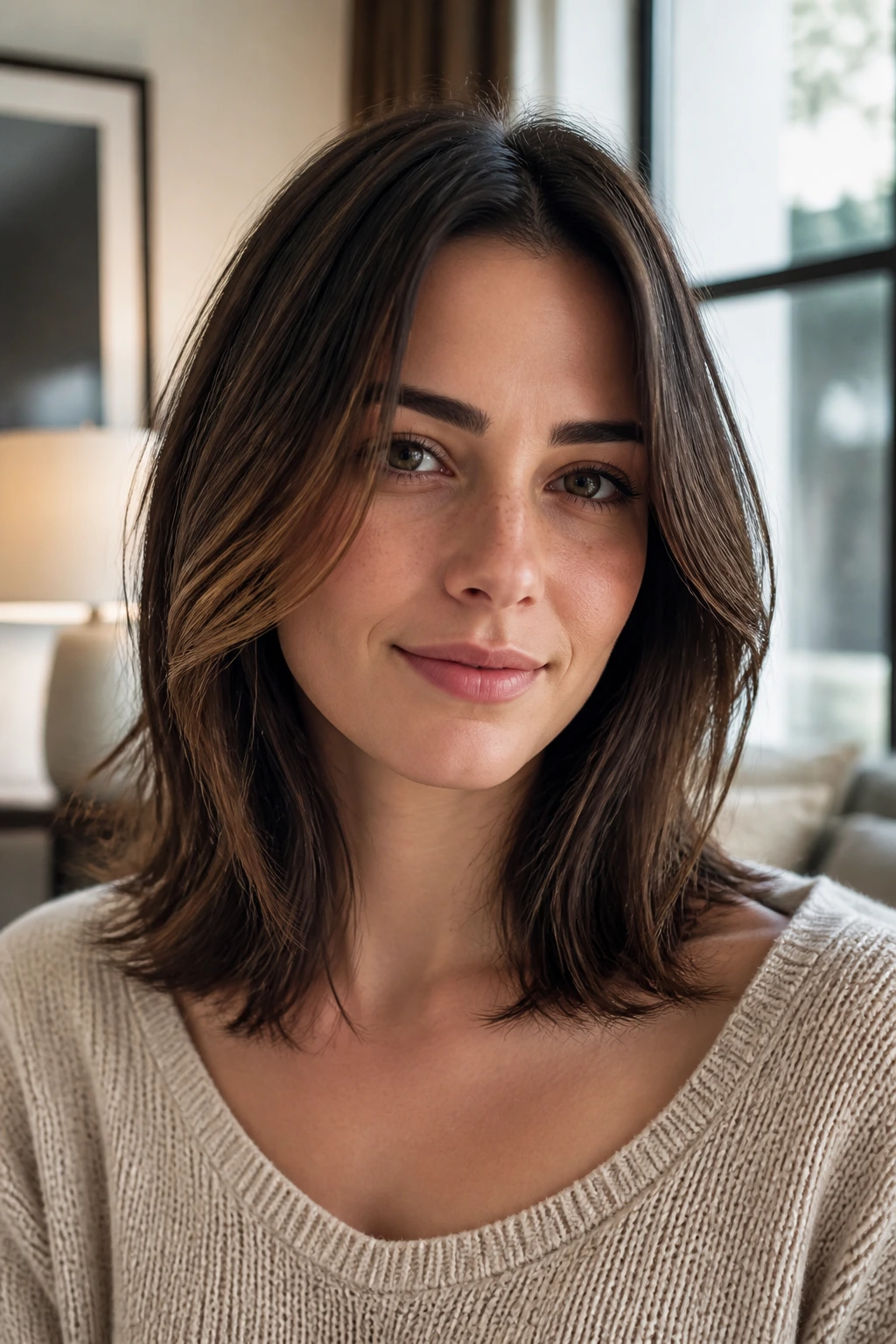
The collarbone cut is one of the most useful lengths for thick hair because it lands in a spot that still feels long but doesn’t drag. Add internal layers, and the whole shape gets easier to style. You can tuck it, wave it, clip it, or leave it loose without the ends getting too heavy.
This cut tends to flatter people who want movement without losing the feeling of length. The collarbone gives the hair a natural stop point, and the layers keep it from ballooning at the bottom.
It’s also easy to grow out. That matters more than people admit. A good cut should survive the awkward weeks in between appointments.
16. Wolf Cut With Controlled Edge

The wolf cut can look fantastic on thick hair, or it can look like an accident. The controlled version keeps the crown shaggy, the ends softer, and the silhouette less extreme. You still get edge, but the shape stays wearable.
Thick hair has the density to support the exaggerated top and disconnected layers that make a wolf cut feel bold. The key is restraint around the perimeter. If the bottom gets too thin, the whole thing starts to hover.
This cut suits people who like texture spray, a bit of mess, and hair that doesn’t have to be perfect to look deliberate. It’s not the quietest option on this list. That’s part of the appeal.
17. Shoulder-Length Layers With a Soft Flip
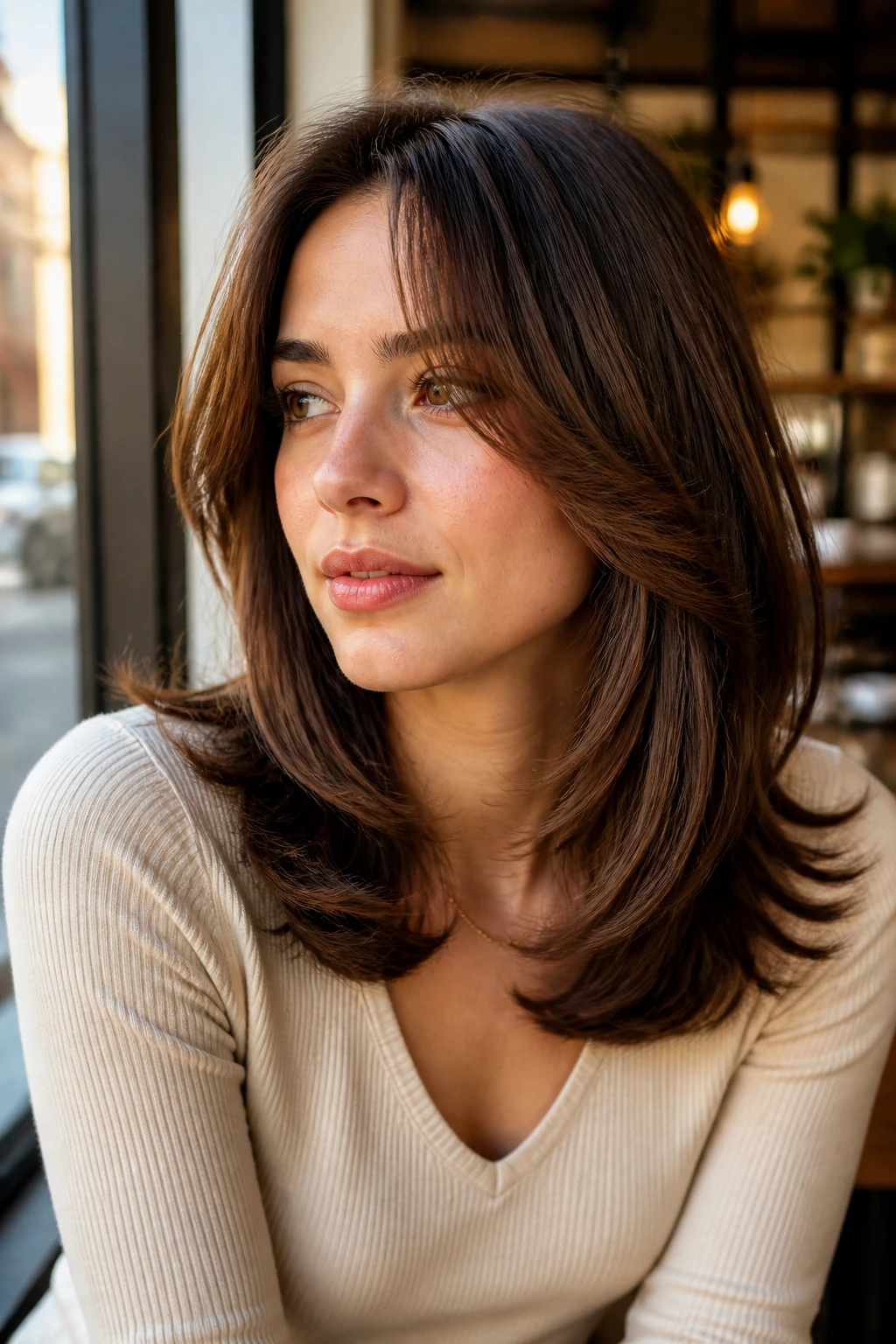
Shoulder-length thick hair can turn into a shelf if the layers are wrong. A soft flip at the ends solves that by bending the hair out just enough to keep it from sitting flat against the shoulders. The layers above it stop the shape from feeling heavy.
This cut works well if you style with a round brush or a large curling iron. The flip gives the ends some lift, and the layers keep the sides from puffing out too much.
It’s a friendly length. Easy to clip up, easy to wash, easy to wear under a coat. Thick hair often behaves better here than at longer lengths because the weight is distributed more evenly.
18. Side-Swept Fringe and Long Tiers
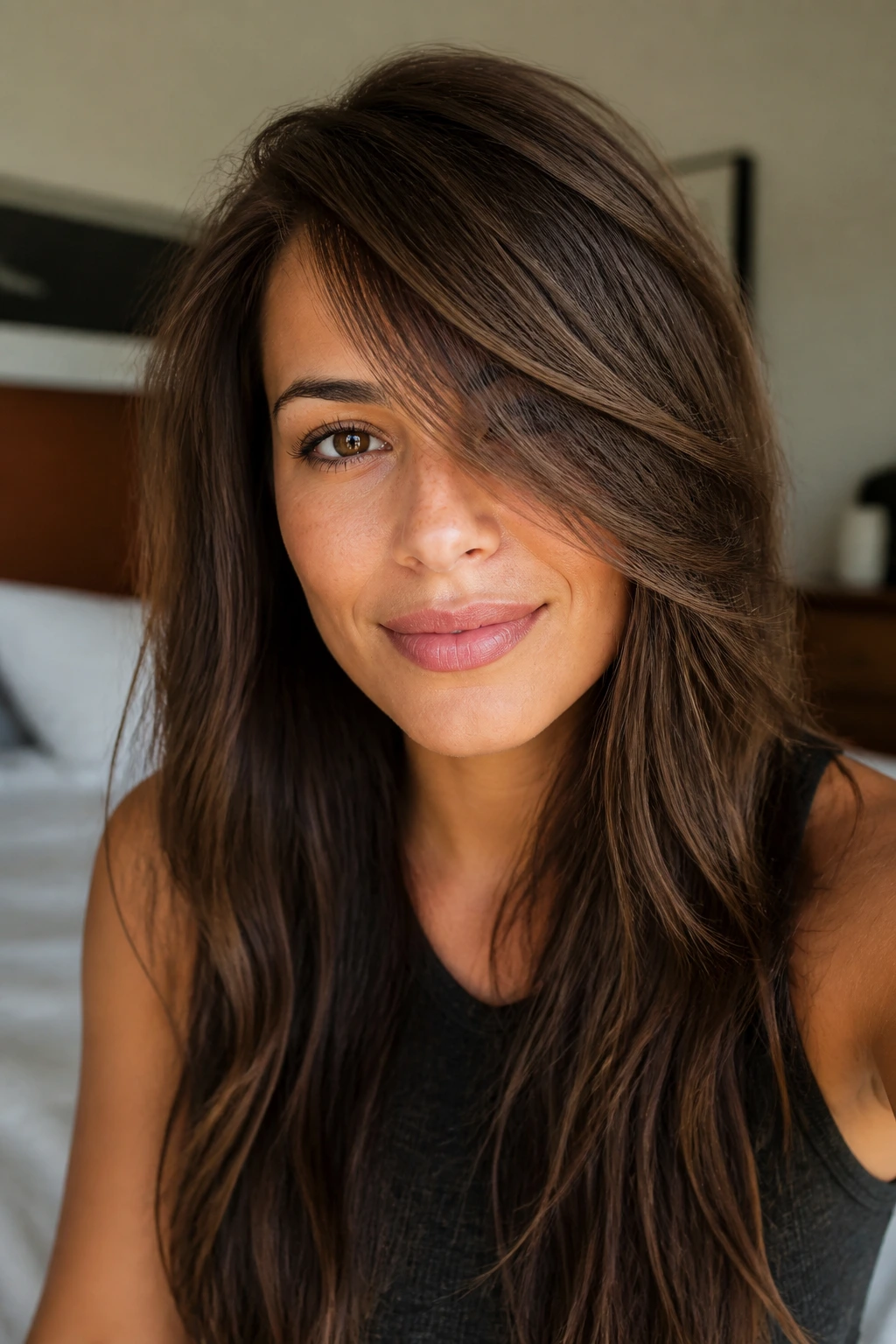
A side-swept fringe can be a lifesaver for thick hair because it breaks up the front without forcing a full bang commitment. Paired with long tiers, it creates a diagonal line across the face that softens a strong jaw or a broad forehead.
The best version is not a heavy sweep that covers half your face. It should skim, not smother. Thick hair can handle more fringe than fine hair, but the front still needs lightness or it starts feeling dense fast.
This cut is nice if you like changing your part from time to time. The fringe moves with the part, so the haircut can look different with almost no effort.
19. Disconnected Underlayers for Hidden Movement
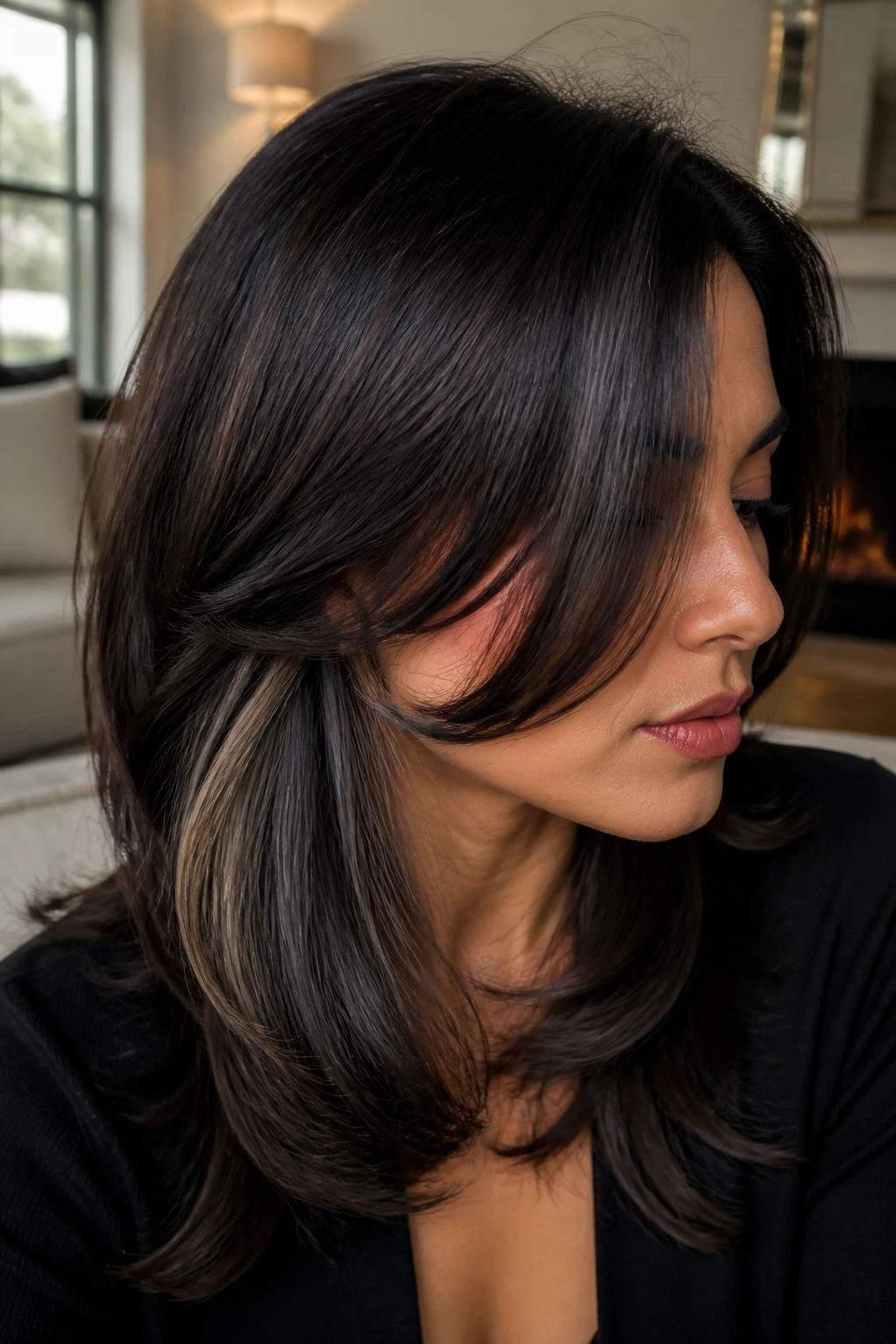
Here’s the sneaky one. Disconnected underlayers sit beneath the outer shape, so the haircut keeps a smooth top while the inside loses bulk and gains movement. Most people won’t see the trick. They’ll just notice that the hair behaves better.
It’s a smart solution for very dense hair that looks heavy even when it’s freshly washed. The hidden layers stop the underneath from pushing the top shape outward, which is where a lot of thick cuts go sideways.
You want a stylist who understands overdirection and weight removal here. This is not the cut for someone who thinks “thinner” and “better” mean the same thing. They do not.
20. Blunt Ends With Interior Layers
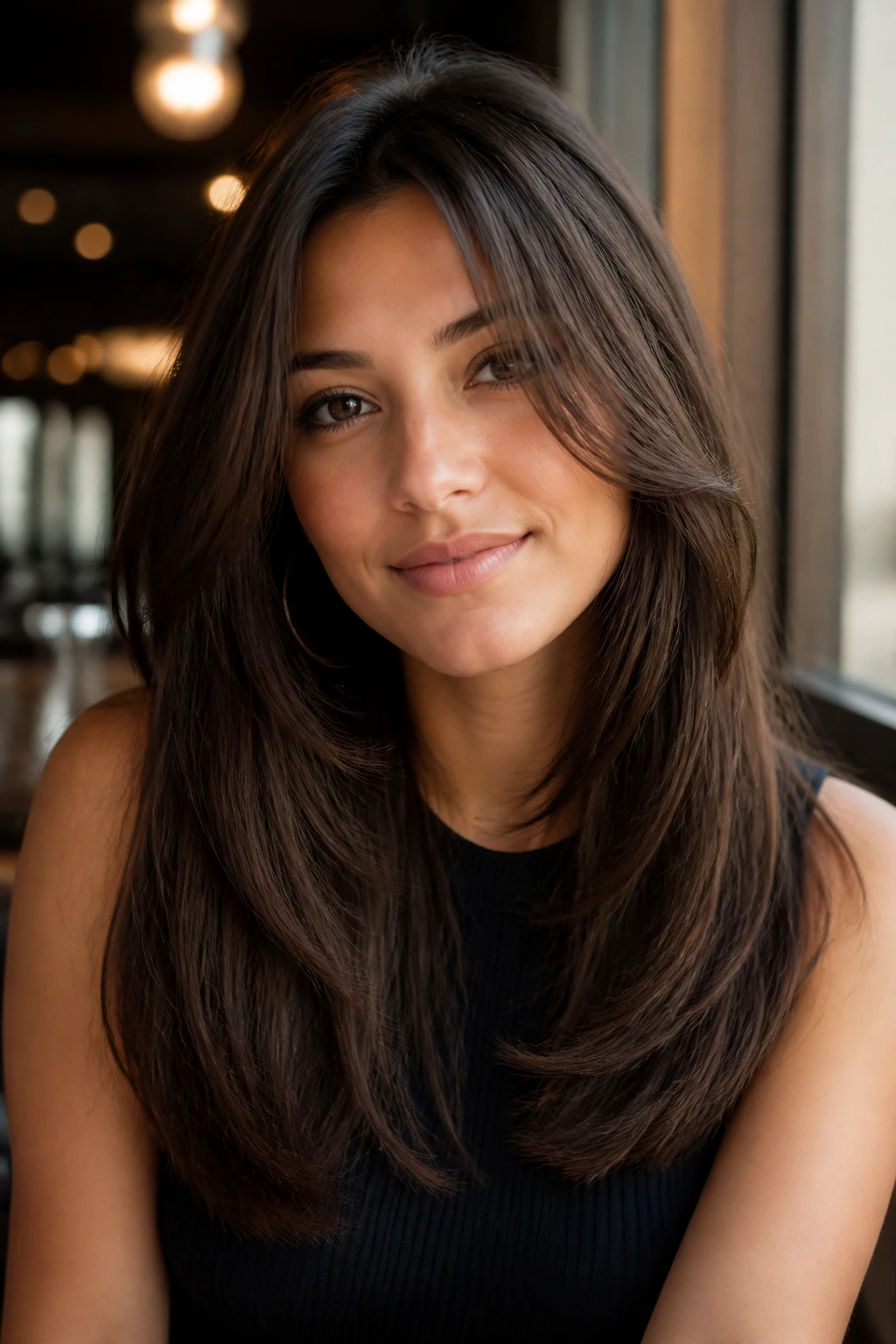
Blunt ends plus interior layers is one of my favorite combinations for thick hair because it keeps the outer edge strong. The inside gets movement; the bottom line stays clean. That balance makes the hair look full instead of puffy.
It’s a particularly good pick if you like sleek styles but hate how a fully blunt cut can feel like a block. The hidden layering takes some weight away, so the hair bends more easily at the shoulders and around the face.
Think of it as structure on the outside, motion on the inside. That’s the whole point. And it works.
21. Air-Dried Wave Layers
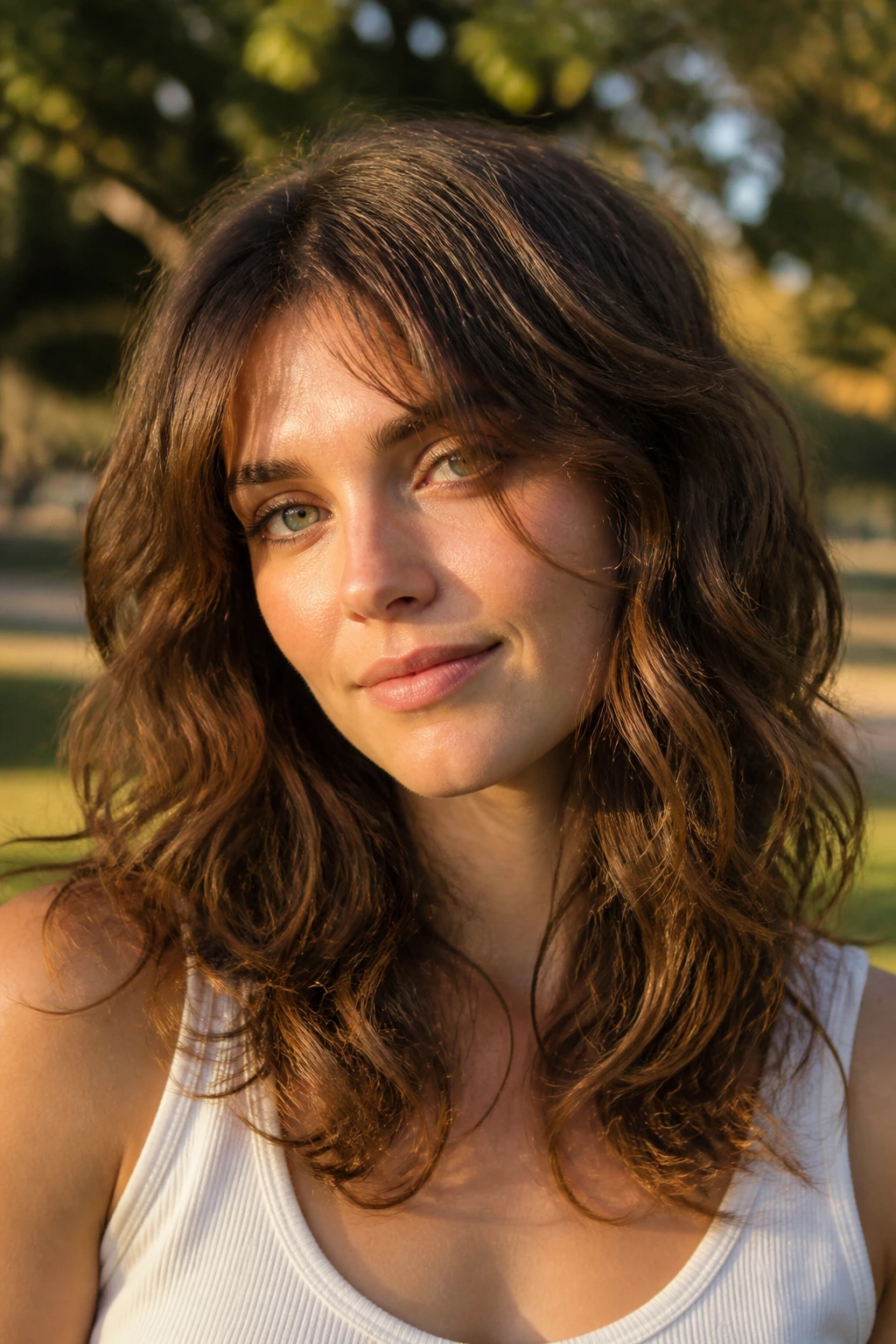
Not everyone wants a haircut that depends on a blowout, and thick wavy hair often does best with a cut that knows how to dry itself. Air-dried wave layers are placed so the pattern falls into loose bends instead of giant puffs or flat ends.
The stylist should cut with your natural wave pattern in mind, not against it. Long enough layers keep the wave from collapsing. Short enough layers keep the shape from drooping.
If you live in leave-in conditioner and scrunch gel, this one belongs on your shortlist. It gives you a readable shape even when you never touch a round brush.
22. Face-Opening Layers With Polished Ends
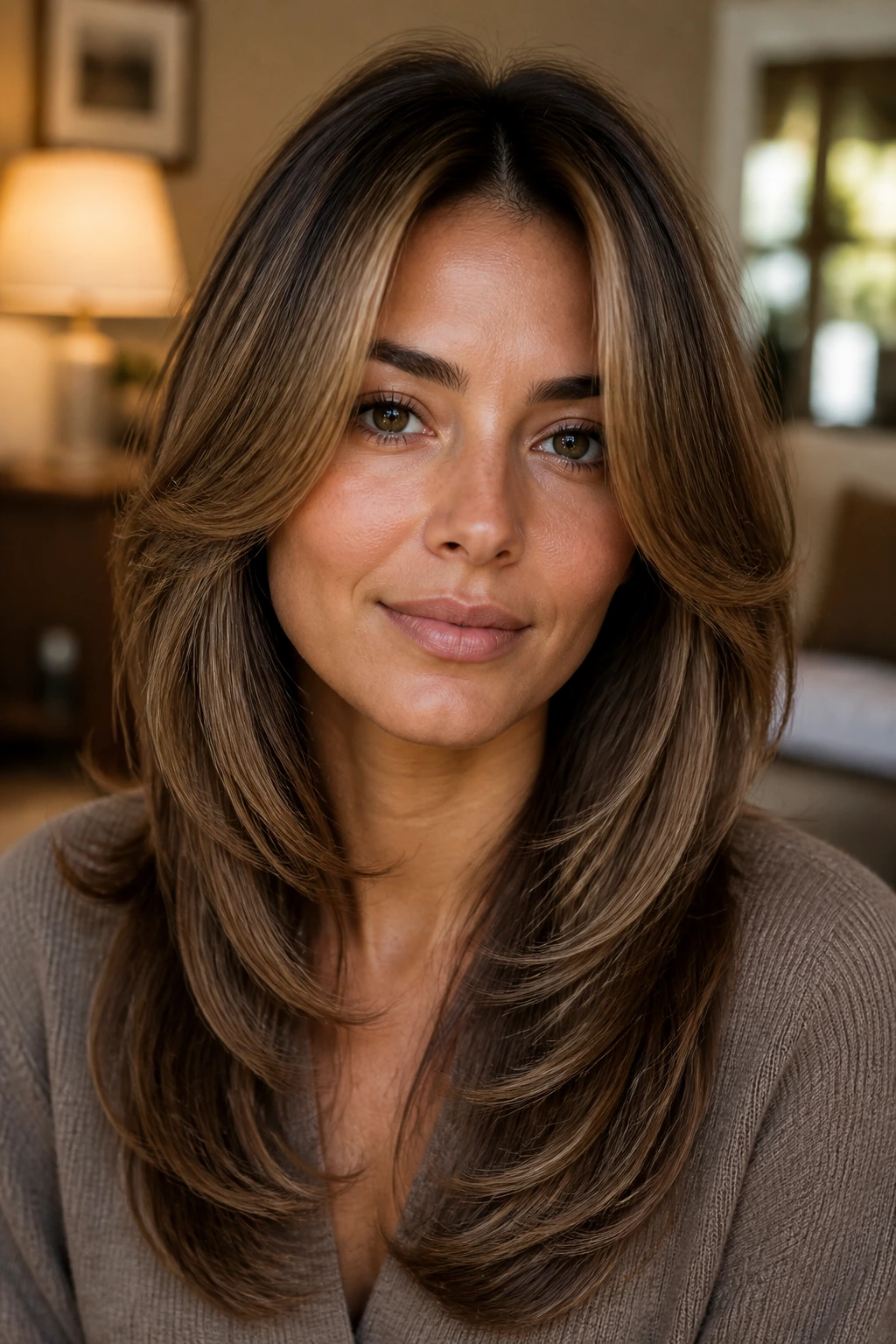
This is the sleek finish for someone who likes a clean line but wants the face to look lighter. The front layers open around the eyes and cheekbones, then the ends stay polished and full. Thick hair can carry that contrast better than most textures because there’s enough density to keep the style looking rich.
The style works especially well when the layers are cut to curve inward slightly around the face. That stops the front from flaring out and keeps the whole shape neat.
It’s the kind of cut that looks expensive when it’s freshly styled and still looks decent when you’ve only had time for a quick brush-through. That’s a rare combination, and thick hair benefits from it.
Why Thick Hair Needs a Different Layer Map
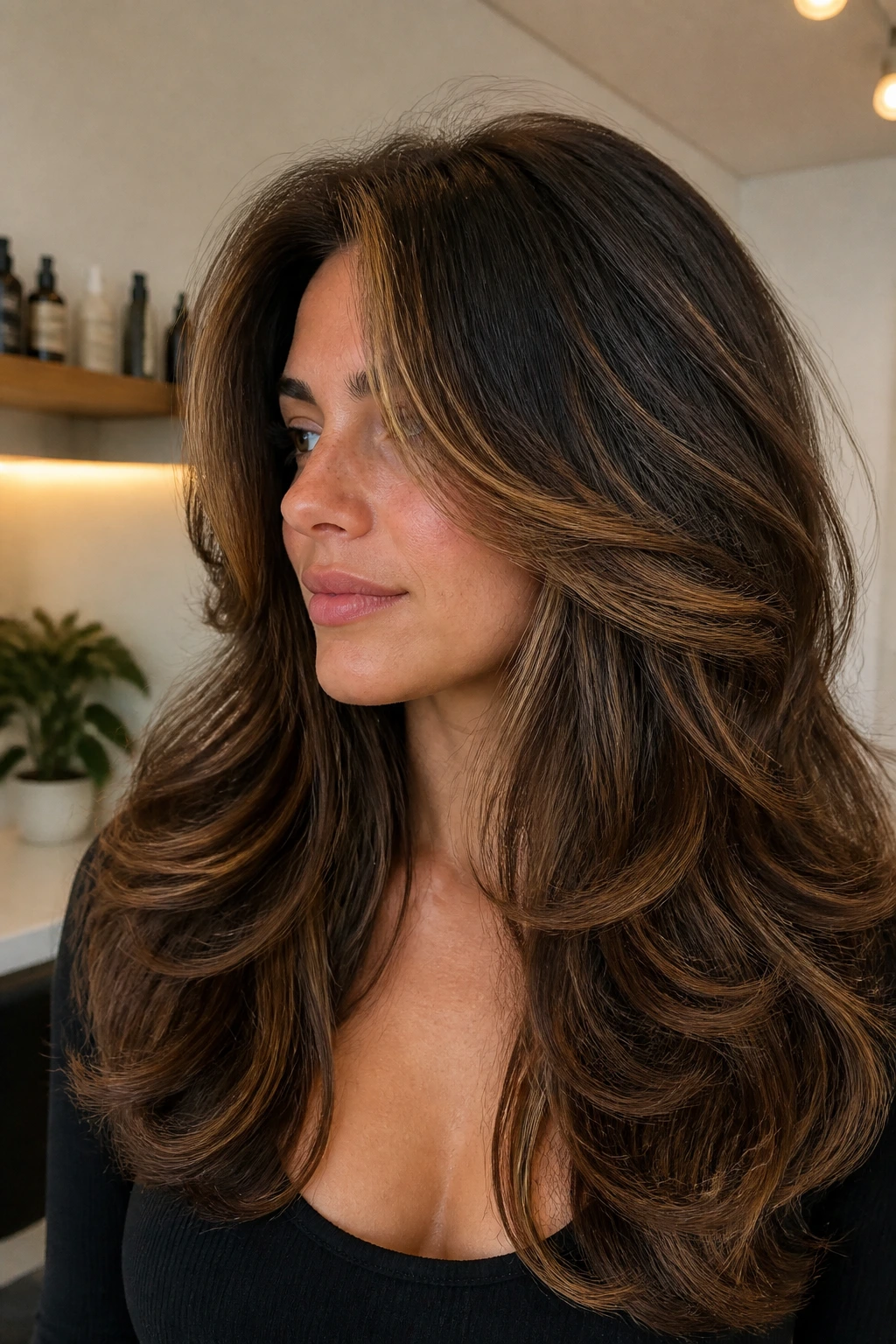
Thick hair is not the same thing as coarse hair, and it is not the same thing as curly hair. A head of hair can be dense with fine strands, dense with coarse strands, or both at once. That difference changes how layers behave. Fine thick hair can fall flat if over-thinned. Coarse thick hair can hold a strong shape but also feel bulky around the perimeter.
That’s why the placement matters so much. Layers cut too high can make the crown explode. Layers cut too low can do almost nothing except take away length. The sweet spot often lives around the cheekbone, jaw, collarbone, or just under the shoulders, depending on the shape you want.
The goal is movement, not emptiness. A good cut takes some of the load off the hair so it bends and swings. A bad cut just removes mass and leaves you with a fuzzy outline that takes twice as much styling to hide.
How to Ask for the Right Layer Pattern at the Salon
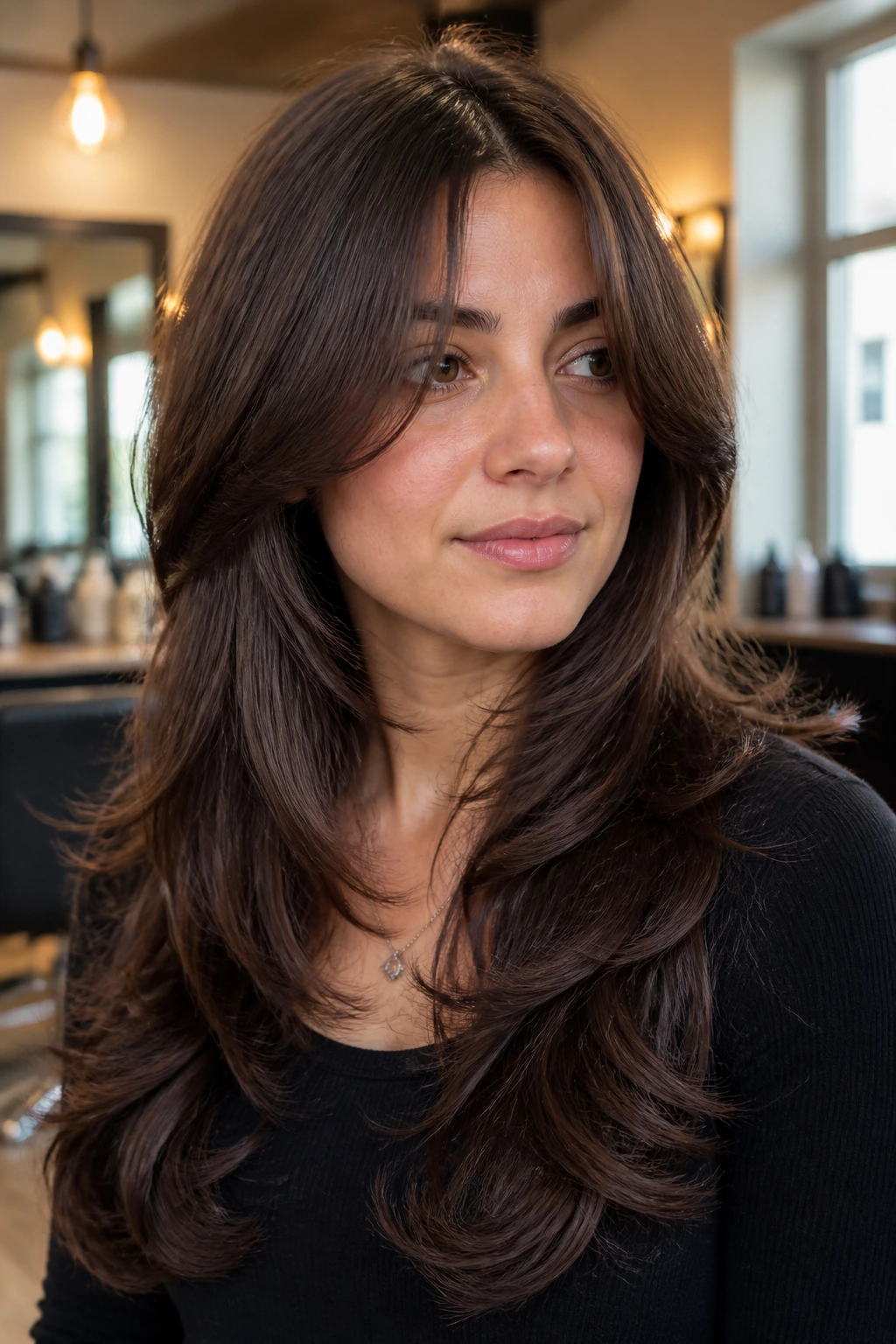
Bring photos, sure, but bring the right photos. One picture of the front and one of the back tells the stylist more than ten screenshots of hair with different textures, lighting, and blowouts. Say what you want the hair to do: “I want movement around the face,” “I want to keep the length,” “I style it straight most days,” or “I wear it air-dried half the time.”
That language matters. Thick hair can look wildly different wet versus dry, and the stylist needs to know which version you live with. If you like a blunt edge, say that plainly. If you want internal layers but no thinning shears near the ends, say that too. Don’t assume they’ll guess.
A few useful phrases help:
- “Keep the perimeter strong.” That tells them not to shred the outline.
- “Remove weight inside the haircut.” That points them toward internal layers.
- “Start the face-framing pieces at my cheekbone or collarbone.” That gives a real reference point.
- “Please don’t over-thin the ends.” That saves you from wispy damage.
Essential Tools for Styling Layered Thick Hair
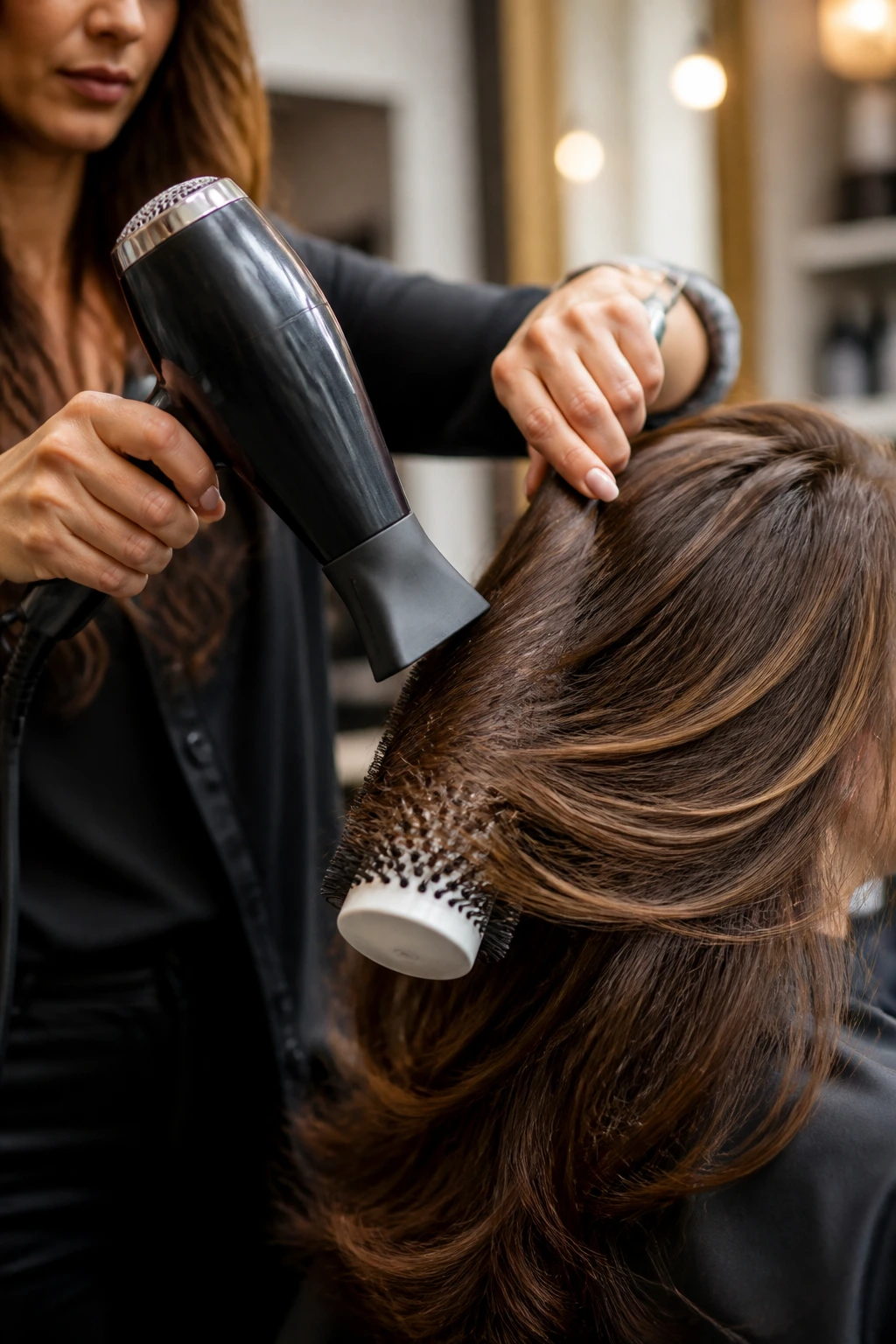
-
A blow-dryer with a nozzle attachment: The nozzle keeps airflow pointed down the hair shaft, which cuts frizz and helps the layers lie cleanly.
-
A medium round brush, about 1.5 to 2 inches: This size works better than a tiny brush for thick hair because it shapes the layers without making the ends too curly.
-
A wide-tooth comb: Useful for detangling conditioner through thick hair in the shower and for keeping curls and waves intact.
-
Sectioning clips: Thick hair needs to be divided into manageable parts, or the top layer gets styled while the bottom stays damp and forgotten.
-
Heat protectant spray or cream: Use it every time you blow-dry, straighten, or curl. Thick hair can hide damage for a while, then suddenly look rough.
-
Texturizing spray or light mousse: Great for cuts like shags, lobs, and wolf cuts where you want separation and body.
-
A diffuser: If your layers are wavy or curly, a diffuser keeps the shape defined and reduces the cloud of frizz that can happen when thick hair air-dries untouched.
-
A flat iron with rounded edges: Helpful for face-framing bends, polished ends, or smoothing just the top layer on second-day hair.
How to Style These Cuts on Busy Mornings
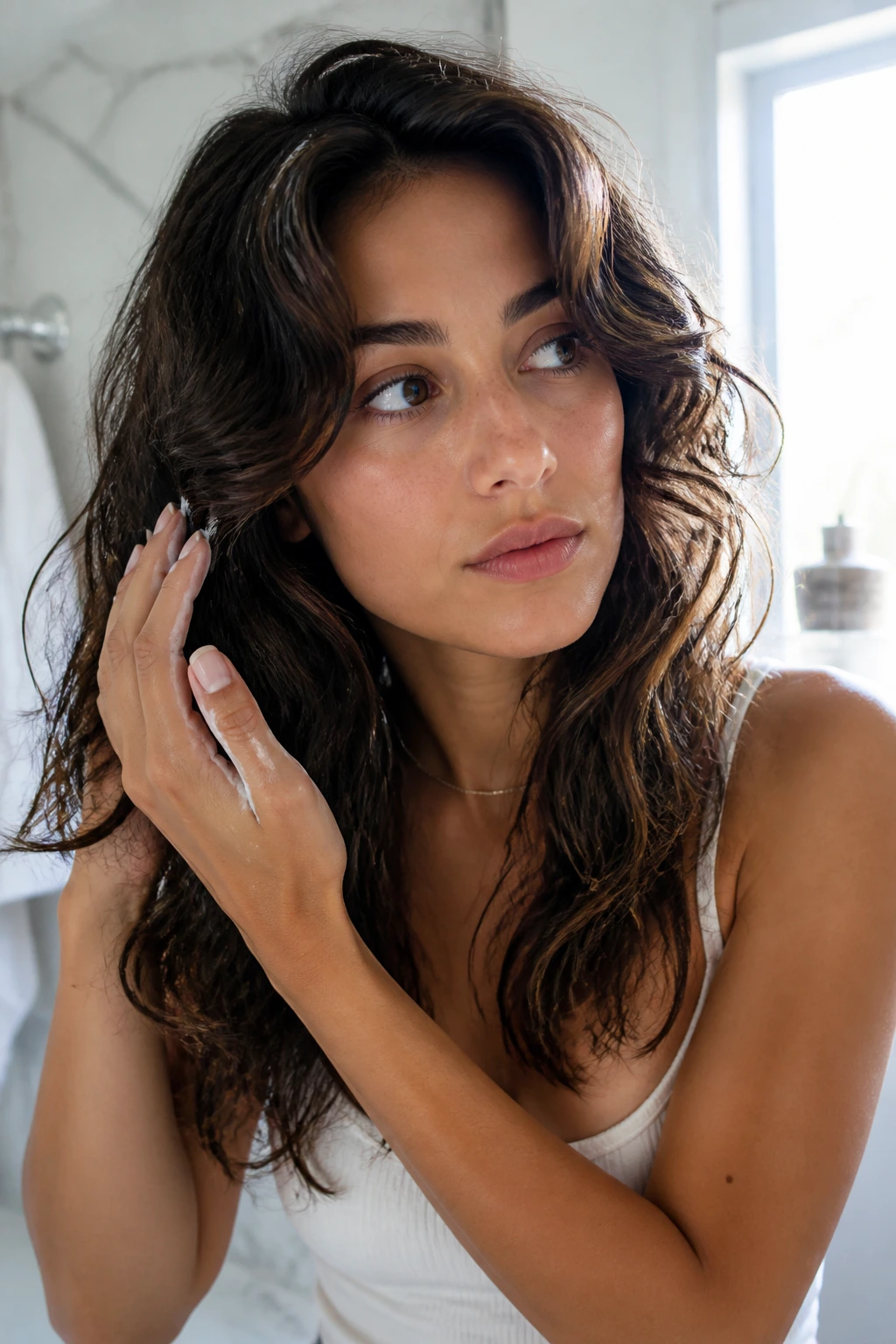
Air-Dried Days: Start with leave-in conditioner on damp hair, then add a small amount of curl cream or foam through the mids and ends. Scrunch the hair upward with your hands, part it where the layers fall best, and leave the roots alone until they dry. If your hair is very thick, flip it once or twice while drying so the underneath doesn’t dry in one flat mass.
Blowout Days: Rough-dry the hair until it’s about 70% dry, then work in small sections with a round brush. Focus on the face-framing pieces and the top layer first; those are the parts people notice. You do not need every strand perfect. You need the shape to be clean.
Second-Day Refresh: Mist the mid-lengths lightly with water, then smooth in a pea-sized amount of serum or cream through the ends. Hit the crown with a quick pass of dry shampoo if it’s oily. Thick hair usually needs less product than you think on day two, or the layers clump and lose their bounce.
When You Want More Polish: Curl just the front pieces away from the face and leave the back alone. That tiny move gives layers shape fast. It’s a good trick when you’re short on time and need the haircut to look intentional.
Common Mistakes That Make Thick Hair Puff or Collapse
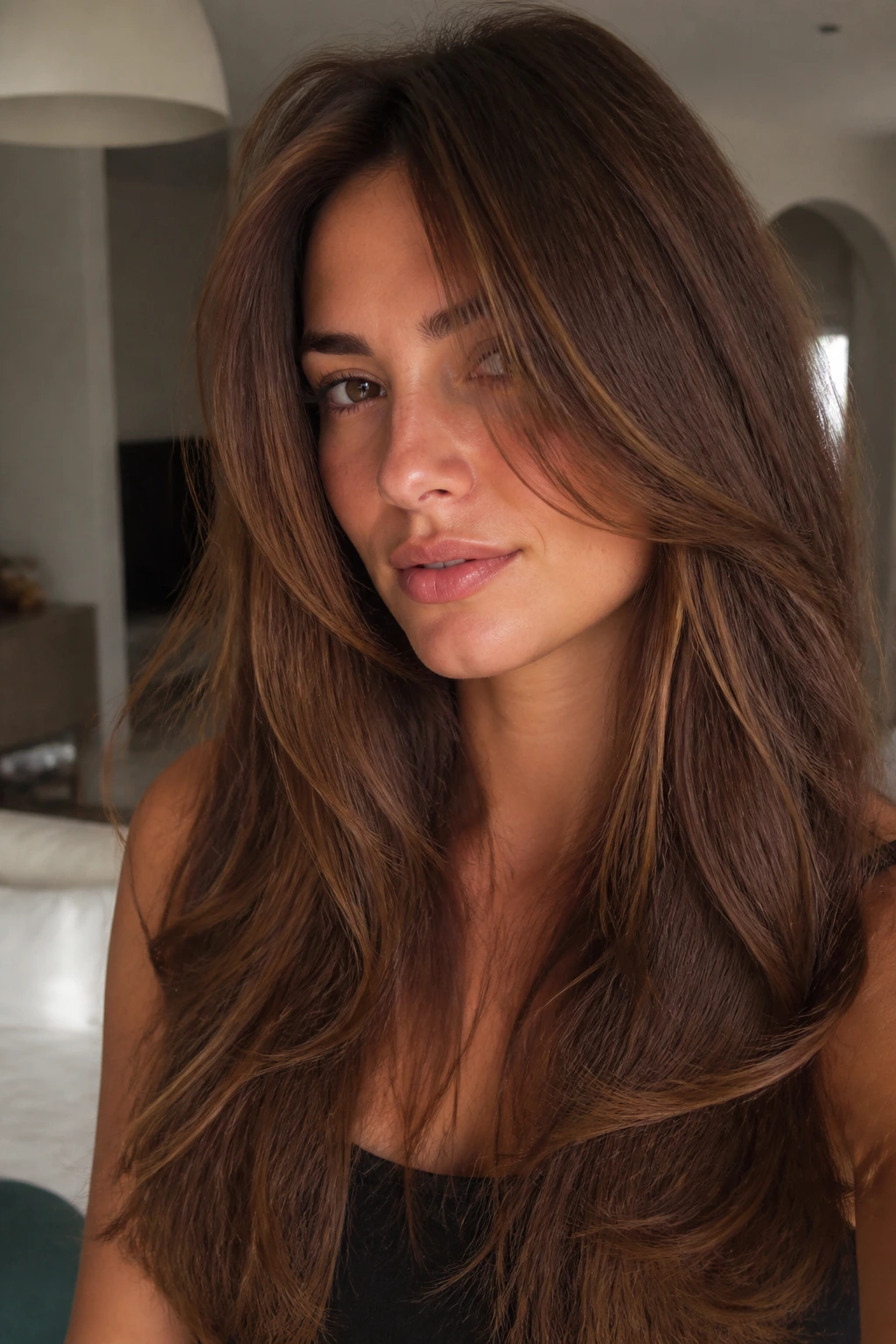
Starting layers too high: The symptom is a halo of volume around the crown and flat ends below it. The fix is to keep the shortest layers lower unless you want a shag or wolf-cut shape on purpose.
Thinning the ends too hard: Hair that looks airy in the chair can turn see-through once it moves. Ask for point-cutting or internal layering instead of aggressive thinning shears on the perimeter.
Ignoring how the hair dries: A cut that looks balanced wet can sit very differently dry. Thick hair often shrinks upward or swells at the sides, so the stylist should check the shape as it dries or style it before finishing.
Leaving the face-framing pieces too short: If they stop above the cheekbone and you have dense hair, they can kick out and sit awkwardly. Longer front layers are easier to tuck, pin, or smooth back.
Skipping styling product altogether: Thick layered hair usually needs a little help to show the shape. A light mousse, cream, or texturizing spray can be the difference between “layered” and “just big.”
Variations and Adaptations for Different Textures
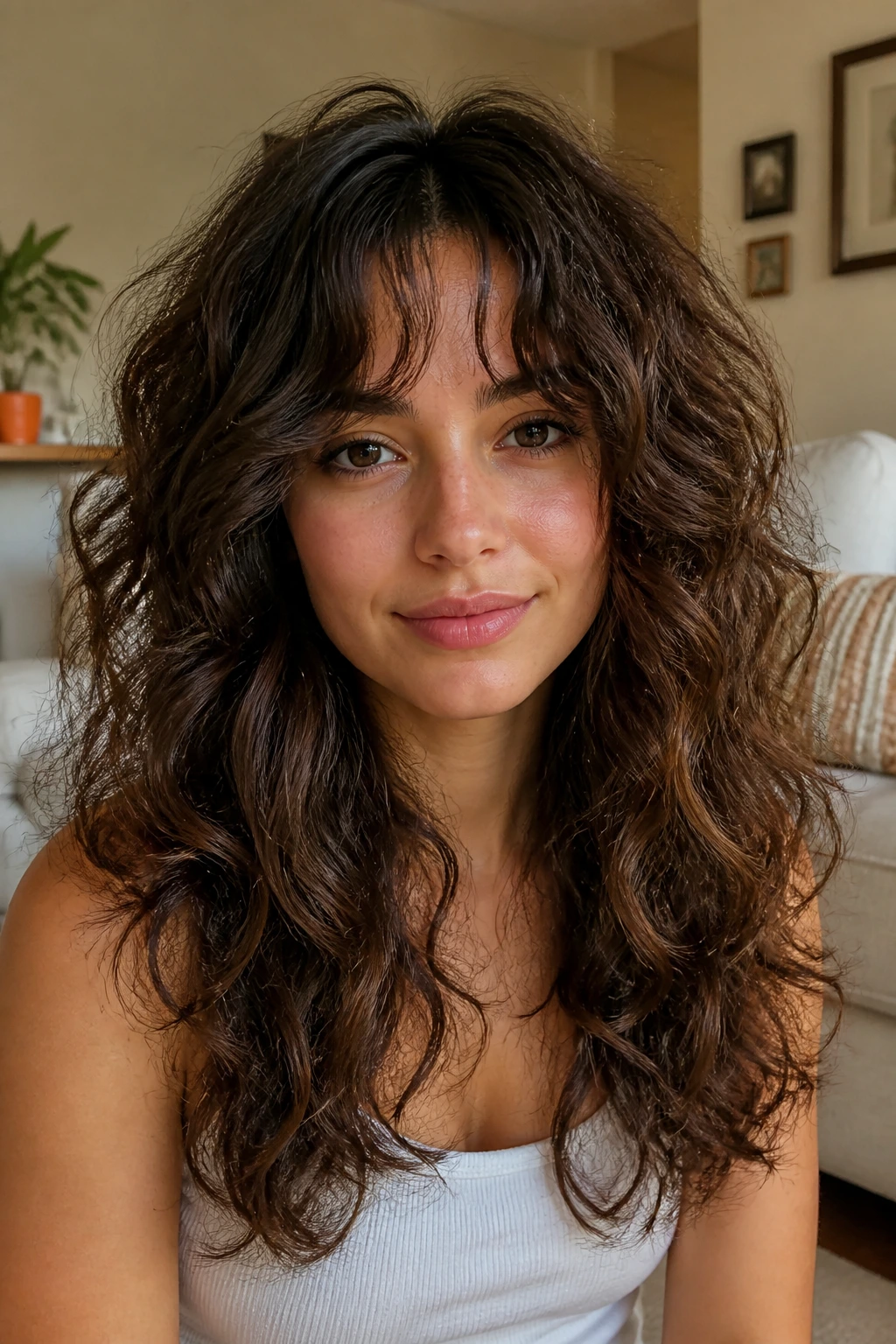
Soft-Wave Reset: If your hair waves but doesn’t curl, ask for long layers and minimal texturizing. The cut keeps the pattern loose and stops the mid-lengths from ballooning.
Curl-Friendly Shape: For curls and coils, ask for rounded layering and a dry cut if your stylist does that well. The goal is to follow the curl spring so the silhouette doesn’t turn triangular.
Straight-And-Dense Clean Cut: Straight thick hair often looks best with blunt ends and internal layers. The perimeter stays strong, and the inside gets room to move.
Low-Maintenance Grow-Out: Choose collarbone or shoulder-length layers that can stretch eight to twelve weeks without looking broken. This version is kinder if you hate frequent trims.
Fringe-Light Version: If bangs sound tempting but risky, try bottleneck or curtain bangs rather than a full fringe. They frame the face and grow out in a less annoying way.
Maintenance, Trims, and Grow-Out Rhythm
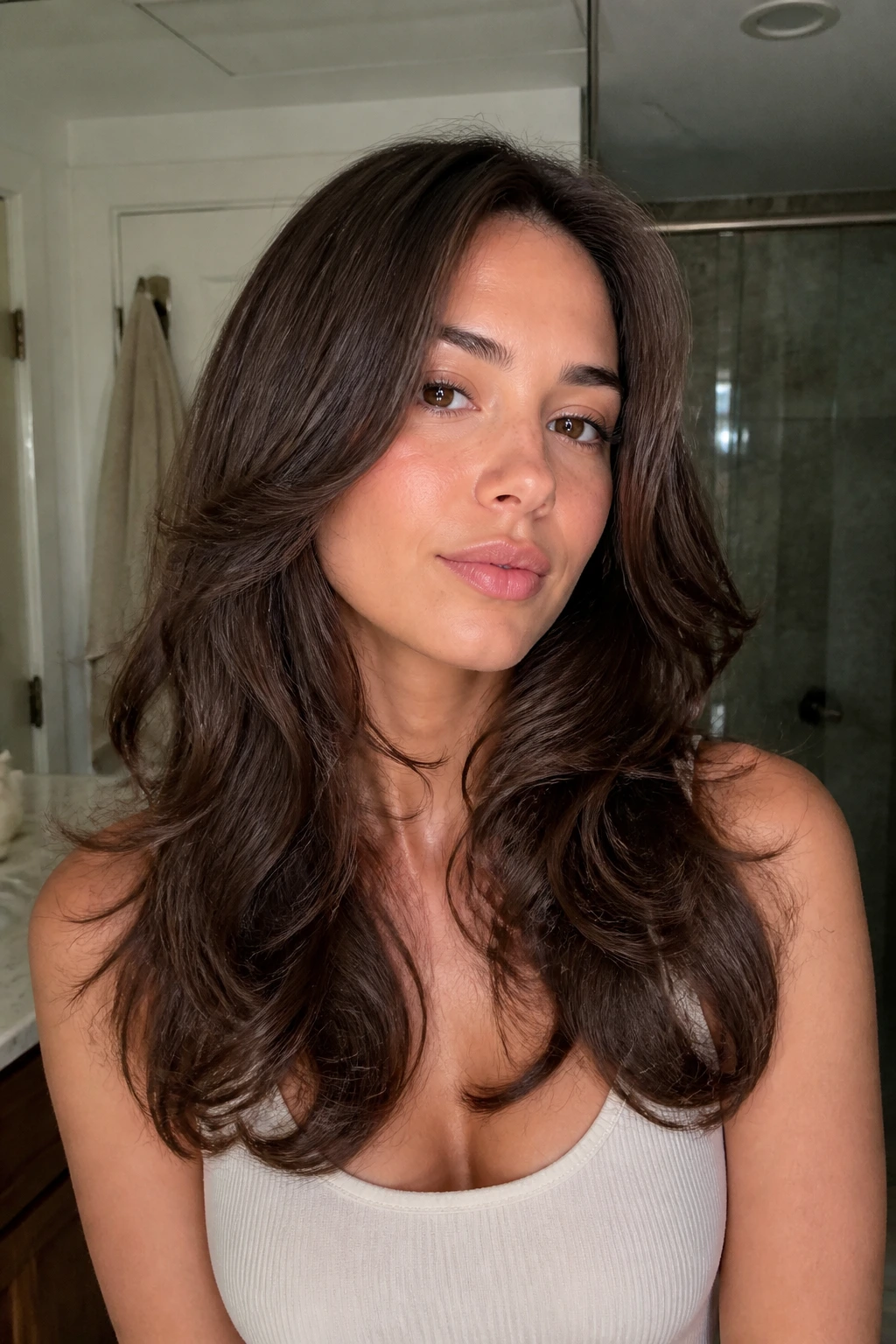
Thick hair with layers holds shape longer than many people expect, but it still needs trimming on a schedule. Most layered cuts do best with a refresh every 8 to 12 weeks. Bangs usually need a touch-up sooner, often around 4 to 6 weeks, because the front pieces show every little inch of growth.
Between cuts, keep an eye on the ends. If they start feeling bulky and the layers disappear into one heavy mass, that’s a sign the shape needs to come back. If the ends feel too wispy, hold off on further thinning and ask for a stronger perimeter next time.
Night care matters too. A loose braid, a silk or satin pillowcase, and a light detangle before bed keep thick layers from tangling into a knot at the nape. That’s not glamorous. It works.
Frequently Asked Questions About Layered Hairstyles for Thick Hair
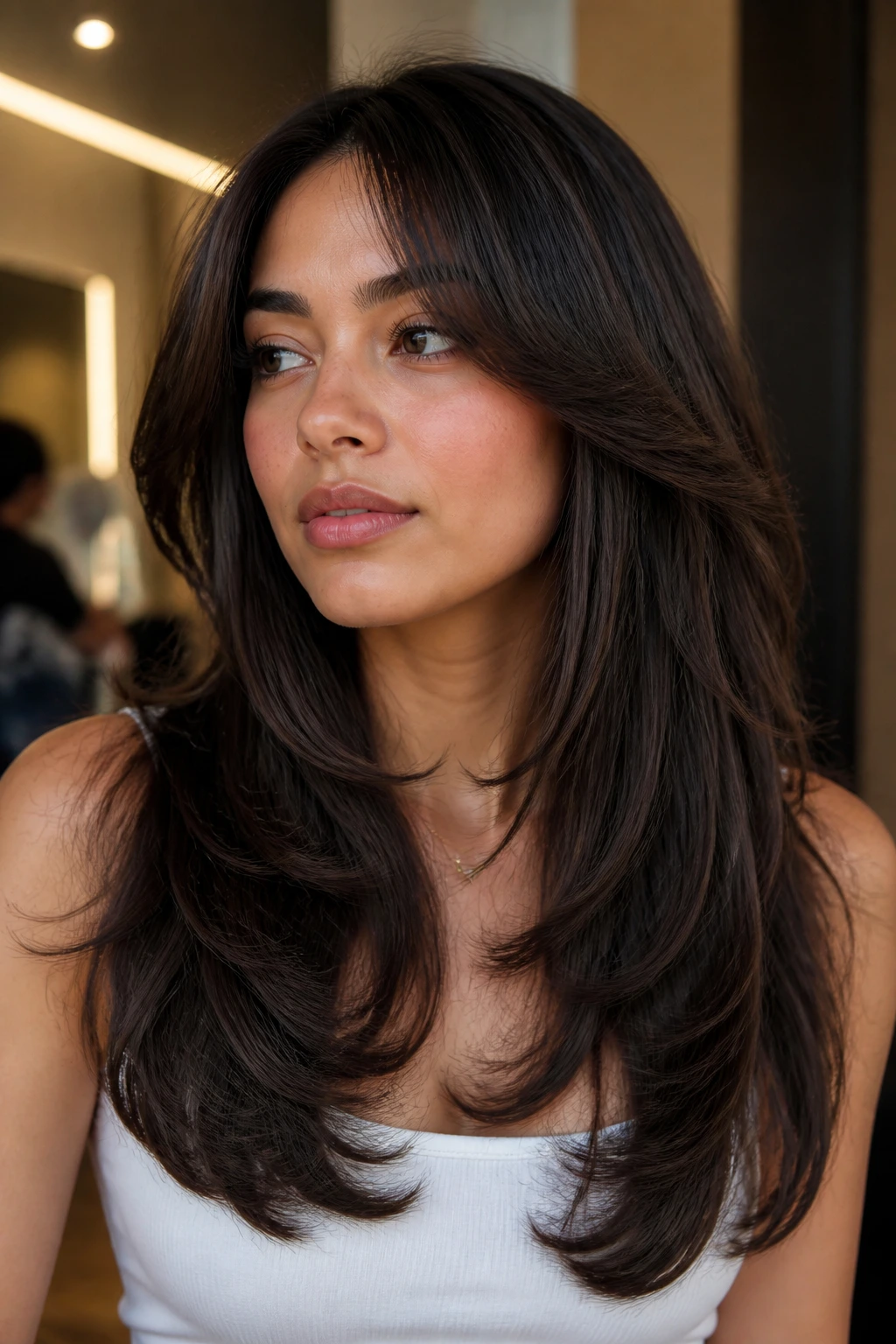
Do layers make thick hair thinner?
They make it lighter in the right spots, which is not the same thing as making it thin. A good layer pattern removes bulk while keeping the overall fullness, especially at the ends.
What layers are best if I wear my hair straight?
Invisible layers, blunt ends with interior shaping, and long face-framing pieces usually behave well on straight thick hair. They keep the outline neat and stop the style from looking like one heavy block.
Are layered hairstyles for thick hair good for curls?
Yes, but the layers need to follow the curl pattern. Rounded layers or a dry cut usually works better than random short chops that ignore how curls spring up.
How often should I trim a layered cut?
Plan on 8 to 12 weeks for most shapes. If you have bangs or a very structured front, a quicker trim around 4 to 6 weeks keeps the front from falling in your eyes.
Will short layers give me more volume at the crown?
They will, sometimes too much. That can be useful in a shag or wolf cut, but on very dense hair it can also make the top poof out and the bottom look thin.
What if my layers flip out at the ends?
That usually means the cut is a little too short for your hair’s weight and texture, or the ends were cut too blunt against your natural bend. A round-brush bend inward, a flat-iron pass, or a slightly longer layer map can fix it.
Should I ask for thinning shears?
Only if your stylist knows exactly where to use them. On thick hair, over-thinning can leave the cut stringy and unpredictable, especially once it grows out.
Can I grow out layers without an awkward phase?
Mostly, yes, if the cut starts with longer layers and a strong perimeter. Regular trims that dust the ends and clean up the face-framing pieces help the shape stay readable while it grows.
The Shape That Keeps Moving
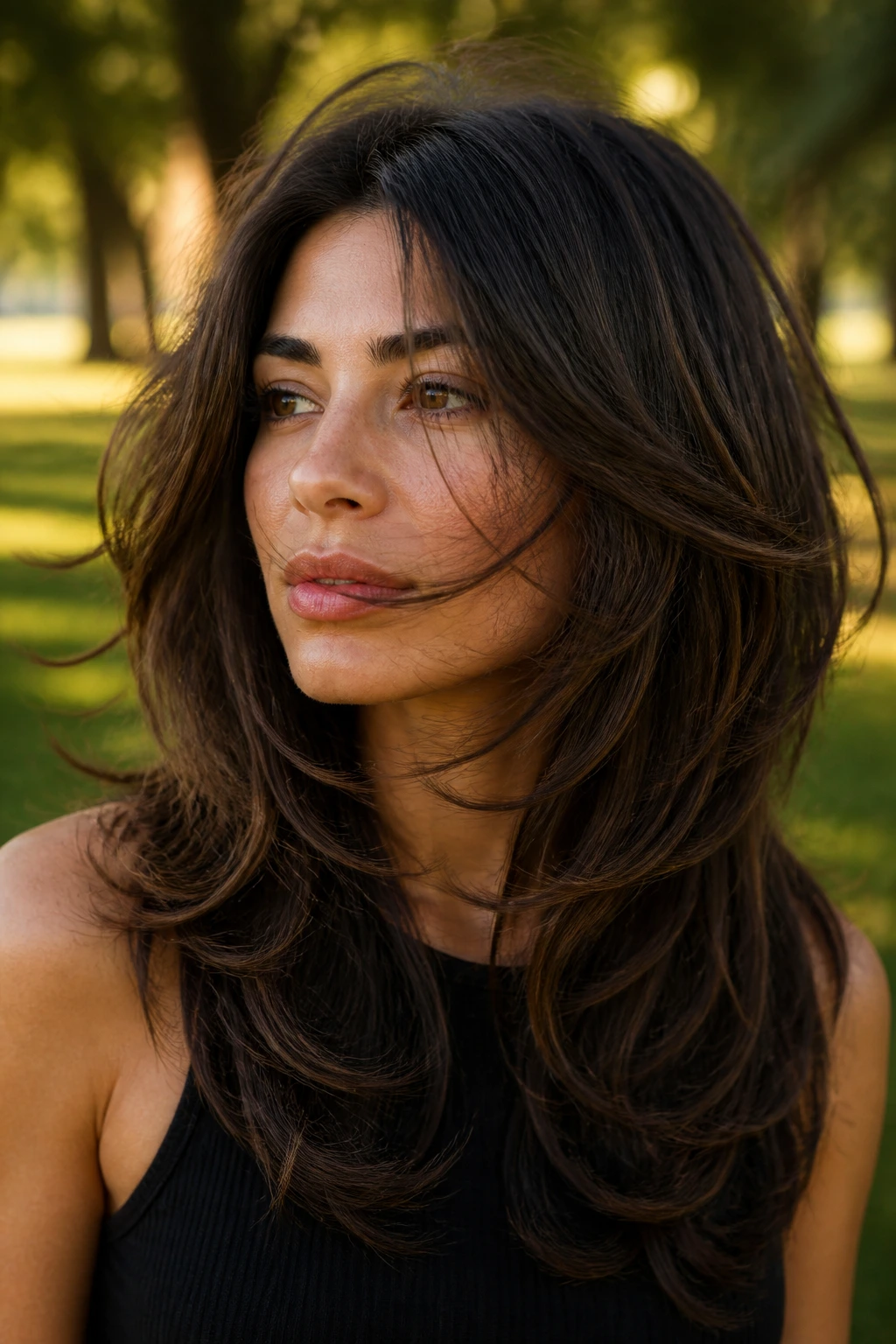
Thick hair does best when the cut respects its weight instead of fighting it. That means the right length, the right layer placement, and a perimeter that still has something to say when the layers start moving around. The cuts that last are the ones that keep the outline steady while the inside does the work.
Some days you’ll want soft face-framing pieces. Other days you’ll want a shag, a lob, or a polished blowout shape that takes five minutes to wake up. That’s the nice part about layered hair on dense hair: once the cut is right, you get options instead of one fixed look that only behaves under perfect conditions.
