



Straight hair can be a blessing until it starts acting like a ruler with no sense of humor. A lob haircut changes that fast. On long straight hair, the right long bob gives the ends a place to land, takes some of the heavy drag out of the shape, and makes the whole cut look deliberate instead of simply long.
The wrong lob, though, can be unforgiving. Too much thinning and the ends look wispy. Too little structure and the hair hangs like one flat panel. Straight hair shows every line the scissors leave behind, which is exactly why this length is so interesting: a few millimeters of angle, a blunt edge, or a hidden layer can completely change how the cut behaves.
That’s the part I like most. A lob isn’t one haircut. It’s a range of decisions about weight, length, and movement, and straight hair makes those decisions visible in the best possible way. Some versions look sleek and precise. Others have a softer bend around the jaw. A few are meant to grow out gracefully. The first handful below are the cleanest starting points, and then the list gets progressively more styled, more textured, and a little more personality-heavy.
Why These Lob Ideas Work So Well on Long Straight Hair
-
The line matters more here: Straight hair doesn’t hide a shaky perimeter, so a clean collarbone cut or a slight angle makes the whole shape look sharper right away.
-
Weight is the real trick: Long straight hair can feel heavy at the ends, and a lob lifts that weight without forcing you into a short cut.
-
Styling gets simpler: A good lob often needs one bend at the front, not a full round-brush production every morning.
-
Growth-out is kinder: Because the length already sits near the shoulders or collarbone, it usually grows out in a way that still looks intentional for weeks.
-
Movement becomes visible: Straight hair can go limp when it gets too long; a lob gives the ends enough room to swing instead of just hanging there.
-
Face framing actually shows up: On long straight hair, a few face-framing pieces can change the entire read of the haircut, especially around the cheekbones and jaw.
1. Blunt Collarbone Lob for Long Straight Hair
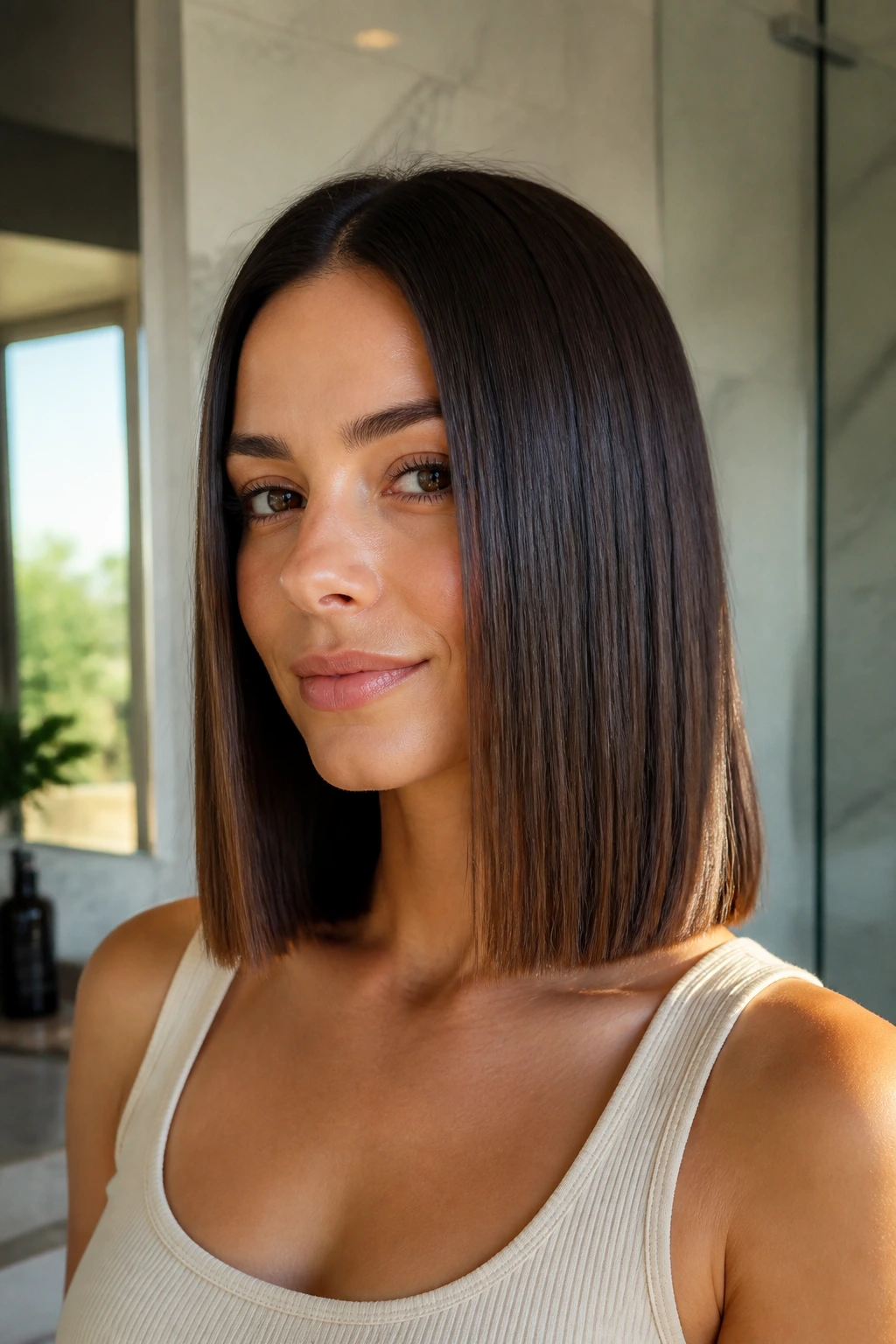
A blunt collarbone lob is the cleanest answer when you want straight hair to look thicker without pretending it’s something it isn’t. The ends sit right around the collarbone, and the line is cut straight across, which gives fine to medium straight hair a dense, solid finish.
I like this version because it doesn’t need much help. If you blow-dry it smooth, the haircut does most of the work. If your hair is thick, ask for the interior to stay heavy so the bottom edge doesn’t look sawed off or hollow.
The only thing to watch is the shoulder zone. If the length lands exactly where your hair flips outward, ask your stylist to go a touch higher or lower. That tiny shift saves you from the annoying outward kick that straight hair loves to do after a few hours.
2. Soft A-Line Lob With a Slight Front Length
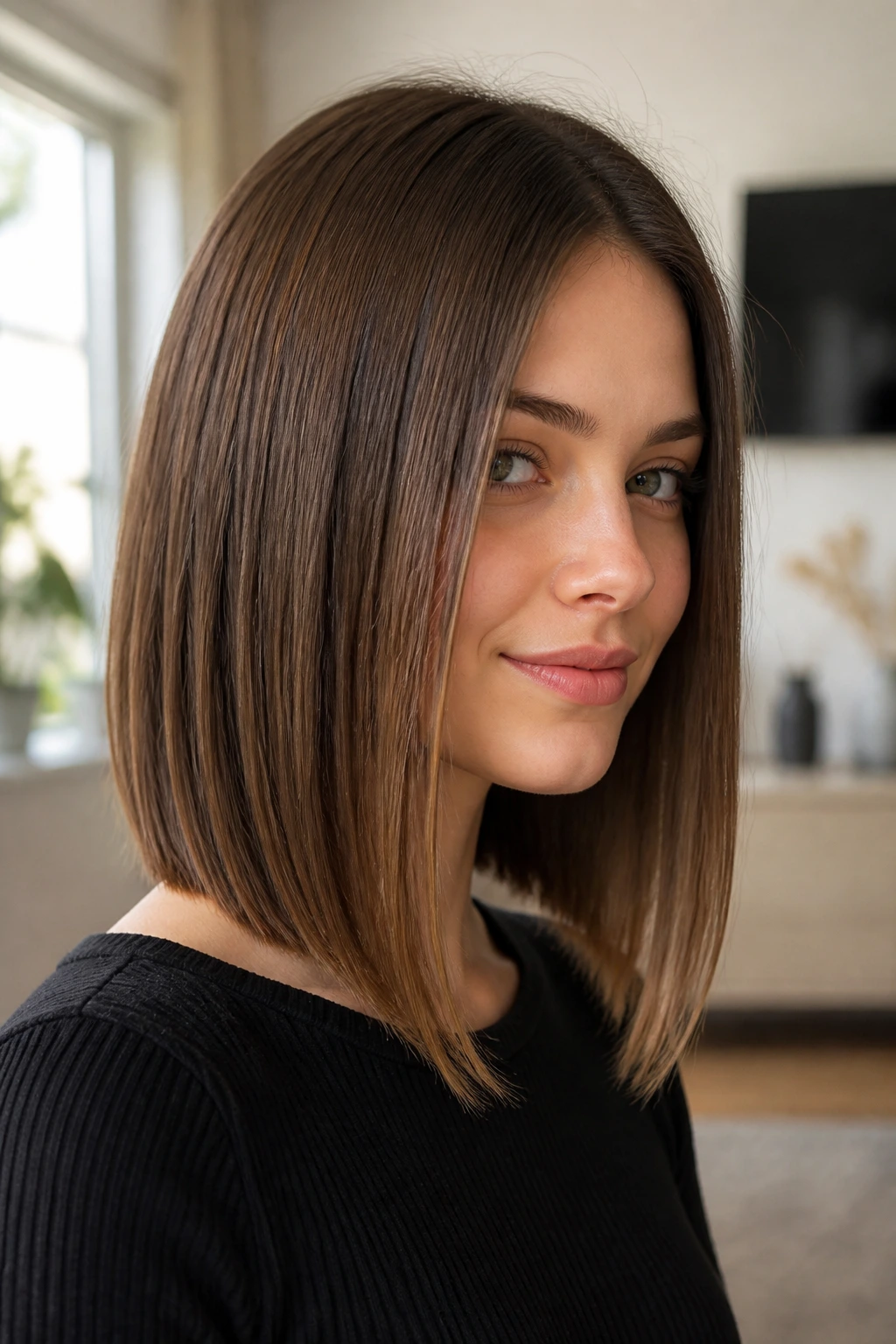
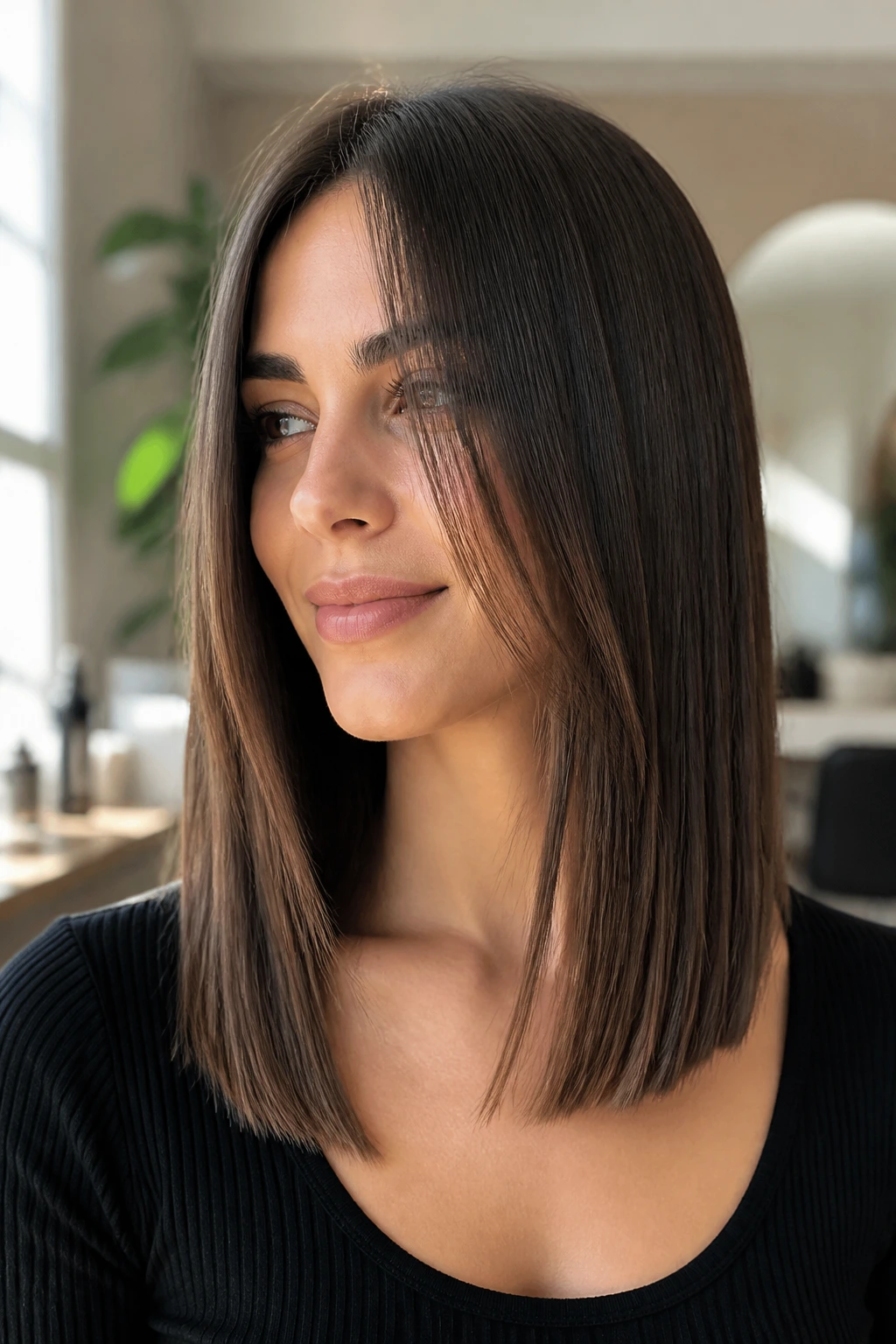
Want the front to feel a little longer without committing to a full angle? This is the version. The back sits just a bit shorter, and the front pieces graze lower, so the whole cut looks sleek from the side and still keeps some length around the face.
That slight A-line shape does a lot for long straight hair because it creates direction. Instead of dropping straight down, the hair leans forward a little, which makes the cut look lighter and more purposeful. It’s subtle. That’s the point.
This is one of my favorites for someone who keeps hair tucked behind one ear a lot. The angle gives you enough front length that the cut doesn’t disappear when you move it around.
3. Long Layered Lob That Removes the Heavy Bottom
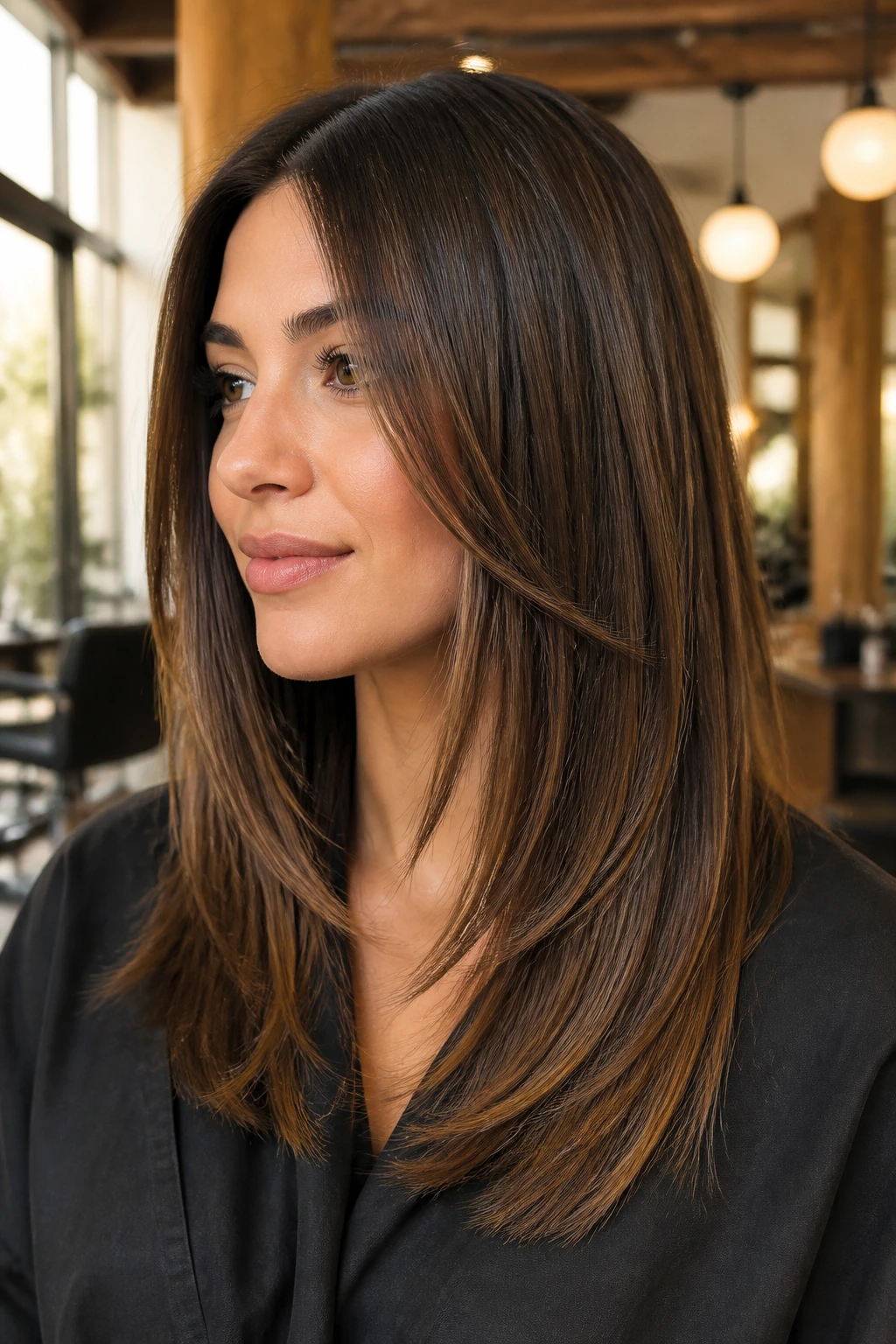
Heavy straight hair can look like a curtain when it gets too long. A long layered lob fixes that by taking weight out from underneath, usually with the shortest layers starting below the cheekbone so the perimeter still looks full.
The move here is restraint. Too many layers and straight hair starts to fray at the edges, which is a fast way to make a lob look tired. The right version keeps the outline strong and just loosens the interior enough that the hair bends instead of collapsing.
Why it works on dense hair
The cut gets rid of the thick, blunt shelf that can make long straight hair sit like one flat slab. You still keep enough length to pull it into a low ponytail, but the ends stop feeling so blunt and boxy.
4. Center-Part Glass Lob With a Sleek Finish
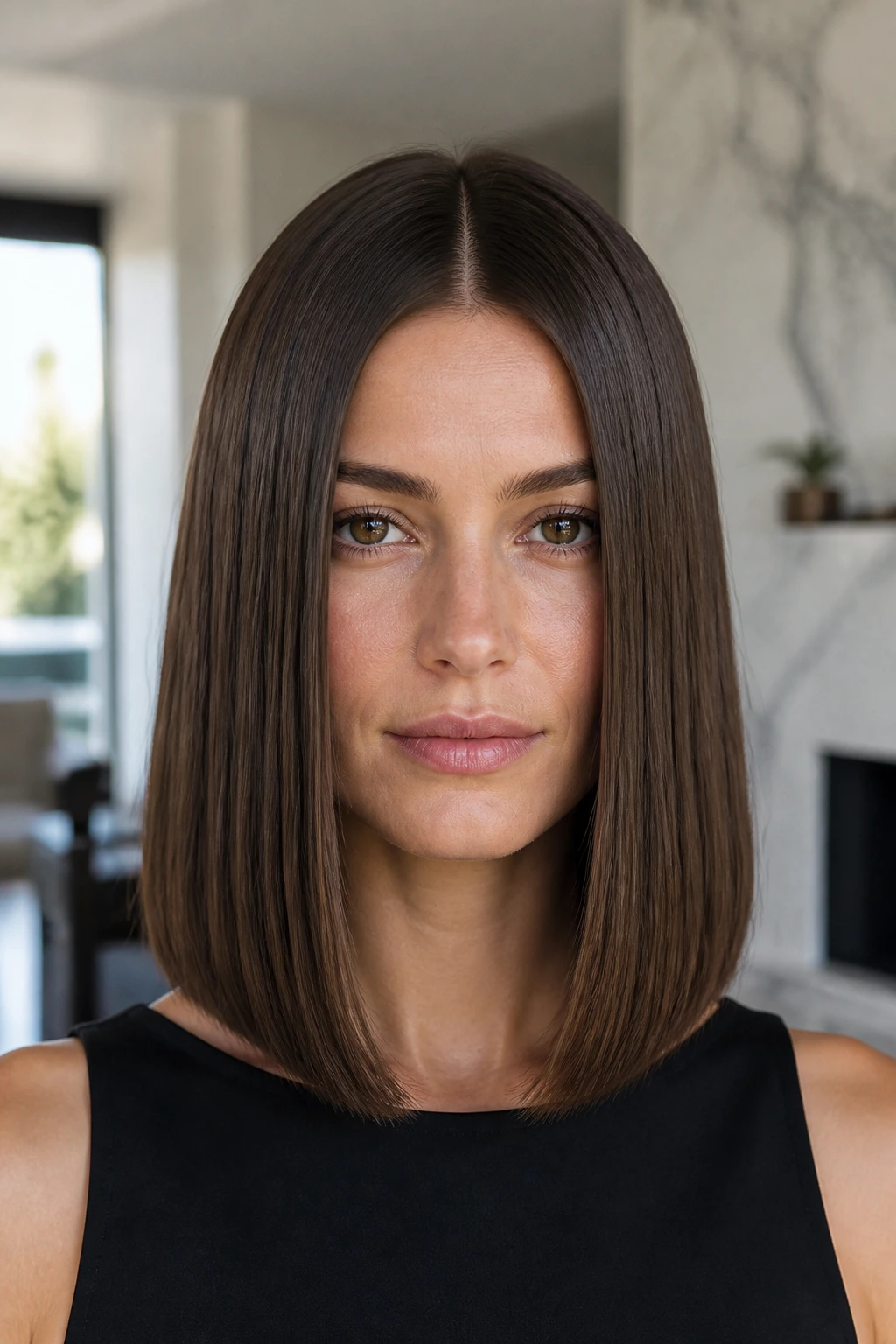
A center-part glass lob is the polished version that looks almost liquid when it’s done well. The hair is cut to sit evenly around the collarbone, then styled smooth with a middle part and a shine finish that keeps the surface clean.
Straight hair is already halfway there, which is why this cut can look so sharp with minimal effort. The part has to be precise, though. If the sectioning is crooked, the whole shape feels off by half an inch and you can see it immediately.
Use this one if you like a neat, controlled look and don’t mind a flat-iron pass or a careful blow-dry. It’s not the most forgiving lob on a rushed morning, but when the cut is right, it has a very clean, expensive line.
5. Side-Part Sweep Lob That Gives the Crown Lift
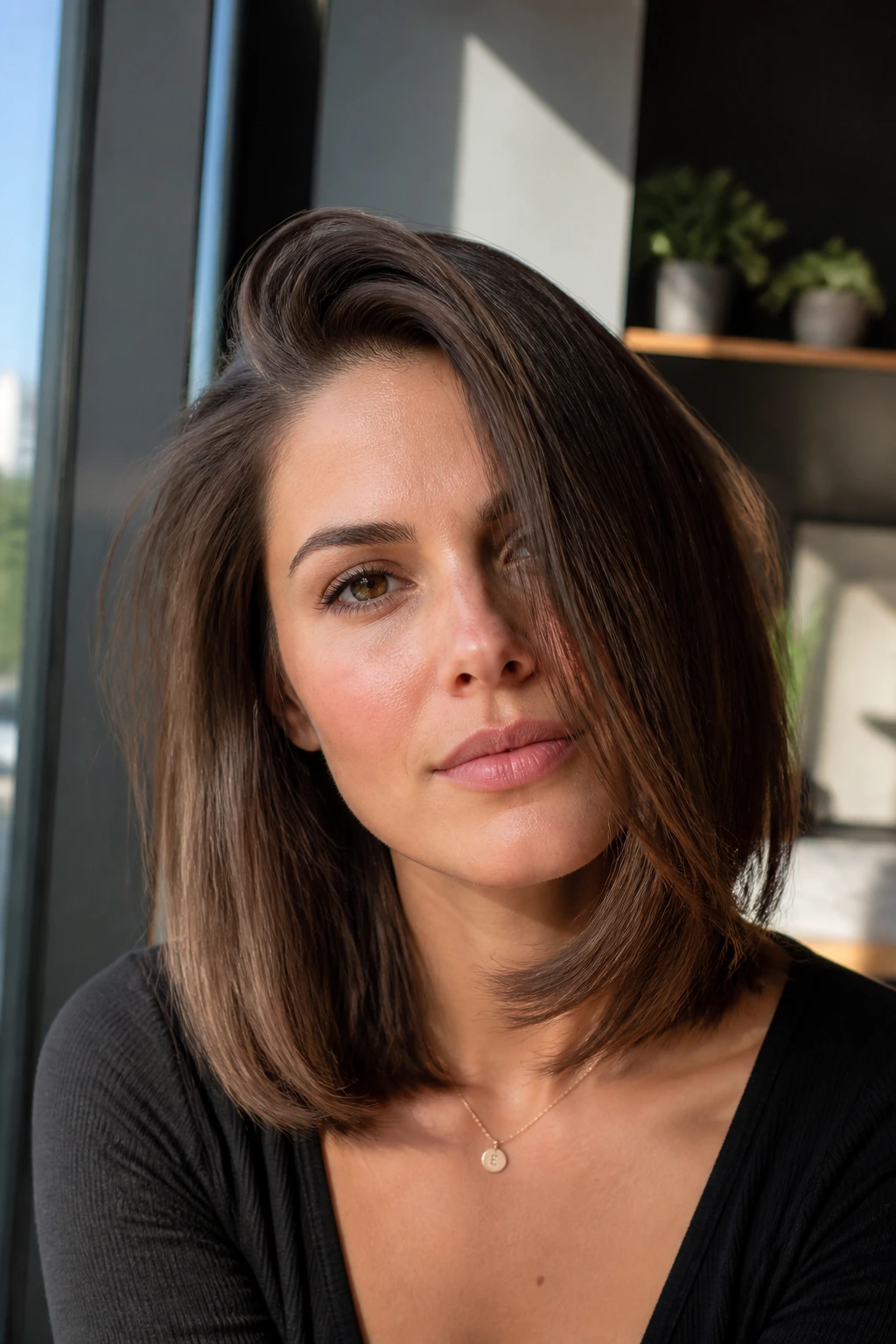
If your roots go flat by lunch, a side-part sweep lob can change the whole mood of straight hair. The deep part creates instant lift at the crown, and the longer side falls across the face in a way that feels softer than a dead-center line.
The best part is how little you have to do. A blow-dry with a medium round brush at the roots is often enough. The cut itself should hold enough shape that the front pieces move instead of collapsing toward the cheeks.
This is a strong choice when straight hair feels too severe with a middle part. The side part breaks that long vertical line and gives you a little asymmetry without making the haircut look dramatic for the sake of drama.
6. Face-Framing Lob With Cheekbone Pieces
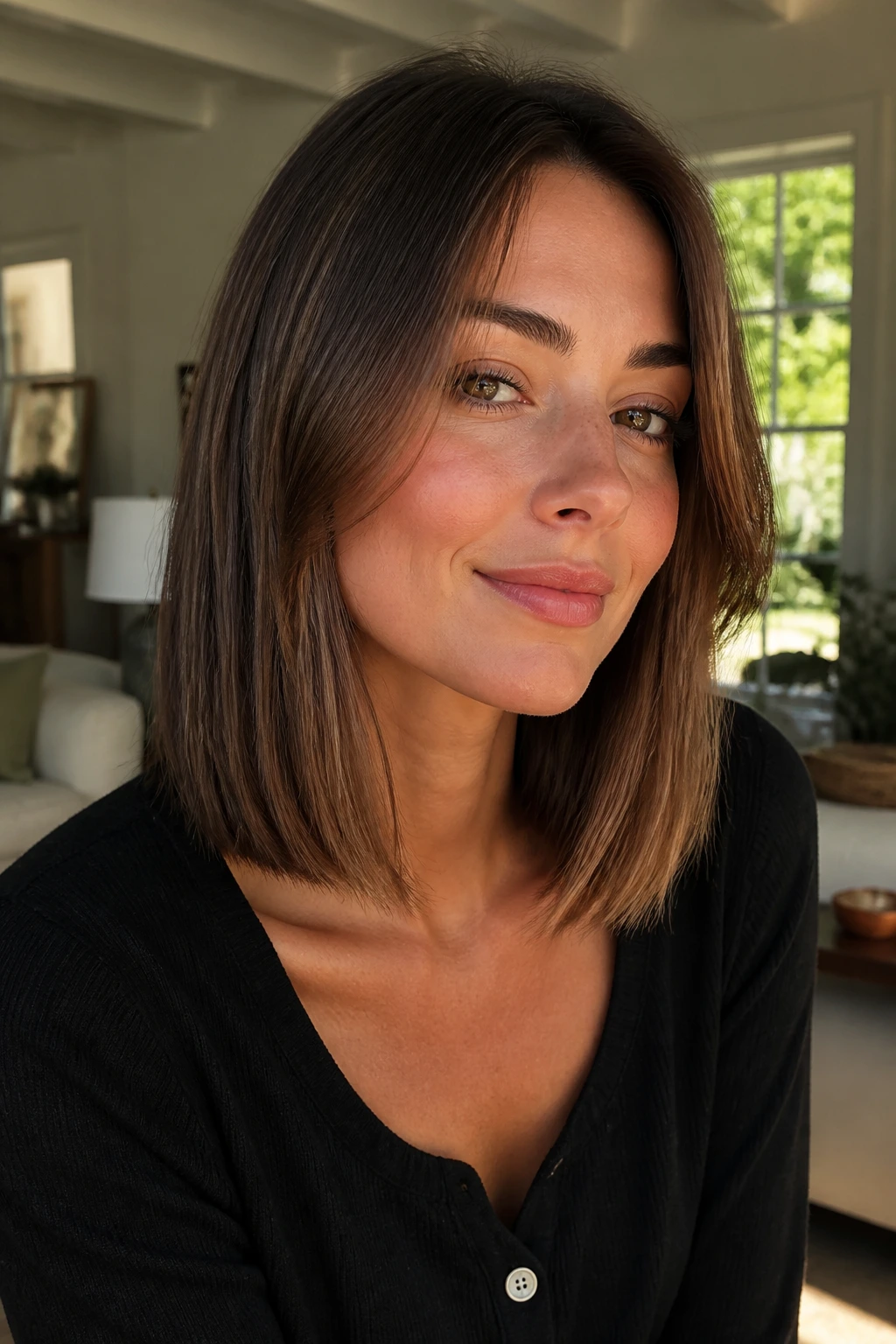
Face-framing should be about landmarks, not random loose pieces. On long straight hair, the smartest face-framing lob starts around the cheekbone or the top of the jaw and then blends into the rest of the cut so it feels like part of the shape, not an afterthought.
That matters because straight hair shows every cut line. If the face frame is too short or sits at the wrong spot, it can look choppy and obvious in a bad way. Done well, though, it softens a strong jaw and makes the lob look lighter around the front.
I’d ask for this version if your hair is long, flat, and a little too polite. The front pieces bring the haircut toward your face, which makes the whole thing feel less like “I cut my hair” and more like “I changed the shape.”
7. Invisible Layer Lob That Keeps the Outline Clean
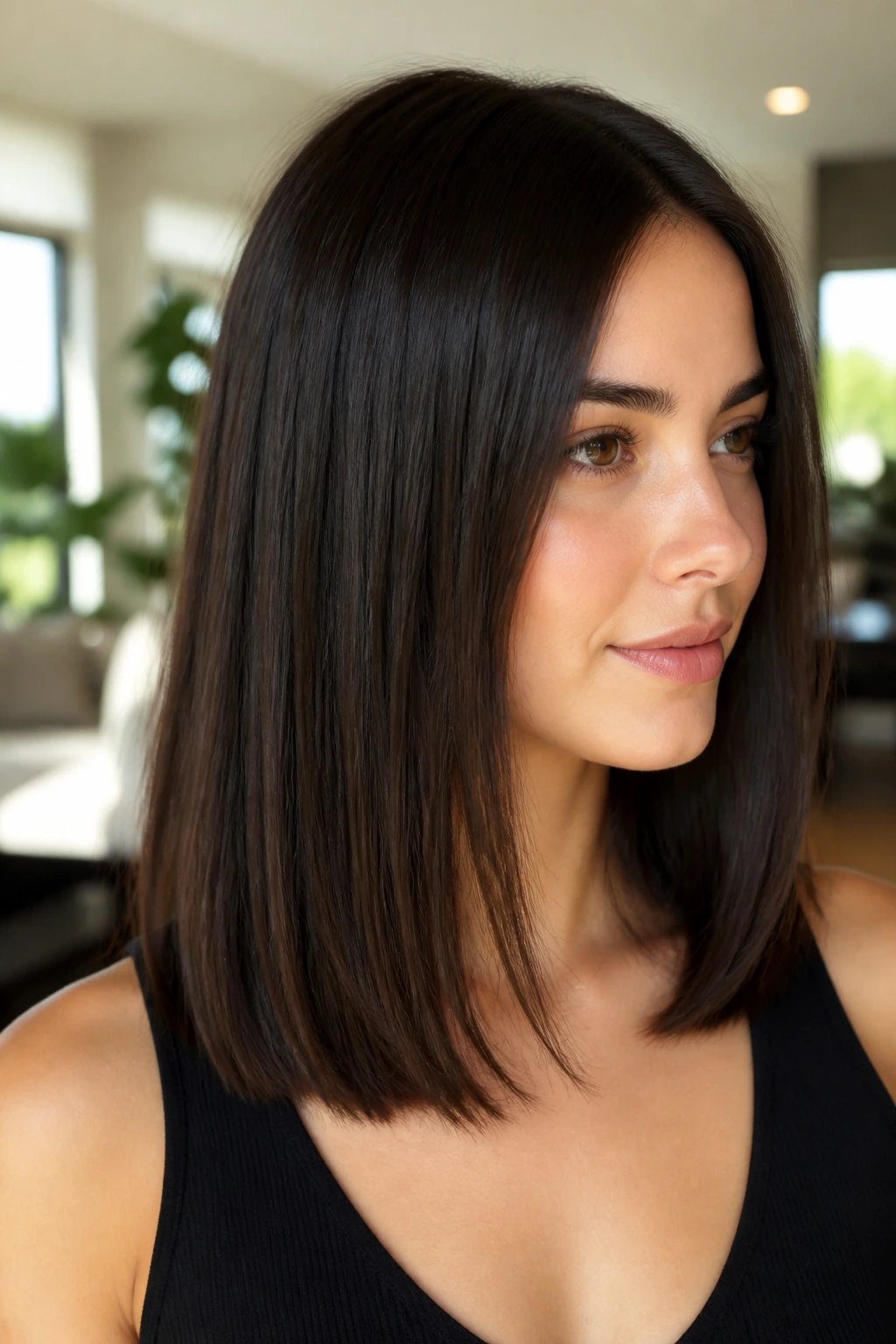
Some cuts look layered from the outside. This one doesn’t. Invisible layers are carved inside the shape, so the perimeter stays blunt and tidy while the hair underneath loses just enough weight to move.
That’s a smart move for straight hair that’s thick but not coarse. You get the clean edge people love in a blunt lob, but the inside isn’t so dense that it hangs like a sheet. The result is more swing, less bulk.
It’s also a good choice if you hate seeing choppy layers around your face. Everything stays quiet on the surface. The haircut only reveals itself when the hair moves.
8. Clavicut Lob That Sits Right on the Collarbone
A clavicut is basically the sweet spot for people who want to keep some length and still feel the difference of a cut. It lands right at the clavicle, which gives straight hair a natural resting point instead of letting it drag past the shoulders.
The collarbone is a useful landmark because it’s where hair often starts to look heavy. Cut there, and the shape feels deliberate. Go a little above, and it gets lighter and cleaner; go a little below, and it stays softer with more swing.
This is the version I’d call the most wearable on a daily basis. It works with air-drying, a quick round-brush bend, or a flat-iron pass, and it doesn’t fall apart the moment you skip styling.
9. Curtain Bang Lob That Softens a Straight Lob
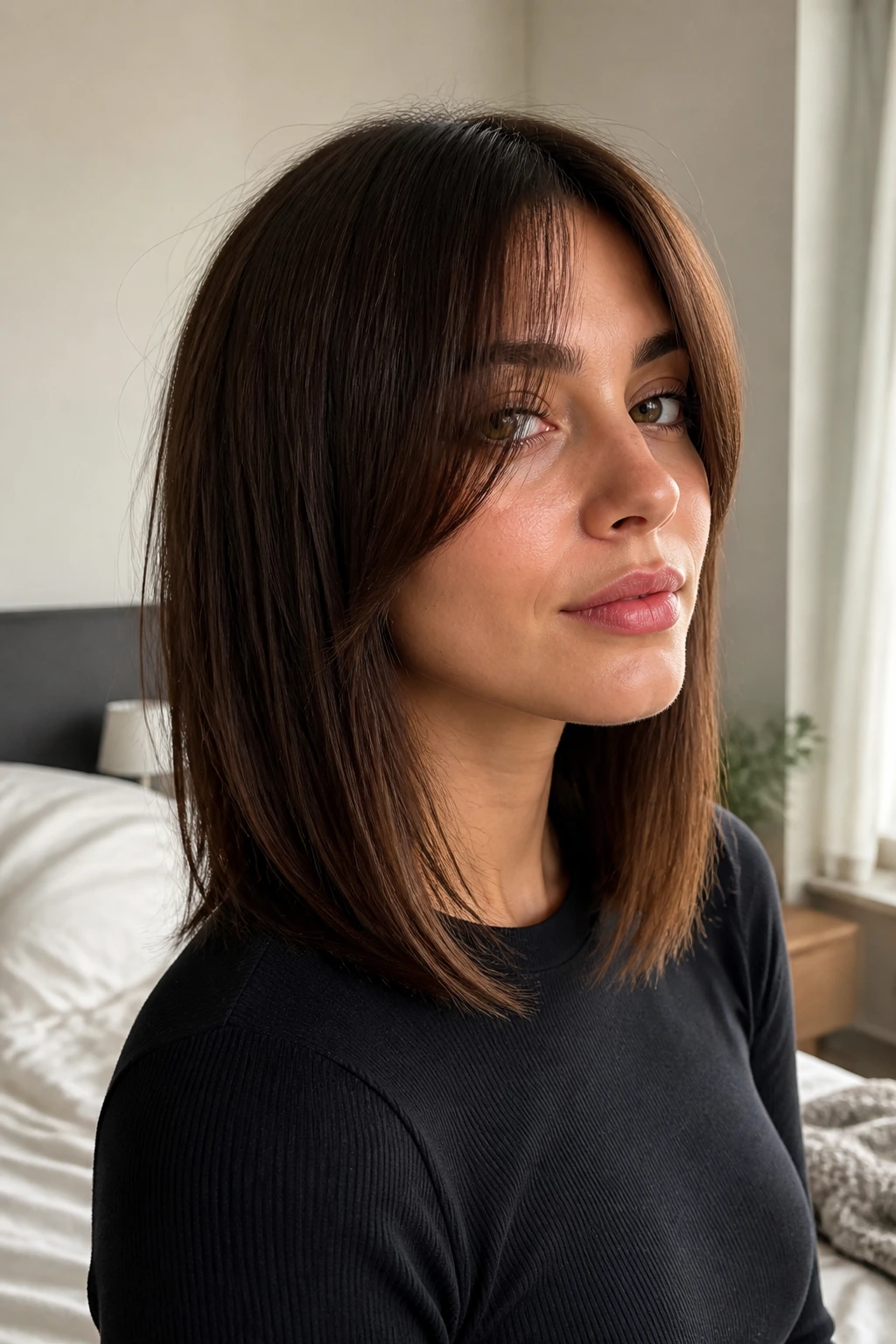
Curtain bangs do a lot of quiet work. On long straight hair, they break up the long front panel and keep the face from being swallowed by one single line of hair. The rest of the lob can stay simple.
The key is the blend. Curtain bangs should sweep out into the cheek pieces so the transition feels smooth, not chopped. If the bangs are too short, they compete with the lob; if they’re too long, they disappear and you lose the point.
This cut is nice when you want a little personality without giving up the length at the sides. It also buys you some movement around the eyes and cheekbones, which straight hair can sometimes skip entirely.
10. Bottleneck Bang Lob With a Narrow Center Opening

Bottleneck bangs are the calmer cousin of full fringe. The center is shorter, then the sides stretch longer and blend into the lob. On straight hair, that shape keeps the front from going flat while still leaving plenty of length around the temples.
I like this one because it doesn’t force a big daily styling commitment. A quick blow-dry with a small round brush usually does the job, and the longer sides soften the cut as the bangs grow out. That matters more than people admit.
If you’ve been curious about bangs but don’t want the all-or-nothing feeling of a blunt fringe, start here. The shape looks modern without being difficult.
11. Asymmetrical Lob With One Longer Side
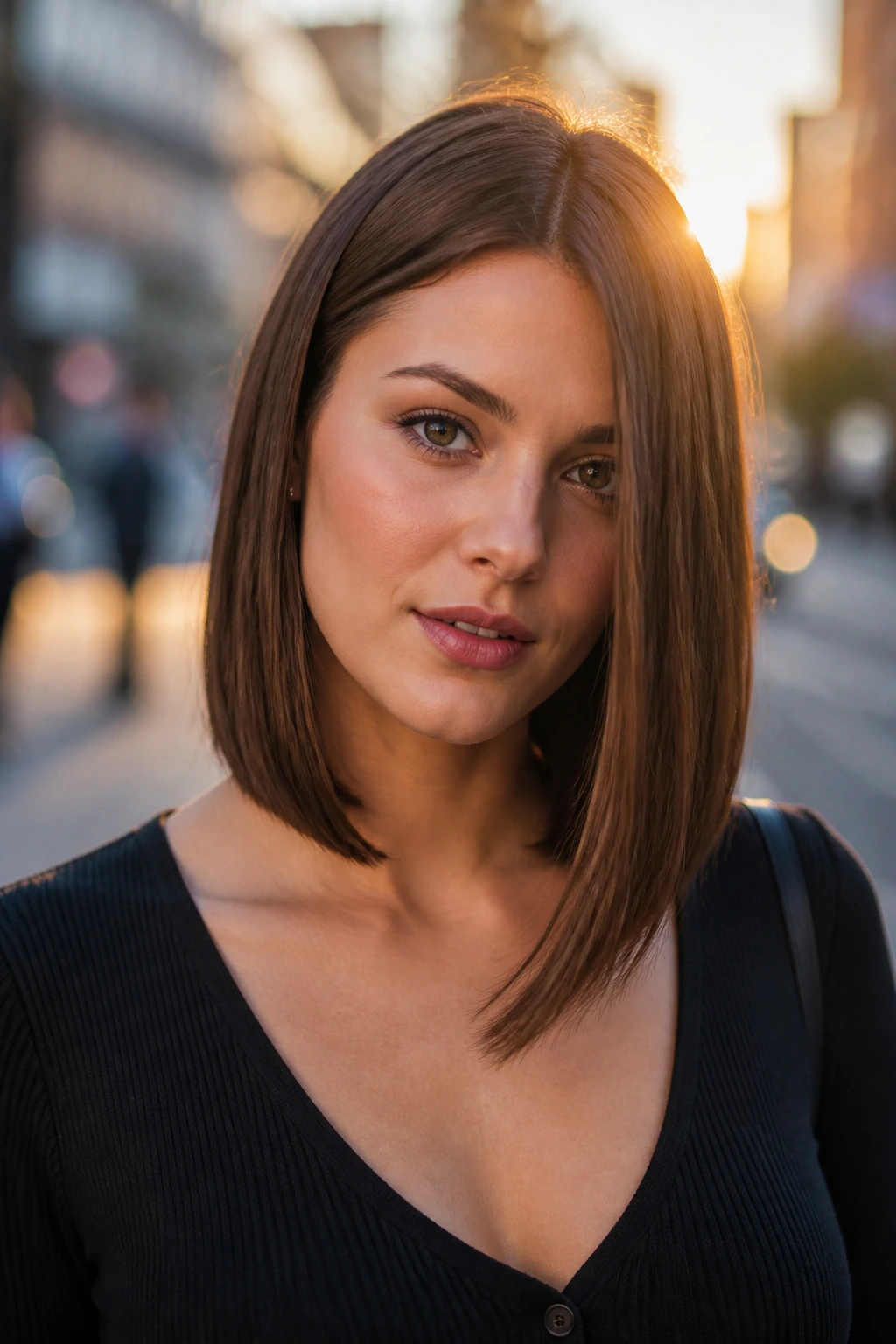
One side longer than the other sounds dramatic because it is. But when the difference is small—say half an inch to an inch—it reads as stylish instead of costume-y, especially on straight hair where the line stays crisp.
The best asymmetrical lobs keep one side just long enough to skim the collarbone while the other sits a touch higher. That tiny imbalance makes the haircut feel alive from the front and the side, which is useful if your hair tends to lie too neatly.
Be careful with this one if you change your part often. The asymmetry should be built around how you actually wear the hair, or it can look accidental when the part shifts.
12. U-Shaped Lob That Keeps the Center Full
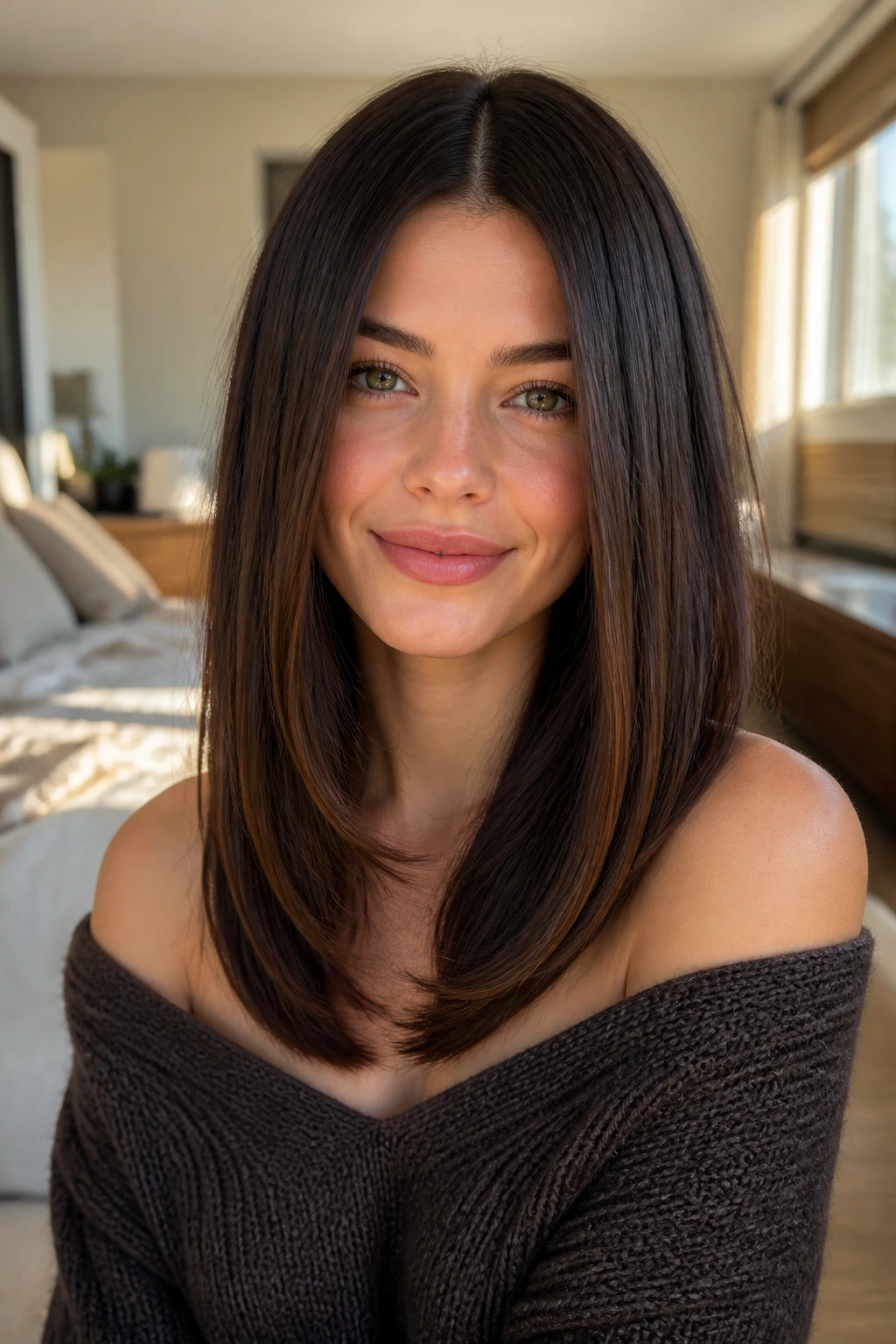
The U shape is for anyone who hates seeing too much hair disappear at once. The middle stays longest, the sides curve up slightly, and the overall effect is softer than a blunt line but still full at the bottom.
Straight hair likes this shape because it preserves the sense of length. Instead of cutting a flat line across the back, the U shape keeps the outline rounder and less severe. It’s a small change that makes a big difference in how the hair falls down the back.
This cut also grows out nicely. The curve blurs over time, so you don’t get the same harsh edge you’d notice with a stricter blunt lob.
13. Rounded-Brush Lob That Bends Under Naturally
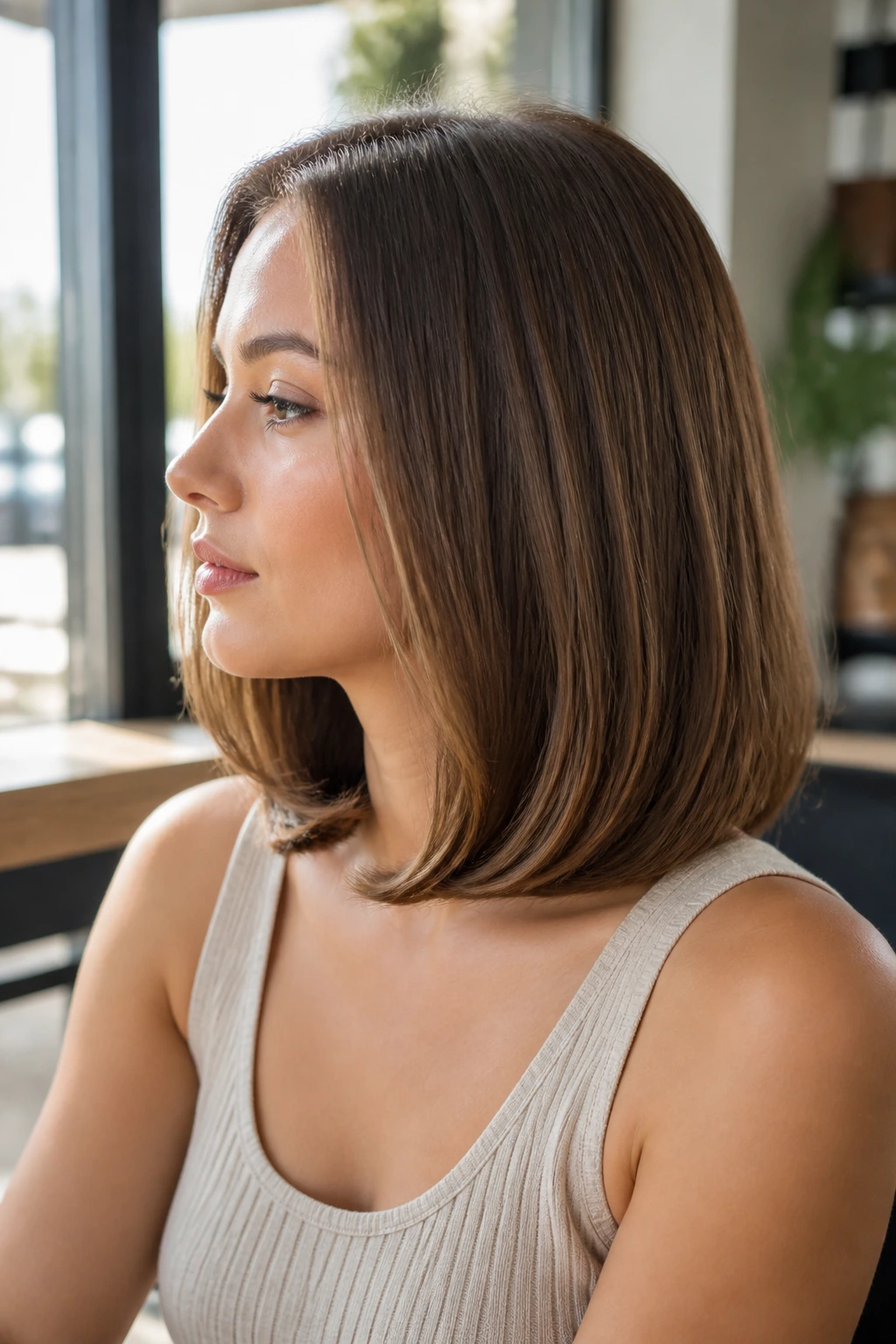
If you blow-dry your hair under with a round brush, this is the lob that makes sense. The cut is set up so the ends curve inward a little instead of sticking straight out, which gives straight hair a more polished finish without making it look stiff.
A rounded-brush lob works best when the layers are minimal and the perimeter is slightly beveled. That bevel is tiny, but it helps the ends sit in a softer line. You can see it most clearly from the side.
This is the haircut for someone who likes that tidy, controlled shape around the jaw and neck. It looks neat with a blouse collar, a blazer, or even a plain T-shirt, which is annoyingly useful.
14. Razor-Cut Lob With Airy Ends

A razor-cut lob can look airy and cool on straight hair, but only if the hair has enough density to support it. On fine hair, a razor can make the ends look frayed fast. On medium to thick hair, it can remove the blunt heaviness that makes straight hair feel sleepy.
The texture here should still look deliberate. You want movement, not shredded ends. A good razor-cut lob has a bit of slip and separation at the bottom, especially around the front pieces, so the shape feels lighter when it moves.
I’d choose this one if you like hair that never looks too perfect. It has a bit of edge to it, but not the kind that requires constant fussing.
15. Textured Lob That Moves When You Turn Your Head
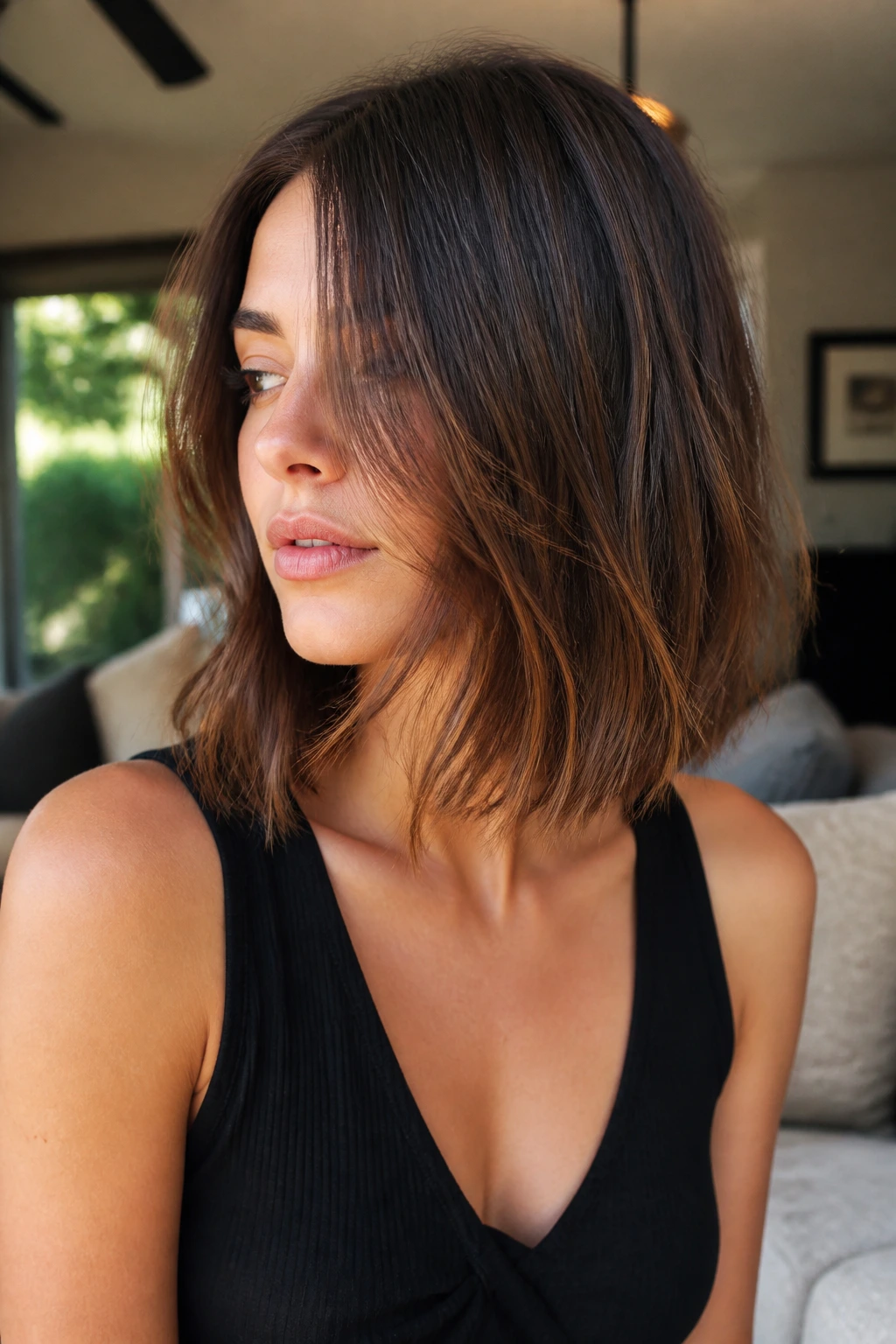
A textured lob should move when you turn your head. That’s the whole point. The ends are piecey, the line is still there, and the haircut doesn’t collapse into one solid block the second the humidity changes.
Straight hair needs texture with restraint. Too much, and the ends start to look thin. Too little, and the style just lies there. The sweet spot is a soft, choppy finish through the bottom inch or two, with enough interior weight left in place to keep the shape honest.
This cut makes sense if you wear your hair slightly undone and don’t want to flat-iron every section into submission. It looks a little better when it’s not freshly perfect.
16. Feathered Ends Lob With a Softer Finish

Feathered ends are a quieter answer to a blunt lob. Instead of a hard bottom line, the tips taper softly, which takes some of the visual weight out of long straight hair without making the cut feel thin.
That taper is useful if your hair is straight but not especially thick. A blunt line can sometimes look too dense at the bottom, while a feathered edge gives the cut a softer landing. It still reads as a lob. It just breathes a little more.
This is one of those shapes that looks especially nice when tucked behind the ear. The movement around the jaw stays gentle, and the haircut stops feeling boxy.
17. Tucked-Behind-the-Ears Lob That Holds Its Shape

Lots of people tuck one side behind the ear without thinking about the haircut. That’s why this version matters. The front should be cut with a little extra length around the cheek so the tuck doesn’t drag half the shape away.
On straight hair, a tucked lob can look very clean. The ear tuck opens up the face, shows off earrings, and makes the collarbone length feel more intentional. But the cut has to support that habit or the whole front goes lopsided.
I’d ask for this if you’re always fidgeting with your hair at work or around your face. The length still feels relaxed, but the front stays put when you move it back.
18. Deep Side-Part Lob With Root Lift

A deep side part changes the mood faster than almost anything else. On a lob, it gives straight hair root height on one side and a soft sweep across the forehead on the other, which makes the cut feel fuller without adding a single extra layer.
The trick is to keep the bottom line simple. The drama comes from the part, not from the outline. If the ends are too choppy, the whole haircut starts competing with itself.
This is a useful option for fine straight hair that goes limp in the crown. A quick blow-dry at the root, plus a side part that doesn’t sit exactly where the hair naturally wants to fall, can be enough to wake the whole cut up.
19. Money-Piece Lob That Brightens the Front
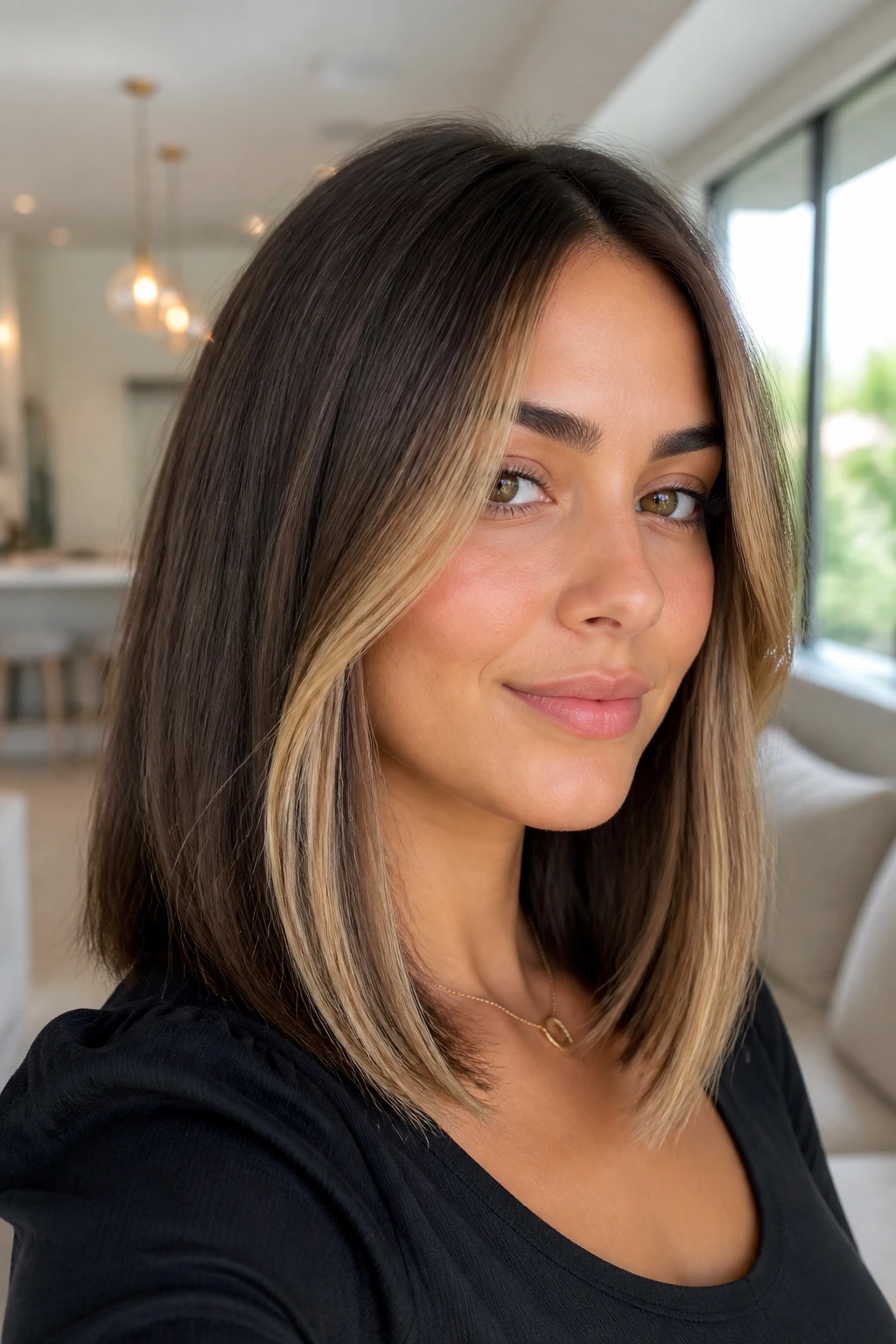
Money pieces do more than lighten the face. On a lob, they pull the eye to the front shape and make the haircut look more dimensional, especially when the rest of the hair is a single shade.
The front sections should be placed with care. If they’re too chunky, the cut can look striped. Kept soft and near the cheekbone, they give straight hair a little contrast right where the eye lands first.
This works well if your lob feels too plain once it’s cut. A bit of brightness around the front can make the whole shape look more defined, even on a simple center part.
20. Subtle Shag Lob With Just Enough Lift
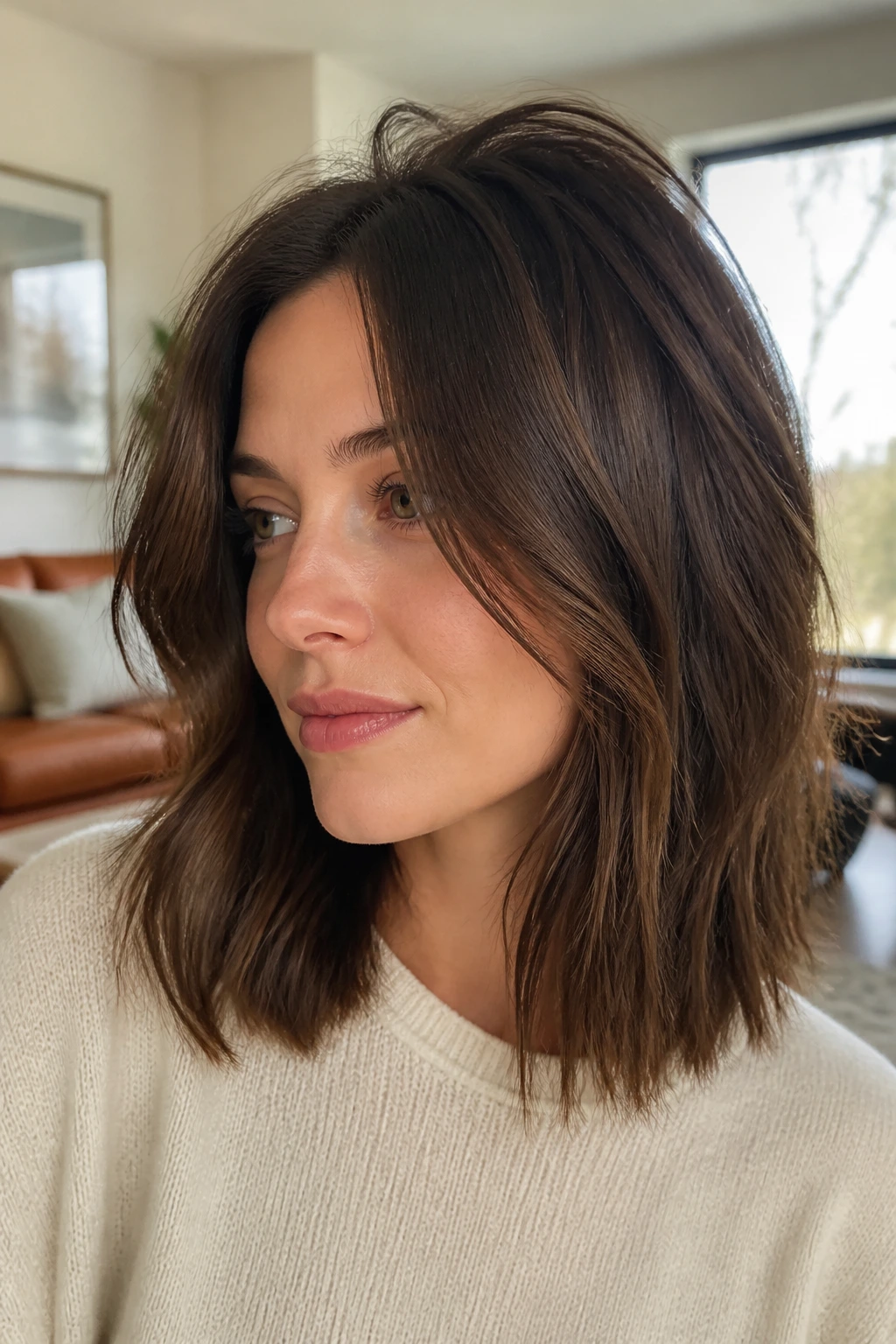
A subtle shag is what happens when you want movement without surrendering the perimeter. The crown gets a little lift, the face frame gets a little softness, and the ends stay within the lob shape instead of drifting into full shag territory.
Straight hair can wear this well if the layers are kept light. The haircut should still look like a lob from the side. If it starts to look overly chopped up, the balance is off.
I like this version for hair that feels too heavy in the top half and too flat at the bottom. It adds a little friction to the shape, which can be a good thing when the hair otherwise behaves like one smooth panel.
21. Air-Dried Lob That Was Cut for Natural Bend
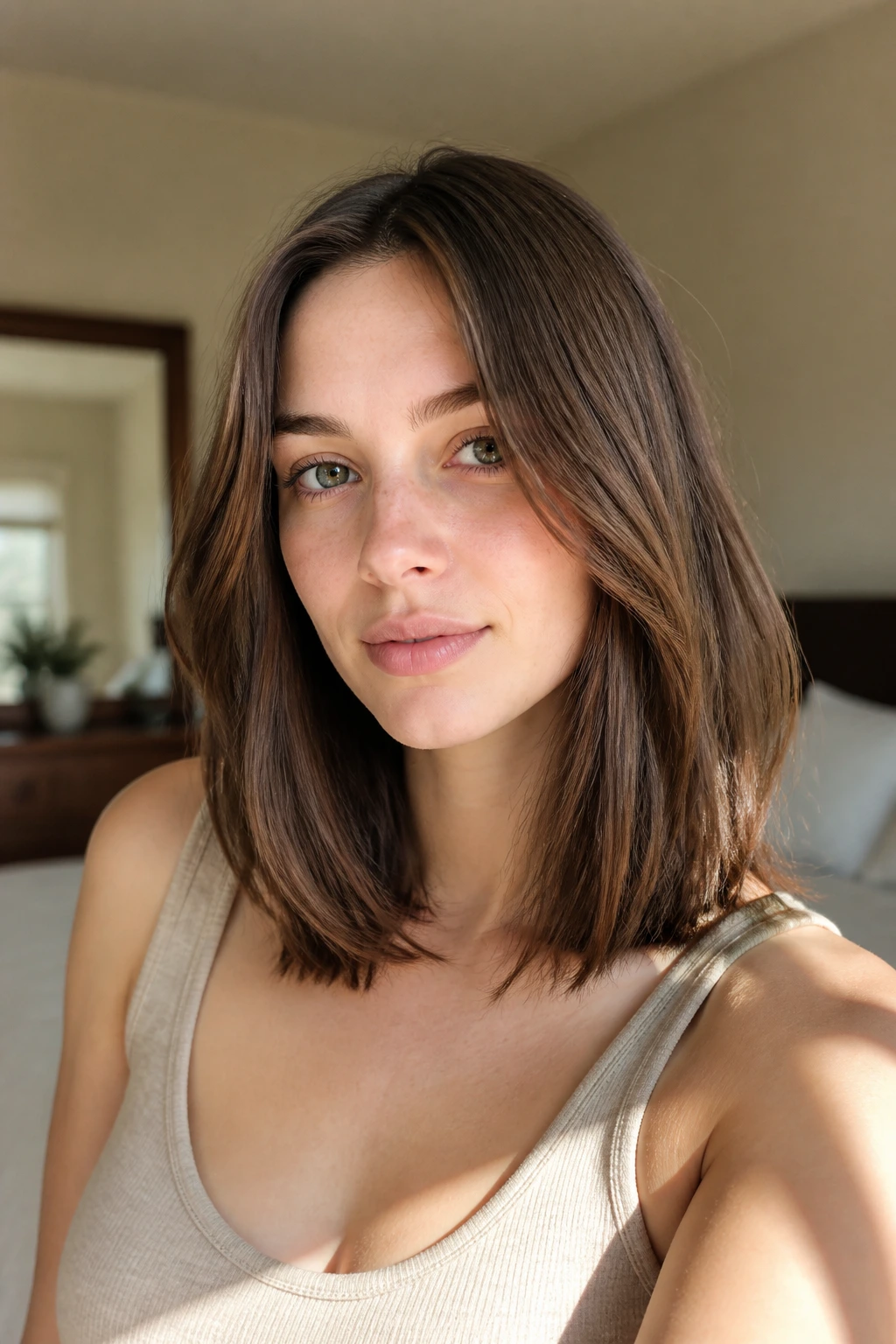
Some lobs are designed to survive air-drying. This is one of them. The cut should account for where your hair bends on its own, because straight hair often has a tiny flip or curve that shows up once the blow-dryer disappears.
The best air-dried lob usually has a soft perimeter, minimal layering, and enough front movement to keep the sides from sticking flat to the head. A small amount of mousse at the roots and a light cream on the ends can be enough. More than that, and the hair starts to clump.
This is the version I’d choose if you hate daily styling but still want the haircut to look like it was planned, not abandoned.
22. Micro-Textured Lob That Breaks Up a Heavy Line

Micro-texture is the difference between sleek and flat. It’s tiny, almost invisible work at the ends that keeps straight hair from looking like a rigid board without turning it into a shag.
The cut should still feel controlled. You’re not looking for obvious choppiness. You’re asking for a little breakup at the edge so the light catches the shape in sections instead of all at once.
This one is especially useful if your hair is naturally pin-straight and heavy. The small amount of texture keeps the lob from looking too serious, which can matter more than you think.
23. Forward-Angled Lob That Leans Toward the Face
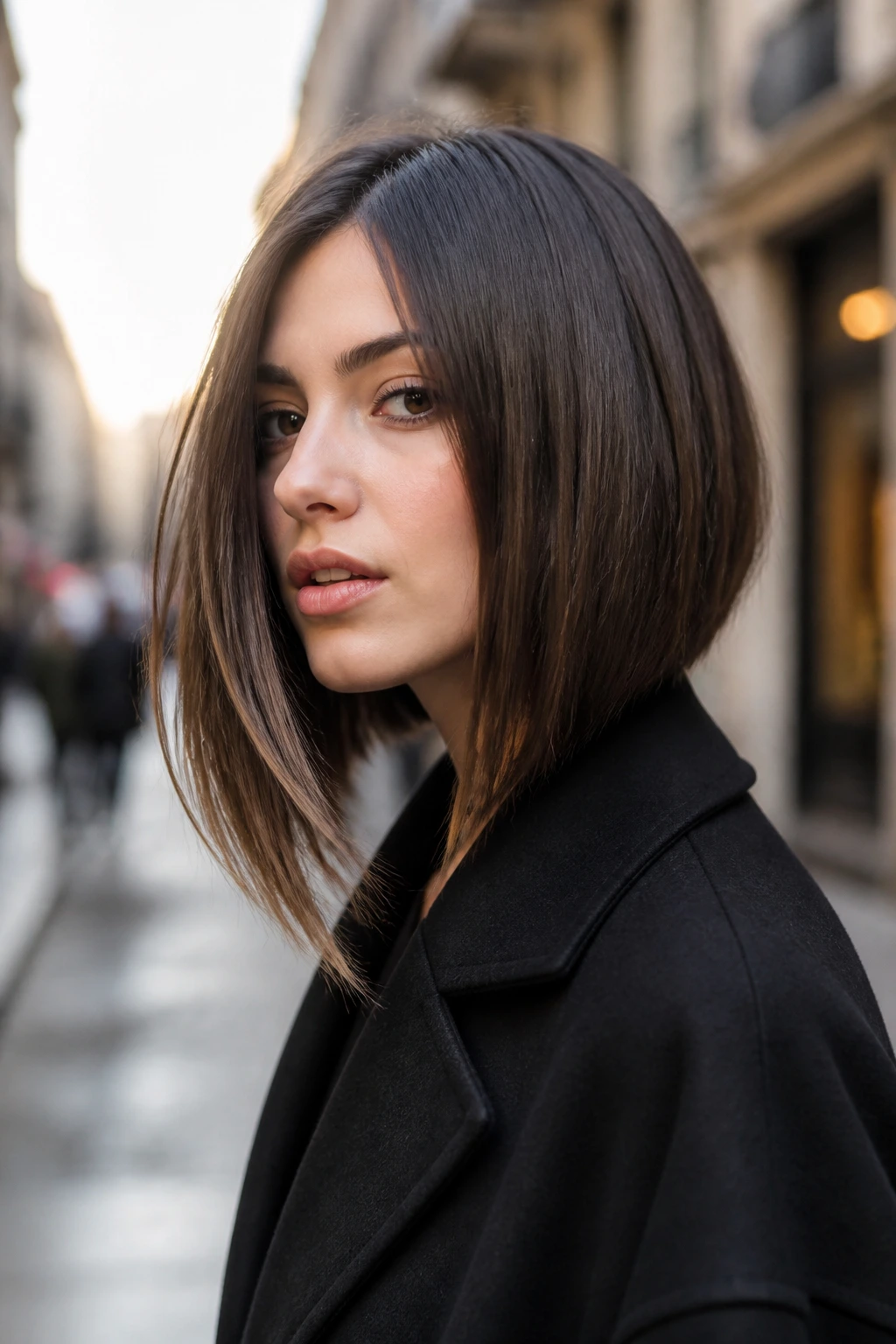
A forward angle gives straight hair a bit of momentum. The back sits slightly shorter and the front stretches forward, so the haircut seems to lean toward the face instead of dropping straight down the neck.
That angle can make a lob feel longer in the front while still trimming bulk off the back. It’s a nice compromise if you want movement but don’t want the haircut to look overly layered or trendy in a way that dates itself fast.
I’d recommend this when you like your hair to frame the jaw and collarbone from the side. The shape does most of the styling for you.
24. Polished Tapered Lob With a Clean Neckline
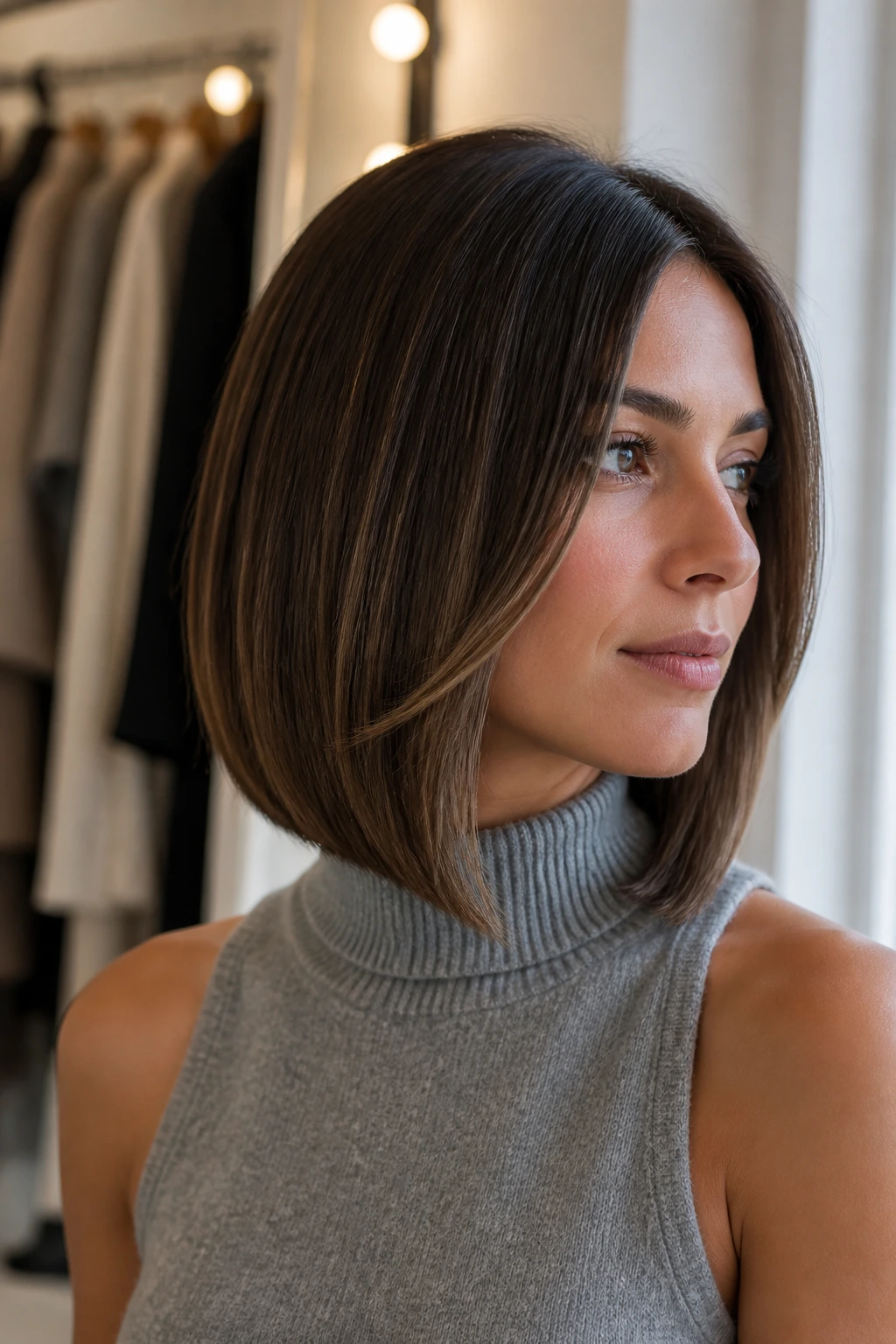
A tapered finish keeps the neck area neat. Instead of a blunt shelf, the ends narrow slightly toward the front, which gives straight hair a smooth line that looks especially good with high necklines and earrings.
This cut is subtle, but that’s why it works. The taper softens the transition from the nape to the sides, so the lob doesn’t sit there like a block. You still get fullness. You just lose the hard edge.
If your style leans polished rather than messy, this is a very safe pick. It holds its shape well and doesn’t need a lot of daily reshaping.
25. Flip-End Lob With a Bit of Retro Kick
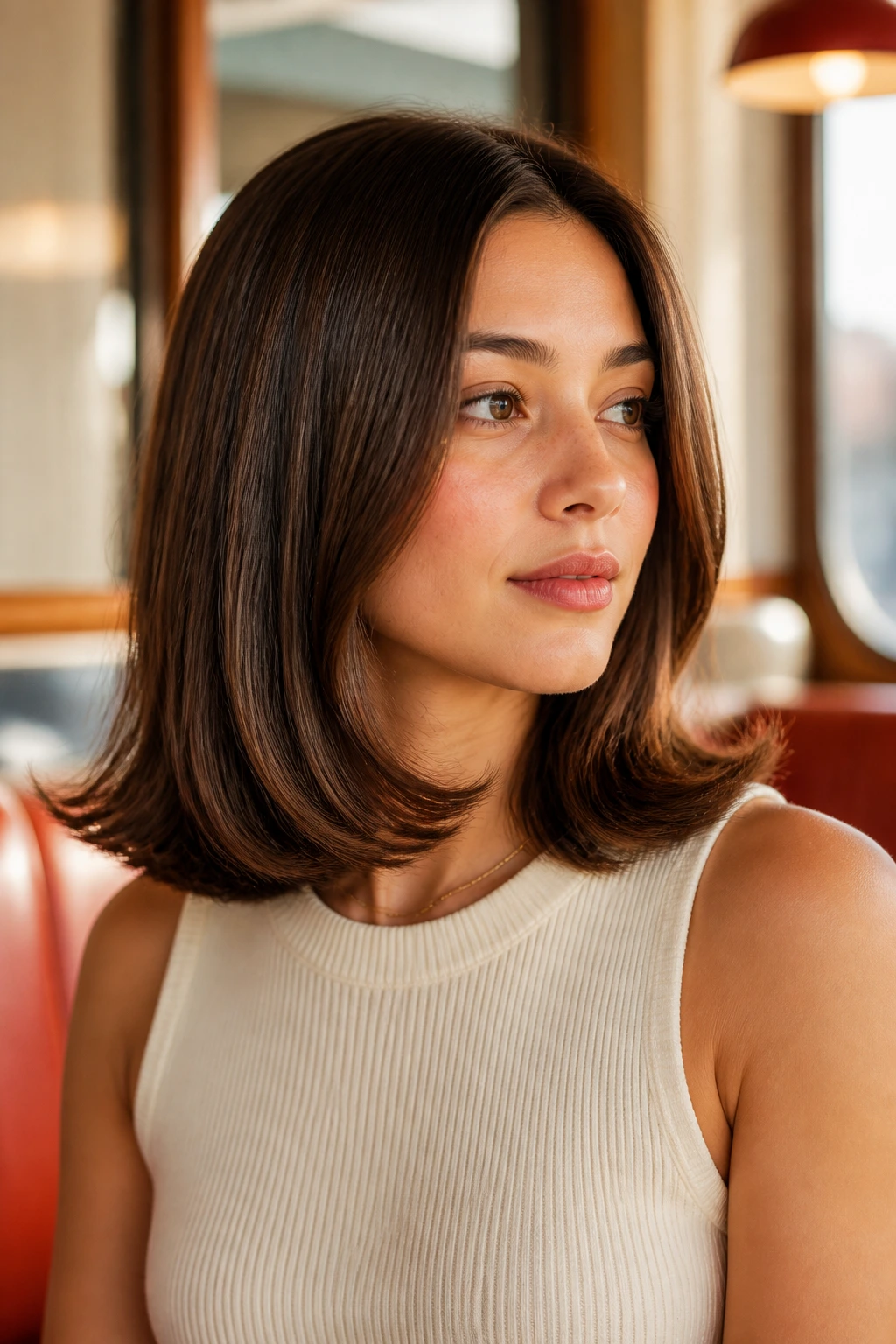
Flip ends can look playful if the cut is set up for them. Straight hair needs a little help to kick outward at the ends, so the shape should leave enough length and softness for that bend to happen without looking forced.
A flat iron with a gentle twist or a round brush can create the effect, but the haircut matters first. If the perimeter is too blunt and heavy, the flip looks stubborn. If it’s too thinned out, it looks flimsy. The right balance gives the ends a bit of swing.
This is one of those lobs that feels more personality-driven than polished. Not everyone wants that, which is fair. But if you like hair that looks like it has a point of view, it’s a fun one.
26. Piecey Front Lob With Chunkier Face Framing
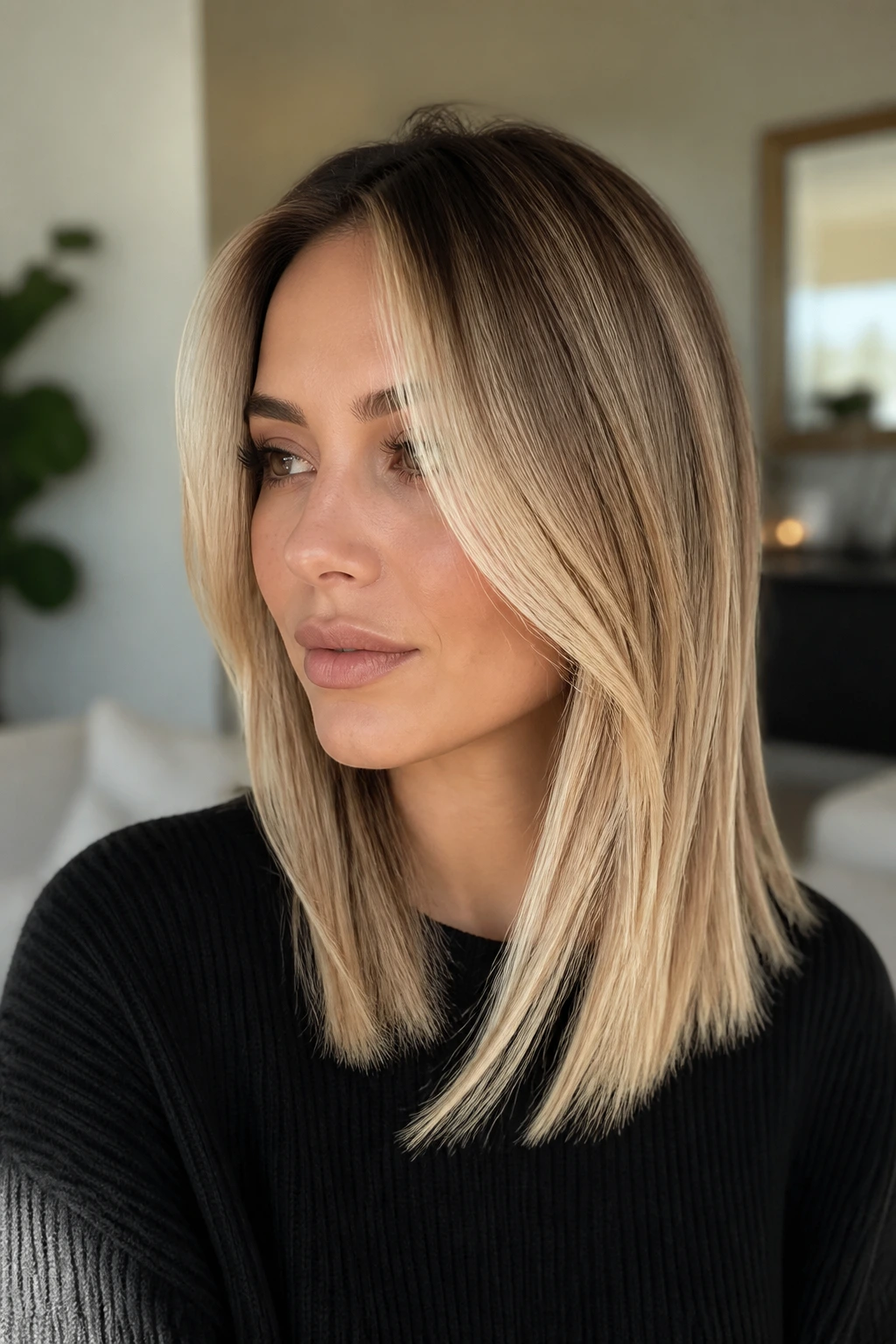
Piecey front sections can do a lot for a straight lob. They soften sharper face shapes, make the haircut look less severe, and give the front more visual texture without chopping up the whole cut.
The front pieces should be thicker than curtain bangs and longer than a classic fringe. Think cheekbone to jawline, then blend them back into the rest of the hair so the front doesn’t look separate. That little bit of separation is what makes the cut feel modern.
This is a good option if you like your hair tucked, pushed back, or worn one-sided. The pieces still show up even when the rest of the lob stays smooth.
27. Wet-Look Sleek Lob With Sharp Shine
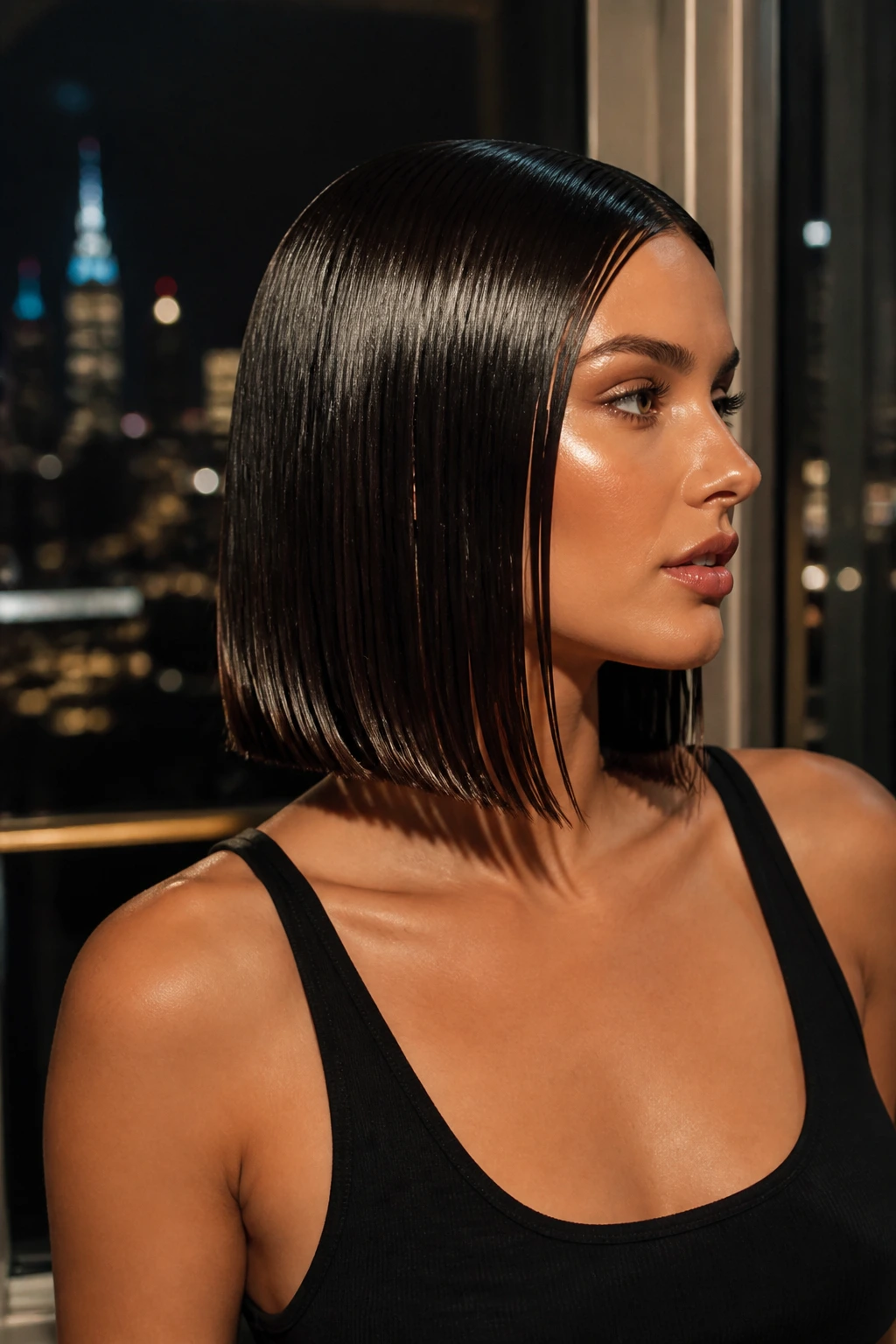
A wet-look lob is for the days you want the line to look almost graphic. Straight hair is already a natural fit, and a bit of gel or shine cream can turn the cut into something much sharper without changing the length.
This version only works if the ends are healthy. Split ends show up fast when the finish is glossy. So if you like this look, keep the perimeter clean and the trim schedule tight.
I’d reserve it for nights out, photos, or any day when you want the haircut to feel intentional to the last millimeter. It’s bold, yes, but not complicated.
28. Growing-Out Lob That Bridges Short and Long Hair
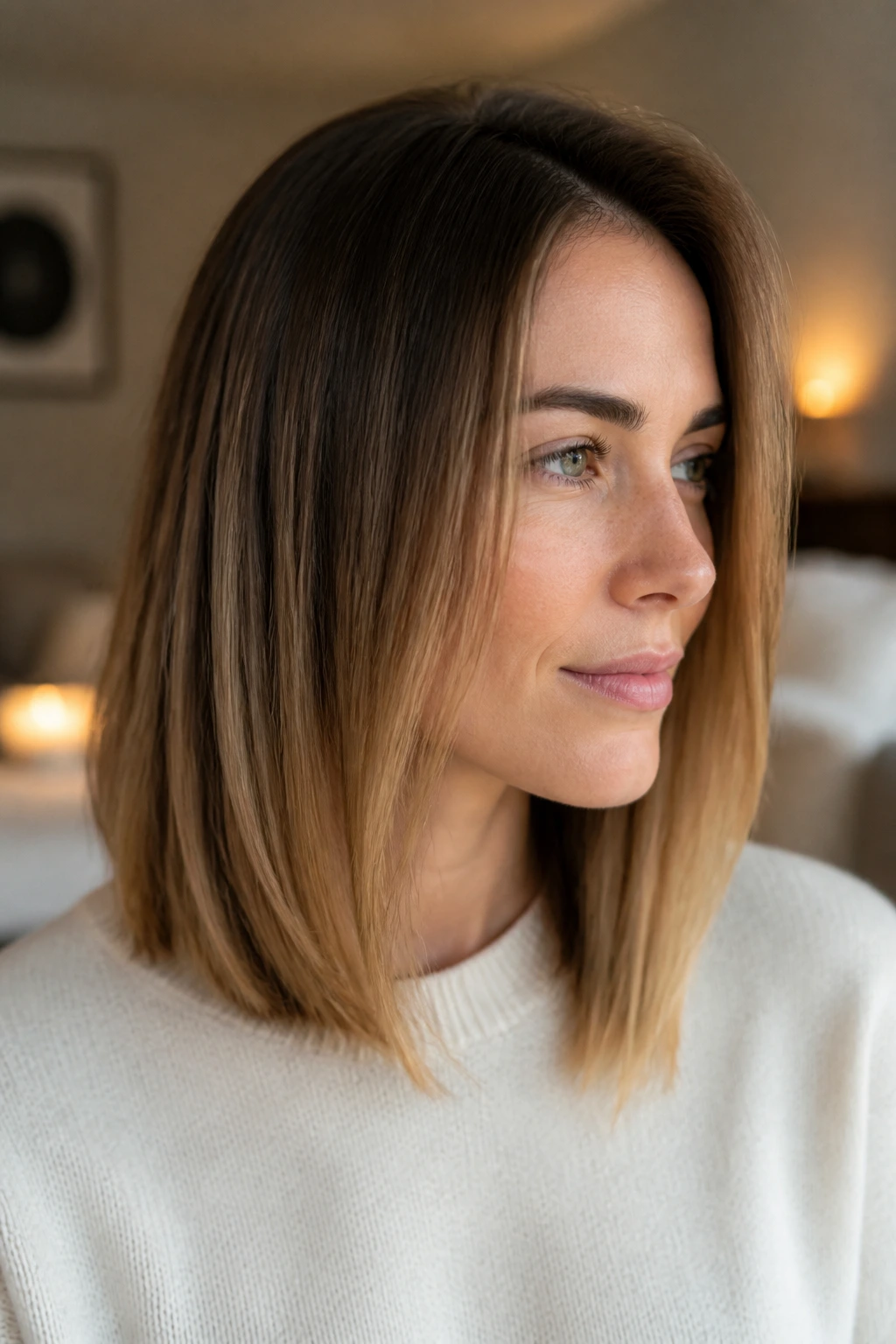
Growing out a lob is easier when the shape is planned, not accidental. A good in-between lob keeps some structure at the shoulders, holds enough length to tie back, and avoids the awkward shelf that happens when every strand is a different size.
Ask for a soft U or a slight angle, then keep the ends dusted as they grow. That way the haircut stays shaped even as it gets longer. Straight hair tends to show growth lines fast, so a neat trim cycle matters here.
This is the one I’d suggest if you want the lob without committing to living there forever. It buys you time, and it does it gracefully.
What Makes a Lob Cut Land Well on Straight Hair
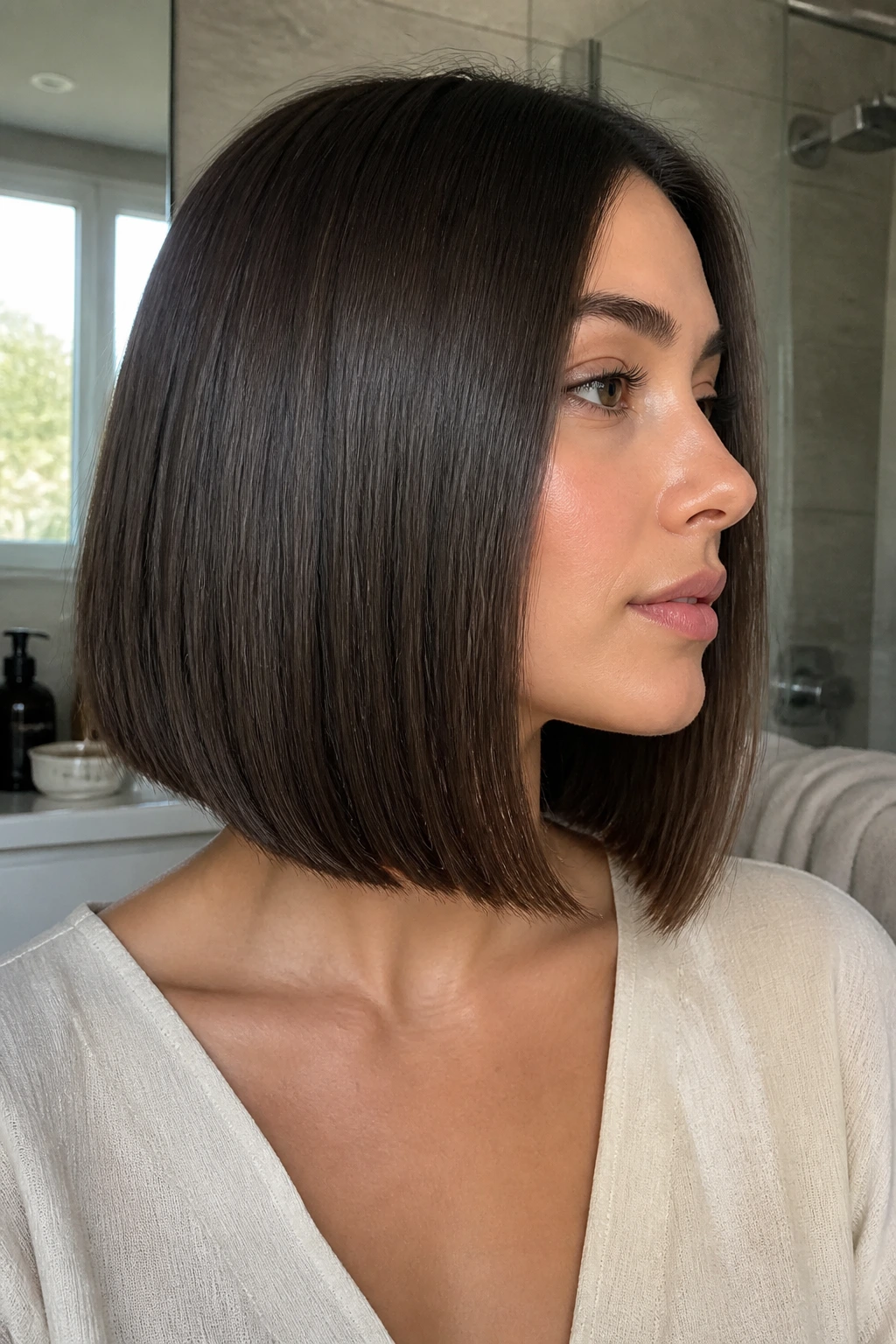
Straight hair is honest. Sometimes brutally so. If the edge is uneven, you’ll see it. If the layers are too high, you’ll see that too. A lob works because it gives the hair a controlled place to stop, which makes the whole shape look cleaner and a little more expensive without needing much styling.
The perimeter is the first decision, and it matters more than people think. A blunt line makes fine straight hair look fuller. A soft bevel can stop thicker hair from looking boxy. A little angle can keep the front from collapsing into the shoulders. Those are small shifts, but on straight hair they’re the difference between “nice haircut” and “why does this look off?”
The perimeter decides the mood
Blunt ends feel crisp and structured. A beveled edge feels softer. A slight angle adds motion. Pick the one that matches how much work you want to do in the morning, because the haircut will keep reminding you.
Internal weight matters more than visible layers
A lot of people ask for layers when what they really need is weight removal inside the shape. On straight hair, invisible layers often work better than obvious ones, especially if the goal is to keep the outline clean while removing some bulk.
Part placement can make or break it
A center part shows off symmetry. A side part adds lift. A deep side part gives you height at the crown. If your hair always falls the same way, the part may need to be built into the cut rather than left to chance.
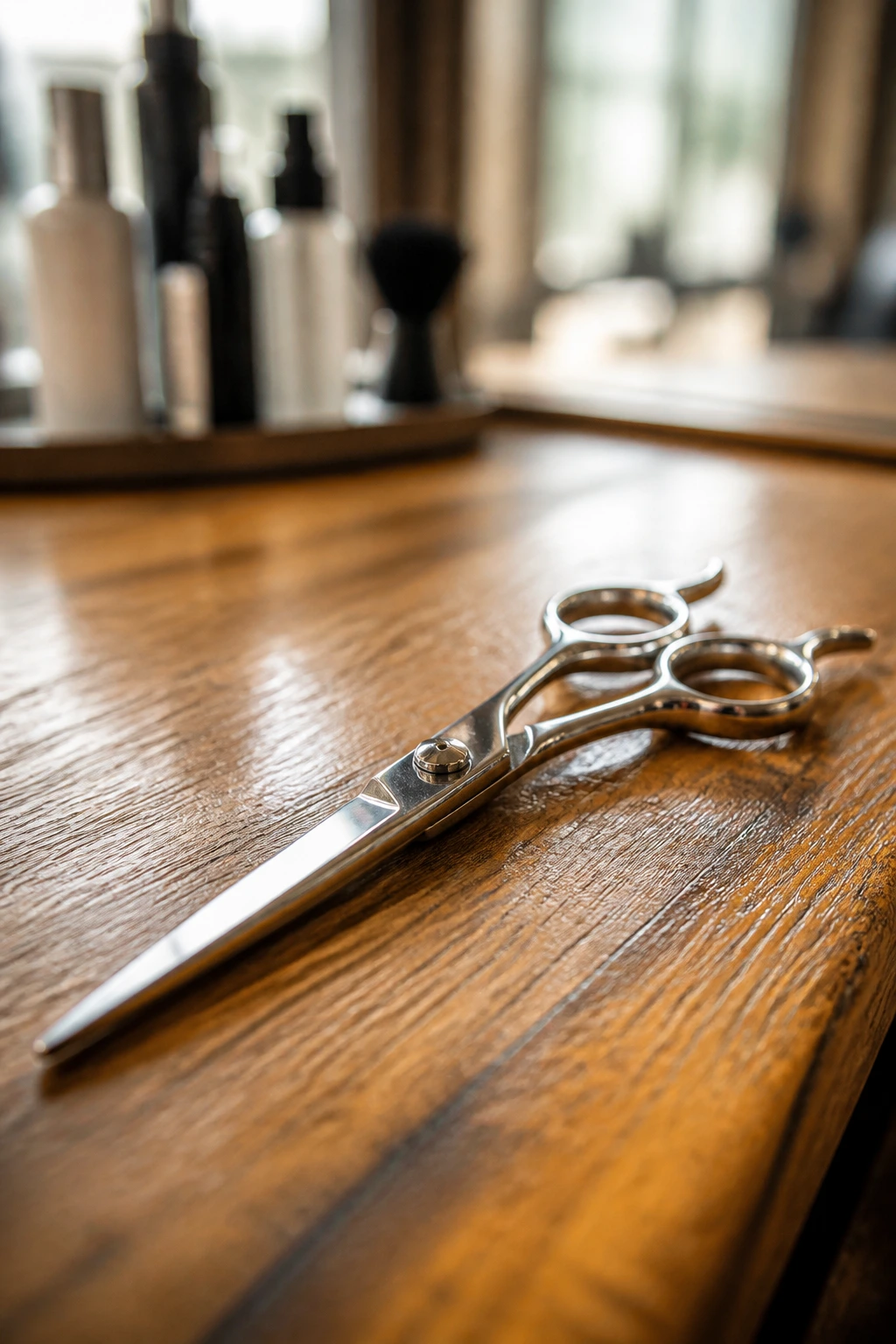
The Tools That Keep a Straight Lob Looking Intentional
-
Sharp haircutting shears: If you trim at home, use actual shears, not kitchen scissors. Dull blades chew straight ends and make the perimeter fuzzy.
-
Tail comb: Clean sectioning matters on straight hair because a crooked part shows fast.
-
Sectioning clips: These keep the top layers out of the way while you dry or flat-iron the bottom half.
-
Blow dryer with a nozzle: The nozzle directs airflow, which helps keep the ends from scattering.
-
1.25-inch round brush: A good middle-size brush bends the ends under without making the hair flip into tiny curls.
-
Flat iron with rounded edges: Rounded plates let you add a soft bend at the ends instead of a hard crease.
-
Heat protectant spray: Use it every time you apply heat. Straight hair shows scorch marks and split ends faster than wavy hair does.
-
Lightweight smoothing cream or serum: A pea-size amount on the mid-lengths and ends keeps frizz down without flattening the crown.
-
Dry shampoo: Useful at the roots on day two or three, especially if the lob sits close to the shoulders and picks up oil there.
How to Ask Your Stylist for the Right Lob
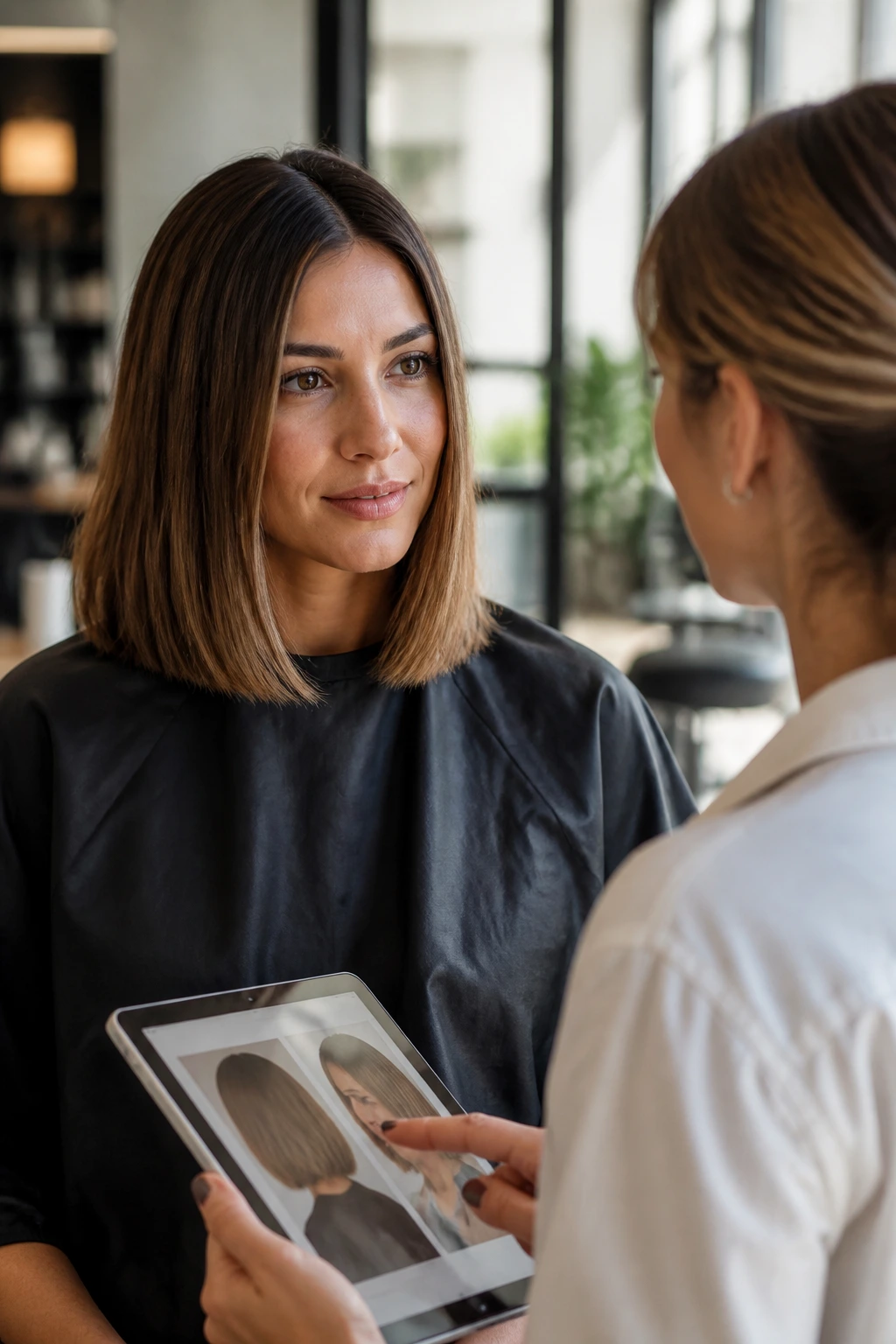
Bring photos. More than one. A front view, a side view, and, if possible, a picture where the hair is worn the way you actually wear it. One glossy salon shot is not enough when straight hair changes shape by a few degrees.
Say the length in landmarks, not vague words. “Collarbone,” “top of shoulder,” and “just below the clavicle” are useful. “Short but not too short” is not. If you want an angle, say where you want the front to land and how much shorter you want the back.
Be blunt about your routine. If you air-dry most days, say so. If you flat-iron the ends every morning, say that too. A lob designed for air-drying should be cut differently from one that lives under a heat tool.
Ask about the layers before the scissors come out. On straight hair, a little internal weight removal usually does more than a visibly layered finish. If you want bangs, say whether you’re willing to blow-dry them every day. That one question saves a lot of regret.
How to Style It Without Turning It Into a Helmet
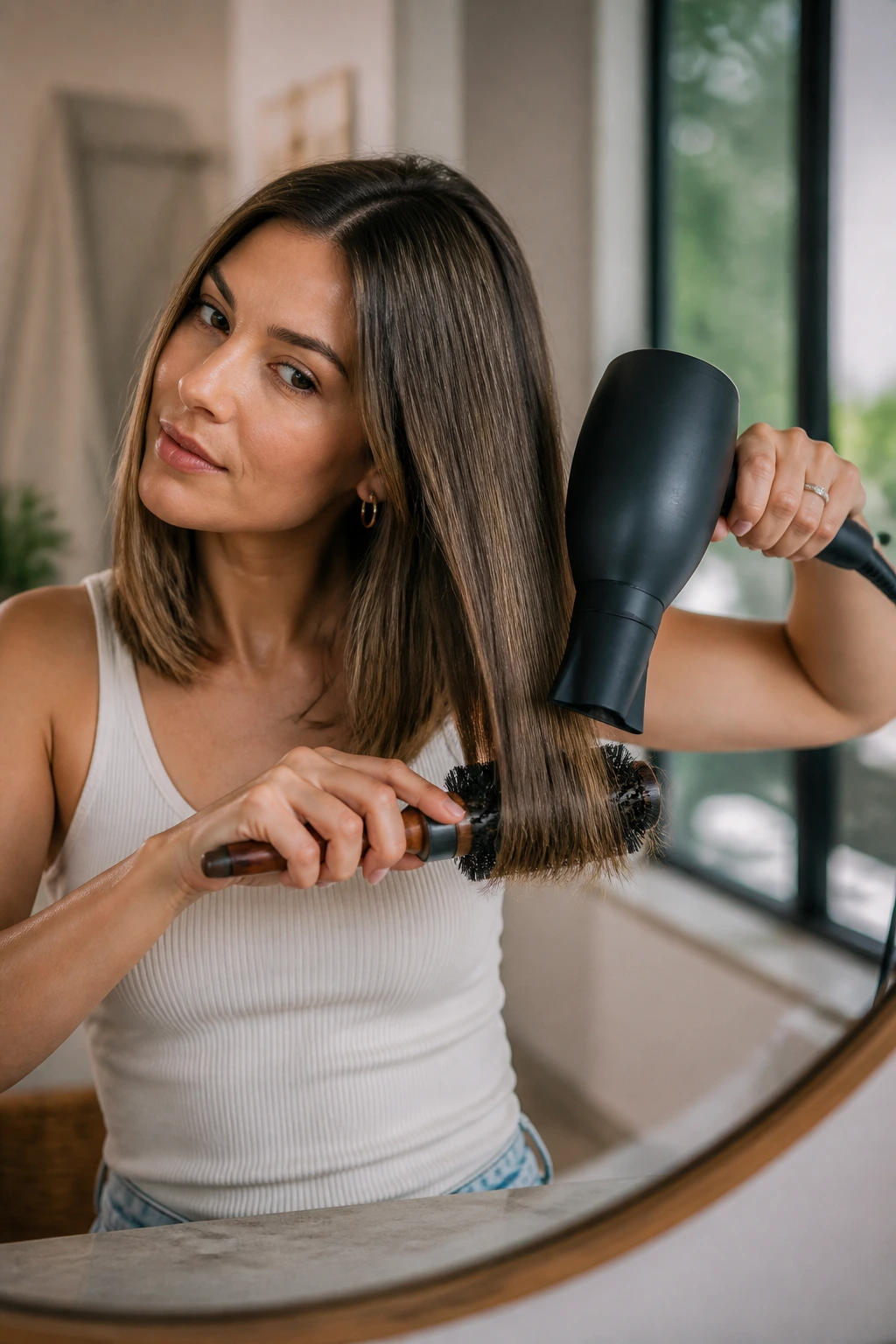
If you blow-dry: Start with the roots, not the ends. Lift the crown with the brush, direct the nozzle downward on the lengths, and give the bottom inch a soft bend under. A hard curl at the ends can make the cut look dated fast.
If you flat-iron: Use one slow pass per section, then flick the wrist only at the last inch. The goal is smooth and slightly curved, not dead-straight from scalp to tip. A tiny bend keeps the lob from looking like it was ironed onto a board.
If you air-dry: Put a small amount of mousse at the roots and leave the ends alone unless they need a touch of cream. Straight hair gets greasy fast when too much product lands on it, and the weight pulls the shape flat.
If your ends flip out: Don’t fight them with five more passes of heat. Shift the length by a quarter-inch on the next trim or ask for a softer bevel. Sometimes the fix is in the cut, not the brush.
Common Mistakes That Make a Straight-Hair Lob Fall Flat

The first mistake is too much thinning at the ends. The hair starts to look see-through, especially in daylight, and the whole cut feels tired. The fix is a cleaner perimeter with weight left in the bottom line.
Another common error is cutting the lob right at the shoulder widest point. That’s where hair loves to kick outward and sit awkwardly. Move the length slightly above or below that point, and the shape settles down.
Heavy oils and thick creams are another trap. Straight hair drinks them up at the roots and then hangs limp by noon. Keep richer products only on the last few inches, and use a lighter serum than you think you need.
Skipping trims is where a good lob quietly turns messy. The line starts to fray, the front pieces lose shape, and the whole cut gets vague. A small trim at the right time is cheaper than trying to rescue a grown-out perimeter later.
Variations to Match Your Hair and Mood

The Fine-Hair Fix: Keep the edge blunt, avoid aggressive layers, and sit the length right at or just below the collarbone. That keeps the ends looking full instead of wispy.
The Thick-Hair Release Valve: Ask for internal weight removal and a slight forward angle. You keep the shape, lose the bulk, and the hair stops sitting like a heavy block.
The No-Heat Lob: Build the cut around air-drying with minimal layering and soft face framing. It should look finished even when you barely touch it.
The Glossy Boardroom Lob: Go for a center part, blunt ends, and a smooth bend under at the bottom. A little shine serum on the ends gives it that clean, controlled finish.
The Easy Grow-Out Lob: Choose a U-shape or subtle A-line so the haircut still looks deliberate at 8 to 10 weeks. This version is for people who want shape but don’t want to babysit the trim schedule.
Keeping the Shape Between Trims

A blunt lob usually needs a trim every 6 to 8 weeks if you want the line to stay crisp. Layered or textured versions can go a bit longer, often 8 to 10 weeks, before the shape starts to blur. Bangs are their own animal and usually need a quicker touch-up.
At home, keep conditioner away from the roots unless your hair is very dry. Straight hair tends to flatten fast, and product buildup near the scalp makes that worse. A clarifying wash every few weeks can help if dry shampoo and styling cream start to stack up.
Sleeping on a satin or silk pillowcase helps the ends keep their bend instead of getting rough and bent the wrong way overnight. It’s a small thing. It matters more than people admit.
If the lob starts to flip oddly, wet just the bottom inch, brush it smooth, and hit it with a quick blow-dry or a short flat-iron pass. Don’t rewash the whole head unless you really need to. Straight hair hates being overwashed and overhandled.
Frequently Asked Questions

What is the best lob length for long straight hair?
The safest range is usually right around the collarbone or just above it. That length gives straight hair enough weight to lie neatly while still removing the drag that makes very long hair look flat.
Do lobs make straight hair look thicker?
A blunt lob usually does, because the ends all land on one line. If the hair is very fine, keeping the perimeter full and avoiding too much layering makes the thickness effect stronger.
Should straight hair get layers in a lob?
Sometimes, but not always. Thick straight hair often benefits from invisible or internal layers, while fine hair usually looks better with a clean blunt edge and just a little movement around the front.
Why does my lob flip out at the ends?
That usually happens when the cut lands right on the shoulder’s friction point. Moving the length a quarter-inch higher or lower often fixes it faster than more styling ever will.
Can I wear a lob without heat styling every day?
Yes, if the cut is built for it. Ask for soft face framing, minimal layers, and a length that sits cleanly on your collarbone, then use a little mousse or light cream when air-drying.
Is a center part or side part better for a lob?
A center part gives a neat, symmetrical look, while a side part adds lift and softens the face. If your roots are flat, a deep side part can make the haircut look fuller without changing the cut itself.
How often should I trim a straight lob?
A blunt version needs trimming more often, usually every 6 to 8 weeks. Softer or layered versions can stretch a little longer, but once the perimeter starts to fray, the whole haircut loses its shape.
What if my hair feels too boxy after the cut?
Ask for internal weight removal rather than shorter layers on the outside. That keeps the clean edge but takes out the heavy shelf that can make straight hair look square.
The Right Length
A good lob on straight hair doesn’t try to fight the texture. It gives it a cleaner stop point. That’s the whole trick. When the length lands in the right place and the perimeter is handled with a bit of care, straight hair looks sharper, lighter, and far less likely to collapse into one long sheet.
The best version for you is the one that matches your density, your part, and how much styling you’re willing to do before breakfast. Bring reference photos, mention whether you air-dry or blow-dry, and be specific about where you want the ends to sit. Straight hair rewards that kind of honesty.
