



Thin hair and a bad lob cut are a rough pairing. The wrong length lands right on the shoulders, flips out at the ends, and starts looking wispy the second you step away from the salon mirror. The right lob haircuts for thin hair do the opposite: they keep the line dense, keep the shape close to the head, and give you enough movement that the cut still feels alive on a lazy air-dry.
The trick is not more layers. It’s better weight placement.
That’s the part a lot of people miss. Fine or thin hair usually looks fuller when the perimeter stays clean and the interior work stays restrained. A blunt edge at the collarbone, a gentle angle, or a soft face frame can do more for density than another round of volumizing spray ever will. And if you’ve got hair that collapses by noon, flips at the shoulders, or goes stringy the moment it grows past your jaw, the length and line of the cut matter more than the products on your bathroom shelf.
Why These Lob Cuts Work So Well on Thin Hair
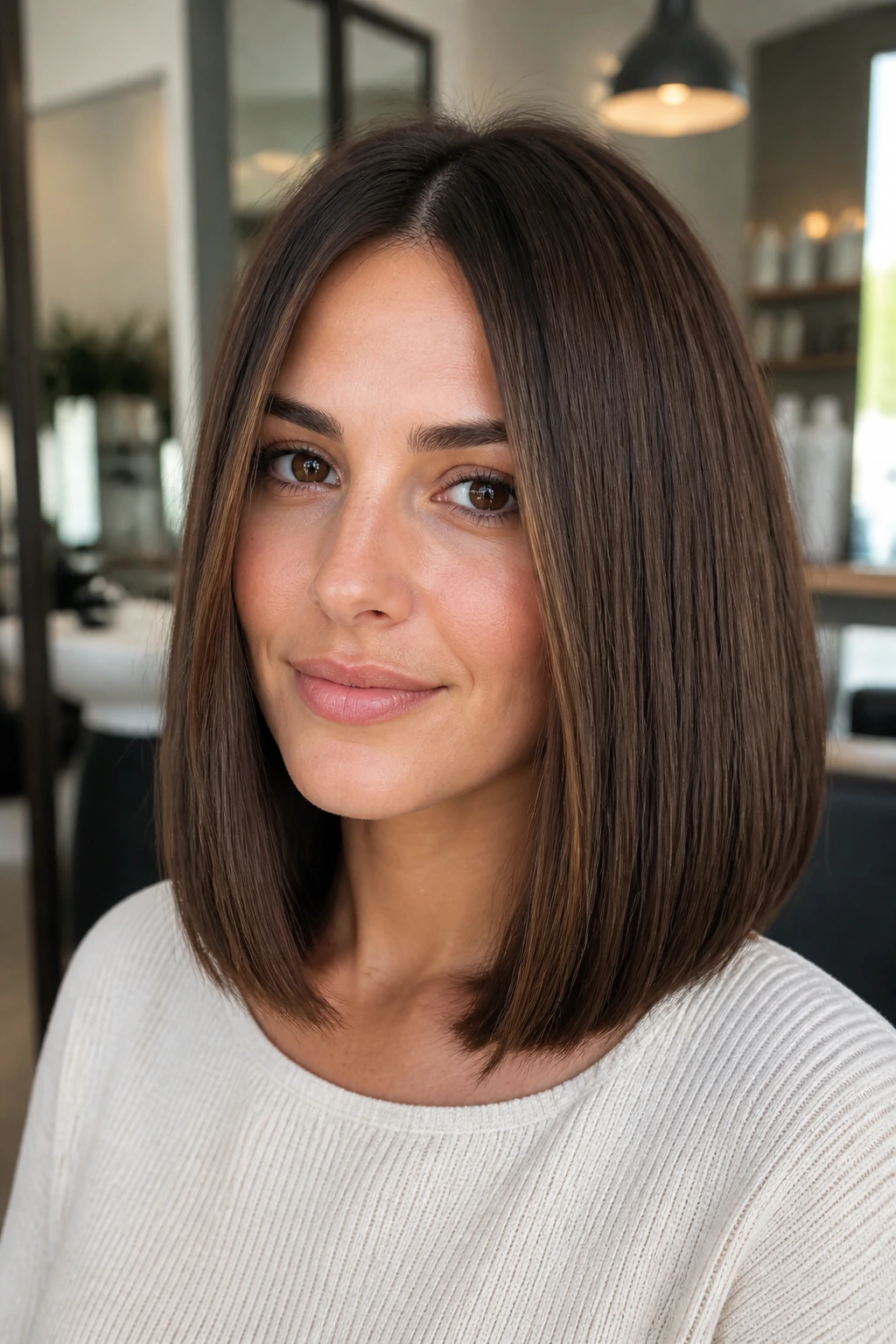
A lob keeps the ends from looking starved. Shorter lengths hold visual weight better, so the hair looks thicker at the bottom instead of tapering into see-through points.
The best shapes protect the perimeter. When the outer line stays blunt or softly beveled, each strand contributes to the outline. That’s why a collarbone lob often looks denser than longer hair with the same amount of actual hair.
Small changes in parting go a long way. A side part, a slightly off-center part, or a tucked side can create root lift without asking you to tease your hair into a nest.
Low maintenance here means forgiving, not flat. These cuts should still look deliberate after air-drying, after a quick blow-dry, or after you’ve spent exactly four minutes with a brush and a dryer. That is the sweet spot.
The best versions grow out cleanly. Thin hair shows every awkward stage. A good lob should still look like a haircut six weeks later, not like you gave up halfway through a grow-out experiment.
1. Blunt Collarbone Lob
If thin hair needs one cut that acts like it has a backbone, this is it. A blunt collarbone lob keeps the bottom edge solid and stops the ends from fraying into wisps that disappear the second you turn your head. I’d take a clean blunt line over a fancy layered shape nine times out of ten.
The magic is in the weight. When the length hits right around the collarbone, the cut feels long enough to move but short enough to hold its own. Straight hair gets a crisp edge. Slight waves get a tidy outline that still bends a little at the ends. Either way, the hair reads as fuller because the eye sees one strong line instead of a bunch of broken pieces.
Ask for almost no internal layers and only the lightest softening at the very ends if your stylist thinks the outline needs it. Then style it with a root-lifting mousse and a quick blow-dry using a paddle brush or a medium round brush. Tip: if your hair tends to split at the front, keep the front pieces no longer than the collarbone; once they fall onto the chest, they start looking thinner than they are.
2. Slightly Angled Lob
Picture hair that sits a touch shorter in back and drapes forward near the jaw. That tiny angle does more than people expect. It pulls the eye forward, frames the face, and gives thin hair a little more shape without turning the whole cut into a dramatic statement.
The key is restraint. A slight angle is enough. If the difference between back and front gets too extreme, the ends start looking stringy instead of polished, and thin hair is honest about that very fast. I like a soft angle that feels almost invisible until you turn your head and catch the line.
What to Ask For
- Keep the back only about half an inch to an inch shorter than the front.
- Leave the perimeter blunt, not shredded.
- Avoid stacked layers at the nape; they can expose too much scalp.
- Tell the stylist where you usually part your hair, because the angle should work with that, not fight it.
This cut is especially useful if your hair falls flat around the jawline. The forward drift adds motion. The back stays tidy. And if you tuck one side behind your ear, the shape still looks intentional instead of accidental.
3. One-Length Lob with Soft Ends
Can one-length hair move? Absolutely, if the ends are softened correctly. A one-length lob with soft ends keeps the body of the hair intact and only eases the last half inch or so. That tiny bit of refinement keeps the cut from feeling boxy, but the line still reads full.
This is one of the best choices for people whose hair has fine strands but enough density to support a solid shape. The cut gives you that thick, almost plush edge at the bottom, which thin hair usually loses when too many layers are carved into it. Think of it as a blunt cut with manners.
How to Wear It
If you air-dry, scrunch just a little bit of light cream into the mid-lengths and leave the ends alone. If you blow-dry, use a brush to bend the very bottom inward by a quarter turn. That tiny finish keeps the shape from looking stiff.
Tell your stylist you want one length, no obvious layers, and only soft point-cutting at the ends. That wording matters. “Soft” can mean many things in a salon chair, and you want the softening to stay at the edge, not creep through the body of the cut.
4. Invisible-Layer Lob
Layers scare people with thin hair for a reason. Bad ones can erase the shape. Invisible layers are different. They live under the top surface of the hair, so the outer line stays strong while the inside gets just enough give to stop the cut from hanging like a curtain.
This is the lob I reach for when hair is thin but also stubbornly flat at the crown. The internal shaping adds a little lift without leaving obvious shorter pieces around the face or nape. You get movement where you need it and weight where you don’t want to lose it.
The best version starts with a blunt perimeter and then sneaks in layers underneath the top section. Nothing choppy. Nothing that pokes through the outline. If your hair is fine and a little wavy, these layers can keep the wave from collapsing into a pyramid. If your hair is straight, they stop the cut from feeling too heavy.
It is one of the more forgiving options on this list. You can rough-dry it, smooth it, or bend the ends under, and it still holds together. That is the whole point.
5. Side-Part Volume Lob
A deep side part can do more for thin hair than a shelf full of thickening powders. It shifts the weight of the hair, lifts the crown, and gives the front pieces a stronger frame. On a lob, that matters even more because the length is short enough to hold the part in place.
This cut is especially useful if your hair tends to collapse at the roots and go limp around the temples. A side part builds height where you need it and creates a little asymmetry that makes the whole style look fuller. The part itself becomes part of the haircut.
Why It Works
- The heavier side gives the illusion of denser hair.
- The lighter side opens up the face and keeps the shape from looking blocky.
- A lob length prevents the part from drooping under its own weight.
- It’s easy to refresh with one bend from a round brush at the crown.
If you want very little daily work, this is a smart pick. Blow-dry the roots against the direction of the part for thirty seconds, flip them back, and let the shape set. That small move makes the difference between a limp top and a lob that actually looks styled.
6. Center-Part Sleek Lob
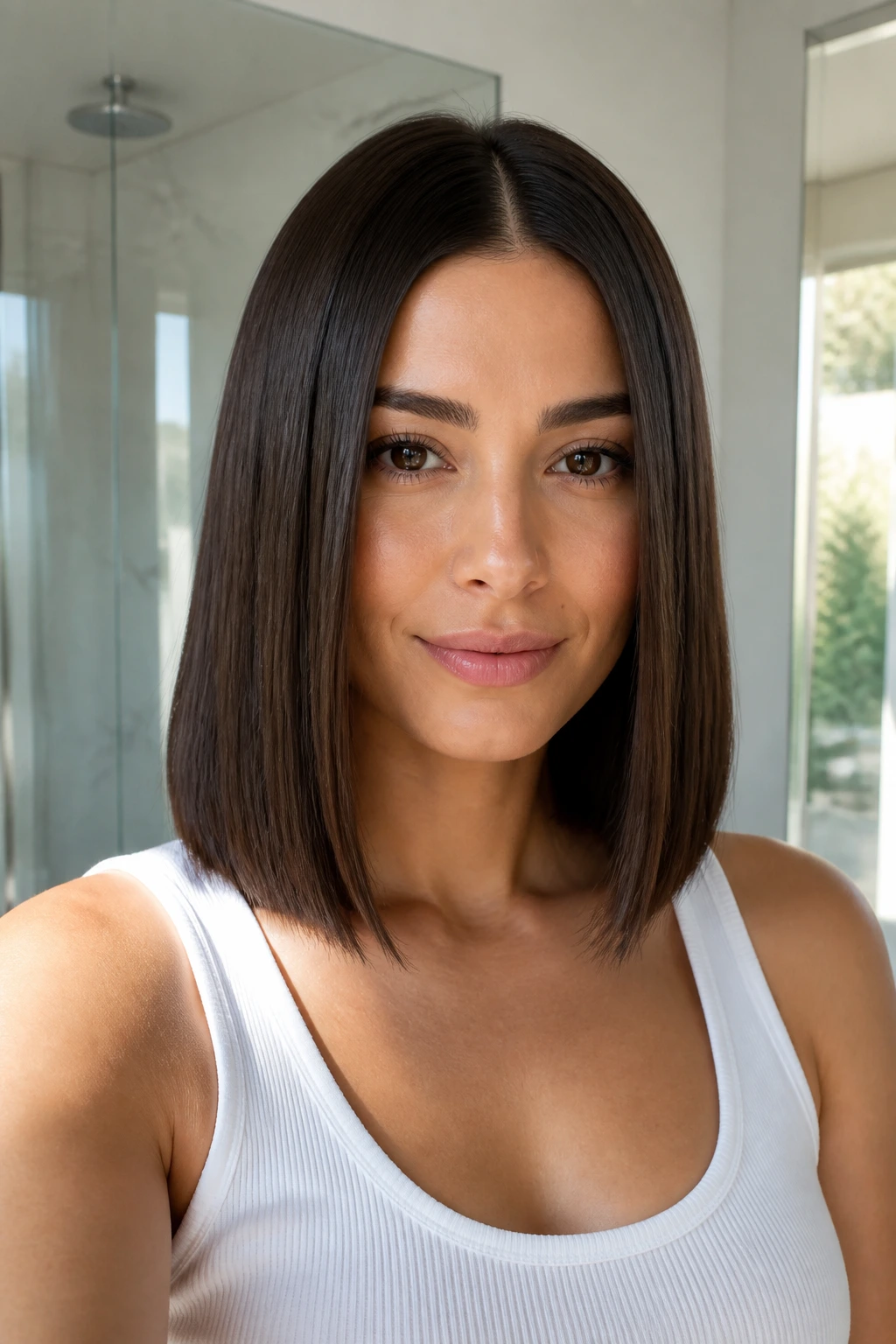
A center part can be risky on thin hair if the cut is too long or too layered. Done right, though, it looks clean, sharp, and intentional. The sleek center-part lob is for hair that likes to lie flat and behave; if your strands already fall straight, this style works with them instead of pushing them into a fight.
The silhouette matters here. Keep the outline blunt or only slightly beveled, and let the front pieces skim the cheekbone or collarbone rather than drifting off into space. Thin hair looks best when the line is honest. No fluff, no fake volume, no overworked bends.
This is one of the easier styles to maintain if you dislike big styling routines. A quick blow-dry with a concentrator nozzle, a brush that smooths rather than puffs, and a drop of lightweight serum at the ends is usually enough. My blunt opinion: if your hair is naturally straight, trying to force volume every morning often makes it look flatter than leaving it sleek and well-cut.
If the center part starts to expose more scalp than you like, move it a finger-width off center. That tiny shift can make the entire cut look fuller without changing the haircut itself.
7. French Lob with Airy Bangs

A French lob with airy bangs has a softer face frame than a blunt cut, but it still keeps enough weight through the ends to suit thin hair. The bangs are the real trick. They should be light, wispy, and able to split naturally, not a heavy curtain that eats up density from the rest of the head.
This cut works best if you want some movement around the eyes and cheekbones without committing to a full fringe that needs daily coaxing. The bangs can be brushed aside, worn a little imperfectly, or air-dried with a bent shape. The rest of the lob stays easy and clean.
The sweet spot is a bang that starts just above the brow and brushes the eyelashes when it’s fresh. That gives you softness without making the forehead area look crowded. Pair it with a collarbone length that stays blunt enough to keep the bottom full. Too many short pieces and the whole style starts to fragment.
If your hair has a little natural wave, this cut gets even better. The fringe can dry with a slight bend while the lob keeps its shape. Very straight hair can wear it too, but the bang density needs to stay light. Thick bangs on thin hair are a bad trade.
8. Textured Razor Lob

Unlike the blunt lob, this one is about movement first and structure second. A textured razor lob uses a razor or very light texturizing technique to soften the ends and create a piecey finish that feels less rigid. On the right hair, it can look airy without looking empty.
That “on the right hair” part matters. If your strands are already fragile or prone to split ends, heavy razor work can make the perimeter fuzzy instead of light. I like this cut on straight-to-slightly-wavy hair that needs shape but not stiffness. Ask for texture only near the bottom and around the face, not all through the crown.
The low-maintenance angle comes from the cut’s willingness to look a little undone. A small amount of wave cream, a quick scrunch, and a few bent ends around the face can be enough. The style does not need to be polished to make sense.
If you want a softer feel without losing too much density, this is the compromise cut. It gives you movement where thin hair can look stiff and keeps enough line at the bottom that the hair still feels like a lob instead of a grown-out bob.
9. Wavy Lob with Subtle Layers
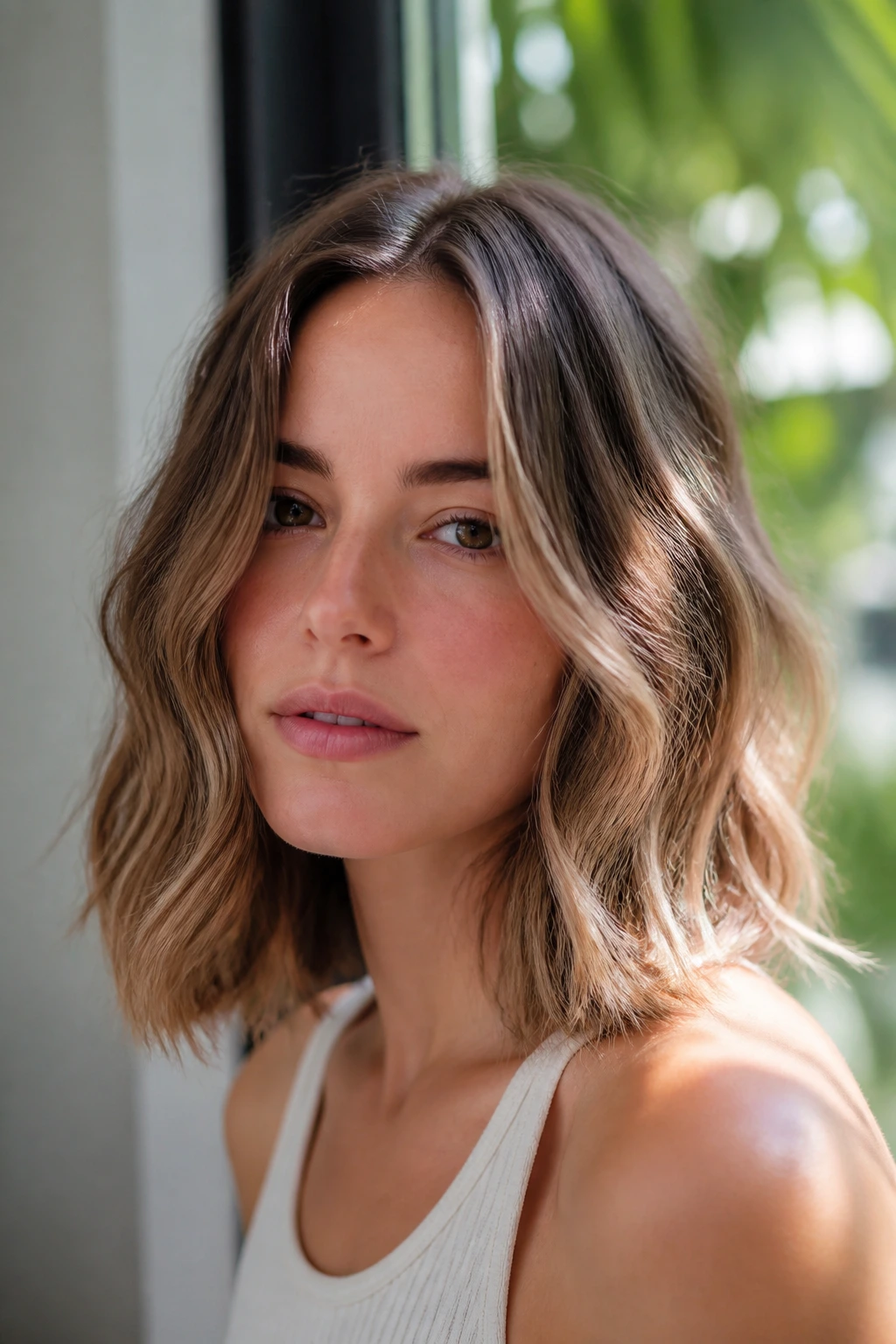
Why does this work so well? Because it respects the wave instead of trying to flatten it into submission. A wavy lob with subtle layers keeps the bulk low in the cut and lets the natural bend show up around the mid-lengths and ends, where thin hair usually needs help most.
The layers should be subtle. I mean really subtle. If they start too high, the wave expands and the ends get see-through. When they sit lower, the hair keeps some weight at the base while the wave has room to move. That gives you a better shape on air-dry days and keeps the style from puffing out in the wrong places.
How to Wear It
- Scrunch in a light wave cream on damp hair.
- Air-dry until about 80 percent dry, then use a diffuser for the last few minutes if needed.
- Twist the front sections once or twice while they dry so they frame the face instead of sticking out.
- Finish with a mist of flexible hold spray, not a hard shell of hairspray.
This cut is ideal if your hair already has some bend and you want to spend less time fighting it. It can look messy in the good way, which is not the same as looking sloppy. There’s a difference, and it’s a big one.
10. Rounded Lob
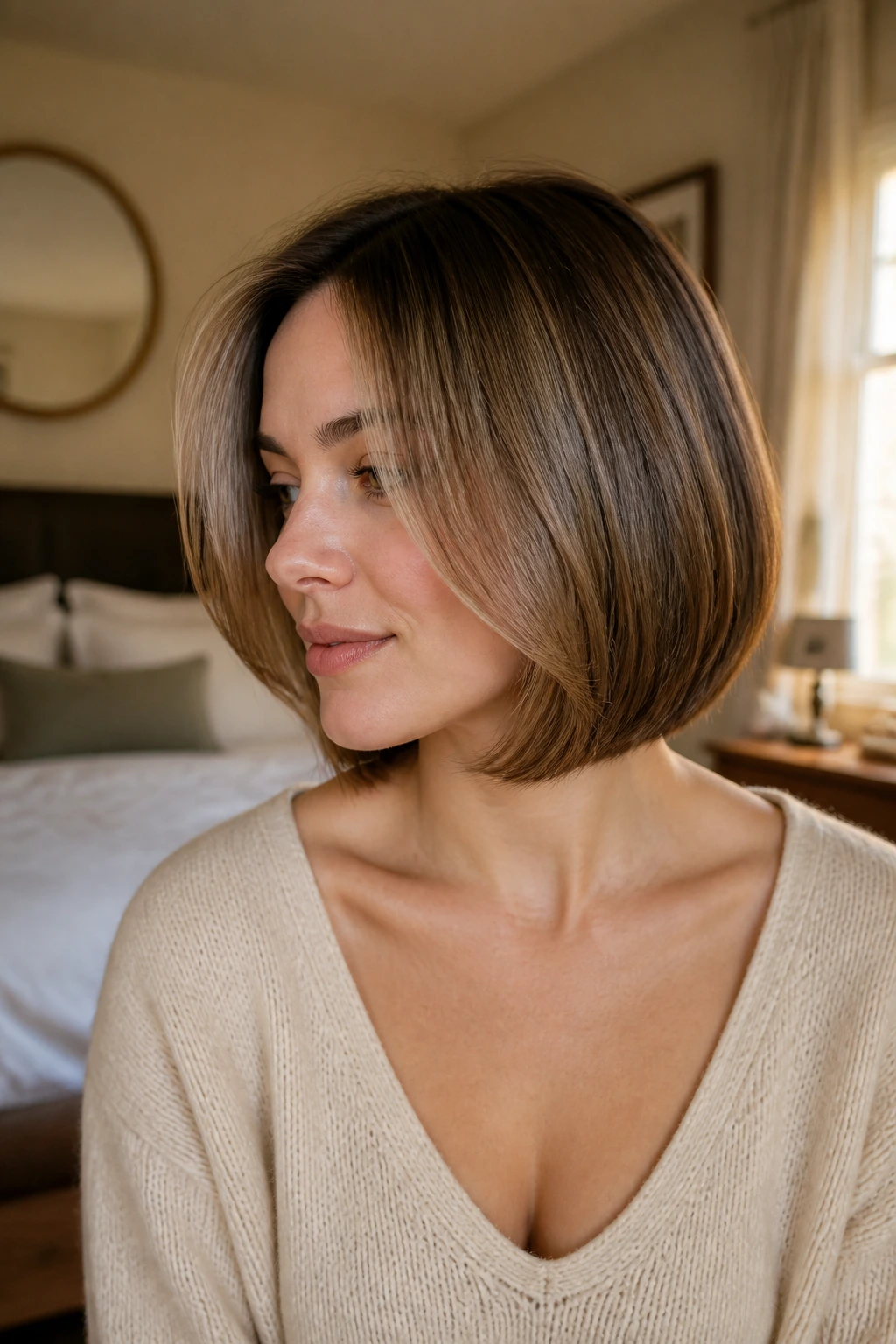
A rounded lob is what happens when the back hugs the neck a little and the sides curve forward into the face. The outline feels softer than a blunt box, but it still keeps enough structure to help thin hair look fuller from every angle. The profile matters here. From the side, the cut reads as compact and deliberate.
This shape is a smart pick if your hair tends to fall flat on the sides. The rounded edge puts more visual weight where you want it and keeps the lower half of the style from looking stringy. It also behaves nicely when tucked behind one ear, which is one of those small styling habits that can make a cut look smarter than it really is.
Because the shape is curved rather than sharply layered, it doesn’t need much daily fuss. A round brush or a quick under-bend at the ends is enough. If you over-style it, you lose the easy movement that makes this cut attractive in the first place.
I like this on straight hair that needs a little shape and on soft waves that need somewhere to land. If you want your lob to feel polished without feeling stiff, the rounded version has a better temper than most.
11. Choppy Piecey Lob
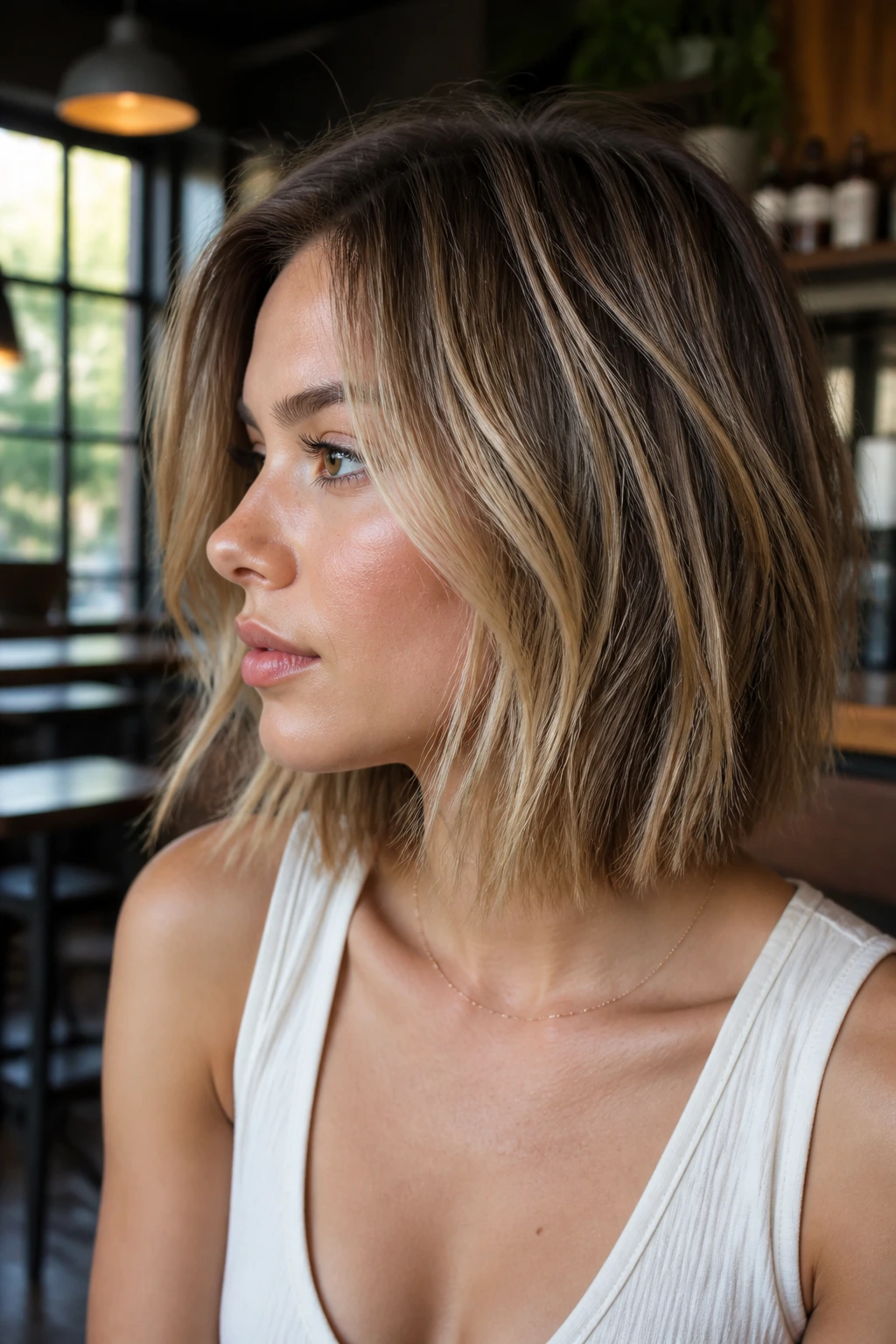
A choppy piecey lob can work on thin hair, but only if the choppiness is controlled. That’s the part people get wrong. They ask for texture and end up with a cut that looks shredded at the bottom, which is the last thing fine hair needs.
The right version keeps the perimeter fairly solid and adds piecey movement in the top layers or around the face. You still get a visible silhouette. You still get density at the ends. What changes is the sense of movement when you turn your head. The pieces separate a little instead of sitting as one block.
This is a good option if you like a more casual finish and don’t want every strand lying in place. A tiny bit of texturizing spray through the mids and a finger-tousle is usually enough. Heavy products ruin the effect fast because they clump the pieces together and expose scalp in the wrong spots.
The safest way to wear this cut is with a neat outline and selective roughness. Clean base, messy surface. That balance keeps the style from looking overworked.
12. Shoulder-Skimming Lob

Shoulder length can be annoying on thin hair, but only when the cut sits exactly on the shoulder and keeps kicking outward. A shoulder-skimming lob solves that by landing just above the shoulder bone or slightly below it, so the hair clears the contact point instead of bouncing off it.
That tiny adjustment matters more than people think. Hair that lands right on the shoulder gets pushed outward by clothing and movement, which can make the ends look thin and awkward. A cut that skims above the shoulder or angles past it keeps the shape cleaner and easier to manage.
This is one of the most practical lob lengths for people who wear their hair up half the time. It slips into a clip, a low twist, or a tuck without losing its outline when worn down. That means fewer bad hair days and less temptation to chop the whole thing off out of frustration.
If your hair is fine, keep the edge blunt or only lightly beveled. Too much layering at this length and the style starts to feel unfinished. The cut should look like a decision, not a compromise.
13. Long-Layered Lob with Curtain Bangs
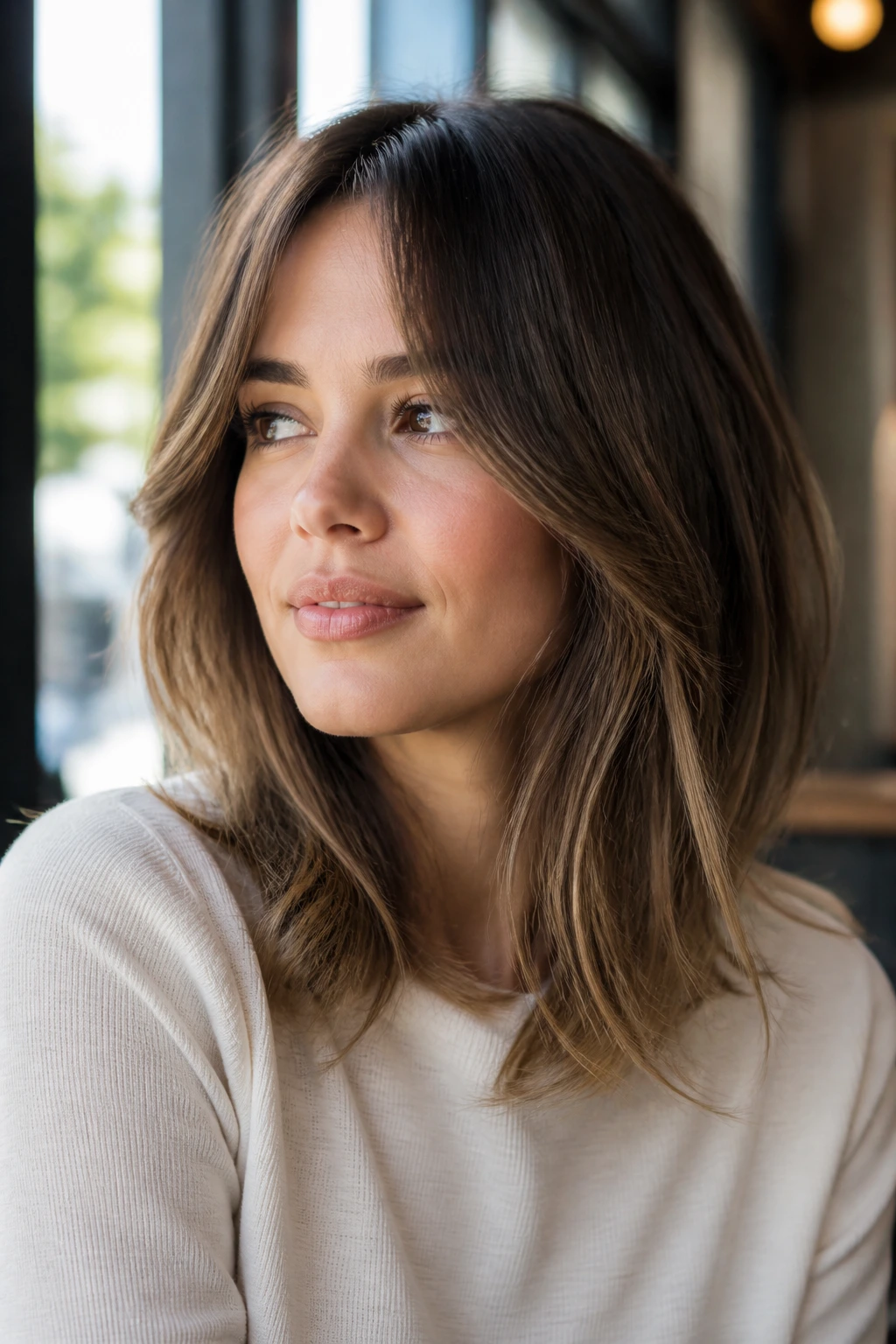
Curtain bangs give thin hair shape around the face without forcing the whole haircut to carry all the drama. The long layers in this lob should start low — below the cheekbone or even closer to the chin — so the ends keep their weight. That is the part people often get wrong. They ask for layers, then wonder why the bottom half looks limp.
The curtain fringe helps because it opens at the center and softly frames both sides of the face. It doesn’t have to be perfectly blown out every day. A quick pass with a round brush or even a twist while damp can be enough to make it split naturally.
Best Uses
- Good for longer faces that want width around the cheeks.
- Good for thin hair that needs face framing more than crown volume.
- Good for people who want bangs without constant touch-ups.
- Good for hair that can handle a little movement around the front.
The maintenance is slightly higher than a blunt lob because bangs ask for more attention than the rest of the cut. Still, if you keep the fringe long, it grows out gracefully instead of turning into a headache. That’s why I prefer a soft curtain bang to a blunt fringe on thin hair.
14. Tucked-Under Lob
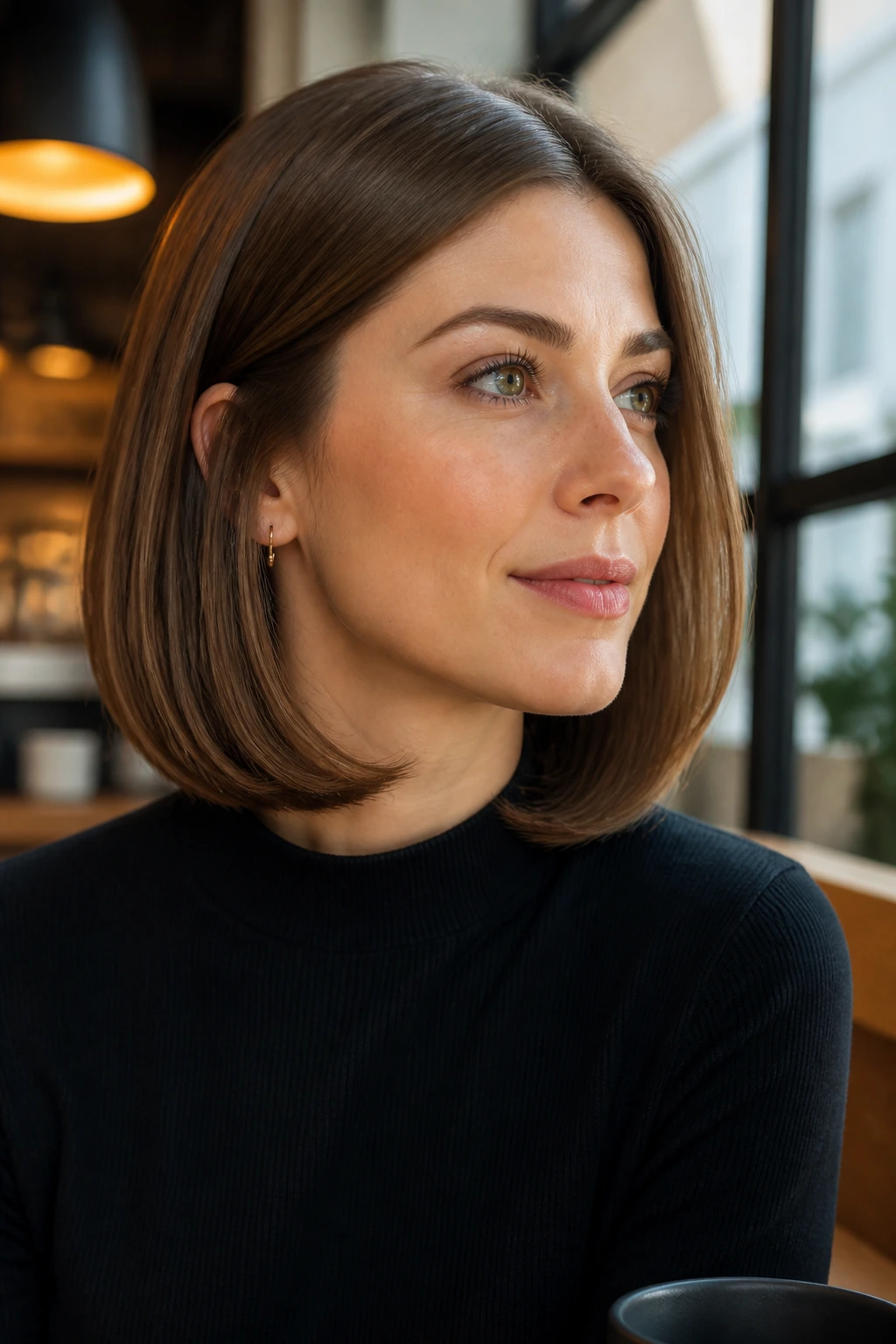
There’s a kind of lob that looks especially good when you tuck the ends under just a little, and it’s not as fussy as it sounds. A tucked-under lob has a subtle inward curve at the bottom, which makes the hair look more contained and fuller through the outline. It’s a clean shape. No drama. No extra fluff.
This cut is a gift if you often tuck hair behind your ears or wear it with sweaters, jackets, and high collars that tend to mess with the ends. The slight undercurve keeps the style from flaring outward when it brushes against clothing. Thin hair benefits from that because the silhouette stays tidy all day.
Compared with a sharper A-line, this version feels softer and less structural. It works well on straight hair and mild wave, and it grows out without leaving an obvious line of demarcation. If your hair has a habit of flipping out at the bottom, a subtle underbend can calm it down without making the cut stiff.
I’d ask for this when I want the haircut to behave in real life, not just in the salon. That matters more than most people admit.
15. A-Line Lob
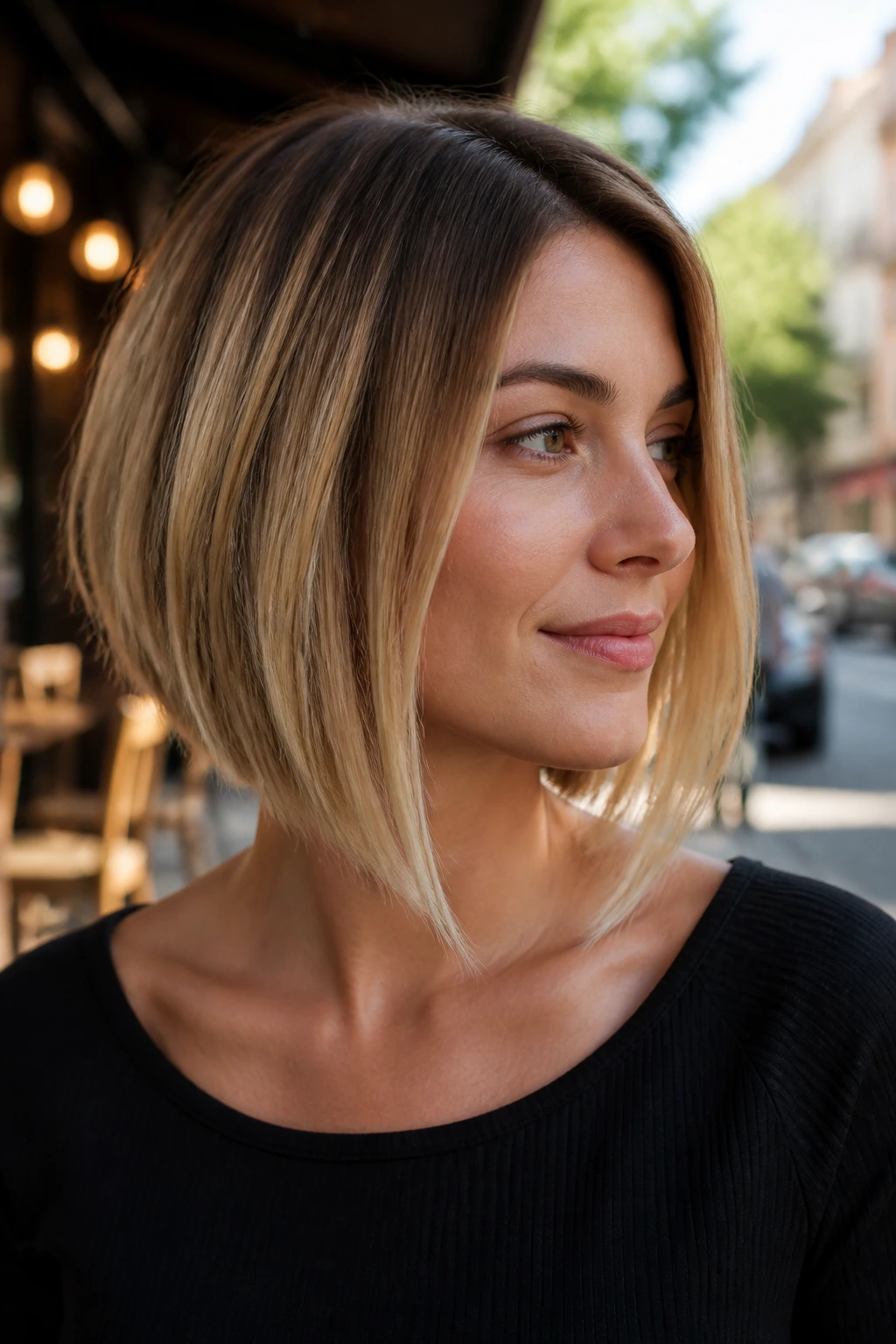
What’s the difference between this and a slight angle? More than it first looks. An A-line lob is more deliberate at the shape: shorter in the back, longer in the front, with the line clearly visible when you look at it from the side. On thin hair, that structure can create a very clean frame for the face.
The shape adds density where the eye lands first. That’s the important part. Thin hair often benefits from drawing attention forward rather than trying to fake thickness all over the head. A shallow A-line gives you that effect without making the cut so severe that it starts looking sharp or dated.
Keep in Mind
- Keep the angle subtle if your hair is very fine.
- Ask for a blunt perimeter so the ends don’t separate.
- Make sure the front pieces do not drop so long that they look stringy.
- Use a side or off-center part if the crown needs lift.
This is one of the better choices if you like a haircut that looks crisp even on an ordinary day. It does not need a lot of styling to read as a shape. A quick blow-dry and a brush through the ends usually gets you there.
16. Soft Shag Lob
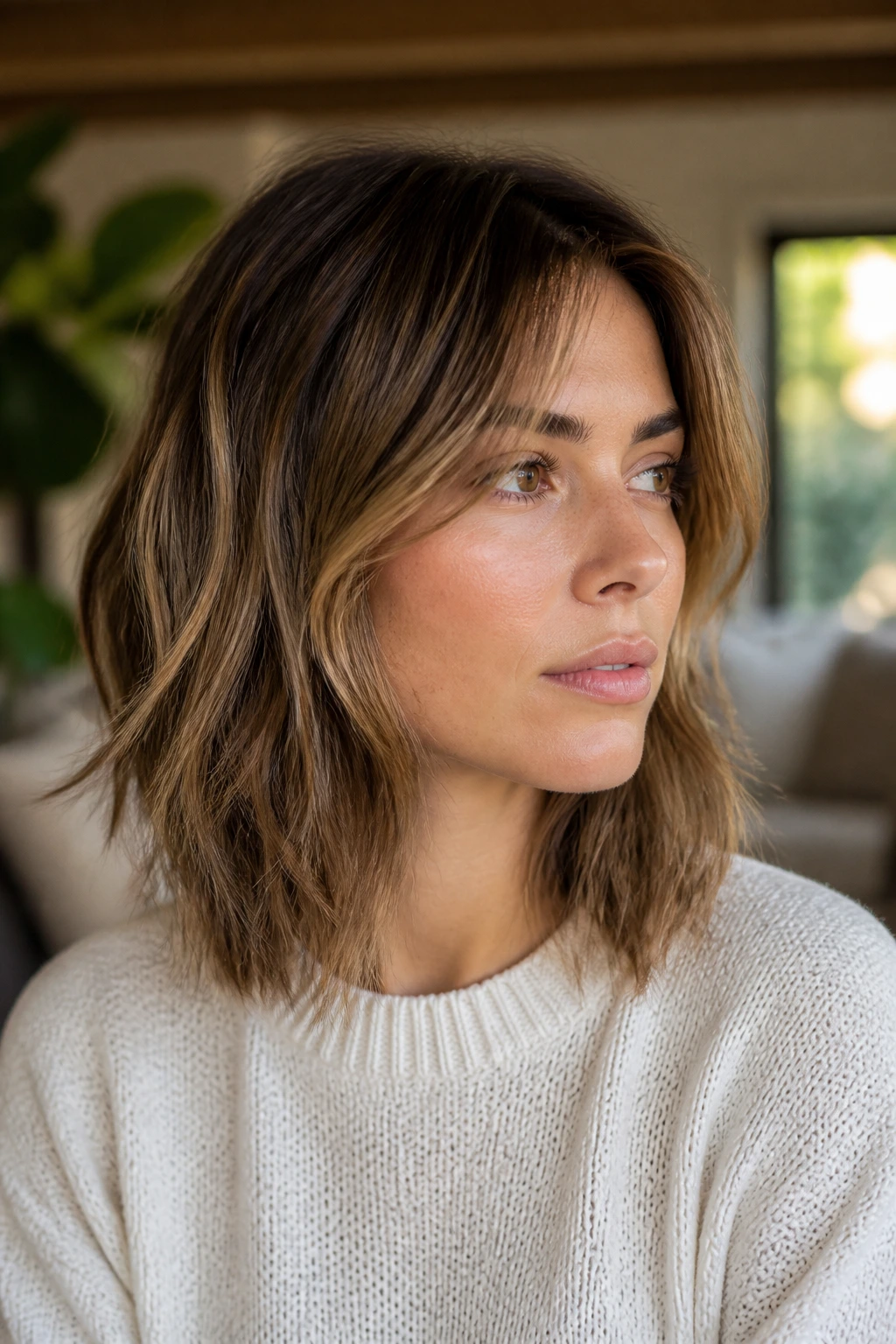
A shag does not have to mean shredded ends and a bunch of broken pieces. A soft shag lob keeps the top light, adds movement through the middle, and preserves enough weight at the bottom that thin hair doesn’t vanish. That balance is what makes it work.
This cut is one of the easiest options if your hair already has a bend or a loose wave. The layers give the wave somewhere to land, and the whole shape can be scrunched into place with a small amount of mousse or cream. Air-drying works especially well here because the cut is built to tolerate a bit of mess.
The caution is simple: don’t let the shag get too high or too choppy. Thin hair cannot afford to lose its outline to over-layering. Keep the shortest pieces modest, mostly around the face and crown, and leave the perimeter steady.
If you want a lob that feels relaxed but not careless, this is the one. It has movement without looking like it had a rough night.
17. U-Shaped Lob with Face-Framing Pieces
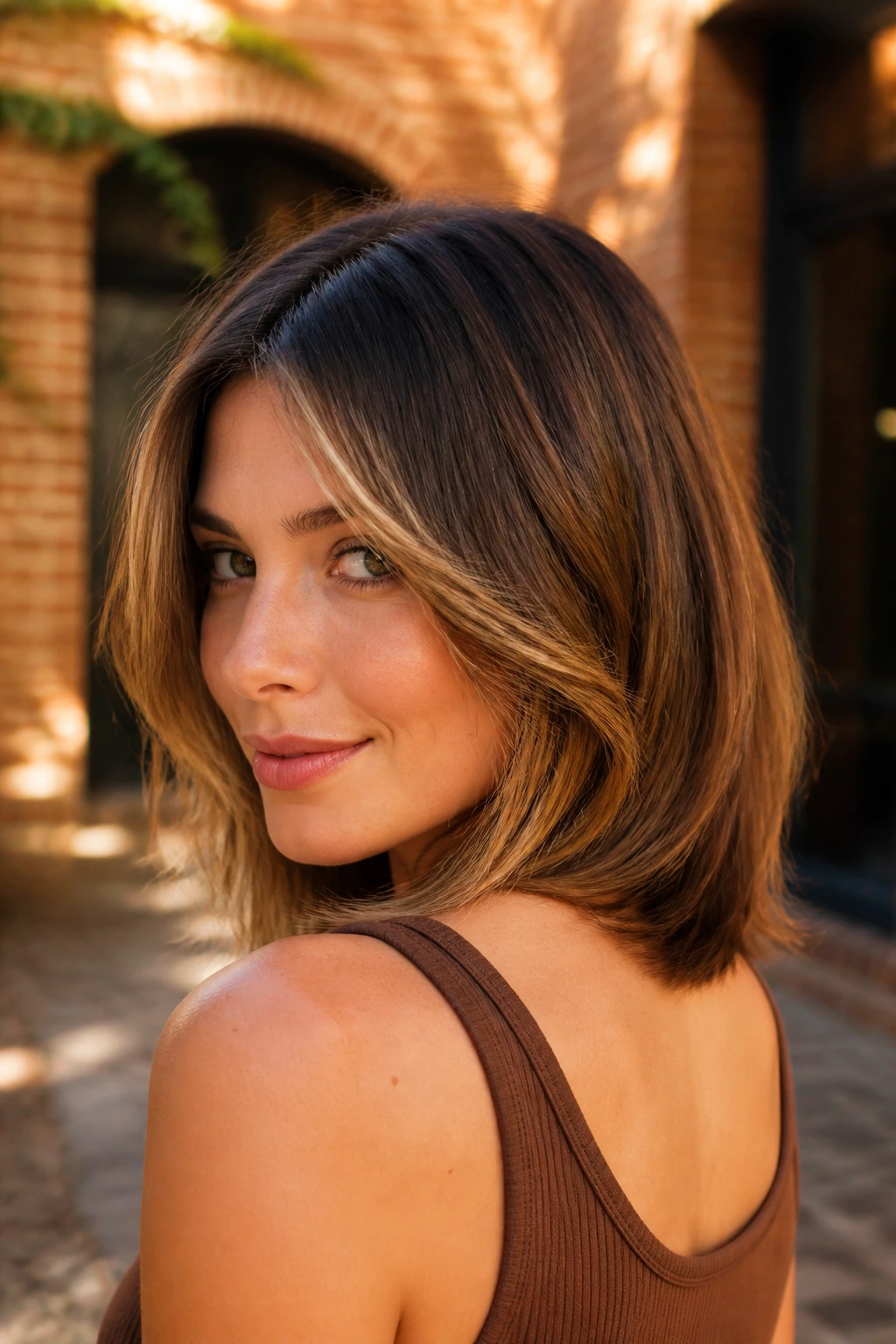
A shallow U-shape can be kinder to thin hair than a hard straight line, especially if you want a softer finish around the back. The center back stays a touch longer, the sides come forward a bit, and a few face-framing pieces soften the transition near the cheekbones and jaw.
The shape helps because it creates a gentle sense of fullness without chopping the whole outline apart. Thin hair often looks better when the cut has some flow built into it, and the U-shape does that in a controlled way. It is less severe than a blunt box and less obvious than a deep layered cut.
This is a nice option if you want your lob to grow out gracefully. The shape keeps making sense even after a few weeks, which is useful if you are not chasing the salon every month. Ask for the U to stay shallow; a deep one can start to look too soft and take too much weight from the ends.
Small but useful tip: the face-framing pieces should sit no shorter than the jawline if your hair is very fine. Shorter than that, and they can start to look wispy instead of flattering.
Why a Good Lob Keeps Thin Hair Looking Denser

The best lob for thin hair is not the one with the most movement. It’s the one that protects the outline. Thin hair needs a shape that holds together at the bottom, because the bottom is where the eye decides whether the hair looks full or flimsy.
That is why blunt perimeters, shallow angles, and soft internal layers matter so much. They let the hair keep its weight. They also make styling easier, because the haircut does half the work before you pick up a dryer. A good lob should still look like a haircut after a windy walk, after a hat, and after you’ve had it clipped back for an hour.
There’s also a practical side people ignore. Shorter mid-length cuts tend to hang in a more controlled way, which means less breakage from snagging, less friction on the ends, and fewer sad, see-through tips hanging off the bottom. No haircut fixes hair density, but the right one can change how density reads. That’s the whole game.
And if you’ve ever felt like thin hair only looks good on the day you leave the salon, that usually means the cut relied on styling to fake the shape. These lobs are built to survive a more ordinary life than that.
The Small Styling Tools That Do the Heavy Lifting
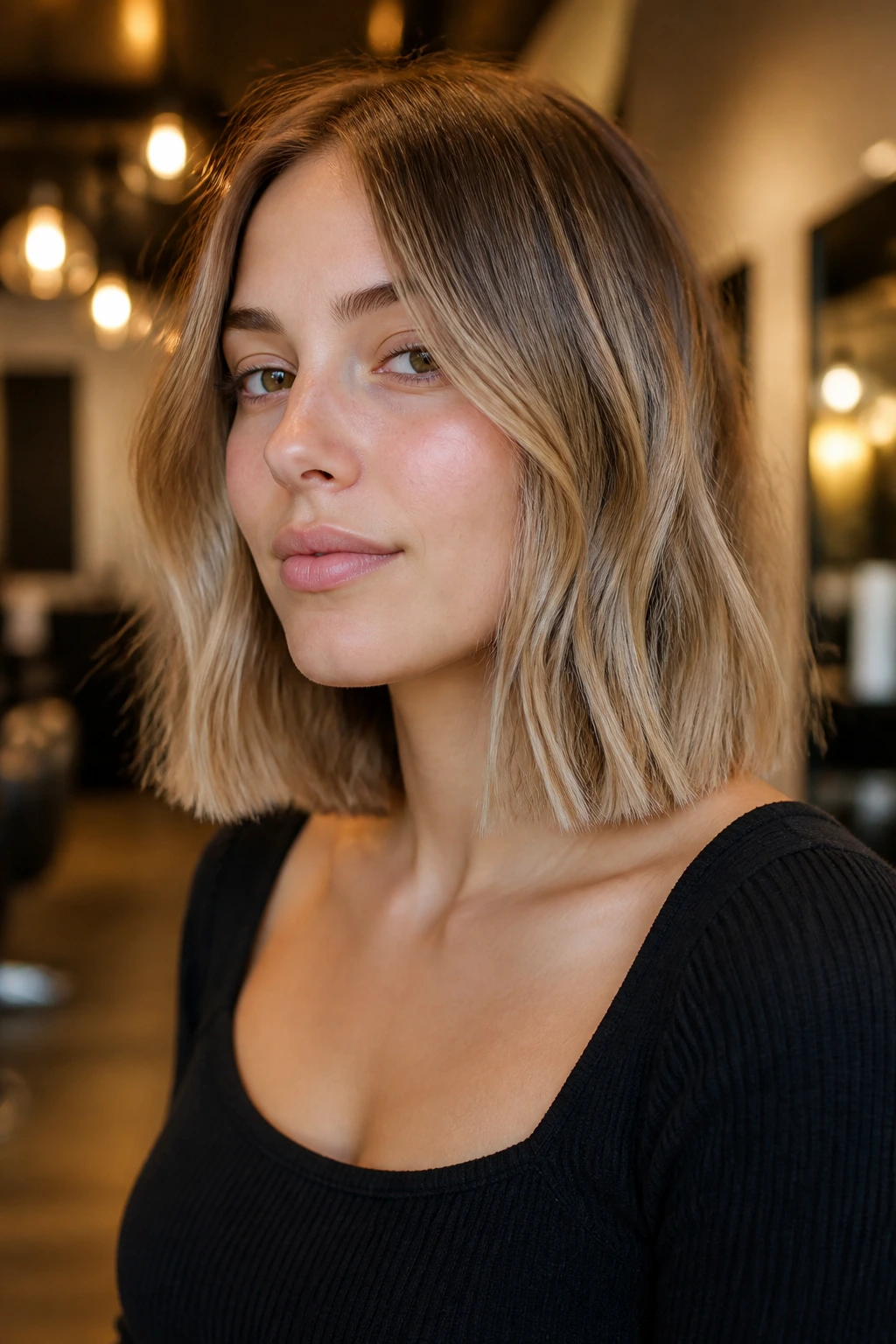
You do not need a drawer full of gadgets. You need a few tools that make thin hair look tidy fast and do not pile on weight.
- Blow dryer with a concentrator nozzle: The nozzle helps you direct air along the hair shaft, which smooths the cuticle and keeps the top from puffing out.
- 1- to 1.25-inch round brush: This size gives the ends a bend without making the lob curl into a full wave that eats up length.
- Paddle brush: Useful for sleek center-part or blunt cuts when you want a fast, straight finish.
- Lightweight mousse: A small amount at the roots gives lift without the sticky feel that creams can leave behind.
- Heat protectant spray: Thin hair shows heat damage fast, so this is not optional if you use a dryer or iron.
- Dry shampoo: Great on day two for root lift, especially at the crown and temple area.
- Texturizing spray: Use lightly through the mids, not the roots, or the hair can look dusty.
- Velcro rollers: Old-school, yes. But one or two at the crown can create better lift than a lot of teasing.
- Flat iron or mini curling iron: Handy for bending the ends or flipping a face frame in a few seconds.
- Wide-tooth comb: Better than yanking through tangles, which only makes fine hair break faster.
How to Ask for the Right Lob at the Salon
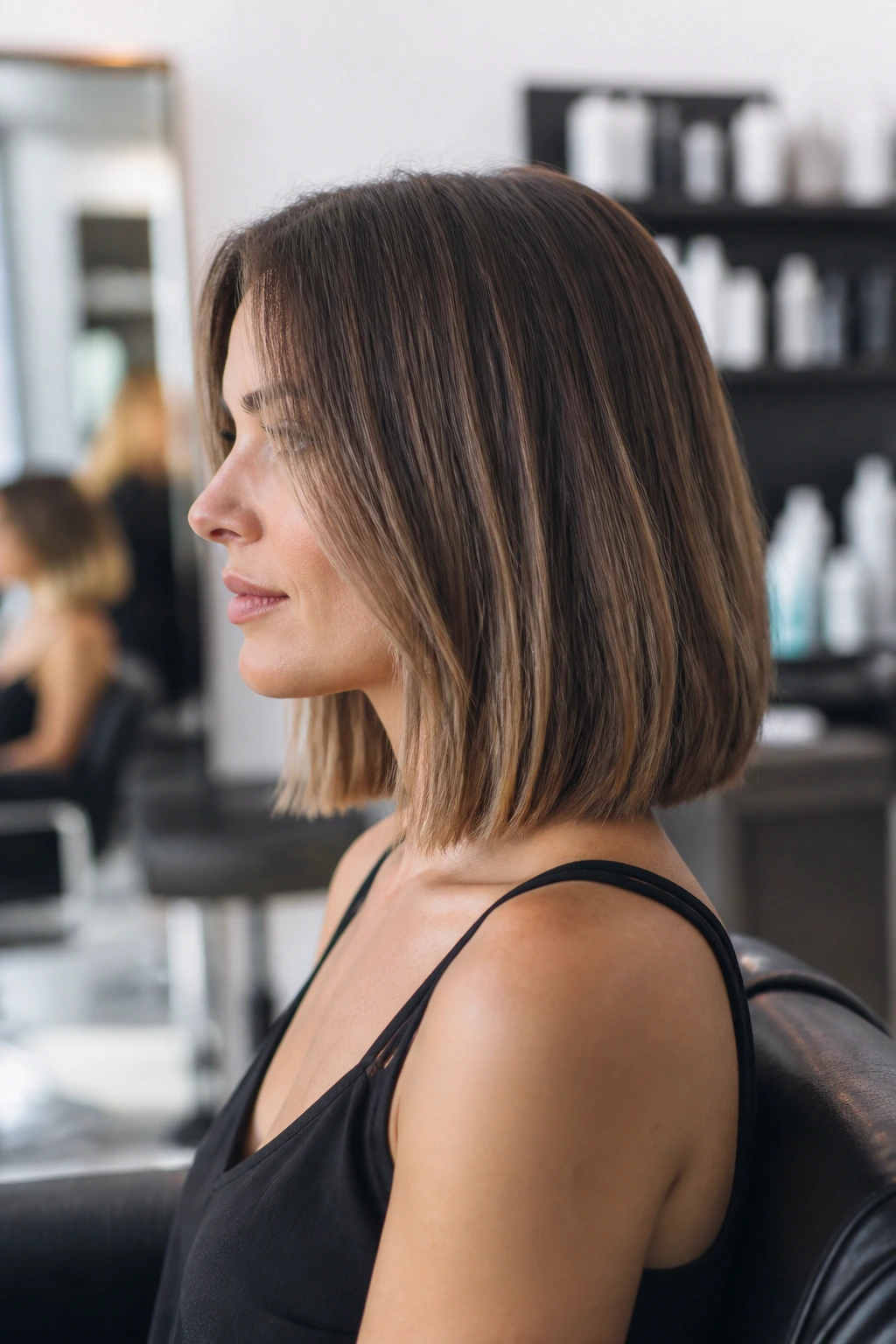
Bring photos, but don’t stop there. A photo tells the stylist the shape. Your explanation tells them how the cut needs to behave on your head. Those are not the same thing.
Say where your hair tends to fall flat, where it flips, and how often you actually style it. If your hairline is sparse at the temples, say so. If the crown collapses by lunch, say that too. A good stylist can work with thin hair, but they need the real story, not the hopeful version.
A few useful phrases:
- “Keep the perimeter blunt so the ends look fuller.”
- “I want minimal internal layers.”
- “Please don’t thin out the bottom.”
- “The length should sit at or just above the collarbone.”
- “My hair flips at the shoulders, so I need the cut to avoid that zone.”
If your hair is very fine, ask whether the cut should be done dry, damp, or with some sections checked dry at the end. Dry cutting can help a stylist see how your hair falls naturally, especially if it has a wave or a stubborn bend. That little detail can save you from getting a lob that looks good in the chair and awkward at home.
Styling Thin Hair So It Doesn’t Collapse by Noon
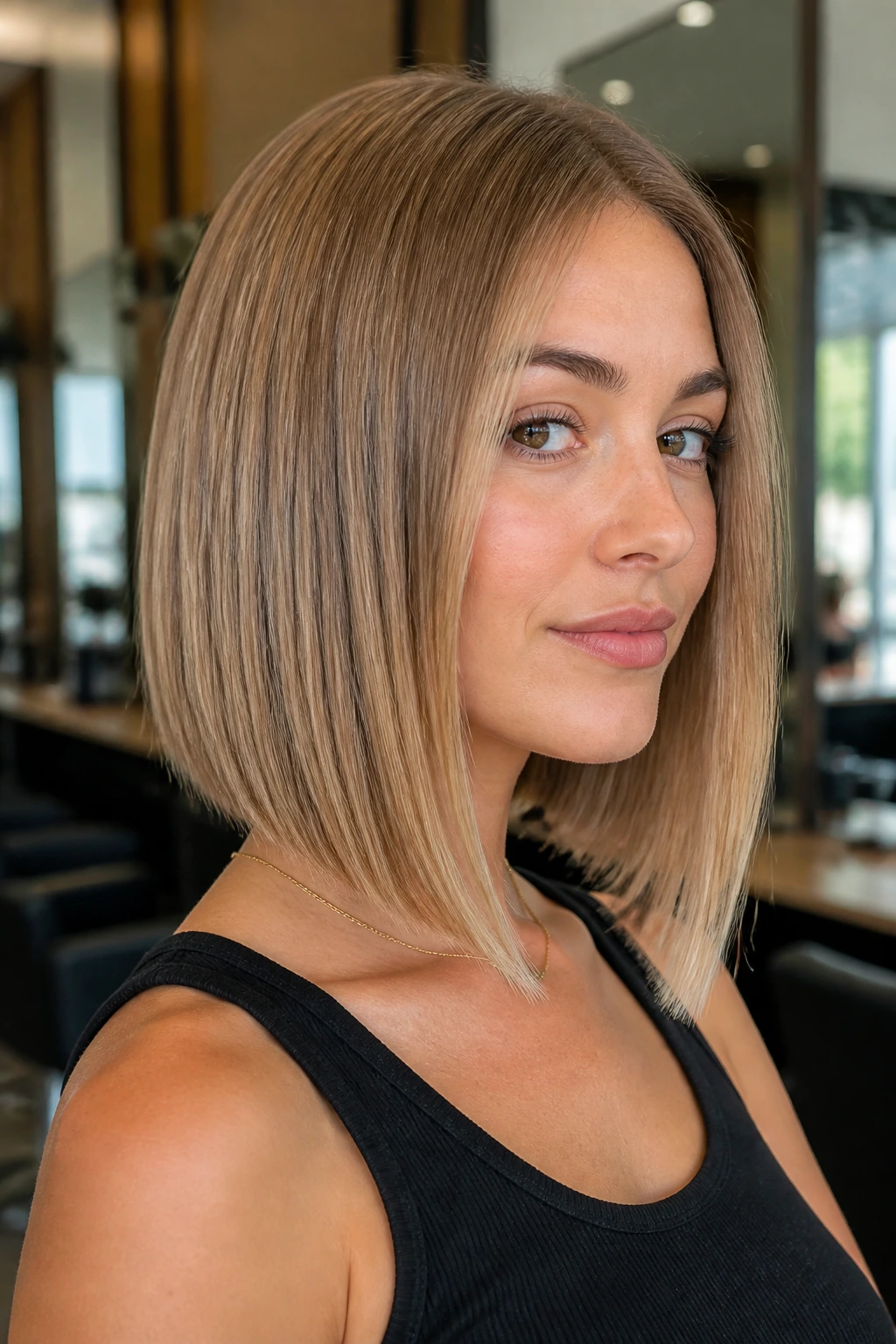
The goal is not to make thin hair look like thick hair. The goal is to make it look like itself, only cleaner and fuller at the edges. That usually means less product and more shape.
Root Lift: Work a small amount of mousse into damp roots, then blow-dry the crown in the opposite direction of your part for 20 to 30 seconds. Flip it back once the roots are halfway dry. That single move gives you more lift than a heavy spray ever will.
End Shape: Use a round brush or a flat iron to add a soft bend at the ends. One half-turn is enough. If you curl the whole bottom section, the lob loses that crisp length that helps thin hair look denser.
Day-Two Refresh: Mist the roots lightly with water or a leave-in mist, then add a little dry shampoo. Work it in with your fingertips, not a brush, or you’ll flatten the crown back down.
Time Saver: Velcro rollers at the crown are worth the mild annoyance. Leave them in while you do makeup or brush your teeth. Five to ten minutes can reset the shape without heat.
And yes, air-drying can work. But air-drying thin hair with no plan is not a style method. If you want the cut to look polished with minimal work, give the roots a little lift while the hair is still damp and keep the ends controlled.
Mistakes That Make Thin Hair Look Thinner

Too many layers through the whole head. The symptom is see-through ends and a shape that looks airy in the chair but stringy two weeks later. The fix is simple: keep the perimeter solid and ask for only the layers you can actually see and use.
A cut that lands exactly on the shoulders. Hair at that length often flips outward and breaks the line, which makes the ends feel sparse. Ask for a lob that clears the shoulder by about half an inch or sits clearly below it, so it doesn’t live in the flip zone.
Heavy creams and oils. Thin hair gets weighed down fast, and heavy product can make the roots separate into greasy-looking strings. Use lighter formulas and keep the richest products on the last inch or two of the hair.
Razor work that goes too far. A little texture can help. Too much gives you fuzzy, broken ends that reveal how little hair there is. If your hair is already fine, ask for a light hand and keep the razor work controlled.
Skipping trims until the ends split. A split end makes thin hair look even thinner because the line at the bottom becomes uneven and frayed. Trim every 6 to 10 weeks depending on the cut, and sooner if the outline starts to fall apart.
Forcing a style that fights your natural fall. If your hair wants a side part, don’t spend every morning dragging it into the middle. If it naturally bends under, a cut that supports that bend will always look better than one that argues with it.
Variations and Alternatives to Try
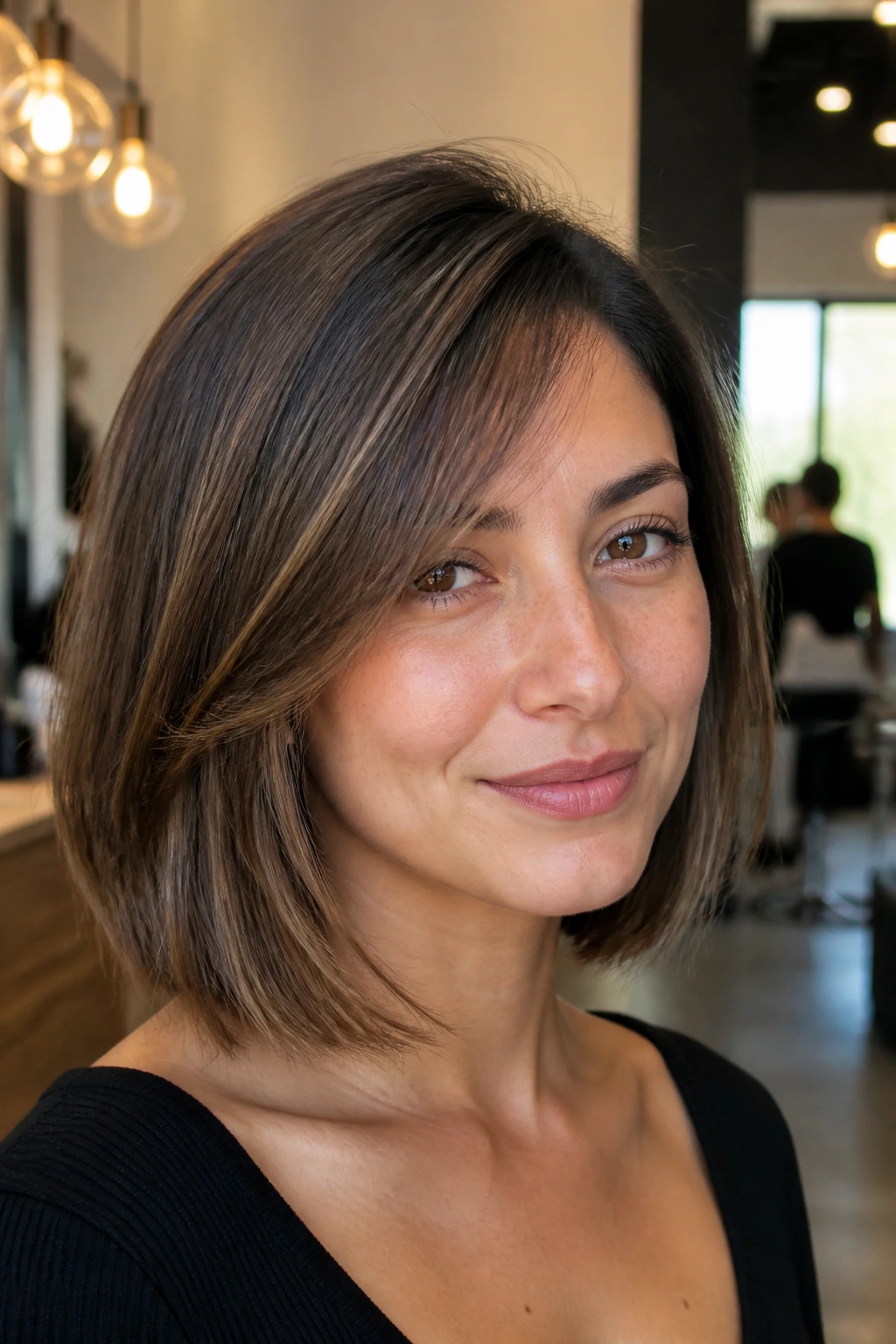
Ultra-Blunt Collarbone Version: If your hair is very fine and you want the strongest possible outline, shorten the lob so it lands right at the collarbone and keep the edge clean. This version gives the ends maximum visual weight and usually needs the least daily styling.
Wave-Friendly Air-Dry Version: For hair that already has a bend, keep invisible layers low and let the lob dry with a soft cream or foam. The shape should encourage the wave, not create a bunch of random puff.
Side-Part Lift Version: If your crown falls flat every time you look at it, pair almost any lob on this list with a strong side part and a soft root lift. The haircut stays the same; the behavior changes.
Bangs-Optional Version: Curtain bangs, airy fringe, or no bangs at all can all work with a lob. On thin hair, keep fringe pieces long and light so they don’t rob density from the rest of the style.
Grow-Out-Friendly Version: A shallow U-shape or gentle A-line gives you a haircut that still looks deliberate after it grows. That matters if you hate the awkward in-between stage and want to stretch trims a little longer.
Keeping the Shape Between Salon Visits
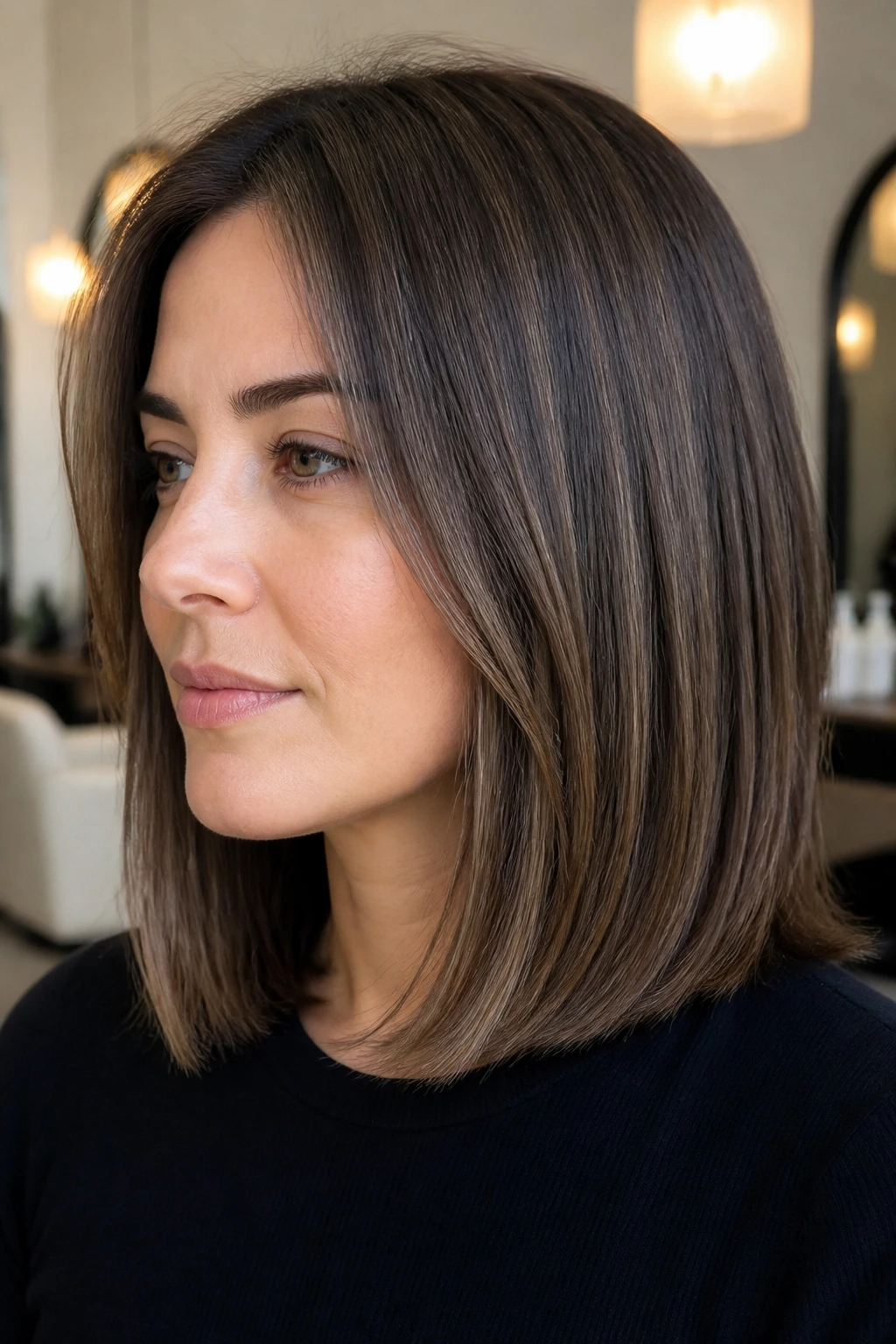
Thin hair shows wear fast, so maintenance is about preserving the outline before it breaks down. A blunt lob usually wants a trim every 6 to 8 weeks. Softer layered versions can stretch closer to 8 to 10 weeks, but only if the ends still look tidy and not ragged.
Wash frequency matters too. Fine hair often does better with more frequent washing than people expect because oil at the roots drags the whole shape down. If you use dry shampoo, apply it at the crown on clean or slightly dirty hair, not only once the roots are already collapsed. That keeps the lift cleaner and prevents buildup from getting crusty.
Product buildup is a quiet killer for thin hair. A clarifying shampoo every 2 to 4 weeks can reset the hair if you use mousse, spray, or dry shampoo often. Don’t overdo it, though. Too much clarifying leaves the hair squeaky and rough, which makes it harder to style smoothly.
If the ends start flipping or separating, that’s your cue. A small trim is usually enough. You do not need a big reshaping every time; sometimes the lob just needs the bottom line cleaned up and the face pieces nudged back into place.
Frequently Asked Questions About Lob Haircuts for Thin Hair

Which lob is best if my hair is very fine and flat?
A blunt collarbone lob or a soft one-length lob usually works best. Both keep weight at the ends, which helps the hair look denser without asking for much styling.
Should thin hair have layers in a lob?
Yes, but lightly. Invisible layers or low, soft layers can help the hair move without blowing apart the bottom line. Heavy layers through the whole head usually make thin hair look thinner.
Is a blunt lob better than a choppy lob for thin hair?
Usually, yes, if your main goal is fullness. Choppy texture can work, but it needs a careful hand. If the cut gets too piecey, the outline breaks up and the hair looks sparse.
Can I get curtain bangs with thin hair?
You can, but keep them long and airy. Dense bangs can steal visual weight from the rest of the haircut, while soft curtain pieces frame the face and grow out more gracefully.
How short should a lob be so it doesn’t flip out?
That depends on your shoulder height and neck length, but a lob that clears the shoulder by about half an inch often behaves better than one that lands right on it. If it’s right at the shoulder, you’re inviting the flip.
Can thin hair air-dry a lob and still look finished?
Yes, if the cut is built for it. Wavy lobs, soft shags, and invisible-layer cuts do better with air-drying than blunt shapes that need a little bend at the ends.
How often should I trim a low-maintenance lob?
Most thin-hair lobs need a trim every 6 to 10 weeks. Blunt cuts need more frequent cleanup because the line shows every split end; softer versions can stretch a little longer.
What if my hair is thin but also thick in some places?
That’s more common than people think. Ask your stylist to balance density, not just remove bulk. A good lob can keep the perimeter full while easing the heavier sections so the whole cut moves evenly.
The Cut That Pulls Its Weight
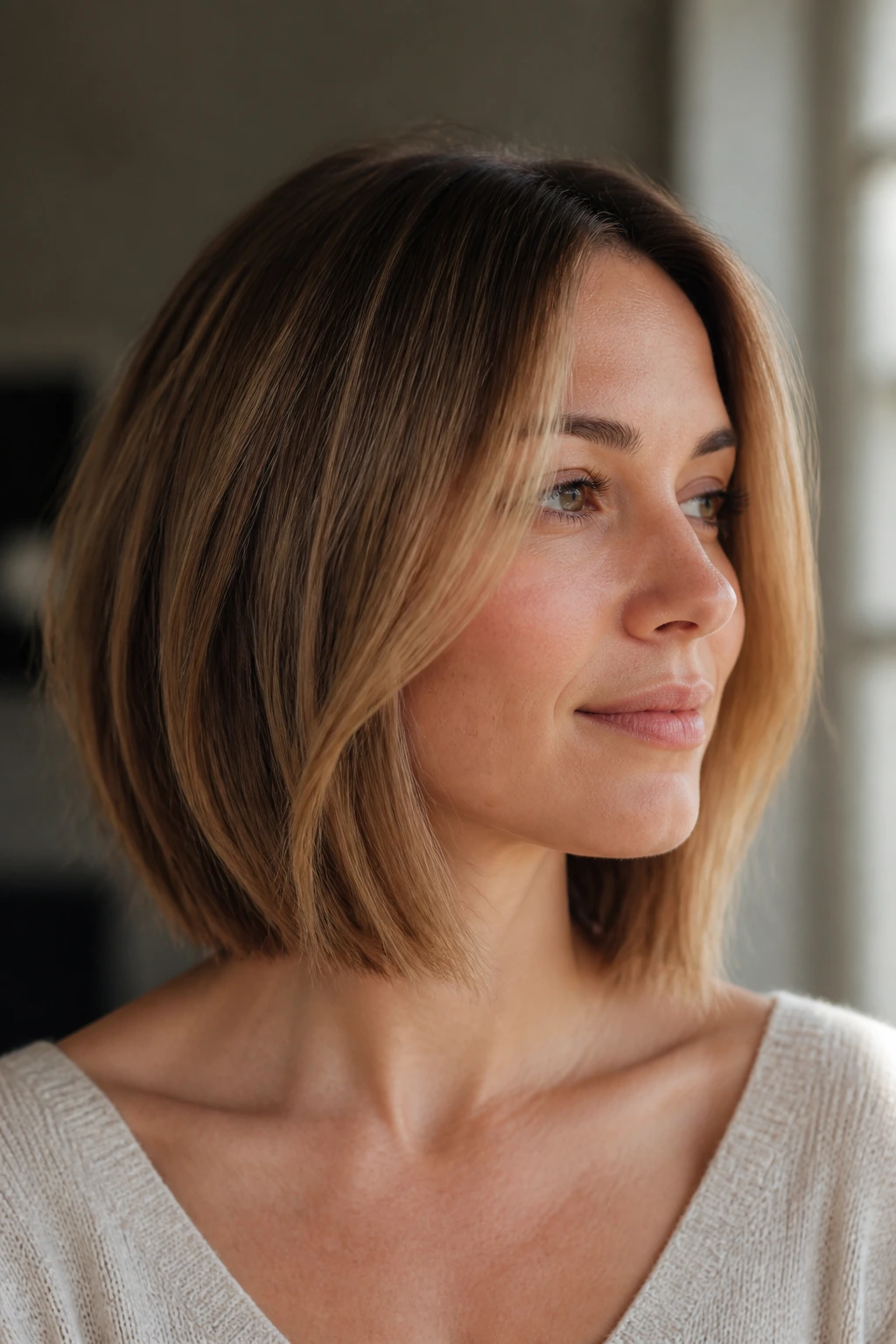
A good lob on thin hair doesn’t try to fake a miracle. It does something better: it gives you a shape that looks stronger than the strand count behind it. That’s the reason these cuts keep showing up in real salons, on real people, in real life — they behave.
If you want the short version, pick the shape that matches how your hair already wants to fall. Blunt if you need fullness. Slightly angled if you want lift. Softly layered if you need movement. And if you’re torn, go a little cleaner and a little less layered than your first impulse says. Thin hair usually rewards restraint.
Pick one of these lobs, keep the maintenance honest, and let the cut do the heavy lifting for a while.
