



Straight lob haircuts have a blunt little honesty to them. There’s nowhere to hide when the line is off, the ends are frayed, or the part sits a half-inch too far left. That’s the charm, really. When the cut is right, straight hair turns into a sharp, glossy sheet with enough movement to feel modern and enough structure to look deliberate.
A lob sits in that sweet spot between bob and longer hair, which is why it keeps coming back in salons. It can skim the jaw, graze the collarbone, or sit just above the shoulders, and each version changes the mood in a big way. On straight hair, the differences are even more obvious. A tiny bevel makes the whole shape softer. A deep side part changes the balance. A blunt edge can make fine hair look thicker than it has any right to look.
I like this length because it rewards precision. Not perfection. Precision. If your ends are chopped unevenly or the weight is placed badly, you see it immediately. If the cut is clean, though, you get that crisp, polished finish people keep saving on mood boards and then pretending they invented later. The trick is choosing the right straight lob haircut for your face, hair density, and maintenance tolerance, because there are a lot of ways to wear one line well.
Why This Collection Feels Different
-
The length does the heavy lifting: A lob that lands near the collarbone gives straight hair enough swing to move, but not so much length that it drags the shape down.
-
The edge matters more than layers: On straight hair, a blunt or lightly beveled perimeter can make the cut look thicker and more expensive than a heavily layered shape.
-
Small changes shift the whole mood: A side part, a slight A-line, or a face-framing front can move the cut from severe to soft in one salon visit.
-
It works with real styling habits: Most of these straight lob haircuts look best with a round brush, a flat iron, or a clean blow-dry — not a shelf full of products.
-
The grow-out is kinder than a chin-length bob: You still keep the line, but you buy yourself a few extra weeks before the shape starts to wobble.
-
Polish comes from restraint: The sleekest lob is usually the one that knows when to stop. Too much texture, too many layers, too much product — all of it shows fast on straight hair.
1. The Center-Part Blunt Lob
A center-part blunt lob is the haircut that makes straight hair look like it was ironed by a very particular person. The line is the point. No fuzzy ends, no excess layering, no trying-too-hard energy. The whole shape sits there with a calm, expensive-looking straightness that works especially well if your hair naturally falls in a clean line.
Why it works:
The middle part keeps both sides even, which makes the blunt perimeter feel stronger. That matters on straight hair, because every tiny imbalance shows. If one side flips out more than the other, a blunt cut with a true center part can steady the whole look and make fine hair appear denser at the ends.
If you want this version to feel polished instead of rigid, ask for the perimeter to land a touch below the collarbone. That little bit of length lets the hair tuck behind one ear without the shape collapsing. It also keeps the cut from sitting too close to the jaw, where it can start to box the face in.
A center-part blunt lob is the one I reach for when the goal is clean, not fussy. It’s also the easiest cut to style badly if you get lazy with the blow-dry. Any bend at the wrong angle will show. So if your hair likes to flip, this is a haircut that rewards a paddle brush and a final pass with a flat iron, just through the last inch or two.
2. The Soft Side-Part Lob

A soft side-part lob changes the whole mood without changing the length much at all. The off-center part shifts weight, gives the front a little sweep, and makes straight hair look less severe. It’s the version I suggest when someone wants polish but does not want to look like they’re auditioning for a gallery opening.
The side part also helps if your hair has a stubborn crown or a cowlick that refuses to sit flat in the middle. Instead of fighting it, you let the part fall where the hair already wants to move. That tiny adjustment can calm down a lot of awkward bend at the roots.
What to ask for
- Keep the length between the collarbone and upper shoulder.
- Ask for a blunt edge with only a very slight bevel at the front.
- Leave enough weight near the cheekbones so the hair doesn’t puff out on one side.
- If your hair is fine, keep the layers almost invisible.
This version is one of the easiest straight lob haircuts to live with because it softens itself. You can wear it sleek, tuck one side back, or let the front fall forward and frame the face. The part does half the styling work for you. Nice when you’re running late. Nice when you aren’t.
3. The Collarbone-Skimming Lob
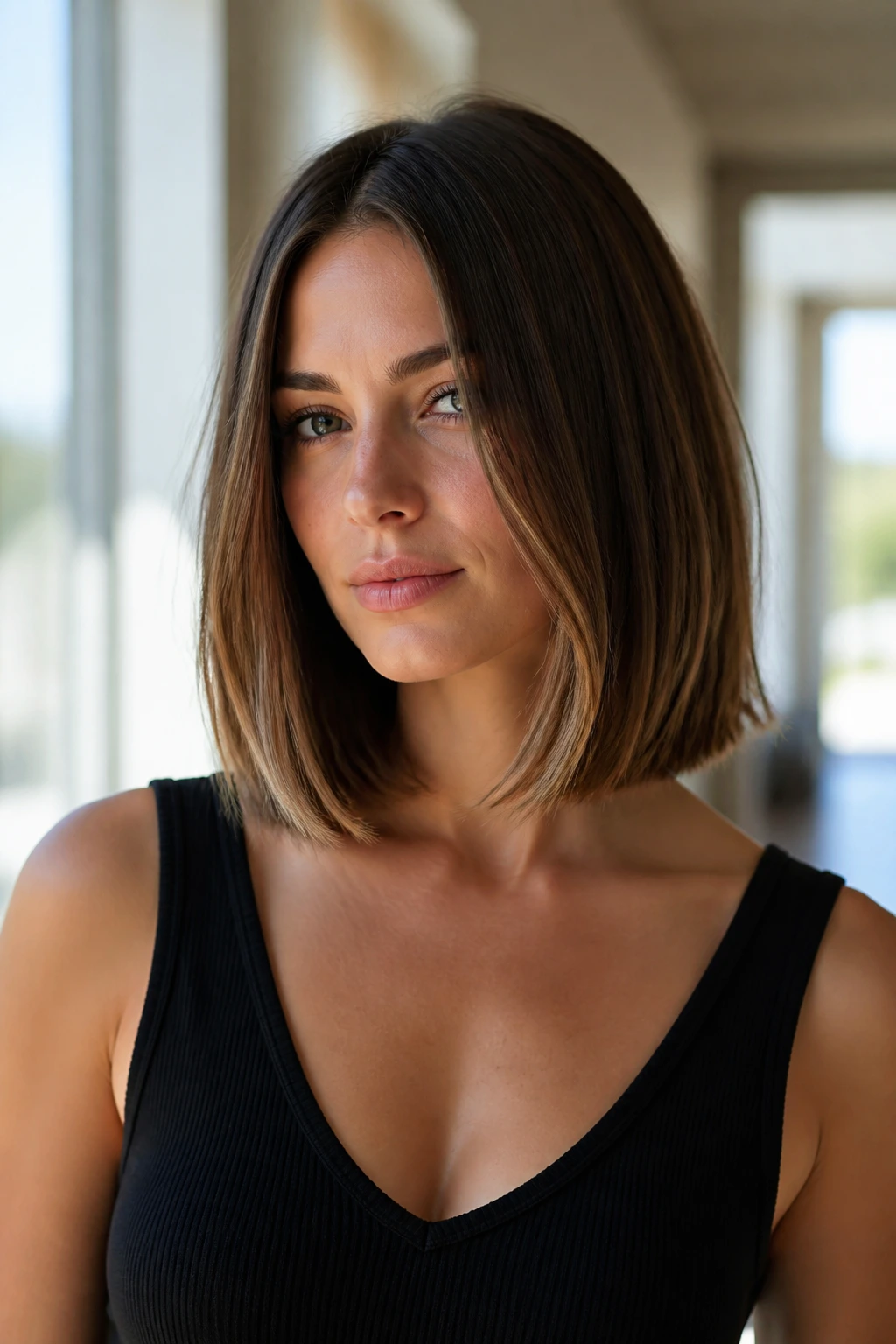
Why does this length get so much love? Because it lands where straight hair behaves best. A collarbone-skimming lob moves when you walk, bends neatly under a blow-dry, and gives you enough length to tie back in a pinch without turning into a ponytail that looks like a compromise.
The collarbone is useful because the hair can rest on it or clear it, depending on how you style. That means the ends have a chance to curve in or out on purpose instead of hitting the same spot every day and creating a weird flip. If your hair likes to kick outward at the shoulders, ask your stylist to leave the front a quarter-inch longer so the bend feels intentional.
This is also one of the friendliest straight lob haircuts for people who are growing out shorter cuts. It doesn’t scream “transition.” It just looks like a choice. And that matters more than people admit.
If you want it polished, keep the perimeter crisp and the layers minimal. If you want a little movement, ask for a whisper of weight removal underneath, not around the face. The line stays clean either way, but the styling gets easier when the hair has room to breathe at the ends.
4. The A-Line Lob
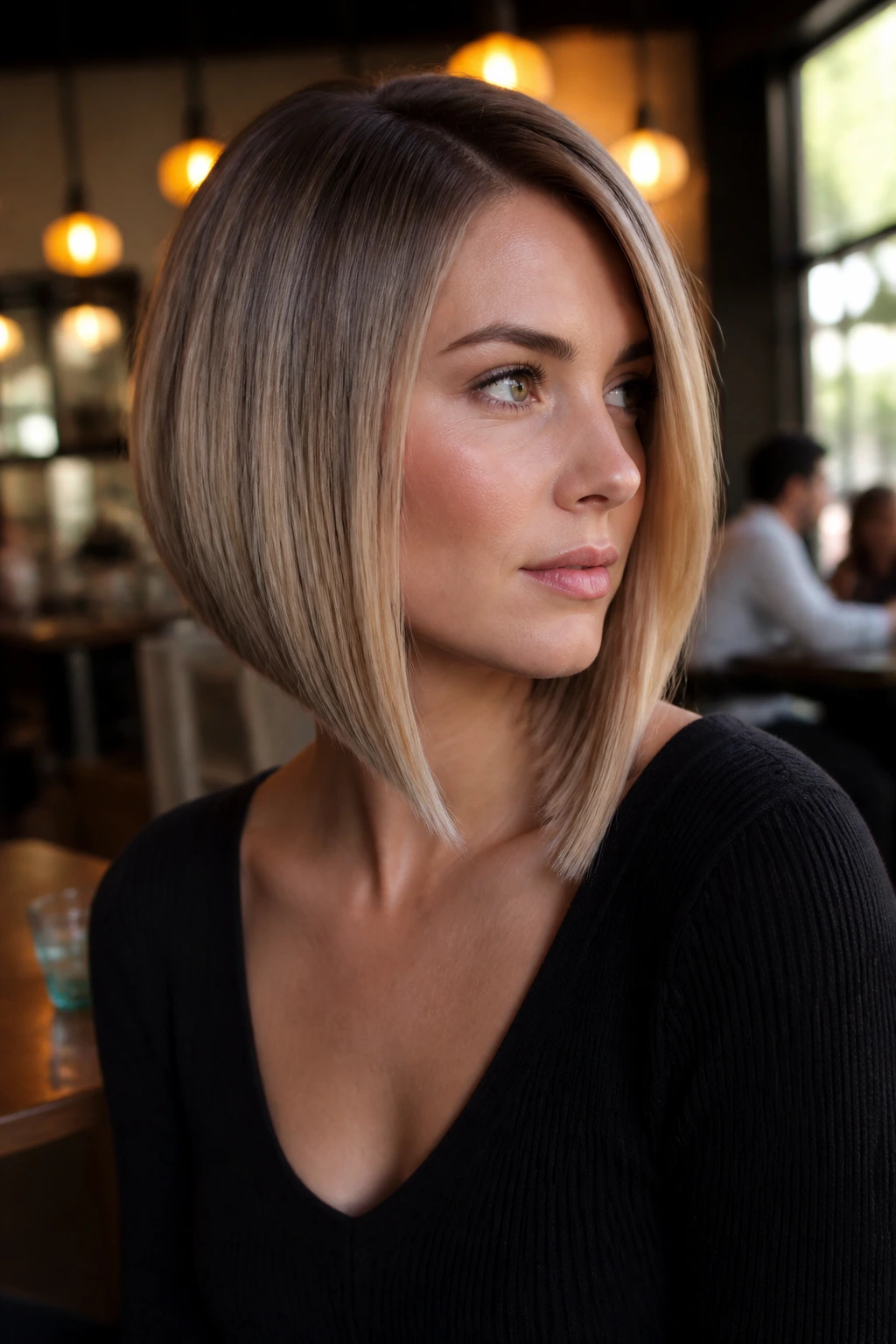
The A-line lob is for anyone who likes structure. Shorter in the back, longer in the front, it creates a clean diagonal that sharpens straight hair instantly. The angle can be subtle or dramatic, but even a small difference in length changes the silhouette enough to make the cut feel more intentional.
This cut shines when the hair is dense or prone to puffing at the back of the head. That slightly shorter nape removes bulk where you do not want it, while the longer front pieces keep the face from feeling boxed in. The result is crisp, not bulky.
I prefer an A-line lob on straight hair when someone wants movement without layers. The diagonal gives you that movement for free. The front pieces swing when you turn your head. The back sits neat and tidy. There’s a reason this shape has survived so many haircut cycles. It does a lot with very little.
If your hair is fine, keep the angle modest. Too steep and the back can look thin. If your hair is thick, a stronger angle can keep the outline sharp and reduce the feeling of a heavy shelf at the ends. That balance is the whole game.
5. The Glass-Hair Lob
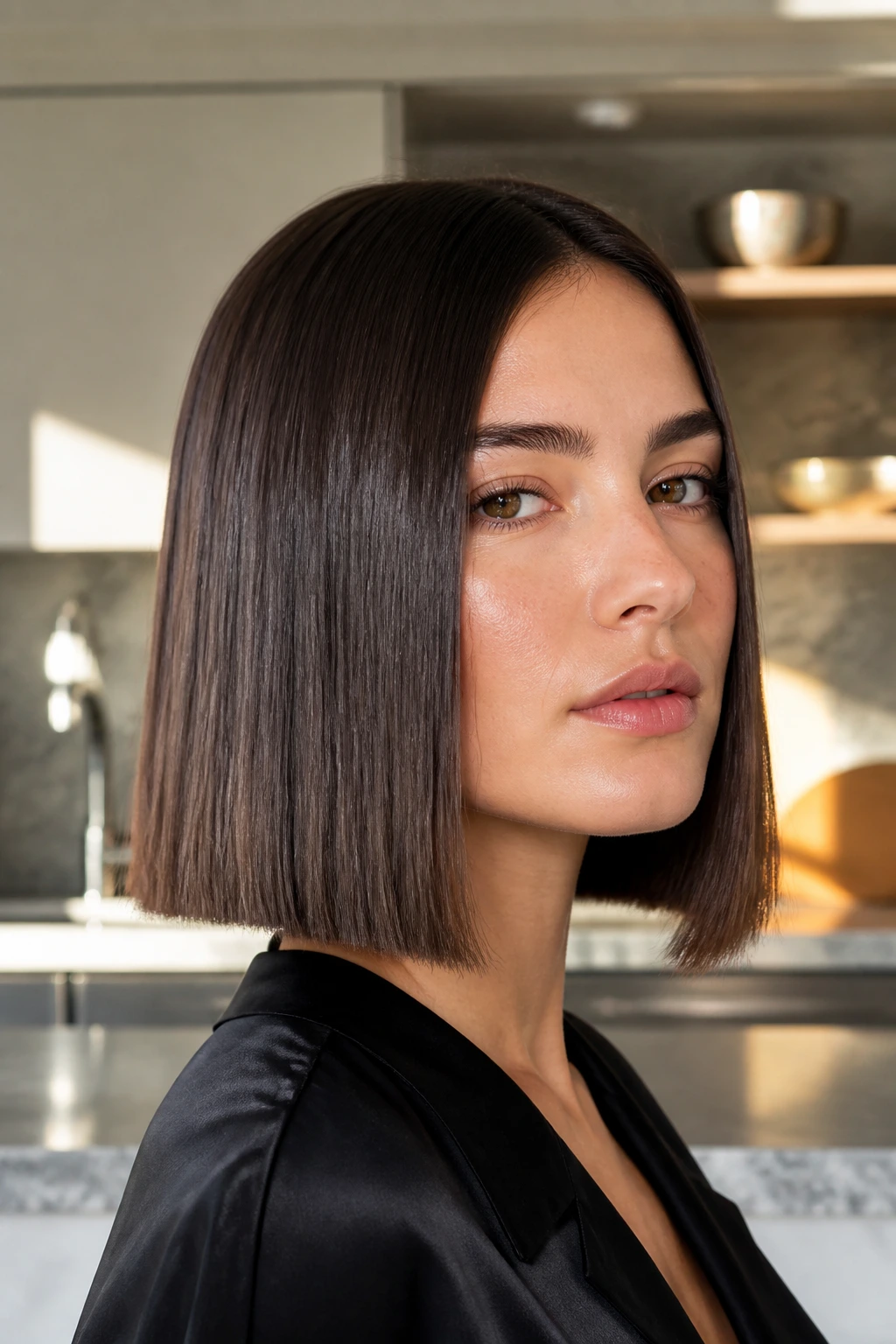
The glass-hair lob is all about shine, but the shine starts with the cut. You can load on serum and still get nowhere if the perimeter is ragged. This version needs a blunt, even edge and enough weight in the ends to fall in a smooth sheet.
The styling is part of the story, sure, but the haircut has to support it. Straight hair looks especially glossy when the ends are neat and the surface lies flat. If you want that liquid finish, keep the layers minimal and the line even from one side to the other. Too much texturizing breaks the reflection and makes the style look dry, even when it isn’t.
A glass-hair lob usually sits just below the chin or at the collarbone, where the hair can hang without flicking out. A center part usually suits it best, but a soft side part can keep it from feeling too strict. The finish should look controlled, not crunchy. That’s where people go wrong.
Use a heat protectant, a round brush or paddle brush, and one small pass of a flat iron if needed. That’s enough. If you keep layering on oils and smoothing creams, the cut starts looking greasy instead of sleek. There is a fine line there, and straight hair crosses it faster than most people think.
6. The Face-Framing Lob

A face-framing lob is one of the easiest ways to soften straight hair without giving up the clean line that makes a lob so good. The front pieces are cut a little shorter around the cheekbones or jaw, while the back stays more even and controlled. That shift gives the haircut shape right where the eye lands first.
Best for: rounder faces, square jaws, or anyone who wants the front to do a bit more work.
Less ideal for: hair that already falls flat around the face and needs more bluntness, not less.
The key is restraint. Face-framing pieces should look like part of the haircut, not like bangs that wandered off. If they’re too short, the whole style loses its polish and starts to feel patchy. If they’re too long, you barely see the effect.
I like this version because it gives straight hair a little architecture. The front pieces guide the eye inward, while the rest of the lob stays smooth and simple. It’s especially nice if you wear your hair behind one ear a lot. The front still reads even when the rest is tucked away.
7. The Curtain-Bang Lob

Curtain bangs and a straight lob are a prettier combination than they get credit for. The bangs split in the middle, skim the cheekbones, and melt into the rest of the cut instead of landing as a hard wall across the forehead. On straight hair, that blend matters. Without it, bangs can feel separate. With it, the whole haircut reads as one piece.
The secret is keeping the bangs long enough to part easily and connect to the front layers. Too short, and they sit there like a decision you made in a rush. Too long, and they lose their shape and disappear into the rest of the hair. Somewhere around the cheekbone-to-lip zone is the sweet spot, depending on your face length.
This lob works especially well if you want softness around the eyes without giving up sleekness. It is not a fussy, curly curtain-bang look. Straight hair gives the fringe a cleaner fall, which is part of the appeal. There’s less bounce, more line.
A good blow-dry matters here. Dry the bangs first, lifting them slightly at the root with a round brush, then sweep them away from the face and back toward the middle. If you dry them straight down, they tend to split awkwardly. Tiny difference. Big payoff.
8. The Precision Box Lob
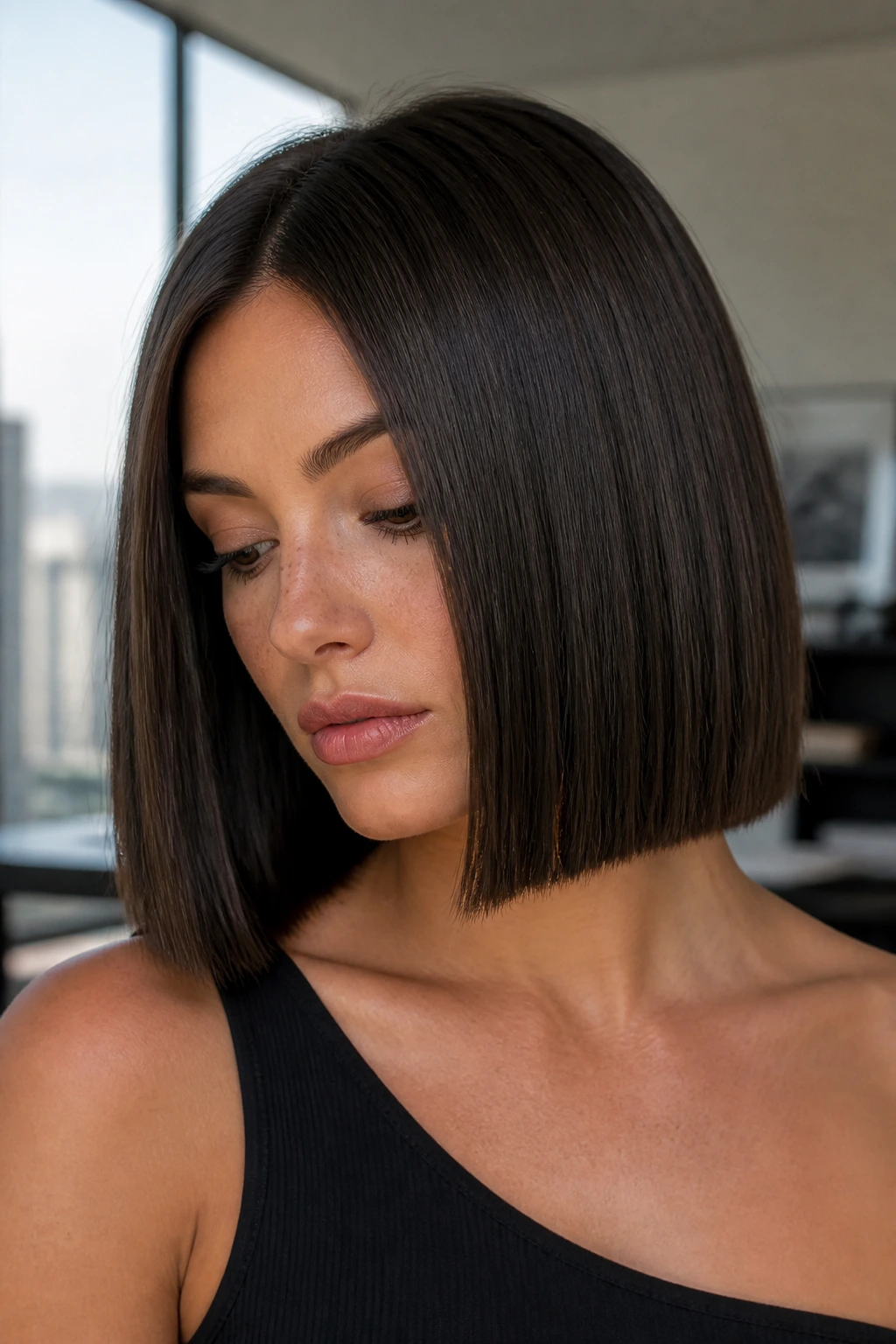
This is the haircut for people who like edges to look like edges. A precision box lob has a square silhouette, a blunt bottom line, and little to no internal layering. It can look almost architectural on straight hair, which is exactly why it feels so polished.
The shape works because the weight stays where it should: in the line. That makes the ends appear thick and tidy, especially on hair that’s naturally fine or medium in density. It’s the kind of cut that looks expensive even when styled with very little effort, because the geometry is doing the work.
If you want this look, ask your stylist to check the perimeter dry as well as wet. Straight hair can settle differently once it’s fully dry, and a boxy shape shows every mistake. I’d also ask for the neckline to be clean and slightly softer at the very bottom if your nape tends to curl.
The box lob does not beg for layers. It asks for discipline. Keep the styling simple, keep the part clean, and do not overdo the texturizing spray. Once you rough it up too much, you lose the whole point.
9. The Beveled-End Lob
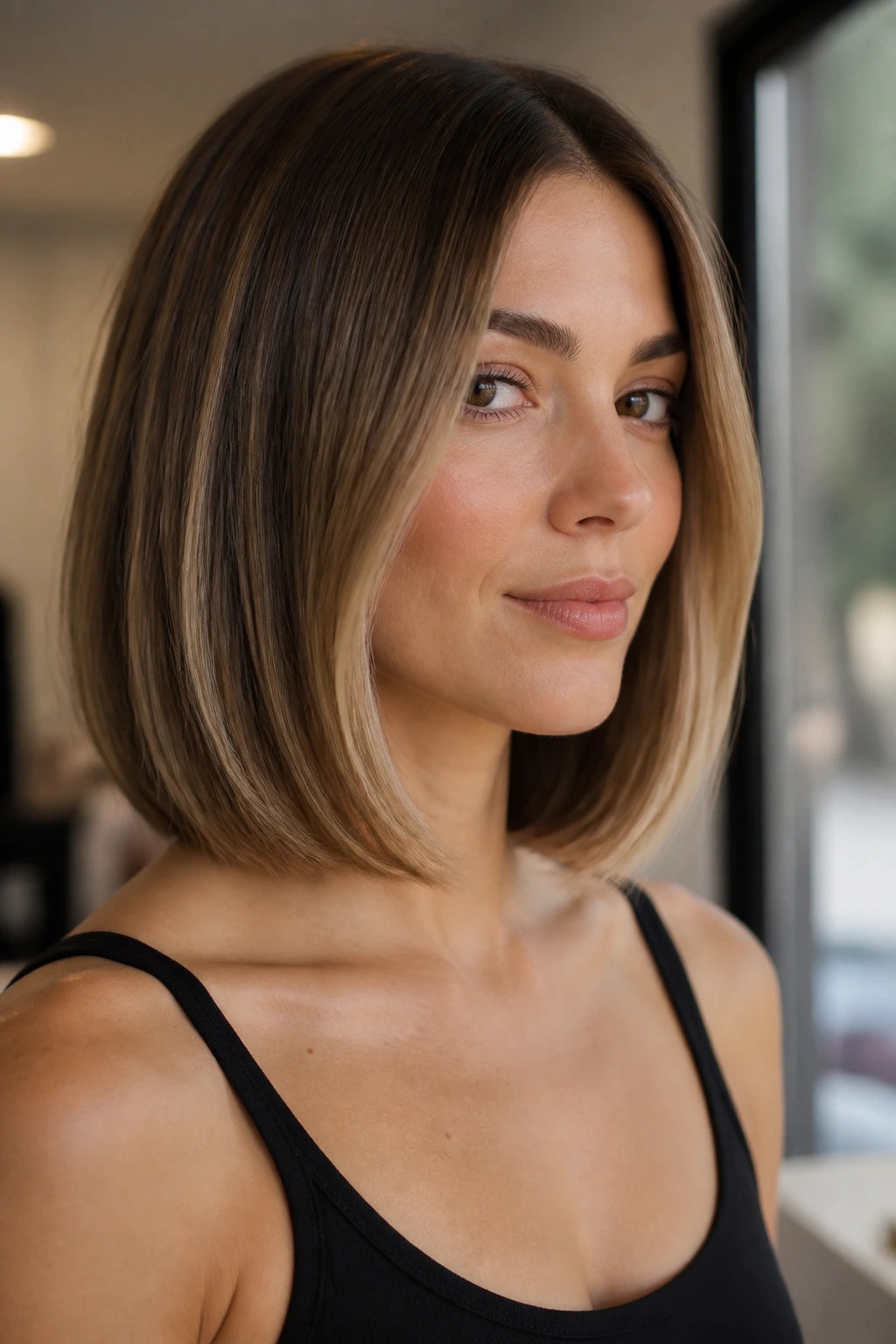
A beveled-end lob is the middle ground between blunt and soft. The ends are still clean, but they’re shaped to turn under or outward just a touch, which gives straight hair a smoother edge and a little curve at the bottom. It’s one of my favorite versions for people who want polish without a hard, graphic line.
The bevel is subtle. That’s the whole charm. A strong bevel can start to look dated fast, but a small one gives the cut movement and keeps the ends from hanging like a board. If your hair is naturally very straight, this shaping can stop the perimeter from feeling too severe.
Why it works on straight hair
- The tiny curve at the ends catches light and makes the cut look finished.
- The shape softens a blunt line without adding visible layers.
- It helps thick hair sit closer to the neck instead of flaring out.
- It gives fine hair a little lift at the bottom without sacrificing the outline.
This is a practical choice, too. If your hair flips out at the shoulders, a bevel can turn that problem into the style. The trick is to bevel just the last half-inch or so, not the whole length. Too much and the haircut loses its clean edge. Too little and you’re back to fighting the same bend every morning.
10. The French Lob

The French lob has a little air in it, even when it’s worn straight. It usually sits around the chin to collarbone zone, often with a soft fringe or a slightly shorter front, and it never feels overly constructed. The vibe is polished but not precious. A hairdresser with good hands can make this cut look like you woke up with flattering bone structure.
On straight hair, the French lob works best when the line is tidy but not severe. The edges should be clean, but the overall effect should feel lighter than a blunt box. That’s why a tiny bit of texture at the ends can help here, especially if your hair is naturally dense and needs some motion.
The appeal is that it looks like it belongs on a person who knows how to put on lipstick and leave the house. Not overdone. Not floppy. Just enough shape to make the face look framed, not forced.
If you want to style it properly, keep the roots lifted and the lengths smooth. A little bend through the mid-lengths is fine. A crisp ironed finish from root to tip can make the French lob lose its softness. That delicate balance is what gives the cut its charm.
11. The Inverted Lob
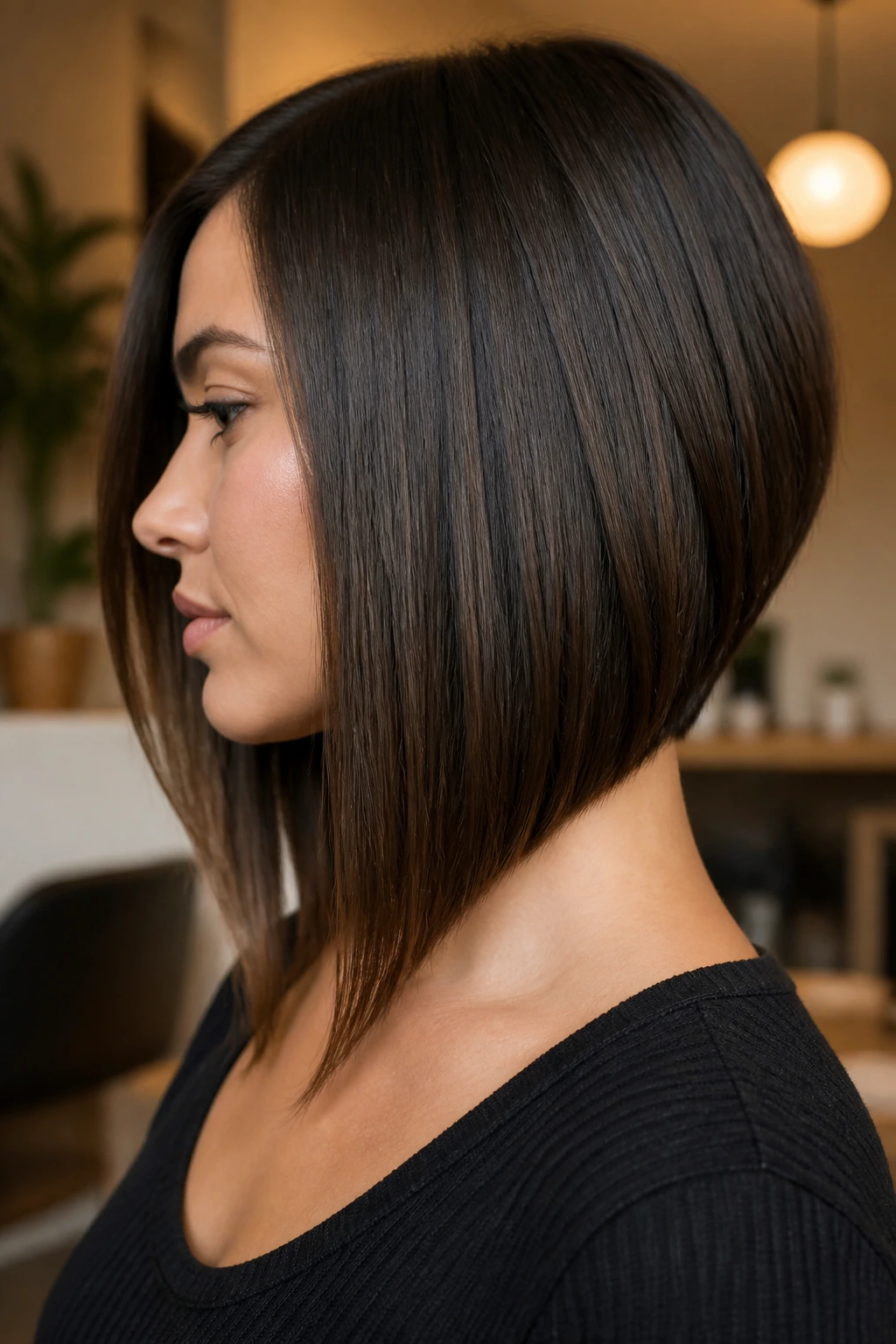
An inverted lob is a sharper, more directional version of the lob. The back is shorter, the front stretches longer, and the line slopes forward in a way that makes straight hair look clean from the side view. If you like a haircut with a bit of edge, this is one of the strongest options in the bunch.
The slope gives the illusion of movement even when the hair is pin-straight. That’s useful because straight hair can sometimes fall flat in profile. The inverted shape solves that by building movement into the structure itself. The front pieces become the focal point, and the back stays neat and controlled.
It also helps if you carry weight in the back of your head or have thick hair that mushrooms at the neckline. A shorter back removes some of that bulk and makes the silhouette slimmer. Just be careful with the angle. If it’s too dramatic, the cut starts reading more like a stacked bob than a lob, and that changes the feel entirely.
This is one of those straight lob haircuts that needs a good grow-out plan. The shape looks sharp fresh from the salon, but the angle softens over time. That is fine, as long as you know what you’re signing up for.
12. The Tuckable Lob
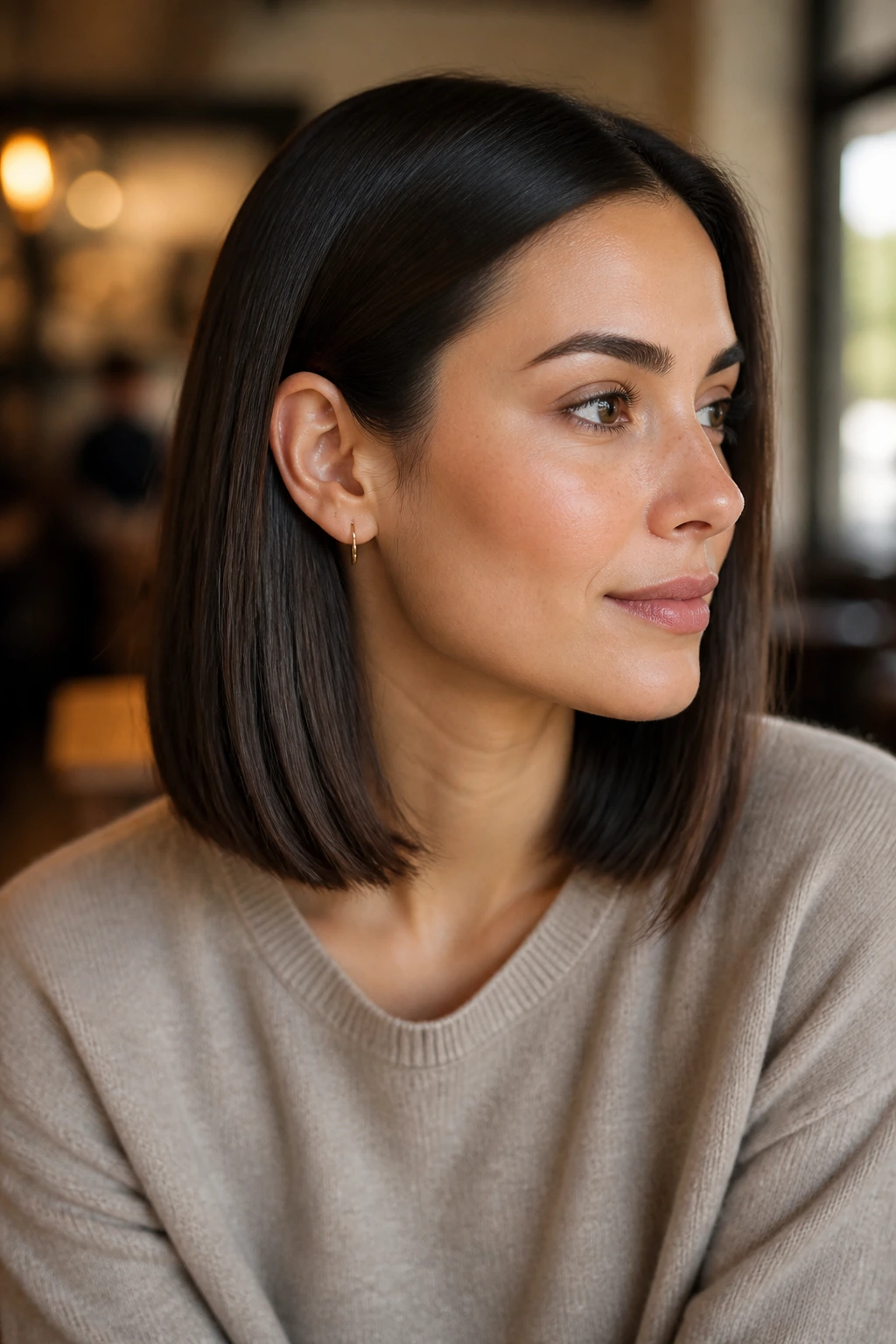
A tuckable lob is designed for real life. It’s long enough to slip behind the ears, clip back, or tuck under a coat collar without losing its line, but short enough to keep the polished feel of a lob. That makes it a smart cut for people who like switching between loose and tucked styles during the same week.
The key measurement is the shoulder. If the hair falls exactly on the shoulder seam, it often flips out in a way that feels accidental. Ask for the length either a little above or a little below that point, depending on whether you want the ends to sit still or bend under. That tiny difference matters more than most people expect.
This cut is also useful if you wear glasses, earrings, or coats with high collars. A tuckable lob clears the face without looking like you sacrificed length. It gives you options. And options are underrated.
If your stylist is unsure where to stop, have them check how the hair behaves when you turn your head and tuck one side behind your ear. The best tuckable lob still looks balanced in motion. When it works, it has that easy, put-together finish that people mistake for effortlessness. The haircut itself is doing the labor.
13. The Razor-Soft Lob
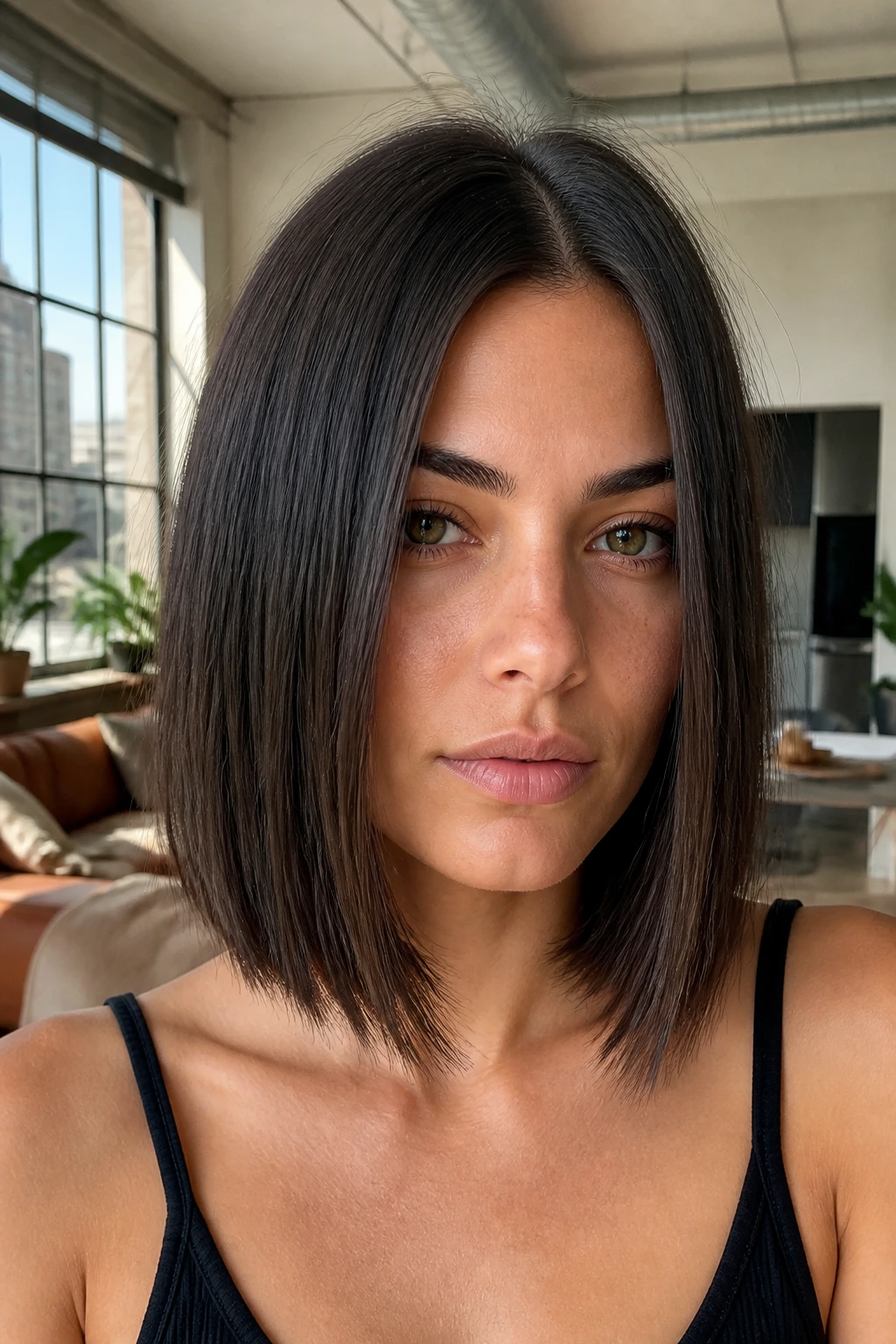
A razor-soft lob sounds contradictory, but it makes sense once you see it on straight hair. The outline stays long and sleek, yet the ends are softened with a razor or careful slide-cutting so the perimeter doesn’t look blocky. It’s a good option for thick hair that needs a little release at the bottom.
The risk is obvious: too much razor work and the ends start to fray. That’s why this cut depends on restraint and a stylist who understands when to stop. I like it best when the softness lives mostly in the lower third of the haircut, not all the way through the shape.
This version can keep a lob from feeling heavy. Straight hair that’s dense tends to sit in a hard sheet if it’s cut bluntly all the way around. A soft edge breaks that up just enough to let the hair move, while still keeping the overall line neat.
Use this if you want a sleeker shape but hate the feeling of a heavy wall at the ends. It works best when air-dried straight or blown out smooth with minimal lift at the roots. Once you start roughing it up too much, the softness reads as fuzz. That’s the tradeoff.
14. The Jaw-Skimming Lob
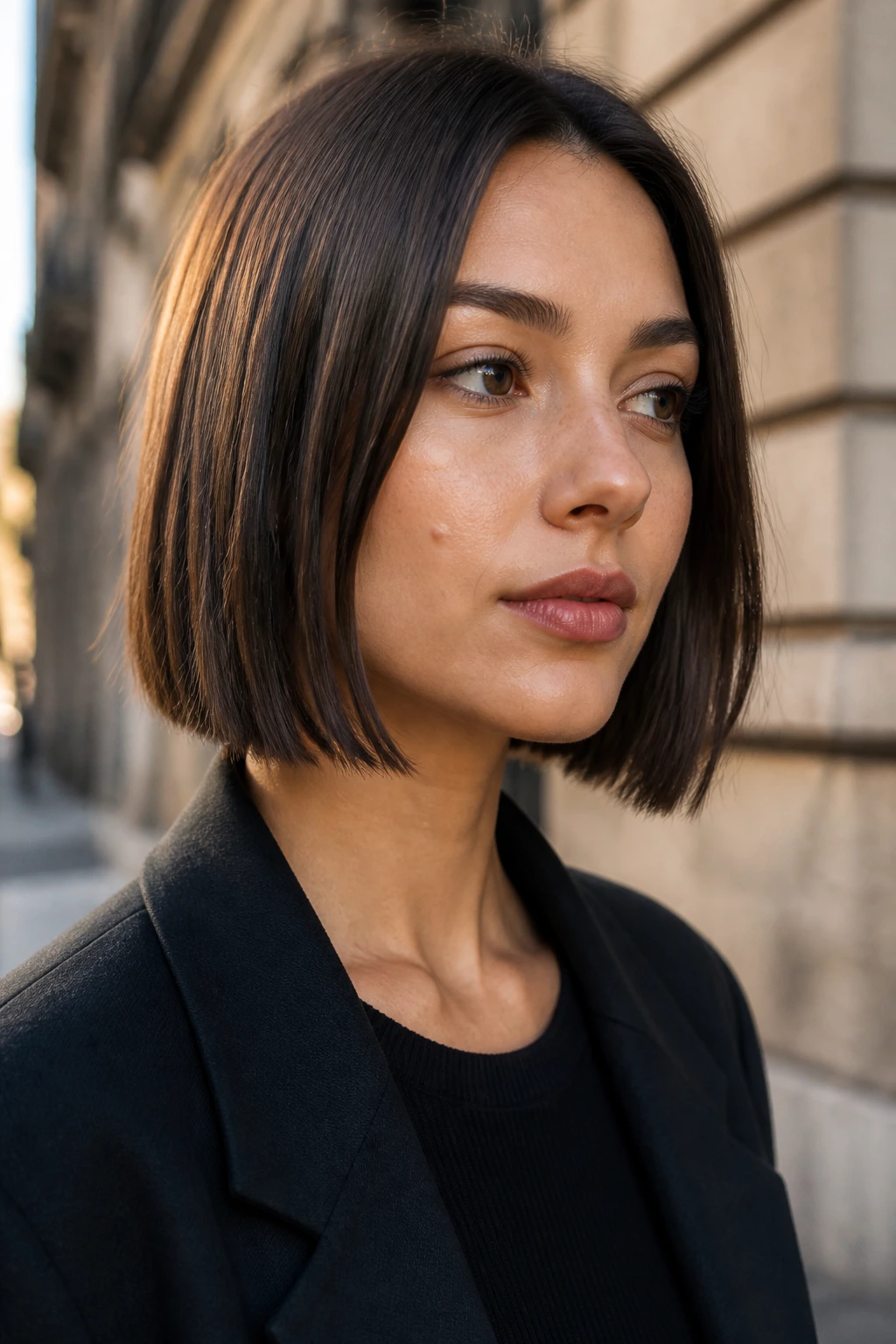
A jaw-skimming lob is bolder than a collarbone length, and that’s why it looks so crisp. The line lands close to the jaw, which draws a very clear shape around the face. On straight hair, the effect is sharp and modern, sometimes almost severe in the best way.
This cut is strong on oval and heart-shaped faces, but it can also work on round faces if the front pieces are left a touch longer. That little extra length keeps the jaw from looking too wide. If the cut is too blunt and too short at the same time, it can box the cheeks in. Not ideal.
The jaw-skimming lob is not a lazy haircut. It needs a neat nape, clean ends, and regular trims because any uneven grow-out shows up fast. But when it’s freshly cut, the shape is gorgeous. Tight. Balanced. Very little waste.
I think this one suits people who like statement lines but do not want full bob territory. It reads as intentional, not tiny. If you wear your hair straight and tucked, it can look almost editorial. If you wear it loose and smooth, it looks precise. Either way, it doesn’t apologize for where it sits.
15. The Minimal-Layer Lob

Can a lob have layers and still look sleek? Yes, if the layers stay hidden. A minimal-layer lob keeps the perimeter strong while removing just enough internal weight to stop the hair from collapsing or puffing out. This is the cut for people who want structure without the shelf effect that too many layers can create.
The trick is to ask for weight removal inside the shape, not around the outline. On straight hair, those internal shifts matter. They let the hair sit closer to the head and move more naturally when you turn. The outside line still reads clean, which is the part people see first.
This is often the smartest choice for thick hair that wants polish. A blunt line alone can make dense straight hair look triangular or bulky. A few well-placed internal layers let the cut breathe, but the polish stays intact because the ends are still even.
If your hair is fine, don’t let a stylist get too enthusiastic here. Minimal layers are one thing. Choppy layers are another. You want shape support, not a surprise breakup at the bottom. The difference shows up the first time you air-dry it.
16. The Shag-Lite Lob

A shag-lite lob is for straight hair that needs a touch of attitude without losing the clean outline. Think of it as a lob with a whisper of movement around the crown and ends, but nothing so heavy that the cut stops feeling polished. It is the compromise cut for people who want a little edge and still want the hair to sit nicely behind the ear.
This works best when the layers are long and soft, not pieced out. The perimeter should still look deliberate. If the layers are too short or too choppy, the cut slips out of sleek territory and starts looking undone in a way that may not be fixable with a flat iron.
The appeal is the finish. A straight shag-lite lob can feel easier to wear than a strict blunt cut because it gives the hair somewhere to go. There’s less resistance at the ends. Less mushrooming around the sides. More movement through the body of the hair.
If your hair is very fine, keep the shag element subtle. If your hair is thick, this version can take weight out without making the shape too airy. It’s one of the more flexible straight lob haircuts, but it only behaves when the stylist keeps the layers long and the edge clean.
17. The Micro-Fringe Lob

A micro-fringe lob is a bold little haircut. The short fringe makes the straight lob feel fashion-forward, and the sleek lengths keep it from veering into costume territory. It’s a sharp contrast: tiny bangs up front, clean lengths underneath.
This cut is not subtle, which is part of the fun. The fringe draws attention to the eyes and the brow line, while the rest of the hair stays controlled and polished. If you like the idea of a statement haircut but you want the length to stay calm, this is a strong place to start.
The thing to know is that micro bangs need maintenance. They show grow-out fast. They also need a real conversation with your stylist about your forehead height, your parting habits, and whether you like to wear glasses. No vague shrugging here. The fringe decides a lot.
I like this on straight hair because the clean texture keeps the bangs from looking frizzy or overly fluffy. But I would not recommend it if you hate regular trims. The fringe and the lob will never age at the same rate, and that gap is where the shape can start to feel messy.
18. The Long-Front Lob
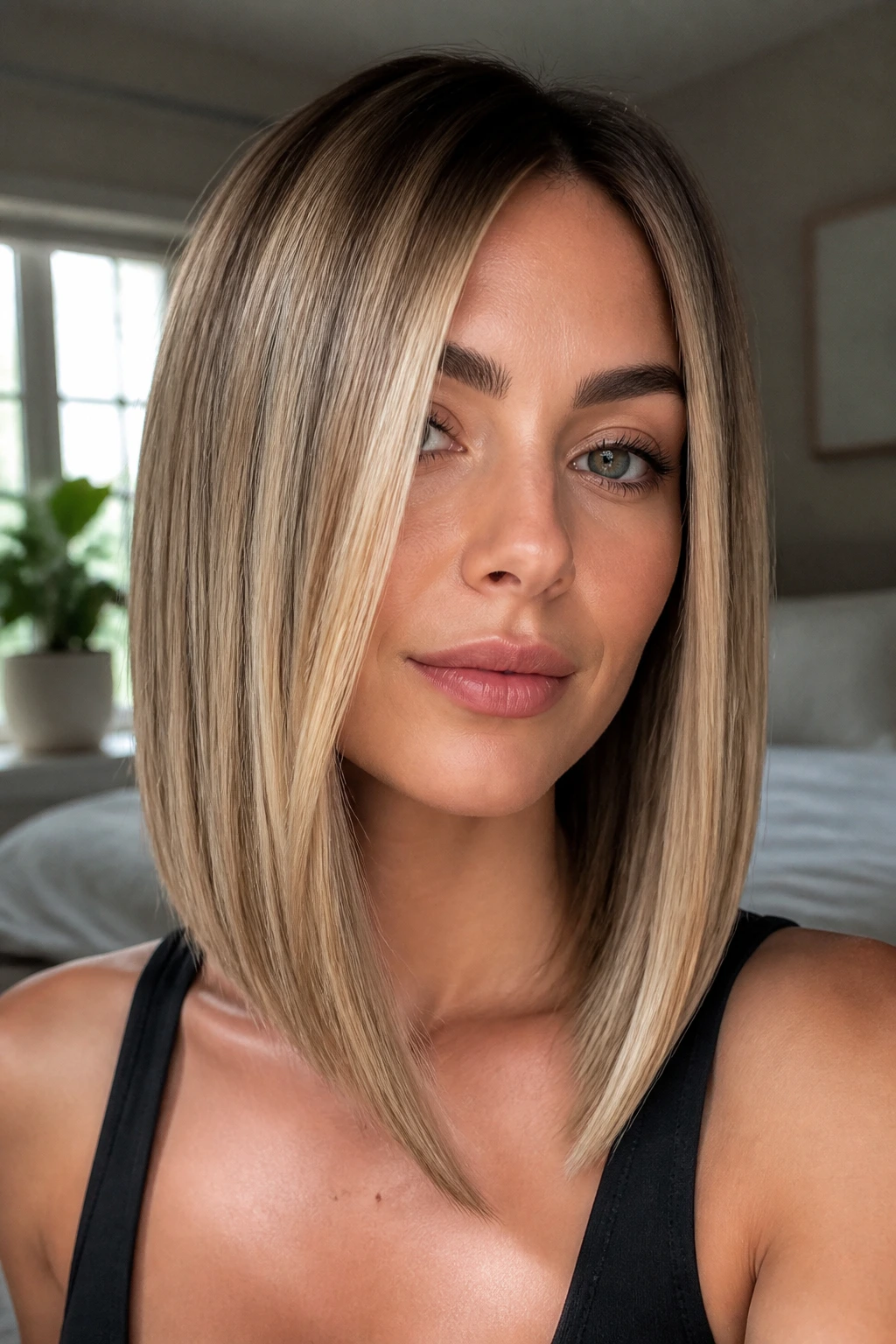
The long-front lob is what happens when you want the front to frame the face without sacrificing the sleekness of a longer perimeter. The front pieces extend a little more than the back, usually grazing the collarbone or just past the chin, while the rest of the cut stays controlled and smooth.
This shape works especially well if you have a strong jaw or want the haircut to slim the face visually. The longer front pieces pull the eye downward, which can elongate the profile. Straight hair makes that line look crisp, almost drawn on.
A useful way to think about it
- Shorter front pieces = more shape around the cheekbones.
- Longer front pieces = more length through the face.
- Slight graduation = cleaner movement without visible layers.
That balance is why the long-front lob is so useful. It gives you contour without chopping the haircut apart. If you wear a middle part, the front pieces create a narrow frame. If you wear a side part, they sweep across the face and soften the whole shape.
The best version keeps the ends neat. If the front pieces are overtexturized, the elegance disappears fast. A clean straight lob with longer front corners feels deliberate. A choppy one just feels unfinished.
19. The Fine-Hair Density Lob
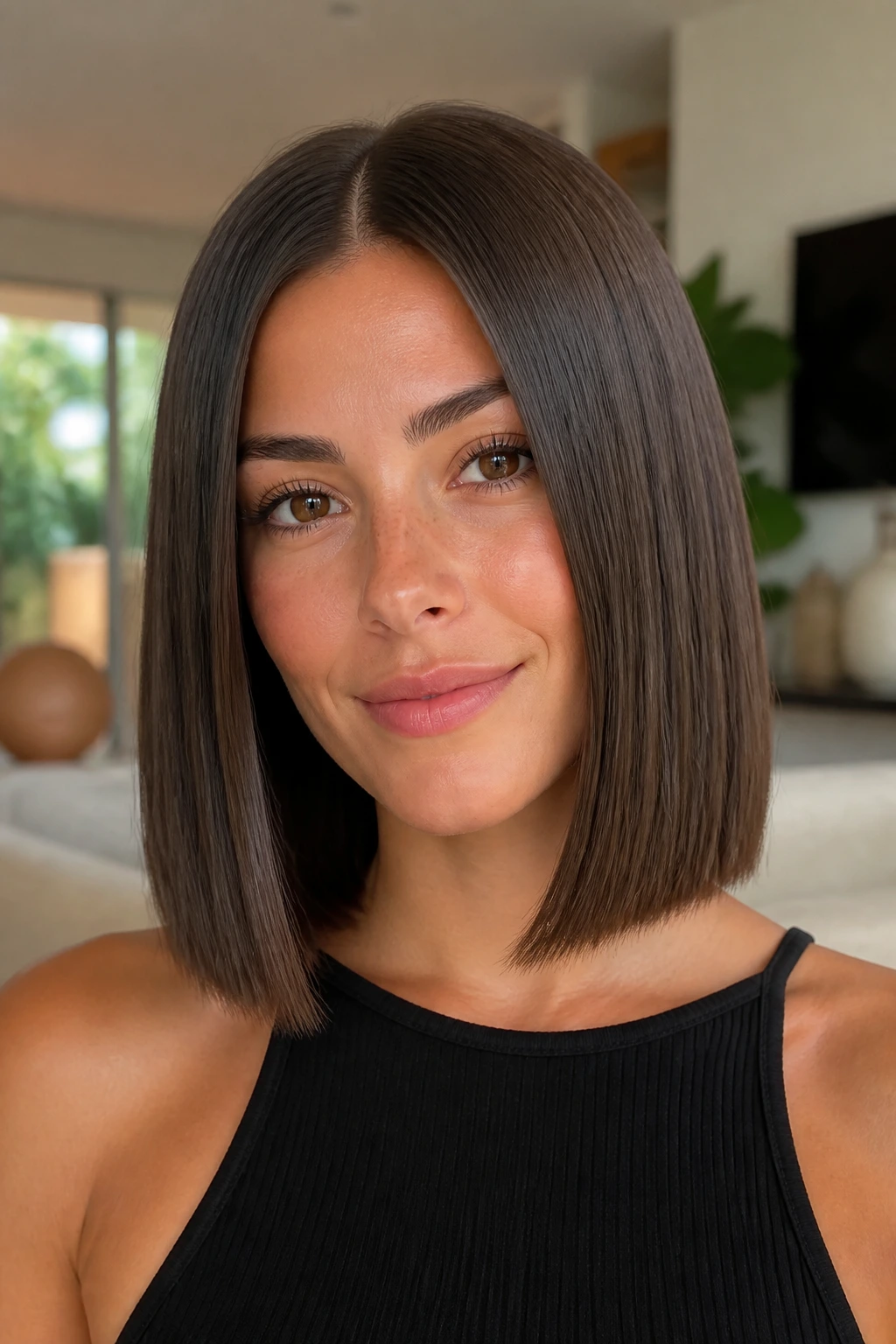
Fine hair needs a lob that cheats a little. The fine-hair density lob does that by keeping a strong, blunt perimeter and resisting the urge to thin out the ends. On straight hair, that edge can make the whole cut look fuller because the eye reads one solid line instead of wispy pieces.
The cut usually sits at collarbone length or slightly above, where fine hair has enough room to swing but not so much length that it looks straggly. I would avoid too many layers here. Fine hair loses density fast when the shape is broken up too much, and then you spend every morning trying to fake what the haircut should have given you for free.
This is one of the straight lob haircuts that benefits most from a side or center part chosen for fullness, not habit. If your hair naturally splits in one place, use that. If not, choose the part that gives the front the most lift at the root. Small choice. Big visual difference.
A root-lift spray at the crown and a blow-dry with tension can help, but the real work is in the line. Keep the outline blunt, the ends tidy, and the internal layers minimal. That is how fine hair gets its best shot at looking dense.
20. The Thick-Hair Weightless Lob
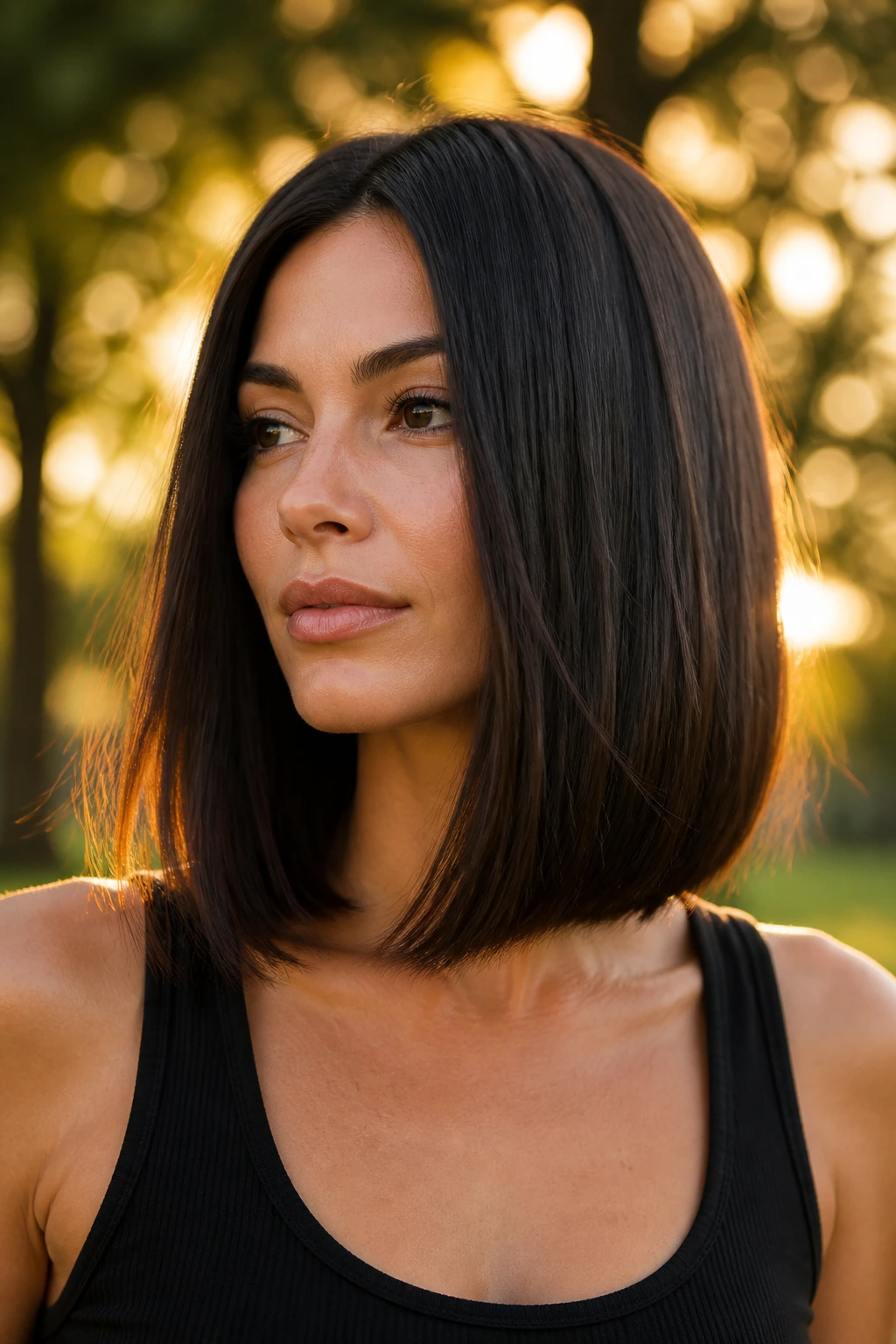
Thick hair behaves differently. You can’t always cut it the same way you’d cut fine hair and expect the shape to sit neatly. The thick-hair weightless lob keeps the line sleek on the outside while removing bulk underneath, usually through subtle internal layering or a little graduation at the back.
The goal is to stop the ends from flaring out like a shelf. Straight, dense hair loves to do that if the cut is too blunt from root to tip. A weightless lob keeps the perimeter visible but lightens the inside just enough to let the hair hang with more control.
This version works especially well if you like wearing the hair smooth and tucked behind the ear. You get movement without puff. You get a neat outline without that heavy triangle shape thick hair can create at shoulder length. That triangle is the enemy here. You know it when you see it.
If you want the most polished result, ask your stylist to leave the outer line strong and remove weight in sections that won’t show through the bottom edge. That way the haircut still looks full, just not bulky. Thick hair can look luxurious at this length. It can also look overwhelmed. The difference is in where the weight sits.
Why Straight Lob Haircuts Read So Clean
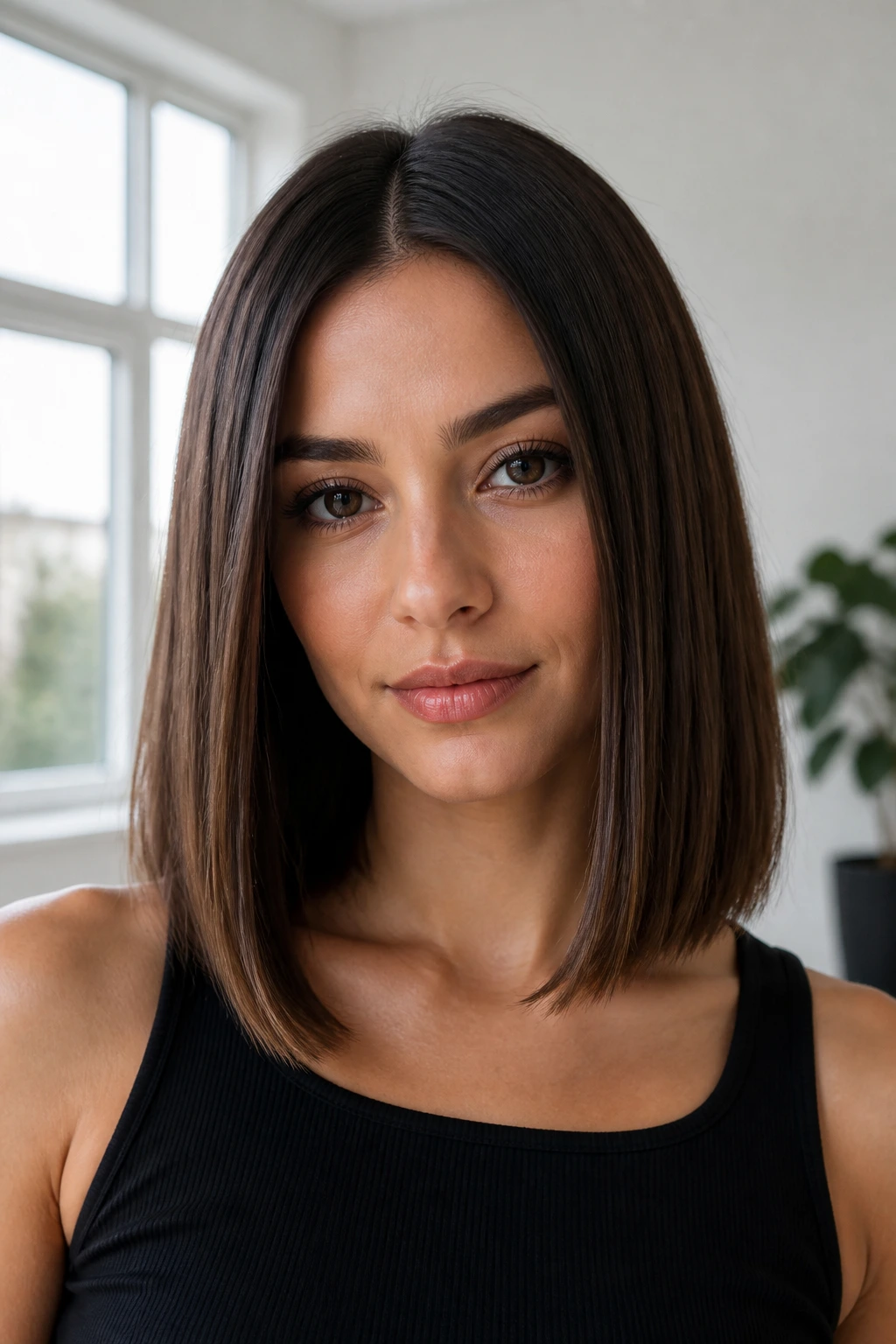
A straight lob shows the cut first and the styling second. That’s why it feels so precise. The eye goes right to the perimeter, then to the part, then to the way the ends sit against the neck or collarbone. If one of those pieces is off, you notice immediately. If all three are right, the whole style looks polished without trying.
The line also reflects light in a flattering way. Straight hair catches shine best when the ends are even and the surface is smooth. A blunt or lightly beveled lob gives that reflection a place to travel. Too many layers break the line apart and create little shadows that make the cut look busier than it needs to be.
There’s a practical side, too. A lob lets you tuck it, pin it, clip it back, or wear it straight down without losing the shape entirely. That matters because most people do not want a haircut that only behaves in one styling position. A good lob can survive a windy day, a blunt blow-dry, a second-day bend, and a rushed flat-iron pass before dinner. Not all at once, maybe. But enough.
Tools That Keep the Line Sharp
-
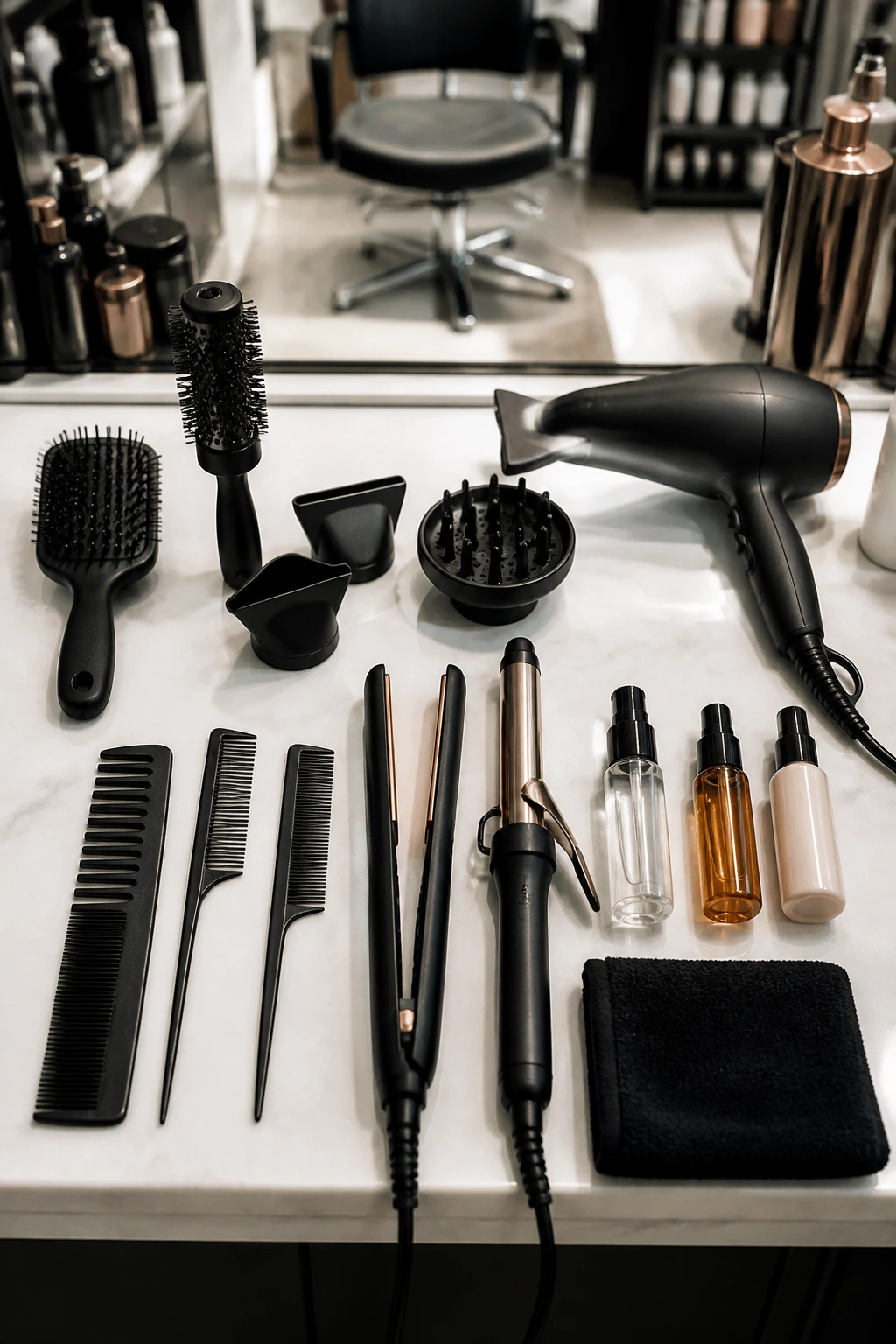
Blow dryer with a narrow nozzle: Directs air down the hair shaft so the cut dries smoother and frizz stays down.
-
Paddle brush: Best for straightening the mid-lengths fast without rounding the ends too much.
-
Medium round brush: Gives just enough bend under the ends if you want a softer finish.
-
Flat iron with smooth plates: Useful for polishing the last inch or two when the perimeter needs extra neatness.
-
Heat protectant spray or cream: Keeps the ends from drying out when you style often.
-
Lightweight serum: Adds shine without making the lob collapse at the roots.
-
Tail comb: Helps set a clean part, especially when you want a center line or a sharp side sweep.
-
Clips: Handy for sectioning the hair during a blow-dry so the crown doesn’t go flat while you work on the ends.
-
Small finishing brush or boar-bristle brush: Good for smoothing the top layer after heat styling.
How to Ask for the Cut at the Salon
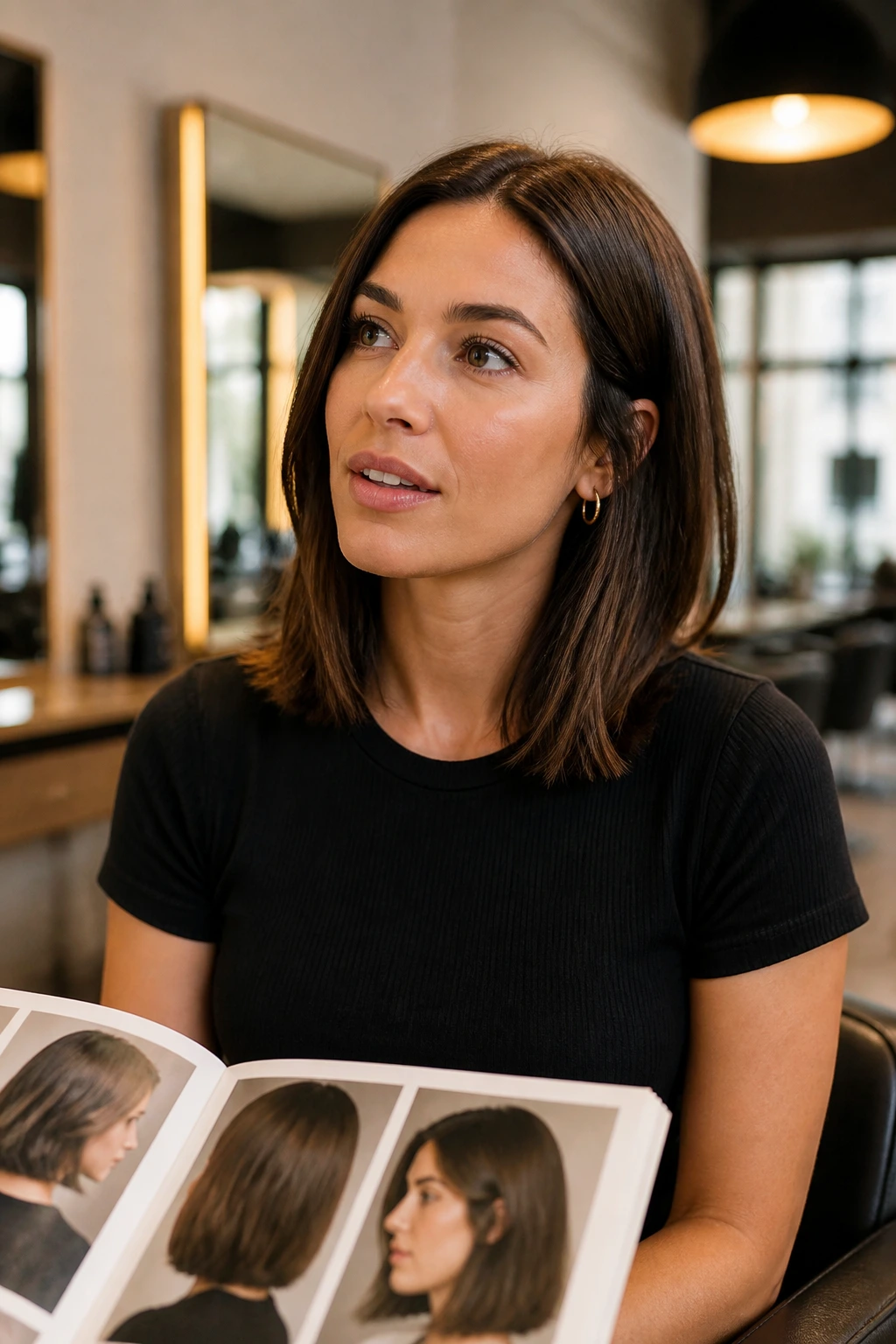
Bring a photo, yes, but bring more than one. A front view tells your stylist almost nothing about a lob. You want one photo from the front, one from the side, and one with the hair tucked or moving if you can find it. Straight lob haircuts change shape fast depending on angle, and the back is where a lot of bad surprises live.
Say where you want the length to land in relation to your body: chin, jaw, collarbone, top of shoulder, or just below it. Those landmarks are more useful than saying “medium length,” which means different things to different people. If you know your hair flips out at the shoulders, say that out loud. If one side tends to sit flatter, say that too.
Mention your parting habit. If you wear a middle part 90 percent of the time, the cut should be built for that. If you always side-part and tuck one side back, the balance will be different. A good stylist adjusts the weight around that habit instead of pretending you’ll change yours after the appointment.
And don’t be shy about maintenance. If you only want trims twice a year, say so. A razor-sharp box lob and a twice-yearly trim do not belong in the same sentence unless you like grow-out drama.
How to Style a Straight Lob Without Overworking It
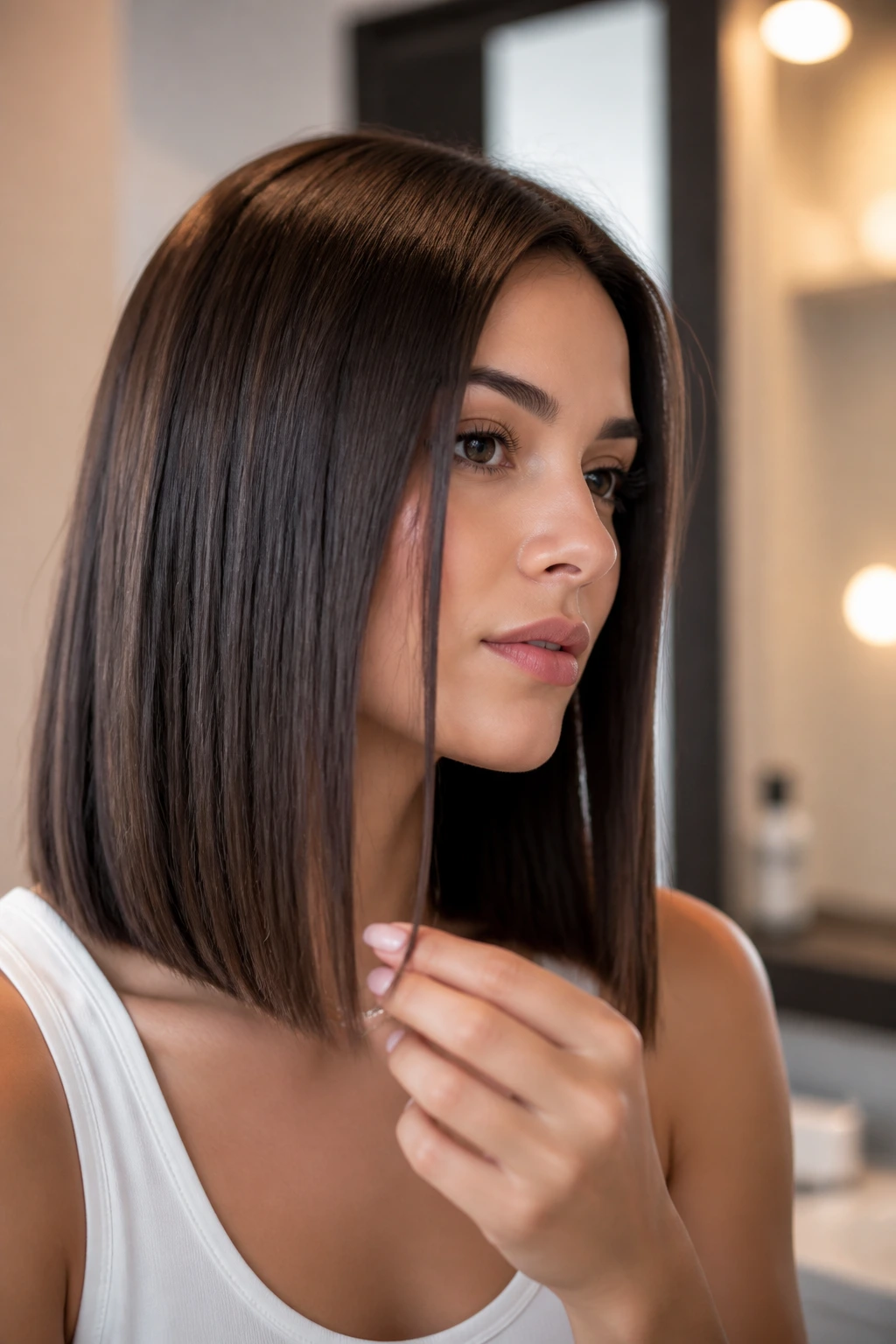
The easiest mistake is using too much product. Straight hair does not need a lot of help to look sleek; it needs the right help in the right places. Start with a heat protectant, then use a blow-dryer with the nozzle pointed down the hair shaft. That keeps the cuticle flatter and the finish smoother.
Work in sections. Small ones. If you try to dry the whole head at once, the top goes flat and the ends go wonky. Dry the roots first for lift, then direct the mid-lengths and ends with a paddle brush if you want the cleanest line. If the hair naturally bends outward, use a flat iron on just the last inch to half-inch, not the full length.
My strongest rule: finish with less product than you think you need.
A pea-size amount of serum is often enough for shoulder-length hair. Warm it in your hands, touch it through the ends, and stop. If you can feel the product sitting on the hair, you’ve gone too far.
If your lob looks polished in the mirror and collapses in real weather, the issue is usually not the cut. It’s either too much product, too much heat, or a part that fights the hair’s natural fall. Fix those three and the haircut starts behaving.
Common Mistakes That Break the Shape

-
Cutting it too close to the shoulders: Hair that lands exactly on the shoulder seam often flips awkwardly. A quarter-inch above or below usually looks cleaner.
-
Too many short layers: The haircut starts losing its blunt edge and turns puffy or uneven, especially on straight hair that already moves a lot.
-
Skipping the neckline check: A rough nape can make an otherwise good lob look unfinished from the side and back. That’s where the shape often leaks.
-
Using heavy oils at the root: The lob collapses fast and starts looking limp instead of sleek. Keep shine products on the mid-lengths and ends.
-
Flat-ironing the whole head into a board: This removes the soft bend that gives a lob shape. Smooth the perimeter, don’t iron away all movement.
-
Ignoring growth patterns: Cowlicks, crown splits, and one-sided bends change how the cut sits. If your stylist doesn’t account for them, the haircut will fight you every morning.
Variations and Adaptations to Try
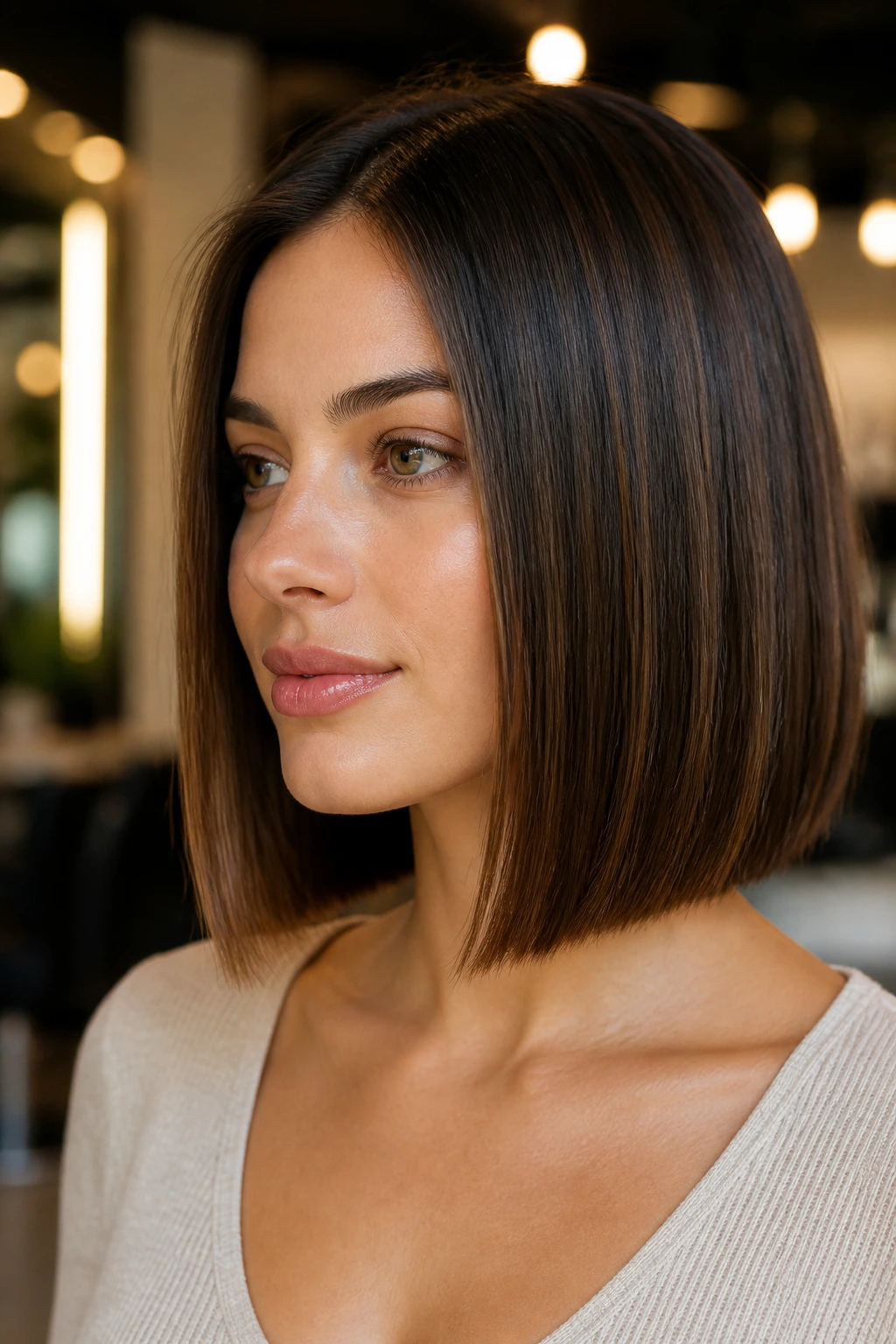
The Fine-Hair Polisher: Keep the perimeter blunt and the layers nearly invisible. This version is built to make the ends look thicker, not lighter, so it works best when the cut stays compact and the part gives lift at the root.
The Thick-Hair Air-Release: Ask for subtle internal weight removal without touching the outer line too much. That gives the lob enough structure to sit smoothly instead of flaring at the bottom.
The Face-Softening Sweep: Keep longer front corners and a slightly off-center part. This version is useful if you want the haircut to slim the cheeks or soften a strong jaw.
The Low-Maintenance Grow-Out: Choose a collarbone length with a gentle bevel instead of a hard blunt edge. The shape stays neat longer, and the regrowth looks less abrupt if you stretch trims.
The Fringe Change-Up: Add curtain bangs or a micro-fringe if you want a strong style shift without changing the overall length. It’s the quickest way to make a familiar lob feel new.
Keeping the Cut Fresh Between Appointments
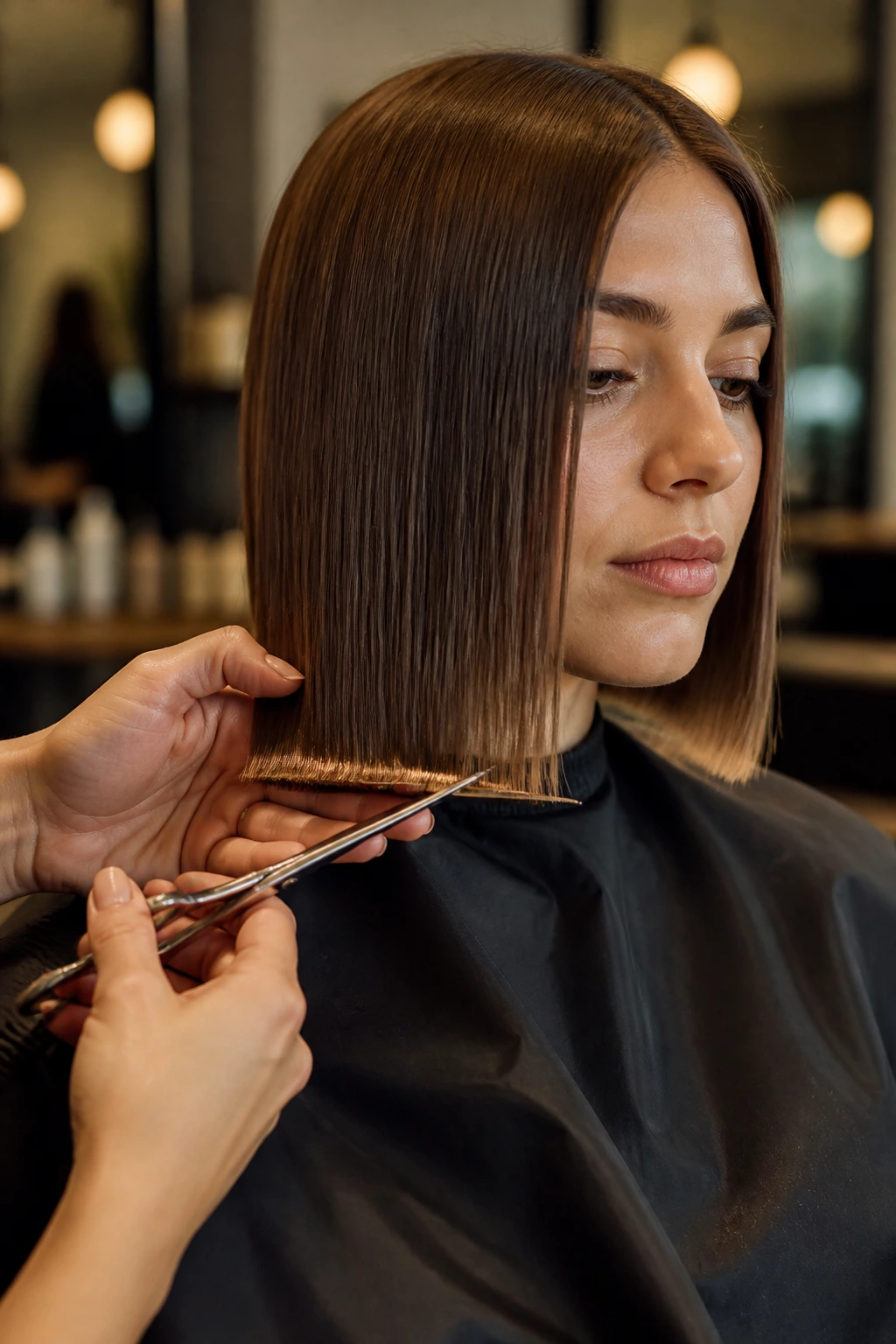
A straight lob looks best when the ends stay honest. That means regular trims. For most hair types, every 6 to 8 weeks keeps the perimeter crisp enough that the shape does not drift. If you wear a blunt boxier version, you may want a light dusting sooner. If the cut is softer or more layered, you can usually stretch a little longer without losing the line.
At home, wash only as often as your hair needs and keep product buildup under control. Straight hair shows residue fast, especially around the roots and along the front pieces. A clarifying shampoo every 2 to 4 weeks can keep the finish from looking dull if you use oils, creams, or dry shampoo often.
Night care helps more than people think. A silk or satin pillowcase keeps the ends from getting rough, and a loose clip or soft tie can stop the front from bending in odd directions. If your lob tends to flip out at one side, the problem is often where you slept on it, not what happened in the salon.
Heat styling should stay moderate. You do not need to blast straight hair into submission every day. A clean blow-dry with a brush, plus a flat iron only on the stubborn bits, will usually hold the line better than repeated full-head passes.
Frequently Asked Questions
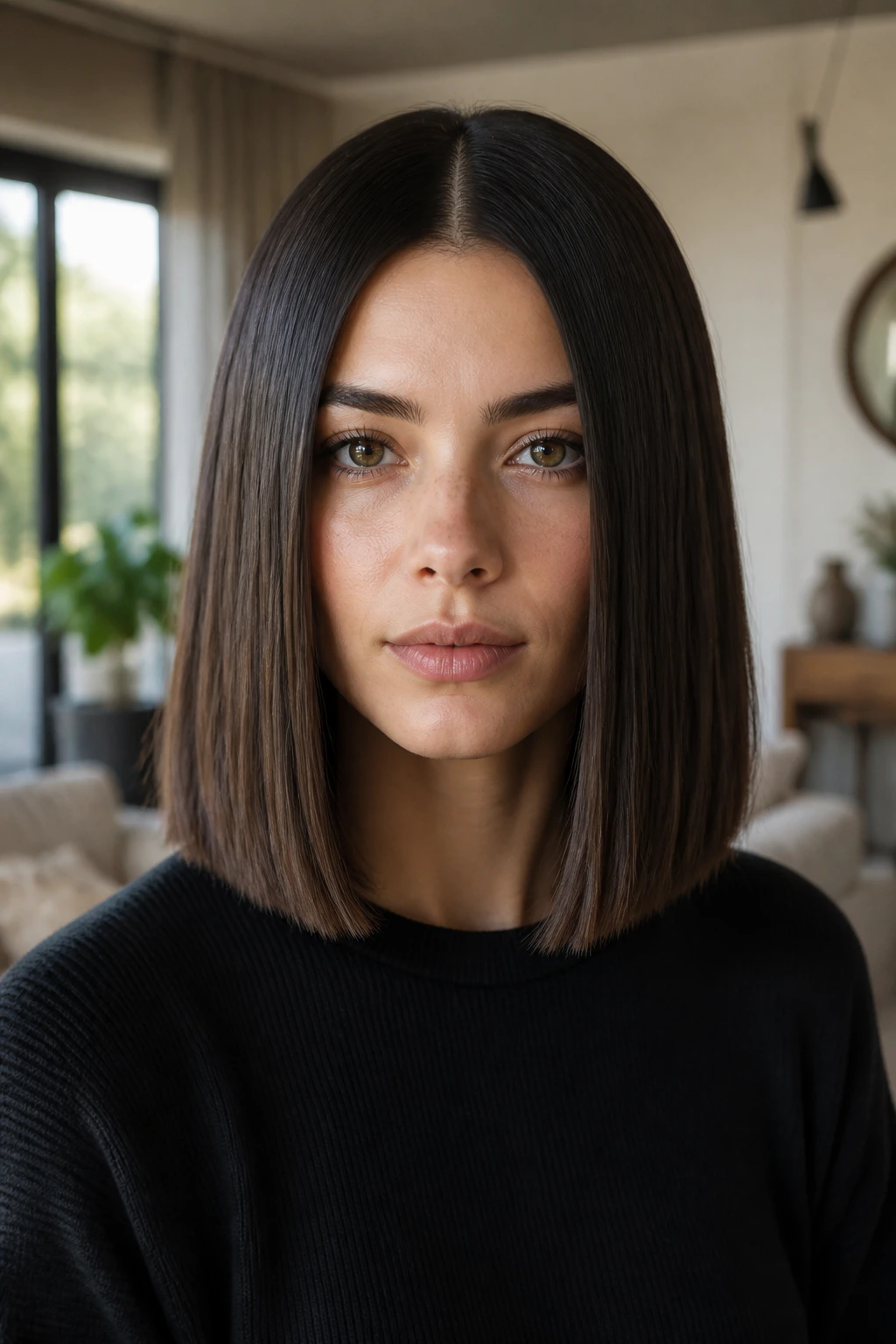
What makes a straight lob look sleek instead of puffy?
The perimeter has to stay clean, and the product has to stay light. Too many layers, too much oil at the roots, or a rough blow-dry can all make straight hair swell at the ends instead of lying smooth.
Is a lob good for fine hair?
Yes, especially if the cut is blunt or only lightly beveled. Fine hair often looks fuller when the ends line up in one clean edge instead of scattering into wisps.
How often should I trim a lob?
Most people do well with a trim every 6 to 8 weeks. If you want a very sharp line or a micro-fringe, you may need shorter intervals because the grow-out shows faster.
Can I wear a side part with a straight lob?
Absolutely. A side part can soften the shape, help with cowlicks, and give the haircut more lift at the crown. It’s also an easy fix if a middle part makes the face look too long or too severe.
Should a straight lob have layers?
Sometimes, but not always. Fine hair often looks best with minimal layering, while thick hair can benefit from hidden weight removal inside the shape. The wrong layers can make the cut look broken, so they should be chosen for a reason.
Why does my lob flip out at the shoulders?
That usually means the length is sitting right on the shoulder seam, which creates friction and bends the hair outward. Ask for it a little above or below that point, or have the ends beveled so the bend looks intentional.
Can I get a lob if my hair is very thick?
Yes, but the cut needs to control bulk without removing the outline. Internal weight reduction, careful layering, and a clean perimeter help thick hair sit flatter and look more polished.
How do I keep the ends from looking dry?
Use a heat protectant every time you style, then smooth a tiny amount of serum through the last inch only. A blunt or beveled lob shows dry ends quickly, so regular dusting trims matter too.
The Shape That Keeps Showing Up
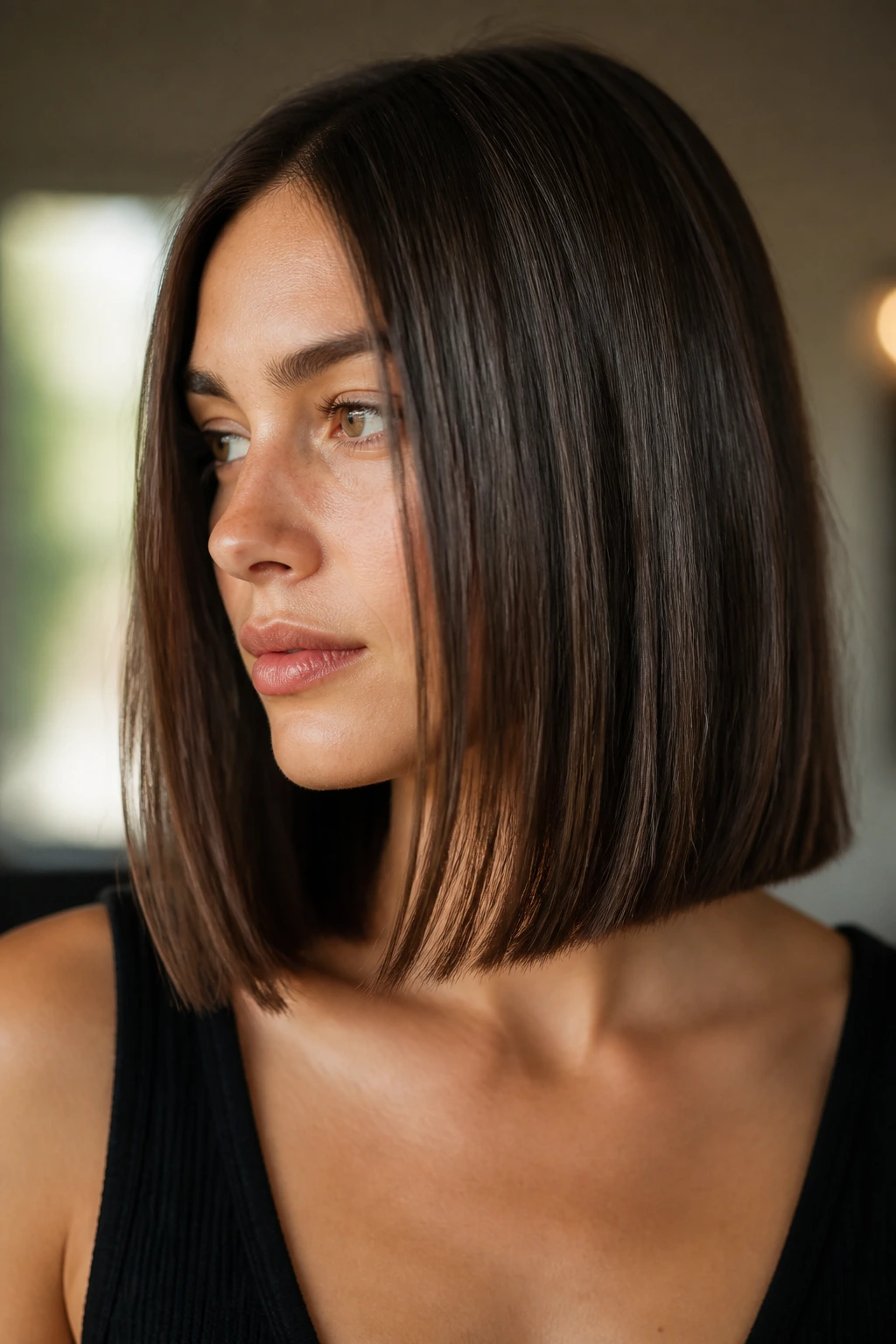
Straight lob haircuts keep earning their place because they do something rare: they look polished without depending on tricks. The cut itself carries a lot of the style, which is a relief when you’re tired of fighting your hair into submission. Clean line. Controlled length. Enough movement to keep it human.
If you’re choosing between versions, start with how much edge you want to see when the hair is just brushed out. That answer tells you whether you need blunt, beveled, angled, or softened. The best lob is the one that behaves in your real routine, not the one that photographs well after a salon blowout.
And that’s the charm of it. A good lob doesn’t beg for attention. It earns it.
