



A lob haircut has one of the rarest things a medium length cut can offer: shape that still looks deliberate when it’s been slept on, tucked behind one ear, or waved with yesterday’s bend. The length sits in that useful zone between jaw and collarbone, which means it can swing, sit still, bend under, or kick out a little without looking like a mistake. That’s the appeal of lob haircuts for medium length hair. They don’t ask for a dramatic lifestyle change. They just give the hair a cleaner line.
The real trick is in the details. A blunt hemline reads very differently from a shattered, piecey one. A front that lands at the collarbone behaves differently from one that stops at the jaw. Add curtain bangs, a deep side part, or a few invisible layers, and the same base cut starts acting like a different hairstyle entirely. That’s why people keep coming back to the long bob: it’s one length, but it doesn’t feel one-note.
My bias is simple. I like a lob that has enough structure to stand up on its own and enough movement to avoid looking helmet-stiff. Too many cuts try to do both by compromise, and the result is usually mushy. The best medium length lob knows what it is. Clean. Soft. Choppy. Curved. Glossy. Whatever lane it chooses, it should land there on purpose.
Why These Lob Haircuts Earn Their Keep
-
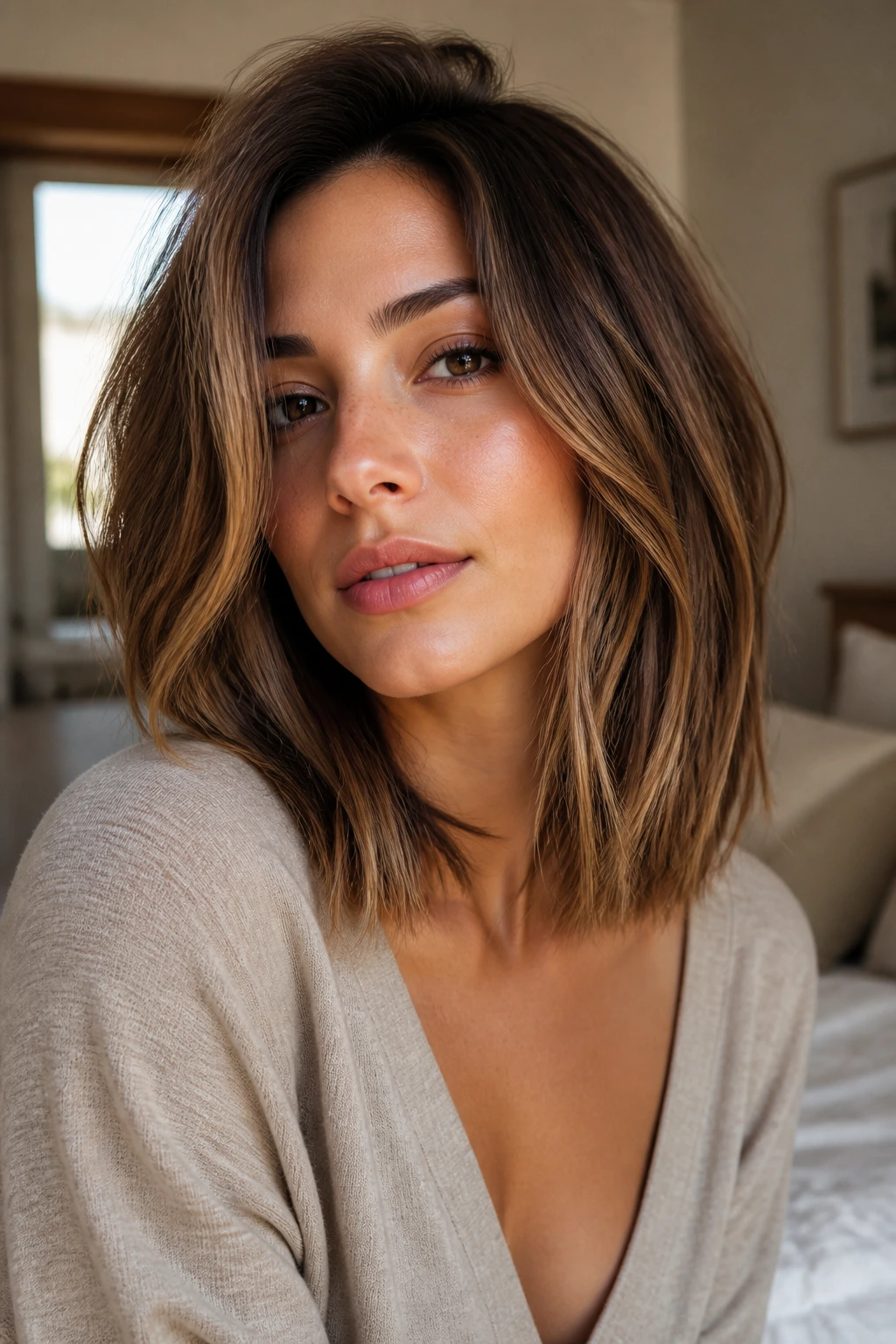
The hemline does the heavy lifting: A lob that hits the collarbone or just below it creates a clear edge, so the haircut still looks shaped on day three instead of collapsing into a vague shoulder-length cloud.
-
Texture gets room without losing control: Medium length hair is long enough to show wave and curl, but short enough that the ends don’t drag the whole shape down the way longer hair can.
-
The grow-out is kinder than most cuts: A blunt lob, a layered lob, or a fringe-forward version can all stretch an extra few weeks without looking like you forgot about your hair.
-
Face shape changes are easy to make: Move the part, add a bend, keep the front longer, or bring in bangs, and the same base haircut starts behaving differently around the jaw and cheekbones.
-
Styling can be simple or fussy: Some lob haircuts look good with a round brush and 10 minutes. Others only need a quick scrunch, a side part, and a little texturizing spray at the ends.
1. Blunt Collarbone Lob
A blunt collarbone lob is the straightest, cleanest version of the cut, and it has a kind of honesty I always respect. The line lands right where the collarbone starts to matter, so the haircut looks crisp even when you’re wearing a sweatshirt or a blazer. On fine hair, it creates the illusion of density. On thick hair, it can look expensive in that no-nonsense way — as long as the ends are trimmed with enough care to keep them from puffing.
Ask for a one-length perimeter with the front grazing the collarbone and the back sitting just a touch higher if your hair tends to kick inward. A light bevel at the very ends keeps it from feeling boxy. If you like to flat iron, this is one of the easiest lobs to keep smooth. The shape is doing the work for you.
2. Soft A-Line Lob
A soft A-line lob carries a little quiet angle: shorter in the back, longer toward the front, but not so dramatic that it feels like a throwback cut from a different decade. The result is subtle lift at the nape and a front section that can skim the jaw or collarbone depending on how much length you want to keep. It’s a smart choice if your hair flips outward easily, because the front can be cut just long enough to control that bounce.
The line matters here. Too steep, and you get a sharp wedge. Too flat, and the whole point disappears. I like this version on medium density hair because the angle gives movement without forcing you into a layered look.
3. Textured Piecey Lob
A textured piecey lob is what happens when a straight bob and a lived-in wave have a sensible conversation. The ends are point-cut or lightly shattered so the finish doesn’t look blunt all the way around, and the styling leans on separation rather than polish. It’s one of the better options if your hair has some natural bend already, because the haircut will help that bend show up instead of fighting it.
Tell your stylist you want movement at the ends, not short layers at the crown. That distinction matters. On medium length hair, a little separation around the perimeter can make the whole cut feel lighter without sacrificing the overall shape.
4. Curtain Bang Lob
Curtain bangs change a lob faster than almost anything else. Split at the center and swept away from the face, they open the forehead, soften the cheek area, and give medium length hair a point of interest without stealing the whole show. The lob underneath can stay blunt, airy, or slightly layered. The fringe does the framing work.
This one needs a bit of maintenance at the front, because bangs show growth faster than the rest of the cut. Still, the payoff is strong. If you like a haircut that can be worn tucked, waved, or pushed aside with fingers, curtain bangs keep the whole shape from feeling too plain.
5. Deep Side-Part Lob
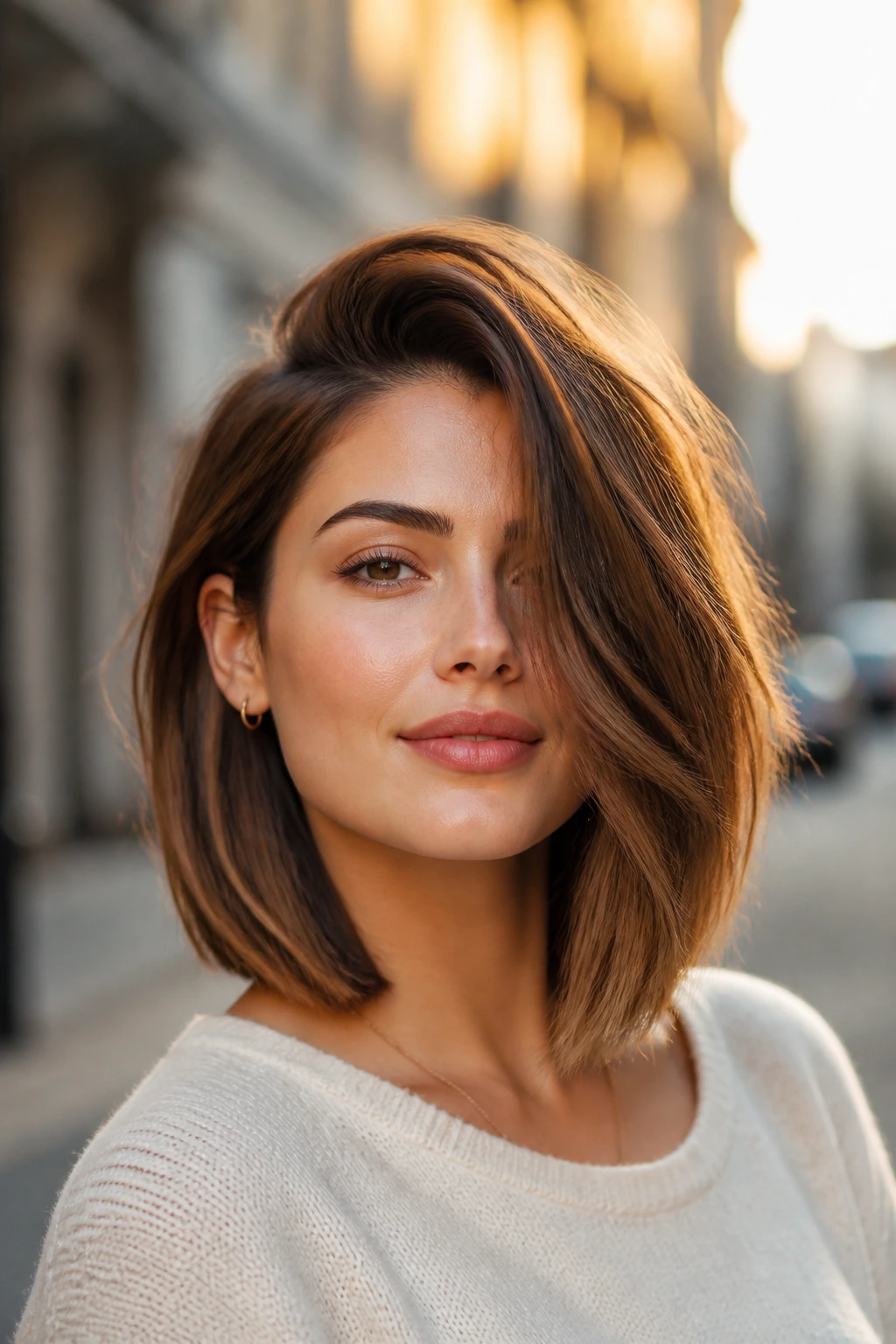
A deep side-part lob has a built-in sense of lift. Move the part over several inches and the root on the heavier side gets instant volume, while the longer sweep across the forehead softens roundness and breaks up a flat silhouette. It’s a useful trick for hair that sits too close to the scalp or for anyone who wants the cut to look a little more dressed up without adding layers everywhere.
The part is not a small detail. It changes the haircut. With a clean side part and a bend through the mid-lengths, this lob reads polished in a way that center parts sometimes don’t. It also photographs well — but more importantly, it survives real life. That matters more.
6. Beach-Wave Lob
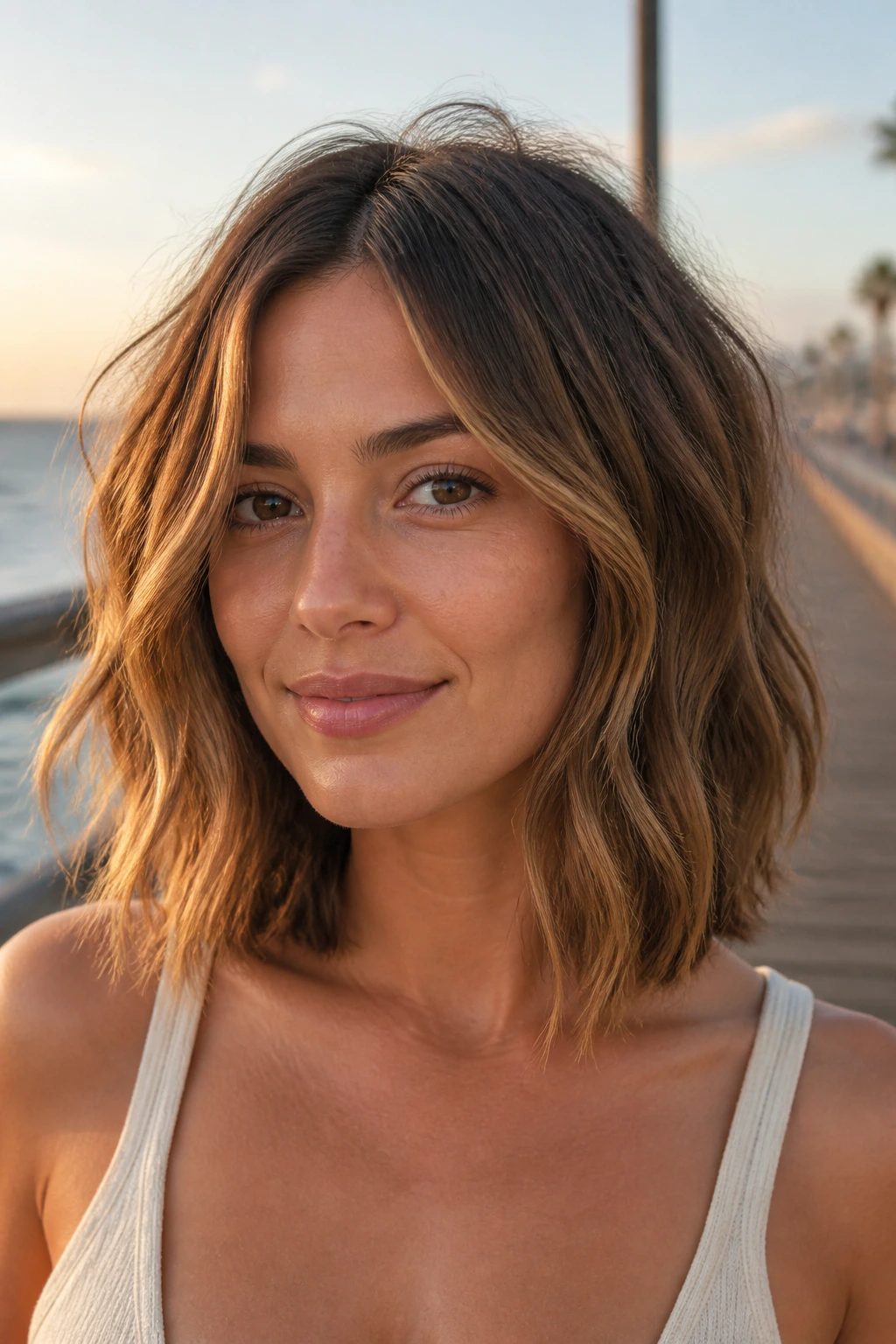
A beach-wave lob is built around loose bends, not tight curls. The ends stay soft, the middle sections get a gentle S-shape, and the overall look stays relaxed instead of overworked. It’s one of the easiest lob haircuts for medium length hair to wear if your texture already leans wavy, because you’re not asking the hair to become something foreign.
I’d use a 1-inch curling iron or wand and alternate directions for the front pieces, then leave the very ends a little straighter. That small detail keeps the cut from looking curled in a dated, uniform way. A salt spray or light texture spray at the mid-lengths is enough. Too much product and the wave starts to look crunchy.
7. French Air-Dry Lob

The French air-dry lob is less about perfect styling and more about letting the cut sit in a way that looks casually finished. The perimeter is usually soft, the layers are minimal or hidden, and the overall effect depends on natural movement rather than hot tools. It’s a good fit if your hair dries with a little bend and you don’t want to fight it every morning.
What makes this version work is restraint. A sloppy cut won’t magically become French. But a clean shape with a bit of internal movement will air-dry into something that looks thoughtful, even if you only worked in leave-in cream and scrunched it once before breakfast.
8. Razor Shag Lob
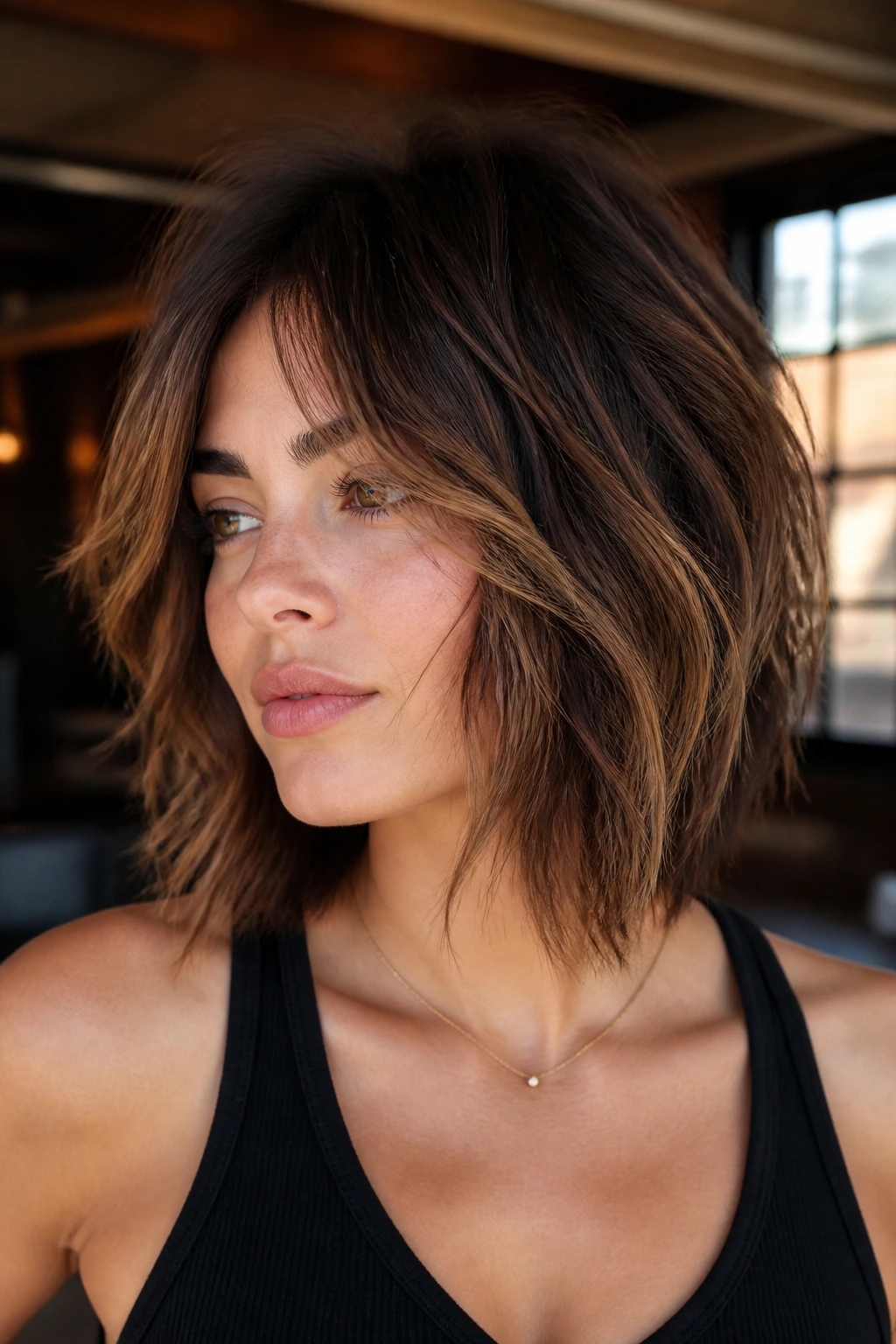
A razor shag lob brings edge to medium length hair without forcing you into a full shag haircut. The ends are feathered, the layers move, and the shape tends to sit a little lighter around the face and shoulders. It suits hair that gets heavy fast, especially if the bulk tends to build in the lower half.
Razor work has to be done with a light hand. Too much, and the ends can look frayed instead of airy. When it’s done well, though, the cut has a sort of broken softness that works especially well with waves. If you want something a little less neat and a little more alive, this one has teeth.
9. Invisible-Layer Lob
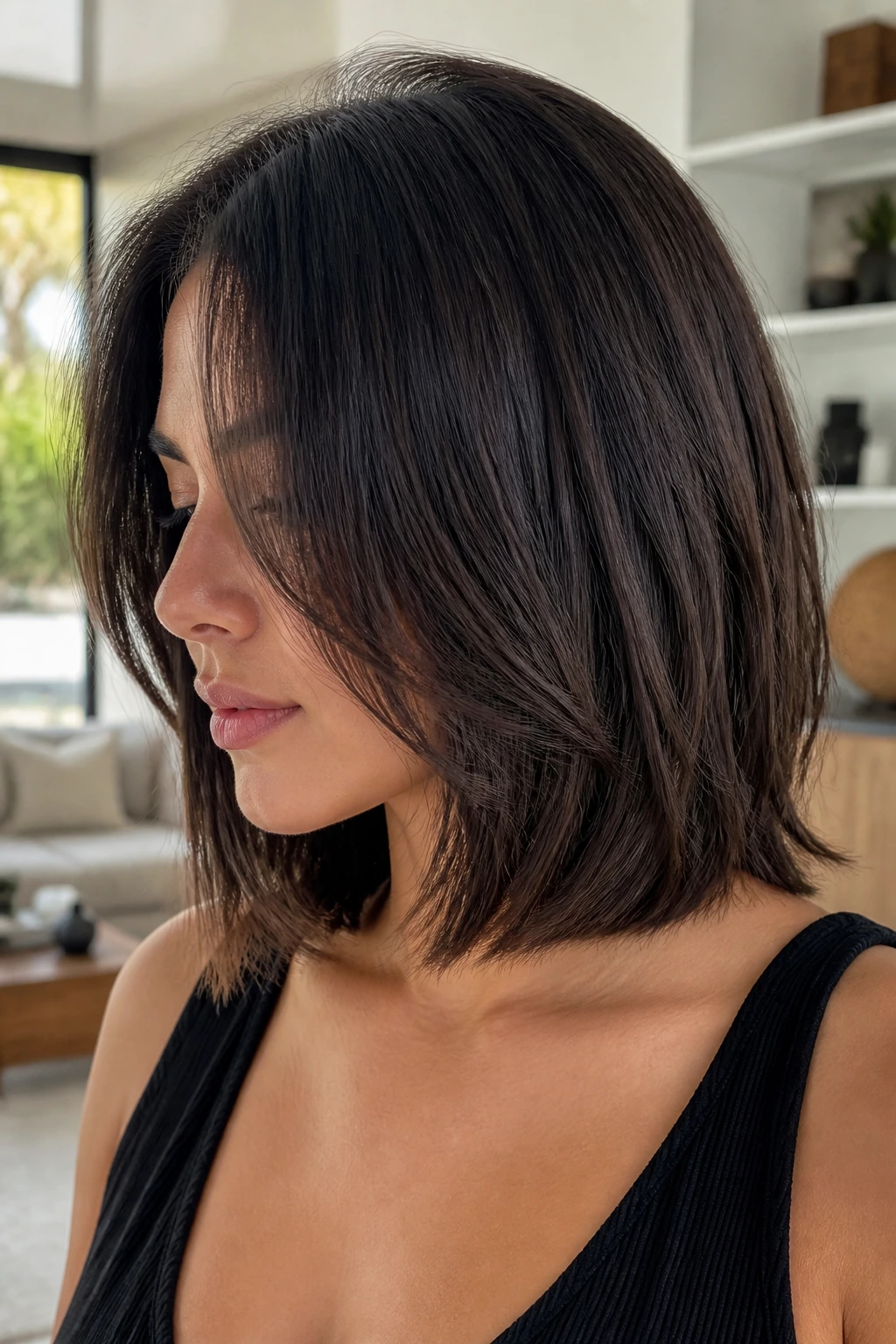
Invisible layers are the secret weapon for people who want movement but do not want to see obvious choppy steps in the haircut. The outside line still reads clean, but the hidden interior layers take weight out of the middle so the hair bends instead of ballooning. On medium length hair, that can be the difference between a blunt triangle and a shape that falls properly.
This is one of my favorite options for thick straight hair. It keeps the perimeter looking tidy while reducing that blocky feeling that happens when all the density sits at the bottom. If your hair gets bulky around the shoulders, ask for internal shaping, not visible layers everywhere.
10. Curly Shoulder Lob
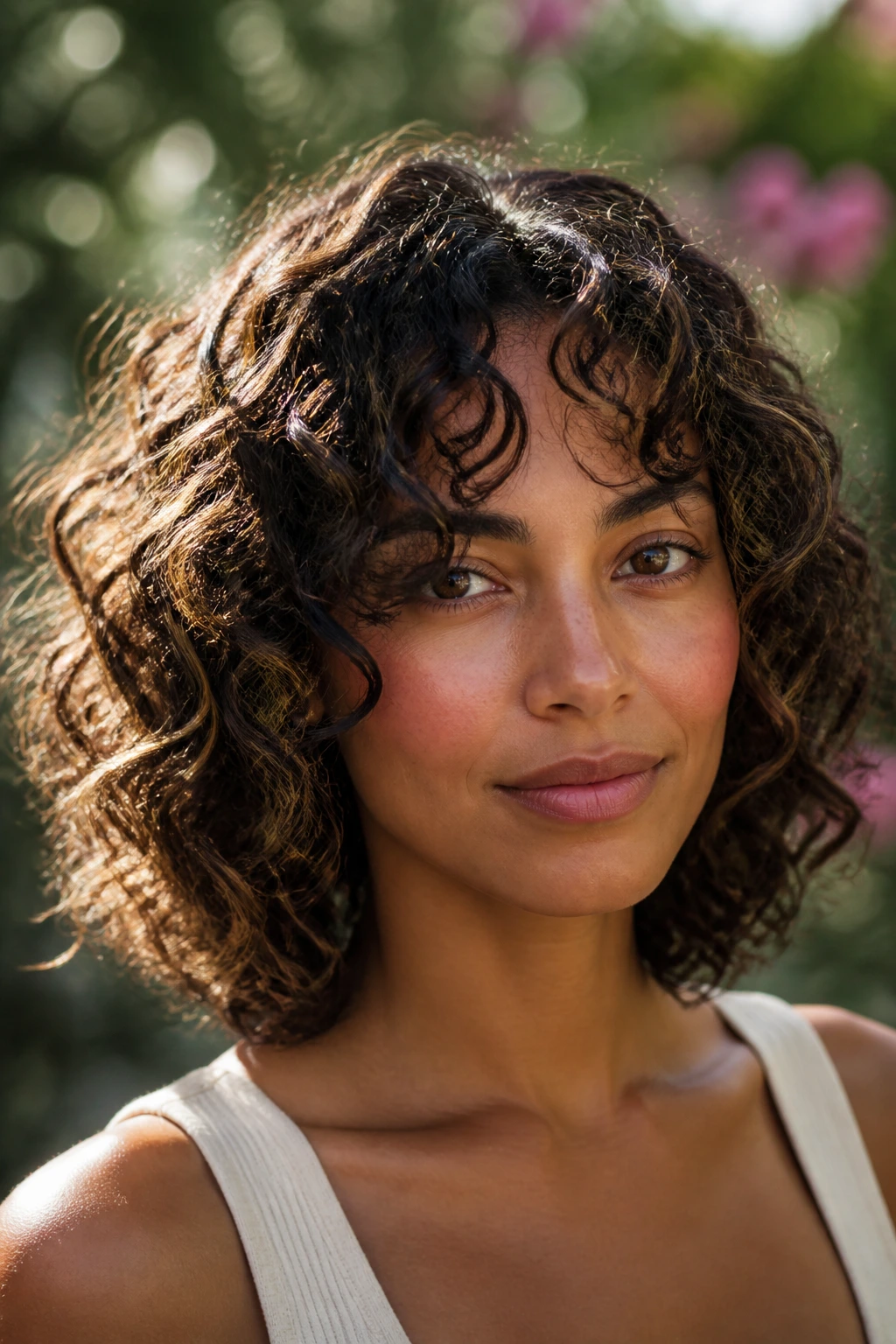
A curly shoulder lob should be cut with the curl pattern in mind, not against it. The length usually sits at or just below the shoulders so the curls can spring without shrinking into a shape that’s too short around the face. A dry cut, or at least a cut done on hair with its natural pattern visible, helps the stylist see where the curls actually live.
The best version of this cut keeps enough length for the curls to stack and move, but not so much that they hang into a heavy triangle. If your curls are looser, the lob can sit closer to the collarbone. Tighter curl patterns often need a little extra room for shrinkage. That part is non-negotiable.
11. Asymmetrical Lob
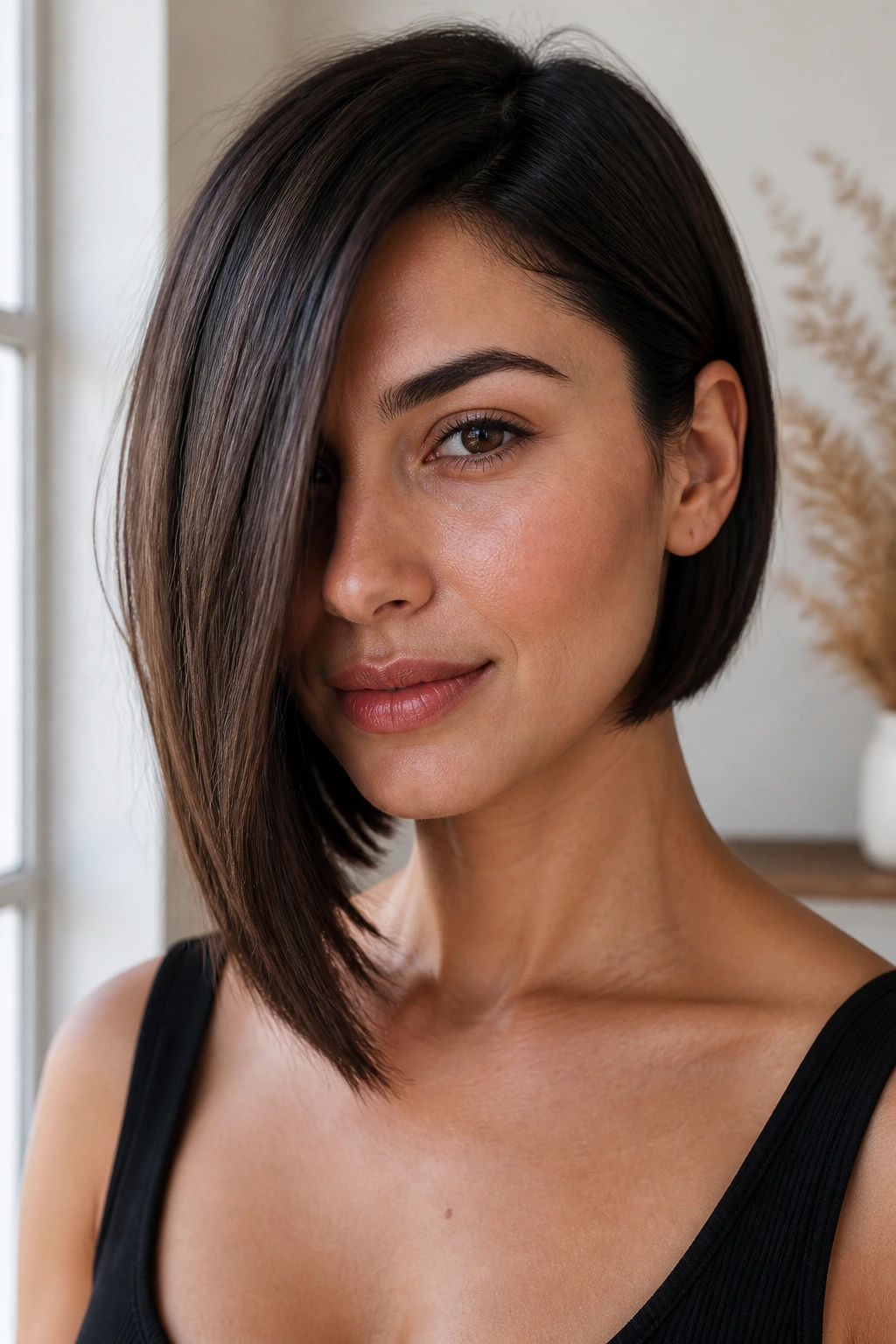
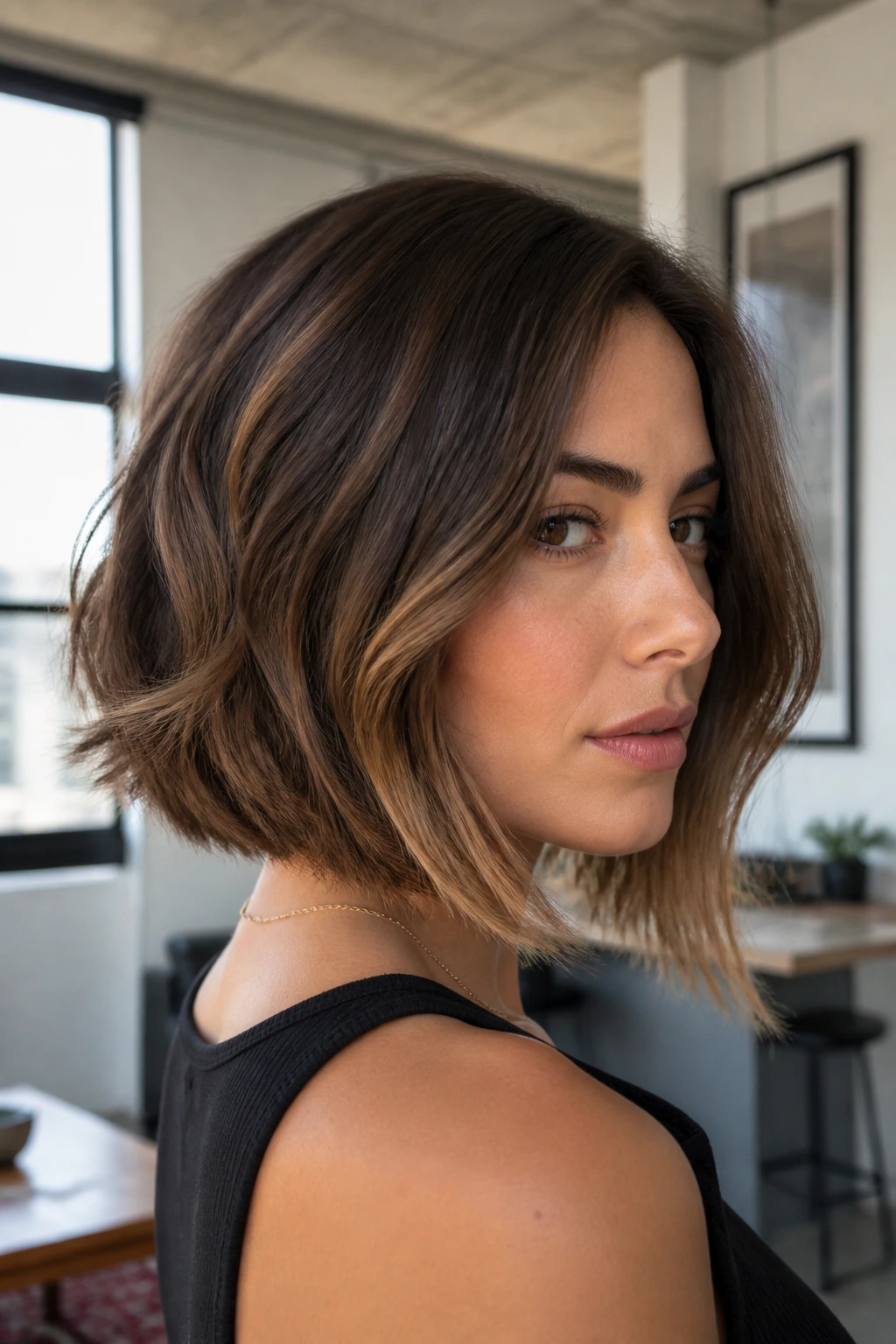
An asymmetrical lob uses imbalance on purpose. One side is a touch longer — sometimes just an inch or two, sometimes more — and that small shift changes the whole mood of the haircut. It can sharpen the jawline, make the neck look longer, and give medium length hair a little bit of attitude without needing dramatic layers or fringe.
The key is precision. If the angle is sloppy, the cut looks accidental. If it’s clean, it looks deliberate in a way that regular lobs sometimes don’t. I like this version when someone wants something noticeable but not loud. It says more by doing less.
12. Glass-Hair Straight Lob
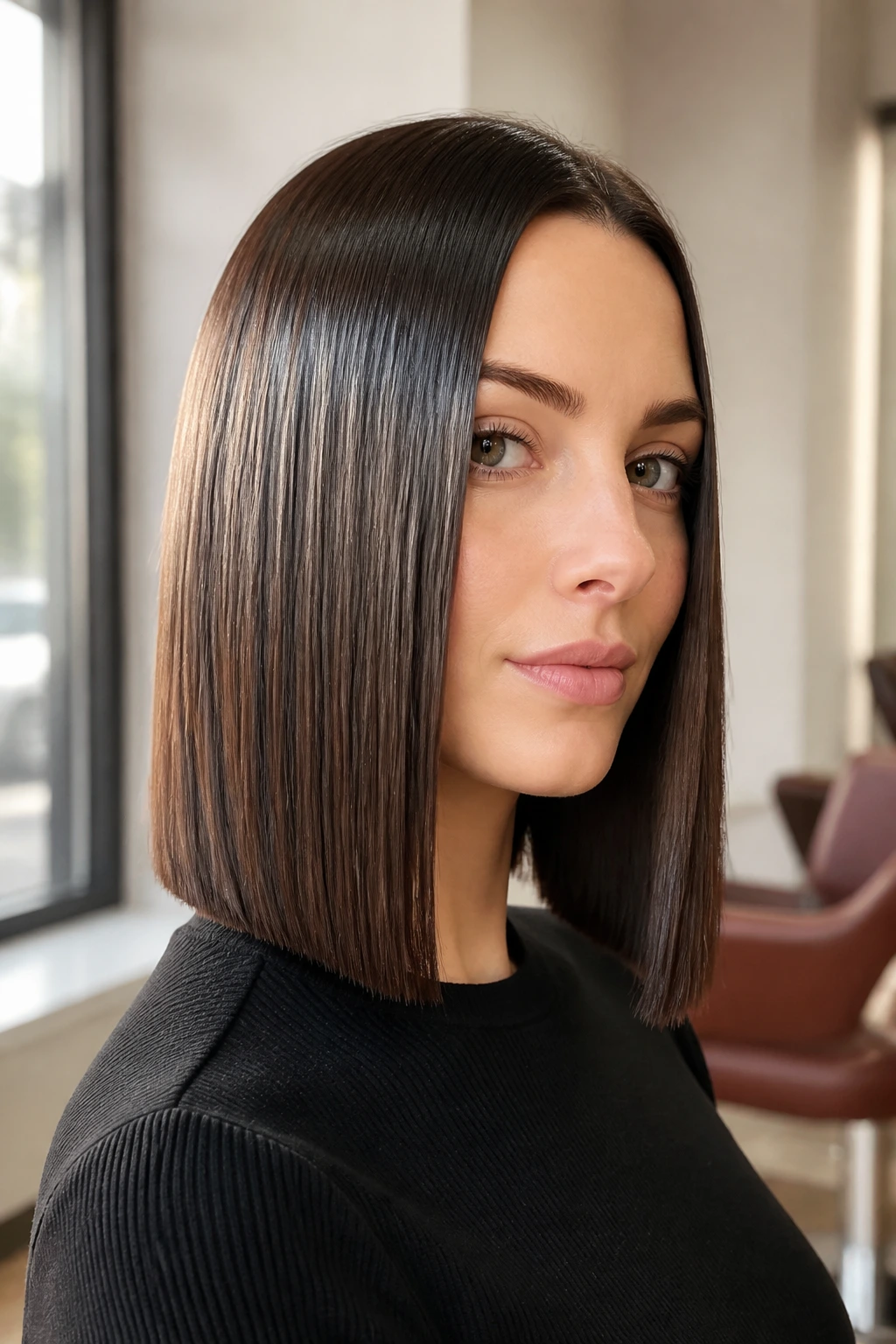
Glass-hair straight lobs are all about light reflection and a very clean edge. The hair is cut blunt, smoothed with heat, and finished so the surface lies flat enough to catch a sheen rather than a lot of texture. It looks especially sharp on naturally straight hair, though wavy hair can get there with a flat iron and the patience to work in small sections.
The style depends on discipline. Use a heat protectant, keep the iron moving, and avoid piling on heavy oils that make the ends look greasy instead of glossy. This is not the haircut for someone who wants fuss-free texture. It is for someone who likes a line so clean it almost feels graphic.
13. Choppy Undone Lob
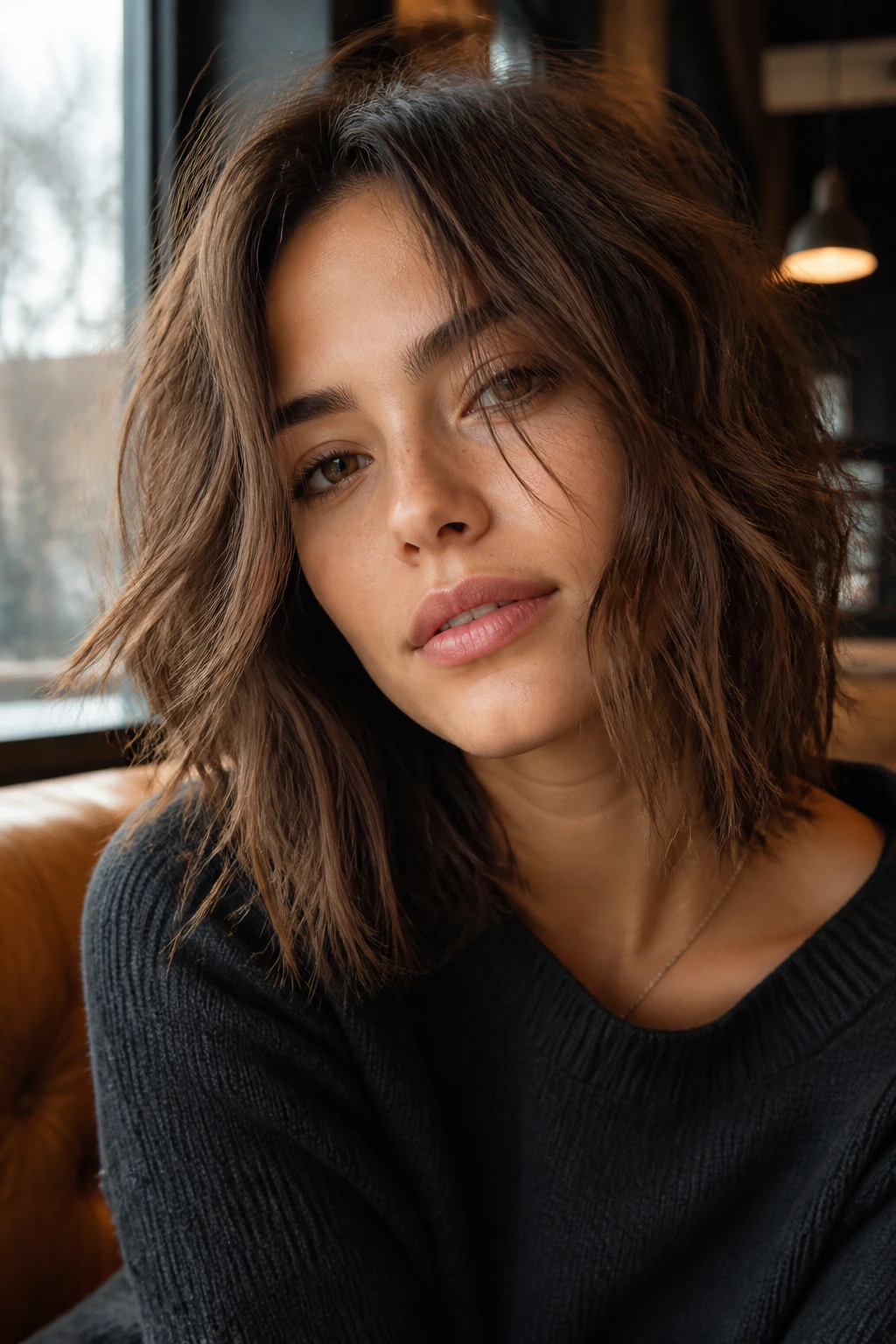
A choppy undone lob has broken edges, a few irregular bends, and enough texture to keep it from sitting too neatly. It’s softer than a shag and messier than a blunt bob, which makes it a good middle ground for people who want the haircut to look relaxed even when it’s fresh out of the salon. The length usually lands around the shoulders, where the movement shows up most.
This cut works best when the choppiness is selective. You want movement around the ends and some softness through the face, not random short bits all over the head. A little matte texture spray helps, but the haircut has to do the heavy lifting first. Product should never be the only reason a style holds together.
14. Cheekbone-Frame Lob
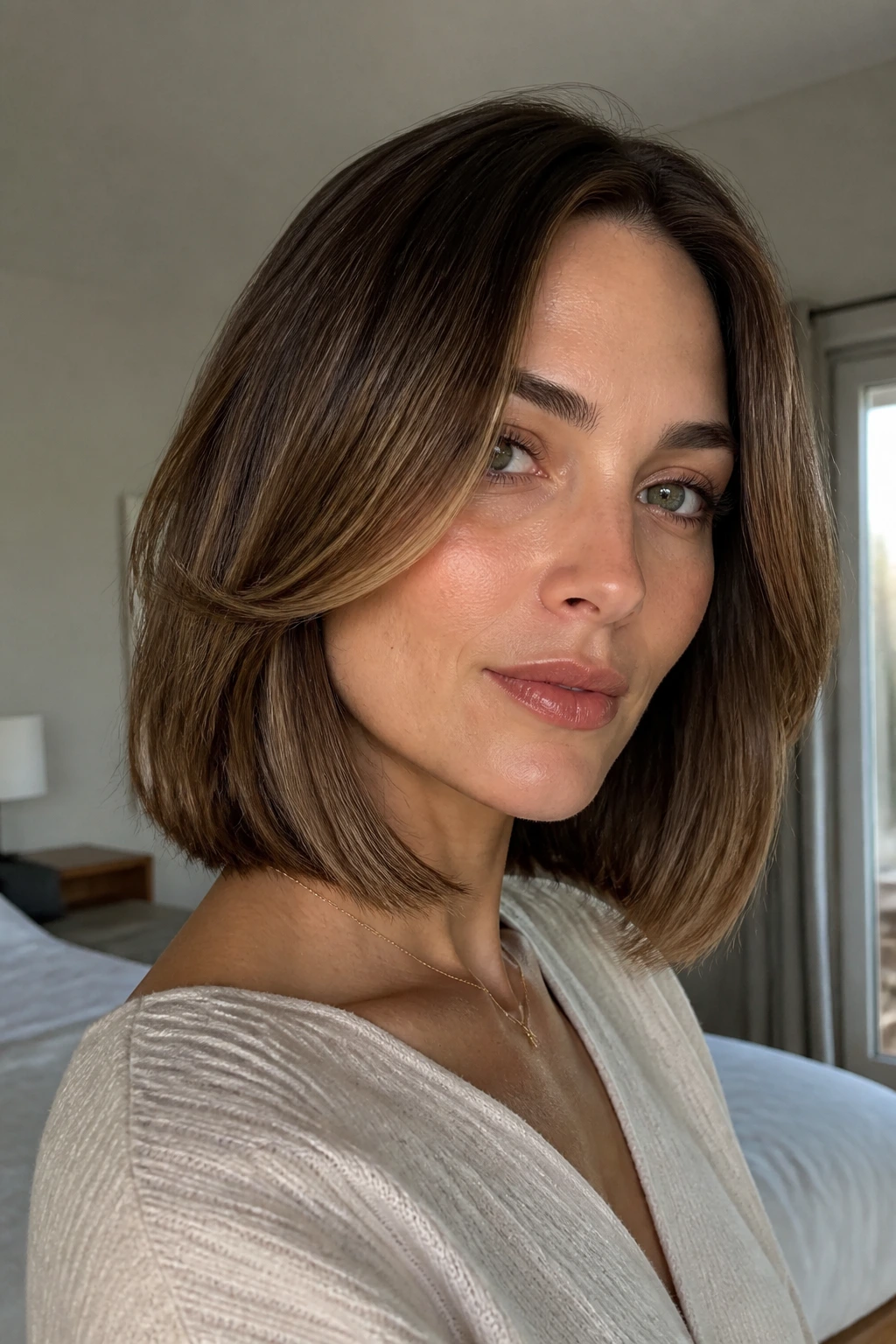
A cheekbone-frame lob puts the attention exactly where the name says it does. The front sections are cut to skim or brush the cheekbone, which softens the upper face and keeps the length from feeling heavy around the jaw. It’s a strong choice if you want a lob that does a bit of contouring without relying on bangs.
This version can be blunt underneath or lightly layered through the front. What matters is the placement of the shortest face-framing pieces. If they’re too short, the cut can feel fussy. If they’re too long, the framing disappears. Somewhere around the cheekbone usually gives the best balance.
15. Bottleneck Bang Lob
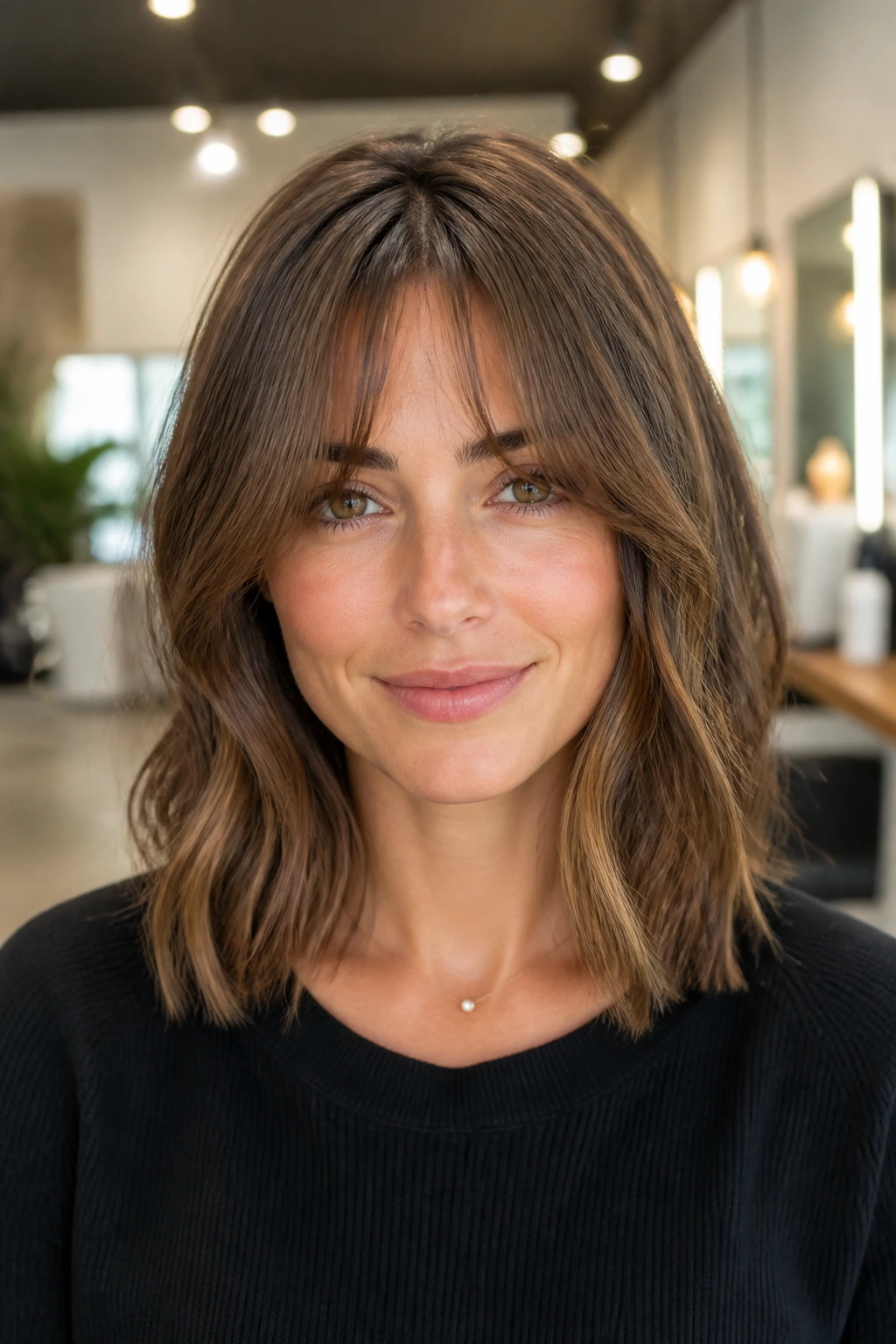
Bottleneck bangs narrow at the center and widen toward the temples, which gives them a softer transition than a straight fringe. Paired with a lob, they make the forehead area feel lighter while still leaving enough hair around the sides to blend into the cut. The effect is polished but not stiff.
This is a good move if you want bangs but don’t want to live with a hard line across the brow. The bangs can grow out into curtain fringe, which makes the haircut less risky than a blunt full fringe. On medium length hair, that kind of flexibility is worth a lot.
16. Bouncy Blowout Lob
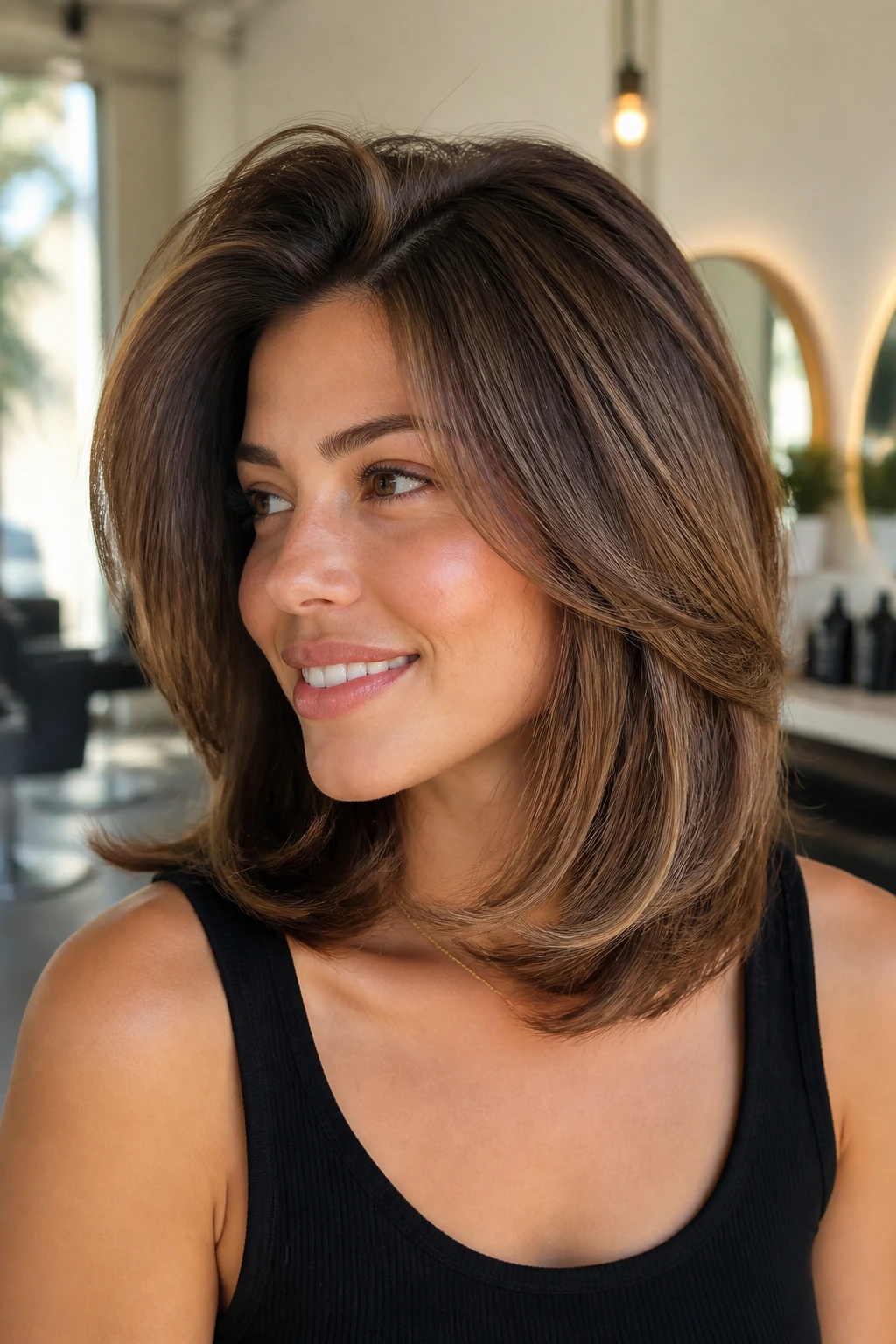
A bouncy blowout lob leans into shape: rounded ends, lifted roots, and enough body to keep the cut from lying flat against the head. It’s the sort of lob that looks like someone spent time with a round brush, because someone probably did. The payoff is swing. Real swing.
Fine to medium hair tends to love this style because the blow-dry creates a fuller outline without needing a ton of layers. Use a volumizing mousse at the roots, rough-dry until the hair is about 80 percent dry, then shape the ends with a round brush. The curve should be soft, not flip-heavy.
17. Boxy Luxe Lob
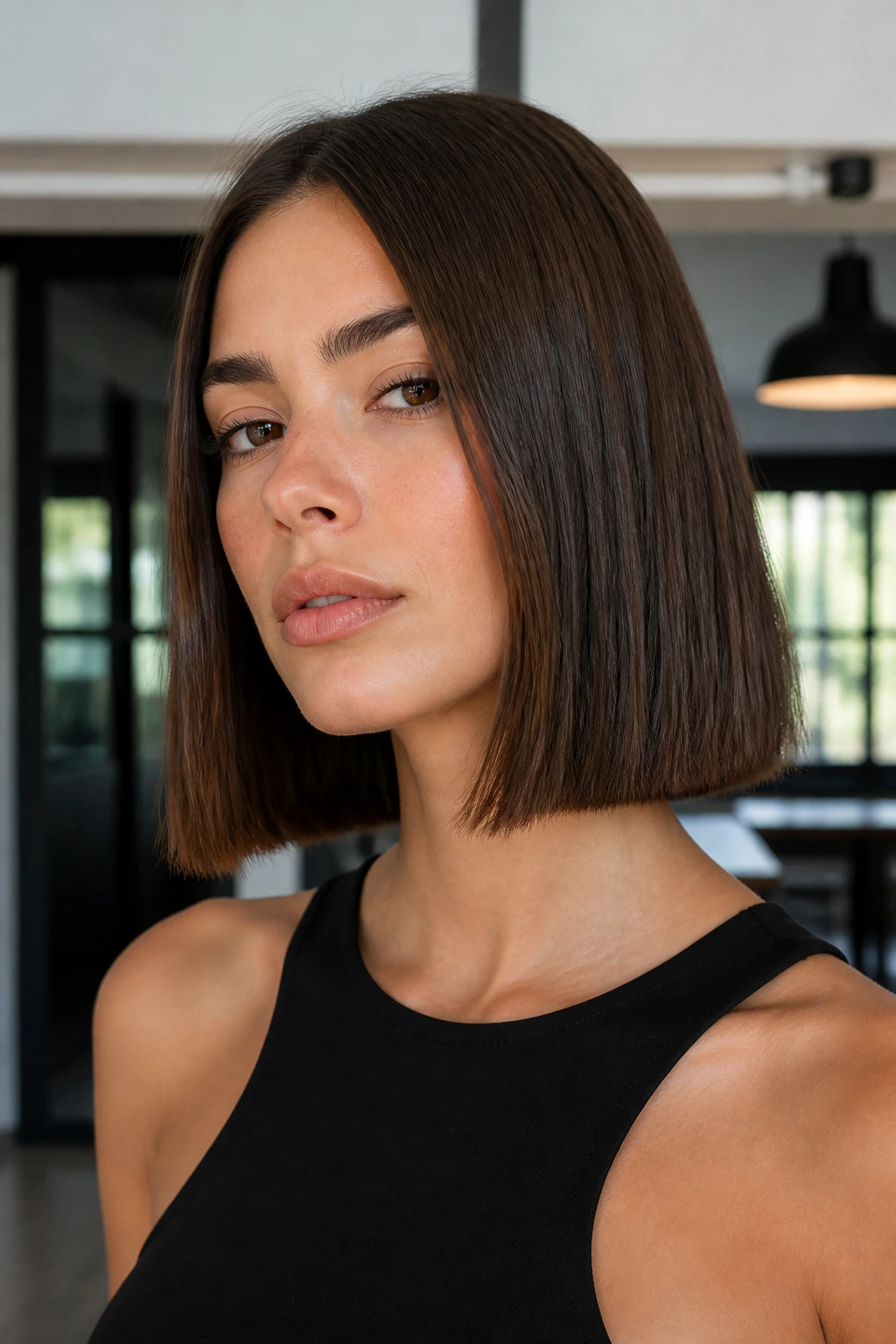
A boxy luxe lob is blunt, dense, and a little more structured than the average shoulder-length cut. The silhouette is square-ish, the ends look full, and the whole thing has a tailored feel that works especially well on thick, straight, or slightly wavy hair. It’s not about softness. It’s about presence.
This cut can look incredibly expensive when the perimeter is clean. It can also look bulky if the weight is left uncontrolled. That’s why the stylist’s hand matters here: enough internal shaping to stop the ends from bulging, not so much that the line loses its heft.
18. Feathered ’90s Lob

Feathered layers around medium length hair give a lob a lighter, airier version of retro polish. The ends are softened, the face-framing pieces move away from the cheekbones, and the overall shape feels breezy without becoming shaggy. If you like a round brush and a bit of volume at the crown, this is a very friendly cut.
The danger is over-feathering. Too much and the hair starts to separate in a way that looks thin at the ends. Keep the layers long, keep the perimeter visible, and let the blowout do the rest. That balance is what keeps the cut from wandering into costume territory.
19. Rounded-Under Lob
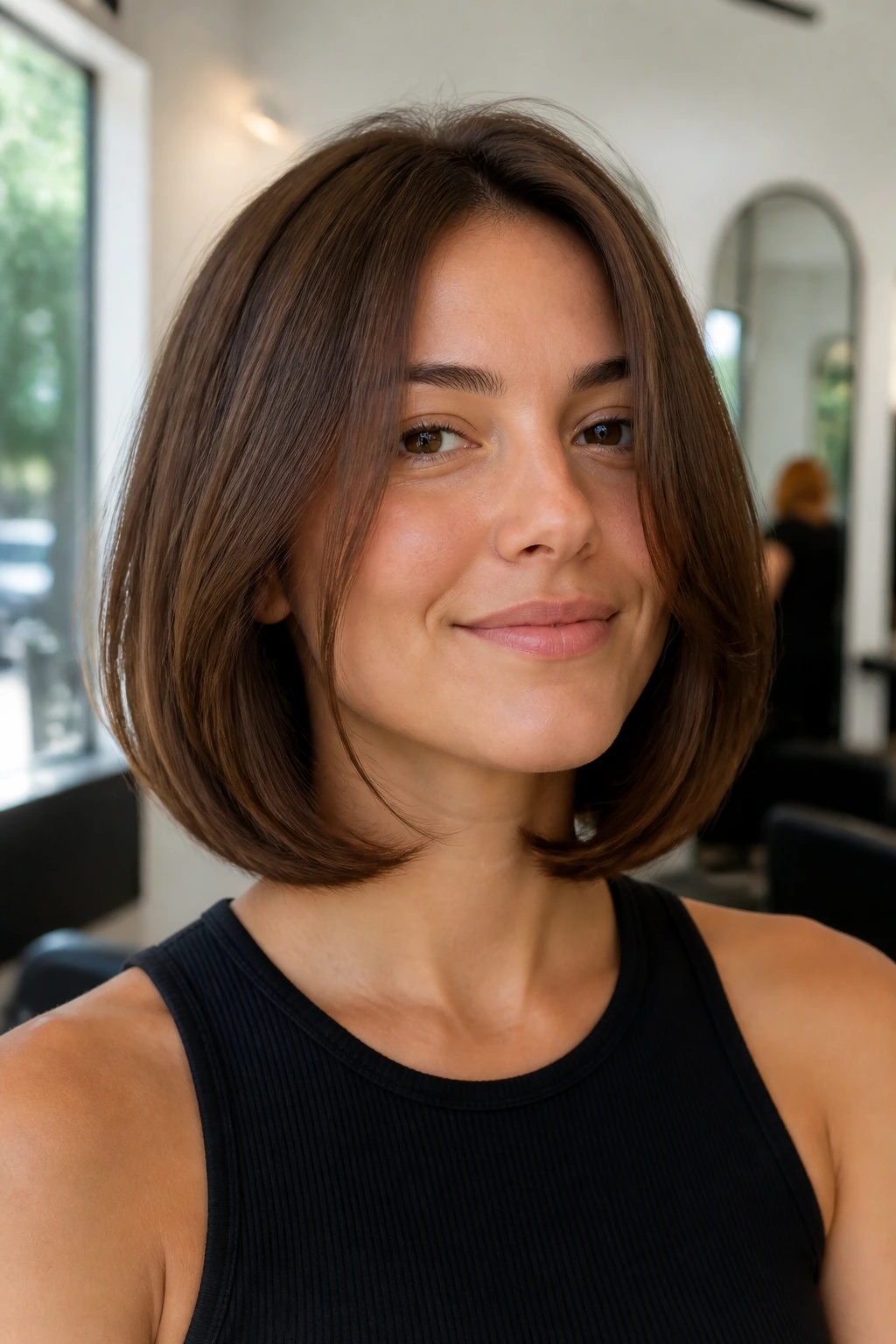
A rounded-under lob bends inward at the ends, so the whole haircut seems to cup the neck a little. It’s neat, controlled, and especially useful if your hair tends to flip outward when it touches your shoulders. A good round brush or a quick pass with a flat iron can reinforce the bend.
I like this shape on straight to slightly wavy hair because it creates a soft finish without needing major layering. It’s also one of the easier lobs to keep tidy between salon visits, since the inward curve hides small changes in length better than a dead-straight edge does.
20. Hollywood Side-Sweep Lob
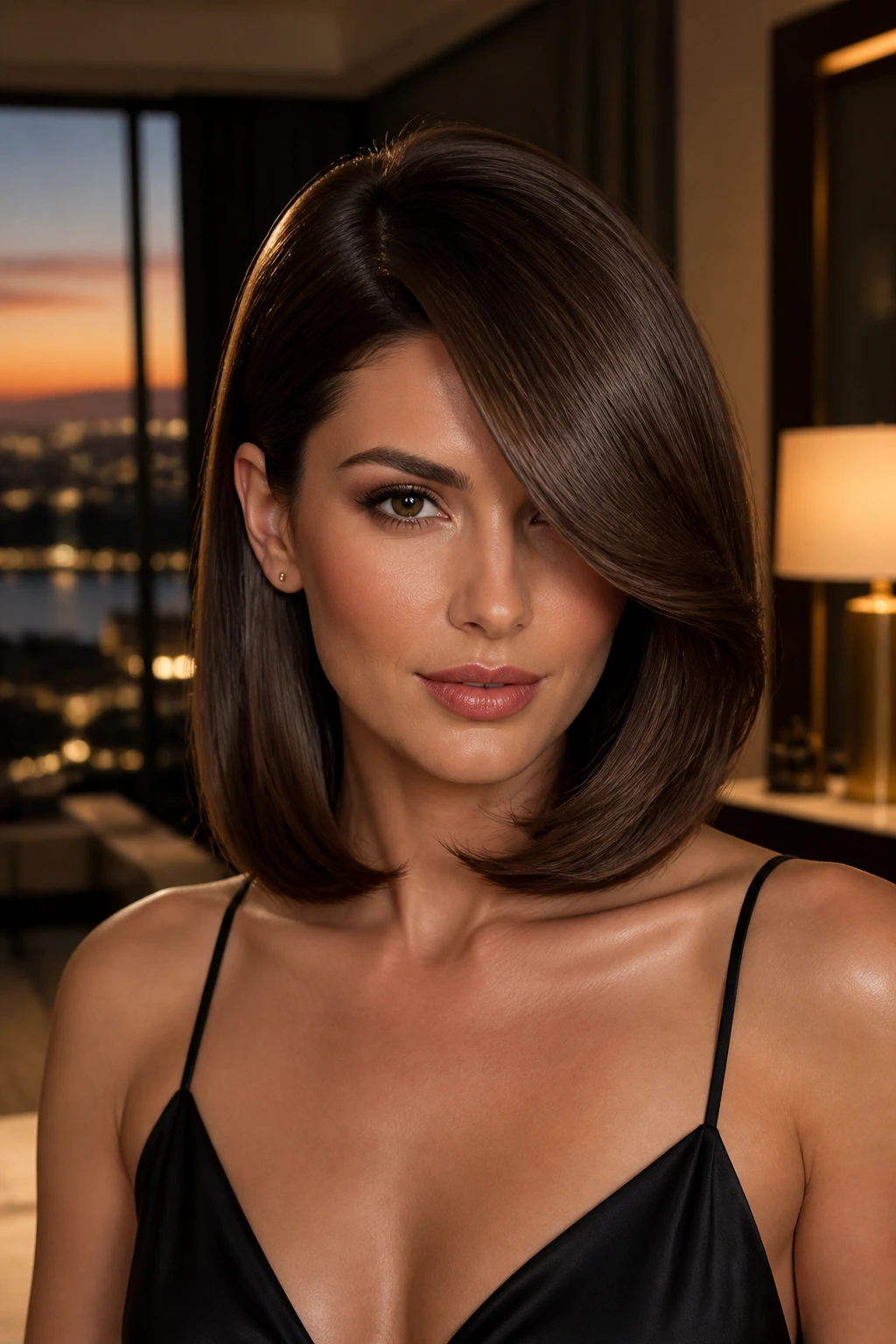
A Hollywood side-sweep lob brings in a bigger bend and a more dramatic part. The front hair sweeps off the face, the ends usually curl under or away with a polished finish, and the whole style carries a little more evening energy than a casual lob. It’s not just for events, though. The shape can make a simple sweater look intentional.
This version likes shine. A light serum on the mid-lengths and ends keeps the bend from looking dry, and a larger barrel iron helps the curve stay soft instead of tight. If you wear earrings, this cut does a nice job of letting them show without pulling the hair too far back.
21. Soft U-Shape Lob
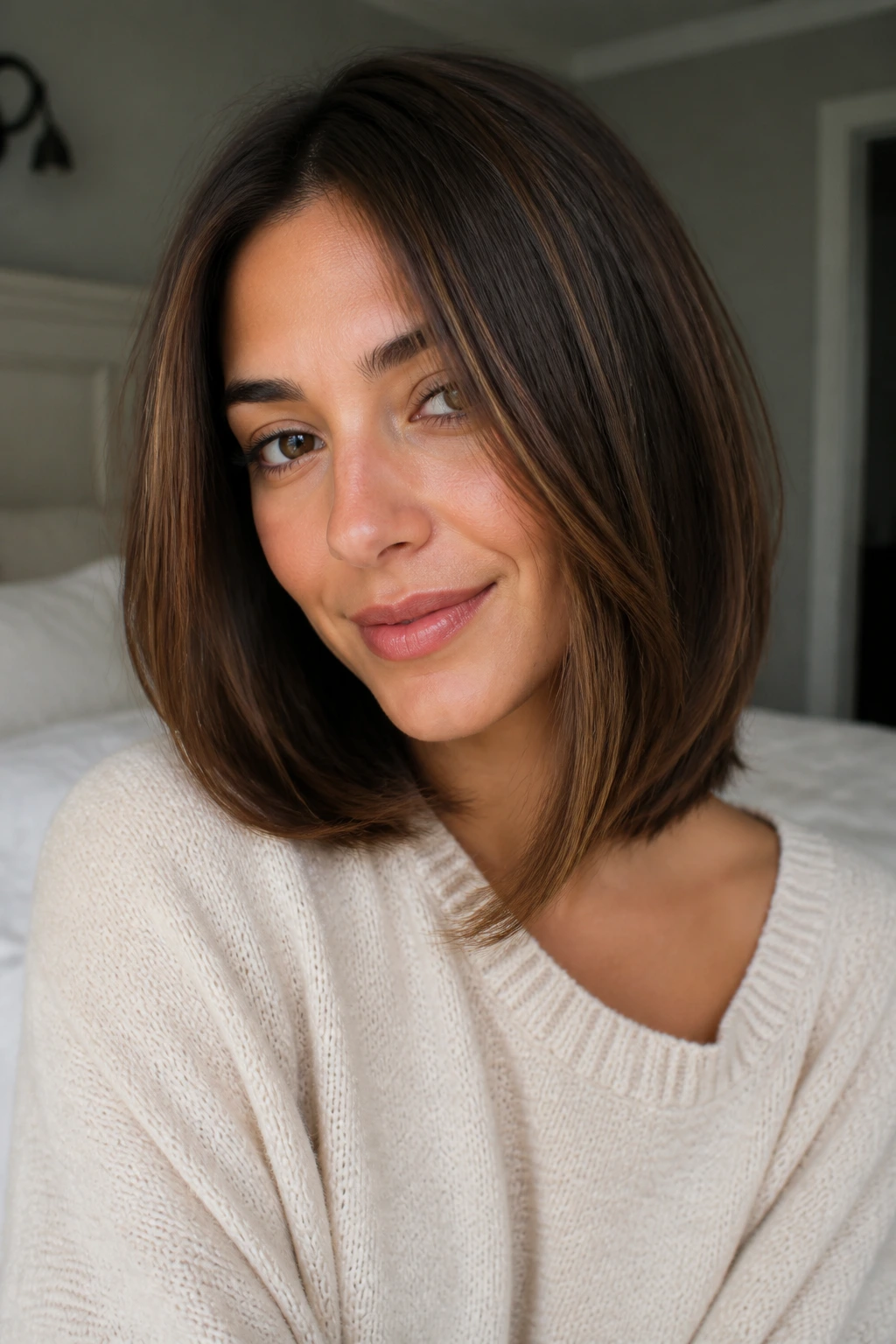
A soft U-shape lob is one of the easiest long bobs to wear because the front sits a touch longer than the back, but the curve is gentle rather than dramatic. The perimeter draws a soft arc, which helps the haircut feel feminine without turning into a hard angle. It’s a good bridge between blunt and layered.
This cut grows out gracefully. That’s half the reason people keep returning to it. A blunt line can be gorgeous, but a U-shape buys you a little extra time before the edges start feeling blunt in the wrong way. If you want something that stays neat without demanding too much, this is a smart place to land.
22. Tousled Fine-Hair Lob

Fine hair needs a cut that gives it body without tearing the ends to pieces, and a tousled lob can do that if the layers stay long and the texture stays soft. The trick is not to over-thin it. A few strategic bends, a light mist of texturizing spray, and a perimeter that still has some weight can make fine hair look fuller than a super-choppy cut would.
I would avoid too many short layers here. Fine hair already loses density easily, and a lob with overdone layers can end up looking see-through at the bottom. Keep the edge honest. Let the styling create the movement.
23. Dense Blunt Lob for Thick Hair
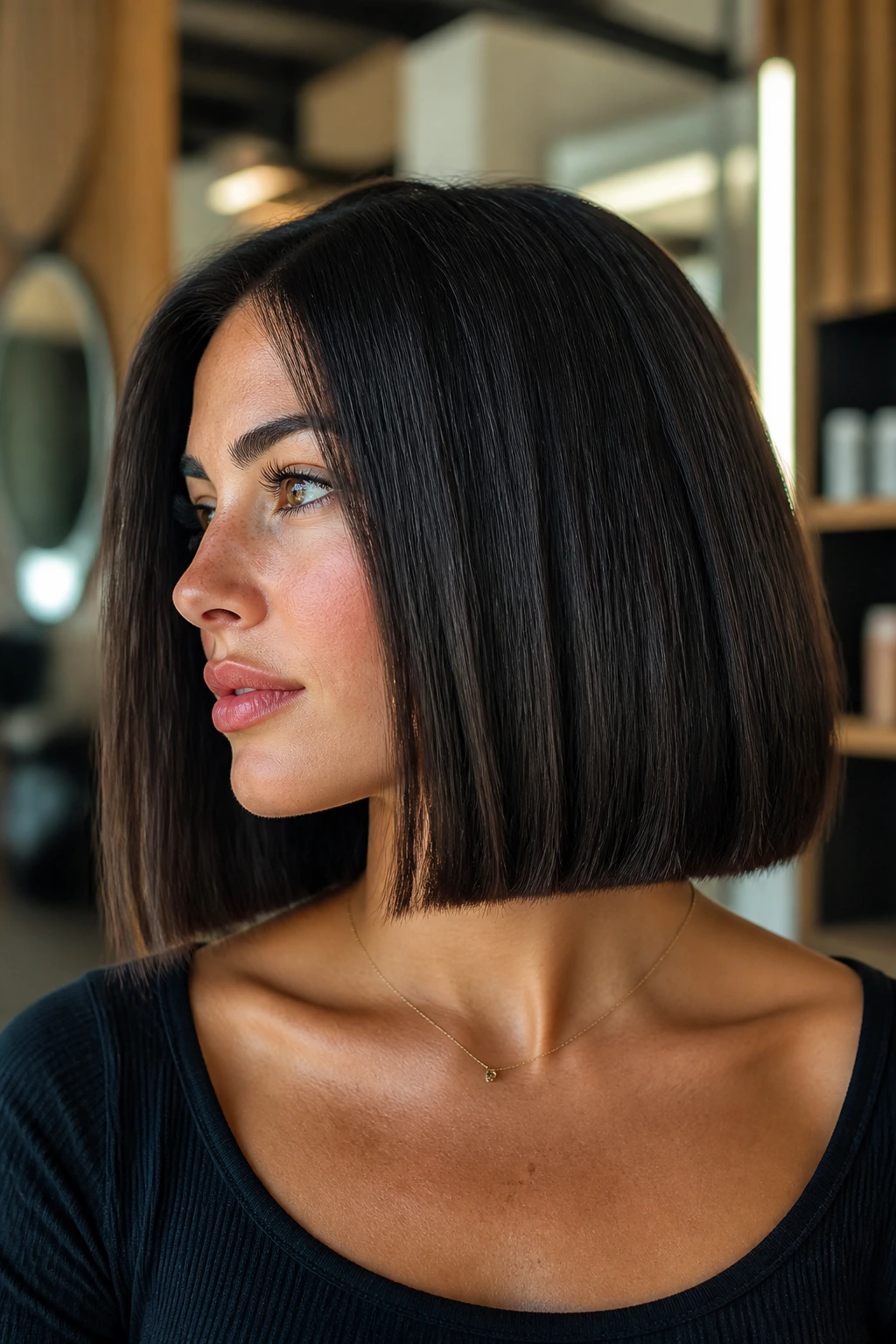
Thick hair often looks best when the haircut respects its weight instead of fighting it. A dense blunt lob keeps the outline strong and full, while careful internal removal around the mid-lengths prevents the bottom from turning into a thick shelf. The result is a cut that sits rather than puffs.
This is where precision matters. If the stylist thins the ends too aggressively, the haircut can frizz at the perimeter and lose that solid line. A dense blunt lob should feel controlled, not stripped down. On thick hair, control is the luxury.
24. Wash-and-Go Lob
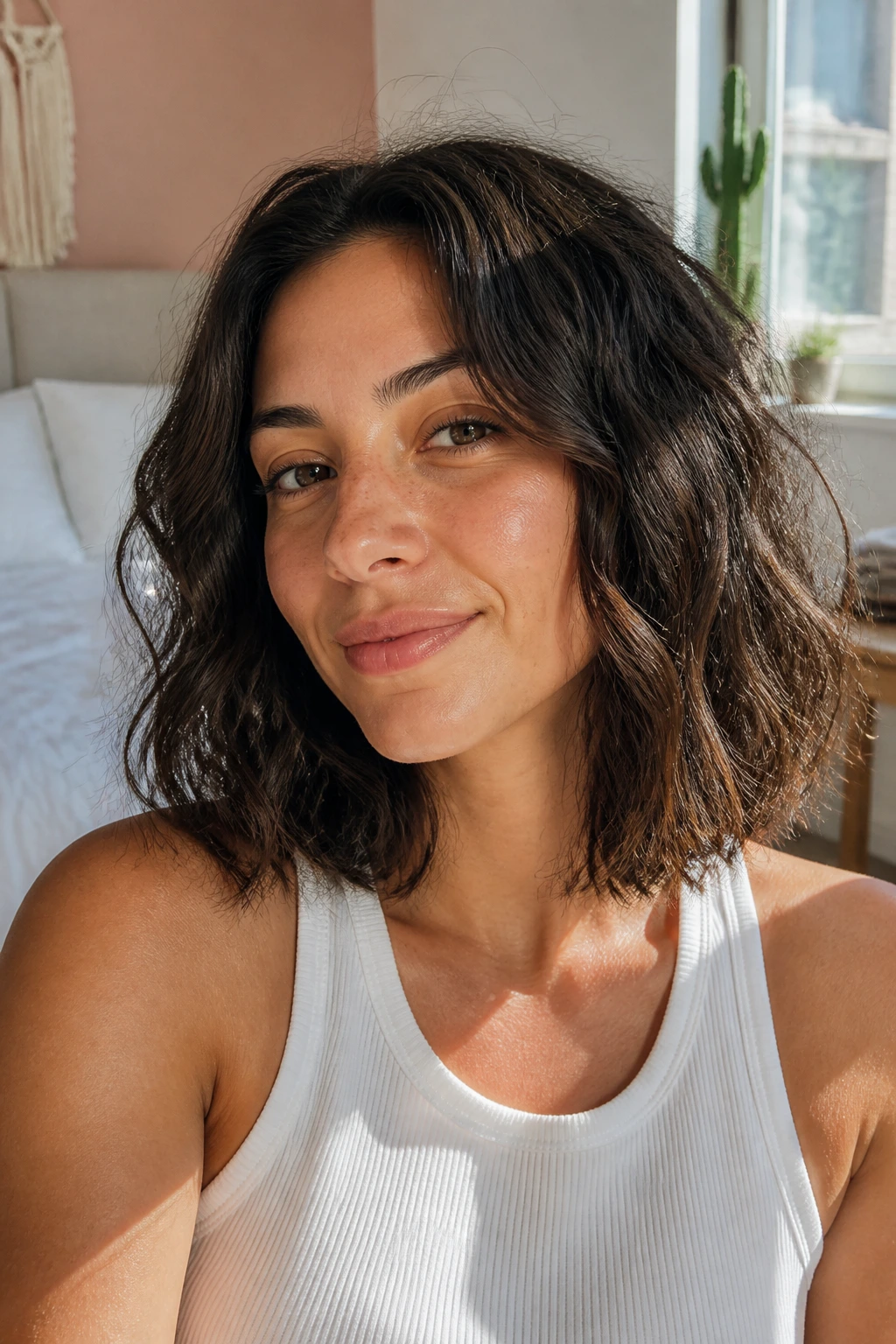
A wash-and-go lob is built around your natural texture, not around a styling routine you’ll resent by Wednesday. The length is chosen so waves or curls can form without being stretched by excess weight, and the layers are kept minimal enough that the shape still reads as a lob. It’s a good choice if you want the haircut to do the work on its own.
The honest version of this cut depends on a clear understanding of your hair’s dry pattern. If your hair bends in some areas and resists in others, the cut should reflect that. A little leave-in cream, a microfiber towel, and some scrunching are often enough. If you need a 45-minute blow-dry to make it behave, it’s not really wash-and-go.
25. Tucked-Behind-Ear Lob

A tucked-behind-ear lob sounds simple, but the cut has to be planned for it. You need enough length around the front to keep the style looking intentional when one side is tucked away, and enough balance on the opposite side so the haircut doesn’t collapse visually. It’s a good option if you wear glasses, earrings, or just like moving hair off your face.
The front sections should usually graze the jaw or collarbone so they still look substantial when tucked. If they’re cut too short, the style can look tentative. This cut lives and dies by those front corners, so tell your stylist you plan to tuck it often.
26. Sleek Wet-Look Lob
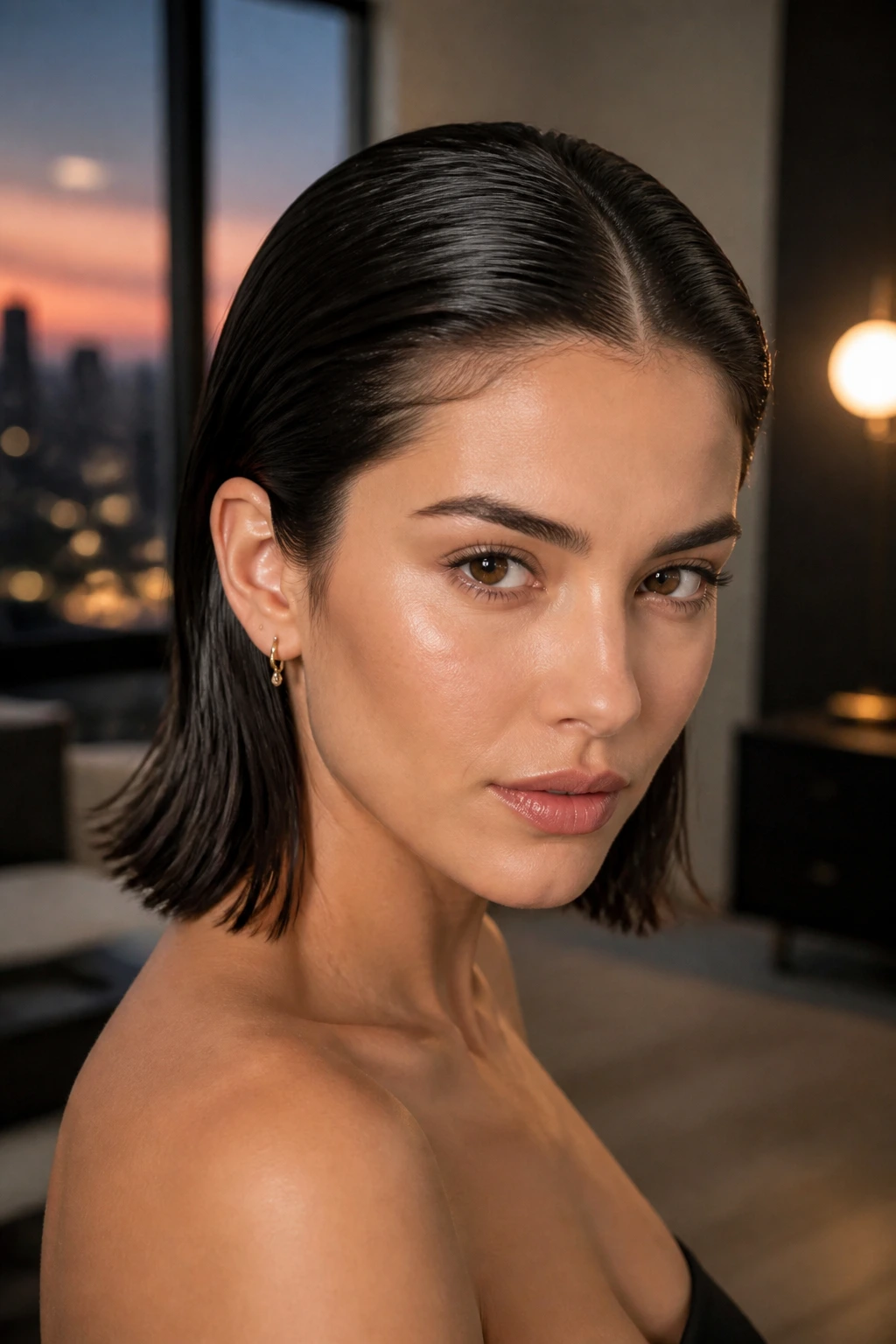
A sleek wet-look lob turns medium length hair into something glossy and sculpted. The roots stay close to the head, the finish is slicked back or center-parted, and the texture reads deliberate rather than casual. It’s a strong evening style, but it can also work for a sharp daytime look if you keep the product amount modest.
Gel alone can make the ends feel stiff, which is where a mix of gel and cream usually helps. Comb it through while the hair is damp, then smooth the surface with your hands or a wide-tooth comb. The trick is neatness, not thickness. Too much product and the lob starts looking wet for the wrong reasons.
27. Shaggy Long-Layer Lob
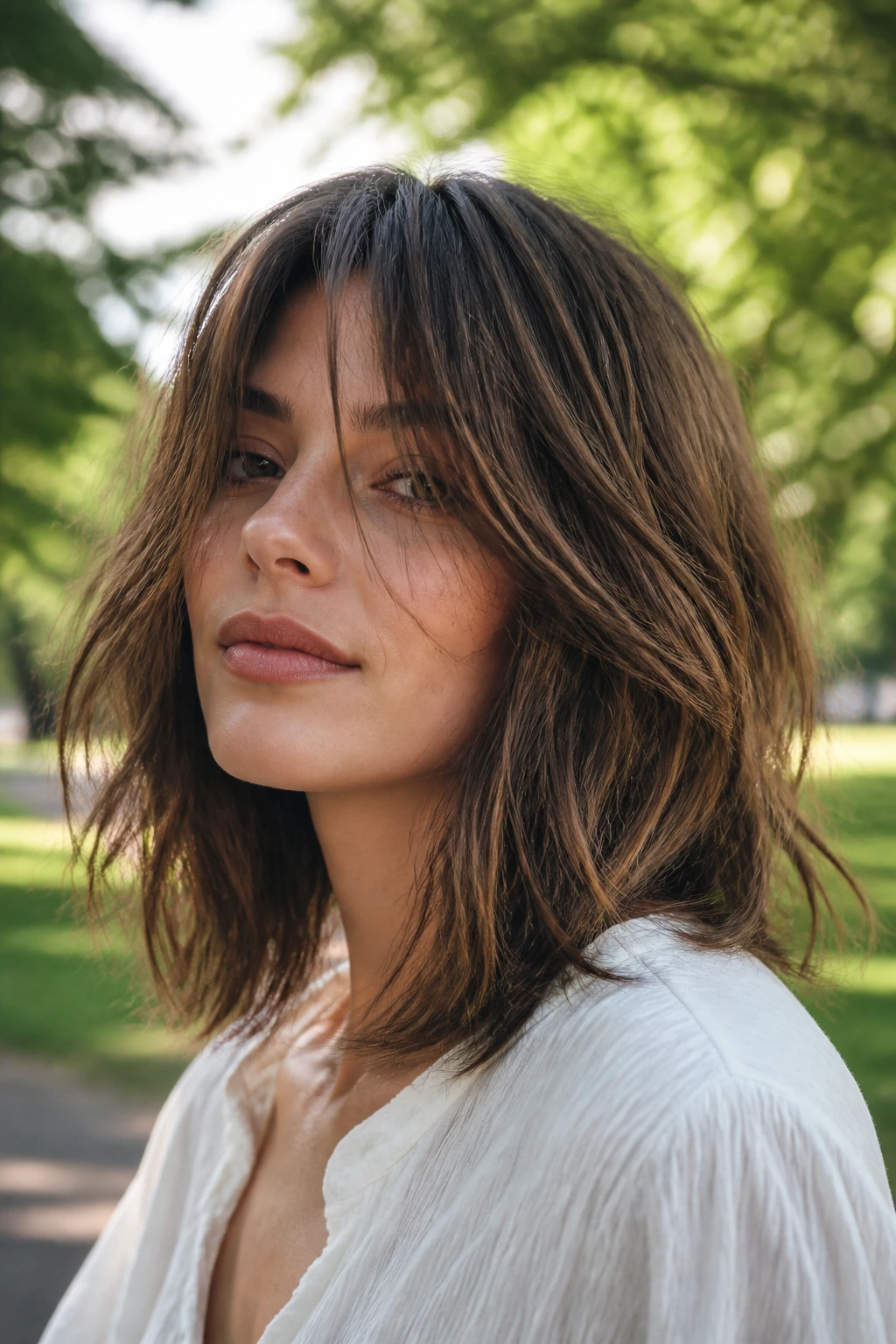
A shaggy long-layer lob gives you movement without the short-crown chaos of a full shag. The layers stay long enough to keep the perimeter visible, but they break up the mass so the haircut swings a little and dries with texture. It’s one of the best choices for wavy hair that gets heavy at the ends.
The length matters here. If the layers start too high, the lob loses its shape and turns into a softer, less defined cut. Long layers around the shoulder and collarbone keep the haircut flexible while preserving that lob outline. It should feel lived-in, not over-cut.
28. Internal Weight-Removal Lob
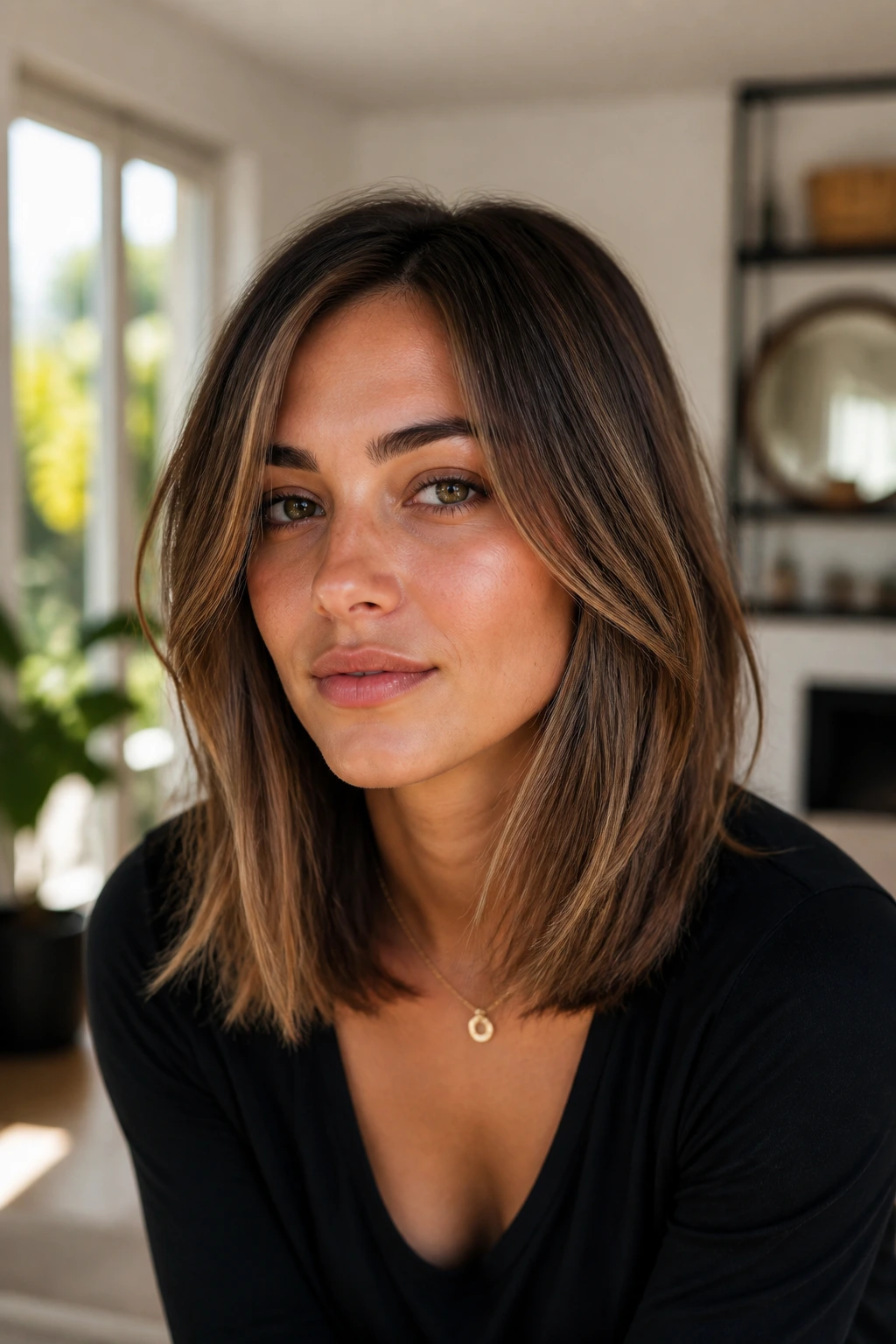
Internal weight removal is the unsung hero of many good lobs. From the outside, the haircut can still look blunt and clean. Underneath, hidden sections are thinned or sliced so thick hair stops bulging out at the sides and the ends sit flatter against the shoulders.
This technique is not a license to thin everything. It’s a way to keep density where you want it and remove it where you don’t. If your lob always feels bulky after a fresh cut, this is probably the difference you’ve been missing. The outside line stays strong. The inside does the boring work.
29. Curved-In Lob
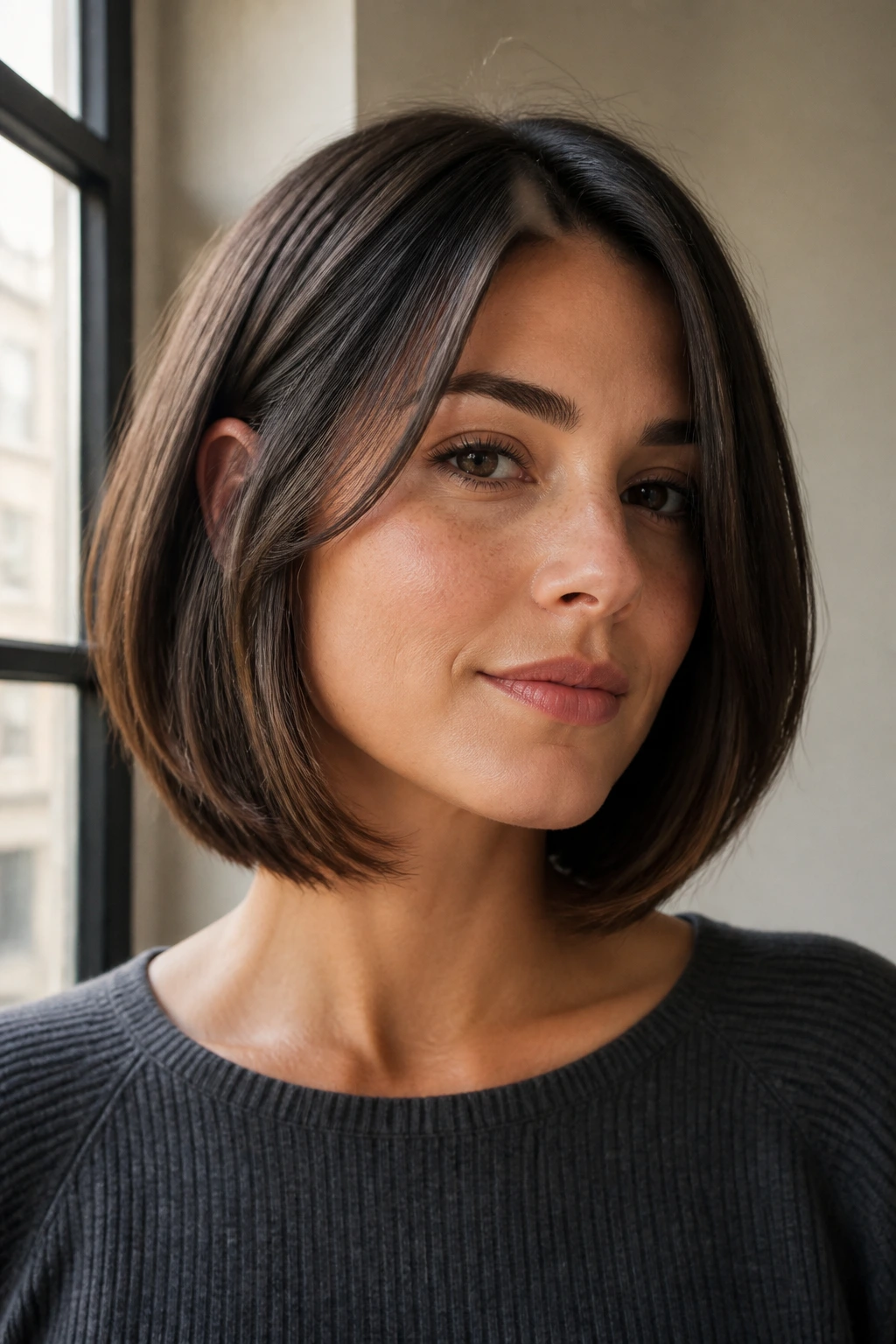
A curved-in lob is the haircut version of a well-made jacket hem: tidy, slightly rounded, and neatly finished. The ends are cut or styled so they bend inward toward the neck, which gives medium length hair a softer outline than a flat, straight edge. It’s especially useful if your hair naturally kicks out and you’d rather not fight that every morning.
Round-brush drying or a light pass with a flat iron can help reinforce the curve. The shape is subtle, which is why it ages well. It does not scream for attention. It just makes the haircut look considered.
30. Graduated Nape Lob
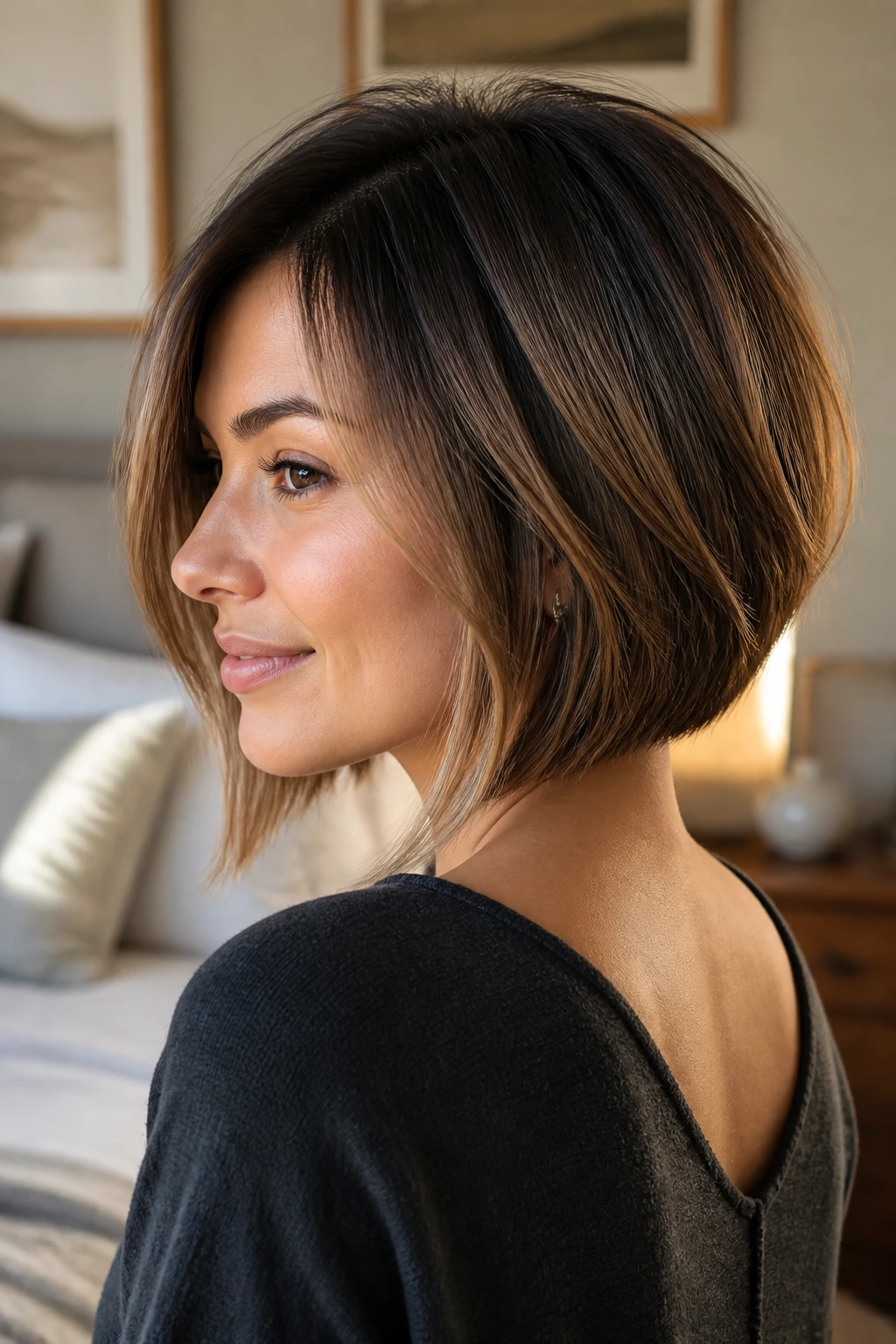
A graduated nape lob is shorter and slightly lifted at the back, with a gradual increase in length toward the front. The shape gives a bit more structure through the nape and can make the neck look longer and the head shape cleaner. It’s a strong choice if your hair sits flat at the back and you want a little lift without turning the cut into a stacked bob.
The graduation should be gentle. If the back is too short, the style can feel dated or overbuilt. Kept soft, it gives you that useful lift while still reading like a lob. This is one of those cuts that looks more precise in person than it does in flat photos.
31. Minimalist One-Length Lob
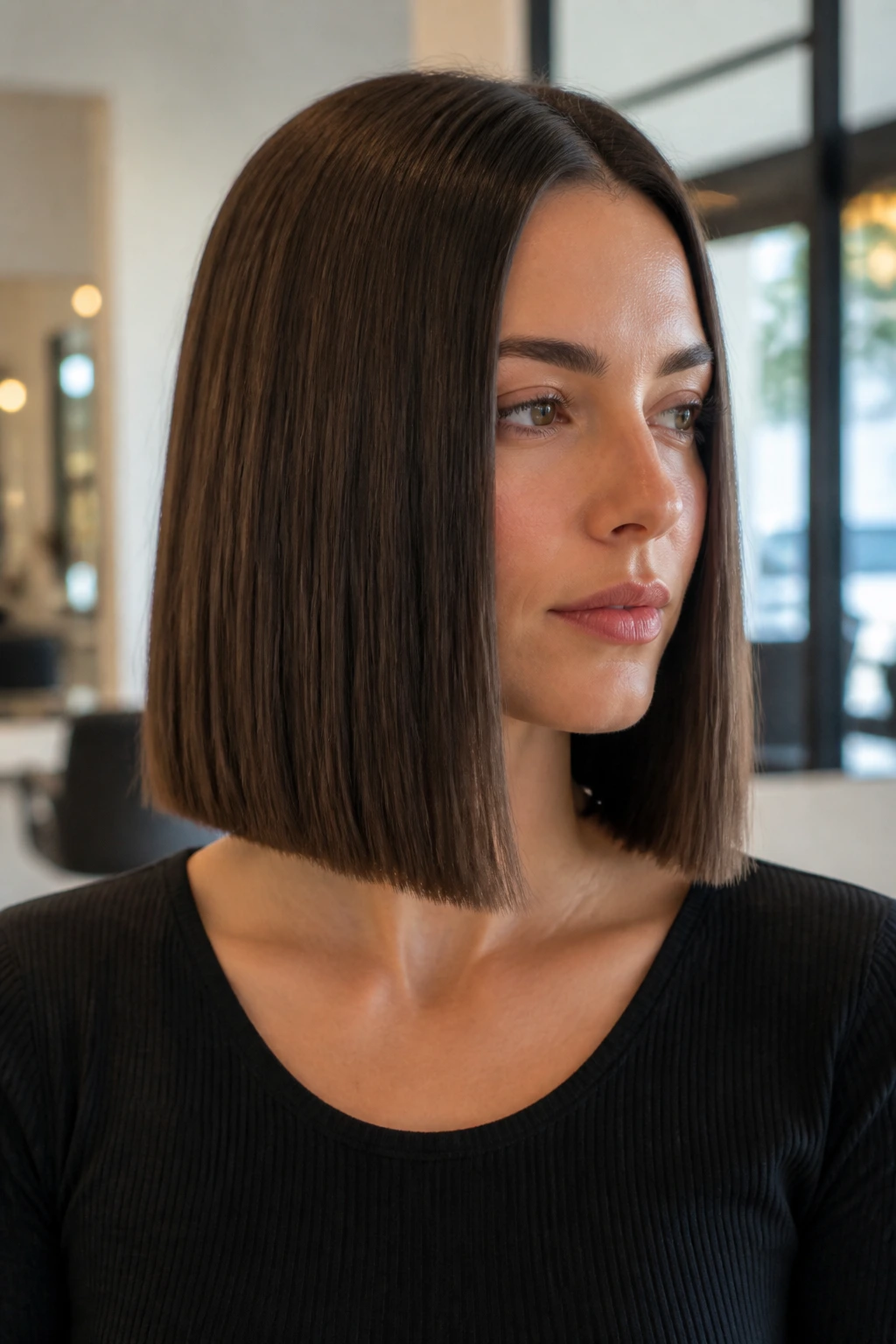
A minimalist one-length lob strips the idea down to its cleanest form: no layers, no fringe, no fuss. The shape depends on a strong line and healthy ends, which means the haircut has to be executed well or it falls apart fast. When it’s done right, though, it has a calm, graphic quality that a lot of busier cuts can’t touch.
This is a good match for straight to slightly wavy hair with enough density to support the outline. If your ends are thin, the line can look wispy instead of sharp. Keep the maintenance regular and the finish polished, and this cut stays elegant without trying very hard.
32. Broken-Up Wave Lob
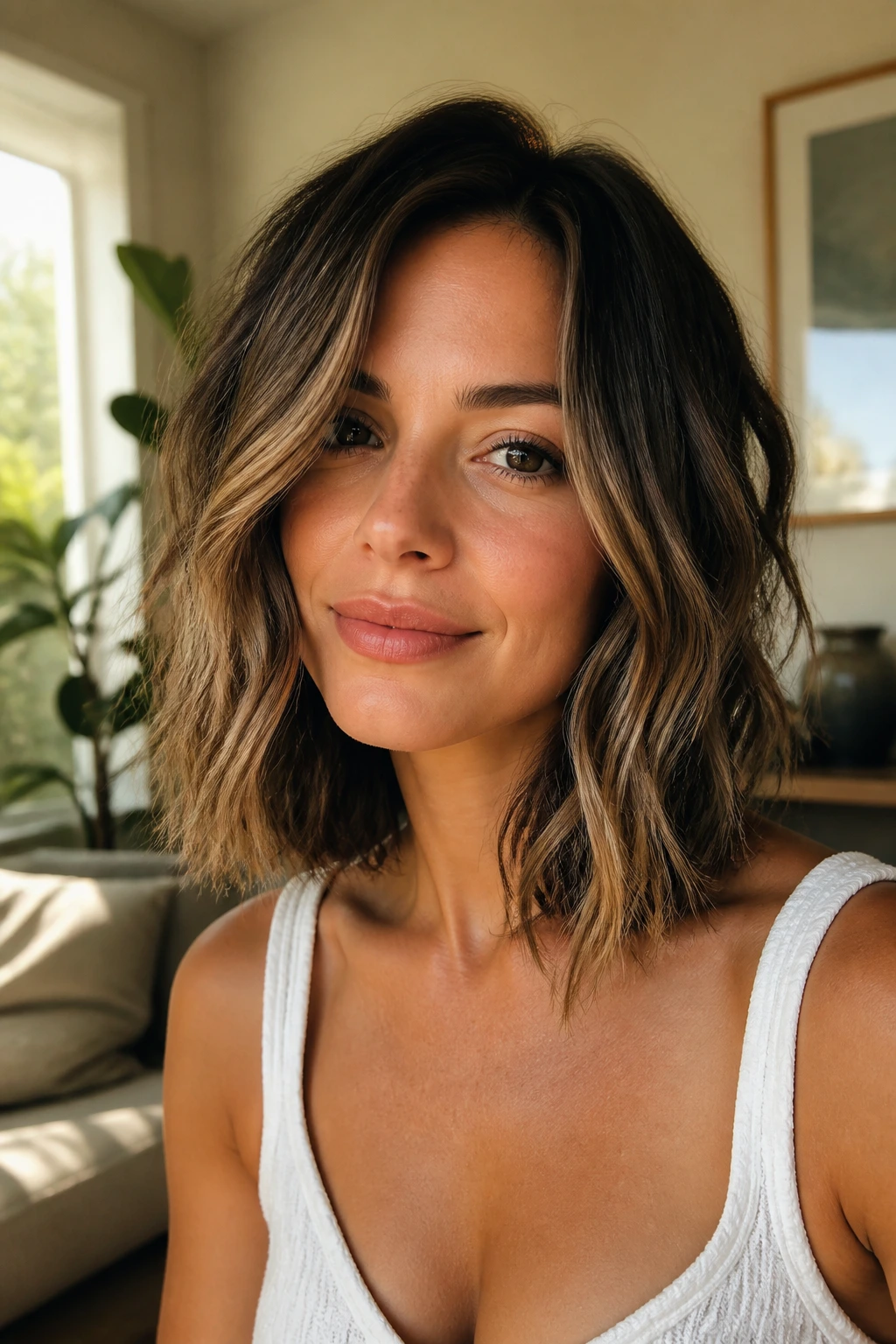
A broken-up wave lob mixes bends in different directions so the hair doesn’t fall into one obvious curl pattern. The effect is looser and a little less precious than a uniform wave. It suits medium length hair that wants body, not ringlets.
Use a curling iron or wand on alternating sections, then brush or finger-comb the waves apart while they’re still warm. A small bit of texture spray helps, but the real benefit comes from the inconsistency. Not every strand needs to obey. That’s what keeps the style looking modern rather than overly set.
33. Side-Swept Bang Lob

Side-swept bangs soften a lob without committing you to a full fringe. The hair falls across the forehead at an angle, giving the haircut a little movement and a more forgiving shape around the eyes and temples. It’s a nice middle road for someone who wants some front detail but not the upkeep of blunt bangs.
This fringe grows out more quietly than a straight-across bang, which is one reason people keep choosing it. The lob underneath can stay smooth, textured, or slightly angled. If your forehead feels wide or your face is longer than you like, side-swept bangs can change the balance without a dramatic cut.
34. Hidden-Layer Lob
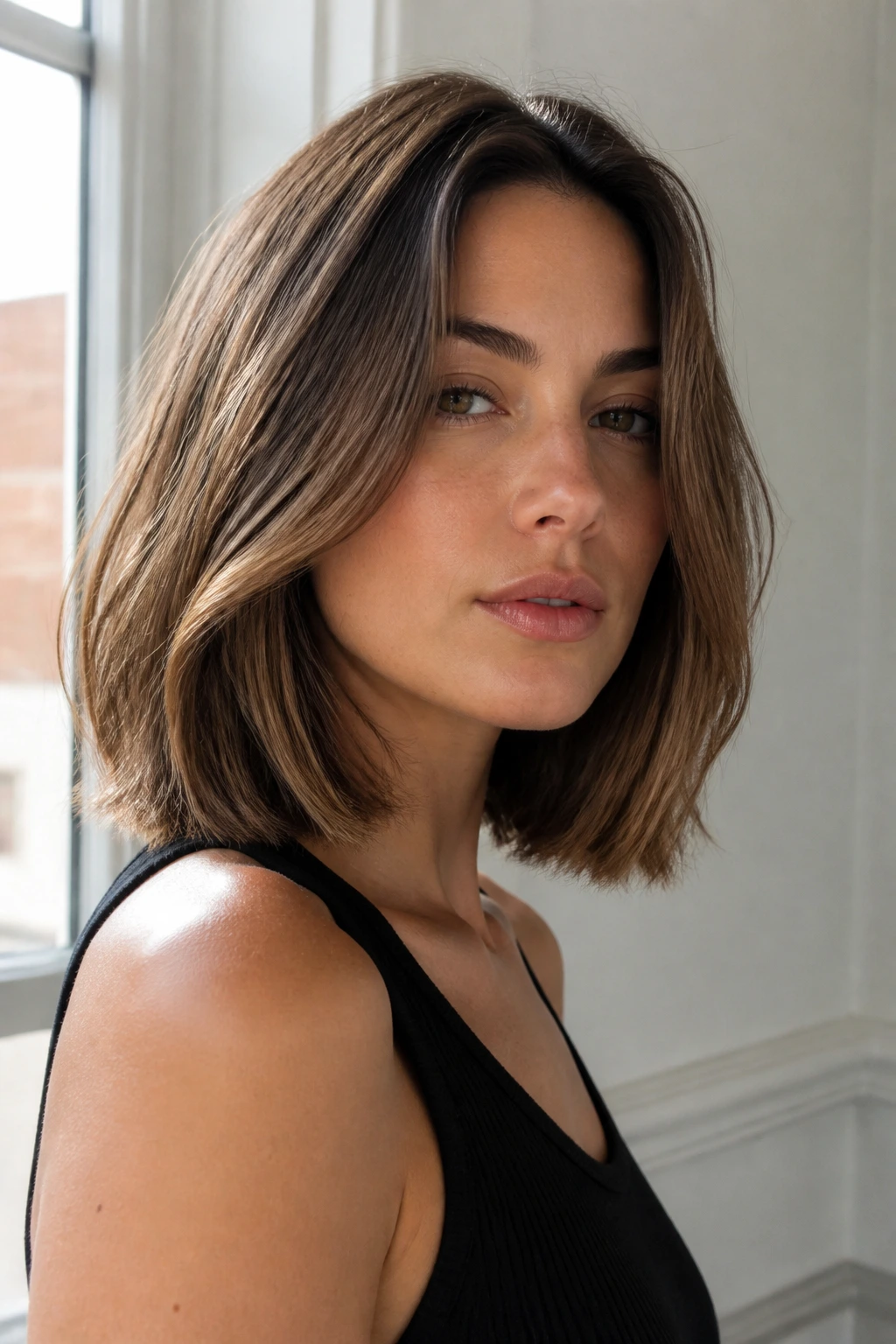
A hidden-layer lob looks blunt at first glance, then moves more than you expect when you walk. That’s because the outer line stays clean while the interior layers are tucked beneath the surface to create softness and swing. It’s a very useful cut for people who like polish but hate stiffness.
I prefer this approach when the hair has medium to high density and needs movement without looking choppy. The outside stays photo-ready. The inside keeps the shape from acting like a block. It’s one of the quietest ways to make a lob better.
35. Flipped-End Glam Lob
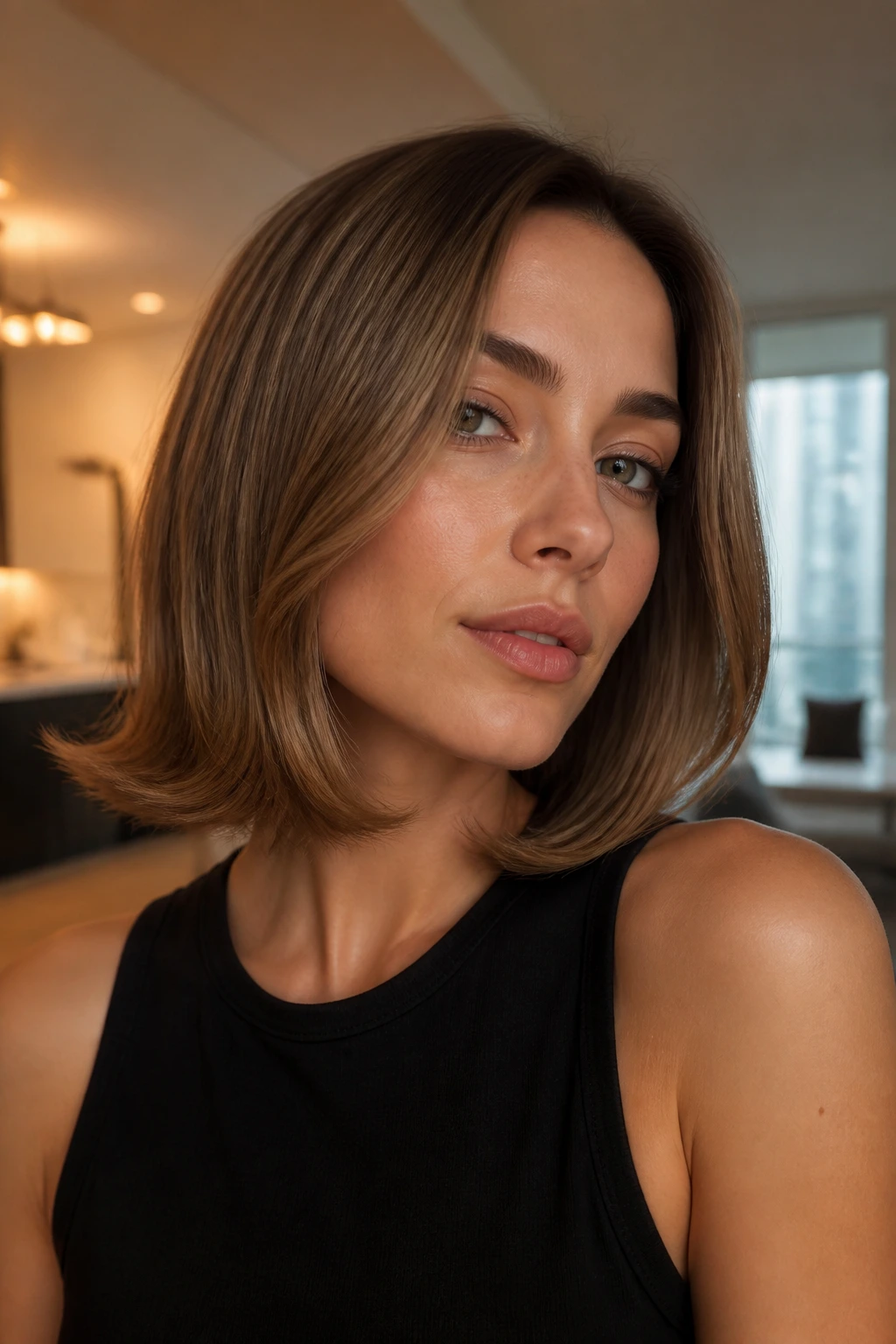
A flipped-end glam lob brings the ends outward with a slight retro bend that looks playful instead of severe. The flip can be subtle or more obvious, depending on the size of the brush or iron, and the shape works especially well when the rest of the haircut stays fairly clean. It’s a good way to make medium length hair look styled even if the rest of the outfit is low-key.
The thing to watch is balance. If the flip is too high, the haircut starts looking overly set. Keep it soft at the tips and let the rest of the lob stay smooth. That little kick at the ends can make a simple cut feel finished.
What Makes a Lob Sit So Well on Medium Length Hair
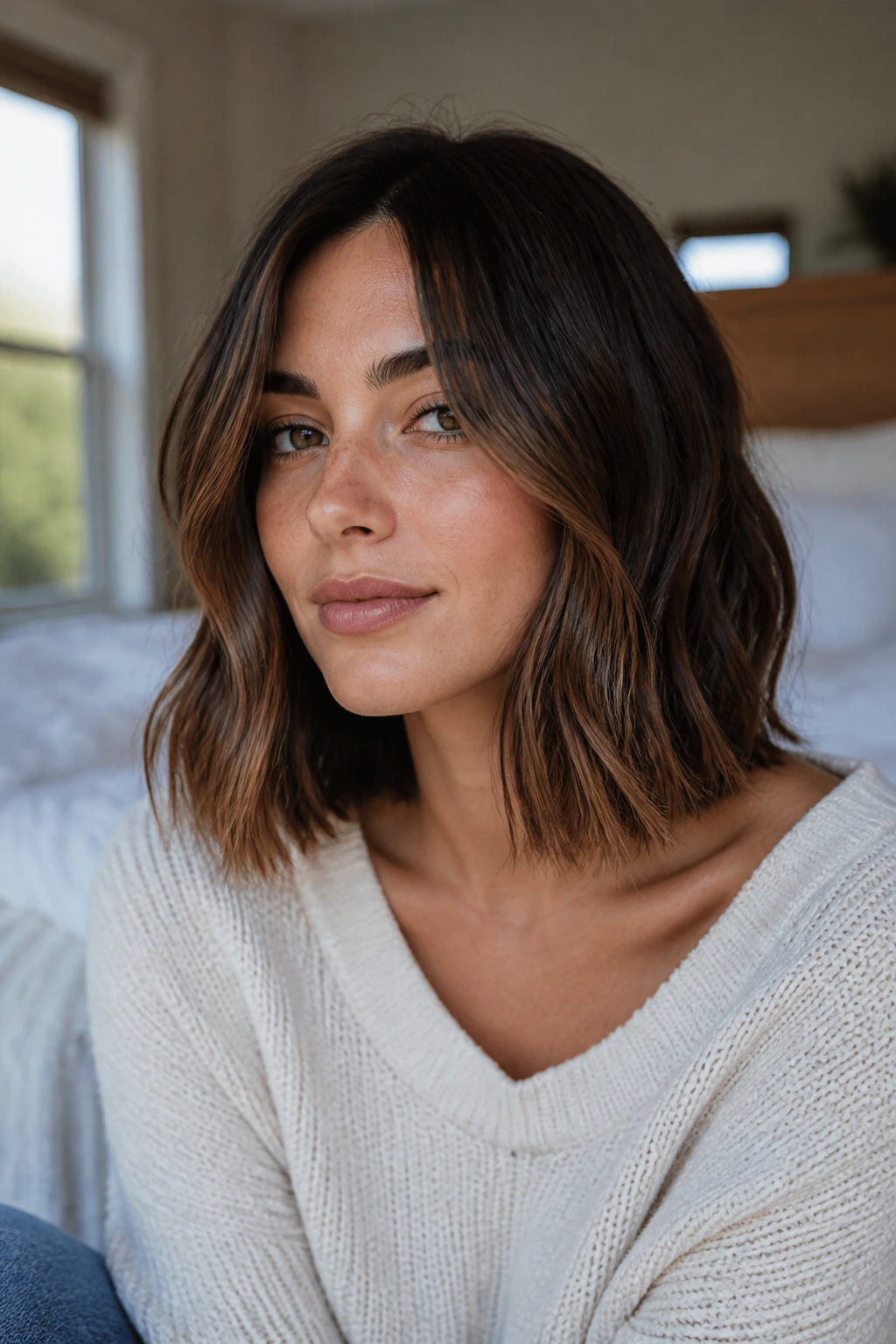
A lob behaves because it has a clear edge, and hair likes edges more than people admit. When the hemline lands somewhere around the collarbone, there’s enough weight left for the shape to stay visible, but not so much length that the ends collapse under their own weight. That balance is why medium length hair often looks better in a lob than it does when it’s grown out past a clean line.
The other reason is movement. A lob gives wave and curl somewhere to show up, but it also leaves straight hair enough structure to look deliberate. Too short, and the cut can fight your neck or jaw. Too long, and you lose the punch of the shape. The long bob is basically a negotiation between those two extremes, and the best versions know exactly where to stop.
A blunt lob, a layered lob, and a fringe-forward lob are all using the same basic tool in different ways. One makes density look rich. Another loosens bulk. Another changes how your face reads from the front. Same length. Different result.
Tools That Keep the Shape Sharp
-
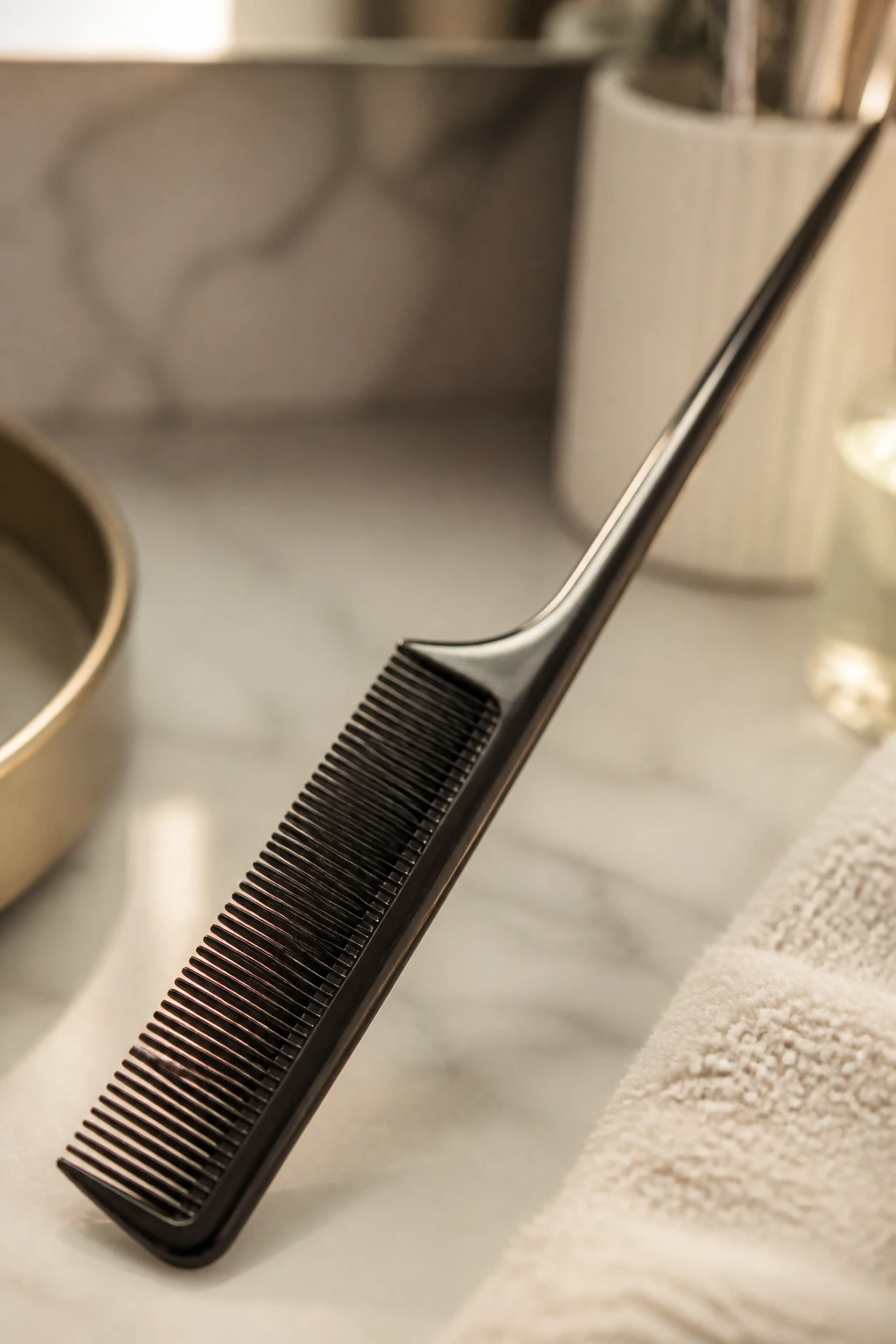
Tail comb: Parting the hair cleanly matters more than people think, especially for center-part and side-part lobs.
-
Sectioning clips: These keep damp sections separate so the front doesn’t dry faster than the back while you’re styling.
-
Blow dryer with a nozzle attachment: The nozzle aims the airflow downward, which helps the cuticle lay flatter and keeps the ends smoother.
-
Round brush, 1 to 1.5 inches: Best for creating bend at the ends, especially on blunt, collarbone-length lobs.
-
Paddle brush: Better when you want a straighter, cleaner finish without too much roundness.
-
1-inch curling iron or wand: Good for broken-up waves, beach texture, and quick bend through the front sections.
-
Flat iron with rounded edges: A straightener with soft edges can create a gentle curve instead of a hard crease.
-
Heat protectant spray: If you use hot tools, this is not optional. Dry ends on a lob show damage fast.
-
Light mousse or root-lift spray: Helps the crown stay up instead of collapsing toward the scalp by noon.
-
Texturizing spray or dry shampoo: Useful for day-two separation and for stopping the mids from looking too sleek.
-
Wide-tooth comb: Better for curls, wash-and-go styles, and detangling when the hair is damp.
-
Silk pillowcase or bonnet: Keeps the ends from roughing up overnight, which matters a lot on shorter hair where every bend is visible.
How to Match the Cut to Your Texture and Face Shape
Fine Hair
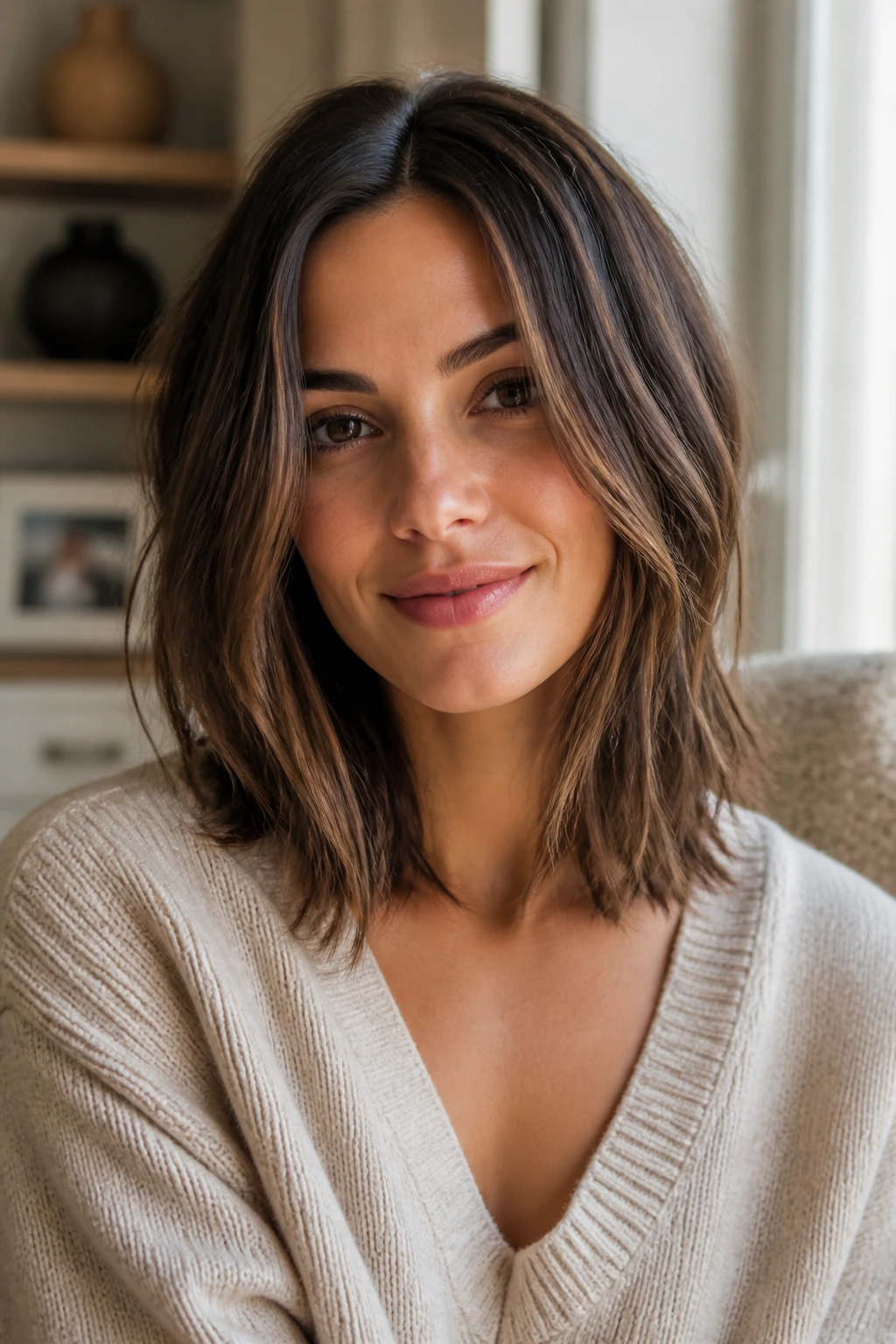
Fine hair usually likes a blunt or softly one-length lob because that keeps the ends looking full. Too many short layers can make the bottom see-through, and then the haircut starts looking thinner than it is. If you want movement, ask for hidden layers rather than obvious choppy ones.
Thick Hair
Thick hair often needs internal weight removal or a gentle A-line shape so the perimeter doesn’t puff out at the shoulders. A dense blunt lob can look fantastic, but it needs real precision. If the hair is very thick and straight, too much layering can make the whole cut expand outward instead of falling.
Wavy and Curly Hair
Waves and curls do best when the cut respects shrinkage. That means cutting with the pattern visible and leaving enough length for the curl to spring back. Shoulder-grazing lobs, shaggy long-layer lobs, and wash-and-go versions tend to work better than very blunt lines if your texture is strong.
Straight Hair
Straight hair can handle the sharpest lines. Blunt collarbone lobs, glass-hair finishes, and rounded-under shapes all work well because the texture shows every edge. If you want movement, use the part, not a pile of short layers, to create it.
Face Shape
Round faces usually benefit from a little length in the front, side parts, or cheekbone-framing pieces. Long faces often look balanced with curtain bangs or side-swept fringe. Square jaws tend to soften well with curved, U-shaped, or layered lobs. Heart shapes usually do well when the weight sits around the jaw instead of too high on the cheekbones.
Fast Styling Moves for Busy Mornings
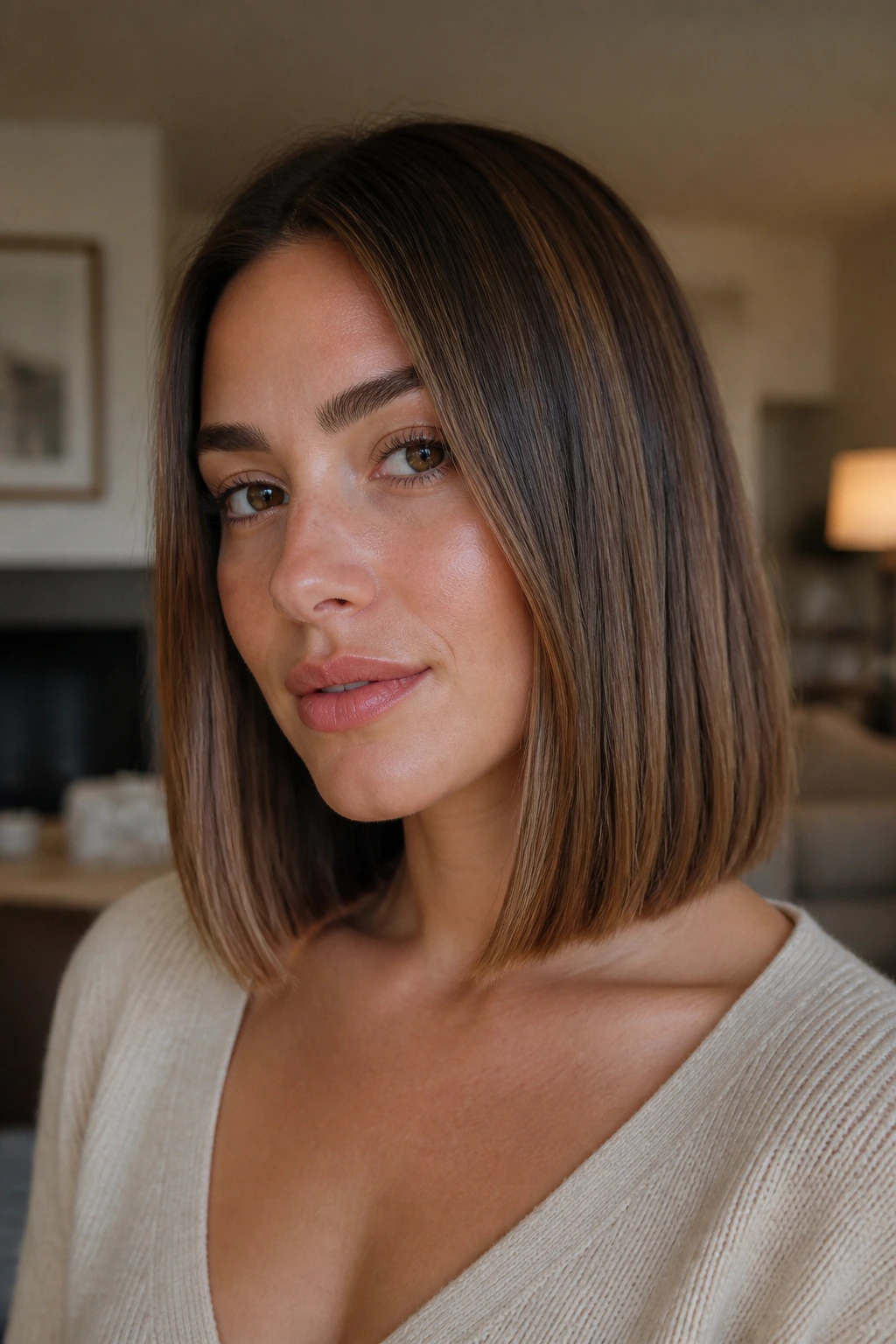
Air-Dry Finish: Work a small amount of leave-in cream or curl cream through damp hair, then twist the front pieces away from the face and let the rest dry naturally. A clip at the crown can keep roots from drying flat. Do not touch it too much while it sets.
Blowout Speed Run: Rough-dry the roots until the hair is about 80 percent dry, then use a round brush just on the top layer and the ends. You do not need a full salon blowout to make a lob look finished. A little bend at the perimeter is enough.
Flat-Iron Bend: Instead of ironing the hair poker-straight, give each section a tiny wrist turn at the bottom third of the strand. That subtle curve keeps the cut from looking stiff. This works especially well on blunt and boxy lobs.
Day-Two Refresh: Mist the mid-lengths lightly with water, add a touch of mousse or texture spray, and re-bend only the front pieces. Most lobs do not need a full wash to recover. They need a little reset and a shorter memory.
Fringe Fix: Bangs always need to be dried first. If you wait until the rest of the hair is done, the fringe will dry in whatever shape it feels like choosing, which is rarely the one you want.
Mistakes That Make a Lob Fall Flat
-
Cutting the front too short: If the front lands too high on the face, the lob can lose the collarbone length that gives it its clean line. Fix it by keeping the front at least at jaw-to-collarbone range unless you’re intentionally going shorter.
-
Over-layering fine hair: Thin ends and too many layers make the haircut look airy in the wrong way. The symptom is a see-through perimeter. Ask for a stronger outline and hidden movement instead.
-
Leaving thick hair one-length without debulking: The cut can puff out at the shoulders and feel boxy. Internal shaping, not random thinning, is the fix.
-
Styling every lob the same way: A blunt lob does not want the same finish as a shaggy one. If the haircut has a clean line, keep the bend soft and controlled. If it has texture, let some pieces break apart.
-
Skipping trims for too long: Once the ends start splitting or flipping weirdly, the shape changes fast. Regular dusting keeps the hemline from wandering.
-
Ignoring the part: A center part, side part, or off-center part changes where the weight sits. If the haircut feels off, the part might be the reason before the cut itself is the problem.
Five Ways to Refresh the Same Lob
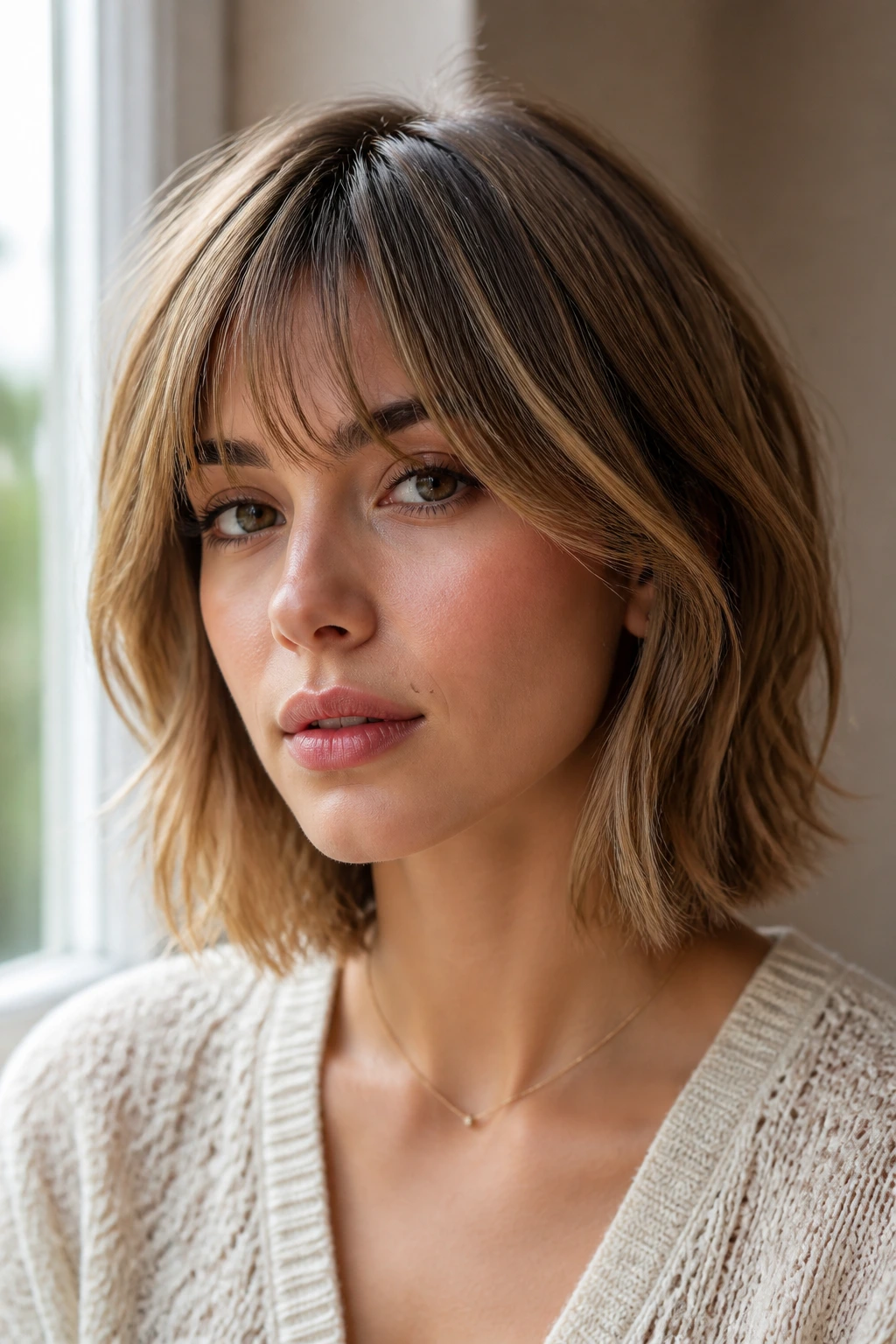
The Glassy Reset: Keep the length blunt, smooth the surface with a blow dryer or flat iron, and finish with a light serum. This version looks clean and intentional when you want the haircut to read as sharp instead of casual.
The Airy Shift: Add hidden layers and a little mid-length separation, then rough-dry with mousse. The cut keeps its lob shape but moves more when you walk, which is useful if the hair feels heavy at the shoulders.
The Fringe Drop: Bring in curtain bangs, bottleneck bangs, or side-swept fringe without changing the overall length. The haircut suddenly feels different from the front, which is where most people notice change first.
The Retro Bend: Flip the ends under or out with a round brush, depending on the mood. A little curve at the perimeter can turn a plain lob into something with more personality, especially on straight hair.
The Wash-and-Go Reset: Let the natural wave pattern lead, keep the cut longer around the collarbone, and use almost no heat. This works best when you want the haircut to fit your texture rather than the other way around.
Keeping the Shape Between Salon Visits
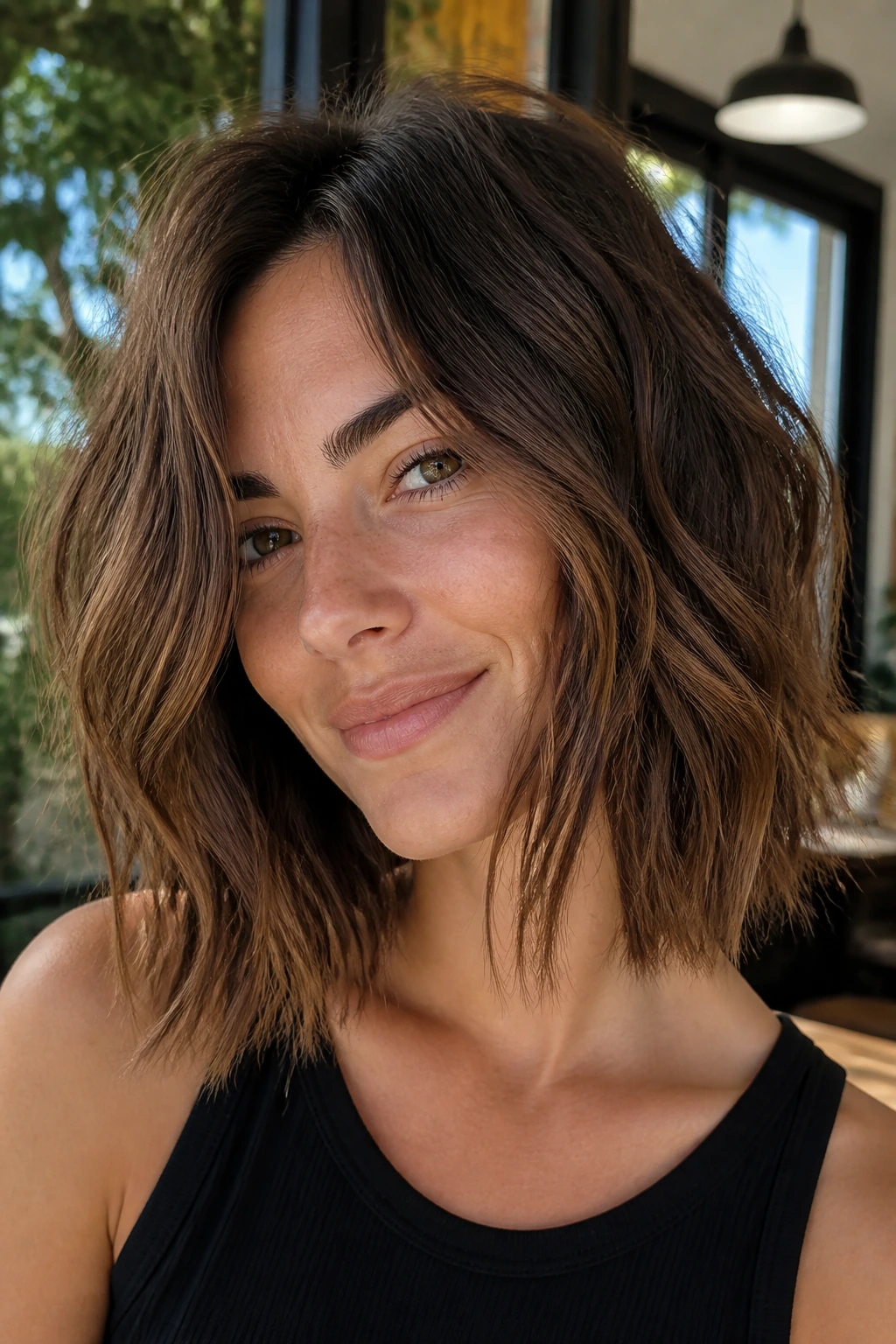
A blunt lob usually wants a trim every 6 to 8 weeks if you care about the line staying crisp. Layered lobs can often stretch to 8 to 10 weeks, but the front pieces and fringe may need a dusting sooner if they start poking into the eyes or collapsing into the cheeks. Curly lobs are their own animal. The shape might last a little longer, but the curl pattern can hide a lot until suddenly it can’t.
Wash frequency matters too. If your hair gets oily at the roots, dry shampoo can buy you an extra day or two, but don’t let product pile up for weeks. A clarifying wash about once a month helps remove the film that makes medium length hair look dull and heavy. Heat styling should also be spaced out when you can manage it. Repeated flat ironing on the same ends is how a nice lob becomes a tired one.
At night, a silk pillowcase or bonnet helps, especially if the ends bend out by morning. I also like clipping the front pieces loosely away from the face if they’re bang-heavy or face-framing. It saves you from waking up to one side sticking straight up like it has opinions.
Questions People Ask Before They Cut Their Hair This Length

Will a lob work if my hair is fine?
Yes, and it often works better than longer hair because the weight doesn’t drag the ends flat. A blunt or softly one-length lob usually gives fine hair the fullest outline.
Is a layered lob bad for thick hair?
No, but the layers need to be strategic. Thick hair usually needs bulk removed from inside the cut, not chopped into short, fluffy layers that make the sides balloon.
Can curly hair wear a lob without looking triangular?
It can, as long as the cut respects shrinkage and the shape is adjusted to your curl pattern. Cutting dry or nearly dry helps the stylist see where the curl actually sits.
What face shape works best with a lob?
Most face shapes can wear one, but the details matter. Round faces usually like a longer front or side part, while long faces often benefit from bangs or fringe.
How short can a lob be and still count as a lob?
Once the hair moves above the jaw in a way that reads more like a traditional bob, you’re drifting out of lob territory. For most people, the sweet spot is jawline to collarbone.
Should I choose blunt or textured?
Blunt is better when you want density, shine, and a stronger line. Textured works better if your hair is naturally wavy or if you want the cut to feel looser and softer.
What if the ends flip out every morning?
That usually means the length is sitting at a point where your hair hits your shoulders and kicks away. A small trim, a slight A-line, or a rounded-under finish usually fixes it.
Do bangs make a lob harder to maintain?
Only the fringe itself adds real upkeep. The rest of the haircut stays about the same, but you’ll probably want to trim bangs more often than the body of the lob.
The Lob That Keeps Its Shape
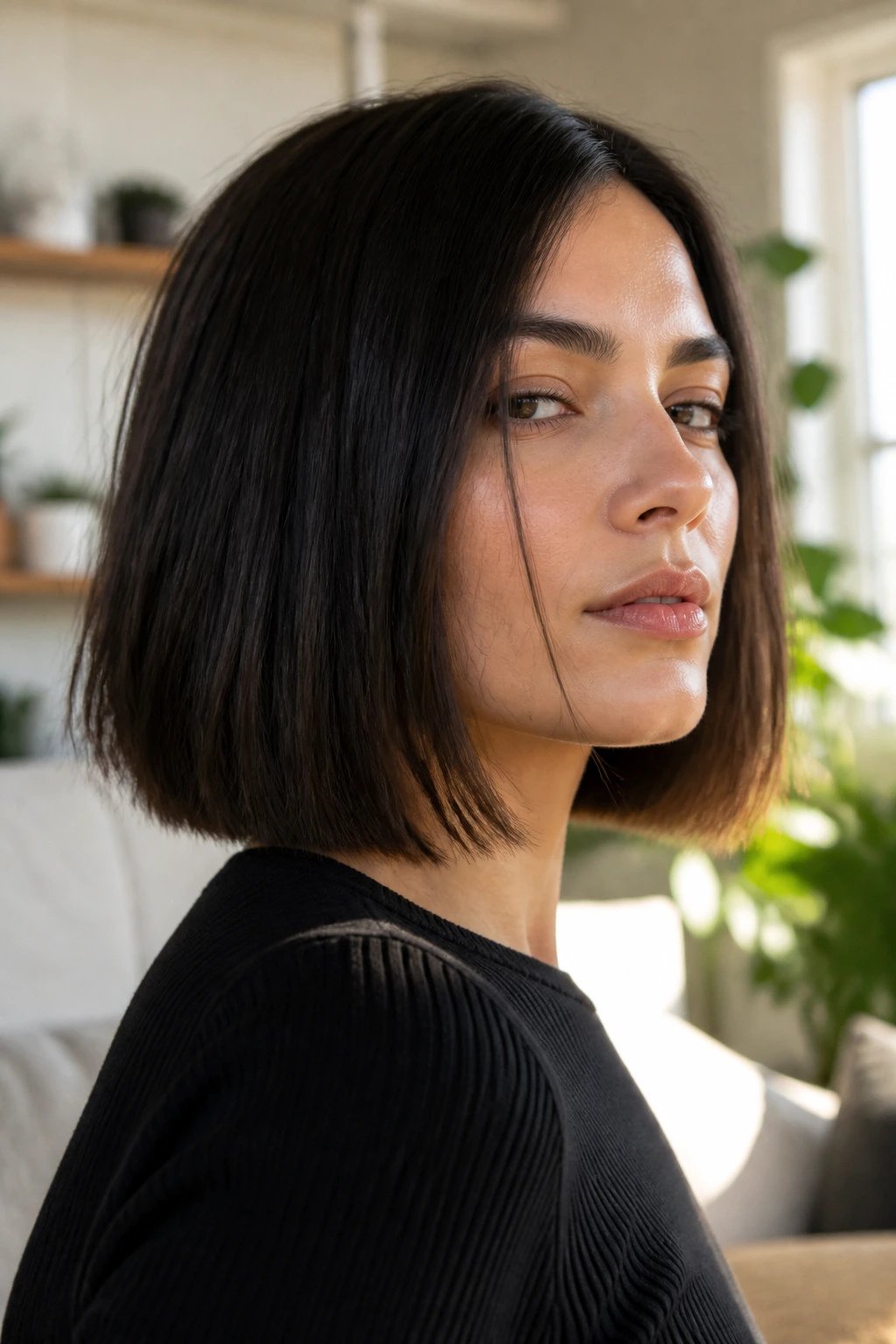
The best lob haircuts for medium length hair do not all look the same, and that’s the whole point. A blunt version can sharpen fine hair. A layered one can lighten thick hair. Curtain bangs can change the whole mood of the cut without touching the length much at all. The common thread is shape — a real hemline, not just hair that happens to stop somewhere near the shoulders.
What I like most about a good lob is how little drama it needs to stay useful. You can wear it clean, rough, curved under, tucked back, or air-dried with a little bend, and it still feels like a haircut rather than a compromise. That’s rare. Most cuts either ask for too much styling or give too little structure. A good lob sits in the middle and behaves.
Pick the version that fits your texture, your styling tolerance, and the way you like hair to move when you turn your head. The shape will do the rest.
