



Lob haircuts for wavy hair live or die on one detail: where the weight falls. Cut too short at the wrong point and the ends puff out like a bell. Cut with a little restraint, and the same bend turns into soft, swingy movement that sits at the collarbone and shifts when you turn your head.
That’s why the lob keeps showing up as a smart haircut for waves. It gives the hair enough length to drape, but not so much length that the wave gets dragged flat and tired by the time it reaches the ends. And unlike a longer cut that can start looking stringy, a well-shaped lob still has a clear edge. You can see the line. You can feel the shape.
The tricky part is that “lob” is not one haircut. It’s a whole family of shapes, and wavy hair changes the rules. A loose S-wave, a stronger bend, and a thick, springy wave all behave differently once the scissors come out. The best cuts respect that. The bad ones fight it. That’s the whole game.
Why These Lob Cuts Work So Well on Wavy Hair
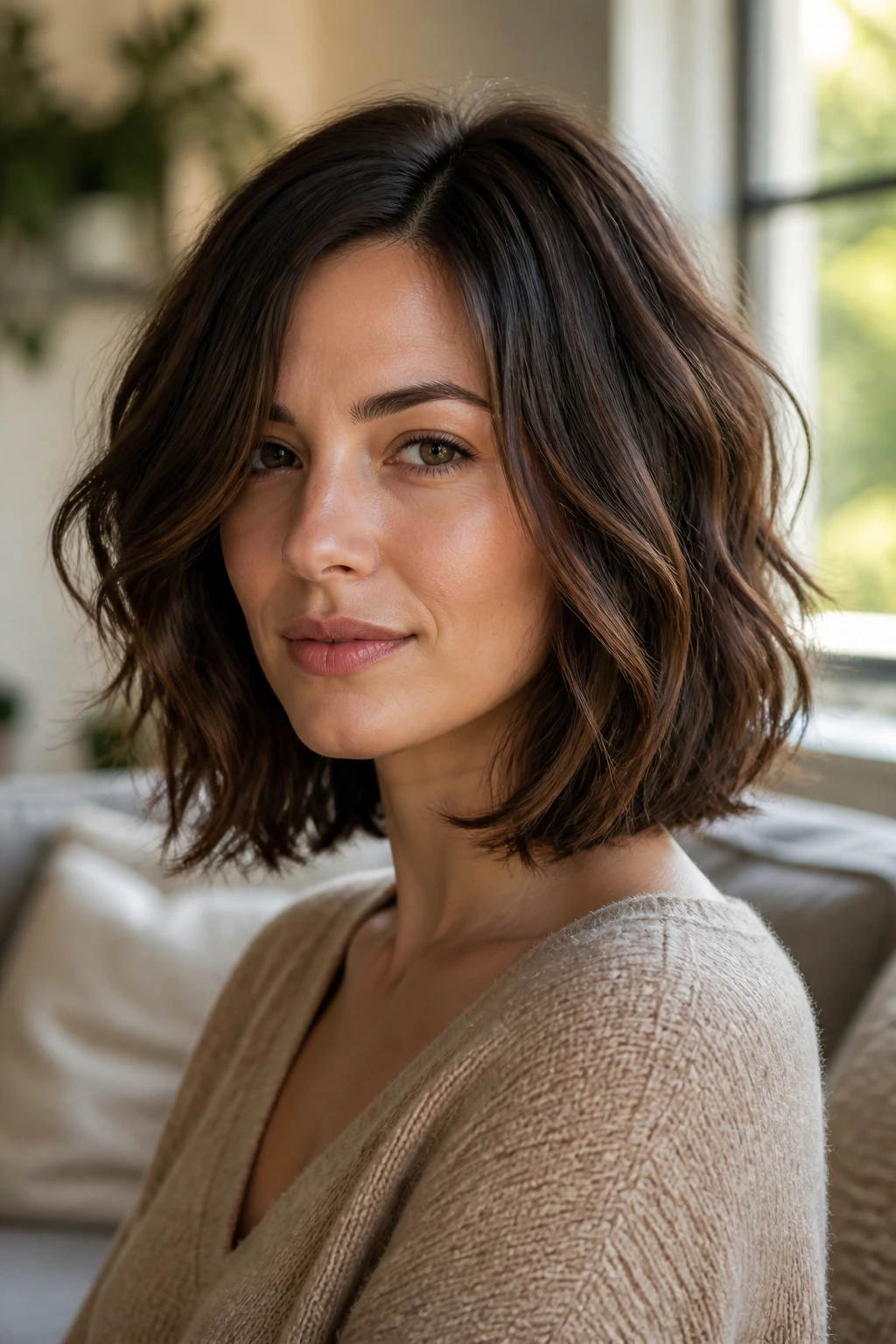
-
The length sits in the bend zone: A lob usually lands around the collarbone or just above it, which is far enough down to keep waves from springing up into a triangle.
-
Weight stays where waves need it: Too many layers can make wavy hair look wide at the sides. A smart lob keeps enough bulk at the bottom to let the shape hang, not explode.
-
You can steer the finish: The same haircut can look air-dried and soft, brushed-out and polished, or piecey with mousse and a diffuser.
-
Grow-out is less annoying: When a lob starts getting longer, it usually still looks intentional. It doesn’t lose the plot the way a very short cut can.
-
It works with density, not against it: Thick waves can get debulked. Fine waves can keep more perimeter. The lob gives room for both without turning into a one-note haircut.
1. The Blunt Collarbone Lob
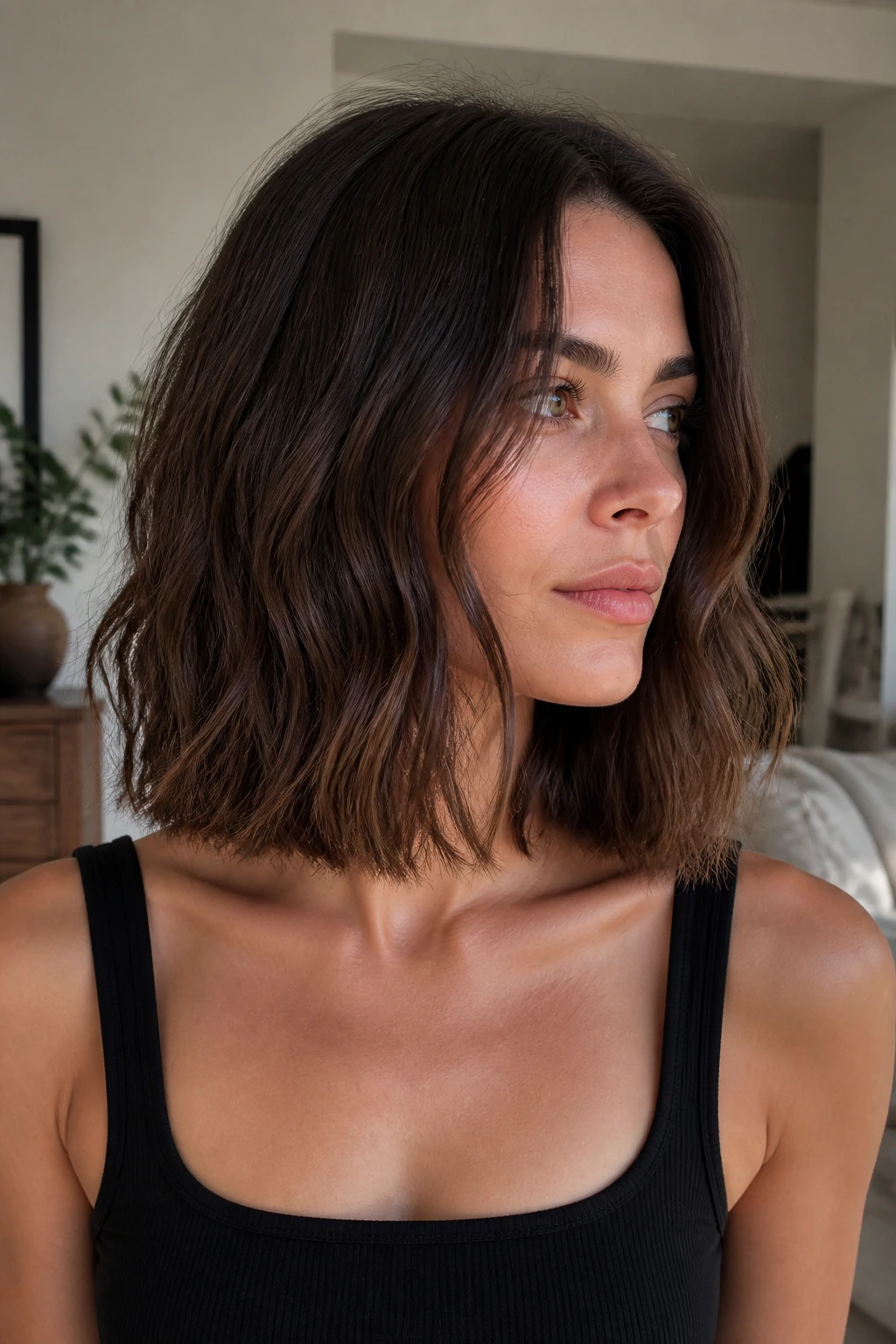
A blunt collarbone lob is the cleanest version of the cut, and on wavy hair it has a lovely tension: a neat edge with movement inside the bend. The ends should hit right around the collarbone, where the hair can still drape instead of bouncing out. I like this shape on loose to medium waves, especially when the hair has a bit of density. It gives the wave a strong frame, which keeps the whole head from looking too airy or frayed.
Ask for a blunt perimeter with only the tiniest point-cut cleanup at the very ends. That keeps the line crisp without making the finish look heavy.
2. The Soft-Layered Lob
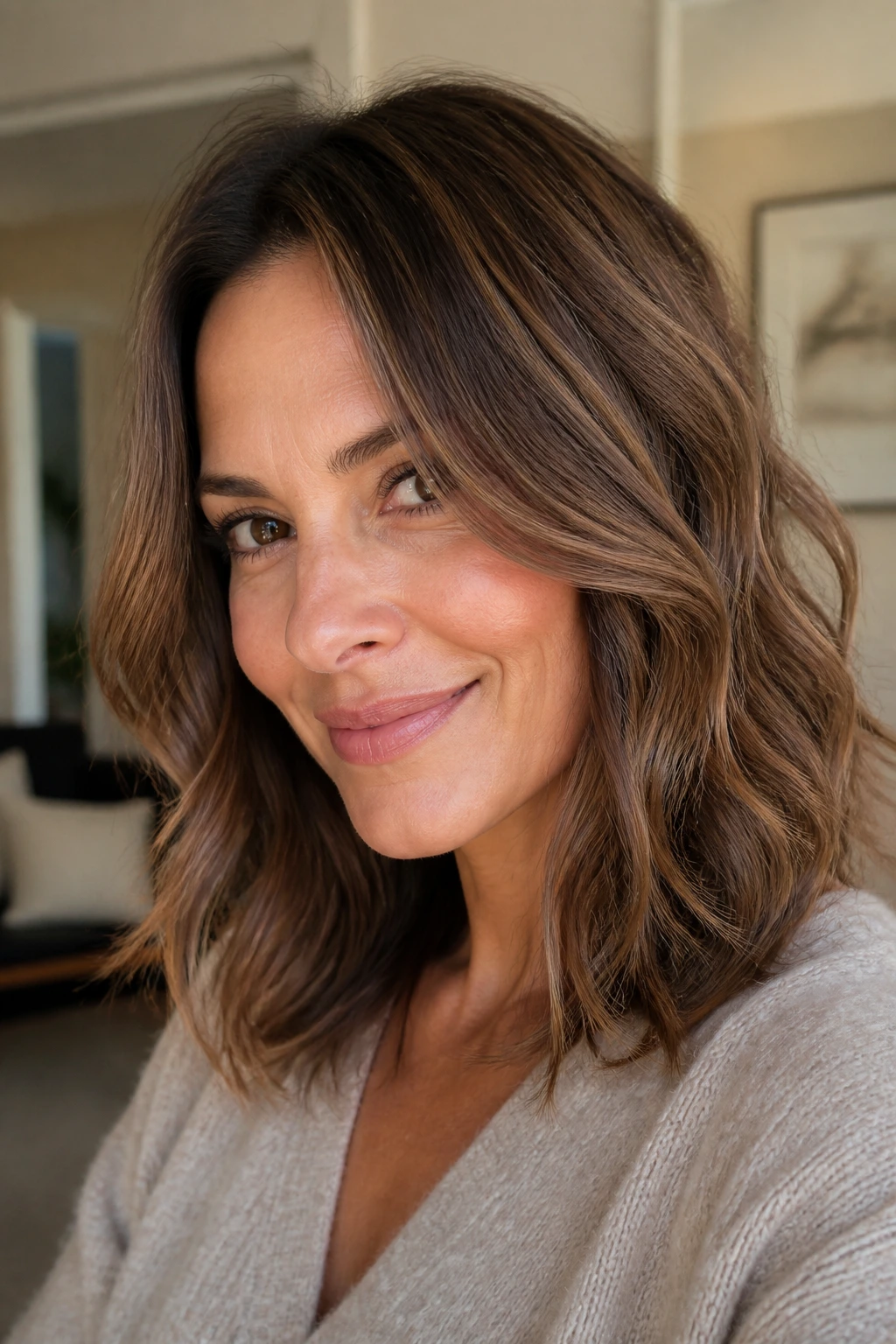
Soft layers are the easiest way to keep wavy hair from ballooning at the bottom. The trick is to keep the layers low and blended, usually starting somewhere below the cheekbone, not up near the eye. That way the wave gets room to move, but the cut still holds a clear outline. On hair that bends strongly, this shape makes the waves stack neatly instead of pushing out at the sides.
Best for: medium-density waves that feel puffy when they grow out.
A little curl cream through damp hair is enough here. Too much product and the layers can separate in a way that looks stringy instead of soft.
3. The French-Girl Lob

This one has a slightly undone feel, but it is not sloppy. The French-girl lob usually sits a touch above the collarbone and pairs well with a center or slightly off-center part. On wavy hair, it works because the shape is easy to air-dry and still looks deliberate. The ends should move, not stick out in blunt little shelves.
If you like hair that looks best after a quick scrunch and a walk out the door, this is the lane. I’d keep the face framing gentle and the texture touchable, not crunchy.
4. The Angled Lob with a Longer Front
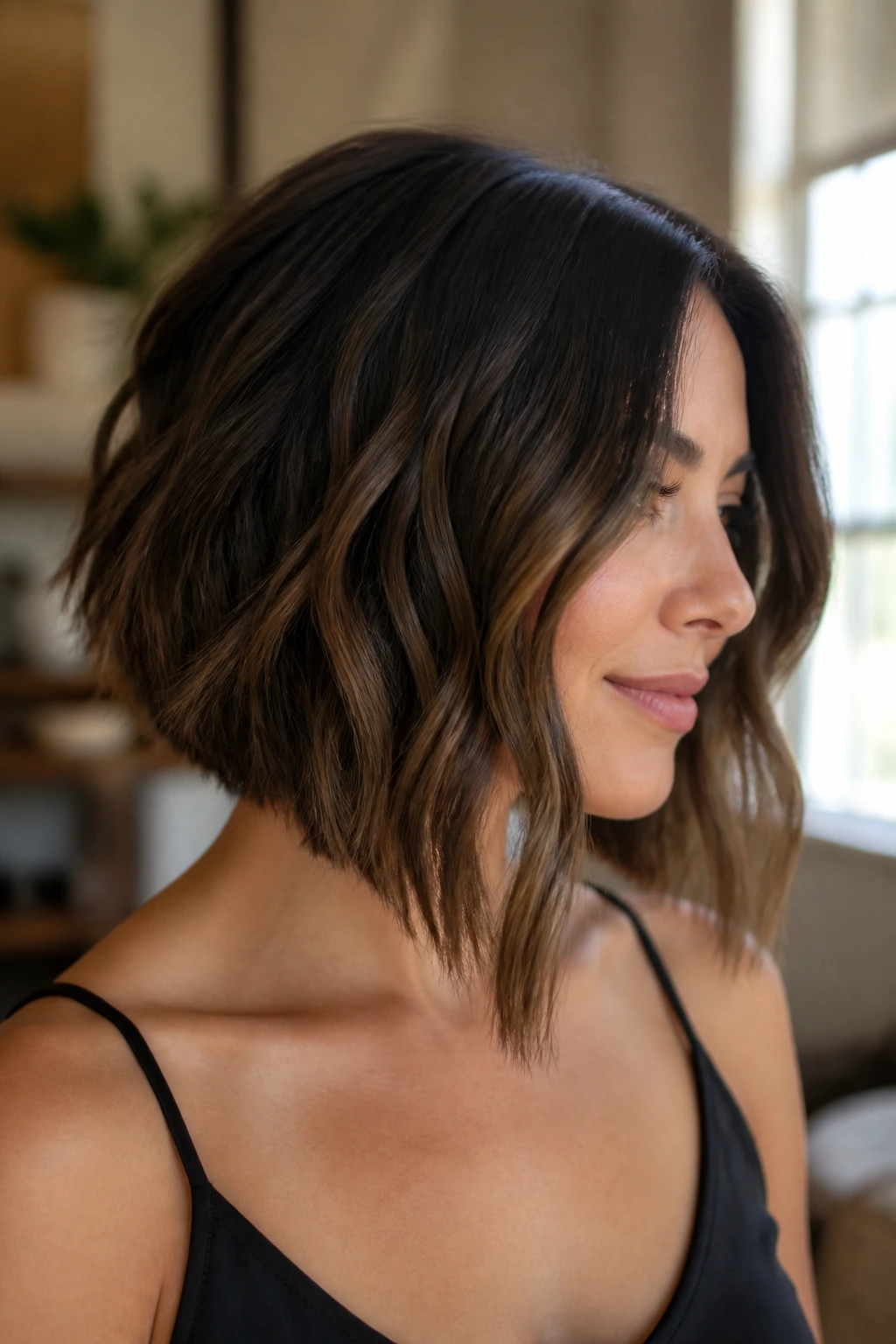
A longer front piece changes the whole mood of a lob. The back lands a little higher, the front skims the jaw or collarbone, and the line creates a soft diagonal that flatters waves beautifully. It pulls the eye downward and forward, which makes the hair look longer without actually leaving it long. That’s useful if your waves bulk up on the sides.
This cut is especially good when your hair is thick and the nape area gets fuzzy. The angle gives shape there without forcing the front into a dramatic, high-maintenance edge.
5. The U-Shaped Lob
A U-shaped lob keeps the front a little longer and lets the back lift just enough to avoid a boxy finish. On wavy hair, the curve helps the waves fall in a smoother line. The perimeter should feel rounded when the hair is down, not chopped flat across the back. This is one of those cuts that reads subtle in the chair and better every time it air-dries.
If your waves tend to separate unevenly, the U-shape can hide a lot of that without looking overly layered. It’s quiet, which is a nice change.
6. The Inverted Lob
The inverted lob is sharper than the U-shape, with more obvious lift in the back and more length toward the front. On wavy hair, that stack at the nape can be gorgeous if it’s not overdone. Too much graduation and you get a dated, helmet-like silhouette. Keep the back soft, and the wave pattern helps the cut move instead of puffing.
Where It Makes the Most Sense
- Dense waves that need a little lift at the back.
- Hair that feels flat at the crown but heavy at the nape.
- Anyone who likes structure and a cleaner neckline.
I’d avoid making this too steep. A mild inversion looks modern; a dramatic one usually fights the wave.
7. The Curtain-Bang Lob
Curtain bangs change the face of a lob fast. They split softly in the middle, skim the cheekbones, and let the rest of the wave fall around them. On wavy hair, they work because they don’t need pin-straight precision. A little bend in the fringe looks right. A lot of bend still looks right.
The best version keeps the bangs long enough to tuck behind the ear or blend into the front layers. Short, blunt curtain bangs can bounce awkwardly once the wave wakes up. Longer is safer. And prettier.
8. The Bottleneck-Bang Lob
Bottleneck bangs start narrower in the center and flare out around the temples, which gives wavy hair a softer frame than a full fringe. They’re especially useful if you want some forehead coverage but don’t want the heavy line that classic bangs create. The lob underneath can stay simple; the fringe does the work.
This cut is good when you like a face-framing effect without committing to a lot of styling every morning. The bangs should be cut to move with the waves, not flatten them. If they sit too blunt, they lose that easy bend.
9. The Side-Part Lob
A side part can rescue a lob that feels too flat on top. Push the hair over a few inches, and the root lift changes immediately. On wavy hair, that extra height at the crown makes the length look lighter without removing any weight from the ends. It’s a clean trick, and it works.
What I like about it: the side part gives the wave a direction. The whole cut stops feeling centered and static.
If your hair grows forward or one side lies flatter than the other, a side-part lob makes the difference obvious in the best way. The wave gets a little drama without asking for extra layers.
10. The Center-Part Lob
A center-part lob is the calm, symmetrical version of the cut. On wavy hair, it reads best when the waves are balanced from side to side and the front pieces are just long enough to frame the jaw. This shape looks especially good with a blunt or near-blunt perimeter, because the part does enough visual work on its own.
I like this on hair that dries into soft S-waves instead of giant bends. The center line keeps the cut grounded. If your hair favors one side, though, don’t fight it too hard just to get this look.
11. The Face-Framing Lob
Face-framing pieces can change a lob more than a full set of layers. A few carefully placed sections around the cheeks and jaw keep the wave from hanging all one length around the face. On wavy hair, the front pieces should start low enough to blend, not so high that they flop into a weird little shelf.
This is a smart choice if you want movement around the face without thinning out the rest of the hair. It’s the haircut equivalent of opening a window. Not dramatic. Just enough.
12. The Money-Piece Lob
A money-piece lob uses lighter, brighter front sections to draw attention to the face while the rest of the cut stays simple. On wavy hair, that contrast can make the movement read more clearly, especially when the front pieces are a touch shorter or lighter than the body. It is not only about color. The cut matters just as much.
The Shape It Needs
- Keep the front pieces long enough to bend, not stick out.
- Let the interior stay a little heavier so the bright pieces don’t float away.
- Pair it with a loose wave pattern or soft diffused finish.
I’d skip a harsh, chunky front unless your waves are already strong. A gentle face-lightening section looks far more current.
13. The Invisible-Layer Lob
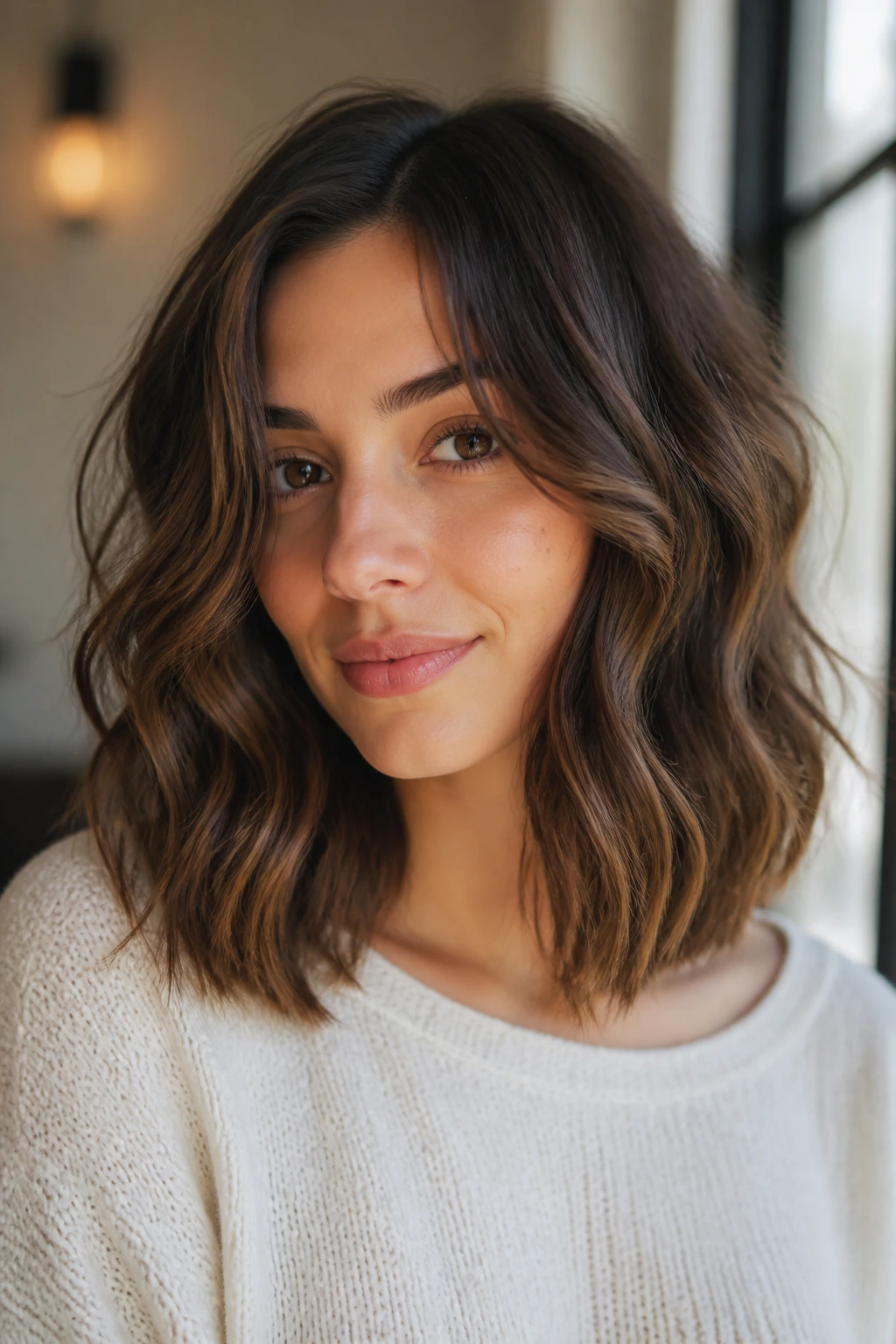
Invisible layers are the quiet fix for hair that feels bulky but still needs a clean outer line. They live underneath the top layer, so the surface looks smooth while the inside sheds some weight. That makes them useful for wavy hair that swells at the bottom but doesn’t need obvious choppiness.
The beauty here is subtlety. You can keep the perimeter blunt and still stop the cut from turning into a box. If you’ve ever had waves that looked good from the front and wide from the side, this is the answer.
14. The Internal-Layer Lob
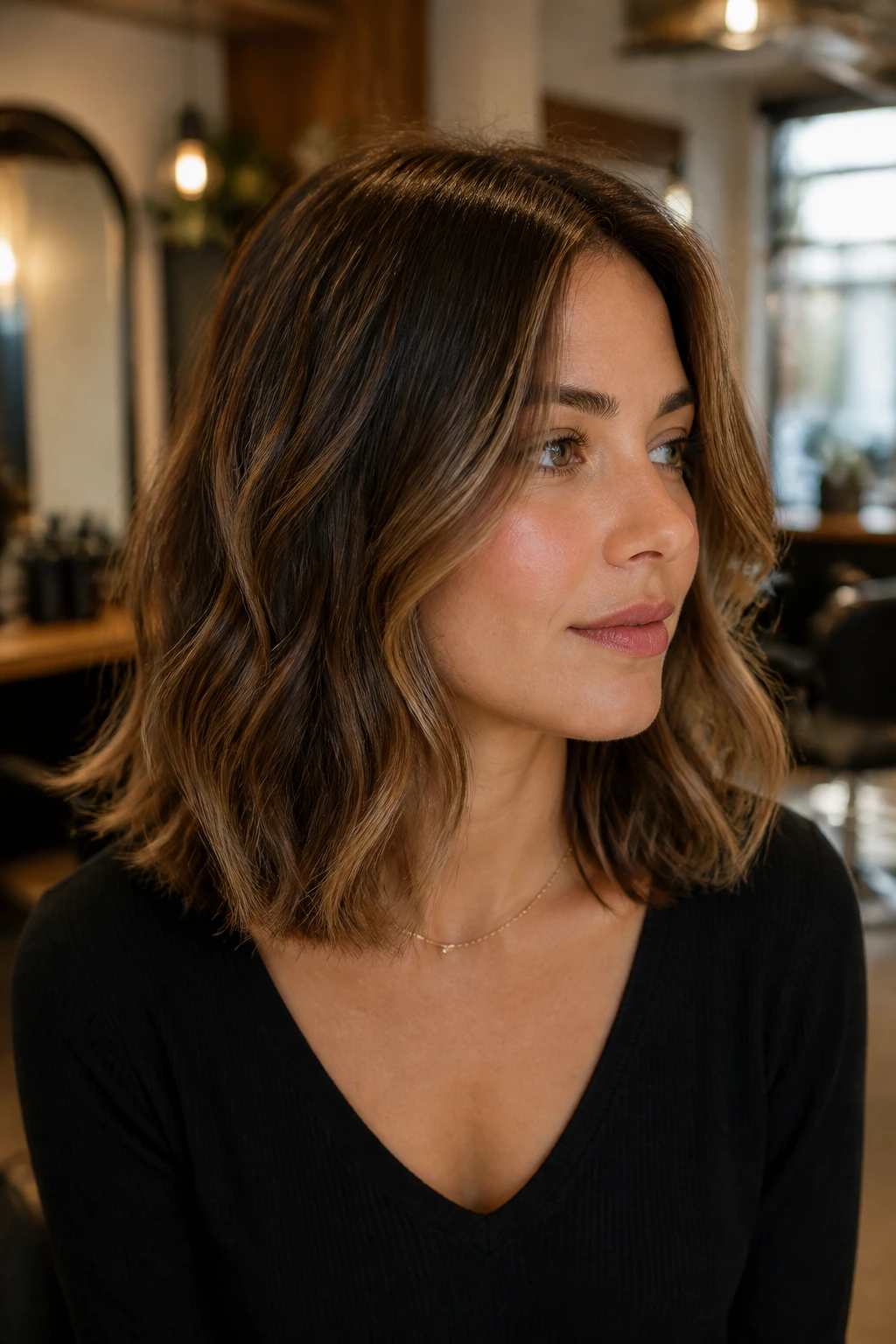
Internal layers go a little further than invisible layers. They help the wave collapse into itself in a better way, which means less puff and more bend. I like this on medium to thick hair that has enough body to support the shape. Without some internal removal, that kind of hair can look like it is trying to escape the haircut.
The cut should still read as a lob, though. If the layers climb too high, you lose the clean outline and wind up with a shag whether you wanted one or not.
15. The Choppy-End Lob
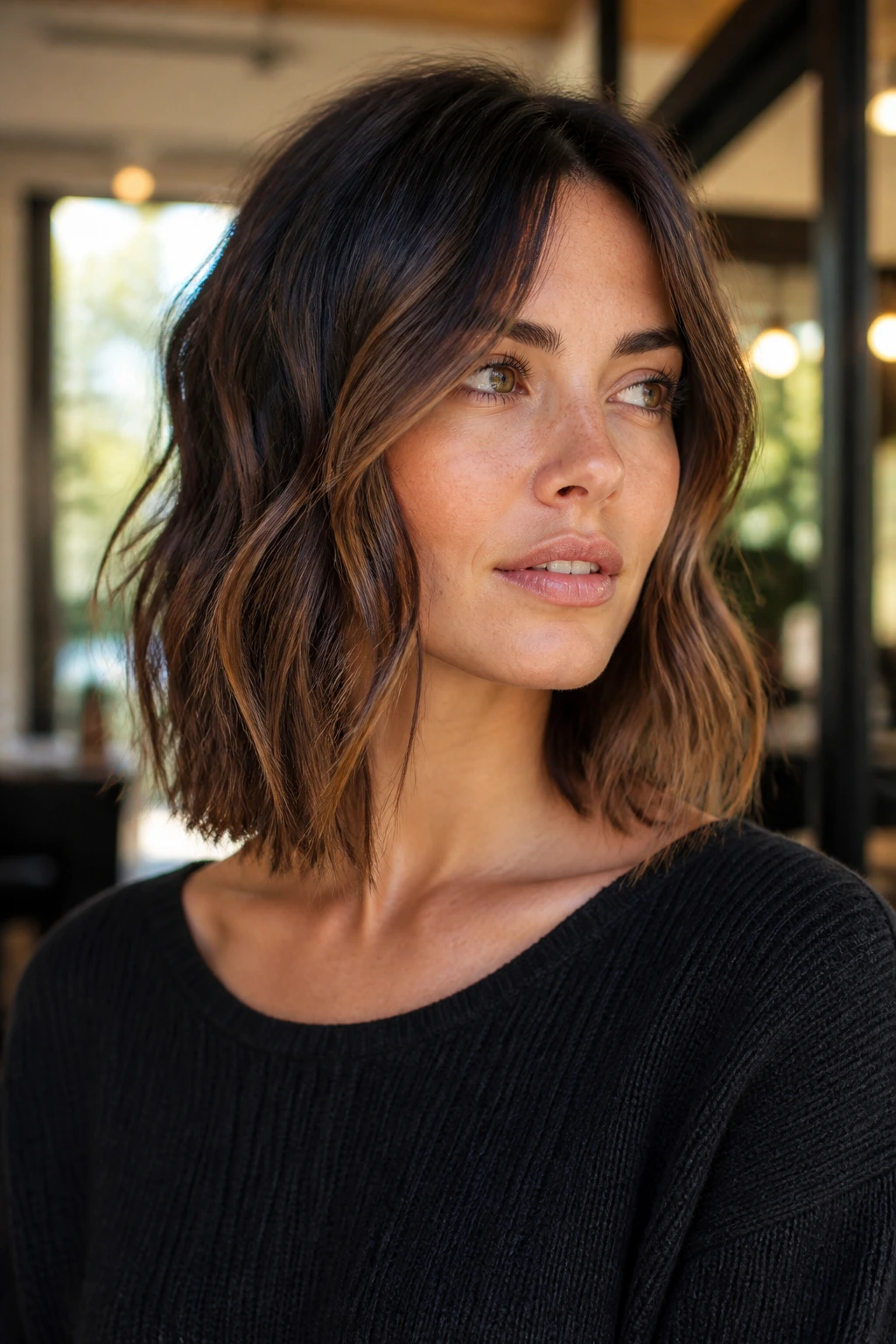
Choppy ends give wavy hair a livelier finish. The perimeter is still a lob, but the tips are softened and broken up with point cutting so the last inch doesn’t sit like a solid shelf. That makes the wave clump into smaller, more defined sections.
A blunt cut can look too heavy on some waves. Choppy ends fix that fast.
If your hair gets fluffy at the bottom or flips in a way you hate, this shape is worth a look. It’s especially handy when you want texture without committing to lots of layers.
16. The Razor-Cut Lob
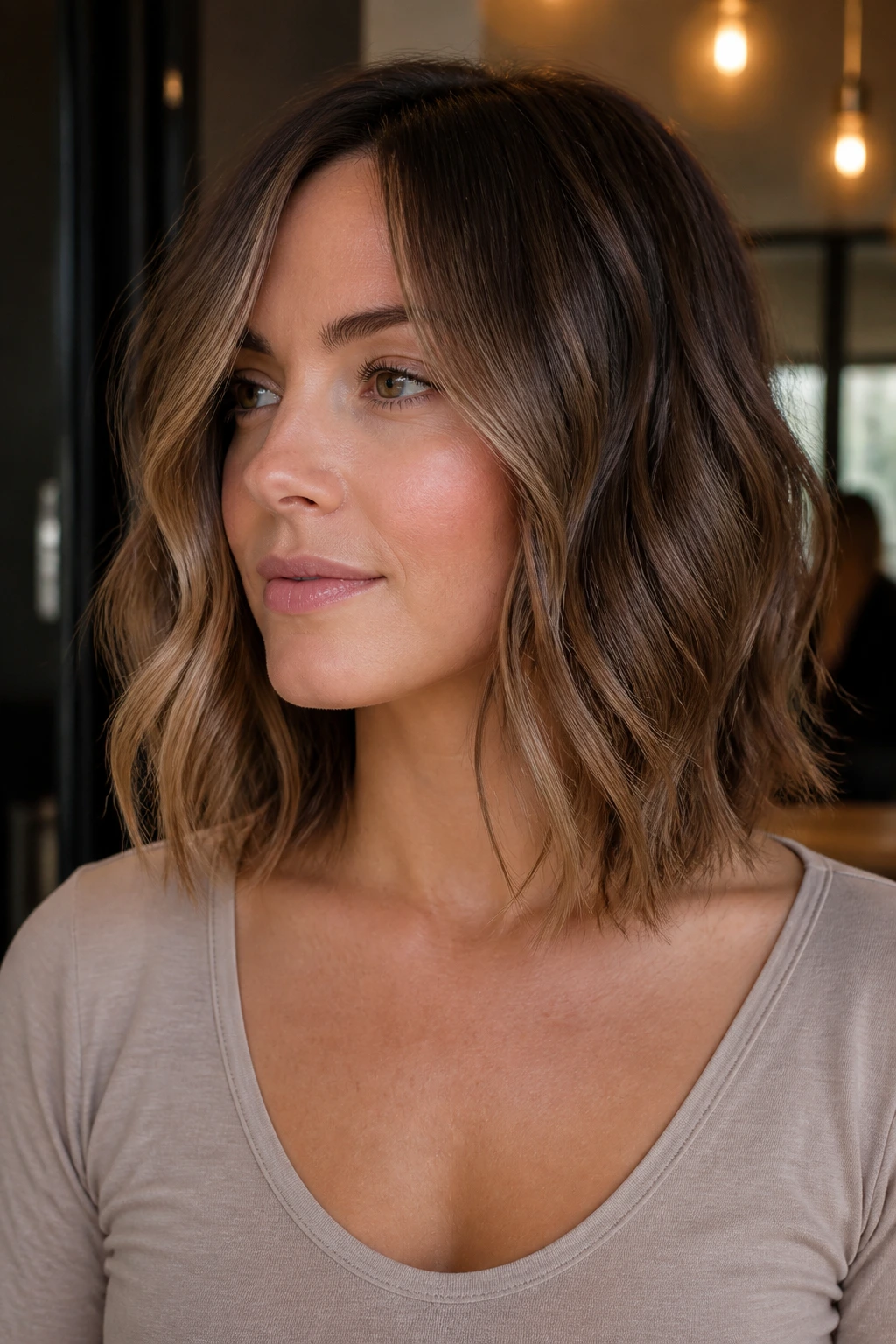
A razor-cut lob is softer at the edges and a little freer in the movement, which can look excellent on medium-density waves. The blade takes off weight in a way that lets the hair bend more naturally. Done well, the result feels airy and loose. Done badly, it frays the ends and makes the haircut look ragged.
That is why this one needs judgment. On coarse or very thick waves, a razor can help the cut breathe. On fine hair, I’d be more cautious. You want softness, not split-looking ends.
17. The Shaggy Lob
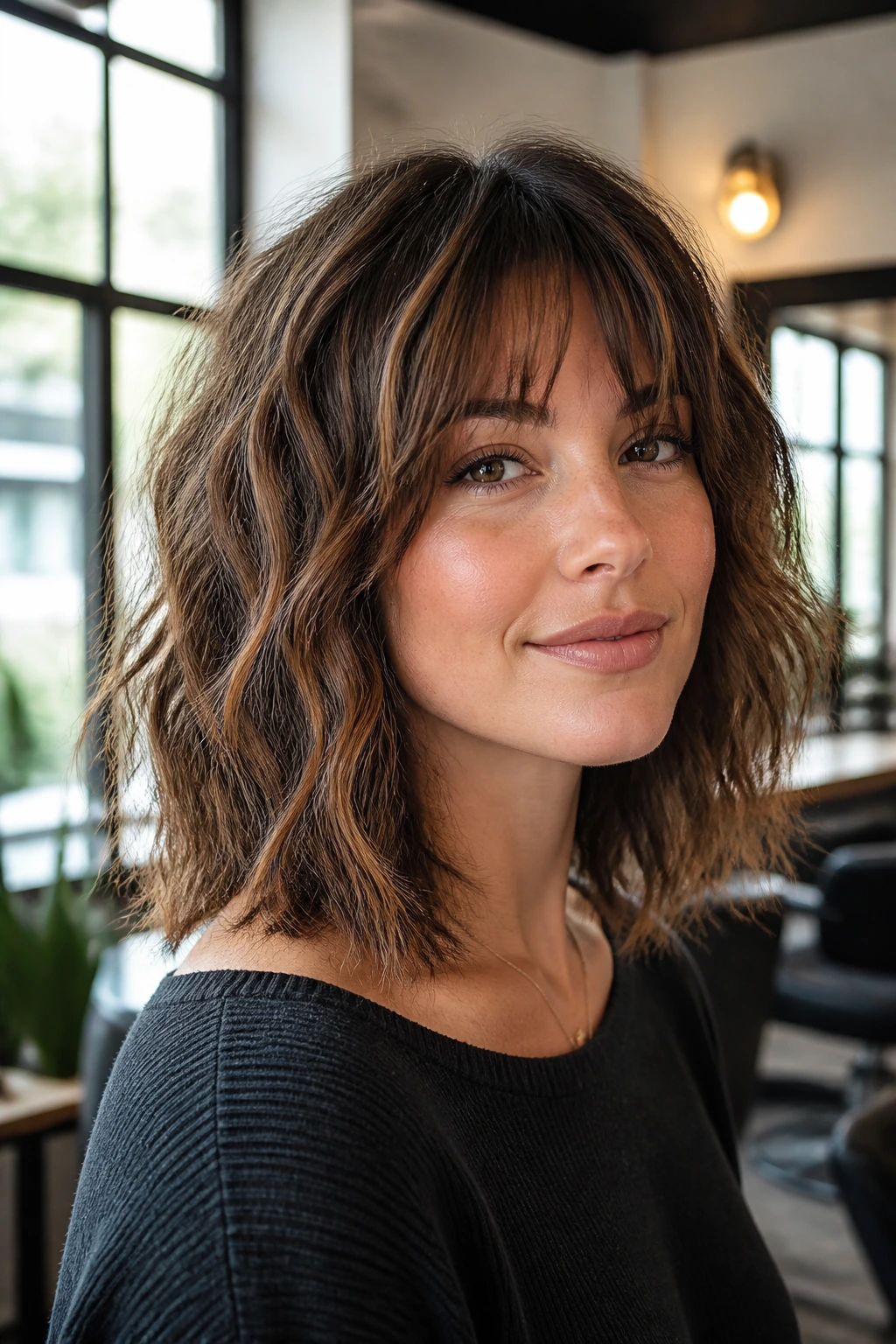
The shaggy lob leans into texture with shorter layers and a more lived-in finish. Wavy hair often carries this shape well because the natural bend helps the layers separate without much effort. You get movement around the crown, around the face, and through the ends.
It’s a good cut if you like hair that doesn’t need to look polished to look intentional. The downside is obvious: if your wave pattern is loose and your hair is already fine, too much shagging can leave the ends a little thin. Keep the perimeter honest.
18. The Beachy Lob
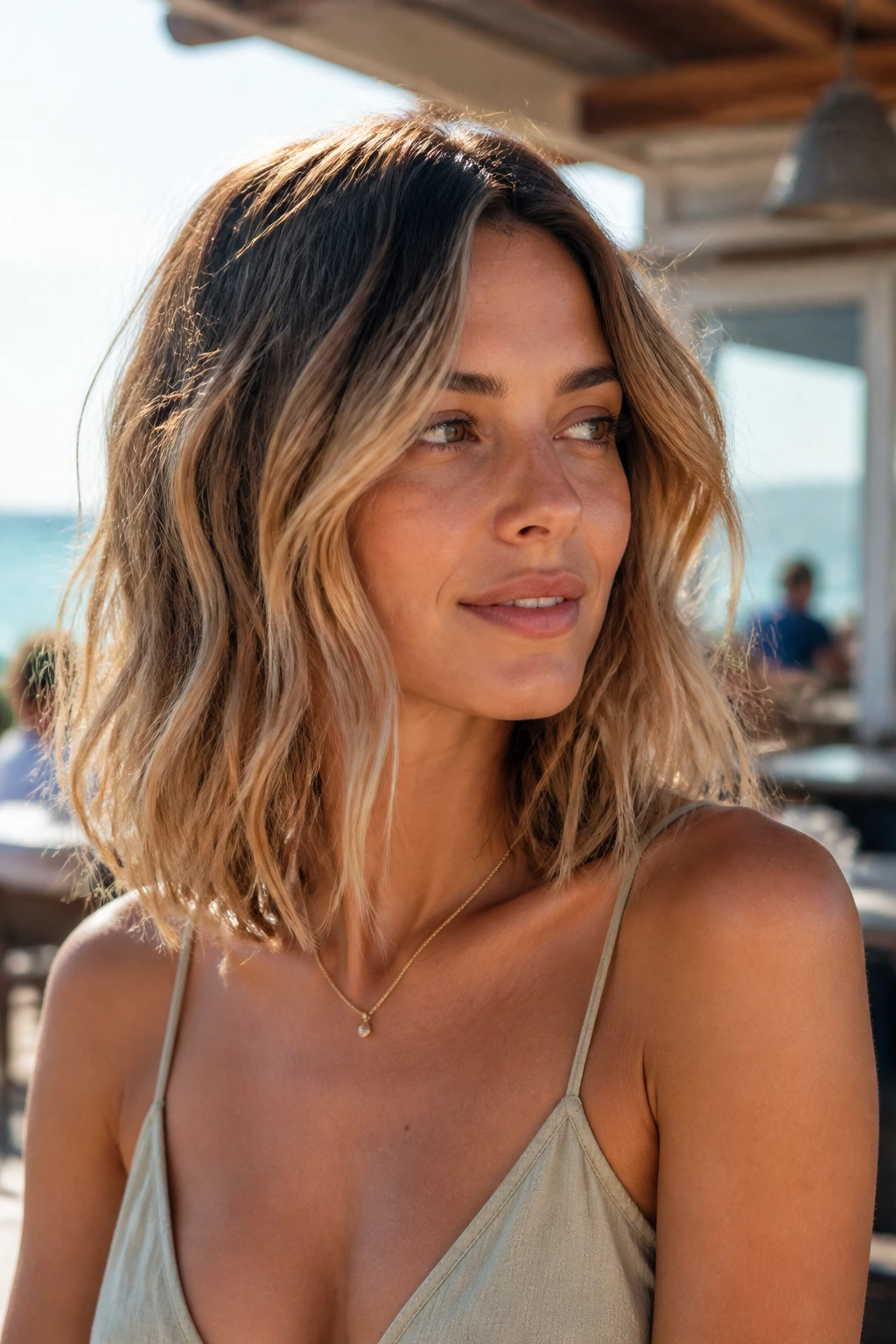
Beachy is one of those words people toss around carelessly, but in haircut terms it means a lob that holds a soft, sun-kissed texture without looking overstyled. The cut usually has blended layers, a relaxed edge, and enough length for waves to separate naturally. Salt spray and a diffuser both make sense here.
Styling Notes
- Scrunch in mousse first if you want longer-lasting bend.
- Use a diffuser on low heat if your wave tends to drop.
- Leave a few pieces uneven on purpose. The style gets weaker when every strand behaves.
This is the cut I’d choose for someone who hates an obvious blowout.
19. The Tousled Lob
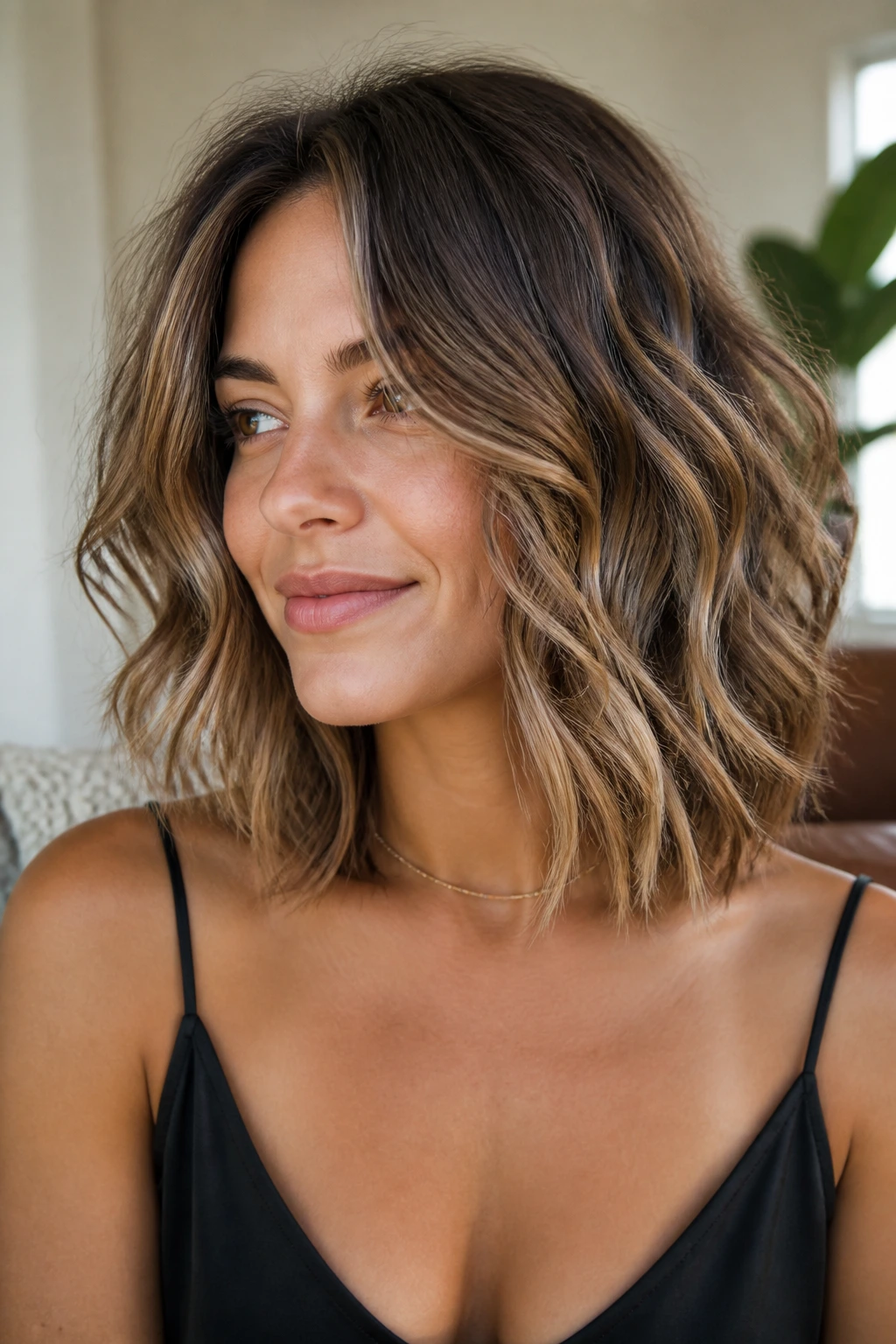
Tousled hair is not the same as messy hair, and this lob proves it. The shape should look air-kissed and soft, with the ends moving in different directions but not looking shredded. On wavy hair, it works because the wave already gives you built-in texture; the cut just needs to keep it from getting puffy or flat.
A little styling paste at the ends goes a long way. Too much and the hair starts to clump in odd places. You want separation, not grease.
20. The Piecey Lob
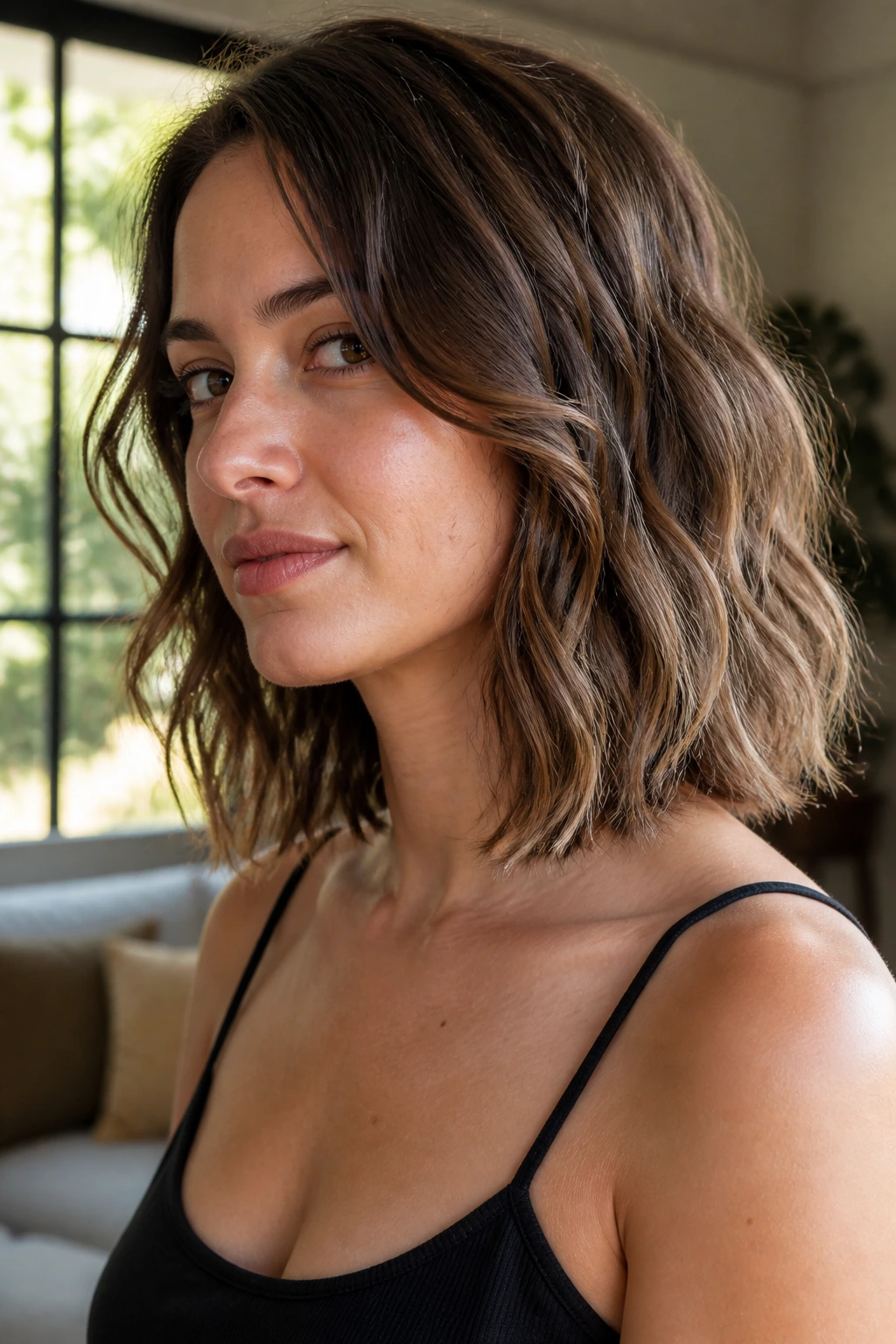
Piecey texture means the wave forms into distinct sections instead of one smooth sheet. That can look especially good on shoulder-skimming lengths, where the ends are close enough to see each bend. The cut should support that with minimal weight loss at the perimeter and a few interior snips to break up bulk.
This is one of my favorite looks for people who like a lived-in finish that still feels styled. Use mousse, not heavy cream, if your waves are loose. The texture needs hold.
21. The Flipped-End Lob

Flipped ends bring a little retro energy to a lob. The hair can turn outward just at the bottom, either from the cut itself or from a quick round-brush pass. On wavy hair, the trick is to keep the flip soft so it doesn’t fight the natural bend. A tiny outward turn at the edges looks fresh. A hard flip looks costume-y.
This cut works when you want movement without a shag or a lot of layers. It also flatters jawlines nicely, because the ends lift away from the neck instead of clinging to it.
22. The Rounded Lob
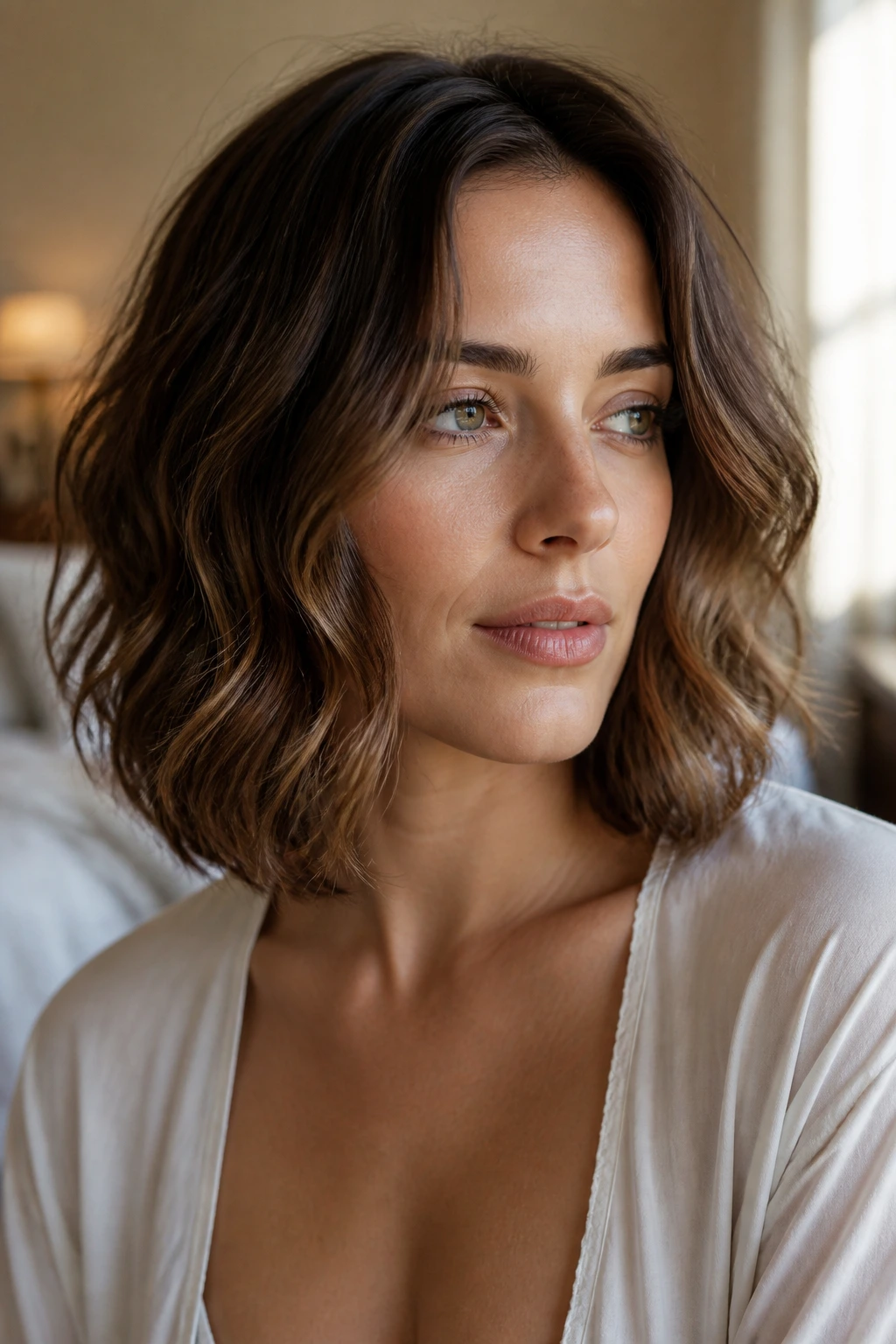
A rounded lob curves gently around the face and narrows the square feeling some blunt cuts can create. On wavy hair, the rounded shape can stop the side sections from jutting out too much. It softens the outline without making the haircut lose structure. I like it on people who want the lob to feel plush rather than sharp.
If your face is more angular, the curve is even better. If your waves are very loose, the rounded outline still shows up after air-drying. That matters.
23. The Asymmetrical Lob

An asymmetrical lob has one side slightly longer than the other, and that difference gives the haircut some attitude without needing dramatic layers. Wavy hair keeps the asymmetry from looking stiff. The movement makes the uneven length feel intentional, not severe.
Why It Works
The wave interrupts the clean line just enough to keep the cut from feeling too strict. That’s the point.
If you wear one side behind your ear more often, an asymmetrical lob can balance that habit instead of exposing it. I’d keep the difference modest—about half an inch to an inch is enough for most people.
24. The Graduated Lob
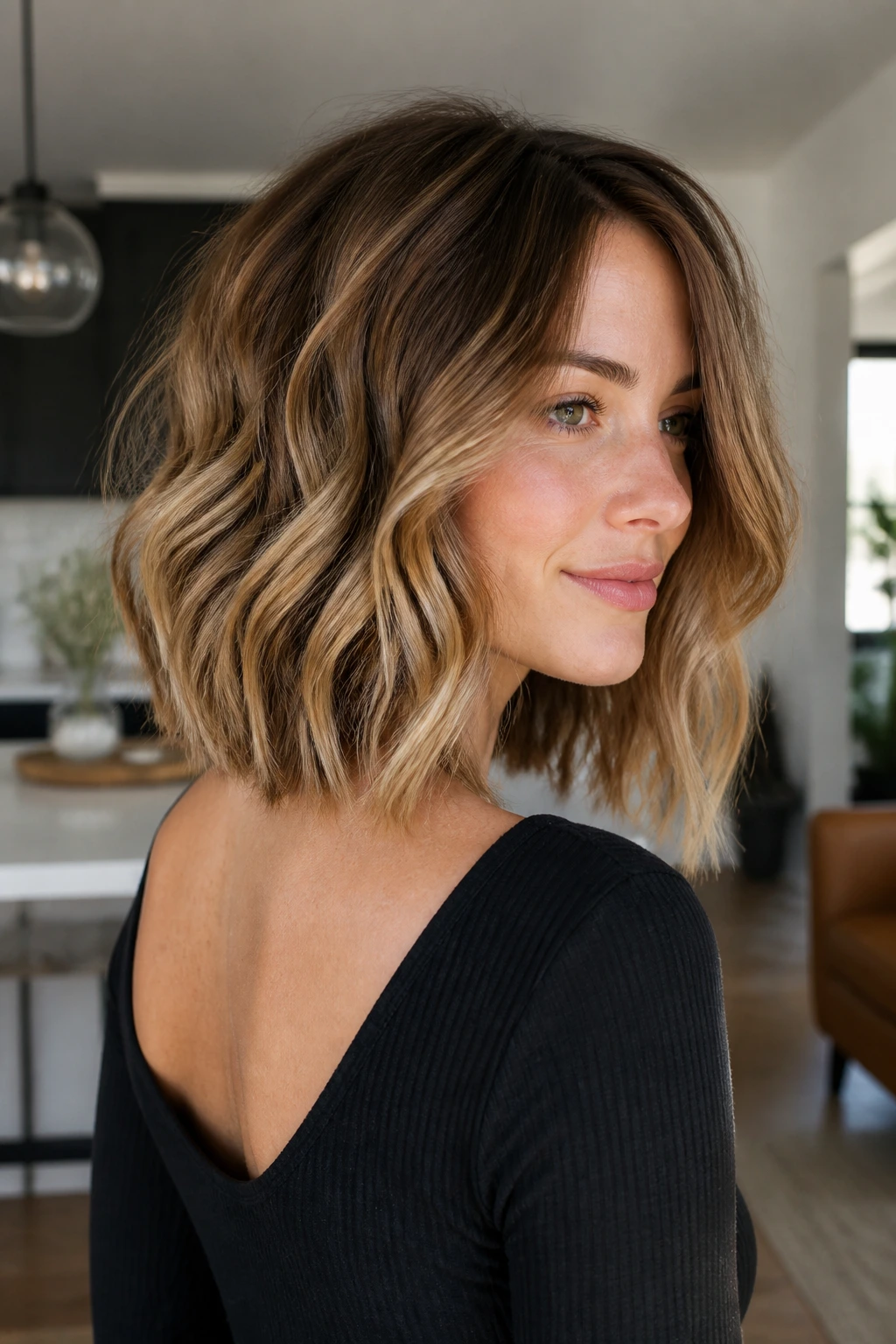
Graduation means the haircut builds a little fuller toward the back and stays slightly longer around the front. On wavy hair, that subtle lift can make the nape sit cleaner and give the whole cut a tidier edge. It is a nice middle ground between blunt and stacked.
Best Use Cases
- Hair that feels heavy at the back.
- Waves that collapse when the weight is too long.
- People who want shape without obvious layers.
If the graduation gets too steep, the lob starts reading like a bob in the back and a longer cut in front. Keep it soft. That balance matters more than a dramatic angle.
25. The Crown-Volume Lob
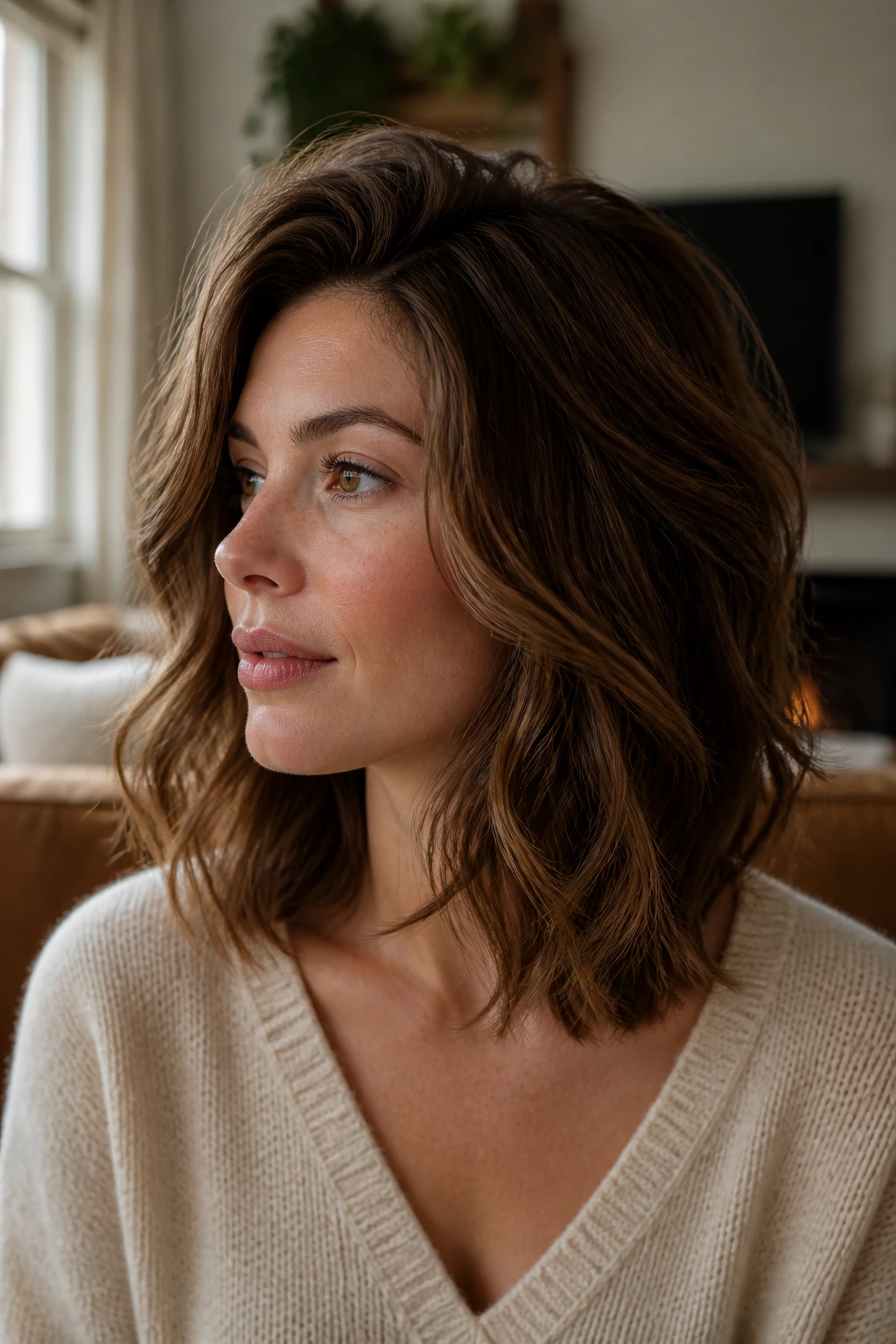
A crown-volume lob puts a little extra lift at the top so the hair doesn’t sit flat against the scalp. That matters with wavy hair, because the bend can sometimes create a gorgeous body through the middle while leaving the roots limp. A few internal layers or careful blow-drying at the crown fixes that fast.
This shape is especially useful for finer waves that disappear at the scalp. A root clip, a bit of mousse, and a low-speed diffuser can bring the crown back to life without turning the ends frizzy.
26. The Minimal-Layer Lob
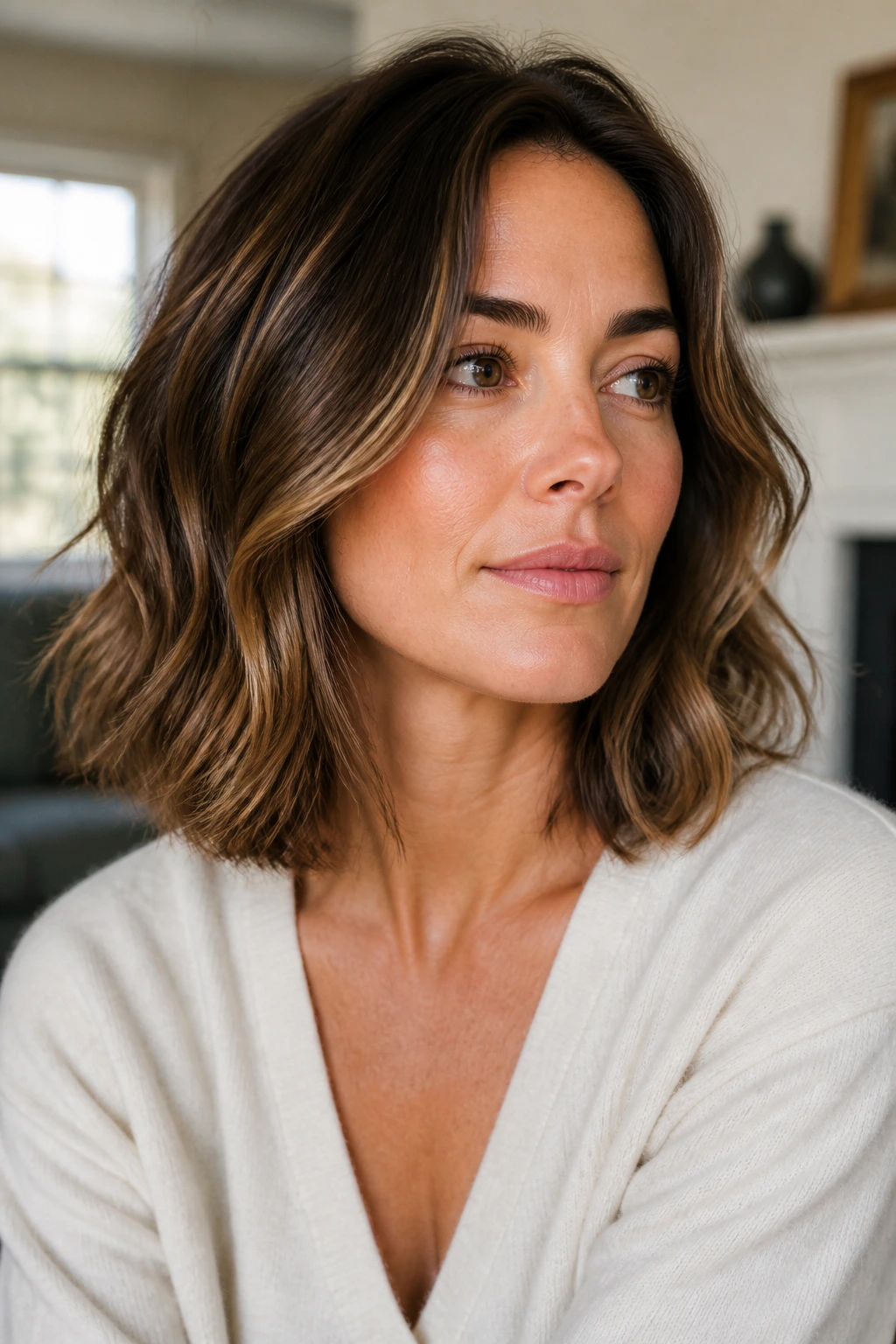
Minimal layers are the answer when your waves already have strong movement and you don’t want the haircut to get too busy. The perimeter stays the hero. The interior gets only a little cleanup so the ends don’t form a hard shelf. That makes the hair look full and controlled at the same time.
I like this on loose waves and on hair that is naturally thick. If you start with too many layers, the lower half of the cut can become confusing fast. Minimal is not boring here. It is disciplined.
27. The Long-Layer Lob

Long layers are the gentlest way to add movement to a lob. They sit low enough to avoid the puffball effect and high enough to let the waves break up the shape. This is a strong option for thick or dense hair that needs help moving, especially if the natural bend is strong but the overall mass is heavy.
You do have to be careful with the finish. Long layers still need a precise edge underneath, or the haircut drifts into “grown-out” territory before it should.
28. The Broken-Wave Lob
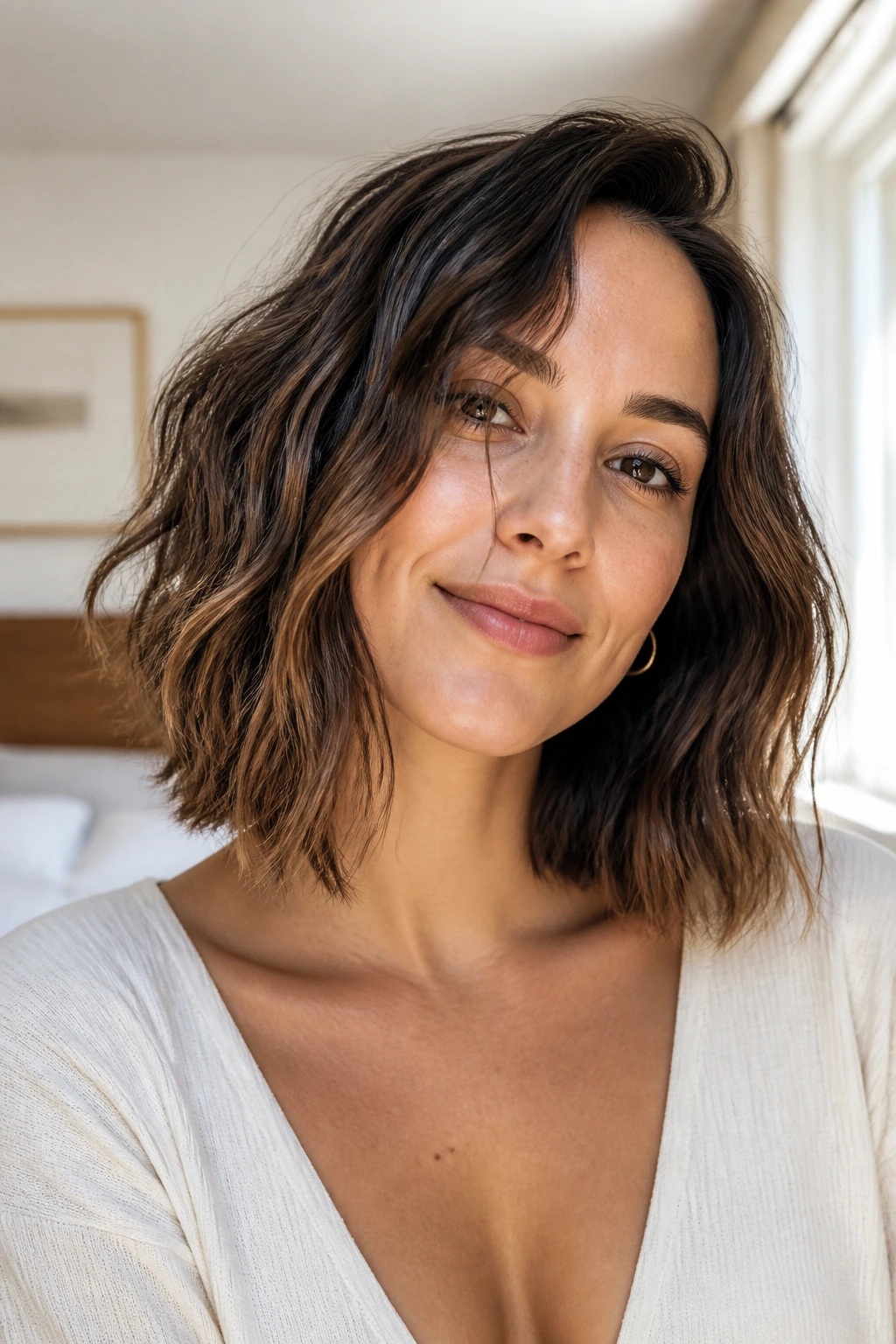
A broken-wave lob is all about irregularity that still feels controlled. The waves are meant to separate, bend, and occasionally twist a little differently from one another. That kind of texture can look rich on a lob because the shorter length keeps the pattern visible from root to tip.
It works best when you use a light mousse or foam and let the hair dry with minimal touching. If you keep smoothing it with your hands, the whole point disappears. Some roughness is the feature.
29. The Air-Dry Lob
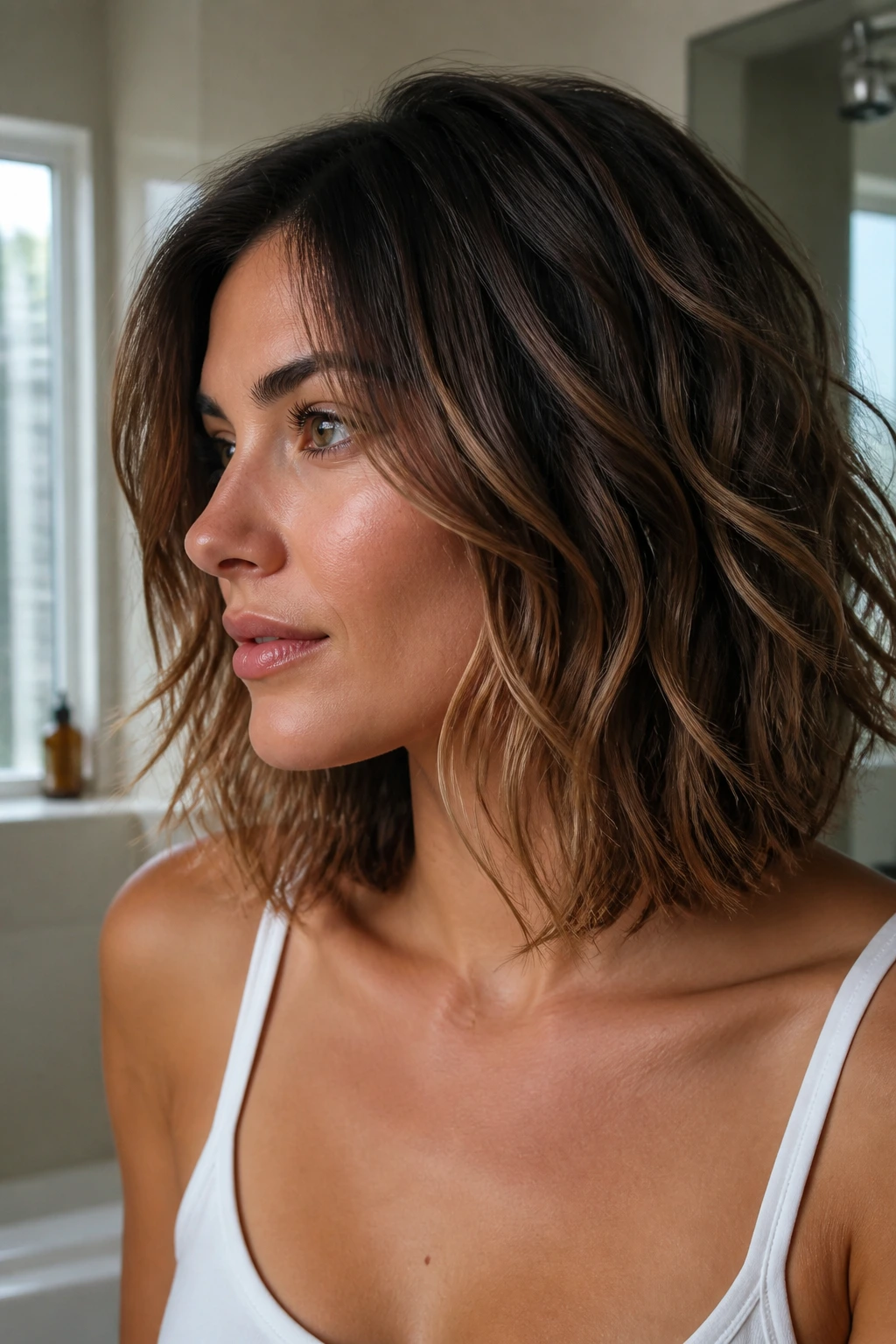
The air-dry lob is cut for the person who wants the hair to fall into shape with as little fuss as possible. That usually means a careful perimeter, soft internal cleanup, and not too much layering around the crown. The haircut has to do the work while the hair dries on its own.
This is one of those cuts that reveals bad cutting fast. If the shape is off, air-drying shows it. If it’s right, the hair looks like it knew where to land before you even touched it.
30. The Soft-Flick Lob
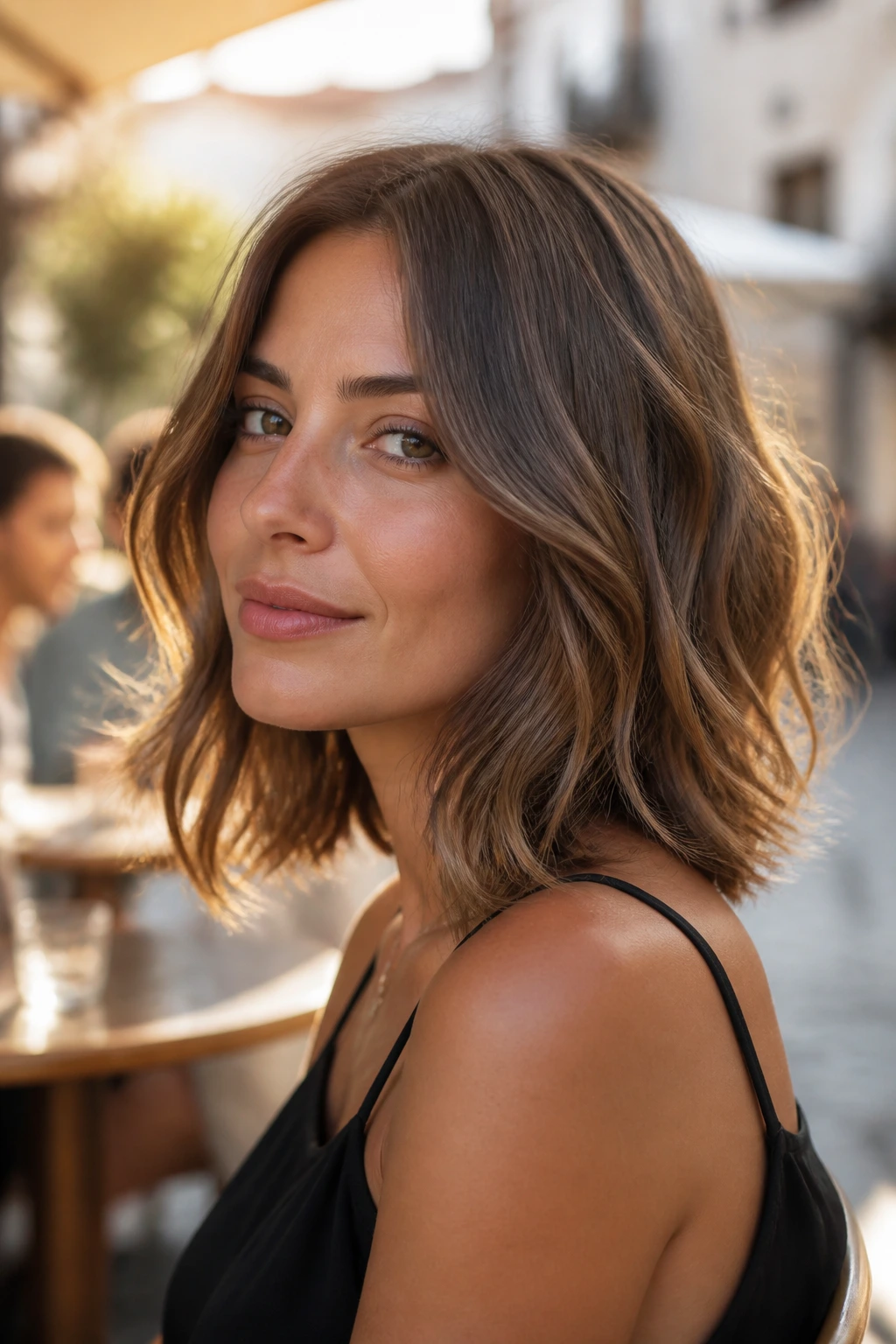
A soft-flick lob turns the ends away from the face just a little. Not a full flip. Just a nudge. On wavy hair, that tiny movement can keep the perimeter from sitting too heavy, especially if the length brushes the shoulders. The haircut should leave enough room for the flick to happen naturally.
What to Ask For
- Slightly longer front pieces.
- A bottom edge that is point-cut, not razor-hacked.
- Enough density at the ends so the flick has shape.
This style is underrated. It gives motion without demanding layers all over the head.
31. The Wispy-Fringe Lob

Wispy fringe softens a lob without swallowing the face. The bangs should be light enough to move with the wave and short enough to sit above the eyes without constant rescue. On wavy hair, this fringe can look sweet and casual, but it needs a careful cut. Too much fringe thickness and it turns bulky the second humidity shows up.
I like this when the rest of the lob stays fairly simple. The fringe supplies the personality. The haircut beneath it should stay steady and clean.
32. The Long-Fringe Lob
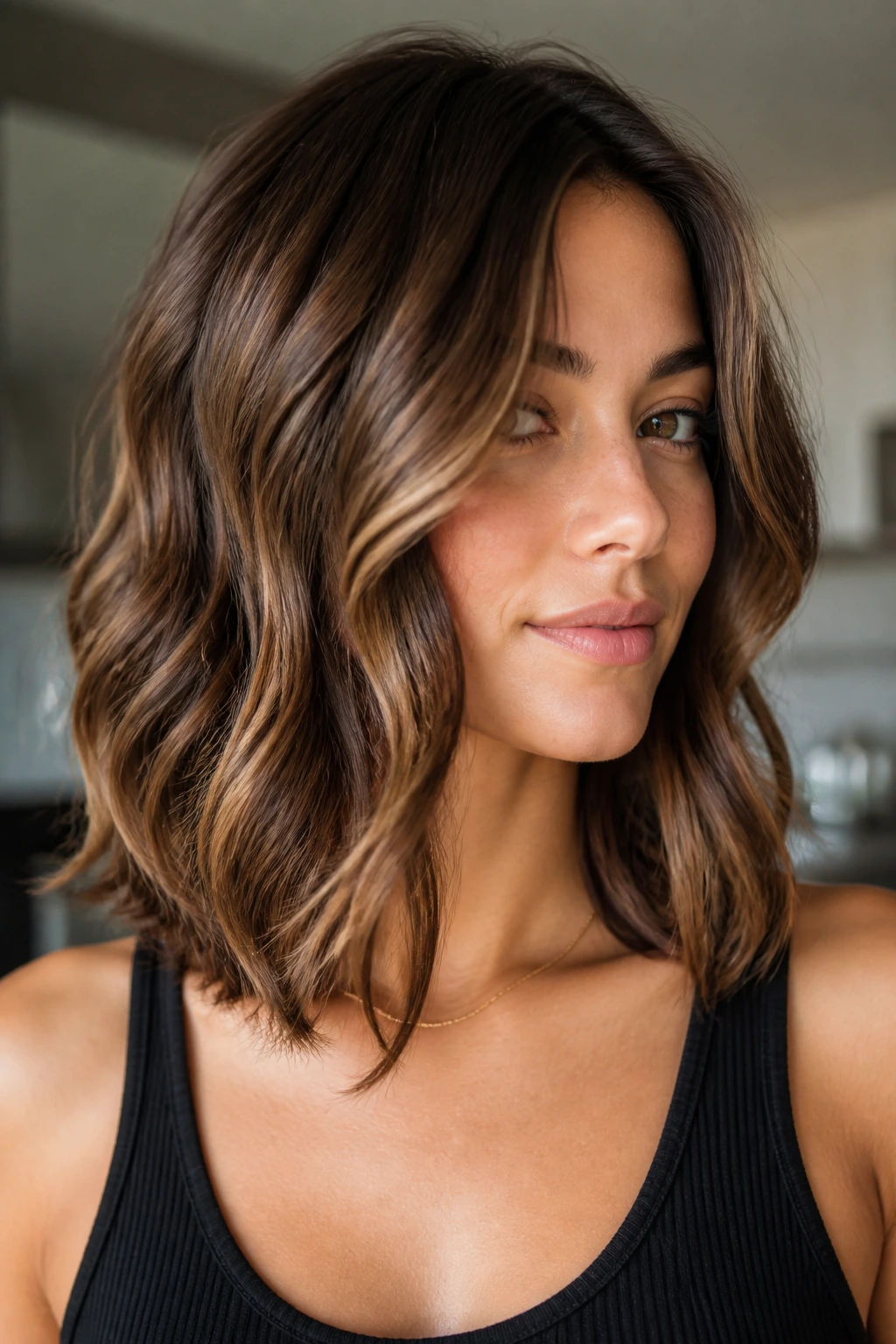
A long fringe gives you more room to play. It can part in the middle, sweep to the side, or blend into the front layers depending on the day. That flexibility is useful with wavy hair, because the fringe can grow out more gracefully than a blunt bang.
The cut works best when the fringe is connected to the sides rather than separated from them like a little curtain wall. When it blends, the whole lob feels easier and less fussy.
33. The Pageboy-Inspired Lob
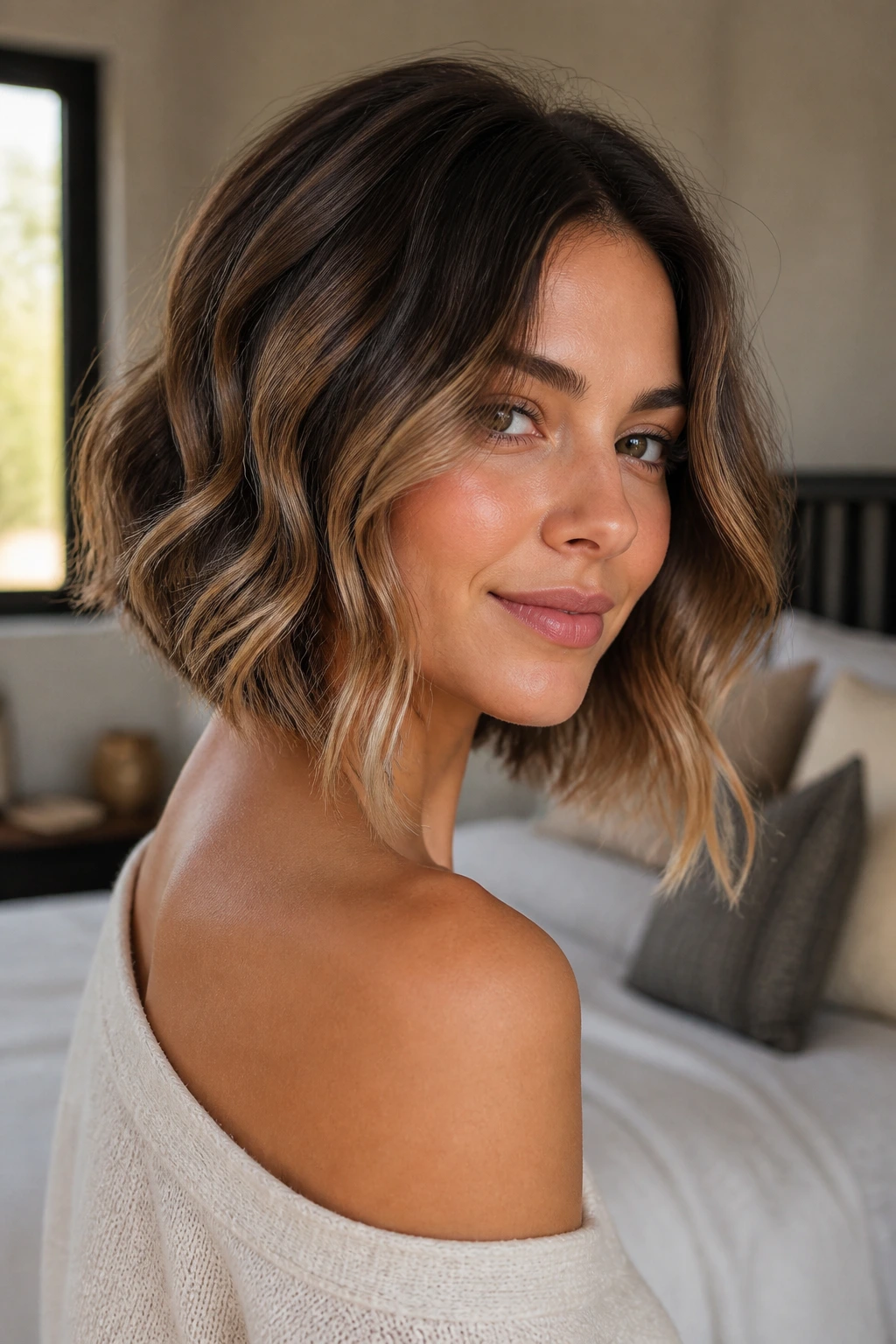
This one sounds retro because it is. A pageboy-inspired lob has a rounded underside and a cleaner outline, but it is softened so the wave doesn’t get trapped under a hard shell. On wavy hair, the shape can look sleek without needing to be pin-straight.
I’d use it if you like structure and a tucked-under finish. It can be a little unforgiving on very coarse waves, though, because the curve depends on the hair cooperating. A smoothing cream and a round brush help.
34. The Grown-Out Shag Lob

A grown-out shag lob takes the rough edges off a full shag while keeping the softness. The layers are still there, but they’re blended enough that the cut doesn’t look aggressively chopped. That makes it easier to live with on wavy hair, especially if you want texture without the upkeep of a severe shag.
This is the cut that keeps looking good a few weeks after a trim. That matters. Not every haircut behaves that well once it leaves the salon chair.
35. The Thick-Hair Lob
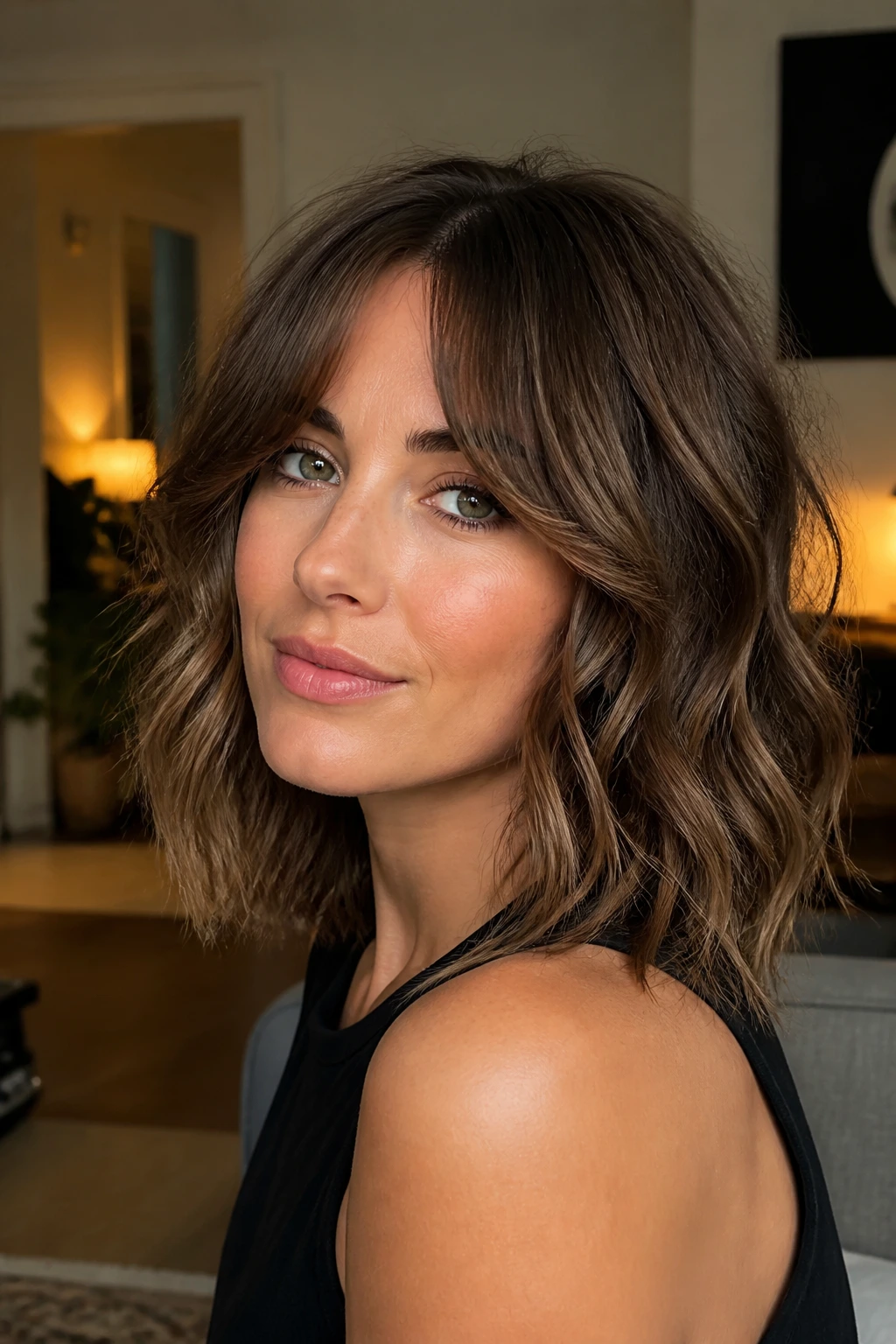
Thick wavy hair needs a lob that respects its weight. That usually means a strong perimeter, some internal removal, and careful shaping around the sides so the cut doesn’t fan out. If the hair is too thick to lie close to the neck, the lob should be built to carry itself rather than forced into a slim shape.
The best thick-hair lob often looks almost deceptively simple. Underneath, though, there’s work: debulking in the right places, preserving the line, and keeping the ends from turning into a shelf.
36. The Fine-Hair Lob
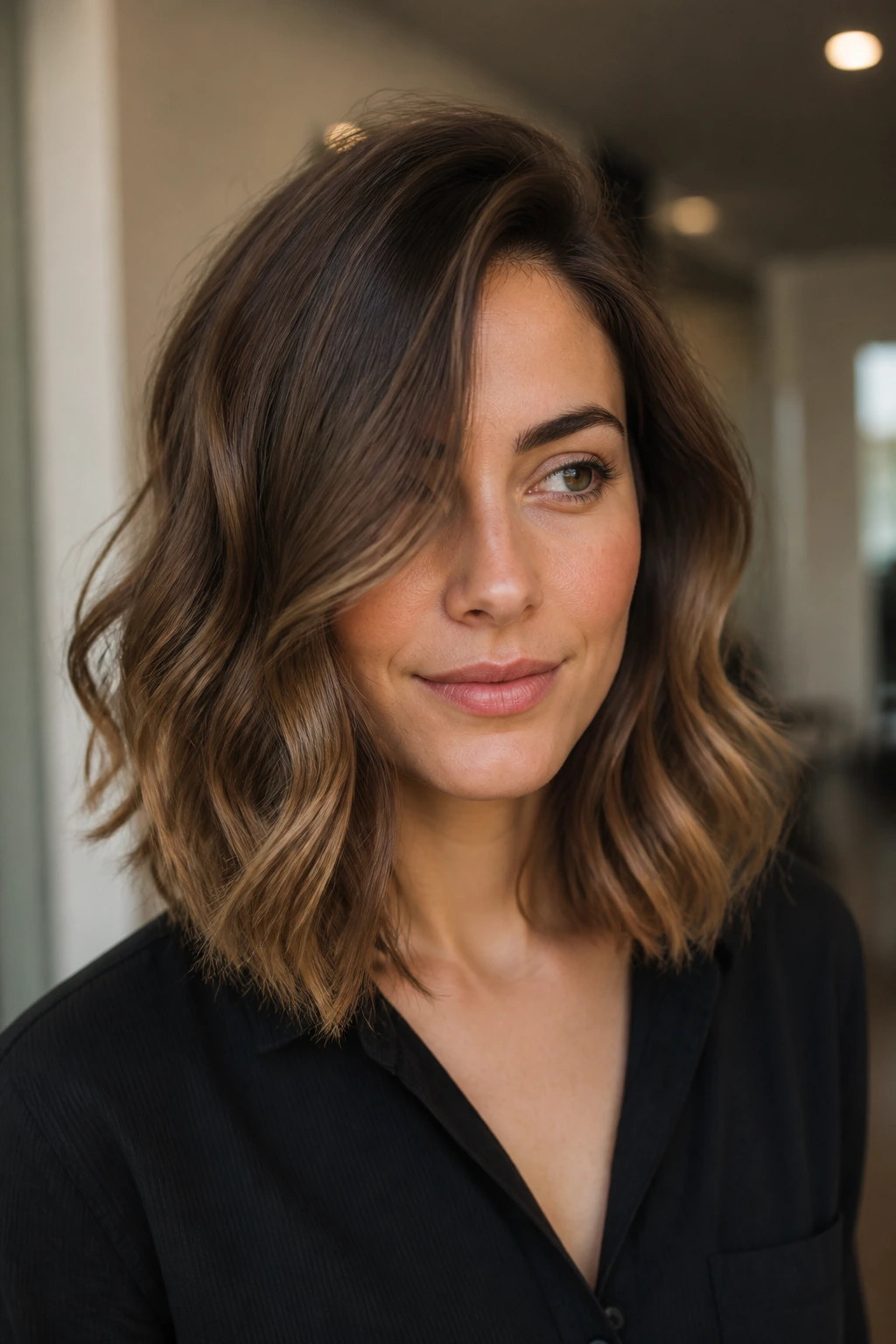
Fine wavy hair can look fuller in a lob than it does when it grows long, but the cut has to be handled with care. Too many layers and the ends disappear. Too much thinning and the wave turns wispy in a bad way. I’d keep the perimeter a little blunt and use only light internal shaping.
The Small Details Matter
- Keep the length around the collarbone or just above it.
- Ask for soft movement, not heavy layering.
- Use mousse or foam instead of rich cream if the hair collapses easily.
This is one of the few times where less really is more.
37. The Low-Maintenance Lob
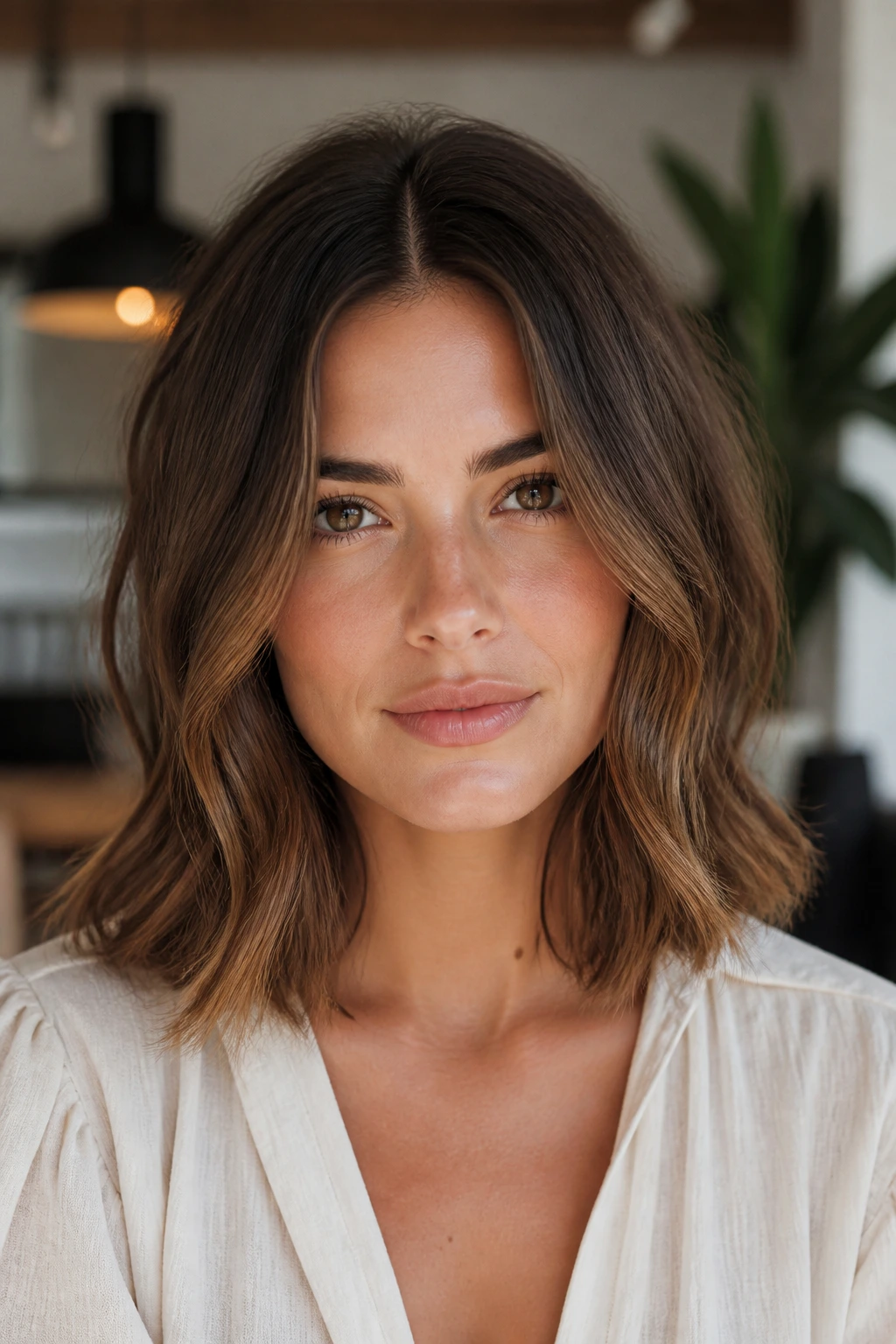
A low-maintenance lob is built for real life. It grows out without obvious trouble, doesn’t demand daily heat, and still holds shape after sleeping on it. The haircut usually stays in the safer zone: collarbone length, soft face-framing, not too many short pieces around the crown. On wavy hair, that restraint pays off.
I’d choose this if you want a cut that behaves on day two and day three. It may not look as dramatic on day one as a heavily layered style, but it earns its keep when you skip the blow-dry.
38. The Polished Wave Lob
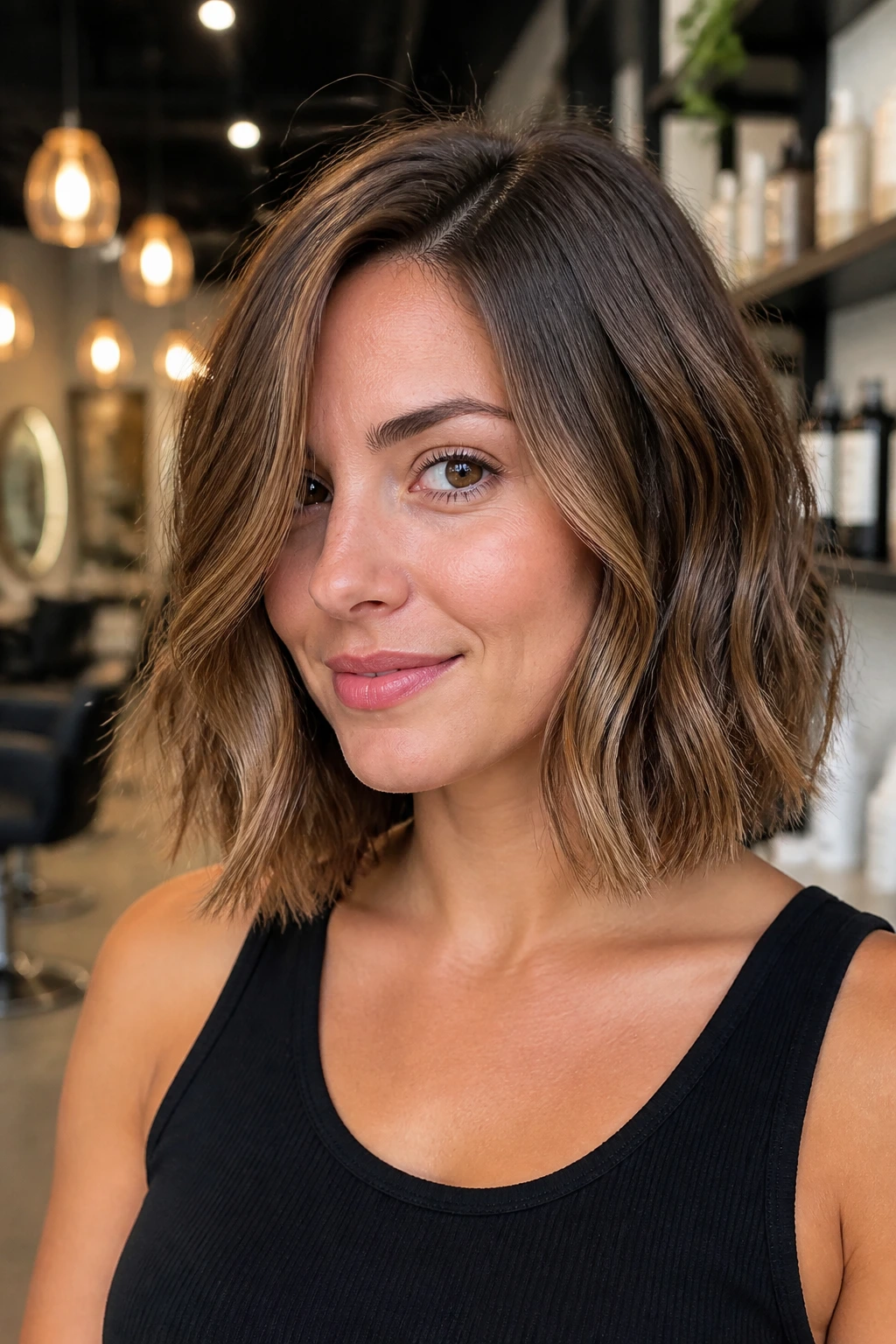
The polished wave lob sits at the dressier end of the spectrum. The wave is still there, but it’s smoother, more controlled, and usually finished with a brush or a large iron bend rather than a scrunch-and-go texture. The cut should stay clean at the edges so the styling looks intentional.
This is a strong choice when you want wavy hair to look neat, not messy. A glossing serum on the mid-lengths, a side or center part, and a soft bend through the ends are enough. Keep the finish touchable. Too much spray kills the whole thing.
How Lob Haircuts for Wavy Hair Should Be Cut
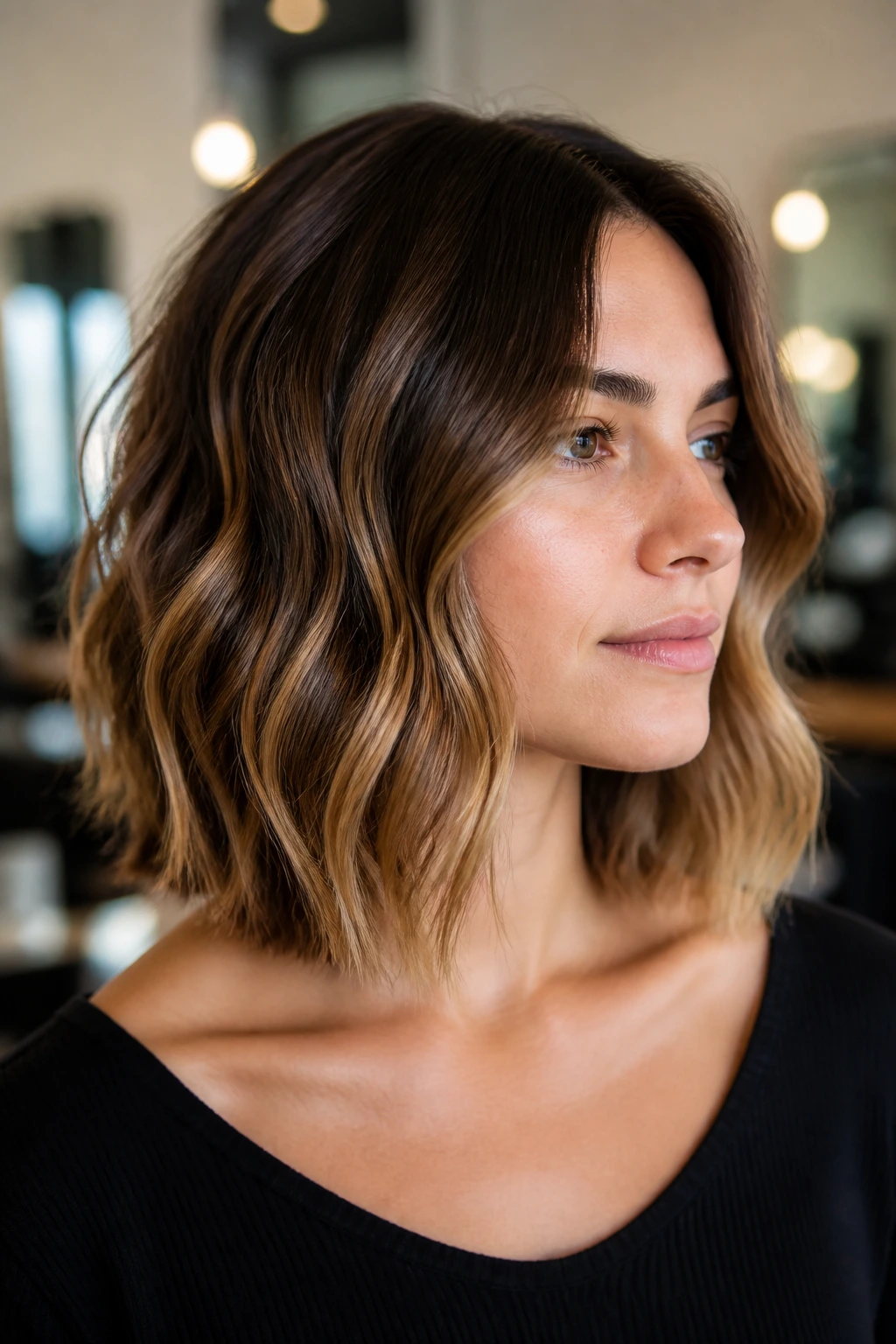
The biggest mistake people make with lob haircuts for wavy hair is treating the wave like a decoration instead of part of the shape. The cut should be planned around where your bend starts, how dense your hair is, and whether the sides tend to puff. That means the same collarbone length can behave in two very different ways depending on the layers underneath.
A good stylist usually looks at the hair dry or nearly dry, or at least checks it again after the wet cut. That matters because wavy hair shrinks, especially around the face and at the back. If you wear your hair air-dried, say so. If you always diffuse, say that too. The haircut should match the way you live with it, not some idealized version of you.
The smartest lobs often keep the perimeter more precise than people expect. The texture can happen inside the cut. That way the wave still has a clear edge to live against, which keeps the whole look from going fluffy or shapeless.
How to Ask for the Cut at the Salon
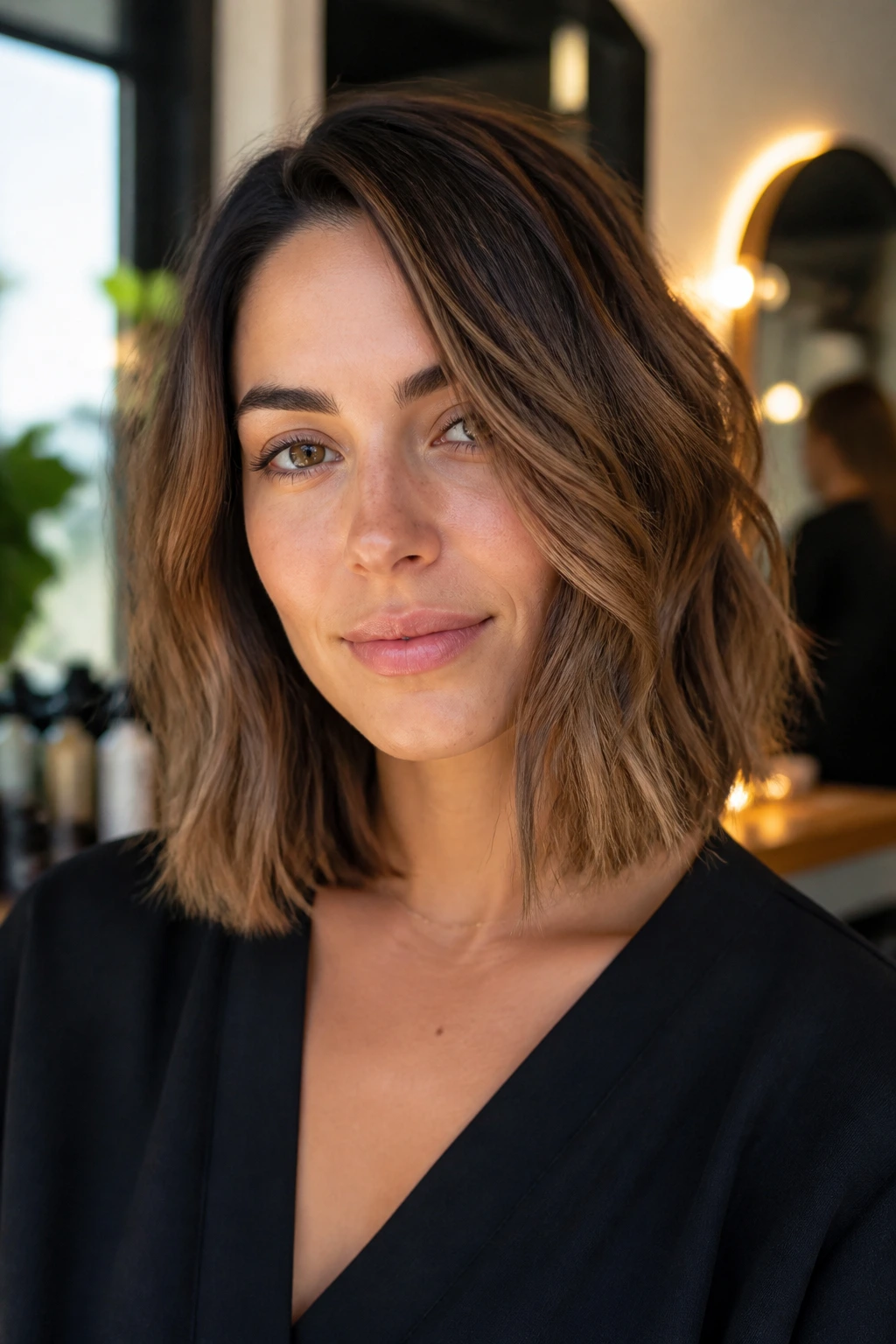
Bring your own hair, not just a reference photo. A photo tells the stylist what shape you like, but your hair tells them how far they can push it. If your waves are loose and fine, a severe shag from a thick-haired model will not behave the same way on your head.
Say where you want the length to land. Collarbone is the most common answer, but you can be more specific: “just below the collarbone,” “at the top of the shoulder,” or “about an inch above the collarbone.” Point out whether you wear a side part, whether your hair flips at the shoulders, and whether you want the front to graze the jaw or stay longer. Those tiny details matter more than vague requests like “a bit shorter.”
If your wave pattern is uneven, ask for the cut to be checked dry before the final snip. That small second look can save you from a lob that feels lopsided once it dries.
Essential Tools for Styling a Wavy Lob
- Wide-tooth comb: Detangles wet waves without stretching them into frizz.
- Microfiber towel or T-shirt: Cuts down on roughing up the cuticle after washing.
- Mousse or foam: Gives hold at the roots and keeps the bend from falling flat.
- Curl cream: Useful for looser waves that need a little softness, especially on dry ends.
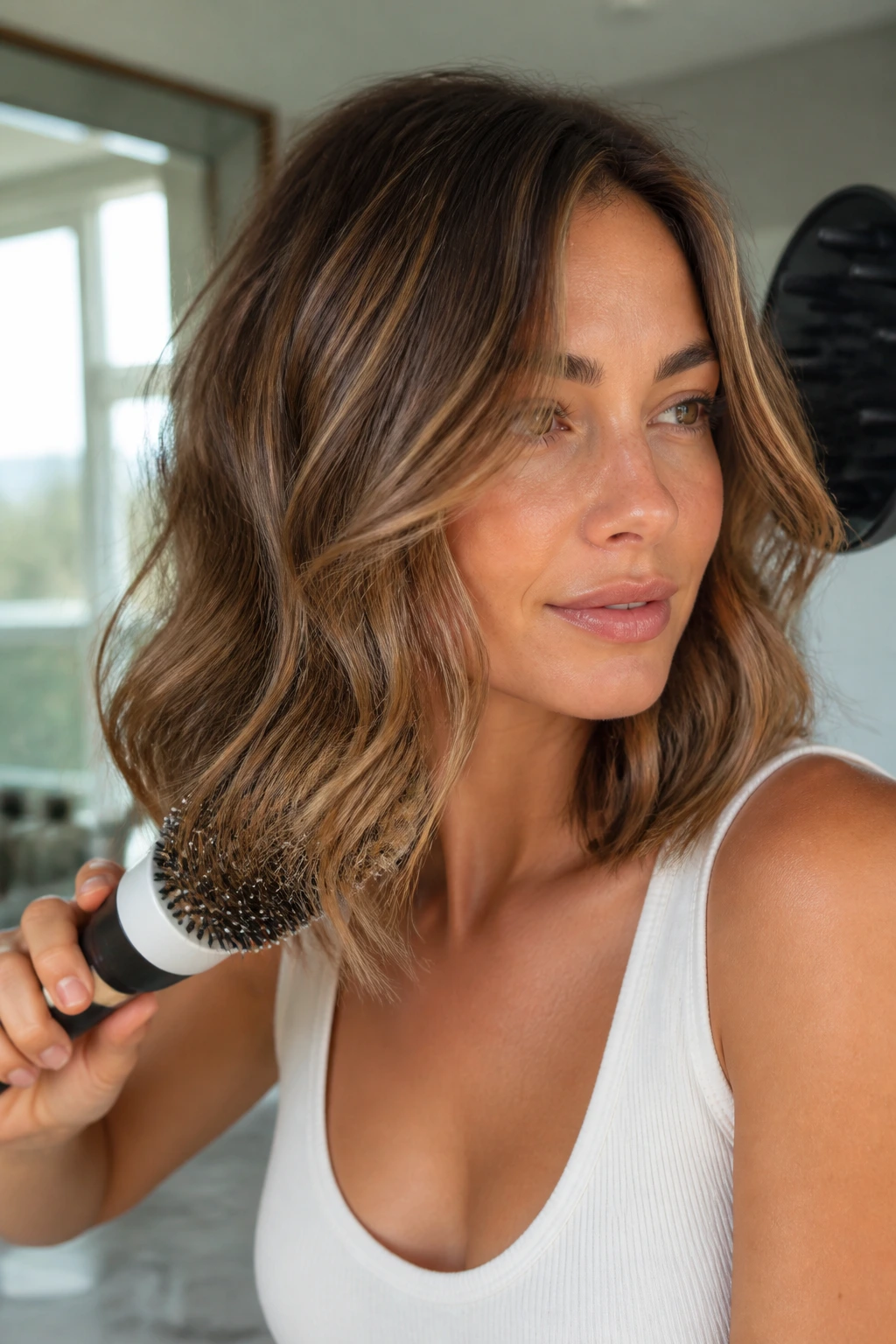
- Diffuser attachment: Helps set the shape without blasting the wave apart.
- Heat protectant spray: Non-negotiable if you use a flat iron or round brush.
- Duckbill clips or root clips: Lift the crown while drying so the lob does not collapse.
- Texturizing spray: Good for finishing piecey styles and flipped ends.
- Light serum or oil: A few drops on the ends tame fuzz without flattening the cut.
Keeping the Shape Between Salon Visits
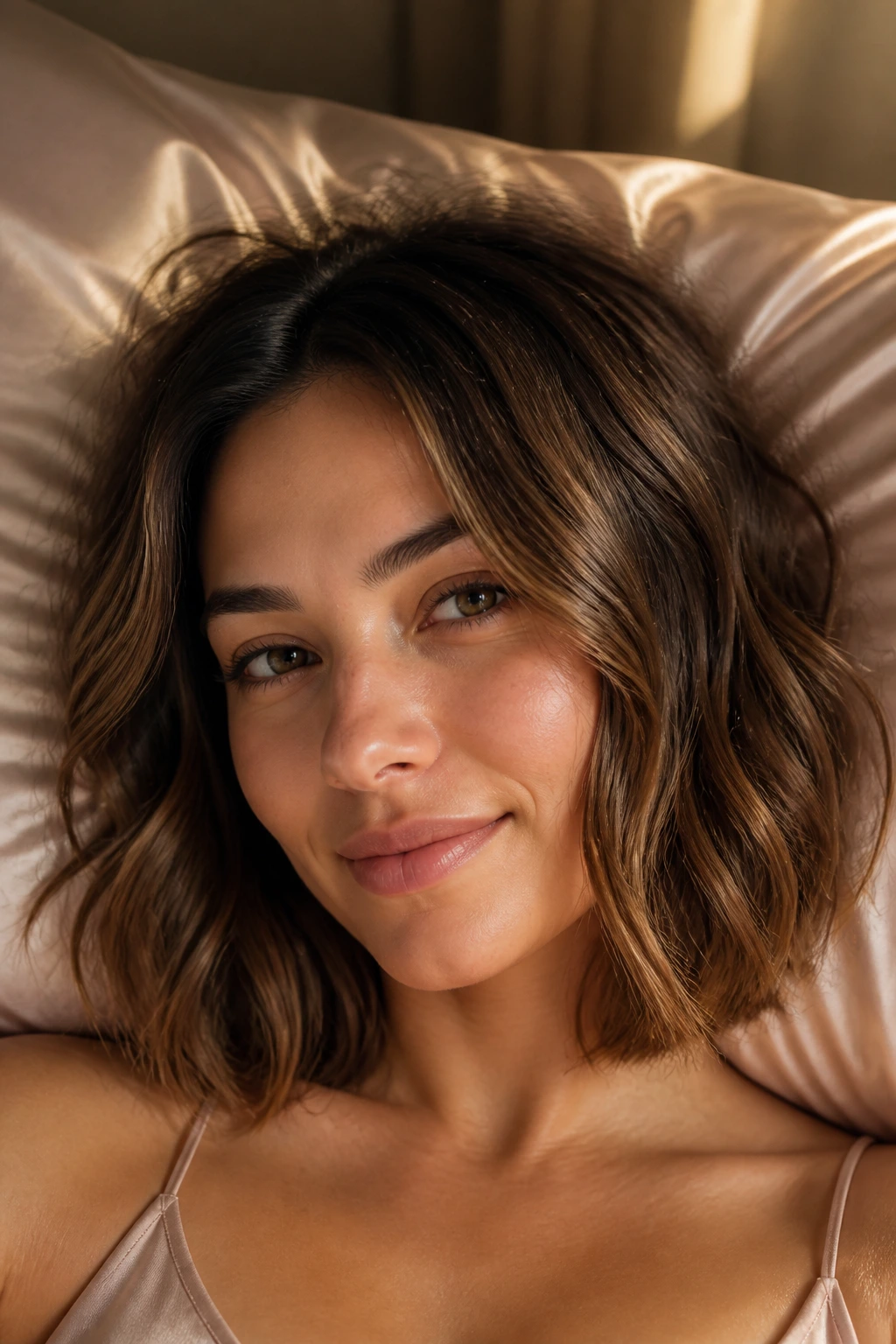
A wavy lob holds its shape best when you trim it before the ends start to look dusty. For most people, that means every 8 to 12 weeks. If the lob is blunt or angled, stay closer to the shorter side of that window. If it’s shaggy or heavily layered, you can sometimes stretch a bit longer, but once the front pieces stop meeting the perimeter cleanly, the shape loses its line.
Sleep matters more than people want it to. A silk or satin pillowcase reduces the friction that turns the ends into fuzz, and a loose pineapple or clipped-up style can keep the wave from getting crushed overnight. If your hair starts looking flat at the roots by day two, refresh with a water mist, a pea-sized bit of mousse, and a few minutes with a diffuser on low heat.
Product buildup is another sneaky shape-killer. Clarify every 2 to 4 weeks if your waves start dropping faster than usual or feeling coated. Clean hair is not always softer hair. Sometimes it’s just the thing that lets the lob sit the way it should.
Common Mistakes That Make a Wavy Lob Go Wrong
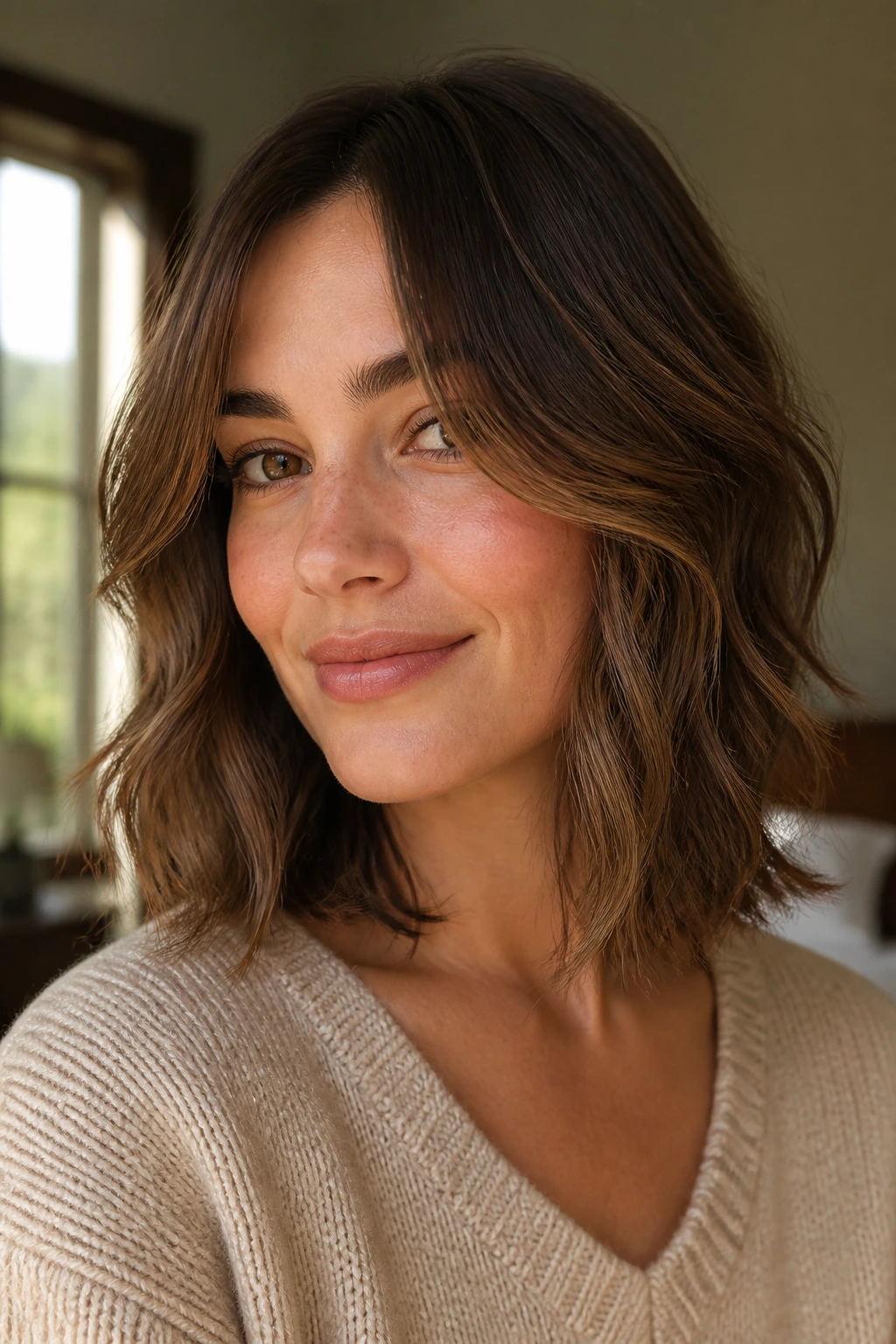
The first mistake is cutting the lob too short for the wave pattern. A length that looks tidy when wet can spring up and widen once it dries. The fix is simple: account for shrinkage and keep the perimeter a touch longer than you think you need.
Another problem is over-layering. Too many short layers can make the sides puff out and leave the bottom too thin. If your waves already have strong shape, the haircut usually needs less help than you think.
Relying on heavy cream is another one. It can weigh down loose waves and make the lob look stringy by the afternoon. Swap in mousse or a lighter leave-in if the hair needs lift. And if you use a razor on fine hair, make sure the ends don’t get frayed. That effect shows fast once humidity shows up.
Variations and Alternatives to Try
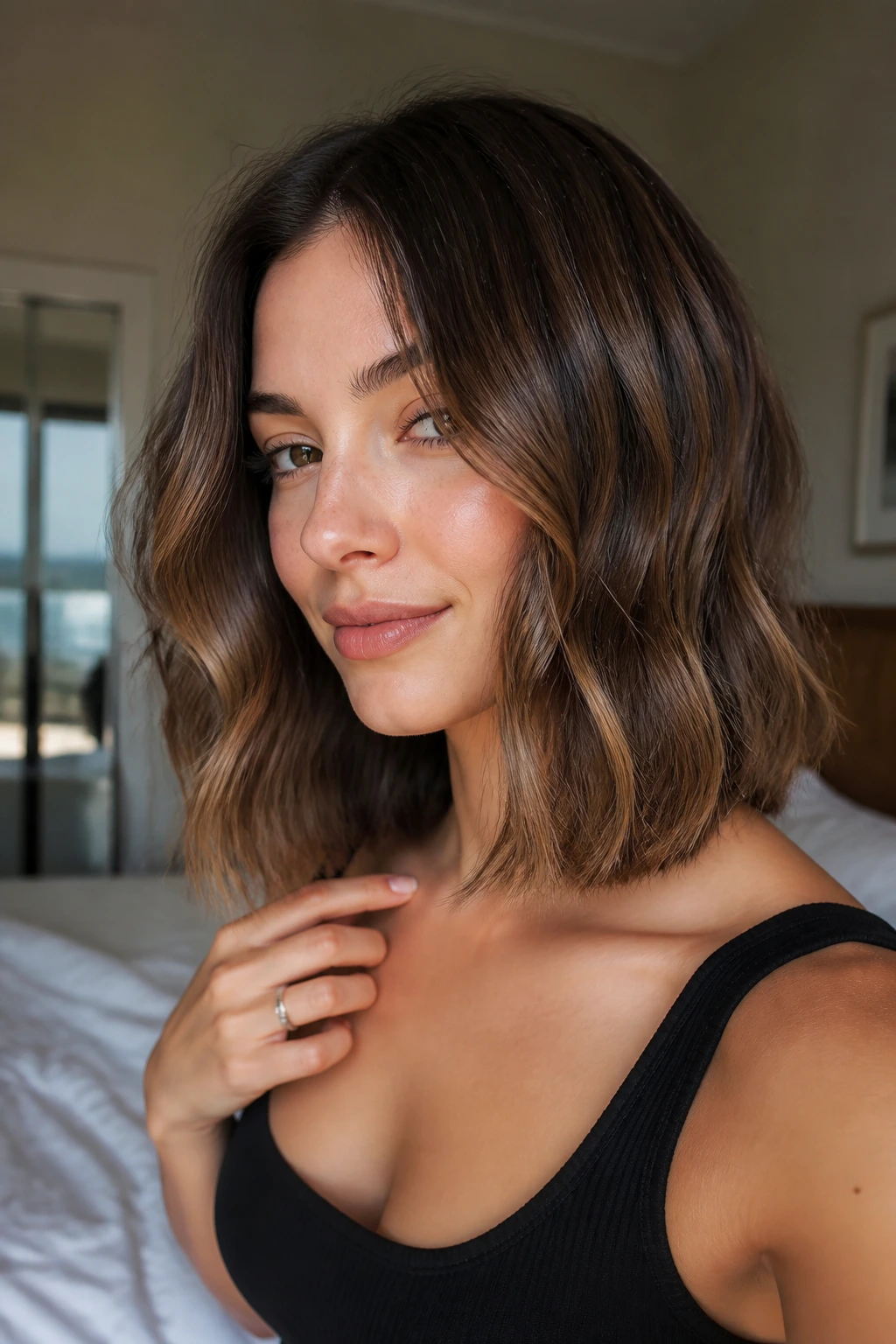
The Blunt-and-Glossy Version: Keep the perimeter crisp and style with a smoother bend. This works when you want the lob to look more polished than piecey. A round brush and heat protectant are doing the heavy lifting here.
The Air-Dried Texture Version: Add soft internal layers and let the waves form on their own. This is the right move if you hate heat styling and want the haircut to hold up with very little fuss.
The Fringe-Forward Version: Add curtain, bottleneck, or wispy bangs to bring the attention up around the eyes. The lob underneath should stay simple so the fringe doesn’t compete with the rest of the shape.
The Thick-Hair Cleanup Version: Use a stronger perimeter with careful debulking inside. This keeps heavy waves from puffing at the sides while still leaving enough body to feel full.
The Fine-Hair Lift Version: Keep layers light, preserve the line, and focus on root volume. A lob can give fine waves more presence, but only if the cut doesn’t chew through the ends.
Lob Haircut FAQ
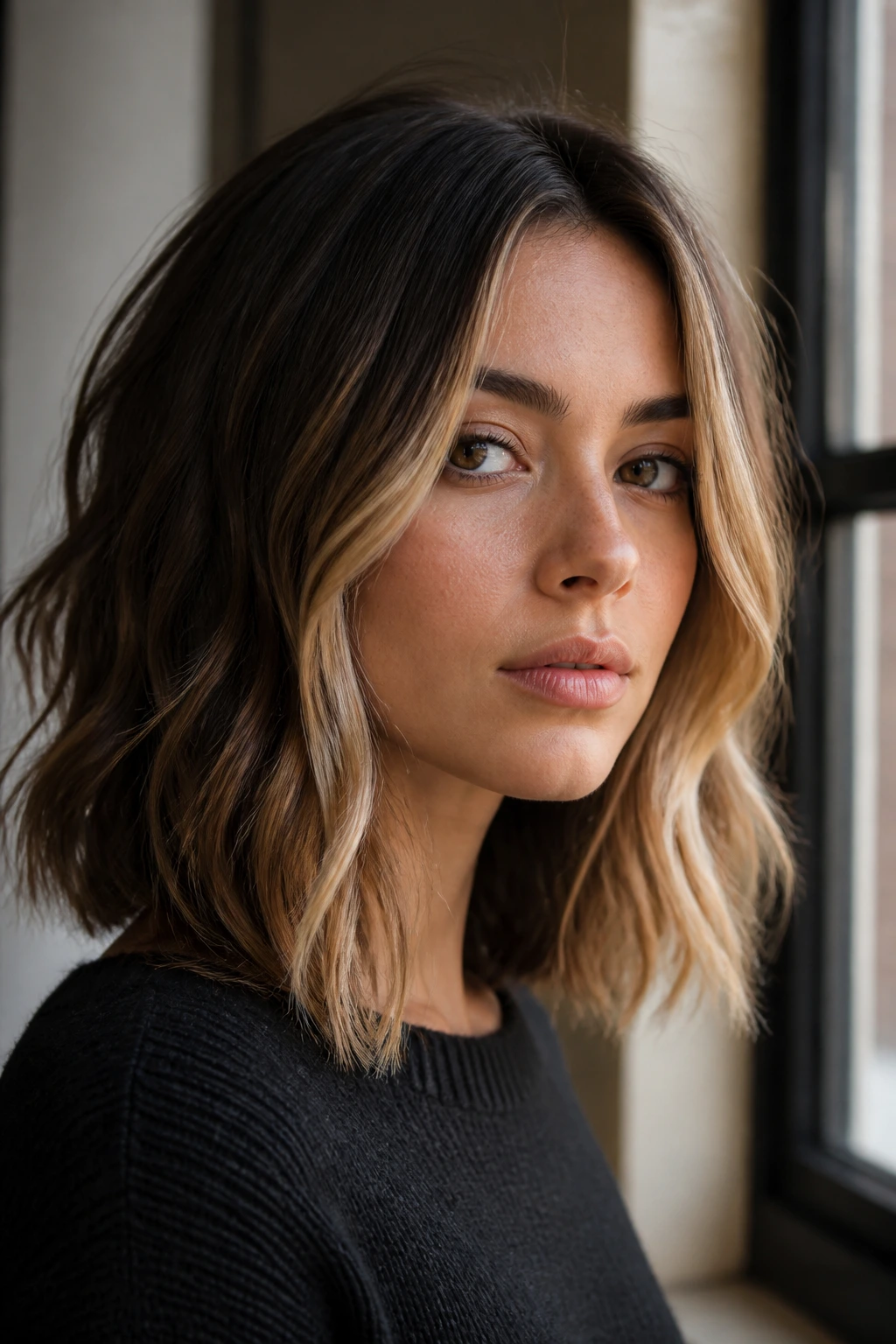
How short can a lob be before wavy hair starts puffing out?
Usually once you get much above the jawline, a lot of wavy hair starts to expand outward instead of falling down. Collarbone length is the safer sweet spot because it leaves enough weight for the wave to hang.
Should wavy hair be cut wet or dry?
Both can work, but dry checking is helpful. Wet cutting gives a cleaner shape to build from; dry checking shows how the wave actually lands once the hair shrinks and bends.
Do layers make a wavy lob look thinner?
They can, if the layers are too high or too many. Low, soft layers remove bulk without stealing the shape. That’s the version most wavy hair prefers.
Can a blunt lob work on thick wavy hair?
Yes, and it often looks strong. The key is internal debulking so the bottom doesn’t balloon. A blunt edge with hidden cleanup inside is usually better than a blunt cut with no structure.
What if one side of my wavy lob always looks flatter?
Ask for the cut to be balanced around your natural part, not just centered on the head. Many people need a little extra length or weight on the flatter side so the finish evens out when dry.
How do I keep a lob from going triangle-shaped?
Keep some weight in the lower half of the cut, avoid too many short layers, and use a diffuser or light root lift instead of smoothing the hair flat against the head. The triangle shape usually shows up when the bottom is too wide and the crown is too flat.
Can I add bangs later if the lob feels too plain?
Absolutely. Curtain bangs and long fringe are the easiest entry points because they blend into the cut and grow out more calmly than a blunt bang.
What if my wave pattern changes with humidity?
Choose a cut with a steady perimeter and not too much aggressive layering. Hair that swells in humidity usually behaves better when the line is clean and the texture lives inside the cut rather than on the surface.
The Length That Keeps Wavy Hair Honest
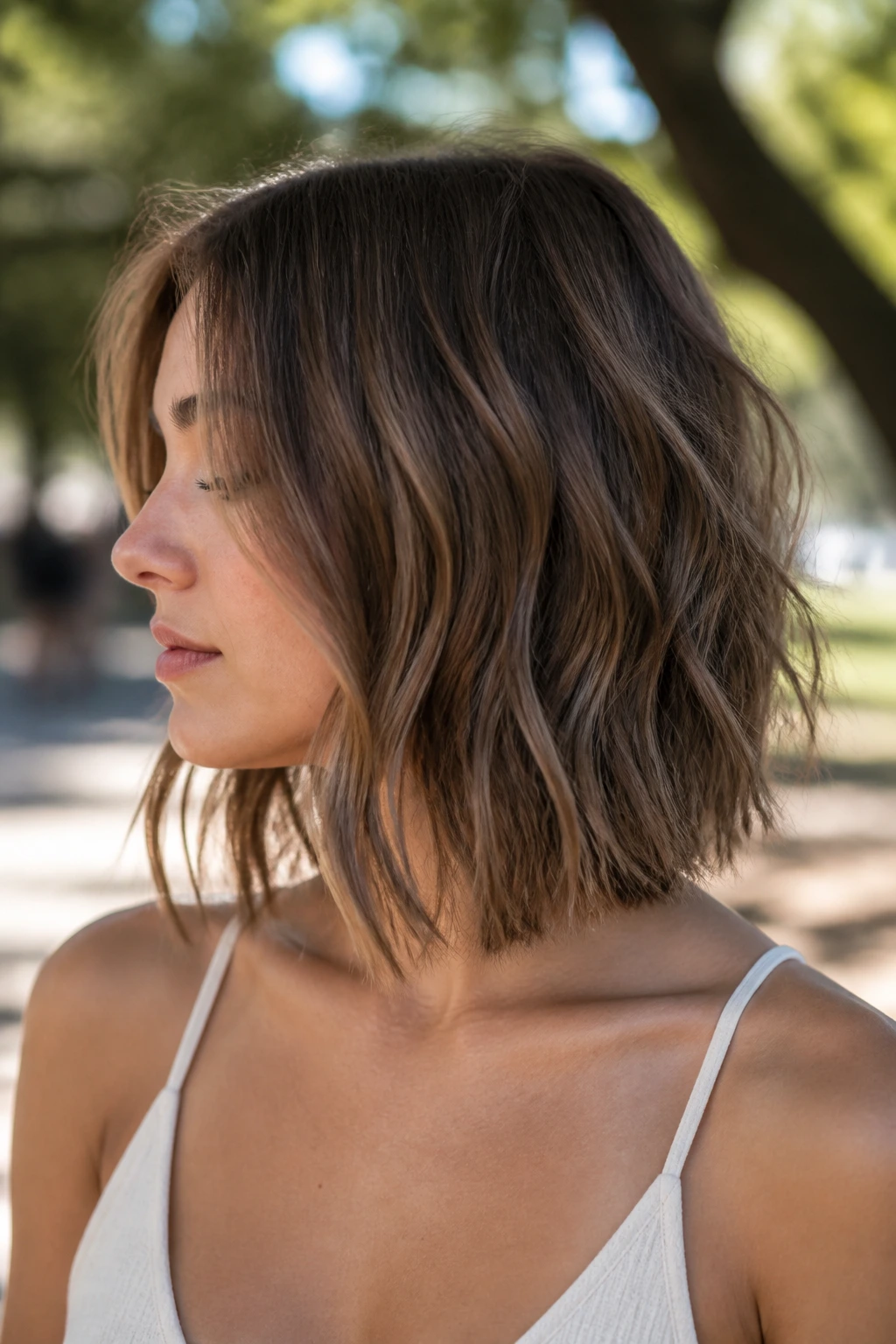
The best lob for wavy hair does one thing well: it gives the wave a place to land. Not too short. Not too long. Just enough weight to stop the ends from flaring, and just enough shape to make the bend look deliberate instead of accidental.
That is why this cut keeps coming back. It gives you room to go blunt, shaggy, polished, piecey, face-framing, or softly layered without losing the basic promise of the lob. The haircut does not need to shout. It just needs to sit in the right spot and let the wave do its job.
If you get the length, the weight, and the perimeter right, the rest gets easier. That’s the part worth chasing, and it holds up long after the first salon blowout wears off.
