



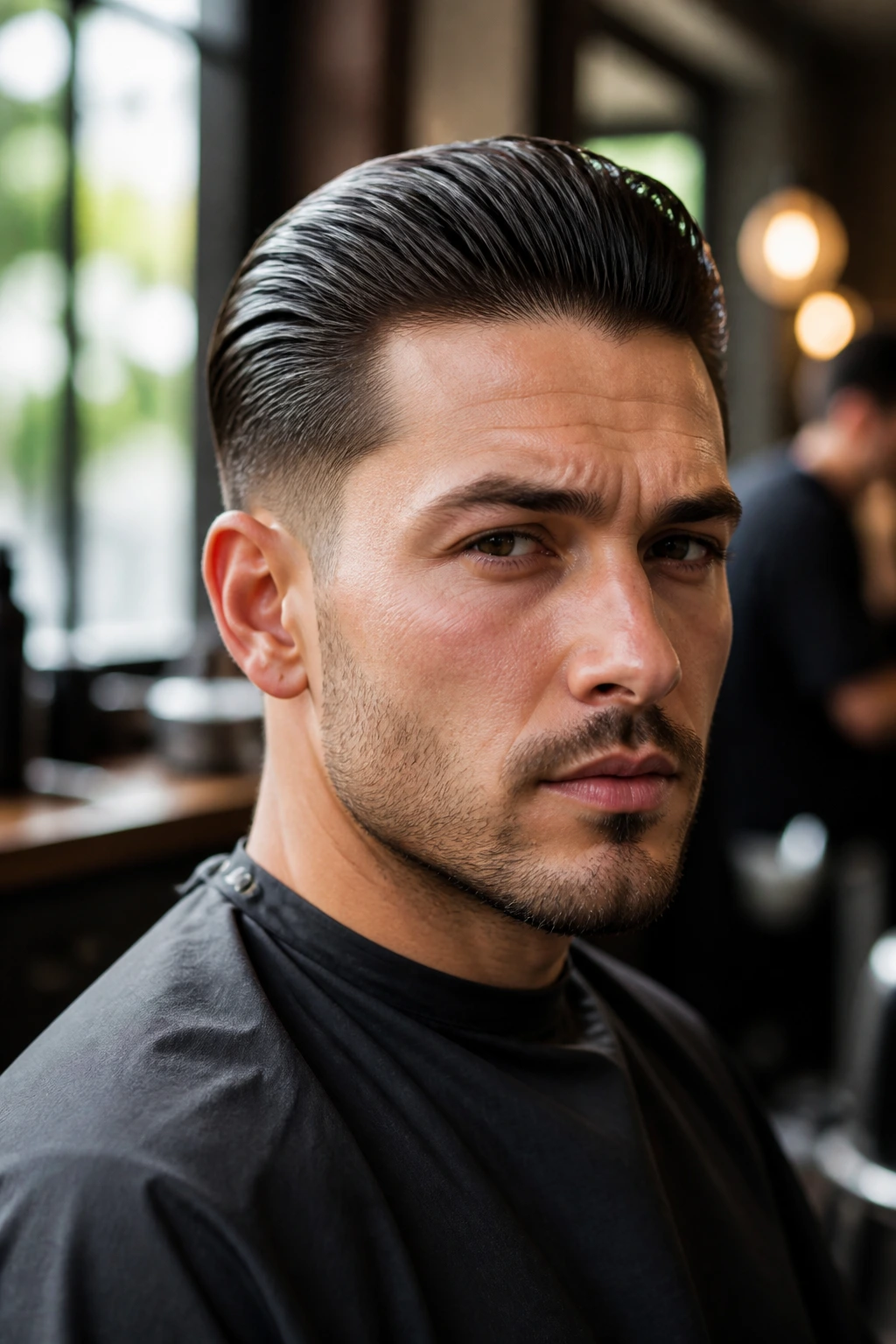
A slicked back haircut can look ruthless in the best way when the proportions are right. Not greasy. Not costume-y. Just clean, deliberate, and a little bit dangerous at the edges. The trick is that the shape changes a lot more than people expect: a low taper with brushed-back top reads calm and polished, while a hard-part slick back with a skin fade turns into a louder, cleaner statement with almost no effort on your part.
That’s why this style keeps showing up in barbershops. It works on straight hair, wavy hair, thick hair, and even curls if the top has enough length to move. It can hide a cowlick, sharpen a beard line, soften a round face, or pull a heavy jacket-and-boot outfit together when the rest of you is doing nothing special. The cut matters. The product matters. And the way you dry it matters even more than the label on the jar.
I’ve always liked the slick back because it’s honest. If your barber leaves too much bulk on the sides, it looks puffy. If you use too much product, it turns stiff and shiny in a bad way. If you rush the blow-dry, the front falls apart by lunch. But when the balance is right, it has a kind of hard-edged neatness that works in a suit, with denim, or with a plain T-shirt and a good jacket. You can make it crisp, loose, formal, matte, wet, short, long, or somewhere in the middle. That range is the whole point.
Why This Collection Is Different
-
It covers real hair types, not just one barber-shop fantasy. Straight, wavy, curly, fine, thick, and receding hairlines all need different lengths, product weights, and drying habits.
-
It gives you both sharp and relaxed versions. Some slick backs are cut tight with a fade; others keep more softness on top so the style feels lived-in instead of severe.
-
It solves the “looks good on models, not on me” problem. Face shape, hair density, and beard balance change the outcome more than most guys realize.
-
It shows where shine helps and where it hurts. A wet-look finish can look expensive on one cut and greasy on another. The difference is the haircut underneath.
-
It gives you options for work, weddings, nights out, and daily wear. A slick back does not have to be formal, and it does not have to be loud.
-
It helps you talk to your barber with actual details. Length on top, taper choice, parting, and texture control make the cut behave after you leave the chair.
1. Classic Slick Back
The classic version is still the one I trust when someone wants the style without any tricks. The top stays long enough to comb back cleanly, the sides are kept neat, and the whole shape reads orderly before you even notice the product. It’s the haircut equivalent of a well-pressed white shirt.
Why It Works
The classic slick back works because it gives the hair one clear direction. You are not fighting a fringe, a side part, or a bunch of disconnected lengths. You comb it back from damp hair, keep the front flat but not pasted down, and let the sides do the framing. That simple shape flatters most face shapes as long as the top isn’t cut too short.
- Best length on top: 3 to 5 inches.
- Best product: medium-hold pomade or cream.
- Best finish: low shine, not mirror-gloss.
- Barber note: ask for the sides to be tapered, not bulky.
My take: if you only want one slick back in your rotation, make it this one. It ages well, it photographs cleanly, and it doesn’t demand a perfect head shape to work.
2. Slick Back Fade
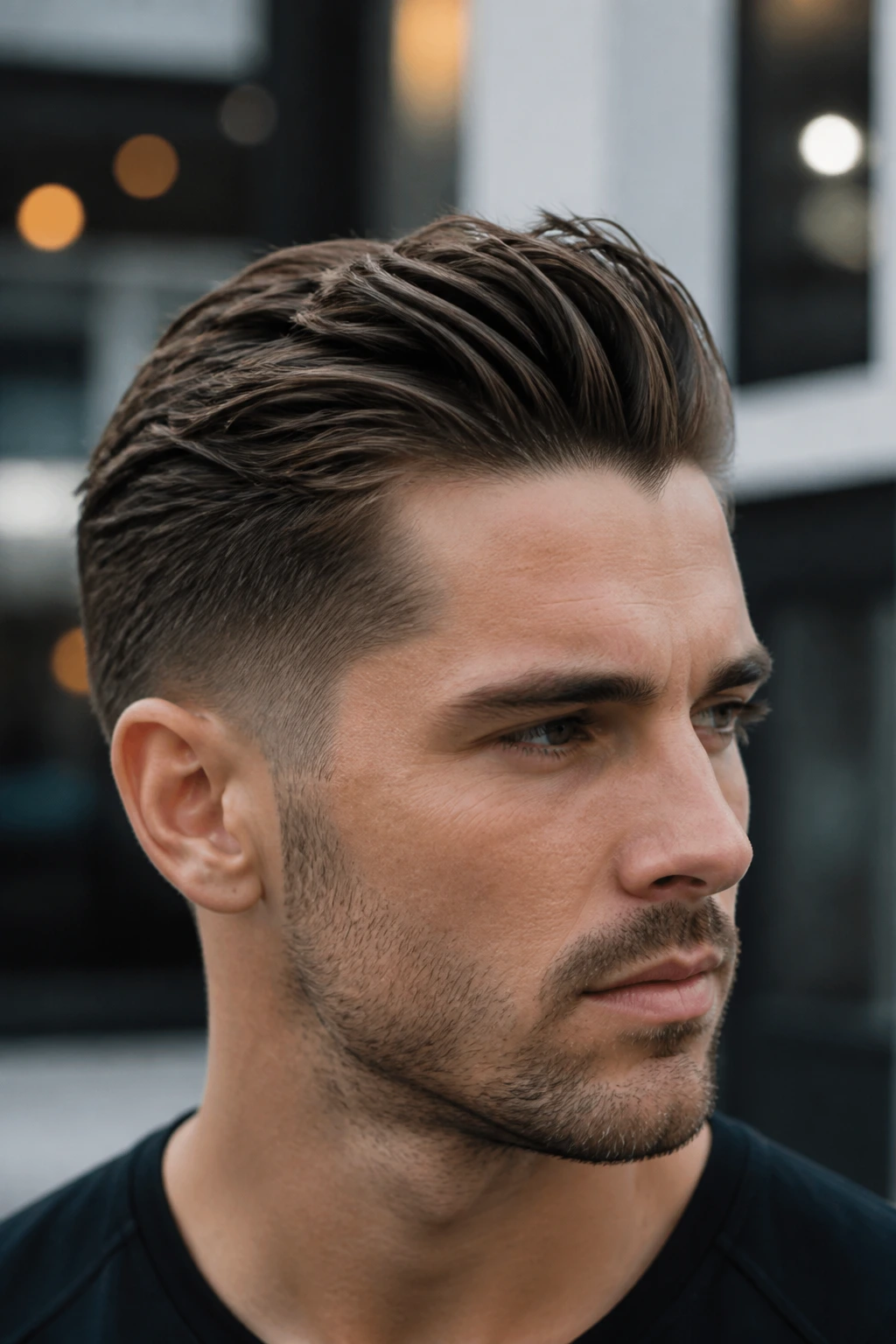
The fade is what keeps the slick back from drifting into old-school territory. When the sides are taken tight and the top stays smooth, the haircut gets leaner around the ears and temples, which makes the front read sharper. It’s a cleaner silhouette, full stop.
The key is not to make the fade too aggressive unless your face can handle the contrast. A low or mid fade keeps the look usable with a blazer or a hoodie; a high fade pushes the style into louder territory. I like a fade that starts soft at the temple and tightens gradually. It keeps the slicked top from looking like it was glued onto the head.
Use a medium-hold pomade on damp hair, then comb back and blow-dry with the nozzle pointed from front to back. That one move gives the style shape before the product sets.
3. Slick Back Undercut
Why does this cut feel so different from a standard slick back? Because the undercut removes the side transition almost entirely. The top sits on top of shorter sides with a hard visual break, which makes the brushed-back shape look more dramatic and less conservative.
How to Style It
Keep the top at least 4 inches if you want the separation to show. A matte cream gives you a softer version; a firmer pomade gives you the classic glossy edge. The undercut works especially well if your hair is thick, because the shorter sides take weight away fast and stop the style from puffing out near the temples.
If your hairline is a little uneven, this cut can be unforgiving. The hard contrast draws the eye straight to the front edge. That is fine if you like structure. It is not fine if you want forgiveness.
4. Wet-Look Slick Back
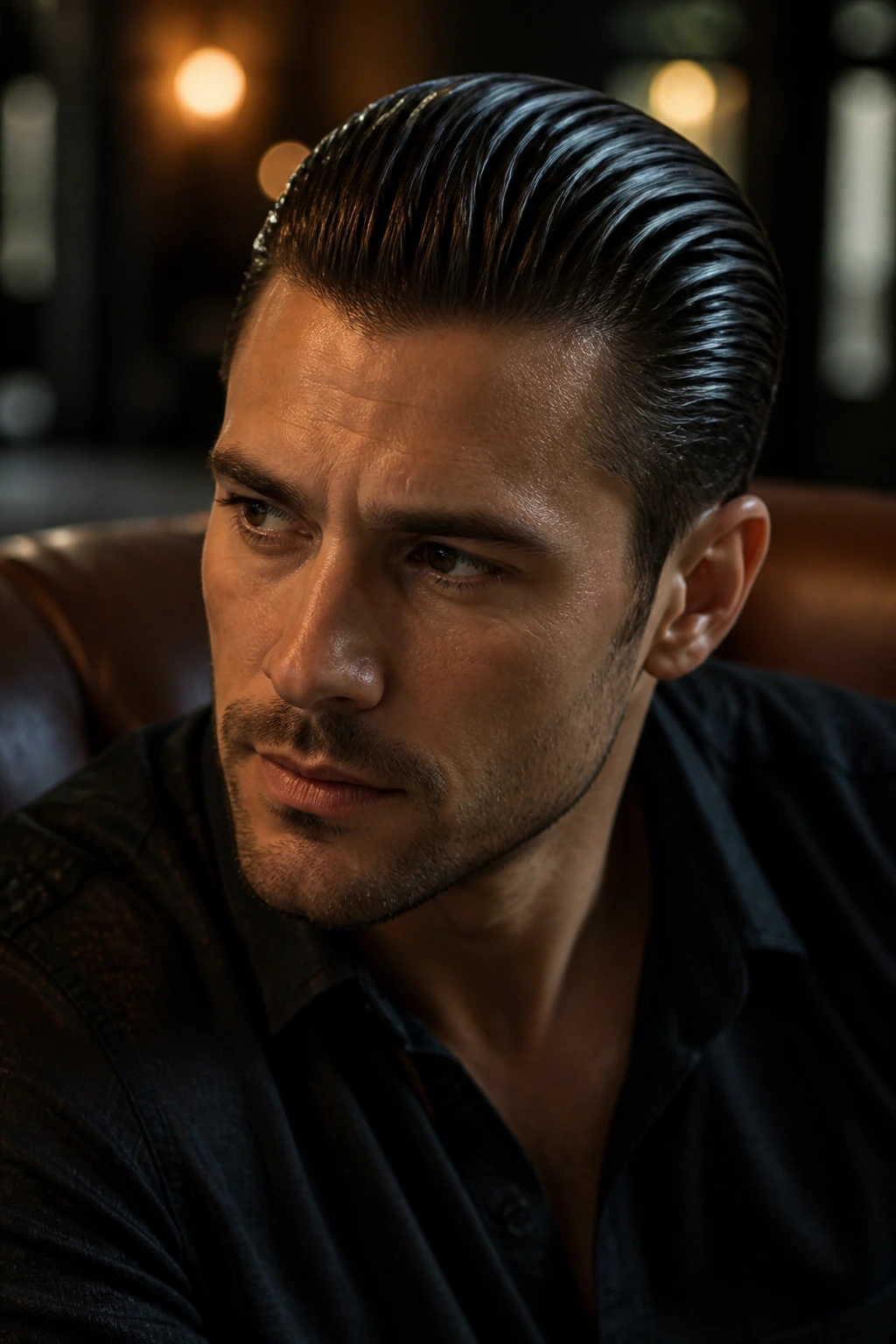
A wet-look slick back is not subtle. That’s the appeal. The shine makes the hair look darker, denser, and more deliberate, especially under indoor light or evening light where the surface picks up reflection in a very obvious way.
I like this version on straight or slightly wavy hair that lies down easily. You’ll want a stronger gel or a high-shine pomade, applied sparingly from roots to ends. Too much at the front gives you the dreaded helmet effect. Too little and it just looks tired.
- Apply to towel-dried hair.
- Comb straight back while the product is still pliable.
- Use a fine-tooth comb for a tighter finish.
- Avoid roughing it up after it sets.
The finish should look controlled, not crunchy. That’s the line.
5. Textured Slick Back
This version has a little grit in it, and that grit is what saves it from looking too polished. The top still moves backward, but the strands are separated enough to show individual pieces instead of one smooth sheet of hair.
What Makes It Different
Textured slick backs work best when the cut has some point-cutting or soft layering on top. A barber who scissor-cuts the upper section instead of leaving it blunt will give you more movement and less bulk. I’m biased toward a matte clay here. It keeps the texture visible and stops the front from collapsing into a flat block.
The style is a good fit for guys who want a slick back that can survive being run through with a hand once or twice during the day. It looks less formal, less stiff, and a little more alive.
6. Side-Part Slick Back
A side-part slick back is for men who want order, not drama. The part gives the top a place to start, and the brushed-back movement keeps the whole thing from looking pinned to one side. It sits somewhere between a business cut and a classic gentleman’s style.
The part should be subtle, not carved in like a road map. A clean comb line is enough. If the hair is thick, a side part can help break up bulk; if the hair is fine, it can create the illusion of more structure because the eye follows the line across the head.
I like this on square and oval faces. It gives the face a little direction without forcing the forehead into center stage.
7. Slick Back with Taper Fade
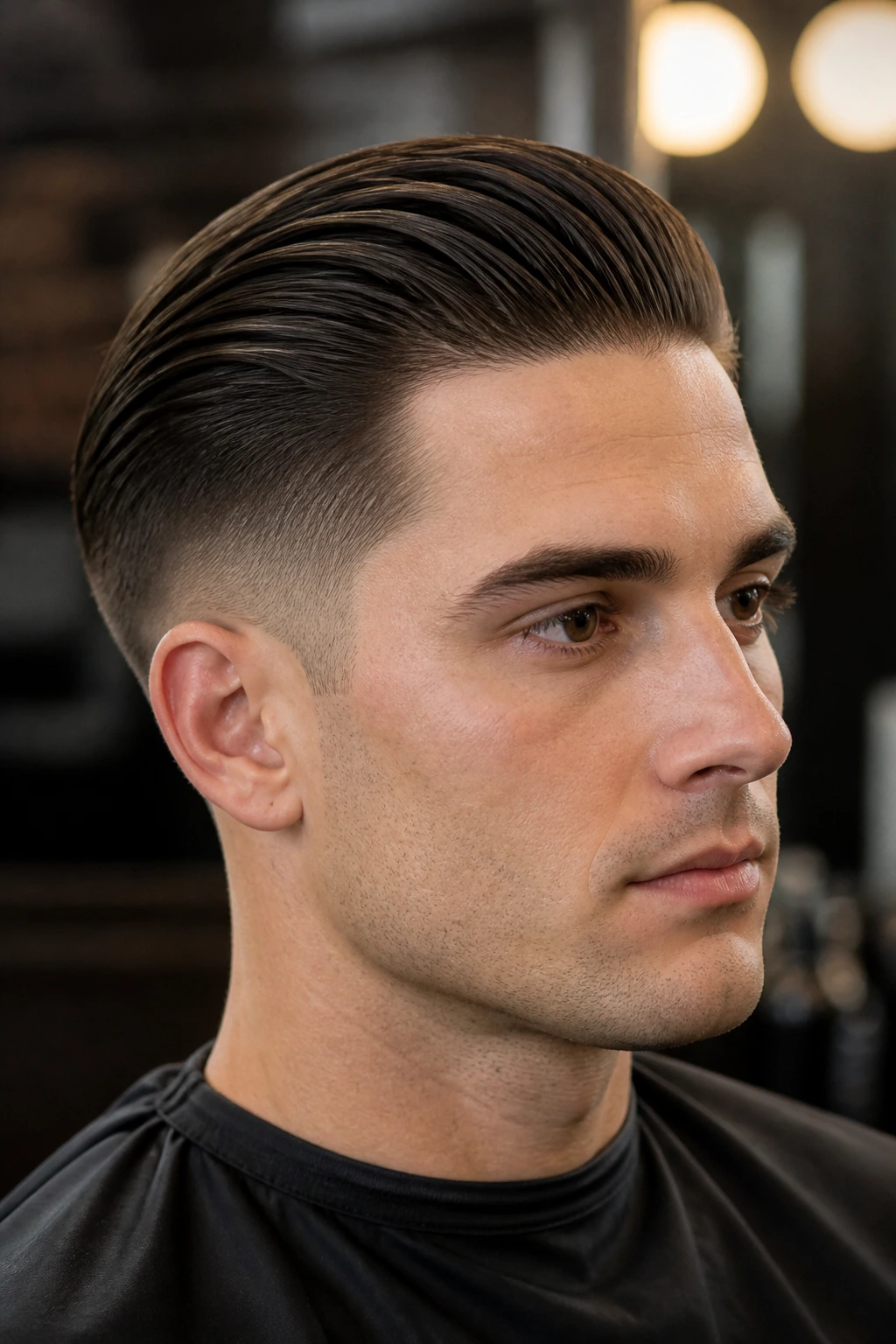
This is the version I recommend when someone says they want the style but hate how hard a skin fade can look. The taper keeps the edges neat around the neckline and ears, but it leaves enough softness for the haircut to grow out gracefully.
It’s a practical cut. That matters more than people admit. A taper fade slick back still looks intentional after two or three weeks, which is more than you can say for many sharper fades. Style it with a light pomade or grooming cream and keep the top brushed back with a vent brush while blow-drying. You’ll get control without the slick, painted-on finish.
8. Long Hair Slick Back
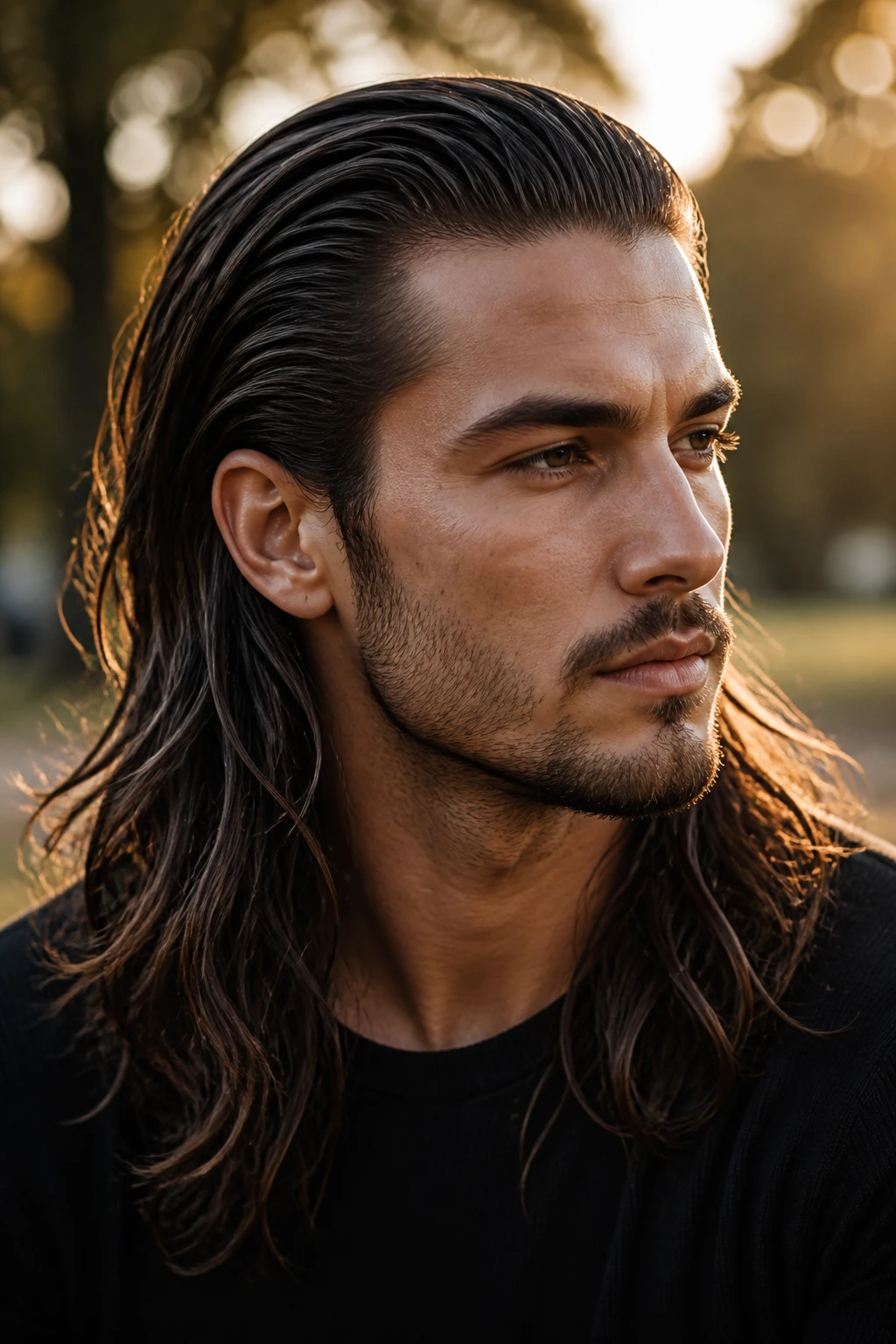
Does long hair make the slick back harder? Yes. Does it look better when it works? Also yes.
How to Use the Extra Length
Once the top moves past 6 inches, the style stops being a quick comb-and-go and starts needing direction. Long hair wants to collapse backward in pieces, so use a blow-dryer first and a cream or light pomade second. Work from the front hairline back toward the crown. Don’t drag product only over the top layer; that’s how you get a shiny shell with dry hair underneath.
This version looks best when there’s some natural bend in the hair. Poker-straight long hair can slip too flat. Wavy long hair gives you a little lift through the middle, which keeps the shape from reading heavy.
9. Medium-Length Slick Back
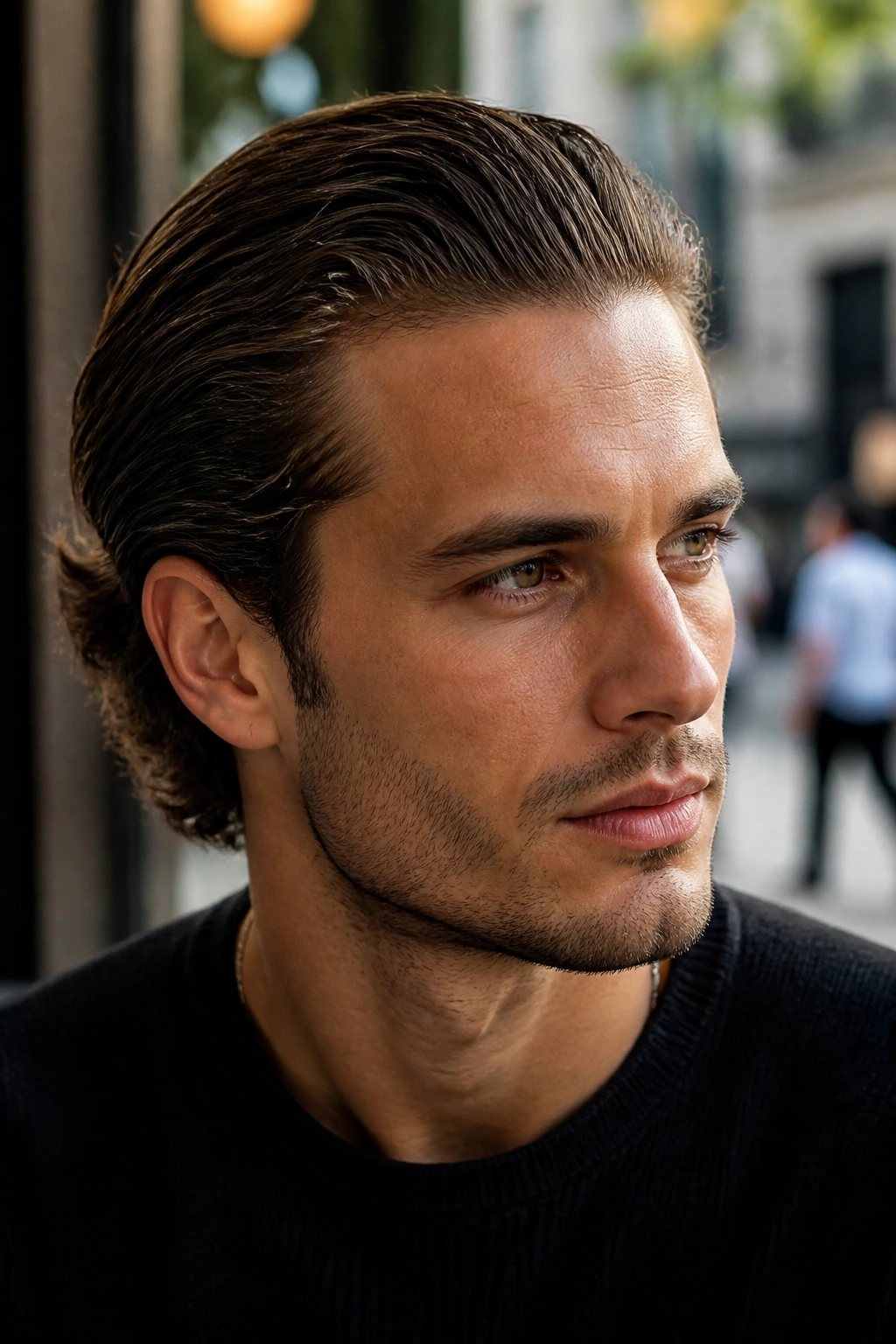
Medium length is probably the easiest range for most men to live with. The hair is long enough to comb back with shape, but not so long that it flops over its own weight by noon.
The best part is flexibility. You can wear it tighter for work and loosen the front with your fingers later if you want a softer outline. A medium-hold cream or pomade gives you that middle ground: enough control to keep the front off the forehead, enough movement that the style doesn’t feel frozen.
This is the cut I’d point a first-timer toward if they want a slick back but are nervous about committing to a severe shape.
10. Curly Slick Back
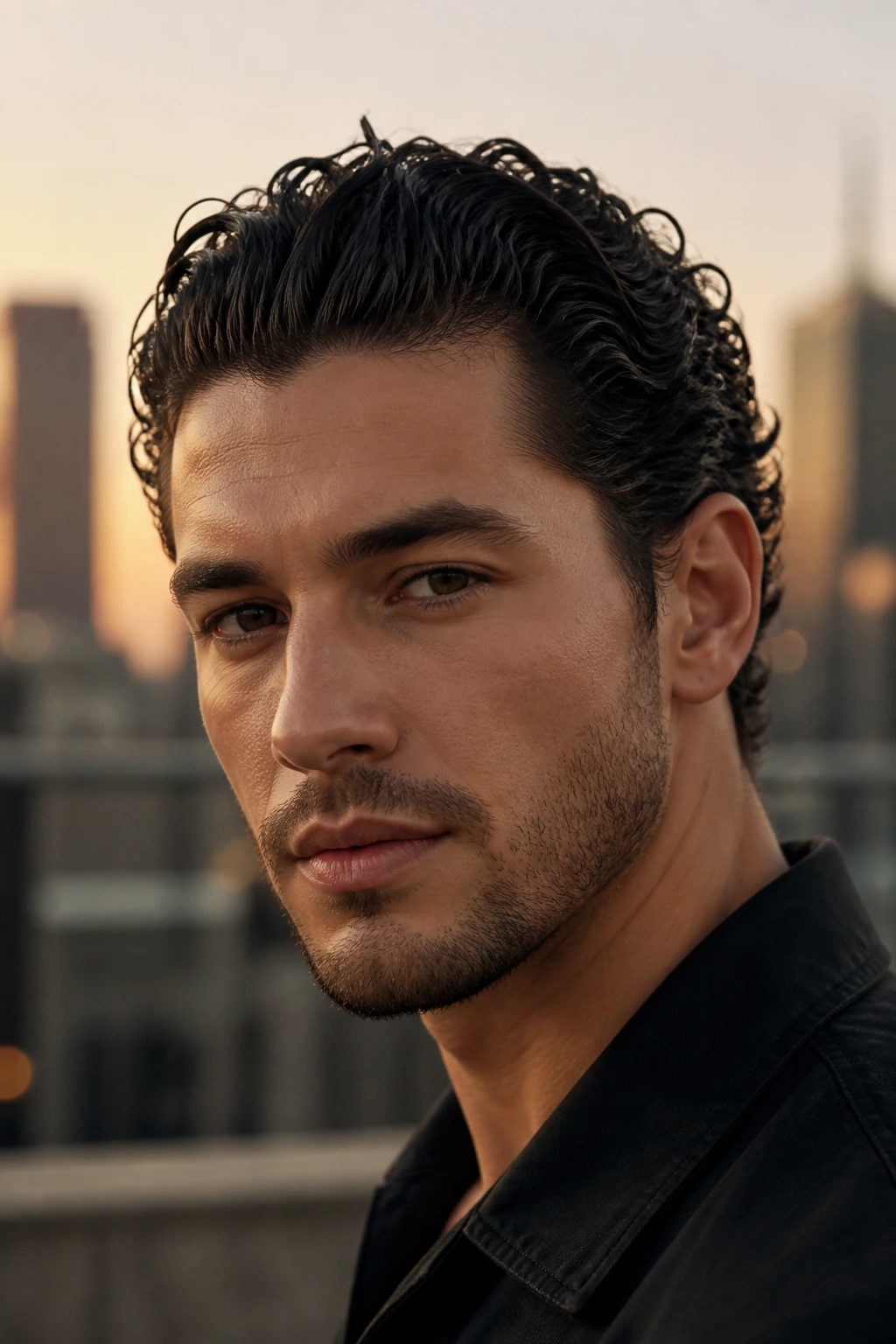
Curly hair in a slick back is a different animal, and that’s the point. You are not trying to erase the curl; you’re teaching it to move backward in one direction so the texture shows through instead of fighting you.
Start with damp hair and a leave-in conditioner or curl cream. Then add a small amount of medium-hold product. A wide-tooth comb can help guide the curls back without stretching them into frizz. If you use a fine comb too early, you’ll break up the curl pattern and get a rough surface.
The best curly slick backs keep a little volume up top. Flat curls often look lifeless. Controlled curls look expensive.
11. Wavy Slick Back
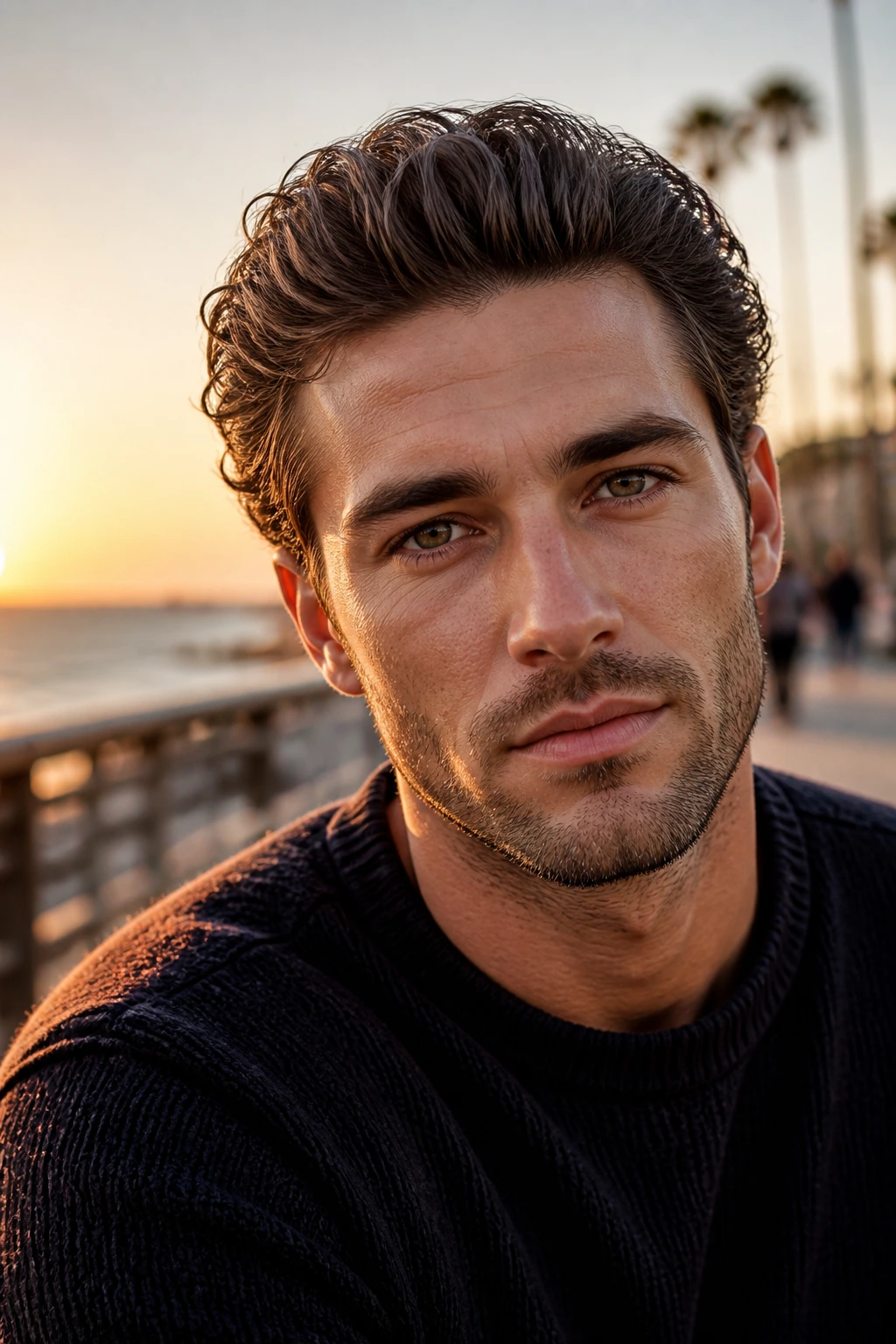
Wavy hair sits in the sweet spot. It has enough bend to keep the style from going stiff, but not so much texture that it gets unruly the second humidity shows up.
What Makes It Different
The wave gives the slick back a built-in softness. You do not need much product, and you definitely do not want to press the hair into a hard, glossy sheet unless you’re after a formal look. A light pomade or cream on damp hair is usually enough. Dry the front backward with your fingers first, then use a comb only where the shape needs tightening.
I like this cut on guys who want movement without mess. It looks good with a beard, with glasses, and with hair that sits just a little above the scalp instead of hugging it.
12. Straight Fine Hair Slick Back
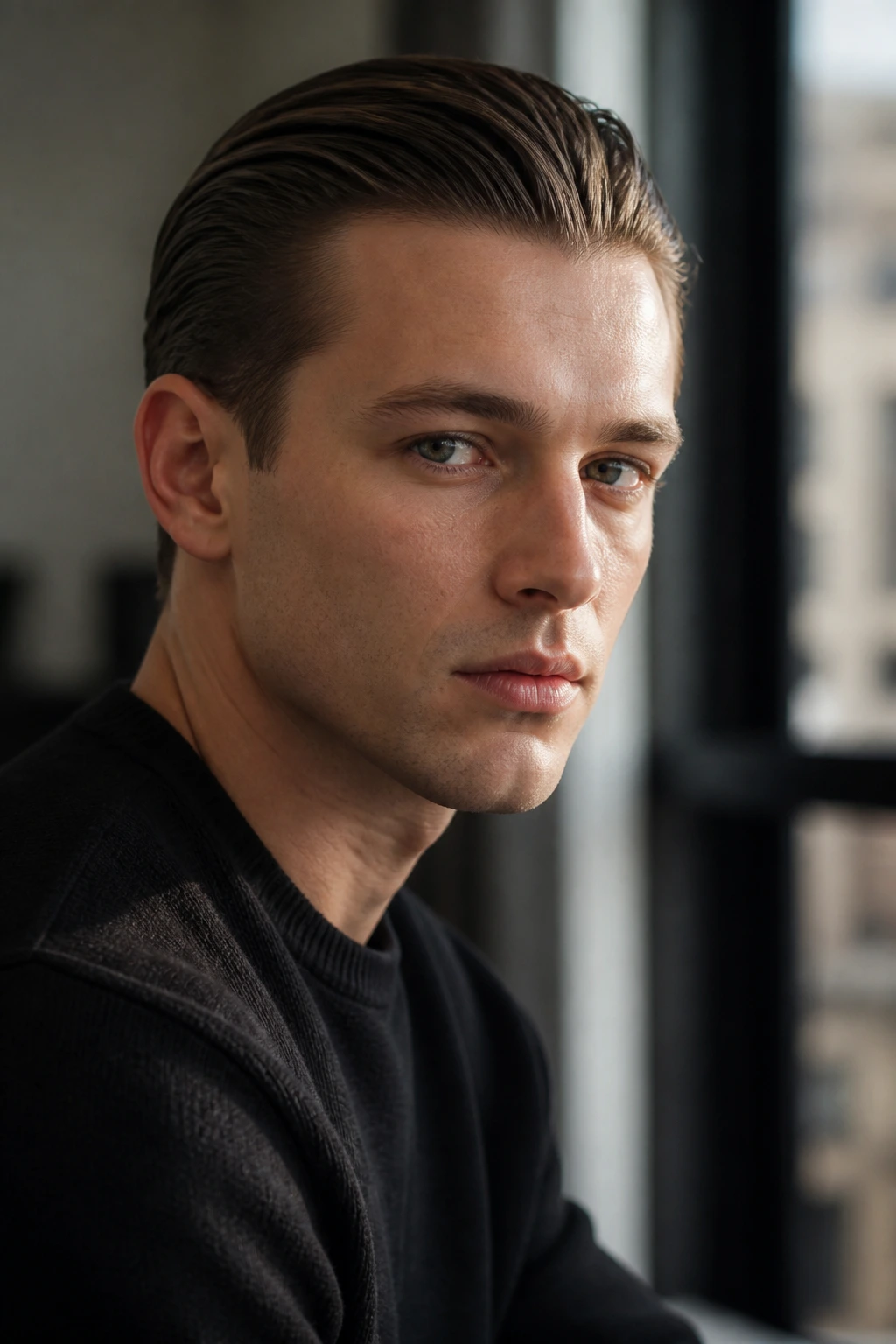
Fine hair can absolutely wear this style, but it has to be handled with a lighter hand. Heavy product is the enemy. It collapses the strands and makes the top look thinner than it is.
Use a volumizing mousse or a very light cream before blow-drying. Push the hair back with a vent brush while the roots are still damp, then finish with a small amount of matte paste at the ends only. The goal is lift at the root and control at the surface.
If your fine hair separates too much, ask your barber to leave a little more length through the front. A too-short top on fine hair tends to split and expose the scalp.
13. Thick Hair Slick Back
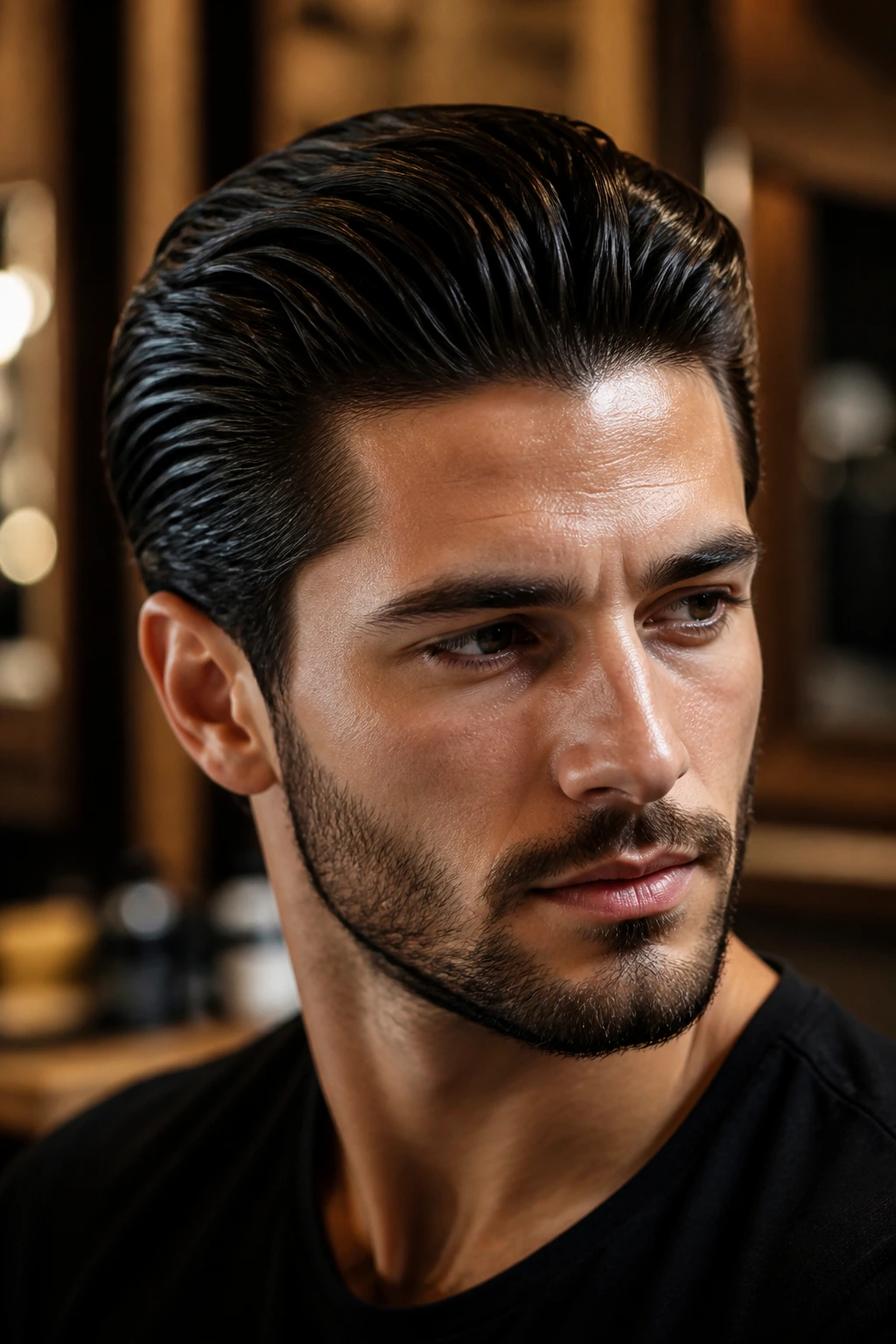
Thick hair gives you options, but it also gives you bulk. If the haircut is not removed properly through the sides and crown, the style can balloon backward like a helmet.
How to Handle the Density
Your barber should thin the internal weight, especially if the top grows fast and stands up on its own. At home, work in sections. Blow-dry the front first, then the middle, then the crown. A strong-hold pomade or cream is useful, but use less than you think. Thick hair holds product well, and that means overdoing it shows fast.
A thick slick back looks best when the front has a little height before it sweeps back. Flattening everything down wastes the best thing about dense hair.
14. Hard Part Slick Back
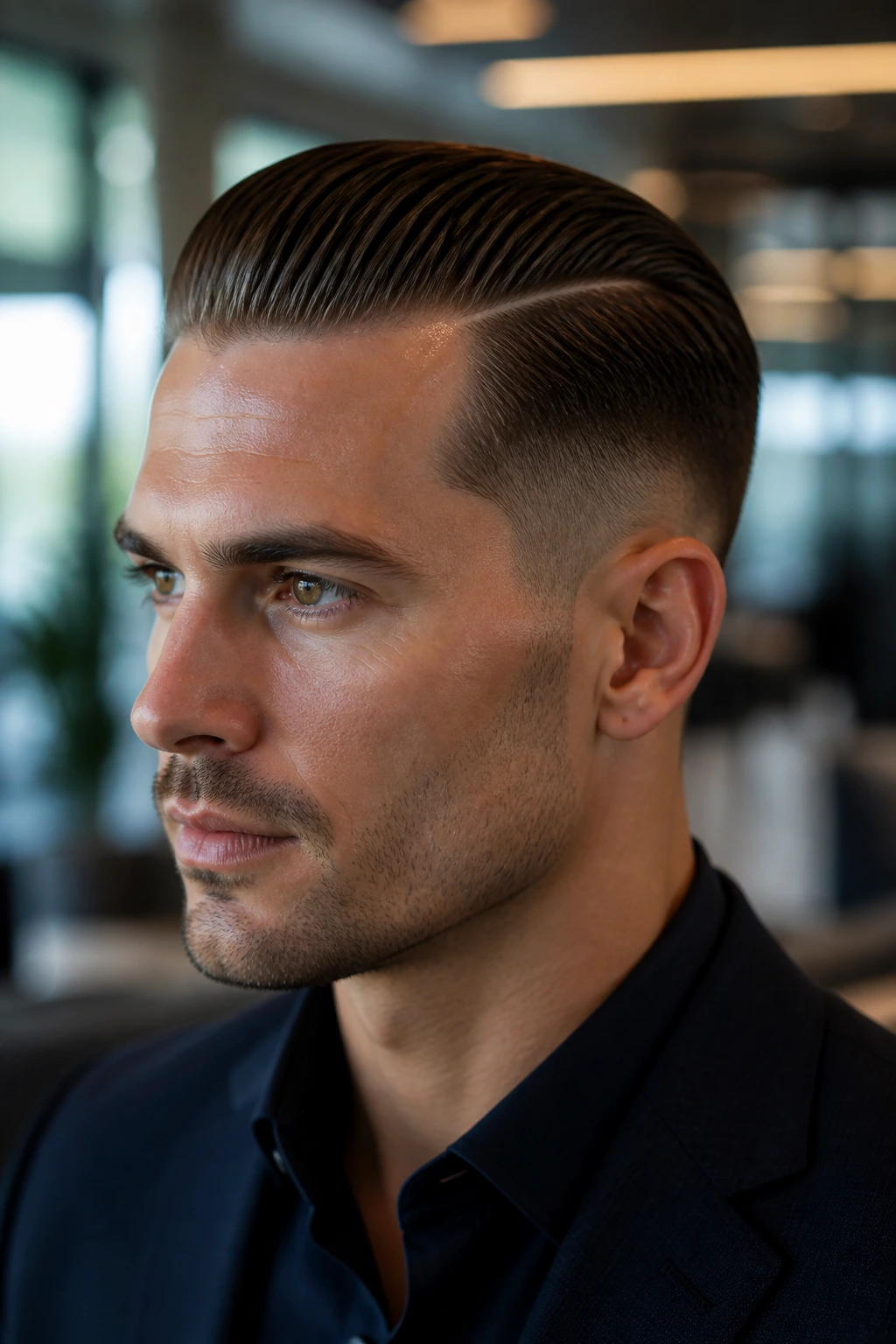
A hard part changes the mood instantly. The visible shaved line gives the style a crisp edge, and the slicked top keeps it from looking like a retro novelty haircut.
The hard part works well on medium or thick hair where the part can stay visible without vanishing into the texture. Keep the comb line clean and sharp, then brush the top back and slightly over the part so the shape doesn’t become too rigid. This look can tip into overstyled territory if the shine is too high, so I prefer a medium-shine product.
If you wear suits often, this cut makes sense. If you live in hoodies, be honest about whether you want to spend the time maintaining that line every few weeks.
15. Skin Fade Slick Back
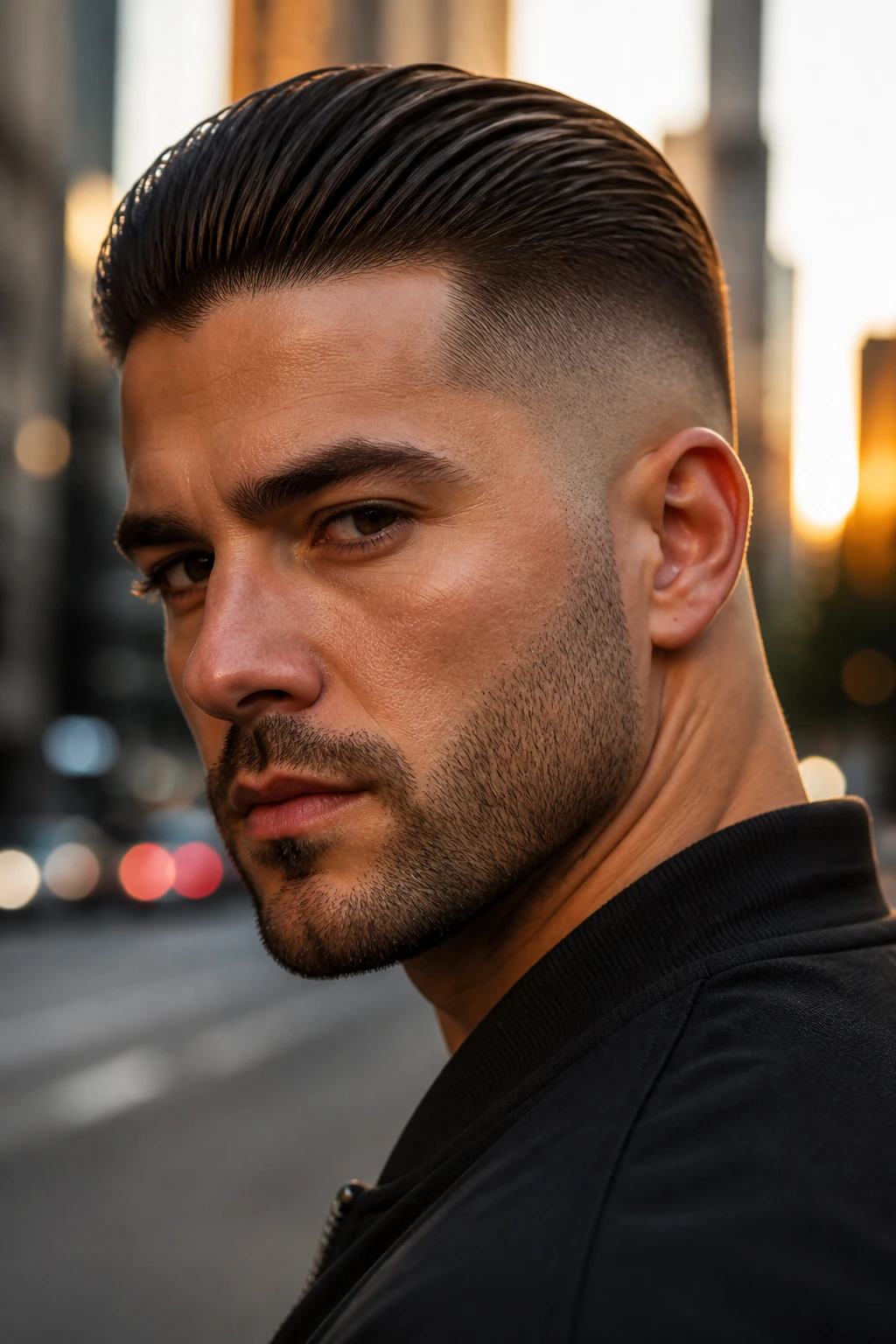
The skin fade makes the top look thicker by stripping away everything around it. That contrast is the whole magic trick. The eye goes straight to the slicked-back shape, and the scalp-to-hair transition makes the upper section feel even more deliberate.
This version is sharp, but it does not forgive sloppy maintenance. Once the fade grows out, the contrast turns muddy. If you choose it, keep your trim schedule tighter than you would with a taper or scissor cut. A medium pomade works well because the haircut already has plenty of edge; you do not need to pile on extra shine.
16. Low Fade Slick Back
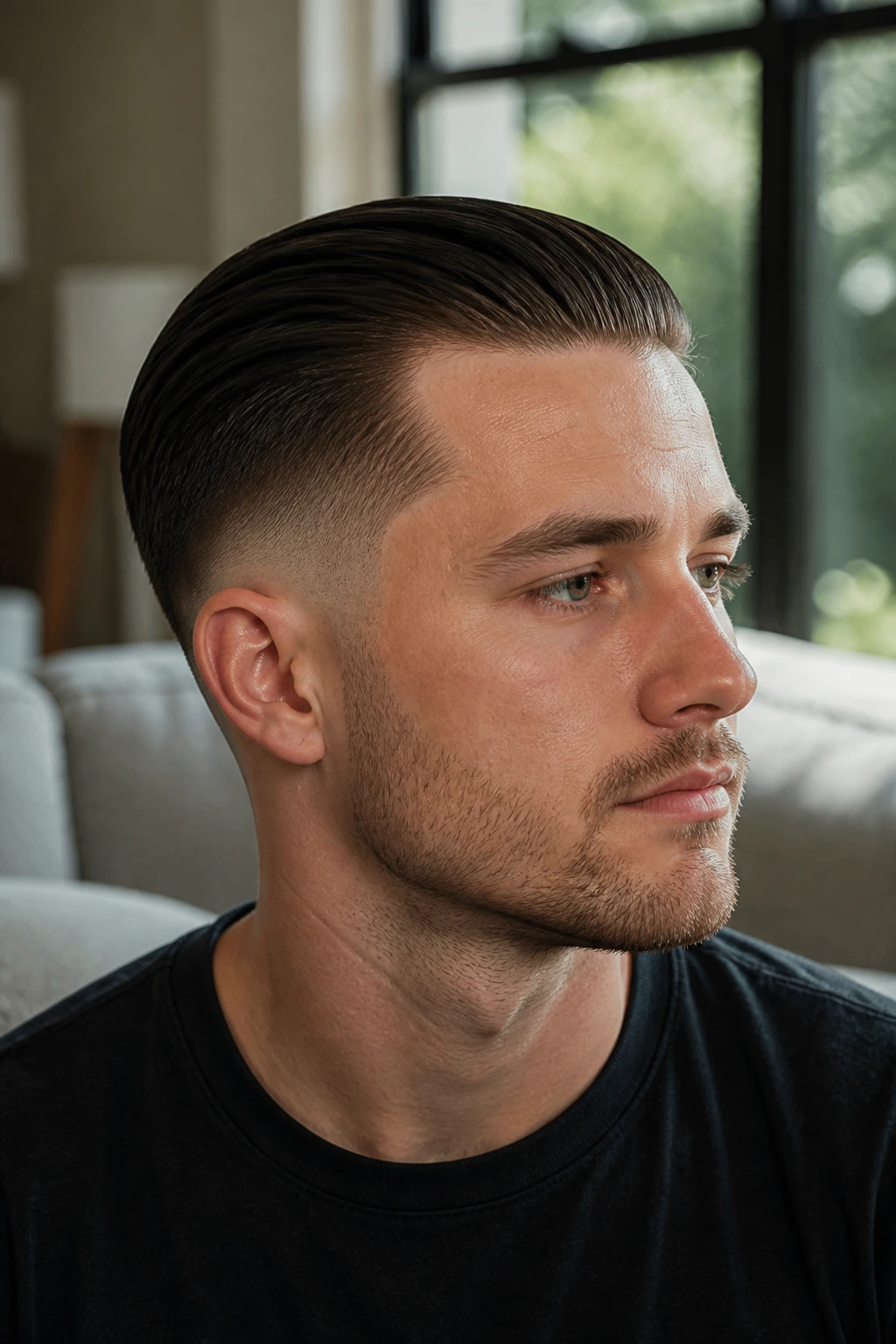
A low fade keeps the sides close without exposing too much scalp. That makes the style easier to wear in everyday settings where a high-contrast cut might feel a little loud.
The top stays the focus. That’s the beauty of it. You get the clean edge around the ears and neckline, but the fade starts low enough that the haircut still looks grounded. I like this one with a natural finish—something between matte and light sheen—because the low fade already gives the style a neat outline.
For guys who want polished without looking like they tried too hard, this is one of the safest bets in the bunch.
17. Mid Fade Slick Back
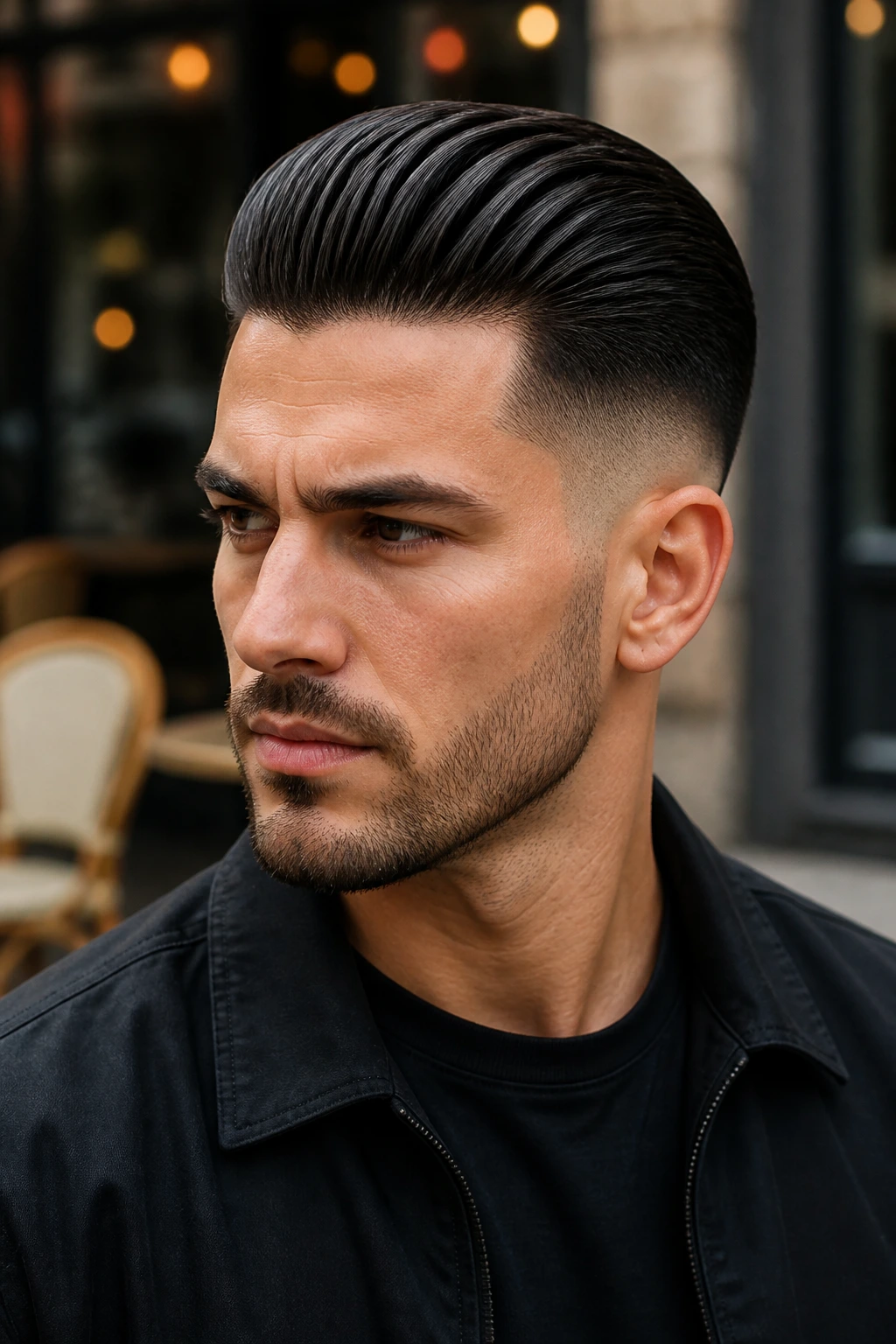
The mid fade is the middle ground that actually earns its name. It gives more contrast than a low fade and less drama than a skin fade, which makes the whole haircut easier to wear across different settings.
The best thing about a mid fade slick back is how balanced it feels from the side. The temple area stays tidy, the sides narrow cleanly, and the top has enough room to move without looking disconnected. Use a blow dryer to direct the hair back first. Product comes second. If you reverse that order, the front often falls apart and sticks in odd clumps.
This cut suits guys who want a sharper profile but don’t want the haircut screaming for attention.
18. High Fade Slick Back
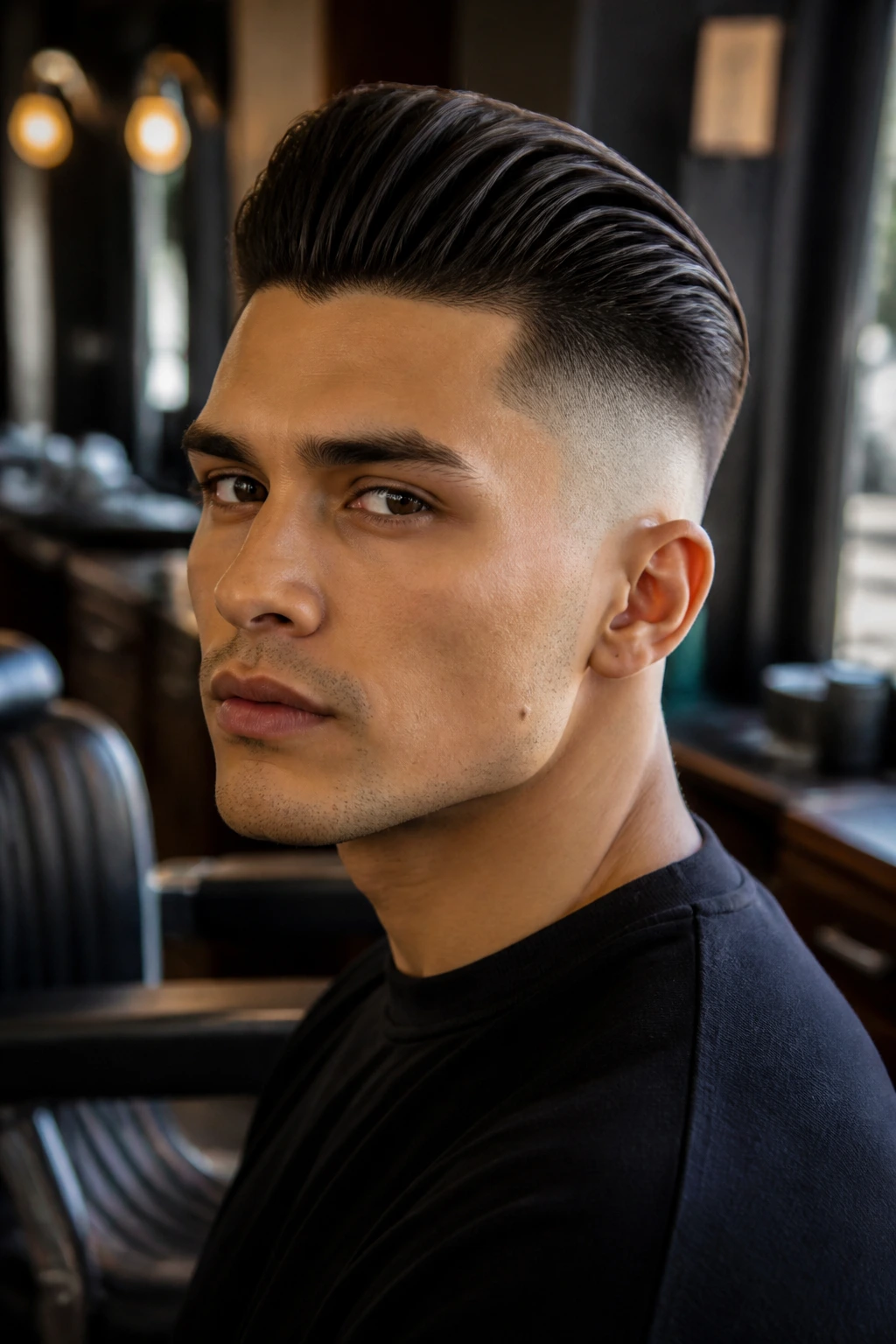
A high fade is for men who like contrast and don’t mind that the haircut becomes the loudest thing in the room. The sides disappear fast, which leaves a tall, clean canvas on top.
That can look fantastic on thick hair and strong jawlines. It can also look a little severe if the top is too short. Keep some length up there—around 4 inches or more—so the slicked shape has enough body to justify the contrast. I’d avoid high shine here unless you want a formal, almost glossy finish.
The haircut has a bold outline. That is the whole draw.
19. Scissor-Cut Slick Back
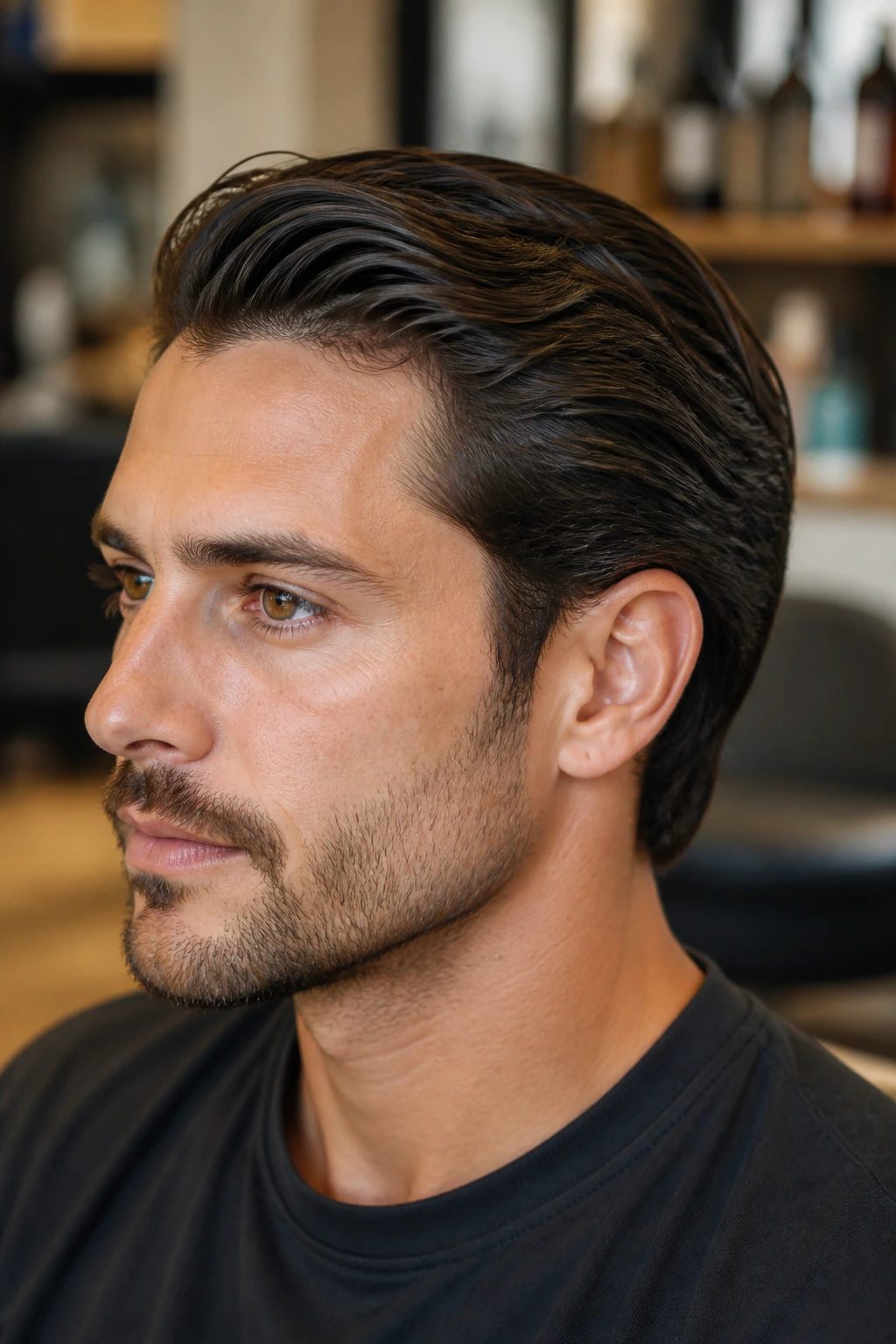
A scissor-cut slick back has less edge around the sides and more softness in the overall silhouette. There’s no machine-shaved statement, no aggressive fade, just a barber’s hand shaping the top and sides so the hair falls with a smoother contour.
This is one of the easiest versions to grow out without looking ragged. The lines stay gentler, and the haircut ages more naturally between trims. It’s especially good for men who want a slick back but work in places where a fade might feel too sharp. Use a cream or light pomade, not a heavy wax, so the movement stays visible.
20. Disconnected Slick Back
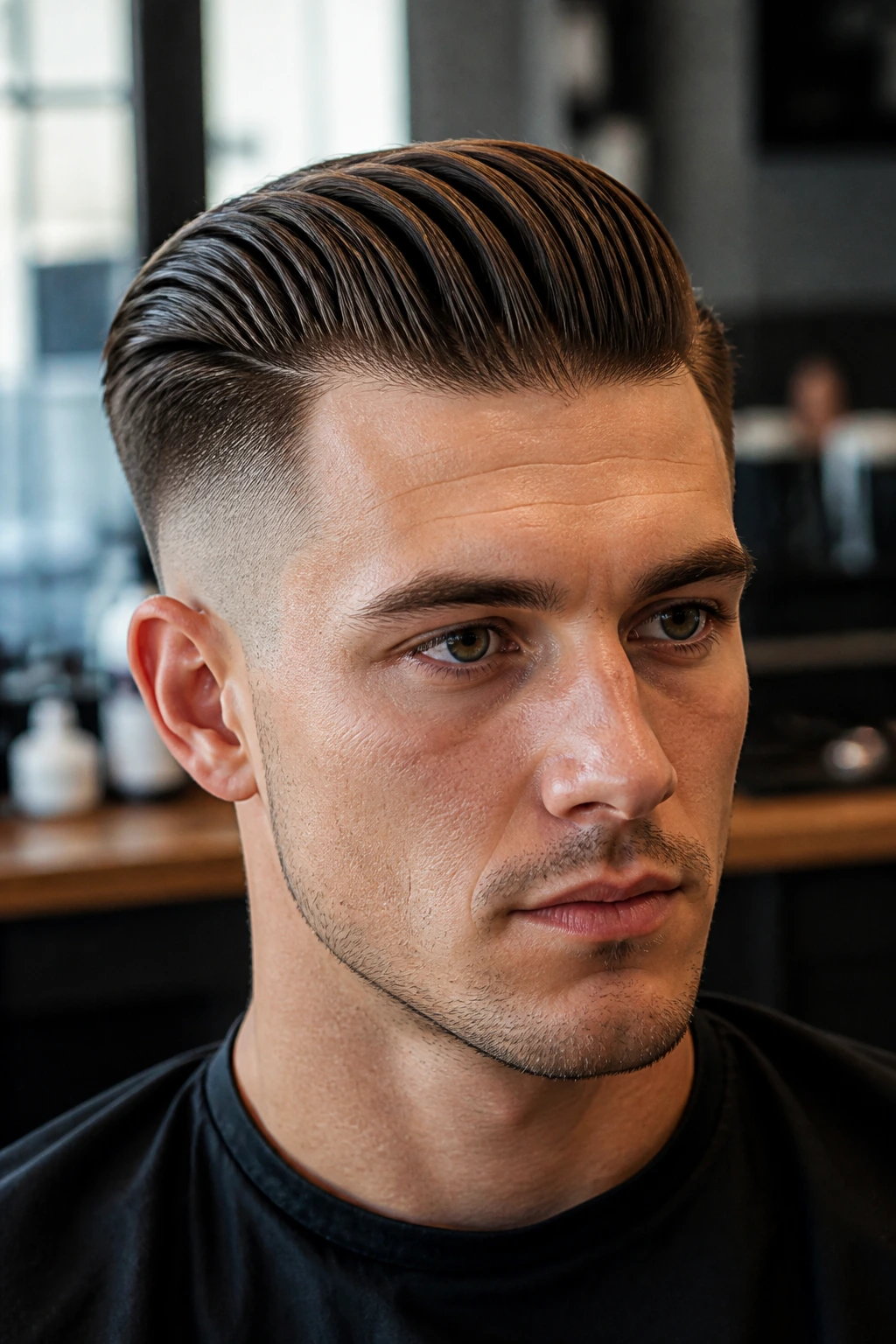
The disconnected version is basically a more obvious version of the undercut, but it deserves its own lane. The top is clearly separated from the sides, and that separation gives the haircut a graphic, almost architectural look.
This is not a shy cut. It asks for confidence and regular upkeep. The upside is that it frames the top with almost no visual clutter. If your hair is thick or straight and you want a shape that reads crisp from across the room, this one lands hard.
I’d pair it with clean facial hair lines or no beard at all. Too much noise below the jaw can fight with the haircut’s straight lines.
21. Pompadour-Slick Hybrid
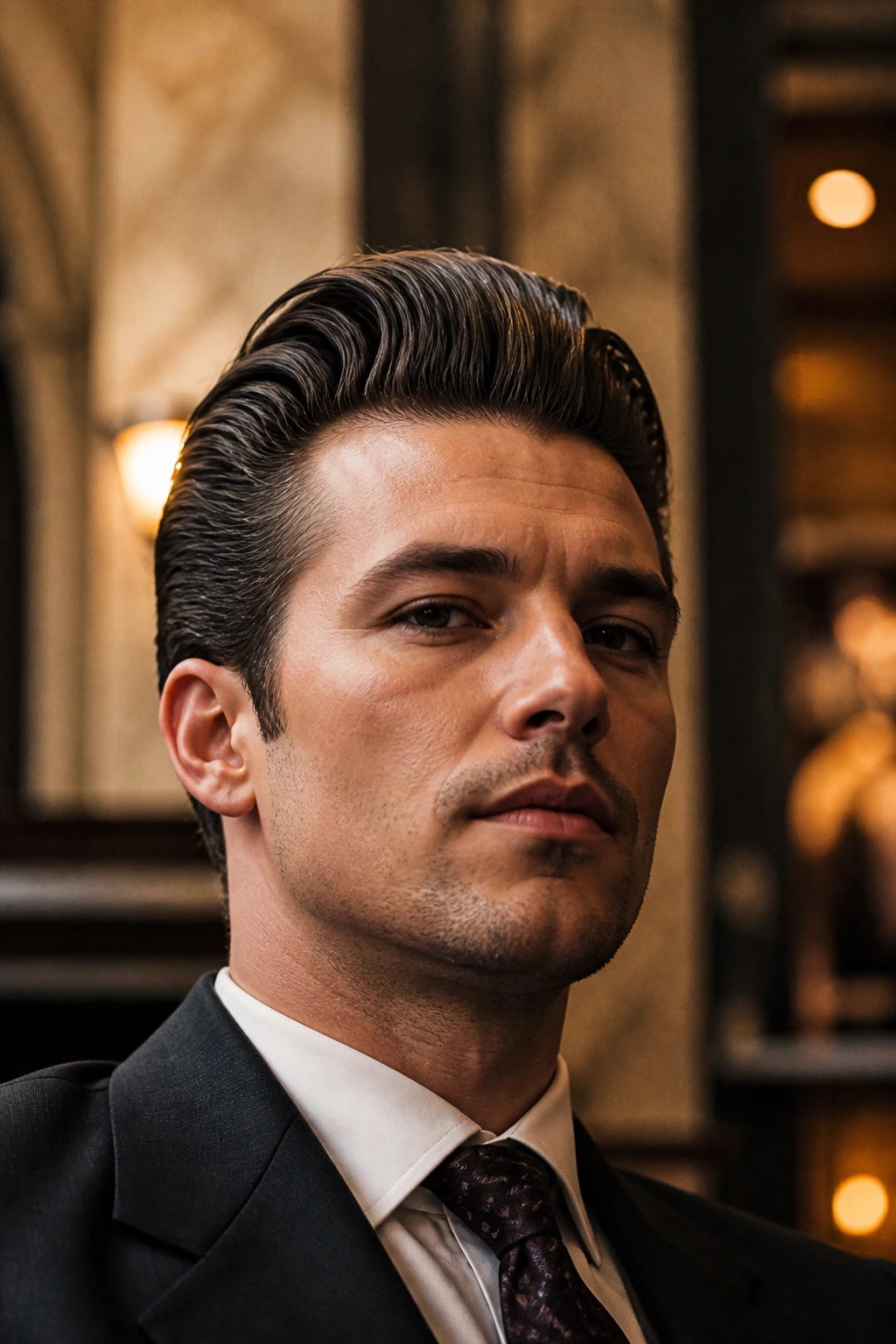
Why choose between a pompadour and a slick back when you can borrow the best part of both? This hybrid keeps some lift at the front and then sweeps backward, so the hair doesn’t lie flat against the scalp.
That front lift changes the whole mood. It gives the style a little old-school drama without tipping into pompadour height. Blow-dry the front upward and backward first, then lock it in with a medium-to-strong hold product. If the front collapses, the haircut loses the shape that makes it interesting.
This version suits men who want volume and control in the same haircut. It’s a little dressier, a little bolder, and much less boring than a straight-back comb.
22. Ivy League Slick Back
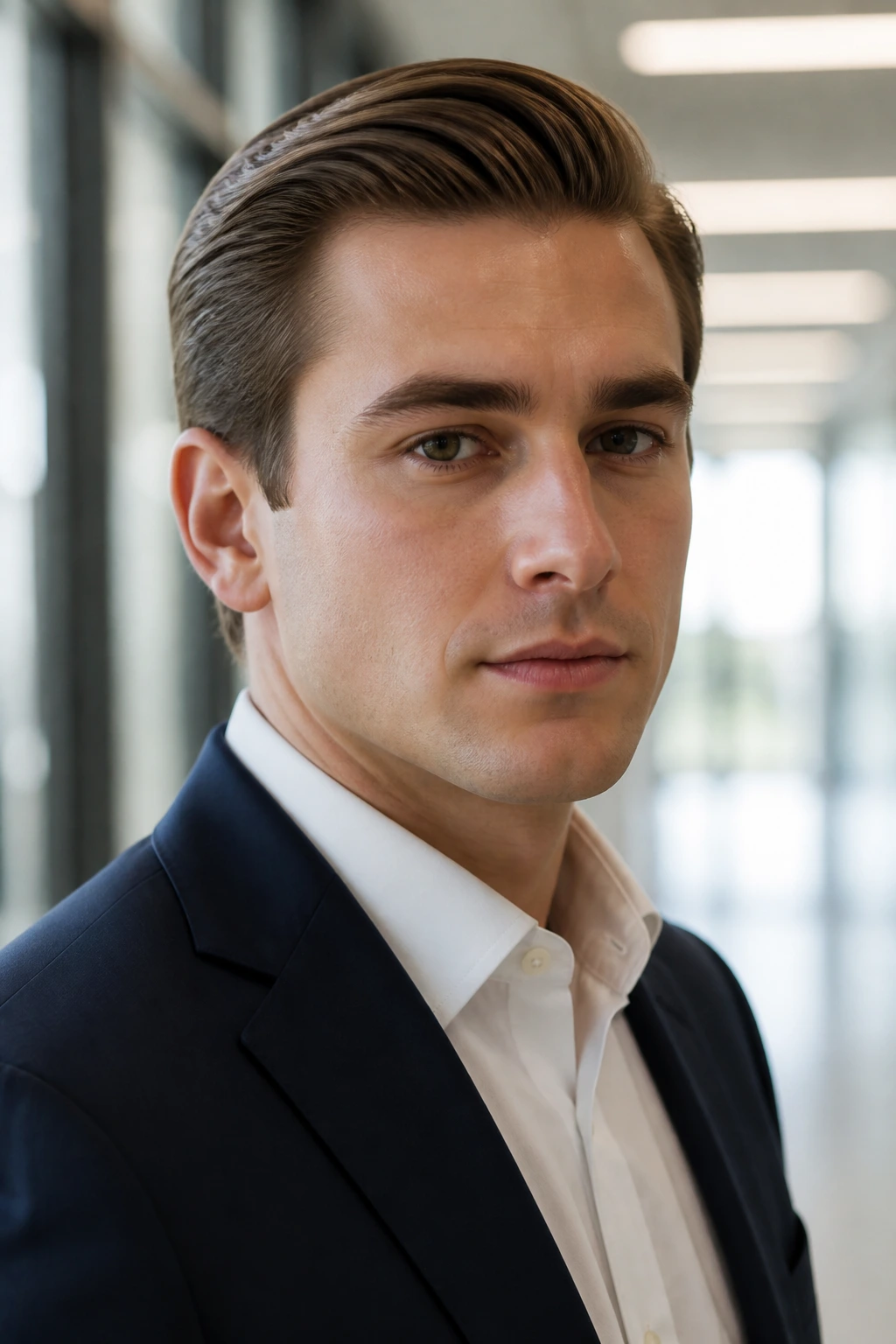
The Ivy League slick back has a smarter, preppier feel. The top stays neat, the edges stay tidy, and the style usually looks best when it’s kept a little softer than a classic glossy slick back.
I like this one on men who need a haircut that can slide from office to dinner without a change. A light cream and a fine comb are enough. The hair should look brushed into place, not lacquered. If you overstyle it, the whole thing loses the easy, collegiate feel that makes this version work.
It’s a clean option for shorter tops and a good bridge between a side part and a full slick back.
23. Executive Slick Back
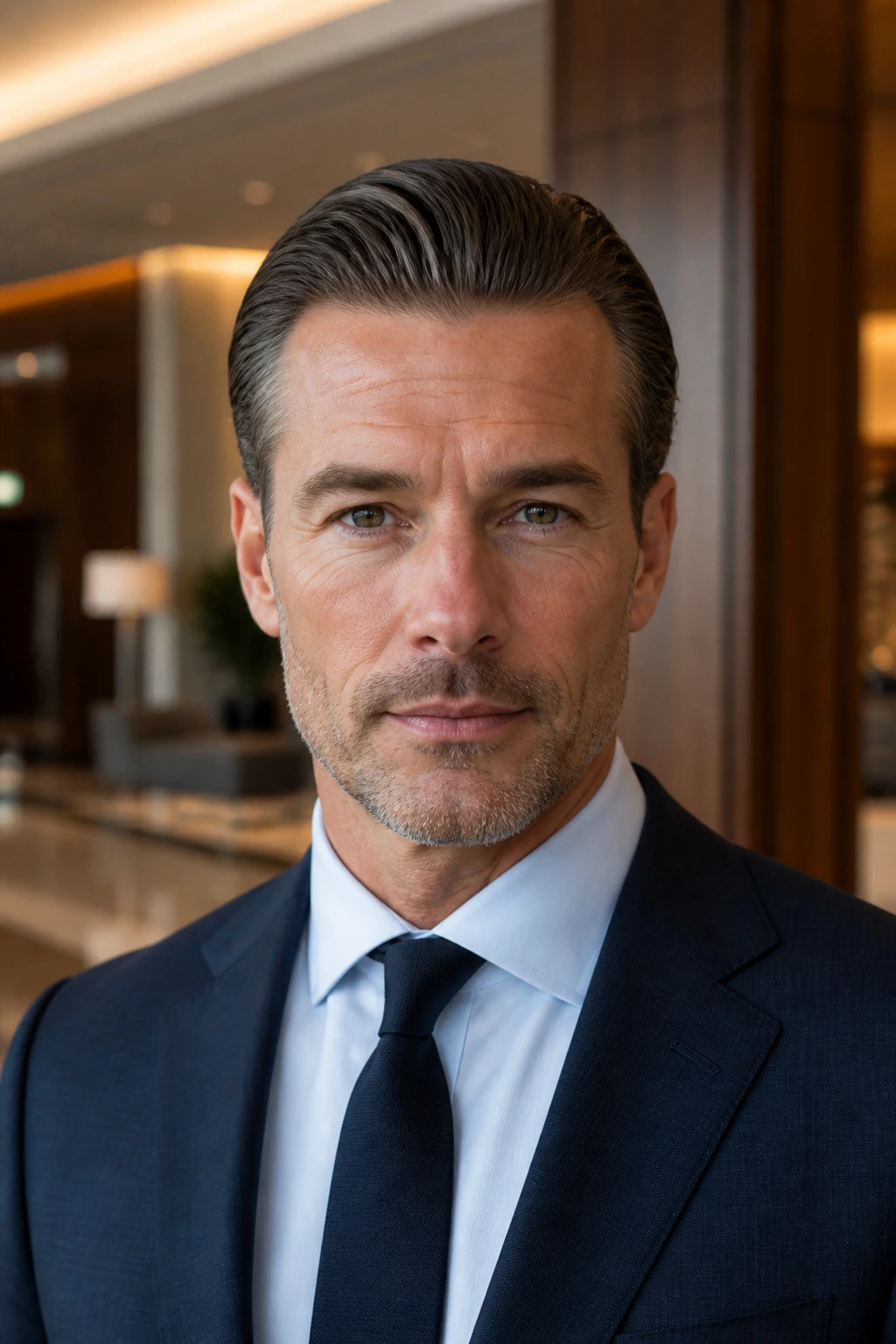
The executive version is about restraint. It is slicked back, yes, but the finish is controlled, neat, and almost understated compared with the more dramatic looks in this list.
A medium-length top, a tapered side, and a light sheen product usually do the job. The key is not to chase perfect symmetry. Let the top move back in a smooth line, then keep the front slightly loose so it doesn’t look ironed into place. This is the kind of style that looks best when the haircut is fresh and the neckline is tidy.
If your job calls for a polished look but you hate looking overdone, this is the lane.
24. Brushed-Back Quiff
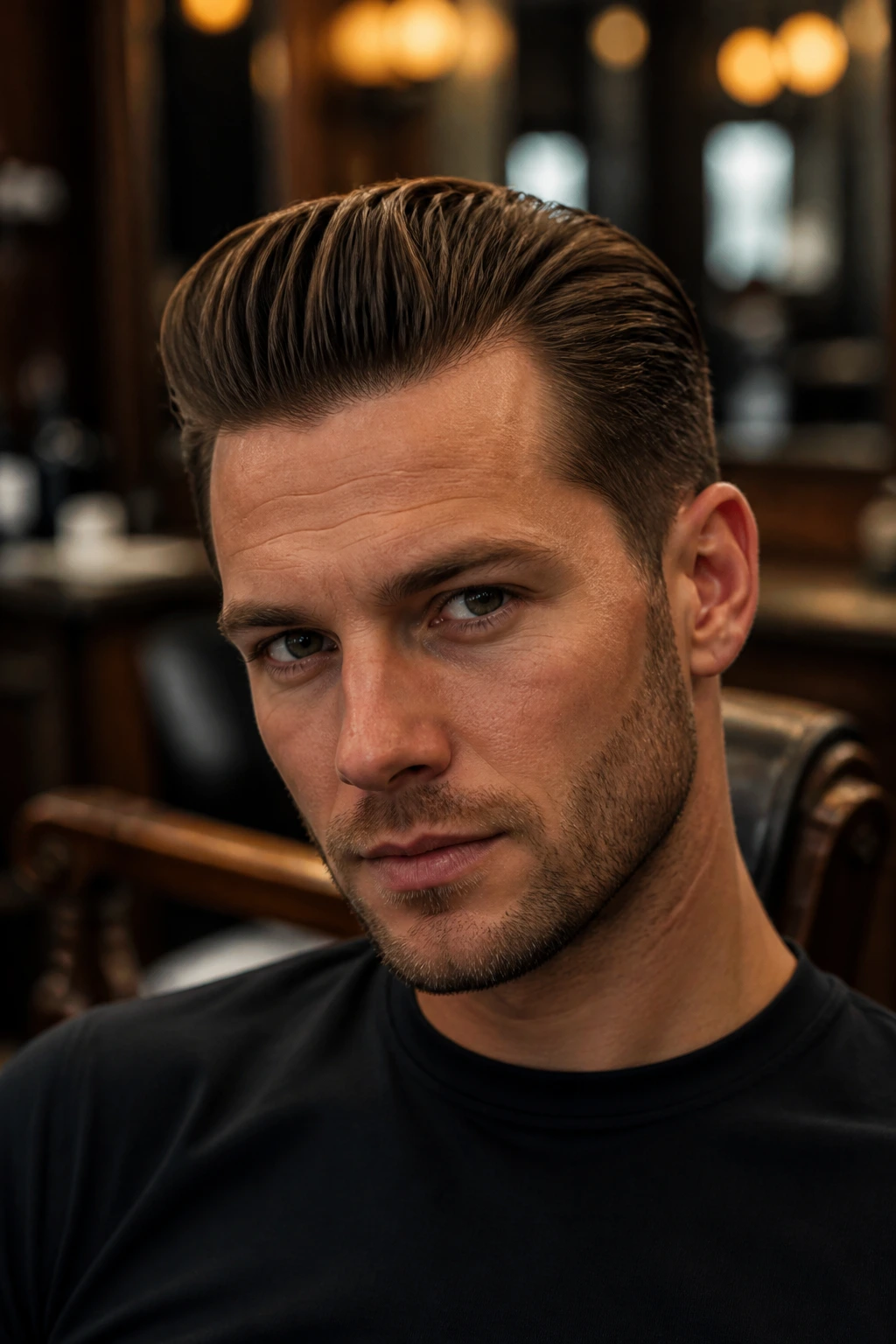
A brushed-back quiff keeps some rise at the front before the hair moves backward. That small bump changes the silhouette more than you’d think. It gives the forehead area structure and makes the style feel more energetic than a flat slick back.
This works especially well on straight or slightly wavy hair with enough length on top to hold shape after blow-drying. Use a round brush or vent brush to lift the front, then direct it back. A matte or low-shine product keeps the quiff from turning into a greasy ridge.
It’s one of the better choices if you want something polished but not stiff.
25. Shoulder-Length Slick Back
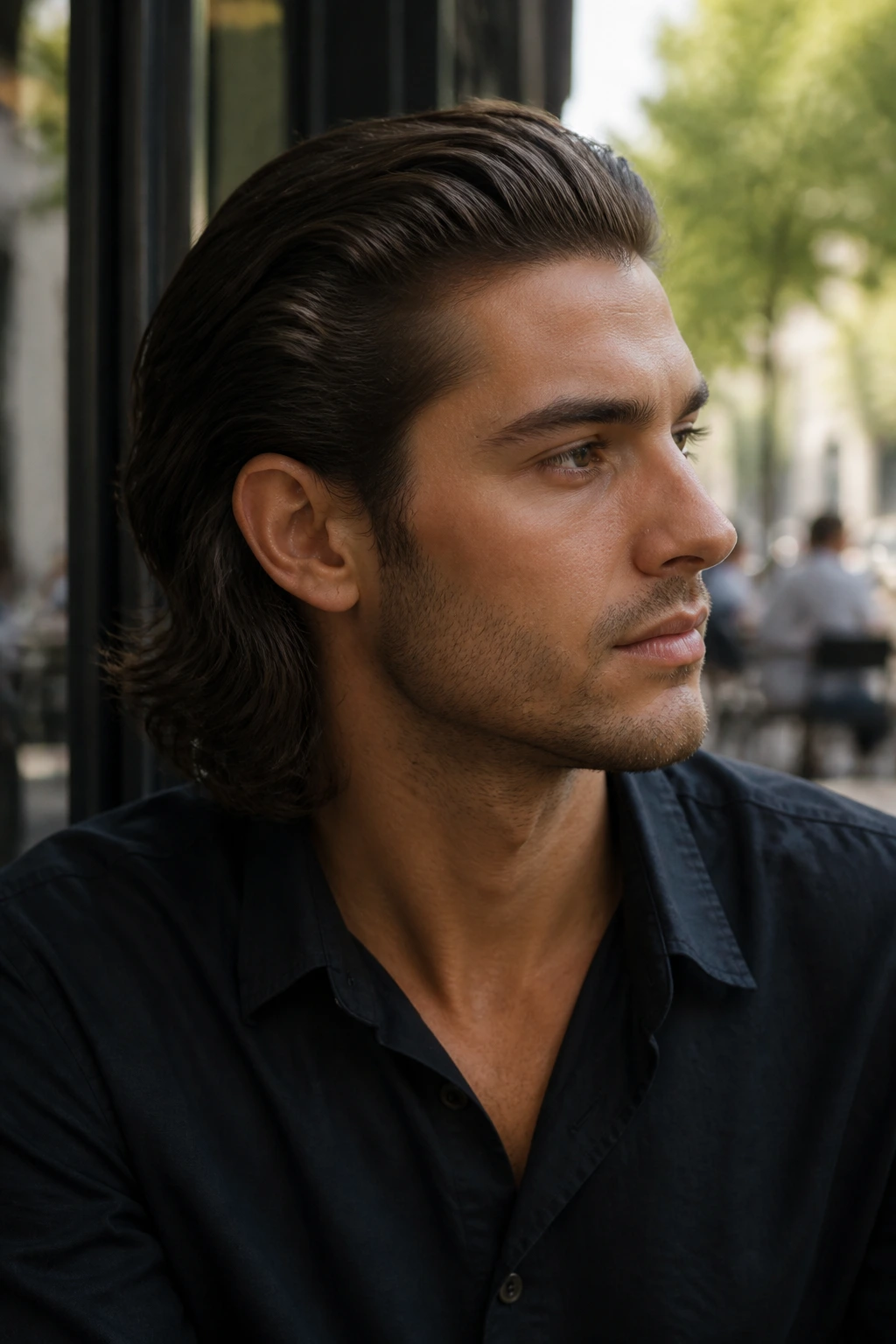
Shoulder-length hair can wear a slick back, but it needs more patience than the shorter versions. If the hair is all the same length and too heavy, it will slide down the head instead of staying off the face.
The fix is movement control. Blow-dry the roots away from the scalp first, then use a light cream or serum so the hair keeps a little flow. This version looks best when the ends stay clean and the top isn’t overloaded with product. Too much hold makes long hair look dead.
I like this cut when the rest of the hair can stay loose through the back and sides. It keeps the style from feeling too severe.
26. Beard-Heavy Slick Back
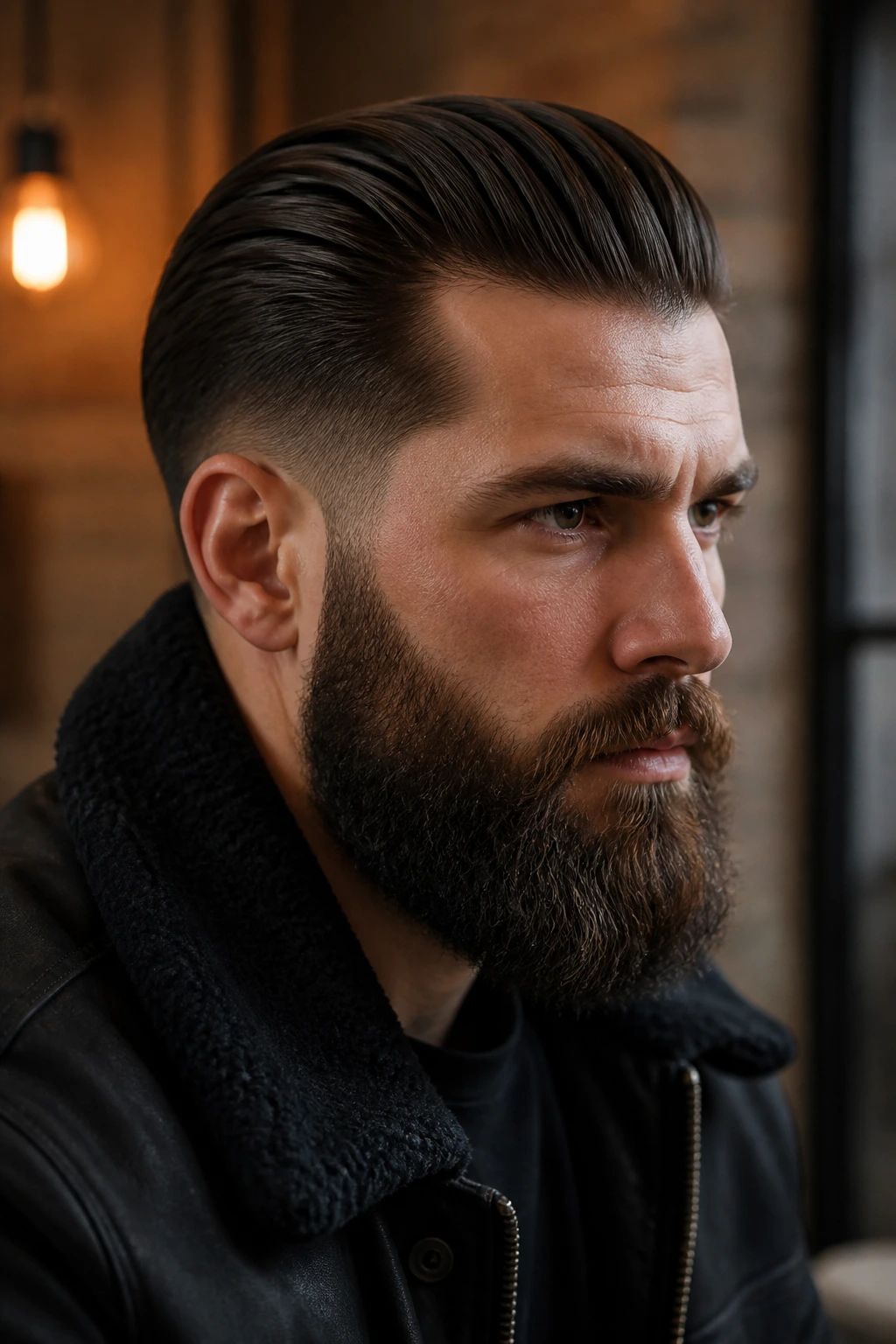
When the beard carries a lot of weight, the slick back should usually stay cleaner and slightly narrower on the sides. Otherwise the whole head shape gets too wide through the jaw and temples.
The Balance Point
A beard-heavy slick back works because the top gives the face vertical length while the beard grounds the lower half. That means the haircut should avoid puffing out at the sides. A taper or low fade helps, and a medium-shine product keeps the upper half polished enough to match the beard’s structure.
I prefer this combo on men with strong cheekbones or square faces. It gives shape without making the face boxy.
27. Receding Hairline Slick Back
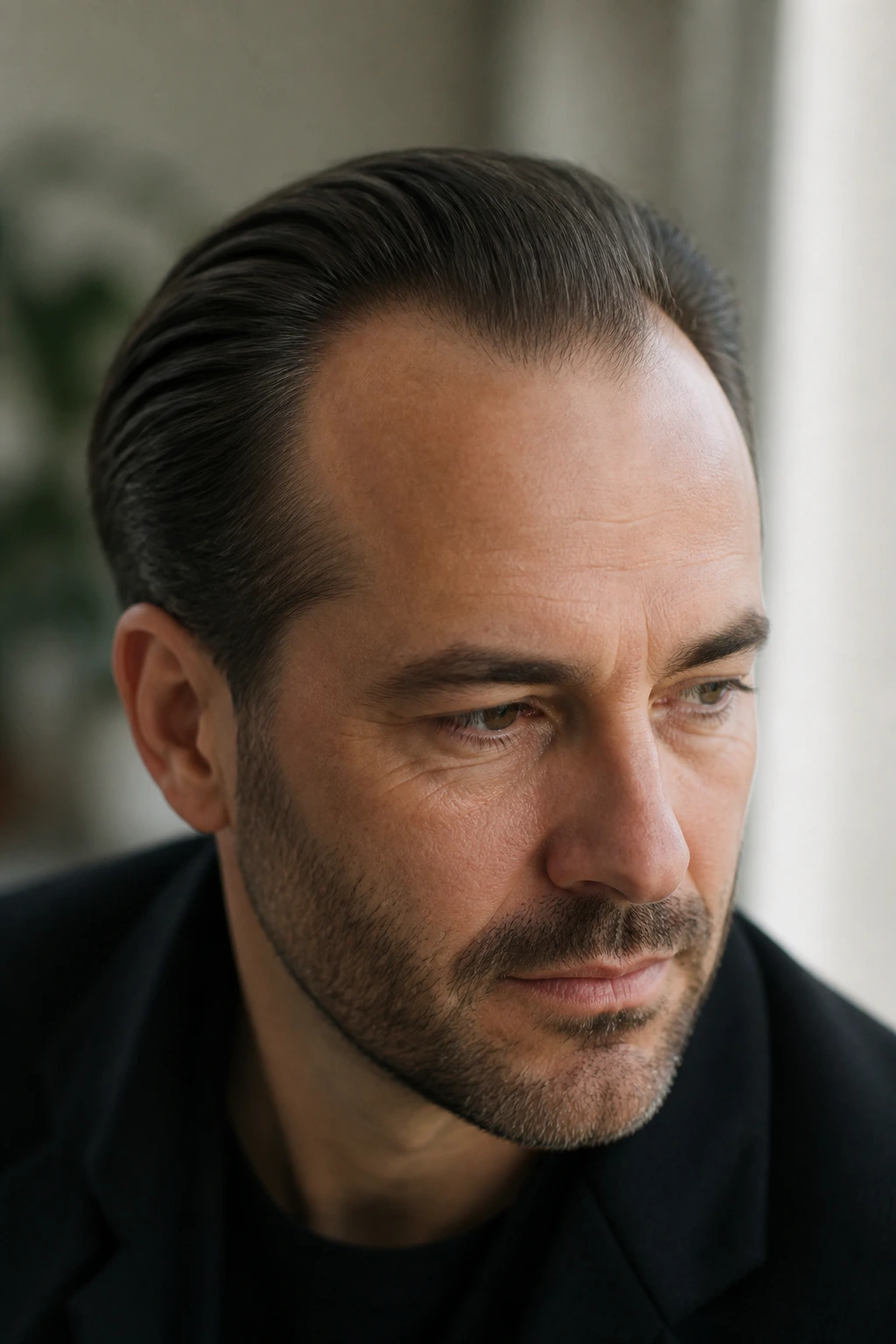
Can a slick back work with a receding hairline? Yes, but only if you stop trying to hide the recession with a too-tight front. That usually makes it more obvious.
The smarter move is to keep the top a little looser and brush it back gently, not forcefully. A soft matte cream or light pomade can help the hair sit back without showing a hard, shiny line at the hairline. If the temples are thinning, keep the sides tidy and avoid growing the top too long, because extra length only draws attention to the corners.
This version is about confidence and shape, not denial.
28. Widow’s Peak Slick Back
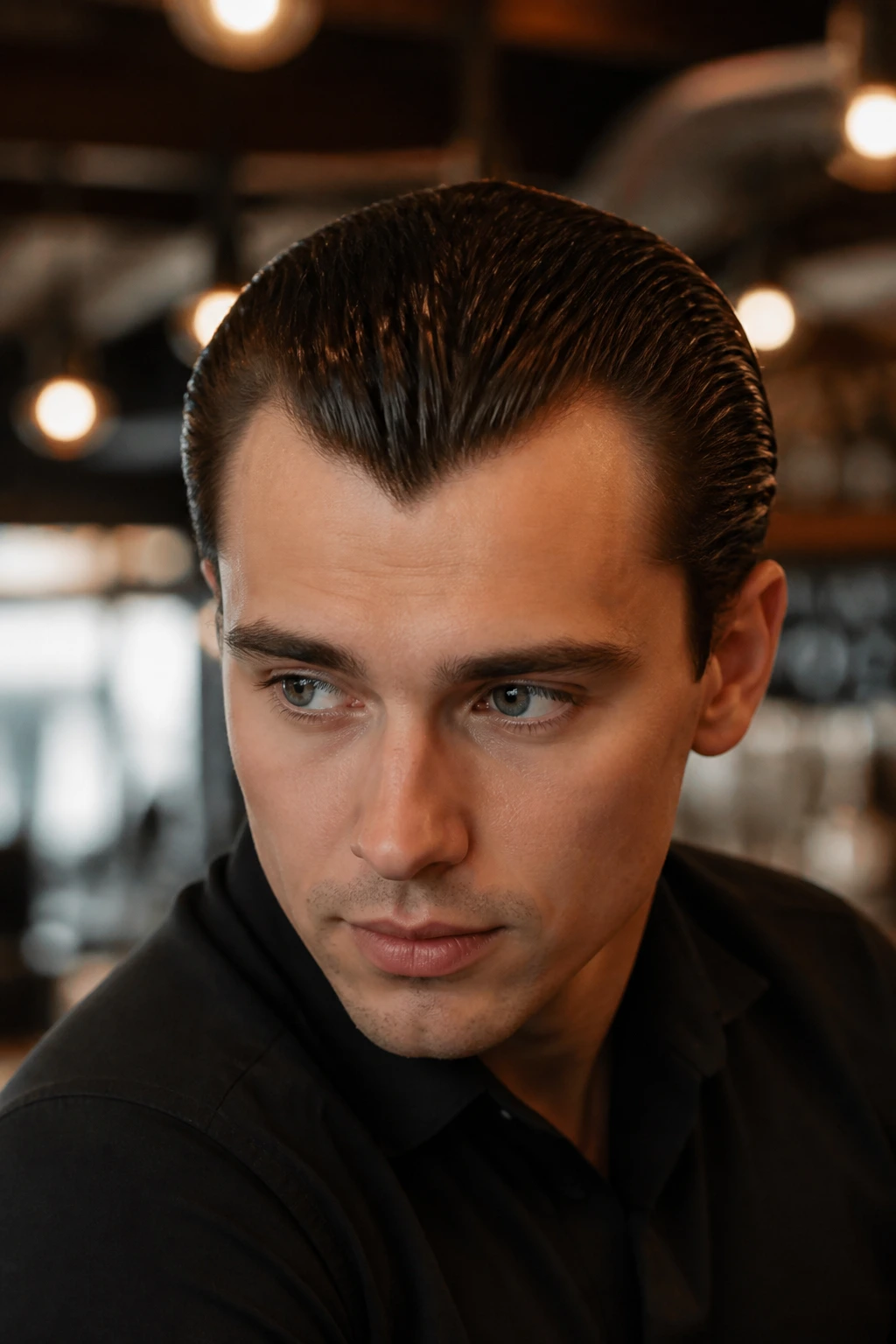
A widow’s peak can make the front of the haircut look dramatic in a good way, especially when the slick back is shaped to follow the natural point instead of fighting it.
The mistake is pushing the front straight back so hard that the peak becomes a bright triangle in the center. Better to let the hair move back from the sides and leave a little softness at the peak itself. A comb and a light hold product are enough if the hair is cooperative. If it is stubborn, blow-dry the front at a slight angle before combing back.
This is one of those cuts that looks more refined when you stop trying to make it perfectly symmetrical.
29. Salt-and-Pepper Slick Back
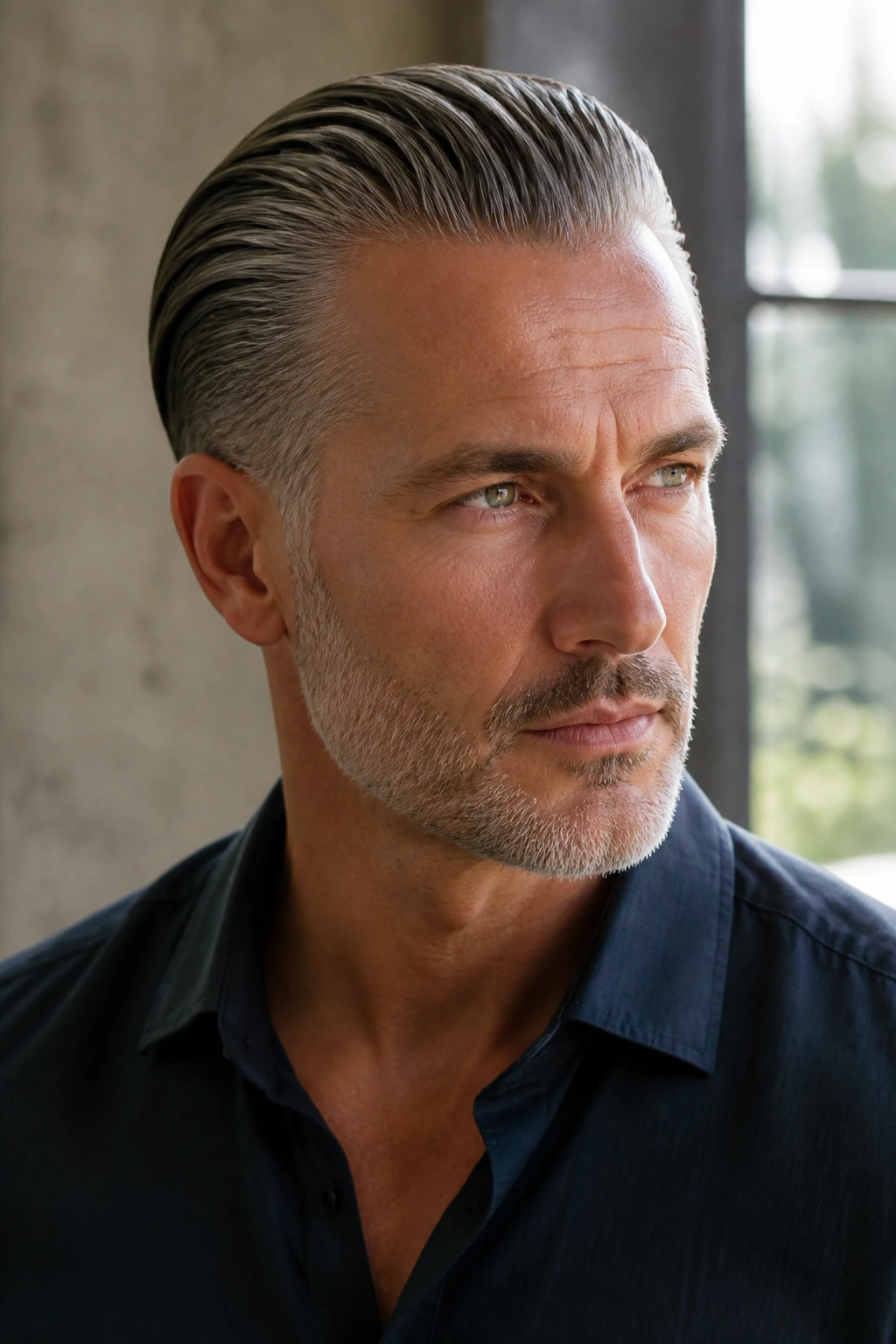
Gray mixed into dark hair gives the slick back a hard, expensive-looking contrast, especially when the haircut has clean sides and a controlled top. The texture reads differently because the lighter strands catch light in a way that makes the brushed direction obvious.
I like this version with either a low shine or matte finish. Too much gloss can make the gray look flatter than it is. A bit of texture helps the color break up the surface and keeps the style from feeling dense. Keep the top slightly longer if the gray is coarse; coarse gray hair often stands up more than people expect.
It’s a strong look. No need to apologize for the gray.
30. Matte Slick Back
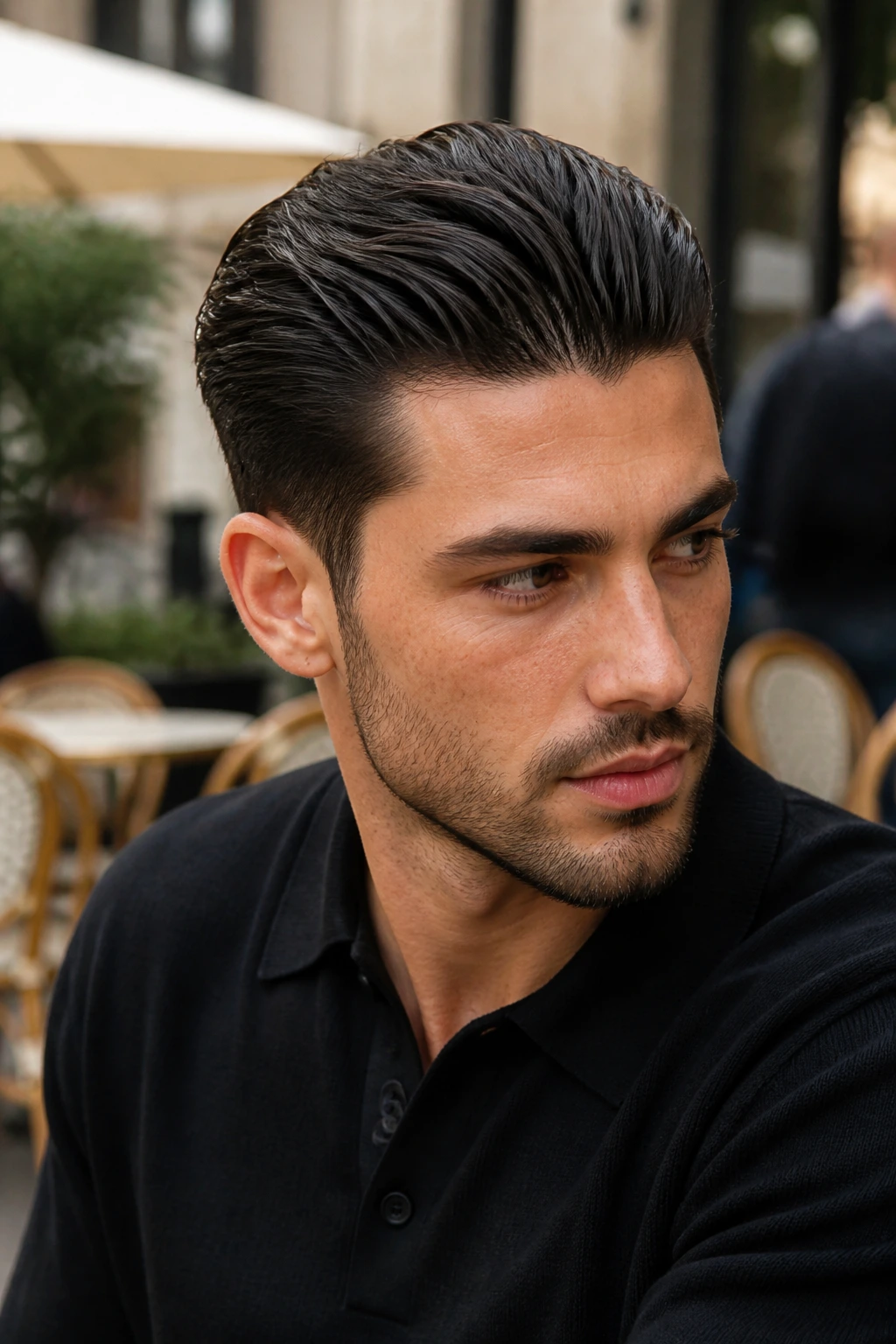
A matte slick back is for men who want shape without shine. The hair moves back, but it still looks like hair, not product. That distinction matters.
Use a clay or matte paste on dry or barely damp hair. Work it through the roots first so the front holds, then comb or finger-style backward. The finish should look controlled and touchable, with enough texture that the haircut still has some daylight between the strands.
This version is probably the easiest to live with every day. It survives casual outfits better than a glossy finish and usually grows out with less visible wear.
31. High-Shine Formal Slick Back
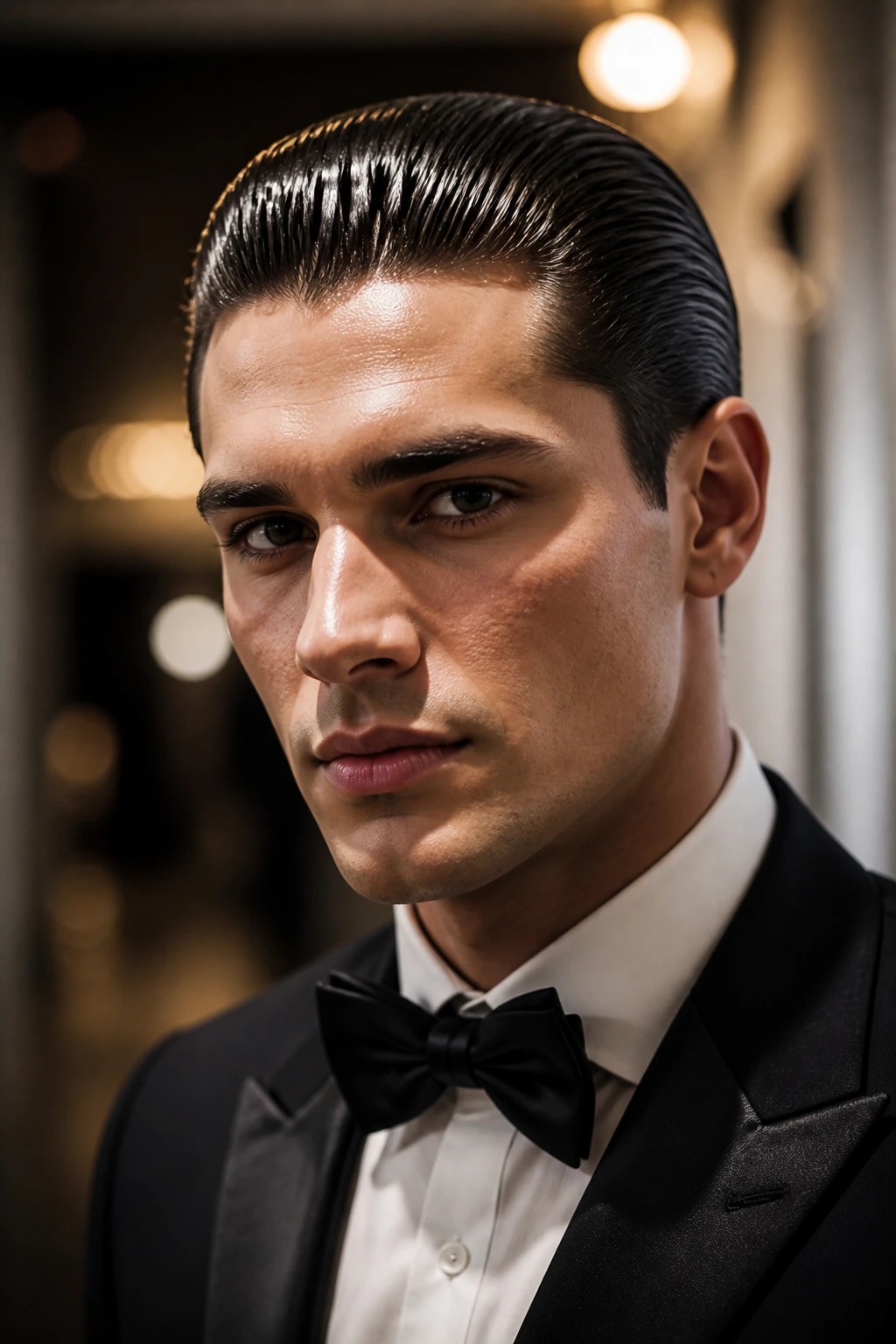
If the matte version disappears into the background, this one walks into the room first. High shine changes the whole tone of the haircut and makes the shape read formal, deliberate, and a little old-money without being costume-y.
This works best on hair that lies naturally smooth. If your hair is frizzy or very coarse, the shine can exaggerate the roughness unless you prep it first with a smoothing cream. A strong, glossy pomade and a fine comb will give you the slickest finish, but don’t overdo the product near the front hairline. A thin layer is enough.
This is the cut I’d reach for with a tux, a sharp suit, or a night where the hair should feel as intentional as the rest of the outfit.
32. Messy Slick Back
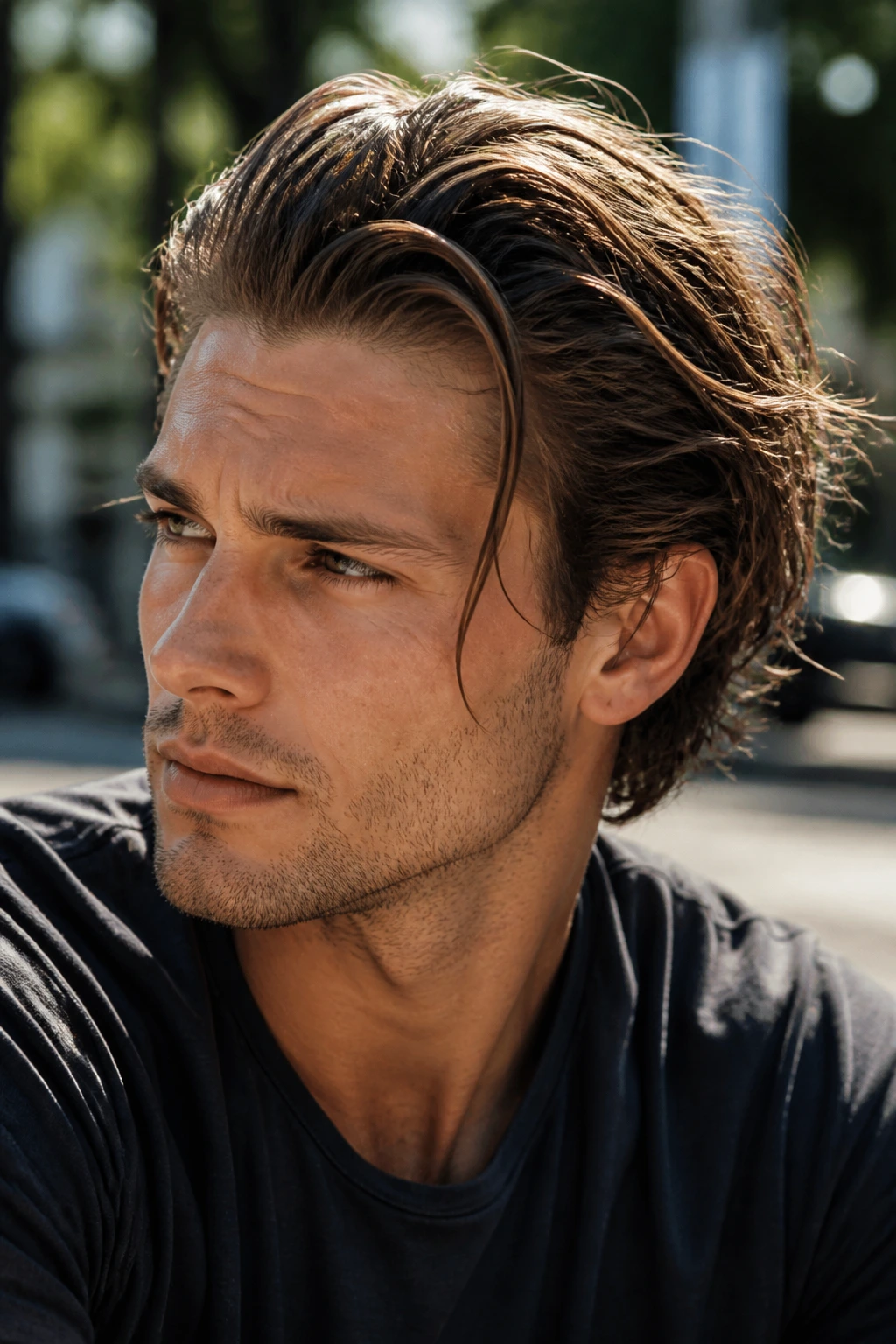
A messy slick back sounds contradictory, and that’s why it works. The hair still goes backward, but it doesn’t sit in one perfect sheet. A few pieces break away, the top keeps a little lift, and the whole thing feels less formal.
This style is useful when you want slicked shape without the full lacquered effect. A texturizing spray or light cream helps. Blow-dry the hair back with your fingers, not a tight comb. The result should look like you arranged it once and stopped. That restraint is the whole point.
It’s a good off-duty version for men who hate hair that looks over-edited.
33. Soft Center-Part Slick Back
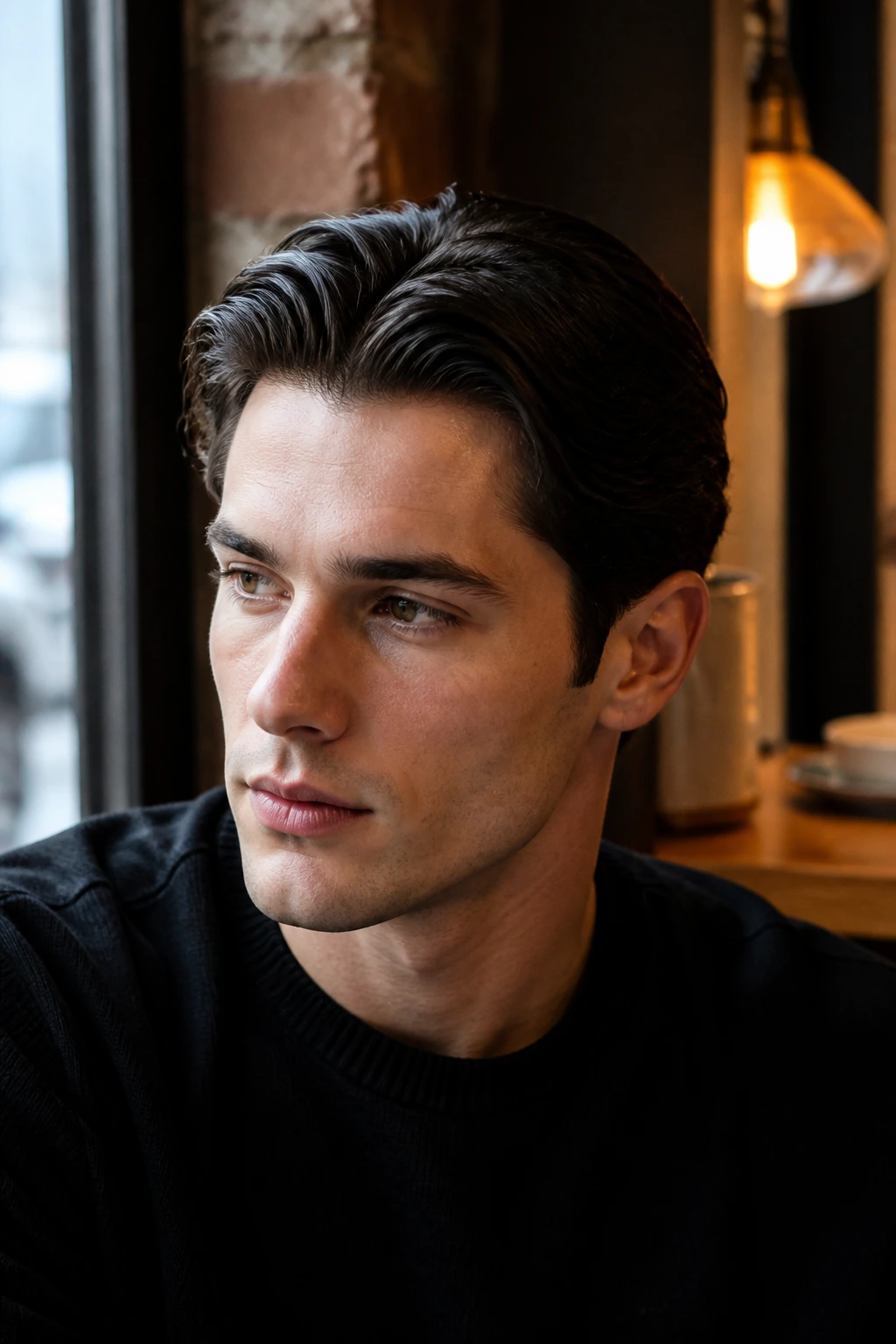
A soft center-part slick back keeps a hint of separation at the front before the hair moves backward. It’s not a full middle part. More like a quiet split that gives the top some air and avoids a heavy block of hair across the forehead.
This shape can be useful on longer tops or wavy hair, where a strict comb-back would feel too dense. It also softens sharper cheekbones and works well when you want the style to feel a little less hard-edged. Use a lightweight cream and guide the front with your fingers first, then finish with a comb if you need more control.
I like this one when the goal is shape without stiffness.
34. Bro Flow Slick Back
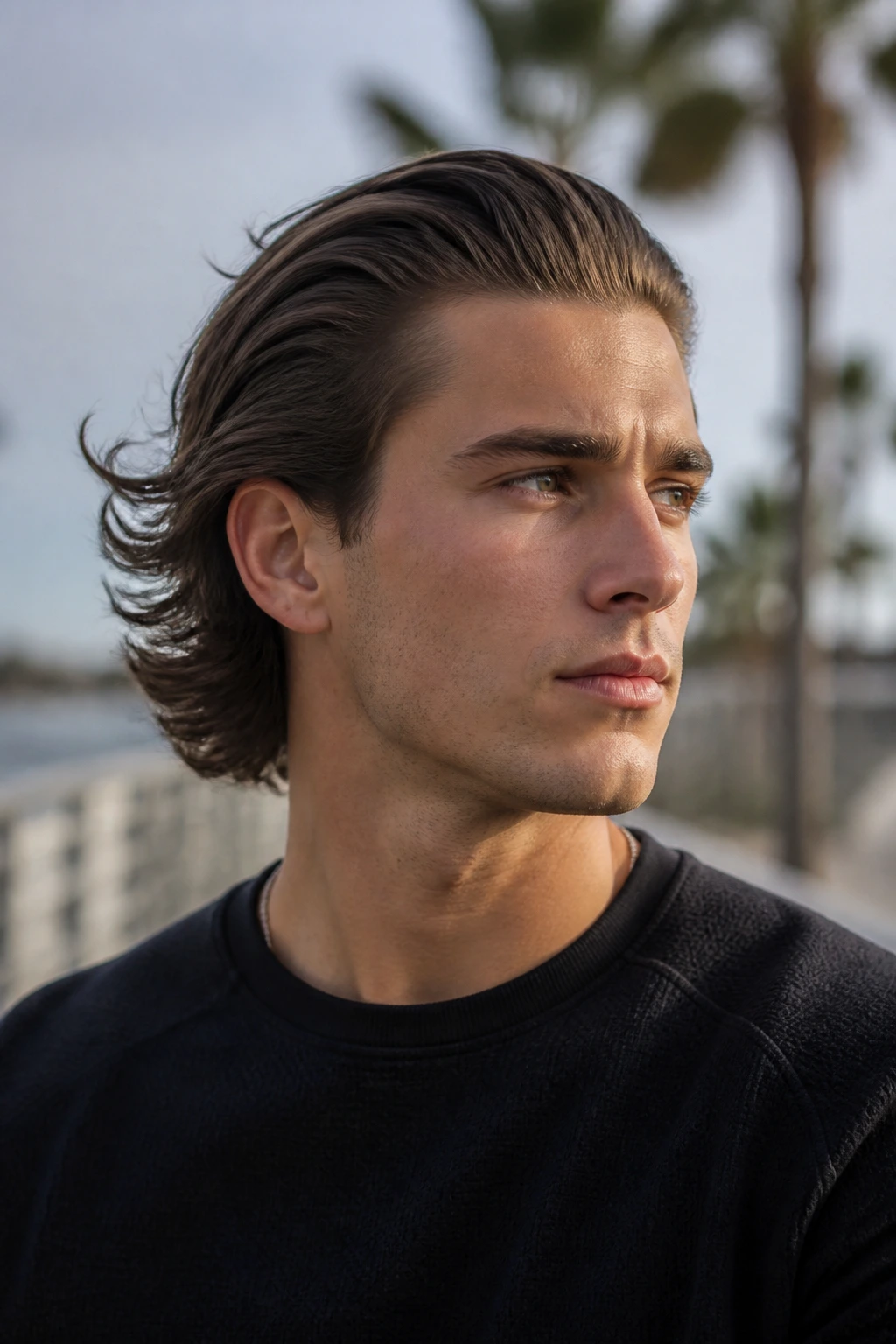
The bro flow version leans more relaxed than refined. The hair is long enough to move back naturally, but it isn’t pressed into a tight, formal finish. There’s body through the lengths and a bit of swing at the ends.
This works well if your hair is medium to long and has some natural wave. A leave-in conditioner or lightweight cream is usually enough. You’re not trying to sculpt every strand. You’re steering the whole mass backward and letting the hair fall where it wants to. That makes it useful for guys who want a slicked-back direction without the polished finish of a classic barber style.
It wears best when the ends stay clean and the neckline is trimmed.
35. Low-Profile Crop Slick Back
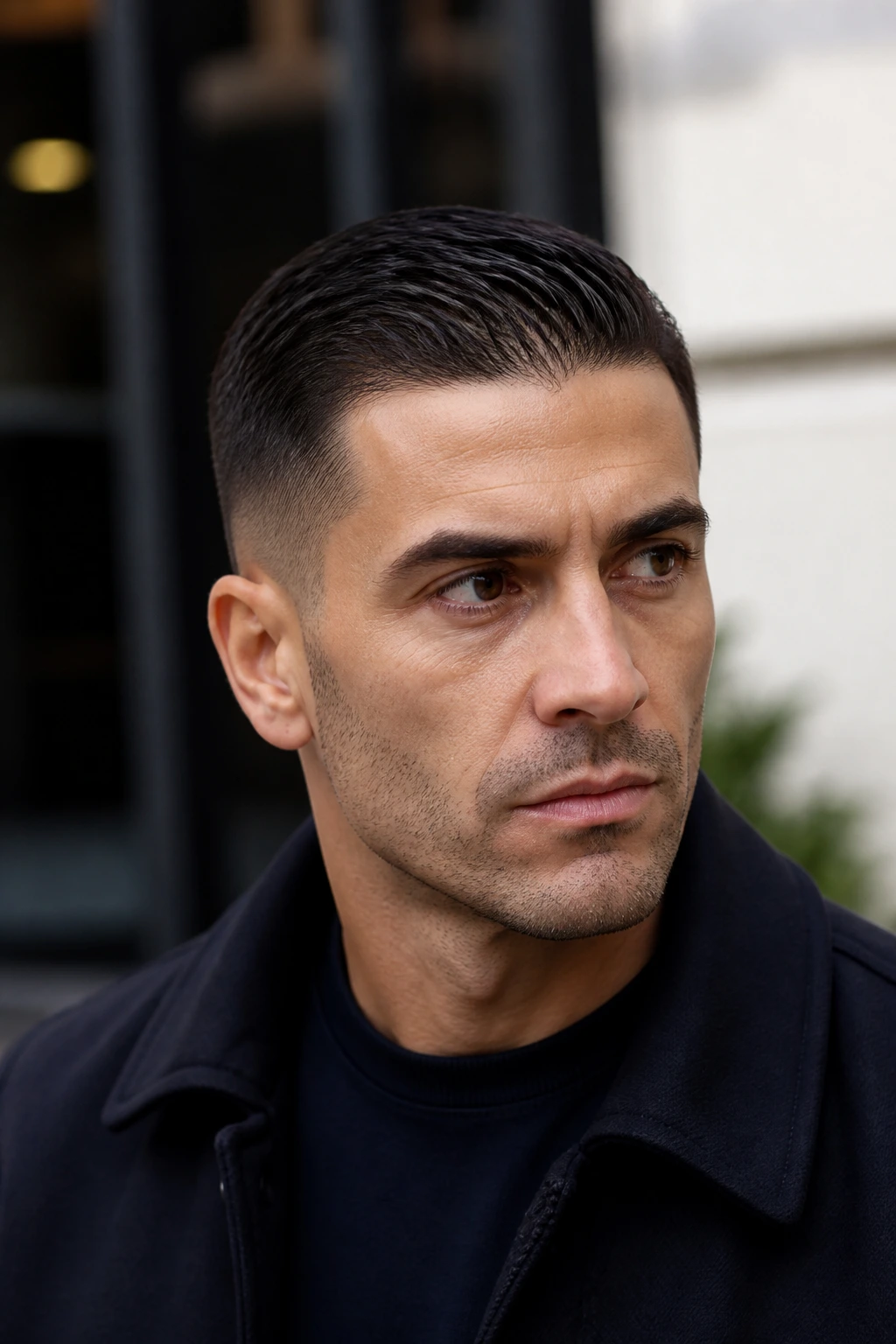
The low-profile crop slick back keeps the shape short, neat, and close to the head. It’s the least flashy version here, but I think that’s what gives it value. It feels modern because it doesn’t try too hard.
What Makes It Different
Instead of a lot of height or shine, the haircut relies on clean direction. The top is short enough to stay manageable, and the sides stay tight enough to keep the outline clear. A matte cream or paste is enough. You can push it back with your fingers and a comb, then leave a little texture on top so the cut doesn’t flatten into a helmet.
If you want a slick back that works with daily life, not just dressy settings, this is one of the easiest to wear.
Why the Slick Back Still Works
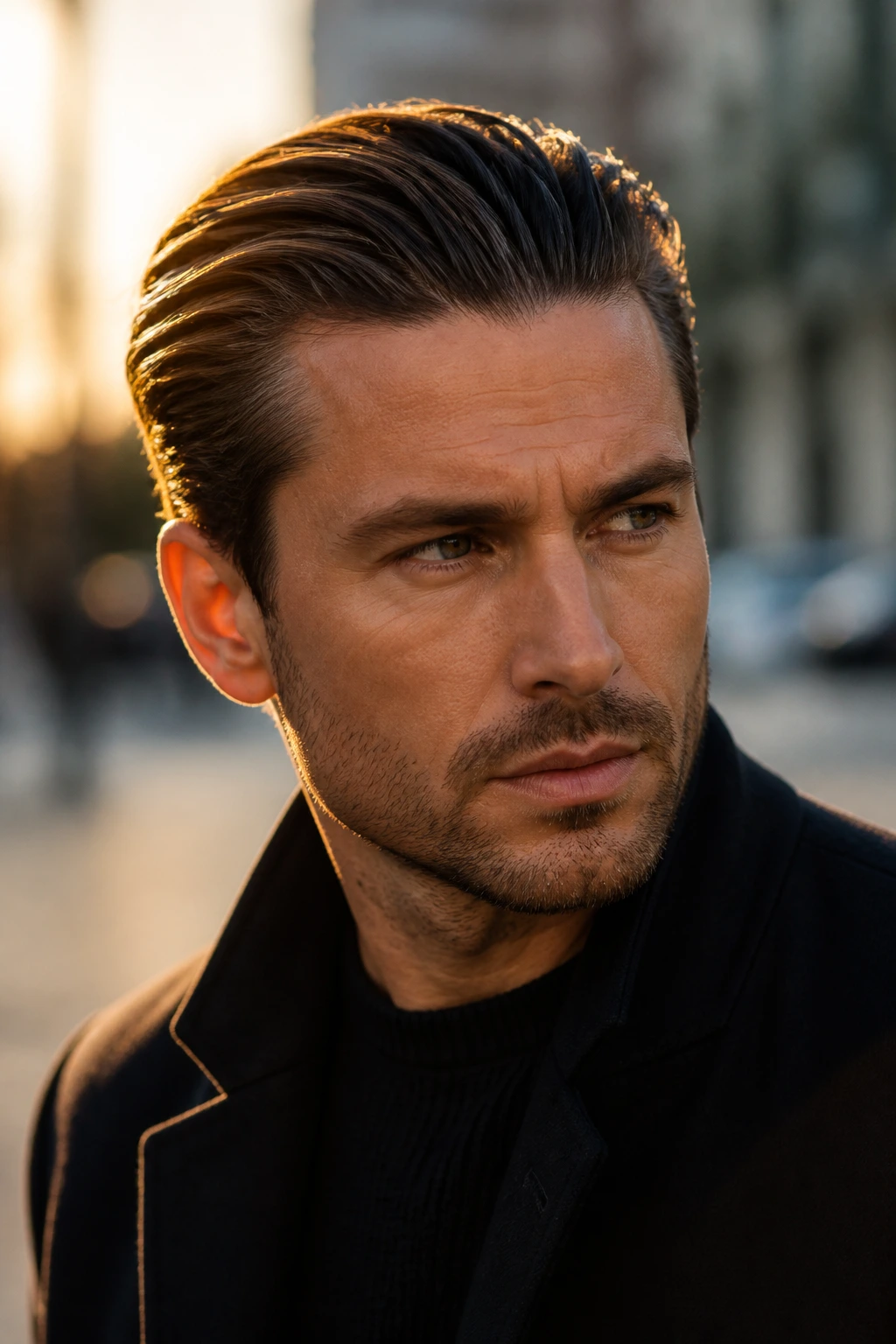
The slick back keeps showing up for one simple reason: it changes its personality with the smallest adjustments. A half-inch of extra length, a different fade, or a switch from pomade to clay can move the whole style from polished to casual, from older and formal to sharper and more current. Most men’s haircuts do not have that kind of range.
There’s also a practical upside people overlook. The front stays controlled. The forehead stays open. The sides can be tailored to the head shape instead of sitting there like dead weight. That means the haircut can sharpen a weak jawline, balance a long face, or make thick hair feel lighter without turning it into a buzz cut.
And yes, the product matters. A slick back built on the wrong jar will fall apart fast. Too much shine on fine hair. Too little hold on thick hair. The haircut only looks effortless when the prep work is done correctly. That’s the unglamorous part. It’s also the part that decides whether your hair still looks decent after a windy walk or a long workday.
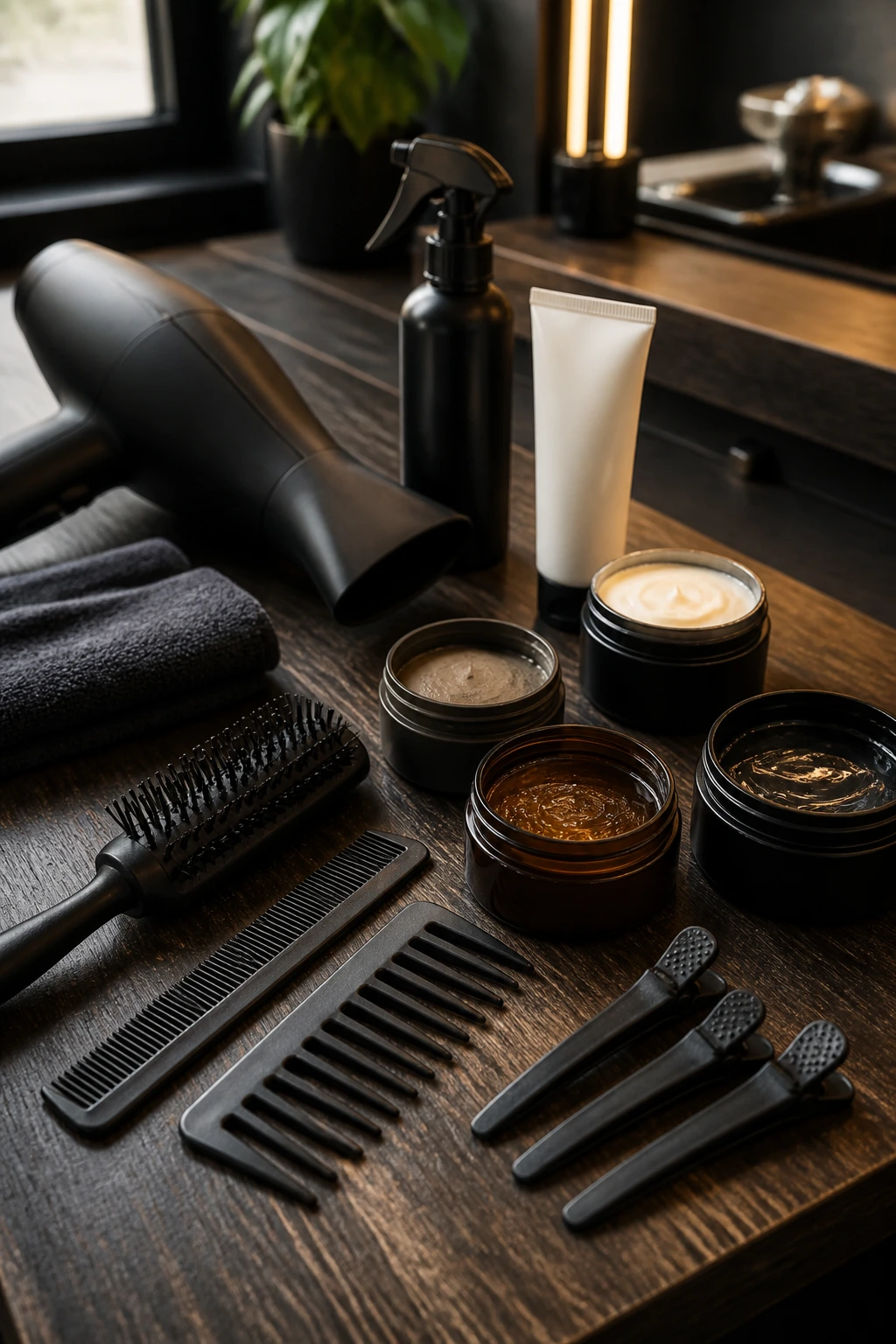
Essential Tools for These Looks
-
Blow dryer with a concentrator nozzle: Directs air backward so the hair sets in the right direction instead of blowing everywhere.
-
Vent brush: Good for adding lift at the roots while keeping airflow moving through the hair.
-
Fine-tooth comb: Best for tighter, cleaner finishes and sharper part lines.
-
Wide-tooth comb: Safer for curly or wavy hair when you want direction without breaking up texture.
-
Matte clay, cream, pomade, or gel: The product choice changes the whole mood, so keep at least two finishes around.
-
Heat protectant spray: Worth using before blow-drying, especially if your hair is fine or dry.
-
Microfiber towel: Dries hair without roughing up the cuticle too much.
-
Hand mirror: Useful for checking the crown and the back of the sides after the fade or taper is cut.
-
Sectioning clips: Helpful on longer hair so the top does not tangle while you dry.
Smart Haircut and Product Tips
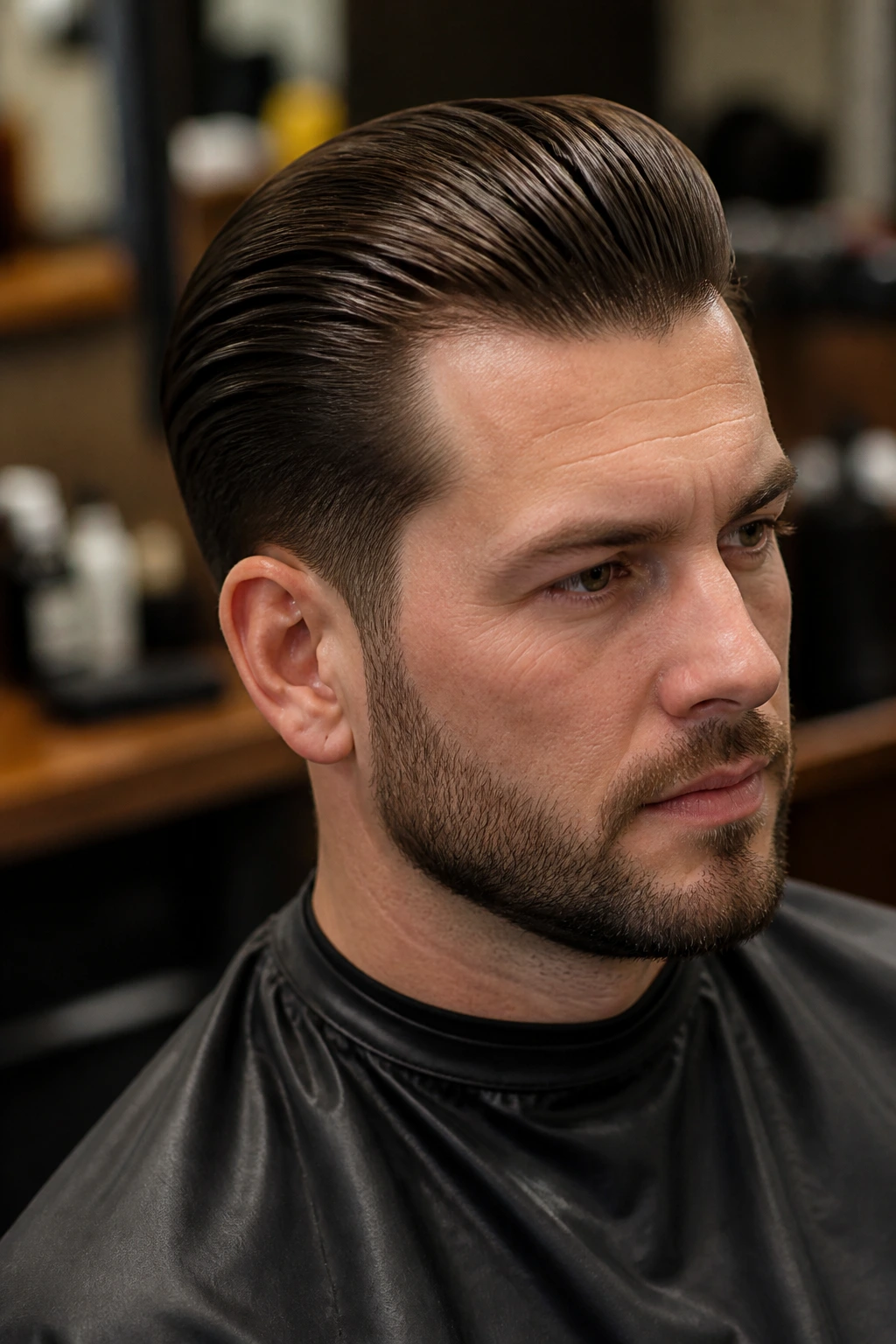
Ask your barber for length on top in inches, not vague words like “medium” or “long.” For most slick backs, 3 to 5 inches on top gives the comb enough purchase. If your hair is thick, ask for bulk removal through the interior so the top does not swell outward once it dries. If it is fine, keep some extra length at the front so the style can be pushed back without exposing too much scalp.
Product choice should follow the hair, not the mood. Fine hair usually likes light cream, mousse, or a soft paste. Thick hair often needs a stronger hold pomade or a firm matte clay. Curly hair does better with leave-in conditioner under the styling product, because dry curls turn fuzzy fast when you comb them back. Straight hair can take shine more easily, but too much gloss can make every line look obvious.
The blow-dryer is doing more work than most people think. Drying the hair backward from wet or damp is what gives the style memory. If you skip that part and only comb in product, the front often collapses by the time you get to lunch.
How to Wear These Looks With Face Shape, Beard, and Clothing
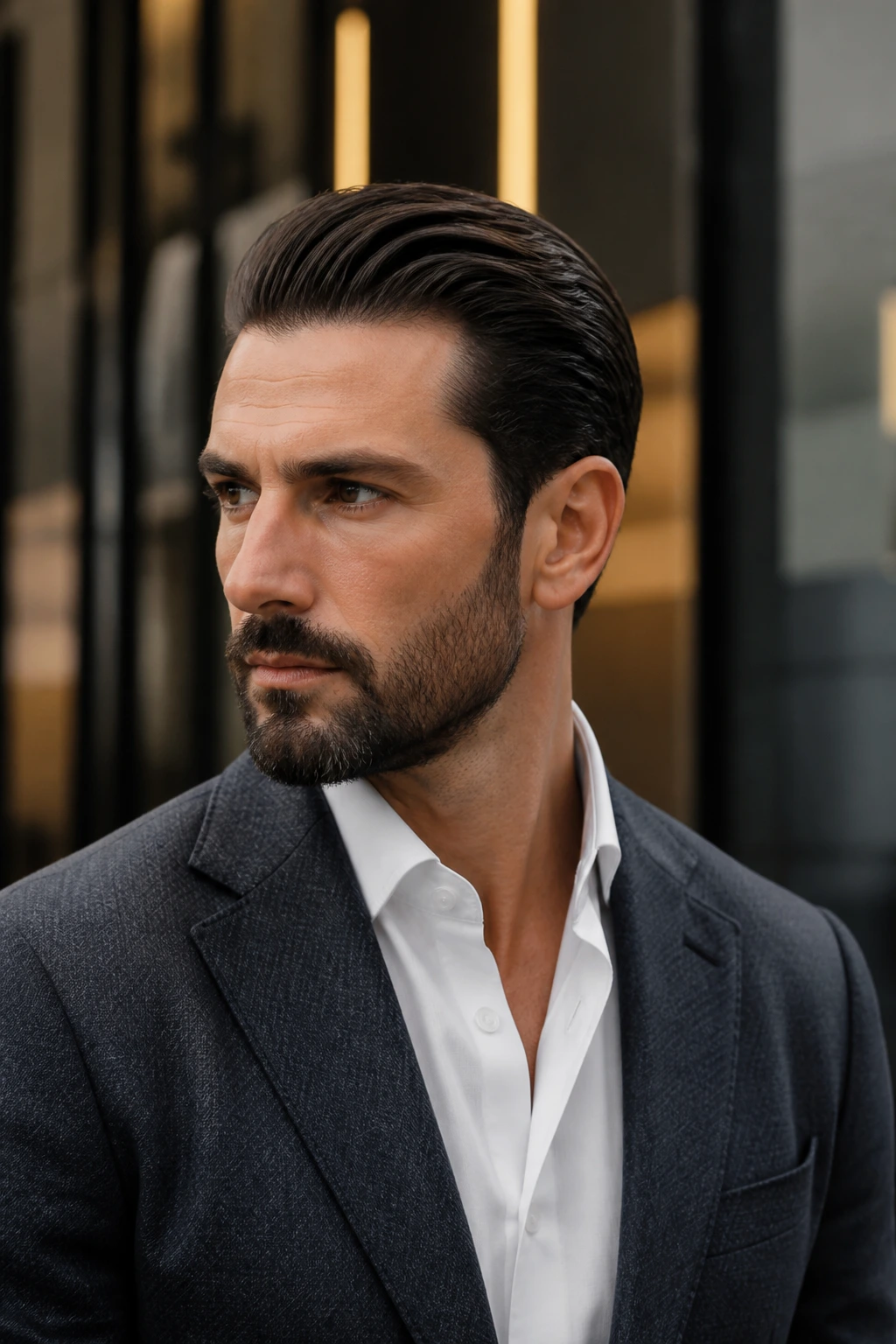
Presentation: A high-shine slick back reads formal and a matte version reads more casual, so the finish should match the rest of your outfit. A suit, dress shirt, and leather shoes can handle more polish; a denim jacket and boots usually look better with a softer, textured finish.
Companion Cuts: If you wear a beard, keep the sideburn transition clean so the haircut doesn’t blur into the jawline. If you wear glasses, a lower-volume slick back usually looks better because it keeps the frame area open.
Fit: Round faces often benefit from a little height at the front or a tighter fade on the sides. Longer faces usually do better with less lift and more width through the crown. Square faces can handle heavier structure and a hard part without looking overbuilt.
Best Setting: For office wear, a taper or scissor-cut version is easy to keep neat. For evenings out, a skin fade, hard part, or high-shine finish adds more edge. For daily wear, the textured or matte versions are the least fussy.
Additional Tips and Styling Boosters
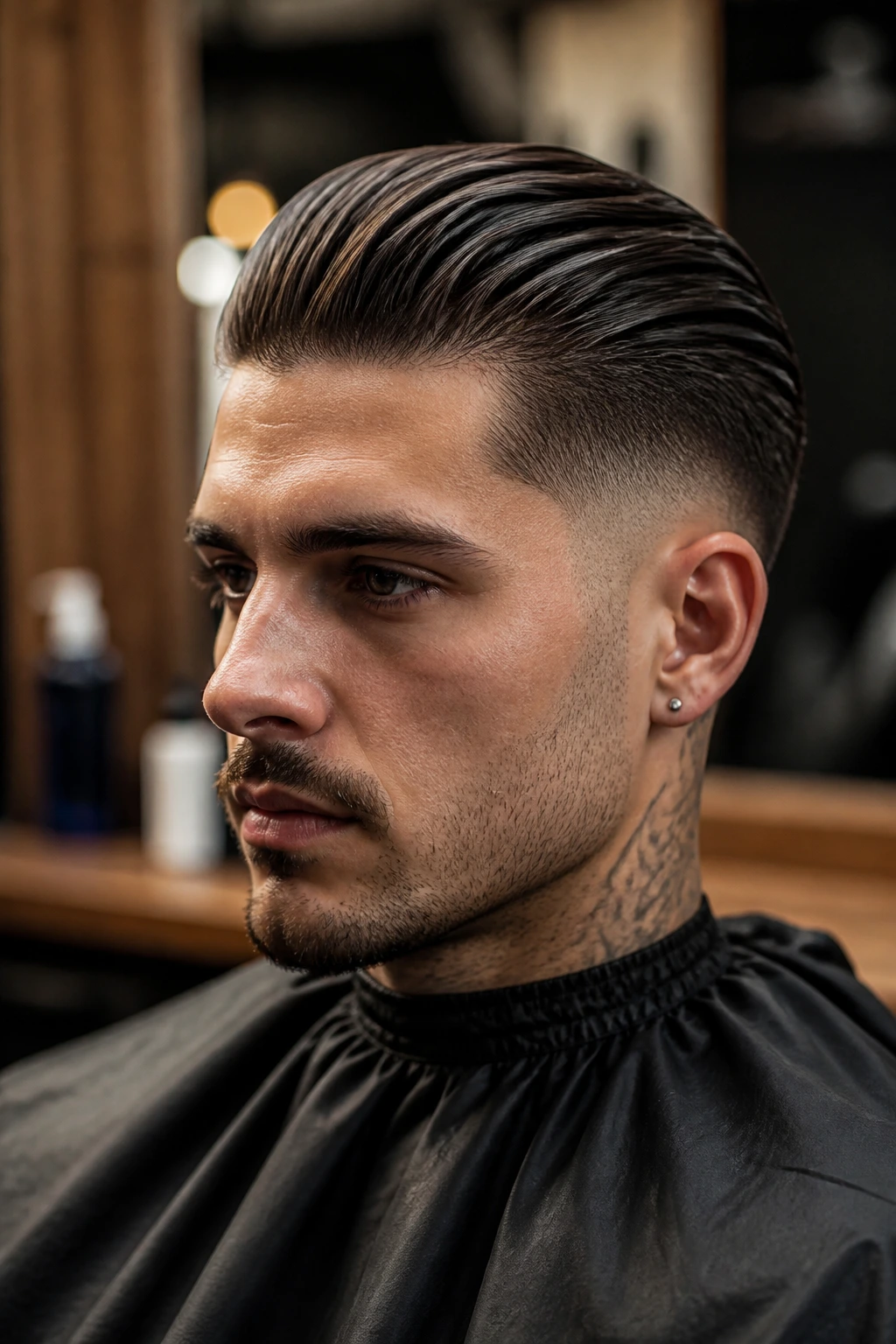
Texture Enhancement: A few sprays of sea salt spray on damp hair before blow-drying can give straight or fine hair enough grip to hold the backward direction. Don’t soak the hair; 4 to 6 sprays is usually enough for medium length.
Hold Booster: If the front keeps falling, pin the hair back with your fingers while you cool it with the dryer for 10 to 15 seconds. That little blast of cool air matters more than people expect.
Customization: Want a softer result? Break the front line with your hands after the combing is done. Want a cleaner one? Use the comb one last time only on the top third and leave the sides alone.
Make-It-Yours: Guys with curls should keep some curl cream underneath and avoid flattening everything into a slick sheet. Guys with fine hair should use less product and more drying lift. Thick hair needs more internal debulking from the barber than more product at home.
Maintenance, Washing, and Refreshing
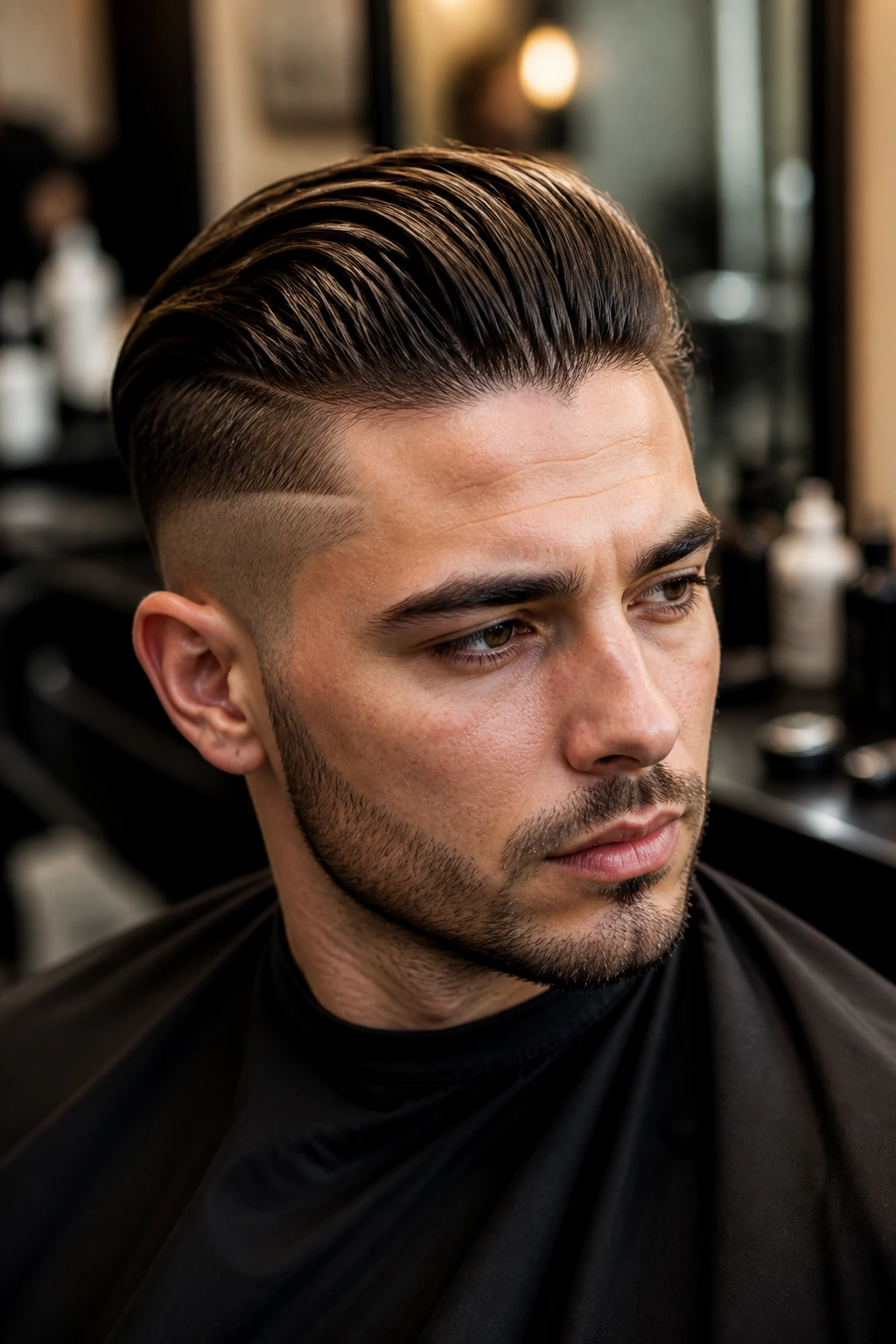
Slicked back styles look best when the cut stays fresh around the edges. If you wear a fade, expect to tidy it every 2 to 3 weeks if you want the contrast to stay crisp. Tapers and scissor cuts can stretch a little longer, often 3 to 5 weeks, before the shape starts to blur. The top usually needs less frequent cutting than the sides, but if it gets too heavy, the comb-back loses its line.
Washing depends on product choice. Heavy pomade and gel build up fast, so they usually need a proper shampoo every 1 to 2 days if you wear the style often. Matte clay and cream are easier to rinse out, though you may still want a clarifying shampoo every couple of weeks if the hair starts feeling coated. That coated feel is the warning sign. The hair stops moving cleanly and starts looking dull even when it’s clean.
For a quick refresh, mist the hair lightly with water, rework the front with your fingers, and add a tiny amount of product only where the shape has collapsed. Don’t pile on a fresh layer over yesterday’s residue. That’s how the front turns greasy and the scalp gets visible around the part line.
Common Mistakes to Avoid
The first mistake is using too much product. The symptom is easy to spot: the hair looks damp for hours, the front feels stiff, and the comb leaves obvious tracks. The fix is smaller amounts—pea-size for cream, nickel-size for pomade, and even less if your hair is fine. Build only where you need hold.
Another one is slicking hair back before it has been dried into shape. Wet hair and styled hair are not the same thing. If you skip the blow-dry, the style may look fine for 20 minutes and then sink. Dry the roots first, then set the direction with the comb.
A third problem is cutting the sides too bluntly on a head with a lot of width. The haircut balloons at the temples and the top starts looking too narrow. Ask for a taper, low fade, or internal debulking instead of a hard wall of bulk.
And then there’s the fake slick back: hair pushed straight back with no consideration for the hairline, face shape, or texture. That one tends to look pasted on. A better version bends with the hair you actually have.
Variations and Adaptations to Try
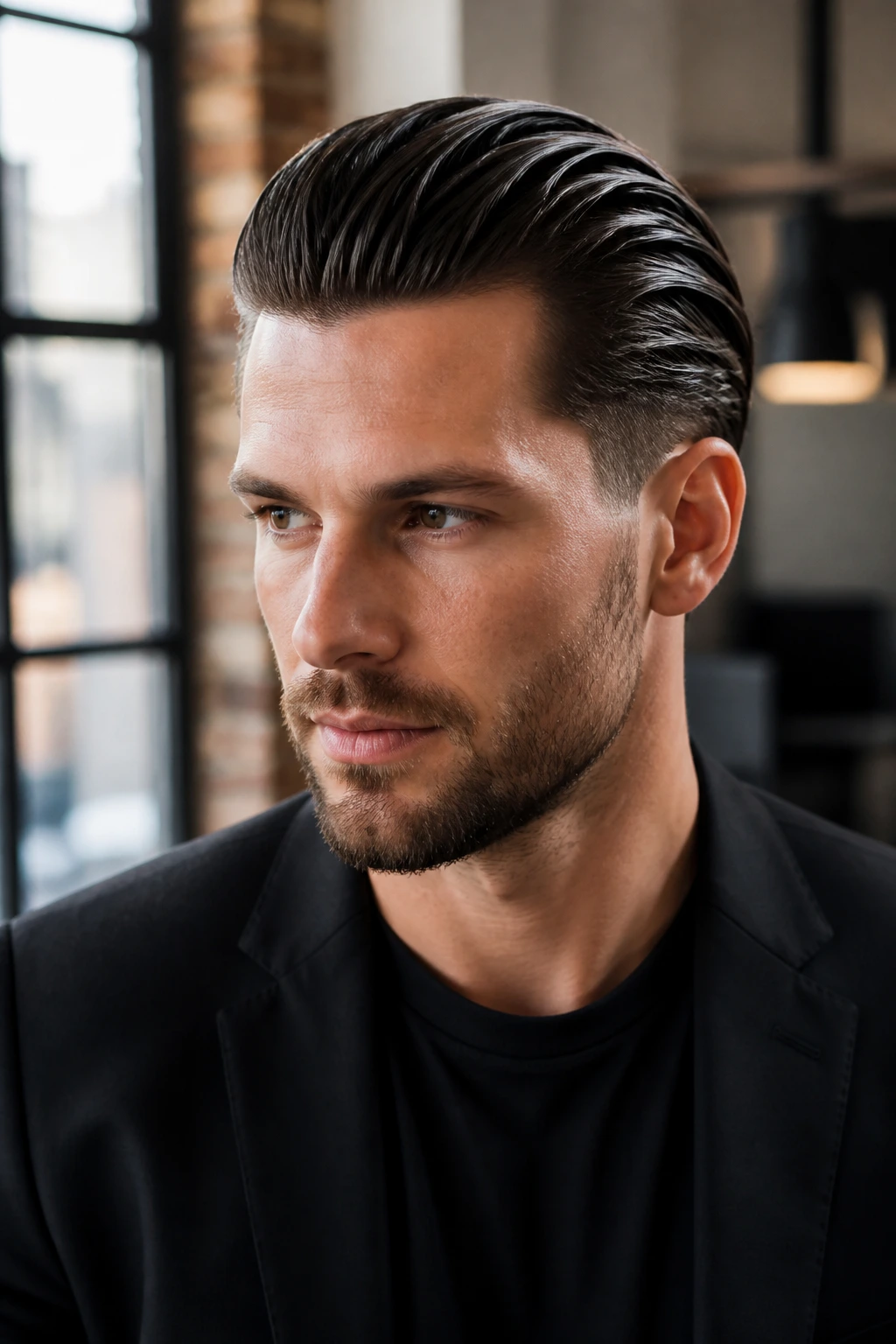
The Clean Office Back: Use a low taper, medium-length top, and a soft cream. This is the version that works with button-down shirts and trimmed facial hair without looking severe.
The Night-Out Shine: Switch to a high-shine pomade, keep the sides tighter, and comb the top with a finer tooth. The finish is sharper and catches more light, which suits dressier settings.
The Curly Control Back: Leave in curl cream, then guide the curls backward with a wide-tooth comb and a flexible hold product. You keep the curl pattern alive instead of flattening it out.
The Matte Everyday Back: Replace shine with clay or paste and leave a little texture through the front. It’s lower maintenance and looks better with casual clothes.
The Grown-Out Back: Let the top reach shoulder length and keep the neckline trimmed. This version works when you want movement and don’t want to visit the barber as often.
Frequently Asked Questions
How long does hair need to be for a slick back?
Most men need at least 3 inches on top, and 4 to 5 inches makes the style much easier to control. Shorter than that, the hair tends to pop up instead of lying back.
Can you slick back curly hair without straightening it?
Yes. Use leave-in conditioner plus a light cream or gel, then comb the curls backward while damp. You’re guiding the curl pattern, not erasing it.
What product gives the strongest hold?
A strong-hold pomade or gel will usually keep the shape the longest. Pomade gives more flexibility; gel gives more stiffness.
Does a slick back work with a receding hairline?
It can, as long as you don’t force the front into a tight, shiny line. A softer matte finish and a little extra length at the front usually look better than trying to cover everything.
Should the hair be wet or dry when styling?
Damp is the sweet spot for most versions. Wet hair is too floppy, and fully dry hair is harder to shape unless you’re doing a very textured finish.
Can I wear this style without a fade?
Absolutely. A scissor-cut or taper version can look cleaner and more natural than a high-contrast fade, especially if you want something less sharp.
How do I stop the front from falling during the day?
Blow-dry the roots backward first, then let the hair cool in place before adding product. If it still falls, the haircut may need more length or less bulk on top.
Is a comb or fingers better?
Use both. Fingers are better for loose, textured versions; a comb is better for clean lines, parts, and formal finishes.
The Clean Finish
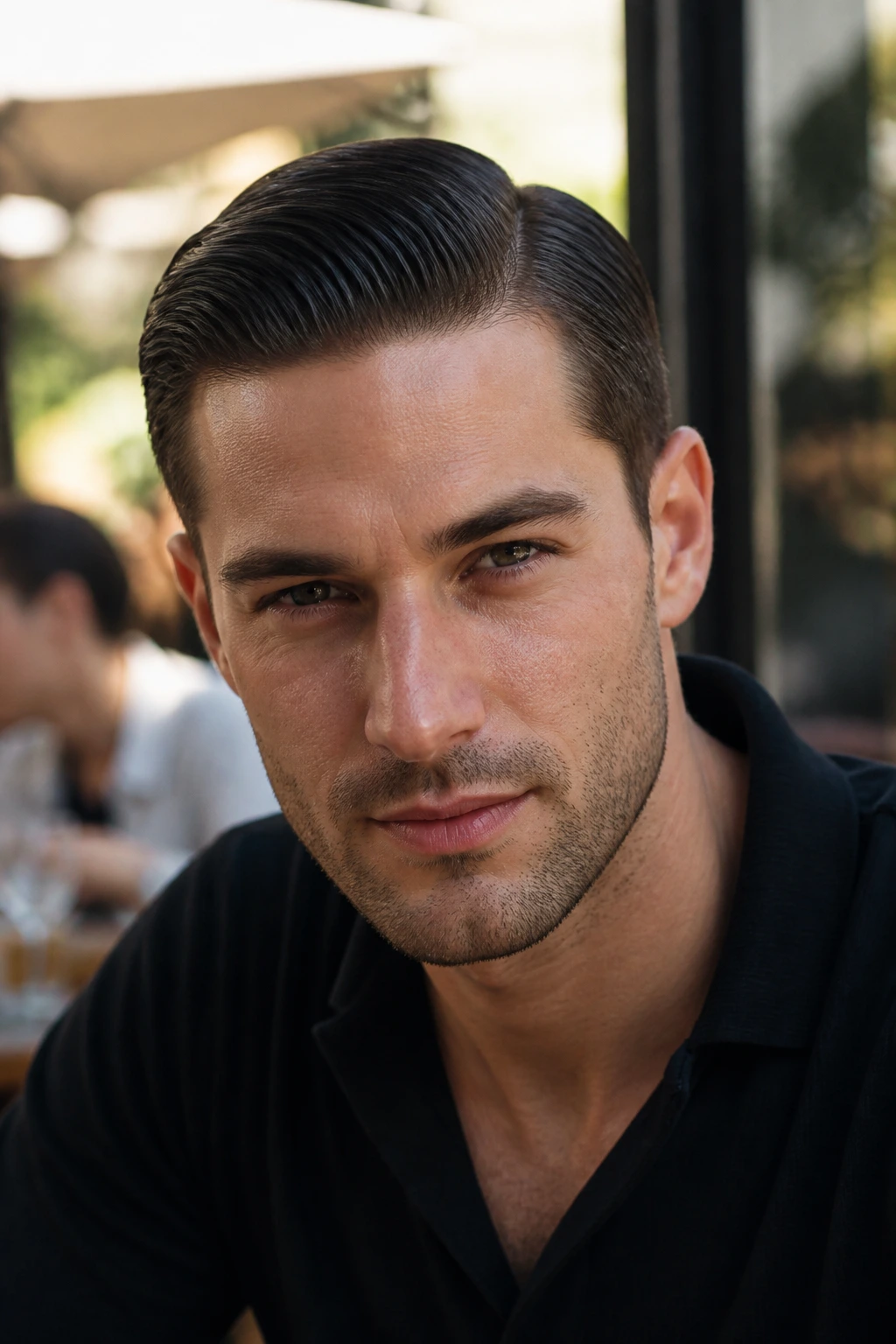
A slick back only looks simple from a distance. Up close, it’s a haircut that asks for the right length, the right sides, and the right finish, and those details decide whether it looks sharp or stale. That’s why the best versions in this list are not copies of one another. They’re shapes with different jobs.
Pick the version that fits your hair instead of the one that looks hardest in a photo. That choice matters more than any jar of product on your shelf. When the cut and the styling match the way your hair actually behaves, the slick back stops being a style you fight and starts being one you can wear without thinking about it all day.
