



Braids on a man can change the whole read of a haircut fast. A tight row of cornrows makes a fade look sharper. A set of box braids changes the way a plain tee sits on the shoulders. Even the parting pattern matters more than most people think — straight-back rows, triangles, stitch lines, and side-swept sections all tell a different story before you say a word.
The part most guys miss is this: braid hairstyles for men are not just about length. They’re about control. Clean sections. The right amount of tension. Enough texture for the braid to hold without turning the scalp into a sore mess by noon. If a style looks good in the chair but pulls at the hairline, it’s already the wrong style.
And there’s range here. Some braids sit close and quiet. Some swing a little. Some are sharp enough to look architectural. Some soften a face with curved parts and loose ends. The trick is picking the braid pattern that works with your hair, your routine, and how much maintenance you’ll actually tolerate.
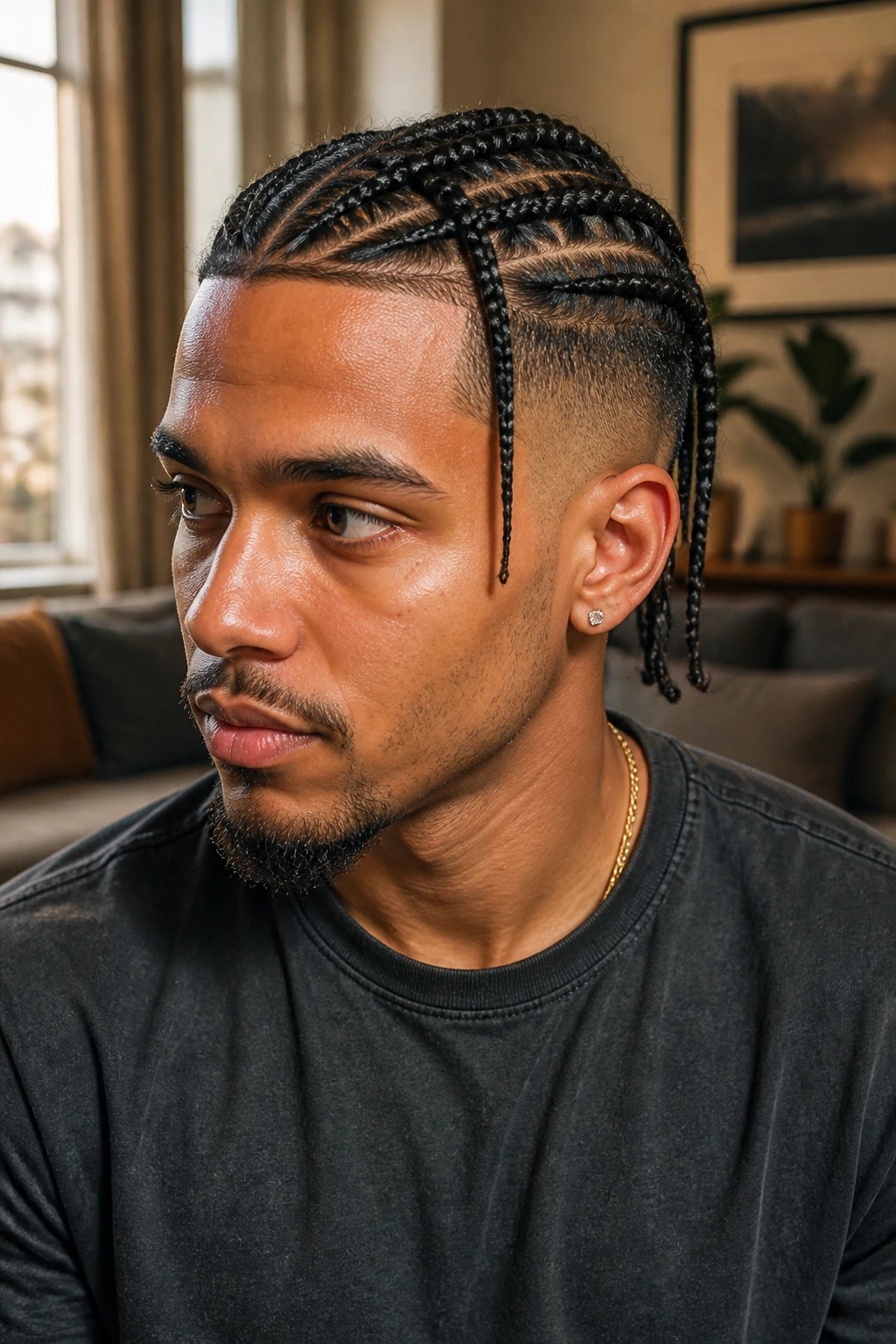
Why These Braids Work So Well
-
They cover a lot of ground: A short fade, a full head of coils, and shoulder-length hair can all be worked into a braid style that fits the cut instead of fighting it.
-
They can protect the hair when done right: Braids keep ends tucked away, reduce daily handling, and make it easier to skip the constant combing that tears at dry hair.
-
They change the shape of the face: Straight rows pull the eye back, raised braids add height, and side-swept parts can make a square jaw look even stronger.
-
They can be clean or loose on purpose: A tight stitch braid reads different from a fluffy knotless braid, and that difference is the whole point.
-
They fit different levels of upkeep: Some styles stay neat for two weeks. Others need a refresh before the fuzz starts standing up at the part line.
-
They work with a fade or without one: A good barber fade makes braids pop, but a full head of braids can carry the whole look on its own.
1. Straight-Back Cornrows
Straight-back cornrows are the no-nonsense classic. The rows move from the forehead straight to the nape, which gives the head a longer, cleaner shape and makes the parting feel easy to read from across the room. Freshly done, they sit close enough to the scalp that you can see the pattern before you notice the braid itself. That’s the appeal. Clean. Direct. No clutter.
Where They Look Sharpest
- Best on medium to thick coily hair with at least about 3 inches of length.
- Works especially well with a taper fade or low fade on the sides.
- Stays neat under caps, hoodies, and helmets better than most looser braid styles.
- Looks strongest when the part lines are even and the braids are the same thickness from front to back.
A style like this is for somebody who wants structure. If the rows are crooked, the whole haircut gets sloppy fast. If the lines are crisp, though, the style does a lot of the heavy lifting for you.
Tip: Ask for the front row to start a little behind the hairline instead of right on the edge. That small gap keeps the edges from getting pulled back too hard.
2. Box Braids
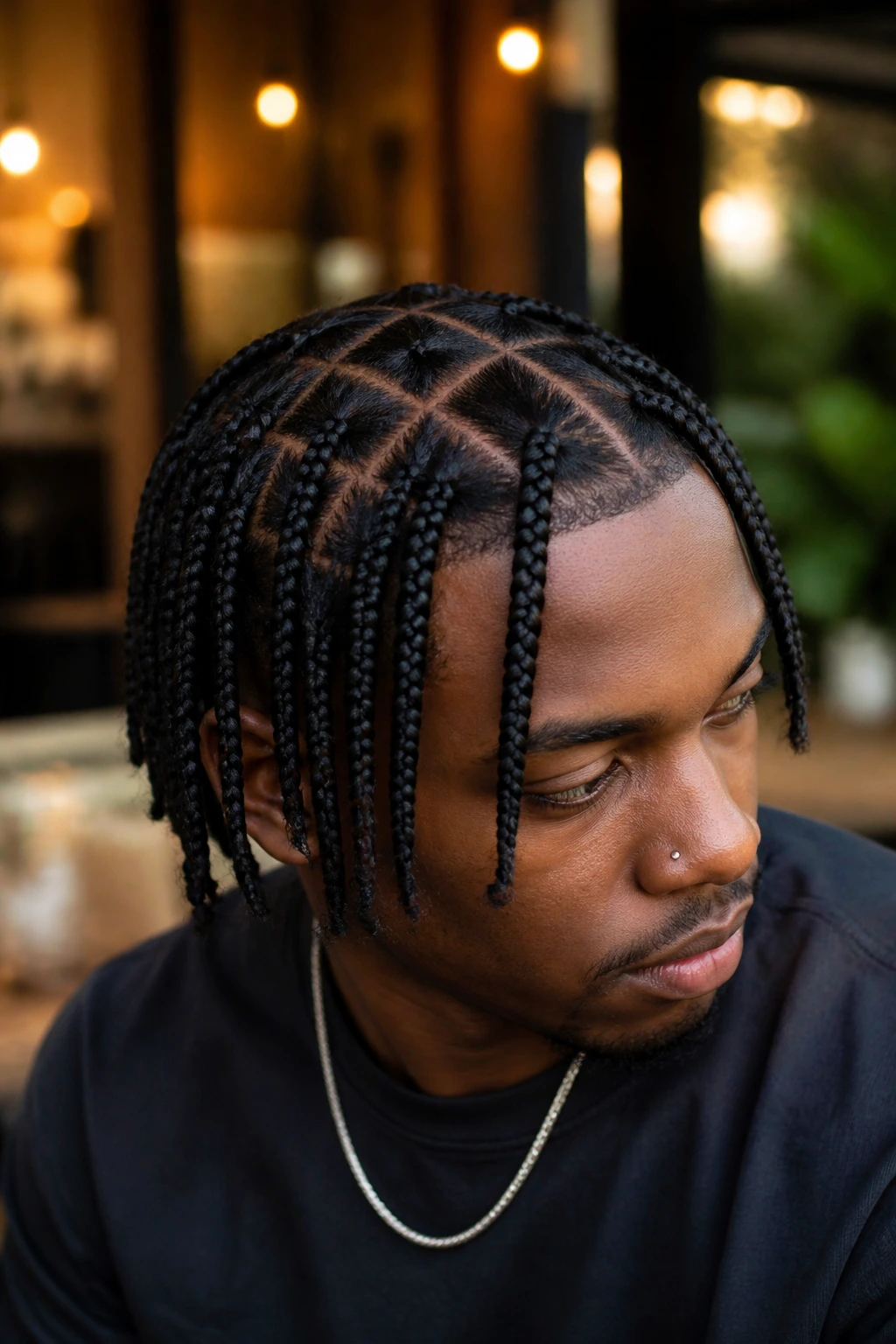
Box braids have a different energy entirely. They move. They separate a little when you turn your head. They give the hair some weight and personality, which is why they work so well when you want the style to feel like part of the outfit instead of just a haircut add-on. The square parts are the giveaway. They make the whole head look deliberate.
The best part is how forgiving box braids can be once they’re in. They don’t have to be pinned flat to the scalp, so they can hide a little growth better than cornrows. That said, if the base is too bulky or the parts are sloppy, the style starts looking rushed. Box braids need clean sections. Without that, the whole thing gets messy in a hurry.
I like them best on guys with enough length to let the braid hang — not just sit there. When the hair is long enough for the plaits to swing a little, the style gets that easy movement people chase in photos. Shorter versions can work too, but then you want slimmer braid width and a neat line-up so the shape doesn’t balloon.
3. Two Braids Down the Center
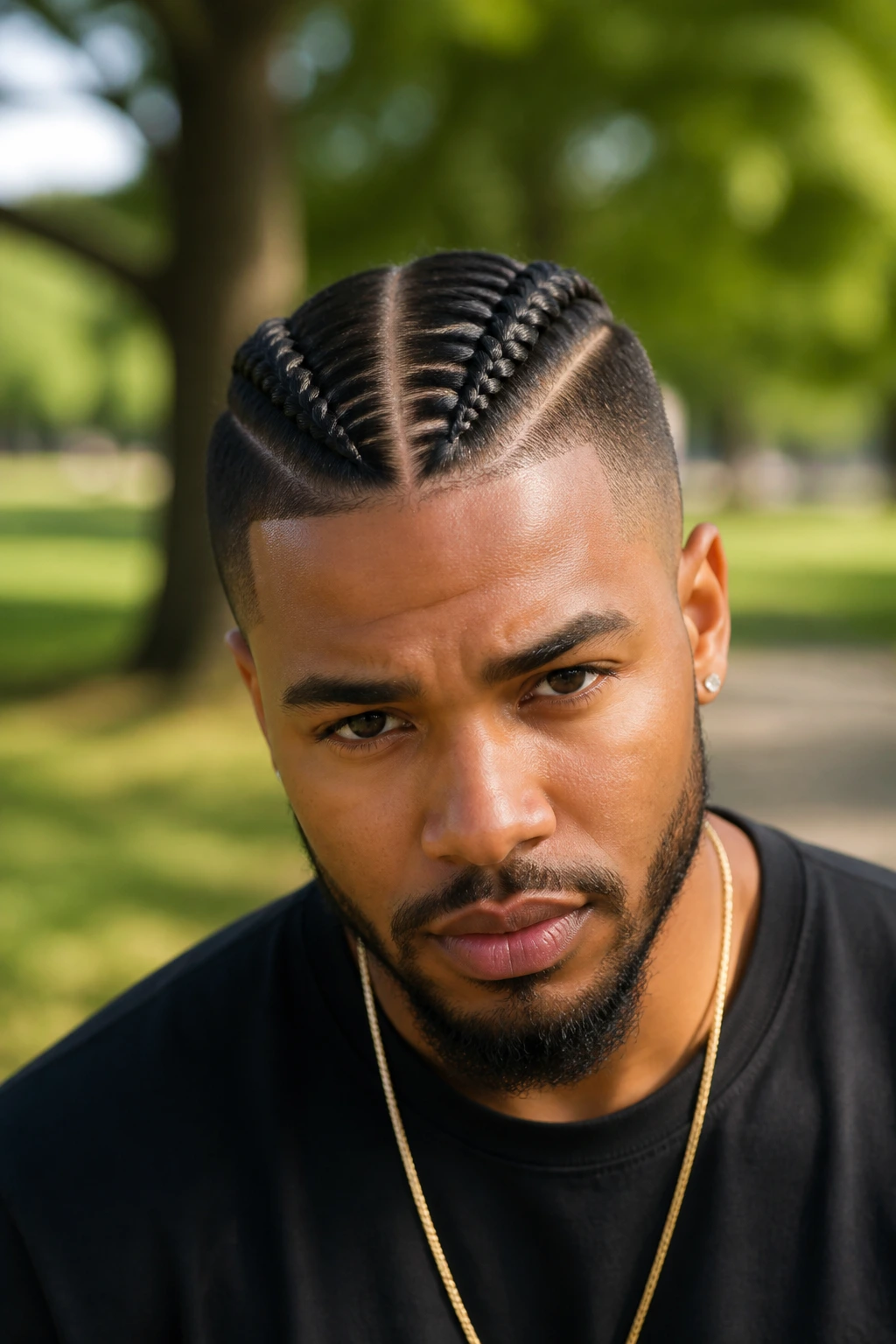
Why do two braids look so clean on guys with longer hair? Because they strip the style down to two strong lines and let the length do the rest. A center part with one braid on each side is simple, but it doesn’t feel plain when the part is straight and the braids are kept tight enough to stay close to the head.
The style works best when the hair has enough length to lie flat before the braid starts. If the top is too short, the braids puff out and the middle line gets lost. On longer hair, though, the shape is tidy and athletic-looking without trying too hard. It’s one of those braid hairstyles for men that can look polished with almost no accessories.
How to Wear It
- Pull the braids straight back for a sharper finish.
- Let the ends hang if you want a looser, more casual shape.
- Pair it with a clean fade or undercut if you want contrast.
- Keep the center part exact; if it drifts, the whole look drifts with it.
Two braids are a good middle ground. Not as dense as cornrows. Not as loose as box braids. Just enough structure to keep the hair in check.
4. Feed-In Cornrows
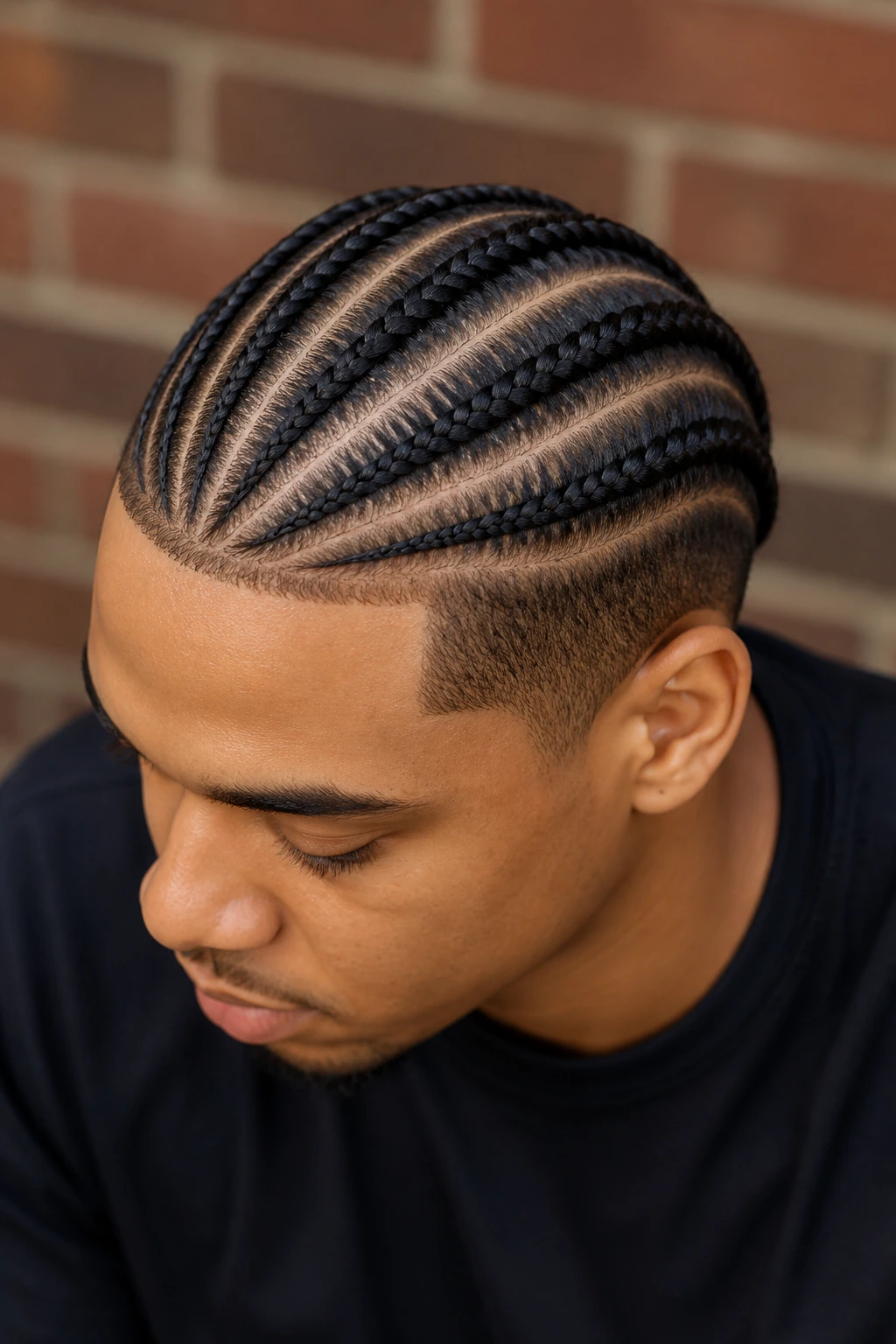
Feed-in cornrows are what you choose when you want the braids to start low and flat instead of looking like a thick lump near the hairline. The hair is added gradually, so the braid begins with a small base and grows fuller as it moves back. That creates a smoother start and a cleaner scalp line.
This matters more than it sounds. A blunt, bulky start can make the front of the style sit up too high, especially on shorter hair or at the crown. Feed-ins avoid that. They also give you more room to play with the width of each row, which is handy if you want a style that feels sharp but not severe.
- Best for guys who want a neat front hairline and a flatter braid base.
- Works well on hair that’s dense enough to grip but not so long that the braid gets heavy.
- Looks especially good when the rows curve slightly instead of running dead straight.
- Takes longer than basic cornrows, so patience matters.
A feed-in braid done well looks almost effortless. It isn’t. That’s the nice trick.
5. Stitch Braids
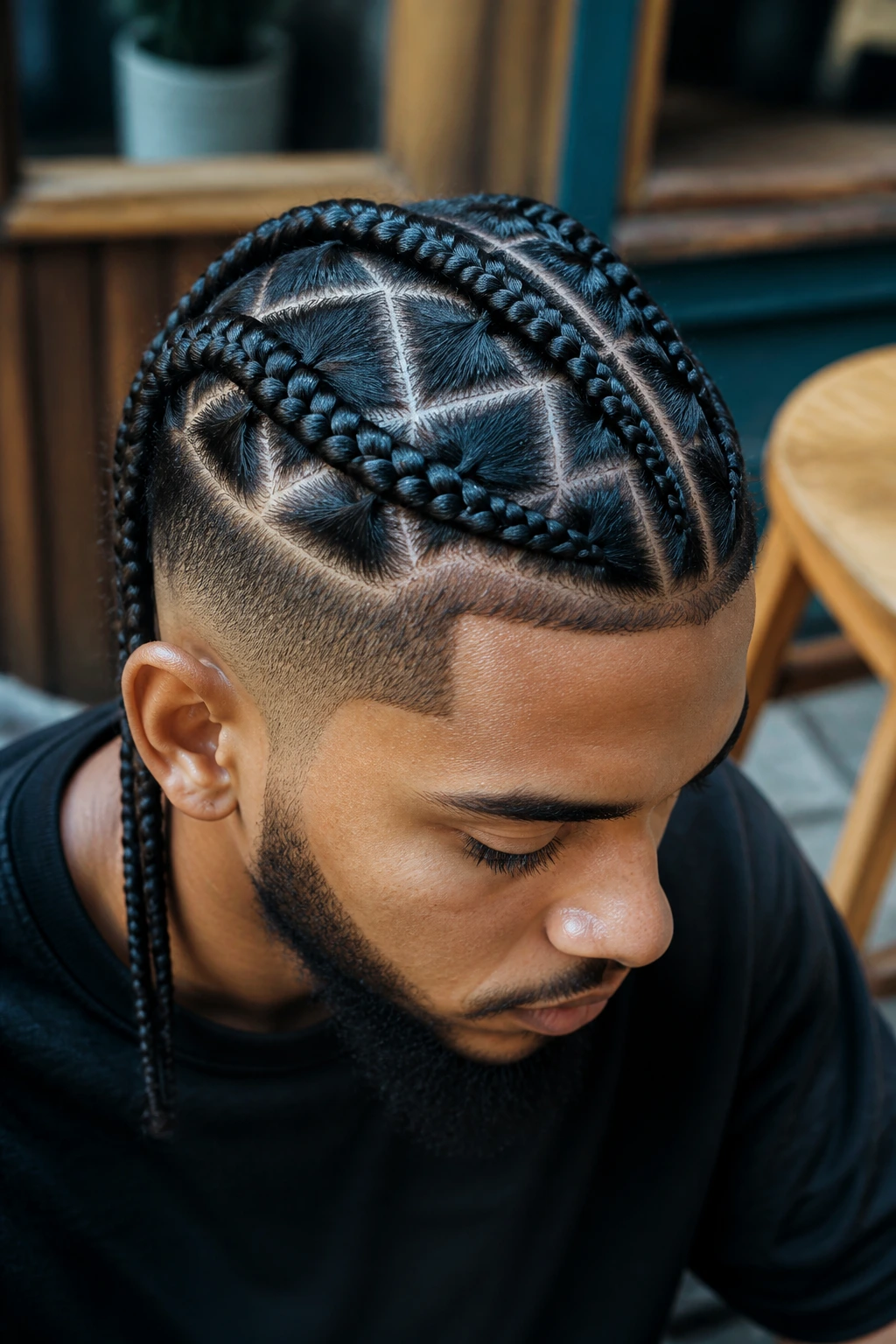
Stitch braids are all about the parting. The braid itself is only half the story. The other half is the comb work that creates those segmented “stitches” across the scalp, like someone drew the part with a ruler and a steady hand. They’re sharp. Almost technical-looking. And when they’re done cleanly, they hold attention immediately.
This is one of the more precise braid hairstyles for men, which means the finish matters. The parts need to be straight, the gel needs to be controlled, and the braids should stay even in width from the front row to the last row. If the braid spacing drifts, the whole style loses that crisp, grid-like look.
Stitch braids pair well with a fade because the fade gives the parting more space to show off. They also work well when you want the braids to read as a design element rather than a protective style alone. They’re not the quietest option. That’s the point.
The downside is upkeep. Fuzz shows faster here because the style is so clean that even small flyaways stand out. If you want the effect, though, this is one of the strongest braid patterns around.
6. Braided Man Bun
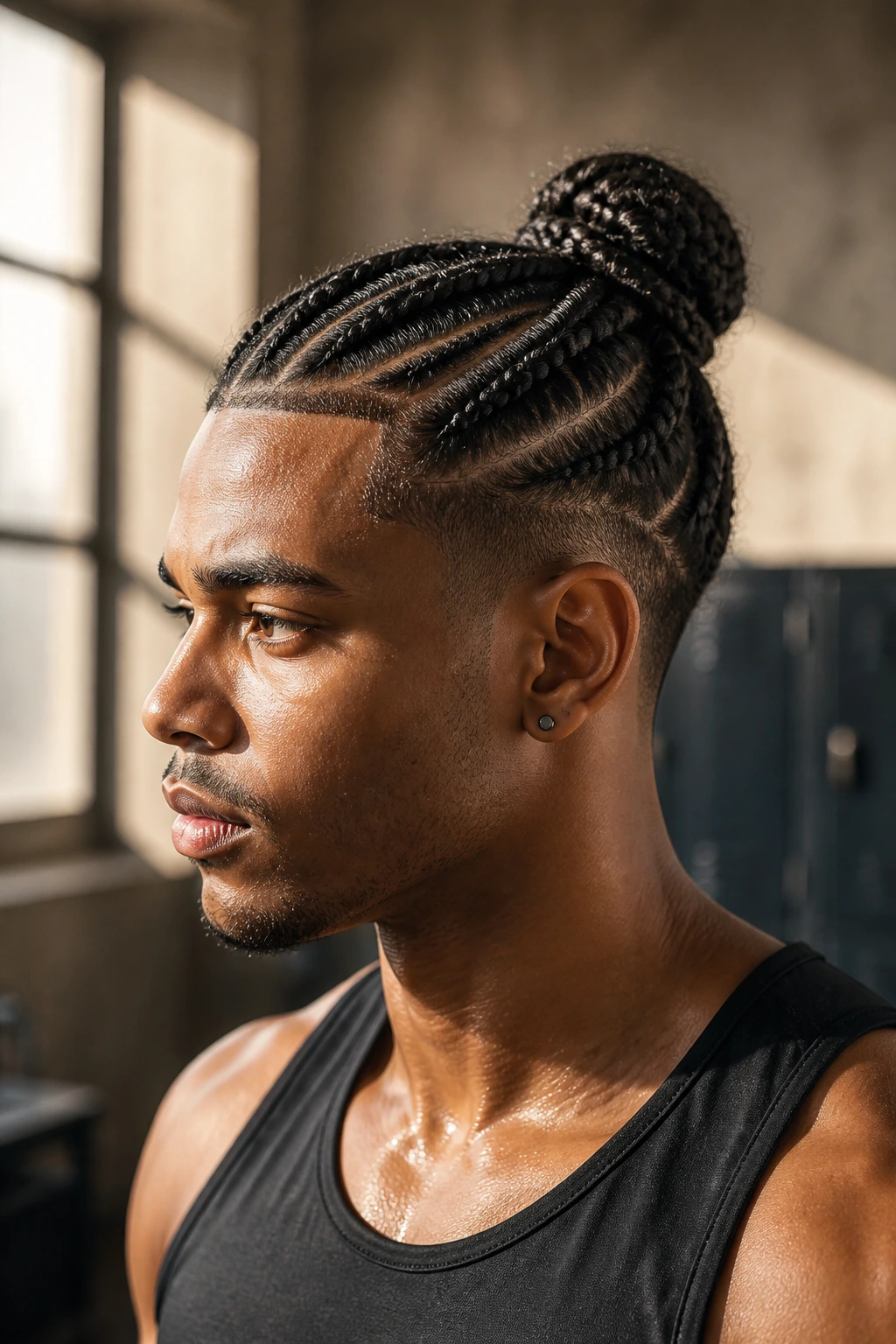
A braided man bun is what happens when you want the security of braids and the convenience of tied-back hair in one style. The front or full head is braided back, then gathered into a bun at the crown or the nape. It keeps the neck clear. It keeps the ends out of the way. It also gives the face a little more room, which can be nice if the hairline is strong and you do not want it buried under loose strands.
Compared with hanging braids, this style feels more contained. Compared with a plain bun, it looks more finished. That middle ground is why it works. The braid lines create texture before the bun takes over, so the final shape feels intentional rather than improvised.
The trick is balance. If the bun is pulled too high, the braids at the back get stressed. If it sits too low, the whole thing can look flat. A mid-crown knot usually gives the cleanest result.
This style is especially good for days when you need the hair off your face but don’t want to lose the braided detail. Gym, work, errands, long drive. It holds.
7. French Braids
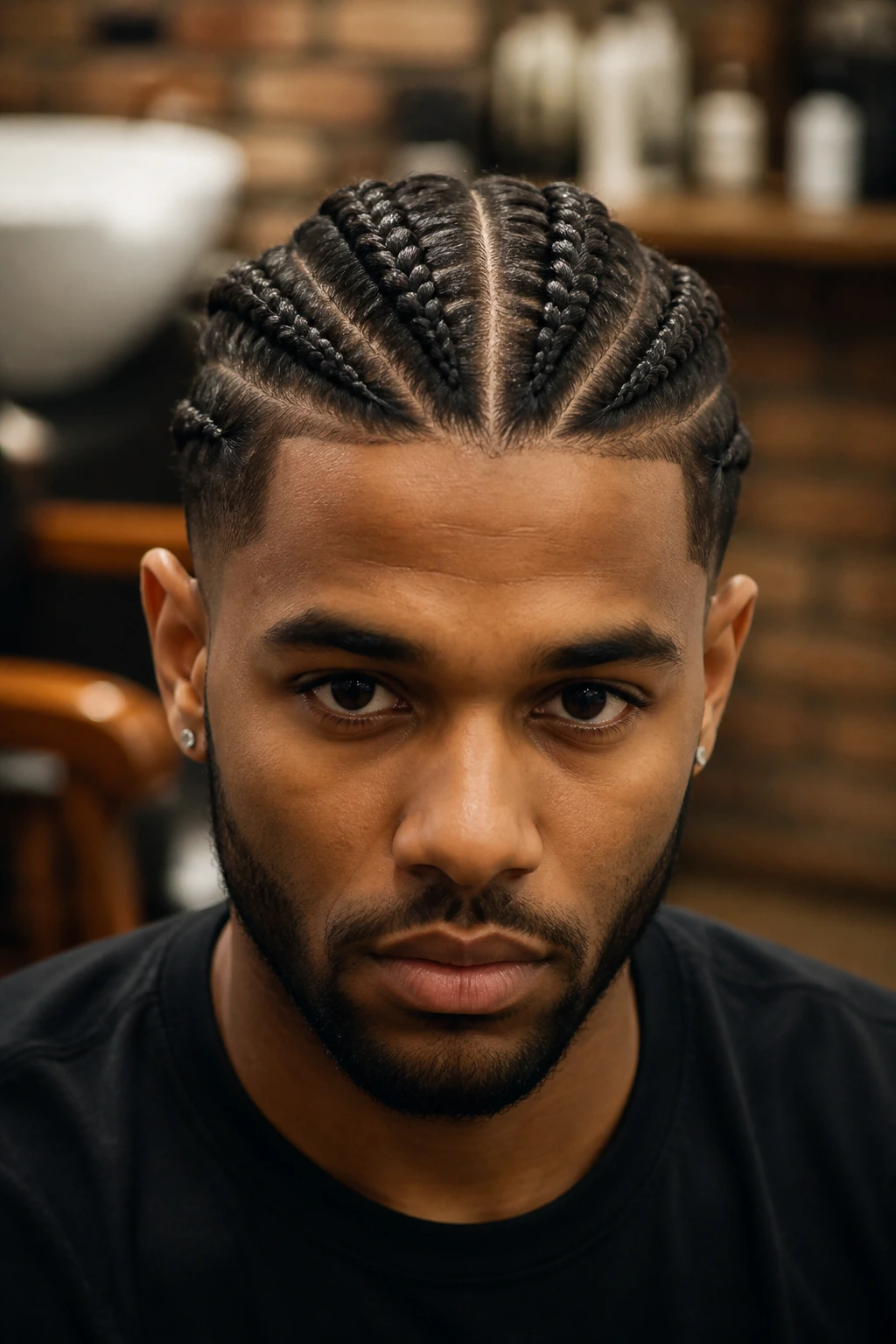
French braids on men usually look cleaner than people expect. The braid starts at the top and keeps picking up hair as it moves back, which makes the style sit close to the head without the tight, rowed look of cornrows. That’s a useful difference. You get control, but the braid still has some softness to it.
This style is a smart pick if the top is medium length and the sides are shorter or faded. A single French braid down the middle can give you a straight, neat line. Two French braids can feel a little sportier and keep the hair more contained. Either way, the braid has a smoother profile than a lot of other men’s braid styles.
Best When You Want Less Scalp Exposure
French braids show less scalp than stitch braids or wide cornrows, which makes them a good choice if you want the pattern to feel subtle. They also grow out in a softer way. The braid gets a little looser, but it doesn’t instantly look broken.
If your hair is very coarse and dense, the braid can sit bulky unless the sections are kept narrow. If your hair is softer or finer, a French braid needs enough grip at the roots or it starts slipping. That’s the catch.
8. Dutch Braids
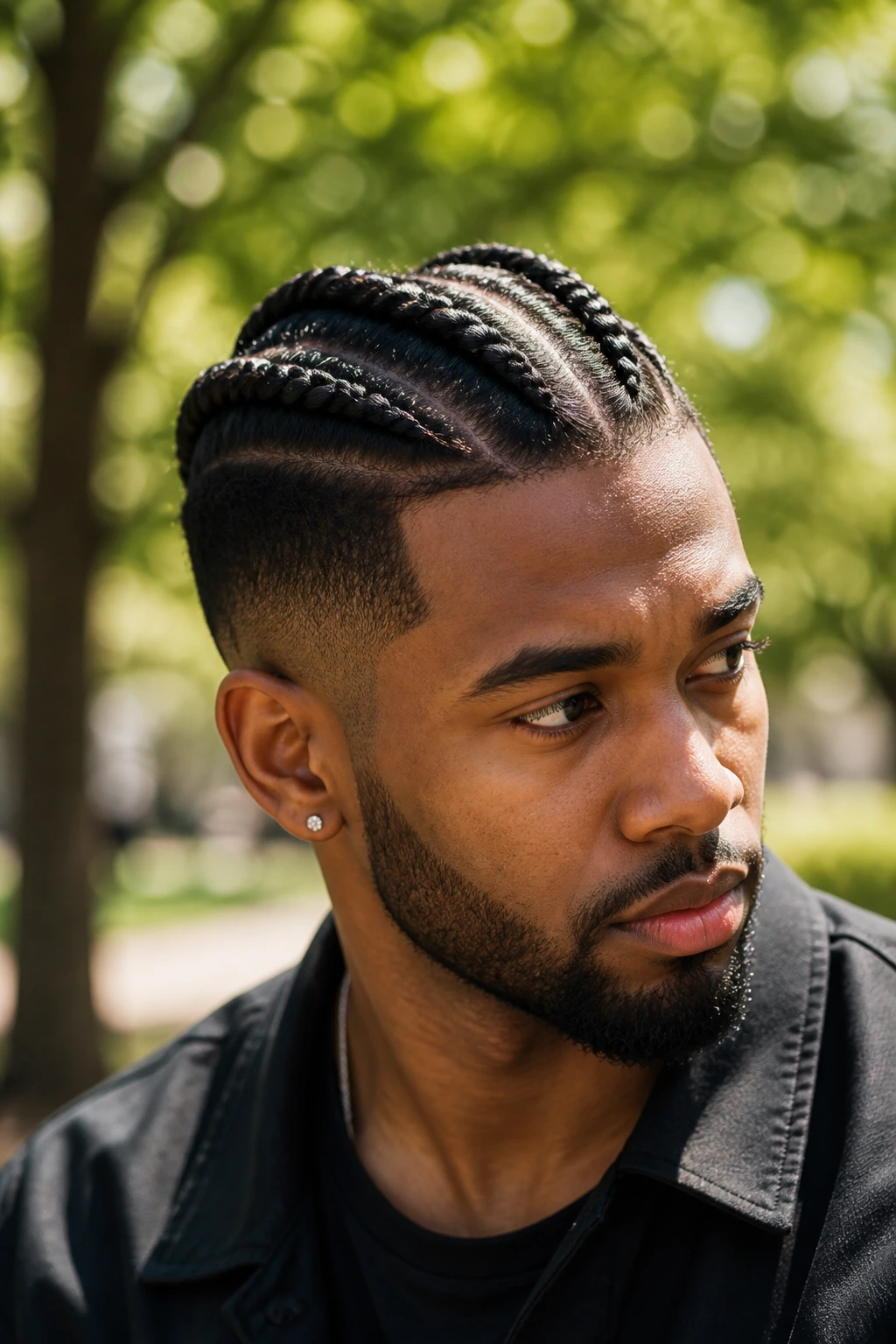
Dutch braids have more lift. They sit on top of the hair instead of sinking into it, which makes them look bolder from the side and from the front. If French braids are quiet, Dutch braids are louder in a good way. The braid stands out. The pattern is easier to see. The shape has more depth.
For men with thick hair, that raised look can be the whole appeal. A Dutch braid catches the eye even when the rest of the haircut is simple. It also makes the braid feel more dimensional, especially if the top hair is long enough to show the crossover pattern clearly.
This style is a solid choice when you want a more visible braid without going into a full set of cornrows. It’s also one of the better options for people who like the braid to read as a main feature instead of a small detail tucked into a fade.
The downside is maintenance. Because the braid sits up a little, frizz shows sooner. That’s not a flaw so much as part of the look. If you want something that stays slick and flat for a long stretch, this is not the softest option. If you want visible texture, it’s excellent.
9. Zigzag Cornrows
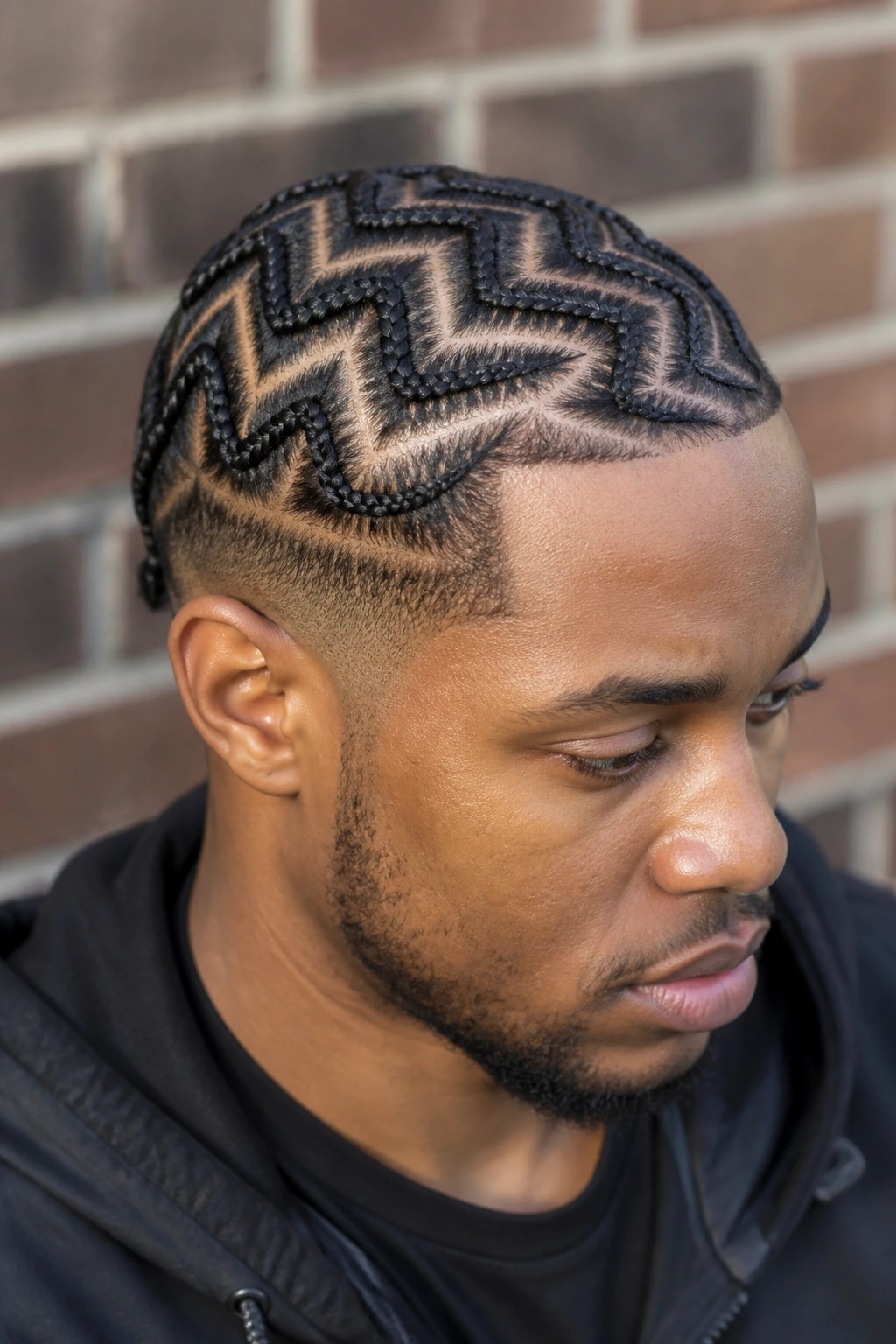
Straight parts are safe. Zigzags have personality. A zigzag cornrow pattern turns a basic braid layout into something with movement before the first braid even starts. The lines bounce back and forth across the scalp, which makes the style feel more custom and less formulaic.
This works especially well on guys who want cornrows but don’t want the standard straight-back look. It can soften a square head shape a little because the eye keeps moving across the design. On the other hand, it does show parting mistakes more clearly, so the braid work has to be neat. There’s nowhere for a crooked line to hide.
- Best when the hairline is strong and the scalp can handle a detailed part.
- Takes longer than simple rows because the sections have to be mapped carefully.
- Looks strongest on medium to thick hair that can hold a clean braid shape.
- Pair it with a fade if you want the zigzag pattern to stand out even more.
The extra time is worth it if you care about detail. Zigzag braids are the sort of style people notice twice — once from a distance, then again when they get closer.
10. Knotless Box Braids
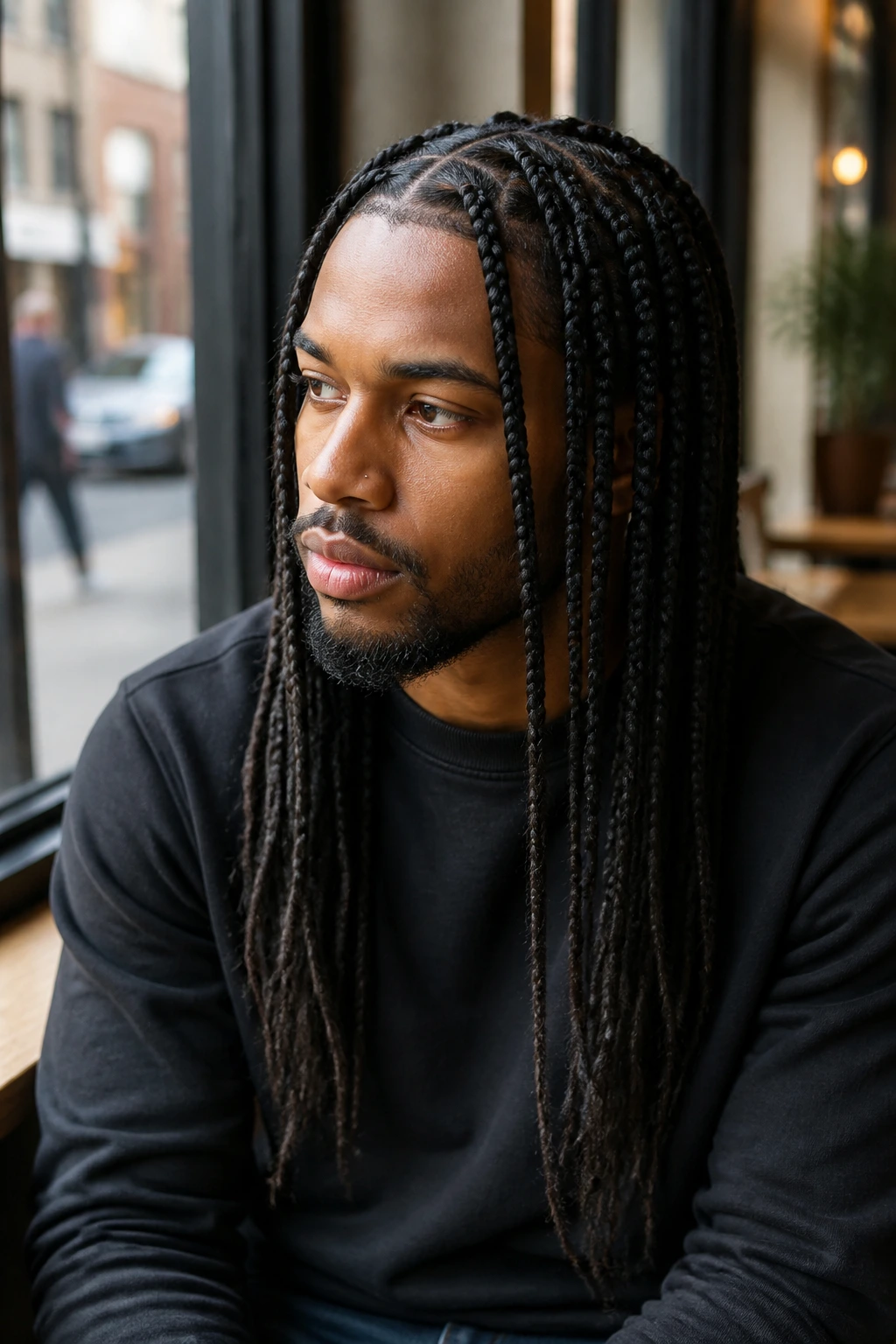
Knotless box braids sit flatter at the root because they don’t start with a tight knot of added hair. The braid builds from the natural hair first, then the extensions are fed in gradually. That changes the feel at the scalp a lot. Less bulk. Less tugging. A softer start line.
This is one of my favorite braid styles for men with sensitive edges or hair that’s been stressed by tight styles before. The weight distribution feels easier on the head, and the braids usually swing more naturally because the base isn’t stuck in one heavy clump. The finish is still neat, but it reads a little more relaxed than traditional box braids.
Knotless braids also age better at the root. As the hair grows, the transition from scalp to braid stays smoother, which helps the style keep a cleaner outline for longer. That doesn’t mean they need no maintenance. They still fuzz up. They still need care. They just start with a better shape.
If the goal is all-day comfort and a lower-pull finish, knotless usually wins. If the goal is the heaviest, most dramatic braid base, traditional box braids still have a place. Different tool. Different job.
11. Braided Undercut
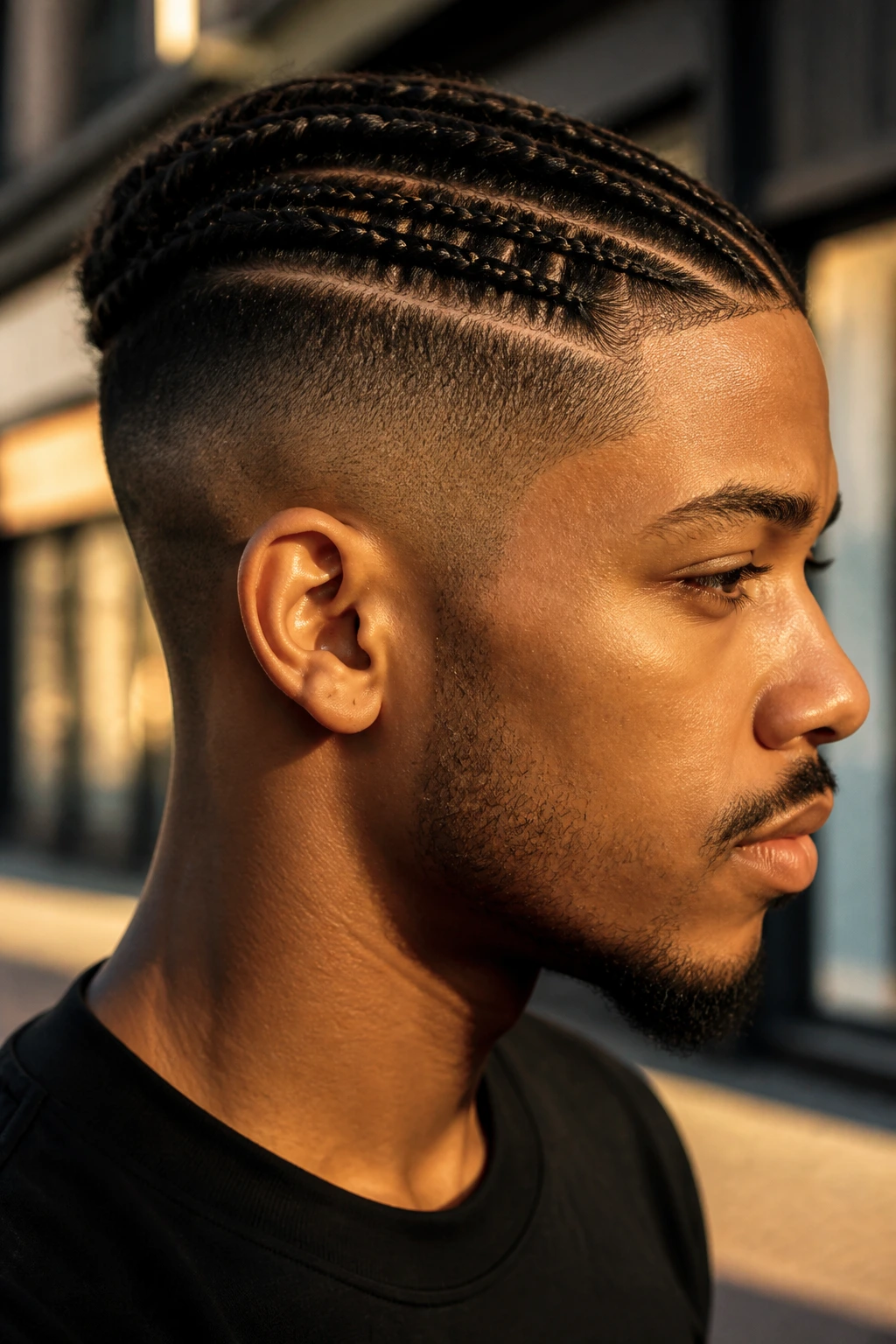
A braided undercut gives you contrast before the braids even show up. The sides are clipped down short, sometimes close to the skin, while the top stays long enough to braid. That hard shift in length is what makes the style work. The eye goes straight to the braid mass on top because there’s nothing competing with it.
Compared with full-head braids, this style feels sharper and easier to manage. Compared with a plain undercut, it has more texture and movement. It’s one of the strongest options for men who want the braid to look styled rather than simply grown out.
The best version usually keeps the top long enough for either a single central braid or several small braids that can be tied back. A full top bun with braided lengths works too, but the contrast is what sells it. If the fade on the sides is sloppy, the whole look loses power.
This is also the kind of style that pairs well with a beard. Not because it needs one, but because both parts of the face can carry clean lines at the same time. That symmetry looks good.
12. Short-Hair Mini Braids
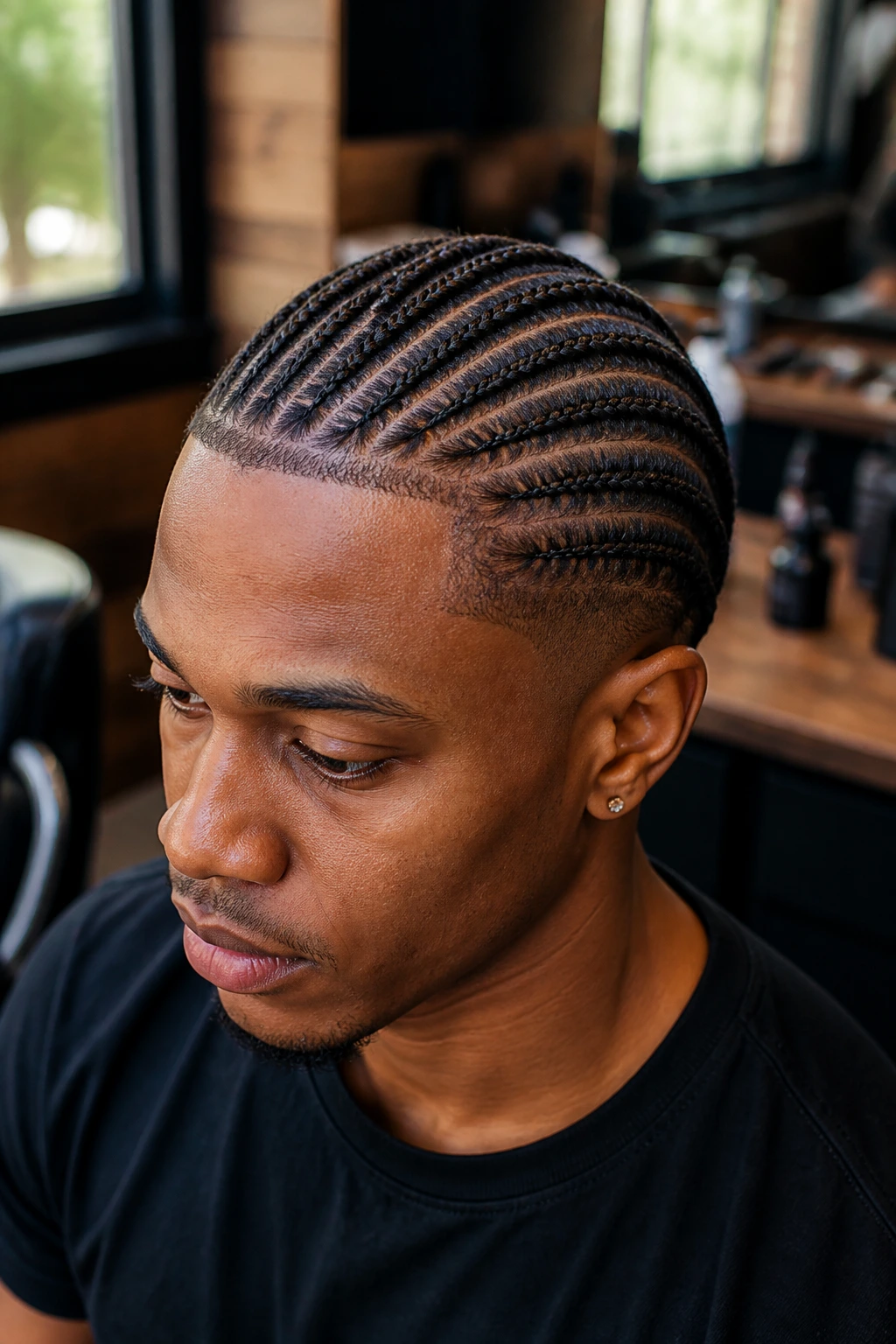
Can you braid short hair? Yes — if the hair has enough grip to hold. Mini braids and tight little braid rows can work on shorter lengths, especially on coarse or coily textures that naturally cling together. The style won’t look like long hanging plaits. It reads closer to a close, detailed pattern that sits on the scalp and gives the hair a controlled shape.
This is a useful option when the hair is too short for larger braids but long enough to separate cleanly. The braid sections need to be smaller so the hair doesn’t pop loose at the root. That means more time in the chair and more precision from the person braiding. No shortcuts.
The Length Threshold Matters
- Around 2 to 3 inches can work for some textures.
- Thicker, coarser hair usually holds sooner than softer hair.
- The smaller the braid, the easier it is to keep the style tidy.
- If the hair keeps slipping, it’s not ready yet — wait a few more weeks.
Mini braids are not the easiest style in the bunch, but they’re a smart bridge between a fade and a fuller braided look. They also let you test how your scalp handles braids before committing to a bigger set.
13. Fulani-Inspired Braids
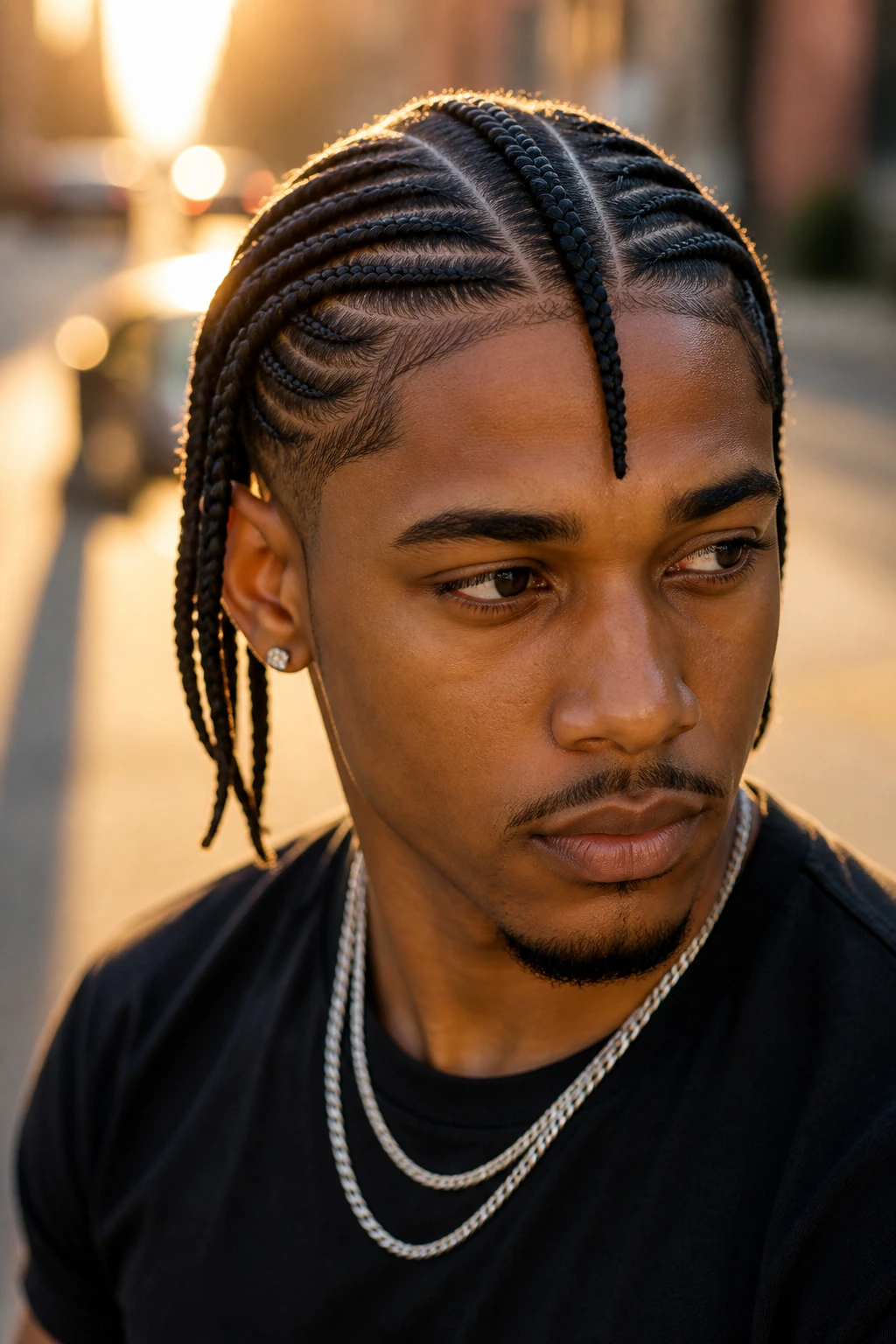
Fulani-inspired braids bring more than one braid direction into the same style. A center braid, side rows, and curved parting can all sit together in one pattern, and that’s what gives the look its shape. On men, the style often reads best when the parting is the star and the extras stay clean, not crowded.
This is one of those braid hairstyles for men that can go subtle or bold depending on how far you take the details. Leave the ends simple and the style feels modern and sharp. Add beads or cuffs and it becomes more decorative. Neither version is wrong. The difference is how much attention you want to draw to the finish.
The important thing is respect for the pattern. The braid layout has roots in specific cultural traditions, so it works better when it’s worn with care instead of treated like a costume piece. That usually means clean parts, balanced symmetry, and not overloading the style with random extras just because they’re available.
Fulani-inspired braids can flatter a strong jaw and a narrow face well because the side sections pull the eye outward. They also look good with a taper or undercut, where the parting can frame the top properly.
14. Crown Braid
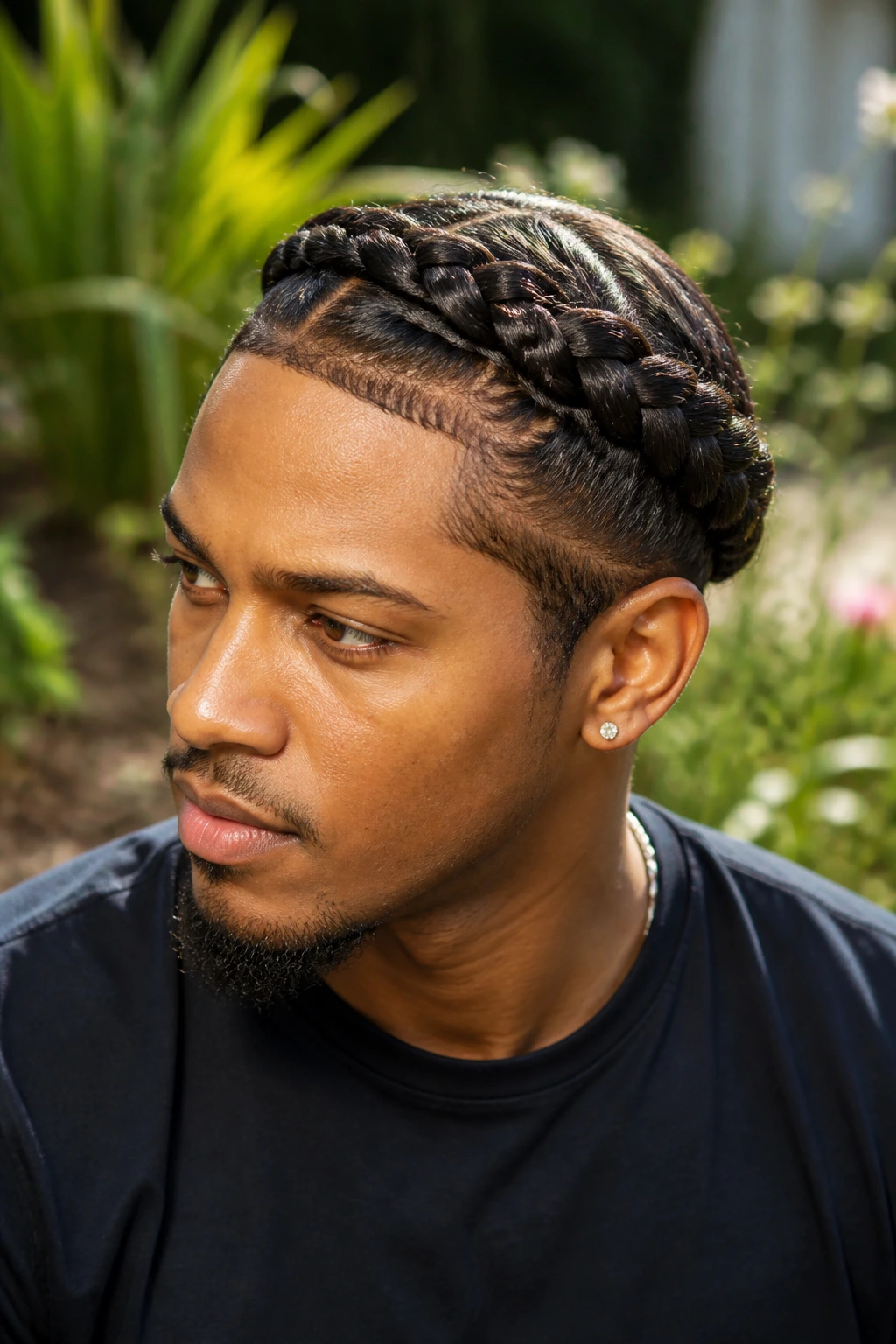
A crown braid wraps the head and gives the haircut a halo-like shape without feeling delicate. On men, that ring of braid around the perimeter can look surprisingly strong, especially when the rest of the hair is tucked into the shape instead of hanging loose. It’s a style with presence.
The best versions use enough hair length to keep the braid from collapsing at the back. If the hair is too short, the crown will break into pieces or sit unevenly behind the ears. When the length is there, though, the braid creates a clean frame for the face and keeps the focus on bone structure and line.
I like this style most on medium to long hair that needs to stay controlled without disappearing entirely into a bun. It feels more finished than a simple top knot. It also has a cleaner outline than a loose ponytail. That middle ground matters if you care about silhouette.
The catch is that crown braids can expose uneven growth fast. If the sides are frizzy or the ends are different lengths, the circle shows it. Clean sectioning is everything here.
15. Side-Swept Braids
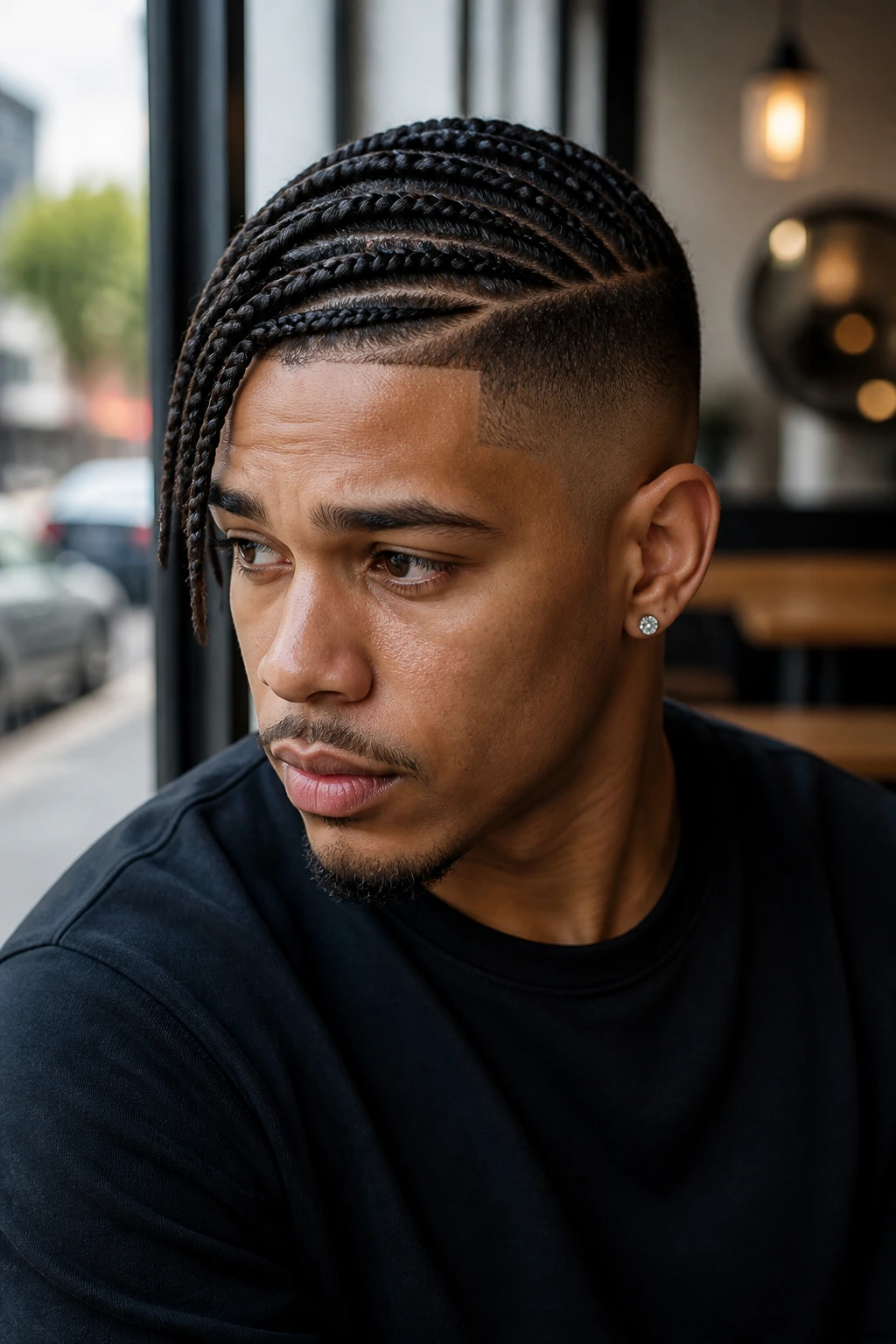
Side-swept braids are a nice break from the straight-down-the-middle routine. The braid line angles across the head instead of running directly back, which gives the style a little movement and makes the top feel less rigid. It’s still structured. Just less formal.
This style works well when the hair naturally falls to one side or when you want the braid to frame part of the face. It can soften a hard fade and keep the top from looking too symmetrical. That asymmetry is the appeal. It feels a little more casual, a little more lived-in, and still neat enough to wear out without a cap.
Why the Angle Matters
- A diagonal part can make the head look less boxy.
- The braid is easier to style with a side taper or a low fade.
- It grows out in a softer way than a dead-center braid.
- It works well if you wear your hair parted the same way every day.
Side-swept braids are a good choice for guys who want braid texture without a stiff, sports-team look. They have shape. They have flow. They don’t try too hard.
16. Triangle-Part Braids
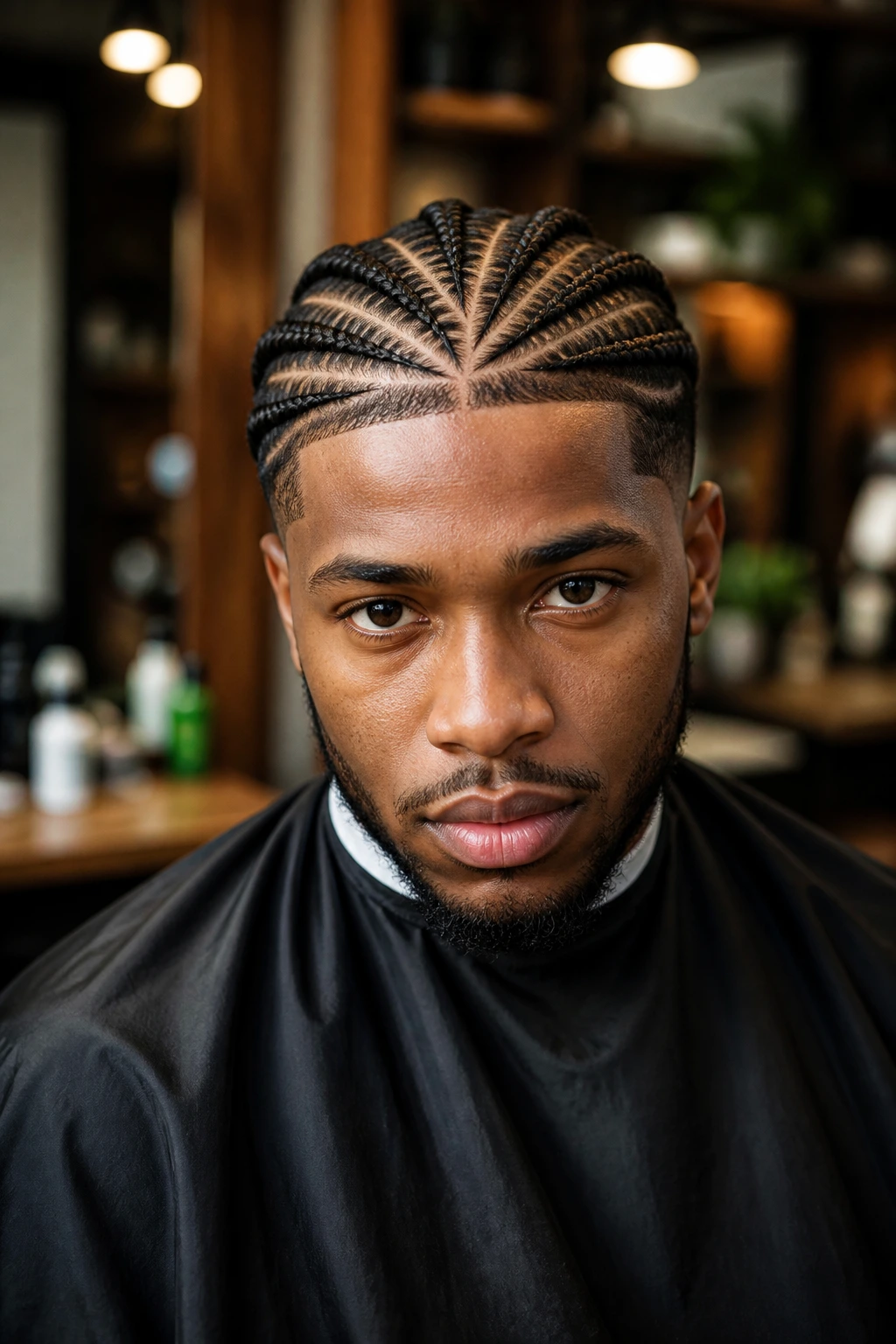
Why do triangle parts look sharper than square ones? Because the eye does not expect them. Square parts are tidy. Triangle parts bring a little motion to the scalp before the braid even starts, and that changes the whole finish. The braid itself might be the same size as a box braid, but the parting makes it feel more custom.
Triangle parts work especially well when you want box braids or feed-ins to have more visual energy. The sections create a pattern that looks almost mosaic-like from above. It’s a small change with a big payoff. The head suddenly looks more textured and more deliberate.
This style is good for men who like detail and do not mind sitting in the chair a little longer. Triangle parts take more planning, and the triangles need to be even enough that the pattern doesn’t wobble. If one section is too narrow or too wide, the whole layout gets off-balance.
How to Use the Shape
- Choose triangle parts when you want the style to look more artistic.
- Keep the braids themselves simple so the parting doesn’t compete with the braid.
- Pair with a clean taper for a sharper frame.
- Use smaller triangles near the hairline if you want the front to look tighter.
Triangle parts do one thing very well: they make braid hairstyles for men feel less ordinary.
17. Braided Ponytail
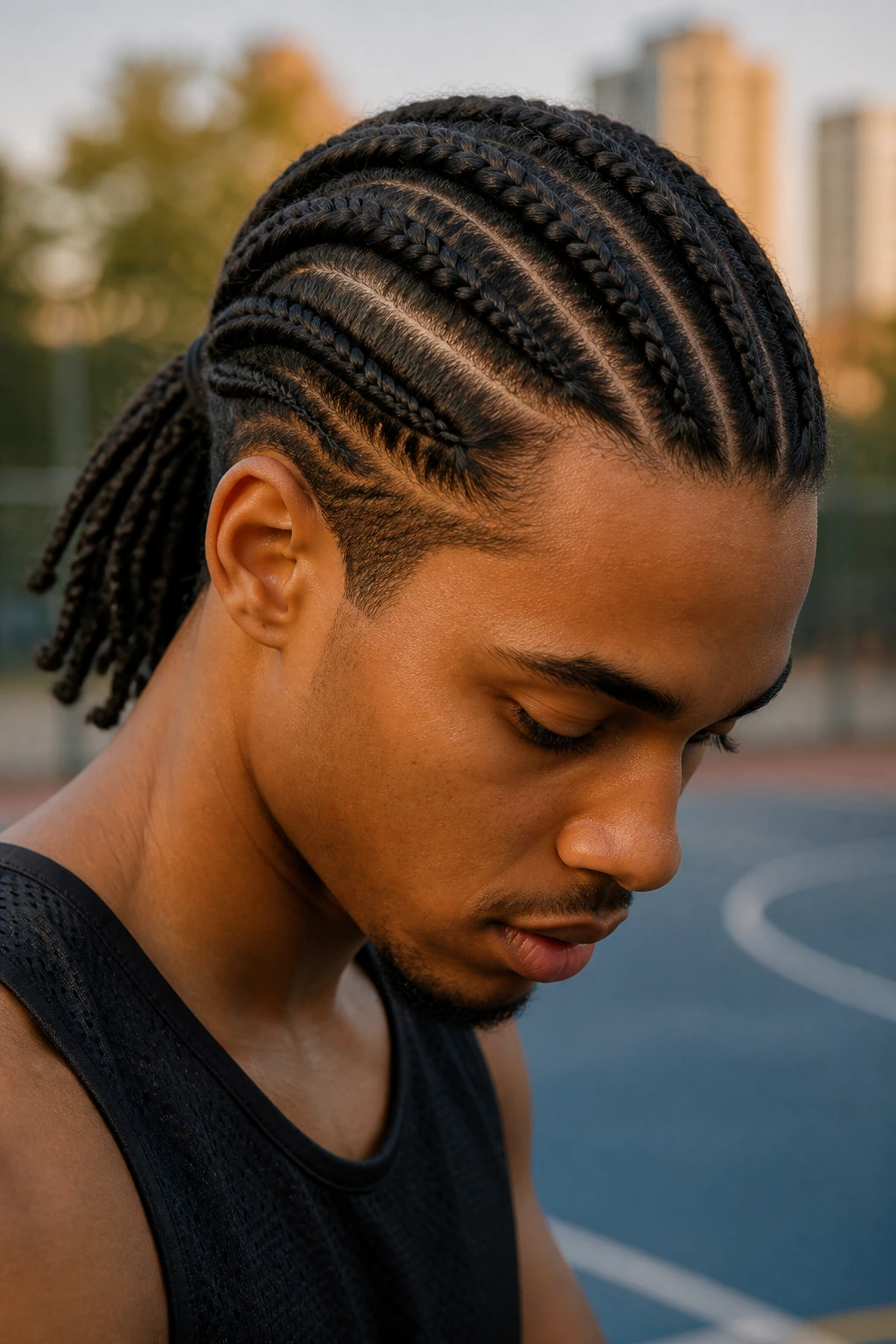
A braided ponytail is practical in the best way. The hair is braided back, then gathered so the length falls in one controlled tail. That keeps the neck free, keeps the braid ends together, and gives you a style that can look athletic, polished, or a little rough depending on how tightly it’s finished.
The ponytail shape works best when the top and back have enough length to meet cleanly without pulling. If the braid ends are too short, the tie looks awkward. If they’re long enough, the style reads as one piece. That is the difference between “tied back” and “styled.”
- Good for long hair that gets in the way during work or training.
- Works with single braids, several smaller braids, or braided rows folded back.
- Keeps the ends from fraying as fast as hanging braids can.
- Looks stronger with a wrapped hair tie or a small braid anchor at the base.
The best braided ponytails don’t look like an afterthought. They look planned. That means a clean tie point, no loose wisps hanging from the crown, and a smooth transition from braid to tail.
18. Braids With Curly Ends
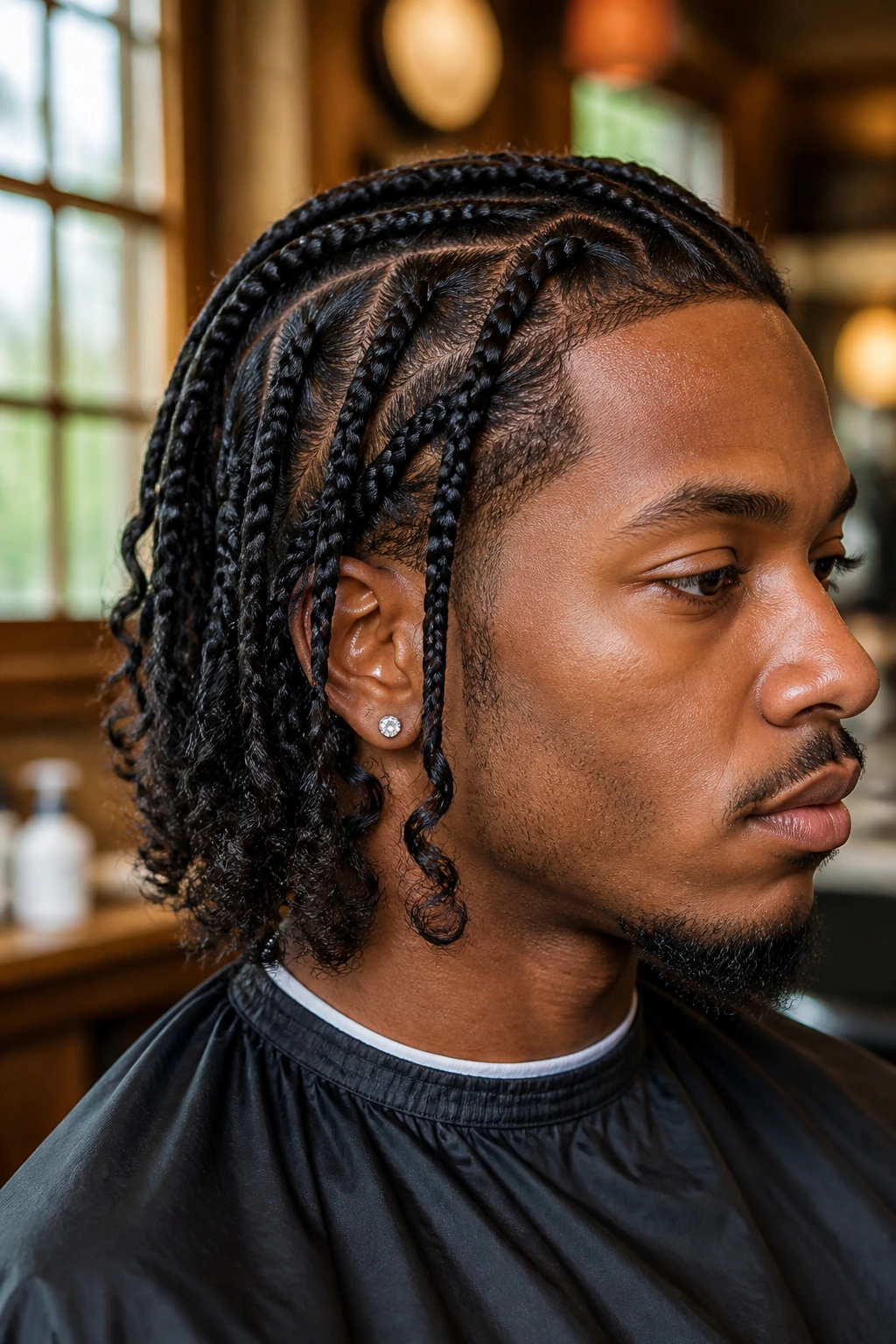
Braids with curly ends split the difference between controlled and loose. The top stays braided and neat, but the ends are left textured, curled, or twisted out so the style finishes with movement instead of a blunt stop. That contrast is what gives it personality. Tight at the root. Softer at the bottom.
This works particularly well on men who want a braid style that feels less severe. The curly ends keep the style from looking too boxy, and they soften the overall silhouette around the jaw and shoulders. If your hair has natural curl, the finish can look even better because the texture feels connected instead of forced.
It also gives you a little more room for growth between maintenance sessions. The ends can blur a bit without the whole style looking broken. That said, the roots still need care. If the base gets fuzzy or the braid starts lifting, the style loses its shape fast.
This is one of the more forgiving braid hairstyles for men when you want something styled but not stiff. The braid does the work up top. The curls handle the exit.
Why Braids Fit Men’s Hair Better Than People Think
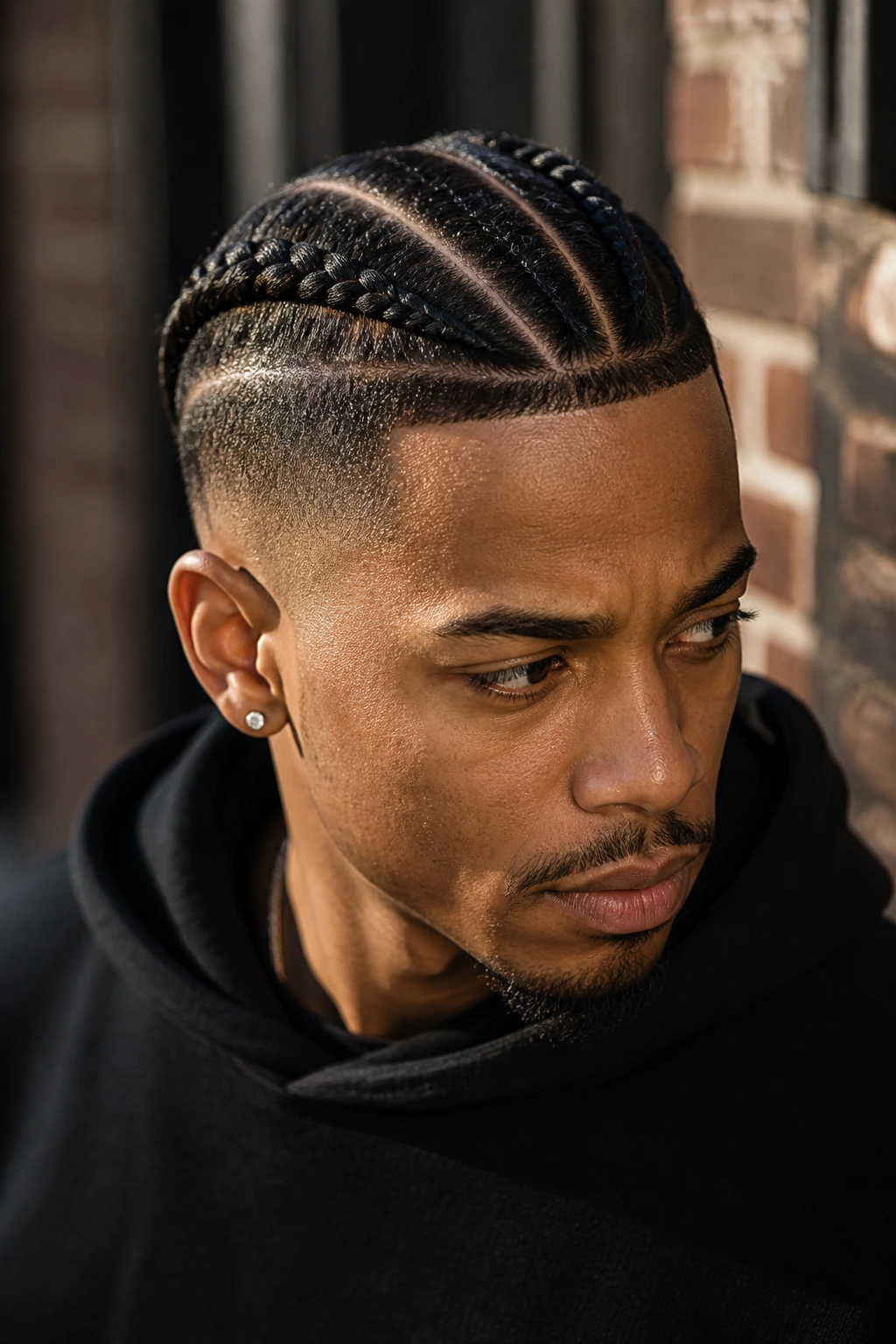
A good braid style does three jobs at once. It holds the hair in place. It changes the outline of the haircut. It keeps the ends from taking the worst of the friction that comes from rubbing against collars, hoodies, and pillowcases. That’s why braids keep showing up on men with everything from close cuts to long coils.
The parting matters more than the braid size. Small parts usually read cleaner and last a little longer before they fuzz up, but they take more time and put more stress on the scalp if they’re pulled too tight. Bigger sections are quicker and often feel easier on the head, but they can puff up sooner. There’s no free lunch here. You trade time for detail or detail for speed.
Hair texture matters too. Coarser hair grips faster and often holds smaller braid patterns better. Softer hair may need more length, more product, or a more careful parting approach so the braid doesn’t unravel at the root. That’s why the same style can look effortless on one guy and fight back on another.
I’m also a fan of braids because they can sit inside a fade without looking disconnected. A clean fade gives the braid pattern a frame. The braid gives the fade something to point at. That combination is half the reason these styles stay in rotation.
The Small Toolkit That Makes Braiding Easier
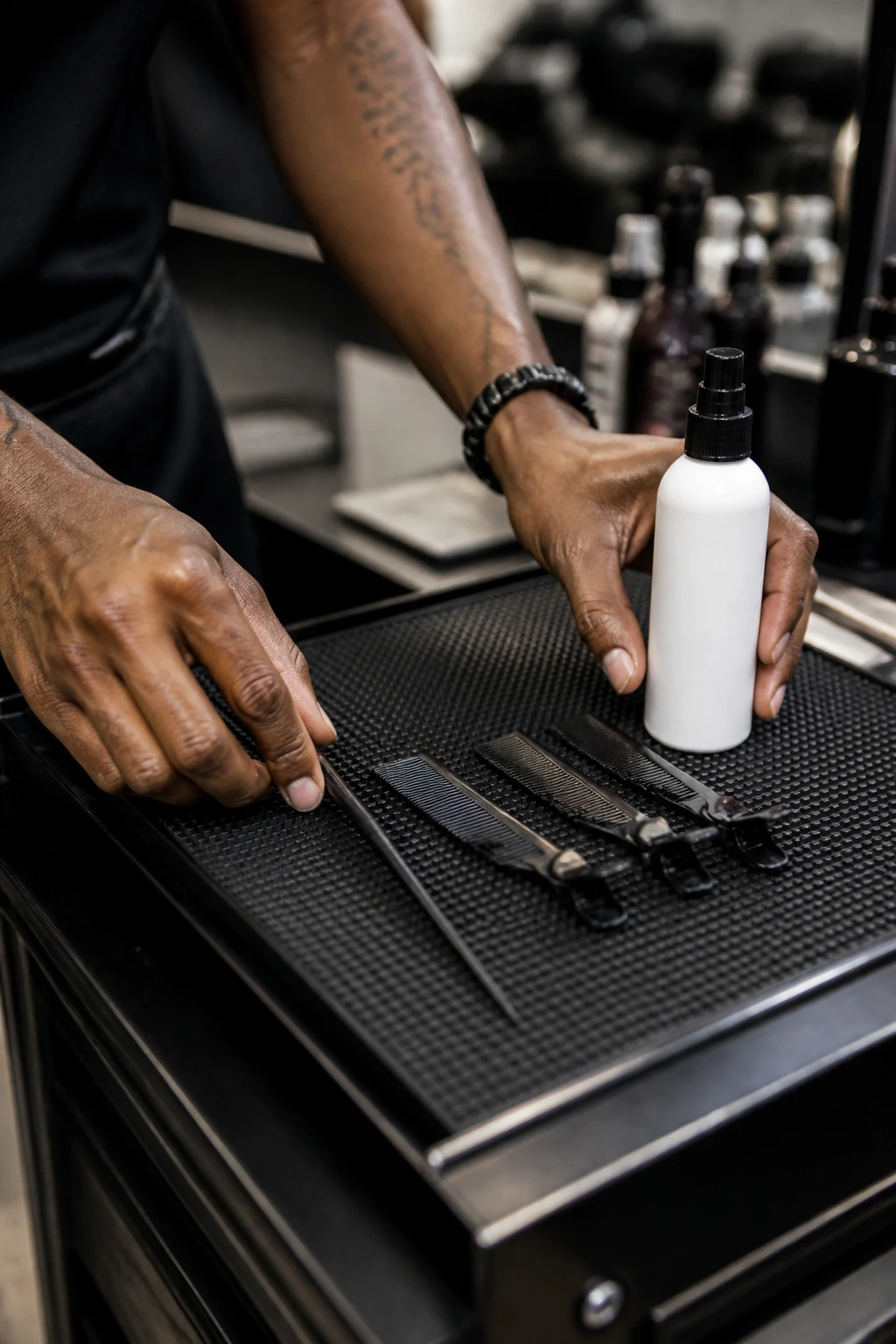
- Rat-tail comb: The fine point makes clean parts and sharp sections much easier.
- Sectioning clips: These keep the rest of the hair out of the way while you work one row at a time.
- Leave-in conditioner: A light layer helps the hair stay soft enough to part without turning greasy.
- Braid gel or control cream: Use this sparingly to smooth flyaways and keep the section lines clean.
- Spray bottle with water: A few misting passes make dry hair easier to separate without soaking it.
- Edge brush: Handy for laying the hairline down after the braid work is finished.
- Satin durag or bonnet: Keeps friction down while you sleep and helps the style hold its shape.
- Hair elastics: Useful for ponytails, bun styles, and section control at the end.
- Hand mirror: Lets you check the back rows without guessing.
- Blow dryer on cool or low heat: Optional, but useful when you need to stretch hair before braiding.
How to Prep Hair Before the First Braid Goes In
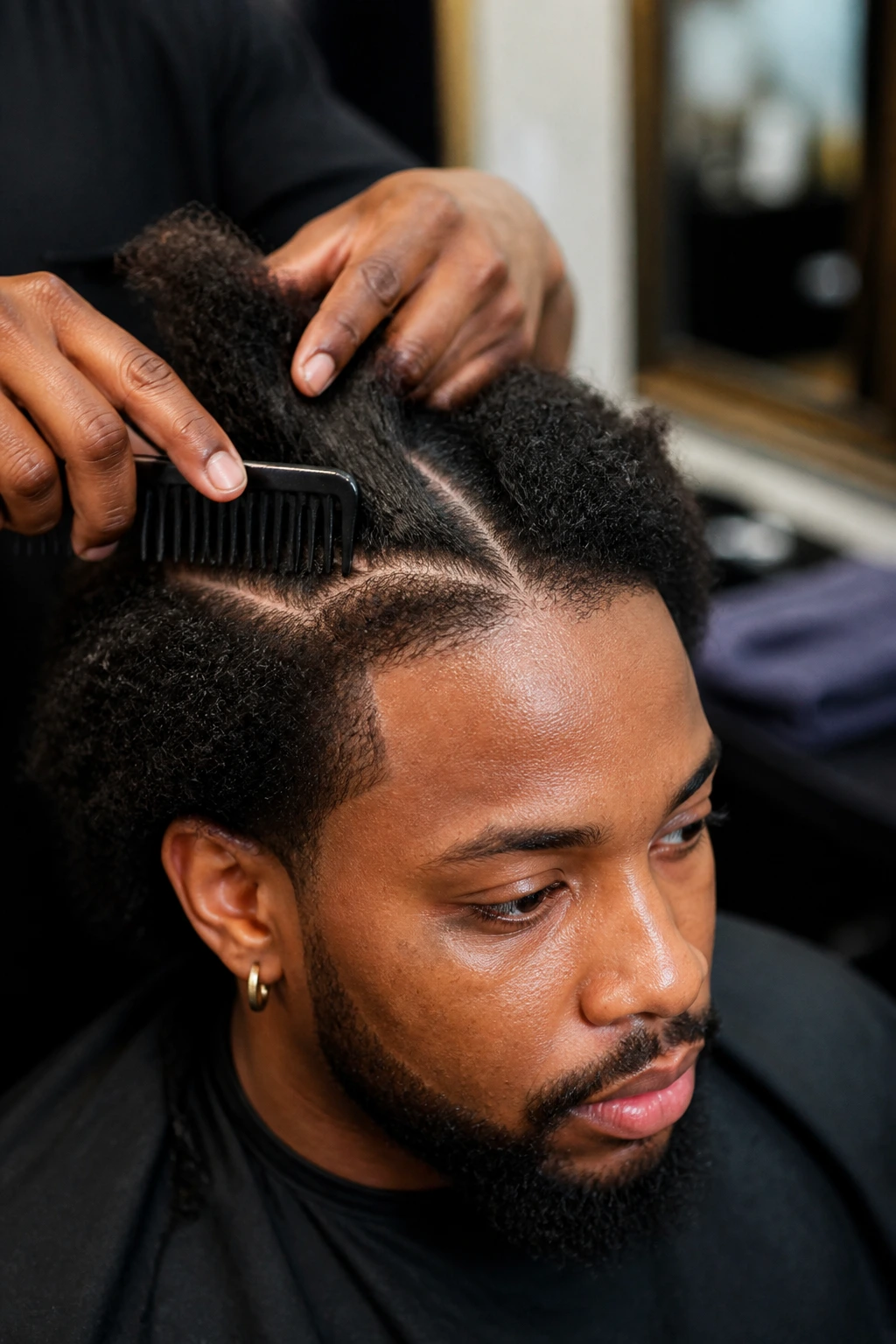
Clean hair braids better. That sounds obvious, but people skip it all the time and then wonder why the parts look dull or the braid starts slipping after two days. Wash the hair, condition it, and dry it fully before any serious sectioning starts. Wet or damp hair can stretch too much, and that leads to a loose shape once it dries.
Detangling comes next. Use your fingers first, then a wide-tooth comb or a rat-tail comb if the hair needs more help. Start at the ends. Work upward. If you attack the roots first, you’re just dragging knots tighter. For coily hair, a little leave-in can help, but don’t drown the hair in product. Too much slip makes the sections hard to hold.
If the hair is very curly or shrunken, stretching it a little before braiding helps the rows lie flatter. A low-heat blow-dry, banding, or a gentle twist-out can work, depending on the texture. The goal is not poker-straight hair. The goal is hair that parts cleanly and doesn’t spring apart while the braid is being built.
How to Pick the Right Braid Style for Your Hair Length and Face Shape
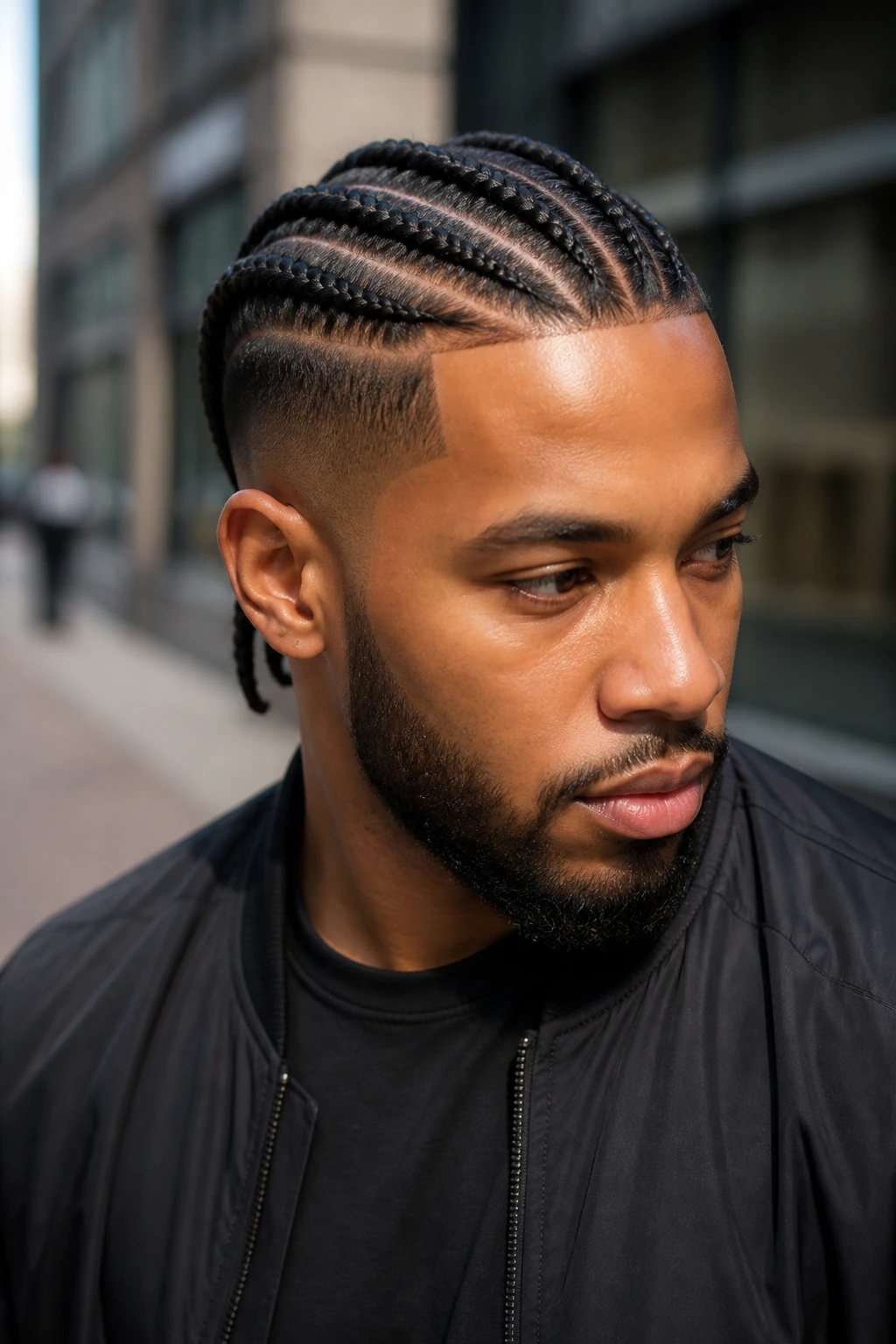
Shorter hair usually does better with cornrows, mini braids, or tight feed-in patterns because those styles don’t need the same hanging length as box braids or ponytails. If the hair is medium length, that opens the door to two braids, French braids, Dutch braids, and knotless options. Long hair gives you the most freedom, but it also makes weight a bigger issue, which is where braided buns and ponytails start making sense.
Face shape plays a quiet role too. Vertical braid lines can lengthen a round face. Side-swept patterns can soften a very square one. Raised styles like Dutch braids and crown braids add height, which helps when the face feels long already. None of this is rigid. Hair texture, growth pattern, and how much room you have on the sides matter just as much.
A strong hairline usually can handle tighter-looking patterns if the tension stays reasonable. A fragile edge line needs softer starts, wider sections, or knotless bases. Don’t fight your hairline to get a style photo. That trade is not worth making.
How to Talk to a Barber or Braider Without Getting the Wrong Style
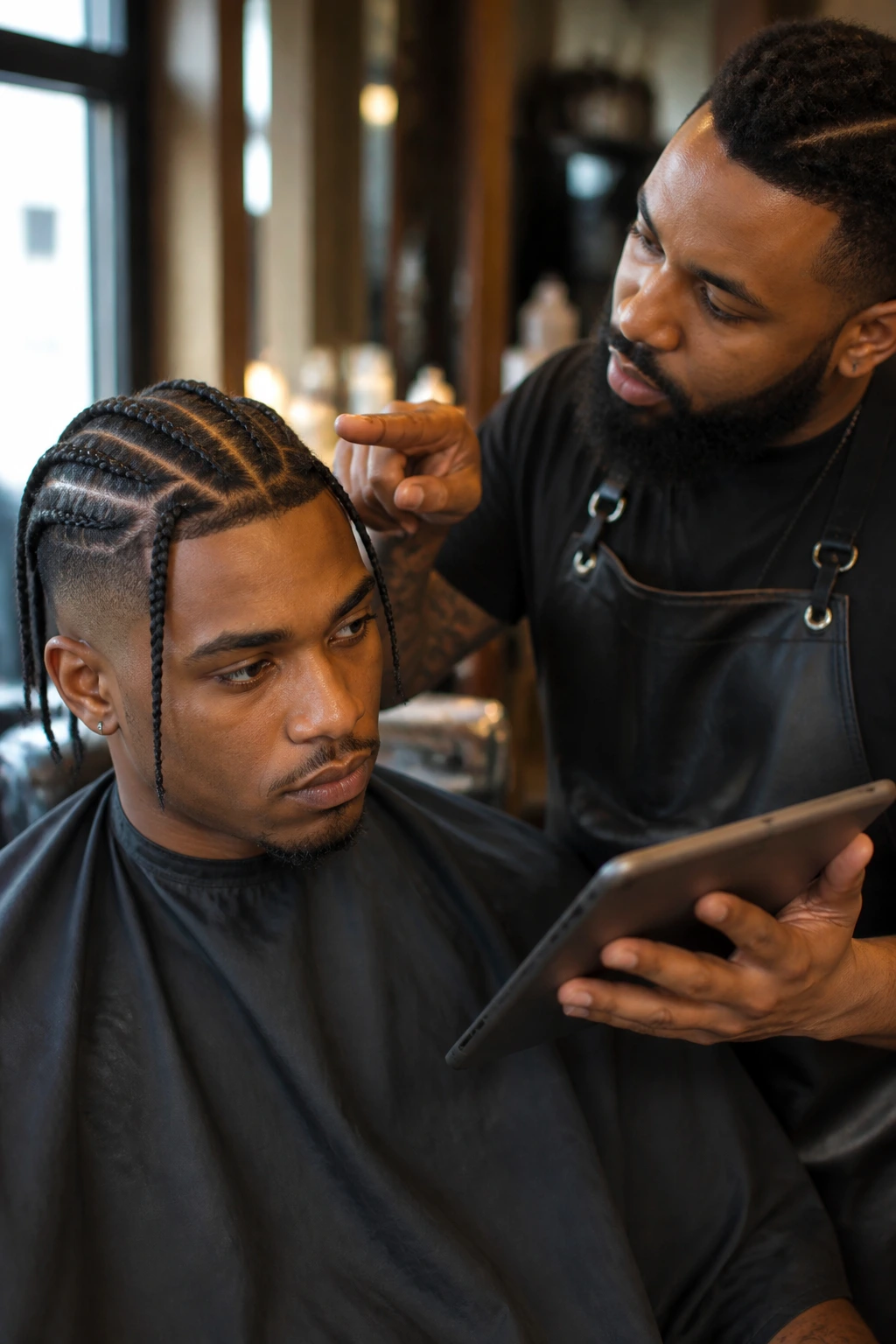
Bring photos. Two or three is enough. One front view, one side view, one back view if you can find it. The point is not to copy every detail. It’s to show part size, braid thickness, and how tight you want the finish to sit.
Say what matters most to you. If you want low tension, say that. If you want the braids to sit flat at the crown, say that. If you want a fade on the sides, name the fade height instead of saying “make it clean.” Clean means different things to different people, and this is where misunderstandings start.
Ask how long your hair needs to be for the style you want. Good braiders and barbers will tell you if the hair is too short for the parting pattern you have in mind. That honesty saves both time and tension.
And if the first pass hurts, speak up. A little pull is normal. Pain, burning, or sharp pressure is not.
Extra Moves That Make Braids Look Intentional
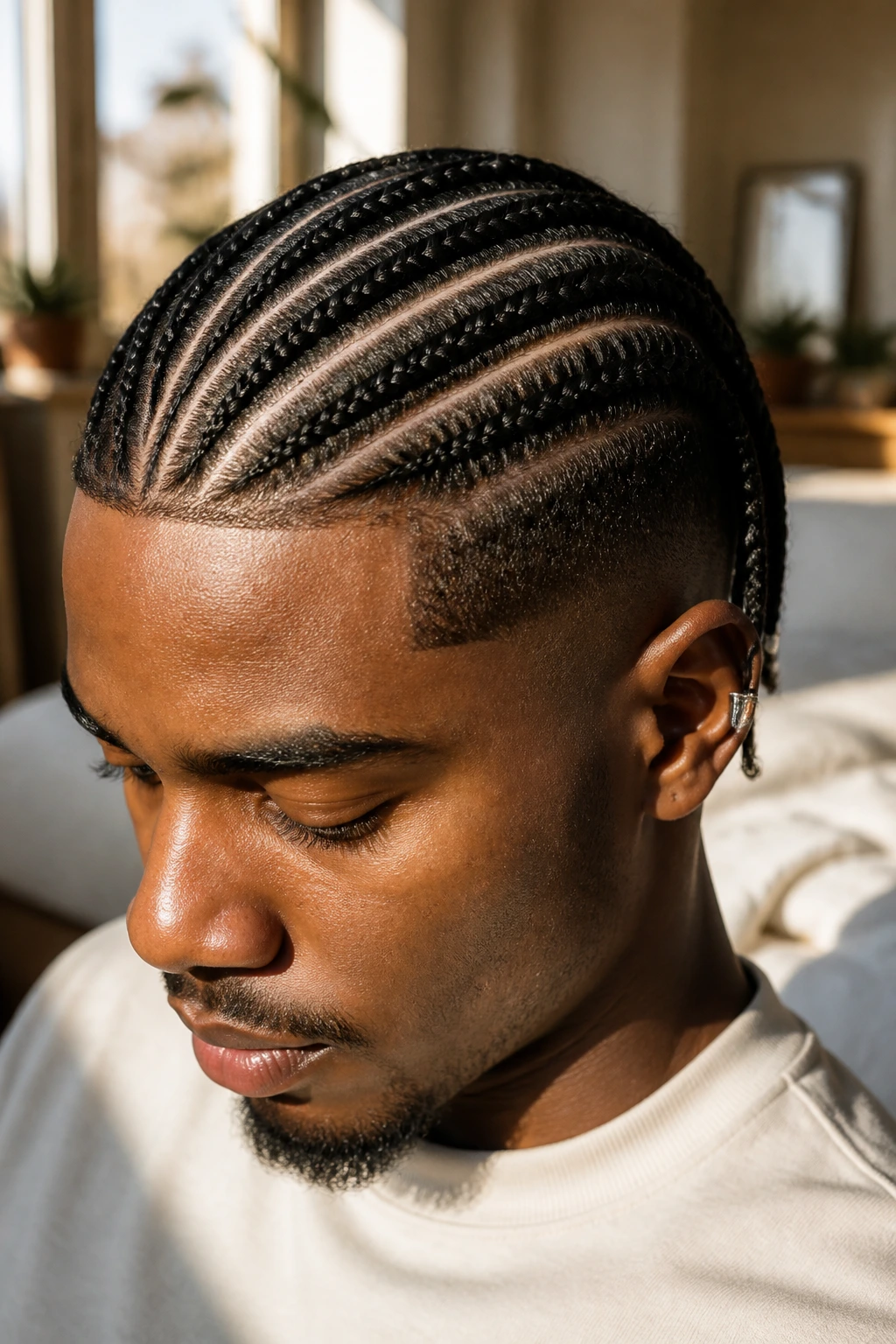
Parting: Keep the sections clean and consistent. A sharp part line does more for the style than extra product ever will.
Finish: A light mousse at the end smooths fuzz without turning the braids into helmet hair. Heavy gel can leave flakes and make the roots stiff.
Accessories: One or two metal cuffs, a wrap at the ponytail, or a single bead at the end can be enough. Too many extras crowd the braid and make the style feel busy.
Line-Up: Ask for the line-up after the braids are finished if the hairline needs shaping. That lets the barber match the edges to the braid frame instead of guessing.
Daily Reset: A quick wrap overnight and a light mist in the morning keeps the braid surface from turning dry and puffy.
Common Mistakes That Make Braids Look Bad or Hurt the Scalp
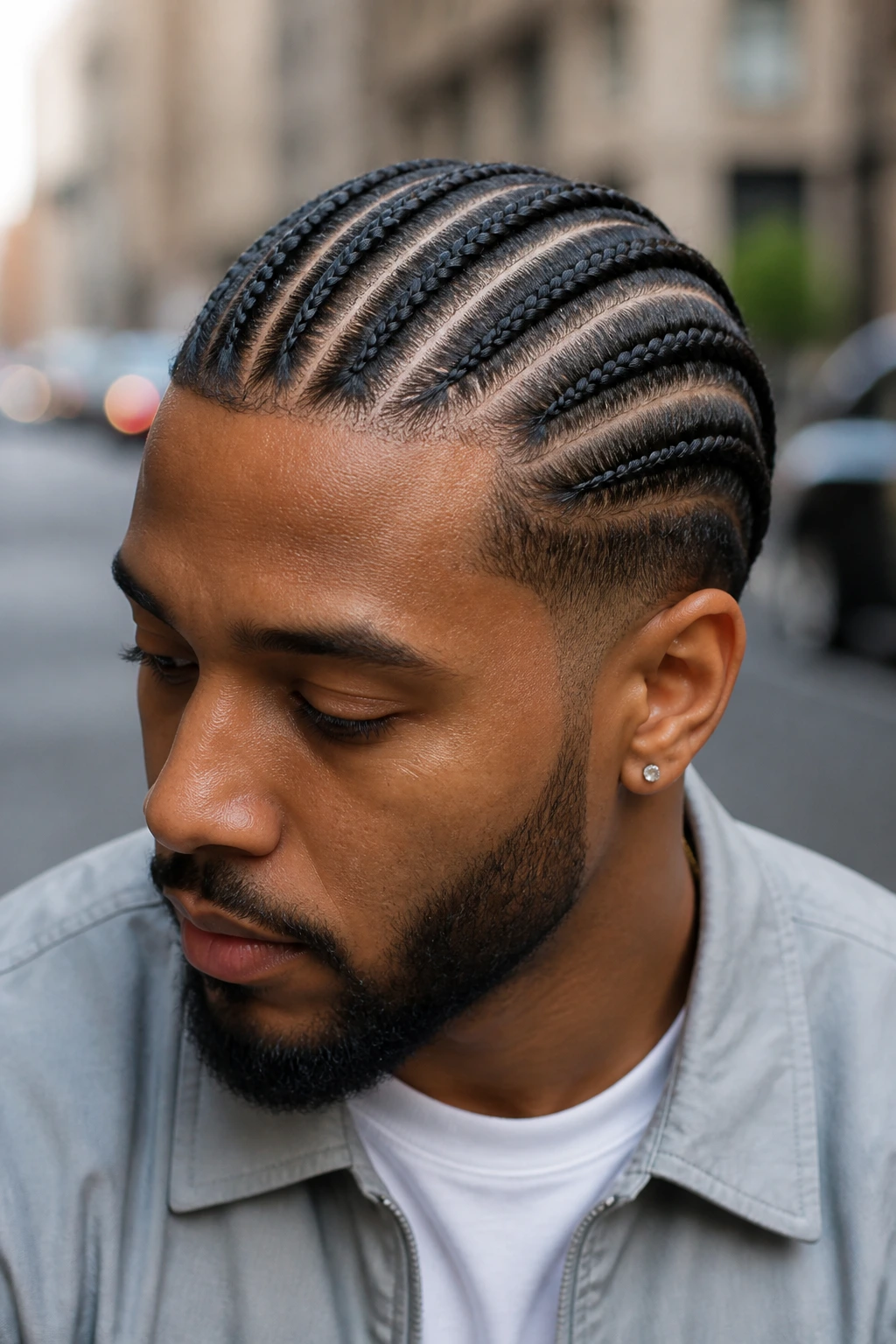
-
Braiding hair that is too short or too dry: The sections slip, the braid won’t hold, and the style frays in days. Wait for more length or prep the hair with a light moisturizer and proper detangling.
-
Pulling the hairline too tight: The scalp feels sore, tiny bumps show up, and the edges may start shedding. The fix is simple: loosen the base, widen the front sections, or choose a knotless start.
-
Using too much gel or grease: The scalp gets coated, flakes show up, and the style can look wet in a bad way. Use a small amount only where the braid needs control.
-
Ignoring symmetry: One side sits higher, one braid is thicker, and the whole head looks off even if the braids are technically neat. Check the parting before braiding each row.
-
Leaving braids in too long: The roots puff, the scalp gets harder to clean, and tangles can start where the natural hair meets the braid. Take them down or refresh them before the base mats.
-
Sleeping on them uncovered: Friction turns neat braids fuzzy fast. A satin durag, scarf, or pillowcase cuts that wear down.
Variations and Adaptations to Try
Low-Tension Everyday Cornrows
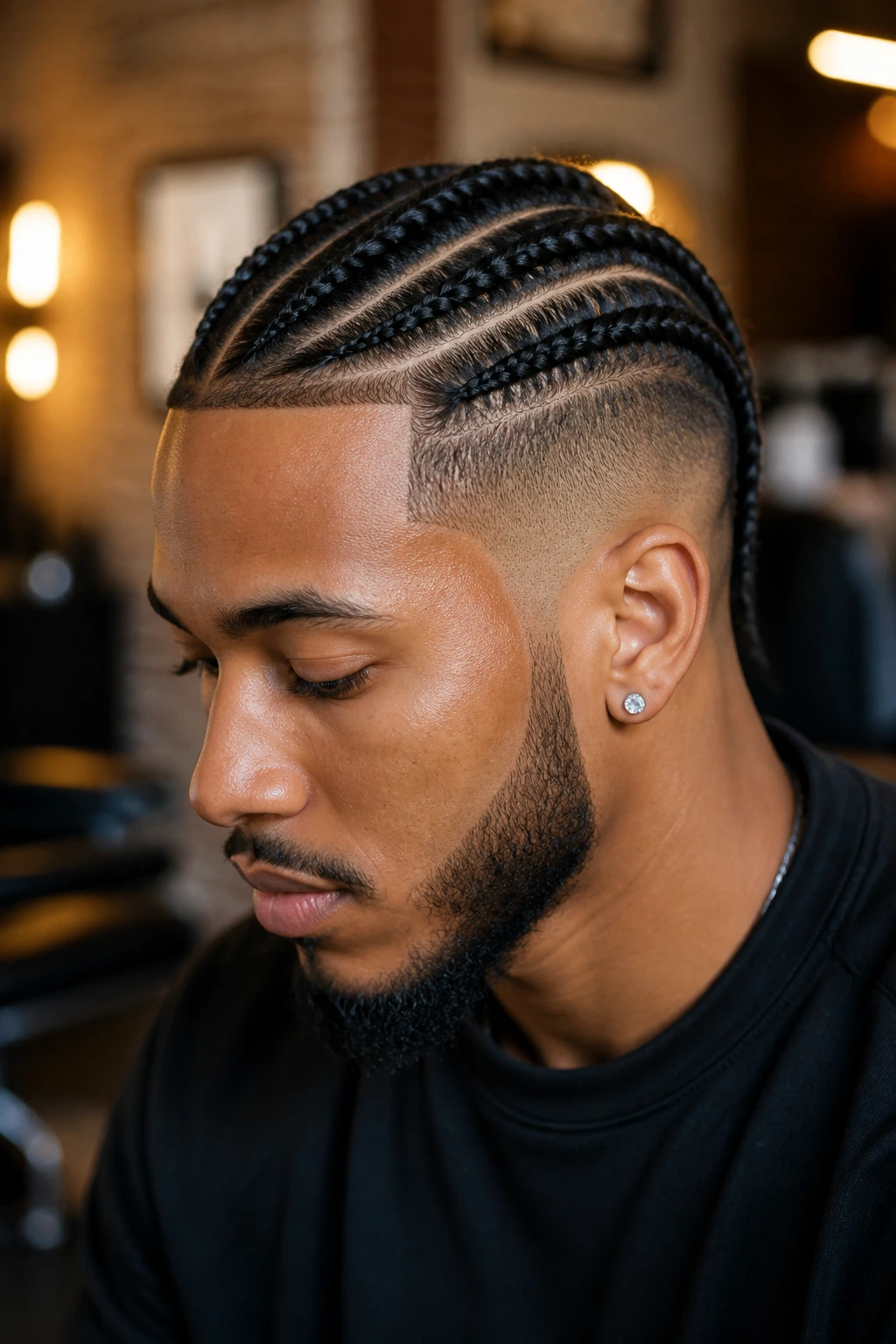
Keep the rows a little wider and start them softly at the hairline. This is the move for men who want braids they can wear without feeling every bit of pressure by midday.
Fade-Frame Braids
Pair the braids with a low or mid fade so the style has a clean edge around the sides. It works especially well when the top braid pattern is simple and the fade carries the contrast.
Statement-Length Box Braids
Let the braids hang a little longer than you think you need. The extra length gives the style movement, but only if your neck and shoulders can handle the weight.
Short-Hair Starter Rows
Use narrow cornrows or mini braids when the hair is still in the early growth phase. This is the safest bridge style if you’re waiting for box braids or longer hanging plaits.
Clean Office Braids
Choose straight parts, keep the braids medium thickness, and skip extra beads or bright ties. The shape reads tidy instead of flashy.
Free-Form Accent Ends
Keep the roots braided and let the ends curl, puff, or twist out a little. That small change softens the silhouette and keeps the look from feeling too strict.
Washing, Sleeping, and Rebraiding Schedule
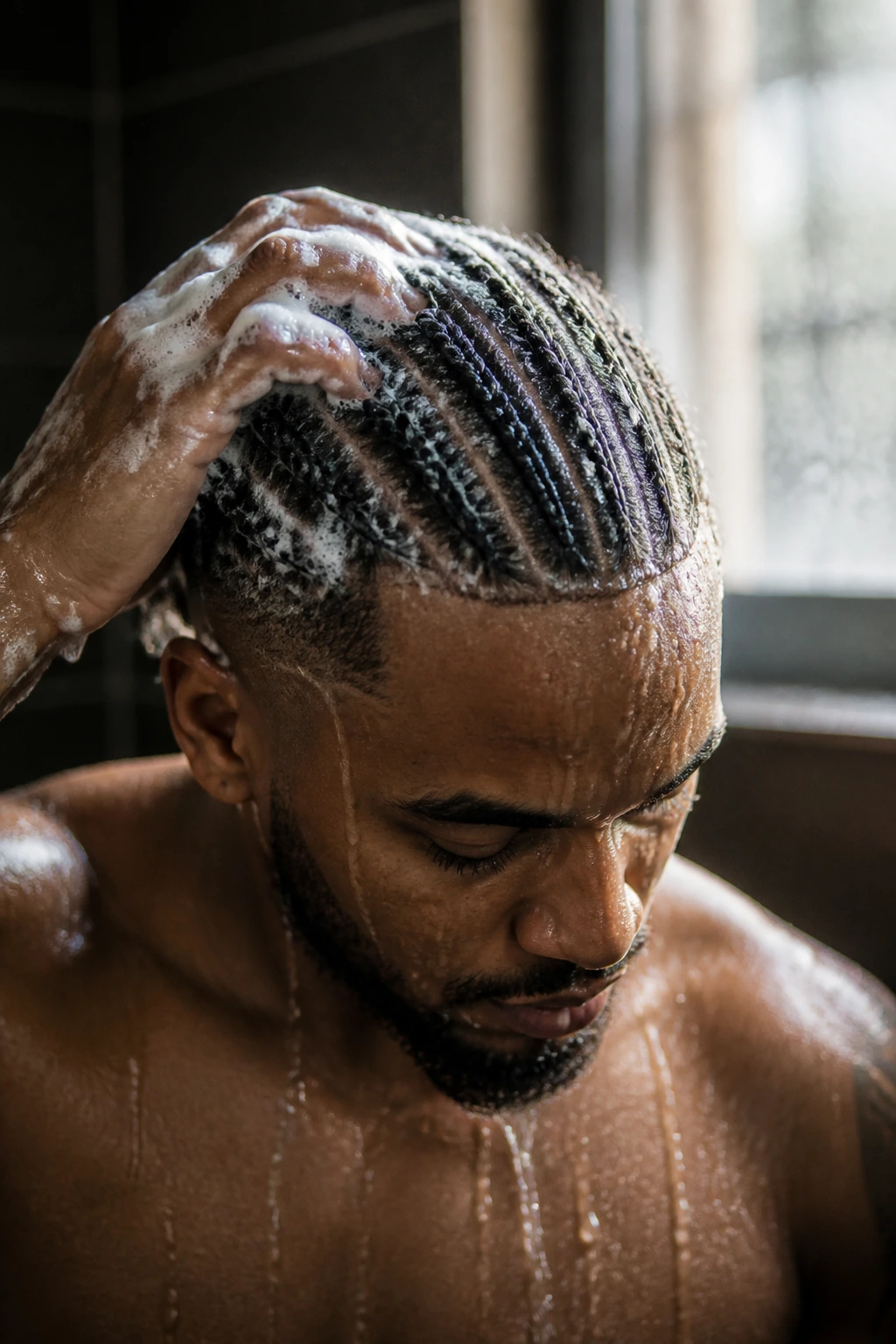
Braids need less washing than loose hair, but they still need washing. A good rhythm for most men is every 1 to 2 weeks, depending on sweat, product buildup, and scalp oil. If you work out hard or wear hats all day, the scalp can start feeling grimy faster. Use a diluted shampoo in an applicator bottle so you can reach the scalp without flooding the braid length.
Dry the hair fully after washing. That part matters more than people think. Damp braids trapped under a cap or pillow can stay moist too long, which leads to smell and frizz. Air-dry first if you can, then use a cool blow-dryer setting around the roots if needed.
At night, wrap the hair in satin or sleep on a satin pillowcase. That single step slows down fuzz along the parting line and keeps the ends from rubbing rough. A light oil on the scalp every few days can help if you run dry, but don’t coat the hair shaft. The scalp wants a small amount, not a bath.
Rebraiding depends on the style. Cornrows and stitch braids usually need a refresh sooner, often around 2 to 4 weeks, because the scalp pattern shows growth fast. Knotless box braids can last longer, around 4 to 6 weeks, if the roots stay tidy. Once the braid base starts matting or the hairline feels tender, it’s time to take the style down.
Frequently Asked Questions
How long do braid hairstyles for men usually last?
It depends on the pattern and how fast your hair grows. Straight-back cornrows may look best for 2 to 4 weeks, while knotless box braids can hold shape for 4 to 6 weeks if the scalp is cared for properly.
What hair length do men need for braids?
Some tight cornrow styles work with around 2 to 3 inches on coarse hair, but box braids and ponytail styles usually need more length. The tighter and smaller the braid, the less length you need for grip.
Do braids damage men’s hair?
Not when they’re done with controlled tension and removed gently. Damage usually comes from braids that are too tight at the hairline, left in too long, or taken down roughly.
Can you get braids with a fade?
Yes, and the contrast can look excellent. A low, mid, or undercut fade frames the braid pattern and keeps the sides from feeling bulky.
Should braids be done on clean hair or dirty hair?
Clean hair is the better starting point. Product buildup makes sections slippery and dull, and it can shorten the life of the style because the scalp never really starts fresh.
What if the braids feel too tight after a day?
That’s a warning sign, not something to push through. Mild snugness is normal. Pain, burning, or headaches mean the style needs to be loosened or removed.
Can men with thin hair still wear braids?
Yes, but the part size and braid width need to be adjusted. Smaller, tighter styles with less added hair usually work better than large box braids that can overwhelm finer strands.
How do you stop braids from getting fuzzy so fast?
Sleep in a satin cap, use a light mousse at the end, and keep your hands out of the braid base. Constant touching and rough pillow friction are two of the fastest ways to ruin a fresh finish.
Can you work out with braids?
Absolutely. Just rinse the scalp as needed, dry the hair fully afterward, and keep sweat from sitting at the roots too long. Braids and training can work together fine when the cleanup is part of the routine.
Braids That Hold Their Shape
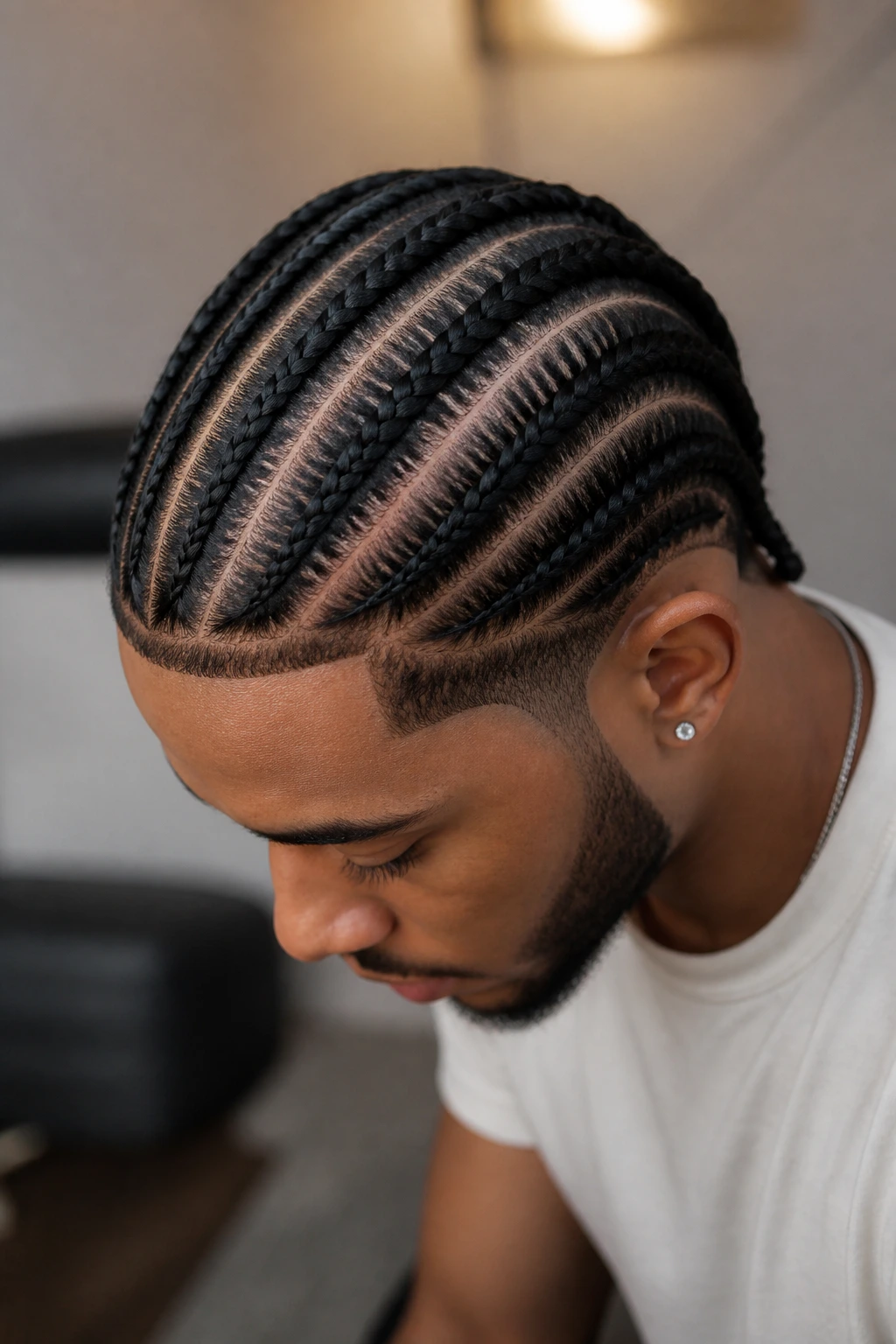
The best braid hairstyle is the one that fits the hair you actually have, not the one that only looks good in a photo. Straight rows, raised patterns, knotless bases, bun styles, and side-swept parts all solve different problems. Some keep hair off the neck. Some sharpen the face. Some buy you time between cuts. The good ones do more than decorate the head.
What matters most is tension, parting, and maintenance. Get those three right and almost any braid style can work on men’s hair. Skip them, and even the cleanest braid pattern starts to fall apart at the edges.
Pick the style that matches your length, your scalp, and your patience, then wear it long enough to see how it settles. That’s where the real answer usually shows up.
