



Viking hairstyles for men work best when they look wind-torn, not staged. That’s the part a lot of guys miss. The hair does not need to scream “warrior”; it needs to sit with weight, texture, and a little roughness, like it has lived through a cold ride and still held together.
The best versions also respect the beard. Sometimes the haircut does half the work and the beard does the rest. A sharp fade with a heavy braid can feel empty without a solid beard line, while shoulder-length waves can look stronger when the jawline is cleaned up and the sideburns are connected with intention.
What makes this style family so useful is the range. You can wear a full-length, braid-heavy look, or keep it tighter with an undercut and a top knot. You can lean into curly hair, straight hair, thick hair, or that in-between wavy texture that never quite behaves. The point is not costume hair. The point is shape. And that shape can be built in a barbershop chair with the right length, the right cleanup, and a little nerve.
Why These Viking Looks Hit Hard
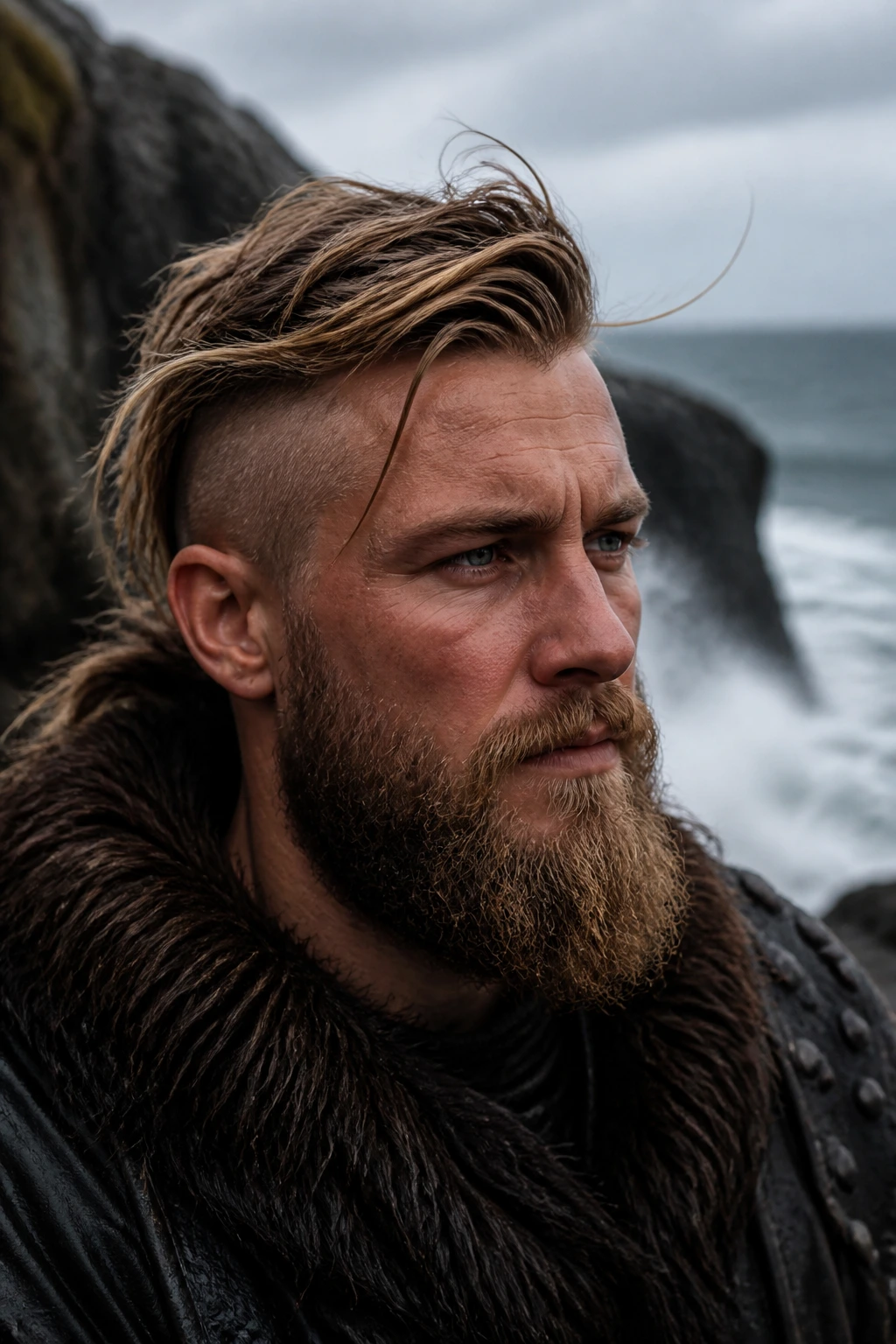
- They work with real hair lengths: Some of these cuts need 2 to 3 inches on top, while others come alive only when the hair hits the collar or shoulders.
- They give the beard a job: A beard can anchor a looser top, sharpen a braid-heavy cut, or keep a shaved-side look from feeling too thin.
- They look better with texture: Matte paste, sea salt spray, and a little natural bend beat glossy, helmet-like styling every time.
- They can be tuned down or turned up: The same basic shape can read office-safe, bar-ready, or full warrior depending on how high the sides are and how much braid work you add.
- They work for more than one hair type: Straight, wavy, curly, and coarse hair can all pull from this playbook if the length and product choice make sense.
- They age well between cuts: A slightly grown-out Viking style often looks better after a week or two, not worse. That’s rare, and it matters.
1. Shoulder-Length Waves with a Center Part
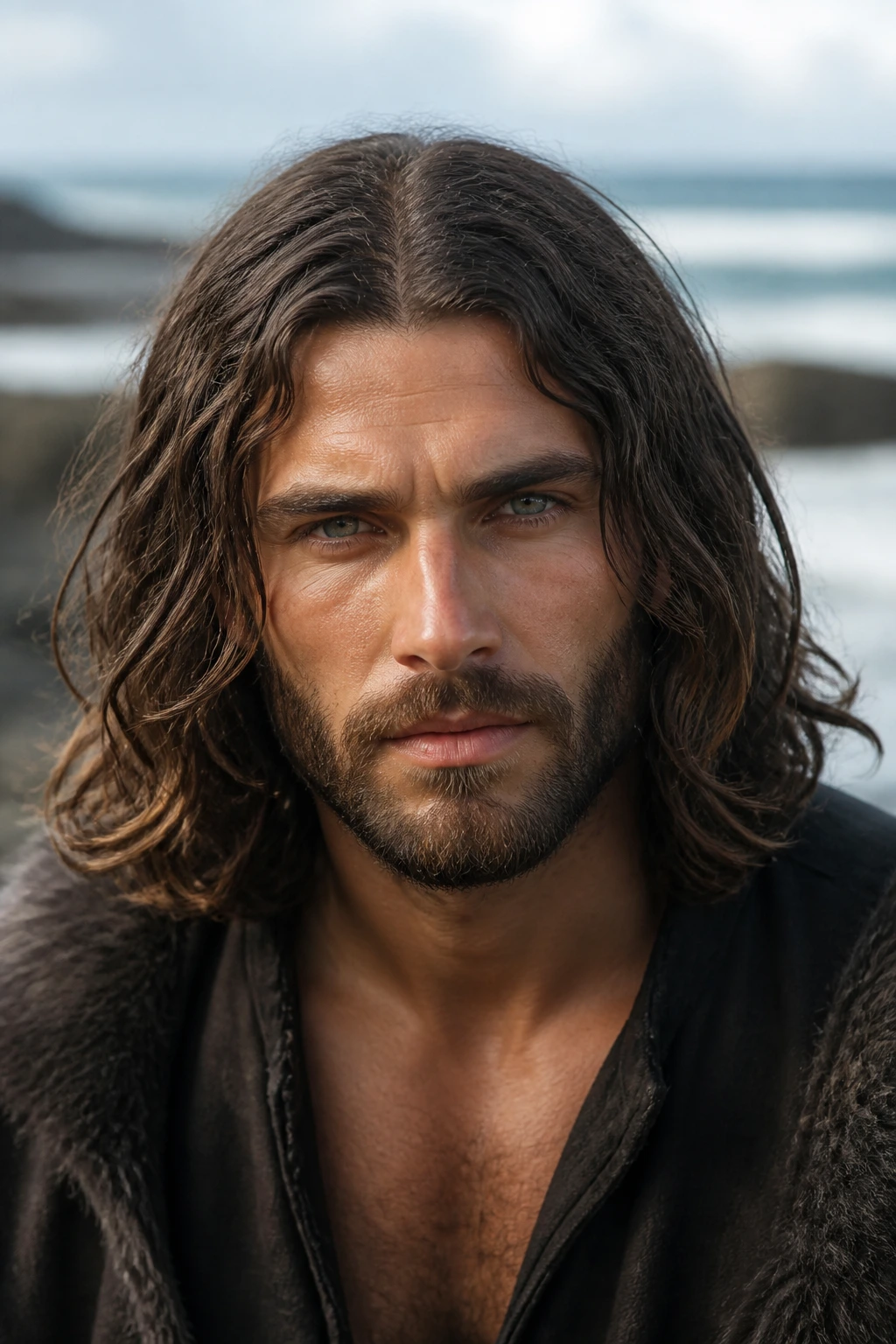
This is the cleanest starting point for Viking hairstyles for men, and it works because the hair is doing exactly what long hair wants to do: fall with weight. A center part keeps the shape balanced, and the loose wave around the cheekbones gives the style that weathered, traveled look without any fuss.
Keep the ends blunt or only lightly layered. Too much thinning and the whole thing turns wispy fast. I like this one on guys who want the least amount of styling but still want the hair to feel deliberate.
2. Single Side Braid
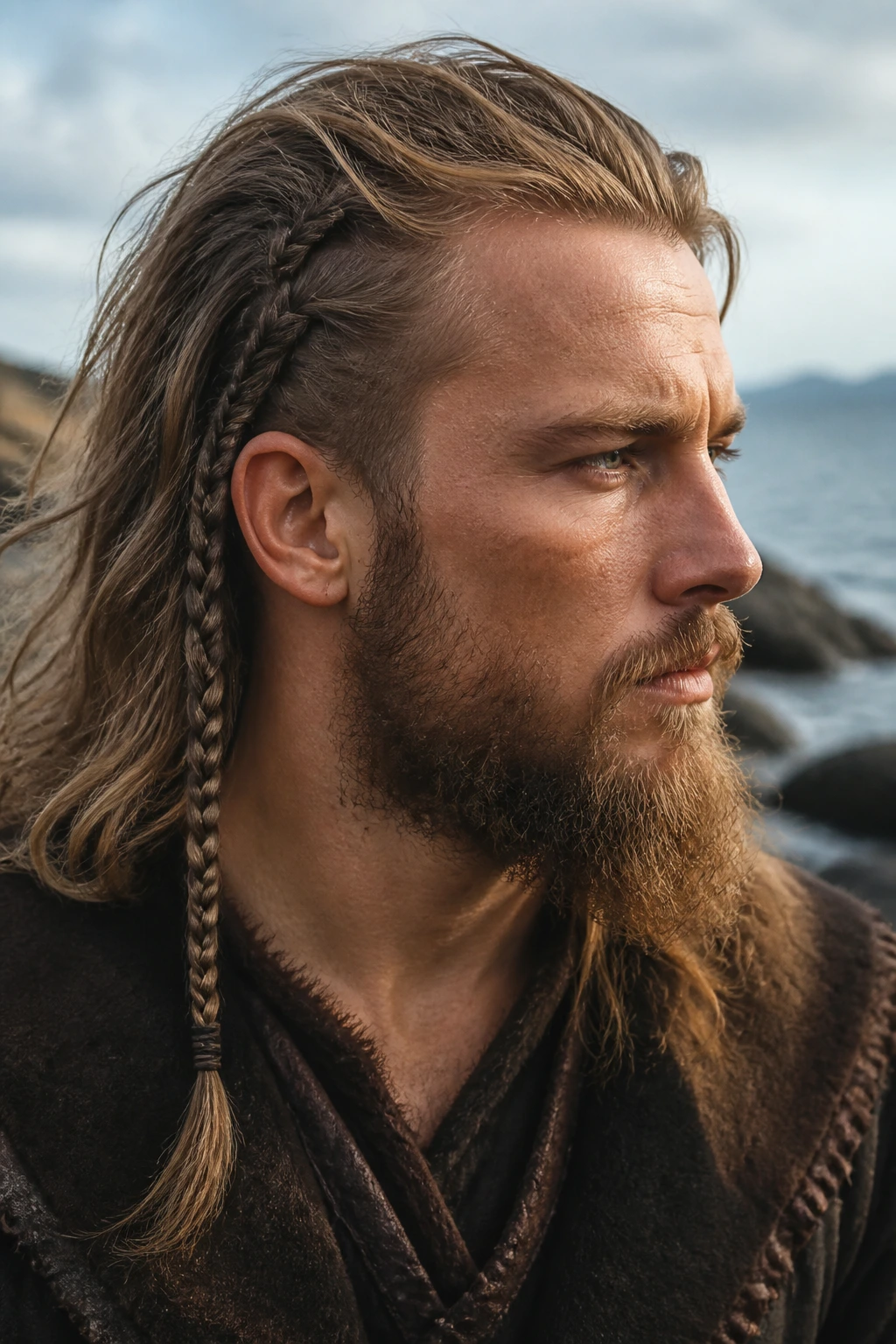
A single braid pulled tight along one side is one of the easiest ways to make longer hair look controlled. It stops the front from dropping into your eyes, and it gives the rest of the length a reason to stay loose. The effect is sharper than most people expect.
What to Ask For
Ask for enough length on top and through the side you want to braid—usually 4 inches or more if you want the braid to hold cleanly. Keep the opposite side slightly shorter if you want the braid to stand out.
A thin braid looks cleaner on fine hair. A thicker braid works better when the hair is dense and a little coarse. No shame in either. One braid is enough here.
3. Twin Warrior Braids
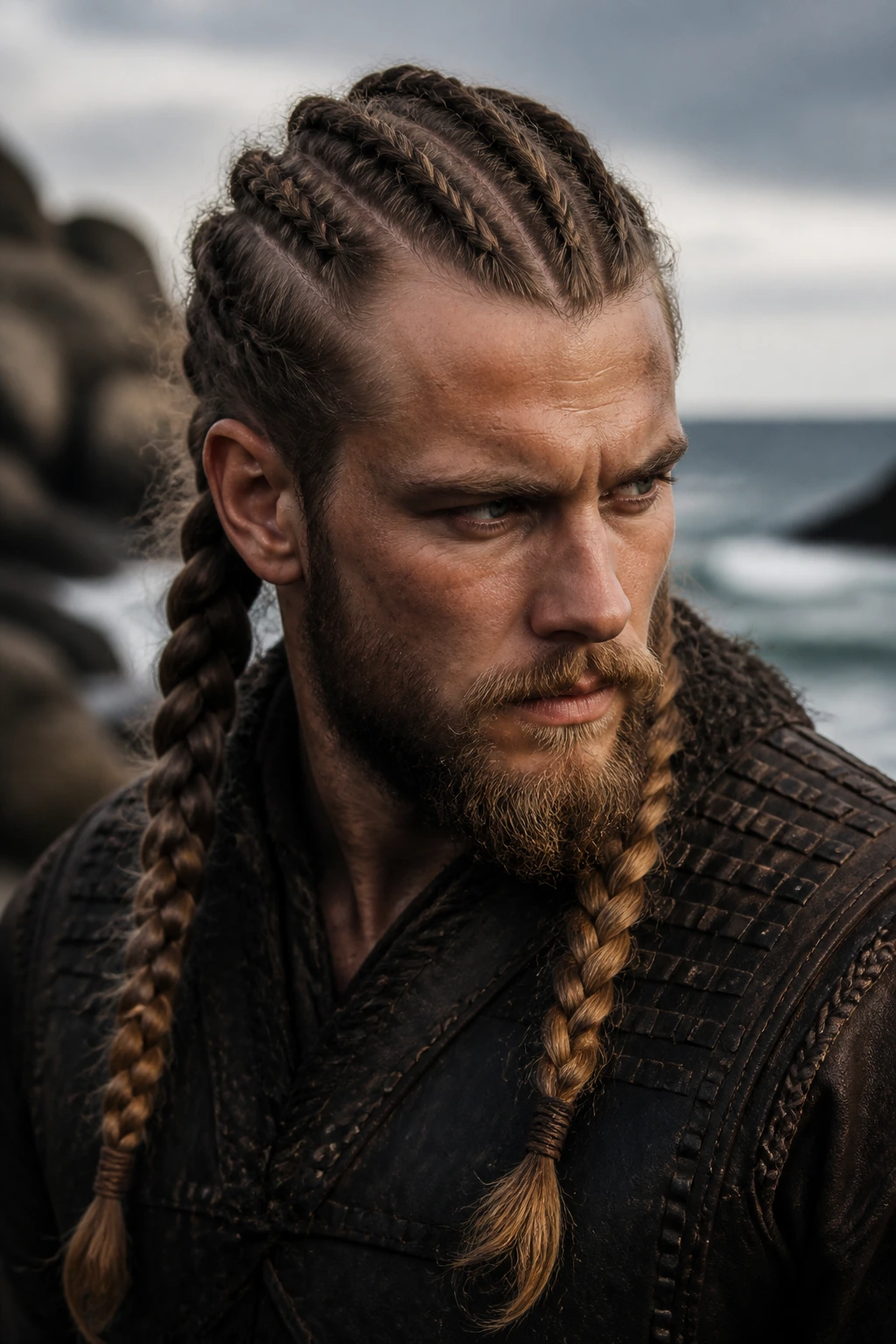
Two braids split from the hairline back toward the crown make the style feel more structured and a little more severe. That’s the appeal. It turns a regular long cut into something with rhythm, and the scalp lines between the braids bring in that classic Viking look without needing extra drama.
This one needs enough length to stay secure—think at least 5 inches, and more if your hair is slick. If the braids start loosening at the temples, the whole shape loses force. Tight enough to hold, not so tight that your scalp feels pulled by lunch.
4. Half-Up Knot
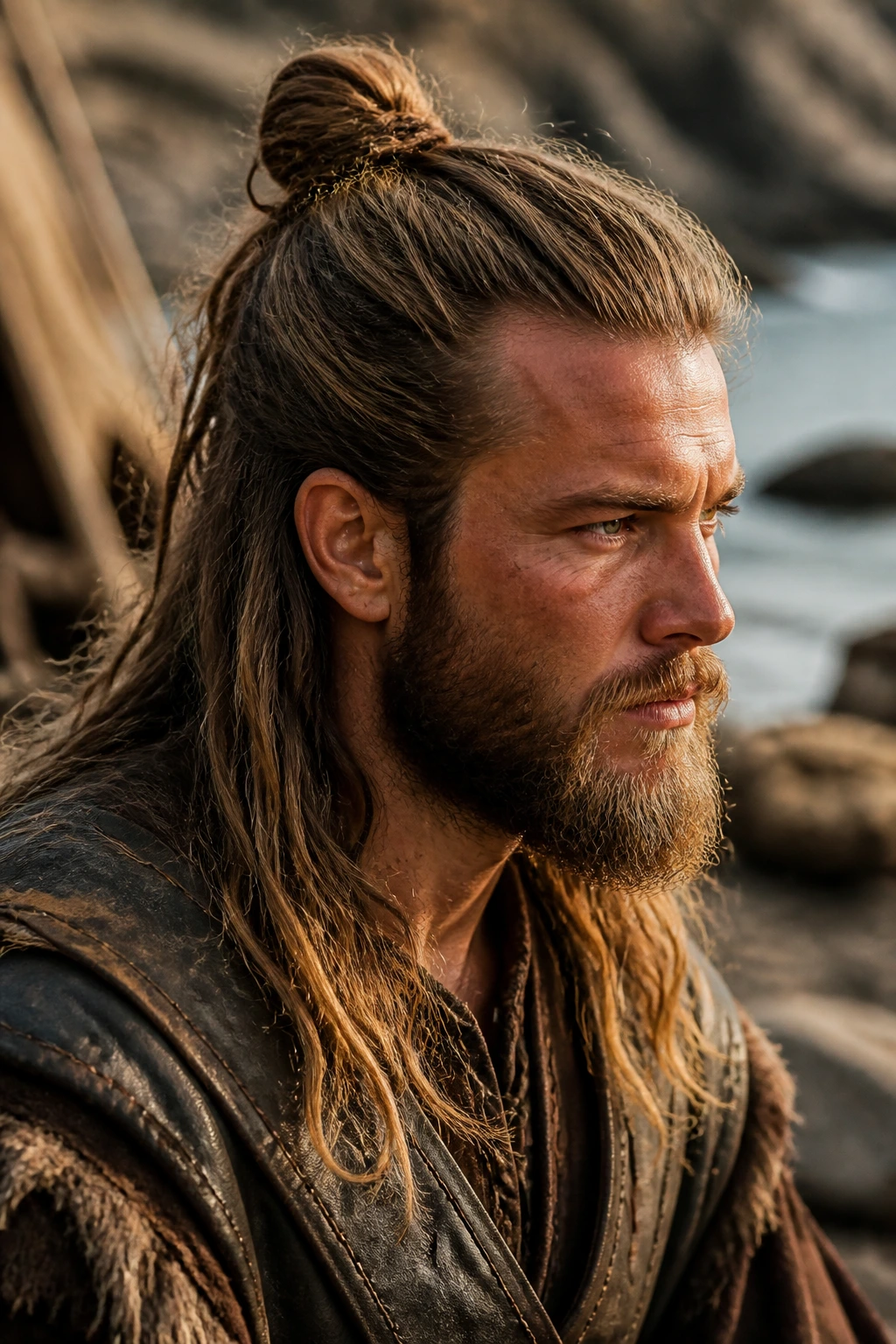
Half-up knots are underrated because they solve a real problem: long hair in the face without losing the bulk in the back. Pulling the top section into a knot leaves the lower length free, so the style still has movement and does not collapse into a plain bun.
It’s a strong choice if your hair is thick and gets hot under hats or helmets. It also works well with a beard because the knot creates height while the beard grounds the face. That contrast matters.
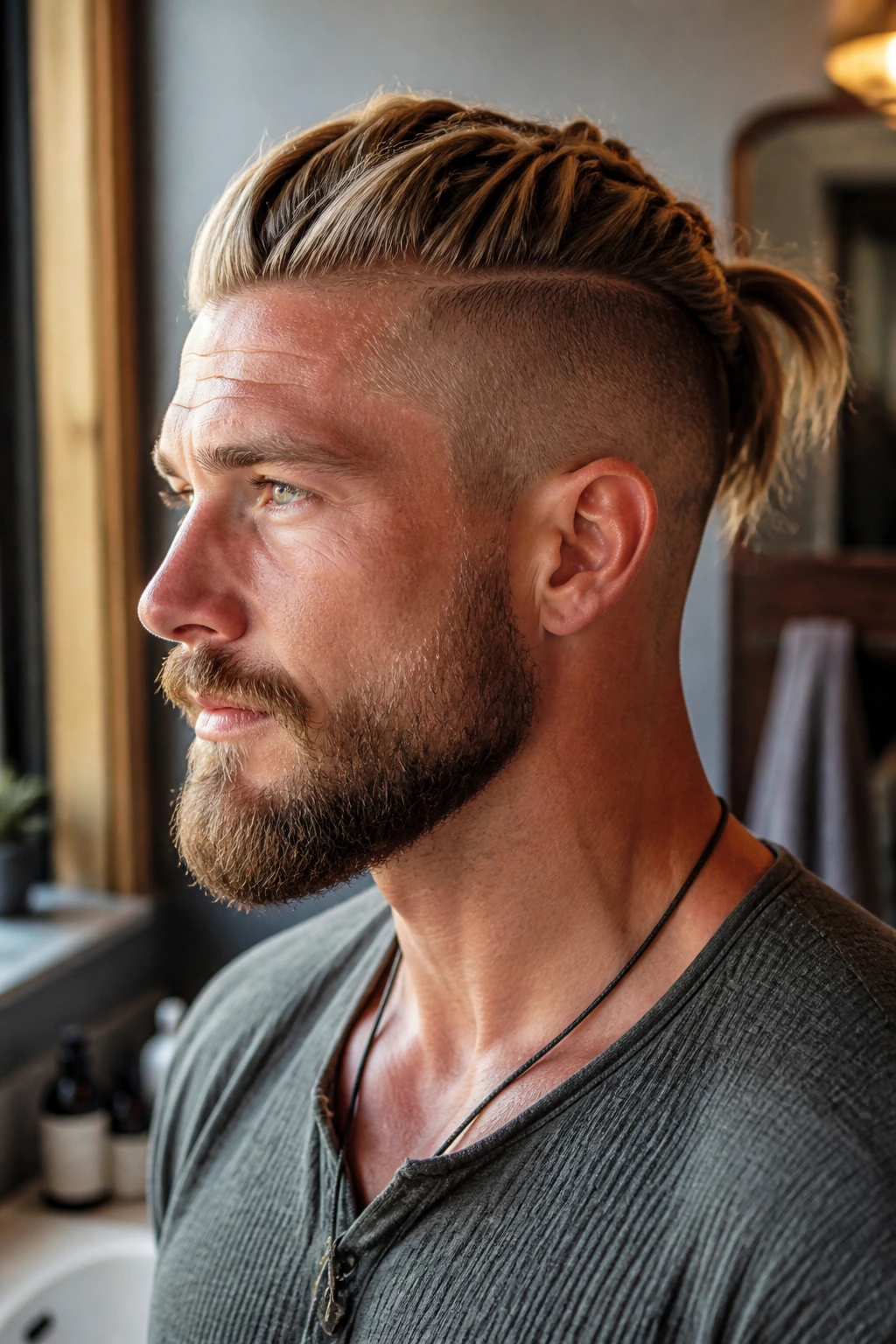
5. Undercut Slick Back
The undercut slick back is the polished cousin in the Viking family. The sides are cut short—often a #1, #2, or a tight taper—while the top stays long enough to sweep back with matte pomade or cream. The result is clean, but not soft.
I like this on men who want the Viking edge without braids or loose ends. It reads sharp from the front and practical from the side. Just do not over-shine it. Glossy slick backs look like office hair trying to dress up.
6. Top Knot with a Full Beard
This one works because the top knot gives lift and the beard fills the lower half of the face. Without the beard, the knot can feel top-heavy. With it, the whole thing settles into place. It’s one of the few styles where proportions really matter.
Keep the knot slightly messy. A tight little ball sits too close to modern gym hair. A knot with a few loose ends feels better, especially if the beard is trimmed into a strong outline and not left puffing into the neck.
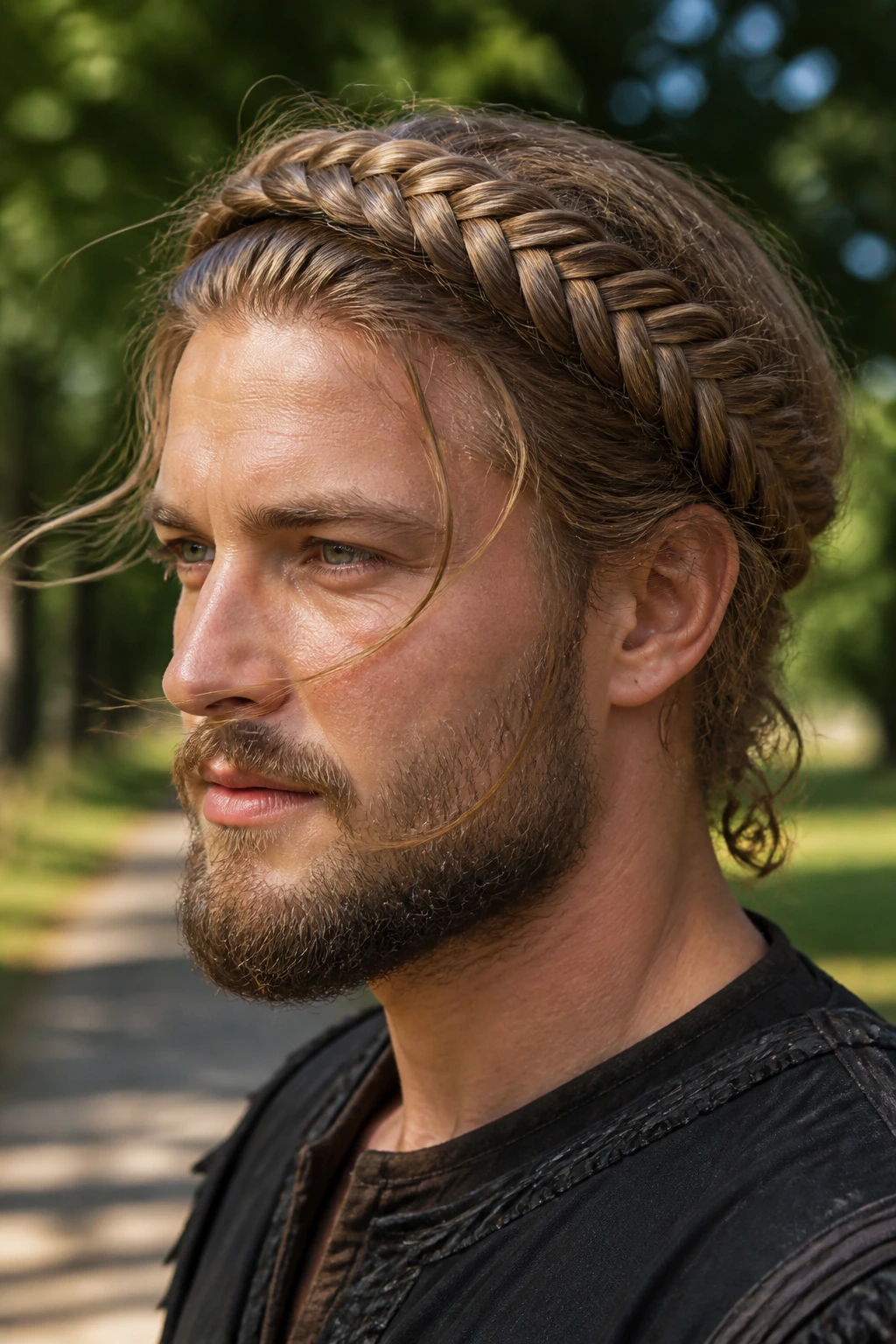
7. Fishtail Crown Braid
A crown braid wrapped across the head looks more intricate than a single braid, but the fishtail pattern makes it feel less bulky than a regular plait. That matters if your hair is thick. You get the woven look without building a helmet on your scalp.
Why It Stands Out
The braid creates a frame around the face, which makes the jaw and beard pop. It’s one of the few long styles that can look refined and rugged at the same time.
It does take patience. You need clean sectioning, steady tension, and enough length for the braid to travel. If your hair slips, a light mist of texturizing spray helps more than heavy gel.
8. Braided Mohawk
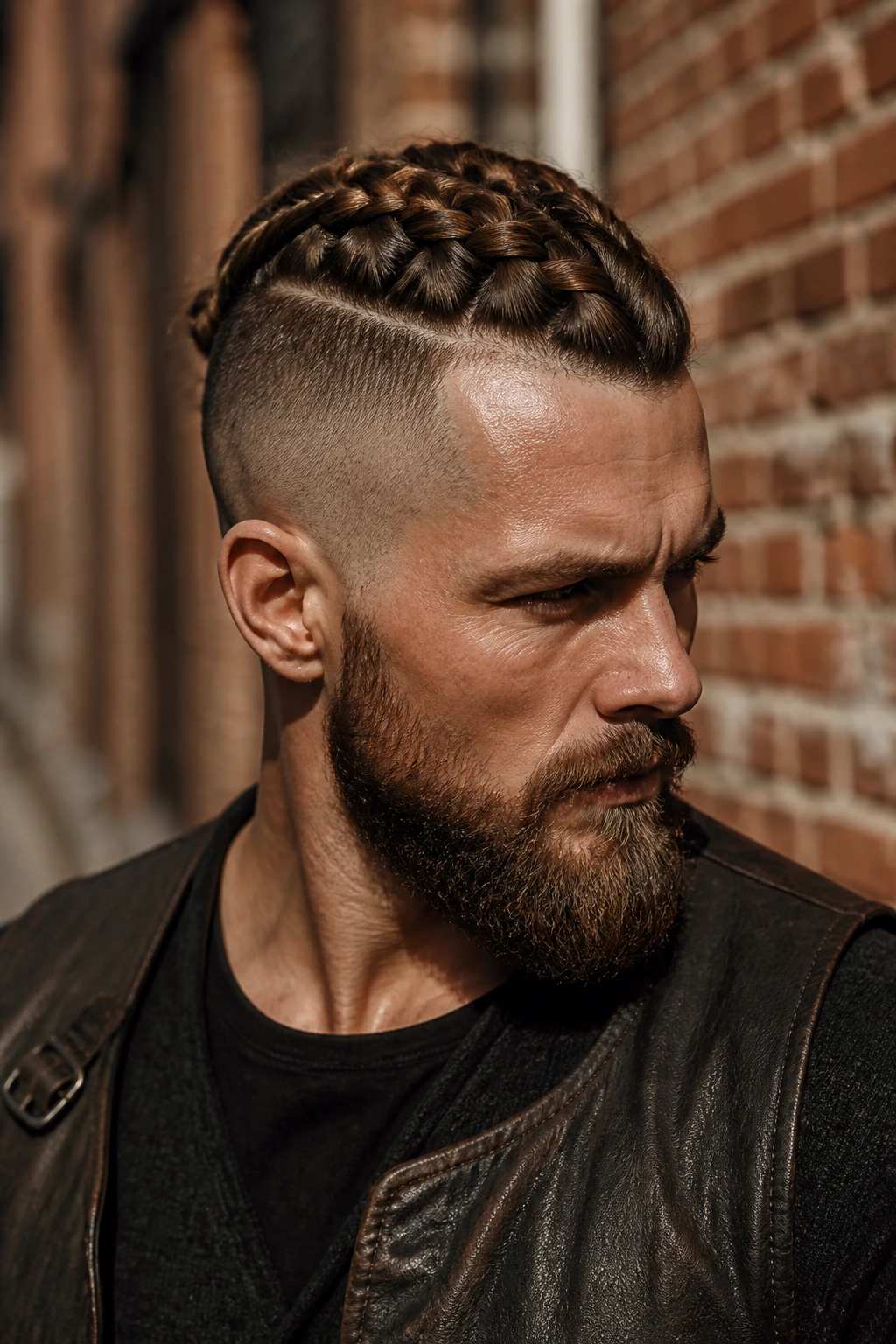
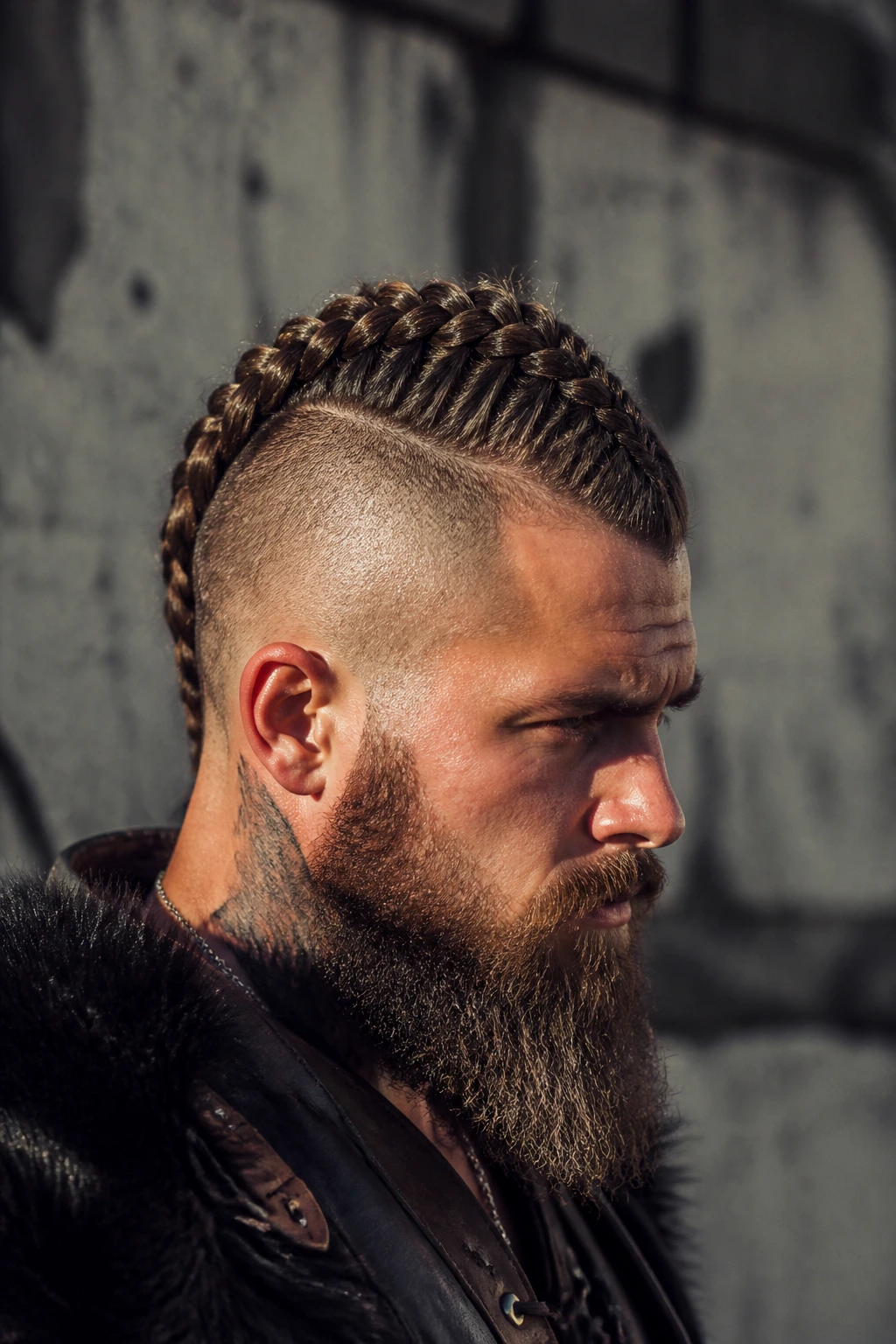
A braided mohawk gives you the best part of a Viking cut: height, direction, and a little aggression. The sides are clipped short or faded low, while the middle strip is braided straight back. It’s bold without being messy.
The shape is strongest when the braid sits slightly raised off the scalp. Flat braids lose some of the point. This one suits thick hair especially well, because you need enough body in the center strip to keep the braid from looking skinny.
9. Curly High Fade
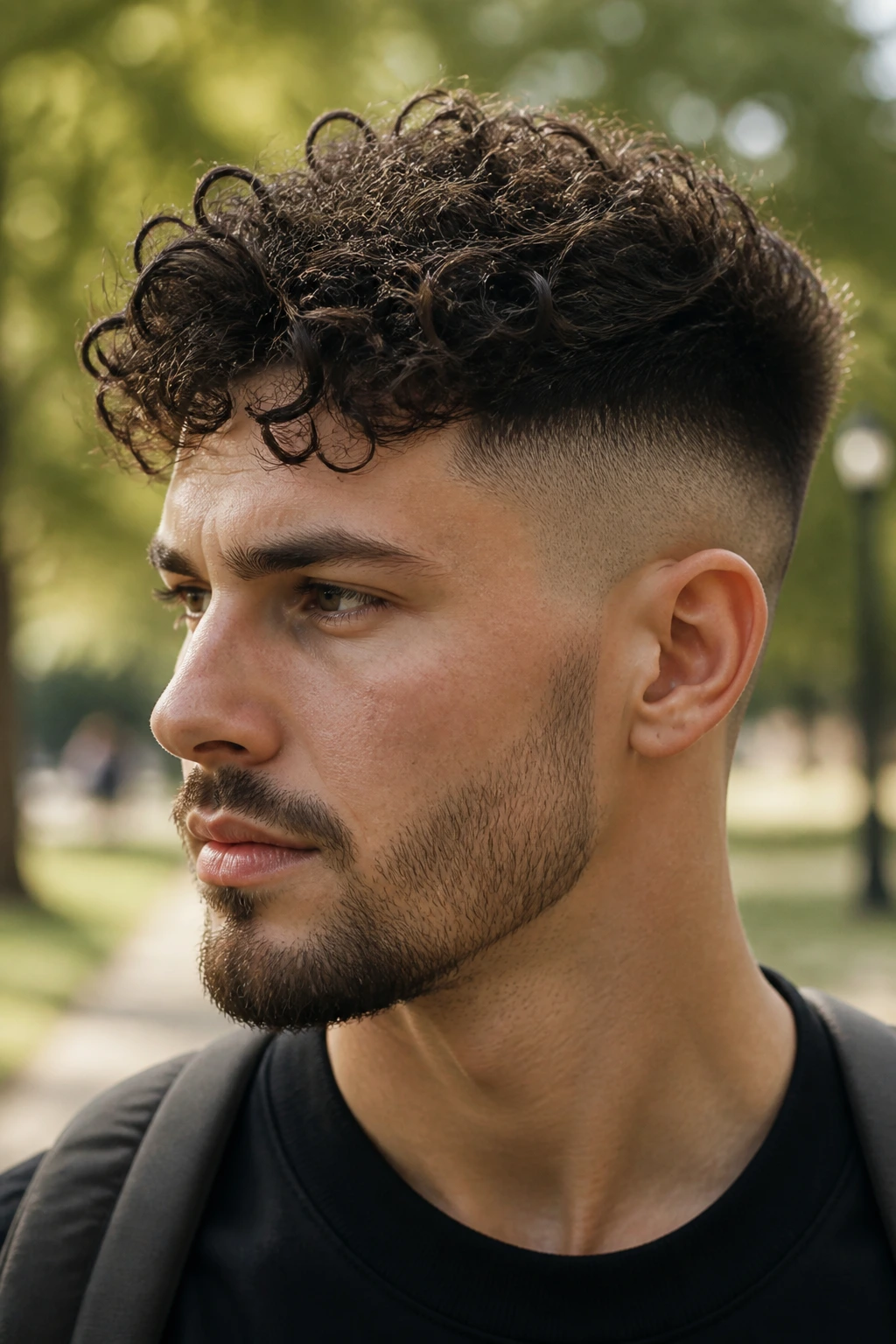
Curly hair and Viking styling get along better than people think. A high fade takes the weight off the sides and lets the curls pile up on top, where they can look wild in a controlled way. That balance is the whole trick.
Leave enough length on top for the curl pattern to show, then use cream or light paste rather than hard gel. If you crunch the curls down, you lose the movement that makes this cut feel alive. This is a good one when you want edge without braiding.
10. Man Bun with an Undercut
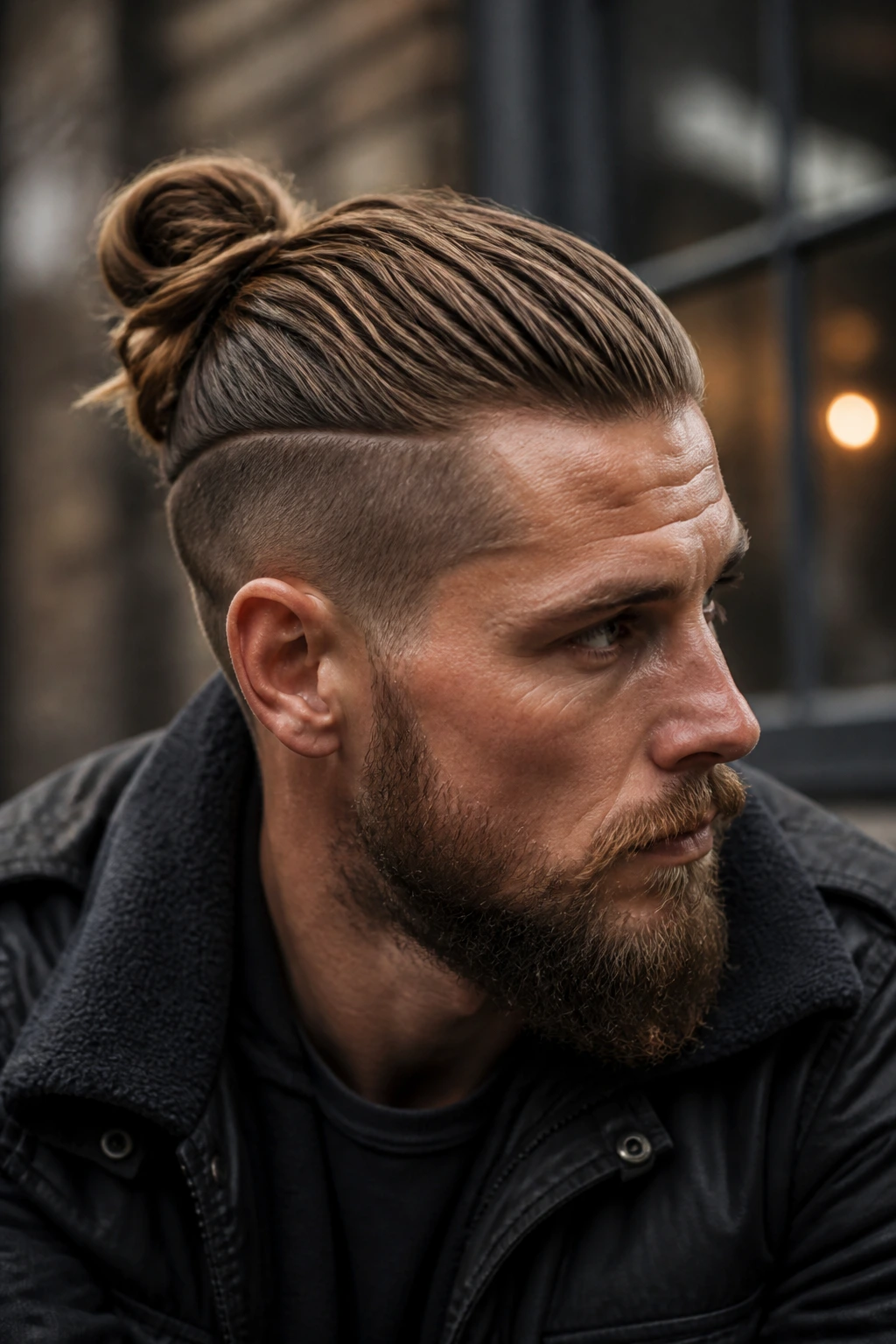
The man bun gets a better reputation when the sides are cut tighter. Suddenly it stops reading like “hair was ignored” and starts reading like “the top length was chosen on purpose.” That’s the difference an undercut makes.
Best for Longer Hair
You want at least 6 inches on top for this to sit properly, and more if your hair is thick. A bun that’s too small looks like a ball of rope. A bun with a little width and a clean base looks much better.
Leave a bit of texture around the hairline. A severe, perfect bun can feel too smooth for Viking styling.
11. Braided Ponytail
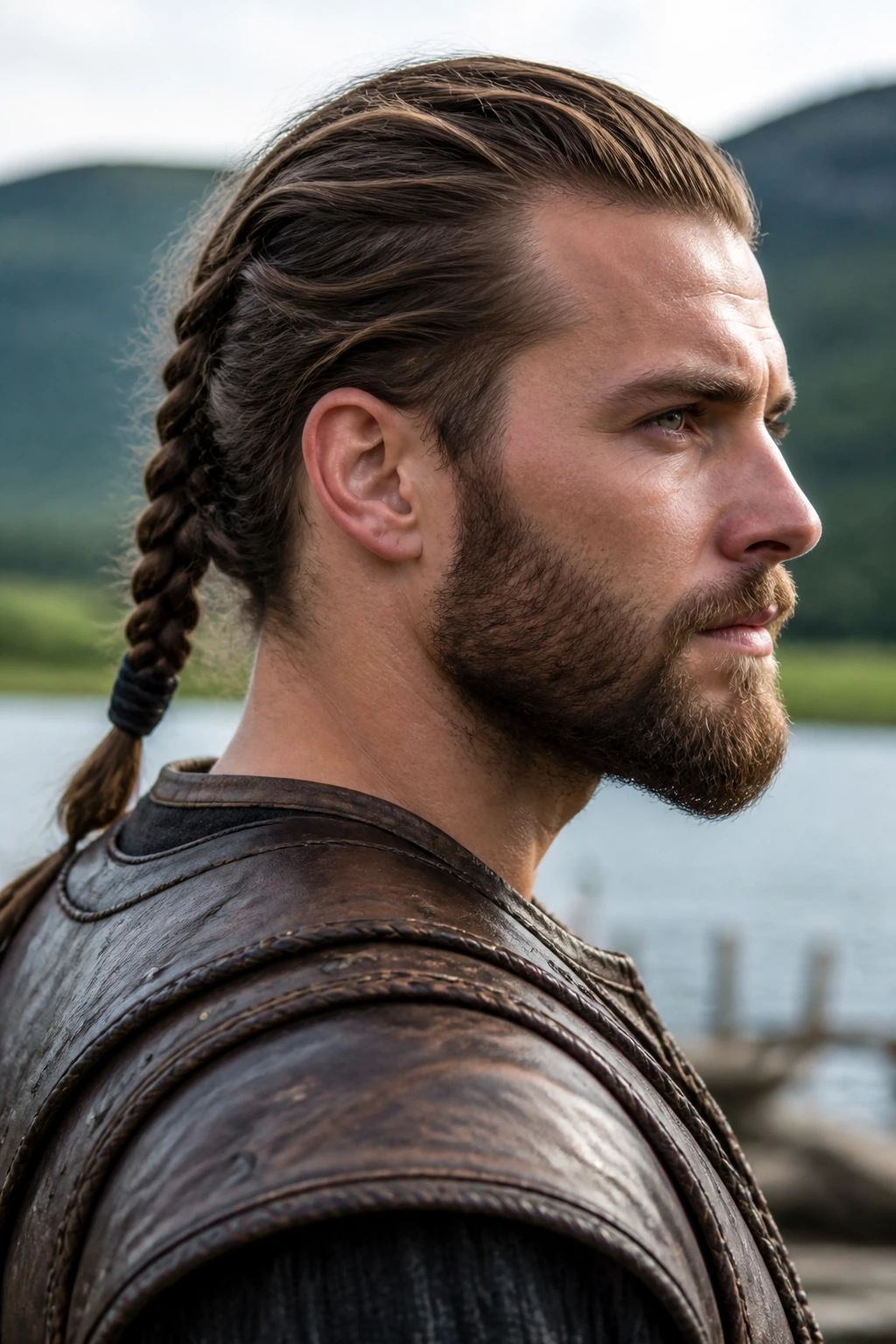
The braided ponytail is plain in the best way. Tie the base low or mid-height, then braid the length once it’s gathered. It keeps the back neat while leaving the braid long enough to swing and move.
Quick Notes
- Works best when the hair reaches the nape or below.
- A small elastic at the base makes the braid sit tighter.
- Better on straight or wavy hair than on very slippery hair.
- If you have a beard, keep the sideburns connected.
The appeal is utility. It stays out of the way and still looks intentional.
12. Loose Shoulder Layers
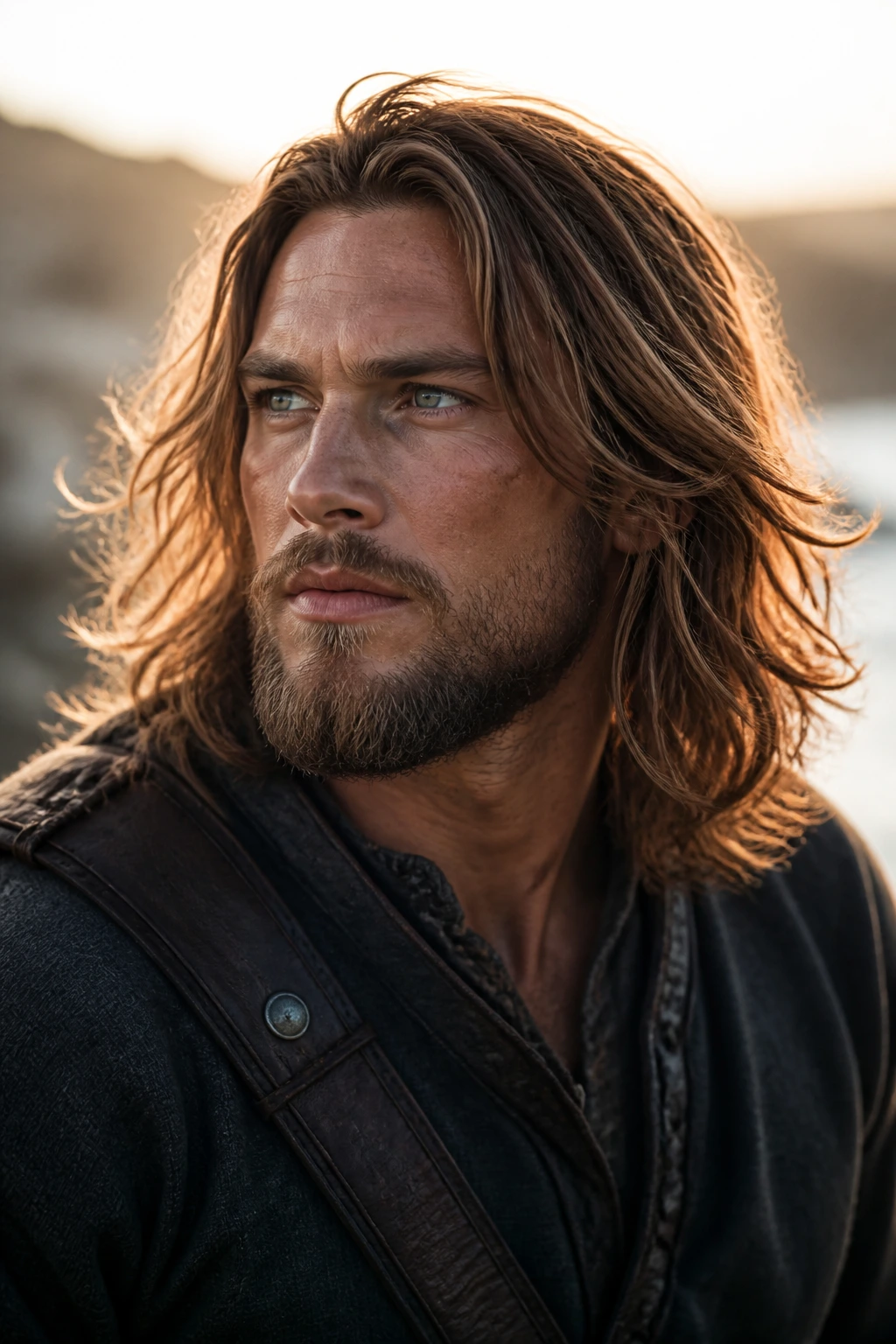
This is the version for men who want the least amount of structure and the most amount of presence. Shoulder-length layers give the hair room to move, and the uneven ends keep it from looking like a blunt curtain.
The danger here is over-layering. Too much razoring and the hair floats instead of hanging. Ask for soft shaping, not a shredded finish. A little wave or bend in the hair makes this one look especially good.
13. Taper Fade with a Top Knot
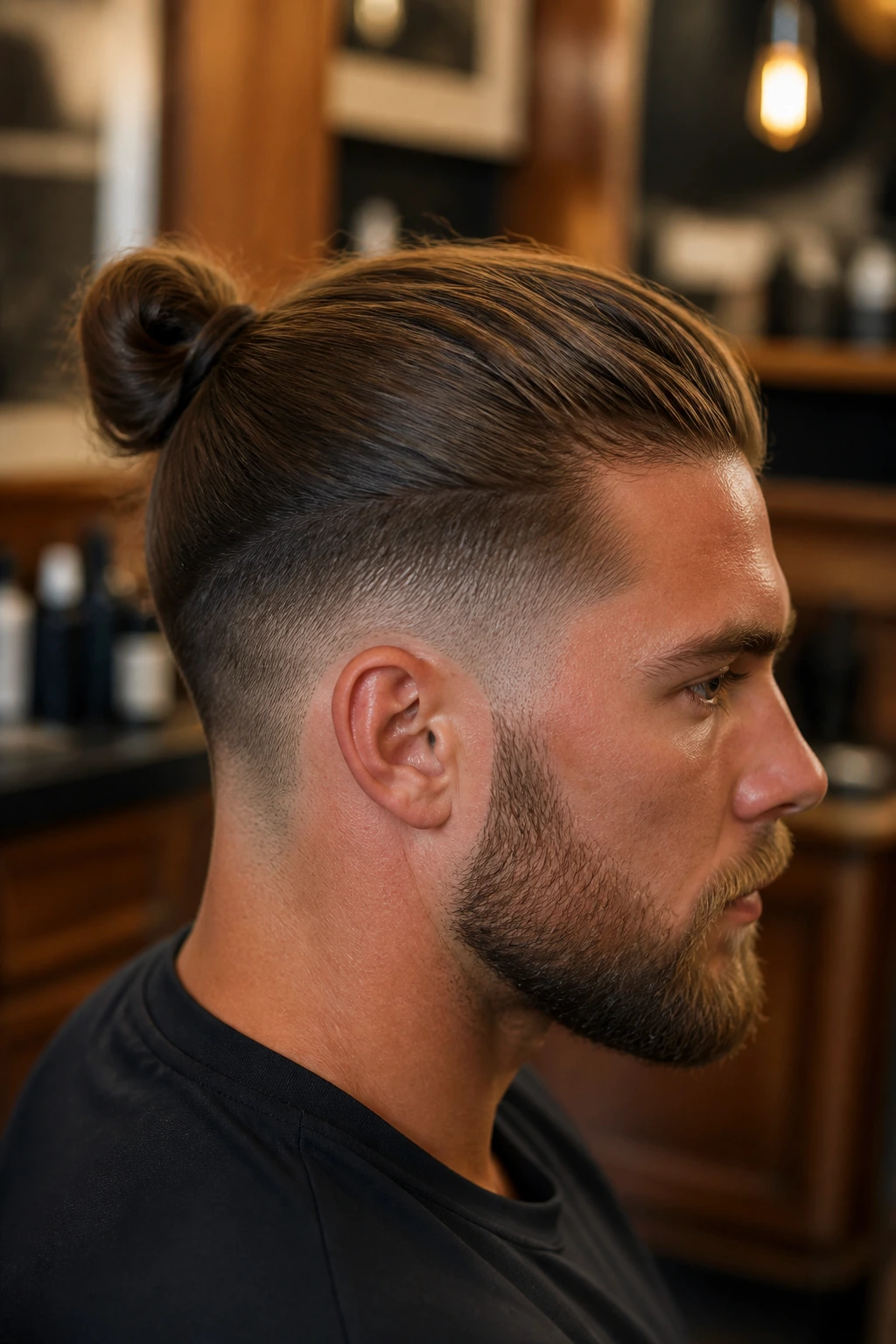
A taper fade is cleaner than an undercut, and that matters if you want a more gradual shift from short sides to long top. The top knot still carries the Viking energy, but the fade keeps it fresh and less severe.
A low taper around the ears and neck works well here. The top should be long enough to gather without tugging the front too hard. If the knot sits too high, the whole look can feel top-heavy. Keep it low and slightly loose.
14. Temple Twists
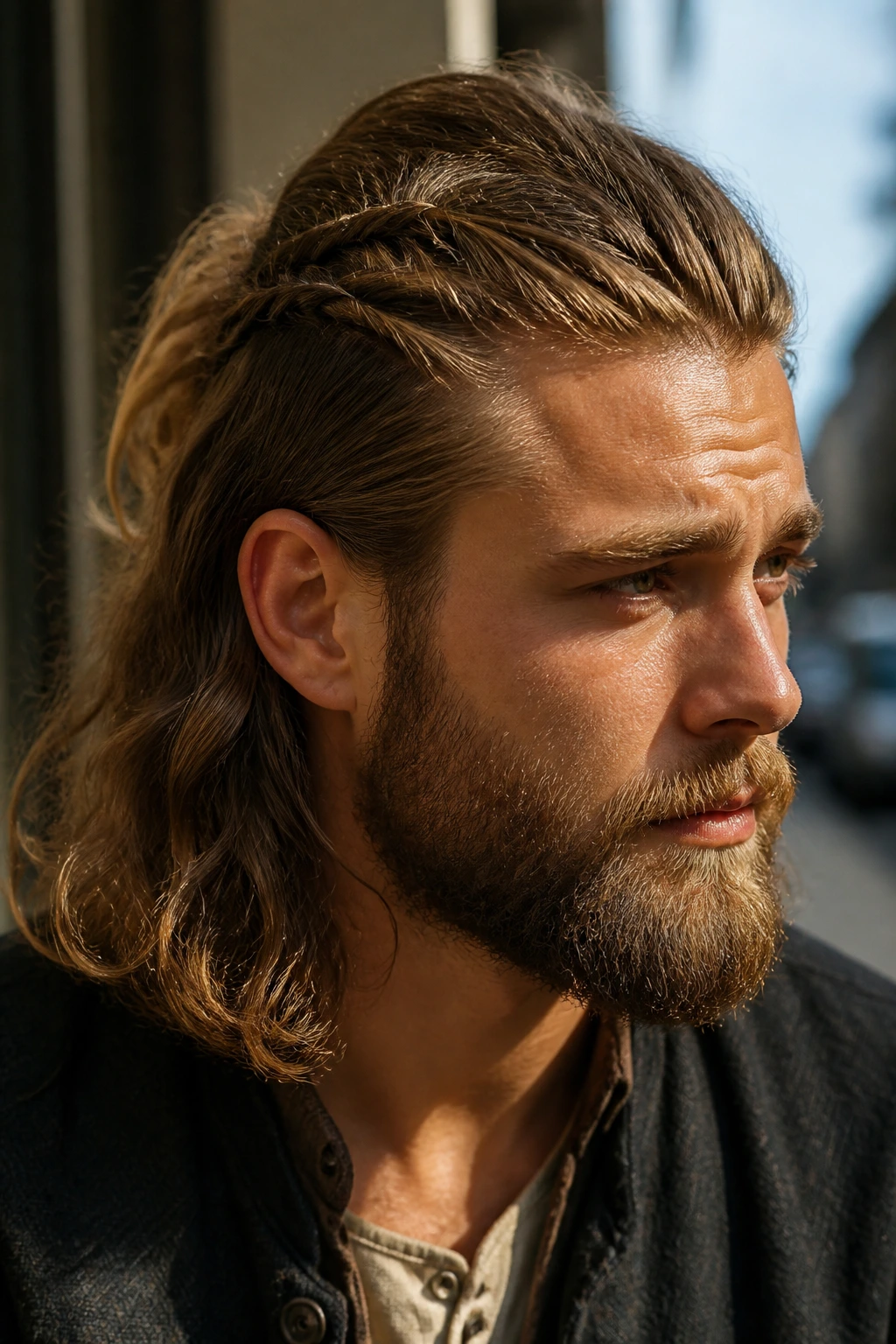
Temple twists are a small detail that changes the whole face. Two or four tight twists near the temples pull the hair back from the front, keep the sides tidy, and add texture without requiring a full braid across the head.
This is a good compromise style for shorter long hair. You only need enough length near the front to twist and secure. The rest can stay loose. It’s especially useful if you want the Viking feel without committing to a full braided head.
15. Braided Undercut with a Shaved Line
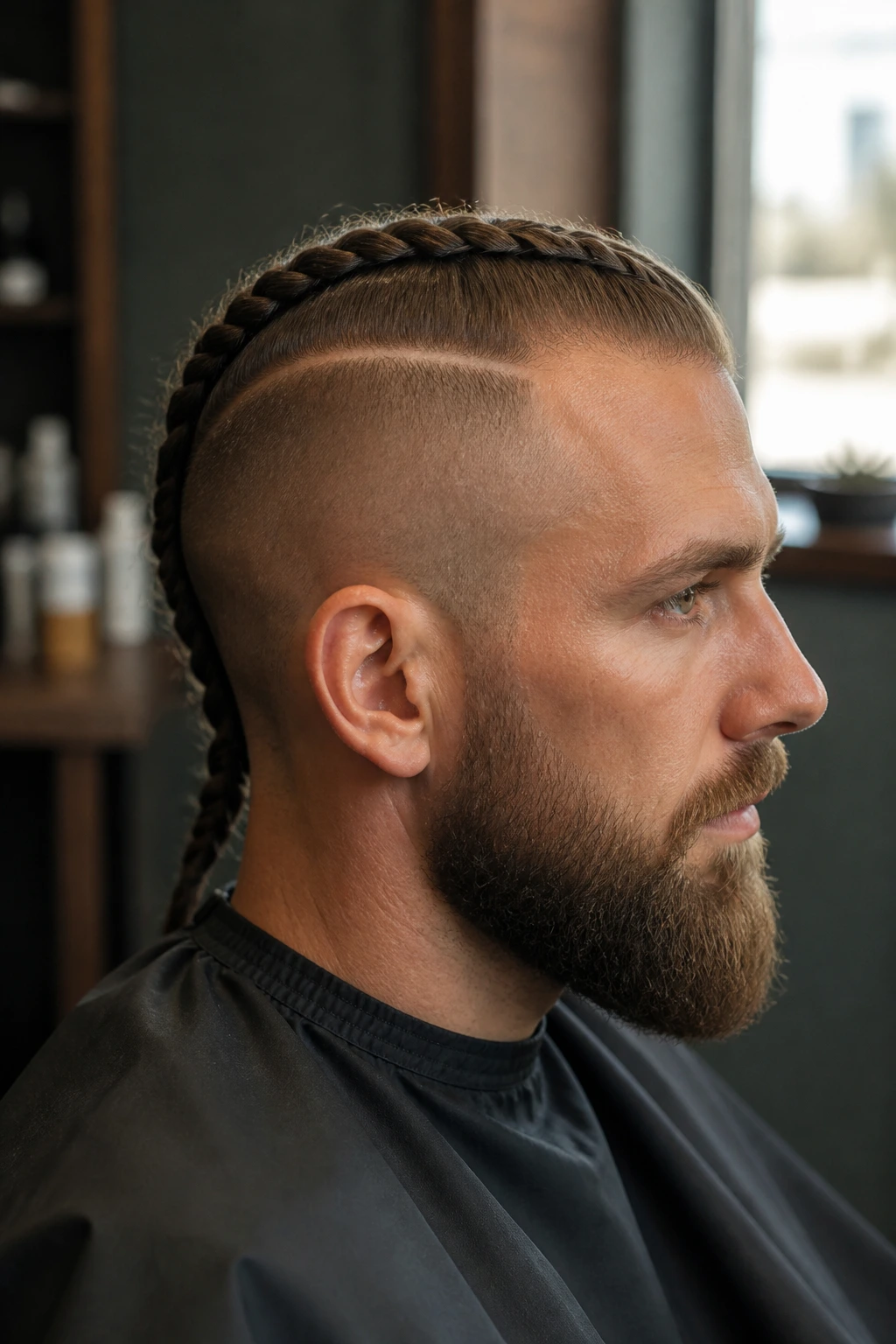
The shaved line gives this cut its bite. Without it, you have a standard undercut braid. With it, the style gets a hard edge that makes the braid pop from a distance. One clean line is enough; more than that starts to look decorated for the sake of it.
Keep the braid centered or just off-center, and let the undercut stay tight and clean. This is one of those styles that benefits from fresh edges every 2 to 3 weeks. Once the line softens, the whole look gets fuzzy.
16. Short Crop with a Full Beard
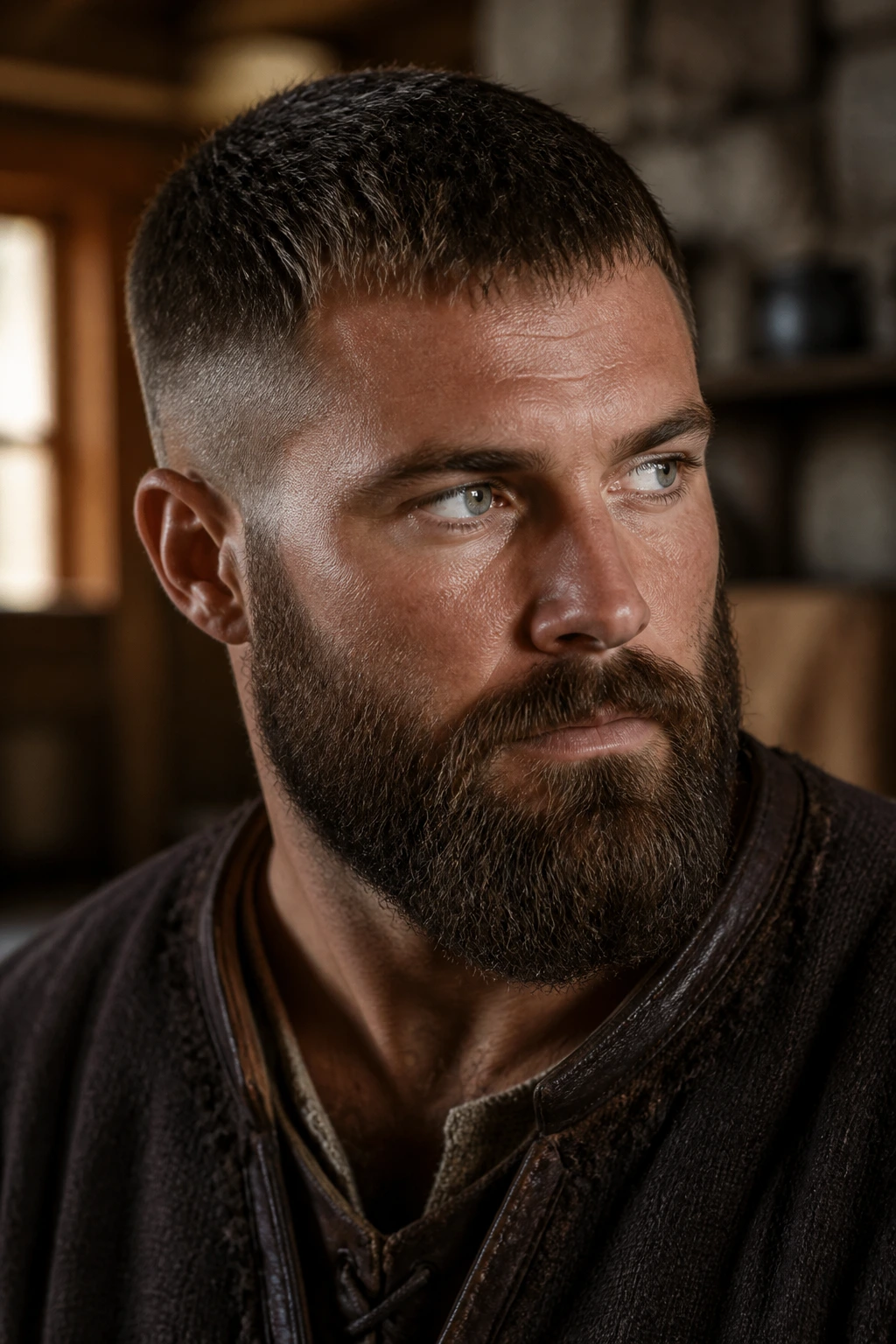
Not every Viking-inspired style needs long hair. A short crop with a strong beard works because the beard carries the weight that the haircut can’t. The top only needs enough length to add texture with a matte product.
Why It Works
The short crop keeps maintenance easy, and the beard adds the ruggedness people usually try to force with braids. That means less time styling and more time trimming the parts that matter.
A skin fade can be too polished here. A low taper or a tight scissor cut on the sides gives the style more grit.
17. Side-Swept Fringe
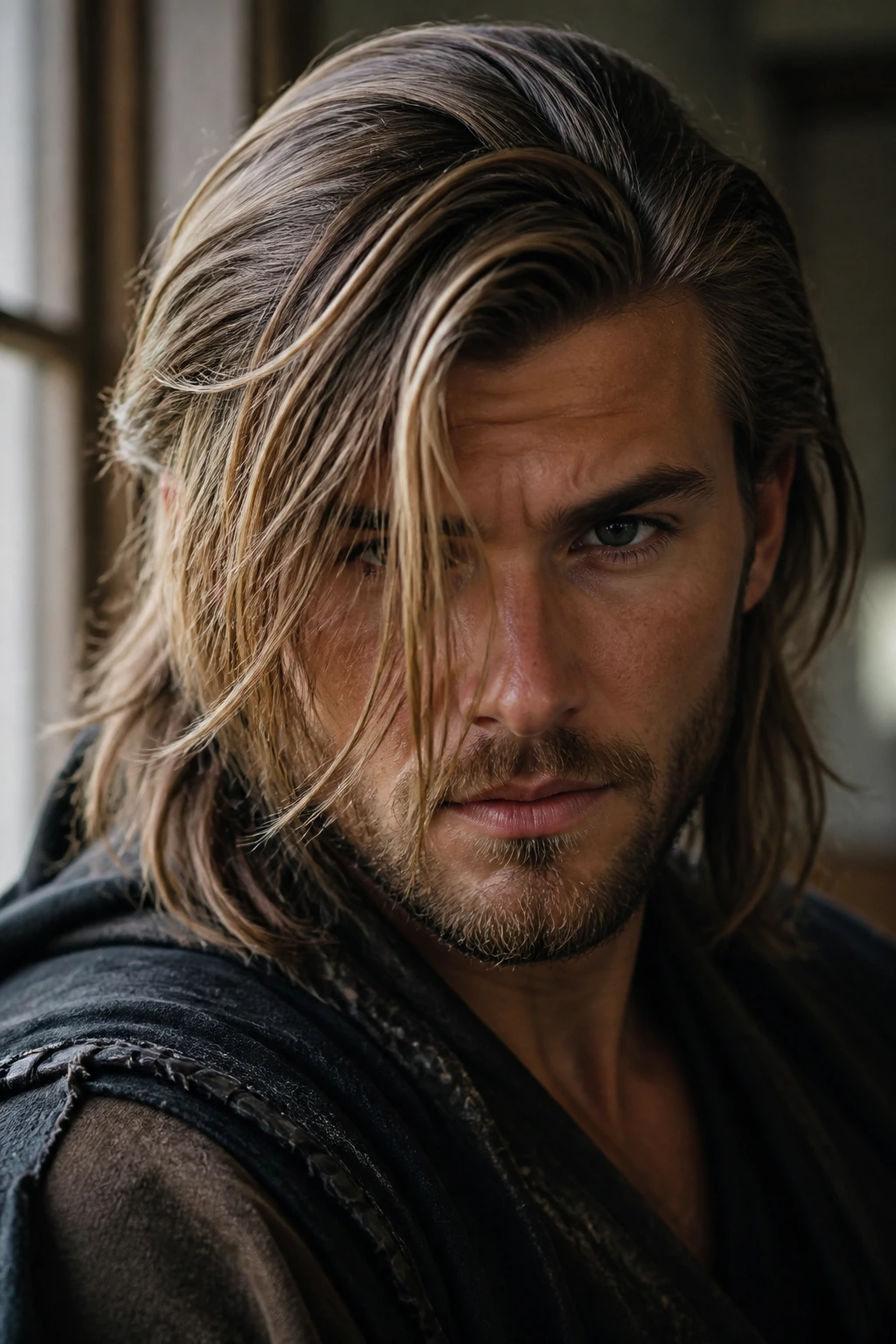
A long side-swept fringe gives the face movement and covers more forehead, which helps if you want a slightly softer take on the Viking look. It also works when the top is long enough to sweep but not long enough to braid.
This is one of my favorite choices for straight hair that falls flat. The fringe can be pushed over with a blow dryer and a little matte cream, then left slightly messy. It looks best when the ends are not perfect.
18. Low Warrior Tail
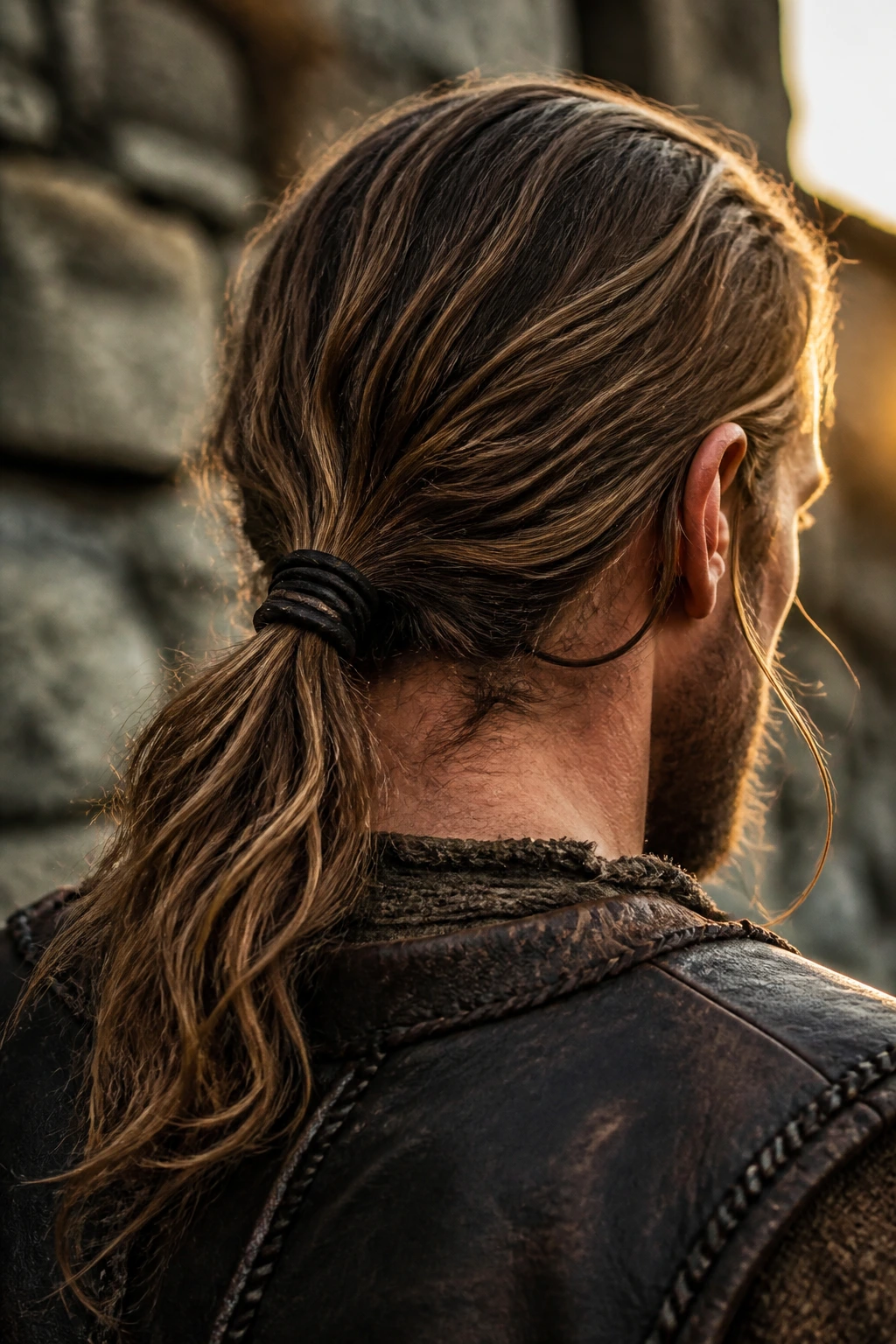
A low warrior tail sits at the nape, not the crown. That low placement is what makes it feel grounded and practical. It’s a good choice if you want the silhouette to stay long and narrow instead of bulky.
The base should be secure, but the hair above it can have some looseness. That little lift keeps the style from looking stiff. If your hair is heavy, a tiny amount of product at the crown helps the tail sit flatter and cleaner.
19. Top Braid into a Bun
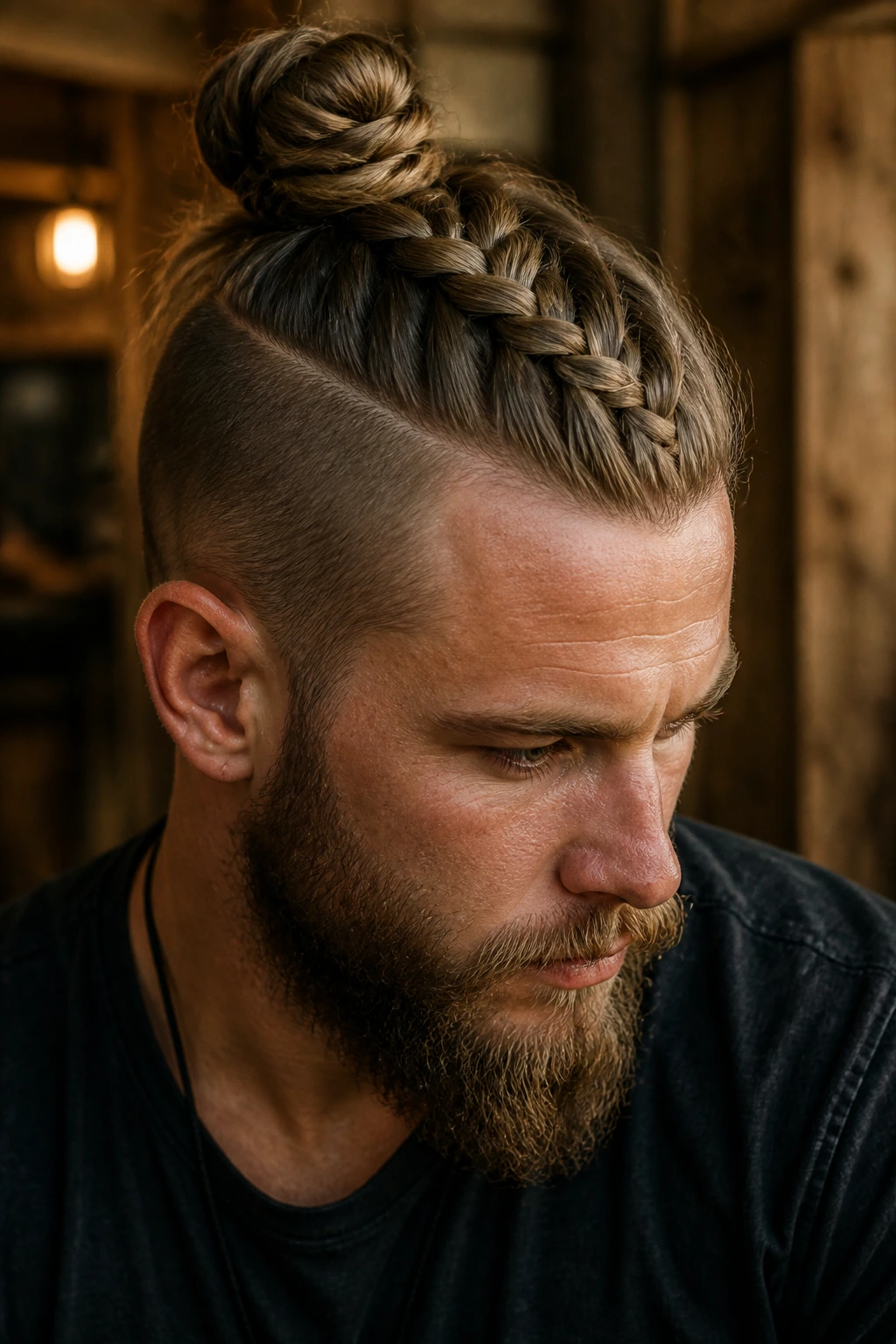
A braid feeding into a bun gives you two layers of structure in one shape. The braid controls the front half, then the bun gathers the tail and keeps the back neat. It’s one of the strongest styles in the whole group because it looks thought-out from every angle.
Ask Your Barber for This
Keep the top long enough for a full braid—usually 5 inches or more—and trim the sides only enough to remove bulk. If the braid gets too thin, the bun at the end will look small and awkward.
This style likes a little shine, but not much. Matte or semi-matte finish is safer.
20. Double Braids into a Low Knot
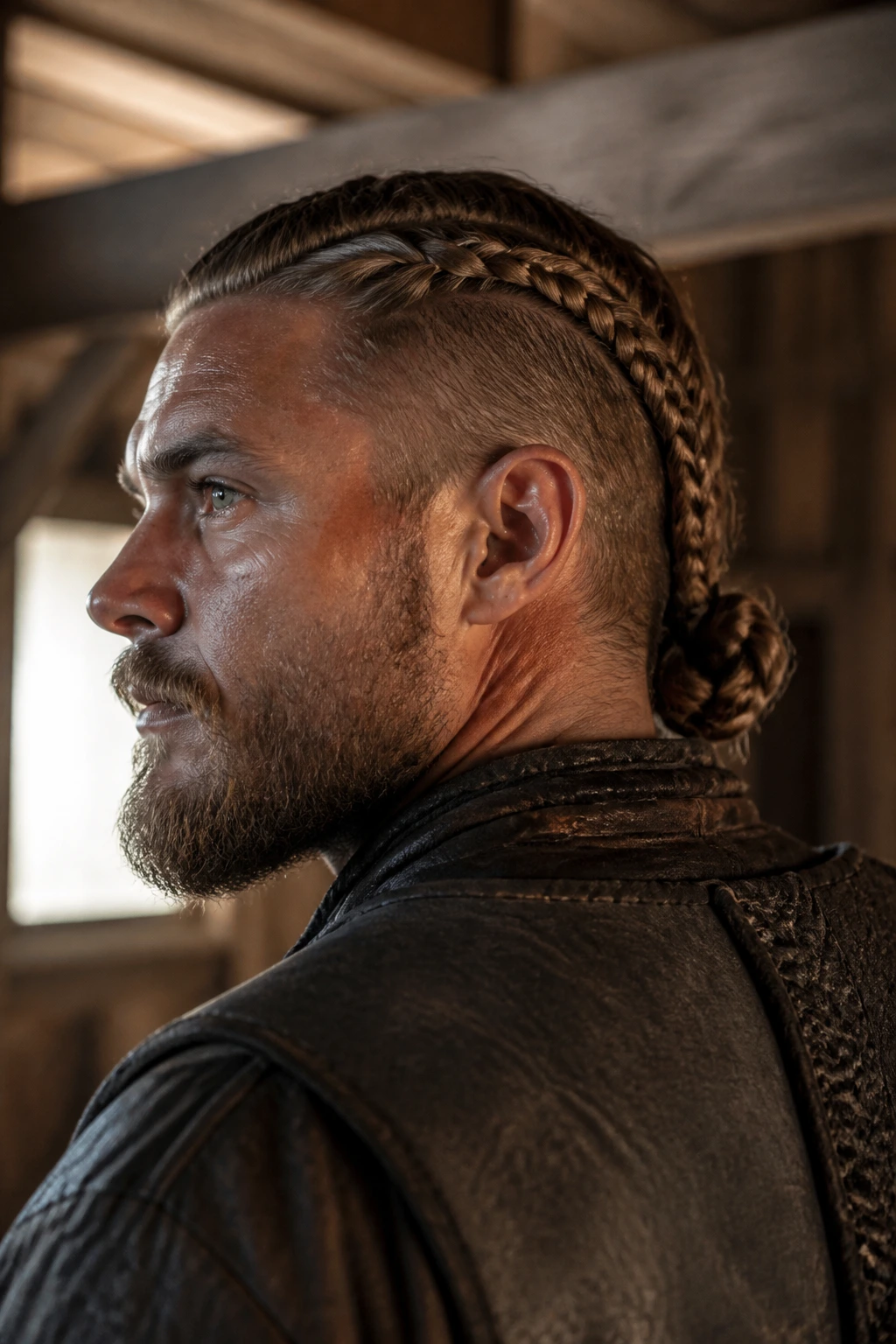
Two braids converging into one knot create a nice sense of movement. You get the symmetry at the front, then the knot anchors everything at the back. That’s a good deal if your hair is dense and you want to keep it from puffing out.
It reads cleaner than loose twin braids, and more structured than a basic bun. If you have medium thickness hair, this can be one of the easiest braided looks to keep wearing for more than a day.
21. Beaded Loose Waves
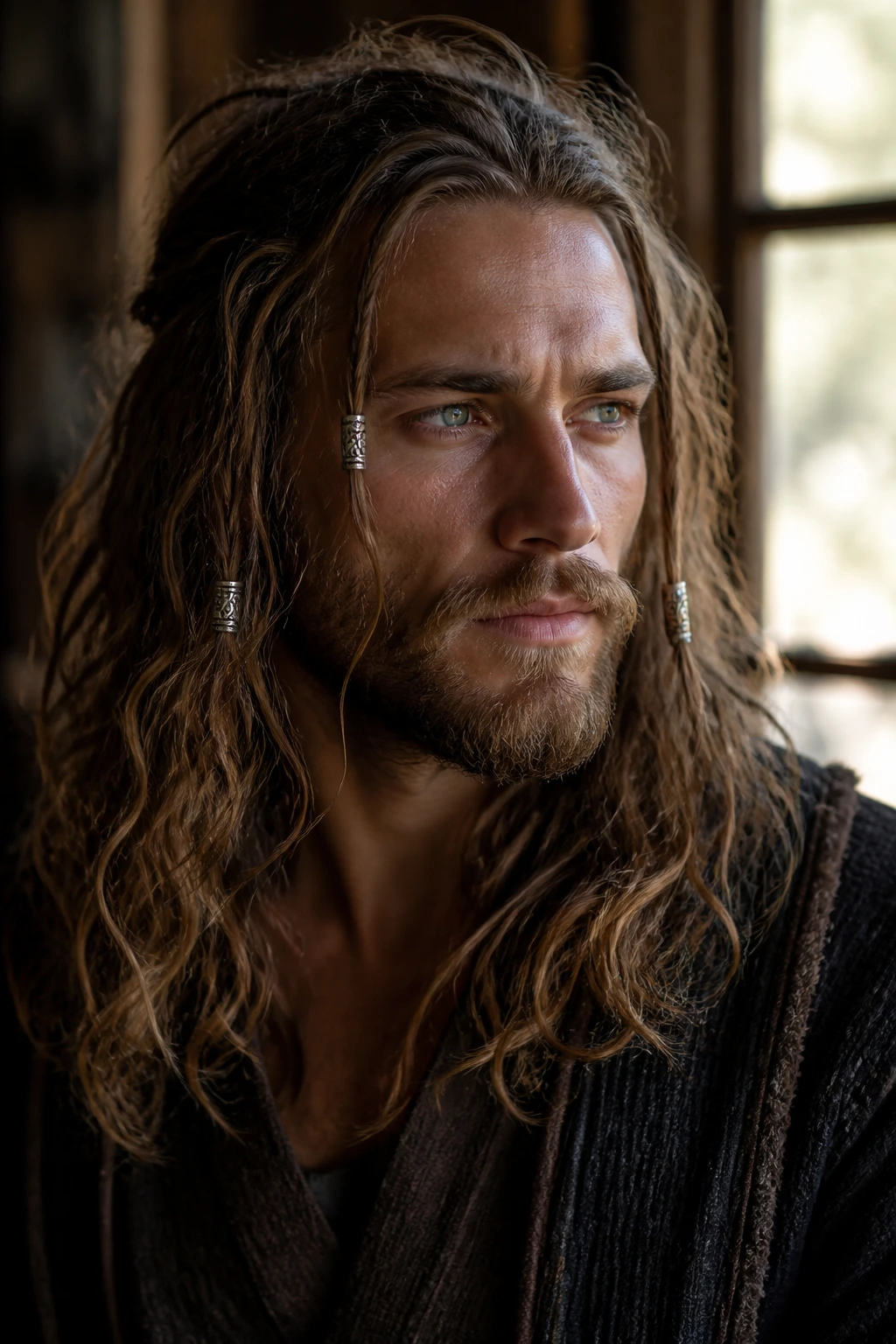
Loose waves with a few beads are a nod to the style without locking you into full braid work. The beads give the hair a focal point, and the waves keep the overall shape relaxed. That’s a smart mix if you want the look to feel personal.
Do not scatter beads everywhere. Two or three placed near the front or around a braid section are enough. Too many and the hair starts reading like a costume piece. A little restraint goes much farther.
22. Slick Back with a Full Beard
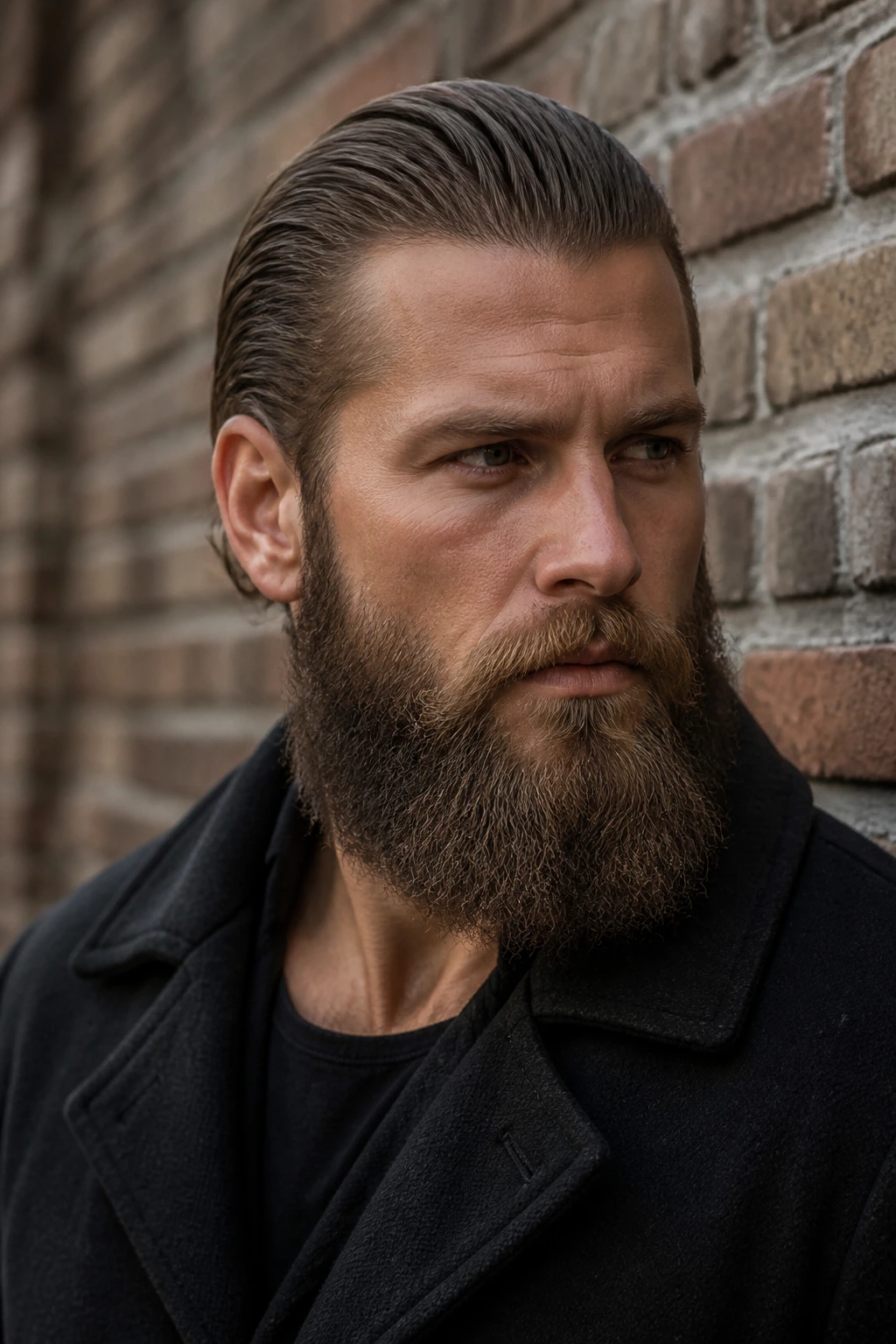
This is a blunt, strong look. The slicked-back top keeps the forehead open and the beard builds the lower half into something solid and masculine. It works especially well when the beard is shaped rather than left wild.
The top should be pushed back with a comb and a medium-hold product, then finger-combed once it sets. I prefer a matte finish here. High gloss can make the cut look too modern and less Viking-inspired.
23. Messy Half Ponytail
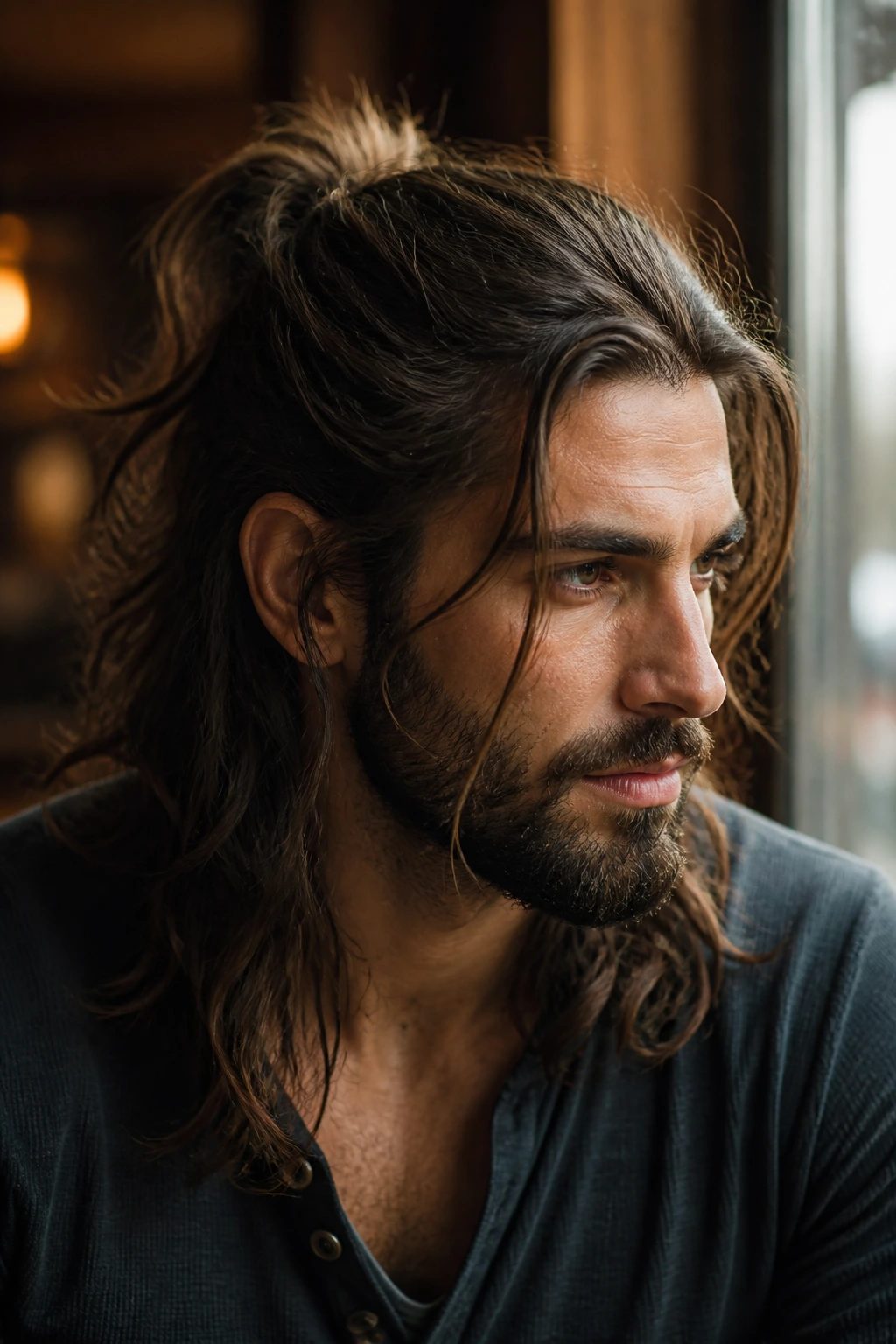
The messy half ponytail is for men who want length but do not want the length to behave too much. Pull the top and crown back, tie it loosely, and let the lower hair fall free. Done right, it looks like you barely bothered.
Small Detail, Big Payoff
Leave a few front pieces out around the temples. That keeps the face from getting boxed in and gives the style a rougher edge. A little texture spray helps the ponytail hold without turning crunchy.
This is an easy style to live in. It’s not precious, and that’s part of the charm.
24. High Bun with a Nape Undercut
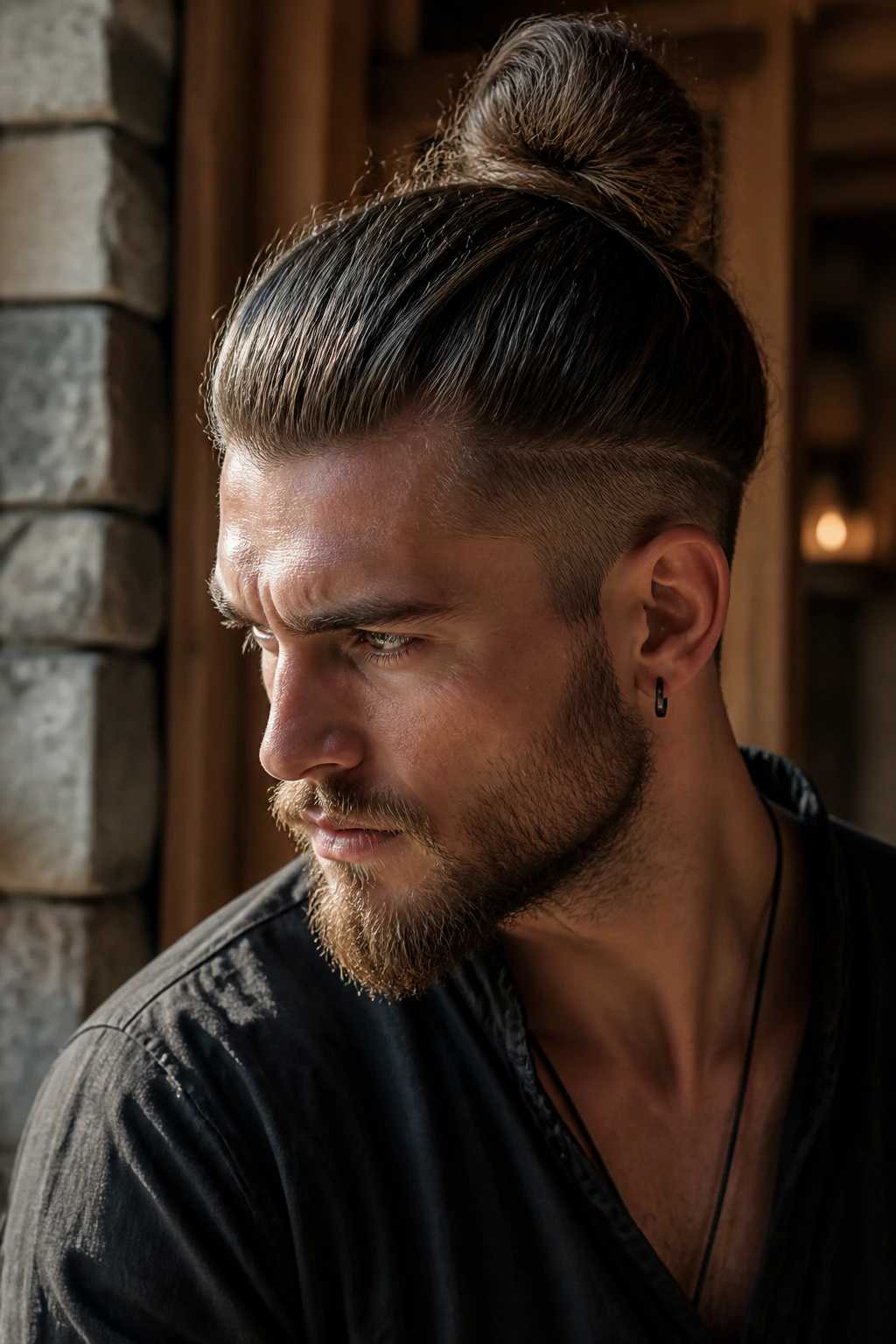
A high bun is all about contrast. The bun sits up top where it can show off the length, while the nape undercut clears the neck and keeps the back from getting hot and bulky. It is a sharp silhouette.
This works better when the bun is compact and the undercut is clean. If the bun spreads out too much, the height can feel unbalanced. Tightening the base and keeping the perimeter neat makes the style look intentional rather than rushed.
25. Rope Twists
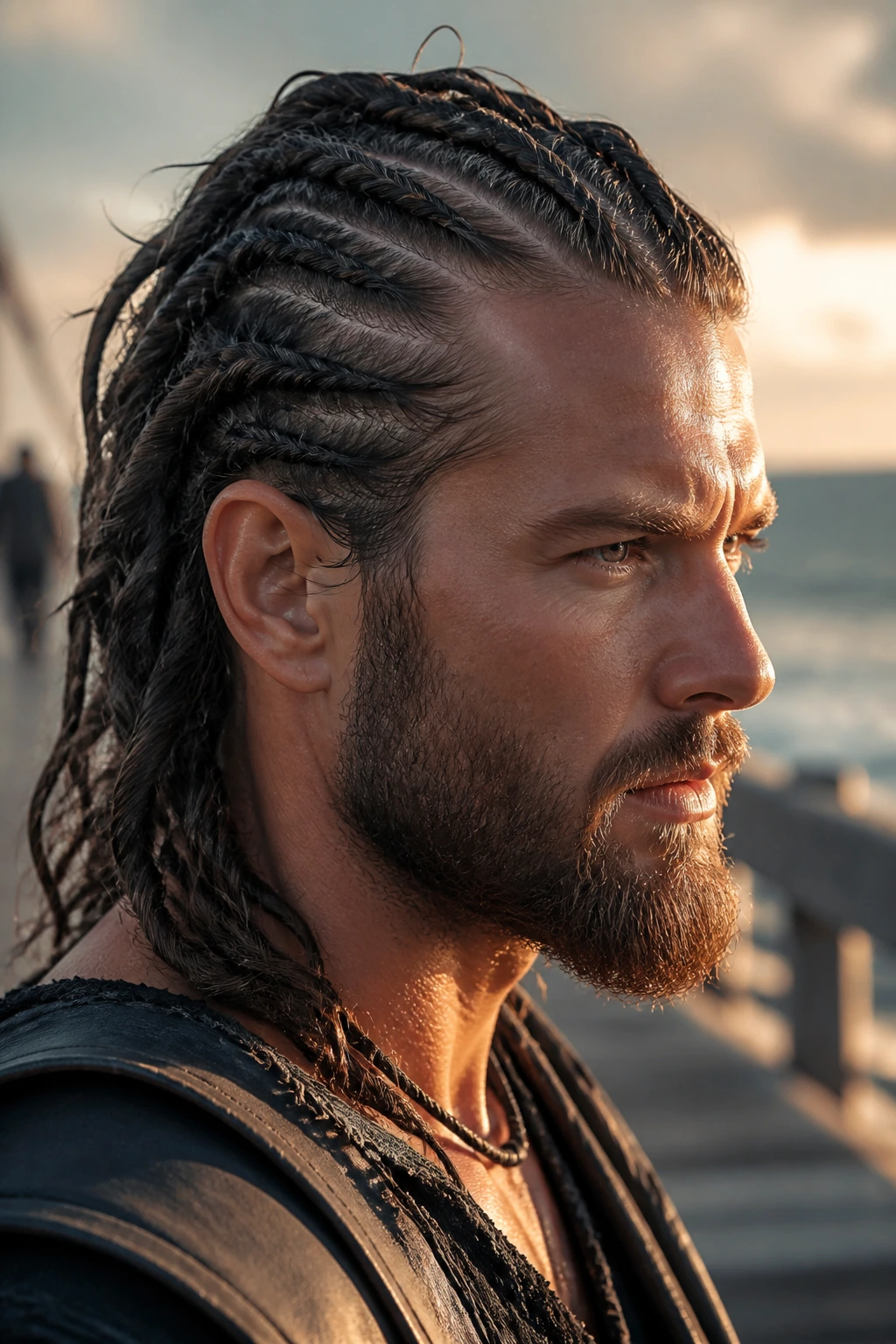
Rope twists are a nice middle ground between loose hair and full braids. They’re faster to set up, gentler on the hair, and they create a spiraled texture that feels a little rougher than a standard braid.
What to Watch For
- The hair should be damp, not wet, when you twist it.
- Use light tension so the twist does not kink or snap.
- A small amount of cream helps the strands stay together.
- They work best on medium to long hair with some grip.
If your hair is fine and slippery, a bit of sea salt spray before twisting makes a real difference.
26. Cornrow Rows
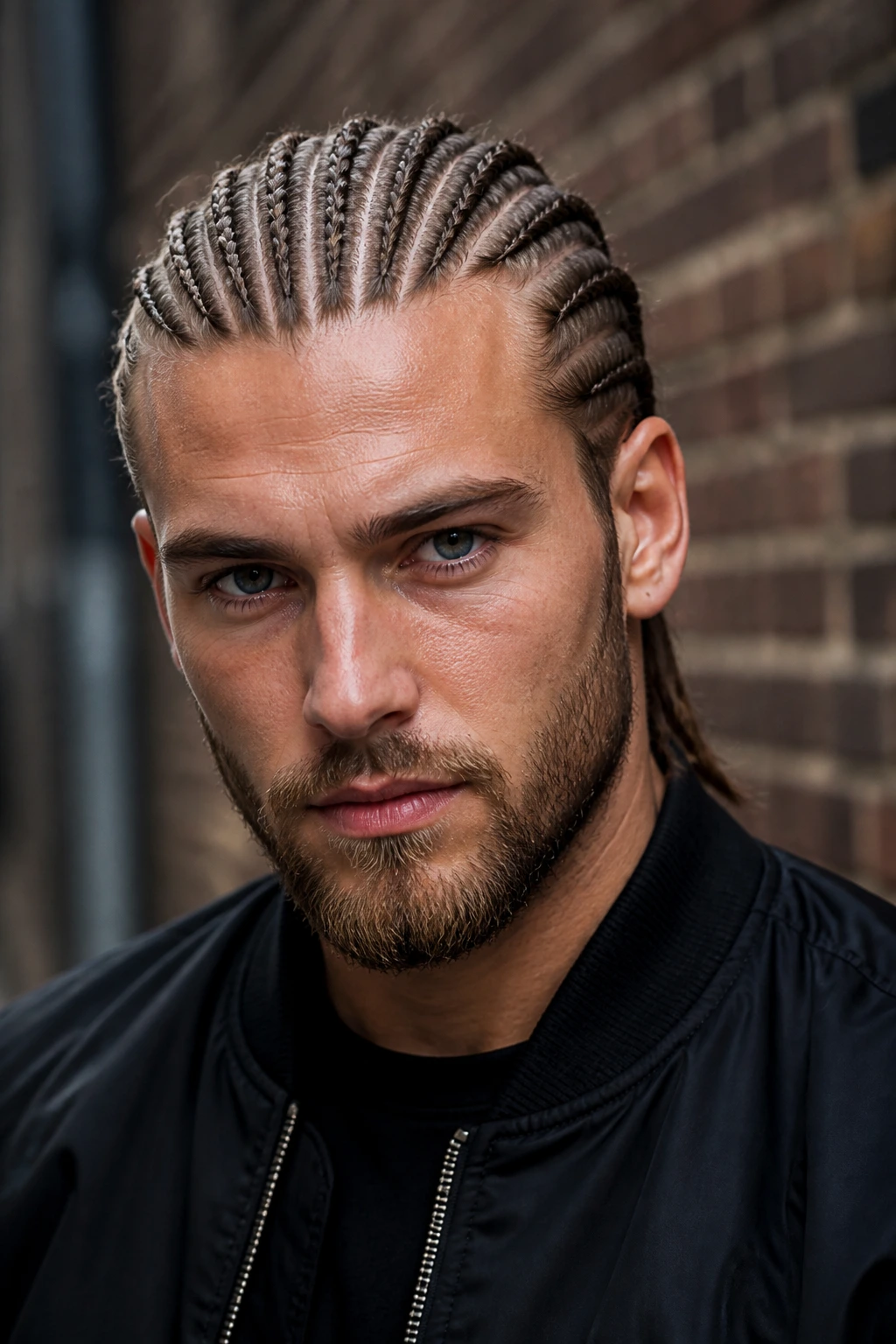
Cornrow-inspired rows bring the scalp pattern into the design. They are tight, clean, and visually strong, especially when the rows run straight back into a ponytail or loose length at the rear. That pattern gives the cut a disciplined look.
This style needs careful sectioning and a barber or braider who can map the lines evenly. Uneven row spacing is hard to hide. If the sections are clean, the result looks deliberate from the first day to the last.
27. Braided Mohawk Fade
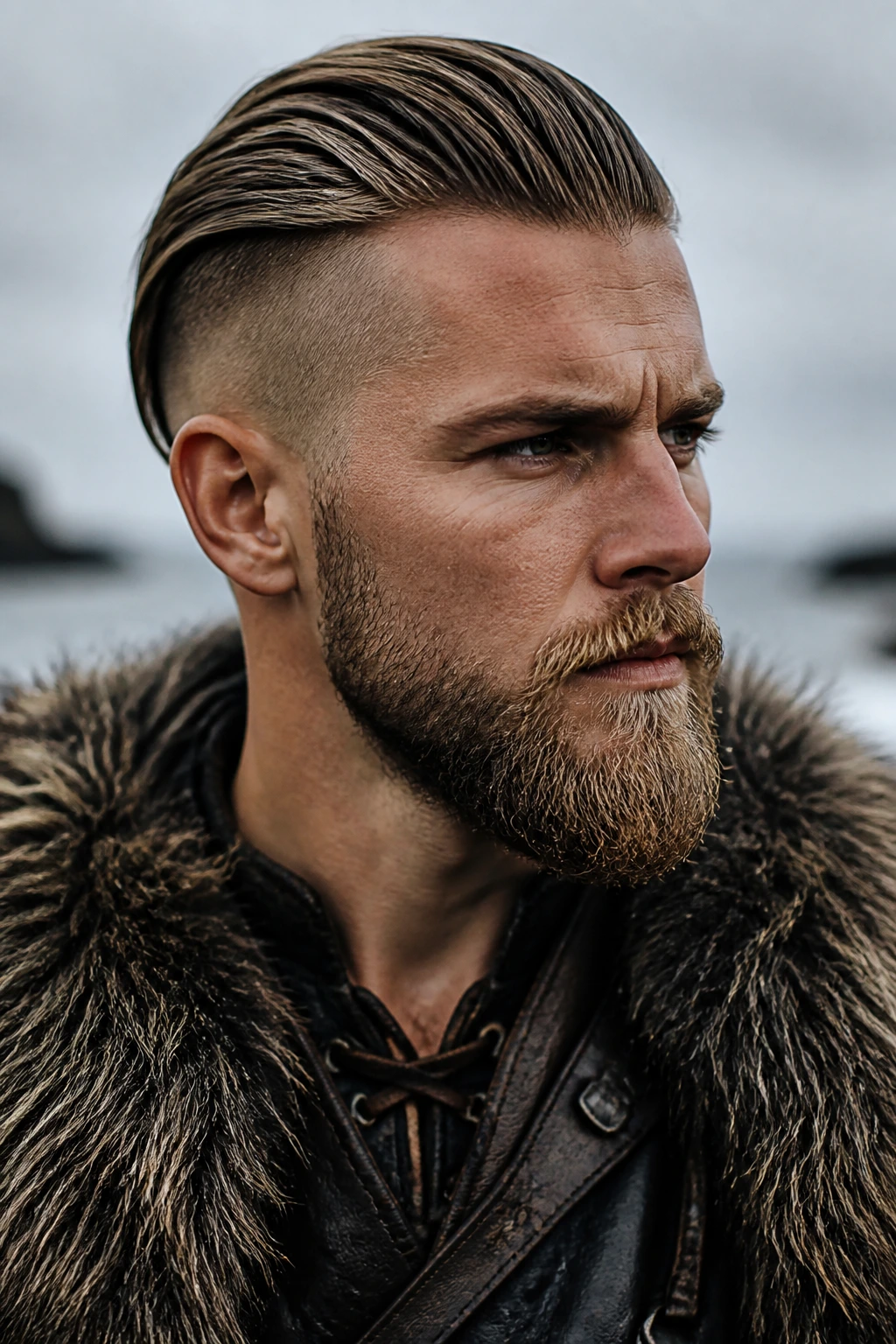
This version takes the mohawk idea and makes it more refined. The sides fade down, the center stays braided, and the whole cut gets a sharper profile than a loose braid would give you. It has movement without losing shape.
It’s a strong pick for men with thick hair who want something eye-catching but not sprawling. The braid should sit straight along the top ridge. If it starts drifting sideways, the mohawk line disappears and the style weakens.
28. Center Part with a Beard
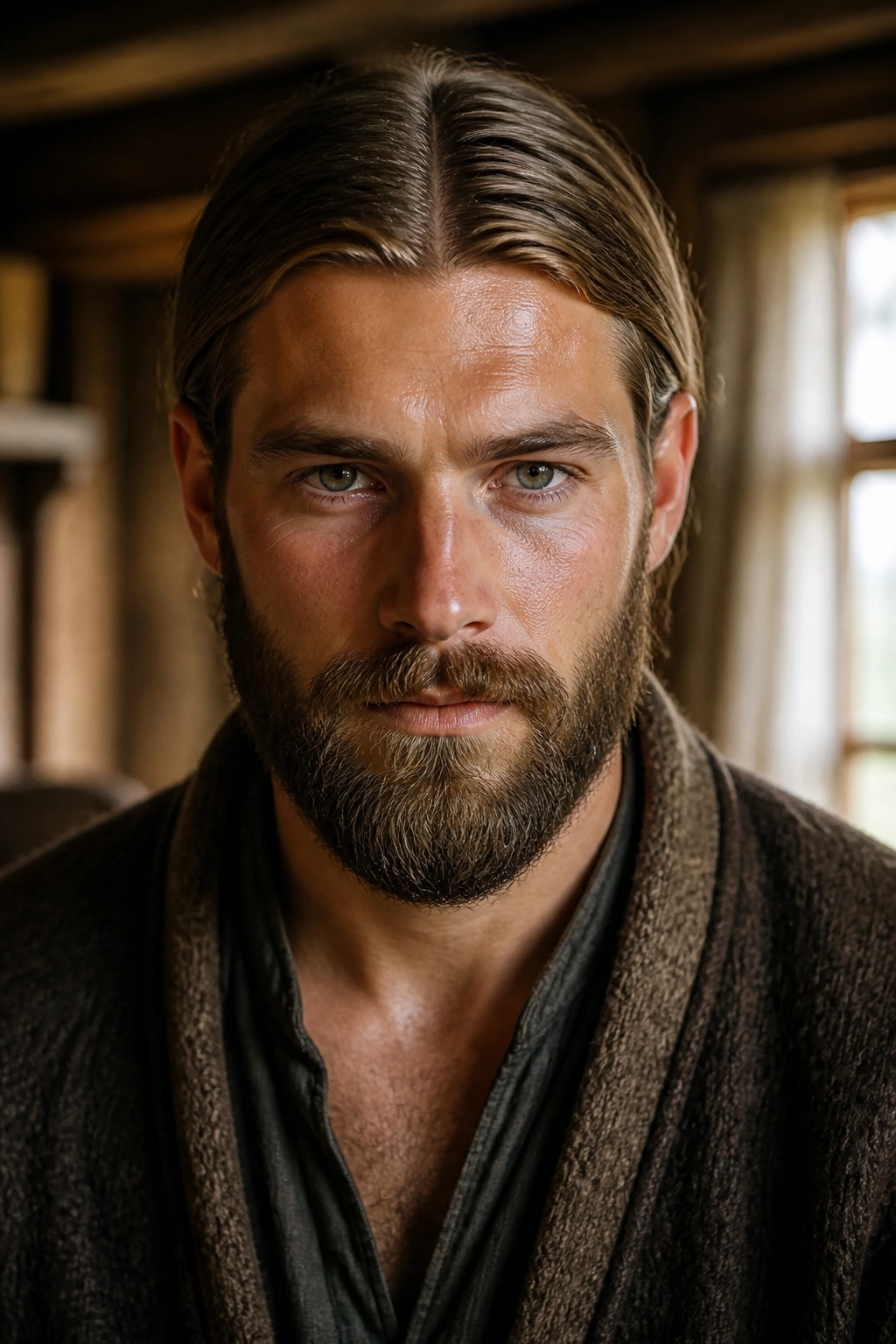
A center part can look almost too simple until the beard enters the picture. Then the face gets that split-and-anchored balance that makes the style feel Viking in a very direct way. It’s plain, but not soft.
Why It Reads So Well
The part line draws the eye down the face, and the beard closes the shape below. That gives the whole look a long vertical line, which works beautifully on oval and square faces.
Keep the top healthy and not over-thinned. A center part exposes the hairline, so the ends need to look clean.
29. Textured Quiff with Shaved Sides
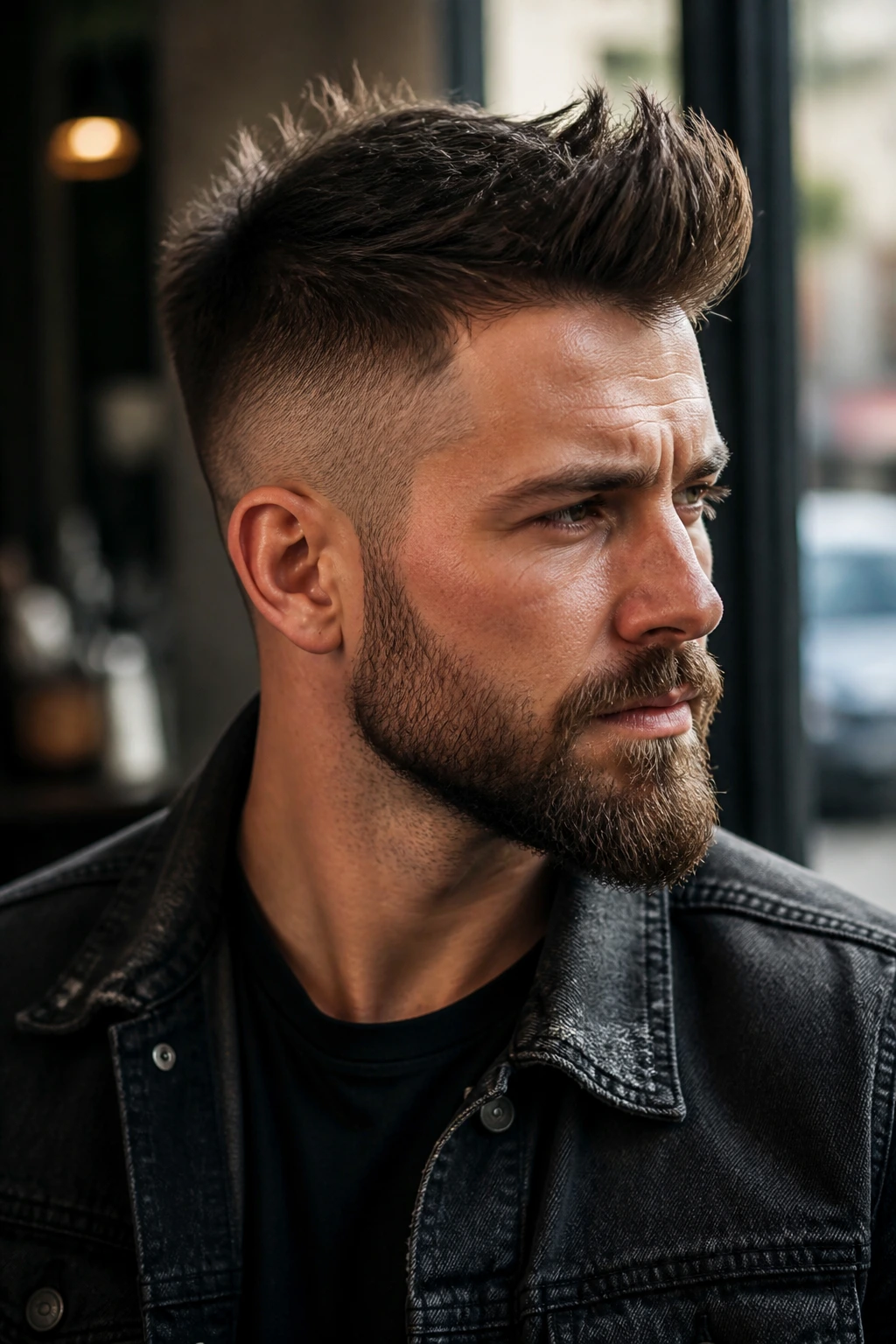
This is the more modern, sharper take on Viking hair. The quiff lifts the front, the shaved sides cut away the bulk, and the texture keeps the top from looking too polished. It has attitude without requiring long hair.
I like this on men whose hair wants to stand up on its own. Use a blow dryer first, then a matte paste to break up the front. If you over-comb it, you lose the roughness that makes the style work.
30. Pull-Through Braid
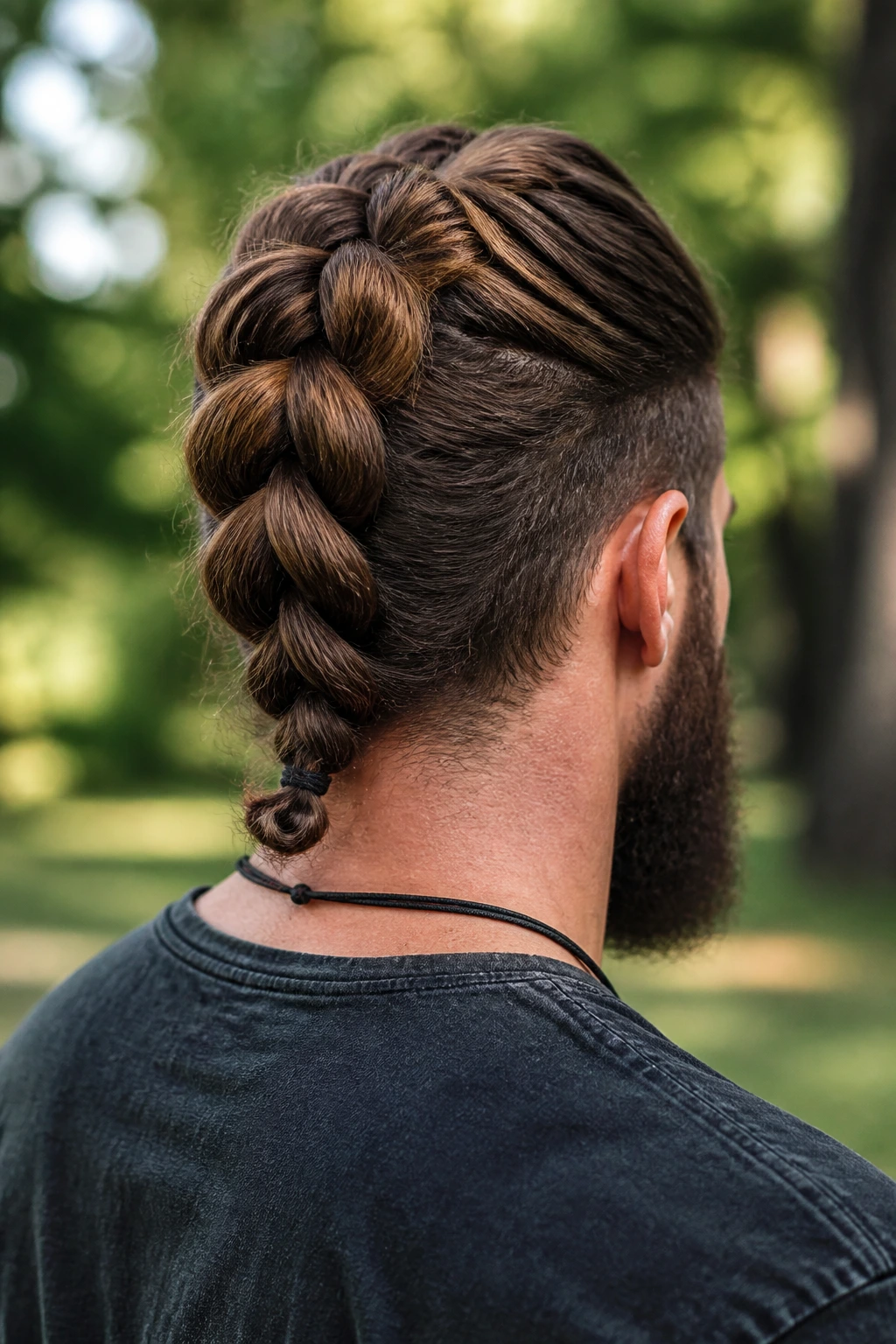
Pull-through braids look more complex than they are. They use small tied sections to build a full braid illusion, which is useful if your hair is thick and you want a bigger, chunkier braid without intricate hand-braiding.
Good Fit For
- Hair with a lot of volume
- Medium-to-long lengths
- Guys who want a braid that reads from across the room
- Styles that need more drama than a basic plait
The shape is bold, almost sculptural. It’s one of the best options if you like a heavy, layered look.
31. Low Ponytail Wrapped Tie
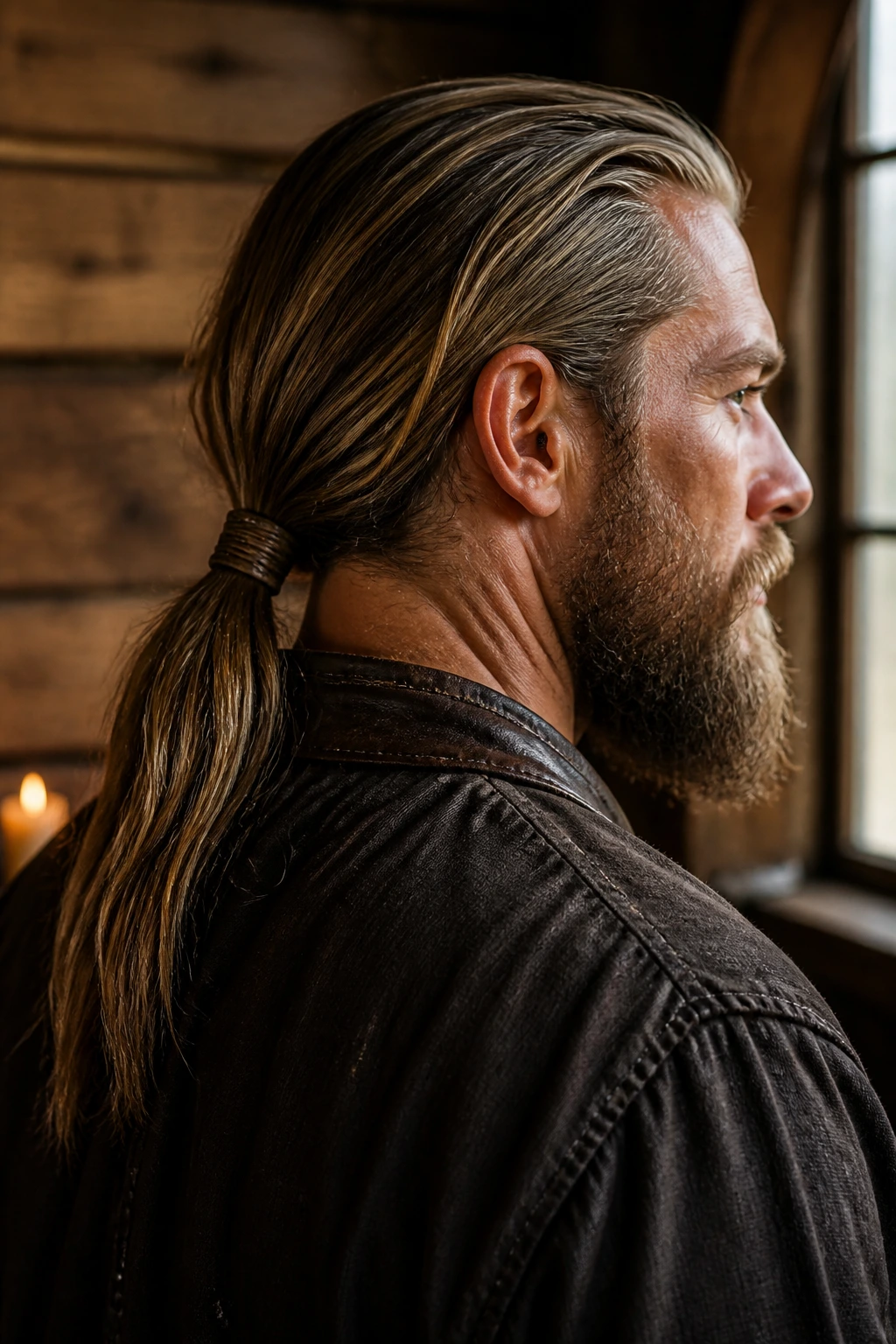
A wrapped tie takes a simple low ponytail and makes the base look cleaner. Hide the elastic with a strand of hair or a leather wrap, and the whole thing becomes more finished. That tiny detail matters more than people think.
This style is especially good when you want the back secured but do not want a full bun. It keeps the length visible and avoids the lump that sometimes happens with a thick knot. Keep the nape neat and the ponytail low.
32. Short Textured Top with Temple Fade
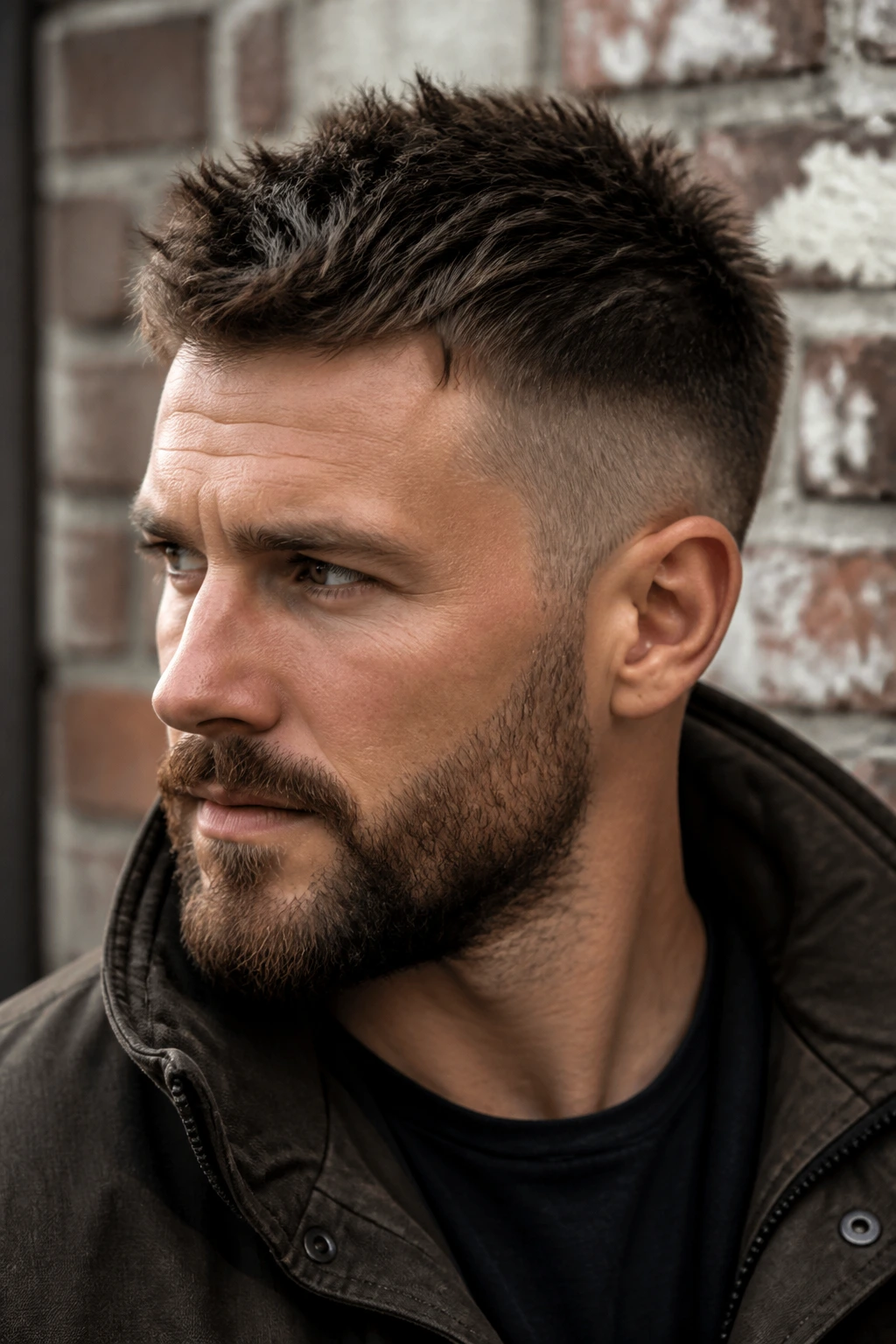
This is one of the easiest Viking-adjacent styles for men who don’t want much length. The temple fade clears the sides near the temples, and the textured top gives enough roughness to keep the cut from feeling basic.
It works best with a matte powder or clay worked into dry hair. If the top is too sleek, the cut loses its grit. The nice part is maintenance stays light: a quick shape-up every few weeks and you’re fine.
33. Long Swept-Back Layers
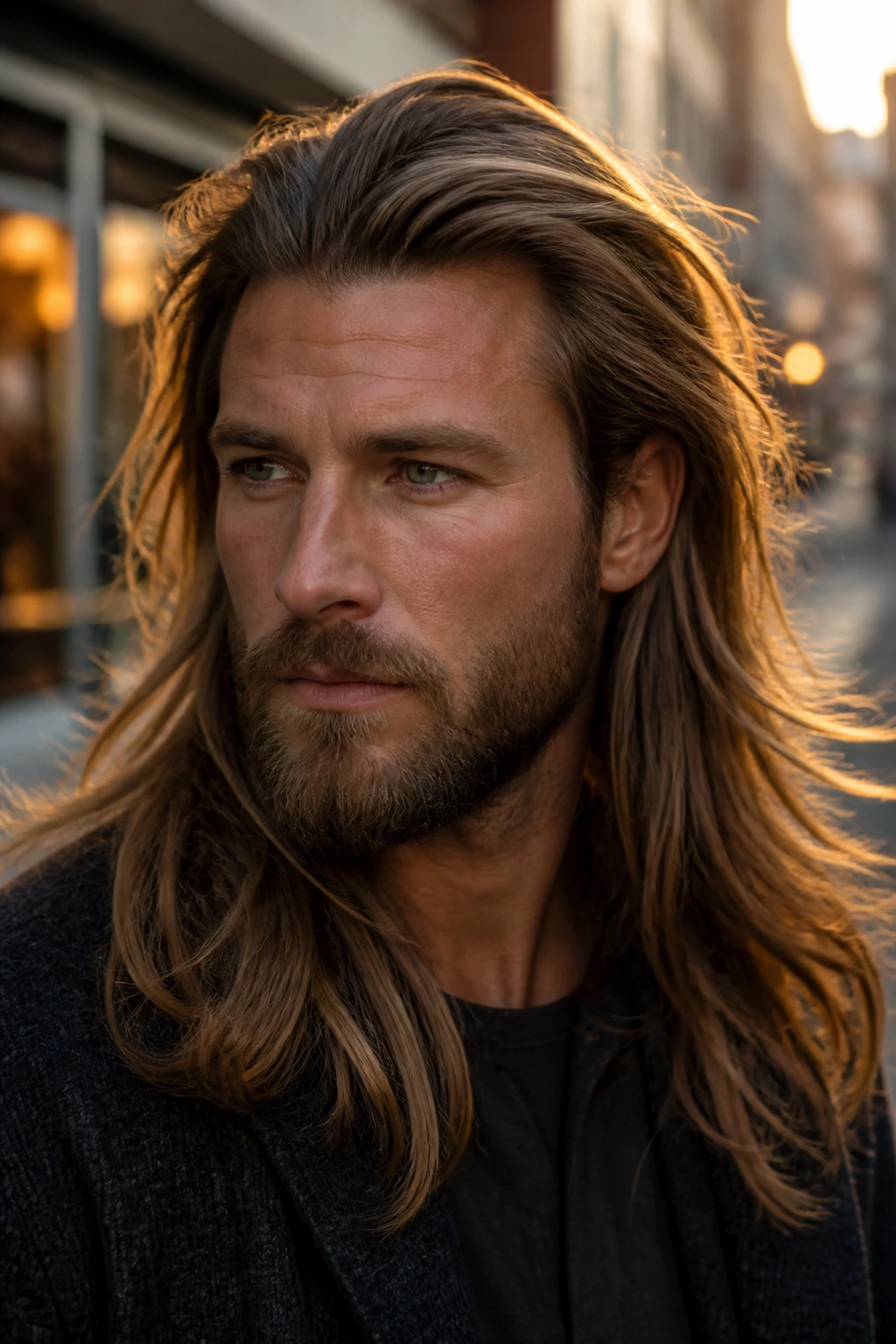
Long swept-back layers are for men who want hair that moves when they walk. The layering removes some of the weight, while the sweep keeps the face open. This cut looks especially good when the hair has a natural wave or bend.
What Gives It Shape
The hair should be long enough to tuck behind the ears but not so layered that it frays at the ends. Ask for movement, not feathering. There’s a difference.
A beard helps here, but it’s not required. If you skip the beard, keep the neckline clean so the hair does not feel unfinished.
34. Braided Crown with Loose Ends
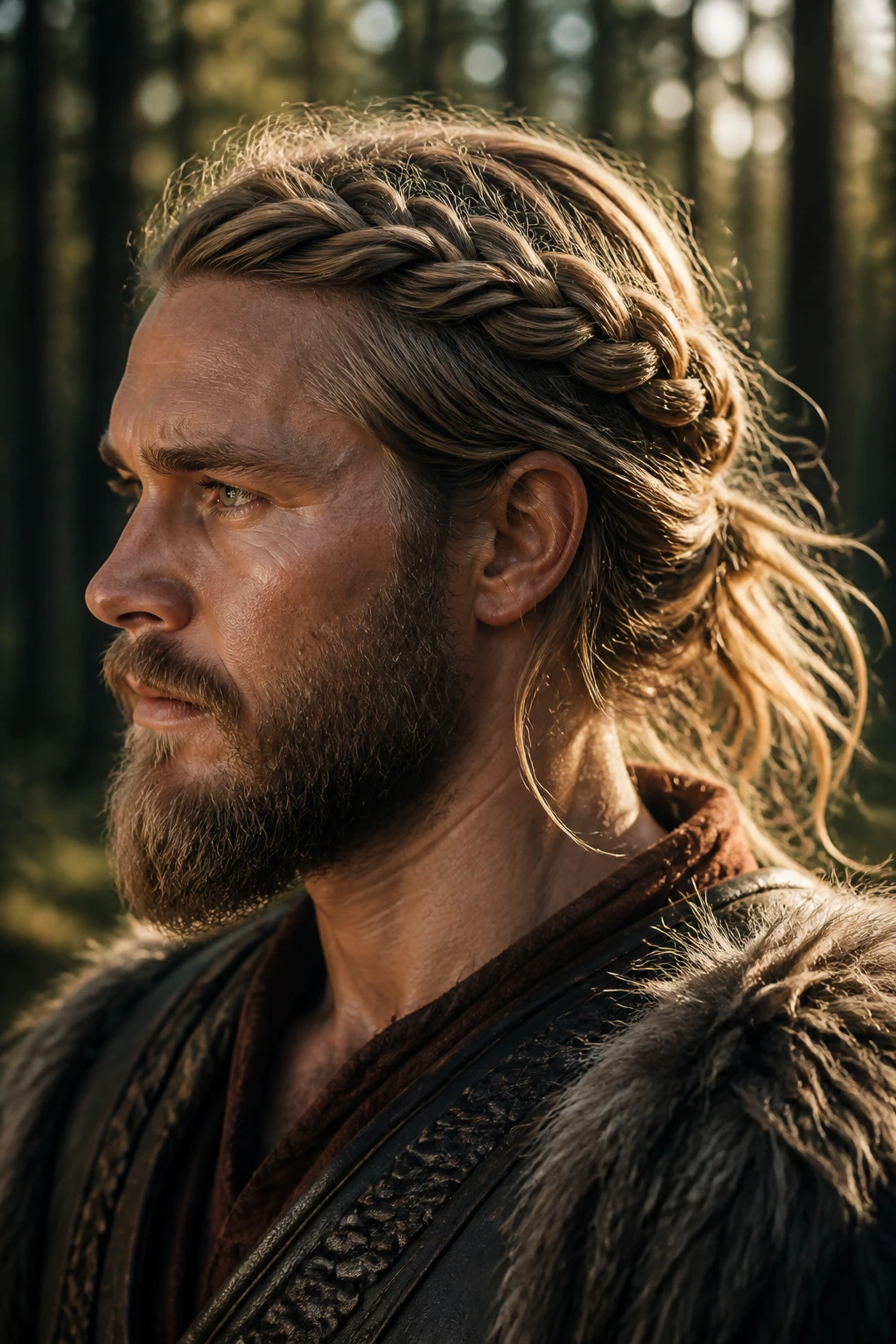
A braided crown wraps around the head, then leaves the tail loose or half-loose at the back. That mix of control and freedom gives the style some energy. It feels more lived-in than a fully pinned crown braid.
This one looks strongest when the braid sits slightly off the scalp, not crushed flat. A little volume at the crown keeps the head from looking narrow. If your hair is too slippery, texture spray before braiding saves you a lot of slipping.
35. Side-Braided Top with Long Back
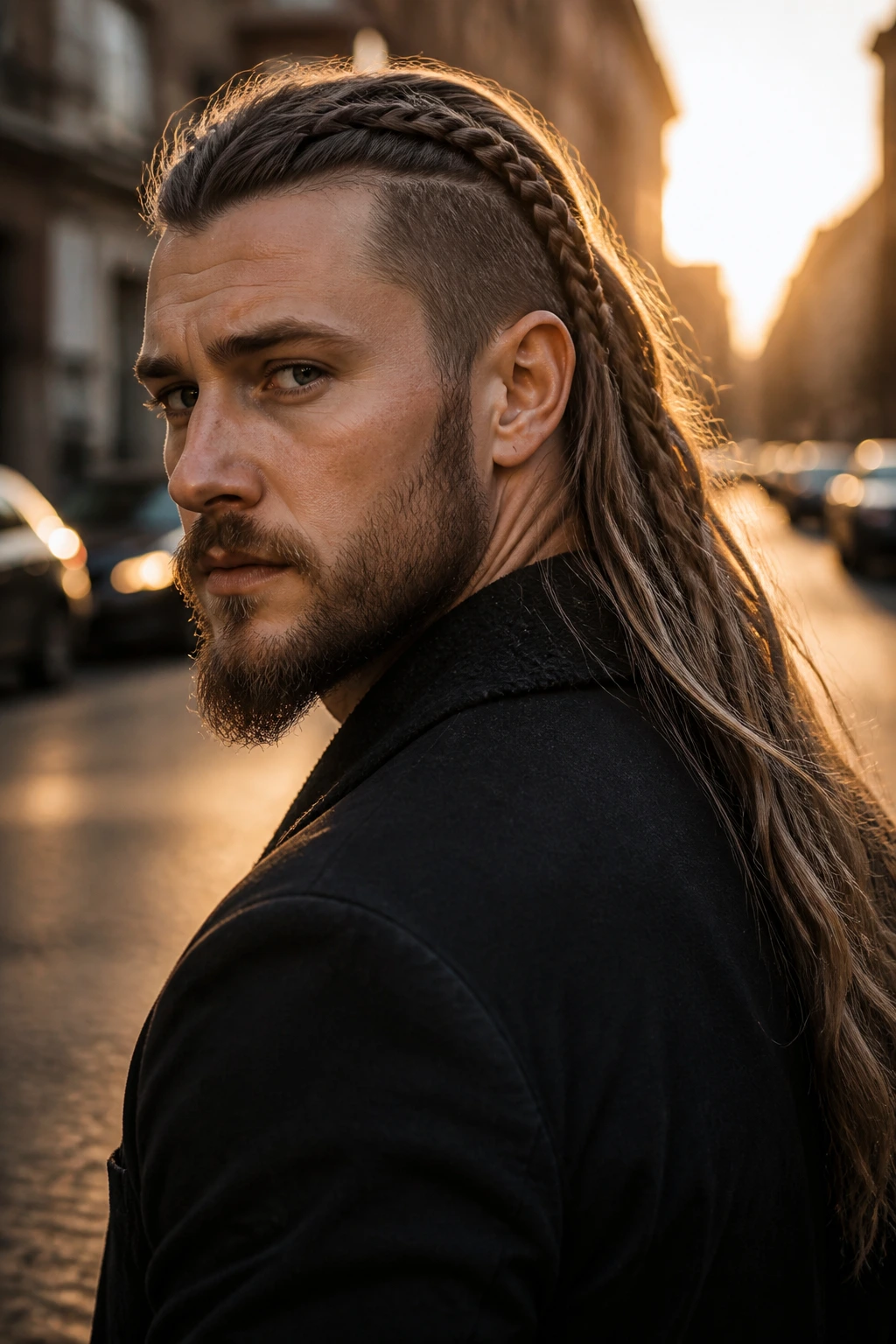
This cut has a clear focal point: one side is braided, the back stays long, and the contrast gives the style a bit of asymmetry. That asymmetry is what keeps it from feeling generic. It looks planned, but not too polished.
The back length should be long enough to drape naturally, not just hover at the collar. The side braid can be tight and narrow or thicker and looser depending on how much you want it to stand out. I prefer the tighter braid with the looser back.
36. Wolf-Cut Viking Hybrid
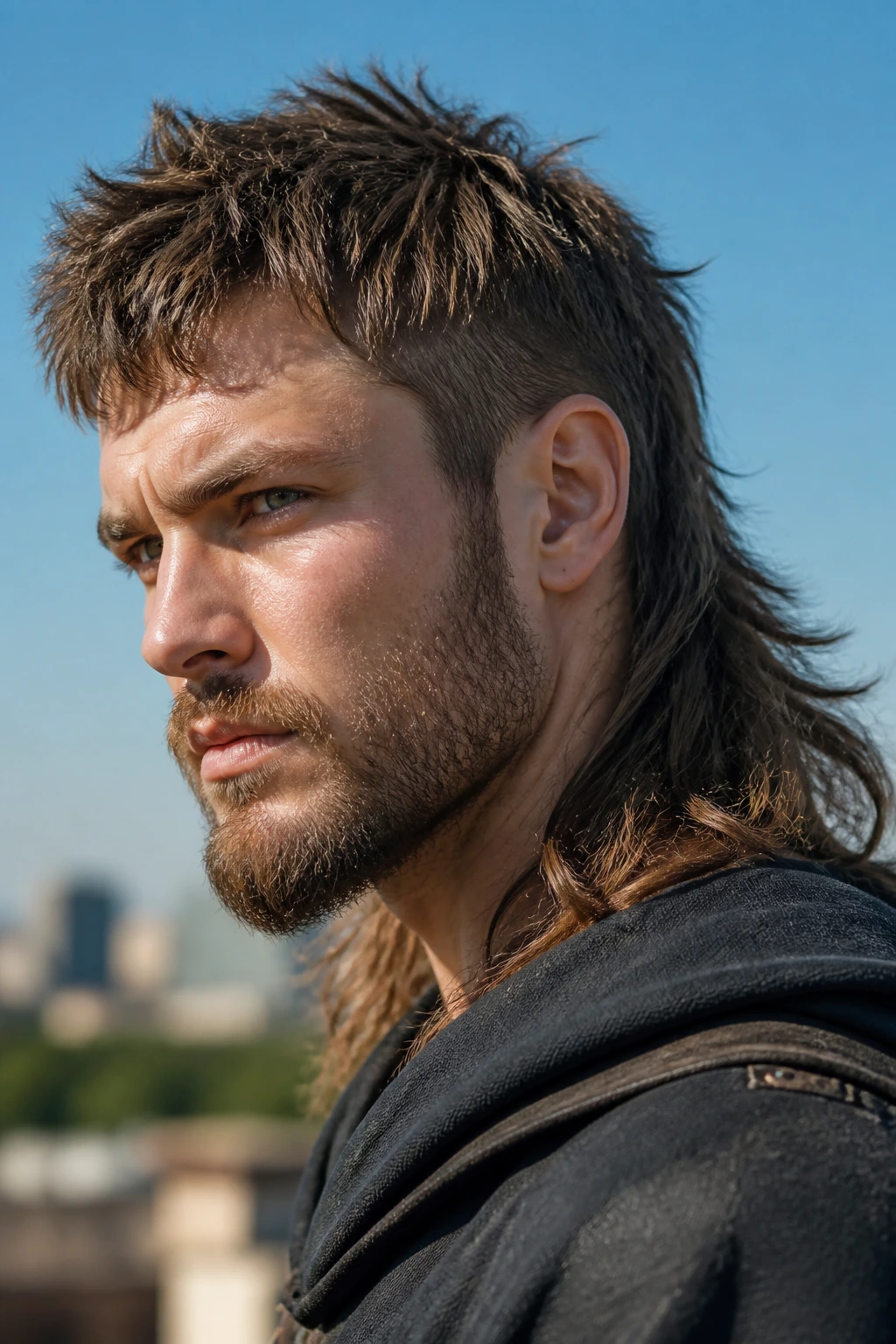
A wolf-cut shape brings layers, movement, and a rough edge to Viking styling. The top stays shorter and choppier, the back keeps more length, and the whole thing has that slightly feral silhouette. It’s a good fit for men who want shag energy without losing masculinity.
Why It Works
The uneven layers break up flatness, especially on straight or slightly wavy hair. It gives you volume up top and drag in the back, which is a useful combination if you want something less tidy than a bun or braid.
This one does not like heavy products. Use only enough to keep the layers separated.
37. Festival Beads and Braids
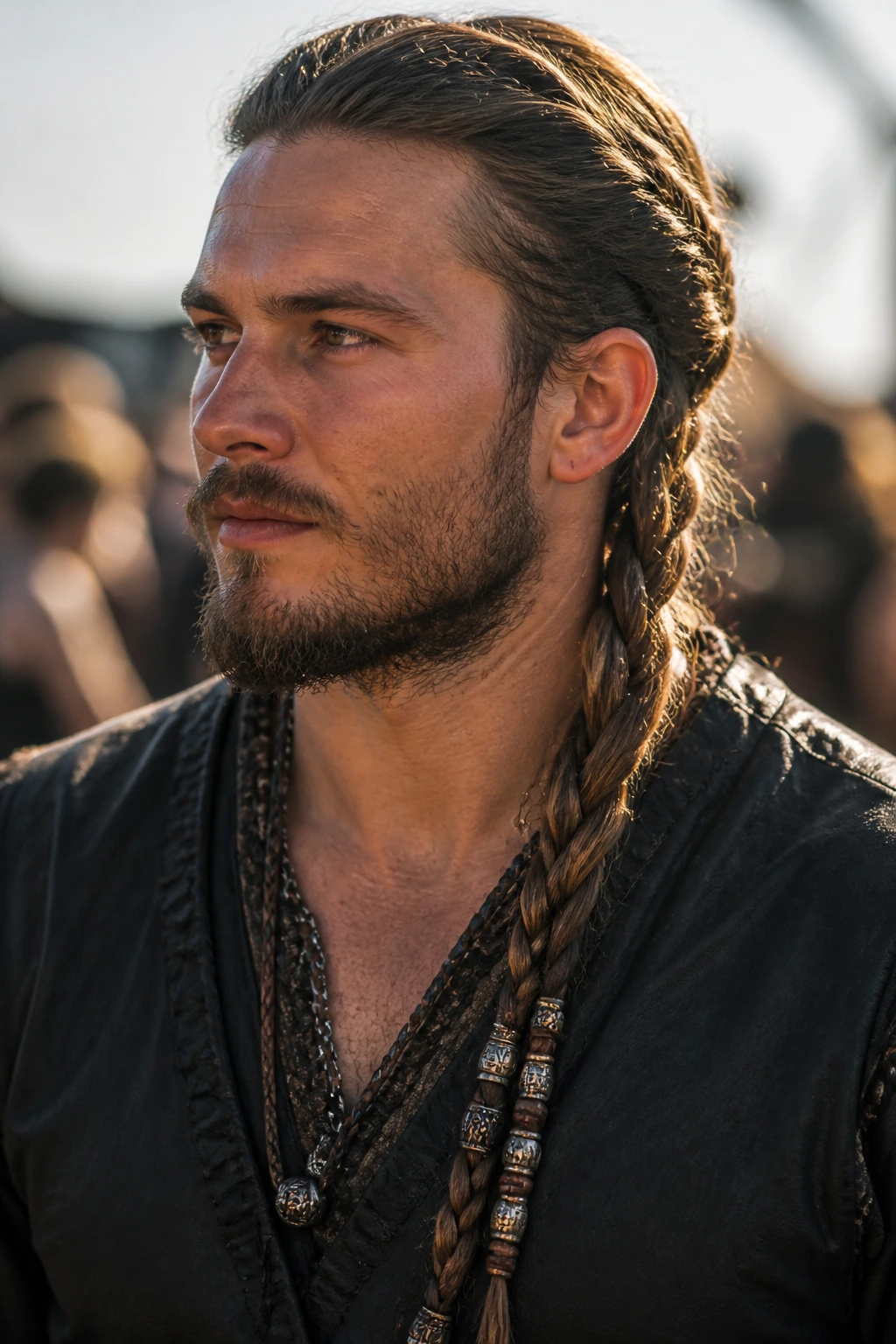
Beads and braids can go wrong fast if you overdo them, but a few well-placed accents make the whole haircut feel personal. Add beads to a single braid, or use leather wraps near the ends, and keep the rest of the hair plain. That contrast is what makes it work.
This is a style that benefits from clean parts and healthy ends. Beads expose the condition of the hair more than people expect, so dry, frayed ends show up immediately. Trim the ends first, then decorate.
38. Rugged Battle Bun
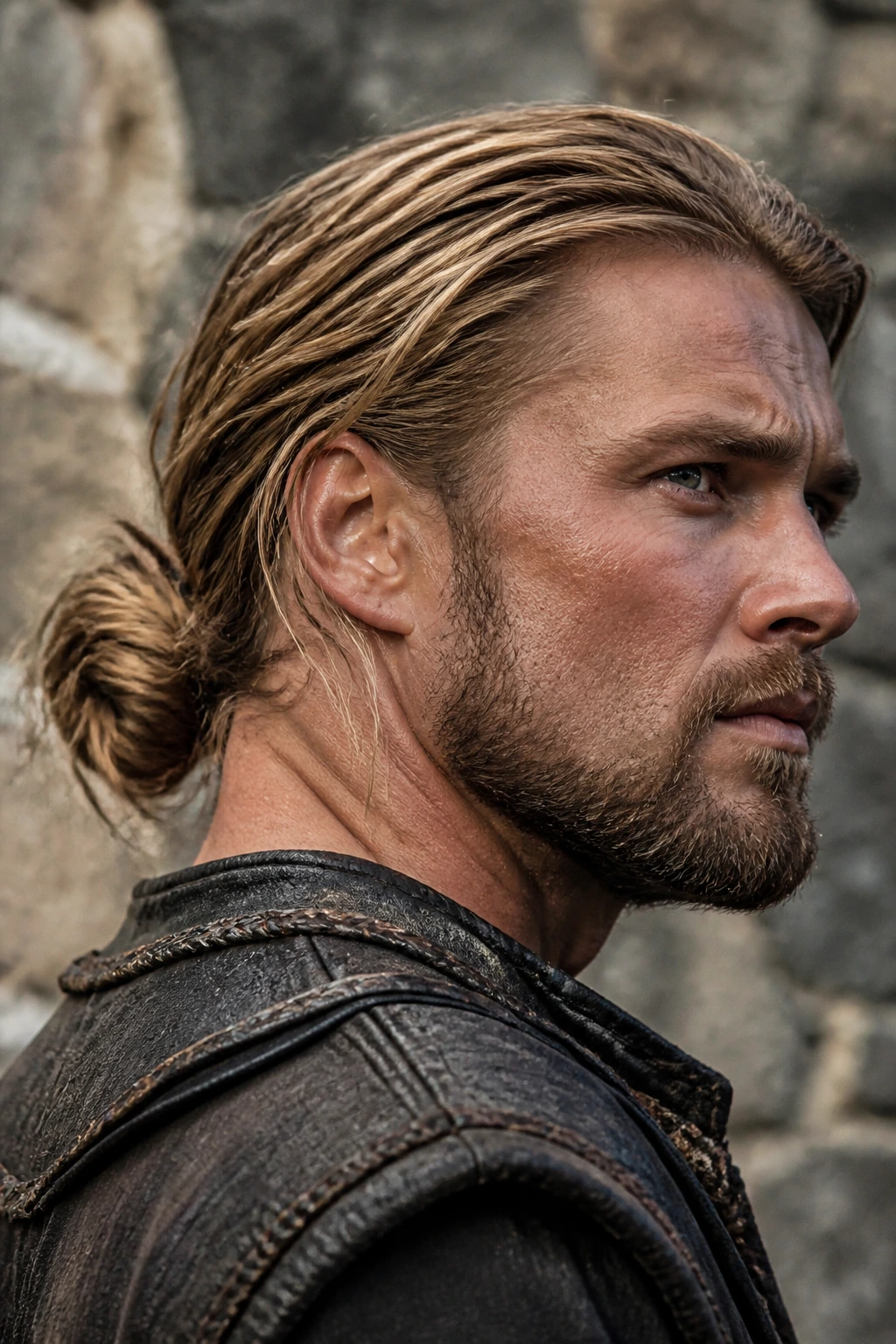
The rugged battle bun is the version I’d recommend to men who want the strongest Viking outline with the least amount of ceremony. Gather the hair low or mid-high, twist it once, pin or tie it, and leave the edges imperfect. It should look like it could survive a long day.
The secret is not to overfinish it. A few loose ends around the nape and temples keep the bun from feeling stiff. Pair it with a squared beard line and you get a shape that reads hard, but still wearable.
What Makes a Viking Hairstyle Read as Viking
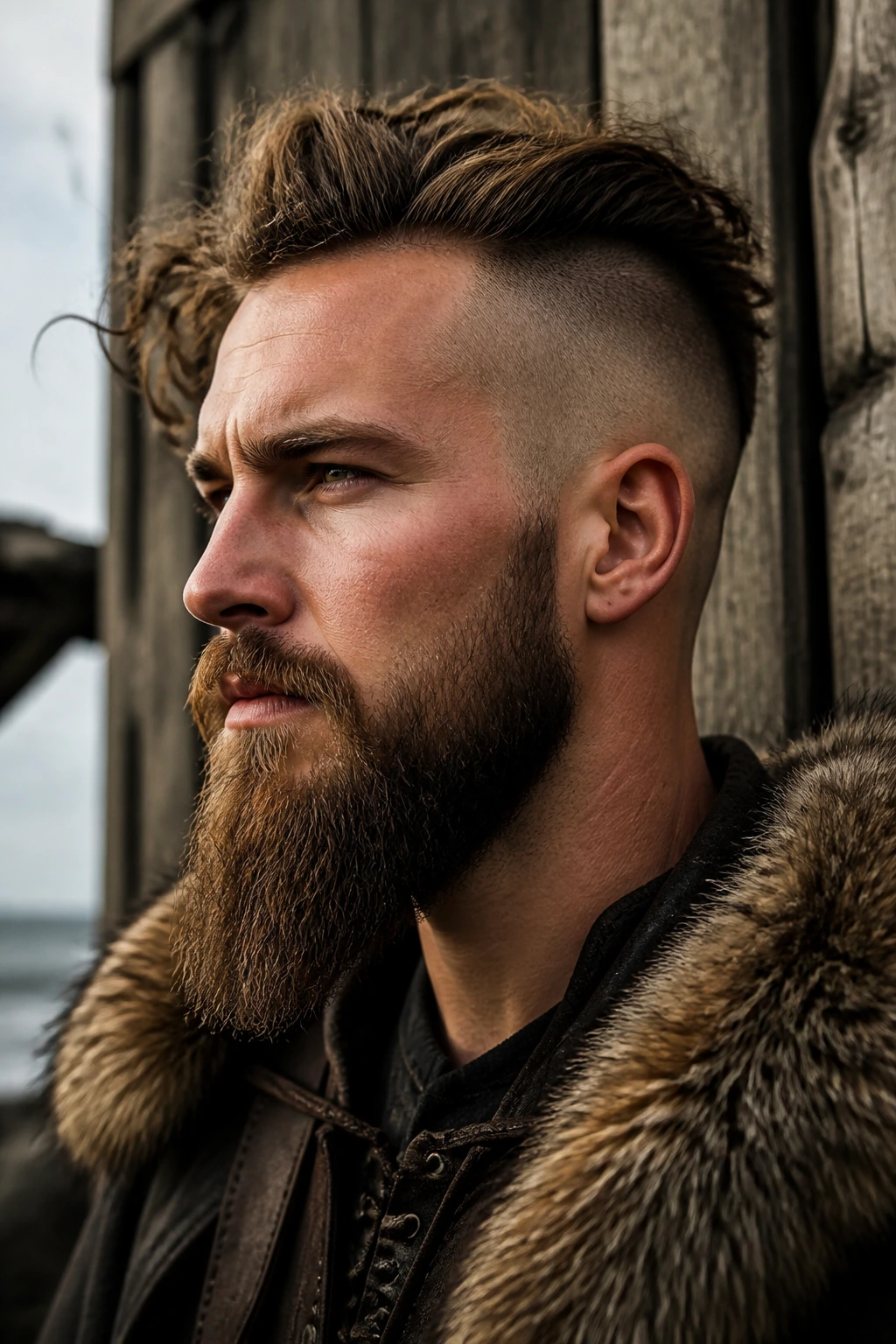
A Viking hairstyle is not one thing. It’s a set of choices that push the same direction: weight on top, cleaned-up sides, texture that feels a little rough, and a beard that supports the face instead of floating beside it. The silhouette matters more than the label.
That’s why a braid, a bun, and a center part can all live in the same family. If the sides are too soft and the top too neat, the cut loses its edge. If the whole thing is over-shaved, it turns into a disconnected modern fade with a long top, which is a different animal entirely.
I also think the beard line matters more than people admit. A crisp cheek line, a trimmed neck, and some shape under the jaw can make a loose hairstyle feel finished. Without that, the hair is carrying too much weight.
Essential Tools for These Looks
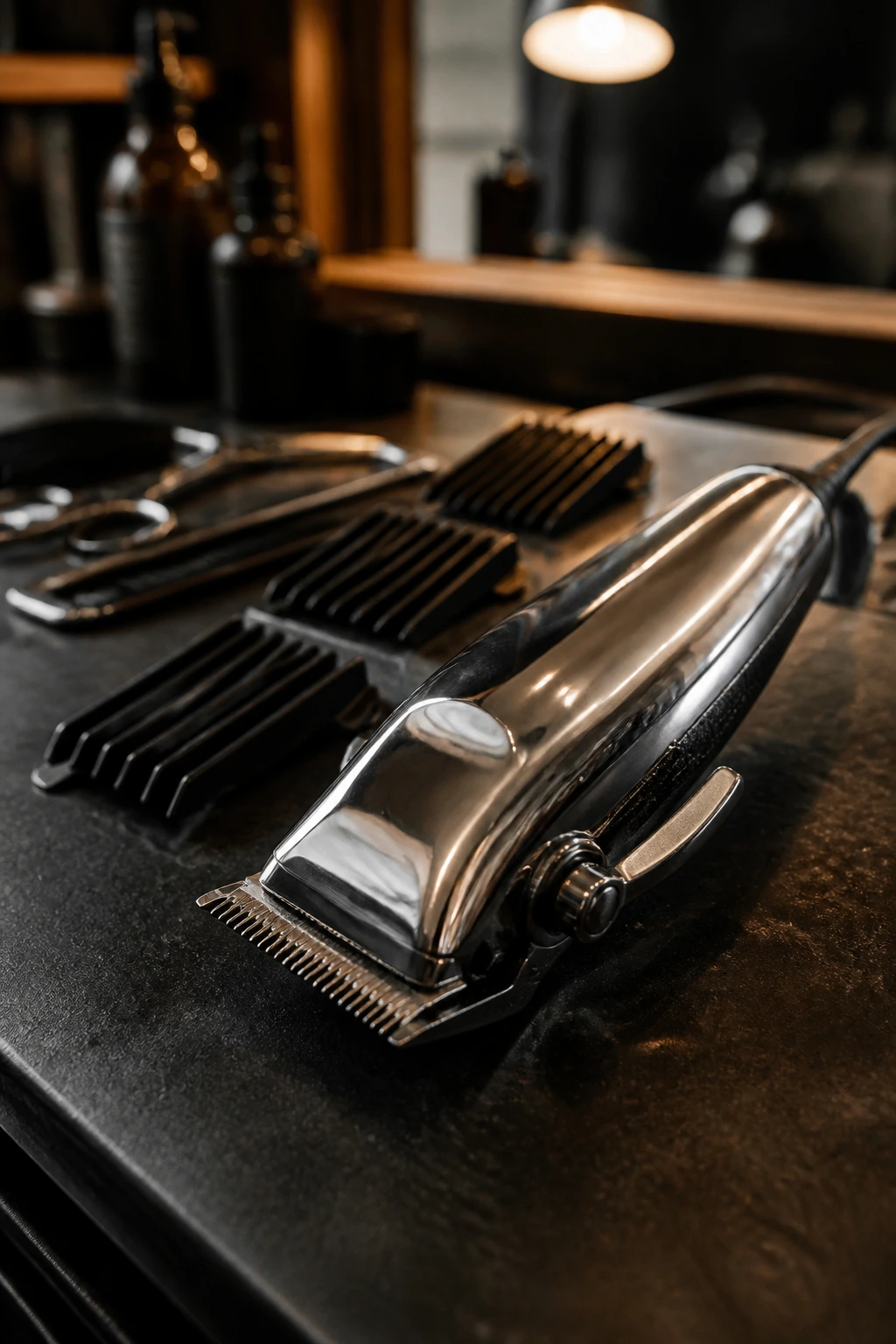
- Clippers with guards: Useful for fades, temple cleanup, and keeping the neckline from wandering.
- Sharp barber scissors: Better than clippers for removing bulk without chewing up the ends.
- Wide-tooth comb: Saves long hair from snagging when it’s damp.
- Tail comb: The best tool for clean parts, braid rows, and sectioning.
- Hair ties without metal: Less breakage, fewer snapped ends.
- Matte paste or clay: Gives hold without shine, which is usually the right move here.
- Sea salt spray: Adds grit to fine or slippery hair before braiding or blow-drying.
- Beard trimmer: Keeps the beard from fighting the haircut.
- Blow dryer with nozzle: Helps set volume in quiffs, slick backs, and loose layers.
- Hand mirror: Sounds obvious, but the back of a bun or braid is where bad assumptions show up.
Smart Product and Barber Notes
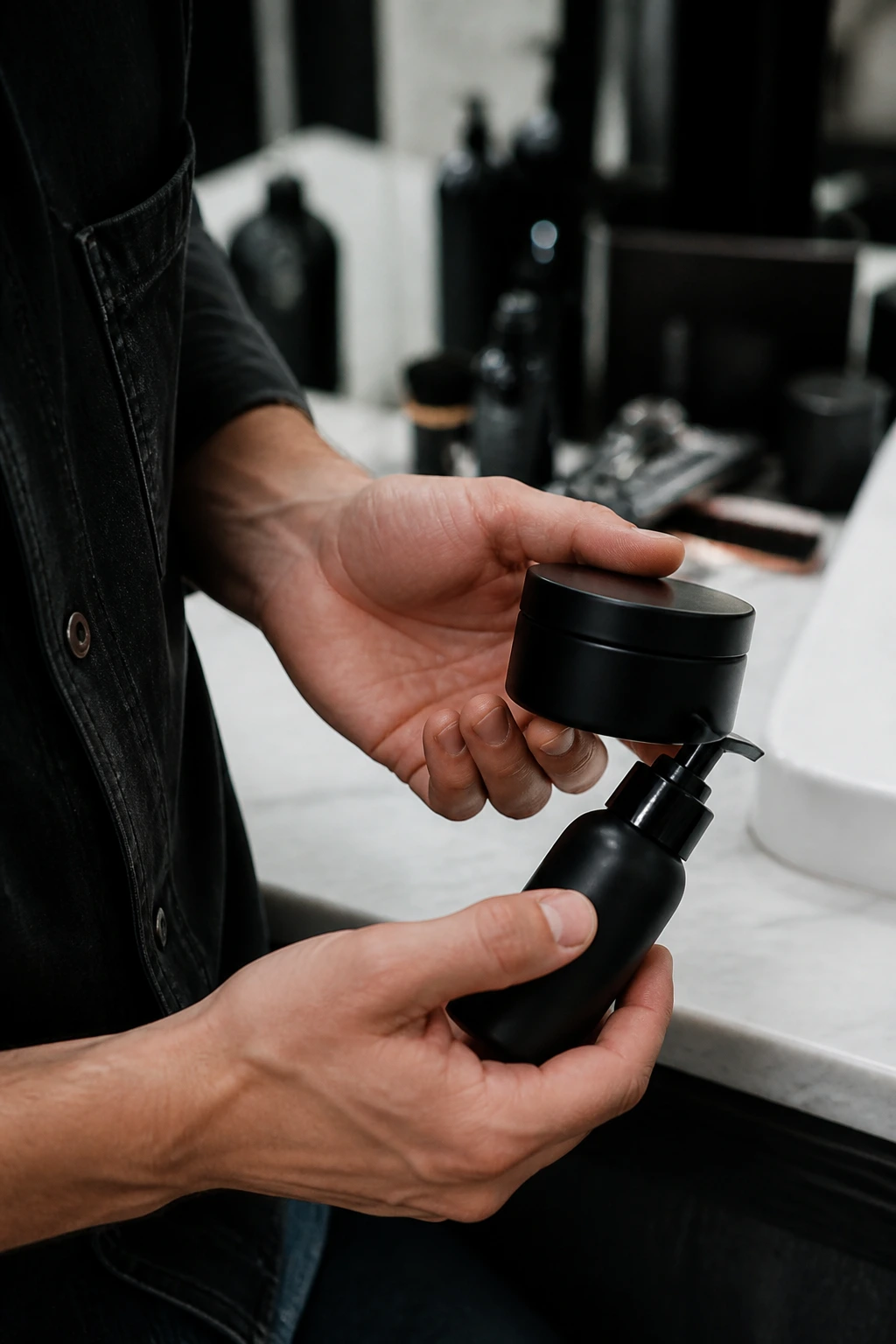
If your hair is fine, do not reach for the heaviest paste on the shelf. It will flatten the top and make braid sections slide. Sea salt spray, a light cream, and a little blow-dry lift usually do more. Fine hair needs grip, not grease.
Thick hair is the opposite problem. You need something that controls bulk without making the cut look oily. Matte clay, a texturizing cream, and clean sectioning matter here. If the hair puffs outward after two hours, ask the barber to remove weight inside the shape, not just shorten it.
Curly and coily hair can do some of the best Viking-inspired looks, but the haircut has to respect the pattern. Too much tension in braids can frizz the edges and pull the curls out of shape. A little leave-in conditioner and a soft, curl-friendly hold product usually beat anything stiff. If you’re asking a barber for one of these cuts, be specific about length on top, side cleanup, and whether you want braid room or bun room.
How to Wear These Styles in Real Life
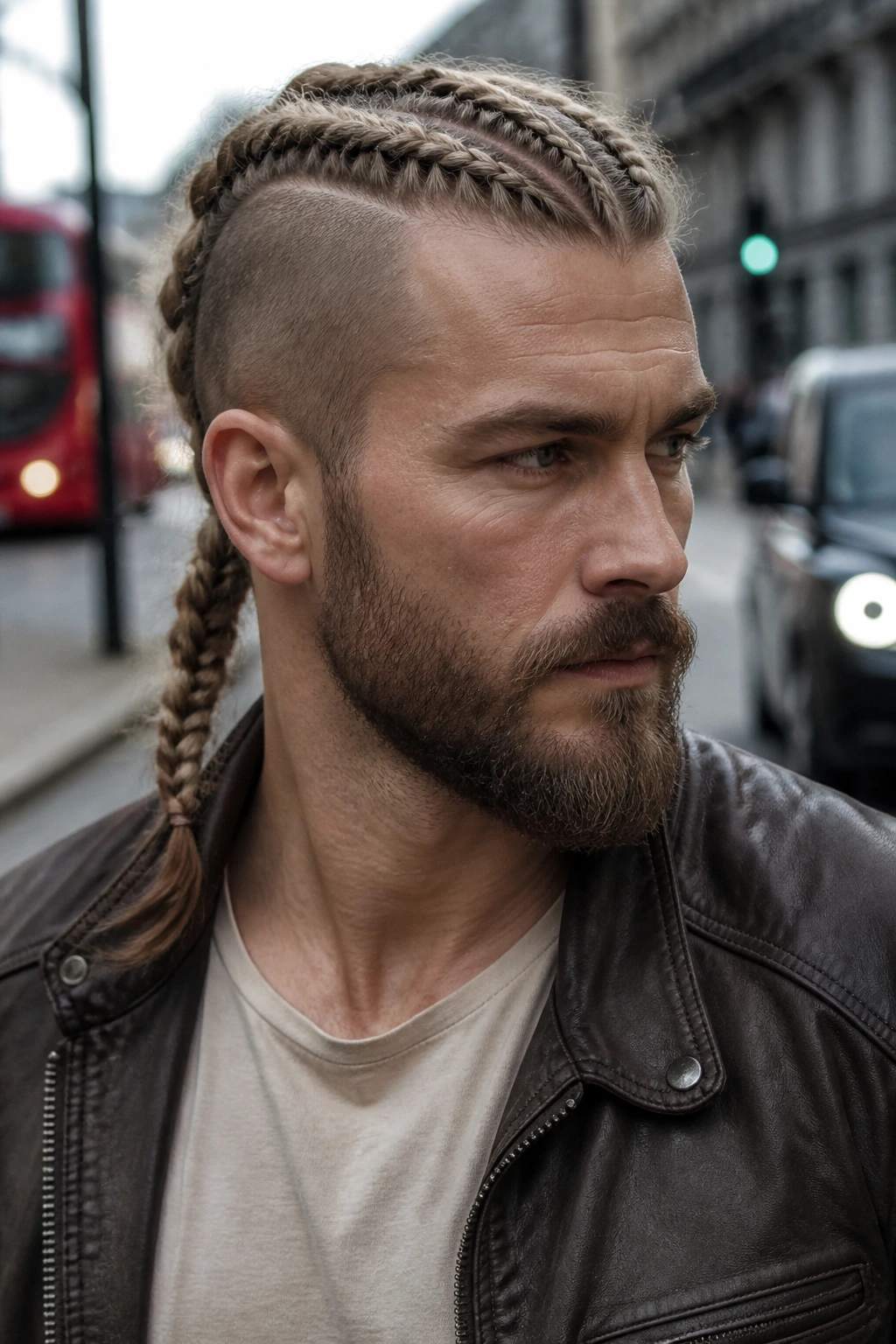
Presentation: Keep the silhouette readable from the front and the side. A Viking hairstyle looks strongest when the top has a clear shape, the sides are tidy, and the beard line does not blur into the neck.
Accompaniments: Beard, mustache, sideburns, leather jacket, henley, heavy knit, plain tee, or dark overshirt all help the style land. Glasses can work too, but they should not fight the braid or the part.
Portions: Most of these styles need 4 to 6 inches on top to start making sense, while the longer versions want 7 inches or more. If you are between lengths, go with the cleaner version first; half-grown braids tend to look awkward.
Beverage Pairing: If that label makes you laugh, fair. Think in vibe terms: coffee, lager, or whiskey-neat energy. These cuts look best in places where a little grit feels normal.
Extra Texture Tricks and Personal Tweaks
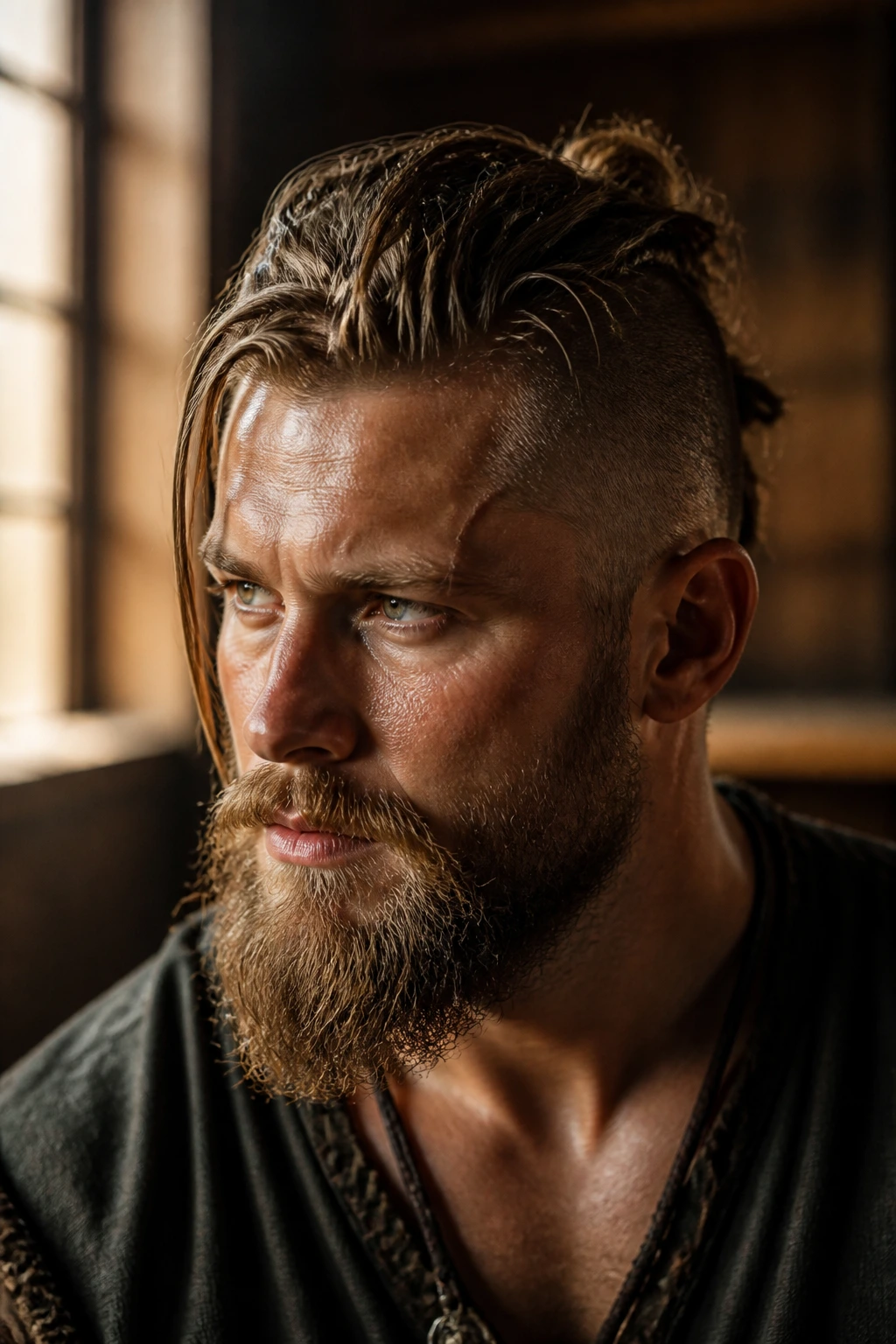
Texture Enhancement: Sea salt spray on damp hair before blow-drying gives the top a rougher, thicker feel. A small dab of matte paste at the ends can keep layers from splitting apart.
Customization: Raise or lower the fade, widen or narrow the braid, or keep more length near the temples if you want softness around the face. A small change there can turn a hard look into a quiet one.
Serving Suggestions: Beard oil, a brushed mustache, or a clean neckline can finish the style better than adding more product to the hair. If you use beads, leather wraps, or rings, keep them to one area.
Make-It-Yours: Fine hair usually looks better with shorter sides and more structure on top. Thick hair can handle bigger braids and buns. Curly hair should be allowed to bend; forcing it flat kills the best part.
Common Mistakes That Flatten the Look
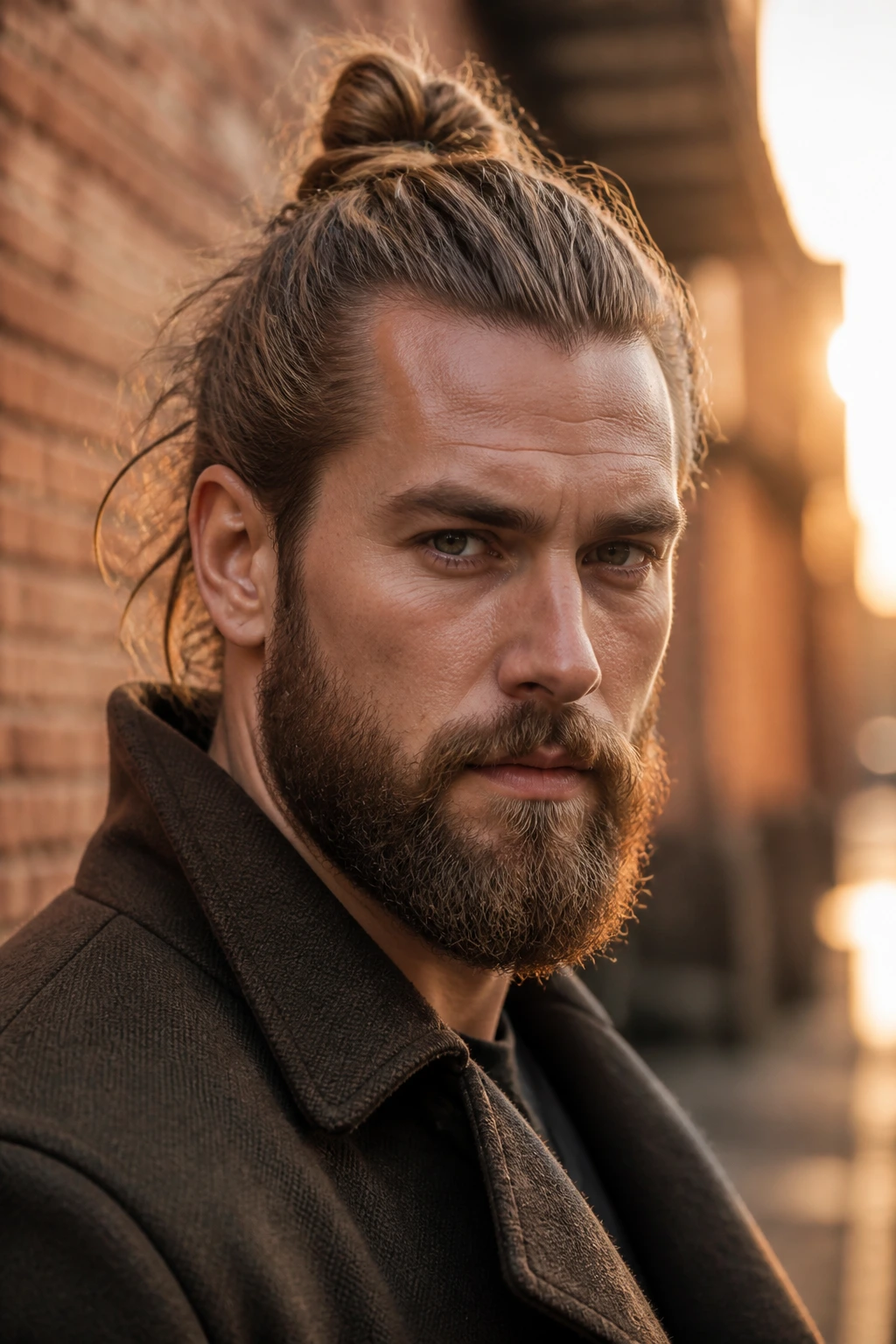
The first mistake is shaving the sides too high without enough top length to balance it. The haircut starts to look top-heavy, and the braid or bun has nothing to anchor against. The fix is simple: either keep more length on top or lower the fade.
The second mistake is drowning the hair in shine product. Viking-inspired styles need texture, and glossy hair usually reads as slick rather than rugged. Switch to matte clay, paste, or cream, then use less than you think.
Another problem is braiding hair that’s too short. It puffs apart, slips, and leaves the ends sticking out like bristles. If the hair is under 4 inches, wait or go with a twist, knot, or partial braid instead.
And yes, the beard can sabotage the whole thing if it’s ignored. A thick haircut with a scruffy, unshaped beard often looks unfinished. Clean the neckline, trim the cheek line, and make the beard work with the haircut instead of beside it.
Variations and Adaptations to Try
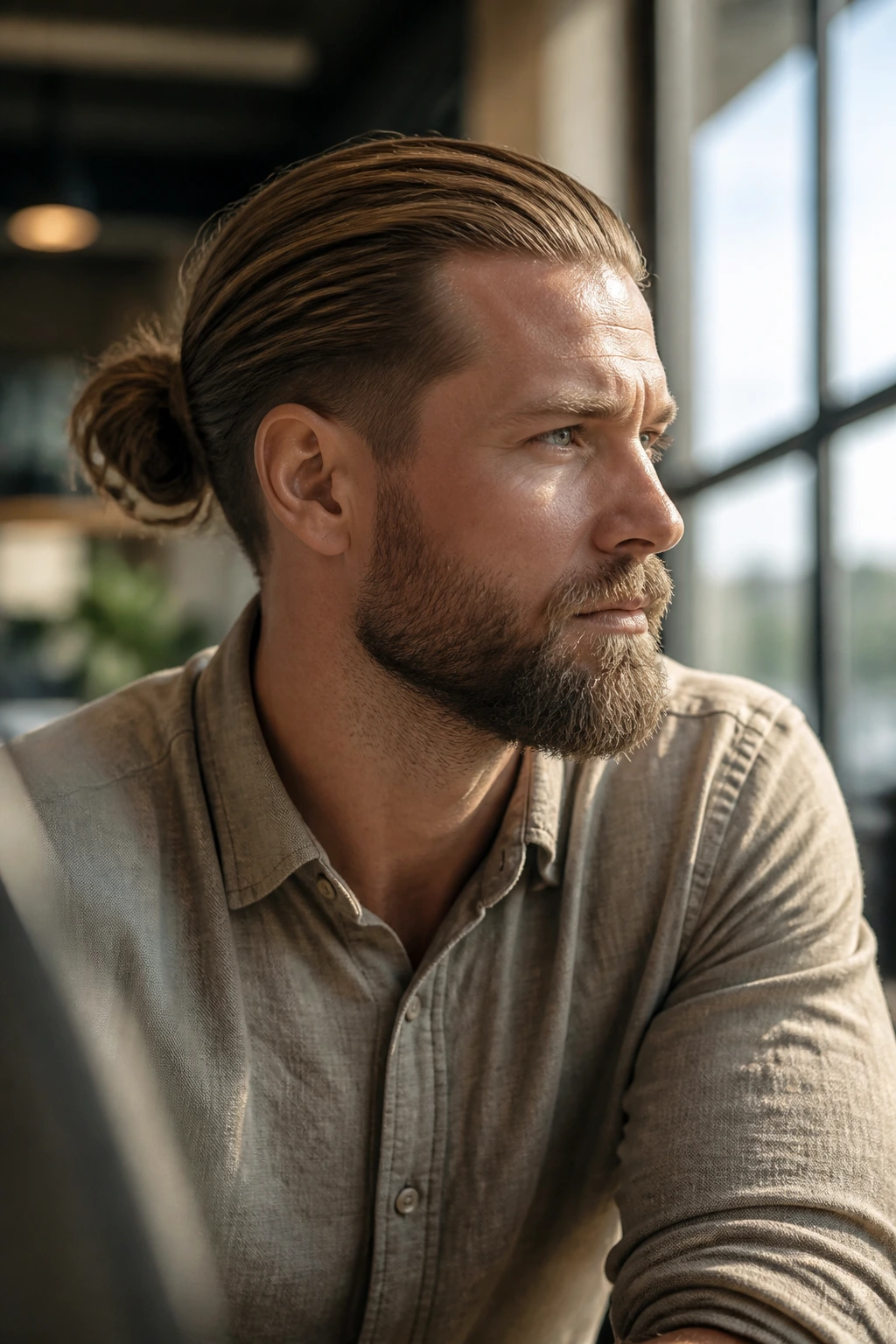
The Office-Quiet Viking: Keep the sides at a low taper, leave the top long enough for a low knot or side part, and skip beads or shaved lines. It still has weight, but it won’t pull attention in a room full of button-downs.
The Curly Shield Wall: Let curls stay loose on top, clean up the sides, and use a beard with a strong outline. This works because the curl pattern gives you the texture people usually chase with braids anyway.
The Thin-Hair Fix: Keep the sides tighter, avoid over-layering, and choose a style that gathers the hair—like a low ponytail or small knot—before it starts to look sparse. Matte powder can add lift, but heavy cream will flatten the whole thing.
The Beard-Heavy Build: Shorter hair on top, stronger beard shaping below. This is the best route when your beard is fuller than your hair, and it gives the face a stronger overall frame.
The Festival Braider: Add one braid, a few beads, or a leather wrap, then stop. The style stays personal without turning into costume hair, and it still looks like something you could wear tomorrow.
Keeping the Look Sharp Between Cuts
Long Viking-inspired hair gets better when you maintain it in small, regular ways instead of waiting for a dramatic reset. Clean the neckline every 1 to 2 weeks if you wear buns or braids. Trim the beard edges on the same schedule so the face and hair stay linked.
Braids and twists should come out every 2 to 4 days if you want to avoid tangles and stress on the roots. Leaving them in too long can dry out the hair near the base, especially around the temples. A light leave-in spray before re-braiding helps a lot.
Wash frequency depends on texture, but most guys with longer hair do well washing 2 to 3 times a week, not daily. Overwashing strips the natural grit that helps braids and knots hold. On off-days, a rinse or dry shampoo at the roots is usually enough.
Beard oil matters here too. A dry beard makes the whole look feel older than it is, and not in a good way. A few drops after the shower keep the beard soft and stop it from fighting the hairline.
Frequently Asked Questions
How long does my hair need to be for a Viking hairstyle?
You can start some of the shorter versions with 2 to 3 inches on top, especially if you’re doing a textured crop or temple cleanup. For braids and buns, 4 inches is the floor, and 6 inches or more gives you better hold.
Can short hair still look Viking-inspired?
Yes, if the beard and side cleanup do some of the work. A short crop with a beard, temple fade, or textured quiff can still carry the feel without pretending to be long hair.
Do these styles work on curly hair?
They do, but the haircut has to respect the curl pattern. Curly hair usually looks best in looser shapes, shorter braids, or controlled volume on top instead of tight, over-pulled styles.
How do I stop braids from slipping out?
Start with hair that has a little grit, not freshly conditioned silk. Sea salt spray, small sectioning, and clear elastics at the end help more than heavy gel, which often makes the braid slide instead of hold.
Is a beard required for Viking hairstyles?
No, but it changes the balance. A beard helps ground looser, longer styles, while clean-shaven faces usually need sharper sides or stronger structure on top to keep the haircut from feeling incomplete.
What should I tell my barber?
Say how much length you want left on top, whether you want a fade or taper on the sides, and if you need braid room or bun room. That simple language saves a lot of confusion and keeps the cut from being too short where it matters.
How often should I trim one of these styles?
Most need a clean-up every 3 to 5 weeks, especially if you’re keeping the sides short. If you wear braids, buns, or an undercut, the neckline and temple edges will show growth faster than the length itself.
What if my hairline is receding?
Choose styles that use the beard and sides to build balance, like a short crop, textured top, or low knot. Avoid pulling the front too tight, because that exposes the hairline more than you want.
A Better Way to Wear Viking Hair
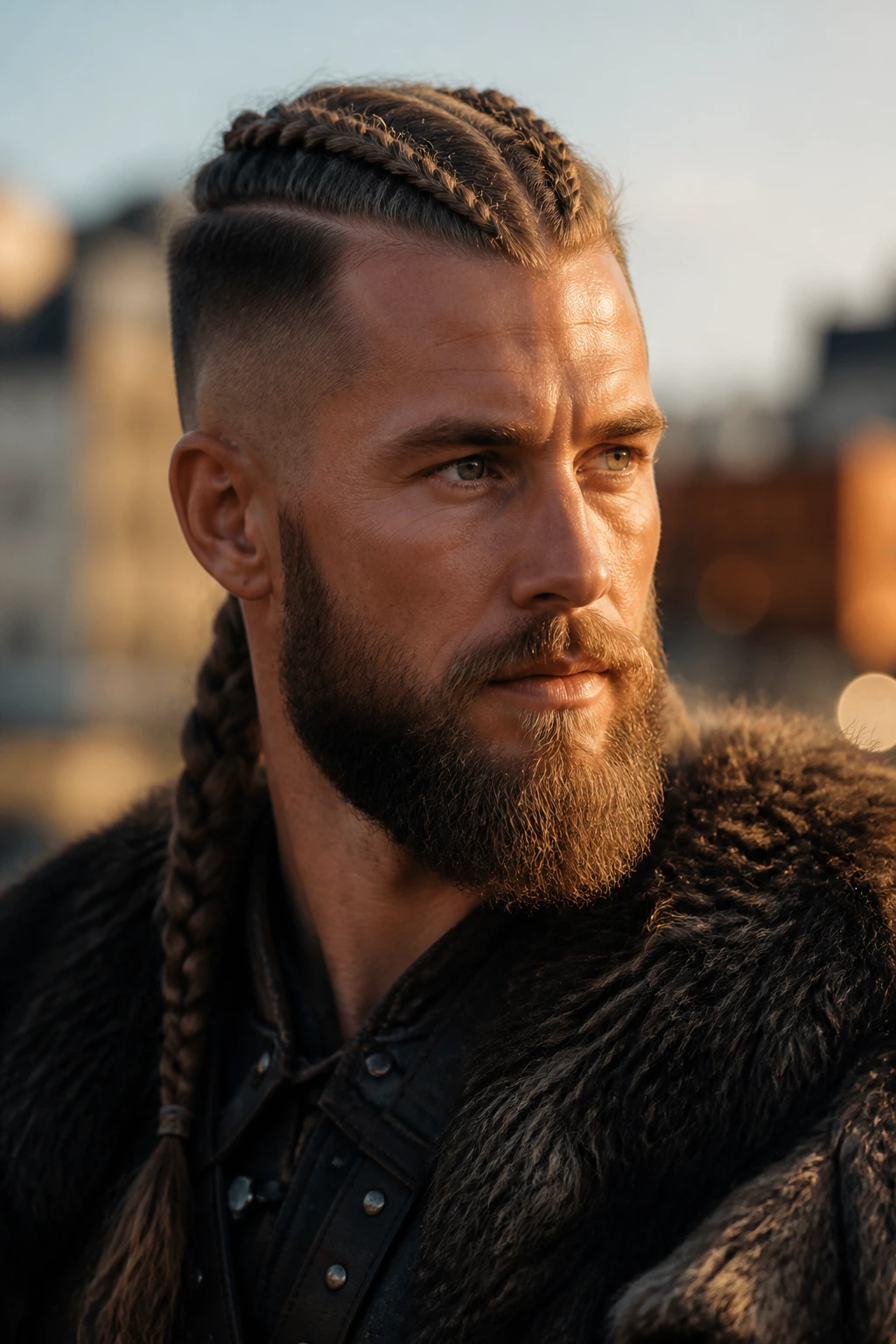
The strongest Viking hairstyles for men are not the loudest ones. They’re the ones with the right weight in the right place: a braid that actually holds, a fade that supports the top, a beard that finishes the shape, and enough texture to keep everything from looking glued down.
That’s the real sweet spot. Not historical cosplay. Not a random undercut with a bit of product. Just a cut that looks like it could take a little weather and still keep its form.
If you’re choosing one to try first, start with the style that matches your actual length and your daily routine. The best version is the one you can wear for a week, not just for a mirror photo.
