



Wavy hair has a sneaky advantage: it gives you movement before you add a single product. Straight hair often needs help to look interesting; wavy hair arrives with shape already built in, then asks for a cut that doesn’t ruin the line. The best wavy hairstyles for men don’t fight that bend. They leave enough length for the wave to show up, then tighten the sides so the whole thing looks deliberate instead of accidental.
That’s where a lot of bad advice goes sideways. Too many cuts treat wavy hair like it’s either straight or curly, which is how you end up with a flat top, a puffed-out crown, or a fringe that keeps poking into your eyes at the worst possible angle. Wavy hair has memory. It lifts. It separates. It also changes character once it dries, so what looks tidy in the barber’s chair can turn into something with a lot more attitude by lunchtime.
If you’ve ever wondered why one haircut makes your waves look expensive and another makes them look like you got caught in a light wind tunnel, the answer is usually in the length, the weight left at the crown, and the finish you choose. That’s the whole game, really. Get those three right, and the texture does half the styling for you.
Why This Collection Works for Wavy Hair

- The bend does the styling: A little wave gives each cut movement without needing a pile of product, which keeps the hair from looking stiff or glued down.
- Short and long options both work: Wavy hair can look sharp with a crop or relaxed with a bro flow, as long as the sides and top are balanced.
- The crown gets respect: These styles leave room for the natural swirl at the back of the head, which is where a lot of bad cuts fall apart.
- Face shape matters less than people think: Waves can soften a square jaw, stretch a round face, or stop a long face from looking too narrow on the sides.
- Most of these are salon-friendly and barber-friendly: You can ask for them with exact length, taper, and finish notes instead of waving your hands around and hoping for the best.
1. Textured Wavy Crop
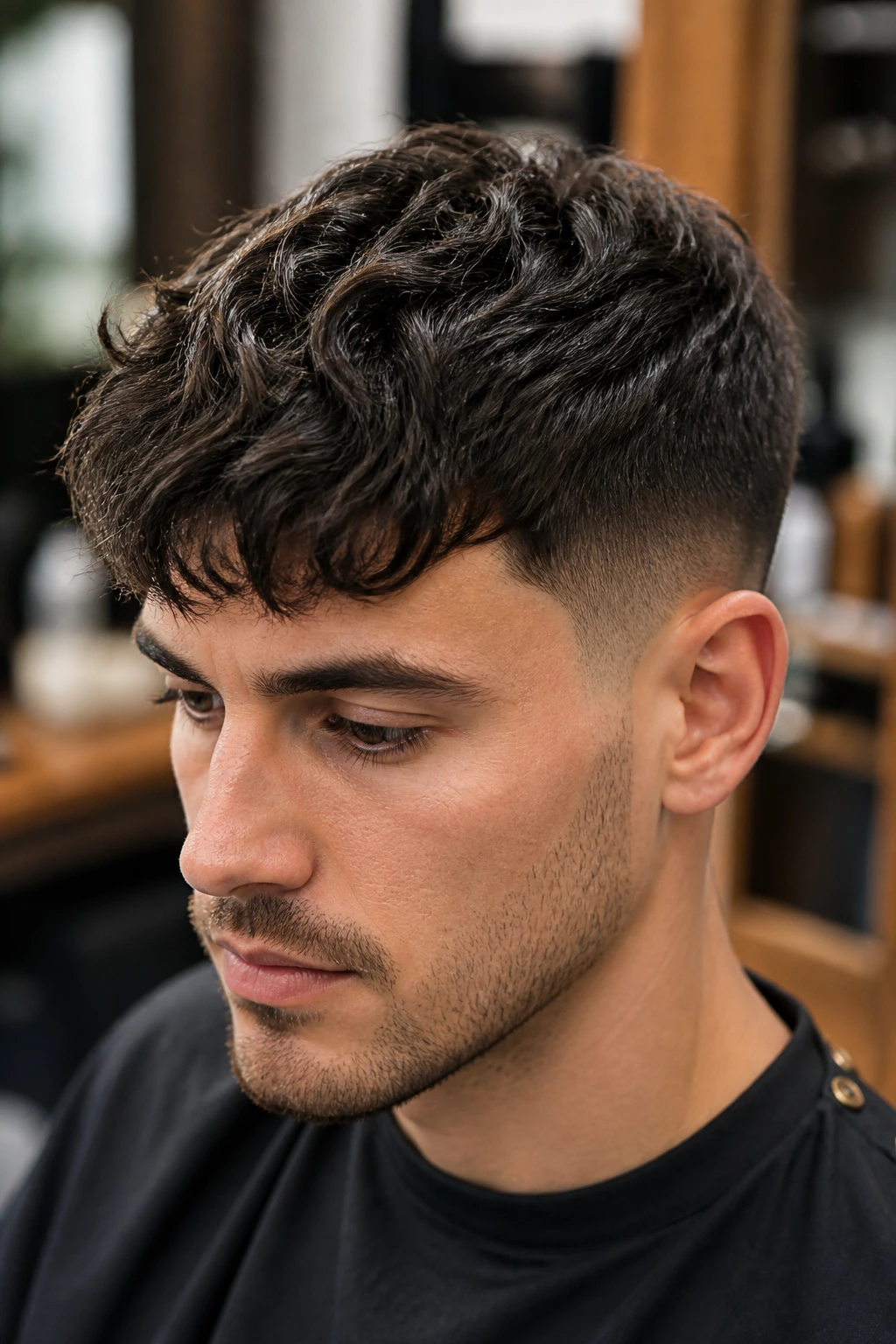
This is the haircut that makes wavy hair look clean without sanding off its personality. Keep the top around 1.5 to 2.5 inches, leave enough length for the wave to break, and taper the sides tight enough that the shape stays tidy. It’s sharp, practical, and a little forgiving if your morning routine is short on patience.
Why it works: The crop keeps the wave visible at the front, where movement matters most, while the shorter sides stop the hair from ballooning out. A matte clay rubbed through damp hair gives the cut a lived-in finish instead of that crunchy helmet effect. If your hair is medium to thick, this is one of the easiest ways to make the bend look intentional.
- Best for: Guys who want something neat but not stiff.
- Styling move: Push the top forward with your fingers, then pinch a few pieces up at the front.
- Maintenance: Clean up the sides every 3 to 4 weeks.
Bold tip: Leave the crown a touch longer than the front if your hair grows up and back.
2. Curtain Fringe With a Soft Middle Part

Why do curtain bangs keep showing up on wavy hair? Because the wave naturally bends away from the face and gives the part some shape without needing a hard line. Keep 3 to 5 inches on top, let the fringe fall just to the brows or slightly below, and ask for a soft center part rather than a carved trench down the middle.
Why it works: Wavy hair creates that loose split on its own, especially when the fringe is light and layered. A small amount of lightweight cream or mousse keeps the strands from frizzing apart. This cut is good if you want movement around the forehead without the bluntness of a straight fringe.
Best use
- Face shape: Round, oval, and longer faces all wear this well.
- Product: Cream or mousse, not heavy wax.
- Finish: Air-dried or diffused for a softer line.
One-line note: If your hair flips awkwardly near the temples, ask for those corners to be thinned slightly, not chopped blunt.
3. Loose Bro Flow

The bro flow works because it accepts that wavy hair wants to move backward and outward. Instead of forcing a polished side part, you let the hair sit from about ear to collar length, with soft layers that prevent the ends from turning into one heavy curtain. It looks better when it’s a little imperfect.
Why it works: The bend in wavy hair gives this style lift through the top and a natural swing through the sides. You do not need a ton of product here; in fact, too much makes the flow look greasy and stiff. A leave-in conditioner plus a small amount of cream is usually enough.
- Best for: Medium-density hair and guys who don’t want a daily battle.
- Styling move: Scrunch while drying, then run fingers through once.
- Watch for: A flat crown. Ask for light layering there.
Bold tip: If the ends start looking triangular, the layers are too blunt and need softening.
4. Wavy Side Part

A side part on wavy hair can look either sharp or painfully dated. The difference is how much structure you leave in the top. Keep 2.5 to 4 inches up top, ask for a low or mid taper on the sides, and make the part feel natural rather than etched in with a razor.
Why it works: Waves break up the hard line of a side part, so the cut reads more relaxed than a straight-hair version. That makes it a strong choice for work settings where you want polish but not stiffness. A touch of light pomade or cream gives the wave enough control without flattening it.
What to ask your barber
- Keep the top layered, not boxy.
- Preserve a little weight on the side with the part.
- Avoid taking the fade too high if your hair is thick.
One-line note: The part should guide the hair, not bully it.
5. Modern Quiff With Natural Bend
This is the cut for men who want height but don’t want their hair to look frozen in place. The front should have enough length to lift—usually around 3 to 4 inches—while the sides stay tight and clean. The wave does the rest if you style it the right way.
Why it works: Wavy hair gives the quiff texture that straight hair has to fake with extra product. Blow-dry the front up and back with a nozzle, then work in a small amount of matte paste once it’s mostly dry. The result should have shape, not shine.
The mistake people make is trying to build a skyscraper. Don’t. Keep the volume controlled and a little uneven at the front; that’s what makes it look natural rather than plastic.
Bold tip: A round brush helps, but your fingers can do the job if you want a looser finish.
6. Medium Shag
The medium shag is what happens when wavy hair gets to be itself and still looks planned. Layers fall around the cheekbones and ears, the ends stay soft, and the whole cut has that slightly windswept edge that looks better with some texture in it. It’s one of the few cuts that gets nicer when it’s not perfect.
Why it works: Layers remove weight from thick waves, which keeps the hair from collapsing into a puffy triangle. A bit of sea salt spray on damp hair roughs up the surface and makes the movement visible. If your waves are strong but not curly, this cut can be a sweet spot.
- Best for: Thick hair, bigger heads of hair, and anyone who likes movement.
- Styling move: Air-dry halfway, then scrunch in a cream.
- Maintenance: Ask for layer cleanup before the ends get shaggy in a bad way.
One-line note: The shag only works when the layers are soft, not chopped like a lawn.
7. Wavy Slick Back
A slick back on wavy hair should never look like helmet hair. The trick is to keep enough bend on top so the hair still has some life, then use a low-shine product that holds the hair back without locking every strand into the same place. This works best when the top is 4 inches or longer.
Why it works: Waves naturally create a little height and direction, so you’re not forcing the hair into submission. A comb can help, but fingers usually give a better finish because they keep the separation. I’d pick this for men who want sharper lines without losing texture.
Styling note
- Start with damp hair.
- Apply a small amount of cream or light pomade.
- Push hair back with your hands first, then smooth the top lightly.
Bold tip: If your hairline is strong, keep the front a bit loose instead of slicking it flat against the scalp.
8. Low Taper With Brushed-Forward Waves
This cut gives you clean edges and a soft, forward-moving top, which is a nice combination if your hair likes to stand up in the wrong places. The low taper keeps the ears and neckline tidy while the top stays around 2 to 3 inches so the wave can sit forward and slightly broken up.
Why it works: Brushing waves forward can tame a wide forehead and keep the style from looking too tall. It also works well with coarse hair because the forward direction fights that upward puff. A little sea salt spray or mousse before drying helps the bend sit where you want it.
The forward sweep should look easy. If it looks like you worked too hard, you probably did.
One-line note: Ask your barber not to take the top too short at the front, or the wave will lose its shape.
9. Messy French Crop
The French crop is all about the front edge, and wavy hair gives that edge some personality. Keep the fringe blunt enough to feel defined, but not so blunt that it sits like a ruler across your forehead. Short sides and a textured top make the whole cut feel crisp.
Why it works: The wave breaks up the heaviness of the fringe, which stops the crop from looking too severe. It’s one of the easiest styles to wear if you want low morning effort and don’t mind a little fringe on the brow. A matte paste is the right product here; shiny stuff kills the point.
- Best for: Busy routines and shorter foreheads.
- Styling move: Push the top forward with your palms, then separate the fringe with two fingers.
- Watch for: A flat front line. Keep some choppiness.
Bold tip: If your hair gets frizzy, work product into damp—not dripping—hair.
10. Shoulder-Length Layered Waves

This is where wavy hair stops being “styled” and starts looking like it has its own rhythm. Shoulder-length layers keep the bulk from getting triangular, and the extra length lets the wave move through the whole cut instead of just the top. It needs more patience, but it pays you back.
Why it works: Longer wavy hair gets that rolling motion that shorter cuts can only hint at. Layers around the jaw and neck stop the ends from dragging the whole shape down. A leave-in conditioner is worth keeping around because longer wavy hair can dry out along the ends before it looks dry anywhere else.
This cut is not for someone who hates hair touching the collar.
One-line note: If your hair starts knotting at the nape, the layers are too heavy or the ends need a trim.
11. Ivy League With a Wavy Top

The Ivy League is a cleaner cousin to the side-part look, and waves stop it from feeling too neat. Keep the top around 2.5 to 4 inches, taper the sides, and give the front enough length to comb with a bit of bend rather than pinning everything flat. It’s a strong office cut.
Why it works: The shape stays controlled while the wave keeps it from looking stiff. You can wear it with a side sweep or a soft brush-back, and both versions still feel professional. A little cream or light mousse is enough unless your hair is especially coarse.
Best for
- Men who want a tidy cut with some personality.
- Hair that needs structure but not a hard shell.
- Face shapes that benefit from some height up top.
One-line note: Ask for the top to be “scissor-cut with texture,” not clipped into a flat block.
12. Wavy Fringe and Taper Fade
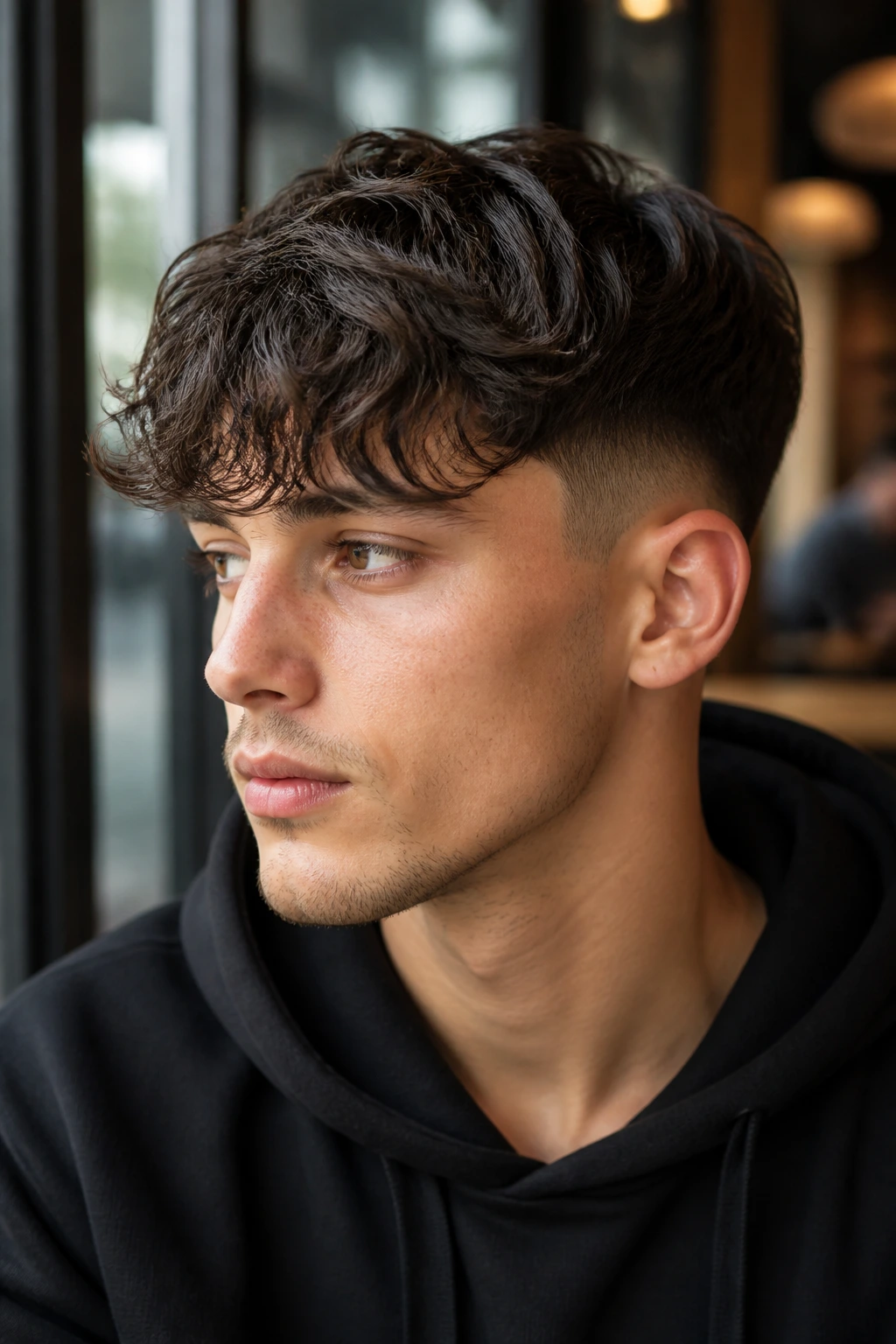
This cut puts the movement right at the front, which is where a lot of men either love their wave or curse it. The fringe should skim the brows, not sit in them, and the taper fade keeps the sides clean enough that the front can do the talking. Keep the top in the 3 to 4 inch range.
Why it works: A wavy fringe has built-in separation, so it looks relaxed instead of helmet-like. The taper fade adds contrast without making the style feel too extreme. It’s a good pick if you want a modern shape that still works without heavy styling every morning.
Bold tip: If the fringe keeps splitting weirdly, have your barber soften the center point instead of cutting it shorter.
13. Middle Part Flow

The middle part flow is a little more grown-up than curtain fringe and a little more relaxed than a classic side part. It needs enough length—usually 4 to 6 inches on top—to let both sides fall evenly, with the wave creating that easy, split curtain shape. Nothing about it should look overmanaged.
Why it works: Waves naturally create movement away from the center, which keeps the part from looking too perfect. That soft unevenness is the charm. A cream with light hold is better than anything sticky, because sticky product makes the part freeze in place and kills the flow.
A middle part can look blunt if the sides are too tight. Keep some weight there.
One-line note: This cut looks best when the top and sides feel like they belong to the same haircut, not two different ones.
14. Wavy Undercut
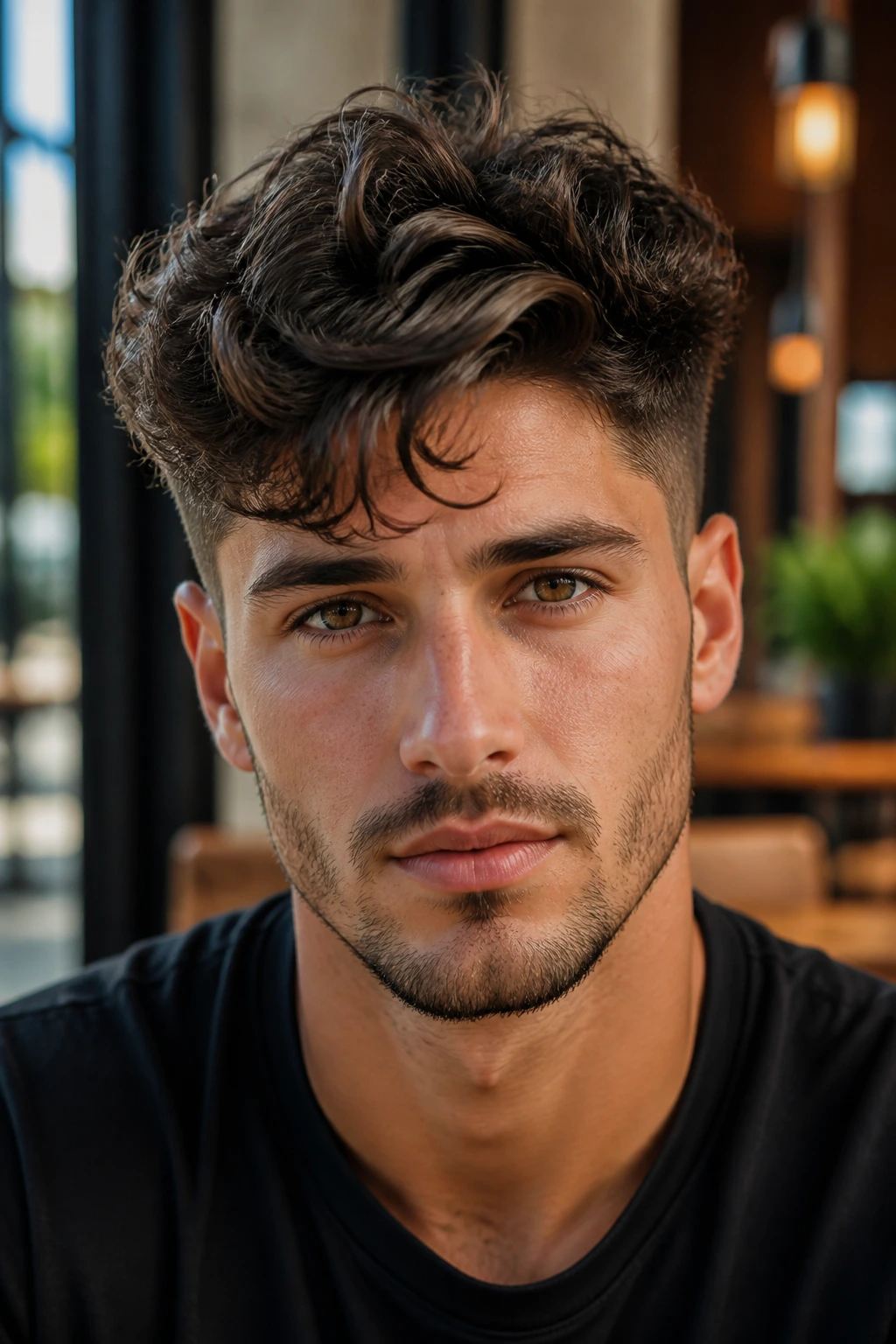
An undercut on wavy hair brings the contrast. Short or disconnected sides make the top stand out hard, which is useful if your hair has a strong bend and you want the texture to feel louder. The top needs enough length to move—about 3 to 5 inches is the sweet spot.
Why it works: Wavy hair already has movement, so the undercut frames it instead of competing with it. It’s a sharper look than a taper, and it reads more fashion-forward if you keep the top loose and touchable. Just know this one needs regular styling; if you leave it alone, it can turn into a triangle fast.
What to watch for
- Don’t take the sides so short that the top looks stranded.
- Keep the crown blended enough to avoid a hard shelf.
- Use matte paste or clay rather than anything glossy.
Bold tip: If your wave is loose, the undercut will look cleaner than if your hair is tight and dense.
15. Side-Swept Medium Length

This cut is for men who want movement but not the full curtain-fringe look. Sweep the top to one side with enough length to keep the wave visible, and let the ends fall near the cheekbone or ear. It’s polished in a quiet way, which is useful if you don’t want a haircut shouting for attention.
Why it works: Wavy hair is naturally good at soft diagonal lines, and the side-sweep uses that strength instead of fighting it. A blow-dry from the root to the sweep side gives the shape a little memory. Use a lightweight cream if your hair tends to frizz when brushed across the forehead.
The key is softness. Hard edges make the wave look confused.
One-line note: A side sweep looks best when it’s not a perfect comb-over.
16. Surfer Mop

The surfer mop has that loose, slightly unruly shape that looks better when it’s lived in. It usually sits longer around the ears and neck, with enough length on top to let the wave bend forward and out. This is the haircut for guys who don’t want to feel like they’re babysitting their hair.
Why it works: Wavy hair already carries the undone texture this cut needs. A little salt spray and air-drying go a long way, and too much product only makes it feel overworked. It suits thick waves especially well because the weight helps the style fall instead of puffing.
This cut can look great on Monday and a little feral by Friday. That’s the deal.
Bold tip: Keep the ends cleaned up every so often, or the style will slide from “surfer” into “forgot to schedule a trim.”
17. Short Waves With a Temple Fade
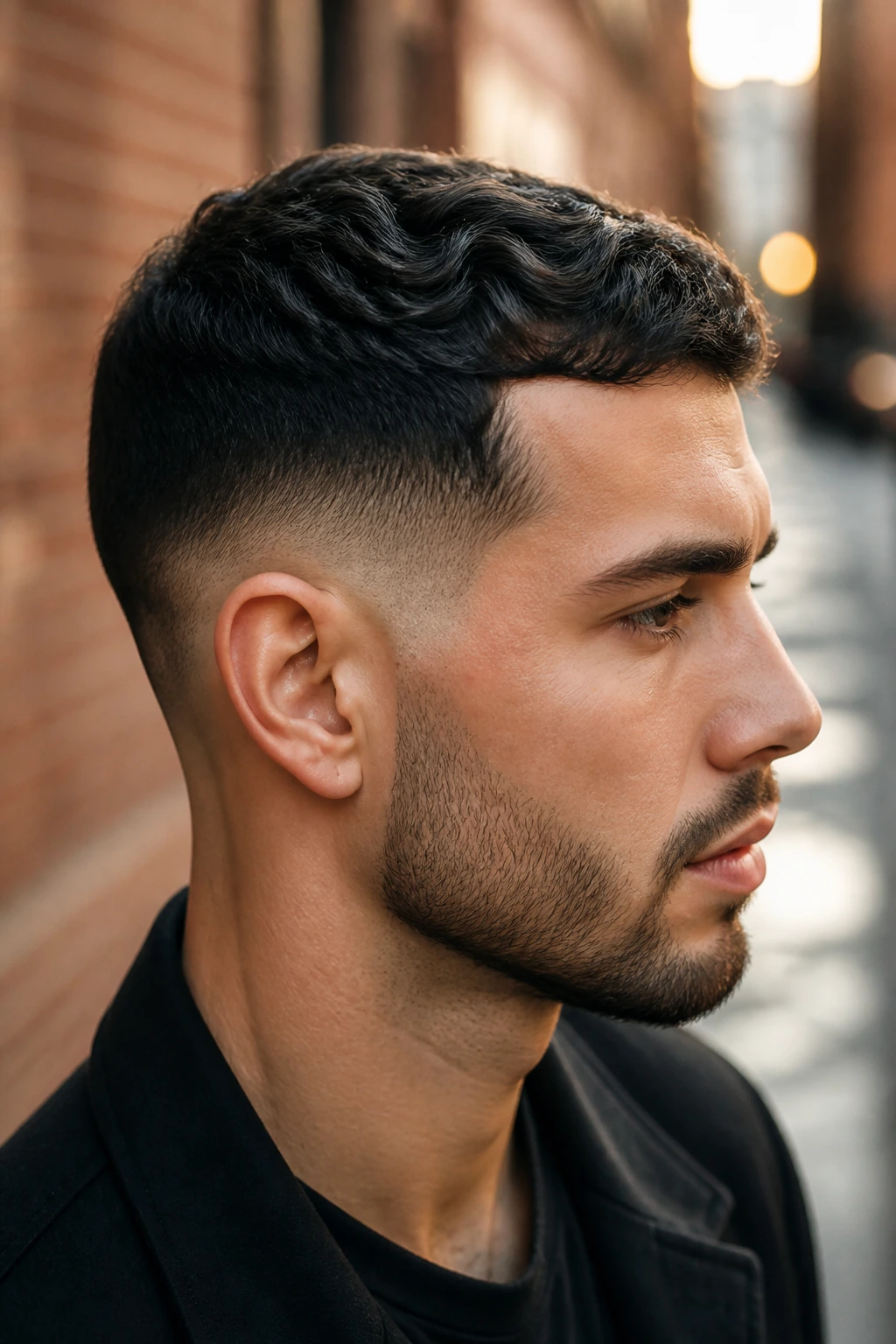
Short waves with a temple fade are for men who want texture without extra length hanging around. The top stays short enough to be easy, usually around 1.5 to 3 inches, while the fade around the temples sharpens the outline. It’s a clean look that still shows the pattern in the hair.
Why it works: The temple fade draws attention to the wave on top by giving the haircut a crisp frame. That contrast makes the style look intentional even when you use almost no product. It’s especially good if your hair is dense and tends to puff at the sides.
- Best for: Hot weather, gym schedules, and low-maintenance mornings.
- Styling move: Use a tiny amount of paste and ruffle it forward.
- Maintenance: Temple areas need cleanup sooner than the top.
One-line note: Short waves look best when they’re textured, not buzzed to the point of disappearing.
18. Wave-Forward Pompadour

A pompadour with wavy hair should feel lifted, not lacquered. Keep the front long enough to rise—about 4 inches or more—then brush it up and slightly forward so the wave creates a soft ridge instead of a flat wall. A medium-hold mousse under a matte product helps the shape stay up without looking wet.
Why it works: The wave adds body right where the pompadour needs it most. Straight hair often needs a lot of product to get this effect; wavy hair does a chunk of the work on its own. The trick is to keep the sides tight and the top clean, or the style starts looking wide instead of tall.
Bold tip: If your hair is fine, blow-dry the roots first. Don’t wait until the hair is fully dry or the height will collapse.
19. Wolf Cut for Wavy Hair

The wolf cut sounds wild because it is, a little. It uses choppy layers, a fuller crown, and more length around the nape, which gives wavy hair a rougher, rockier shape. The point is not neatness; the point is controlled chaos.
Why it works: Wavy hair loves mixed lengths because they let the texture stack and separate in different directions. That makes the cut feel fuller without making it bulky. It’s a strong choice if your hair is thick and you want movement without a classic salon finish.
The wolf cut can get too fluffy if the layers are too short. Keep the heaviness in the bottom half so the shape has some weight.
One-line note: This is one of the few cuts where “messy” is not an insult.
20. Combed-Back Waves
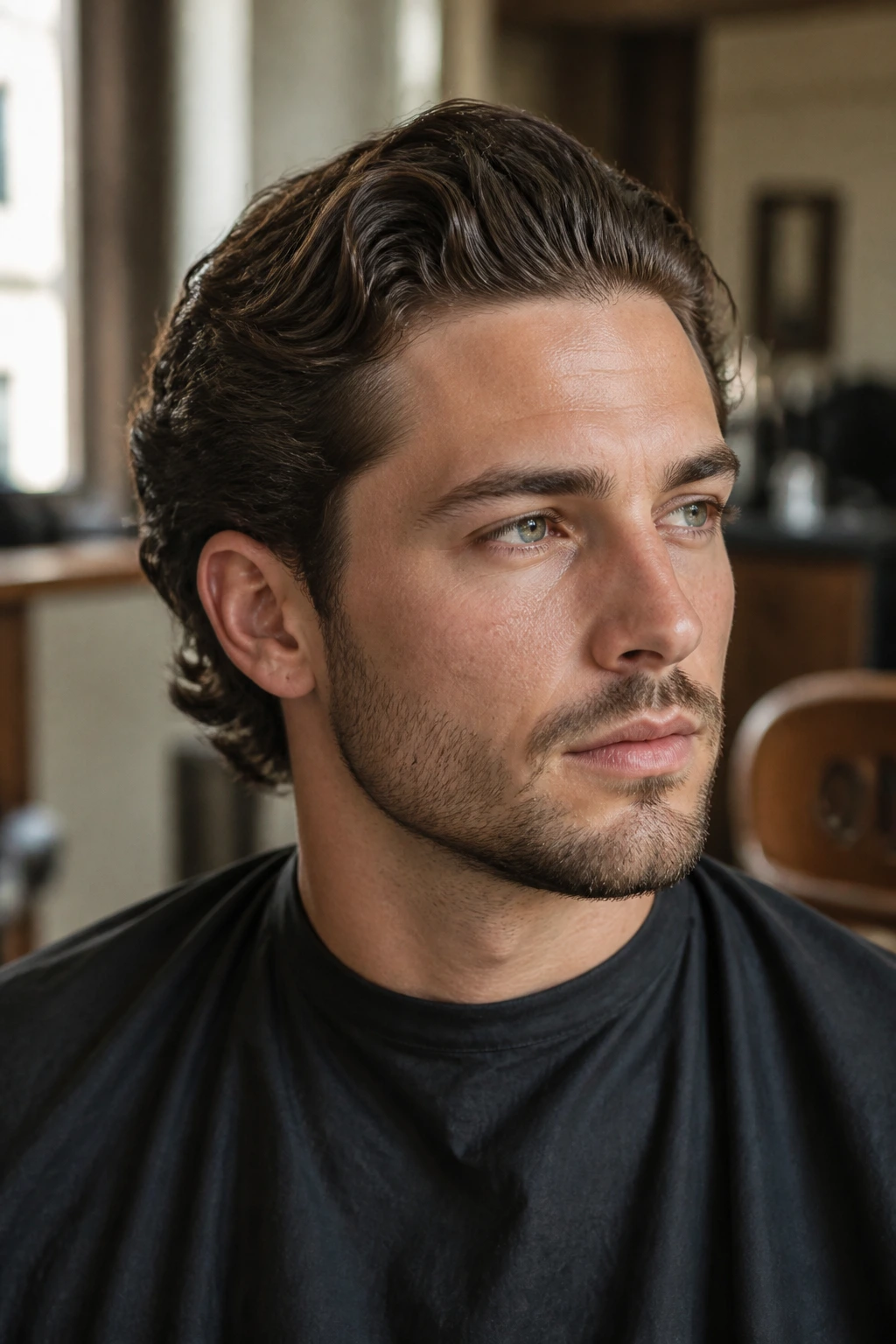
Combed-back waves sit somewhere between the slick back and the bro flow. The difference is that you keep the texture visible instead of smoothing it into a flat surface. Use a wide-tooth comb or your fingers, brush the hair back from damp, and stop before it loses its bend.
Why it works: Wavy hair likes soft direction, and this style gives it just enough. It reads clean without becoming shiny or severe, which is why it works for men who want polish but don’t want the hard look of a formal slick back. A light cream or grooming lotion is usually enough.
Good to know
- Keep the sides tapered rather than aggressively faded.
- Leave a little length in the front for movement.
- Don’t overload product, or the wave disappears.
One-line note: The best combed-back wave still looks touchable.
21. Loose Caesar Cut

The Caesar cut gets better when the top has a bit of bend. Keep the fringe short and forward, but not chopped into a rigid line, and let the texture show around the front edge. This style can help if your hairline is starting to recede or if you simply want less fuss.
Why it works: Wavy hair breaks up the uniformity of the Caesar, which keeps it from looking too severe. The texture also gives the front a little lift, so the cut doesn’t sit dead against the forehead. A matte paste gives enough grip to keep the fringe in place without turning it shiny.
This one lives or dies by the front line. Get that wrong, and the whole thing feels off.
Bold tip: If the fringe clings too close to the scalp, ask for a tiny bit more length in the center.
22. Long Layers and a Beard Blend
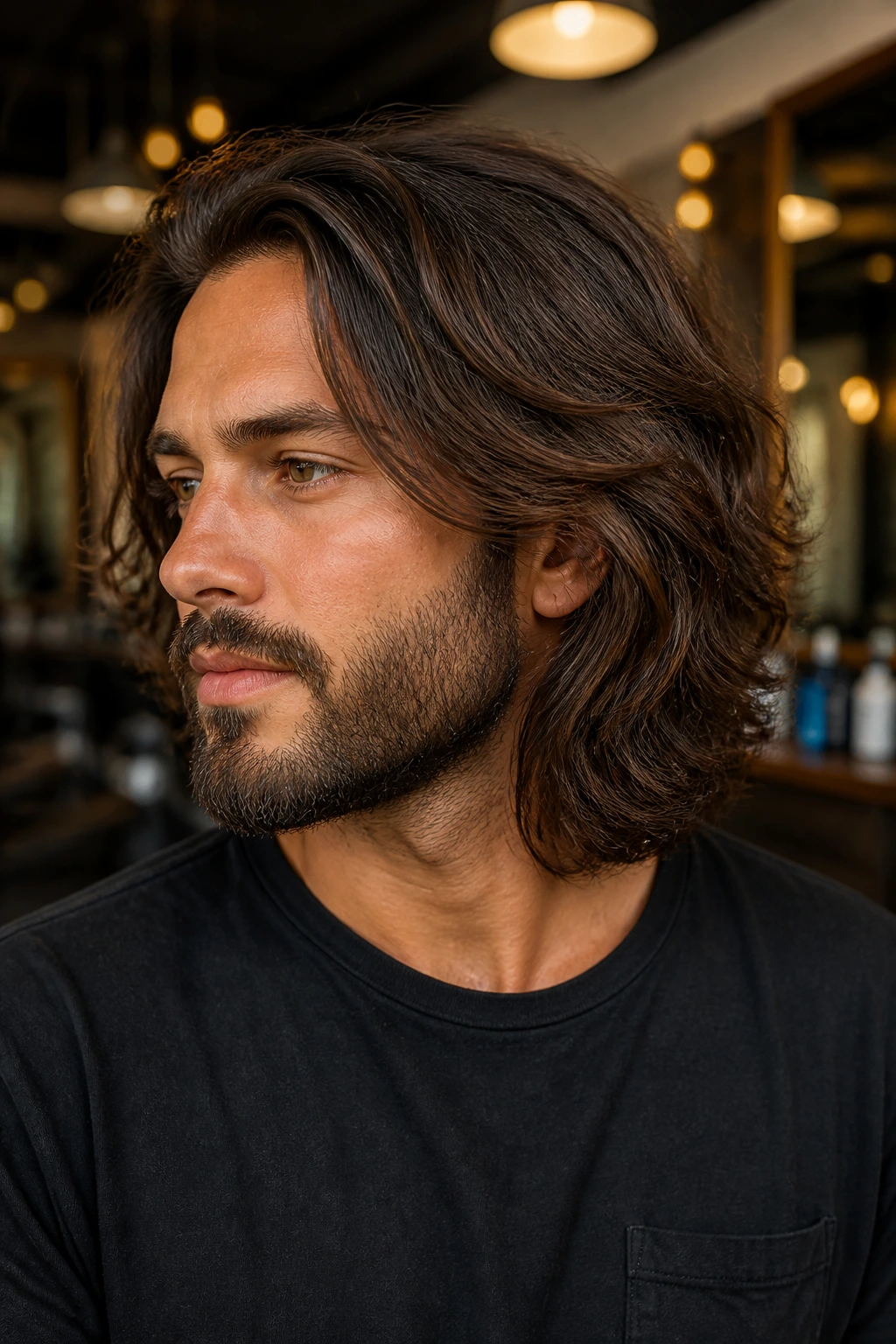
Long wavy hair paired with a beard can look messy in the best way or heavy in the worst way. The answer is a soft blend through the sideburns and jaw, plus layers that keep the hair from hanging like a curtain all around the face. The top and the beard should feel related, not separate.
Why it works: Waves soften the transition from hair to beard, which helps the whole look feel intentional. Layers around the chin and collarbone keep the length from pulling the face down. If the beard is thick, ask for the neckline to stay clean so the hair doesn’t drown it.
This is the kind of cut that needs a barber who understands balance.
One-line note: If the beard is short, keep the hair a little shorter too, or the proportions can get awkward fast.
23. Wavy Mullet
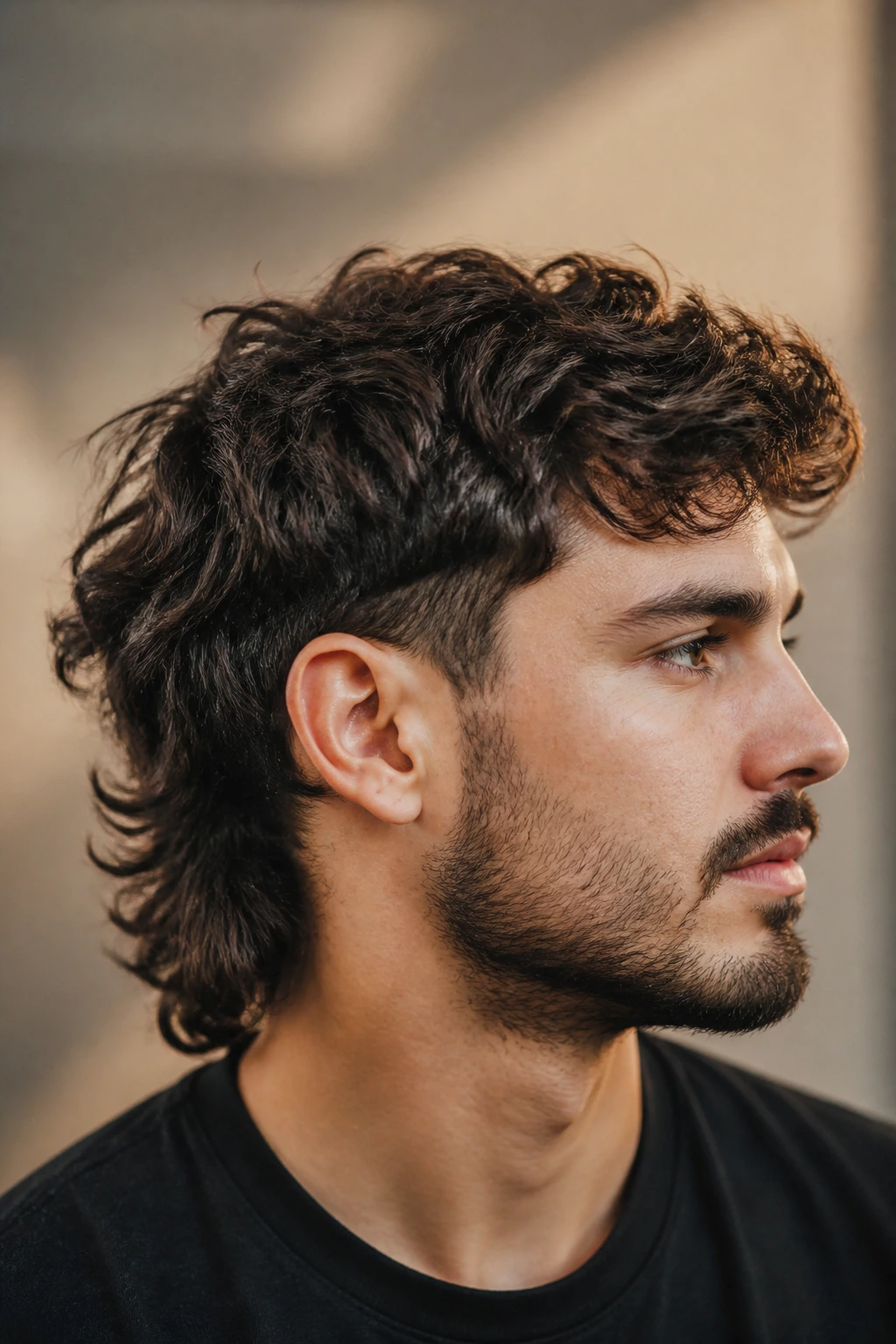
The wavy mullet has more range than people give it credit for. Keep the front and sides shorter, leave length in the back, and let the wave bridge the two so it doesn’t look like two separate haircuts stitched together. A modern version usually includes a taper around the ears.
Why it works: Waves keep the mullet from looking too flat or too rigid. The front can stay textured and loose, while the back gets movement that makes the longer length feel less severe. It’s a good cut if you want edge, but not a costume.
The difference between cool and clunky is usually in the blend. The transition has to breathe.
Bold tip: If the back feels heavy, trim the internal layers before you cut the length itself.
24. Asymmetrical Fringe

This cut takes one side of the fringe a little longer than the other, which sounds subtle until you see how much shape it gives the face. Wavy hair is perfect for it because the wave already wants to drift unevenly. The result feels deliberate without looking overdrawn.
Why it works: An asymmetrical fringe can hide a cowlick, soften a strong forehead, or make a haircut feel less predictable. The longer side should sweep with the wave, not sit like a curtain. A light cream is enough; heavy wax turns the asymmetry into a clump.
What makes it work
- The longer side should look natural, not chopped off-center for shock value.
- The shorter side needs enough texture to avoid looking thin.
- A dry cut often helps barbers see the line better.
One-line note: This is a good fix if one side of your hair always behaves differently from the other.
25. Classic Taper With a Natural Part
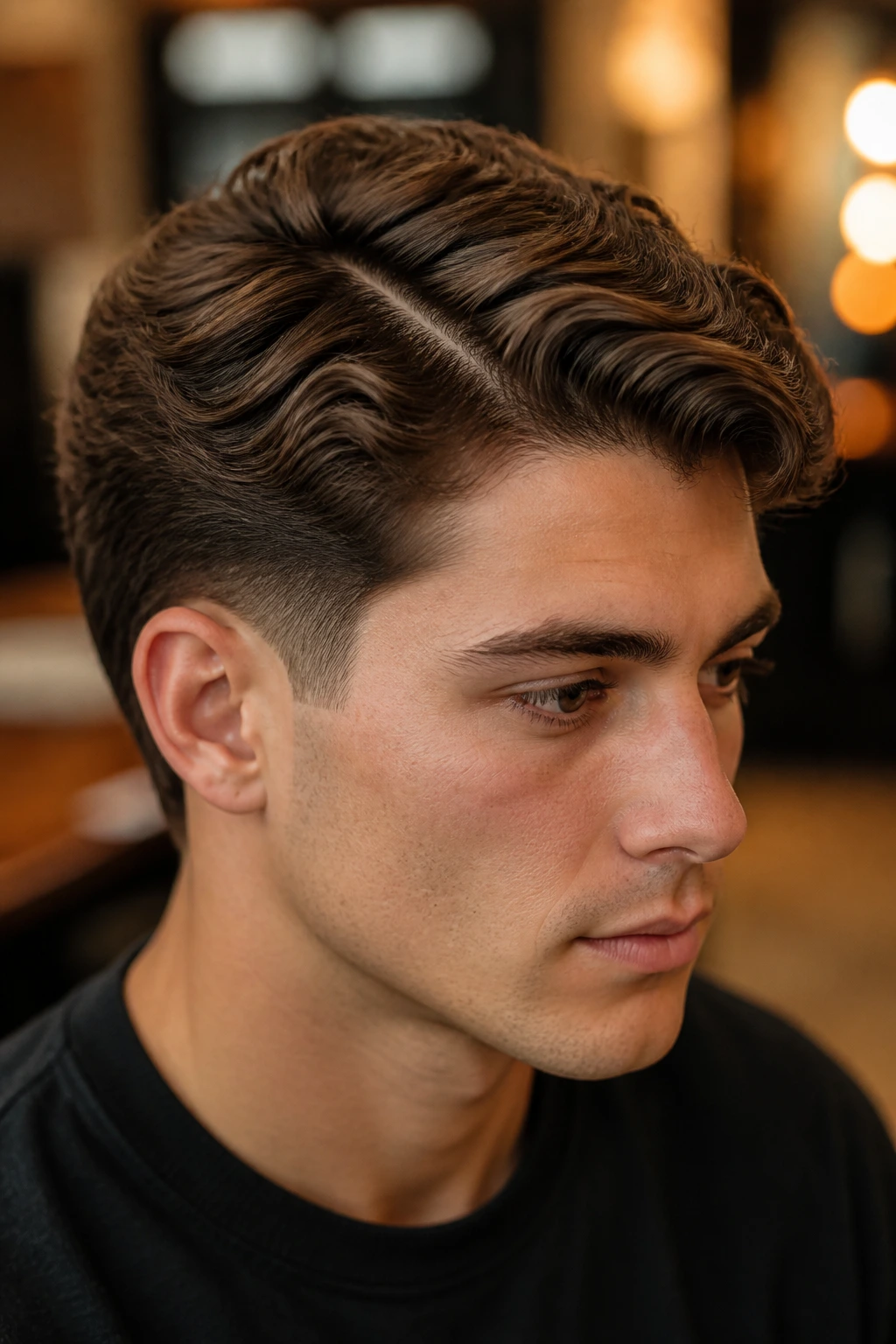
The classic taper is the haircut that proves wavy hair does not need to be loud to look good. Keep the sides gradually shorter, leave the top long enough to part naturally, and let the wave provide the movement. This is one of the safest options if you want something timeless.
Why it works: The taper gives shape without stealing all the weight from the sides, which keeps the haircut balanced. A natural part means you’re working with the way the hair falls, not carving a hard lane through it. It’s neat enough for formal settings but never feels frozen.
Bold tip: If your hair resists a hard part, stop forcing one. A soft split usually looks better on wavy hair anyway.
26. Top Knot With Loose Sides

A top knot only works on wavy hair if the sides are clean and the top has enough length to gather without pulling tight. The knot should sit high enough to keep the wave from puffing at the sides, but loose enough that the hair still has some texture around the bun. This is a style with a real ceiling on length: usually 6 inches or more on top.
Why it works: Wavy hair gives the knot some texture, which stops it from looking like a plain rope. A low taper or soft undercut around the sides keeps the outline tidy. If you pull the knot too tight, though, the wave at the crown gets flattened and the style loses its shape.
This is a better haircut for men who don’t mind a bit of hair management.
One-line note: Don’t tie the knot the same way every day; changing the tension helps prevent stress on the hairline.
27. Grown-Out Buzz With Texture
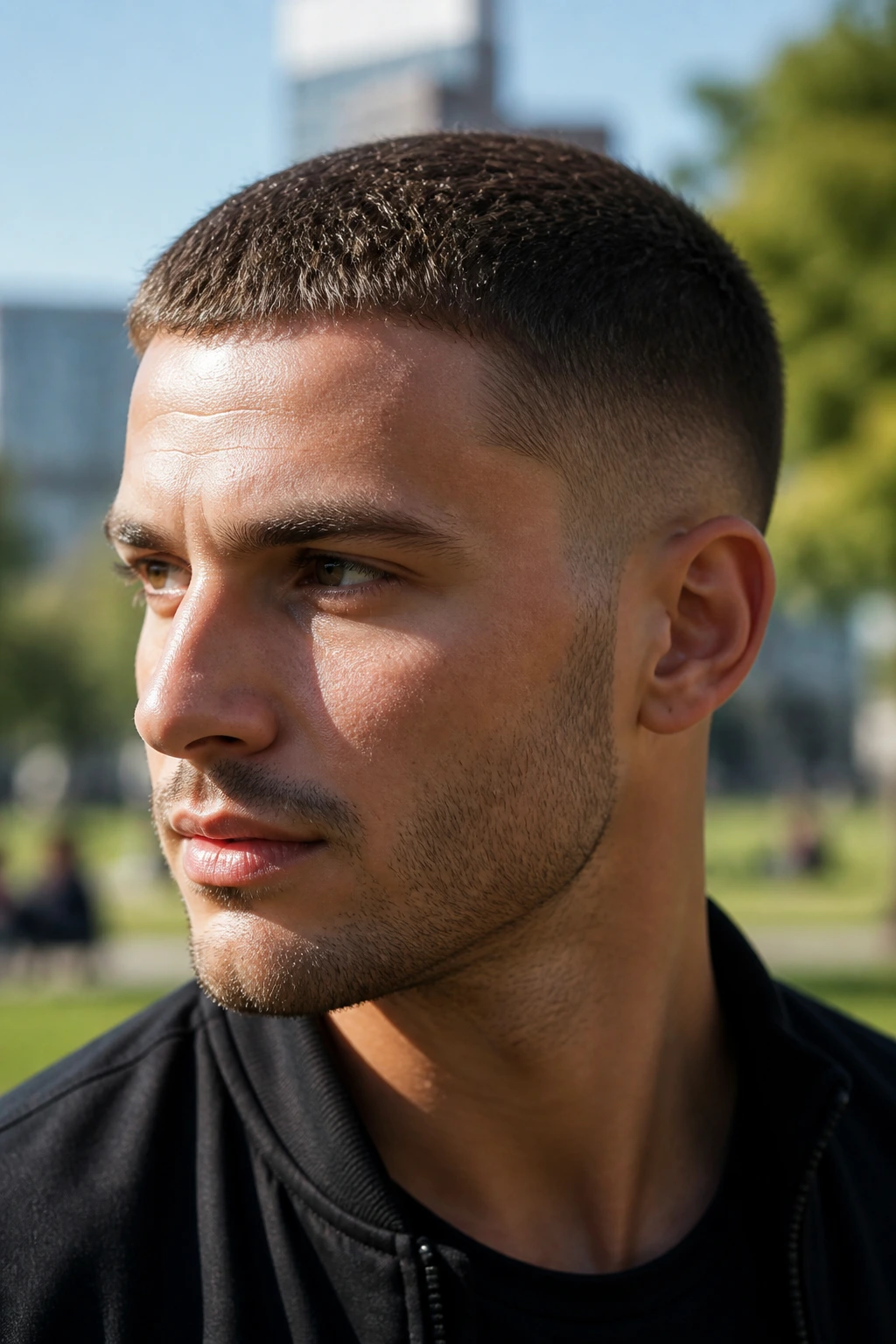
A buzz cut usually sounds like the opposite of a wavy hairstyle, but a slightly grown-out version can still show the bend, especially if your waves are loose and you want almost no maintenance. Keep the top around half an inch to an inch, taper the sides, and let the natural pattern sit on the scalp. It’s subtle, but not flat.
Why it works: The wave pattern becomes a surface detail instead of a full silhouette, which is useful if you want the hair out of the way but still want some character. A tiny bit of matte cream can bring out the texture without making the cut look styled. It’s one of the easiest cuts to live with.
Bold tip: If your wave disappears completely at this length, go a touch longer before you commit to the buzz.
Why Wavy Hair Changes the Rules at the Barber’s Chair
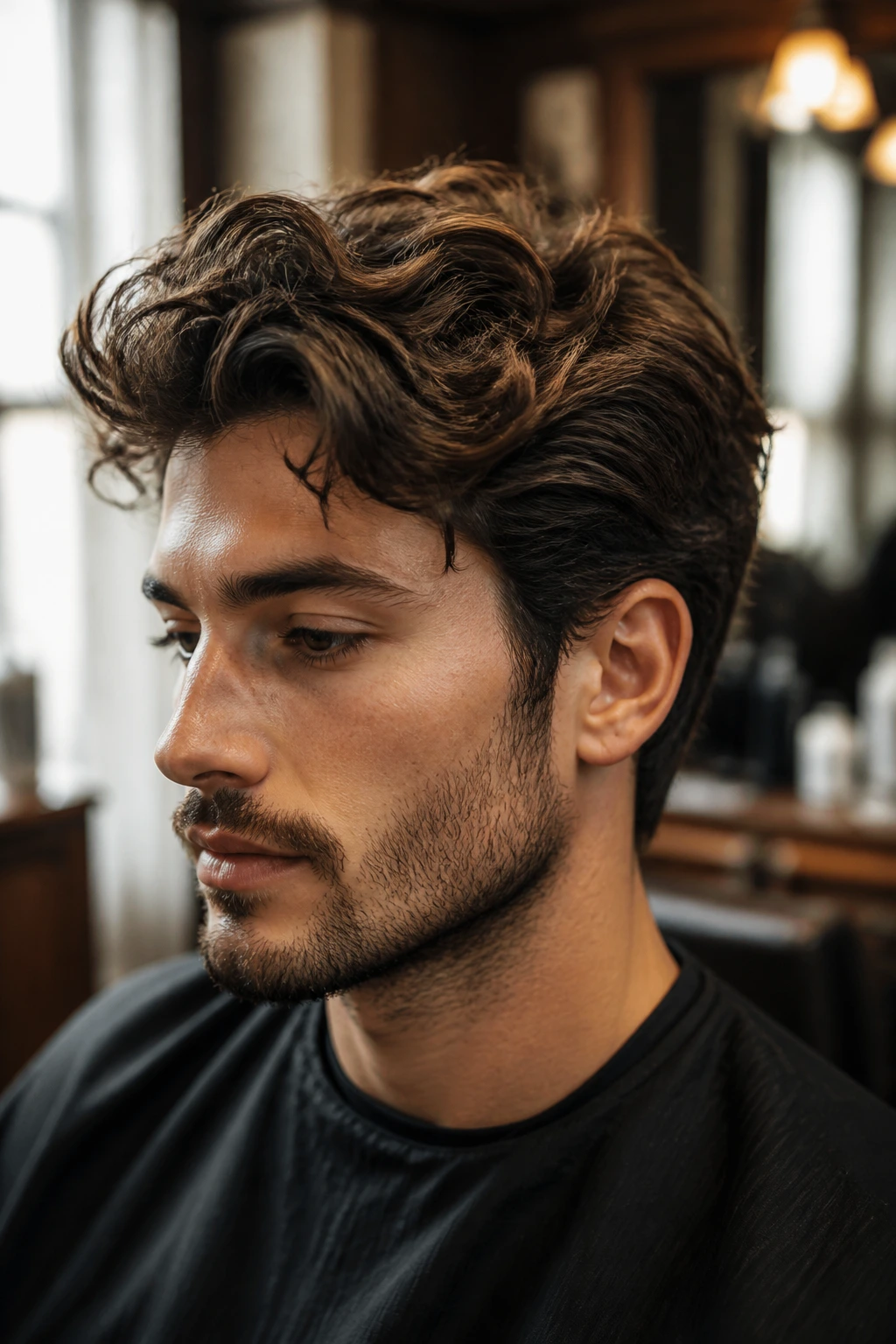
Wavy hair behaves like it remembers where it was cut. Take too much off the wrong place, and the whole silhouette shifts. Leave too much weight in the wrong area, and the sides puff out while the top falls limp. That’s why a good wavy haircut isn’t just about the shape on the day you leave the barber; it’s about how the cut dries, grows, and starts moving once you touch it.
The biggest mistake is assuming all waves act the same. Loose waves that bend at the ends need different handling from dense waves that curl at the crown. A crown swirl can also change the line of a haircut more than people expect. If the barber cuts it too short there, the hair kicks up and the back starts looking boxy. If they leave too much, the top can sit heavy and lose shape.
There’s also the matter of length. One inch can matter a lot more on wavy hair than on straight hair. Cut a wave down too far, and it may appear almost flat when wet, then jump upward into something shorter and rougher once it dries. That’s not a flaw. It’s the texture telling you where it wants to live.
Essential Tools for These Styles
- Blow dryer with a nozzle: Directs air at the roots so you can lift waves instead of frizzing them.
- Wide-tooth comb: Helps detangle damp hair without ripping the bend apart.
- Vent brush or round brush: Useful for quiffs, pompadours, and side-swept styles that need direction.
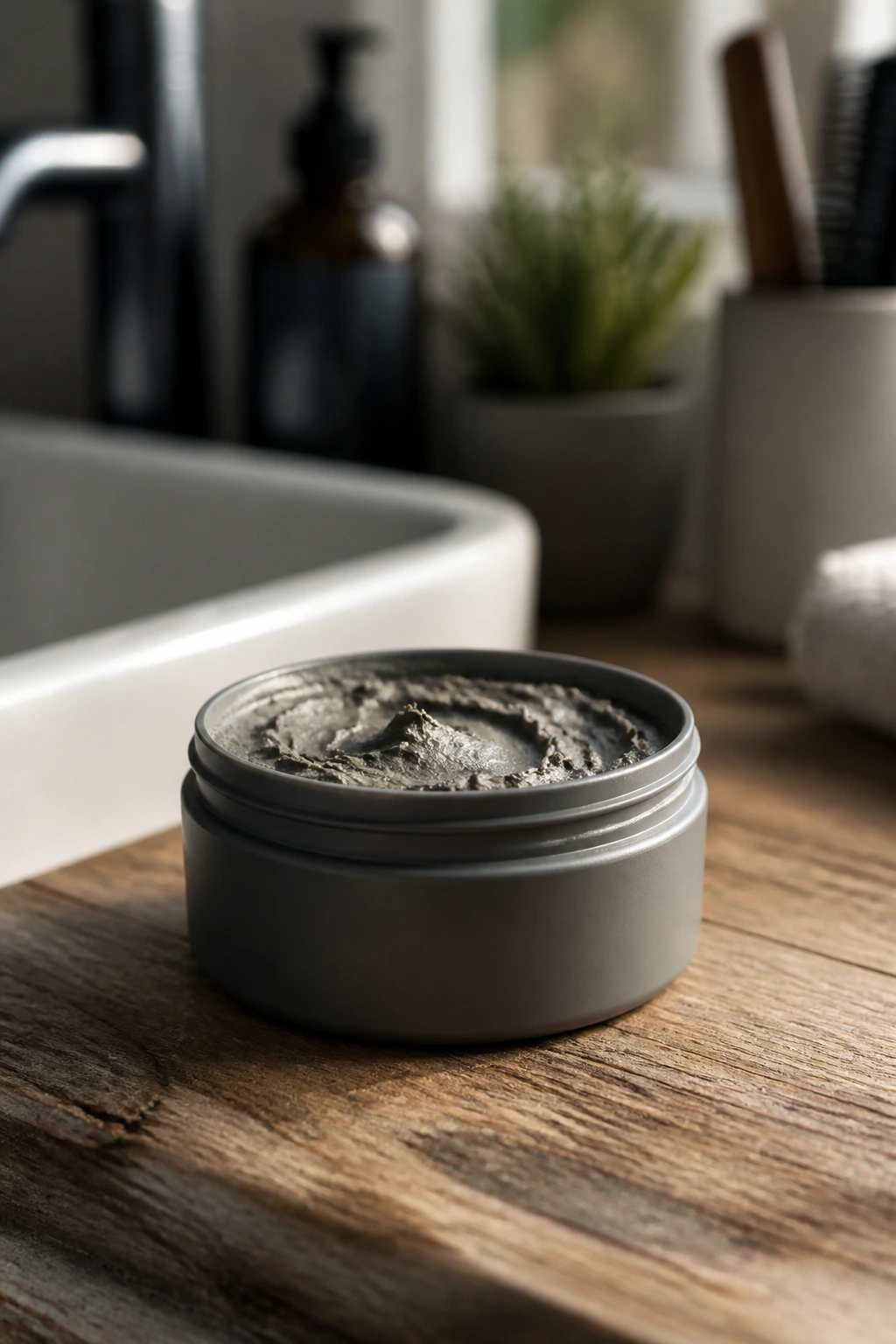
- Matte clay or paste: Gives control without making wavy hair look wet and hard.
- Lightweight cream: Better for curtain fringe, bro flow, and longer cuts that need softness.
- Sea salt spray: Adds grip on damp hair and helps waves separate.
- Heat protectant: Worth using if you blow-dry often; wavy hair can dry out at the ends.
- Leave-in conditioner: Good for medium to long styles, especially if your ends get rough.
- Hair clips: Handy when you’re drying longer hair and want to keep the top section out of the way.
- Good scissors for trims: Optional, but useful for tiny cleanup between barber visits if you know what you’re doing.
How to Ask for the Cut and the Right Product Match
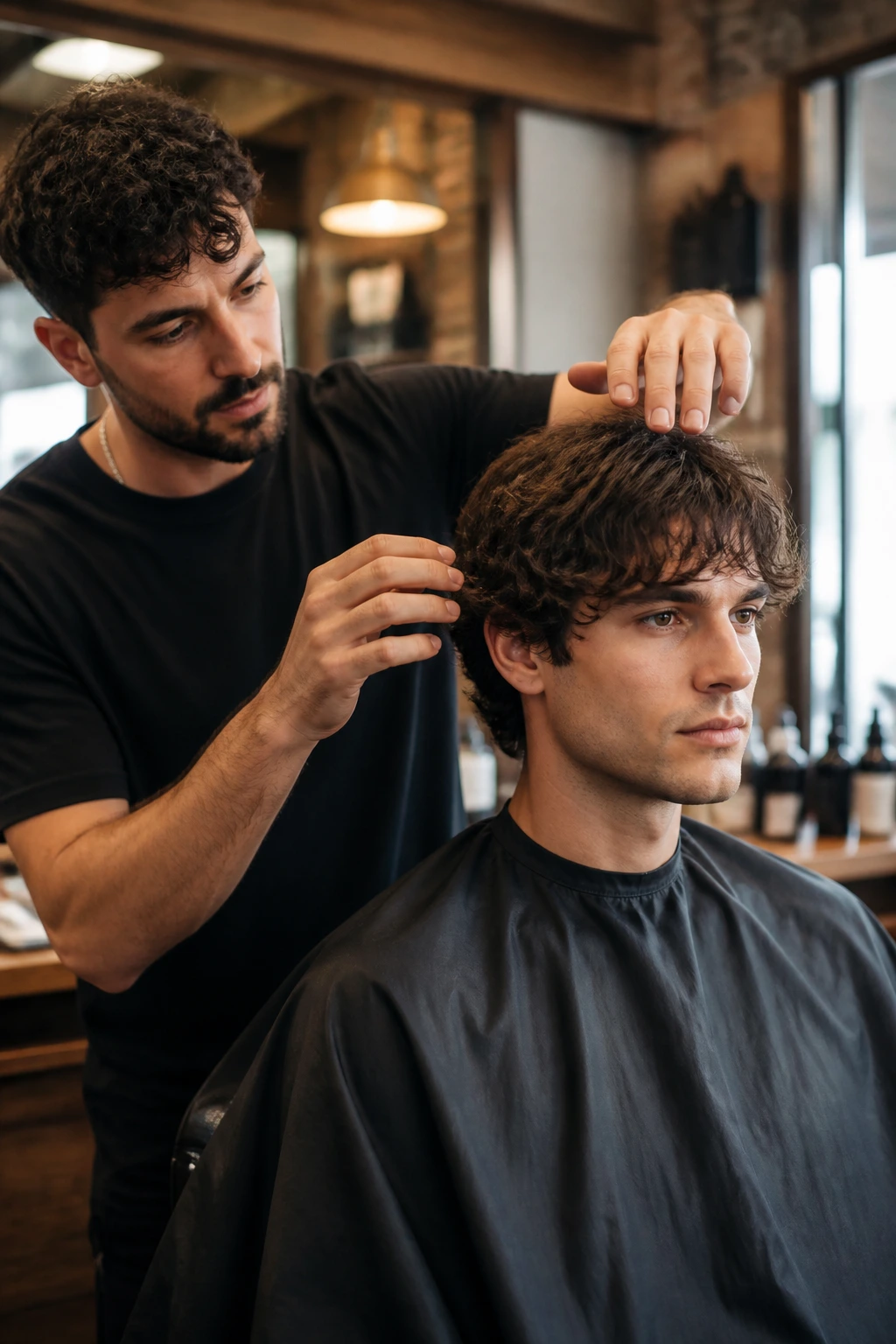
A barber can do a lot with wavy hair, but they can’t read your mind. Bring a photo that shows the front, the side, and the crown if you can find one. Then say the useful stuff out loud: how much length you want on top in inches, whether the sides should be tapered or faded, and if you want the fringe to sit on the forehead or sweep off to one side. Those details matter more than saying you want it “short but not too short,” which means almost nothing.
Product choice should follow the cut, not the other way around. If you want a soft look, ask for cream, mousse, or a little leave-in conditioner. If you want lift and a drier finish, matte clay or paste makes more sense. If your hair is coarse, a blow-dry cream and a touch of paste usually beats a heavy wax that just sits on top of the strands.
The crown deserves special mention. Tell the barber if your hair kicks up there. Seriously. That one spot changes how the whole back of the haircut sits. If they know about it, they can leave a touch more weight where the swirl needs support instead of carving it down and hoping for the best.
How to Wear These Cuts With Your Face Shape and Routine

Round faces: Hair with some height up top—like a quiff, brushed-forward crop, or pompadour—helps lengthen the face. Avoid too much width at the temples, because that makes the head look wider than it is.
Square faces: Softer cuts like curtain fringe, bro flow, or a medium shag break up sharp angles. The wave already brings in some softness, so you usually do not need a blunt line at the forehead.
Long faces: Keep the sides a little fuller and avoid towering height on top. A side part, Ivy League, or loose comb-back usually balances the shape better than a tall pompadour.
Busy mornings: Short textured crops, temple fades, and loose French crops are your friends. They need a quick bit of product and a minute or two with your hands, not a ten-step ritual.
More styling time: Longer layered waves, the shag, or a wave-forward pompadour reward blow-drying and careful product use. If you enjoy the process, these give you more room to shape the final look.
Additional Tips and Texture Boosters
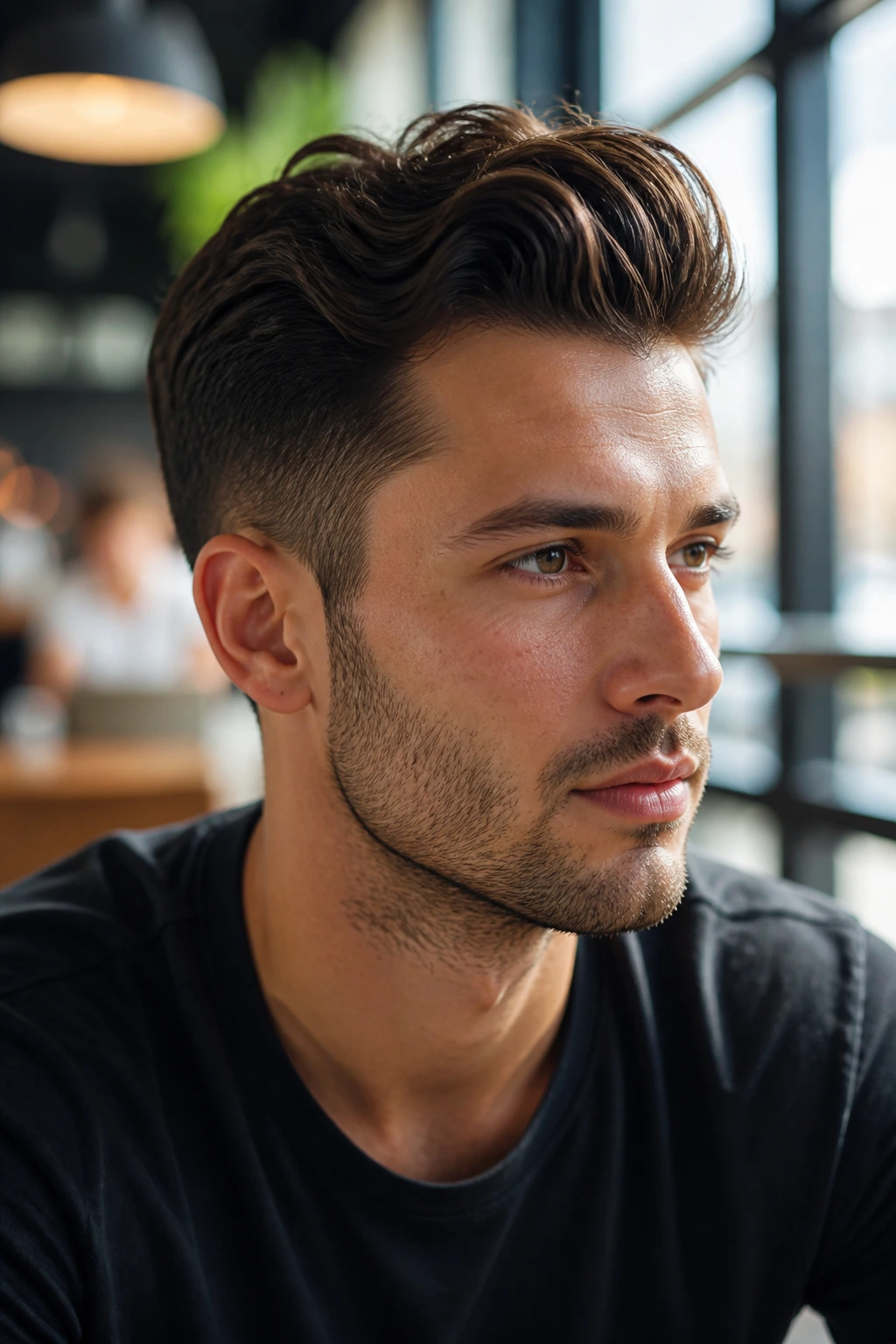
Texture Enhancement: Sea salt spray on damp hair gives the wave grip before you add anything heavier. Four to six sprays is usually enough; drown the hair and it starts drying stiff.
Volume Boost: Rough-dry the roots first, then stop the dryer when the hair is about 80 percent dry. That little window is where the shape sets, and it’s the difference between lift and collapse.
Control: Use cream first, then clay or paste if you need more hold. If you reverse that order, the product sits on the surface and the hair can feel sticky in the wrong places.
Frizz Control: A pea-sized amount of serum or leave-in on the ends helps, especially on shoulder-length cuts. Put it only on the outer layers, though. Too much and the wave goes limp.
Day-Two Refresh: Mist the hair lightly with water, scrunch it, and add a tiny bit of product where the wave has flattened. You don’t need to restart the whole routine.
Keeping the Shape Between Haircuts

Shorter wavy cuts usually need a cleanup every 3 to 4 weeks if you want the edges to stay crisp. Medium-length styles can usually stretch to 5 to 7 weeks, and longer flow cuts can go a bit longer as long as the ends stay healthy. The sides grow out faster than the top, which is why a fade or taper can start looking fuzzy long before the haircut feels truly long.
Washing matters too. Most wavy hair looks better when it isn’t stripped daily. If your scalp gets oily fast, use a gentle shampoo more often and keep conditioner on the mid-lengths and ends. If your hair is drier, shampoo less and lean on a leave-in or cream so the wave keeps some shine without turning greasy.
Sleep can wreck a good cut faster than wind or humidity. A satin pillowcase helps reduce the overnight frizz that makes waves stick out in random directions. If your hair is long enough, a loose tie or soft scrunchie can keep it from tangling at the back. Then, in the morning, a mist bottle and your hands are usually enough to bring the shape back.
Variations and Adaptations to Try
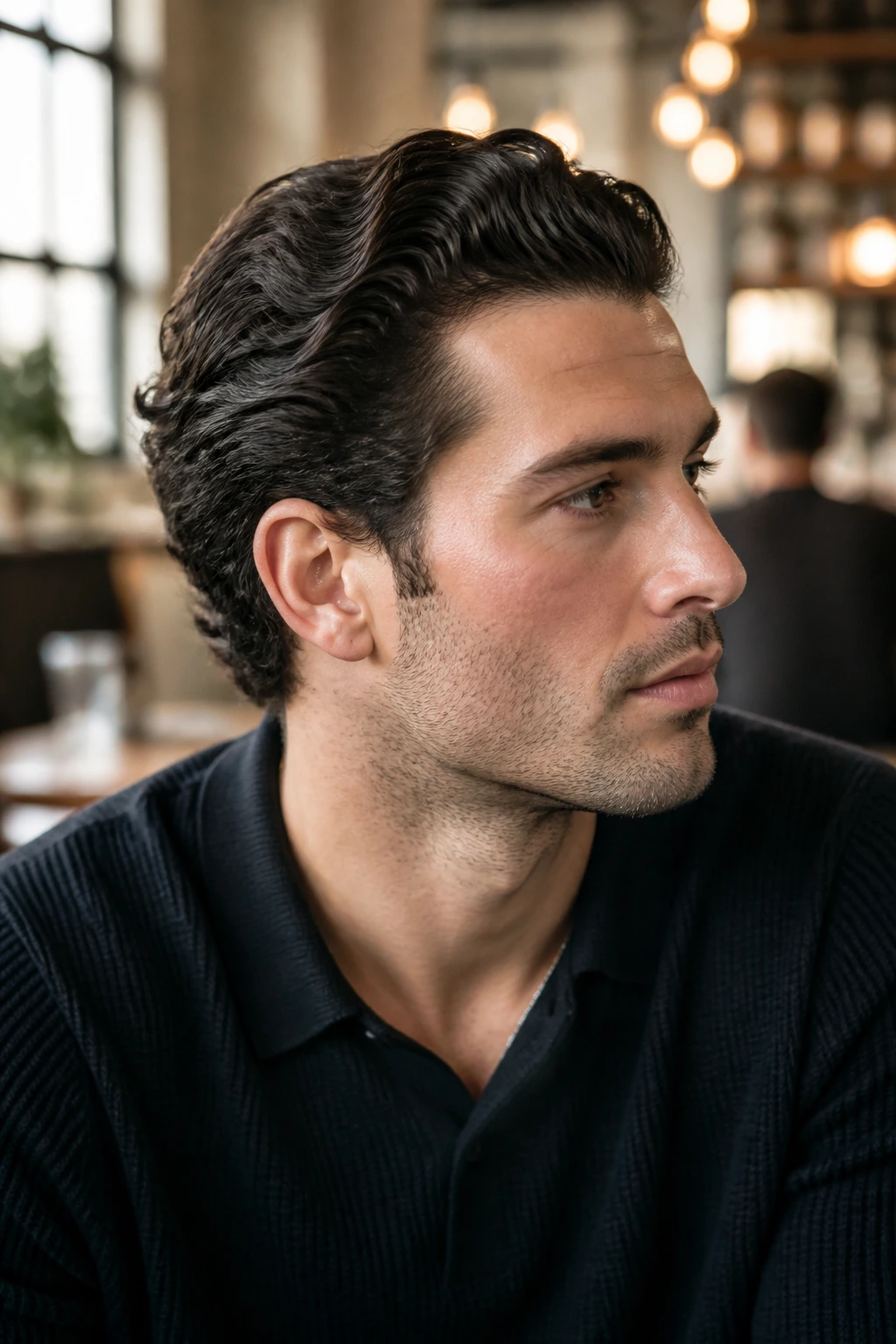
Fine-Wave Lift: If your hair is on the finer side, choose cuts with shorter layers on top and a cleaner taper on the sides. That keeps the hair from getting swallowed by its own weight.
Thick-Wave Control: For dense hair, ask for more internal layering so the wave can breathe. Without that, thick wavy hair can turn into a wide block that looks heavy from every angle.
Office-Neat Version: Swap the messier finish for a side part, Ivy League, or comb-back with low shine. The cut stays professional, but the wave still keeps it from looking severe.
Long-and-Loose Version: If you like shoulder-length hair, go with layered bro flow, surfer mop, or long curtain layers. The key is keeping the bottom edges soft so the hair moves instead of hanging.
Beard-Balanced Shape: When you wear a strong beard, keep the sideburns blended and avoid leaving the haircut too wide at the jaw. The hair and beard should feel like part of the same shape.
Receding-Hairline Version: Go with a loose Caesar, short crop, or brushed-forward wave. These styles use the front edge instead of pretending it doesn’t exist.
Common Mistakes That Flatten Wavy Hair
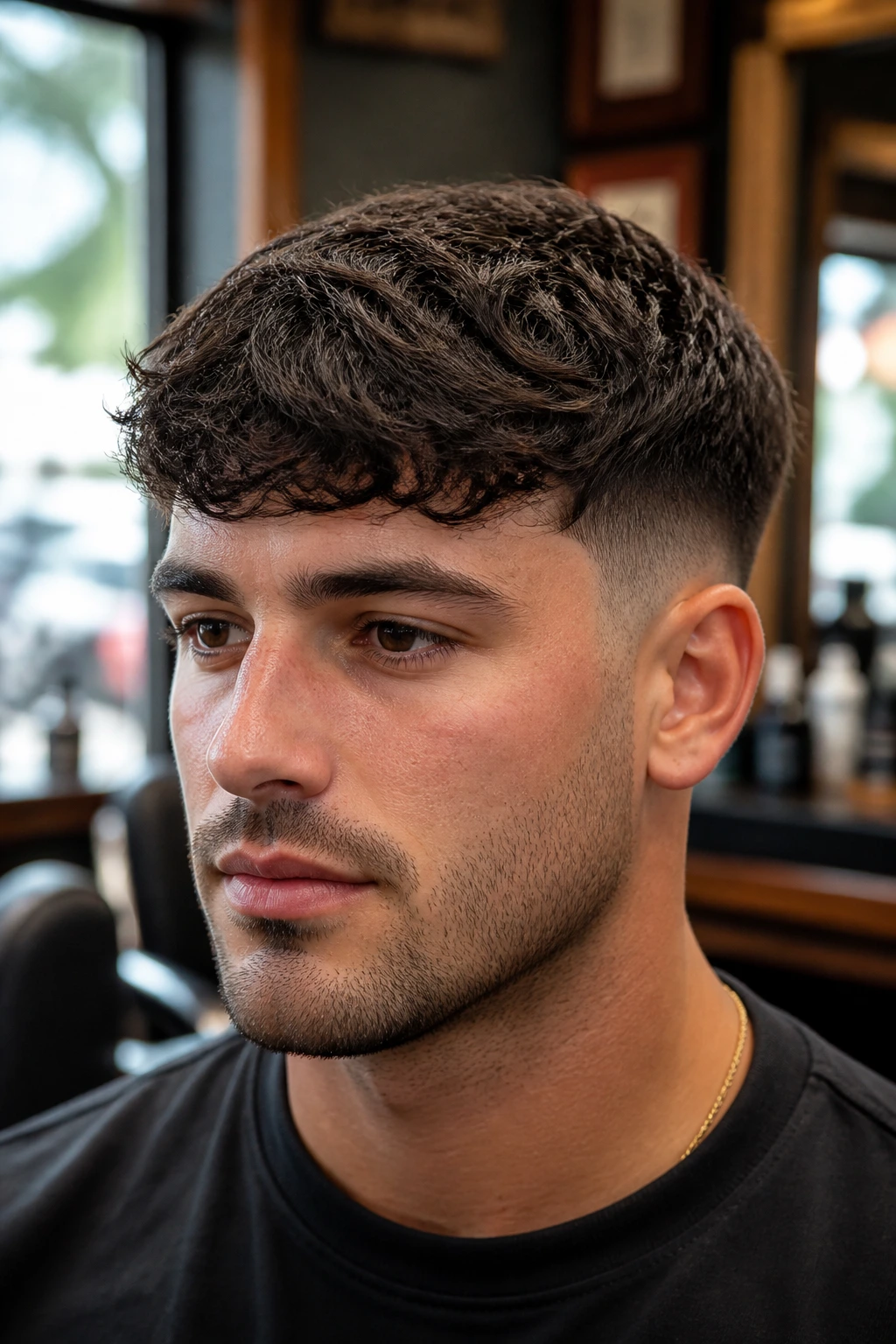
- Cutting the top too short: The wave disappears, then springs up awkwardly. Keep enough length—usually at least 2 inches on top for most textured styles—so the bend has room to show.
- Using heavy wax on a loose wave: The hair clumps and looks greasy instead of defined. Switch to matte paste, cream, or mousse, depending on how much hold you actually need.
- Brushing dry waves too hard: That creates puff, frizz, and broken separation. Work with damp hair, then finish with your fingers.
- Ignoring the crown: A bad crown cut can make the back look boxy or hollow. Tell your barber if your swirl stands up or leans hard to one side.
- Going too high on the fade: A dramatic fade can make the top look stranded if your hair is thick or long. A low or mid taper usually plays nicer with wave.
- Skipping the blow-dry when you want height: If you want a quiff or pompadour, air-drying alone often leaves the roots flat. Give the roots a quick blast first.
Questions Men Ask About Wavy Hairstyles

How long should my hair be for most wavy styles?
A lot of the better wavy looks start around 2.5 to 4 inches on top. Shorter than that, the wave can disappear; longer than that, you usually have more styling options, but also more maintenance.
Is it better to cut wavy hair wet or dry?
Both can work, but dry cutting often shows the wave pattern more honestly. Wet hair can hide the way it springs up, which is why some barbers prefer to refine the shape once it’s partially dry.
What product should I start with if I have no clue?
A lightweight cream is the safest first buy for most wavy hair. If you want more texture and a drier look, matte clay or paste is better; if you want softer movement, go with mousse or leave-in conditioner.
Can I wear a fade with wavy hair?
Yes, and it looks good when the fade matches the length on top. A low or mid fade usually keeps the haircut balanced better than a very high one, especially if your hair is thick.
Why does my wavy hair puff up after a haircut?
The barber probably removed too much weight, or the top was cut too short for your wave pattern. Ask for more length at the crown and less aggressive thinning on the next visit.
Which styles are best if I don’t want to style my hair every day?
The textured crop, French crop, short waves with a temple fade, and grown-out buzz all stay manageable with minimal effort. They still need a little product or water refresh, but not much.
Can wavy hair look good with a part?
Absolutely. A soft side part or middle part often looks better on wavy hair than a hard line because the wave breaks it up and keeps it from looking too strict.
What if my waves are uneven from left to right?
That’s normal. Ask for a cut that works with the stronger side rather than trying to force both sides into identical shapes. An asymmetrical fringe or side sweep can hide the difference well.
Picking the Cut That Lets the Wave Do the Work
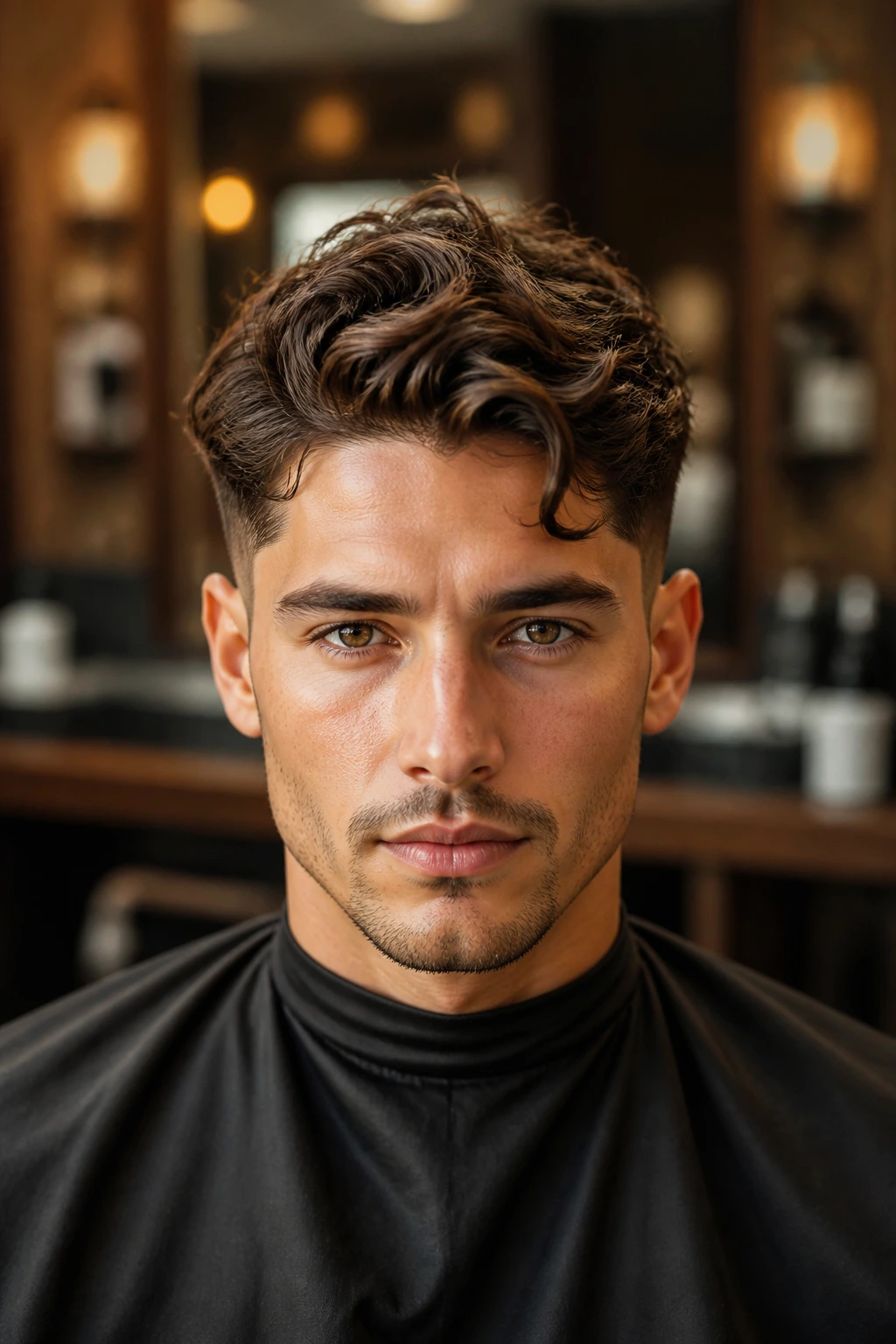
The best haircut for wavy hair is the one that respects what the hair already wants to do. Short, medium, and long cuts can all work; the real question is whether you want neat edges, loose movement, or a bit of both. Once you stop treating the wave like a problem, the whole menu opens up.
That’s the good part. Wavy hair gives you a lot of room to change the mood without changing the texture itself. Keep enough length where the bend matters, leave the crown in play, and choose product that matches the finish you want. If you do those three things, almost any of these styles can work far better than a generic cut ever will.
