



Straight hair at medium length can look clean, but it can also go a little dead on you by lunchtime. That’s why shag haircuts for medium length straight hair have such a specific appeal: they keep the perimeter long enough to feel grown-in, then break up the weight so the cut doesn’t sit there like a sheet of hair. When the layering is right, the ends move, the face frame bends, and the whole thing looks more deliberate than a blunt lob that’s begging for texture spray.
The catch is that straight hair shows everything. Every line. Every uneven snip. Every layer that was thinned a little too hard. A shag on straight hair has to be shaped with more restraint than people expect, especially at shoulder length. Too much texture and you get stringy ends. Too little and you’re back to flat, forgettable hair with a fringe that hangs like curtains after a long nap.
The best versions live in that narrow middle ground. They use soft internal layers, face-framing pieces, and a perimeter that still has enough substance to hold its shape. Some are polished. Some are messier. Some lean feathered and airy, while others push into choppier territory. But all of them give medium-length straight hair something it doesn’t naturally volunteer on its own: movement that lasts past the first brush-through.
Why This Set of Shag Haircuts Earns a Spot on Straight Hair
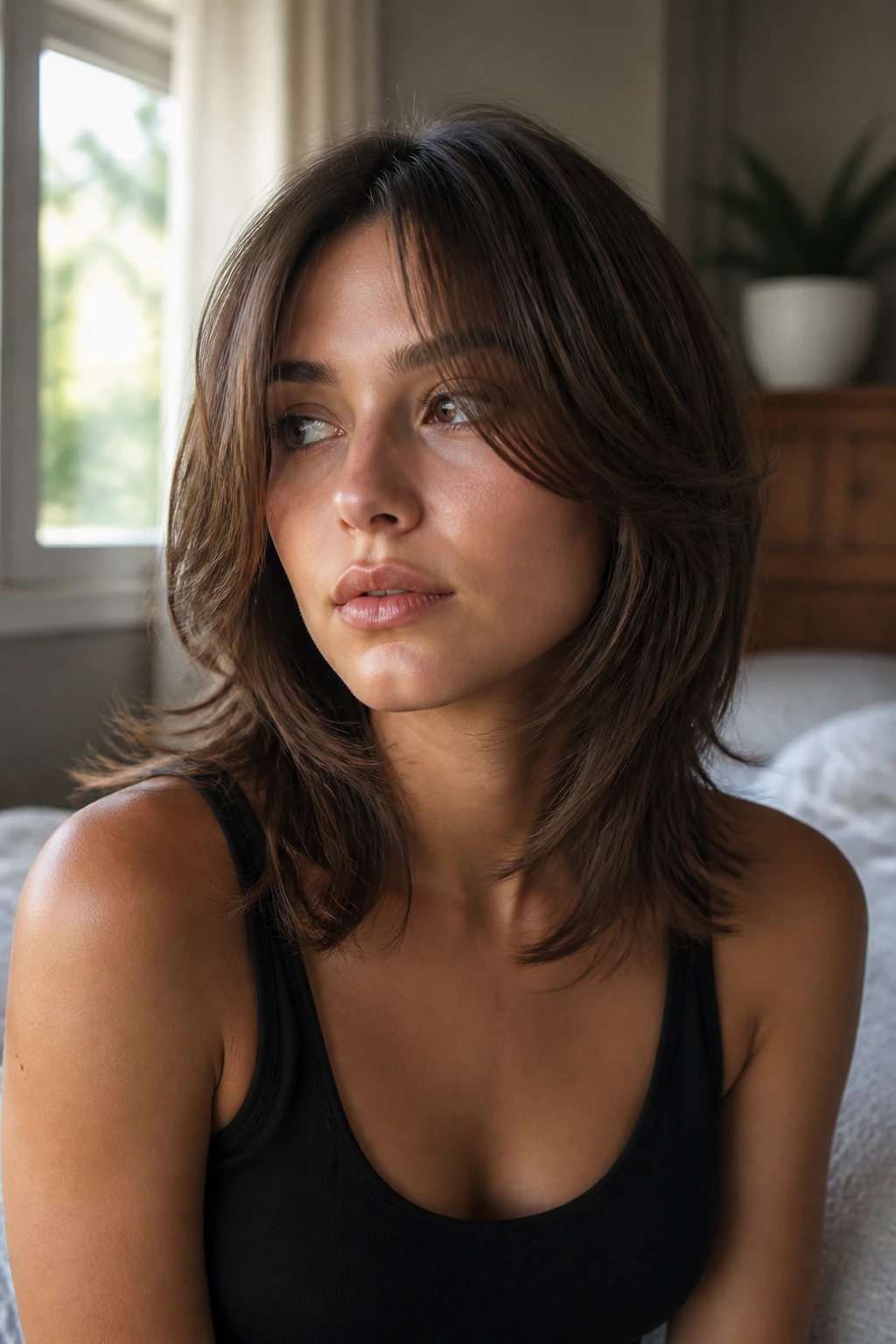
- Movement Without Losing Length: These cuts keep enough length around the collarbone and shoulders that your hair still feels like hair, not a pile of detached layers.
- Better Shape on Flat Hair: Straight strands reflect every blunt line, so a good shag breaks up the silhouette before it starts looking heavy at the bottom.
- Bang Flexibility: Curtain bangs, side-swept fringe, wispy fringe, or no fringe at all — there’s room here to work around a forehead, a cowlick, or a styling routine you will actually keep.
- Lower-Stakes Grow-Out: A soft shag usually grows out with more grace than a hard, geometric cut. That matters when you only want trims every 8 to 10 weeks.
- Styling Options: You can air-dry some versions, blow out others, and flatten a few with a flat iron without erasing the cut’s shape.
- Works With Real Hair Density: Fine, medium, and thick straight hair all need slightly different layer placement, and these styles cover that range.
1. The Collarbone Soft Shag
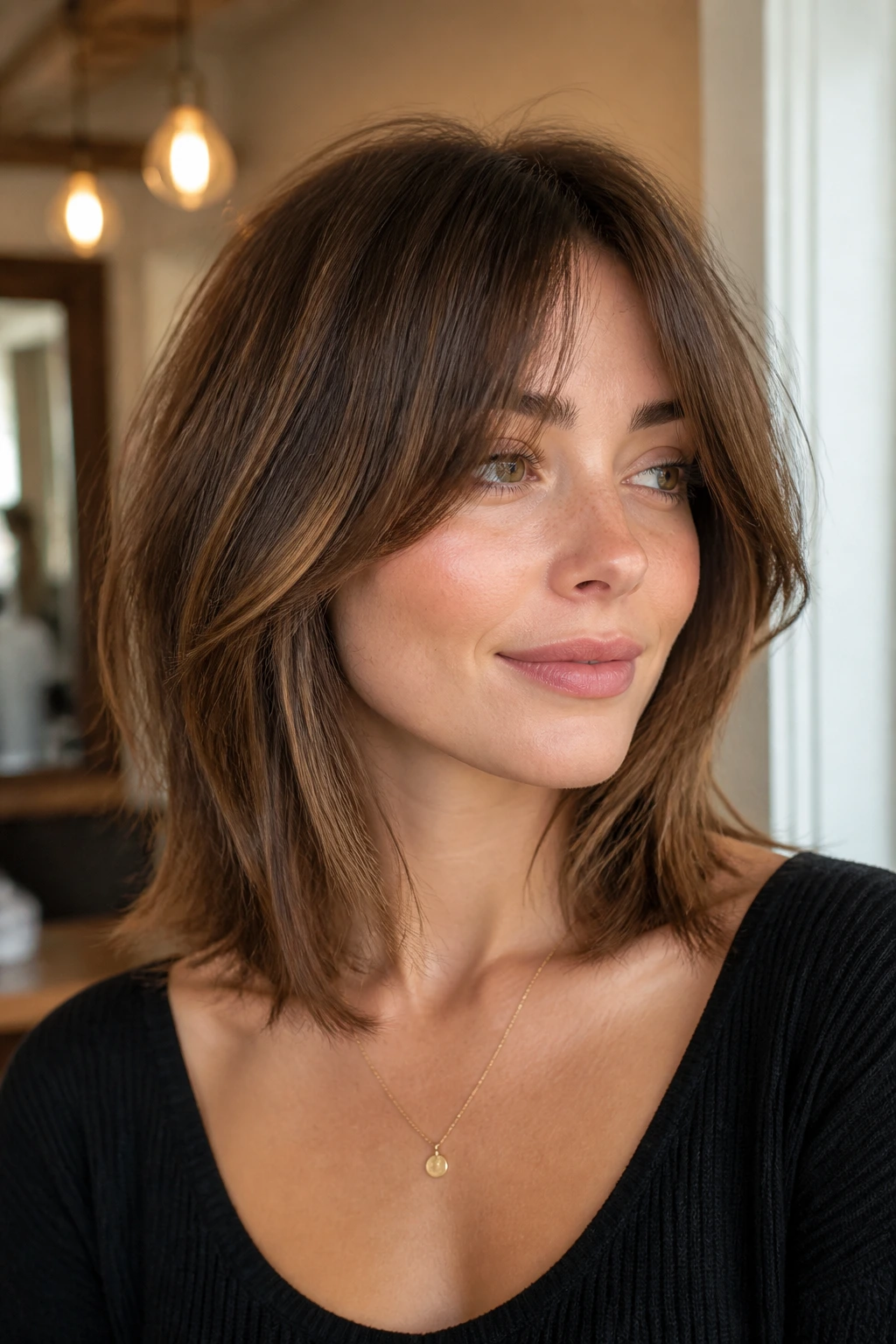
This is the cut I recommend to people who want movement but are nervous about looking chopped up. It lands near the collarbone, with soft layers that begin around the cheekbone and taper just enough through the ends to keep the outline from feeling heavy. On straight hair, that tiny bit of unevenness changes everything.
Why It Works
The collarbone length gives the cut enough weight to lie neatly, while the layers stop the bottom from turning into one blunt block. Ask for a dry cut or point cutting if your stylist knows how to handle straight hair; that keeps the ends from looking sliced off with a ruler. It’s subtle, but on medium-length straight hair, subtle is usually the smarter move.
A side part or a loose off-center part suits this shape especially well. The front pieces can sweep away from the face without collapsing into your cheeks, and the cut still looks clean if you tuck one side behind the ear.
Best For
- Hair that feels flat at the crown but still has decent body through the mid-lengths
- People who want a shag that can pass as polished in a work setting
- Anyone who hates constant bang maintenance
Styling note: A small round brush and a pea-sized amount of lightweight cream on the ends is enough. If you load it up with oil, the layers will stick together and the whole point disappears.
2. Curtain Fringe Shag

Curtain bangs and a shag are old friends for a reason. The fringe opens at the center, drops longer at the cheekbones, and gives straight medium-length hair that easy front frame without forcing you into a full bang commitment. It feels softer than blunt fringe and less fussy than a precision bob with face framing.
The thing I like most here is the way the front pieces bend. On straight hair, curtain fringe can look airy instead of flat if the shortest point sits high enough to skim the brow and the longest points blend into the first face-framing layers. If the fringe starts too low, it just hangs there. Boring. Heavy. Wrong shape.
This version suits a middle part, obviously, but it can also shift a little to one side when you want a quieter look. Keep the layers around the cheekbone and jaw soft so the whole cut doesn’t start fighting itself.
3. Razor-Cut Wolf Shag
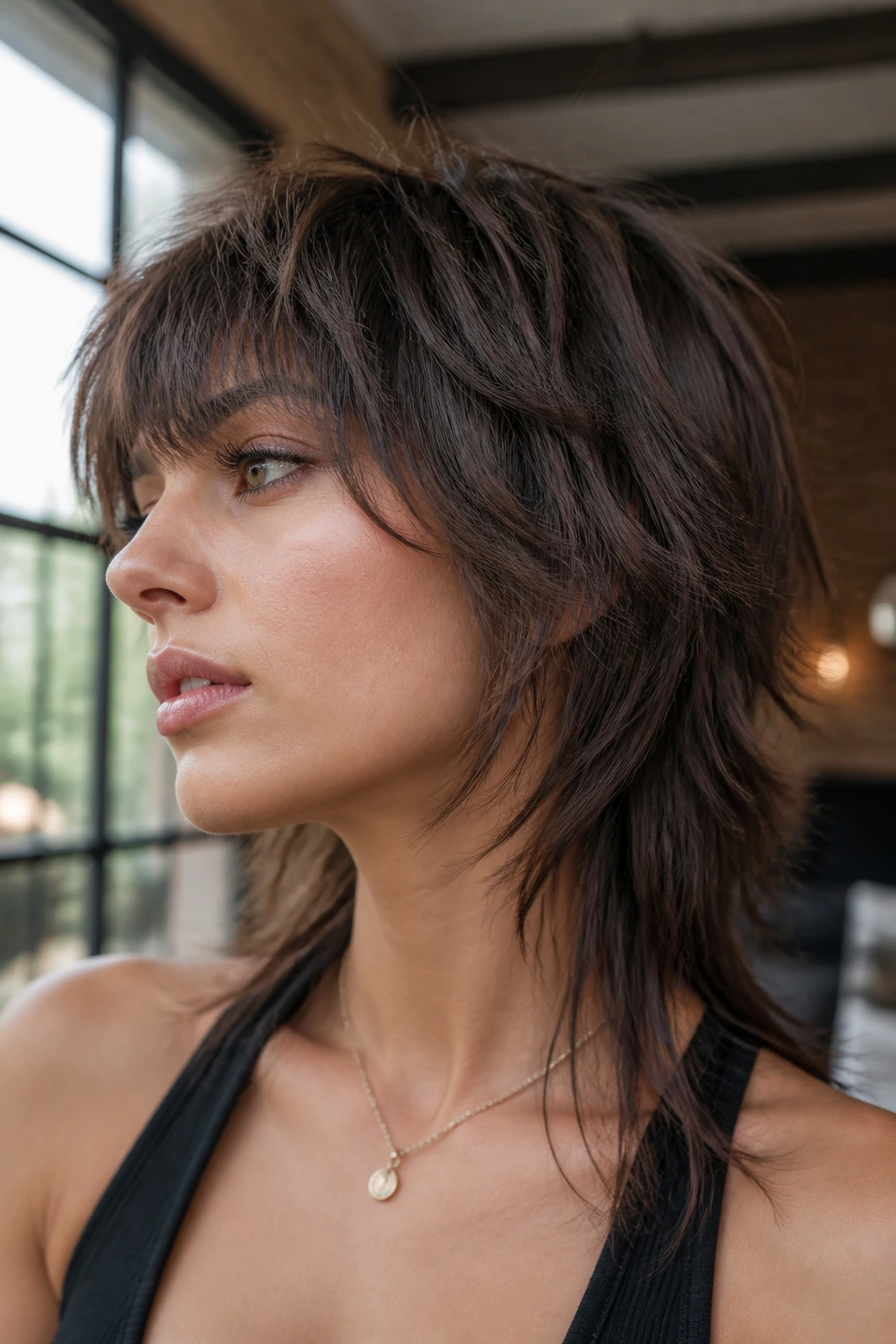
A razor-cut wolf shag is the edgier cousin in the group. It uses more separation through the layers, with a slightly longer back and more visible texture around the crown and sides. On straight hair, that can look fantastic or disastrous, depending on how much density you have and how confident your stylist is with a razor.
What Makes It Different
The wolf-shag hybrid puts a little more distance between the top layers and the length underneath. That creates lift near the crown and a lived-in shape through the ends. On medium-length straight hair, it works best when the hair has at least medium density; otherwise the texture can look too sparse.
This is not the cut I’d hand to someone who wants quiet, polished hair every day. It’s for people who like a little roughness and don’t mind seeing the layers from across the room.
How to Wear It
- Keep the ends slightly bent, not pin-straight
- Use a texture spray at the mid-lengths, not the roots
- Let the bangs or front pieces fall a little imperfectly; that is the point
If your hair is coarse or frizz-prone, ask for a softer razor hand. Too much blade work on straight hair can make the ends look frayed instead of piecey.
4. Feathered ’70s Shag
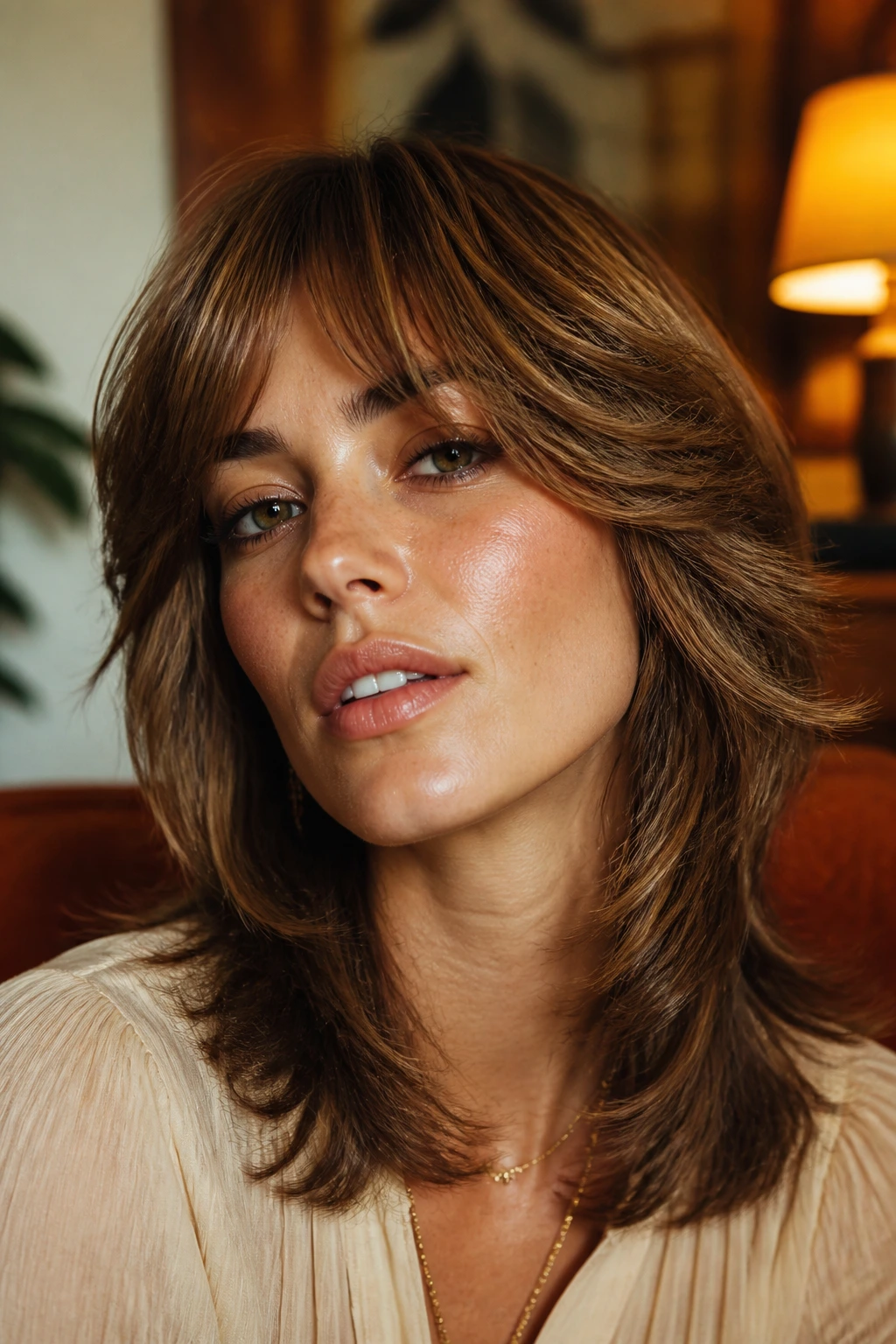
This one has the best posture in the whole lineup. Feathered layers sweep back from the face, the fringe stays soft, and the mid-lengths move like they were blow-dried with a round brush and a little patience. Straight hair takes to this shape well because it already lies smooth; you’re just teaching it to bend in the right places.
Think of this shag as the one that wants a bit of gloss. It looks better with a light blowout than with a rough scrunch-and-go routine. The layers around the face should feel lifted, not stripped, and the ends should curve rather than spike.
I like this cut on someone who wears a lot of turtlenecks, blazers, or clean-neck tops. The feathering keeps the hair from sitting like a curtain against the clothes.
5. Choppy Lob Shag
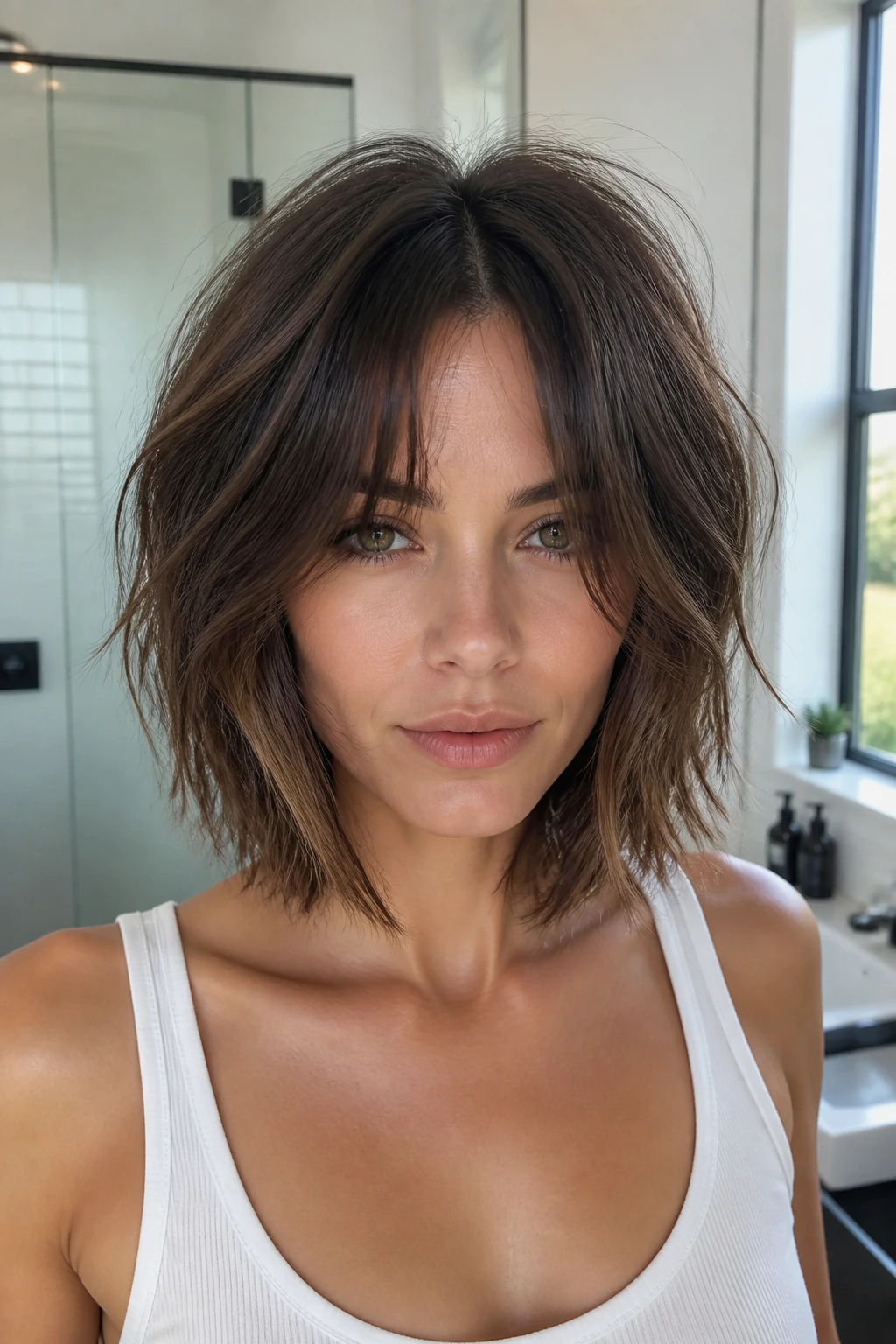
A choppy lob shag is the bridge for anyone who likes the neatness of a long bob but wants more movement than a blunt line can give. The length usually sits between the collarbone and upper shoulder, with interior layers that break up the shape just enough to avoid that helmet effect straight hair can get when it’s all one length.
This cut is blunt at the base only if you want it to be. I prefer a soft perimeter with a few deliberately uneven ends, because straight hair already looks crisp on its own. The shag layering should show up in the movement, not in obvious stair-steps.
It’s a smart choice if you wash and go often. You can rough-dry it, tuck one side, and still look like you made a decision. That matters more than people admit.
6. Side-Swept Bang Shag
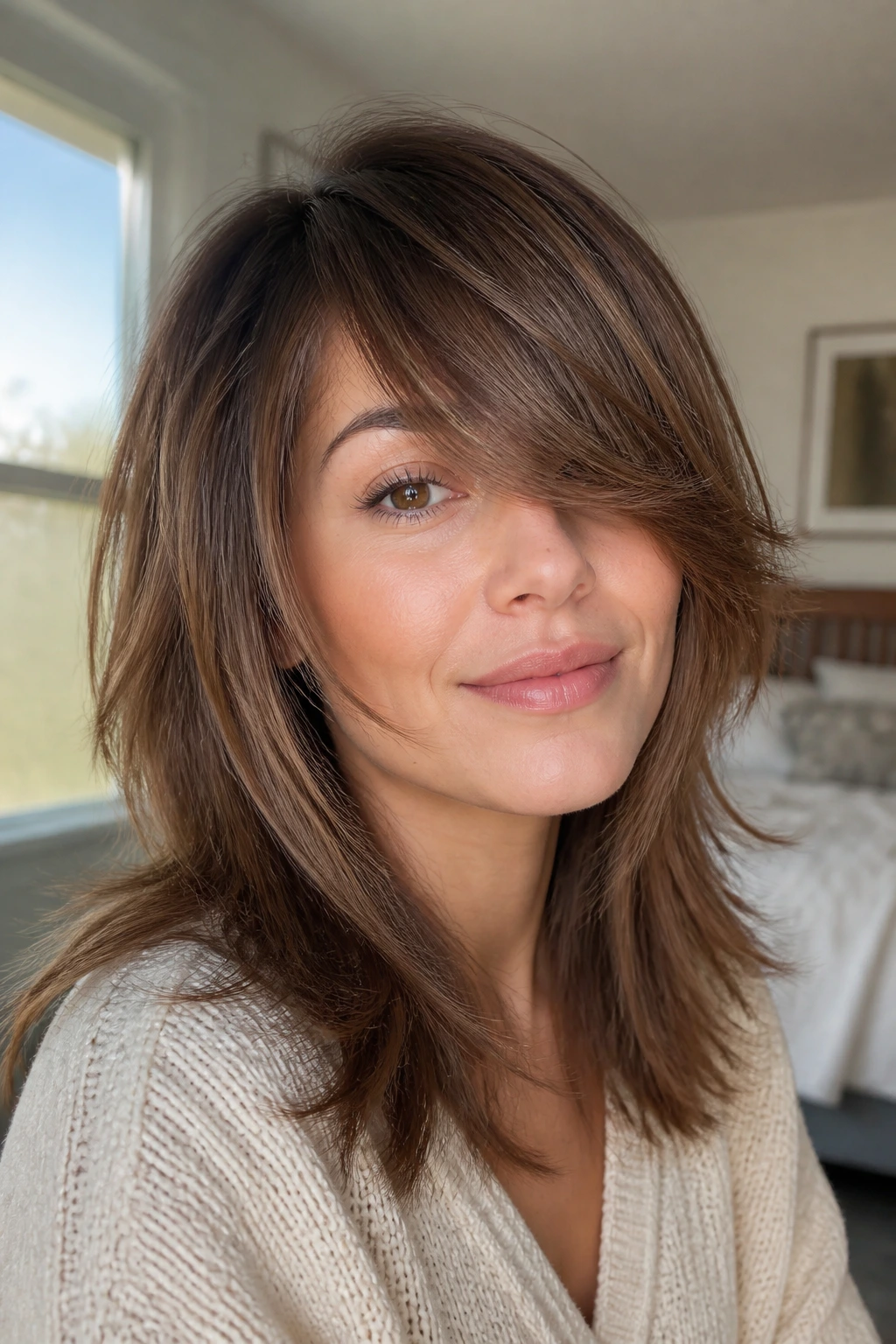
Curtain bangs aren’t for everyone. A side-swept bang shag is the quieter answer for people who want face-framing movement without a center part or a lot of fringe maintenance. The bang section starts deeper on one side and falls diagonally across the forehead, blending into the front layers instead of announcing itself with a hard line.
This shape flatters straight medium-length hair because the sweep creates motion before the rest of the cut even starts moving. It also gives you a little control over a high forehead, a strong brow, or hair that tends to separate down the middle when you don’t want it to.
The danger here is going too long and too heavy. Then the bangs just become side pieces. You want them light enough to move, but not so wispy that they vanish by noon.
7. The Polished Italian Shag
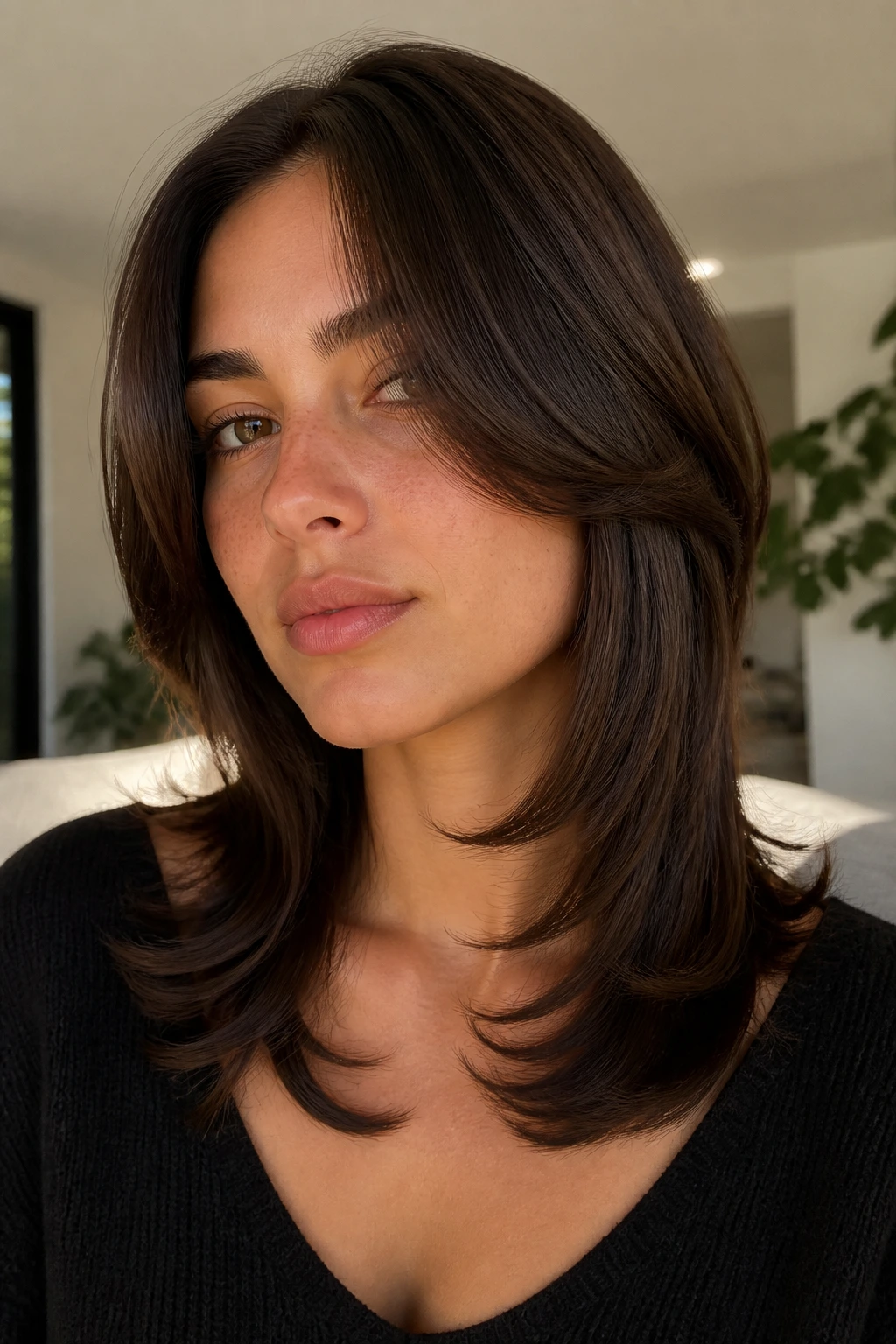
If the word shag makes you picture a mess, this cut is the correction. The polished Italian shag keeps the layers smooth and the ends glossy, with just enough face-framing bend to keep straight hair from looking severe. It’s still a shag, but it behaves better.
I like this version when the client wants movement without the ripped-up finish some layered cuts get. The front pieces are usually longer, the crown lift is soft, and the perimeter stays deliberate. It’s the kind of cut that looks good even when you barely style it, which is more useful than people think.
Use a round brush or large Velcro rollers if you want the shape to show. A center part or slight off-center part keeps it modern. Skip crunchy products. They kill the clean sheen that makes this version work.
8. Money-Piece Shag

This one depends on the front pieces doing a lot of the visual work. The money piece — those lighter, brighter strands around the face — pairs well with a shag because the layers already create movement and the color gives your eye a place to land. On straight medium-length hair, that matters. Without the color contrast, a shag can sometimes read as soft but low-impact.
A money-piece shag works especially well when the face frame starts around the cheekbone and eases down toward the jaw. You get shape from the cut and brightness from the color, which keeps the overall look from sinking into the rest of the hair.
If your hair is naturally dark, even a subtle face-framing highlight can change how the layers read. Not dramatic streaks. Just enough contrast to make the movement visible.
9. Air-Dried Airy Shag
This is the cut for people who want hair that does not need a full styling session to look intentional. It relies on lighter layering, a soft perimeter, and a little natural bend through the ends. Straight hair won’t suddenly turn wavy here — let’s not pretend that’s what’s happening — but it will look less rigid.
Why It’s Useful
The airy shag does not ask for much. A leave-in spray, a quick scrunch at the ends, maybe a touch of root lift if you need it. That’s it. The layers are spaced so the hair can dry without collapsing into one big flat mass, which is the usual problem with medium straight lengths.
A microfiber towel helps more than fancy styling tricks. Blot, don’t rub. Rubbing roughs up the cuticle and makes the ends look fuzzy before the haircut even has a chance to do its job.
Good Match
- Hair that’s straight but not stick-straight
- People who air-dry more often than they blow-dry
- Anyone who wants a cut that looks a little better on day two than day one
10. The Shoulder-Length Mullet Shag

This is the bold one. A shoulder-length mullet shag keeps the front and crown shorter while leaving the back a touch longer, which creates a more obvious disconnect than a classic shag. On straight hair, that disconnect reads clearly, so it needs to be done with intention, not as an accident.
The cut can look cool and sharp, especially if the front pieces hit around the jaw and the back brushes the shoulders. What saves it from looking dated is softness at the transition points. You still want the layers to blend, even if the shape itself feels a little rebellious.
It’s a good choice if you want a haircut with personality and you’re fine seeing the cut itself. This isn’t camouflage. It’s the point.
11. The Blonde Dimension Shag

Color changes the whole story. A blonde dimension shag uses highlights, lowlights, or a balayage-style paint job to make the layers read more clearly on straight hair, where movement can otherwise get lost in one flat color field. On medium-length strands, the contrast between lighter face-framing pieces and deeper interior tones adds depth that the cut alone sometimes can’t supply.
This works especially well if your hair is fine. The right color placement can make a layered shag look fuller without adding more layers, which is useful because too many layers on fine straight hair can go see-through fast.
Ask for brightness around the front and a little darker depth underneath. You want the cut to look like it has shape even when it’s resting still on your shoulders.
12. The Center-Part Minimal Shag

Not every shag has to shout. A center-part minimal shag keeps the layering quiet, the fringe subtle, and the silhouette clean enough that it almost feels like a soft long cut rather than a dramatic shag. But the movement is there. You notice it when the hair swings, not when you’re staring at the mirror from two feet away.
The center part gives this style a calm, even frame, which works well for straight medium-length hair that tends to split naturally down the middle anyway. Instead of fighting that, the cut leans into it and makes the front pieces fall in a way that flatters the cheekbones.
Best For
- People who like low-contrast, tidy hair
- Oval and longer face shapes
- Anyone who wants layers without fringe drama
A tiny bend at the ends is enough. Don’t overwork it. The point is restraint.
13. The Wispy Fringe Shag

Wispy fringe has a lighter touch than curtain bangs, and that’s exactly why it works here. It softens the forehead without blocking it, and it keeps the front of the haircut from feeling heavy. On straight hair, a wispy fringe can sit beautifully if the ends are cut with care and the density is controlled.
The key is not too much bulk. Thick wispy fringe is just a contradiction in a bad way. You want air between the pieces, so the bangs fall in a soft line and blend into the rest of the layers instead of sitting like a separate cap.
I like this on medium-length hair when the wearer wants something feminine and easy to shift around. You can wear it brushed forward, slightly parted, or tucked into the side layers when you need it out of the way.
14. The Heavy Razor Shag
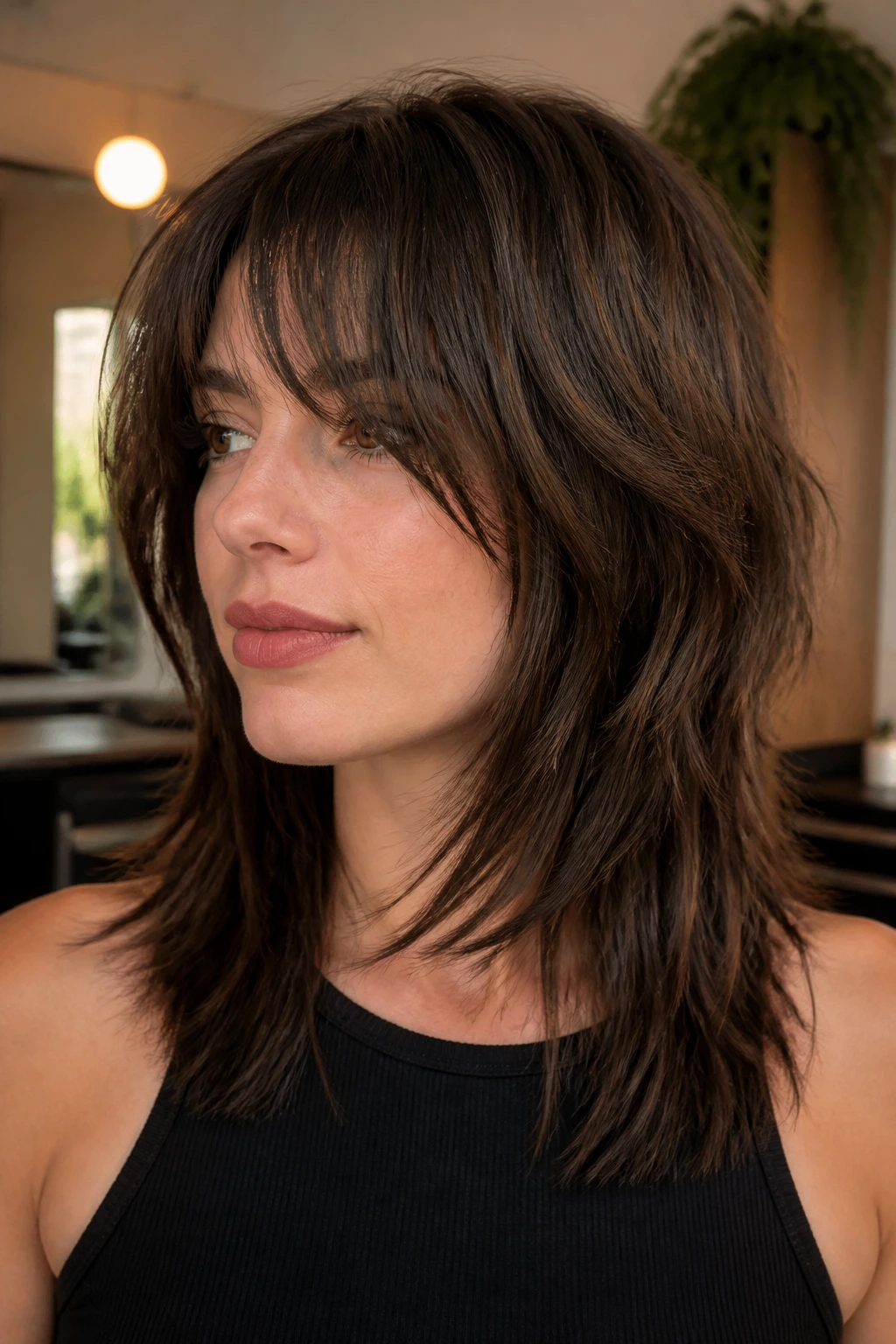
This cut is for thicker straight hair that needs real removal of bulk, not just a decorative layer or two. The heavy razor shag takes more weight out of the interior while keeping the outer shape alive, so the hair no longer feels like a single dense block hanging from the head.
Done well, it creates movement that you can see from the side. Done badly, it looks shredded. That’s the line. Razor work on straight hair should be purposeful, with enough structure left at the perimeter that the cut still feels wearable.
If your hair resists texture products and still falls flat under its own weight, this one can be a relief. It’s the difference between fighting your hair and finally making the cut do some of the work.
15. The Fine-Hair Lift Shag

Fine straight hair needs a different promise: volume, yes, but not at the expense of see-through ends. The fine-hair lift shag keeps the layers a little longer and a little softer, with the shortest pieces placed where they create lift without exposing too much scalp. That usually means around the crown and cheekbone, not all over the place.
The trick here is restraint. Too many short layers can make fine straight hair look thinner than it really is. One clean shape with a bit of air around the face usually beats a heavily shredded cut every time.
A Few Rules That Help
- Keep the perimeter substantial enough to hold weight
- Ask for internal layering, not aggressive thinning
- Style with root spray or mousse, then rough-dry at the crown
This is one of those cuts that benefits from a small, round brush and a light hand. Nothing heavy. Nothing sticky.
16. The Rounded Soft-Edge Shag

A rounded soft-edge shag is what I suggest when someone likes movement but hates anything that feels edgy, punk, or too separated. The layers curve into each other, the silhouette stays rounded, and the whole cut sits in a softer frame. Straight hair can wear this beautifully because the shape stays readable even when the strands are smooth.
It’s especially good if you want the cut to flatter the jaw and neck without turning sharp around the ends. The front pieces should angle inward slightly, which keeps the overall effect gentle rather than jagged.
This is the shag for people who want movement they can live with every day. Not a costume. Not a statement. A real haircut.
17. The Detached Edgy Shag
This is the last stop on the scale, and it leans hard into separation. Longer face-framing layers, more obvious step-downs through the mid-lengths, and a piecey finish give straight hair a sharper outline. The look is modern, but it only works when the cut has enough length left in the perimeter to keep it from collapsing into thin strings.
The detached version is a good fit if you like styling products with a bit of grip and you don’t mind seeing the shape. If you prefer hair that falls quietly and blends into itself, skip this one. If you like a haircut that has attitude in daylight, it earns its keep.
It’s the most editorial cut in the group. And it asks for the most honesty at the salon chair.
Why Straight Hair Needs a Softer, Smarter Shag
Straight hair does not forgive sloppy layering. That’s the first thing to understand, and it explains why so many shag haircuts for medium length straight hair look great in inspiration photos and flat in real life. Straight strands lie where they’re told, which means the architecture of the cut has to do the heavy lifting. If the layers are too short or too disconnected, the hair starts to look broken instead of shaped.
The best straight-hair shag keeps a solid outline. That perimeter is the anchor. The layers inside it create lift, face frame, and movement without stripping away the density that gives the haircut its body. On medium-length hair, that balance matters even more because you’re working with enough length to weigh the style down but not enough to hide a bad line.
Dry cutting helps a lot here, especially with hair that falls pin-straight. You and your stylist can see how the hair naturally settles instead of guessing while it’s wet and stretched. That doesn’t mean every shag must be dry-cut, but it does mean the finish should be checked in the way you actually wear it.
The other piece people miss is texture placement. Straight hair usually needs motion around the face and the crown, not random thinning at the bottom. When the shortest layers sit in the right places, the haircut lifts. When they don’t, it just gets thin.
Tools and Salon Terms That Keep the Cut From Going Wrong
A good shag starts long before the scissors touch your hair. Bring the right references, know a few useful phrases, and skip the vague language that sends you home with something you didn’t want. “Choppy” can mean five different things to five different stylists. “Soft face-framing layers starting at the cheekbone” is much harder to misunderstand.
- Reference photos: Bring 2 to 3 pictures, ideally with hair that looks like yours in density and length. One vague mood shot is not enough.
- Texturizing shears: Useful for softening thick straight hair, but they should not be used like a shortcut through the whole head.
- Razor or razor comb: Good for feathering ends on some shags, though too much can fray coarse or fragile hair.
- Round brush, 1.5 to 2 inches: Helps create bend through the front and polish through the ends.
- Light mousse or root lift spray: Better than heavy cream if your hair collapses easily.
- Dry texture spray: Adds grip at the mid-lengths without making the cut crunchy.
- Heat protectant: Non-negotiable if you use a blow-dryer, brush, or flat iron more than once a week.
Ask for the shortest layer to be pointed out on the photo or mirror, not described loosely. If you know whether you want the fringe to hit at the brow, cheekbone, or jaw, say it. That one detail saves a lot of regret.
How to Choose the Right Shag for Your Face Shape and Density
Face shape matters less than density, hairline, and how much styling you’re willing to do, but it still helps to choose a starting point. A center-part shag with curtain fringe does different things on a long face than it does on a round one. Same haircut. Different effect.
If your hair is fine, keep the shortest layers controlled and avoid too much removal at the ends. Fine straight hair can go wispy fast, and wispy is not always flattering when you meant full. Medium-density hair has a little more freedom, especially in the front. Thick straight hair can handle stronger layering, but it needs a perimeter that stays substantial enough to keep the shape.
For rounder faces, longer face-framing layers that start below the cheekbone can help stretch the line of the haircut. For longer faces, curtain fringe or side-swept bangs bring the eye back toward the middle of the face. Square jaws often look good with softened edges around the chin and neck, where the layers can break up a hard line.
And then there’s the parting. People obsess over face shape and ignore the part, which is silly. A middle part changes the mood of a shag immediately. So does a deep side part. Choose the one you can live with on a rushed morning, because that is the part you’ll actually wear.
How to Style Shag Haircuts for Medium Length Straight Hair
Straight hair usually needs a little bend, not a full production. If you try to force volume everywhere, the haircut can lose its shape and start looking overworked. I’d rather see a shag with controlled root lift and soft ends than a stiff, barrel-curled helmet that was flattened by noon.
Air-Dry Days: Work a light mousse into damp roots, then use a microfiber towel to squeeze out moisture instead of rubbing. Twist the front pieces around your fingers while they’re still damp so they dry with a small bend instead of hanging poker-straight.
Blowout Days: Use a round brush on the crown and front layers only. You do not need to curl every inch. Lift the roots, bend the ends under once, and stop before the hair gets too polished. A little looseness keeps the shag from looking like a salon blowout from another decade.
Second-Day Fixes: Dry shampoo at the crown, texture spray at the mid-lengths, then a quick pass with a flat iron just on the face-framing pieces if they’ve gone flat. Two bends around the cheekbone can bring the entire cut back to life. No need to re-style the whole head.
Product Rule: If your hair is fine, start with root spray. If it is thick, start with texture spray. Heavy oils should stay on the ends only, and even then sparingly. One drop is often enough.
Common Mistakes That Make Straight Hair Look Choppy for the Wrong Reasons
The biggest mistake is asking for “lots of layers” and leaving it at that. On medium-length straight hair, that can turn into over-thinning fast, especially if the stylist removes too much weight from the lower half. The symptom is obvious: the hair looks full near the top and see-through at the bottom. The fix is to keep the perimeter stronger and ask for softer, internal layering.
Another problem is cutting the fringe too short because it looked cool in a photo. Straight hair does not hide bang mistakes. If the fringe sits too high, it will either separate awkwardly or sit stubbornly on the forehead. Ask for a longer starting point and trim up only after the hair dries and settles.
Too much product is a sneaky one. Creams, oils, and serums can make a shag feel sleek in the hand but dead on the head. The layers cling together, the movement disappears, and the haircut looks older than it is. Use lighter products and apply them from the mid-lengths down.
Skipping trims is the last trap. A shag with grown-out fringe can slide into a shapeless layer cut quickly. If the face frame is the feature, keep it visible. Otherwise the whole effect gets muddy.
Variations and Adaptations to Ask For
Soft Office Shag: Keep the layers longer, the fringe optional, and the outline neat. This version reads clean in daylight and doesn’t scream “fashion haircut” from across the room.
Low-Maintenance Air-Dry Shag: Ask for gentler internal layers and a more forgiving fringe length. This keeps straight hair from needing daily hot tools just to show a shape.
Thick-Hair Debulked Shag: Request weight removal in the interior and around the back, but keep the perimeter intact. The goal is movement, not a shredded bottom edge.
Fine-Hair Lift Shag: Keep the shortest layers controlled and concentrate lift near the crown and cheekbones. This gives the illusion of fullness without exposing too much scalp or tapering the ends too hard.
Glossy Blowout Shag: Leave more length through the ends and keep the face frame soft. This version works if you like a brush-and-blow finish with shine and a little swing.
No-Fringe Shag: Skip bangs entirely and use longer face-framing layers instead. Good for cowlicks, glasses, or anyone who wants the cut to stay easy between trims.
Keeping the Shape Between Salon Visits
Straight medium-length shags need maintenance, but not the kind that takes over your life. Most shapes hold well for about 8 to 10 weeks before the face frame starts dropping past the sweet spot. Fringe may need a touch-up sooner, especially if it sits at the brow or splits in the middle.
Wash frequency depends on how fast your roots fall flat. For many straight hair types, washing every 2 to 4 days is enough. If your scalp gets oily quickly, a dry shampoo at the crown on day two can buy you another day without dragging the layers down. Use it at the roots only. Put it through the ends and you’ll get a dusty finish you did not ask for.
Sleep matters more than people expect. A loose clip or silk scrunchie can keep the front layers from bending into weird shapes overnight. If you wake up with one side flattened, dampen just that section, twist it around your fingers, and hit it with warm air for 20 to 30 seconds.
Clarifying shampoo every couple of weeks helps too, especially if you use texture spray or light creams. Product buildup makes shag layers sit heavy. Once that happens, the cut starts looking older and less separate than it should.
Frequently Asked Questions About Straight-Hair Shags
Will a shag haircut work if my straight hair is very fine?
Yes, but the cut has to stay controlled. Fine straight hair usually does better with longer internal layers and a strong perimeter, not a lot of short pieces. If the layers are too aggressive, the ends can look thin before the haircut has had a chance to move.
Do I need bangs to make a shag look right?
No. Curtain fringe is common, but it is not mandatory. A no-fringe shag can still look very much like a shag if the face-framing layers start high enough and the interior has enough movement.
How do I ask for a shag without ending up with something too choppy?
Bring photos, then use specific words: cheekbone-length face frame, soft crown lift, longer perimeter, and minimal thinning at the ends. “Choppy” is too vague. A good stylist needs a map, not a mood.
Is a razor cut safe for straight hair?
Sometimes. On thick or medium-density straight hair, a razor can create a soft edge and nice separation. On fragile, porous, or already-frayed hair, it can make the ends look rough, so point cutting may be the better choice.
How often should I trim shag haircuts for medium length straight hair?
Every 8 to 10 weeks is a solid rhythm for most shapes. Fringe may need a touch-up every 3 to 5 weeks if you want it sitting cleanly across the forehead or at the cheekbone.
Can I wear a shag with a middle part?
Absolutely. In fact, a middle part can make the cut look cleaner and more modern. Just make sure the front layers are cut with enough symmetry so both sides fall in a balanced way.
What if my shag looks flat after styling?
You probably need more root lift and less product on the ends. Try mousse at the roots before drying, then a light texture spray at the mid-lengths. Heavy cream at the crown is usually the thing dragging it down.
Can I grow a shag out without looking awkward?
Yes, if the perimeter stays strong and the fringe is not cut too short. The softest shags grow out best because the layers blend into a longer shape instead of creating a hard shelf around the face.
The Shape That Keeps Moving
The best shag haircut for straight hair is not the loudest one in the room. It is the one that keeps its structure when you haven’t styled it perfectly, the one that still bends when the ends have a mind of their own, and the one that does not fall apart the second it hits shoulder length. That is the trick with medium straight hair: the cut has to do more than the texture.
Choose softness if you want longevity. Choose sharper separation if you want attitude. Either way, the good versions here all share the same habit — they make straight hair look like it was cut with a point of view, not just shortened and sent home. And that, honestly, is the part worth chasing.
