



Round faces and curls can be a funny pair: if the shape sits too wide at the cheeks, the whole look can drift soft and boxy in a hurry. Curly hairstyles for round faces work best when they pull the eye upward, break the circle with a diagonal line, or leave the widest part of the face in the clear. A good cut does not fight curl; it steers it.
That steering matters more than people think. A style that looks neat when wet can spring up two inches after diffusing, and a face-framing layer that seems harmless at the salon can land exactly on the cheekbone and widen the face once it dries. Curl pattern, shrinkage, and part placement all change the math.
I’m much more interested in shape than in rules. Some of the best looks here are long and loose, some are short and sculpted, and a few rely on nothing more than a smart clip, a side part, and the courage to let one side do less work than the other. Get those details right, and the curls do the flattering for you.
- Height beats width: A little lift at the crown stretches the silhouette fast, especially when the sides stay controlled.
- Off-center parts change the whole face: Even a half-inch shift can break the symmetry that makes a round face read wider.
- Layers should start below the widest point: Cheekbone-length layers can be pretty in a mirror, then turn into a halo of bulk in daylight.
- Ends need to be broken up: Frayed, piecey, or tapered ends keep curls from forming one solid circle.
- Asymmetry helps more than length alone: One tucked side, one swept side, or one longer front panel gives the face a cleaner line.
- Shrinkage needs respect: If your curls bounce up hard, plan the style on dry hair length, not on how it looks out of the shower.
Why Height, Angles, and Parting Matter on a Round Face
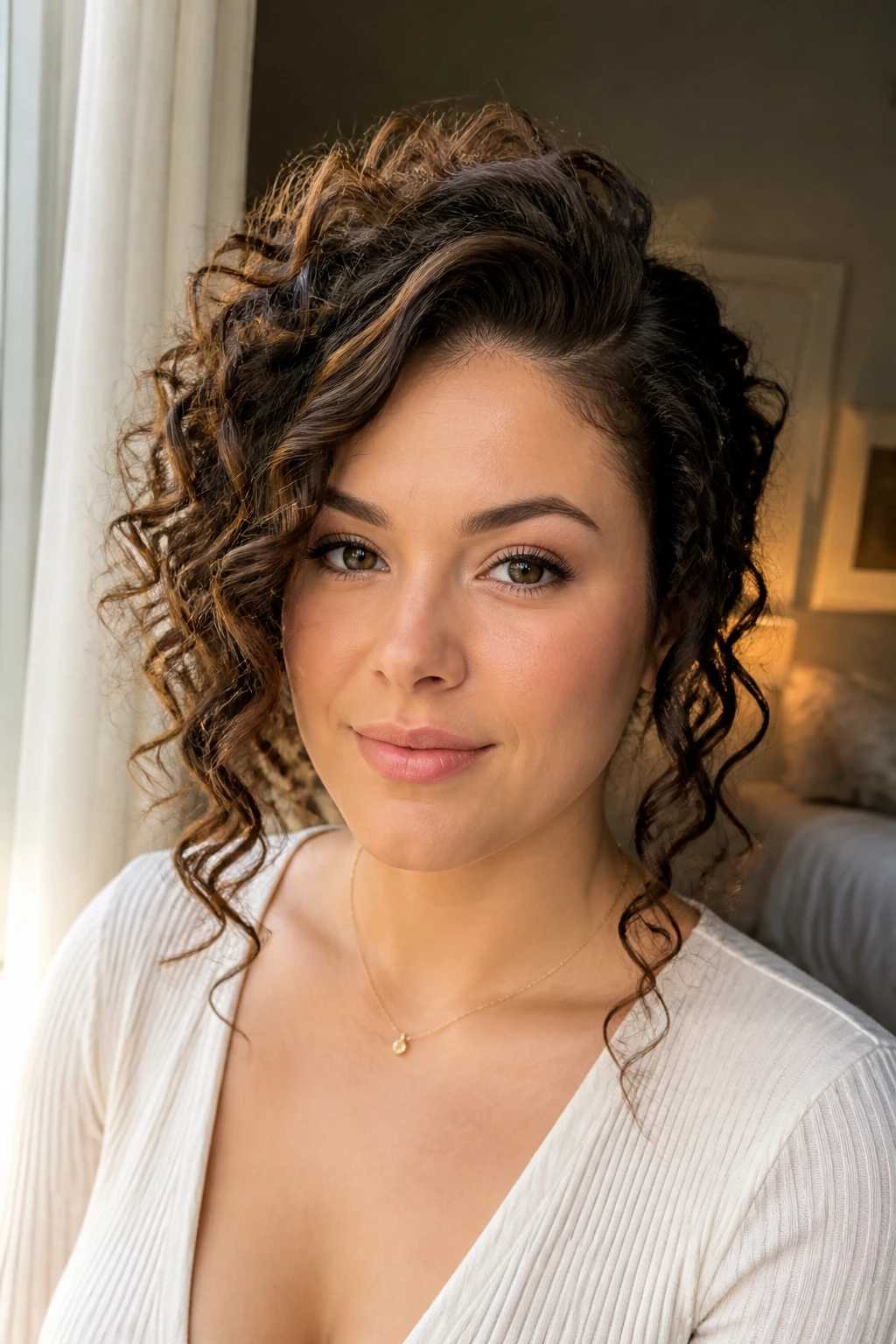
A round face is not a problem. It just asks for a little geometry.
The widest part of the face usually sits around the cheeks, sometimes stretching toward the jaw. Curls naturally want to expand there, which is why a blunt shoulder cut or a heavy middle part can make the face look even broader. The fix is not to hide the curls. It’s to redirect them.
The line you want is vertical, not circular
Think in slashes, not halos. A side part, an angled bob, or a high ponytail gives the eye a path to follow up and down. That vertical movement matters because curls already bring softness; you don’t need more roundness piled on top of roundness.
Where the shortest pieces should land
If you cut face-framing pieces, keep them either above the cheekbone with real lift at the crown or below the jaw where they can taper away. The middle zone is the risky one. That’s the spot where curls can sit flat against the cheeks and make the face feel wider than it is.
What a good curl cut actually does
The best curly cut for a round face keeps the top lively, the sides broken up, and the lower edge a little irregular. That can mean layers, a deep side part, a tucked side, or all three at once. The style should look like it has air in it, not like it was stamped out of a round cookie cutter.
1. Deep Side-Parted Cascading Curls
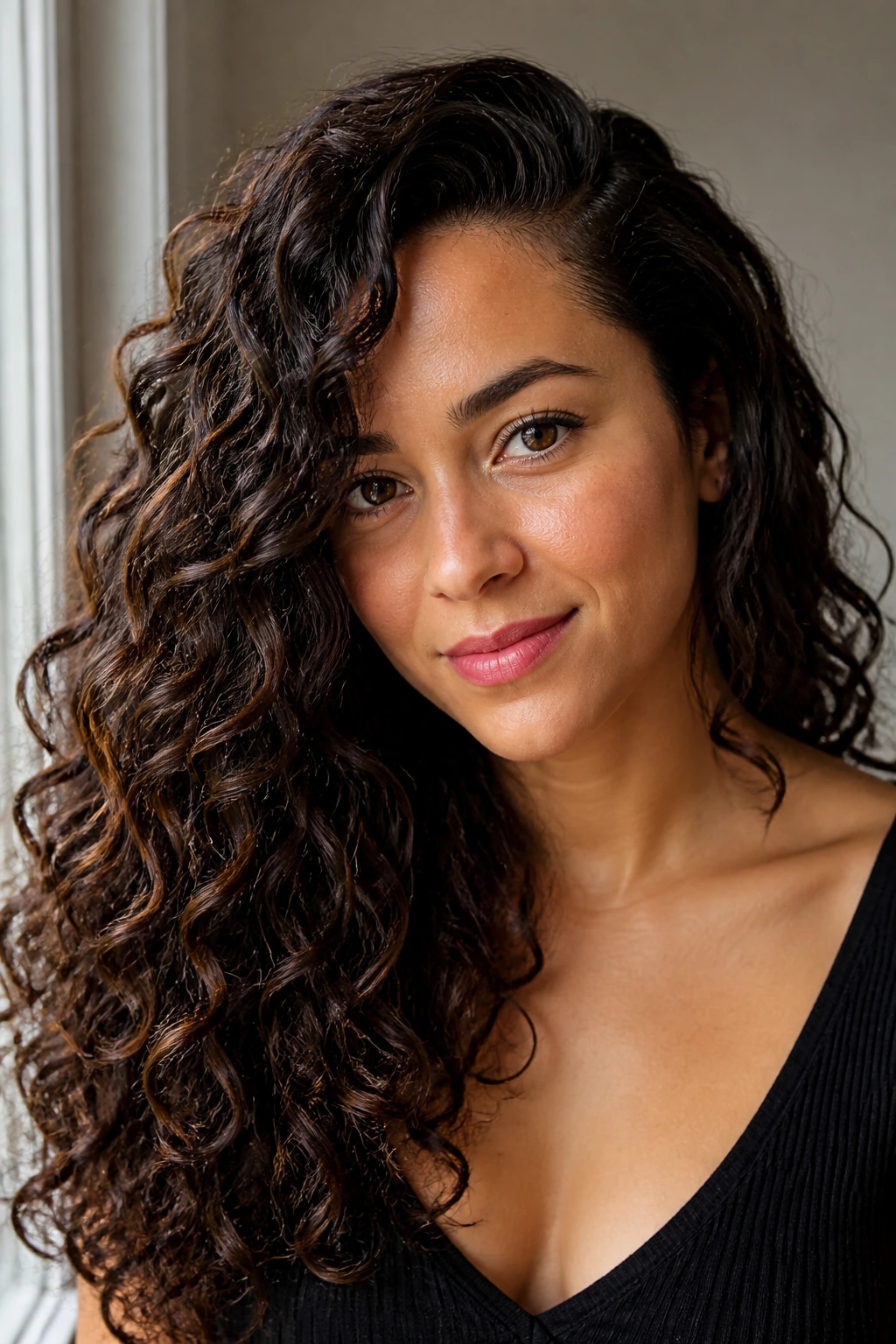
A deep side part is still one of the cleanest tricks in the book. Slide the part back from the arch of the eyebrow, not dead center, and the curls fall diagonally instead of forming one big circle around the face. That one move gives the whole style a longer line.
This works especially well if your curls are medium to long and have enough spring to hold the sweep. I like it on dense hair because the extra weight helps the side drape, but fine curls can wear it too if you clip the roots while drying. The goal is a little lift at the top and softer volume through the lengths.
A touch of mousse at the roots and a diffuser on low heat keeps the front from collapsing into the cheeks. If the part feels too dramatic, nudge it back a quarter inch. Small shift. Big change.
2. Curly Shag With Curtain Bangs
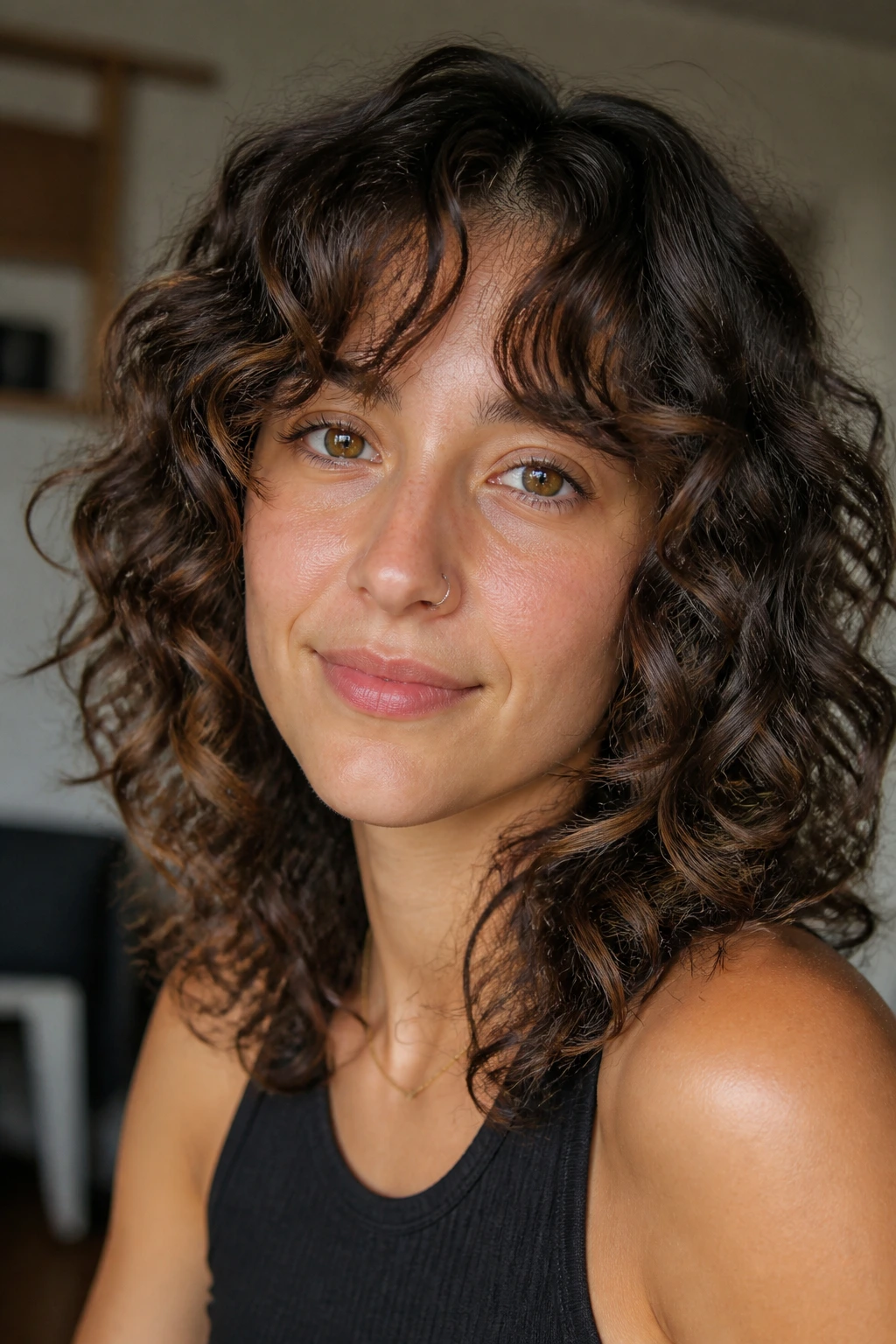
The shag is the style that understands curls want movement. Shorter layers at the crown, longer pieces through the sides, and curtain bangs that split away from the center keep the face from getting boxed in. It’s messy in a good way, not in an accidental way.
What makes it work on a round face is the way the bangs open at the temples. They don’t sit like a blunt curtain across the forehead. They skim, then disappear into the rest of the curl, which keeps the upper face light and the cheeks from feeling crowded.
Best for
- Loose curls that need shape.
- Thick hair that turns heavy at the bottom.
- Anyone who wants a cut that looks better a little undone.
If you hate spending twenty minutes making curls behave, this cut is forgiving. A bit of leave-in, a bit of gel, a quick scrunch, and you’re done. It’s not shy. Good.
3. Collarbone-Length Lob With Frayed Ends
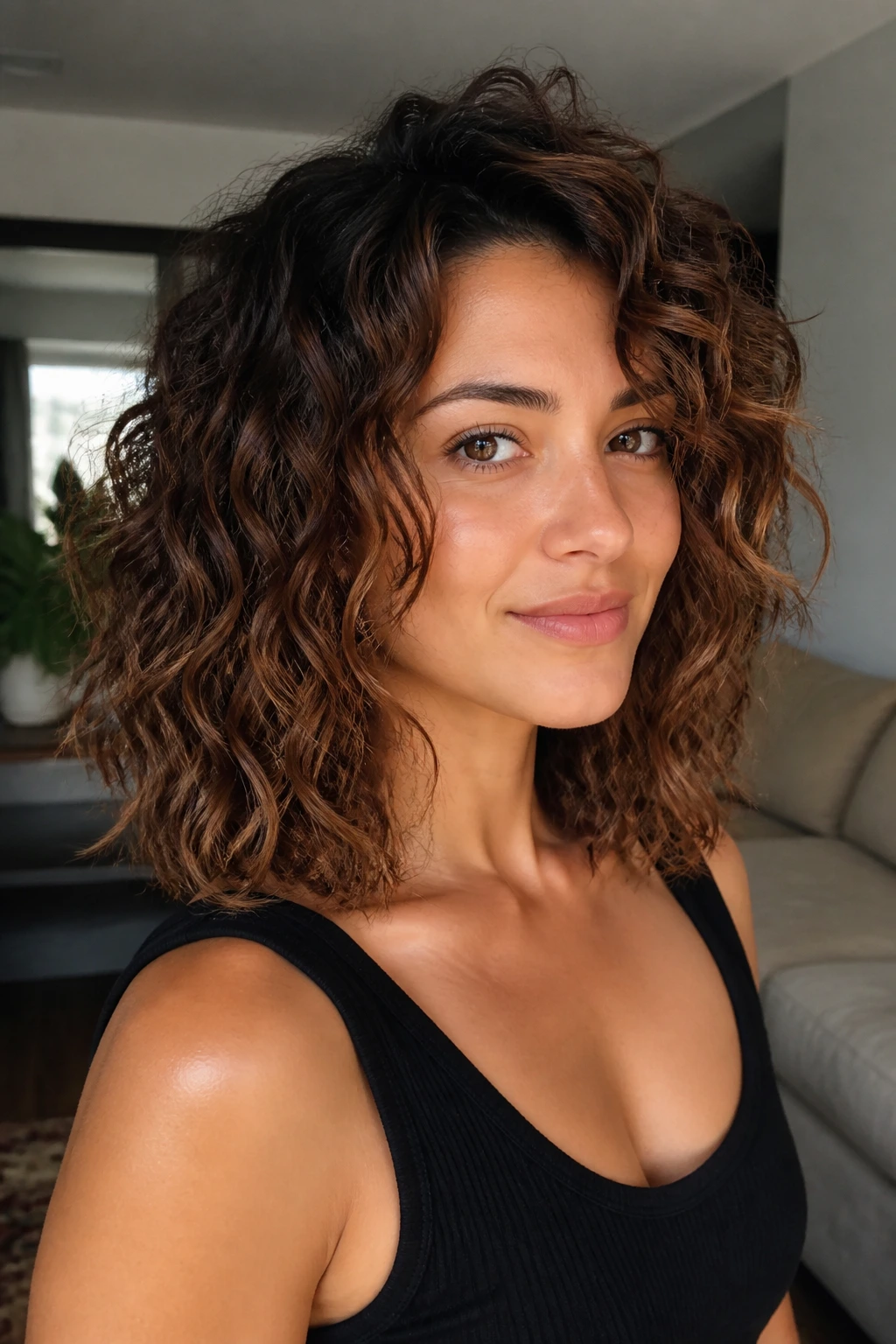
A collarbone lob is the safe choice that never looks boring when it’s cut right. The length lands below the cheekbone and above the chest, which gives curls enough room to drop instead of puffing straight out at the jaw. Add frayed ends, and the whole thing feels lighter.
I’d call this the workhorse style on the list. It’s long enough to pull back, short enough to dry faster, and just structured enough to stop curls from spreading sideways. On a round face, that shoulder-adjacent length is especially useful because it keeps the widest part of the face out of the hairline.
A diffuser for 10 to 12 minutes, then air-drying the rest of the way, keeps the shape clean. If your curls tend to bunch under the ears, break up the perimeter with a little finger coiling at the ends.
4. Asymmetrical Curly Bob
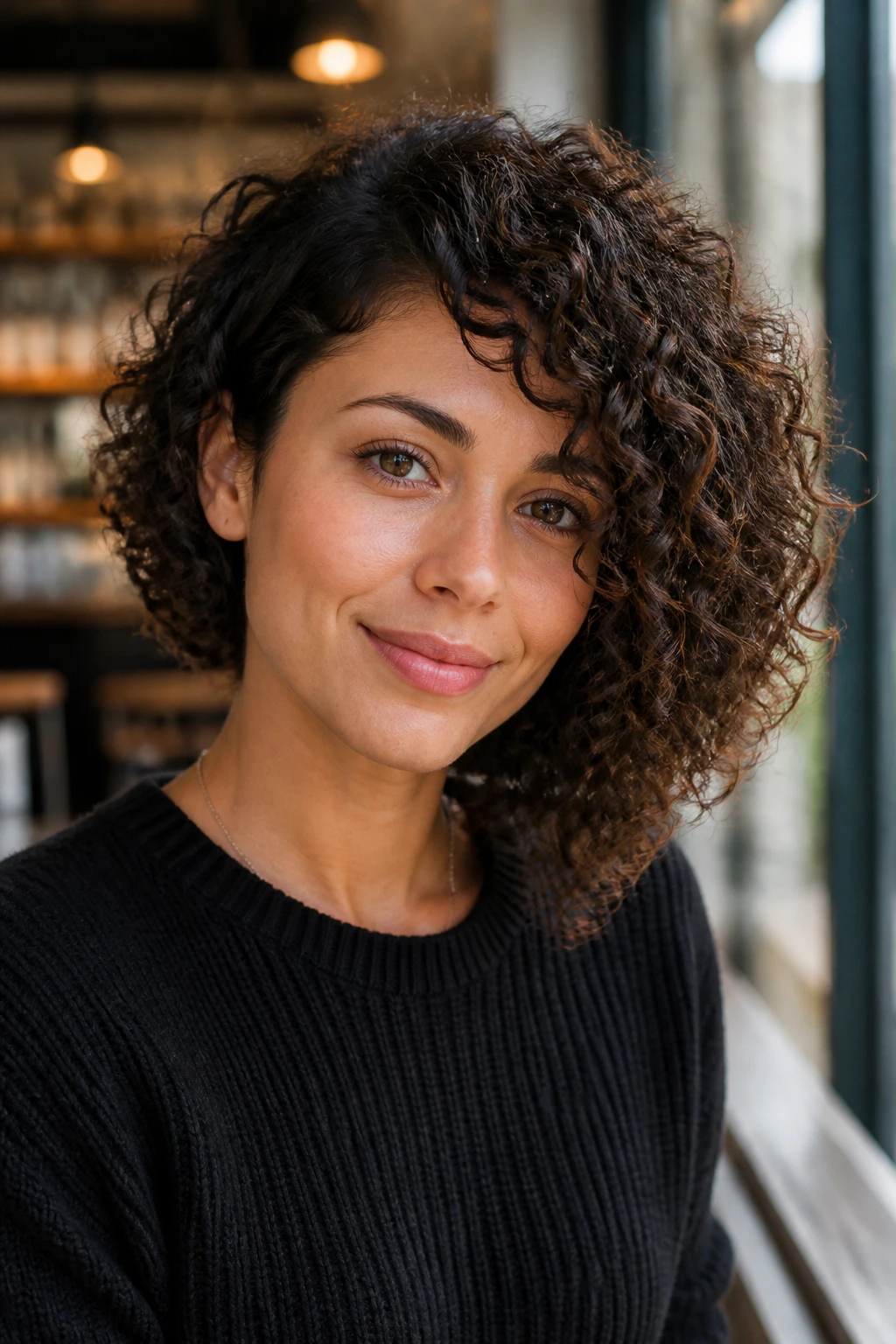
A bob that’s longer on one side sounds subtle until you see it on a round face. The diagonal line does a lot of work. One side can skim the jaw, the other can land a little lower, and the face stops reading like a perfect circle.
This is the cut I recommend when someone wants short hair but doesn’t want the face to look even rounder. The asymmetry should be visible, not theatrical. Usually a difference of one to two inches is enough when curls are involved, because shrinkage will exaggerate the line anyway.
If you wear one side tucked behind the ear, even better. That clears one cheek completely and gives the haircut a sharper edge. The only thing to watch is the bottom line; keep it broken up so it doesn’t puff into a single rounded shelf.
5. High Curly Ponytail With Crown Lift
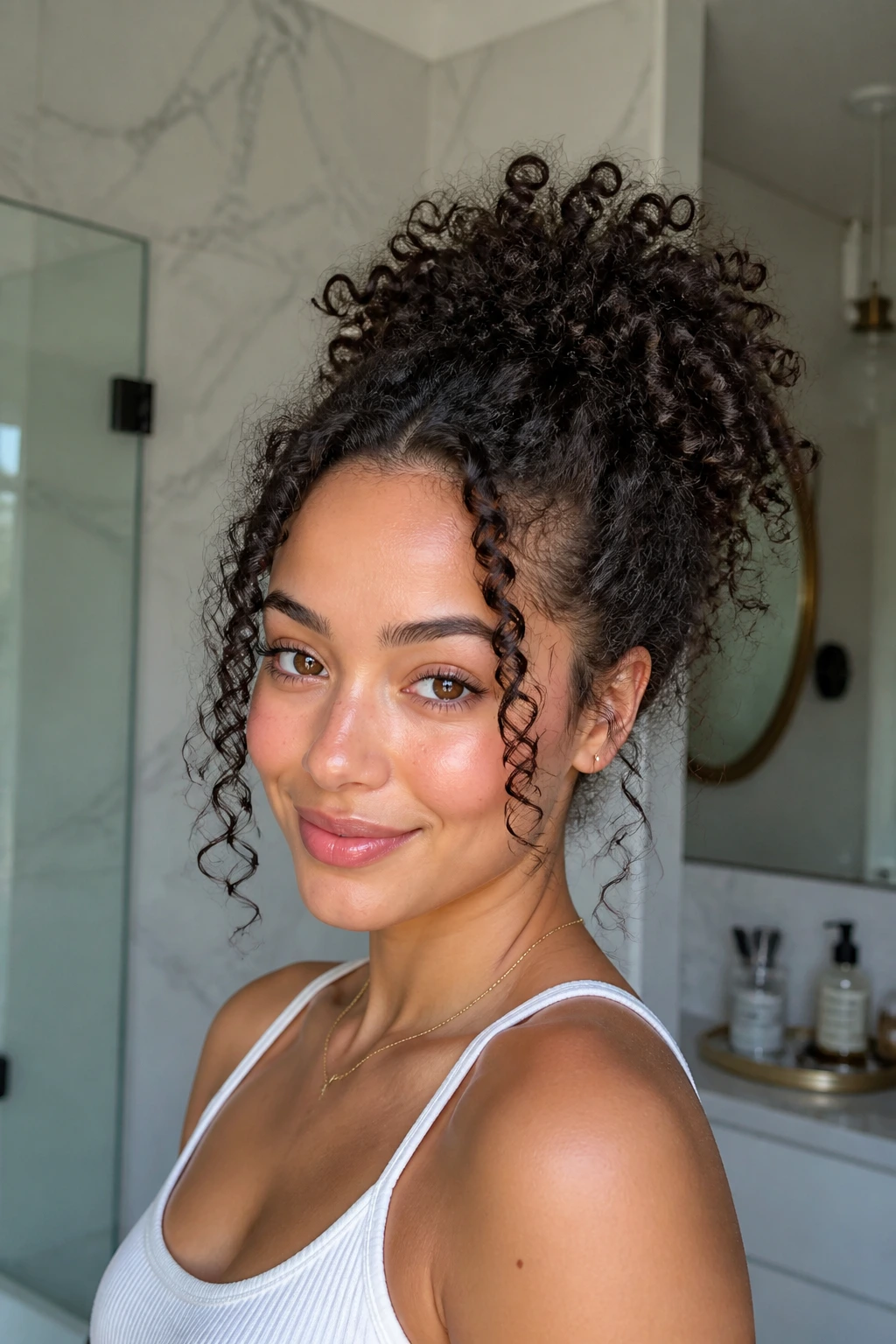
A ponytail placed high on the head changes the face immediately. Not the middle of the back of the head. Higher. Right where the crown starts to rise, so the curls stack upward instead of hanging straight off the widest part of the face.
This style works because it makes the head look taller before it makes it look fuller. Leave a few front spirals loose, and they’ll fall beside the cheeks without covering them. I also like wrapping a small curl or a thin section of hair around the elastic so the base looks finished.
If your roots are flat, clip them up while the hair dries or mist the crown with water and lift it with your fingers. A ponytail can go from sleepy to sharp fast, and that shift is very useful on round faces.
6. Half-Up Puff With Face-Framing Strands
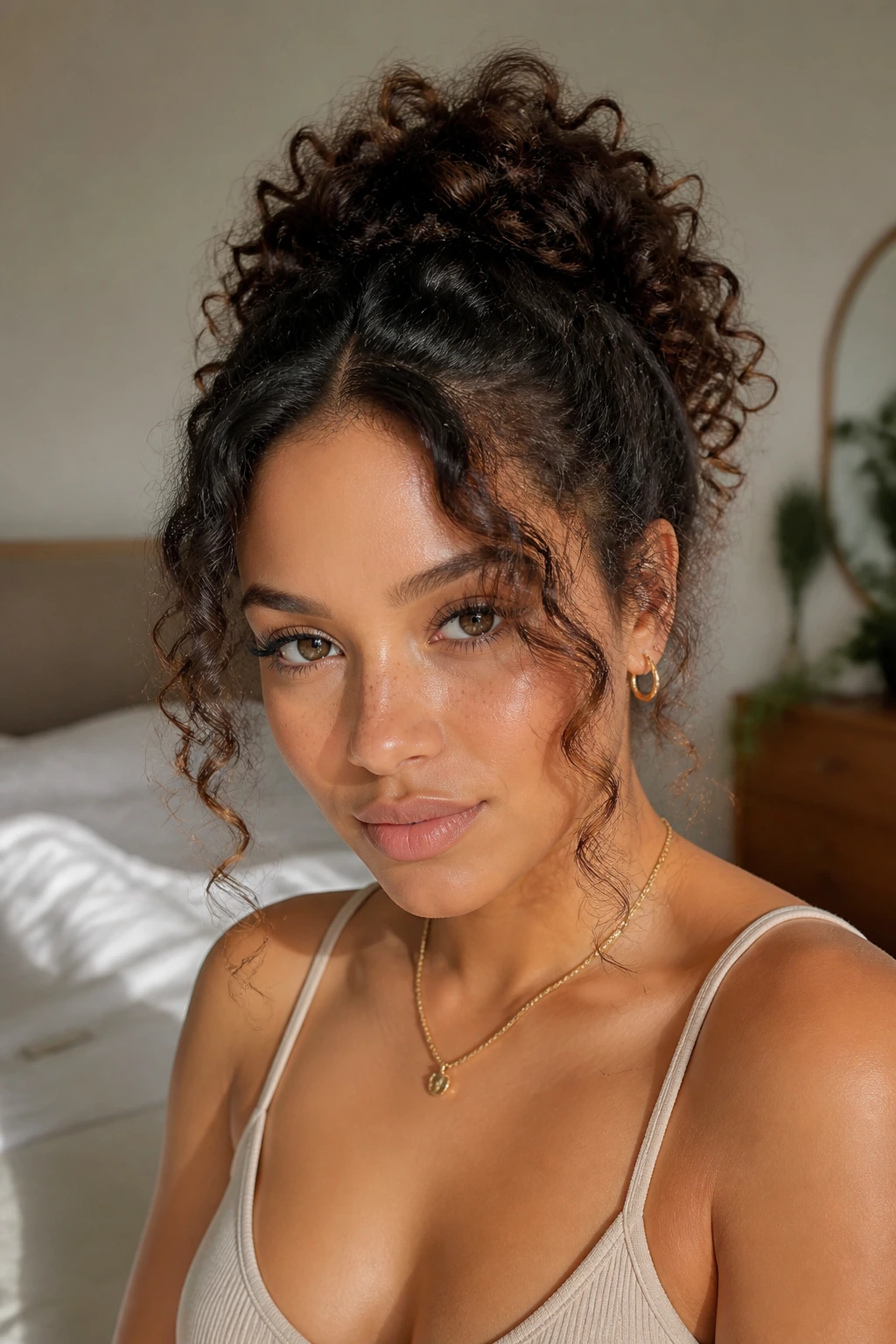
The half-up puff is one of those styles that makes curls look deliberate with almost no drama. The top section goes up and back, the bottom section stays loose, and the face-framing strands stay out to soften the cheeks without swallowing them.
What I like here is the balance. You get the lift of an updo and the movement of wearing the hair down. On a round face, that means the attention moves upward first, then down through the curl length instead of spreading evenly from ear to ear.
Use a small clip or a no-snag elastic and avoid pulling the top too tight. If the crown is flattened too hard, the whole thing loses the shape that makes it useful. A little puff at the top is the point.
7. Tapered Curly Pixie
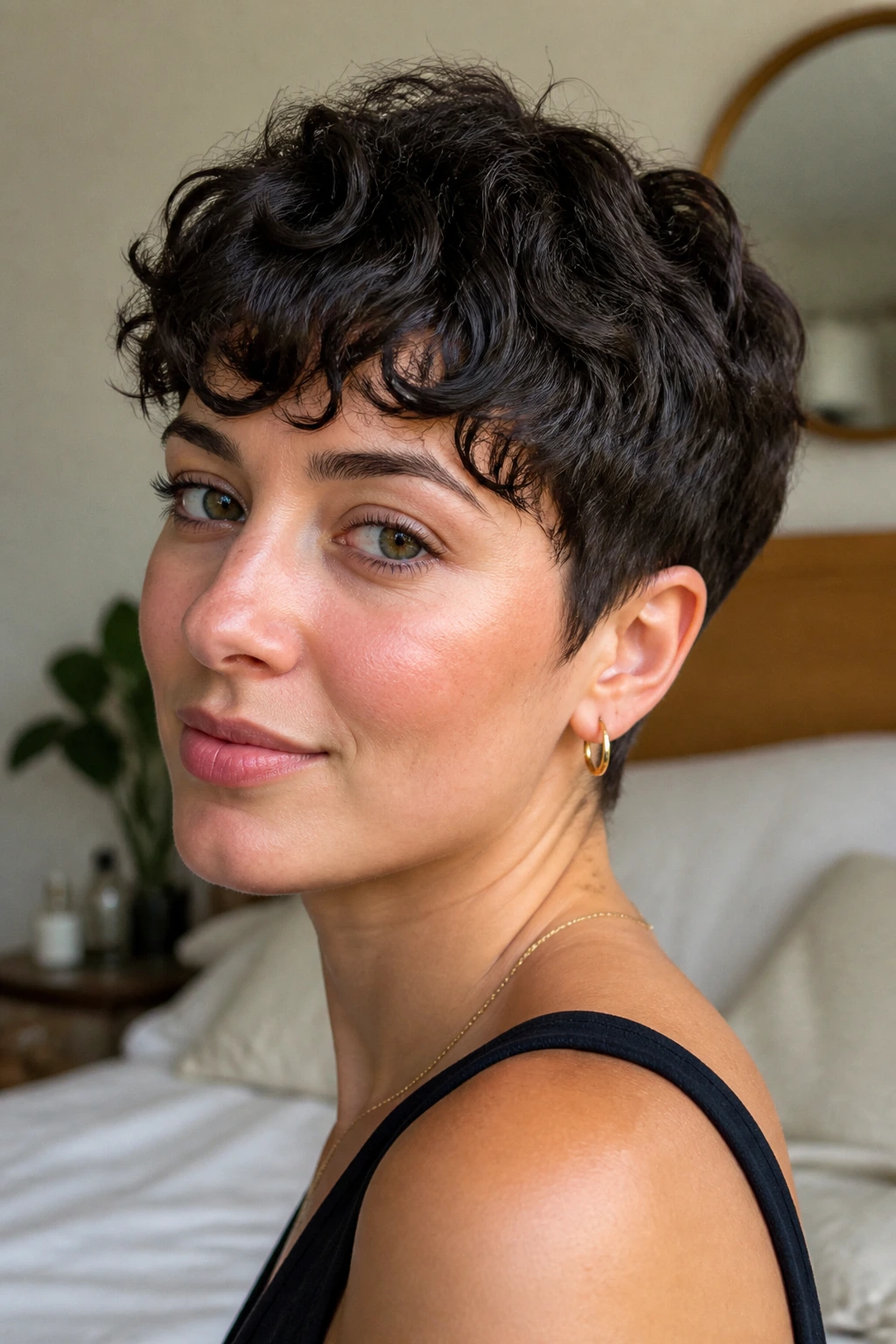
Short curls can work on a round face, but they need some discipline. A tapered pixie keeps the sides closer to the head and lets the top stay longer and fuller, which gives the face a cleaner vertical line. The shape is neat, not harsh.
The trick is the fringe. Keep it soft and piecey rather than thick and blunt. A curly pixie with a heavy front bang can make the forehead feel boxed in, and that’s not what this cut is trying to do. You want lightness around the face, not a helmet.
Styling note
Diffusing the top upward helps the crown sit higher, and a tiny amount of cream keeps the curl definition from turning fuzzy. If your hair shrinks a lot, ask for the top a little longer than you think you need. Curls always have opinions.
8. Curly Wolf Cut
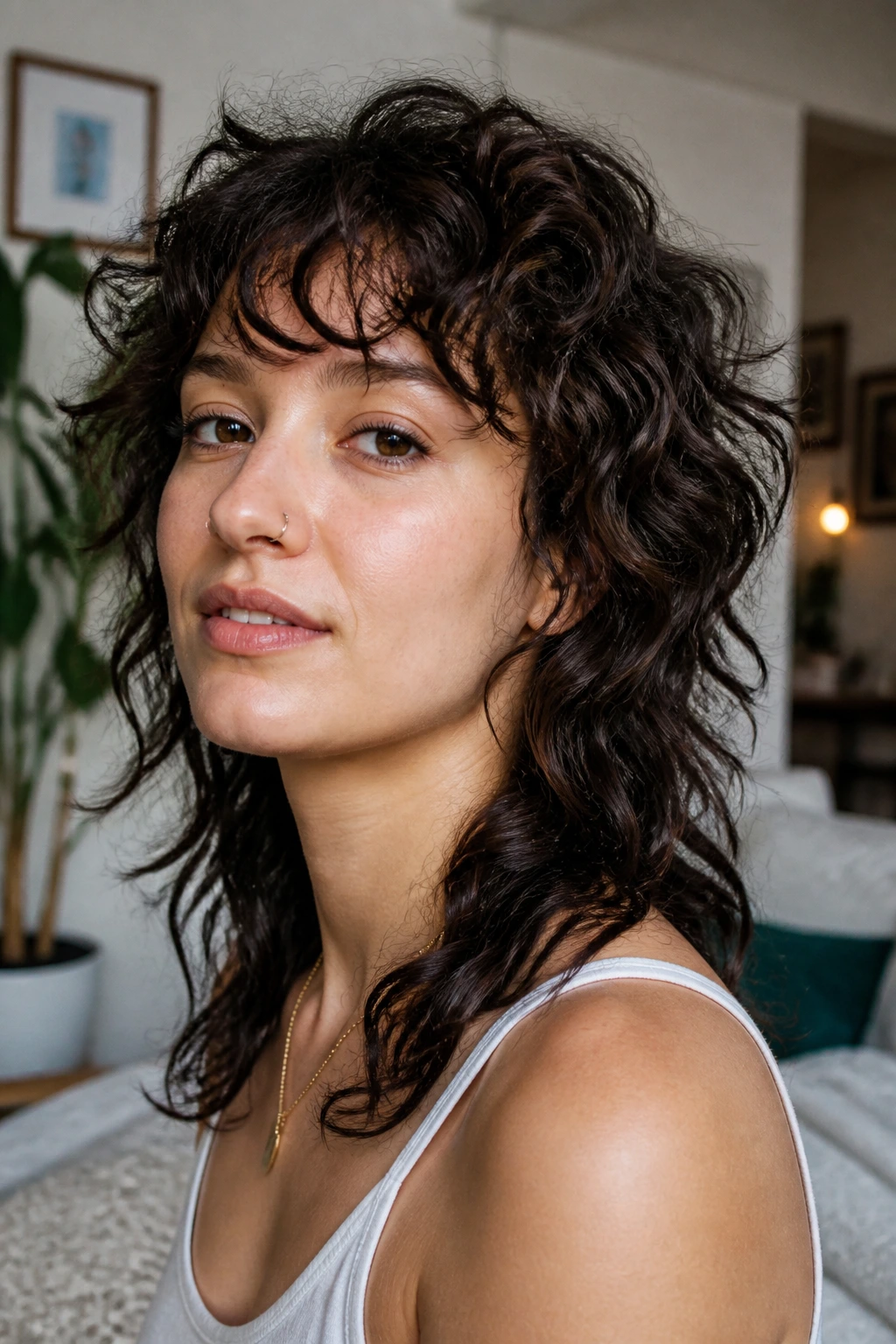
The wolf cut is basically a shag with a little more edge and a little less polish. It builds height at the crown, then lets the back and lower lengths stay longer, which gives a round face some much-needed contrast. The shape looks alive, which is a nice change from styles that sit too neatly.
I like this one on thick, coarse curls because the internal layers take weight out of the sides. That matters. If the hair sits too dense at the cheeks, the face loses its outline. A wolf cut keeps the sides broken and lets the top do more of the talking.
It’s not for somebody who wants a calm haircut. It is for somebody who likes motion, texture, and a little bit of attitude when the hair catches air.
9. Side-Swept Shoulder-Length Curls
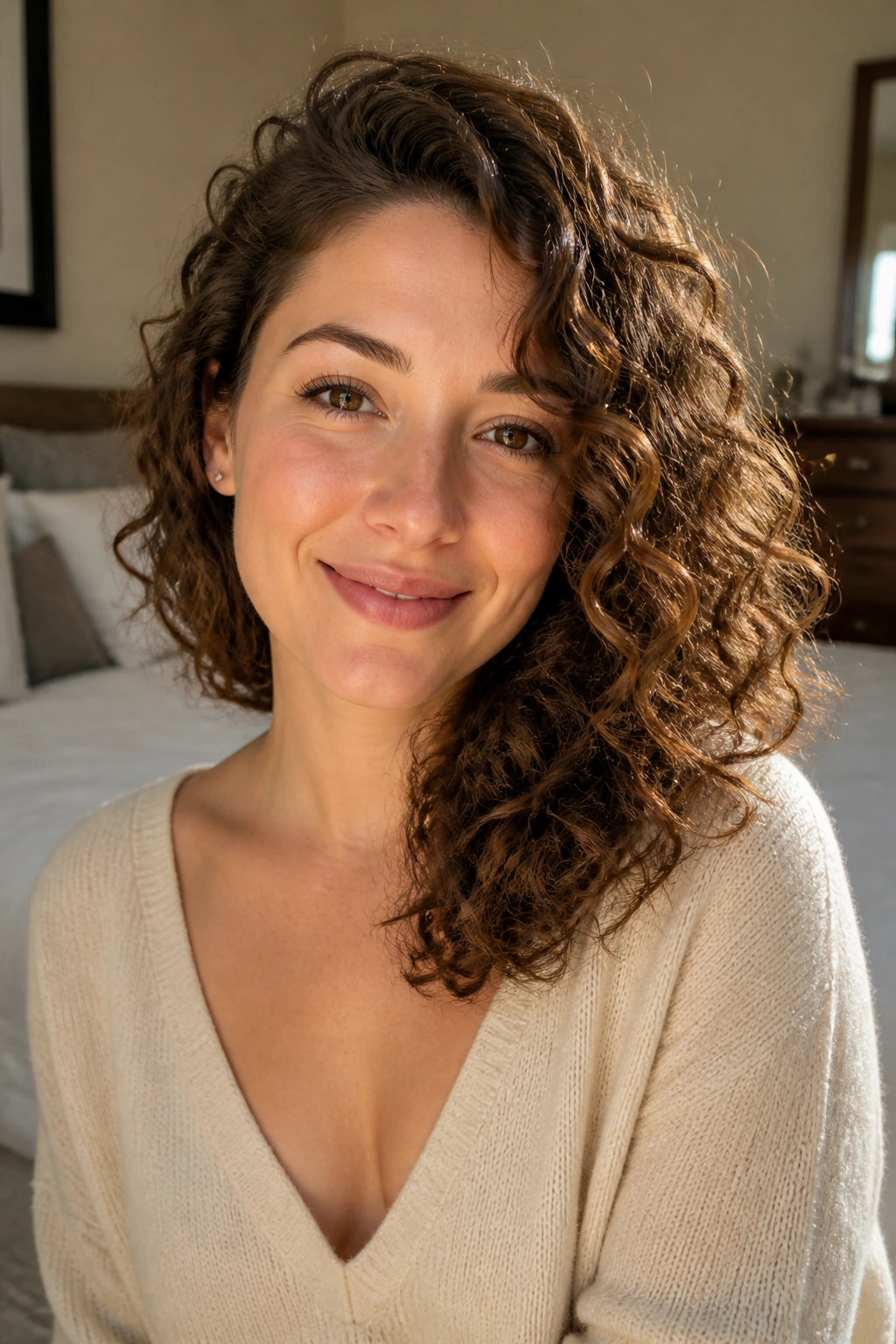
Side-swept curls are easy to underestimate. They don’t look dramatic on a hanger, but once the hair is all swept over one shoulder, the diagonal line cuts straight through the roundness of the face. That single line is doing a lot more than it seems.
This style shines when one side of the hair tends to lie flatter anyway. Instead of fighting that, lean into it and build the rest of the volume on the opposite side. The asymmetry makes the face feel longer and the curls feel less like a circle sitting on a circle.
If you want a soft finish, let the ends stay loose. If you want more polish, twist the side with more hair behind the ear and pin it low. Either way, the shape should read slanted, not symmetrical.
10. Crown-Heavy Rounded Afro
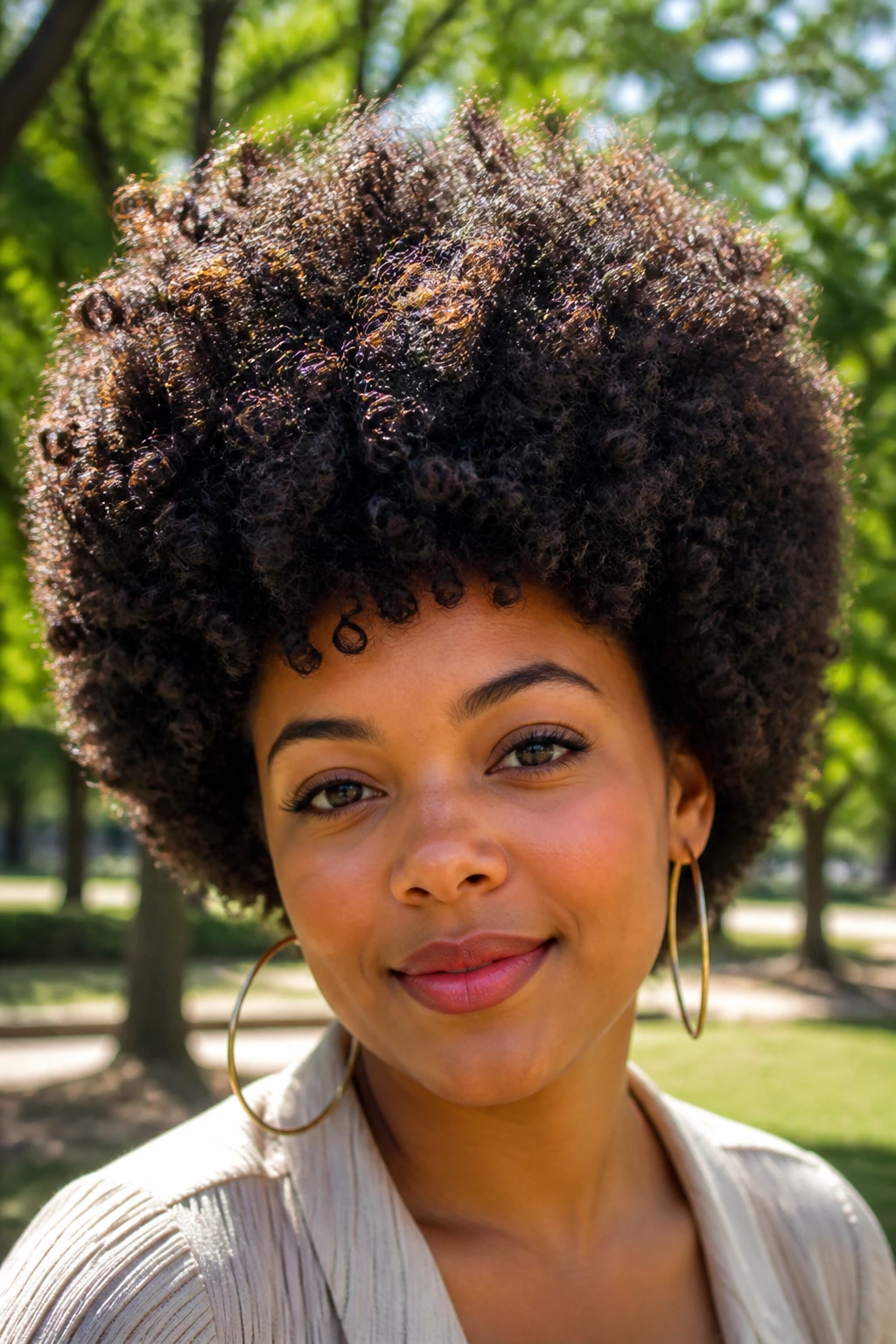
A rounded afro can work beautifully on a round face when the height lives on top, not just on the sides. Think of it as an upward cloud, not a sideways one. That distinction matters more than the label of the style.
Pick the roots, stretch the top, and let the silhouette taper a little near the temples and jaw. The face gets framed, but not boxed. If the sides puff too much, the cut starts competing with the face instead of supporting it.
This is one of the few styles where a little controlled width is welcome, as long as the crown keeps the lead. It’s bold. It’s clean. And it keeps the eyes moving upward, which is exactly the point.
11. Center-Part Layers Past the Chin
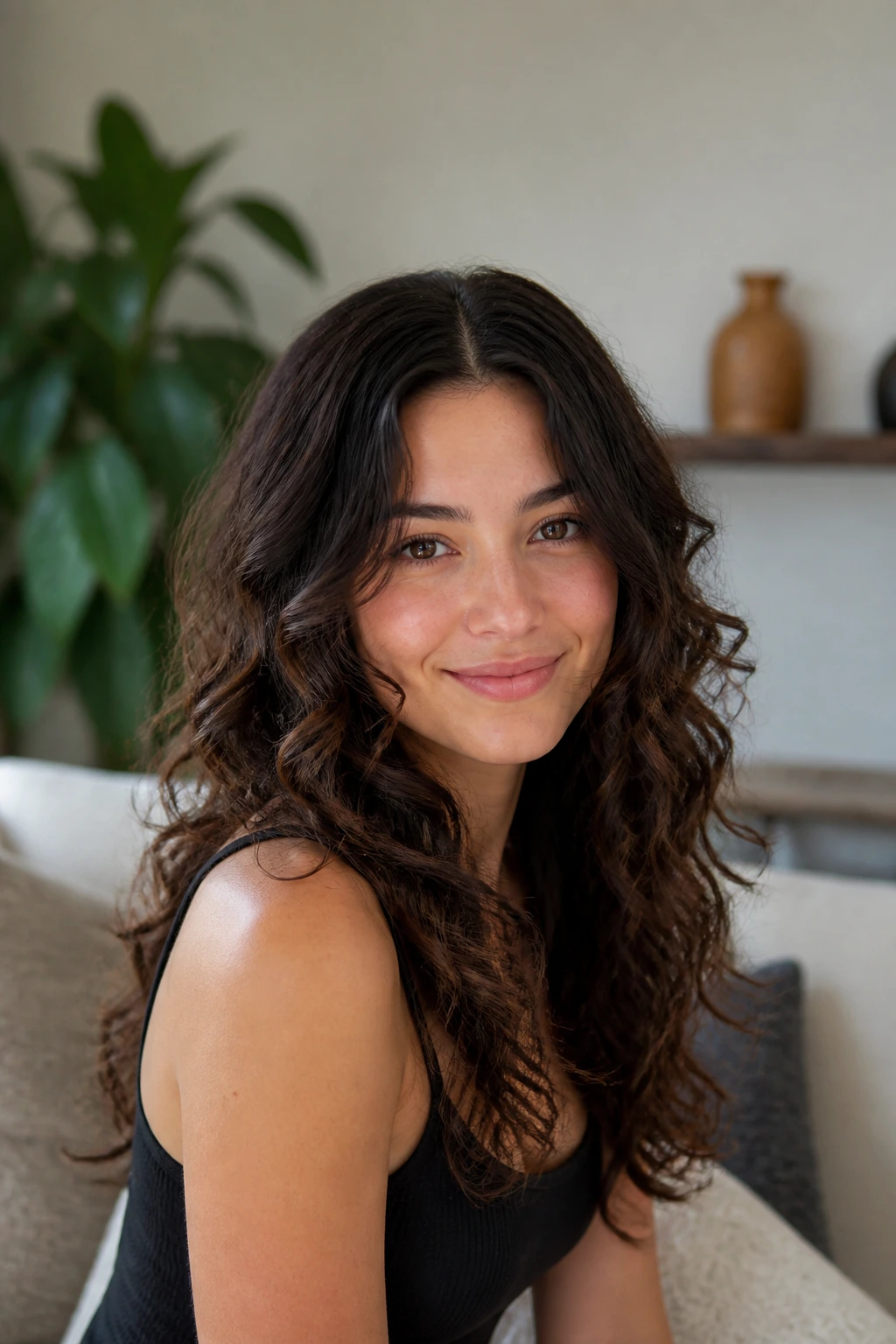
A center part on a round face is not forbidden. It just needs backup. Long layers that start below the chin and keep moving down the body give the middle part a chance to look sleek instead of squat.
Without those layers, the center line can split the face and leave too much fullness at the cheeks. With them, the face gets a tidy frame that drops past the jaw. That drop is the key.
I like this look when the curls are defined, not brushed into fluff. If your hair expands a lot as it dries, keep the root area smooth with a little gel and let the ends carry the movement. The part stays honest, but the shape stays long.
12. French Bob With Long Front Pieces
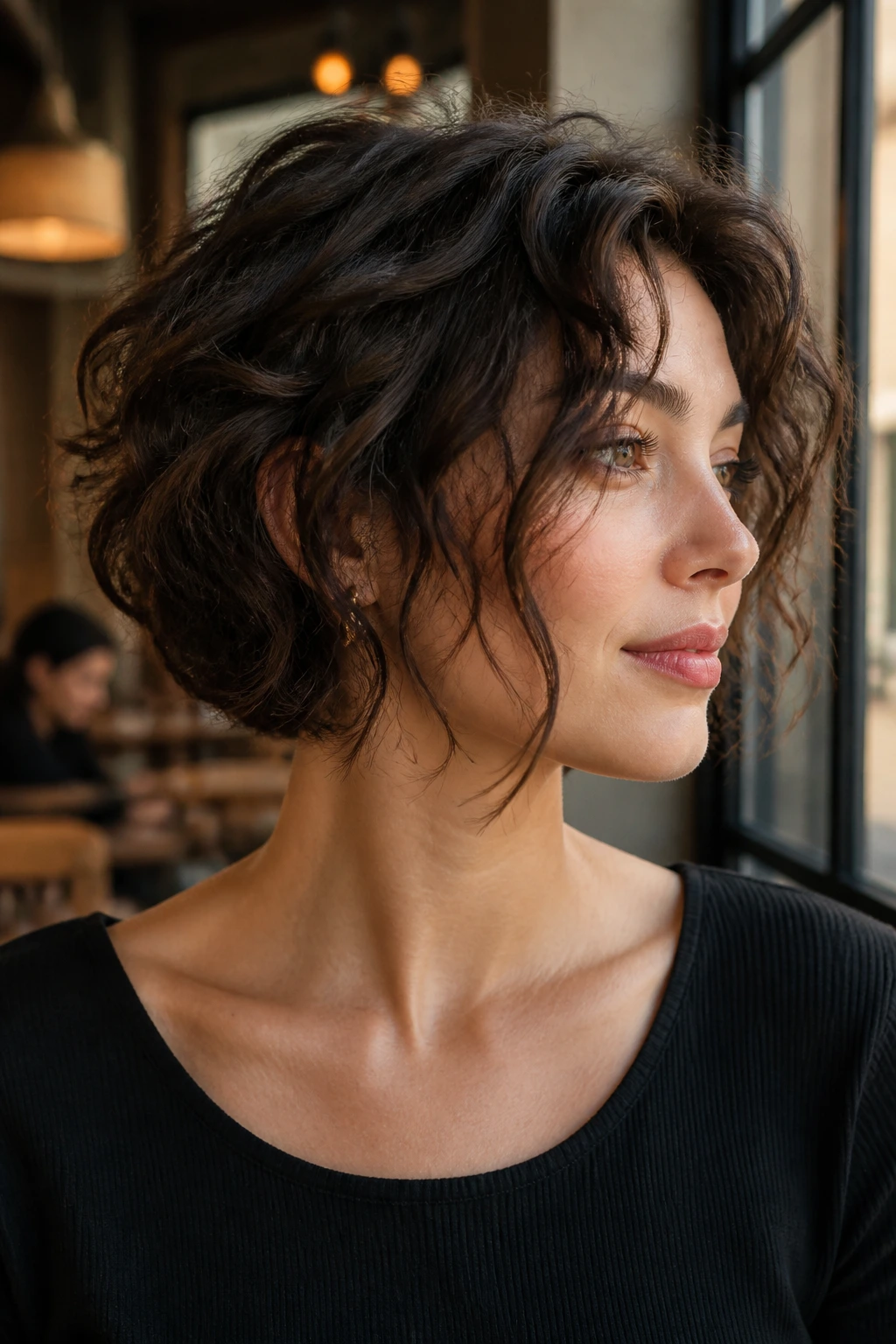
A French bob can be risky on a round face, and I say that as someone who likes a blunt cut when it behaves. The answer is to keep the front pieces longer, use soft texture through the ends, and let the bob graze the jaw rather than sit squarely on it.
The best version feels a little messy at the edges. A clean, straight bob that lands at the chin can look too tidy and too round. But once the front starts to angle down and the ends break apart, the face reads slimmer and the hair feels lighter.
This cut suits curly hair that holds its shape without exploding. If that’s your texture, the French bob can look sharp in a very quiet way. If not, ask for a softer perimeter and more internal layers.
13. Pineapple Updo
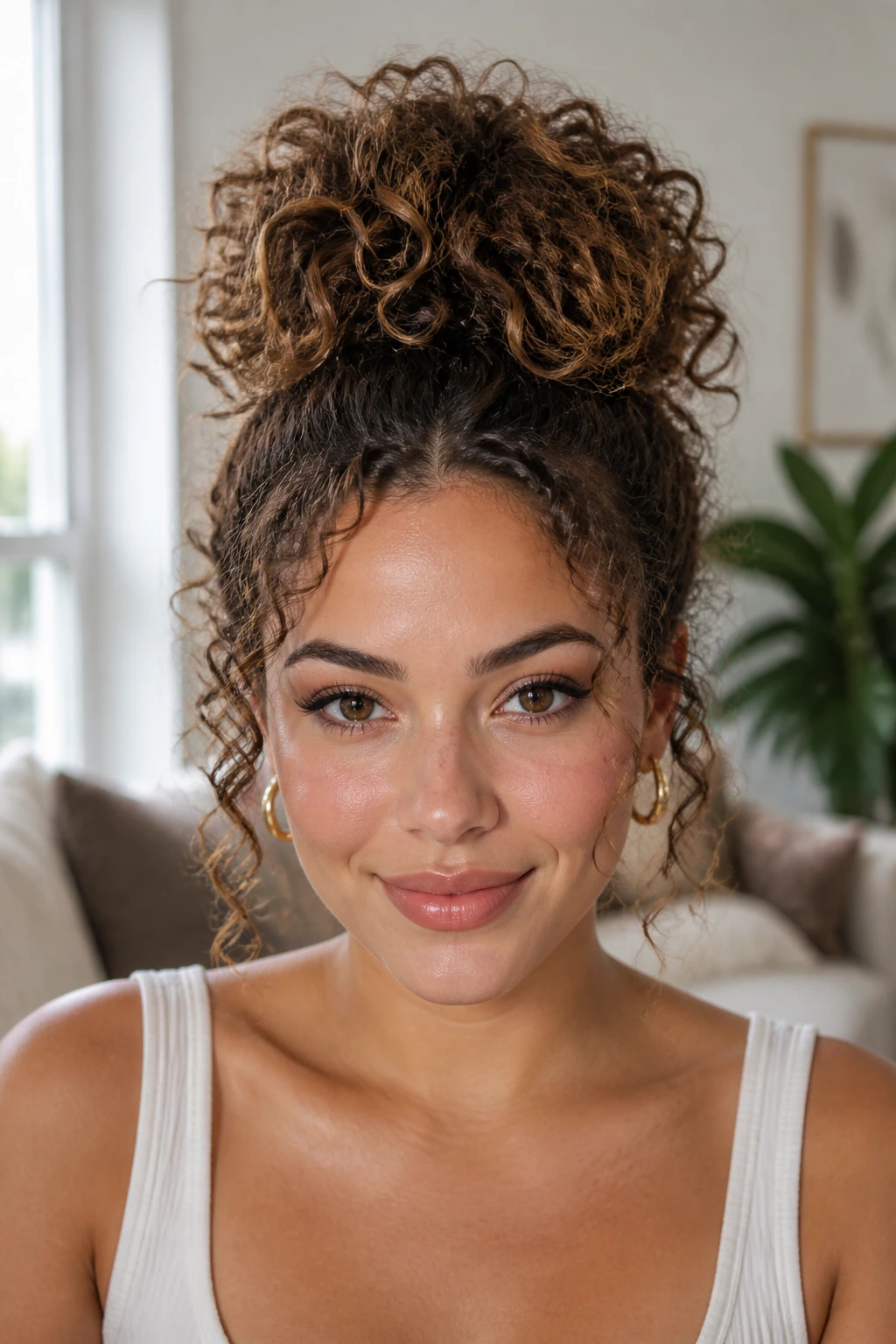
The pineapple is the fastest way to get curls off the face and put the whole shape on top of the head. It’s a high, loose pile of curls, and it’s particularly good on round faces because it moves the volume upward instead of outward.
Don’t yank it tight. A pineapple should look easy, almost accidental, with the curls sitting on the crown and the ends spilling a little. That softness keeps the style from feeling severe. Add a few face-framing strands if you want the cheeks to stay a touch softer.
This is also one of the best styles for second-day curls. If the crown needs help, pinch a little root lift and let the rest do its thing. Done.
14. Low Twisted Bun With Spiraled Tendrils
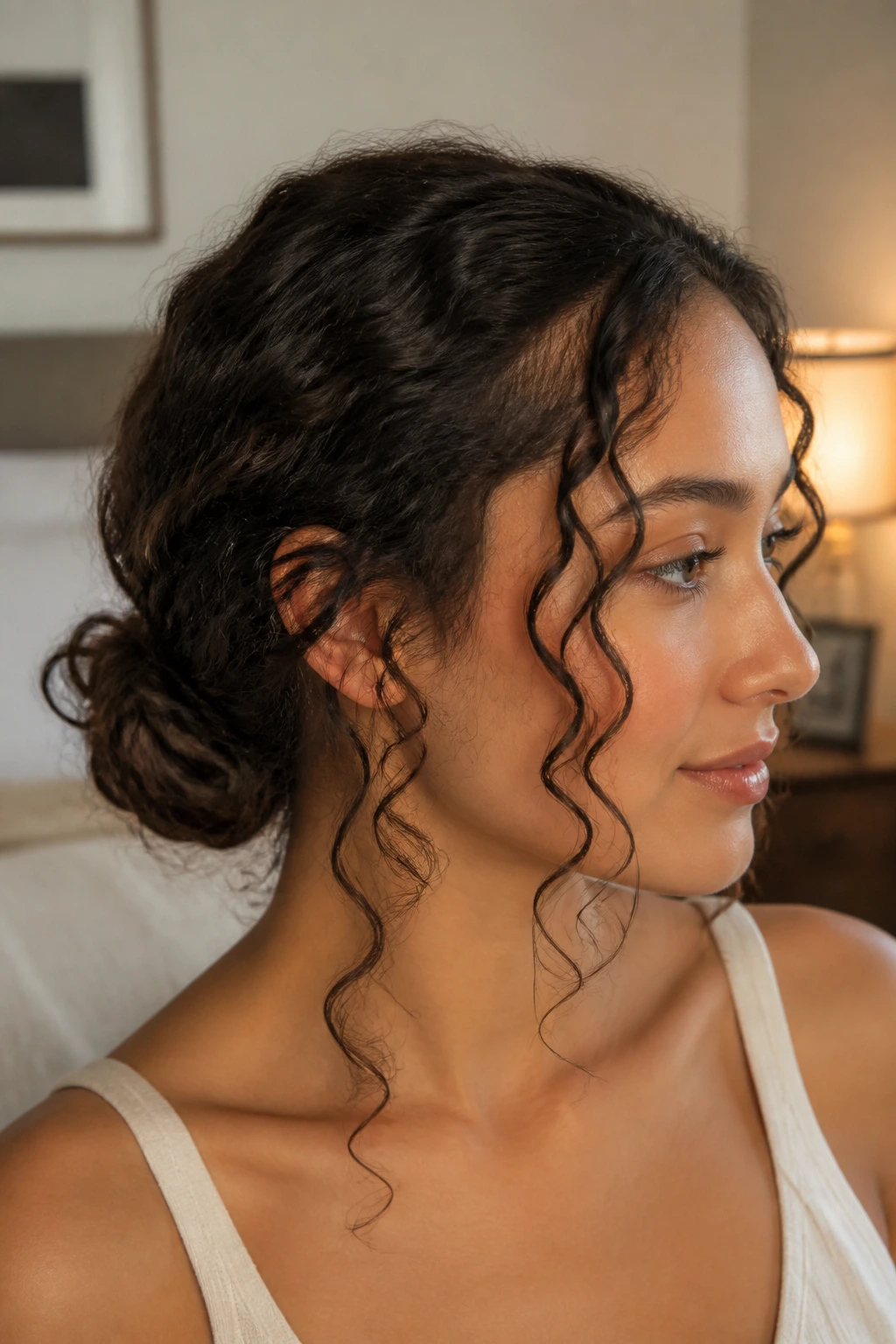
A low bun can flatten a round face if it sits too neat and too centered, so the trick is to twist it, lower it, and leave a few spiraled tendrils around the temples and jaw. That gives the face some movement without crowding it.
I like this for days when you want the curls out of the way but still visible. The bun itself stays compact at the nape, which keeps the silhouette long. The tendrils do the softer work around the face, and they’re better left imperfect than polished.
If you’re aiming for something dressier, smooth the top lightly with gel and keep the bun textured. A round face usually benefits when the top has a little lift and the sides stay lean.
15. Airy Curly Bangs With Long Layers
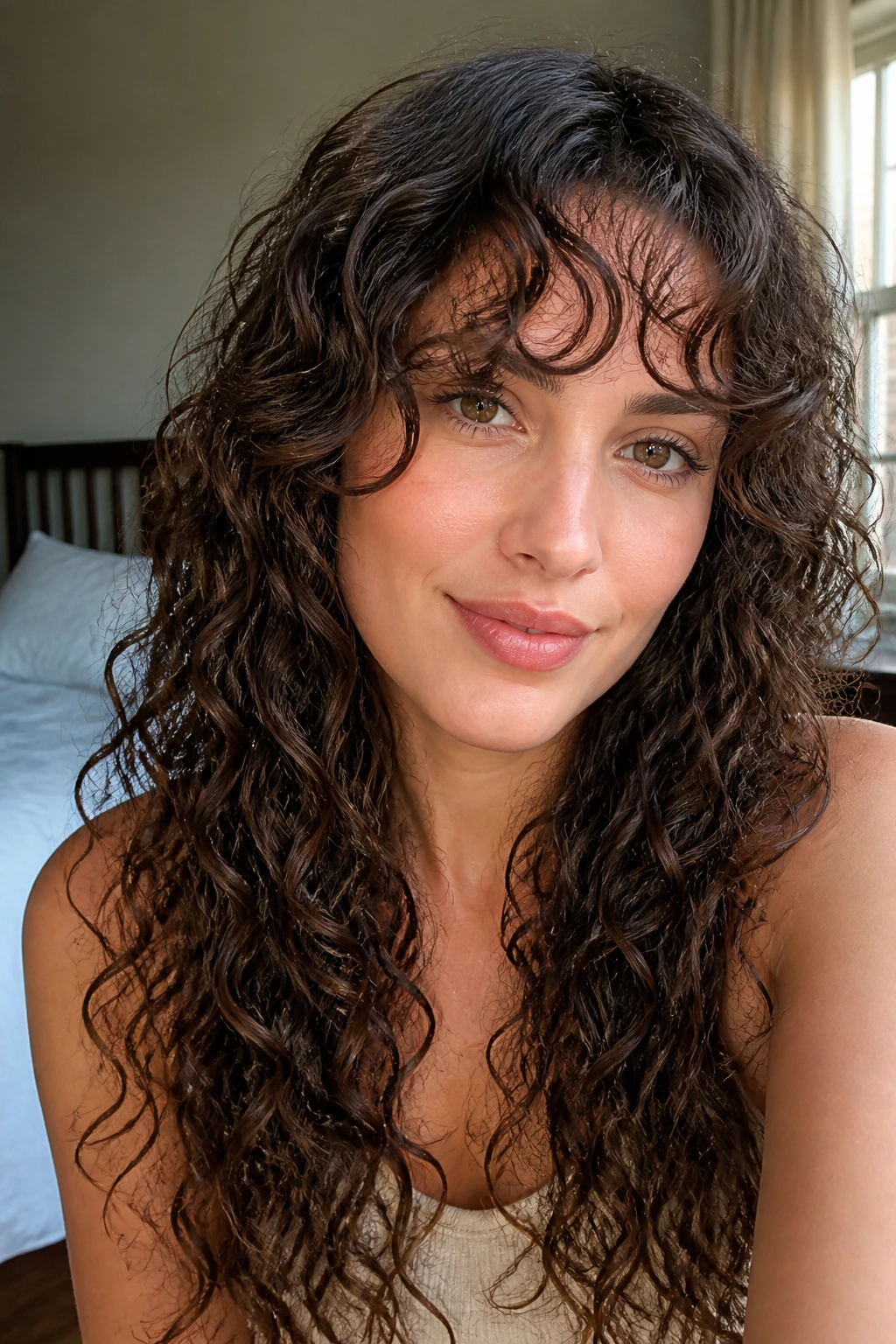
Curly bangs can be a mess or a win, and the difference is thickness. Airy bangs that break apart a little at the forehead work much better than a heavy, straight-across fringe on a round face. They soften the top without chopping the face in half.
The layers behind the bangs matter just as much. Long layers pull the eye down and stop the bangs from becoming the star of the entire haircut. I’d keep the shortest bang pieces above the brows or just grazing them, then let the rest of the cut drift lower.
What to watch for
If the fringe gets too dense, it turns into a curtain that shortens the face. If it stays airy and pieced out, it adds personality without crowding the cheeks. That’s a good trade.
16. Long V-Cut Spirals
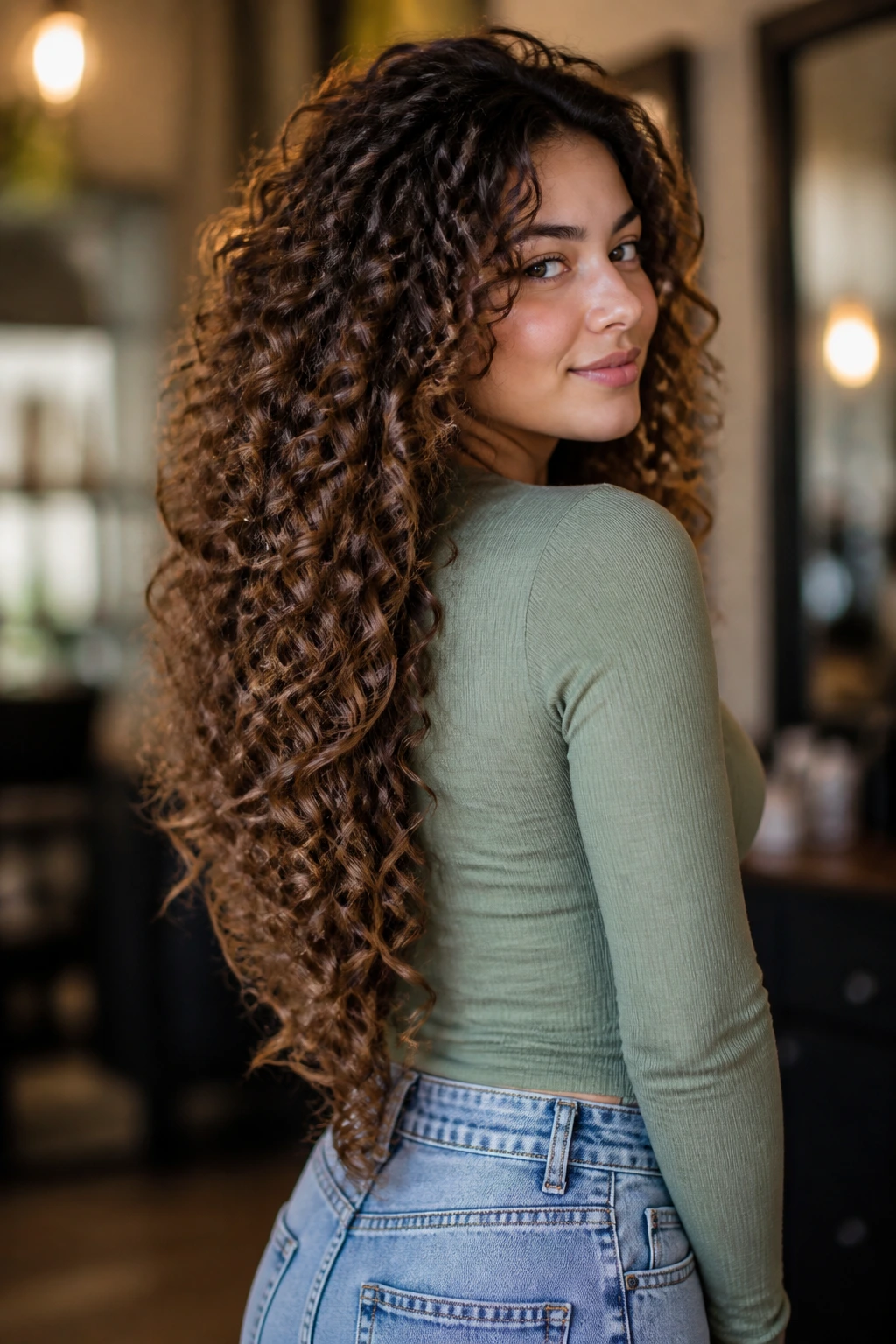
A V-cut gives long curls a pointed shape at the back, and that point helps break the roundness of the face by creating a long vertical line. It’s especially nice on thick hair, where a straight hem can make the ends look too heavy.
The front should be kept a little shorter than the back, but not so short that it lands on the widest part of the cheeks. A softer face frame that starts below the cheekbone works better here. The whole haircut should feel like it is falling downward, not spreading out.
If your curls are high-density, this cut takes some weight out without stealing the length. It’s one of the better choices when you want drama and shape at the same time.
17. Soft Curly Mullet
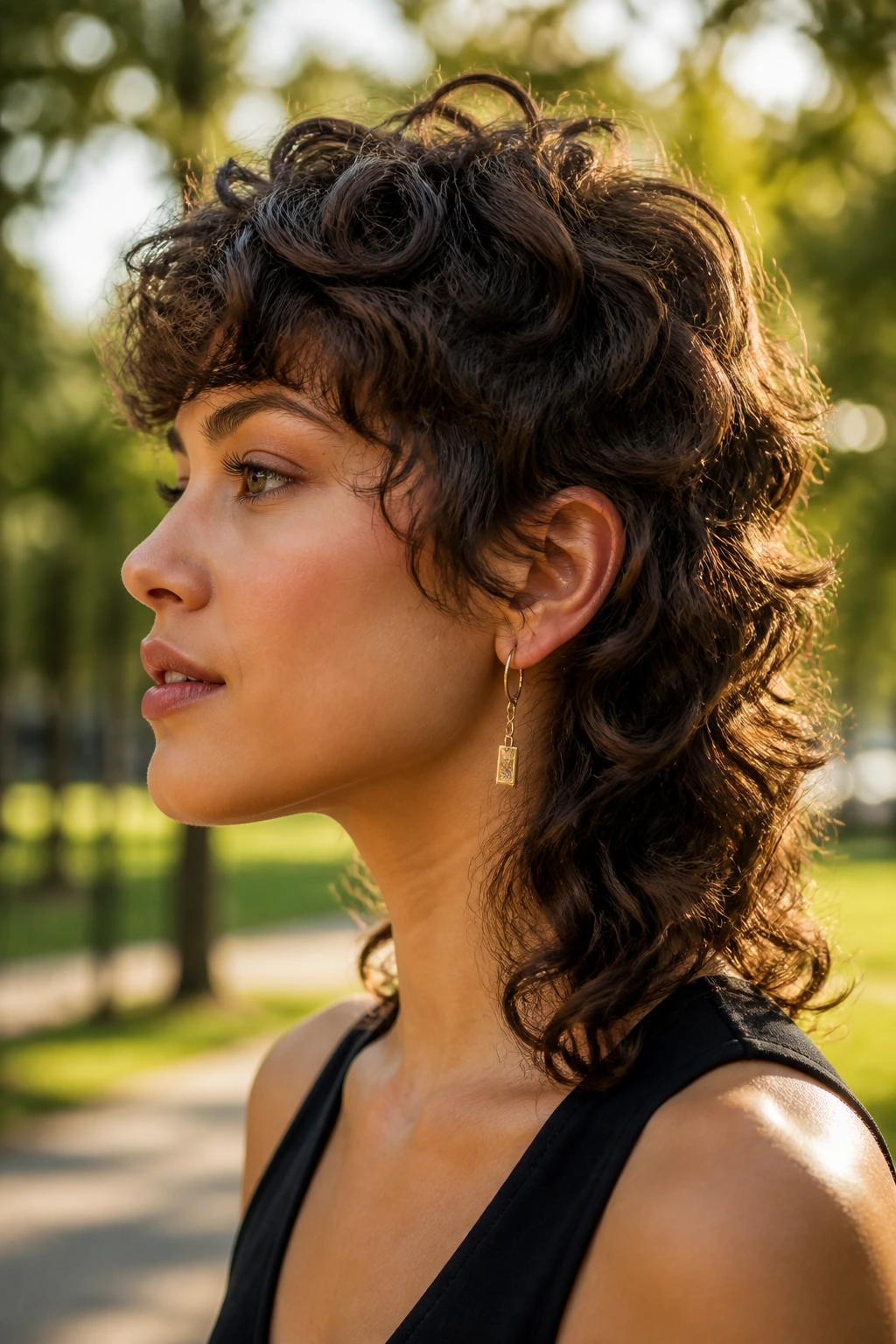
A mullet sounds aggressive until the curls soften the edges. The top and crown stay shorter, the back keeps more length, and the sides are shaped enough to stop the haircut from going balloon-shaped at the cheeks. On a round face, that internal contrast helps a lot.
I prefer a soft version, not a razor-sharp one. The point is to keep lift where the eye should go and length where the face needs it. If the sides are trimmed too evenly, the cut loses the lean shape that makes it flattering.
This is a good call for coarse curls or anyone who likes a little edge without losing softness. It’s not quiet. It’s also not as hard to wear as people think.
18. Sleek-Back Curly Puff
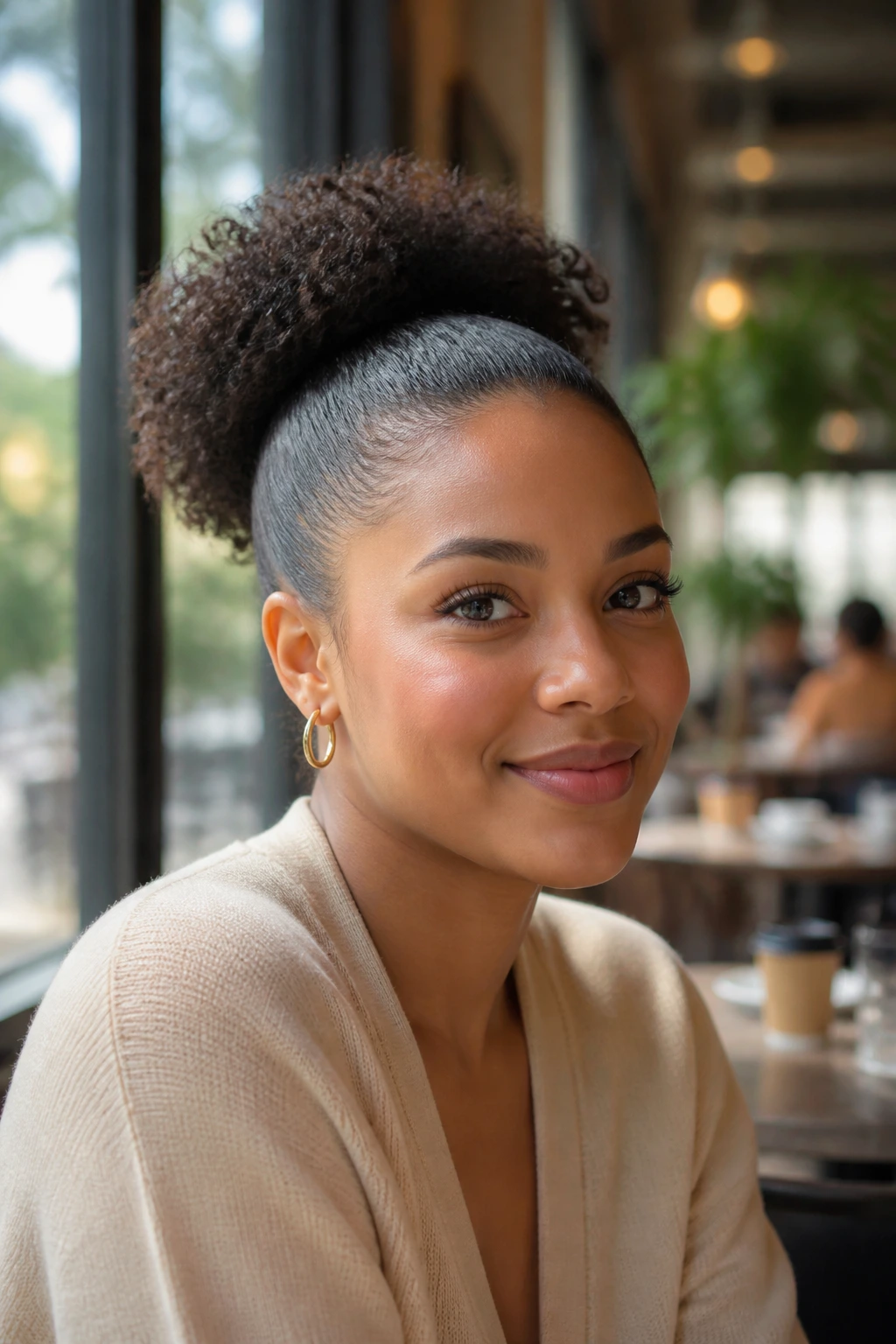
Pulling the sides back can be a gift on a round face. The sleek-back puff keeps the front and temples neat, then lets the curls pile up at the crown or upper back of the head. The face gets open space, which makes the cheeks feel less crowded.
The slicked portion should be controlled, not crunchy. A hard gel shell can look stiff and draw too much attention to the hairline. A softer slick gives the scalp a clean line while the puff keeps the style alive.
I use this look for events when I want structure without flattening the curl pattern. It photographs well, sure, but more importantly it keeps the profile long.
19. Height-Built Twist-Out
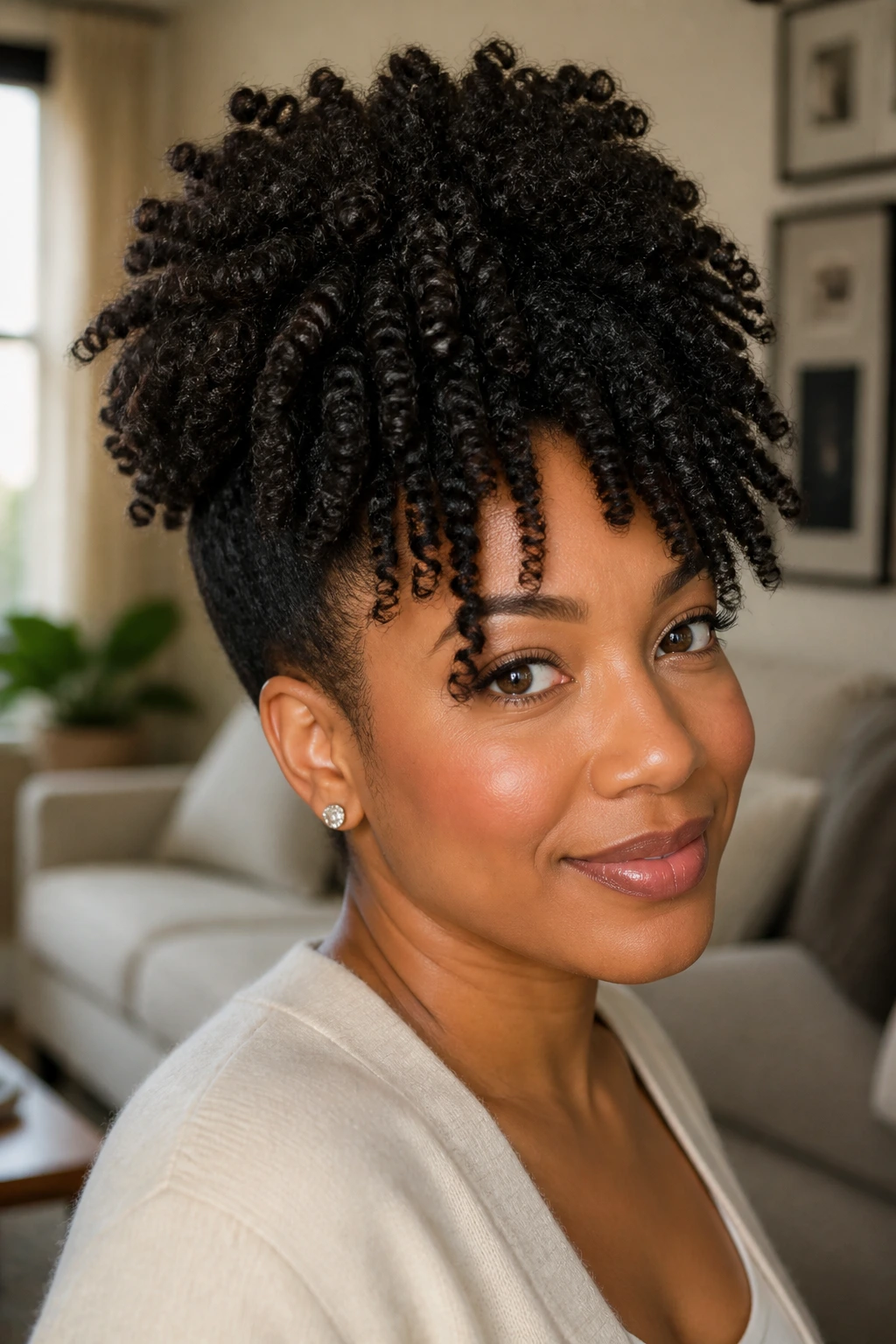
A twist-out can be a gorgeous choice for a round face when the roots are encouraged upward. Clip the roots while they dry, separate the twists carefully, and keep the crown lifted so the style doesn’t spread only at the sides.
The definition of the twist-out matters, too. Too much separation can make the hair balloon. Too little can make it look dense and square. Aim for soft, controlled definition with enough space between curls to show movement.
This is a good style when you want body, shape, and texture all at once. It has that lived-in curl texture people love, but the crown height stops it from reading too wide.
20. Half-Up Braided Crown
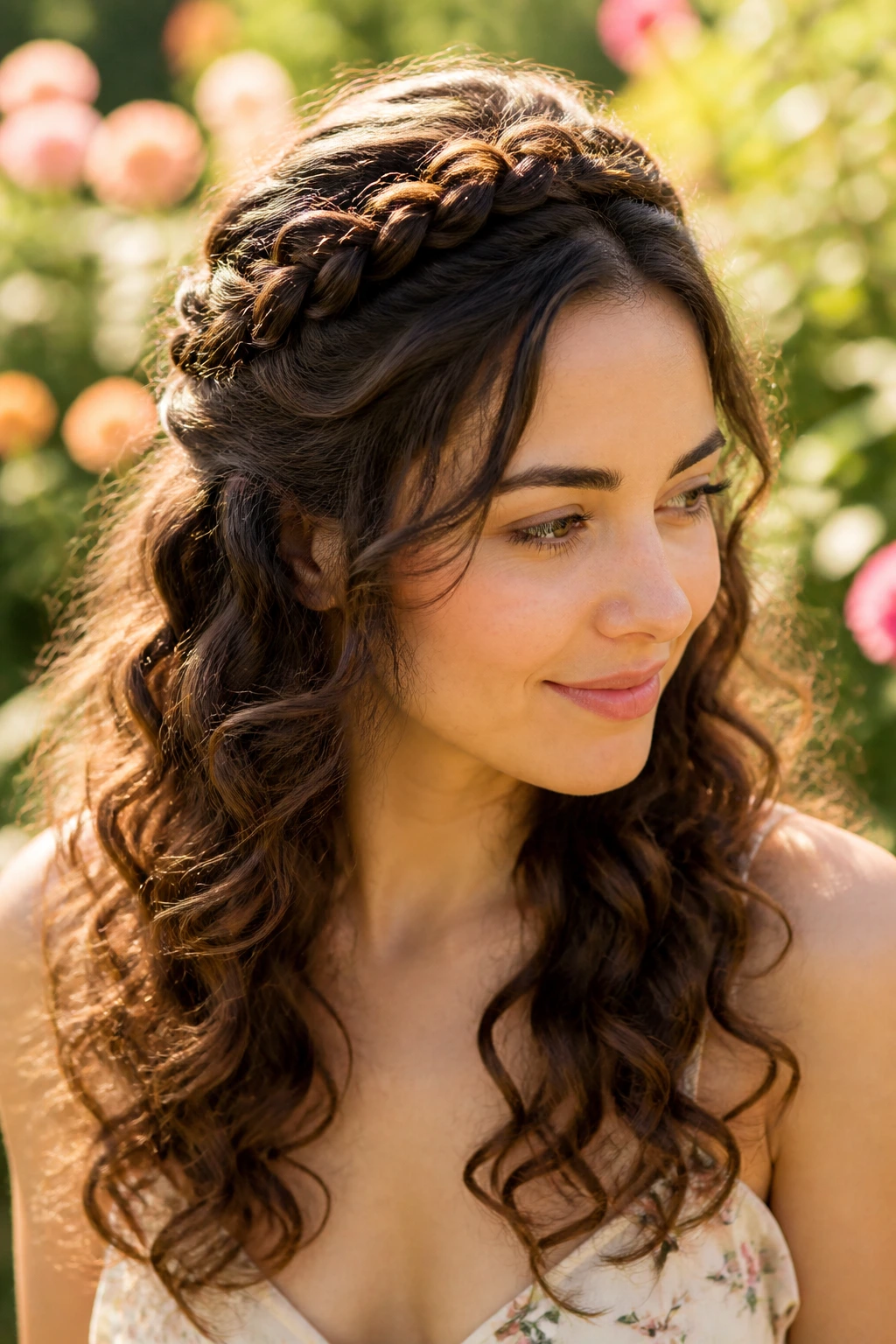
A braided crown on the top half of the head gives a round face a nice upward frame. The braid acts like a visual line that draws the eye toward the top of the head, while the loose curls below keep length moving downward.
This one is especially useful when the front feels too full. Braid the hairline section back, pin it securely, then let the rest fall loose and soft. It keeps the face clear without making the style feel severe.
If you want a little more edge, braid only one side and leave the other side loose. That unevenness is doing the flattering work. Nice and simple.
21. Choppy Mid-Length Cut
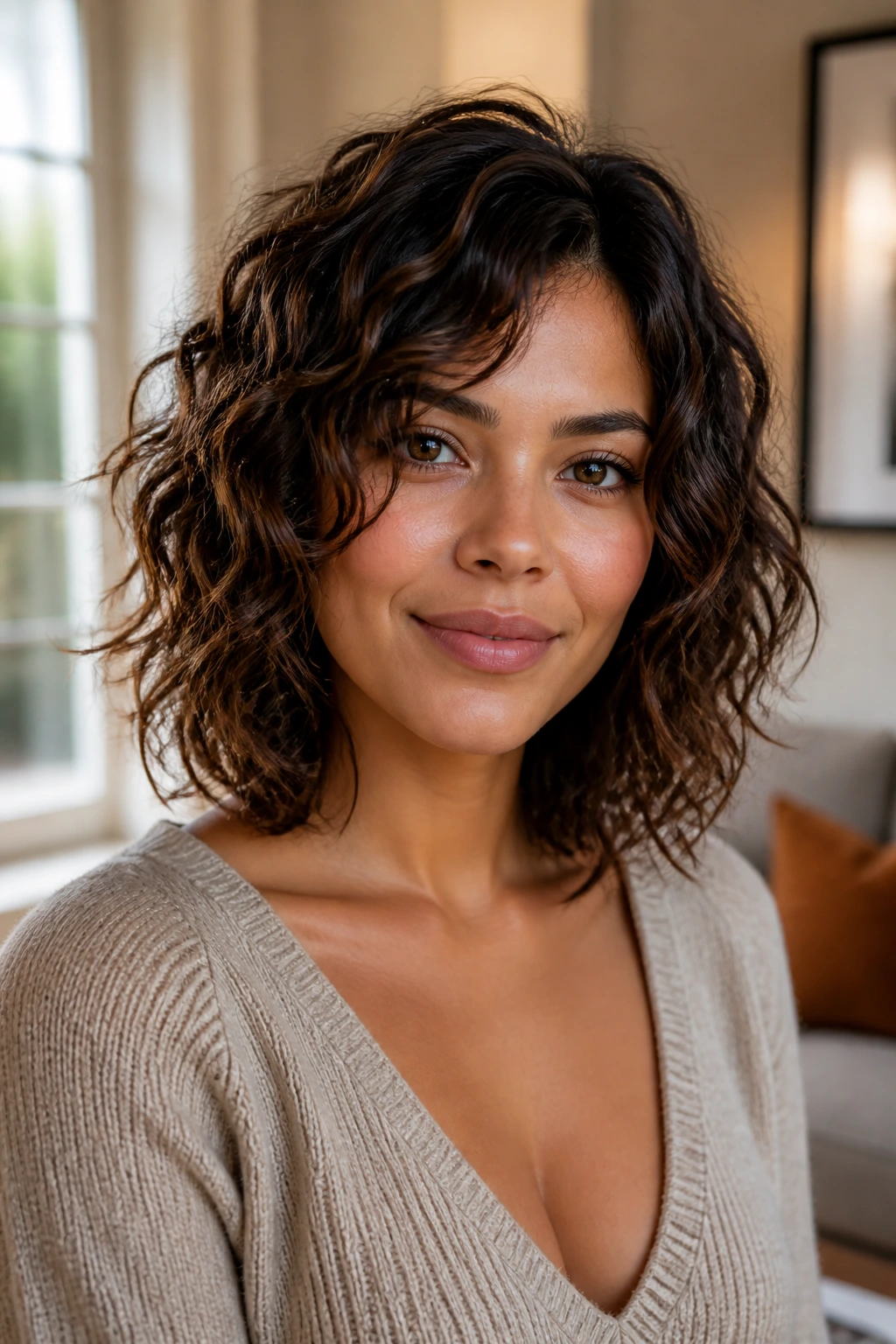
A choppy mid-length cut sits in that useful space between bob and lob. The ends are broken up, the internal layers keep the bulk from gathering at the sides, and the overall silhouette stays open around the face.
This length is often better than people expect. It gives curl enough room to spring without creating a full-width shape at the jaw. When the ends are soft and not one solid line, the haircut looks lighter and the face looks longer.
It’s a smart middle ground if you don’t want to commit to a short bob or long layers. There’s a lot of practical value in that. Not glamorous. Useful.
22. Chin-Length Curly Bob With Side Volume

A chin-length bob can be tricky on a round face, which is exactly why the details matter. The volume has to live a little higher and a little to one side, not evenly all the way around. If the shape hugs the chin too neatly, it can make the lower face look wider.
I like this cut when the perimeter is broken up and the side part is strong. The curls should skim the jaw, not wrap around it like a frame. That small distinction changes the whole read of the haircut.
If you love shorter hair, this is the version to ask for: chin length, but with attitude and a little asymmetry. It can look sleek or casual, depending on how you style it.
23. Curly Faux Hawk
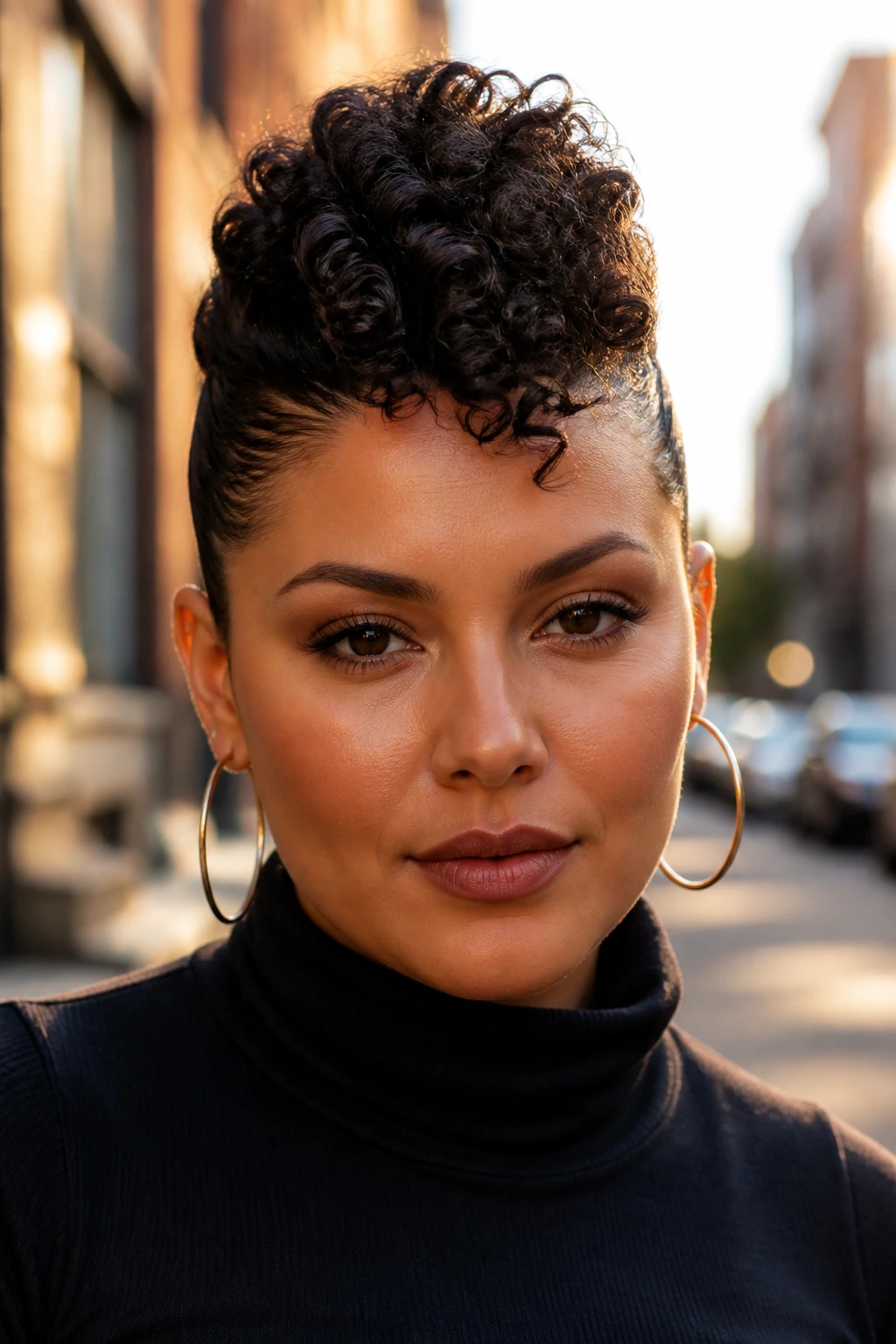
A faux hawk is a blunt answer to a round face, and I mean that in a good way. The sides are slicked down or pinned in, the center ridge stays high, and the face gets one clear line running upward through the middle.
That vertical center line is why this style works. It cuts straight through the width of the cheeks and makes the face look longer almost instantly. The sides should stay tight enough to stay quiet, but not so flat that the whole thing feels harsh.
This is one of my favorite event styles for curly hair. It has edge, it keeps the curls visible, and it doesn’t rely on length to do the shaping. Rare combination.
24. Face-Framing Spiral Layers
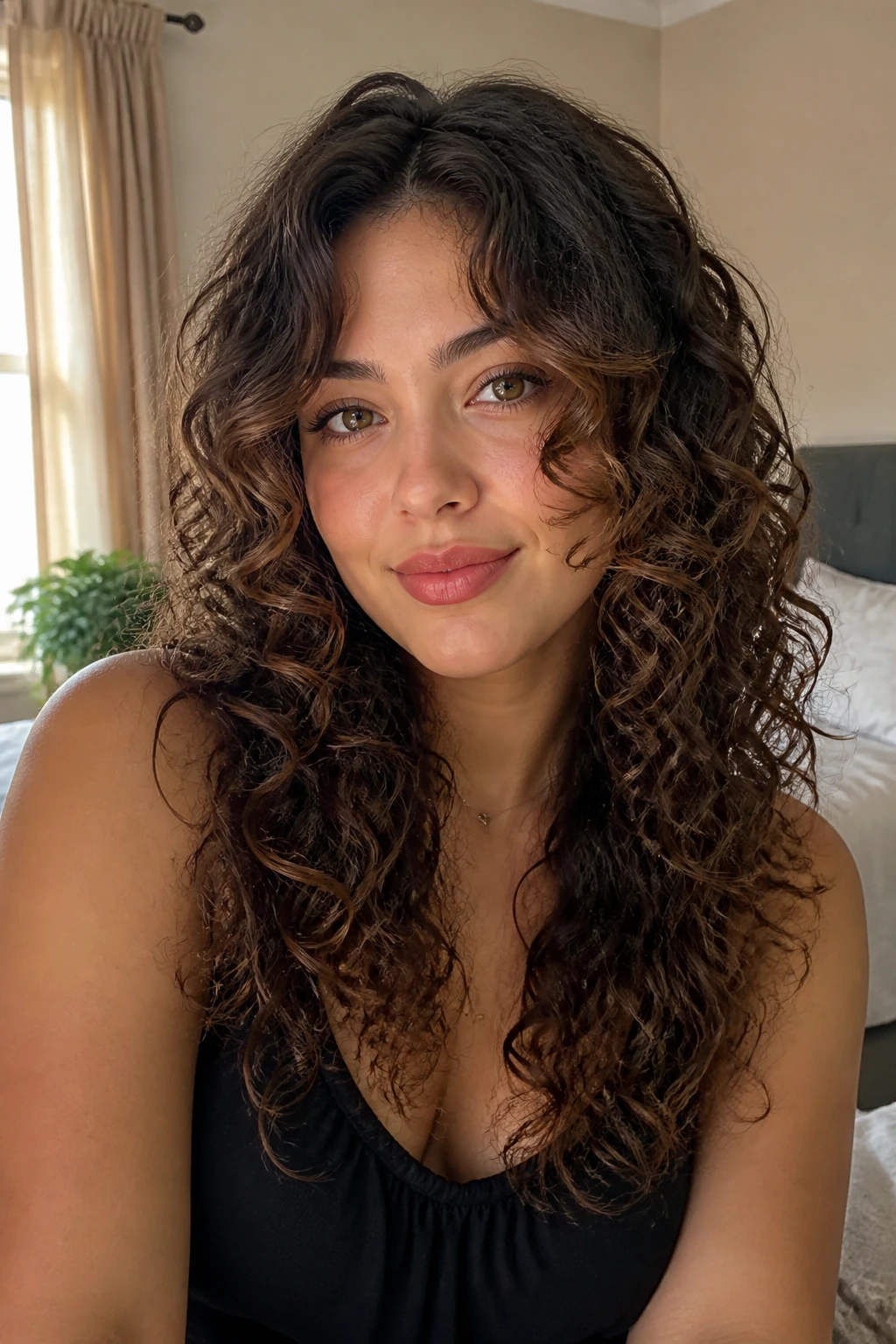
Long curls can absolutely work on a round face if the face frame starts low enough. The shortest pieces should begin below the cheekbone and taper toward the jaw, not sit right on top of the cheeks like two soft parentheses.
This is the style for people who want to keep length but still want shape around the face. Spiral layers keep the ends lively, and the lower face frame draws the eye down rather than sideways. It’s less about volume and more about where that volume lands.
If your curls are dense, ask for the layers to be carved into the interior too. That stops the outer layer from becoming one giant wall of hair. Necessary, not optional.
25. Low Side Ponytail With Lifted Crown

A low ponytail can still be flattering on a round face if it shifts to one side and the crown gets a little lift. Centered and flat, it can make the face feel broad. Angled and lifted, it starts to behave more like a line than a blob.
Keep a few curls loose around the temples and cheekbones. You do not need to hide the face, just open it up. The ponytail itself can stay soft and textured, which keeps the look from turning severe.
This is one of those styles that works at the office, at dinner, and on a tired hair day. Same trick. Different mood.
26. Shoulder-Grazing Cut With Micro-Layers
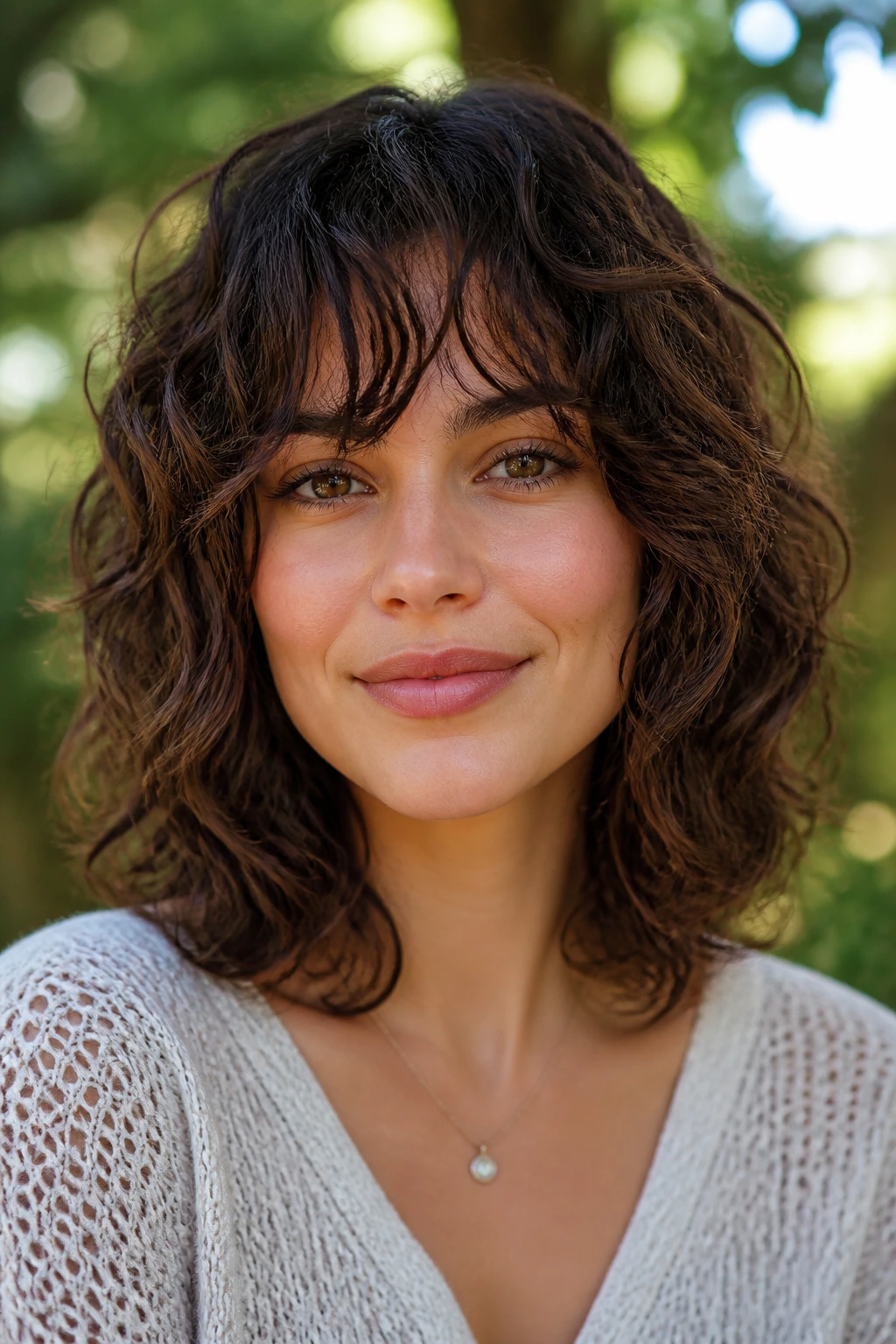
Shoulder-grazing length is useful because it sits away from the cheekbones and gives curls room to move. Micro-layers keep the shape from turning into one heavy block, which is what makes this cut feel lighter than a classic one-length shoulder cut.
On a round face, the ends need to stay alive. If the bottom line is too blunt, the haircut can sit like a shelf. Add a few interior layers, and the silhouette starts to breathe a little.
This is a quietly good option for fine curls that need motion but not too much volume. It’s low-drama, but it still knows what it’s doing.
27. Defined Coils Pinned to One Side
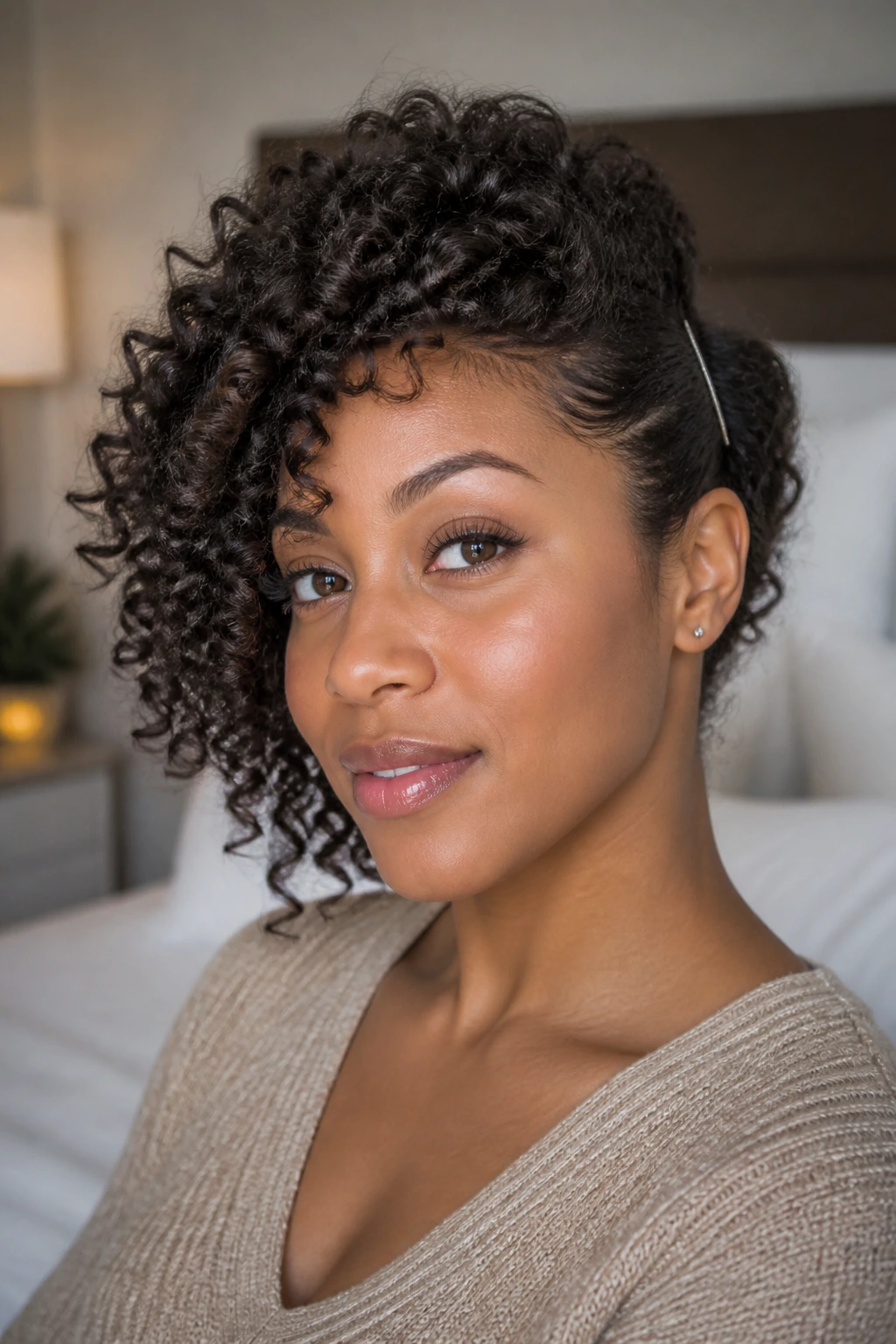
Tight coils can look especially clean when one side is pinned back and the other side stays full. The pinned side clears the cheek entirely, which helps the face feel more open and less encircled by hair.
I like this for twist-outs, braid-outs, and stretched coils. The definition stays visible, but the asymmetry stops the silhouette from going too round. A decorative pin is fine, though I’d keep it slim rather than bulky.
If the coils on the loose side start to puff, re-spritz just the ends and leave the roots alone. The roots are where the shape lives. Don’t flatten them by mistake.
28. Halo Braid Into a Curly Tail
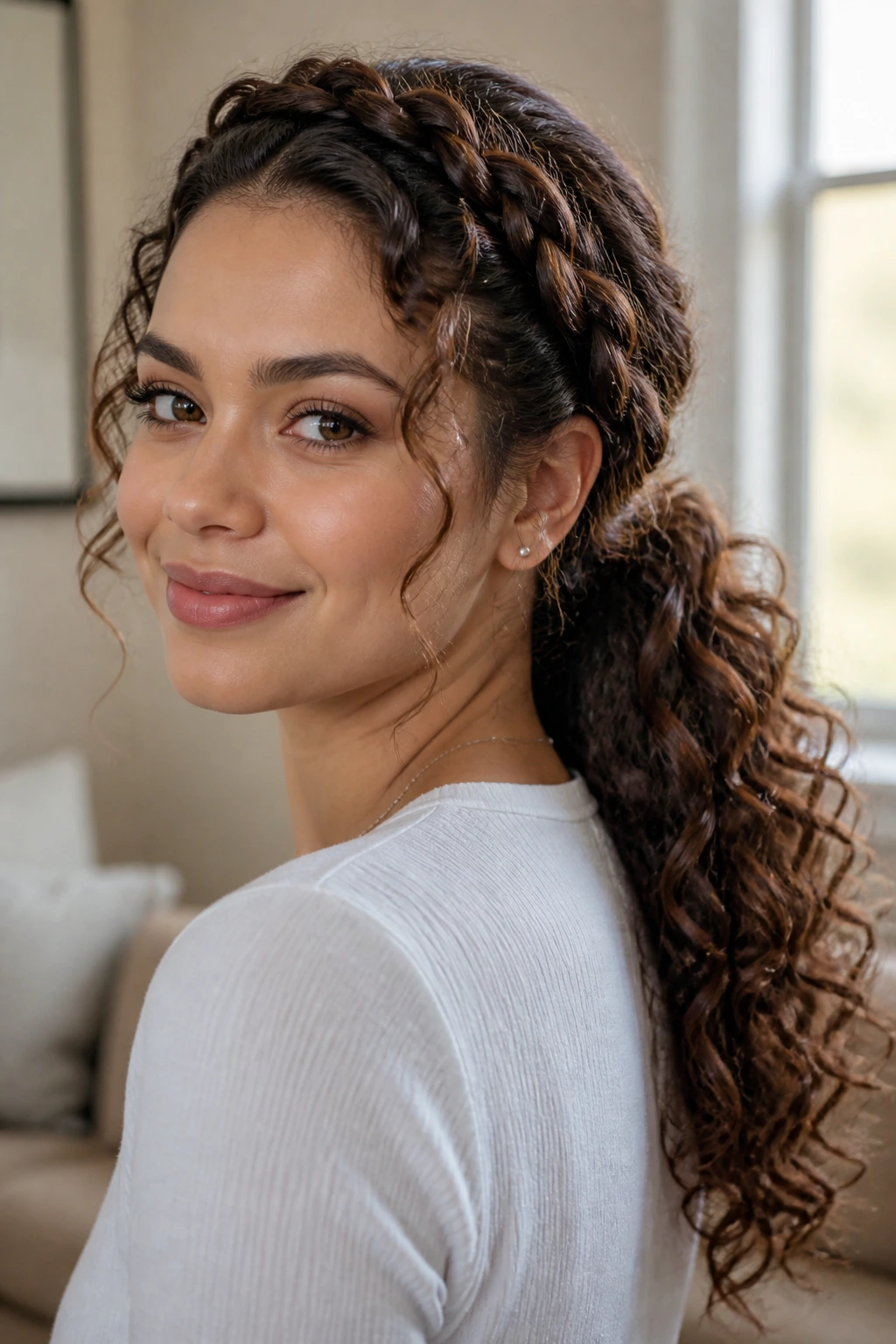
A halo braid gives the face a clean frame at the hairline, and the curly tail left behind keeps the style from looking too controlled. That split is nice on a round face because it puts structure up top and softness lower down.
The braid should sit snug enough to stay in place, but not so tight that it pulls the hairline backward. The tail can be long, shoulder-grazing, or even very long, depending on your hair. The point is the line it creates: up and around first, then down.
This is one of those styles that feels a little dressed up without needing a curling iron or a dozen pins. Good shape. Easy payoff.
29. Romantic Pinned-Back Curls
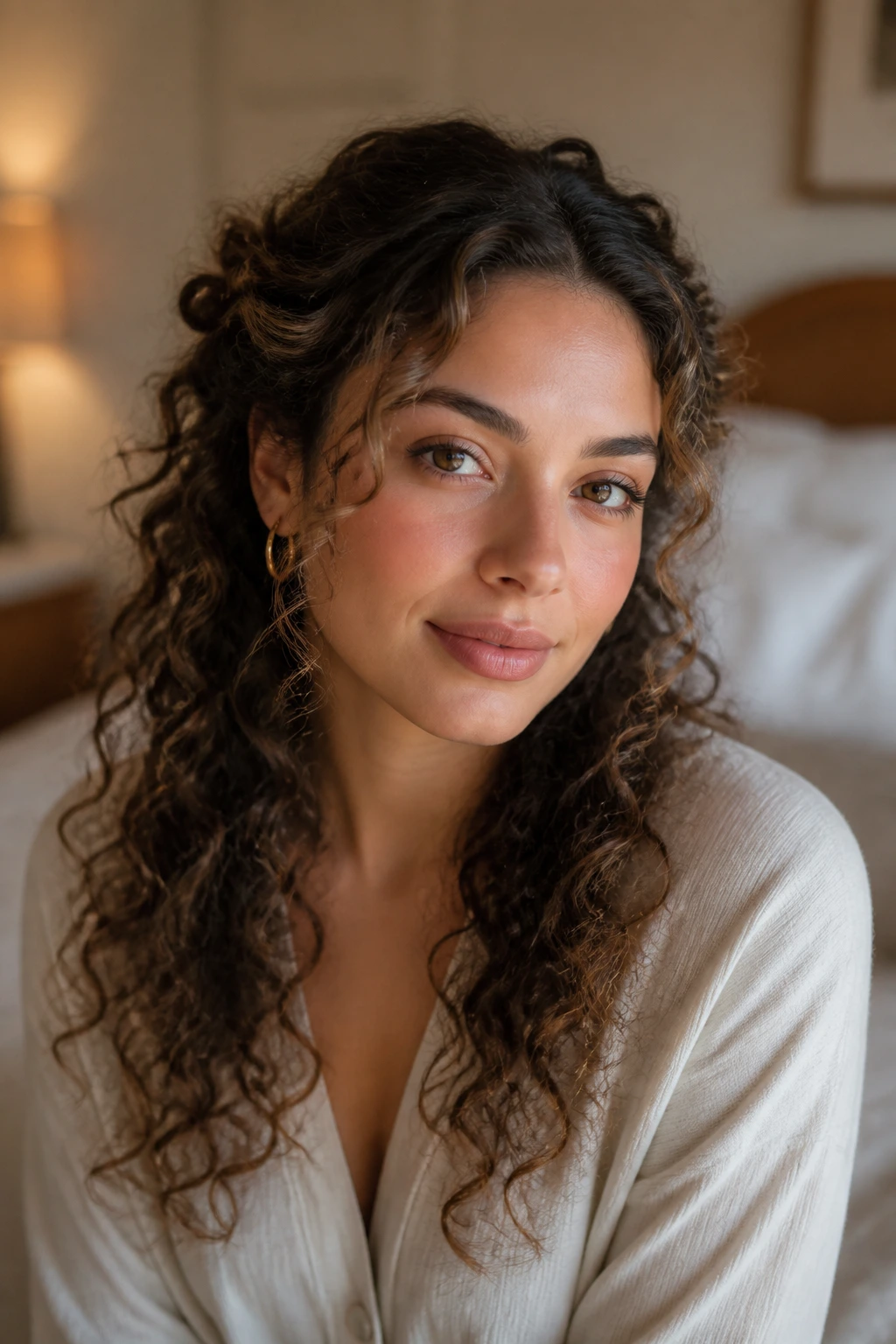
Pinning both sides back a little opens the face in the cleanest possible way. The curls remain down the back and through the middle, which keeps length visible, but the cheeks stay clear enough that the face does not feel crowded.
The best version uses loose pins, not a tight pull. A few front curls should still move. That softness matters because a round face usually looks better when the hairline has some texture instead of one hard edge.
This is a useful style when you want the hair to look styled without looking stiff. It can be polished, but it should still feel like curls, not shellacked waves.
30. Long Off-Center Curls With Jaw-Level Face Frame
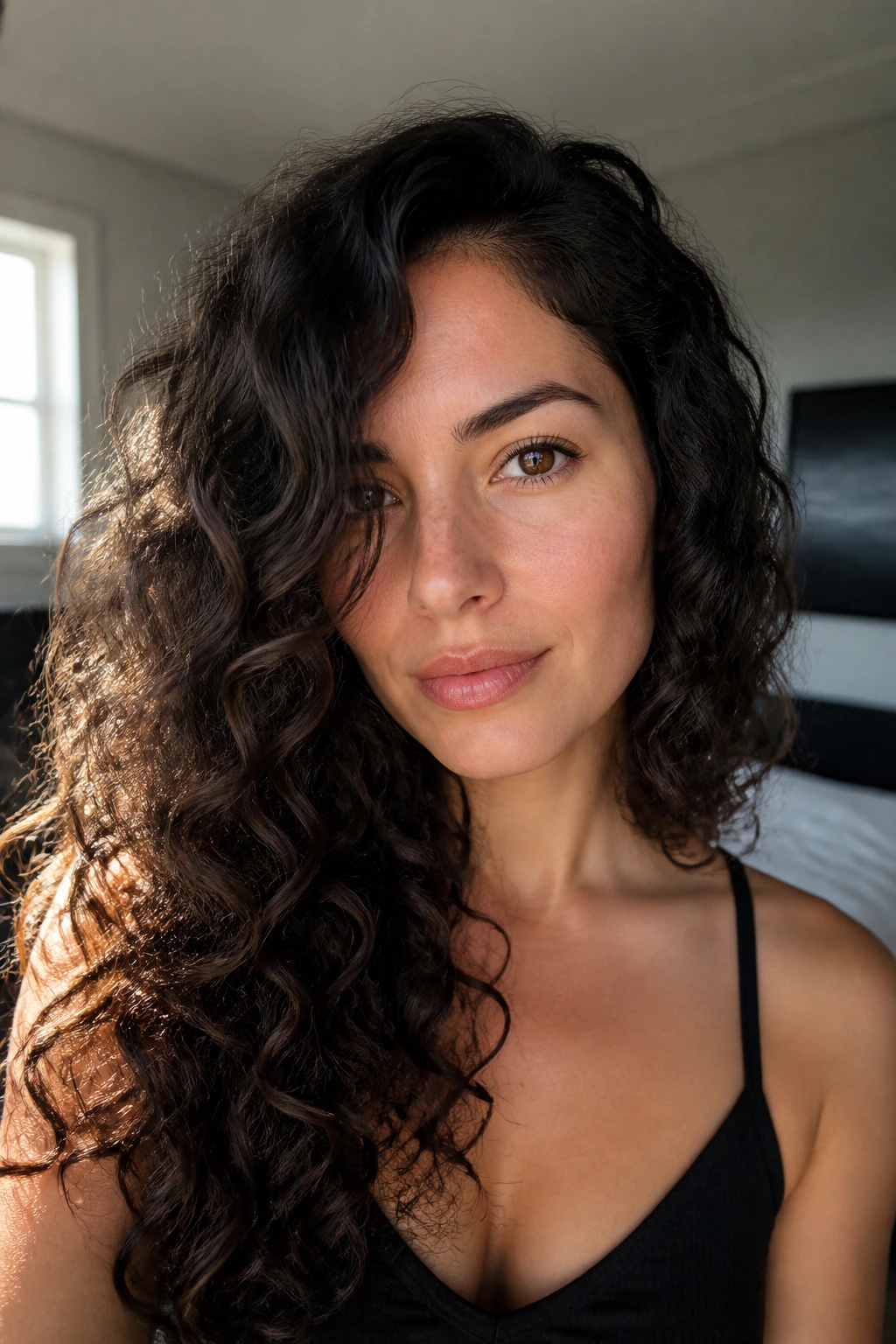
Long curls with an off-center part are the calmest answer to a round face, and they work because the face frame starts around the jaw, not the cheeks. That’s the whole trick. The line drops where the face needs it.
A little more length on one side helps, too. The eye follows the off-center part, then follows the longer pieces down, and the face looks longer without any obvious styling stunt. It’s subtle in the best way.
If your curls are loose, keep the front pieces defined so they do not turn into a wide cloud. If they’re tighter, let the lower layers stretch a bit with a diffuser. The end goal is simple: a soft frame, not a soft circle.
How to Keep the Shape Leaning Vertical, Not Wide
Once you know which curly hairstyles for round faces are doing the heavy lifting, the real work is in styling. The same haircut can look slim one day and puffed sideways the next, and that usually comes down to where the product sits and how the roots dry.
The crown wants lift. The cheeks want space. The ends want movement. If you remember those three things, you can rescue a haircut that’s starting to go blob-shaped before it gets there.
Dry the roots with intention
Clip the roots at the crown while the hair is damp if you need height. Diffuse from underneath with the head slightly tilted, then stop before the sides get too expanded. I’d rather see a little flatness at the bottom than a mushroom shape at the cheeks.
Keep the face frame below the widest point
This one saves more styles than any fancy product. A face-framing curl that starts above the cheekbone can get cute in theory and annoying in practice. Keep the shortest pieces either high enough to clear the face or long enough to skim below the jaw.
Use product where the shape needs control
Mousse at the roots, gel at the perimeter, cream only where the curls need softness. Too much cream through the sides can make the hair swell outward. A lighter hand at the cheek line usually looks better than a heavy one.
Essential Tools for Styling Curly Hair on Round Faces
- Diffuser attachment: Helps dry the crown upward so the shape gains height instead of spreading flat across the face.
- Wide-tooth comb: Good for detangling wet curls without dragging them sideways and turning them frizzy.
- Rat-tail comb: Useful for clean side parts and off-center parts that change the face shape fast.
- Duckbill clips: Great for pinning the roots while they dry, especially on styles that need crown lift.
- Microfiber towel or cotton T-shirt: Cuts down on rough frizz and keeps the curl clumps intact.
- Claw clips and small elastics: Helpful for half-up puffs, low side ponytails, and quick pinned-back looks.
- Satin bonnet or pillowcase: Keeps the shape from getting crushed overnight and helps preserve the part.
- Light gel and mousse: These give hold without turning the hair into a stiff cap.
How to Ask for the Right Cut at the Salon
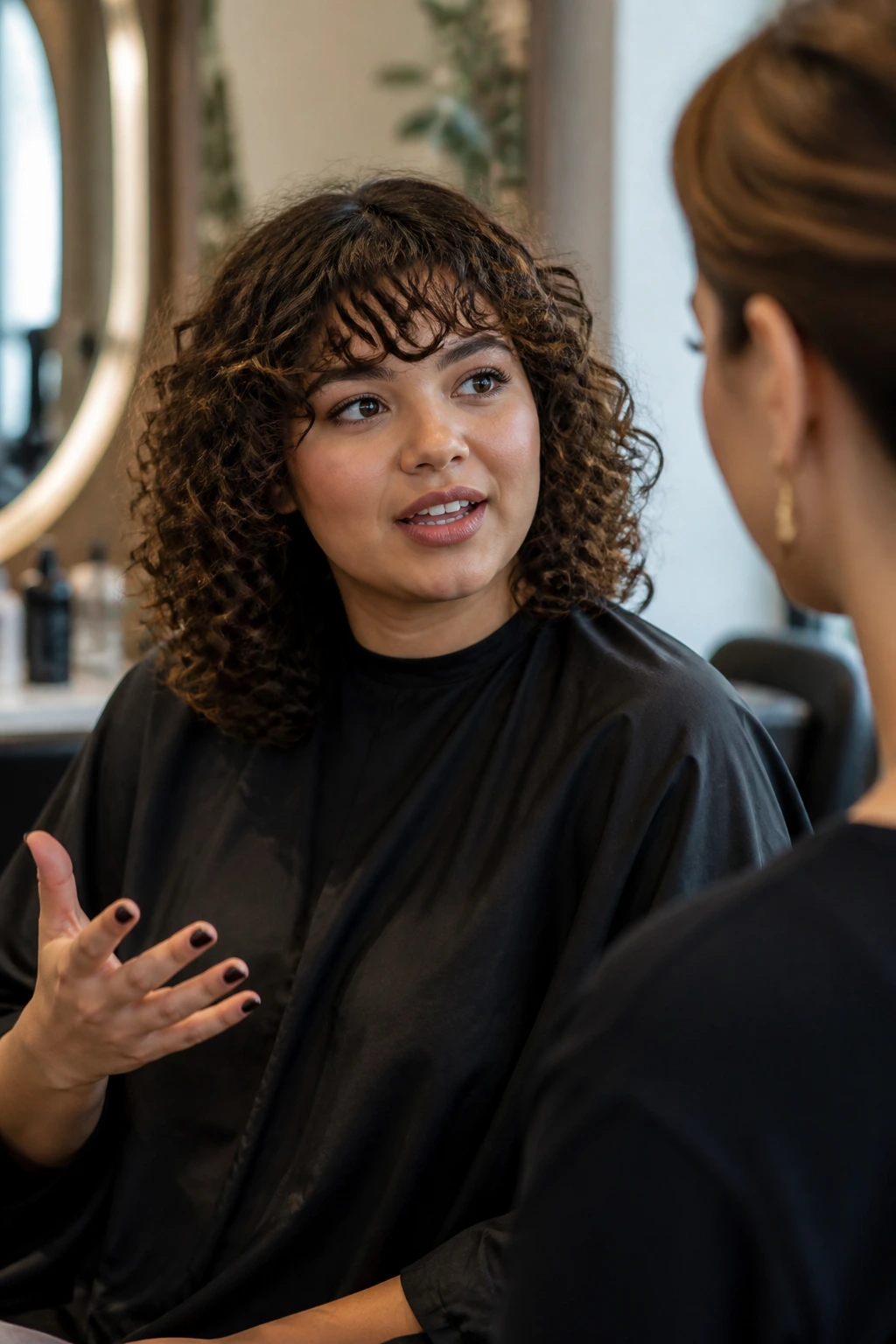
Bring photos, but bring the right photos. A model with a heart-shaped face and loose curls is not a useful reference if your face is round and your curls are tight. Pick people whose curl pattern, density, and length are close to yours, then point to the exact shape you want: higher crown, longer front, softer cheeks, or a side-swept finish.
Say the shrinkage part out loud. If your curls bounce up hard, ask the stylist to cut with dry hair or to leave the front a little longer than the finished target. That is not being picky. That is preventing a surprise bob that lands too high.
I’d also ask where the shortest layers will start. For round faces, you usually want them above the cheekbone with lift, or below the jaw where they can taper away. A cut that starts right at the cheek is the one most likely to widen the face once it dries.
How to Wear These Styles From Errands to Events
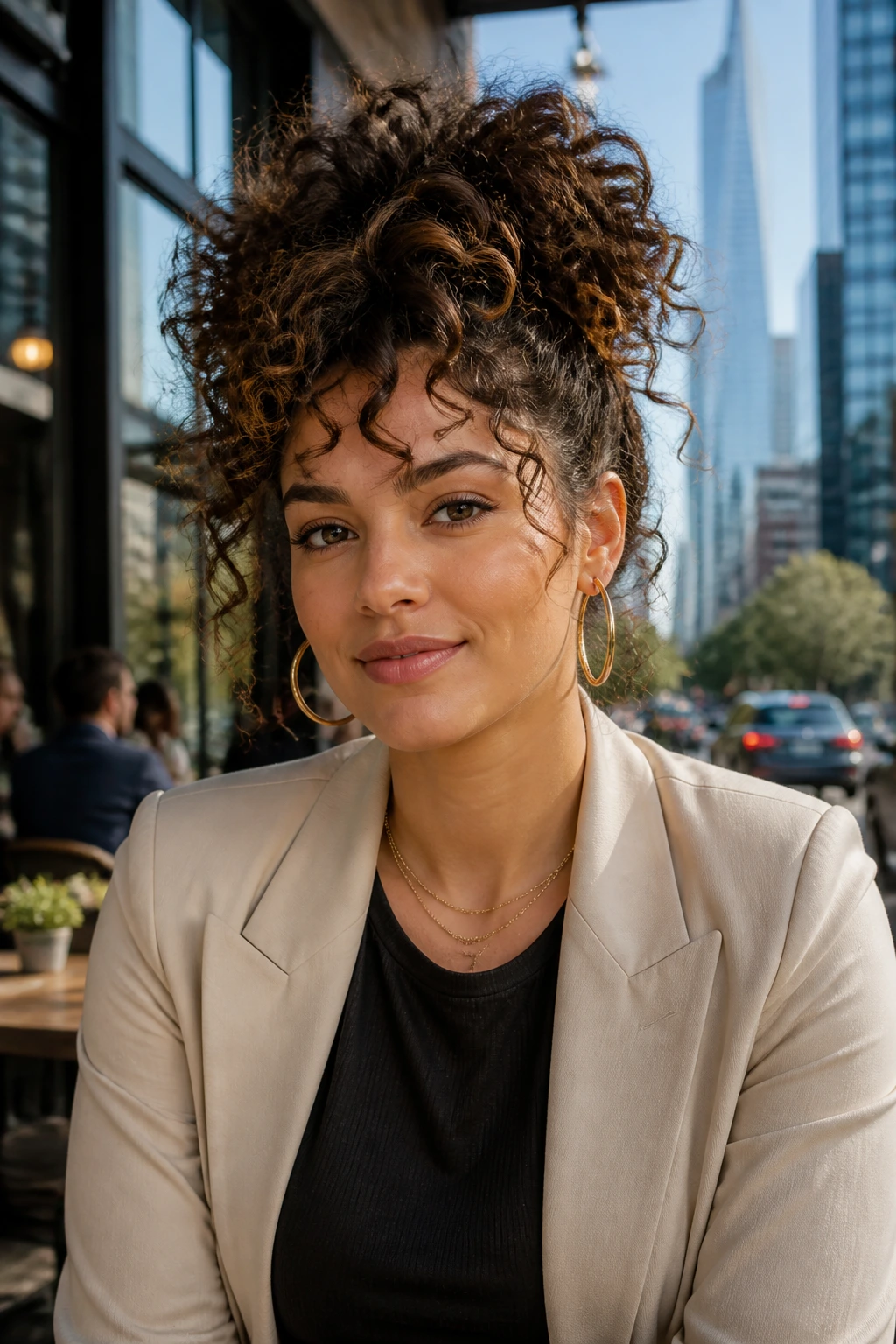
Presentation:
Keep the outline clean and the crown a little taller than your instincts might tell you. A raised crown, one tucked side, or a diagonal sweep changes the face more than another half-inch of length ever will.
Accessories:
Slim headbands, small claw clips, pearl pins, and narrow barrettes work better than bulky bands that add width. If you wear glasses, choose a style with lift at the temples so the hair does not crowd the frames.
Best Pairings:
Long earrings, open necklines, and collars that show a bit of neck all help reinforce the vertical line these styles create. If you want the hair to look more formal, pin one side and leave the other loose.
Finish:
Keep some texture. A round face usually does better with hair that has shape and movement than with something so slick it turns helmet-still.
Extra Tricks for More Lift and Definition
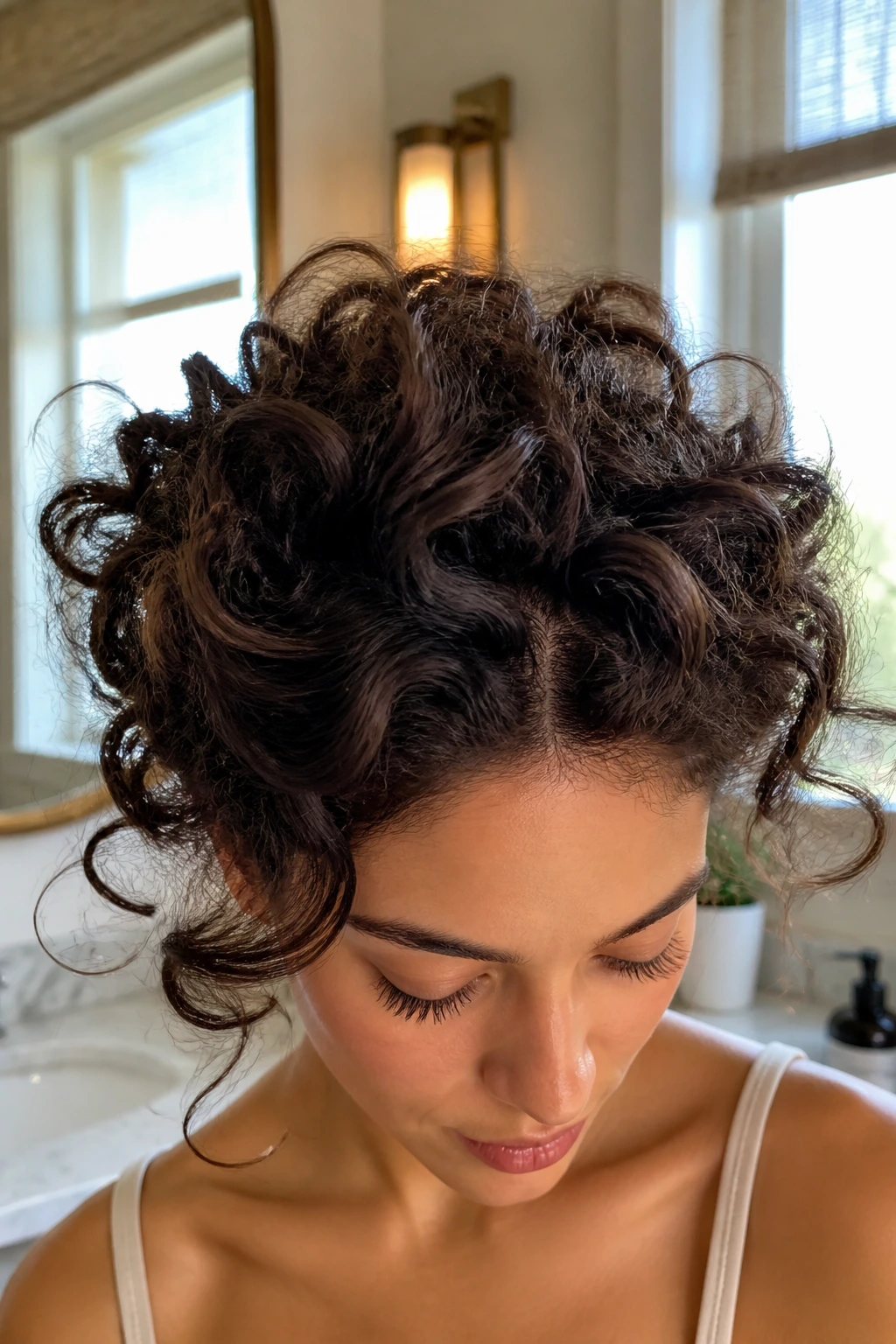
Root Lift:
Clip the top layers at the roots while they dry, then remove the clips only when the hair is mostly dry. That tiny delay gives the crown a little memory, which helps the style stay tall instead of sagging into the cheeks.
Shape Control:
If the sides are getting too puffy, mist only the outer edge and scrunch lightly. Do not soak the whole section. You want to tighten the curl pattern, not restart wash day in the middle of the morning.
Frizz Control:
A small amount of mousse under a gel layer gives better shape than piling on cream. Cream softens; mousse lifts; gel locks. Use the mix that matches the hairstyle, not the one that smells nicest.
Make-It-Yours:
Fine curls usually need more lift and less heavy product. Coarse curls often need stronger hold and a cleaner perimeter. Tight coils can handle sharper shape, while loose curls often look better with softer layers and more obvious movement.
Common Mistakes That Make Curls Look Wider

The biggest mistake is cutting the shortest pieces right at the cheekbone and calling it face-framing. On a round face, that line can make the face look broader almost immediately. The fix is simple: move the shortest pieces higher or lower and let the cheek area breathe.
Another one is using too much volume on both sides at once. Curls love to expand, and when both temples puff equally, the face gets swallowed by width. Shift the part, pin one side, or lift the crown so the hair goes up before it goes out.
Blunt ends are another problem. A one-length cut can be fine on straight hair, but curly hair turns that line into a dense, round edge. Break it up with layers, texture, or an angled perimeter.
And yes, wet cutting can mislead you if shrinkage is strong. What looks like a chic chin-length bob in the chair can turn into a much shorter shape once the curls dry. Ask the stylist to account for the spring, or you may end up with a haircut that sits too high on the face.
Variations and Alternatives to Try
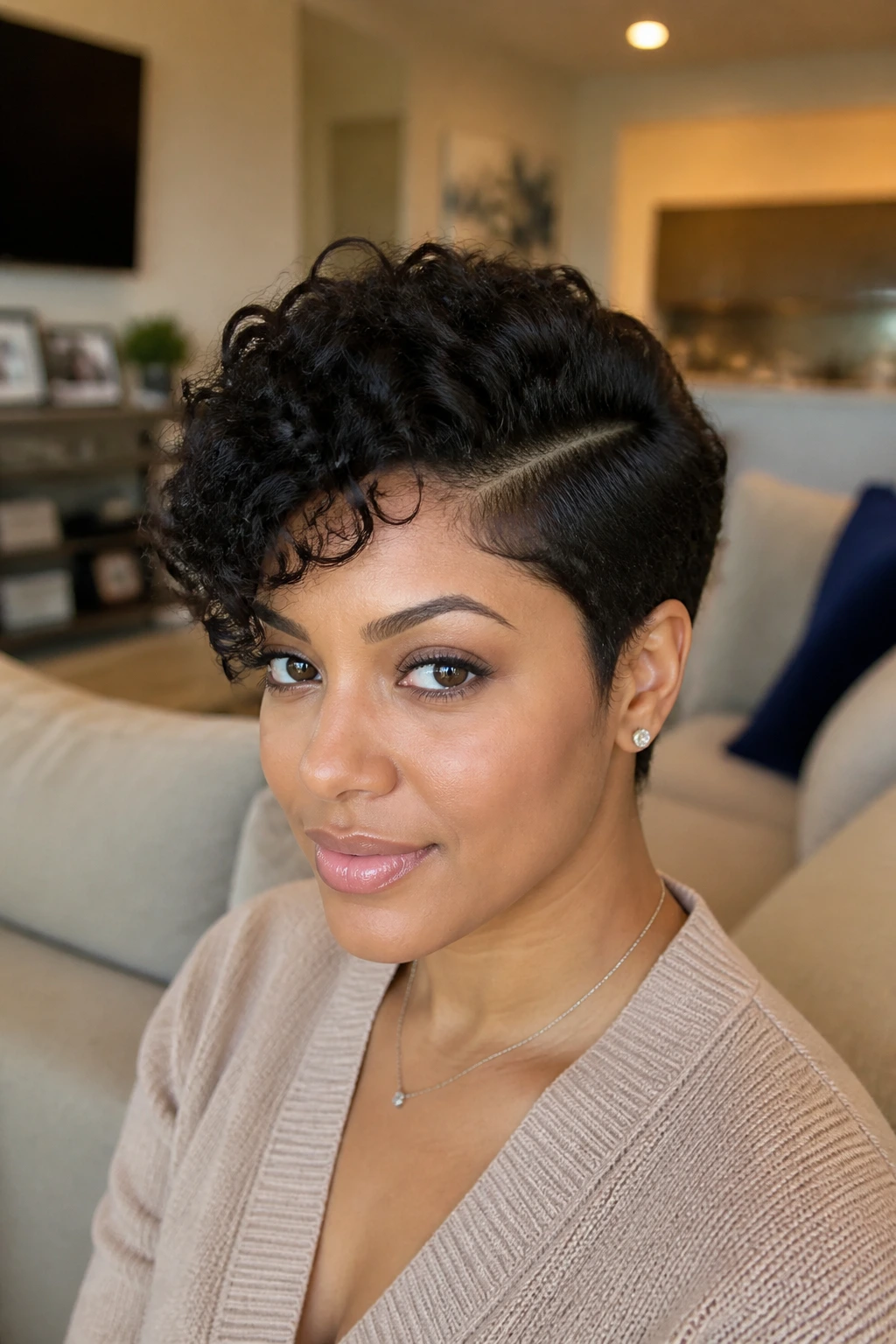
Short, Sculpted, and Tapered:
If you like short hair, go for a tapered pixie, a faux hawk, or a curly bob with a side part. These versions keep the sides quieter and put the emphasis where a round face needs it most: up top.
Big-Length, Small-Face-Frame:
If you want to keep the length, use long layers, a V-cut, or off-center spirals with the shortest pieces below the jaw. This keeps the hair dramatic without letting it balloon at the cheeks.
Soft and Work-Friendly:
Half-up puffs, low side ponies, and pinned-back curls sit nicely in the middle. They read polished without being stiff, and they’re easy to repeat on a regular morning.
Protective-Style Swap:
Braids, twist-outs, halo braids, and pinned coil sets are useful when you want less manipulation. The face-shaping rules stay the same: lift at the crown, space at the cheeks, and lengths that fall below the widest point.
Low-Maintenance Day-After Version:
If a wash-day style starts to flatten, pin one side back, refresh the crown with a mist bottle, and let the ends stay a little imperfect. That usually looks better than trying to force every curl back into place.
Care, Refresh, and Overnight Maintenance
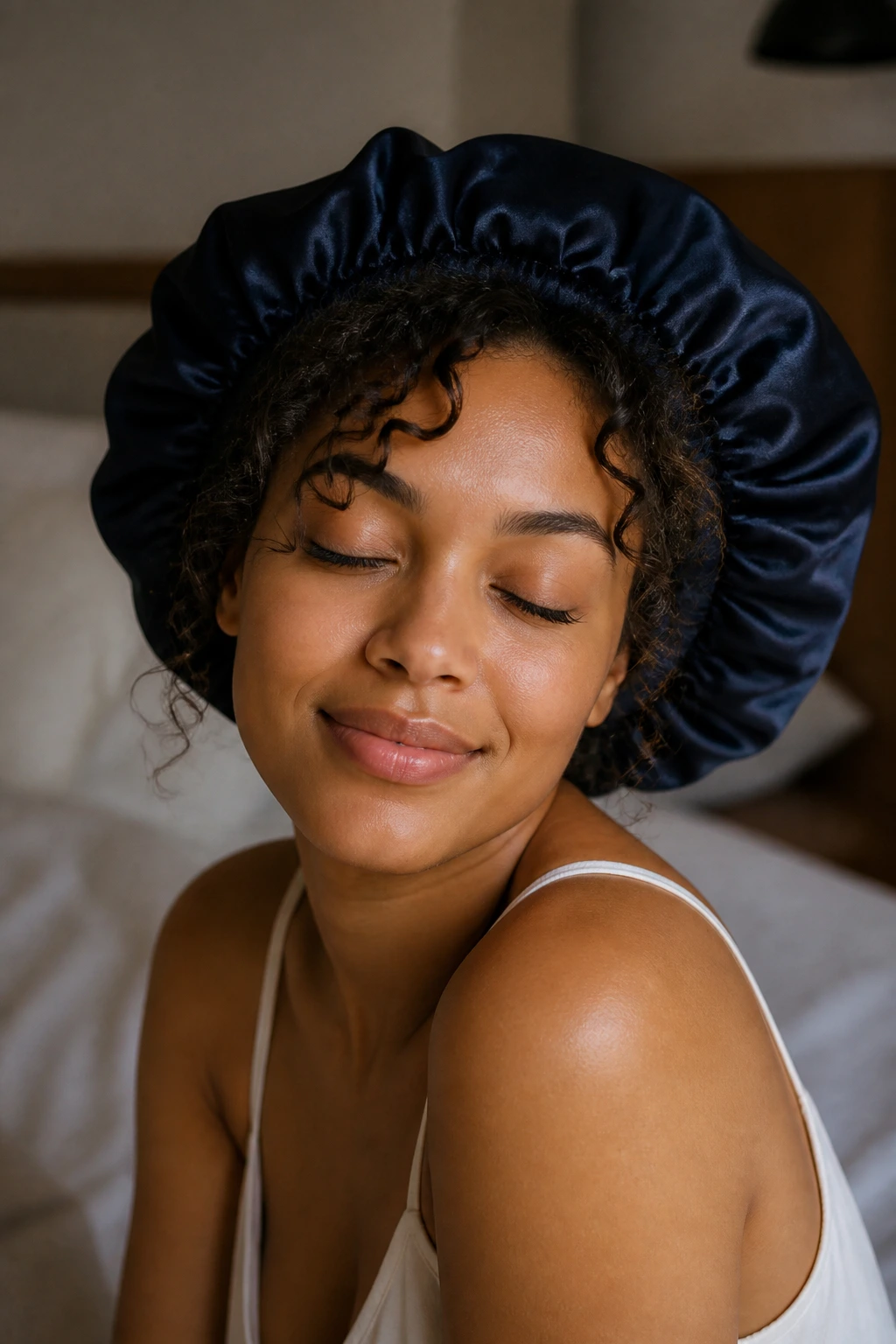
Curly styles on round faces need a little upkeep if you want the shape to stay flattering. The first thing to protect is the crown. Sleep in a satin bonnet or on a satin pillowcase, and if the hair is shoulder length or longer, pineapple it loosely at the top so the sides don’t press outward overnight.
Morning refresh is usually about 3 parts water to 1 part leave-in, sprayed lightly on the outer layer and scrunched with clean hands. If the curls at the cheeks have puffed too much, don’t drown them. Smooth only the outer edges, then re-lift the crown with your fingers or a clip.
Trim timing matters, too. Short curly cuts like pixies and faux hawks usually need shape-ups every 4 to 6 weeks. Bobs and lobs can stretch to 8 or 10 weeks, while long layered cuts often hold their shape for 10 to 12 weeks if the ends stay healthy.
A style can also improve after a night or two, which is useful. Twist-outs settle. Shags get softer. Even a high ponytail can look better once the hair has relaxed around the crown. The trick is to refresh the shape without flattening the top.
Questions People Ask About Curly Hairstyles for Round Faces
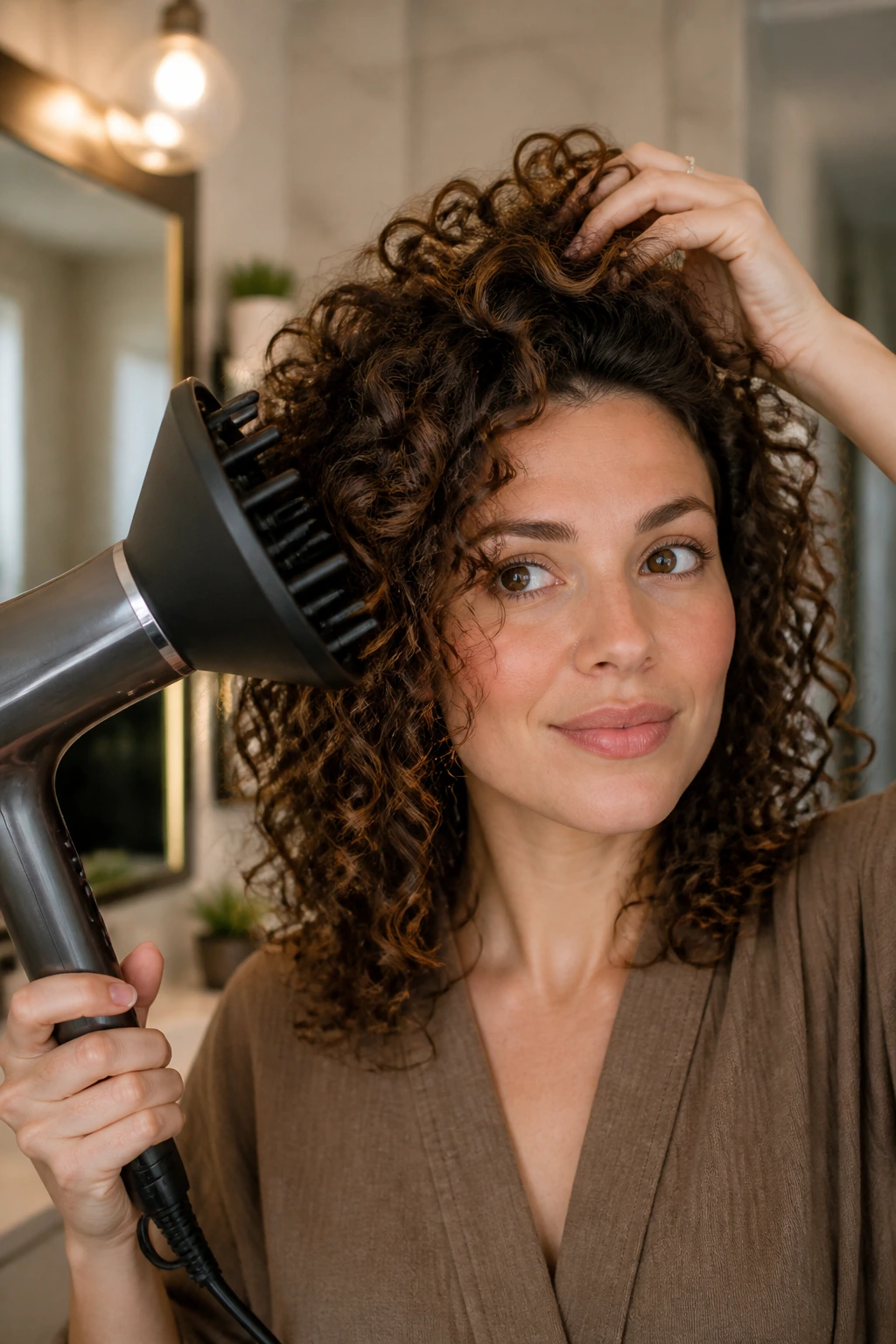
Which curly hairstyle is most flattering if I want my face to look longer?
Deep side-parted curls, long layers, and high crown styles usually do the most obvious lengthening. They pull the eye upward or diagonally, which is exactly what a round face needs.
Are bangs a bad idea on a round face with curls?
Not if they’re light and broken up. Thick, blunt bangs can shorten the face, but airy curtain bangs or curly fringe pieces that separate at the forehead can work well.
Can I wear a center part with a round face?
Yes, but the cut needs support. Long layers past the chin, a bit of crown lift, and a perimeter that isn’t blunt will keep the center part from making the face feel wider.
What’s the best short curly haircut for a round face?
A tapered pixie, an asymmetrical bob, or a curly faux hawk tends to work best. They keep the sides controlled and put the visual weight above the widest part of the face.
How do I keep my curls from puffing out at the cheeks?
Use less cream on the outer side sections, add lift at the crown, and keep the shortest layers away from the cheekbone line. A side part or a pin on one side also helps a lot.
Do tight coils need different face-shaping rules than loose curls?
The rules stay the same, but the execution changes. Tight coils often need more careful root lift and more defined parting, while loose curls may need sharper layering so they don’t spread out.
How often should I trim these styles?
Shorter shapes need trims more often because the outline matters so much. Think 4 to 6 weeks for very short cuts, 8 to 10 for bobs and lobs, and a little longer for layered styles that can grow out softly.
What if my hair has a lot of shrinkage?
Plan the haircut on dry shape, not wet length. If the curls spring up strongly, ask for the face-framing pieces and bangs to stay longer than your first instinct says.
The Shape That Sticks
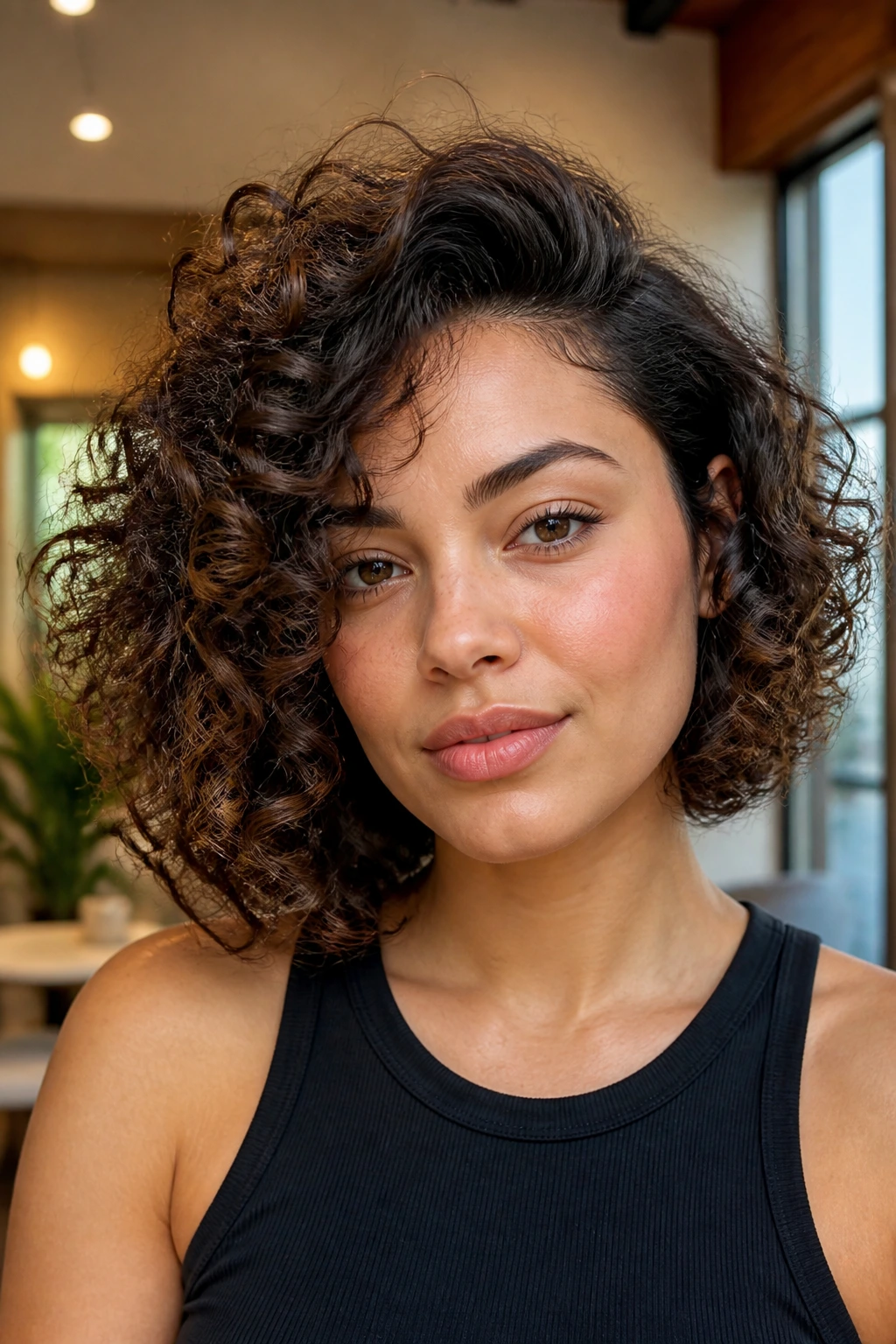
The best curly cuts for round faces do the same job in different ways: they lift, angle, and break up the width where it matters. Some are short and sharp, some are long and easy, and a few rely on nothing more than a part, a pin, and a bit of crown height.
That is the part I keep coming back to. The face does not need to be hidden. It needs a line. Once the curls stop circling the cheeks and start moving upward or downward with purpose, the whole style settles into place.
If you’re choosing between two cuts, pick the one that gives you shape first and volume second. The curls will still feel like curls. They’ll just sit in a way that makes the face look a little longer, a little cleaner, and a lot more intentional.
