



A good wavy shag haircut does not ask hair to behave. It lets the wave bend where it wants, trims off the dead weight at the ends, and puts movement back near the face where it can actually do some work. That’s why wavy shag haircuts for older women keep showing up in salons: they make room for texture without turning the whole cut into a stiff, round helmet.
The reason this matters is simple. Hair changes. Some strands get finer at the temples, some get wirier around the crown, and a few pieces around the face decide they have their own opinions. A shag works with all of that instead of fighting it. The right version can soften a jawline, lift a flat crown, and make silver or salt-and-pepper hair look deliberate instead of unruly.
And no, it doesn’t have to look wild. A shag can be softly layered, gently feathered, and still feel polished enough for a blazer, a knit dress, or just a Tuesday when you want your hair to do something interesting without a lot of fuss. The trick is choosing the right version for your texture, your length, and how much styling you’re willing to do.
Why These Wavy Shag Haircuts Stand Out
-
They let wave pattern show through: The layers remove bulk in the right places, so the bend in the hair stays visible instead of getting buried under one heavy shape.
-
They soften the face without hiding it: Shaggy layers around the cheekbones and jaw keep the cut light, which matters when blunt lines start looking harsh.
-
They handle changing density well: If your hair has thinned a bit at the crown or temples, a shag uses movement and broken-up layers to keep the shape from going flat.
-
They play nicely with silver strands: Gray and white hair can feel wiry or puffy, and a shag’s texture gives those strands a place to move instead of ballooning outward.
-
They grow out with less drama: A shag does not fall off a cliff the way a sharp bob can. The shape fades in layers, which buys you some breathing room between trims.
1. Chin-Grazing Shag with Feathered Bangs
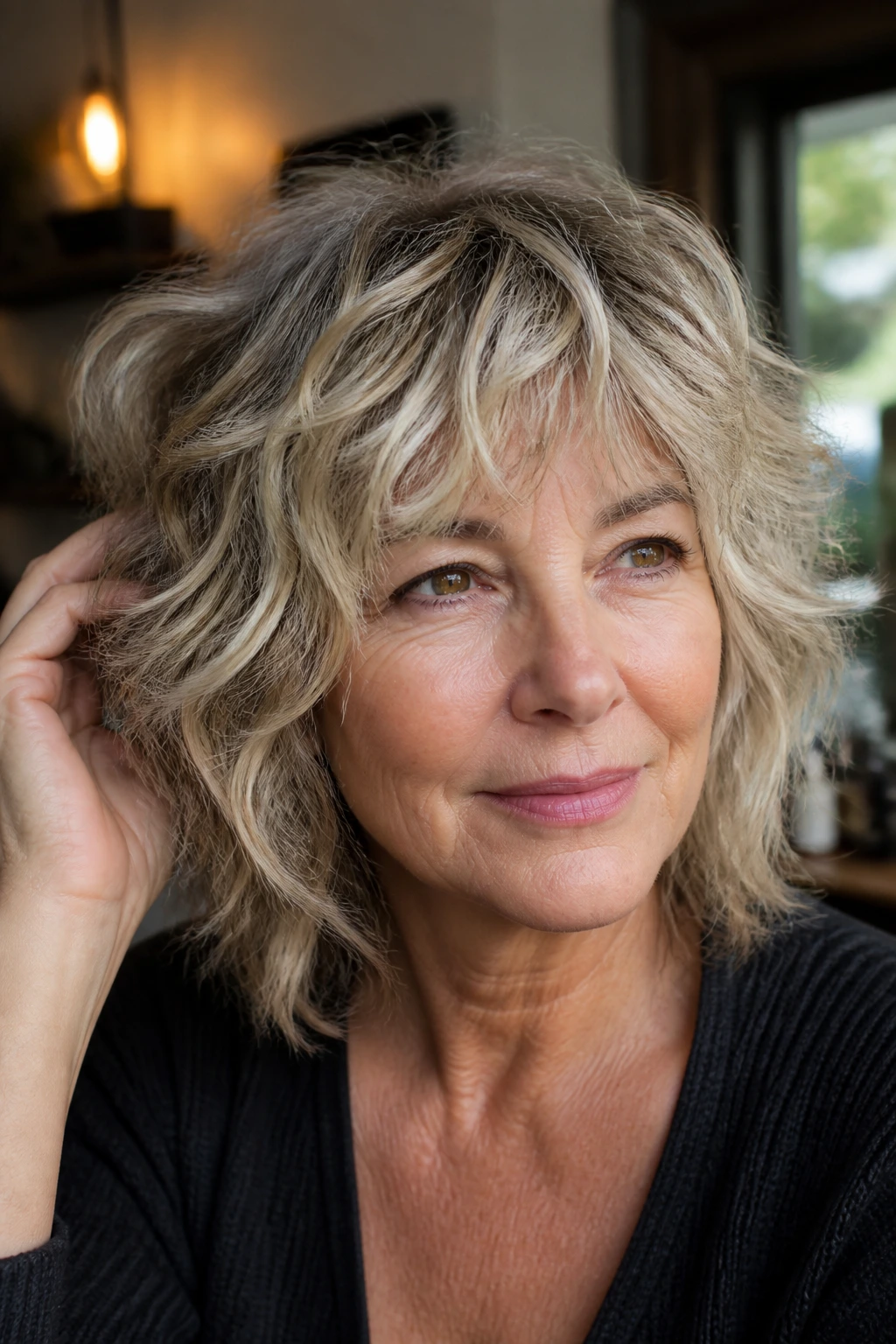
This one sits right at the border between soft and sharp, and I like it for women who want the face to stay open. The length skims the chin, which keeps the haircut from feeling heavy near the neck, while the feathered bangs break up the forehead line in a way that feels light rather than trendy-for-trendy’s-sake. On wavy hair, that lightness is the whole point.
Why It Flatters
The chin line gives the haircut a clear anchor, so the layers can move without making the whole shape wander. Feathered bangs also stop the front from looking blocky, which is a common problem when wave meets weight. If your hair has a slight bend, this cut lets that bend show instead of fighting it into a straight line.
Ask Your Stylist For
- A perimeter that lands just below the chin
- Short face-framing layers that start around the cheekbone
- Bangs thinned enough to be see-through at the brow
- Soft point-cut ends, not blunt edges
Best for: women who want movement around the face without losing structure.
2. Collarbone Shag with Long Curtain Pieces
If you still want to tuck hair behind your ears or clip it up on the second day, start here. The collarbone length gives the haircut enough weight to stay graceful, while the longer curtain pieces sweep back from the face instead of hanging in one tired curtain. It’s a sensible cut, which is not the same thing as a boring one.
The nice thing about this version is that it works whether you air-dry or round-brush the front. The curtain pieces can be pushed away from the face for lift, then allowed to fall back into a loose bend. If your wave pattern changes from one section to the next, that variation reads as texture here, not as a flaw. I’d pick this for anyone who wants a shag that can still be pinned up, grown out, and styled without a daily wrestling match.
3. Soft Curly Shag with Rounded Fringe
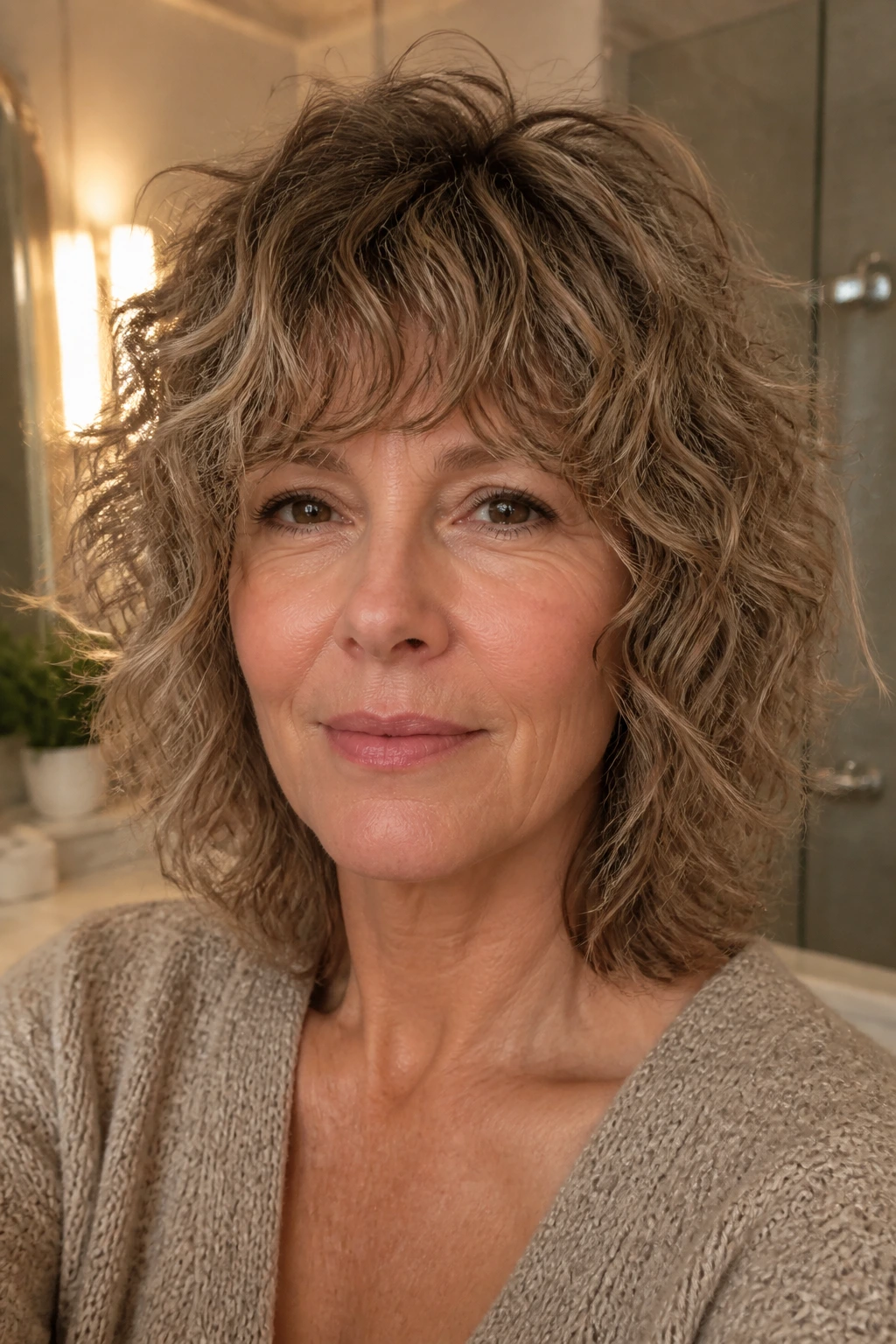
What if your waves turn into loose curls at the ends and a little frizz near the top? That’s exactly when a soft curly shag starts making sense. Instead of forcing the curl into a neat bob shape, this cut keeps the fringe rounded and lets the layers stack in a way that leaves air between them. The result is lighter at the crown and less bulky around the mouth and chin.
What Makes It Work
The rounded fringe matters more than people think. A straight-across bang can fight curls and rise in the middle, but a curved fringe follows the way curly waves naturally sit. That gives the haircut a calmer look even on humid days. Use a diffuser with a medium-hold mousse, then stop touching it. Seriously. The more you fuss, the frizzier the fringe gets.
Best Styling Move
Let the fringe dry first if it tends to split. Then shake the roots loose with your fingers, not a brush. Brushes pull the curl apart and can make the top go fuzzy fast.
4. Silver Layered Shag with Piecey Ends
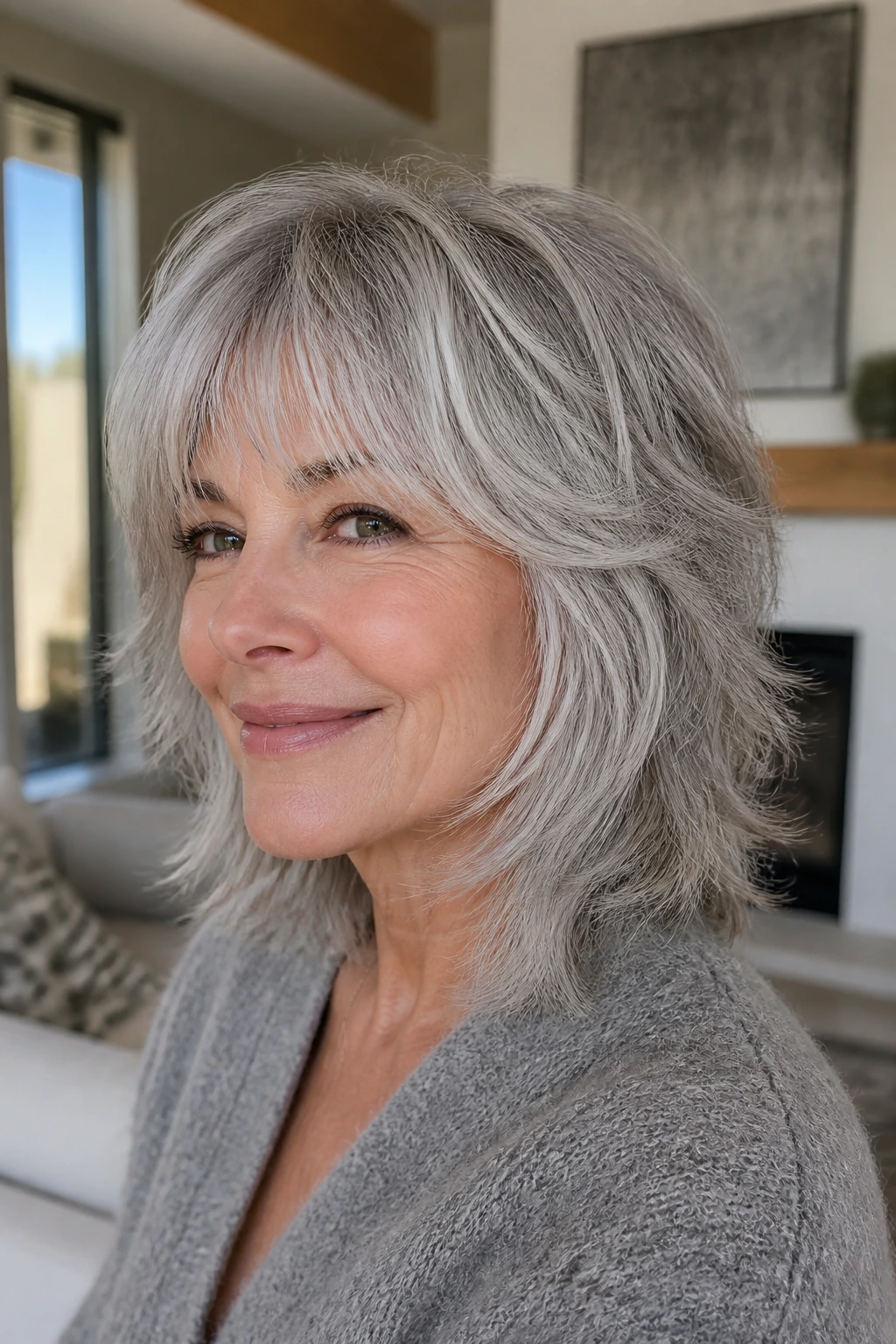
Silver hair has a way of telling on a bad cut. If the shape is too blunt, it can puff at the sides. If the layers are too soft, it falls flat and looks sleepy. The silver layered shag sits in the sweet spot between those two mistakes, especially when the ends are cut piecey rather than smooth.
- The layers should be light around the temples.
- The ends should be sliced or point-cut, not chewed up with a heavy razor.
- The crown needs a little lift, but not so much that the top gets fluffy.
That last part matters. A lot. Silver hair often has a little stiffness to it, and too many short crown layers can turn stiffness into a halo. Keep the top controlled and the edges broken up. The haircut looks sharper, the shine reads better, and the whole thing feels less like a style that’s trying too hard.
5. Shoulder-Length Shag with Air-Dried Texture
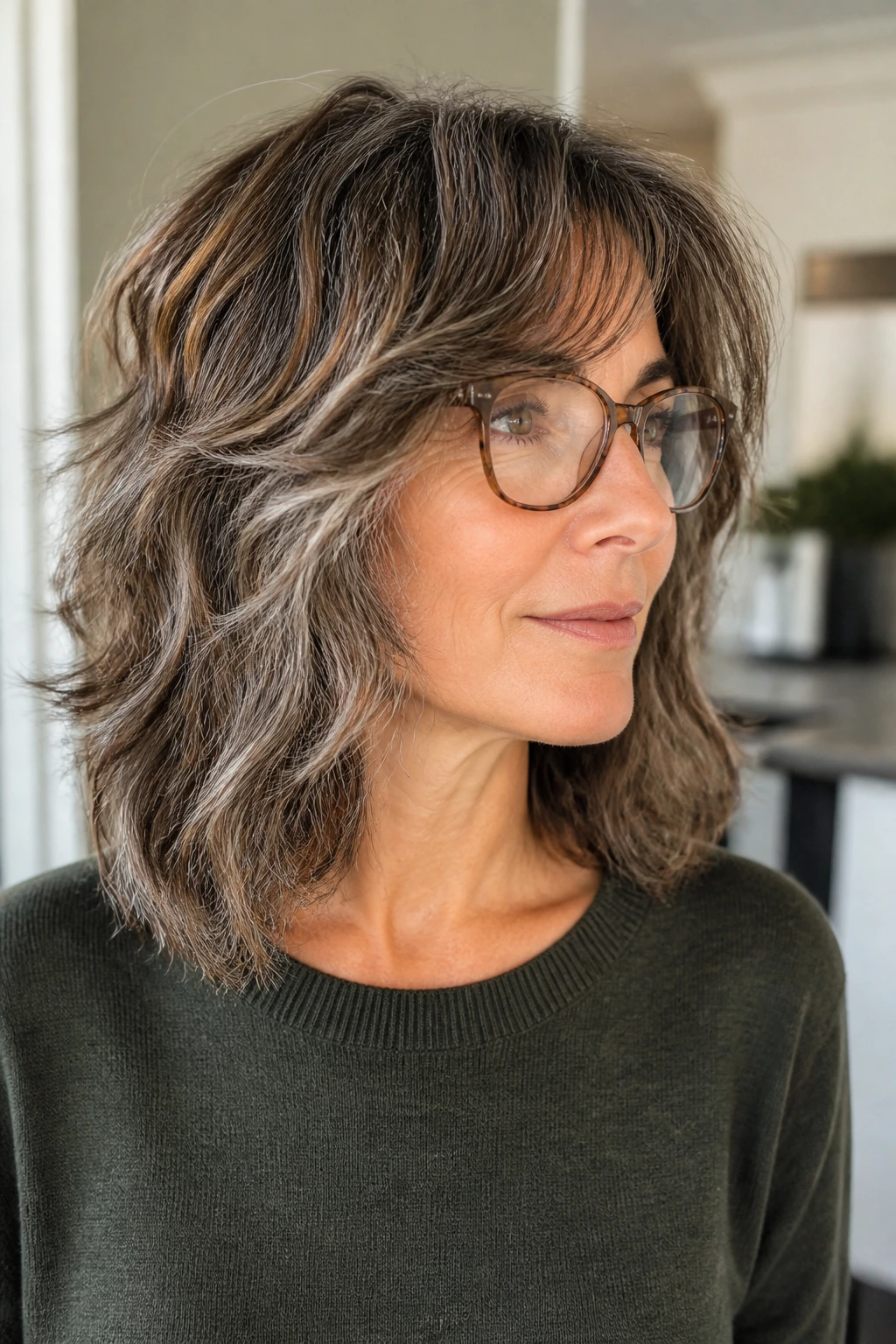
Shoulder length is where a lot of haircuts get trapped. Too long to look crisp, too short to tie back easily. A shoulder-length shag skips that dead zone by giving the hair movement all the way through the mid-lengths. On wavy hair, that means the ends don’t drag the shape down.
I like this one for women who want to wash, scrunch, and walk out the door. Put a small amount of mousse at the roots, a lighter cream through the mid-lengths, and leave the ends alone if they already bend on their own. The cut should fall in pieces, not in one heavy sheet. If it starts to balloon at the sides, the layers are too wide apart or the ends are too blunt.
It also behaves well with glasses, which people forget to mention. Shoulder-length shag layers sit above the frame line or softly around it, so the haircut does not feel crowded near the cheeks. That little detail can change the whole face.
6. Razor-Cut Shag for Loose Waves
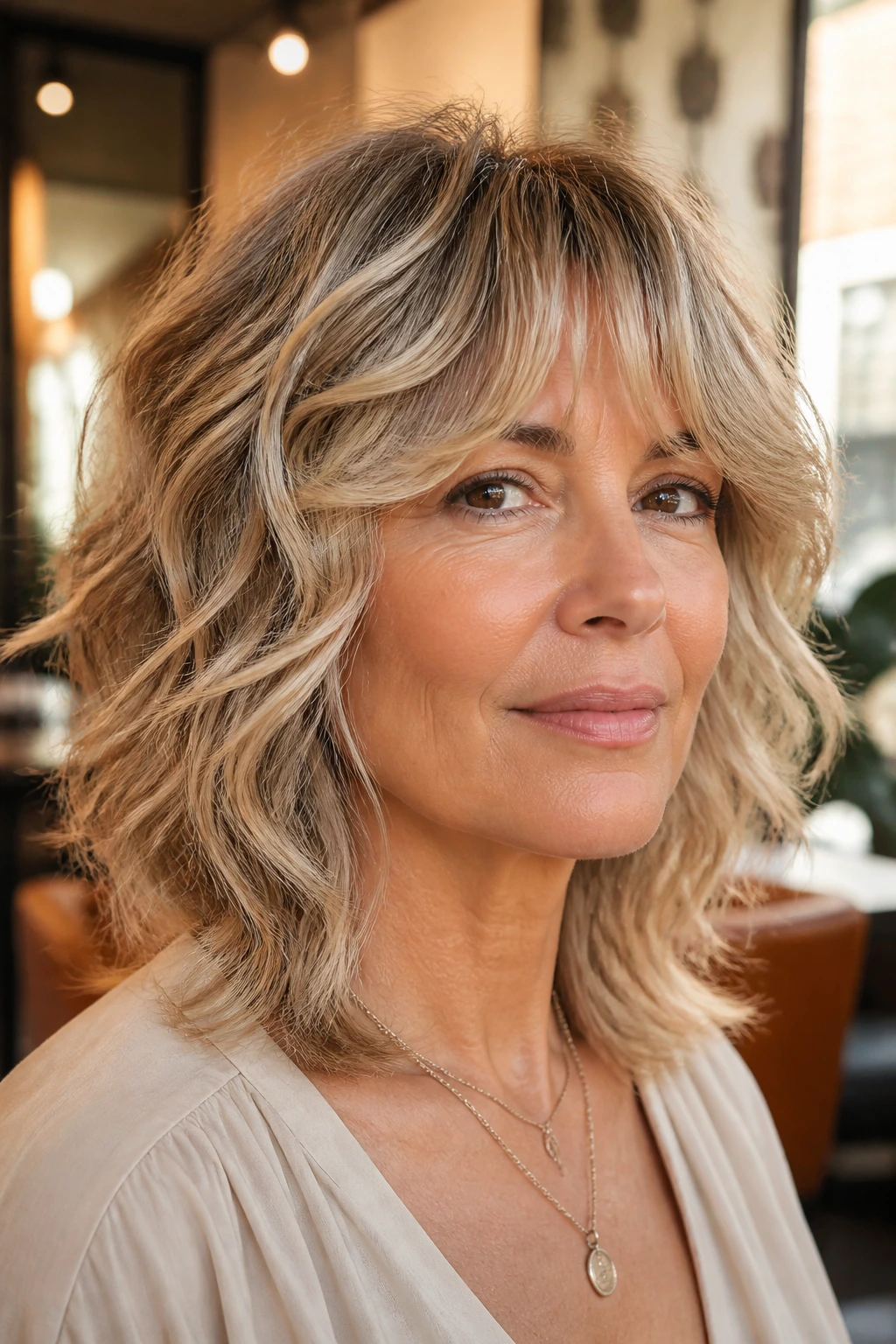
A razor-cut shag gives the hair a softer, more fractured edge than a scissor cut does. That’s useful when the wave pattern is loose and you want the ends to separate instead of sitting in one solid mass. You can think of it as the difference between a clean hem and a hem with a little movement in the threads.
This version is best for medium-density hair that can handle some texture without turning frizzy. If your ends are fragile or overly porous, a heavy razor can rough them up too much. But on healthy wavy hair, the razor makes the layers feel airy, especially around the face and the lower back sections. I’d choose this over a blunt layered cut when the goal is separation, not volume for volume’s sake.
7. Pixie-Shag Hybrid with Tapered Neck
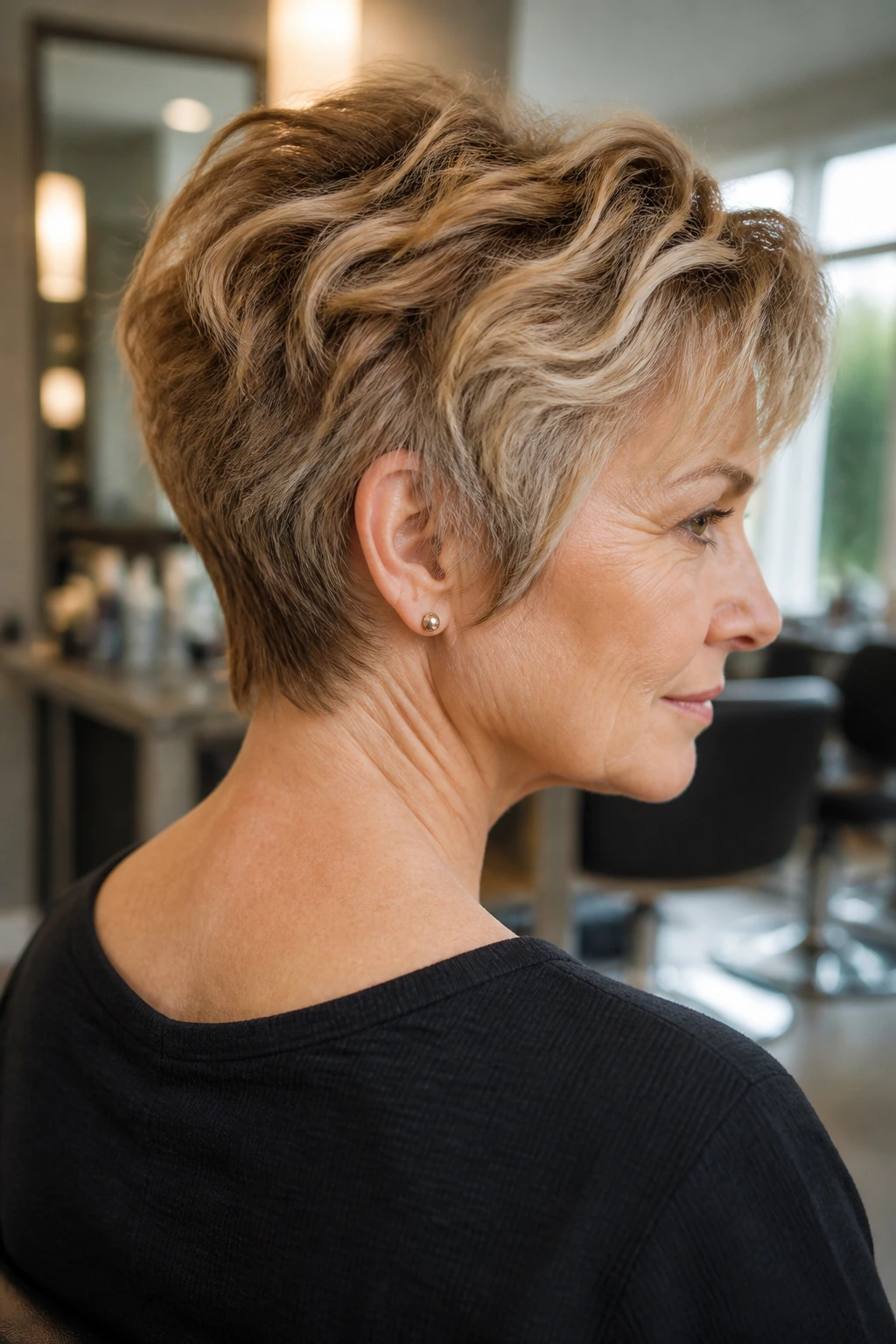
Short hair does not have to be neat to look intentional. This pixie-shag hybrid keeps a little length on top, tapers the neck, and lets the sides stay soft enough to move when you turn your head. It’s a good fit if you want something quick to dry but not stiff or spiky.
What to Ask For
- Keep the top long enough to bend with a finger twist
- Taper the nape so it hugs the neck
- Leave softness around the ears
- Avoid a hard, square outline at the back
The best part is how little product it needs. A pea-size amount of styling cream or a touch of mousse is usually enough. Too much product weighs the top down and steals the lift that makes this cut work. If you like a little edge but hate spending twenty minutes on your hair, this is one of the smartest shapes on the list.
8. Face-Framing Shag with Side-Swept Fringe
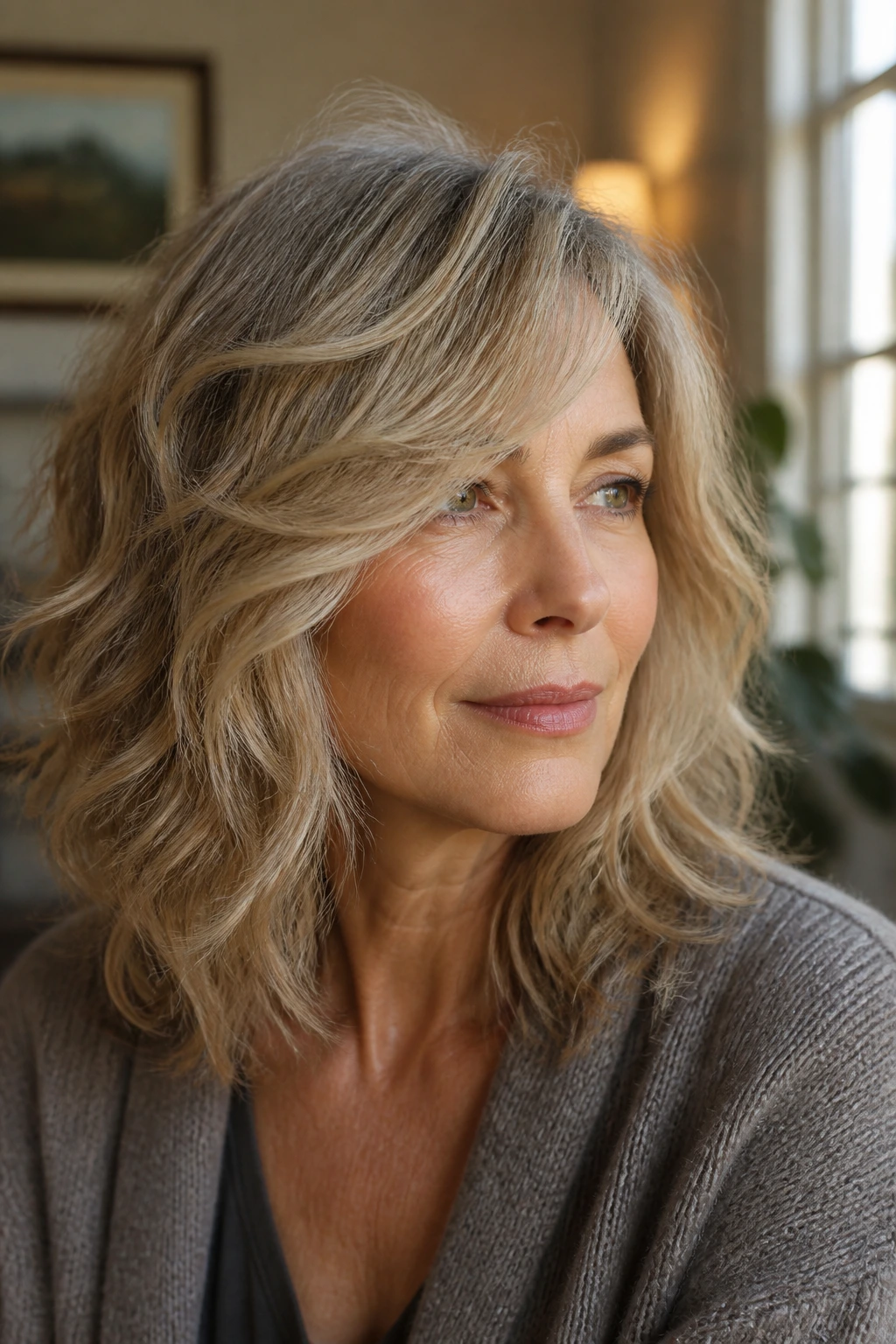
This is the shag for anyone who wants softness but does not love the center-part curtain bang look. The side-swept fringe moves diagonally across the forehead, which can be kinder to a strong brow, a rounder face, or a forehead you do not want to expose fully. The rest of the layers fan out from there.
The cut feels especially good when the front sections are longer than the crown layers. That gives the fringe something to fall into, instead of sticking out like an afterthought. Use a round brush only at the roots if you want a little bend. The rest can stay wavy. In fact, it should stay wavy.
If I had to choose one detail to avoid here, it would be a heavy bang line. The fringe should drift, not sit like a curtain rod.
9. Thick-Hair Shag with Internal Debulking
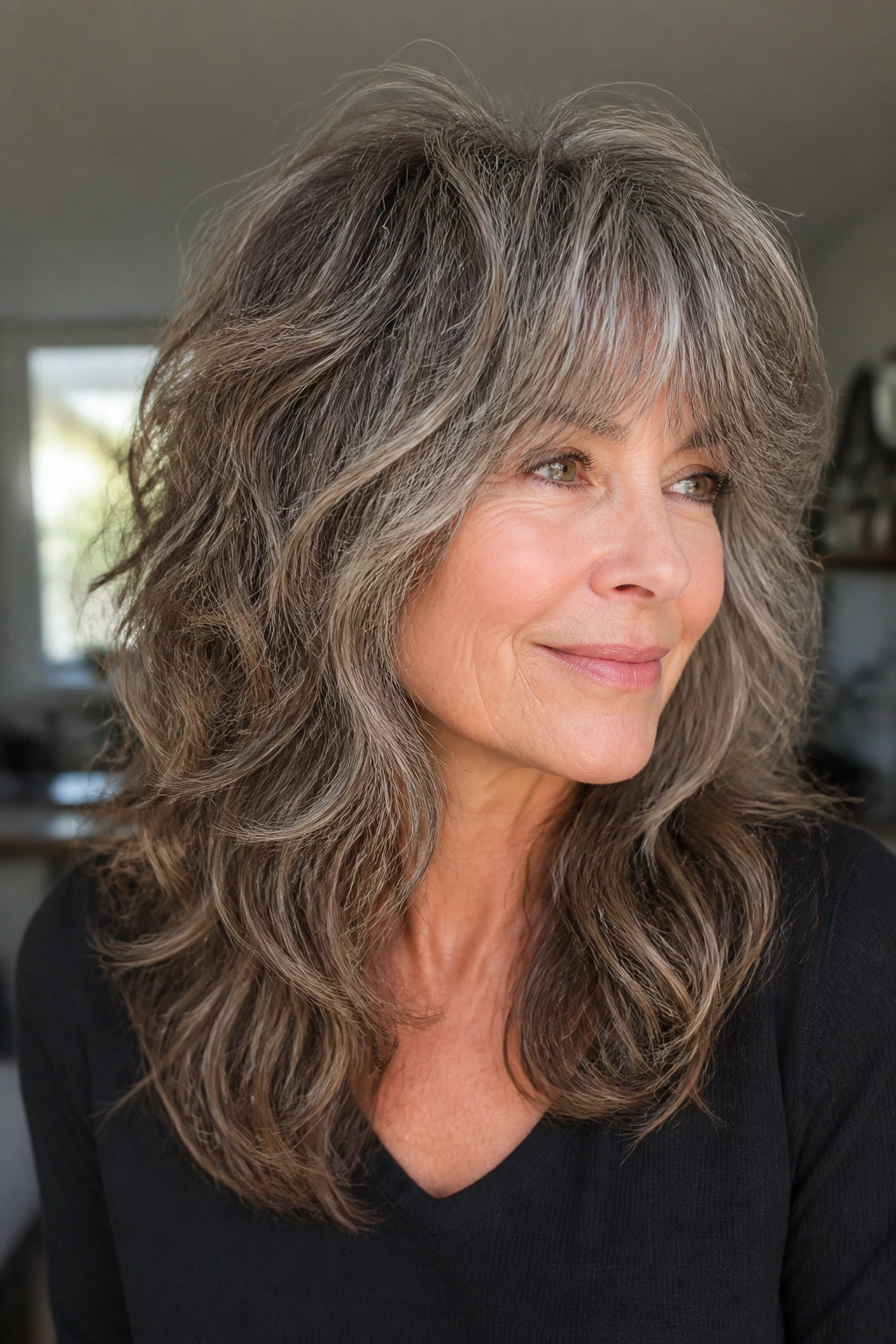
Why do thick waves sometimes look broader after a shag haircut? Because the wrong shag can leave too much weight sitting in the middle, which pushes the sides outward instead of letting them fall. A good thick-hair shag solves that with internal debulking, not by hacking off the length.
What to Tell Your Stylist
- Remove weight inside the shape, not just on the surface
- Keep the perimeter long enough to hold the line
- Use texture around the ends, not the crown alone
- Leave some density near the bottom so it does not fray
That last point gets ignored too often. If thick hair is thinned all the way through, the ends start looking wispy and the layers lose their muscle. I like a cut that keeps enough substance at the edge to hold the shape while freeing the middle so the wave can move. It feels lighter on the head, which is the whole goal.
10. Fine-Hair Shag with Crown Lift
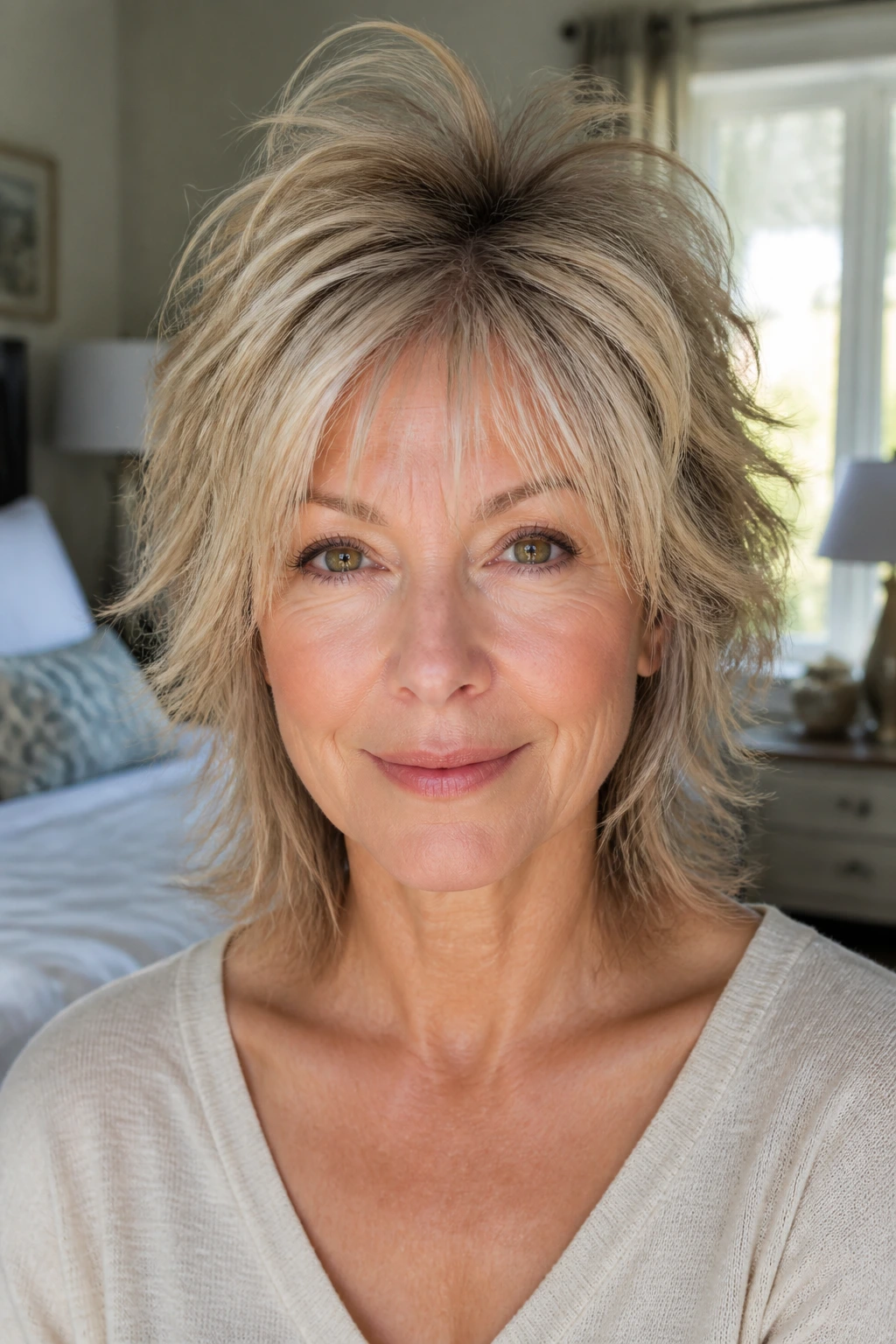
Fine hair does not need a dozen short layers scattered everywhere. It needs the right layers in the right place, and that usually means lift at the crown with enough length left through the sides to make the hair look fuller. A fine-hair shag should not look chopped up. It should look airy.
The best version uses subtle layering that starts higher than you’d expect, but not so high that the ends vanish. The crown gets a little support, the sides stay smooth, and the perimeter keeps its outline. That balance keeps the haircut from going see-through. A root-lifting mousse, a quick upside-down blow-dry, or a couple of clips at the crown while the hair cools can make a noticeable difference.
One warning: too much texturizing spray on fine hair turns lift into dryness fast. A little goes a long way.
11. Mid-Length Shag with Flipped-Out Ends
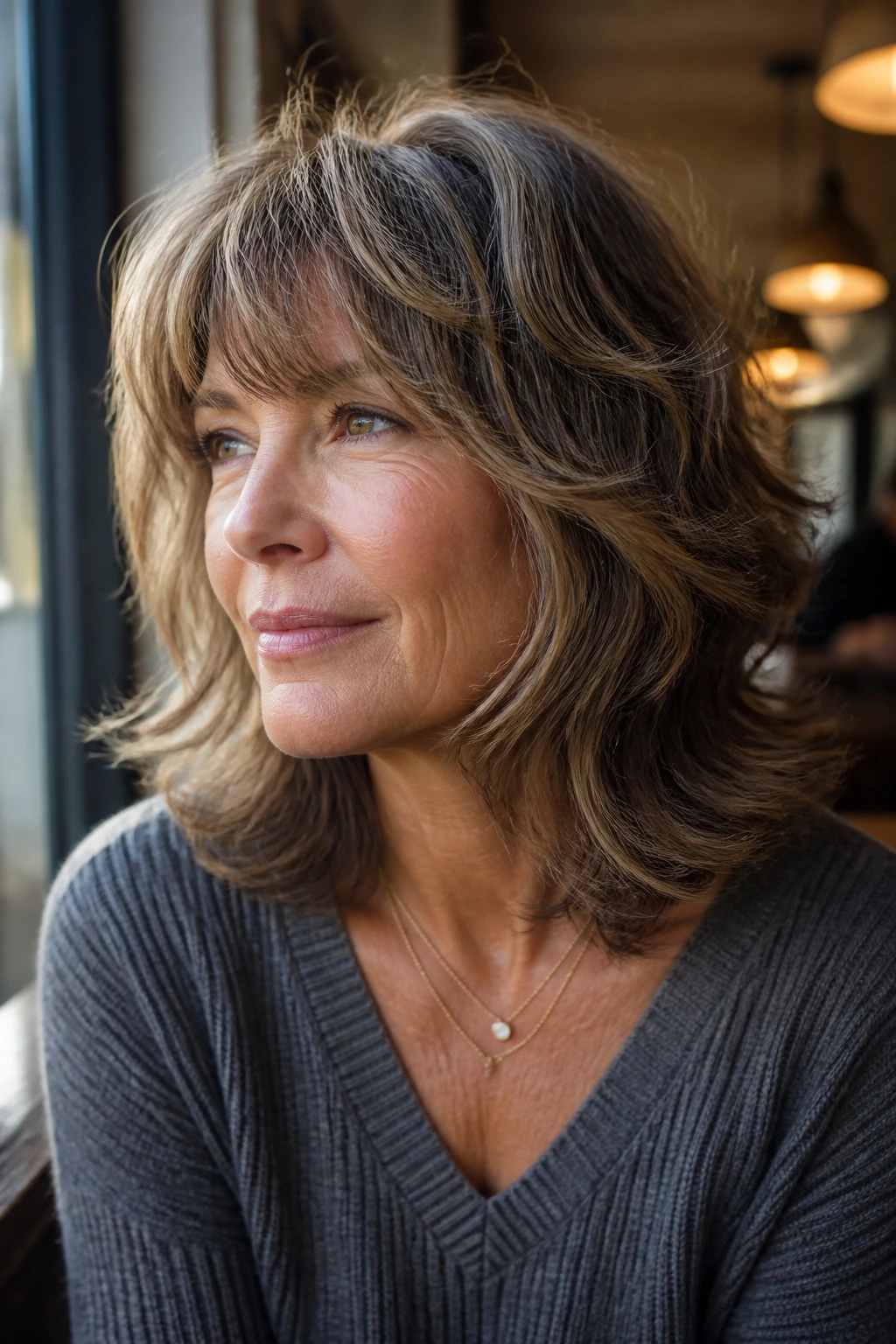
Some cuts look better when they behave a little badly. This is one of them. The mid-length shag with flipped-out ends has enough structure to feel tidy, but the ends kick out just enough to keep the whole shape from going flat against the neck and shoulders. That flip is the point.
The cut works best when the layers are long enough to move but not so long they hang straight all day. A small round brush, a blow-dry brush, or even a quick bend with a curling iron at the bottom third of the hair can bring the shape to life. You do not need a curl everywhere. A little flip at the edge is enough.
It’s a good choice if you want your hair to look styled without looking lacquered. That matters. Stiff waves age a haircut faster than people expect.
12. Long Shag with Soft Layers

Long hair can wear a shag, but the layers have to be handled with a lighter hand. If the shortest pieces are cut too high, the length starts looking patchy. If the layers are too timid, the hair turns into a curtain with a few broken pieces around the face. The sweet spot is a soft long shag that keeps the length while letting the wave move.
This is the version for women who are not ready to go shorter but want the blunt ends to stop dragging the face down. The face framing should start around the cheekbone or a touch below, and the longest layers should still preserve the line through the back. That way, you keep ponytail length, braid length, and enough shape to stop the style from feeling heavy.
I like it most on hair that has a gentle S-wave. It does not need a lot of drama. It just needs room.
13. Layered Bob Shag with a Soft Edge
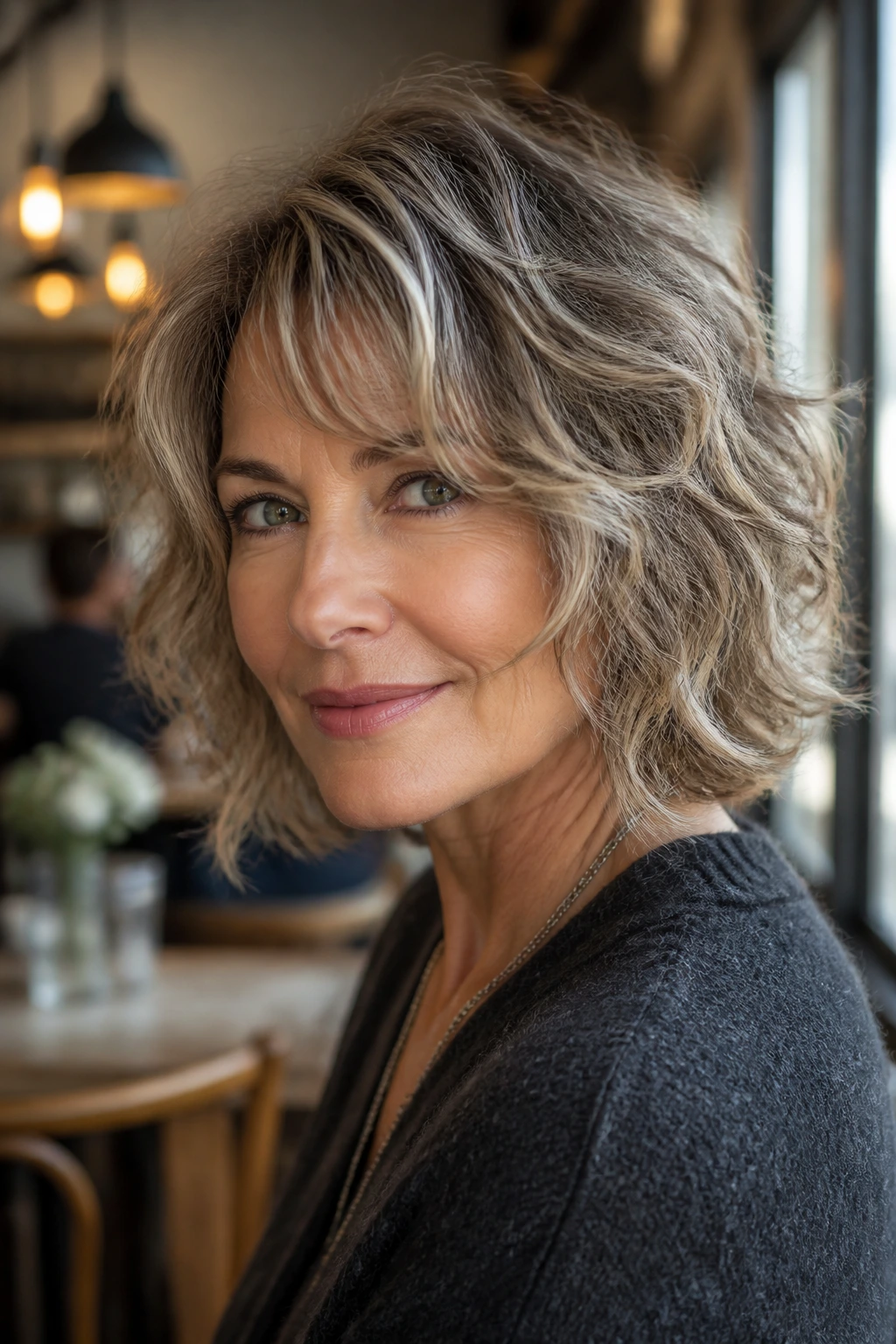
Can a bob still feel shaggy? Absolutely, if the edge is softened and the layers are placed with some restraint. A layered bob shag keeps the length near the jaw or slightly below it, then breaks up the outline so it does not sit like a solid block. That makes it easier on wavy hair than a sharply cut bob.
Best For
Women who want shorter hair without exposing the neck too much. Women whose waves puff out when the ends are too blunt. Anyone who wants a cut that looks put-together with a quick scrunch and a bit of product.
The soft edge is the trick. Ask for point-cutting at the perimeter and light internal layers, not giant chunks removed from the sides. The hair should still have enough weight to swing. If it gets too airy, the bob part disappears and you’re left with a shape that feels unfinished.
14. Tousled Salt-and-Pepper Shag
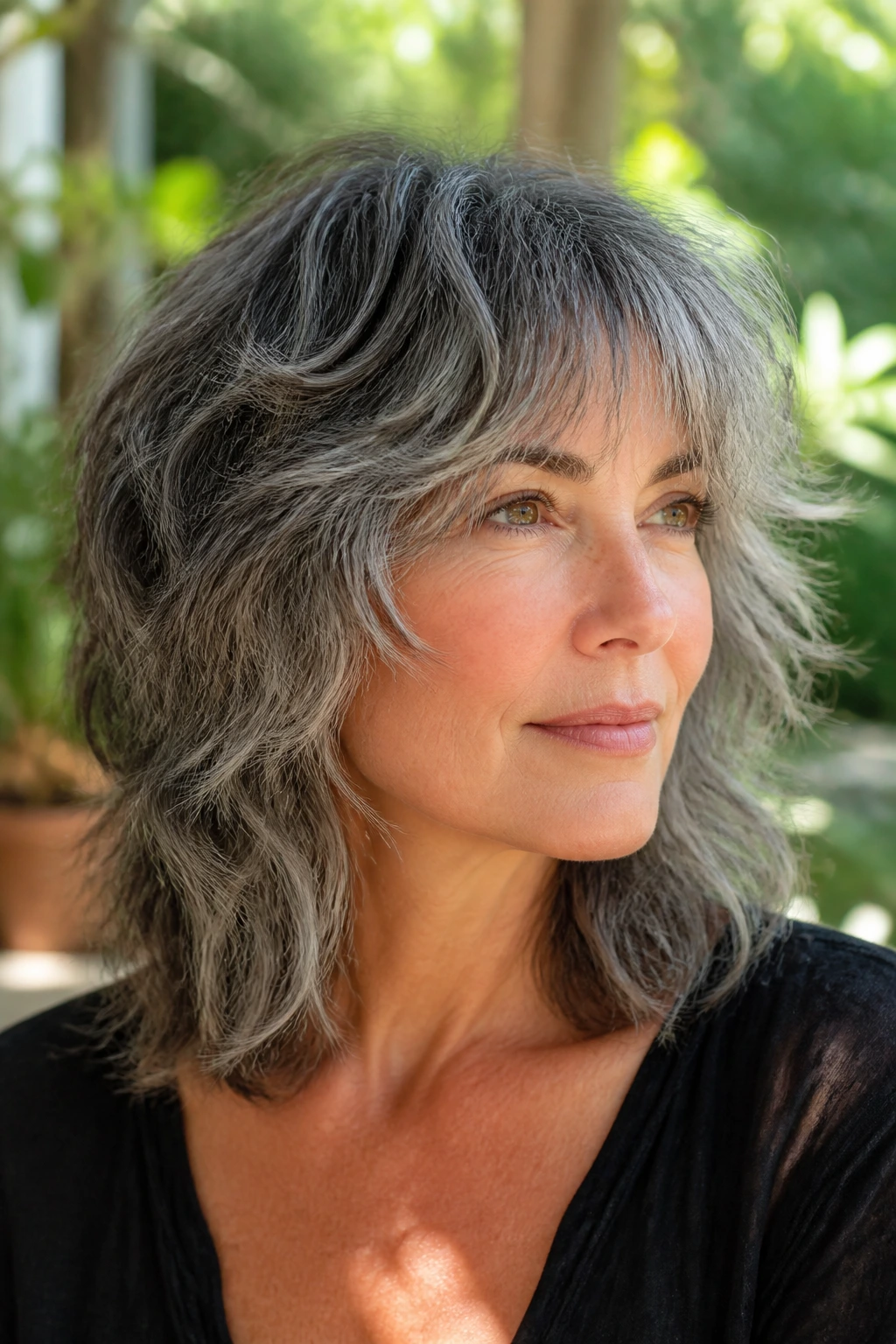
A salt-and-pepper shag can look rich when the texture is broken up correctly. The contrast between dark and silver strands shows every layer, which means the haircut has to be deliberate. Too neat, and the color can look stripey. Too messy, and it looks like you gave up halfway through drying it.
This is where a tousled finish helps. Light mousse, a diffuser, and a little hands-off drying give the strands space to separate. The result is movement that feels lived-in instead of overworked. I’d keep the fringe or front pieces a little softer here, because the color does a lot of the talking on its own.
If your gray is growing in with a bit of shine, let it. Heavy pigment-heavy products can dull that effect fast.
15. Shag with Micro Curtain Fringe
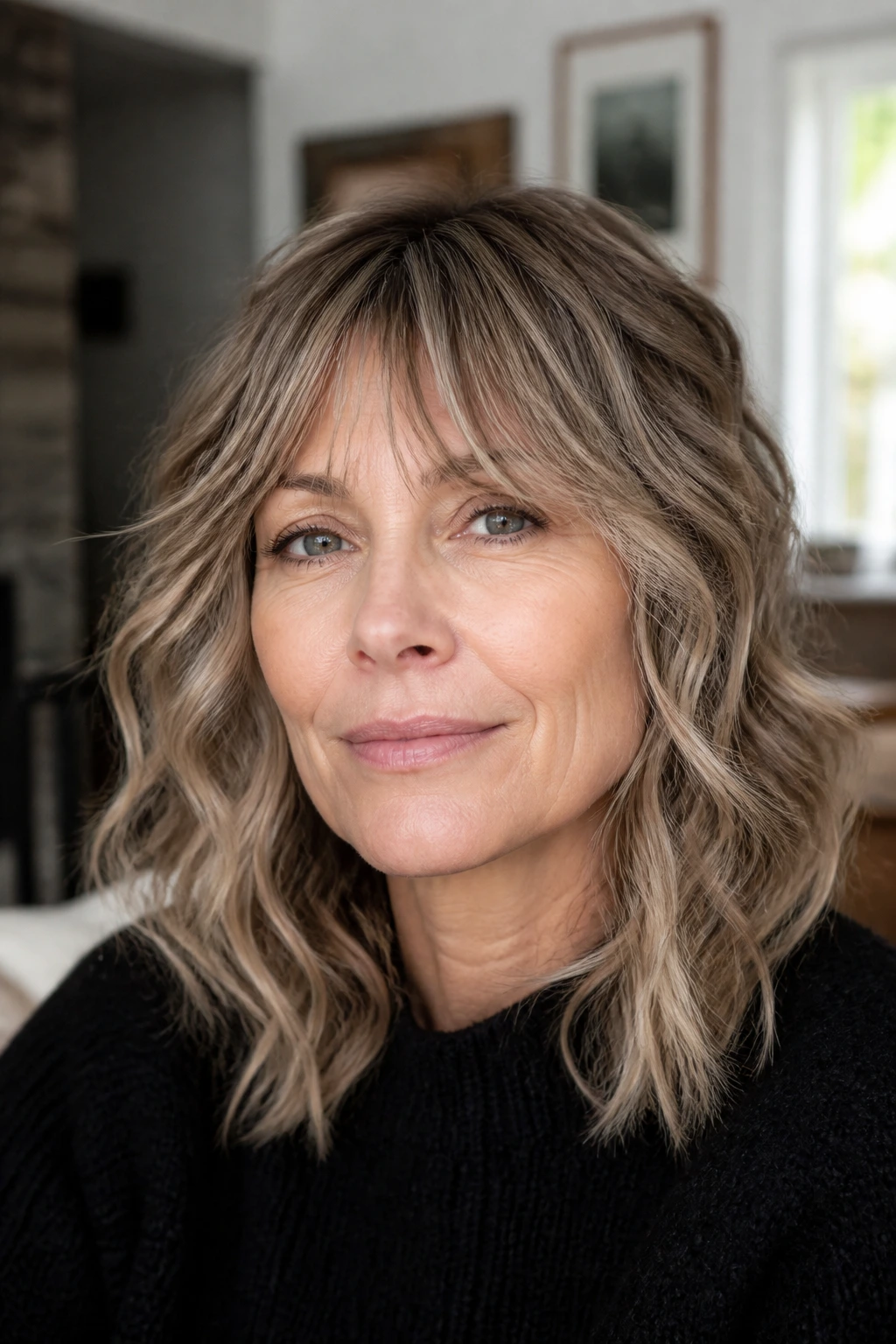
Do you want a fringe, but not a lot of fringe? Micro curtain bangs sit right there in the middle. They part near the center, skim the forehead lightly, and open out toward the temples without swallowing the face. On a wavy shag, they give you that piecey front detail without the maintenance of a full curtain bang.
What to Know Before You Cut Them Short
- They need more frequent trims than longer bangs
- They work best when the rest of the cut has softness, not hard lines
- They can be tricky on very cowlick-prone foreheads
- A light styling cream is enough; heavy balm is too much
I do not think these are for everyone. They’re a little fussy compared with longer fringe, and they show every styling decision you make. But if you wear glasses, like a bit of forehead showing, or want a smaller bang shape that does not dominate the face, they can be excellent.
16. Low-Maintenance Air-Dry Shag
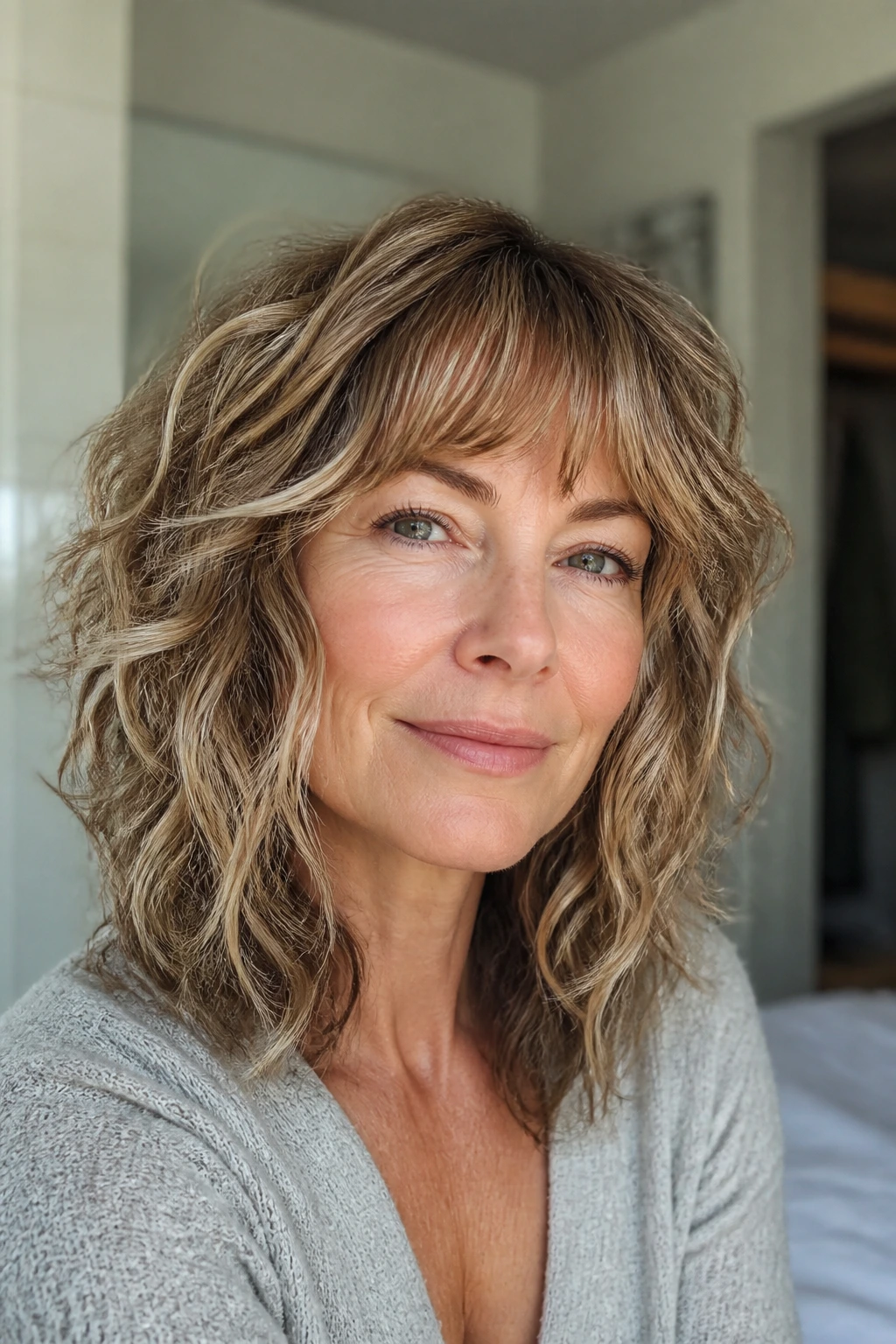
Some cuts need a blow-dryer and a decent mood. This is not one of them. A low-maintenance air-dry shag is built so the wave can settle on its own, which makes it ideal if you do not want to stand in front of the mirror every morning with a round brush.
The key is restraint at the salon. The layers should be soft, the ends should not be over-thinned, and the front should frame the face without demanding a precise bend. At home, a dab of leave-in conditioner through the mids and a foam or mousse at the roots are usually enough. Scrunch once. Leave it alone. The trick is to let the cut do the work while the hair is still slightly damp.
This is also the cut that forgives an imperfect second-day refresh. A mist of water, a little mousse worked into the crown, and a quick shake with your fingers usually brings it back.
17. Grow-Out-Friendly Shag with a Soft Perimeter

If you hate staring at a haircut that loses its shape two weeks after a trim, this is the one to ask about. The grow-out-friendly shag keeps a soft perimeter around the shoulders or jaw while the interior layers stay light enough to move. As it gets longer, the cut keeps its outline instead of collapsing into a single flat shape.
The best part is that it grows in stages you can live with. First the fringe relaxes. Then the crown softens. Then the ends start sitting a little lower. None of that is a disaster. It just changes the silhouette slowly enough that you can stretch the time between appointments without feeling like you’ve wandered off from the original haircut.
I’d call this the smart choice for women who like a shag but don’t want to babysit it. It is tidy enough for real life and loose enough to feel modern.
Why Wavy Shag Haircuts for Older Women Work So Well on Real Hair
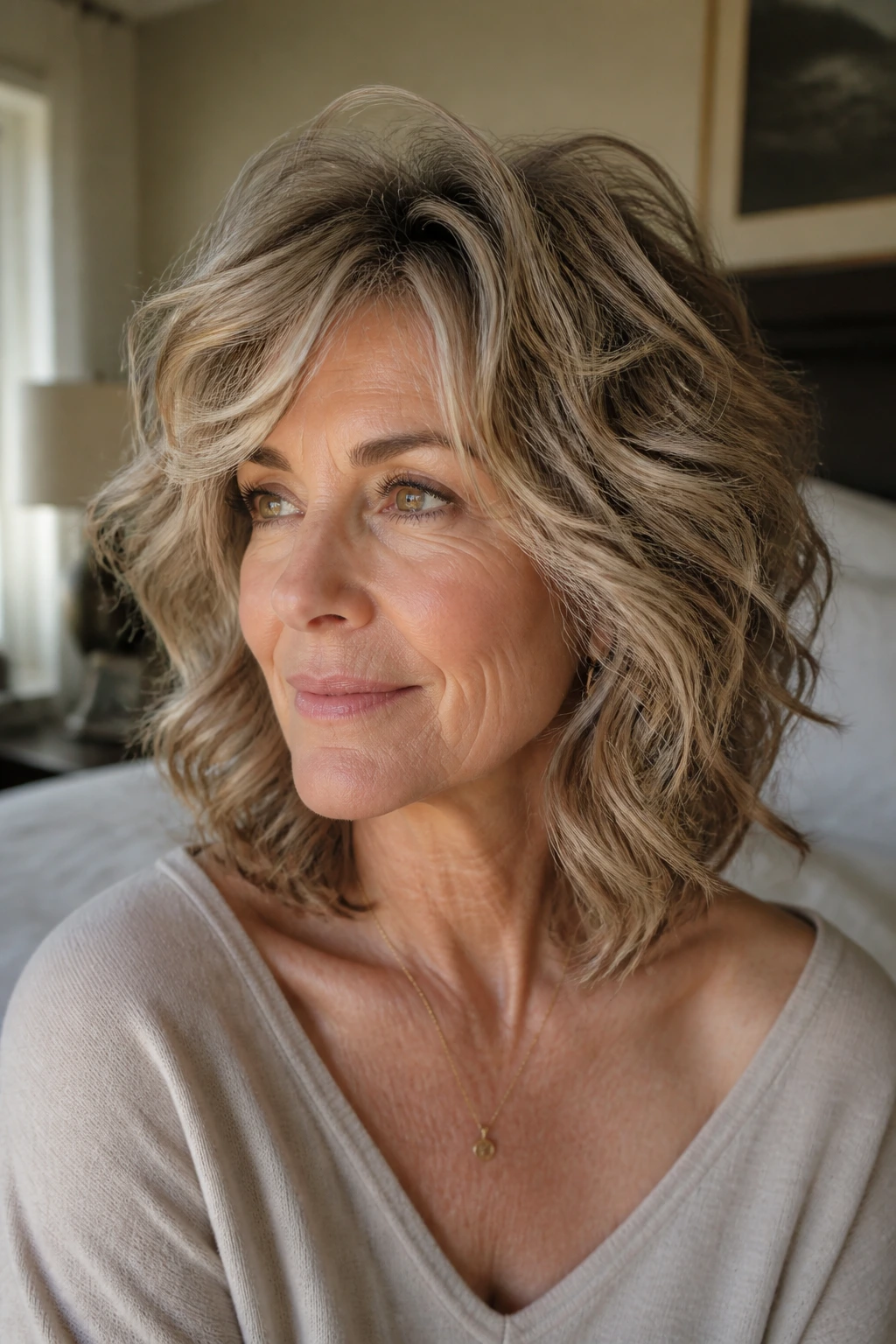
The reason these cuts keep coming back is not mystery. It’s mechanics. Hair that has changed with time often wants a different balance of weight and lift than the haircut you wore twenty years ago. A shag gives you both, as long as the layers are placed with a little thought instead of enthusiasm alone.
The biggest win is around the crown. A blunt shape can sit flat there and make the ends look heavy, while a shag uses shorter interior layers to build lift where hair often collapses first. That small shift changes the whole silhouette. The face looks more open, the neck looks less boxed in, and the hair stops hanging like a single sheet.
There’s also the matter of texture. Gray and silver strands can be coarser, but many people still have a wave pattern that wants to show up. A shag respects that wave. It does not force the strand into a straight line or demand a perfect round brush finish every morning. That matters when you want a haircut that works with day-to-day life, not against it.
And yes, it grows out better than a lot of tidy cuts. That’s not a throwaway benefit. It means fewer awkward months and fewer emergency trims that you did not really want to book.
The Brushes, Clips, and Products That Make Styling Easier
-
Wide-tooth comb: Best for detangling wet waves without stretching them straight or pulling on fragile ends.
-
Microfiber towel or cotton T-shirt: Cuts down on frizz when you scrunch water out of the hair after washing.
-
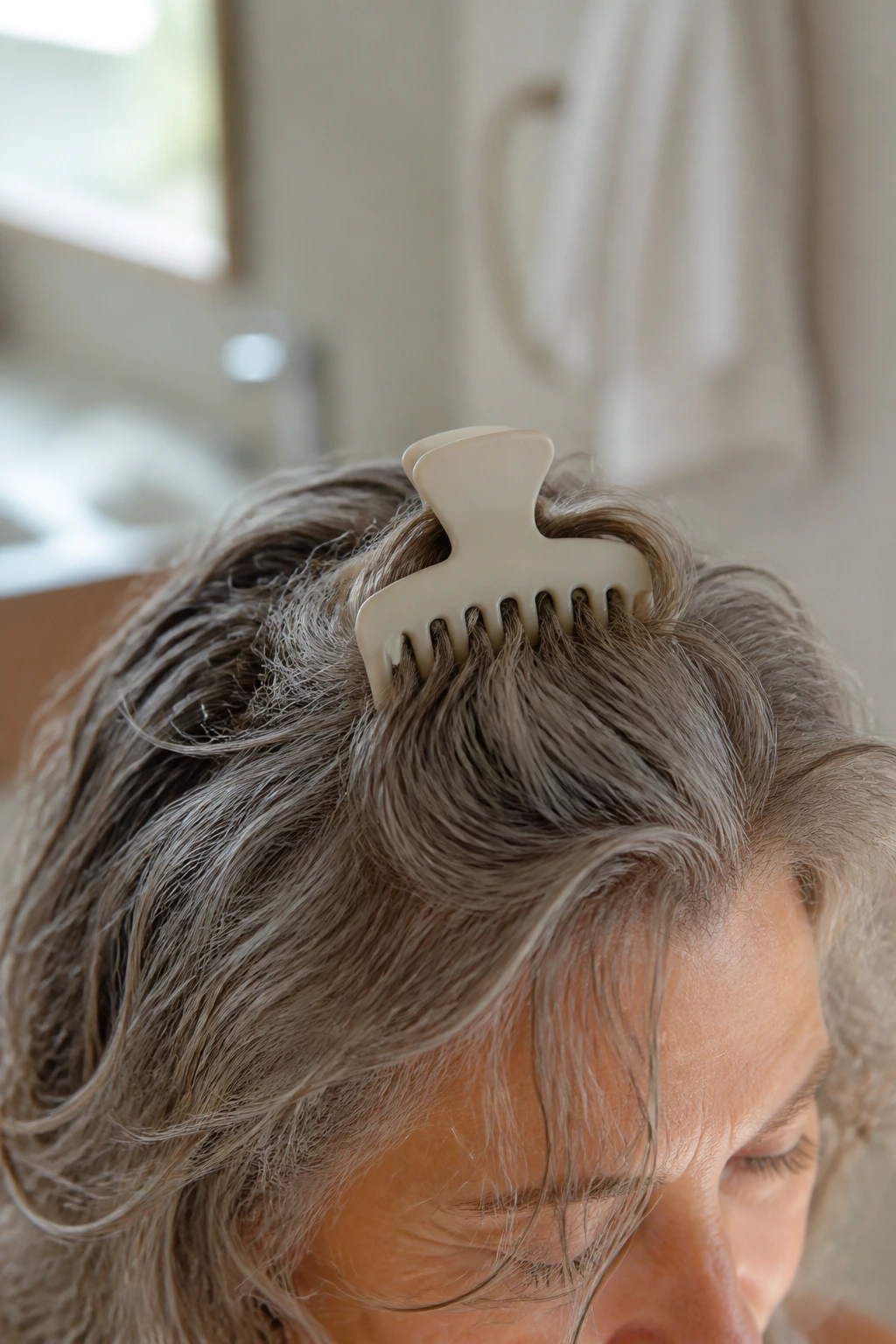
Root-lift clips: Handy for pinning the crown up while hair dries; they give fine or flat hair a little extra lift at the scalp.
-
Diffuser attachment: Useful if you want to keep the wave pattern intact instead of blasting it into frizz with a bare dryer.
-
Lightweight mousse: Gives shape and memory without the sticky feel of a heavy gel.
-
Texture spray: Works best on dry hair for extra separation at the ends and around the face; use it sparingly.
-
Leave-in conditioner: Good for dry or gray hair, but keep it on the mids and ends so the crown does not collapse.
-
1-inch curling wand or iron: Optional, but helpful for refreshing a few front pieces or bending the ends on a longer shag.
-
Satin pillowcase or bonnet: Helps the cut keep its shape overnight by reducing friction.
How to Ask for the Right Layer Placement
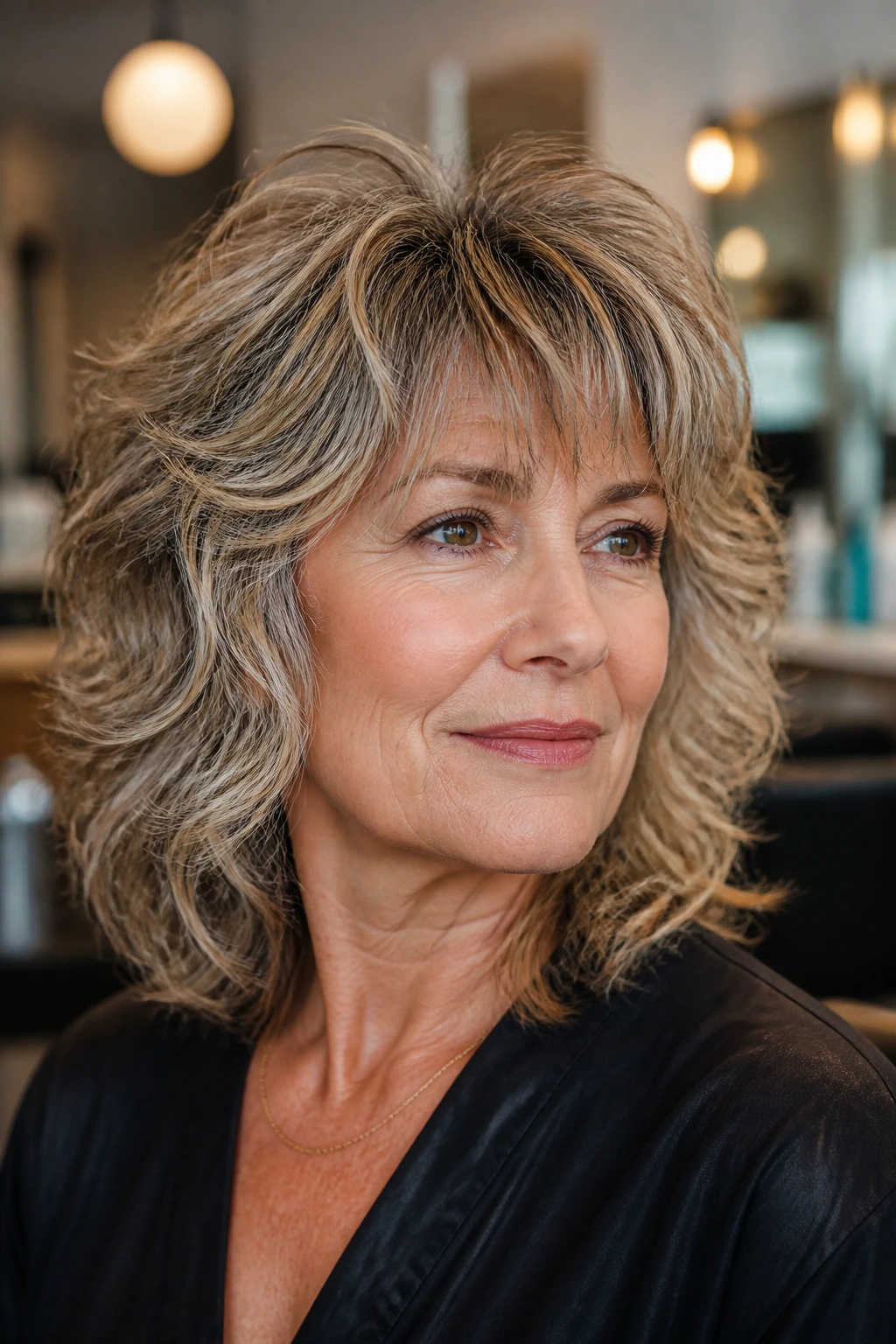
Be specific when you sit in the chair. “A shag” can mean ten different things to ten different stylists, and the difference between a flattering cut and a mushy one usually comes down to where the layers start and how much weight stays at the edges. Tell them what your hair does, not just what you want it to look like.
Say where your hair misbehaves. If the crown goes flat, say that. If the sides puff out, say that. If your front pieces split around your glasses, say that too. Those details help a stylist place layers where they’ll actually solve the problem.
Name the length you want to keep. Chin, collarbone, shoulder, or below. Don’t leave it vague unless you want the result to be vague. A good shag still needs a perimeter, and that perimeter should land somewhere on purpose.
Ask about the cutting method. Point-cutting, slide-cutting, and soft internal layers all have different effects. A razor can give air and separation, while scissors can keep the ends healthier if your hair is dry or fragile. If your ends already feel rough, say so before anyone reaches for a razor.
Bring one photo for shape and one for texture. That helps more than bringing six pictures of wildly different hair and hoping the stylist reads your mind. One image can show length; another can show how piecey or soft you want the finish to be.
Small Styling Tweaks That Make the Layers Show Up
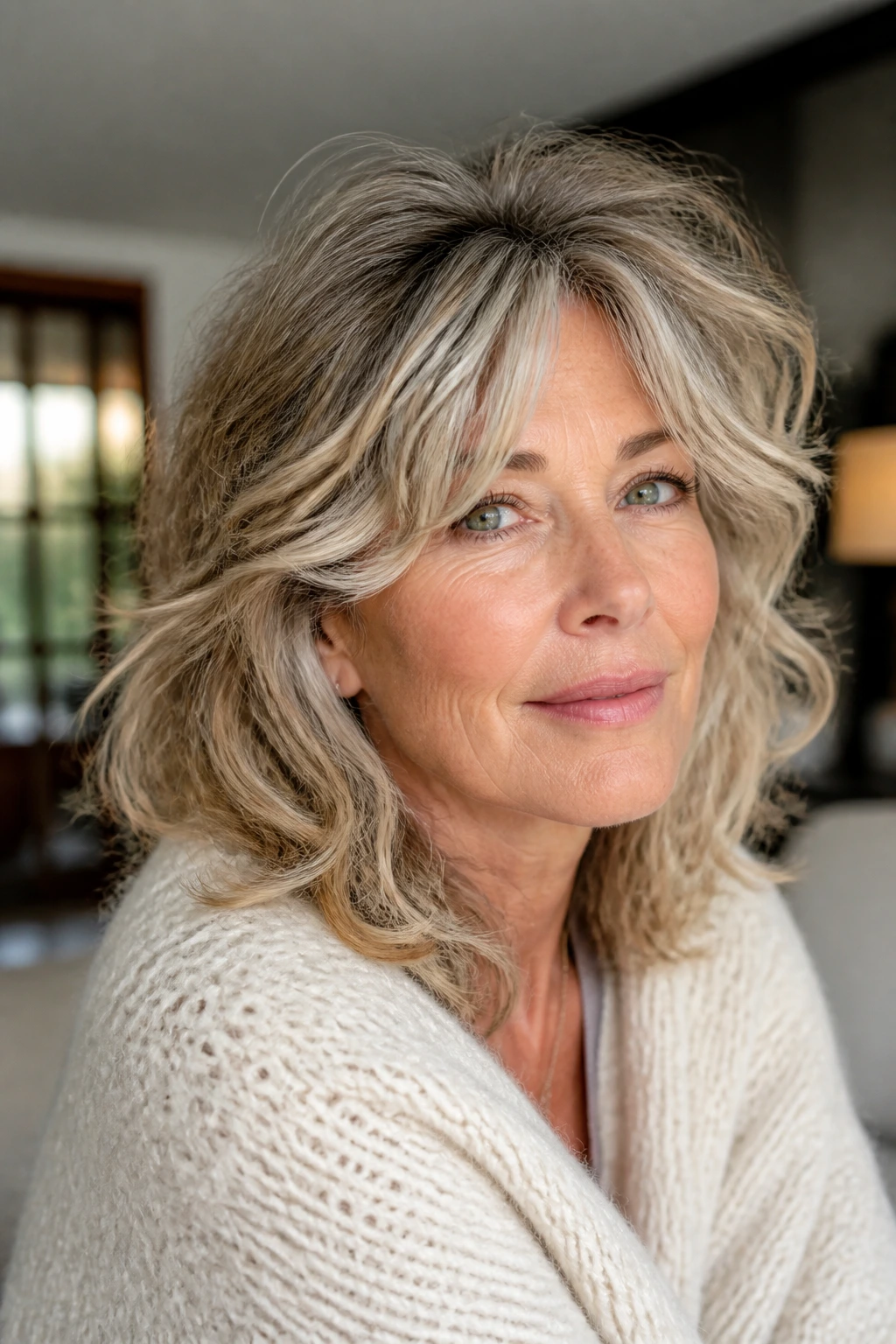
Root Lift: Clip the crown while your hair is still damp, then remove the clips once the roots cool. That one move can keep the top from lying flat against the scalp all day.
Wave Separation: Work a small amount of mousse through the mids, scrunch once or twice, and stop. If you keep raking your fingers through the hair, the layers blur together and the shape gets mushy.
Face Framing: Tuck one side behind the ear and leave the other loose. It sounds tiny, but it shows off the cut’s movement instead of hiding it under a curtain of hair.
Gray Shine: Use a pea-size amount of serum only on the ends if they look dry. Too much on silver hair makes the whole cut look limp, and limp is not the same as sleek.
If your shag feels too soft after drying, a short blast of cool air at the roots and a quick shake at the fringe can wake it back up. No need to start over. Just give the haircut a little air.
Common Mistakes That Turn a Shag Boxy or Mushy
-
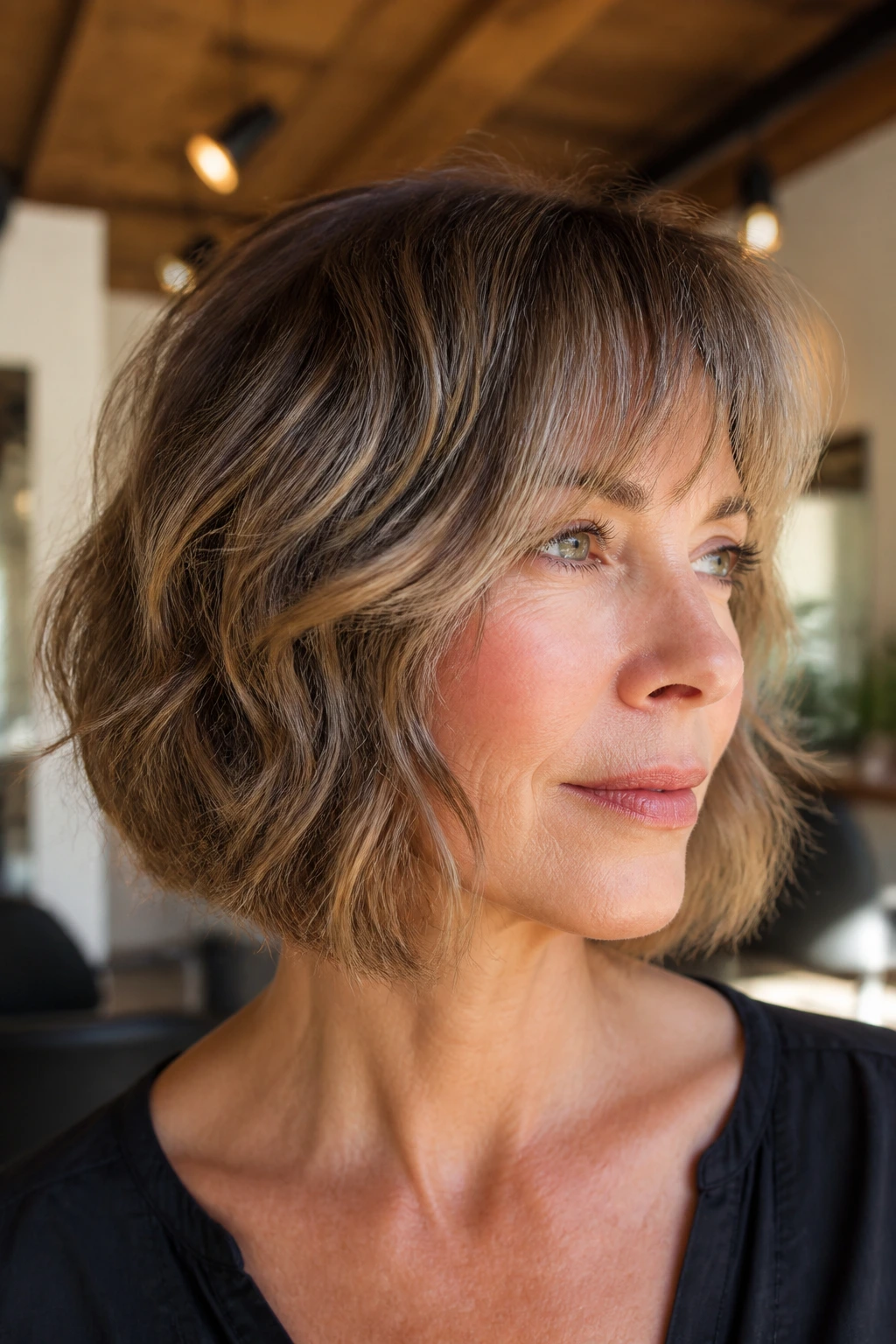
Making the crown layers too short: The haircut can puff up at the top and look rounder than intended. Ask for controlled lift, not a stacked helmet effect.
-
Using too much cream or oil: Wavy hair turns stringy fast when overloaded, and the layers disappear into each other. Start with half the product you think you need.
-
Leaving the bangs too heavy: Thick fringe across the forehead can flatten the face and hide the movement in the rest of the cut. Keep bangs soft enough to see some skin through them.
-
Skipping the perimeter shape: If the ends are all razored away, the haircut loses its anchor and frays out. A shag still needs a bottom line.
-
Blow-drying everything straight: That removes the whole point of the haircut. Smooth the roots if you want, but leave the wave in the mids and ends.
-
Waiting too long between trims on short shags: The shape can drift fast once the fringe and crown lose balance. Stay on top of it, especially if the front is part of the look.
Variations and Alternatives to Try
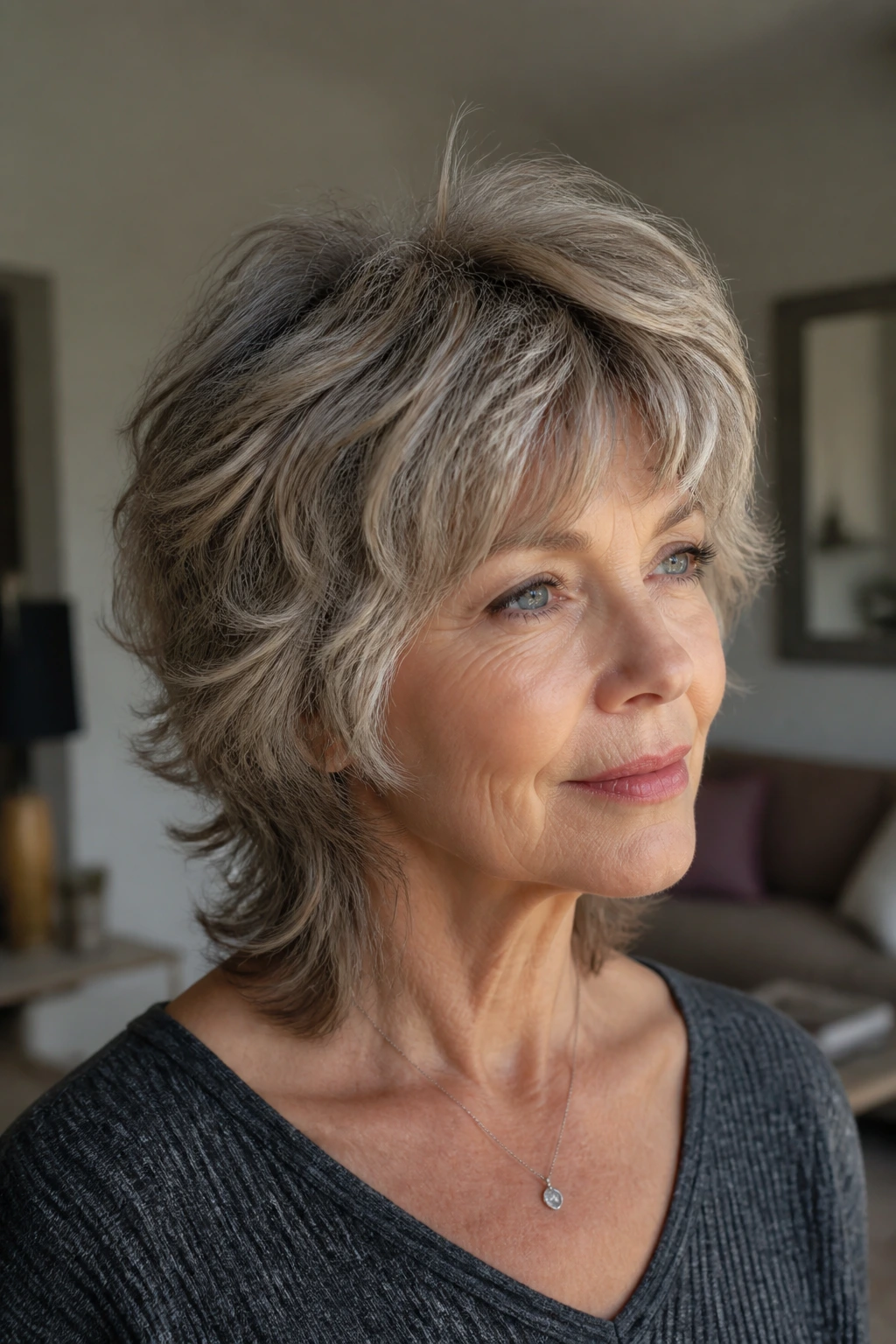
The Soft Wolf Shag: This version keeps more edge through the crown and a little extra taper around the neckline. It has more attitude than a classic shag, but the softer perimeter keeps it wearable for everyday life.
The Curtain-Bang Bob Shag: A bob length with shag layering and longer curtain bangs gives you structure at the jaw and movement through the front. It’s a good bridge if you want shorter hair without going into true pixie territory.
The Silver Airy Shag: Built for gray or white hair that wants lift without puff. The layers are light and the texture is soft, which keeps the color looking bright instead of dusty.
The Long Layered Wave Cut: If you want to keep your length, this one keeps the shag’s movement but spreads the layers farther apart. It works when you want your hair to swing rather than spring.
The Rounded Fringe Shag: Best for women who like some forehead coverage but do not want blunt bangs. The fringe curves softly into the rest of the cut, which keeps the face open.
Trim Intervals, Sleep Care, and Grow-Out Strategy
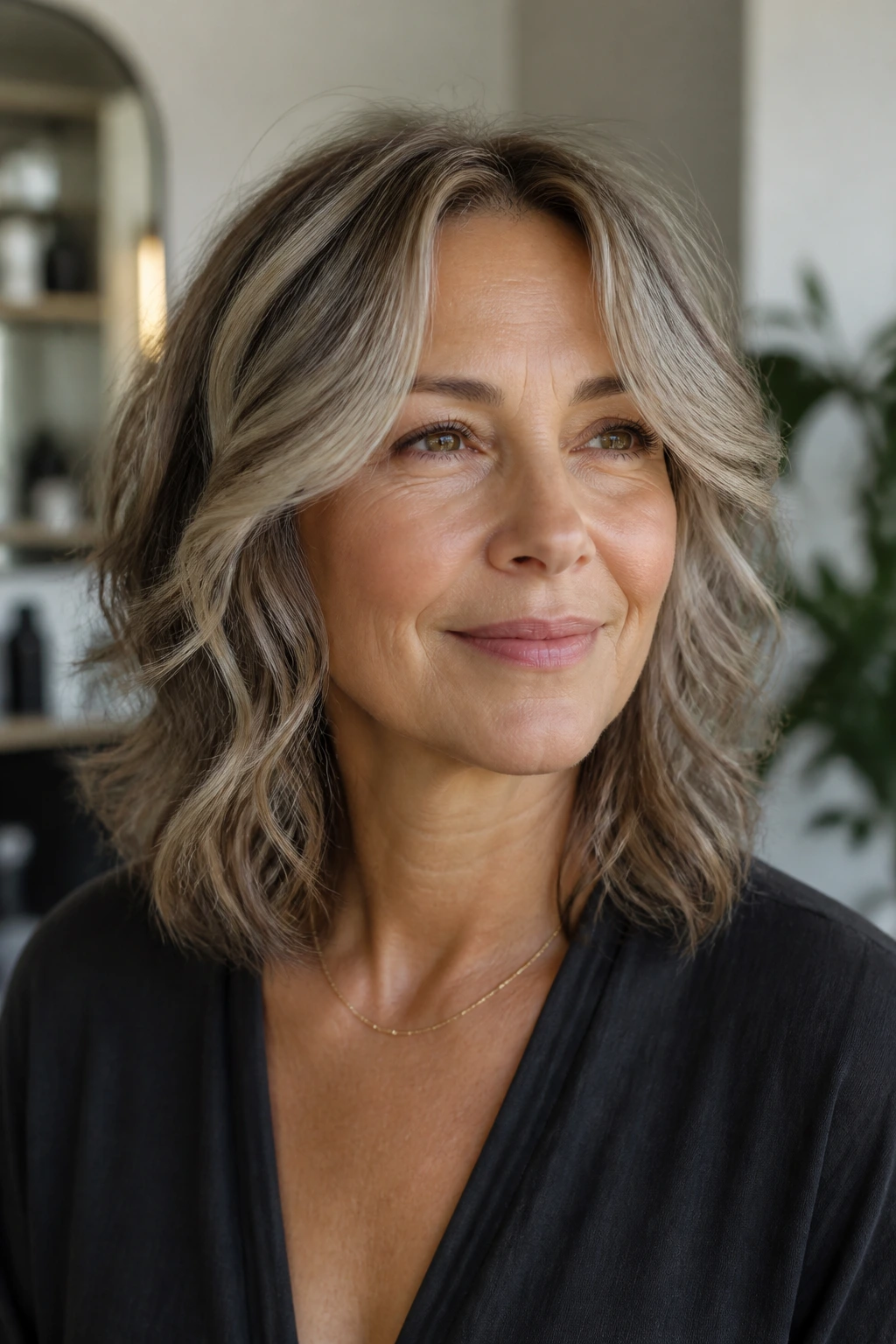
Shorter shags need more frequent trims than people expect. If the length sits above the shoulders or around the chin, plan on a tidy-up every 6 to 8 weeks to keep the fringe and face-framing pieces from getting heavy. Collarbone and longer shags can usually stretch to 8 to 12 weeks before the outline starts feeling tired. Micro fringe? That’s its own beast. It often needs attention sooner.
Night care is simple, and it matters more than people think. A satin pillowcase cuts down on friction, which helps the layers stay separated instead of waking up mashed together. If your hair is longer, a loose pineapple at the crown or a soft clip can keep the wave from getting bent in odd places overnight. Don’t pull it tight. That just creates a crease and a bad mood.
For day-two hair, mist the mids lightly with water, add a tiny bit of mousse, and scrunch the bottom sections. If the crown looks flat, use your fingers to lift at the roots while the dryer is on a cool setting for 20 to 30 seconds. And if you’re growing the cut out, tell your stylist to preserve the perimeter while softening the interior. That gives you a cleaner transition and keeps the shape from going awkward halfway through.
Questions Readers Ask Before Booking the Cut
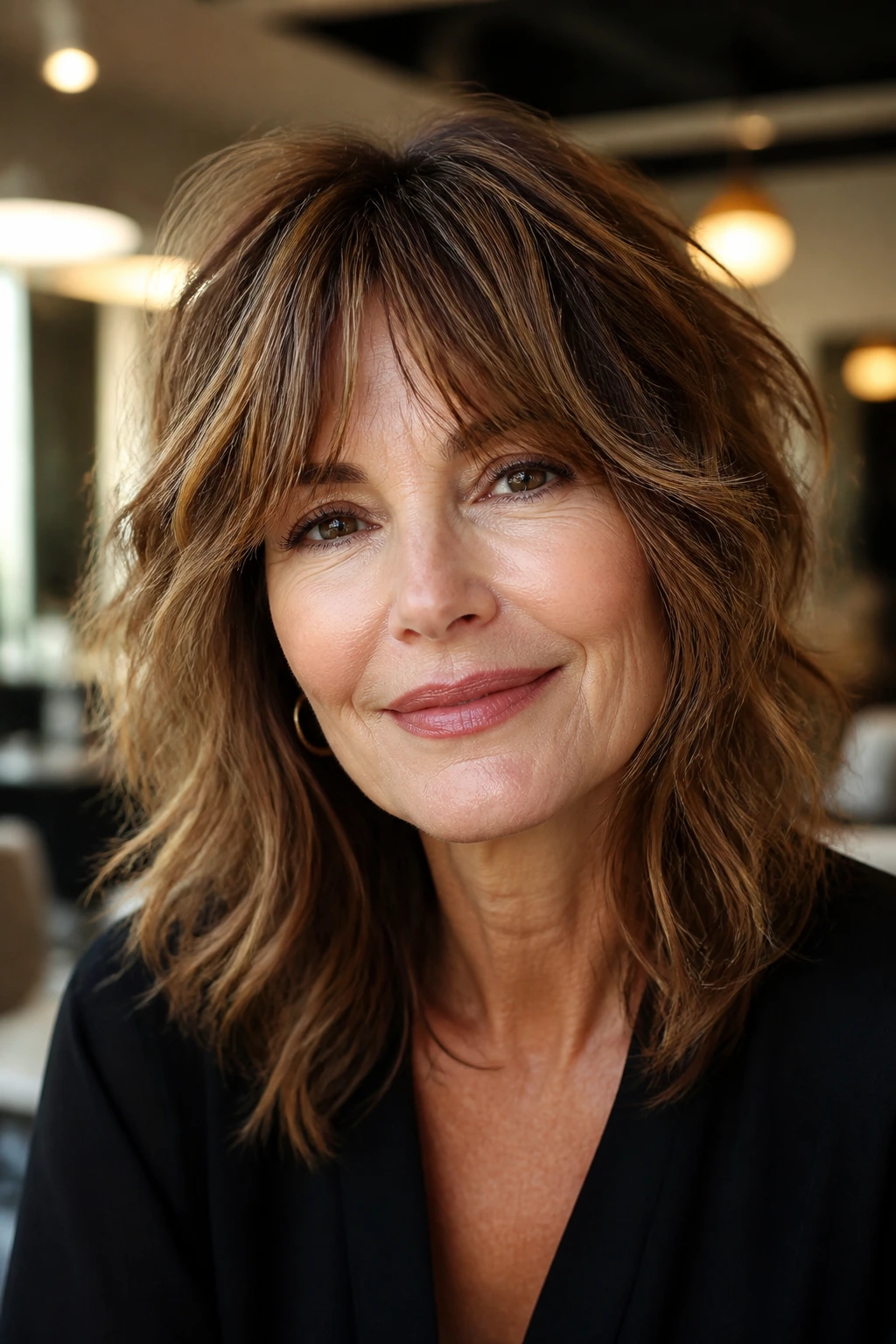
Will a shag work if my hair is mostly straight?
Yes, if there is even a little bend or body in the hair. A good stylist can add enough layering to encourage movement, but pin-straight hair may need a round brush or a bit of texture product to show the shape.
Is a shag a good choice for fine hair?
It can be, but only if the layers are handled carefully. Too many short pieces will make fine hair look thin at the ends, so you want lift at the crown and a perimeter that still holds its shape.
What if my hair is thick and frizzy?
Ask for internal weight removal, not aggressive thinning everywhere. That keeps the cut from ballooning while preventing the ends from turning wispy.
Do I have to get bangs?
No. Curtain bangs, side-swept fringe, micro fringe, or no fringe at all can all work. The front pieces just need to connect with the rest of the layers so the haircut feels planned.
How often will I need trims?
Shorter shags usually need attention more often than longer ones, especially if the bangs are part of the look. If you want a soft, relaxed shape, the interval can stretch a bit; if you want crisp movement at the front, stay closer to the chair.
What’s the difference between a shag and a wolf cut?
A wolf cut usually pushes the crown shorter and the neckline tighter, with a more obvious edge. A shag can be softer, less extreme, and easier to live with if you want movement without a lot of drama.
Can I wear this haircut smooth one day and wavy the next?
Yes, and that flexibility is one of the reasons people keep coming back to it. Smooth it a little with a brush for a cleaner look, then let the wave return with mousse and scrunching when you want more texture.
The Cut That Keeps Moving
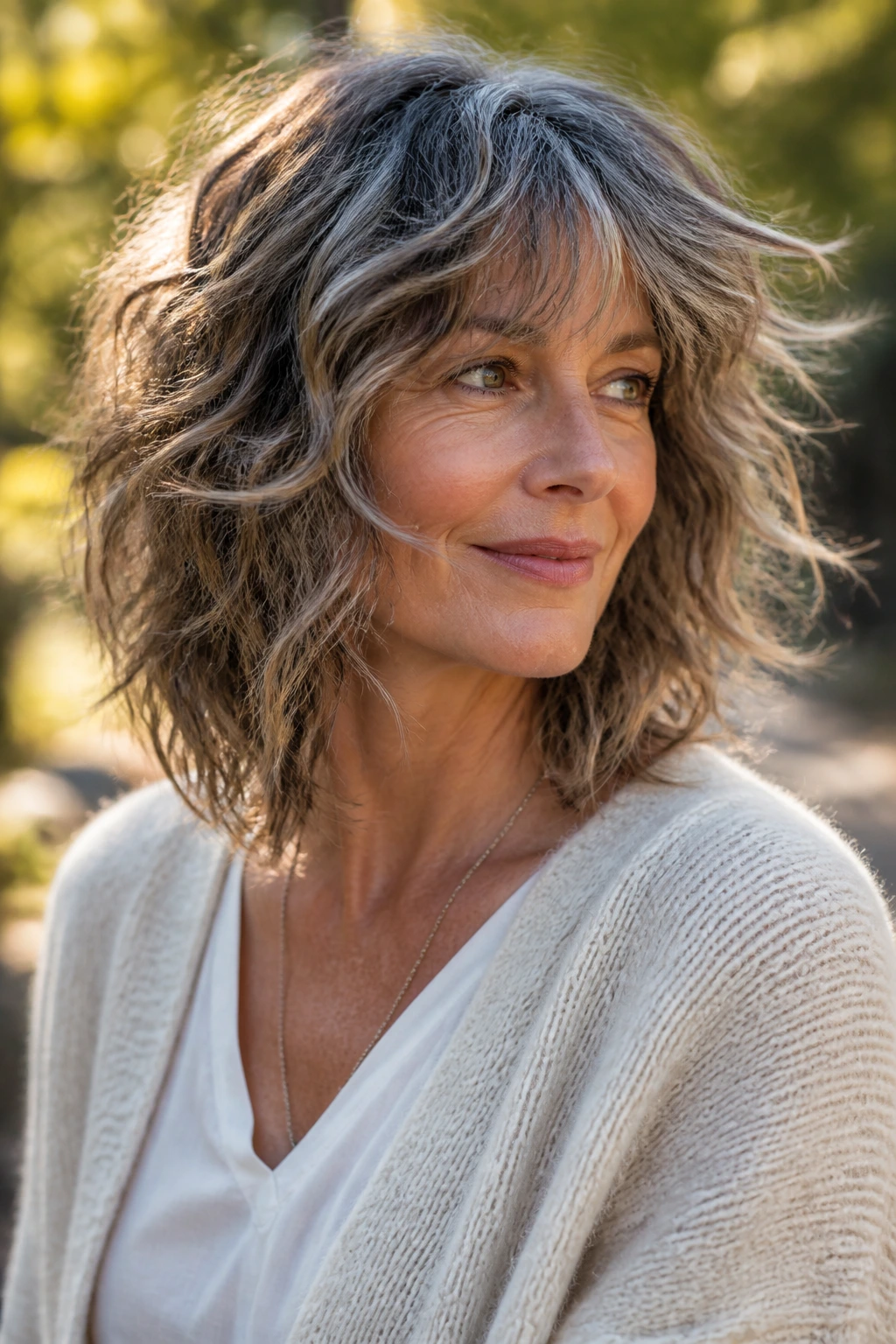
The best thing about a wavy shag is that it does not freeze hair into one idea of beauty. It lets the bend, the lift, the silver strands, the softer jawline, the flatter crown — all the things that make real hair real — become part of the shape instead of problems to hide.
That’s why these styles hold up so well. They are not trying to mimic some rigid salon photo. They move, they soften, they grow out gracefully, and they give older women a haircut that looks like it belongs on an actual head, not just in a picture.
If your hair has been asking for a little less control and a little more life, this is a very good place to start.
