



Fine hair has a way of telling on itself. Leave it too long and it slips flat at the sides; cut it too blunt in the wrong place and the ends can look see-through by noon. The sweet spot is a short shape with enough structure to hold its outline, a little lift at the crown, and blonde color that creates depth instead of one pale sheet.
That’s why the right short blonde cuts for fine hair over 50 can change the whole feel of a haircut. Blonde isn’t magic on its own. A flat, one-tone blonde on wispy ends can make hair look thinner, not fuller. But a smart mix of babylights, root shadow, and a cut that keeps weight where the eye needs it can make the hair read denser in daylight, which is where most of us live our lives anyway.
I like cuts that respect the hair instead of fighting it. Fine hair needs clean lines somewhere, lightness somewhere else, and a color plan that doesn’t expose every scalp parting under bright bathroom light. The shapes below lean into that balance, and the details matter more than the trend label ever will.
Why This Collection Feels Different
- Built for shape, not length: Every cut here keeps the perimeter doing real work, so the hair looks intentional instead of stringy.
- Color that earns its keep: The blonde ideas lean on root shadow, babylights, balayage, and face-framing brightness to make fine strands read thicker.
- Easy to adjust: Most of these styles can be nudged shorter, softer, warmer, or cooler without losing the main shape.
- Made for low-density moments: If the crown, temples, or ends have started to feel a little sparse, these cuts handle that problem head-on.
- Salon-friendly language: You can walk in with a photo and talk about line, lift, and placement without needing a haircut dictionary.
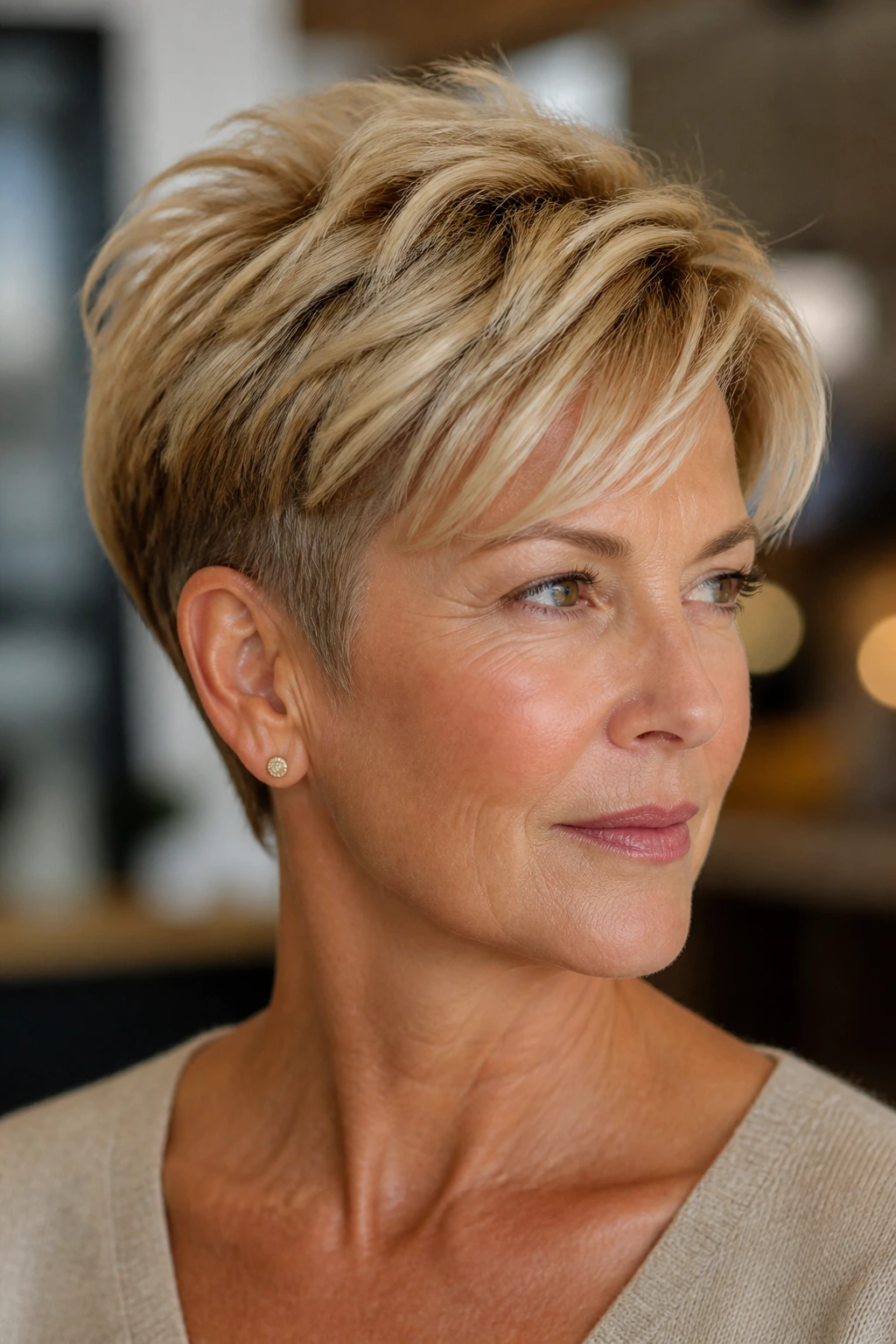
1. Feathered Pixie with Sandy Blonde
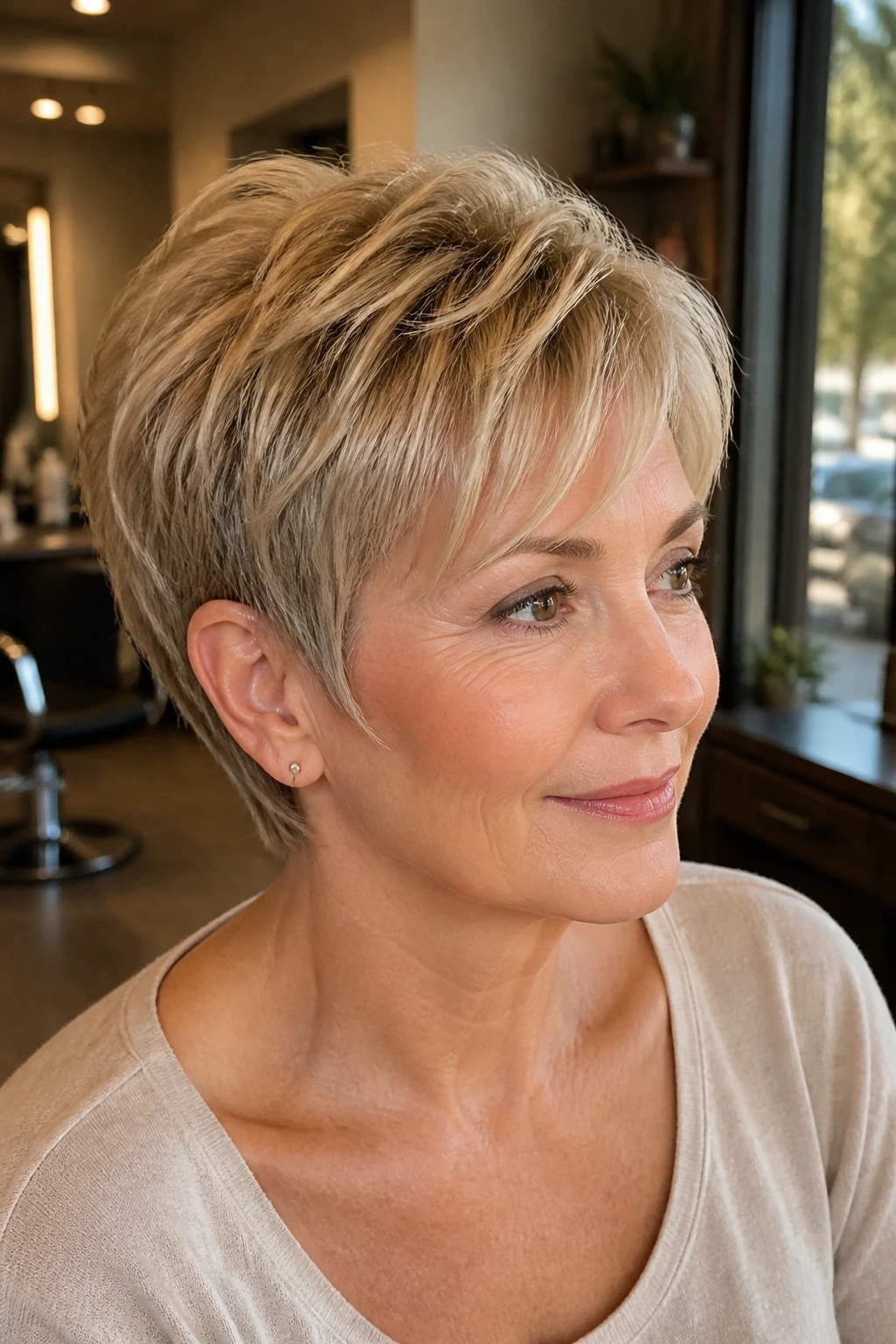
This is the cut I reach for when someone wants short hair that still feels soft around the face. The feathering keeps the top from sitting like a helmet, and the sandy blonde tone gives the whole shape a sun-washed look without turning brassier than a toaster coil. On fine hair, that lightness is a gift.
What makes it work is the balance: the sides stay close, the crown gets a little air, and the fringe can be choppy or swept over depending on how much forehead you want to show. Ask for a top length of about 1.5 to 2.5 inches, with the nape tapered tight enough that the back doesn’t puff out.
A dab of mousse at the roots and a quick blast with a small round brush is usually enough. If your hair tends to collapse by lunch, this cut fights back better than most. It has shape even when it’s not perfectly styled.
2. Jaw-Length French Bob with Creamy Beige Blonde
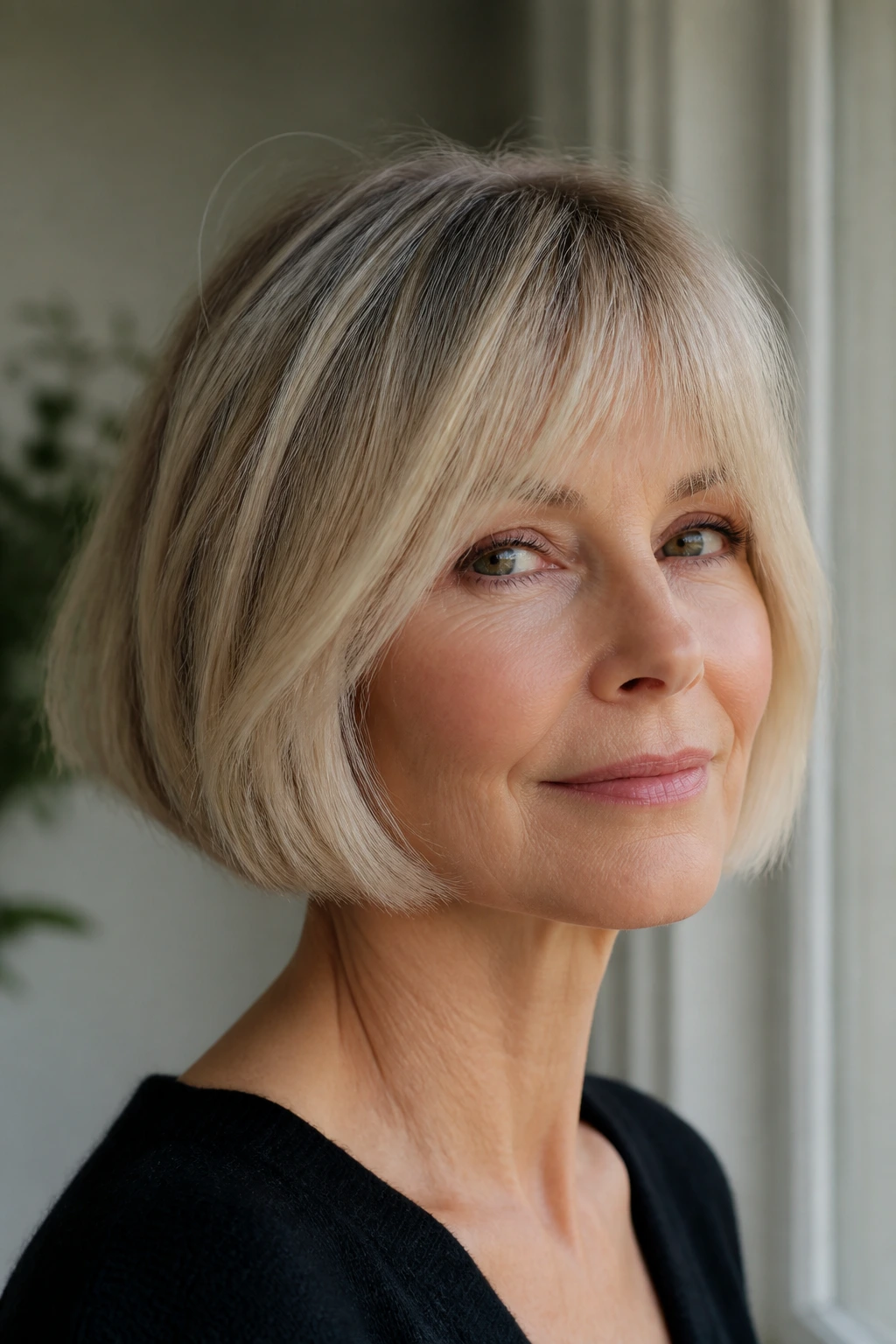
A jaw-length French bob has attitude, but not the hard kind. The line sits right at the jaw, which is where fine hair often looks strongest, and the creamy beige blonde keeps the edges from reading harsh or dry. I’m biased toward this version because it flatters without begging for attention.
Why It Flatters Fine Hair
The blunt edge does the heavy lifting. Fine hair often looks fuller when the perimeter is clean, and this cut gives you that crisp outline without much effort.
A soft bend through the middle lengths keeps it from feeling boxy. If your hair is straight, ask for a slight undercurve at the ends; if it waves, keep the interior light and let the texture live.
Ask for These Details
- A jaw-grazing length that lands just below or right at the chin
- A soft fringe or side-swept bang, not a heavy curtain that eats the face
- Beige or cream blonde with subtle root blur for depth at the scalp
A flat brush and a 1-inch curling iron are the only tools you really need. One pass under the ends, one bend at the front, done.
3. Stacked Bob with Root Shadow Blonde
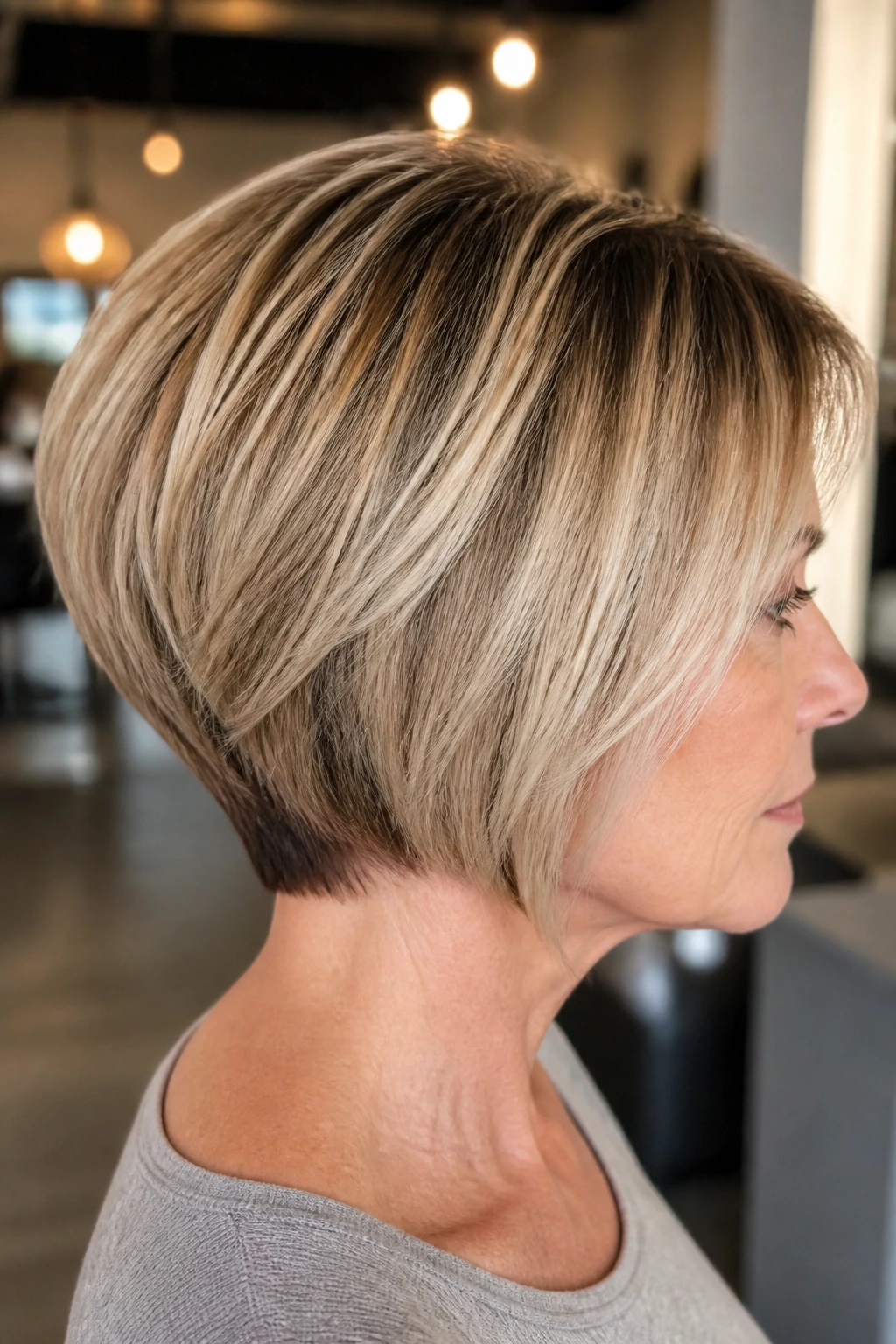
If the back of your hair has lost its natural lift, a stacked bob can feel like cheating in the best way. The graduation at the nape builds a little shelf, so the shape rises off the neck instead of collapsing against it. Add a root shadow in a warm blonde, and the whole cut gets more dimension from top to bottom.
The important part is restraint. Too much stacking turns into a triangle, and nobody needs that. You want a gentle rise in the back, not a hard angle that looks like it was cut with a ruler.
This one works especially well if your hair is fine but not pin-straight. A root-lift spray at the crown and a blow-dry with a vent brush will keep the body where it belongs. The root shadow helps, too. Darker roots at the scalp make the lighter pieces pop, which is one of those little visual tricks that matters more than people admit.
4. Bixie with Side-Swept Fringe in Champagne Blonde
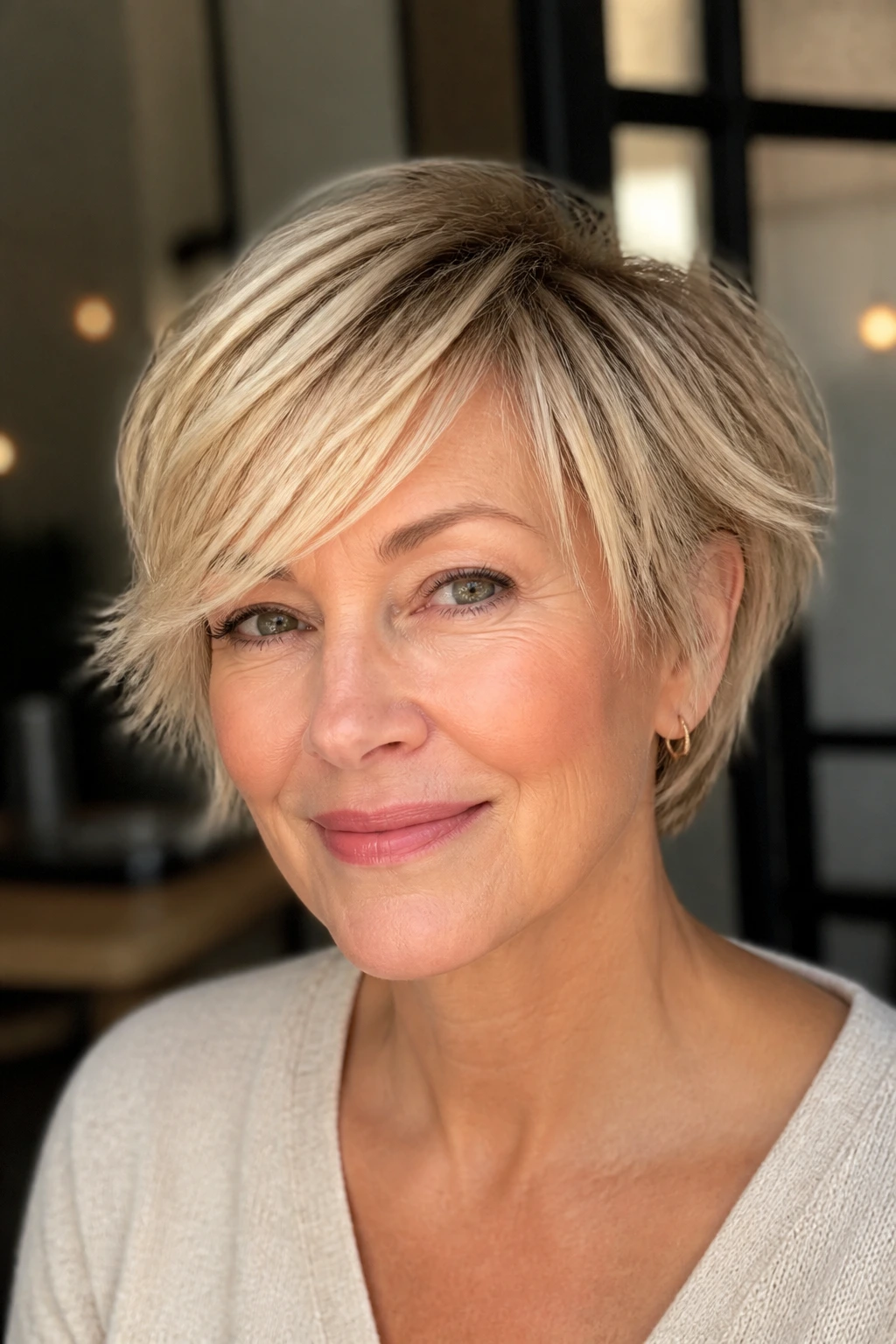
A bixie sits between a bob and a pixie, and that middle ground is where it gets interesting. You keep enough length on top to move it around, but the sides stay neat and close. Champagne blonde suits the cut because it has enough brightness to reflect light, but enough warmth to avoid that flat, chalky finish.
This is a nice choice if you want short hair without looking severe. The side-swept fringe softens the forehead, which can be useful if your hairline has gotten finer. Keep the fringe long enough to skim the brow, not cut straight across it like a child’s haircut from a photo album.
I’d ask for texture at the ends, not random thinning through the body. Fine hair needs a little movement, yes, but it also needs some meat on the bones. Blow-dry the fringe forward first, then sweep it aside while it’s still warm.
5. Blunt Chin Bob with Dimensional Babylights
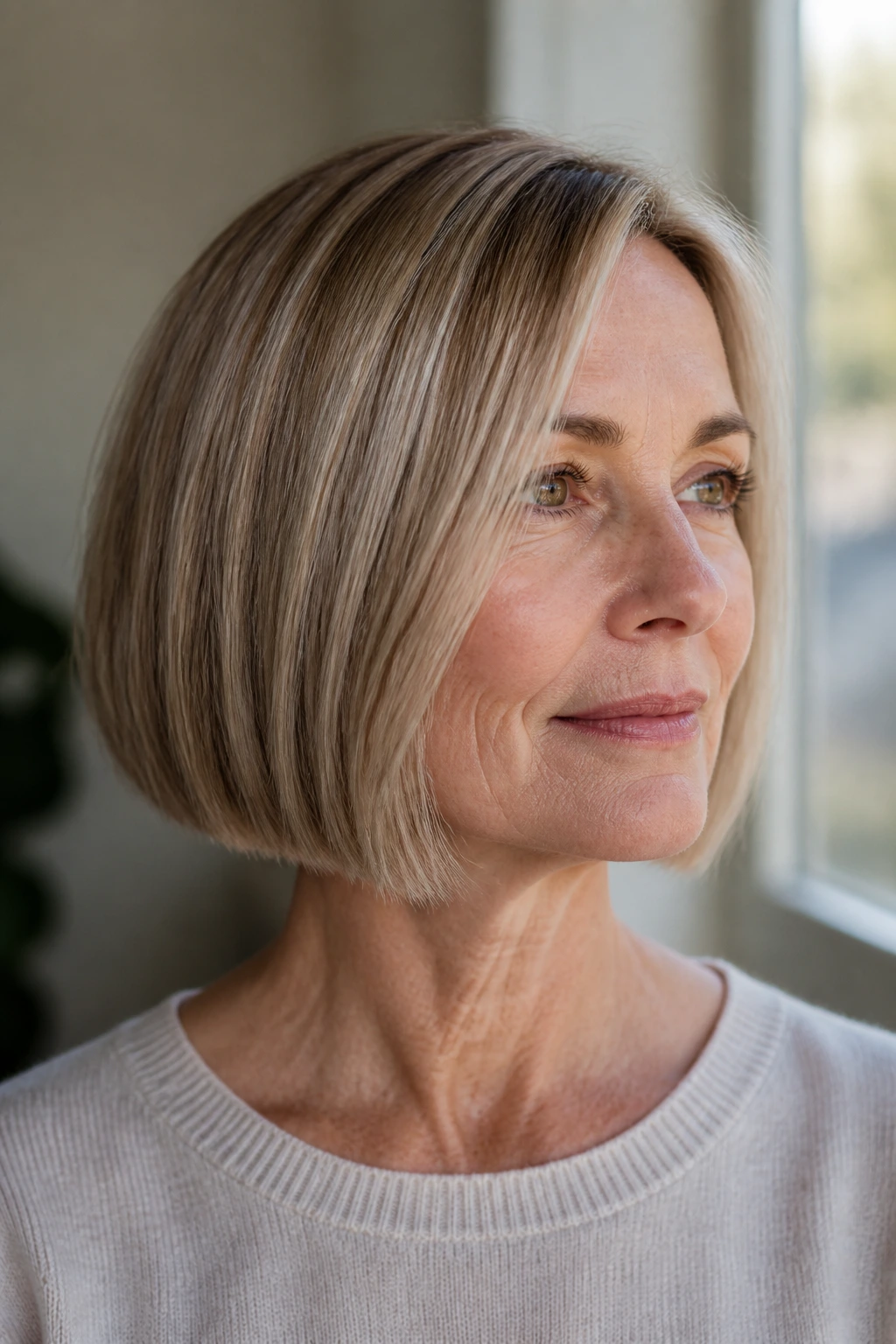
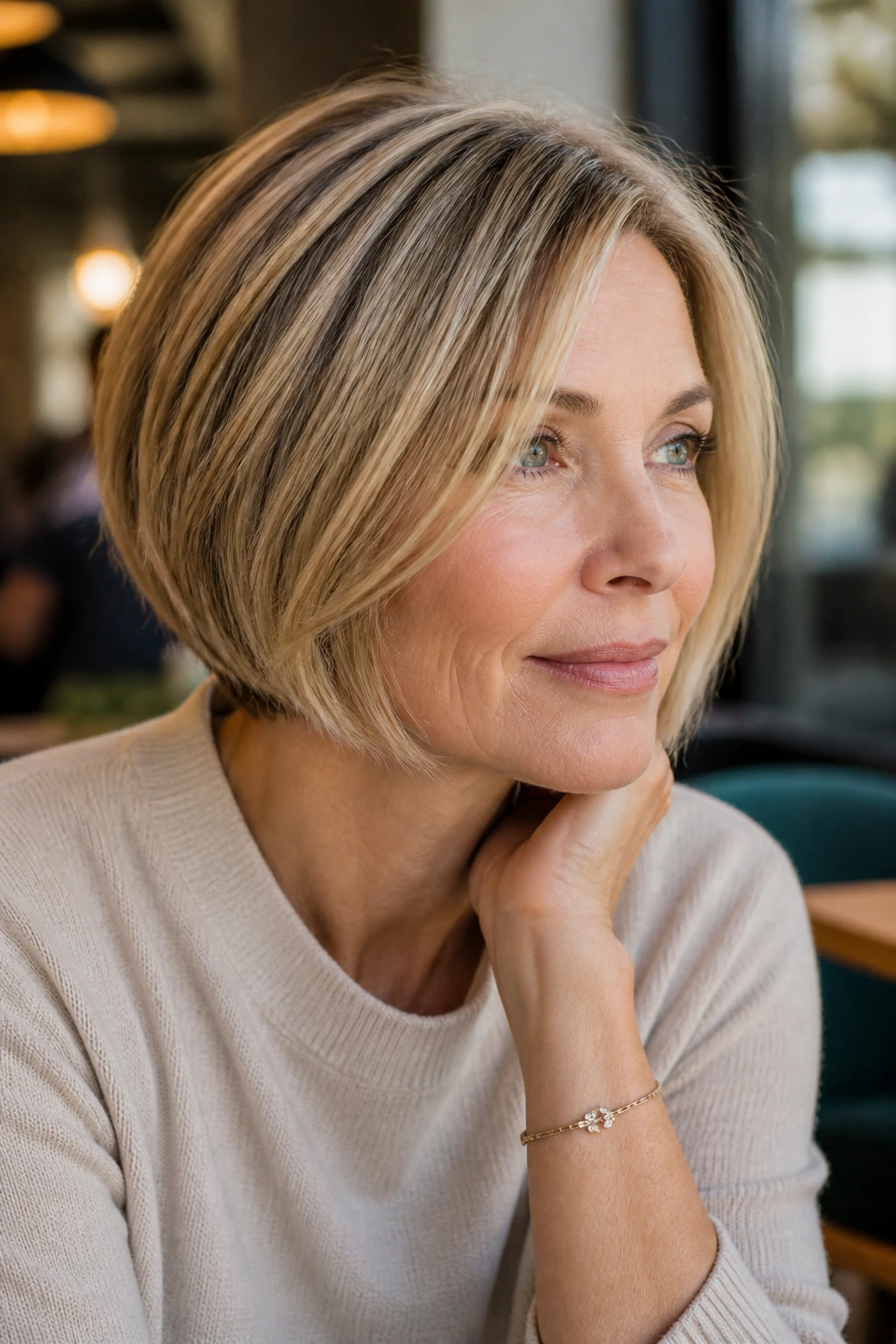
This is the blunt bob’s smarter cousin. The shape sits at the chin, where many faces hold clean lines, and the babylights are scattered so finely that the blonde looks woven in instead of painted on. Fine hair can go limp in one-tone color; this one dodges that problem.
The blunt edge is the point. It gives the hair a visual finish, which matters when the strands themselves are delicate. Keep the ends as even as possible, and don’t let a stylist over-thin them just to make the cut feel “light.” Light is not the same thing as wispy.
Best For
- Straight or softly wavy fine hair
- Hair that needs more fullness around the jawline
- Anyone who wants blonde brightness without obvious stripes
A gloss every 6 to 8 weeks keeps the babylights clean and the tone creamy. If the highlights get too pale, the bob can start to feel dry and papery. That’s the trade-off.
6. Tapered Crop with Soft Caramel Lowlights
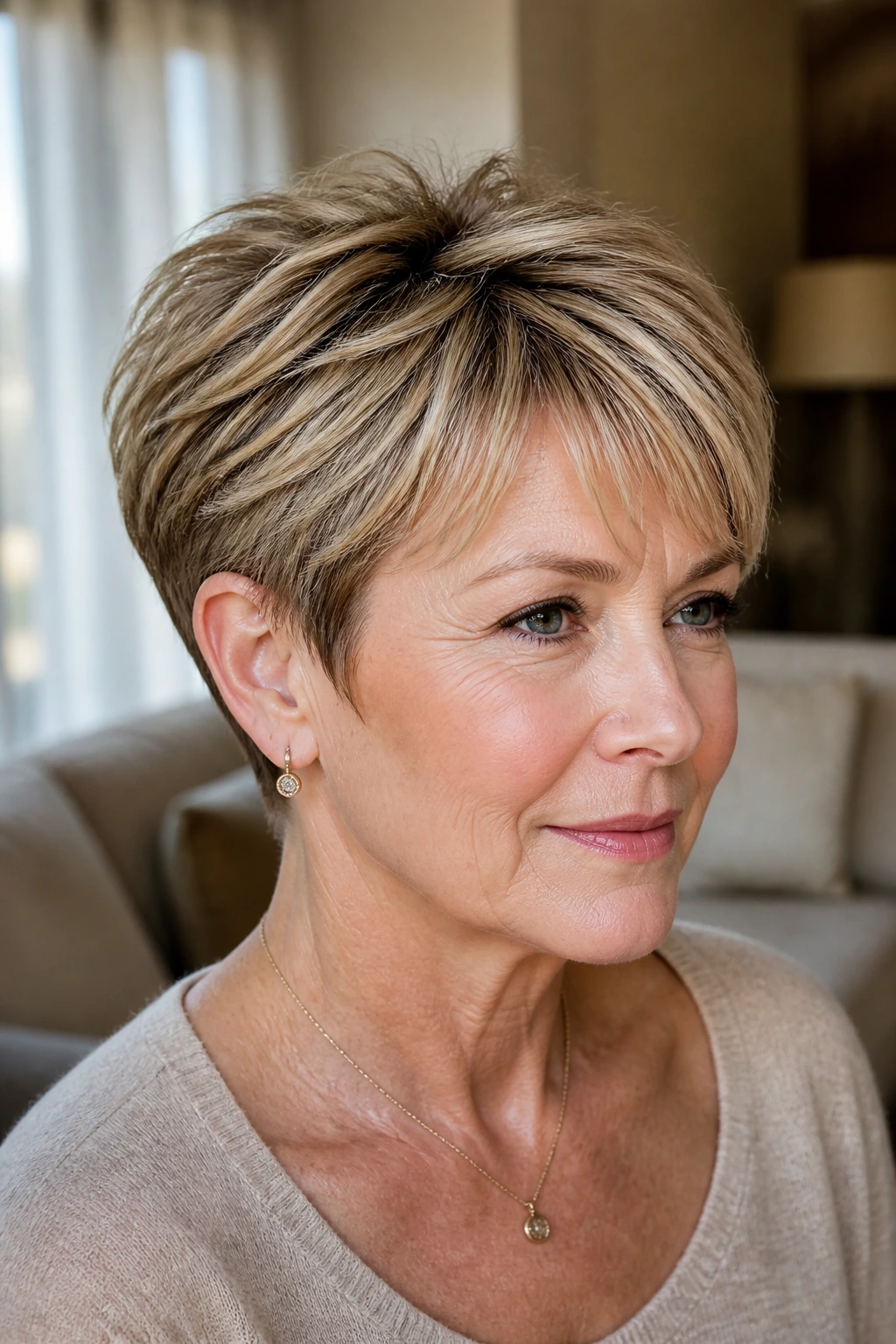
This crop has a little more warmth than the icy blondes, and I like that on fine hair because it keeps the color from flattening out in bright light. The tapered sides make the cut sit close to the head, while the top stays just long enough to lift and separate. Caramel lowlights add depth under the surface, which helps the style look fuller from the side.
It’s a good pick if you want something easy, but not severe. The crop can be brushed forward, swept back, or nudged to one side with a fingertip and a bit of styling cream. No elaborate blowout required.
Ask for lowlights placed under the crown and around the back, not just on top. That hidden depth matters. It gives the blonde pieces something to contrast against, and contrast is what the eye reads as volume.
7. Shaggy Bob with Piecey Ash-Blonde Highlights
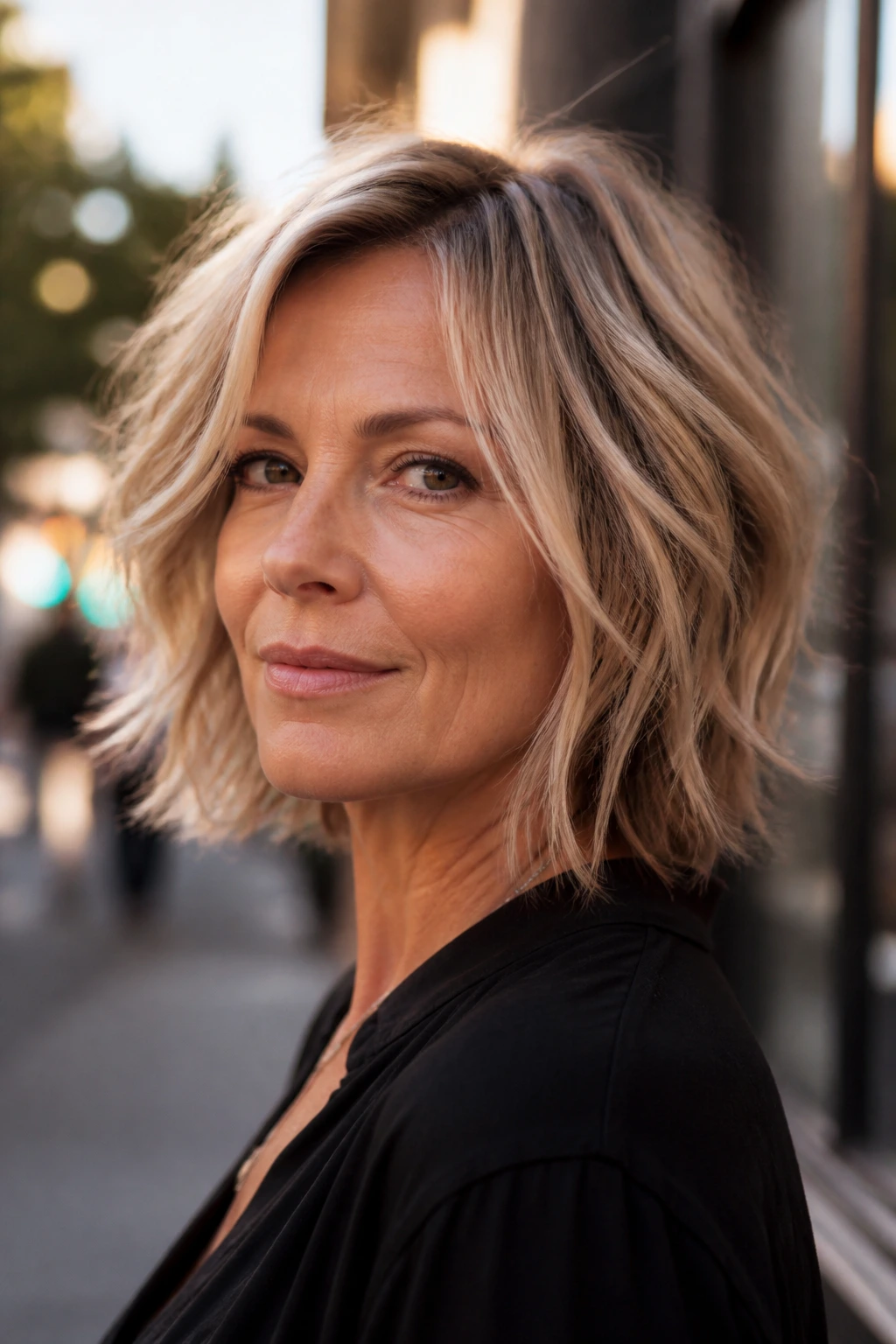
A shaggy bob can go wrong fast on fine hair if it’s over-layered, so the trick is to keep the shape controlled. You want soft piecey movement, not ends that look like they’ve been chewed by a lawn mower. Ash-blonde highlights work here because they sharpen the texture and keep the cut from going too warm or puffy.
The best version has longer pieces around the cheekbones and a little lift through the crown. That lets the style move without exposing too much scalp. If you already have a natural wave, this is a strong contender. If your hair is very straight, you’ll need some round-brush work or a light bend with a flat iron.
What to Watch For
- Too many layers can make the ends look thin
- Heavy razoring can leave the perimeter weak
- Cool ash tones need a gloss to stay fresh, not muddy
I’d style this with a pea-sized amount of lightweight paste rubbed between the hands and tapped into the ends. Not smeared. Tapped.
8. Angled Bob with Bright Money Piece
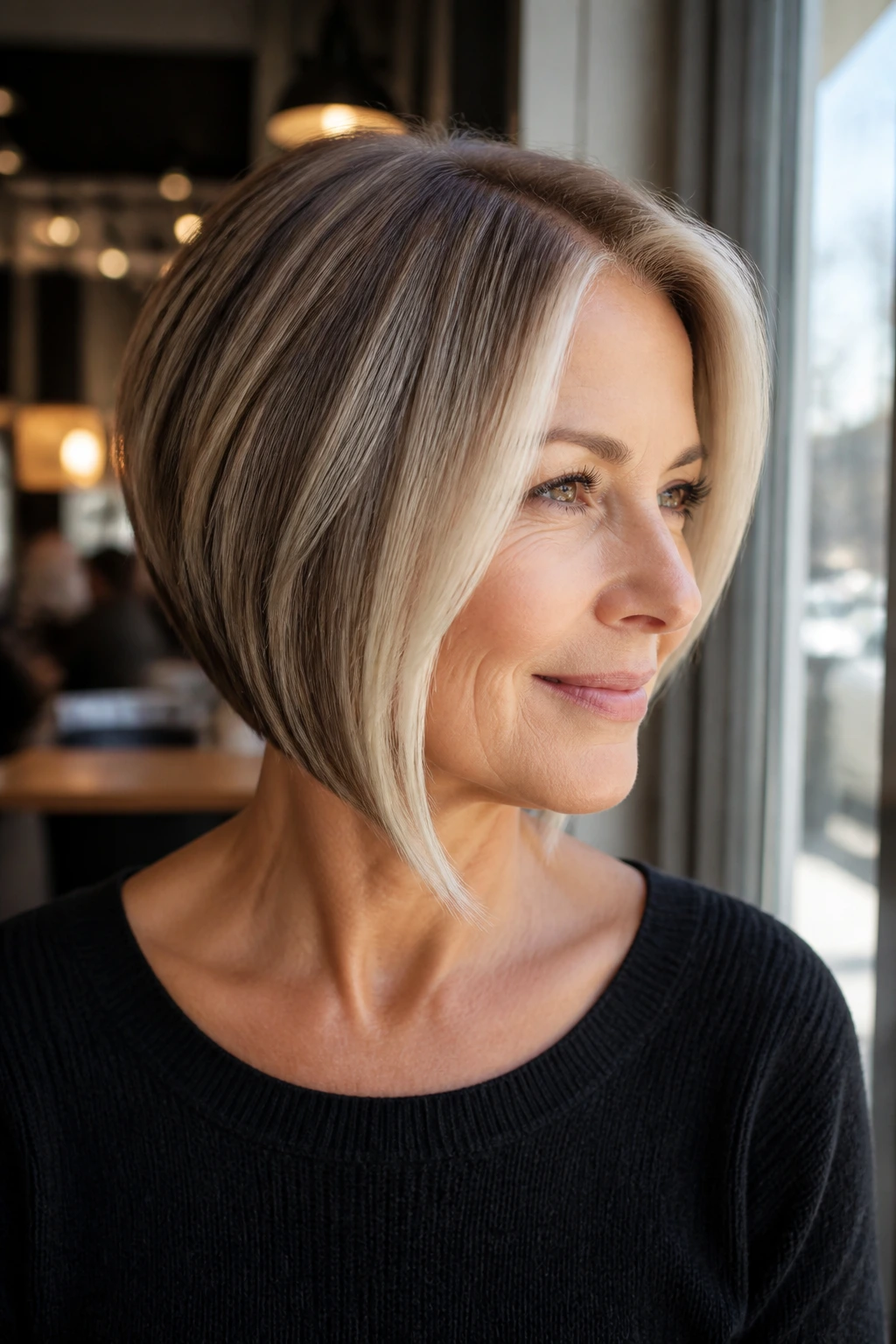
An angled bob gives you motion without sacrificing the clean line that fine hair needs. The back is a touch shorter, the front falls longer toward the collarbone or chin, and the shape naturally draws the eye forward. Add a bright money piece around the face, and the whole cut wakes up.
This is one of those styles that makes glasses, earrings, and a strong lipstick look even better because the hair doesn’t fight for space. The angle also helps if your hair sits flat behind the ears. It creates the impression of lift before you even pick up a brush.
Keep the angle soft, though. A severe diagonal can look dated fast. You want a smooth line, not a dramatic wedge. The money piece should be bright enough to frame the face, but not so white that it shows every grow-out line in two weeks.
9. Ear-Grazing Crop with Platinum Top Layers
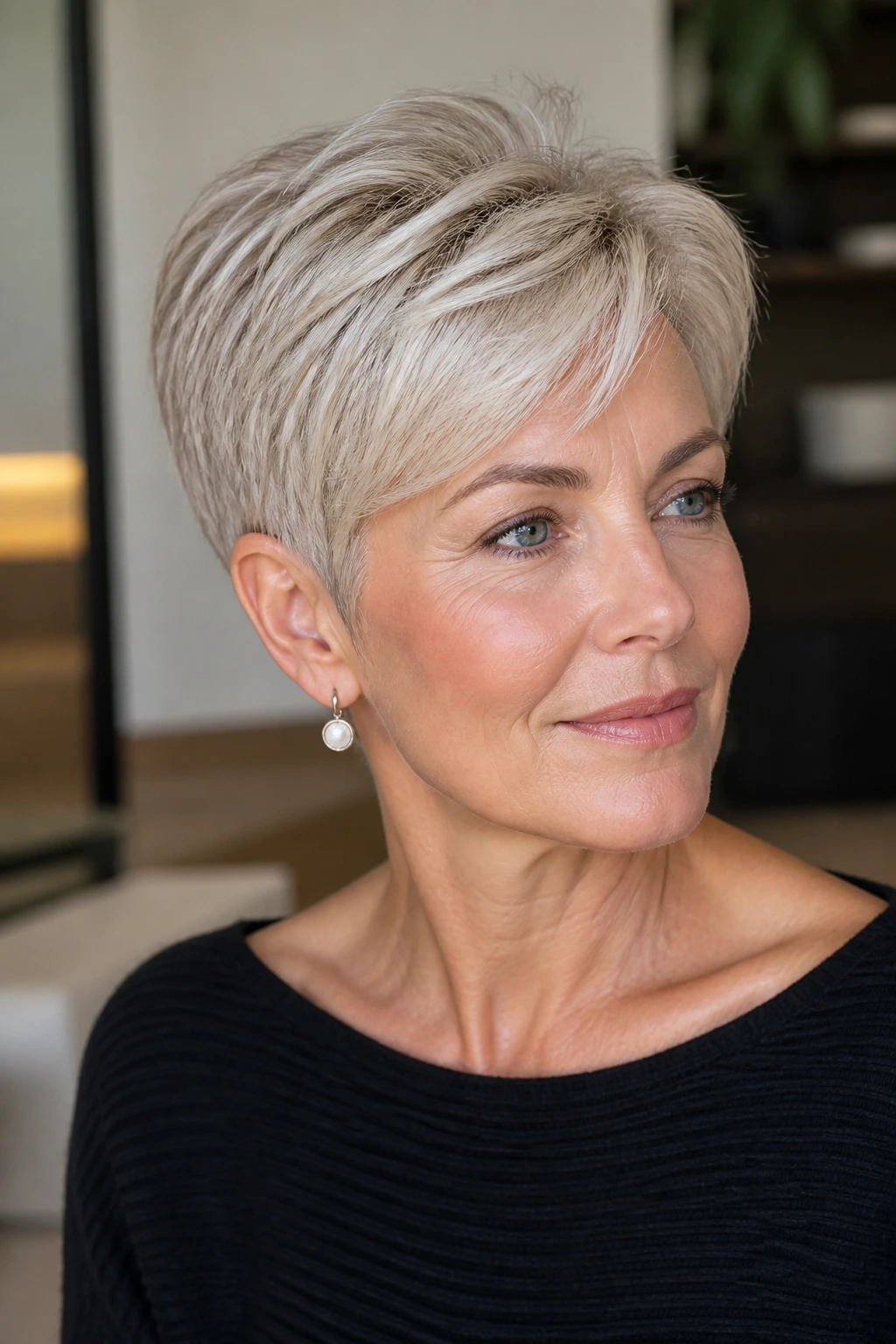
This cut is neat, close, and a little bold in a good way. The sides skim the ears, the nape stays short, and the top layers carry the shape. Platinum top layers can look fresh on fine hair because they reflect light so strongly, but the cut itself has to be tidy or the color just reveals every uneven bit.
I like this style for women who wear small jewelry, sharp glasses, or a defined brow. It has a clean outline that doesn’t need much fluffing. Still, it does demand upkeep. Platinum is not a lazy color, and on fine hair it can look dry if you let it drift too far from a gloss schedule.
Use a violet shampoo once every 7 to 10 days, not every wash. Overdoing it can make the blonde dull and slightly purple, which is not the goal unless you’re trying to look like a grape. Keep the roots soft and the top layers polished.
10. Textured Wedge with Wheat Blonde
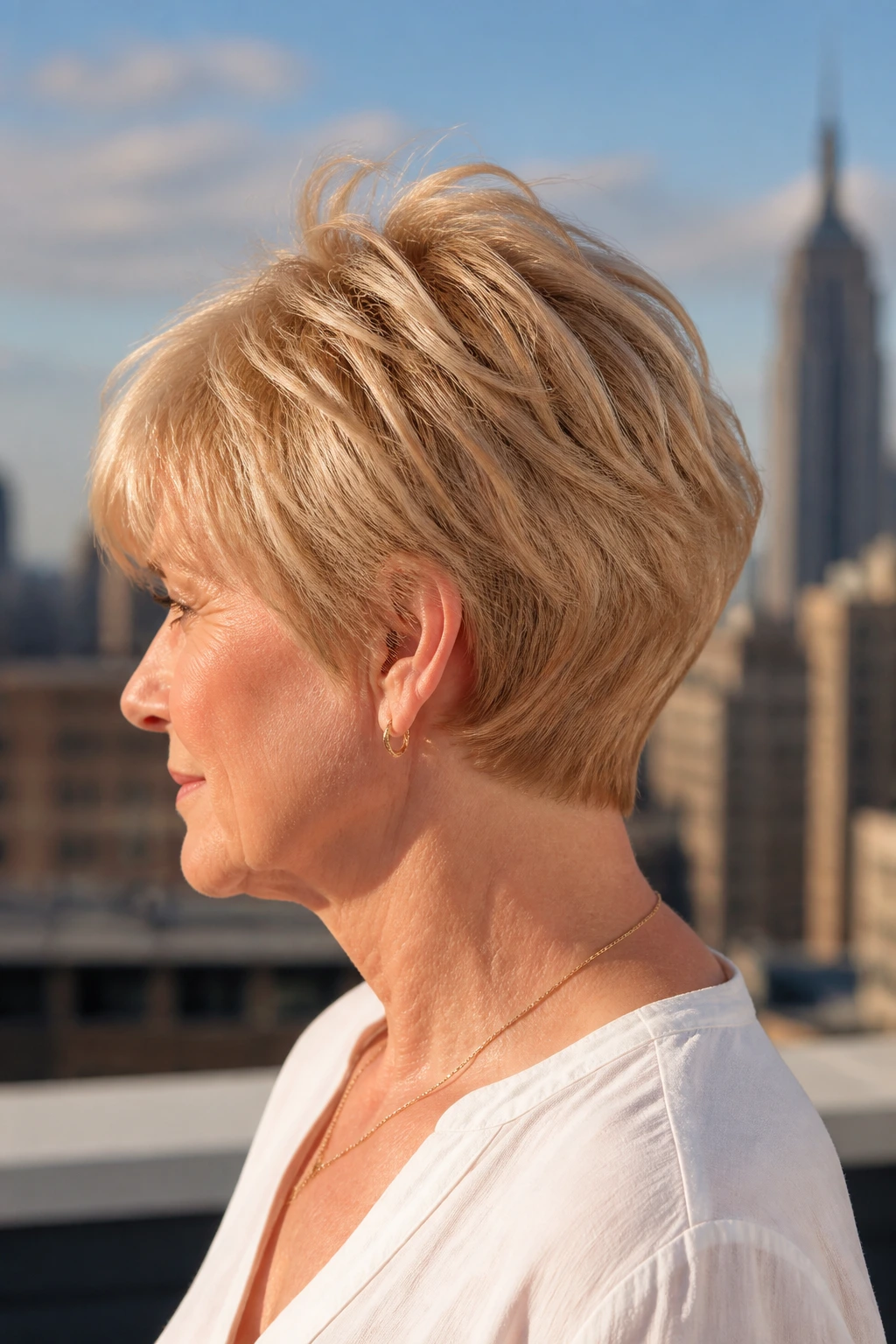
The wedge is back in a quieter, softer form, and that’s good news for fine hair. A modern wedge keeps the nape snug and the crown rounded, which gives the back some lift without making the cut look frozen in time. Wheat blonde suits it because the tone is warm, pale, and just dimensional enough to keep the shape from disappearing.
This cut is useful if the back of your hair has started to go a little limp or see-through. The internal shape gives the illusion of thickness where the head needs it most. A bit of texture through the top keeps it from feeling too formal.
No need to over-style this one. A round brush, a quick bend through the ends, and a light mist of flexible hairspray are usually enough. If the crown is especially flat, blow-dry it in the opposite direction for 30 seconds before setting it back.
11. Curly Crop with Honey Highlights
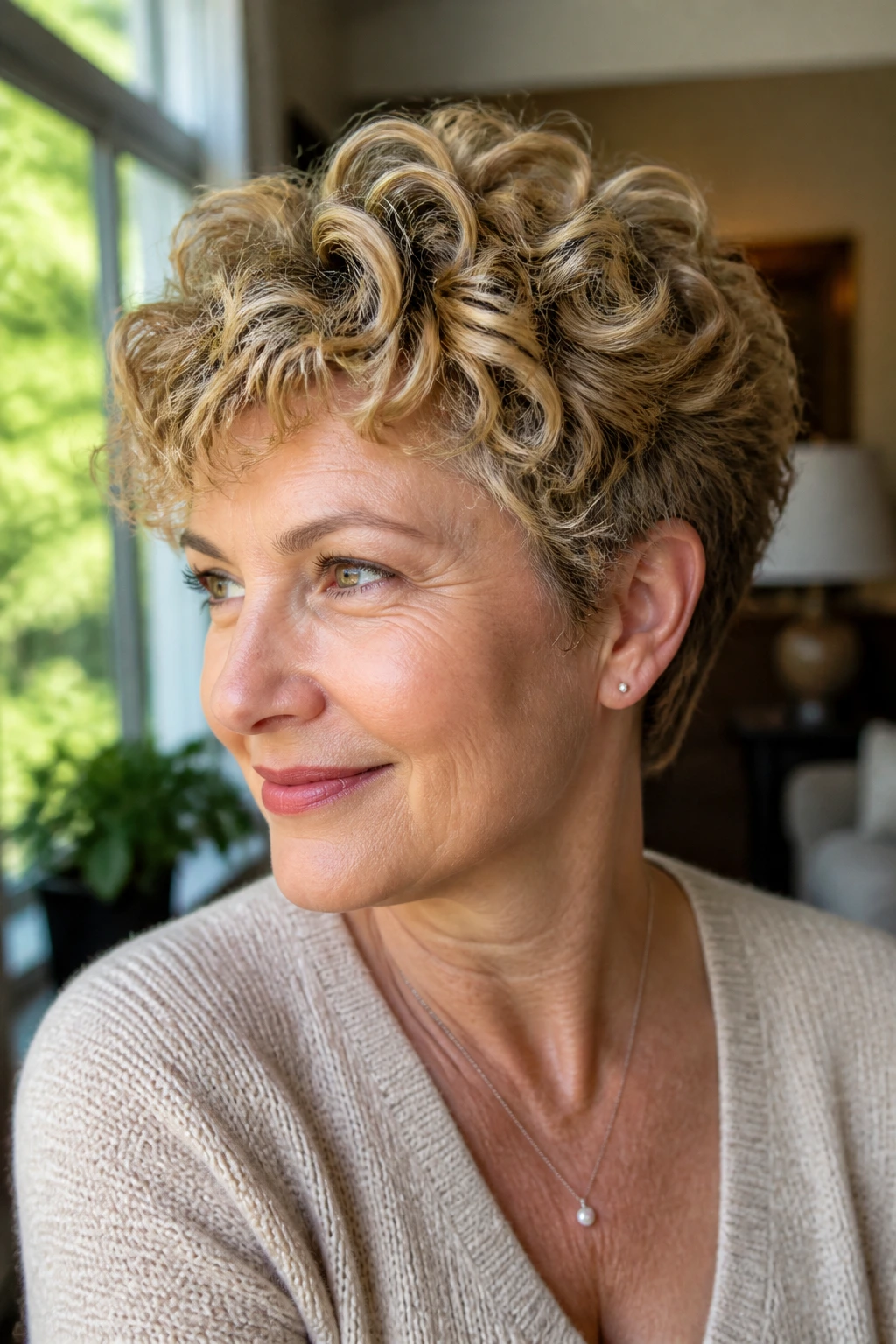
Fine curls have their own personality, and they need a cut that respects that instead of flattening them into submission. A curly crop keeps the length short enough that the curls can spring up instead of hanging loose and stringy. Honey highlights help the curl pattern show, because the lighter pieces catch the light where the curls open.
The important part is shape. You want the crop carved to the curl pattern, not hacked at in a straight line. If your hair is wavy-to-curly, ask for a dry cut or a curl-by-curl shape adjustment. That’s one of the rare salon moves that actually earns its keep.
Leave some length at the crown and around the front, and keep the sides from getting too close unless your hair is dense enough to handle it. Fine curls can get fuzzy if they’re over-cut. A curl cream and a little diffuser time are enough to bring this one to life.
12. Short Lob with Balayage and Soft Ends
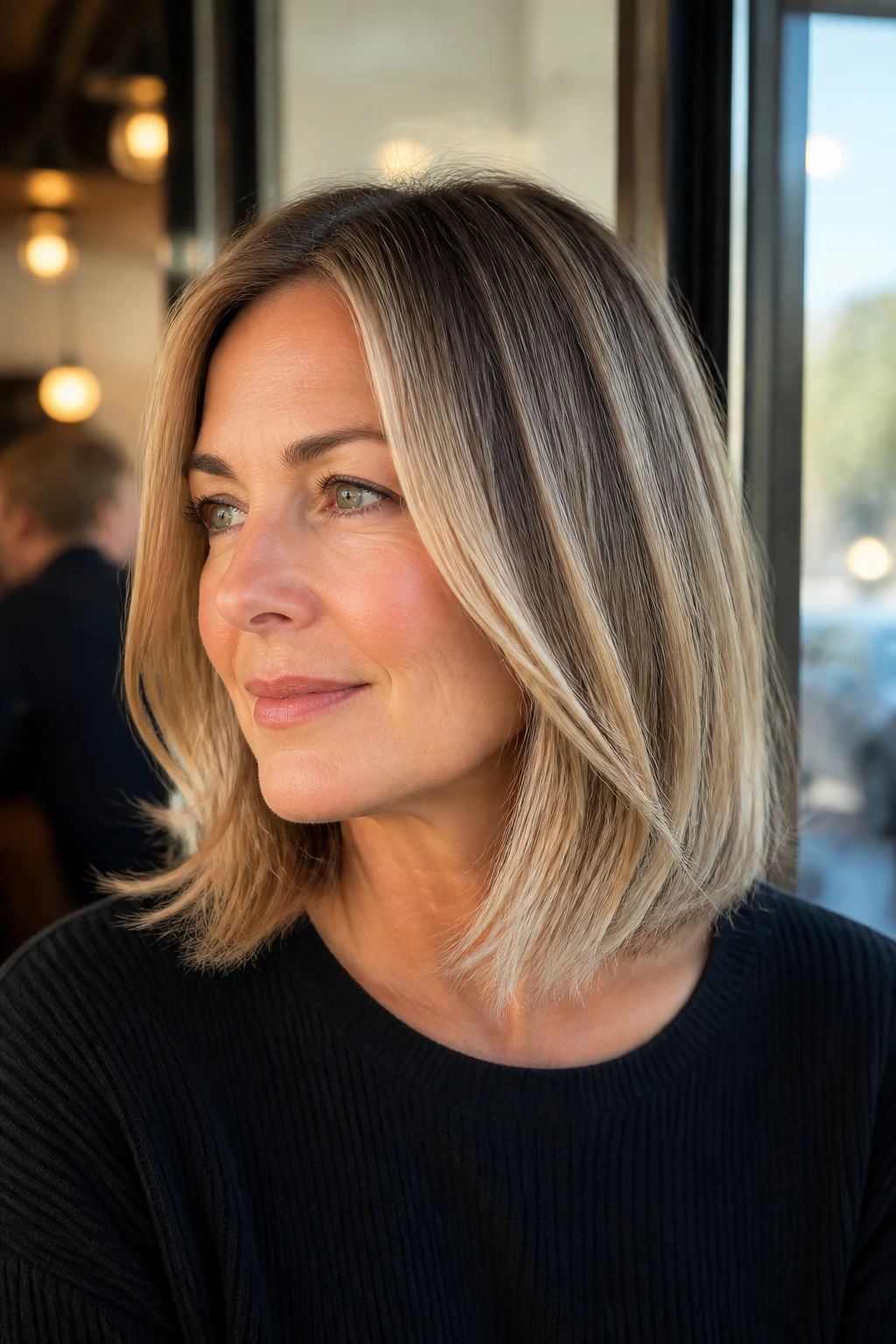
This is the longest cut in the group, and that matters because not every head of fine hair wants to go very short. A short lob, cut somewhere between the chin and the collarbone, gives you a bit more swing while still keeping the ends thick enough to look healthy. Balayage keeps the color soft and diffused instead of streaky.
The thing to watch is weight. Fine hair can look see-through if a lob is left too long and too layered. Ask for soft internal layering only, mostly around the front, with the bottom edge kept full. The balayage should start below the root area so the scalp doesn’t look bare.
This cut is nice if you tuck your hair behind one ear, wear reading glasses, or want a style that can pass from casual to polished without a full restyle. It air-dries well, too, which is not nothing.
13. Asymmetrical Bob with High-Contrast Blonde
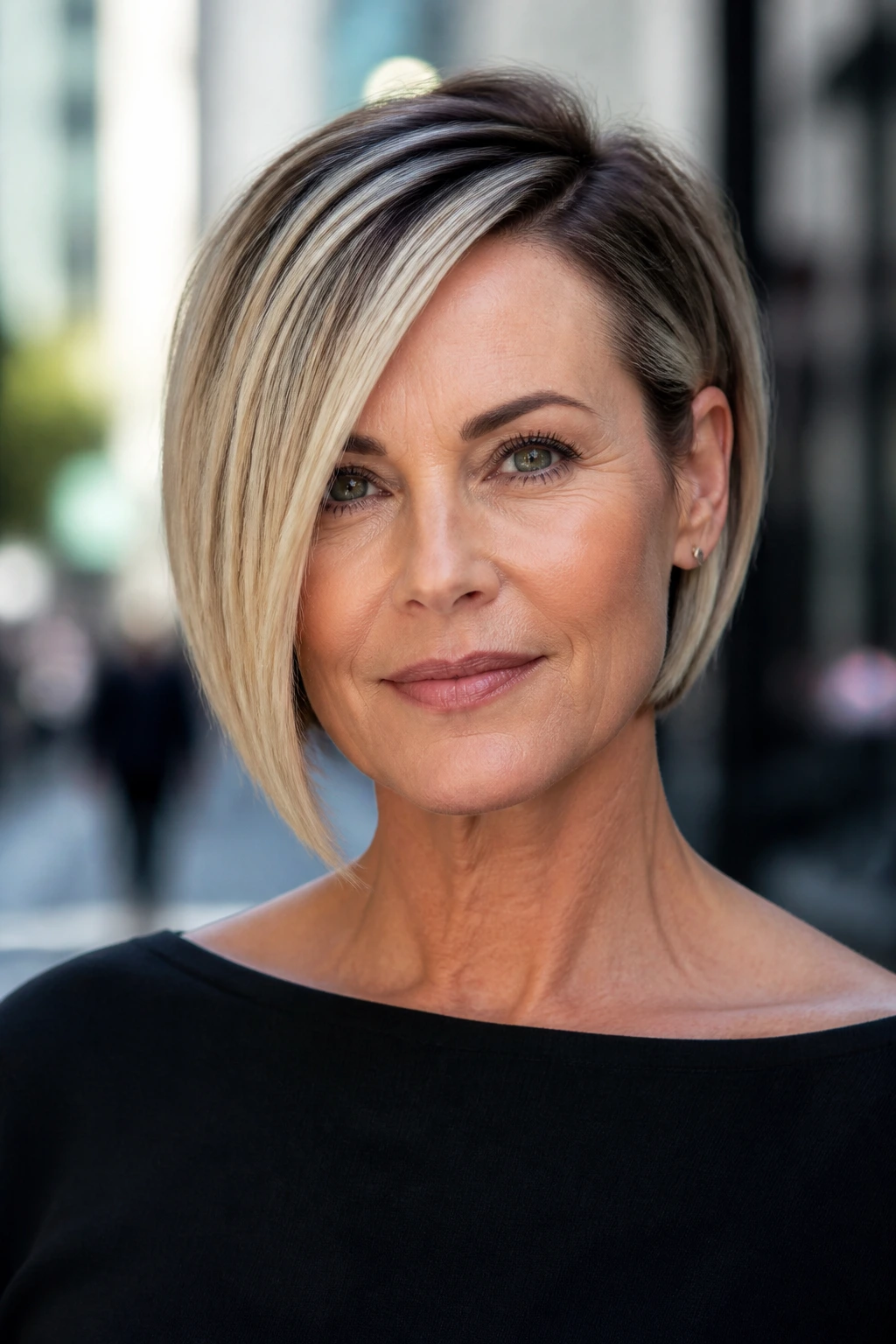
An asymmetrical bob is one of those cuts that sounds louder than it is. One side sits a little longer, the other slightly shorter, and that uneven line pulls the eye away from spots where hair may be thin. High-contrast blonde gives the shape more punch, especially if the base is deeper and the lighter pieces are concentrated at the front.
This is a strong choice if you like crisp shapes and don’t mind a little maintenance. The asymmetry needs to stay clean or it starts looking accidental. Ask your stylist to keep the length difference modest—enough to notice, not enough to feel theatrical.
The color can do a lot here. A soft root smudge, brighter face framing, and lighter ends make the bob feel thicker than it really is. That’s the point. It’s a cut that plays a small visual trick, and it works.
14. Pixie Bob with Long Top Layers and Butter Blonde
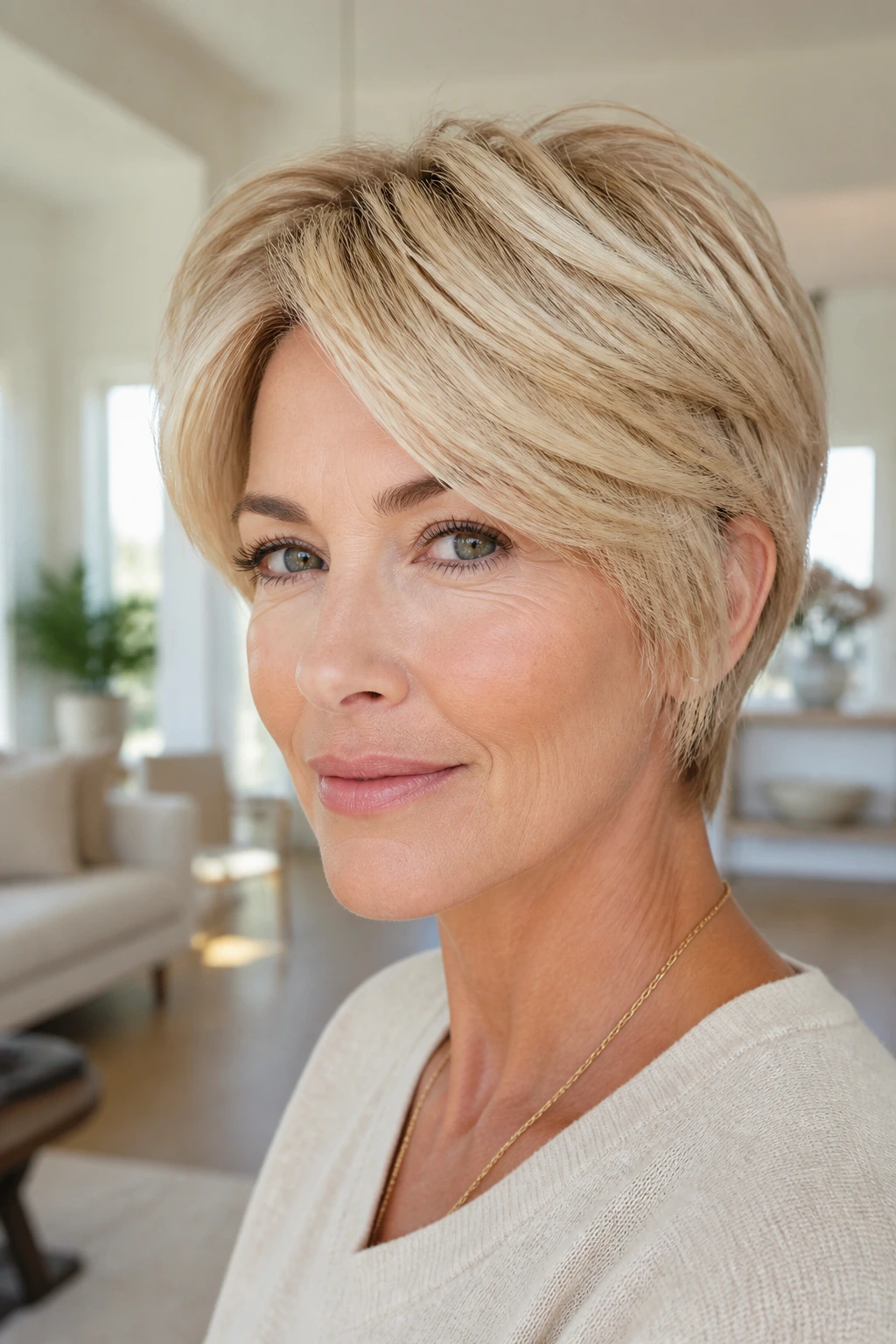
The pixie bob gives you the shortness of a crop with enough length on top to keep it feminine and flexible. It’s a nice middle road for fine hair because the sides can stay neat while the top layers create movement. Butter blonde suits the shape if you want warmth without going too gold.
I like this cut on women who want something that can be worn smooth or tousled. Tuck the sides behind the ears, lift the top a little with a round brush, and you’ve got a totally different feel. That versatility is one of the reasons this cut keeps hanging around.
The Sweet Spot
- Top layers around 2 to 3.5 inches
- Tapered sides that don’t balloon out
- Blonde tones with a soft creamy finish, not flat yellow
It’s also friendly with earrings and glasses, which sounds minor until you live with a haircut that keeps snagging on both. This one usually behaves better.
15. Razor Cut Shag with Wispy Fringe and Beige Blonde
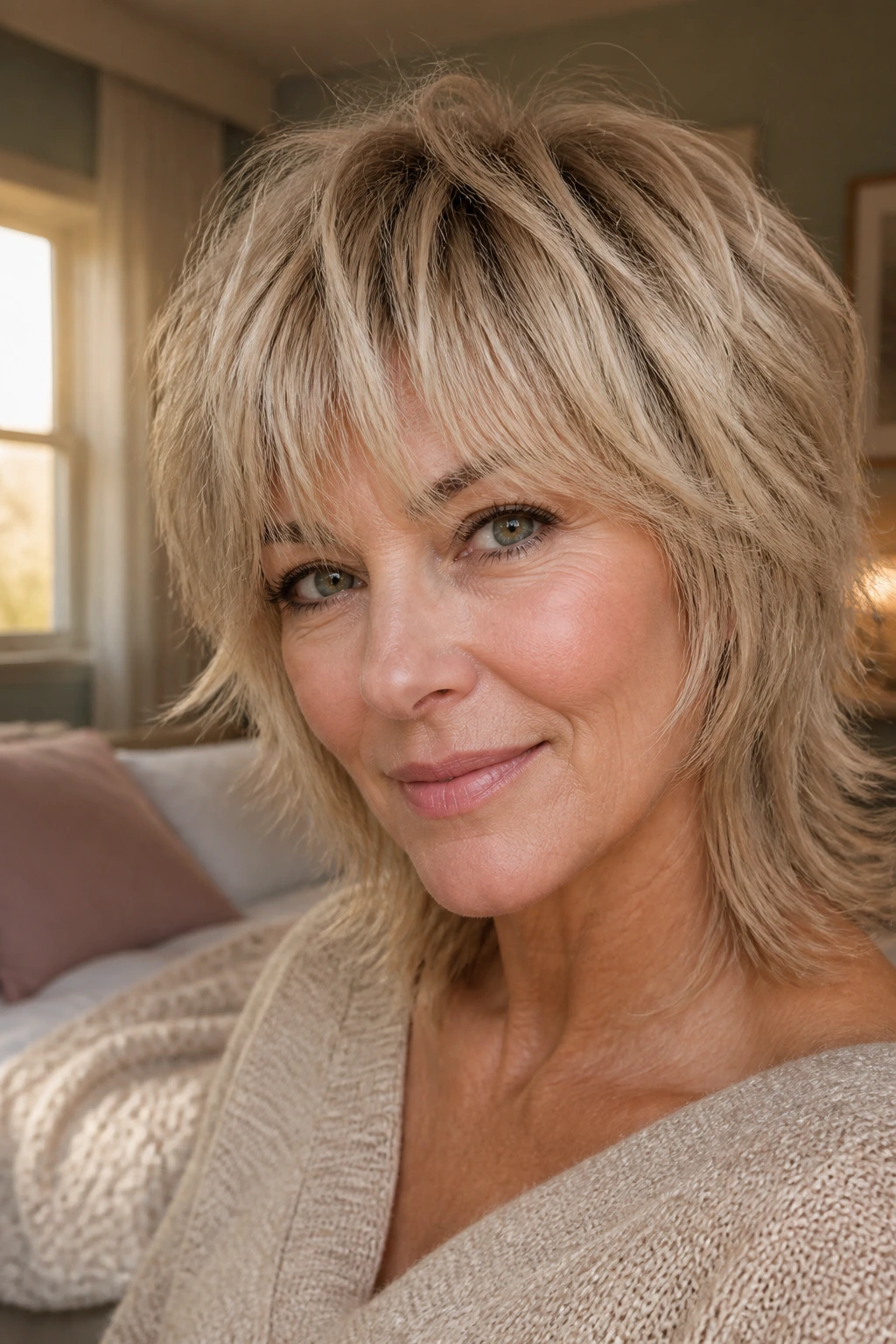
A razor cut shag can be beautiful on fine hair, but only if the razor is used with restraint. Too much slicing and the ends go thin, fast. The right version keeps the fringe wispy, the crown lifted, and the beige blonde soft enough that the texture reads as airy instead of frayed.
This is a cut for hair that already has some bend or wave. If your hair is pin-straight and slippery, you’ll need styling help every day. If you have natural movement, though, the shag can be one of the easiest styles to wear because it doesn’t demand perfect symmetry.
Ask for face-framing layers that start around the cheekbone, not too high on the head. That keeps the cut from looking like it’s missing pieces. A light sea salt spray can help, but use a small amount; too much and fine hair feels sticky by hour two.
16. Graduated Bob with Face-Framing Foils
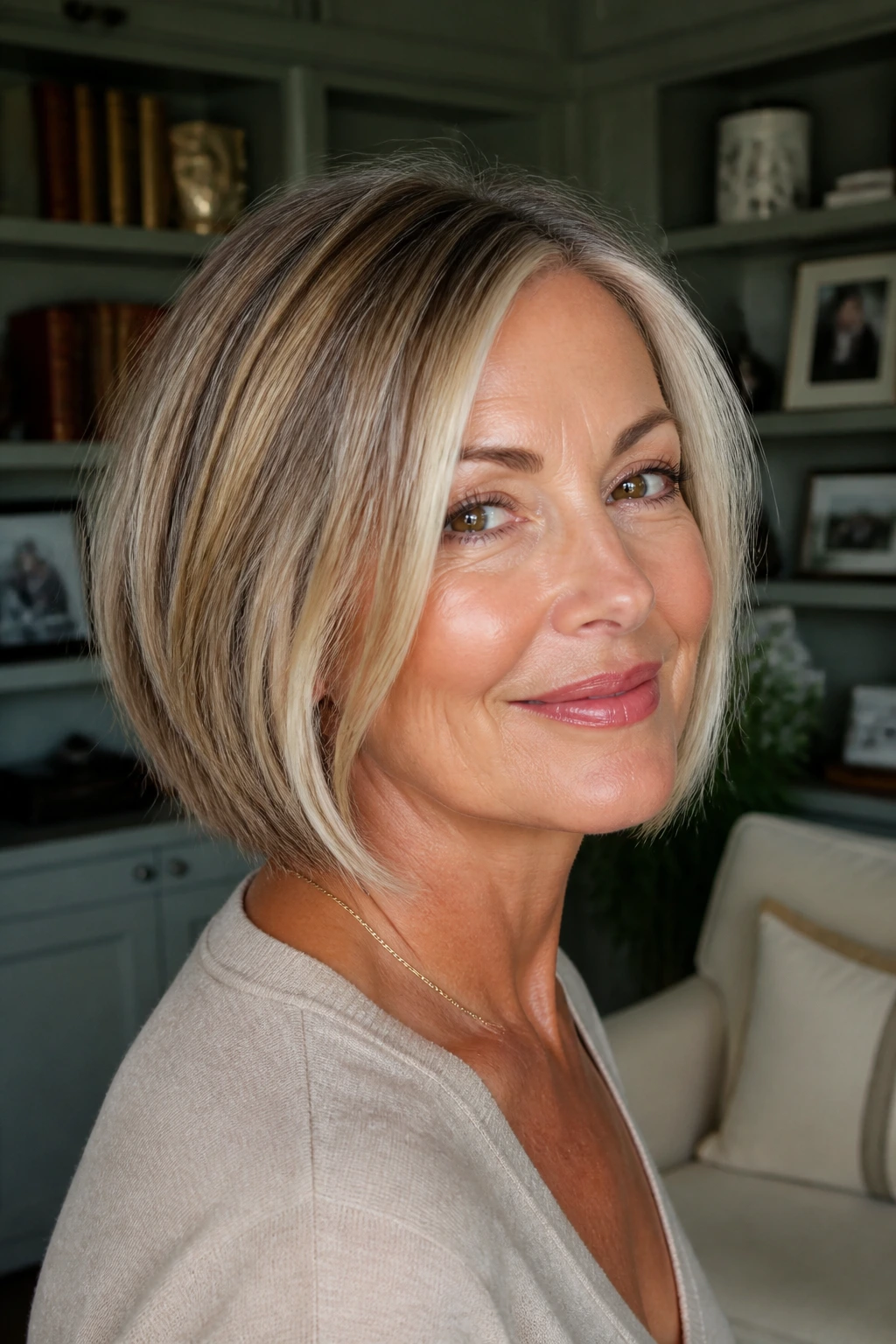
This is one of the most reliable short cuts for fine hair because it gives structure from every angle. The back is graduated for lift, the front stays a little longer, and the foils around the face pull brightness forward. It’s orderly, and that’s a good thing here.
The face-framing foils are the part that often gets overlooked. Put brightness near the cheekbone and jaw, and the face looks brighter while the hair reads thicker at the front. That’s especially useful if your hair has gone a little sparse around the temples or if you wear a side part that exposes more scalp.
A graduated bob likes a precise trim every 6 to 8 weeks. If you let it grow too long, the balance disappears and the back starts to drag. Keep the line clean, and this cut does a lot of work for you.
17. Soft Crop with Sweeping Bangs and Pearl Blonde
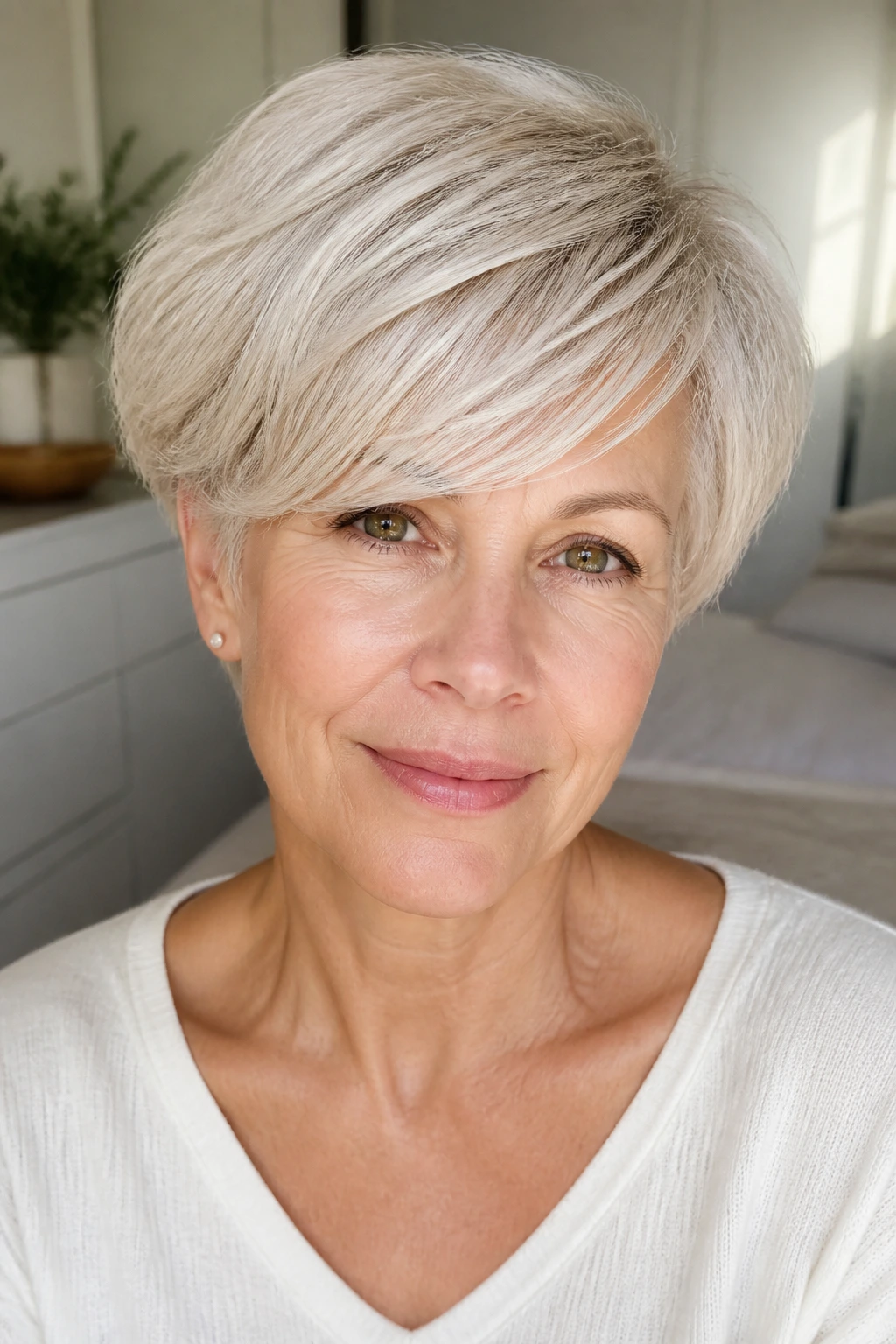
This is the polished ending to the list for a reason. A soft crop keeps the overall shape short and close, while sweeping bangs take the edge off the forehead and bring a little movement to the front. Pearl blonde adds a cool, luminous finish that doesn’t feel harsh.
It’s a useful cut if you want neatness without looking severe. The bangs should skim, not sit like a wall. If they’re too thick, they’ll flatten the top; too thin, and they’ll look choppy in a bad way. Ask for enough softness that the fringe can be pushed aside or worn forward.
Pearl blonde does need care. A gloss or toner keeps it clean, and a light leave-in spray helps the crop stay smooth without losing body. This is the kind of style that looks best when it’s tidy, not fussy.
Why Short Blonde Cuts Give Fine Hair More Shape
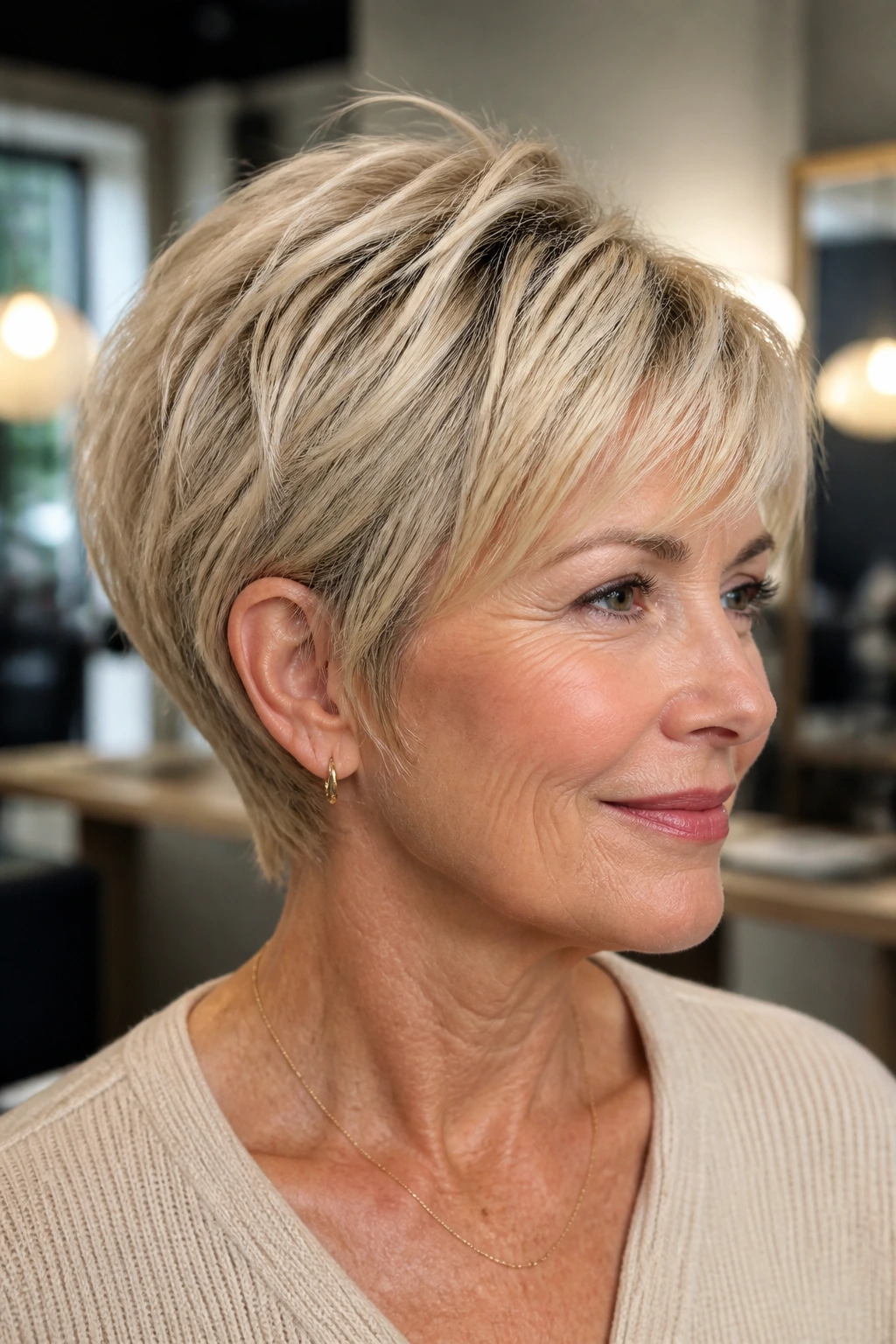
Fine hair usually looks its best when the cut does three jobs at once: holds a line, creates movement where it counts, and avoids exposing weak ends. Shorter cuts do that better than long ones because they keep the hair in a tighter visual zone. The eye sees a denser shape, even if the strand count hasn’t changed at all.
Blonde color can help, but only if it’s placed with a little restraint. A single flat blonde shade can expose every gap in the crown and part line. Root shadow, babylights, balayage, and face-framing foils break up that flatness and make the surface look fuller. The trick is contrast, not brightness alone.
There’s also the practical side. Fine hair over 50 often changes texture a bit—sometimes a little drier, sometimes a little softer at the ends, sometimes both on the same head. Short cuts are easier to rebalance when that happens. You can trim 1/4 inch and see the difference.
Essential Tools for These Styles
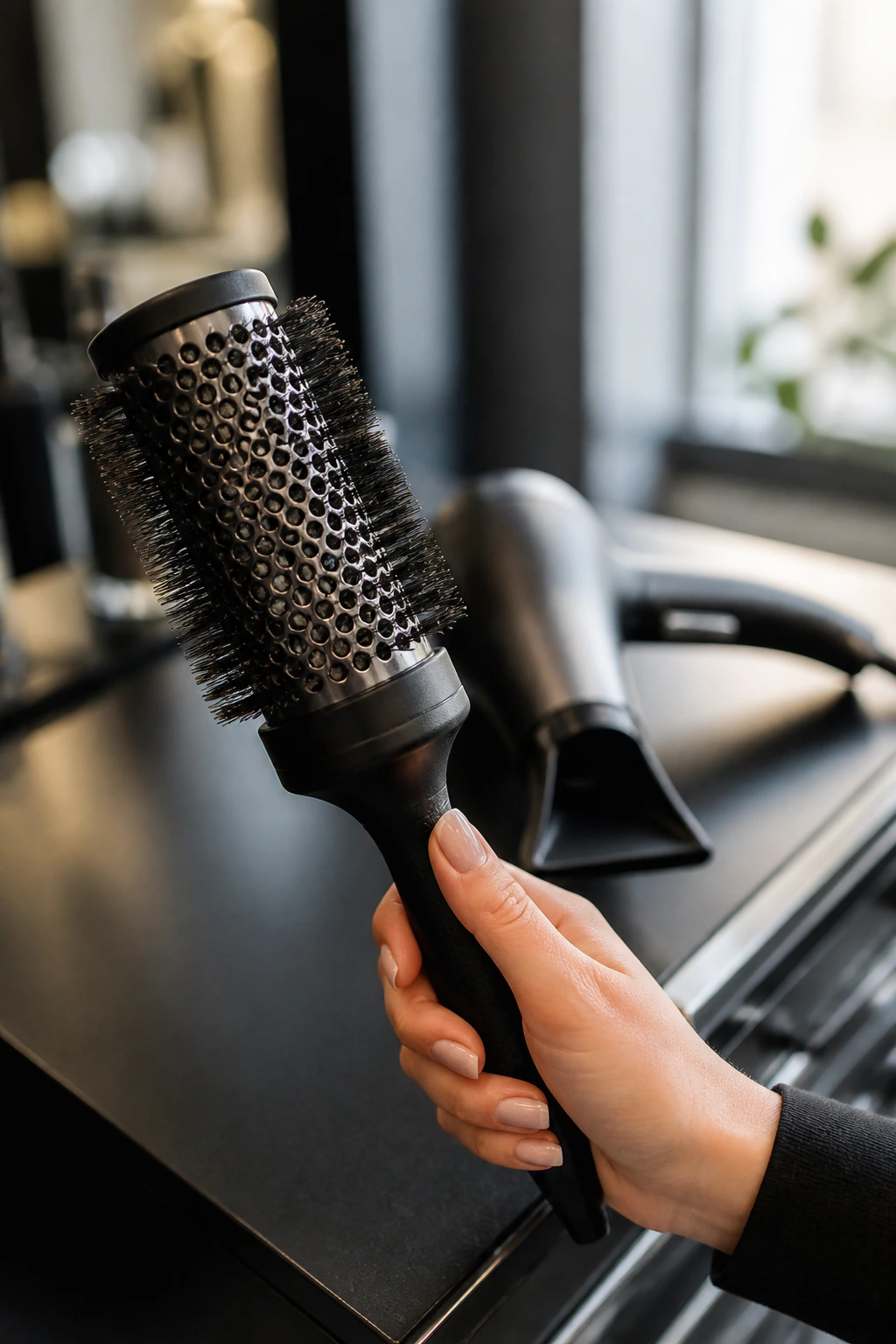
- Blow dryer with concentrator nozzle: Gives you directed airflow so the roots lift instead of puffing everywhere.
- Small to medium round brush: Best for shaping bobs, pixies, and fringe without bending the ends too hard.
- 1-inch curling iron or wand: Useful for adding one bend through the front pieces or softening a blunt line.
- Root-lift mousse: Apply it at the crown before blow-drying; a golf-ball size is usually enough for short hair.
- Lightweight texturizing spray: Adds grip without weighing down fine strands the way heavy creams can.
- Flexible-hold hairspray: Keeps movement in place; avoid the stiff shell that makes fine hair look brittle.
- Purple or blue shampoo: Use sparingly for cool blondes so brass doesn’t take over.
- Tail comb and section clips: Helpful for clean parting, root lift, and working through small highlight sections.
- Color-safe conditioner: Keeps blonde hair from fraying at the ends, especially if it’s been lightened more than once.
Smart Color and Cut Tips to Bring to the Salon
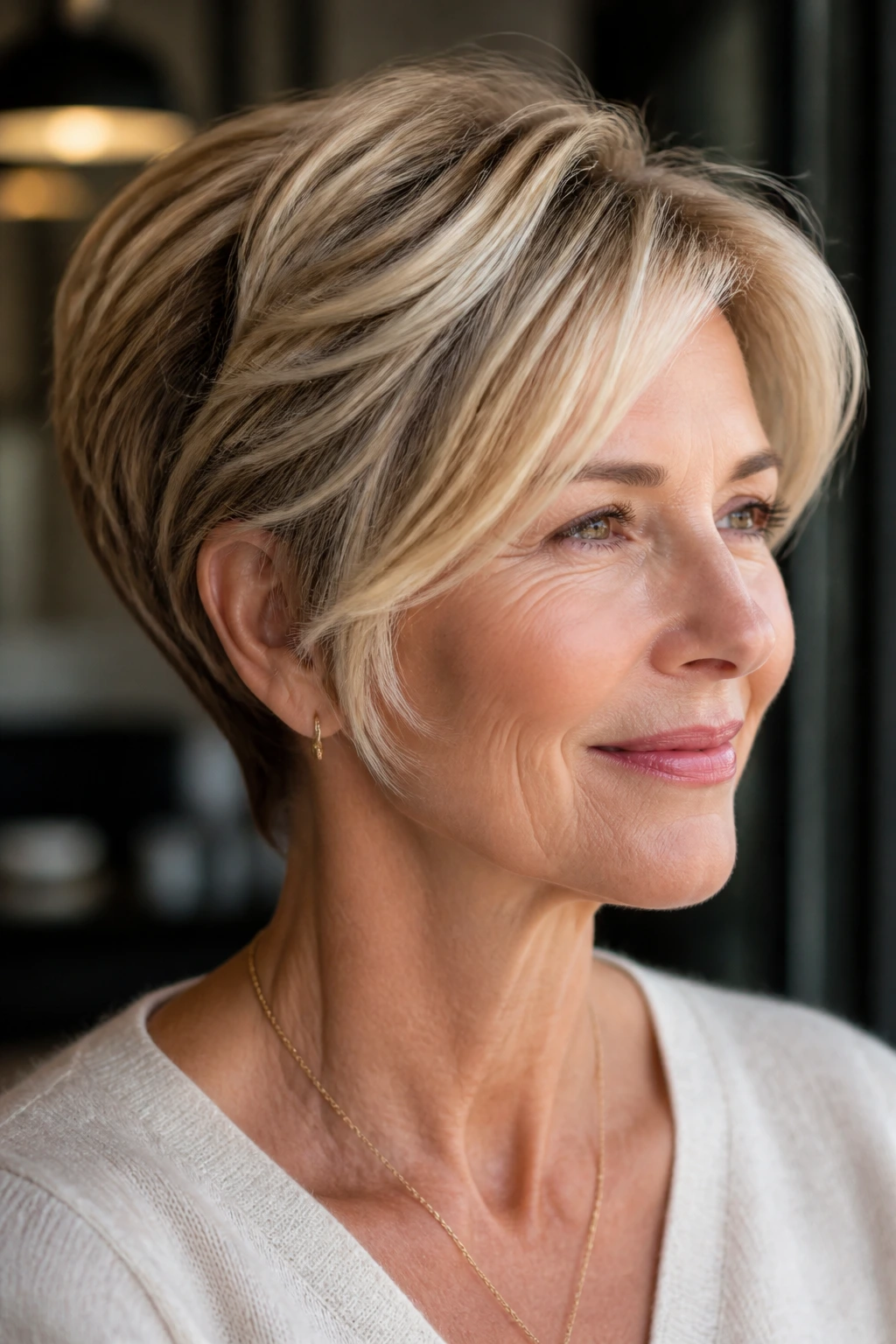
Bring photos, but bring the right ones. You want pictures that show the front, back, and side of the cut, not one filtered selfie where the hair is buried in wind and bravado. Say what you like about each photo: the fringe, the length, the crown lift, the color tone. That gives your stylist something usable.
If your hair is very fine, ask for dimension near the root and around the face rather than all-over brightness. That single sentence can save you from a flat, bleached-out result. Root shadow is your friend when scalp visibility is part of the equation, and it usually is with fine hair.
Tone matters more than people think. Beige and champagne blonde are forgiving. Pearl and icy blonde can look gorgeous, but they need more upkeep and more glossing to stay clean. Warm honey or sandy blonde can soften facial lines, while cooler tones can make a haircut feel sharper and more polished.
I’d also talk about the perimeter. Tell your stylist you want the ends to look full, not thinned out to the point of transparency. That detail is especially important with short cuts, because the bottom line is what the eye reads first.
How to Style These Cuts So They Read Fuller
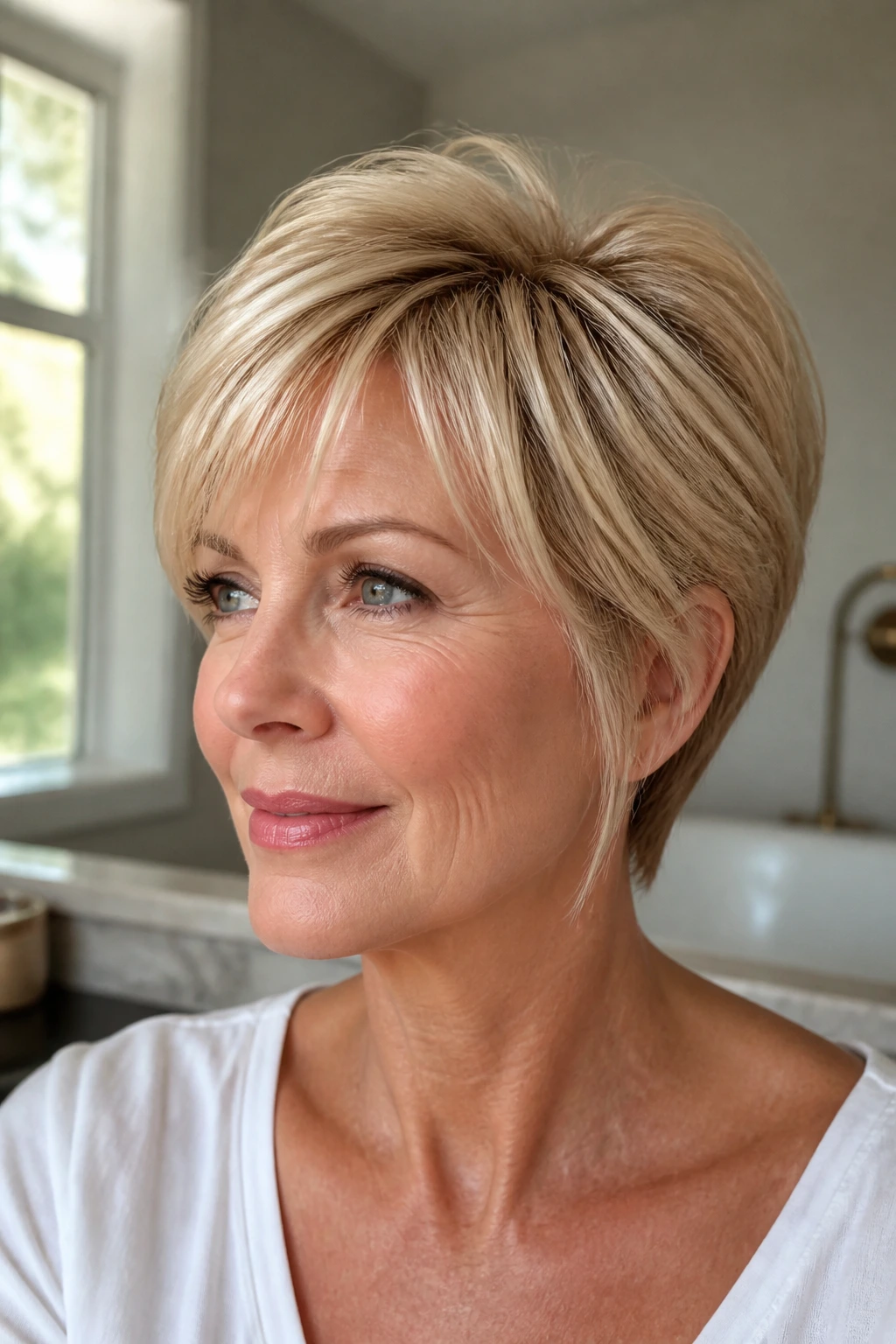
Shape: Keep the strongest line where the cut lands. If it’s a bob, let the ends sit clean. If it’s a pixie, keep the top lifted and the sides controlled. Fine hair looks better when one part of the silhouette is firm.
Lift: Start at the roots. Blow-dry the crown in the opposite direction of your part for 20 to 30 seconds, then set it back. That tiny trick gives the illusion of density without stuffing product into the hair.
Texture: Use one bend, not five. A single pass with a curling iron through the front or side pieces softens the shape without making it puffy. Loose, separated movement usually looks better on fine hair than big waves that collapse by noon.
Finish: Pick a movable spray or a tiny amount of cream. Heavy serums are the enemy here. They can make a short blonde cut look greasy at the roots and limp at the ends, and then everyone blames the haircut when it’s really the product.
Accessories: Small earrings, rimless glasses, a narrow headband, or a tucked-behind-the-ear moment can make a short blonde cut feel finished. I’d skip oversized clips unless the style is meant to look playful.
Additional Tips and Color Boosters
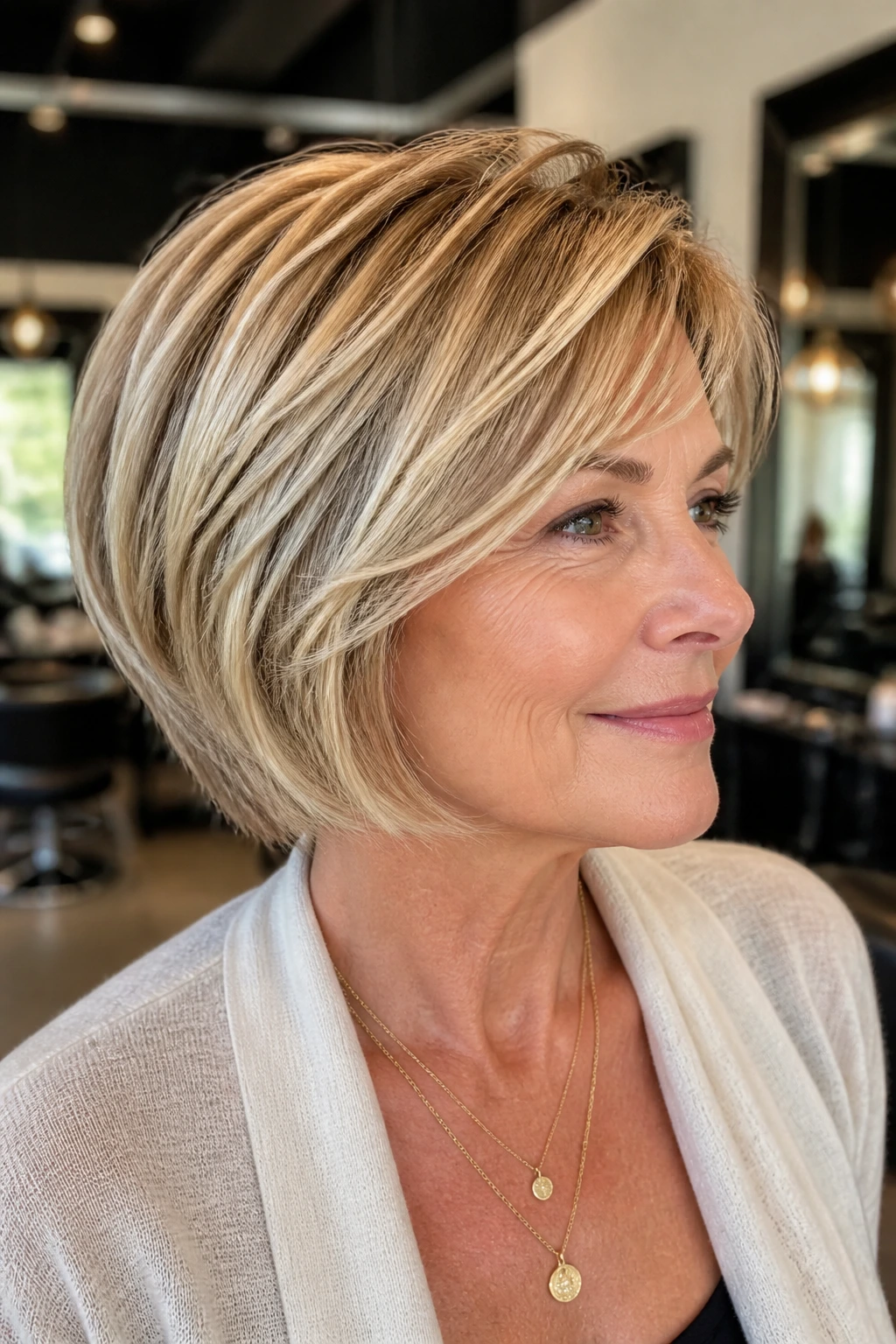
Brightness Boost: Ask for a few extra foils at the part line and cheekbone. That’s where the eye lands first, and those pieces can make the haircut look fresher even when the rest of the color is growing out.
Density Illusion: Keep a shade or two of depth underneath the blonde. A hidden lowlight or root smudge at the nape and crown gives the lighter pieces something to sit on, which makes the hair look thicker.
Customization: If your hair tends to flatten by midday, keep the fringe a little longer and the crown a little shorter. If it poofs at the sides, do the opposite and keep the sides closer to the head.
Make-It-Yours: Warm blondes suit skin with peach or golden undertones; cooler pearl or beige shades flatter rosy or neutral skin. If you’re unsure, a neutral beige blonde is the safest middle road.
Serving Suggestions: A gloss finish can make a short blonde cut look cleaner for weeks at a time. It’s one of the few salon add-ons that usually earns its cost.
Make-Ahead, Maintenance, and Upkeep Guidance
Short hair grows fast in the wrong places. That’s the first thing to accept. Pixies and crops usually need a trim every 4 to 6 weeks if you want the shape to stay crisp. Bobs can stretch to 6 to 8 weeks, though the front pieces often need a small dusting sooner if the ends start to look thin.
Color upkeep depends on the blonde. Root-shadowed blondes and balayage can go a little longer between appointments because the grow-out is softer. Platinum, pearl, and high-contrast blondes usually need glossing or toner refreshes more often, often around every 4 to 8 weeks, depending on how much brass shows up in your hair.
At home, sleep on a satin pillowcase or tuck the hair loosely behind your head so it doesn’t get crushed. A short blowout can often be revived with a spritz of water at the roots and a 2-minute blast from the dryer. Dry shampoo helps, but use it before the hair gets visibly oily. That makes a difference.
If the style needs to be “made ahead” for the next day, set the front with a small roller or clip while it cools. It saves you from having to rebuild the shape from scratch in the morning.
Common Mistakes to Avoid
Too much thinning: Fine hair does not need aggressive texturizing through the ends. If the perimeter starts looking see-through, the fix is usually a cleaner blunt line, not more razor work.
One flat shade of blonde: A single all-over blonde color can expose scalp and make the hair look thinner than it is. Ask for some depth at the root or underneath, even if you want a light overall finish.
Leaving it too long: Fine hair often loses its strongest shape once it passes a certain length. If the cut starts sitting on the shoulders and dragging the ends down, it’s time to shorten it.
Heavy bangs: Thick bangs can swallow a fine hairline and flatten the front. A lighter fringe, side sweep, or piecey bang usually works better because it moves instead of sitting like a curtain.
Overusing purple shampoo: It can leave cool blondes dull and dry if you use it every wash. Once a week is usually enough unless your hair pulls brass fast.
Ignoring the crown: The crown is where fine hair gives itself away first. If there’s no lift there, even a lovely cut can look tired. Root-lift mousse and a directed blow-dry fix more than most people expect.
Questions People Actually Ask About Short Blonde Cuts for Fine Hair Over 50
Will blonde hair color make fine hair look thinner?
It can, if the color is one flat tone with no depth. A blonde with root shadow, babylights, or subtle lowlights usually looks fuller because the eye sees texture and movement instead of one pale sheet.
Is a pixie or bob better for very fine hair?
A bob usually gives more visual thickness at the ends, while a pixie gives more lift at the crown. If your hair is sparse at the nape or sides, a bob often feels safer. If the crown is the main problem, a textured pixie can help more.
Are bangs a bad idea with fine hair?
No, but they need the right shape. Heavy bangs can flatten the front, while side-swept or wispy fringe can soften the face and keep the top from looking cramped. The wrong bang is worse than no bang. The right one is useful.
What blonde tone is easiest to maintain?
Beige, champagne, and soft honey shades are usually the easiest to live with. They grow out more gently than icy platinum or very high-contrast blonde, which tend to show toner fade and root lines faster.
How often should I cut a short style like this?
Every 4 to 8 weeks, depending on the shape. Crops and pixies need more frequent trims because a quarter inch changes the line fast. Bobs can last a little longer, but the ends still need regular cleanup.
Can fine hair over 50 wear a shag?
Yes, if the shag is controlled. Too many choppy layers can make the ends disappear, but a soft shag with a clean perimeter and light texture through the crown can look airy and modern without going stringy.
What if my hair is thinning at the temples?
Ask for brightness and a little fullness around the face rather than very short layers at the temples. Face-framing foils, a soft fringe, or a side part can hide sparse areas better than a severe, exposed line.
Do I need purple shampoo for every blonde cut?
Not always. If your blonde is warm beige or honey, purple shampoo may dull it. Use it only when your tone starts turning brassy, and keep it to one wash a week or less unless your stylist tells you otherwise.
A Short Cut That Still Feels Like Hair
The best short blonde cuts for fine hair over 50 do one thing well: they make the hair look like it has intention. Not bulk for the sake of bulk. Not brightness for the sake of brightness. Shape, depth, and a little light in the right places.
That’s the sweet spot. A chin-length bob with babylights, a feathered pixie with sandy tones, a stacked crop with a root shadow—each one can do the same quiet trick if it’s cut and colored with care.
Bring a photo, talk about perimeter and lift, and ask for dimension instead of blanket blonde. The haircut will do more work for you when it knows where to hold firm.
