



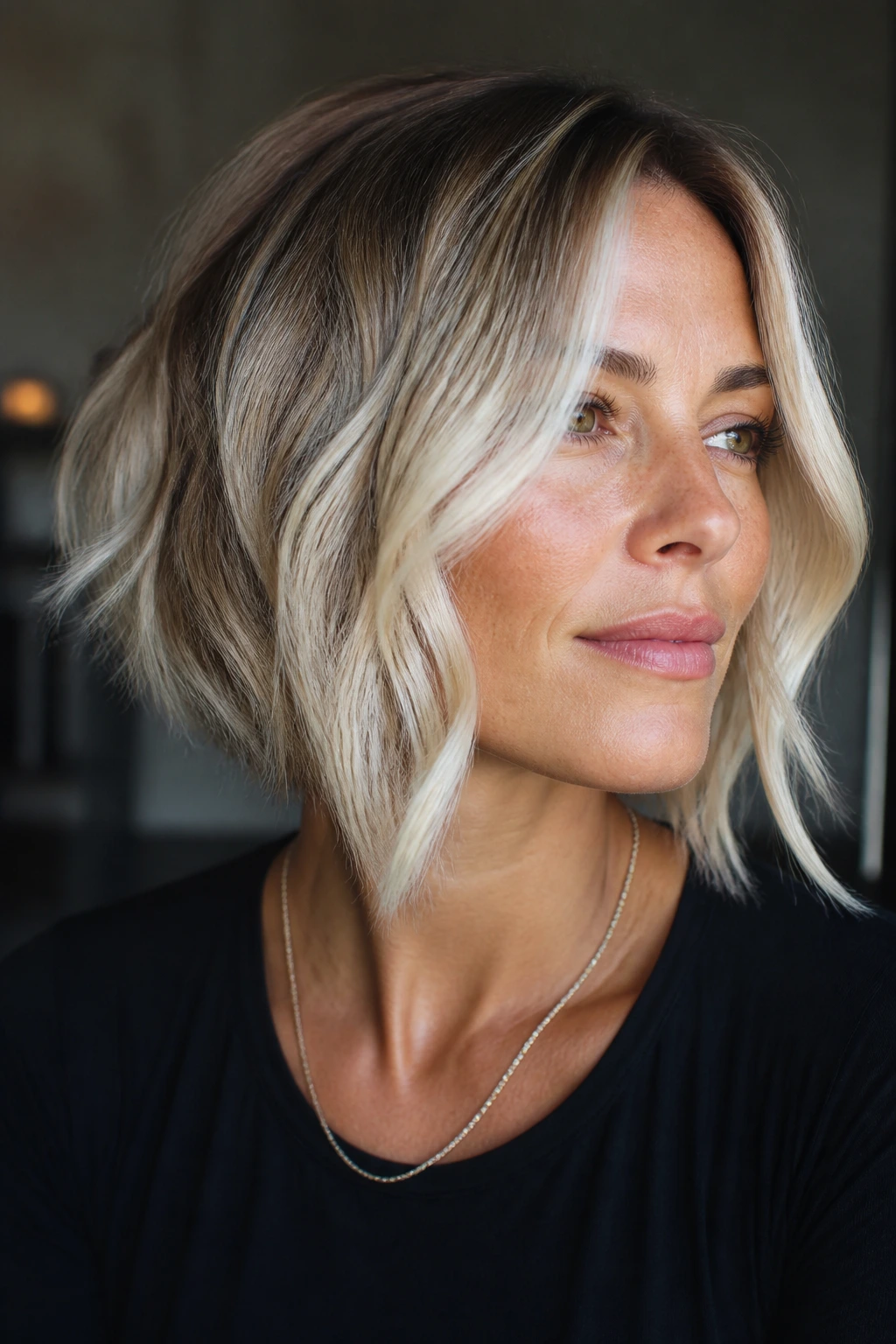
Short blonde hair with dark roots for wavy hair has a specific kind of honesty to it. The dark root keeps the blonde from floating off the head like a wig, and the waves stop the whole cut from looking too neat or too stiff. When those two things work together, the color looks woven in, not painted on.
I keep coming back to this combo because it solves a real problem: short blonde hair can turn harsh fast, especially if every strand is the same level of light. A deeper root gives the eye a place to land, and the wave pattern breaks up the blonde so it moves. That matters even more on shorter cuts, where a bad line at the scalp is impossible to hide.
The styles below lean into that balance from every angle — smoky, buttery, icy, shaggy, polished, and a little messy in the best way. Some are low-maintenance and grown-in. Others are sharper and higher-contrast. All of them work because the root is part of the design, not a problem waiting to be fixed.
Why These Rooted Blonde Looks Work on Wavy Hair
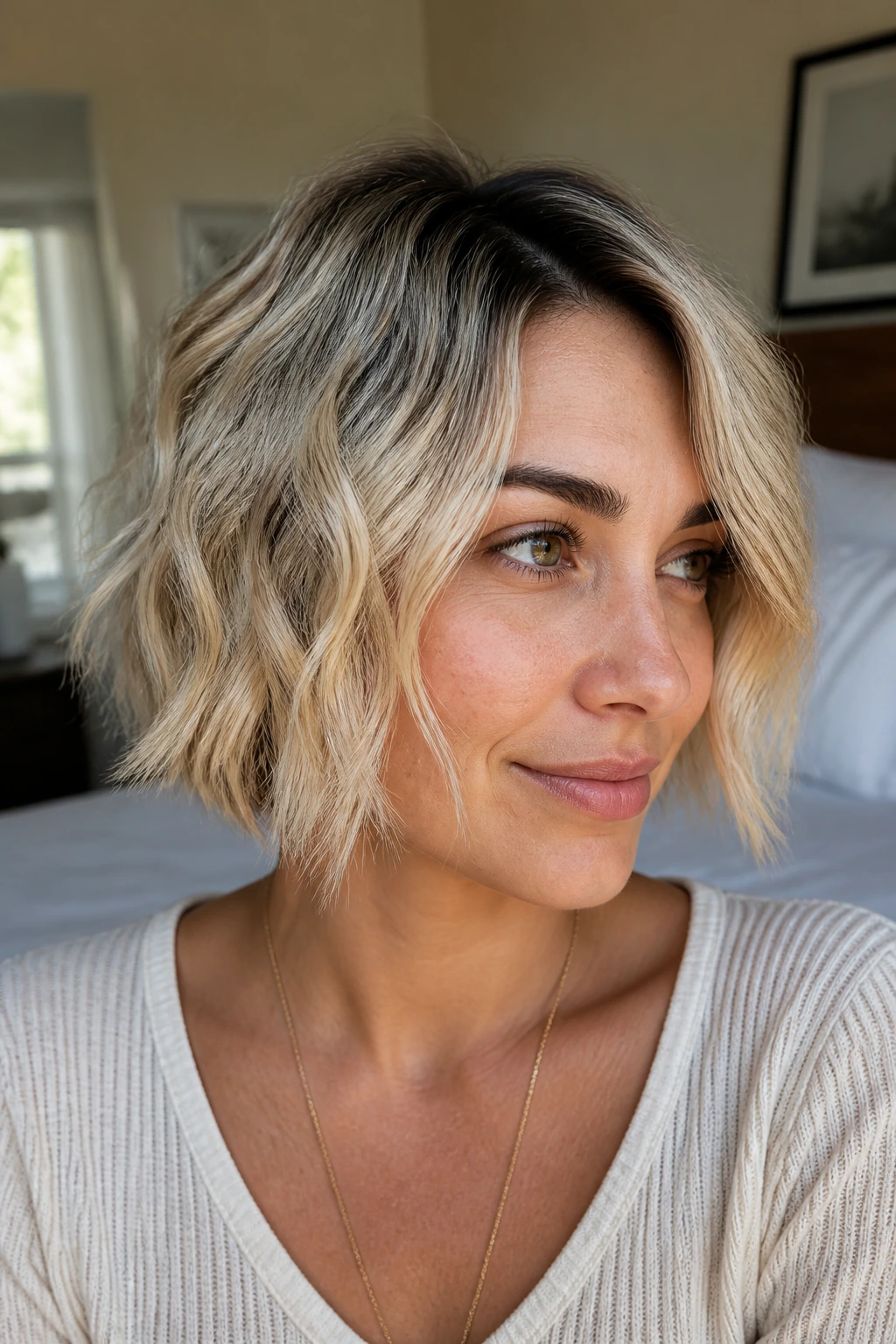
- The root depth softens grow-out: A darker base gives you a few extra weeks before regrowth starts looking obvious, and on short hair that difference is huge.
- Waves keep the blonde from looking flat: Every bend in the hair changes where the light lands, so the color reads dimensional instead of one-note.
- Short cuts show placement better: On a bob, bixie, or shag, a few bright face-framing pieces do more work than a full head of lightening.
- The contrast adds shape: Dark roots under pale mids make the cut look more layered, which helps wavy hair avoid that puffy triangle shape.
- It’s easier to keep intentional: A shadow root, root melt, or smudge looks deliberate on short blonde hair; on longer hair, it can sometimes look like simple grow-out.
- The style can go warm or cool: Beige, ash, champagne, honey, and icy tones all make sense here as long as the root has enough depth to anchor them.
What to Tell Your Colorist Before You Book
A good rooted blonde starts with a calm conversation, not a vague “make me lighter.” Bring photos that show your hair wavy, not blown out and pinned straight. Short cuts change shape a lot once they dry, and your colorist needs to see where the bends sit around your face and crown.
Ask for a soft root shadow or root melt if you want something low-maintenance. If you want more contrast, say that you’re open to a darker root that sits about one to two levels deeper than the blonde mids. That small detail changes everything. It keeps the blonde bright where it counts, but it avoids the hard stripe that can make short waves look chopped up.
Mention your part, too. A center part, a deep side part, and a loose off-center part all expose different pieces of the root line. If your hair is fine, ask for brighter face-framing pieces and softer lightness through the back. If your hair is thick or puffy, request internal layering and a blended root so the cut doesn’t spread outward like a triangle.
1. Smoky Ash Blonde Bob With a Soft Root Melt
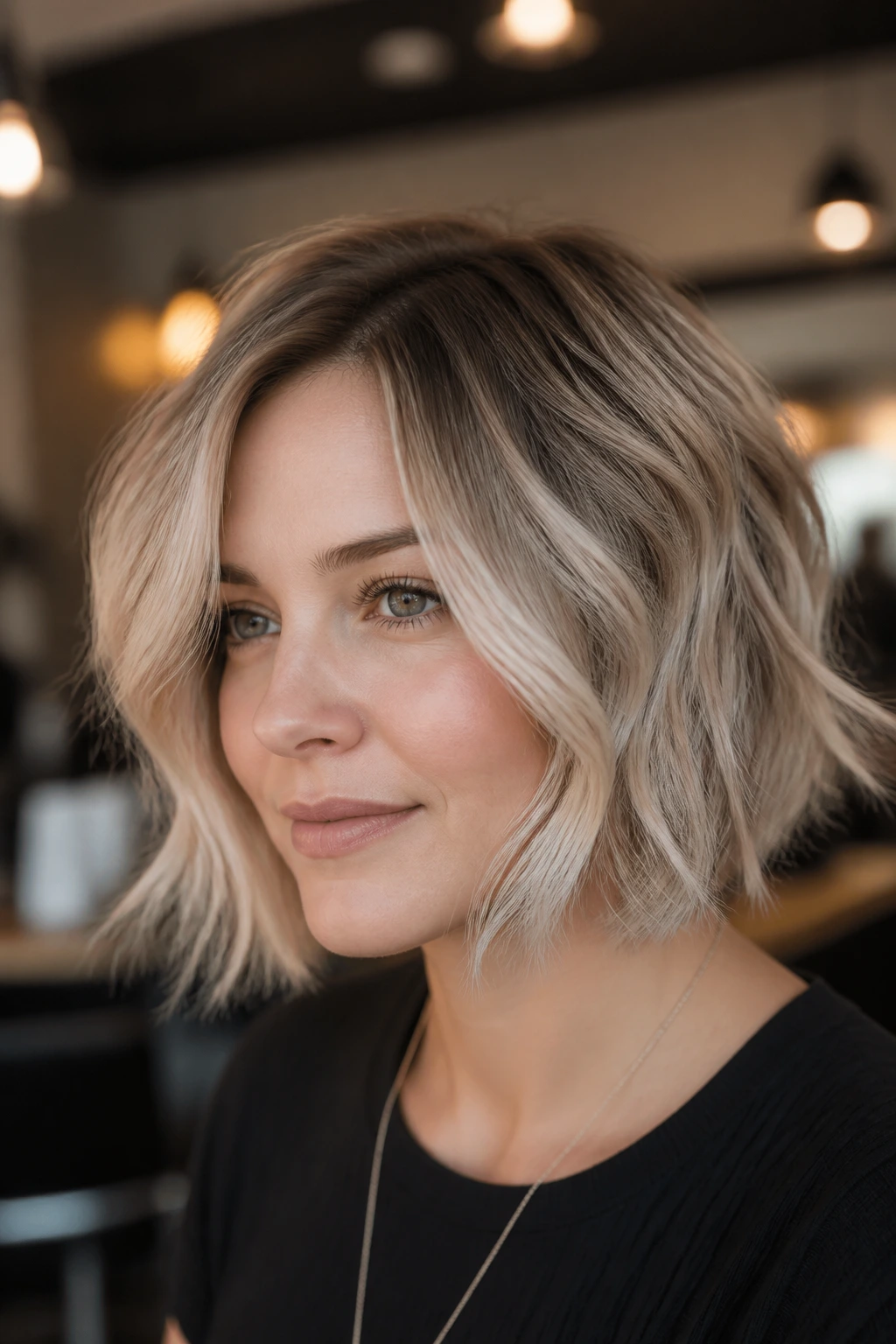
This is the one I reach for when I want a bob to look sharp without turning severe. The smoky ash blonde keeps the tone cool, while the soft root melt stops the top from reading too bright or too blocky. On loose waves, the darker root gives the bob a little shadow at the scalp, which makes the ends look fuller.
A jaw-skimming length works especially well here. The color sits close to the face, so the ash tone can sharpen the eyes and cheekbones without needing heavy contrast. Ask for slightly textured ends, not a blunt shelf. That tiny bit of feathering lets the waves break up the light in a better way.
2. Honey Blonde Wavy Lob With Shadowed Crown
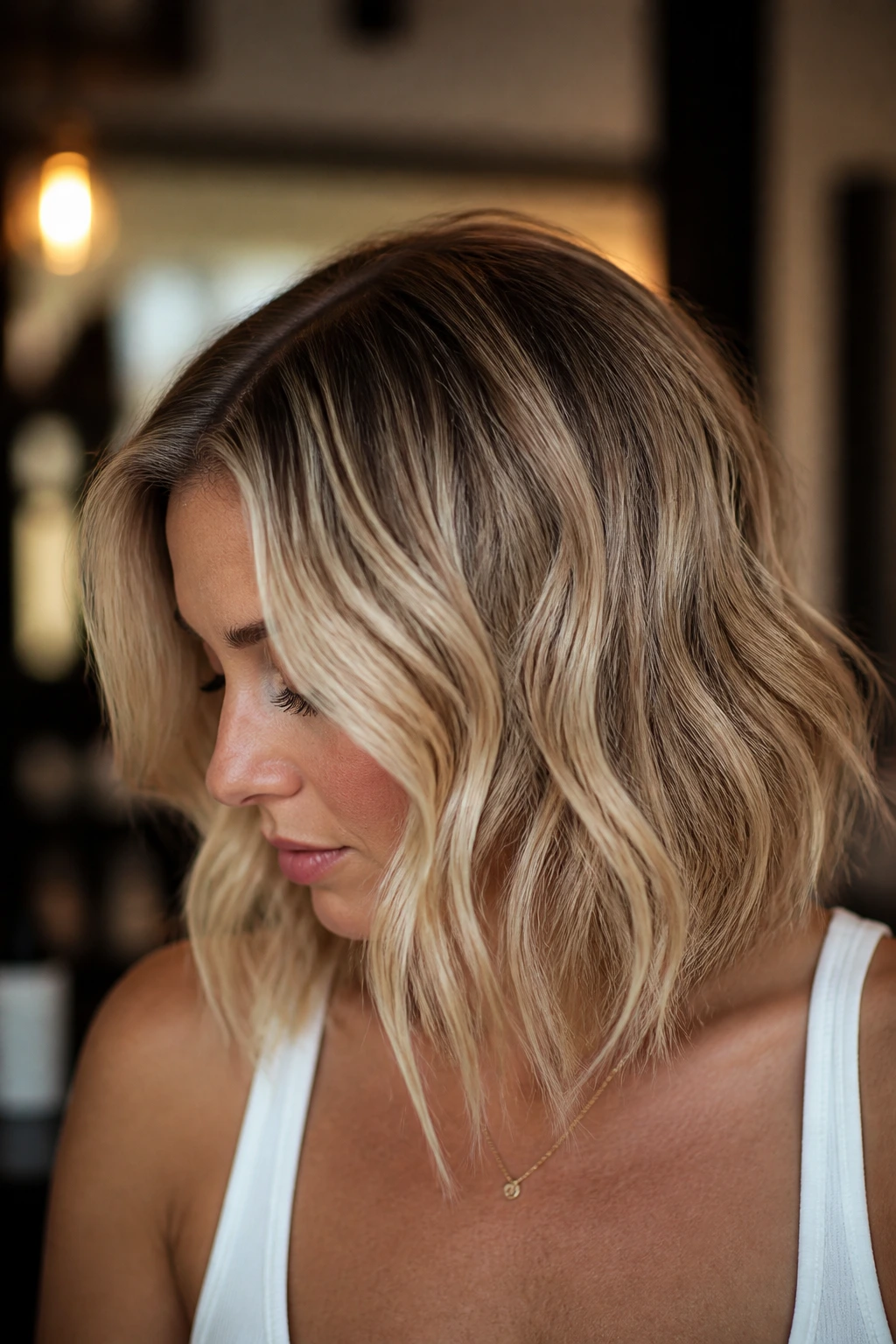
Warm blonde on wavy hair can look flat if the crown is too light. A shadowed crown fixes that fast. The honey tone through the mids and ends brings in warmth, but the darker root keeps the whole thing from tipping into yellow.
This version is good when you want the cut to feel soft rather than edgy. The lob length gives the waves space to move, and the honey color makes the texture look touchable instead of dry. I like this best on hair that has a little natural body already, because the soft root and warm ends do the rest of the work.
3. Platinum Pixie Bob With Dark Root Depth
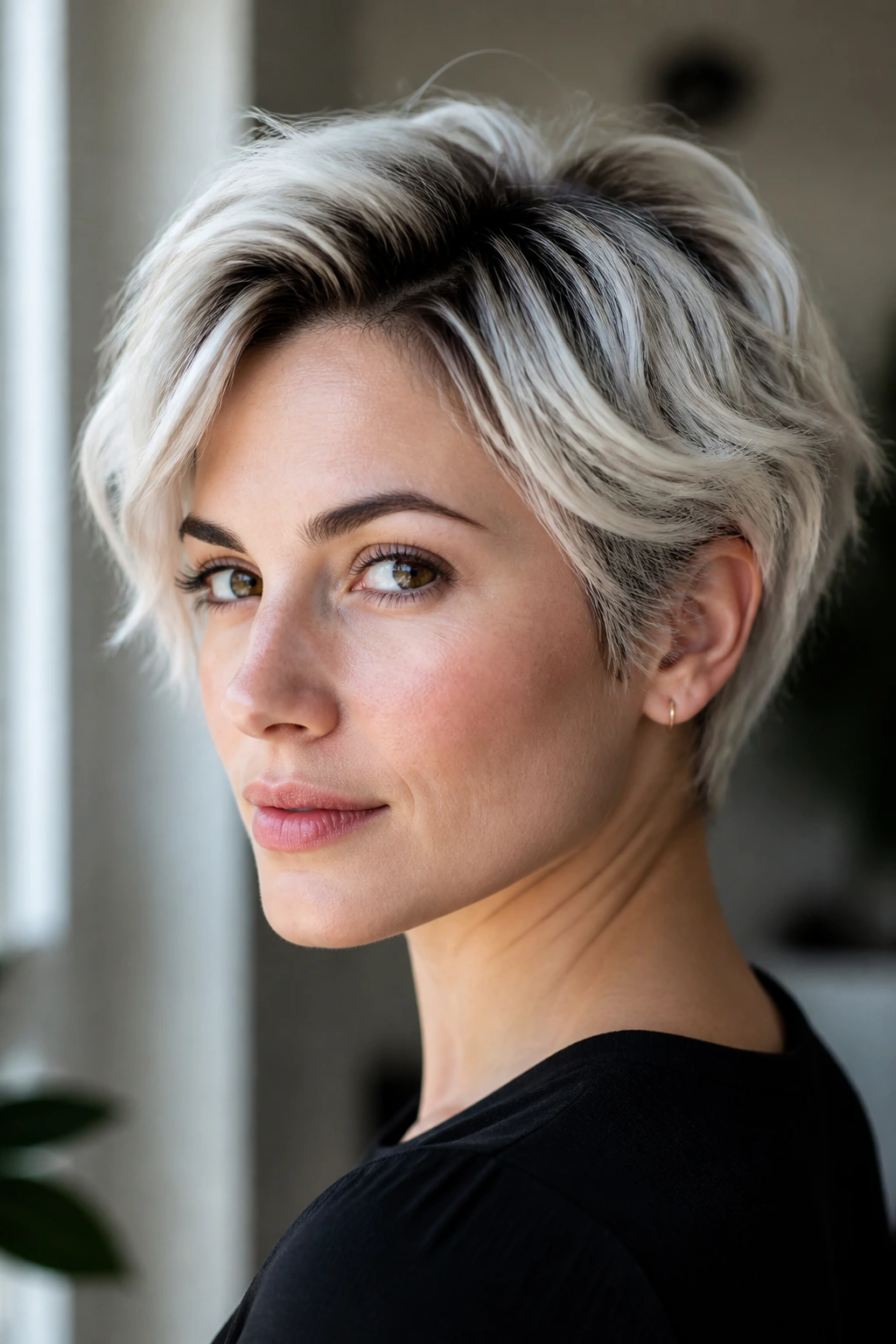
Platinum plus short hair can go straight to helmet territory if the root is too light. That’s why the dark root matters here. It creates a clean break near the scalp, so the platinum pieces on top feel intentional and the shape stays visible even when the waves flatten a little.
This cut works best when the sides are kept close and the top has enough length to bend. You want piecey movement, not a fuzzy cloud. If your stylist texturizes the crown and leaves the root area deeper by design, the whole thing looks stronger. A little grit helps. A lot.
4. Beige Blonde French Bob With a Smudged Part Line
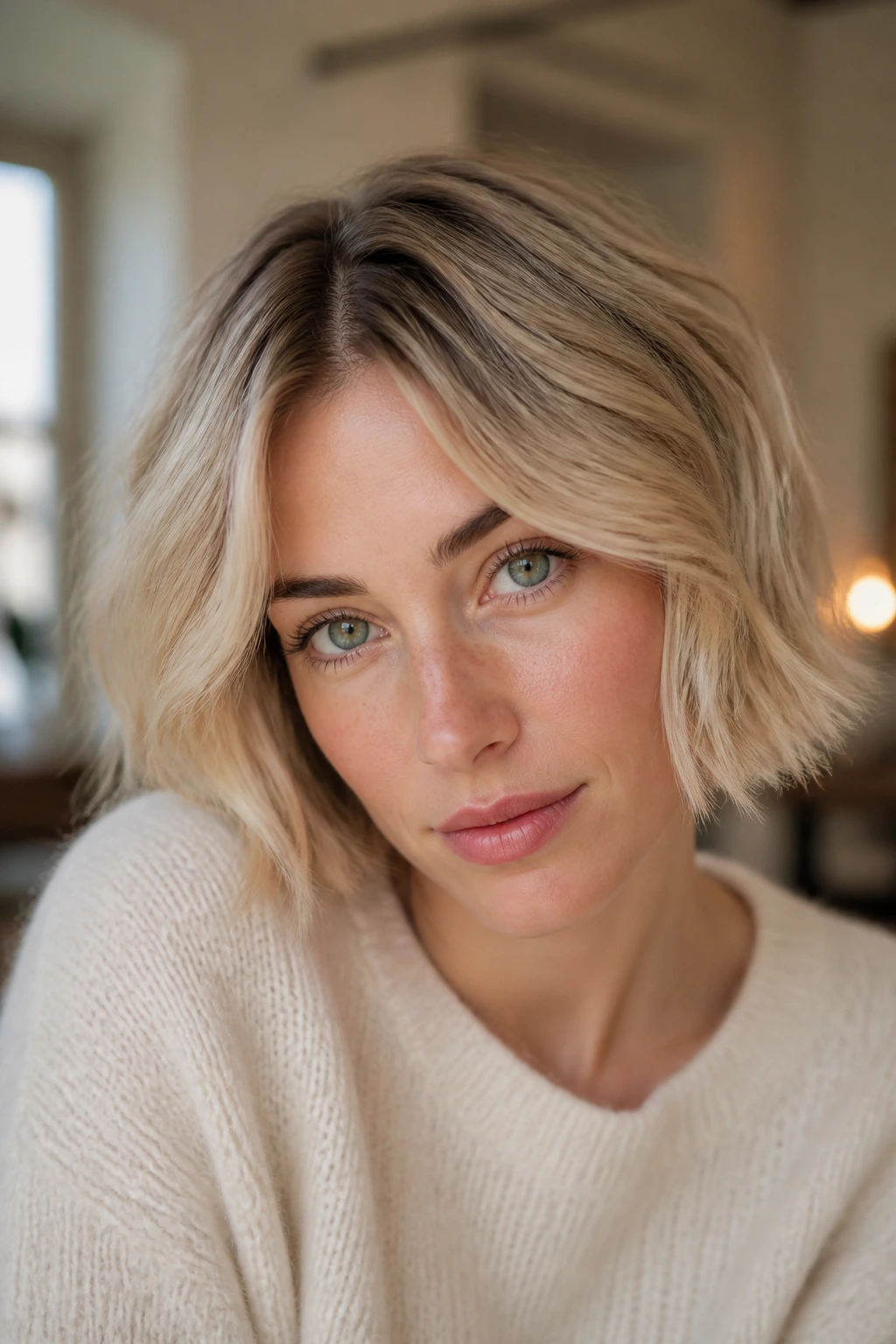
A French bob wants movement around the eyes and cheekbones, not a hard line at the hairline. A smudged part line gives you exactly that. Beige blonde keeps the tone soft and wearable, while the root shadow makes the part look like part of the style instead of an afterthought.
This one has a good, easy confidence to it. The bob sits short enough to feel tidy, but the wave pattern stops it from reading severe. If your hair bends naturally at the ends, this cut is a gift. Ask for a loose fringe or soft cheekbone pieces if you want the face frame to do more of the talking.
5. Butter Blonde Chin-Length Waves With Grown-In Roots
Butter blonde sounds sweet, and it is, but the color needs a darker base or it can blur out fast. The grown-in roots keep the brightness from taking over the whole head. That gives the chin-length waves a little depth at the scalp and helps the color look richer in daylight.
I like this on people who want something feminine without too much polish. The chin length keeps the style short, but the soft tone keeps it approachable. If your natural root is light brown or dark blonde, this can be one of the easiest blonde looks to live with. It grows out in a way that still looks planned.
6. Sandy Blonde Collarbone Crop With Lived-In Balayage
This is the practical one. The collarbone length gives you room to scrunch, bend, and tuck the hair behind one ear without losing shape. Sandy blonde balayage makes the waves look sun-softened, and the lived-in root keeps the top from feeling overdone.
Fine hair loves this cut because the balayage creates the illusion of thickness. Thick hair likes it because the darker root reduces visual bulk at the crown. If you want a style that can survive an imperfect blow-dry, this is a smart pick. It looks best when the ends are airy and not overloaded with product.
7. Mushroom Blonde Textured Bob
Mushroom blonde has a cooler, muted feel that suits wavy short hair better than a flat yellow blonde ever could. The root stays a shade or two deeper, and that makes the ash-beige mids read soft instead of washed out. The texture matters here. Without it, the color can feel sleepy.
The beauty of this bob is that it does not need to shout. It sits somewhere between polished and undone, which is exactly where short wavy hair usually looks best. If your skin has cooler undertones, this tone can be a quiet winner. If your waves are loose and irregular, even better.
8. Champagne Blonde Crop With a Deep Side Part
A deep side part wakes up short hair fast. It creates lift at the root and gives champagne blonde somewhere to shine without looking too bright at the scalp. The darker base beneath the part helps the crop keep its shape, especially when the waves start to separate through the day.
This is a good choice if you want a little glamour without a lot of length. Champagne blonde has a soft sparkle to it, and the side part gives the haircut a little swing. It’s one of those looks that can go from casual to dressed-up with one clip or one tuck behind the ear.
9. Creamy Blonde Inverted Bob
An inverted bob depends on structure, so the color should support that shape instead of fighting it. Creamy blonde brightens the front and top layers, while a deeper root underneath keeps the back from puffing out. On wavy hair, that contrast helps the longer front pieces fall cleanly.
The key is softness at the ends. You want the front to swing, not stick out like brackets. If your hair has a bit of bend, the inverted shape gives the waves a place to land. This is a strong pick for anyone who wants more line and less fluff.
10. Beige Balayage Bixie
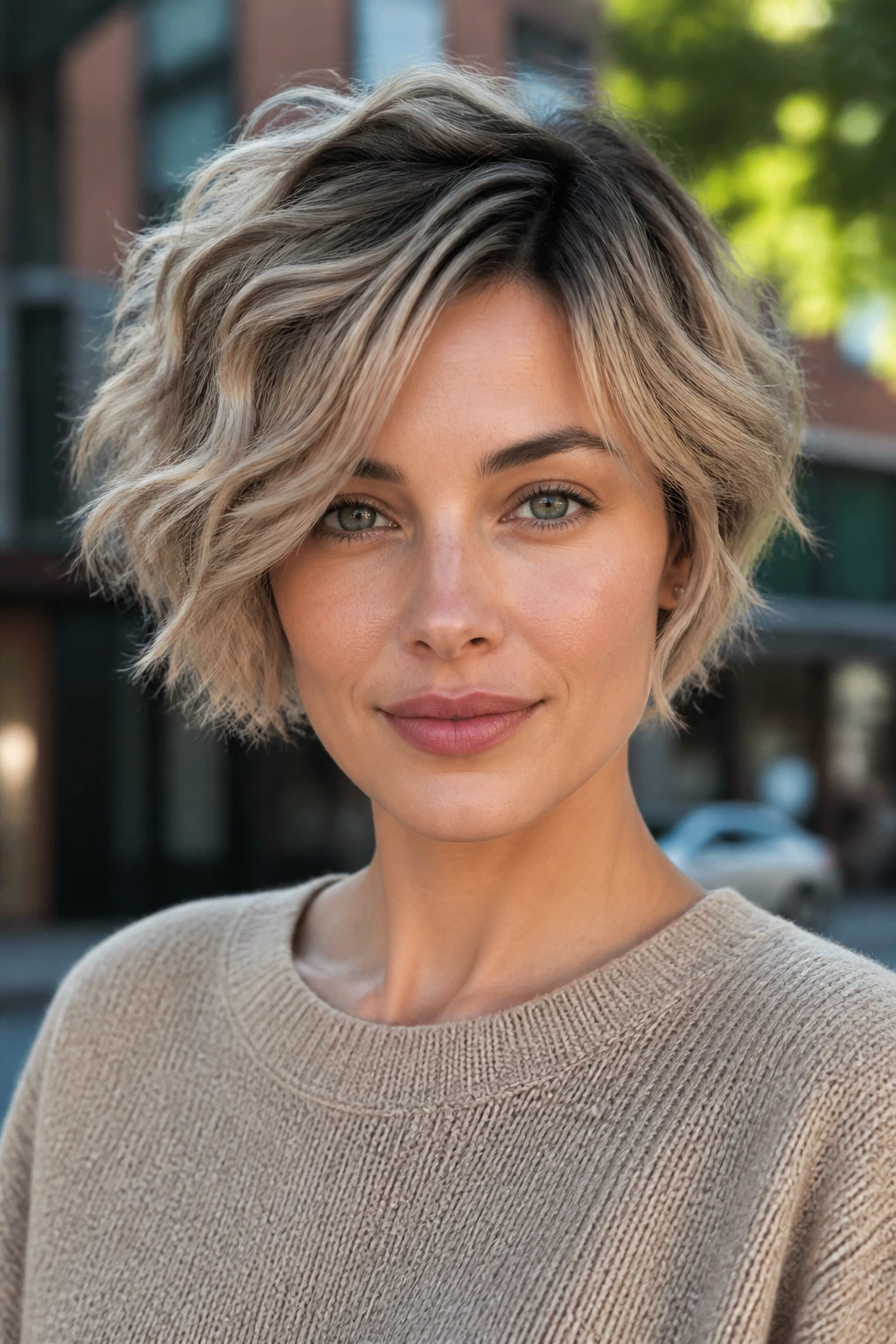
A bixie lives in the space between a bob and a pixie, and beige balayage gives that in-between shape some polish. The darker root keeps the top from looking bleached out, while the lighter pieces sit where the wave naturally lifts. It’s a smart way to keep short hair feeling light without losing definition.
This cut is especially good if you want short hair but are not ready for a full pixie commitment. It still has length around the ears and crown, which makes the styling easier than people expect. Add a little matte texture cream, and the beige tones show their dimension without needing a perfect finish.
11. Icy Blonde Wavy Lob With a Soft Root Shadow
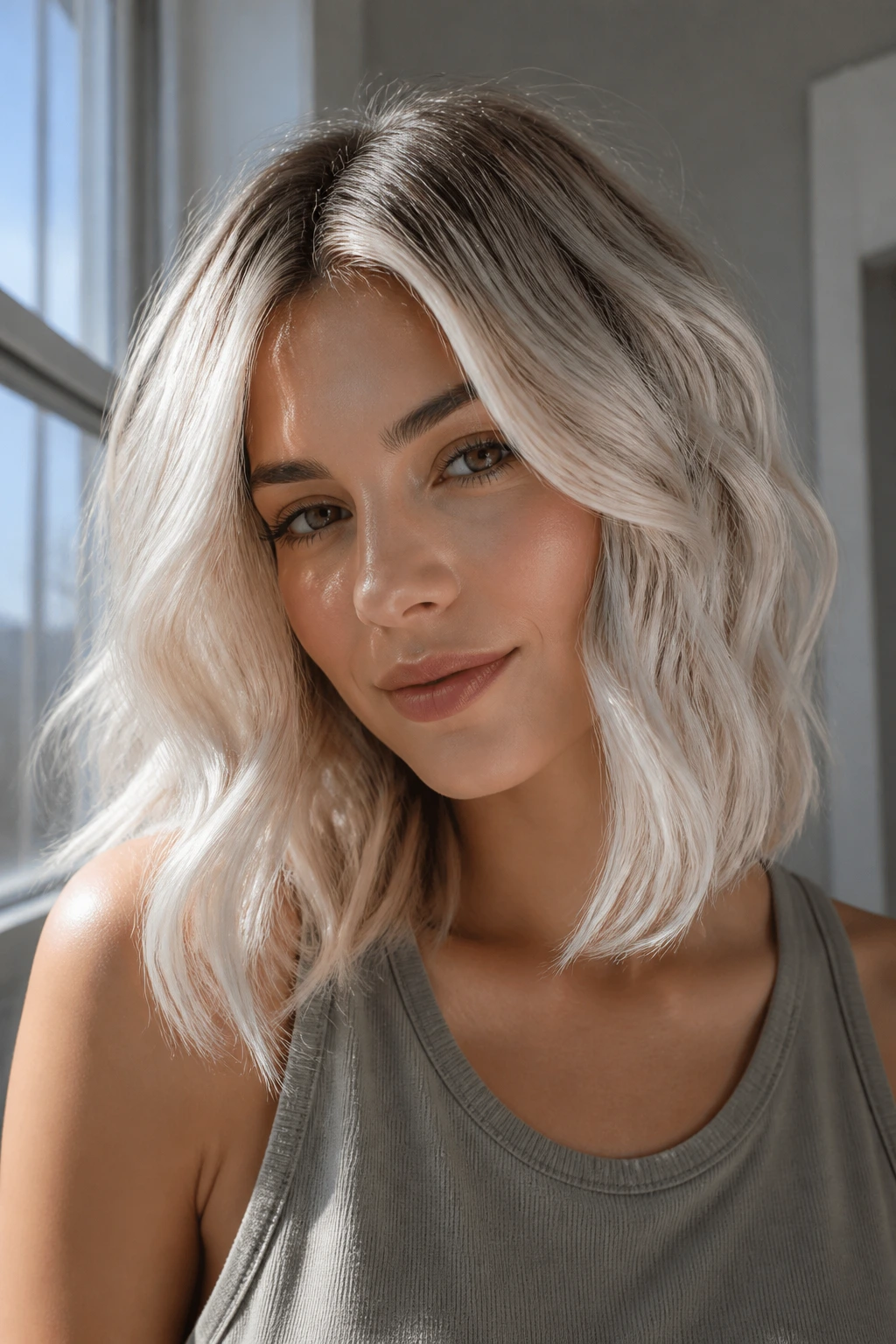
Icy blonde can look almost brittle if it starts right at the scalp. A soft root shadow fixes that by giving the blonde a base to sit on. The waves keep the cool tone from reading flat, because every curve catches the color a little differently.
This look works best when the lightest pieces stay off the part line and around the face. That keeps the icy tone bright where people actually notice it. If your skin suits cool or neutral blonde, this one has a crisp edge without feeling harsh. It does want toner upkeep, though. No way around that.
12. Bronde Bob With Bright Face Framing
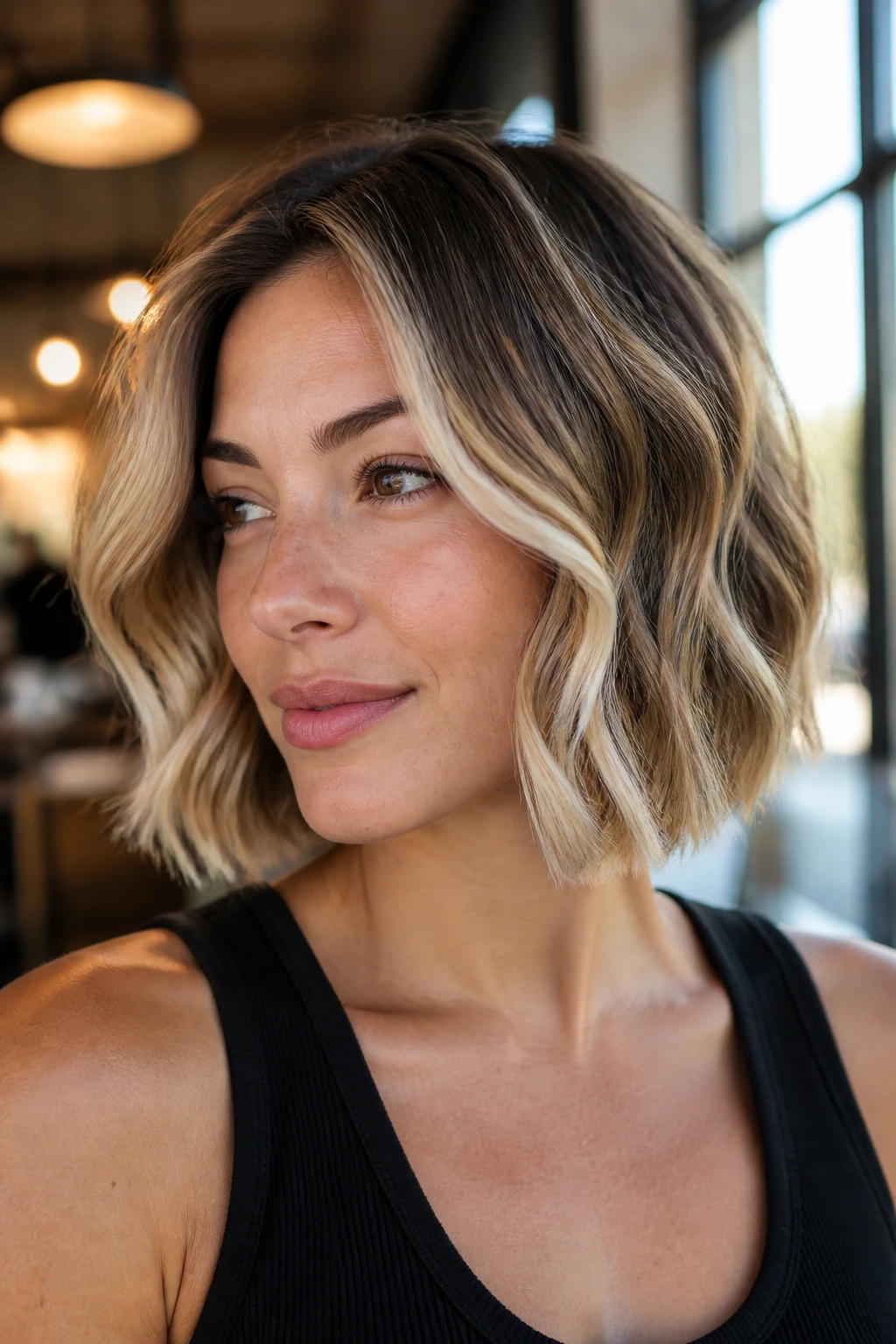
Bronde is one of those colors that earns its keep on short wavy hair. The darker root and warm blonde mids blend together, so the bob does not need constant touch-ups to stay believable. Bright face-framing pieces near the cheekbones give it life and keep the cut from drifting too brown.
I like this for anyone who wants blonde without living inside the salon chair. The bob length keeps the wave pattern visible, and the bronde mix softens the transition from root to ends. If your natural color is a medium brown, this look can feel like a better version of your own hair rather than a dramatic switch.
13. Choppy Platinum Shag
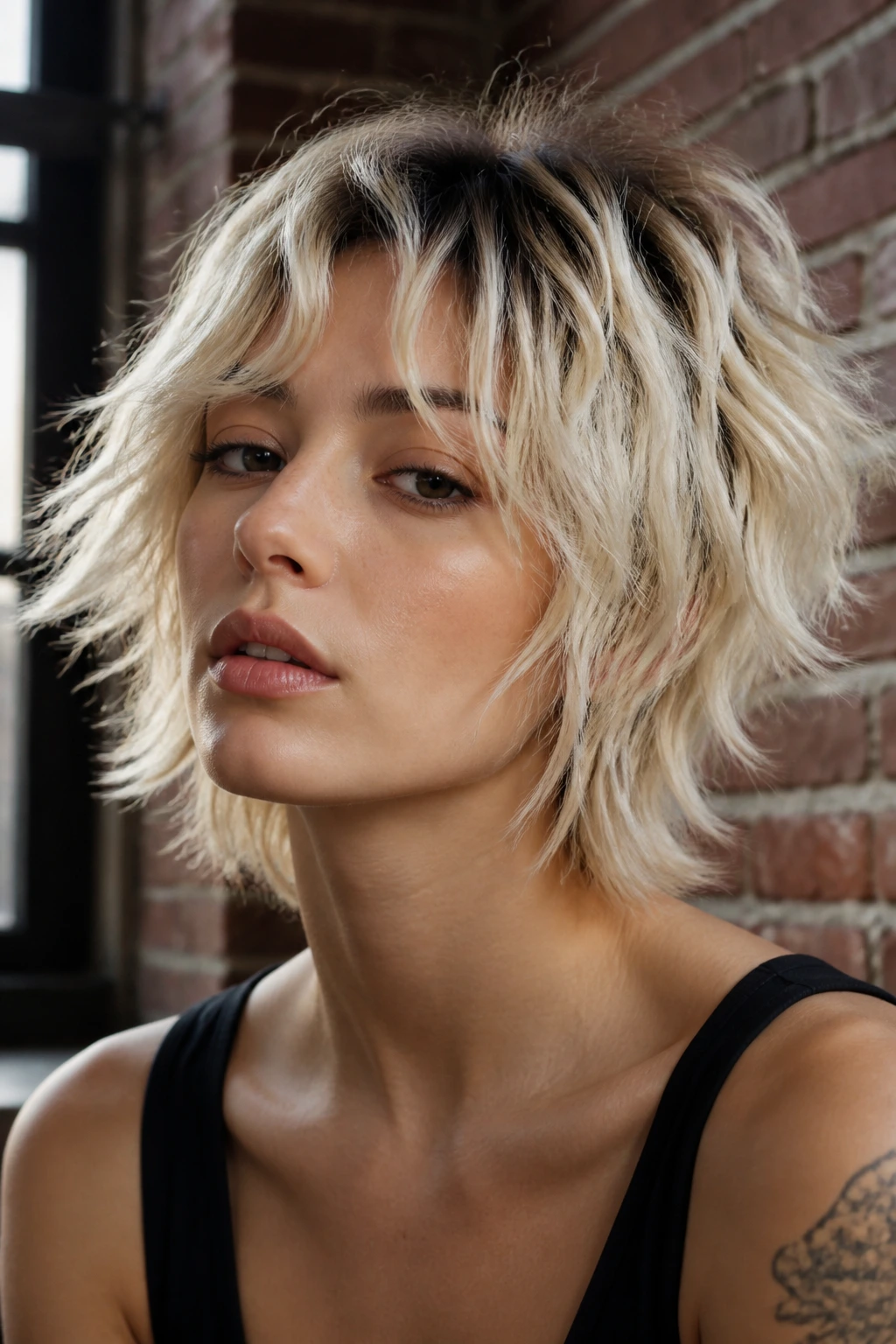
Platinum and shag layers go together because both like movement. The dark root keeps the top from turning into a bright cap, and the choppy layers break the blonde into pieces instead of one block of light. On wavy hair, that means the cut actually looks better as it gets a little mussed up.
This is one for people who like some edge. It does not want neat curls or heavy smoothing cream. It wants a rough-dry, a touch of root lift, and a little bend through the ends. The darker root gives the platinum something to push against, which is what makes the layers show up.
14. Curtain-Bang Lob With a Root Melt
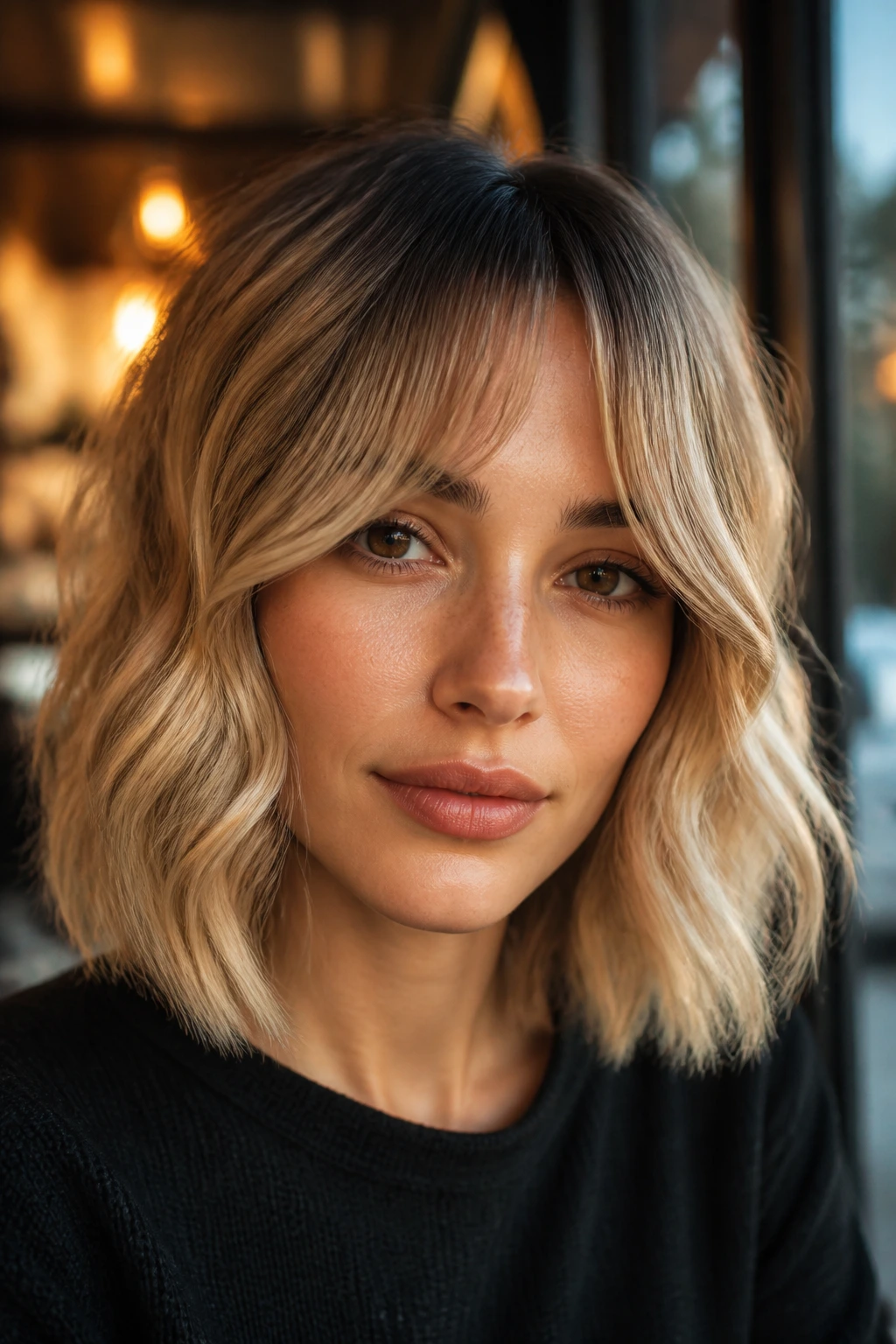
Curtain bangs can be tricky on short blonde hair because the front needs to feel airy, not stripey. A root melt helps the bangs blend into the rest of the cut, so the blonde doesn’t start and stop in a harsh line. The lob length gives the waves enough room to move under the fringe.
This style suits people who like their hair to frame the face instead of sitting away from it. The bang area softens the forehead, the root melt keeps the top calm, and the blonde through the mids draws the eye down. It’s one of the most flattering combinations here if your waves have a loose, bendy pattern.
15. Tousled Crop With Micro Highlights
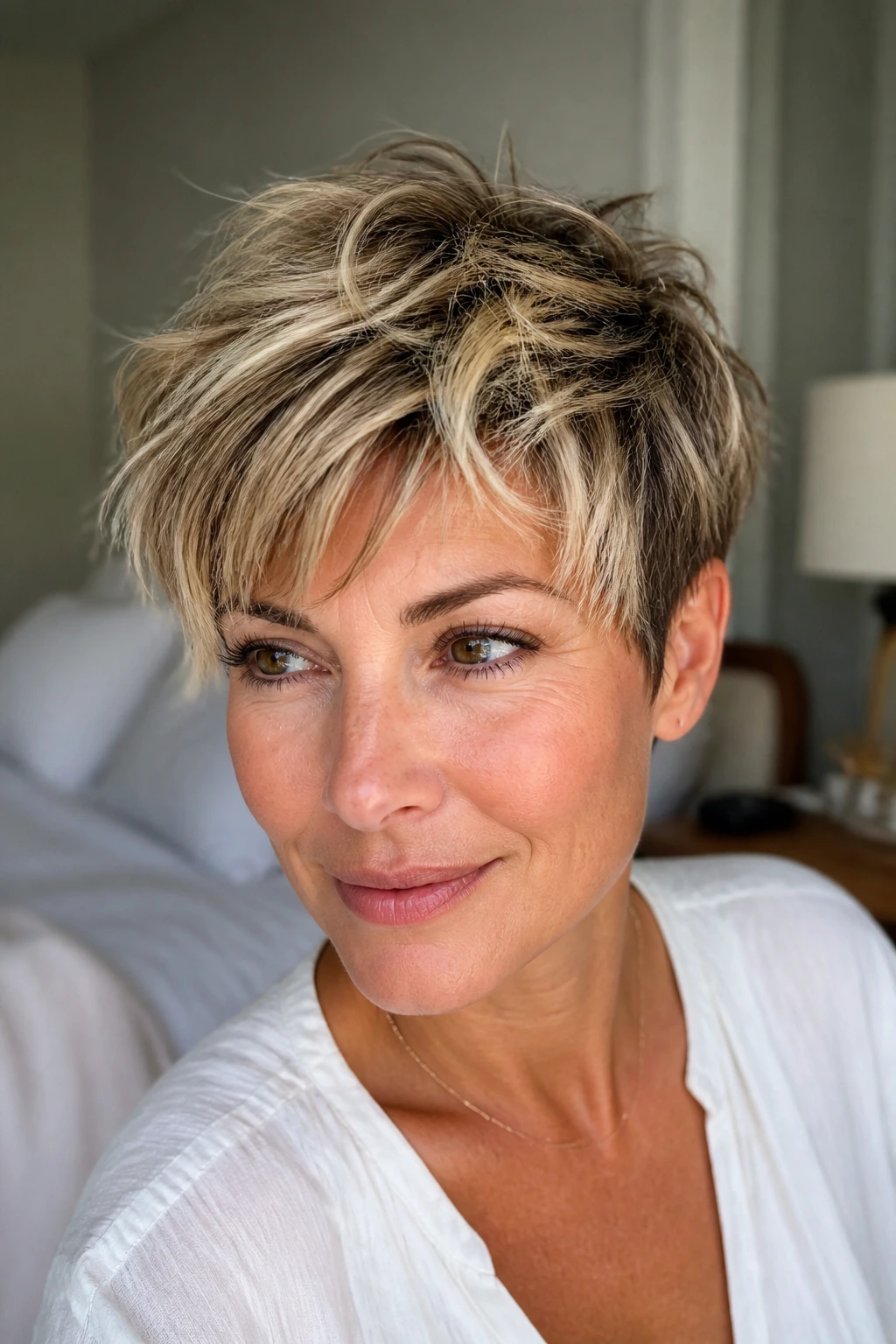
Micro highlights are tiny, but they do a lot of work on short hair. Instead of broad blonde ribbons, they create a fine scatter of brightness that looks especially good once the waves separate. A deeper root underneath keeps the crop from going pale at the crown.
This cut is ideal if you want texture first and color second. The blonde should look sprinkled through the top layers, not painted on in big chunks. It’s subtle from a distance, but close up you can see the detail. That’s the kind of color that makes a short cut feel expensive without trying hard.
16. Soft Ombré Bob With a Darker Base
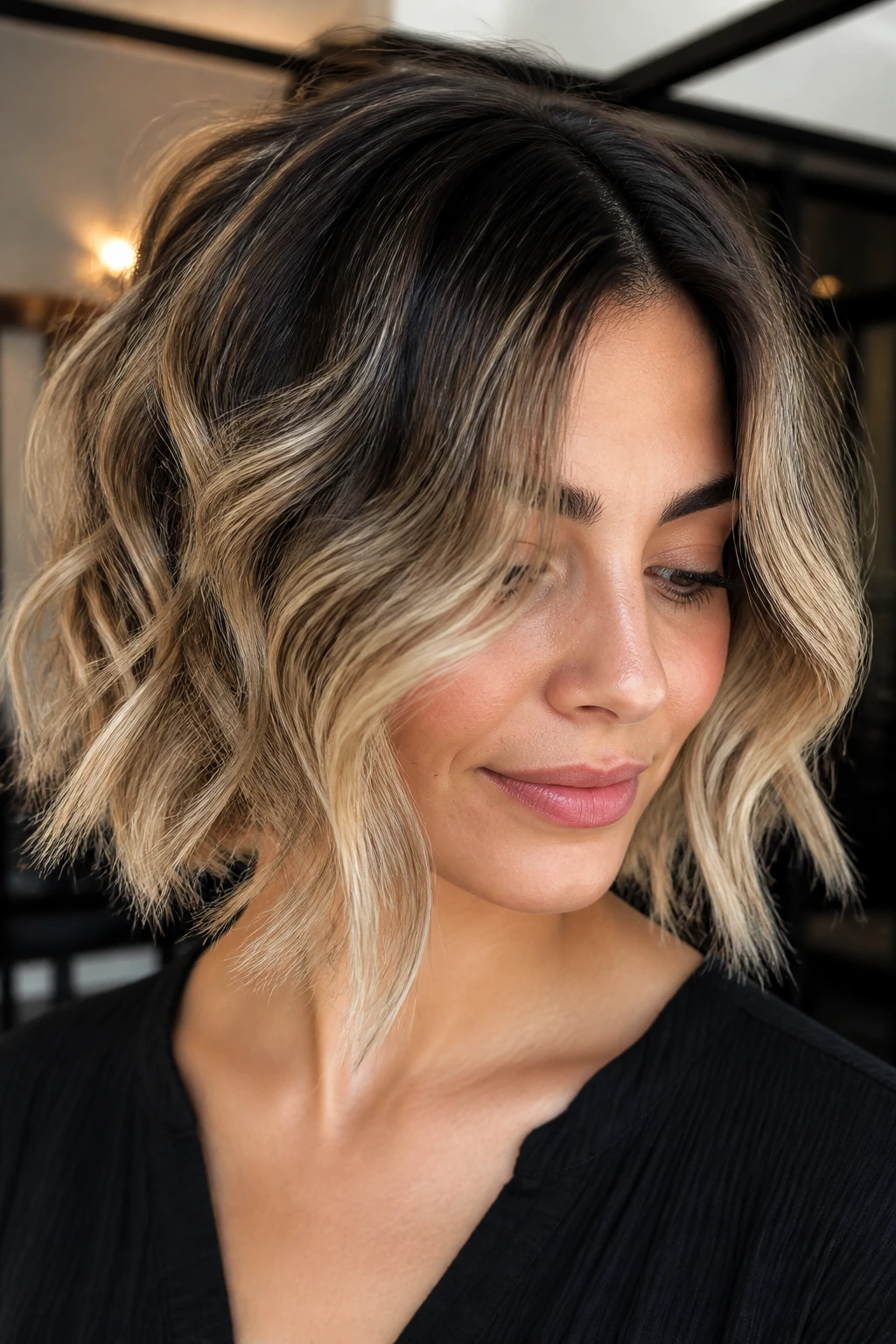
Ombré is not just for long hair. On a short bob, a darker base that shifts into lighter ends can make the cut look softer and more dimensional. The trick is keeping the transition blurred enough that the blonde still feels part of the same head of hair.
I like this when the waves are loose and almost brushed out. The gradient makes the ends look brighter and the crown more grounded. It is also forgiving if you have some natural regrowth. The color is supposed to evolve. That is the whole point.
17. Pearl Blonde Pixie With Lifted Crown
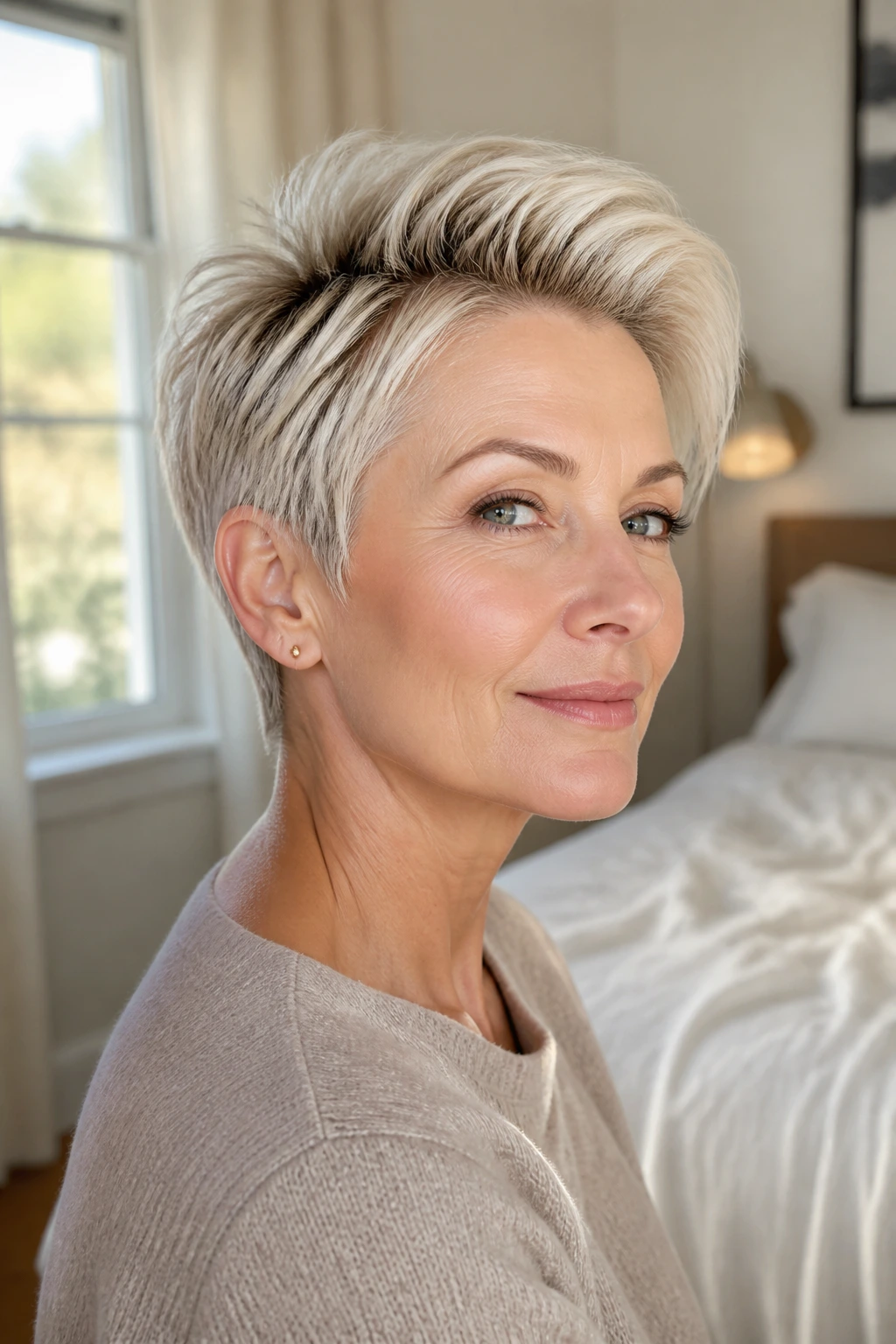
Pearl blonde has a soft sheen that looks especially good on short cuts with a little crown lift. The darker root underneath keeps the shape from turning flat, and the lifted top gives the pearl tone a place to glow without overpowering the face. It’s light, but not flimsy.
This is a good cut for someone who likes polish with a little softness. The waves or bends on top should stay piecey, not brushed into a single sweep. Ask for texture around the crown and a neat neckline. That contrast keeps the pixie from feeling too precious.
18. Dimensional Vanilla Blonde Lob
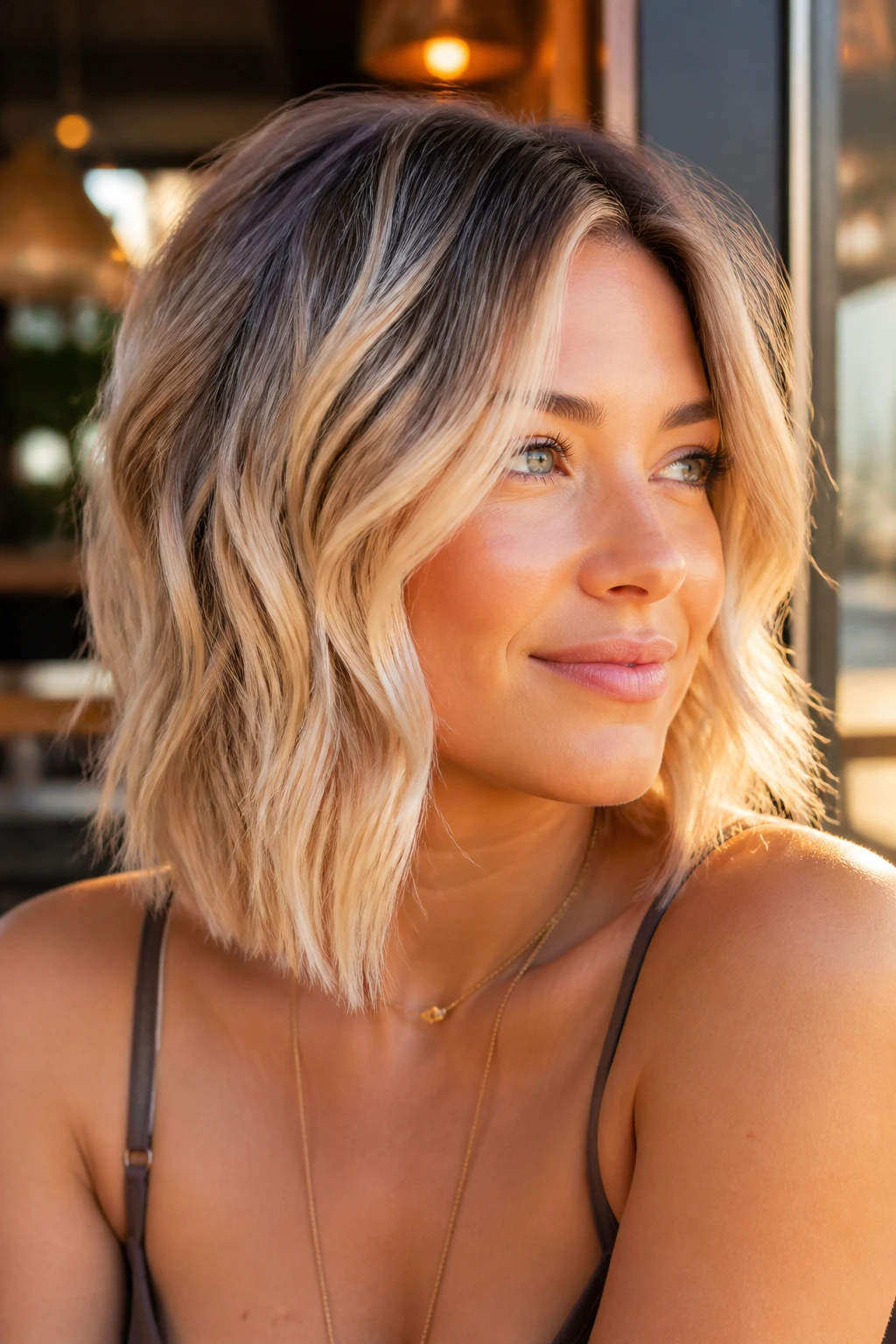
Vanilla blonde can go chalky if it is applied as one flat shade. Dimension fixes that. A darker root, soft beige mids, and a brighter vanilla finish create enough variation that the waves can show off each tone as they move.
This is one of my favorites for medium-density hair. The lob length keeps the shape versatile, and the layered tone gives the hair depth without turning it dark. If your natural root sits around level 6 or 7, you can often keep this look believable for a long stretch. It grows out in a civilized way.
19. Cropped Shag With Shadowed Roots
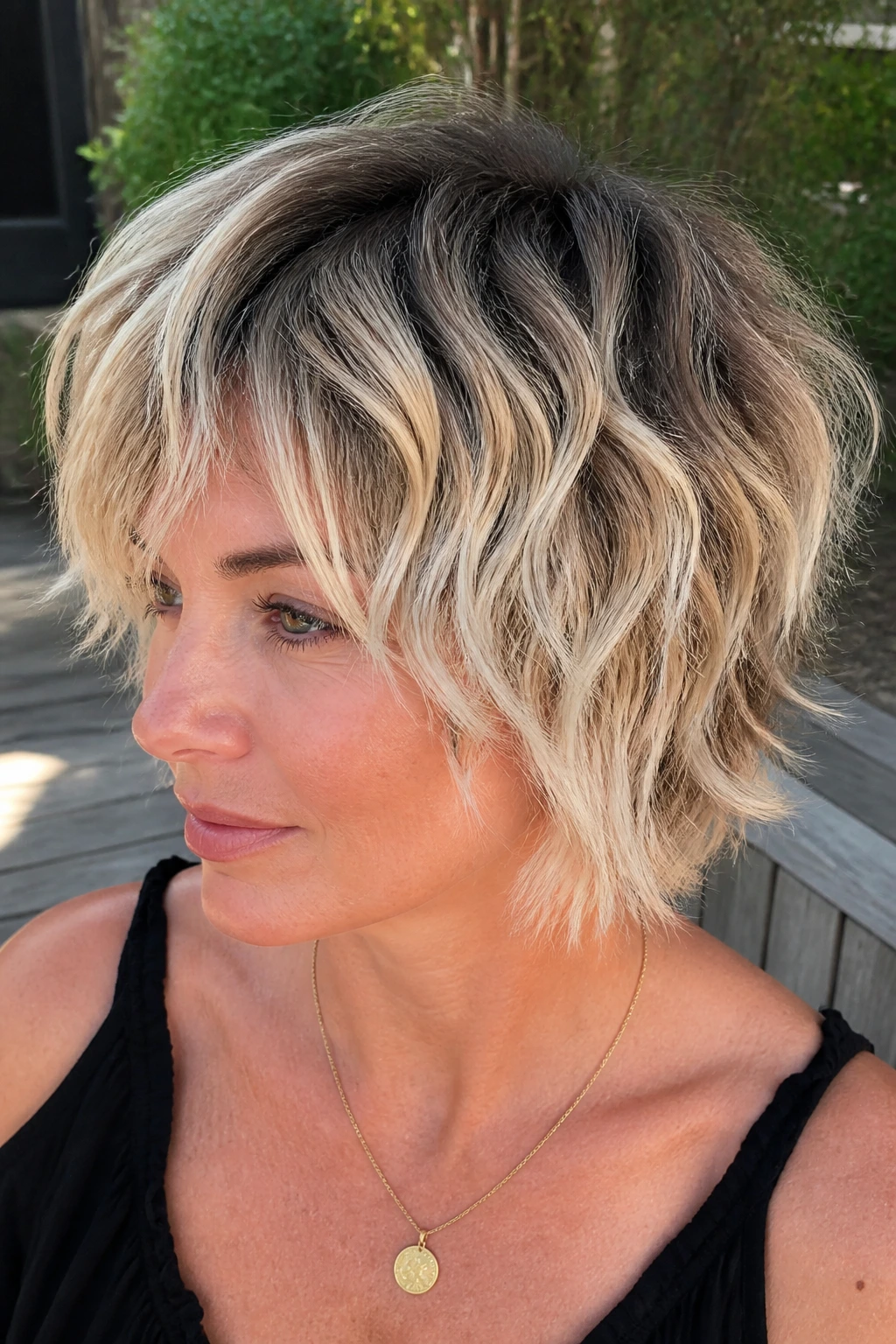
A cropped shag wants a little mess. Shadowed roots make that easier because the top already has built-in depth, so the layers do not need perfect styling to look intentional. The blonde through the ends lightens the outline, which keeps the cut from becoming too heavy.
This is the style for people who do not want to fight their waves every morning. Scrunch it, air-dry it, rough-dry it — it usually survives all three. The shag shape does most of the work. The root shadow just keeps it believable.
20. Rooted Vanilla Blonde Bob
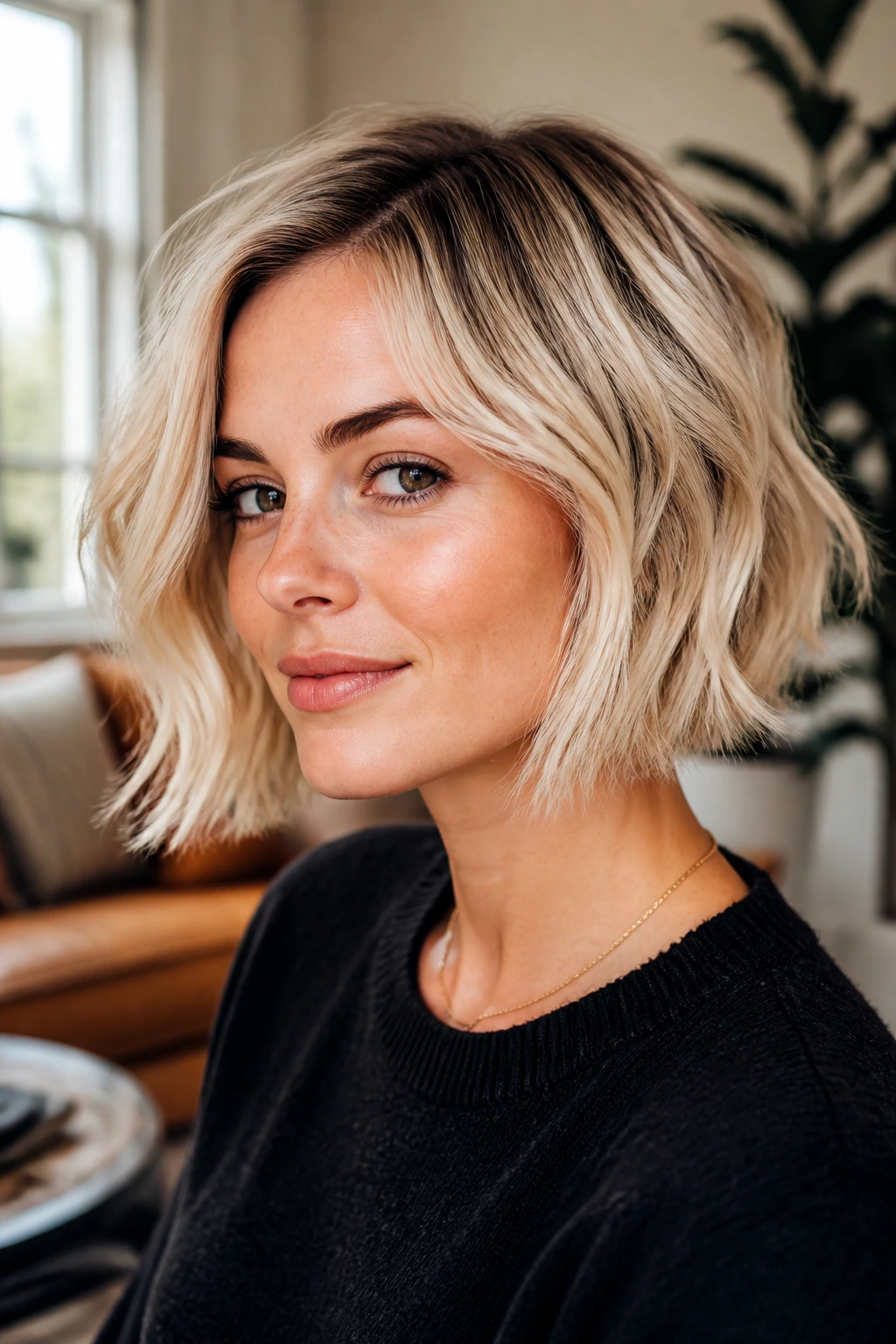
A rooted vanilla blonde bob sits in that sweet spot between soft and structured. The darker root gives the bob a base, while the vanilla blonde brightens the mids and ends just enough to keep the cut lively. On wavy hair, the movement breaks the color into little bands that look richer than they sound on paper.
This is a sensible choice if you want something elegant but not fussy. It’s short enough to feel fresh, yet the root depth means you are not chasing every millimeter of regrowth. Ask for soft internal layering if your waves tend to puff outward. That keeps the bob tucked in better around the jaw.
21. Dusty Blonde Wave Cut
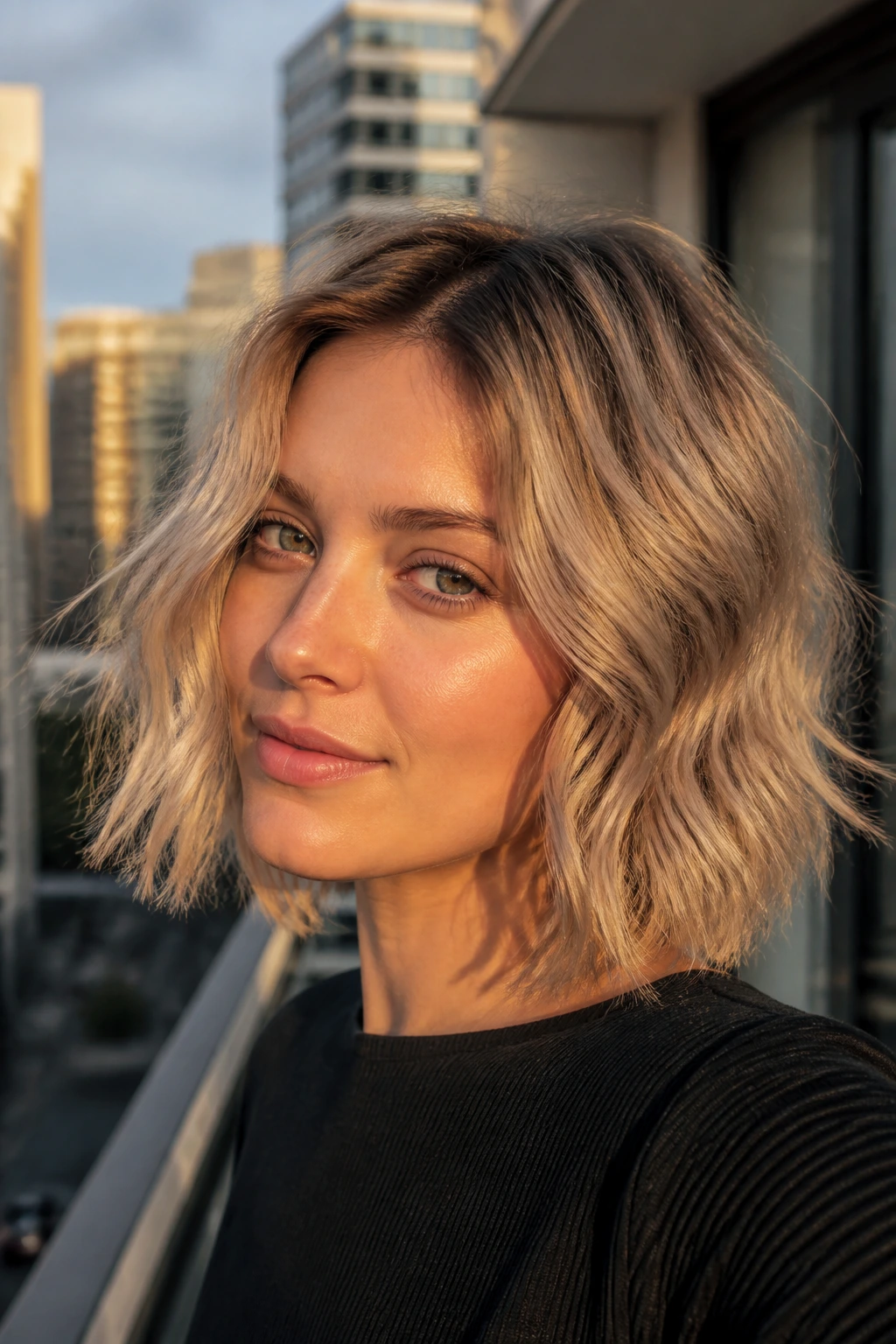
Dusty blonde has a muted, lived-in feel that works well when you want short hair to look expensive without looking loud. The darker root keeps the tone from washing out, and the wave pattern adds enough movement that the color never sits still for too long.
This cut is especially good for hair that is naturally a little rough in texture. The dusty tone hides some of that and turns it into character. Use a light mousse and a diffuser, and the bend will show without turning crunchy. That balance matters more here than a perfect curl pattern.
22. Wavy Bixie With Grown-In Depth
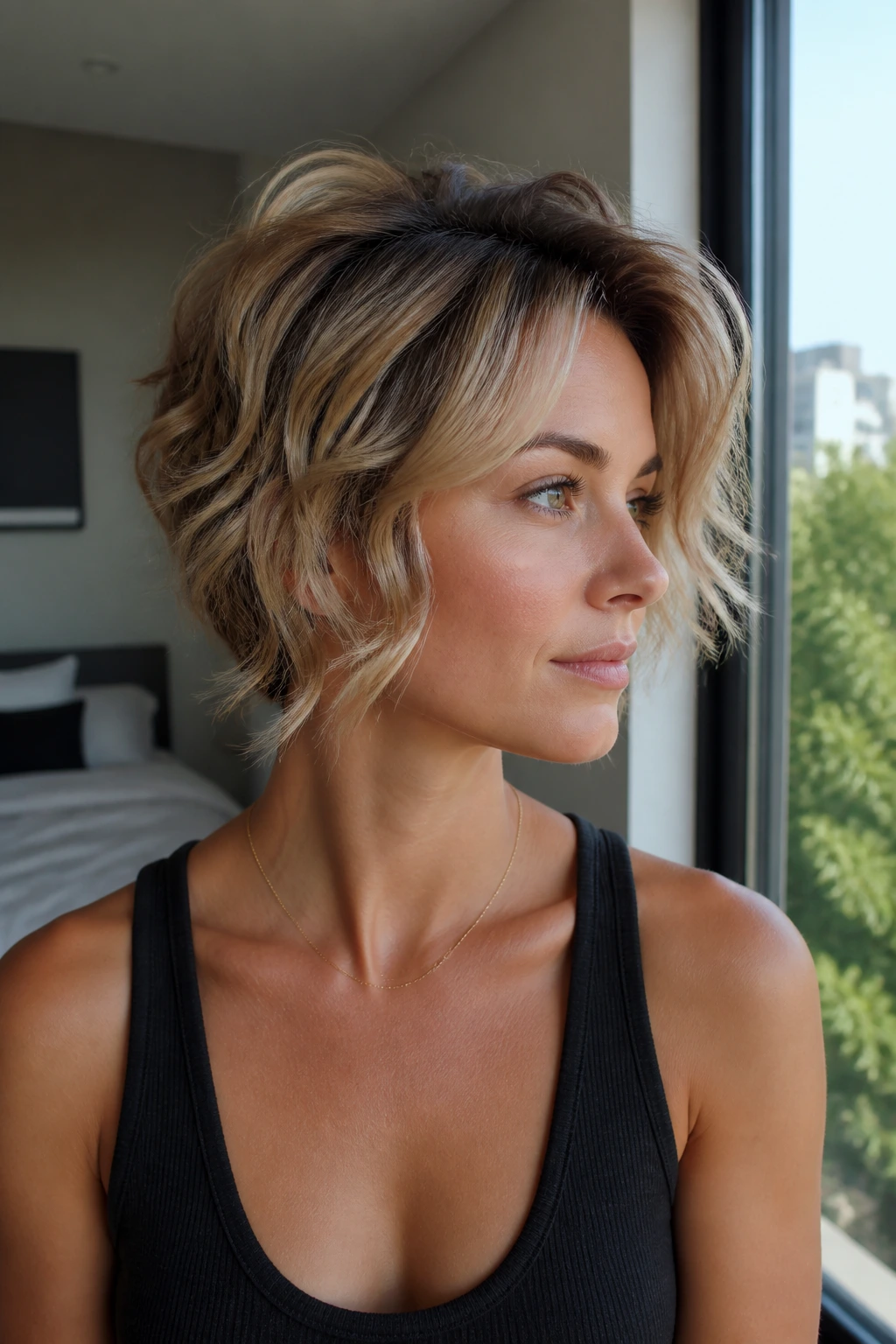
A wavy bixie is one of the easiest places to use a grown-in root on purpose. The shorter layers around the ears and crown need depth anyway, so the darker base looks like part of the cut rather than regrowth. The blonde ends then pop in just enough contrast to keep things lively.
If you hate a high-maintenance salon schedule, this is a smart move. The bixie shape lets you play with texture, and the root depth makes the grow-out softer. It also works well if your hair is fine, because the darker base can make the crown look denser.
23. Beachy Lob With Bright Ends
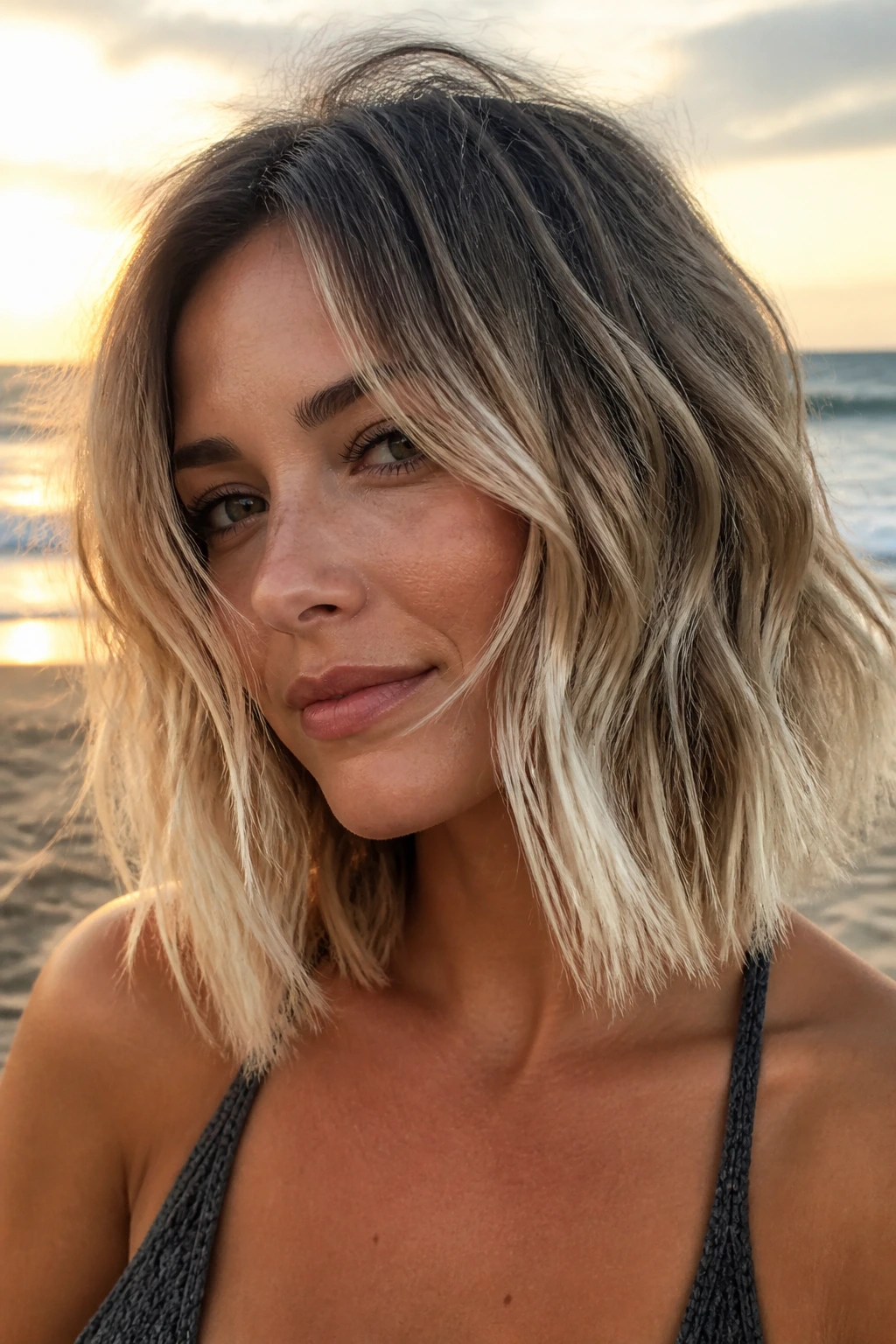
Bright ends on a beachy lob do a nice job of pulling the eye downward, which is useful if your waves tend to puff at the roots. The darker root keeps the top calm, and the lighter ends give the movement something to show off. It’s relaxed, but not lazy.
This style is all about bend, not curl perfection. A wand or diffuser can create the wave, but the real charm comes from the uneven texture. If you want the color to look sun-touched without actually being sun-lightened, this is the lane to stay in.
24. Feathered Blonde Bob
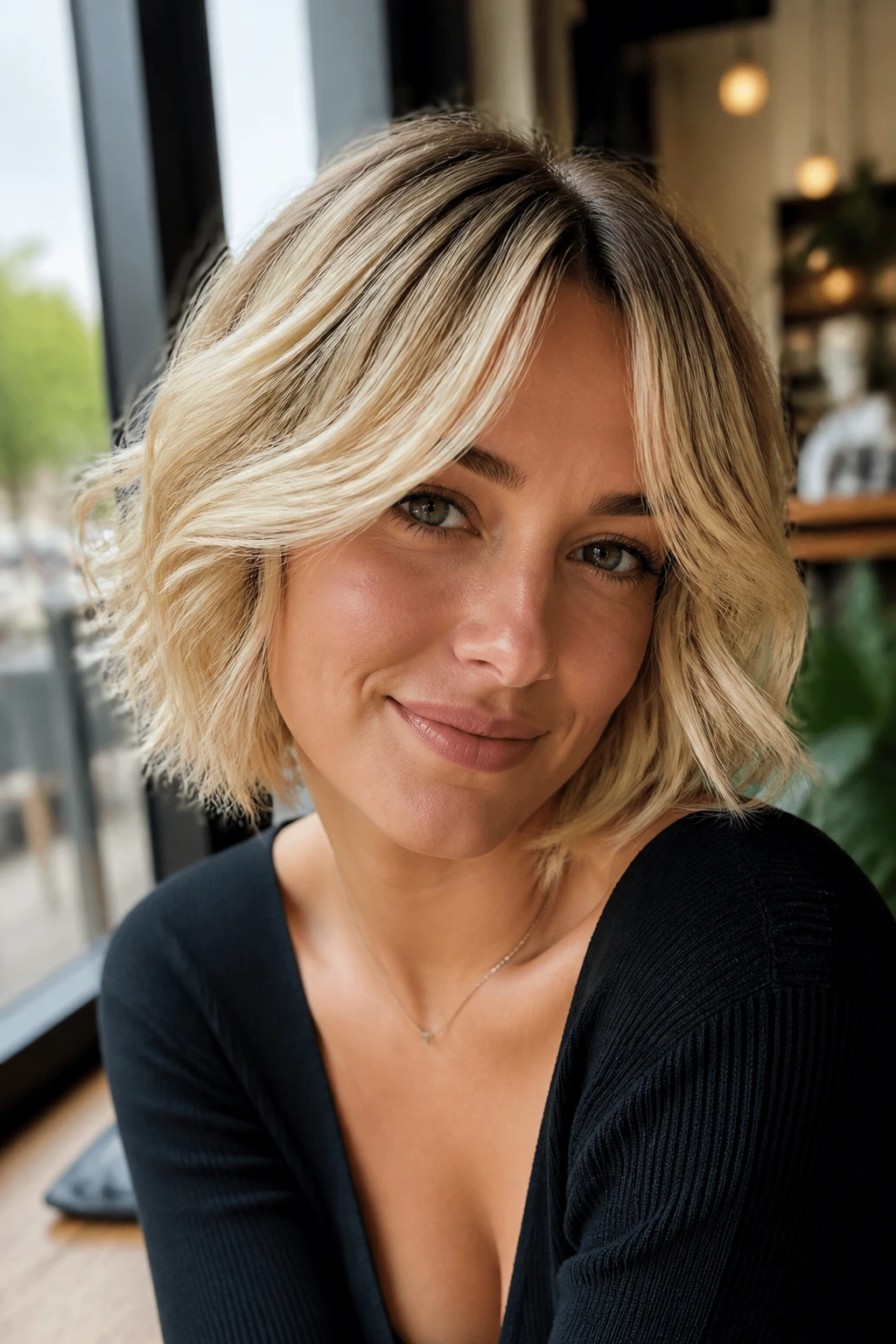
Feathered layers and dark roots are a good marriage. The feathering softens the ends, while the root depth anchors the top so the blonde doesn’t spread outward too much. On wavy hair, the result is airy rather than bulky.
This bob suits people who want movement around the cheekbones and a little softness near the jaw. It’s a friendlier version of a sharper bob, which makes it easier to wear if your waves are thick. Ask for light internal layering and a soft perimeter. That keeps the shape from becoming boxy.
25. Side-Parted Rooted Blonde Crop
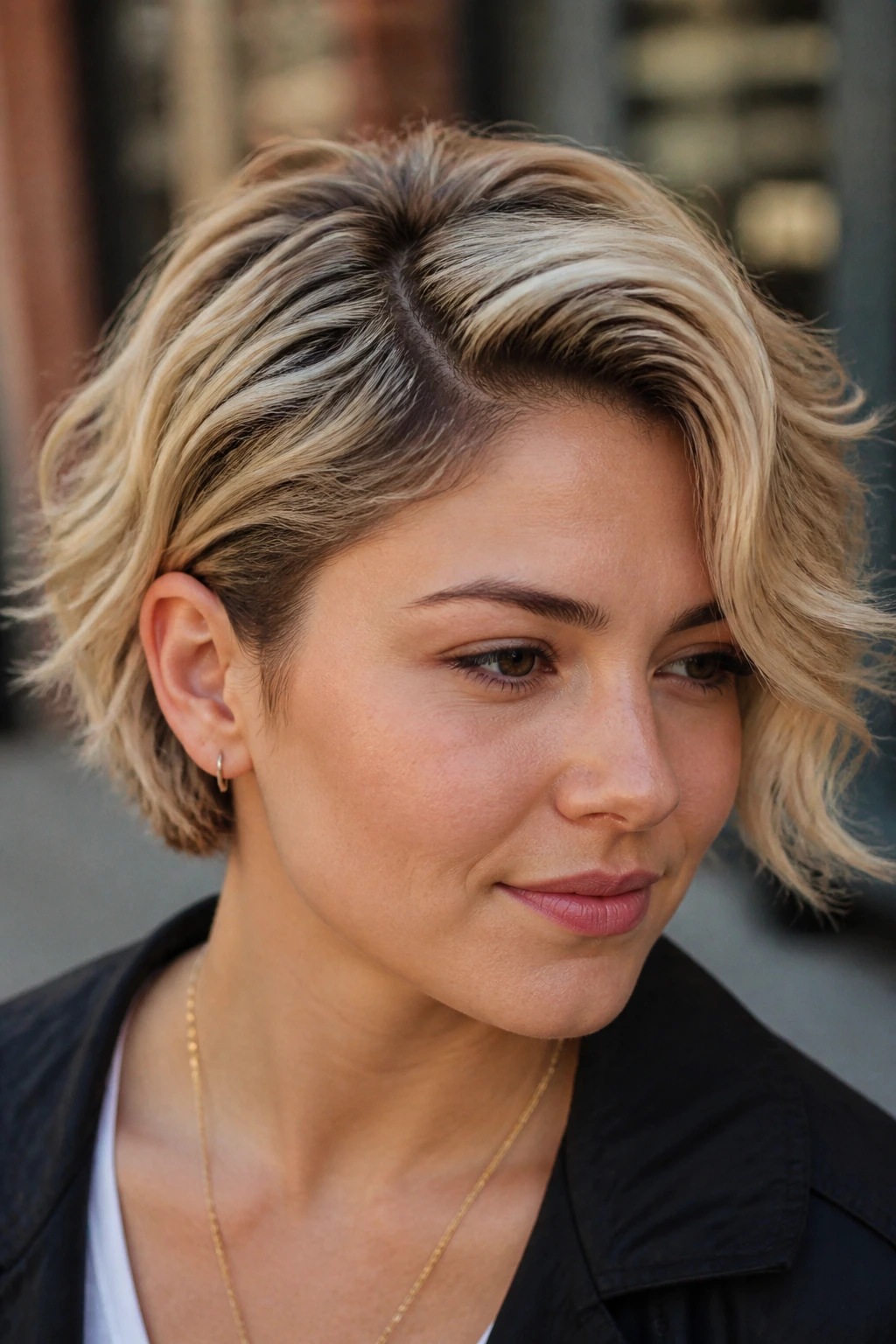
A side part changes the whole mood of short blonde hair. It gives lift on one side and a little shadow on the other, which makes the dark roots look purposeful rather than hidden. The blonde stays bright through the top layers, but the crop still has depth at the base.
This cut is especially useful if your face likes asymmetry. It can soften a strong jaw or add interest to a rounder face. Wavy hair makes the side part even better, because the movement naturally follows the part line. That small shift can make the style feel much less predictable.
26. Grown-Out Balayage Shag
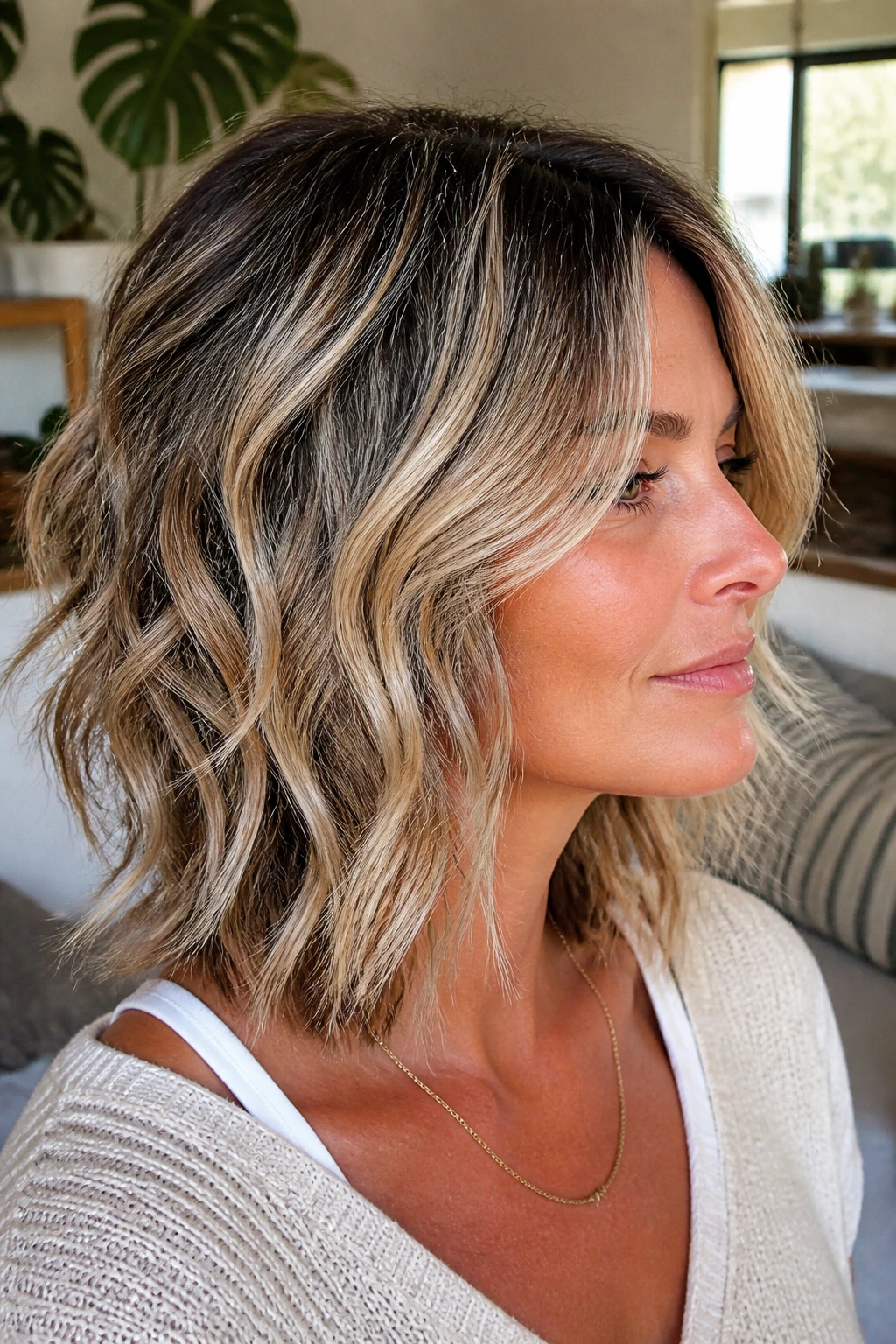
A grown-out balayage shag is for people who like their hair to look like it has already lived a little. The darker root blends into the lighter pieces so smoothly that regrowth becomes part of the story. The shag layers keep the movement messy in a way that reads deliberate.
This is one of the best options if you do not want to schedule your life around color appointments. It looks especially good when the waves are a little uneven and the pieces around the face have softened. The beauty here is not precision. It is texture, depth, and the fact that it can look better on day two.
27. Piecey Champagne Lob
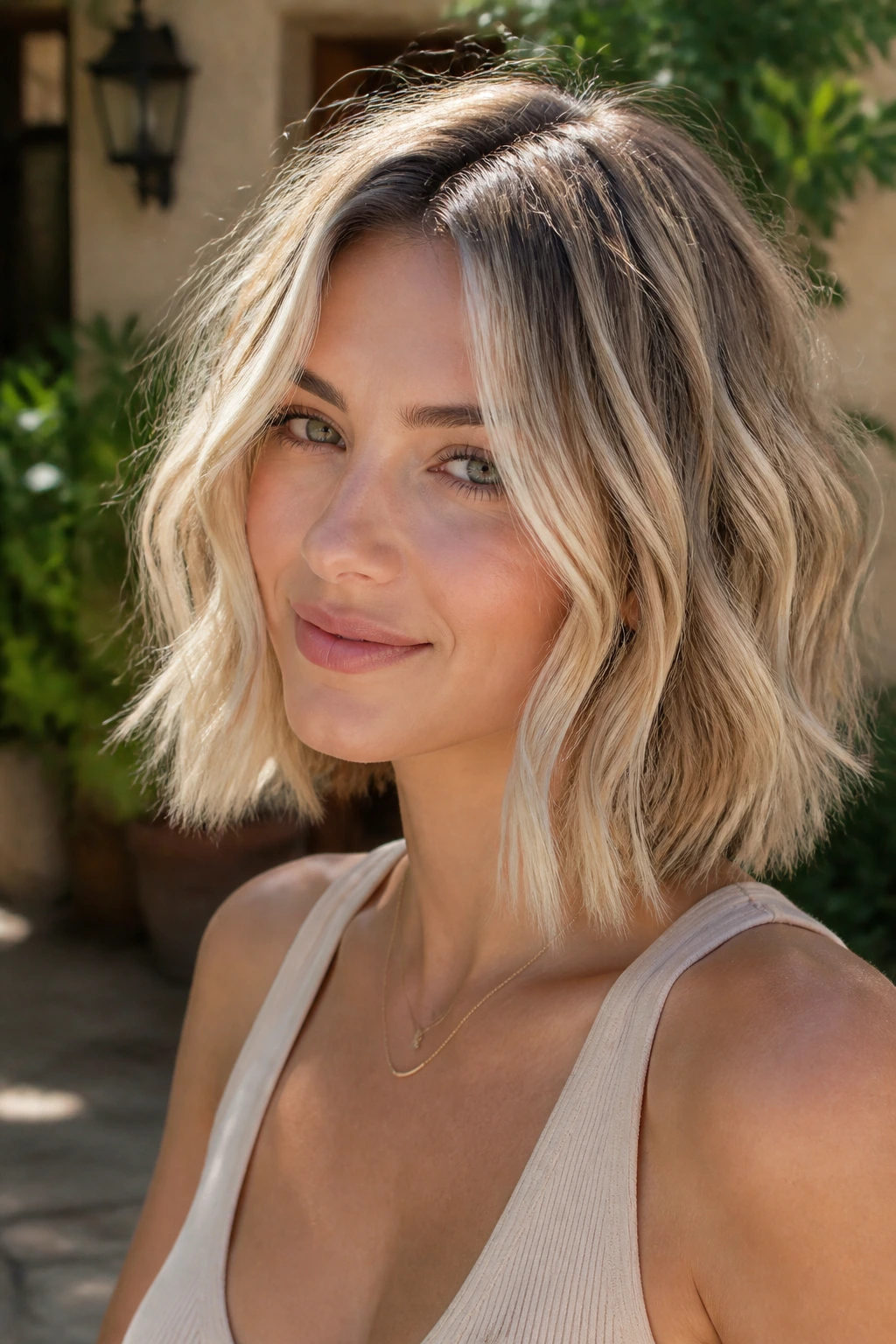
Piecey champagne blonde needs contrast or it can blur out. The root shadow gives the champagne tone somewhere to start, and the piecey styling separates the strands so the blonde shows in sections rather than one solid sheet. That makes the whole look feel lighter without losing structure.
This is a flattering middle ground if you want something bright but not icy. The tone sits in that soft champagne space that usually flatters a wide range of skin tones, especially when the darker root keeps it from getting too pale. A little texture spray is enough here. Too much and it turns sticky.
28. Airy Blonde Wolf Cut
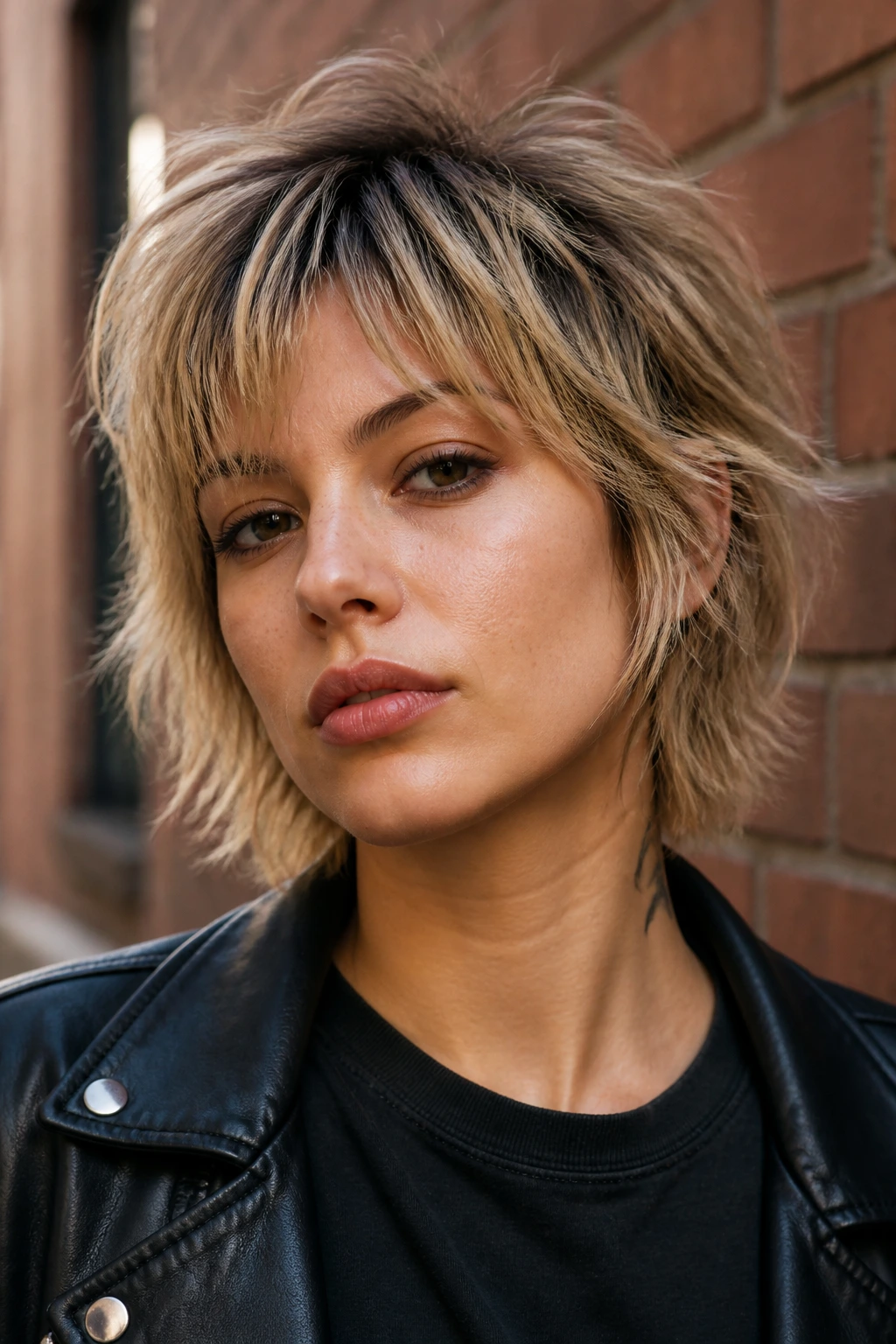
The wolf cut likes disorder, and blonde with dark roots plays right into that. The layers sit higher, the ends sit lighter, and the root depth gives the crown a little weight so the cut does not puff into a cloud. On wavy hair, that combination can look sharp in the best way.
This is not the quiet choice in the group. It has attitude. If you want a short style that feels more rebellious than polished, this is a strong contender. Keep the blonde airy and the root soft, and the whole thing looks more intentional than it sounds.
29. Beige Bob With a Dark Root Frame
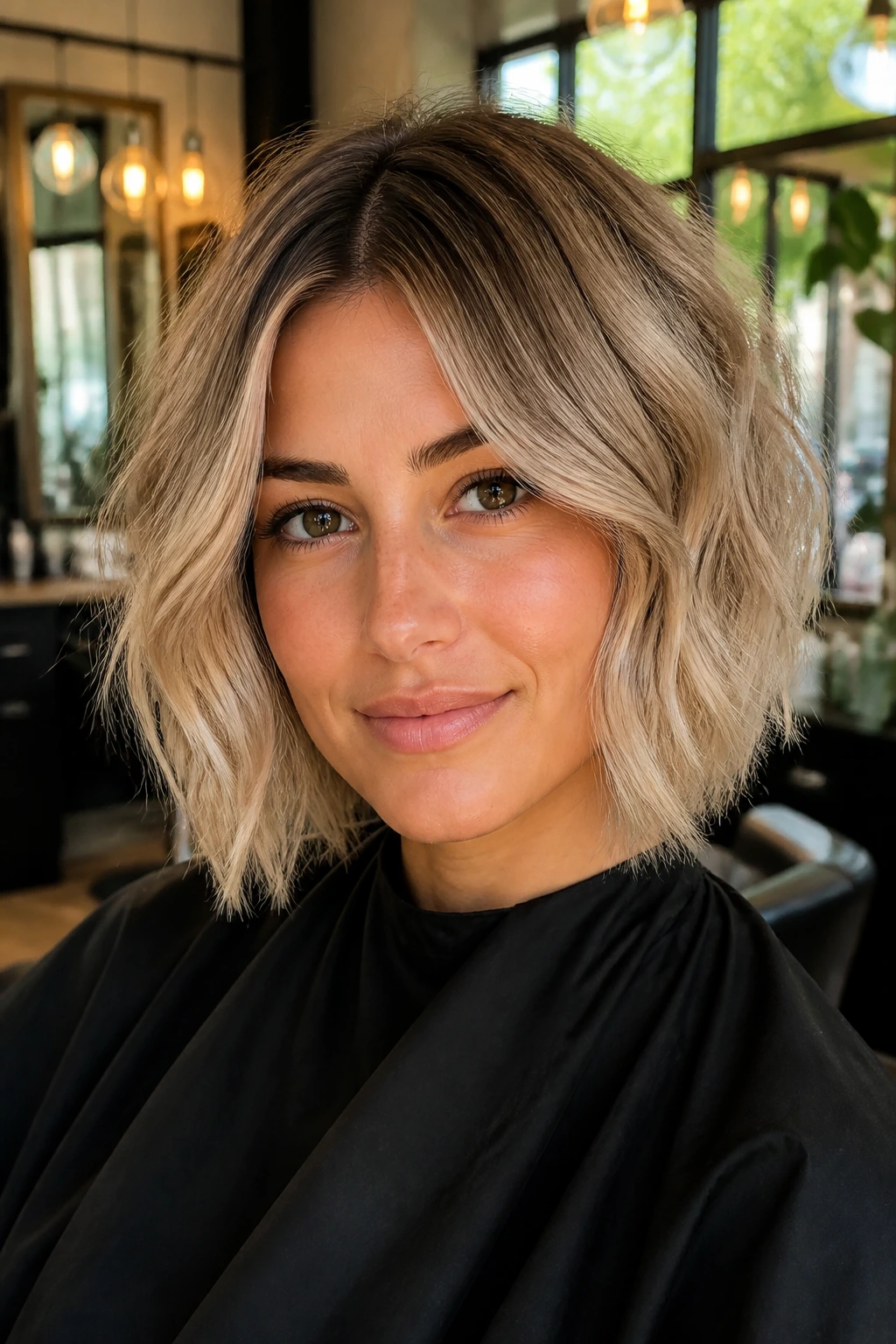
A dark root frame around a beige bob is a nice trick when you want softness with a little edge. The root depth outlines the face and keeps the beige blonde from washing into the skin tone. Wavy hair does the rest by breaking the color into little bends and shadows.
This style works especially well with a center part or a slightly off-center part. The frame at the root keeps the bob grounded, while the beige tone stays creamy and wearable. If your hair is naturally a little flat at the crown, this one gives you visual lift without needing a ton of teasing.
30. Razor Bob With a Root Smudge
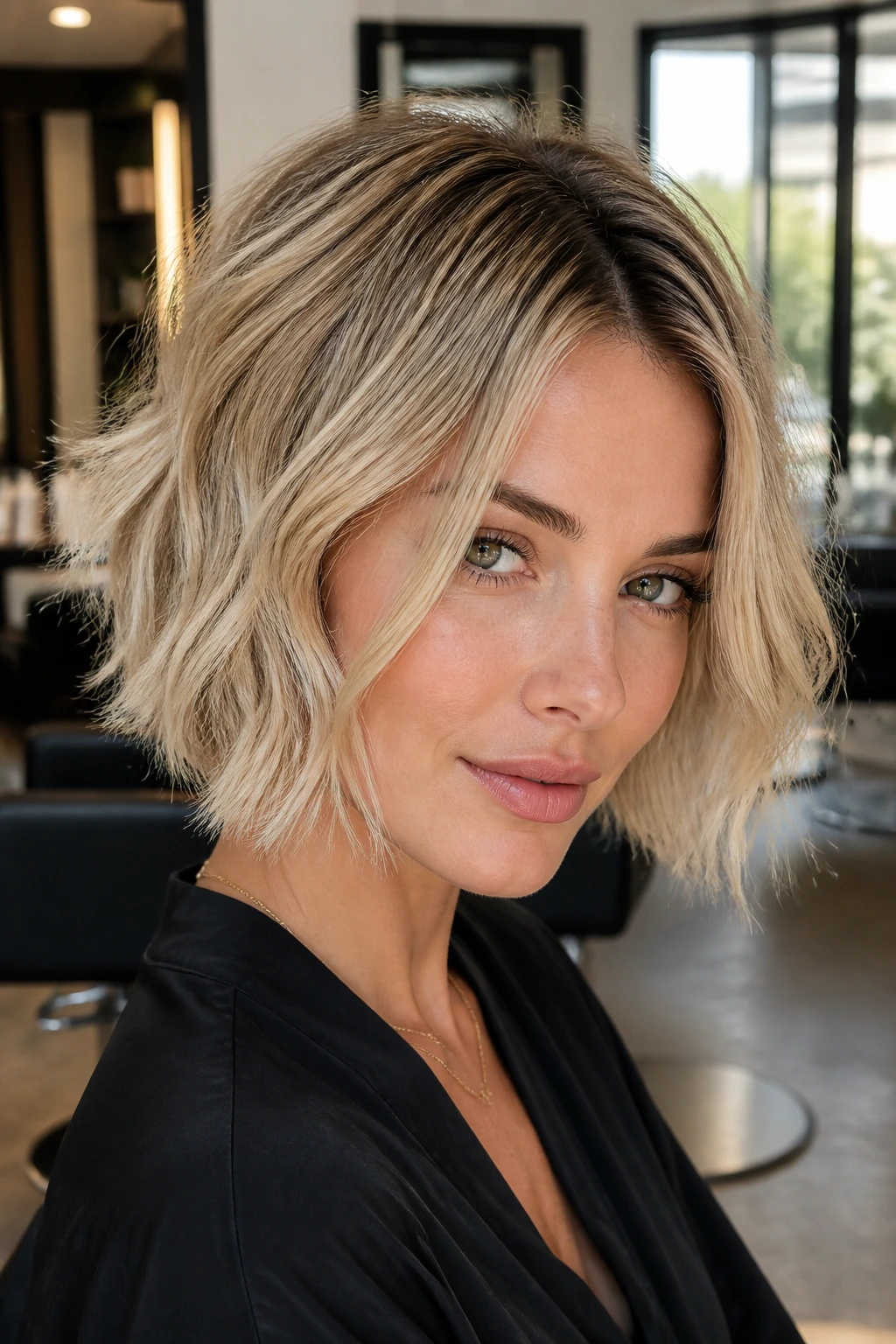
Razor-cut ends bring movement fast, but they need a root color that can match that energy. A root smudge does the job. It softens the scalp area, lets the blond pieces live a little lower through the shape, and keeps the razor lines from looking too stark.
This is a good cut if your hair is fine and you want it to look less heavy. The razor finish removes bulk, and the darker root adds the depth that fine hair often lacks. Keep the styling loose. If you over-smooth this one, you lose the point.
31. Soft Nordic Blonde Waves
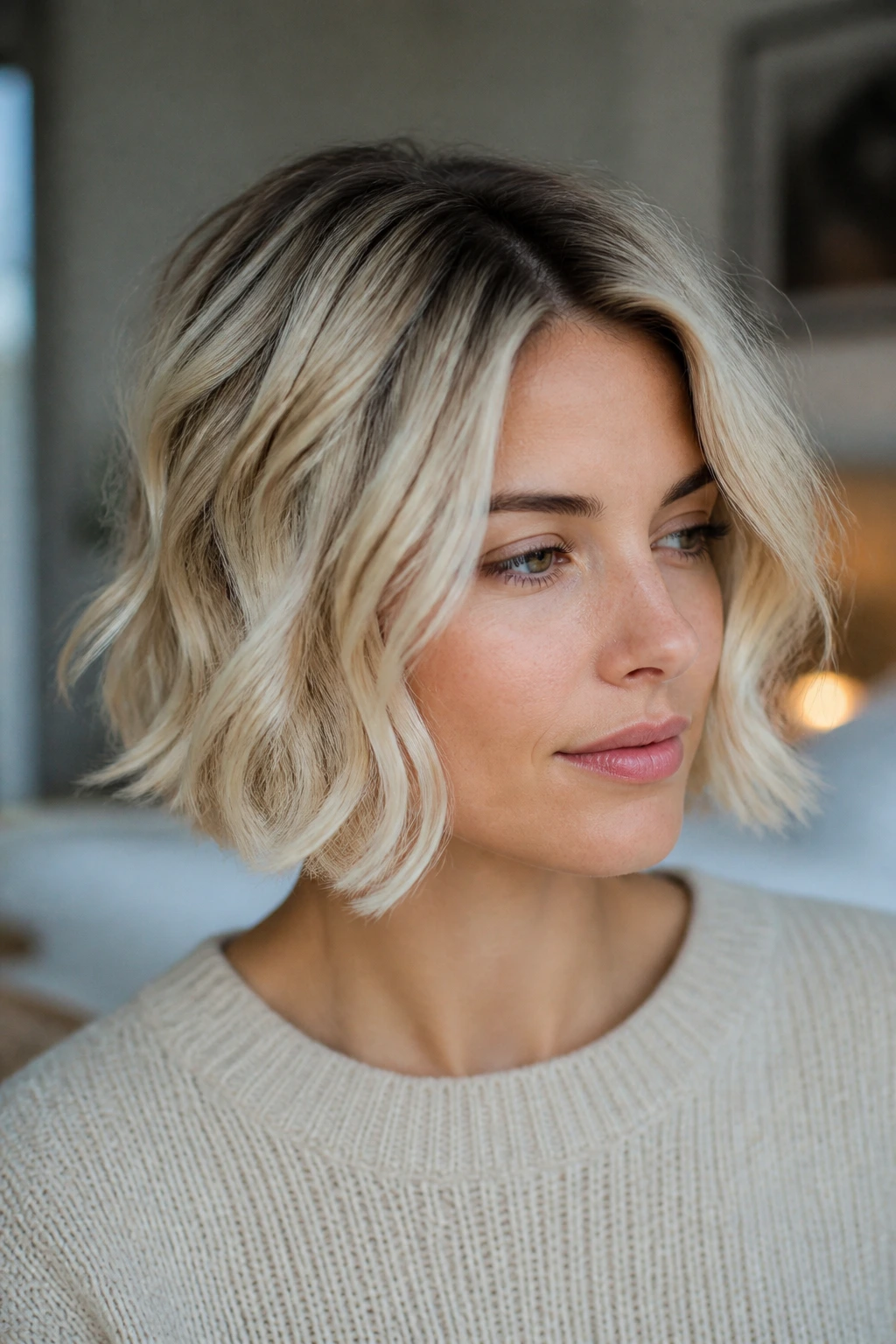
Nordic blonde can look icy and washed out if the root is too pale. A darker root line keeps the color from drifting into one solid block of blonde, and the waves help the cool tone show texture instead of glare. The finish is crisp, but not brittle.
This look works best when the blonde is kept cool all the way through the mids and ends. If you like pale hair with a quiet edge, this is a strong option. It can feel sleek on one day and more undone on the next, which is part of the appeal. The root keeps it anchored either way.
32. Golden Blonde S-Curl Lob
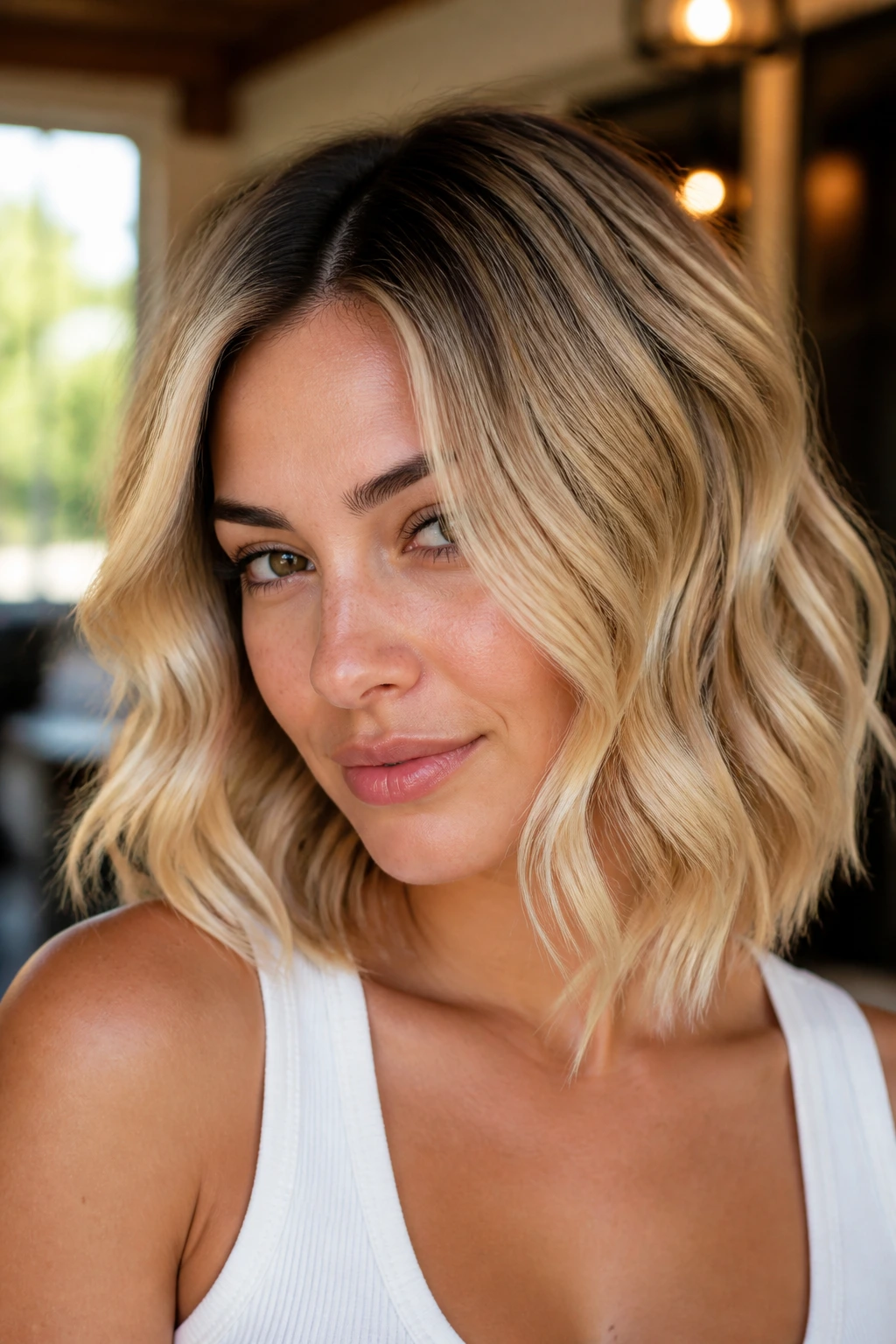
Golden blonde makes short wavy hair look warmer and a little sun-touched, but it needs root contrast to stay from looking brassy. The darker base handles that, and the S-curl styling gives the length a smooth, soft bend that shows off the color shift.
This is the kind of lob that feels friendly on a first glance. It is not trying to be hard-edged. If your skin leans warm or neutral, golden blonde can be a very forgiving tone, especially when the root is left a little deeper. A soft bend with a 1-inch wand works better here than a tight curl.
33. Sleek-Waved French Crop
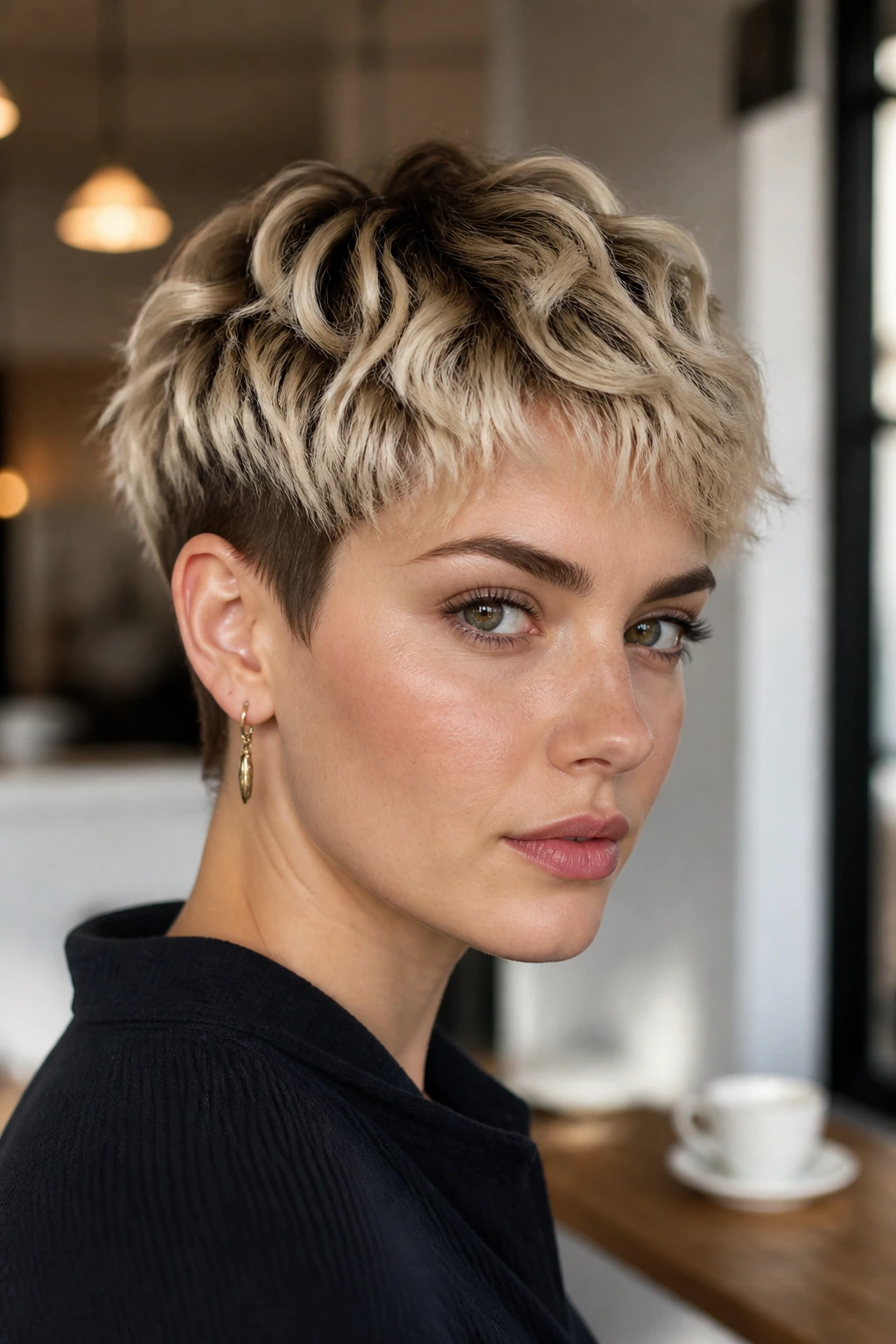
A French crop does not have to mean flat hair. With a little wave through the top and a deeper root for definition, it can look sharp and easy at the same time. The blonde stays bright in the lengths, but the root line gives the crop a tailored shape.
This one suits people who like a cleaner outline. Think less shag, more controlled wave. It pairs well with strong brows, simple makeup, and a good lip color because the hair itself stays restrained. The rooted blonde keeps the whole thing from looking overly severe.
34. Sunset Blonde Wavy Bob
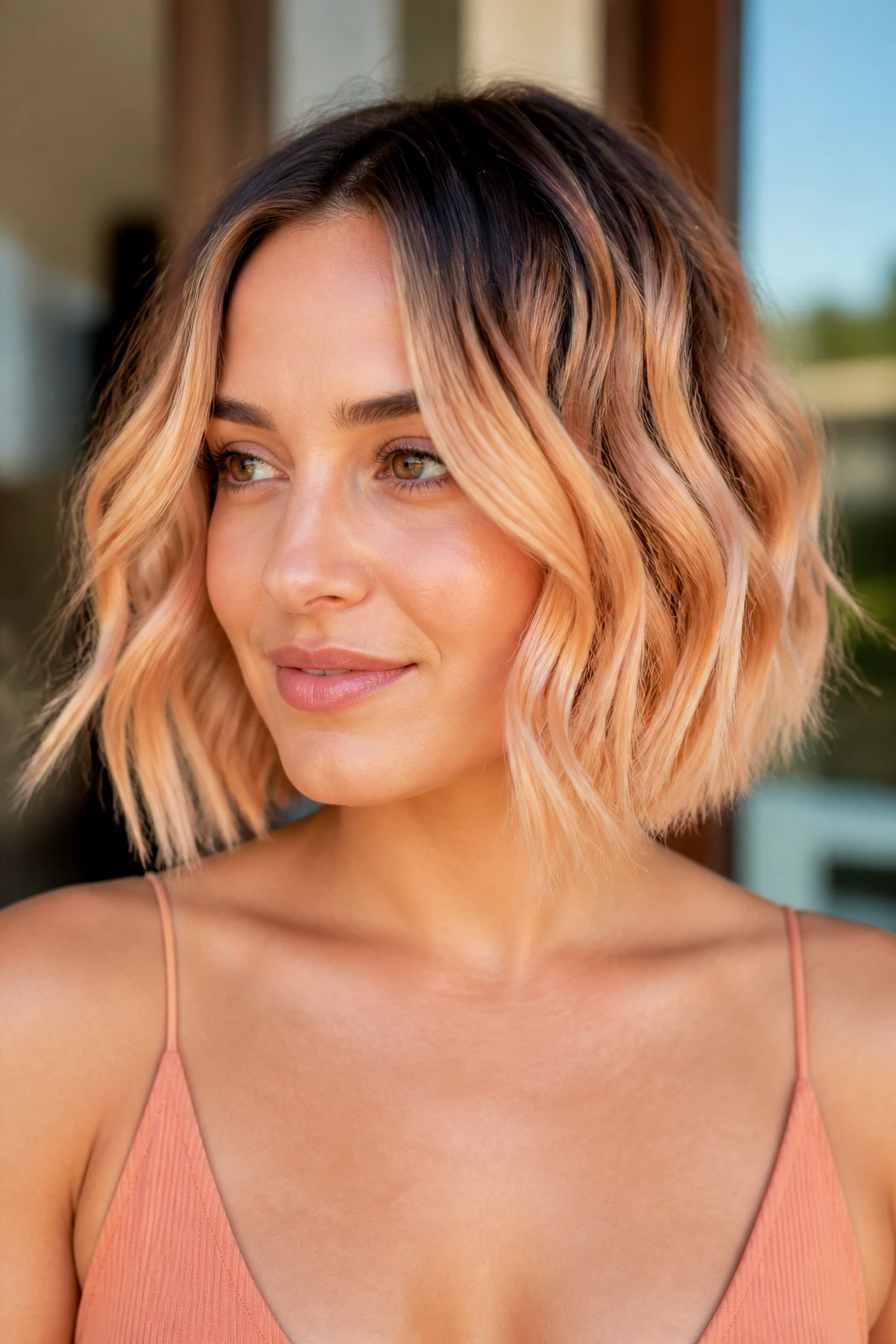
Sunset blonde leans into beige, gold, and a hint of peachy warmth, which sounds decorative until you see it on short wavy hair. The darker root keeps those warm tones from flooding the whole head, while the waves let the colors blend in a way that feels soft and bright at the same time.
I like this when you want dimension without going too cool or too pale. It has a bit of warmth, a bit of glow, and enough root depth to keep the bob grounded. On a day with no styling time, it still looks layered. That’s a useful trait.
35. Short Blonde Shag With Dark Roots and Face Framing
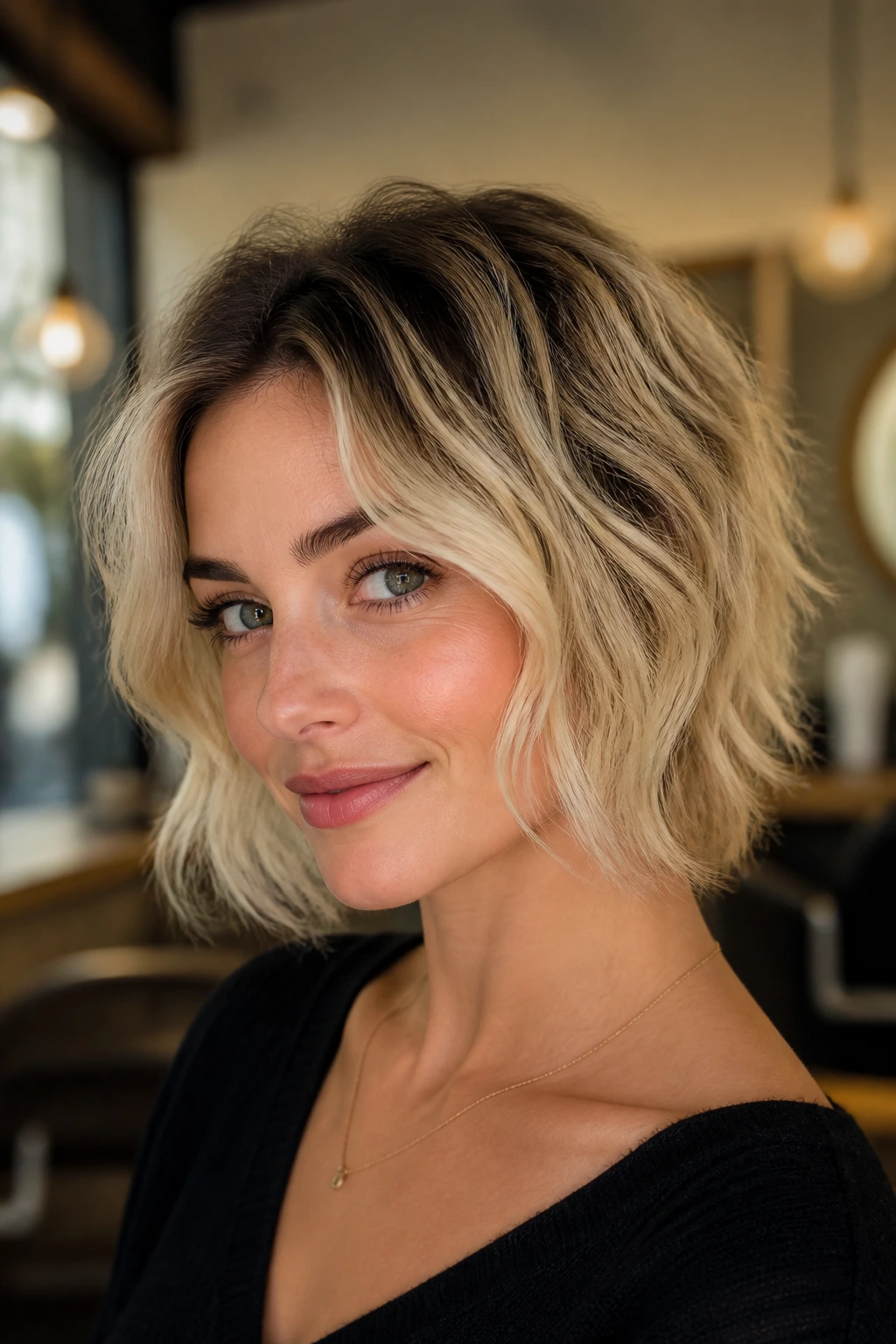
This is the style that ties the whole idea together. The shag layers give short blonde hair movement, the dark roots hold the shape at the crown, and the face-framing pieces make the blonde land where it matters most. It’s the least fussy way to wear short blonde hair with dark roots for wavy hair and still look deliberate.
If you want one cut to show a stylist, this is an easy one to explain: keep the root deeper, brighten around the face, and let the waves do the rest. It works with loose texture, it grows out well, and it does not need a perfect finish to look good. That last part is worth a lot.
Essential Tools and Products for Styling Short Blonde Waves
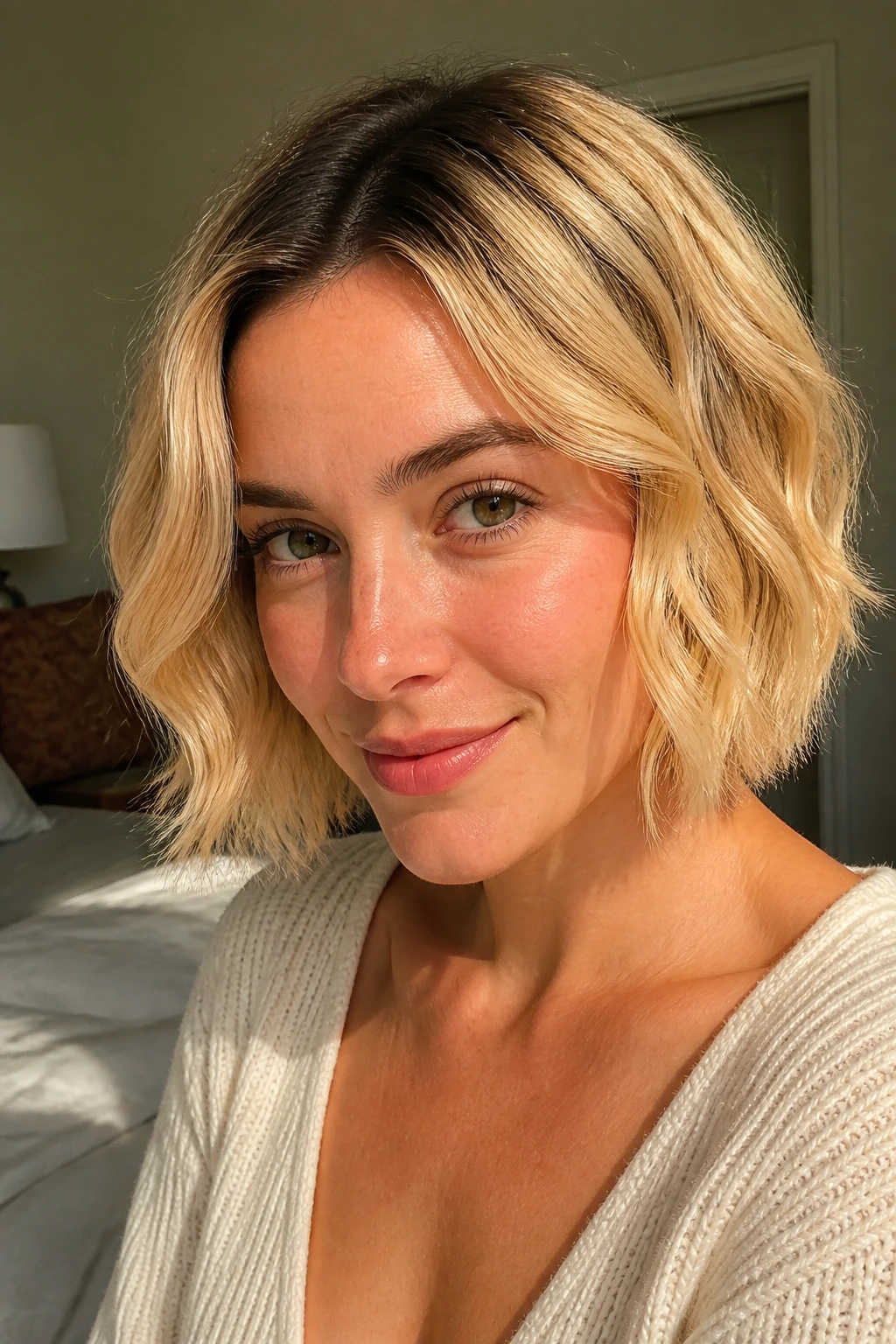
A good cut helps, but the wrong tools can flatten the whole thing in ten minutes. Short blonde wavy hair tends to look best when you keep product light at the root and a little more controlled through the mids and ends. Heavy cream near the scalp is a fast route to collapse.
- Heat protectant spray: Use this before any diffuser, wand, or flat-iron touch-up; bleached hair does not forgive repeated heat without help.
- Volumizing mousse: Work a walnut-sized amount through damp roots to keep the crown from going limp.
- Lightweight leave-in conditioner: Apply from the ears down so the blonde stays soft without getting greasy at the top.
- 1-inch curling wand or flat iron: Good for bending the ends and refreshing the wave pattern without making tight ringlets.
- Diffuser attachment: The easiest way to keep waves from blowing apart while still adding lift.
- Microfiber towel or T-shirt: Less roughing up means less frizz on bleached, wavy lengths.
- Wide-tooth comb: Better than a brush for distributing product through wet hair.
- Texture spray or dry shampoo: Useful on day two or three when the roots need lift and the style needs a little grit.
- Purple or blue shampoo: Keep it on hand, but use it sparingly so the blonde does not go dull or gray.
- Gloss or toner treatment: Helpful when the blonde starts to drift brassy or flat between salon visits.
How to Style and Refresh Short Blonde Hair With Dark Roots
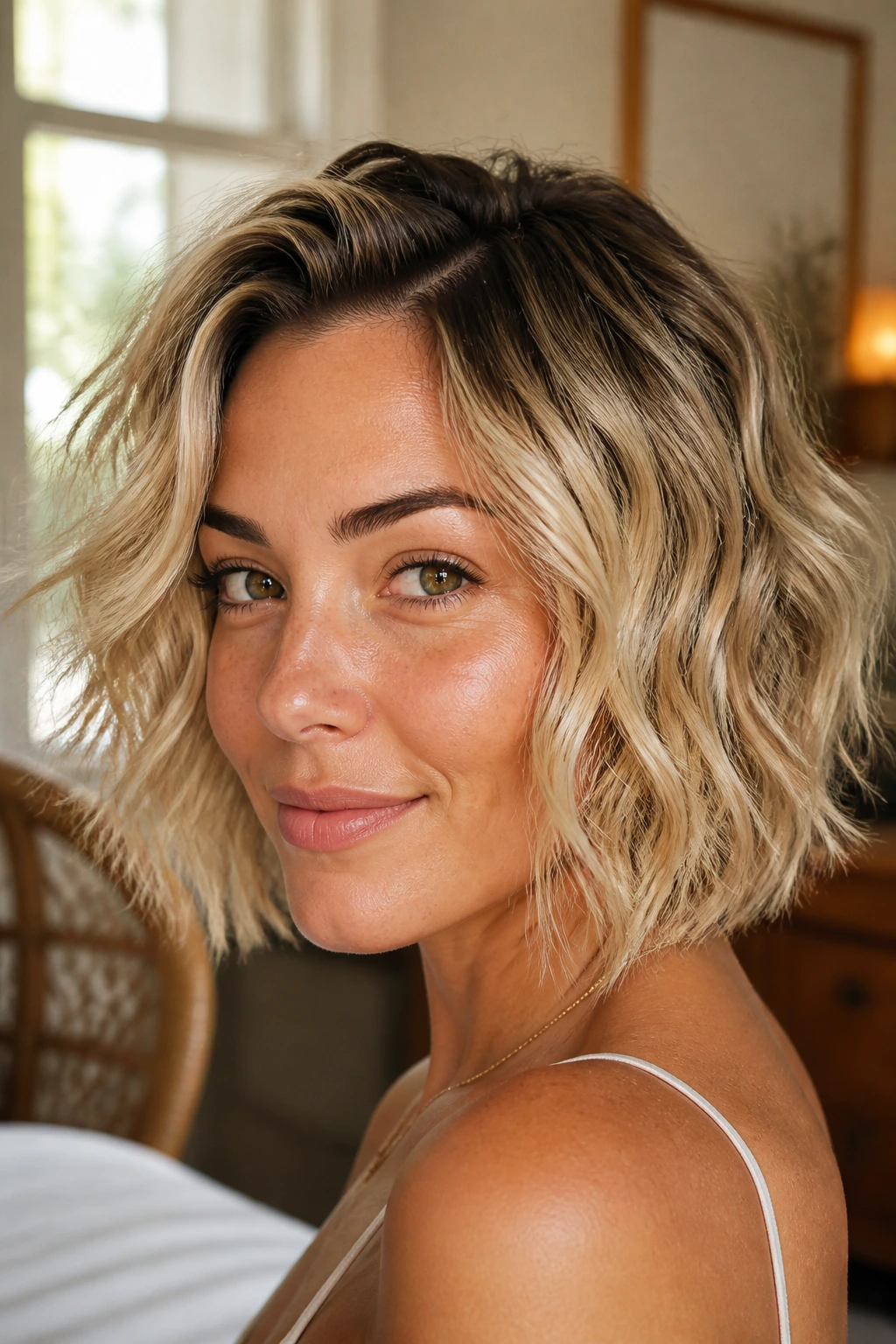
The quickest way to ruin this kind of cut is to overwork it. Wavy short blonde hair usually needs less heat than people think, not more. Start with mousse at the roots, leave-in through the mids, and a small amount of cream on the ends. That order matters. If you put the richest product near the scalp, the crown falls before lunch.
For a clean first-day finish, diffuse on low to medium heat until the hair is about 80 percent dry, then stop. Let the rest air-dry so the wave pattern keeps some air in it. If you want more shape, bend only the outer pieces with a curling wand, leaving the last inch straighter. That keeps the style from looking overdone.
Day two is where rooted blonde really earns its keep. A mist of water, a touch of texture spray, and a few squeezes at the ends usually bring the wave back. If the crown collapses, dry shampoo at the roots can help, but don’t pile it on. A little goes a long way on short hair, and too much turns blonde powdery in a hurry.
Common Mistakes That Make Rooted Blonde Look Stripey or Flat
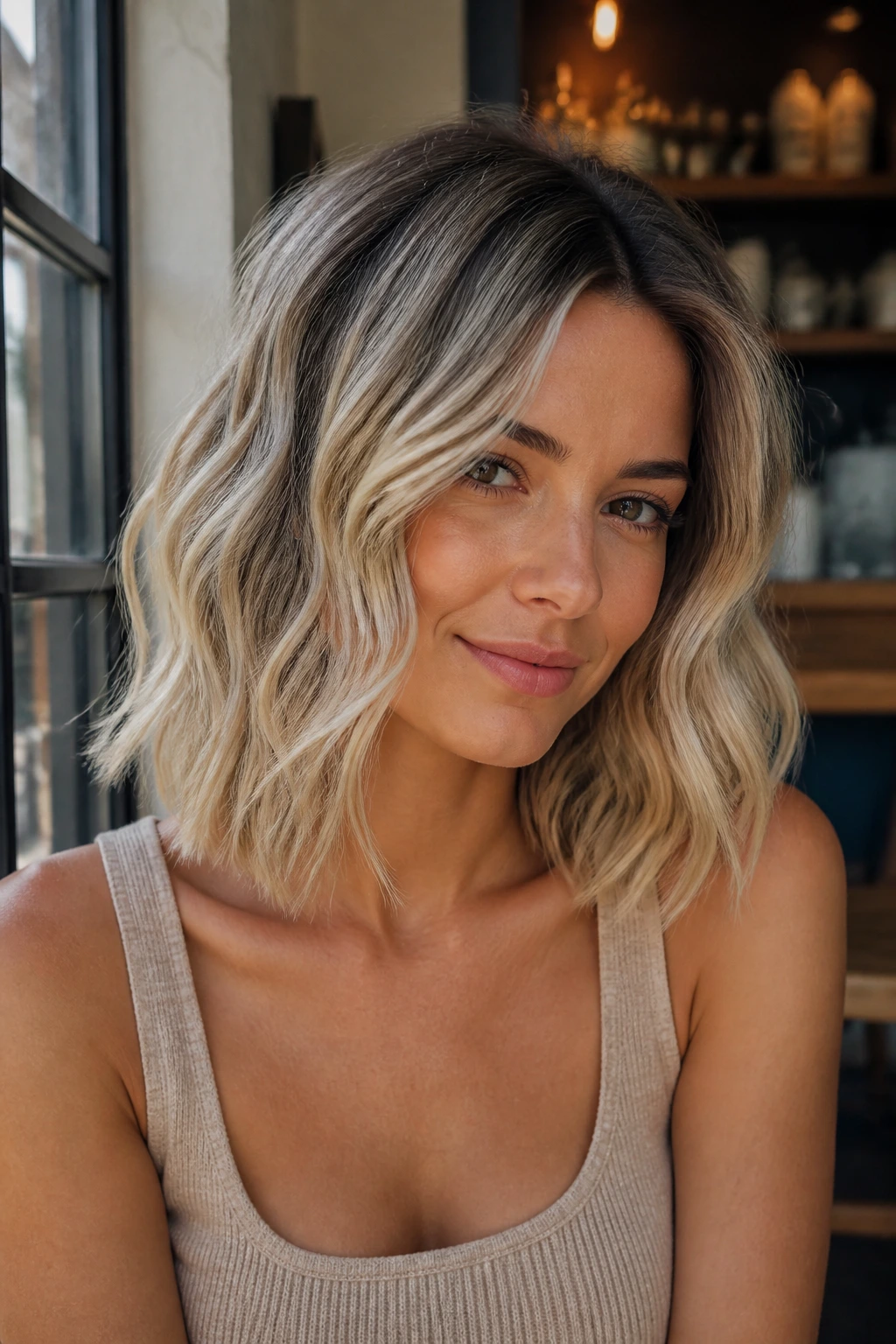
The first mistake is making the root too light. If the root and mids are nearly the same shade, short waves lose their shape and the color starts looking muddy instead of dimensional. Ask for a shadow root or root smudge that is one to two levels deeper than the blonde through the mids.
Another one: choosing a blonde tone that fights your base color. Ash on top of warm roots can look streaky. Warm blonde on top of very cool roots can look brassy. The fix is not guessing harder. It is asking for a toner that sits in the same family as your skin tone and your natural base.
People also load too much product into wavy short hair. That makes the ends hang down and the crown collapse. Use less cream than you think, and keep the heaviest product off the first inch at the scalp. If the style needs more grip, add texture spray after drying instead of more conditioner before.
Overusing purple shampoo is a sneaky problem. A blonde that turns chalky or gray usually got there one wash too many. Keep purple shampoo as a maintenance tool, not a daily cleanser, and rinse it quickly if your hair is porous.
Variations and Alternatives to Try
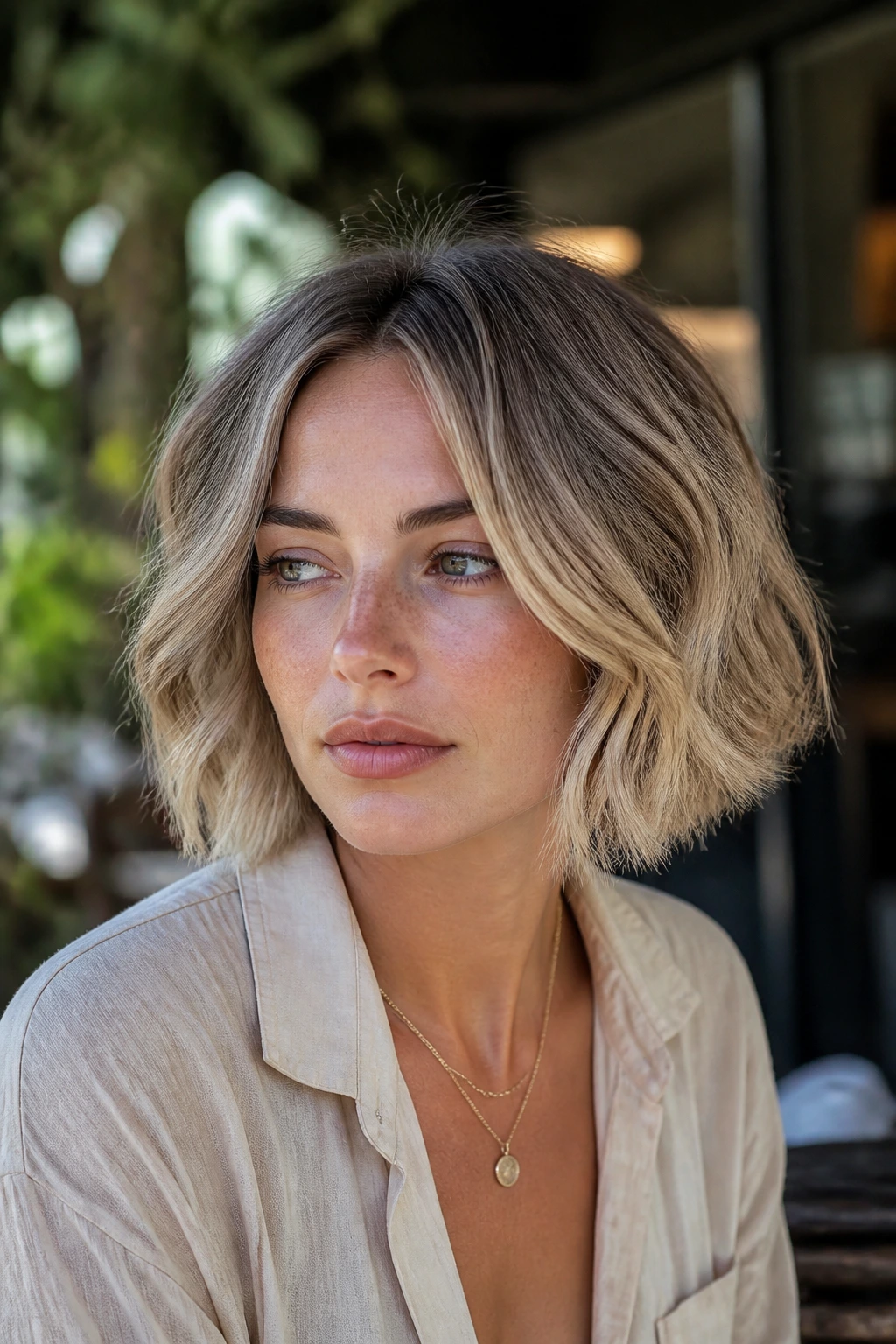
Cool Ash Edit: Push the blonde toward ash, pearl, or icy beige if your skin likes cooler tones. Ask for a softer root shadow so the cool ends do not look disconnected from the scalp. This version works well on sleek bobs and sharper bixies.
Honey Glow Version: If you want warmth, lean into honey, butter, or sunset blonde with a slightly deeper root. The warmth makes wavy hair look soft and touchable, and the root keeps it from going yellow at the crown. It’s a nicer choice than it sounds on paper.
High-Contrast Face Frame: Keep the root darker and place the brightest blonde around the face and part line. This works especially well on short cuts because the face frame does the heavy lifting without needing a lot of length. If you like bold but tidy color, this is the move.
Low-Maintenance Grow-Out Blonde: Ask for balayage, a blurred root, and softer blonde ends instead of full saturation. The color will grow out with less drama, and the waves will keep the dimension moving. It’s the right answer if you hate seeing a hard regrowth line.
Edgy Razor Texture: Pair a razor bob, bixie, or shag with a root smudge and piecey blonde highlights. The texture will look sharper, the contrast will feel more intentional, and the cut will hold up better when styling is rushed. This one has the most attitude of the bunch.
Maintenance, Toning, and Grow-Out
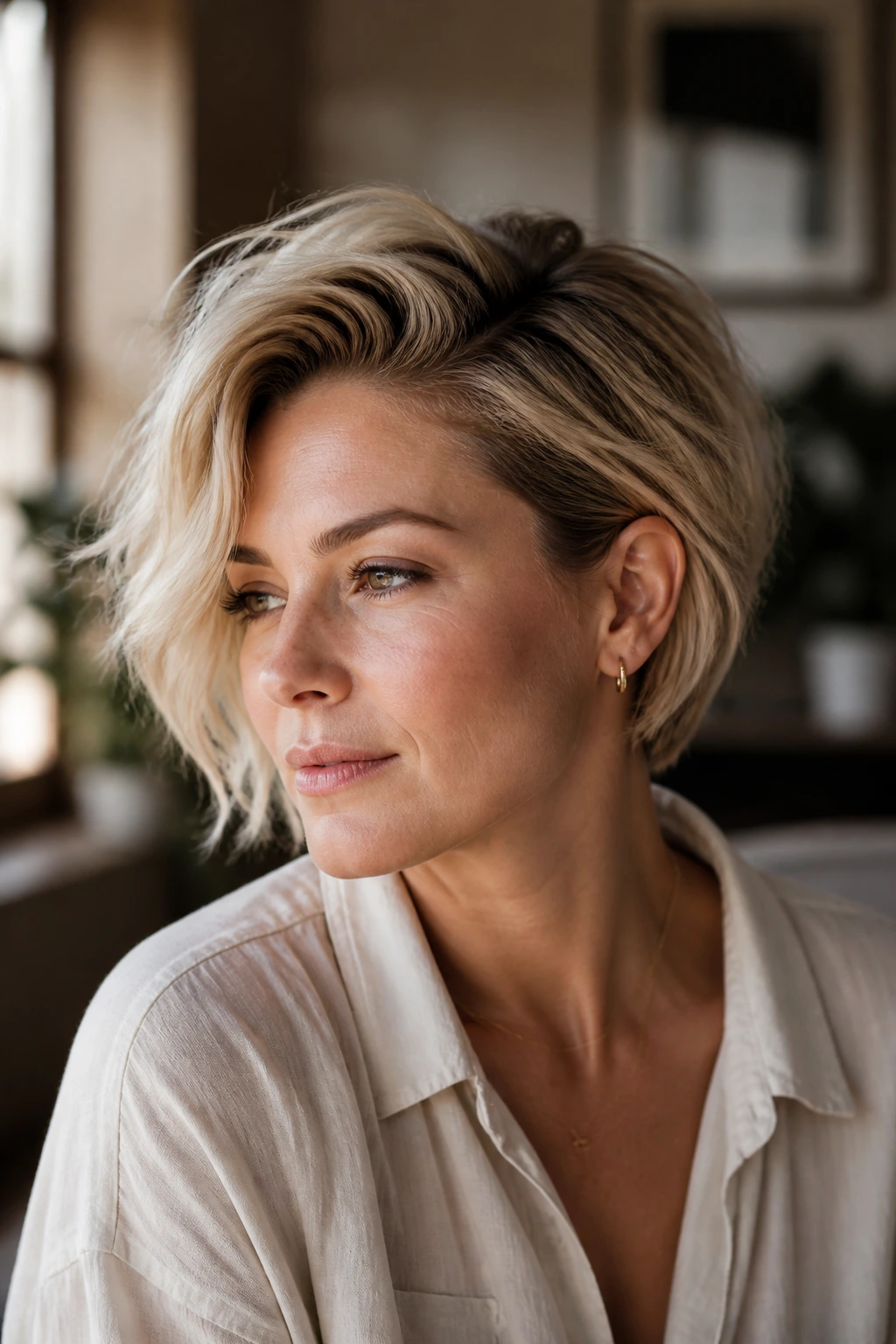
Short blonde hair with dark roots usually stays wearable longer than an all-over platinum or pale beige blonde, but it still needs a routine. For pixies, bixies, and sharper bobs, a trim every 6 to 8 weeks keeps the shape from ballooning. Lobs and shaggy crops can usually wait 8 to 10 weeks, depending on how fast your hair bends out.
Toner is the part people forget until the blonde starts looking tired. If your blonde leans icy or ash, refresh it every 4 to 6 weeks, either in the salon or with a gloss at home if your hair can take it. Warm blondes need less toning, but they still benefit from a clarifying wash every few weeks to remove product film that makes the color dull.
The root itself should be allowed to grow a little. That is the whole appeal. If you start getting more than about half an inch to an inch of root and it still looks soft, you are in the sweet spot. Use that as your signal, not the calendar. Sun protection for hair helps too — especially if you spend time outside, because blonde ends can drift yellow faster than people expect.
Frequently Asked Questions
Will dark roots make short blonde hair look grown out?
Not if they’re placed on purpose. A shadow root, root melt, or smudge is meant to soften the transition, not hide a mistake. On short wavy hair, that darker base usually makes the cut look more deliberate.
What blonde tone works best with wavy hair?
Beige, champagne, honey, and ash all work; the better choice depends on your skin tone and how much upkeep you want. Wavy hair shows color shifts well, so dimension matters more than chasing one exact shade.
Can this work if my natural roots are very dark?
Yes, but the contrast needs to be handled carefully. Ask for a blurred root and bright pieces around the face so the grow-out line doesn’t feel harsh. Very dark natural roots can look great with short blonde hair when the blend is soft.
Is balayage better than full highlights for these cuts?
Balayage usually gives a softer grow-out, which suits short wavy blonde hair with dark roots. Full highlights can work too, but they often need more toner upkeep to avoid that zebra effect at the scalp.
How short can I go before the dark root feels too obvious?
Short enough to show the scalp line does need careful placement, especially with pixies and cropped bobs. The trick is keeping the root depth soft and not too wide. A narrow shadow at the part and crown usually looks better than a heavy dark band.
Can I air-dry this kind of blonde cut?
Absolutely, and many of these styles look better with a little air-drying than with heavy heat styling. Use a light mousse or wave cream, scrunch the ends, and stop touching it while it dries.
How often should I tone blonde hair with dark roots?
Usually every 4 to 6 weeks, though some warmer blondes can stretch longer. If the blonde starts looking yellow, dull, or overly ashy, that’s your sign to refresh it.
What if my waves are frizzy instead of smooth?
Choose a cut with texture, not a blunt outline, and keep the lightest blonde pieces away from the driest ends. A diffuser, microfiber towel, and a small amount of leave-in can calm the frizz without flattening the wave.
The Blonde That Keeps Its Shape
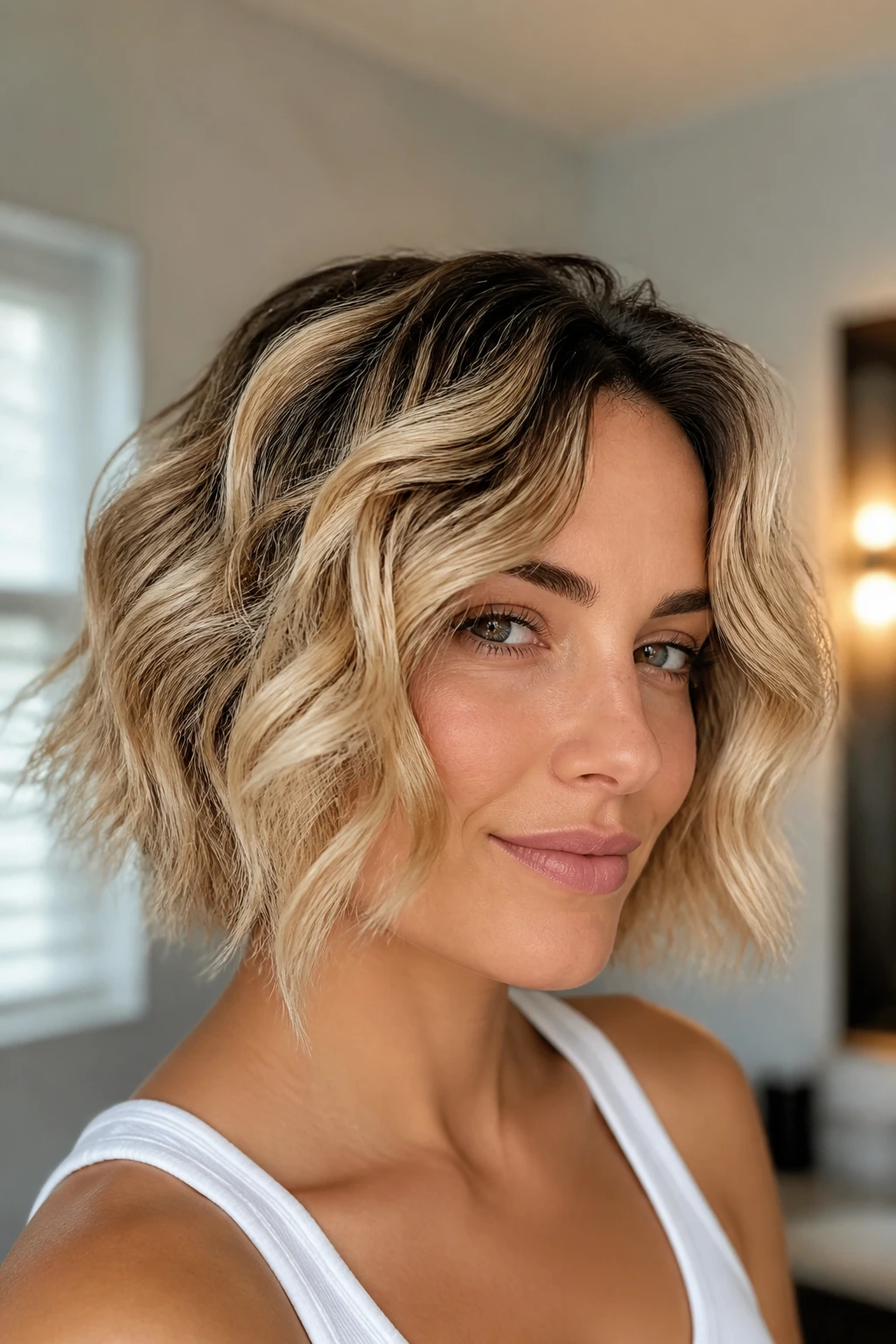
Short blonde hair with dark roots and wavy texture works because it understands what hair actually does in real life. Waves shift. Roots grow. Color softens. A style that expects none of that is a bad bet, no matter how pretty it looks in a fresh salon mirror.
The best versions in this group treat the root as part of the architecture. That is the whole trick. Once the darker base, the blonde placement, and the wave pattern start working together, the cut holds its shape longer and looks better between appointments — which is usually the part people care about most.
