



Orange hair looks for women can go sweet, sharp, smoky, or full-on electric, and the color changes more than people expect once it hits real hair instead of a glossy swatch. A copper bob reads polished in a way that bright pumpkin curls never will. Put the same orange on a shag, a braid, a blunt bob, or a curly afro, and the mood changes again.
That’s the fun of it. Orange sits in a strange, useful middle ground: warmer than red, louder than gold, and a lot more dimensional than a flat auburn if the placement is done well. The trick is not just choosing “orange.” It’s choosing which orange, where it lands, and how much contrast you want against your base.
Some of these looks live close to copper and ginger. Others lean tangerine, terracotta, mango, or burnt sienna. A few are barely tame at all, which is exactly the point. If you’ve ever looked at orange hair and thought it was one-note, the next few sections should change your mind fast.
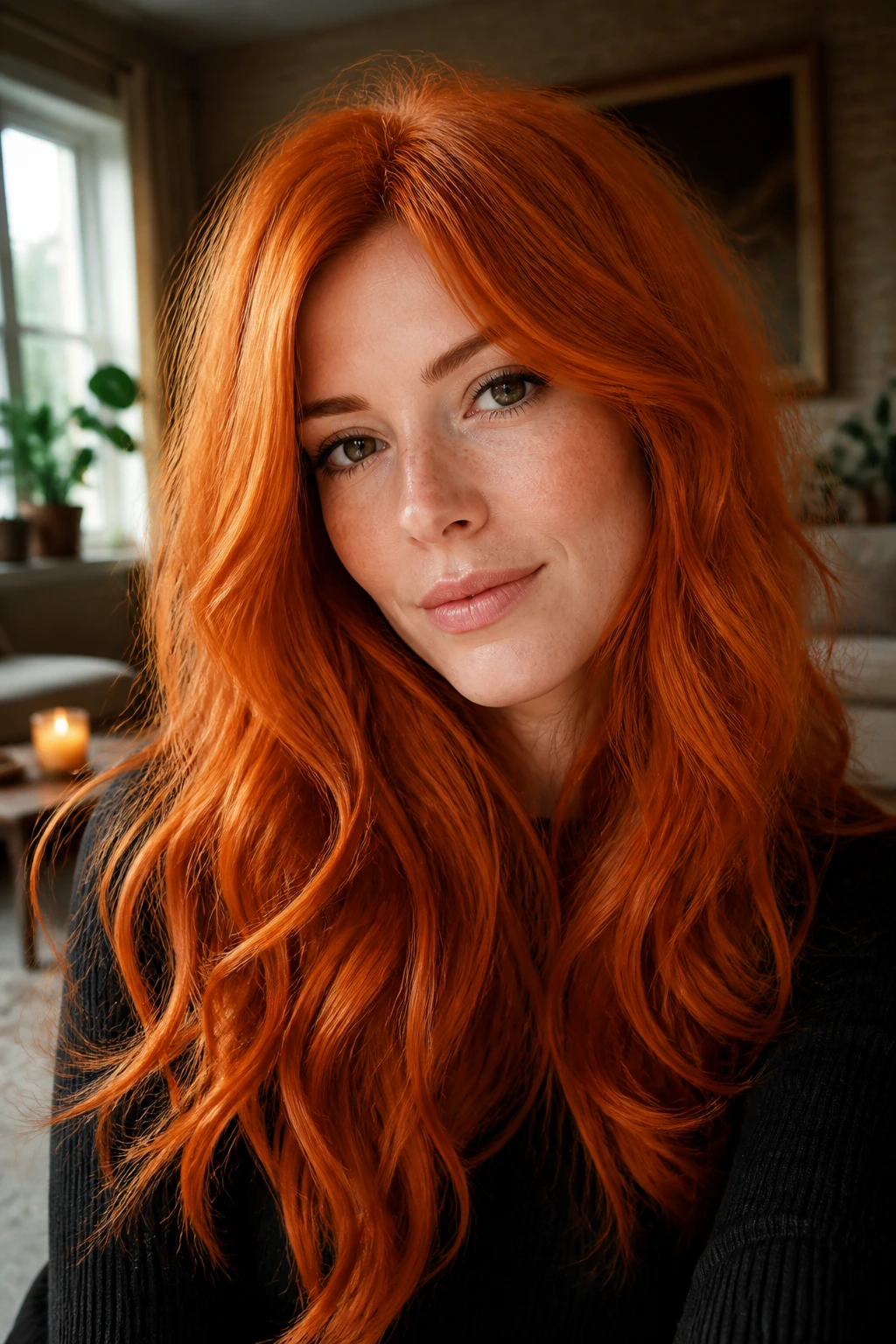
Why These Orange Hair Looks Work
-
Warmth does the heavy lifting: Orange has enough red to feel rich and enough yellow to stay bright, so it flatters skin without the flat, heavy look a dark red can bring.
-
Placement changes the mood fast: A money piece around the face reads bold and graphic, while a balayage melt looks softer because the orange is broken up by depth at the roots.
-
Texture matters more than people admit: Waves, curls, braids, and shag layers stop orange from looking like one solid block. They break up light and give the color movement.
-
Root shadow keeps it wearable: A little darker root makes bright orange less helmet-like and gives you a cleaner grow-out line, which matters if you don’t love salon visits every few weeks.
-
Orange shows tone drift quickly: If the formula slips too red, too yellow, or too brown, you’ll see it right away. That’s a good thing if you like control, a pain if you rush the process.
-
The best versions look intentional, not accidental: The color should match the cut. A crisp bob can handle a sharper copper; a shag usually looks better with a softer ember tone and a little root depth.
1. Cinnamon Copper Bob
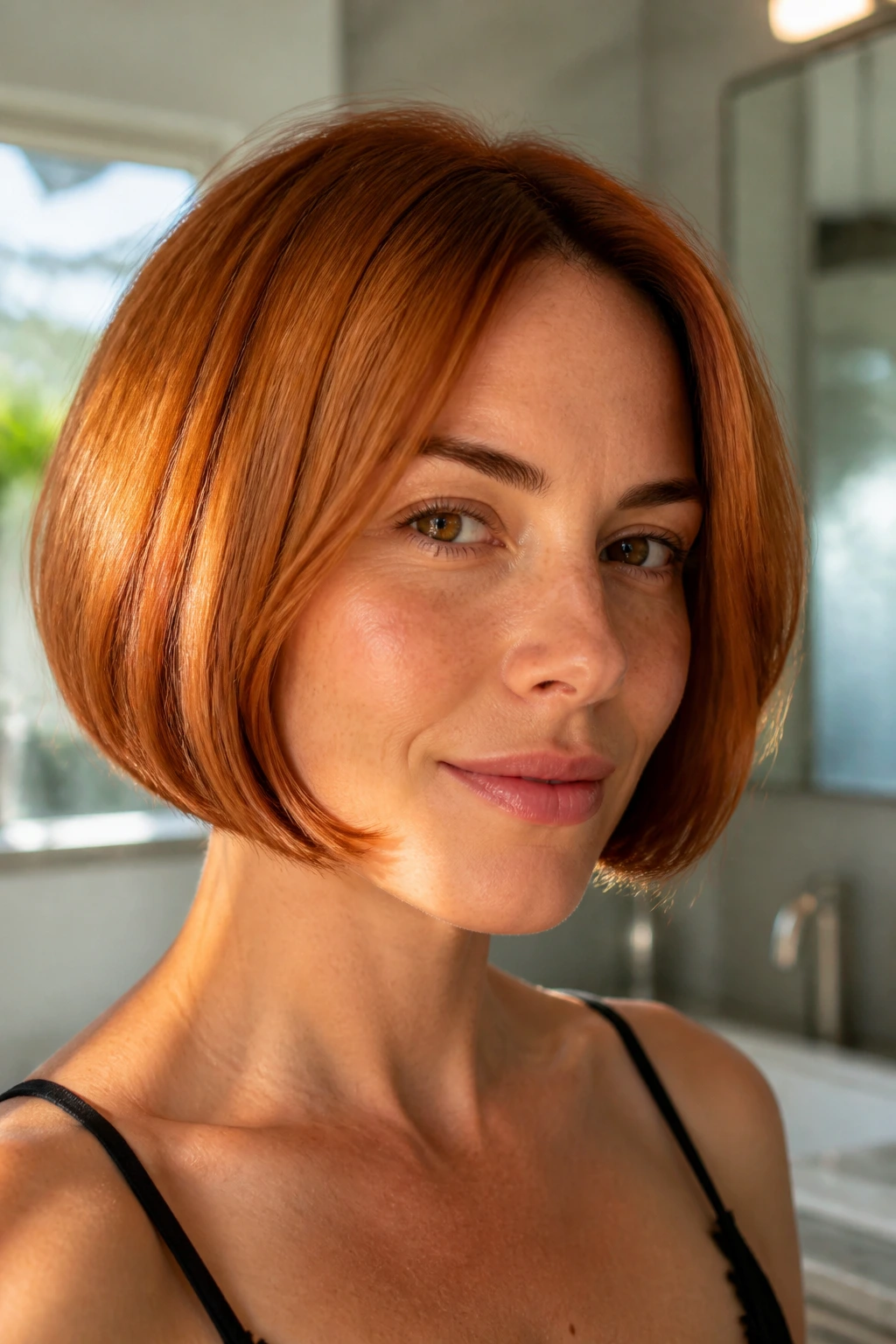
A chin-length bob in cinnamon copper is the orange look I reach for when someone wants impact without the “I walked in wearing a spotlight” problem. The color sits between toasted copper and soft terracotta, so it warms the skin and still feels tidy against a blunt edge.
This look works because the cut keeps the color concentrated. On shorter hair, orange reads richer and more expensive-looking, especially when the ends are tucked under with a round brush or left just a little curved at the jawline. It’s one of those styles that looks even better on day two, when the shape settles and the copper gets a tiny bit softer.
Best on medium-density hair. Fine hair can use the blunt line to look fuller, and thicker hair benefits from the clean perimeter so the orange doesn’t get lost in the bulk.
2. Tangerine Money Piece
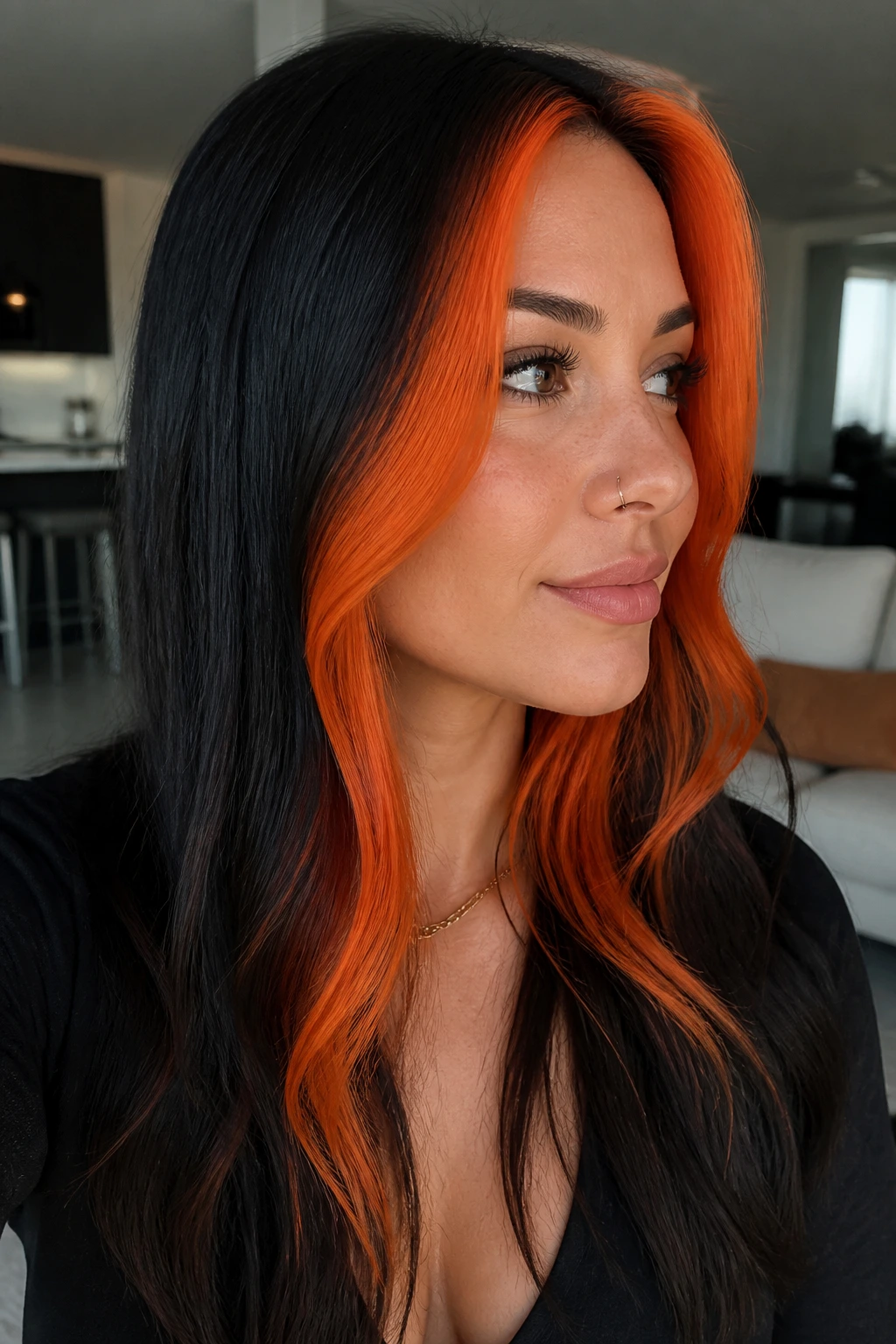
A tangerine money piece is the quickest way to wake up dark hair without committing the whole head to orange. The front panels sit brightest at the cheekbone and fade back into brown, so the face gets that framed, lit-from-the-front effect.
The key is contrast. If the base is espresso or chestnut, the tangerine needs to stay clean and vivid so it doesn’t disappear. I like this look on straight styles and soft waves because the front pieces catch light every time you turn your head.
Maintenance is lower than full-color orange, but the front can fade faster because that’s where heat styling and washing hit first. A color-depositing mask in a copper-orange shade helps keep the panels punchy between salon visits.
3. Burnt Orange Balayage
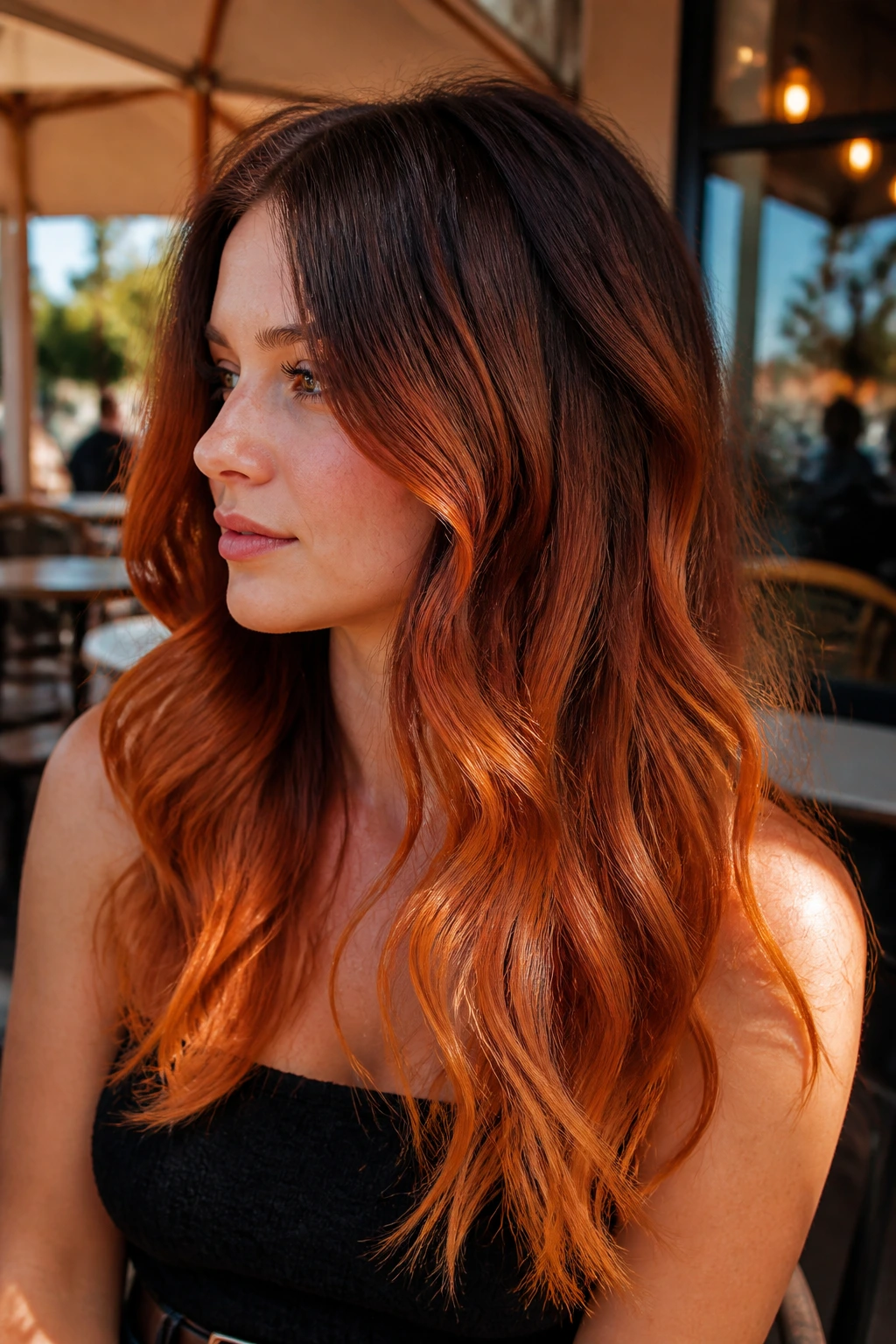
Burnt orange balayage is the version I recommend to people who want orange with a little smoke in it. The color is painted in a way that lets brown or dark blonde stay visible underneath, so the result looks like embers instead of paint.
That depth matters. Balayage keeps the grow-out soft, and the low-to-high contrast makes the orange feel dimensional instead of flat. On long hair, the best part is how the warmer pieces appear and disappear as the layers move.
Best parts of this look
- Looks strongest on loose curls or blowout bends.
- Needs a darker root zone so the orange doesn’t overpower the cut.
- Works well if you want a softer grow-out line.
- Fades in a flattering direction, usually toward peachy copper rather than muddy red.
If your hair already has warmth, this is one of the easiest orange looks to wear without feeling like you’re chasing the color every three weeks.
4. Neon Pumpkin Pixie
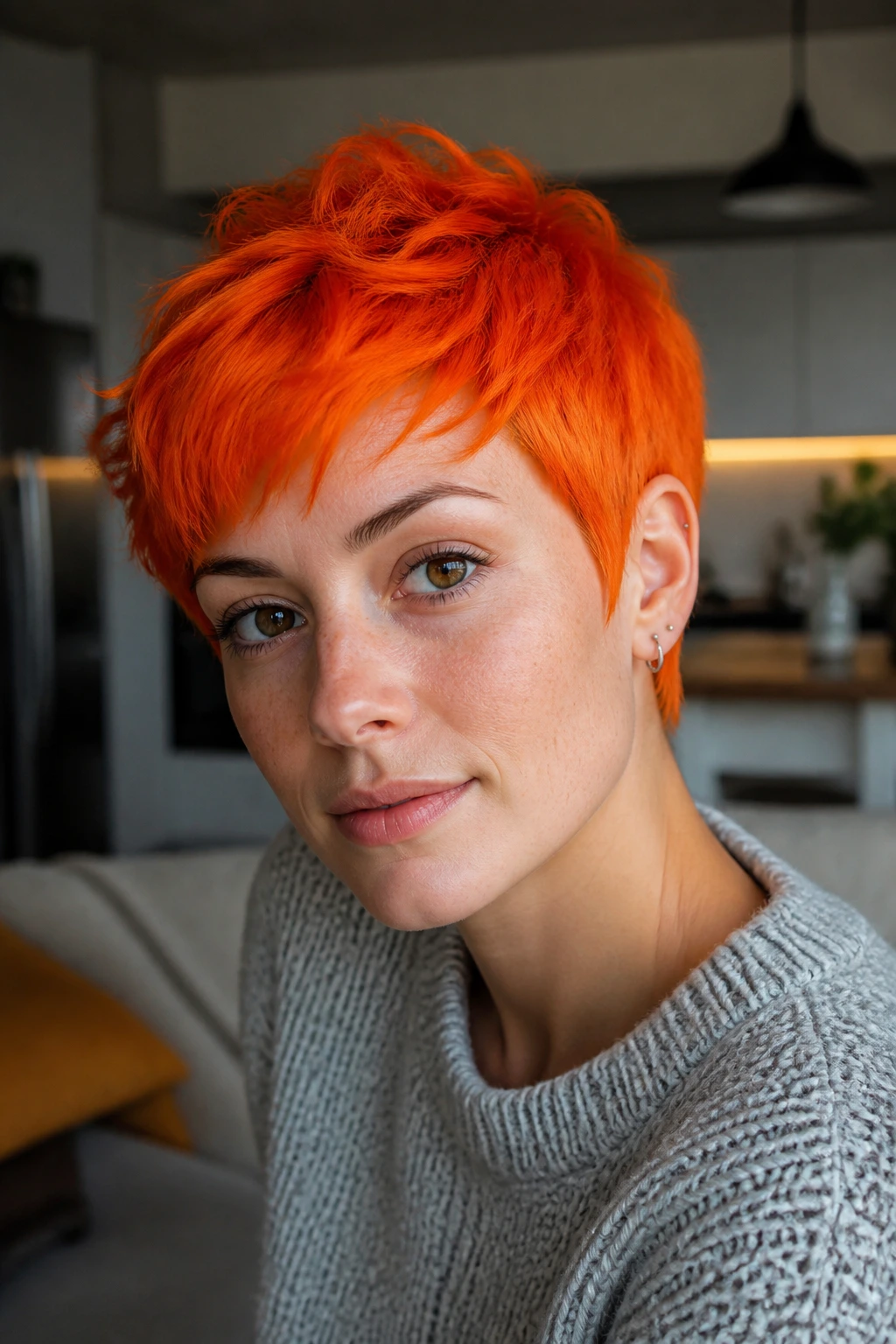
A neon pumpkin pixie is not shy, and that’s the whole point. Short hair lets the color hit harder because there’s less length to dilute it, so the orange looks sharp, crisp, and almost glowing at the edges.
This style works best when the cut is precise. The color alone won’t save a fuzzy pixie line. You want clean sideburns, a tidy nape, and enough texture on top to keep the orange from looking like one flat cap of color.
A pixie like this is also practical in a weirdly honest way. Less hair means less product, less time rinsing, and less chance for the shade to get lost under layers. If you like bright orange but hate the maintenance of long hair, this is the one that makes sense.
5. Apricot Blonde Waves
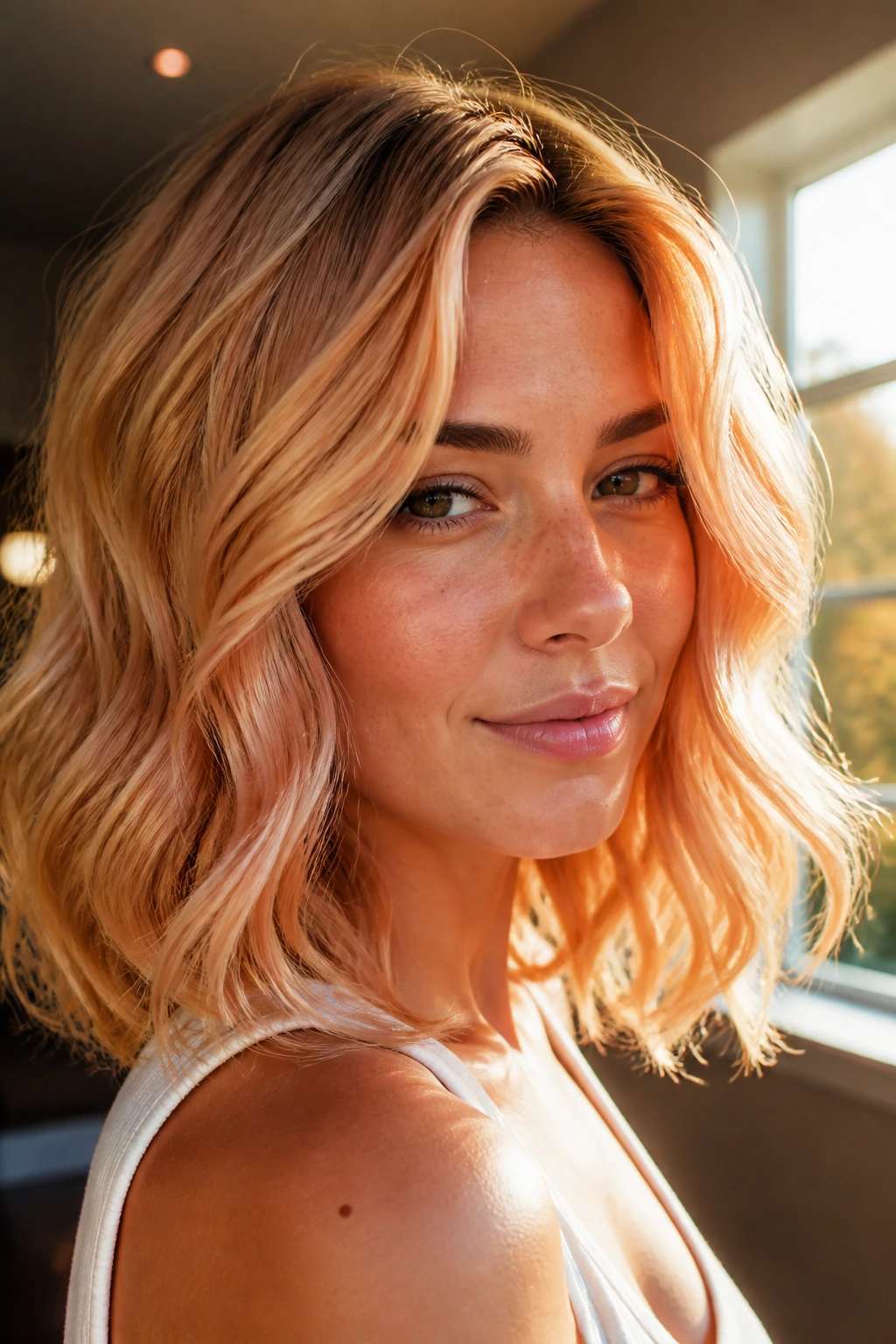
Apricot blonde waves sit on the softer end of the orange spectrum, and that softness is the trick. The shade has enough peach to feel airy, but enough orange to keep it from fading into plain strawberry blonde.
It looks best on lighter bases. Pale blondes and very light brunettes that have already been lifted can carry apricot without going muddy. Waves help, too, because the color shifts between creamy gold and peach every time the hair bends.
This is the shade for someone who wants orange but doesn’t want a hard line. It reads gentler in indoor light, brighter in sun, and prettier when the ends are a little piecey rather than perfectly curled.
6. Rust Red Shag
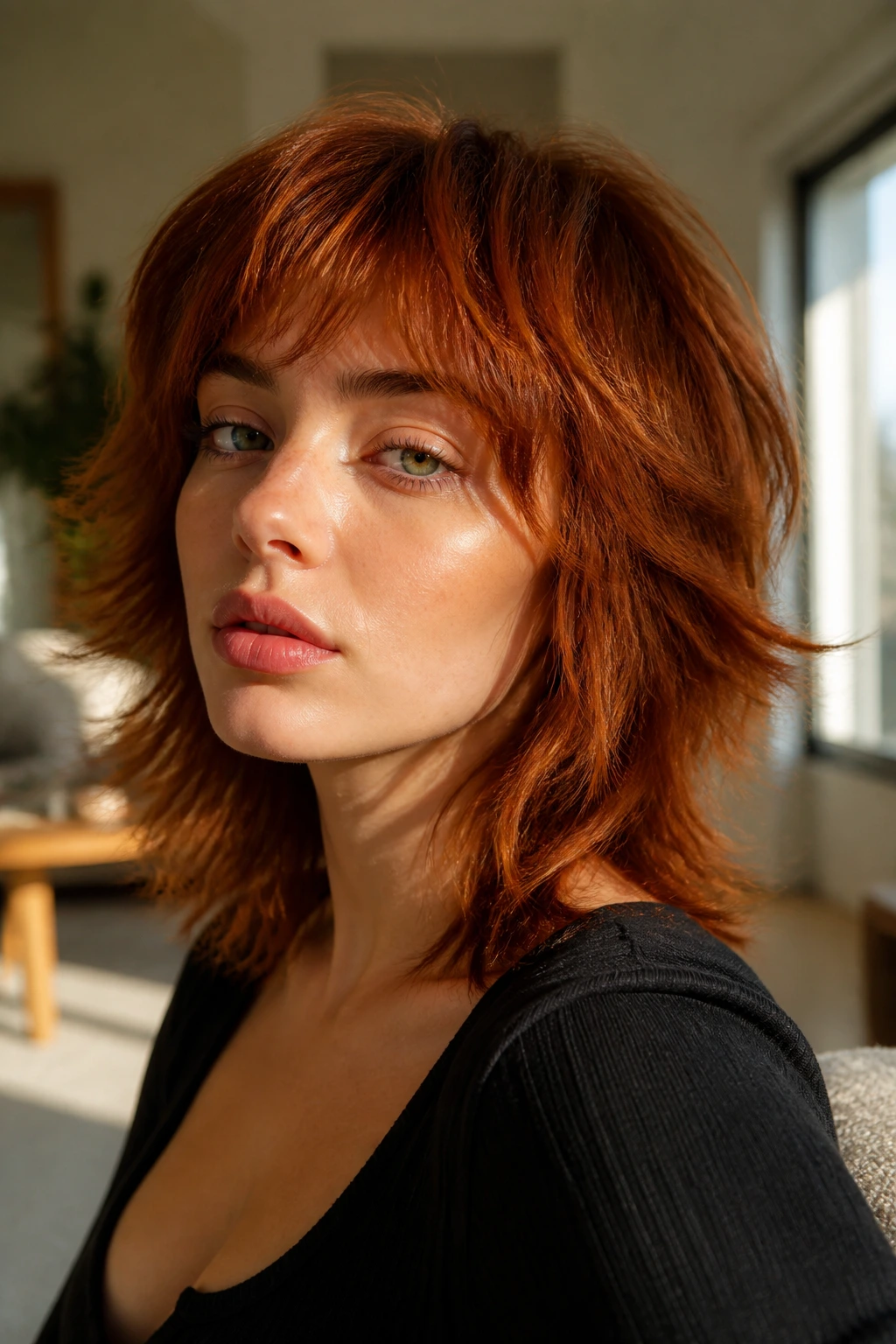
Rust red on a shag cut is messy in the good way. The layers do half the work, tossing the color around so it never settles into one heavy shape. The orange leans deeper here, almost like oxidized metal or dried clay.
I like this look with airy bangs and choppy ends. Those details stop the rust tone from feeling too dense, which can happen fast if the shade sits on long, heavy hair. A shag gives the color movement even when you don’t style it much.
If you want a bold orange look that doesn’t need perfect styling every day, this is one of the smartest choices in the whole set.
7. Peach Cream Curls
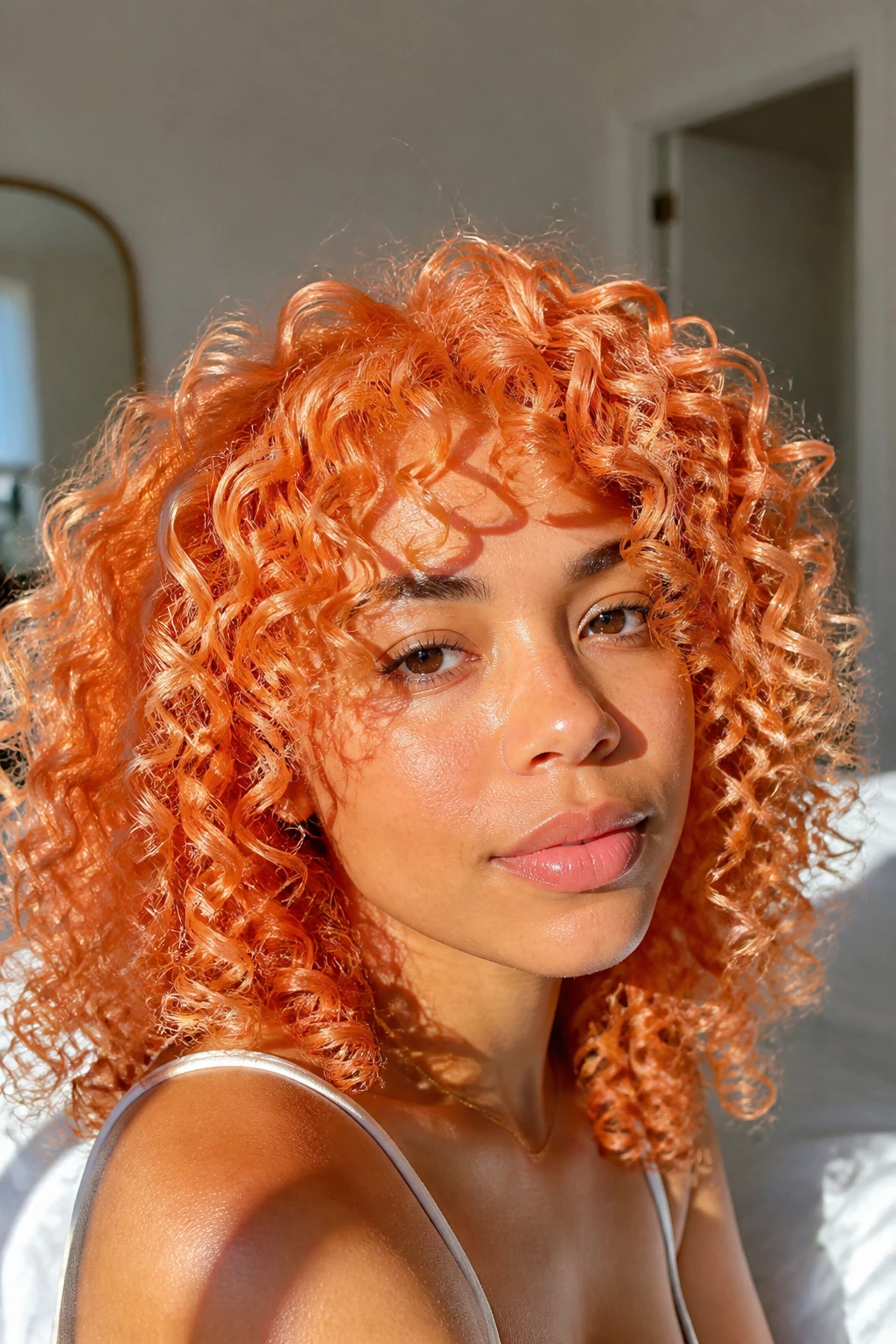
Peach cream curls are for people who want orange to feel soft, sweet, and glossy instead of fierce. The shade lands somewhere between pale coral and warm apricot, and curls give it a plush, rounded finish.
The color works because curl pattern changes how light lands on the hair. Each bend picks up a slightly different tone, so peach looks deeper in the shadows and lighter on the surface. That’s the opposite of the flat, washed-out look that can happen on straight, single-process color.
A little shine spray helps here, but not the greasy kind. You want clean reflection, not wet strands. The moment the curls clump too much, the peach tone starts to look dull.
8. Copper Toasted Lob with Dark Roots
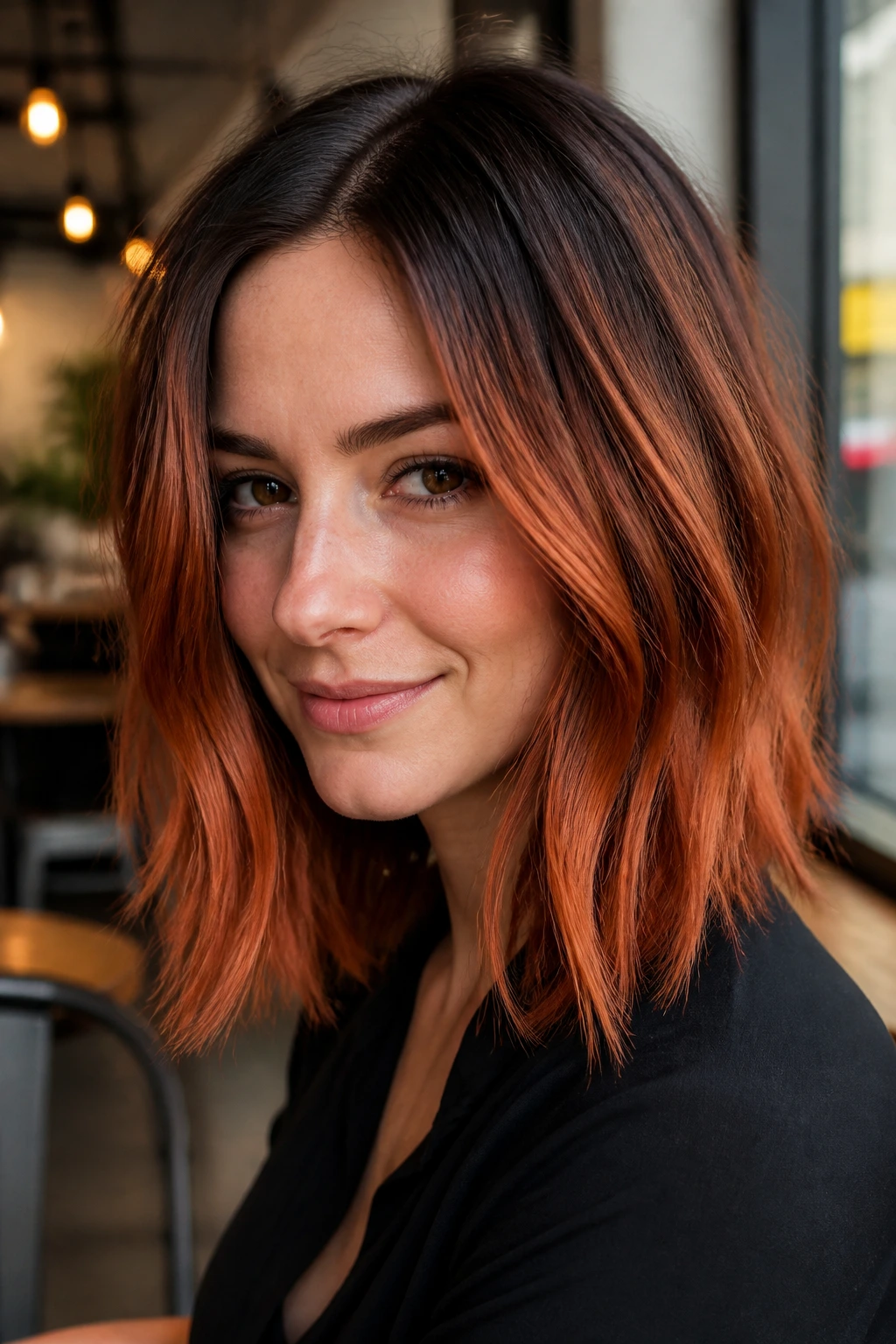
A lob with dark roots and toasted copper mids is one of the easiest orange looks to live with. The root shadow keeps the color grounded, and the copper lengths warm up the face without demanding constant touch-ups at the scalp.
This is also a very forgiving cut for orange. The long bob shape lets the color swing between polished and relaxed, depending on whether you air-dry or blow it smooth. The best versions have a soft bevel at the ends, which keeps the copper looking deliberate instead of blunt and heavy.
If you’ve got naturally darker hair and don’t want to bleach the whole thing to oblivion, a rooted lob gives you an entry point that still feels rich.
9. Sunset Ombre
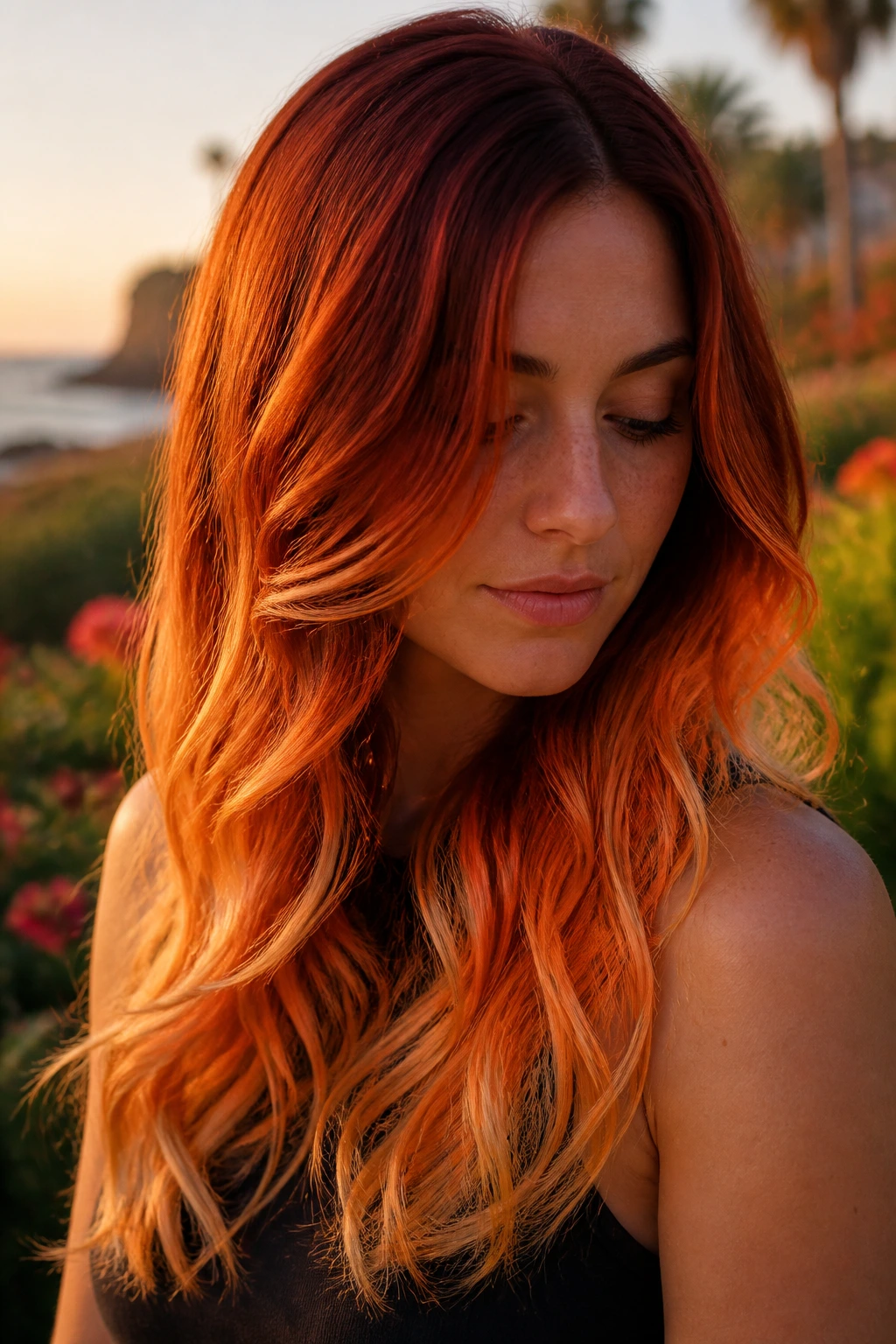
Sunset ombre takes orange and makes it feel like a gradient instead of a single statement. The roots start deeper — auburn, chestnut, or chocolate — and the color slides into orange-gold ends that look warmer the farther down they go.
The reason it works is simple: ombre gives the eye a path. You read the darker root first, then the molten orange later, which makes the color look more layered than painted. On longer hair, the transition can be dramatic without being messy.
This is one of the few orange looks that can lean romantic. Loose waves make the shift between shades look even softer, and the orange ends pick up movement in a way that flat color never will.
10. Ginger Spice Curtain Bangs
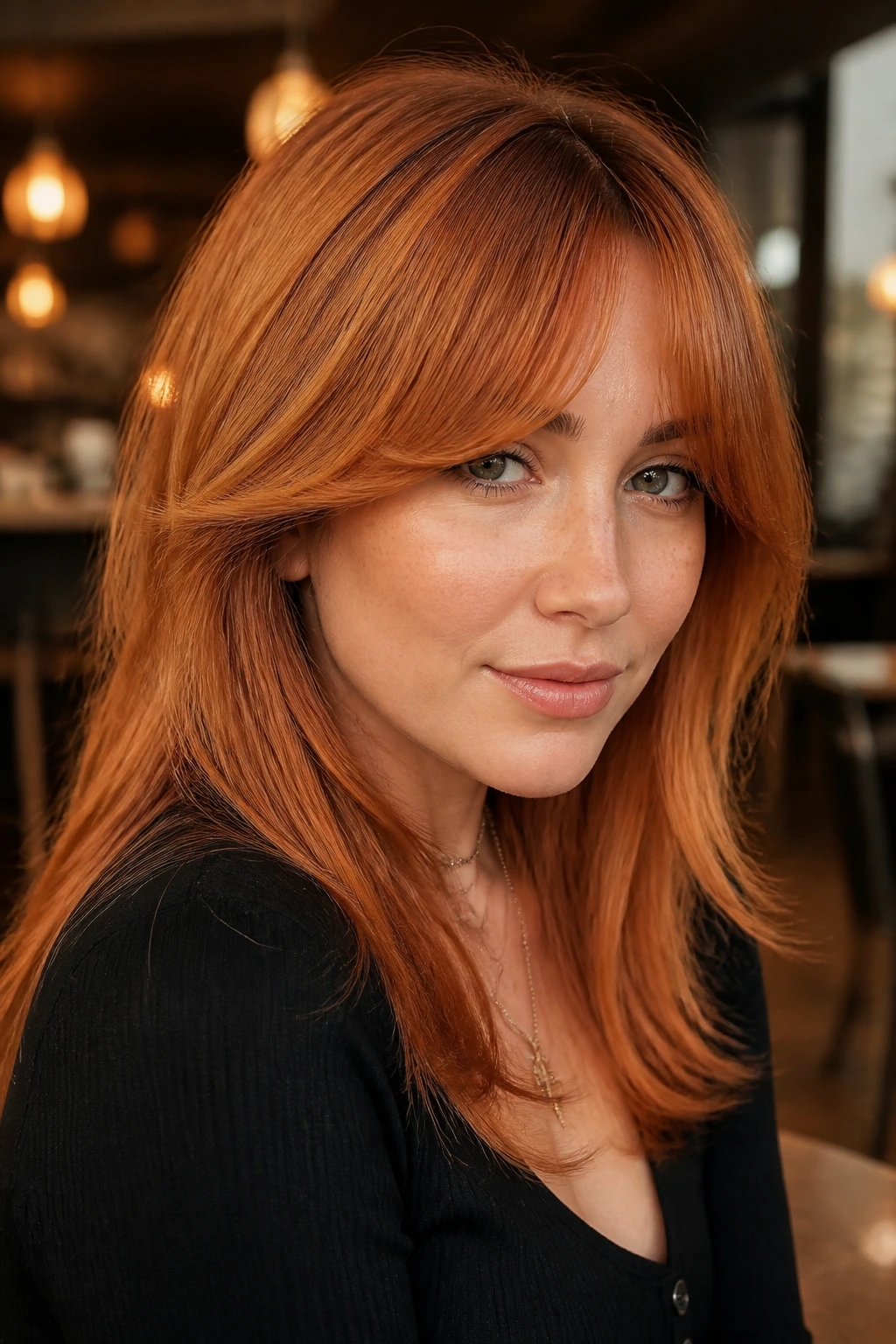
Ginger spice with curtain bangs is one of those looks that does a lot with very little. The orange stays in the ginger family — warm, a little red, a little gold — while the bangs frame the eyes and break up the face line.
Curtain bangs are useful here because they soften the brightness right where it would otherwise hit hardest. If the rest of the hair is medium-length and layered, the color looks inviting instead of overwhelming. Straight styling gives it a sleeker edge; a blowout makes the bangs swoop and the ginger feel a little vintage.
The catch is upkeep. Bangs show oil and humidity first, so this style needs a bit more dry shampoo and a lot more patience with a round brush than a color without fringe.
11. Amber Face-Framing Highlights
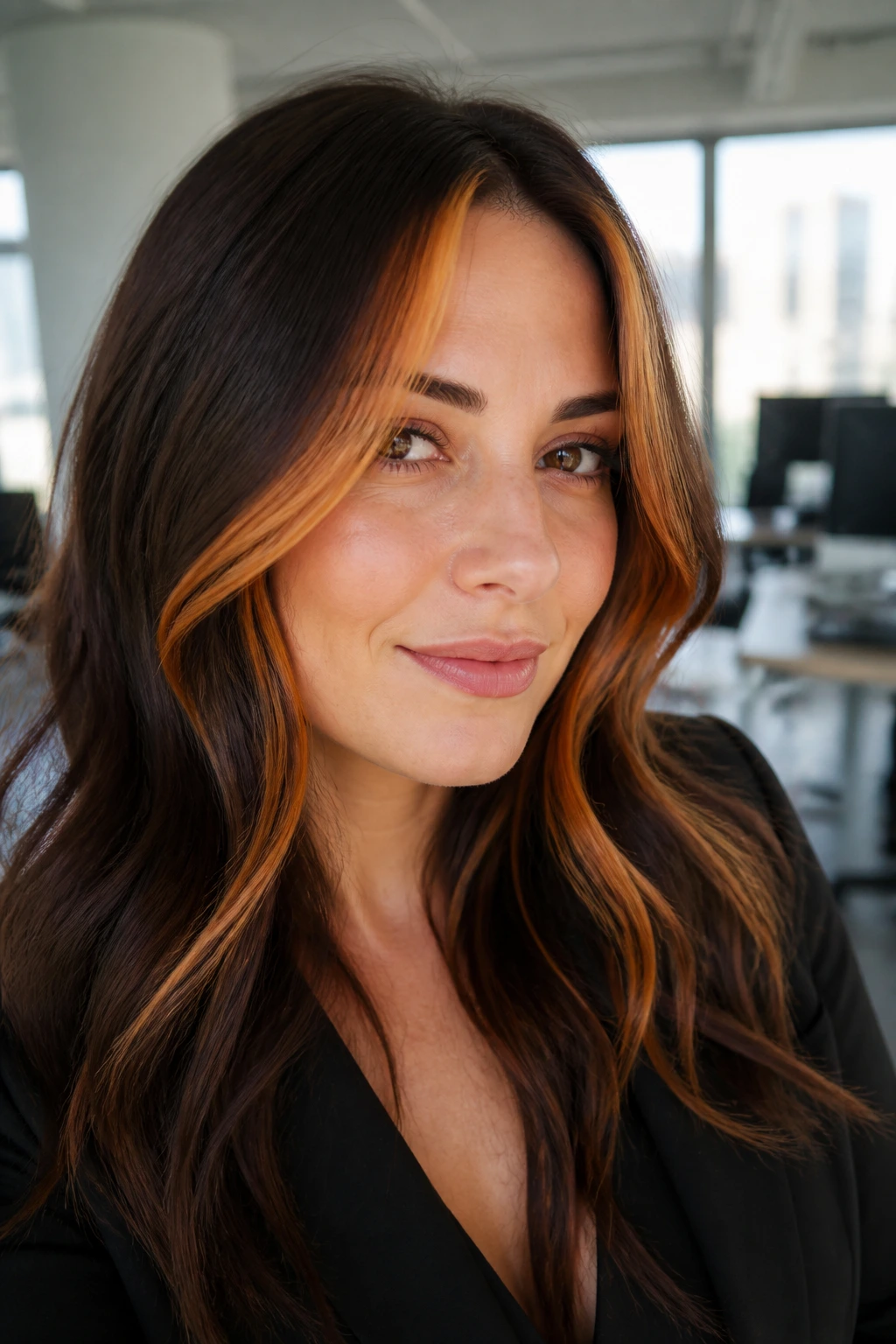
Amber face-framing highlights are a smarter, subtler way to wear orange when you don’t want the whole head changed. A few ribbons near the temples and cheekbones can pull enough warmth forward to make the face look brighter without locking you into all-over color.
What makes this look stand out is control. You can choose fine highlights for a whisper of amber or chunkier ribbons if you want the color to read faster. On brunette hair, the amber can look almost honeyed at first and then turn more orange as the light moves.
This is the kind of orange that still behaves at the office, in a braid, or under a hat. It doesn’t shout. It speaks up.
12. Flame Orange Box Braids
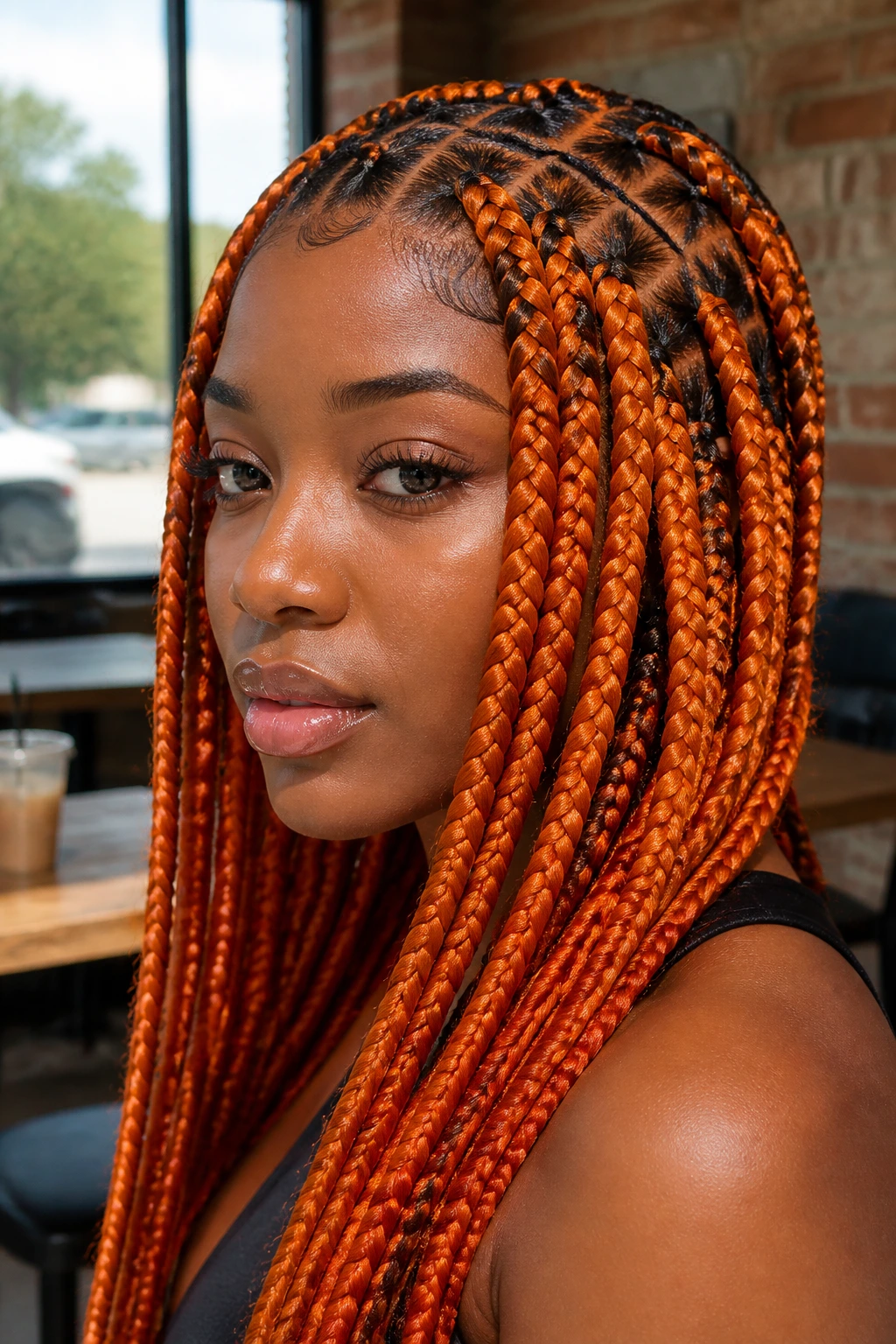
Flame orange box braids bring orange into a protective style, and that changes everything. The color sits in the braid pattern itself, so you get movement, geometry, and brightness all at once.
I like this look best with alternating tones — a deep brown or black base mixed with flame orange extensions, or even ombré braids that start darker at the root and finish hot at the tips. That stops the whole style from reading like one solid block. Braids can swallow color if you’re not careful, so the variation matters.
It’s also practical. Once installed, the color stays put, which makes this one of the lower-fuss orange options if you want drama without daily styling.
13. Coral Dip-Dye Ends
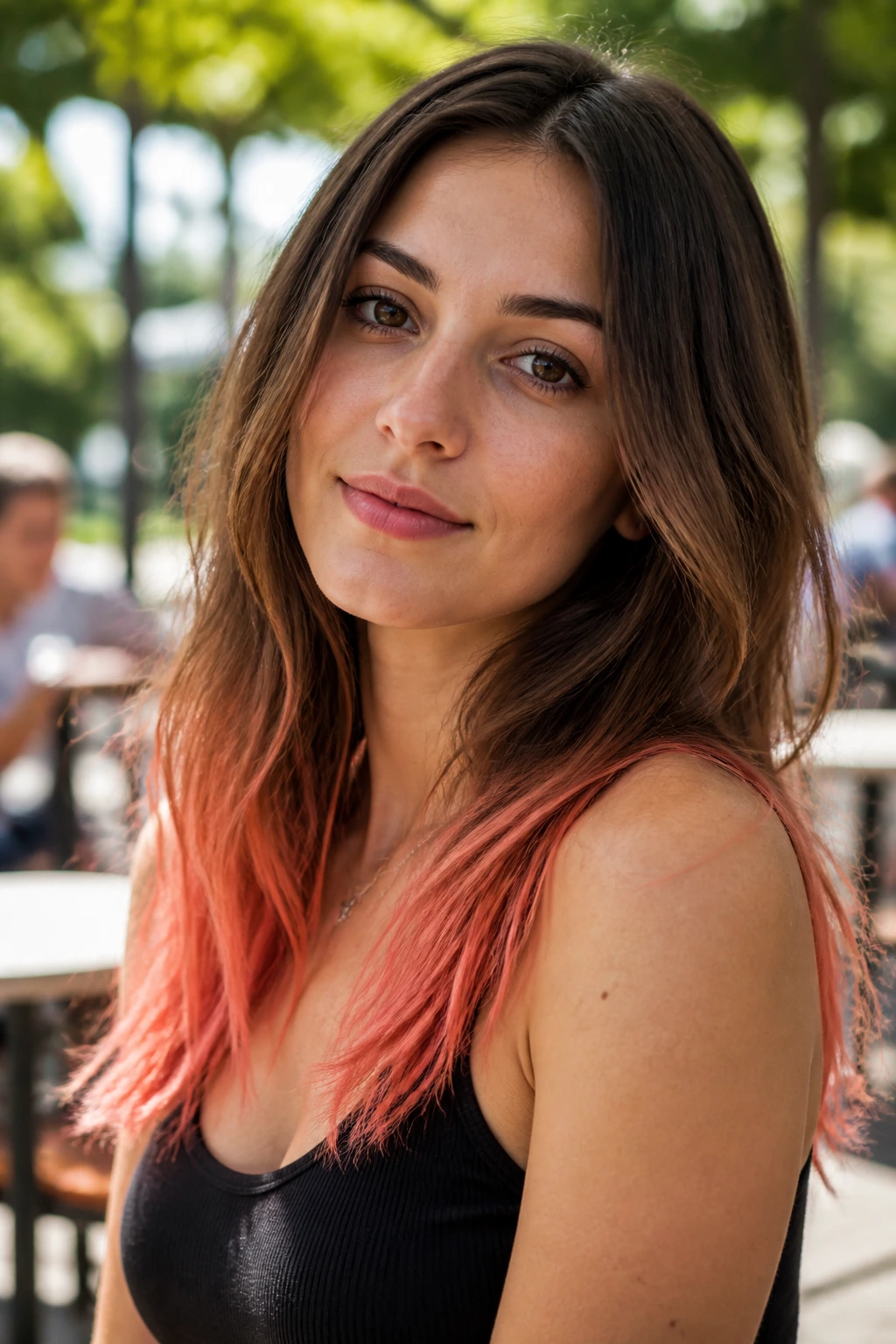
Coral dip-dye ends are playful in a way that full-color orange often isn’t. The base can stay blond, brown, or even silver, while the last few inches go coral-orange and give the whole style a bright finish.
The reason this look keeps working is that the eye focuses on the ends. You get a vivid color hit without asking the whole head to carry it. That means the style can feel young, fresh, and a little rebellious without requiring the commitment of a full transformation.
On layered cuts, the dip-dye looks best when the last inch or two is the brightest point. If the fade starts too high, the color can get choppy. Keep it low, keep it clean, and let the ends do the talking.
14. Spiced Caramel Copper Highlights
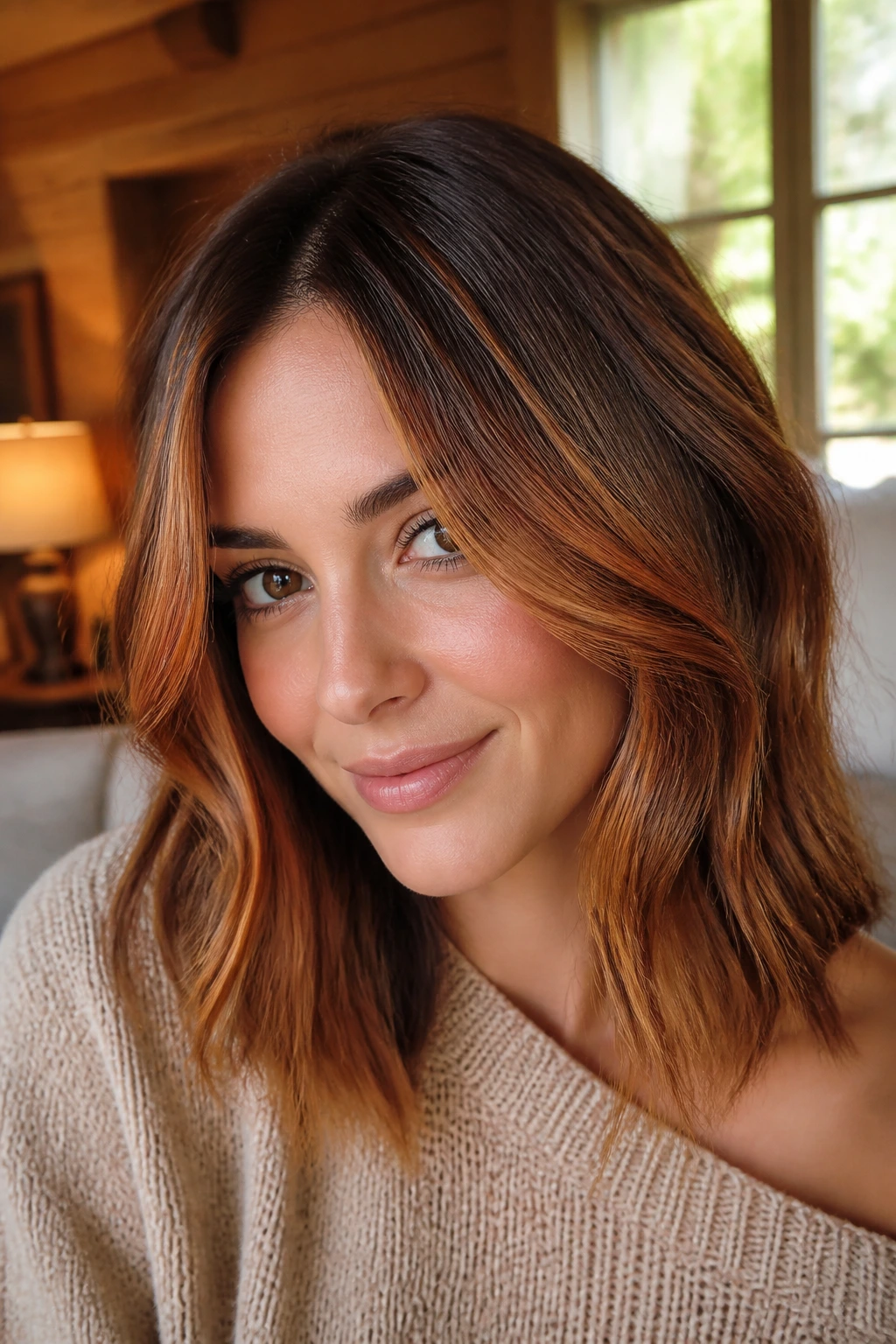
Spiced caramel copper highlights are one of my favorite ways to warm up brown hair. The copper pieces sit inside a caramel-brown base, so the orange is there, but it’s not fighting for attention every second.
This look is built for dimension. You want thin ribbons through the mid-lengths and a few brighter pieces around the face so the copper catches movement. It works especially well on layered cuts because the highlights separate naturally as the hair falls.
A lot of people think orange has to be loud. Not true. This version proves the opposite. The color can be noticeable, flattering, and still wearable with a plain white shirt and no other styling tricks.
15. Burnished Copper Pixie
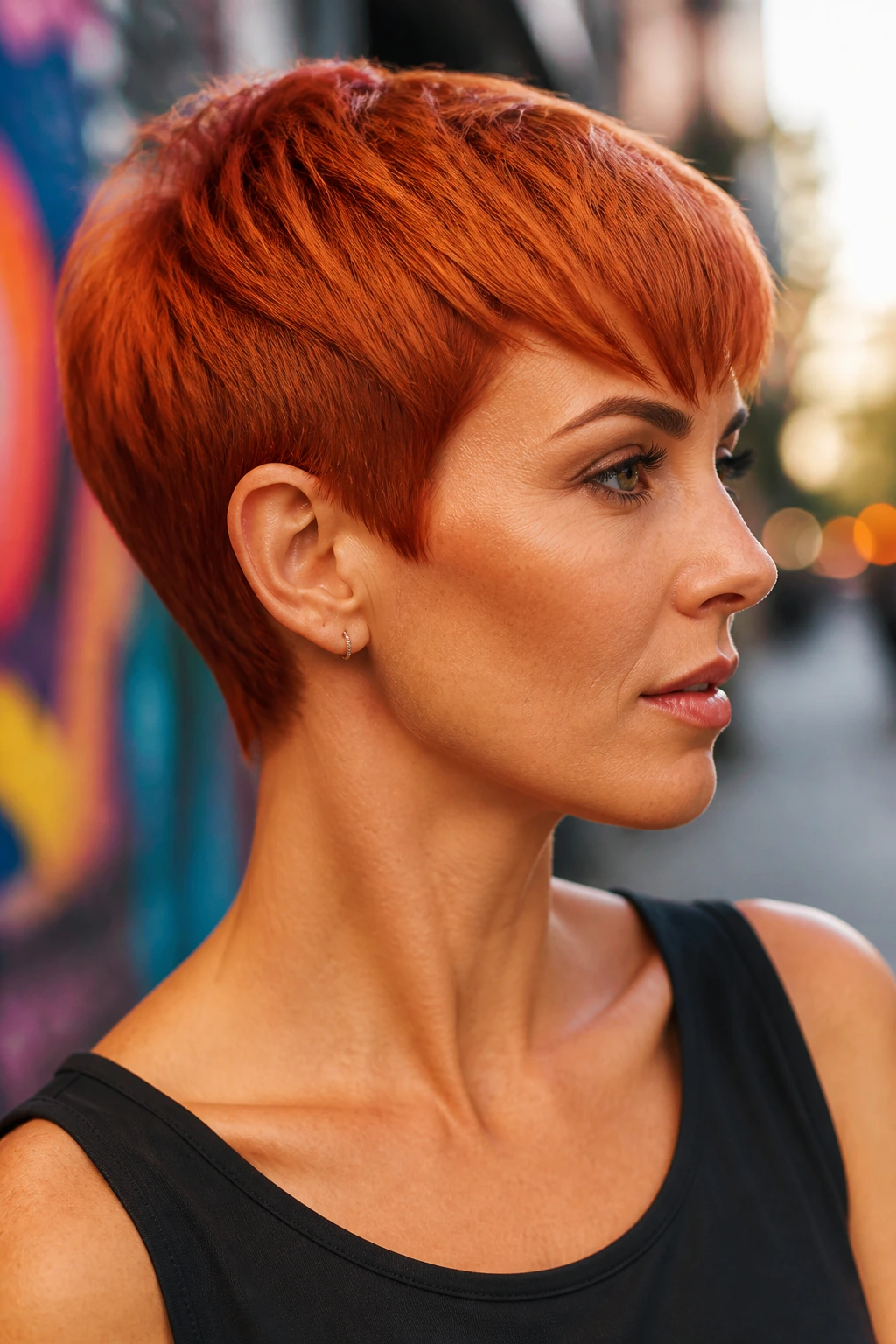
A burnished copper pixie feels richer and deeper than neon orange, which is exactly why it holds up so well on short hair. The shade has a metallic edge, like polished metal that’s been heated once and cooled down again.
Short cuts need clarity, and this color gives it. The burnished tone makes the crop look intentional from every angle, whether the top is brushed forward, swept to the side, or left piecey with a tiny bit of wax. Because the hair is short, you can also keep the tone more saturated without overwhelming the face.
If you’ve ever wanted orange but worried it would look costume-like, this is a strong place to start. It’s vivid, but it has enough depth to feel grown-up.
16. Mango Sorbet Lob
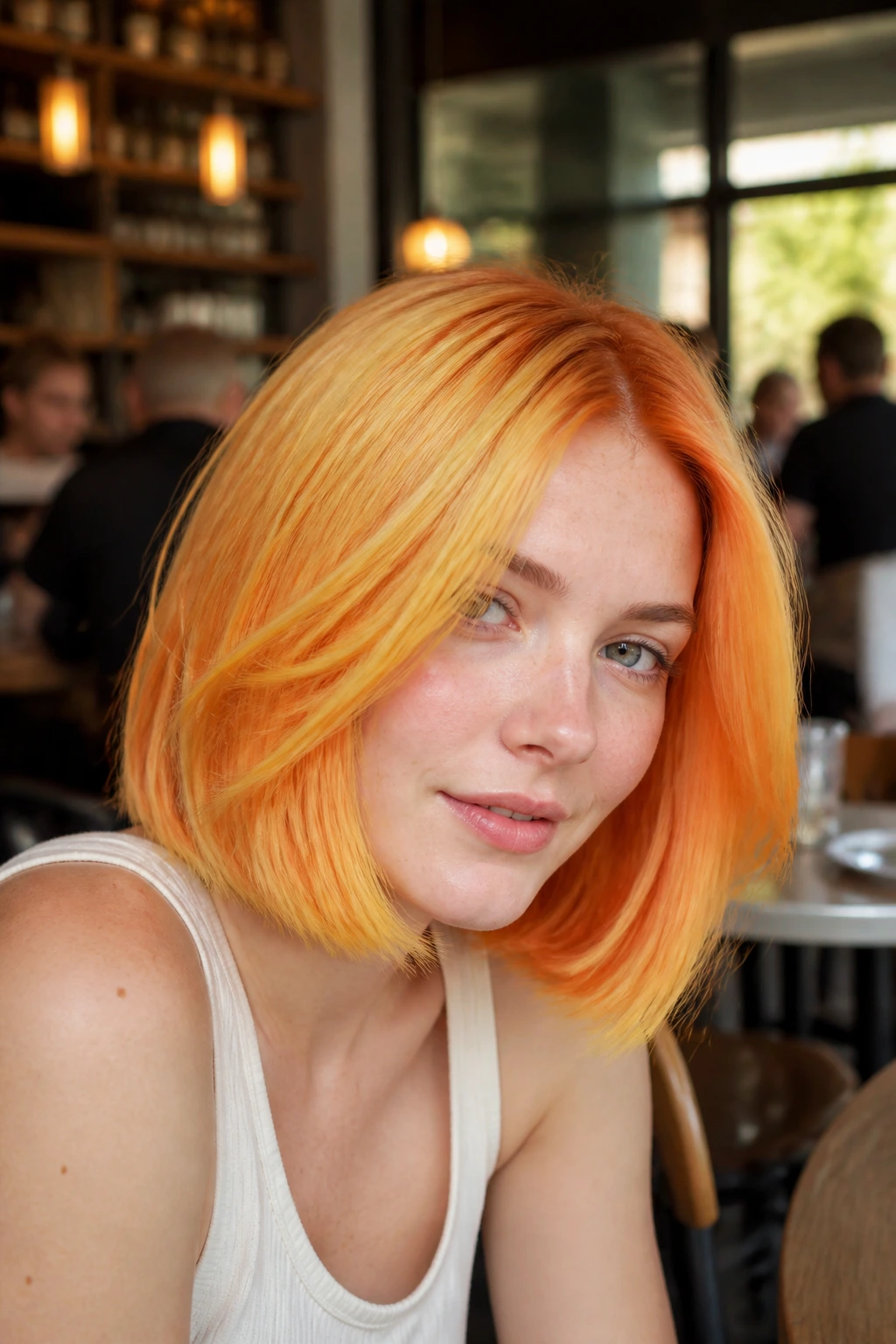
Mango sorbet orange is brighter and juicier than copper, but softer than a neon pumpkin shade. On a lob, that makes the color feel clean and modern instead of heavy.
The texture matters here. A smooth blowout makes the shade look glossy and almost creamy. Soft bends make it feel more playful, like the color shifts between yellow-gold and orange depending on the angle. That little swing is what keeps it interesting.
This is a good choice if your skin tone likes warmth but you don’t want red-based copper. Mango sits a touch fresher, and on a sharp lob it reads crisp rather than fuzzy.
17. Auburn-Orange Midlights
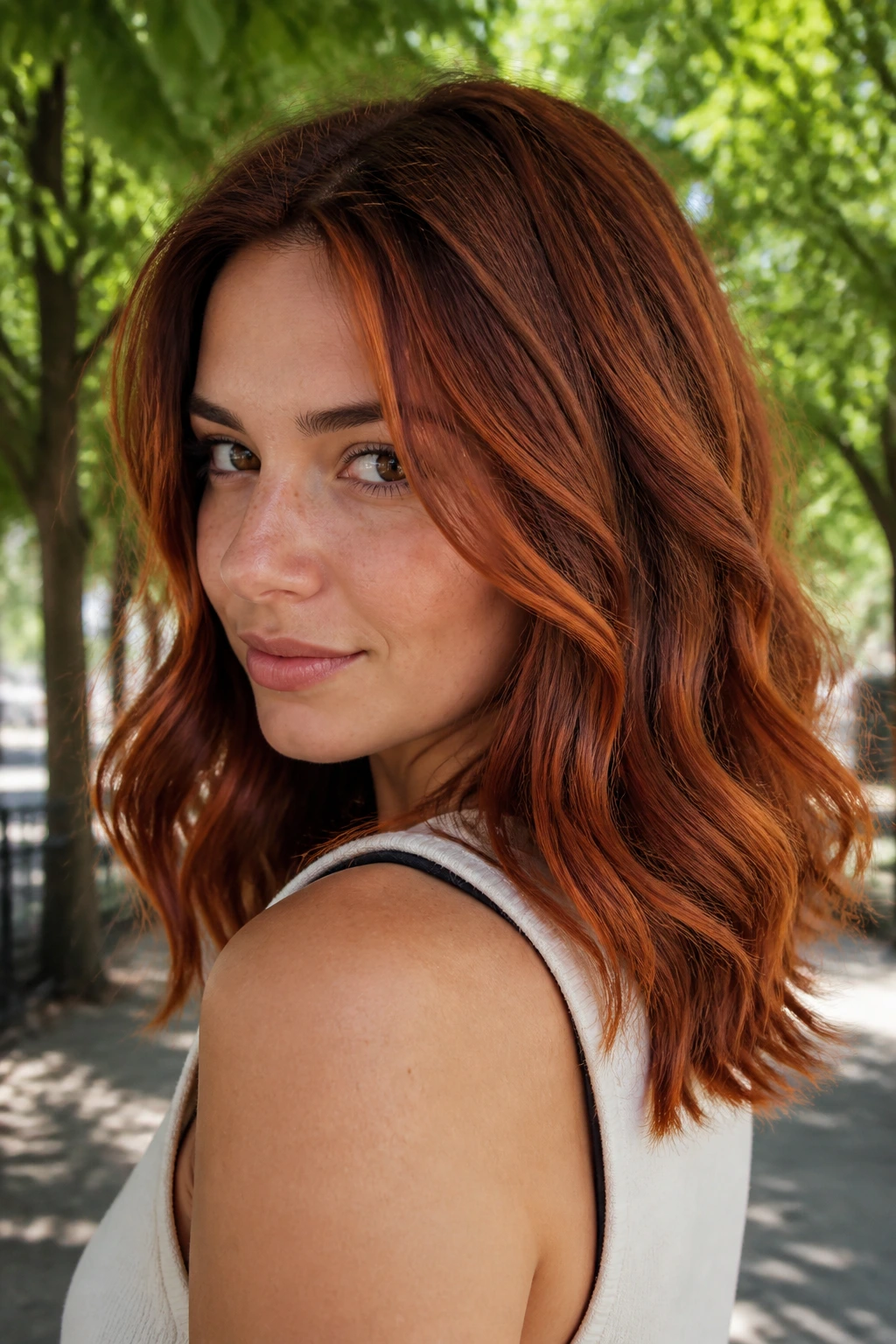
Auburn-orange midlights are sneaky. They sit between the darker top layer and the lighter ends, so the color appears in the middle of the hair instead of on the surface alone.
That middle placement gives depth fast. Instead of obvious highlights, you get a layered effect that looks richer every time the hair moves. It’s especially good on thick hair, where color can get buried if it only lives on the outside.
The shade is a useful compromise if you want orange but don’t want it loud at the roots or bright at the tips. Midlights keep the eye moving. They also grow out more quietly than high-contrast streaks.
18. Flame-Tipped Curls
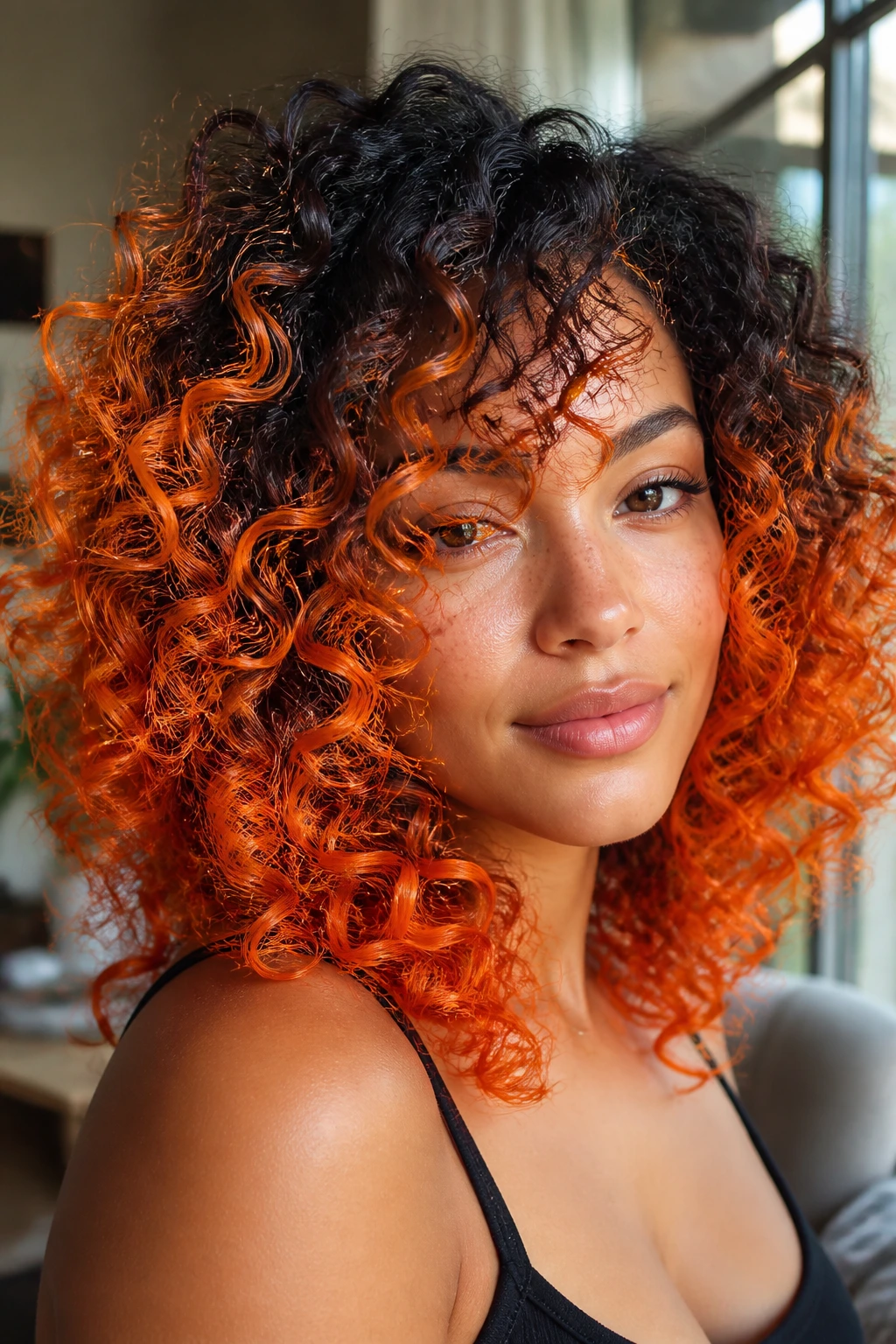
Flame-tipped curls start darker at the root and go hot at the ends, which makes the curl pattern look even more active. Each ringlet catches the orange differently, so the hair seems to flicker as it moves.
This is a bold look, and it works because the darker base gives the eye a place to rest. Without that anchor, vivid orange curls can look too busy. The flame tips keep the drama where it belongs — at the ends, where the curl shape naturally wants movement anyway.
If you’re styling at home, use a diffuser and stop before the curls go puffy. The color looks best when the curl clumps stay intact and the tips stay defined.
19. Sunkissed Orange Balayage on Brunette Hair
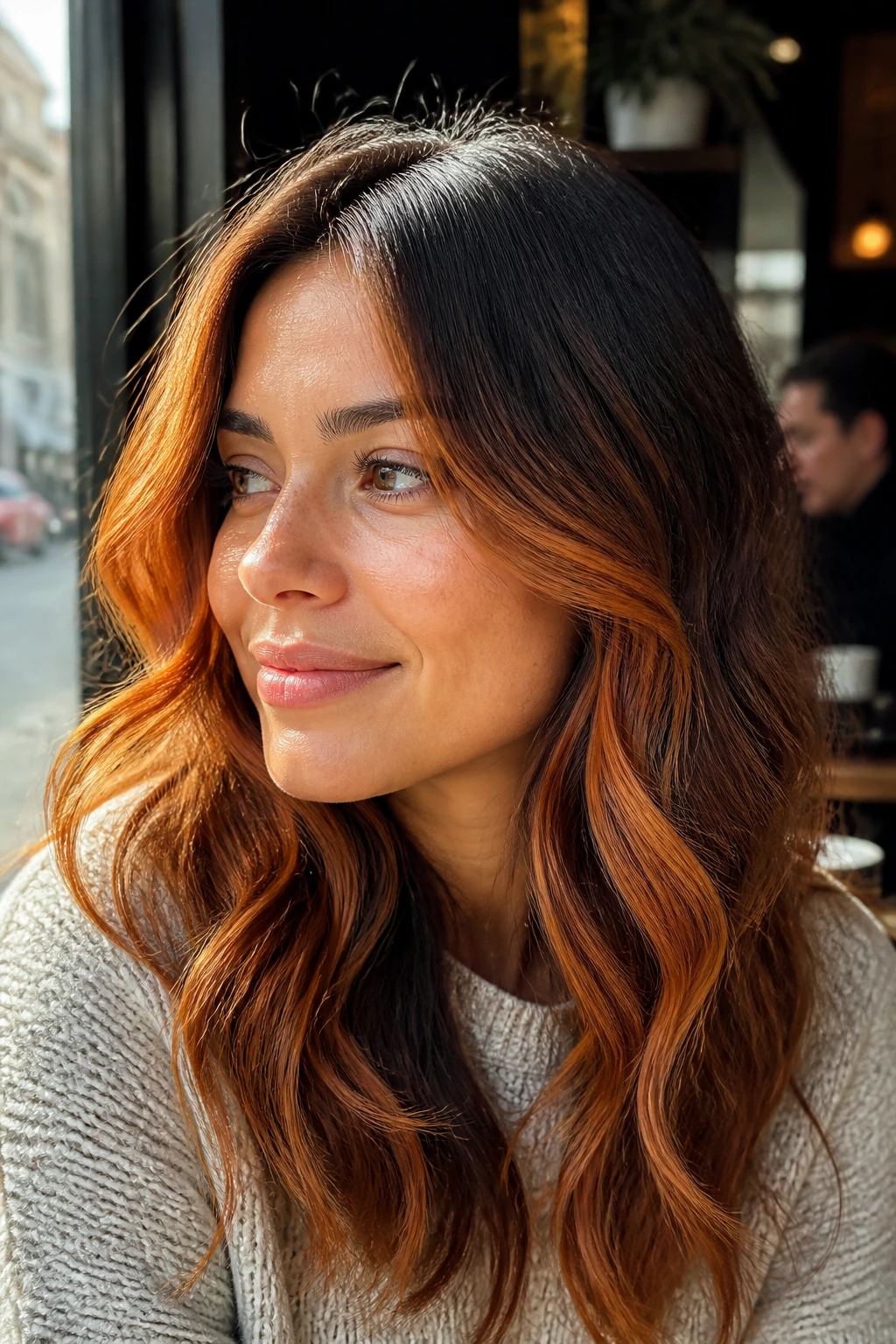
Sunkissed orange balayage on brunette hair is the version I’d call approachable. The orange sits lightly over a brown base, almost like warmth coming through the hair rather than sitting on top of it.
Balayage makes that possible. Because the color is painted by hand, the orange can stay concentrated around the face and the outer layers while the deeper sections remain brown. The result is subtle enough for someone testing orange for the first time, but still obvious enough to read as a color choice.
This is one of the best looks for people who wear hair in waves or a loose twist. The placement shows up when the hair moves, which is when it looks its best anyway.
20. Blood Orange Sleek Blunt Cut
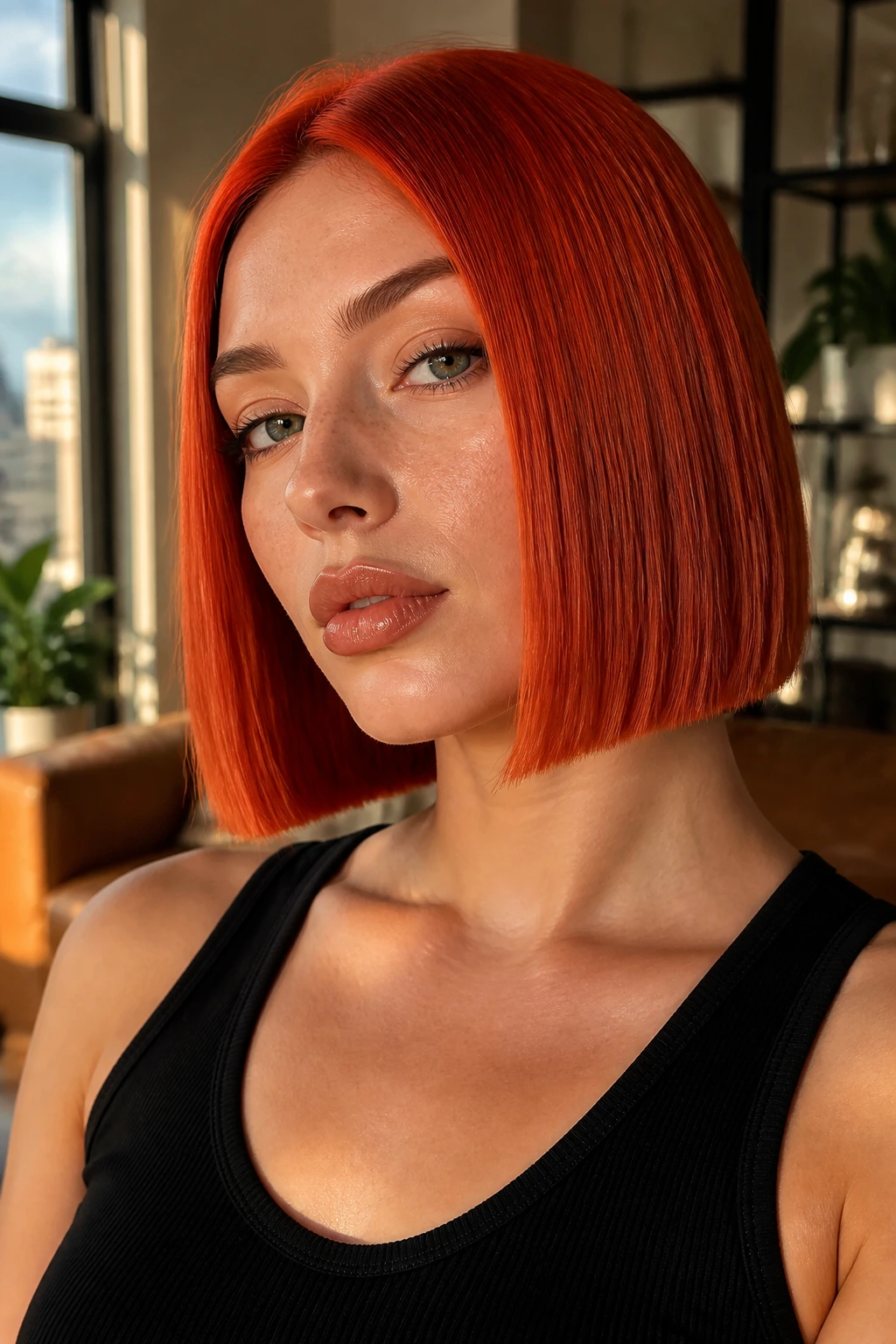
A blood orange blunt cut is sharp, graphic, and a little ruthless in the best way. The saturated orange-red shade paired with a clean edge creates a look that doesn’t need extra layers or curls to feel complete.
The blunt shape matters because it keeps the color from spreading out too much. On straight hair, the orange reads like a single, polished surface. If the cut is tight around the jaw or collarbone, the whole look feels deliberate from the first glance.
This one is not for people who want a soft finish. It’s for the crowd that likes structure, shine, and a color that refuses to hide.
21. Pumpkin Cream Highlights on Blonde Hair
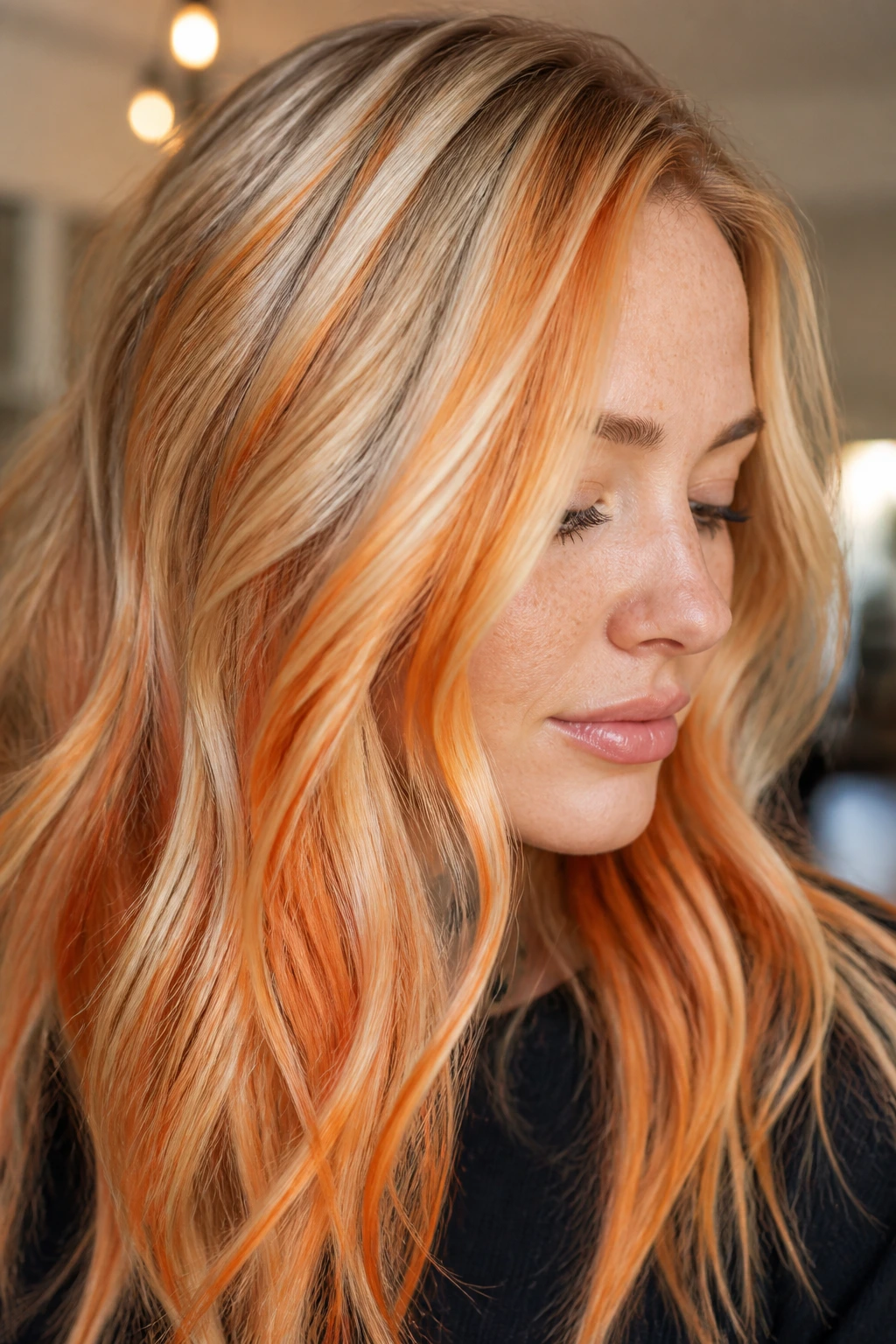
Pumpkin cream highlights are what happen when blonde hair gets a warm orange upgrade without losing its lightness. The shade sits between golden blonde and muted pumpkin, so it keeps the hair bright instead of heavy.
This look is especially good when the highlights are placed in chunky but controlled sections. Too fine, and the orange disappears. Too thick, and it can read stripy. The sweet spot gives you enough color to notice at once, but enough blonde left behind to keep the finish airy.
It’s also one of the better orange choices if your hair tends to grab color quickly. A blonde base can swallow too much pigment in a heartbeat, so a soft pumpkin tone keeps things cleaner.
22. Rusted Rose Curls
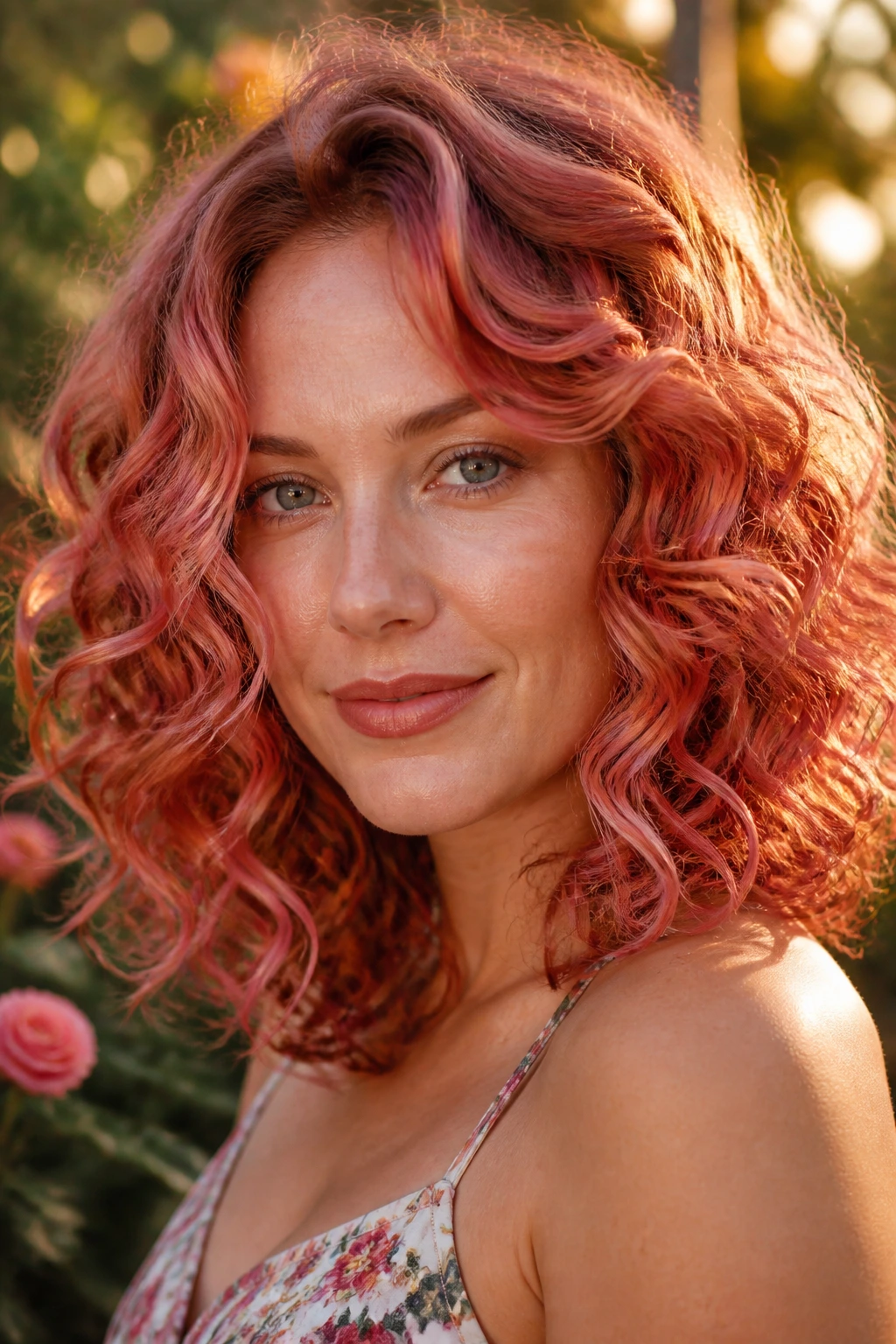
Rusted rose curls blend orange, copper, and a muted pink edge, and the result is less fire and more glowing clay pot. That mix keeps the color from tipping too orange or too red, which can happen fast when a formula is overmixed.
Curls are the right canvas because they break up the rose tone and make it feel dimensional. The rust part lands in the shadows; the rose shows up on the top curve of each curl. It’s a nice choice if you want warmth with a softer, almost vintage feel.
I like this look when the finish is glossy but not glassy. You want enough shine to show the color shifts, not so much that the curls collapse into one slick line.
23. Cider Copper Waves
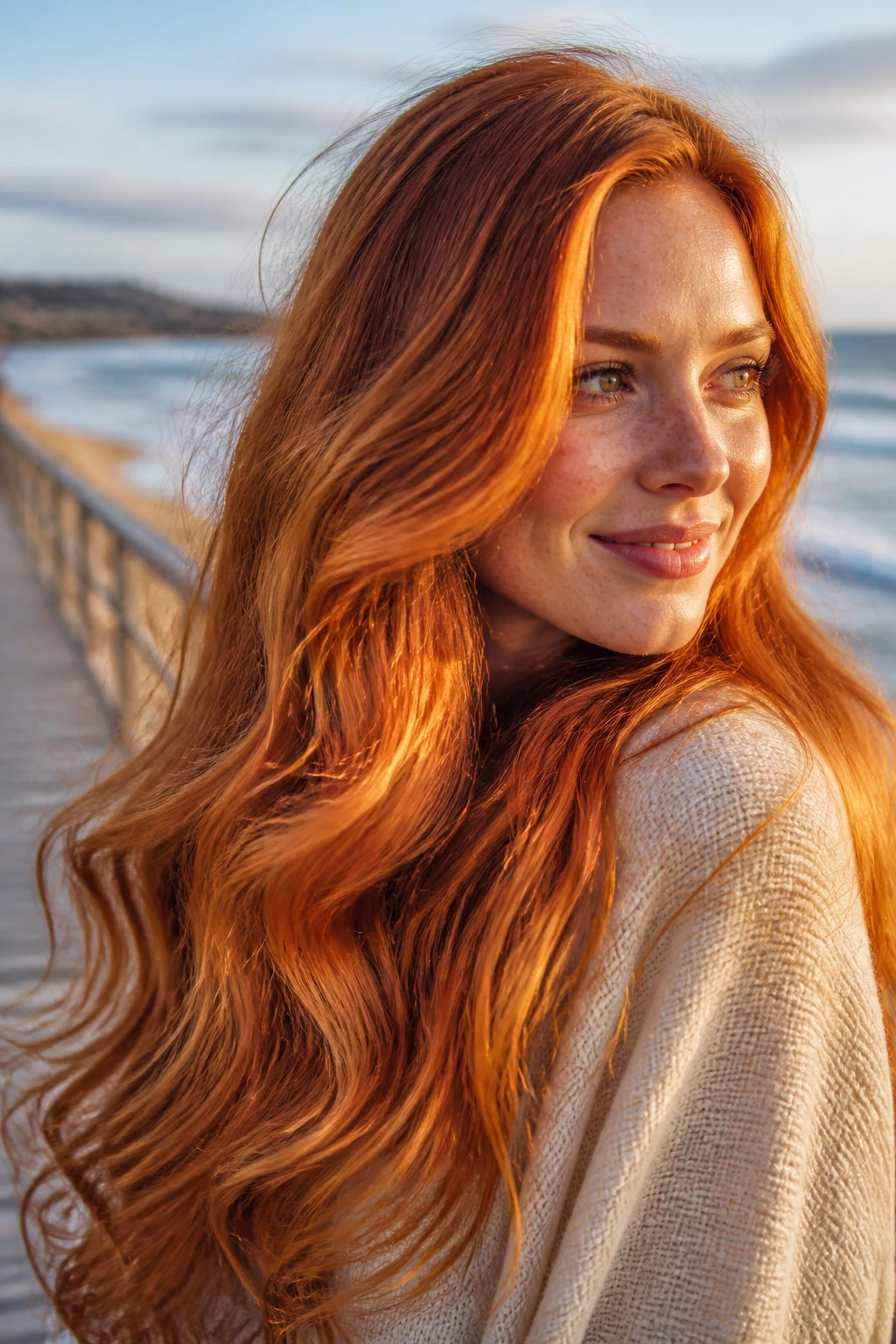
Cider copper waves feel like warm light in hair form. The color is less orange than mango and less red than auburn, which makes it one of the most balanced versions in the whole set.
The reason it works so well on waves is that cider copper changes as the bends roll through the hair. The top plane catches golden copper; the underside turns deeper and spicier. That movement makes the color feel expensive without trying too hard.
This is a strong pick for someone who wants to be noticed in a soft way. It’s warm, rich, and easy on the eyes, which is more useful than people think.
24. Orange Peekaboo Panels
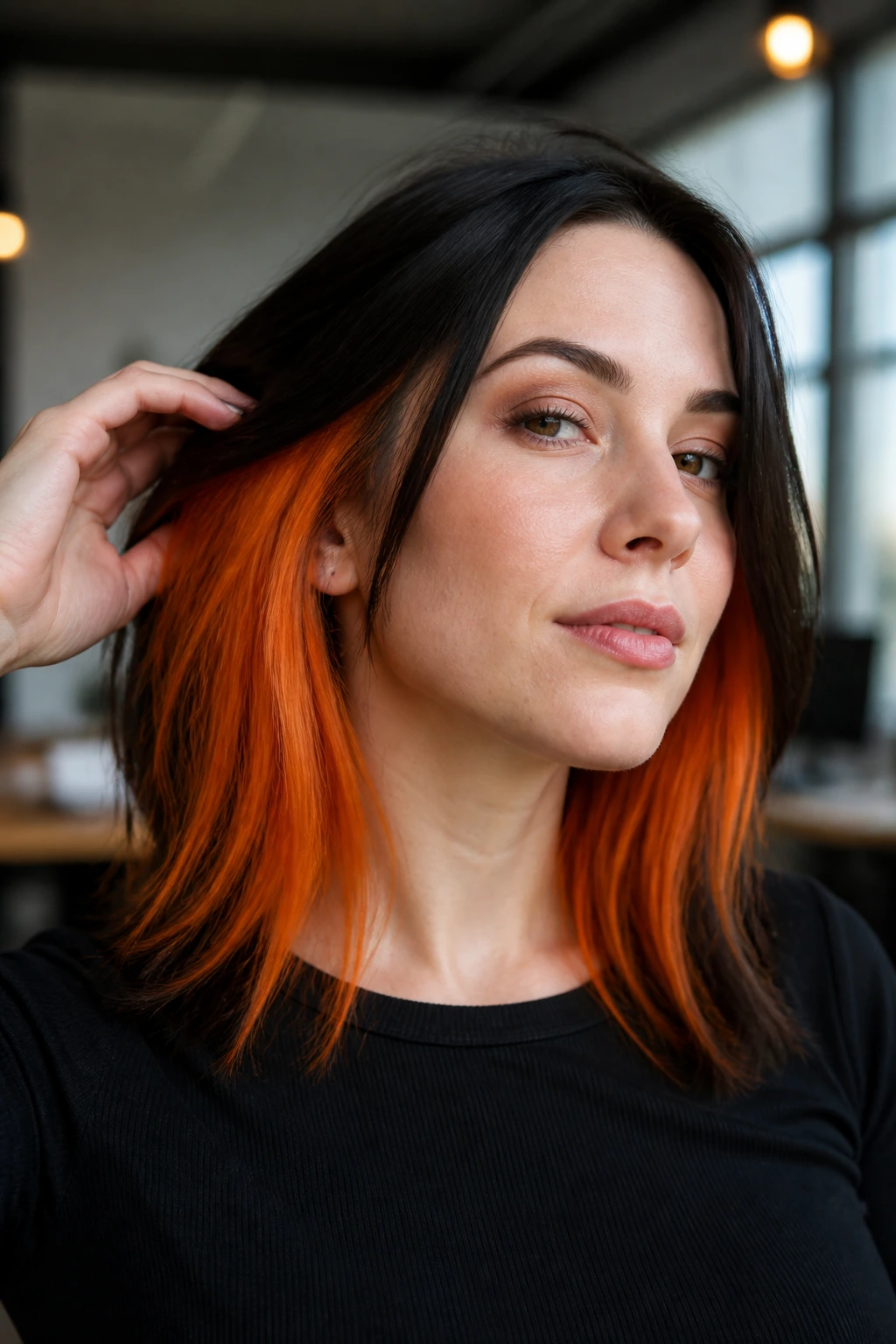
Orange peekaboo panels are for the person who wants surprise, not constant visibility. The color lives underneath the top layer and shows when the hair moves, lifts, or gets tied up.
That hidden placement gives you flexibility. Straight hair can keep the orange mostly tucked away, while a bun, braid, or half-up style shows the color instantly. It’s a very smart choice for office settings, school, or anyone who wants a bold color with a little privacy.
The panels should be bright enough to stand out against the top layer, otherwise they just vanish. And yes, maintenance matters here too. Hidden color still fades, even if no one can see it every minute.
25. Sunburst Curly Afro
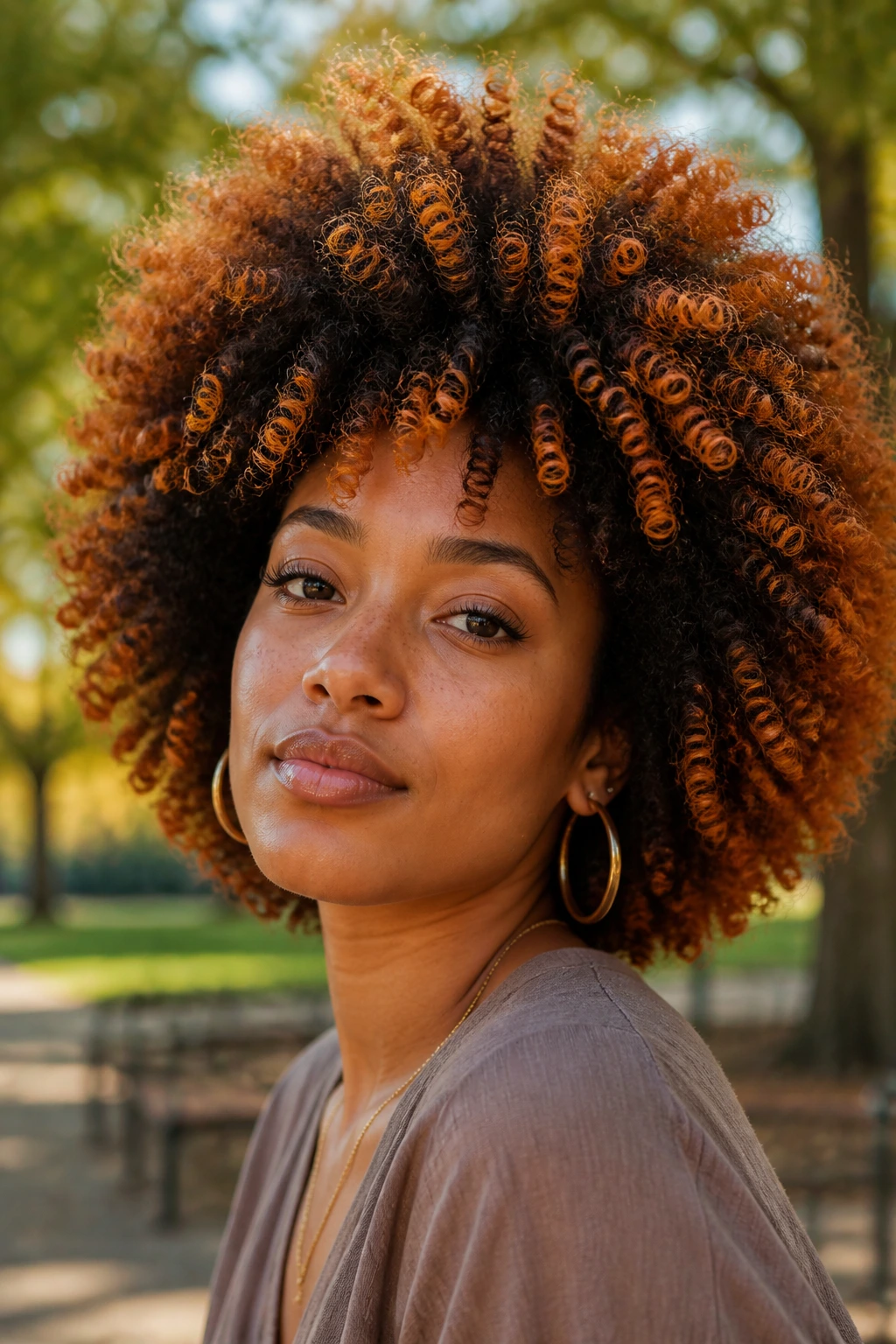
A sunburst curly afro is one of the most visually satisfying orange looks because the texture does so much work. Orange highlights scattered through a rounded afro can look like sunlight caught in the coil pattern, especially when the color is painted with some restraint and not every curl is saturated the same way.
The shape helps. A well-shaped afro gives orange room to expand without turning noisy. Put the brightest pieces around the crown and outer ring, and the style starts to glow instead of just sitting there.
This look benefits from moisture. Dry curls can make orange look harsh; hydrated curls make it look rich. That difference is bigger than most people think.
26. Terracotta Braids
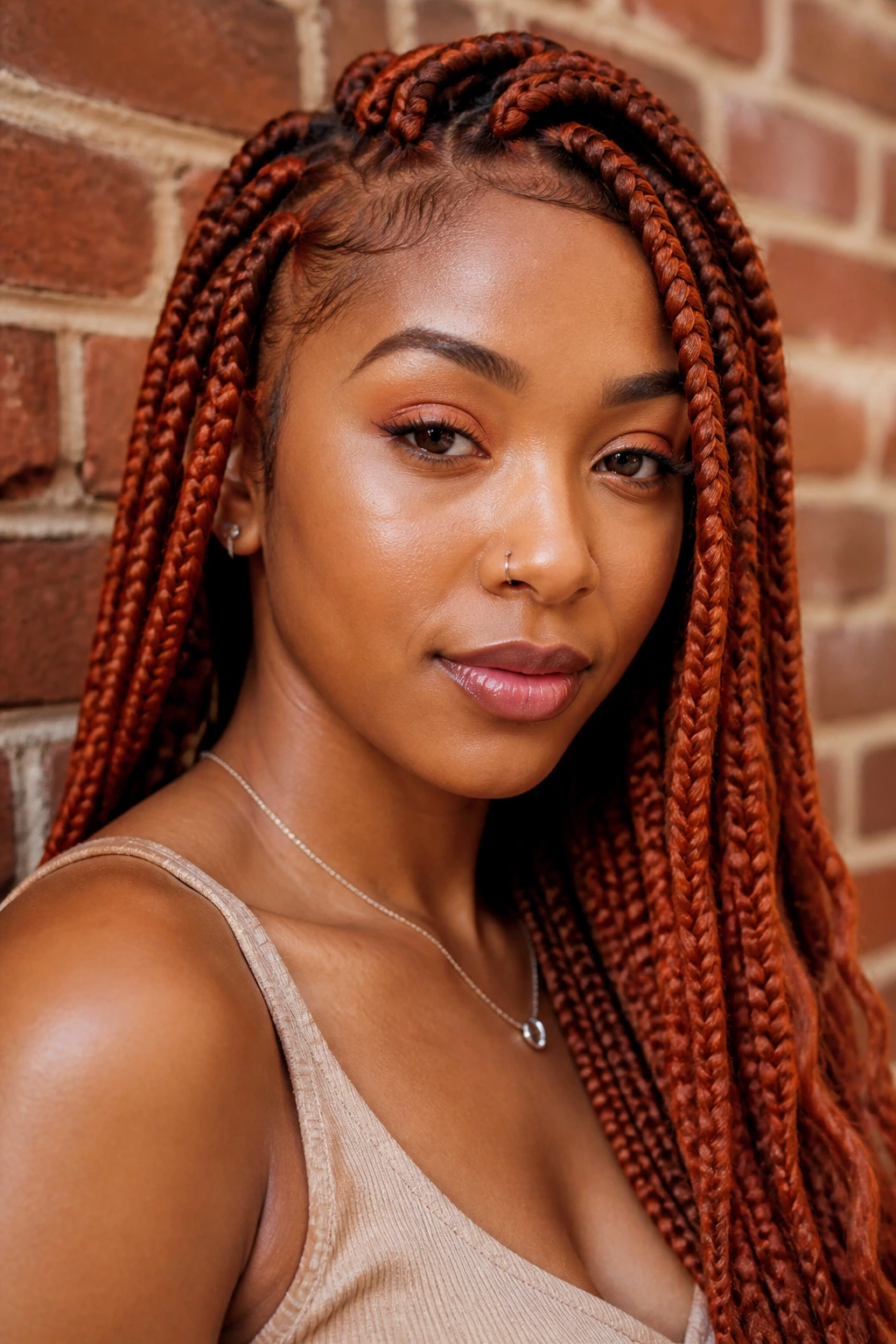
Terracotta braids lean earthy rather than electric, and that’s what makes them easy to wear. The shade sits between orange, brown, and clay-red, so the braids feel grounded instead of fluorescent.
Braids are a strong match for terracotta because the plait pattern gives the color texture on its own. You don’t need a super-bright formula when the style already carries movement. A few slightly darker strands woven through can keep the whole look from going flat.
If you want orange but prefer something that feels closer to natural materials than candy, this is your lane.
27. Citrus Gloss on Natural Gray
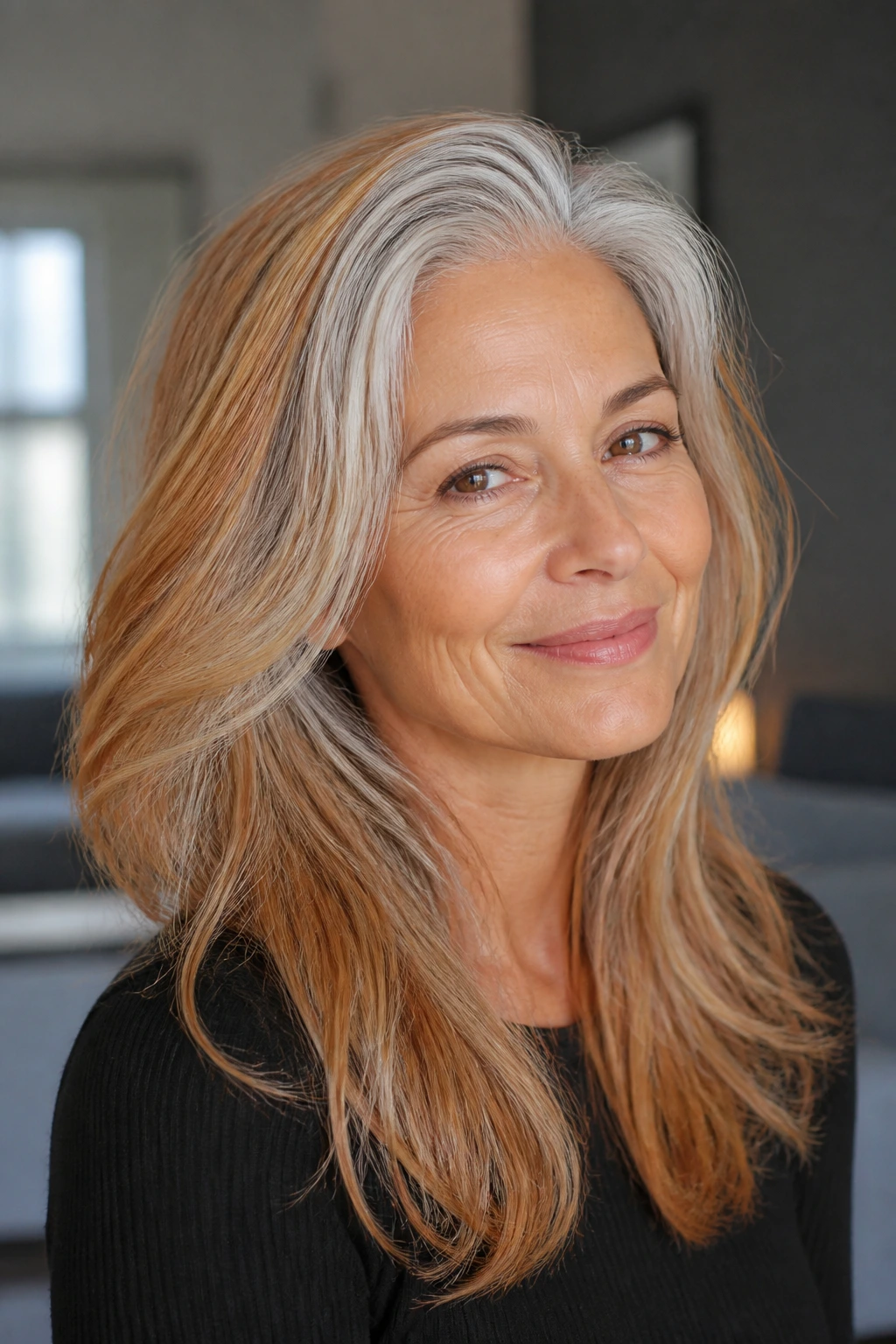
A citrus gloss over natural gray hair is sharp in a way that surprises people. The gray acts like a bright, cool canvas, and the citrus tone warms it up without covering every strand in opaque color.
This works best as a gloss or translucent deposit, not a heavy permanent dye. You want the silver and gray to stay visible so the orange reads like a sheen instead of a mask. The result can be sleek, modern, and cleaner than a full dye job.
Gray hair often takes color differently at the roots and ends, so a gloss is safer than a hard formula if you want control. It’s also one of the most elegant orange options in the whole bunch.
28. Burnt Sienna Mullet
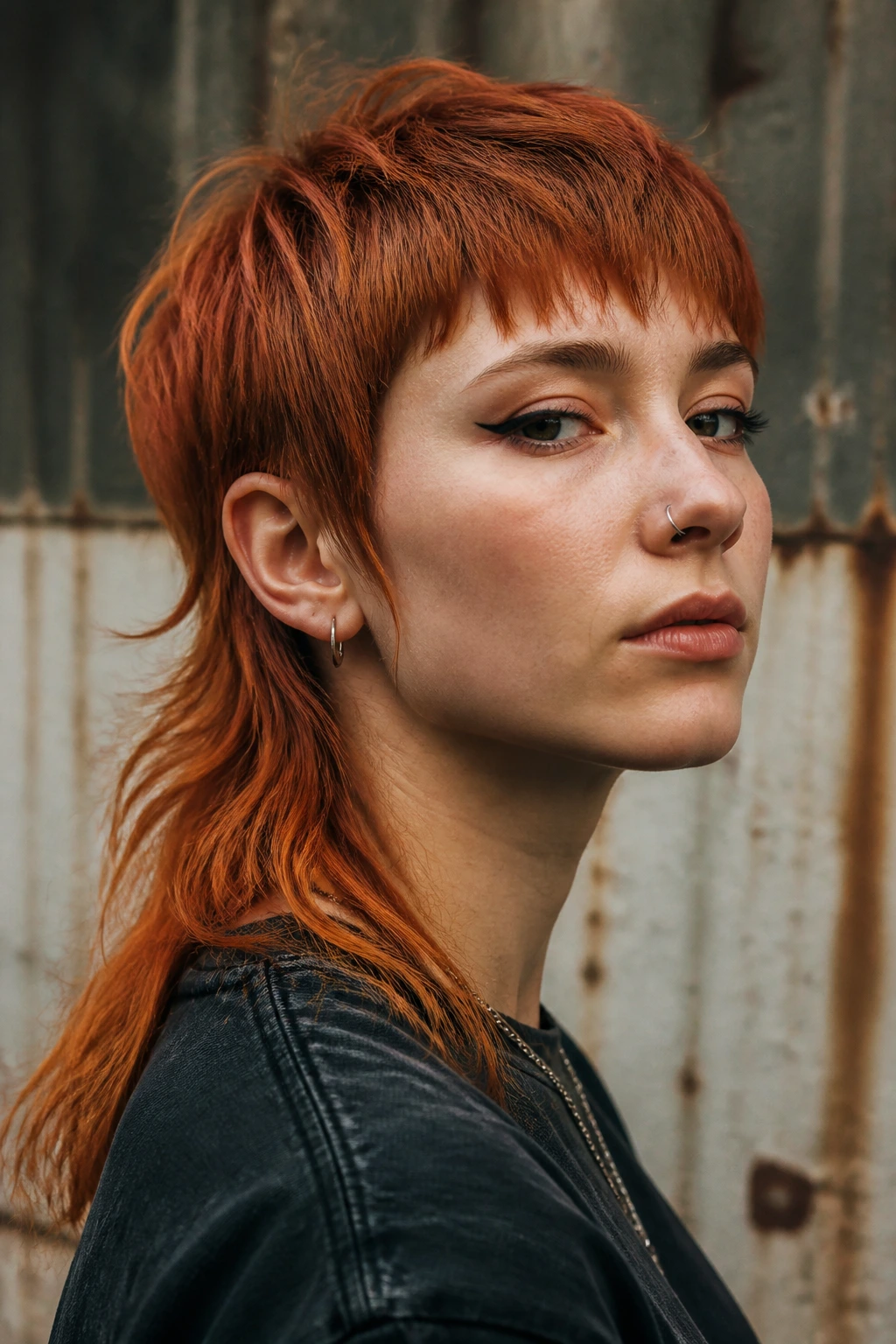
A burnt sienna mullet is all edge, all day. The short front and crown keep the color tight, while the longer back lets the orange-brown shade stretch out and move.
What makes this look work is the cut’s built-in contrast. A mullet already has shape tension, so the burnt sienna adds another layer of attitude without needing a brighter orange. It reads gritty, cool, and a little art-school in the best way.
This is one of those styles that looks better when it isn’t overstyled. A little texture paste, some bend through the ends, and the color does the rest.
29. Amber Orange Shag with Airy Ends
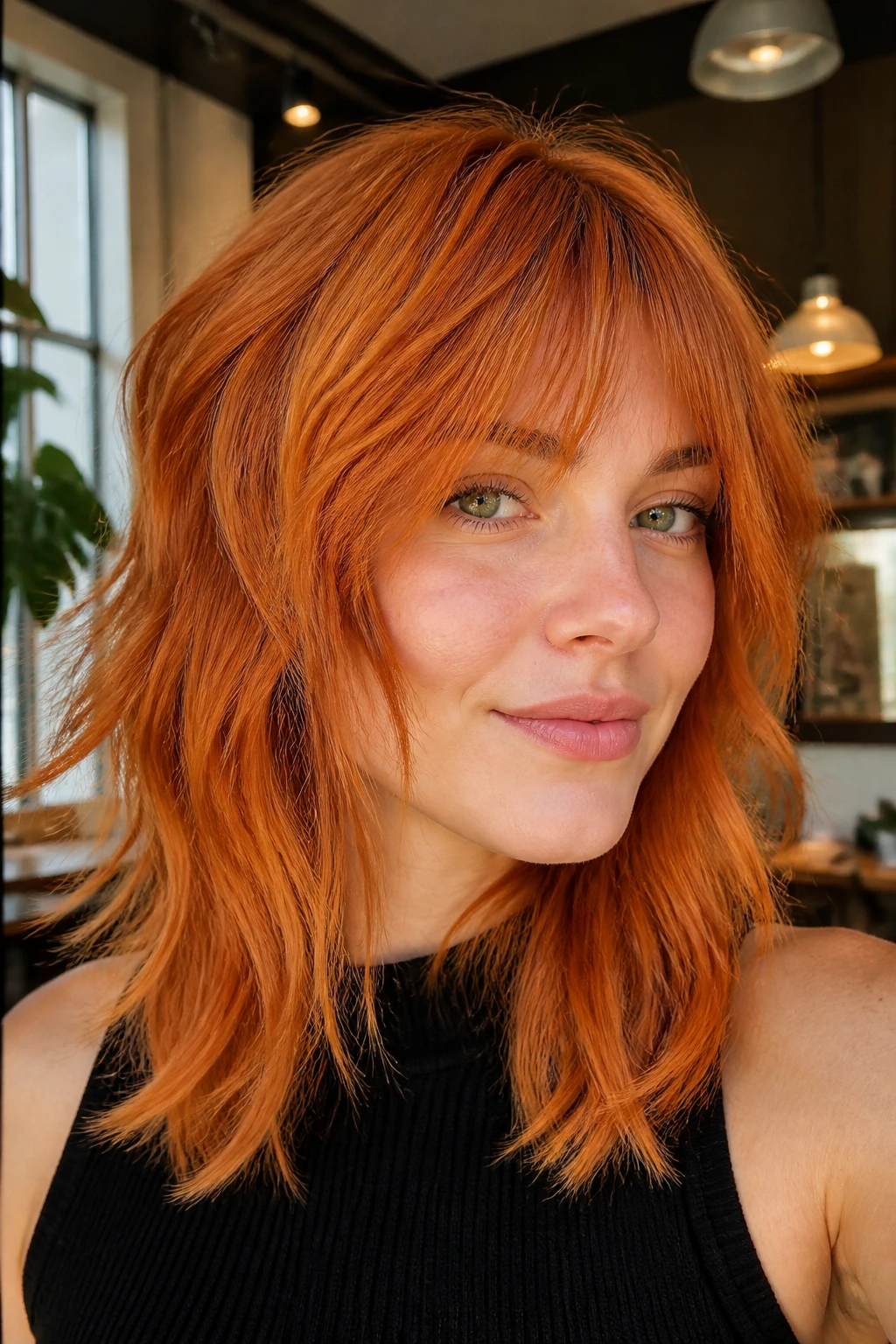
An amber orange shag with airy ends is softer than a fiery orange shag, but it still has enough heat to matter. The airy finish keeps the layers light, which stops the color from getting swallowed by all that movement.
I like this look because shag cuts can go heavy fast if the color is too dense. Amber orange stays lively. It lets the layers separate, and the ends keep a feathery outline instead of clumping together.
If you want orange that feels lived-in and a little undone, this is a very good place to land. It looks especially good when the hair is lifted at the roots and not flattened down.
30. Paprika Power Ponytail
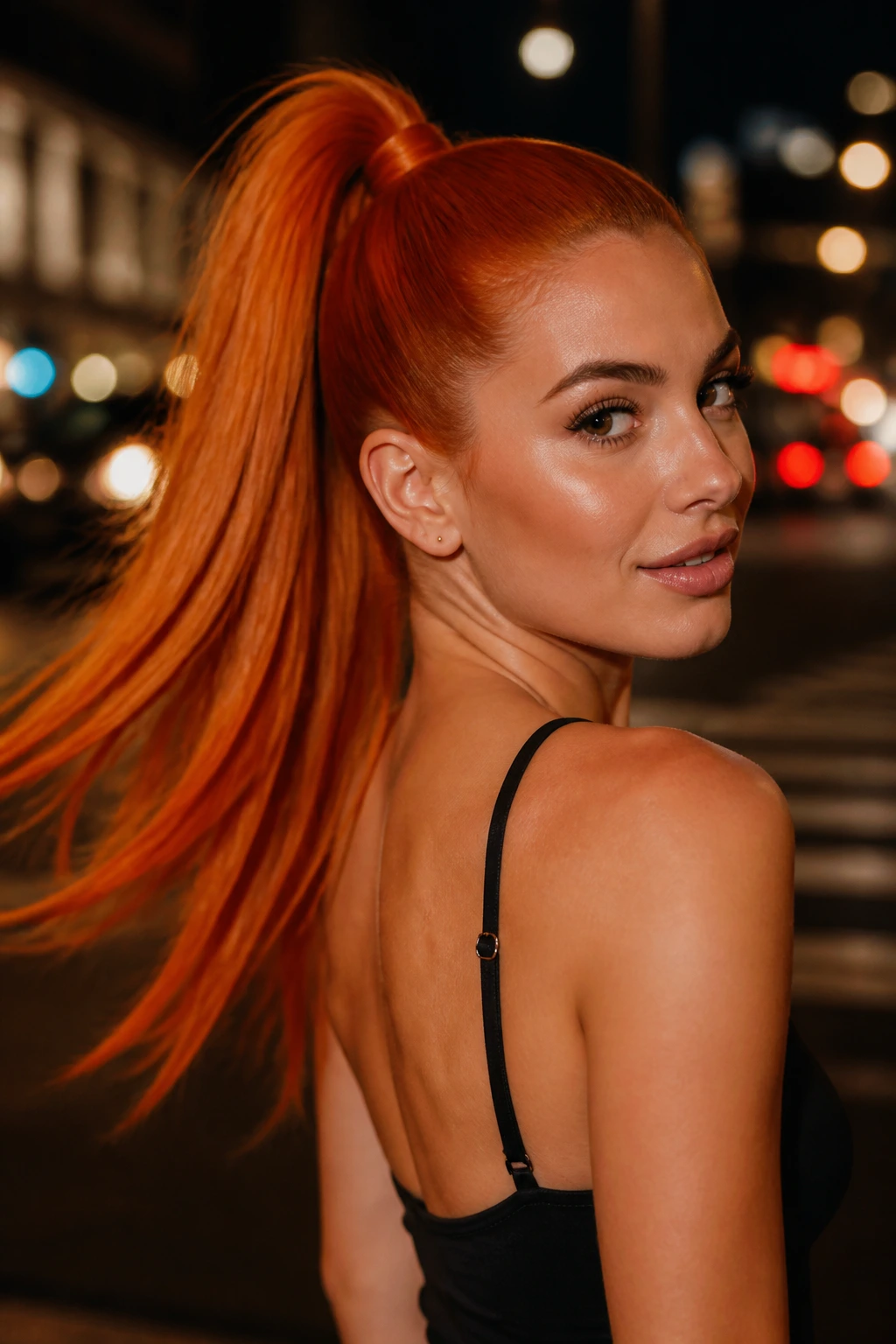
A paprika ponytail turns a simple style into a statement without adding a single extra layer. The color itself does the work, especially when the ponytail is sleek at the crown and full through the lengths.
Paprika is one of those red-orange shades that looks strong in motion. The pony swings, the color shifts, and the whole thing reads clean instead of busy. A wrapped base around the elastic keeps the style polished enough for a night out or a sharp daytime look.
This is a smart choice if you wear your hair up a lot. Instead of hiding the color, the ponytail puts it right where people can see it.
31. Fiery Split Dye
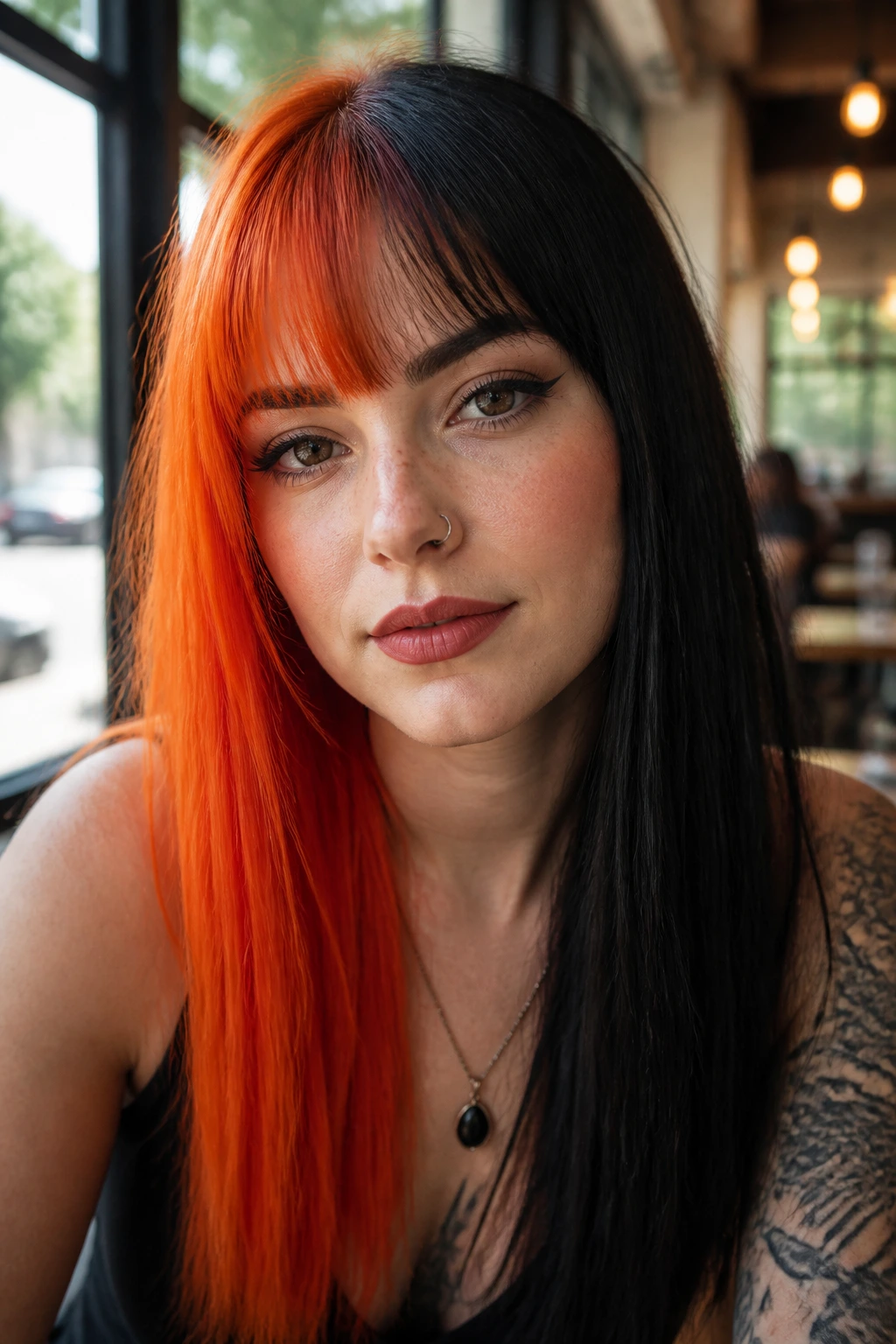
A fiery split dye is unapologetic. One side orange, the other side dark — sometimes black, sometimes espresso, sometimes deep brown — creates a clean line that makes the color look graphic and deliberate.
This look works because the contrast is the point. The orange does not need to compete with the other side; it gets its own lane. Straight styles show the divide most clearly, but a wave can make it look even more dramatic because the separation gets a little softer as it moves.
It’s not a low-commitment color idea, but it is a clear one. If you want people to see the color from across the room, this does the job without much translation.
32. Honeyed Copper Waves
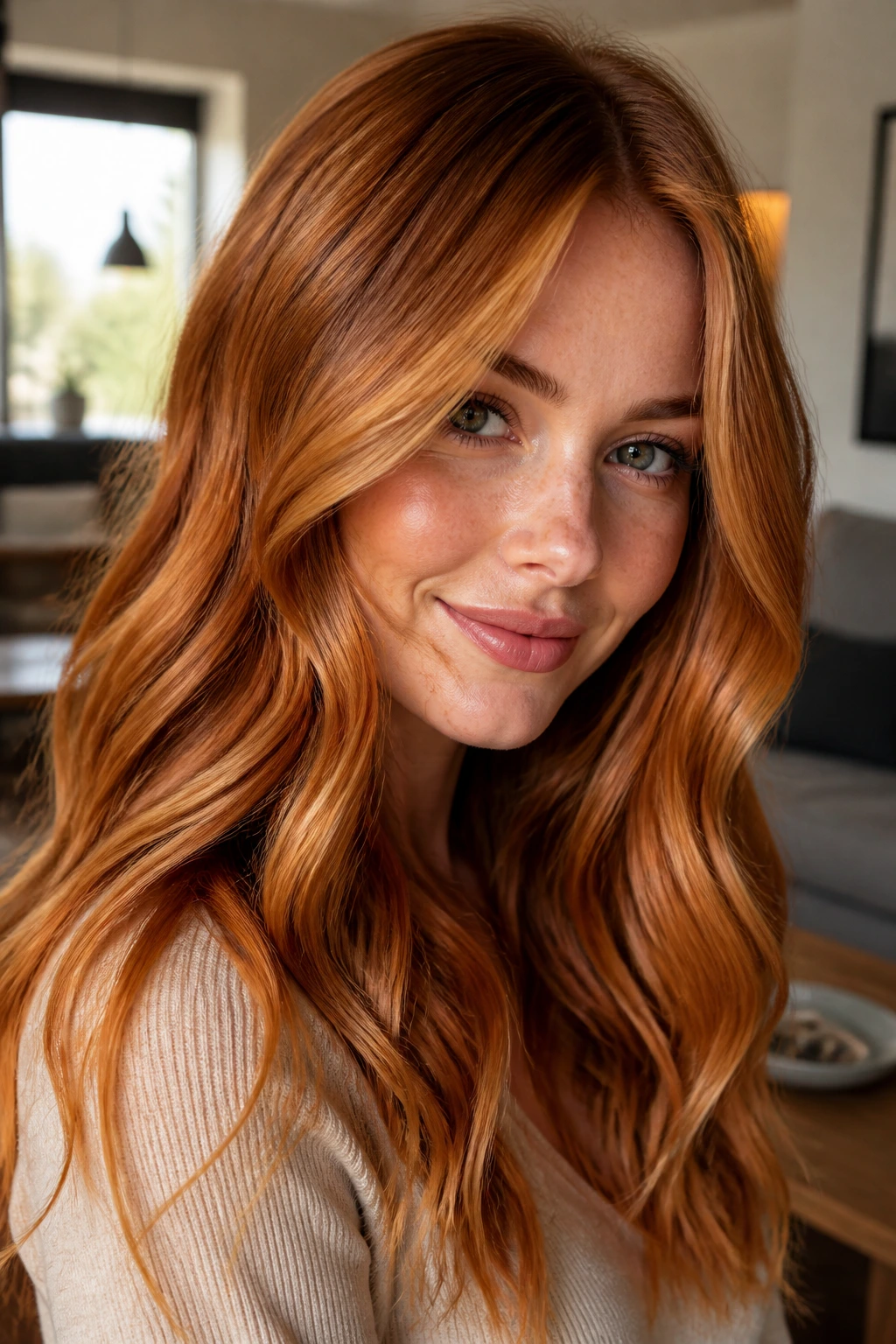
Honeyed copper waves are the most universally wearable orange look in the set, and I mean that in the practical sense, not the bland one. The shade is warm, luminous, and soft at once, which makes it easy to live with on different skin tones and hair lengths.
The honey note pulls the copper away from harsh red, while the waves keep the color broken up and dimensional. It’s a shade that looks expensive when the hair is healthy and a little disappointing when it isn’t, so shine and condition matter more here than with some of the louder orange options.
If you want orange hair that still feels like hair — not costume, not neon, not a dare — this is the one I’d hand you first.
Why Orange Hair Fades the Way It Does
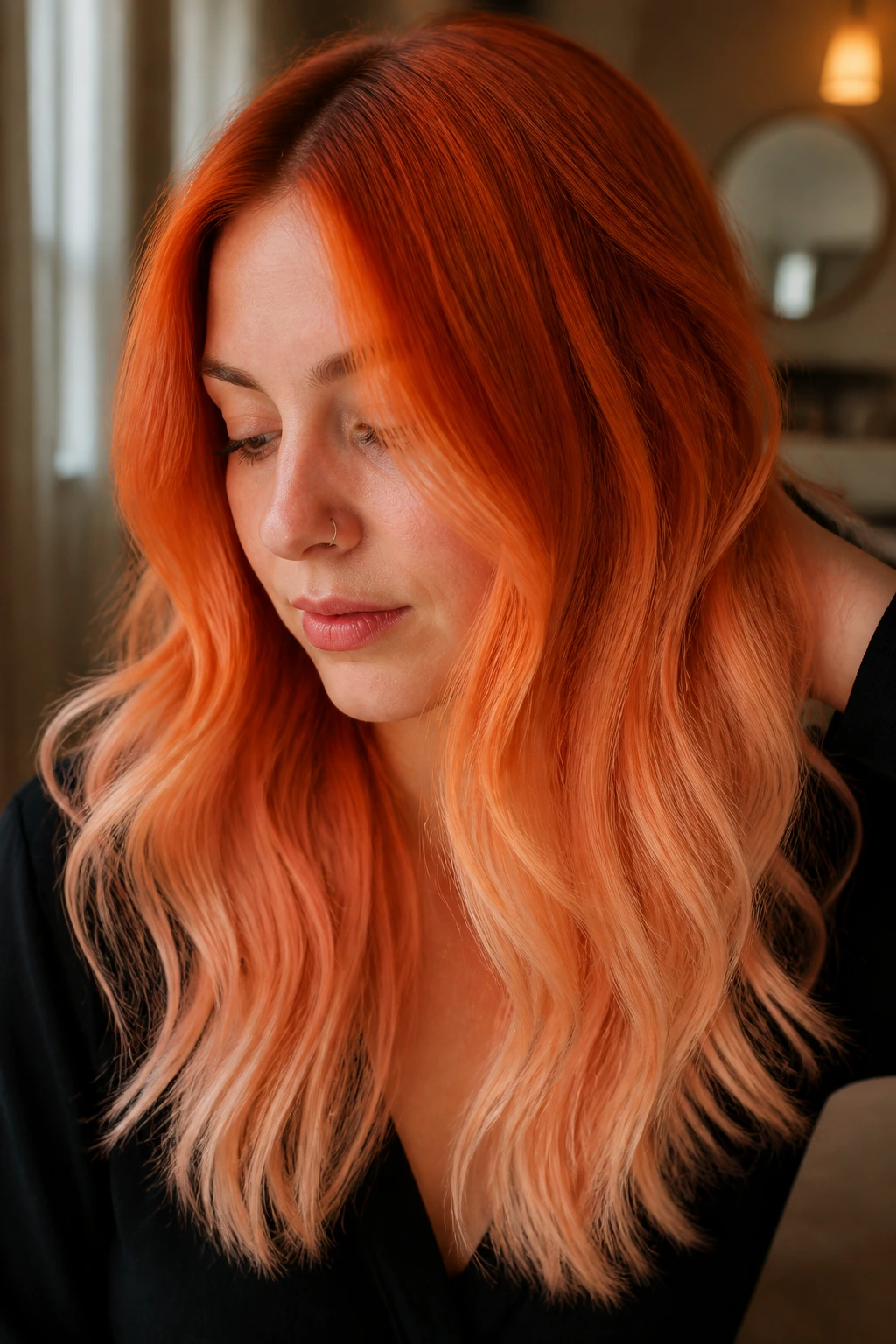
Orange hair fades in a way that can be either lovely or annoying, depending on the formula and the base underneath. The reason is simple: orange pigments usually sit on top of a warm underlying lift, so when the deposit starts to wash out, the hair doesn’t go beige or icy. It drifts toward peach, gold, copper, or sometimes a muted brass.
That fading pattern is why base level matters so much. Hair lifted to a level 7, 8, or 9 takes orange differently than a darker level 5 or 6. On lighter hair, the shade shows fast and can go pastel quickly. On darker hair, the orange may stay quieter at first but can lose clarity if the underlying red-brown isn’t managed cleanly.
Heat, hard water, and frequent shampooing speed up the fade. So does flat ironing every day. If orange hair is going to look good for more than a week, the cuticle has to stay reasonably smooth and the water hitting it should not be scorching hot.
Essential Tools for These Looks
-
Tint bowl and color brush: Useful for sectioning and getting orange dye where it belongs instead of all over the neck.
-
Sectioning clips: These keep thick hair organized, especially for balayage, money pieces, or split-dye work.
-
Gloves: Orange stains skin fast. Don’t trust yourself to “be careful.”
-
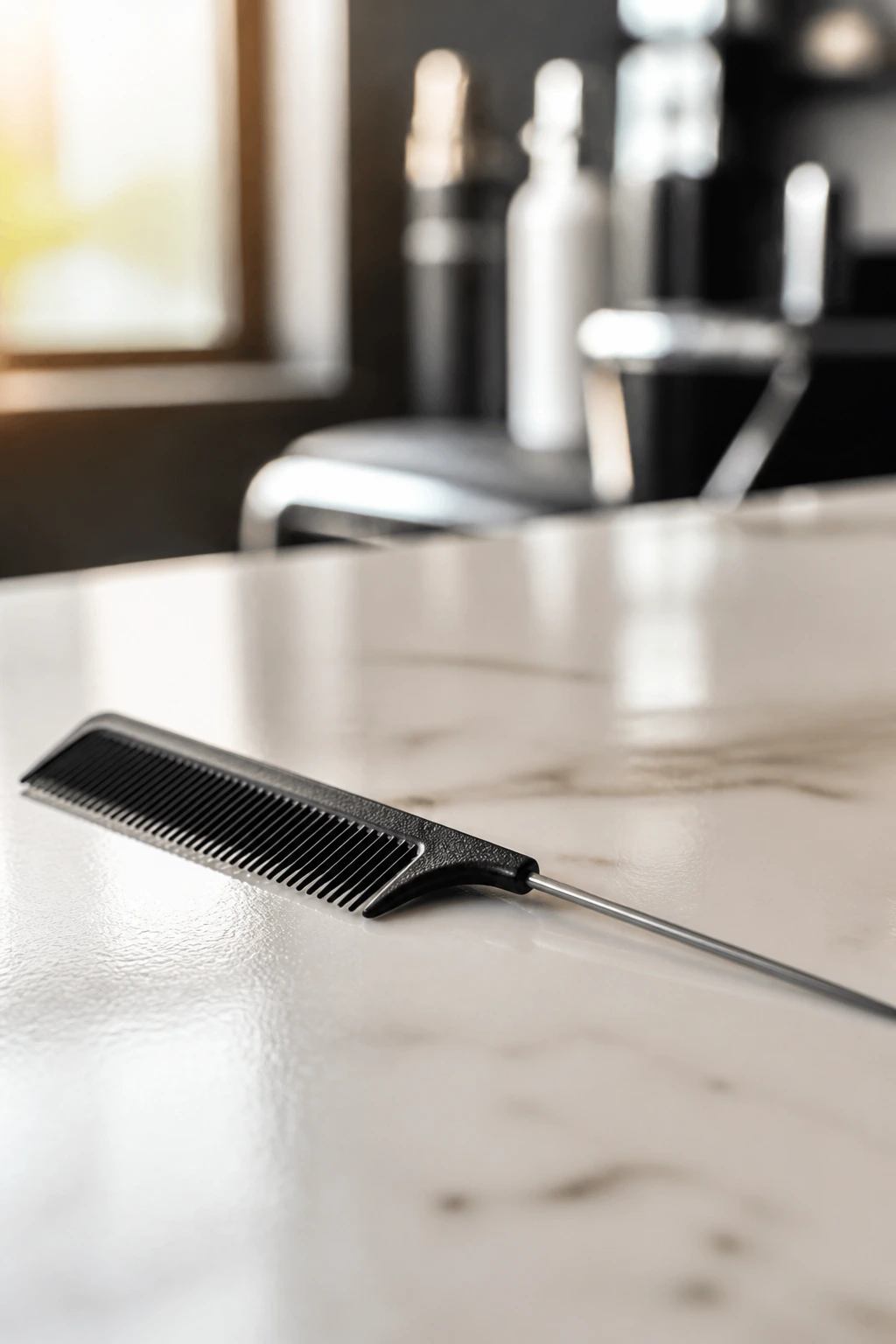
Rat-tail comb: Good for clean parts, precise panels, and getting through dense hair without yanking.
-
Old towel or color cape: Orange formulas can stain light fabric in a single pass.
-
Sulfate-free shampoo: Helps keep semi-permanent and demi-permanent orange shades from flushing out too quickly.
-
Color-safe conditioner or mask: Useful for keeping the strand surface smooth so the color looks richer.
-
Heat protectant: Mandatory if you’re blow-drying, flat ironing, or curling. Hot tools chew through orange faster than almost any other shade.
-
Wide-tooth comb: Better than a brush on wet, freshly colored hair.
-
Diffuser attachment: Worth it for curls, shags, and waves, because orange tends to look best with texture intact.
-
Color-depositing mask or conditioner: Optional, but handy if you want to refresh copper, terracotta, or apricot tones at home.
Smart Shade Shopping and Product Tips
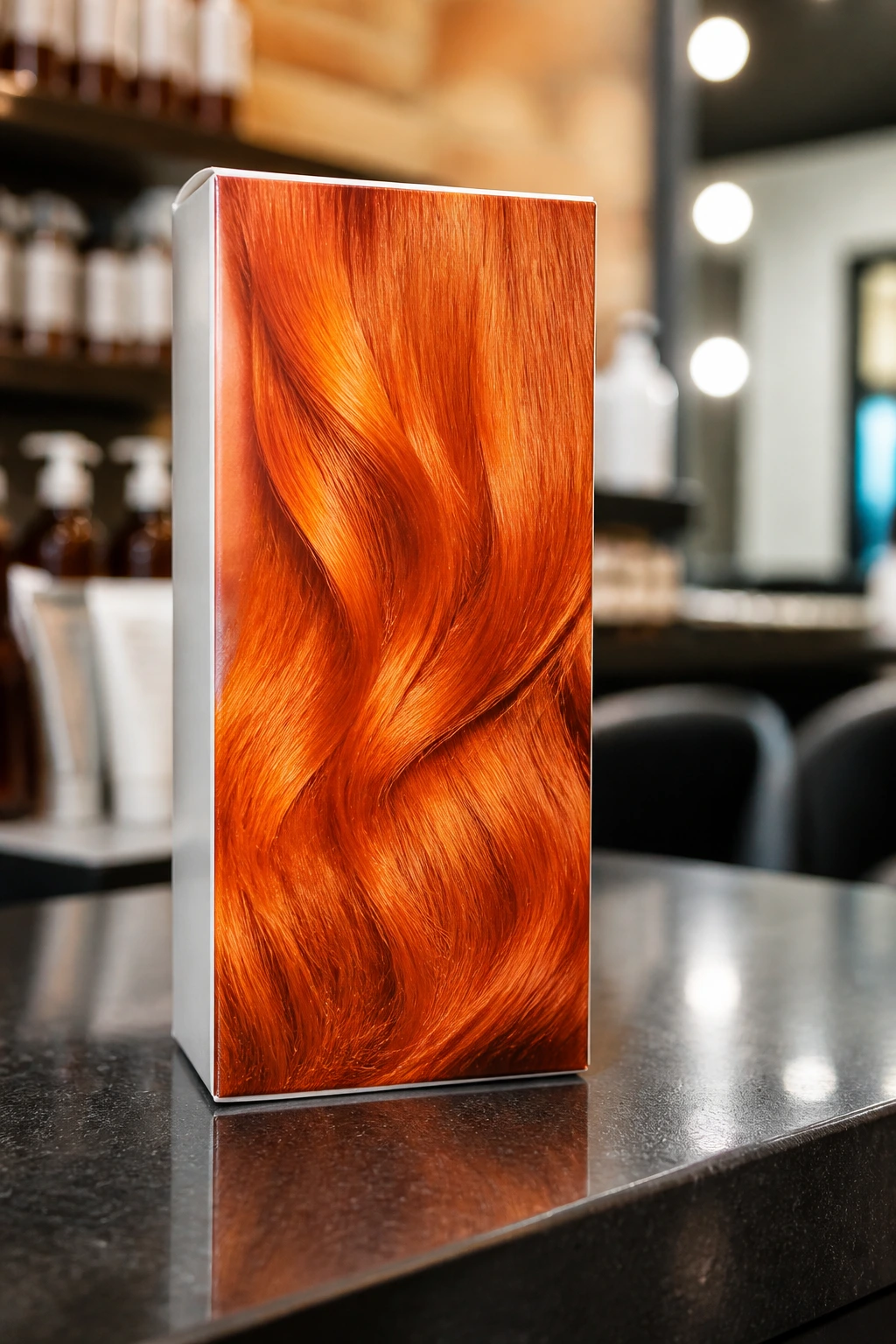
Orange hair color is one of those shades where the box name can mislead you. “Copper,” “ginger,” “tangerine,” “pumpkin,” and “cinnamon” may sound similar, but the formula underneath can be very different. One leans red-orange, another leans yellow-orange, and another sits deep in the brown-red family. The swatch on the back matters more than the name on the front.
If your hair is dark, check whether the product is meant to deposit color or lift and deposit. True orange on dark brown hair often needs lightening first, and a semipermanent orange on top of unlifted hair usually turns into auburn or warm brown. That can be lovely, but it is not the same look.
For salon work, ask whether the orange should be opaque, translucent, or gloss-like. Opaque color reads bolder and covers more of the base. A gloss gives you shine and tone without burying the hair underneath, which is useful if you want copper or apricot rather than one solid block of color.
Porosity matters too. Porous ends grab orange fast and sometimes go a little too hot, while healthy roots may resist. That’s why strand tests are worth the trouble. They show you whether the hair needs a lighter formula, a shorter processing time, or a root shadow to keep the finish even.
How to Wear Orange Hair So It Reads Cleanly
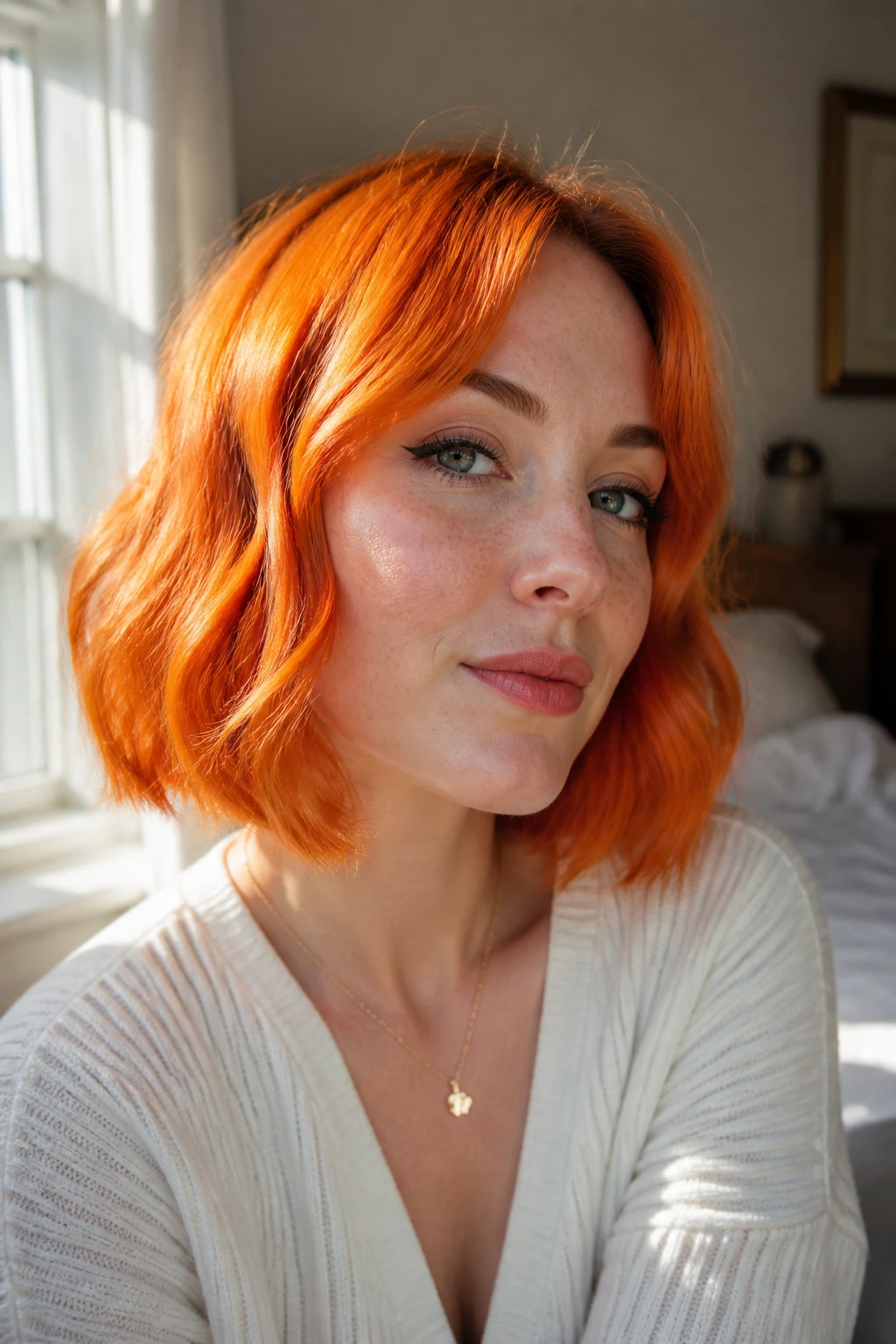
Cut pairing: Crisp bobs, shags, lobs, and curly cuts all change how orange lands. A blunt cut makes the color feel graphic; layers make it feel softer and more dimensional.
Makeup pairing: Bronze, peach, taupe, warm brown, and soft berry tones usually work well. If the hair is very bright, a heavy orange lip can push the face too far into one color family, so balance matters.
Wardrobe pairing: Deep navy, olive, black, cream, chocolate, and denim give orange room to breathe. Bright orange hair against another bright warm color can be a lot unless that’s exactly the point.
Accessory pairing: Gold, tortoiseshell, amber, and warm metal frames tend to flatter orange shades better than cool silver, though a sharp silver accessory can work if the hair is fiery and the outfit is simple.
Finish: Shine should look clean, not greasy. Orange colors show buildup, so a light gloss spray often beats heavy serum.
Small Moves That Keep Orange Hair Looking Intentional
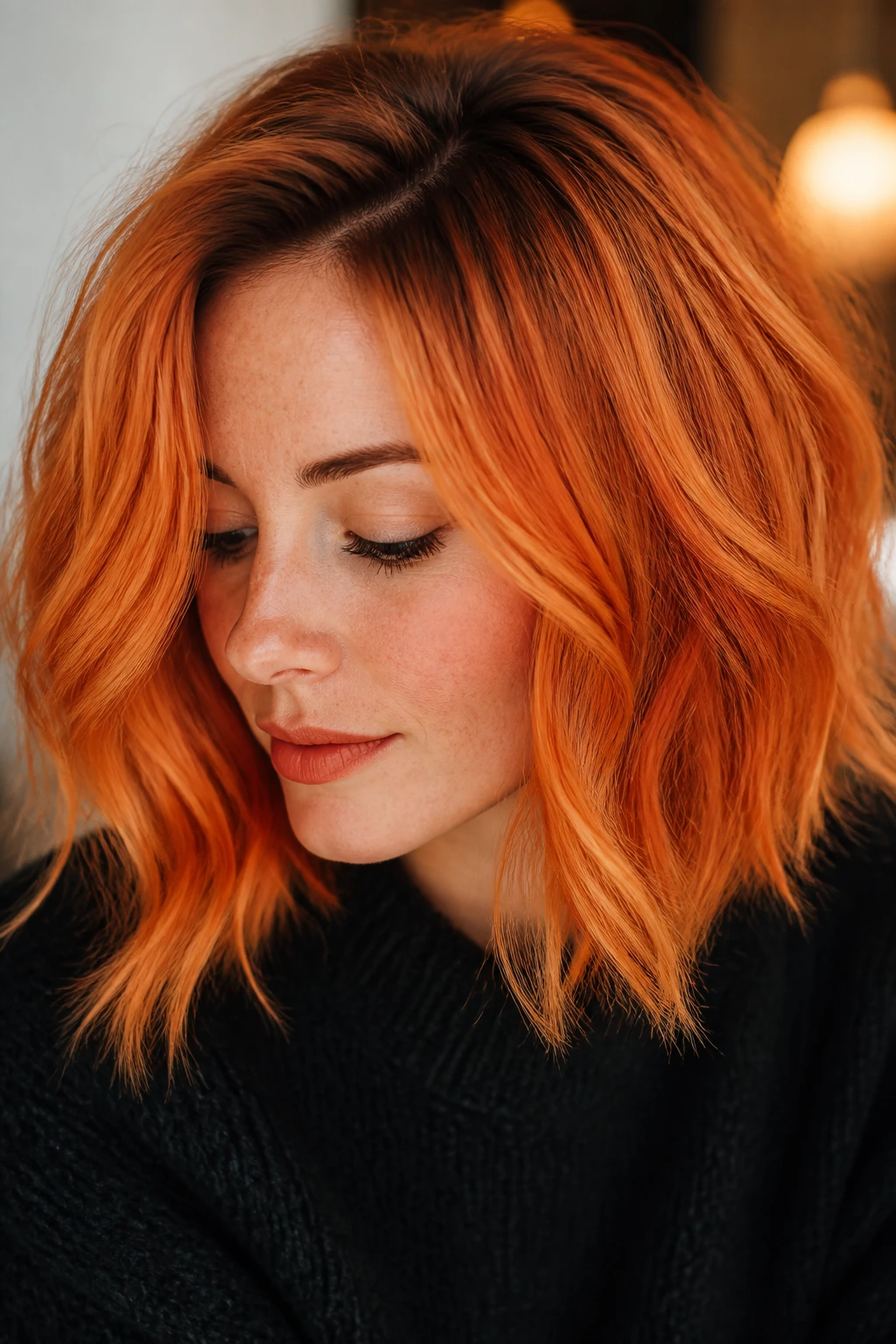
Root depth: Even a half-inch of shadow root can make copper and tangerine feel more expensive. Without it, the color can look pasted on, especially at the scalp line.
Tone balance: If the orange starts drifting too red, a little gold or copper gloss can pull it back. If it goes too yellow, a redder color mask helps warm it up again.
Heat control: Keep hot tools on the lower side whenever possible. The ends are the first place orange fades out, and they also happen to be the oldest part of the hair. That double hit matters.
Water habits: Rinse with cooler water when you can. It sounds fussy. It works.
Placement: Bright orange looks best when it has a reason to be where it is. Face-framing pieces, ends, and midlights usually make more visual sense than random streaks scattered everywhere.
Orange Hair Mistakes That Turn a Good Color Muddy
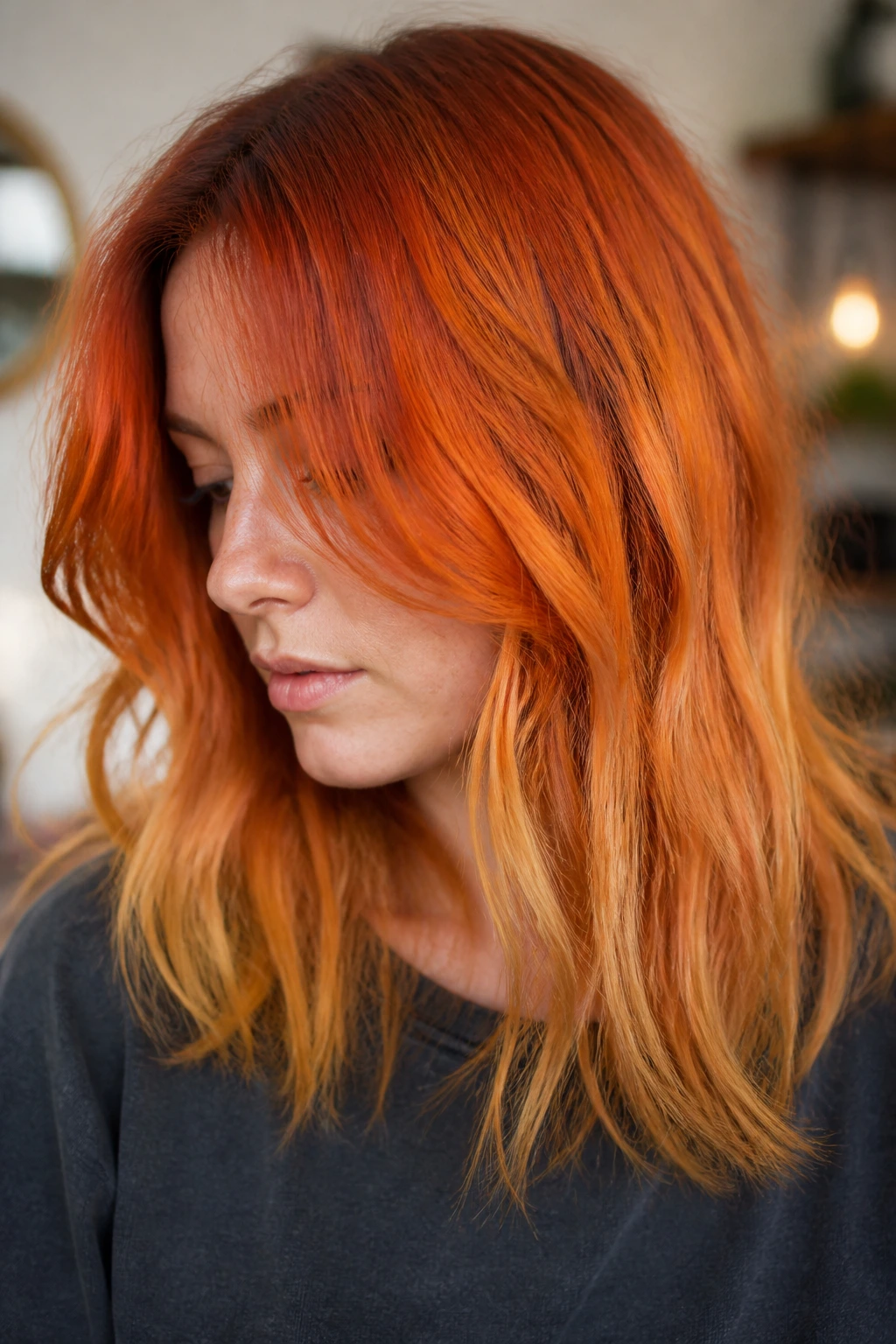
Picking the wrong orange for the base: A vivid tangerine formula on dark unlifted hair often turns into dark copper or brown-orange, not bright orange. Check the starting level first, then choose the shade.
Skipping the strand test: Orange grabs fast on porous ends and slower at the roots. If you skip the test, you can end up with hot ends and sleepy roots. A 15-minute strand test can save a full color correction.
Using too much heat too soon: Fresh orange color is fragile. Flat ironing every day or blasting it with a high-heat blow-dry steals pigment faster than most people expect.
Forgetting about undertone shift: Orange rarely fades to nothing. It turns peachy, brassy, or copper-gold. If you don’t want that, plan your refresh schedule before the color starts drifting.
Overloading the hair with product: Heavy oils and thick creams can make orange look dull and coated. A little shine is good. A sticky film is not.
Variations and Adaptations to Try
Soft Copper Wash: Choose a demi-permanent copper glaze instead of an opaque orange dye. It gives a translucent finish that works well if you want warmth more than statement color.
High-Voltage Tangerine: Push the shade toward pure orange with a brighter front piece or money piece. This works best on lifted blondes or pre-lightened brunettes that can hold the pigment cleanly.
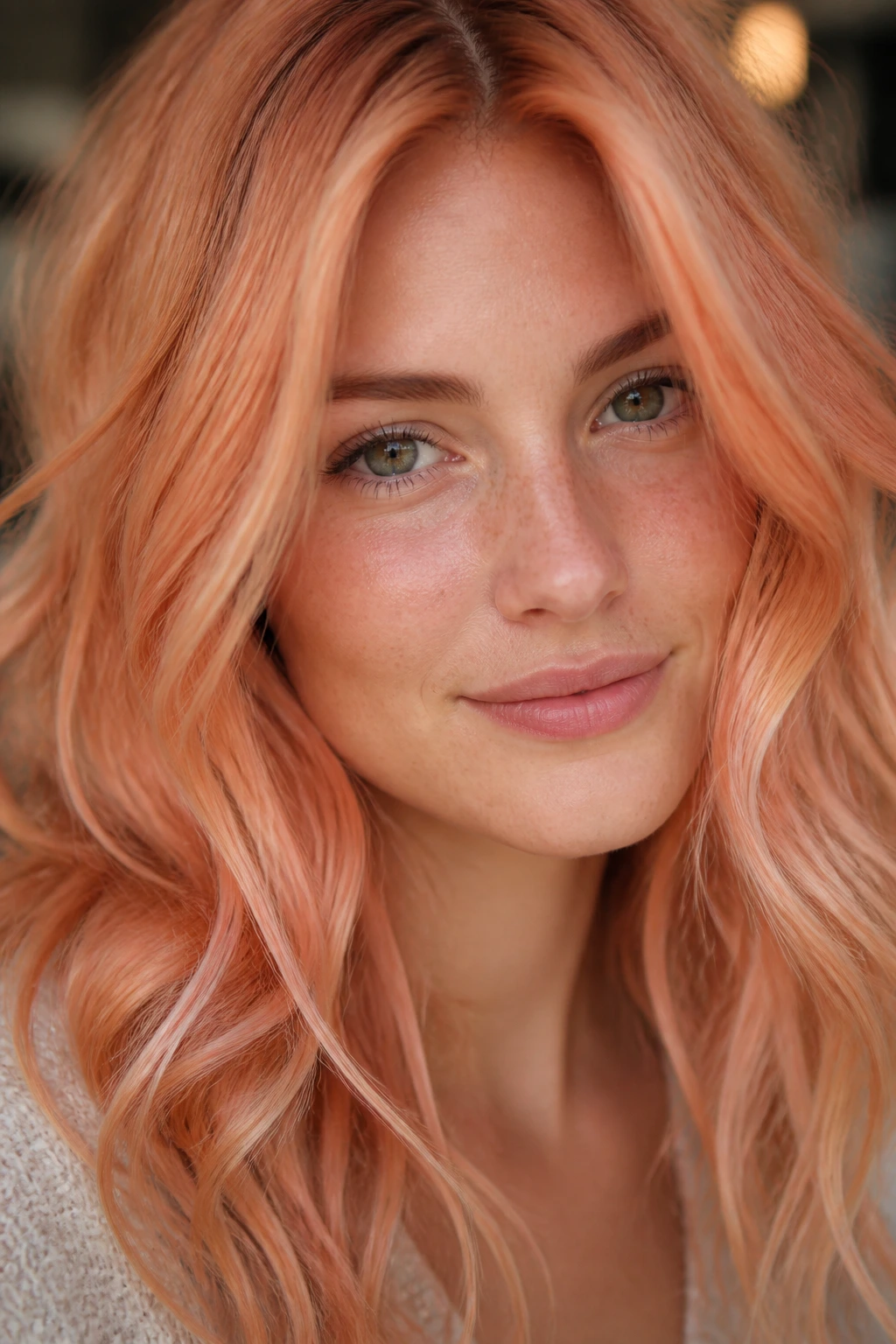
Dusty Peach Melt: Blend peach, apricot, and pale copper through the mids and ends for a softer look. It’s a good choice if you like orange but want something that fades into a prettier pastel.
Braided Ember: Put orange into box braids, knotless braids, or feed-in styles with darker roots and brighter ends. The style carries the color for you, which is useful if you don’t want daily heat styling.
Gray-Friendly Citrus Gloss: Use a translucent orange gloss over silver or gray hair so the natural sparkle stays visible. This reads modern and avoids the heavy look a full permanent dye can create on coarse gray strands.
Keeping Orange Color Fresh Between Salon Visits
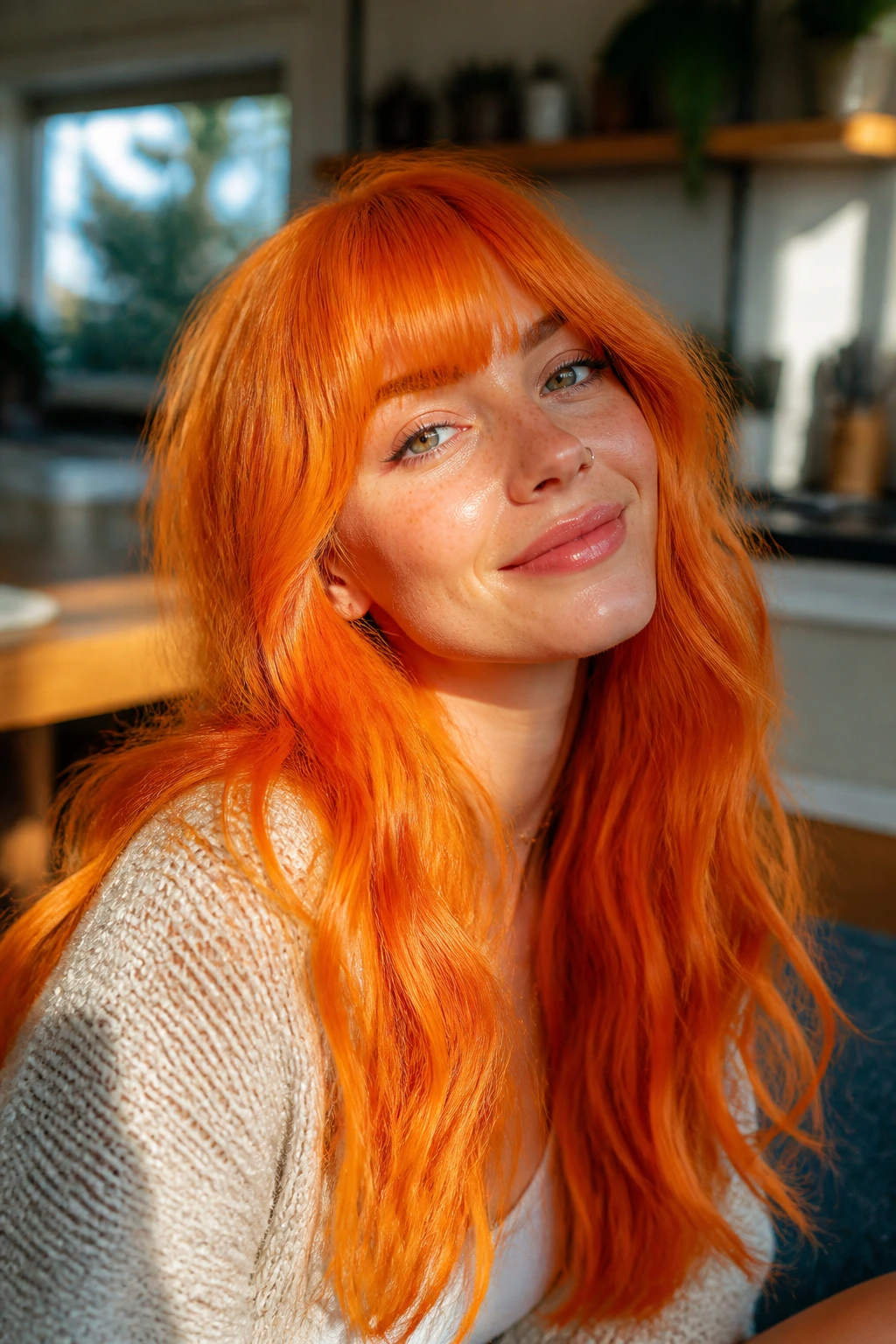
Orange hair needs a little more respect than brown, and not in a precious way. You wash it too often, it fades. You blast it with hot tools, it fades faster. You let hard water pile up, the tone gets dull and a bit dry-looking. None of that is mysterious, but it does mean the routine matters.
A good rhythm is two to three washes a week if your scalp allows it, with a sulfate-free shampoo and a conditioner that actually leaves the hair slippery. For brighter oranges, a color-depositing mask every one to two weeks can keep the tone from slipping into peach too fast. For deeper copper and rust shades, a gloss refresh every four to six weeks often works better than piling on pigment at home.
If you heat style often, use protectant every time. No shortcuts there. And if the hair starts looking flat rather than faded, the problem may be buildup, not dryness. A clarifying wash once every few weeks can strip the film without stripping the color completely, as long as you follow it with a good conditioner and don’t overdo it.
Frequently Asked Questions
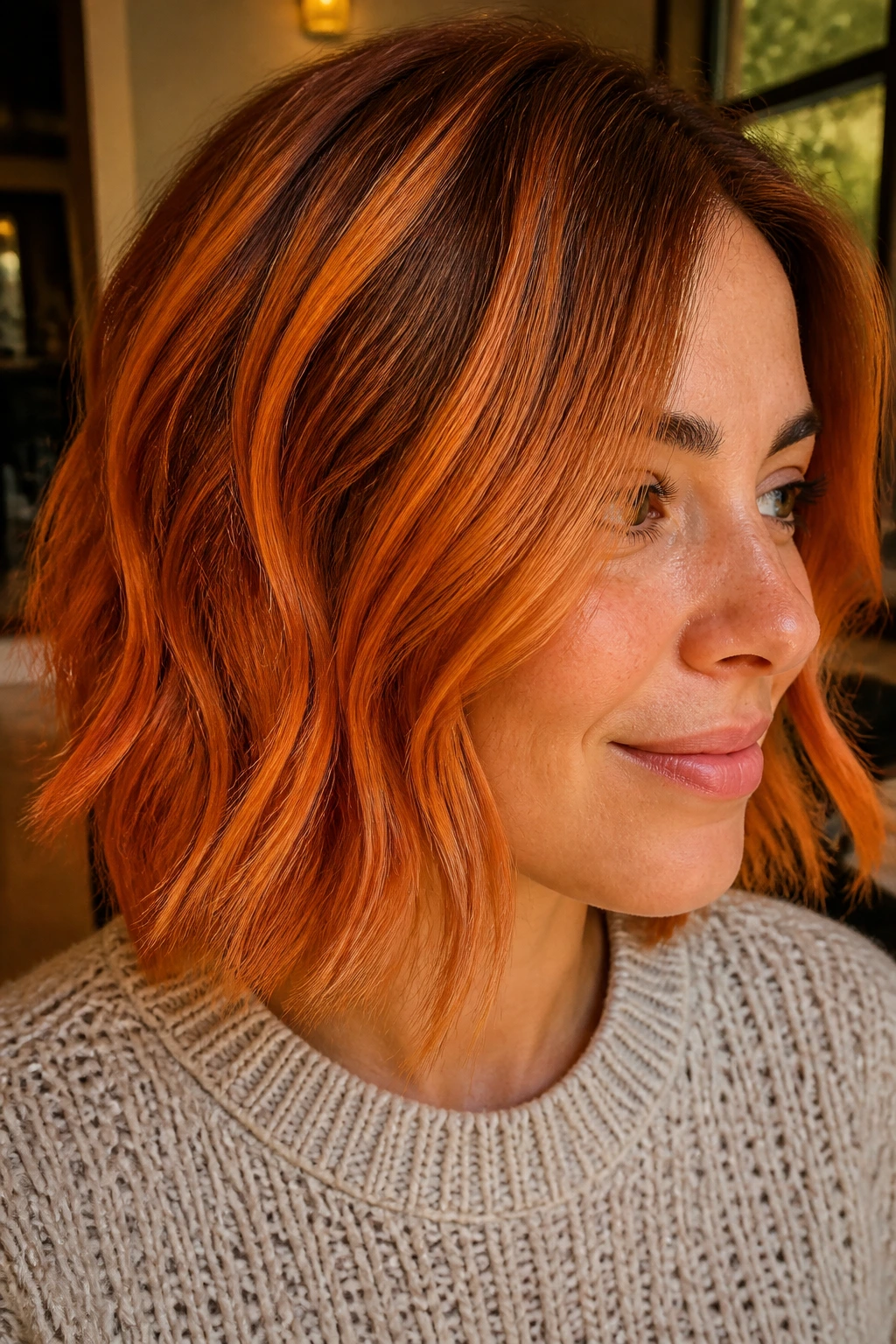
Will orange hair work on dark brown hair without bleach?
Sometimes, but not in the bright way people picture. On dark brown hair, an orange dye without lightening usually lands as copper, auburn, or warm brown-orange. If you want tangerine or neon pumpkin, the hair generally needs to be lifted first.
How often should orange hair be refreshed?
For bold orange, plan on a gloss, mask, or color refresh every 2 to 4 weeks, depending on how often you wash and heat-style. Softer copper shades can stretch a little longer, but bright tangerine panels usually need attention sooner because they show fade faster.
Does orange hair fade to peach or brass?
Both can happen. Lighter orange tones often drift peachy or apricot, while deeper copper shades can move toward brass or rusty gold. The direction depends on the original formula, the base color, and how much heat and shampoo the hair gets.
Can I do orange highlights at home?
Yes, if the placement is simple and the base is already light enough. Face-framing pieces, peekaboo panels, and color-depositing glosses are much easier at home than a full balayage or split dye. A strand test first is worth the extra ten minutes.
What if my orange turns too bright or too neon?
A cooler copper gloss, a richer conditioner, or a more diluted color-depositing mask can soften the intensity. Don’t reach for dark brown dye unless you mean to cover the orange completely; that often creates a muddy result rather than a cleaner tone-down.
Is orange hair high maintenance?
Bright orange can be, yes. Deeper copper and rooted balayage versions are easier to live with because the regrowth line stays softer. The more vivid the shade and the lighter the base, the more care it asks for.
What makeup works best with orange hair?
Warm browns, bronze, peach, soft berry, and neutral taupe usually sit well next to orange hair. Heavy orange blush or lipstick can be beautiful, but it can also push the face too far into one warm tone if the hair is already very bright.
Can I cover orange hair with brown dye later?
Usually, yes, but the result depends on how porous and light the hair is underneath. Brown over orange can turn warm chestnut, espresso, or muddy if the orange is still very vivid. A colorist can fill and neutralize it more cleanly than a one-step box dye.
A Shade With Real Range
Orange hair has a reputation for being loud, and some versions absolutely earn that reputation. But the better orange looks — the copper bobs, rooted balayages, apricot waves, burnt sienna shags, and amber glosses — have range. They can be soft or sharp, bright or smoky, low-key or impossible to miss.
That’s what makes the color so worth playing with. It isn’t one thing. It’s a whole family of warmth, and the best version is the one that fits your cut, your routine, and how much attention you want to pull the minute you walk into a room. If you’re going orange, give the shade a proper shape. That’s where the good stuff lives.
