



Straight hair is honest. It shows every foil line, every toner choice, every time a colorist got lazy with placement. That sounds unforgiving, but it’s also why highlight ideas for straight hair can look so polished when they’re done well — the color doesn’t get swallowed by waves or curls, so the pattern stays crisp and readable.
The trick is not to pile on lightness and hope for the best. Straight strands need highlights that map the head well: where the face needs brightness, where the crown needs depth, where the ends need a little movement so the whole cut doesn’t go flat. A blunt bob, a glassy blow-dry, a center part down the middle — those styles can make a caramel ribbon or a pale money piece look expensive in a way curly hair sometimes hides.
And yes, straight hair can wear both whisper-soft babylights and louder 90s streaks. It just needs different placement than textured hair. The cleanest results usually come from finer weaves, smarter spacing, and a toner that respects the base instead of fighting it.
Why This Collection Feels Different
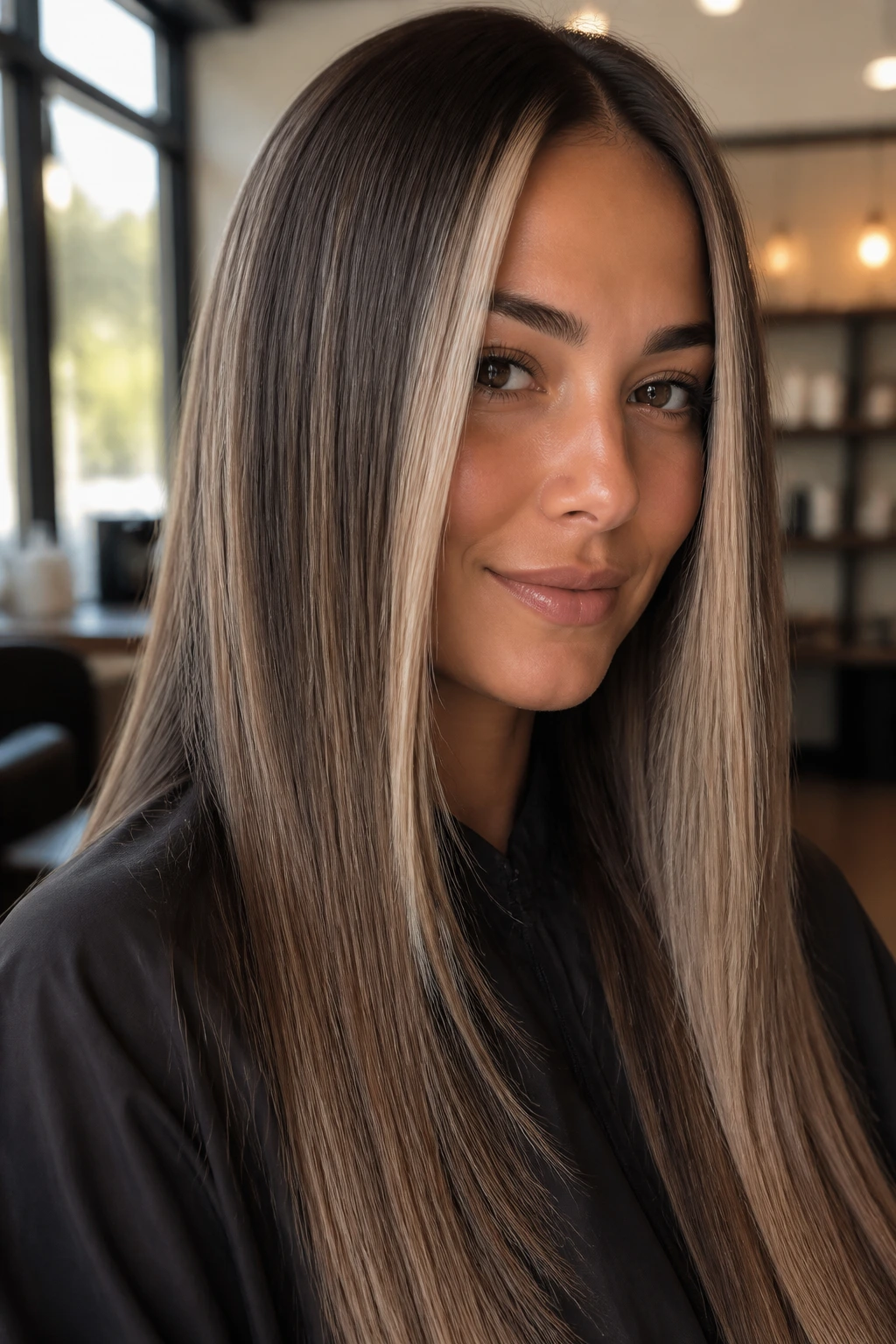
-
Built for flat-lying hair: These ideas assume the hair won’t hide behind bend and texture, so the placement stays clean when you wear it sleek.
-
Soft and bold options both matter: Some of these are nearly invisible in daylight; others lean into contrast because straight hair can handle a sharp line without looking messy.
-
Placement changes everything: A face frame, a top-layer babylight, and an underlight all read differently on pin-straight hair, even if the shade is similar.
-
Grow-out is part of the design: Several of these ideas are picked because they leave a softer root line and don’t look rude when they grow.
-
Fine hair gets its own lane: Straight fine hair can go see-through if you overdo blonde, so a few of these keep depth in the crown and density at the ends.
-
Color + finish work together: The same highlights can look flat on a rough blowout and sharp on a smooth, glossy finish. Straight hair is picky like that.
1. Baby-Fine Babylights Along the Center Part
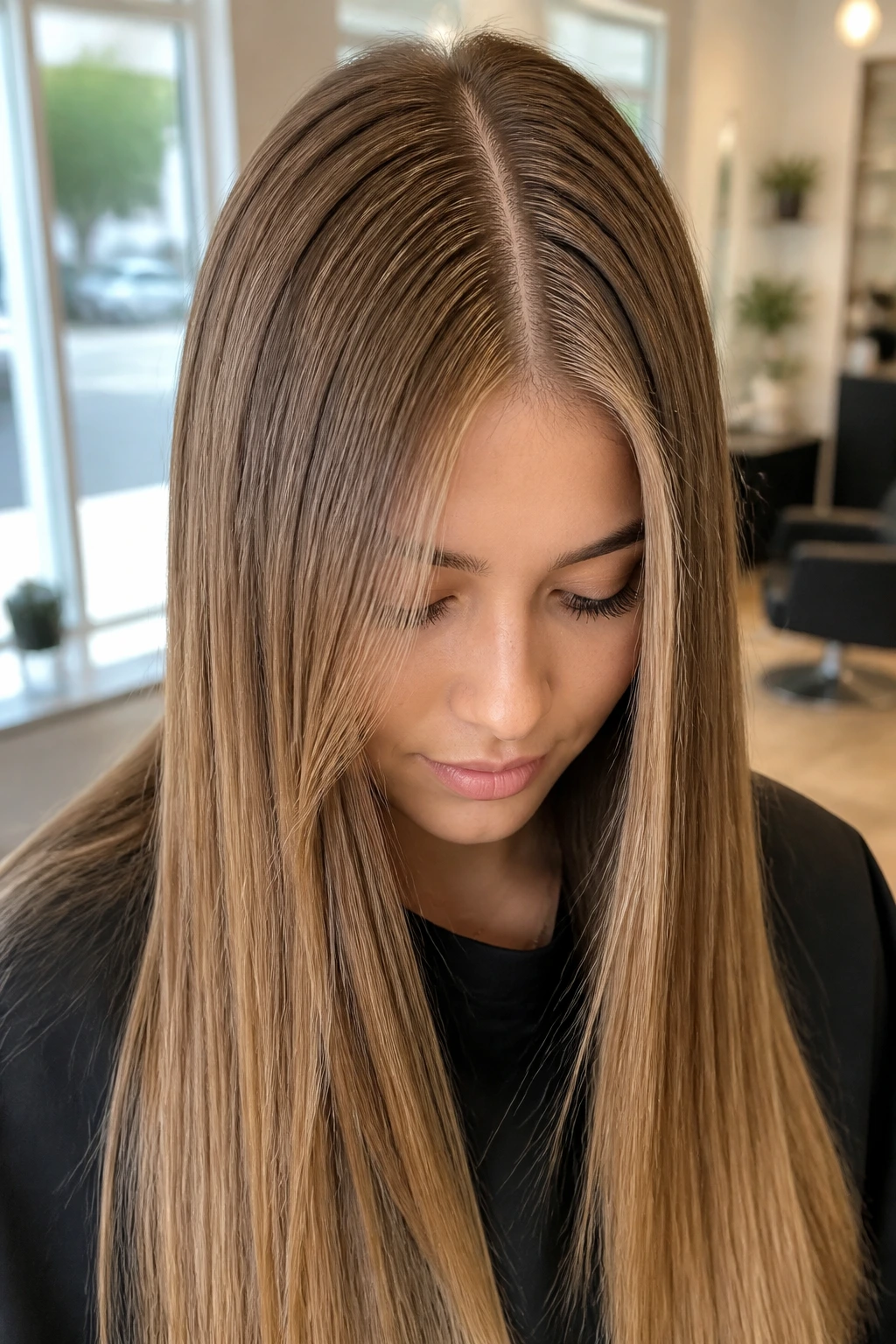
Babylights are the quietest way to brighten straight hair, and that’s exactly why they work. Thin, almost threadlike weaves through the top layer catch light without drawing hard lines, so the hair looks soft rather than striped. If you wear a center part, this placement can make the part itself look cleaner and the whole style look more expensive.
Ask for ultra-fine foils or a micro-weave, especially through the first two to three inches on either side of the part. I like this idea on long, straight cuts that need movement but not drama. It’s one of the few highlight looks that still feels believable when you pull the hair into a low ponytail.
Best for: fine to medium straight hair, brunettes who want a barely-there lift, and anyone allergic to obvious striping.
2. Soft Beige Money Piece
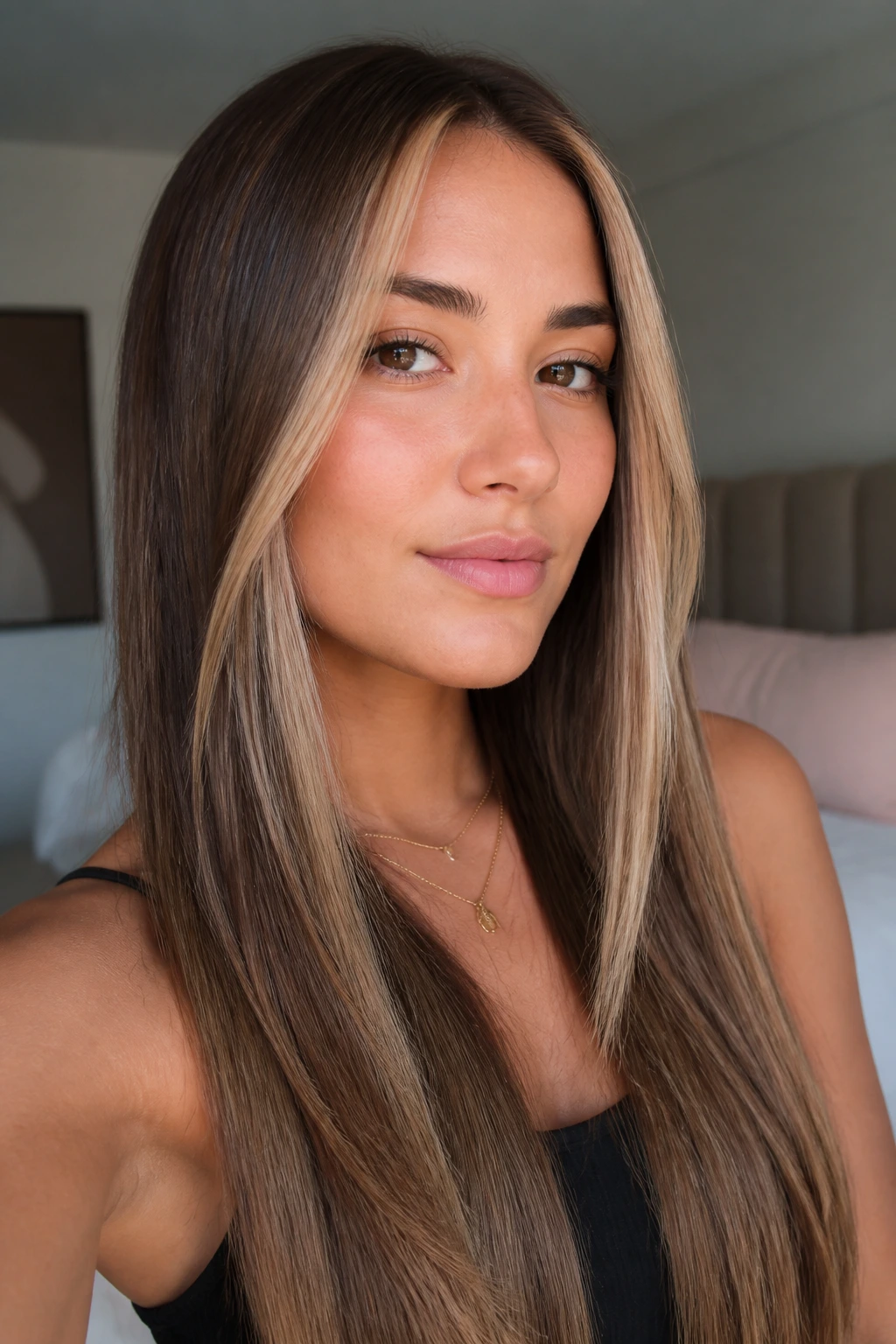
A money piece doesn’t have to scream. On straight hair, a soft beige front section can brighten the face without turning into a chunky block of blonde. The key is a gentle blend at the root and a tone that sits between warm and cool, so it doesn’t go yellow or muddy.
This is the idea I reach for when the haircut is blunt or the face needs a little more framing. The front pieces should start just off the hairline and fade into the rest of the color instead of stopping like a curtain. If the hair is chin-length or collarbone-length, even better — straight lines plus a soft front pop is a strong pairing.
What to tell your colorist: keep the brightness concentrated at the front, but blur the root so the grow-out doesn’t look like a stripe.
3. Caramel Ribbons on Espresso Brown
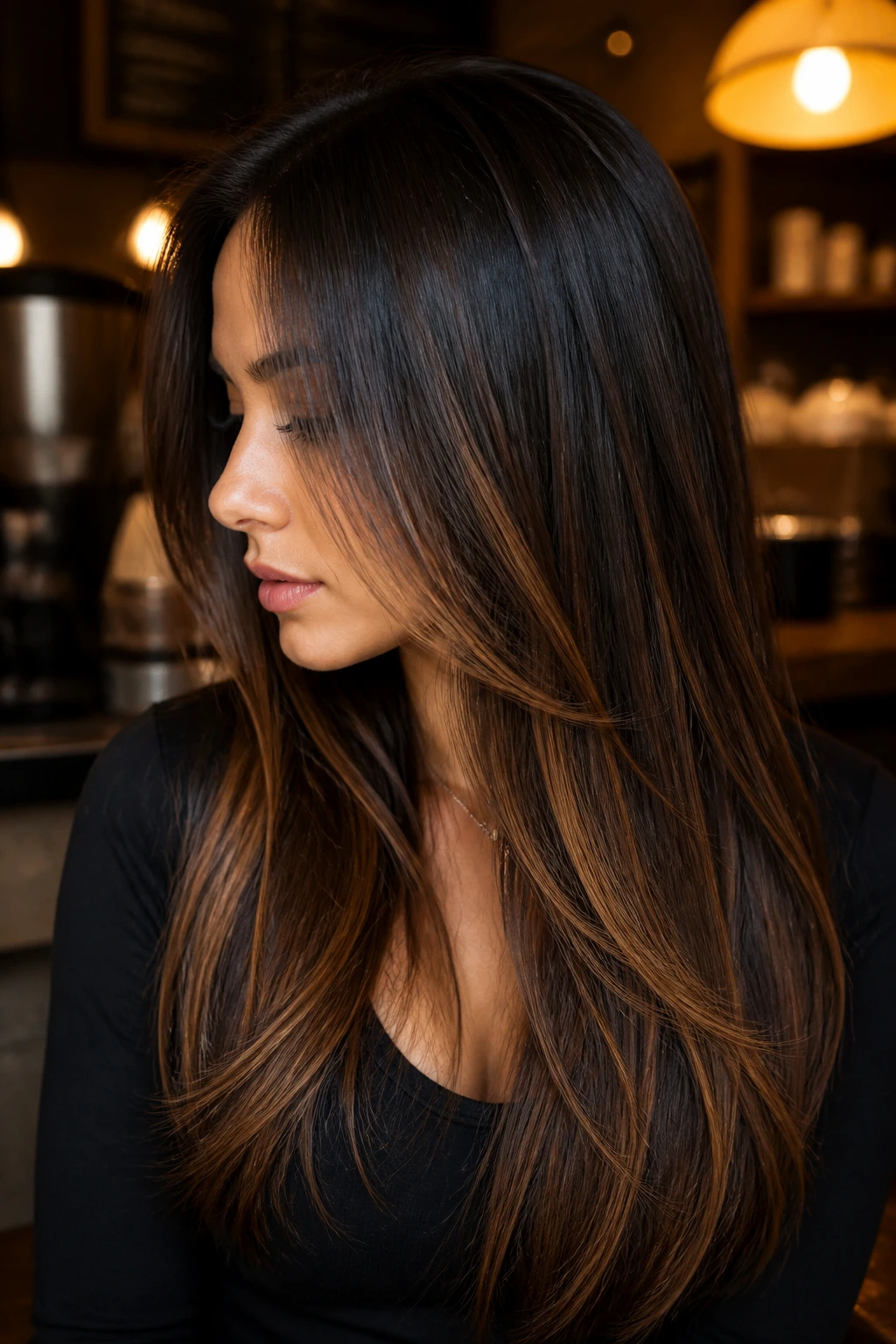
Caramel ribbons on espresso hair have a lovely problem: they can look flat if they’re too evenly placed. Straight hair needs these ribbons to move through the interior, not just skim the top. Sliced foils or hand-painted ribbons give you that glossy, woven look instead of a dyed-on pattern.
Warm caramel works especially well when the base is deep brown and the haircut has long layers. The contrast is visible, but not harsh. Under indoor lighting, these ribbons pick up a little gold; in daylight, they look more like soft chestnut threads than bright blonde, which is part of the appeal.
If you want dimension without committing to blonde maintenance, this is one of the smartest choices on the list.
4. Ash Beige Balayage
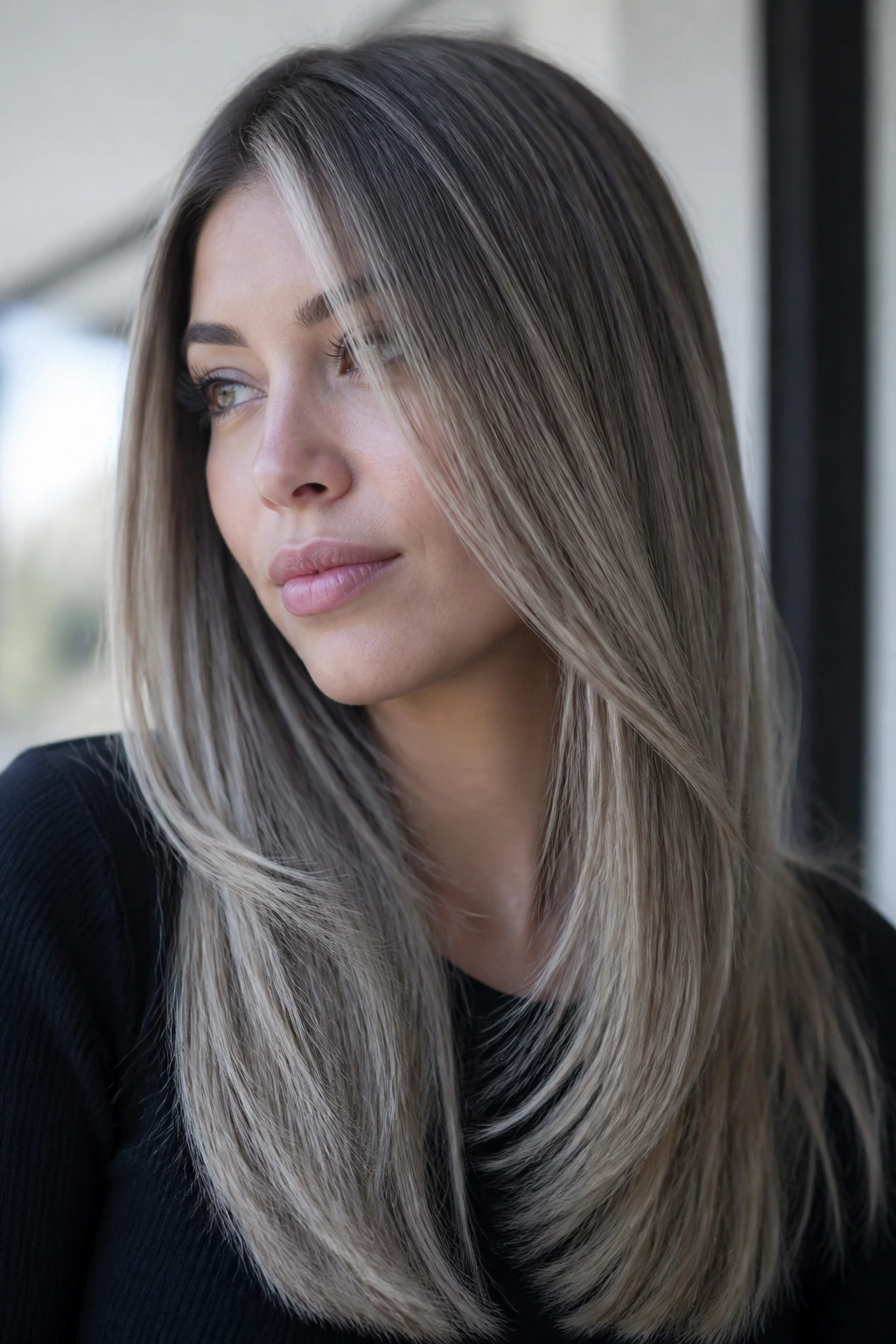
Ash beige balayage is for people who hate brass and don’t mind a cooler finish. Straight hair shows warm undertones fast, so a beige-ash blend keeps the color clean instead of orange. The balayage should melt from a deeper root into muted beige lengths, with no hard stop halfway down the shaft.
I especially like this on medium brown bases that lean red in the sun. The ash tone reins that in. It also looks good on straight hair because the sleek surface makes the blend look smooth, almost like satin. You do need toner maintenance, though. Cool tones fade faster than warm ones, and that part is not glamorous.
A beige-ash balayage is one of those colors that looks understated in a photo and polished in person.
5. Honey Foils on Dark Blonde Hair
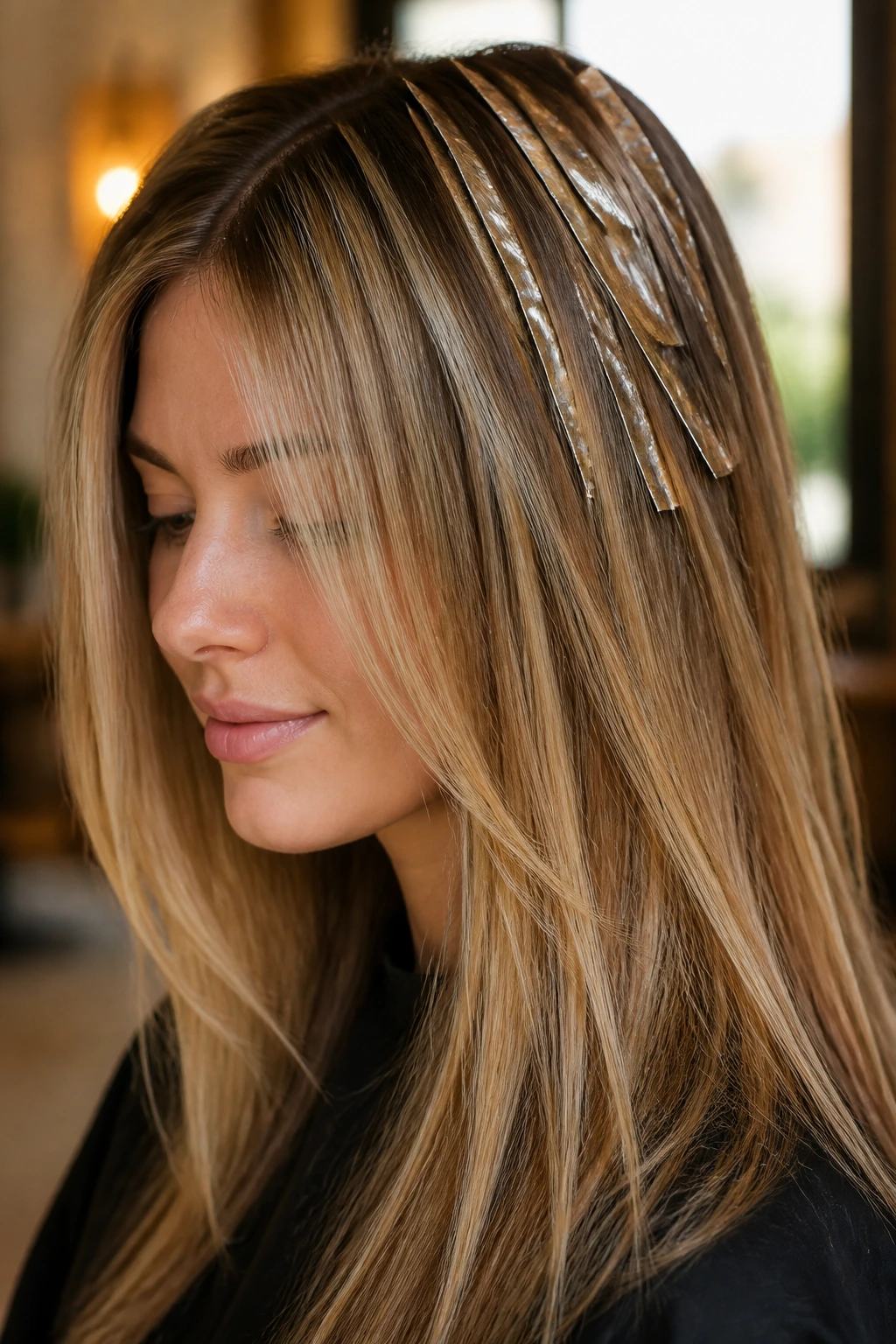
Honey foils are a sweeter, softer answer to bright blonde. On straight hair, they read as lit-from-within rather than streaky, especially if the base is dark blonde or light brown. The shade sits in that easy middle zone where it catches light but doesn’t turn icy.
Use fine foils around the crown and through the sides rather than loading the whole head. Straight hair can expose bad spacing faster than textured hair, so the foils should feel intentional. Honey tones are also forgiving if your skin reads warm, peachy, or golden.
This is one of my favorite ideas for someone who wants brightness but doesn’t want to spend their life toning brass out of the hair.
6. Mushroom Brown Dimension
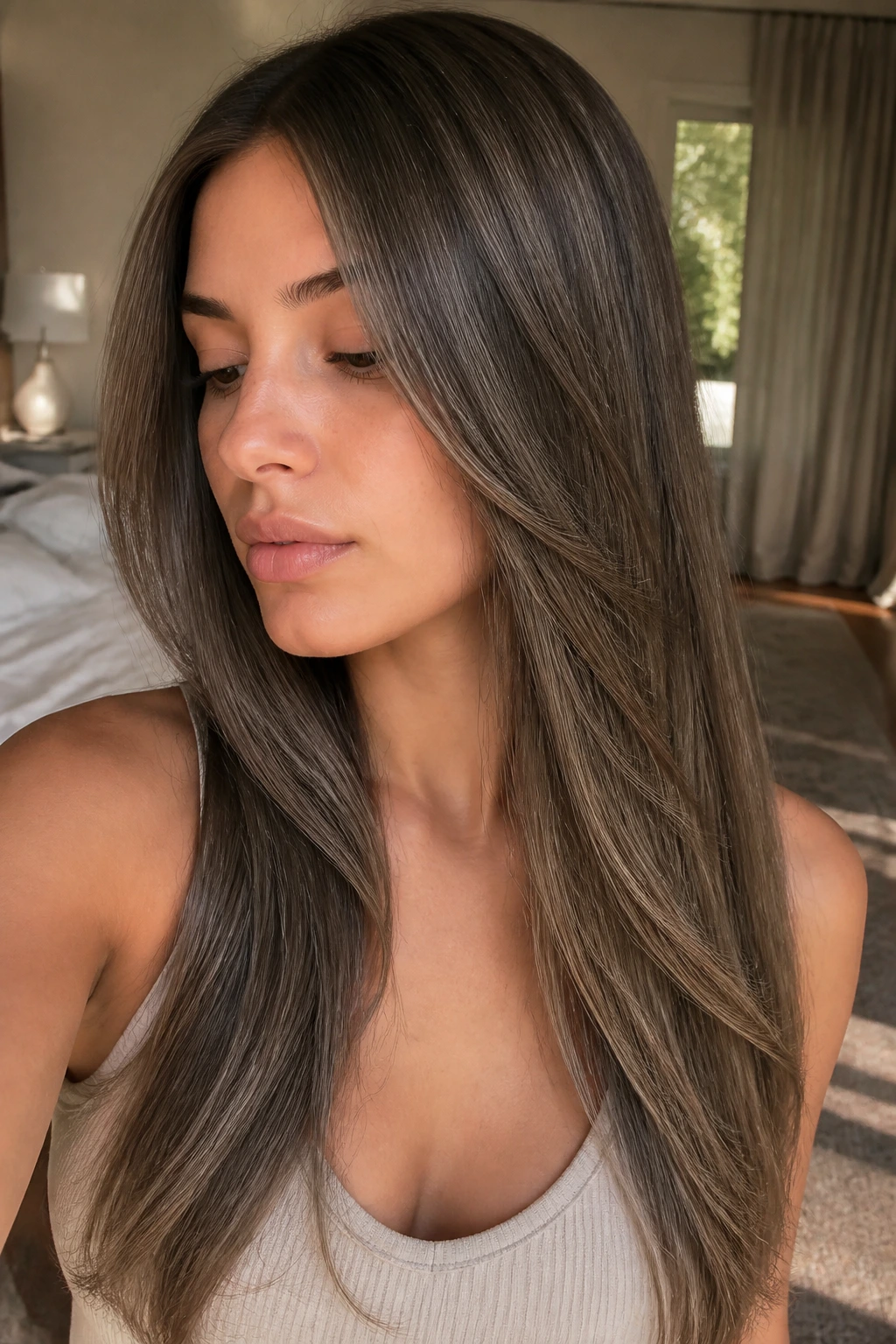
Mushroom brown is the color for people who want dimension without obvious blonde. It uses taupe, cool brown, and a soft smoky finish to create depth in straight hair, which is a trick a lot of people miss. Straight strands can go flat when the color is too uniform; a mushroom mix keeps the eye moving.
The best version uses lowlights and medium-toned ribbons rather than big light sections. That keeps the hair looking full, especially at the ends. On a glossy blowout, mushroom brown has a clean, expensive look that sits somewhere between brunette and cool beige without tipping too far into either camp.
Pro move: keep some deeper pieces under the top layer. Straight hair needs hidden depth or it starts to look like one flat sheet.
7. Platinum Micro-Ribbons
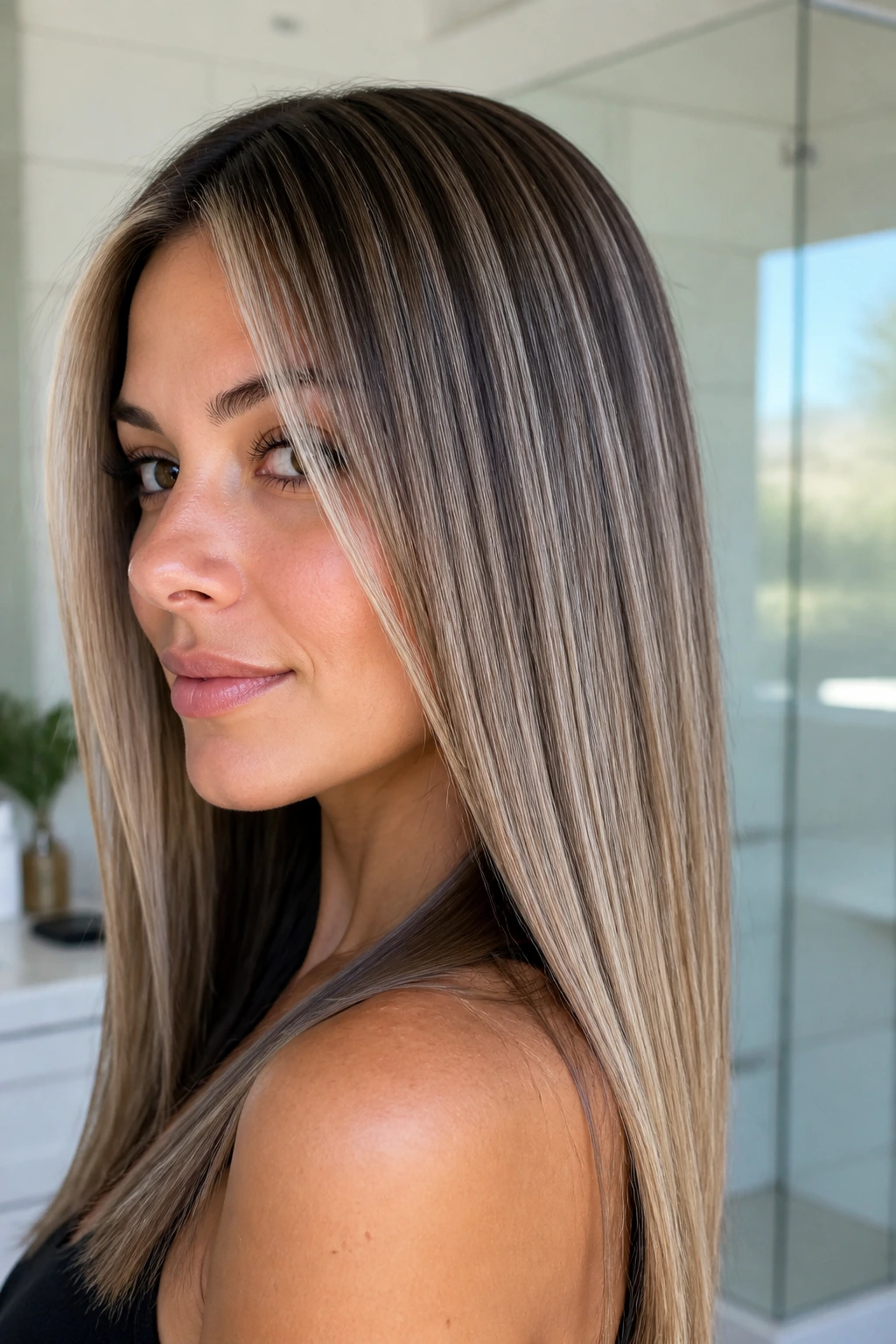
Platinum micro-ribbons are for people who want brightness but not the drama of full blonde panels. The strands should be so fine that, from a distance, the hair still reads as brunette or dark blonde. Up close, though, the platinum catches hard light and gives the surface a crisp, cool sparkle.
This works best when the hair has already been lifted safely and toned properly. Platinum on straight hair can turn unforgiving fast if the lightening is uneven. So the sections need to be tiny, the overlap controlled, and the toner chosen with care. You don’t want white streaks that look dry. You want shine.
It’s a stronger choice than babylights, but still elegant if the weave is narrow enough.
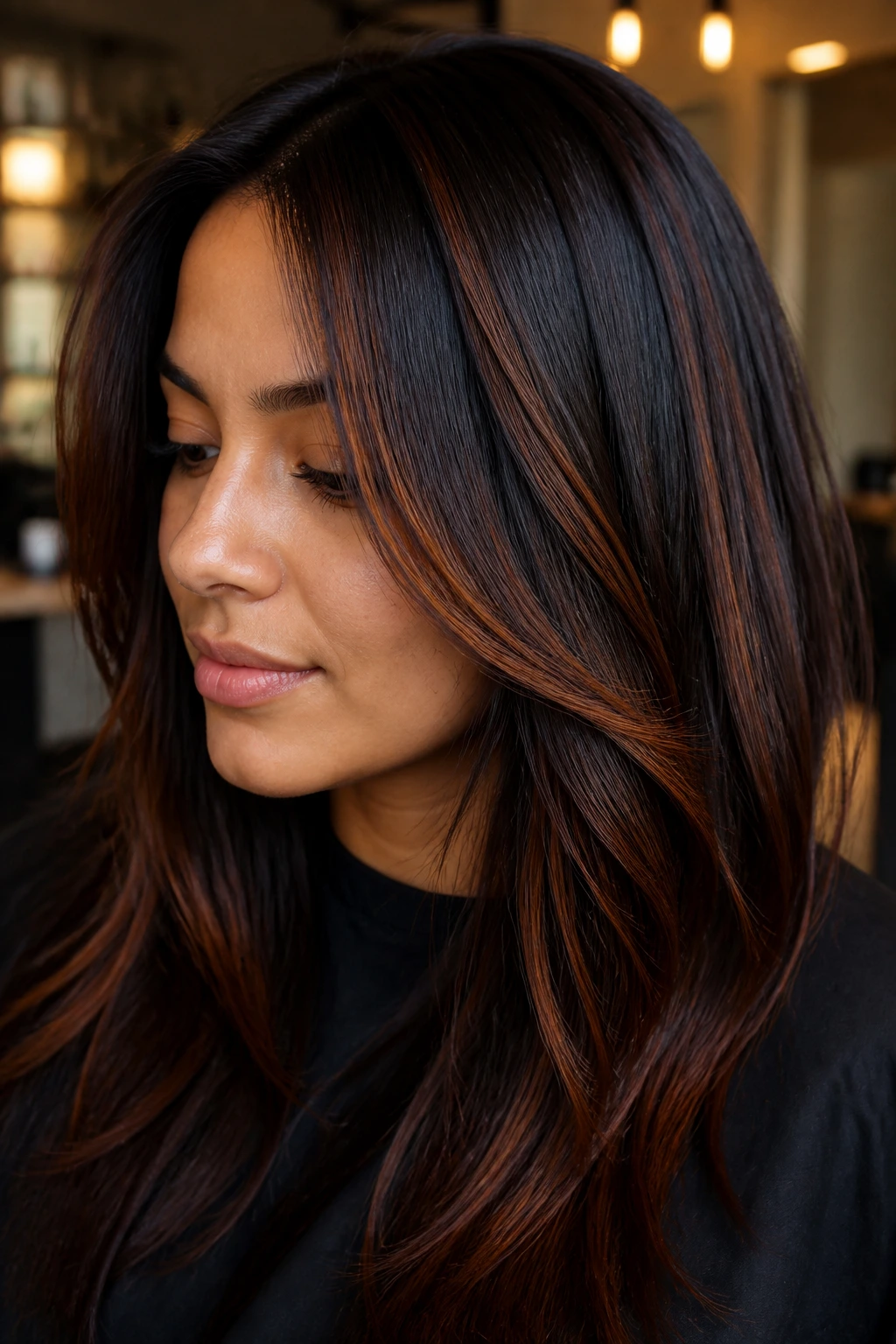
8. Copper Veils
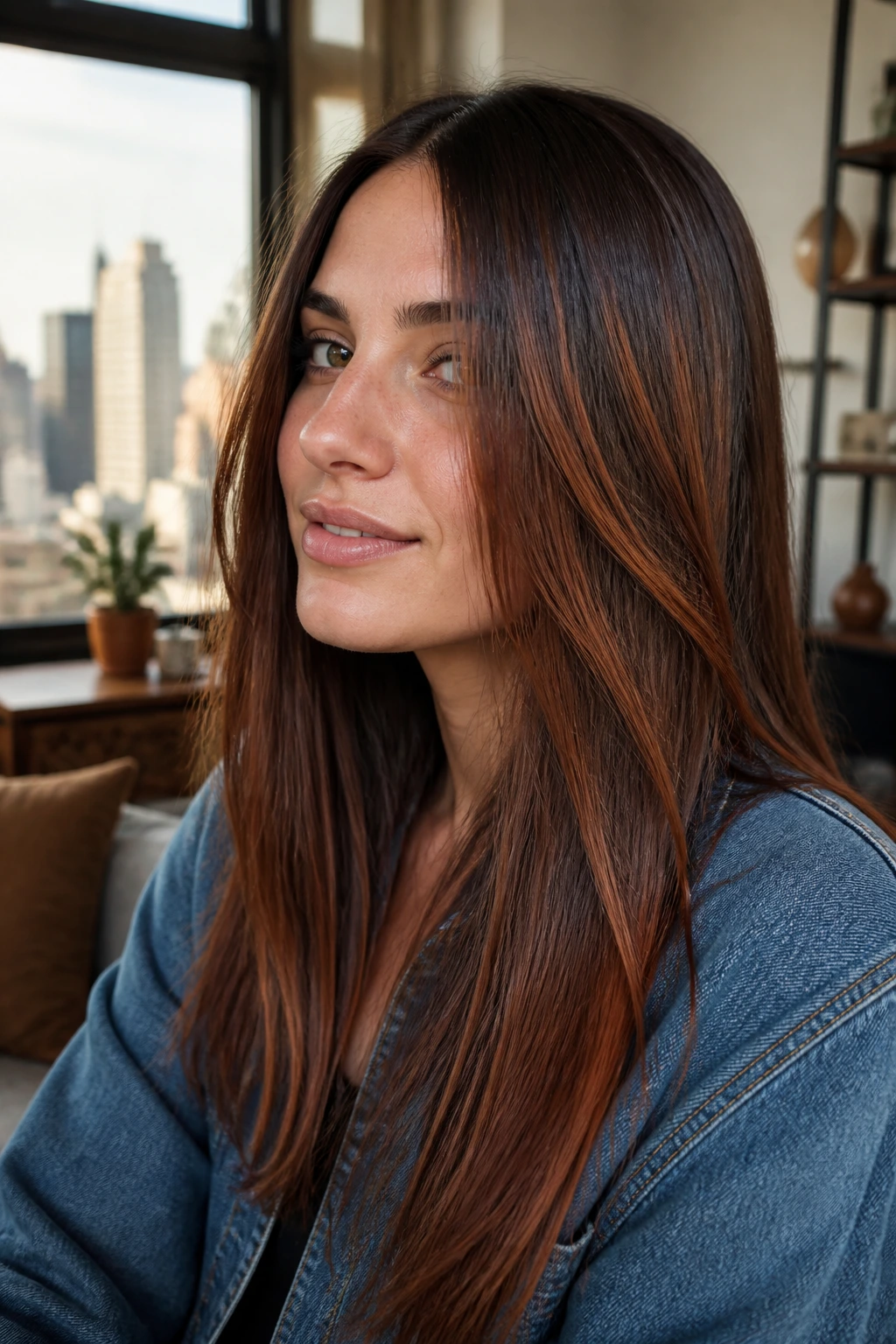
Copper veils are a gorgeous answer for straight brunette hair because the color reads through the surface instead of sitting on top of it. A veil is softer than a chunky streak; it lets the copper glow without making the whole head look red. On straight hair, that translucent quality matters. You can see the color change as the head moves.
This is one of those shades that depends on the right base. Too light, and copper can go brassy. Too dark, and it can disappear. The sweet spot is medium brown to deep brunette, where copper looks rich and warm rather than orange. It also looks especially nice in long, straight cuts with a clean center part.
If your wardrobe leans black, cream, camel, or denim, copper can look unexpectedly sharp.
9. Champagne Ends with a Root Shadow
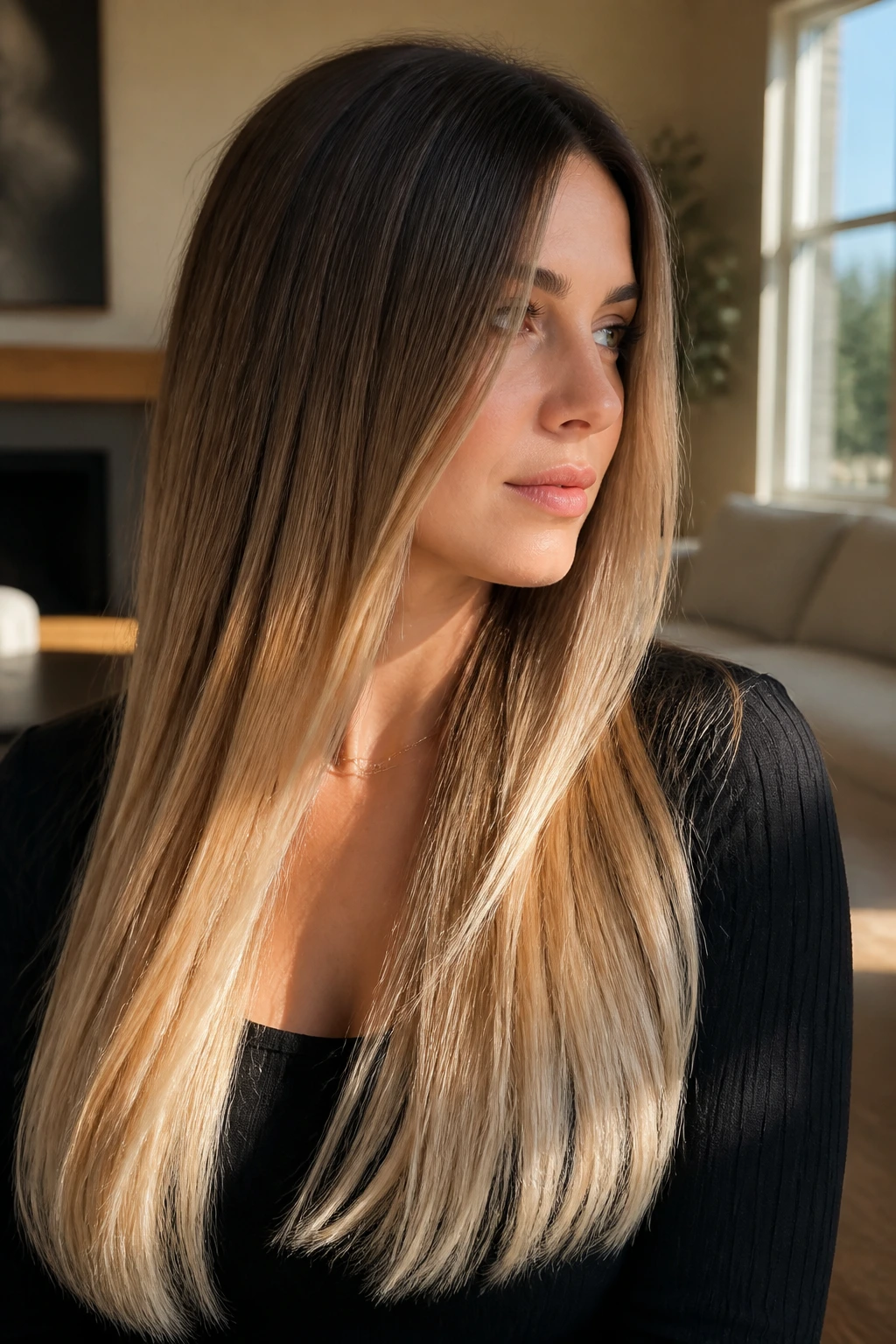
Champagne ends give straight hair a bright finish without making the root feel abandoned. The shadow root keeps the grow-out soft, while the lighter ends make the cut look fresh. This is a smarter version of ombré when you want polish, not obvious contrast.
The tone matters here. Champagne should sit between beige and pale gold, not yellow and not icy white. On straight hair, that tone reads clean and glossy, especially when the ends are blunt. It’s a strong option for longer lengths because the fade has room to stretch. Short hair can do it too, but the shape has to be deliberate.
A good champagne finish looks like the hair picked up sunlight and decided to keep it.
10. Chunky 90s Streaks
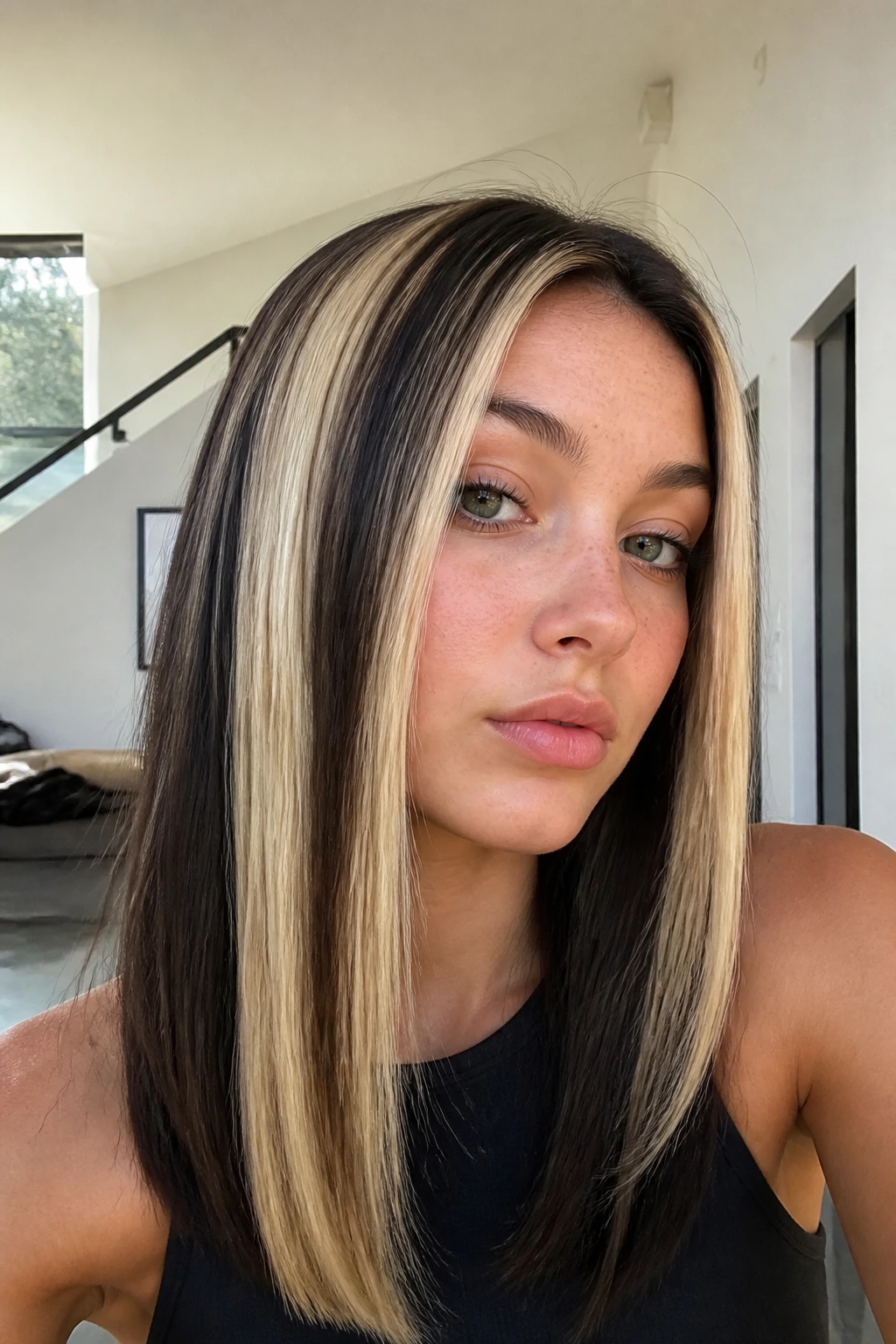
Straight hair is the perfect place for chunky streaks, and I’ll say that without hesitation. Curves and waves can soften the line, but straight strands show the contrast exactly the way it was meant to be seen. If you want a bolder, more graphic look, this is your lane.
The trick is to keep the color blocks clean and the spacing intentional. Chunky streaks look better when they’re paired with a blunt bob, a sharp lob, or long hair that’s ironed sleek. They can go blonde on brunette, caramel on black-brown, or even copper on chestnut. The size of the ribbon is the point.
If you’ve ever liked the idea of a loud highlight and were told it would look dated, straight hair is the one place I’d push back.
11. Hidden Peekaboo Highlights
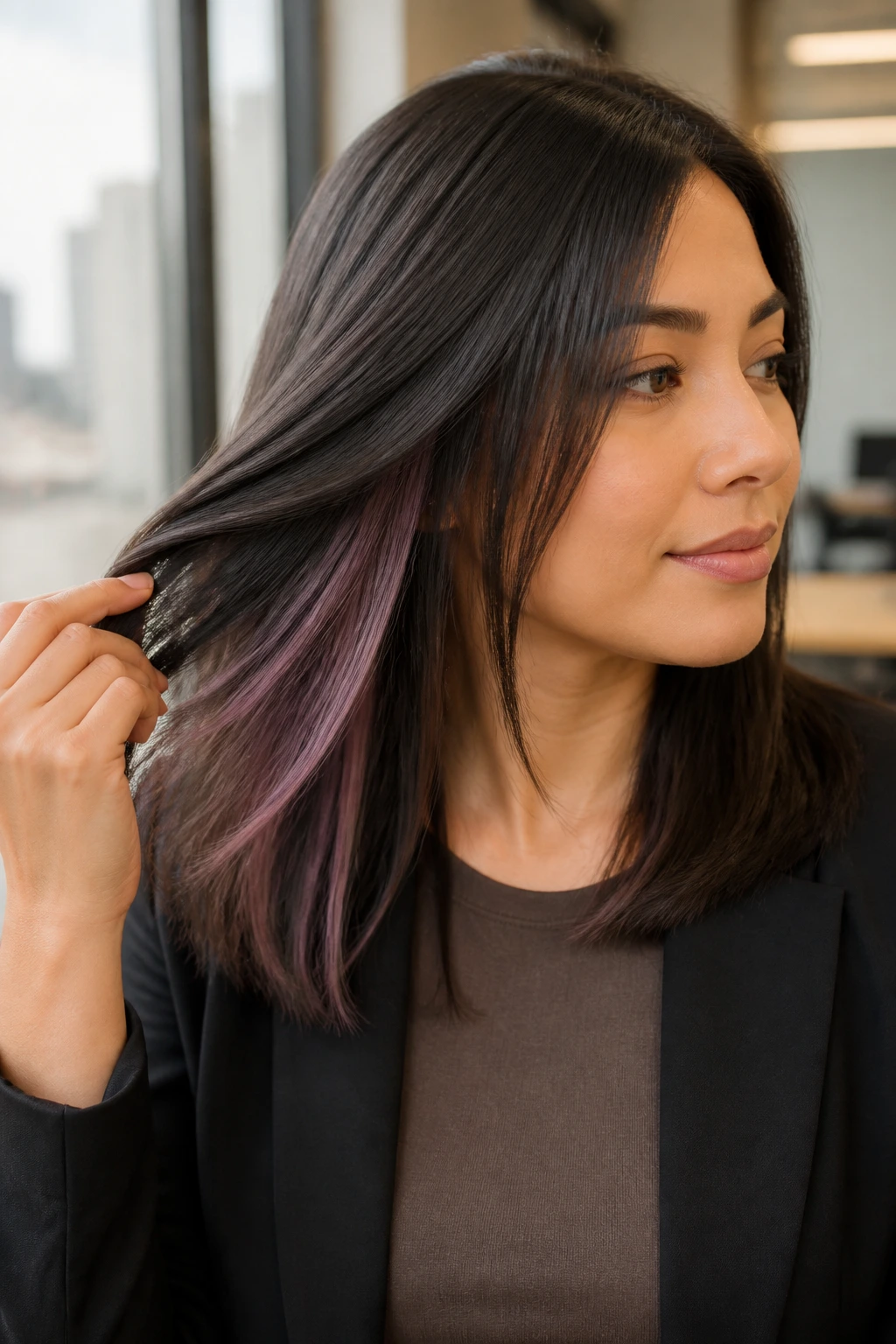
Peekaboo highlights are the shy cousin of the money piece. They sit under the top layer and only show when the hair shifts, gets tucked behind the ear, or is pulled into a low ponytail. On straight hair, that hidden movement is the whole charm.
This idea is especially useful if you want color but need it to stay office-friendly or low-drama. You can keep the top layer natural and still get a flash of blonde, copper, or even rose underneath. On a sleek cut, the contrast feels playful without taking over the whole look.
I like this more than people expect. It gives straight hair a secret, and hair with secrets is usually more interesting.
12. Bronde Slices for Long Straight Hair
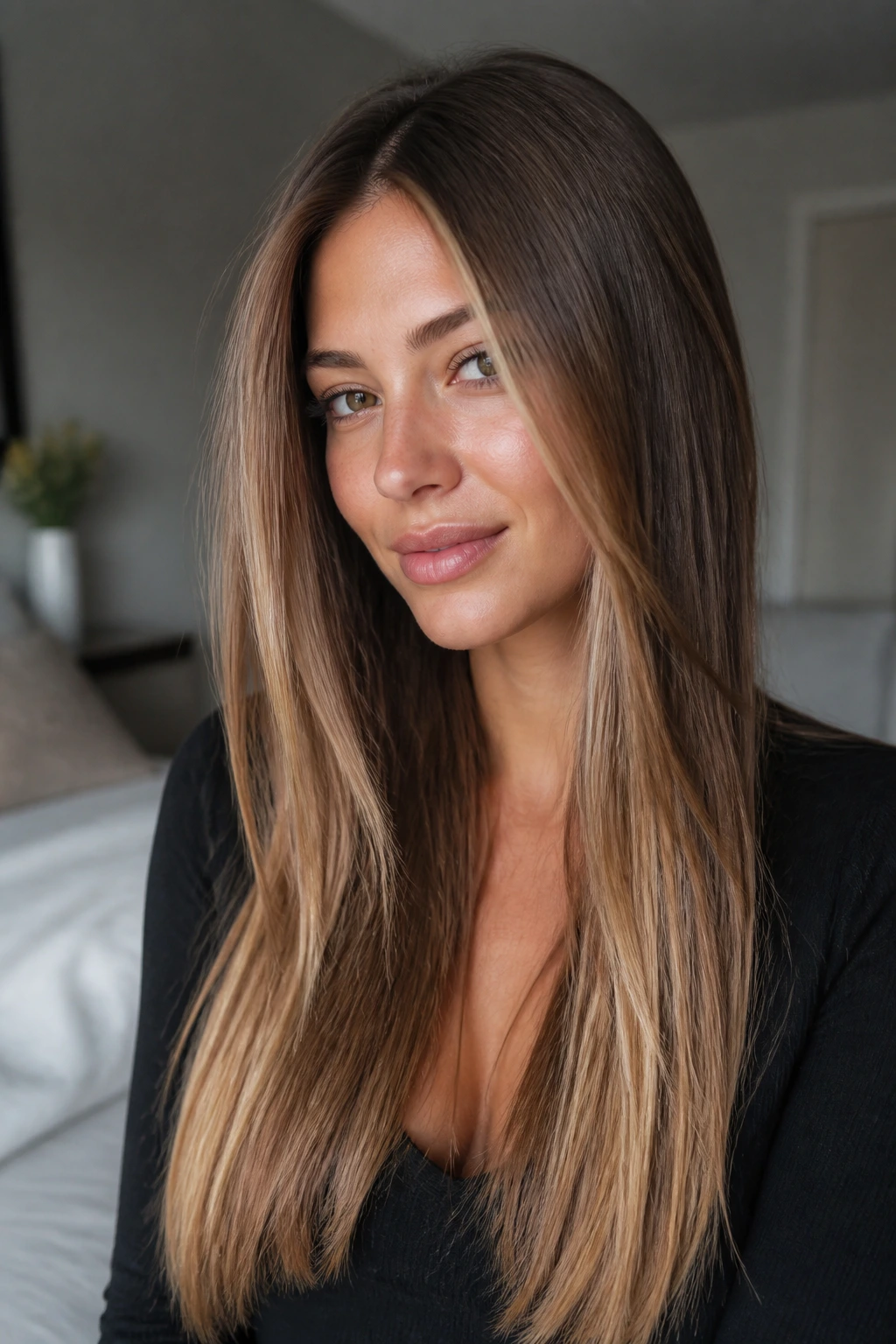
Bronde is the middle ground that keeps saving people from overcommitting. On long straight hair, bronde slices add enough brightness to lift the face and ends without making the color look bleached. The slices should be placed with purpose — around the part, near the cheekbones, and through the lower lengths where movement needs help.
This shade family works because it blends blonde and brown instead of forcing a choice. Straight hair shows that blend cleanly. There’s no curl to hide the transition, so the colorist has to melt it well. When done right, bronde looks like a naturally expensive version of brown hair, not a compromise.
If you’re not sure whether you want warm or cool, bronde usually gets you close enough to both.
13. Vanilla Cream Hairline Panels
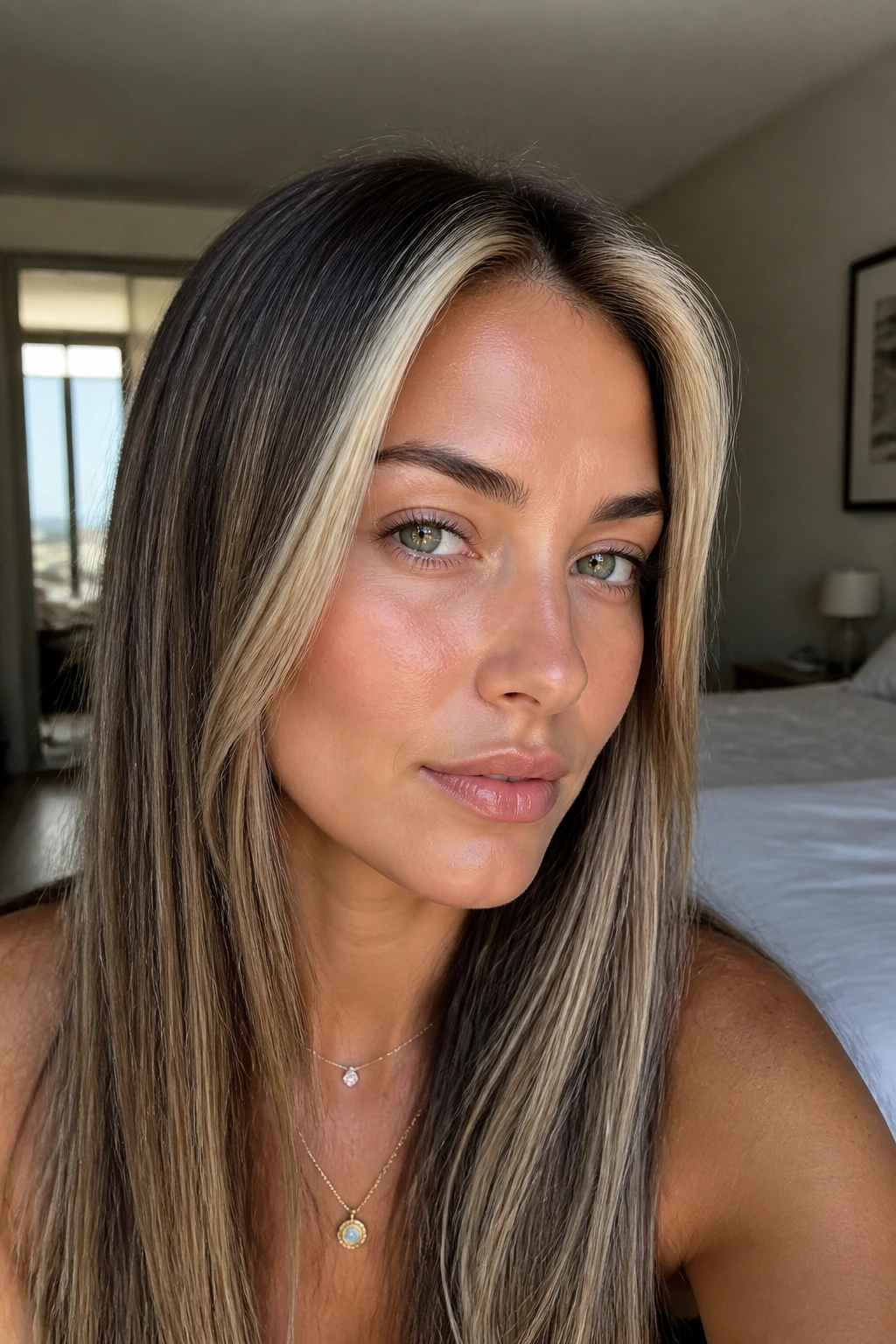
Vanilla cream panels are brighter and cleaner than a money piece, but softer than stark platinum. They sit right at the hairline and lighten the face without swallowing the whole haircut. On straight hair, that narrow strip of brightness can do a lot of work.
The best version starts just off the part and curves slightly toward the temples. You want the color to frame, not chop. Vanilla cream suits lighter brunettes, dark blondes, and neutral skin tones, though it can be adjusted warmer or cooler depending on the base. Because the rest of the hair stays deeper, the contrast feels clean.
This is a good choice if you want the front to look fresh even on days when the rest of the style is pinned back.
14. Smoky Brunette Lowlights
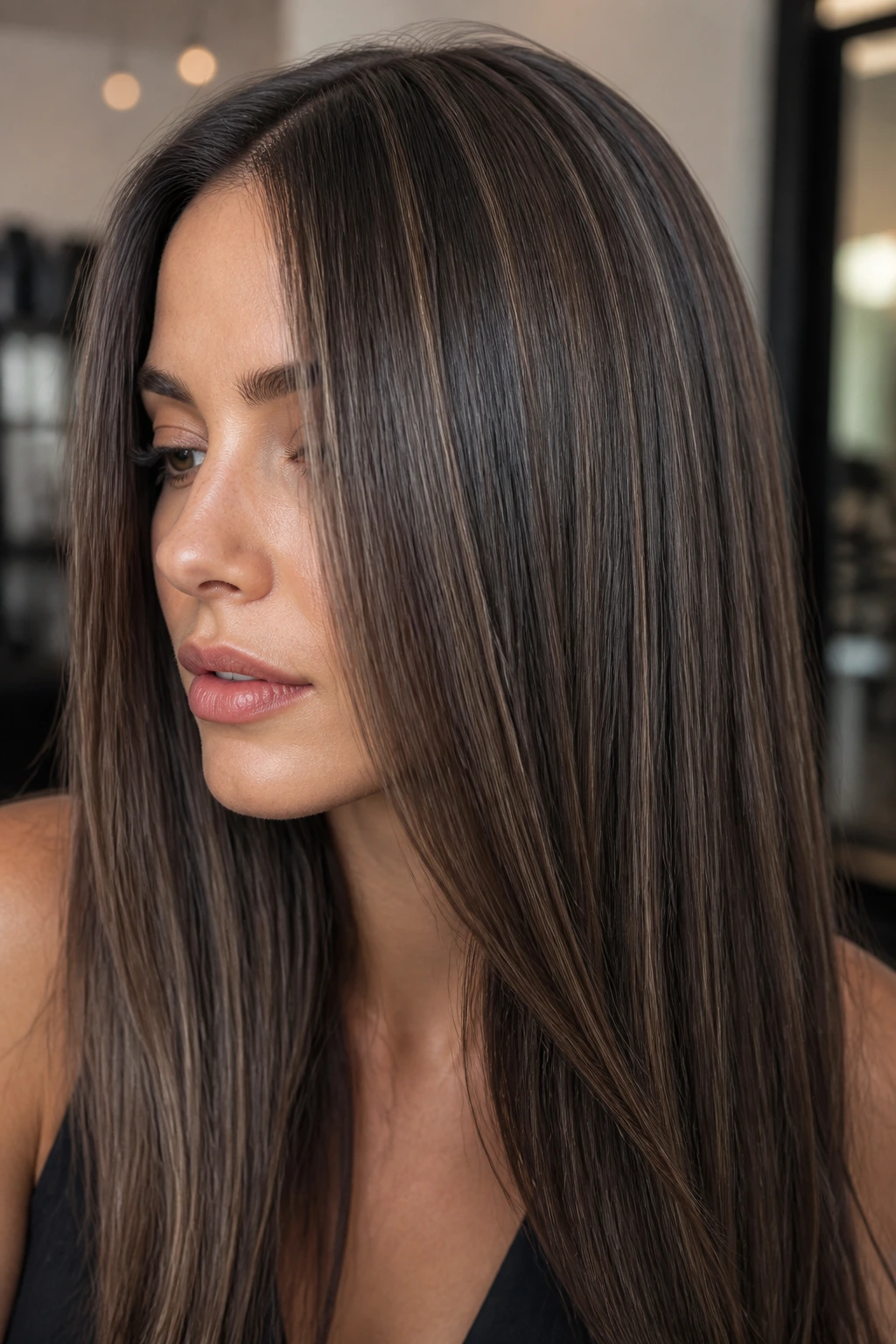
Sometimes straight hair needs less light, not more. Smoky brunette lowlights add depth back into hair that feels too bright or too even, especially after a few rounds of highlights. On sleek hair, these darker ribbons keep the style from looking washed out.
This is one of the best fixes for a color that has drifted too blonde. The lowlights should sit in cool brown, mushroom brown, or neutral brunette territory, depending on the base. They give the eye something to land on. They also make fine straight hair look denser, which is a huge bonus if your ends tend to feel wispy.
Not every highlight idea is about becoming lighter. Some of the smartest ones are about putting the dark back in.
15. Auburn Dimension on Dark Hair
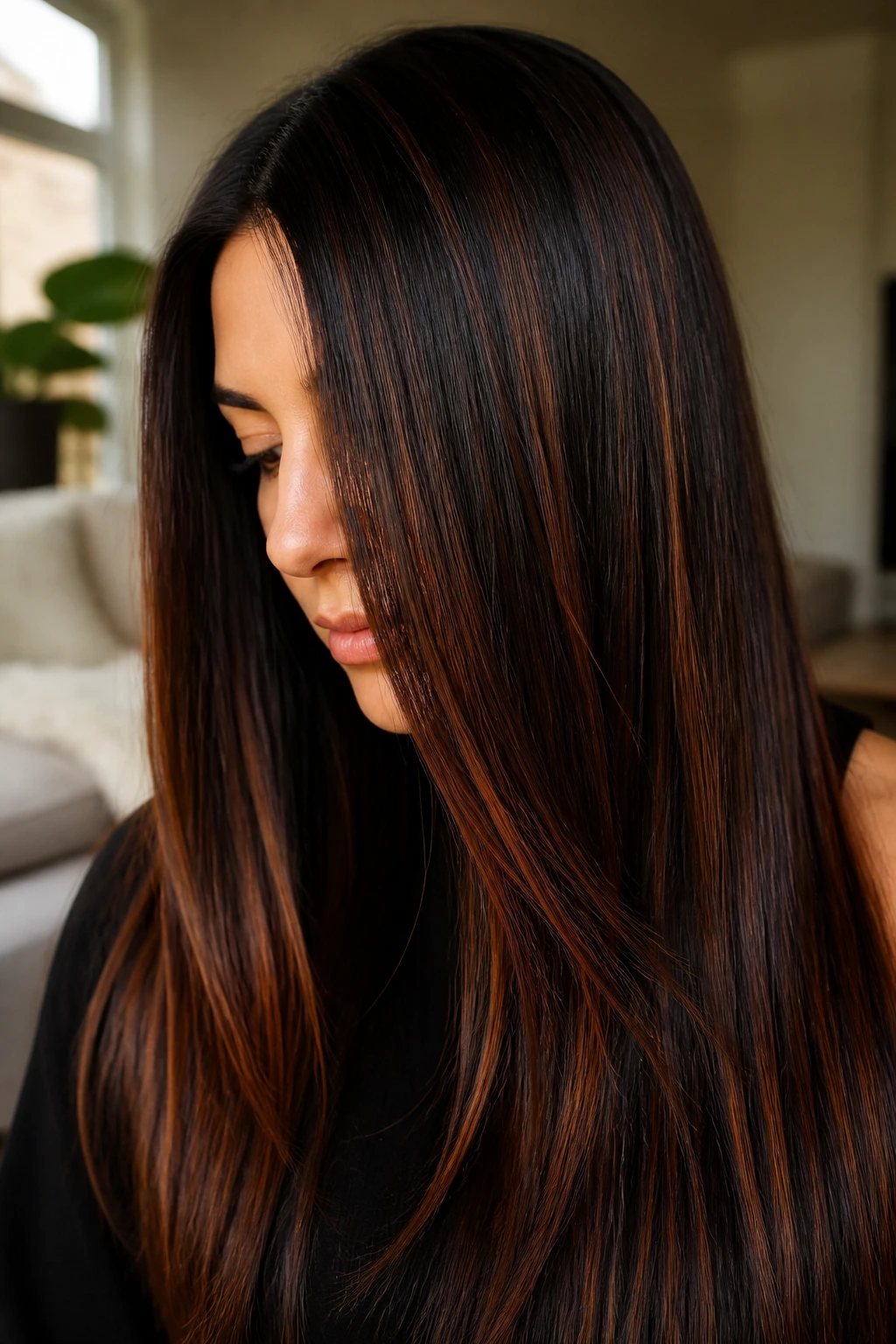
Auburn dimension gives straight dark hair a warm, rich shift without screaming red. The color sits between brown and copper, so it adds movement the way a good gloss does — just with more depth. On straight strands, auburn shows in clean ribbons instead of soft blur, and that makes it feel deliberate.
This works especially well on black-brown and deep chestnut bases. If the hair is all one tone, auburn pieces can make it look thicker and more alive. Keep the placement more scattered than chunky; you want the red-brown tone to peek through and then disappear back into the base.
It’s a strong choice for anyone who wants warmth but doesn’t want obvious red maintenance.
16. Silver-Gray Ribbons
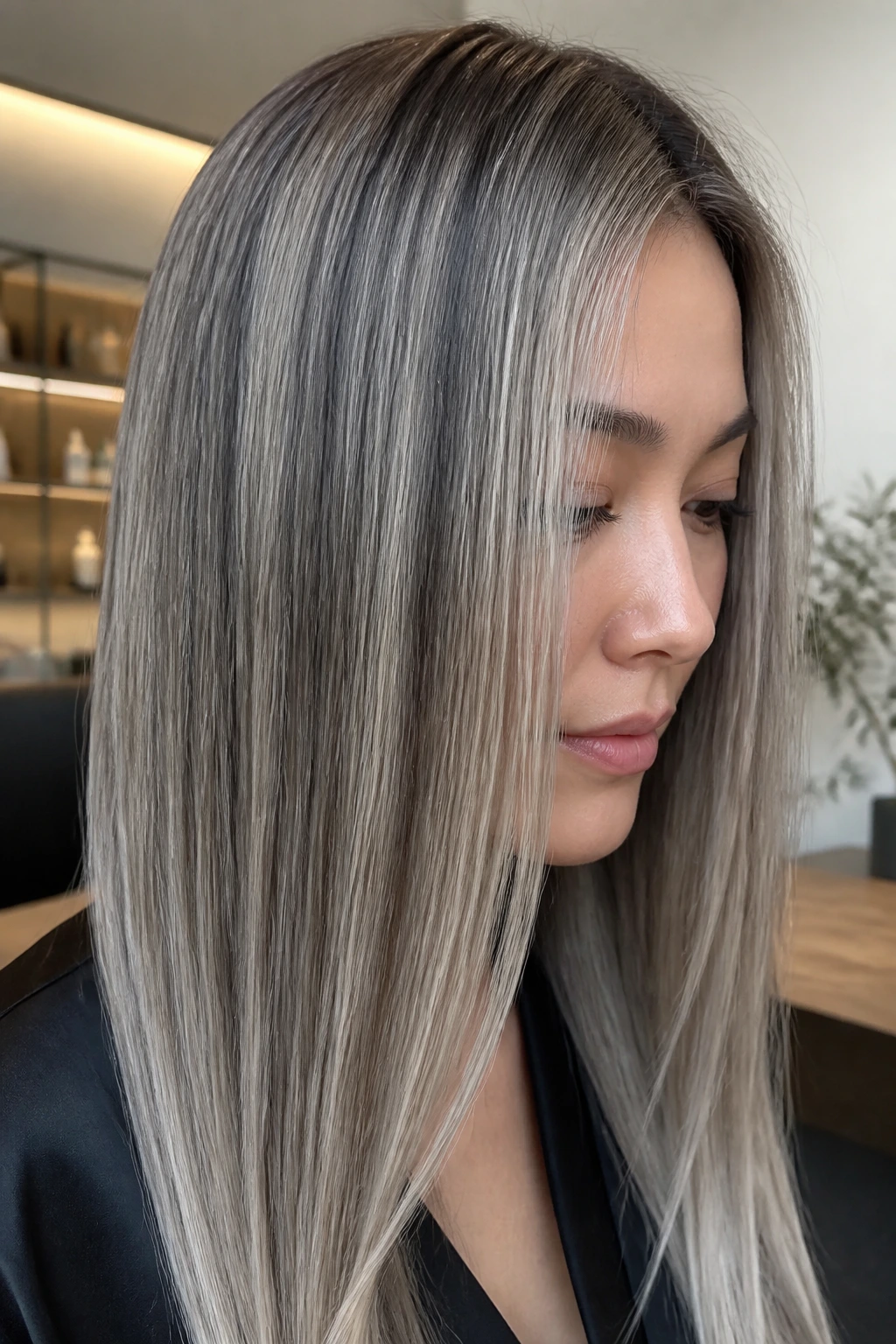
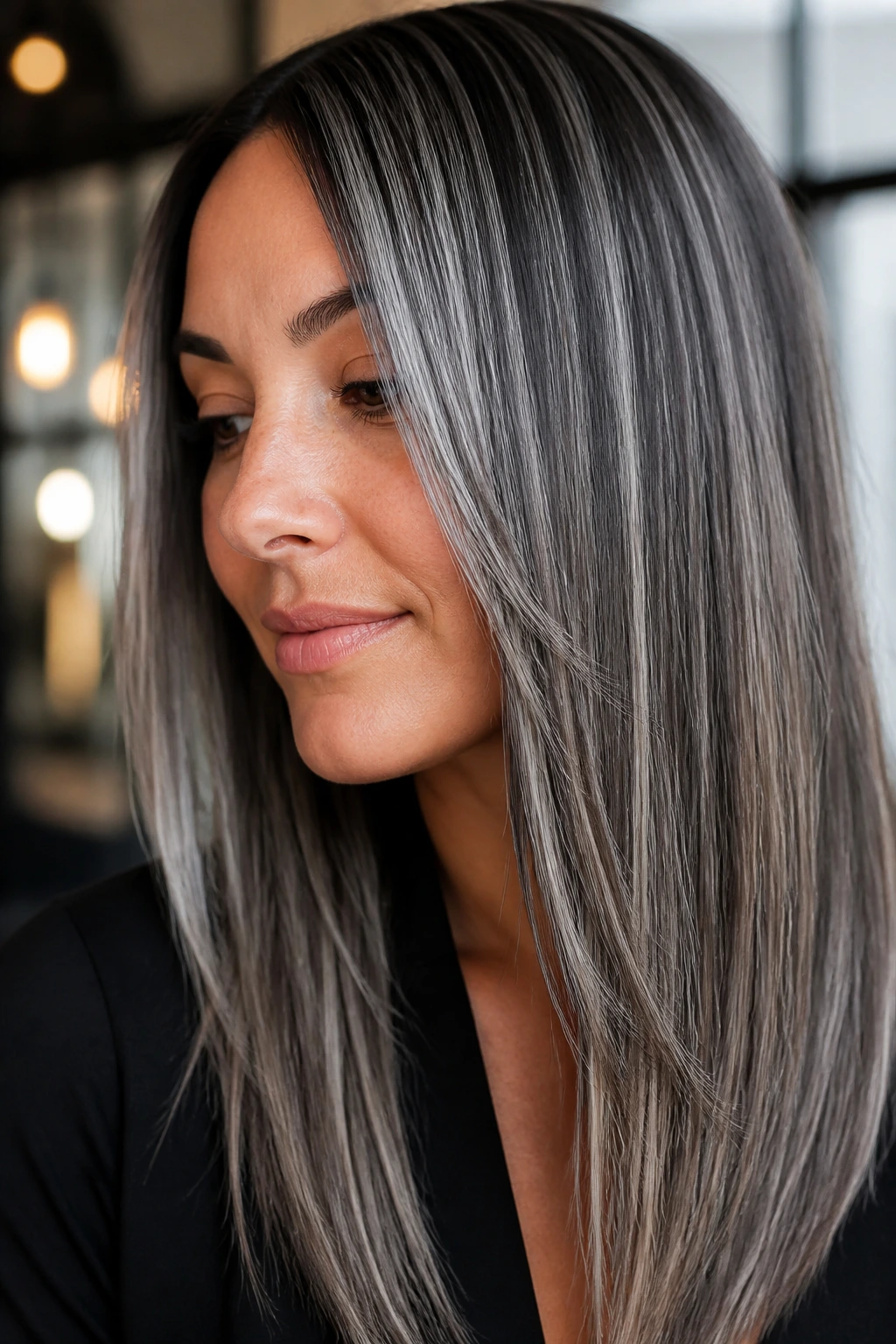
Silver-gray ribbons are cool, sleek, and a little bit sharp in the best way. On straight hair, they don’t need to fight with texture, so the color can read almost metallic. These ribbons work best on naturally dark bases that can support a cooler contrast or on pre-lightened blonde that’s been toned down with a silvery finish.
The danger here is overdoing the gray so the hair looks dull instead of glossy. Keep the ribbons fine and let the tone stay reflective. A straight blowout can make silver-gray look polished rather than edgy, which is a nice surprise if you usually think of gray tones as severe.
This is not the easiest maintenance pick, but the payoff is strong when the tone stays clean.
17. Strawberry Blonde Veils
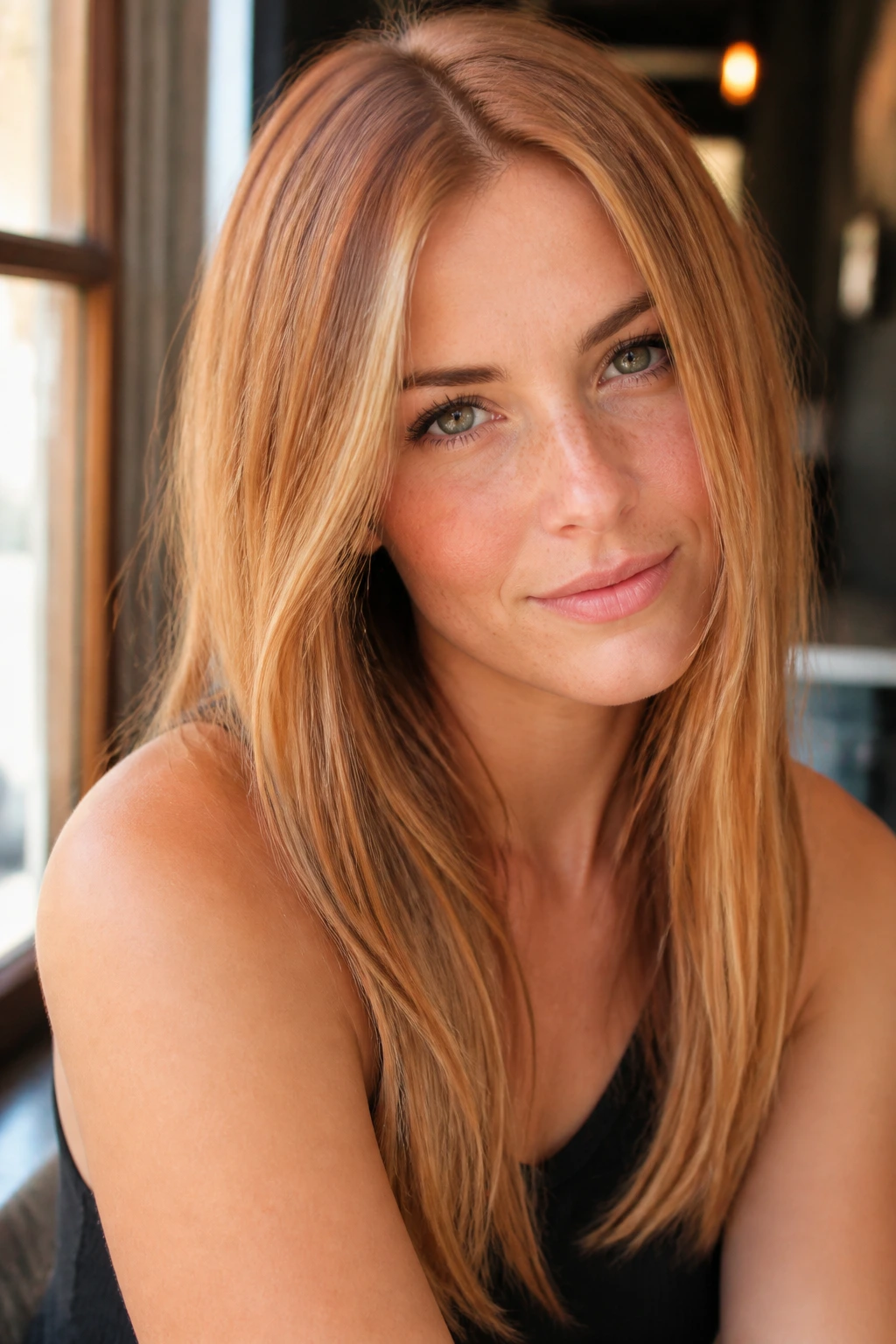
Strawberry blonde veils sit in that pretty middle ground between peach, gold, and soft copper. They’re especially flattering on light brown or dark blonde straight hair because the color can sit on top of the base without turning neon. On a sleek finish, the strawberry tone looks airy and delicate.
I like this idea because it gives straight hair warmth without the flatness of plain gold. The veils should be thin and scattered so the color glows through, not patches across the head. If the base is pale enough, it can read almost rose-gold in daylight. If the base is deeper, it leans more toward soft copper.
It’s one of the few warm shades that can feel both romantic and clean.
18. Peach Gold Strips
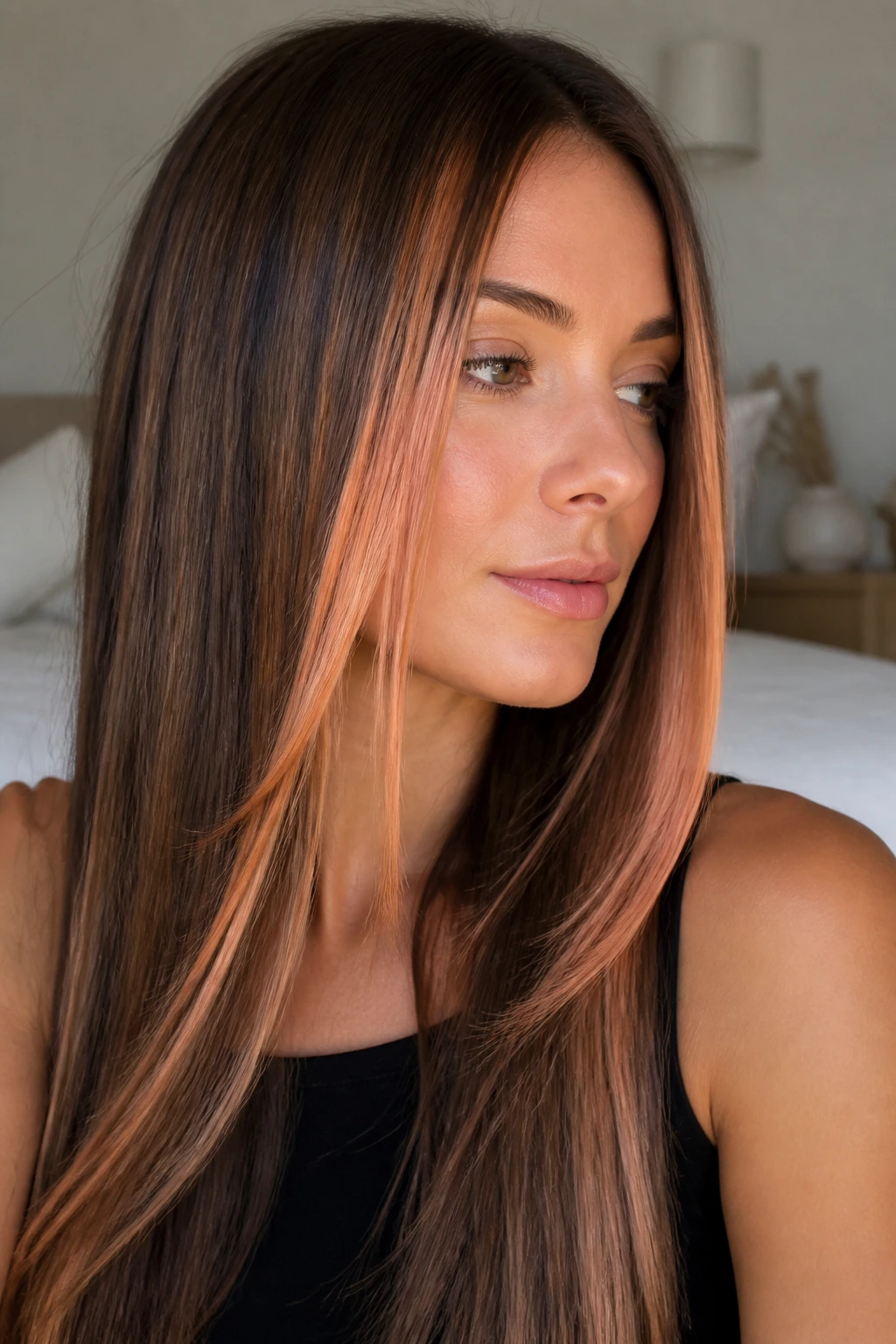
Peach gold is a little more playful than strawberry blonde, but it still works when the placement stays refined. Straight hair is a good canvas for it because the color can look crisp instead of fuzzy. Thin strips around the face or under the top layer are usually enough.
This is a smart route if you want a fashion color that doesn’t fully commit to pink or orange. Peach gold fades into a soft apricot tone, which can be charming on a blunt cut or a long, flat blowout. The important thing is to keep the strips narrow. Wide peach panels can drift into costume territory fast.
A little goes a long way here. Really.
19. Reverse Balayage
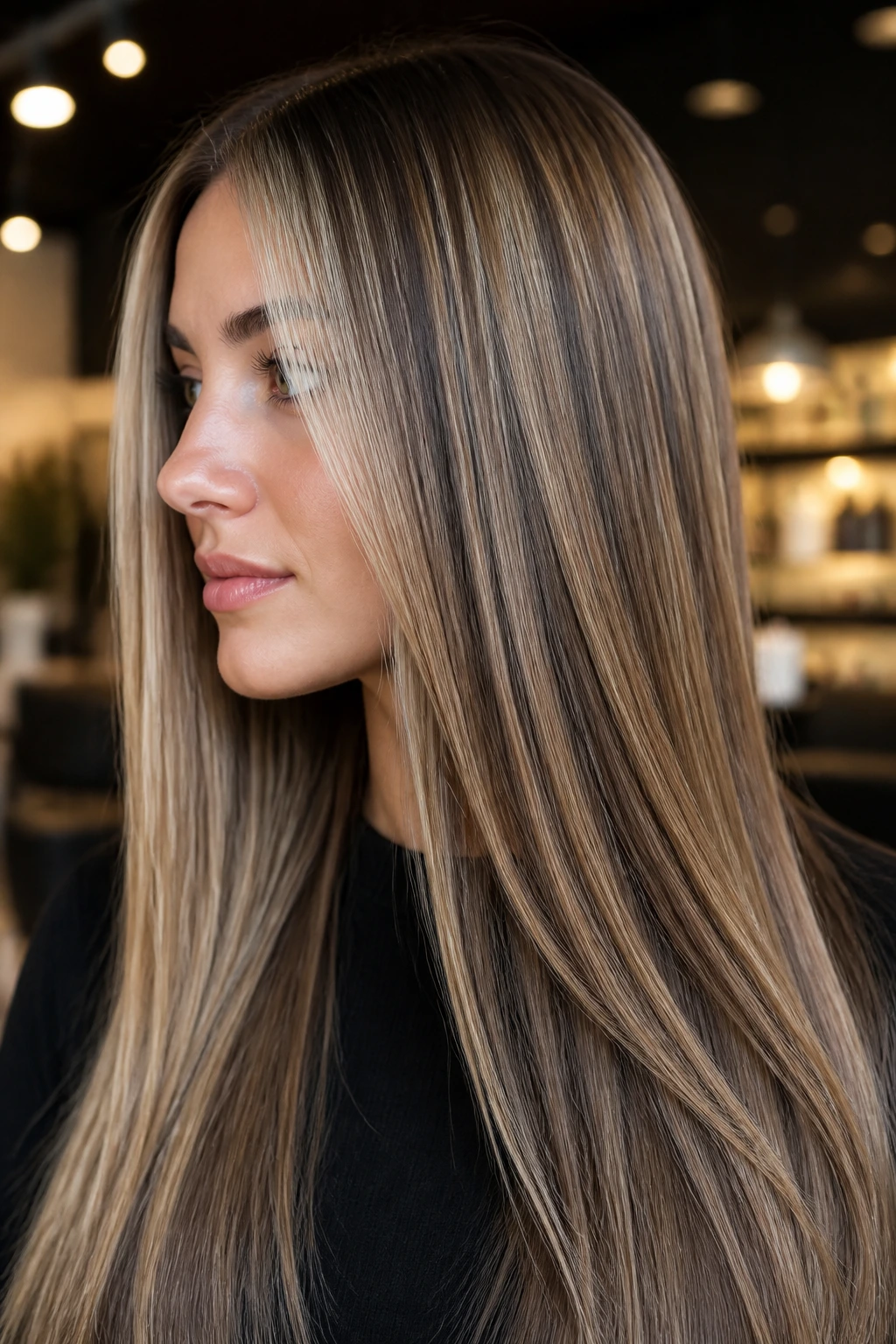
Reverse balayage is what you do when the hair has gone too light and needs shape again. Instead of lifting pieces, you paint in deeper ribbons and shadows so the straight hair stops looking one-note. It’s especially useful after too many blonde appointments or when the ends feel floaty and thin.
This technique makes straight hair look thicker because it rebuilds contrast. The darker pieces should sit through the mid-lengths and underneath, not all on top. That keeps the surface bright while the inside gains structure. If your color is starting to look washed out, reverse balayage can bring it back to life without adding more blonde.
It’s one of the least flashy ideas on this list, and maybe one of the smartest.
20. Sliced Foils
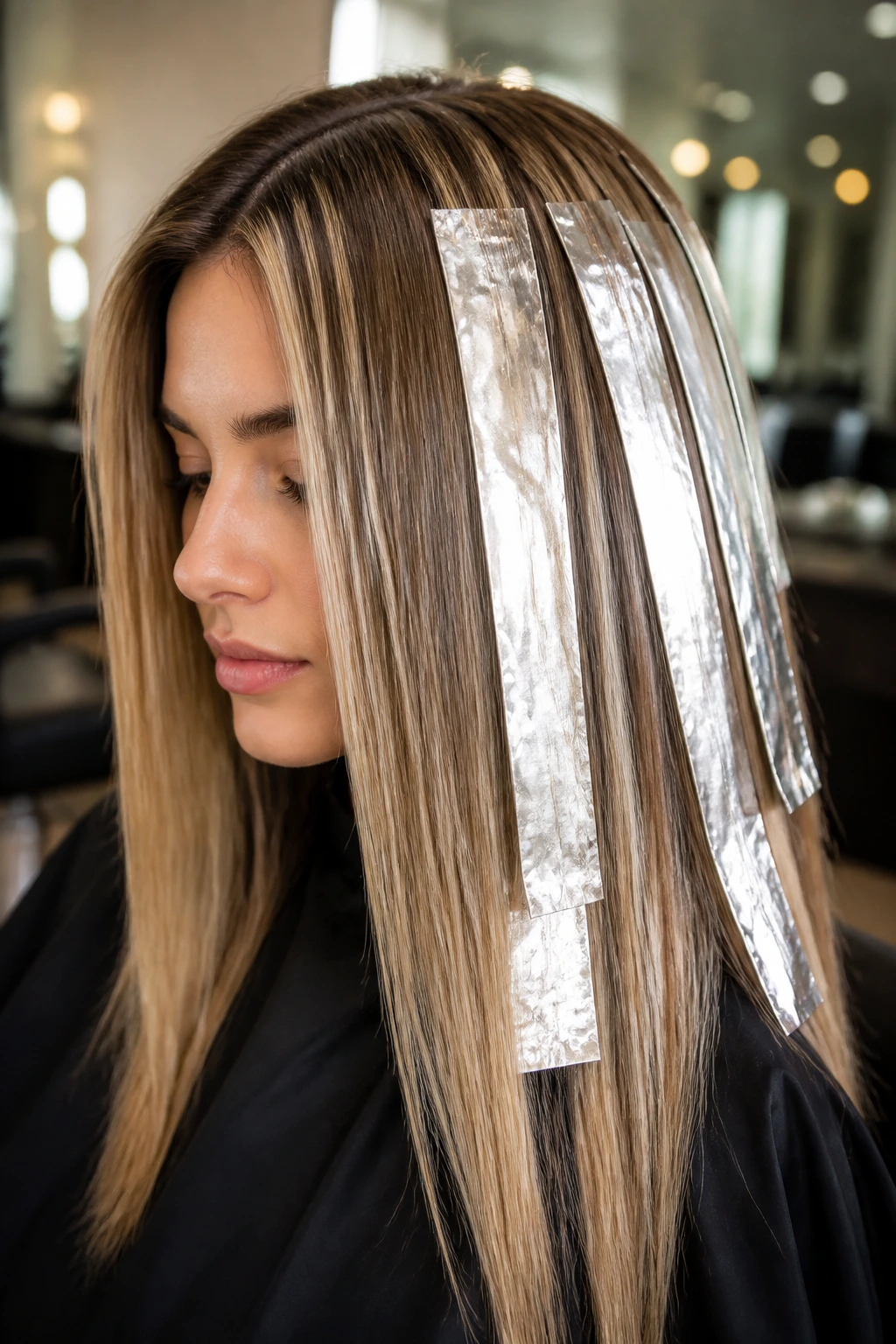
Sliced foils create broader, shinier ribbons than micro-weaves do. On straight hair, that can be a good thing. The hair reflects the light cleanly, so the slices read as glossy panels rather than stripey blocks. If you want dimension you can actually see from across the room, this is the move.
The placement should still be selective. Too many slices and the hair loses depth. Just enough, and you get a clean contrast that looks expensive in a blunt bob or straight long layers. This idea works well when the goal is visible brightness without the soft blur of balayage.
Sliced foils are a bit louder than babylights, but they’re cleaner than chunky streaks. That middle space is where straight hair shines.
21. Toffee Highlights for Thick Straight Hair
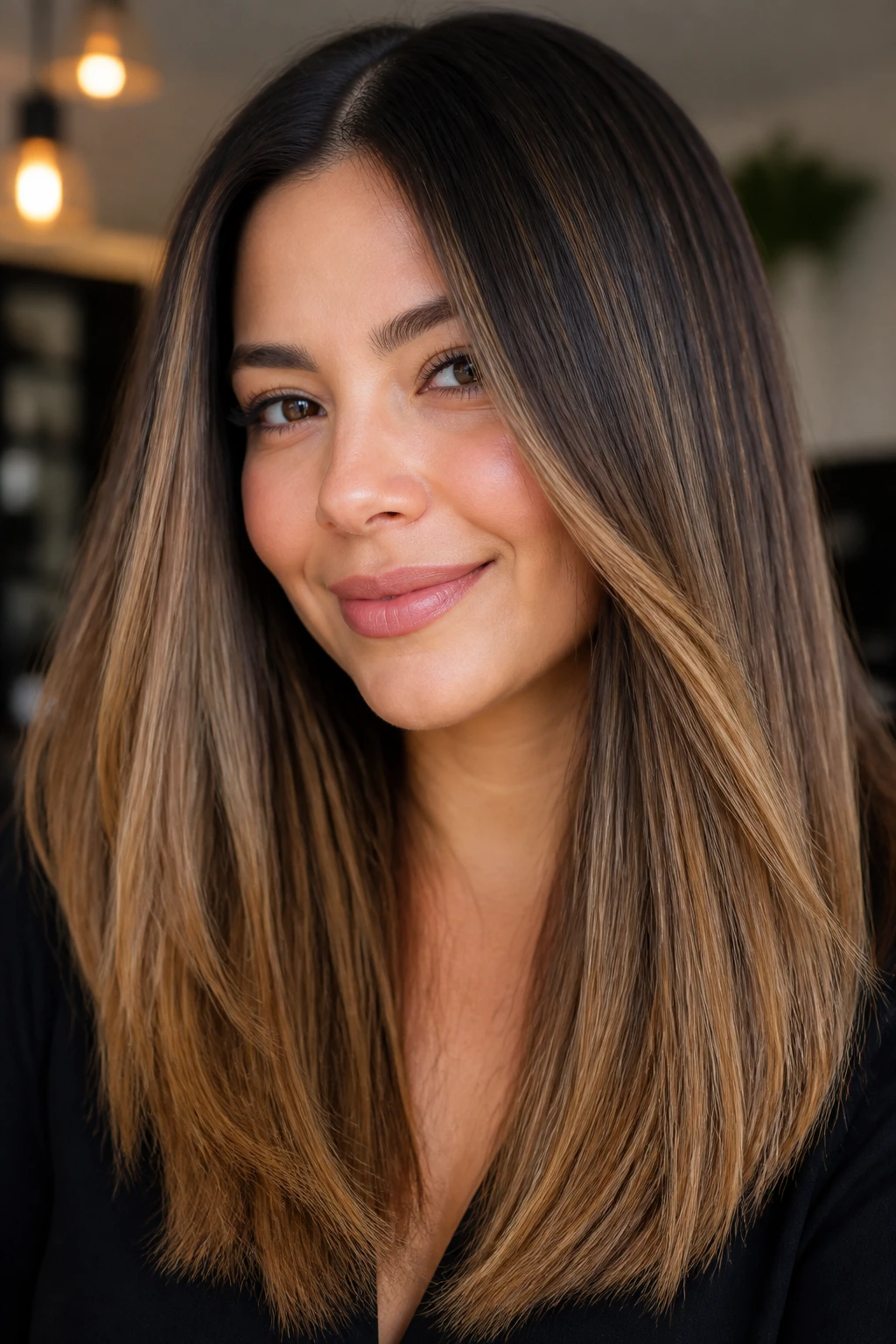
Thick straight hair can swallow tiny highlights. That’s why toffee ribbons work so well here. The tone is warm, brown, and rich enough to show through dense lengths without looking pale or washed out. On a lot of thick hair, that makes all the difference.
Use slightly wider placements through the mid-lengths and ends so the color doesn’t disappear. Toffee also pairs well with blunt cuts because the warmth softens the heaviness of the shape. If the hair tends to feel bulky, these highlights break up the mass without making it airy in a bad way.
This is one of the easiest warm-brunette choices to live with. It grows out softer than blonde and still gives straight hair movement.
22. Beige Blonde Contouring on a Bob
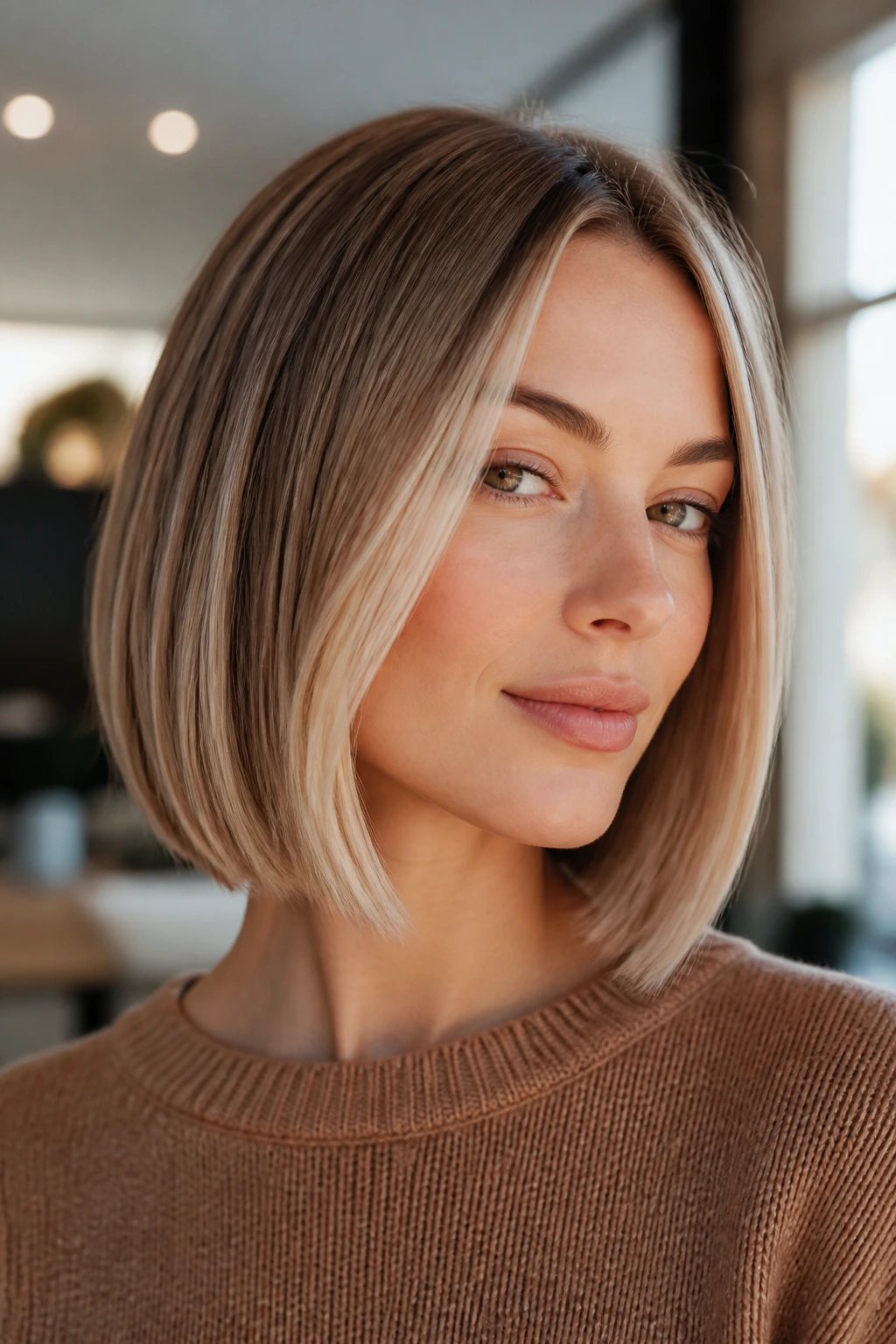
A bob and highlight contouring belong together. Straight bobs expose the jawline and cheek area so well that you can use beige blonde pieces to shape the face almost like makeup. Brightness at the front, a little depth underneath, and suddenly the haircut looks more expensive.
The beige tone keeps it modern. Pure gold can look too warm on a sharp bob, and icy white can feel harsh unless the rest of the cut is very precise. Beige sits in the sweet spot. It lightens the front, softens the edges, and keeps the overall style believable.
If you have a blunt bob or a French bob, this kind of placement can do more than a full-head highlight ever would.
23. Mocha Melt with Front Pieces
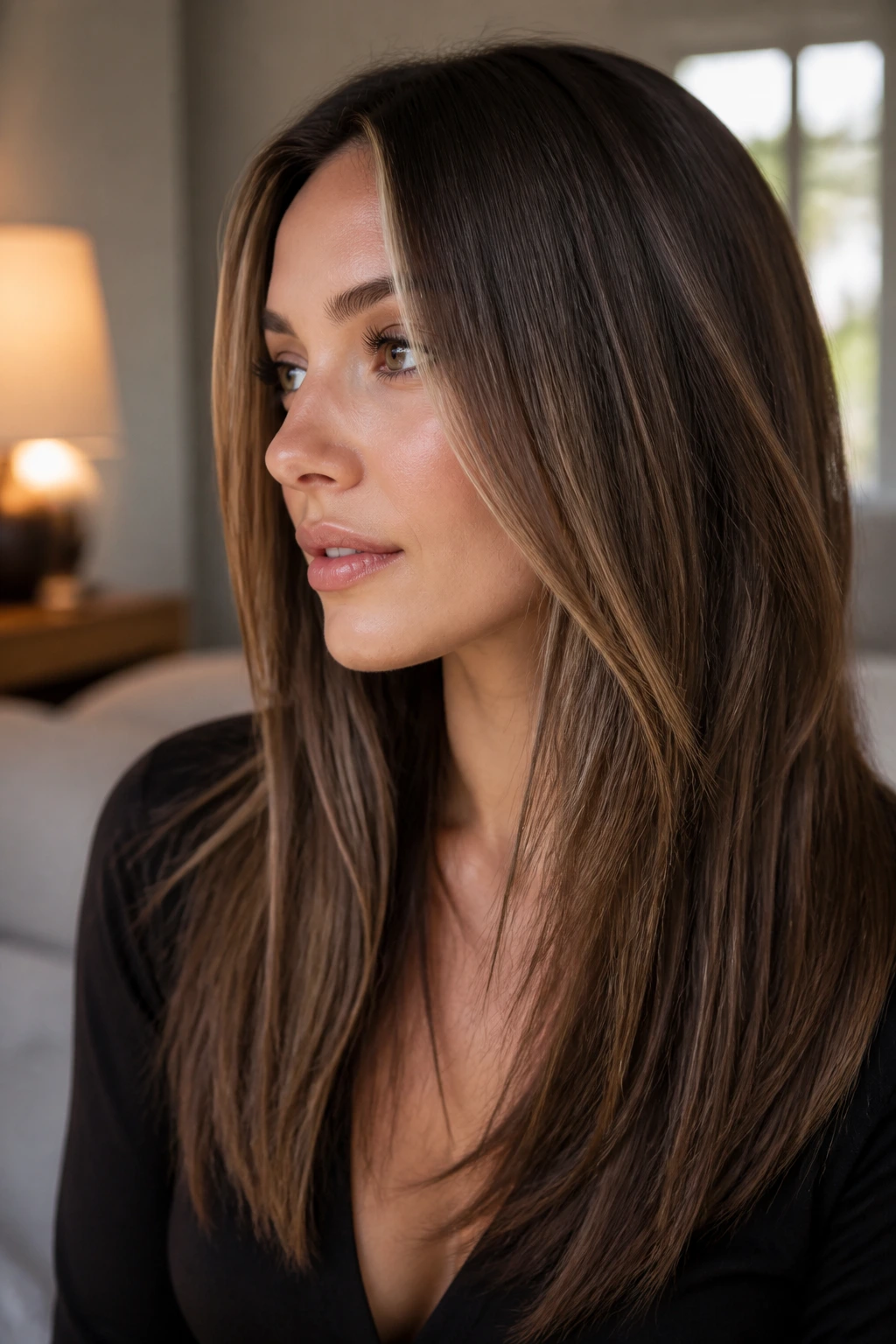
Mocha melt is for people who want brunette depth with just enough lift to keep straight hair from feeling heavy. The base stays in the mocha family, while the front pieces brighten one or two shades higher. That contrast frames the face and keeps the rest of the length looking smooth.
Straight hair is a good match because the blend can be seen clearly. There’s no curl pattern to blur the transition, which means the melt has to be clean. The payoff is a color that feels polished but not overworked. It also grows out with a nice softness, which is handy if you do not love constant salon visits.
I’d pick this over all-over blonde for most straight brunettes. It keeps the shape grounded.
24. Icy Pearl Money Piece
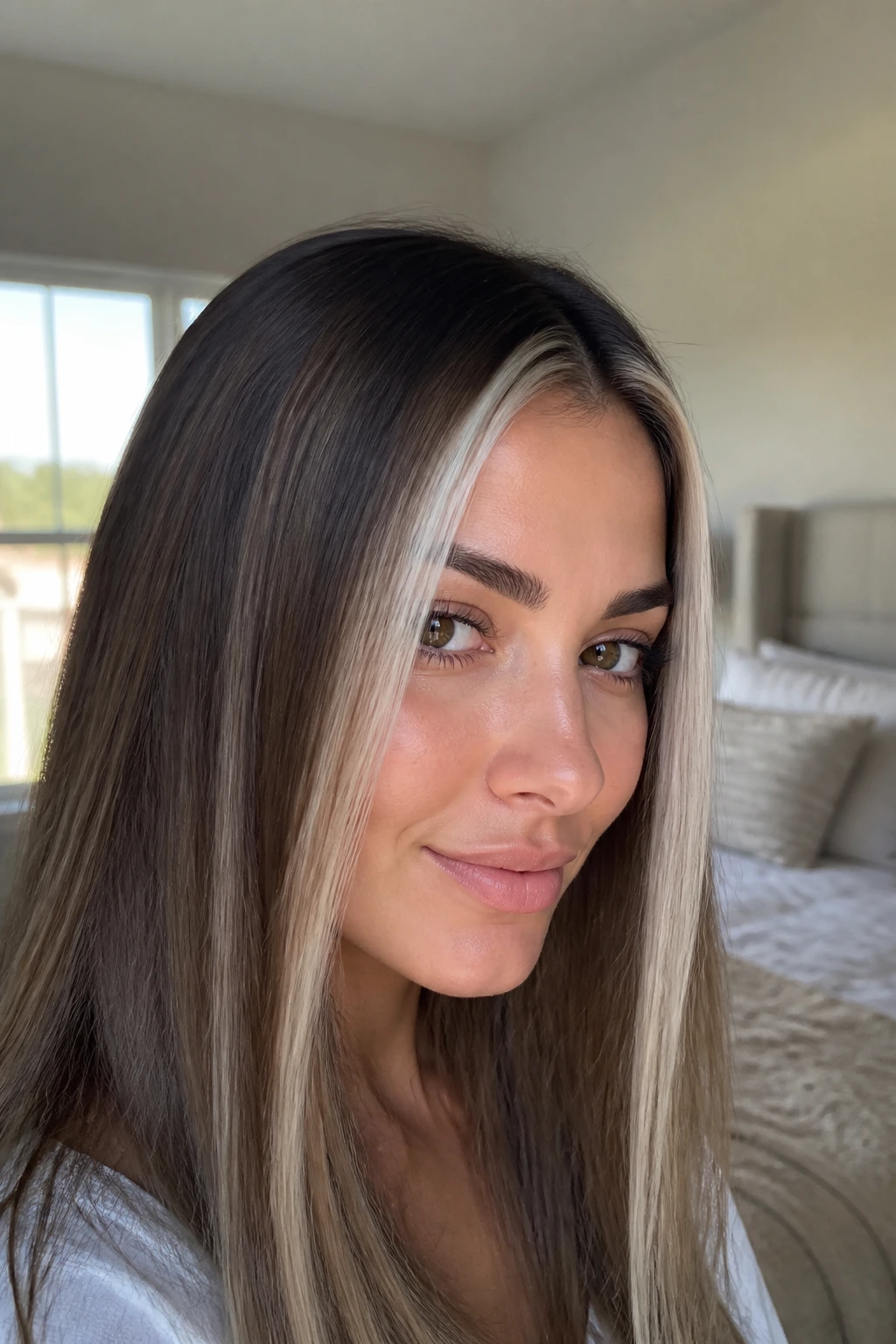
An icy pearl money piece is the colder, brighter version of a soft face frame. It works when the base can support a light lift and the skin tone likes cool, clean brightness. On straight hair, pearl reads almost luminous because the surface is so smooth.
This idea needs toner discipline. Pearl can turn yellow if the undertone isn’t controlled, and it can go flat if the finish is dry. Keep the front pieces narrow, glossy, and well-conditioned. On a straight style, that icy frame can make the eyes stand out and the haircut feel sharper.
It’s a bold choice, but not a noisy one. There’s a difference.
25. Cinnamon Ribbon Highlights
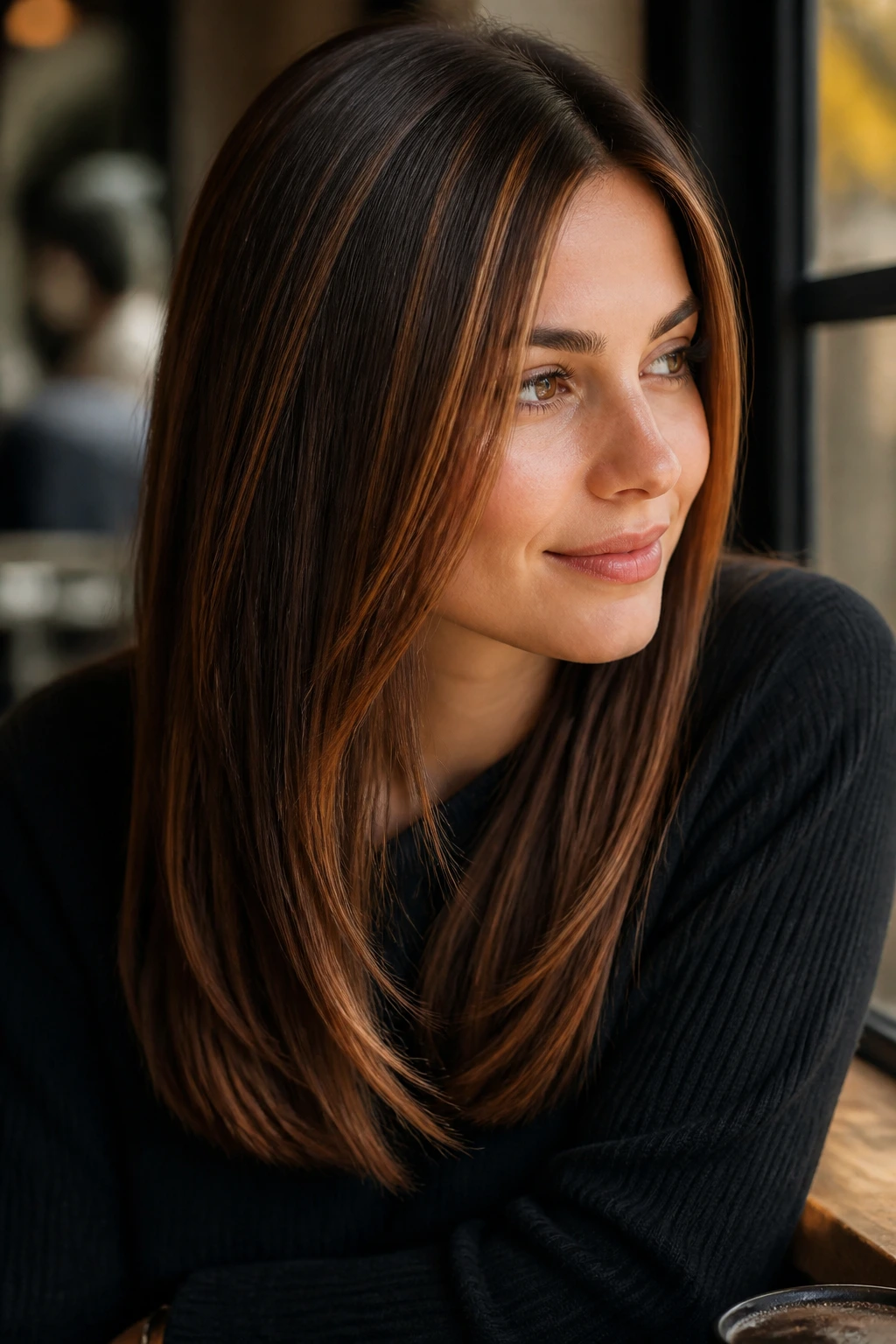
Cinnamon ribbons bring warmth without crossing all the way into copper. On chestnut or medium brunette straight hair, they look like a deeper spice tone that moves in the light. That makes them easier to wear than brighter red highlights and less expected than caramel.
Place the ribbons through the mid-lengths and around the face so they don’t disappear into the base. Straight hair shows cinnamon well because the contrast sits close to the surface instead of hiding in waves. The result feels rich and autumnal without being tied to a season.
If you like warm coffee tones, this is probably your lane.
26. Underlight Highlights
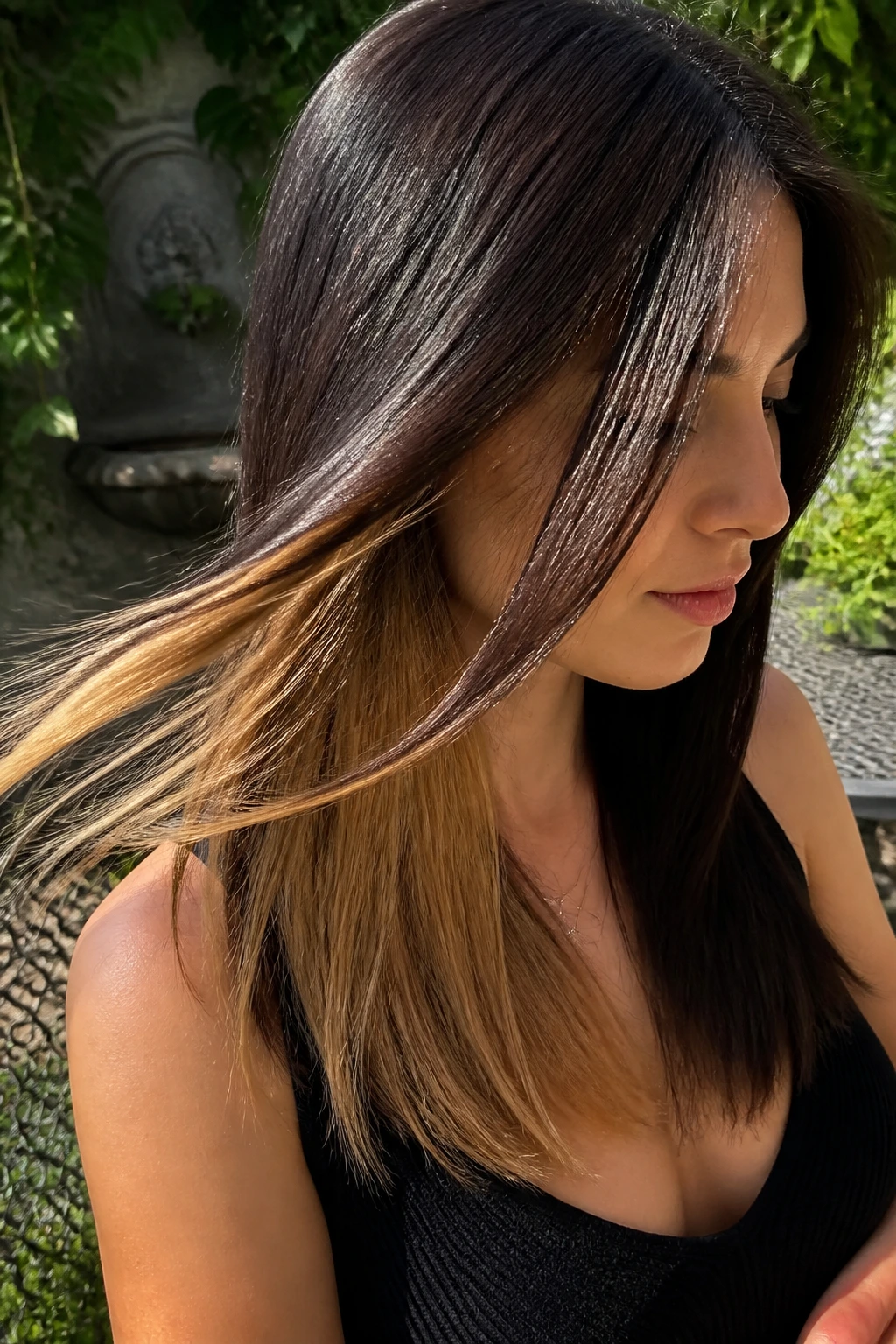
Underlights are one of the best straight-hair tricks because they stay tucked away until the hair moves. The top layer can stay darker and smoother, while the underneath section carries blonde, copper, or even rose. On ponytails, half-up styles, and tucked-behind-the-ear looks, the color suddenly appears.
This is ideal if you like your color to have a private side. It also keeps straight hair looking dense on top, which matters if the ends are fine or fragile. Because the color is hidden, you can be a little bolder underneath without changing the whole mood of the haircut.
I like underlights for people who get bored fast but still need the top layer to stay work-appropriate.
27. Scattered Micro-Slices for Fine Hair
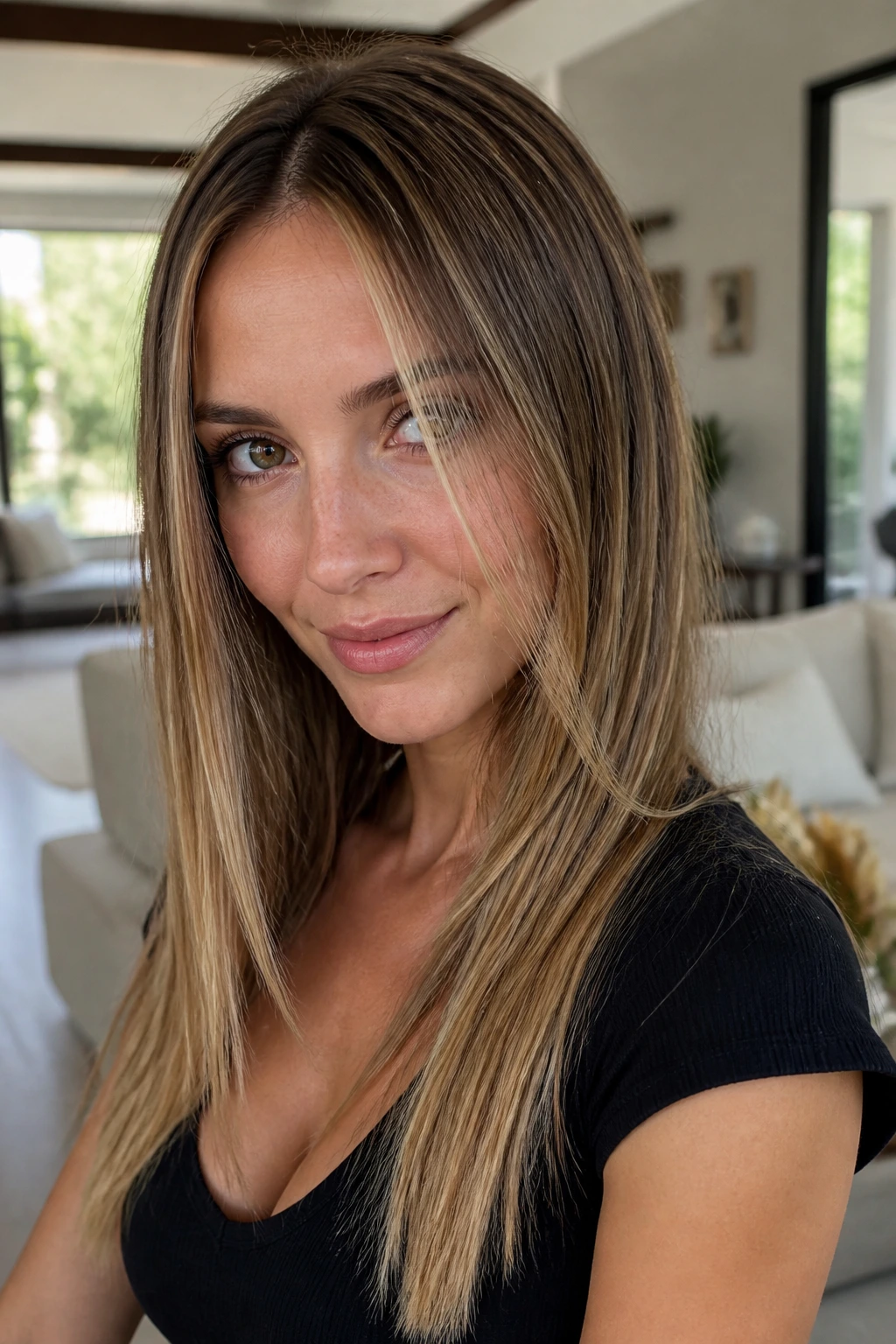
Fine straight hair needs lightness with restraint. Scattered micro-slices give you brightness without opening up too much of the hair at once, so the density stays intact. That matters because straight fine hair can look sparse if the highlights are too wide or too many.
The placement should be irregular, not patterned. A few tiny slices near the part, a few around the face, a few hidden beneath the top layer — enough to catch light, not enough to show every section. This is the kind of work that looks simple and is actually fussy in the chair. Done well, it makes the hair look fuller, not thinner.
If you’ve been told fine hair cannot wear highlights, this is the rebuttal.
28. Soft Ombre Ends
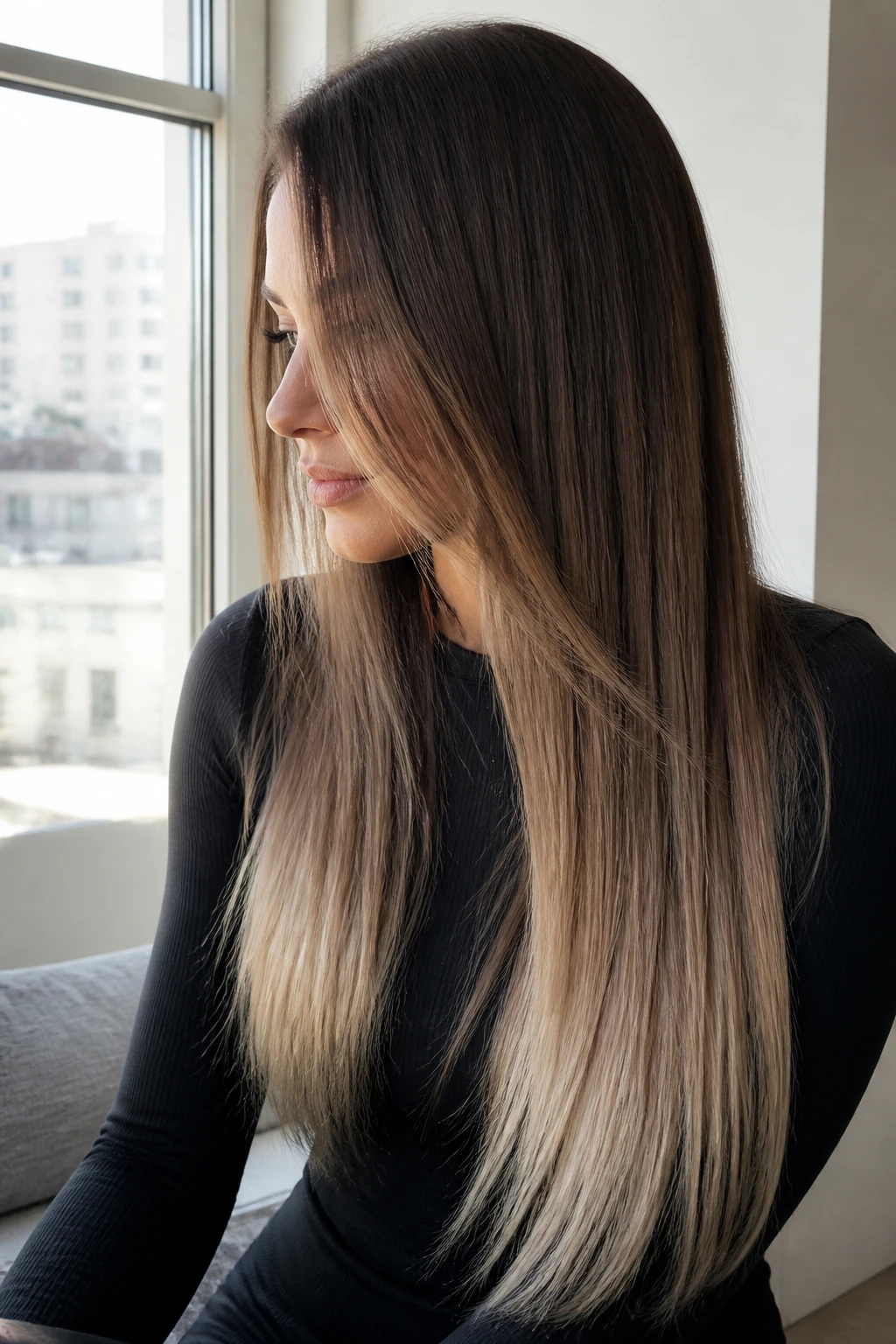
Soft ombre is still useful on straight hair, but only when the transition is smooth. A hard line at the middle looks dated fast. A gradual fade from deep roots to lighter ends, on the other hand, can make long straight hair look sleek and modern without frequent touch-ups.
The best ombre on straight strands has a long melt, not a quick flip. It works because the eye can follow the gradient down the length of the hair. That gives shape to otherwise flat ends. If the haircut is long and the maintenance budget is modest, this is one of the safer choices on the list.
It’s not flashy. It’s practical. Sometimes that’s the right answer.
29. Ribbon Lights with a Deep Side Part
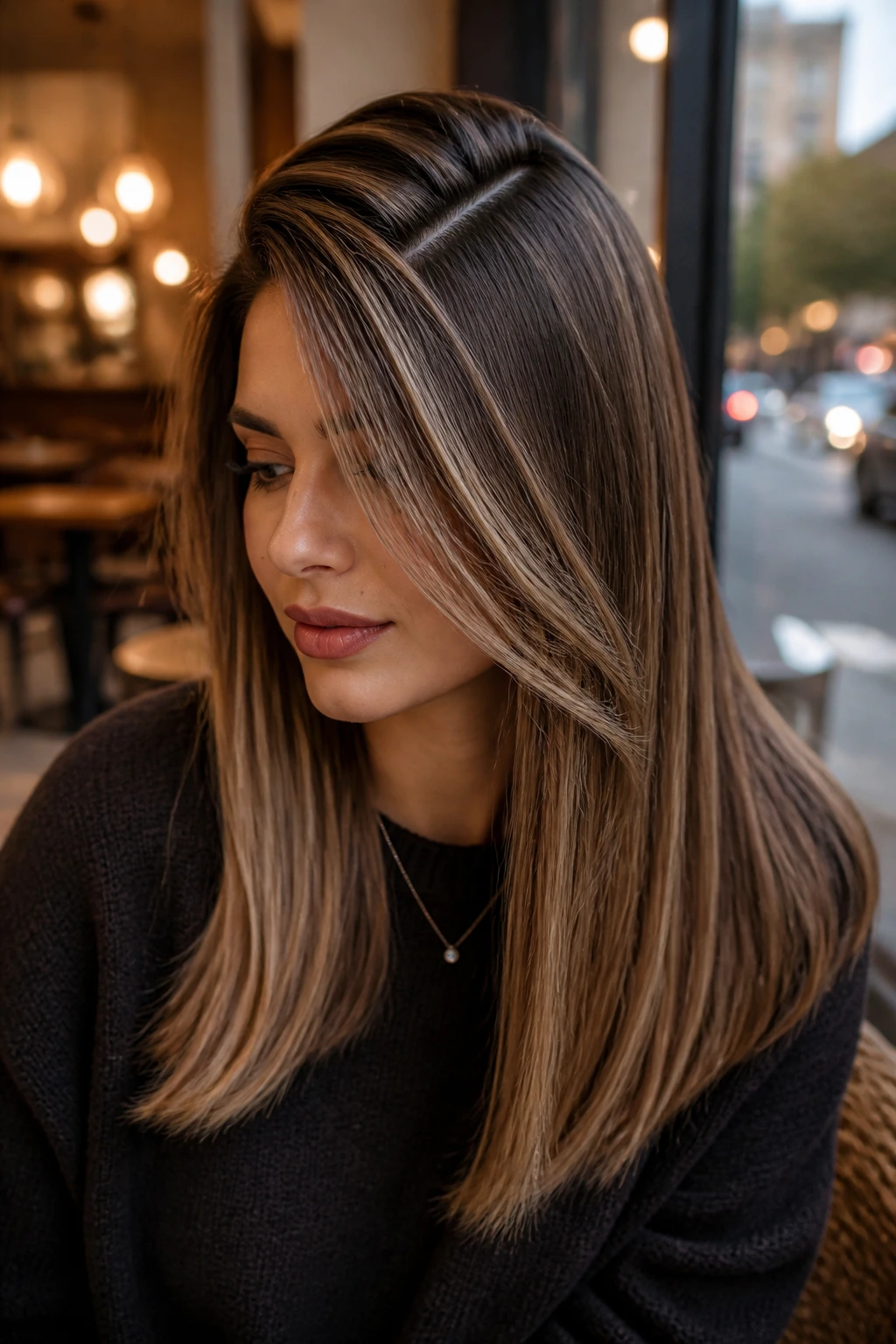
A deep side part changes the whole color story. Straight hair with ribbon lights on the heavy side of the part suddenly gets more movement, because the eye follows the sweep of the cut. The lights should cluster where the hair falls forward, with softer depth behind it.
This idea is especially useful if your face shape likes asymmetry or if you want a little drama without changing the cut. Ribbon lights show up more clearly on the side that frames the face, then trail off toward the back. On sleek hair, the part itself becomes part of the design, which is fun in a very practical way.
If center parts make your color feel too symmetrical, try this instead.
30. Dusty Rose Highlights
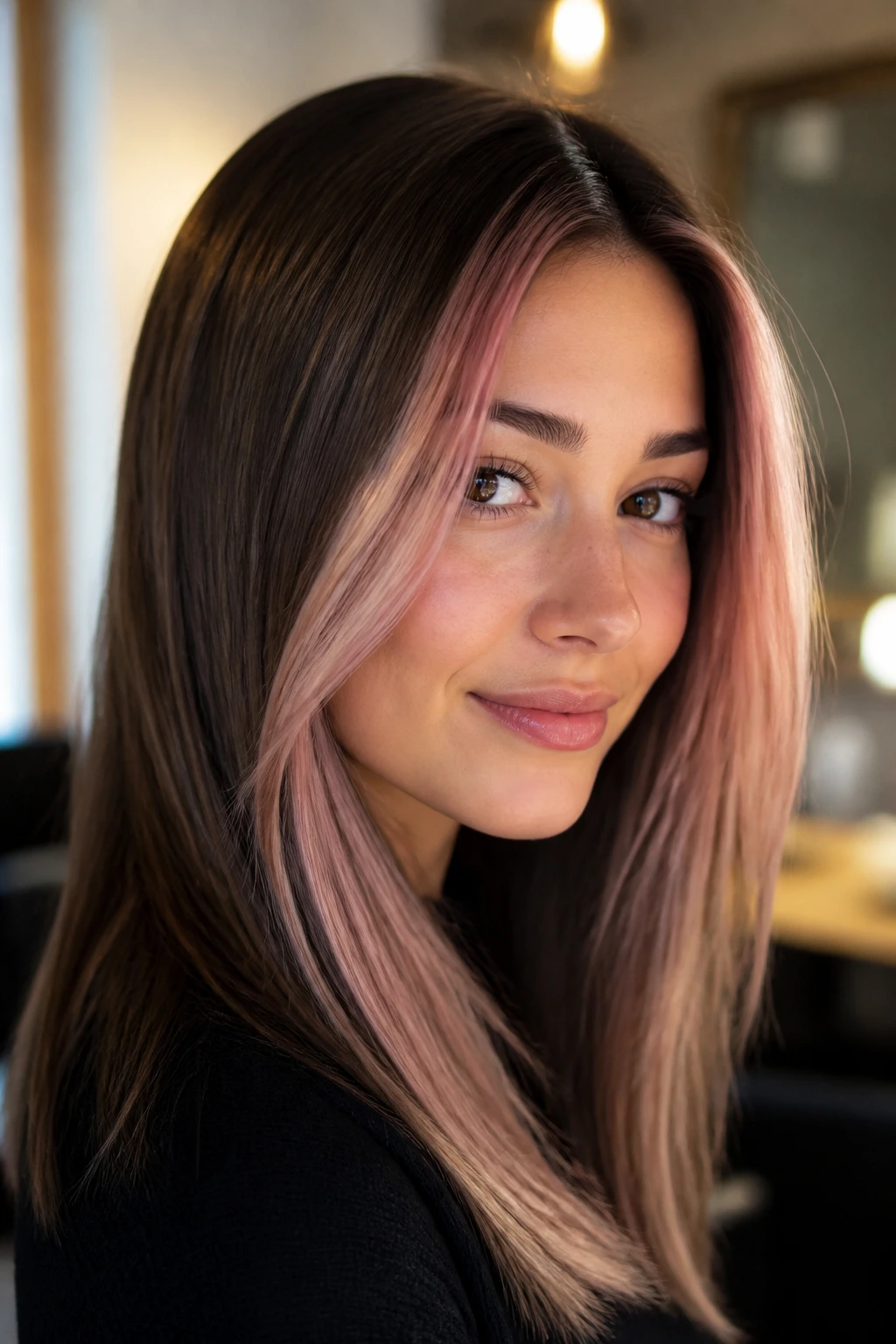
Dusty rose is the soft fashion color I suggest to people who want something playful but grown-up. On straight hair, the muted pink-beige tone reads as polished rather than candy-colored, especially if it sits in thin ribbons or a face frame. It looks best on pre-lightened hair that has enough warmth left to keep the rose from going flat.
The key is restraint. Too much pink and the hair starts shouting. A few dusty rose panels near the front or through the mid-lengths give you a fresh, airy finish that still feels wearable. Straight hair helps here because the color is visible without texture distorting it.
It’s a small rebellion, but a neat one.
31. Midnight Blue Shine Panels
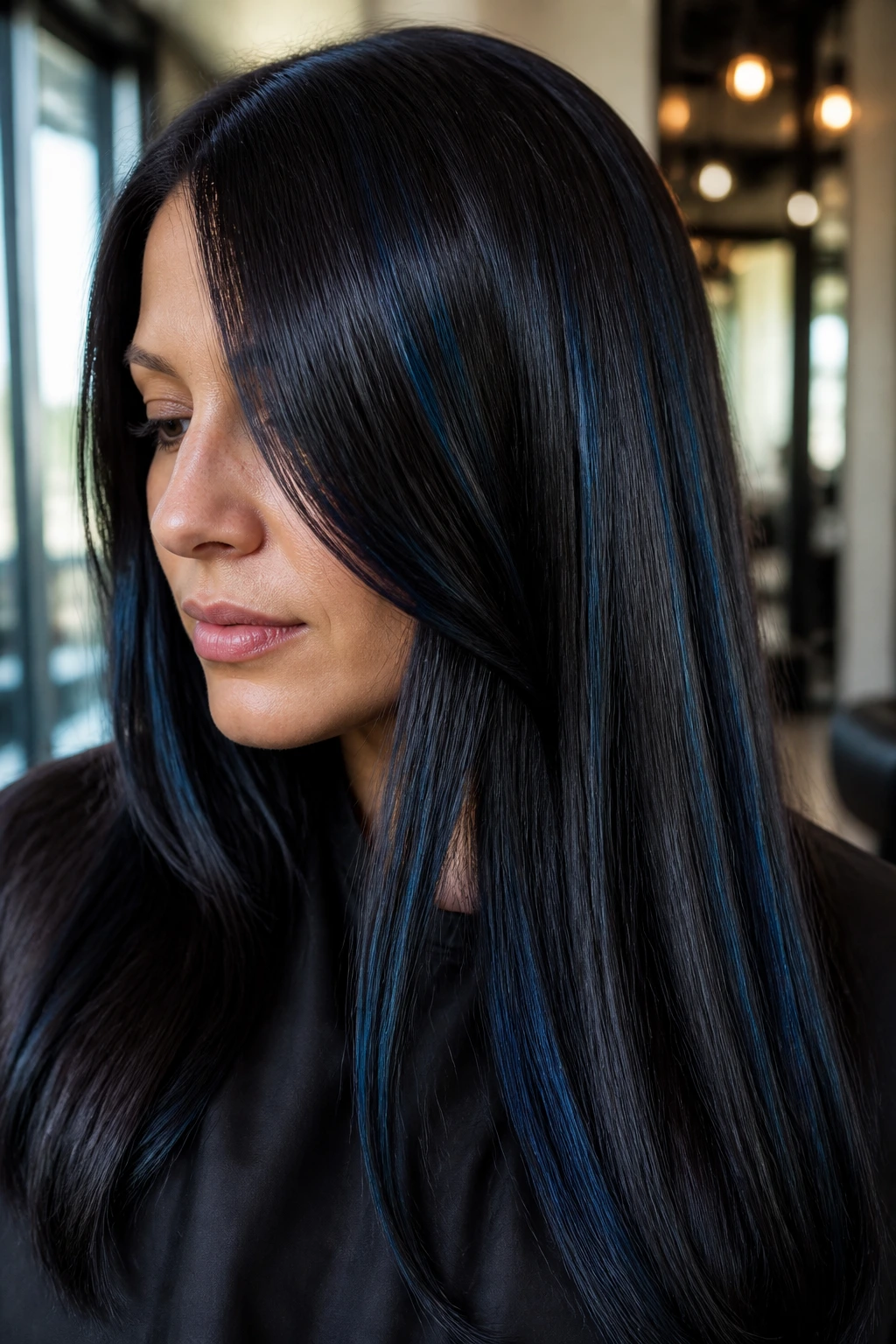
Midnight blue is a smart alternative to black-on-black color because it catches light instead of swallowing it. On straight hair, those panels can look almost inky in shadow and electric when the light hits. The effect is subtle unless you move, which is exactly why it works.
This is best on black or very deep brunette hair that can carry the blue sheen without needing a full fashion-color commitment. The panels should stay slim and intentional, tucked into the surface where they flash rather than dominate. Straight hair is ideal because the clean line makes the color read as shine, not costume.
If you love cool tones and dark hair, this is one of the sharpest ideas in the bunch.
32. Glossy Brunette Contrast
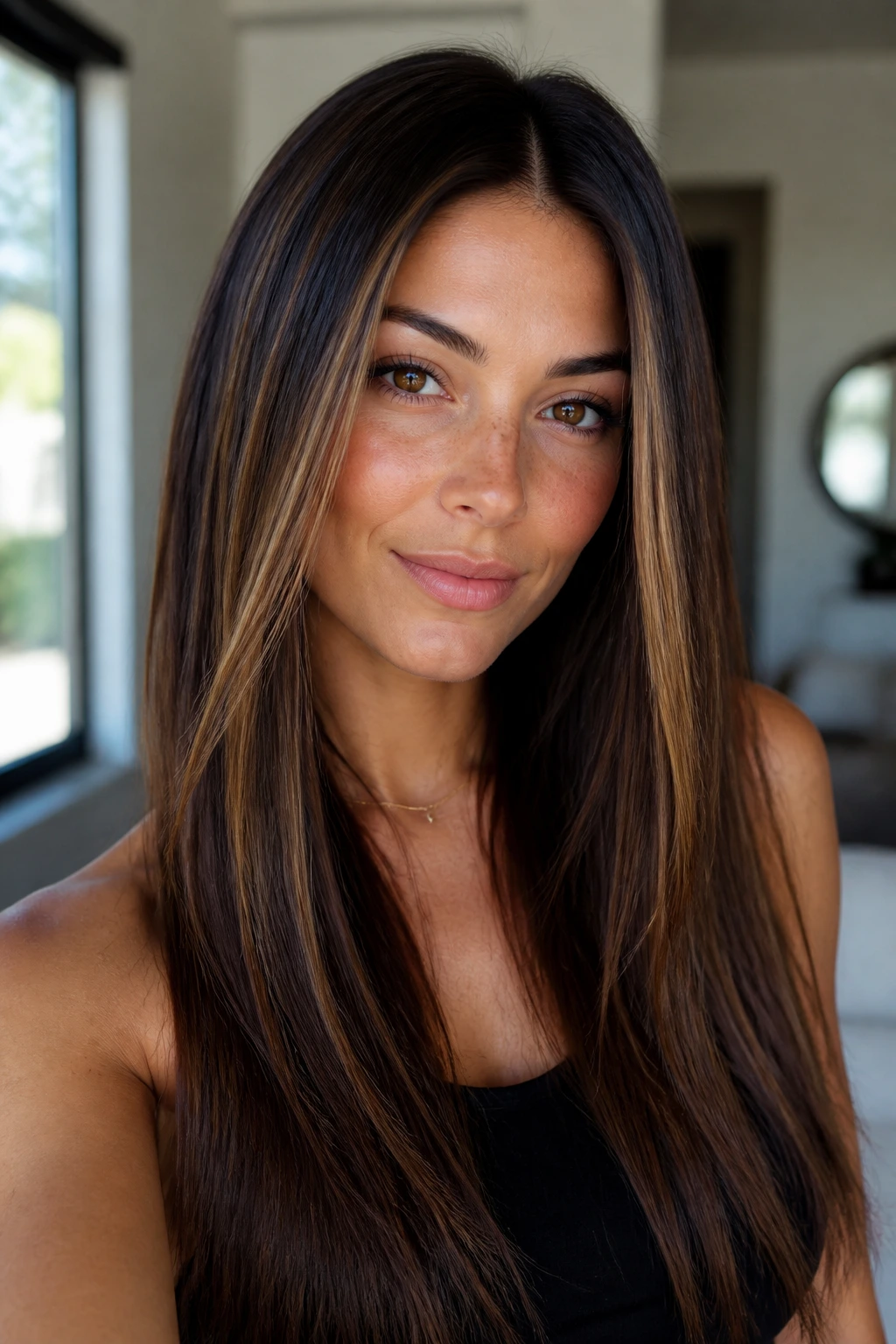
Sometimes the best highlight idea for straight hair is not more blonde. It’s controlled contrast with a glossy brunette finish. Think chestnut ribbons, soft caramel only where the face needs it, and a deep root that keeps the whole thing grounded. Straight hair loves this because the shine does half the work.
The point here is balance. Enough brightness to keep the style from looking flat, enough darkness to make the hair feel thick and polished. I like this on long straight hair, blunt lobs, and anyone who wants dimension without a big maintenance bill. It also survives grow-out better than aggressive blonde.
When the cut is sleek and the color is layered well, straight hair stops looking simple. It starts looking deliberate.
Why Straight Hair Changes the Highlight Game
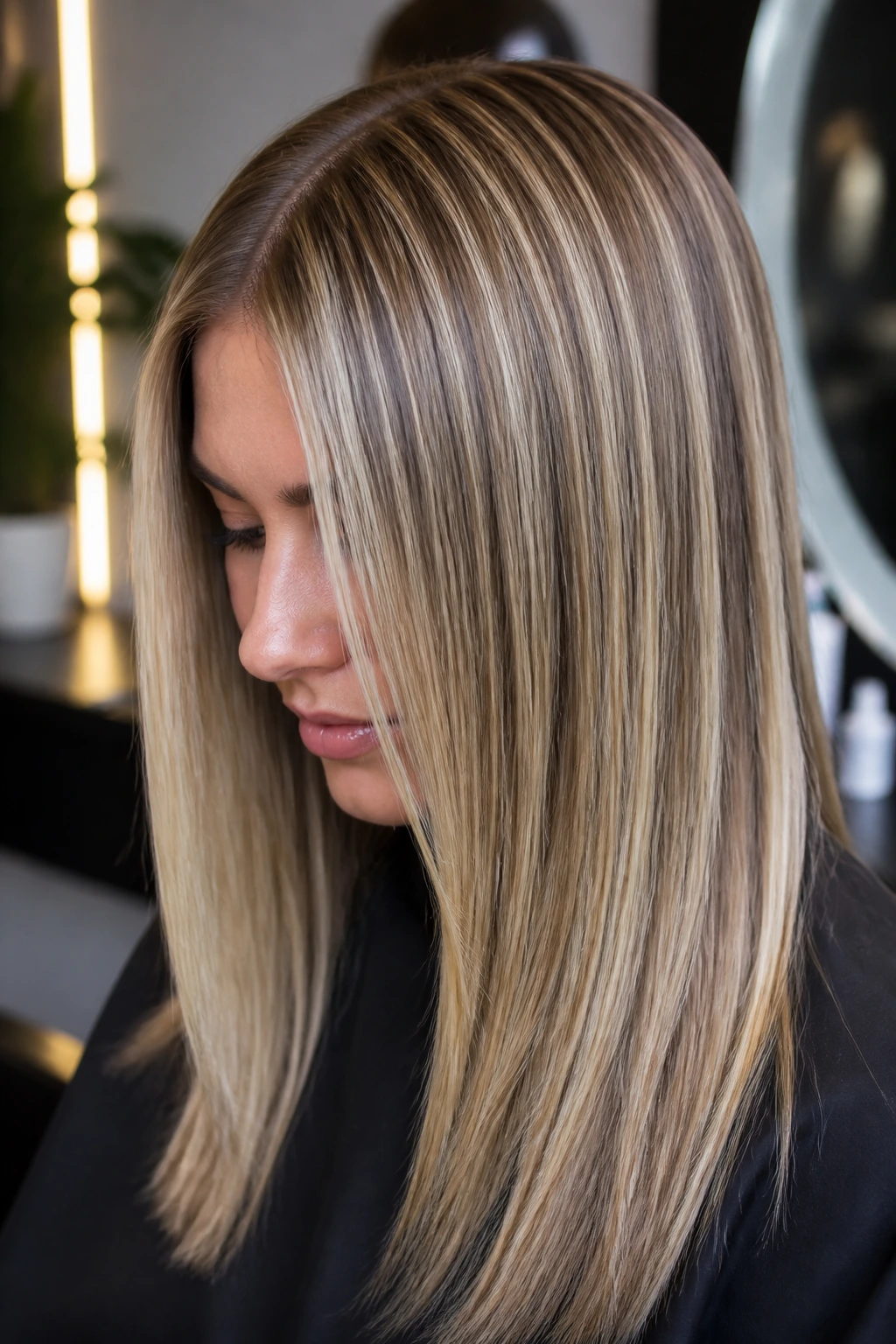
Straight hair exposes the pattern. That’s the whole story, and it’s why placement matters more here than on waves or curls. A highlight that looks soft on textured hair can look harsh on a blunt, flat-lying finish if the weave is too wide or the contrast too sudden.
The other issue is density. Straight hair often reads thinner at the ends because there’s no texture to puff it up. That’s why babylights, lowlights, and root shadows show up so often in good straight-hair color work. They keep the eye moving without making the whole head look stripped.
Straight styles also make toner choices obvious. A warm blonde can go brassy in a week if the undertone isn’t right, and an ash blonde can look lifeless if it’s too gray. So the best highlights here are not just light. They’re controlled.
Essential Tools for Straight-Hair Color Work
-
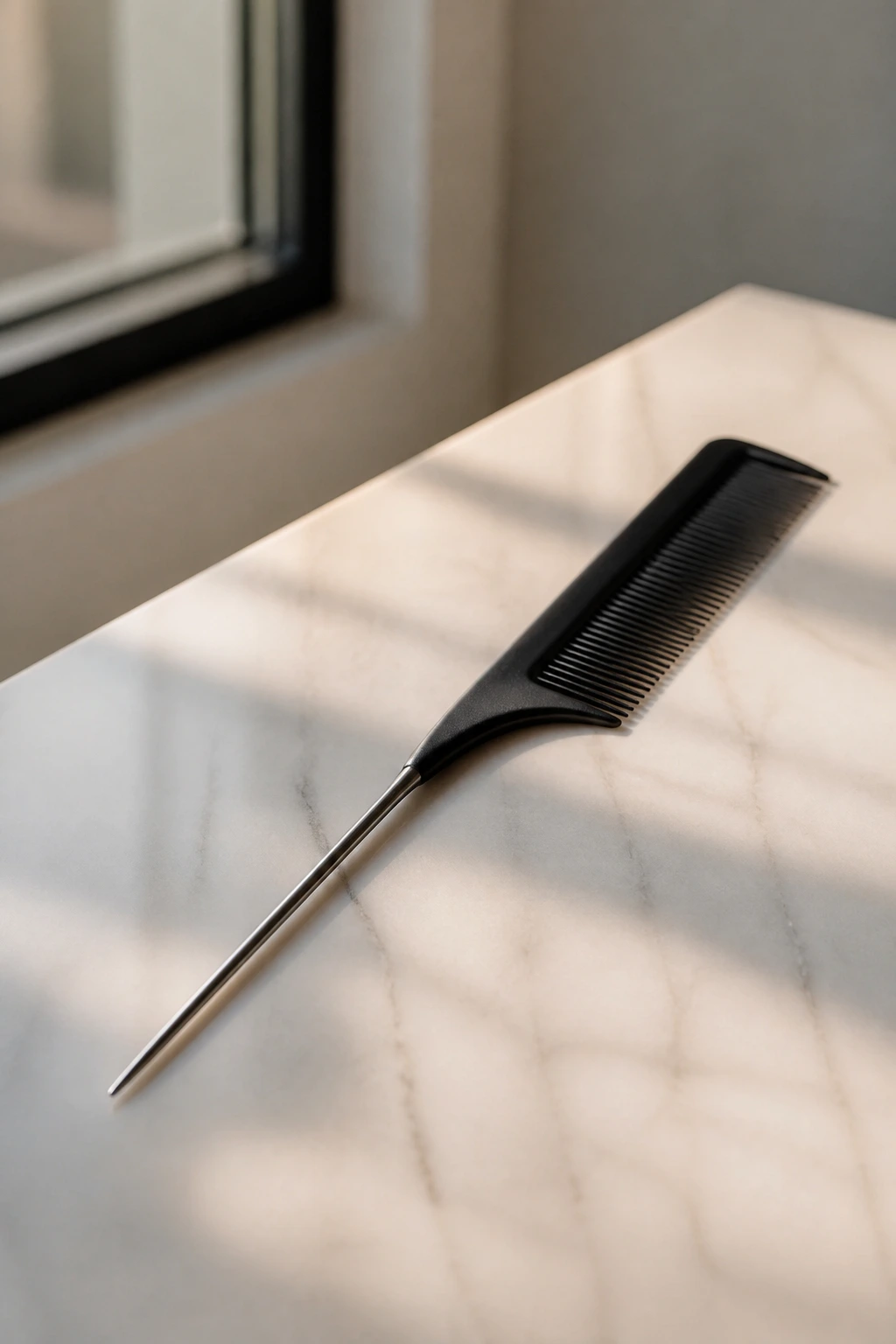
Tail comb: This is the tool that keeps partings clean and section widths consistent, especially around the money piece and crown.
-
Sectioning clips: Straight hair slips around more than people think, so strong clips help keep clean panels separated while you work.
-
Foil sheets or balayage board: Foils give sharper lift and cleaner contrast; a board helps with hand-painted pieces that need a smooth surface.
-
Tint brush: You need one with a fine edge for babylights, ribbons, and face-framing sections that must stay narrow.
-
Toner or gloss: Straight hair shows brass and dullness fast, so a toner or clear gloss matters almost as much as the lightening itself.
-
Color-safe shampoo and conditioner: These keep the tone from washing out early, which is a common problem with lighter straight styles.
-
Purple shampoo: Useful for blonde, pearl, and ash tones — but use it sparingly, or the hair can look chalky.
-
Heat protectant spray: Straight hair usually gets more flat-iron time, and that heat can chew through shine if you skip protection.
Smart Shade Choices and Toner Notes
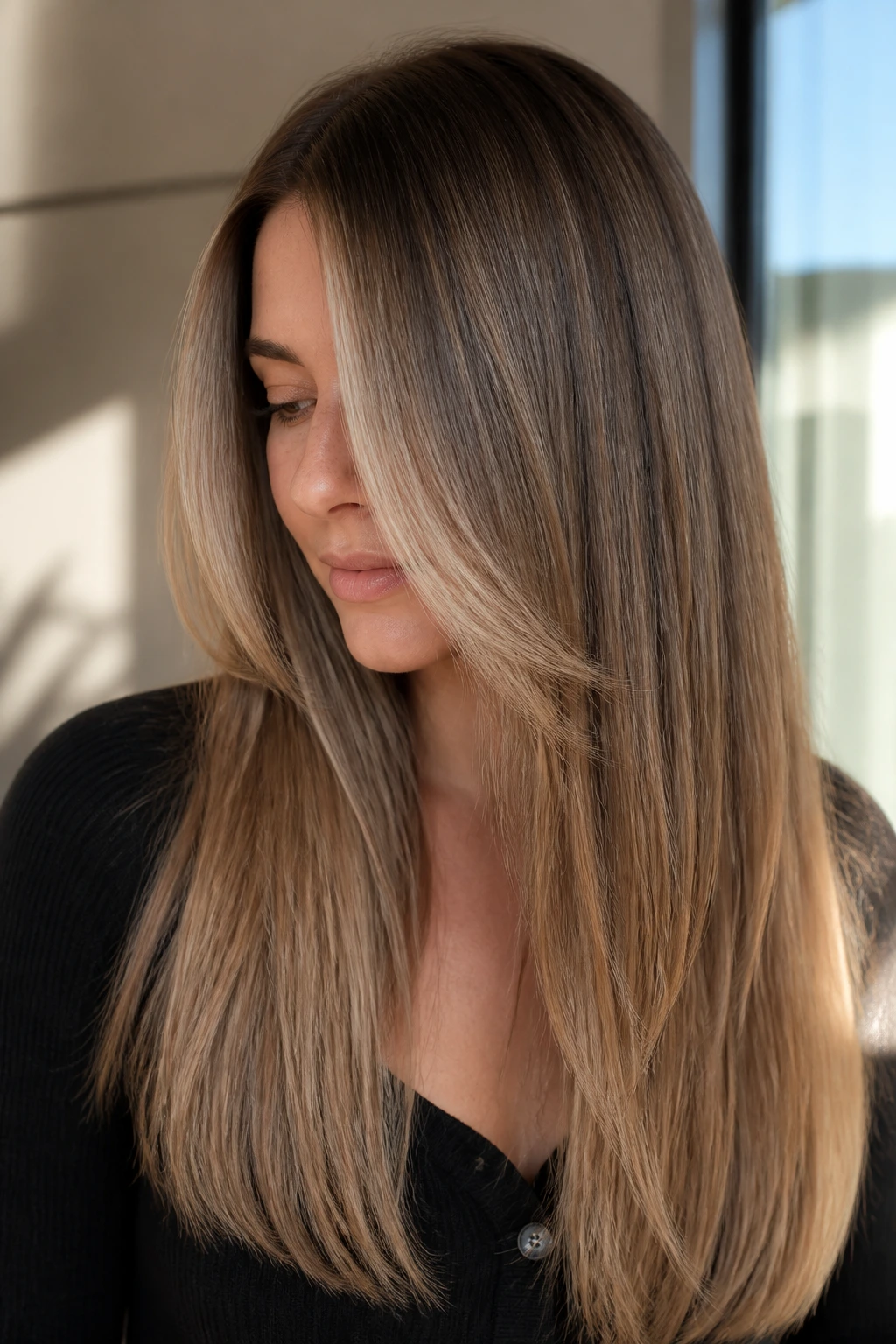
The easiest way to choose a highlight shade is to match it to the base you already have, not the one you wish you had. On level 3 to 4 brunettes, caramel, cinnamon, mocha, and auburn usually look richer than pale blonde. On level 5 to 6 hair, beige, honey, mushroom, and bronde tend to sit more naturally.
Cooler blondes need more upkeep. Pearl, ash beige, platinum, and silver all depend on toner staying fresh, which means purple shampoo can help, but it cannot do all the work. A gloss every few weeks keeps the tone from going dull or muddy. If your hair pulls orange fast, ask for a neutral or cool toner, not a bright icy one that will fade weird.
Porosity matters too. Hair that’s been lightened many times grabs toner quickly and can go flat if the formula is too strong. A softer gloss usually looks better than an aggressive toner on straight hair because the finish stays reflective. Shiny beats chalky every time.
How to Wear These Highlights So They Read Cleanly
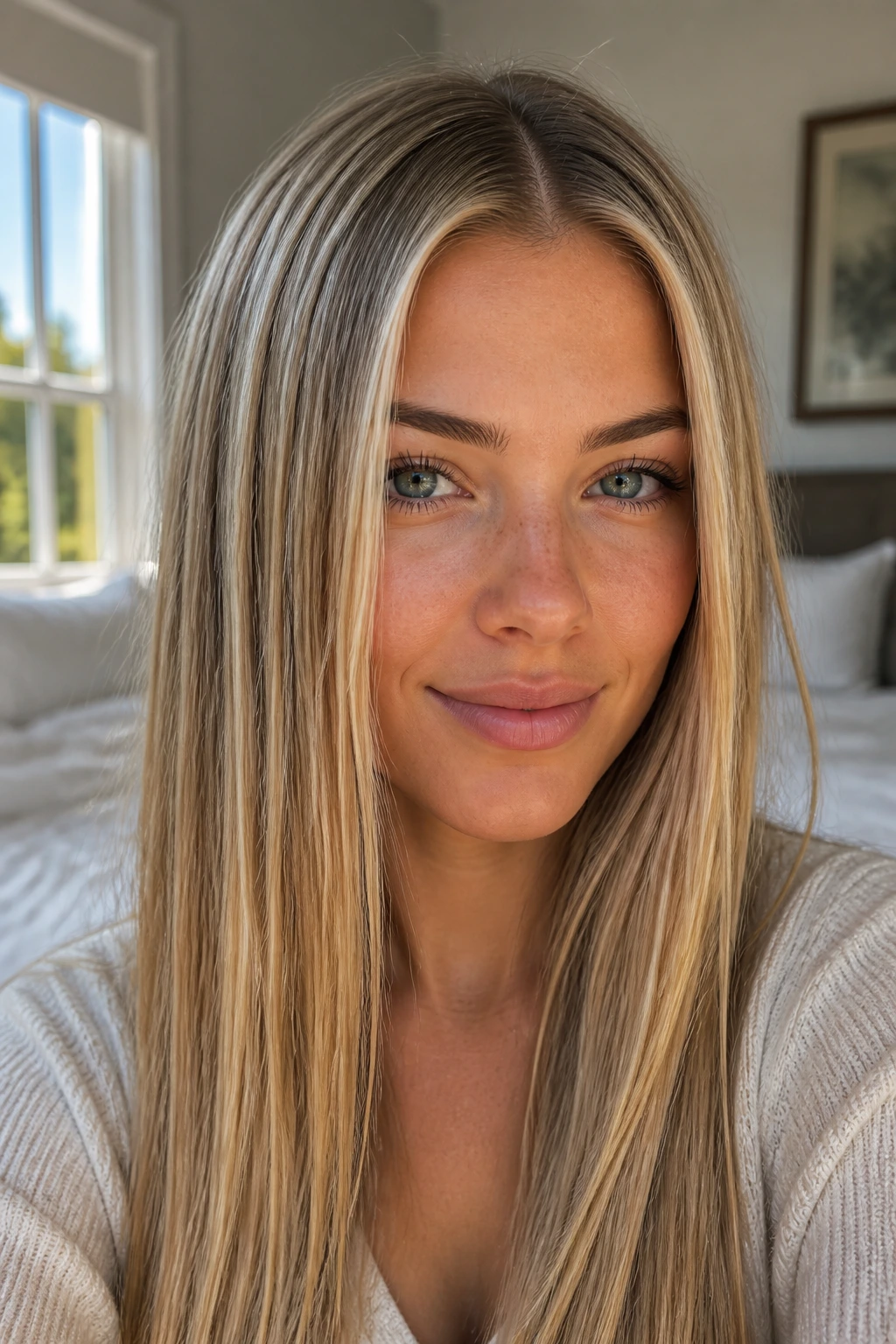
Presentation: Straight hair looks best when the part is deliberate. A center part shows babylights, bronde slices, and symmetry; a deep side part shows off money pieces and ribbon lights better. The color should feel like it belongs to the cut, not pasted onto it.
Styling: A smooth blow-dry or a single pass with a flat iron makes these highlights easier to read. I like ends that bend under just a little rather than poker-straight lengths all the way to the floor — the tiniest curve keeps the ribbons from looking stiff.
Best Cuts: Blunt bobs, lobs, long layers, and collarbone cuts all show highlights differently. A blunt cut loves contrast and money pieces. Long layers like ribbons, ombré, and babylights because the color can move through the shape.
Lighting: Warm indoor bulbs pull caramel, honey, and copper forward. Daylight shows ash, pearl, and silver more honestly. If a color looks dull in one light but sharp in another, that’s not unusual. Straight hair is basically a mirror, and mirrors are picky.
Extra Shine Tricks and Color Boosters
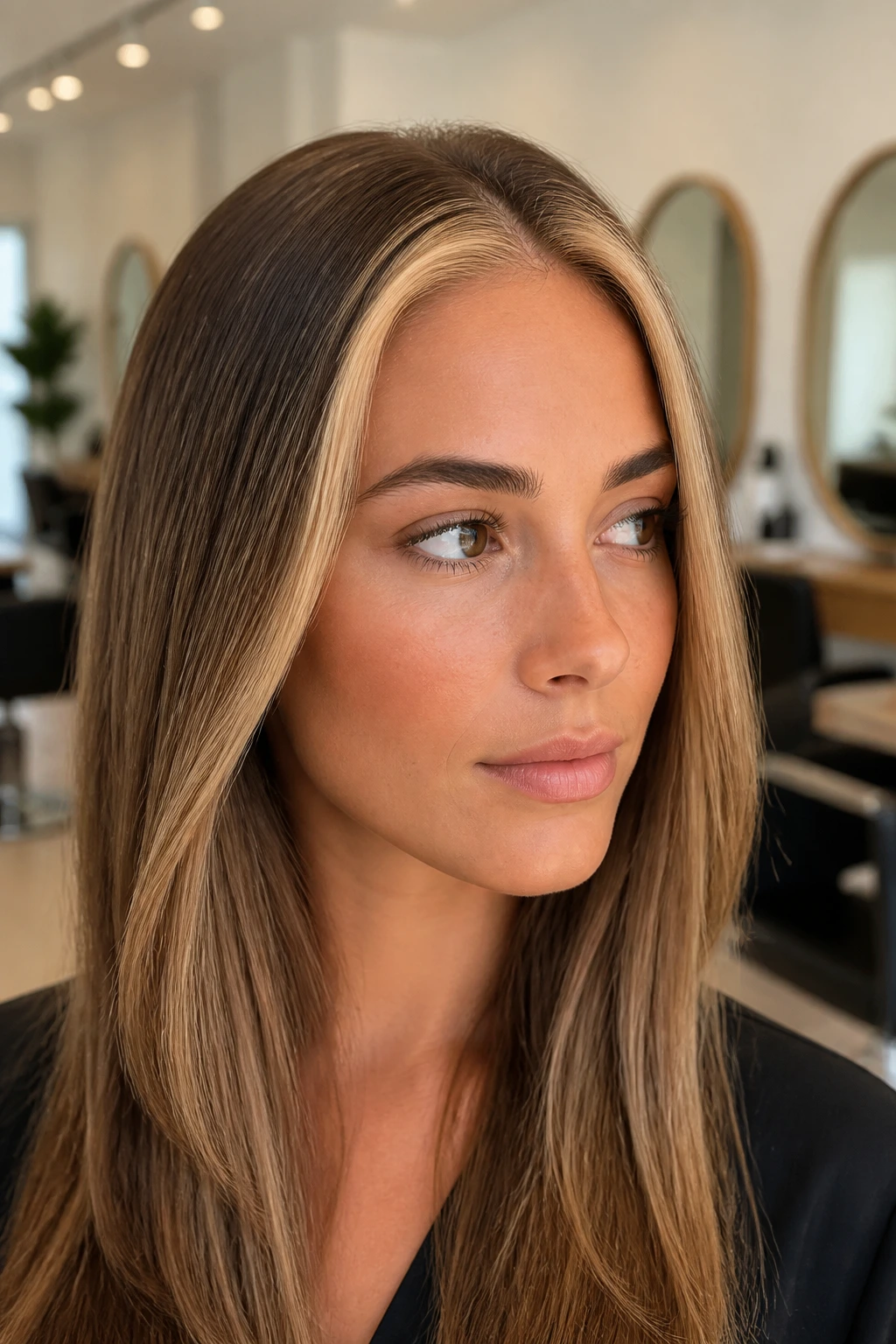
Gloss Boost: Ask for a clear or tinted gloss after the highlight service. On straight hair, that extra shine makes ribbons look smoother and makes even subtle color show up better.
Contrast Control: If your hair is fine, keep brighter pieces around the face and crown, then hide lowlights underneath. That gives the illusion of depth without exposing too much scalp.
Finishing Habit: Use heat protectant every time you blow-dry or flat-iron. Straight hair tends to get more heat than wavy hair, and heat damage kills reflectiveness faster than people expect.
Make-It-Yours: Warm undertones can lean caramel, honey, cinnamon, or copper. Cool undertones can lean ash beige, mushroom, pearl, or silver. If you like fashion shades, tuck them underneath or keep them in slim panels so the look doesn’t turn theatrical.
Common Mistakes That Turn Sleek Color Stripey
-
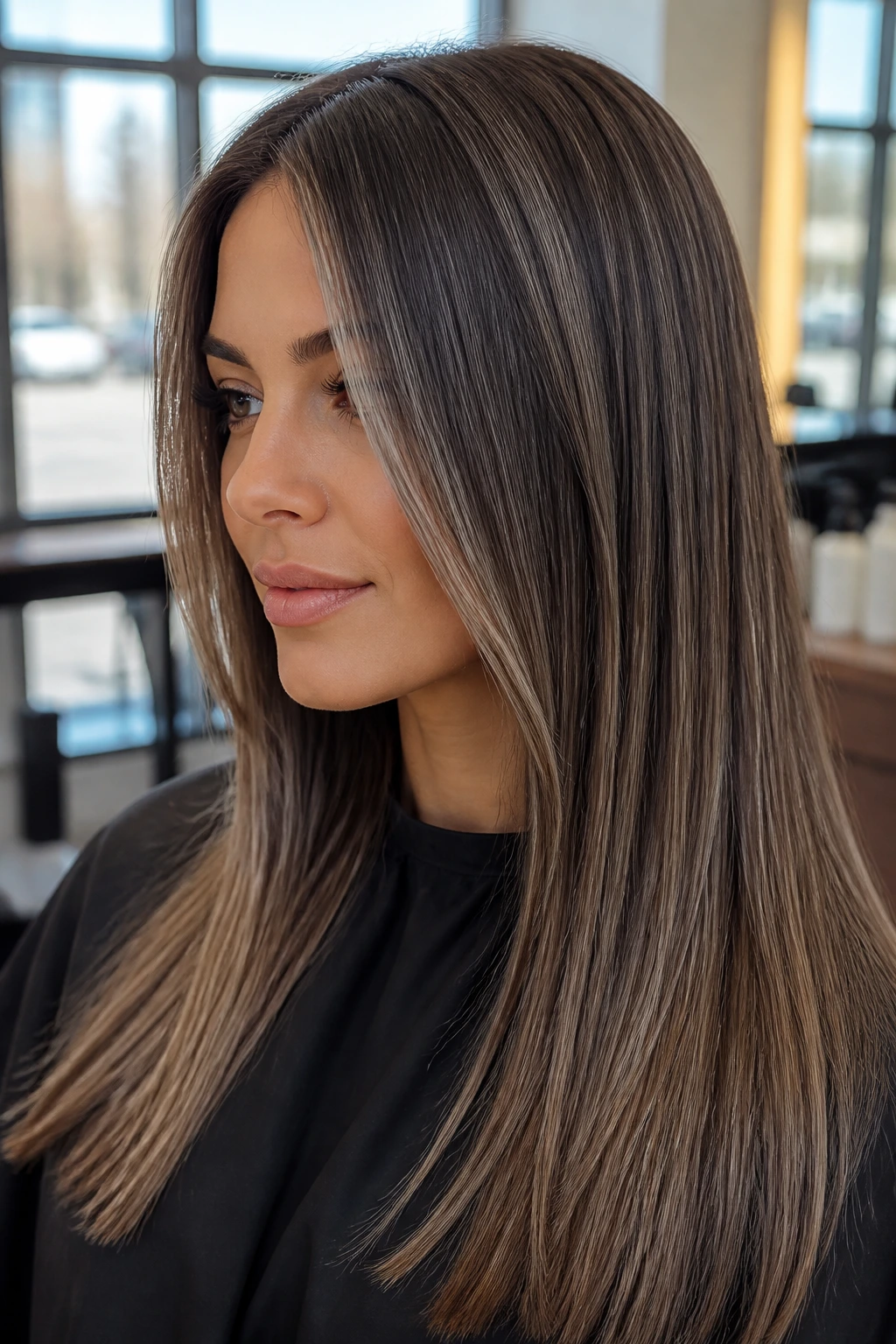
Making the sections too wide: On straight hair, wide highlights can look like bands instead of dimension. The fix is finer weaving or sliced placement, especially near the part.
-
Lifting too much in one visit: Dark hair pushed too fast toward pale blonde often turns orange, then fragile. Split the process into stages if the goal is light blonde or platinum.
-
Skipping toner: Fresh lift can still look yellow, brassy, or flat. A toner or gloss keeps the highlight shade where it should sit.
-
Ignoring the haircut: A blunt cut with heavy streaks can look blocky if the color is placed in the wrong spots. Contouring the front and adding depth underneath usually helps.
-
Over-lightening fine hair: Too much blonde can make straight fine hair look see-through. Keep some depth at the root and crown so the hair still looks full.
-
Flat-ironing without protection: Heat makes highlights look dull fast. A heat protectant and a lower temperature setting save the finish.
Variations and Adaptations to Try
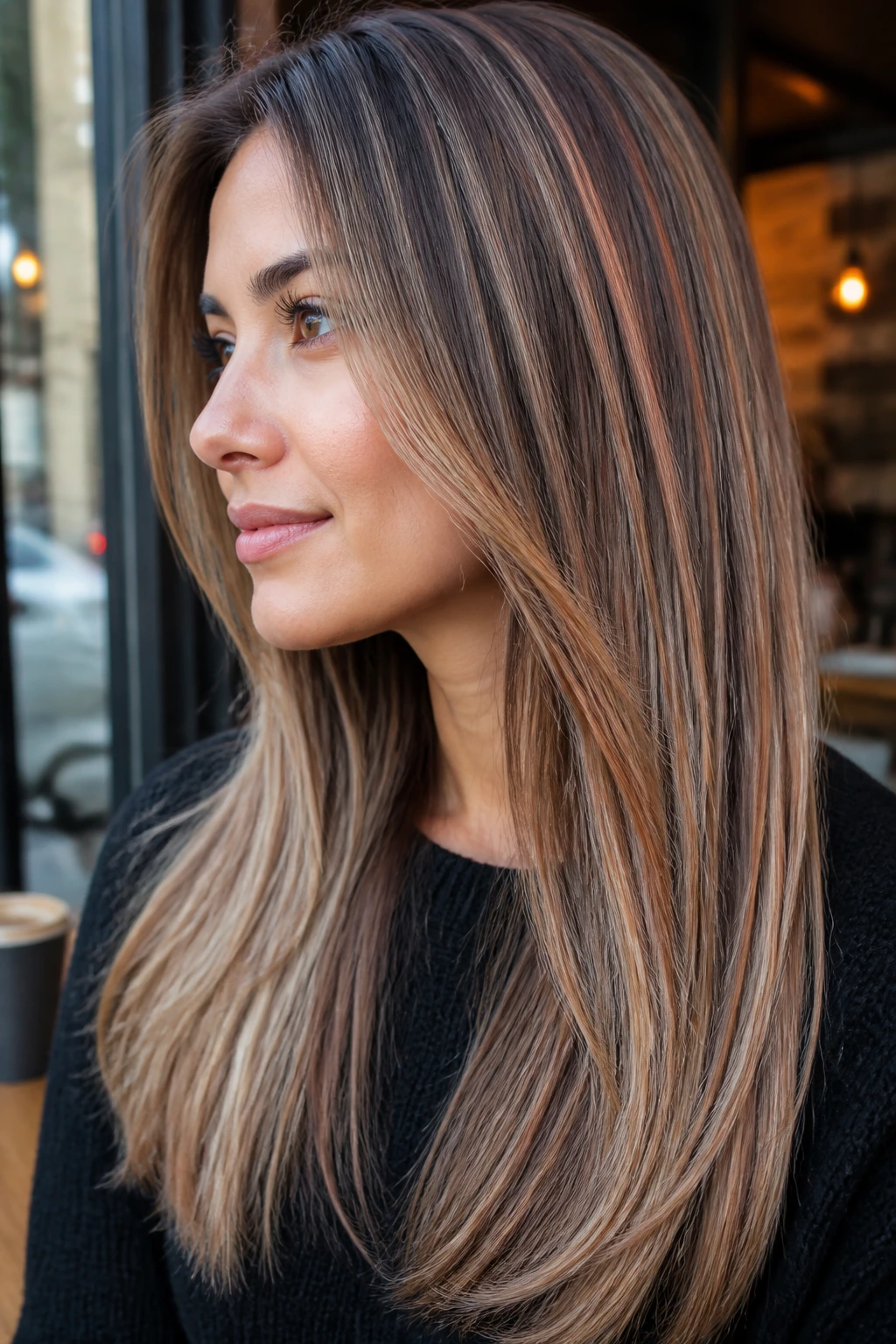
Soft-Lift Bronde: Keep the base in the brunette family and lift only a few levels with beige ribbons and a muted face frame. This is the safest route if you want brightness without a dramatic grow-out line.
High-Contrast Blonde: Push the money piece, sliced foils, or chunky streaks harder and keep the base deeper. This works best on blunt cuts, long straight lengths, and people who like a visible pattern.
Cool-Toned Pearl Route: Choose ash beige, pearl, silver, or icy pieces and keep the toner fresh. The look is cleaner than warm blonde, but it needs more upkeep and a little discipline with purple shampoo.
Warm Copper Route: Use caramel, cinnamon, auburn, honey, or soft copper ribbons on brunette bases. Straight hair carries warm tones well because the shine gives the color depth instead of making it look flat.
Grow-Out-Friendly Shadow Root: Add a deeper root and softer ends so the highlights fade gracefully over time. This is the best pick if you want to stretch salon visits without letting the color look neglected.
Fashion-Color Accent: Add dusty rose, peach gold, or midnight blue in thin panels or underlights. Straight hair keeps these colors crisp, especially when the rest of the head stays neutral.
Maintenance, Toning, and Grow-Out Timing
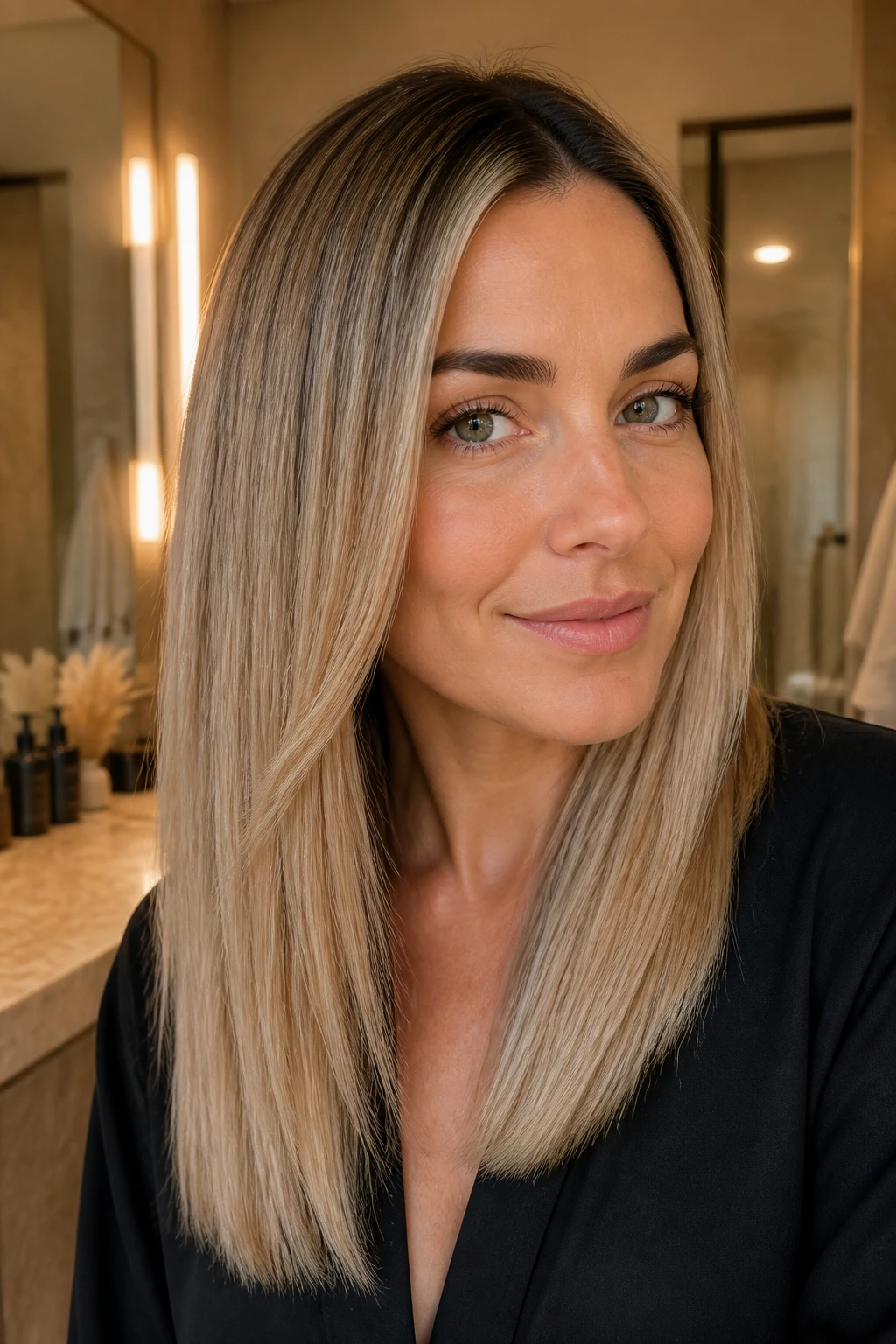
Straight hair often needs toner or gloss refreshes more often than people expect, especially if the highlights sit in cool blonde territory. A toner every 4 to 6 weeks keeps ash, pearl, and silver from drifting yellow. Warm brunettes and caramel ribbons can go a little longer, usually 6 to 8 weeks, before they need a gloss to revive the shine.
Root touch-ups depend on the style. Babylights and root-shadow looks can usually stretch to 8 to 12 weeks before they feel grown out. Chunky streaks, money pieces, and high-contrast blonde often show regrowth sooner, closer to 6 to 8 weeks. That’s not a flaw. It’s the cost of visible contrast.
For at-home care, use purple shampoo once a week on blonde or cool pieces, not every wash. Overdoing it can leave the hair chalky. Clarifying shampoo every 2 to 4 weeks helps remove product buildup, which is a sneaky shine-killer on straight hair. And if the ends start looking rough, a trim matters more than people want to admit. Flat hair makes split ends obvious.
Frequently Asked Questions
What highlights look best on straight hair?
The cleanest choices are babylights, money pieces, sliced foils, and soft ribbons. Straight hair shows spacing more clearly, so finer placement usually looks more polished than a broad, chunky pattern.
Are balayage or foils better for straight hair?
Both can work, but foils give sharper contrast and more controlled lift, while balayage gives a softer melt. If your hair is very straight and you want clear dimension, foils often win because the pattern stays visible.
Will highlights make fine straight hair look thinner?
They can if the highlights are too wide or too many. The fix is to keep some depth at the root and underneath, then use micro-slices or babylights rather than opening up the whole head.
How do I stop blonde highlights from turning brassy?
Use a toner or gloss on schedule, not only when the hair looks orange. A purple shampoo once a week helps, but the real fix is choosing the right toner for your base and maintaining it before the brass gets loud.
Can straight hair pull off chunky highlights?
Yes, and straight hair is one of the few textures that can make chunky streaks look sharp instead of fuzzy. The key is a clean haircut and deliberate spacing, because bad placement shows fast on flat-lying strands.
How often should I refresh face-framing highlights?
Most people keep them looking neat with a touch-up every 6 to 8 weeks. If the front pieces are very light or very cool-toned, they may need toner sooner than the rest of the hair.
Do lowlights help straight hair?
They help a lot. Lowlights rebuild depth, make fine hair look thicker, and keep blonde from looking too flat or washed out. Straight hair often needs the dark pieces more than the light ones.
Can I do highlights on very dark straight hair?
Yes, but the lift has to be realistic. Deep brunette or black hair usually looks best with caramel, auburn, or dimensional brown first; taking it straight to pale blonde in one session is where damage and brass often start.
Clean Lines, Better Dimension
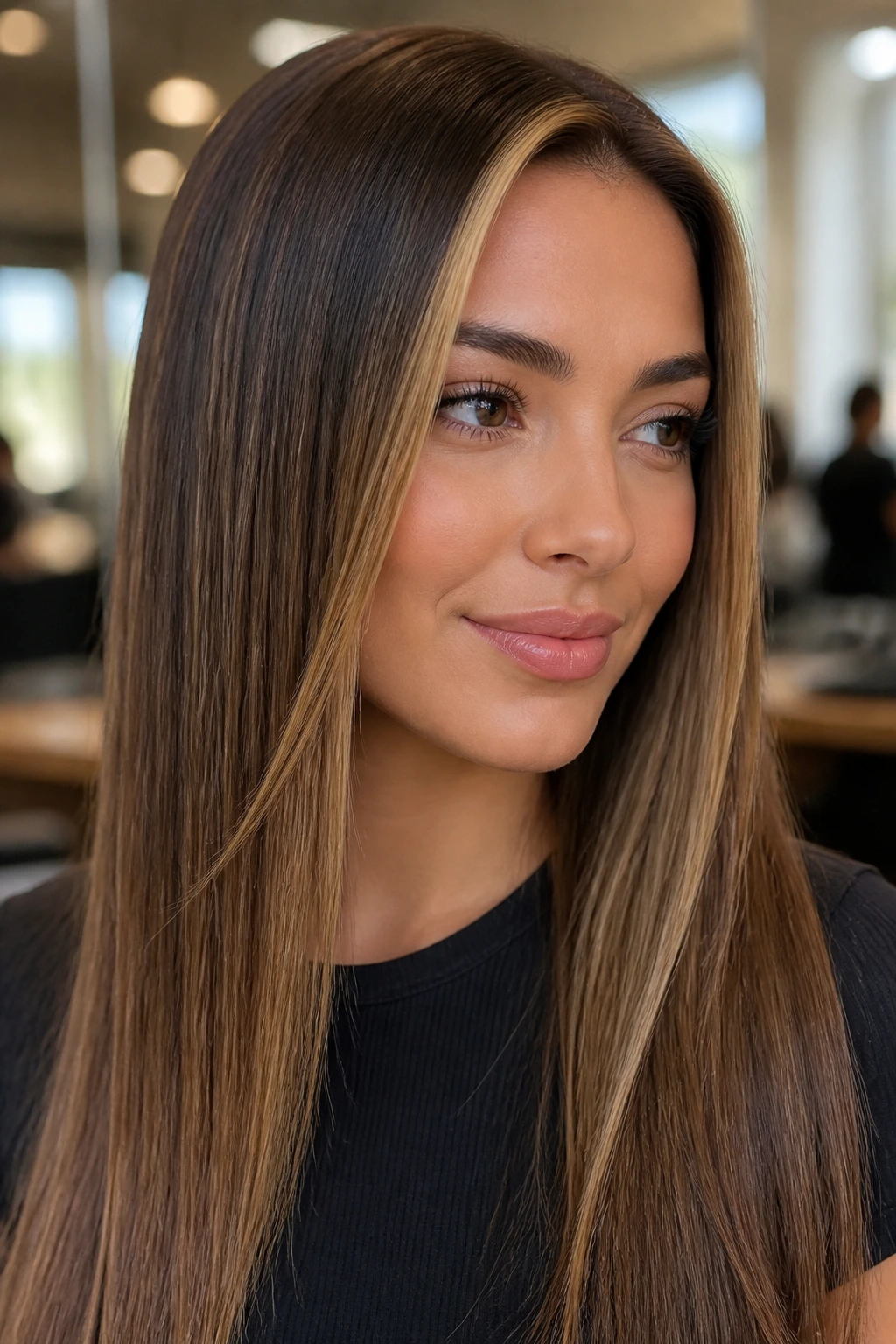
Straight hair doesn’t need more chaos. It needs placement that respects the shape it already has. That can mean a soft babylight that barely shows until the sun hits it, or a sharp money piece that frames the face like a clean line of makeup. Both have a place. Both can look excellent.
The parting, the toner, the haircut, the grow-out — all of it matters more here because there’s nowhere for sloppy color to hide. Bring a photo, but also bring a sense of how much upkeep you’ll tolerate. That’s the part people forget, and it’s usually the difference between a highlight that still looks good six weeks later and one that starts annoying you on day ten.
If you’re choosing among these highlight ideas for straight hair, start with the one that matches your maintenance habits, not just your mood that day. The color will thank you for it.
