



Cooler air changes the way hair color reads. A ribbon of honey that looked bright in July can start to feel loud against a wool coat and a dark scarf, while a chestnut melt suddenly looks richer because the softer light picks up every bend and curve in the hair. That’s why balayage for fall tends to feel more lived-in than a blunt all-over color; it has room to breathe.
The best versions are never flat. They keep a little depth at the root, a little softness through the midlengths, and enough brightness at the face or ends to keep the whole head from sinking into one muddy brown block when the weather dries everything out. That balance matters more than people think. Too much warmth turns brassy fast. Too much ash can look smoky in a bad way.
The looks below lean into that sweet spot: chestnut, caramel, auburn, toffee, beige, copper, mushroom, and the occasional moody plum. Some are subtle enough for a conservative office, some are bolder and better when you want your color to do a little talking, but all of them are built around the same trick — dimension that still looks good once the blowout relaxes and the daylight gets dull.
Why These Balayage Looks Feel Right for Fall
- Soft grow-out: Hand-painted placement blurs the root line, so the color doesn’t look harsh when your hair starts growing.
- Rich, season-friendly tones: Chestnut, caramel, copper, toffee, and beige sit in that deeper lane that looks polished against autumn clothes.
- Works with texture: Waves, curls, and even pin-straight hair all show balayage differently, which is part of the appeal.
- Face-framing control: You can keep brightness near the front and leave the back softer, so the whole head doesn’t need to be equally light.
- Less panic between appointments: A good balayage can stretch longer than a full highlight service because the blend is built into the placement.
- Easy to personalize: The same shade family can go warmer, cooler, brighter, or deeper without changing the whole idea.
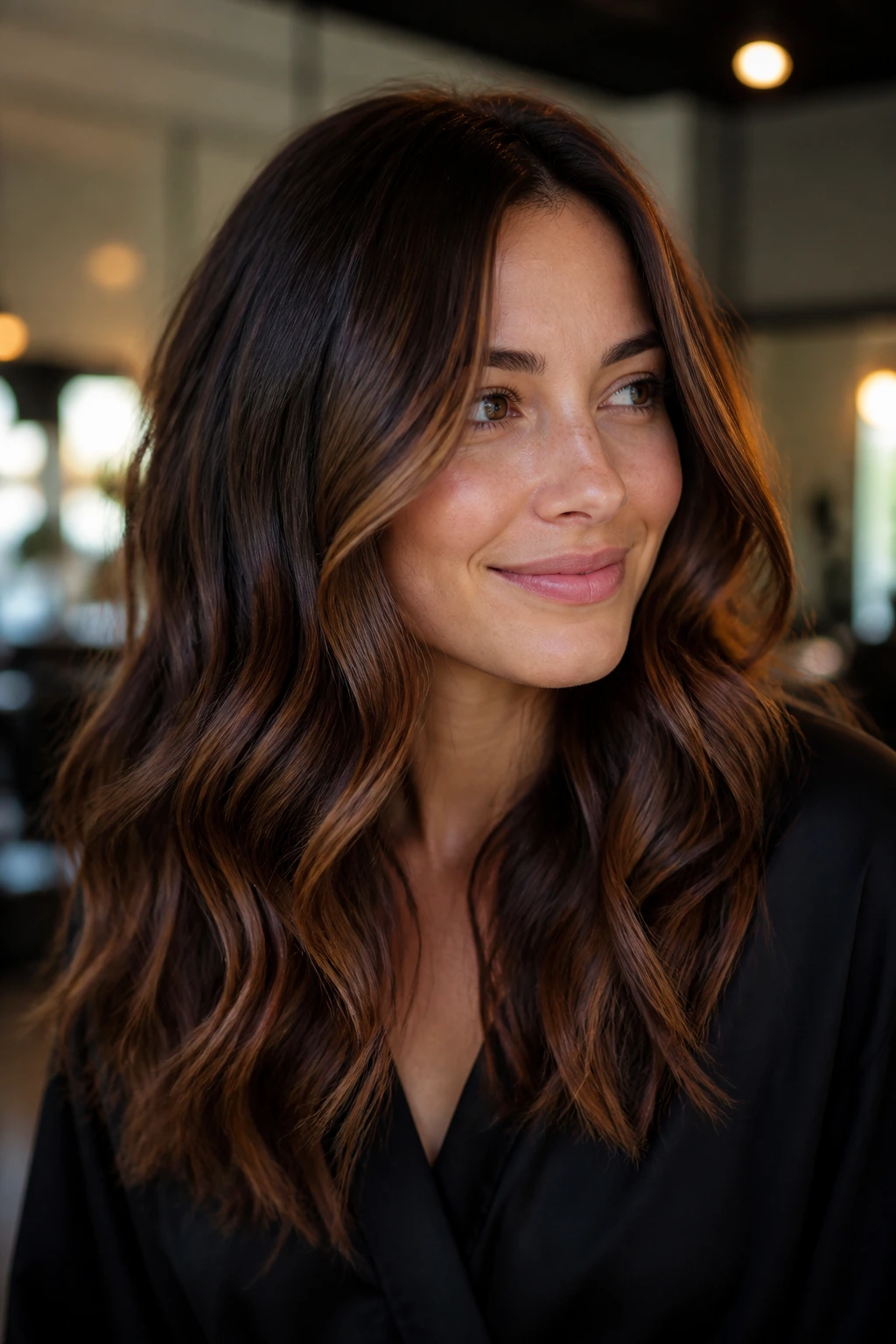
1. Chestnut Ribbon Balayage
Chestnut ribbon balayage is the one I keep coming back to when someone wants brunette hair that still moves. The base stays deep and glossy, but the lighter ribbons sit in thin, painterly strokes through the midlengths, so the color catches when the hair swings instead of sitting in chunky stripes.
Why it works: Chestnut has enough red-brown warmth to look alive in low light, but it doesn’t tip into obvious auburn unless you ask it to. Keep the lightest pieces about 2 inches below the root and concentrate them around the cheekbones and collarbone. That gives the hair shape without making the crown look frosted.
Best for: Medium to dark brunettes, especially if you wear soft bends or loose waves. Straight hair can wear it too, but the dimension shows up faster with movement.
What to ask for: A deep brown base with fine chestnut ribbons and a soft root shadow. If you want more contrast, ask for one brighter face-framing piece on each side.
2. Cinnamon Toast Brunette
Want brunette hair that feels warm without looking copper-heavy? Cinnamon toast brunette is a smart middle ground. It has that baked-spice look in the mids and ends, but the base stays anchored, which keeps the whole color from turning orange when the sunlight hits it.
The best version uses thin cinnamon glaze tones, not wide orange panels. A colorist can paint them so they sit just off the base, then soften the whole thing with a beige or neutral gloss. On shoulder-length hair, that blend looks especially good because the ends don’t have too much weight to hide the color.
This shade makes sense if your wardrobe leans cream, camel, black, navy, or olive. It gives those colors something warm to bounce against. And yes, it grows out gracefully. That matters more than people admit.
3. Honey-Mocha Balayage
Honey-mocha balayage has a soft, expensive look when it’s done well. The mocha base keeps the color grounded, while the honey pieces bring in enough brightness to keep it from reading heavy or flat. It’s a good choice if you want warmth but don’t want your hair to cross into copper territory.
The placement is the trick. You want the honey concentrated through the outer layers and around the front, with a few lighter threads woven through the midlengths so the color doesn’t look pasted on. On layered hair, the effect is especially pretty because each bend reveals a different shade.
This is one of those colors that looks better after the first wash than it does on day one. The toner settles a bit, the shine calms down, and the whole head starts looking less salon-bright and more naturally blended.
4. Auburn Ember Ends
Auburn ember ends are for the person who likes a little drama at the bottom without committing to a full redhead moment. The root and upper mids stay brown or deep brunette, then the color shifts into a warm ember tone through the lower half of the hair.
That transition is what keeps it wearable. You do not want a hard line where brown stops and red starts. You want a slow burn — a little copper, a little rust, a little dark cherry in the ends, depending on the base.
It works best on long layers or a wavy lob, because the lower-lighted pieces have room to show. If the hair is all one blunt length, the ends can look heavier. With movement, though, this color is excellent. It catches the eye without feeling costume-y.
5. Caramel Melt Balayage
Caramel melt balayage is probably the safest crowd-pleaser in the whole lineup, and I mean that in the useful sense, not the bland one. The base can live in dark chocolate, medium brown, or soft espresso, while the caramel pieces melt through the mids and ends like warm syrup.
The key is softness. If the caramel sits too high or too bright, the look starts to read stripey. Keep the lightness feathered, especially near the root, and ask for a shadow at the scalp. That gives the color the easy grow-out people want from balayage in the first place.
This look is especially good if you wear curls or a round brush blowout. Caramel picks up light in bends and curves, so the hair looks fuller without needing extra volume tricks.
6. Mushroom Brown Balayage
Mushroom brown is the cooler cousin in the group, and it earns its keep because not every fall look needs warmth. The tone sits between taupe, soft ash, and earthy brown, which makes it useful if orange or gold tends to fight your skin tone.
The best mushroom brown balayage keeps the contrast low. Think smoky beige ribbons, a cool root shadow, and a gloss that leans neutral rather than golden. On naturally dark hair, that barely-there lift can look expensive because the dimension is subtle, not shouty.
This is one of my favorites for straight or slightly wavy hair. The color doesn’t rely on curls to show up; it relies on polish. Keep the ends trimmed, because cool-toned balayage looks rough fast if the hair is frayed.
7. Soft Copper Veil
Soft copper veil is what I suggest when someone says they want copper but flinches at the idea of going full orange. The look keeps the base brunette or dark blonde, then floats a translucent copper layer over the mids and ends so the warmth feels airy, not dense.
You can think of it like stained glass instead of paint. The brown underneath still matters. The copper just changes the light passing through it.
It’s especially good on medium-length cuts with movement at the ends. If the hair is very long and heavy, the copper can disappear. If it’s layered, the color shows up in flashes, which is exactly the point. Ask for a glaze finish if your stylist offers one; it helps the tone look smoother and less brassy.
8. Bronde with a Shadow Root
Bronde with a shadow root is the cleanest answer for anyone who can’t decide between brunette and blonde. You keep depth at the root, soften the transition, and let the lighter pieces live through the mids and ends where they can brighten the face without making the scalp look overworked.
The shadow root matters more than the blonde here. A strong root melt gives the style its grown-in feel and keeps the lighter pieces from looking disconnected. A beige or golden blonde usually works better than a very icy tone, unless your skin tone is already cool and bright.
This look suits almost every haircut, but it really shines on lob-length layers. There’s enough length for the transition to show, but not so much that the lighter ends drag the whole thing down.
9. Maple Syrup Blonde
Maple syrup blonde is warmer and richer than a beachy summer blonde, and that’s exactly why it belongs in cooler months. The tone sits in the amber-gold range, with enough depth to keep it from looking washed out against winter skin.
You want the blonde to feel glossy, not pale. That usually means leaving some beige or honey in the mids and using only a few brighter pieces around the face. Too much pale blonde can look sharp next to heavy knitwear and darker makeup.
This shade works well on people who already go lighter but want the color to feel more seasonal. It is also one of the easiest blondes to wear if your hair tends to pick up brass quickly, because the warm tone is part of the plan instead of a mistake.
10. Smoky Beige Blonde
Smoky beige blonde is the calmest blonde on the list, and I like that about it. It has just enough smoke to keep the tone from looking yellow, but not so much ash that it turns dull.
The nicest versions use a soft root stretch and beige pieces that sit in the mids rather than blasting the ends. That keeps the hair dimensional from top to bottom. On blunt cuts, this tone can look sleek and expensive; on textured hair, it looks softer and a little more undone.
If your hair pulls orange when lightened, beige blonde is often easier to maintain than icy blonde. The toner choices are more forgiving, and a small shift in warmth won’t ruin the whole look.
11. Toffee Swirl Balayage
Toffee swirl balayage gives you that glossy, dessert-colored depth people often want when they say they want “rich” hair. The color should move from a deep brown base into warm toffee ribbons that look swirled through the mids, not sliced in.
A good toffee balayage lives on shine. If the hair is dry and rough, the color loses half its charm. A smoothing blowout or a soft wave helps the tones show their different depths, especially under indoor light.
This shade is a strong match for medium brunettes who want more warmth without going gold. It also works beautifully on thick hair, because the swirls break up density and stop the cut from reading as one big block.
12. Espresso and Almond Ribbons
Espresso and almond ribbons are for someone who likes contrast but hates obvious contrast. The espresso base stays almost black in some lights, while the almond pieces thread through the front and top layers just enough to soften the edge.
This is a chic option for straight hair because the ribbons are visible even without a wave. The trick is placement. Keep the lightest bits near the part line, temples, and face frame, then let the rest stay deep. If you spread the almond pieces too evenly, the whole point disappears.
It’s a good look for shorter appointment gaps too. Since the base is so dark, grow-out looks intentional for longer. That makes it one of the more realistic choices on this list for people who do not want to live in the salon chair.
13. Warm Pecan Face Frame
Warm pecan face framing does one thing extremely well: it brightens the front of the hair without forcing the rest of the head to go lighter than it needs to. The pecan tone sits between caramel and beige, which keeps it warm enough for fall but soft enough to stay believable.
This is the look I’d pick for someone testing balayage for the first time. You get a visible change around the face, some dimension through the top layers, and a low-pressure grow-out. If you love it, you can always add more lightness later.
It plays well with curtain bangs, long layers, or a deep side part. The face pieces should be blended into the haircut, not left as two obvious streaks. That’s the difference between soft dimension and old-school highlight stripes.
14. Dusty Rose Copper Balayage
Dusty rose copper sits in that lovely in-between zone where copper gets a little muted and a little romantic. The result is not pink hair. It’s more like a faded rose-gold glaze over a brunette or dark blonde base.
This version works best when the colorist keeps the rose note low and the copper note present enough to stop it from looking flat. On wavy hair, the mix can look almost velvety. On straight hair, the rose tone is more noticeable, especially near the front.
It is not the most conservative pick in the lineup, but it is far more wearable than a loud fashion color. If you want something different without turning the whole head neon, this is a solid lane.
15. Pumpkin Spice Brunette
Pumpkin spice brunette gets a bad rap because of the name, not the color. Done well, it’s a brunette base with soft copper, gold, and cinnamon threads that make the hair look warm and dimensional instead of orange.
The best way to wear it is with restraint. Keep the brightest pieces concentrated around the face and upper layers, then let the lower sections stay deeper and richer. That keeps the look from turning muddy or too bright all over.
This shade is especially good if your skin leans warm or neutral. It plays nicely with blush, bronze makeup, and deeper lip colors. And yes, it looks especially good when the hair is worn in loose bends that let the different tones stack on top of each other.
16. Autumn Gold Balayage
Autumn gold balayage is brighter than it sounds, but still grounded enough to feel seasonal rather than summery. It’s the color for someone who wants gold in the hair without the pale, overexposed ends that can make a blonde look one-note.
The trick is to keep the gold warm, not yellow. A little amber, a little honey, maybe a soft beige gloss at the root — that combination keeps the hair looking rich when the light gets weak. On layered hair, the gold flashes through the cut in a way that feels almost woven.
This works well on medium brunettes who don’t want to go dark again after a blonde phase. It gives the hair a softer landing, and the grow-out is much easier to live with.
17. Cedarwood Blonde
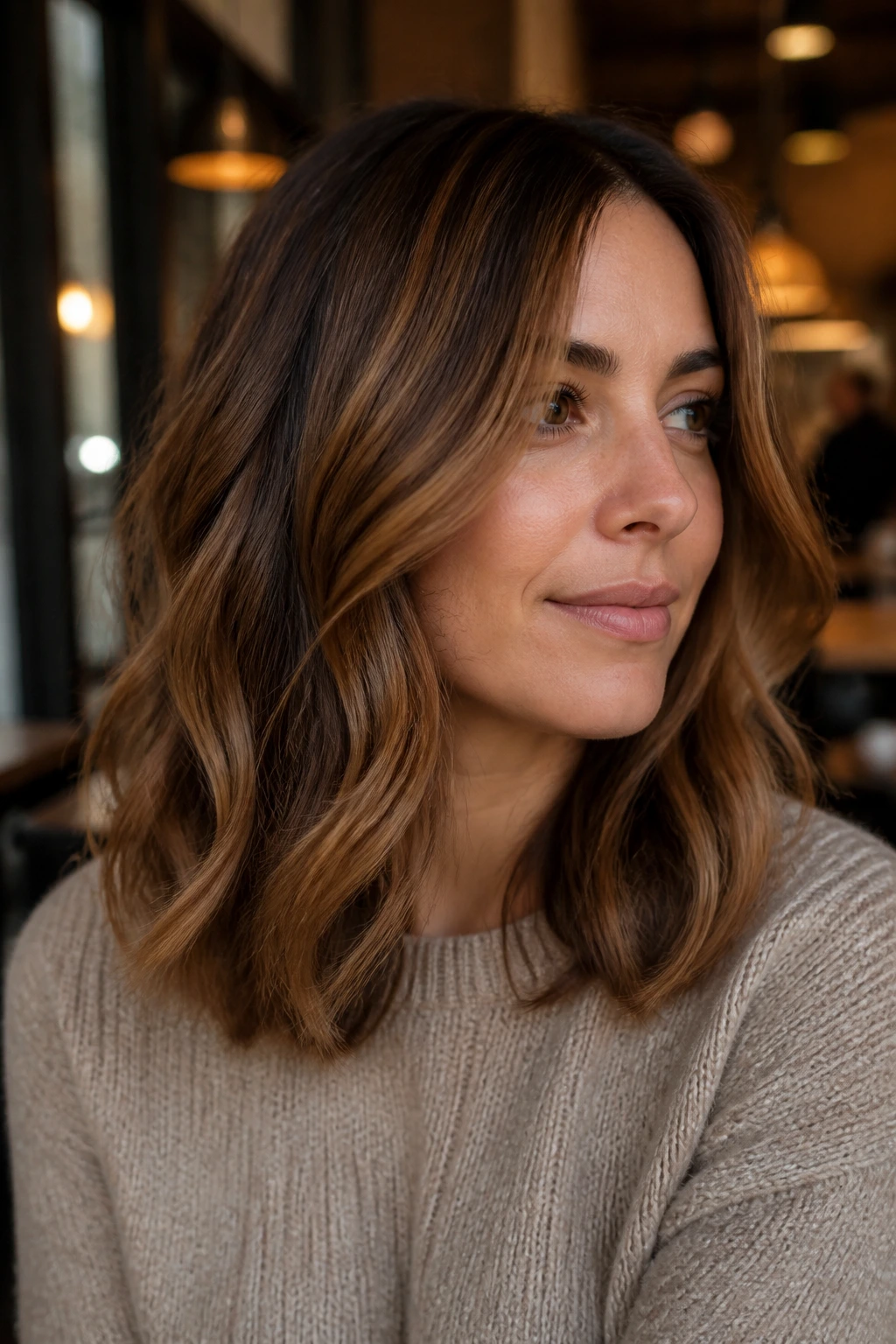
Cedarwood blonde has an earthy, almost wood-toned warmth that keeps it from reading too sweet. It’s a blonde with brown at its core, which is why it suits fall so well. The color feels grounded.
I like this shade on people who want a soft blonde that doesn’t go pale around the face. The ends can stay a little deeper and the mids can carry most of the brightness. That gives the color a quiet depth, which is more flattering than flat, one-shade blonde on most haircuts.
It’s a smart choice if you wear a lot of earthy clothes — olive, rust, cream, camel. The hair and wardrobe don’t compete. They just sit together nicely.
18. Walnut Brown Dimension
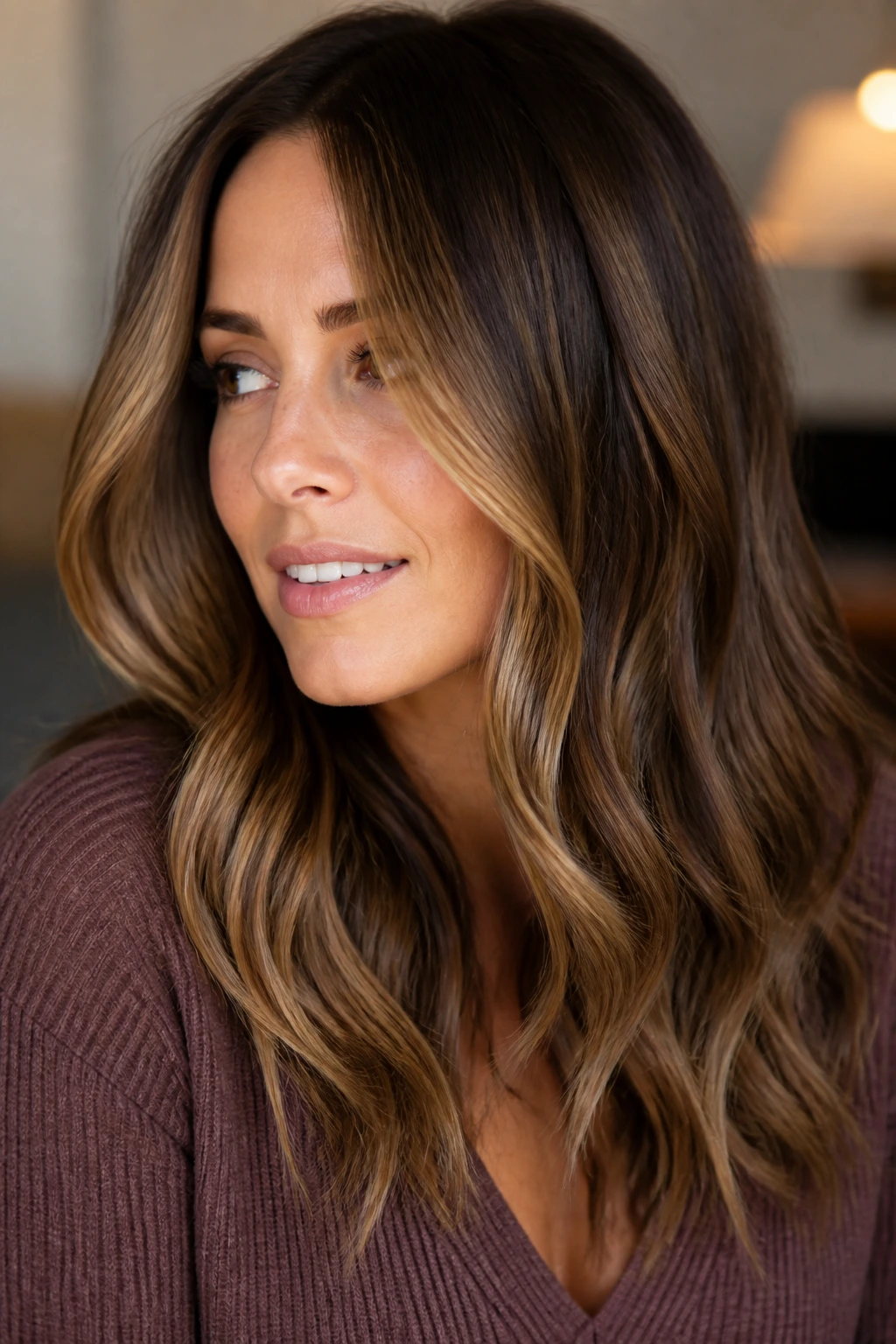
Walnut brown dimension is for someone who wants brown hair to look expensive, not flat. The base stays walnut-dark, and the dimension comes from tiny ribbons that are only a shade or two lighter, usually in a toasted beige or soft caramel family.
That limited contrast matters. Too much lift and the look loses its walnut depth. Too little and it looks like one color all the way through. A good colorist will place the brightness where the hair bends: near the front, on the outer layers, and just enough through the crown to stop the base from feeling heavy.
This is one of the easiest balayage looks to wear on medium-length cuts. It’s subtle, polished, and doesn’t ask for much styling beyond a smooth blowout or soft wave.
19. Marigold Money Piece
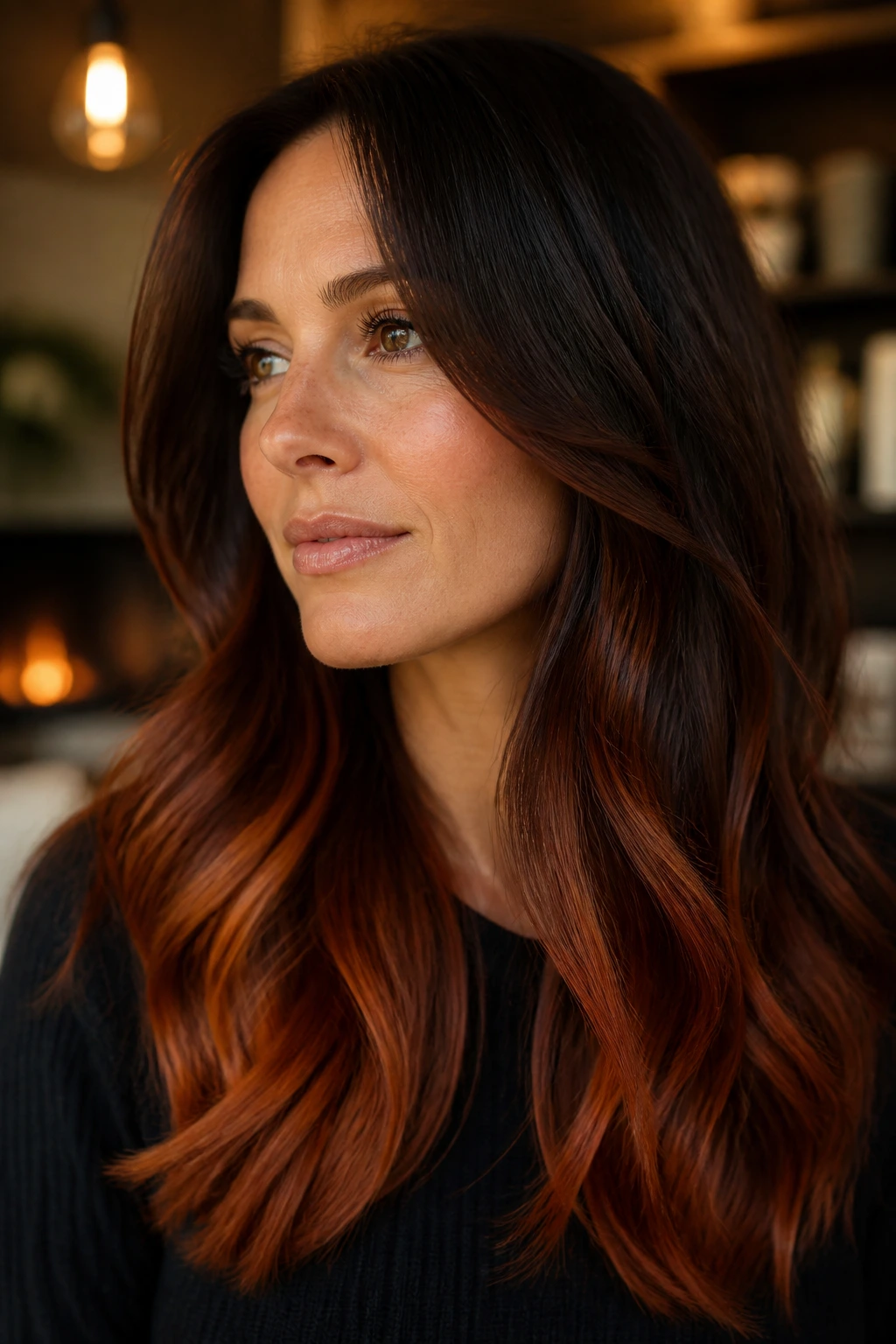
Marigold money piece is the bolder sister in the fall family, and it works best when the rest of the hair stays quiet. The marigold tones should live in the front pieces only — bright, warm, and slightly golden — while the rest of the balayage stays more subdued.
If the whole head gets marigold, the look can go costume fast. Keep the intensity at the face and soften the mids with a brunette or toffee blend. That contrast makes the front brighten the skin instead of swallowing it.
It’s a good choice for people who like makeup and want their hair to pull some weight, too. The color adds instant movement around the face, especially on layered cuts and shoulder-length styles.
20. Amber Bronze Balayage
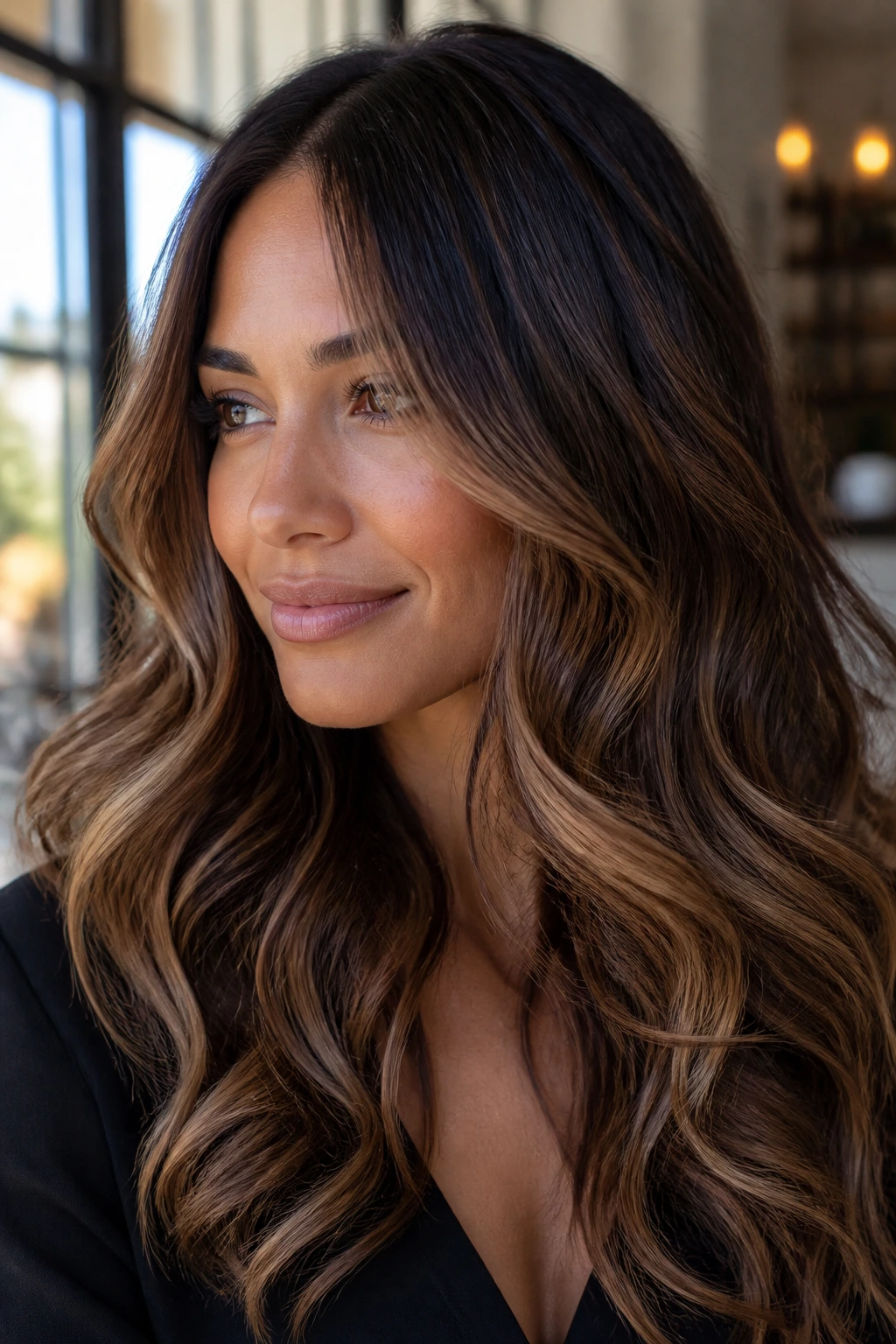
Amber bronze balayage lives in the warm metallic lane, but it still feels grounded because of the bronze base. The amber pieces add a glow through the mids and ends, while the bronze keeps the overall look from tipping orange.
This shade is gorgeous under indoor lighting. The hair picks up gold, copper, and brown all at once, which gives it that polished, reflective quality people usually want from a salon gloss. It is especially good on hair with natural wave, where each bend catches a different tone.
If your hair has been lightened before and feels a little thirsty, amber bronze can help make it look fuller. The warm reflections hide some dryness better than icy tones do. That’s not a cure, obviously, but it’s a real visual advantage.
21. Cocoa and Cashmere Balayage
Cocoa and cashmere balayage is one of those combinations that sounds soft because it is soft. The cocoa base gives depth, while the cashmere pieces keep the ends light enough to add movement without reading as high-contrast blonde.
The best versions stay tonal. You want the lighter pieces to feel creamy, not yellow, and the darker parts to feel rich, not harsh. That makes this a very wearable choice if you want dimension that doesn’t demand much styling.
On a lob or shoulder-length cut, it looks especially good with a loose bend through the ends. The contrast is gentle enough that the hair still looks smooth when blown straight, which is rare and useful.
22. Tawny Beige Lob
A tawny beige lob is one of the cleanest ways to wear fall balayage on shorter hair. The base stays near brunette or dark blonde, while the tawny beige ribbons sit around the front and through the top layers so the cut has movement without needing a lot of length.
Shorter hair can lose balayage fast if the placement is too subtle, so the face frame matters here. Keep some brightness where the eye lands first, then let the rest fall back into beige-brown dimension. That keeps the lob from feeling heavy.
This is a strong option for someone who likes a polished haircut and wants the color to support it rather than steal the show. The result is neat, expensive-looking, and easy to wear every day.
23. Mahogany Melt
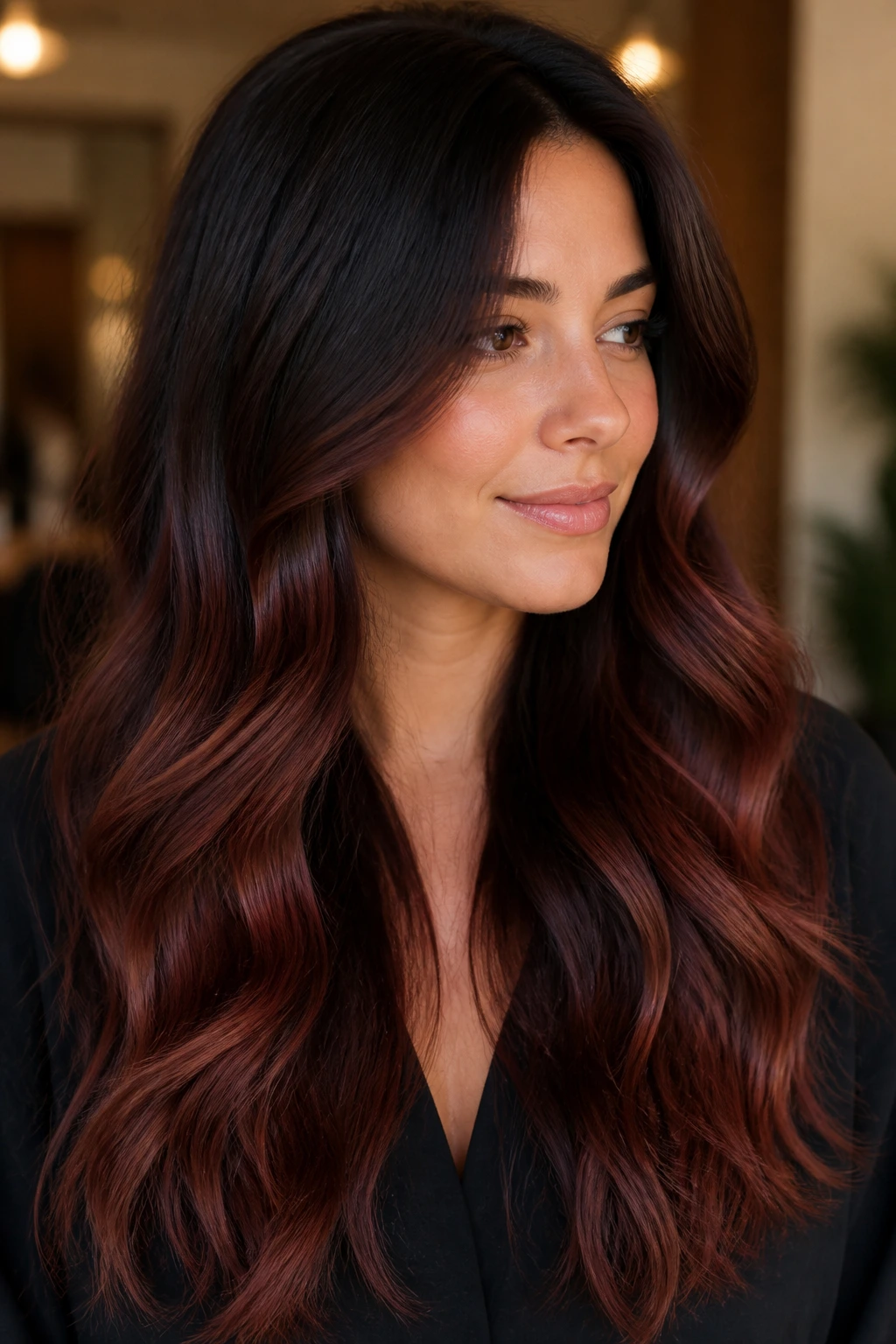
Mahogany melt is deep, glossy, and a little bit serious in the best way. The base stays rich brown with a red undertone, then the color eases into a softer mahogany through the mids and ends. The transition should be slow, not abrupt.
This look flatters thicker hair because the color depth helps the cut feel controlled instead of bulky. It also works well with waves, where the red-brown tones shift subtly depending on the angle of the hair.
If you want a darker look that still has movement, mahogany is one of the better choices. It has more personality than a plain brunette, but it does not need bright blonde pieces to feel finished.
24. Sandstone Bronde
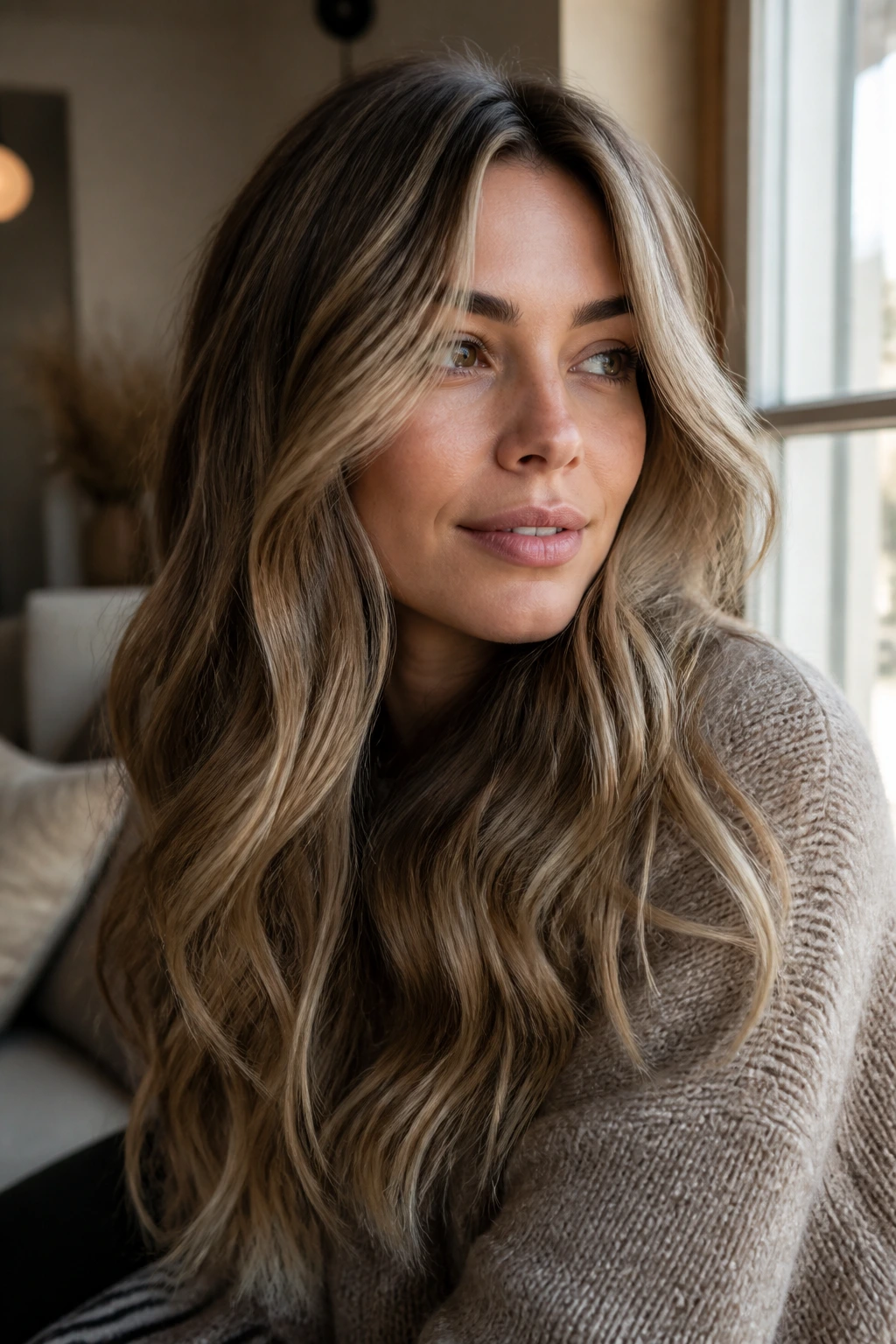
Sandstone bronde is what happens when brunette and blonde meet in a calm, neutral place. The tone has sandy beige lightness, but the root depth keeps the color from floating away. It’s especially flattering when you want brightness without obvious warmth.
The best sandstone versions keep the highlights diffused. No chunky bits. No hard line at the scalp. The whole point is to make the hair feel sun-kissed in a muted way, not streaked. On straight hair, the blend reads sleek; on curls, it reads soft and airy.
This shade is a nice bridge for someone moving from summer blonde into something deeper for cooler months. It does that job without looking like a big color correction.
25. Golden Chestnut Curls
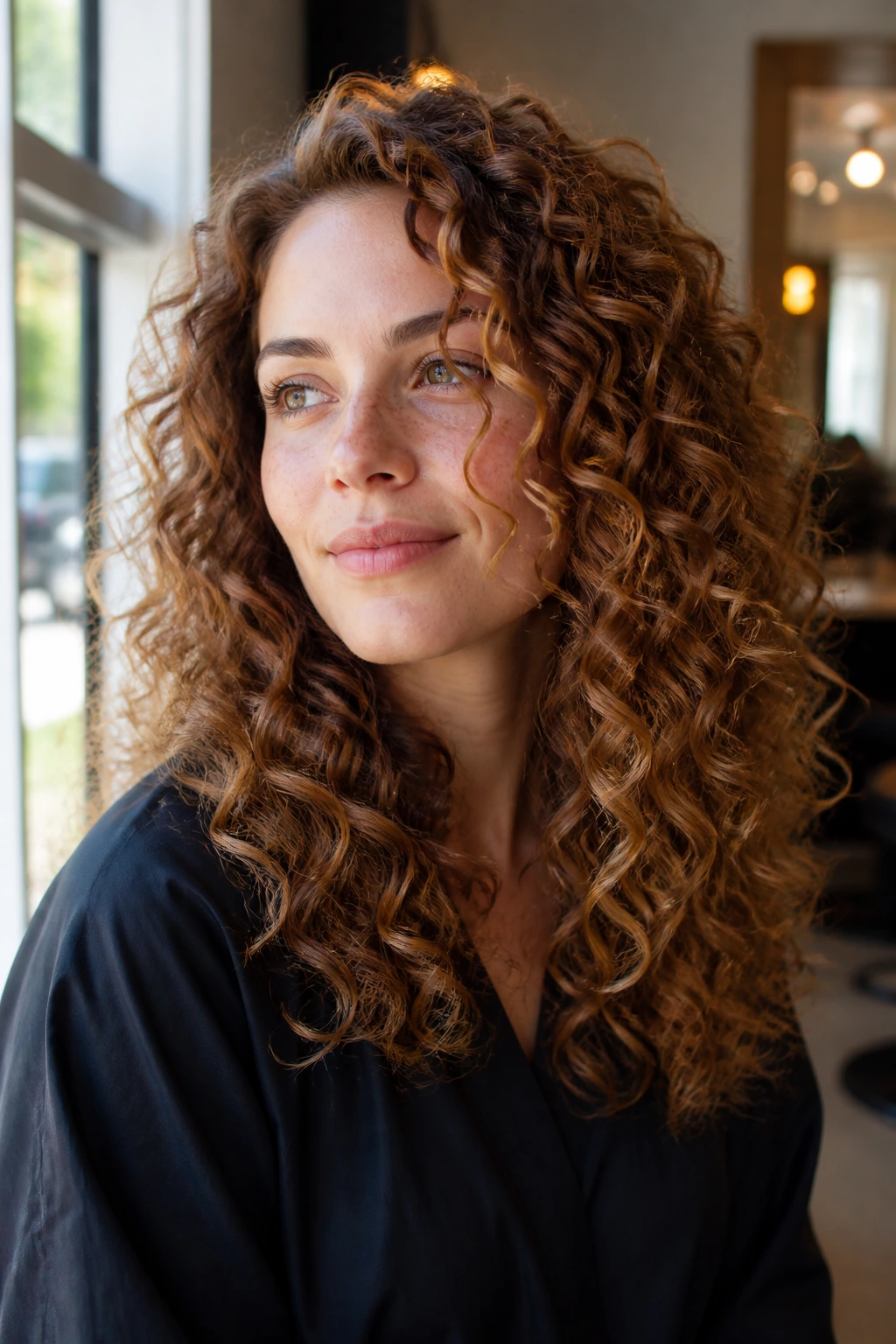
Golden chestnut curls are where balayage and texture get along without competing. The chestnut base gives the curls weight, and the golden ribbons sit on top of the curl pattern so each ringlet can catch the light on its own.
The placement matters more on curls than on straight hair. You want the lightness painted on the outer curve of the curl, not buried where nobody can see it. That keeps the color from disappearing once the hair dries.
This is a beautiful option if you like your curls to look defined even on low-effort days. The golden notes help the shape show up, and the chestnut keeps the look grounded enough for fall clothes and makeup.
26. Sienna Shadow Balayage
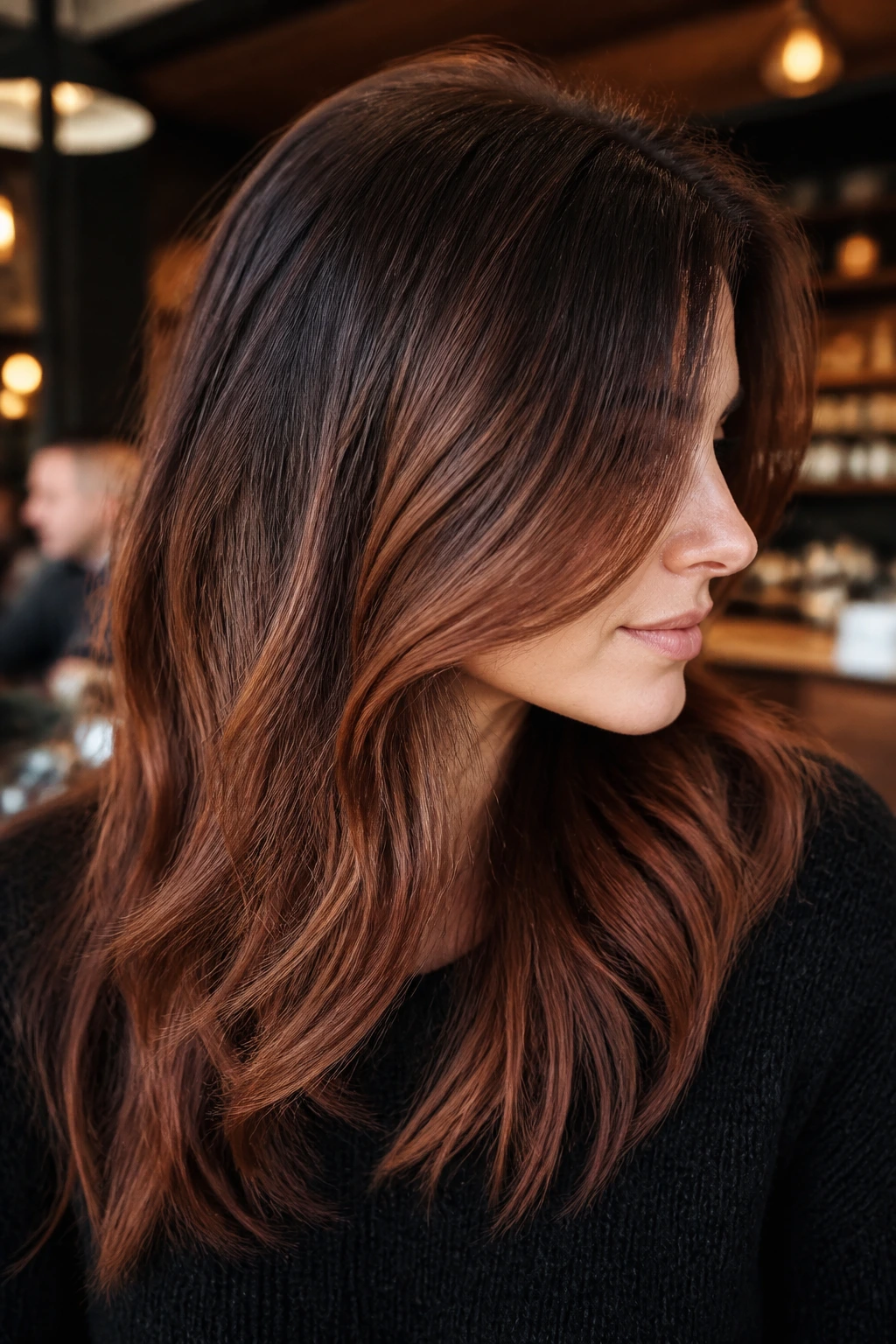
Sienna shadow balayage has a warm, earthy red-brown feel that sits somewhere between terracotta and brunette. The shadow root keeps it lived-in, while the sienna pieces give the mids and ends enough warmth to feel intentional.
I like this shade on medium to long layered cuts because the movement lets the sienna flash instead of sitting in one flat band. If the hair is very short, the color can feel more solid than dimensional.
This one works well for people who want warmth but do not want the hair to look coppery from across the room. It’s rich, not loud.
27. Butterscotch Bronde Bob
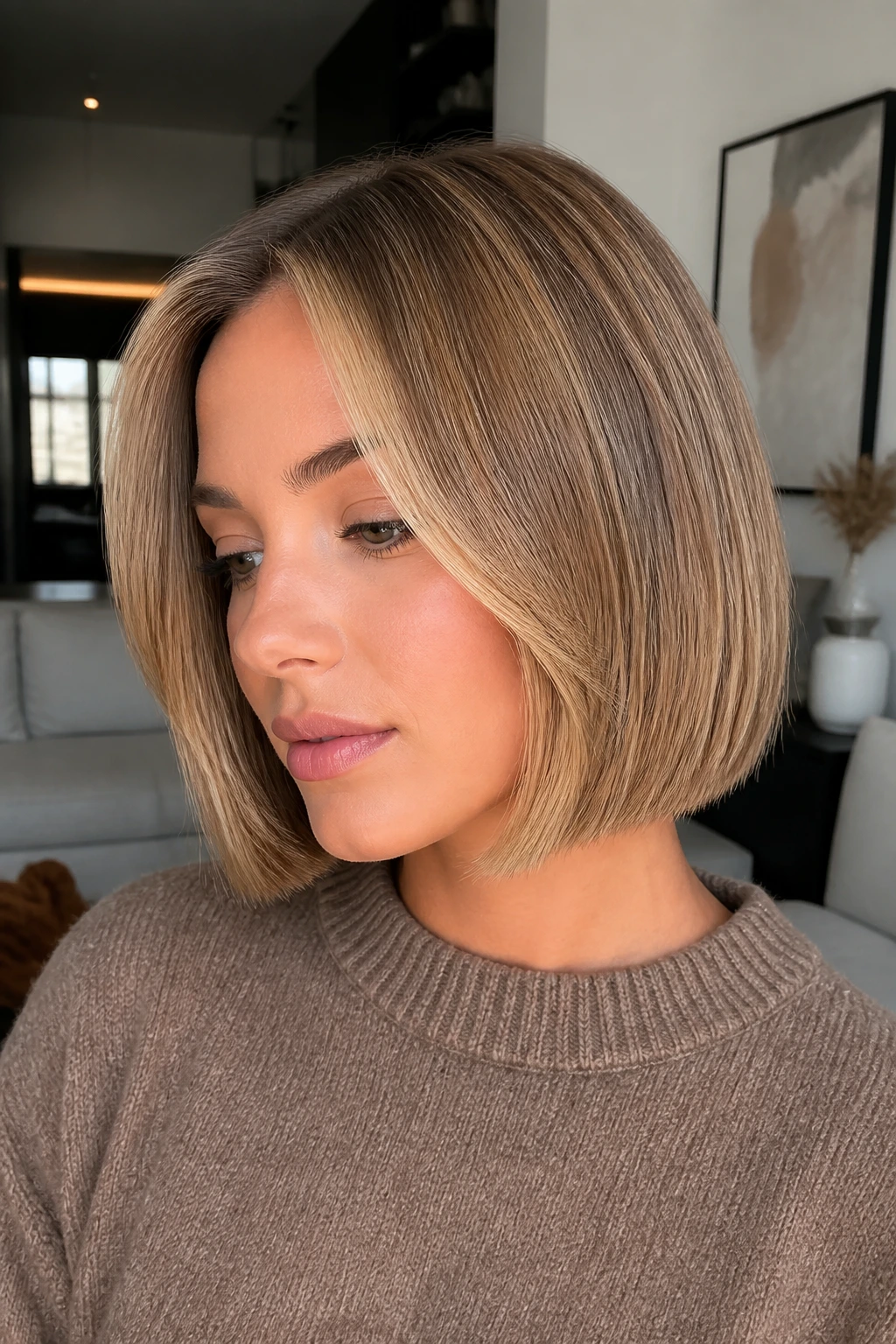
Butterscotch bronde on a bob is cheerful without being sugary. The butterscotch pieces sit just bright enough to lift the cut, but the bronde base keeps the shape from losing definition. That matters with shorter hair, where too much lightness can blur the edges.
Keep the brightest pieces near the front and crown, then let the underside stay a bit deeper. That gives the bob movement when it flips or tucks behind the ear. A blunt bob can take this especially well because the contrast makes the line feel deliberate.
If you want a shorter style that still feels seasonal, this is a very practical pick. It’s polished, flattering, and easy to refresh with a gloss.
28. Smoky Auburn Waves
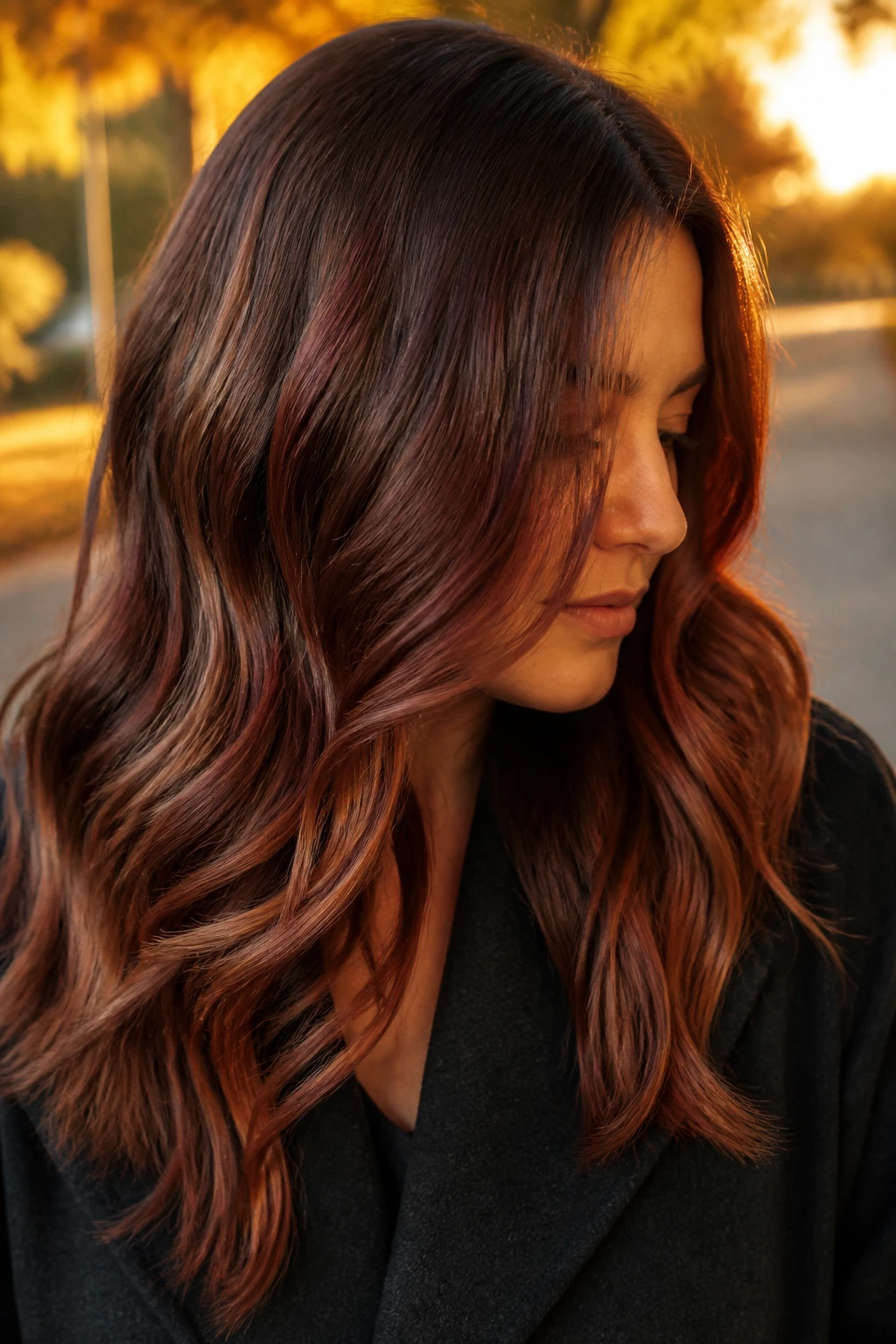
Smoky auburn waves are what I’d call the velvet version of red-brown hair. The color has auburn warmth, but it’s softened with a smoky brown base so it doesn’t become bright or loud. That haze is what makes it work so well in cooler light.
Waves are the right styling partner here because they break the color into layers. The auburn peeks through the bends, the brown gives the hair depth, and the whole thing looks less like a single dye job and more like a rich fabric.
This is a good pick if you want red tones without the upkeep of vivid red. The smoke helps the tone fade more gracefully, which is one of those small practical things that ends up mattering a lot.
29. Hazelnut Halo Highlights
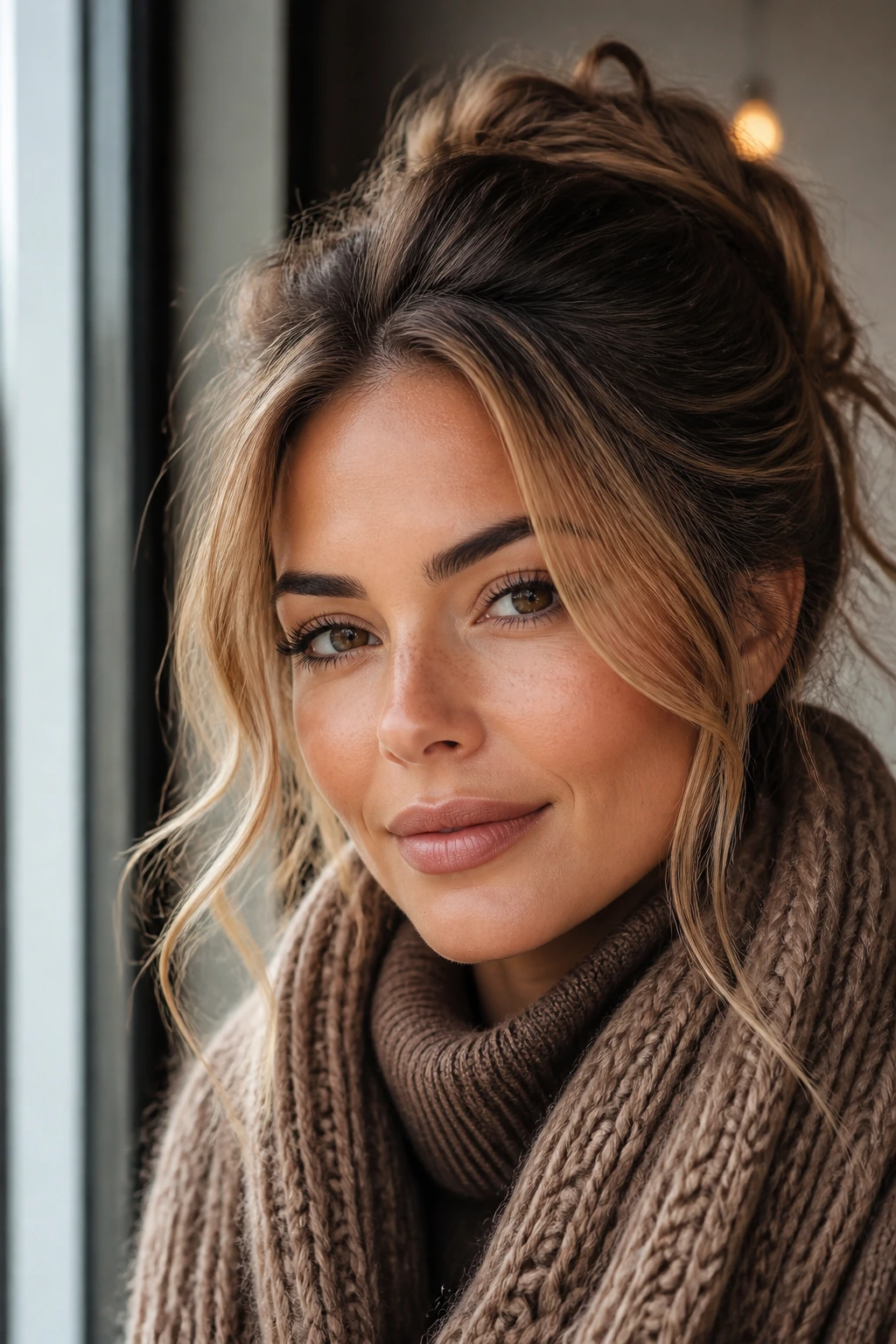
Hazelnut halo highlights focus brightness where the eye sees it first: the top layer and the perimeter of the face. The rest stays hazelnut brown, soft and dimensional, so the highlight placement looks intentional instead of scattered.
The halo idea works especially well if you wear your hair up often. Even in a bun or clip, the bright pieces around the hairline still show. That makes the color feel useful, not just pretty when the hair is down.
Ask for a soft halo rather than a full frame if you want something gentle. It gives you lift without the upkeep of heavier front highlights, and it’s a clean match for fall’s deeper wardrobe colors.
30. Copper Maple Balayage
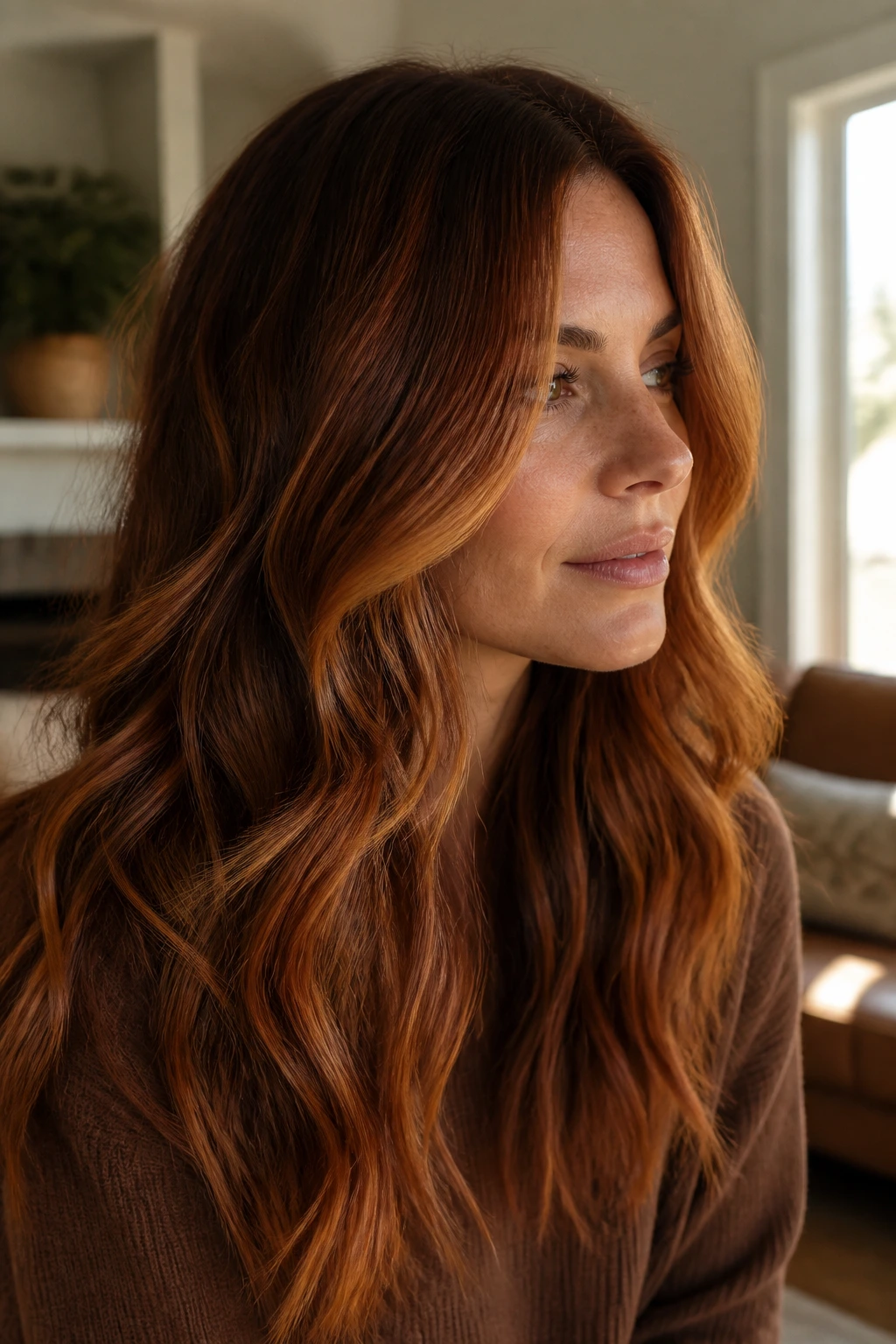
Copper maple balayage leans warm, but not in a flat red way. Copper brings the spark, maple brings the brown-gold depth, and the two together make a shade that looks especially good in dull daylight.
The best version uses copper as an accent, not the whole story. A maple base with copper threaded through the mids and ends feels richer than a fully copper head, and it grows out more naturally too. If your skin has warmth, this color can be very flattering around the face.
It’s a strong choice for anyone who wants the hair to do some of the styling work. Even a simple blow-dry looks more finished when copper and maple keep moving together.
31. Biscotti Beige Dimension
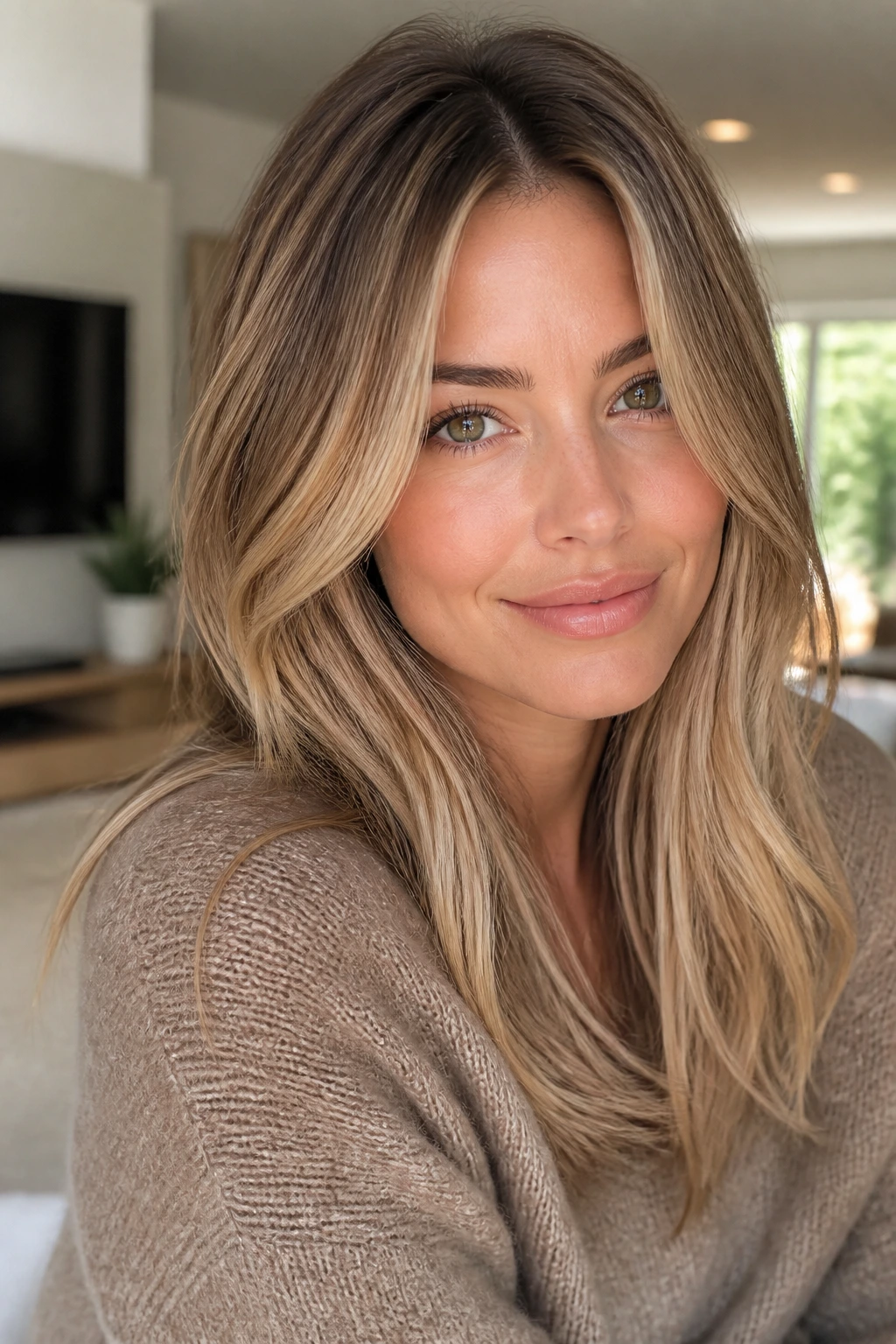
Biscotti beige dimension is soft, creamy, and a little bit toasty — the kind of blonde-bronde that doesn’t scream for attention but still looks finished from across the room. The base stays neutral, the beige ribbons sit in fine layers, and the whole thing feels polished.
This is one of the better shades for fine hair because the lighter pieces can create the illusion of more texture. Keep them delicate and layered rather than wide and blocky. A too-heavy beige highlight can flatten fine strands fast.
If you wear a lot of minimalist clothes, this color fits that wardrobe neatly. It’s quiet, but not dull. There’s a difference.
32. Plum Brown Balayage
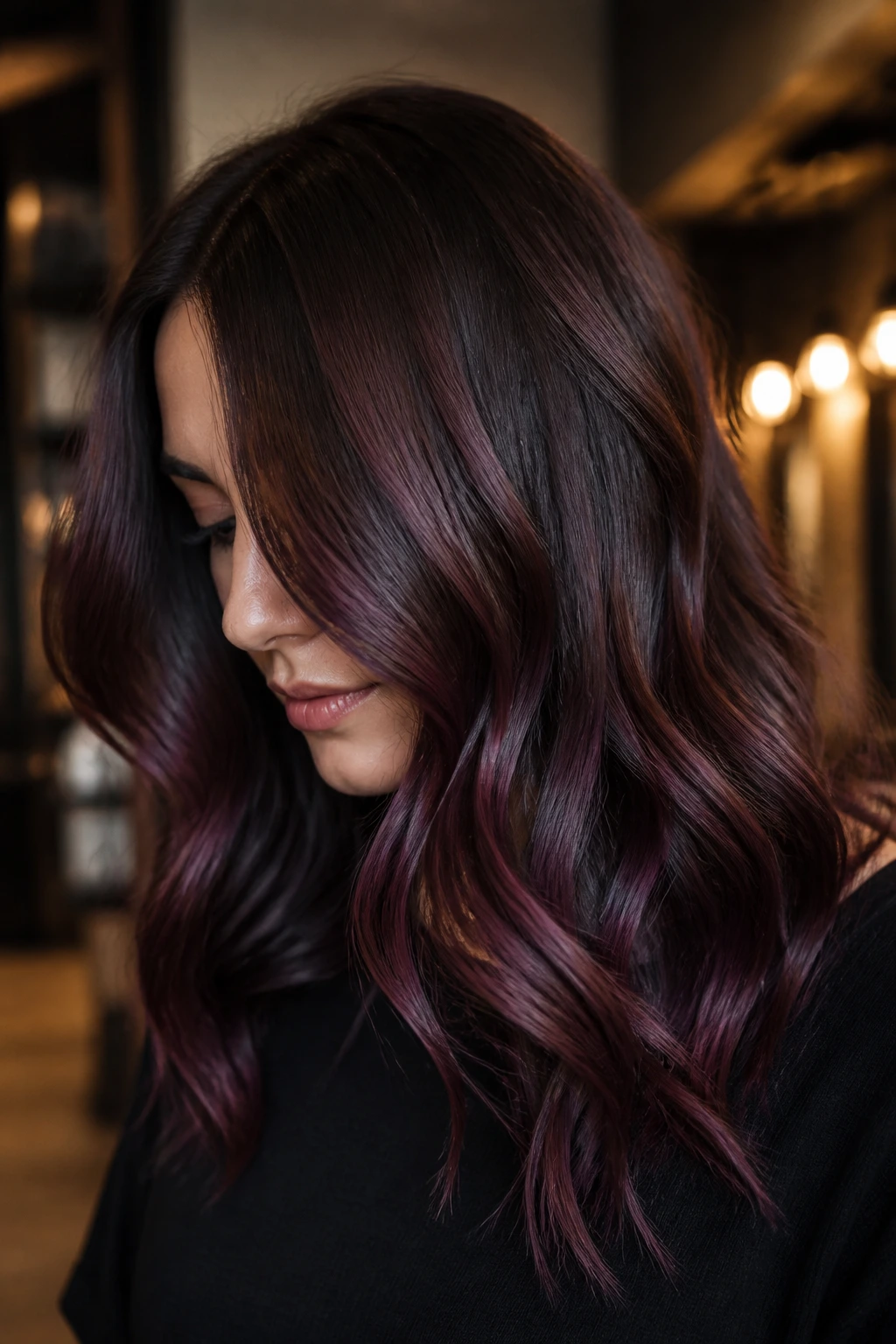
Plum brown balayage is the moody one in the bunch. It keeps a brunette base, then works a deep plum sheen through the mids and ends so the hair catches violet-brown notes instead of plain warmth.
This is not a bright purple color. It’s darker and more wearable than that, which is why it can still read as fall color instead of a fashion wig. On layered hair, the plum shifts in the light and gives the cut some depth that plain brown can’t.
I like this one for people who already wear dark makeup, black clothes, or silver jewelry. The tone makes all of that feel more connected. And if you want a subtle edge without going neon, plum brown does the job.
33. Honey-Red Ribbon Lights
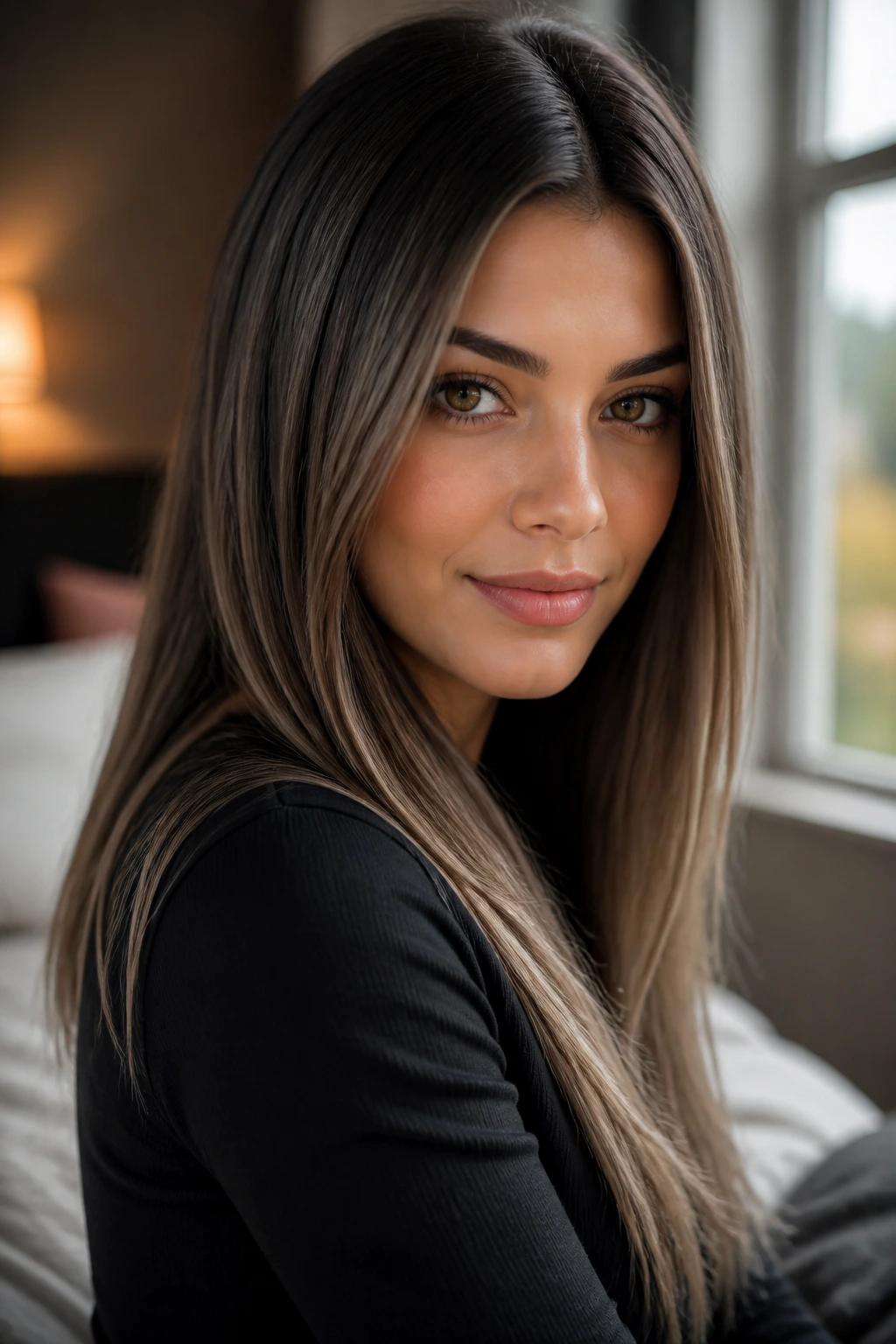
Honey-red ribbon lights sit between warmth and brightness. The honey keeps the pieces soft, the red keeps them from getting too yellow, and the ribbon placement makes the whole look feel airy rather than dense.
This is a good option if you want something lively but not loud. Keep the ribbons fine and broken up, especially near the face, so the color moves with the hair rather than sitting in one continuous block. A loose wave helps the red and honey notes separate just enough to be interesting.
It’s a surprisingly flattering color on medium brunettes who want a lift without going all the way to copper. There’s warmth, but it never feels sticky or overdone.
34. Mocha Melt with Cool Ends
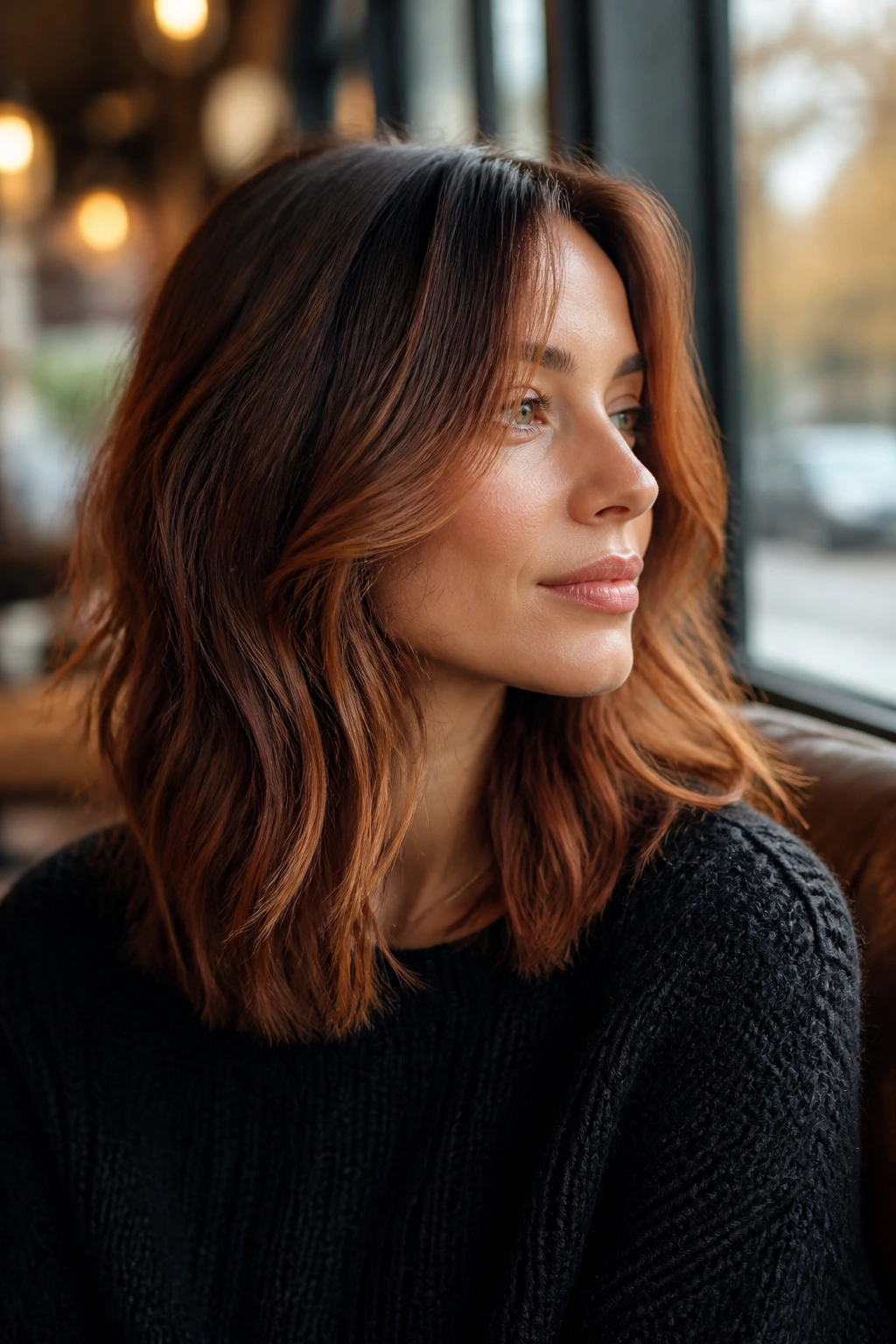
Mocha melt with cool ends is a nice answer for people who like richness at the top but don’t want the ends to get too warm. The mocha base keeps the roots and mids deep, while the cool beige ends lighten the whole style without drifting orange.
That contrast is subtle but important. Warm ends can make some brunettes look brassy fast. Cool ends keep the look cleaner and a little more modern, especially if your skin tone prefers neutral or cool shades.
This is a smart option if you want to keep your dark base but still feel lighter around the face and shoulders. It also works well on straighter hair, where the cool ends can show without needing a lot of curl.
35. Mulled Wine Balayage
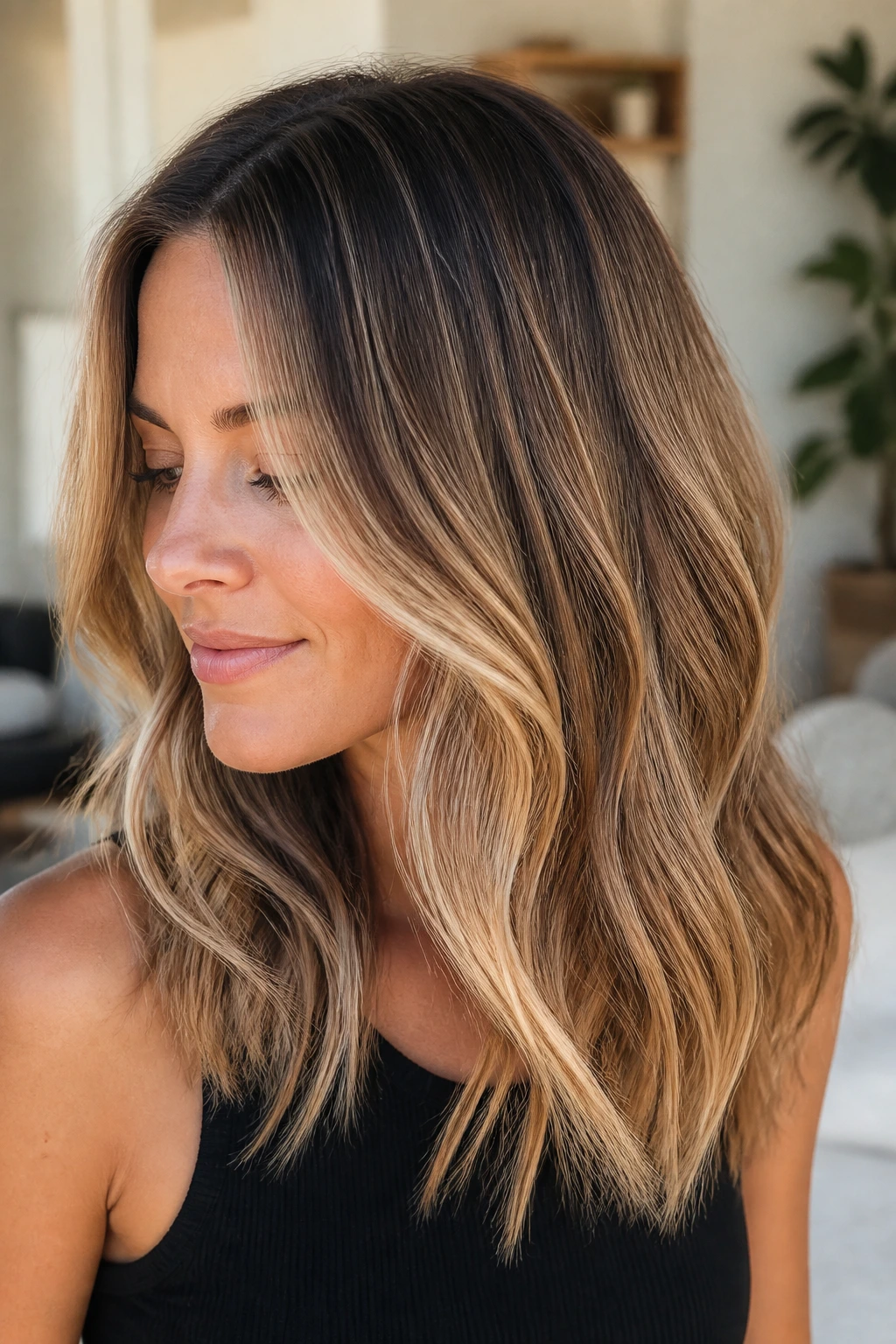
Mulled wine balayage is the boldest shade here, and it earns that spot because it still behaves like balayage instead of one solid red blanket. The base stays brown or deep auburn, while the wine tones sit in ribbons and glazes through the mids and ends.
The best version feels deep and glossy, almost like red velvet in shade. Too much brightness and it gets loud. Too much brown and the wine disappears. The blend is what makes it wearable.
This is a good pick if you want your hair to feel special without leaning into a fashion color that needs constant upkeep. It suits cooler weather, dark lipstick, and haircuts with enough movement to show the tonal shift.
Why Balayage Stays Soft When the Weather Turns Crisp
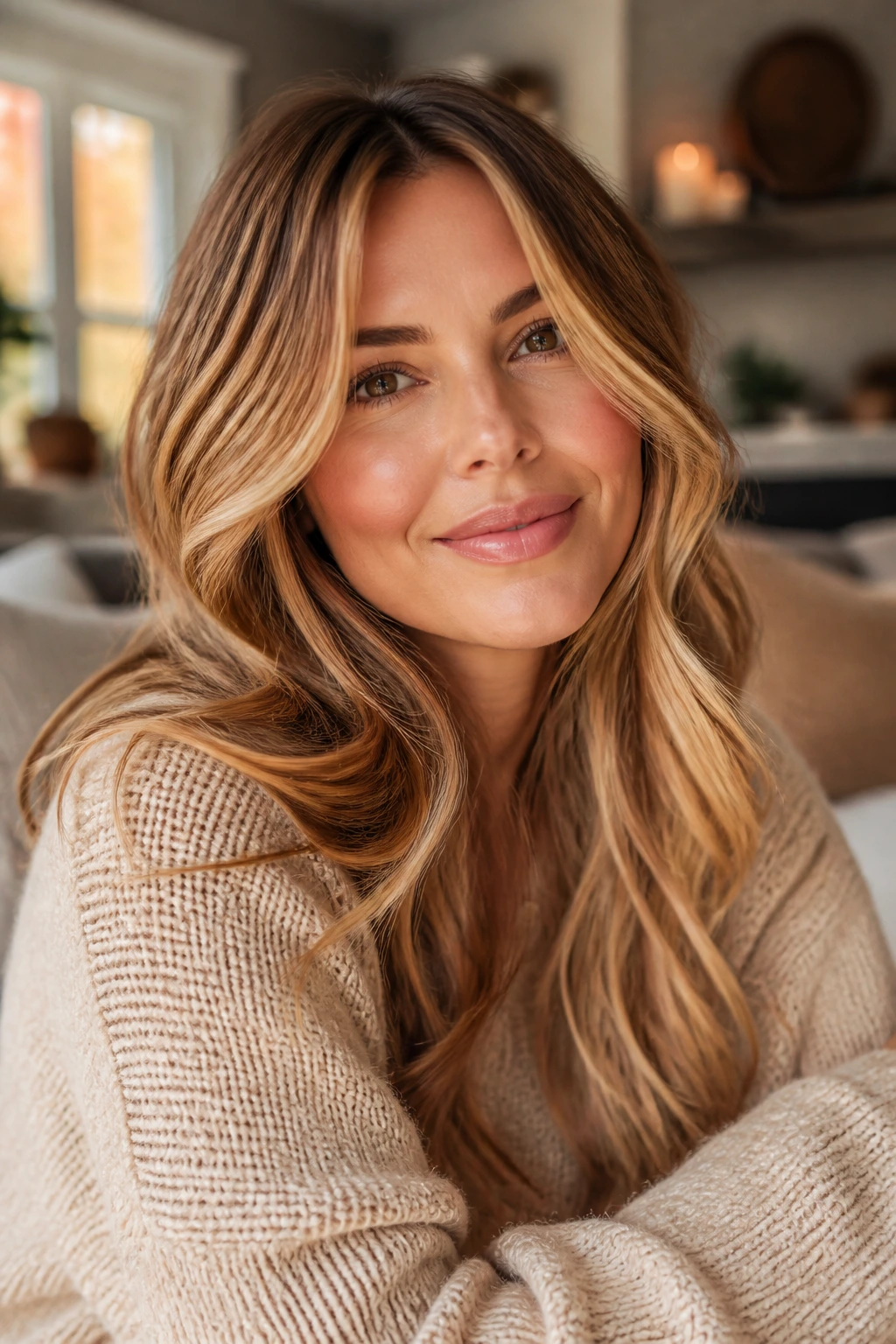
Balayage works in cooler months because it respects shadow. That sounds simple, but it’s the whole game. The hair keeps depth at the root, brightness where the eye needs it, and a gradual fade between the two, so the color doesn’t fight heavy clothes, dry air, or weaker daylight. Full blonde can sometimes look too stark when the light gets flat. A good balayage keeps breathing.
I also think the technique wins because it forgives real life. You don’t need perfect styling to make it look finished. A loose wave, a quick blowout, or even a messy clip-up can still show the difference between the base, the mids, and the ends. That makes the color useful, not just pretty in a salon mirror.
If you want this kind of dimension to last, the shade choice matters as much as the placement. Warmth, coolness, and contrast all behave differently once the hair has been washed a few times. Pick the version that fits your maintenance habits, not just the one that looks exciting for ten minutes.
The Tools That Make a Balayage Appointment Smoother
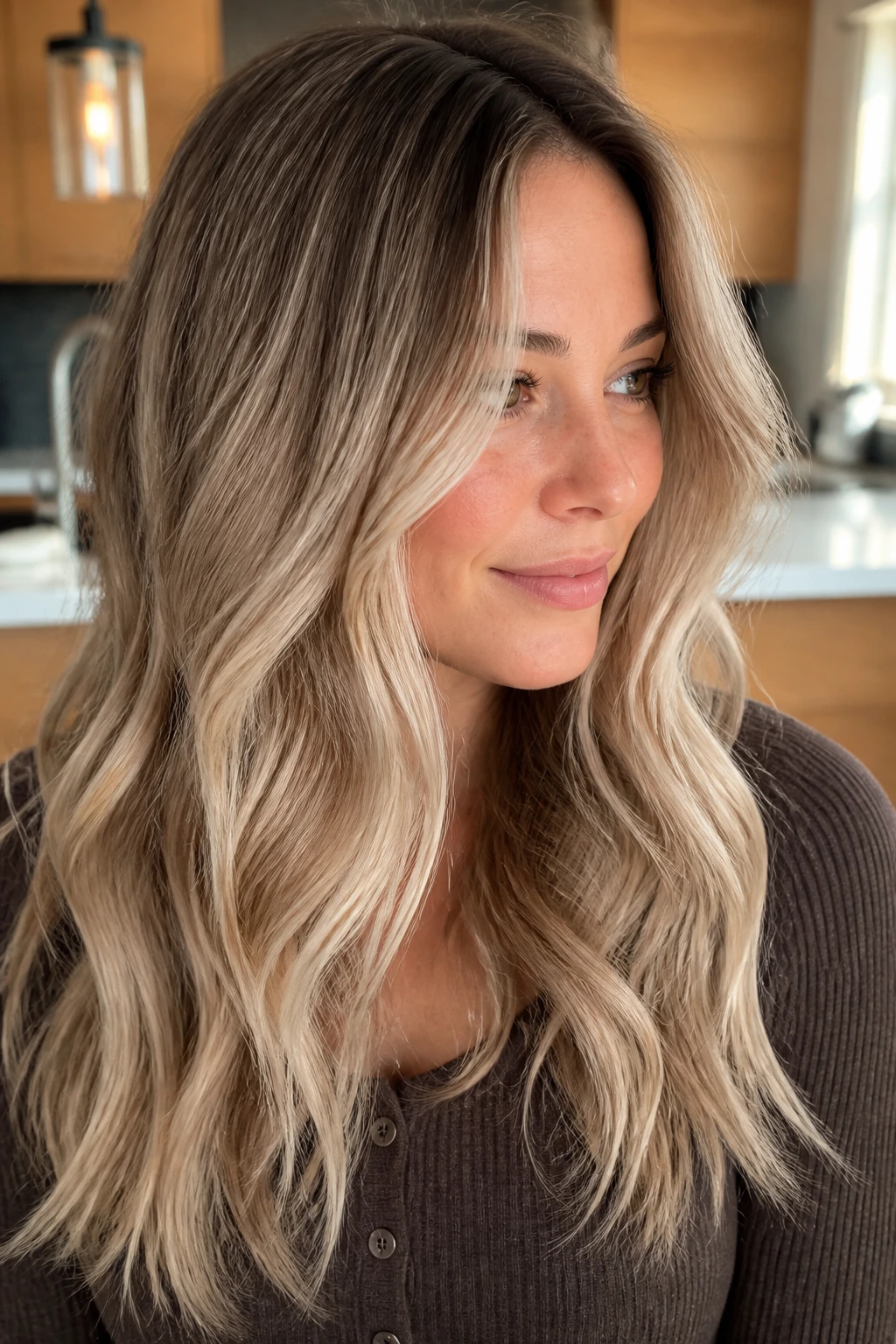
- Good reference photos: Bring 3 to 5 pictures with the same base depth and skin tone, not just the same hairstyle.
- Fine-tooth tail comb: Helps section the hair cleanly so placement looks deliberate instead of scattered.
- Balayage brush or tint brush: A soft brush gives the painterly sweep that makes the technique look blurred at the edges.
- Lightener and developer suited to your hair: Your colorist will choose these, but the strength should match the starting point, not a wishful target.
- Toner or gloss: This is what turns yellow into beige, orange into caramel, or too-warm brown into something richer.
- Gloves and clips: Small thing, big help. Messy sectioning makes messy color.
- Heat protectant: If you style with hot tools, this matters every single time.
- Color-safe shampoo and conditioner: Keeps the tone from fading into roughness after a few washes.
- Purple or blue shampoo: Useful for blondes and brunettes respectively, but best used sparingly so the tone does not go dull.
- Deep conditioning mask: Once a week is enough for most hair; bleached ends need the extra moisture.
How to Read an Inspiration Photo Before You Sit in the Chair
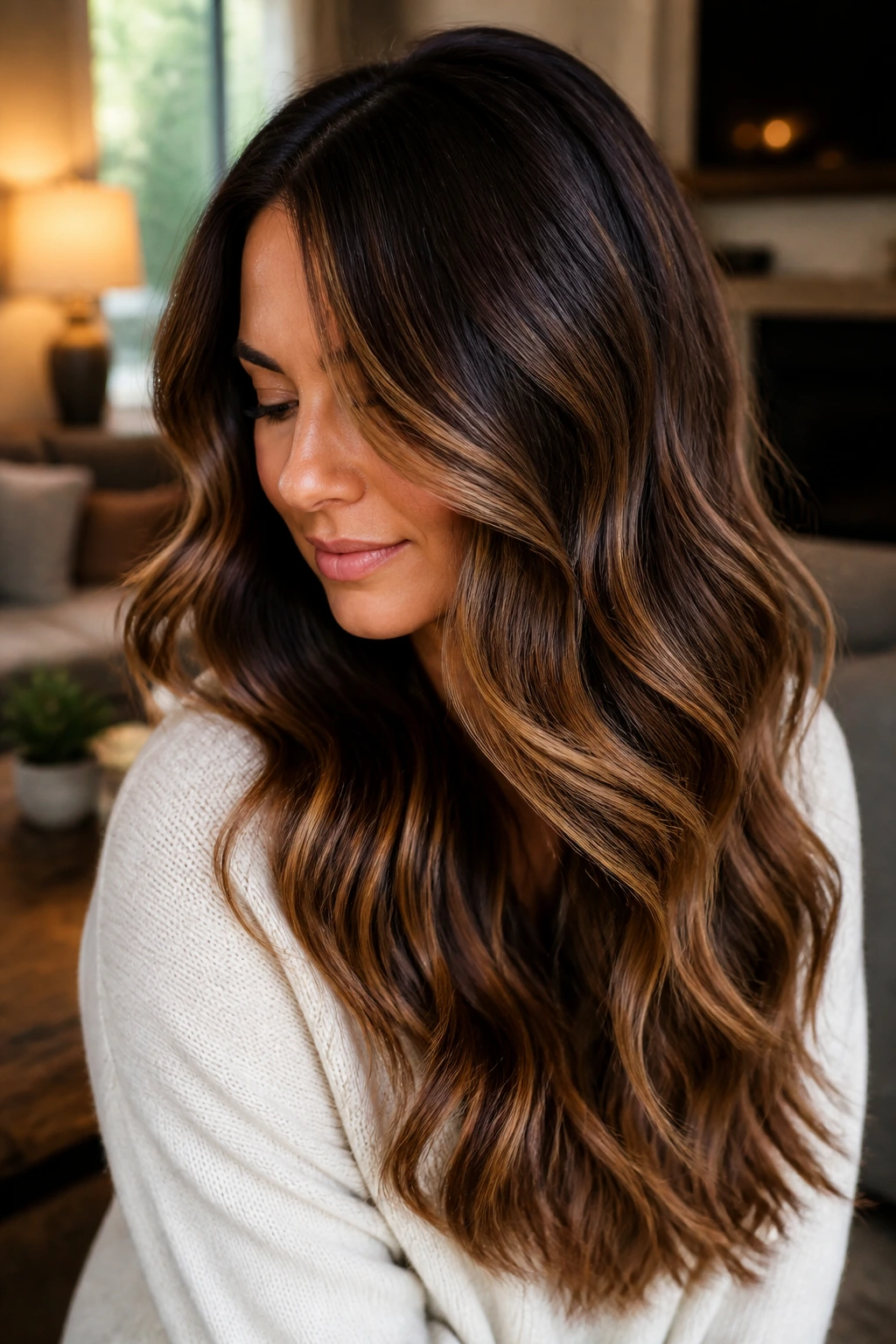
The fastest way to get a balayage you love is to stop treating inspiration photos like exact replicas. A chestnut melt on thick dark hair will not look the same on fine light brown hair, and that’s not a failure. It’s color behaving like color. What matters is the base level, the warmth, and how much contrast sits around the face.
Look at the root first. Is it soft and shadowed, or bright right to the scalp? Then check the ends. Are they a whole shade lighter, or are they only a half-step up from the mids? Those two details tell you more than the overall vibe.
Bring up maintenance honestly. If you do not want toner every month, don’t pick a tone that only looks good when perfectly fresh. If you like warmth, say so. If you hate brass, say that too. The wrong picture with the right tone can still get you close; the right picture with the wrong tone can send you home with a color you keep fighting.
How to Ask for the Right Version at the Salon
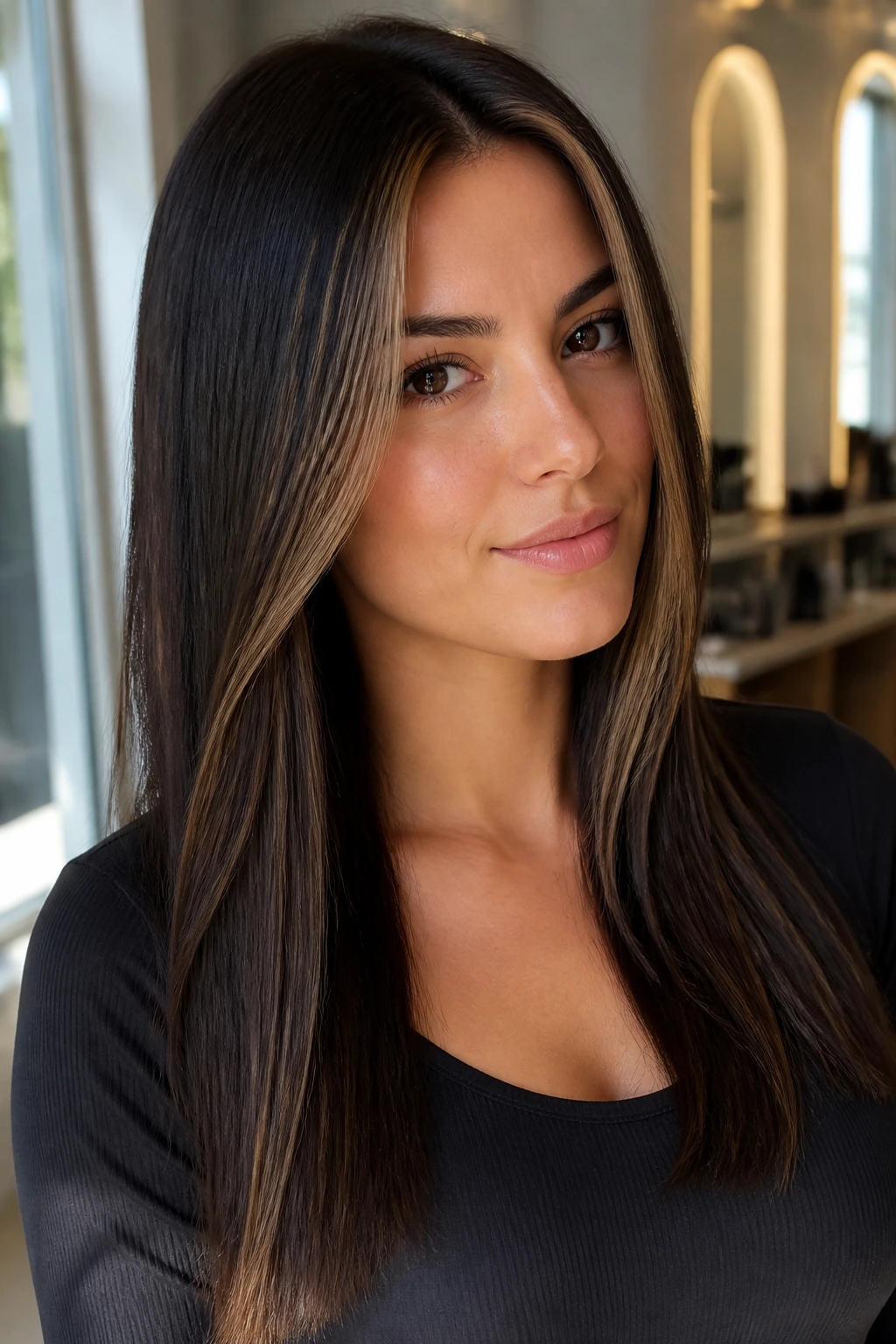
Base Depth: Tell your colorist how dark you want the root to stay. For fall balayage, a root that sits one to two levels deeper than the mids usually gives the hair enough anchor.
Placement: Ask for brightness around the face, the top layer, and the outer bends of the haircut. If you want lower maintenance, keep the lightest pieces away from the nape and underneath sections.
Tone: Use plain words — caramel, beige, honey, copper, mocha, mushroom, auburn, plum. Those names are more useful than saying you want it “warm but not too warm.” That sentence is too vague to paint with.
Blend: Request a soft root shadow or melt if you want the color to grow out cleanly. A hard line at the scalp is what makes balayage look like old highlights.
Maintenance: Be honest about your routine. If you can handle a gloss every 8 weeks, say that. If you want something you can stretch longer, say that too. Your color should match your calendar, not the other way around.
Ways to Make Balayage Read Richer at Home
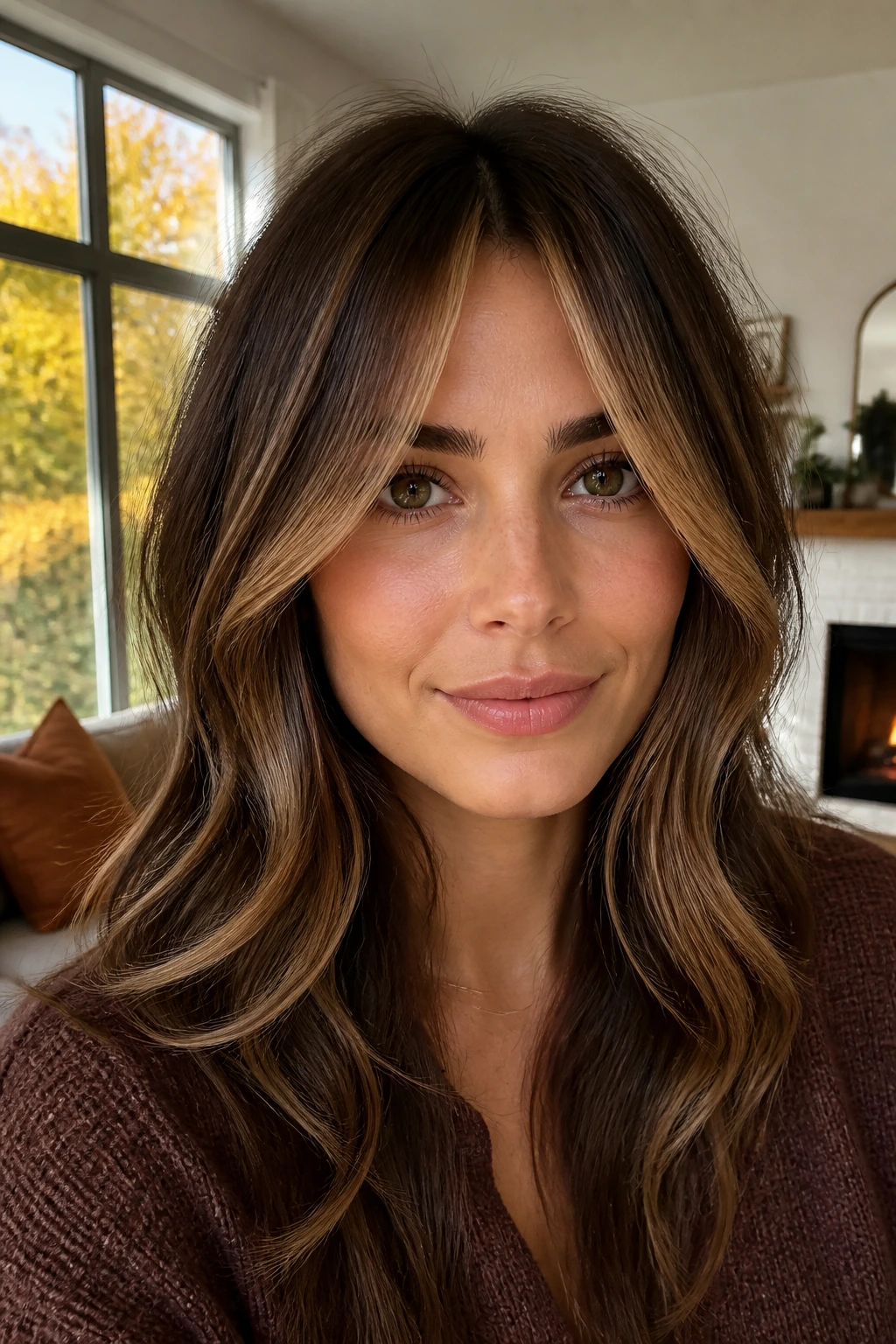
Glossing: A clear or tinted gloss between salon visits can bring back shine and sharpen the tone without changing the whole color. Beige gloss keeps blondes soft; warm brown gloss deepens brunettes; copper gloss helps red tones stay alive.
Styling: Loose waves show off dimension better than poker-straight hair, but don’t force curls if your hair hates them. A rounded blowout or a bend from a flat iron works just fine. The point is to create movement so the painted pieces separate.
Parting: Changing your part by even half an inch can move the brightest pieces into a better spot around the face. That tiny shift can make the color look fresher after a few weeks.
Finishing products: A light serum on the mids and ends keeps the balayage from going dull. Heavy oils are a trap; they can make the lighter pieces look greasy instead of shiny.
Low-effort upgrade: Tuck one side behind the ear and leave the other loose. It sounds trivial, but the asymmetry makes the face-framing pieces do more work.
Mistakes That Make Balayage Look Stripey or Dull
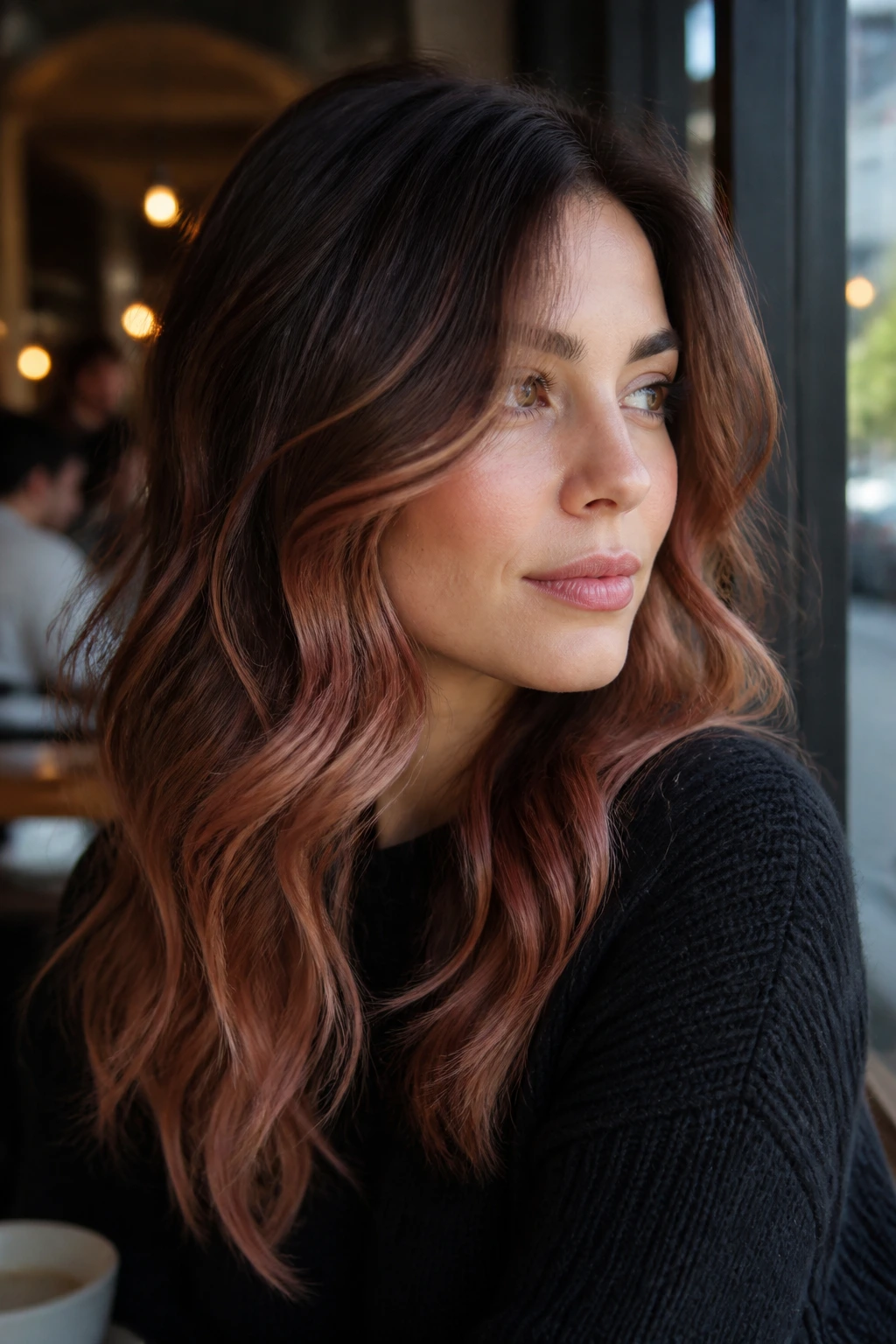
The biggest mistake is asking for too much lightness in too many places. When every section gets bright, the hair stops looking dimensional and starts looking foiled in the old-school sense. The fix is simple: keep the crown and underlayers deeper, and reserve the brightest pieces for the top layers and face frame.
Another common problem is ignoring tone after the lightening step. Pale yellow, orange, or muddy beige can all show up once the hair settles, and they do not fix themselves. A toner or gloss is what turns a raw highlight into a wearable shade.
People also overdo purple shampoo. It is a tool, not a personality. Used too often, it can make blonde pieces look chalky and can flatten the shine that balayage depends on.
The last mistake I see a lot is choosing a photo that doesn’t match the hair you actually have. Density, texture, and starting color all matter. If your hair is fine and dark, a heavy caramel image from thick light-brown hair may not translate the way you think.
Variations and Adjustments for Different Hair Types
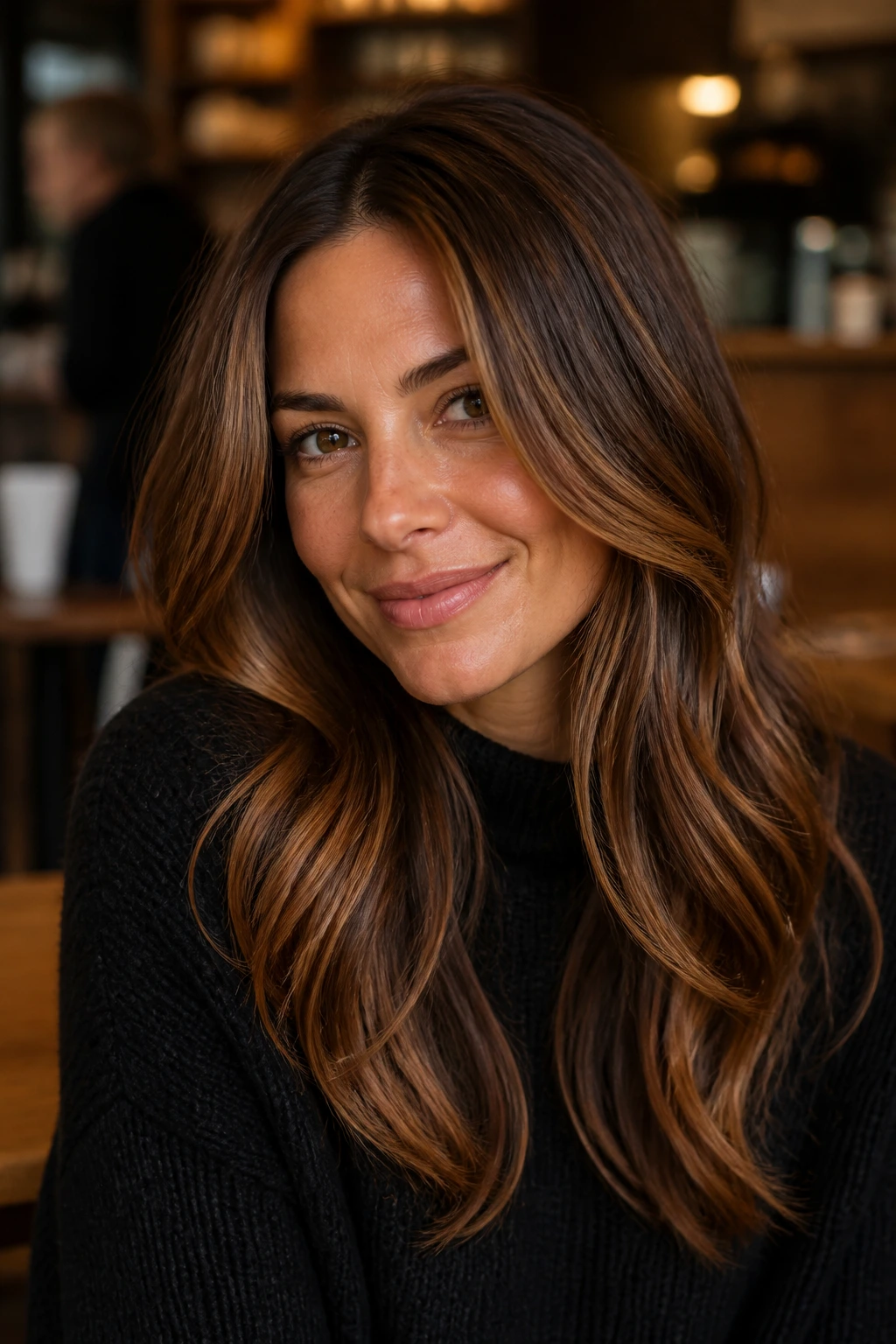
The Soft-Growout Version: Keep the root deeper, make the contrast gentle, and focus brightness around the face and upper layers. This works best if you want to stretch appointments and still look polished.
The Curly Coil Version: Paint the outer curve of the curls and avoid hiding all the brightness inside the pattern. Curly hair needs placement that shows up when the hair shrinks and springs back up.
The Fine-Hair Version: Use fewer, finer ribbons with a slightly lighter face frame. Too many highlights can make fine hair look wispy; a few well-placed pieces add dimension without making the hair look overprocessed.
The Bold Copper Version: Push the warm tones harder, especially in the mids and ends, and keep the base one shade deeper so the copper doesn’t flatten out. Good for people who want the color to show up from across the room.
The Cool Neutral Version: Lean into mushroom, beige, smoky brown, or cool beige ends. This is the safest route if gold and orange tones usually clash with your skin or wardrobe.
The Gray-Blending Version: Weave lighter pieces through the silver or white strands instead of trying to cover everything. That keeps the grow-out softer and makes the color feel blended rather than patched.
Keeping the Color Fresh Between Appointments
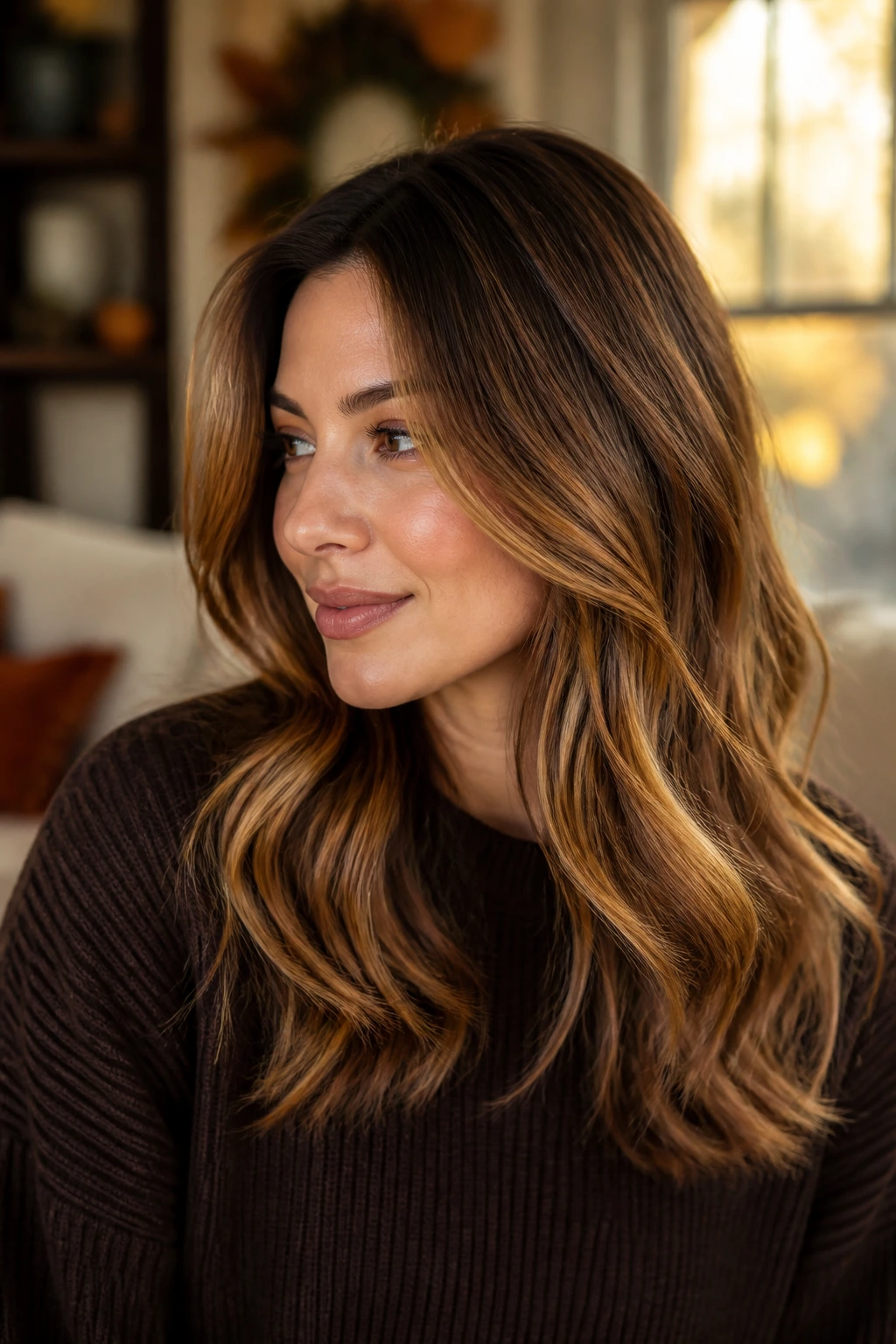
Balayage does not need babying, but it does need a little attention. Wait about 48 hours before the first shampoo if your stylist recommends it, then wash with lukewarm water instead of steaming hot water, which fades tone faster than people expect.
Use a color-safe shampoo and conditioner most of the time. If your hair is blonde or beige, add purple shampoo once every 1 to 2 weeks. If your balayage is brunette and pulling orange, blue shampoo can help keep the brass down, but only use it when you actually need it.
A gloss or toner refresh every 6 to 8 weeks keeps the tone from drifting too warm or too dull. If your ends are lightened, a weekly mask is worth the time. Dry ends make even good balayage look tired.
Trim the ends every 8 to 12 weeks if you wear the color long. Split ends scatter light in a rough way, and that can make the cleanest balayage look frayed.
Questions People Ask Before Booking Balayage
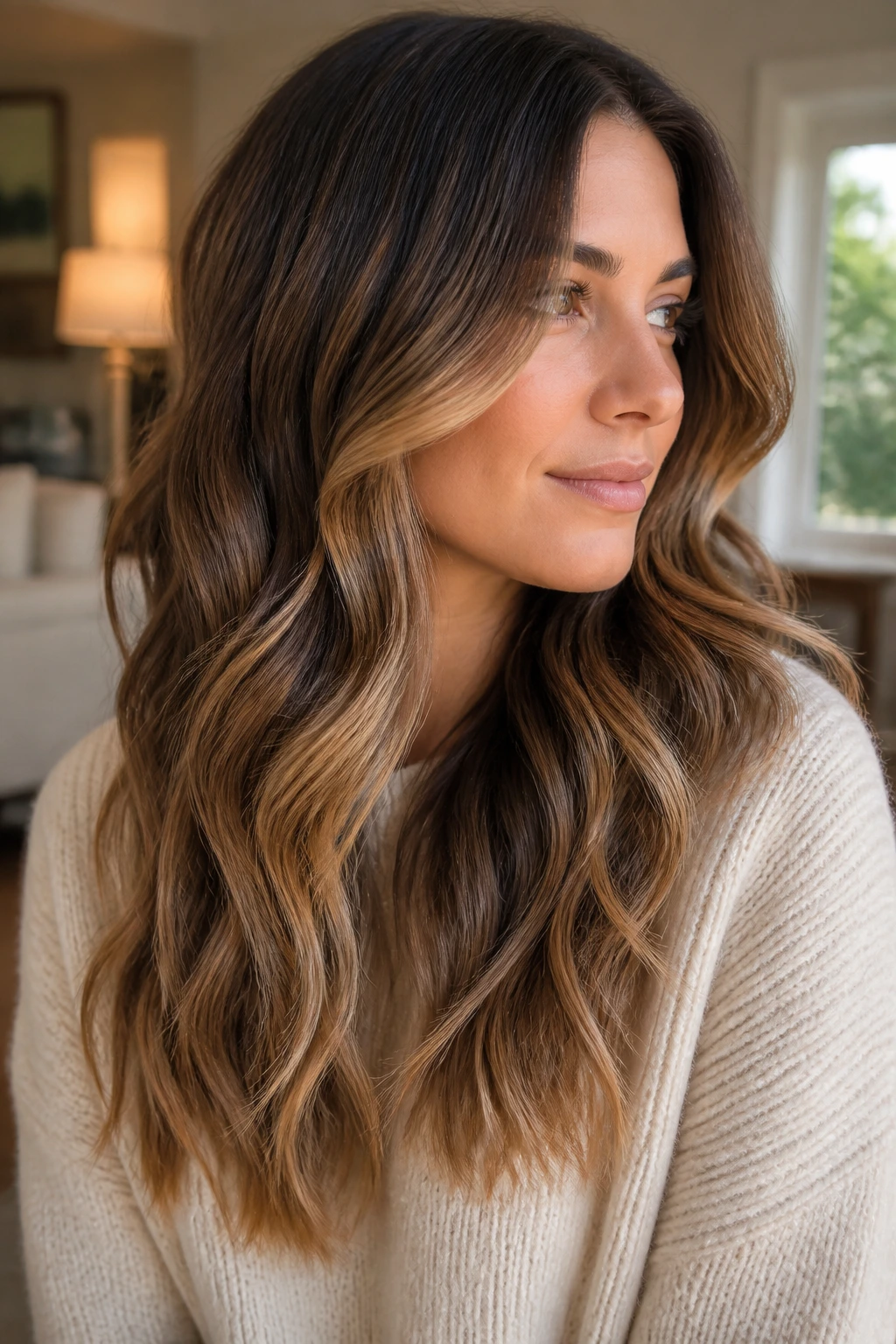
How is balayage different from regular highlights?
Balayage is painted by hand, so the lightness is softer and less uniform than foil highlights. Foils usually create a more even lift from root to tip, while balayage lets the color stay blurred and grown-in.
Can dark brown hair get a good fall balayage?
Yes, and dark brown hair often looks especially rich with chestnut, caramel, auburn, or mocha tones. The trick is not trying to go too light in one visit, because that can make the result look forced instead of blended.
Will balayage damage my hair less than all-over blonding?
Usually, yes, because not every strand is lifted. But any lightening can dry the ends, so the condition of the hair still matters. A careful colorist and a sane toner schedule make a bigger difference than people want to admit.
How often do I need to refresh the tone?
Most people do well with a gloss or toner every 6 to 10 weeks, depending on how warm or cool the color needs to stay. If the hair is porous, brass can show up sooner.
Can I get balayage if my hair is curly?
Absolutely. Curly hair often shows balayage beautifully because the bends break up the color. The placement needs to respect the curl pattern, though, or the light pieces disappear inside the shape.
What if the color comes out too warm?
Ask for a toner or gloss adjustment instead of trying to fix it with purple shampoo alone. Shampoo can help, but it won’t replace a proper tone correction when the color has gone too gold or orange.
Is balayage okay if I wear my hair straight most days?
Yes, but the placement should be a little more deliberate so the dimension still shows when the hair is smooth. Fine ribbons near the face and through the top layers keep it from looking flat.
Do I need to lighten my whole head for a big change?
No. That’s the beauty of balayage. You can get a visible shift with face-framing brightness, a softer root, and a few well-placed ribbons through the mids and ends.
The Shades That Carry the Season Well
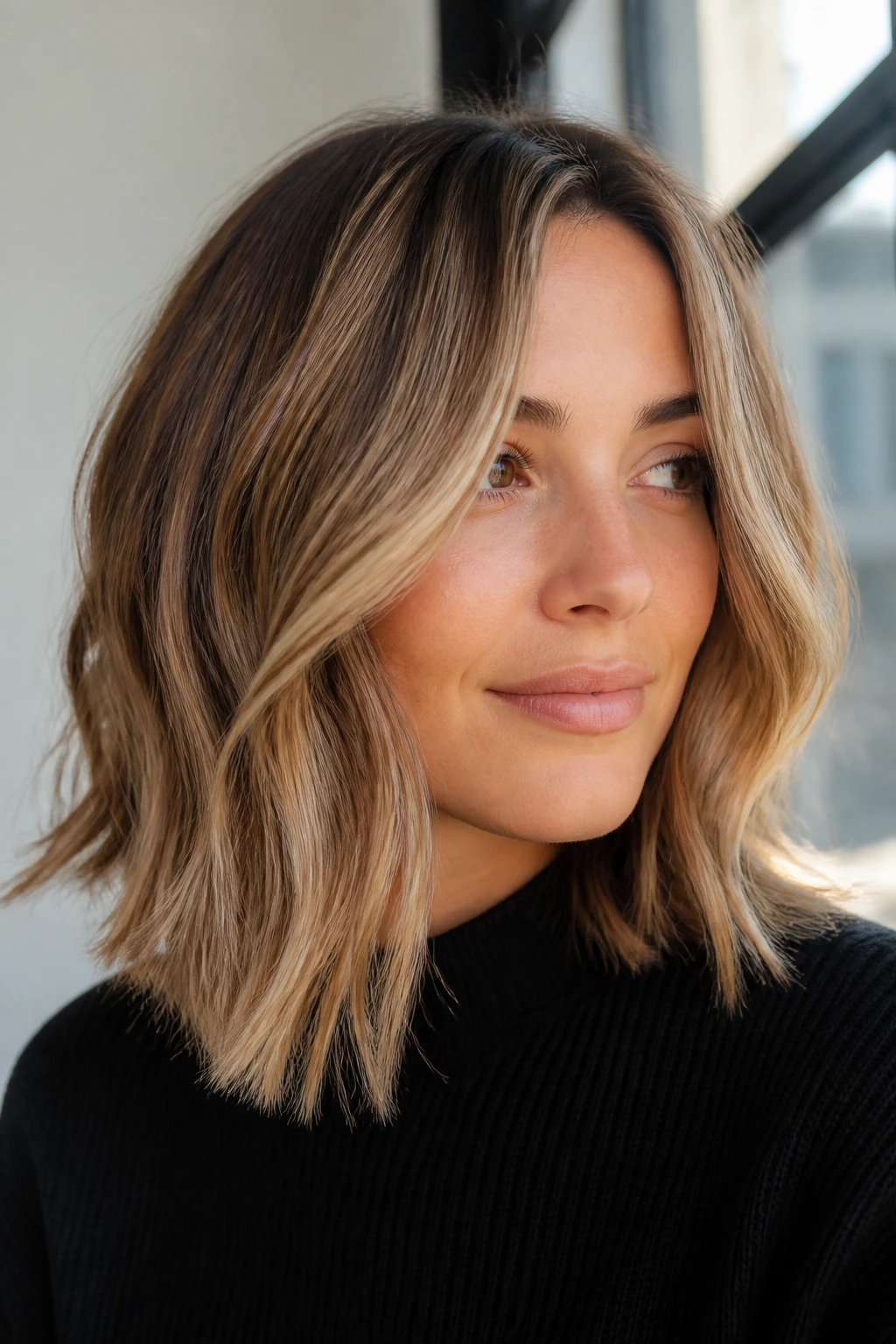
The best fall balayage doesn’t chase one dramatic effect. It makes the hair look deeper, softer, and more dimensional at the same time, which is harder to pull off than it sounds. That’s why chestnut ribbons, caramel melts, smoky beige blondes, and copper-leaning brunettes keep coming back in different forms — they work with dry air, heavy clothes, and weaker light instead of fighting all three.
If you’re picking one direction, start with the tone you already wear most easily. Warm if your wardrobe leans camel and rust. Cool if you live in black, cream, and charcoal. Neutral if you want the easiest grow-out. The right balayage should feel like it belongs to the haircut you already have, not like it arrived with a separate personality.
Bring a reference photo, name the tone you actually want, and ask for softness at the root. That’s the part people skip, and it’s the part that keeps the color looking good long after the first fresh blowout fades.
