



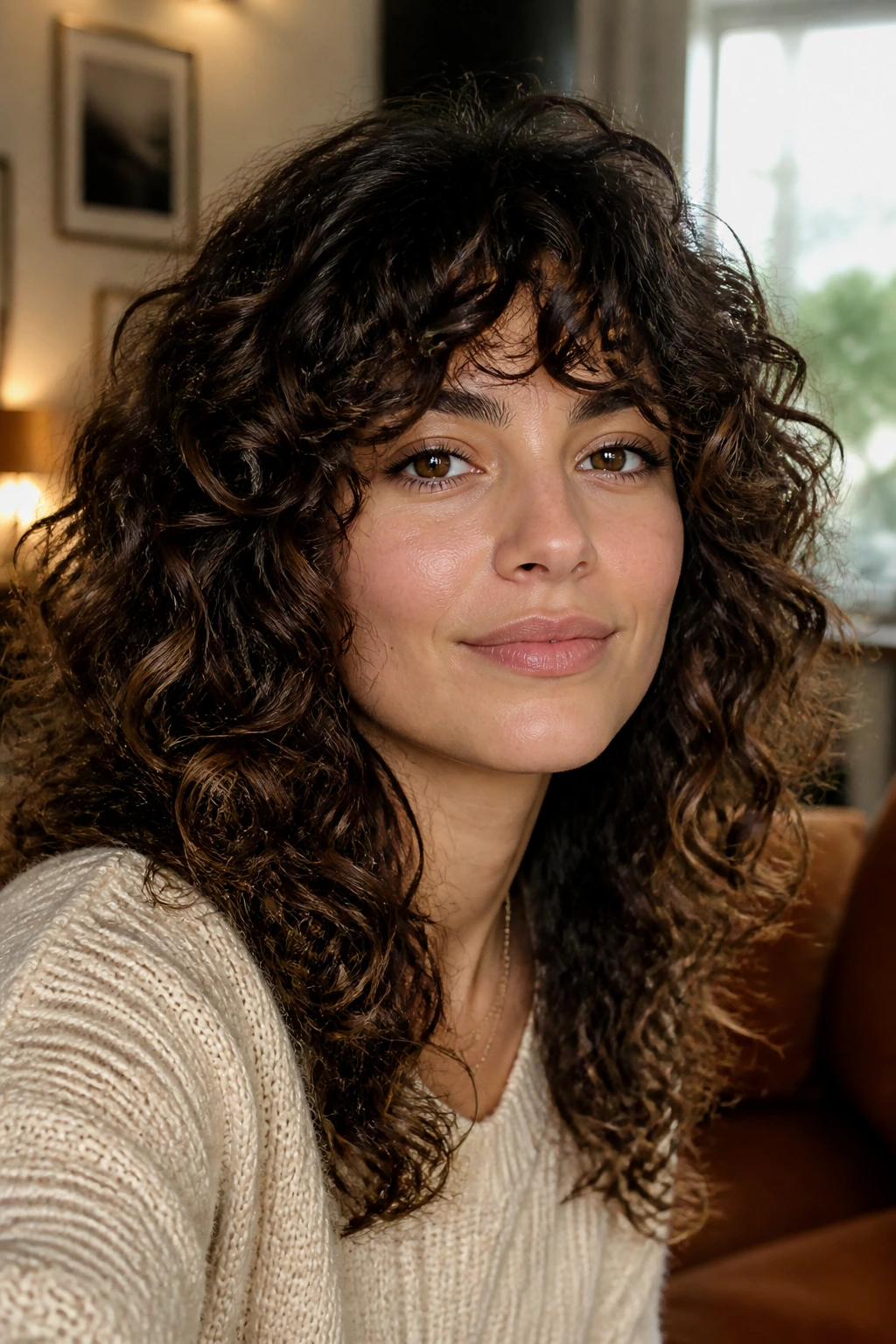
Medium length curly shag cuts with bangs work when they respect shrinkage instead of pretending it does not exist. A curl that looks modest in the chair can spring up a full inch after it dries, and bangs are where that math either looks smart or turns into a little drama.
The best shags at this length have a very specific job. They keep enough weight around the perimeter that the silhouette does not puff out like a triangle, then use layers to let the curls stack, swing, and separate in a way that feels alive. The fringe matters just as much as the cut itself. Curtain pieces, bottleneck bangs, wispy brows, or a blunt little baby fringe all behave differently once a diffuser gets involved.
What makes this shape so useful is that it does not demand one curl pattern or one face shape. It can be soft, sharp, polished, messy, high-volume, or barely-there depending on how the layers are placed. The trick is choosing the version that matches your curl spring, your styling patience, and how often you actually want to visit a salon chair.
Why These 27 Curly Shag Cuts with Bangs Work So Well
-
Shrinkage gets built in, not ignored: Curly bangs land better when they’re cut with enough extra length to account for spring, which saves you from a fringe that pops halfway to the hairline.
-
The medium length keeps the shape from ballooning: Shoulder-skimming or collarbone-grazing ends hold enough weight to stop the cut from turning into a round cloud.
-
The bangs do the visual work up front: A good fringe gives the cut a shape even on second-day hair, which is why curly shags look intentional when the rest of the style is a little roughed up.
-
You can tune the cut for density: Fine curls, thick curls, loose waves, and tight coils each need a different amount of layering, and this format leaves room for all of them.
-
It grows out better than most short cuts: The layers can soften into face-framing pieces instead of turning into a blunt, awkward shelf.
-
Air-drying or diffusing both make sense here: Some shags want more lift, some want less touch, but the basic silhouette stays useful either way.
1. Soft Collarbone Shag with Curtain Bangs
This is the one that makes curly hair look expensive without trying to look expensive. The collarbone length gives the curls enough weight to settle, while the curtain fringe opens the face instead of boxing it in. It has movement right away, even when the rest of the style is still a little damp and uncertain.
Why It Works
The longest pieces hit right around the collarbone, which is a sweet spot for curls that spring up after drying. The curtain bangs can start a little longer than you think—often around the bridge of the nose when wet—so they land near the cheekbones once they dry.
Best for:
- 2B to 3B curls that need a little structure
- Anyone trying curly bangs for the first time
- Hair that looks puffier when it gets shorter
Pro tip: Ask for the face-framing pieces to be cut in a soft arc, not a straight line. That tiny detail keeps the fringe from looking chopped off.
2. Rounded Halo Shag with Brow-Grazing Fringe
This cut has a rounder silhouette, and that is the point. Instead of carving the hair into obvious steps, the layers curve gently around the head so the curls look full but not boxy. The fringe skims the brows and softens the top edge.
Rounded shags are smart on dense curls because they avoid the aggressive, jagged look that can make thick hair feel too busy. The line feels smooth from front to back, which is a relief if you hate seeing blunt shelves in the mirror.
3. Side-Part Sweep Shag with Long Fringe
Can a side part save a curly shag from looking too symmetrical? Absolutely. A deep side part gives the fringe direction, which is handy if one side of your curl pattern always behaves better than the other. The longer bang pieces can sweep across the forehead and fall into the face frame instead of fighting it.
How to style it
Part the hair while it is soaking wet, not halfway dry. Then clip the heavier side away from the face for ten minutes so the front pieces learn the direction before you diffuse.
- Works well for people with a natural cowlick
- Gives a little extra height at the root
- Grows out without a sharp bang line
4. Micro Fringe Rebel Shag
This is the bold one. Tiny bangs on curly hair can look amazing, but they need commitment because every curl in that front section wants to spring up and do its own thing. The rest of the shag stays medium length and loose, which keeps the whole cut from feeling costume-y.
Micro fringe works best when the stylist cuts it dry and checks the spring one curl group at a time. If the hair is very tight or very springy, the bangs may need to sit a bit longer than they do on straighter texture. Short is not the same as careless.
A good version of this cut looks crisp at the front and soft everywhere else. That contrast is the whole point.
5. Bottleneck Layer Shag with Soft Fringe
Bottleneck bangs are one of my favorite solutions for curly hair because they solve a common problem: the front wants to be bangs, but you do not want to lose all of your face-framing length. The center is shorter, the sides taper longer, and the shape spills naturally into the rest of the layers.
The cut feels easy because there is no harsh switch from fringe to cheekbone pieces. Everything flows. If your curls are medium-dense and you wear them down most of the time, this is one of the least fussy ways to get bangs without making your mornings harder.
6. Chin-Hugging Curve Shag
This cut uses the front layers to draw the eye to the jaw and lips, which is a nice trick if you want a little more shape around the lower face. The bangs are curved rather than straight across, and the pieces at the front get slightly longer near the temples so the whole thing feels soft, not blocky.
It is especially flattering when the curls at the sides need help. The curve keeps the hair moving downward and inward, so the cut does not widen at cheek level.
7. Full-Volume Retro Shag with Thick Bangs
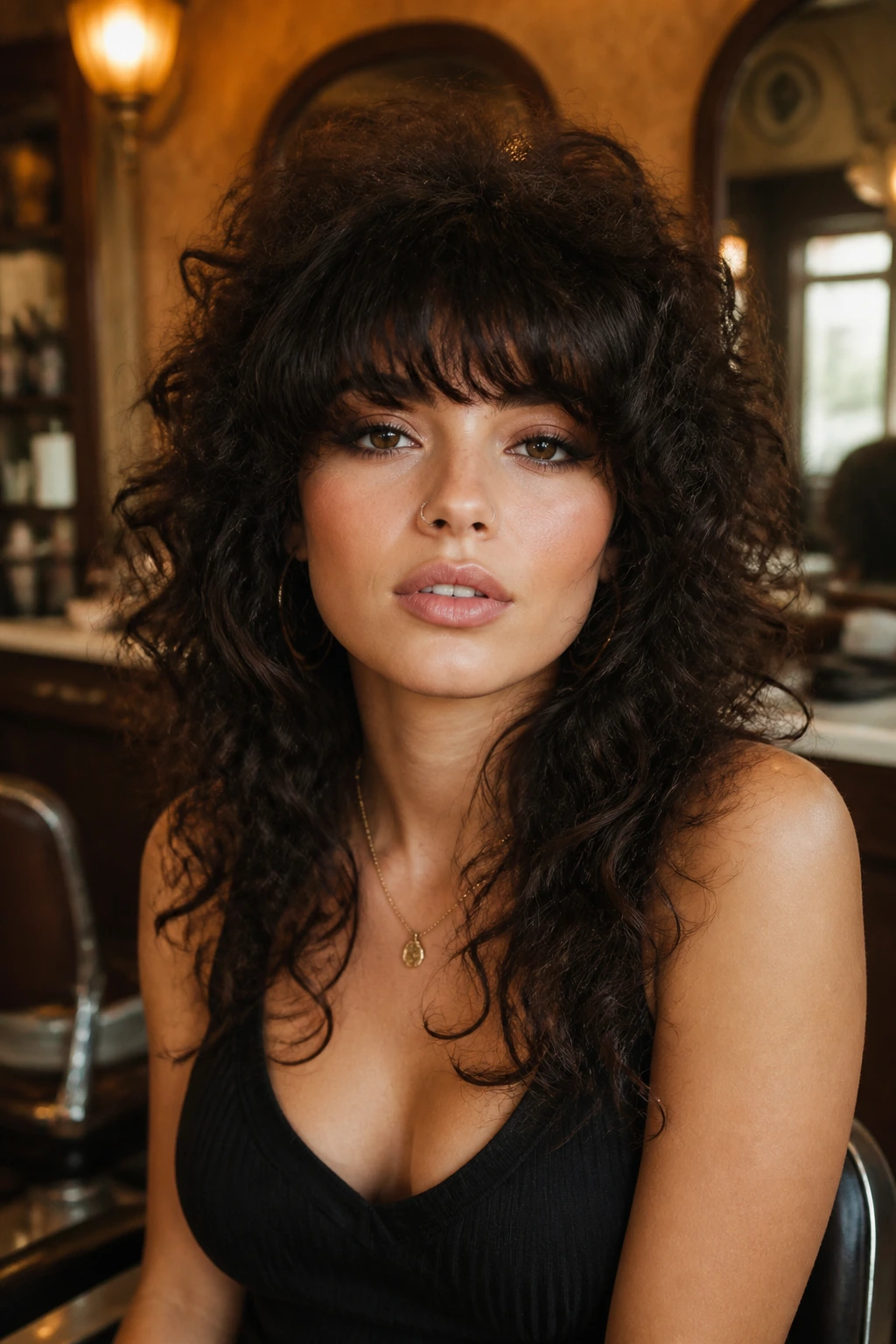
If your hair is dense and you like a bigger silhouette, this one earns its keep fast. The crown layers are lifted enough to let the curls stand up, and the bangs are thick enough to balance all that body up top. It has that old-school shag attitude, but the length keeps it from reading too theatrical.
What to ask for
- More layering through the crown than through the ends
- Bangs with enough density to sit as one visible section
- Face framing that starts around cheekbone level
The important part is not shaving off too much weight at the bottom. Thick curls need a perimeter that can anchor the shape. Remove too much, and the cut turns into a fluffy mushroom.
8. Airy Fine-Curl Shag with Sparse Fringe
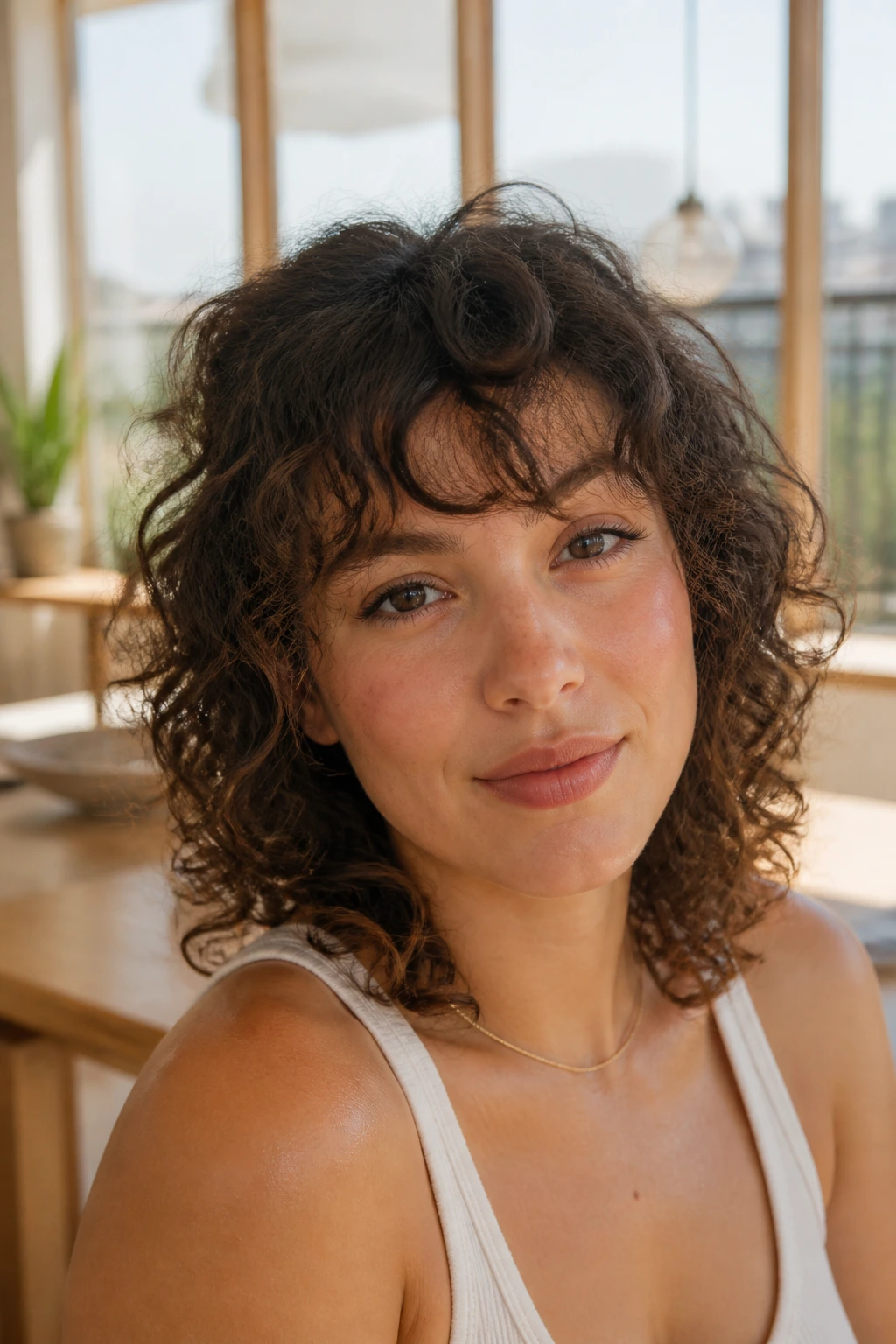
Fine curls need a gentler hand. Too many layers and the hair starts to look see-through, especially around the ends. This version keeps the layers light and the fringe sparse, so the texture stays visible without losing its body.
The bangs are the delicate part here. They should feel feathered, not wispy in a weak way. A small amount of width at the front can make the whole cut look fuller, which is why this style is better than a blunt fringe on finer curls.
9. Coil-Crowned Curtain Shag
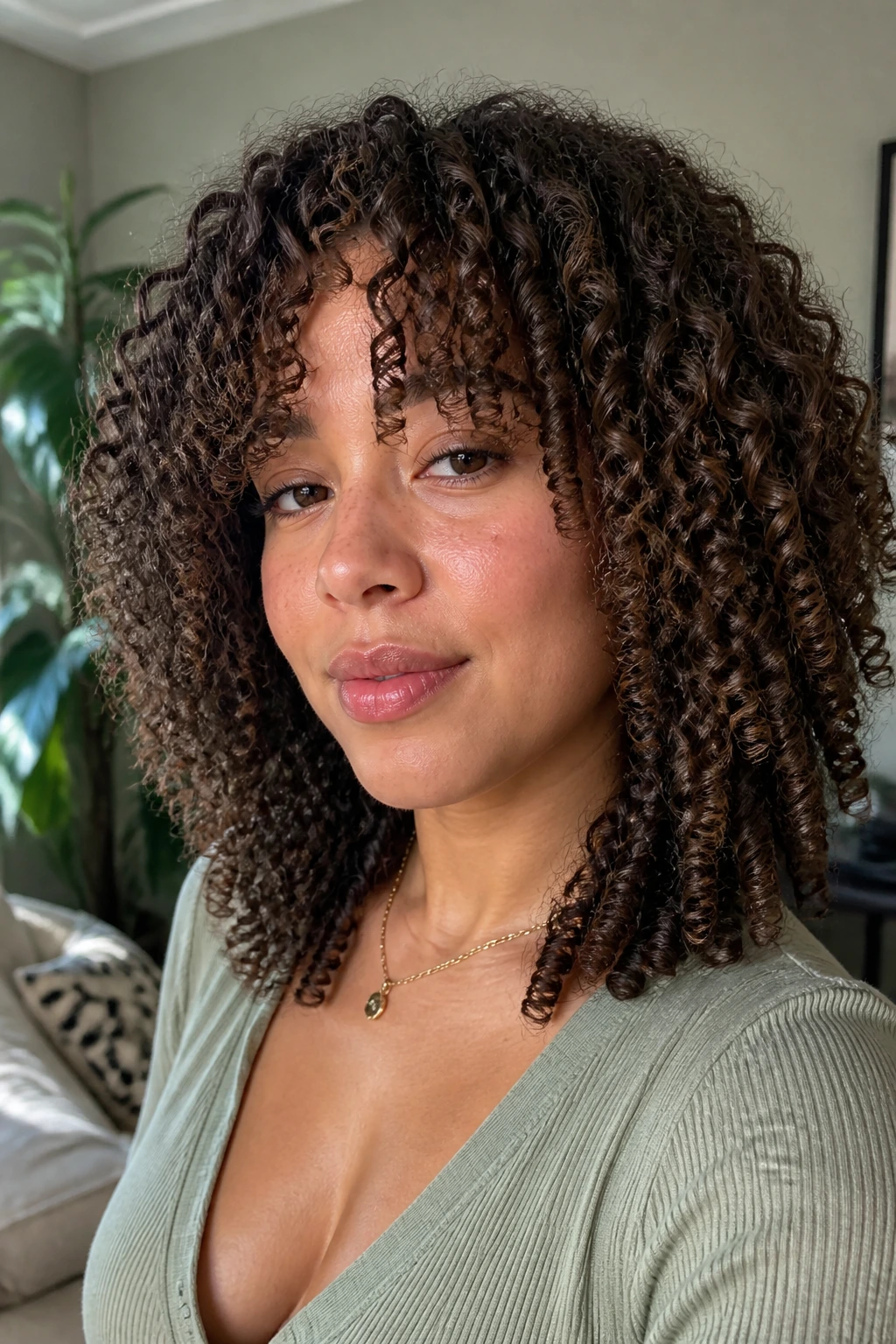
What happens when the curls are tighter and the bangs need room to spring? You cut the fringe in a shape that respects the coil pattern, then let the layers around the crown build the silhouette. That is why this version feels balanced instead of crowded.
The curtain pieces should be longer than you think. Tight curls shrink up with attitude, and the front section can jump higher than the rest of the style if you are not careful. This cut looks best when the curl clumps are left intact and the bangs are allowed to split naturally into two soft panels.
Styling note
Use a diffuser with low heat and stop before the bangs are fully dry. Let them finish in the air for a few minutes so they do not get too short too fast.
10. Tiny Fringe Power Shag
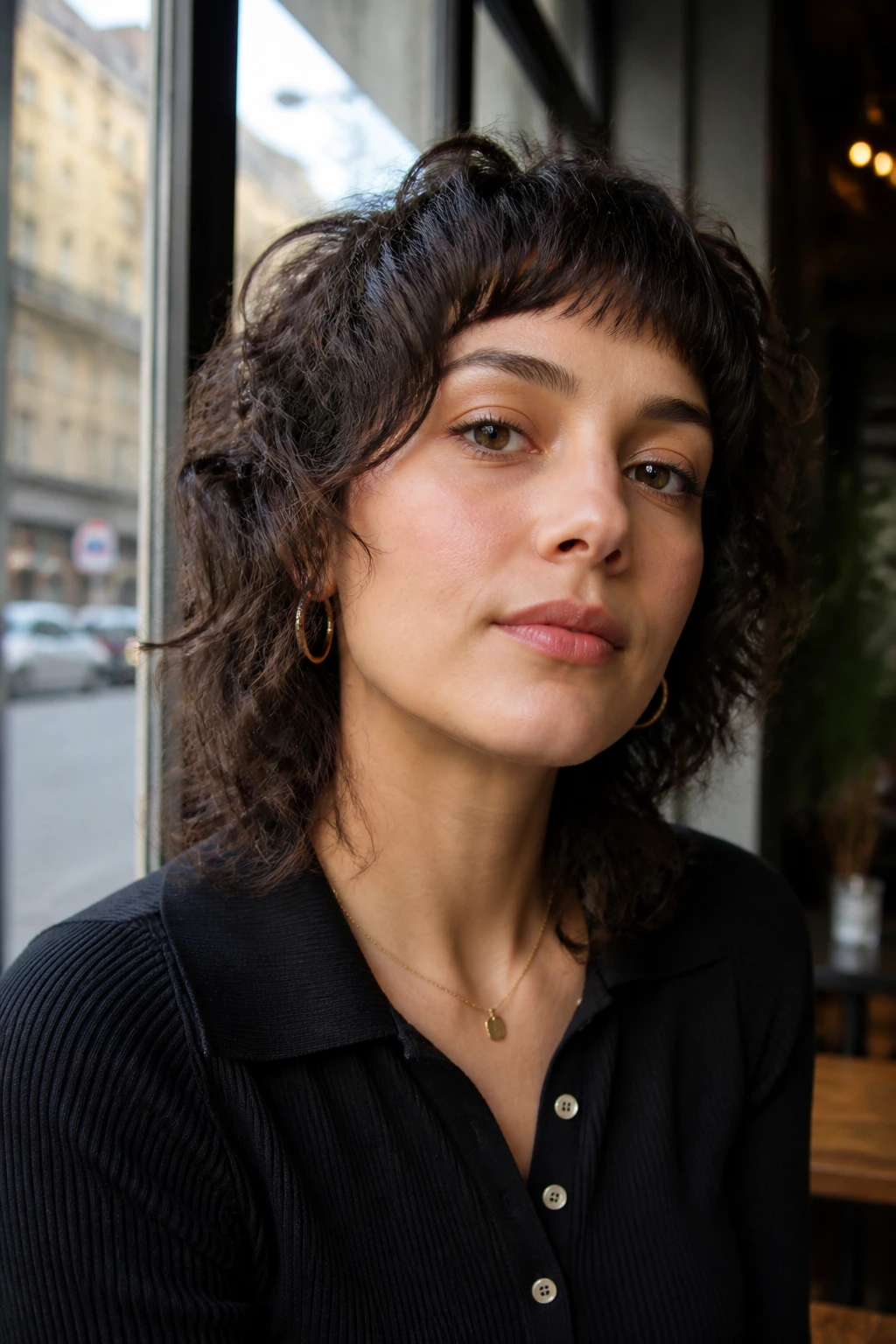
This one is for people who want bangs with a little edge. The short fringe gives the face a sharp focal point, while the medium-length shag around it keeps the style wearable. It is a strong look, not a shy one.
The key is precision. A tiny fringe on curly texture needs to be cut after the curl pattern has settled, because a quarter inch matters more here than it does on longer bangs. If the front pieces are too dense, they can look heavy fast, so the stylist should remove bulk carefully instead of hacking a blunt line.
11. Flipped-End Shag with Loose Bangs
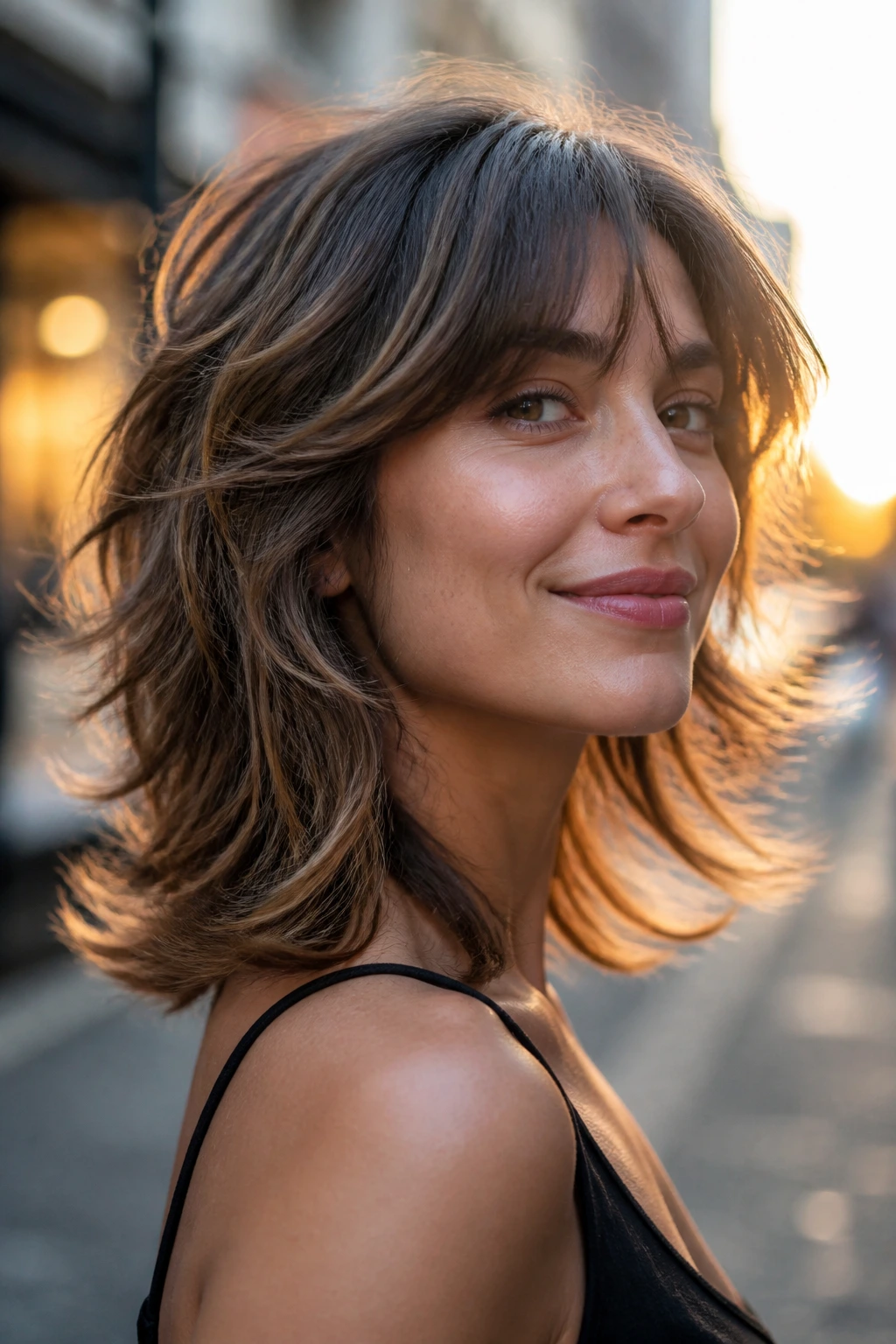
Flipped ends change the whole mood of a shag. Instead of hanging straight down, the lower layers kick out a little at the ends, which gives the cut movement even when the curls are not having their best day. The loose bangs keep the front soft so the shape does not become too retro in a strict way.
The style works especially well if your hair is medium density and your curl pattern gets a little loose at the ends. It gives the illusion of more shape without needing a massive amount of layering. That is a useful trick, and frankly, not every shag pulls it off.
12. U-Frame Shag with Centered Fringe
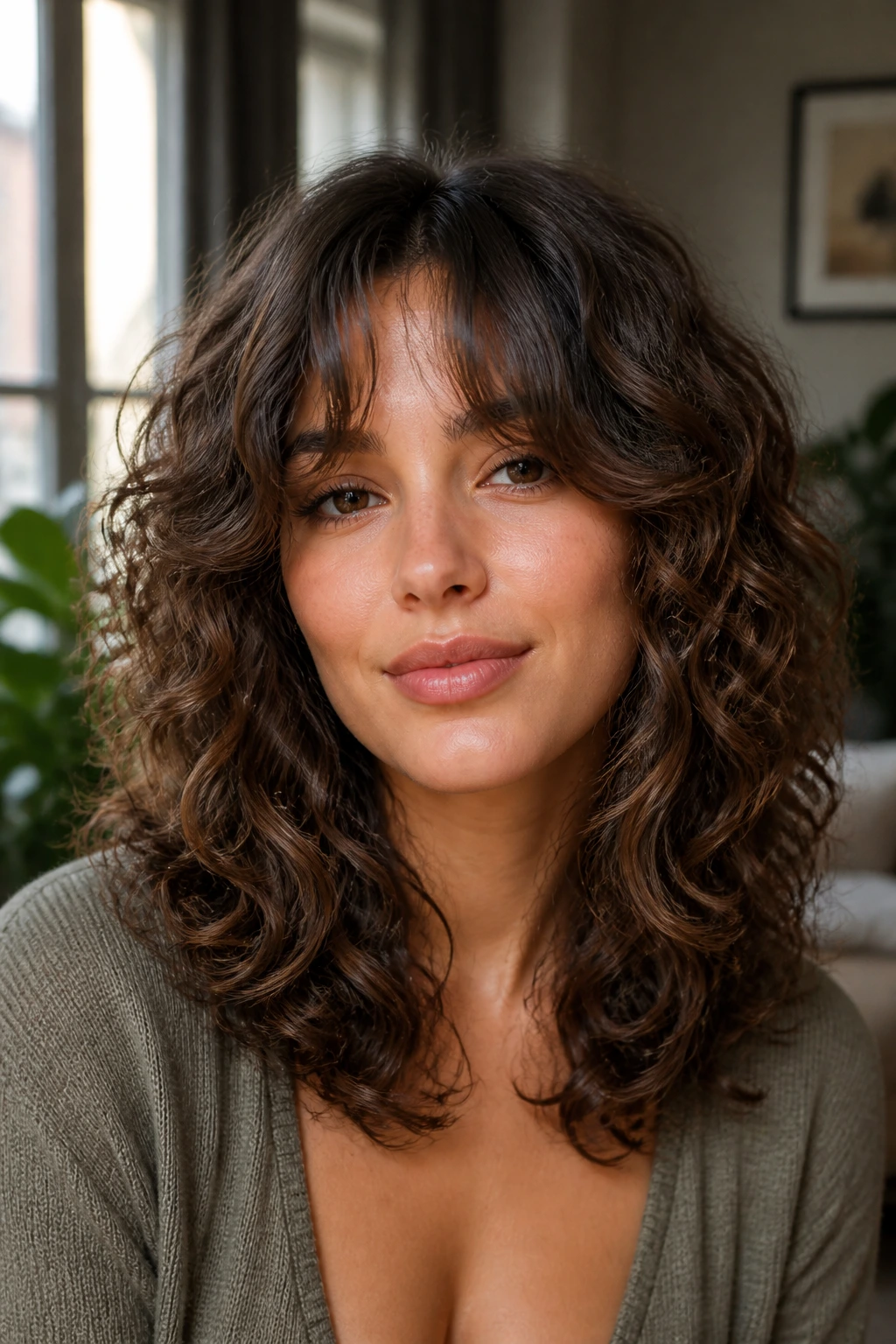
A U-shaped face frame keeps the longest front pieces at the center, then gradually shortens them toward the sides. On curly hair, that means the fringe melts into the rest of the cut instead of sitting like a separate section. It is a clean, flattering shape that does not shout for attention.
This is one of the best choices if you like order but still want texture. The U-frame gives the curls a path to follow, which helps if your hair tends to explode sideways around the cheeks.
13. Soft Mullet Shag with Split Fringe
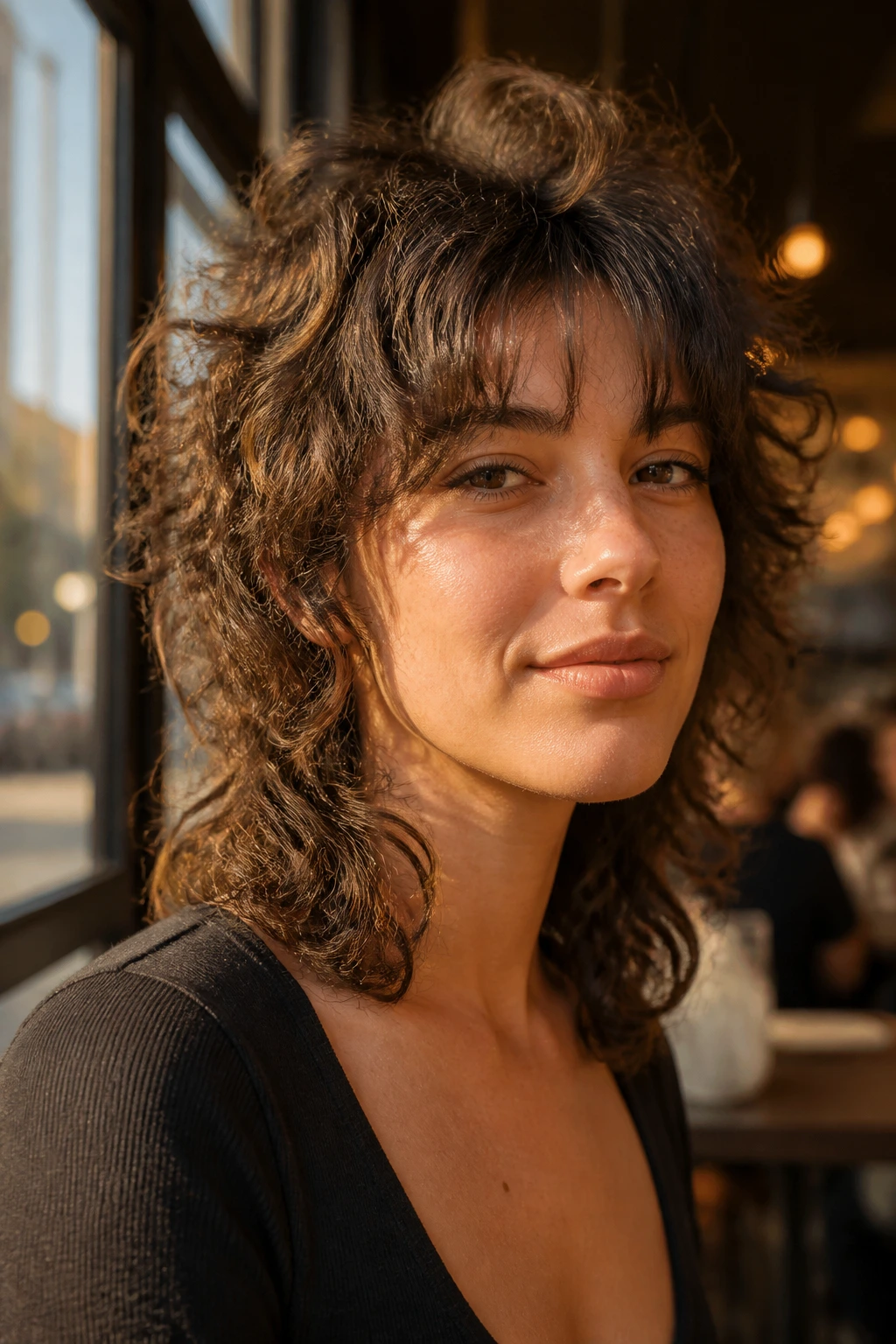
Not everyone wants the shag to stay polite. A soft mullet version keeps the front and crown a little shorter while leaving more length through the back, and the split fringe makes the whole cut feel more relaxed. It has attitude, but the medium length keeps it from looking severe.
The split fringe is useful because it breaks up the forehead without demanding a perfect center part. If your curls fall unevenly, this cut often looks better than a strictly symmetrical bang line.
Best for
- Hair that looks better with some contrast between front and back
- People who like a little rocker energy
- Curls that naturally separate into clumps
14. Hidden-Layer Shag for Quiet Volume
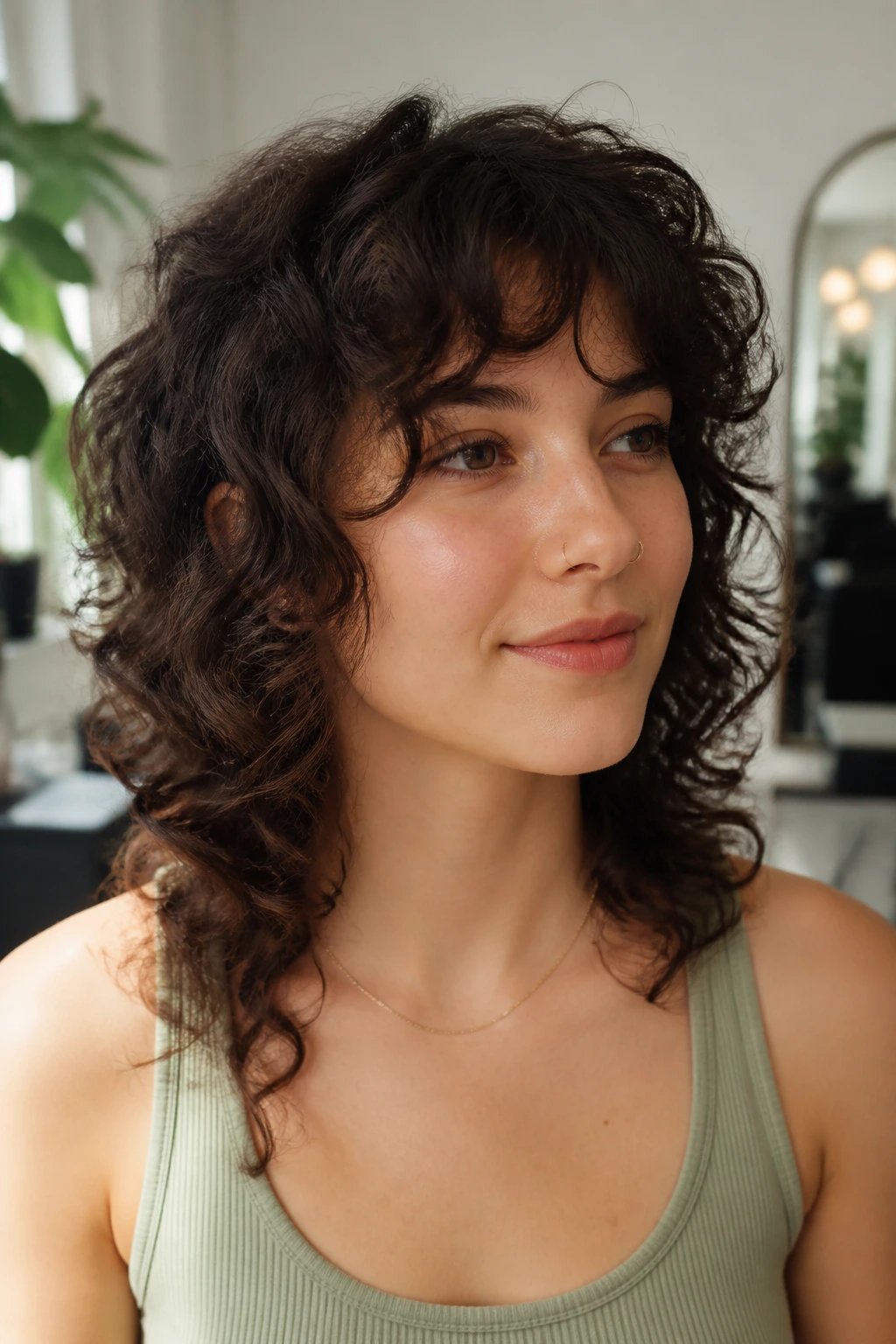
Some people do not want visible choppiness; they want the hair to move better. Hidden layers are the answer. The stylist removes weight from inside the shape, which lets the curls breathe without turning the outside line into a jagged mess.
This cut is a lifesaver for dense hair that puffs when over-layered. The bangs can stay soft and a little longer, while the body of the cut does the quieter work underneath. It is subtle, but subtle is not boring when the hair has enough texture to show off.
15. Arched Ringlet Shag with Curved Fringe
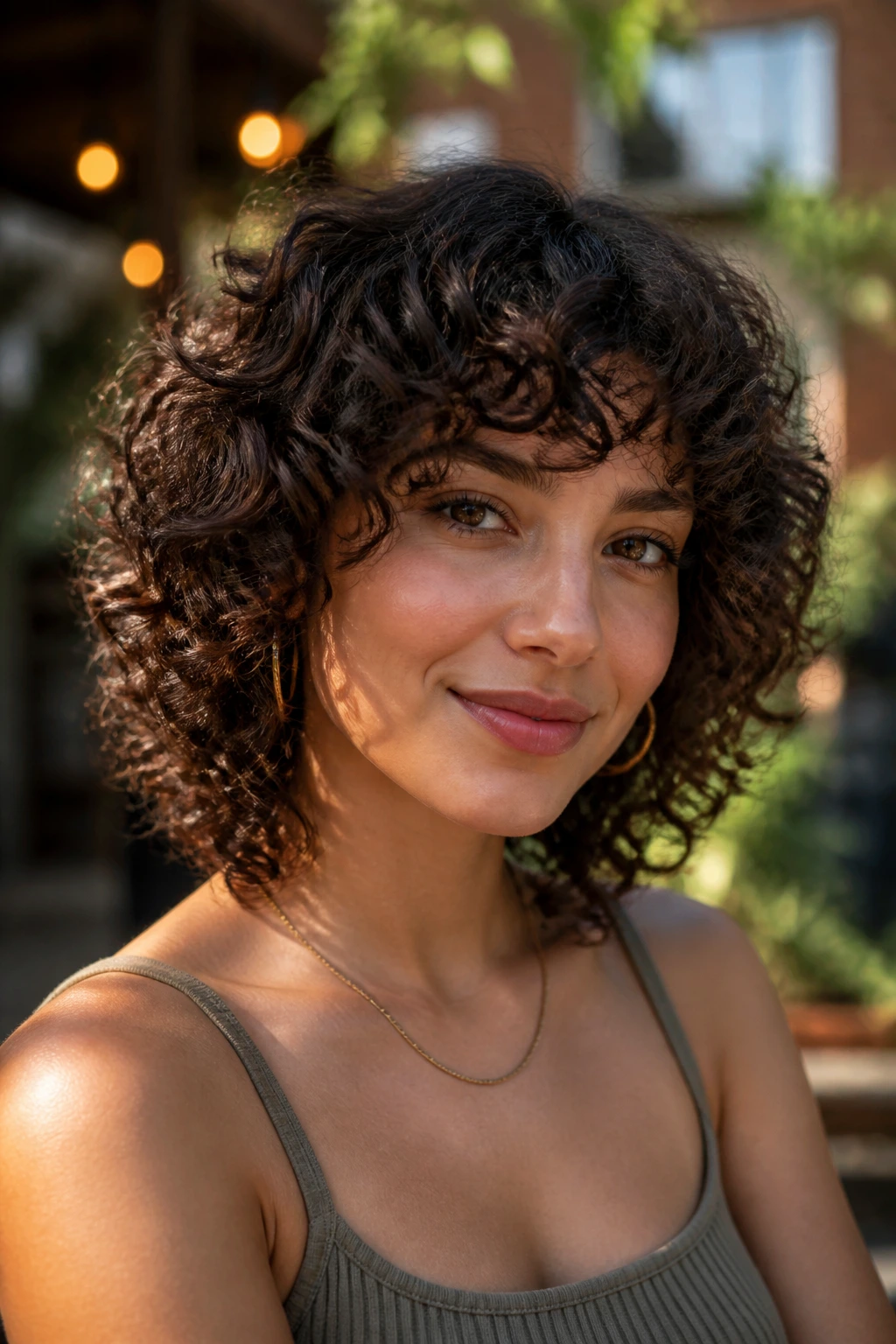
Ringlets love a curve. A curved fringe follows the way the curls want to sit, so the bangs do not fight the rest of the pattern. The layers around the sides are short enough to shape the face, long enough to let the curl pattern stay visible.
This version has a polished feel without becoming stiff. If you usually avoid bangs because they split awkwardly, an arched shape can be a better match than a blunt line. The front still reads as fringe, but it behaves more like a soft frame.
16. Wash-and-Go Shag with Wispy Bangs
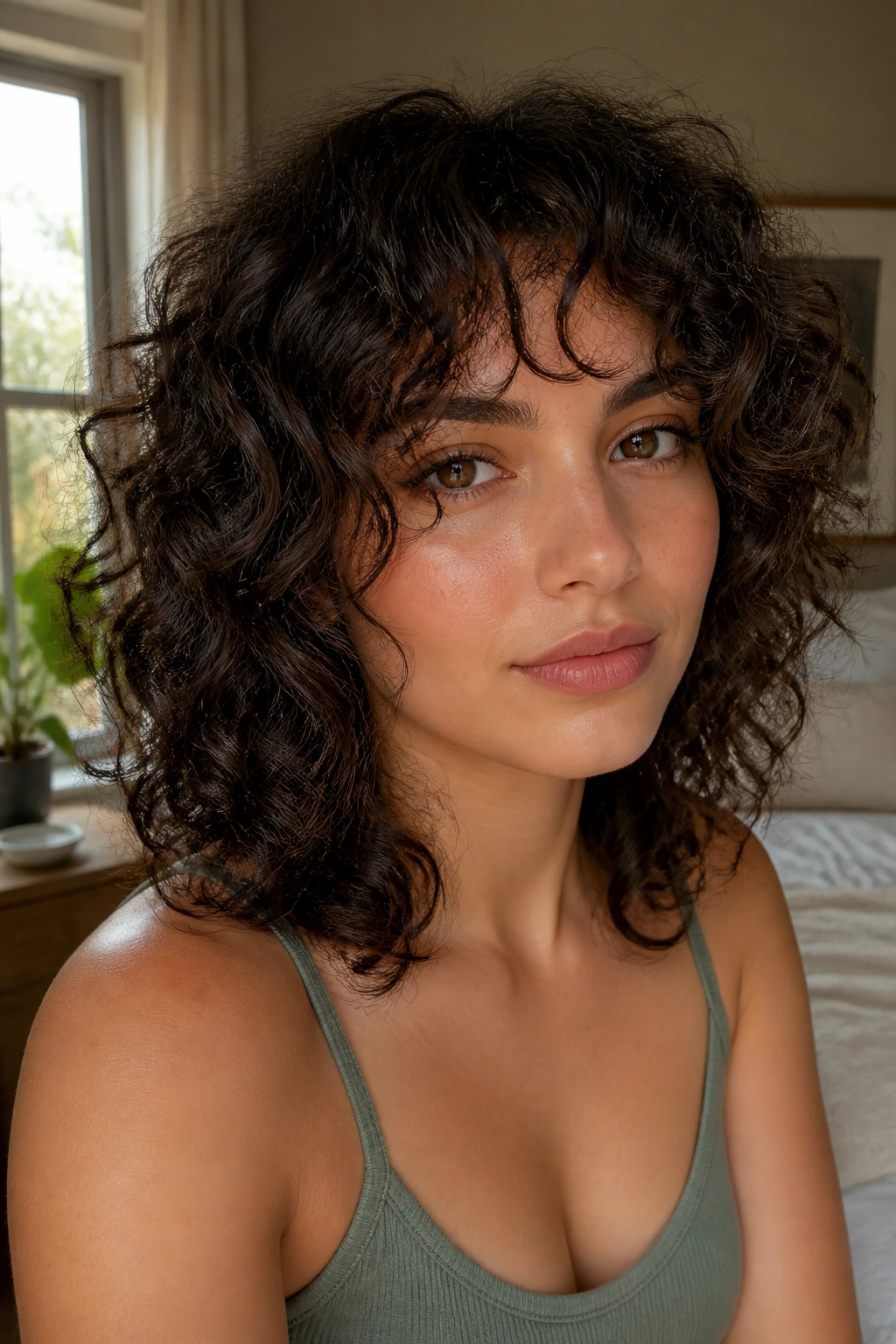
If your styling routine is minimal, this is the one to study. The layers are placed so the curls can dry in place with only a little encouragement, and the wispy bangs stay light enough that they do not need constant rescue. It is not fussy, which is part of its charm.
How to wear it
Use a lightweight leave-in, then a mousse or gel on damp hair. Scrunch, clip the roots for lift, and leave the front pieces alone until they are nearly dry. Touching the bangs every ten minutes is how people accidentally create frizz.
A wash-and-go shag still needs smart cutting, but it rewards laziness in the best way.
17. Big-Curl Glam Shag with Long Curtains
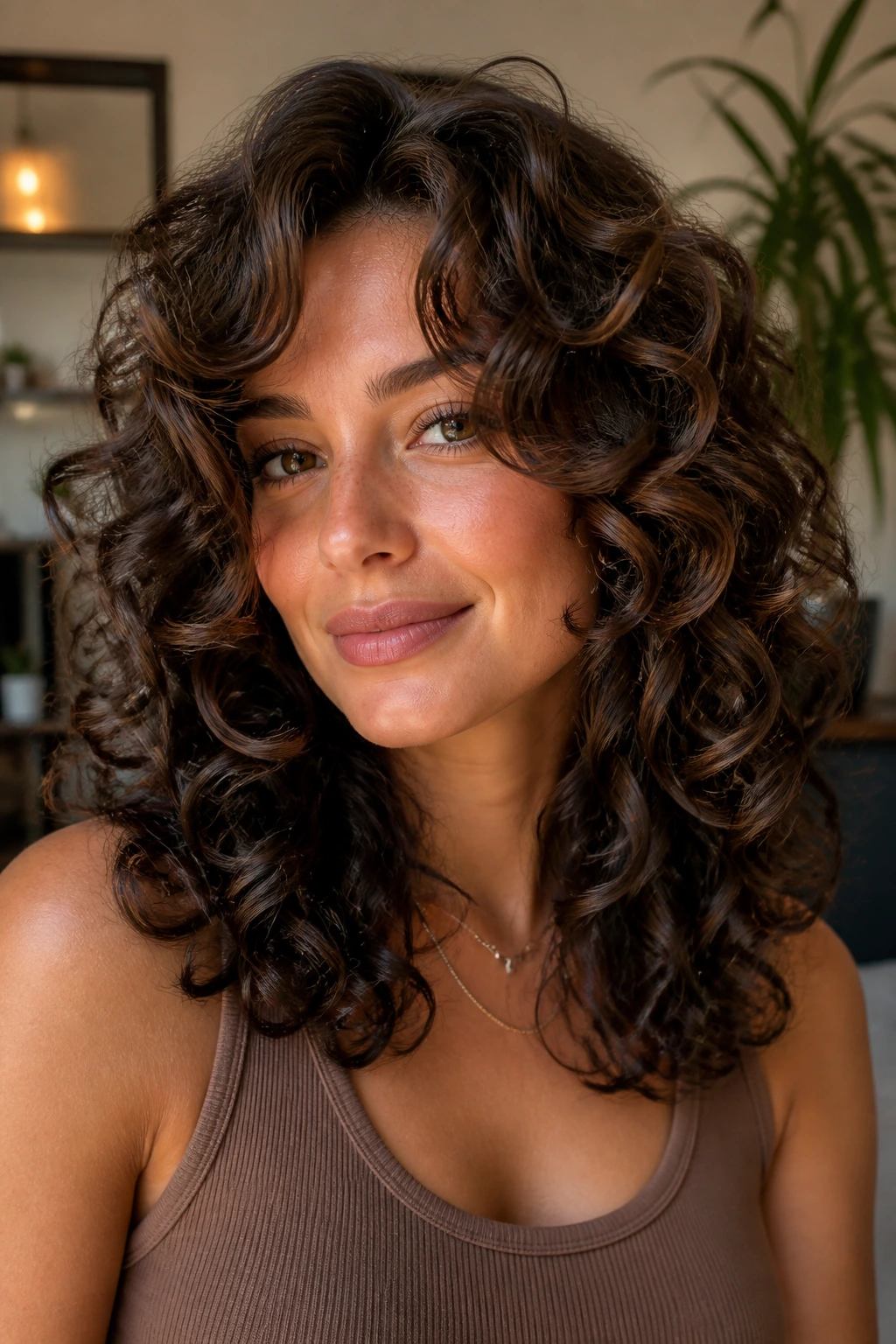
There is a difference between volume and chaos. This cut understands that. The long curtain bangs fall into the curl pattern instead of sitting on top of it, and the layers are placed to make large curls look glossy and intentional rather than massive.
It shines on hair with strong, visible curl clumps. A side part usually helps, because it gives the front a little sweep and stops the bang area from getting too heavy. If you like a finish that feels a little polished, this is one of the prettiest versions of the shag.
18. Balanced Oval Shag with Swept Bangs
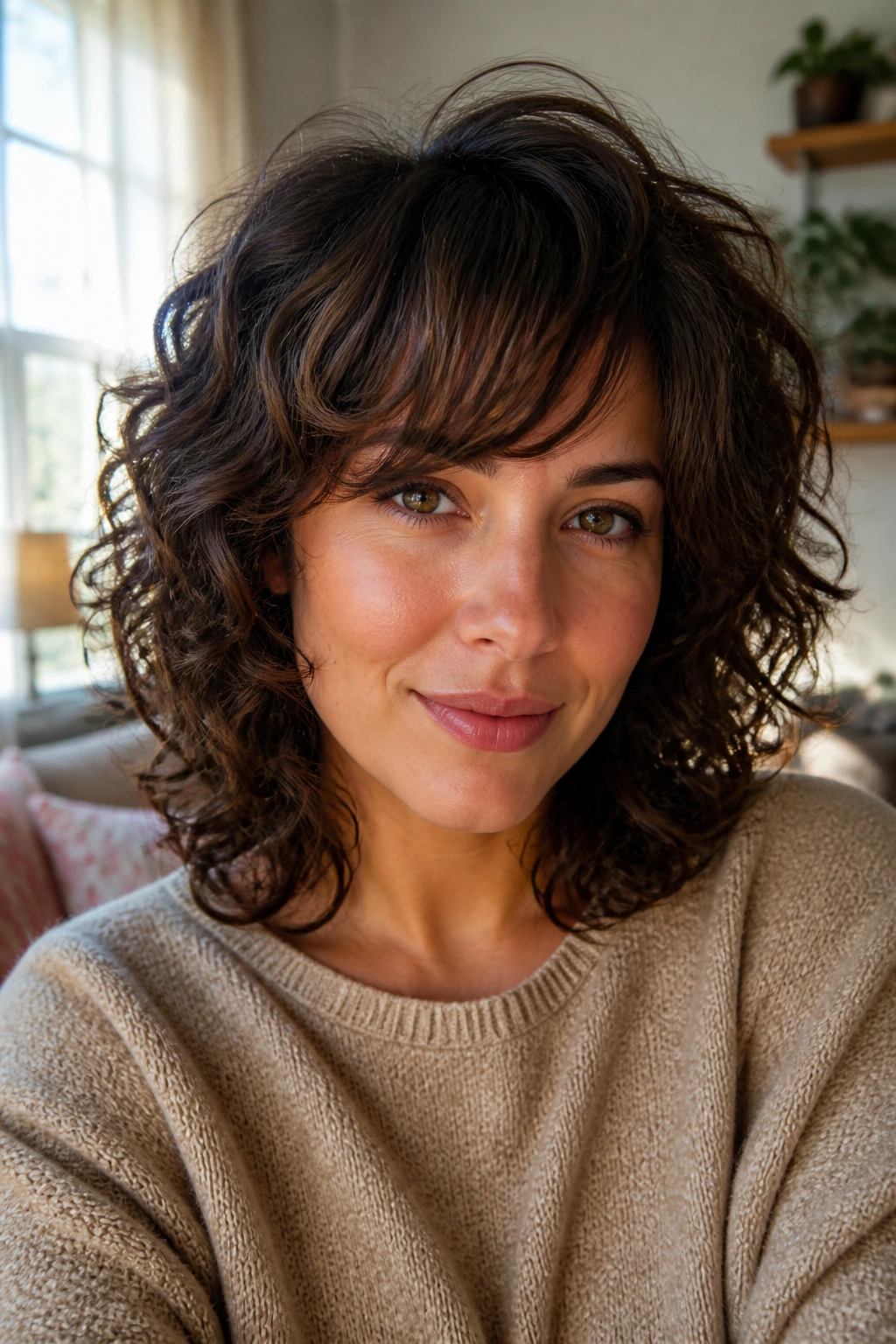
Oval faces give you room to play, which is lucky, because this cut takes advantage of that flexibility. The swept bangs are long enough to move around the forehead, and the medium layers keep the hair from hanging too flat near the jaw. Everything feels evenly proportioned.
What makes it useful is restraint. The cut does not over-correct the face shape, so the curls still look like curls. If you want a shag that can go from casual to dressed up without changing the whole styling routine, this is a smart place to land.
19. Cheekbone Stretch Shag with Angled Fringe
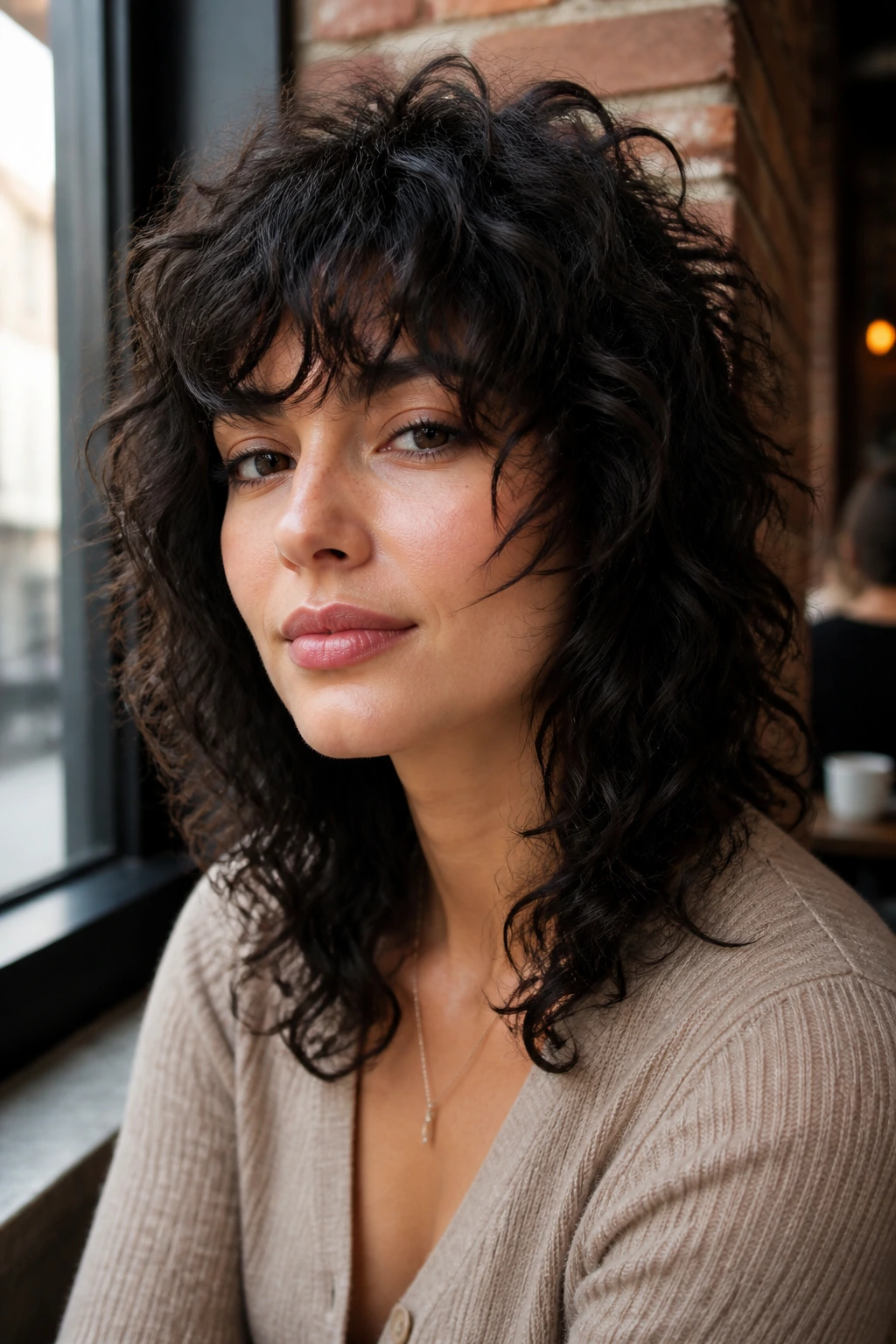
This one creates vertical lines where you want them. The fringe angles down toward the cheekbones, which draws the eye upward and lengthens the face without making the cut look severe. The layers stay medium and movable, so the shape does not get stuck.
It is a strong choice for rounder faces or for anyone who feels their curls widen the head more than they would like. The angle does some quiet visual work. Not flashy. Just effective.
20. Heart-Softening Shag with Side Layers
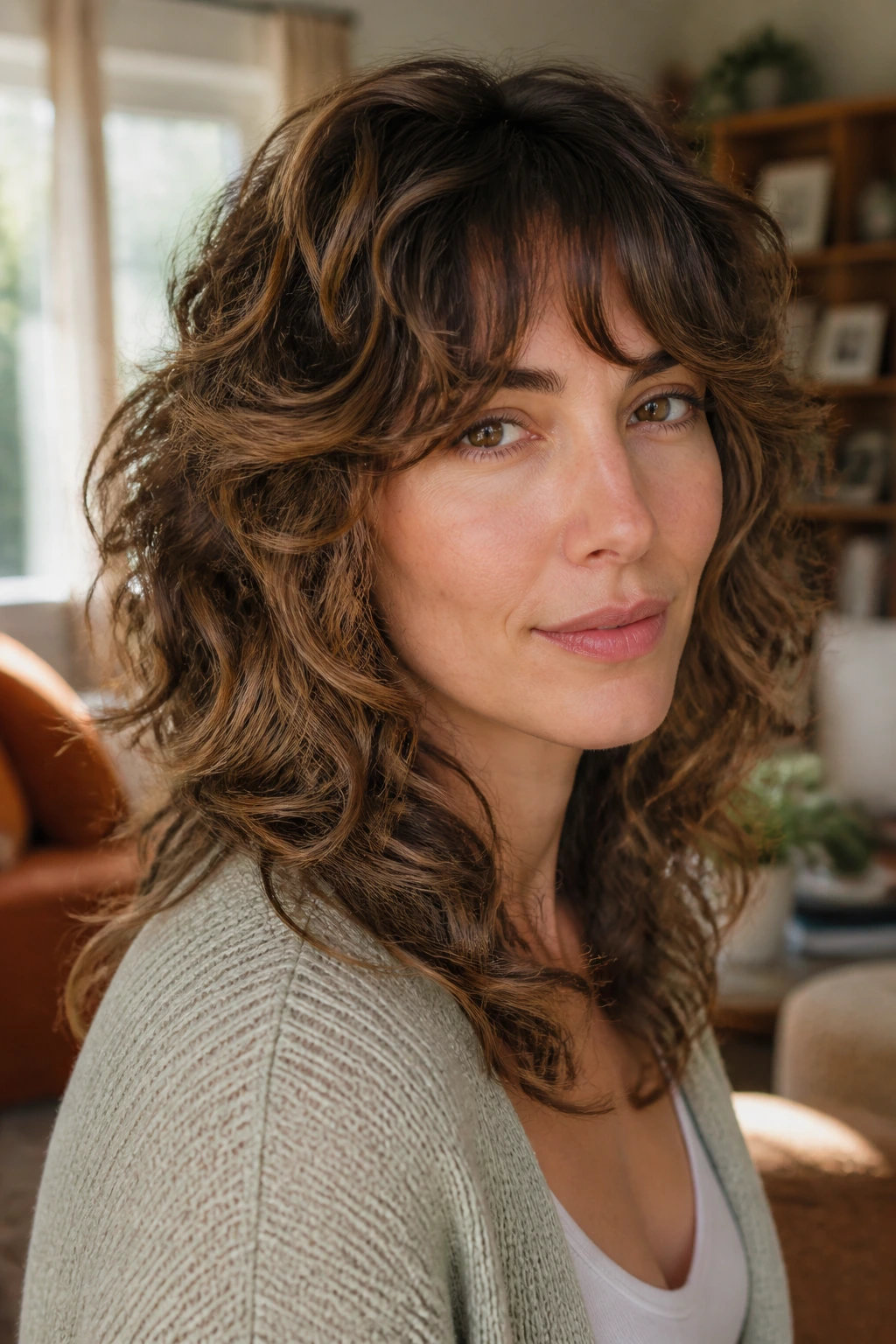
A wider forehead and a narrower chin can be tricky with curls, because volume likes to gather where you least want it. This cut handles that by keeping the bangs softer and letting the side layers fall forward a little more. The result is a gentler balance.
The beauty of this shape is how unforced it looks. The side layers do the heavy lifting, not the fringe alone. If your bangs tend to separate in the center, a longer side fall gives the front a better fallback plan.
21. Jawline Curve Shag with Rounded Fringe
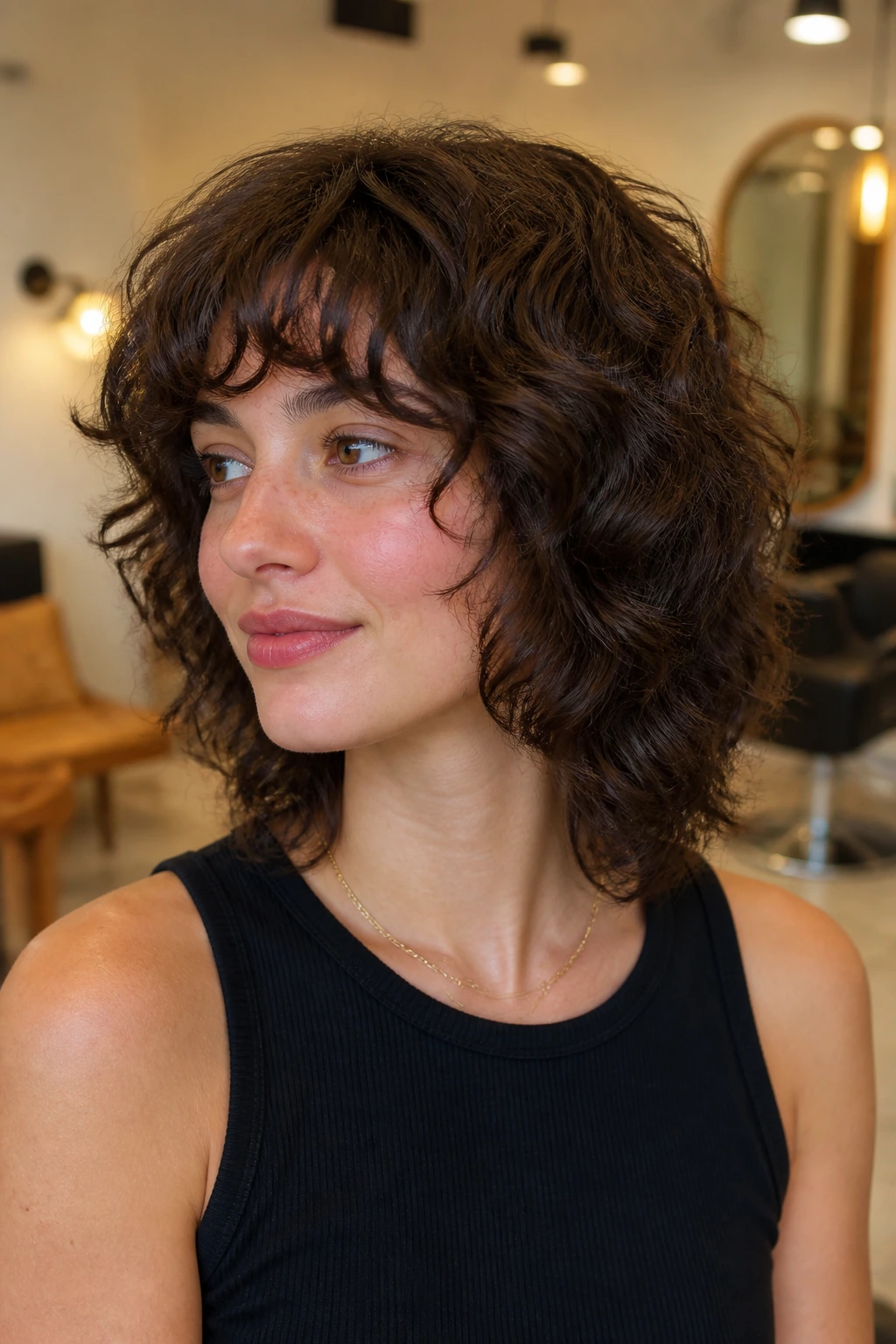
Square jaws and strong edges look fantastic with curls, but sometimes you want the cut to soften the lower face a little. Rounded fringe and curved side pieces do that job without hiding anything. They just take the edge off.
Why it works
The bangs should sit in a rounded arc, not a straight shelf. That keeps the front from competing with the jaw, and it lets the curls frame the face in a way that feels balanced.
Ask for the front pieces to taper slowly into the side layers. Fast transitions make the cut look choppy in the wrong way. Slow transitions make the shape feel expensive, and yes, there is a difference.
22. Tight-Texture Short-Bang Shag
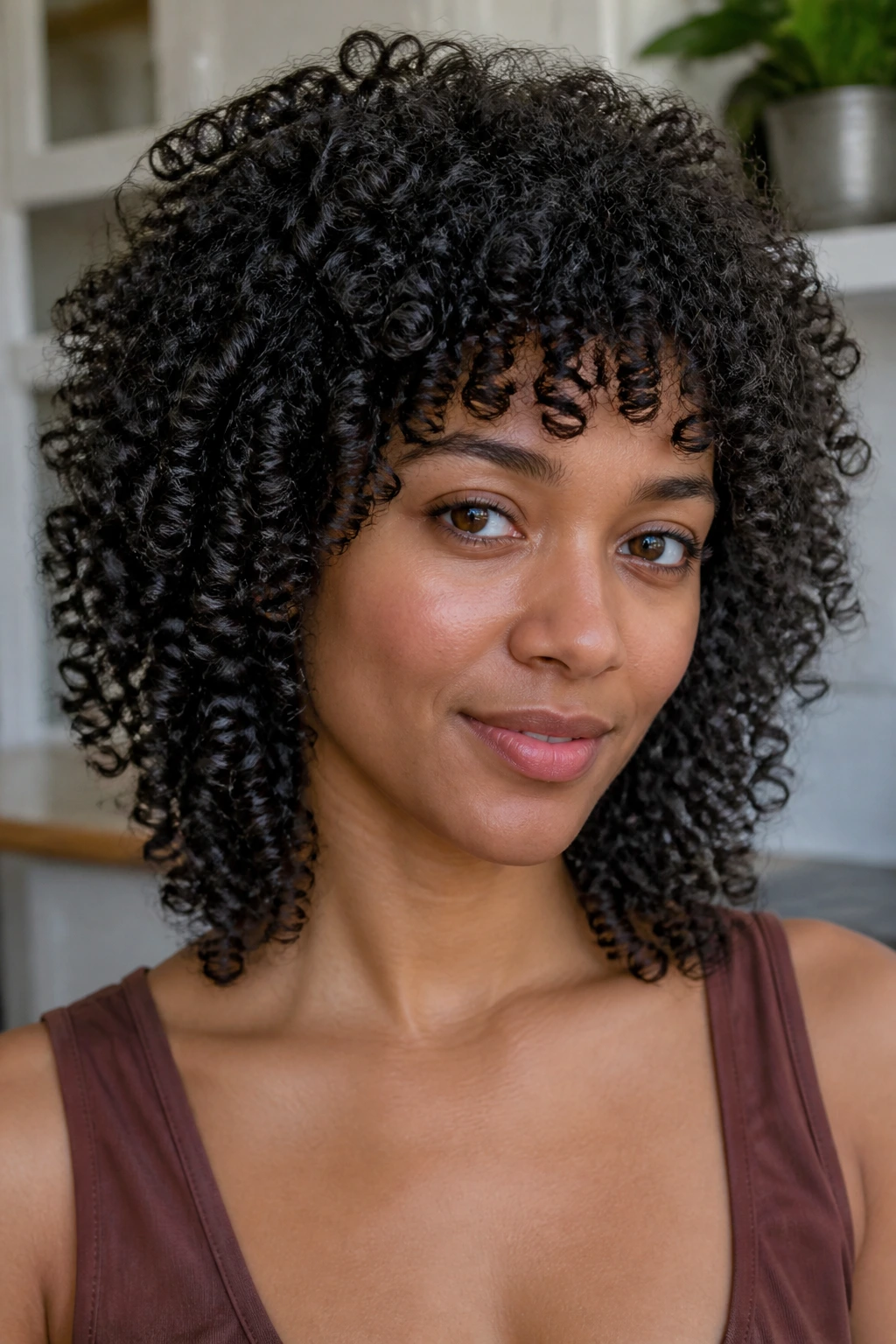
Tight curls can wear shorter bangs, but the cut has to be planned with shrinkage in mind. The front should be shaped dry or mostly dry, and the fringe needs room to spring without ending up too high. The rest of the medium-length layers should keep enough weight to stop the style from getting puffy.
This version looks confident and clean when the outline is done well. It is not trying to mimic a loose-wave shag. It is making a different point entirely, and that is why it works.
23. Feathered Wave Shag with Soft Bangs
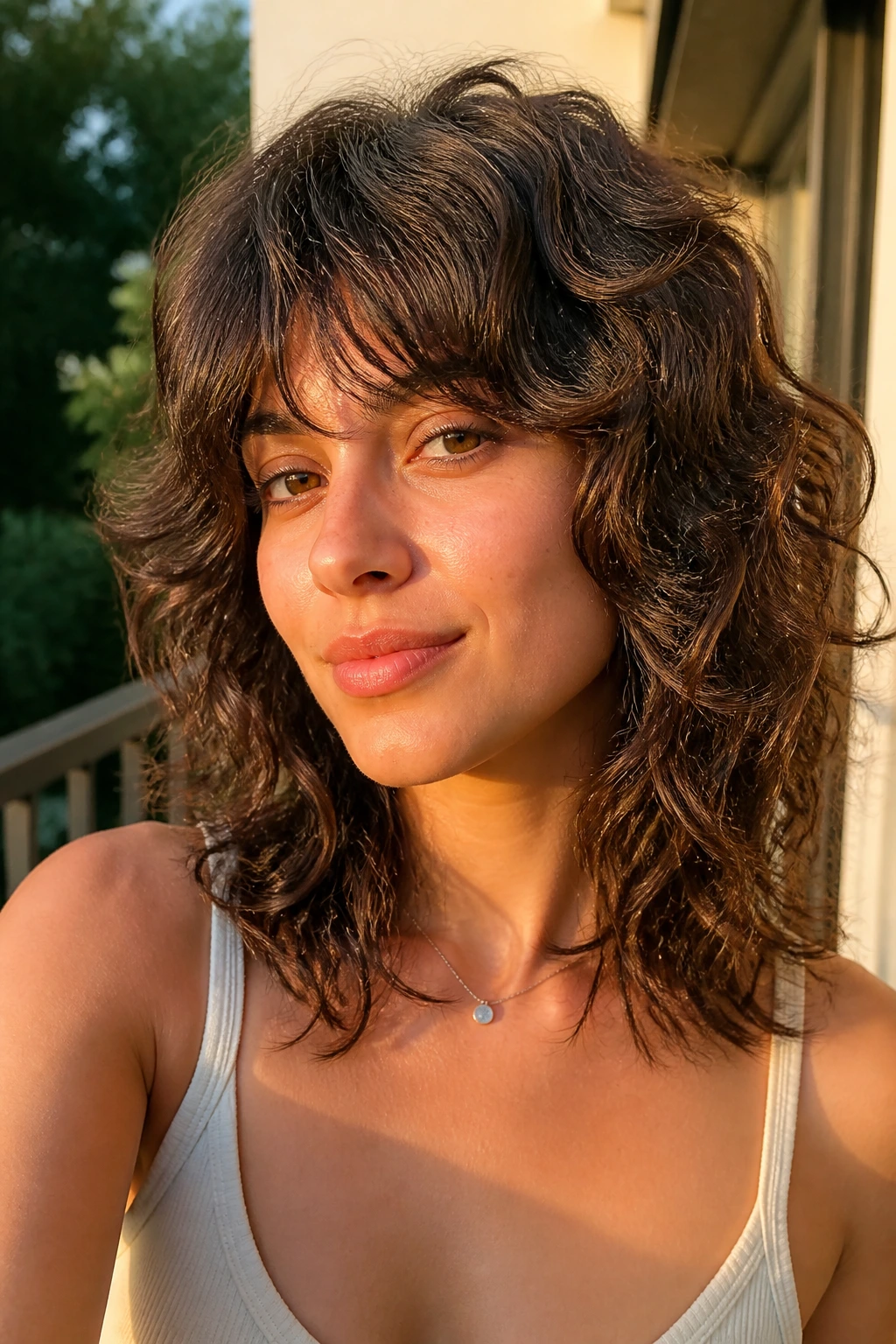
Loose waves need a lighter hand than tighter curls. Feathered layers keep the hair from losing all of its bottom weight, and soft bangs blend into the front instead of sitting as a hard line. The whole style feels breezy, not overbuilt.
This cut is a good bridge for people who do not want a heavy shag but still want movement and shape. The best version keeps the ends textured enough to swing, then stops before the layering gets too chopped. Sometimes less is the right move.
24. Color-Ribbon Shag with Chunky Bangs
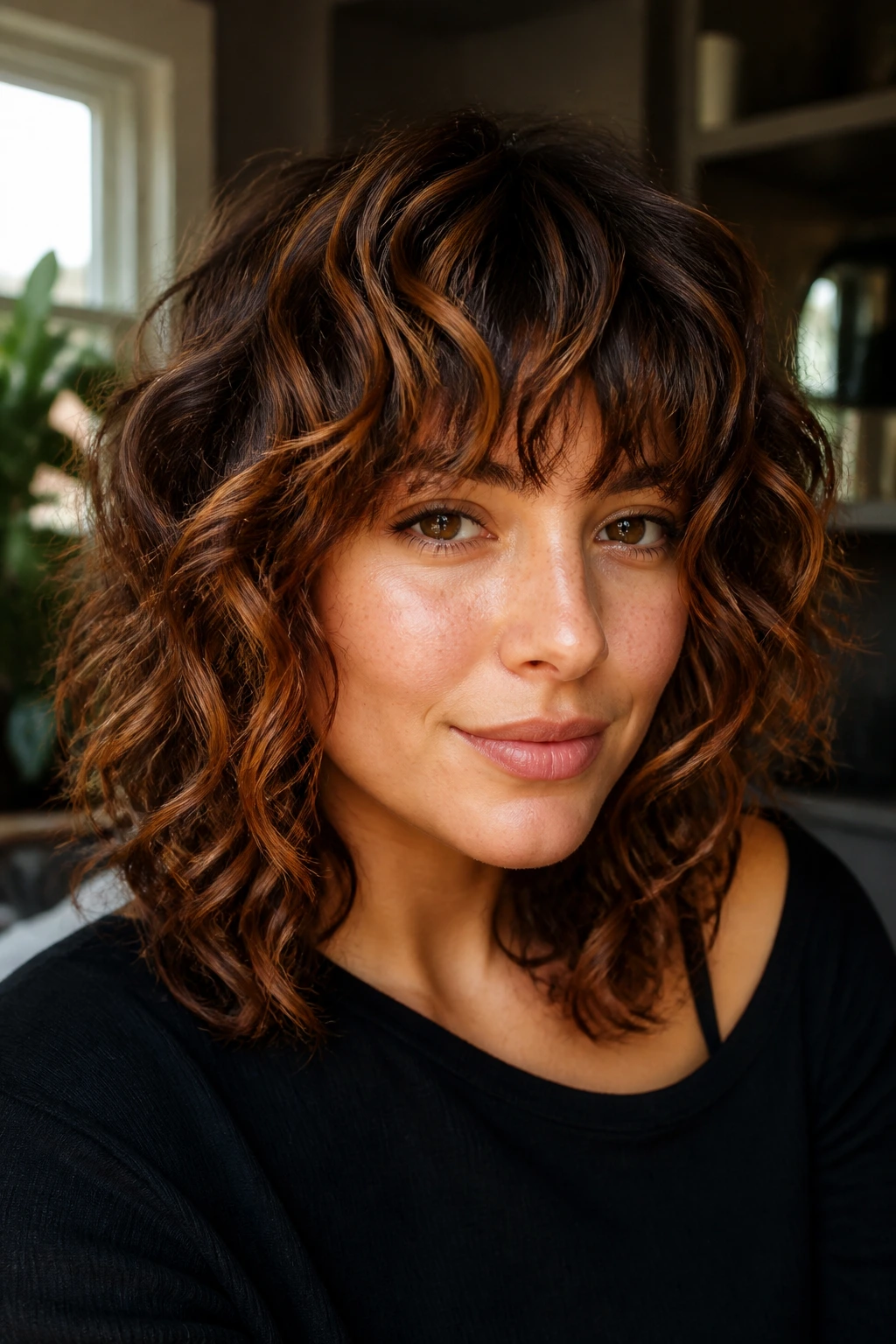
Highlights and curls love each other when the shape is right. Chunky bangs give the color somewhere to live, and the medium layers let the lighter pieces show as the curls separate. You can actually see the dimension instead of guessing it from one flat photo.
This cut is especially useful if you have balayage, ribbons of copper, or face-framing lightness. The bangs should not be so thin that the color disappears. A little density at the front keeps the dimension visible.
25. Choppy Lived-In Shag with Uneven Fringe
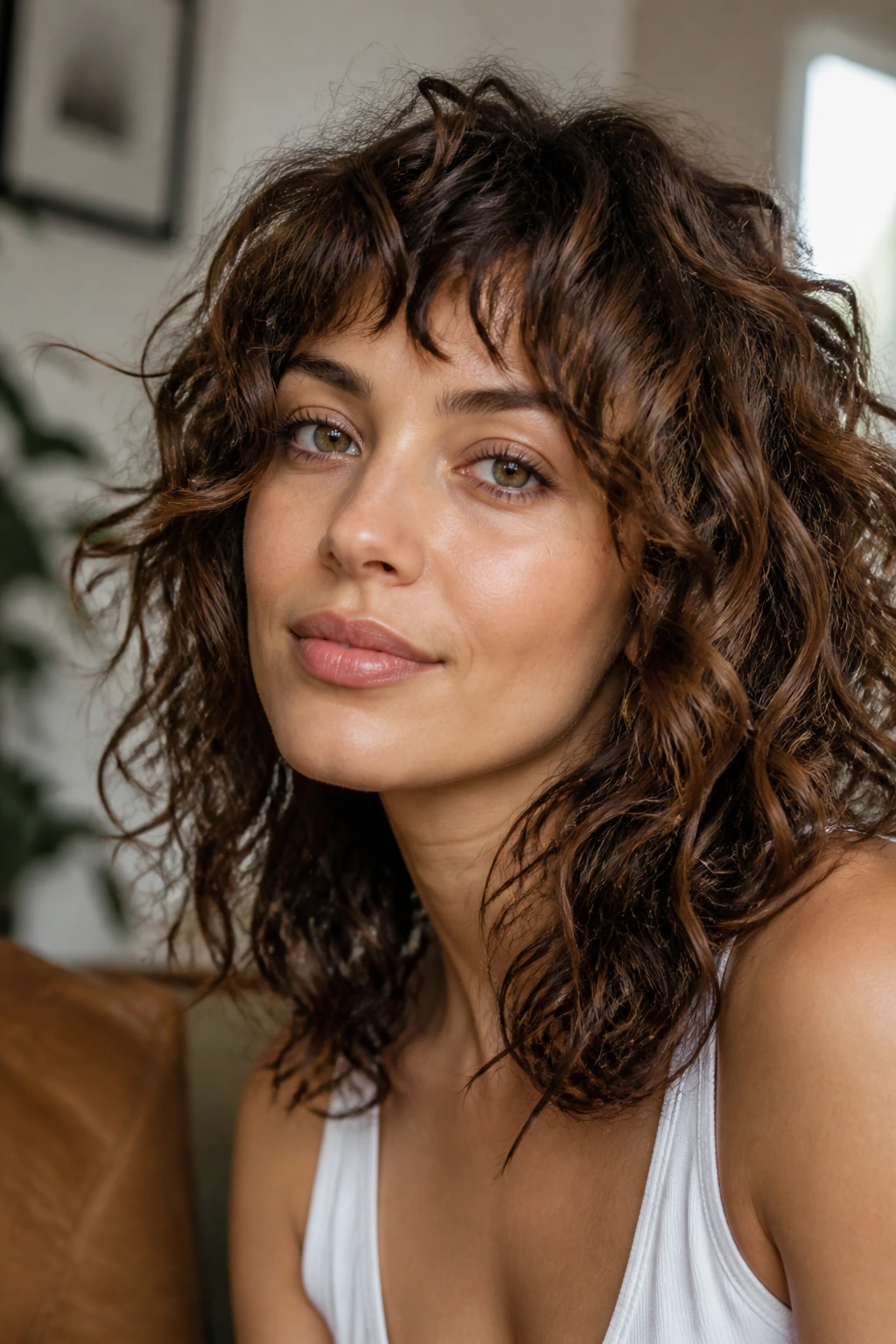
A neat haircut is not always the best haircut. Sometimes the charm lives in the slight unevenness—the fringe that falls a touch differently on each side, the layers that do not line up like a ruler, the ends that look more broken-in than polished. This shag owns that.
The trick is making the choppiness look deliberate. Too much inconsistency reads as a bad cut. Just enough gives the style personality and makes the grow-out phase feel less awkward.
Styling note
Use a small amount of texturizing cream on the mid-lengths, not the roots. Roots with too much product flatten fast, and this cut needs lift.
26. Polished Curtain Shag with Longer Fringe
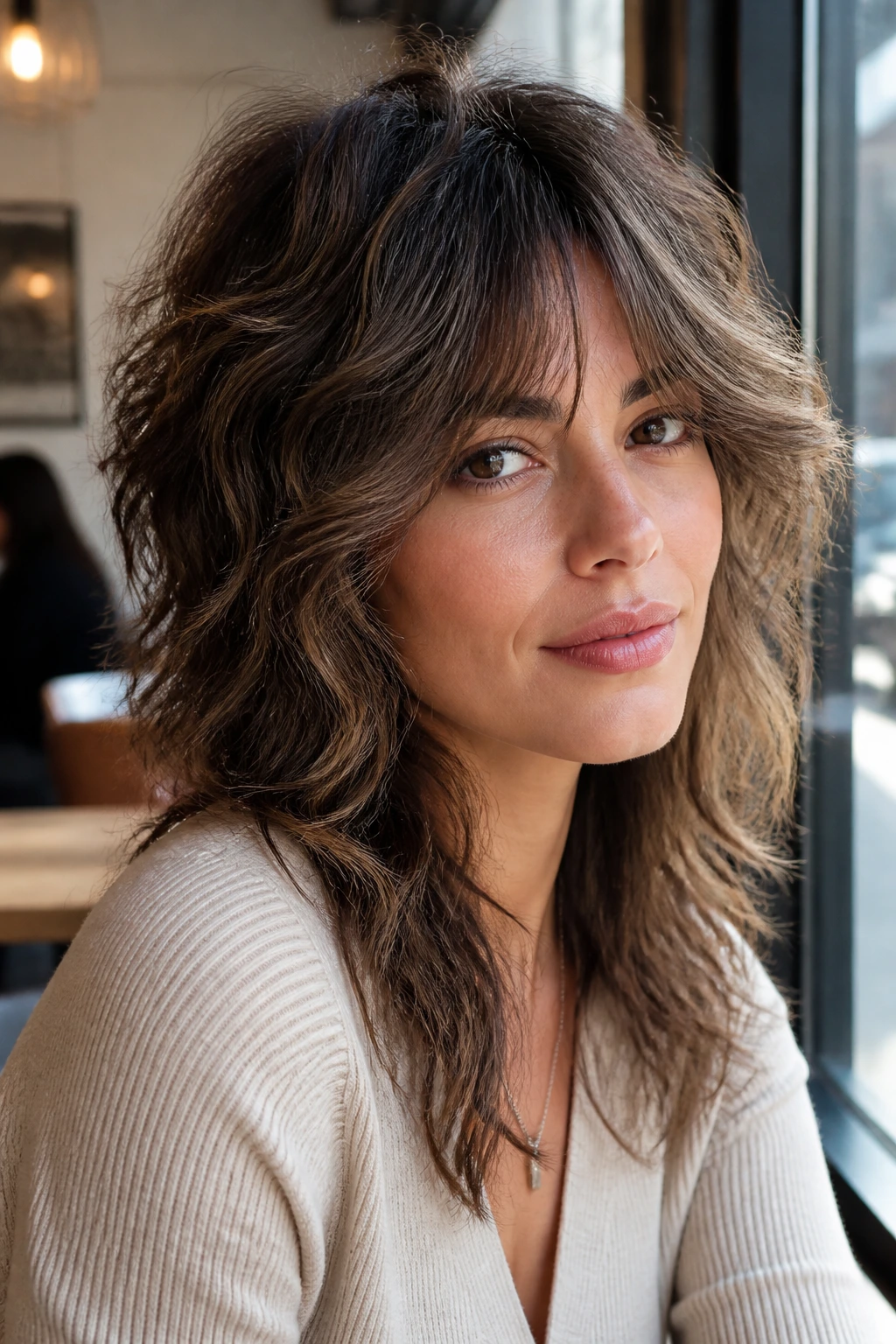
If you want the shag shape without the rough edges, this is the refined version. The layers are still there, but they are blended more smoothly, and the curtain bangs are long enough to tuck behind the cheekbones. It feels neat without losing curl movement.
The best versions of this cut are all about control. A careful diffuser pass, a light hand with product, and a little smoothing at the front give the cut a cleaner finish. Not stiff. Just tidy enough to wear to dinner without thinking about it.
27. Grow-Out Friendly Shag with Blended Bangs
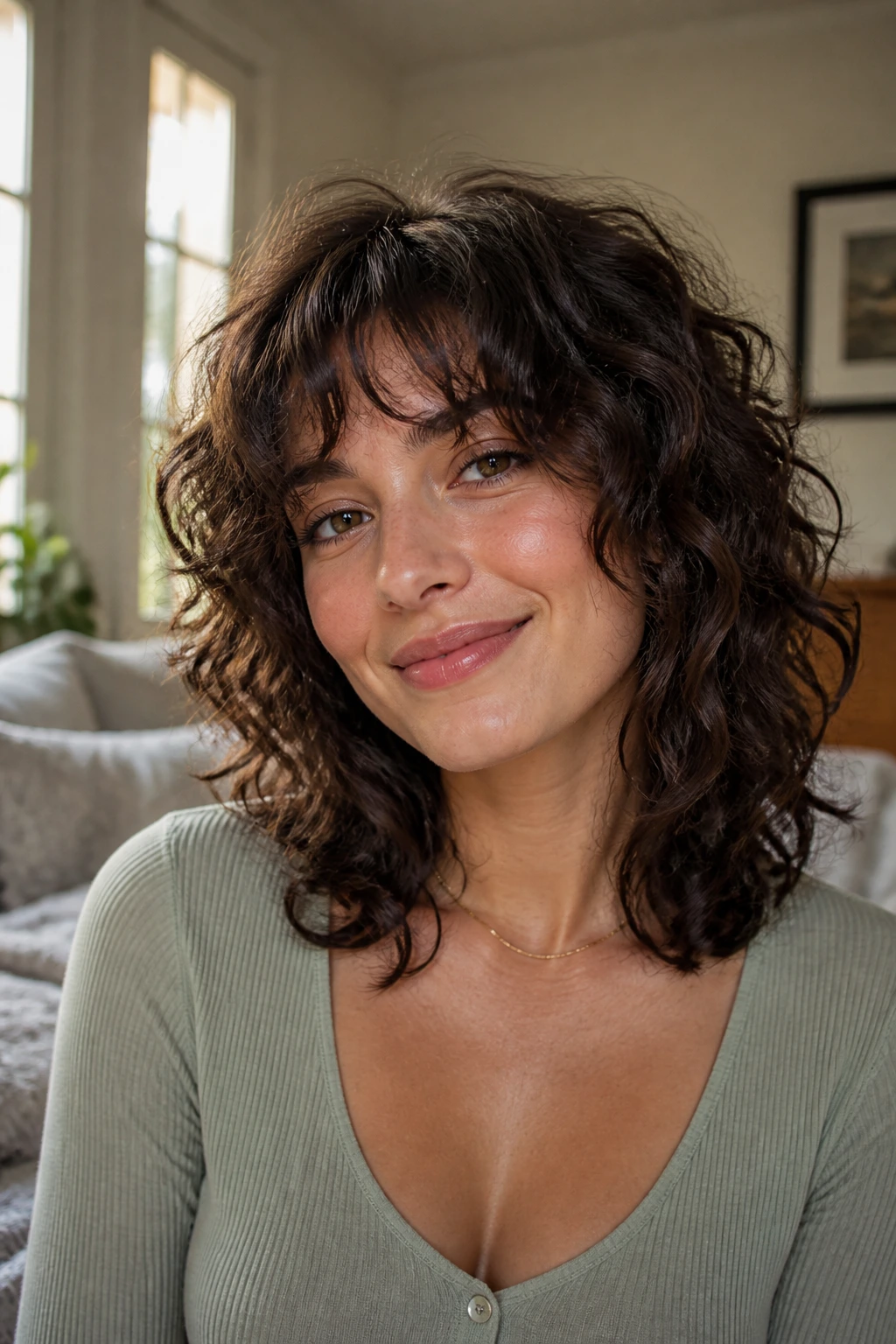
Some cuts look good only on the day you leave the salon. This is not one of them. The bangs blend into the face frame, the layers are soft enough to settle as they get longer, and the medium length gives the whole shape room to age gracefully.
It is the version to choose if you do not want to count the days until your next trim. The fringe can be tucked, pinched back, or parted differently as it grows, which makes the cut unusually forgiving. That matters more than people admit.
Why Medium Length Keeps Curly Shags From Ballooning

Medium length is the sweet spot because it gives curls enough weight to behave. Too short, and a shag can spring upward and widen at the sides. Too long, and the layers may lose their shape and start hanging like separate pieces instead of a single cut.
At collarbone to shoulder length, curls have room to bounce without taking over the entire outline. The weight line still exists, which matters. You want the cut to move, not float away from your head like a halo with no anchor.
Bangs fit this length better, too. When the rest of the cut is medium, the fringe can act like a focal point without being the only thing holding the style together. That gives you options on rough wash days, humid afternoons, and the sort of mornings where your hair decides to improvise.
The Tools That Make Curly Shag Styling Easier
-
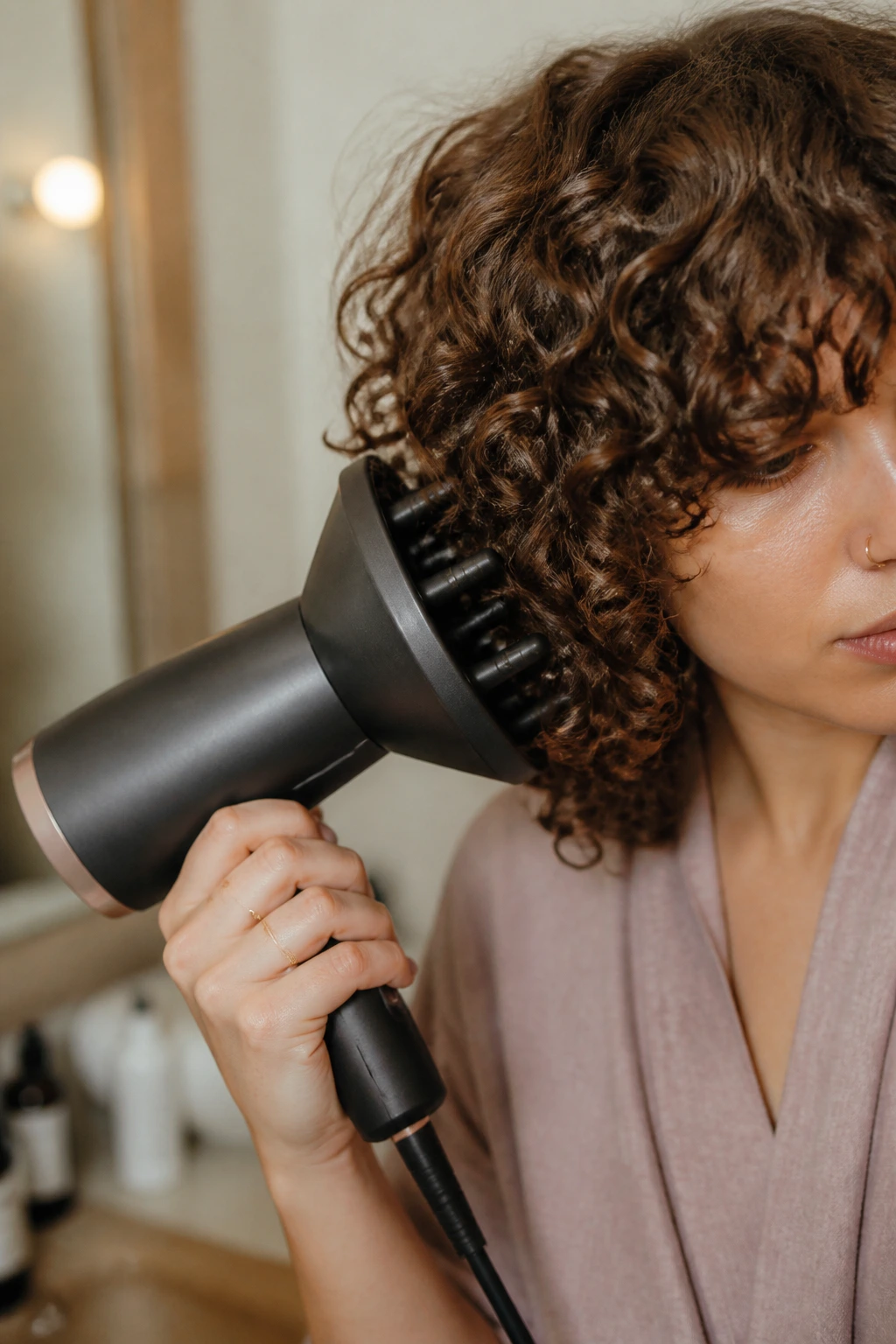
Diffuser attachment: This is the fastest way to keep curl clumps intact while lifting the roots instead of blasting the pattern apart.
-
Wide-tooth comb: Use it in the shower or right after rinsing conditioner to detangle without yanking the curl groupings apart.
-
Microfiber towel or cotton T-shirt: Both cut down on friction, which helps the bangs stay smoother and keeps the layers from frizzing out before they dry.
-
Duckbill clips or small section clips: These are useful for lifting the crown while drying or keeping the fringe out of the way while the rest sets.
-
Spray bottle: Handy for refreshing bangs that dried too fast or woke up bent in a weird direction.
-
Light mousse or curl foam: Better than heavy cream for fine or medium-density curls that need lift near the roots.
-
Flexible-hold gel: Useful when you want the fringe to hold its shape through the day without getting crunchy.
-
Hair shears for trim touch-ups: If you trim bangs at home, use real shears. Kitchen scissors chew the ends and leave the fringe looking ragged.
How to Ask for the Cut at the Salon
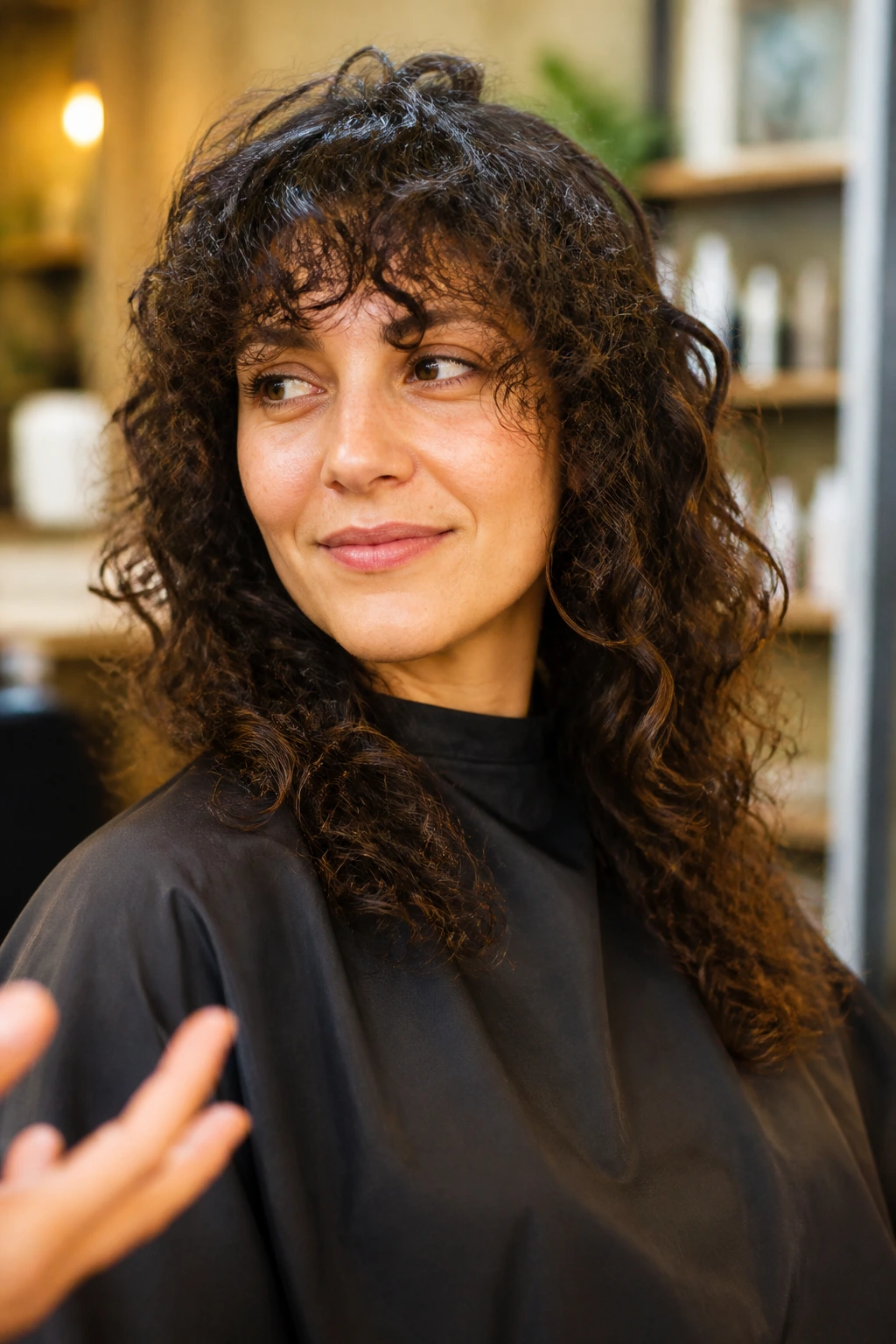
The easiest way to get a good curly shag is to talk about your hair like curls, not like straight hair with an attitude. Bring photos, sure, but bring a few, not one. A curtain bang on loose waves does not behave the same way as a curtain bang on tight coils, and your stylist needs to see the texture match.
Ask whether they cut curly hair dry, damp, or in stages. A lot of the better curly shags are shaped with the curls in their natural state so the shrinkage is visible. If your bangs tend to spring up a lot, say that out loud. Do not be polite to the point of uselessness.
The most useful words you can give a stylist are practical ones: how often you want to trim, how much time you actually spend styling, whether you air-dry, diffuse, or wear your hair half-tamed and half-chaotic. Tell them if you want the bangs to hit the brows, the cheekbones, or the bridge of the nose when dry. That one detail changes everything.
How to Wear the Shape on Wash Day and Day Three
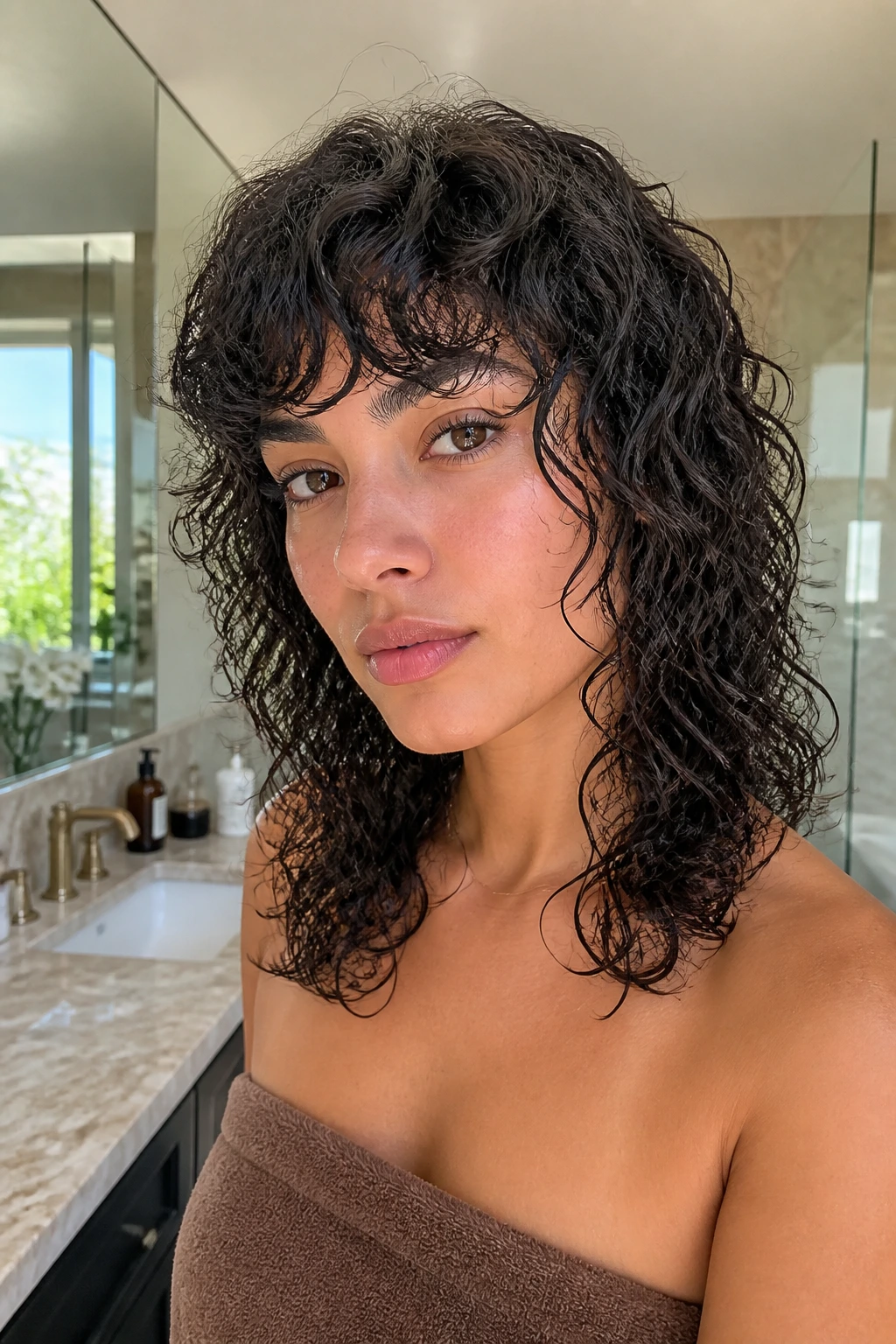
Shape: Start with soaking-wet hair and place your part before any product goes on. That matters more than people think, because curls remember tension, and bangs are the first place that decision shows up.
Product: Use a light leave-in first, then a mousse or gel depending on how much hold your curls need. Fine hair usually likes less cream and more foam. Dense hair can take a bit more support, especially at the crown and around the fringe.
Drying: Diffuse the roots first if you want lift, then move to the mid-lengths, then the bangs. Do not hold the diffuser on the fringe for too long or the bangs will shrink faster than the rest of the style. That uneven drying is how people end up with a front section that looks two cuts shorter than everything else.
Refresh: On day two or three, mist the front lightly and scrunch the ends with clean hands. If the bangs split in the middle, wet the roots, pinch them together, and clip them upright for ten minutes while they reset.
Accessories: Hoop earrings, open collars, and simple necklines let the shag move visually. Heavy collars and chunky scarves can hide the face frame, which is a shame when the front of the cut is doing so much work.
Small Styling Moves That Change the Whole Look
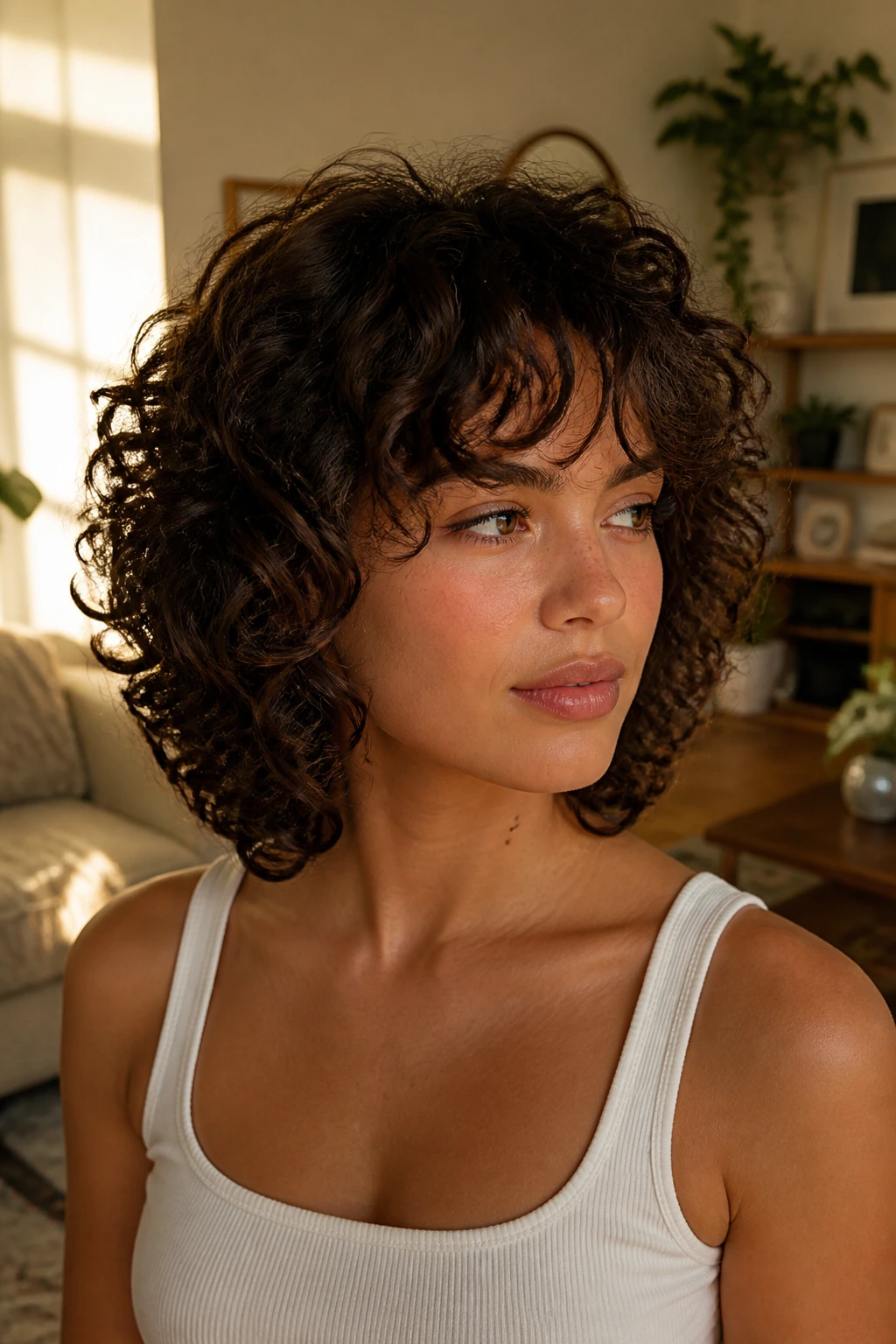
A half-inch shift in parting can make a shag look softer, sharper, or more balanced. That is not a tiny detail; it changes where the bangs fall and how the curls stack at the temple. If one side always collapses faster, use that side as the heavier side instead of fighting it.
Root clipping at the crown is worth the trouble. Two small clips, set just after product application, can keep the top from drying flat. Remove them when the hair is about 80 percent dry so the lift stays, but the roots do not dry into a hard bend.
A tiny amount of serum on the very ends can calm frizz, but keep it off the fringe. Bangs show product faster than the rest of the cut. They go stringy in a heartbeat.
Common Mistakes That Flatten Curly Shag Bangs
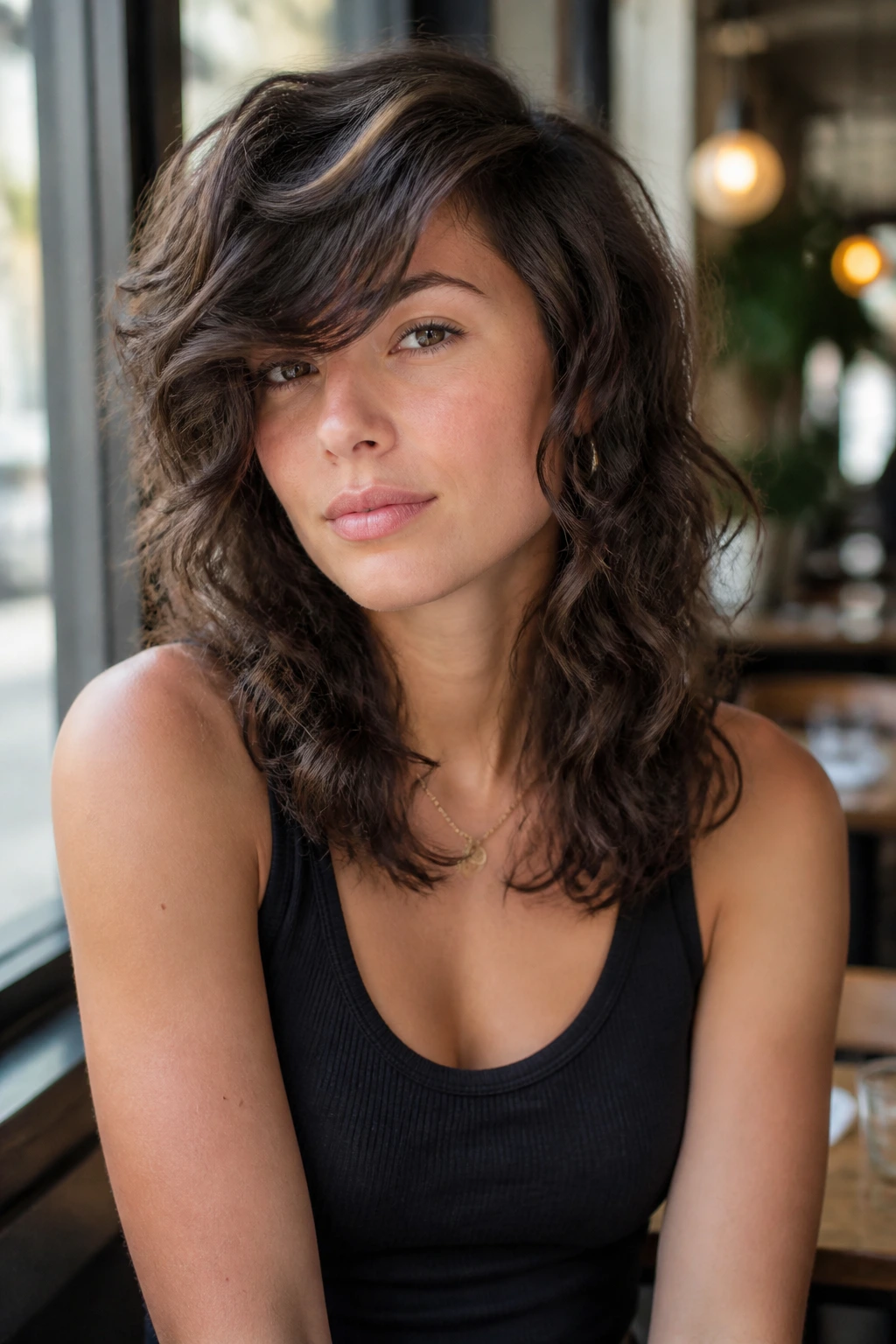
The first mistake is cutting the fringe to the length you want it to be when wet. Curly bangs need dry shrinkage figured in, or they spring too far up and sit awkwardly high. The fix is boring and necessary: cut conservatively, check the curl pattern, and leave extra length in the front.
Another issue is over-layering the crown. That can make the top explode while the ends get thin and stringy. If your hair is dense, you want shape removal inside the cut, not a scissor attack on the perimeter.
Heavy cream is another troublemaker, especially on finer curls. It can make bangs hang flat and separate into sad little pieces. Swap some of that weight for mousse or lighter gel, then diffuse with less touch.
Skipping bang trims is the last big one. The fringe grows faster than the rest of the cut in the sense that everyone notices it sooner. A small trim every 3 to 5 weeks keeps the front from sliding into your eyes and losing the shape that made the haircut work in the first place.
Variations and Adaptations to Try
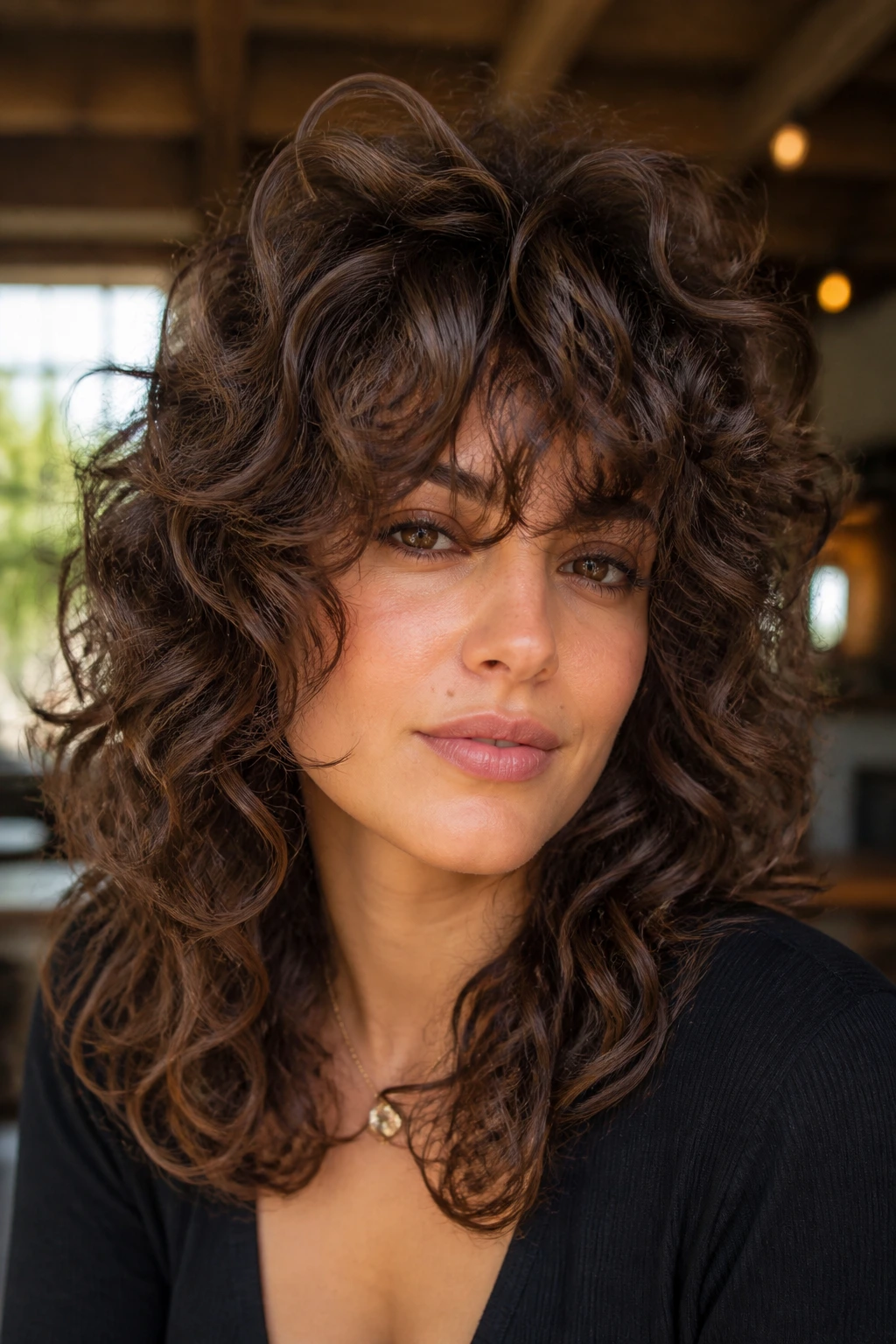
Fine-Curl Feathering: Keep the perimeter a little fuller and use light layers only around the face. This keeps the cut from looking sparse, which is the fastest way to ruin a shag on finer texture.
Coil-Safe Dry-Cut Version: Ask for the fringe and front layers to be shaped in their natural state, with each curl group checked before any final snips. That extra minute in the chair saves you from bangs that shrink into a surprise.
Grow-Out Version: Ask for the fringe to blend into the face frame at the cheekbones instead of stopping sharply on the forehead. It buys you a longer window between trims and makes awkward grow-out feel planned.
Big-Volume Version: Use shorter crown layers, a stronger mousse, and a diffuser to build lift. This version works when you want the shag to read as full and dramatic instead of soft.
Low-Touch Air-Dry Version: Keep the layers more moderate and use a leave-in plus gel combo. Let the hair settle on its own, then separate only the pieces that are clumped together too tightly.
Keeping the Cut in Shape Between Salon Visits
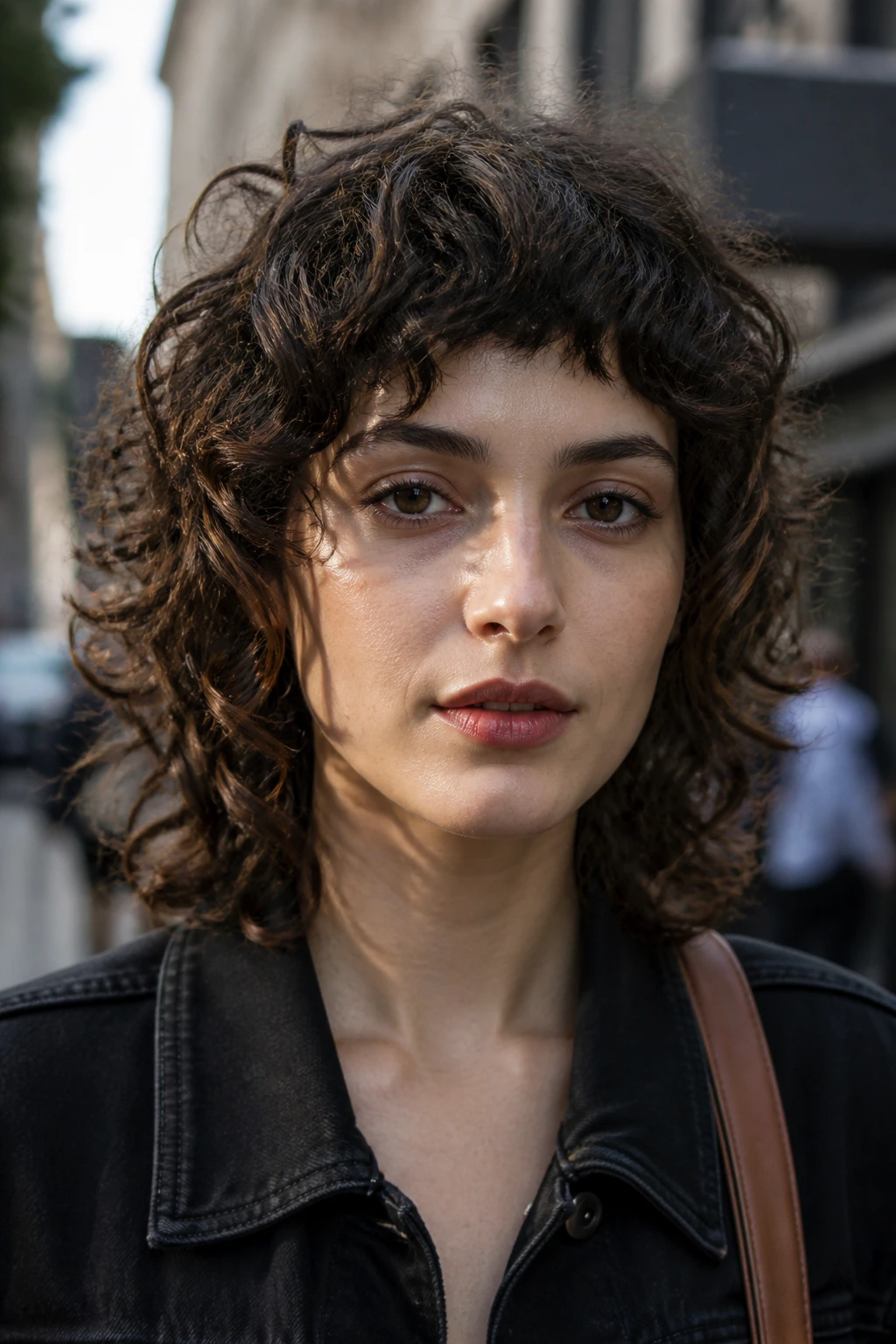
Curly shag bangs need more maintenance than the rest of the haircut, and that is normal. Plan on a fringe trim every 3 to 5 weeks if the bangs touch your eyes or your curl spring is strong. The full shape usually wants a reshaping every 8 to 12 weeks, depending on density and how fast your hair grows.
Sleep care matters more than people want it to. A satin pillowcase, a loose pineapple, or a bonnet can keep the fringe from flattening overnight. If you wake up with a kink at the front, mist it lightly and clip the bangs up for a few minutes while you make coffee.
Product buildup can flatten the whole shape, especially around the crown. Clarify every 4 to 6 weeks if your curls start feeling coated or dull. After that, use a light conditioner and go easy on the heavy creams for the next wash or two.
Curly Shag Questions People Ask in the Chair
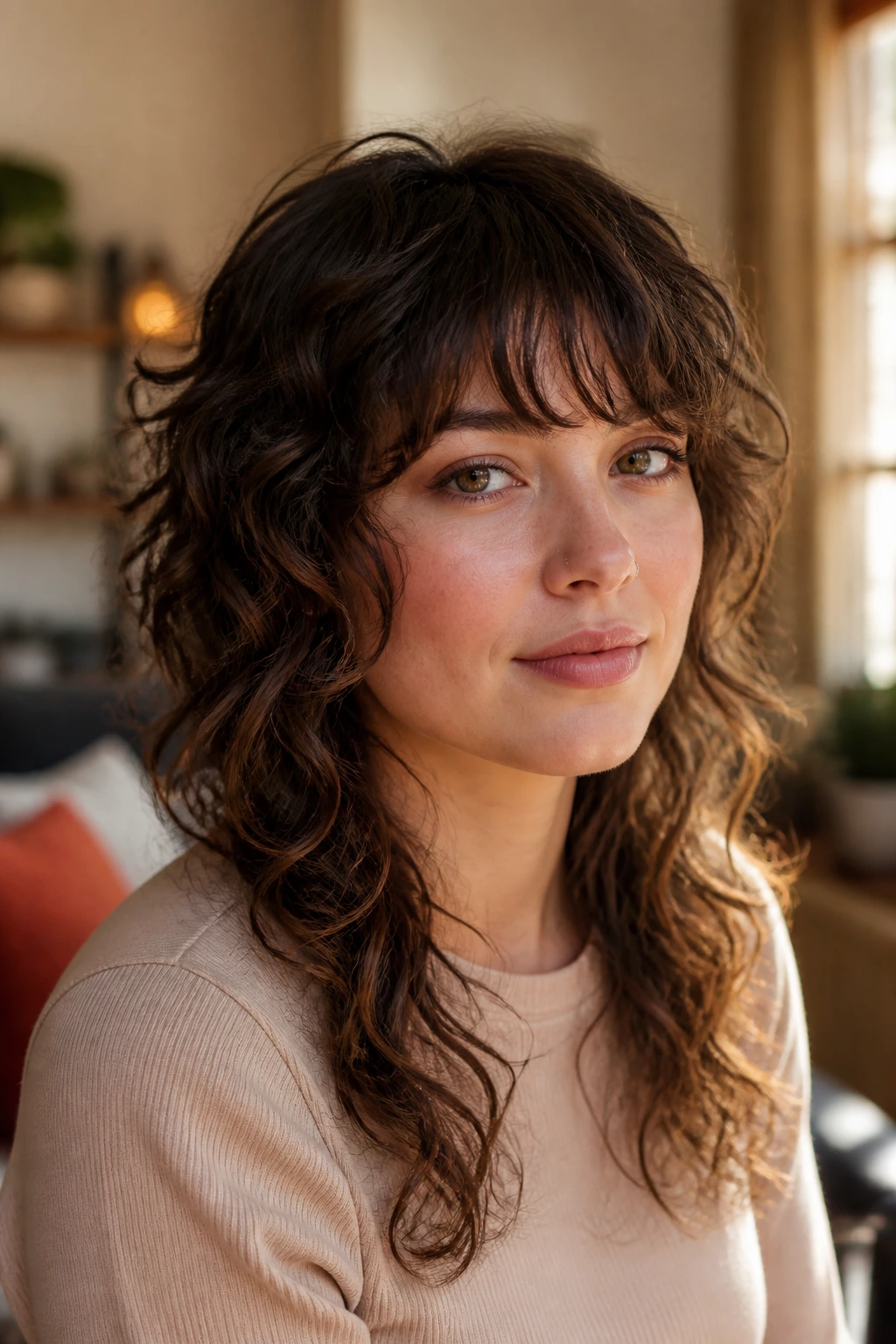
Can curly hair really have bangs without looking weird?
Yes, if the bangs are cut with shrinkage in mind and blended into the layers instead of sitting like a separate strip. The shape matters more than the idea of bangs itself.
Do curly shag bangs have to be cut dry?
Not always, but dry or mostly dry cutting usually gives a better read on where the curls will land. Wet cutting can work if the stylist knows your curl spring well and checks the shape after the hair is dry.
What curl types work best with a medium shag?
Loose waves, ringlets, and tighter coils can all wear it well. The difference is in how much weight the cut keeps and how long the fringe starts out in the chair.
How often do bangs need trimming?
Most curly fringes need touch-ups every 3 to 6 weeks, depending on how quickly they grow and how springy they are. If the bangs hit your lashes or split badly, trim sooner.
Will this cut make fine curly hair look thinner?
It can, if the layers are too aggressive. Ask for a lighter shag with more perimeter weight and a softer fringe so the hair keeps enough body to look full.
Can I still wear it if I sometimes straighten my hair?
Yes, but a curly shag with bangs usually looks best when the bangs are cut to suit the natural pattern. If you straighten often, the fringe may need a slightly different balance so it does not look too short when curly.
What if the bangs keep separating in the middle?
That usually means the front section wants a different part or a little more root lift. Train the fringe with clips while it dries, and avoid putting heavy product right at the center of the forehead.
Is this cut hard to grow out?
Not if the fringe is blended into the face frame. The longer, softer versions tend to grow out into an easy mid-length shape instead of turning into a blunt mess.
The Shape That Keeps Growing Well
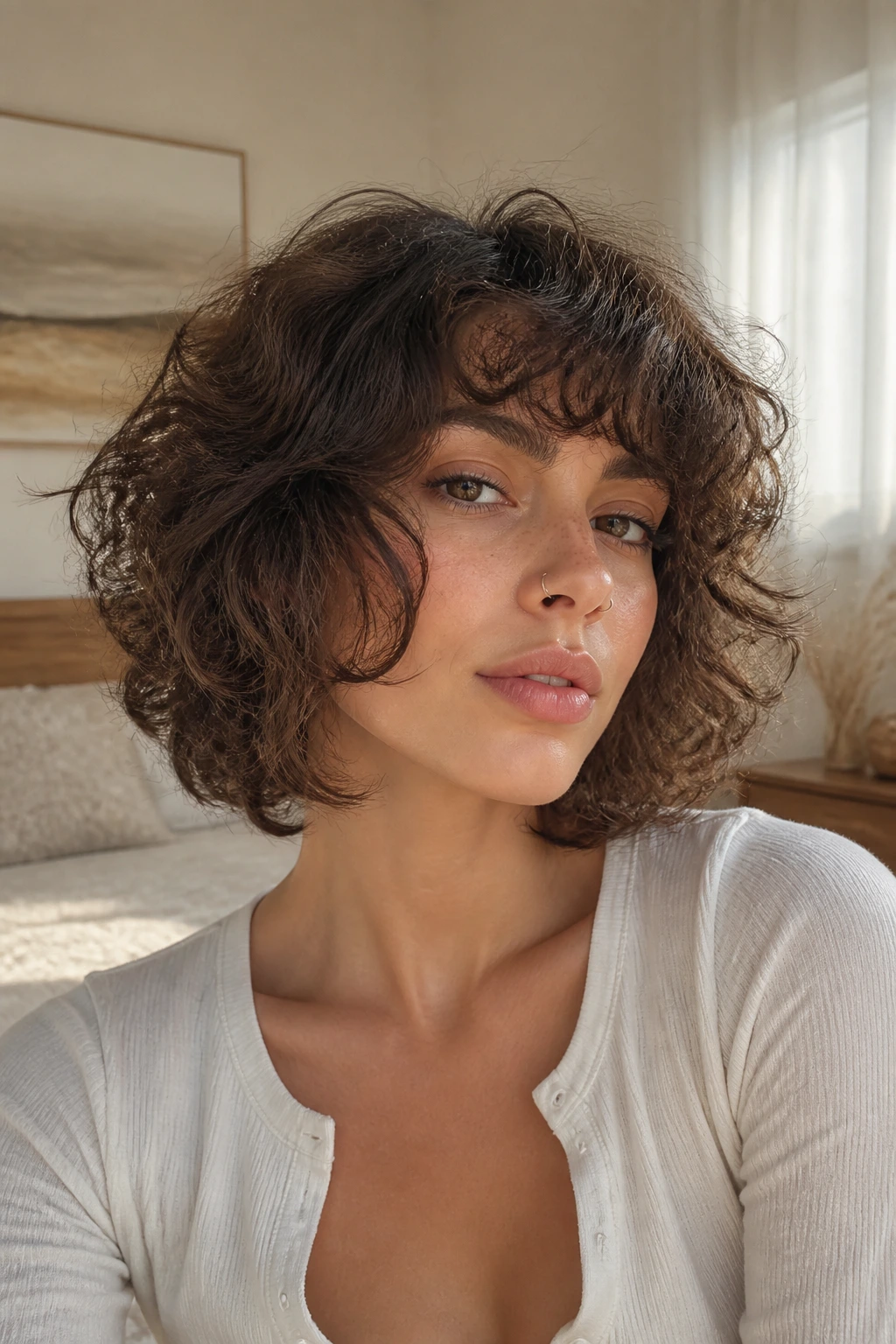
The nicest thing about medium length curly shag cuts with bangs is that they do not ask your hair to be perfect. They ask it to have shape. That is a much better deal. A good cut gives the curls enough structure to behave, then leaves enough looseness for the texture to do its own work.
Some of these versions lean soft, some lean sharp, and a few have a little attitude. That range is the whole point. When the layers and fringe are matched to your curl pattern, the haircut starts working on day one—and keeps working after the first few washes, which is where the real test lives.
Pick the version that fits your texture, your schedule, and your tolerance for fringe maintenance. The right shag should still look like it belongs to you when the diffuser is put away and the day gets messy.
