



Wavy hair has a funny sense of humor. Leave it too blunt and it poofs at the bottom. Cut it too aggressively and the whole shape can turn stringy, with the ends looking like they were attacked by a hedge trimmer instead of shaped by a real human being. The sweet spot is a shag that gives the wave somewhere to move.
That’s where boho shag haircuts for wavy hair earn their keep. The cut is soft, layered, a little undone, and far more forgiving than a precision bob that demands perfect blow-drying every morning. A good shag works with the bend already in your hair. It creates air around the crown, keeps the perimeter from going heavy, and lets those waves fall in loose bends instead of stiff, helmet-like curves.
The tricky part is that “shag” can mean a dozen different things. One version needs curtain bangs and long layers that graze the collarbone. Another wants a stronger fringe and a shorter back. Another just needs internal layers so the hair doesn’t turn into a triangle by lunch. That range is the whole point. The right shape can make waves look fuller, softer, and more expensive-looking without begging for a flat iron every day.
Why This Collection Works So Well for Wavy Hair
-
It follows the wave instead of fighting it: The best shag layers give 2A, 2B, and loose 2C waves room to bend at the face and flip at the ends instead of collapsing into one flat sheet.
-
It builds movement where waves already want to move: Layers placed around the cheekbones, jaw, and collarbone let the hair kick out in a controlled way, which is why the style looks alive even when it’s air-dried.
-
It grows out with less drama: A blunt cut can get bulky fast. A shag keeps some shape as it grows, so you’re not trapped in a strict six-week trim cycle just to stay sane.
-
It can be soft or sharp: Keep the ends feathered for a loose, bohemian feel, or ask for a little more edge through the crown and fringe if you want the cut to read cooler and less beachy.
-
It works at different lengths: Short, midlength, and long versions all make sense here. The haircut is more about where the layers start than how many inches you keep.
-
It makes styling less precious: A diffuser, a little mousse, and an air-dry can be enough. If a cut needs a perfect blowout to look right, it’s the wrong cut for most wavy hair.
1. Long Curtain-Bang Boho Shag
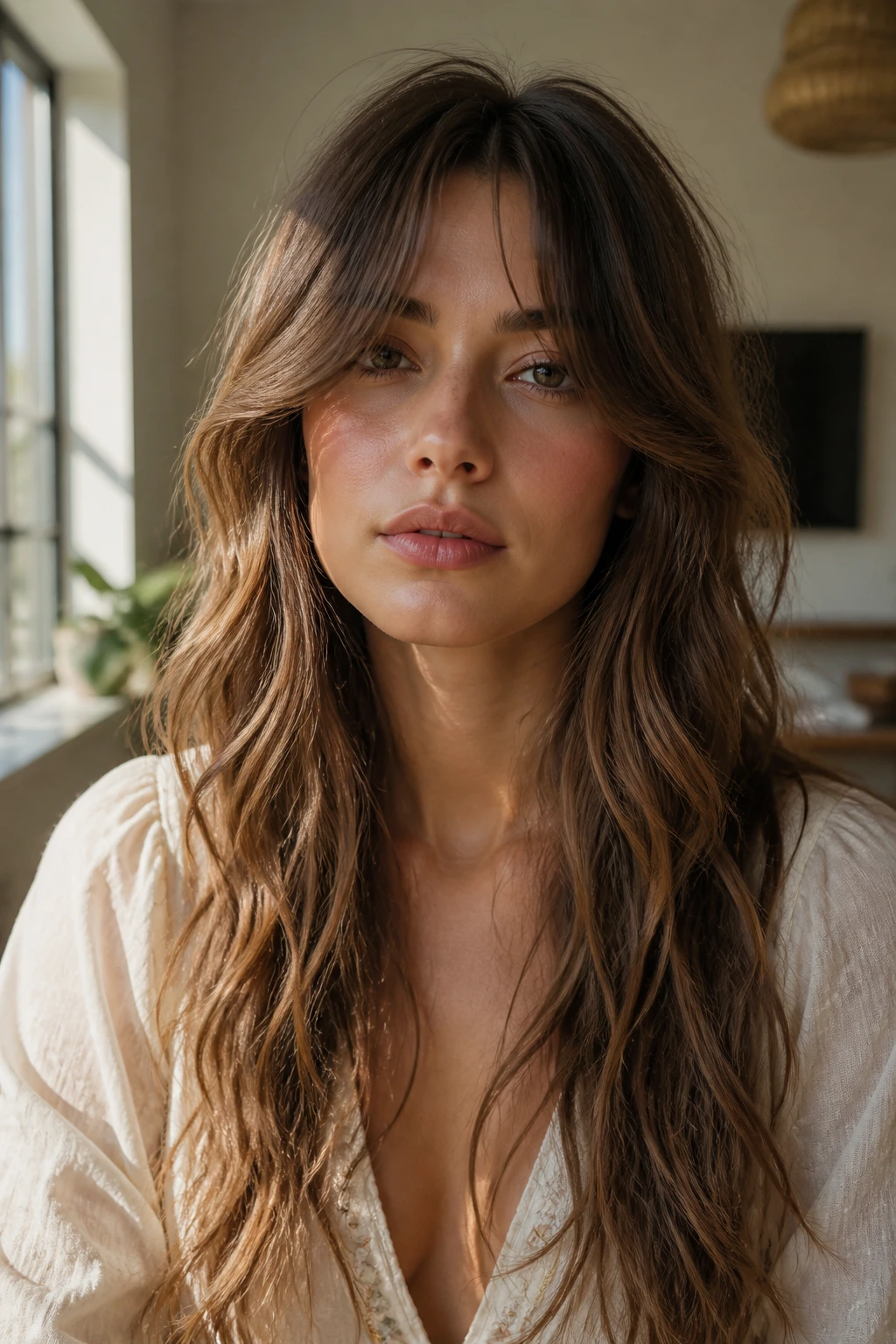
The long curtain-bang shag is the version most people picture when they say they want a boho cut. It keeps length through the bottom, then opens the face with layers that start around the cheekbones and fall into soft, split bangs. On wavy hair, the whole thing looks relaxed in a way that blunt layers never quite manage.
What makes this version work is the balance. The bottom stays long enough to feel lush, but the top gets enough removal that the crown does not sit like a heavy lid. Ask for curtain bangs that are cut longer than you think you need them to be; waves shrink, and bangs that look perfect wet can land halfway up the forehead once dry. Not cute. Not worth the panic.
This is the shag I recommend when someone wants movement without losing the security blanket of long hair. It plays nicely with a center part, and it can be pushed a little off-center when you want lift at the root. A touch of mousse at the roots and a scrunch through the mids usually beats a lot of brush work.
2. Collarbone Razor Shag

Want shape without giving up your length? The collarbone razor shag is the tidy answer. It keeps the perimeter skimming the collarbone, then uses razor-cut or slide-cut layers to open the ends and stop the whole cut from hanging like a curtain.
The razor work matters here, but only if your hair can take it. Soft to medium wavy textures usually love the airy finish, because the edges separate in a way that looks lived-in rather than overworked. If your waves are coarse or frizzy, ask for point-cutting instead of a heavy razor pass. Same idea, less fray.
This cut is easy to air-dry and still looks deliberate. It’s also one of the better choices if you wear your hair down most days and want the shape to move when you turn your head. The collarbone length gives the waves a place to settle without dragging them flat.
3. Chin-Length Shag Bob
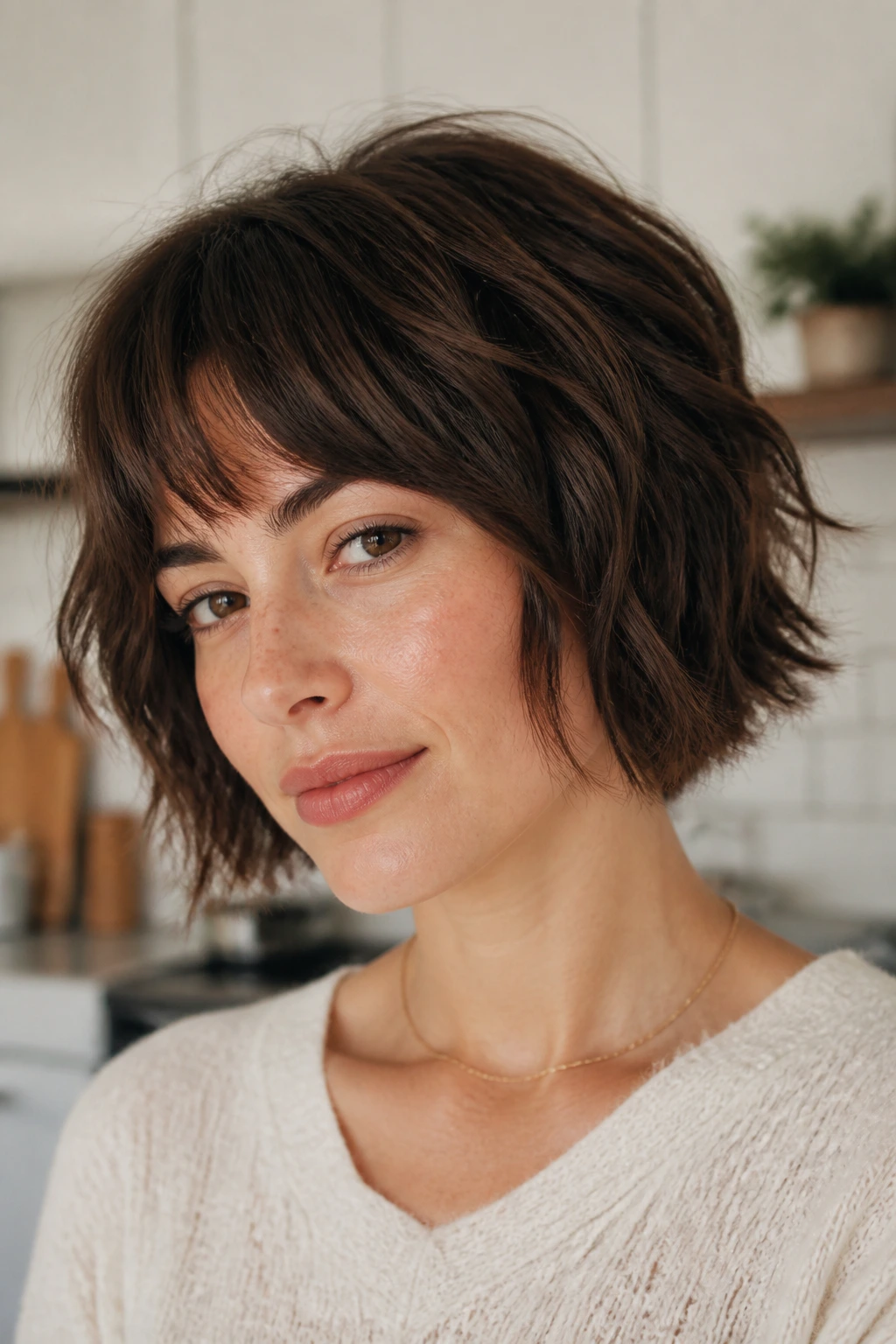
A short shag can look surprisingly soft when the lines are handled well. The chin-length shag bob keeps the outline compact, then adds loose, choppy layers through the top and sides so the wave pattern does not puff out into a mushroom. That’s the whole game.
This is not a neat little bob with a messy finish slapped on top. It needs shape. The shortest pieces usually work best around the cheekbone or just above the jaw, with the back kept light but not aggressively stacked. Too much stacking and the cut turns old-school in the wrong way. Too little texture and it goes blocky.
I like this on wavy hair because the bends show up fast. Even a rough air-dry gives it attitude. If you want the shortest boho shag that still feels feminine and wearable, this is the lane. Keep the products light, though. A heavy cream can make the whole thing look damp and flat by noon.
4. Soft Wolf-Inspired Shag

The wolf-inspired shag borrows a little edge from the mullet family, but the boho version keeps the corners soft. The crown gets more lift, the back stays a touch longer, and the front pieces fall in a way that frames the face without screaming “fashion experiment.”
This cut suits waves that need a stronger silhouette. If your hair always collapses at the crown and flares at the ends, the wolfy shape can redirect that volume instead of letting it go rogue. The trick is keeping the transition between the top layers and the length smooth enough that the cut still feels airy.
A good stylist will know where to stop. Too much contrast and you’ll lose the boho part of the equation. Too little and it becomes a regular shag with a louder name. I’d ask for soft disconnect, not dramatic contrast, unless you want the haircut to read bolder from across the room.
5. Layered Midi with Cheekbone Pieces
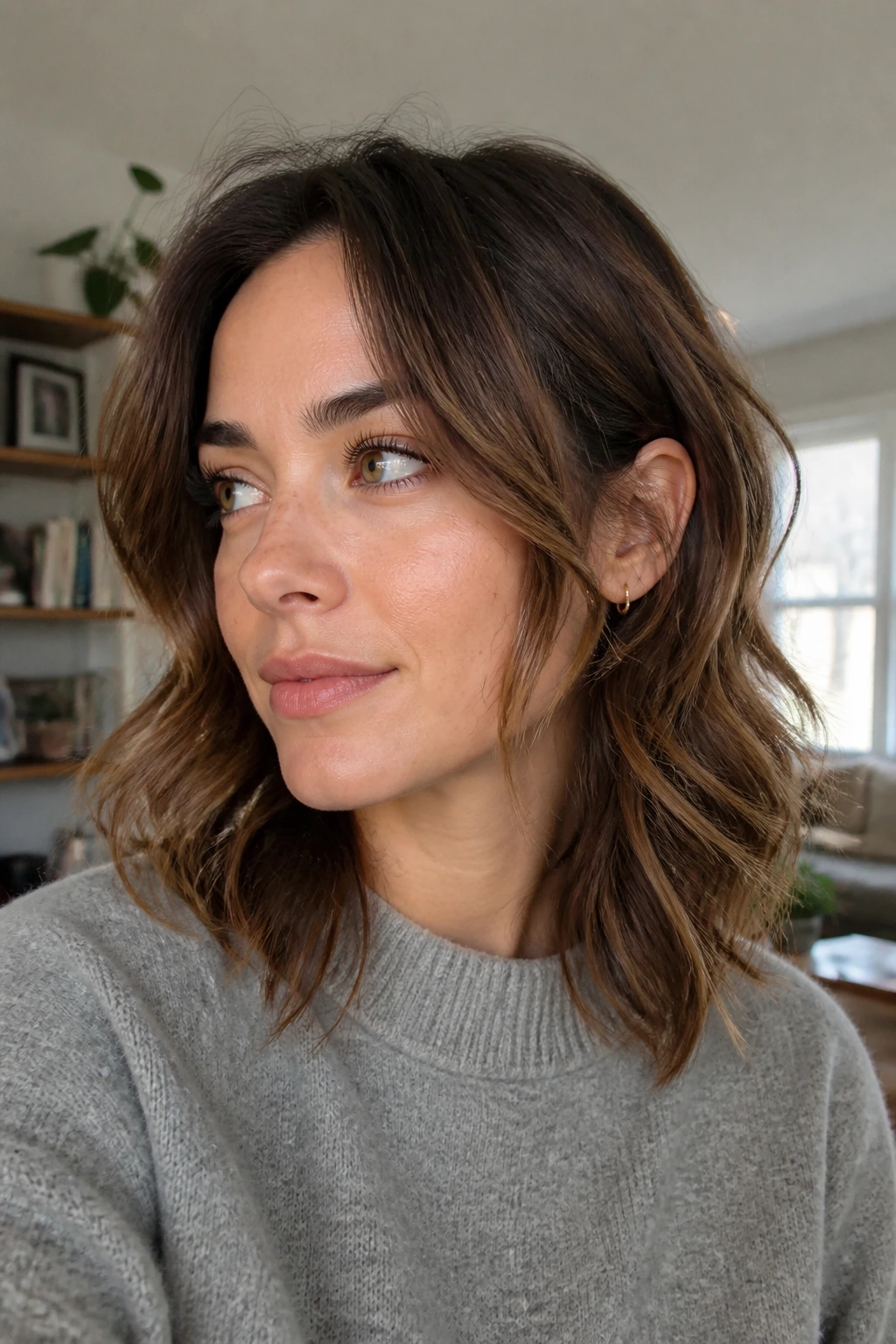
The midi shag sits in that sweet zone between shoulder length and collarbone length. It’s long enough to tuck behind the ears, short enough to show off the layers, and usually the most flattering option if you want your waves to look fuller without becoming huge.
What makes this version special is the cheekbone framing. Those pieces catch light and movement in a way that pulls the eye upward, which is handy if your hair tends to fall straight down at the sides. The bottom should still carry some weight. If the stylist thins it too much, the ends start looking wispy before the cut has had a chance to settle.
What to Ask For
- Layers that start below the cheekbone: This keeps the top from getting too airy too soon.
- A soft face frame: Pieces around the cheekbones and jaw create movement without swallowing the face.
- A heavy-enough perimeter: You want the ends to feel deliberate, not see-through.
This is one of the easiest shag shapes to live with day to day. It handles diffusing, air-drying, and half-up styling without losing its line.
6. Brow-Grazing Fringe Shag
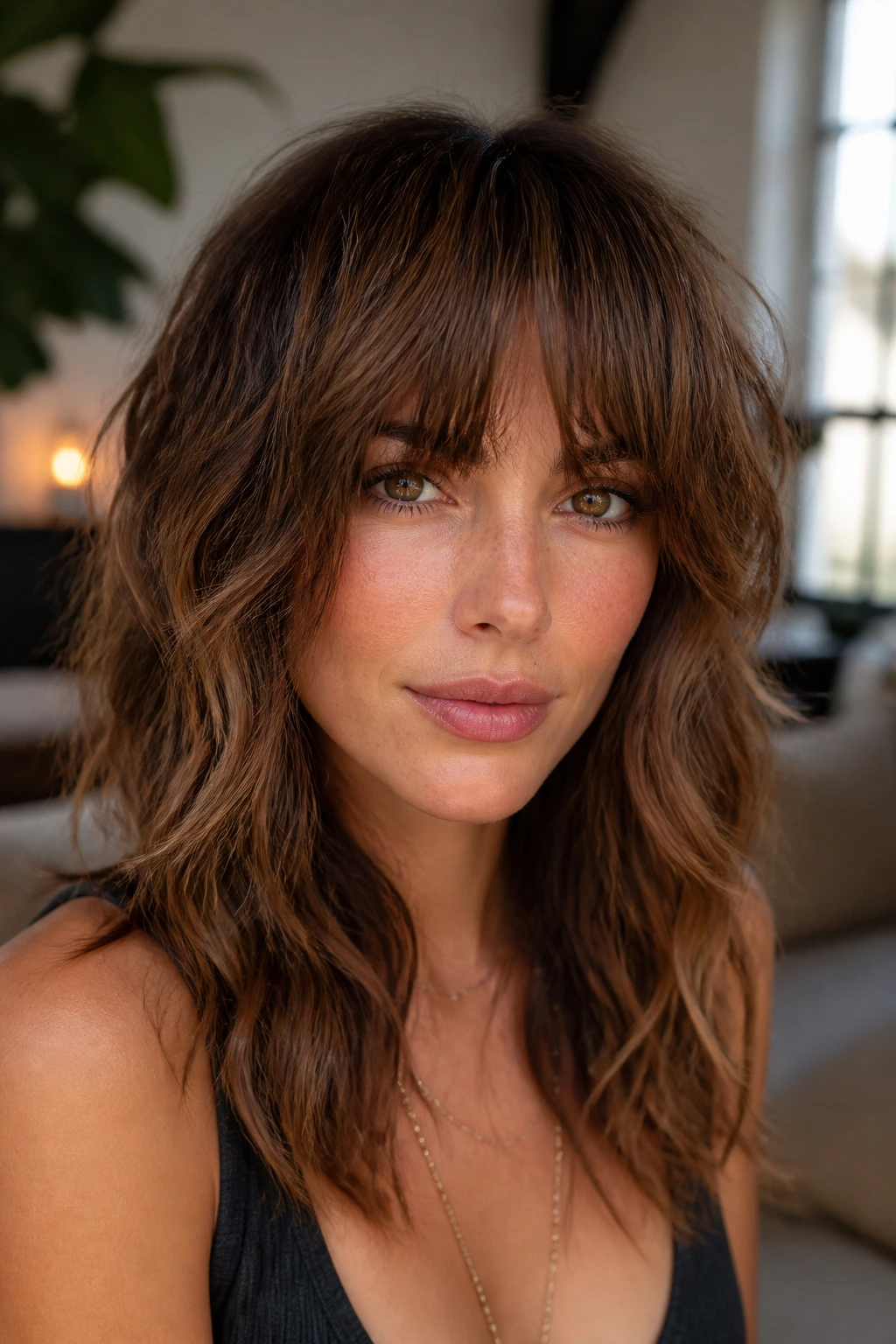
A boho shag with a full fringe changes the whole mood. Instead of opening the face with split curtain bangs, you get a heavier line across the brows that fades into textured layers through the rest of the cut. On wavy hair, that contrast can look rich and a little mysterious.
The caution is shrinkage. Wavy bangs never sit as long as they look when wet, especially if your hair springs up in humidity or if the front section has a tighter bend than the rest. I’d rather see a fringe cut too long than too short. Short bangs are unforgiving. Long bangs can be nudged into place.
This shape is best for people who like a more defined fringe and do not mind touching up the front every few weeks. A small round brush or a quick pass with a flat iron on the ends can help, but don’t polish the rest of the cut into submission. The charm of the style is that the fringe looks intentional while the layers stay loose.
7. Deep Side-Part Sweep Shag
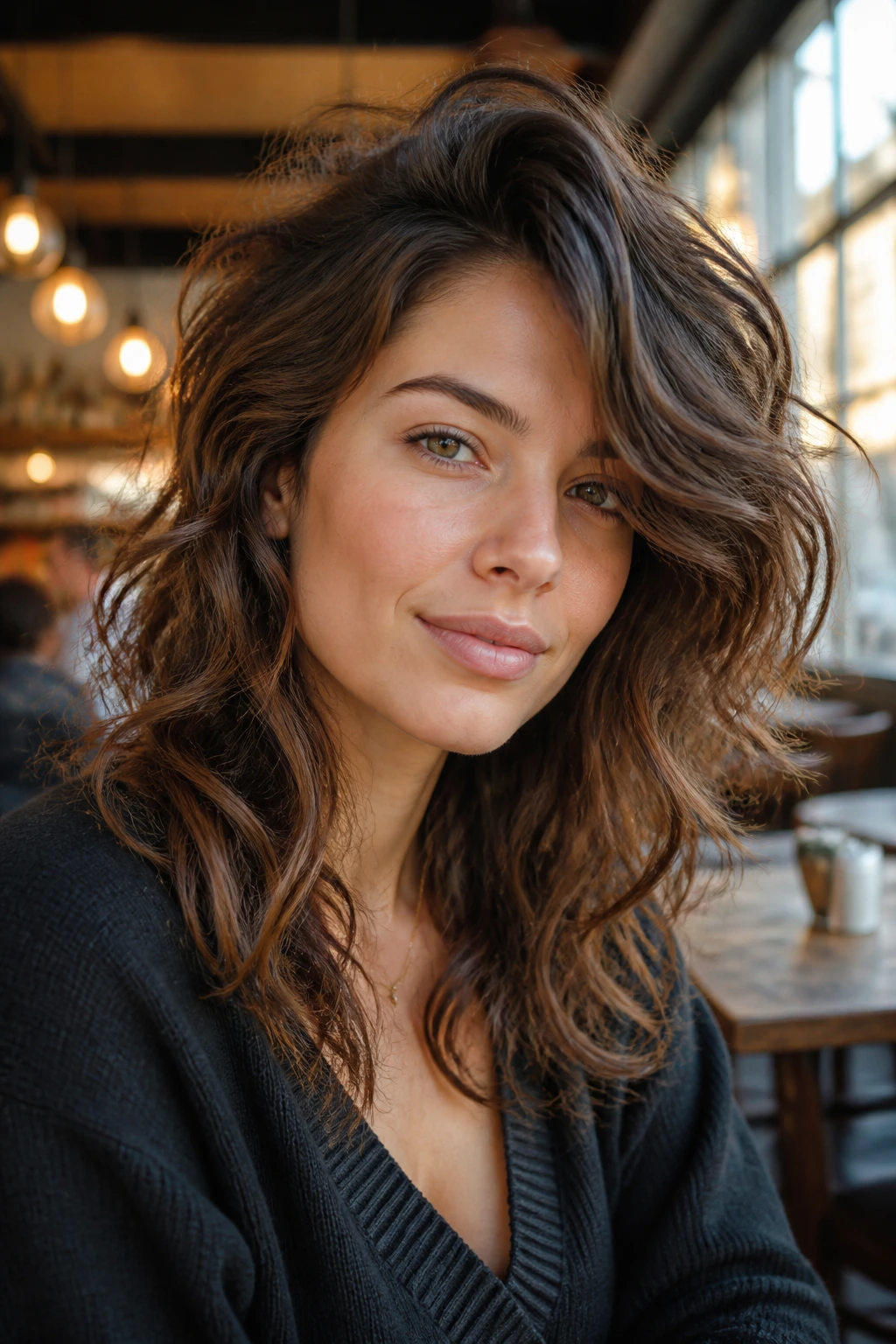
A side-part shag can rescue waves that refuse to sit politely down the middle. The deep part pushes more hair to one side, which gives the roots an instant lift and makes the whole haircut feel more sculpted without adding bulk. If your crown is flat or one side of your hair has a stronger bend, this version can be a lifesaver.
The layers should be adjusted to the heavier side of the part, not ignored. That side needs enough removal to keep it from drooping across the cheek. The lighter side should still have enough length to balance the outline. It’s a small adjustment, but it changes the whole mood of the cut.
I like this version for people who want a shag that feels a little less expected. It also pairs nicely with a loose bend from a diffuser, because the part already does half the work. You do not need a perfect curl pattern here. You just need a part that gives the waves somewhere to fall.
8. Fine-Hair Lift Shag

Fine wavy hair can look flat at the roots and stringy at the ends if the cut is too heavy. The fine-hair lift shag handles that by keeping the perimeter a little fuller and placing the layers higher through the crown so the shape does not sink. The goal is lift, not exposure.
This is where restraint matters. Too many short layers and the hair will separate into bits before it gains real body. Ask for soft internal layering rather than a lot of blunt chopping. A stylist who knows fine hair will usually keep the underlayers softer and build movement through the top instead of hacking away at the bottom.
What Helps Most
- A root-friendly mousse: Apply it at the roots on damp hair, not halfway down the lengths.
- A light diffuser pass: Use low heat and stop before the hair turns bone dry.
- A kept-together perimeter: Fine hair needs some weight at the ends so the cut doesn’t fray.
This is one of the easiest shag shapes to style on a weekday morning. It doesn’t need much. It just needs the right kind of removal.
9. Thick-Hair Weightless Shag

Thick wavy hair can look luxurious for about ten minutes and then start acting like a blanket. The thick-hair weightless shag fixes that by removing density in controlled slices, especially through the interior layers and the back. The result is air around the hair, which is what waves need if they’re not going to balloon.
The mistake with thick hair is cutting too much into the surface and not enough underneath. That leaves the outer layer looking chopped while the bulk still lives below it. I prefer a shape that keeps the outer line fairly solid, then opens the inside so the cut bends rather than bulks up.
This cut can take a little more salon skill than some of the softer shag shapes, and that’s worth saying plainly. If your hair is coarse, dense, or both, ask how the stylist plans to remove weight. A thoughtful answer is good news. A vague one is not.
10. Air-Dry Shag with Invisible Layers
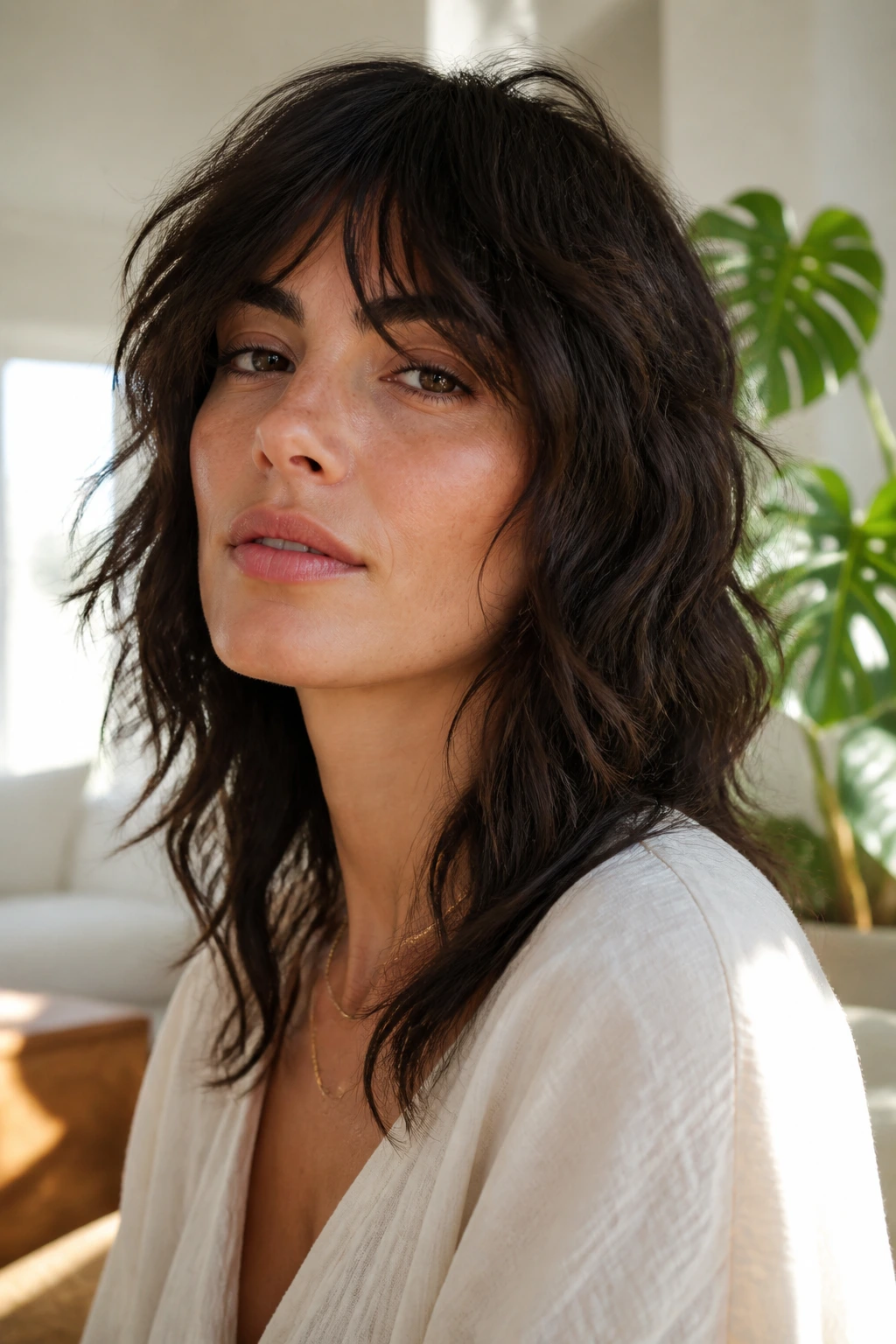
Some haircuts look good only after you wrestle them into place. The air-dry shag is the opposite. It’s designed to settle into a clean, loose shape with minimal brushing and almost no heat, which is exactly why it suits wavy hair that already wants to do the work.
The layers are there, but they’re hidden inside the shape rather than broadcast all over the ends. That keeps the cut soft while still preventing the triangle effect. If your hair pattern is consistent from root to tip, this style can be one of the easiest things you’ve ever worn.
A little cream or mousse on damp hair is enough for most people. Scrunch, twist a few front pieces, and leave the rest alone. The temptation to keep messing with it is what ruins the finish. Hands off. Let the waves set.
11. Grown-Out Festival Shag

The grown-out festival shag is what happens when a shag gets a little more freedom. The fringe softens, the layers lengthen, and the whole haircut starts to feel less engineered and more lived-in. That can sound vague, but the shape is specific: loose around the face, airy at the crown, and long enough to tuck, braid, or pin back without losing its identity.
This is a good cut for people who hate precise maintenance. You do not need every piece to be freshly sharp. In fact, a touch of softness helps. Wavy hair naturally breaks up clean lines, so a grow-out-friendly shag often looks better after a few weeks of settling than it did on day one.
If you wear hats, clips, or half-up styles, this one is forgiving. It doesn’t fight accessories. It works with them. That matters more than most people think, because a haircut that can survive a day in the real world is worth more than one that looks clever for a photo and collapses when you leave the house.
12. Round-Face Frame Shag

Round faces need length and vertical movement more than extra width at the cheeks. The round-face frame shag handles that by starting the layers below the cheekbone, then letting the front pieces skim down toward the jaw. The eye reads length first, width second. That’s the whole trick.
What you want to avoid is too much volume directly at the sides of the face. That can make the face look wider than it is, especially when waves puff out at the temples. Curtain bangs can work here, but only if they open enough at the center and don’t stop too high on the cheek.
This is one of those cuts where a dry finish helps you see the true shape. If your hair dries into a fuller halo, ask for the shortest face frame to sit lower. The wrong face frame can turn soft waves into a round puff. The right one gives the hair a nice drape.
13. Square-Jaw Softening Shag
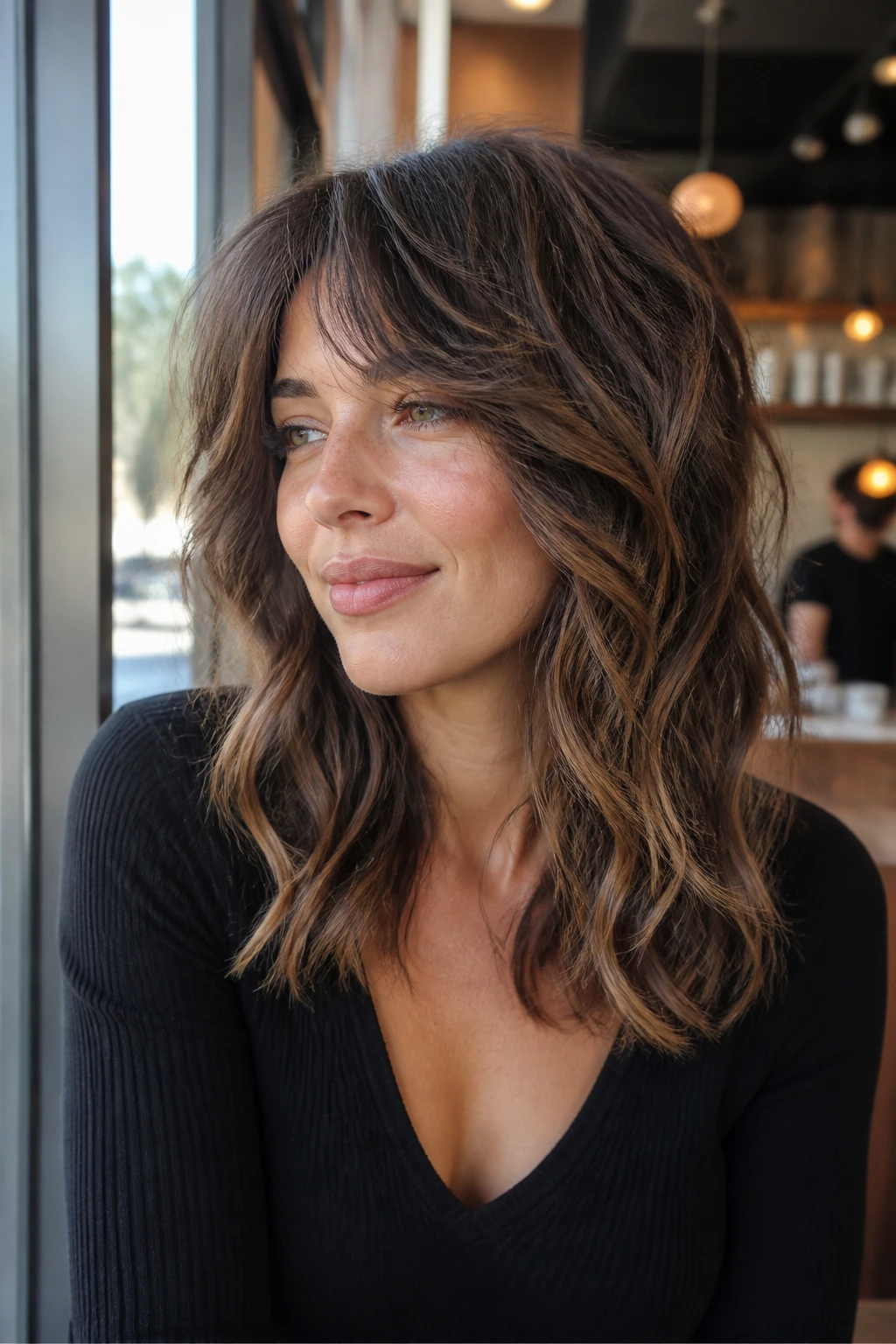
Square jaws look good in shags. The trick is to soften the line, not hide it. A square-jaw softening shag uses longer face-framing pieces that bend around the jaw instead of stopping right on it. When the waves fall in a curve, the face looks less boxy and a little more open.
I would avoid a blunt chin-length edge here unless you want that sharpness on purpose. Soft ends and rounded layers do more work than most people realize. They let the waves echo the structure of the face instead of fighting it. That gives the haircut a calmer feel.
This shape is especially nice if you like a center part but feel like it emphasizes the width of the jaw. A slightly off-center part and a longer fringe can make the whole thing easier to wear. The haircut should frame your face, not crowd it.
14. Micro-Bang Shag Bob

Micro bangs are not shy, and that’s the point. Pair them with a shag bob and you get a cut that feels playful, a little retro, and far more textured than a standard blunt bob. Wavy hair keeps it from looking severe, which is why this combo works better here than on stick-straight hair.
The bangs need precision, though. They should be cut with the shrinkage of your wave pattern in mind, and usually a bit longer than the final line you want. If the bangs are too short, they can jump into awkward territory fast. If they’re too long, they lose the whole point of the style. There’s a narrow window, and it’s worth being careful.
This is the shag for someone who likes a haircut with personality. It asks for trims more often than a long layered shape, and it will draw attention to the eyes and forehead. If you want to hide in the background, skip it. If you want your haircut to do some talking, this one shows up.
15. Bottleneck Bang Shag
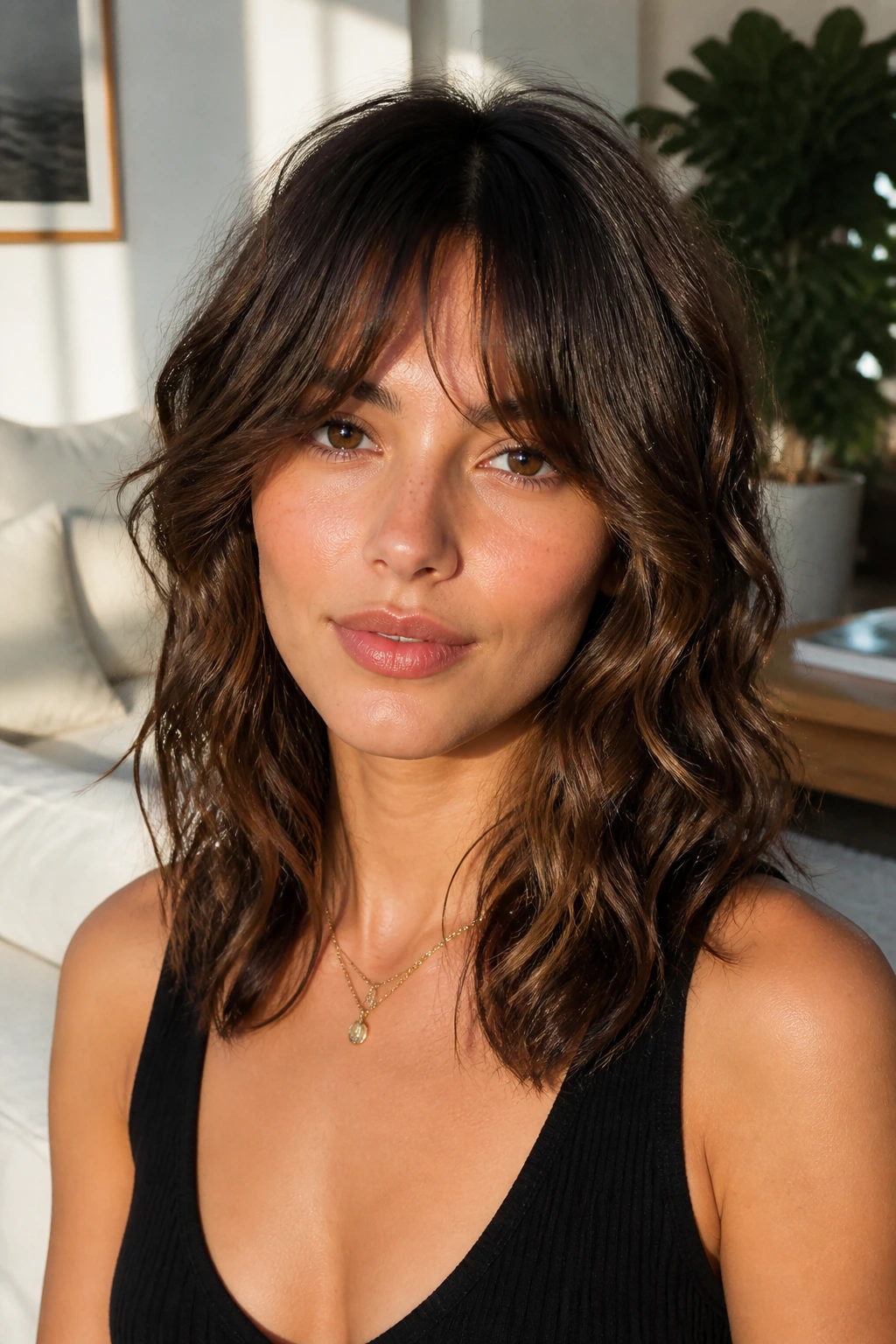
Bottleneck bangs start narrow at the center, then open out toward the cheekbones. On wavy hair, that shape feels especially smart because the fringe can separate on its own instead of needing constant coaxing. It’s softer than a blunt fringe and more focused than a long curtain bang.
The rest of the shag should echo the fringe by staying light around the face and a little fuller through the midlengths. That creates a nice frame without turning the front pieces into a curtain wall. If your hair tends to flatten at the roots, this fringe shape also gives you a little built-in lift.
I like this version for people who want bangs but do not want the maintenance of a full straight-across fringe. The bottleneck shape grows out cleanly, and it can be tucked to the side on lazy days. That flexibility is half the appeal.
16. No-Bang Long Shag
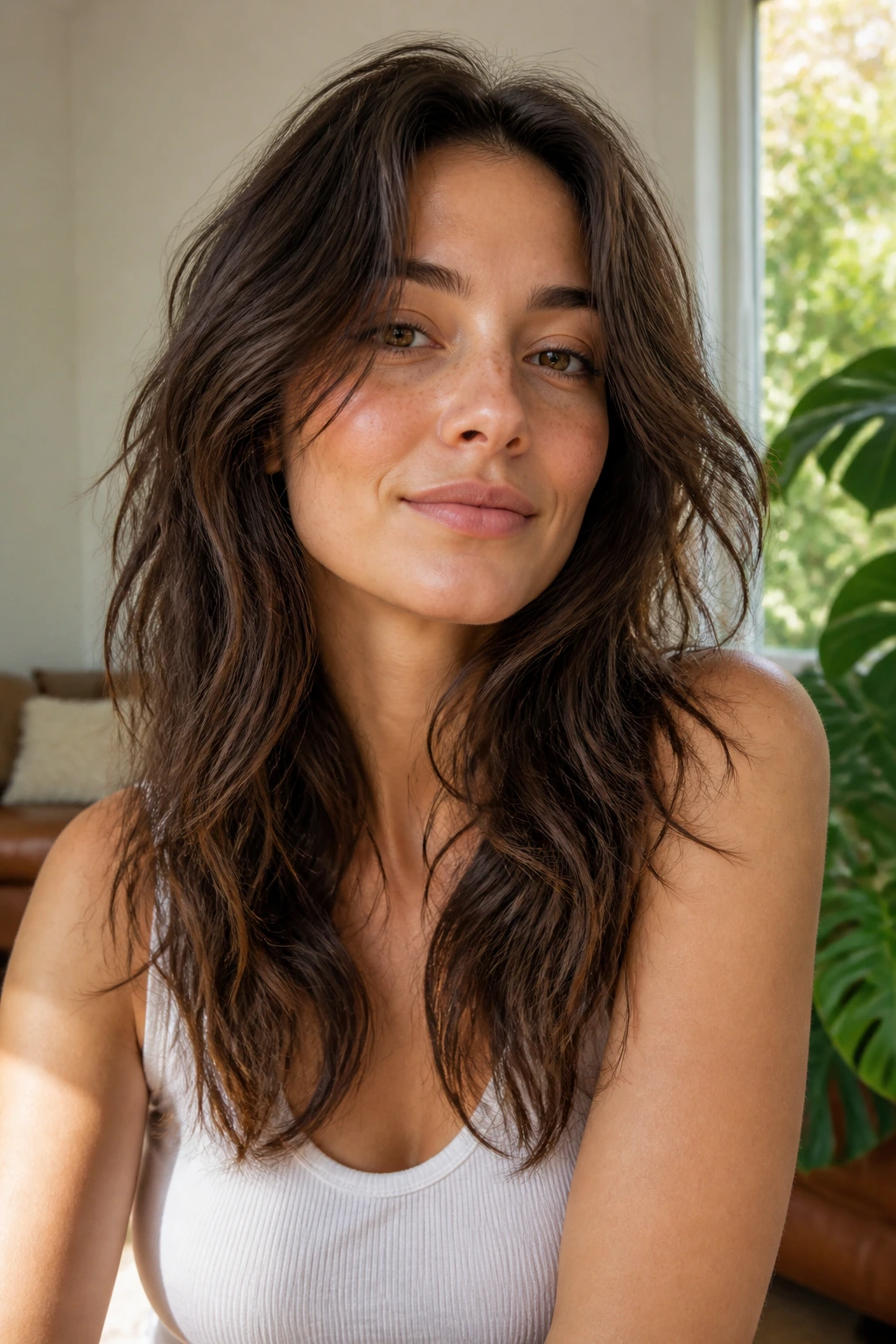
Not everyone wants bangs. Fair enough. The no-bang long shag keeps the face open, then uses long internal layers to build movement from the jaw down. It is one of the easiest ways to get boho texture without committing to fringe maintenance, trim appointments, or forehead drama.
This cut works especially well if you already have a strong natural wave at the front. You can let the front pieces fall away from the face and keep the center part or shift it slightly off-center for lift. The layers should be visible when the hair moves, not when it sits like a helmet.
It’s also a forgiving option for people growing out bangs. Rather than forcing the front into a new shape too fast, the cut lets the shorter pieces merge into the rest of the layers over time. That grow-out phase is usually less awkward than people expect, which is rare and worth appreciating.
17. Sun-Kissed Layer Shag

A shag haircut gets sharper when you can see the layers, and color helps with that. Sun-kissed ends, soft balayage, or even a few lighter ribbons through the front can make the movement read more clearly on wavy hair. The cut still does the real work, but the color shows you where the layers bend and separate.
This is not about high-contrast streaks. Subtle lightness is enough. When the ends are lighter than the roots, each bend becomes easier to see, especially in daylight. If your hair is dense or dark, a touch of brightness through the face frame can keep the cut from looking too flat on cloudy days.
The best part is that you do not need to color the whole head to get the effect. A few well-placed pieces around the face and mids can do the job. It’s a haircut-and-color pairing that rewards restraint.
18. Loose-Ringlet Friendly Shag
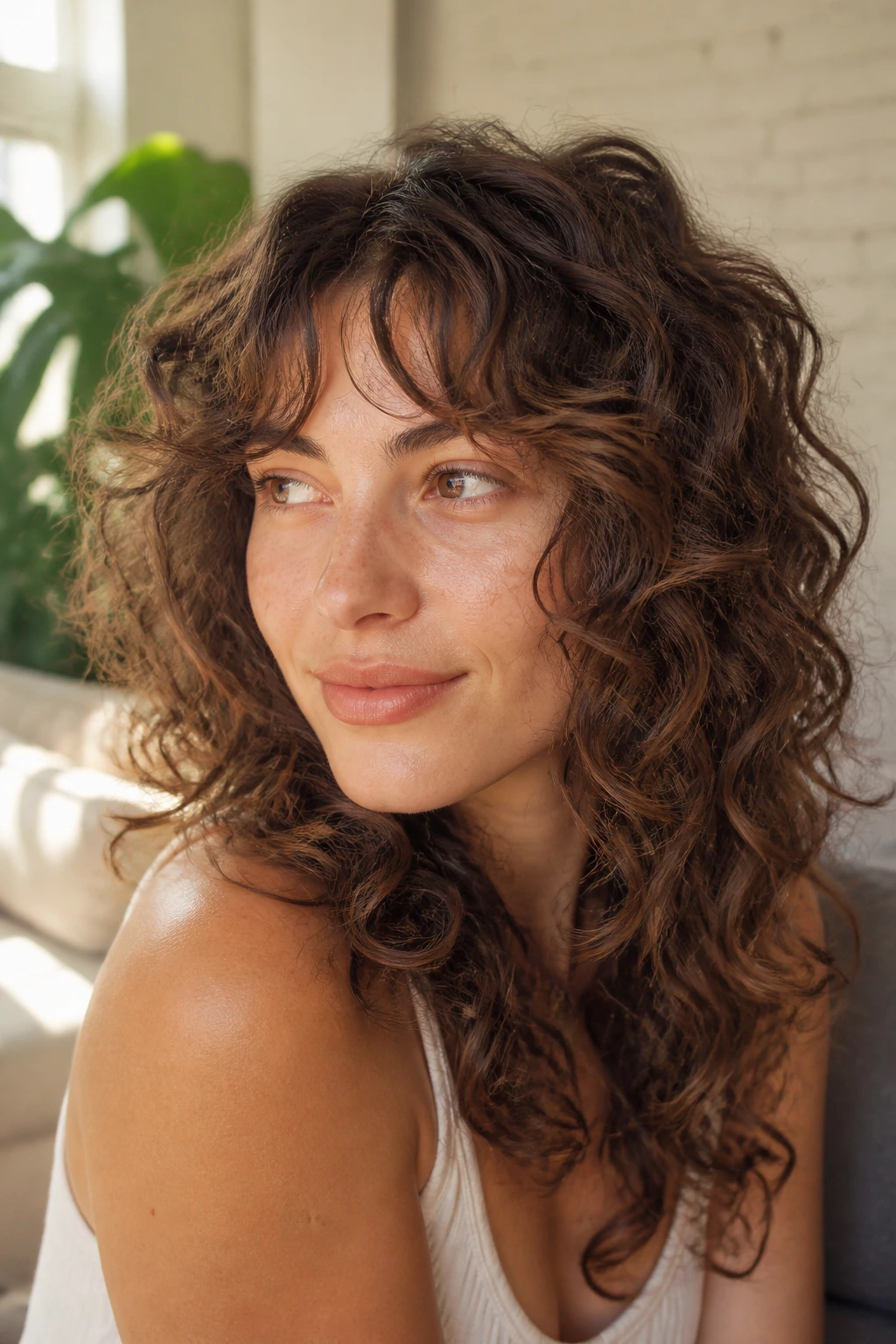
Wavy hair sometimes borders on loose curls, and those heads need a different kind of shag. The loose-ringlet friendly version keeps more length between layers so the curls do not spring up into a puff. It’s softer than a high-texture shag and much kinder to hair that wants to coil at the ends.
The cut should usually be done dry, or at least with a strong sense of how the hair behaves when it is dry. That matters because loose curls can hide their true length when wet. If you take too much off in the salon chair, you find out the mistake only after the first wash. Painful. Avoidable.
This version thrives with a diffuser and a light hold product. A mousse or gel foam can keep the wave pattern together without making the hair stiff. If your texture shifts between wave and curl depending on humidity, this is one of the smartest shag directions to consider.
19. Crown-Boost Shag
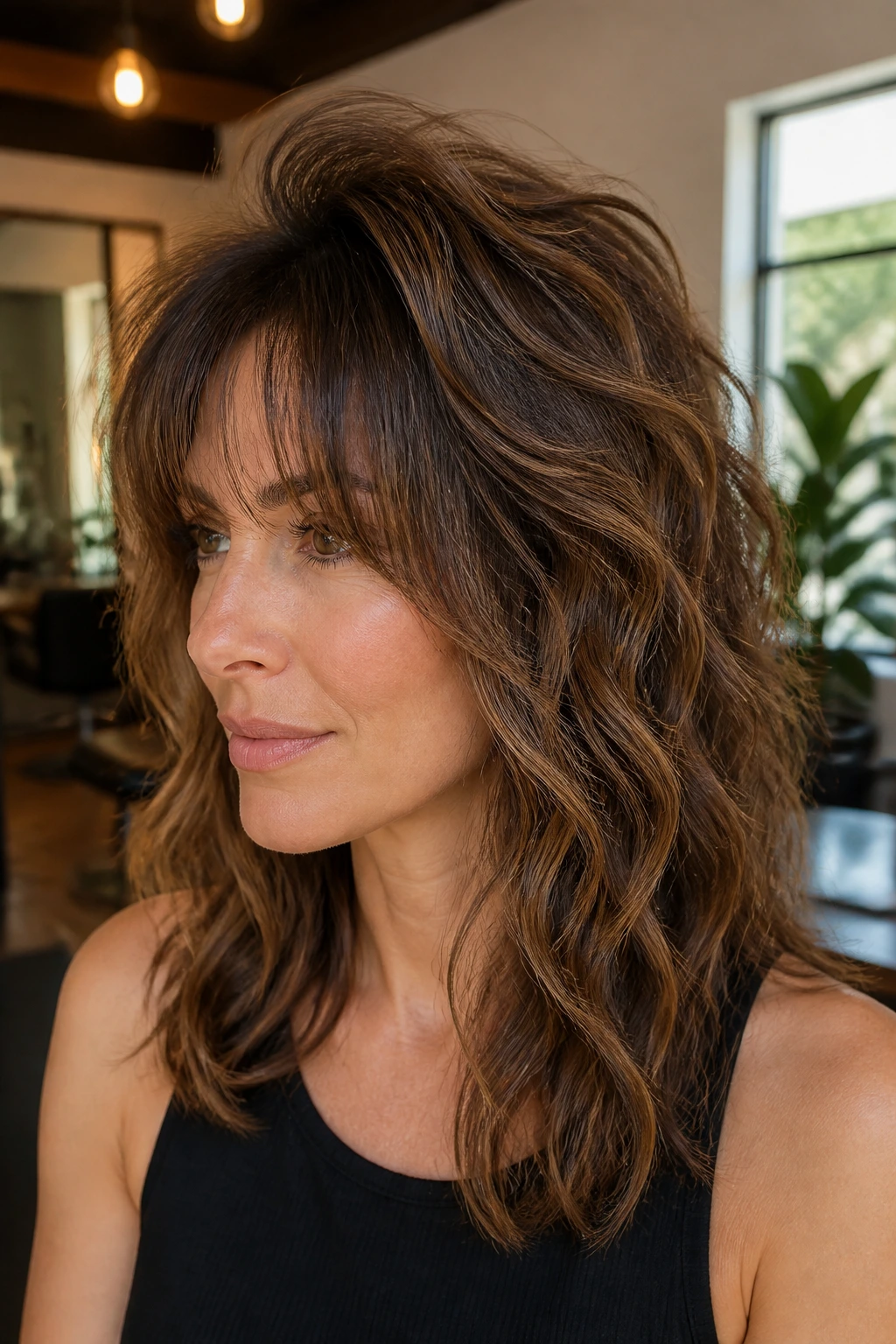
Flat at the crown? The crown-boost shag is built for that problem. It keeps extra lift through the top layers and uses careful removal near the roots so the hair doesn’t lie like a pancake. A good version creates height without turning the top into a fluffy helmet.
The placement matters more than sheer shortness. If the shortest layers sit too far out on the sides, the cut can widen the head instead of lifting it. You want the volume centered near the top back and upper crown, then softened as it moves toward the sides.
This is a favorite of mine for people who wear their hair down a lot but want it to feel more alive from the scalp out. A root clip while the hair cools, a little mousse at the crown, and a gentle flip of the part can make a noticeable difference. Small things. Big payoff.
20. Soft Mullet Shag

A soft mullet shag is the boldest version here, and yes, it can still be boho. The front is shorter, the back stays longer, and the in-between is blended enough that it feels wearable rather than costume-y. On wavy hair, that contrast looks energetic and a little rebellious.
The key is softness at the edges. If the disconnect gets too sharp, the haircut loses the easy feel that makes a shag appealing in the first place. Keep the layers piecey, not jagged. The difference shows up fast in the mirror.
This cut is best for someone who likes a little attitude and doesn’t mind explaining their haircut to strangers. It’s less subtle than the rest of the list, which is also why it can look so good. A soft mullet shag with waves has movement built into the silhouette. It doesn’t need much help.
21. Shoulder Flip Shag

Shoulder-length hair has a habit of flipping out in all the wrong places if it’s cut badly. The shoulder flip shag uses that movement on purpose. The layers are placed so the ends kick out around the shoulder line instead of fighting against it, which makes the haircut feel bouncy instead of boxy.
This shape works well if your waves get stronger as they dry. The shoulder length gives them a natural resting point, and the layered top keeps the crown from going flat. If you like to tuck one side behind the ear or clip the front back, the cut still holds together.
The shoulder flip shag is one of the most practical lengths in the whole group. It’s short enough to feel fresh, long enough to pull into a low tie, and soft enough to wear with almost no styling. That’s a useful combination. Useful usually wins.
22. Overgrown Fringe Shag
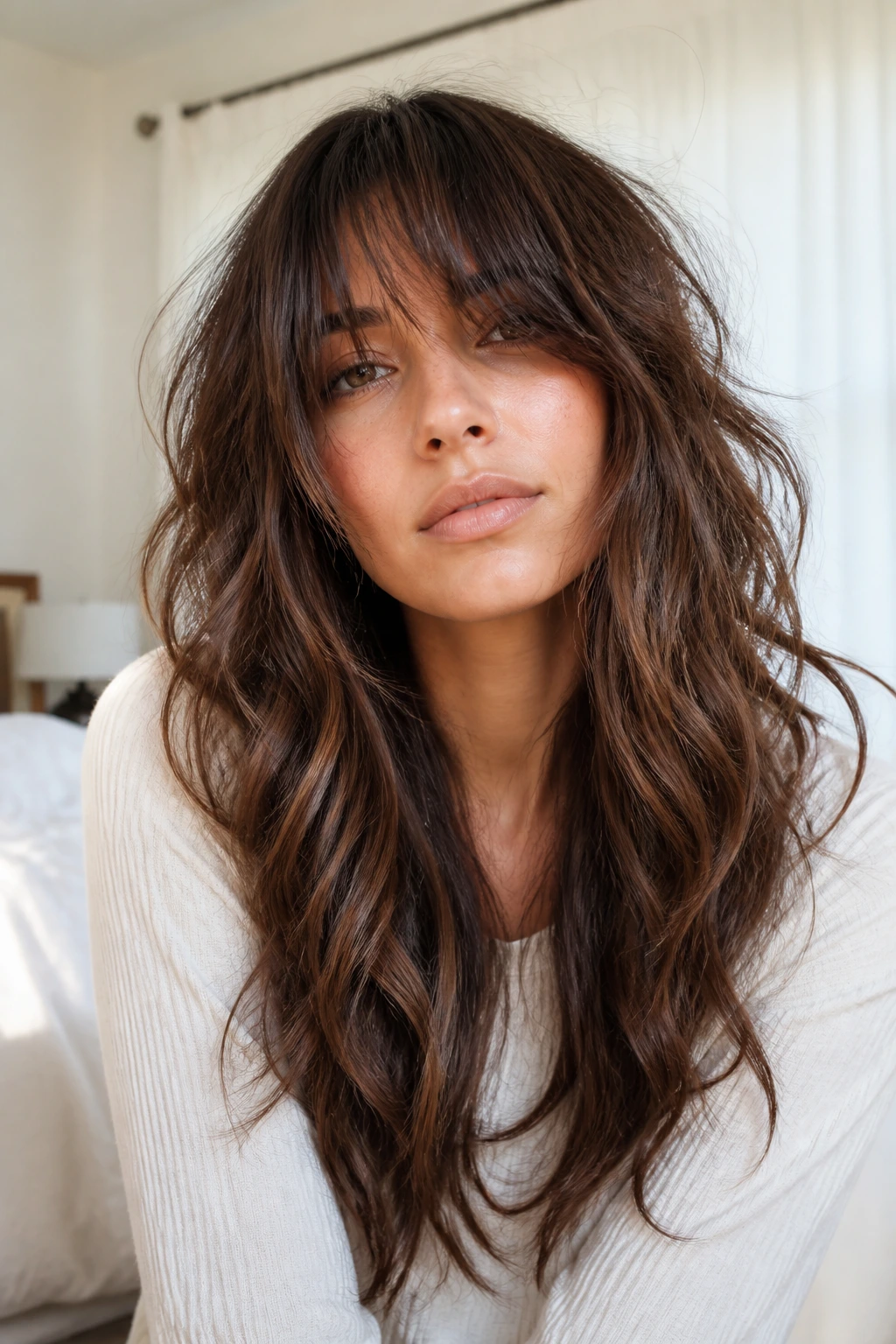
The overgrown fringe shag is for people who like the idea of bangs but do not want to babysit them. The fringe starts out long, brushes the brows, and then grows into the rest of the face frame without looking like it missed its appointment. The whole cut feels relaxed, almost a little sleepy in the best way.
What makes it work is the softness at the front. The bangs should be broken up enough that they separate naturally, and the layers should fall around them instead of fighting for attention. Wavy hair loves this shape because the front can split on its own and land in a flattering place with almost no effort.
This is the shag I’d point to if you want low-maintenance with just enough style to look intentional. It’s not fussy. It doesn’t demand perfect parts or a blowout. It just wants a decent cut, a bit of texture, and a little patience as it grows into itself.
Why the Boho Shag and Wavy Hair Click So Well
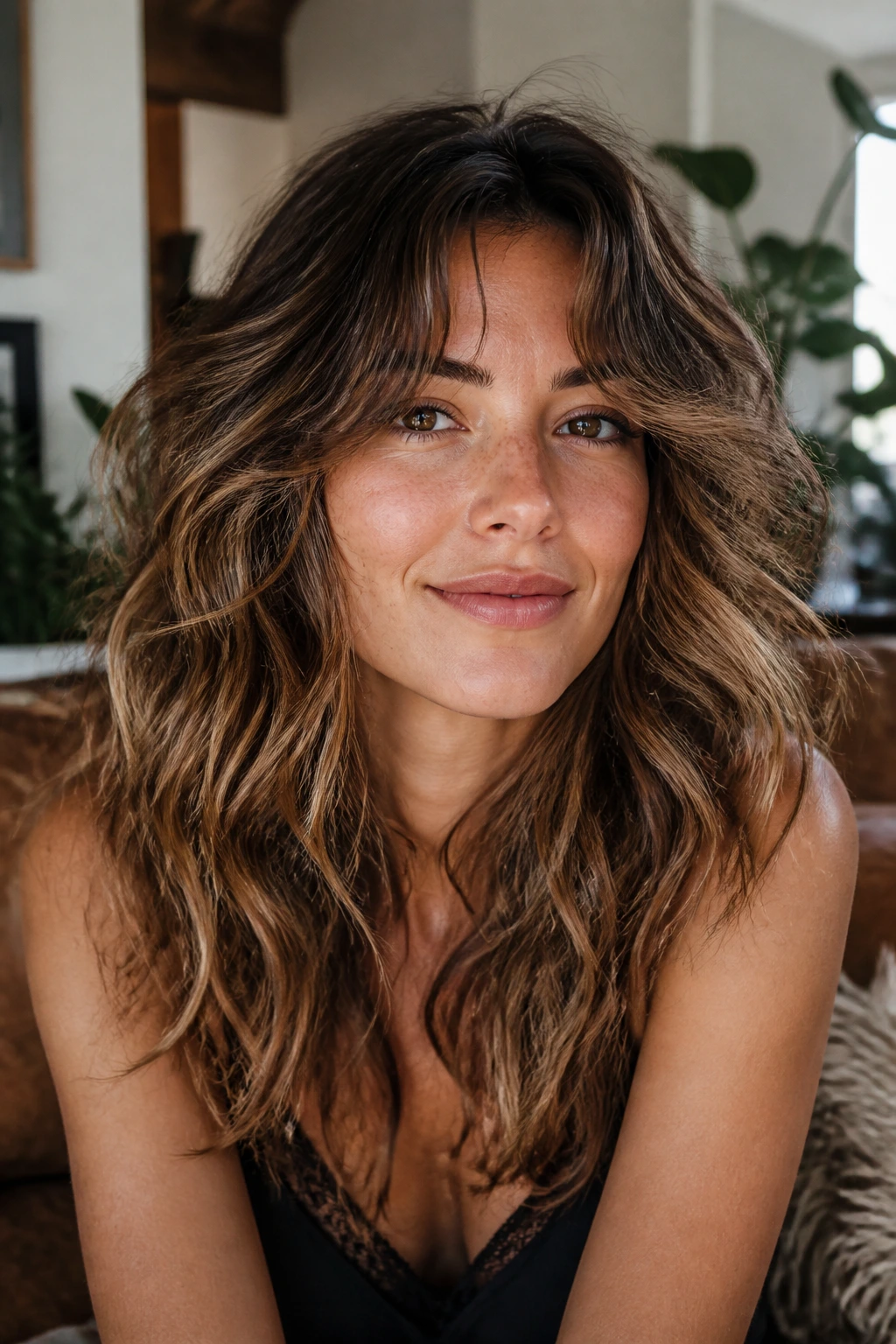
Wavy hair and shag cuts share the same basic idea: they both like movement more than precision. A blunt edge can trap waves in a boxy shape, while a thoughtful shag creates staggered lengths that let the hair fold, bend, and separate. That’s why the cut looks better when it’s slightly imperfect. The imperfection is the point.
The magic usually lives in three places: the crown, the face frame, and the ends. Lightening the crown gives the hair lift instead of bulk. Softening the face frame keeps the haircut from swallowing your features. Leaving enough weight at the perimeter stops the whole shape from going wispy and sad by week two. That balance is more useful than any trendy label attached to the cut.
One thing people often miss: a shag should not feel uniformly thin. If every layer is over-texturized, the waves lose structure and start frizzing into each other. Better shags keep some solidity underneath the movement. Think of it as a shape with air in it, not hair that has been aggressively shaved down until it forgets what direction to go.
What to Tell Your Stylist Before the Shears Come Out
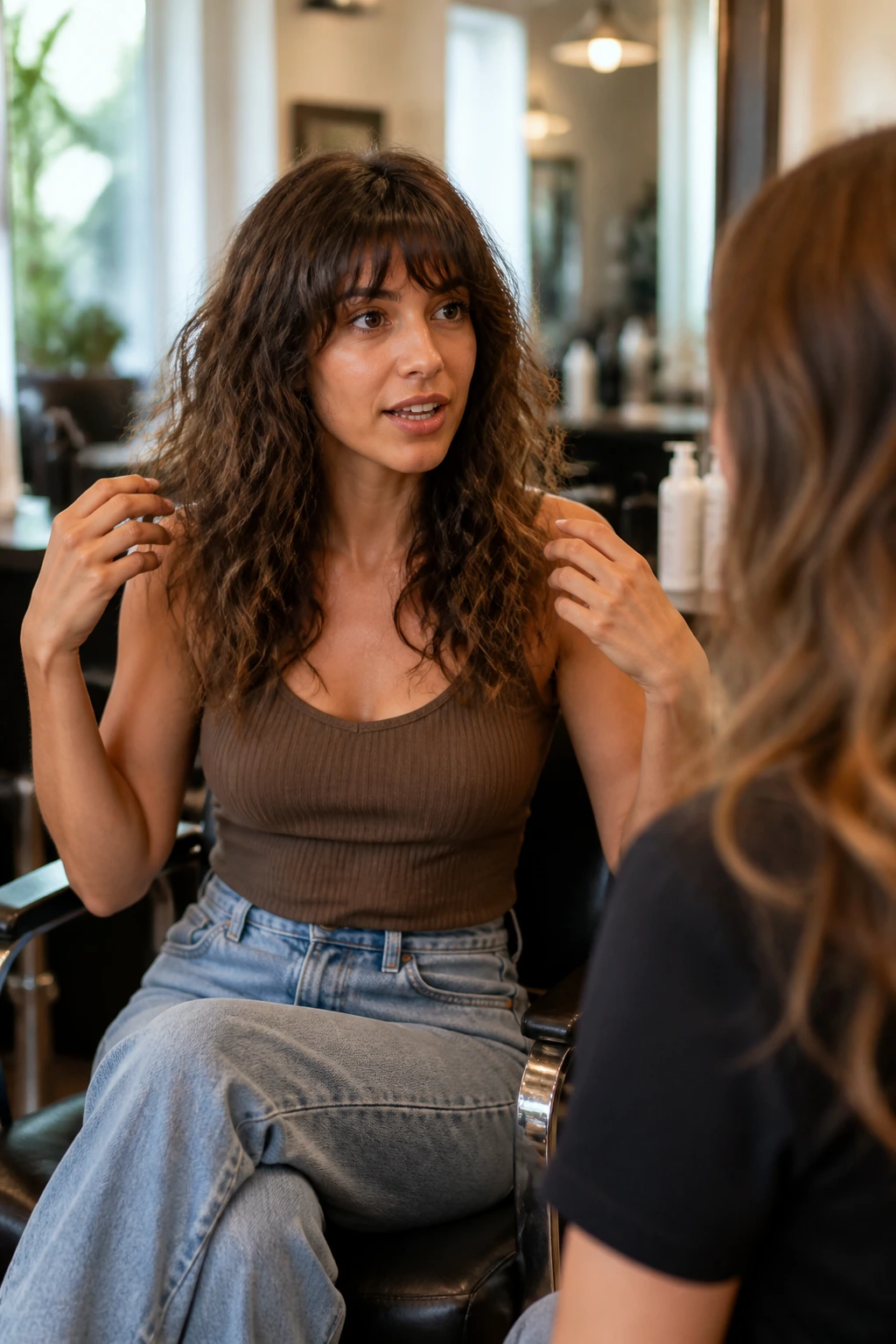
Bring photos, yes, but also bring a sentence or two that tells the stylist how your waves behave on a normal day. Do they collapse at the roots? Puff at the ends? Separate into chunky ribbons or into soft bends? That matters more than the word “shag” by itself, which can mean almost anything in a salon chair.
Ask whether they plan to cut it dry, wet, or both. For wavy hair, a dry cut often shows the true shape better, especially around the bangs and face frame. If they prefer to cut wet, they should still check the dry shape before you leave. You want someone who understands that a wave changes length and shape once it dries.
A few useful phrases:
- “Keep the perimeter fairly full.”
- “I want movement, not thinning.”
- “Start the face frame low enough that it won’t puff.”
- “Leave the bangs longer because my waves spring up.”
That’s the language that saves you from the two classic disasters: too much puff at the sides and too much see-through at the ends.
Tools That Make Styling a Shag Easier
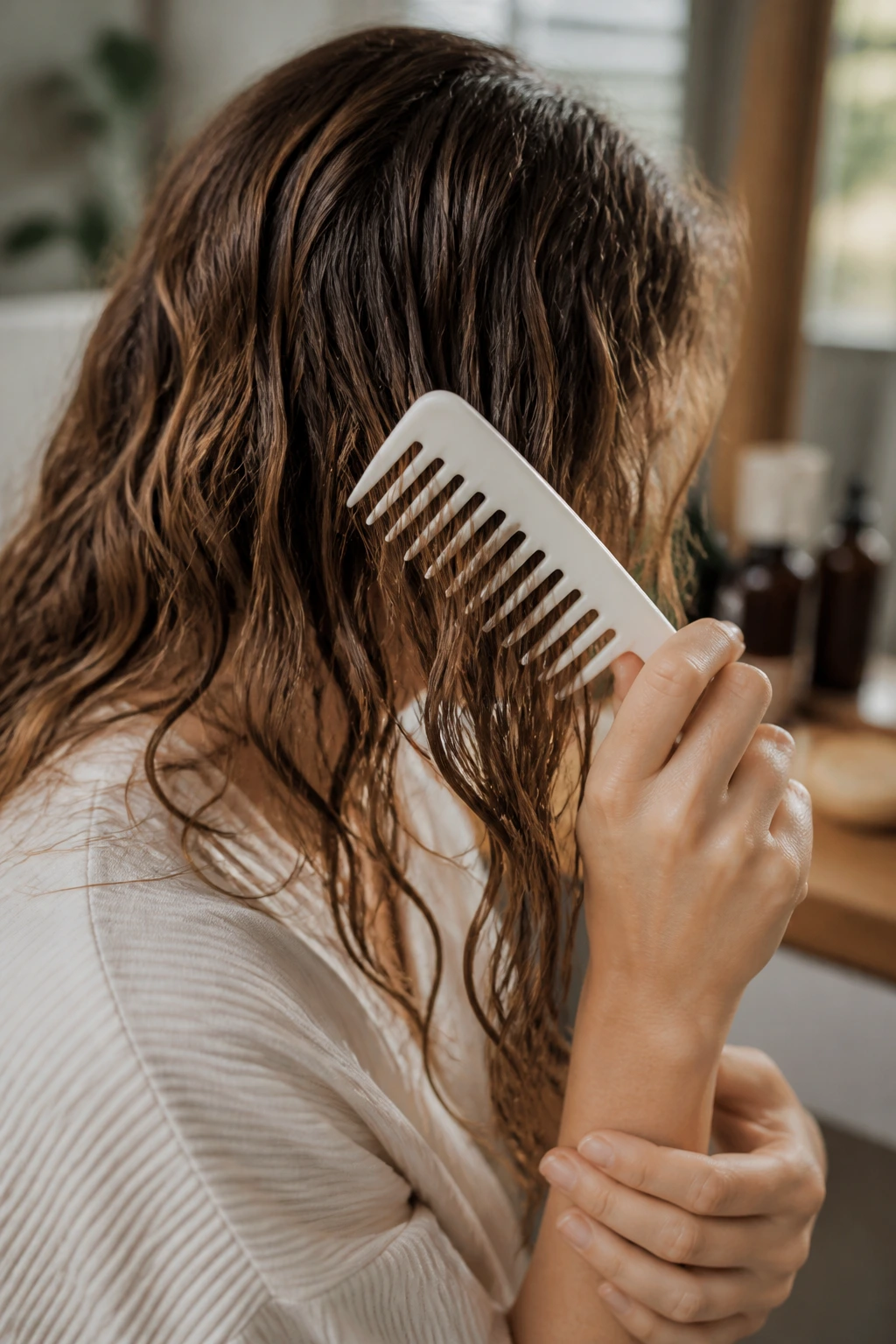
- Wide-tooth comb: Good for detangling damp waves without pulling out the bend you just built.
- Microfiber towel or old T-shirt: Cuts down on frizz better than a rough bath towel.
- Mousse: The best root-lift product for most wavy shag cuts; use a golf-ball-sized amount on medium hair, less on fine hair.
- Lightweight curl cream: Helpful for drier waves, but keep it off the crown if your roots flatten fast.
- Diffuser attachment: Use low heat and low airflow so the layers don’t blow apart.
- Duckbill clips: Useful for setting crown lift while the hair cools.
- Texturizing spray: Good on day two or three when the waves need a little grit.
- Dry shampoo: Helps the front stay fresh, especially on fringe-heavy cuts.
- Haircutting shears: If you trim bangs at home, use real shears. Kitchen scissors chew the ends.
How to Style a Wavy Shag Without Turning It Crispy
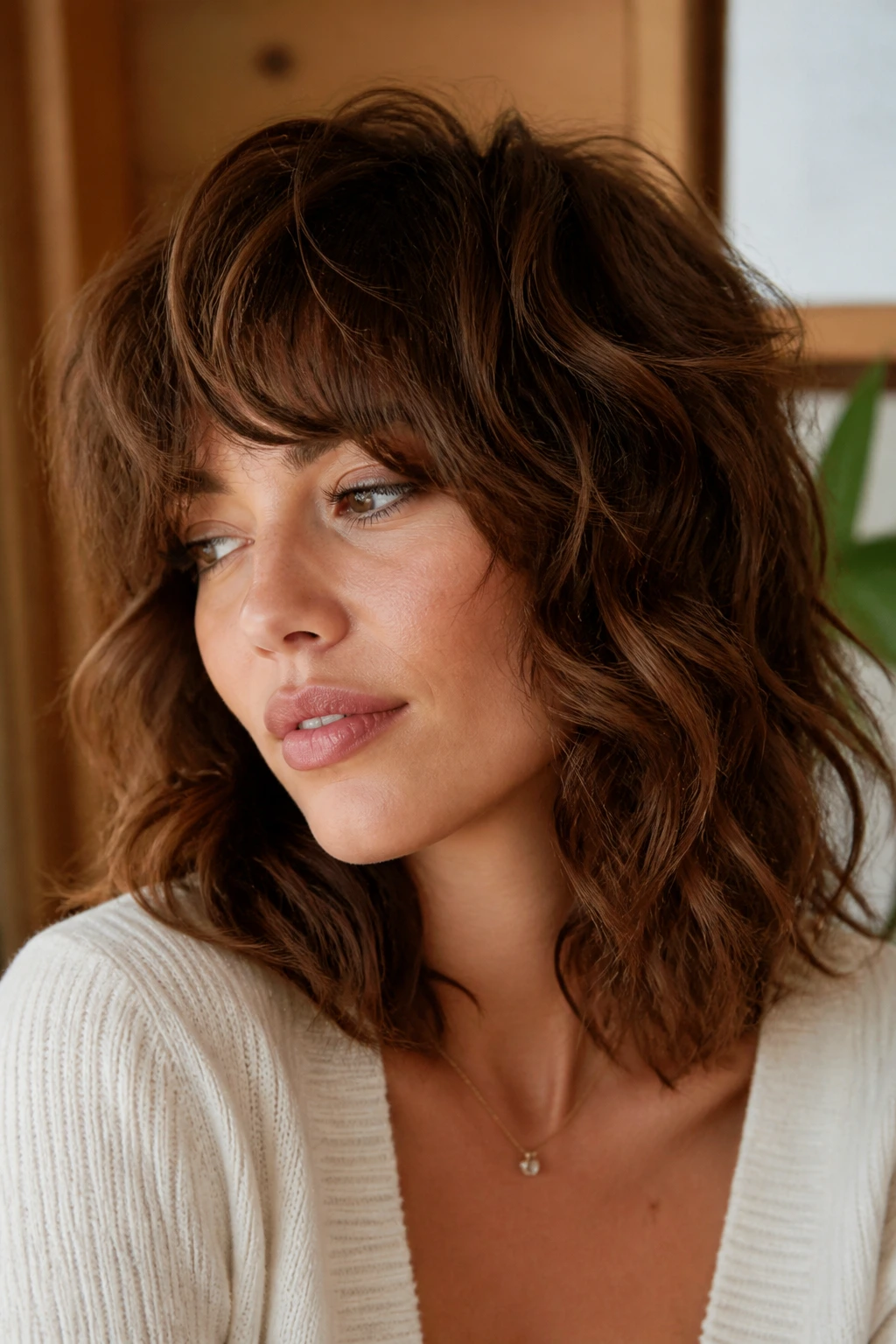
Root Lift: Work mousse into damp roots and lift sections with your fingers before you diffuse. Don’t rake product through the lengths unless the hair is very dry.
Air-Dry Strategy: Scrunch the mids and ends once, maybe twice, then walk away. Constant touching is the quickest way to ruin soft wave clumps.
Heat Strategy: If you use a dryer, keep the diffuser on low heat and stop when the hair is about 80 percent dry. Let the rest finish on its own so the ends stay soft.
Finish: A pea-sized bit of lightweight oil on the very tips can calm frizz, but only after the hair is fully dry. Put it near the roots and you’ll flatten the lift you worked for.
A shag looks best when it seems effortless, but there’s usually a small amount of planning underneath that look. The good news is that the planning is simple. It’s mostly about not overworking the wave.
Common Mistakes That Flatten a Wavy Shag
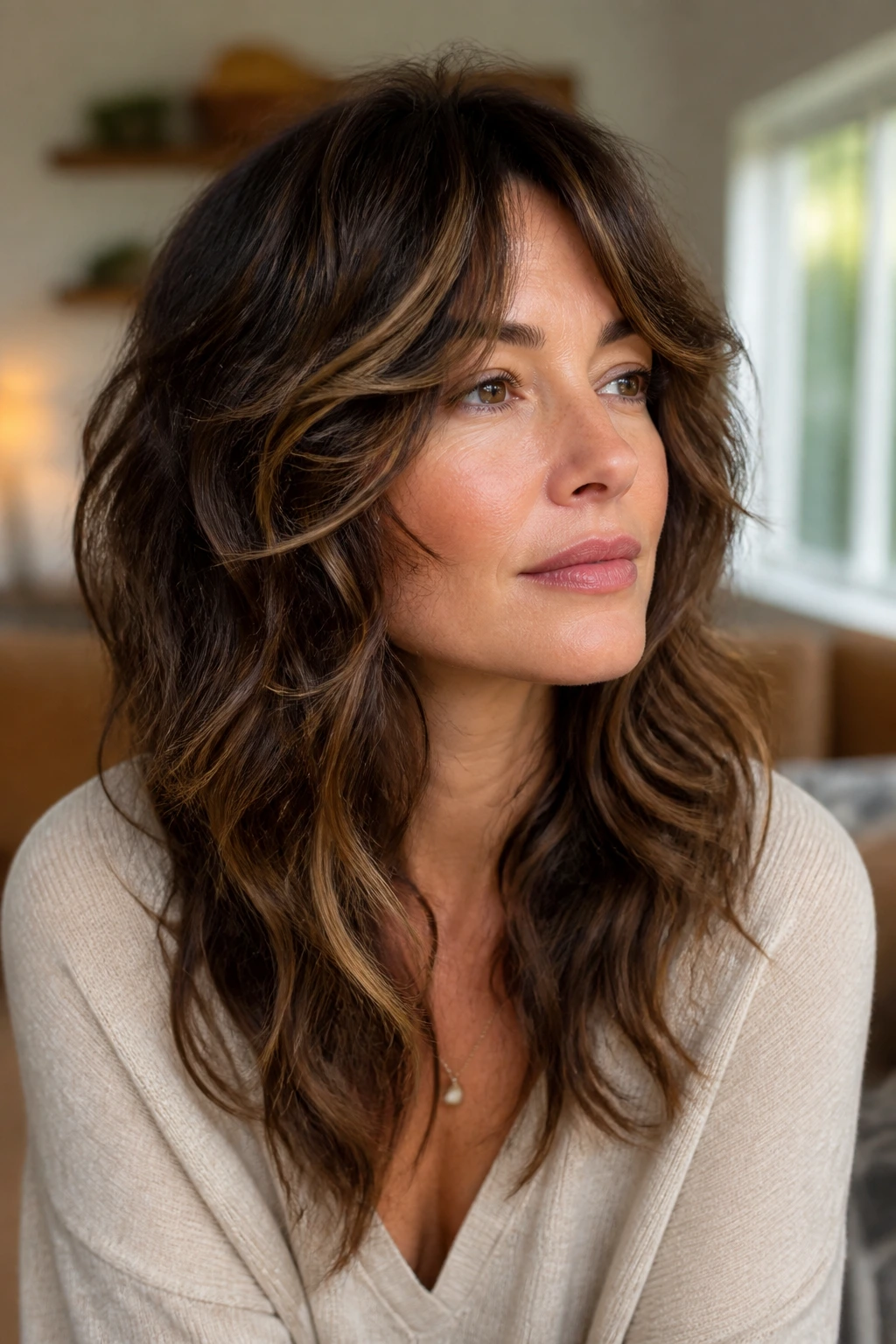
The first mistake is cutting the hair too short when it’s wet. Wet waves lie. They shrink. They pretend to be calmer than they are. If your stylist ignores that, the fringe may spring up and the overall shape can sit higher than intended once dry.
Another common miss is over-thinning the ends. A shag needs movement, but it still needs a base. When the perimeter gets too wispy, the haircut starts to look empty at the bottom and frayed at the sides. The fix is a fuller line with soft internal layering instead of a heavily shredded edge.
Heavy products can wreck the look fast. Thick creams, rich butters, and too much oil can weigh down the crown and drag the wave pattern into clumps. Fine or medium waves usually do better with mousse, light leave-in, and a touch of texture spray at the end.
Fringe mistakes are their own category. If the bangs are cut too high on the forehead or too short at the center, they can live in a bad place for weeks. Wavy bangs should usually be cut with room for shrinkage and movement. That’s not a luxury. It’s basic survival.
Boho Variations for Different Hair Textures and Habits
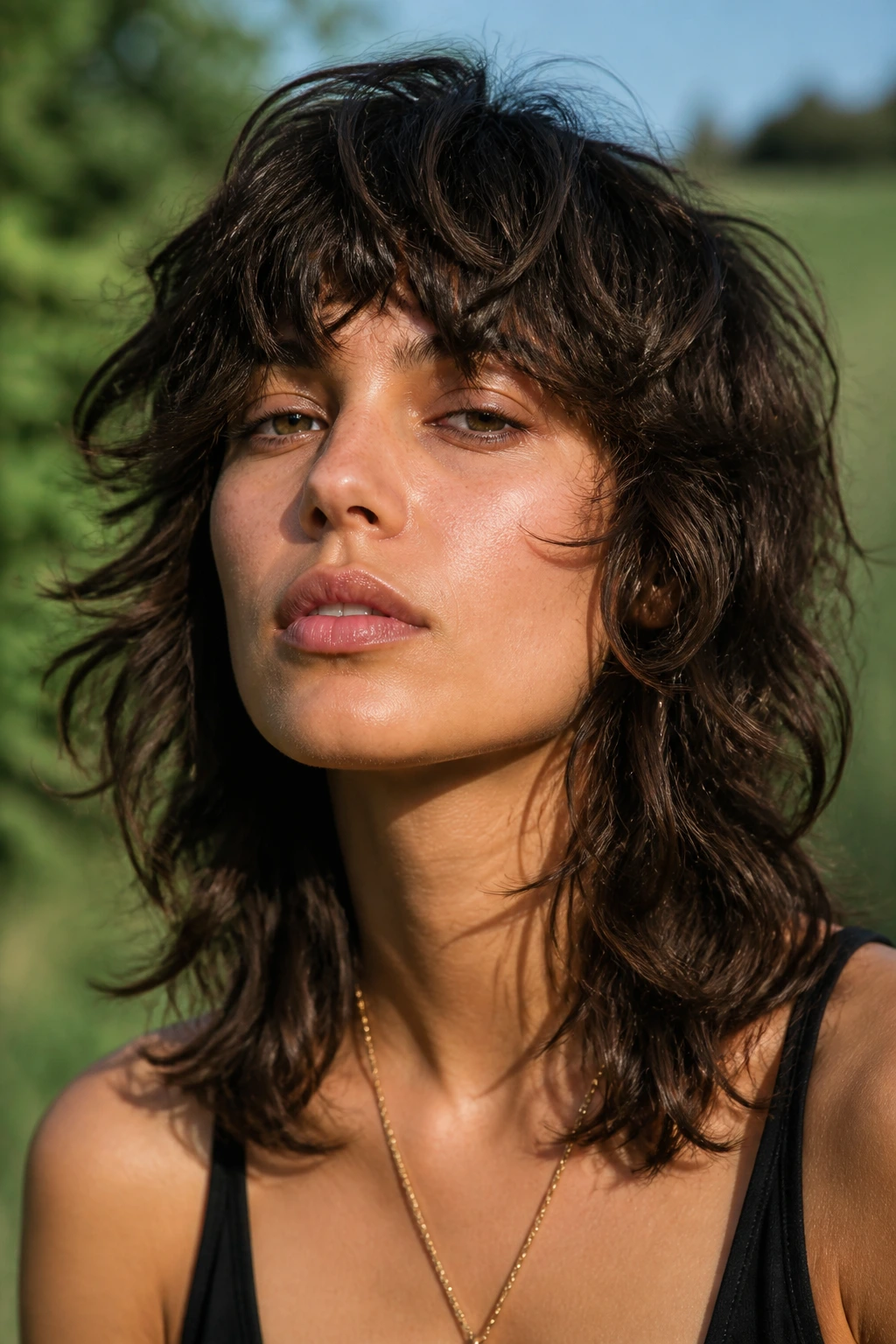
The Fine-Hair Lift Version: Keep the layers soft and the ends fuller, then use mousse at the roots only. This version gives movement without making the hair look see-through.
The Thick-Hair De-Bulk Version: Concentrate on interior weight removal and keep the perimeter stronger. It’s the right move if your hair feels bulky by midday and you’re tired of it.
The No-Fringe Version: Skip bangs altogether and let the face frame do the work. This is a smart choice if you hate trims or if your forehead gets oily fast.
The Edgier Soft-Mullet Version: Shorten the front and crown a bit more, but keep the blend smooth. That gives the haircut attitude while staying wearable.
The Loose-Curl Hybrid Version: Leave more length between layers and cut with the curl pattern in mind. This is the version that keeps loose ringlets from springing into a puffball.
Keeping the Shape While It Grows
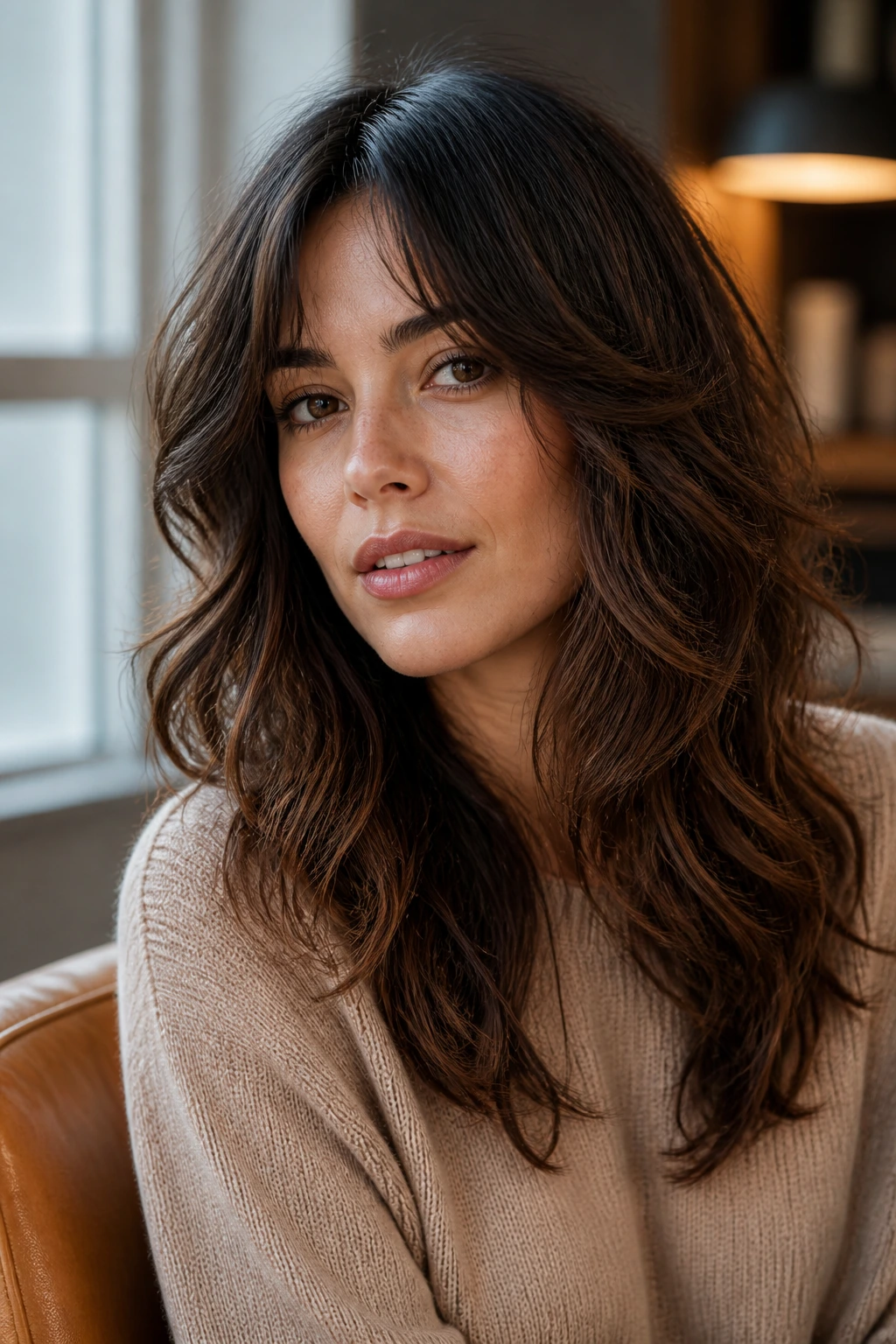
A shag is forgiving, but it still needs maintenance if you want the shape to stay readable. Fringe-heavy cuts usually need a trim every 4 to 6 weeks. The rest of the cut can often go 8 to 12 weeks, depending on how fast your hair grows and how sharp you want the outline to stay. If you like a softer, lived-in look, you can stretch that a little.
Sleep care matters more than people think. A loose pineapple, a silk pillowcase, or a soft clip can keep the top from getting flattened into one weird bend overnight. If the front gets bent in a bad direction, a quick mist of water and a finger twist in the morning usually fixes it faster than a full wash.
Second-day and third-day hair can be the best version of a shag. Add a touch of dry shampoo at the roots, shake out the mids, and refresh the ends with a tiny bit of texture spray. That slightly roughened finish is where this haircut often looks best. Too clean, and it can lose its character.
Frequently Asked Questions
Will a boho shag work on very wavy hair that frizzes easily?
Yes, but the cut has to keep enough weight at the ends. If the layers are too shredded, frizz takes over and the shape disappears. A softer, fuller perimeter with controlled internal layering usually works better than an aggressively razored finish.
Do I need bangs for a shag to feel boho?
No. Curtain bangs help, but a long no-bang shag can look just as soft and relaxed. The face frame does the same job if it starts low enough and blends well into the rest of the cut.
Is a shag good for fine wavy hair?
It can be, as long as the layers are not overdone. Fine hair usually needs lift at the crown and some fullness at the ends so the cut doesn’t go see-through. Ask for movement, not a lot of thinning.
How often should I trim a shag haircut?
Bangs may need attention every 4 to 6 weeks. The overall shape can often go 8 to 12 weeks, depending on how much softness you like. A grown-out shag can still look good for longer if the face frame stays in balance.
Can I air-dry a shag and still have it look styled?
Yes. That’s one of the reasons people love the cut. A little mousse, a scrunch, and a patient hands-off dry usually give enough shape to make the layers read clearly without heat.
What if my waves are uneven from one side to the other?
That’s common. A good stylist can adjust the part, the face frame, and the crown layers to balance the bend. Sometimes the fix is as simple as a slightly off-center part and a longer layer on the heavier side.
Should I ask for a razor cut or scissors?
It depends on your hair’s texture. Soft, medium waves often like a razor because it removes bulk cleanly. Coarser or frizz-prone hair may do better with scissors and point-cutting, which keeps the ends from fraying.
Why does my shag look great the first day and flat later?
Usually the problem is product weight, part placement, or the layers being too top-heavy. A lighter styling product, a bit of root lift, and a fuller perimeter can keep the shape alive longer between washes.
A Cut That Keeps Its Softness
The best thing about boho shag haircuts for wavy hair is that they do not ask you to pretend your texture is something else. They work because the cut leaves room for the bends, flips, and uneven little turns that make waves interesting in the first place. That’s the difference between a haircut that looks posed and one that looks lived in.
If you’re sitting in the salon chair trying to decide, think less about labels and more about balance. Where does your hair need lift? Where does it need weight? Where do you want the face frame to land when the hair is dry, not just when it’s combed straight and cooperative? Get those details right, and the shape tends to take care of the rest.
A good shag has a long memory. It keeps giving shape long after the first trim line has softened, and that’s exactly why it suits wavy hair so well.
