



Thick curls can turn into a triangle by lunchtime if the cut fights them. The crown swells, the sides sit out like elbows, and the ends drag with all the charm of wet carpet. A good shag changes that whole story. It takes the density off the places that need breathing room, keeps enough weight where the curl wants to hang, and lets the shape move instead of sitting there like a helmet.
That is why mid length curly shag cuts for thick hair keep showing up in salon chairs and photo folders. They are not about making curly hair smaller. They’re about making it behave better. The right layers give the curl clump room to spring, and the middle length keeps the perimeter from collapsing into a short puffball or hanging in one blunt shelf.
The tricky part is choice. One shag can make thick curls look airy and expensive-looking; another can make them fluffy in all the wrong spots. Short crown layers, heavy bangs, razored ends, wide side sweeps — they all change the silhouette in a real way, and on dense hair the differences show fast. So the useful version of this topic is not “get a shag.” It’s which shag, where the weight should stay, and how to keep the cut from turning into a frizz festival the first time humidity shows up.
Why These Curly Shag Cuts Work on Thick Hair
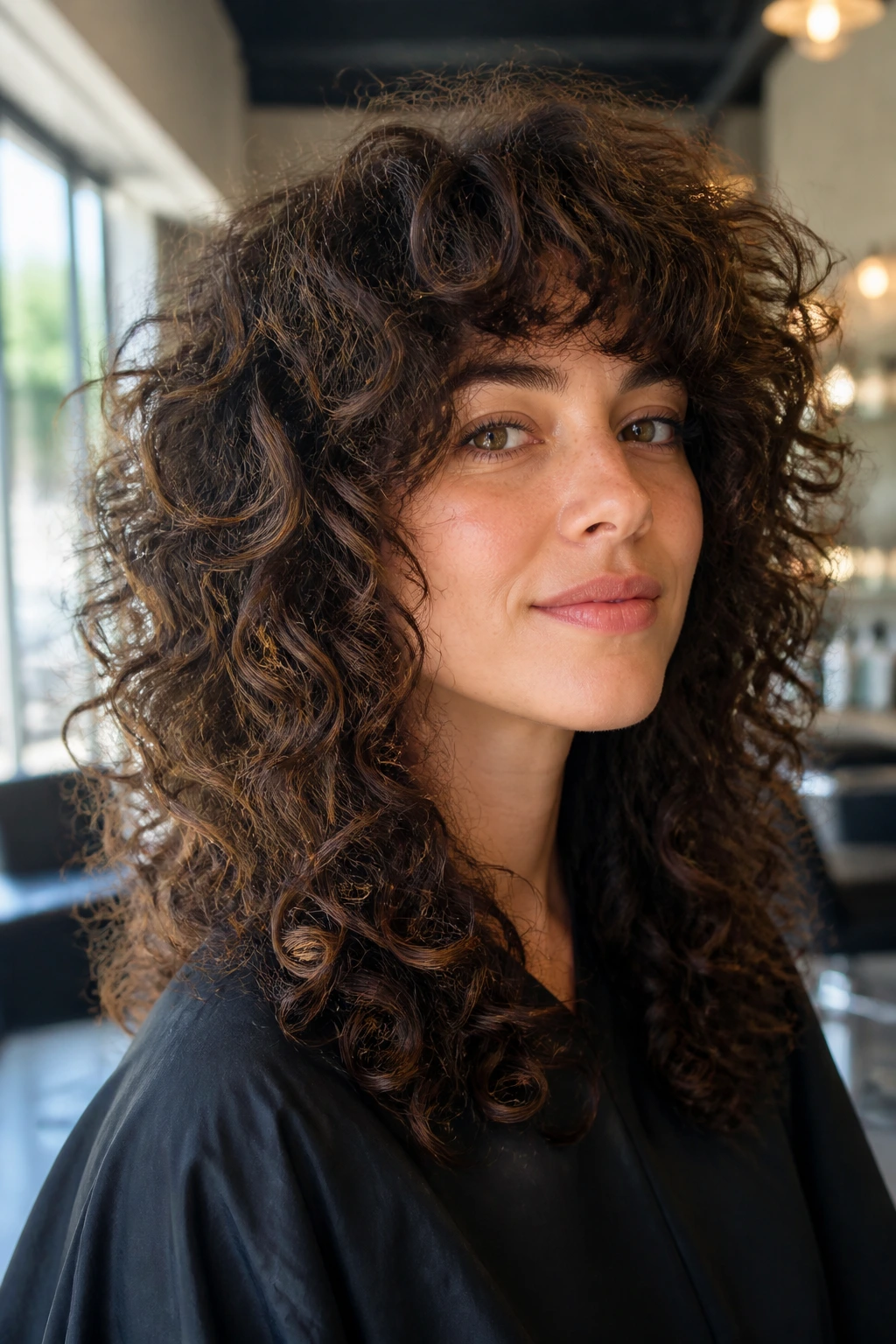
-
They move bulk off the perimeter: Thick curls often pile weight at the bottom, and layered shag shapes break up that shelf so the ends don’t look like one heavy line.
-
They respect shrinkage: Mid length gives you room to lose inches when the curls spring up, which matters a lot more than straight-haired people realize.
-
They keep the top from flattening out: A good shag lifts the crown without shredding it, so you get height and air instead of a wide triangle.
-
They grow out with less drama: When the layers are cut well, the shape still looks intentional after 8 to 12 weeks, even as the fringe softens.
-
They play nicely with wash-and-go styling: The cut does part of the work, which means you’re not forced to spend 40 minutes reworking every curl by hand.
1. Collarbone Cloud Shag
The collarbone cloud shag sits in that sweet spot where thick curls finally stop acting like a wet blanket. The length hits low enough to keep the bottom from poofing out too much, but the interior layers remove the dead weight that makes dense hair slump. It’s the cut I’d point to first if someone says, “I want movement, but I do not want my hair to look thin.”
Why It Works
The softest layers live around the upper sides and crown, so the shape lifts instead of stacking out wide. On curls in the 3a to 3c range, the collarbone length keeps enough tension in the hair for the ringlets to group cleanly after drying.
- Best for: thick curls that get heavy at the shoulders.
- Shape cue: the longest pieces should graze the collarbone when stretched.
- Styling note: diffuse until the roots are about 85% dry, then stop touching it.
My bias: if your hair has a lot of body but not much patience, this is one of the easiest places to start.
2. Curtain Fringe Curly Shag
Why do curtain bangs keep pairing so well with thick curls? Because they split the front weight without stealing the whole show. The middle part gives the face a little space, and the longer pieces that fall to either side keep the fringe from turning into a short, puffy shelf.
What Makes It Different
The fringe should start just off the brow and angle down into the cheekbone zone once the curls dry. That extra length matters. Curly bangs spring up more than people expect, and thick hair magnifies the effect.
How It Wears
This version looks especially good when the front pieces are slightly longer than the rest of the crown layers. You get a soft frame around the eyes, then the rest of the cut falls back into that shaggy motion behind the ear and at the nape.
If your curls are looser, keep the fringe more blended. If they’re tighter, give the bangs a little more length and let them shrink on their own.
3. Crown-Lightening Curly Shag
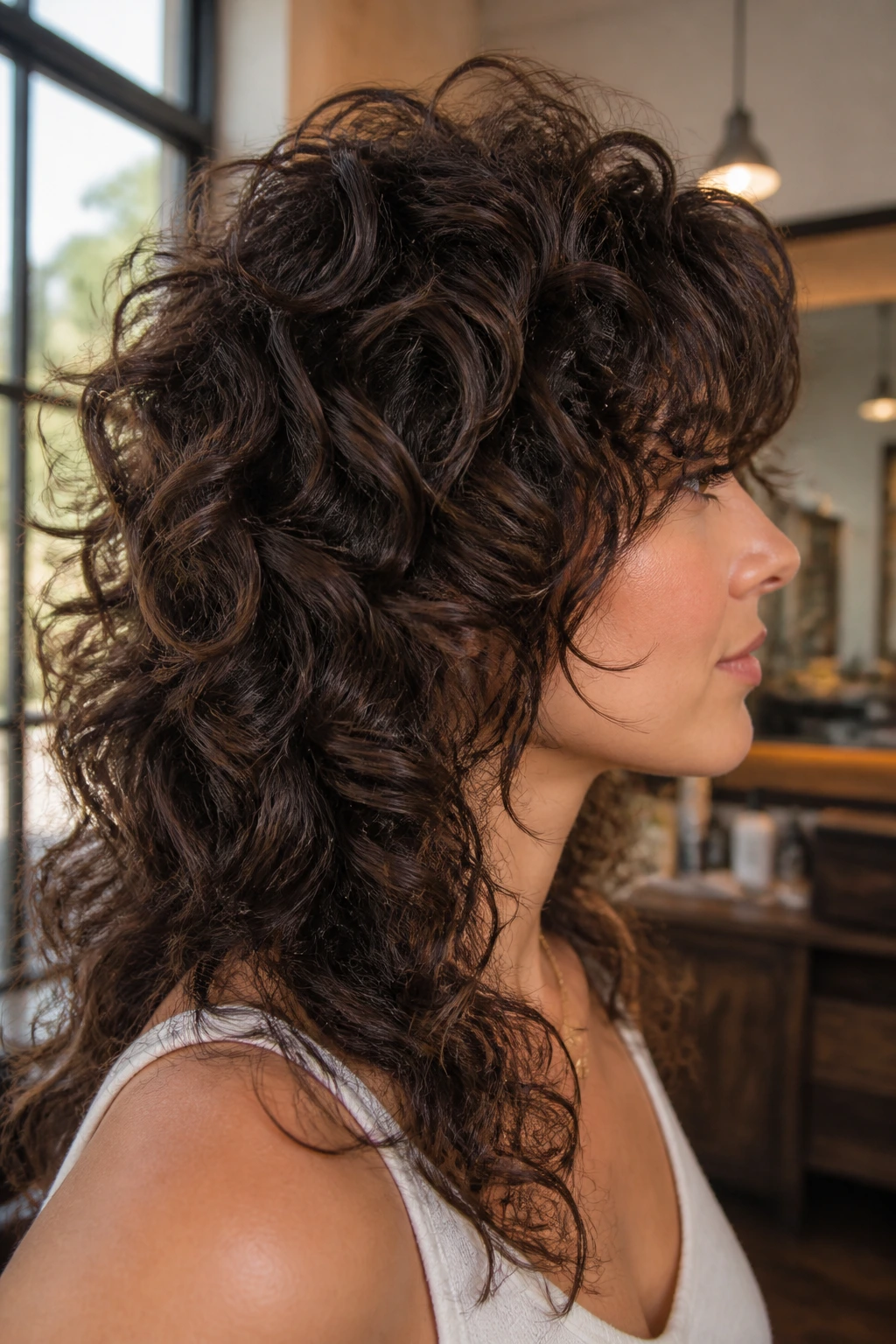
Picture the exact moment thick curls start to feel too heavy: the top gets flat, the sides expand, and the whole shape goes boxy. That is the problem this cut solves. The crown-lightening shag removes bulk where the head needs air, not where it needs width.
The Mechanism Behind It
Shorter internal layers sit under the top section and create lift from the inside out. The perimeter stays longer, so the shape still has weight, but the top no longer behaves like a solid block.
- Ask for internal layering, not aggressive thinning.
- Keep the shortest layers below the very top surface if your curls frizz easily.
- This shape works best when the stylist checks it in the curl’s natural state, not stretched flat.
The result is a cut that feels lighter on your head without looking chopped up. That’s the whole game.
4. Face-Framing Cascade Shag
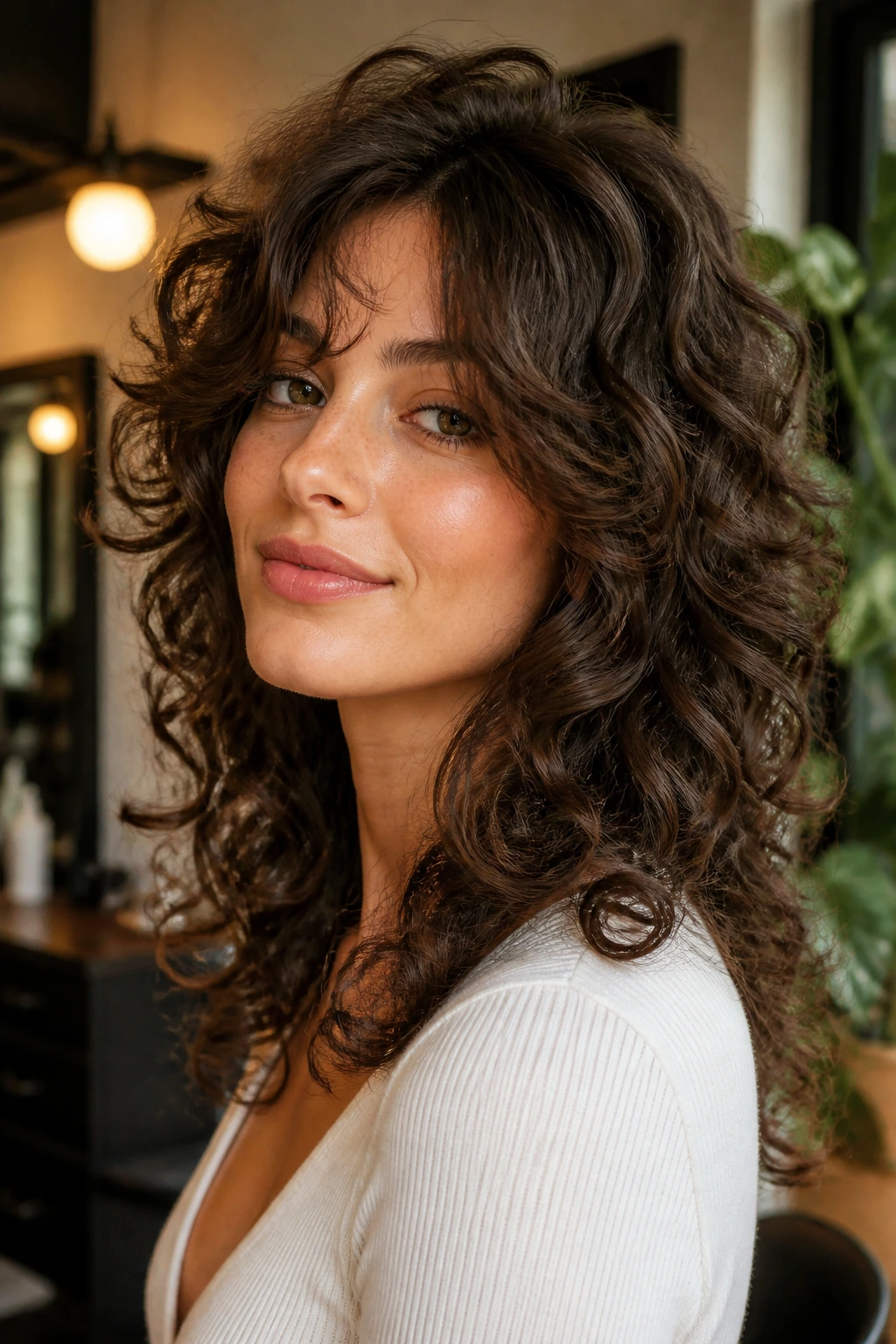
This one is all about the front pieces. The sides fall in soft steps from the cheekbone down to the collarbone, which gives thick curly hair a cleaner outline near the face. I like this cut on people who want movement but do not want to lose the security of a fuller perimeter.
The cascade works because it redirects the eye. Instead of seeing one massive wall of curl, you see a path: short around the eyes, medium at the jaw, long at the shoulders. On dense hair, that visual path matters almost as much as the actual length. It keeps the shape from feeling blunt and it makes the curls look deliberate, even when they’re doing their own thing.
If your face shape is round or square, this is one of the most flattering options in the pile. If you like to tuck one side behind the ear, even better. The front keeps the shape interesting while the back stays full and easy.
5. Tapered Nape Shag
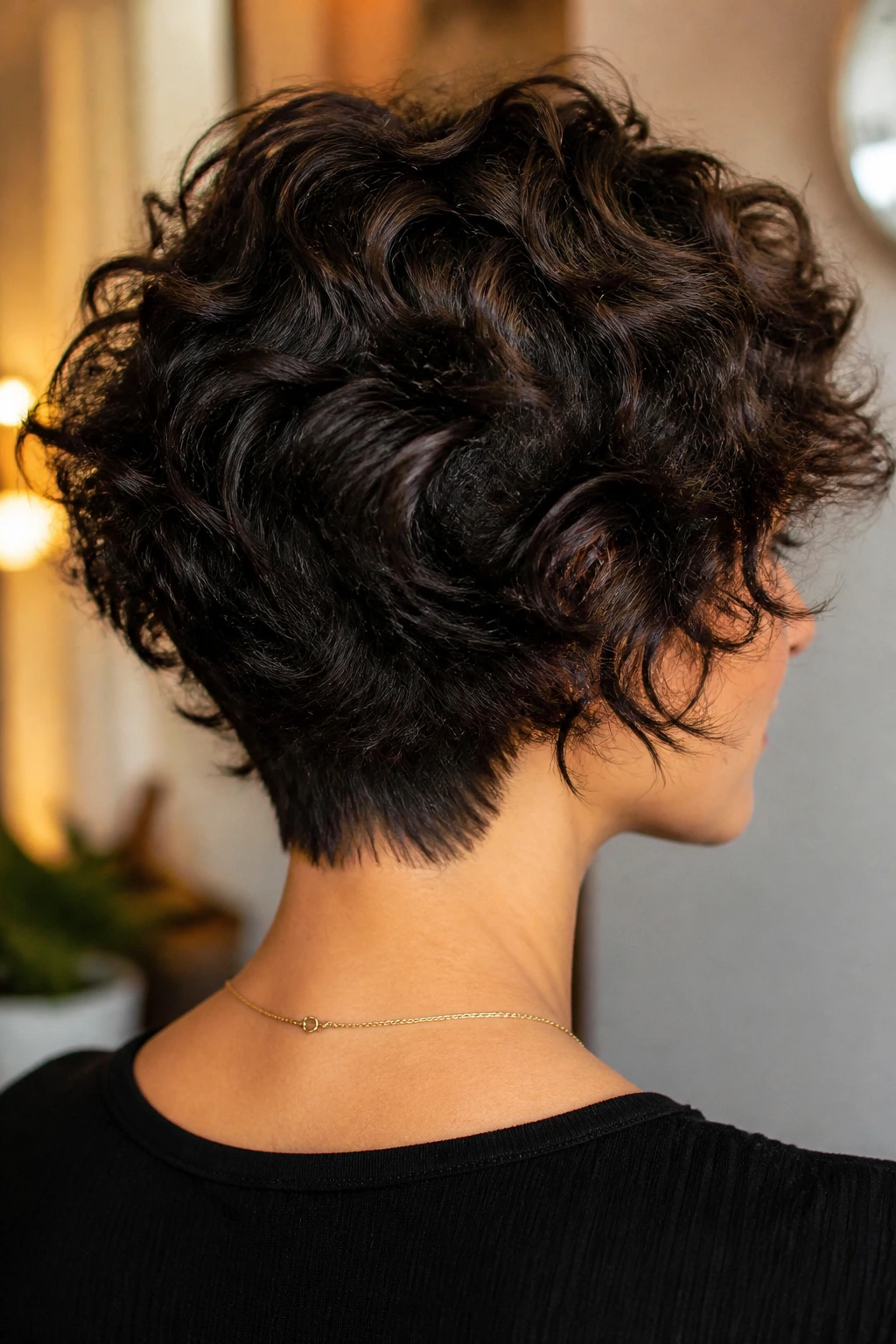
A blunt nape on thick curls can feel like a wool collar. Heavy. Hot. Annoying. The tapered nape shag fixes that by shortening and softening the back neckline so the whole cut sits lighter when you wear it down or half up.
Why It Beats a Blunt Line
The nape area often hides a lot of bulk, especially on denser textures. Tapering that section lets the curls stack more cleanly, which reduces the weird bulge that sometimes happens under a sweater collar or jacket hood.
Best Use Case
This is the cut I’d pick for someone who hates hair touching the neck but doesn’t want a short bob. It still reads mid length from the front, yet it feels easier to live with in warm rooms and humid weather.
A good nape taper is subtle. If the back is too short, the shape gets jumpy. If it’s too long, you lose the whole point.
6. Bottleneck Bang Shag
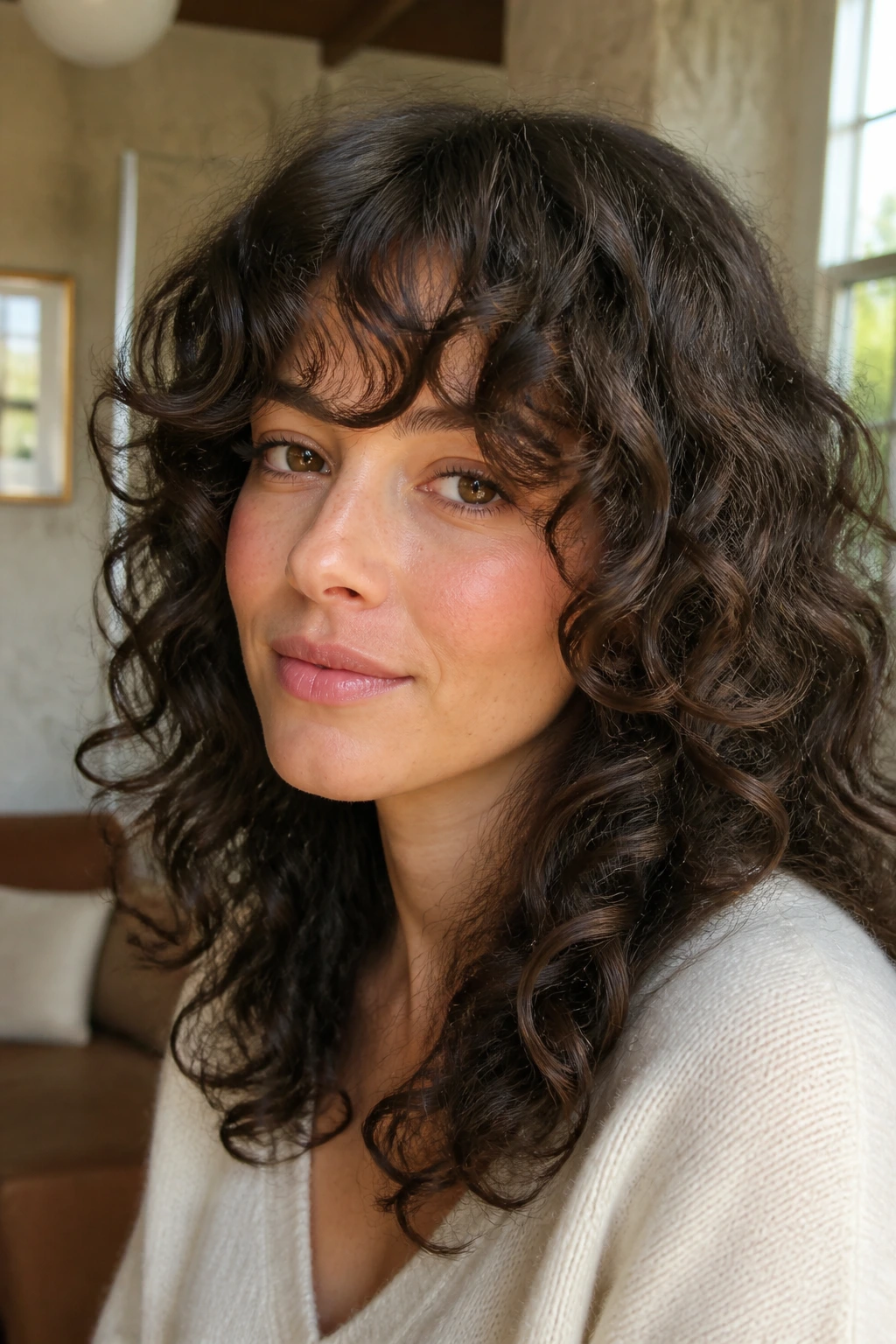
Bottleneck bangs earn their keep on thick curly hair because they open at the temples and close a bit at the center, which gives the front a soft curve instead of a hard block. They’re a little more tailored than curtain bangs, and that makes them useful when the fringe area is extra dense.
What to Watch For
The shortest part should sit around the center of the forehead once dry, with the sides lengthening toward the cheekbones. On curls, that means the wet cut usually needs to be longer than your instinct says. Curly fringe always shrinks. Always.
A side benefit: bottleneck bangs can make the rest of the cut look cleaner because they break up the mass near the forehead. That tiny shift keeps the whole shag from feeling bottom-heavy.
If your hairline gets puffy easily, keep the middle section soft and avoid slicing too much into the edges. The shape should feel curved, not severed.
7. Rounded Halo Shag
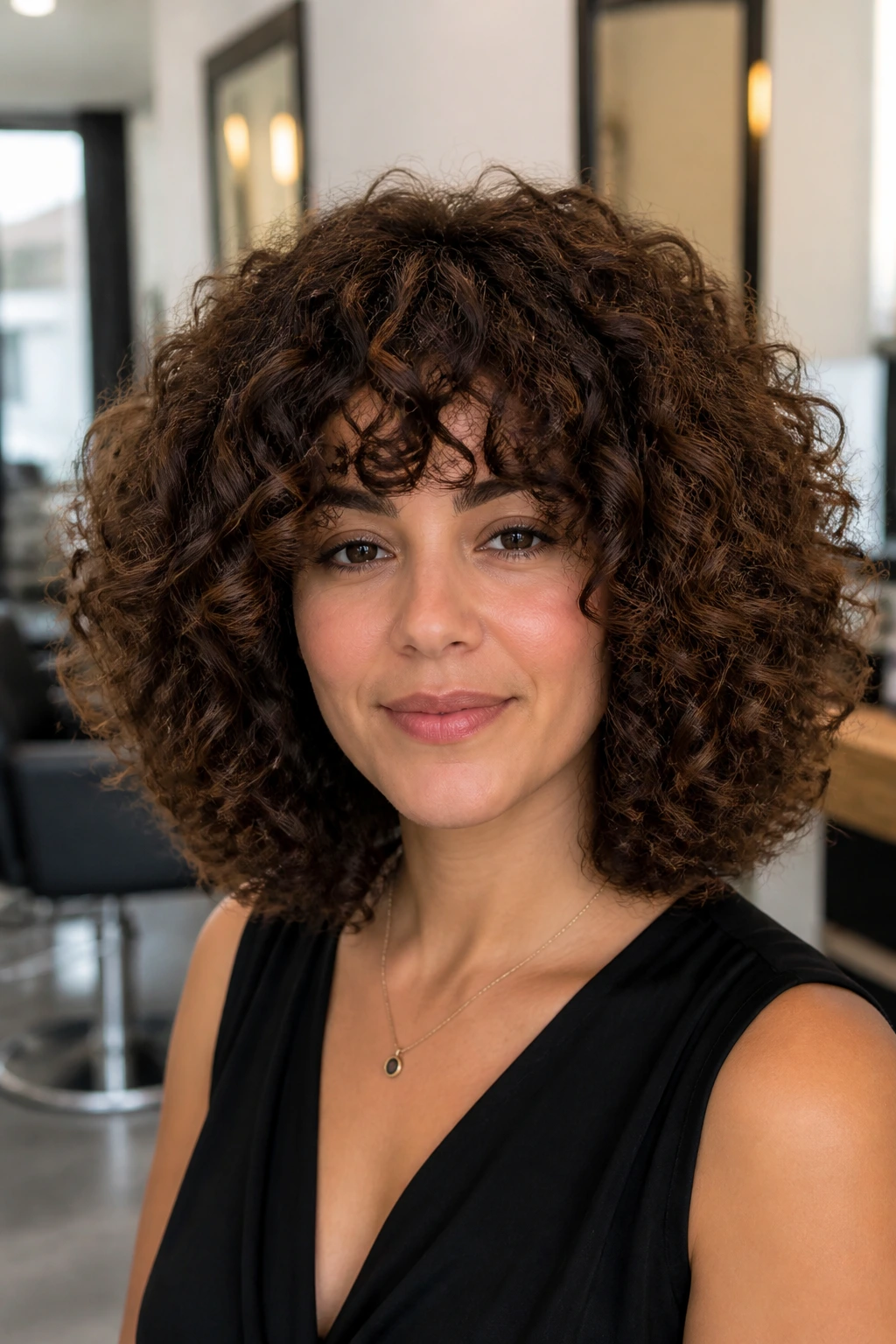
What if you want volume, but not the triangle? That’s where the rounded halo shag comes in. The silhouette stays full around the head, but the layers are arranged to create a soft circle rather than a wide wedge.
The trick is balance. The top and sides carry enough body to make the curls look lush, while the lower layers are cut in a way that encourages them to curl inward instead of jutting out. On thick 3b and 3c hair, this can be a very forgiving cut because it doesn’t depend on perfect styling. If the curls dry a little uneven, the roundness still reads as shape rather than mistake.
I like this version for people who actually enjoy big hair. Not messy big. Intentional big. There’s a difference, and this cut knows it.
8. Deep Side-Part Shag

A deep side part can do more for thick curls than a dozen styling products. It shifts the bulk off the center line, gives one side more lift, and lets the longer side drape with a little drama. That asymmetry is useful when the hair wants to sit too square.
The cut itself should be built with the side part in mind. The stylist needs to know where you usually wear it, because the layer balance changes once the part moves. If the cut is built for a center part and you always wear a deep side part, one side will look too heavy and the other side can go flat.
This is one of the best shags for people who like a little swing in the front. It reads relaxed, but there’s enough structure in the shape that it does not collapse into a random pile of curls.
9. Razor-Softened Shag
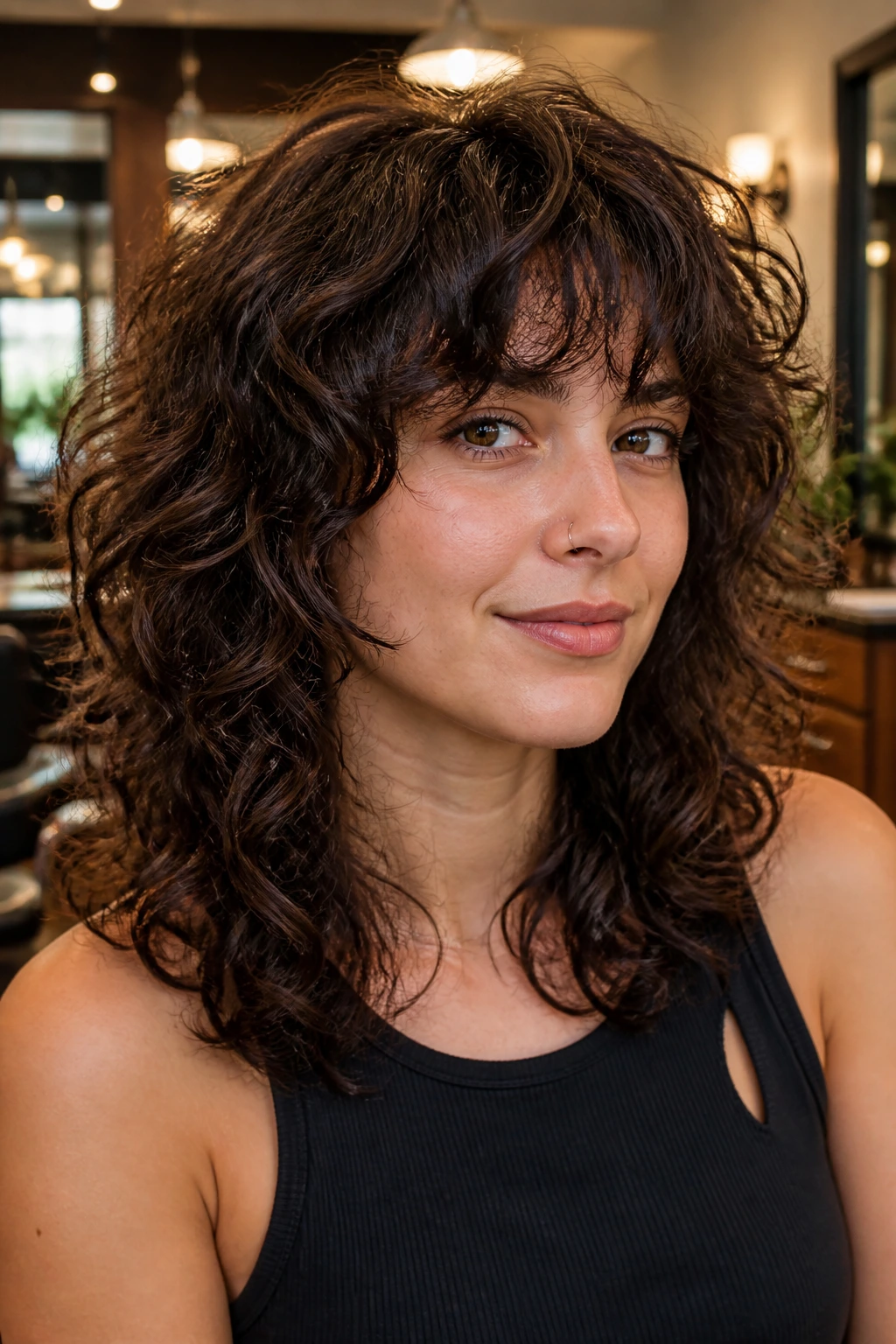
I’m cautious with razors on thick curly hair, and I mean that in the nicest possible way. Used carefully, a razor-softened shag gives the ends a feathered, airy feel that point-cutting alone can’t always match. Used badly, it leaves frizzed-out tips and fuzzy gaps.
Why It Can Work
The razor removes bulk with a gentler edge, especially on coarse curls that hold too much weight at the ends. That makes the perimeter look less blocky, which helps the curl pattern show instead of hiding under a hard line.
Who Should Ask for It
This works best on hair that’s healthy, not overly dry, and not already prone to split ends. If your curls feel thirsty or your ends snap when you detangle, ask for point cutting instead. Razor work on fragile curls is a gamble I wouldn’t take unless the stylist knows exactly what they’re doing.
A little razor goes a long way. A lot of razor is a mess.
10. Soft Wolf Shag
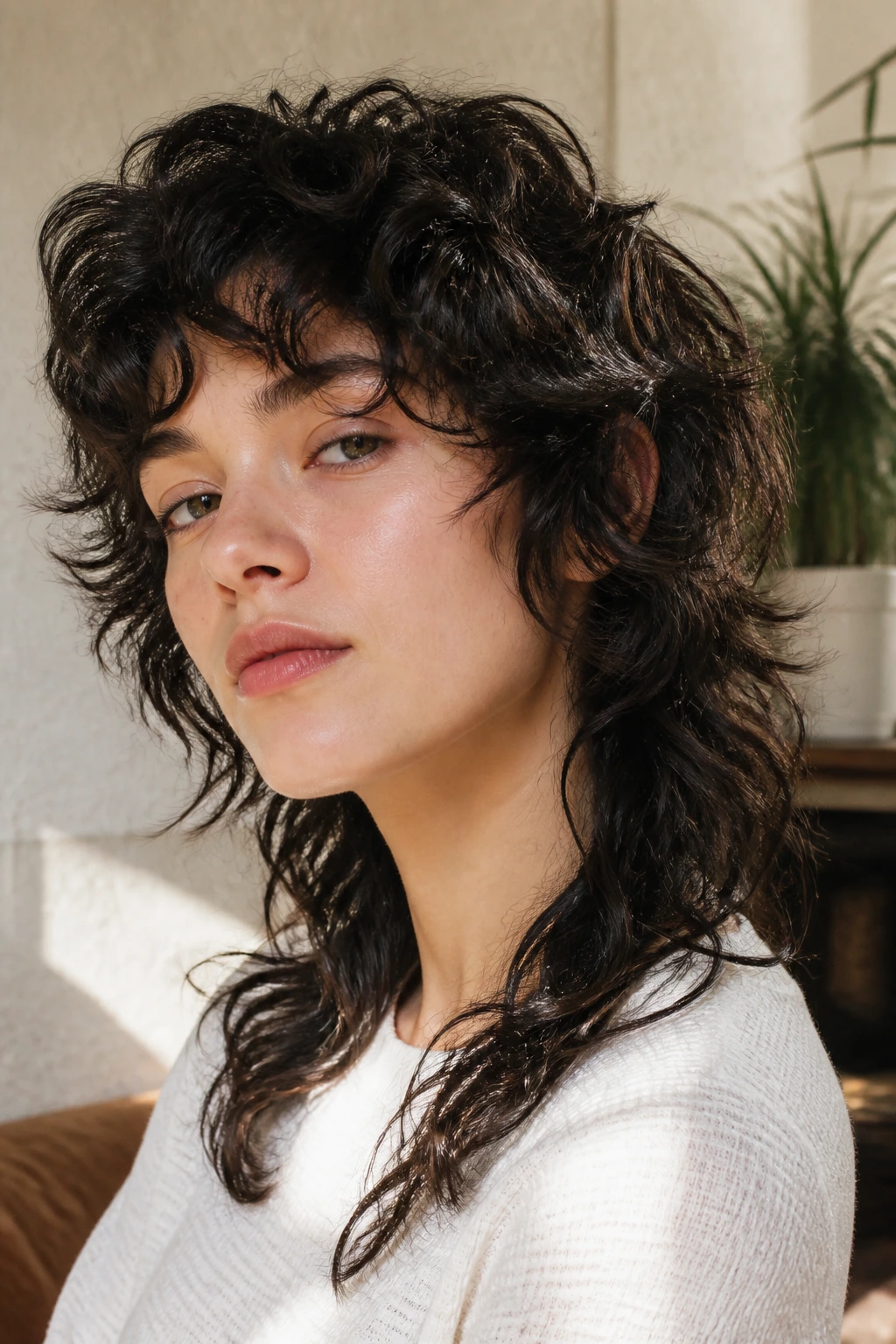
Unlike a classic shag, a soft wolf shag keeps the crown a touch shorter and the back a touch looser, which gives thick curls a bit of edge without going full mullet. It’s the version I’d recommend to someone who wants movement but also wants the haircut to feel current without trying too hard.
The soft part matters. On thick curly hair, a hard wolf cut can tip into choppy fast. The softened version keeps the top airy, the fringe blended, and the perimeter long enough that the shape still feels wearable when the curls shrink.
It’s a good match for people who like texture to be visible. If you spend time defining your curls with a brush and gel, this cut shows that work off well. If you prefer a no-fuss, hands-off routine, you may want something quieter.
11. Triangle-Rescue Shag
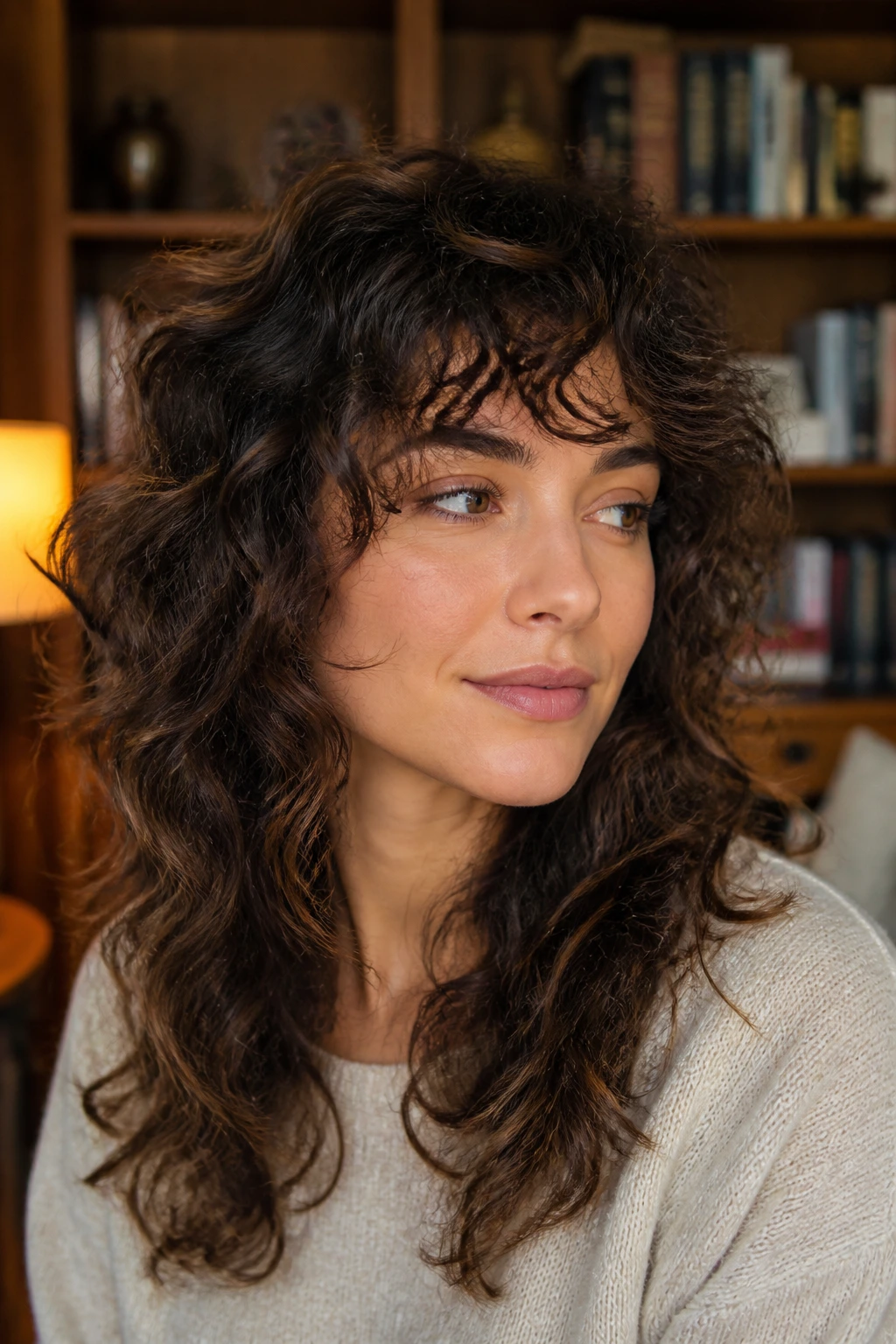
If your hair grows out into a triangle, this is the haircut that argues back. The triangle-rescue shag pulls weight away from the widest part of the head and gives the crown a little more lift so the sides don’t flare so hard.
The shape should start with medium-short layers near the upper head and longer, softer pieces through the ends. That helps the curls stack upward instead of sideways. On thick hair, that change can make the difference between “big” and “too much.”
What to Ask For
- Keep the perimeter long enough to avoid a shelf.
- Add internal layers around the crown and temple area.
- Avoid over-thinning the outer surface, which can make the triangle look frizzy instead of controlled.
This is one of those cuts that solves a problem before it starts.
12. Cheekbone-Lift Shag
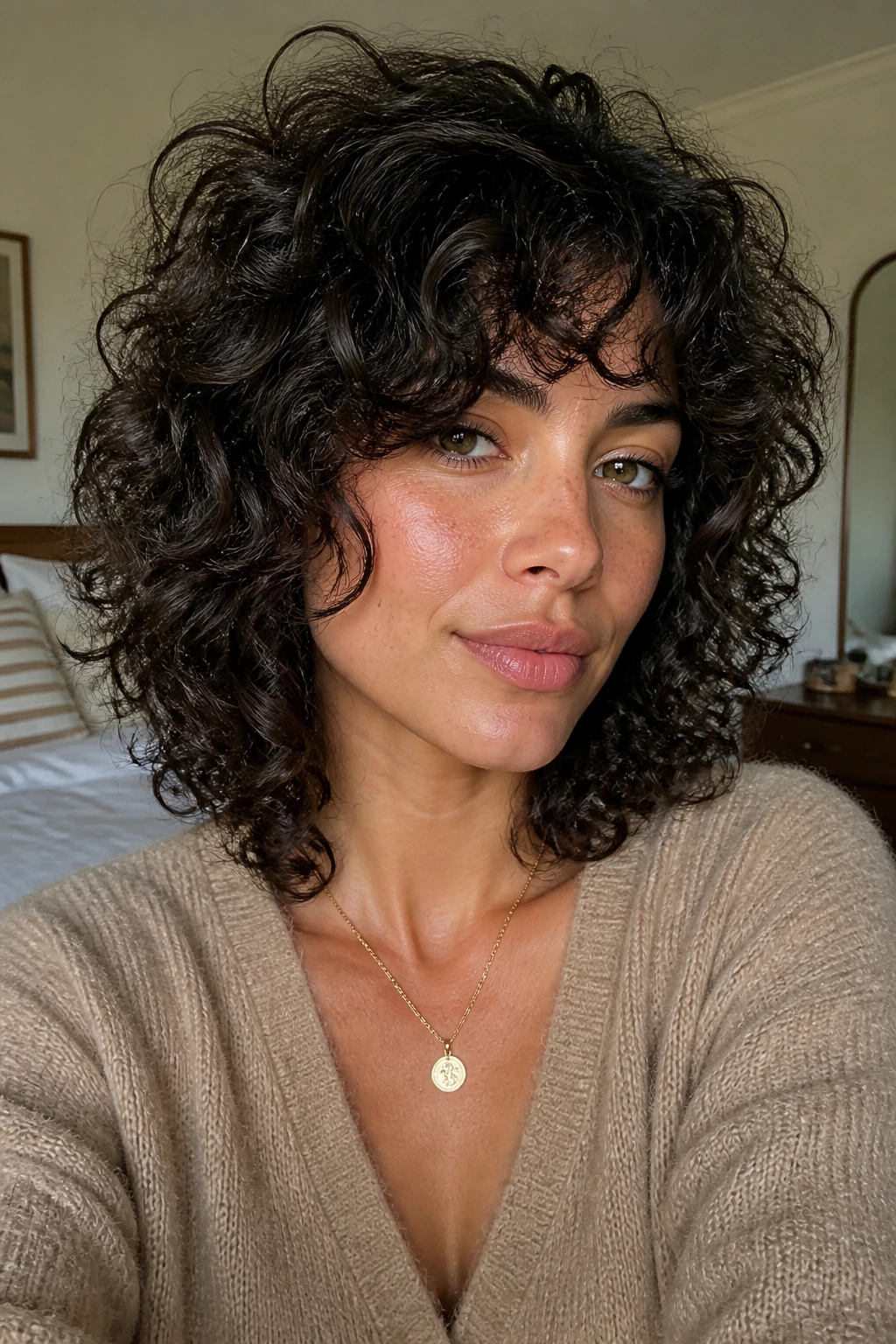
A cheekbone-lift shag puts the first major layer right where the face needs some motion — not too high, not too low. The result is a cut that frames the face without swallowing it. On thick curly hair, that placement makes a huge difference because it keeps the front from forming one heavy curtain.
The best version leaves enough length in the front to curl back toward the jaw, then tucks the next layer slightly shorter behind it. That staggered front line pulls the eye upward and gives the whole shape a lighter read. If you wear glasses, this is especially nice; the curls sit around the frames instead of crowding them.
I’d choose this for someone who wants the haircut to do a little contouring for them. It’s subtle, but on dense curls, subtle is not the same as boring.
13. V-Shape Layer Shag
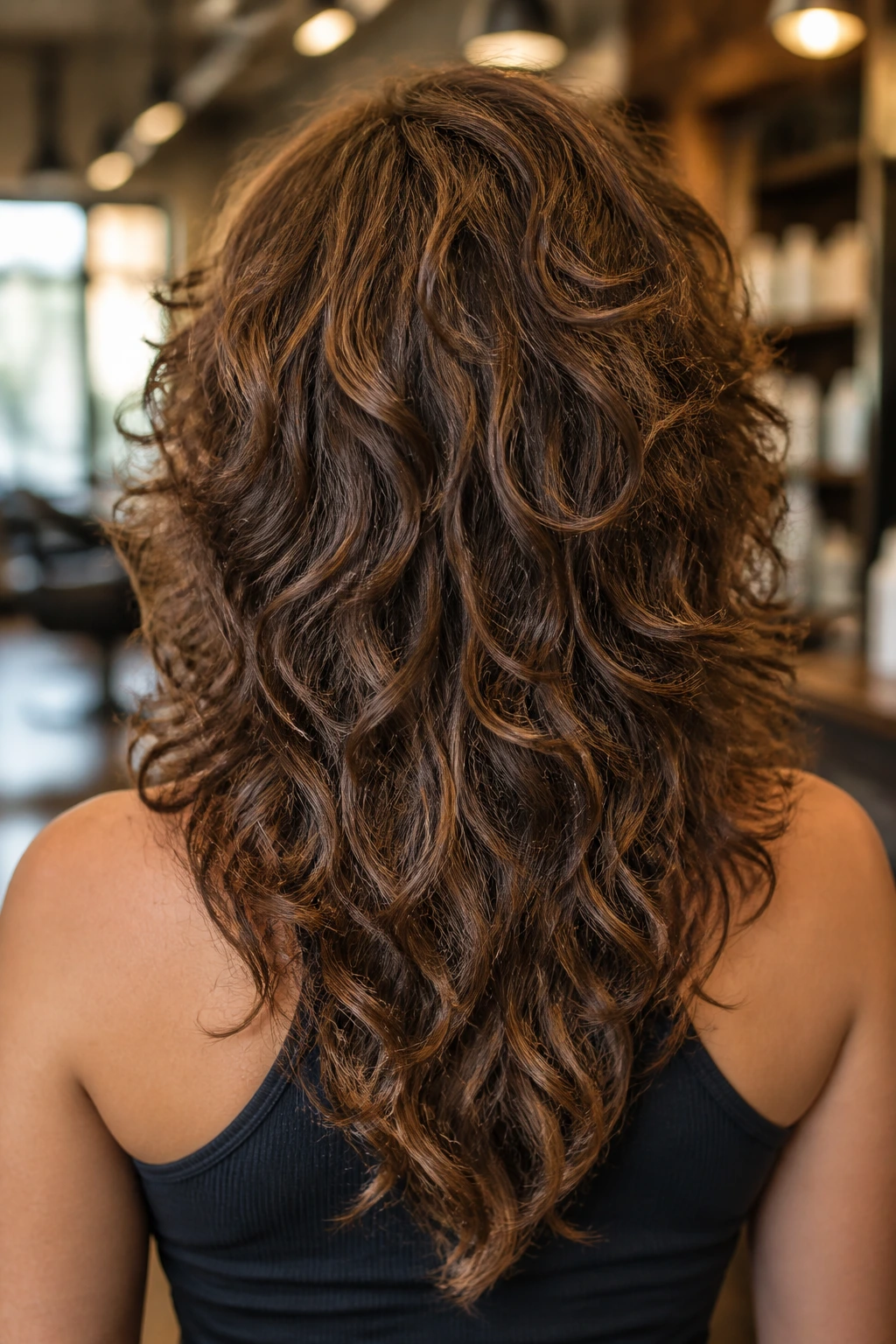
A V-shape layer shag looks fuller from the back and slimmer at the sides, which is useful when thick curls need length but not width. The back point isn’t dramatic here; it’s just enough to keep the silhouette from reading square.
The secret is in the long layers that fall down the center back while the side sections stay a bit shorter. That keeps the curl pattern moving vertically. On thick hair, a V-shape can help preserve that feeling of length even when the shrinkage is high.
This cut is a good fit if you like wearing hair down most of the time. It keeps the back interesting, especially when the curls separate into defined clumps after diffusing. If you regularly throw your hair into clips or ponytails, the V shape still works, though the pattern is more visible when it’s loose.
14. Shattered-Ends Shag
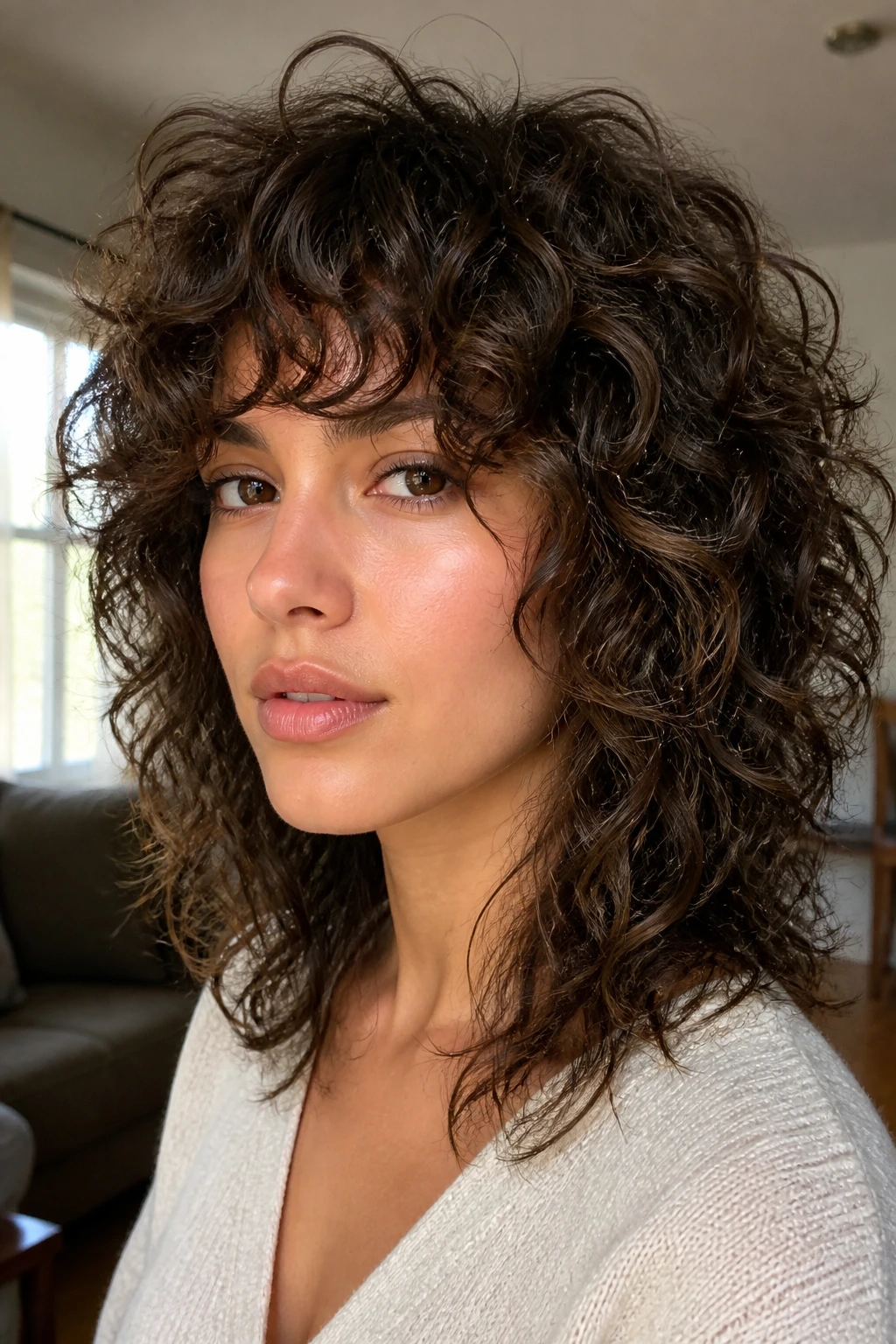
Shattered ends are about breaking up the bottom line just enough to stop thick curls from forming a blunt edge. Not shredded. Not thinned to the point of fuzz. Shattered. There’s a difference.
The cut uses point cutting at the perimeter so the ends land in slightly different places, which lets the curls stack more softly. When the hair is dense, that tiny variation makes the whole bottom edge look lighter. It also helps the ends fall in clumps rather than one heavy shelf.
This version is useful if your hair has lots of body but the bottom keeps looking puffy. It gives a little air without disturbing the main shape. I like it on shoulders that tend to collect bulk, especially if the rest of the cut is already layered enough.
15. Money-Piece Shag
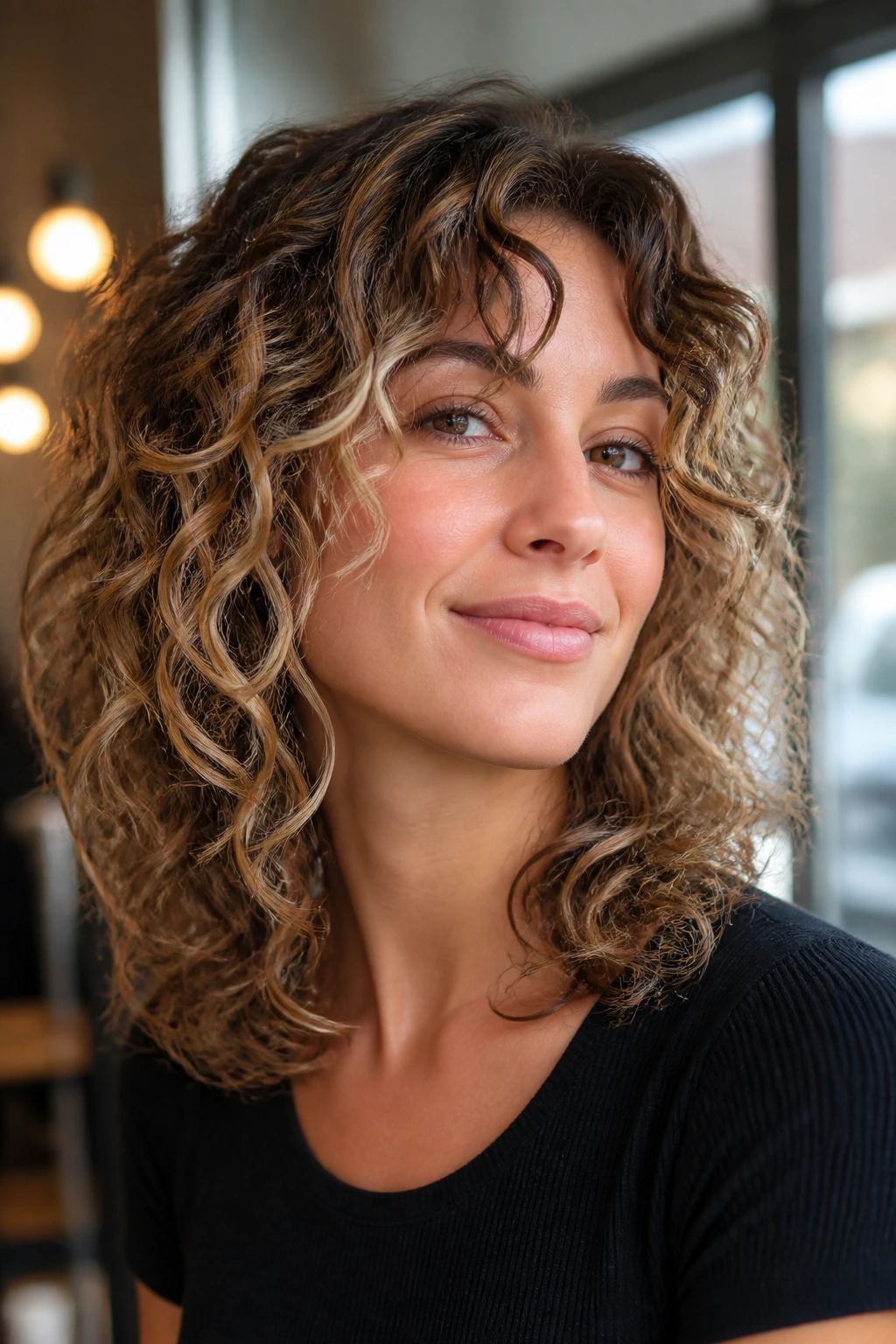
A money-piece shag keeps the front curls brighter in shape — and sometimes brighter in color, if you’re also playing with highlights. The haircut version focuses on face-framing layers that start at the front and melt back into the body of the cut, which keeps thick hair from looking too heavy around the eyes.
The front pieces should be a little more noticeable than the rest, but not so chunky that they sit like strips. Curly hair needs room to coil. That means the stylist should carve enough shape to open the face while letting the curls still do the softening work.
If you like hair that changes when you turn your head, this is a strong choice. The front reads first, then the layers behind it follow. It’s a small move with a big visual payoff.
16. Micro-Layer Shag
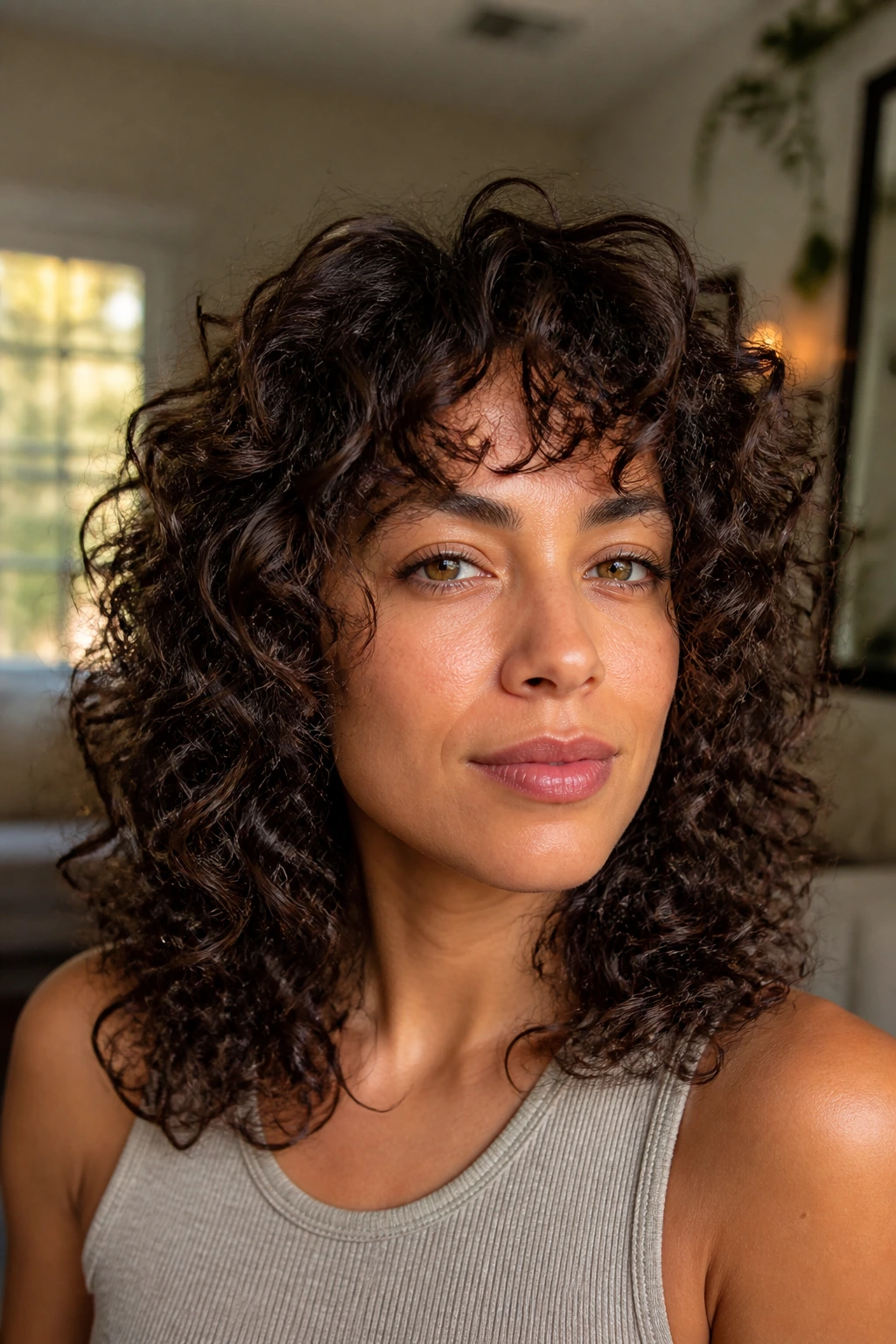
Micro-layers are tiny layers placed throughout the interior rather than huge jumps between lengths. On thick curly hair, that can be a lifesaver. The cut lightens density without giving you obvious stair-steps all over the place.
The Catch
Micro-layers need restraint. Too many, and the cut loses its structure. Not enough, and the bulk sits right where you do not want it.
Best For
This is a smart option if your curls are springy, your hair is dense all the way through, and you want the shape to stay soft. It also works when you dislike dramatic layers near the front but still want better movement through the body of the hair.
A micro-layer shag looks calm from a distance and busy up close. That’s the appeal. The shape changes as the curls settle, which keeps it from feeling flat.
17. Wash-and-Go Shag
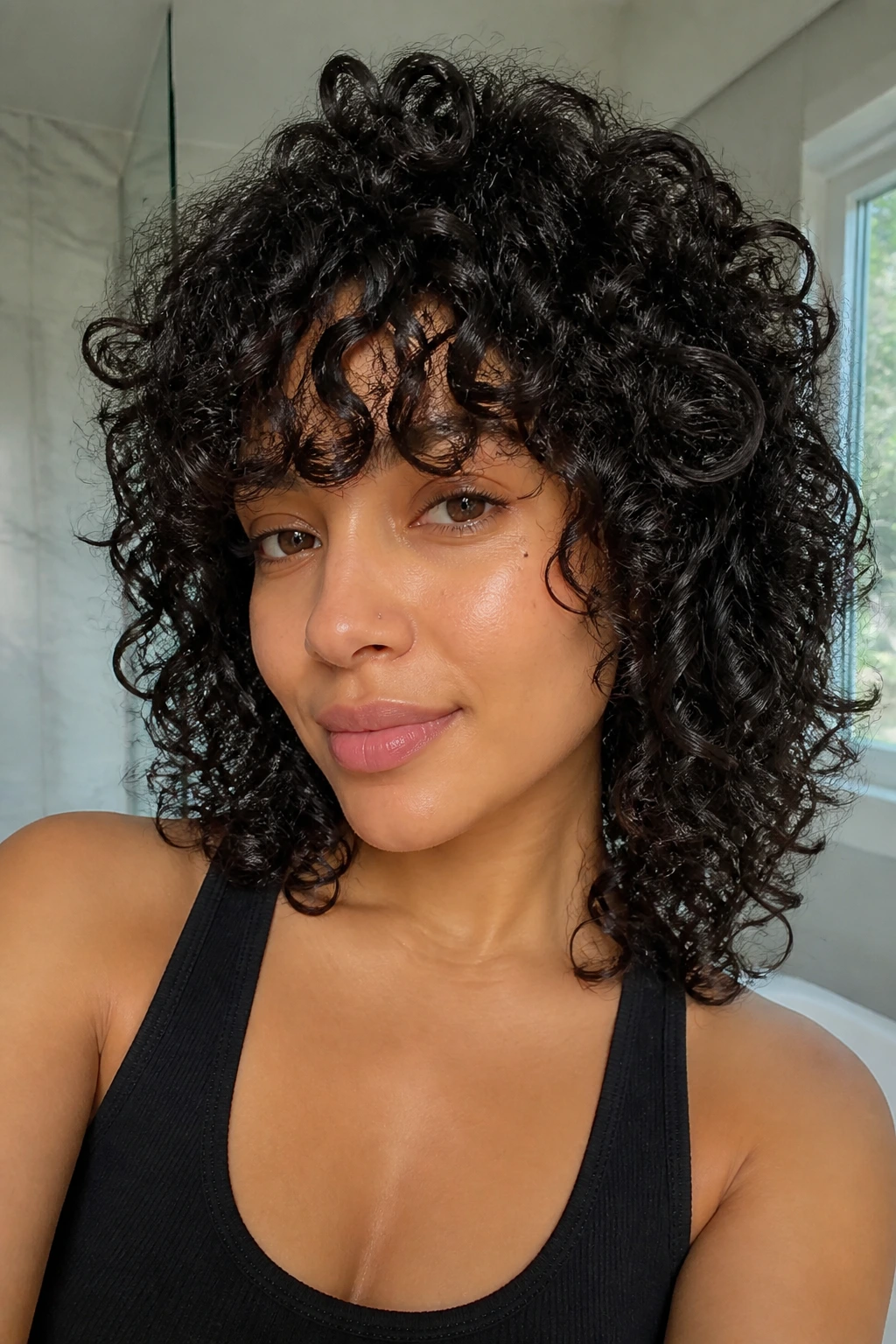
Can a haircut make wash day easier? Yes. This one does. The wash-and-go shag is built so the shape still makes sense when you put product in, scrunch, and walk away.
The layers are spaced in a way that encourages curl clumps to fall on their own, rather than asking you to coax every strand into place. Thick hair benefits a lot from this because it usually needs less manipulation, not more. The more you poke at dense curls, the bigger the halo gets.
Best Use Case
If your routine is leave-in, gel, diffuser, done, this cut will cooperate. If you like elaborate brushing patterns and careful sectioning, you can still wear it, but the shape really shines on low-fuss styling days.
This is not a lazy haircut. It’s a practical one.
18. Diffuser-First Shag
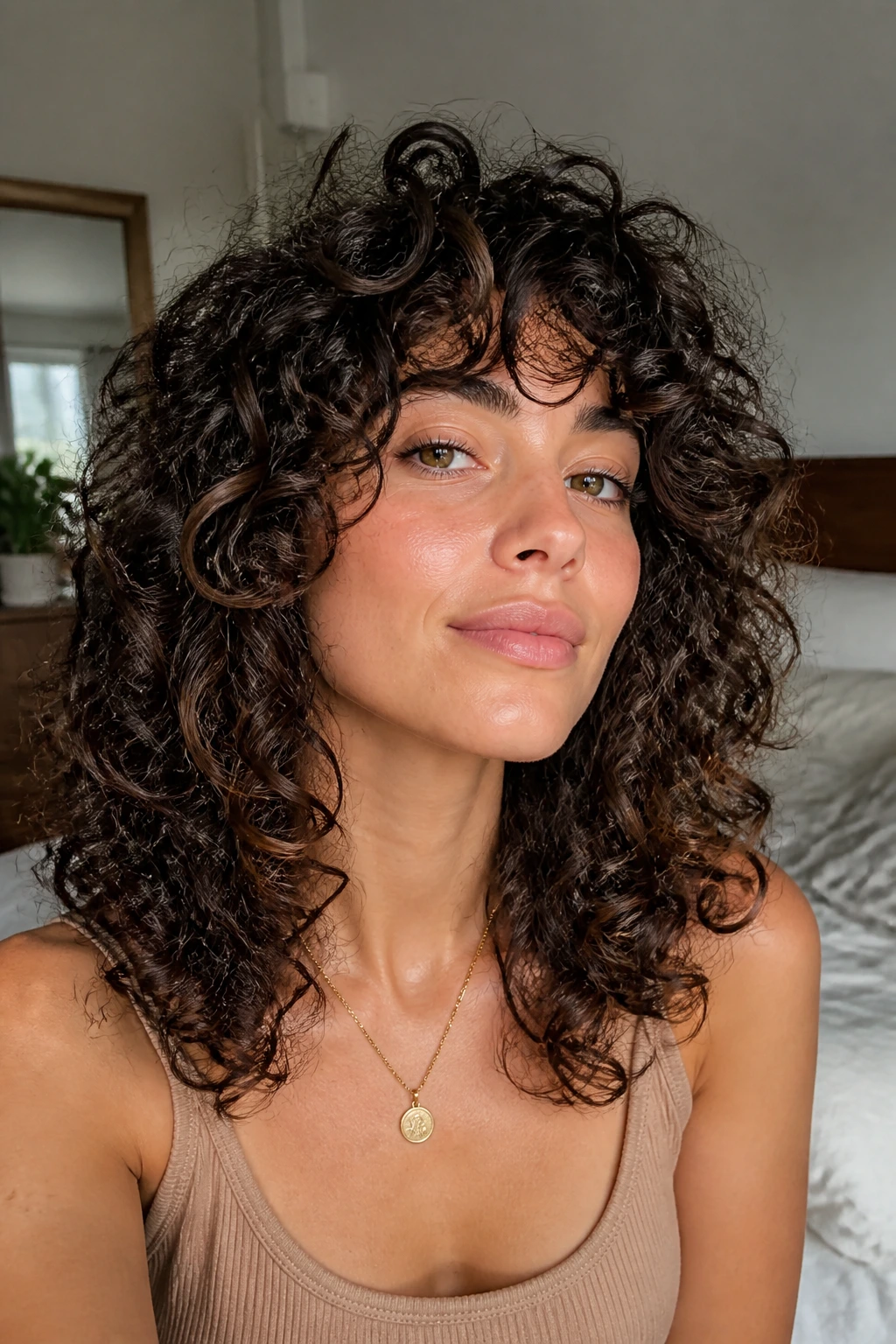
The diffuser-first shag assumes one thing: you’re going to dry your curls with a diffuser often enough that the cut should support that habit. The layers are placed to catch air at the roots and let the ends dry without clumping into a thick, damp mass.
That matters on thick hair because the outside can feel dry while the inside still holds water. A good diffuser-friendly shape helps the interior dry more evenly. It also keeps the top from getting flattened by the weight of wet curls.
If your hair likes volume but hates rough handling, this is a strong candidate. Keep the heat low, keep the airflow low, and let the cut do the lifting. The shape should emerge rather than be forced.
19. Feathered Retro Shag

Feathered layers bring a bit of old-school softness to thick curls, and I mean that in the best way. The ends are lightened enough to move, but the silhouette stays rounded and friendly instead of severe. It’s a quieter cousin of the sharper shag shapes.
This cut works well when the front is feathered away from the face and the rest of the hair falls in soft, bendy layers. On thick curls, that means you get shape without too much edge. It’s especially nice if you wear clothes with a lot of structure — jackets, collars, crisp shirts — because the hair doesn’t fight those shapes.
If you want texture that feels polished without being stiff, this is a solid pick. It’s not trying to shout.
20. Soft Mullet Shag
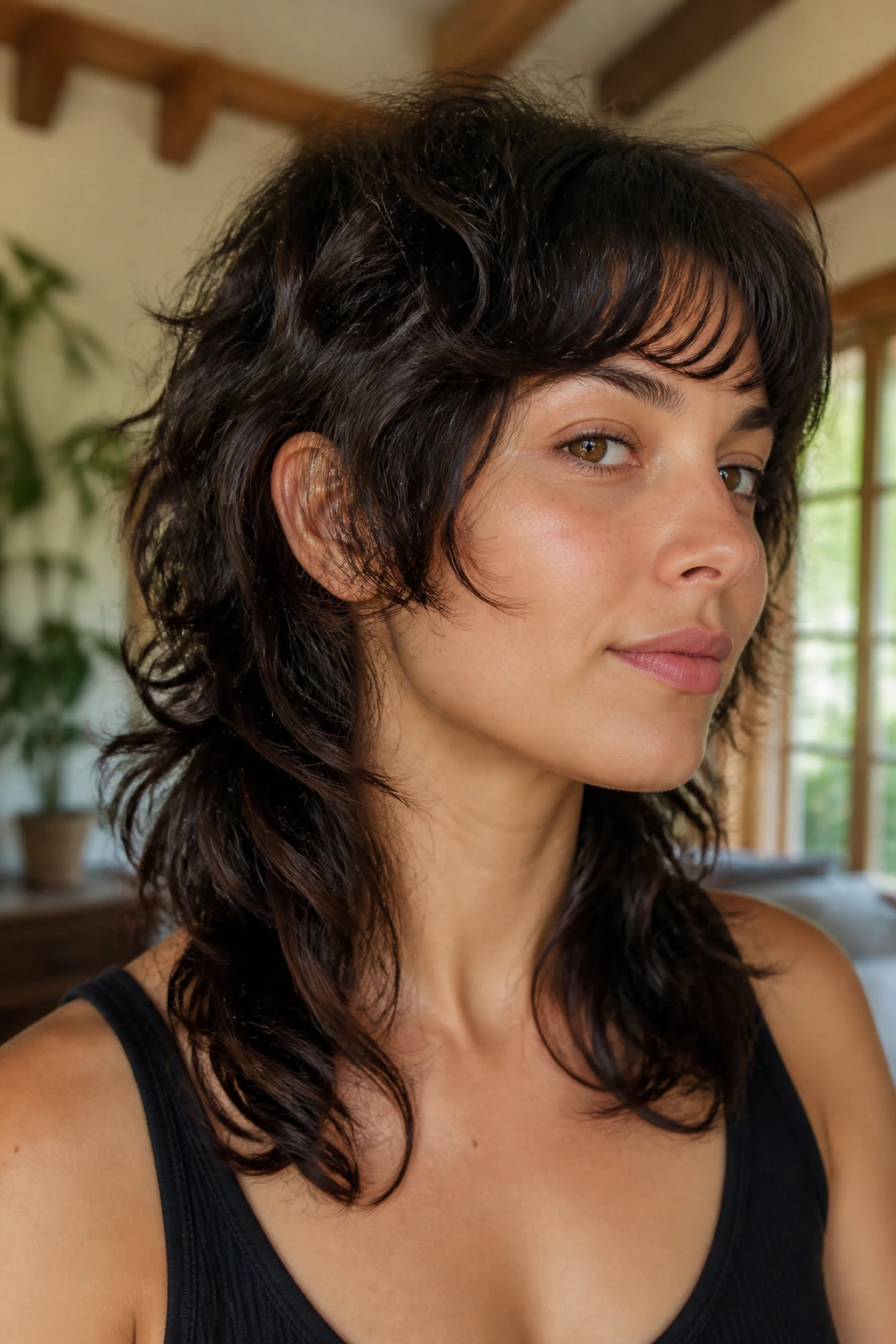
A soft mullet shag keeps the back longer, the crown a little shorter, and the front framed enough to make the whole thing feel intentional. It’s the boldest cut in this list for a reason. Thick curls can handle the contrast better than fine hair can.
The important word is soft. You do not want hard disconnects unless that is a very specific look you’ve chosen on purpose. A soft mullet shag still blends, but it leaves enough length in the back to keep weight where dense curls need it.
This is the cut for someone who likes a little attitude in the silhouette. It can look playful, cool, and oddly elegant when the curls are defined. If you like being asked who cut your hair, this one tends to start conversations.
21. Long Fringe Shag

A long fringe on thick curly hair gives you the front drama of bangs without the constant maintenance of short fringe. The pieces can sweep over the forehead or split near the center, and because they’re longer, they can handle shrinkage without springing halfway up the face.
Why It’s Useful
The fringe acts like a frame, not a curtain wall. That matters on thick hair because heavy bangs can make the face feel boxed in. Longer fringe softens the front while still letting the rest of the shag carry volume.
Ask for the fringe to blend into the cheekbone layers so it doesn’t sit separately. If you can tuck it behind one ear or let it fall over glasses, even better. That flexibility is half the point.
22. Narrow-Width Shag
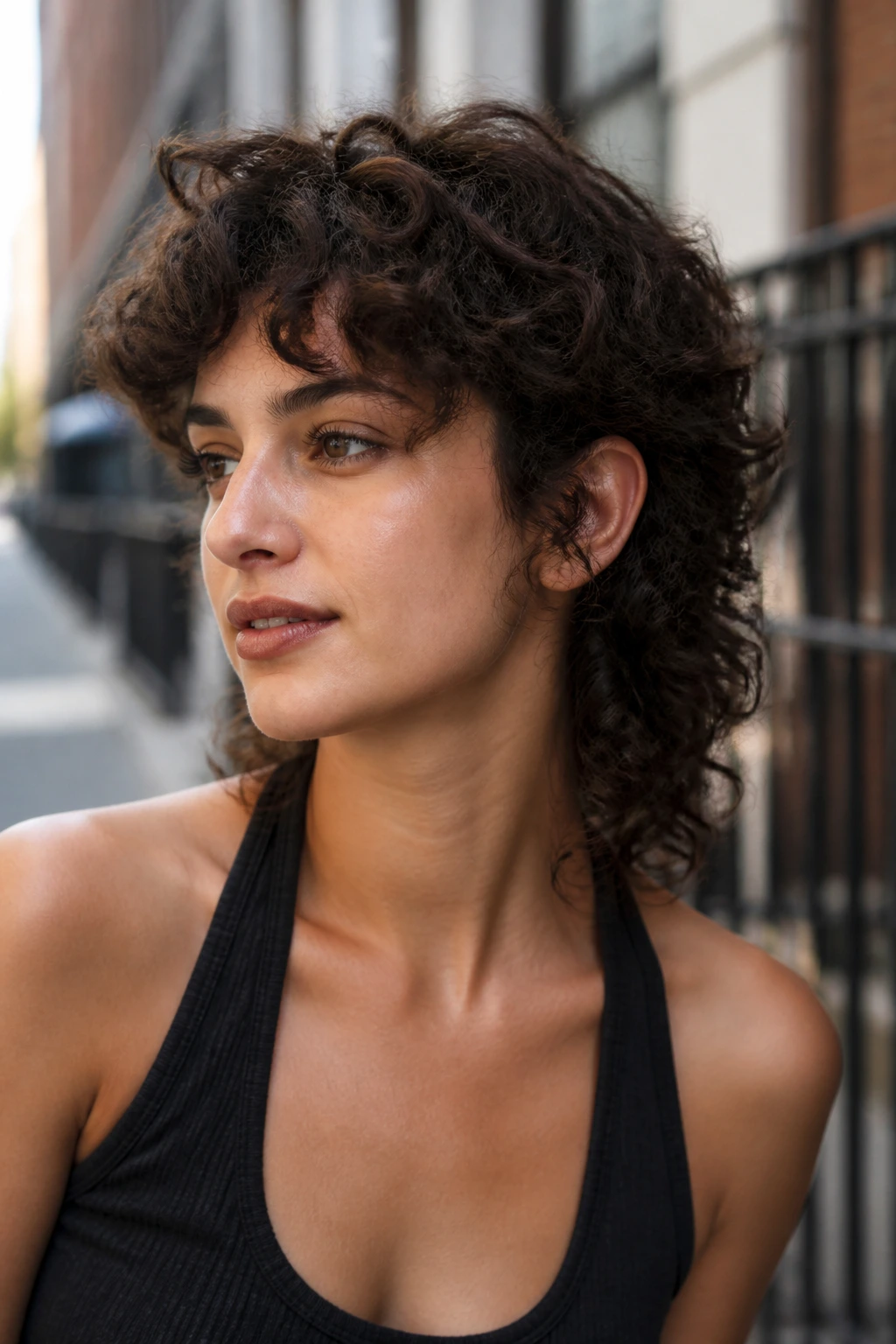
What if your thick curls mostly expand sideways? Then narrow the width. A narrow-width shag trims the sides with more intention so the silhouette stays closer to the head, while the crown and length still hold movement.
This cut is useful for people whose hair feels big at the temples and jaw but flat at the top. The stylist removes width through the side layers, then leaves enough length through the center and back to keep the cut from going skinny. It’s a tidy trick, and it works.
I like this shape for people who wear coats, scarves, or high collars a lot. The hair sits closer without losing the curl pattern. You get volume where it reads best and less puff where it annoys you.
23. Wide-Sweep Layer Shag

The wide-sweep layer shag does the opposite. Instead of narrowing the sides, it lets the layers spread a little more at the temples and cheekbones, which helps thick curls frame a narrower face or a long neck. It’s a shape that breathes outward on purpose.
The layers should be longer and more open than in a narrow-width cut. That keeps the curls from stacking tightly against the head. On dense hair, the wide sweep gives the silhouette a softer arc, which can be kinder if your features already run angular.
This cut is a nice match for people who like their hair to look full at the sides without getting boxy. It’s a small tweak, but it changes the whole balance of the face.
24. Curl-Ribbon Shag
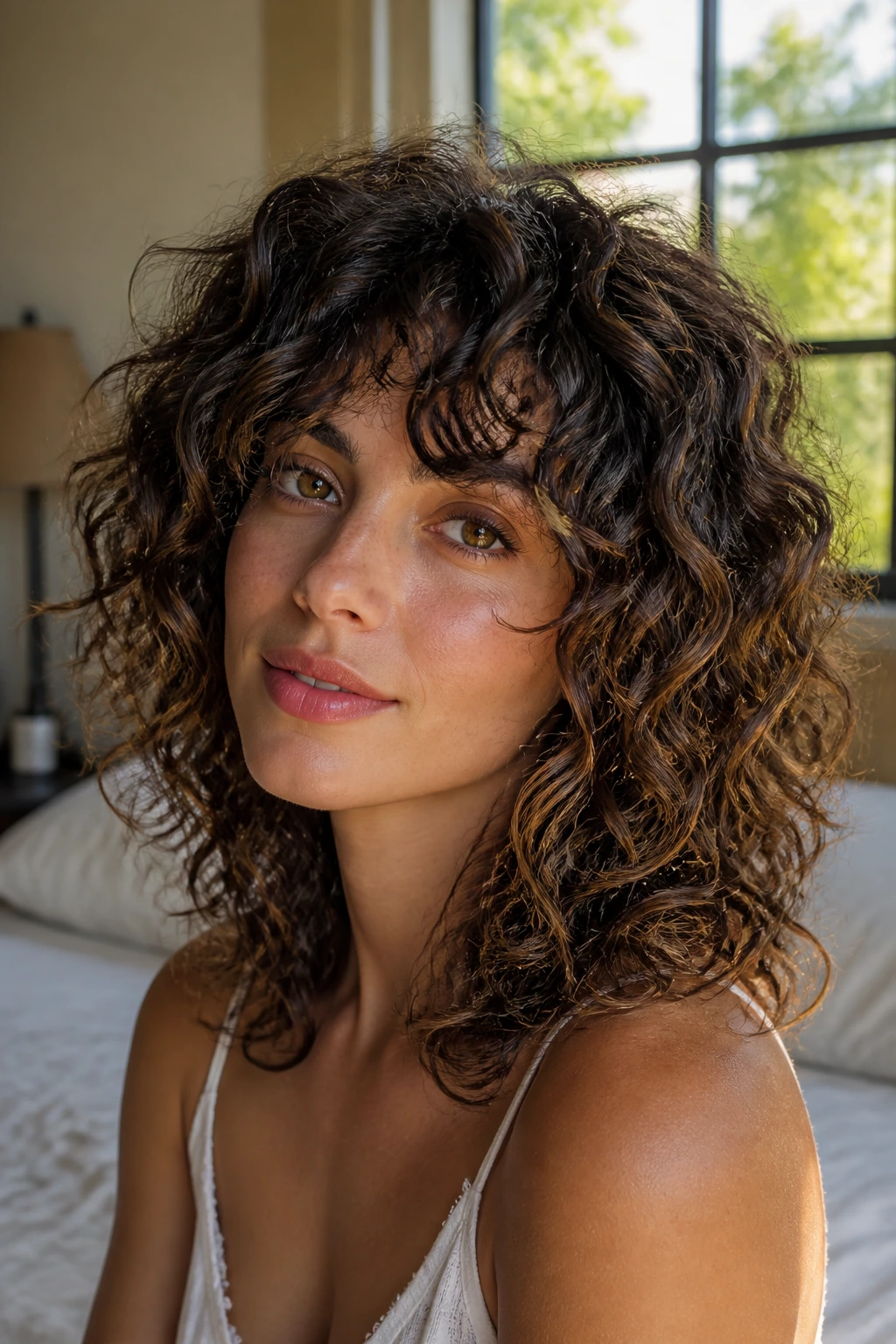
Some curls make tight little coils. Others make ribbon-like strands that bend and twist before settling. The curl-ribbon shag is built for the second group — the kind of thick curly hair that separates into visible strands with a little product and patience.
The haircut uses lighter interior layers and a more controlled perimeter so the curls can hang in elongated clumps. That shape is especially good if you like definition more than sheer volume. It keeps the hair from ballooning while still giving you movement from root to tip.
I’d choose this cut for someone who enjoys seeing the curl pattern clearly. It looks clean when the product is right, and even on a day-two refresh it tends to hold its shape better than a more aggressively layered shag.
25. Square-Jaw Softener Shag
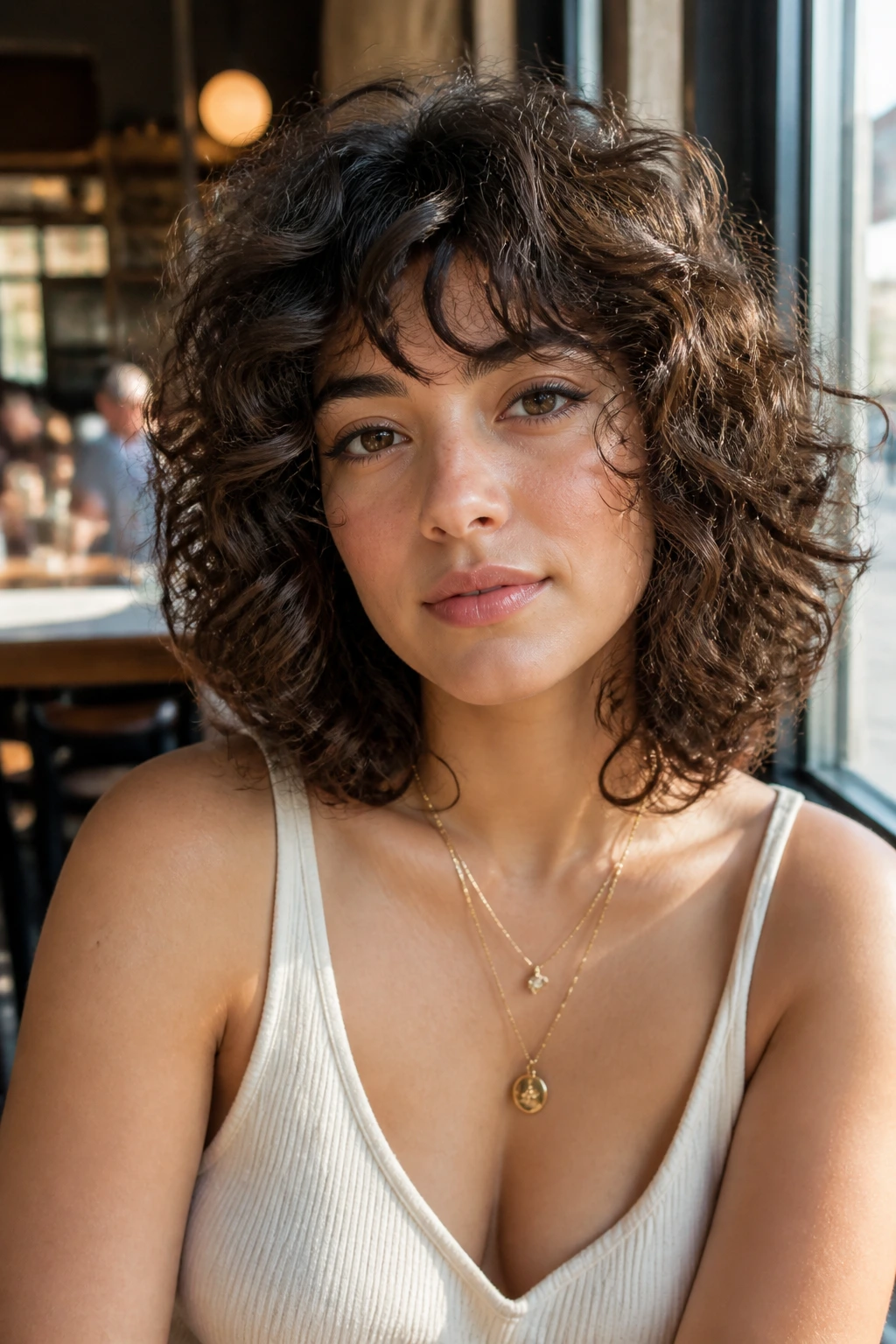
A square jaw can look fantastic with thick curls — but only if the cut knows how to work around it. The square-jaw softener shag places softer layers around the lower face and keeps the widest curls a little below or above the jawline, not right on top of it.
That placement matters. If the densest layer ends exactly at the jaw, the whole face can look wider. Move it slightly higher or lower, and the line becomes a frame instead of a block. Curly hair gives you a lot of room to do this, because shrinkage adds natural bend.
This is one of the most flattering shapes for people who want their curls to soften a strong bone structure. It does not hide the jaw. It just stops the cut from competing with it.
26. Oval-Balance Shag

An oval-balance shag is the most even-keeled version in the bunch. The layers are distributed fairly evenly through the head, so nothing screams for attention. It’s not the flashiest option, but thick curly hair often looks best when the shape is calm and controlled.
Why Choose It
If you don’t want a dramatic fringe or a strong mullet edge, this cut keeps things flexible. The crown gets a little lift, the sides get a little movement, and the length stays stable enough to wear straight, curly, or pinned back.
This is the shag for people who want the haircut to support the hair rather than define the whole personality of the look. Which, honestly, is often the right move.
27. Crown-and-Temple Lift Shag
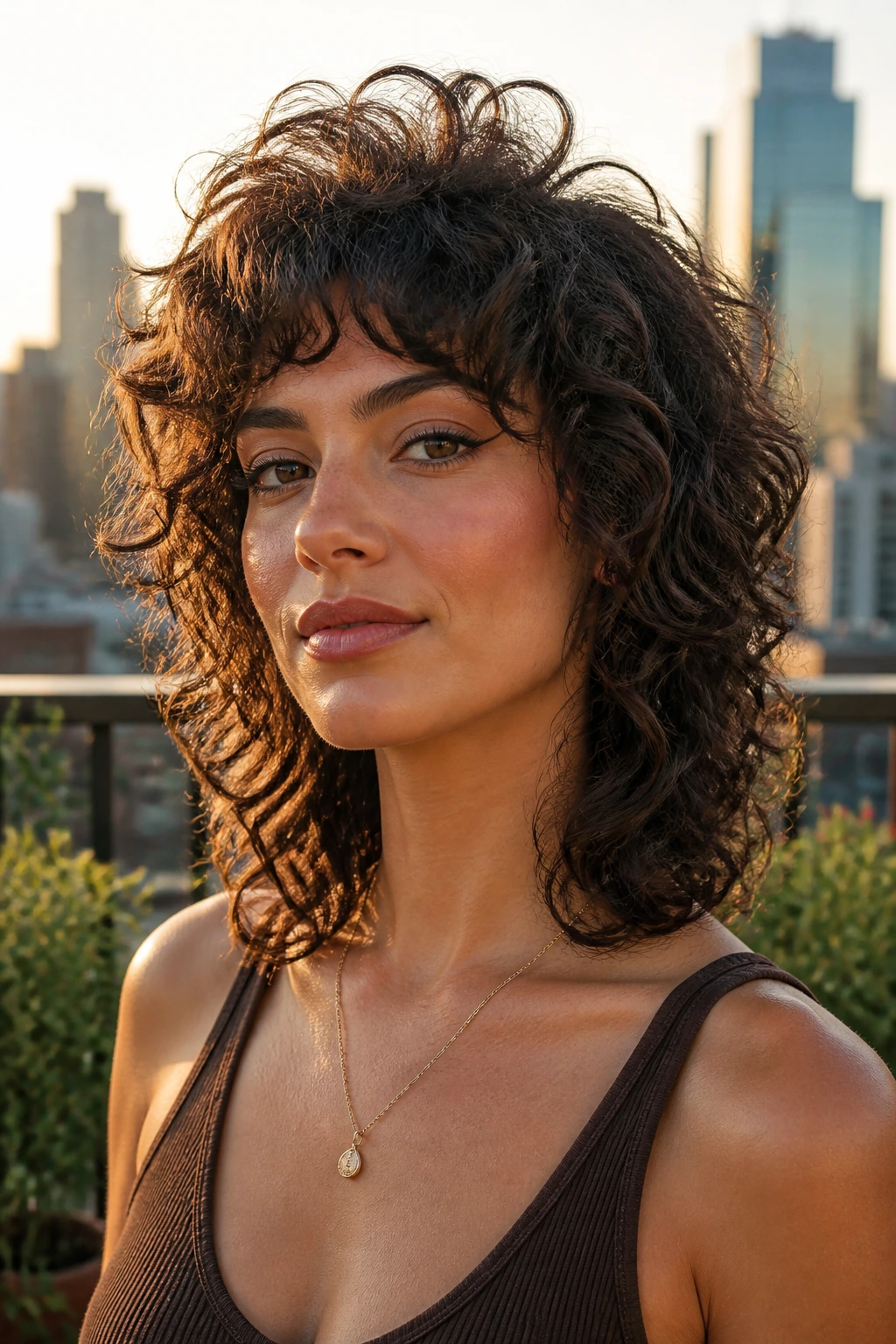
Why do some thick curly cuts look top-heavy even after layering? Because the lift is in the wrong spot. The crown-and-temple lift shag fixes that by putting shape at the top and along the temple area, where puff and flatness usually fight each other.
The stylist should create enough height through the upper section to keep the top from lying down, then ease the side layers so the temples don’t expand like side wings. That balance is hard to get with dense curls, but when it lands, the silhouette looks expensive in the plainest sense of the word — the shape just sits right.
This is a smart pick for anyone who feels like their hair grows outward before it grows down. The lift changes that angle.
28. Coily Midi Shag
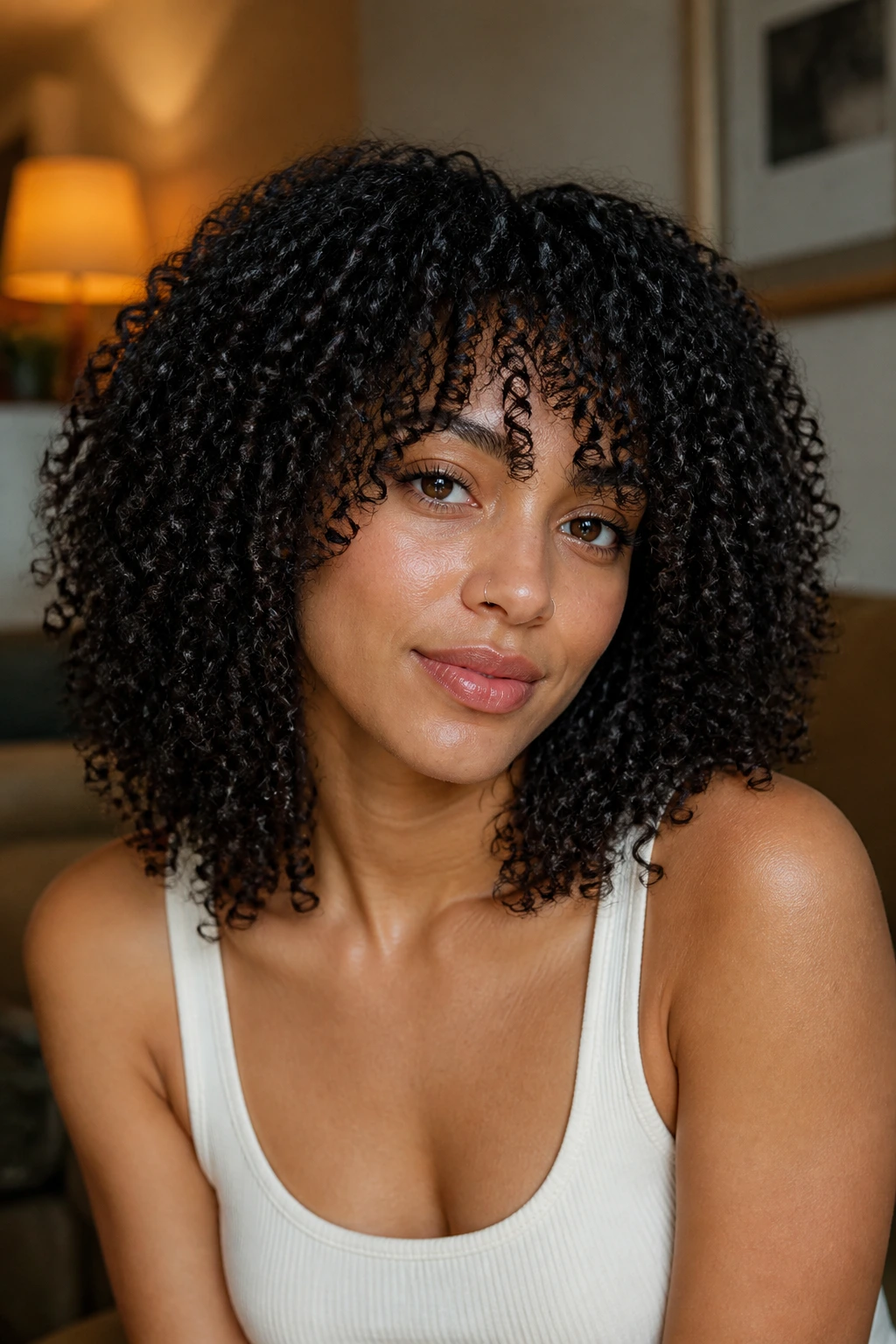
Coily hair can wear a shag beautifully, but it needs respect. The coily midi shag keeps enough length for shrinkage, uses careful layering, and avoids excessive razor work. On tighter textures, a mid length is often a safer and prettier bet than going shorter just for the sake of shape.
The layers should be carved with the coil pattern in mind. That means looking at where the curls naturally group, not forcing them into a loose-curly template. If the hair is cut too high or too choppy, the shape can get boxy fast.
This version is for coils that want movement without losing density. It keeps the body, keeps the outline, and lets the pattern stay visible. That’s a hard balance, and this cut can pull it off.
29. Loose-Spring Shag
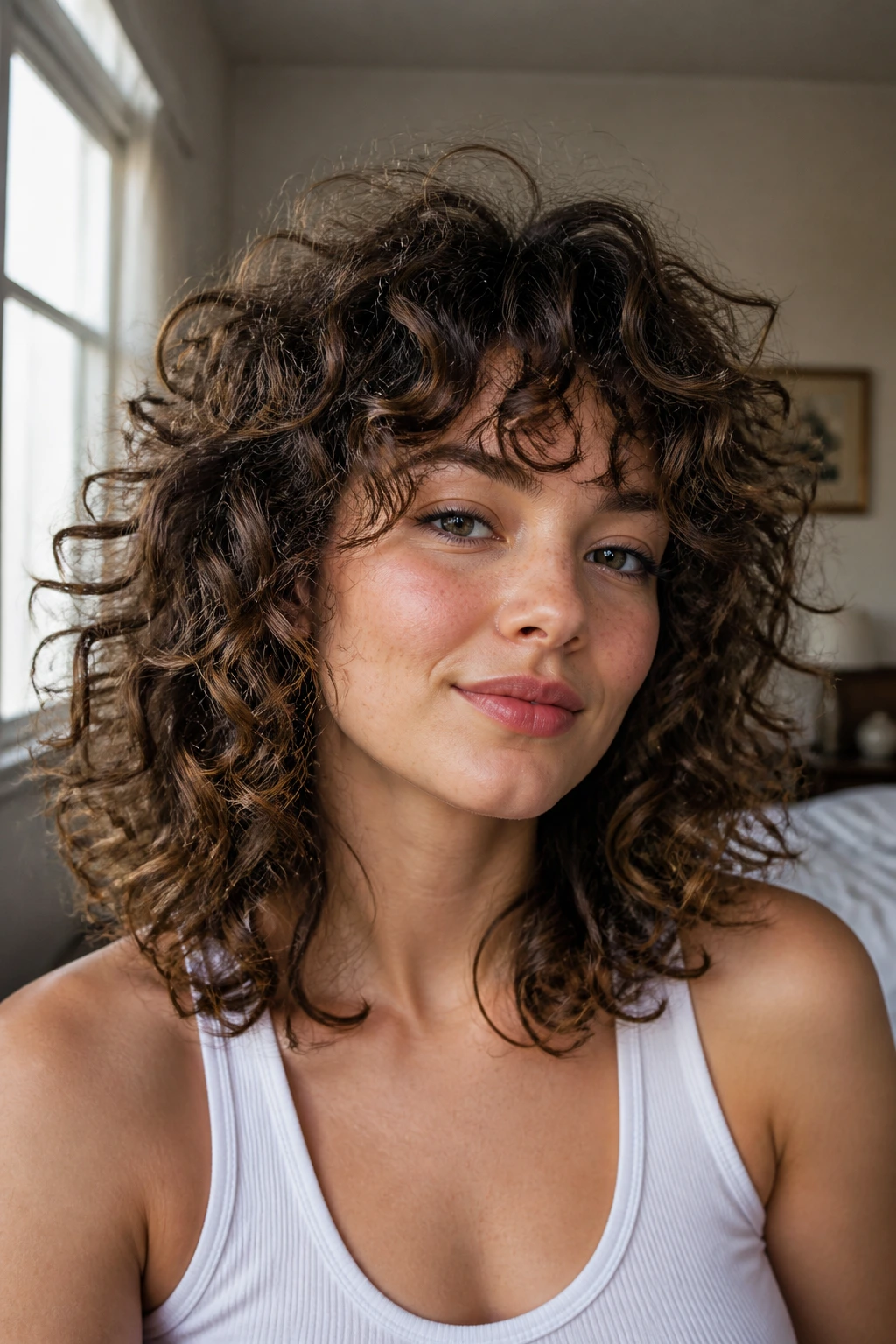
Loose curls and heavy waves have their own problem: they can look flat at the root and puffy at the ends. The loose-spring shag works by giving the top a little lift and the lower sections a cleaner fall, so the wave pattern looks springy instead of stretched out.
This cut does not need as much dramatic layering as tighter curls. Too much, and the hair can look stringy. A lighter hand keeps the wave pattern intact while still giving the shape some motion around the face and shoulders.
I like this one for people who want “effortless” hair without the annoying fake version of that word. It’s actually easier to wear because the cut is doing enough of the work.
30. High-Volume Crown Shag
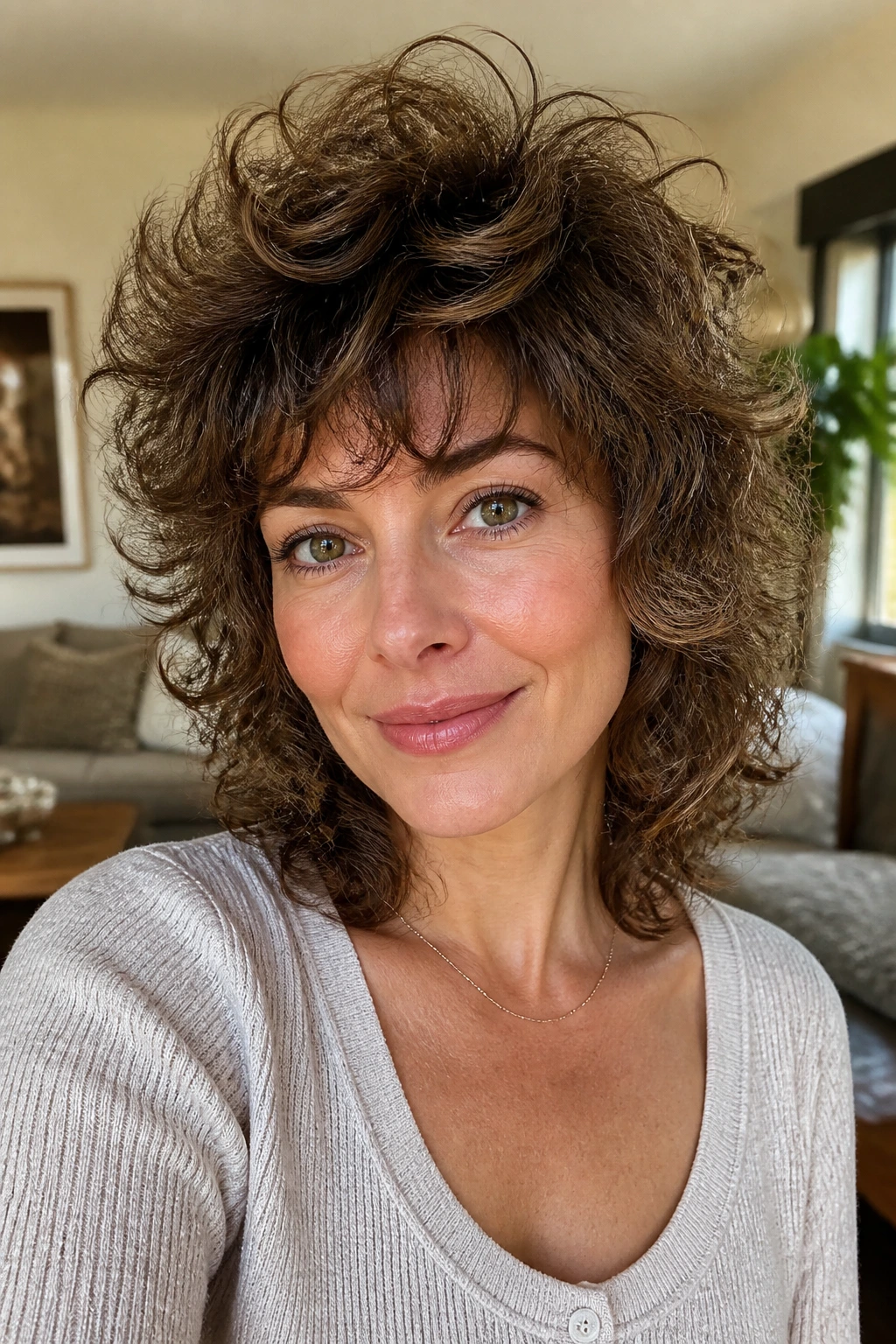
Some people do not want to tame thick curly hair. They want to aim it. The high-volume crown shag leans into lift at the top while keeping the sides and ends controlled enough that the shape reads as bold, not chaotic.
The crown layers are shorter and more active here, so the top gains height quickly when you diffuse. The sides should stay softer, or the whole thing turns into a mushroom. That balance is the entire point. Big hair can look sharp if the proportions are right.
This is the cut for someone who likes having presence when they walk into a room. Not because the hair is louder than everything else, but because the shape has enough lift to hold its own.
Why Thick Curls Love a Mid-Length Shag

Thick curly hair usually loses the fight in one of two ways: it gets too heavy and collapses, or it gets over-thinned and turns fuzzy. A mid-length shag avoids both extremes by cutting the bulk into layers that still have enough length to behave. That’s the sweet spot. Not too long, not too short, not too flat.
The mid-length part matters more than people think. Once thick curls get much past the shoulders, the bottom layers start dragging the shape down. Go too short, and shrinkage can expose the scalp in awkward places or leave the hair wider than it is long. Mid length keeps the silhouette in the zone where curl patterns still show and the weight still helps.
I also prefer this length because it gives the hair a second life on day two and day three. The shape loosens a little, but it doesn’t fall apart. That is valuable if your routine includes a bonnet, a pineapple, or a five-minute mist-and-scrunch refresh before you leave the house.
Dry cutting or cutting in a curl-aware way matters here, too. Thick curly hair does not behave like straight hair when wet. It lies to you. A good stylist checks shrinkage, section by section, and cuts with the curl’s real spring in mind, not the stretched version in the chair.
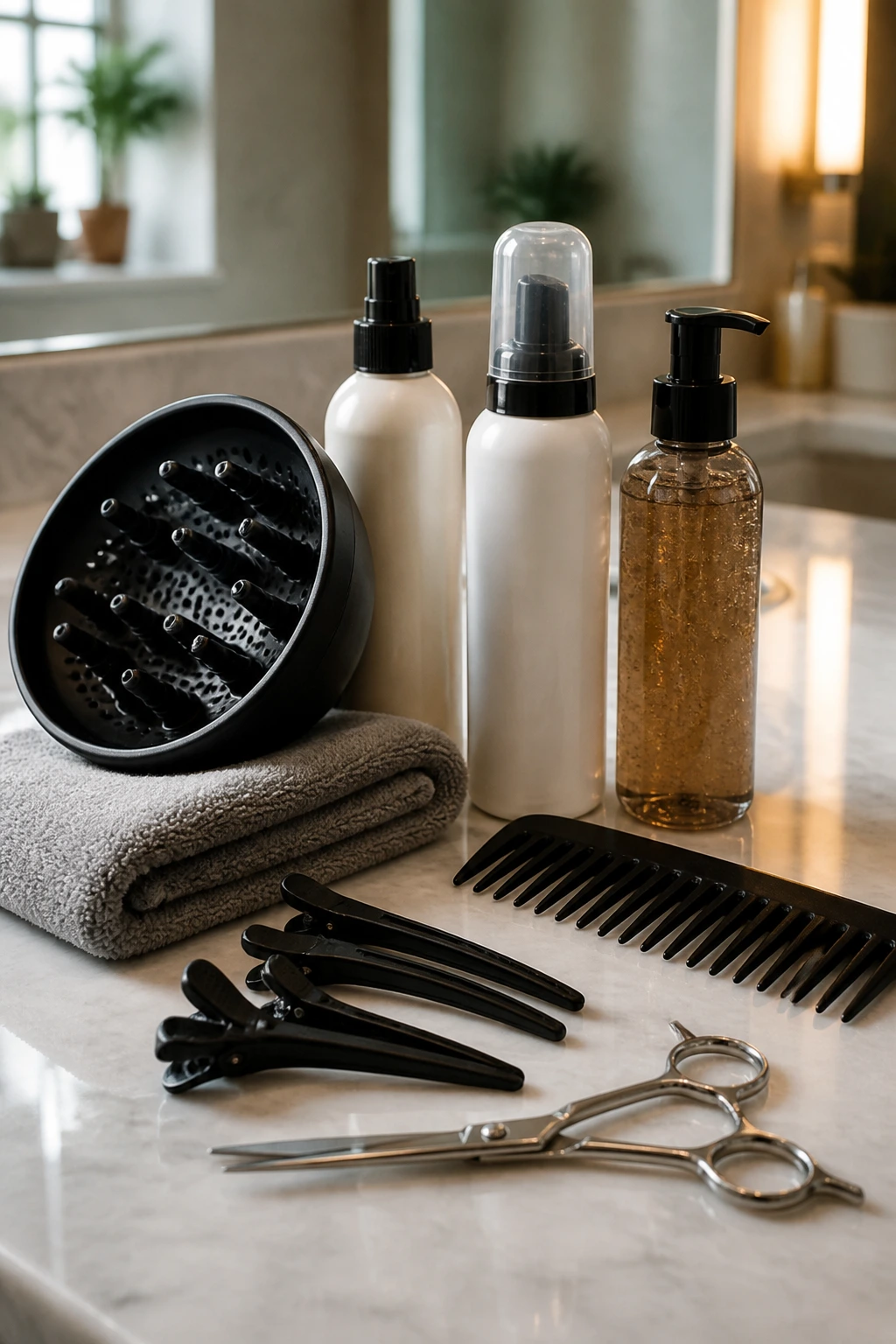
Essential Tools for Styling and Trimming These Cuts
-
Diffuser attachment: This keeps air moving without blasting the curl pattern apart, which matters a lot on thick hair.
-
Microfiber towel or soft cotton T-shirt: Both absorb water without roughing up the cuticle like a bath towel can.
-
Wide-tooth comb or curl brush: Use it only when the hair is wet and slippery; thick curls break fast when dragged dry.
-
Sectioning clips: These help you style and dry the hair in manageable pieces instead of wrestling the whole head at once.
-
Lightweight leave-in conditioner: A small amount helps the layers separate cleanly without turning the cut oily.
-
Mousse or foam: This gives lift at the crown and keeps the shag from going limp before the day is over.
-
Medium-hold gel: Thick curls usually need more hold than people expect, especially if the cut has bangs or lots of face framing.
-
Sharp shears if you trim at home: Only for very small cleanups. Dull scissors chew the ends and ruin the shape fast.
-
Hand mirror: Useful for checking the back and the nape, where shag layers can hide little uneven spots.
How to Choose the Right Shag for Your Curl Pattern
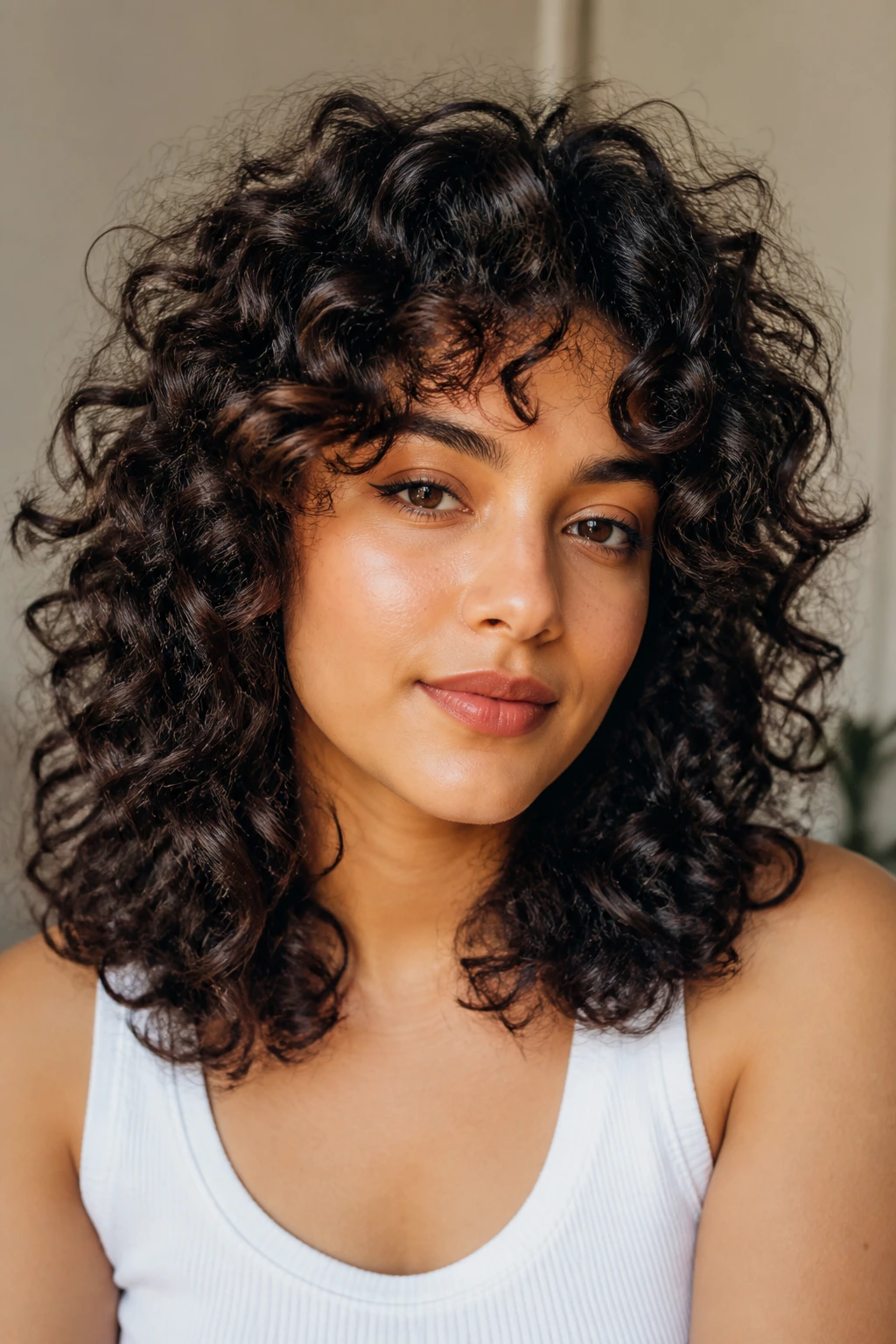
A good curly shag is not one universal cut. It’s a shape built around your density, your shrinkage, and the places where your hair gets weird. Thick 2c and 3a hair often wants lighter layers and more face framing because the curls stretch longer and can look stringy if you remove too much weight. Thick 3b and 3c hair usually handles a little more layering through the interior because the curl spring disguises the cuts and keeps the silhouette full.
If your hair is coarse, be careful with razors and over-thinning. Coarse strands can fray at the edges and make a cut look fuzzy instead of airy. Point cutting or slide cutting tends to leave a cleaner finish. If your hair is finer but dense, you can often handle more shape through the crown without losing the body you want.
Shrinkage is the part people underestimate. Bring your stylist a photo of how your hair looks fully dry on a normal day, not just after a perfect blowout. If you usually wear a side part, say so. If your bangs live pinned back half the week, say that too. The cut should fit your actual habits, not your best intentions.
How to Wear These Shapes Day to Day

Presentation: Wear the cut with a part that matches the layer balance. A center part flatters curtain fringe and balanced shags, while a deep side part helps cuts with more front weight feel lighter.
Accompaniments: Soft clips, a satin scrunchie, or a narrow headband can change the mood without fighting the shape. Heavy accessories tend to crush the top layers, and that defeats the point.
Portions: If you have strong shrinkage, keep the longest layers a little below the collarbone when stretched. That usually leaves you with a true mid-length look once the curls dry.
Best Styling Partner: A medium-hold gel or mousse keeps the layers separated and the fringe from puffing up before lunch. Thick curls often need more hold than people want to admit.
Air-drying works well on the lower-maintenance shapes, but a diffuser gives more control if the crown needs lift. On day two, refresh the front first. That’s where shag cuts show their age fastest.
Small Styling Tweaks That Change the Whole Shape
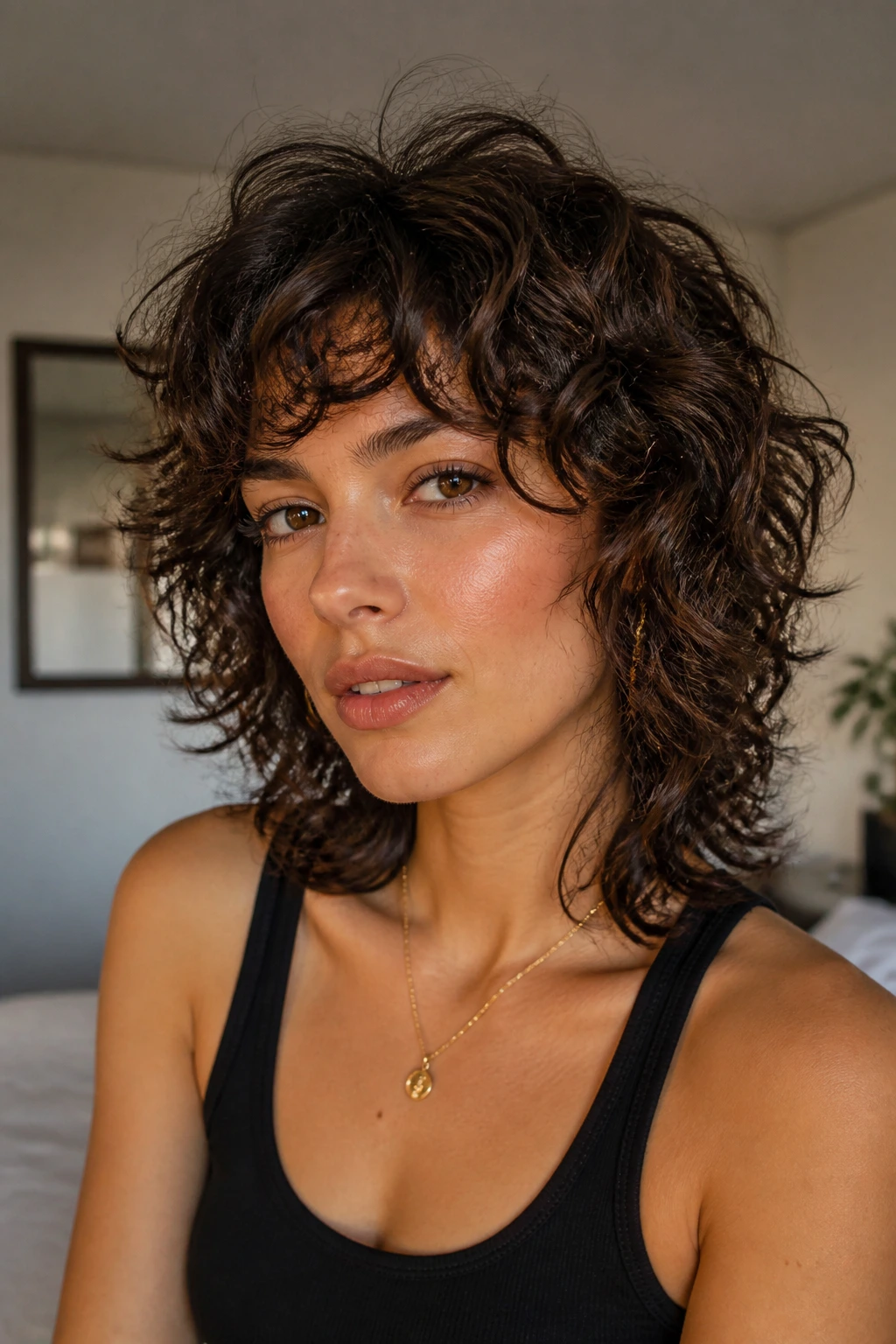
Root Lift: Clip the crown at the roots for 10 to 15 minutes while the hair dries. That little bit of support can stop thick curls from sitting flat up top.
Definition: Brush style only the outer face-framing pieces if the rest of your hair already clumps well. You do not need to treat the whole head like a sculpture.
Frizz Control: Put your hold product in while the hair is wet enough to squish, not damp enough to poof. Thick curls usually respond better to more water and less touching.
Make-It-Yours: If you want a softer look, ask for longer layers and less crown lift. If you want a sharper silhouette, shorten the top a little and keep the back a touch fuller.
A tiny change in layer placement can move the whole haircut from sweet to edgy. That is why shags are so addicting once you find the right one.
Keeping the Shape Between Salon Visits
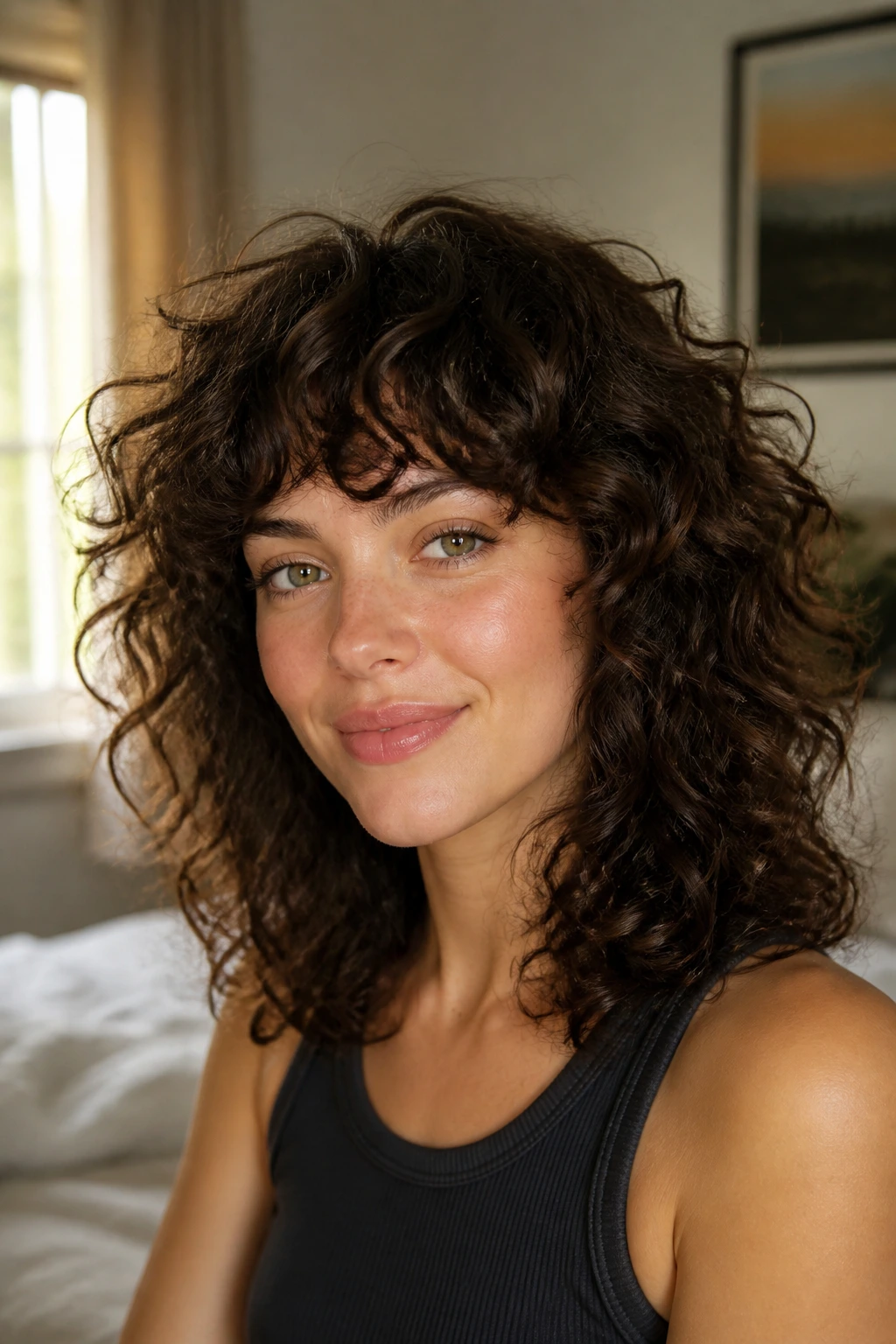
Thick curly shag cuts need maintenance, but not the fussy kind. The shape usually holds best with trims every 8 to 12 weeks. If you have a fringe or short face-framing pieces, expect those to want attention closer to every 4 to 6 weeks. Bangs are needy. That’s life.
At night, a satin bonnet or pillowcase helps the layers keep their clumps. A loose pineapple works for longer cuts, but if the crown is heavily layered, keep the tie soft so you do not leave a deep crease across the top. In the morning, water is your friend. Not a soak. Just enough mist to wake up the curl pattern and reactivate whatever product is still hanging around.
Product buildup can make shag layers feel heavy and dull. If that happens, clarify every 3 to 4 weeks, especially if you use mousse, gel, and oils in the same routine. Thick curls hold on to residue longer than people think, and residue is one of the quickest ways to make a smart cut look tired.
Variations and Alternatives to Try
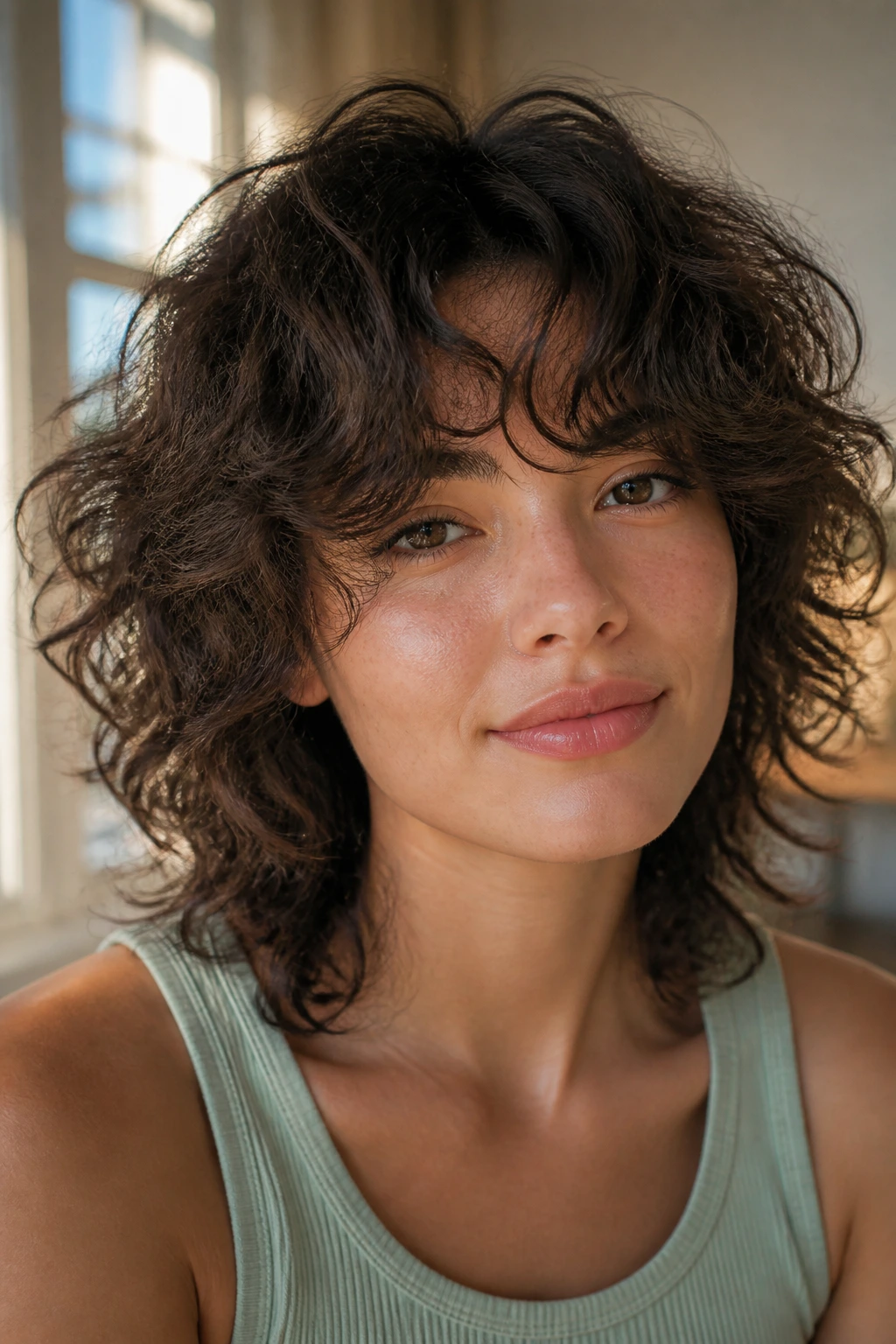
The Low-Maintenance Grow-Out: Keep the perimeter longer and the crown only lightly layered. It grows out cleanly and needs fewer salon corrections, which is useful if you hate frequent trims.
The Big Crown, Slim Ends Cut: Ask for more lift through the top and softer ends below the shoulders. This version is for people who want volume on purpose and do not mind a stronger silhouette.
The Fringe-First Version: Put the visual weight in curtain bangs, bottleneck bangs, or a long fringe, then keep the rest of the shag quieter. It’s a good choice if you like the front to do the talking.
The Humidity-Guarded Shape: Leave a little more weight around the sides and use a gel-first styling routine. This helps curls stay together when the air feels sticky and the frizz starts arguing back.
The Soft-Mullet Edge: Keep the back longer and let the front sit shorter around the face. It reads bolder than the classic shag, but it still wears well on thick curls because the density has somewhere to go.
The Coil-Friendly Layered Midi: Use longer layers and minimal razor work on tighter textures. It protects definition while still making room for the hair to move.
Common Mistakes That Ruin the Shape
-
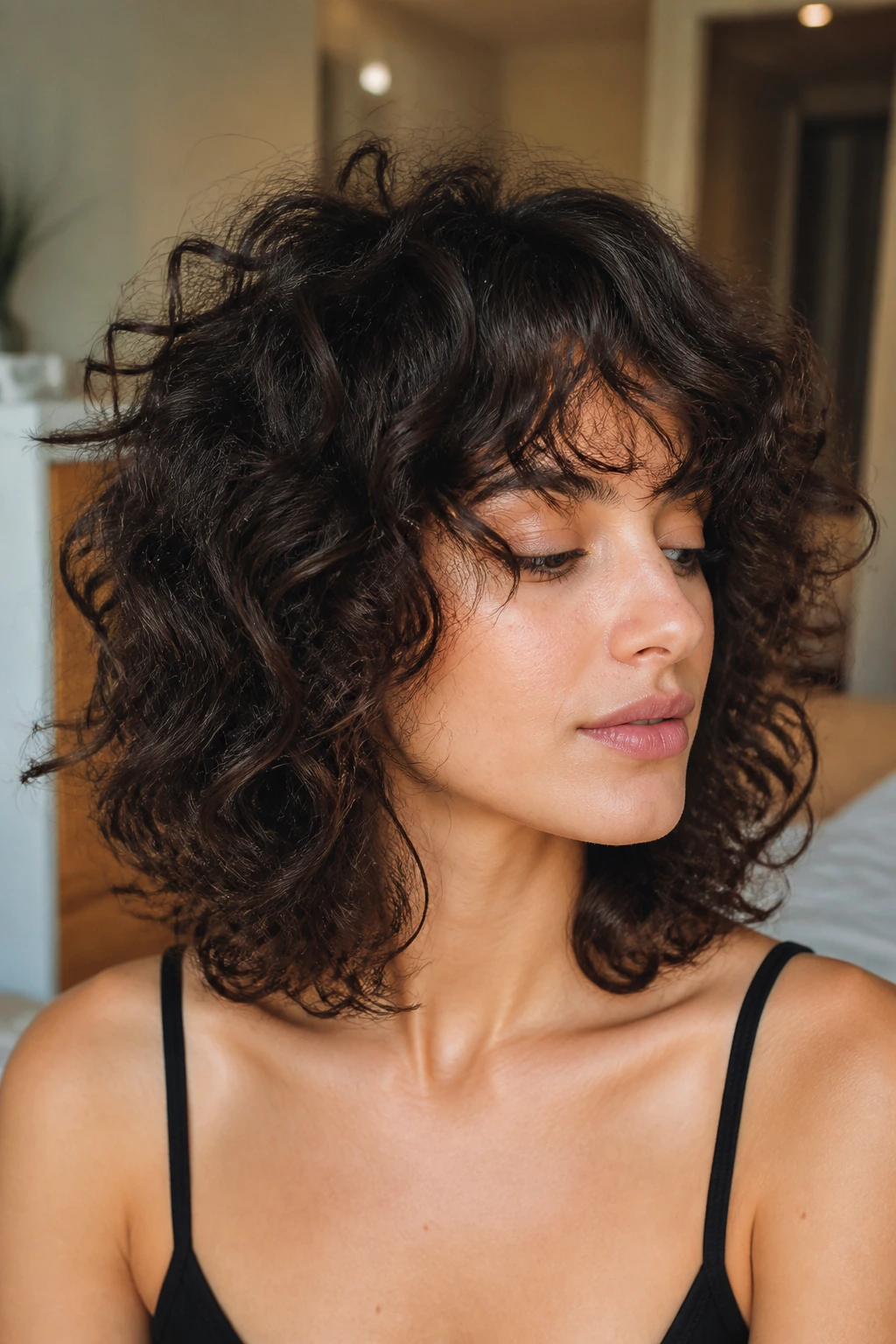
Cutting it too short while wet: Thick curls shrink in ways that look harmless in the chair and shocking two hours later. Fix: ask for the intended dry length, not the wet length you think is safe.
-
Over-thinning the surface: The hair starts to frizz and the cut looks see-through in patches. Fix: use point cutting or interior layering instead of aggressive thinning shears.
-
Starting the shortest layers too high: The crown gets puffy and the ends get stringy. Fix: keep the shortest pieces below the topmost surface unless you want a very dramatic shag.
-
Ignoring where you actually part the hair: A cut built for center parting can fall apart when you always wear a side part. Fix: wear your usual part to the appointment and say it out loud.
-
Using heavy creams on every layer: The shape collapses and the curl clumps sink. Fix: reserve heavier products for the ends and use mousse or gel for the root area.
-
Skipping trim maintenance on bangs: Fringe layers grow into the eyes and drag the whole front shape down. Fix: trim the front pieces more often than the rest of the cut.
Common Questions About Curly Shag Cuts
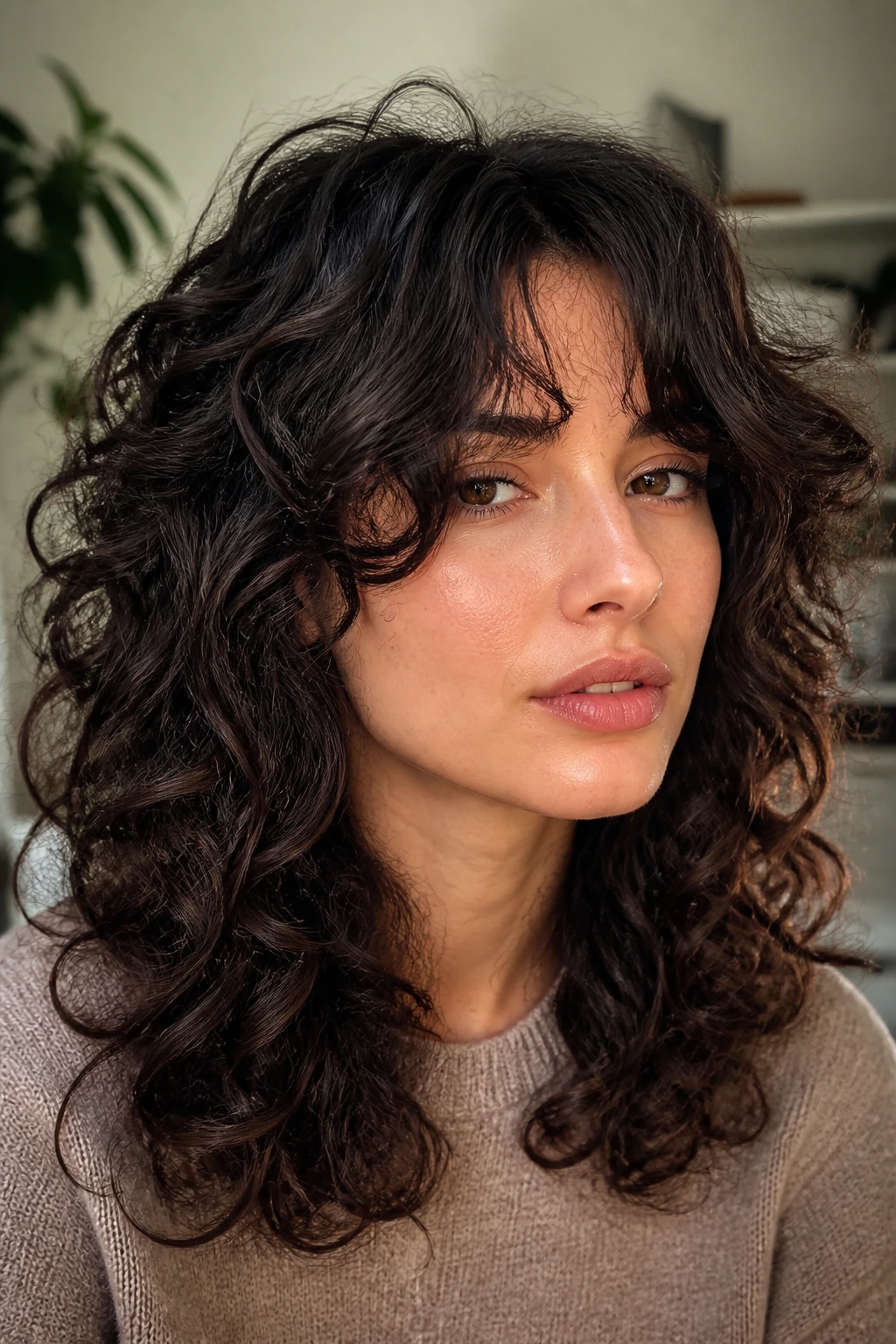
Will a shag make thick curly hair look thinner?
Not if it’s cut well. A good shag removes bulk where the hair puffs out, but it keeps enough structure that the hair still looks full. The goal is movement, not subtraction.
Should curly shag cuts be done wet or dry?
Dry or curl-aware cutting usually gives the most honest result because shrinkage shows up in real time. Some stylists work damp and finish dry; the important thing is that they check the curls in their natural state before calling it done.
Can I get curtain bangs with a thick curly shag?
Yes, and they’re one of the best matches for it. Just ask for the bangs a little longer than you think you need, because curly fringe climbs fast once it dries.
What if my hair is different on each side?
That’s normal. One side often curls tighter, sways differently, or sits flatter at the root. A stylist can balance that with slightly different layer lengths, and you should mention it before the cut starts.
Will this work if my curls are more wavy than curly?
Absolutely. Loose 2c and 3a waves often look even better with shag layers because the shape helps the bend show up instead of hanging limp. Just avoid over-layering if the hair is fine.
How often should I trim a mid-length curly shag?
Every 8 to 12 weeks is a sensible rhythm for most thick curls. If you have bangs or very face-framing layers, keep those cleaned up sooner so the shape does not drift.
What if my hair gets frizzy when layers are added?
That usually means the layers were too short, too high, or too heavily thinned. A better version keeps the surface smoother and relies on internal shaping, then uses enough hold product to keep the clumps together.
Can I still wear it straight sometimes?
Yes, but the shape will read differently. Shag layers usually look softer and more textured when curly; straightened, they can become more obvious and piecey, which may be what you want or exactly what you don’t.
A Shape That Keeps Thick Curls Moving
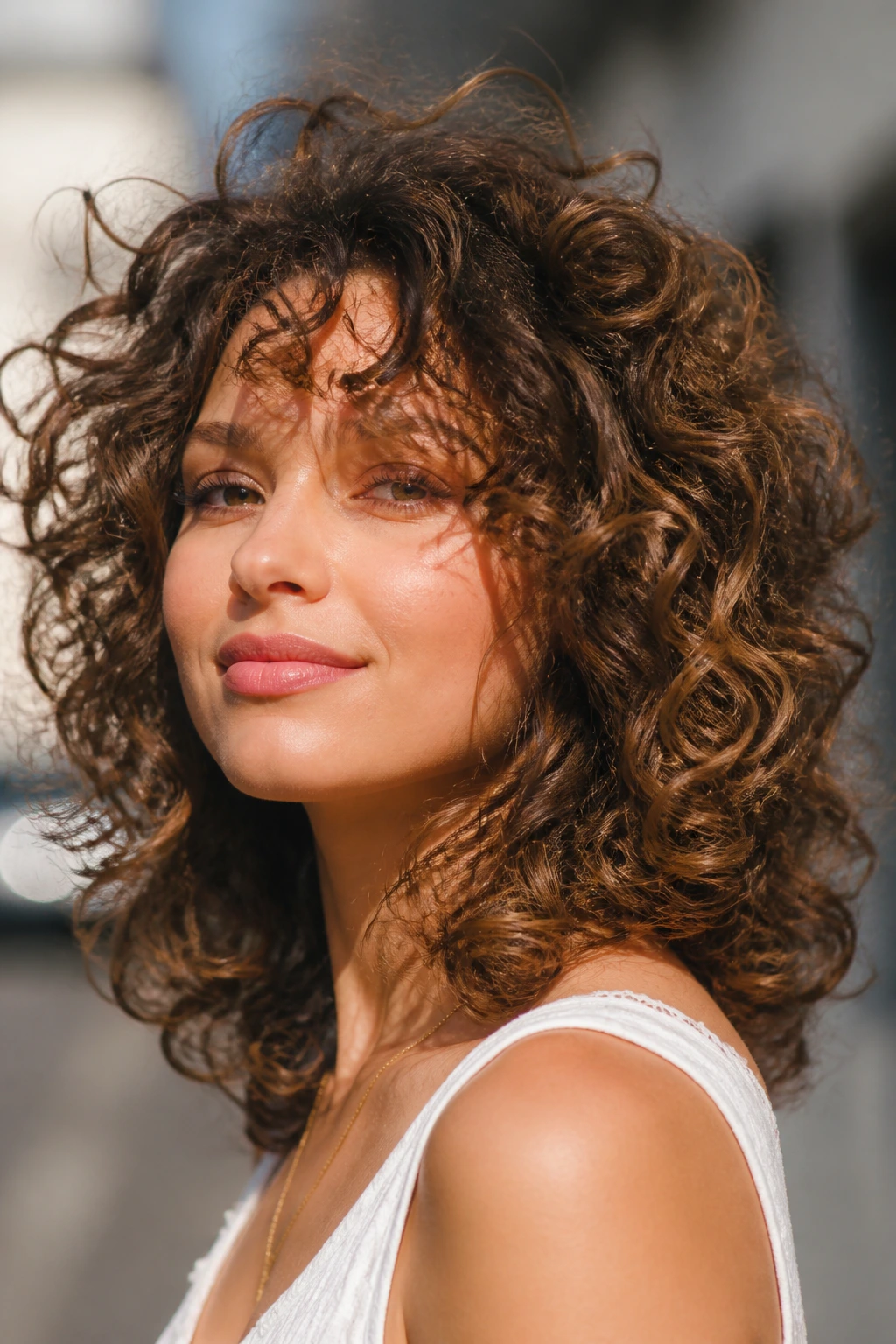
The best curly shag on thick hair does one simple thing well: it gives the curls somewhere to go. Up, down, around the face, off the neck. Anywhere except trapped in one blocky mass.
That is why this cut keeps earning a place in salons. It’s not precious. It’s not fussy. And when the layers are placed with the curl pattern in mind, it keeps paying off long after the appointment ends. Bring the photos, tell the stylist where your hair gets heavy, and be honest about shrinkage. That first conversation changes everything.
