



Fine waves can go flat in a hurry. Add a little length, a little humidity, and one heavy layer too many, and the shape starts sagging by lunchtime. The fix is rarely more product. It’s usually the cut.
That matters even more when fine hair is involved. Fine strands don’t have much width, so they don’t hold a bulky shape the way coarser hair does. After 50, a lot of people notice the same two things at once: the crown feels flatter, and the ends seem to lose their spring. A short cut that respects the wave pattern solves both problems faster than any round brush marathon ever will.
And no, short does not have to mean severe. The best short wavy cuts for fine hair over 50 keep the perimeter clean, leave enough softness around the face, and take weight off the places where waves collapse. The right shape can make hair look fuller at the ends, lighter at the root, and less fussy on the days when you cannot be bothered with a whole styling routine.
Why These 17 Cuts Work So Well on Fine Waves
-
They keep the wave pattern close to the face: Shorter lengths let the bend show up before gravity pulls everything straight, which is why a chin-length bob often looks richer than hair that hangs below the shoulders.
-
They build the illusion of density where it counts: A blunt or softly blunt edge makes the bottom line look thicker, while subtle internal layers stop the silhouette from turning boxy.
-
They shorten styling time without killing texture: Fine wavy hair usually needs just enough root lift, a little shaping, and a quick dry. These cuts are built for that kind of effort.
-
They grow out more gracefully than razor-heavy layers: A good short cut still looks like a haircut six or eight weeks later. A bad one turns wispy fast.
-
They work with real hair changes, not against them: If the crown is flatter, the temples are finer, or the wave is looser than it used to be, these shapes give the hair a clearer job to do.
-
They leave room for personality: You can wear them polished, piecey, side-swept, or air-dried. That flexibility matters more than chasing one perfect salon finish.
1. Chin-Length Wavy Bob with Invisible Layers
At chin length, fine waves finally have somewhere to bounce. The line sits close enough to the jaw to make the hair look fuller, but not so short that the whole shape starts puffing out like a triangle. This is the sort of cut that looks calm at first glance and quietly does a lot of work underneath.
Why the shape helps
A clean perimeter gives the ends more visual weight, and that matters when the strands themselves are thin. Invisible layers — the kind you barely notice until you tuck the hair behind your ear — stop the bob from feeling blocky. Ask for the weight to stay through the bottom third and for the shortest face frame to hit around the cheekbone, not the cheek hollow.
- Best for: waves that start at the mid-length and bend more clearly once the hair is shorter.
- Ask for: a blunt base with very soft interior removal, not a heavily razored finish.
- Style with: a golf-ball-sized amount of mousse at the roots and a diffused dry.
Pro tip: If your hair collapses at the crown, dry that area first and lift the roots with your fingers. The rest can stay a little air-dry messy. That part is fine.
2. Soft Bixie with a Side Sweep
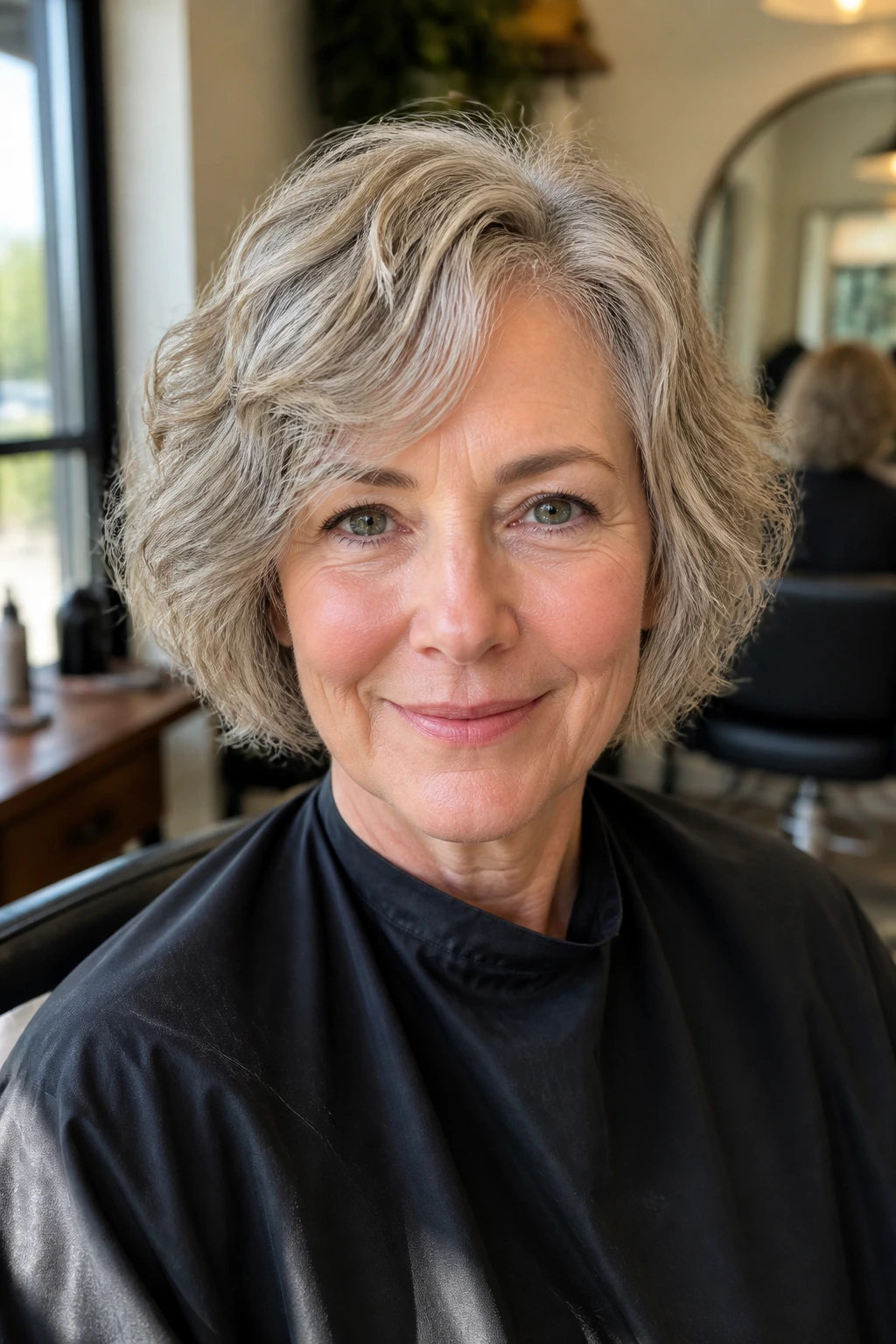
The bixie is what happens when a bob and a pixie stop arguing and finally behave. For fine wavy hair, that compromise is often smarter than either extreme. You get enough length on top to keep the wave, but enough clearance at the neck to keep the whole cut from dragging down.
A side sweep matters here. It gives the front a little drama, hides any sparse spots near the temples, and keeps the shape from reading too plain. I like this cut best when the top is left a touch longer than people expect — not floppy, not shaggy, just long enough to bend instead of spike.
This is also one of the easiest cuts to live with if your hair dries in odd directions. A quick blast at the roots and a dab of light styling cream on the surface is often enough. If you spend too long on it, the charm gets polished right out.
The bixie suits anyone who wants a shorter neck, lighter styling, and a little movement around the cheekbones without committing to a full pixie. It’s neat, but not stern. That balance is the whole point.
3. French Bob with Airy Fringe
Why does a French bob keep fine waves looking fuller than a longer bob? Because the cut stops at that sweet spot just below the cheekbone or right at the jaw, where the hair still has enough natural bend to hold shape. A soft fringe, cut with air in it instead of straight across like a board, helps the front feel lived-in rather than heavy.
How to wear it
Keep the fringe light enough to separate when it dries. If it hangs in one solid curtain, it will make fine hair look flatter than it is. A little mist of salt spray or a texture spray at the roots is usually enough; you do not need a can of hairspray and a prayer.
The French bob works especially well when the wave pattern is strongest in the front. It also flatters hair that tends to puff at the sides, because the shorter line keeps the width controlled. If your hair grows forward at the crown, ask for a bit more length there so it does not pop up like a little shelf.
A good version of this cut looks intentional even when it’s slightly imperfect. That’s the charm. It should move when you turn your head, not sit there like a helmet.
4. Collarbone Lob with Broken Ends
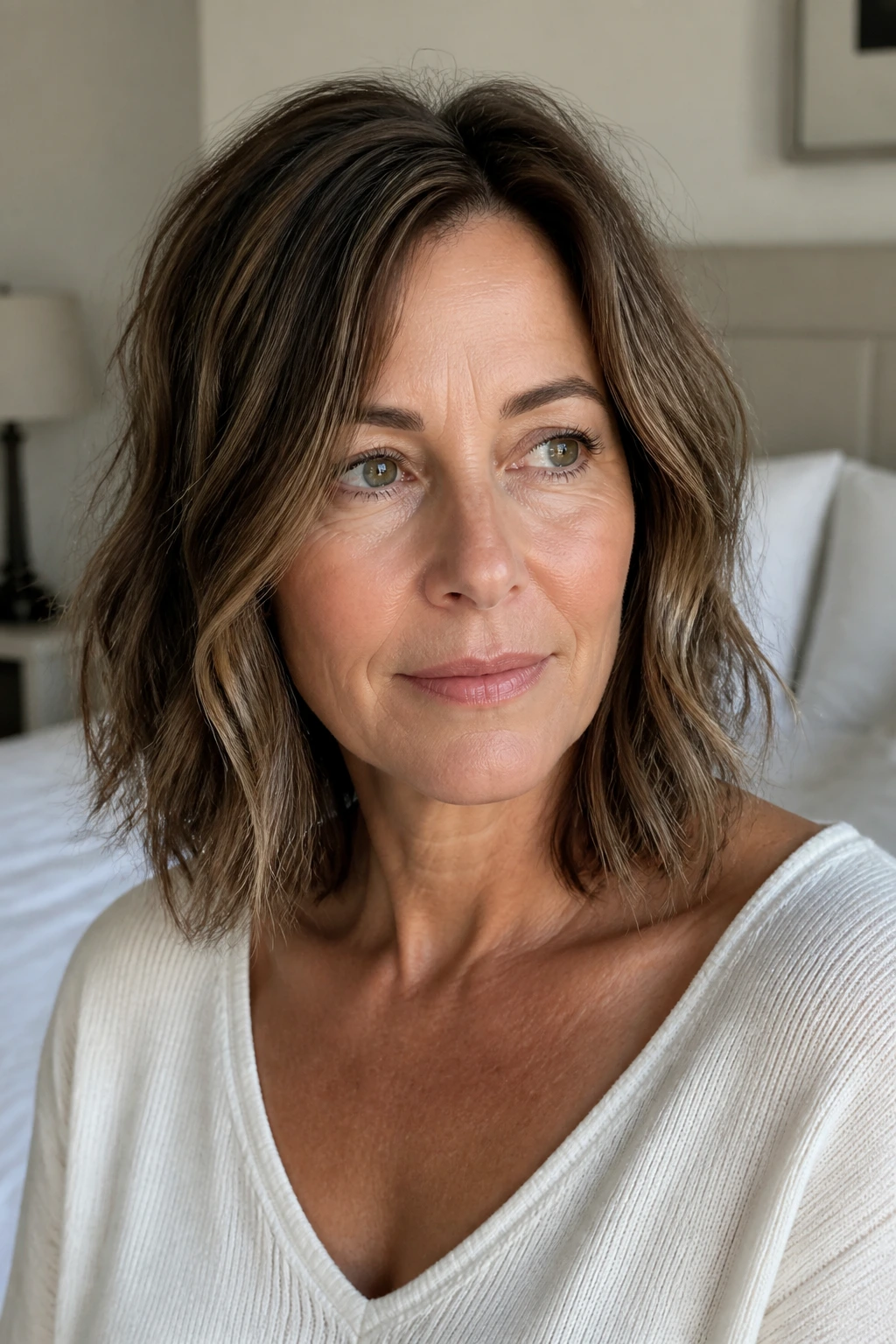
Sometimes the answer is not “shorter” in the strict sense. Sometimes it’s “short enough that the wave still has shape.” A collarbone lob gives fine hair a little more length to play with while still removing enough weight to keep the bend alive.
This is a smart choice if you want hair that can still tuck behind the ears, clip back, or tie into a small knot when the day gets annoying. The trick is in the ends. Broken ends — soft, piecey, slightly irregular ends — keep the line from looking too blunt and serious. They also help the waves separate a bit instead of forming one flat sheet.
I like this cut for people who are nervous about going too short. It offers a test drive. You can see how your wave behaves without losing the option to pull it back. And if your hair is fine but dense, the lob often looks thicker than a very short crop because the length gives the illusion of more material.
Keep the layers subtle. Too many and the ends start looking scraggly. Too few and the lob turns into a limp rectangle. The middle ground is the good stuff.
5. Feathered Crop with Crown Lift
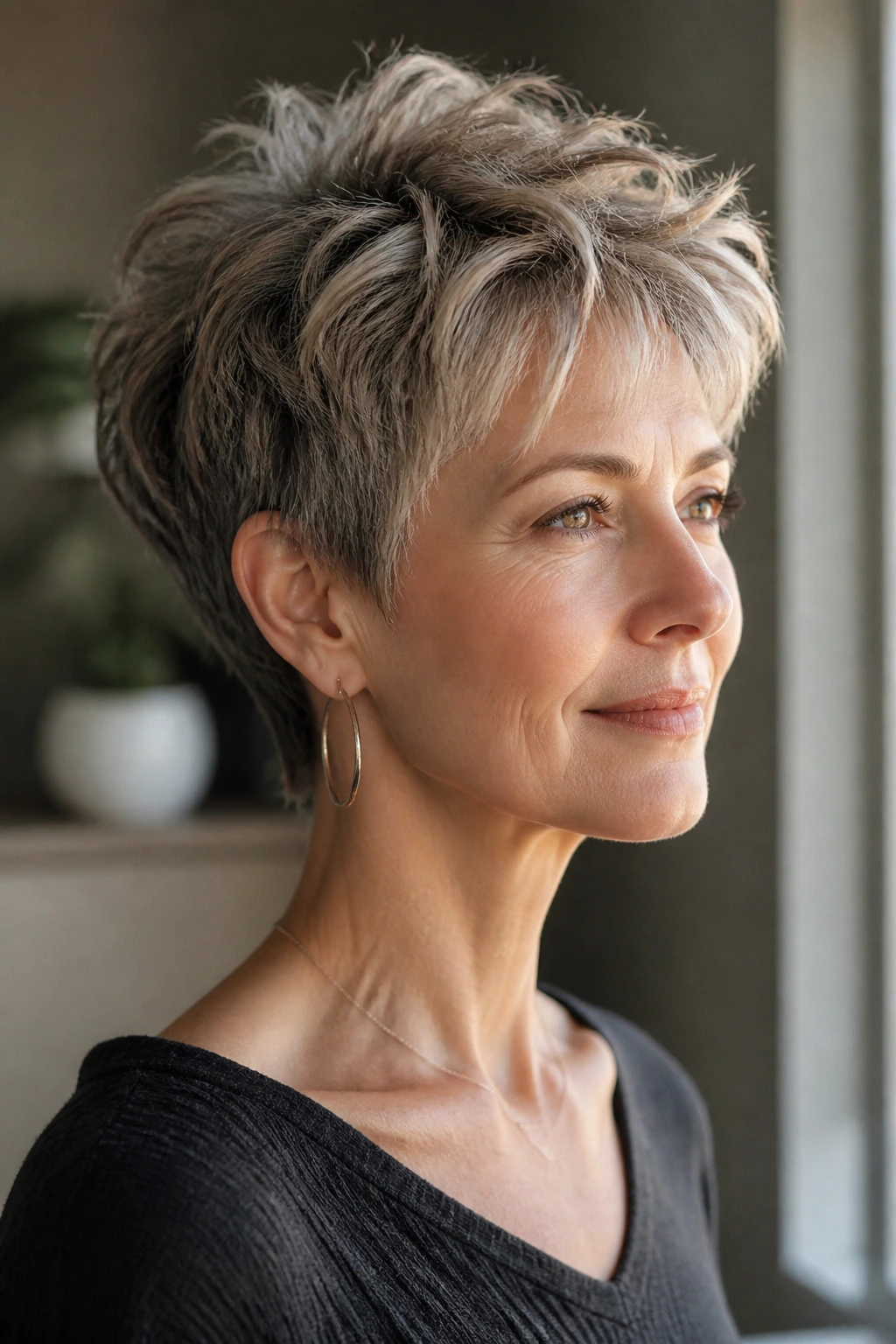
Unlike a shag, this cut keeps the neckline neat. That’s why it works so well on fine waves that need volume up top but not a lot of mess everywhere else. The feathering happens mostly through the upper sections, where the hair can move and lift without exposing the ends.
This is the cut I’d point to if someone says, “I want my hair to feel lighter, but I do not want it looking thin.” The crown lift is doing the visual heavy lifting. A little height at the top makes the face look more open, while a cleaner nape keeps the style grounded.
It’s a smart match for glasses, too. The soft feathering keeps the frame line from feeling crowded. And because the shape is compact, it doesn’t demand a lot from your morning routine. A quick round-brush pass at the roots or a few minutes with a diffuser usually gets it back into shape.
If your stylist is tempted to thin the ends heavily, push back. Fine hair needs air, yes, but not so much that the bottom looks see-through. Feather the top. Leave the edge alone.
6. Stacked Nape Bob
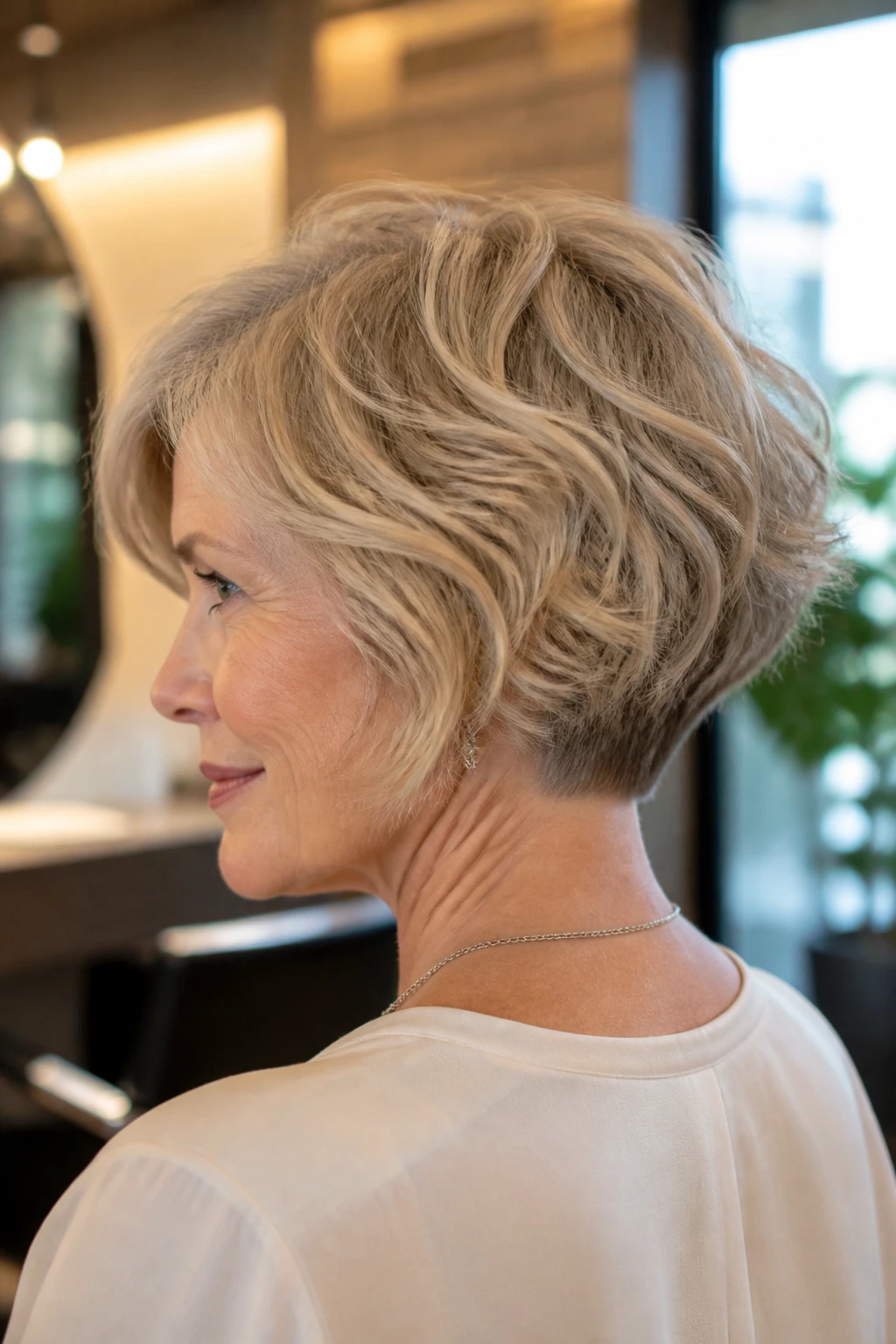
A stacked nape bob is one of those cuts that can look expensive in the best possible way, even when you’ve done almost nothing to it. The back is cut a bit shorter and stacked so it tucks under cleanly, while the top stays long enough for the wave to show. That small shift in length creates structure where fine hair usually needs it most.
The reason it works on wavy hair is simple: the stacked shape makes the back look fuller. Fine hair often loses its presence at the nape first, especially if the ends are blunt but weak. A clean stack gives the illusion of density without making the whole style heavy. It also keeps the silhouette from puffing out around the jaw, which can happen when short wavy hair is all one length.
This cut is best when the wave is loose and the hair has some natural movement, not if the hair is pin-straight and you’re hoping the haircut will invent texture out of nowhere. It won’t. Haircuts can support shape, not conjure it from thin air.
If you want polish without stiffness, this is a strong pick. The back stays tidy. The front stays soft. That combination is hard to beat.
7. Wavy Pixie Bob with Long Top Layers
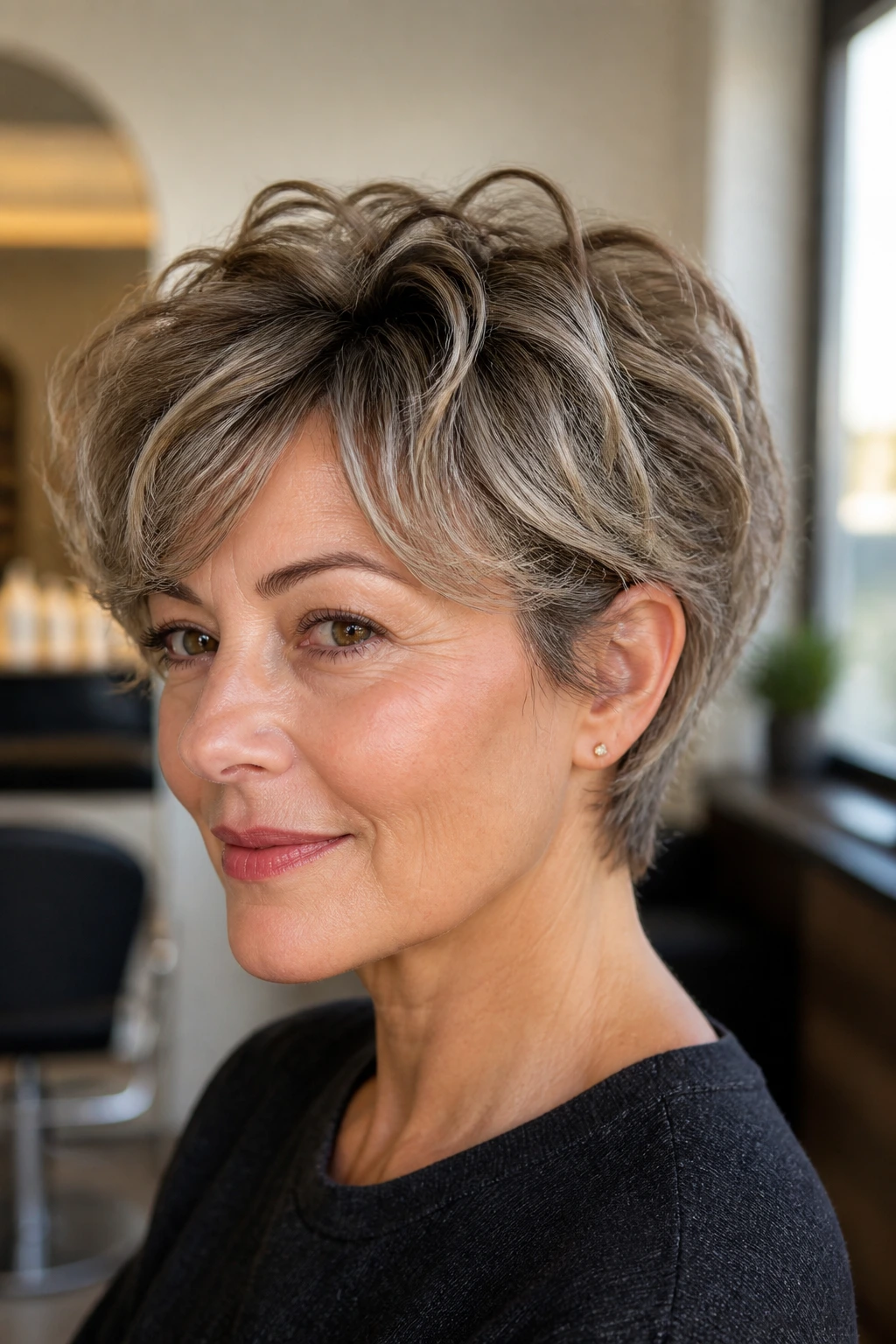
A pixie bob gives you the neck-clearing ease of a pixie and the softness of a bob, which is why it’s such a useful cut for fine hair that tends to collapse after a few hours. The top layers stay longer, so the waves can bend and separate. The sides are cropped close enough to keep the outline clean.
What makes it different
The long top is the whole reason this cut works. If the top gets too short, fine waves start standing up in odd directions instead of falling into shape. If the sides stay too heavy, the cut loses lift and turns mushroomy. The balance point sits right in the middle.
How to wear it
- Dry the crown first with your fingers or a small vent brush.
- Use a pea-sized amount of lightweight cream, not a rich balm.
- Leave a few pieces around the temple a touch longer if your face shape wants softness.
This cut is especially good if you want less hair on the neck but still want visible movement around the forehead and cheeks. It reads modern without being sharp. And when the wave is a little messy on day two, that often looks better than a freshly blown-out version.
8. Shaggy Wedge Bob
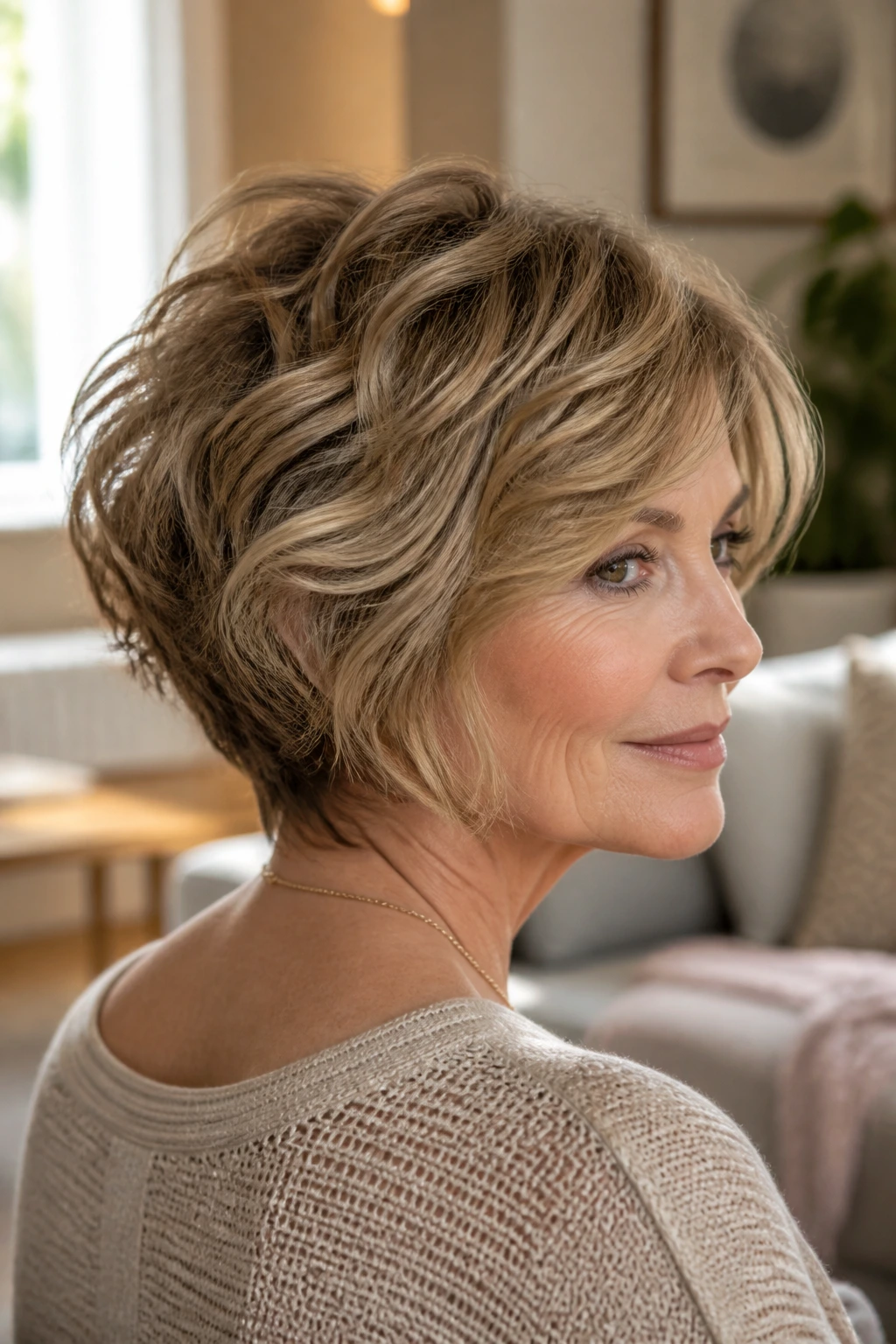
A shaggy wedge bob takes the shape of a classic wedge and softens the edges until it stops feeling severe. That’s the trick. The wedge gives the back its rounded lift, and the shagging through the top breaks up the outline just enough to keep fine waves from lying like a flat cap.
I like this cut for hair that tends to lose shape at the crown but still has a wave pattern strong enough to show off. It creates a little visual spring without needing a lot of styling. You can scrunch it with mousse, air-dry part of the way, then finish the roots with a diffuser if you want more height.
It’s also forgiving around the face. The side pieces can be cut to skim the cheekbone or jawline, which helps soften the overall look. The cut gets its personality from the contrast: neat underneath, a little wild on top. That contrast is what keeps it from reading too precious.
If your hair has a cowlick at the back, this one can actually work with it rather than against it. That’s not true of every bob. Some styles fight the head shape and lose.
9. Rounded Bob with Curtain Bangs
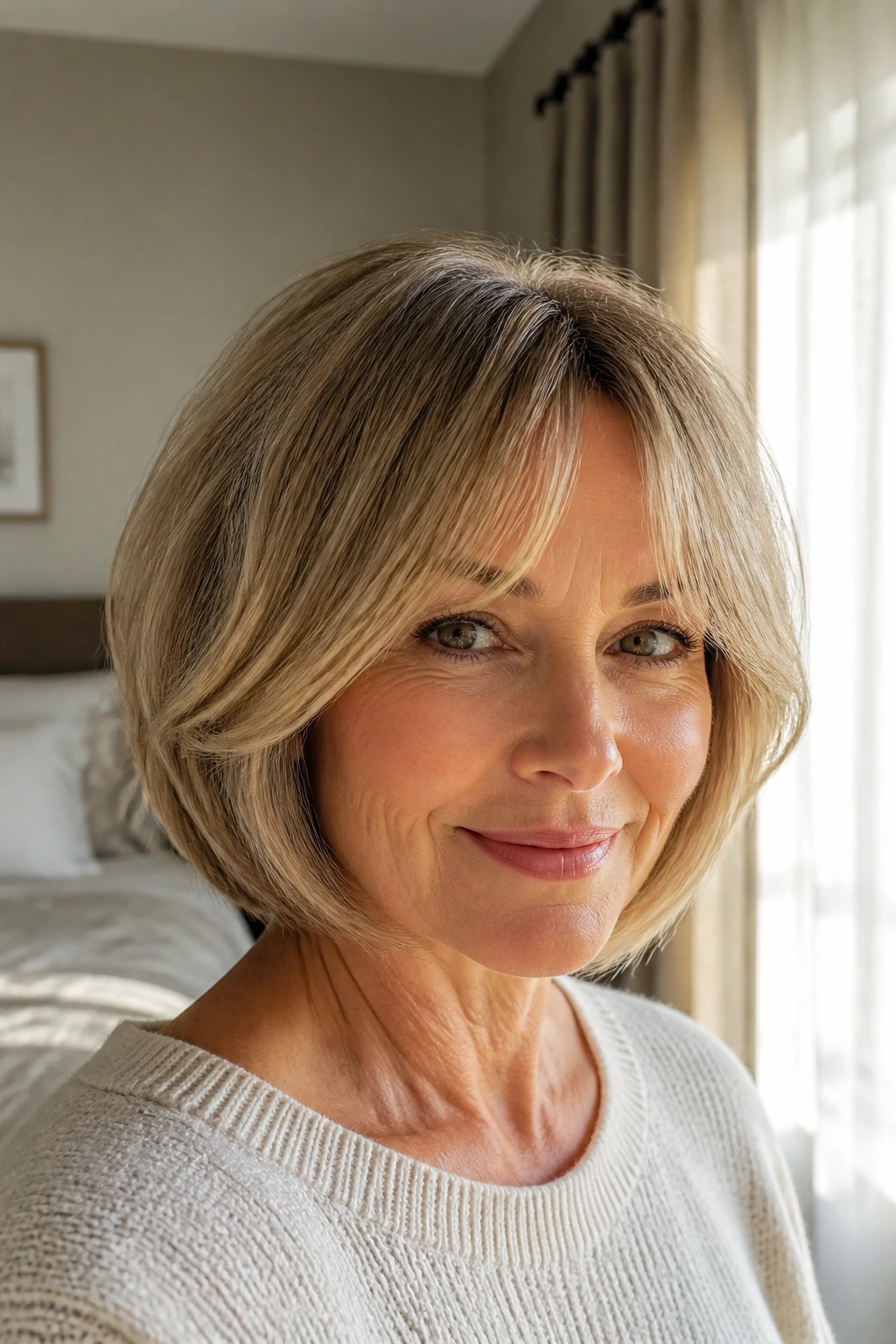
Why does a rounded bob look thicker than a straight, one-length bob? Because the curve around the face and nape makes the silhouette feel fuller from every angle. Add curtain bangs, and the front gains a soft frame that helps fine waves feel intentional rather than accidental.
The bangs need to stay light. Heavy curtain bangs on fine hair can split in an odd way and make the forehead area look sparse. A softer, cheekbone-grazing version is better. It gives movement without stealing too much density from the rest of the cut.
This style works well when you want hair that feels feminine without being fussy. The rounded edges keep the bob from looking harsh. The bangs keep it from feeling blank. And the wave pattern gets a nice job to do across the front, where it usually has the most personality anyway.
If your face tends to carry its width around the cheeks, ask for the bang to open a little lower, closer to the jaw. If your hairline is higher, keep the curtain pieces shorter so they don’t disappear into the rest of the cut. Tiny differences matter here.
10. Piecey Crop with a Tapered Neck
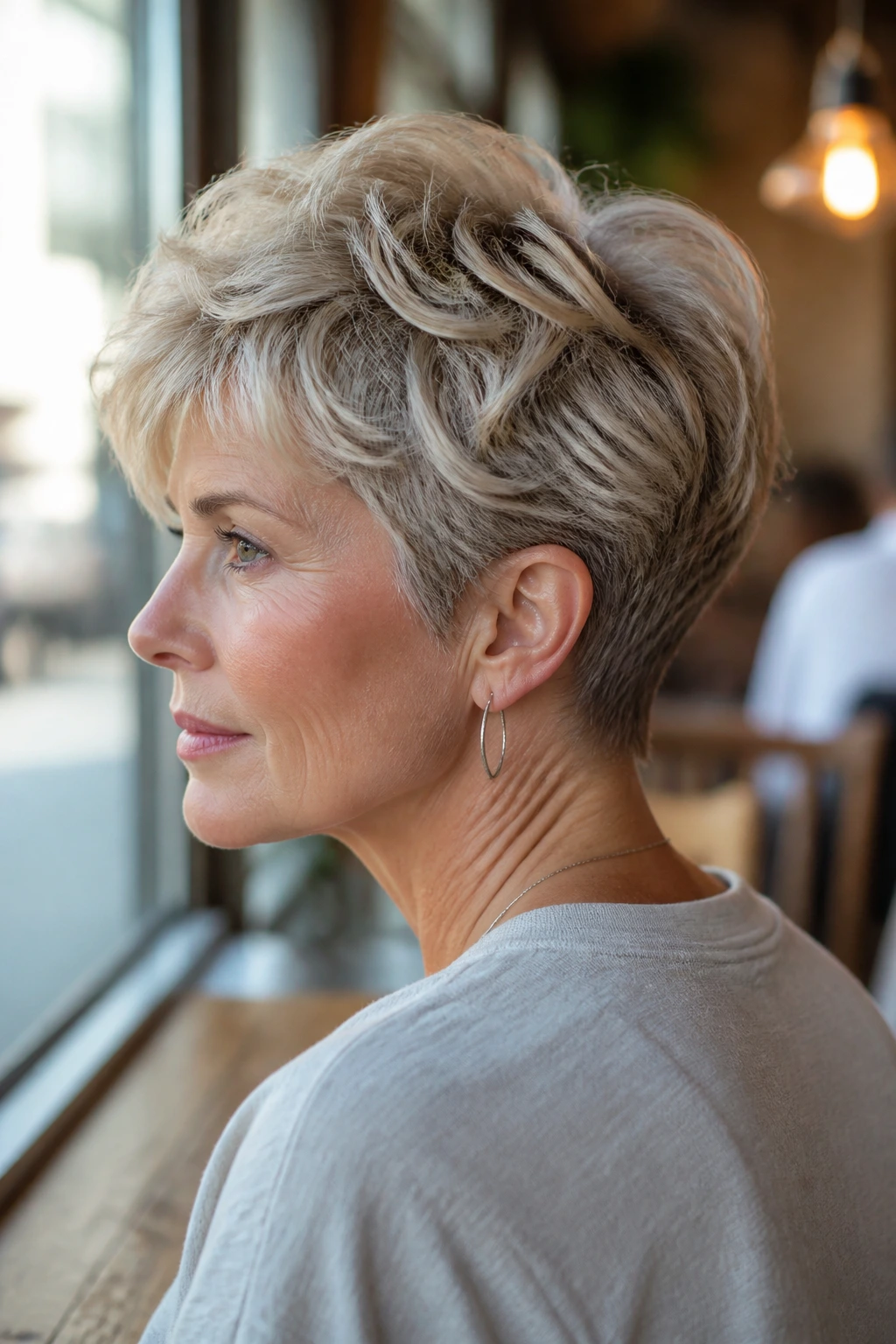
You know that haircut that still looks good after a windy day and a grocery run? This is the one. The tapered neck keeps the back neat, while the piecey top gives fine waves somewhere to break apart and move.
The shape feels modern because it doesn’t pretend every strand will behave. It leaves a little separation on purpose. That matters on fine hair, where too much uniformity can make the style look sparse. A few deliberate pieces around the top and sides create the impression of more body than you actually have.
How to ask for it
Tell the stylist you want the neck clean but not shaved too high. Ask for texture through the top half, then leave the ends softer. If they reach for thinning shears on the bottom, slow them down. The top needs the movement more than the ends need help.
This cut is especially good if you like a quick morning routine. A spray of root lifter, a rough dry, and a finger-comb usually does the job. It also pairs well with natural silver or salt-and-pepper hair, because the piecey texture shows off the tonal shifts instead of hiding them.
11. Blunt Bob with Internal Layers
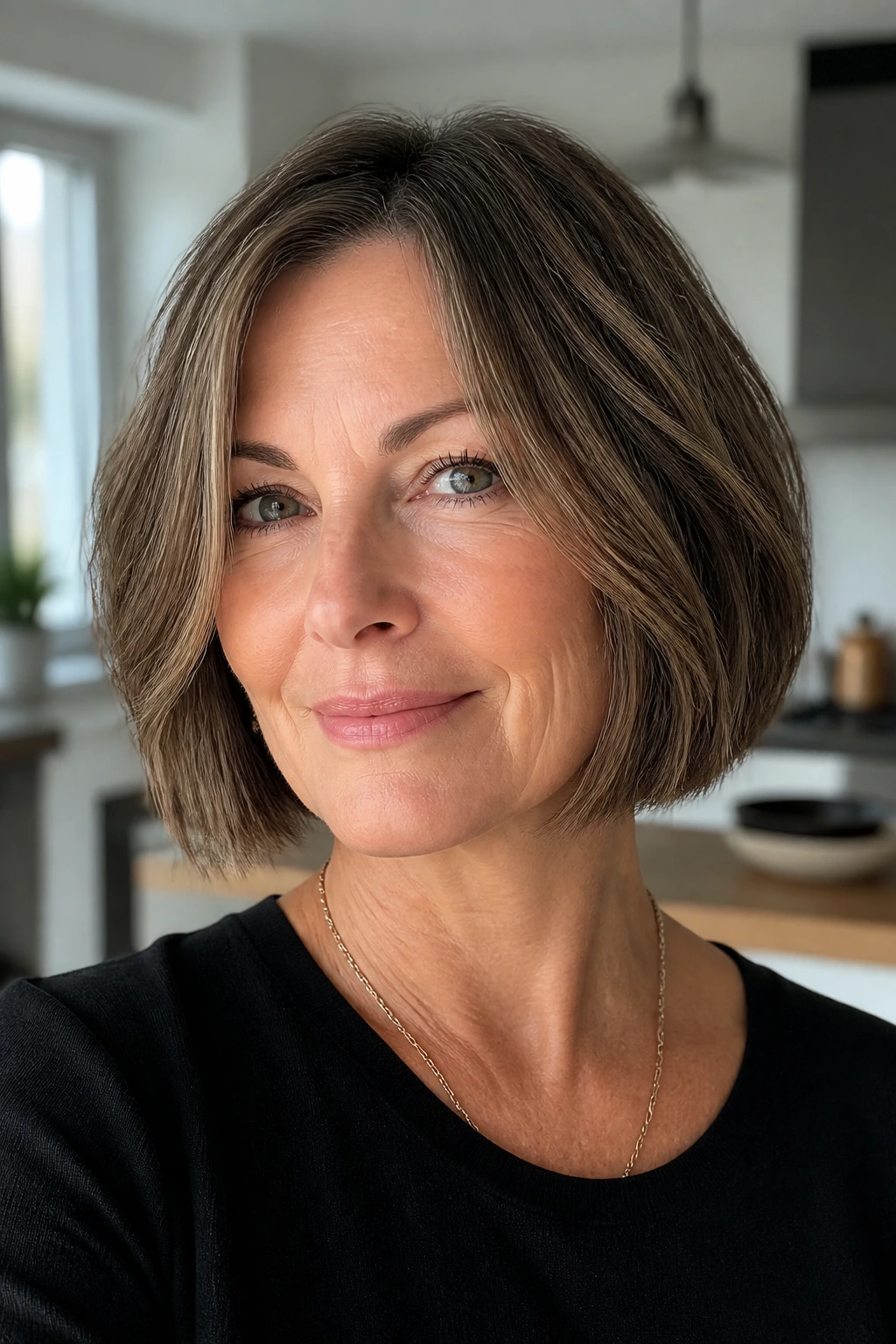
A blunt bob sounds rigid on paper, but on fine wavy hair it can be the smartest move in the room. The clean edge at the bottom makes the hair look denser, while invisible interior layers stop the shape from turning into a heavy block. It’s the haircut equivalent of wearing a crisp shirt with soft fabric underneath.
This style is best when the wave pattern is loose and you want fullness more than frizz. The blunt edge gives the illusion of thickness at the perimeter, which is where fine hair most needs help. Internal layers only come in high enough to remove a little excess bulk from the middle; they should not carve the ends to pieces.
A lot of stylists overdo texture on fine hair because they assume movement equals more layers. That’s not always true. Sometimes the strongest choice is restraint. A blunt line gives the eye something solid to read, and the wave supplies the softness.
If you wear a middle part, this cut can be especially clean. If you prefer a side part, the asymmetry creates a little lift at the front. Either way, it’s one of the few short cuts that can look both sleek and airy without switching identity.
12. Soft Asymmetrical Bob
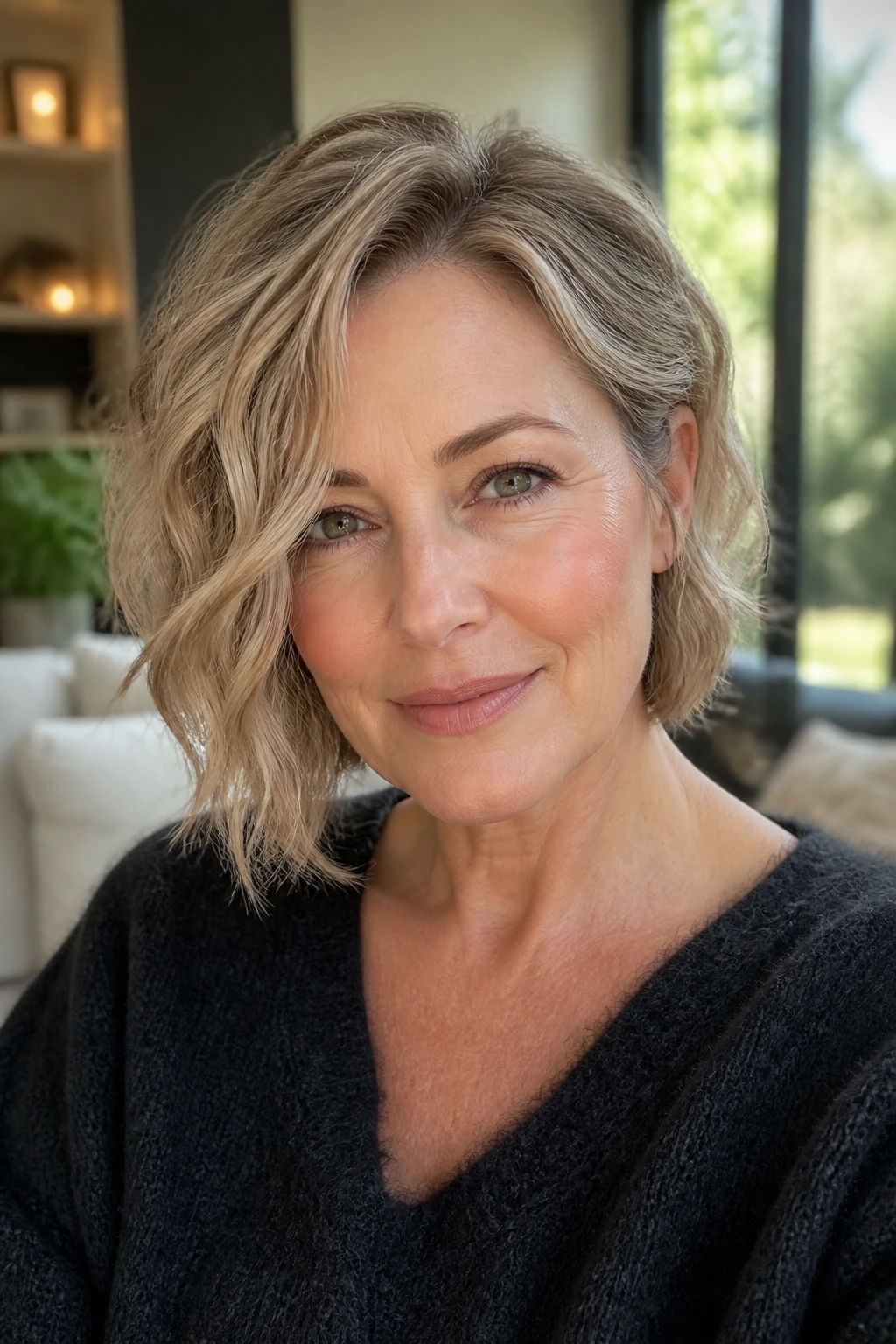
A soft asymmetrical bob works because it gives the eye a longer line to follow on one side without making the whole head feel lopsided. For fine wavy hair, that small difference in length can create a lot of movement. The longer side catches the wave, the shorter side keeps the neckline tidy.
This is the cut for someone who wants a little edge but doesn’t want to look like she tried to be edgy. The asymmetry should be subtle enough that it reads as shape, not statement. One side can skim the jaw while the other sits a finger-width shorter. That’s plenty.
I like this cut on hair with a loose bend and a decent amount of shine. The shift in length catches light differently as you move, and the result is more interesting than a plain bob without needing extra layers. It also gives you a neat trick for days when one side wants to misbehave; the contrast disguises it.
Avoid making both sides too textured. That’s where the shape gets muddy. Clean geometry on one side, soft movement on the other. That’s the whole recipe.
13. Tousled Mini Shag
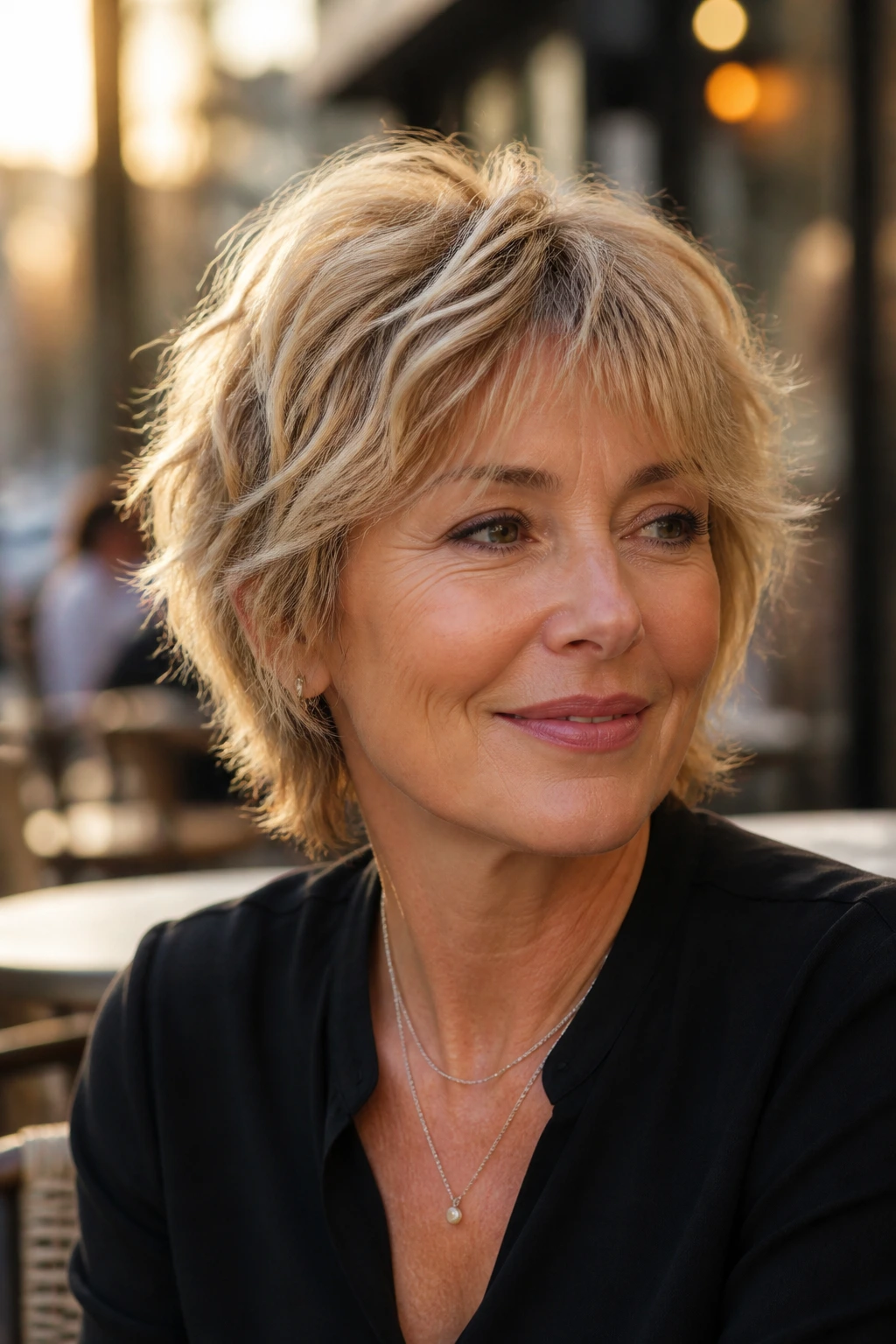
The mini shag is where fine wavy hair gets to be a little unruly without looking overworked. It keeps the top layers short enough to build lift, then lets the sides fall in loose, broken pieces around the face. On the right head, it looks like you slept well and your hair cooperated out of respect.
What gives it life
The crown is usually cut with enough separation to stop the top from lying flat. The sides are kept soft so the silhouette doesn’t spread too far. That combination gives the waves room to pop, especially if they bend more strongly in humid air or after a wash.
Best way to wear it
Use a light mousse at the root and a curl cream only on the last few inches if your ends need help. If you load product all the way up, the shape will collapse. Air-dry halfway, then diffuse the roots for a minute or two. That’s usually enough.
This is not the cut for someone who wants polished edges every day. It’s for people who like movement, touchable texture, and a slightly undone finish. Fine hair can wear a shag beautifully when the layering is controlled. Too much texture, and the ends look frayed. A mini shag walks the line better than a big, choppy shag does.
14. Ear-Grazing Crop with a Long Top
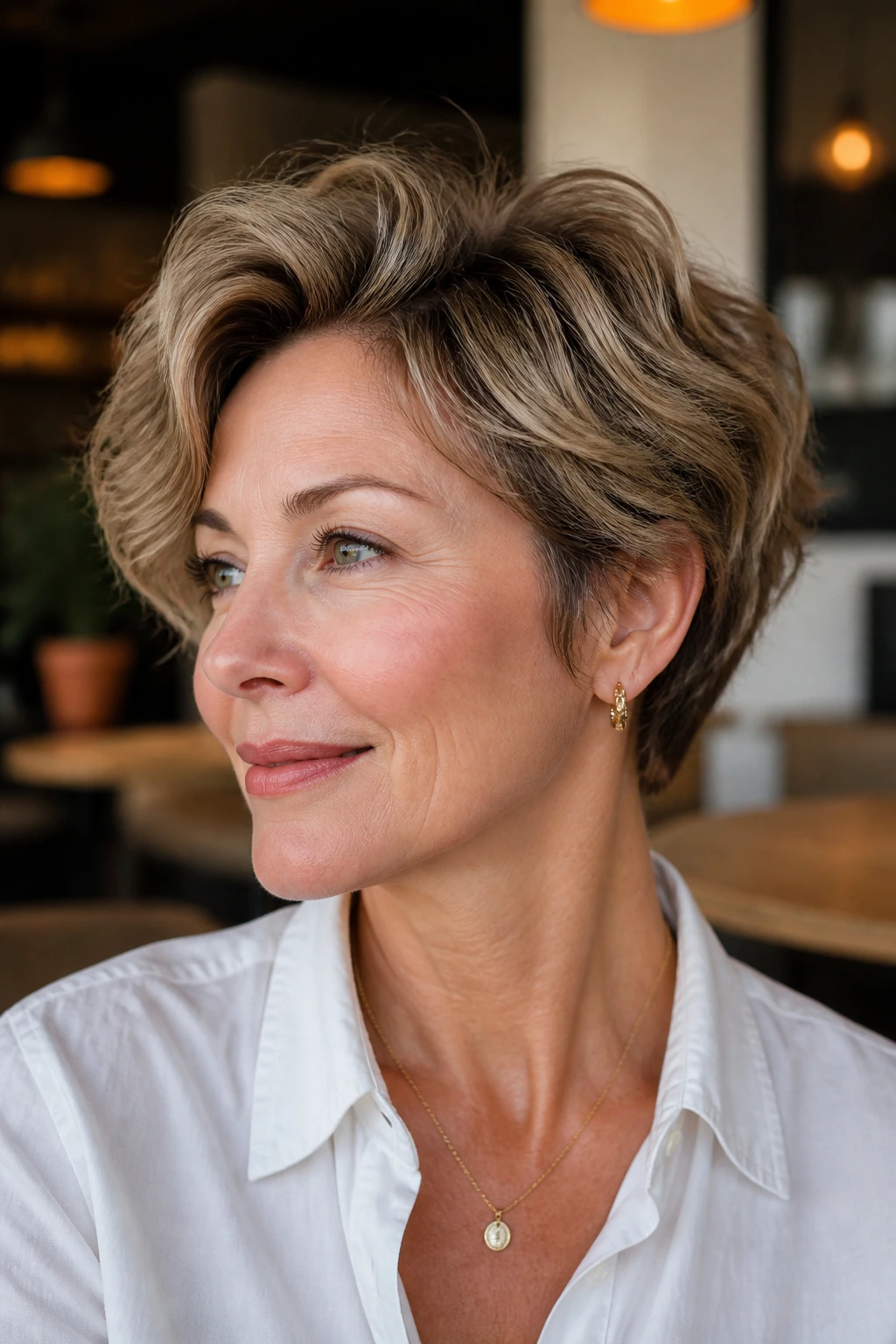
A short crop doesn’t have to mean skin-tight sides and a lot of scalp showing. When the top stays long and the sides skim the ears, fine waves get enough room to bend while the outline stays clean. That’s why this cut can look sharper than a bob without actually needing more hair.
The longer top is the anchor. It gives the wave somewhere to form before the sides disappear. If your hair tends to go flat at the back, the ear-grazing length keeps the shape compact enough that you’re not fighting it all day. It’s also easy to tuck behind one ear, which instantly changes the mood of the cut.
This version suits anyone who wants a lighter neck, quicker drying time, and a style that still feels soft. If you’ve got a strong jawline, the crop keeps the face open. If you’d rather soften the face, leave a little extra around the temples and let the top fall forward slightly.
Use a light paste only on the ends if you want separation. Too much product near the roots will make the crop lose its lift and start looking muddy. Keep the top airy. That’s where the shape lives.
15. Airy Inverted Bob
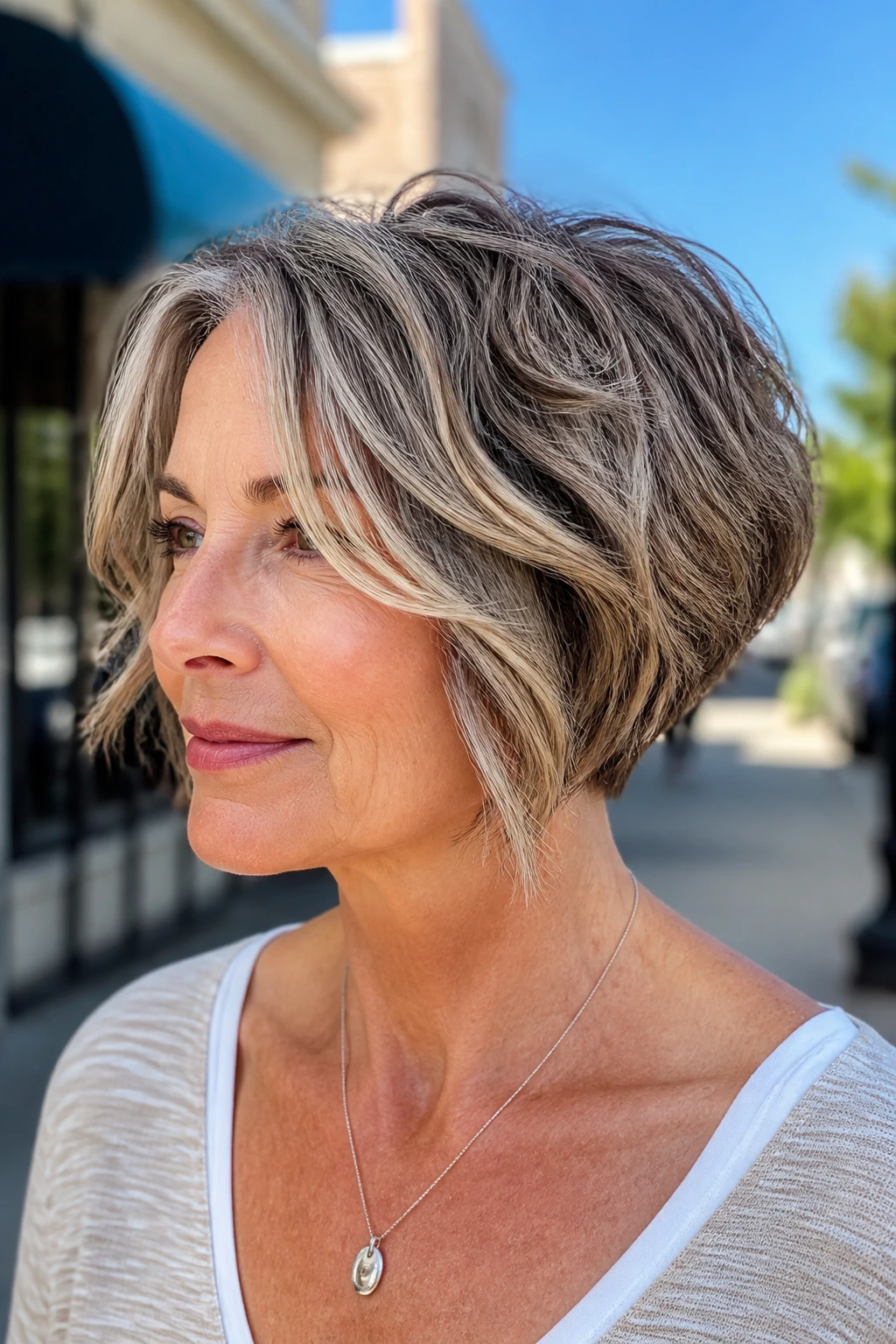
An inverted bob is one of the best ways to give fine hair a thicker-looking back without making the front blunt and boring. The shorter back lifts the crown a touch, while the longer front pieces give the wave a graceful line to follow. On wavy hair, that forward sweep keeps the cut from feeling too stacked or stiff.
The airy version is softer than the old-school version. Less blocky. Less shellacked. The angles should be noticeable if you look for them, but not so hard that the haircut starts shouting. Fine hair does better when the shape is there but the edges breathe a little.
This cut is a good fit if you want your profile to look neat. It hugs the neck, opens around the jaw, and gives the front a bit more length than a straight bob would. That extra length in front can be useful if your waves shrink up when they dry.
Ask for the back to be stacked gently, not carved high. High stacking on fine hair can expose too much scalp and make the top look sparse. A softer inversion gives you the shape without the drama.
16. Textured Pageboy
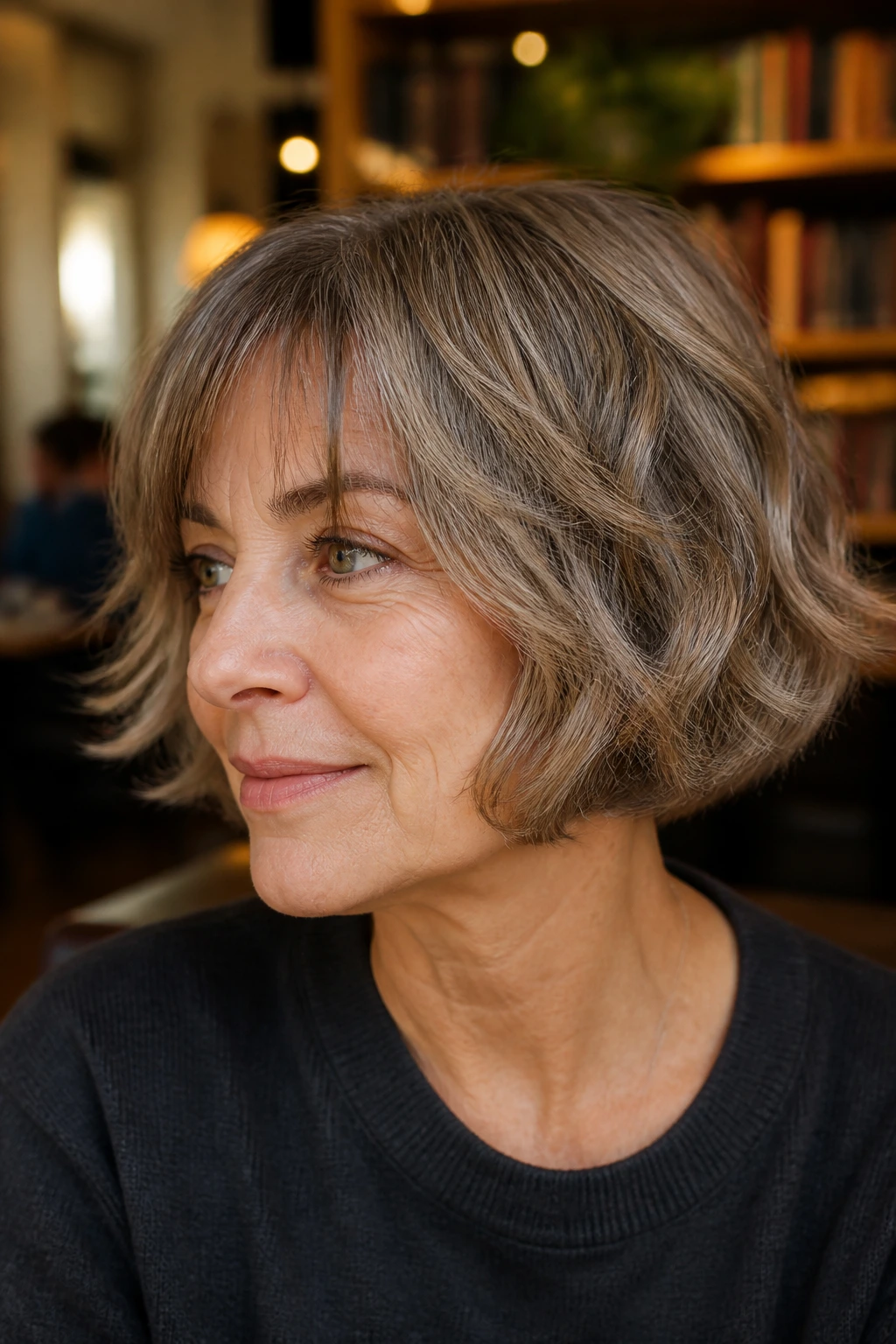
The pageboy has gotten a bad reputation from old photos and stiff styling creams, which is a shame. In a softer, textured version, it becomes a very useful cut for fine wavy hair because it keeps the outline controlled while letting the wave twist through the ends.
What makes this style different is the curved shape. The ends tuck in a little, which gives the hair a neat finish, but the texture through the interior keeps it from looking rigid. It’s a smart pick if you want a little retro polish without the helmet effect that older pageboy cuts sometimes had.
Best details to ask for
- A curved bottom line that sits around the jaw.
- Soft texture through the mid-lengths, not the ends.
- Enough length at the front to skim the cheekbone.
This cut works especially well if your hair tends to flip out at the bottom on its own. Instead of forcing that movement flat, the pageboy shape can channel it into something cleaner. It also pairs nicely with glasses because the silhouette stays compact around the face.
If you want easy maintenance but still want the hair to look styled, this is a sleeper pick. It’s understated in the best way.
17. Grown-Out Layered Crop

What if you want short, but you don’t want to visit the salon every four weeks? Then the grown-out layered crop is the safest bet. The length stays long enough to soften the outline as it grows, while the layers are placed high enough to keep the wave from falling into a limp sheet.
This cut is forgiving. That’s the real selling point. When the top gets a little longer, it still looks intentional. When the back starts to lose its crispness, the shape just turns softer, not bad. For fine hair, that matters because there’s less room for a cut to look tired.
The key is balance. Keep the layers light and avoid slicing the ends too thin. The crop should have movement near the crown and cheekbones, but the bottom should still look like a line, not a fringe. That’s what keeps the style feeling grown-up instead of accidental.
If you’re not sure which cut to choose, this is the one I’d point to first. It’s the least fussy, the easiest to refresh, and the least likely to punish you if your hair dries differently from one day to the next.
Why Shorter Length Gives Fine Waves More Lift
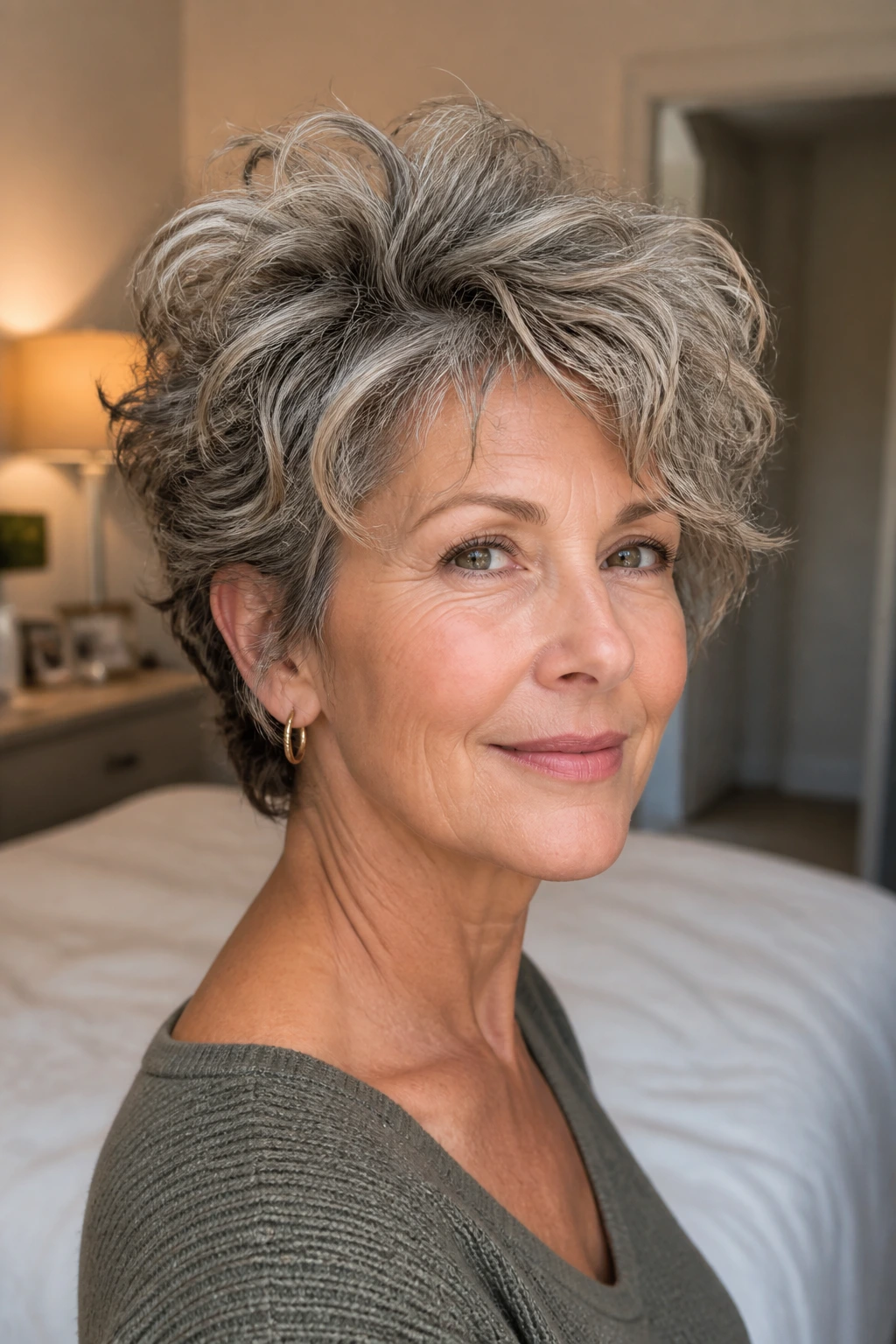
Fine wave patterns usually do better when the hair is cut to a length that respects gravity instead of fighting it. Once hair gets too long, the bend stretches out, and the wave loses its body. Shorter styles reduce that drag. The result is not magic. It’s physics, and a decent haircut working with it.
There’s another piece people miss: fine hair often needs shape, not bulk. A thick, layered curtain can look big in the salon chair and then collapse at home because the strands don’t have enough width to support all that carving. A shorter cut with a clean perimeter and carefully placed layers gives the eye a thicker edge to read.
That’s especially useful after 50, when density can change around the crown, hairline, or nape. The best cuts don’t pretend those shifts aren’t happening. They build around them. A bob that hugs the neck, a crop that keeps the top airy, or a lob that stops at the collarbone can all make the hair feel more alive because they stop the weight from dragging the pattern straight down.
A lot of people also find that shorter hair is easier to refresh. A mist of water, a squeeze of mousse, a quick scrunch. Done. Long hair with fine waves often needs more time to wake up and still ends up looking tired.
What to Ask Your Stylist Before the First Snip
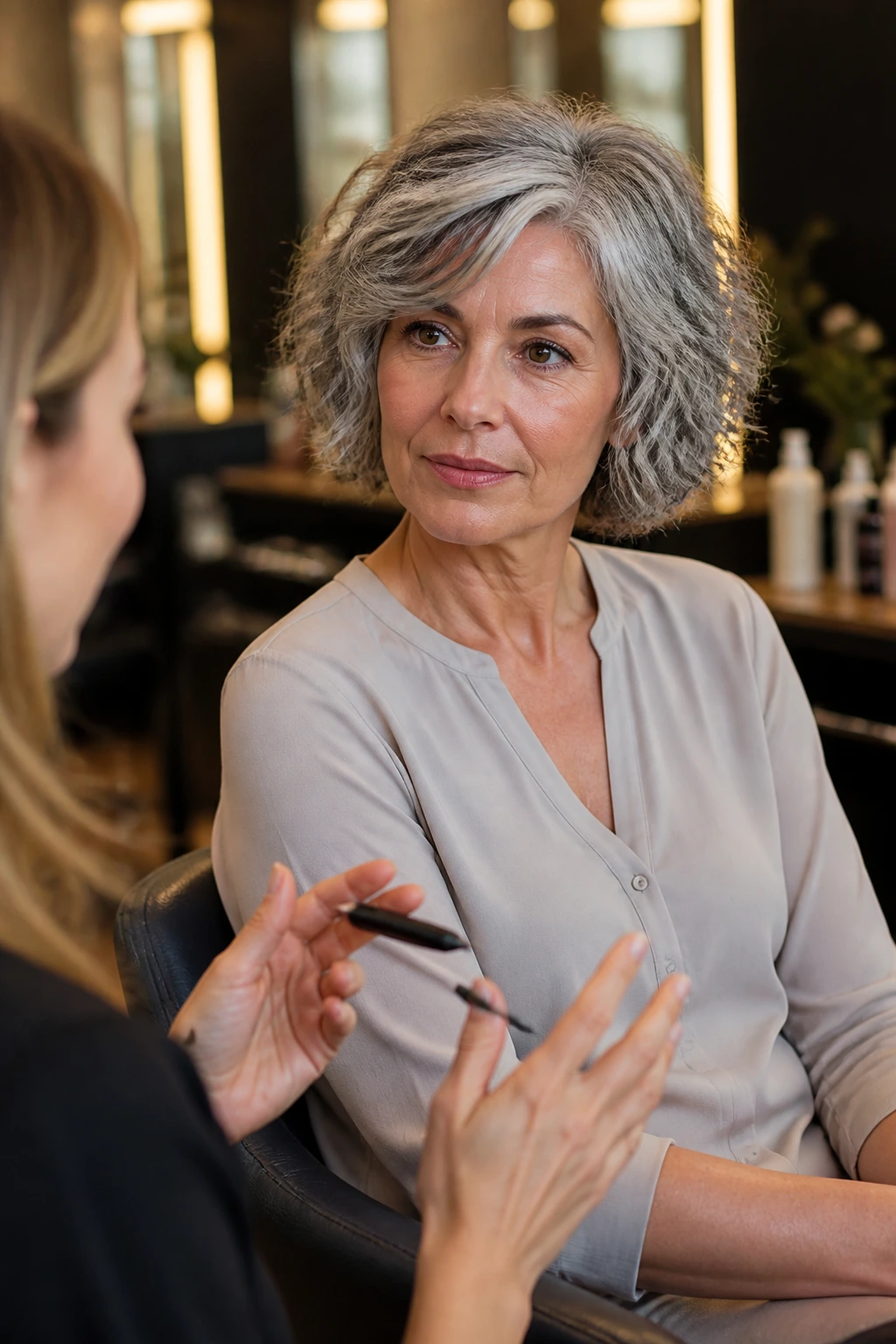
Bring a photo, but bring words too. Photos only show the finish. They do not always show the structure underneath, and structure is what makes these cuts work on fine wavy hair. If you sit down and say, “I want volume,” you may get a whole lot of layers and not much thickness where you need it.
Ask for a blunt or softly blunt perimeter, depending on the cut you want. Ask where the shortest layer will sit. Cheekbone, jaw, or crown all tell a different story. If your hair is very fine, say so plainly and ask that the ends not be thinned aggressively. Thinning shears can be useful, but on delicate strands they can also leave the bottom looking like a bad curtain hem.
Also mention how you wear your part. Middle parts, side parts, and swept parts all change how a cut falls. If you wear glasses, say that too. A fringe that looks lovely on a model may land right on the frame and drive you nuts all day.
A few useful phrases:
- “Keep the bottom line full.”
- “I want movement through the top, not the ends.”
- “Please don’t razor the perimeter too much.”
- “Leave enough length around the face to tuck behind the ear.”
That kind of language saves time. More important, it saves the cut.
Tools That Make Styling Simpler
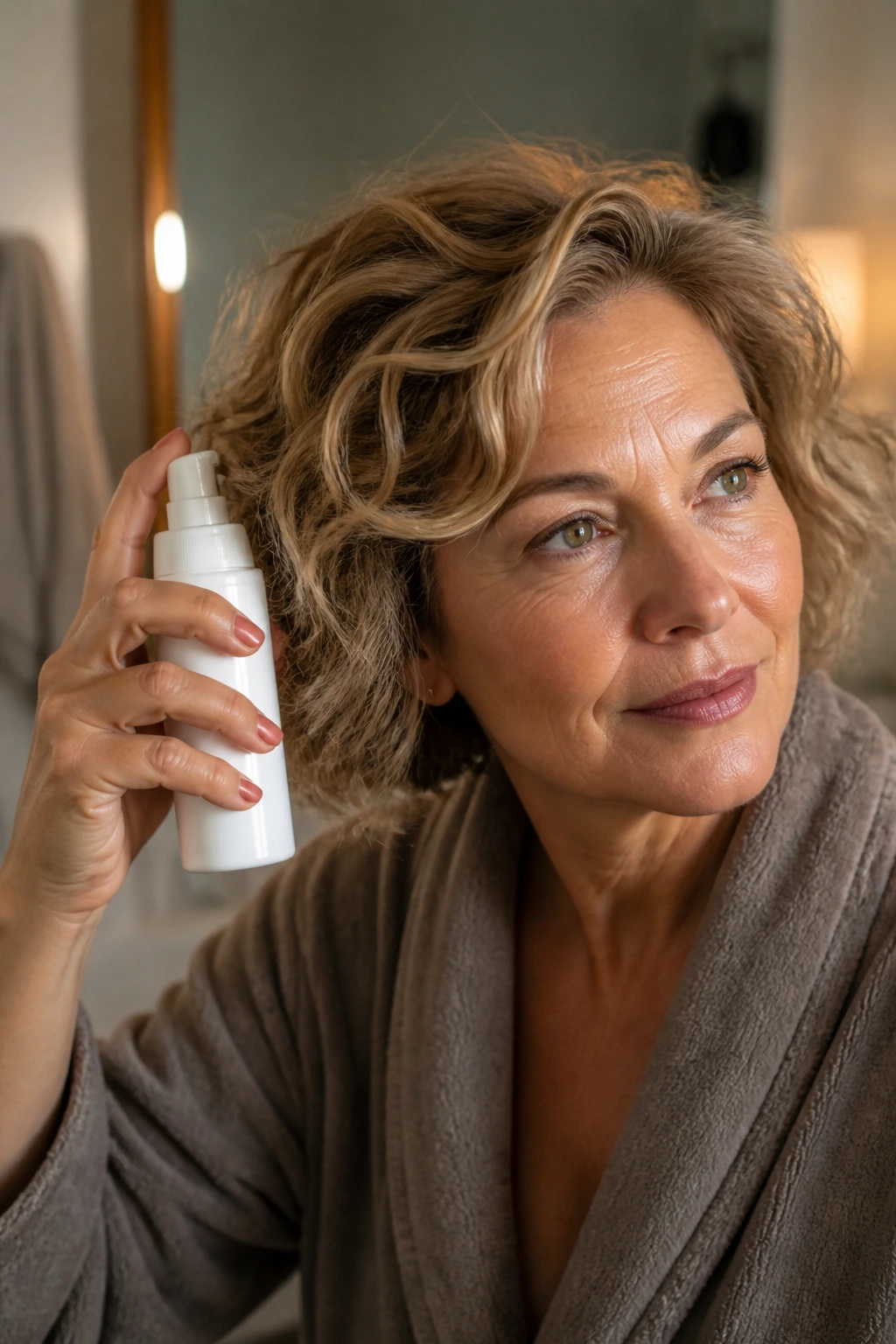
-
Lightweight mousse: Gives the roots grip without coating fine waves in a sticky film. Choose one that dries flexible, not crunchy.
-
Root-lift spray: Best for the crown and part line when hair wants to lie flat against the scalp. A few short bursts are enough.
-
1-inch curling iron or wand: Useful for nudging stubborn pieces into a bend. Wrap only the mid-lengths, then leave the ends a little loose.
-
Diffuser attachment: Helps waves keep their shape while drying. Use low or medium heat, not high heat, which can frizz the cut up fast.
-
Microfiber towel or soft T-shirt: Cuts down on rough towel friction, which is a sneaky source of puffiness on fine hair.
-
Wide-tooth comb: Better than a brush for redistributing product through damp waves without pulling the bend apart.
-
Duckbill clips: Handy for setting the crown or pinning a side part while it dries. Small tool, big payoff.
-
Light texture spray or dry shampoo: Good on day two when the roots need a bit of bite and the style needs refreshing.
-
Heat protectant: If you use a dryer, iron, or wand, this is not optional. Fine hair scorches faster than people expect.
Practical Tips That Keep the Cut Looking Fresh
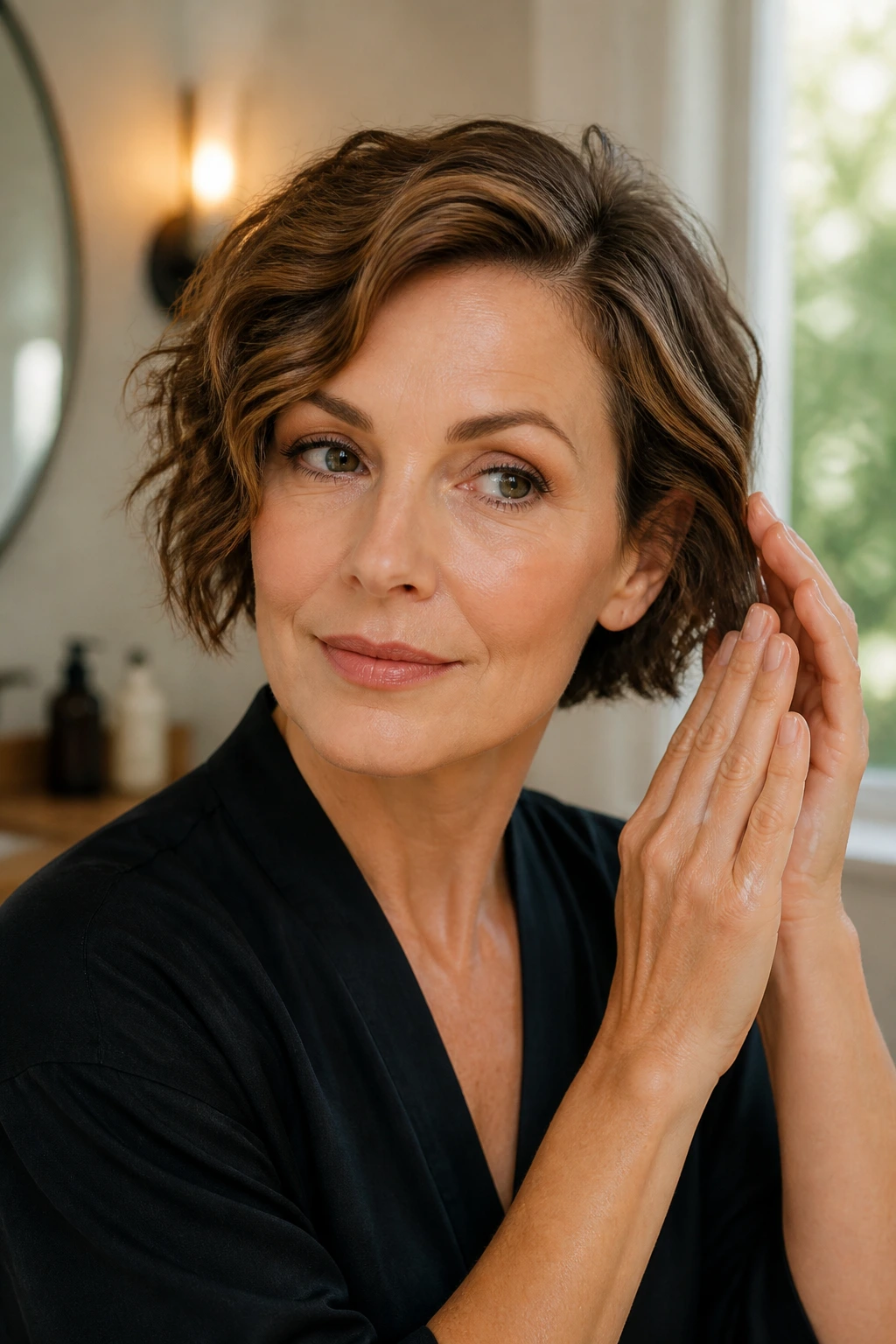
Root lift first: Dry the roots before you chase the ends. If the base is flat, the whole shape collapses, no matter how pretty the wave is through the middle.
Use less cream than you think: Fine hair hates being weighed down. Start with a pea-sized amount, warm it between your hands, and apply it from the mid-lengths down. Add more only if the ends are dry.
Flip the part: A side part can wake up a flat crown in seconds. Even a small shift of half an inch can change the way the hair sits.
Diffusion is a tool, not a ritual: You do not need to dry every strand fully with a diffuser. Hit the roots and the front pieces, then stop while there’s still some softness left. That keeps the cut from getting overworked.
Don’t chase perfect symmetry: Fine waves often look better when one side bends a little more than the other. The trick is to make it look deliberate, not messy. Tuck one side behind the ear or let one front piece fall a touch longer.
Use dry shampoo before you need it: On many fine-wave heads, the best time to add texture is when the hair still looks clean. A little at the roots can give grip that powder-free hair never has.
The Mistakes That Flatten Fine Waves Fast
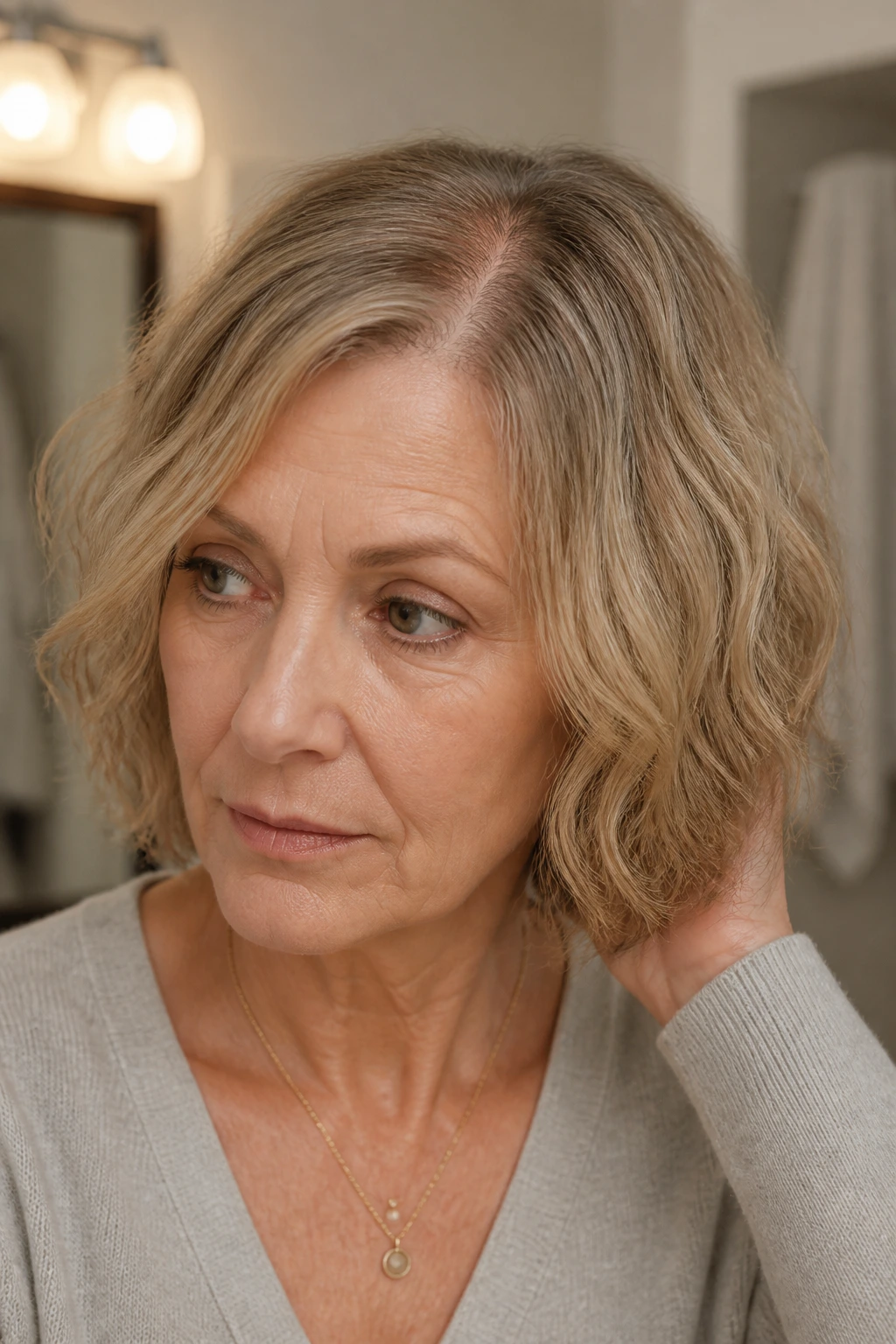
The most common mistake is taking too much length off the wrong place. A stylist may want to “freshen” the face frame and end up making the front too short, which leaves the back looking heavy and the whole shape feeling awkward. The fix is simple: keep one section of length around the jaw or cheekbone so the cut has somewhere to fall.
Another big one is overtexturizing the ends. Fine hair can look wispy fast if the bottom is sliced up with razors or thinning shears. You’ll spot this when the silhouette looks see-through at the edge even though the hair is clean. Ask for texture higher up, not at the ends.
Heavy styling products cause trouble too. Thick creams, oils, and smoothing balms can make fine waves clump and then slump. If your hair looks flatter an hour after styling than it did while damp, the product was too rich. Switch to mousse, a light spray, or a tiny bit of cream only on the very ends.
There’s also the “too neat” problem. If you blow dry fine wavy hair until every bend is pressed out, the style can look smaller than the hair actually is. A little roughness helps. A little. Not bedhead. Just enough to keep the wave visible.
And then there’s the trim schedule. Short cuts need regular cleanups. Once the shape grows past its balance point, the crown can flatten and the neck can mushroom out. Do not wait until you’re annoyed. Book the trim before the cut loses its line.
Variations and Alternatives to Try
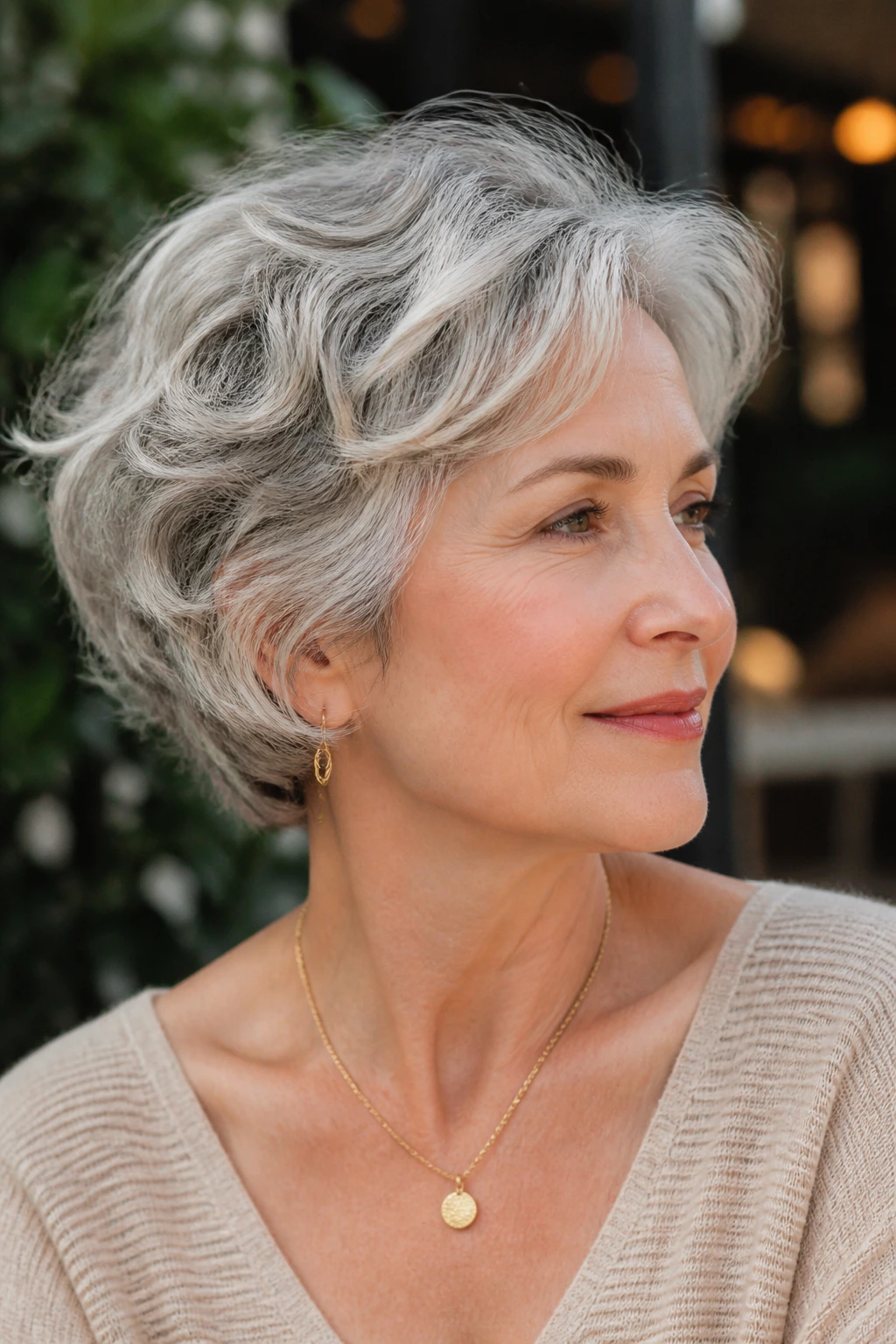
Soft Silver Sweep: If your gray or silver hair is coming in with a different texture, keep the top longer and let the front sweep softly to one side. The contrast in tone often makes texture look even richer, so you do not need a complicated shape.
Air-Dry Version: Ask for a cut that sits well without brushing it into submission. That usually means soft internal layers, a clean edge, and enough length through the front to bend on its own. Perfect if you prefer to wash, scrunch, and leave.
More Polished Finish: Keep the perimeter blunt and the layers minimal. Then style with a round brush just at the crown and front pieces. This version looks tidier for dinners, events, or days when you want the hair to sit close and clean.
Piecey Weekend Version: Add a little more texture through the top and side sections, then finish with dry texture spray. The result is looser and more casual, which works if your hair naturally gets a bit undone by day two.
Fringe-Free Option: If bangs sound like a chore, skip them and keep the face frame longer. A cheekbone-to-jaw bend still softens the face, and you’ll spend less time worrying about pieces splitting on the forehead.
Care, Trims, and Between-Wash Maintenance
Fine wavy hair usually does best with a trim every 6 to 8 weeks if the cut is short and shape-driven. A pixie bob or stacked nape bob often needs the shorter end of that range. A chin-length bob or lob can stretch a little longer, though if the ends start looking thin, it’s time.
Washing habits matter too. If your scalp gets oily fast, you may need to wash every other day. If it stays dry, two or three times a week may be enough. Either way, use conditioner mainly from the mid-lengths down. Fine roots do not need much help, and heavy conditioner near the scalp can flatten the wave before it starts.
Sleep makes a difference. A satin pillowcase or even a smooth pillowcase can reduce the morning puff that rough cotton causes. If the cut is longer around the crown, a loose clip or a very soft bend at the top can help preserve the shape overnight. Nothing elaborate. Just enough to keep the head from mashing the pattern flat.
Between washes, don’t drown the hair in more product. A little water mist, a touch of root spray, and a quick scrunch are usually enough. If the ends feel dry, use the smallest amount of cream possible. Fine hair rarely needs more than that.
Questions People Ask Before They Go Short
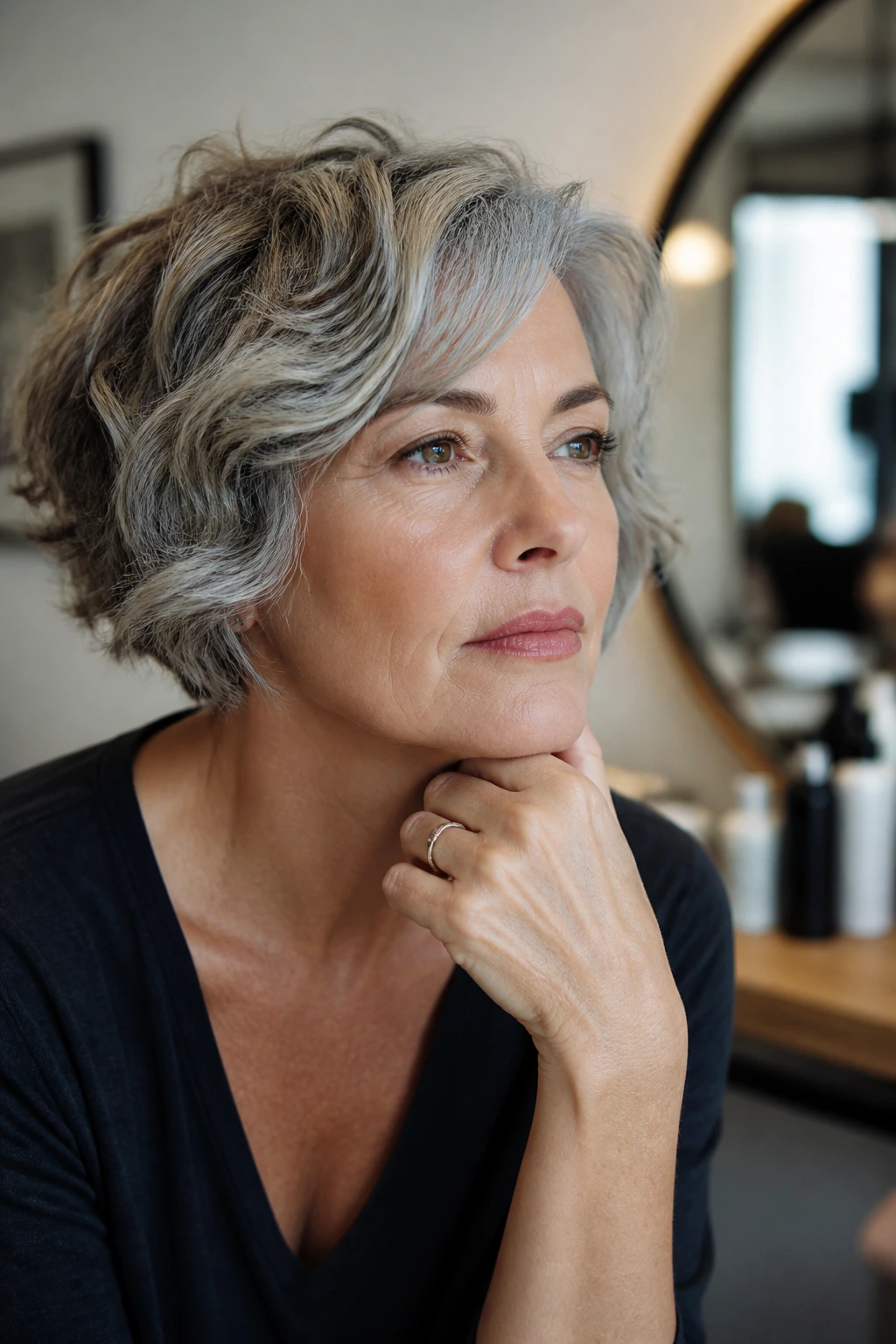
Will short wavy cuts make fine hair look thinner?
Not if the shape is right. Shorter cuts usually make fine waves look fuller because they remove weight and bring the wave pattern closer to the head. The problems start when the ends are overthinned or the perimeter is made too wispy.
Are layers good or bad for fine hair?
Both, depending on where they sit. Soft internal layers help movement, but too many layers at the bottom can make fine hair look straggly. The sweet spot is usually a fuller edge with light shaping higher up.
Should I get bangs?
Only if you want to style them. Soft curtain bangs or a wispy side fringe can work well, but heavy bangs can split and feel sparse on fine hair. If you’re unsure, start with a longer face frame instead.
What if my waves are uneven?
That’s normal. Most wavy hair has areas that bend more than others. A good short cut can hide some of that by making the shape depend less on every strand behaving the same way.
Can gray hair wear these cuts?
Absolutely. Gray and silver often show texture more clearly, which can make these short shapes look even better. The main thing is keeping the perimeter healthy so the ends don’t fray.
What if my hair is fine but dense?
Then you can often wear a little more weight in the cut. Dense hair can support a stronger bob or a fuller rounded shape. Fine and dense is a useful combo, because the cut has more material to work with.
How do I know if a crop is too short for me?
If you need a ponytail every day, it may be too short. If you want quicker drying time, more lift at the crown, and less time fighting the ends, a crop is worth trying. The best test is whether you can still tuck enough hair around the face to feel like yourself.
What should I do if the cut goes flat after one day?
Refresh the roots first, not the ends. A small amount of dry shampoo or root spray at the crown, then a quick finger lift, usually brings the shape back better than rewetting the whole head.
The Shape That Makes Fine Waves Easier to Wear
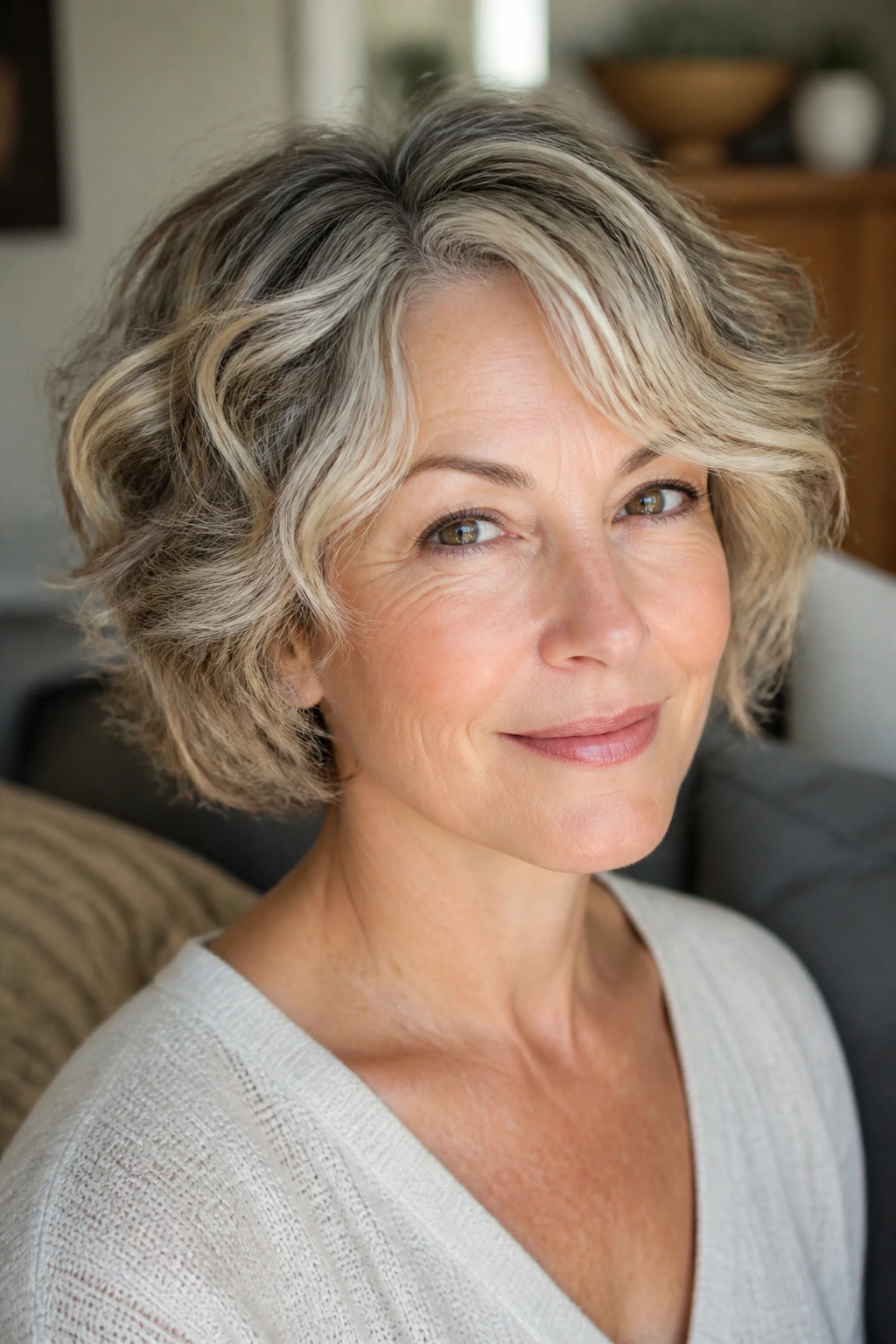
The best short wavy cuts for fine hair over 50 do one thing especially well: they make the hair look like it has a purpose. That sounds small. It isn’t. Hair that knows where it wants to sit is easier to style, easier to maintain, and much less likely to collapse into a flat, fuzzy compromise by the middle of the day.
Pick the version that matches your routine, not the one that looks most dramatic on a salon wall. If you want polish, keep the edge cleaner. If you want movement, let the top stay softer. If you want the easiest life possible, choose the cut that still looks decent when you air-dry late and leave the house five minutes later.
And if you’re standing at the edge of the chop, wondering whether to go a little shorter, I’d lean yes. Not reckless-short. Just short enough that the wave can do its job.
