



Fine hair and soft waves get along when the wave is loose enough to move, but not so loose that it disappears by lunchtime. Tight curls usually do fine hair a disservice. They shrink the length, exaggerate frizz, and leave the ends looking thinner than they are. A softer bend does the opposite: it makes the hair read fuller, especially around the crown, the cheekbones, and the ends where fine strands often need the most help.
The trick is not volume in the dramatic, teased-to-the-ceiling sense. It’s shape. A blunt edge, a side part, a few face-framing pieces, and a bend that starts below the root can change the entire silhouette. That’s why soft wavy hairstyles for fine hair keep showing up in real life, not just in photos. They’re workable. They don’t demand a thick mane, and they don’t collapse the second you step into humidity or brush past a coat collar.
Some of these looks need a curling wand, some work with a flat iron, and a few are really just a smart haircut doing half the styling for you. That’s the good news. Fine hair is easy to overload, but it also responds fast when you give it the right structure. The first few styles below are the simplest places to start; the later ones get more polished, more dressed up, and a little bolder.
Why These Styles Work for Fine Hair
-
Root lift matters more than tight curl: A small amount of height at the scalp makes fine hair look denser than a barrel full of ringlets ever will.
-
Loose bends keep the ends from looking skimpy: When the wave starts mid-length, the bottom of the hair still looks light and clean instead of stringy.
-
A blunt line gives the eye something solid to read: Bobs and lobs with soft waves hold their shape better than long, all-one-length hair that hangs flat.
-
These styles are easier to refresh on day two: Fine hair often looks better with a little lived-in texture, and soft waves can be revived with a quick mist and one or two re-bent sections.
-
They work at different lengths: You do not need waist-length hair to get movement; some of the best options here are chin-length, jaw-length, or shoulder-length cuts.
-
They dress up fast: A tucked side, a barrette, or a low twist changes the mood in minutes without needing a full restyle.
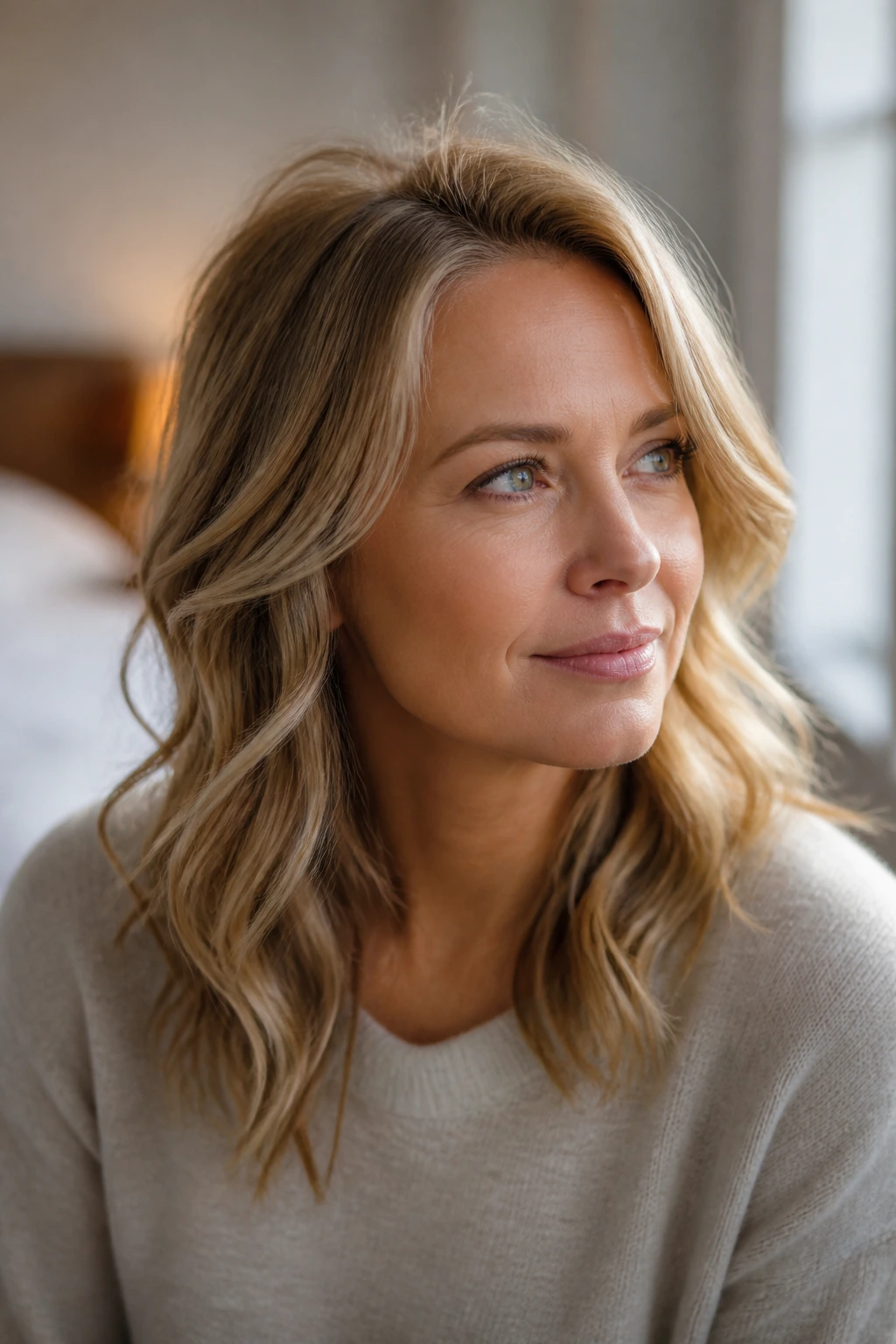
1. Collarbone Lob With Center-Part Waves
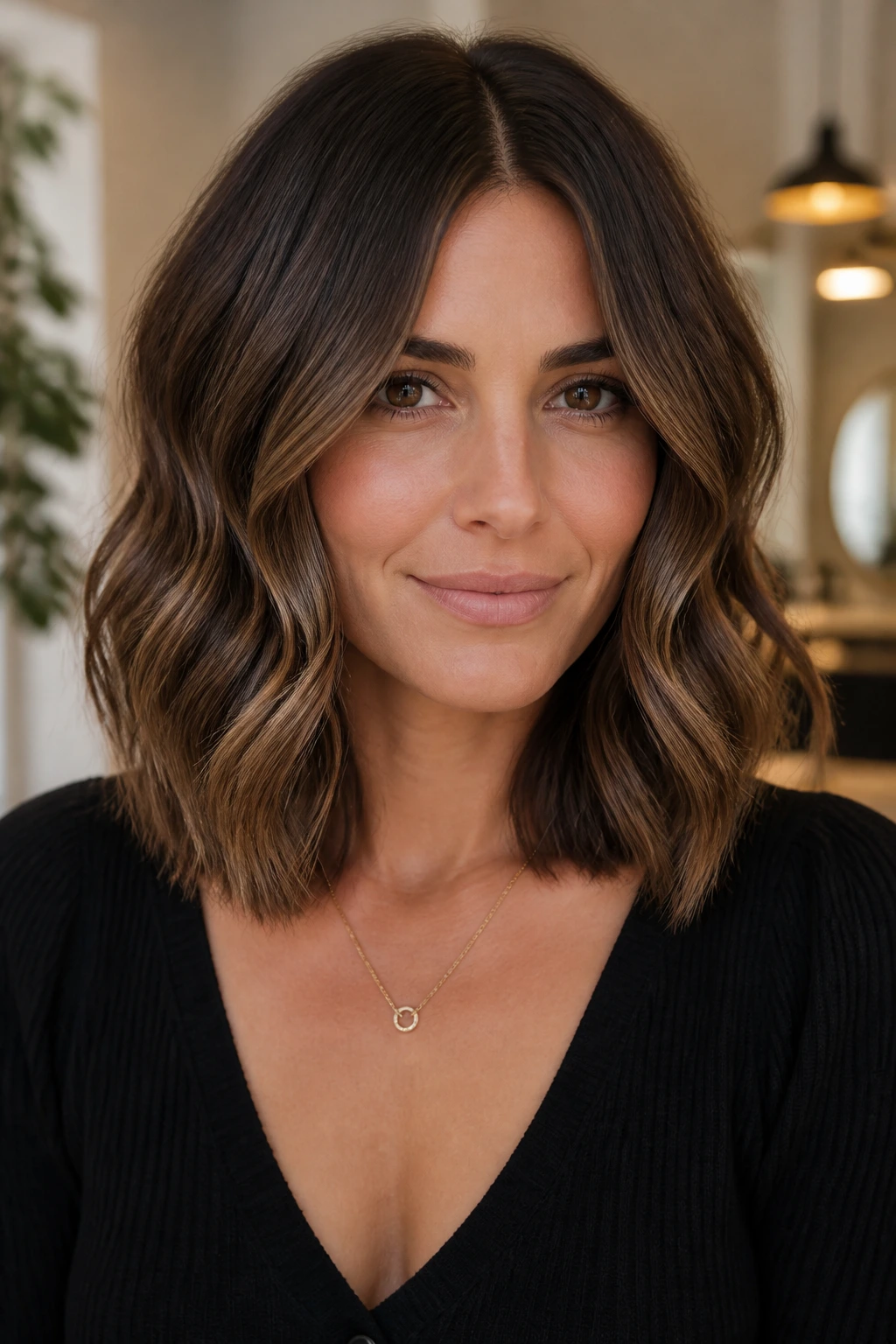
A collarbone lob is the kind of cut that makes fine hair behave. The length sits in that sweet spot where the ends still have enough weight to fall neatly, but the soft wave breaks up the line so the hair does not look heavy or stuck to the head. A center part keeps the look calm and balanced, which helps when your hair tends to split or separate at the top.
Why it works
The collarbone landing point gives the illusion of density because the ends hit the same visual plane. Add a loose S-wave from mid-length down, and the whole shape feels fuller without looking puffy. A 1-inch wand is enough here; leave the last inch straight so the finish stays modern.
Best move: mist the roots with volumizing mousse before drying, then clamp two front sections away from the face for five minutes while they cool.
2. Deep Side-Part Waves With a Lifted Crown
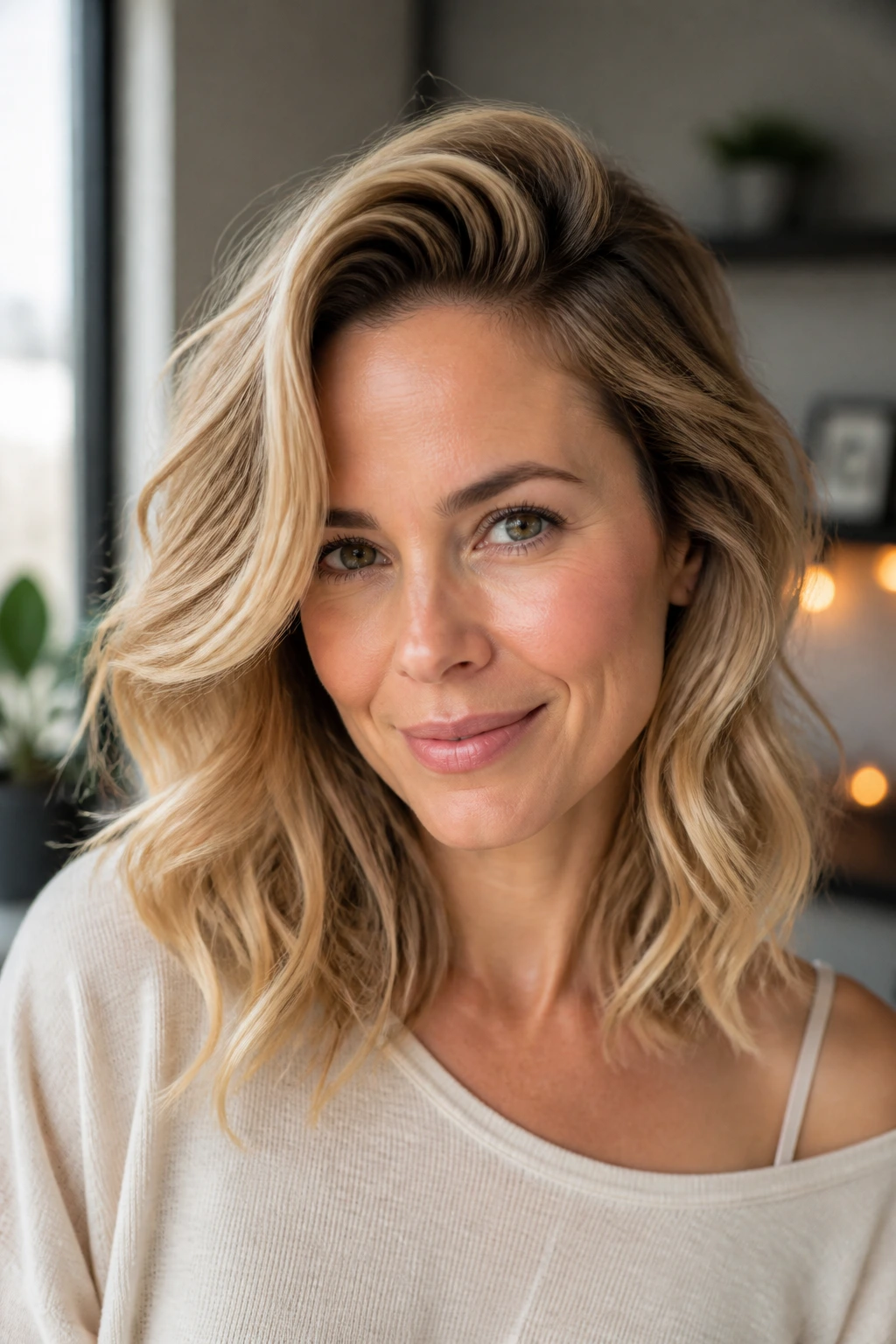
This one changes the whole mood with a single move. A deep side part steals a little height from one side and gives it back at the crown, which is exactly what fine hair needs when it starts to lie flat around the part line. The wave can stay loose and soft, but the part creates that extra lift people notice first.
It’s a good choice when your hair is shoulder length or longer and you want something that looks dressed up without becoming stiff. Pin the heavier side while it cools, then brush only the outer surface with your fingers. That keeps the wave intact and stops the whole style from turning into one smooth sheet.
3. Blunt Bob With Soft Bends
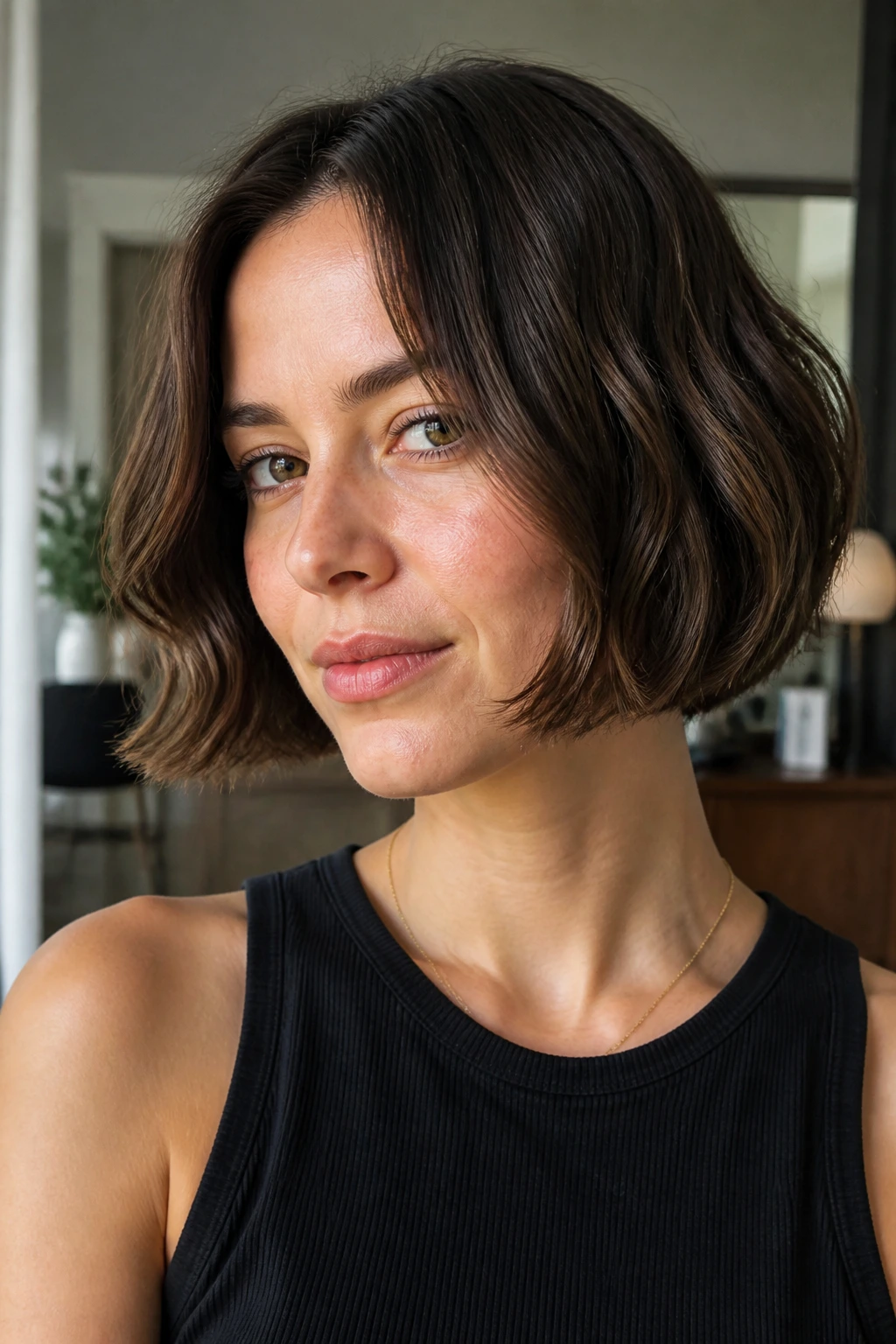
A blunt bob is one of my favorite cheats for fine hair. The edge feels fuller because every strand ends in the same place, and the wave adds just enough movement to keep the cut from reading severe. On paper it sounds simple. In practice it looks expensive in the most practical sense of the word: clean, tidy, and easy to control.
Keep the bend shallow. A flat iron turned a quarter rotation, then released halfway down the strand, creates a soft bump rather than a curl. That little bend at the jawline makes the bob sit closer to the face and gives the ends a thicker outline.
4. Curtain Bangs and Loose Mid-Length Waves
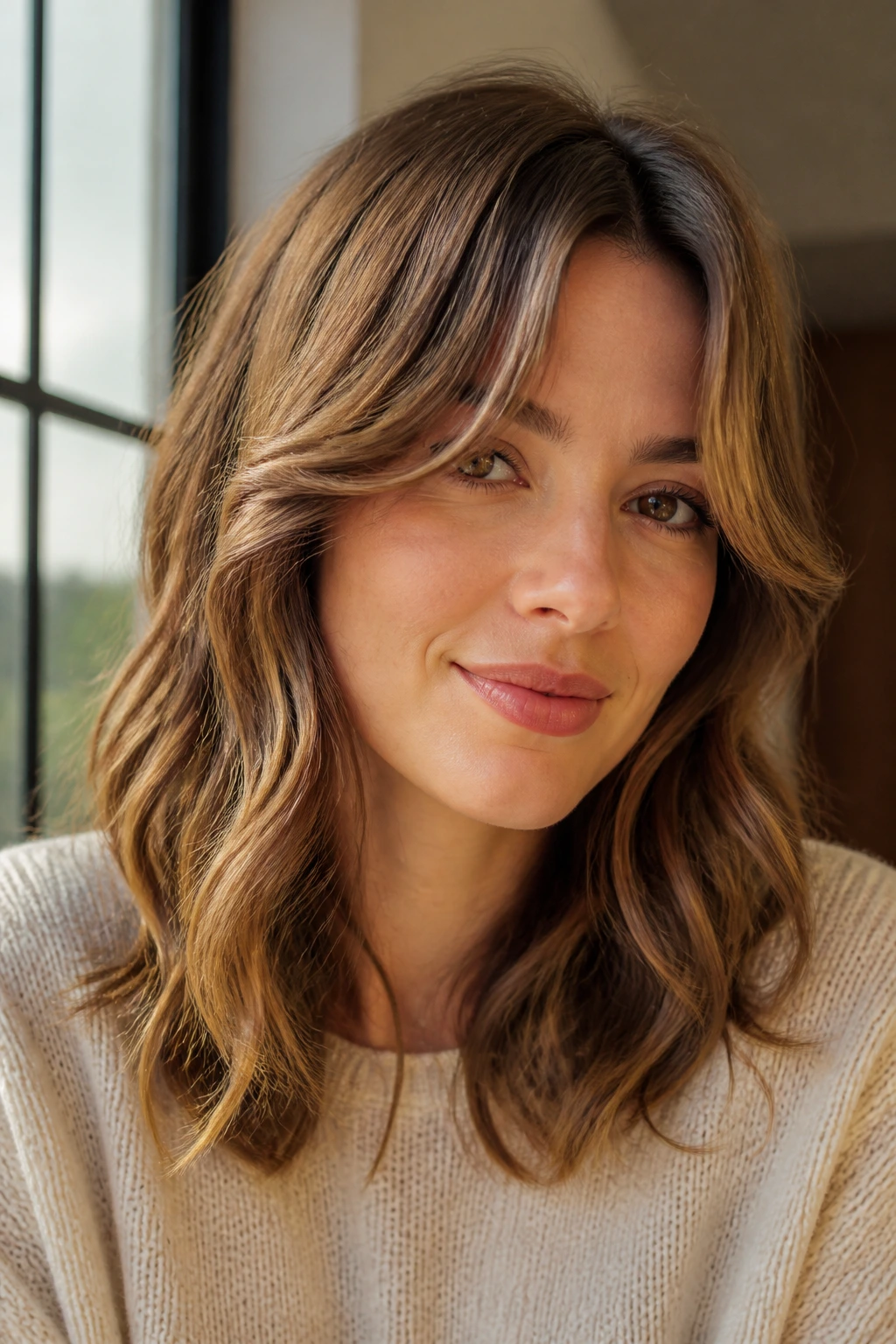
Curtain bangs can be tricky on fine hair if they’re cut too heavy, but the light version is excellent with waves. The fringe opens the face, and the mid-length wave gives the rest of the hair a little swing so the bangs do not float alone. You get shape near the eyes and movement through the body of the hair.
Dry the bangs first with a small round brush or a Velcro roller. They need a bit of direction, not a lot of heat. The rest of the hair can be waved away from the face, then lightly finger-combed so the bangs keep their separation instead of melting into the side sections.
5. Feathered Shoulder Layers With Airy Ends
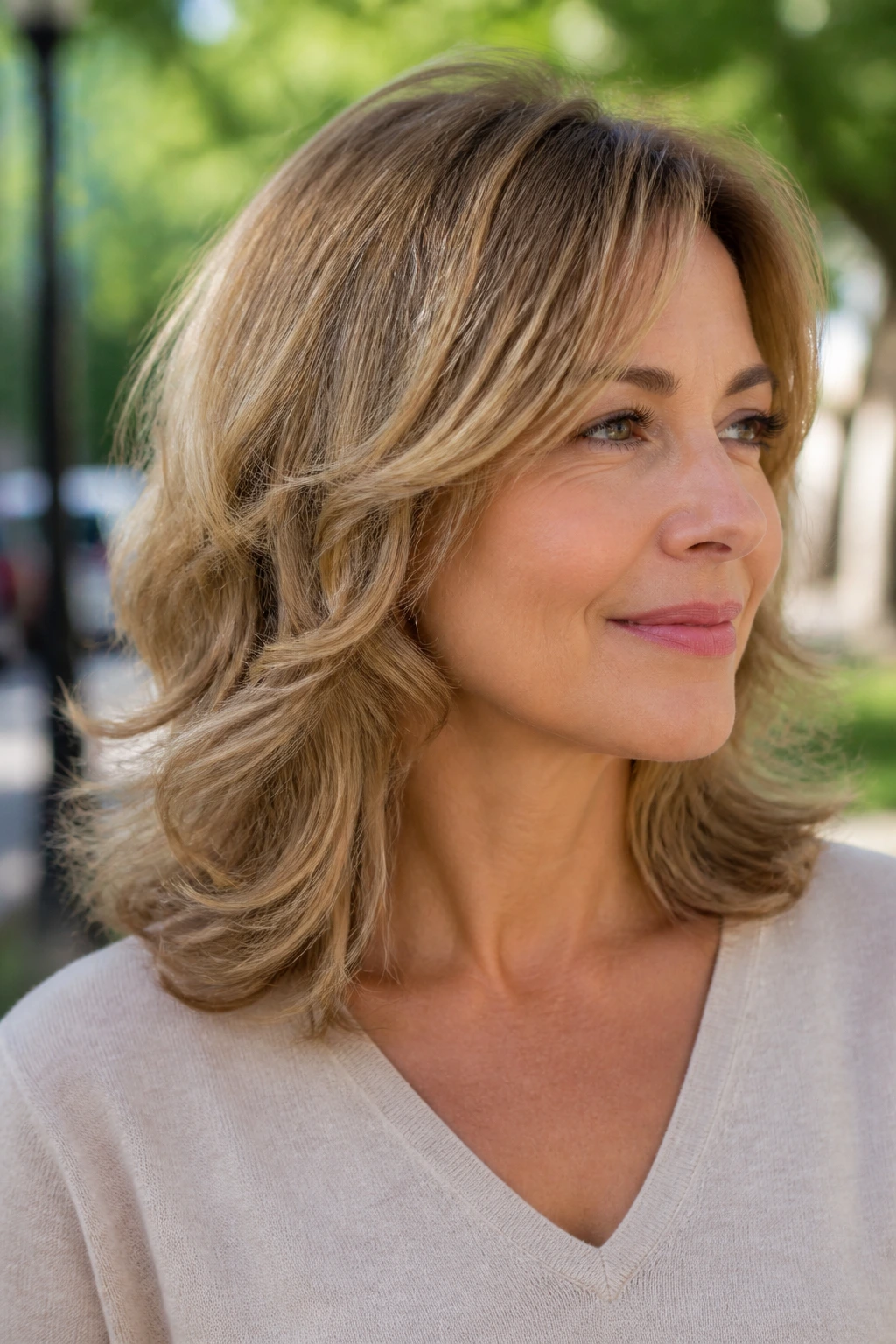
Shoulder-length layers are one of those cuts that can either look gorgeous or plain limp, depending on how much life you put into the ends. Feathered layers solve that by giving the wave a place to land. The motion happens around the collarbone and shoulders, where the eye naturally follows the shape.
This is a smart pick if your hair feels thin at the bottom. Keep the wave loose and let the ends flip just a little. Too much curl at the very bottom makes fine hair look narrow, while a soft feathered finish makes it look lighter and more deliberate.
6. Wavy Shag With Piecey Texture
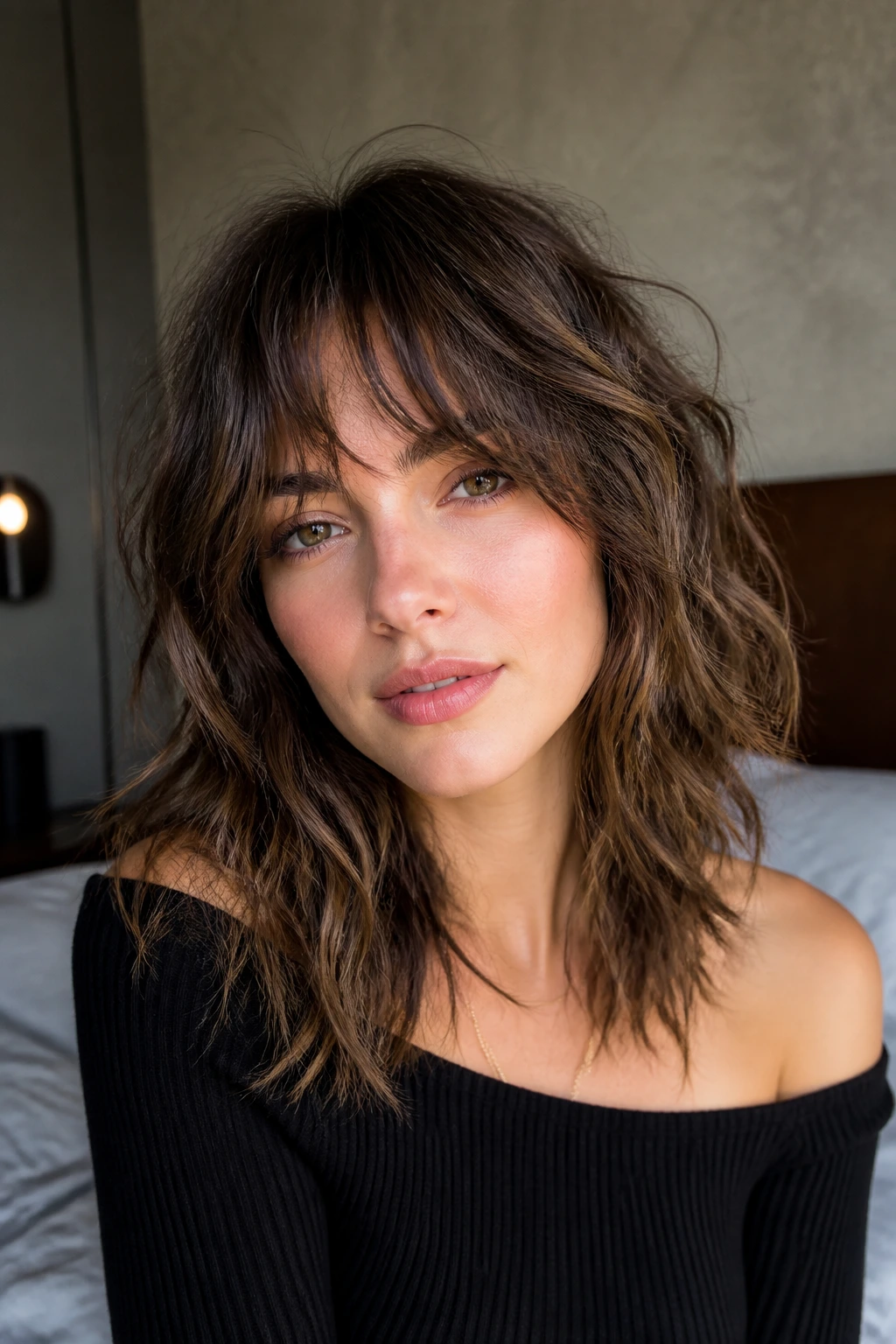
A shag can work on fine hair if the layering is handled with restraint. Too many short pieces and the head starts to look airy in a bad way. The right version keeps the crown soft, the ends separated, and the face-framing layers long enough to move without fraying.
The piecey texture is the whole point. Use a salt spray or a light texturizing mist on damp hair, then scrunch and diffuse only until it’s about 80 percent dry. Finish with your fingers, not a brush. A shag should look touched, not engineered.
7. French Bob With Undone Wave
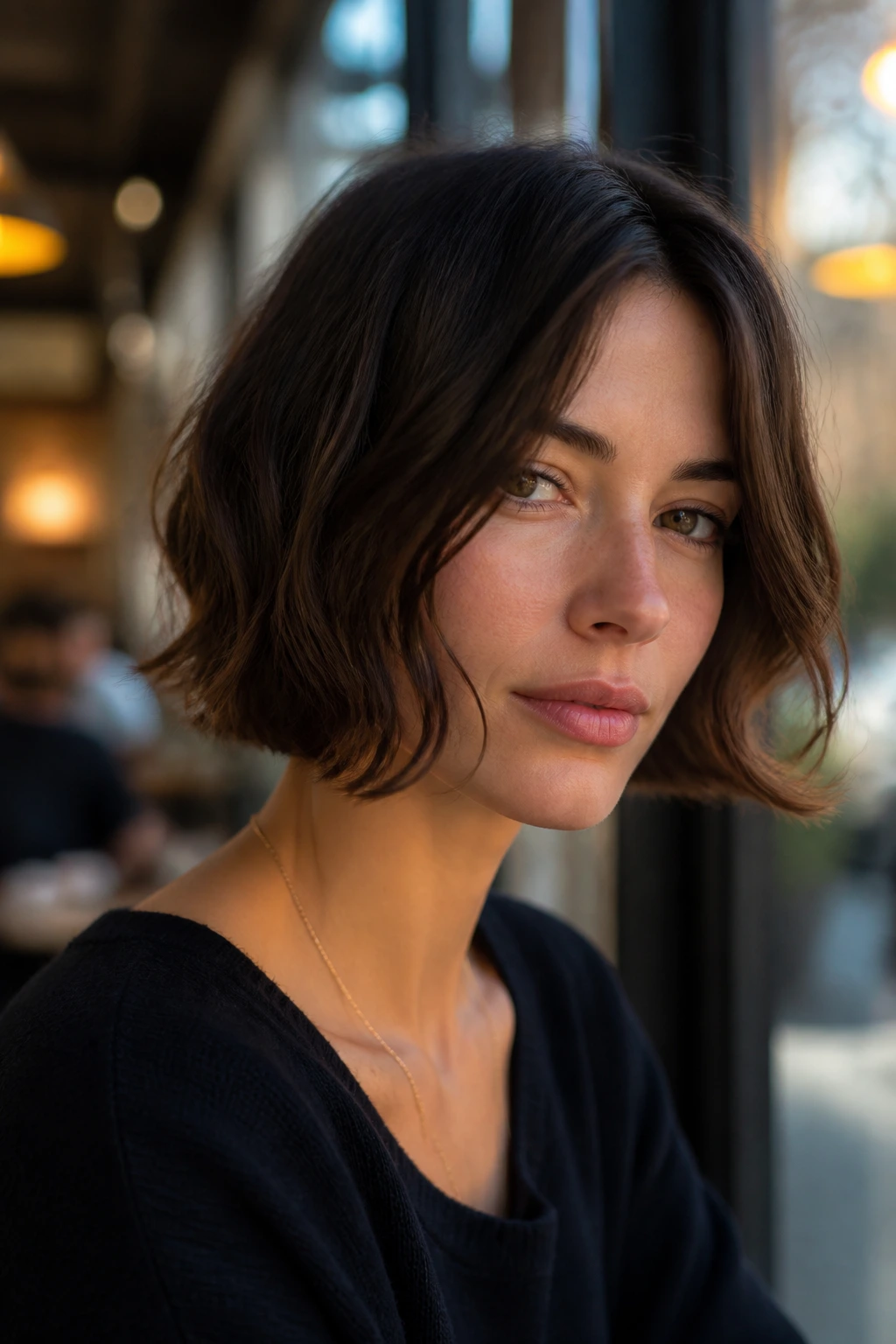
A French bob lands at or just below the jaw, and on fine hair that shorter length can be a gift. The hair appears fuller because it never has to support too much weight, and the little wave around the mouth and chin gives the cut its easy bend. It feels casual, but not careless.
I like this one best when the ends are slightly tucked under and the front pieces are left a touch longer. It keeps the line from looking too blunt. If your hair grows down along the cheekbones, this style does a nice job of showing it off.
8. Half-Up Twist With Loose Wave Length
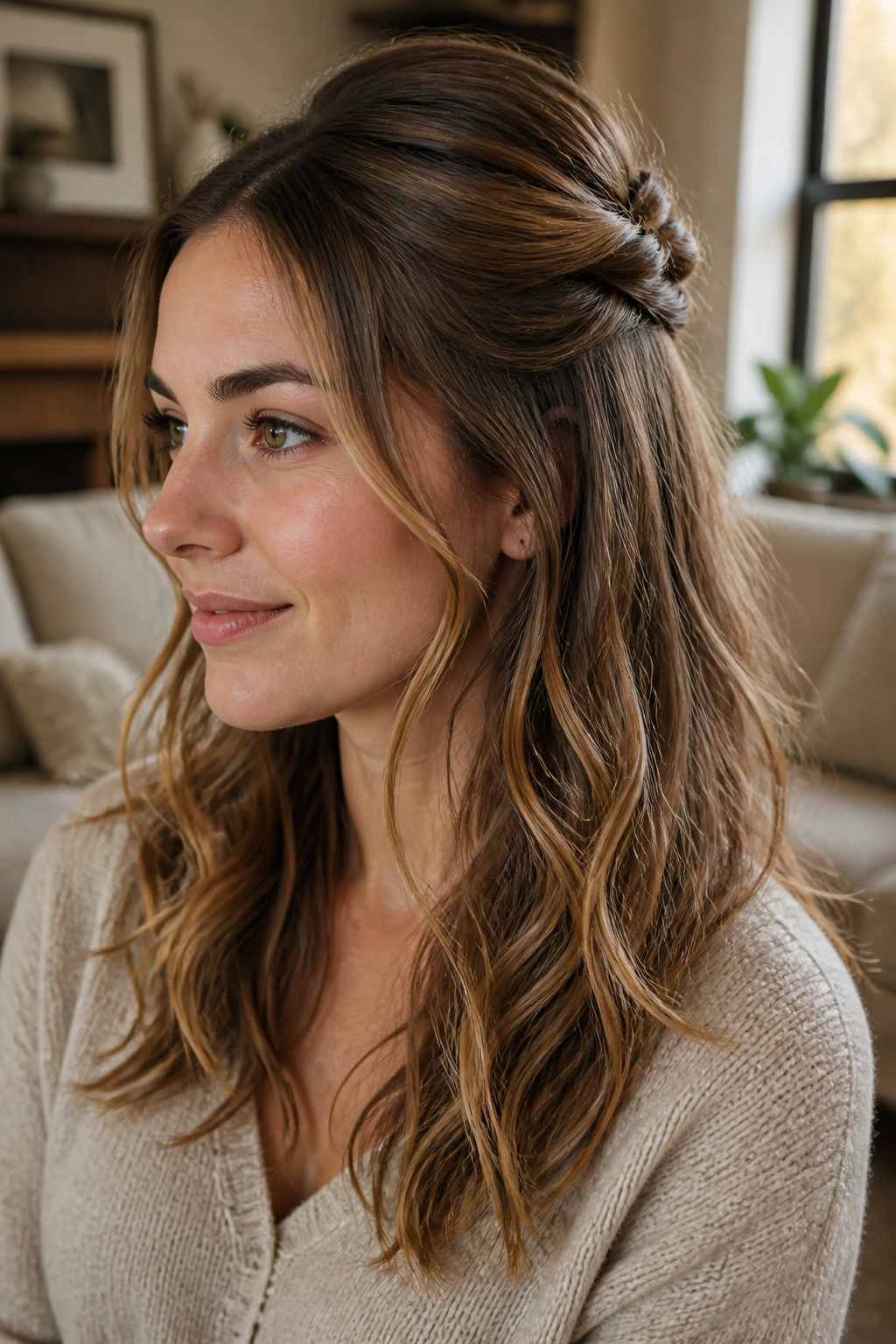
If your waves disappear when the top layer gets too busy, pull half of it back. A soft half-up twist gives fine hair height at the crown and lets the lower section keep all its movement. The result looks fuller than a completely loose style because the eye sees two shapes instead of one.
Twist the sections from each temple back toward the middle and secure them with a small clip or pin. Leave the ends undone. A little unevenness is a good thing here; it keeps the style from looking overworked and gives the wave room to breathe.
9. Low Knot With Face-Framing Tendrils
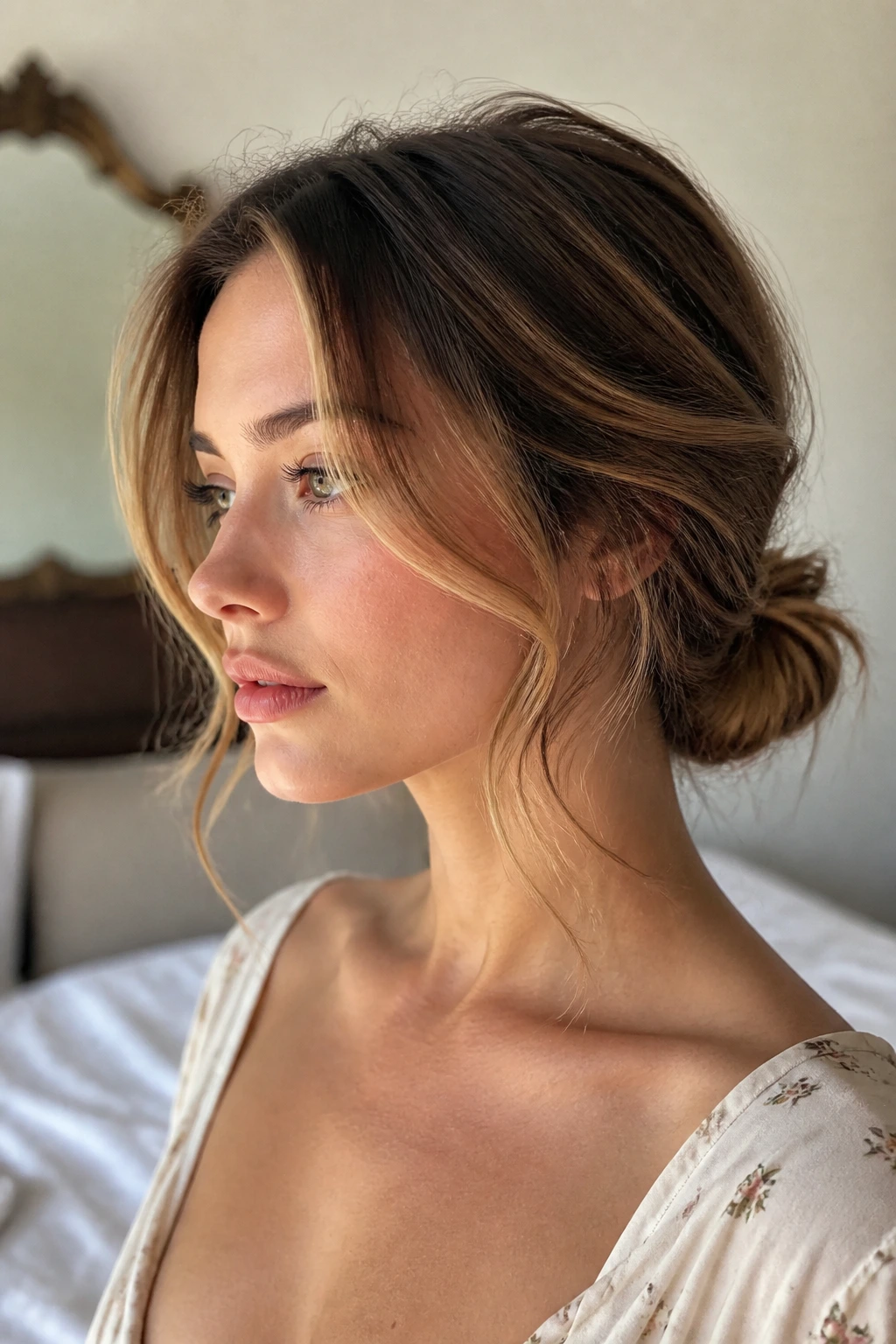
A low knot can be elegant on fine hair, but only if you keep it relaxed. Tight buns expose the thin spots at the crown and make the length look scrawny. A low knot, built softly at the nape, keeps the bulk where it matters and lets a few tendrils stay loose around the cheeks.
Wrap the knot once and stop there. Don’t cinch it hard. The face-framing pieces are not decoration; they are part of the shape. When they fall at the jaw and collarbone, the whole hairstyle feels softer and more finished.
10. Wrapped Ponytail With Soft Tail Bends
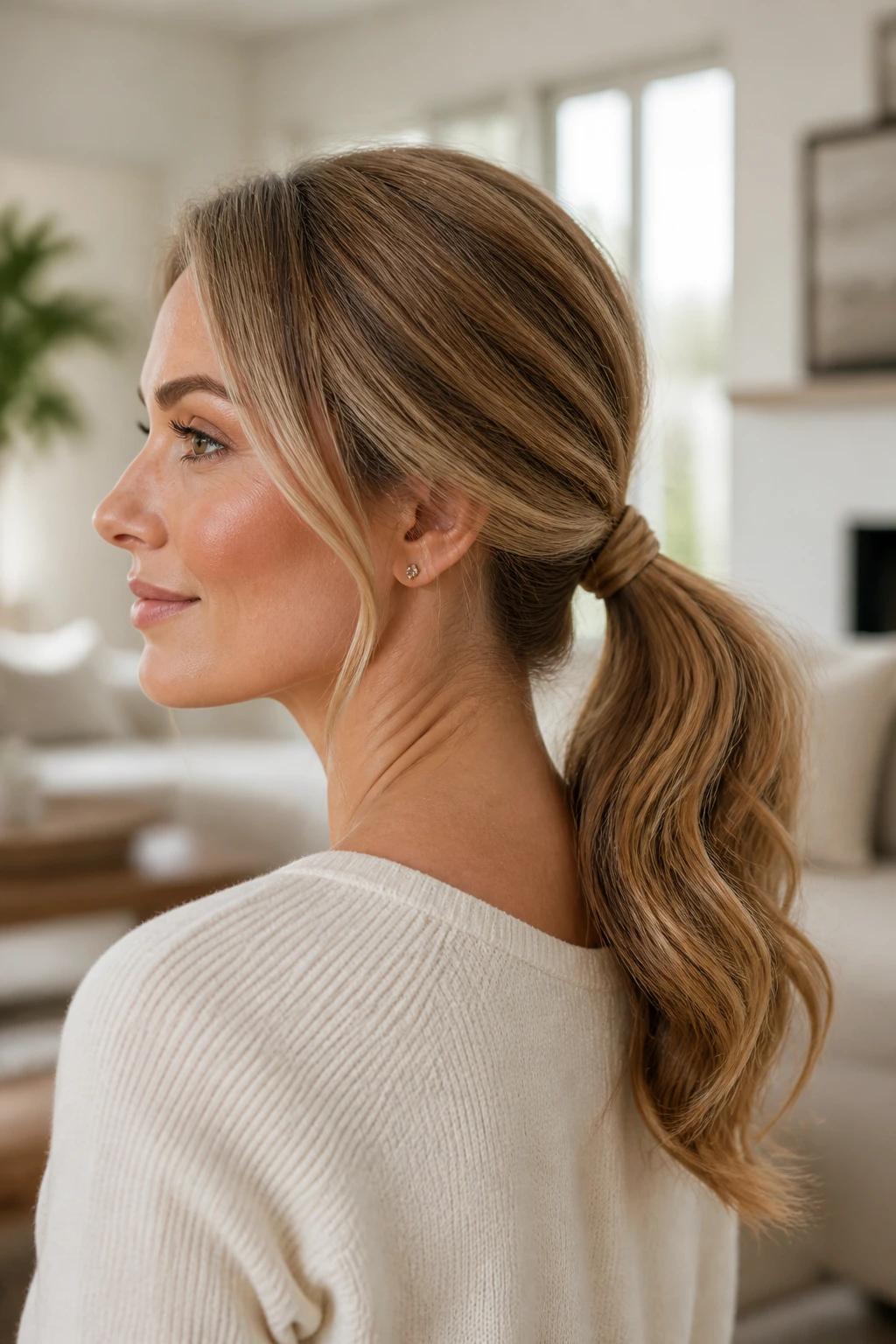
A ponytail is usually where fine hair gets into trouble, because a bare elastic can make the whole style look skinny. Wrapping a small strand of hair around the base fixes that in a way that’s subtle but important. Add a few soft bends through the tail, and the ponytail stops looking like a fallback style.
Keep the crown smooth, but not pressed flat. A tiny lift at the top gives the ponytail more presence. Curl only the tail, starting below the elastic, so the roots stay clean and the movement stays concentrated where it reads best.
11. Bubble Ponytail on Wavy Hair
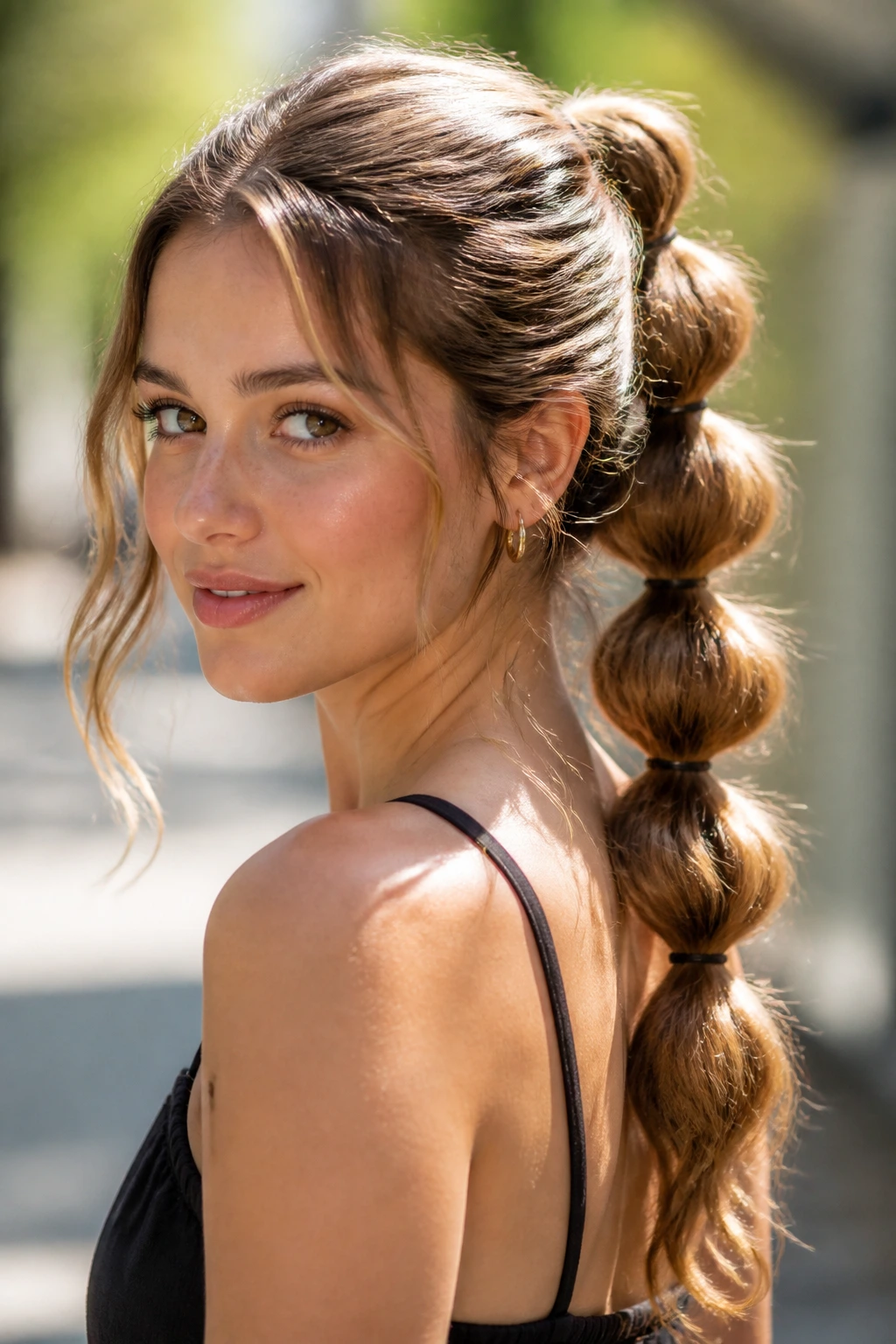
Bubble ponytails look playful, but they’re also a useful trick for fine hair because they create the illusion of more width. Each section is puffed slightly between elastics, so the ponytail reads as a series of rounded shapes rather than one thin line. On wavy hair, that shape feels intentional instead of juvenile.
Space the elastics about 2 inches apart, then gently tug each section outward until it rounds. Don’t yank. The goal is a soft bubble, not a blown-up one. If the ends are wavy, leave them loose at the bottom so the whole tail keeps some movement.
12. Claw-Clip Twist With Loose Ends
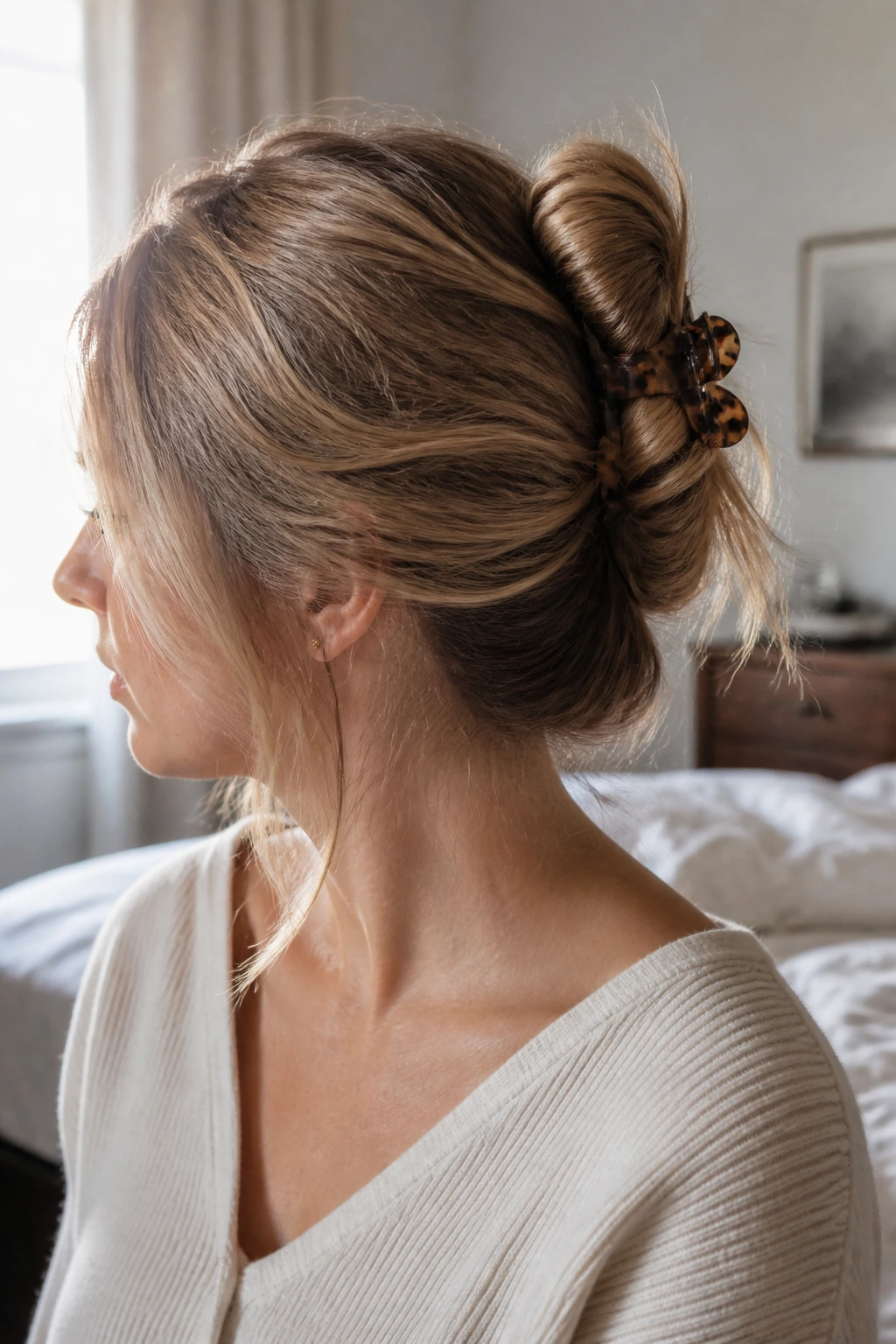
The claw clip twist is still useful because it works with the natural slip of fine hair instead of fighting it. Twist the hair once, tuck the middle into the clip, and leave the ends peeking out. That little unfinished edge keeps the style from looking too neat, which is exactly what makes it soft.
This is a good second-day style. The hair already has some texture, so the clip holds better than it does on squeaky-clean strands. Pull out a small section around the ears if you want the shape to feel lighter and less formal.
13. Tucked-Behind-Ear Lob With Gentle Curve

Sometimes the cleanest move is the best one. Tucking one side of a lob behind the ear exposes the cheekbone and lets the wave on the other side do more of the visual work. On fine hair, asymmetry like this creates the impression of fullness because the hair is not trying to spread equally across the face.
The curve should be gentle, almost like it happened by accident while drying. A soft bend at the ends and a tucked side keep the look modern. Add a small earring, and the hairstyle suddenly has a focal point without needing extra volume.
14. Hollywood Waves With a Soft Side Sweep
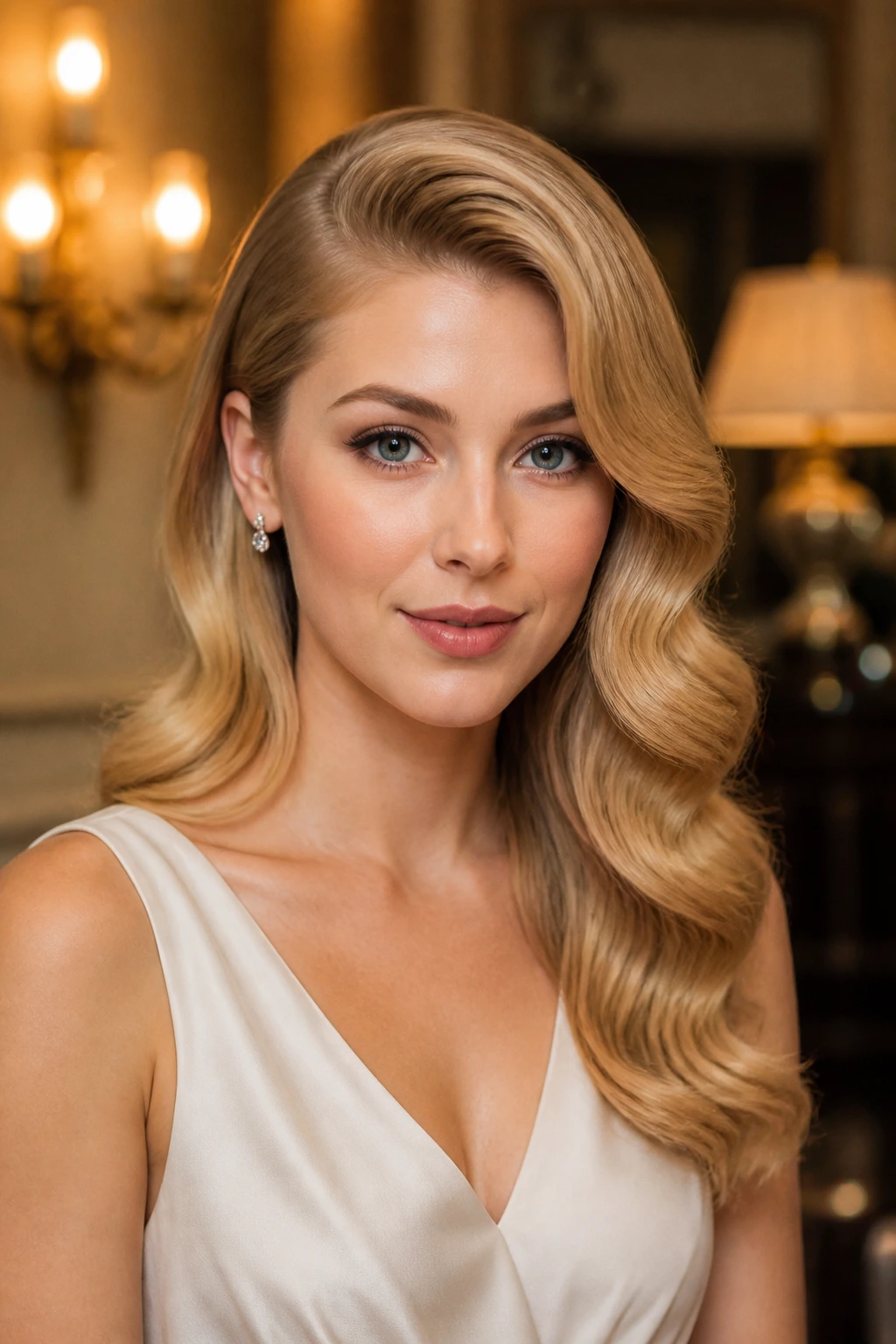
Hollywood waves look polished, but they’re more forgiving on fine hair than people think, as long as the curl is loose and brushed into one smooth pattern. The side sweep creates a broad line across the forehead and cheek, which makes the hair seem thicker all at once. The style is older in spirit, but it still reads clean.
Set each section in the same direction, pin it while it cools, then brush everything out in one long pass. That’s the move. If the waves are too separated, the style loses its expensive finish and starts looking like several different hairstyles at once.
15. Mermaid Waves on Long Layers
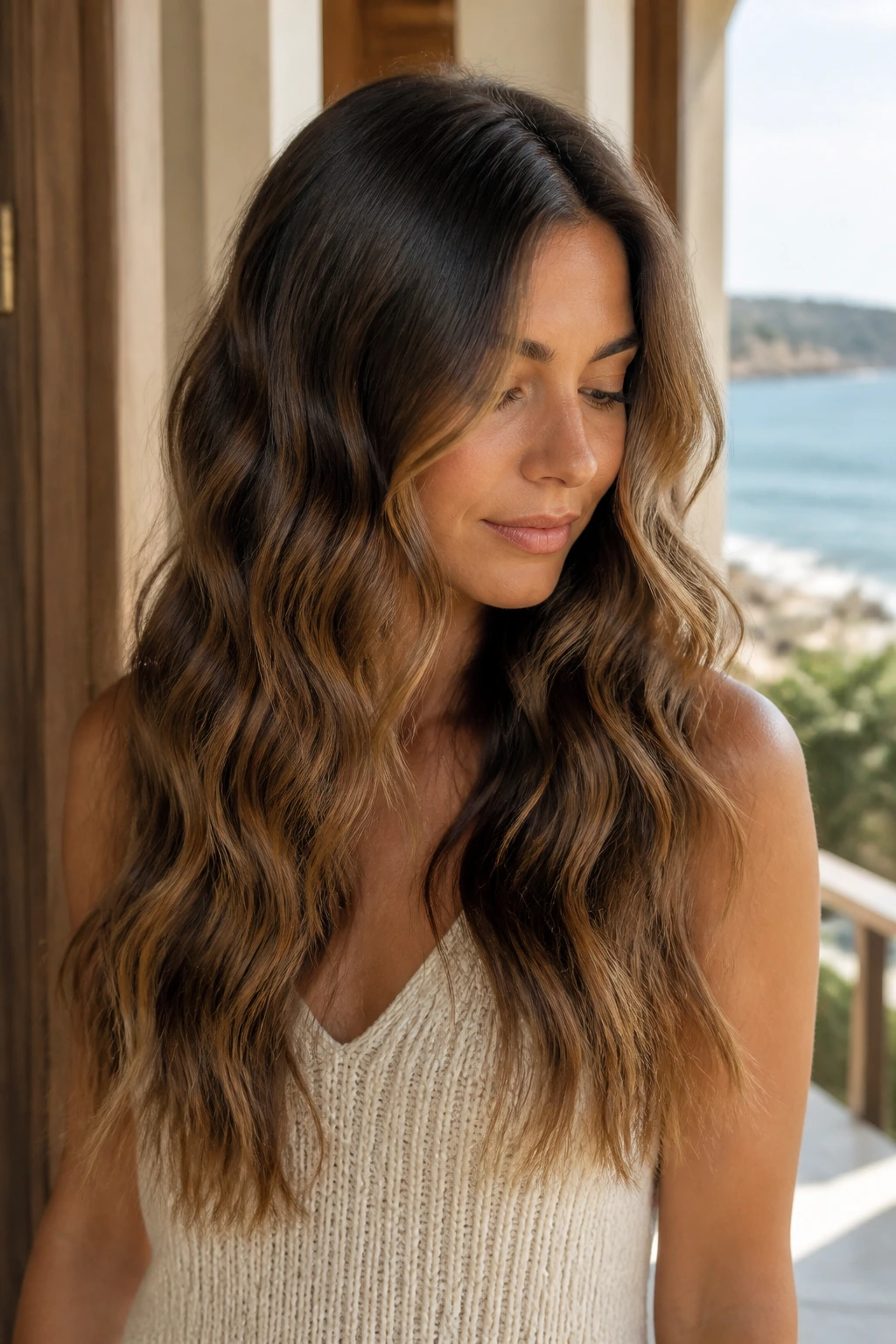
Long fine hair can look impressive when it’s shaped into broad, slow waves instead of tight, repetitive ones. Mermaid waves use length as part of the design. The bends are stretched out, the layers blend softly, and the result feels full without becoming heavy.
Start the wave a few inches below the roots. If you begin too high, the hair swells at the scalp and the ends fade out. The nicest version keeps the wave loose through the middle and a little straighter through the last inch or so. That contrast gives fine hair an outline.
16. Textured Pixie With a Wavy Fringe
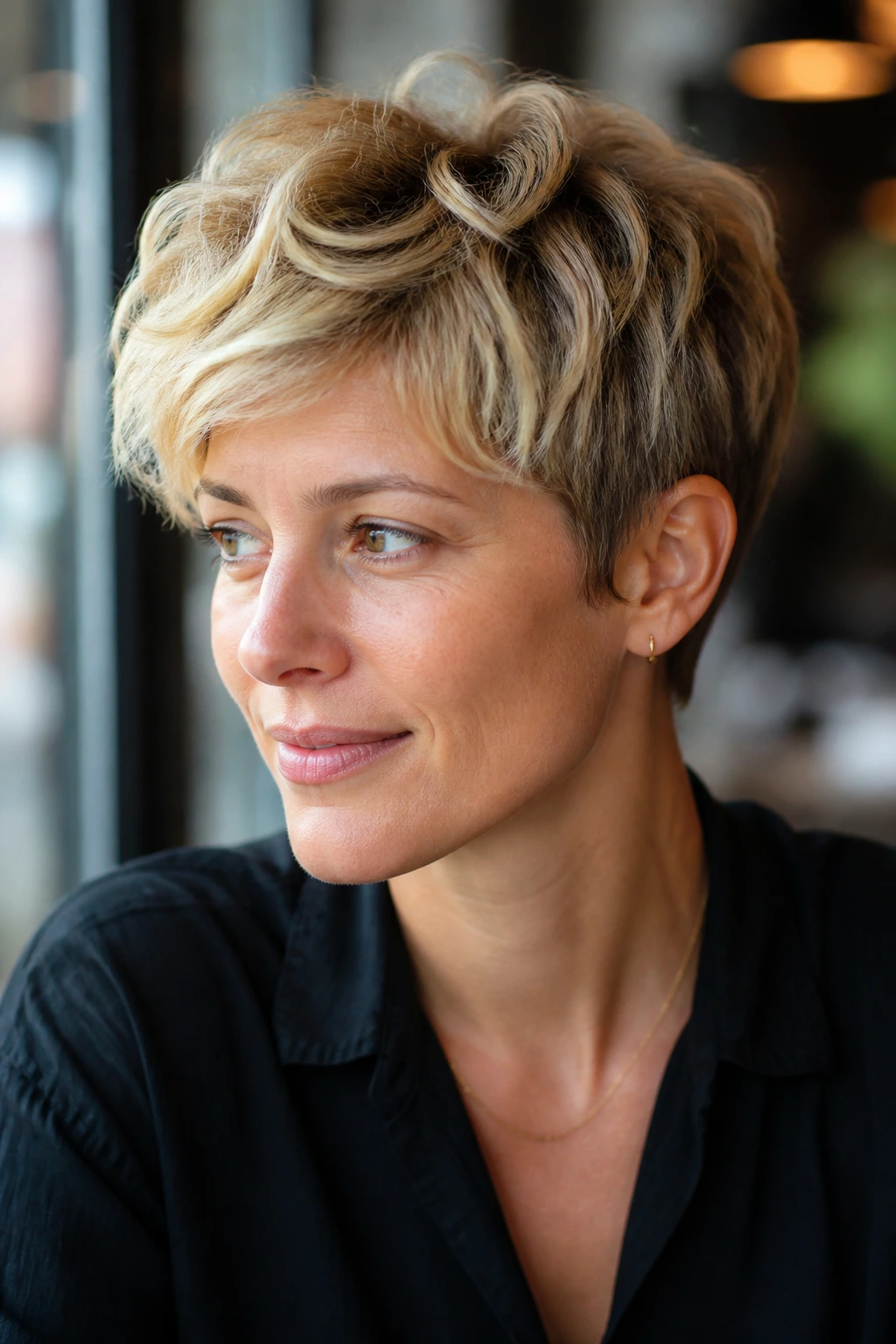
A pixie on fine hair is not automatically a gamble. When the top is kept a little longer and the fringe is given a soft bend, the cut looks airy instead of sparse. The texture lives on top, which is where short fine hair often needs it most.
Use a tiny amount of styling paste, not a full fingertip scoop. Rub it between your palms until it disappears, then pinch the fringe into a loose curve. The fringe should move when you turn your head. If it stands still, there’s too much product.
17. Choppy Midi Cut With Subtle S-Waves
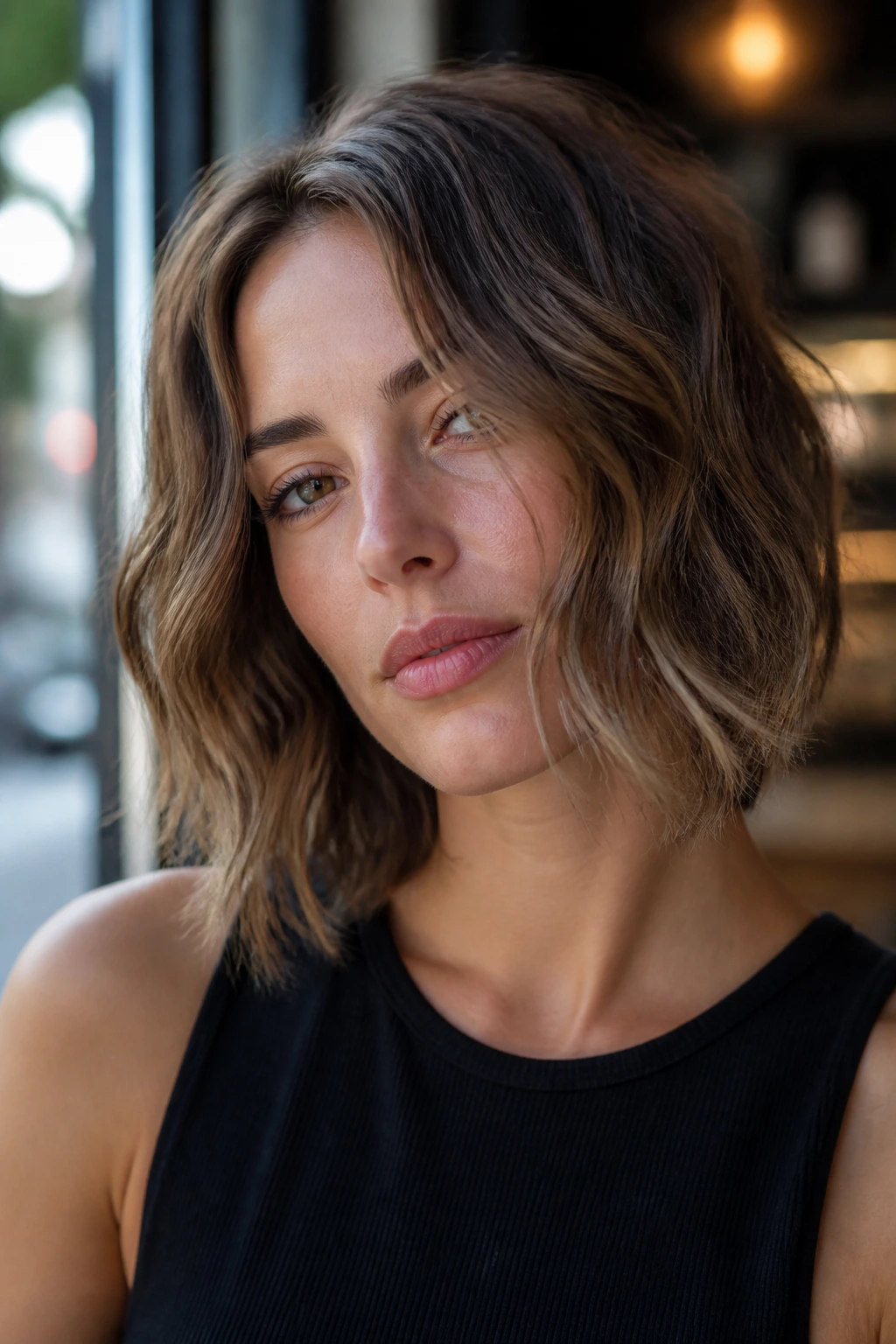
A midi cut hits that middle ground where the hair still has swing but does not get dragged down by length. Choppy ends break up the shape enough to keep fine hair from looking like one long curtain. Add subtle S-waves and the cut becomes more dimensional without looking styled within an inch of its life.
This is the version to choose if you want movement but dislike obvious curls. The wave can be uneven. In fact, it should be. The little differences between each section are what keep the hair from looking flat and copy-paste neat.
18. Old Money Blowout Waves
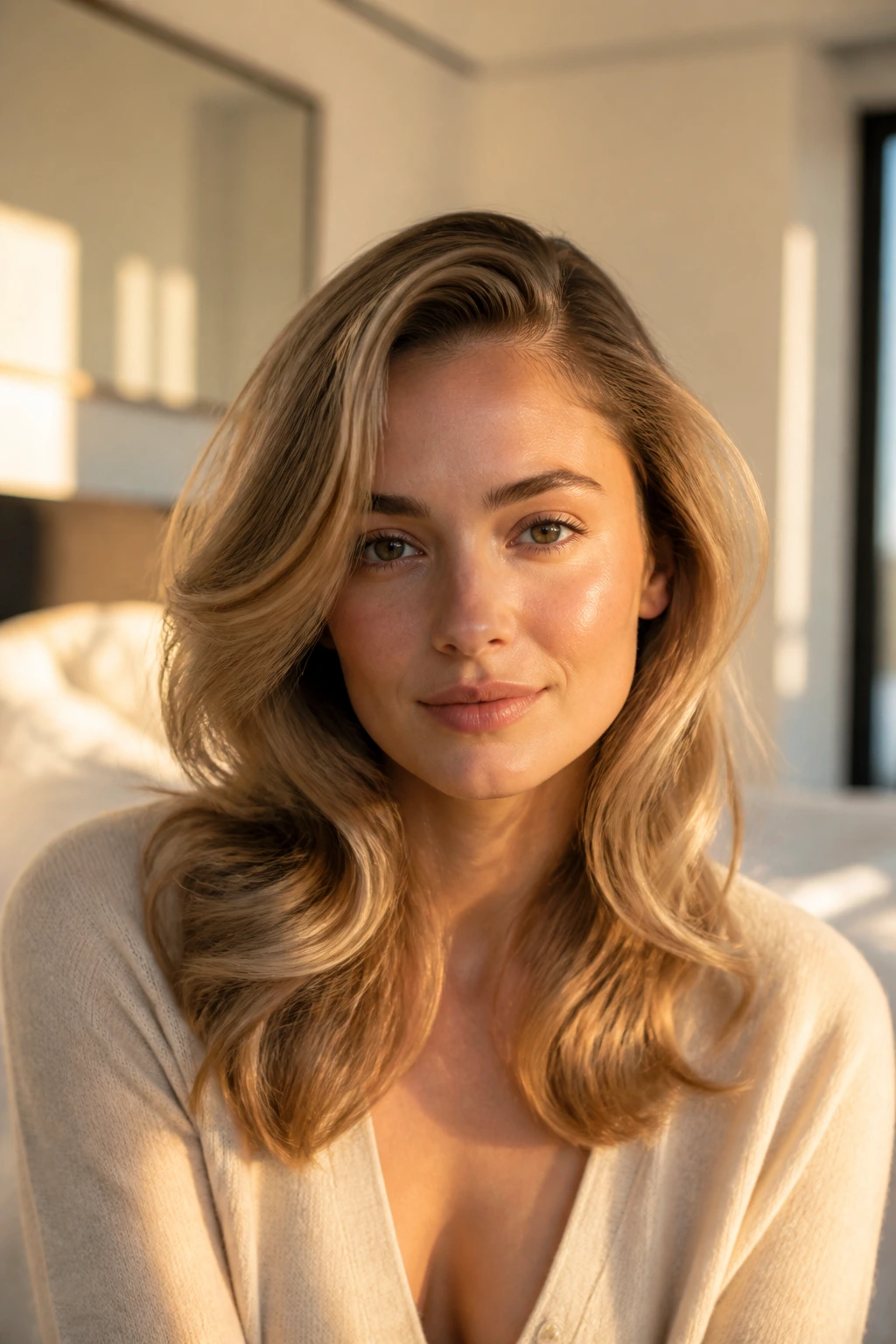
This style has a lot of polish, but the polish comes from the blowout, not from heavy products. A round brush, a medium barrel, and a clean side or center part give fine hair enough lift to feel expensive without feeling stiff. The wave should roll away from the face and soften as it drops.
The biggest mistake here is using too much finishing oil. One drop warmed between the hands is enough for the ends. Any more and the roots go limp fast. Keep the crown airy and the bend broad, and the whole style reads smooth rather than oily.
19. Wavy Wolf Cut With Soft Crown Lift
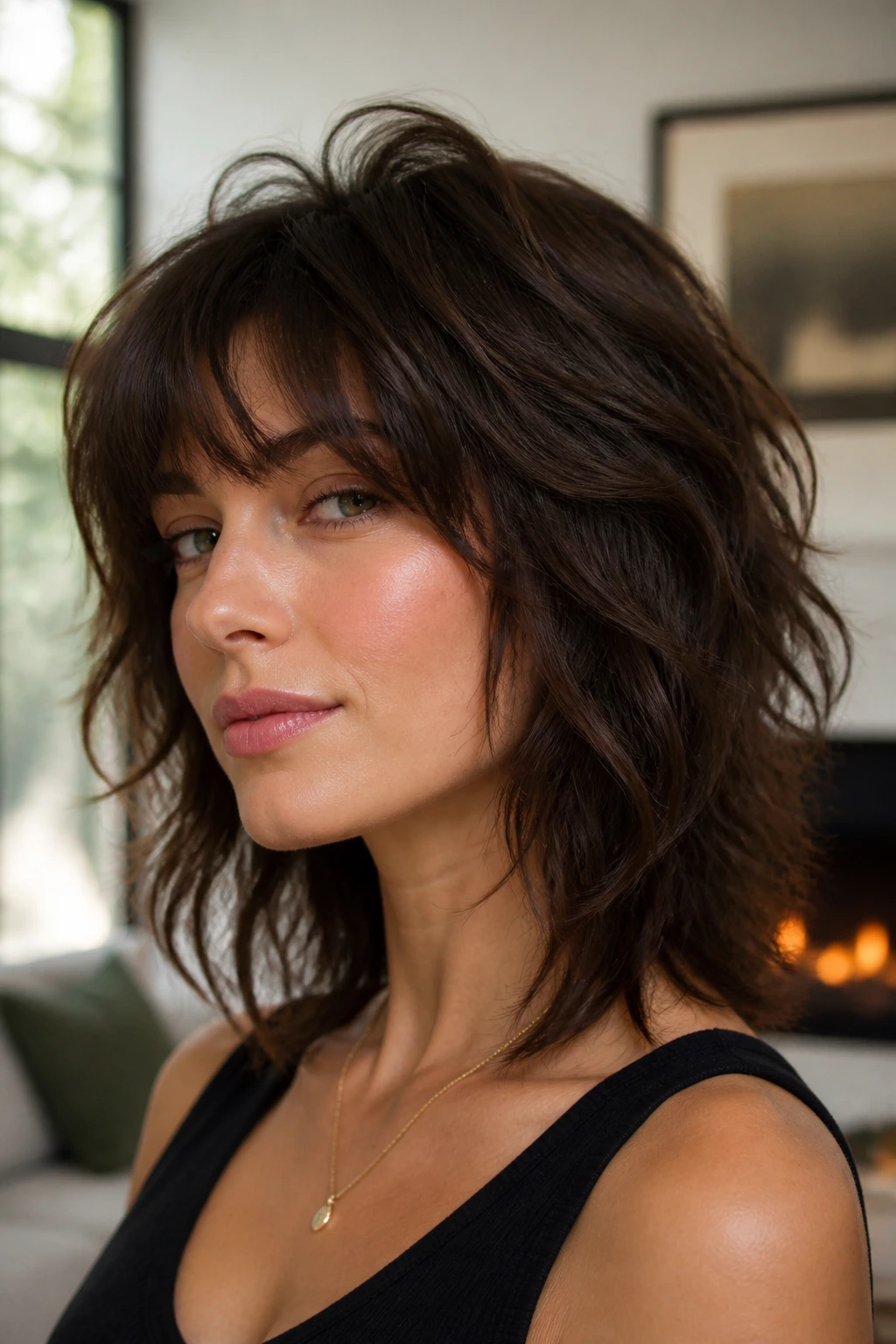
The wolf cut can look too shaggy on very fine hair if it’s cut aggressively. The softer version keeps the crown lifted and the ends softly separated, so the shape stays wearable. It’s a good pick for someone who wants edge without losing all visual density.
The best part is the movement around the face and nape. Those areas get the most texture, while the center stays a little smoother. That balance matters. Fine hair looks better when some sections are allowed to sit down and others are allowed to move.
20. Braided Crown With Loose Length
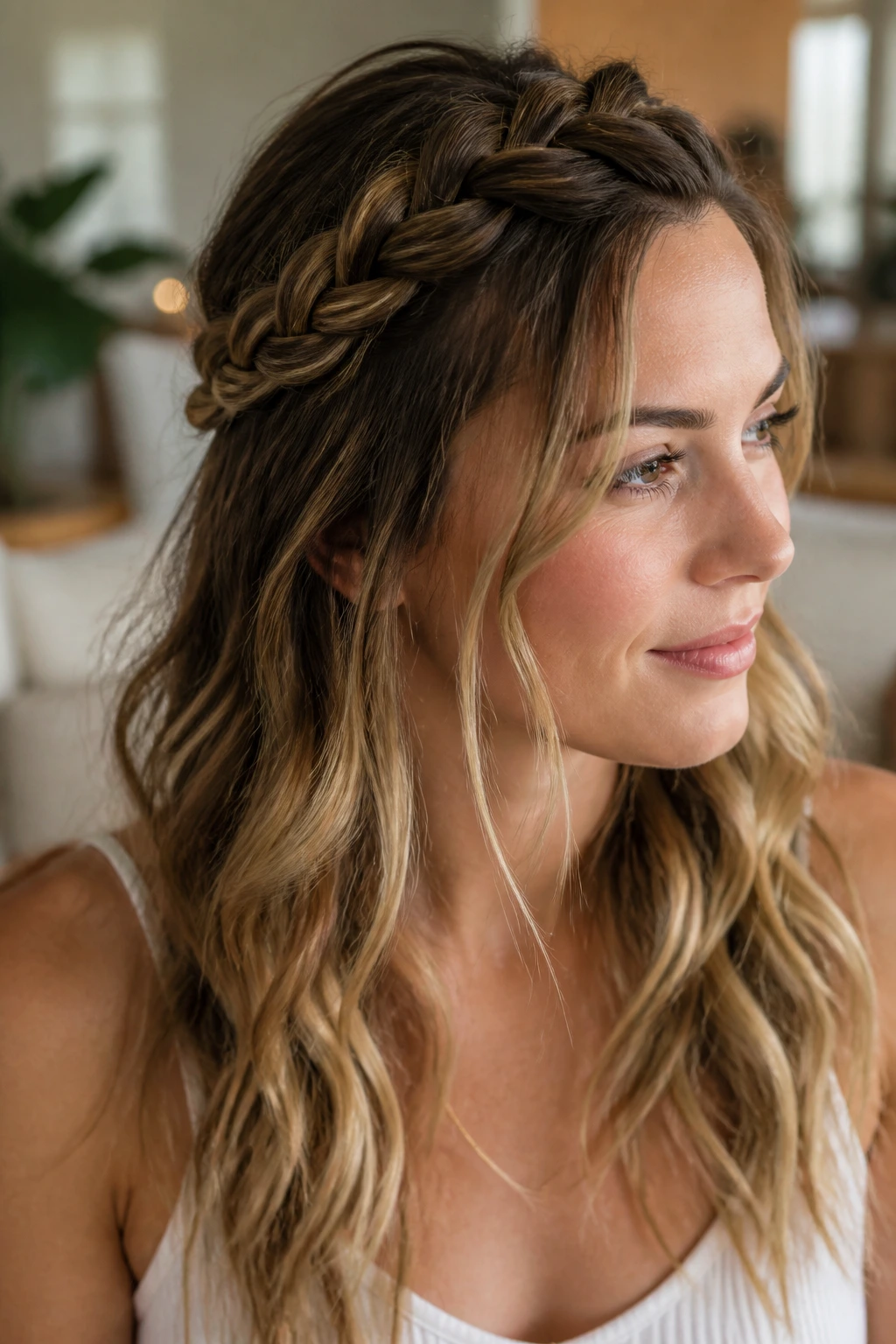
A braided crown is one of the easiest ways to make fine hair feel styled without making it look smaller. The braid adds detail around the head, while the loose length below keeps the hair from disappearing into one compact shape. It’s a smart mix of structure and softness.
Keep the braid shallow and start it above the temples, not too close to the hairline. Tight braids can pull the sides flat. A looser braid lets a little scalp show through, which actually helps the crown read fuller instead of squeezed.
21. Waterfall Braid Into Waves
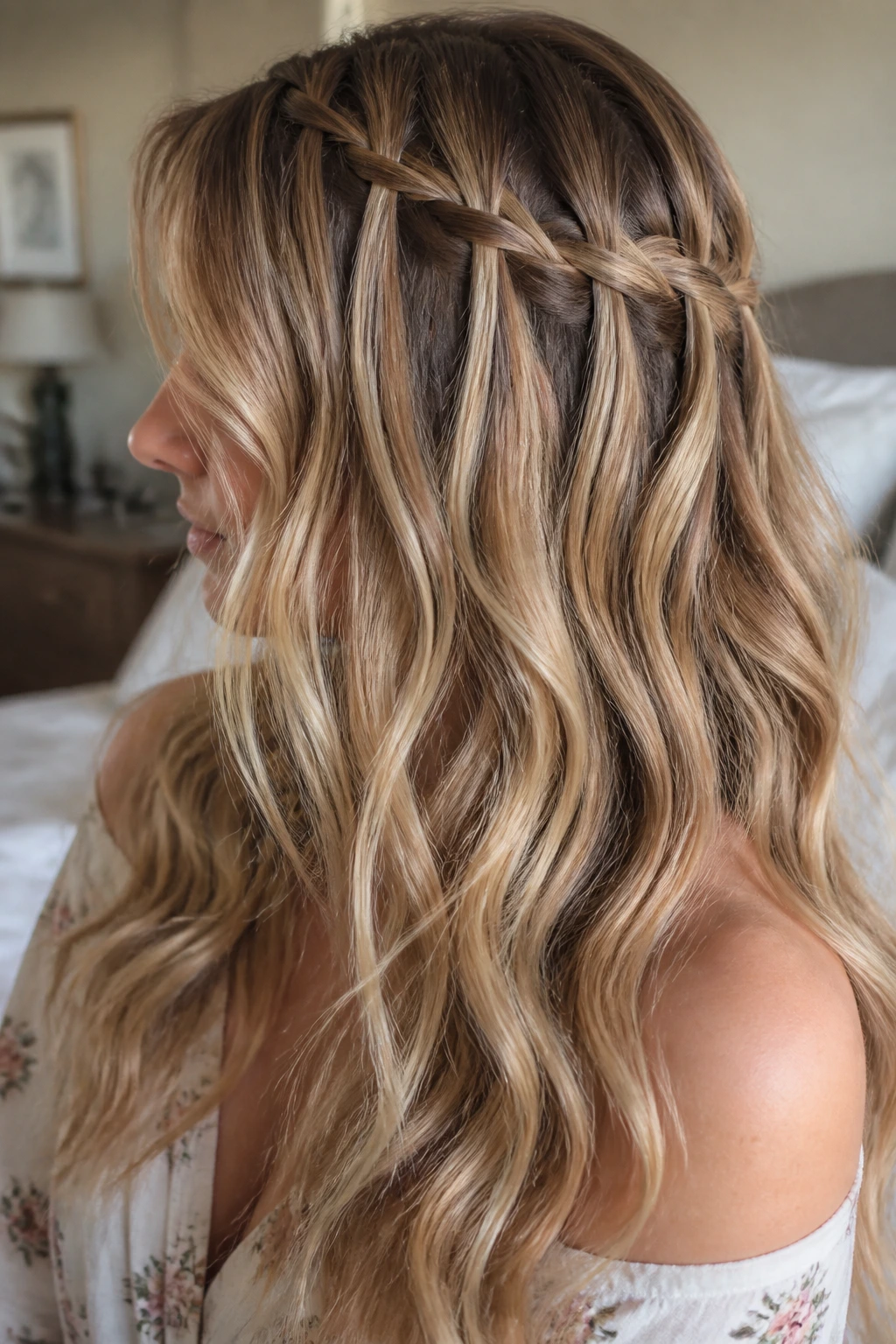
Waterfall braids are useful on fine hair because they create a built-in frame while leaving most of the length free. The braid gives the style a focal point, and the waves below it provide softness. Together, they keep the hair from looking thin at the top and shapeless at the bottom.
This style works especially well when the waves are loose and brushed just enough to blend. Don’t over-brush the braid itself. The braid should stay a little textured so it does not collapse against the head.
22. Asymmetrical Lob With Side-Swept Texture
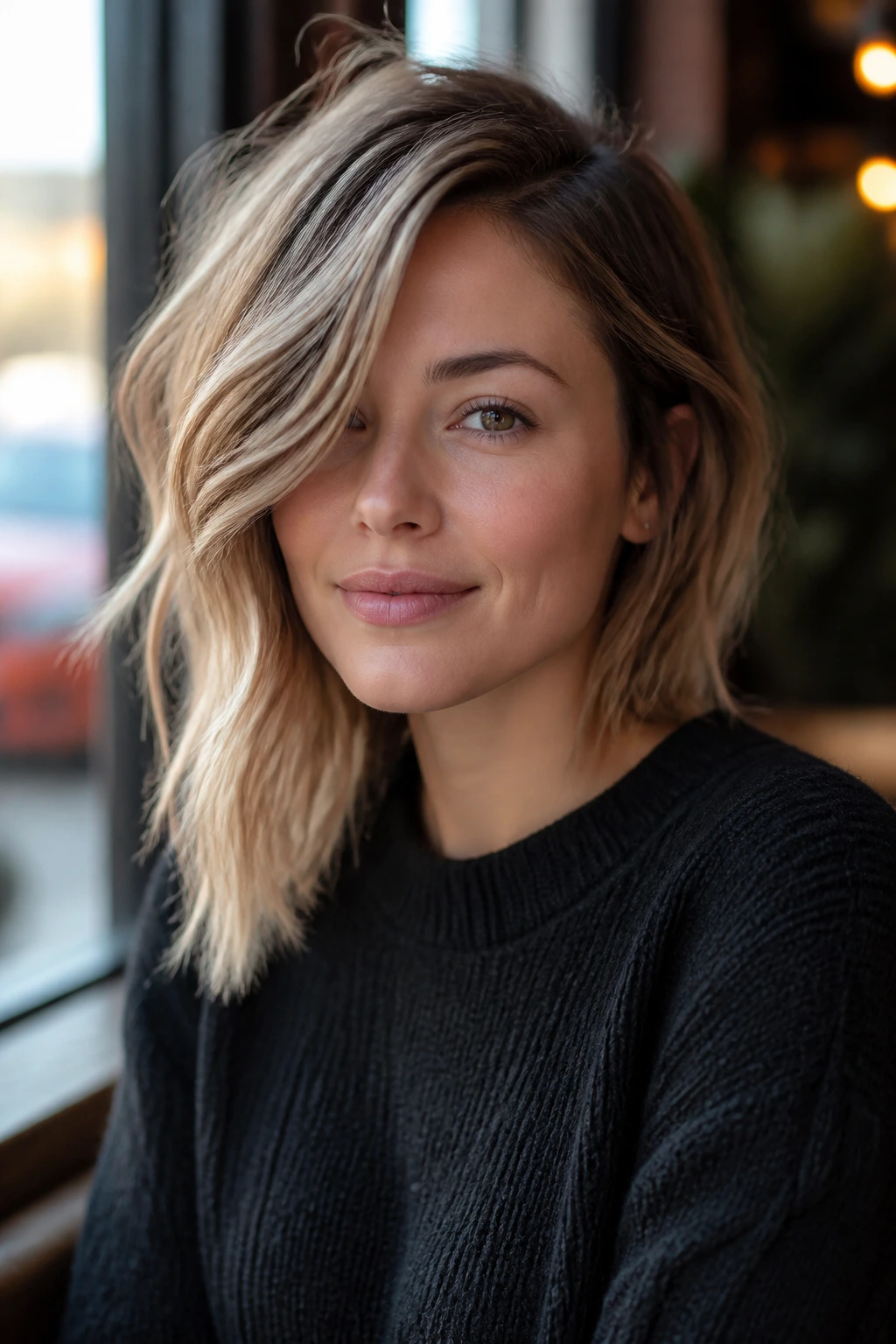
An asymmetrical lob does something that fine hair often needs: it makes the cut itself look interesting. One side is slightly longer, so the eye follows the line down and across rather than straight out. Add a side sweep and the shape gains extra presence at the front.
I like this look because it doesn’t depend on big volume. The haircut carries the idea. The wave only needs to be soft enough to keep the longer side from feeling severe, and the shorter side from looking too plain.
23. Air-Dried Wave Look With Root Volume
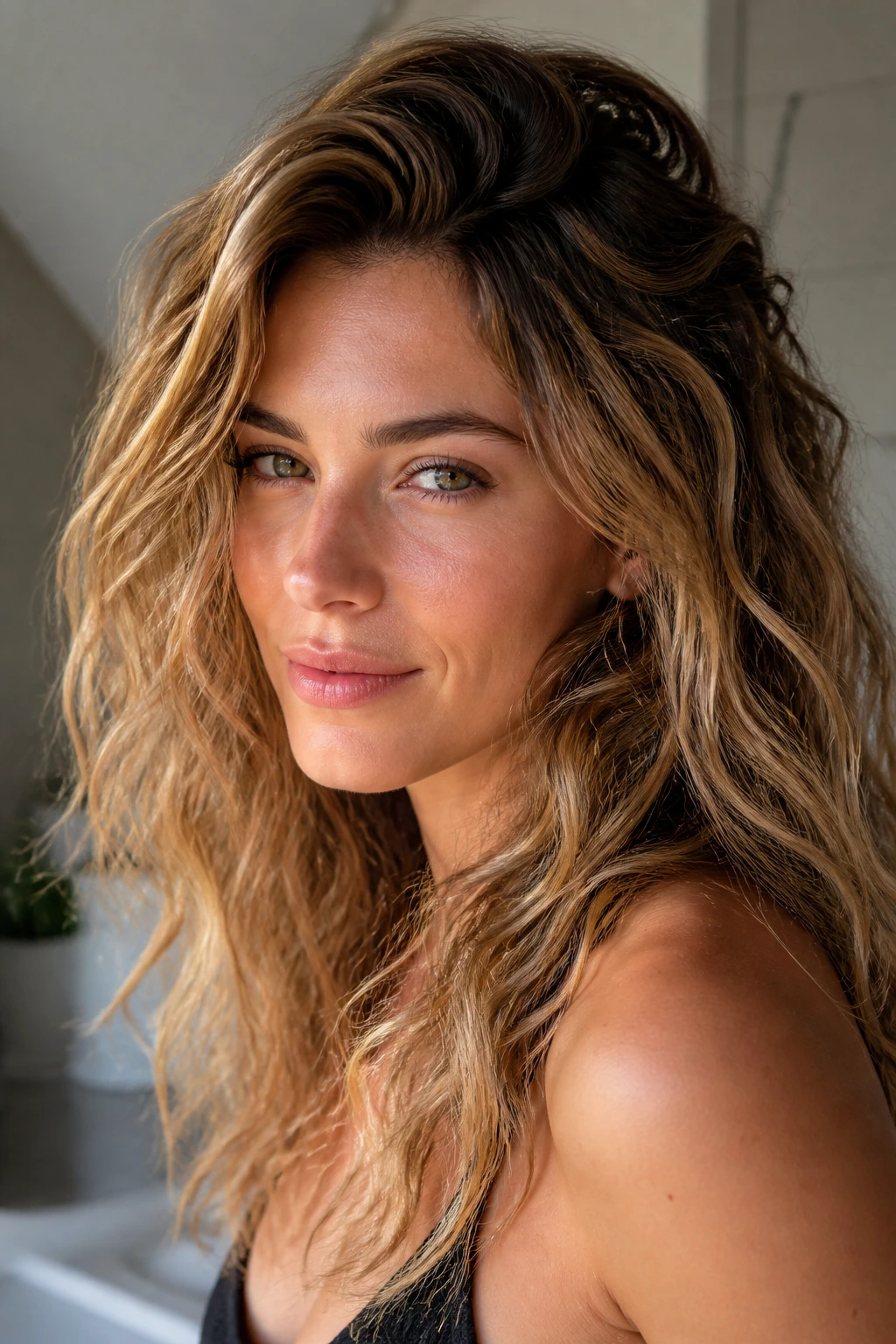
Air-dried waves can be excellent on fine hair if you start with the root and forget about perfection. Use a light mousse or foam on damp hair, scrunch once, then lift the crown with your fingers while it dries. The hair keeps more body when you avoid over-touching it.
The trick is to leave some pieces alone. Fine hair can look better when it dries in uneven, slightly imperfect sections. If every strand is coaxed into the same bend, the style loses the soft, natural finish that makes it work in the first place.
24. Heatless Overnight Waves and a Mid-Part
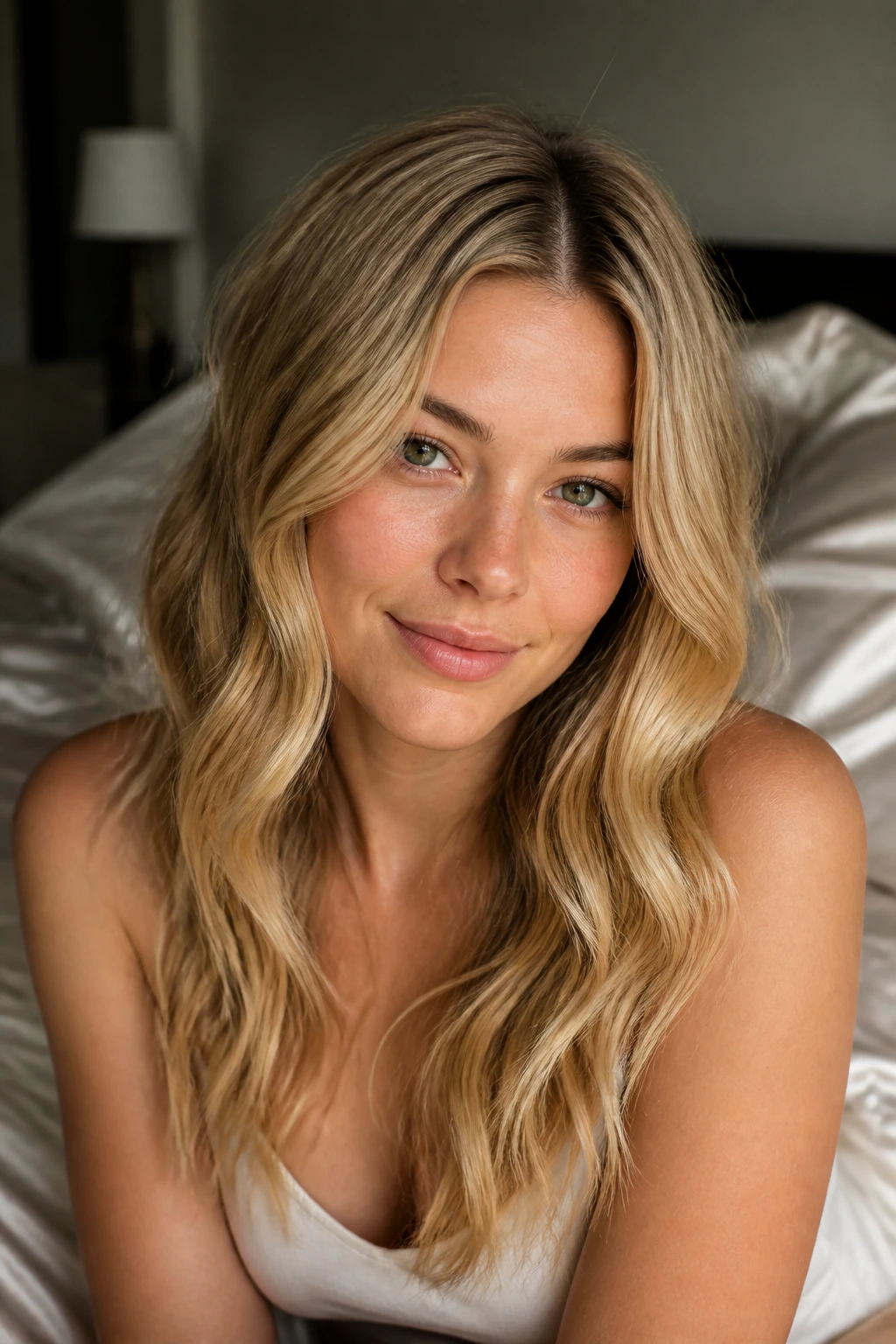
Heatless waves are useful when you want movement without flattening the hair with a hot tool. On fine hair, the wrap should be loose enough to create a bend, not a crimp. A mid-part keeps the result calm and balanced, especially if the hair tends to separate on one side.
Braids, robe belts, or soft foam rollers all work, but the hair must be dry or nearly dry before you go to bed. Damp hair held too long can wake up with a dent that looks more crumpled than waved. Sleep on a satin pillowcase if you can; it cuts down on friction and morning fuzz.
25. Soft Flip-Out Ends on a Lob
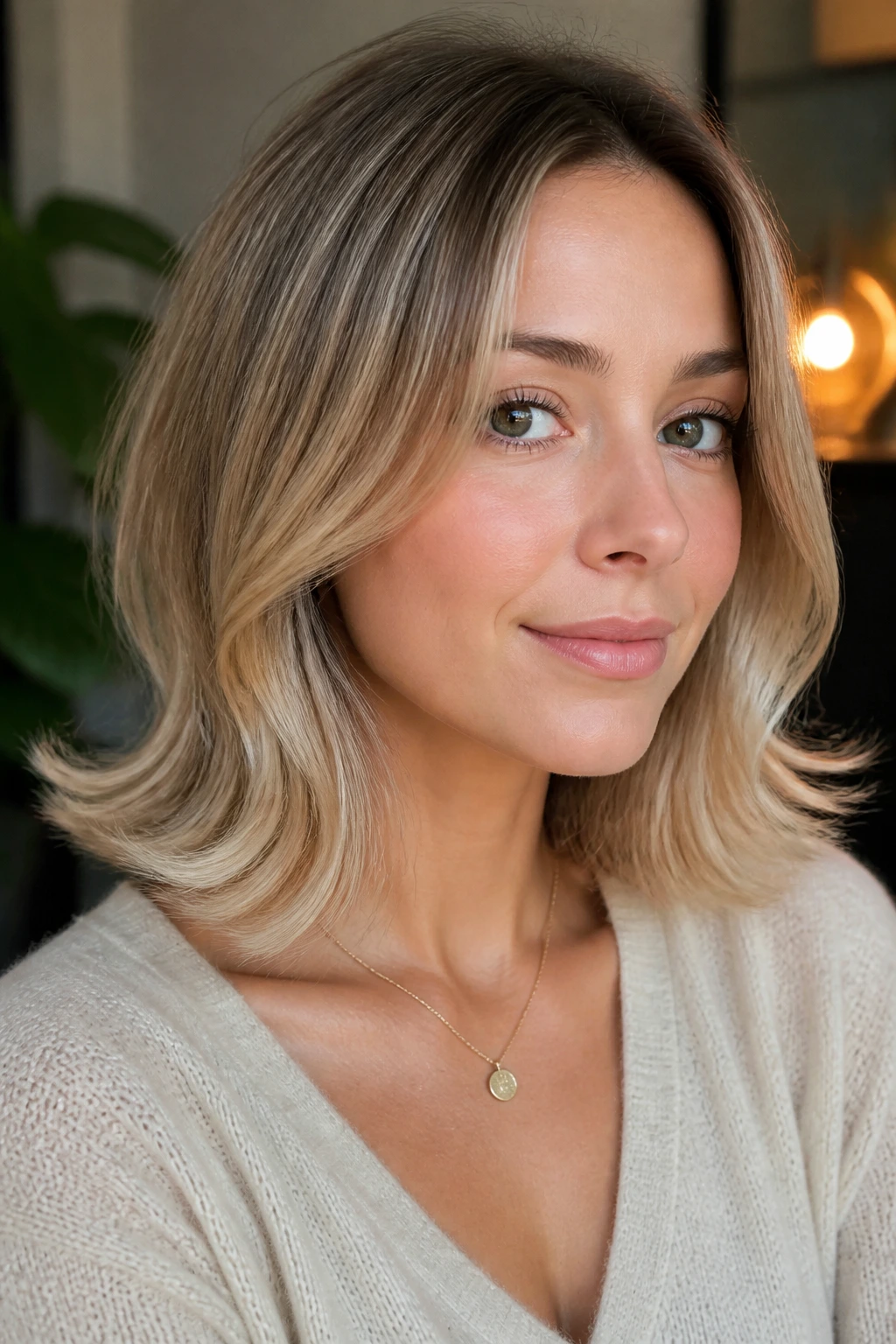
Flip-out ends give a lob a little bounce without asking the whole head to curl. On fine hair, that’s a good deal. The bend happens near the shoulder line, which is exactly where the hair needs some visual lift. The roots stay smooth, and the shape feels retro in a controlled way.
A flat iron makes this easier than a curling wand. Turn the wrist outward at the last inch of the strand and release. That small turn changes the silhouette more than people expect. It also keeps the ends from hanging limp against the neck.
26. Glossy Red-Carpet Waves for Shorter Hair
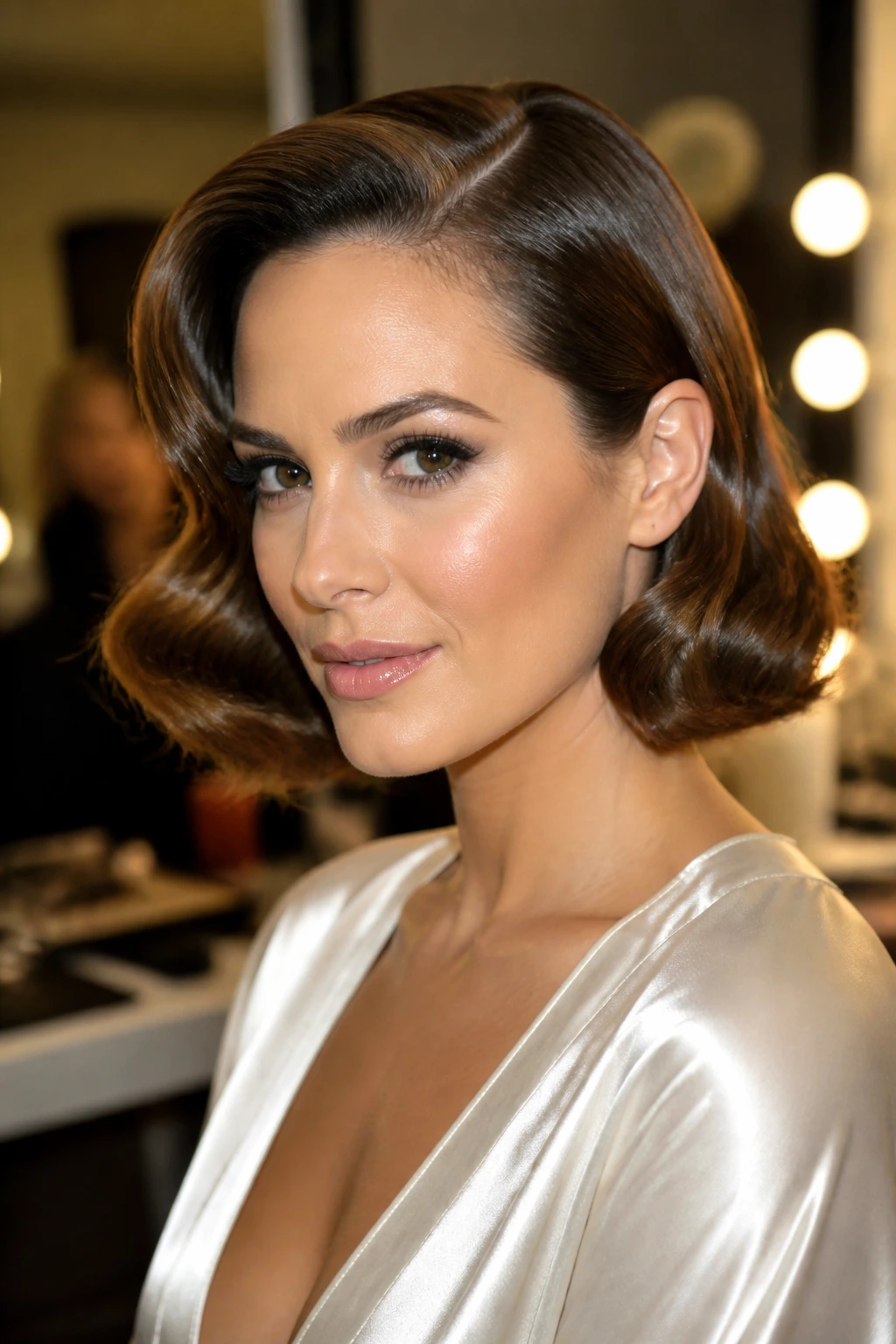
Shorter hair can still do polished waves, and on fine strands the gloss matters almost as much as the shape. A soft side part, smooth roots, and a controlled wave pattern make the hair look richer. The shine should be there, but not slippery.
Use a light shine spray from a distance, then comb through the surface with your fingers. If you spray too close, the crown goes dark and greasy-looking fast. The better version feels sleek at the top and soft through the wave.
27. Face-Framing Ribbon Waves
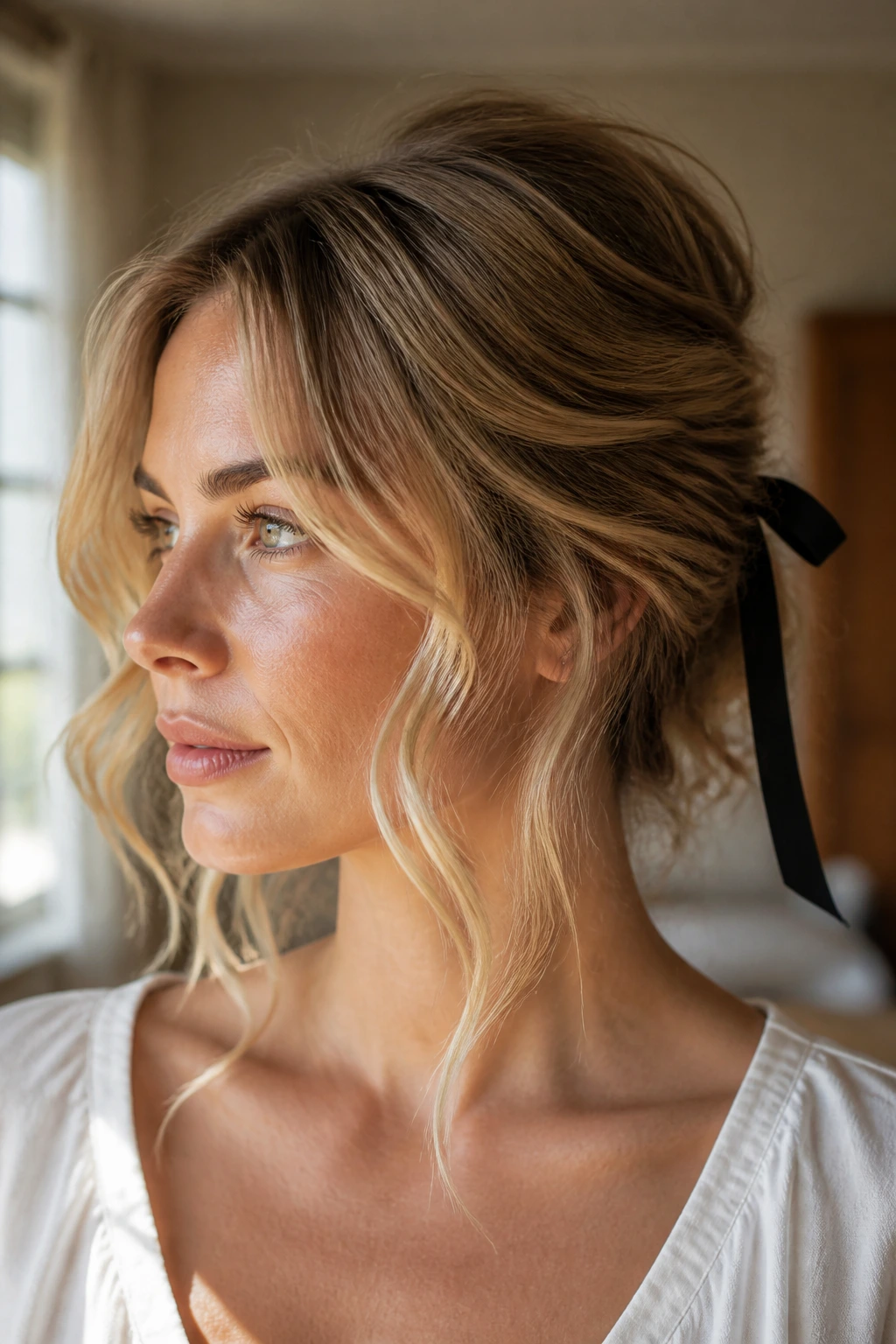
This one is for anyone who likes a little romance without turning the whole style fussy. Soft waves around the face are paired with a ribbon tie or a small band at the back, which gives the look a finished point. Fine hair benefits because the accessory takes up space where the hair might otherwise fall flat.
Choose a ribbon that’s narrow and matte rather than stiff and bulky. The hairstyle should still move. If the ribbon is doing all the work, the hair disappears. Let the front pieces stay loose and use the tie as a quiet anchor, not the main event.
28. Low Chignon With Wavy Wisps
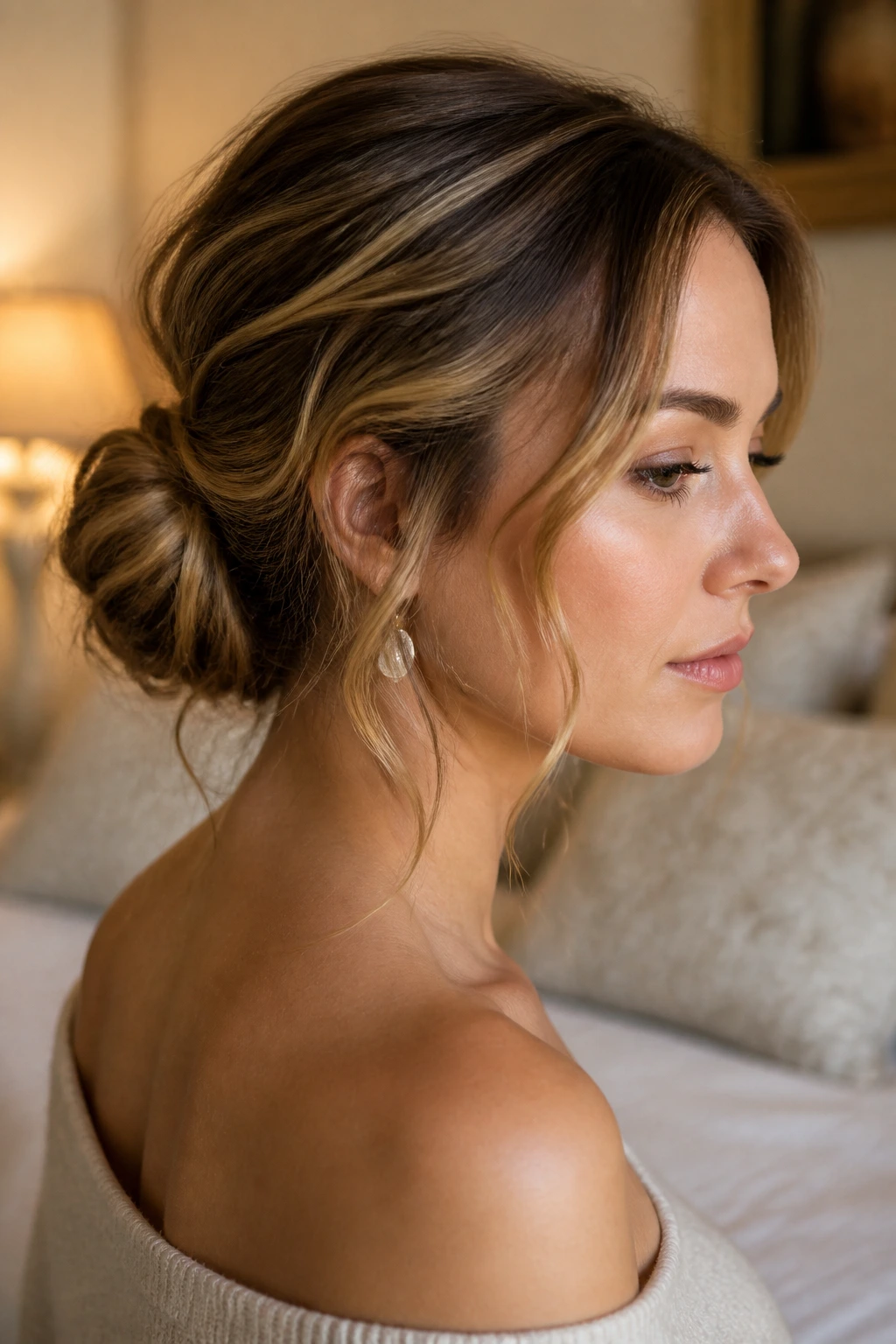
A low chignon on fine hair works best when it is not trying to be too perfect. Keep the bun at the nape, twist it softly, and leave a few wavy wisps around the ears and neck. Those stray pieces are not a flaw; they give the style body.
If the hair is too smooth, the bun can look smaller than it is. Lightly rough-dry the roots first or add a bit of texture spray before twisting. That grip helps the chignon hold its shape without needing a pile of pins.
29. Mini Braids Through Loose Waves
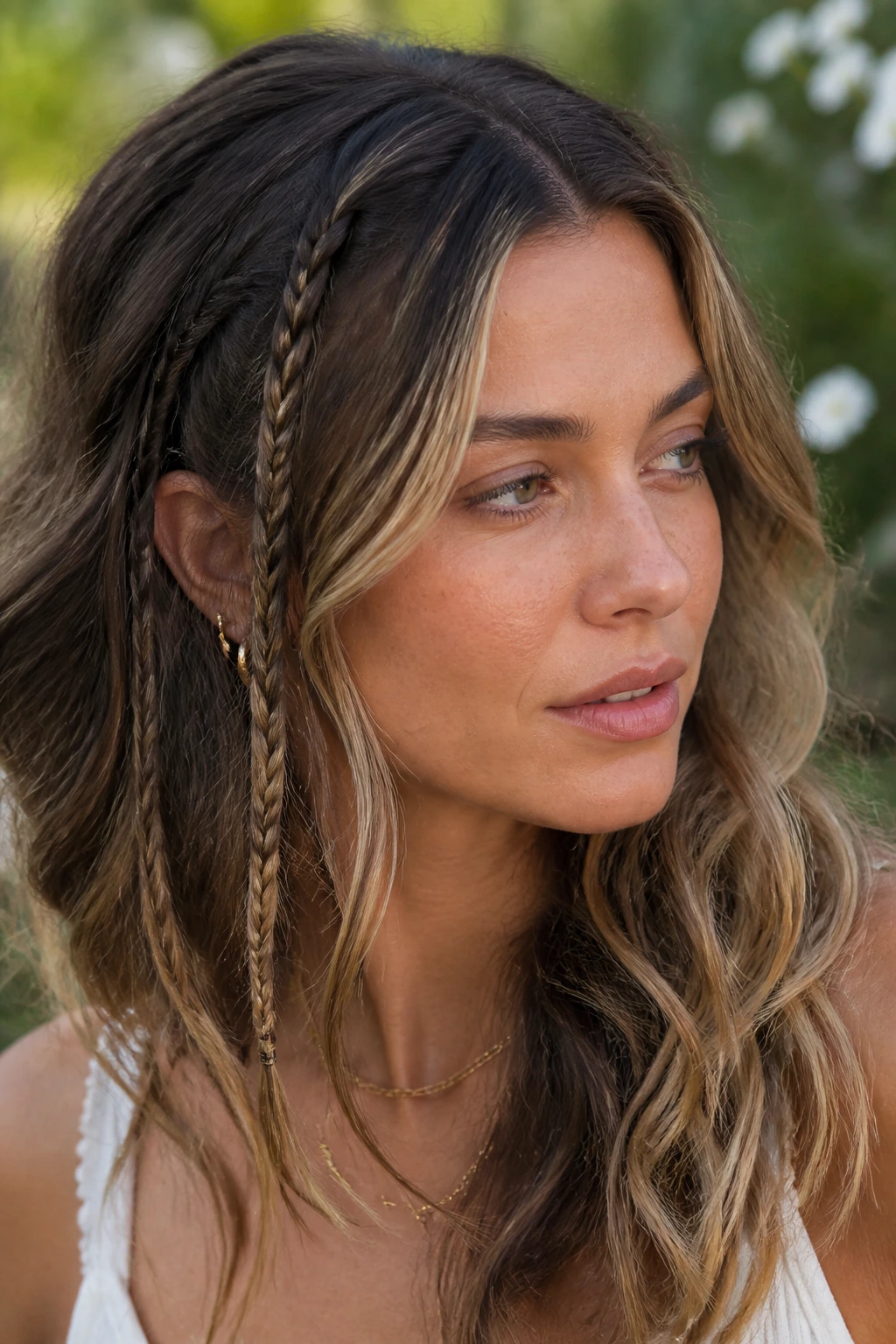
A couple of tiny braids woven into loose waves can change the whole look of fine hair. The braids add detail and the waves keep the style from feeling locked down. It’s an easy way to make plain length look intentional without heavy styling.
Place the braids where they will be seen: one near the front, one hidden slightly behind the ear, maybe a third near the nape. Too many braids start to crowd the hair. A few small ones give the hair a little edge and a little texture.
30. Feathered Pixie Bob With Soft Motion
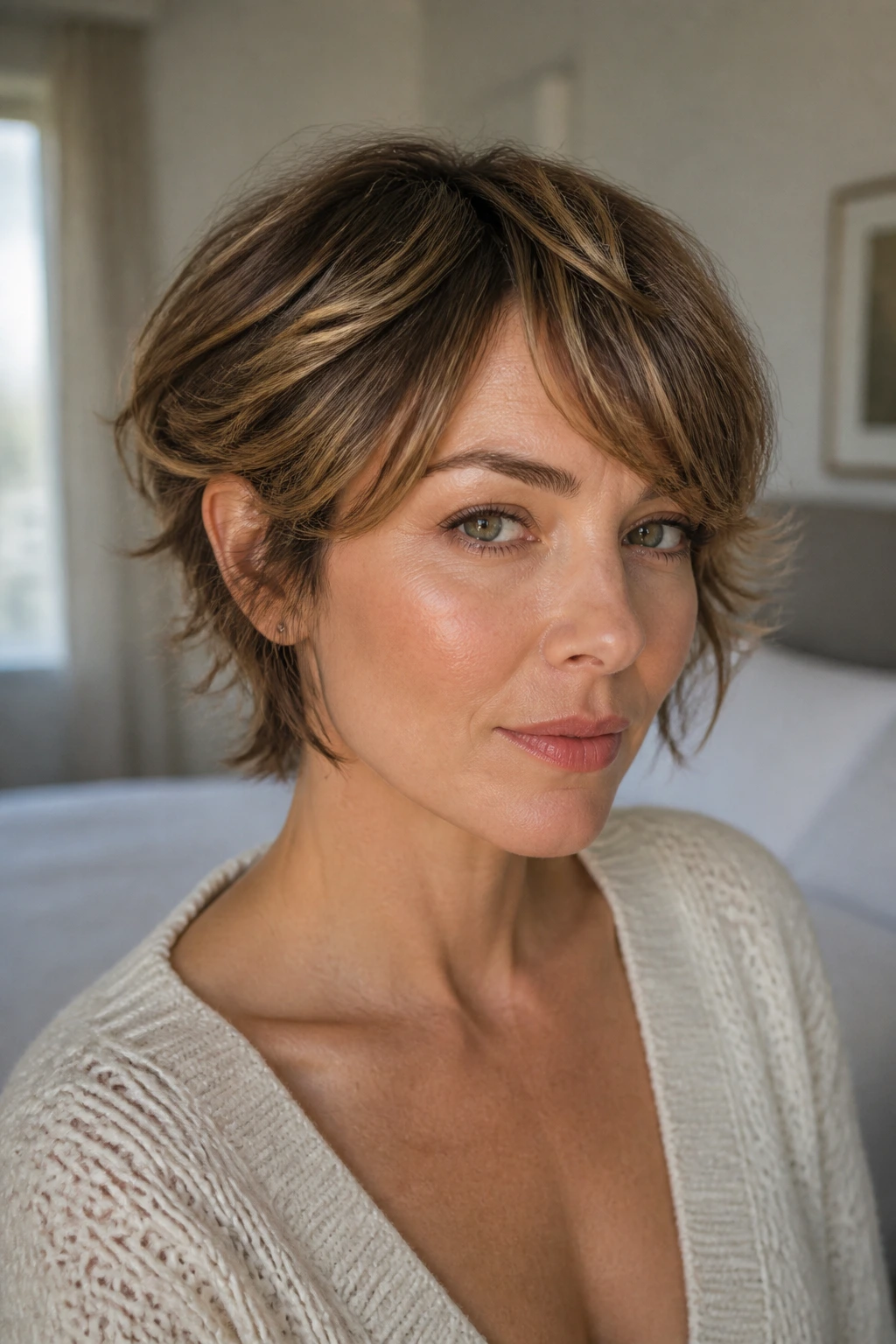
A pixie bob sits right between short and medium, which makes it one of the most useful cuts for fine hair. The feathering at the ends keeps the shape light, while the longer top gives you enough surface to create a bend. It feels easy to wear because the cut already has movement in it.
This is one of the few short styles that can survive a bit of moisture and still look deliberate. Work a dab of foam through the top, blow-dry with your fingers, and bend only the front pieces. That’s usually enough.
31. Crown-Volume Waves With a Deep Side Part
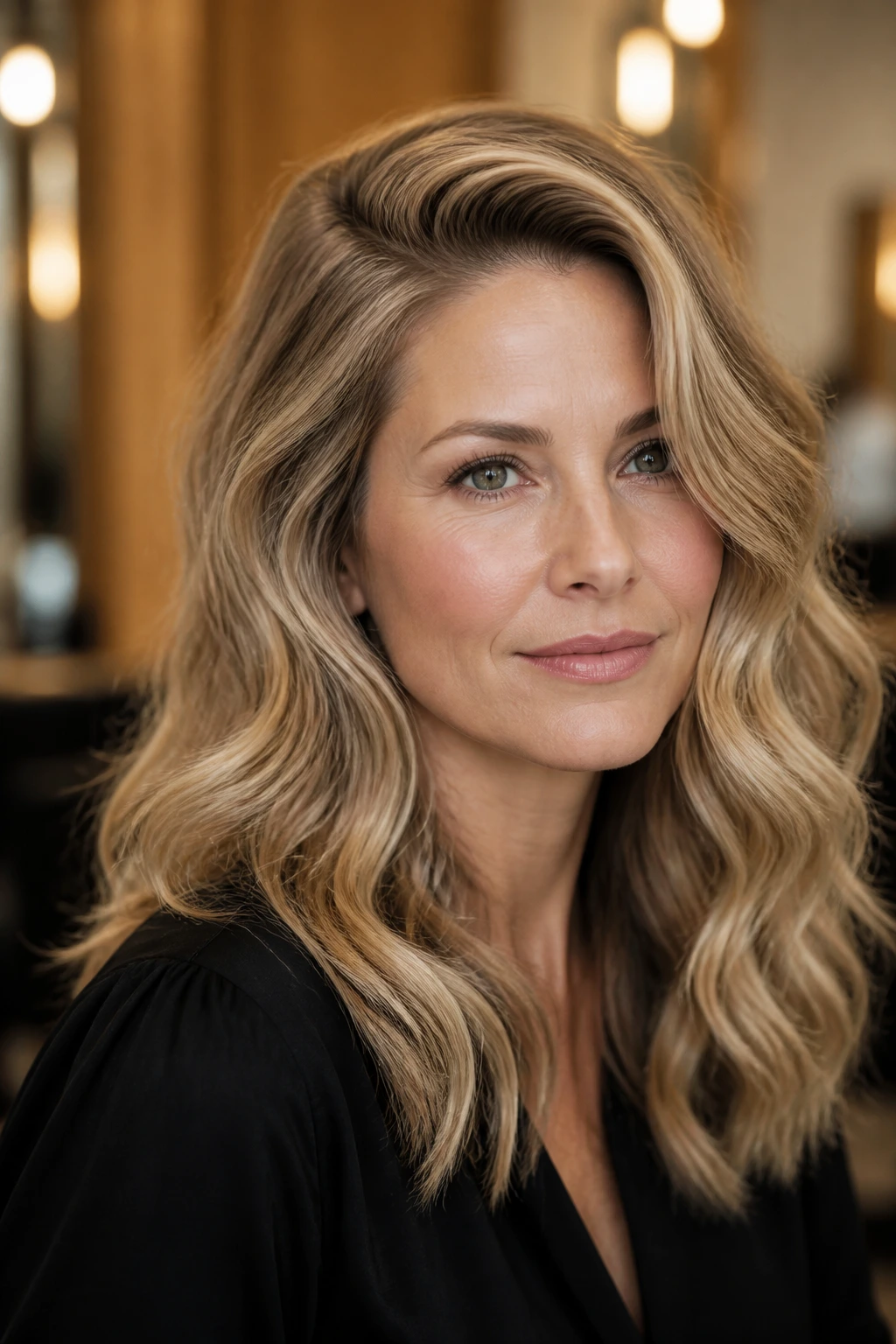
If the top of your hair tends to collapse first, this is the style to keep on hand. The deep side part builds immediate height, and a little root clipping while the hair cools helps the crown stay up longer. The waves themselves can stay soft and broad.
I prefer this look when the rest of the hair is not over-layered. Too many short internal layers can steal the weight the crown needs to stay lifted. A clean, controlled wave underneath gives the volume something sturdy to sit on.
32. Polished Low Ponytail With a Bend
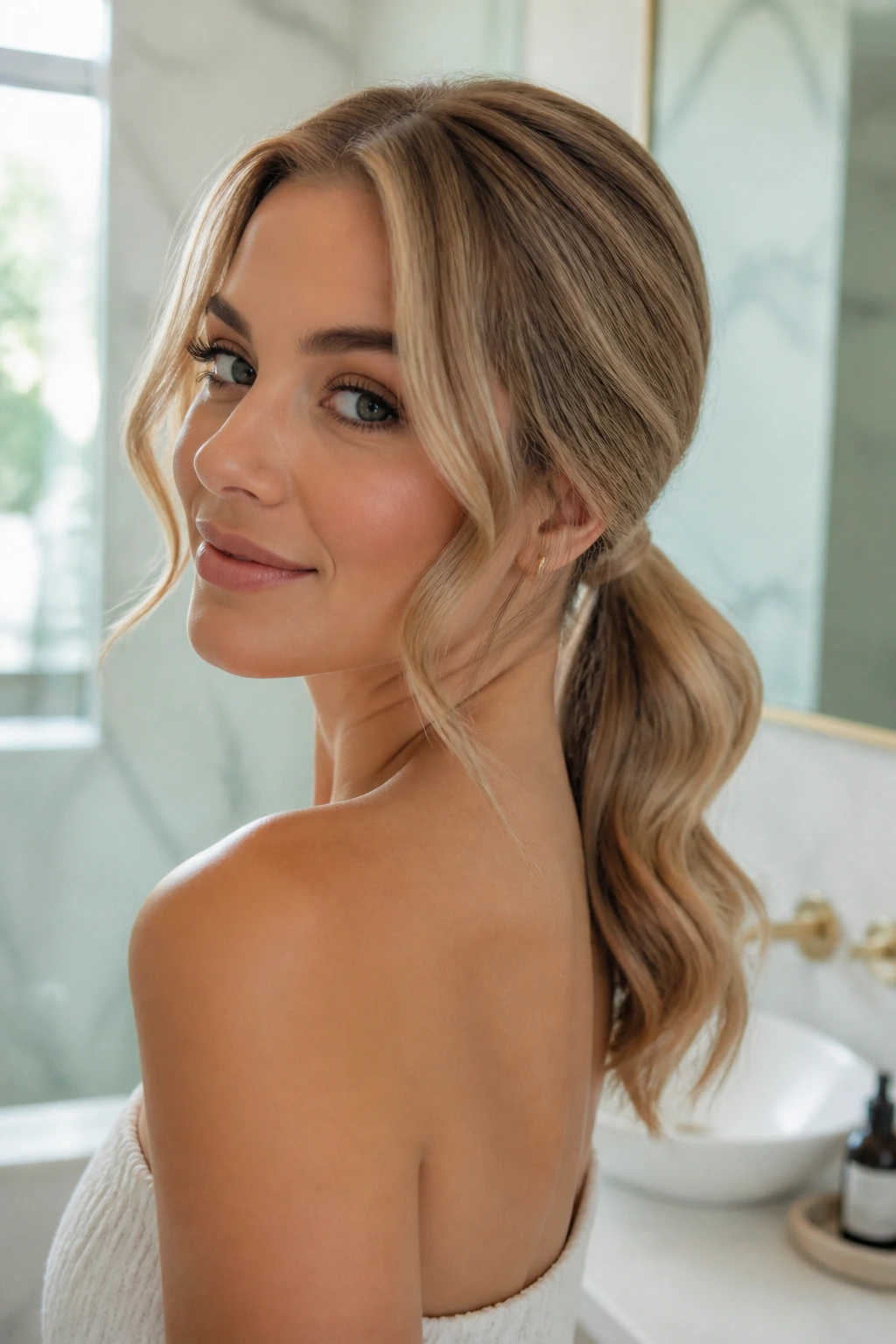
A low ponytail can still have shape if the hair around the face is softly waved and the tail itself has a subtle bend. That combination keeps the style from looking like a gym tie-back. Fine hair often benefits from this kind of control because the smooth top shows off the sheen, while the wavy tail gives the eye something to follow.
Wrap a small strand around the base and pin it under. Then bend the tail with a wand in two or three large sections. The ponytail should swing, not stick straight like a cord.
33. Textured French Girl Waves
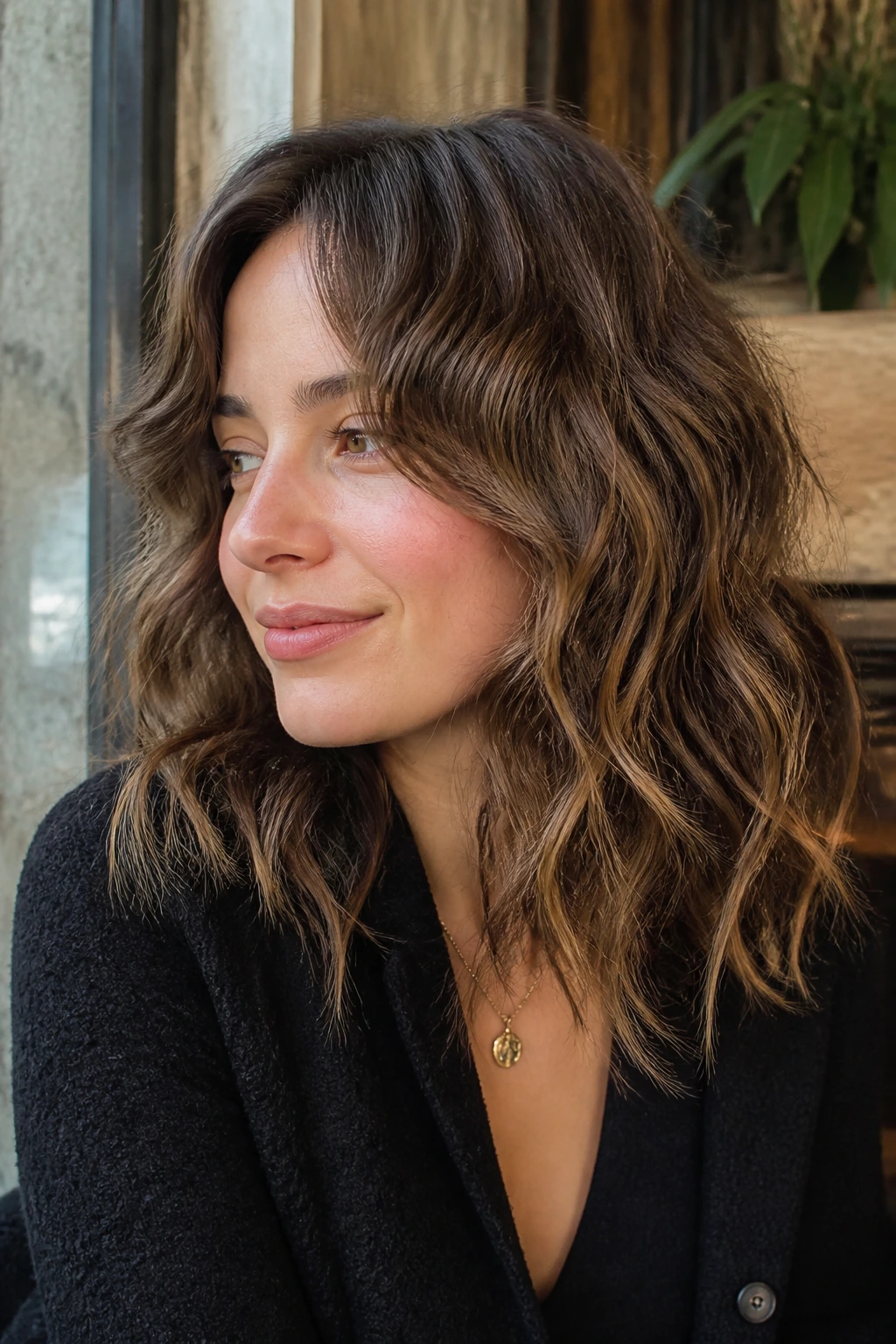
This style leans into understatement. The wave is soft, a little irregular, and never overbuilt. Fine hair actually likes this kind of texture because it can look heavy with too much effort, and the French girl version keeps the movement close to the head instead of exploding outward.
A light mist of texturizing spray, a quick scrunch, and a finger rake are enough for many hair types here. Don’t chase symmetry. The charm is in the small imperfections — a slightly straighter piece near the temple, a bend that starts low, a front section that falls a little differently from the rest.
34. Half-Up Barrette Style With Waves
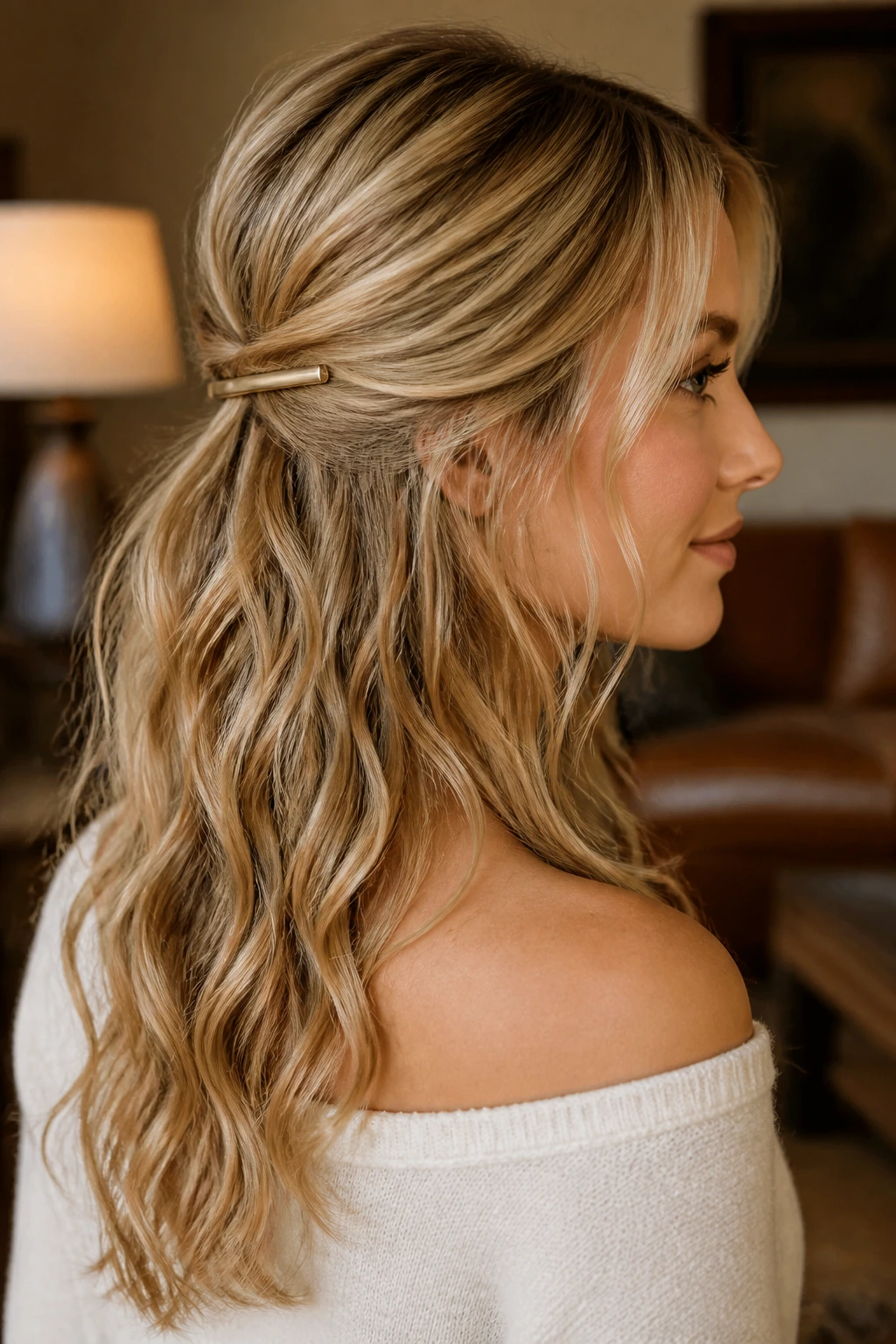
A barrette turns half-up hair into something sharper and cleaner. On fine hair, it also creates a nice break in the silhouette, which helps the lower waves look fuller by comparison. The top half is pulled back just enough to open the face, then clipped with a barrette that sits flat.
Choose a barrette with a decent grip and a narrow shape. Oversized clips can swamp fine hair and slide out by the afternoon. Leave the ends below the clip loose and wavy so the style doesn’t feel too pinned down.
35. Soft Undercut Pixie Waves
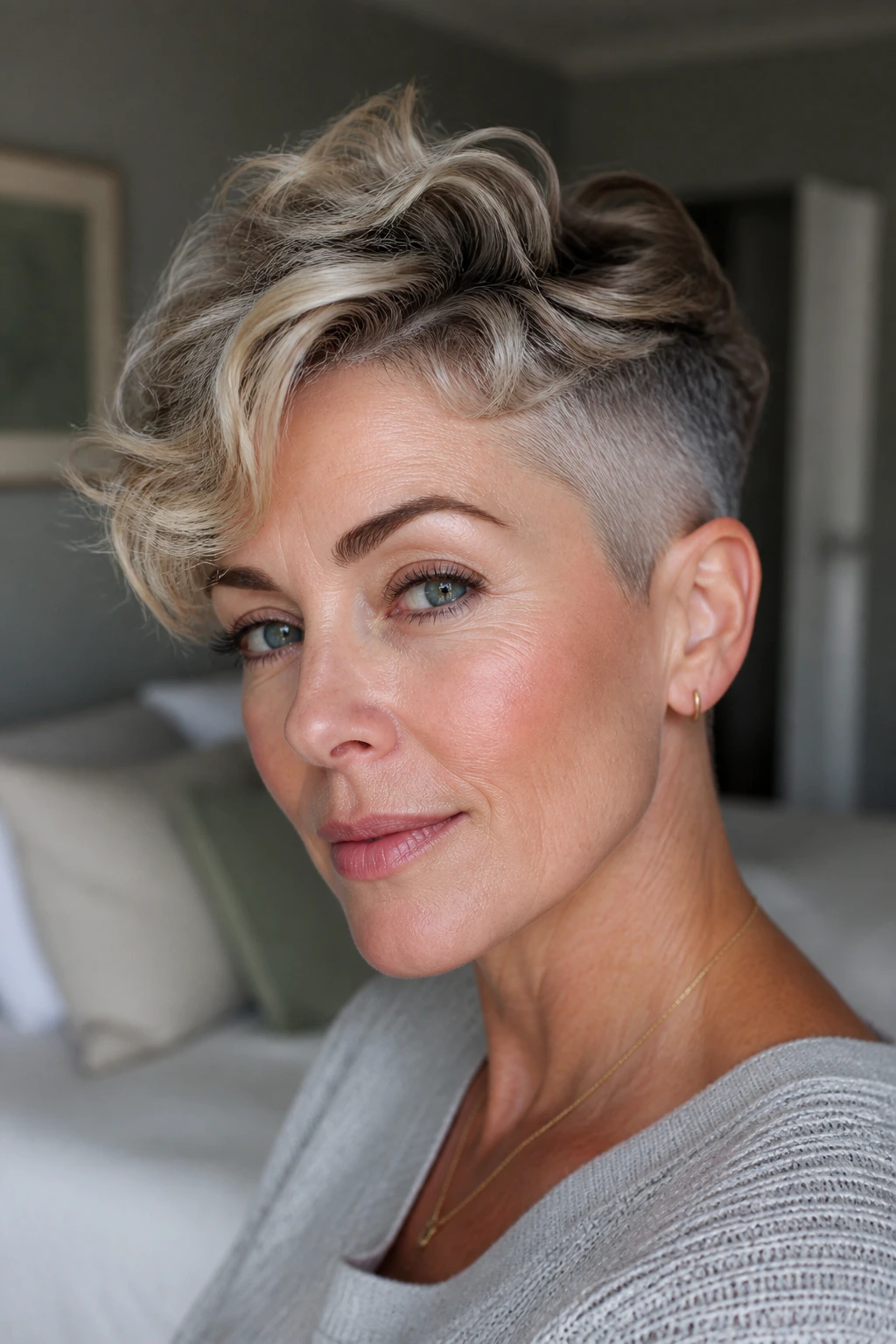
A soft undercut pixie is not for everyone, but on fine hair it can be a smart way to keep the head from looking too small around the sides and back. The longer top carries the wave, while the shorter underlayer removes bulk where it would otherwise puff out. That contrast gives the style shape.
The wave should live on the top section only, and it should stay airy. A little paste or a spray wax is enough. Push the front up and slightly forward, then let the rest settle. The look should feel light, not choppy in a harsh way.
36. Long Invisible-Layer Waves
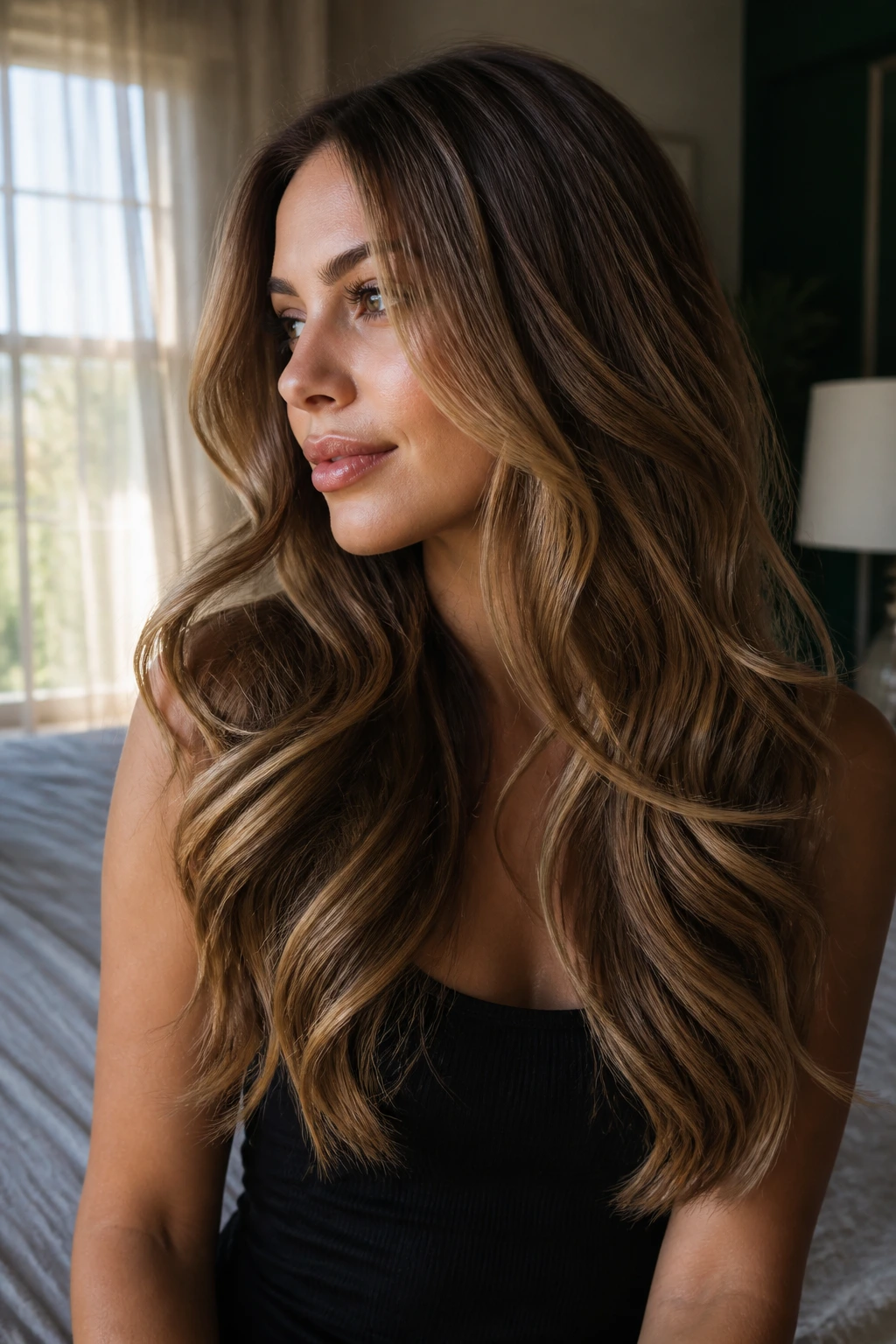
Invisible layers are one of the most useful tricks for long fine hair. The hair keeps a long outer line, so the ends still look substantial, but the hidden layers inside allow the wave to move. You get swing without losing the visual weight that long hair needs.
This cut is especially good if your hair tends to drag flat at the sides. The layers are doing the work you cannot see from the outside. A broad wave pattern shows them off without making the cut look shaggy or thin.
37. Side-Swept Bob With Tucked Ends
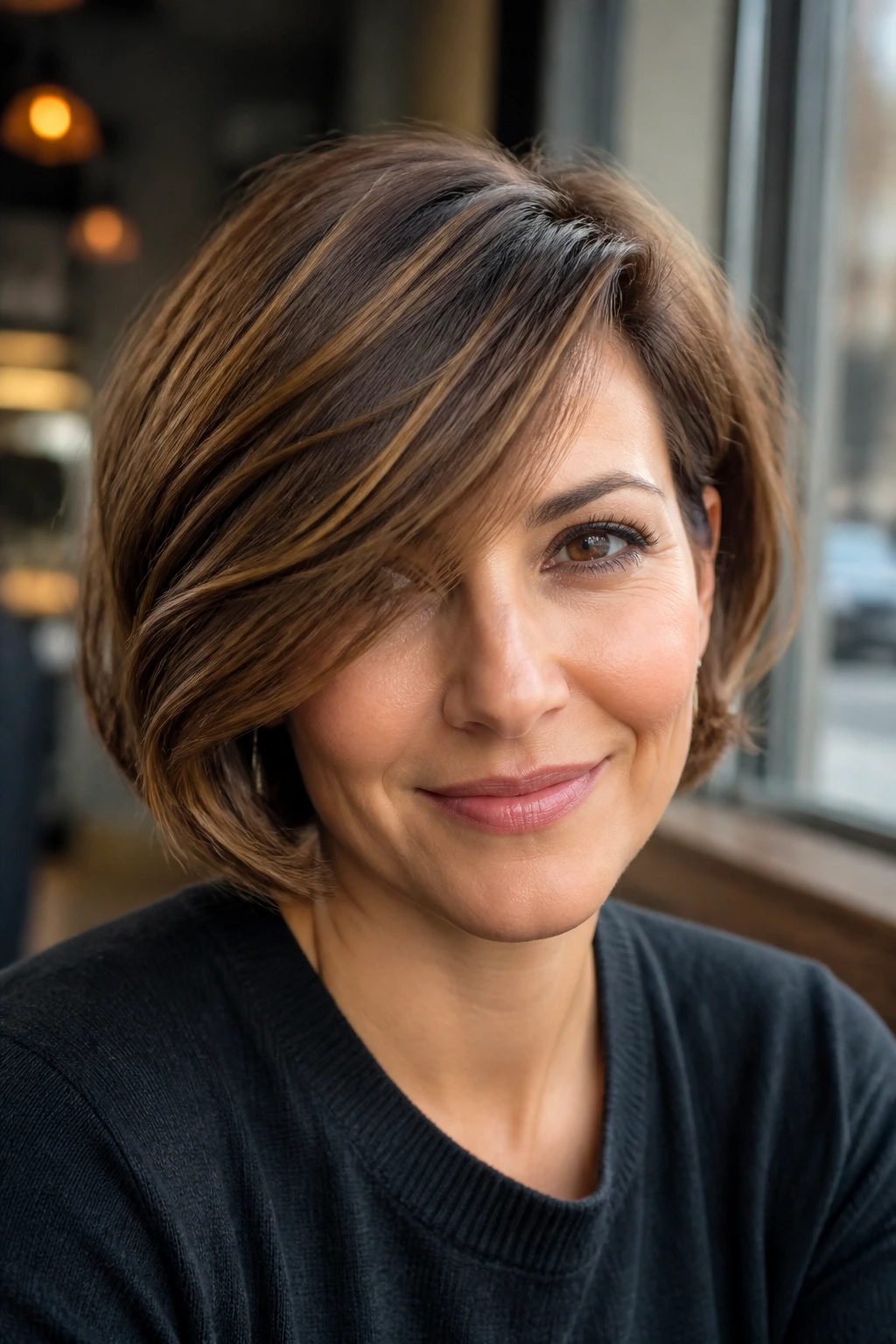
A side-swept bob gives fine hair a clear direction, which is half the battle. One side falls across the forehead, the other tucks closer to the jaw. The soft wave at the ends keeps the bob from looking too blunt, and the asymmetry adds interest where fine hair can otherwise go soft and shapeless.
The tucked side should sit close to the head. That clean edge helps the other side appear fuller. A tiny lift at the temple keeps the whole cut from collapsing into the face.
38. Tousled Lob With a Satin Finish
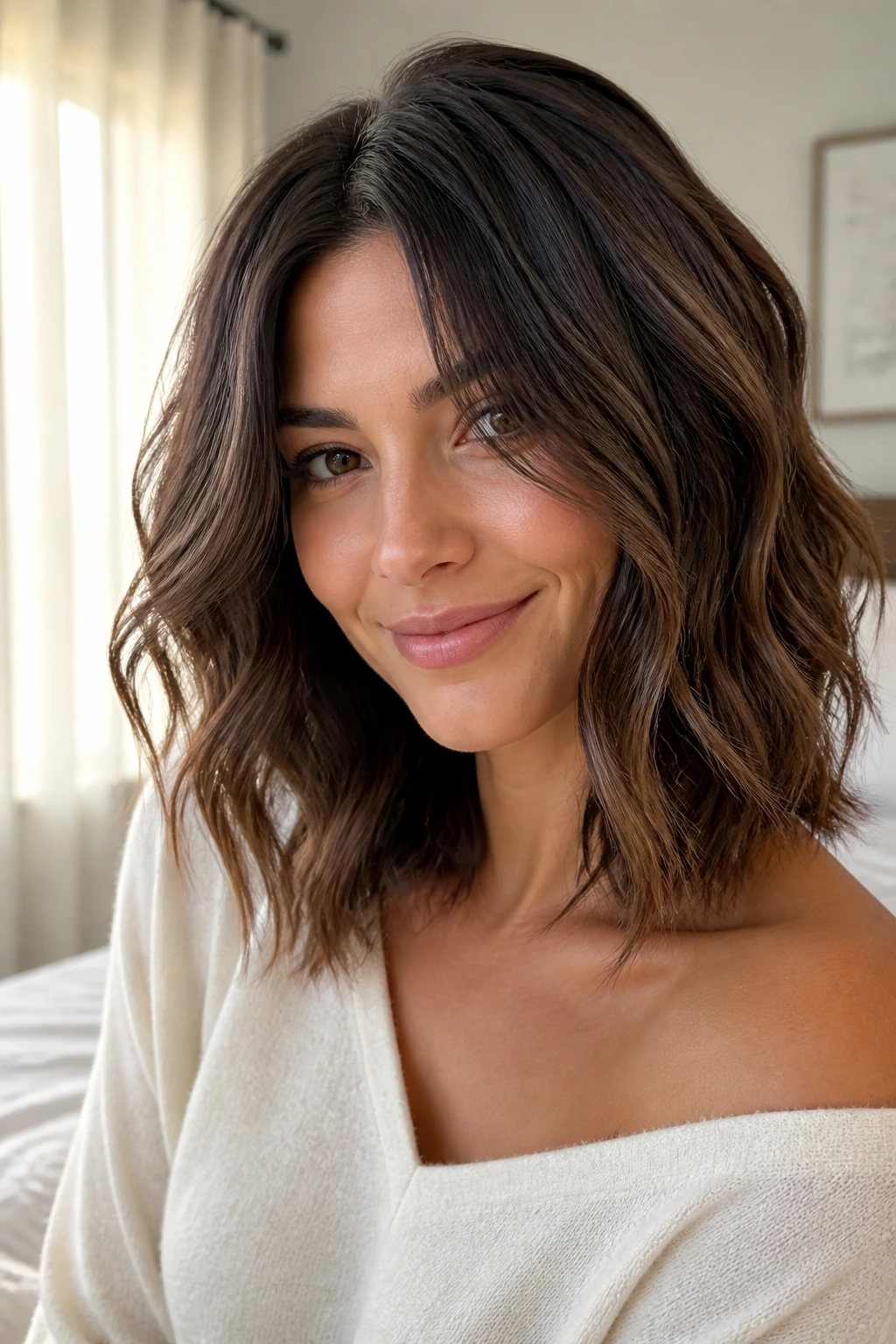
This is the style I reach for when I want fine hair to look moved, not messy. The lob gives structure, the tousled wave adds shape, and the satin finish keeps the whole thing from turning matte and dusty. It’s softer than a beach wave and less polished than a blowout. That middle ground suits fine hair well.
A pea-sized amount of smoothing cream on the ends, plus a quick brush-through with fingers, is enough. The surface should look light-reflective, not oily. The wave can be a little uneven. That’s part of what makes it believable.
Why Soft Waves Give Fine Hair More Shape Than Tight Curls
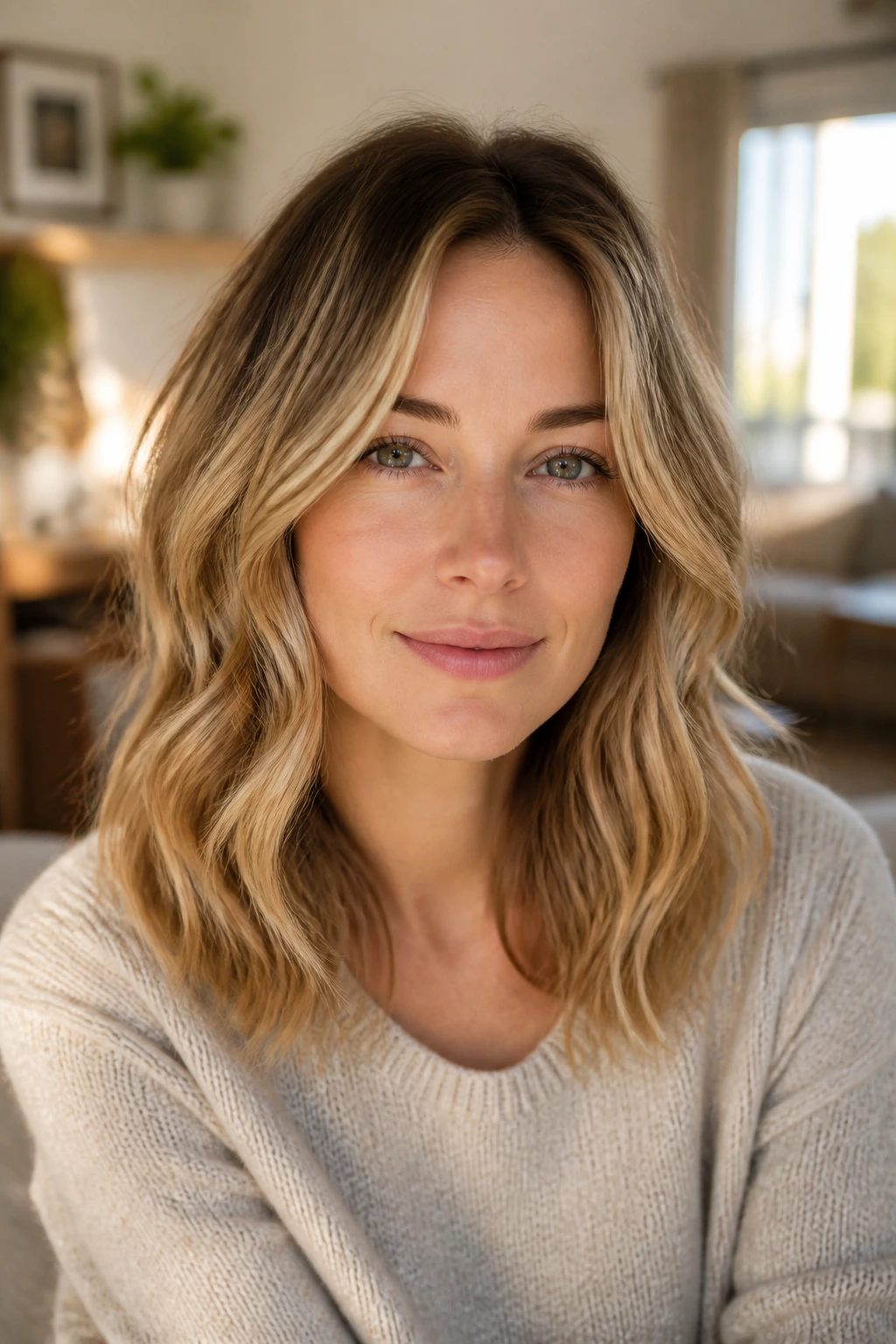
Fine hair doesn’t usually need more curl. It needs a cleaner outline.
Tight curls pack too many turns into too little space, which is why they can make the ends look short and the crown look busy. Soft waves spread the shape out. They widen the visual line at the cheekbones and jaw, and they leave enough straightness in the strand to show off length. That combination matters more than most people realize.
The cut plays a role too. A blunt bob, a lob, or long invisible layers gives the wave something to sit on. If the haircut is too wispy, the wave has nowhere to land and the style slides apart. The best soft waves on fine hair always look like the shape started with the haircut, not with the curling iron.
The Tools That Actually Help Fine Hair Hold a Bend
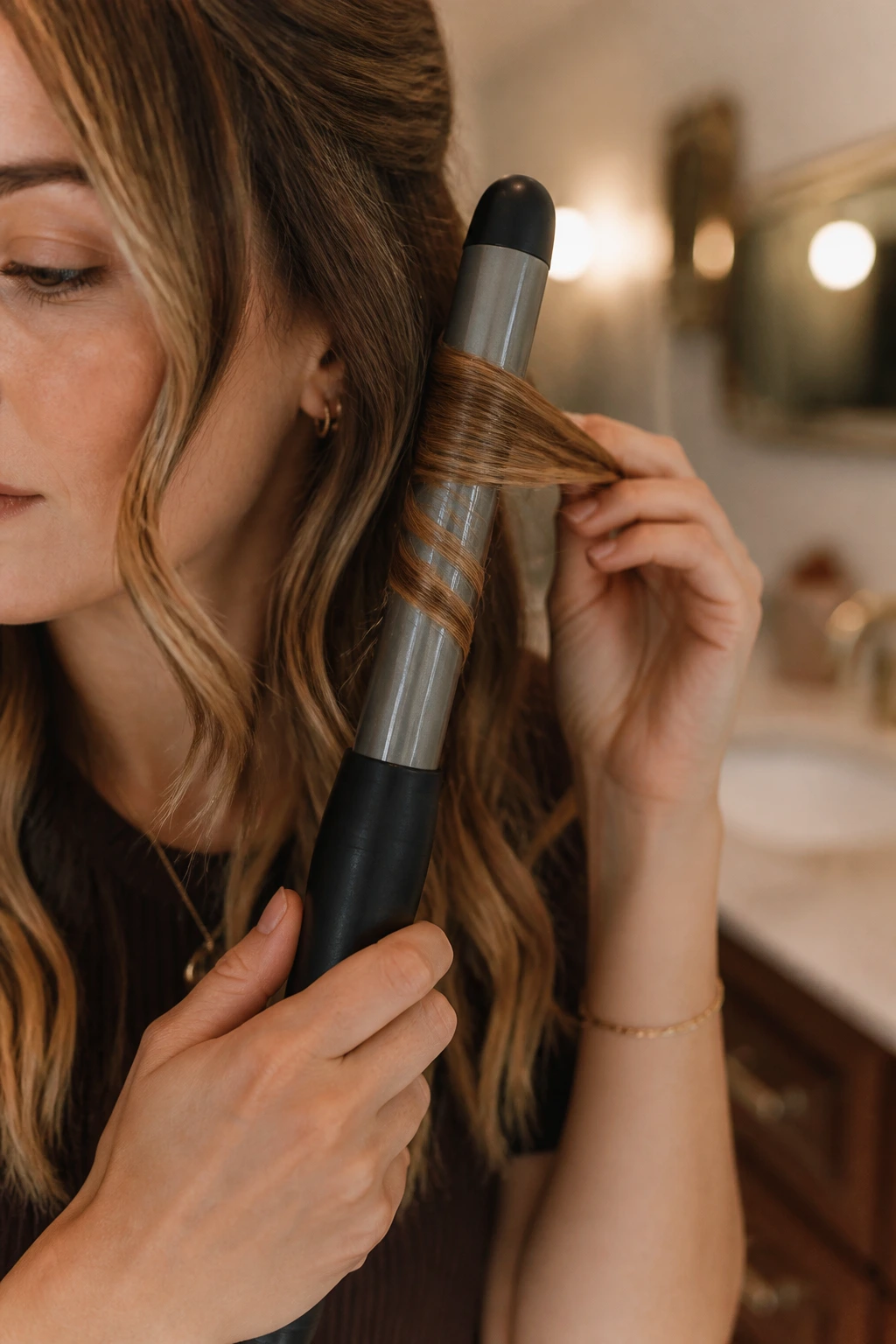
You do not need a drawer full of gadgets. You need the right small set.
-
1-inch curling wand or iron: This gives a soft bend without making the wave too wide for fine strands.
-
Flat iron with smooth plates: Useful for bends, flips, and face-framing pieces that should look more relaxed than curled.
-
Blow dryer with a nozzle: Directs the air at the roots so you can lift without roughing up the surface.
-
Small round brush or vent brush: Good for bangs, crown lift, and smoothing the front sections without flattening them.
-
Sectioning clips: Fine hair gets overwhelmed fast if you try to work on too much at once; clips keep the shape clean.
-
Lightweight mousse or foam: Gives hold at the root and body through the mid-lengths without sticky residue.
-
Heat protectant spray: Non-negotiable if you use hot tools. Fine hair shows damage fast.
-
Dry shampoo: Not only for grease; it adds grip at the scalp and helps the wave last.
-
Satin pillowcase or scarf: Cuts down on friction overnight, which matters more for fine hair than people admit.
Product and Cut Choices That Matter More Than the Hairstyle
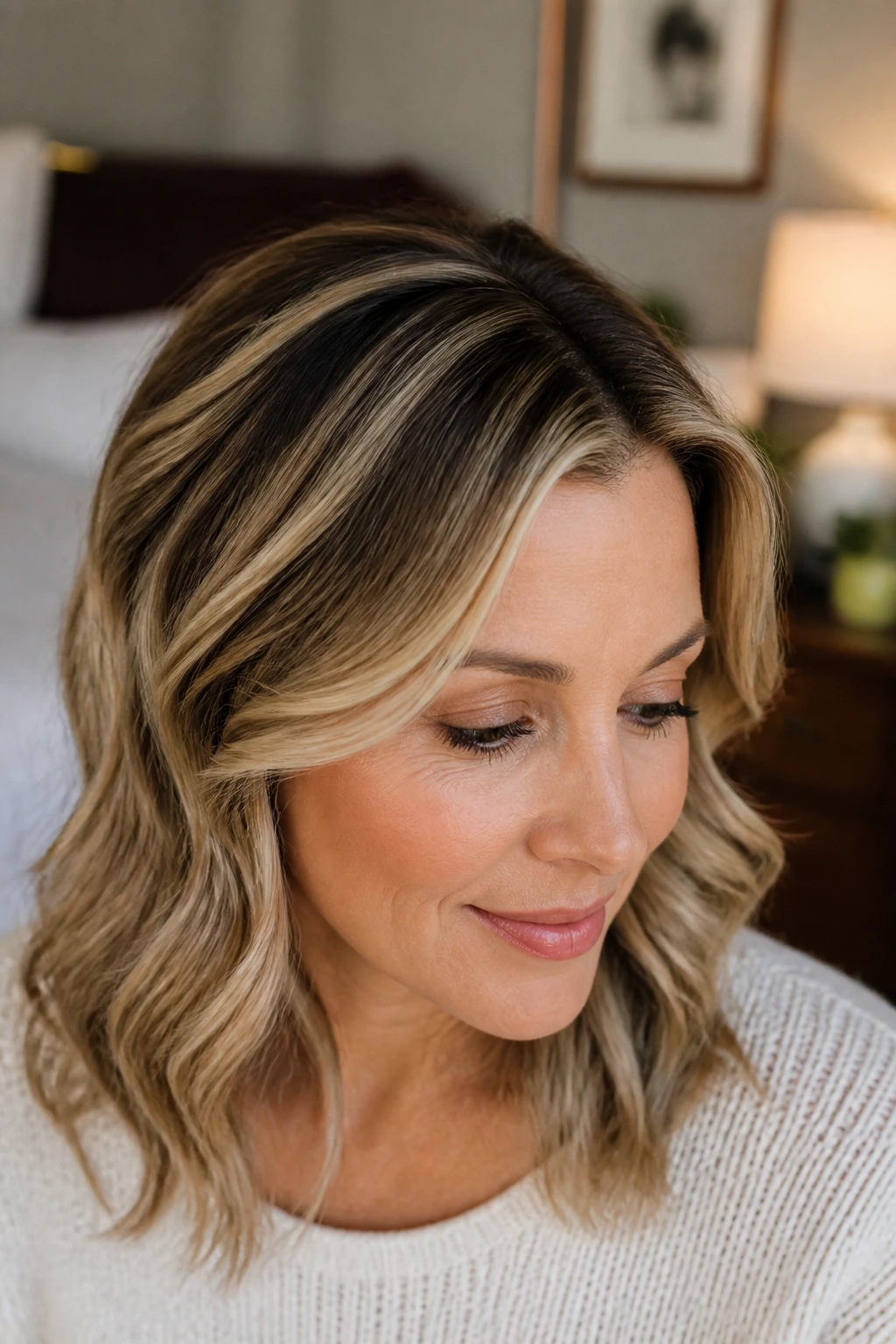
A good wave on fine hair starts before the styling tool ever comes out.
Ask for a cut that keeps some edge. A blunt perimeter on a bob or lob usually gives more fullness than too many short layers. If you want movement, add internal layering or long face-framing pieces instead of shredding the whole shape. Fine hair often looks fuller when the line underneath stays clean.
Products should be light enough to disappear. Foam, mousse, root spray, and fine-mist texturizers tend to work better than thick creams and heavy oils. If a product makes your hands feel coated, it will probably weigh the hair down. Use it sparingly, especially near the crown and around the temples where fine hair collapses first.
Color can matter too. Subtle highlights or lowlights can make waves read more dimensional, but chunky, high-contrast streaks can expose sparse spots if the haircut is too thin. The goal is not drama for its own sake. It’s depth.
How to Wear These Looks Through a Long Day
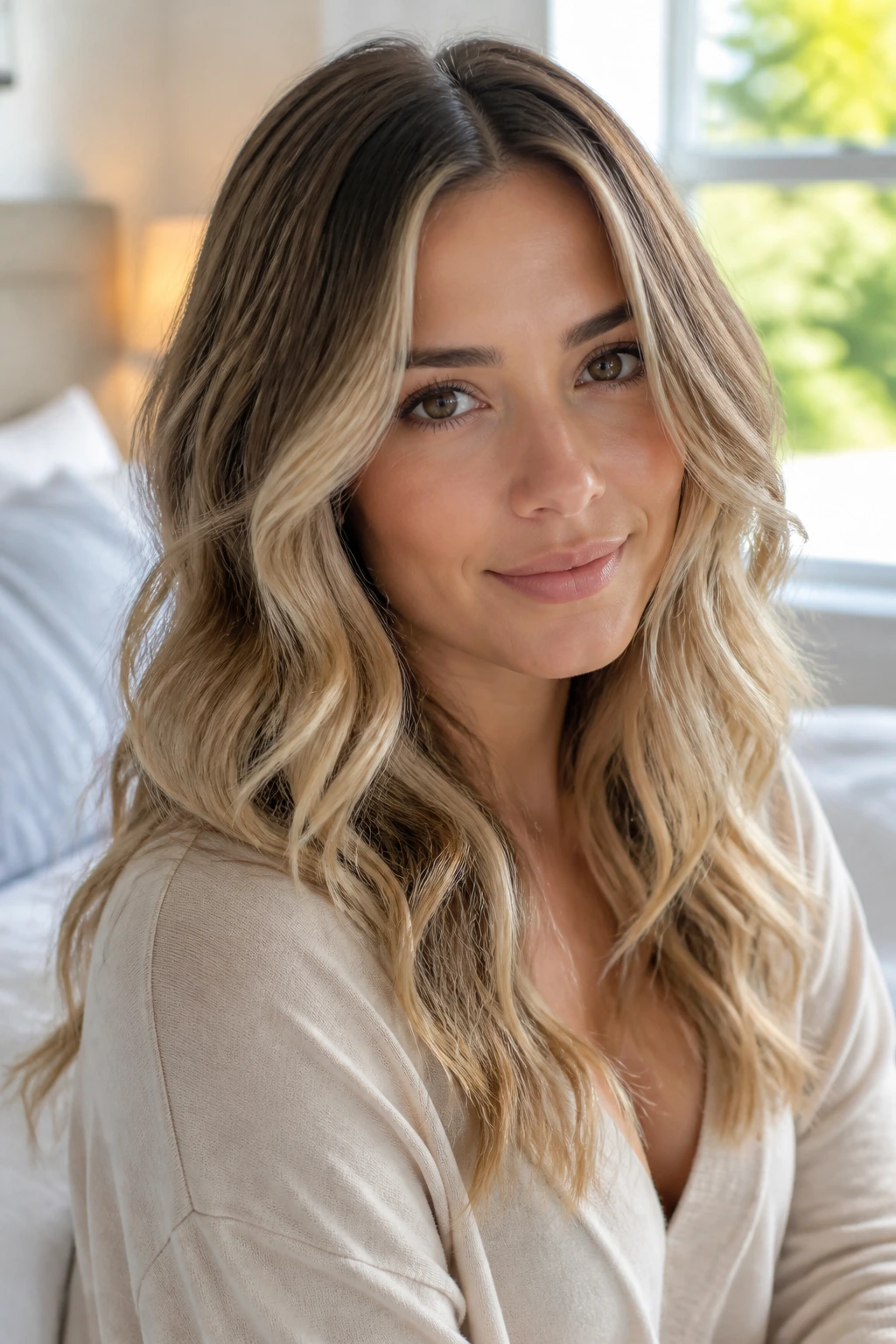
Fine hair is rarely at its prettiest the moment you leave the mirror. It settles, loosens, and shifts a little as the day goes on. That’s not always a problem.
Presentation: Keep the top smooth enough to show the part cleanly, then let the waves soften through the middle and ends. A few pieces tucked behind one ear, or a small clip near the temple, gives the style a clear point without locking it down.
Best with: Fine wavy hair looks especially good with open necklines, collarbones, and simple earrings because the hair itself already provides detail. A crewneck sweater, a blazer, or a plain tank can all work; the waves do the talking.
Occasions: The looser lob and bob styles fit daytime wear, while Hollywood waves, braided crowns, and low chignons hold up better for dinner, photos, or a more polished setting. If you need the style to carry from morning to evening, build in a little root lift and avoid over-smoothing the ends.
Quick reset: If the hair falls flat by late afternoon, mist the roots lightly, flip the part, and re-bend only the front two sections. That usually brings the shape back faster than starting over.
Extra Moves for Volume, Shine, and Shape
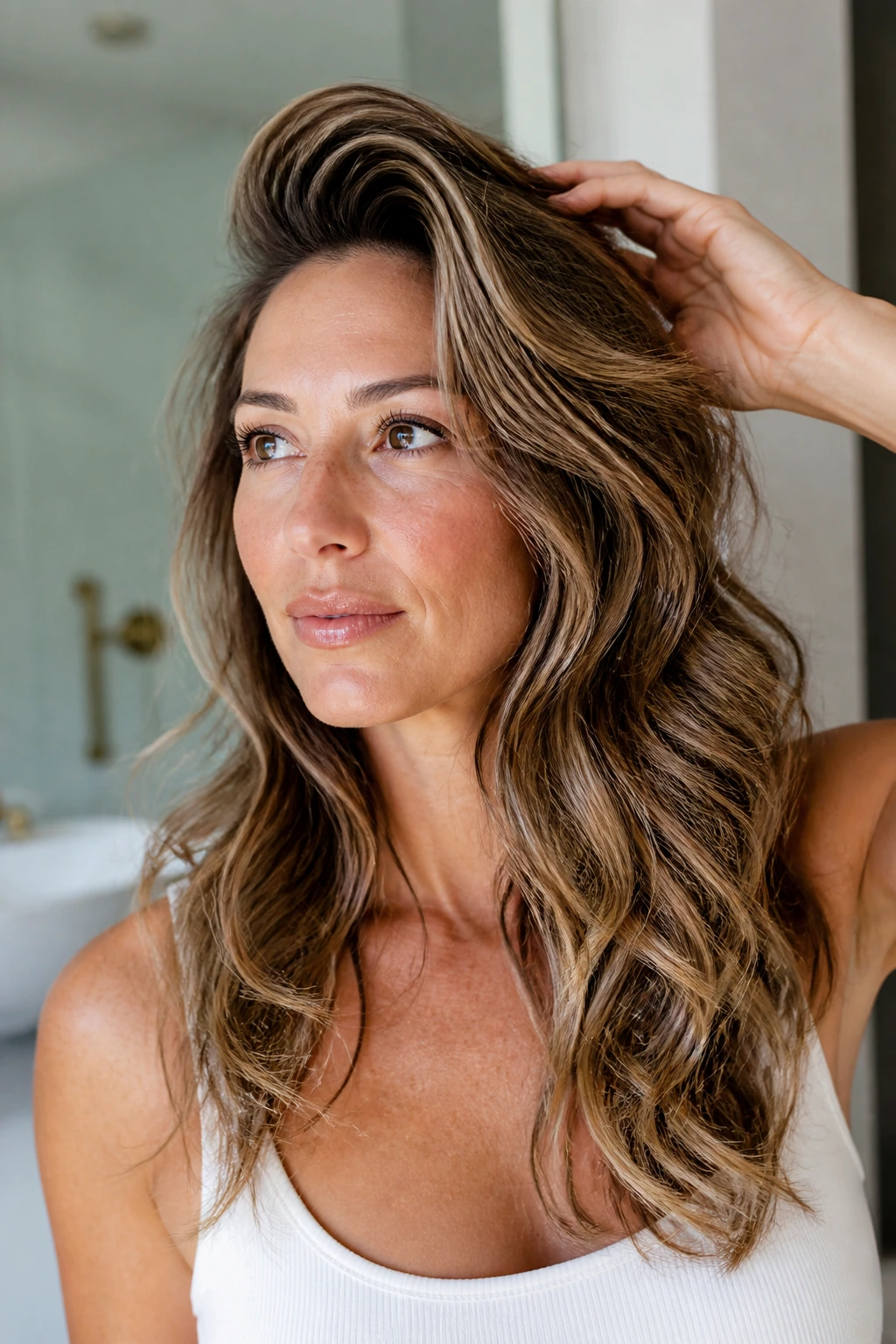
Root Lift: Clip the crown after blow-drying for 5 to 10 minutes. That tiny cooling set can make a bigger difference than adding more product.
Texture: If the wave starts to look too uniform, rough it up with your fingers and twist two or three random pieces around your index finger. A little unevenness stops fine hair from looking staged.
Shine: Use a drop of serum only on the ends. Fine hair reflects light fast, so a small amount goes farther than you think.
Customization: For a softer face frame, curl the front pieces away from the face and leave the last inch out. For more structure, curl the front pieces all the way to the ends and pin them while they cool.
Make-It-Yours: If your hair is pin-straight, go heavier on mousse and root drying. If it already has some natural wave, skip the extra foam on the lengths and focus on defining the front sections so they do not puff.
Mistakes That Make Fine Hair Fall Flat
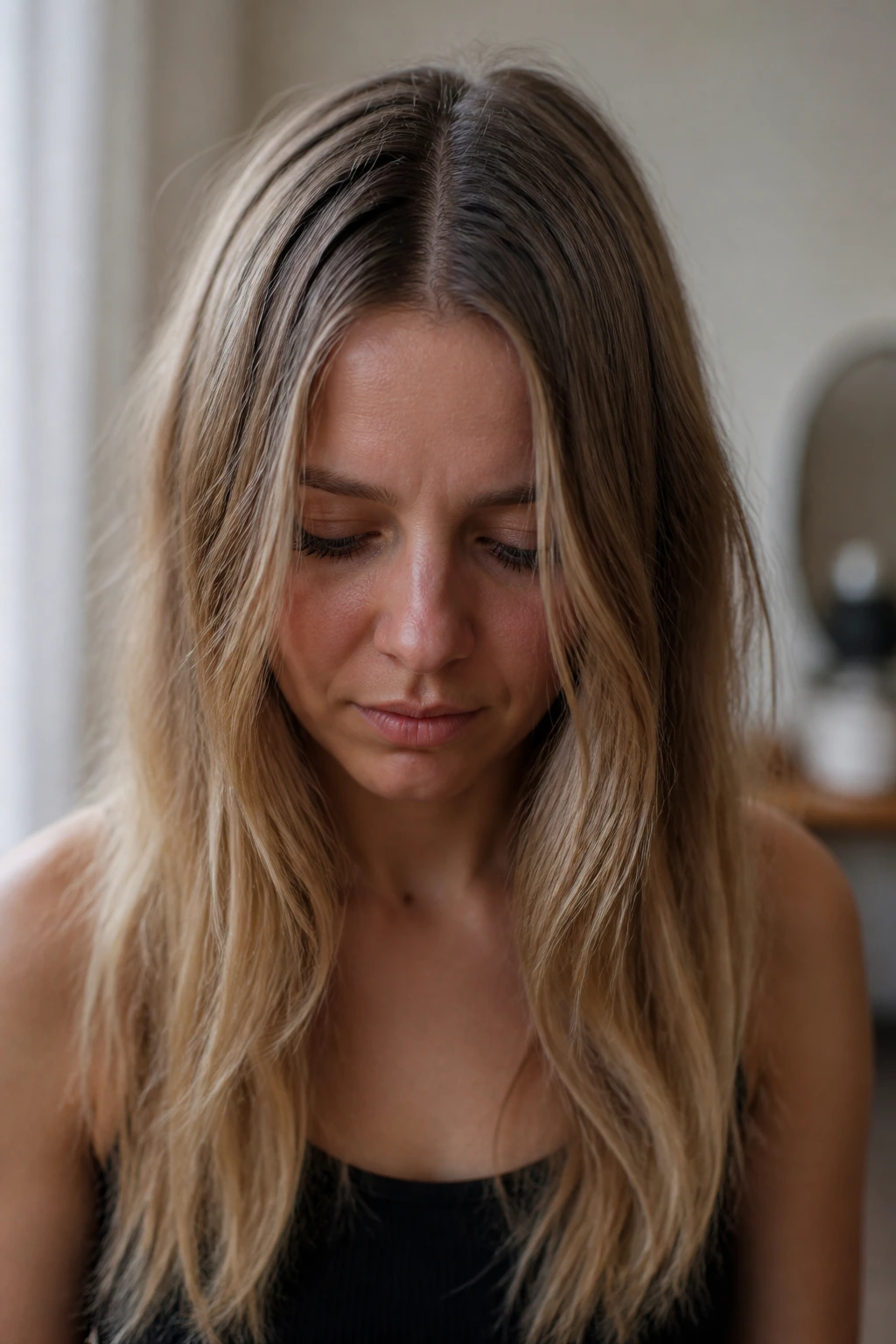
The biggest mistake is loading on heavy product. Fine hair does not forgive that. A rich cream, a thick oil, or too much serum can make the roots collapse before you even leave the house. Start small. If the hair feels coated when you touch it, you’ve gone too far.
Another common problem is curling every section in the same direction and then brushing too hard. The result is one giant wave that sits like a helmet. Alternate a few directions, keep the ends loose, and brush only enough to blend the shape.
People also skip the cooling step. Hot hair is still setting. If you touch it, pin it, or brush it while it’s warm, the wave can drop faster. Let each section cool before you disturb it.
Finally, too much layering can work against you. If the haircut is shredded from root to ends, there may not be enough weight left for a soft wave to hold shape. Fine hair usually looks better with cleaner lines than with too much feathering.
Variations and Adaptations to Try
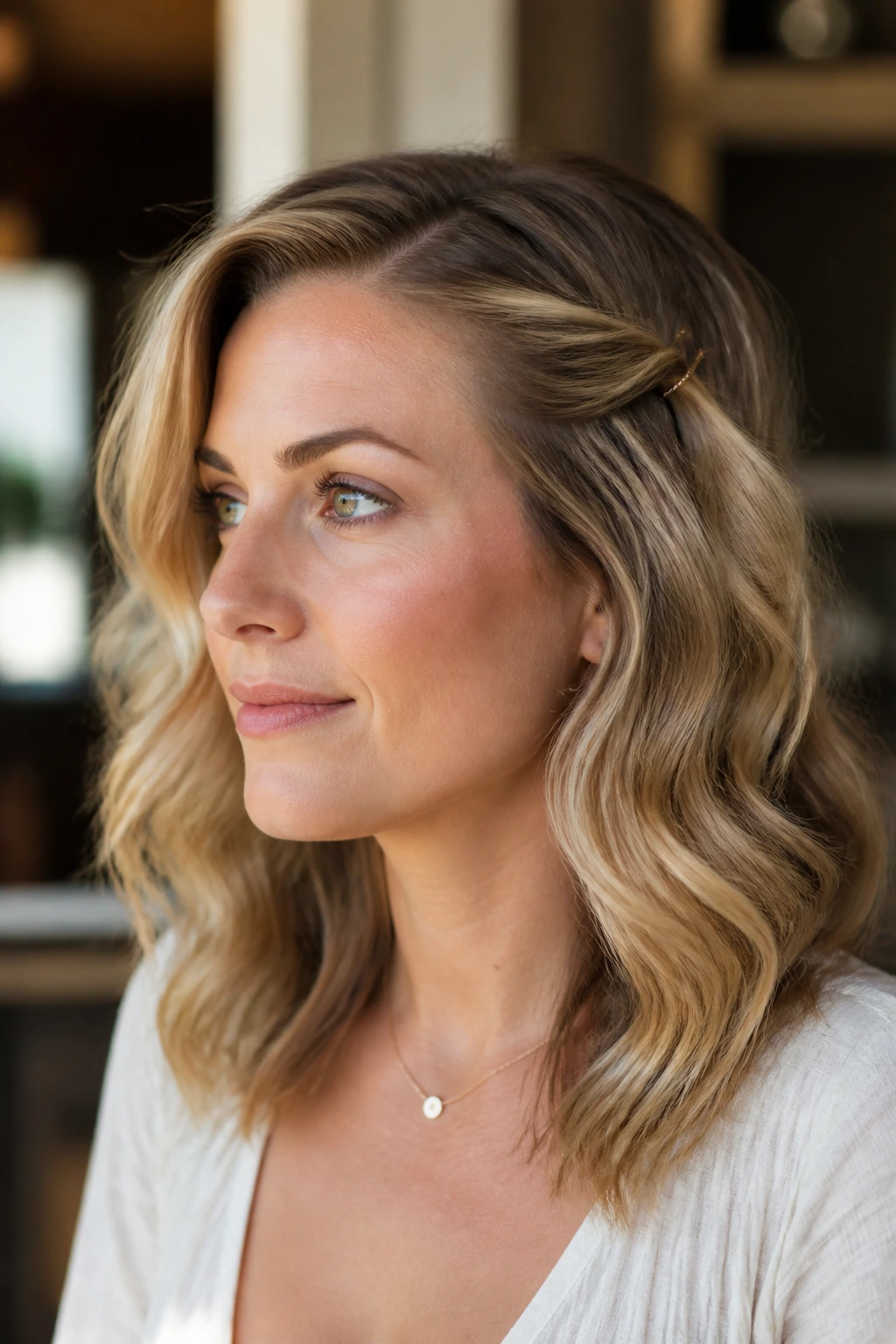
Heatless Weekend Waves: Use two loose braids or a soft robe belt on damp hair, then sleep on a satin pillowcase. This works best when your hair is mostly dry before bed, so you wake up with bend instead of dents.
Polished Event Waves: Switch to a side part, set the curls in the same direction, and brush them into one smooth pattern. That gives fine hair a more formal line and a shinier surface.
Short-Hair Version: On a pixie bob or French bob, wave only the top and front sections. Leave the nape smooth so the cut keeps its shape and does not puff out at the sides.
Second-Day Texture Reset: Mist the roots with dry shampoo, twist two face sections around your fingers, and warm them for a few seconds with the blow dryer. You don’t need a full restyle to bring the shape back.
Soft Glam Version: Add a barrette, a ribbon, or a tucked ear on one side. Fine hair often benefits from one visible anchor point, and that little detail can make the whole look feel finished.
Overnight Care and Next-Day Refreshing

Fine hair likes a gentle night routine. Rough cotton pillowcases create friction, and that friction is one of the fastest ways to flatten a soft wave. A satin pillowcase helps, but a loose silk scarf works too if you know how to tie it without crushing the crown.
If you heat-style the hair, aim for day one and day two as the sweet spot. After that, the wave often starts to lose its clean bend and drift toward a frayed texture. Heatless waves can last a little longer, especially if you keep the hair protected and avoid heavy nighttime oils.
For a morning refresh, do not soak the hair. Mist the parts that need help, twist the front sections around your fingers, and hit the roots with cool or warm air for a minute or two. If the ends feel dry, use the smallest trace of serum only on the last inch. The goal is to wake the wave back up, not start over.
Frequently Asked Questions About Soft Waves on Fine Hair
Which wave size makes fine hair look thicker?
A medium-soft wave usually wins. Tight curls can shrink the length and make the ends look thinner, while a loose S-wave creates width without eating up the hair’s outline.
Should I use mousse or cream on fine hair?
Mousse almost always does more for the roots and the body. Cream can help the ends, but heavy creams can flatten the crown, so keep them light and use them sparingly.
Can pin-straight fine hair hold soft waves?
Yes, but it usually needs more set work. Clip the curls while they cool, use a good heat protectant with hold, and don’t skip the root lift before styling.
Do layers help fine hair with waves?
They can, if they’re used carefully. Long layers and internal movement help the wave travel, but too many short layers can make the ends look wispy and thin.
What if my waves fall out in an hour?
The hair is usually too clean, too soft, or both. Add a little dry shampoo at the roots, use less conditioner near the crown, and set the wave with clips while it cools.
Can I wear these styles without heat?
Absolutely. Loose braids, twists, and overnight wraps work well if the hair is damp, not wet, and if you keep the tension light enough to avoid sharp creases.
How often should I wash fine hair if I want waves to last?
Many fine heads hold style better on day two than on wash day. If the roots get oily fast, use a gentle shampoo and keep conditioner away from the scalp so the texture has some grip.
What if the ends look stringy after waving?
That usually means the ends got too much product or too much heat. Leave the last inch out of the curl next time, and use only a small amount of serum on the tips after styling.
A Softer Finish
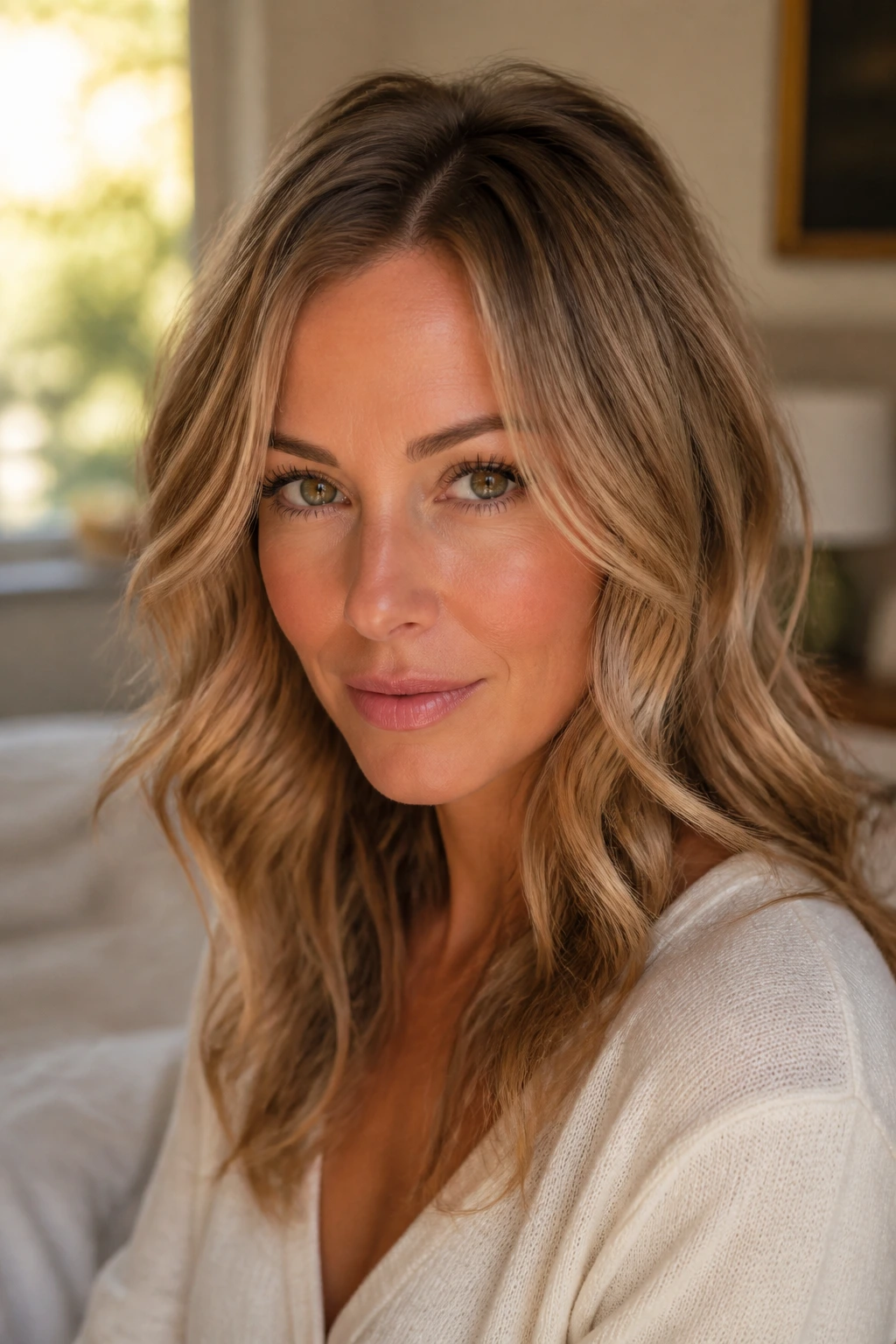
Fine hair doesn’t need to be forced into looking thick. It needs a shape that gives it room to look full on its own terms. Loose bends, clean lines, and a little crown lift do more than a pile of product ever will.
Pick one style that suits your length and your patience level, then try it twice. The first pass teaches you where your hair wants to fall; the second one usually looks smarter.
