



Short hair and waves have a particular kind of swagger. On a chin-length cut, a bend in the hair doesn’t disappear into layers; it sits right on the surface and changes the whole shape of the cut. That’s why wavy hairstyles for short hair can look sharper, fresher, and more deliberate than the same wave pattern on longer hair.
The trick is not piling on curl. It’s choosing where the movement lands. A wave that starts at the cheekbone reads soft and lifted. One that breaks under the jaw gives the whole face more edge. On a bob, a 1-inch curling wand makes a clean bend; on a pixie, the same tool can be too much unless you keep the ends straighter and break the pattern with your fingers.
Short hair also has a nice advantage that long hair doesn’t always give you: it forgives a little mess. A section that flips the “wrong” way can look intentional. A root that dries with a bit of lift can carry the whole style. Once you stop chasing perfect symmetry, the options open up fast.
Why These Short Wavy Looks Keep Working
-
Face-framing does the heavy lifting: On short cuts, the wave sits near your eyes, cheekbones, and jawline, so a small change in part or bend changes the whole look.
-
Less hair means faster styling: You can set a bob or pixie with six to eight clean sections instead of fighting an entire head of length.
-
Texture gives short cuts shape: Waves turn a plain bob into something with movement, especially when the ends are left a little straighter.
-
Most of these styles survive real life: A short wave often looks even better after a little sleep, a little humidity, or a little running around.
-
You can go soft or sharp: The same cut can read beachy with mousse and air-drying or polished with a round brush and shine spray.
-
They grow out better than people expect: A layered wave, a fringe, or an angled bob can hide the awkward middle stage that makes some short cuts look fussy.
1. Chin-Length Beach Bob
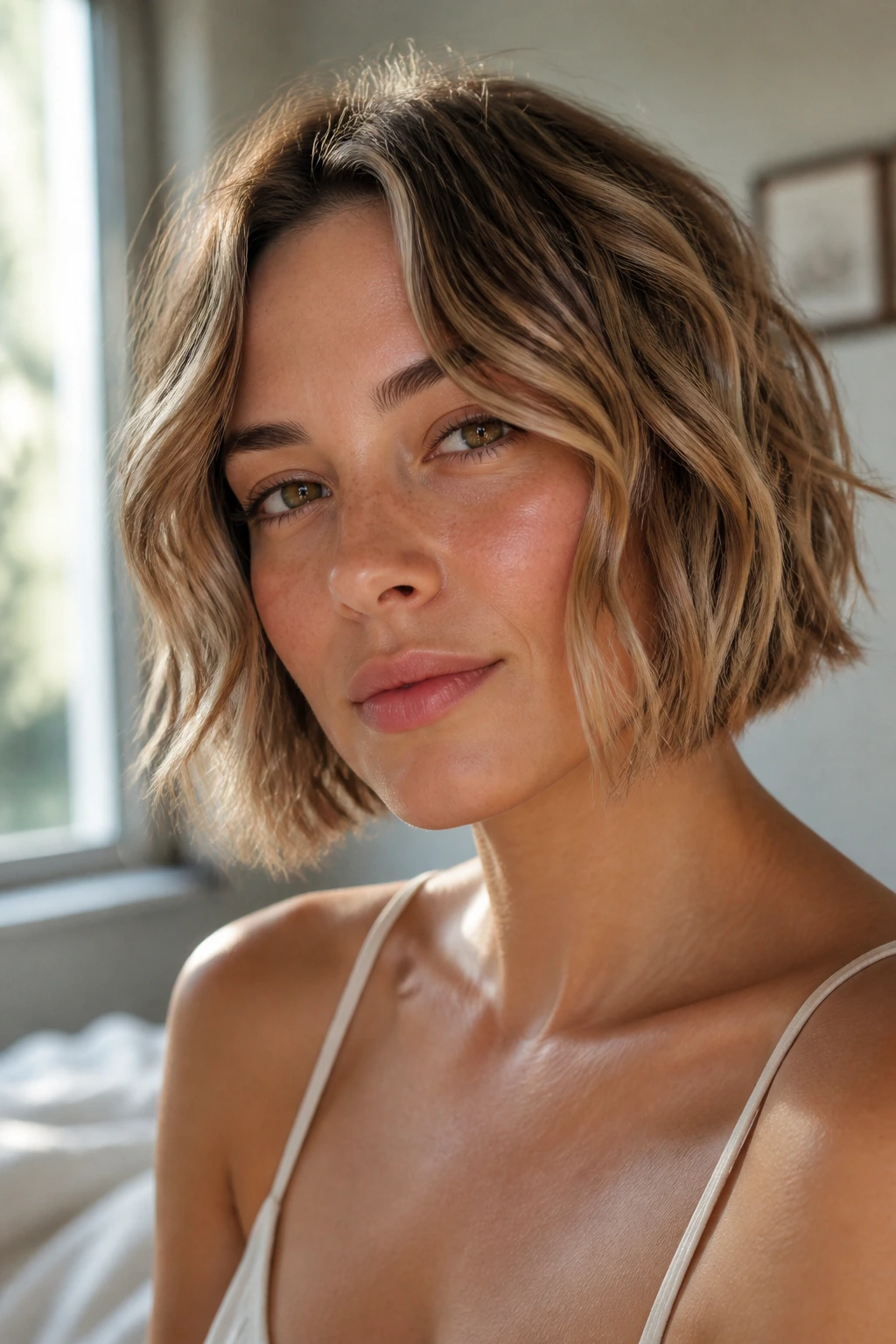
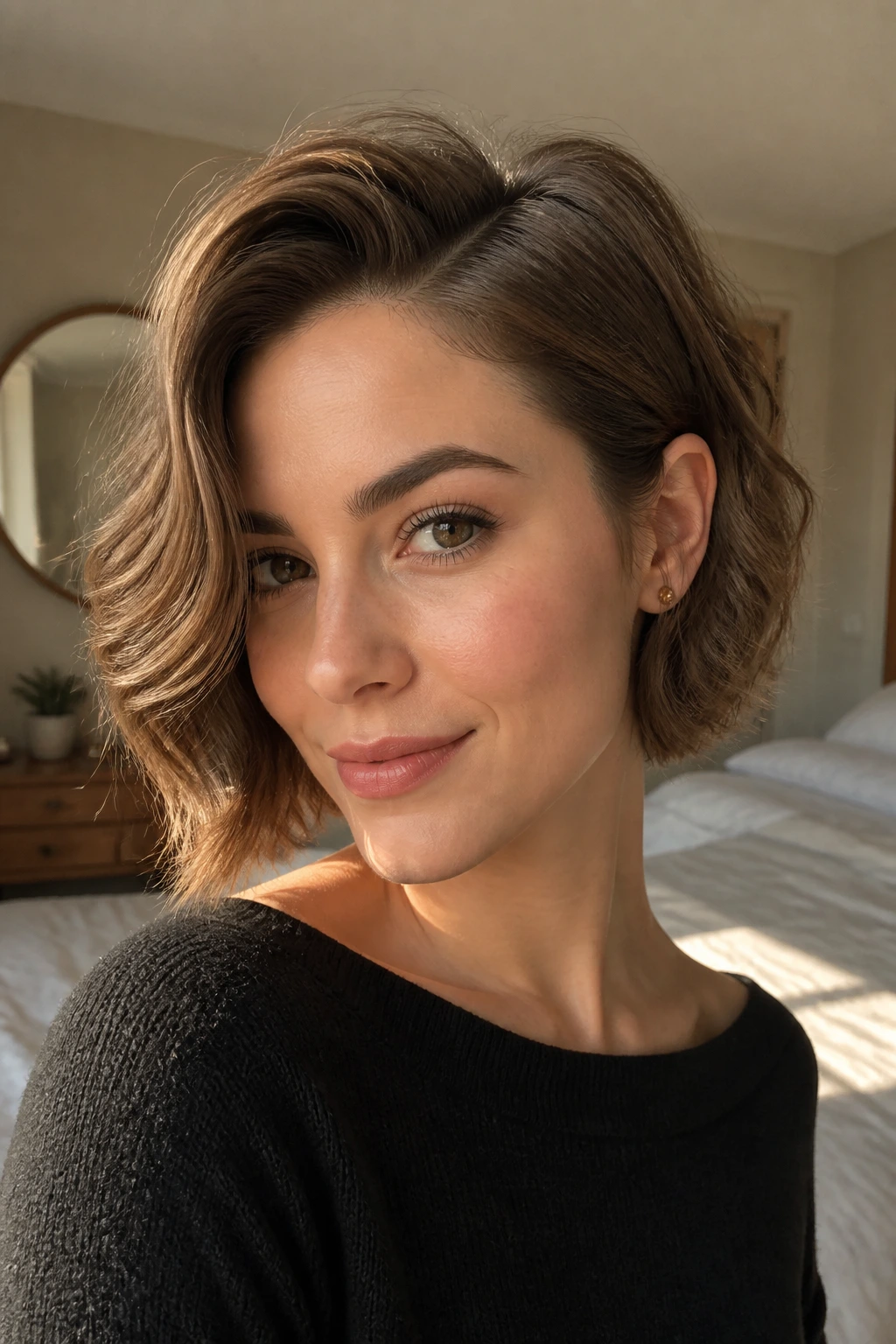
The chin-length beach bob is the one I’d hand to anyone who wants waves without a lot of drama. It hits right where the jaw starts to show, so the bends sit high enough to frame the face instead of dragging the shape downward. When the ends are left a touch straighter, the whole cut looks modern rather than over-curled.
Why it works on short hair
A chin-length bob gives the wave enough room to move, but not so much room that it collapses under its own weight. Wrap medium-sized sections around a 1-inch wand, leave the last inch out, and rake the hair apart once it cools. That creates a bend that looks lived-in, not sleepy.
Best for: Medium-density hair that needs shape
Style note: A slight off-center part usually gives it more lift
Finish: Matte texture spray at the roots, soft serum only on the ends
Bold tip: Clip the top layer away while the lower sections cool. That little pause keeps the wave from being squashed flat by your hands.
2. French Bob with Airy Fringe

A French bob with airy fringe has attitude built in. The line sits shorter, the fringe hovers just above the brows or skims them, and the wave pattern stays loose enough that the cut never feels too precious. It’s the kind of short wavy style that looks better when it’s not trying too hard.
The fringe matters here. Too heavy, and the cut starts to feel boxy. Too wispy, and you lose the whole point. Aim for a feathered, slightly broken bang that bends with a round brush or a quick finger-dry, then let the rest of the bob fall into soft S-shapes. If your hair dries flat at the roots, a tiny bit of mousse at the crown fixes that fast.
This one is especially good when you want your hair to sit close to the head but still move when you turn. The shape reads chic, but the texture keeps it from looking severe.
3. Jaw-Length Textured Shag Bob
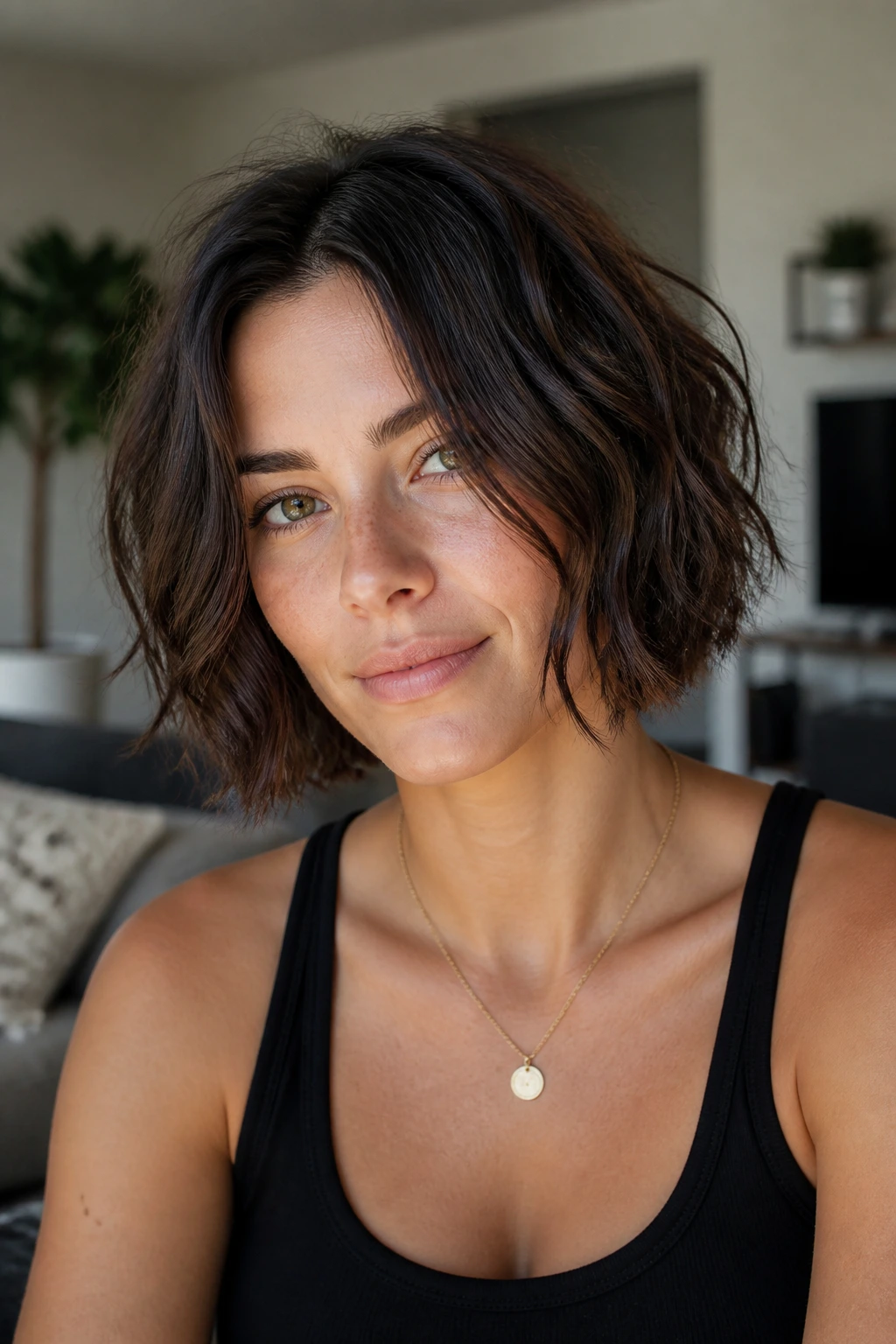
If your short hair tends to puff out at the sides, the jaw-length shag bob is the cut that usually behaves better. The layers are there to break up bulk, and the wave pattern helps those layers show instead of disappearing into one thick block.
Think of this one as built for people who like a little edge in their hair. The ends should look piecey, almost separated. Scrunch in a light curl cream on damp hair, then diffuse on low until the shape sets but doesn’t get crispy. The goal is a loose, airy bend with enough movement to keep the silhouette from turning triangular.
The part that matters most
A center part makes this shag look a little more undone. A side part gives it more lift and a better frame around the face. Either way, keep the wave irregular. Uniform curls fight the haircut. Broken, uneven bends make it look intentional.
4. Curtain-Bang Bob with Loose Waves
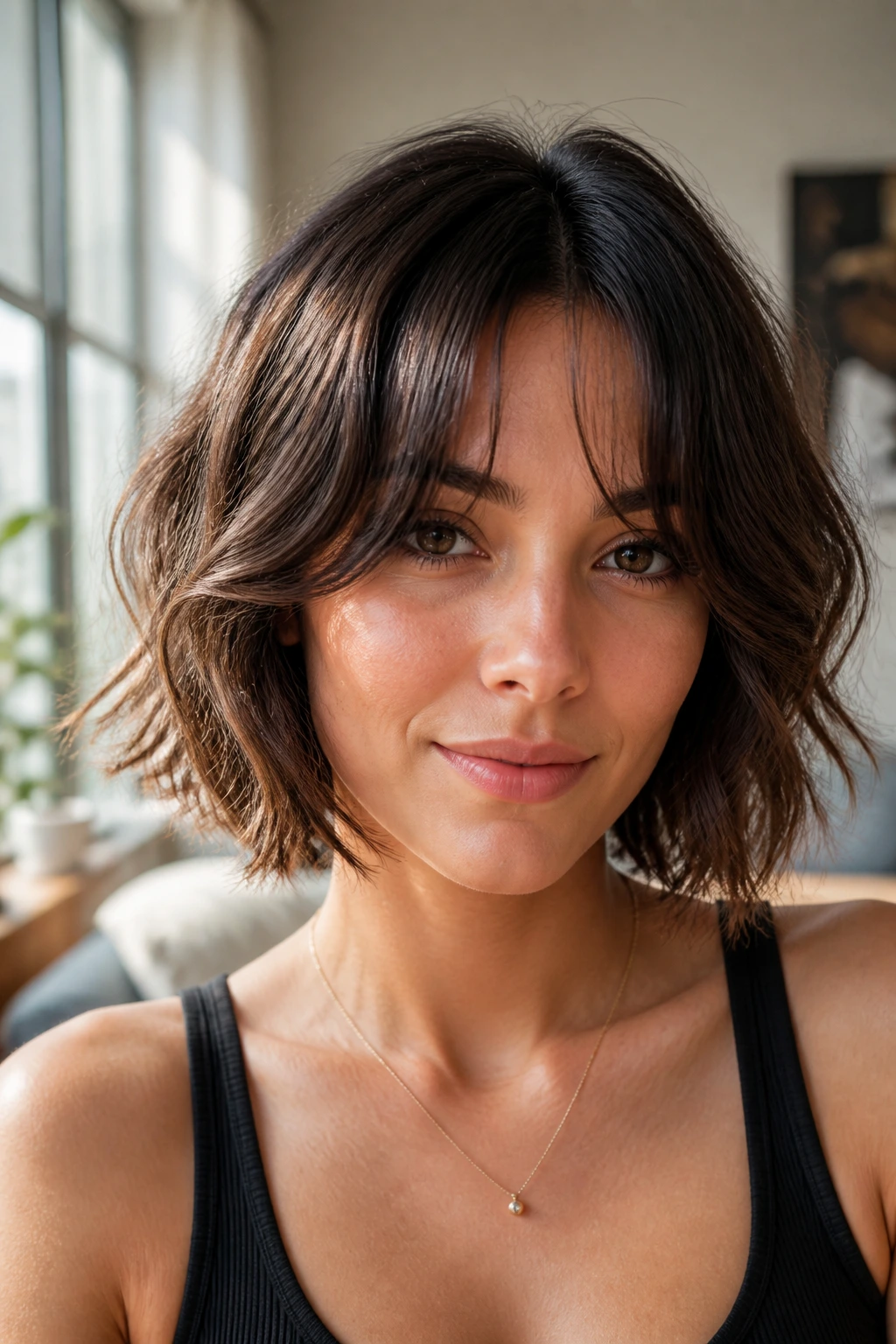
What if you want movement around the face without committing to a full fringe? Curtain bangs solve that problem neatly. On a short bob, they open at the center, skim the cheekbones, and soften the line where the hair meets the face.
This style lives or dies on the bend in the front pieces. Blow-dry the bangs with a small round brush or twist them around your fingers while they’re still damp. The rest of the bob can stay loose and imperfect. I like this look because it gives short hair a little swing without asking for a lot of polish.
If your forehead feels like it needs more room, keep the curtain bang longer at the sides. If you want a sharper shape, let the shortest point land around the bridge of the nose and curve the rest outward. The wave does the framing; the bang does the softening.
5. Wavy Pixie with Long Crown
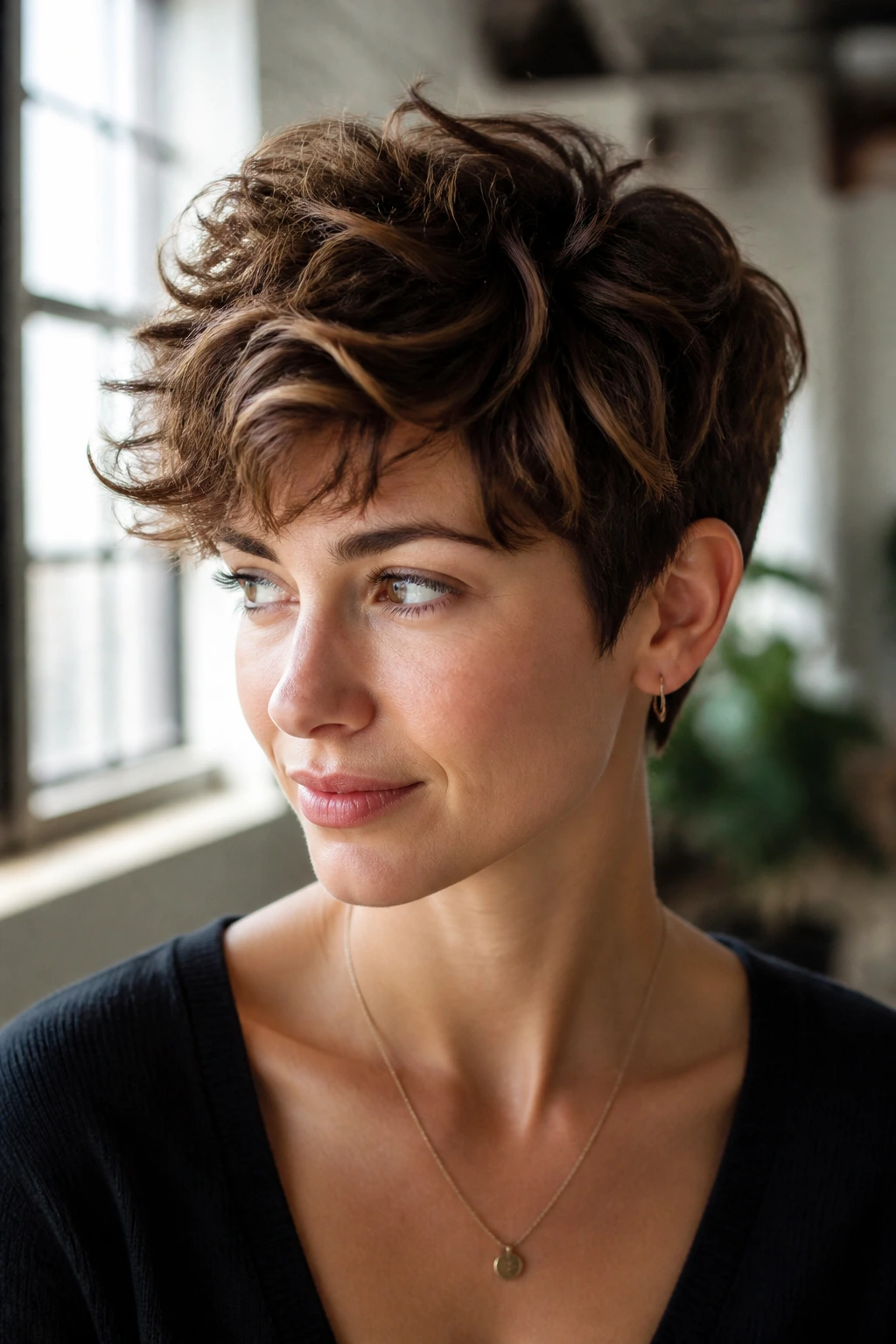
A wavy pixie with a long crown is what happens when a pixie keeps one foot in softness and the other in structure. The sides stay neat, but the top has enough length to bend, swell, and fall forward in a way that gives the cut personality.
This is one of the strongest short wavy hairstyles for anyone who hates the flatness that can creep into cropped hair. A pea-sized amount of mousse at the roots, a quick rough-dry, and a few finger-shaped bends on the crown usually do the job. You do not need a lot of product. Too much and the hair turns sticky, which is the fastest way to kill the lift.
Best way to wear it
- Push the longest pieces slightly forward, not straight up.
- Leave the sideburn area cleaner so the silhouette doesn’t get fuzzy.
- Use a matte paste only on the very top layer if you want separation.
The result is tiny, compact, and full of motion. That combination is hard to beat.
6. Blunt Micro Bob with Bent Ends
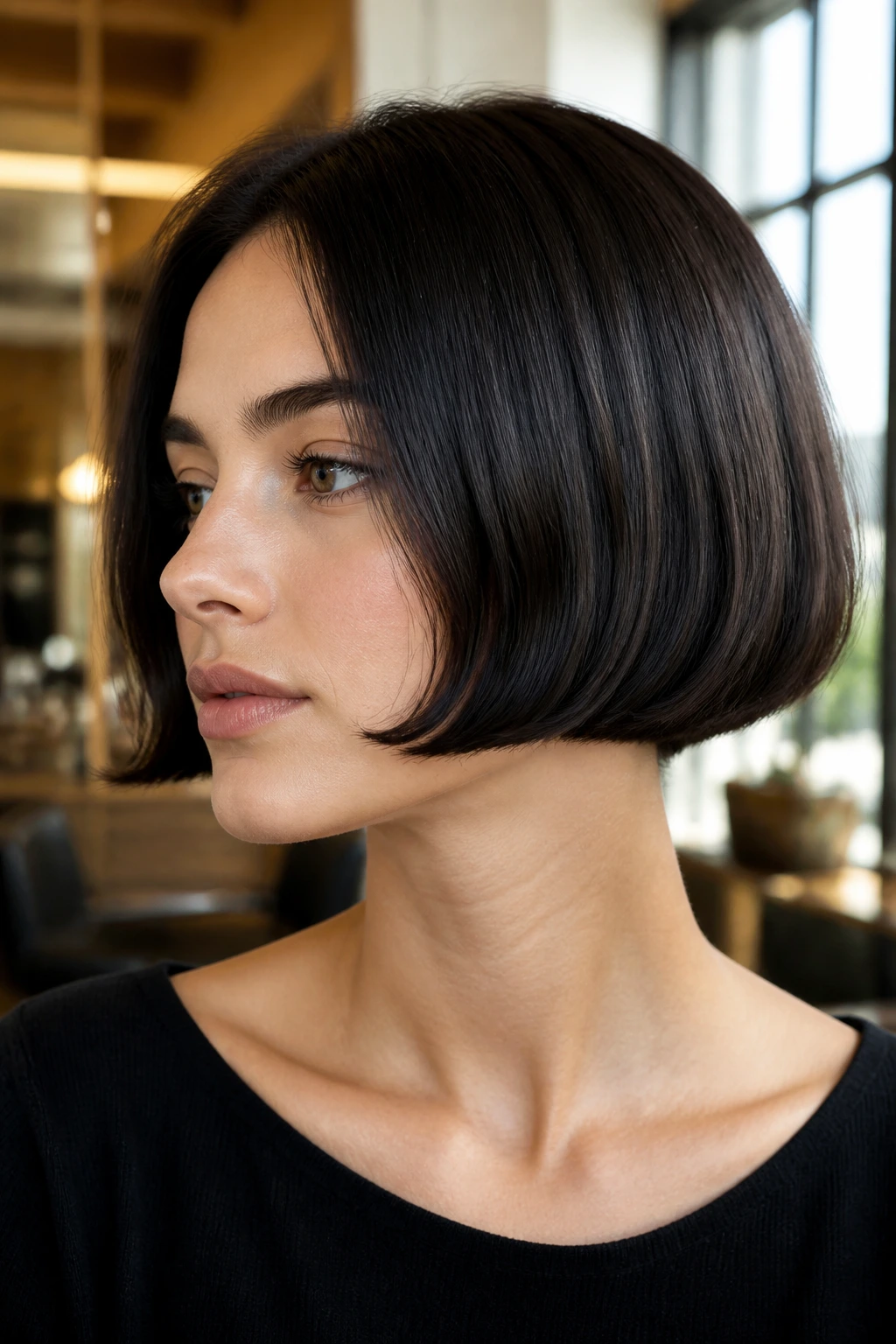
The blunt micro bob is for someone who likes a strong line and a little wink of texture at the ends. It sits shorter than a classic bob, usually around the cheekbone or just below it, and the wave is used like an accent rather than the whole story.
I love this shape with a flat iron bend. Clamp each section lightly, turn the wrist once or twice, and stop before the curl closes up. The ends should stay mostly straight so the cut keeps its crisp edge. If you curl every inch of it, the style loses that clean, graphic line that makes the micro bob work in the first place.
This one looks especially good with dark hair or glossy color because the bend shows off the shine. It can feel sharp in a good way. Very little fluff. Very clear shape.
7. Deep Side-Part Bob with Soft Volume
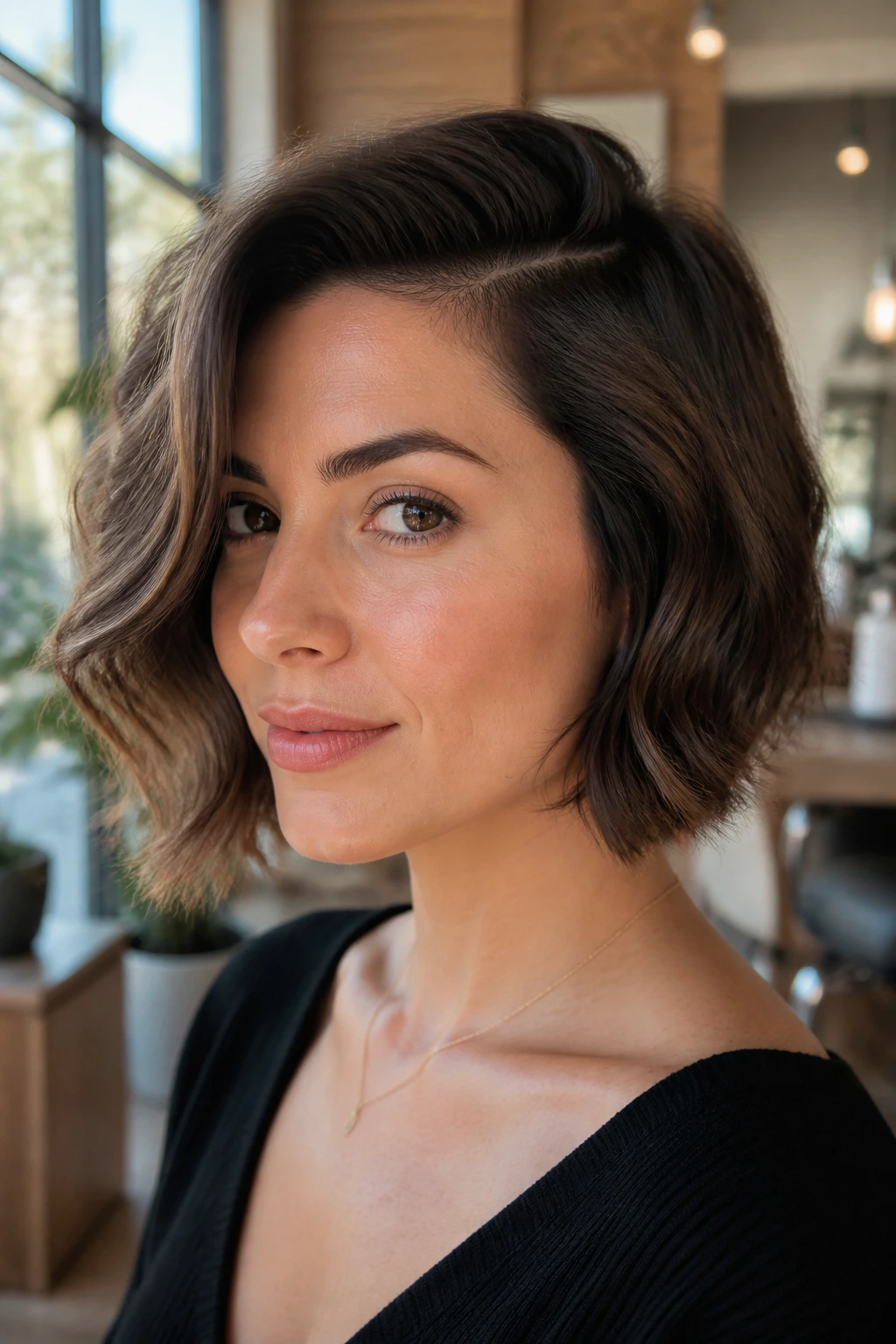
A deep side part can rescue a bob that feels too flat or too polite. Shift the hair over by two or three inches, lift the root at the heavier side, and let the wave fall in a sweeping line across the forehead and cheekbone. It’s a simple move, but it changes the mood fast.
This is the bob I’d pick when the hair is fine and needs a little drama without being overloaded with product. A root-lift spray at the crown, a loose wave through the mid-lengths, and a light mist of hairspray are enough. The heavy side gives the style a built-in anchor, which makes the rest of the hair look fuller than it really is.
The best part? It doesn’t need perfect symmetry. If one side sits tighter than the other, that actually helps the shape feel modern.
8. Inverted Bob with Piecey Waves
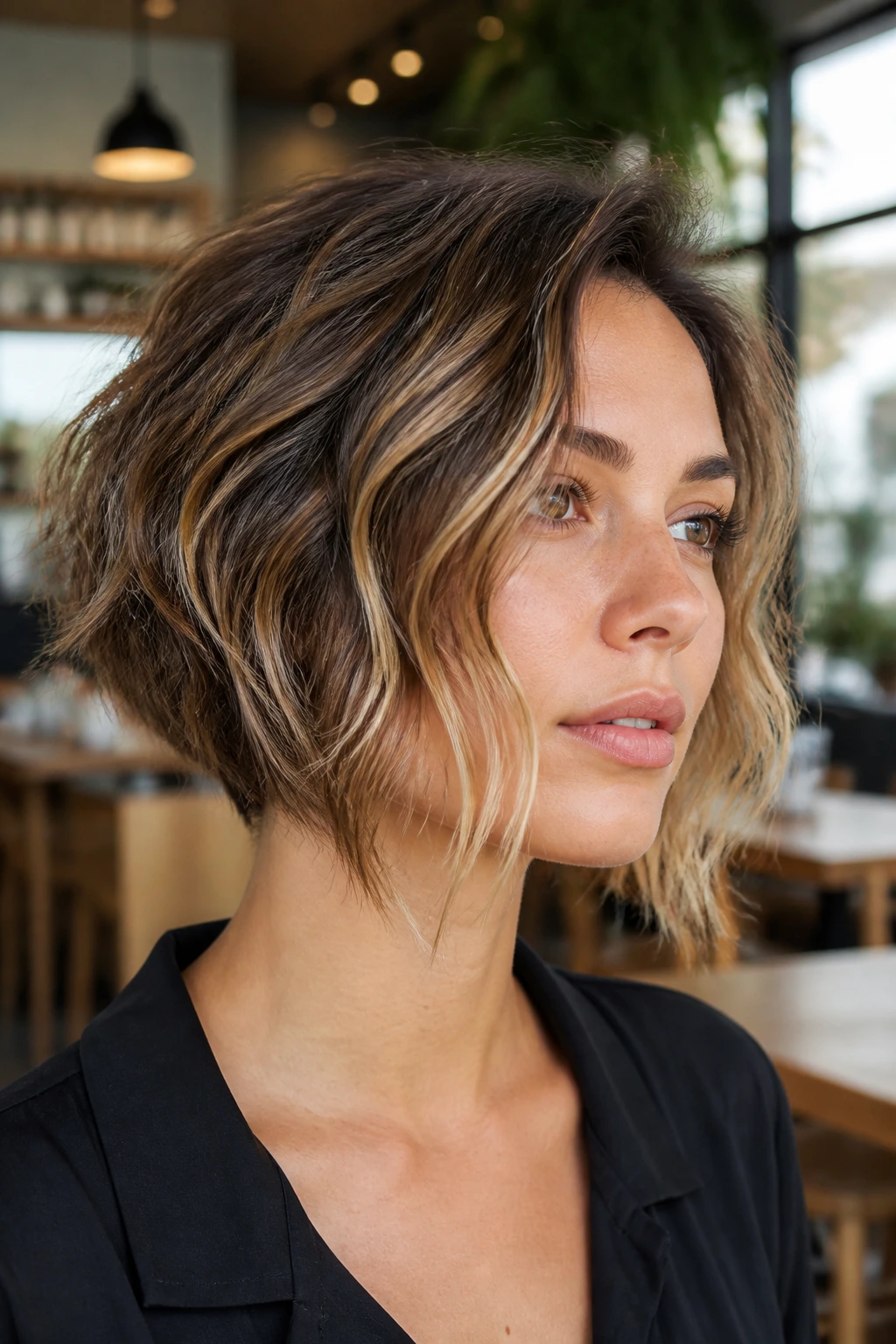
Why does an inverted bob look so good with waves? Because the haircut already does half the work. The back is shorter, the front is longer, and that angle gives the wave somewhere to fall instead of just puffing out at the sides.
The trick is to keep the front pieces loose and piecey rather than spiraled. Wrap the hair away from the face through the front, then switch direction through the middle so the wave breaks up. That keeps the inverted line visible. If everything curls the same way, the angle gets buried.
How to style it
- Blow-dry the nape first so the shorter back has a clean base.
- Use a medium barrel on the front to keep the bend broad.
- Finish with a dry texture spray, not a heavy cream.
This cut has a little built-in edge. The waves only make that stronger.
9. Air-Dried Mini Shag

An air-dried mini shag is the answer for people who want short wavy hair without a hot tool in sight. The layers are light, the movement is casual, and the whole thing gets better if you let the hair keep a bit of its own pattern.
I usually think of this cut as a balance between control and mess. Work a nickel-sized amount of curl cream through damp hair, then scrunch in a touch of sea salt spray at the ends. Once it dries, break up any crunchy spots with clean hands. Do not brush it once it’s set. That’s the quickest way to turn the shag into a puff.
This style is a good match for hair that already bends a little on its own. It also handles grow-out well, which saves you from that awkward “too long for a crop, too short for a bob” stage.
10. Side-Swept Hollywood Bob
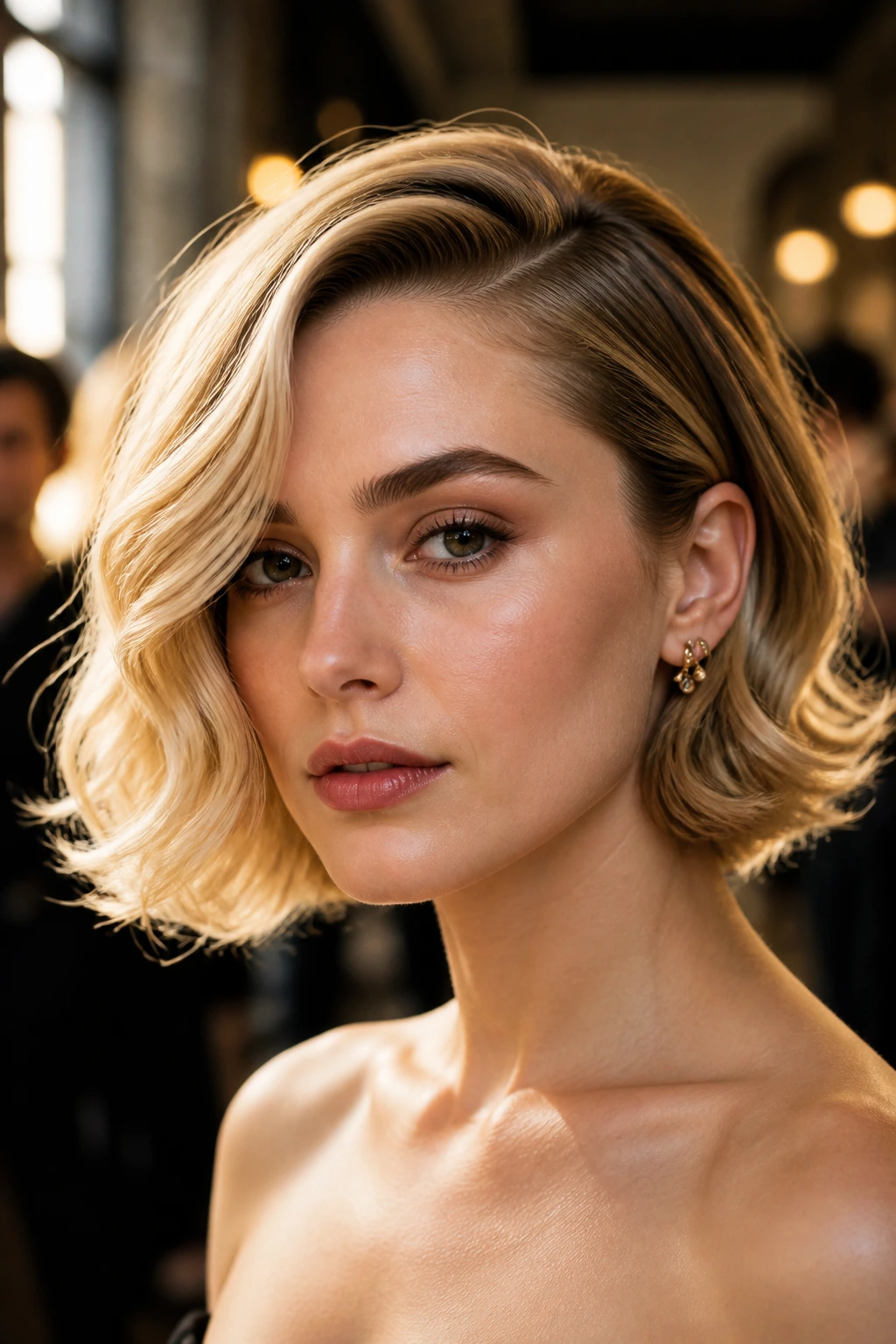
A side-swept Hollywood bob takes short hair and gives it a little red-carpet polish. The waves are broader, the part is deeper, and the front section sweeps across the forehead like it has somewhere to be. It’s less beach, more smooth movement.
This is one of the few short wave styles where you actually want a bit more structure. Set the hair with larger sections, let the curls cool completely, then brush them out with a soft boar-bristle brush or a very loose paddle brush. The wave should soften, not disappear. A drop of shine serum at the ends gives the finish that smooth, dressed-up look.
If you need a short hairstyle for an evening event and do not want a hard shell of hairspray, this is the one I’d reach for first. It reads polished without looking stiff.
11. Wet-Look Sculpted Wave Crop
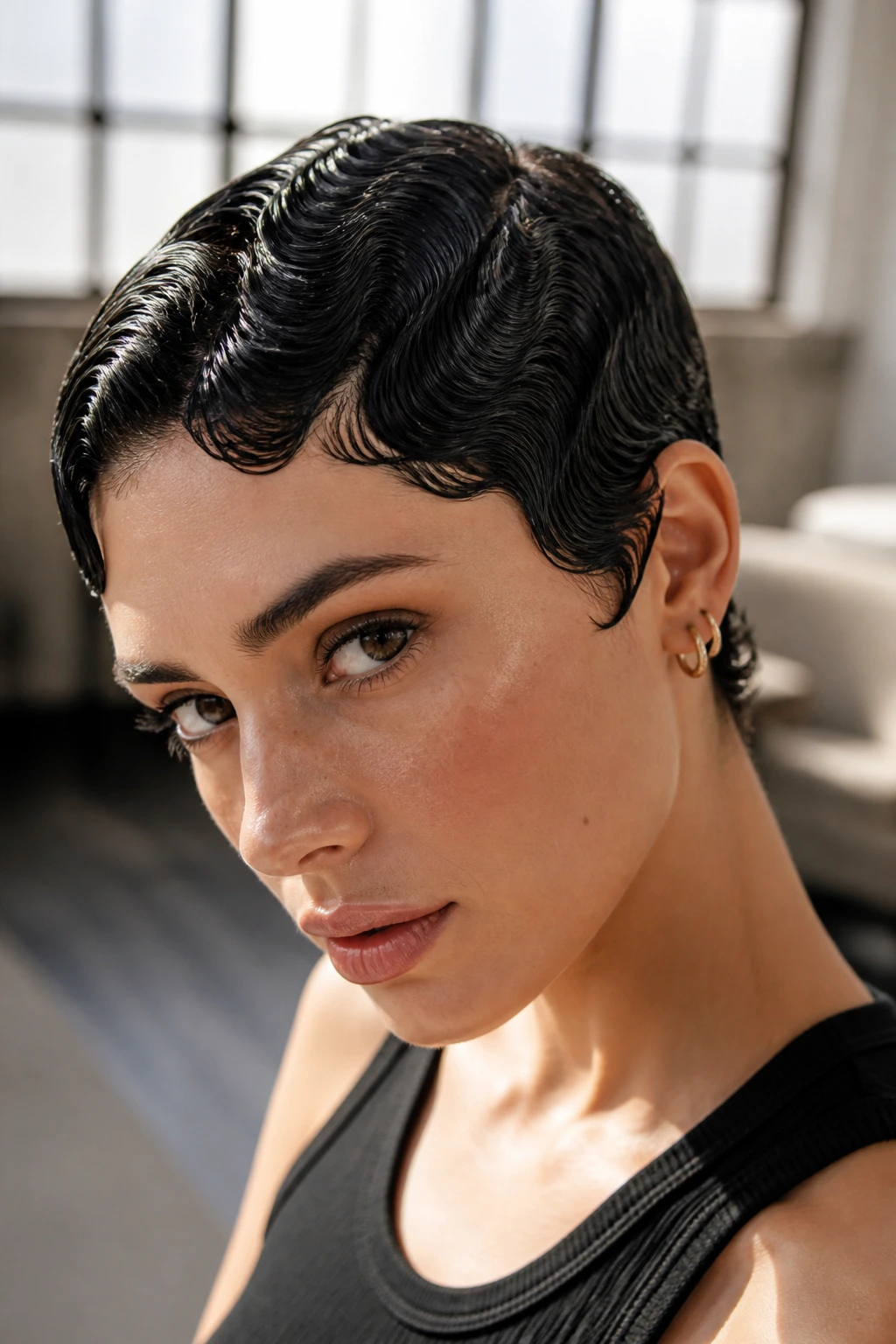
A wet-look crop changes the whole conversation. Instead of chasing softness, you lean into shine, direction, and controlled movement. The result feels editorial and slightly bold, like the hair is still half-set after a photo shoot.
The product choice matters here. Use a strong gel on damp hair, comb it through with a fine-tooth comb, and create a clean side or center part before the hair starts to dry. Then pinch a few soft bends into the top section with your fingers. You want the surface to look slick, but the wave should still be visible underneath.
This style is at its best on very short cuts where the line of the head matters more than volume. It can look severe if the hair is too dry or too frizzy, so keep the finish clean and the sections tidy. There’s no room for half-measures here.
12. Feathered Crop with Soft S-Bends

A feathered crop with S-bends is one of those styles that makes short hair look lighter than it really is. The ends are broken up, the wave is soft, and the overall effect feels airy instead of heavy.
I like this shape on hair that has a little density but doesn’t need a full shag. You get movement without a lot of piecey separation. A round brush at the crown helps the cut lift off the scalp, and a curling iron used only through the mid-lengths creates those easy S-shaped bends. Keep the ends loose. That’s where the feathered effect lives.
What to watch for
- If the layers are too short, the style can kick outward.
- If the product is too heavy, the feathering disappears.
- If the crown is flat, the whole cut falls down fast.
It’s soft, but not vague. That’s the sweet spot.
13. Piecey Pixie with Wave Fringe
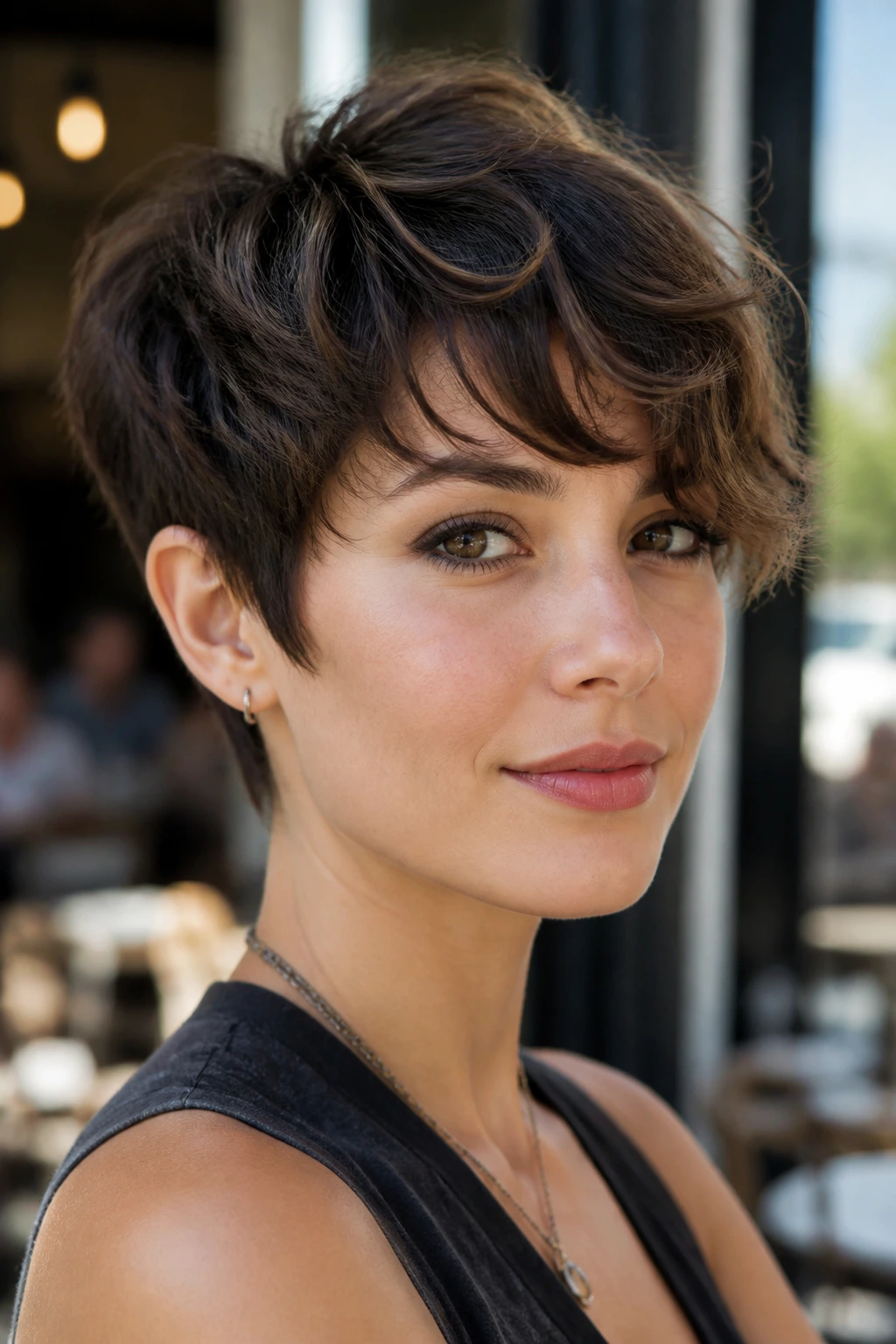
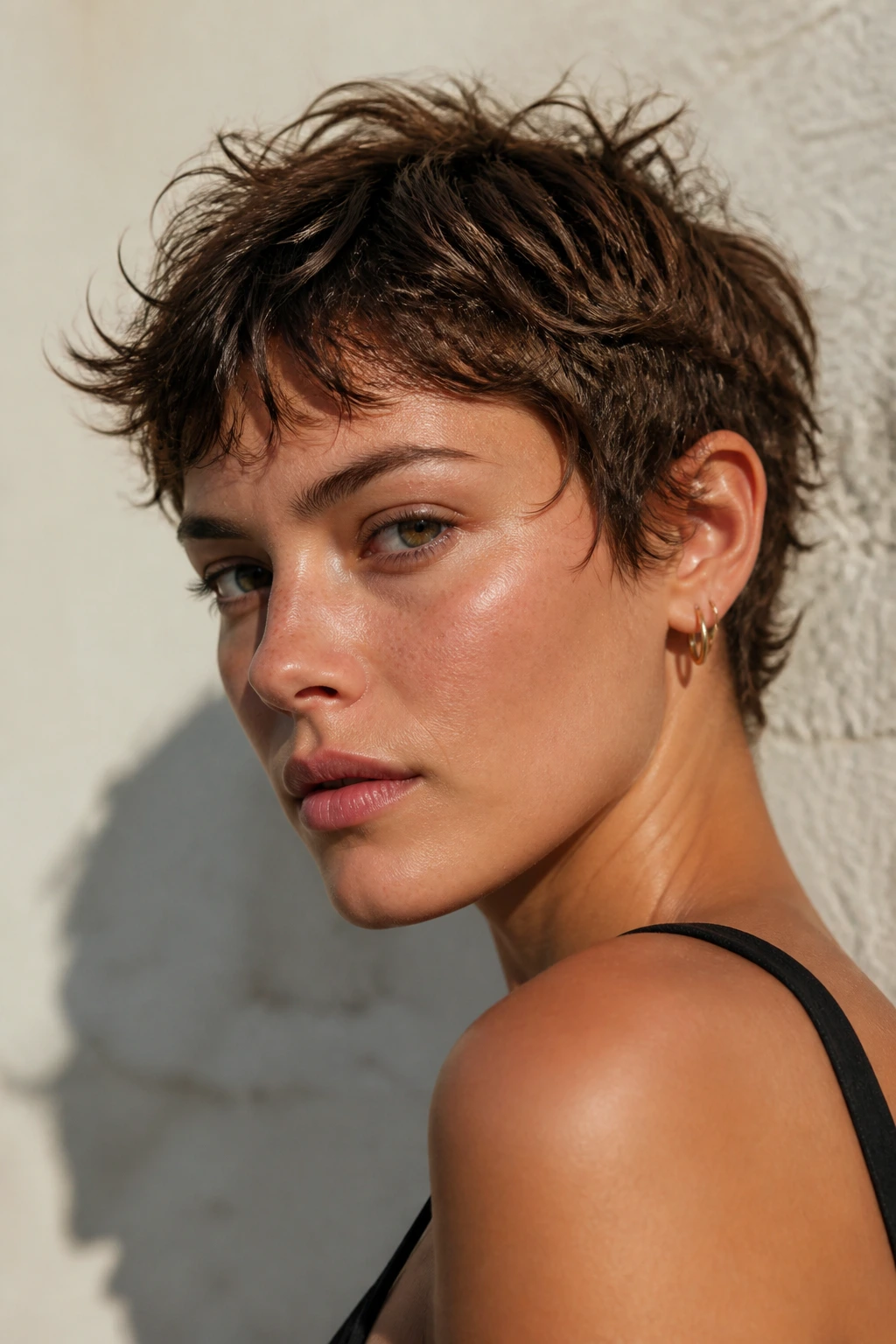
A piecey pixie with a wave fringe has a little mischief to it. The fringe is longer, the pieces are separated, and the texture is broken enough that the cut never feels too neat. That’s exactly why it works.
Use a tiny amount of paste—honestly, smaller than most people think. Warm it between your fingers, then pinch it into the fringe and the top layer. The wave should look like it was formed by finger movement, not by a curling machine. If the front starts to clump, rake through it once with a wide-tooth comb and stop there.
This cut is best when the rest of the hair stays close to the head. You want the front to do the expressive work. Too much volume on the sides, and the whole thing loses the sharpness that makes a pixie feel deliberate.
14. Bottleneck-Bang Short Bob
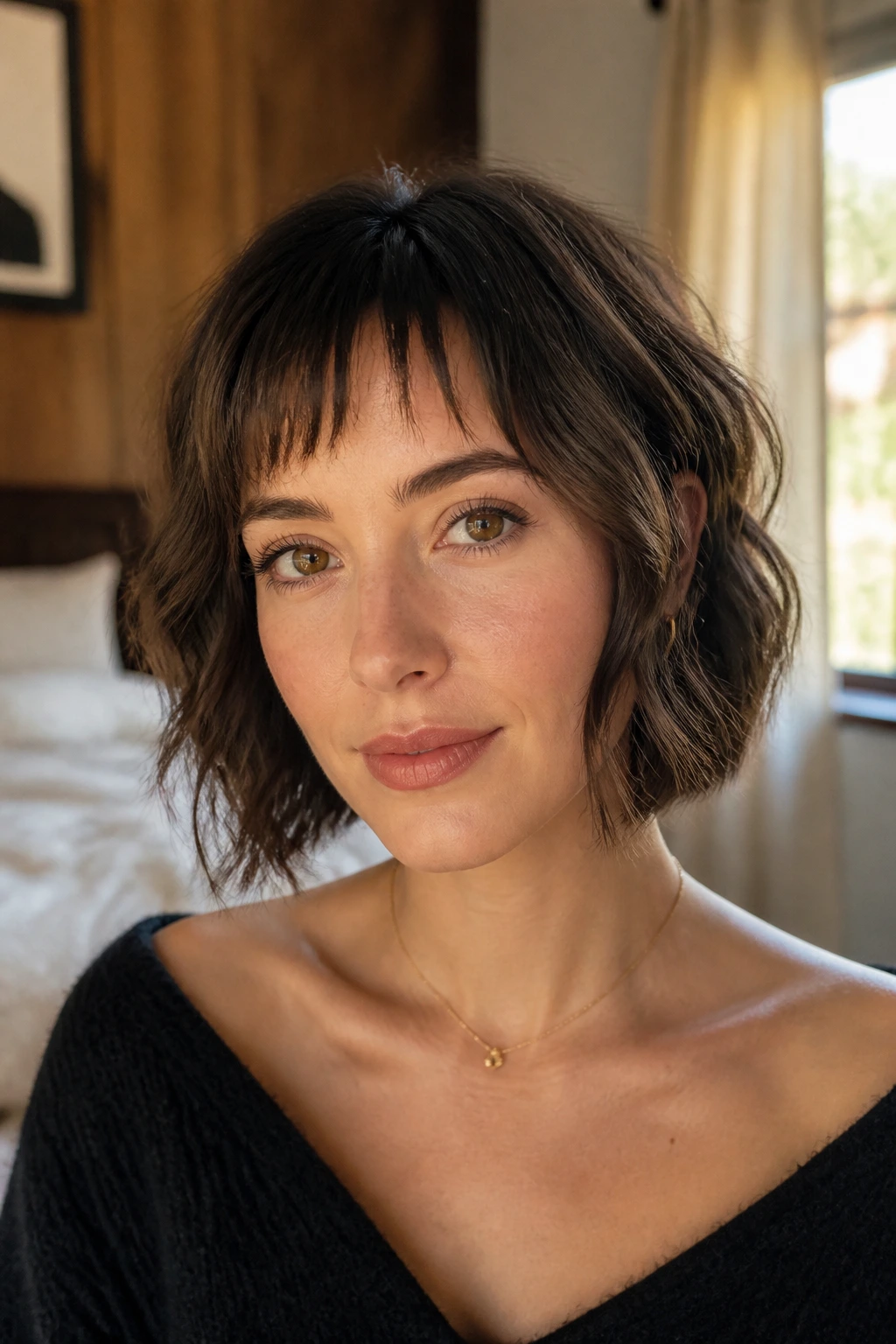
The bottleneck bang bob sits in that useful middle ground between a full fringe and a curtain bang. The bangs are shorter in the center, then taper longer near the temples, which gives the face a softer frame without closing it in.
This cut does a nice job of making short waves look more expensive than they actually are. The bangs bring the focus up, while the bob’s wave keeps the lower half from feeling too severe. Blow-dry the bang area first so it sets in the right direction, then add the wave through the rest of the hair with a medium barrel. The shorter front pieces will bend more quickly than the rest, so be careful not to overdo them.
If your forehead is shorter or you wear glasses, this shape can be especially flattering. It doesn’t fight the face. It works with it.
15. Razor-Cut Choppy Crop
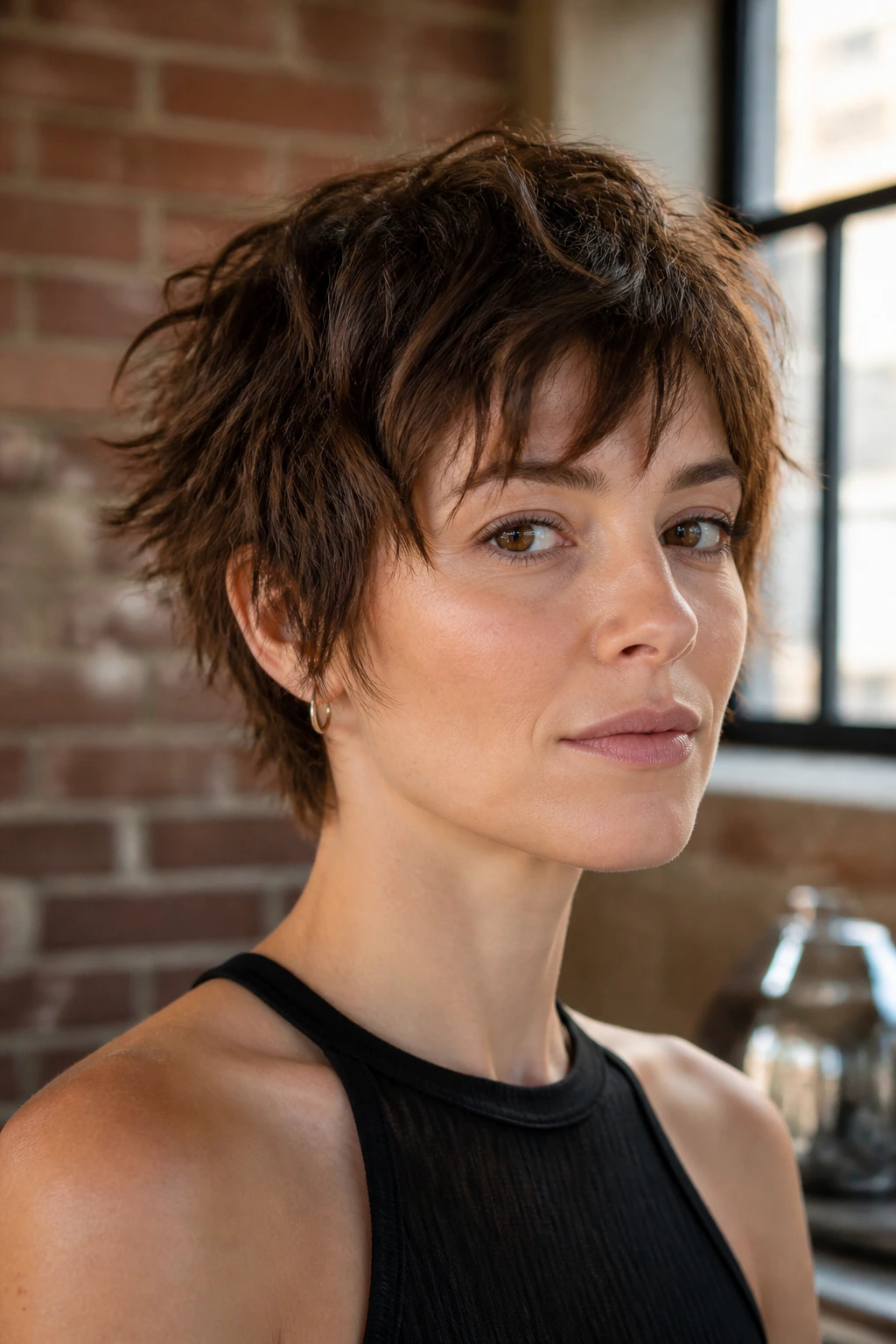
Want texture that looks a little unruly in a good way? The razor-cut choppy crop is built for that. The ends are thinned and sharpened, the layers fall with more separation, and the waves sit on top like loose brushstrokes.
This is the cut for hair that gets bulky when it grows out. Razor cutting removes weight, which helps the wave spring instead of sag. It also means you can use less product. A light mist of texture spray plus a small amount of styling cream is usually enough. If you pile on oil, the separation disappears.
The best version of this style keeps the ends uneven on purpose. Nothing about it should look too tucked in. It’s casual, but not careless.
16. Curved-Under Bob with Loose Bend
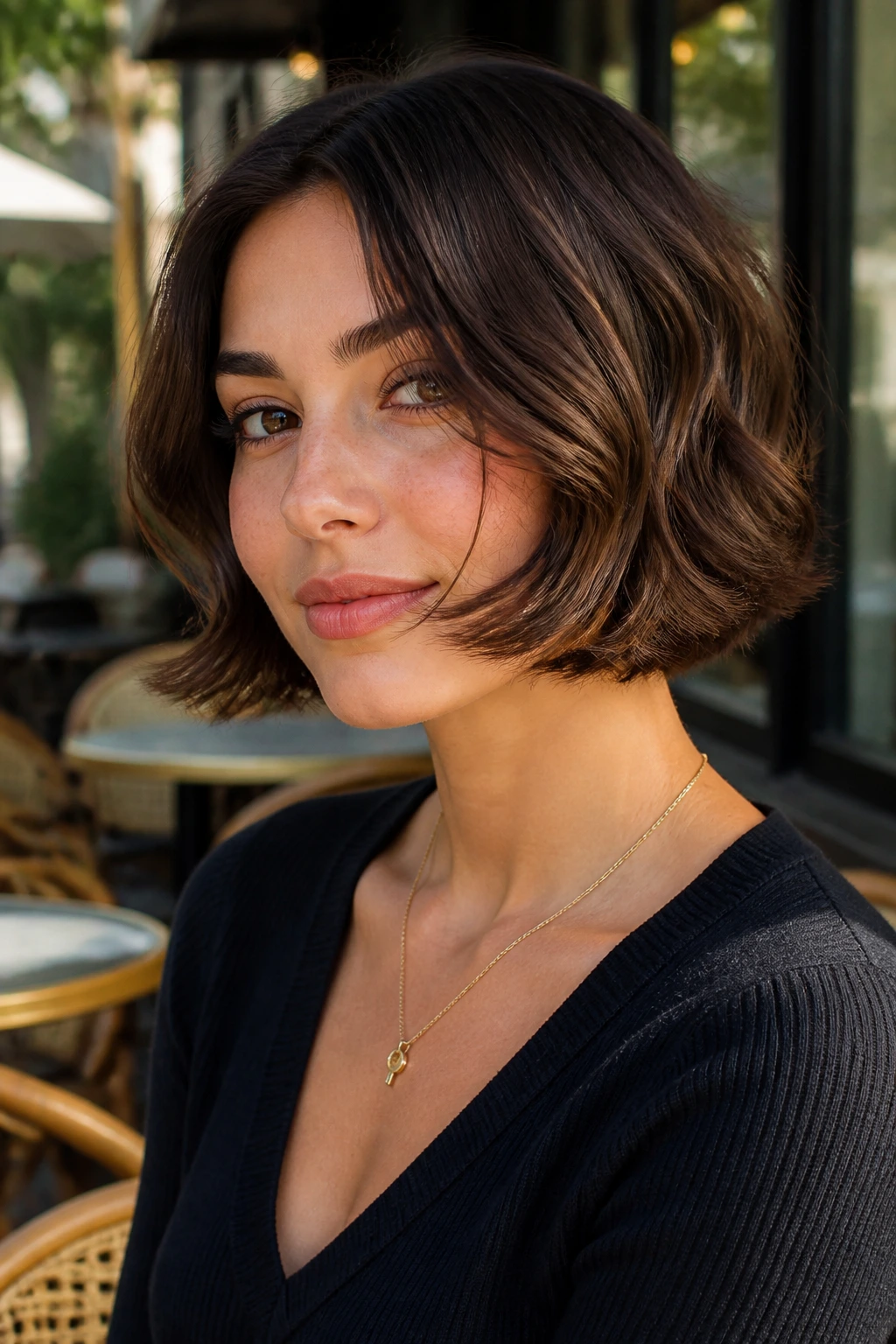
A curved-under bob with loose bend is a quieter look, but I’d never call it boring. The shape hugs the jawline, the ends curve inward just enough to feel finished, and the wave moves through the middle instead of screaming at the surface.
This style suits someone who wants short hair that behaves in wind, humidity, or a packed day. The inward curve gives the cut a neat outline, while the loose bend stops it from looking helmet-like. A round brush and a blow dryer nozzle are enough to get the base shape right. After that, add a few soft bends with a flat iron if you want more texture.
Best detail: Keep the perimeter crisp, not feathered. That contrast between a clean outline and relaxed texture is what makes the style look balanced.
17. Finger Wave Crop
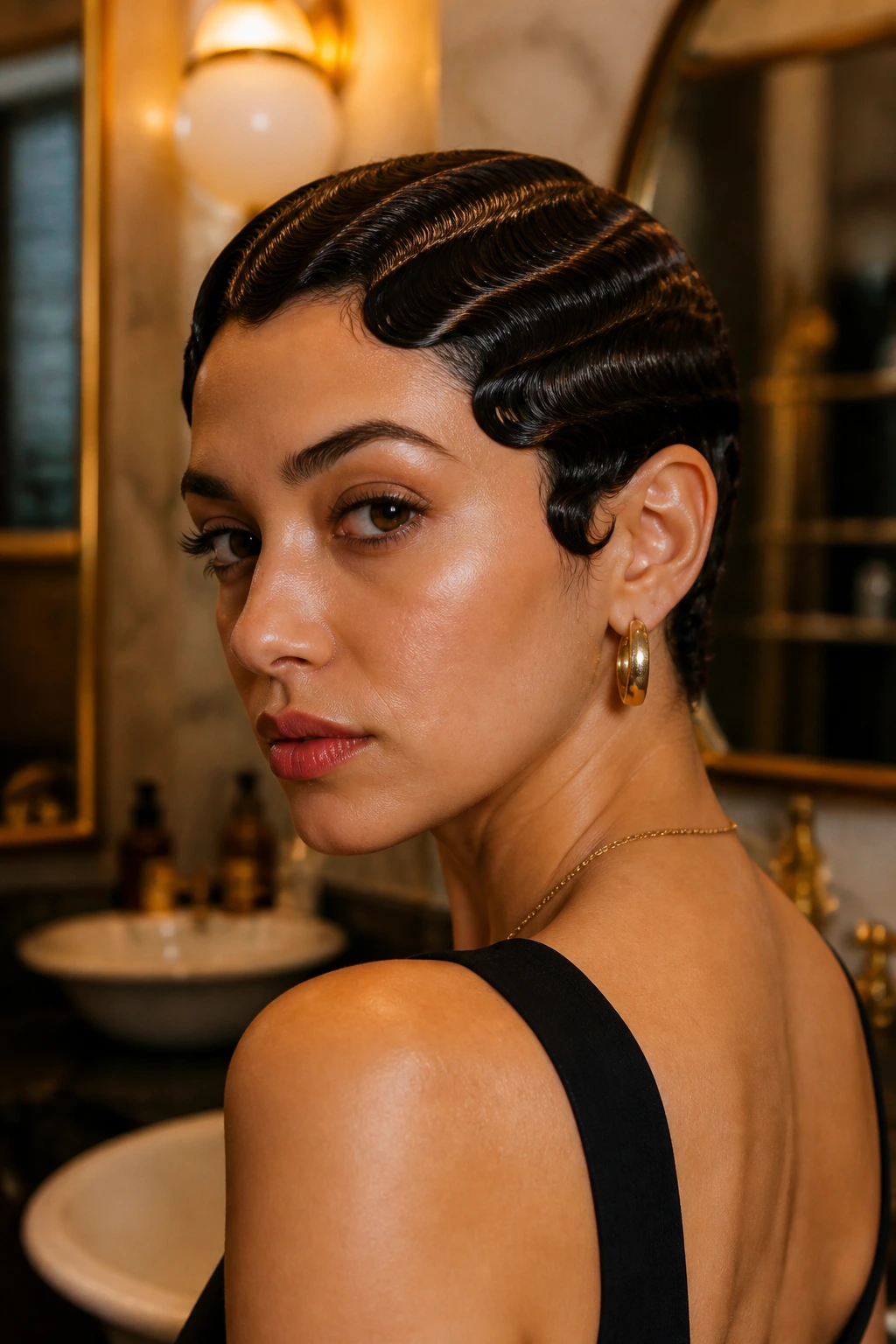
Finger waves on short hair are a different animal altogether. They’re sculpted, glossy, and unmistakably deliberate. The wave follows the head in S-shaped ridges rather than loose curls, which gives the style a vintage edge that still feels current when it’s done cleanly.
This is not a style to rush. Set the hair with styling gel, comb each ridge into place, and use duckbill clips until the shape dries. The payoff is a finish that sits close to the scalp and holds its line. On short hair, that low profile looks strong rather than fussy.
The best part of a finger wave crop is how little length you need. Even a short pixie can carry the style if the top has enough surface to form a ridge. It’s precise work, but the result has real presence.
18. Side-Swept Tucked Crop
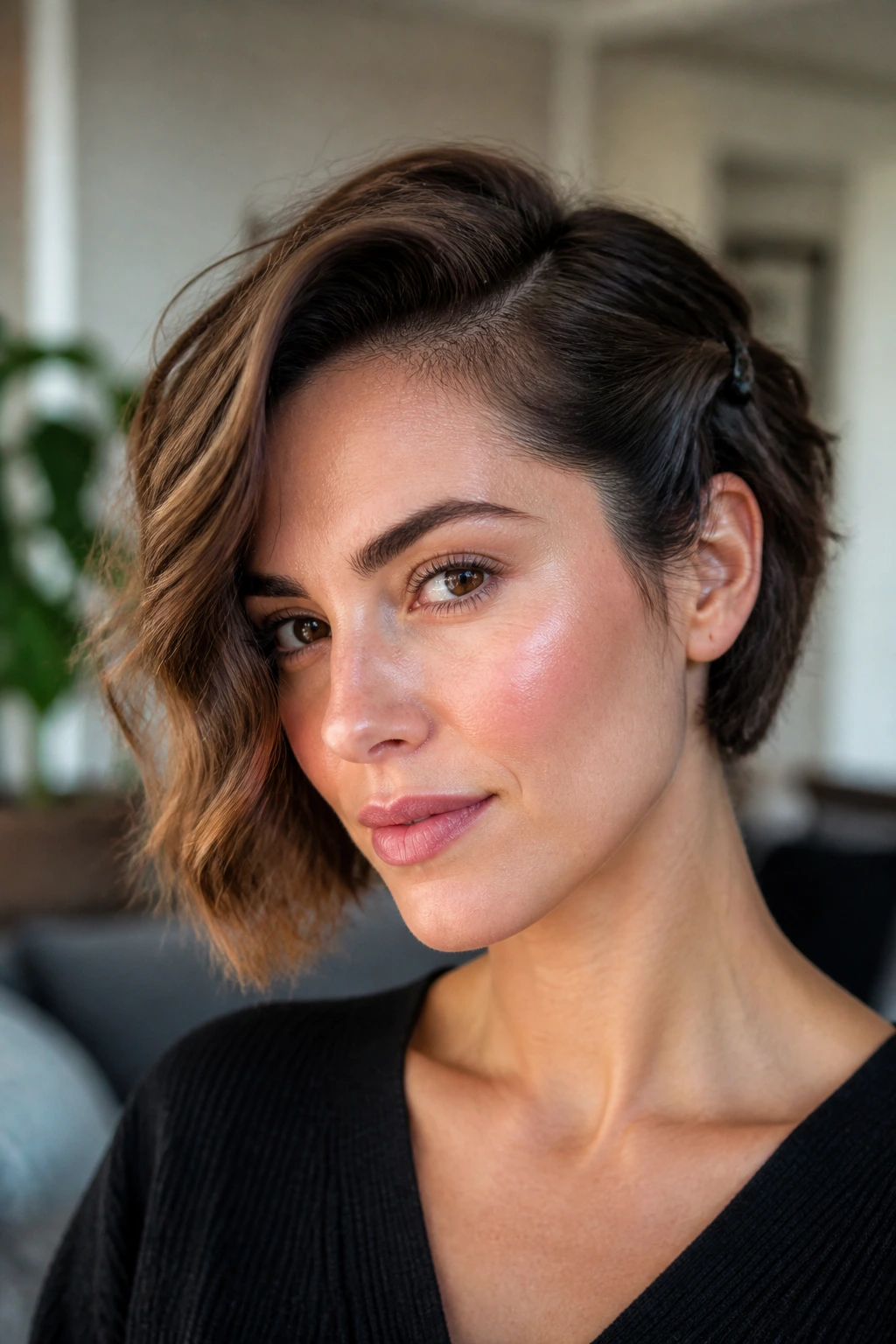
A side-swept tucked crop is what happens when you let one side stay loose and tuck the other behind the ear. It sounds simple because it is simple, and that’s part of the appeal. The asymmetry gives short wavy hair a little movement without making the whole style fussy.
The wave should travel diagonally across the head, not straight down. That diagonal line keeps the crop from feeling boxy. A tiny barrette or a clean tuck behind the ear is enough to hold the heavier side in place. If you need more control, smooth a pea-sized amount of cream over the top layer and leave the ends alone.
This works especially well when you want to show off earrings or a strong jawline. The hair gets out of the way without losing its shape. Nice and practical. That’s a rare combination.
19. Choppy Mini Lob
A choppy mini lob gives you the room of a longer bob without tipping into shoulder-length territory. It sits just above or around the collarbone, which means the waves can stretch a little farther and still feel short. That extra length opens up more texture choices.
Because the shape is slightly longer, you can do either loose beach waves or broader bends. I prefer the broader bend on this cut. It keeps the ends from turning too wispy, and it makes the layers read more clearly. A texturizing spray through the mid-lengths and a light finger-scrunch are enough to finish it.
This one is useful if you’re growing out a shorter bob but don’t want to lose the short-hair feel. It gives you breathing room. Not much more. Just enough.
20. Sleek Tucked-Behind-Ear Bob
Sleek at the root, wavy at the ends. That’s the whole magic trick. The tucked-behind-ear bob keeps the top smooth and close, then lets the wave show up lower down where it can soften the line.
This style looks especially good when the hair is freshly blown out and only lightly bent. Use a flat brush or round brush at the crown, then create gentle movement through the lower half with a curling iron. Tuck one side back, let the other side fall forward, and finish with a touch of shine spray. The contrast is the point.
It’s a very clean look, but not stiff. If your hair has a natural bend, this style can be done fast. If not, the bend at the ends keeps the cut from looking too severe.
21. Rounded Bubble Bob
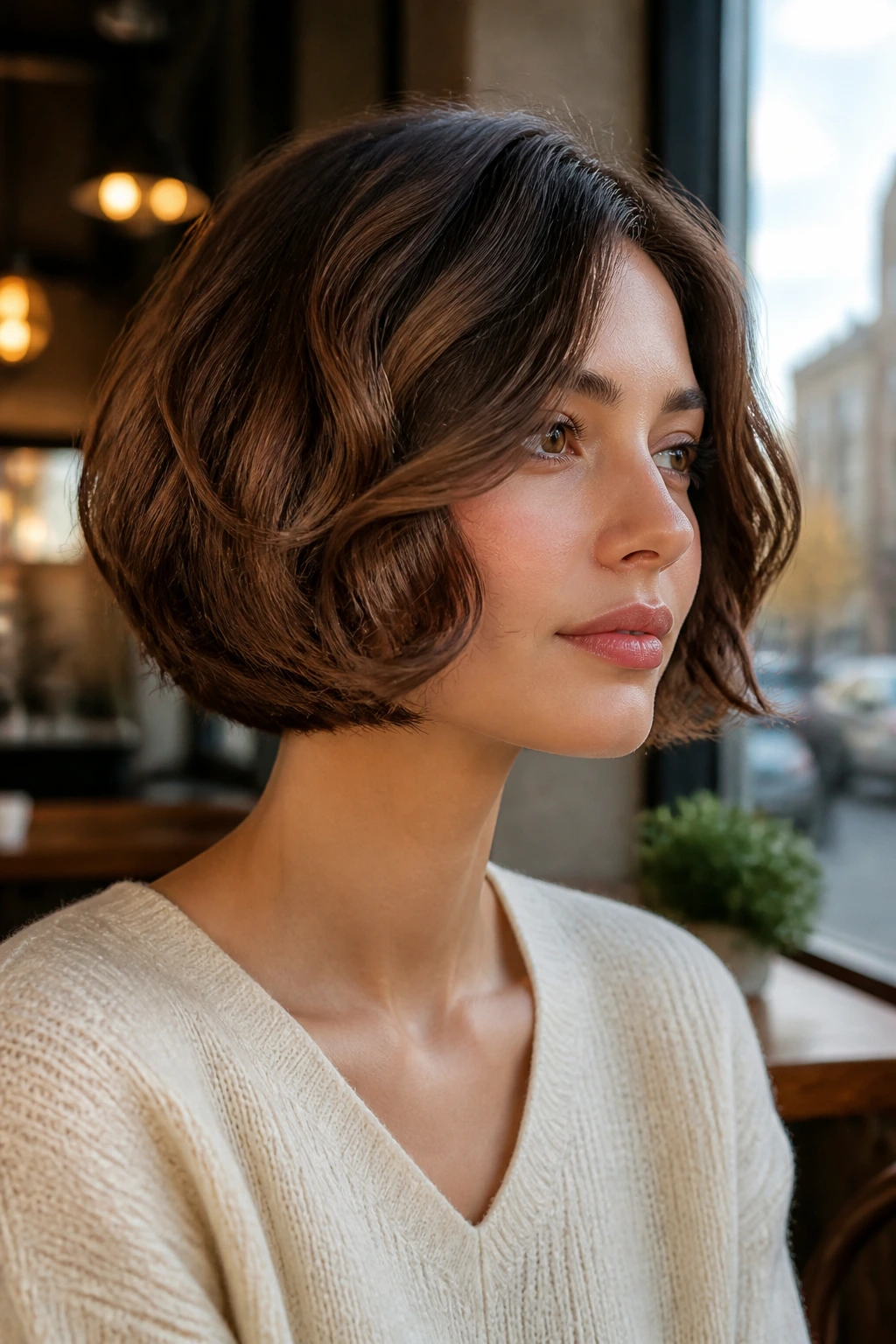
The rounded bubble bob has a soft, full silhouette that curves in around the head instead of sitting flat. On short wavy hair, that round shape gives the wave a container, which can be a relief if your hair likes to scatter.
You want the crown to have lift and the perimeter to stay smooth. Too much wave at the very ends will fight the shape. Instead, keep the movement higher up and use a brush to encourage the hair inward as it dries. A little root clip at the crown for ten minutes can make a huge difference.
This one is especially nice if you like short hair but want it to feel plush rather than spiky. It’s soft around the edges, but the outline stays clean.
22. Grown-Out Pixie with Wave Fringe
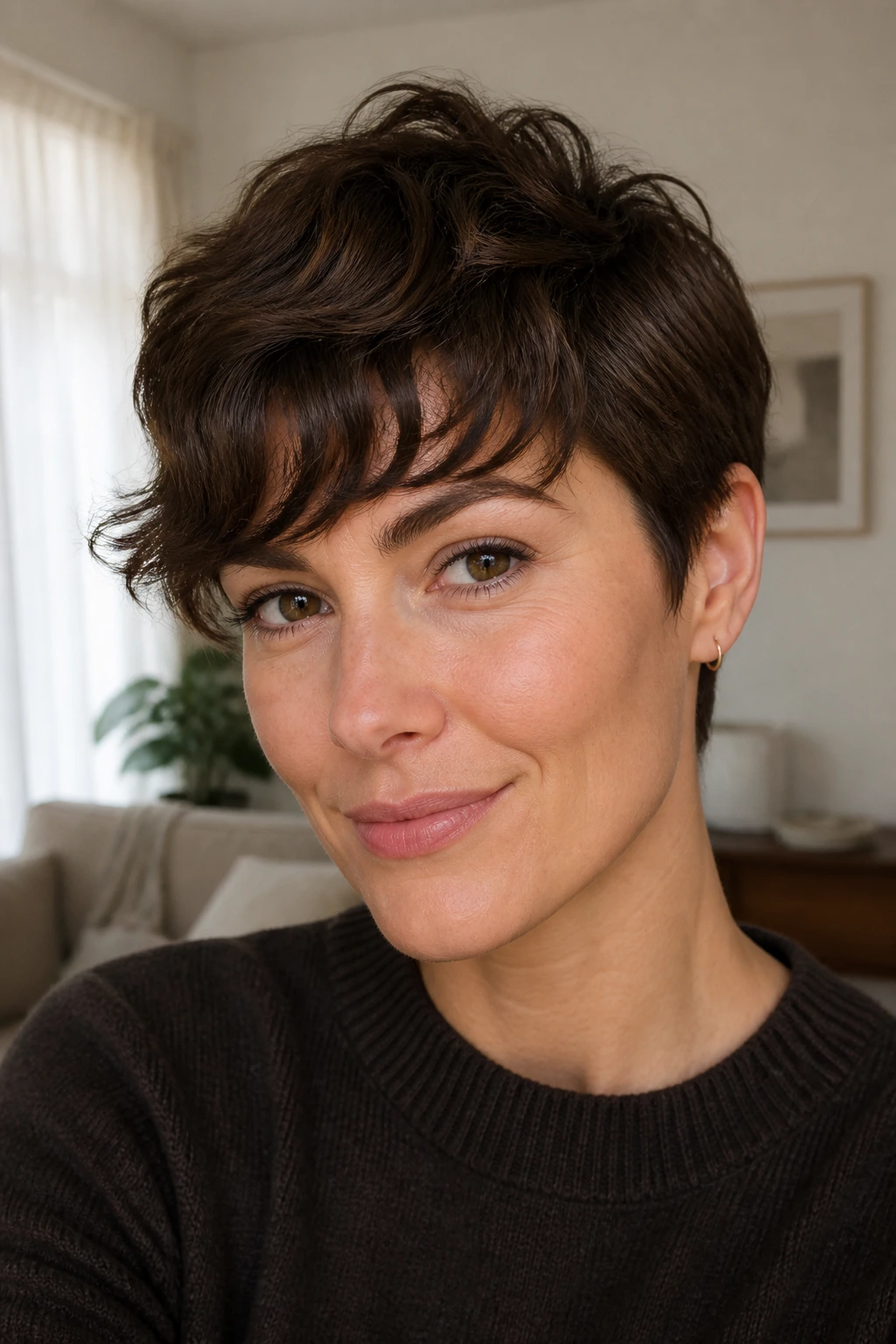
A grown-out pixie with wave fringe is one of the most forgiving short hairstyles you can wear. It turns the in-between stage into a style of its own. The fringe gets longer, the top keeps its wave, and the sides stay narrow enough to hold the shape together.
This is the cut I’d recommend when someone says they’re “between haircuts” but doesn’t want to look like it. The wave at the front does a lot of the visual work. Push the fringe forward and slightly to the side, then pinch the ends so they break apart instead of forming one clean curl. A small amount of matte paste can help, but keep it light.
The nice part is that it doesn’t need perfect upkeep. A little roughness actually helps. The style gets better when it stops trying to be neat.
23. Half-Up Knot on Short Waves
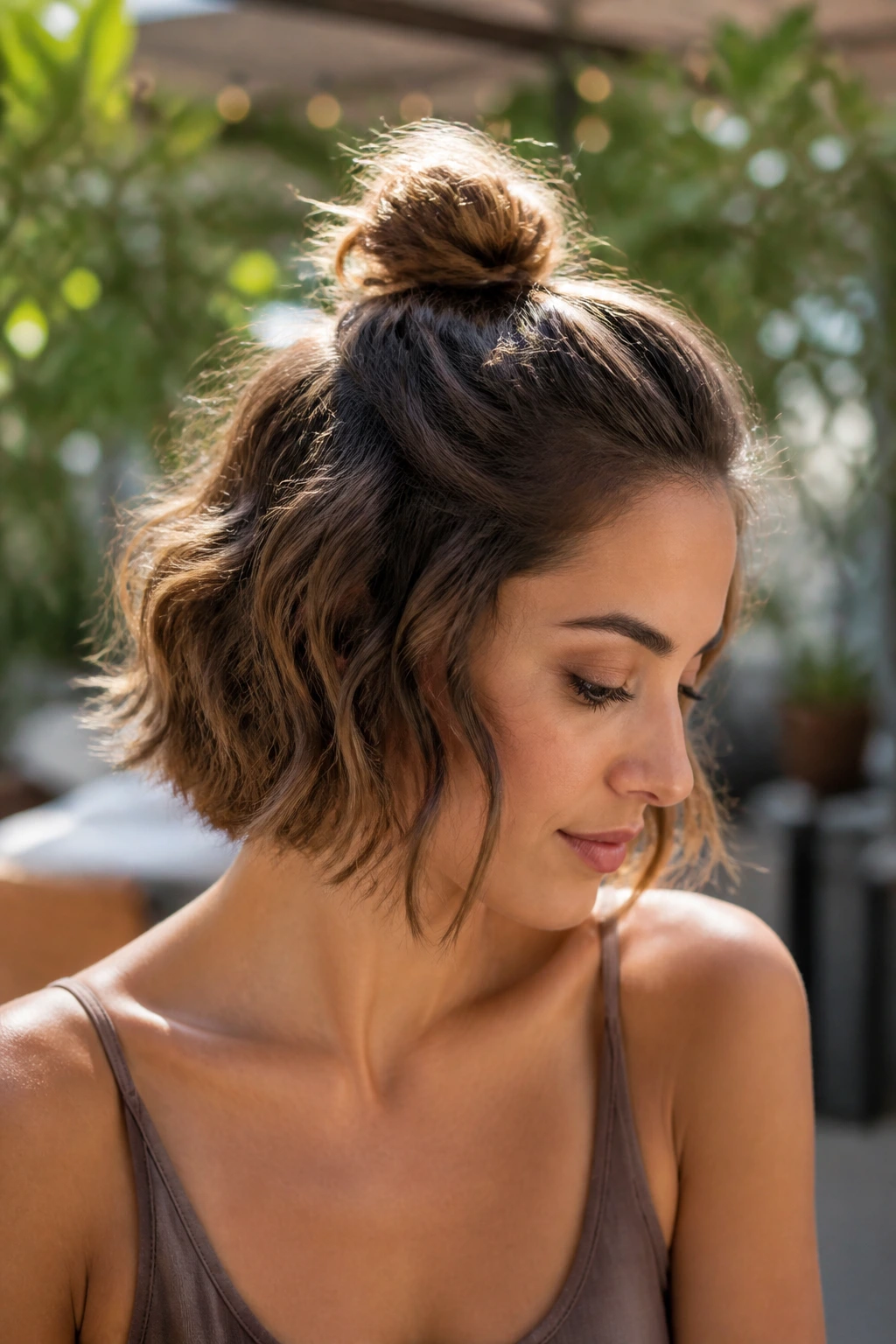
How do you make short wavy hair feel a little more playful without pulling everything back? A half-up knot does it fast. Gather the top section, twist it into a tiny knot, and leave the bottom waves loose and visible.
This works best on chin-length bobs and mini lobs where there’s enough hair to pin but not so much that the knot gets heavy. You want the waves underneath to stay soft, so don’t over-tighten the top. A couple of bobby pins crossed in an X usually hold better than one pin shoved in at random.
The mood here is casual with a hint of effort. It’s a good fix for second-day hair, and it gives you a way to show off texture without re-styling the whole head.
24. Headband-Set Wave Bob
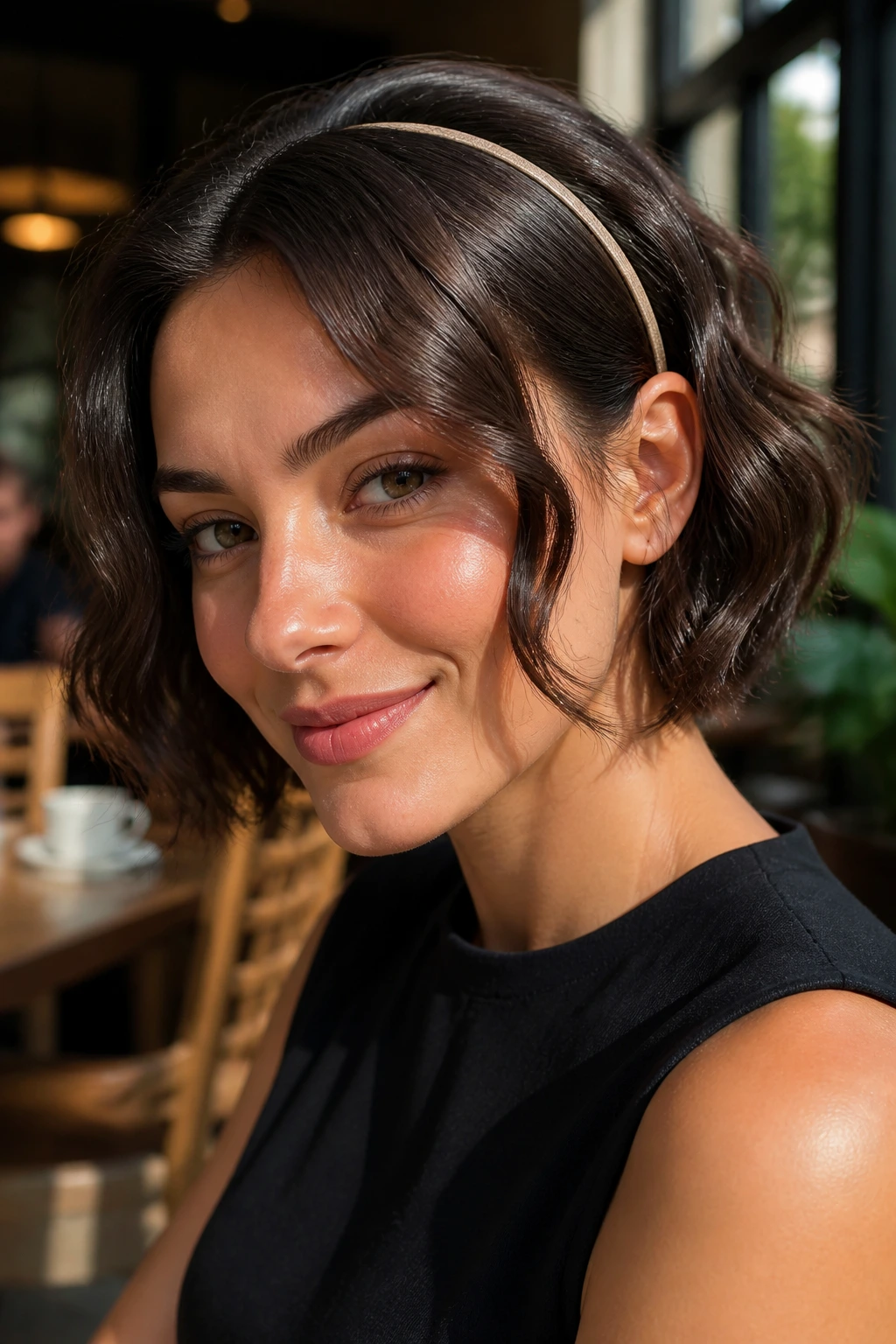
A headband can change a bob more than people expect. Slide one on over slightly damp or lightly textured hair, let the front tuck and bend around it, and you end up with soft, face-framing wave lines that look built into the cut.
This is a neat option when you want something quick and low-heat. Choose a slim headband if your hair is short and fine; a wider band tends to push too much hair back and flatten the crown. The wave should still live in the lengths, so loosen the hair at the temples after the band comes off.
This style feels friendly. It’s the kind of look that works on school runs, office days, and anywhere else you don’t want your hair to look overworked.
25. Brushed-Out Glam Waves
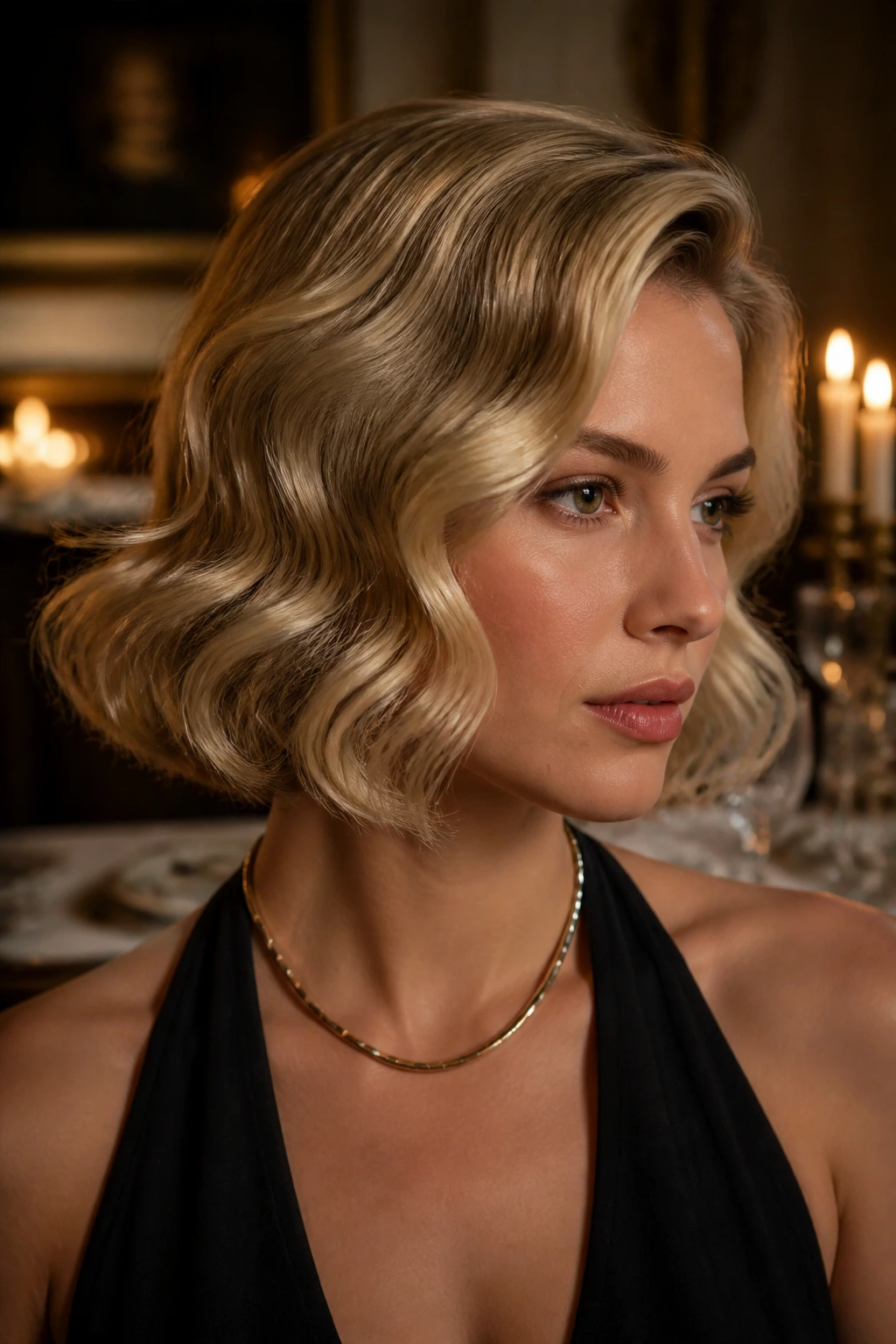
Brushed-out glam waves are softer than they sound. The curls are set first, then brushed into broader, smoother movement that reads polished instead of crunchy. On short hair, this has a nice old-school finish without looking costume-like.
The key is waiting until the waves are fully cool before brushing. If you go in early, they fall apart. If you wait, they settle into that plush, glossy shape that holds together better. A little spray wax on the fingertips can help separate the front pieces once the brush has done its job.
This is a strong choice for dinner, events, or any moment when you want short hair to feel dressed up. It’s not fussy if you keep the wave broad and the shine controlled.
26. Stacked Nape Bob with Waves
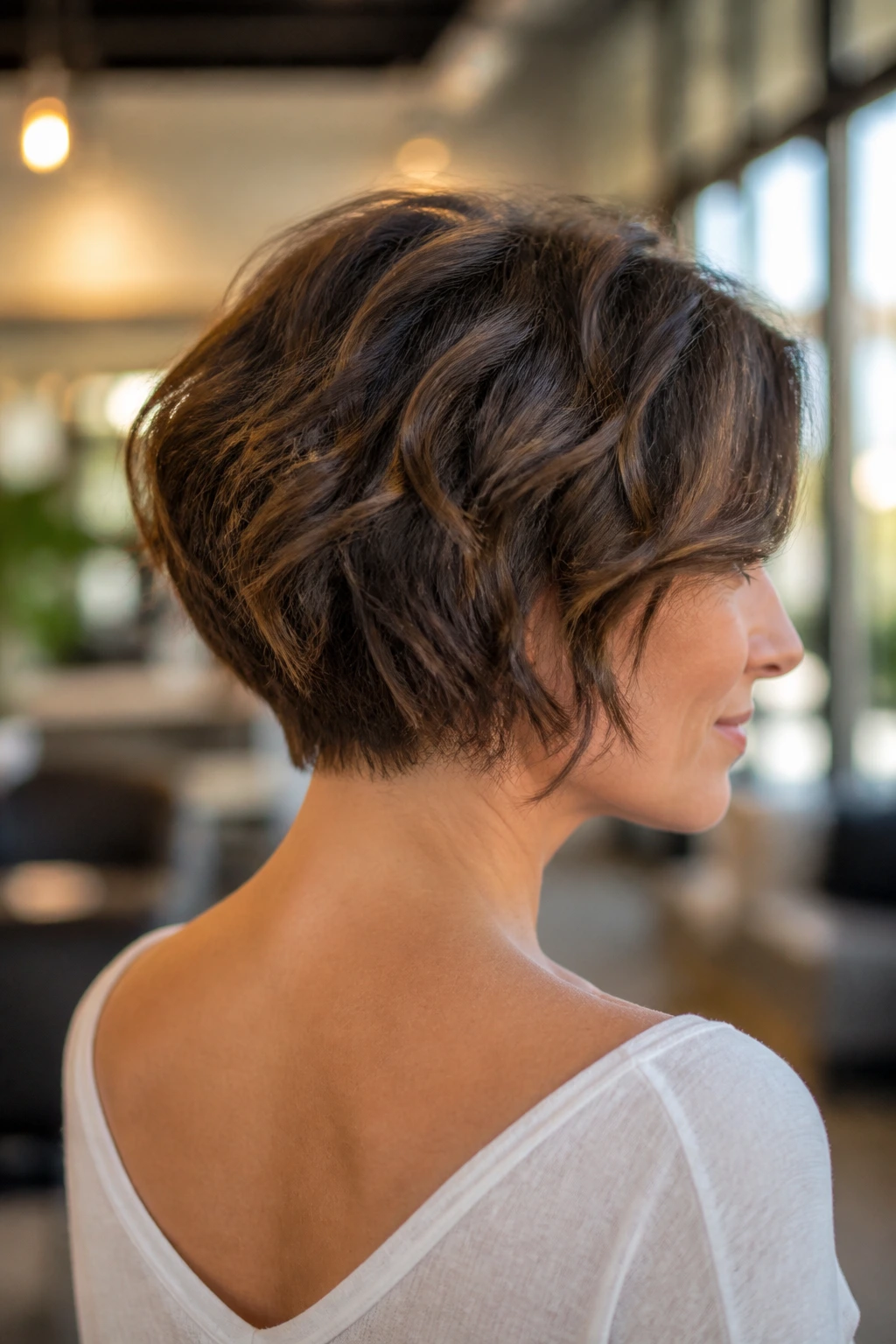
A stacked nape bob is built to lift. The shorter layers in the back stack against the head, which creates a little rise at the crown and a clean edge at the neck. Add waves through the longer top pieces, and the shape suddenly has depth.
This haircut works especially well on thick hair that needs weight removed in the back. The wave keeps the stack from looking too formal. Use a small round brush at the nape and a curling wand only on the top layer, then finger-comb the sections apart so the shape doesn’t get too tidy.
The effect is structured without being rigid. The nape stays neat, the top moves, and the whole cut feels balanced from every angle.
27. Soft Wolf-Cut Bob
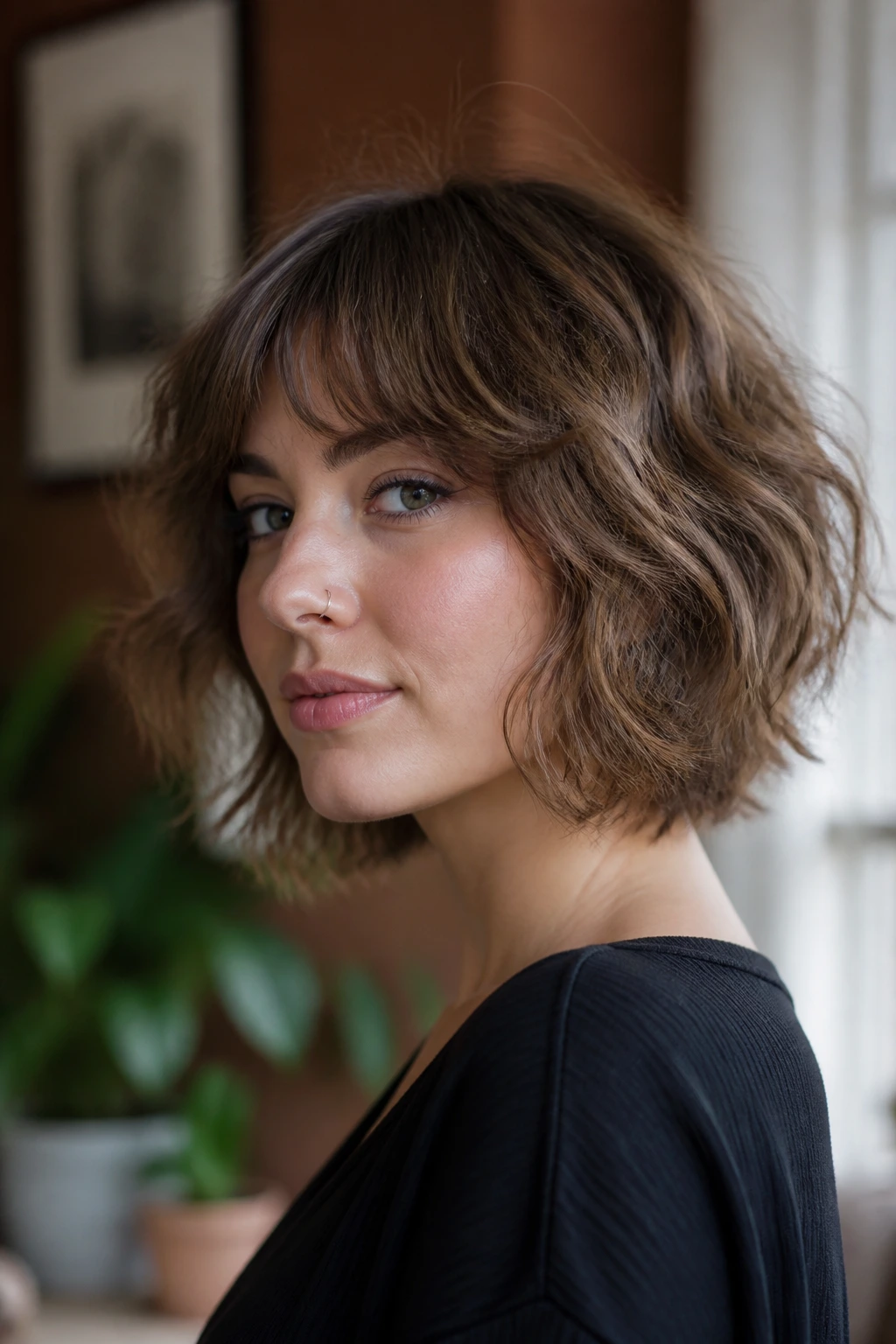
A soft wolf-cut bob takes the rougher edges of a wolf cut and tones them down for short hair. You still get layers, movement, and a little edge, but the shape stays wearable. The wave sits in the layers rather than sitting on top of them.
This is one of the better choices if you like texture but don’t want a full shag. Ask for shorter crown layers and longer perimeter pieces, then style with a diffuser or a loose bend from a curling iron. The result should feel a little wild around the crown and more controlled at the ends.
It’s a good match for hair that naturally wants volume. If your hair is too fine, this cut can sometimes feel airy to the point of disappearing, so the right balance matters.
28. Mini Mullet with Waves
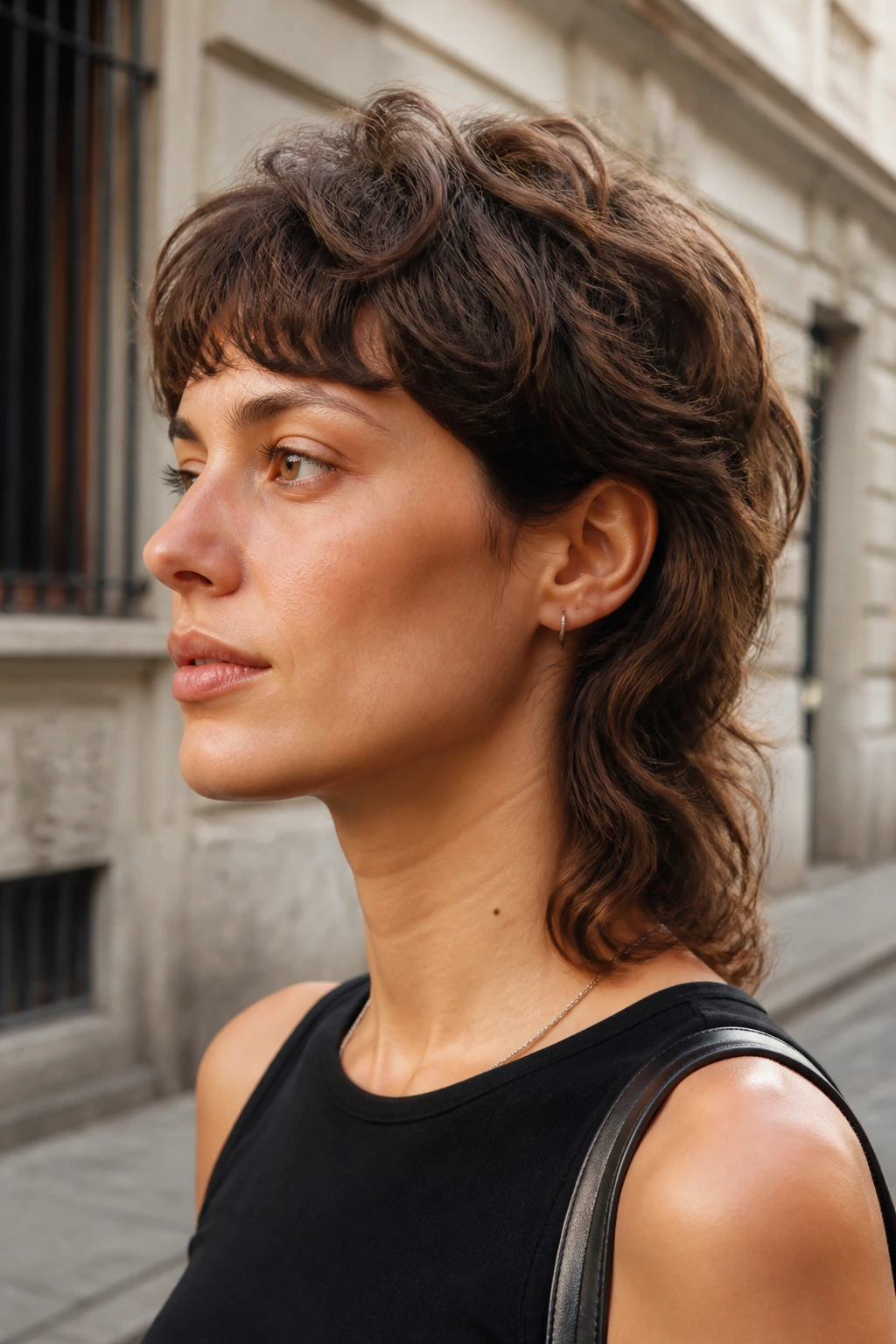
A mini mullet is not shy. Shorter in the front, longer in the back, and full of texture, it has a retro streak that short wavy hair carries surprisingly well. The wave softens the shape so it doesn’t look too sharp.
This cut works because the contrast is the point. The front can stay choppy and close, while the back gets a little more length and movement. Keep the wave piecey, not round. A little separation in the back and a more controlled top are what make the shape read as intentional instead of unfinished.
It’s not for everyone. Good. A style with some opinion is more fun to wear than a haircut that tries to please every person in the room.
29. Center-Part Airy Bob
A center-part airy bob is clean, balanced, and easy to wear when you want the hair to sit evenly on both sides. The wave gives it softness; the center part gives it order. On short hair, that combination can look very crisp.
This style is nice on faces that like symmetry or on cuts that need to feel calm rather than dramatic. Keep the wave broad and light, and avoid loading the roots with too much cream. A puff of mousse at the crown and a loose bend through the mid-lengths are enough. The ends can stay slightly straighter so the cut doesn’t balloon out.
It’s one of those styles that reads simple until you get close. Then you notice the shape. That’s usually a good sign.
30. Clip-Back Asymmetric Wave
Why pin both sides when one side does the job better? The clip-back asymmetric wave lets one side stay loose and textured while the other side gets pinned cleanly away from the face. That contrast gives short hair immediate shape.
This style is especially handy when one side has more bend than the other. Instead of fighting the imbalance, you use it. Add a decorative clip, a plain bobby pin, or even a small barrette, depending on how dressed up you want it to feel. The pinned side should be smooth enough to stay put, but not so slick that it loses all texture.
I like this look because it turns an ordinary bob into something more pointed. It also works when you need to grow out a bad part or hide a flat section. Sometimes the fix is just to stop pretending the hair needs to be even.
31. Salt-Spray Crop
A salt-spray crop is the low-effort, high-texture option in the group. The hair stays short, the waves stay rough around the edges, and the finish gets that dry, airy grip that makes the cut easy to live in.
This is best when the hair already has some natural bend. Mist the roots lightly, scrunch the mids, and let the hair dry without disturbing it too much. Once it’s set, use your hands to break apart any hard clumps. If you want a little more definition, twist two or three front pieces around your finger and let them fall back.
It’s not a glossy style. That’s the point. It looks better when it feels slightly wind-tossed and a little imperfect.
32. Glossy Event Bob
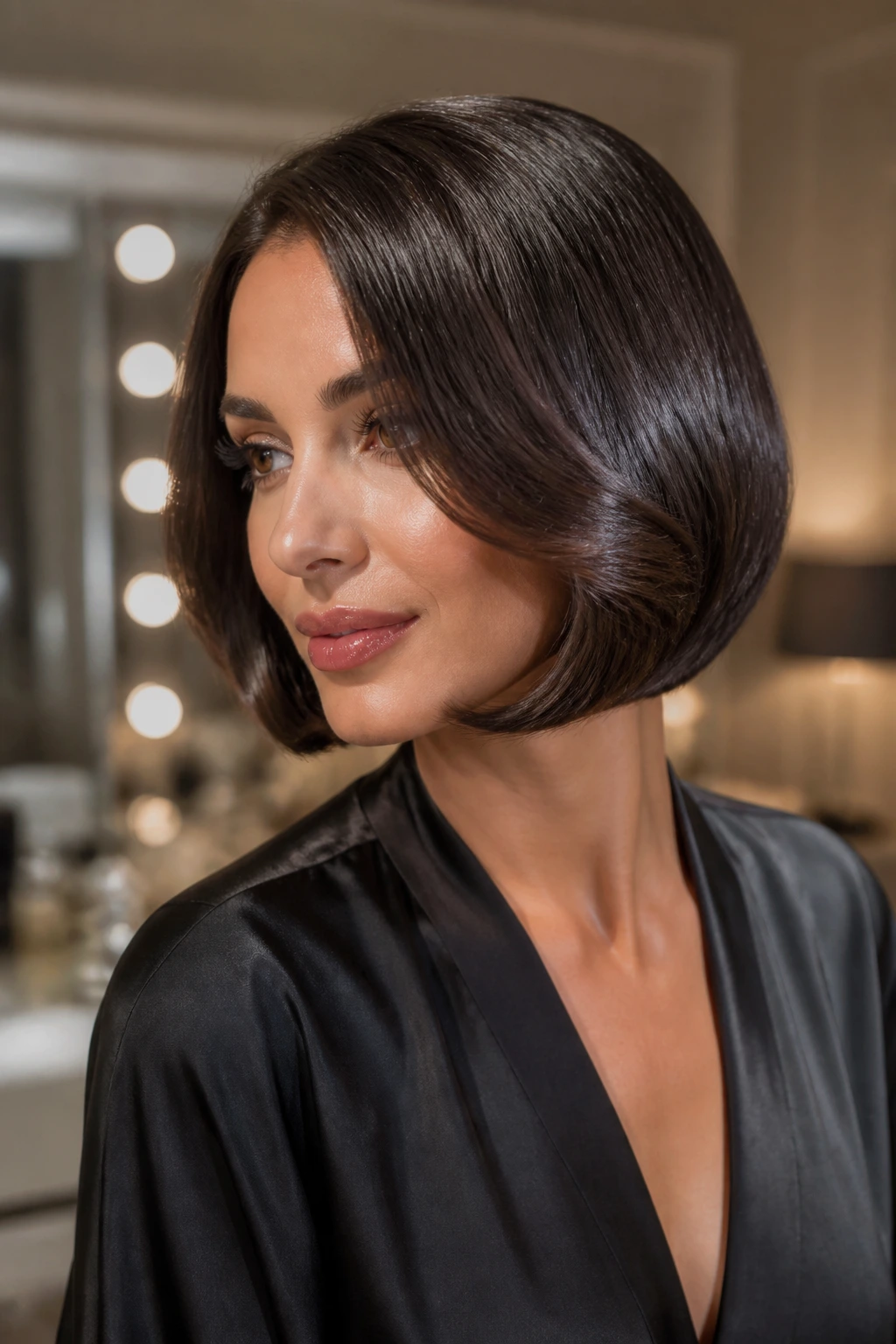
The glossy event bob is the dressed-up answer to short waves. The shape is neat, the surface is smooth, and the wave is polished enough to reflect light instead of looking dry or frayed. It’s a short style that can hold its own with strong makeup or a structured outfit.
Set the waves with a medium barrel, brush them out gently, then smooth a shine spray over the outer layer only. Keep the roots clean and the ends controlled. If you want extra hold, pin the back section to cool before you let it drop. That little step helps the style stay smooth longer.
This one is less about casual movement and more about finish. If a beachy bob looks relaxed after a long lunch, the glossy event bob looks like it knows exactly where it’s going.
Why Short Waves Look Better When They’re Slightly Messy
Short waves have a funny habit: they often look better when they’re not perfectly finished. That’s because short hair doesn’t have the weight of long length pulling the pattern down, so every bend sits higher and shows more clearly. A little breakup at the ends can make the whole shape feel intentional instead of over-styled.
The other reason is simple geometry. On a bob or pixie, the wave is sharing space with the face, the neckline, and the ears. If everything is too neat, the hair starts to feel boxed in. A few loose sections at the temples or a softer bend at the crown gives the cut breathing room. You can see the shape of the haircut instead of just the product on top of it.
I’m also a fan of short waves because they let you cheat in the best way. Flat roots can be hidden with a side part. A slightly uneven piece can be tucked behind one ear. A wave that falls too tight can be brushed out the next morning and still look fine. Long hair can take a lot of correction, but short wavy hair often only needs one good move.
The Tools That Make Short Waves Easier
-
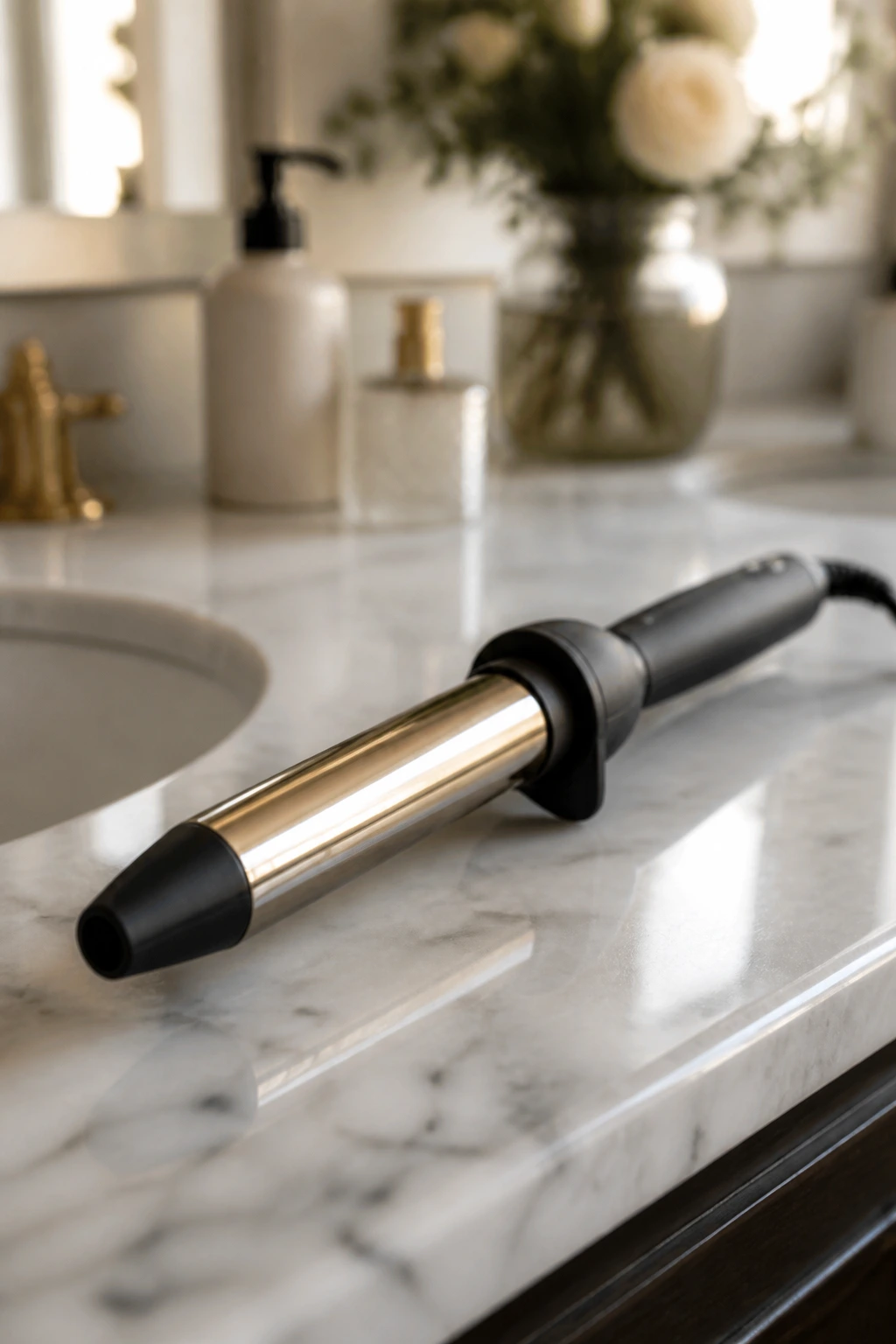
1-inch curling wand: The safest all-around tool for bobs, lobs, and pixie tops because it makes a bend without turning the hair into ringlets.
-
Flat iron with rounded edges: Best for bent ends, S-waves, and polished looks where you want the hair to stay close to the head.
-
Heat protectant spray: Non-negotiable if you use hot tools; short hair still gets fried, especially at the ends.
-
Light mousse: Gives fine or slippery hair enough memory to hold a wave without dragging the roots down.
-
Sea salt spray or texture spray: Useful for beachy, piecey finishes, but use it lightly or the hair can feel dry.
-
Duckbill clips: Handy for setting waves while they cool, especially on side parts and finger-wave styles.
-
Wide-tooth comb: Better than a brush for breaking up waves without turning them frizzy.
-
Small round brush: Helpful for fringe, crown lift, and any bob that needs a little shape around the face.
-
Shine serum or spray: Use a tiny amount on the ends only if you want the wave to look smooth rather than dusty.
-
Light-hold hairspray: Enough to lock the shape in place without turning the hair stiff.
How to Choose the Right Wave Pattern for Short Hair
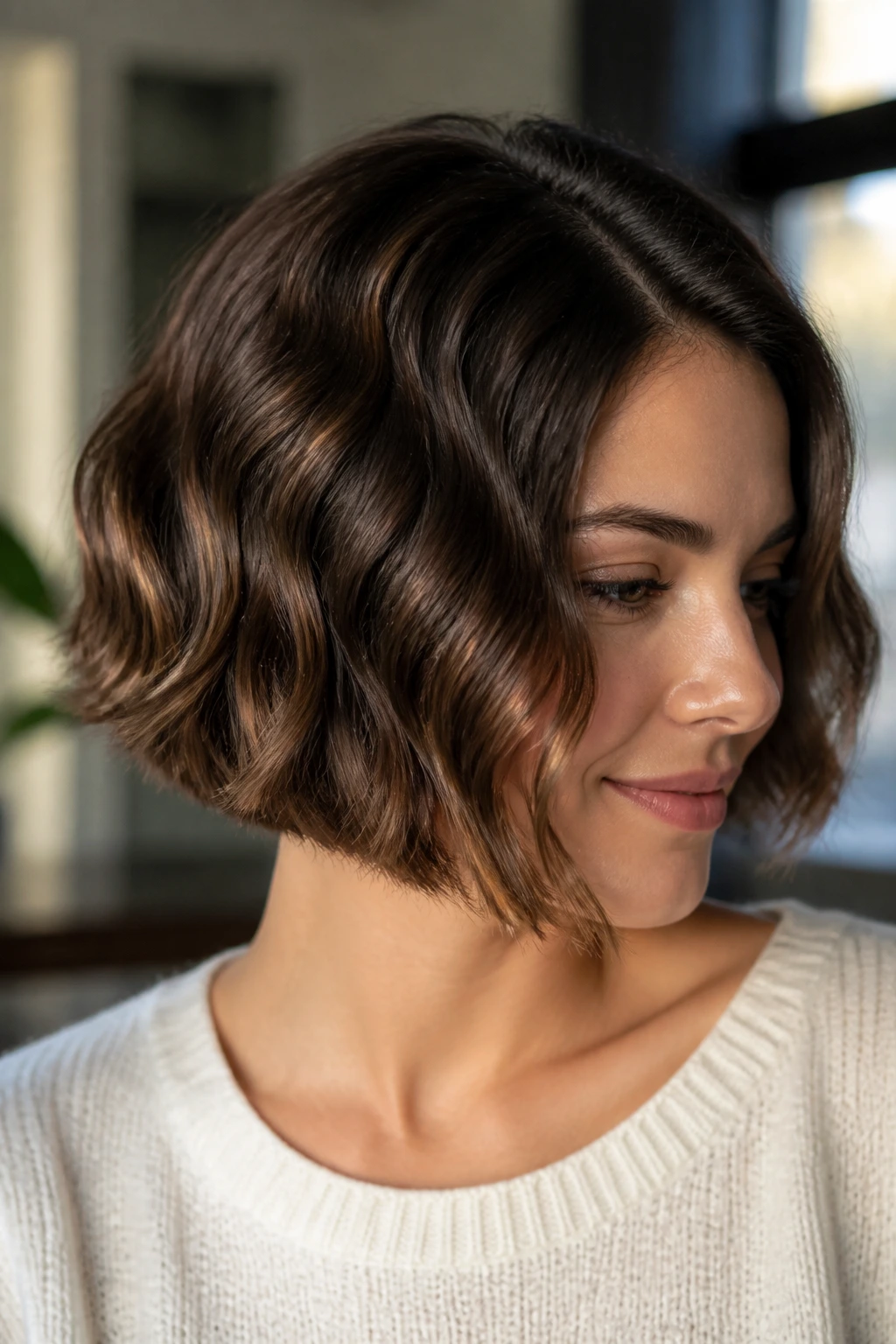
Short hair asks a different question than long hair does. It’s not “How much curl can I add?” It’s “Where should the movement start?” That answer changes everything. A wave that begins too high on a bob can make the head look round. A wave that starts too low can leave the crown flat and the ends fuzzy.
If your hair is fine, choose styles with a blunt edge or a bit of stacked structure. Those shapes hold volume better than wispy cuts. If your hair is thick, ask for layers that remove bulk without turning the ends into strings. And if your hair already bends on its own, you can usually get away with less product than the tutorials suggest. Good thing, too. Most people use too much.
Face shape matters, but not in the rigid way people sometimes pretend. A center part with airy waves can lengthen a rounder face. A deep side part can soften a strong jaw. A fringe can shorten a long forehead without making the rest of the style heavy. Those are useful levers. Use them.
Smart Product Picks and Texture Notes
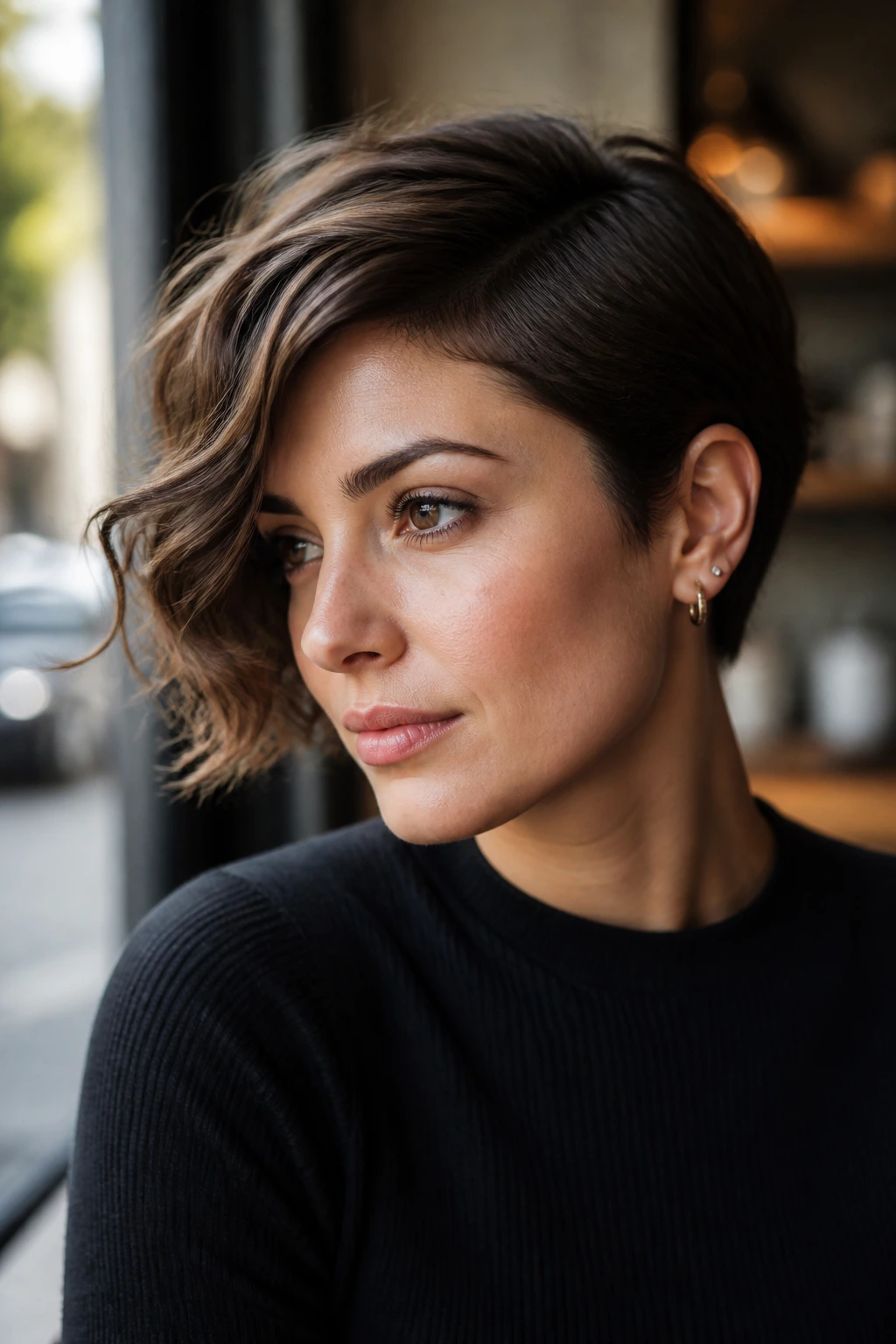
The best product for short wavy hair depends on what the hair is doing before you touch it. If it’s fine and limp, start with a mousse or root spray at the crown, then keep the lengths light. If it’s coarse or dry, a cream with a small amount of hold usually works better than a salt spray because it keeps the wave from feeling rough.
I’d also pay attention to how much shine you want. Matte products make the texture look more casual and separated. Shine sprays and smoothing serums make a bob or pixie read cleaner and more finished. Use those on the outer layer only. Heavy product near the roots is the fastest way to flatten a short cut.
Heat protectant deserves its own mention because short hair gets overlooked there. The ends are closer to old color, old heat, and old damage. A light mist before curling or flat-ironing is cheap insurance. Then keep your tool temperature reasonable. On short hair, 300°F to 325°F is often enough. Hotter than that usually solves the wrong problem.
How to Wear These Waves Without Fighting the Cut
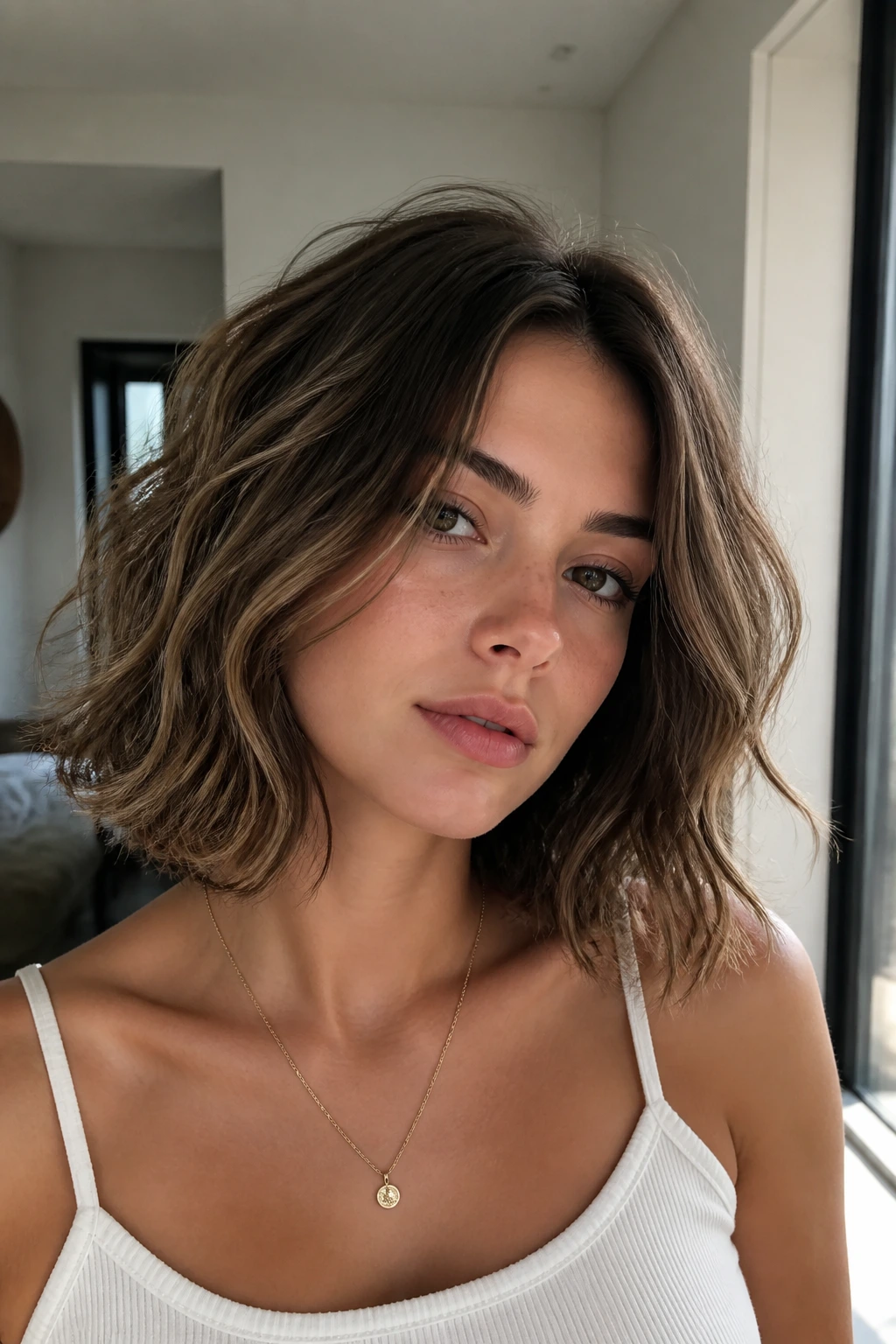
Face shape: If your face is round, choose a bob with a bit of height at the crown or a side part that breaks the symmetry. If your face is longer, a chin-length bob with fringe or wider waves around the cheekbones keeps the proportion balanced. Strong jawline? A softer bend around the mouth and temple usually looks better than a hard curl.
Hair density: Fine hair likes blunt lines, stacked napes, and bent ends. Thick hair likes layers, razor cutting, and a wave that breaks up bulk instead of adding to it. If the hair is coarse, keep the product lighter than you think and let the cut do more of the work.
Occasion: Soft, brushed-out waves work with dressier clothes because they reflect light and move easily. Piecey salt-spray texture feels more relaxed and pairs well with denim, knits, and open collars. Finger waves and glossy bobs are the most dressed-up of the bunch.
Accessories: Small clips, pearl pins, narrow headbands, and clean ear tucks all make short waves look intentional. Big scrunchies can overwhelm the cut. Tiny details suit small lengths better.
Small Tweaks That Change the Whole Finish
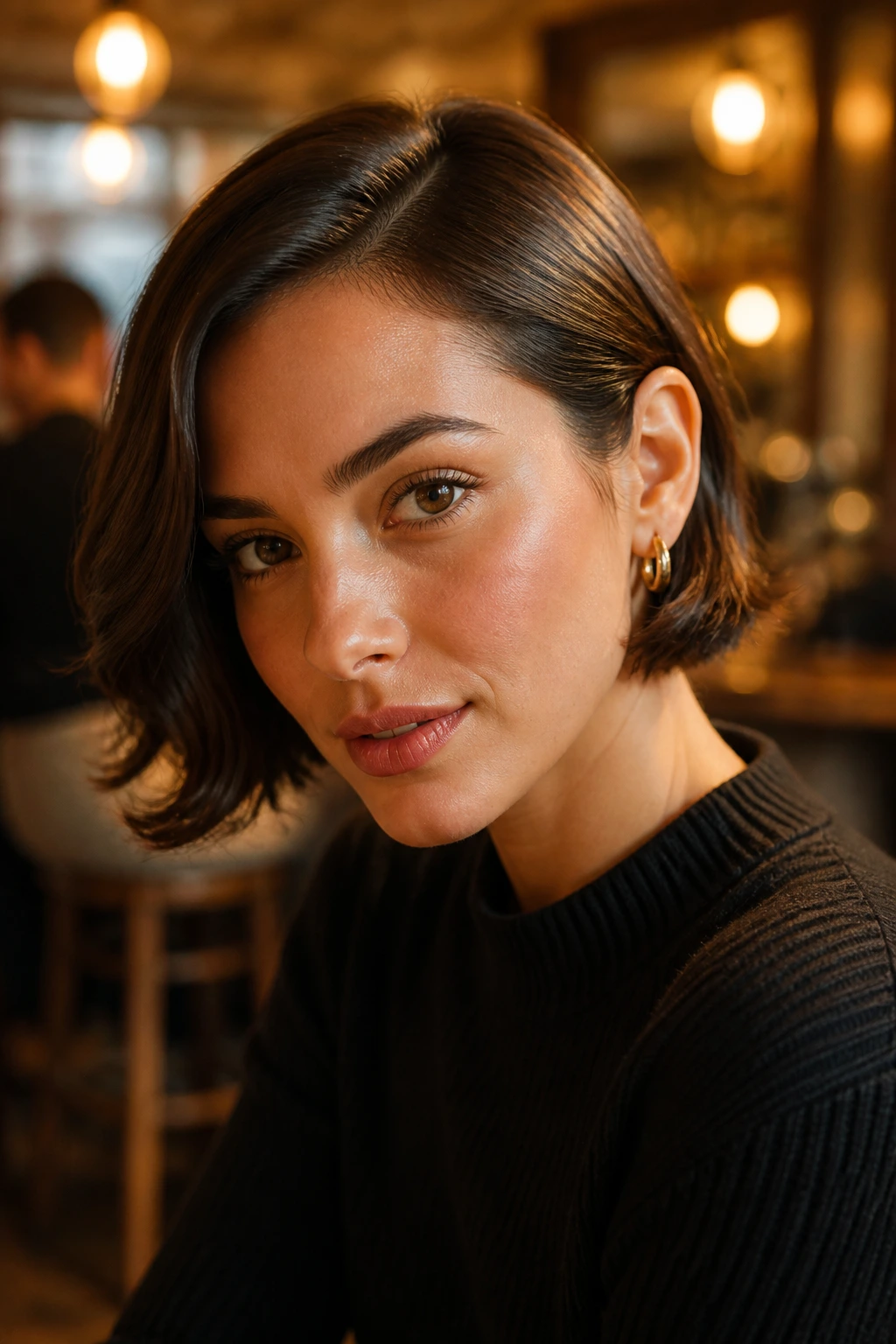
Root lift: A flat crown can sink even the nicest wave. Clip the roots at the top while the hair cools, or blow-dry the crown upside down for 30 seconds before styling the rest. That one step changes how the whole cut sits.
Wave direction: Alternate direction through the middle sections, but keep the front pieces away from the face. That keeps the style from turning into one big swirl. On short hair, direction matters more than people think.
Gloss vs. grit: Want cleaner? Use a shine spray and a smoother brush-out. Want more edge? Skip the brush and work with your fingers. The haircut does not change, but the mood absolutely does.
Humidity rescue: If the air is damp, don’t fight every puff. Smooth only the outer layer with a tiny bit of serum, then leave the underneath texture alone. Short hair usually looks better with a little softness than with a helmet of product.
Keeping Short Wavy Hair Going for a Few Days

Most short wave styles look best on day one or day two. After that, the roots usually need a reset and the front pieces need a little help. That’s not a failure. It’s normal. Short hair is fast to style and fast to refresh, which is part of the deal.
Sleep matters more than product here. A satin pillowcase helps, and so do two or three duckbill clips at the crown if you want to preserve lift. For bobs, I like to tuck the front pieces loosely around the ears instead of pinning everything flat. For pixies, a light mist of water mixed with a bit of leave-in can wake up the texture without soaking it.
Day three is the point where many styles either become softer and better or start looking tired. A glossy bob usually needs only a quick re-bend at the front. A salt-spray crop might just need a little water and finger scrunching. A finger-wave style, by contrast, usually needs the most care because the pattern is more precise. That’s the tradeoff with structure.
Variations and Adaptations to Try
Fine-Hair Lift: Go for blunt lines, a side part, and a mousse-heavy root routine. Fine hair often looks fuller when the wave starts lower and the crown is clipped while cooling.
Thick-Hair Control: Ask for internal layers or a razor finish so the waves don’t stack up into a triangle. A cream-based styler usually beats a dry texture spray on thicker short hair because it keeps the shape smoother.
Heatless Texture: Twist damp hair into two or four loose sections, pin them flat, and let them dry fully before letting them down. It’s not as polished as heat styling, but it gives nice soft movement with less damage.
Humidity-Friendly Wave: Choose looser bends, avoid heavy oils, and finish with a light anti-frizz spray. The goal is control at the outline, not a stiff shell over the top.
Grow-Out Grace: Curtain bangs, bottleneck bangs, and shaggy layers are your friends here. They make the in-between stage look like a style choice instead of a waiting room.
Common Mistakes to Avoid
The first mistake is curling short hair too tightly. On a bob or pixie, tight curls can balloon fast and make the cut look smaller than it is. Leave the ends straighter, use larger sections, and break the wave apart once it cools.
The second is using too much product at the root. A little mousse or lift spray helps. A heavy cream, oil, or wax near the scalp kills volume and makes the style collapse by lunch. Keep rich products at the ends, where short hair usually needs them more.
A third problem is ignoring the haircut itself. Waves cannot rescue a blunt triangle or a bob with too much weight in the wrong place. If the shape isn’t working, ask for layers, weight removal, or a softer perimeter. Haircut first. Styling second.
And then there’s over-brushing. The hair goes from soft wave to fluffy fuzz in about five seconds if you brush it while it’s still warm. Let it cool, use your fingers, and stop once the shape is broken up enough to look natural.
Frequently Asked Questions
What barrel size is best for short wavy hair?
A 1-inch curling wand is the safest default for most bobs and short crops. If your hair is very short, a smaller barrel or a flat iron bend may give you better control without making the wave too round.
Can naturally wavy hair wear these styles without heat?
Yes, and some of the best versions start that way. Use a light mousse or curl cream, scrunch while damp, and keep your hands out of it once it starts drying. The haircut matters as much as the product.
Do short wavy hairstyles need layers?
Not always, but layers help when the hair is thick or heavy. A blunt bob can look fantastic with waves if the hair is fine or medium. Thick hair usually needs some removal of weight so the wave can move.
How do I stop the ends from flipping out?
Blow-dry the ends under with a brush, or keep the final curve of your flat iron directed inward. If the ends still flip, the haircut may need a little reshaping at the perimeter.
What if my hair is fine and flat by noon?
Use mousse at the roots, not cream, and keep the wave broad. A deep side part, root clips, and a touch of dry shampoo at the crown can also buy you more lift.
Can these styles work for formal events?
Absolutely. The glossy bob, brushed-out glam wave, and finger wave crop all look dressed up without needing long hair. A shine spray and a clean part change the mood fast.
How do I refresh waves the next morning?
Mist the hair lightly with water or a leave-in mix, twist the front pieces around your fingers, and pinch the crown back into place with a little dry shampoo. Don’t soak the whole head unless you’re starting over.
Will these styles work in humid weather?
Looser waves usually handle humidity better than tight curls. If the air is damp, keep the finish softer, use less product, and smooth only the outer layer with a small amount of serum.
The Shape That Does the Work

Short wavy hair works because the cut and the bend are helping each other instead of competing. That’s the part people miss. A chin-length bob with the right wave pattern can do more for the face than a much longer style, and a pixie with a little crown movement can look sharper than a heavy layered cut that’s trying too hard.
The real win is flexibility. You can go glossy, beachy, piecey, sculpted, brushed out, or almost undone, and the same short haircut can handle all of it. That makes these looks useful in a way that pure inspiration boards usually are not.
Pick the version that fits your hair’s texture first, then play with parting, finish, and product. The shape is doing more than half the work already. Let it.
