



Short wavy hair has a good habit: it looks finished before you finish fussing with it.
That is the whole appeal. A bend in the right place, a blunt edge with a little movement, a few pieces that refuse to lie perfectly flat — suddenly the cut looks deliberate instead of overworked. Wavy hairstyles for short hair are especially forgiving because the shape does half the styling for you. The shorter the length, the less a wave has to travel before it reads as texture.
The catch is that short waves can go sideways fast. Too much cream and the ends turn stringy. Too little structure and the crown collapses by lunchtime. Cut the wrong way, and the whole thing puffs into a triangle or hugs the head so tightly it looks stern. The good versions avoid all of that by putting the wave where it helps most: at the cheekbone, around the jaw, through the crown, or just at the ends.
Why These Low-Maintenance Waves Work So Well
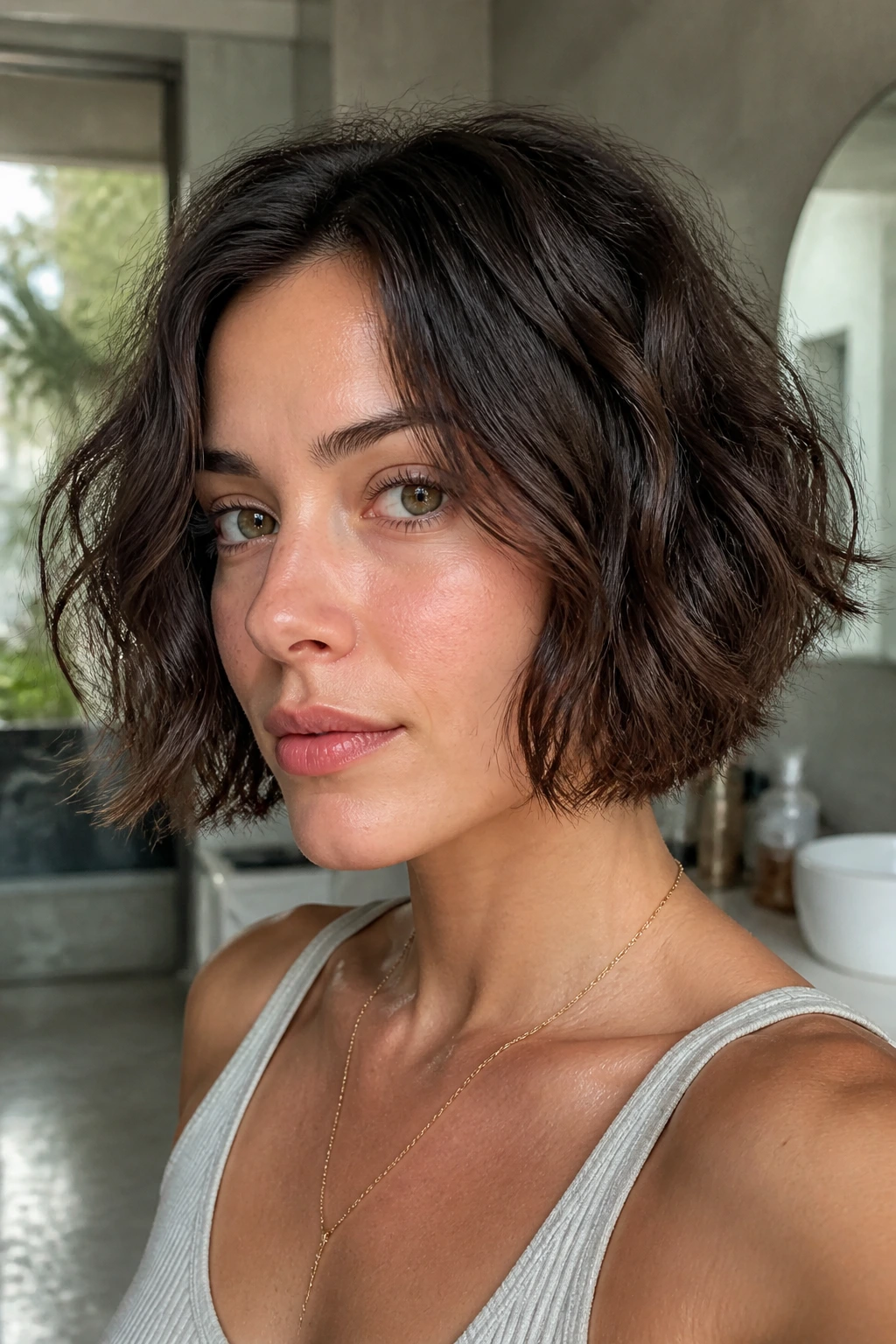
- Shorter hair dries faster: A jaw-length bob or cropped pixie doesn’t hold water for long, so air-drying or quick diffusing takes far less time than with shoulder-length hair.
- Wave pattern hides grow-out: When the ends bend in different directions, a six-week grow-out doesn’t look sloppy; it looks lived-in.
- Texture does the heavy lifting: A blunt cut can look flat and sharp, but a soft bend around the face breaks up the line and makes the style feel intentional.
- Most of these styles need tiny adjustments, not full restyling: A mist bottle, a dab of mousse, or one pass with a 1-inch iron is usually enough.
- They work with real hair behavior: Fine hair gets lift from movement, thick hair gets weight removed through layers, and both can look better when the styling is a little imperfect.
1. Air-Dried French Bob
The French bob wins because it never looks like it’s trying to impress anyone. It sits around the jawline, usually with a soft side part or a loose middle part, and the wave is relaxed enough to feel casual but shaped enough to look planned. On the right hair, this cut can go from damp to presentable with a pea-sized amount of cream and ten minutes of hands-off drying.
Why It Works
The length matters more than people think. Hitting around the jaw lets the ends flip slightly on their own, which gives the face a frame without needing a curling iron. A blunt edge keeps the silhouette clean, while the wave keeps it from feeling severe.
A little volume at the crown helps too. If the roots stay flat and the ends are the only thing moving, the whole style can look sleepy. I prefer this cut with a light mousse worked through damp hair and then a few scrunches at the ends only. That keeps the texture soft instead of crunchy.
Key Details
- Best length: chin to jaw
- Best texture: loose wave, not tight ringlets
- Best styling product: lightweight mousse
- Styling time: about 5 to 8 minutes
- Maintenance: trim every 6 to 8 weeks if you want the line to stay crisp
Pro tip: Let the front dry behind your ears for a few minutes, then release it. That little bend keeps the shape from collapsing into a triangle.
2. Piecey Chin-Length Bob
This is the version for anyone who likes movement without chaos. The cut lands right at the chin, and the wave gets separated into small, visible pieces instead of one big fluffy shape. When done well, it looks like the hair settled that way on its own.
What Makes It Different
The trick is in the separation. A chin-length bob gives you enough hair to create texture, but not so much that the wave turns heavy. That means a tiny amount of texturizing spray can do a lot of work. Spray too much, though, and the ends turn dry and dusty. Keep it light.
I like this style on hair that bends easily but loses shape at the root. A center part gives it a cleaner line, while a slightly off-center part makes the pieces fall in a softer way. If your wave is inconsistent, that is fine. In fact, that unevenness is part of the look.
How to Wear It
- Mist damp hair with sea-salt spray only at mid-lengths.
- Scrunch once, then stop touching it.
- Finish with a fingertip pinch of paste on the ends.
- If the crown looks flat, clip the roots up for 10 minutes while it dries.
One thing to avoid: Don’t brush this style once it’s dry. You’ll stretch the pieces into fuzz and lose the separation that makes it work.
3. Curved-Under Wavy Bob
Why does a bob look sharper when the ends curve under by half an inch? Because that little bend gives the haircut a line to stand on. Without it, the shape can drift into “I forgot to style my hair.” With it, the bob looks clean, even if the rest of the wave is loose and imperfect.
A curved-under finish works especially well when the bob sits just below the cheekbone. It creates a tucked-in edge that keeps the style from flaring out at the sides. That matters if your hair is thick or if the ends naturally want to kick outward. A round brush or a 1-inch iron can both do the job. I’d pick the iron if your hair resists shape, the brush if you want a softer finish.
How to Get the Most From It
The roots should stay airy. If you smooth the whole head too flat, the end curve starts looking like a helmet. Keep volume at the crown, then bend just the last inch or so inward.
This is one of those styles that looks more polished than it actually is. Ten minutes is usually enough once you know where your hands should go. The trick is restraint, not precision.
4. Shaggy Pixie Bob
If your hair refuses to sit still, give it a cut that expects movement. The shaggy pixie bob lands between a pixie and a short bob, with layers that break up the outline and let the wave flick in different directions. It’s a useful cut for thick hair because it removes weight. It’s also good for fine hair, oddly enough, because the choppy layers make the top look fuller.
The best version keeps the sides soft and the crown slightly longer. That gives you enough shape to push forward, sweep sideways, or tuck behind one ear without the whole style falling apart. A dab of matte cream or paste at the fingertips is usually enough. Rub it through the ends, not the roots.
A Small Styling Reality
This cut looks best when it is not over-edited. If every piece is curled in the same direction, the shag loses its whole point. Let a few ends flip outward. Leave a section near the part a little looser. That is where the energy comes from.
And yes, this one grows out well. The layers soften the transition, so you don’t end up with that awkward “I need a haircut tomorrow” shape after three weeks.
5. Side-Swept Wavy Crop
A deep side part changes everything. It gives a short wavy crop a clear direction, and that direction makes the whole style look calmer and fuller at the same time. The side with less hair sits close to the head. The heavier side falls into a soft wave and creates instant shape near the cheek.
This style is especially kind to fine hair. Instead of trying to manufacture volume all over, you concentrate it in one place. Blow-dry the roots opposite your part for a few minutes, then flip the hair back and let it settle. That trick makes the crown lift instead of sticking to the scalp.
The cut itself can stay simple. You don’t need severe layers or razor-heavy texture. You need a part that works with your natural bend and a little encouragement at the roots. A light hairspray at the underside of the heavier side helps it hold the sweep without looking stiff.
Best for:
- Hair that lies flat at the crown
- People who want one fast styling move
- Short cuts that need a little drama without extra length
My opinion: If you only learn one styling move for short waves, learn the deep side part. It pulls more weight than most people expect.
6. Jaw-Length Wavy Bob with Tucked Ends
There’s something useful about a bob that ends right at the jaw and slips behind the ears without fighting back. It gives the face definition, but it doesn’t demand perfect styling every day. If one side goes a little flatter than the other, the ear tuck hides it. That is a gift.
The cut should be blunt enough to keep the outline readable, but not so blunt that the wave has nowhere to go. A few internal layers help the bend sit cleanly. On second-day hair, this style often looks better after a tiny refresh than it did fresh from washing. That is a nice surprise.
Use a smoothing cream the size of a pea through the front, then twist the front sections back with your fingers and tuck them. You don’t need a full blowout. You need a bend and a direction.
Pro move
Part the hair where the natural growth wants it to sit, then change only the front two inches. That small shift gives the whole cut a new attitude without asking for more work.
7. Soft Curtain Bangs Bob
Curtain bangs can be a headache, or they can do half the styling for you. On a short wavy bob, they soften the forehead, break up a round face shape, and keep the haircut from feeling boxy. The key is keeping the bangs airy, not heavy. Heavy curtain bangs stick to the forehead and get greasy too fast.
A center part works well here, but it should not be ruler-straight. Let the bangs open from the middle and fall just past the brow, then blend into the shorter layers around the cheekbone. If your waves are strong, dry the bangs separately for a minute or two so they don’t shrink up too high.
Bang care that matters
Curtain bangs get oily faster than the rest of the cut. A small swipe of dry shampoo at the roots near the hairline is often enough to buy another day. Don’t overdo it. Too much powder makes the bangs look chalky, and then you’re fighting a different problem.
This style looks especially good when the rest of the bob has a little bend near the ends. The bangs keep the face soft, and the wave keeps the whole cut from feeling flat.
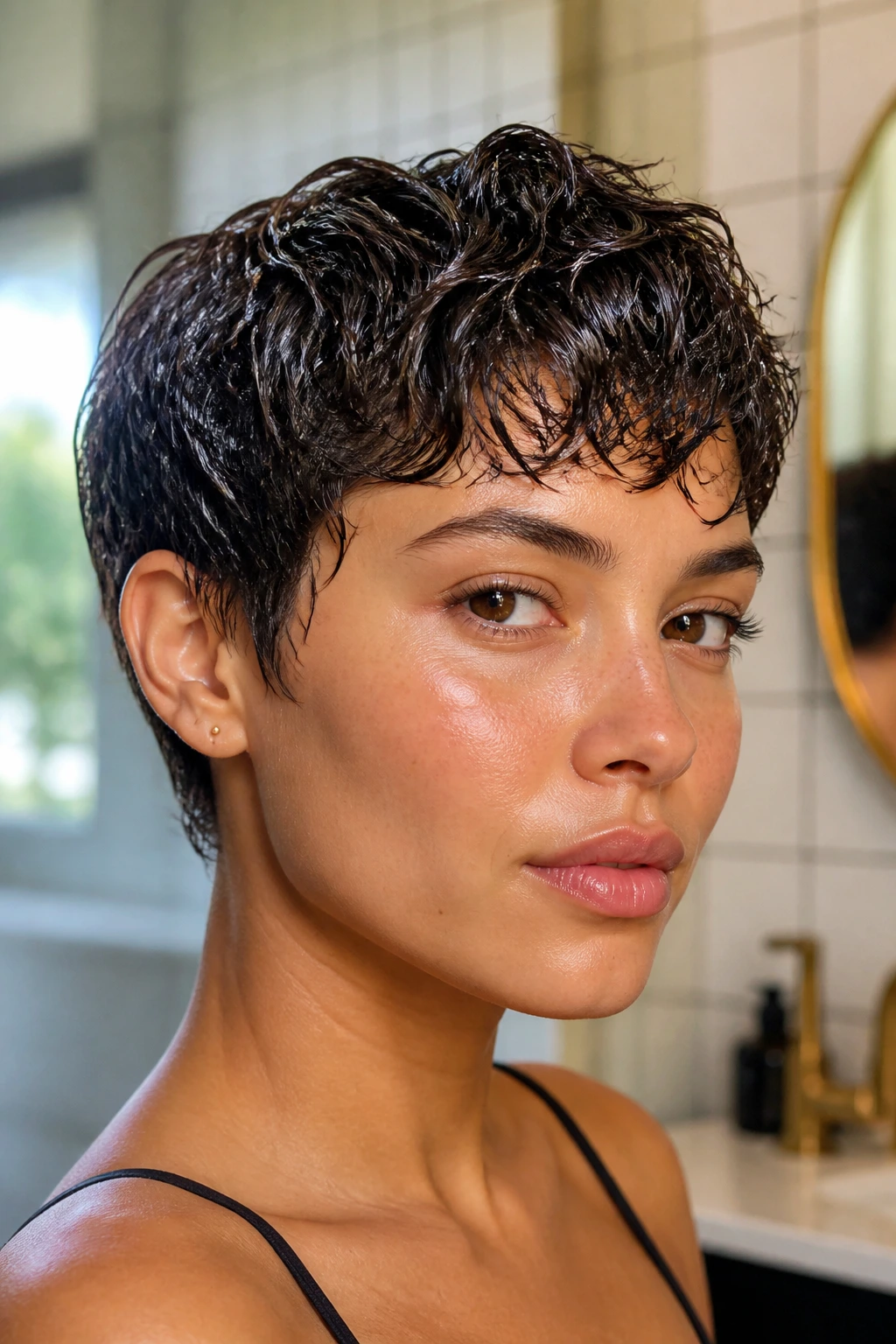
8. Wet-Look Wave Crop
Wet-looking hair is not lazy hair. There’s a difference. This style depends on controlled shine, a little separation, and a clean finish at the roots. It works on short hair because the length is compact enough that the product doesn’t drag everything down.
The look is sharper than the airy styles above. Use a gel with flexible hold on damp hair, then comb it into place with your fingers or a wide-tooth comb. If you want the wave to show, scrunch the ends while the gel is still wet. The finish should look glossy, not greasy. That means the product needs to be distributed evenly, with a little extra at the front and near the part.
How to keep it from looking crunchy
Let the hair set for a few minutes before touching it again. If you pull at it too soon, the gel cast breaks unevenly and the shape turns blotchy. Once it is dry, you can soften the surface with one drop of serum rubbed between your palms.
This is a good choice for humid weather, evenings out, or any day when you want the hair to look deliberate without spending half the morning on it.
9. Deep Side-Part Short Waves
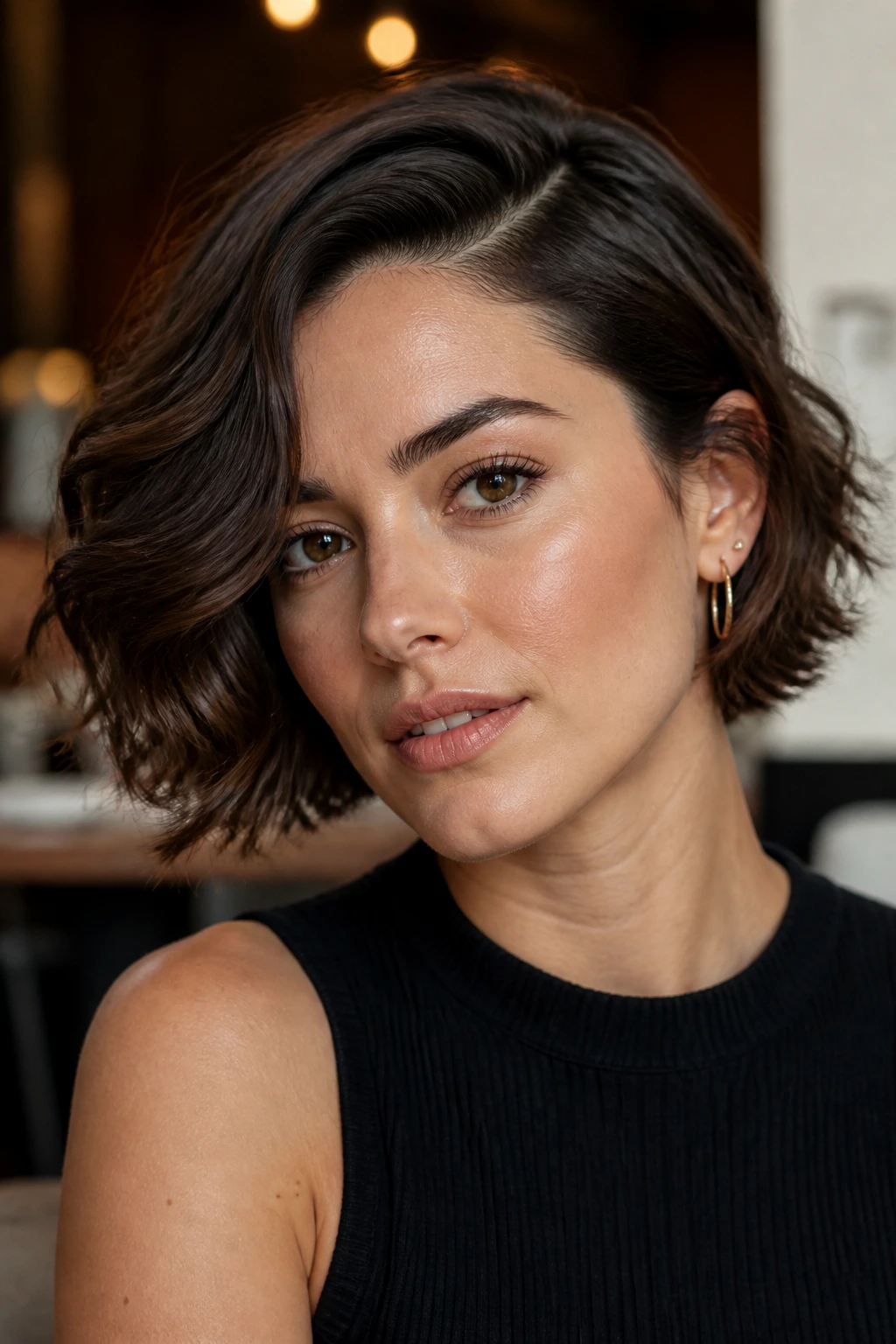
A deep side part can make fine waves look twice as full with almost no extra effort. The heavy side gives you the appearance of more hair, while the lighter side exposes the face and creates a clean edge. It is one of the easiest tricks in the book, and it works best on short cuts that already have some bend.
What to do
- Move the part while your hair is still damp.
- Blow-dry the roots on the heavier side upward for 30 seconds.
- Pin that section loosely at the crown for five minutes.
- Finish with a small amount of texture spray at the ends.
The shape should feel lifted, not teased. Teasing can work, sure, but it’s fussy and easy to overdo. The deep side part does the same job with less damage and less time.
A side part also helps if one side of your hair is a little straighter than the other. That asymmetry becomes part of the look. The shorter the haircut, the more forgiving that asymmetry gets.
10. Wavy Pixie with Longer Crown

Can a pixie still look soft? Absolutely — if the crown keeps a little length. A wavy pixie with a longer top and shorter sides lets the wave show without needing much daily styling. The crown is where the texture lives. The sides and nape stay close enough to keep the shape neat.
That contrast is what makes the cut wearable. The short sides reduce bulk, which is useful if your hair is thick or coarse. The longer crown gives you room to push the hair forward, sweep it over the forehead, or lift it with a fingertip-sized amount of cream. You do not need much product here. Too much makes the pixie separate in odd chunks.
How to style it fast
Rub a pea-size amount of styling cream between your hands, then press it into the crown and ends. Use your fingers, not a brush. A brush flattens the texture and makes the whole thing look too neat. The crown should look touchable, not polished to a shine.
This is one of the lowest-maintenance options in the group because the shorter sections dry quickly and stay out of your face. Good cut. Simple life.
11. Rounded Mini Shag

The rounded mini shag has a softness that a blunt bob never quite gets. It sits short, but the layers curve around the head instead of dropping in a hard line. That rounded shape gives the wave somewhere to go, which matters if your hair swells when it dries.
The top is usually a little fuller, the sides a little feathered, and the ends a little choppy. Not sloppy. Choppy. That difference matters. A good mini shag still has shape; it just doesn’t pretend every strand will cooperate. If your hair is thick, this cut can remove some of the puff. If your hair is fine, it can make the top look like it has more body than it does.
How to keep the shape alive
Diffuse on low for three to five minutes, then stop before the hair gets too dry. Letting it finish air-dry keeps the texture soft. If you keep diffusing until every strand is bone dry, the surface can get frayed and puffy.
A light mist of flexible-hold spray at the crown helps this one hold its round shape. I’d skip heavy oils entirely. They collapse the layers and erase the point of the cut.
12. Grown-Out Bixie Waves

The bixie is that in-between cut that lives between a bob and a pixie, and honestly, that in-between space is where some of the best low-maintenance hair happens. A grown-out bixie gives you enough length around the ears and front to play with, while keeping the back short enough to dry quickly. If you like the idea of short hair but hate the feeling of a super-short crop, this is the one.
What makes it work on waves is the uneven length. The front can bend toward the cheek, the crown can lift a bit, and the back can stay close to the neck. That contrast keeps the shape from getting boxy. Use a small amount of mousse or light cream, then pinch sections as they dry. No need to curl every piece.
This style is also forgiving when it grows out. That matters more than most people admit. A haircut that still looks deliberate at week seven is worth more than a cute cut that falls apart at week three.
13. Half-Up Claw Clip Bob
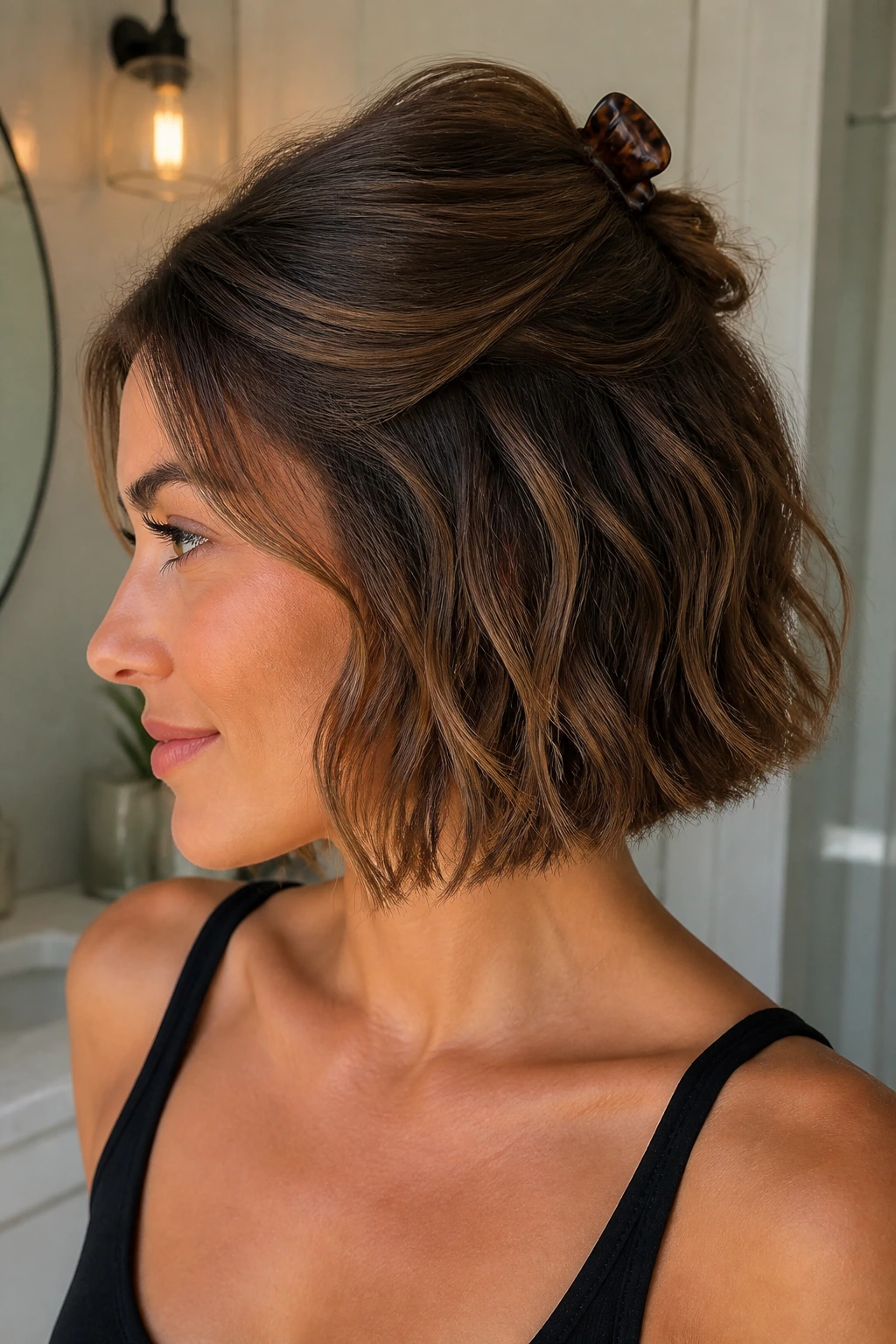
The claw clip earns its place because it solves the second-day bob problem: the roots are flat, the ends are still decent, and you need the front out of your face. A half-up clip lifts just enough hair at the crown to restore shape while leaving the wave visible through the bottom half. Shorter bobs need a smaller clip, usually medium-sized, or the whole thing slips out.
Best way to do it
Gather the top half loosely from temple to temple. Twist once. Clip it so the ends still peek out a little. Pull a few face-framing pieces free.
That last step matters. If everything gets pulled tight, the style turns severe. A loose front section keeps the hair soft and makes the clip look intentional instead of accidental.
This style is especially good when the wave has already settled into the hair and just needs a little lift. It is not trying to be fancy. It is trying to make day-two hair behave.
14. Messy Sleek-Root Bob
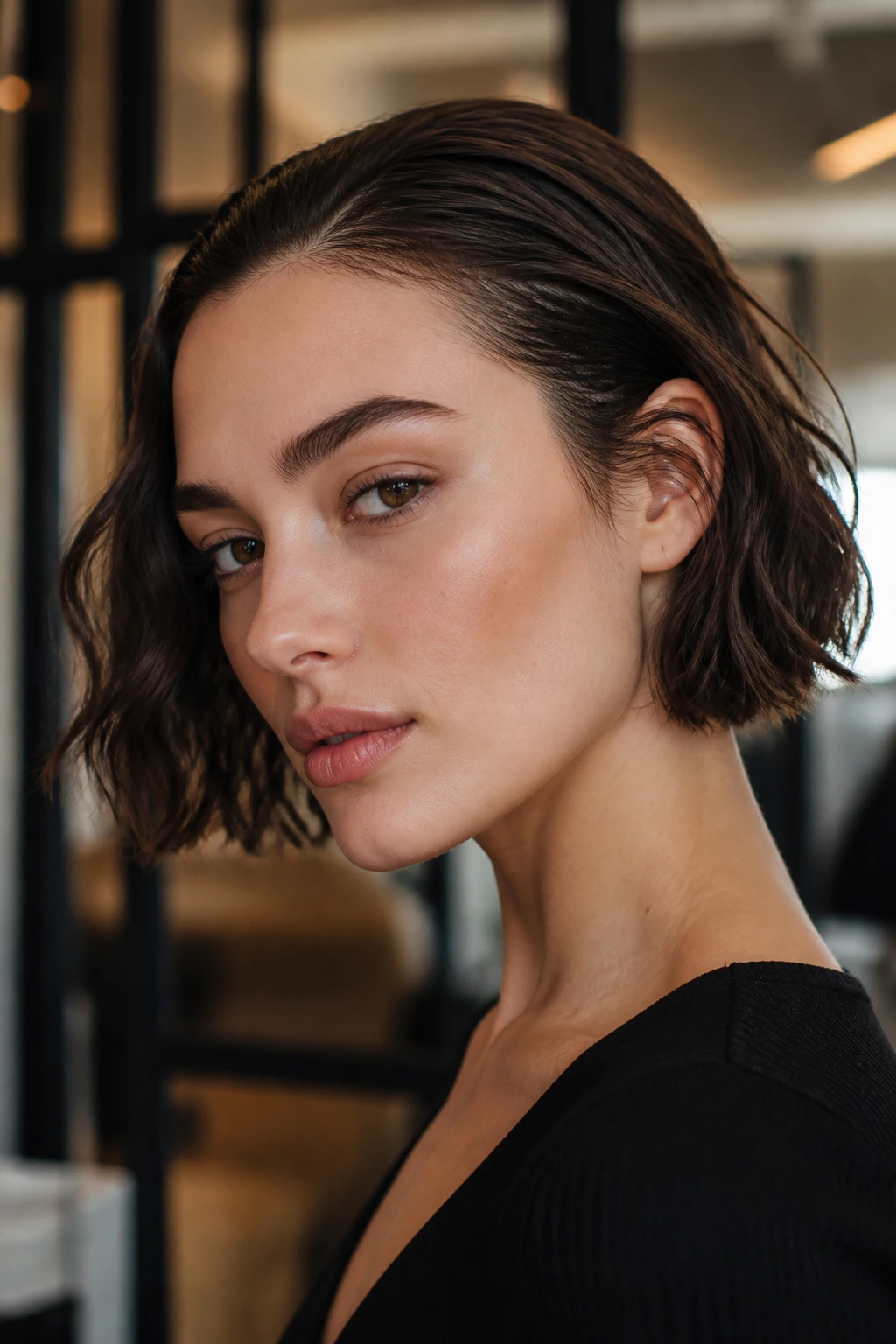
This one sounds contradictory because it is. The roots stay smooth and close to the head, while the mids and ends keep a bit of bend and texture. That contrast makes the bob look cleaner than a fully tousled style, but not stiff. It is a good choice if you want short waves that can still pass in a more polished setting.
Blow-dry the top section with a paddle brush or smoothing brush, then let the ends keep their shape. You can even wrap only the last inch around a round brush or a small iron. The point is not uniform curls. The point is a neat top with some movement below it.
A tiny amount of anti-frizz serum works here, but keep it off the roots. Once the roots get slick, the whole style loses its lift. One drop is enough for short hair. Maybe two if your hair is thick and coarse. More than that and the line gets muddy.
15. Finger-Waved Side Part Bob
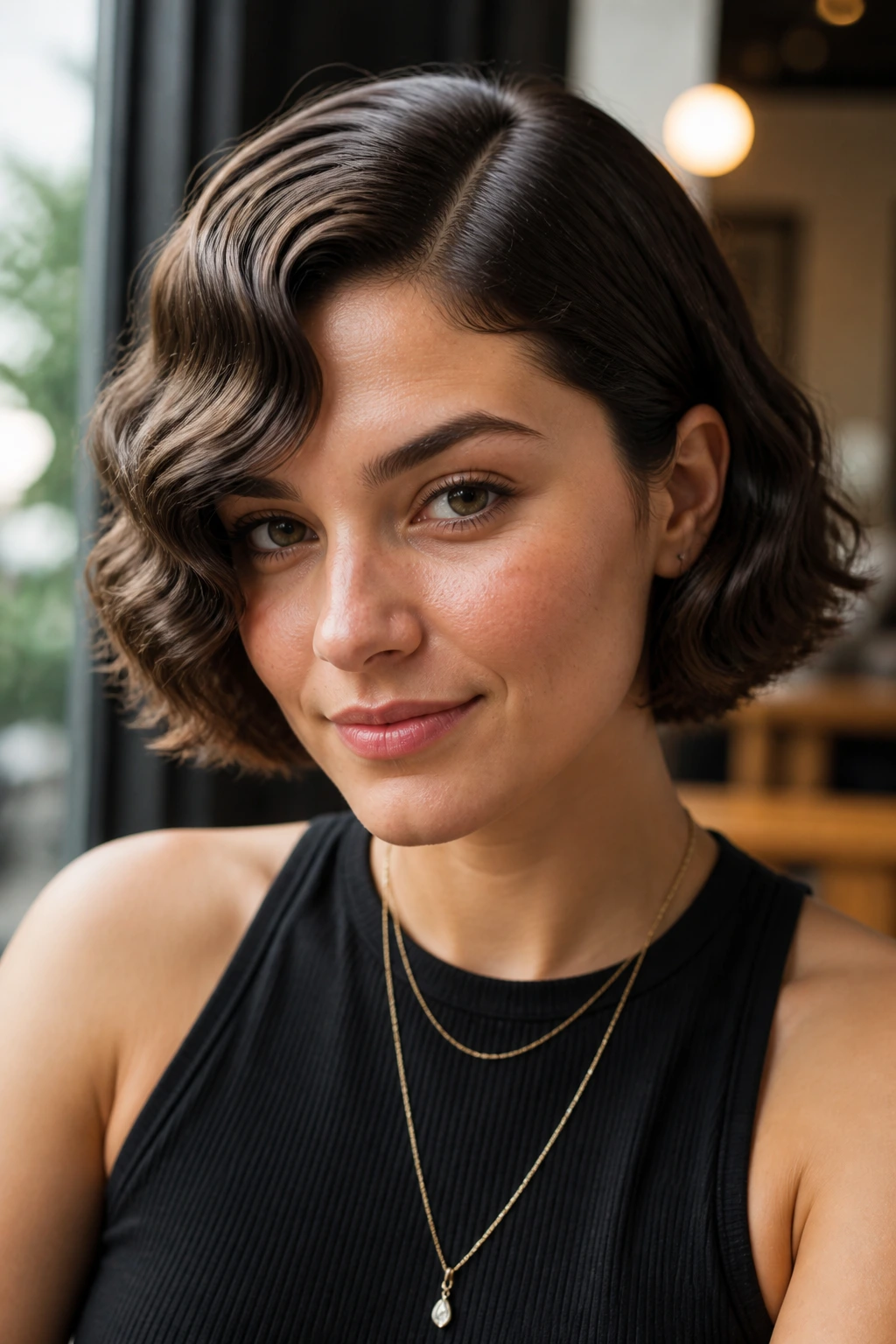
Finger waves usually make people think of formal hair, but on short wavy hair they can be surprisingly low-fuss once they’re set. The style uses a side part and one or two carved waves near the front, then lets the rest of the bob stay looser. That gives the haircut a bit of structure without requiring the entire head to be curled.
What makes it different
The front does the visual work. The back can stay softer and less controlled. That makes this style useful when you want something with a little attitude but not a full styling session.
A mousse or setting lotion on damp hair helps the front hold its shape. Use your fingers and a comb to push the wave into place, then let it dry fully before touching it again. If the hair is still damp, the wave can collapse into a vague bend and the whole effect disappears.
This is one of the few short-wave looks that can feel old-school in a good way. Sharp, but not severe. Defined, but not fussy.
16. Tousled Outgrown Crop

This is the haircut for the week before your salon appointment when your crop has lost a little of its neatness but still needs to look intentional. The trick is to stop fighting the grow-out. Let the layers stay uneven. Let the fringe or front section fall a little differently. The texture becomes the point.
A tousled outgrown crop works especially well when the back is a touch shorter than the front. That slight difference keeps the haircut from looking round in the wrong way. Use a texture cream through dry hair, not wet hair, so the pieces separate where you want them to. If the ends need more definition, twist them around your fingers for a few seconds and let go.
A lot of people think “messy” means “nothing to do.” Not quite. It means you’ve shaped the mess so it lands in the right places.
17. Flipped-Out Wavy Bob

A tiny outward flip can save short hair from looking boxy. That is the whole case for this style. The ends turn just enough to lighten the line around the jaw or neck, and the wave above them keeps the haircut from looking stiff. It is a small move with a large effect.
This works best on a bob that hits the chin or just below it. Use a round brush, a flat iron with rounded edges, or a quick wrap around a curling wand near the last inch of hair. Do not overflip the ends into exaggerated wings unless you want that retro feel. A subtle bend is easier to wear and usually looks better day to day.
Why it earns its keep
The flip gives motion to an area that can look heavy when left straight. It also grows out nicely, which matters if you prefer a cut that doesn’t need constant correction. The style is a little playful, a little polished, and far less demanding than it sounds.
How to Pick the Right Short Wavy Look
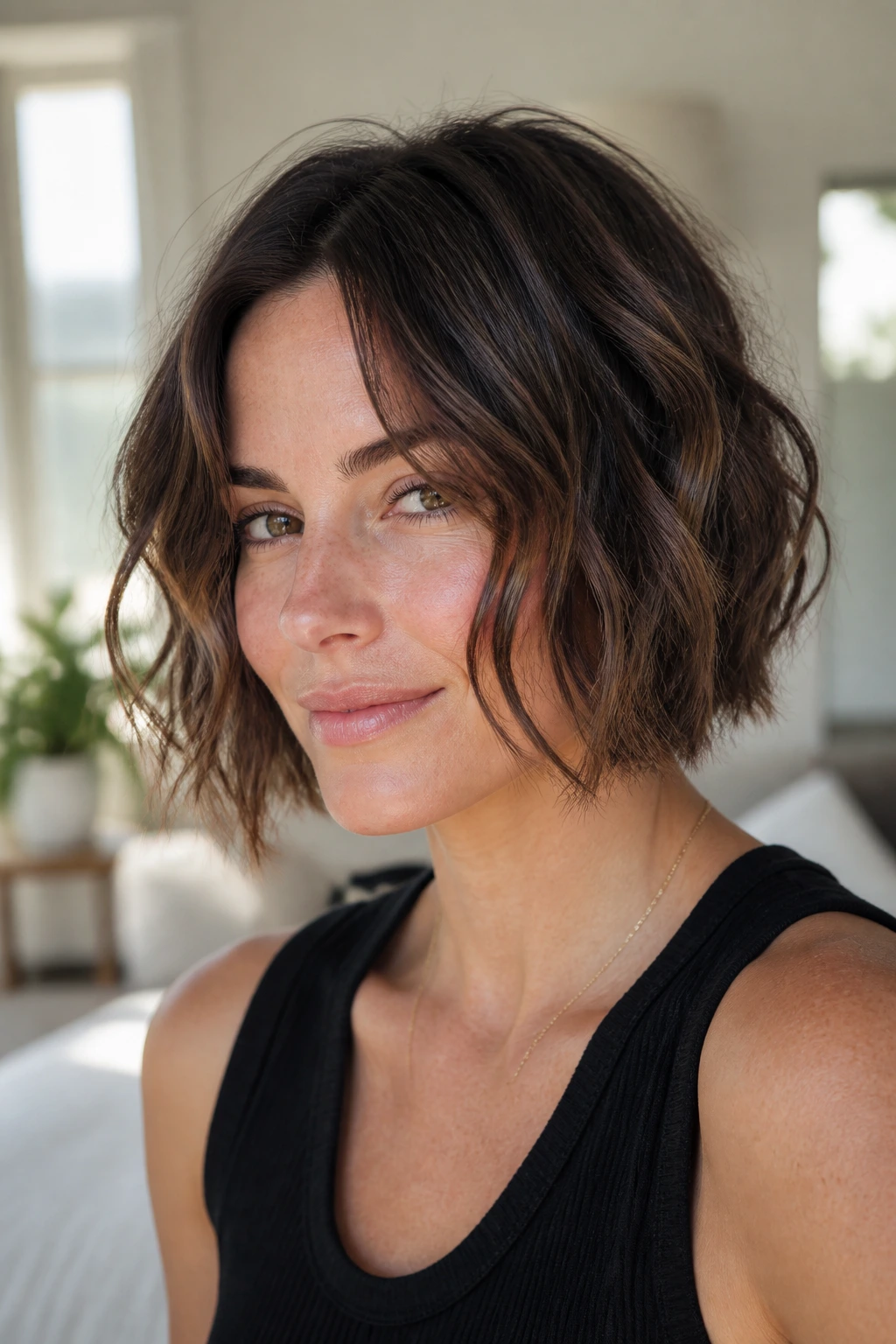
The easiest way to choose is to stop thinking in abstract style names and start thinking about your hair’s habits. Does it puff at the sides? Choose a bob with a cleaner outline and maybe a curved-under finish. Does it collapse at the crown? Pick a side part, a bixie, or a style with root lift built in. Does it wave only at the ends? Go for a French bob or a flipped-out bob and let the bend happen where your hair already wants it.
Fine hair: go lighter on layers and heavier on lift. A piecey bob, side-swept crop, or French bob will usually behave better than a shag that is too heavily thinned out.
Thick hair: ask for internal layering, not just surface texture. You want the wave to move without ballooning. A mini shag, bixie, or jaw-length bob can be a smart match.
If you hate daily styling: choose a cut that looks good air-dried with product and fingers alone. The French bob, outgrown crop, or half-up claw-clip bob will save you time.
If you like a little polish: curved-under ends, sleek roots, or finger waves around the front can give the haircut structure without turning it rigid.
Tools That Make Short Waves Easier

- 1-inch curling iron or wand: Small enough to shape short sections without leaving giant loops.
- Flat iron with rounded edges: Useful for flipping ends or adding a small bend near the face.
- Diffuser attachment: Helps waves dry with more shape and less frizz.
- Wide-tooth comb: Better than a brush when hair is damp and easily stretched out of shape.
- Microfiber towel or soft T-shirt: Takes out water without roughing up the cuticle as much as a bath towel.
- Duckbill clips or root clips: Handy for lifting the crown while the hair dries.
- Claw clip: Works for half-up styles on bobs and bixies.
- Satin pillowcase or bonnet: Keeps short waves from getting smashed flat overnight.
Product Shopping Notes for Soft, Lasting Texture
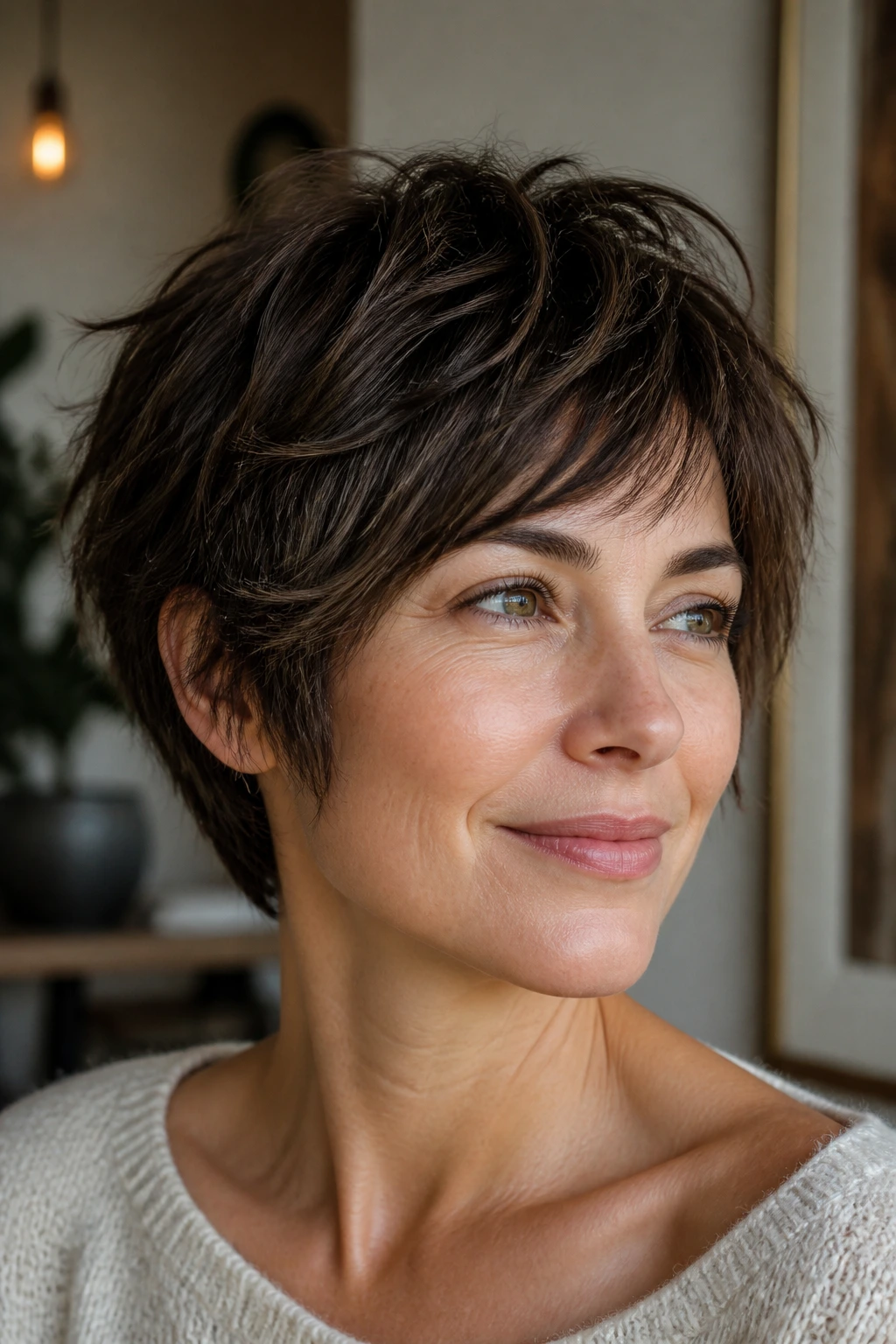
Short waves do not need a heavy shelf of products. They need the right few. A lightweight mousse gives the most reliable lift for fine to medium hair, especially when you work it into damp roots and mid-lengths before air-drying. If your hair is thick or frizz-prone, a curl cream can help, but use less than you think. On a chin-length cut, a nickel-size amount is often enough. On a pixie or bixie, even that can be too much.
Sea-salt spray is useful, but not every head of hair likes it. Fine waves often respond well because the spray gives grip. Dry or coarse hair can end up feeling scratchy if you lean on it too hard. If your ends tend to feel rough after salt spray, mix it with a little leave-in conditioner or skip it and use texture spray instead.
For heat styling, a heat protectant matters more on short hair than people expect. You still pass the tool over the same sections again and again, and short lengths sit close to the face and scalp. Look for a spray that leaves the hair flexible rather than sticky. Sticky hair does not hold a wave well; it just clumps.
If your hair gets greasy fast, keep shine serum away from the roots. One drop rubbed between the palms is enough for the ends. That tiny amount can tame frizz without flattening the whole cut.
Keeping Short Waves Fresh Between Washes

Short wavy hair usually behaves best on day one or day two, which is handy because it does not take much to bring it back. Sleep on fully dry hair. That sounds basic, but it matters more on short cuts because damp hair gets strange dents at the back and around the ears.
For day two, mist the hair lightly with water or a water-and-leave-in mix, then scrunch the ends and the front sections. If the crown is flat, lift it with your fingers and add a little dry shampoo at the roots. Do not spray dry shampoo all over the lengths. It belongs near the scalp, where oil collects.
Most short wavy cuts need trimming every 6 to 8 weeks if you want the silhouette to stay clean. Pixies and bixies can sometimes stretch to 8 or 10 weeks, but once the nape starts flipping weirdly or the sides lose their shape, it is time. A little maintenance keeps the cut from becoming a different haircut entirely.
On the in-between days, a quick five-minute refresh is often enough. Re-dampen the front, restyle the part, and leave the rest alone.
Common Mistakes That Flatten the Shape
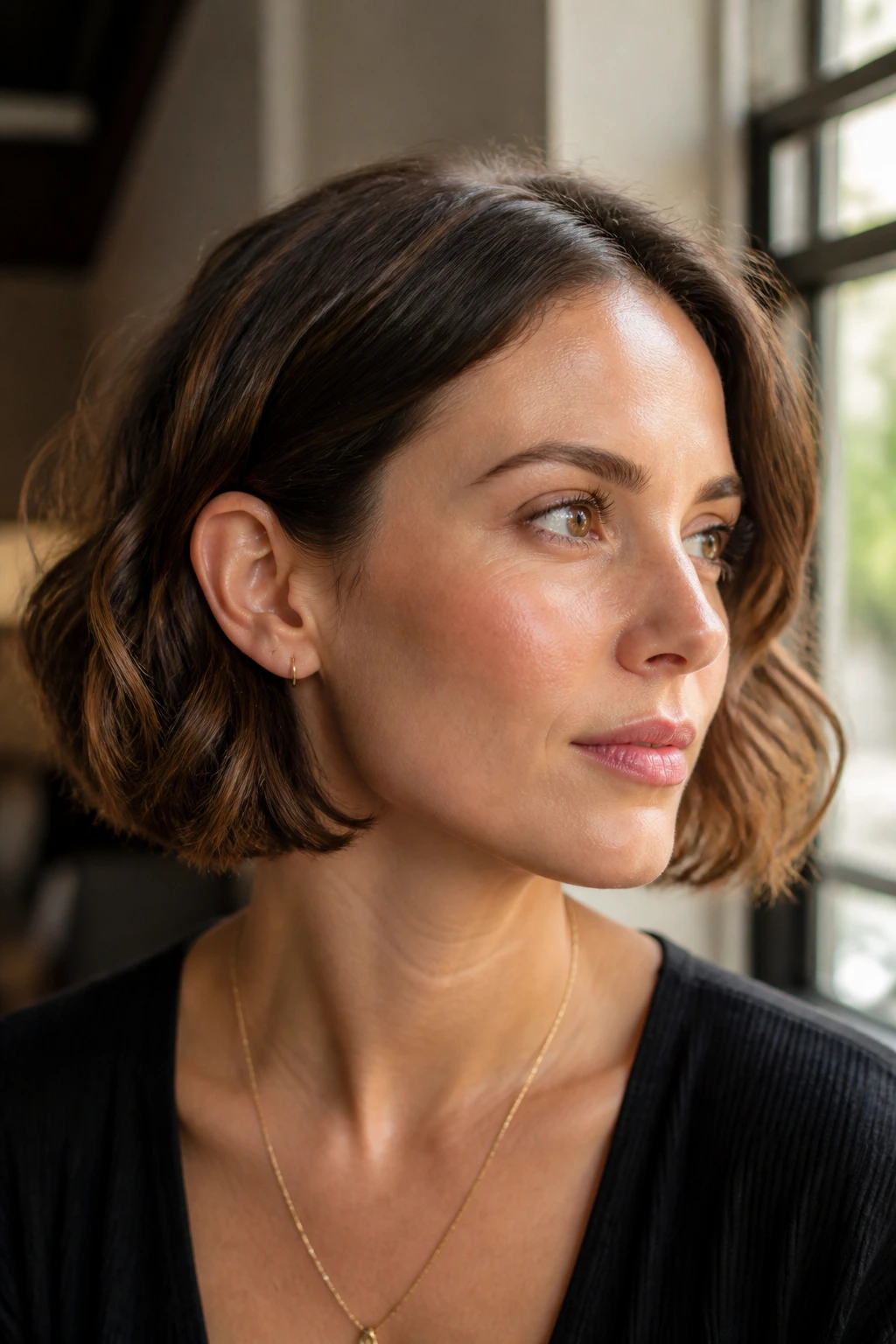
Using too much product: The hair starts looking stringy, sticky, or flat at the crown. Fix it by cutting your product amount in half and putting most of it on the ends, not the roots.
Curling every section the same way: The style turns into a single repetitive bend, which can look too neat or too puffy. Alternate the direction of the wrap, and leave the very ends a little straighter on a few pieces so the texture reads as natural.
Cutting short waves too blunt on thick hair: The result is a triangle shape that widens at the sides. Ask for internal layers or a softer perimeter so the wave can move instead of ballooning out.
Brushing dry waves into submission: That breaks apart the wave pattern and creates frizz. Detangle while damp, then use fingers to reshape once the hair is dry.
Sleeping on hair that is still damp: The back gets dents, the front gets odd bends, and the texture dries in the wrong place. Dry it fully, even if you only use a diffuser for a few minutes.
Ignoring the crown: Short hair can look fine at the ends and still fall flat on top. Root clips, blow-drying upward, or a quick lift with dry shampoo fixes that faster than trying to add more curl everywhere.
Easy Variations for Different Hair Types

Fine-Hair Lift: Use a mousse at the roots, then clip the crown up while it dries. This keeps the style from collapsing and works especially well with French bobs, side parts, and piecey chin-length cuts.
Thick-Hair Calm-Down: Ask for internal layers and use a lightweight cream instead of heavy oil. The goal is to soften the bulk without erasing the wave, which is the mistake that makes thick short hair look puffy.
Humidity Shield: Set the hair with a flexible gel or strong mousse, then leave it alone until dry. The less touching you do, the less frizz you get. A small bit of serum on the ends at the end can seal the shape.
Heatless Wave Set: Twist damp sections away from the face, pin them loosely, and let them dry before releasing. This works best on bob lengths and lets you get movement without a curling iron.
Office-Smooth Finish: Keep the roots smooth with a blow-dry brush and let only the ends bend. This gives you a cleaner, more controlled look that still feels softer than straight hair.
Questions People Ask About Short Wavy Hair
What counts as short hair for these styles?
Usually anything from a pixie through a chin-length bob fits the group. Once hair starts hitting the shoulders, the maintenance changes and the wave behaves differently.
Can straight hair wear these looks?
Yes, but you’ll usually need some help from a wand, iron, or setting product. The shorter the hair, the easier it is to fake a bend and keep it in place.
Which style is easiest for fine hair?
A side-swept bob, French bob, or deep side-part crop tends to work best. These styles use direction and crown lift rather than heavy layers that can make fine hair look wispy.
Do layers always help wavy short hair?
No. Too many layers can make the haircut frizzier or thinner than you want. Internal layers or a soft perimeter often work better than aggressive chopping.
How do I stop short waves from puffing out at the sides?
Keep the perimeter a little cleaner, use less product, and avoid over-diffusing. A curved-under end or tucked side can also bring the shape back in.
What if my waves disappear by noon?
Start with a mousse at the roots, then clip the crown while the hair dries. If that still fails, the haircut may need more structure near the top so the wave has something to sit on.
Can I air-dry all of these styles?
Most of them, yes. The air-dried versions usually need a product with hold and a bit of finger shaping, but the actual work stays light.
How often should I trim short wavy hair?
Every 6 to 8 weeks is the sweet spot for most bobs and crops. If the nape flips out or the shape gets bulky at the sides, the haircut is asking for attention.
The Shape You’ll Reach for Again

The best short wavy styles do not ask for perfect hair days. They ask for the bend you already have, plus a cut that knows where to let that bend show off. That is why these looks keep working: they respect the hair’s natural movement instead of trying to bulldoze it flat.
Pick one shape that matches how much time you actually want to spend in the mirror. If you want five-minute hair, go French bob, side part, or claw-clip bob. If you want a little more edge, the mini shag, bixie, or finger-wave front gives you room to play without turning the routine into a project.
And that’s the real win. Short waves look their best when they’re allowed to be a little imperfect, a little piecey, and a little easier than you expected.
