



Shag haircuts for long hair can look expensive and relaxed at the same time, which is rare, and a little slippery, and worth getting right. The shape only really sings when the layers have somewhere to go: cheekbones, collarbones, ribs, the little bend at the end of a blowout. If the cut is too blunt, it sits there. If the layers are too short, it turns poofy in the wrong places and loses the vintage swing that makes the style so appealing.
That vintage vibe is the whole point here. A good long shag should feel like it has lived a little — feathered around the face, loose through the lengths, with ends that flip or skim or break apart in a way that looks deliberate rather than overworked. The best versions borrow from the ’70s and early ’80s without turning into costume hair. They have movement, but not chaos. Shape, but not stiffness.
And that balance is harder than it sounds. Long hair carries weight, so the cut has to remove bulk in the right places and keep enough length for the silhouette to stay soft. Some shag haircuts lean airy and romantic. Others have more rocker grit. A few are almost polished enough to pass for a blowout if you smooth the ends just right. The trick is choosing the version that matches your texture, your styling habits, and how much fringe you’re willing to live with.
Why These Long Shag Cuts Feel So Wearable
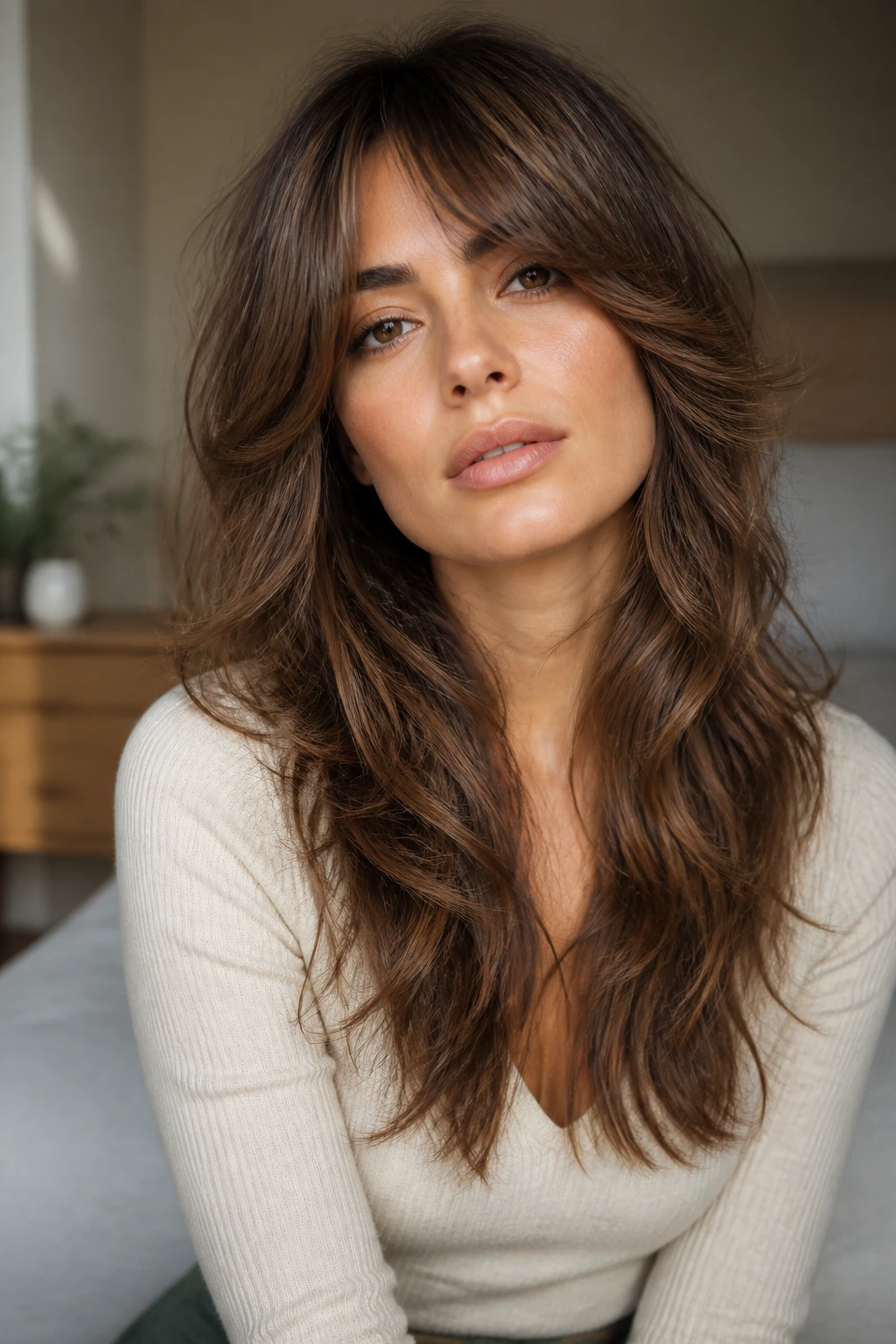
Long Lengths Stay Useful: The cuts in this collection keep enough hair below the shoulders to pull back, braid, or tuck behind the ears without losing the shag shape.
Vintage Shape, Not Costume Hair: Feathered bangs, bendy ends, and face-framing layers give you that old-school feel without turning the whole haircut into a period piece.
Texture Has a Job Here: Straight hair gets movement, wavy hair gets structure, and curly hair gets space. The layering is doing actual work, not just decoration.
There’s Room for Commitment Levels: Some versions ask for a full fringe and regular trims. Others live happily with grown-out bangs and a quick round-brush pass.
Salon-Friendly Options for Every Density: Fine hair, thick hair, and curly hair all need different layer placement, and this set gives those differences a place to live.
1. Curtain Bangs and Feathered Ends
Curtain bangs and long shag layers are the easiest route into this look, and that is not an accident. The fringe splits cleanly at the center, then drifts into cheekbone-length layers that keep the face open instead of boxed in. The ends should flick a little, especially if you wrap them around a round brush and let them cool there.
Why It Feels So Right
The cut gives you movement right where people look first: around the eyes and along the jaw. Keep the shortest face-framing pieces around the cheekbone, then let the rest fall past the collarbone so the length still feels generous. That contrast is what makes it read as shaggy rather than merely layered.
- Best for: straight to wavy hair that needs a softer front.
- Styling note: a 1.25-inch round brush gives the fringe a gentle bend.
- Maintenance: trim the bangs every 4 to 6 weeks or they start swallowing your eyes.
- Vintage cue: think soft studio portrait, not blunt fringe.
Best detail: ask for the fringe to merge into the side layers, not stop abruptly at the temples.
2. Farrah Flip Layers That Curl Away at the Cheeks
This one is a statement, and it knows it. The whole point is the outward flick at the ends — that unmistakable flip that makes long hair look buoyant instead of heavy. The upper layers should hit around the cheekbones and jaw so the shape opens up when you blow it dry with a big brush.
The magic is in the finish. If the ends are too straight, you lose the era. If they’re too curled, it becomes pageant hair. Keep the brush moving, lift at the root, then roll the ends away from the face for a soft, open sweep.
What Makes It Different
A Farrah-style shag needs volume in the top third and a little restraint at the bottom. The layers should release weight but keep enough length that the flip feels elegant, not choppy. This cut looks especially good when the hair has medium density, because the movement shows without the ends looking thin.
Quick tip: mist a light volumizing spray at the roots before blow-drying, then finish with a pea-sized serum just on the ends.
3. Wolf Shag with a Softer, Longer Perimeter
Why does the wolf-shag version keep showing up in long-hair inspiration boards? Because it takes the attitude of a mullet and sands off the rough edges. The crown sits a little shorter, the layers tumble down through the lengths, and the bottom line stays long enough to keep the shape feminine rather than harsh.
It’s a smart choice if your hair gets bulky near the top but you still want the ends to keep some weight. The key is not to overdo the disconnection. You want a clear shape, but you do not want the haircut to start looking broken in a bad way.
How It Reads on Long Hair
The shorter crown layers create lift, then the longer perimeter gives you that vintage “I woke up like this” swing. It’s especially good on wavy hair that wants to collapse under its own weight.
- Best for: thick or medium-thick hair.
- Avoid if: you want a soft, polished blowout every day.
- Style cue: rough-dry first, then define the front layers with a round brush.
- Shape note: keep the perimeter below the collarbone.
4. Bardot-Inspired Shag with Airy Face Framing
A Bardot-ish shag has a little more softness than the heavier rocker versions. The fringe should be open, airy, and slightly broken at the center, with face-framing layers that skim the cheek and the outer edge of the jaw. It feels romantic, but not precious.
If you like hair that looks better after being touched a little, this is your lane. The layers should move when you turn your head, and the front should fall in a way that makes the cheekbones look a touch higher. That’s the whole trick.
The Feel of It
Think loose satin blouse, oversized sunglasses, and a collarbone length that still has room to breathe. The cut works because it doesn’t try to make every strand behave. A little separation is the point.
Styling note: use a medium-barrel curling iron on the front pieces only, then brush them out with your fingers. Too much curl kills the mood.
5. Razor-Cut Boho Shag with Piecey Ends
Razor cutting gives this version a soft, feathered edge that looks almost airbrushed when it’s done well. The layers shouldn’t look blunt or heavy; they should taper into one another, especially around the lower half of the hair. That makes the whole cut feel lighter without sacrificing length.
This is the shag for someone who likes a lived-in finish and doesn’t mind a bit of separation in the ends. Air-dry it with leave-in cream and a light wave spray, and it develops that easy boho shape that sits somewhere between music-festival hair and a real haircut.
Why It Works
A razor cut removes weight fast, so the hair swings instead of dragging. The downside is that it can fray dry ends if the hair is already fragile, so this version needs healthy lengths and a stylist who knows where to stop.
Pro detail: ask for the razoring to stay mostly in the interior layers. Too much on the perimeter and the ends can start looking wispy instead of soft.
6. Bottleneck Bang Shag with a Soft Center
Bottleneck bangs are having a long, useful life because they suit shag haircuts so well. The center starts shorter and narrow, then the fringe opens out toward the temples and blends into the front layers. It gives the face a little frame without the heaviness of a full fringe.
On long hair, this shape keeps the cut modern while still nodding to vintage styling. The bangs matter, but they don’t take over the whole haircut. That’s why I like this version for people who want a shag but are nervous about a thick block across the forehead.
How to Wear It
Blow-dry the center forward first, then bend the sides away from the face. The result should feel soft at the bridge of the nose and fuller at the cheek line. It’s a small detail, but it changes the whole read of the cut.
- Best for: oval, heart, and longer face shapes.
- Styling note: a round brush with a narrow barrel helps the center sit cleanly.
- Maintenance: fringe trims matter here; let it grow too much and the shape disappears.
7. Full Fringe Rocker Shag That Hits the Brows
A full fringe gives long shag haircuts a sharper edge, and I like it best when the rest of the cut stays feathered and loose. The bangs should sit around the brows, maybe just brushing them, with the length underneath falling in long, layered sheets. That contrast gives the haircut some bite.
This is the version that leans closest to old rock posters and smoky backstage photos. It looks best when the fringe is a little separated, not helmet-straight. A dry texture spray or a tiny bit of pomade on the fingertips can help break it up without making it greasy.
What to Watch For
A heavy fringe can make long hair feel shorter than it is, which is useful if the rest of the cut is very soft. Just keep the layers below it long enough that the silhouette doesn’t turn blunt.
Best move: ask your stylist to point-cut the fringe so it has a softer edge and grows out more cleanly.
8. Butterfly Shag with Long Floating Layers
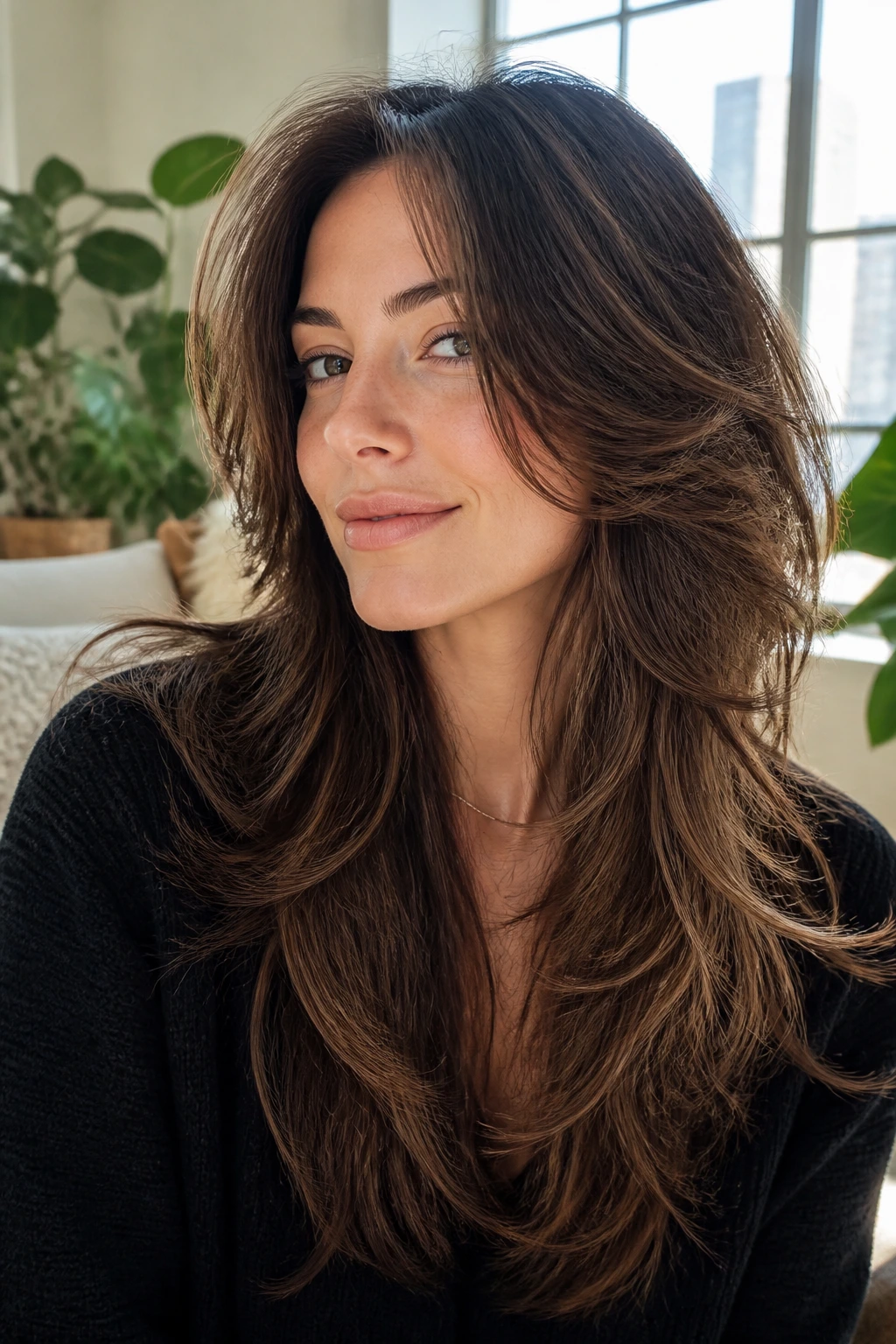
The butterfly shag sits in an interesting place between a long layered cut and a true shag. The top sections are shorter, the face frame opens like a wing, and the lengths stay long enough to keep that dramatic sweep. On long hair, it creates volume around the crown without stripping away the bottom length.
That’s what gives it the vintage feel. The shape has lift near the top and a soft cascade underneath, which means it can be styled sleek or fluffed up depending on your mood. It is one of the better choices if you want the shag vibe without a choppy finish.
The Payoff
The layers make the hair swing outward when you brush it out, especially around the front and sides. If you want big movement without a huge haircut, this is a strong pick.
Style note: use rollers or a large round brush on the top layers only. Leave the bottom loose so the haircut keeps that long, floating outline.
9. Curly Cloud Shag for Natural Texture
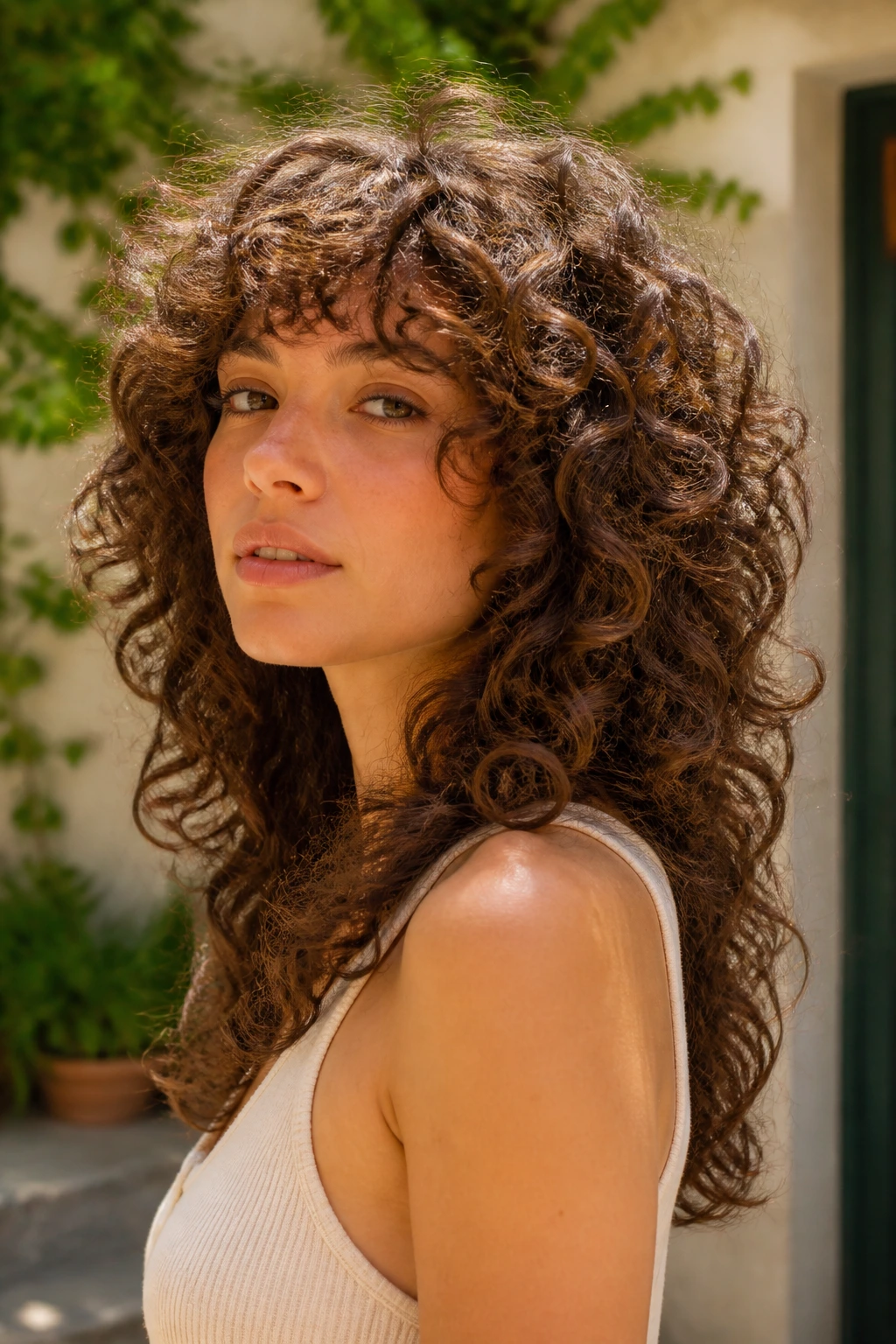
Curly hair and shag cuts can be glorious together, but only if the layers respect shrinkage. A curly cloud shag keeps the crown shaped, opens the sides, and avoids the triangle that so many long curls fall into when they’re left one length. The outline should feel rounded and airy.
The best versions let the curls stack in a way that creates volume without bulk. That means shorter interior layers, longer surface layers, and a perimeter that still holds enough length to keep the style from poofing up at the wrong spots. This is one of those cuts where the right shape matters more than the exact curl pattern.
How It Should Behave
Dry it with a diffuser, scrunch lightly, and then leave it alone. Curly shags look best when the ringlets have room to spring and settle on their own.
- Best for: medium to tight curls.
- Avoid: over-thinning the ends.
- Styling cue: a curl cream plus gel gives better hold than one heavy product.
- Vintage feel: soft volume, not a stiff spiral set.
10. Air-Dry Wave Shag That Keeps the Bend
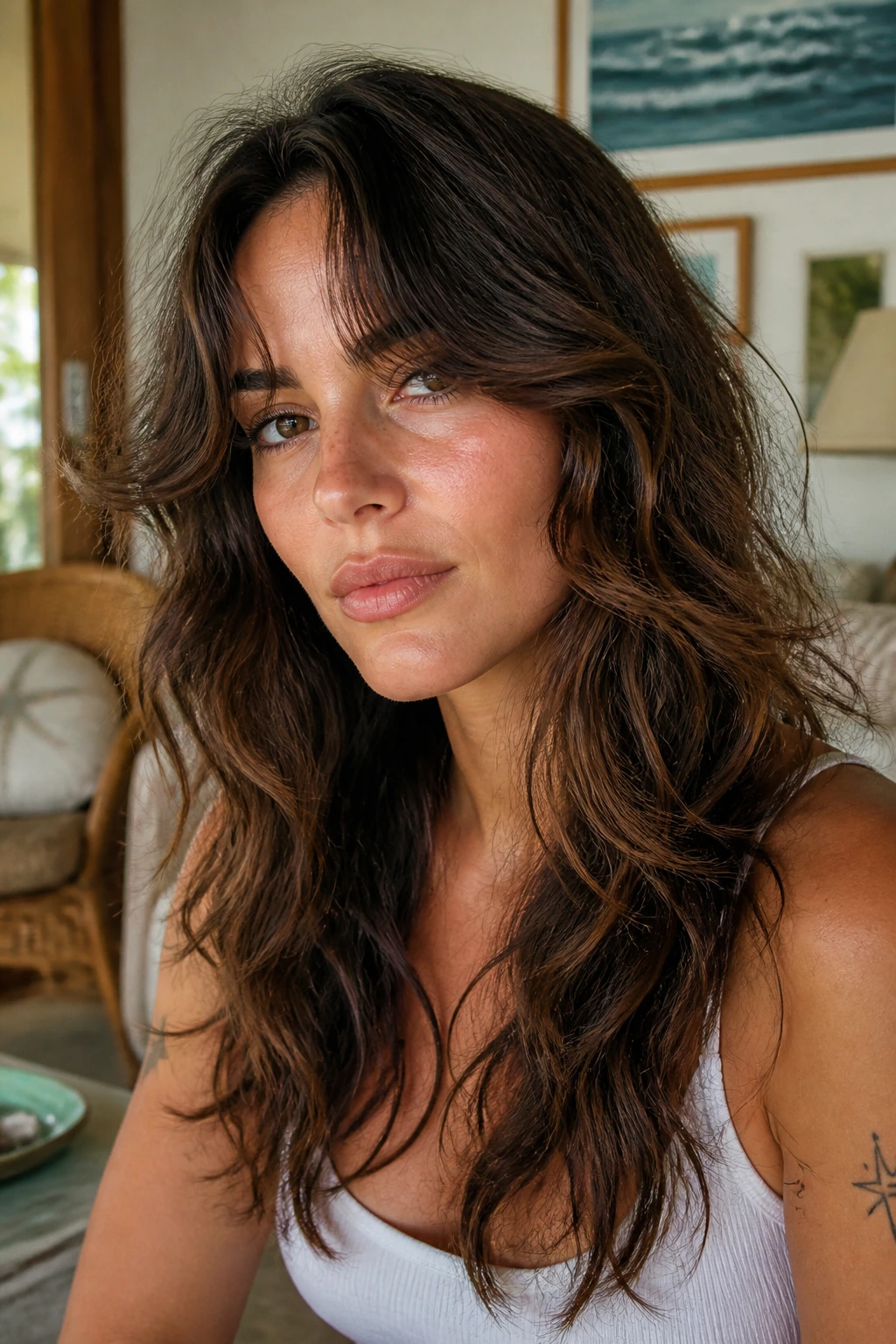
If your hair already bends or waves when it’s damp, this is the practical choice. The haircut should encourage the texture you already have, not fight it. Long layers through the mids and ends let the waves fall into loose bends that look relaxed, a little messy, and very wearable.
The vintage part shows up in the shape of the front. Slightly shorter pieces around the cheekbones and jaw line make the hair feel intentional even when you’ve done almost nothing to it. That is a nice trick, and a useful one.
A Small Advantage
The cut still looks good when the wave pattern changes. Humidity, a late-night bun, a rough sleep — none of that ruins it the way it can ruin straighter, more precise haircuts.
Good to know: if your hair is fine, keep the product light. Heavy creams can stretch the wave out and make the layers droop.
11. Invisible-Layer Shag for Fine Hair
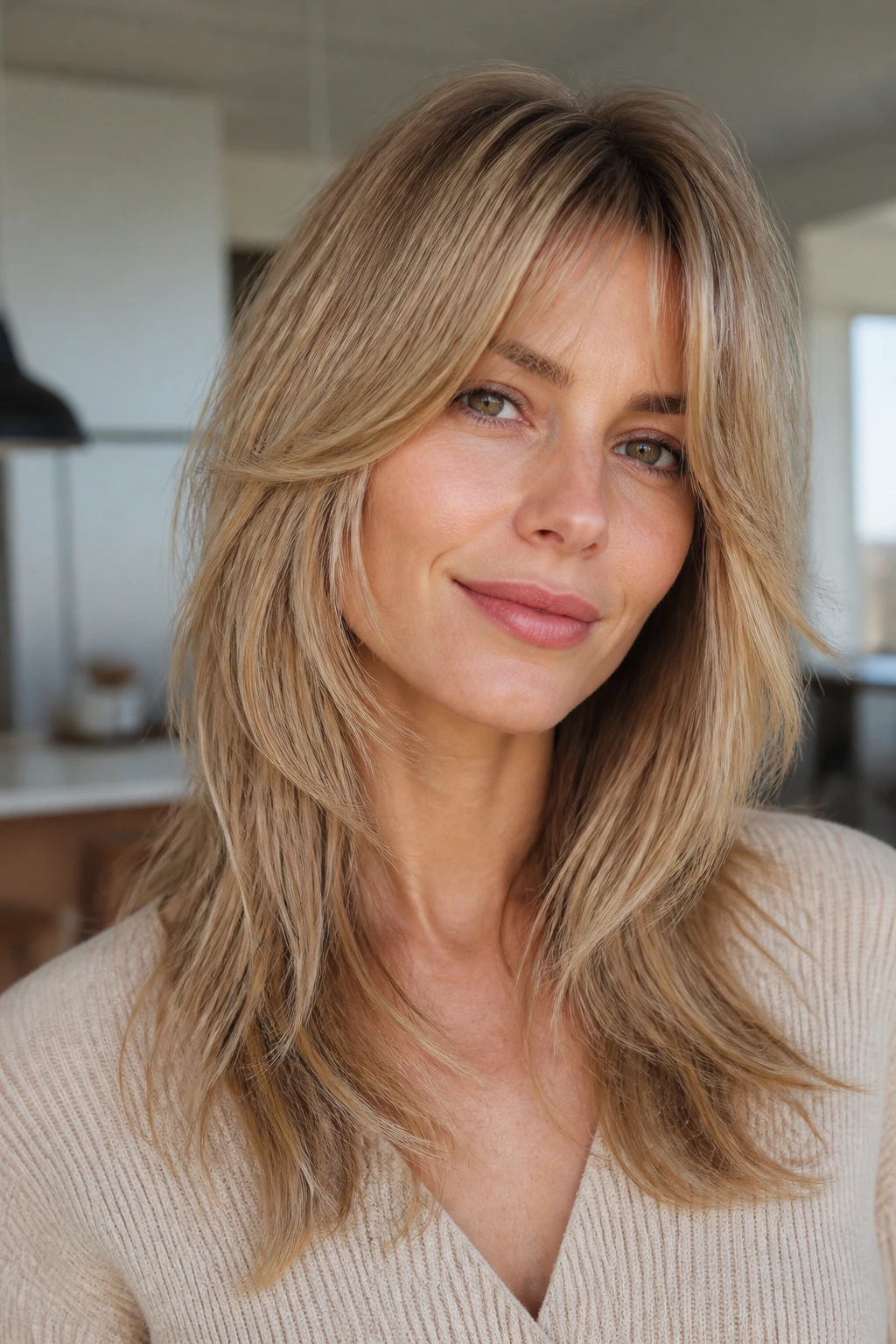
Fine hair often looks better with a shag when the layers are subtle instead of obvious. The trick is to remove just enough weight to create movement, but not so much that the ends look see-through. This version relies on internal layering and a soft face frame, which helps the cut keep its density.
The result is a long shag that doesn’t announce itself in big, obvious chunks. It feels more like a shaped long haircut with vintage influence, which is exactly why it works for fine hair. You get lift without the sad, scraggly ends that can show up when the layers are too aggressive.
What to Ask For
Ask for long internal layers, a light face frame, and a perimeter that stays full. If the stylist starts talking about heavy texturizing near the bottom, I’d slow that conversation down.
Best styling move: root-lifting mousse at the crown, then a quick blow-dry with a vent brush. Don’t weigh it down with oils near the roots.
12. De-Bulked Long Shag for Thick Hair
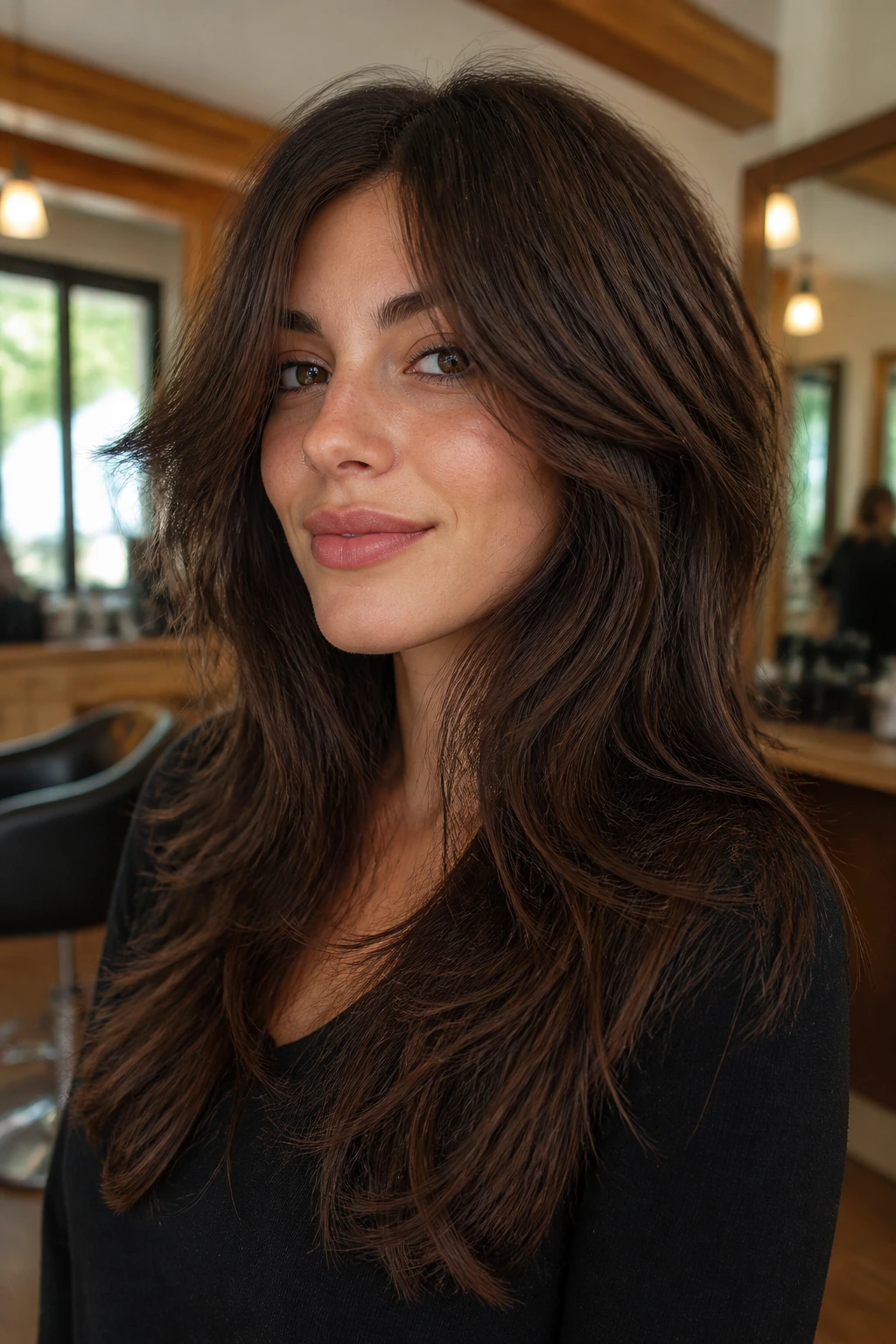
Thick hair can wear a shag beautifully, but not if the cut tries to keep every ounce of weight. This version takes bulk out through the interior so the hair bends and swings instead of ballooning. The outside still looks full. That matters.
The vintage vibe comes from the movement around the face and the way the lengths fall in soft panels. Without de-bulking, thick hair can swallow the layers and turn the whole thing into a block. A good shag on dense hair should feel lighter, not smaller.
Why It’s Worth the Precision
The best cuts keep the bottom edge long enough to anchor the shape. That way, even on day three, the haircut still has a line under all the movement.
- Best for: dense straight, wavy, or coarse hair.
- Styling note: a smoothing cream through the mids keeps the layers from expanding too much.
- Ask for: internal weight removal, not aggressive thinning at the ends.
13. Side-Part Glam Shag with a Deep Sweep
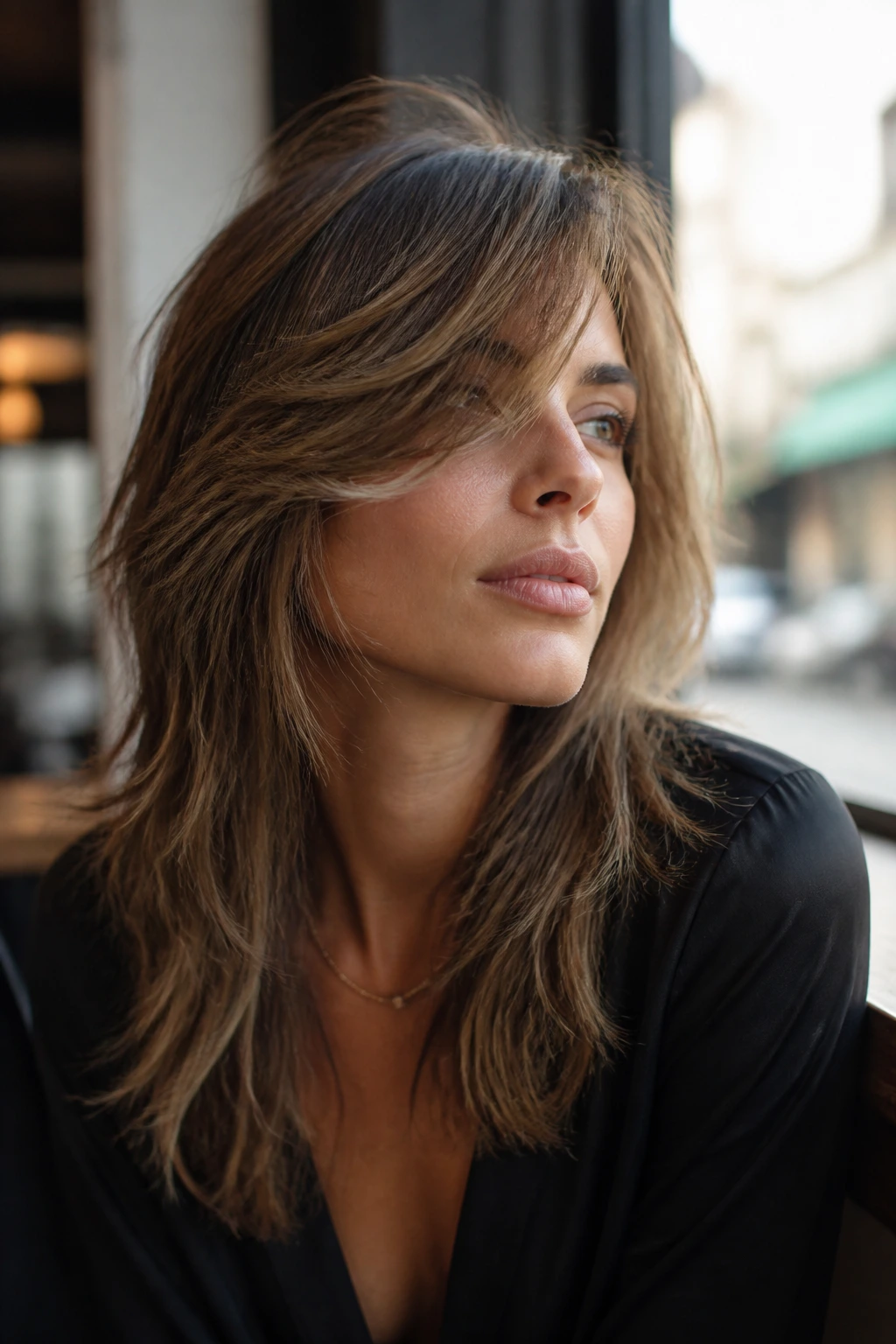
A deep side part changes the whole mood of a shag. Suddenly the haircut feels a little more glamorous, a little more studio-lit, and much closer to old Hollywood than to casual grunge. The layers should sweep across the forehead and fall into one cheek before opening into the lengths.
This is a smart choice if center-part fringe never sits right on your face. The side part gives the hair an elegant bend, and the long layers keep that bend from feeling severe. It’s still a shag, just one with better posture.
The Shape in Practice
Use a round brush to direct the front away from the part, then tuck one side behind the ear if you want that soft asymmetry. The silhouette becomes longer and more vertical, which can be useful on rounder faces.
Best detail: keep the part slightly off-center rather than extreme. Too deep, and the haircut can start to read as a formal blowout instead of a shag.
14. Piecey Razor Shag with Separated Ends
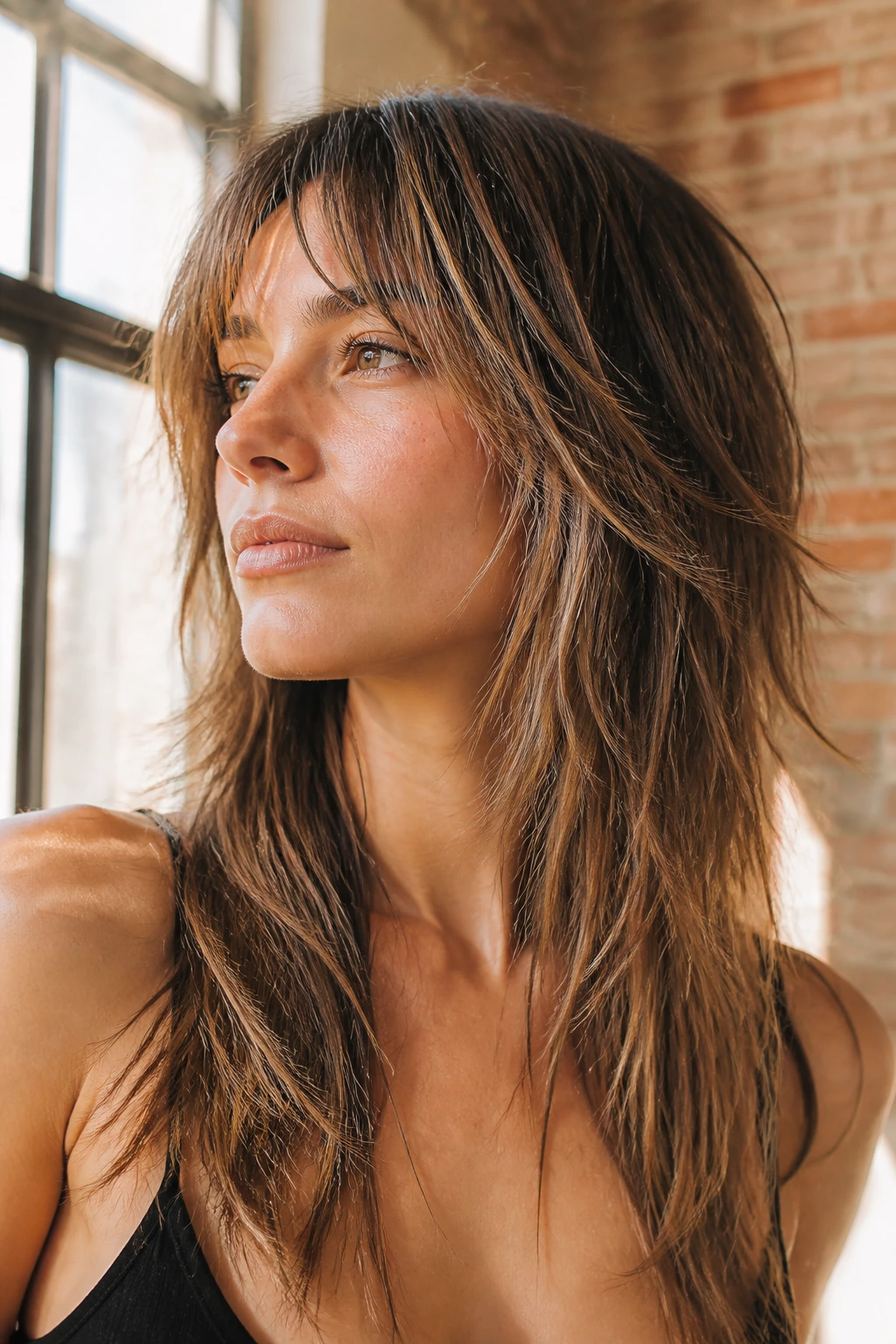
This is the one for people who like hair with a little grit. The layers are cut to break apart, not blend into a single soft cloud. The ends stay separated, the face frame moves freely, and the texture spray gets to do some work.
The style reads vintage because piecey texture has always been part of that era’s messier glamour. You want the hair to look touched, not polished to a shine. That does not mean dry or neglected. It means airy, tossed, and a little rebellious.
How It Differs
Compared with a softer shag, this version carries more visible texture on the ends. It’s a better fit for someone who likes air-dried hair, short styling sessions, or a cut that looks better with second-day texture.
One useful trick: twist a few front sections around your fingers while they’re damp, then let them dry that way. It creates a less uniform finish without any heat.
15. Length-Holding V-Shag with Soft Interior Layers
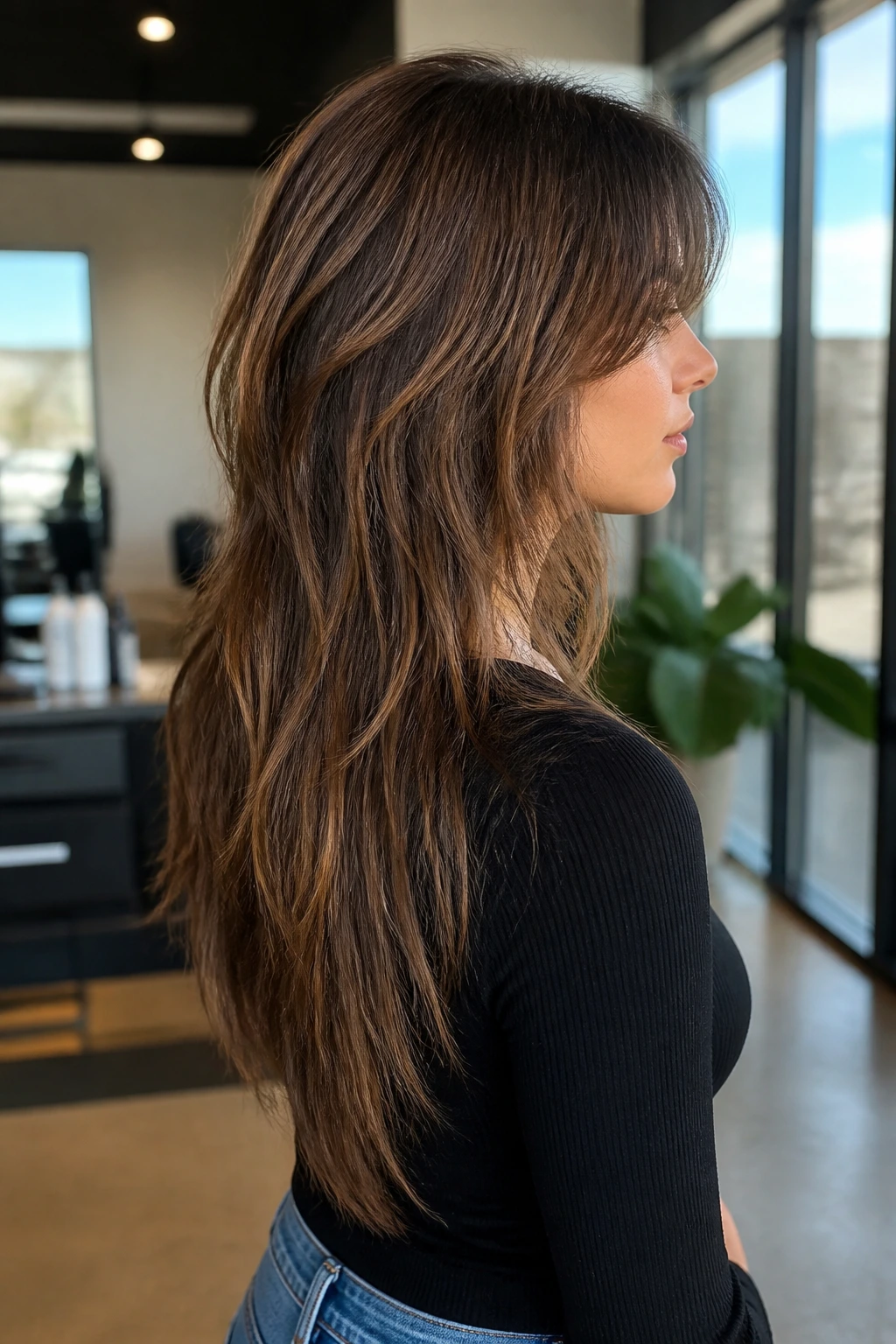
A V-shaped perimeter can give a long shag a pretty, narrow point at the back while keeping the front loose and feathered. The visual effect is sleek from behind and airy around the face. That contrast makes the haircut feel more intentional than a standard all-over layer job.
This is a good middle ground if you want the shag influence but don’t want the outline to go too choppy. The V keeps the length dramatic. The interior layers keep the movement alive.
Why It’s Smart
The V shape helps thick hair avoid that broad, shelf-like bottom line. On finer hair, it can make the length look longer because the eye follows the point downward.
Style note: this version looks best with a smooth top and a slight bend through the ends, not tight curls. Keep the finish soft.
16. Disco Blowout Shag with Big, Bouncy Ends
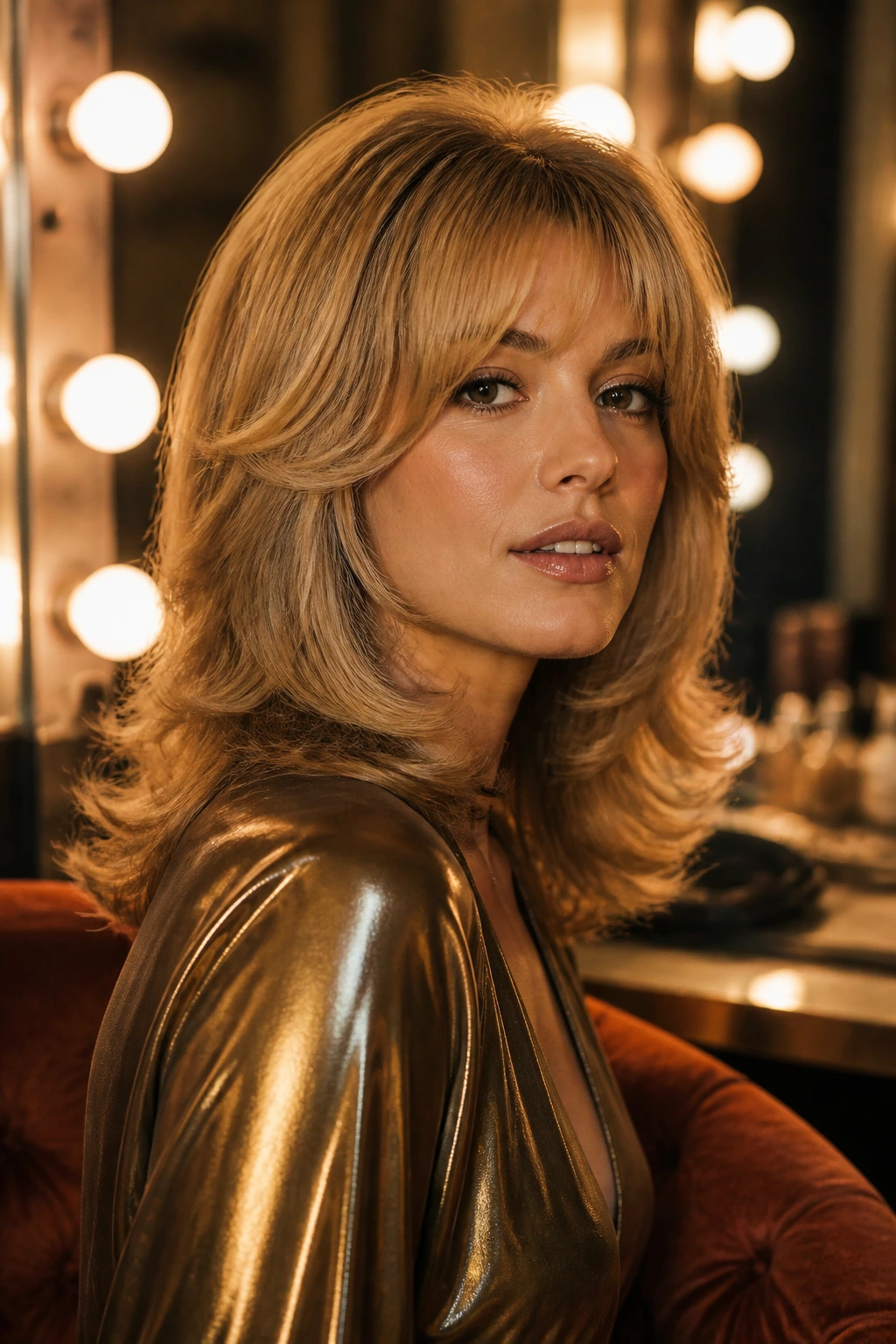
Some shags want to be air-dried. This one wants a round brush and a little lift. The layers should bounce at the ends, especially around the collarbone and below the cheek. Think volume with a clean outline, not teased hair.
The disco influence comes from the big, polished shape that still feels feathered at the edges. A good blowout on this cut makes long hair look richer, almost plush. It’s a little extra. That’s the point.
What Makes It Pop
The crown needs height, the sides need a soft curve, and the ends need a turn away from the face or under toward the neck. That combination gives the haircut movement from top to bottom.
- Best for: medium-density hair that holds a brush set.
- Styling cue: large Velcro rollers can save time if you hate fighting with a round brush.
- Finish: a light-hold hairspray keeps the bounce without freezing it.
17. Birkin-Bang Shag with a Soft Brow Line
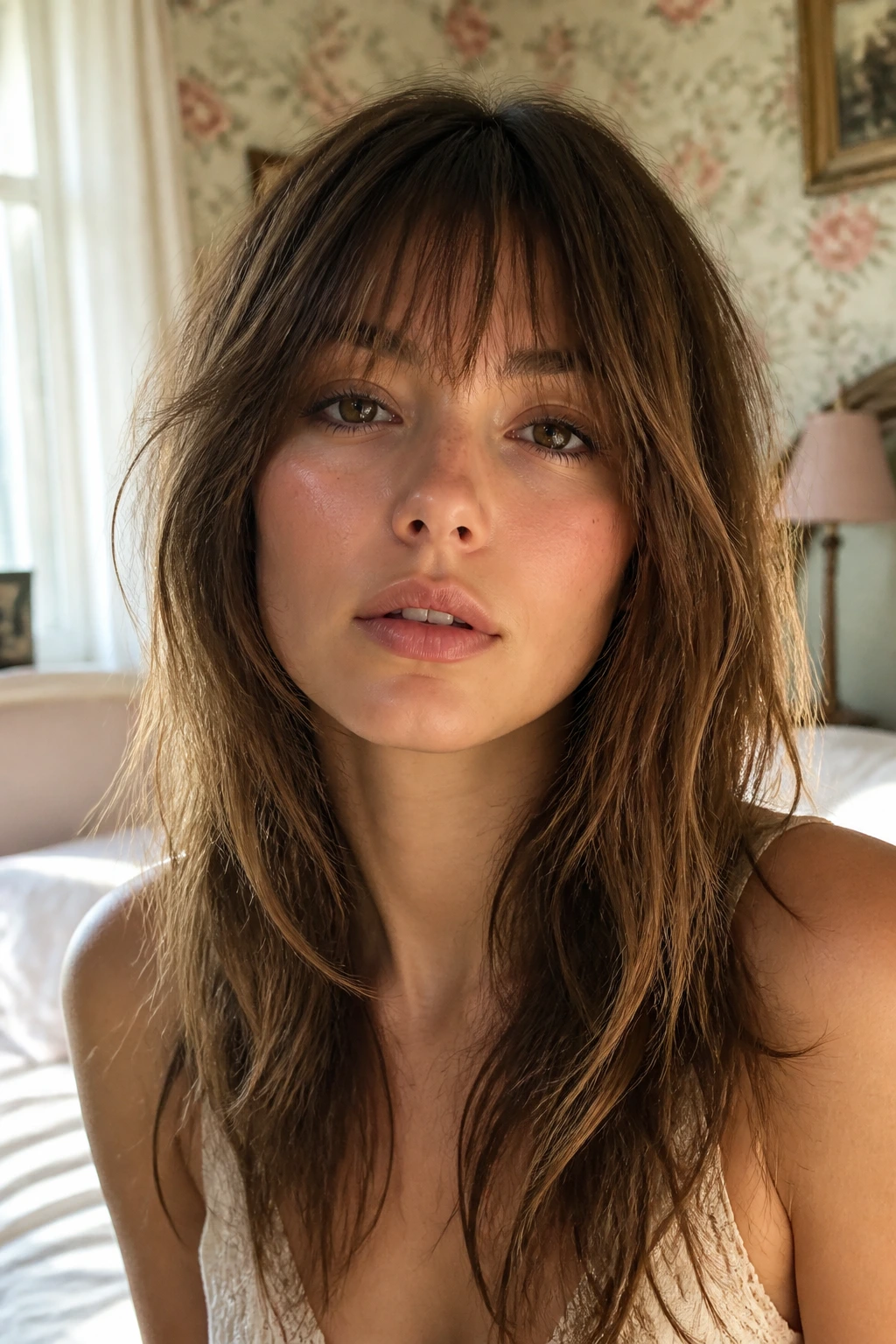
A Birkin-style fringe gives a long shag a softer, more undone front than a blunt bang. The brow line should peek through. The fringe should break a little. And the layers around it should stay loose enough to keep the overall haircut from feeling heavy.
It’s a lovely option if you want a vintage note that feels a bit French and a bit casual. The hair around the face matters more here than the ends, which is rare in a long haircut. That’s what makes it feel chic without shouting.
Best Use Case
This cut is especially good if your forehead is a bit shorter or if you like your fringe to look like it grew in naturally over time. It also gives straight hair a slightly lived-in edge.
Pro tip: dry the fringe forward first, then split it with your fingers while it’s still warm. That stops it from setting into a hard curtain.
18. Mod Shag with Sleek Movement
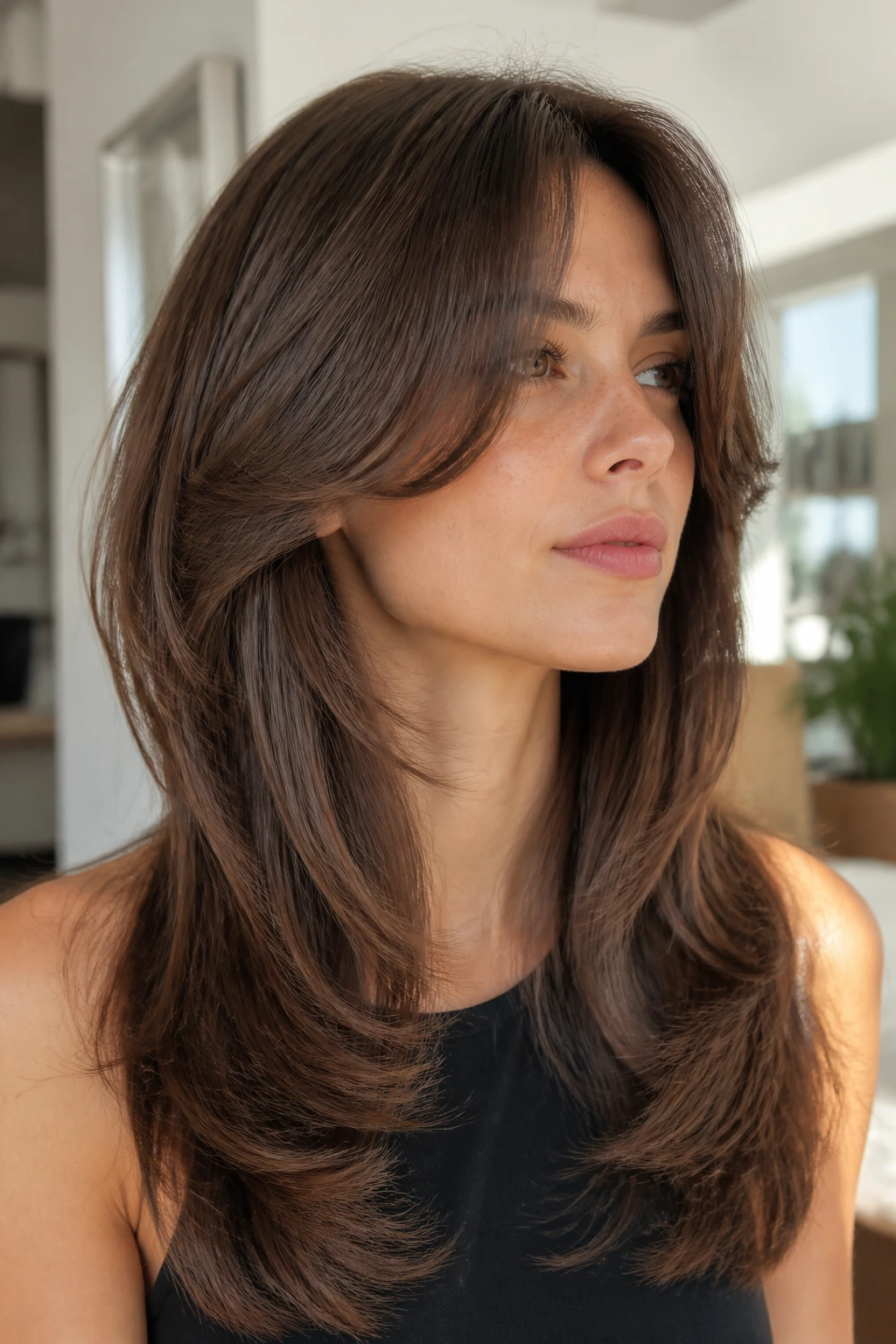
A mod-leaning shag is sharper and cleaner than the feathered versions, but it still needs movement. The ends should turn, the front should frame, and the overall outline should stay long. Think tailored, not fluffy.
This cut has a very specific charm on long hair. It can look almost architectural when the layers are precise, yet the vintage vibe stays intact because the fringe and face frame do the softening. If you like a bit of polish with your texture, this is a good lane.
How to Wear It
Blow-dry the top smooth, then add a slight bend through the ends with a brush or flat iron. The cut wants control more than chaos.
Best for: straight to slightly wavy hair, especially if you prefer a neater finish on weekdays and a looser one on weekends.
19. Grown-Out Shag That Still Looks Intentional
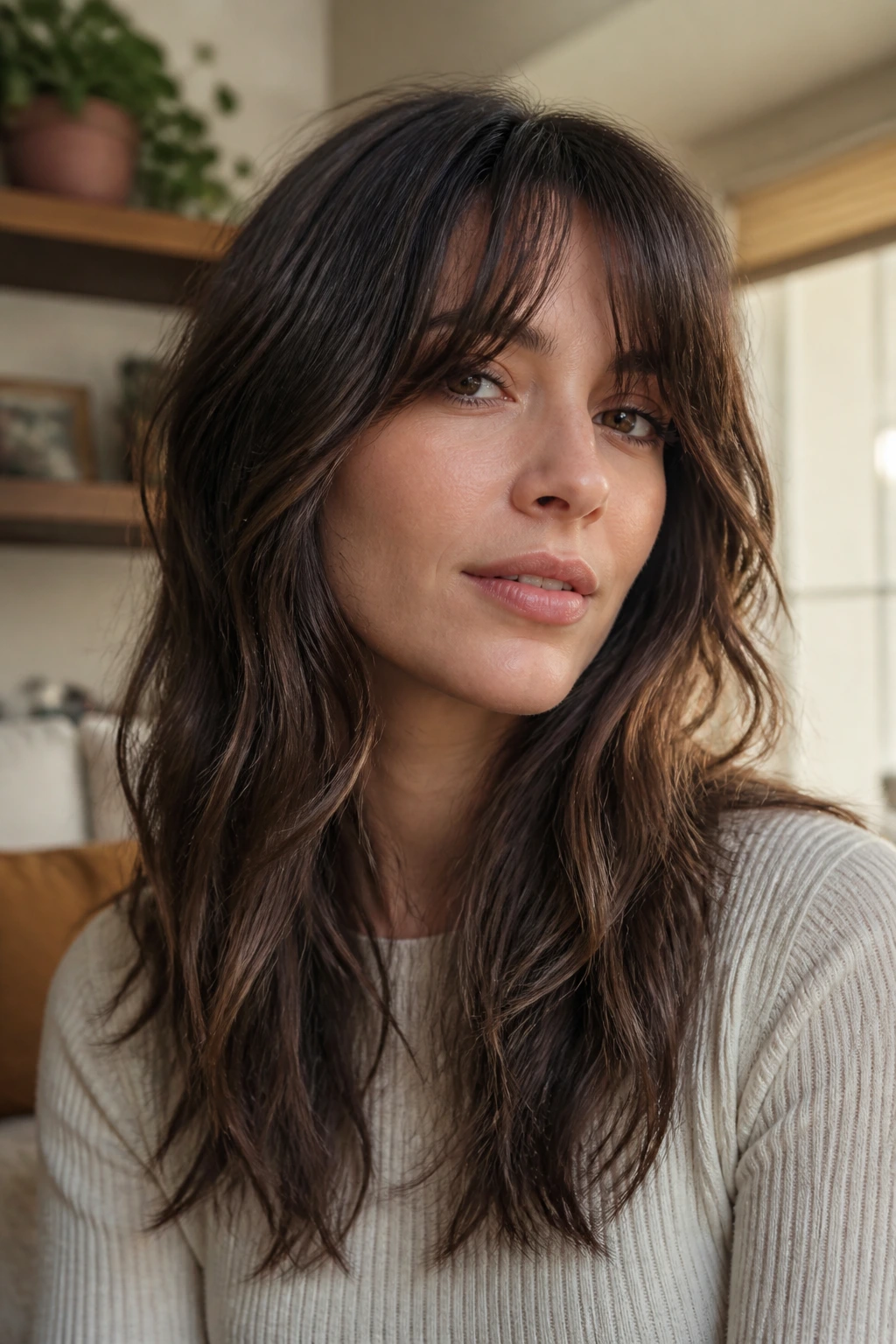
Not every shag needs a sharp salon edge. Some of the best long shag haircuts look better once the bangs have softened and the layers have started to blur together a bit. This version is built for that stage, and it makes the grow-out look like part of the design.
The front pieces should be long enough to tuck behind the ear, but still short enough to frame the face. The layers should blend so the haircut doesn’t lose its shape between appointments. That makes it a very forgiving choice.
Why I Like It
You can stretch the trim window without the haircut falling apart. A little grow-out actually adds to the vintage mood, which is a nice relief if you dislike the “fresh cut or nothing” trap.
Best move: ask for a soft fringe and graduated face framing, not a hard bang line. That makes the transition easier later.
20. Round-Face Balancing Shag with Longer Sides
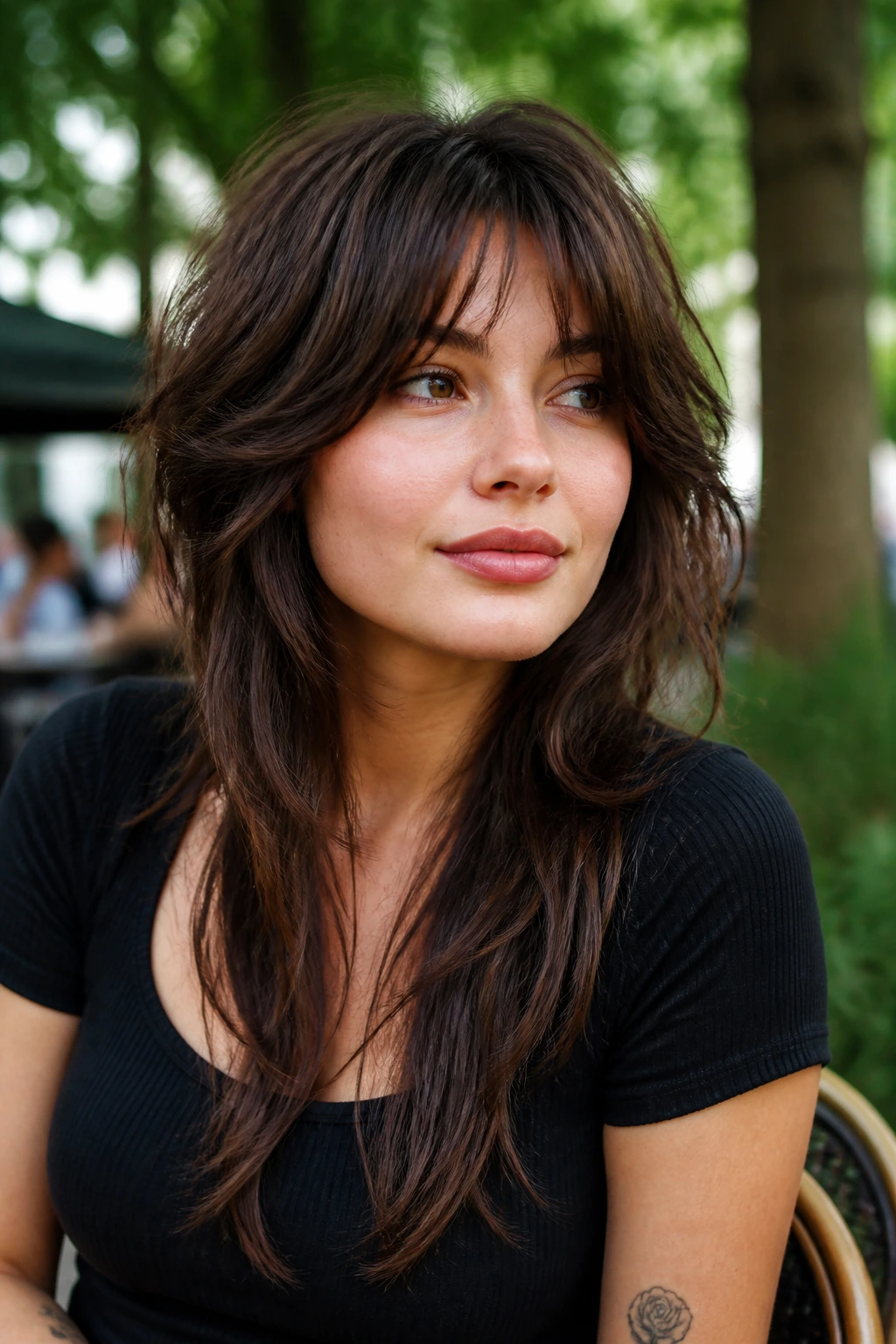
The goal here is simple: create length where the eye naturally wants to widen. Longer face-framing pieces, a bit of height at the crown, and a softer opening around the cheeks help the shape feel more vertical. The shag details are still there, but they’re used strategically.
This cut is especially good when the shortest pieces hit below the cheekbone instead of right at the widest part of the face. That little shift changes everything. The result is a long shag that flatters without looking like it was cut to a formula.
What Helps
A side part can sharpen the line, and a bend through the front layers adds a slim, lifted effect. Keep the length under the jaw where you can; it gives the eye a place to travel downward.
One rule: don’t let the shortest face-framing pieces sit exactly at cheek width. That’s where the cut can widen instead of slim.
21. Square-Jaw Softening Shag with Curved Layers
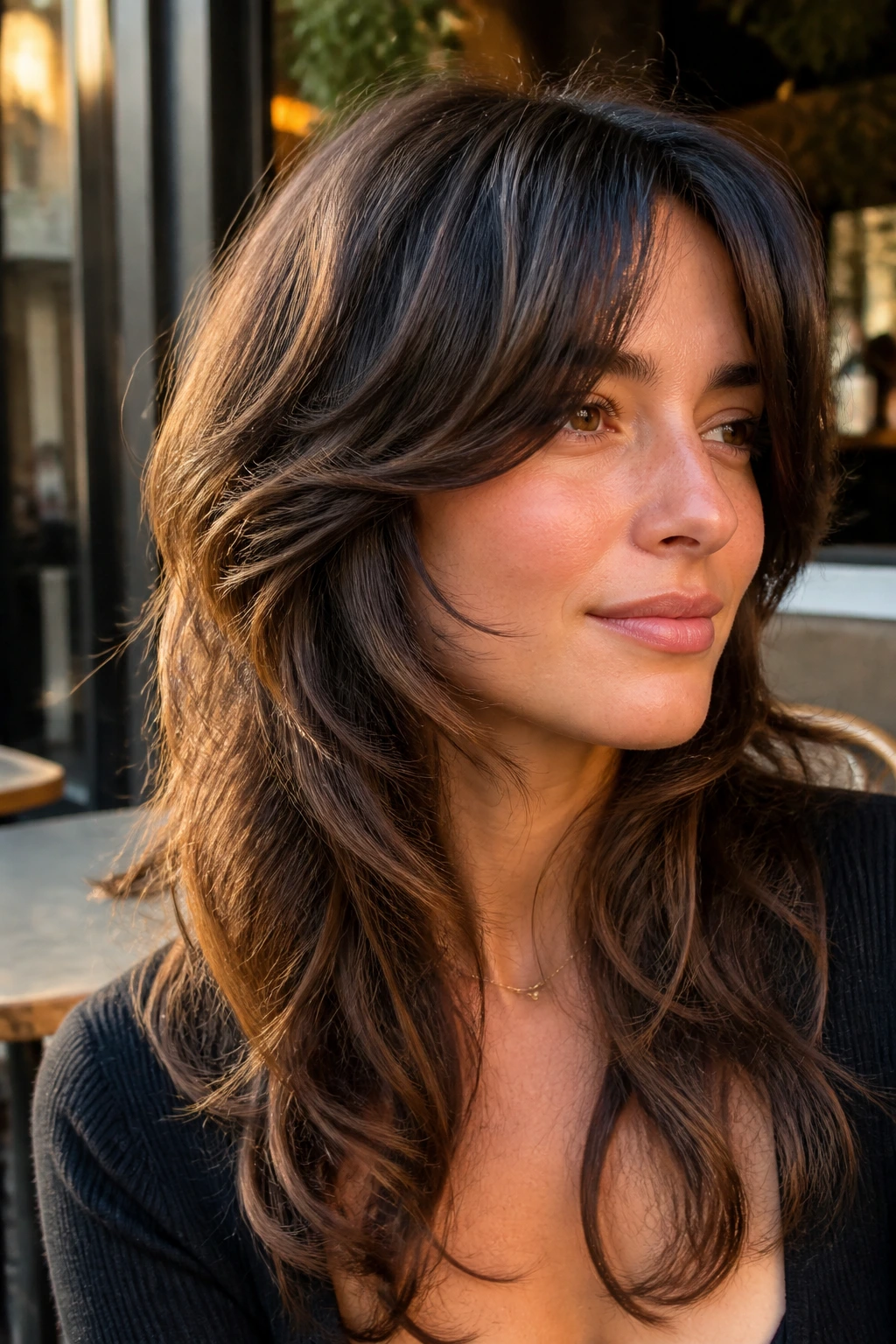
Square jaws can take a shag beautifully when the cut curves around the face instead of stopping bluntly at the jawline. The front layers should arc inward a little, then taper into the lengths. That shape softens the edge of the haircut and gives it a quieter, more romantic feel.
The best versions avoid harsh horizontal lines. You want movement around the cheeks and chin, not a shelf. That’s what helps the cut keep its vintage softness while still looking strong.
The Visual Result
The hair frames the face in curves, which takes the emphasis off any hard angles. If you like a little structure but not a severe look, this is a strong middle path.
Styling note: bend the front sections inward with a brush, then let the ends relax. Too much curl at the jaw can make the shape boxy again.
22. Fine-Hair Lift Shag with a Higher Crown
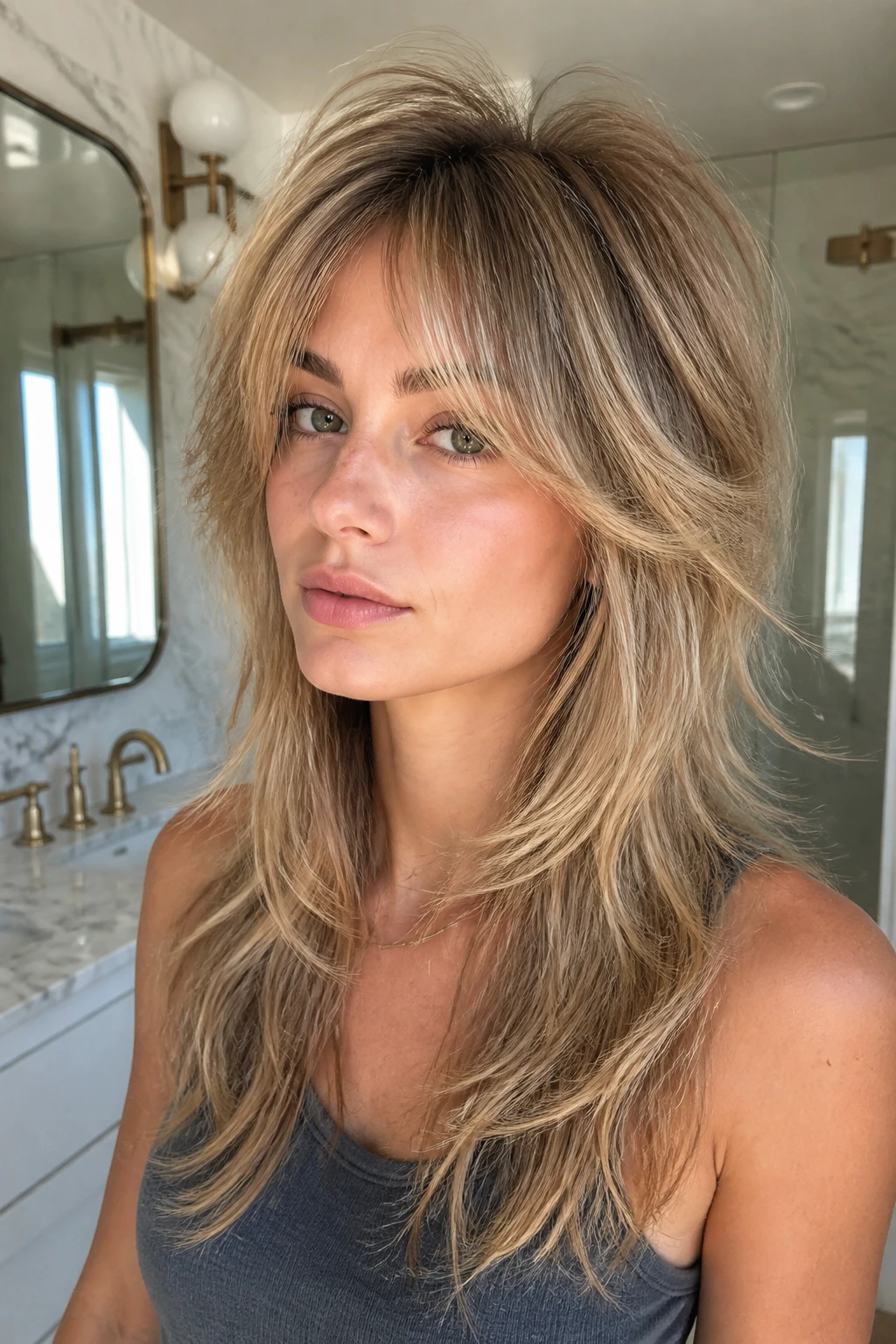
Fine hair needs lift where it can get it, and this version places it near the crown and upper sides. Shorter top layers create the illusion of density above, while the lengths stay long enough to keep the silhouette from going stringy. It’s a careful cut, and it should be.
The vintage vibe comes from the way the top sections float away from the head a little. That gives fine hair some presence without asking it to hold a huge amount of volume all day. You’re building shape, not just chasing body spray.
What to Ask For
Ask for light layering through the crown and minimal texturizing at the very ends. The ends need substance more than they need thinning.
- Best product: mousse at the roots, not heavy cream.
- Best finish: a quick flip with a round brush or hot rollers.
- Avoid: over-layering below the shoulders; it can make fine hair look sparse.
23. Straight-Hair Feather Shag with Movement Built In
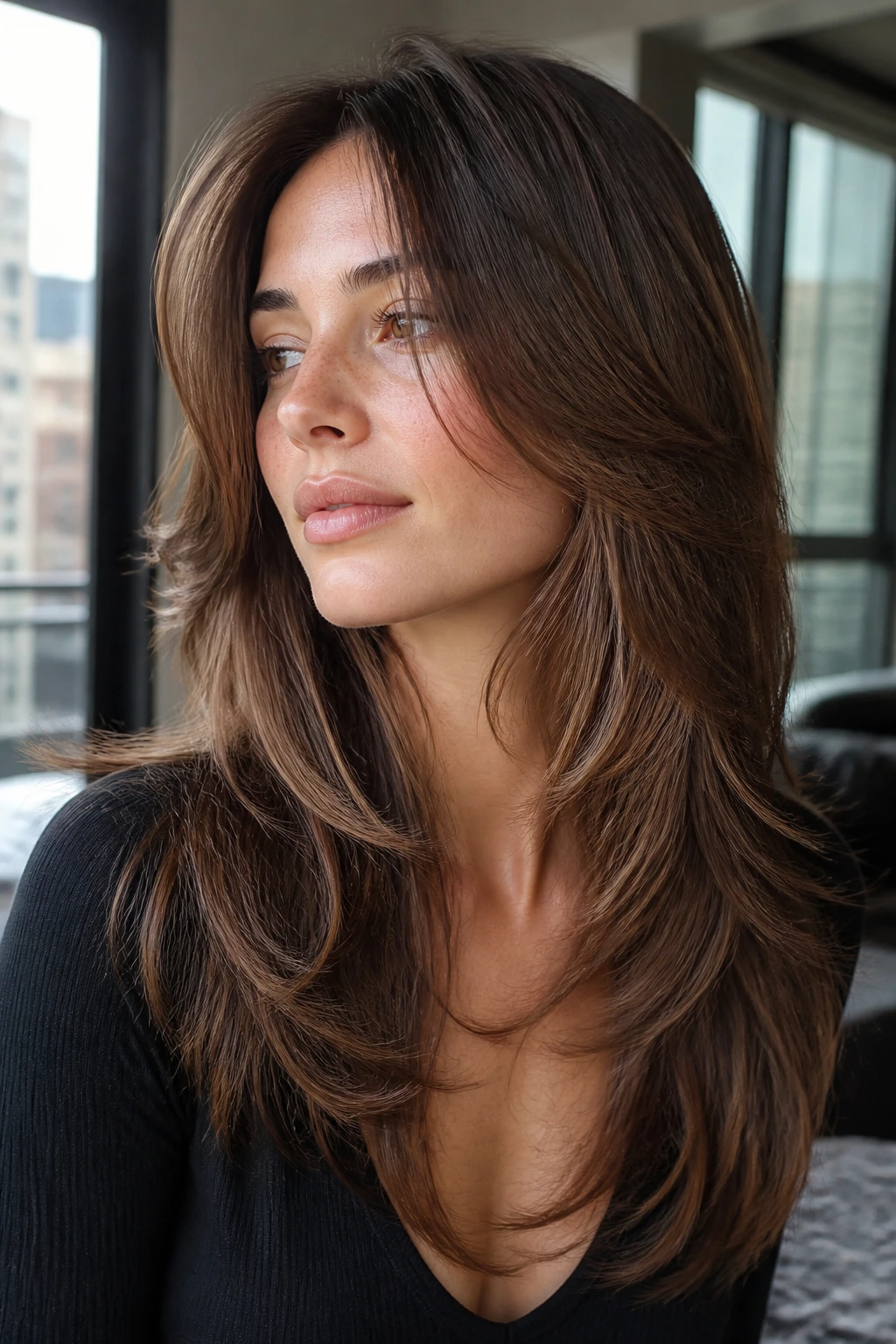
Straight hair can be the hardest texture to shag well, because it shows every line. So the layering has to be clean, feathered, and placed with intention. The face frame should move. The lengths should not look hacked at.
This version keeps the lower half long enough that the haircut still feels luxe, but the feathered layers give it a little bend when you brush it or tuck it behind your ears. It’s a low-drama way to get a vintage vibe without relying on curl or wave.
The Benefit
It doesn’t need much styling to look finished. A blow-dry with a curved brush can set the shape, and the rest can stay fairly simple.
Good detail: point-cutting the ends helps straight hair avoid that blunt, too-perfect finish that kills the shag feel.
24. Beach-Wave Shag with a Loose, Undone Finish
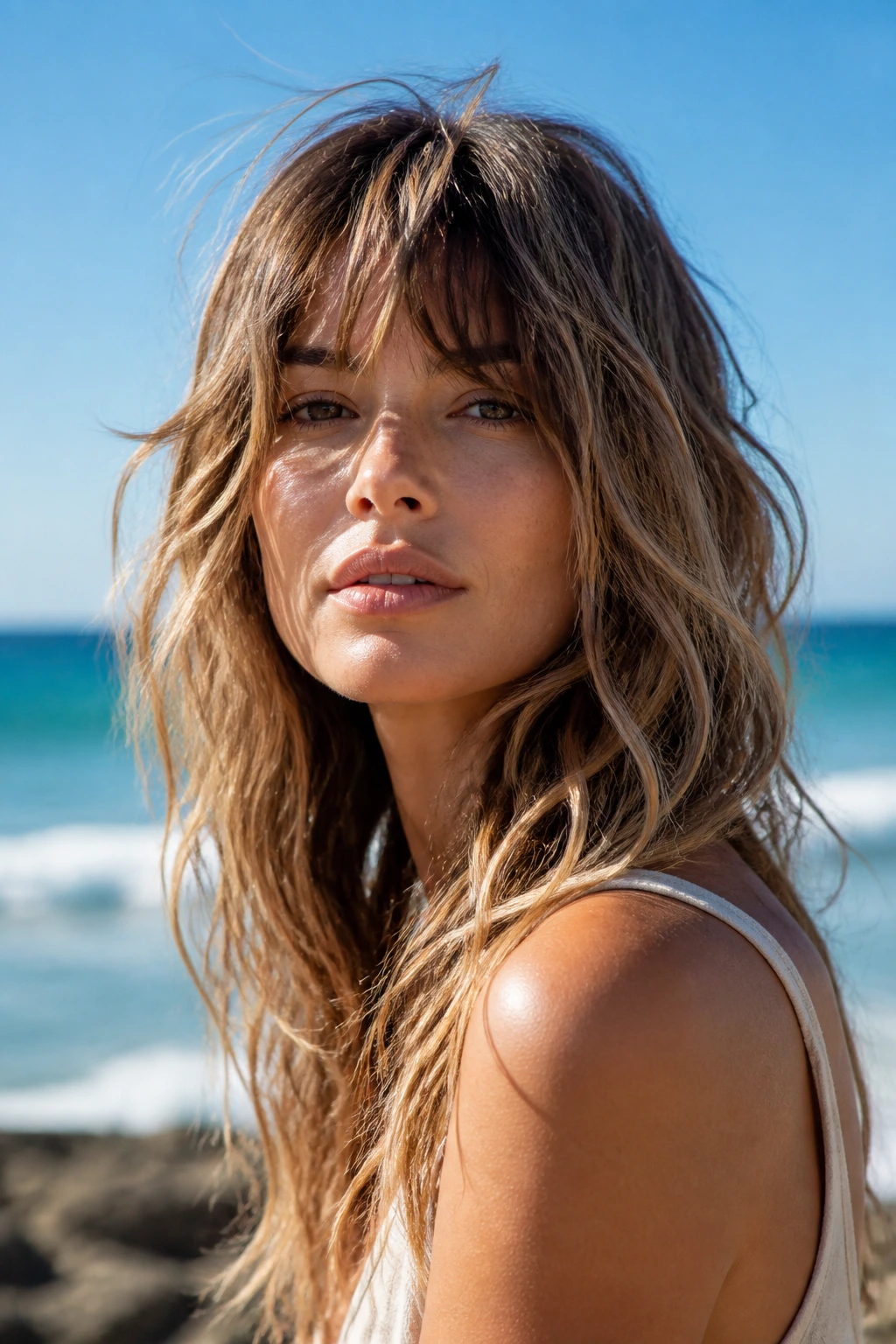
This is the shaggier shag, if that makes sense. The cut is designed to sit inside natural bends and loose waves, with layers that encourage the hair to break apart a little. It feels casual, but not sloppy.
The vintage note comes from the texture itself. Soft waves, slightly uneven ends, and a face frame that falls naturally all add up to that old magazine-off-duty look. The haircut should seem to move on its own, even before you touch it.
Best For
If your hair already reacts to sea salt spray, this is a good match. If it’s pin-straight, you can still wear it, but you’ll need heat or rollers to bring out the shape.
Quick tip: scrunch in a mousse-cream combo, then twist two front pieces away from the face while they dry. It creates a more believable bend than curling every section.
25. Crown-Heavy Shag with Shorter Top Layers
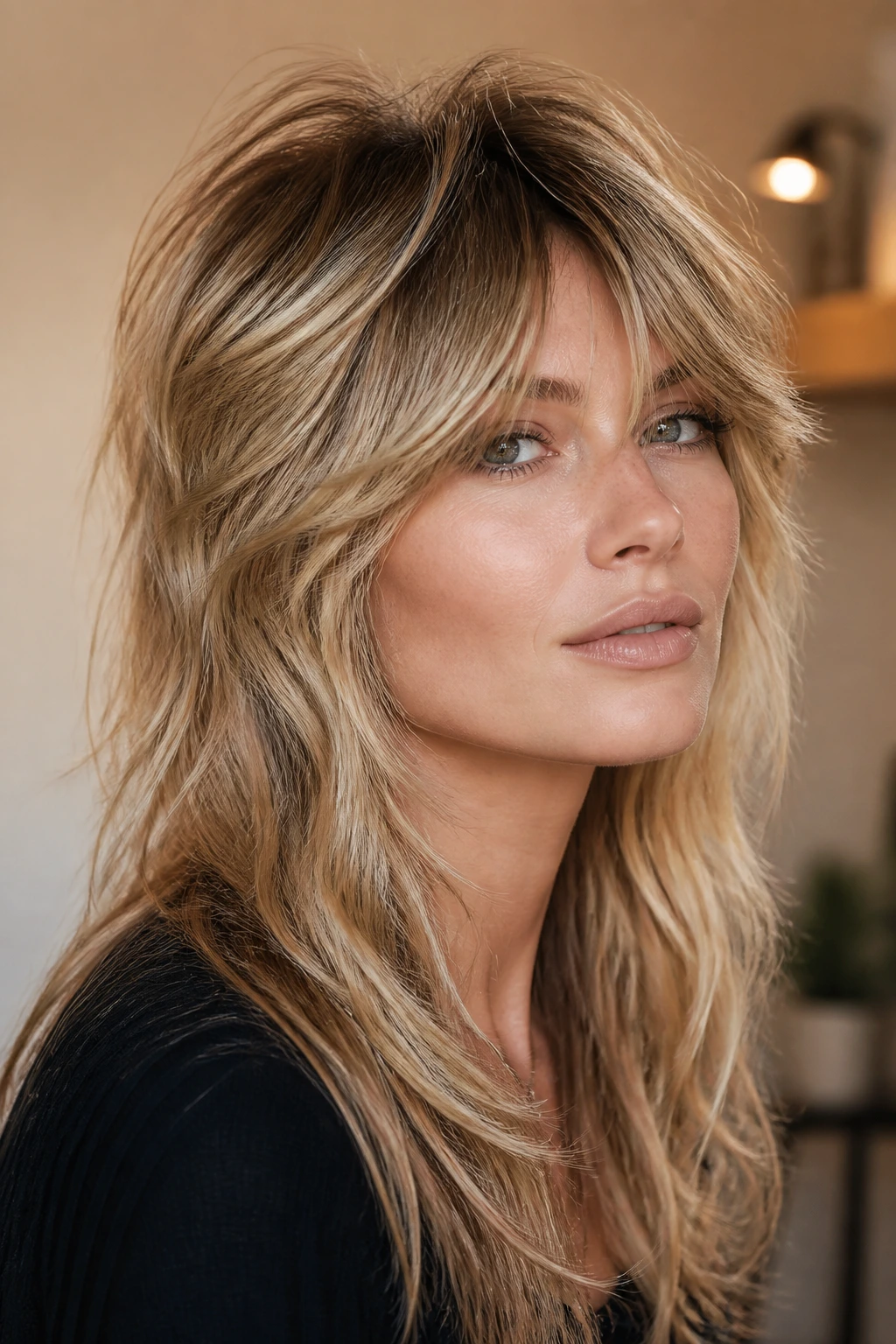
A crown-heavy shag puts the energy up top, which is where a lot of long hair cuts go limp. The top layers are shorter and more active, the mid-lengths carry movement, and the ends stay long enough to keep the outline soft. That gives the haircut a bit of attitude.
It’s a strong shape when you want height without teasing the roots into a cloud. The hair sits closer to the head at the sides, then lifts at the crown and drops into the lengths. Very ’70s. Very useful.
Why It Matters
This placement keeps long hair from looking like one heavy sheet. It gives your profile more shape, especially if your hair naturally lies flat at the top.
Styling move: lift the roots with a round brush or a velcro roller set near the crown for 10 to 15 minutes while you do makeup or get dressed.
26. C-Shape Layered Shag That Hugs the Face
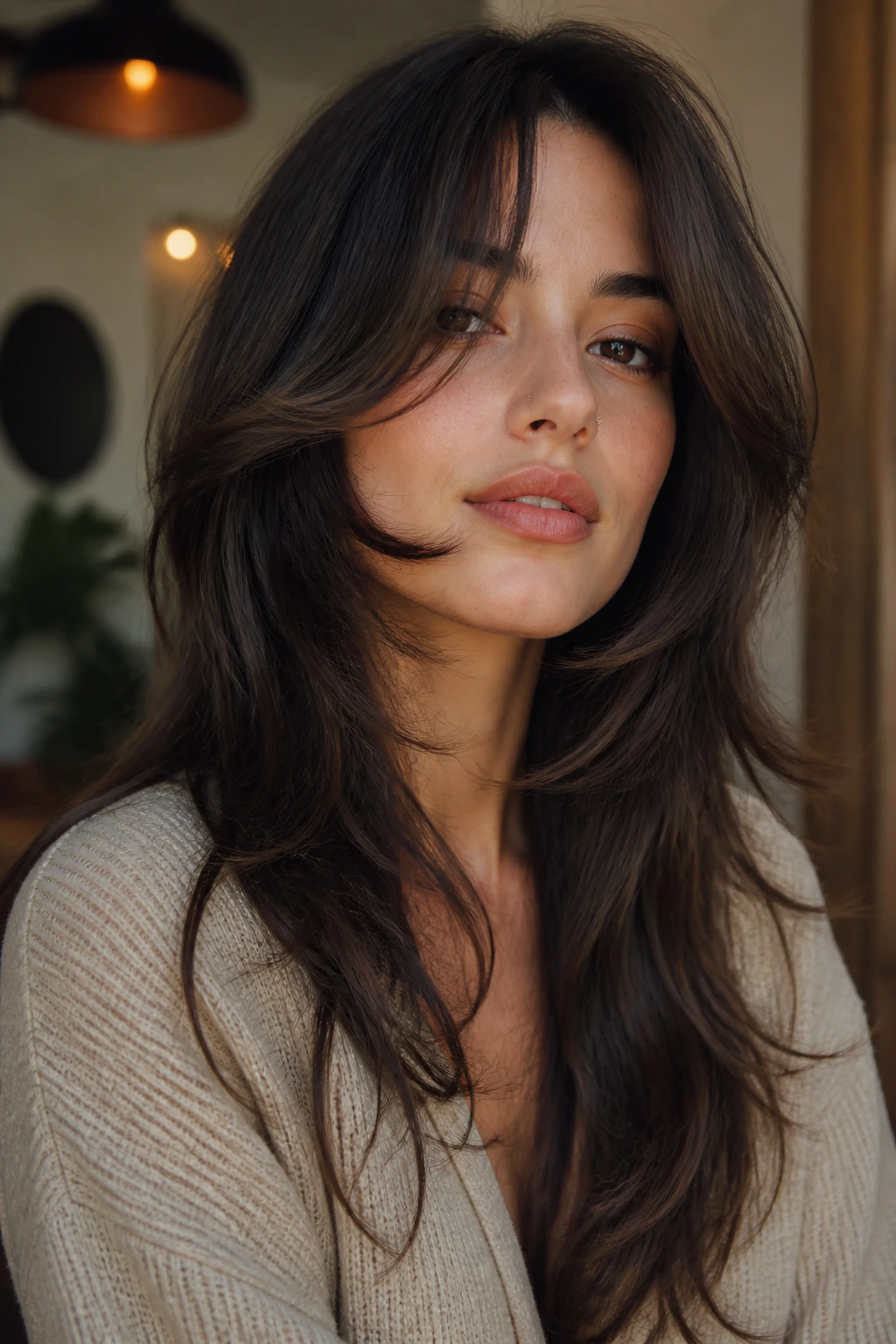
A C-shaped shag bends inward around the face, then curves out again through the lengths. It has a gentle wraparound feeling that flatters many face shapes, especially when the front layers are kept soft and the bottom edge remains long. The whole cut feels smooth, not jagged.
That curve is part of the vintage appeal. Haircuts from older salon eras often used shaping like this to make the face look framed without making the hair look stiff. It still works, and it still looks good in motion.
The Detail That Counts
The front should move in one fluid arc instead of stopping at a sharp point. That’s what gives the haircut its softness.
Best for: people who like face-framing layers but don’t want a strong bang commitment.
27. Grown-Out Bang Shag with a Soft Fringe Transition
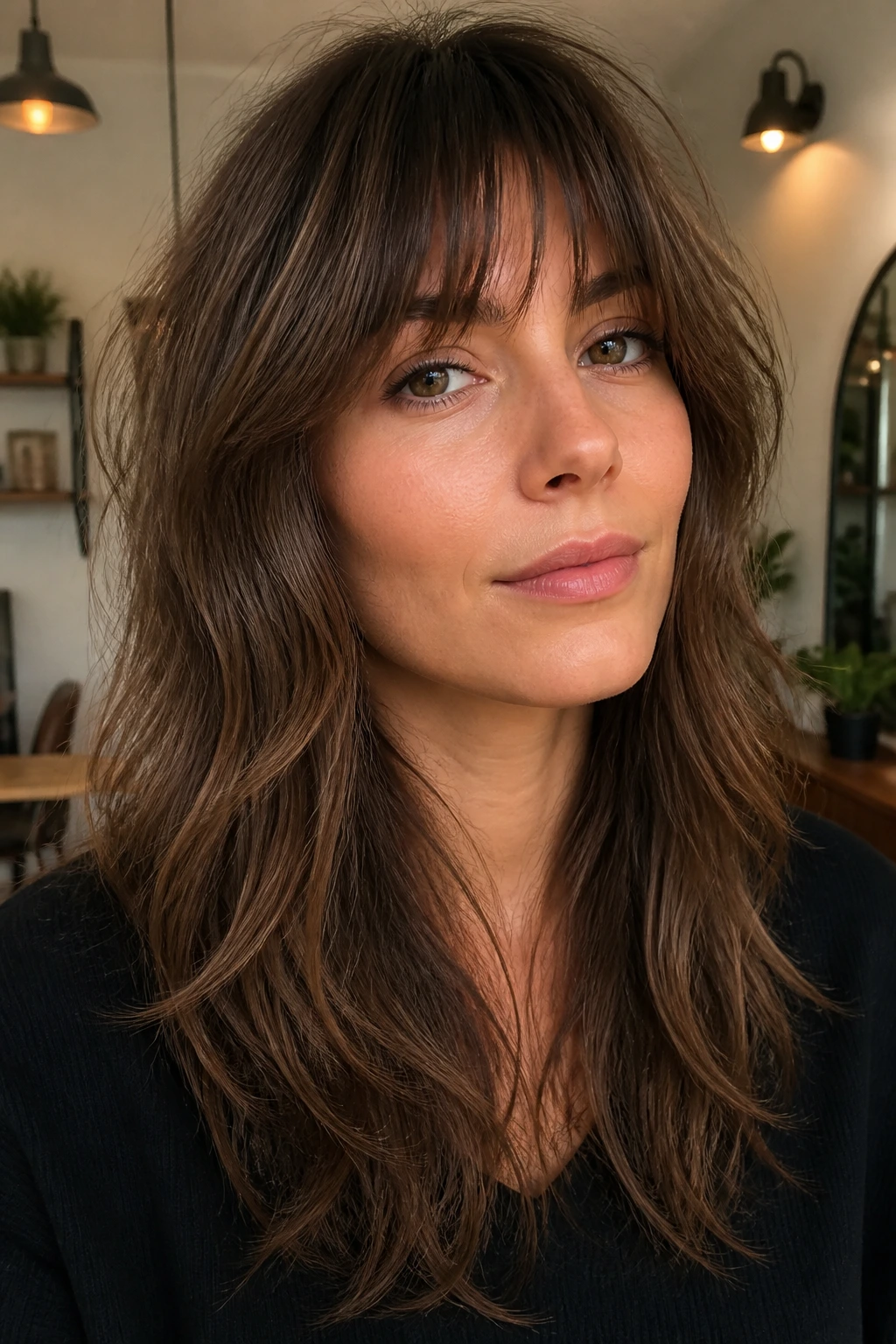
This is for anyone who likes the idea of bangs more than the reality of monthly trim appointments. The fringe starts soft, then stretches into the side layers so the grow-out phase is part of the cut. Long hair makes this easier, because there’s room for the fringe to blend.
The vintage vibe feels relaxed here. It’s less polished than a fresh curtain bang, more lived-in, more flexible, and honestly easier to keep around when life gets busy. It still frames the face, but it never feels trapped there.
Why It’s Practical
You can sweep it aside, split it down the middle, or tuck it back without the haircut collapsing. That makes it a very forgiving option if you like change without a dramatic commitment.
Style note: a little dry shampoo at the roots helps the fringe sit with some lift instead of collapsing onto the forehead.
28. Vintage Blowout Shag with a Swooped Finish
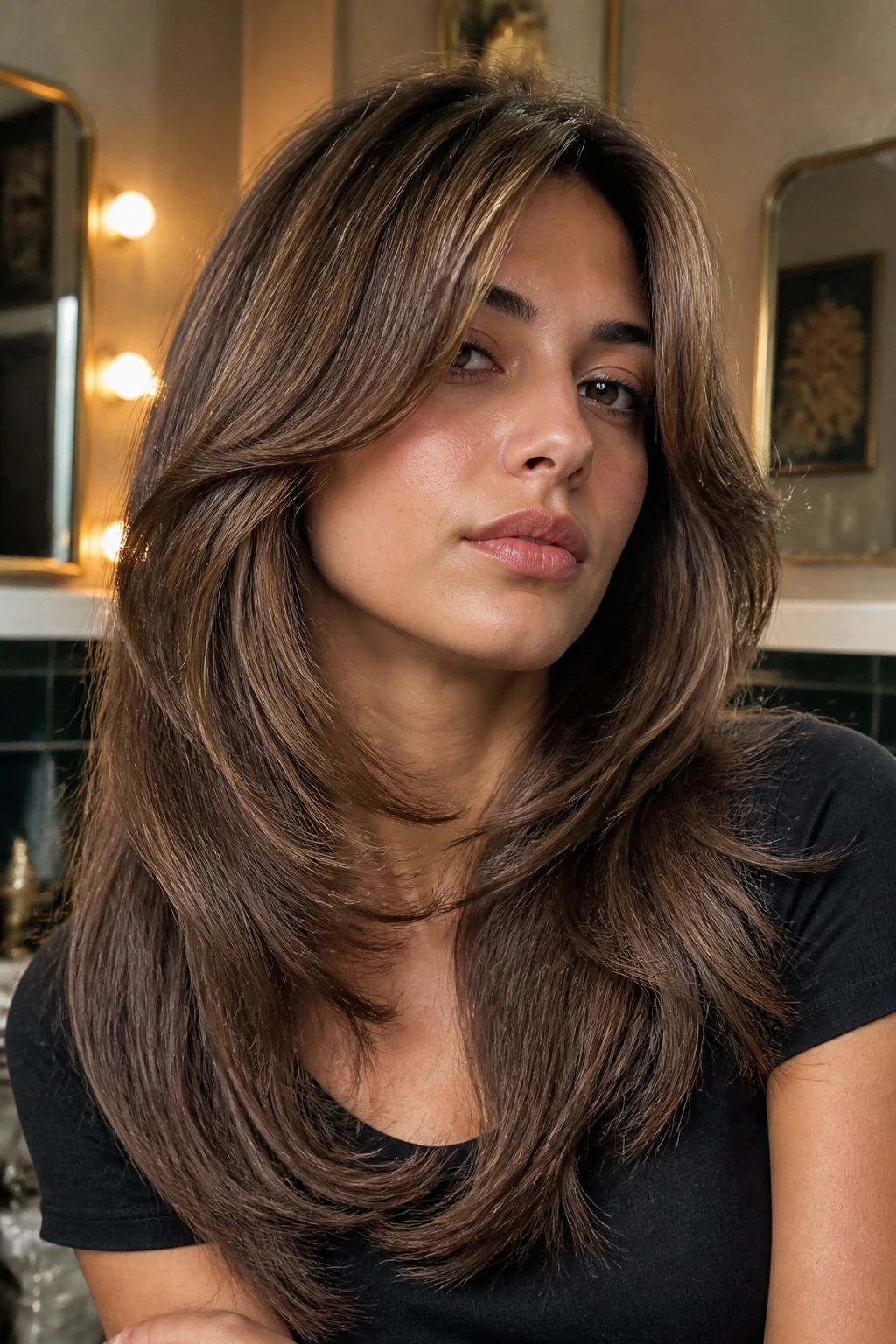
The final version leans all the way into blowout glamour. The layers are cut to swoop, the ends are turned, and the face frame is shaped to catch a brush without fighting back. It’s polished, but not stiff; big, but not bubbly.
This is the shag for people who love a salon finish and want the haircut to hold that memory for a few days. It pairs especially well with long hair because the length keeps the style from looking too puffy. The result is a soft, bouncy shape that feels straight out of an old photo, in the best way.
How It Lands
The crown gets lift, the cheeks get a bend, and the ends turn under or out depending on your mood. That little swoop is what makes the whole haircut feel vintage instead of merely layered.
Best detail: let the rollers or brush set cool completely before you touch the hair. Warm hair forgets shape fast.
Why Long Shags Keep Their Shape Instead of Falling Flat
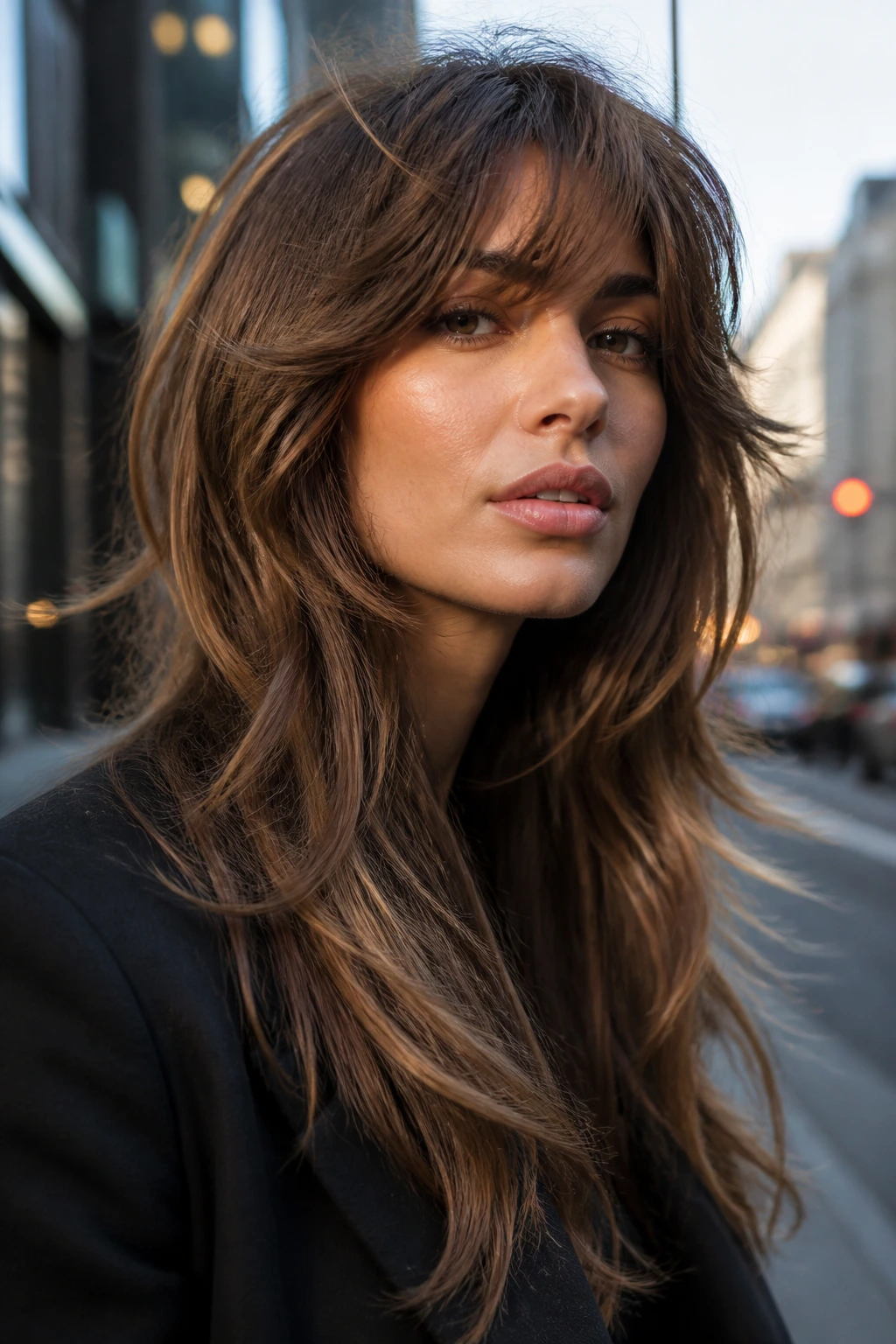
Long hair has weight, and weight is both the charm and the problem. It can give a shag that beautiful drape, but it can also pull every layer straight down if the cut is too timid. The best long shag haircuts for long hair use the length as an anchor, then take weight out of the crown, cheeks, and mids so the shape can actually move.
That’s why the vintage vibe matters so much. Feathered layers, face-framing bends, and a little separation at the ends all help the haircut avoid that heavy, one-note look. It should swing when you walk. It should still look good after you’ve tucked it behind one ear. If it only looks good in a salon mirror with perfect lighting, the cut is too fussy.
There’s also a practical side to this. Long layers give you styling options, and long shags are at their best when they can be blow-dried, air-dried, curled, or roughened up with a little spray. A rigid cut fights that flexibility. A good shag cooperates.
Tools That Bring Out the Layers at Home
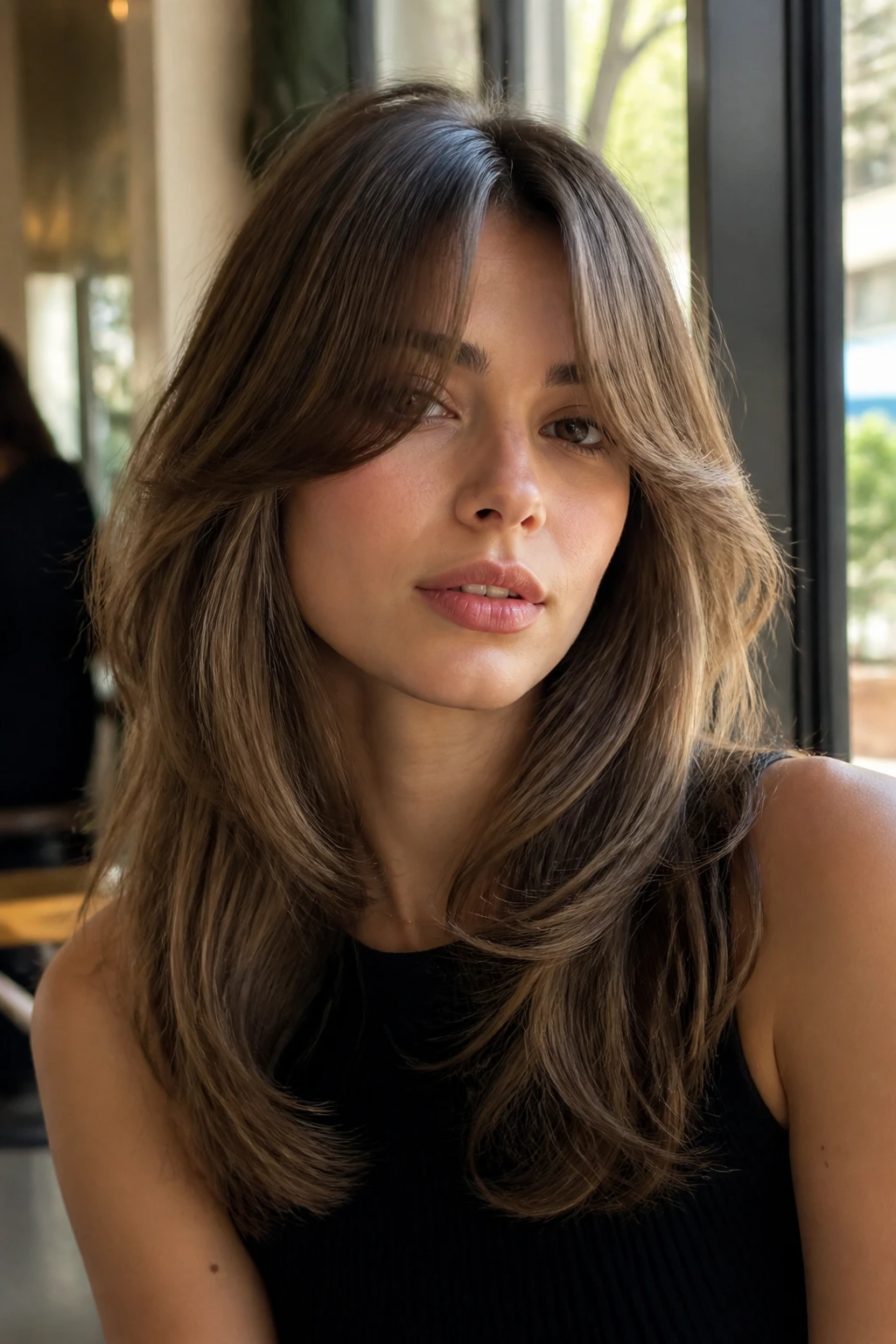
You do not need a drawer full of gadgets to style a long shag, but a few tools earn their keep fast.
- Blow dryer with a nozzle attachment: Directs the airflow so the fringe and face frame don’t scatter in every direction.
- 1-inch to 1.5-inch round brush: The sweet spot for bending curtain bangs, flipping ends, and setting a soft vintage curve.
- Vent brush or paddle brush: Best for quick drying when you want lift without a full blowout.
- Diffuser: The curly and wavy shags need this if you want the texture to stay rounded instead of frizzy.
- Heat protectant: Non-negotiable if you use hot tools. Put it on the mid-lengths and ends, not just the top.
- Light mousse or root spray: Gives crown lift without making the layers stiff.
- Texturizing spray or dry shampoo: Helps piece out the ends and keep second-day hair from lying flat.
- Velcro rollers or clips: Handy for setting the front layers while they cool. That cooling time matters more than most people think.
What to Tell Your Stylist Before the First Snip
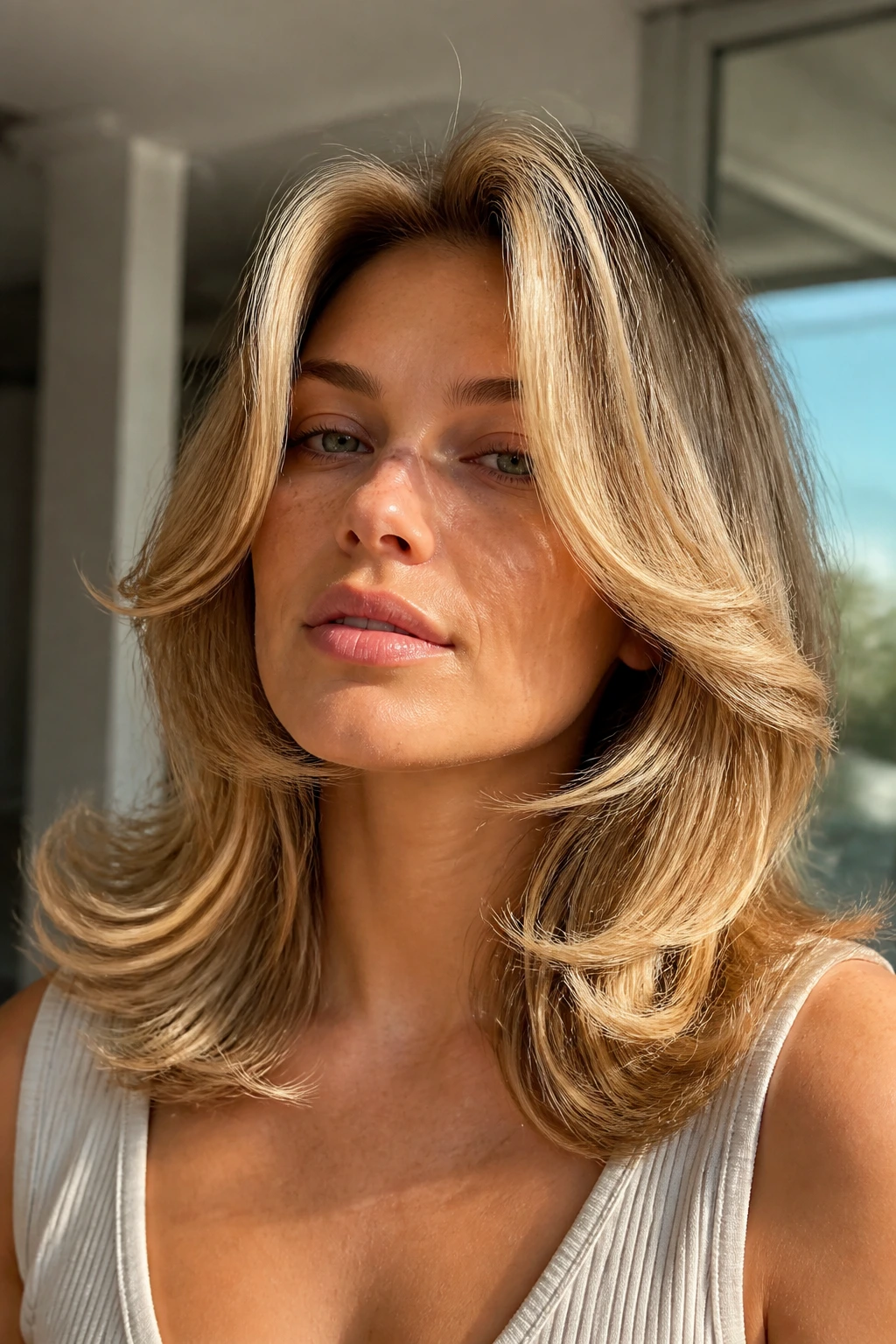
Bring photos, but also bring words. Photos show the mood. Words tell the stylist what should happen with your hair’s actual texture, density, and length. Start with the shortest pieces you’re willing to wear, because that one decision changes the whole cut.
Say things like “keep the perimeter long,” “start the face frame at the cheekbone,” or “I want layers that move, not a heavily thinned finish.” If you want bangs, say how much maintenance you’ll tolerate. A full fringe and a once-a-month trim are not the same lifestyle.
A useful line is this: “I want a long shag with vintage movement, but I need enough length to pull it back.” That sentence gives the stylist a real target. It also keeps the cut from getting chopped too high around the crown, which is where a lot of long shags go sideways.
And bring up your routine. If you air-dry, say so. If you blow-dry with a round brush, say that too. The best shag is the one that fits the way you actually dress your hair on a Tuesday morning, not the version you might style for a photo shoot.
Styling Moves That Pull the Retro Shape Forward
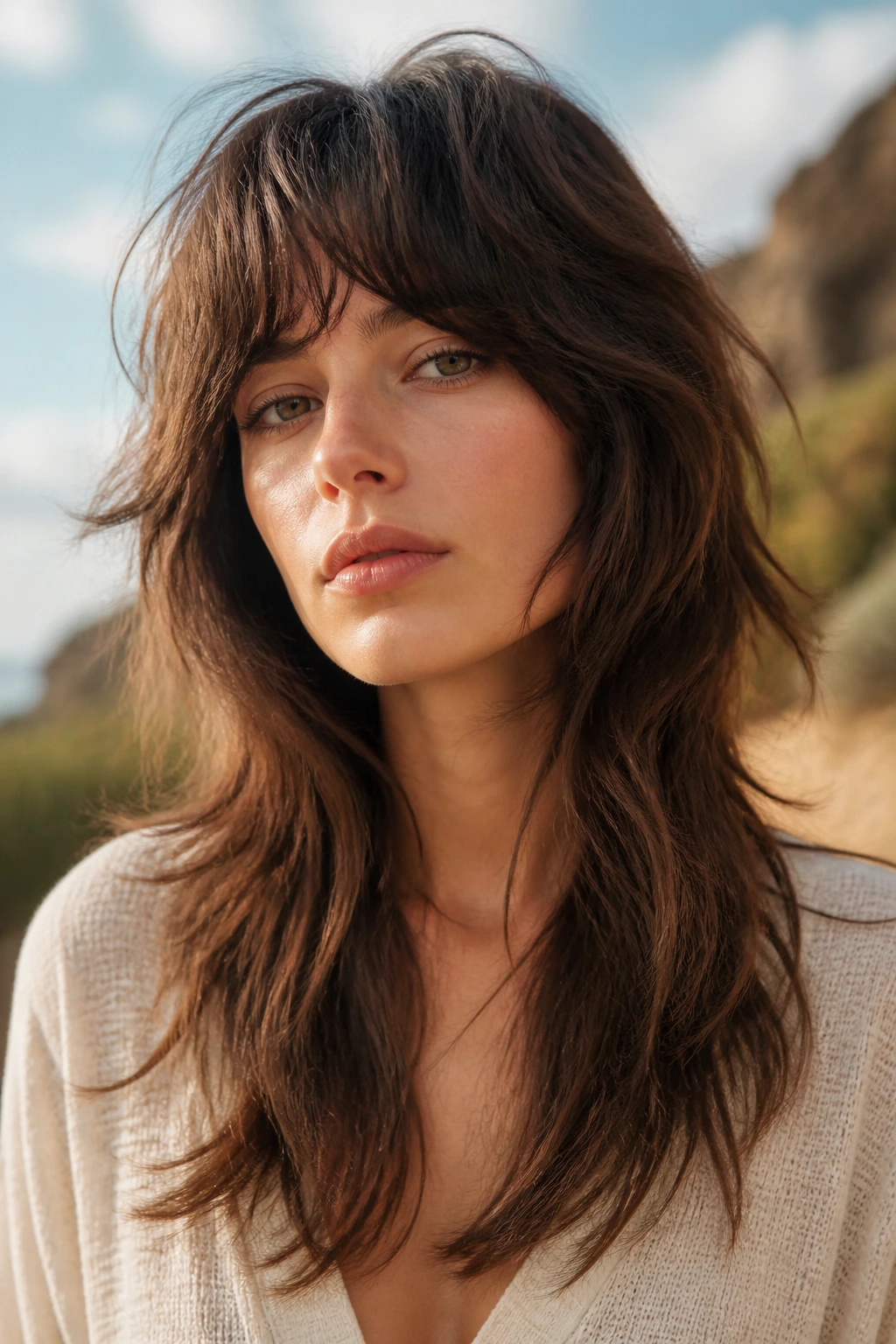
A long shag does not need a perfect finish. It needs the right finish. That’s a small difference, but a useful one. The vintage shape shows up when the front layers have a bend, the crown has a little lift, and the ends are not hanging straight like wet rope.
The Blowout Route
Use a round brush to direct the front away from the face, then roll the ends under or out depending on the cut. Let each section cool before brushing through it. Warm hair forgets the curve fast.
The Air-Dry Route
Work in a light mousse or wave cream, scrunch lightly, and leave some separation in the front. If the bangs want to split, let them. That’s not a mistake here.
The Quick-Refresh Route
On day two or three, mist the front with water or a leave-in spray, wrap the layers around your fingers, and hit them with a dryer for 20 to 30 seconds. You’re not restyling the whole head. Just waking up the shape.
A vintage shag rarely needs every strand polished. It needs one or two visible moves that give the eye a shape to follow.
Small Upgrades That Make the Cut Feel Finished
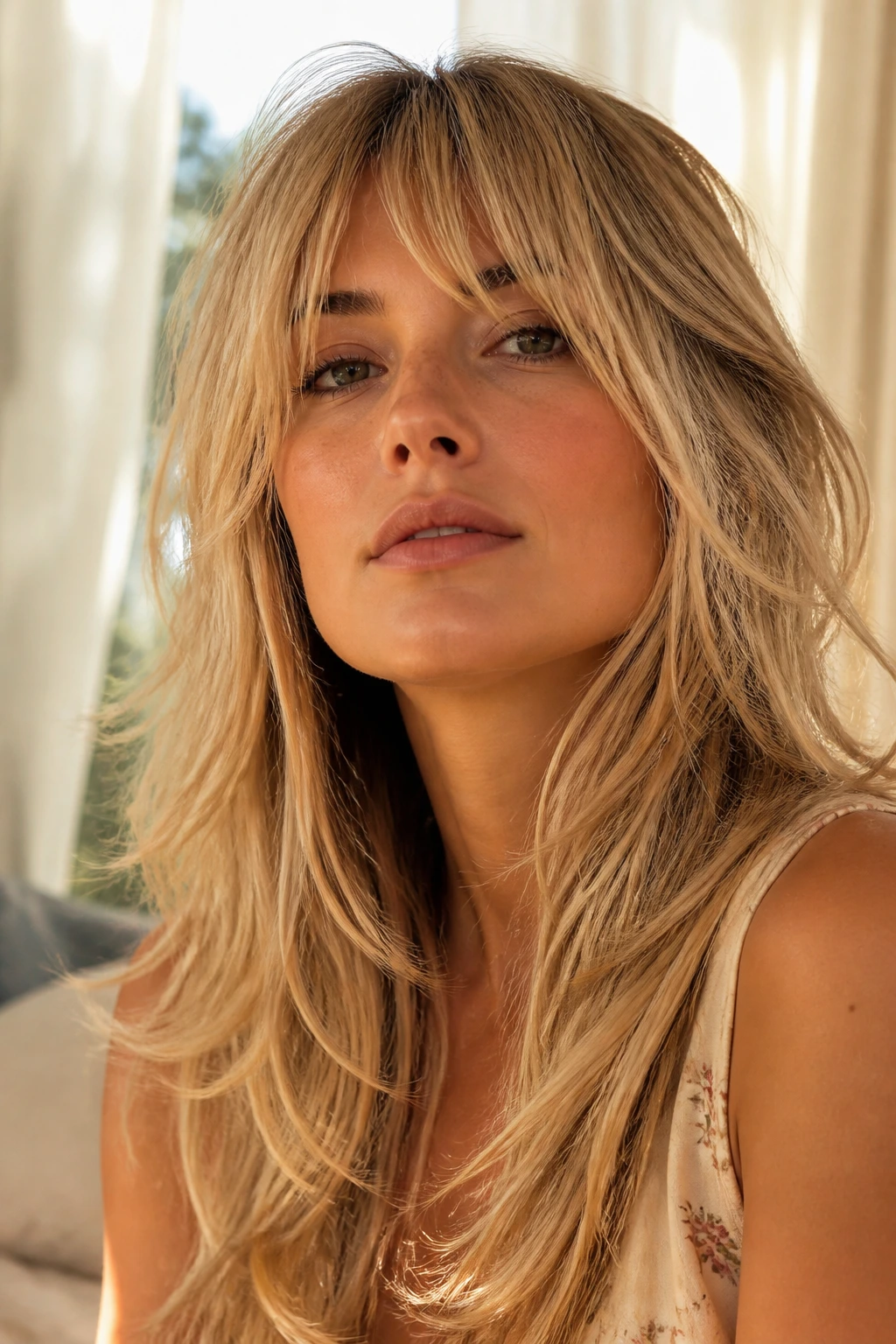
Root Lift: A little mousse at the crown before drying gives the top section enough lift to keep the haircut from collapsing near the scalp.
Face-Frame Bend: Curl just the first two front pieces away from the face and leave the rest alone. That tiny bend changes the whole silhouette.
Gloss on the Ends: A drop of serum, rubbed between your palms and pressed only onto the last few inches, makes the lower layers look cared for without flattening them.
Soft Pinning: Clip one side back for half an hour after styling. When you release it, the hair falls with a lived-in bend that suits a vintage shag better than perfect symmetry does.
Make-It-Yours: If you like more edge, keep the ends piecey. If you like more softness, brush the layers out after curling so they break apart.
Common Mistakes That Flatten a Long Shag
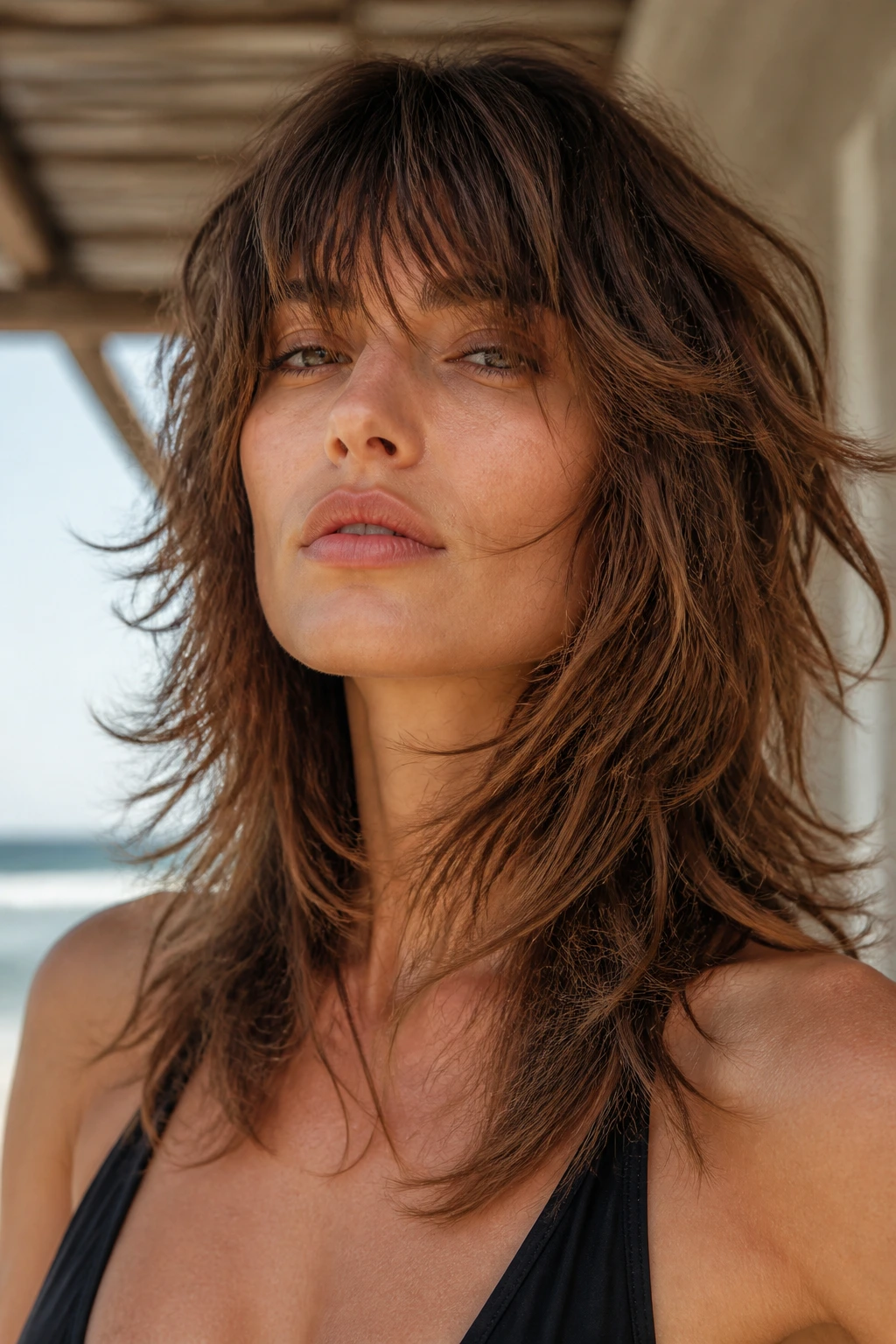
The first mistake is cutting the shortest layers too high. The haircut gets volume, yes, but it also loses the long, graceful line that makes the style feel rich. The fix is simple: keep the crown layers purposeful and make sure the bottom length still has something to anchor it.
Another common problem is over-thinning the ends. That leaves long hair looking wispy and tired instead of feathered. If your stylist reaches for the razor or thinning shears too aggressively, ask where the bulk is actually sitting before they remove more.
Heavy styling products can ruin the shape too. Oils, creams, and leave-ins are useful, but when they land too close to the roots, the layers collapse and the fringe goes limp. Keep richer products from the root area and use them sparingly at the ends.
Bangs are another trap. A fringe that looks great the day of the cut can grow awkward fast if it’s cut too blunt or too short for your face. If you want a low-maintenance version, start longer than you think. You can always shorten a fringe. Growing out a too-short one is a small misery.
Last one: skipping regular shape trims. Long shags can grow out beautifully, but they still need cleanup around the face. If the front loses shape, the whole haircut gets sloppy in a way that reads accidental, not relaxed.
Ways to Adjust the Cut for Different Hair Types
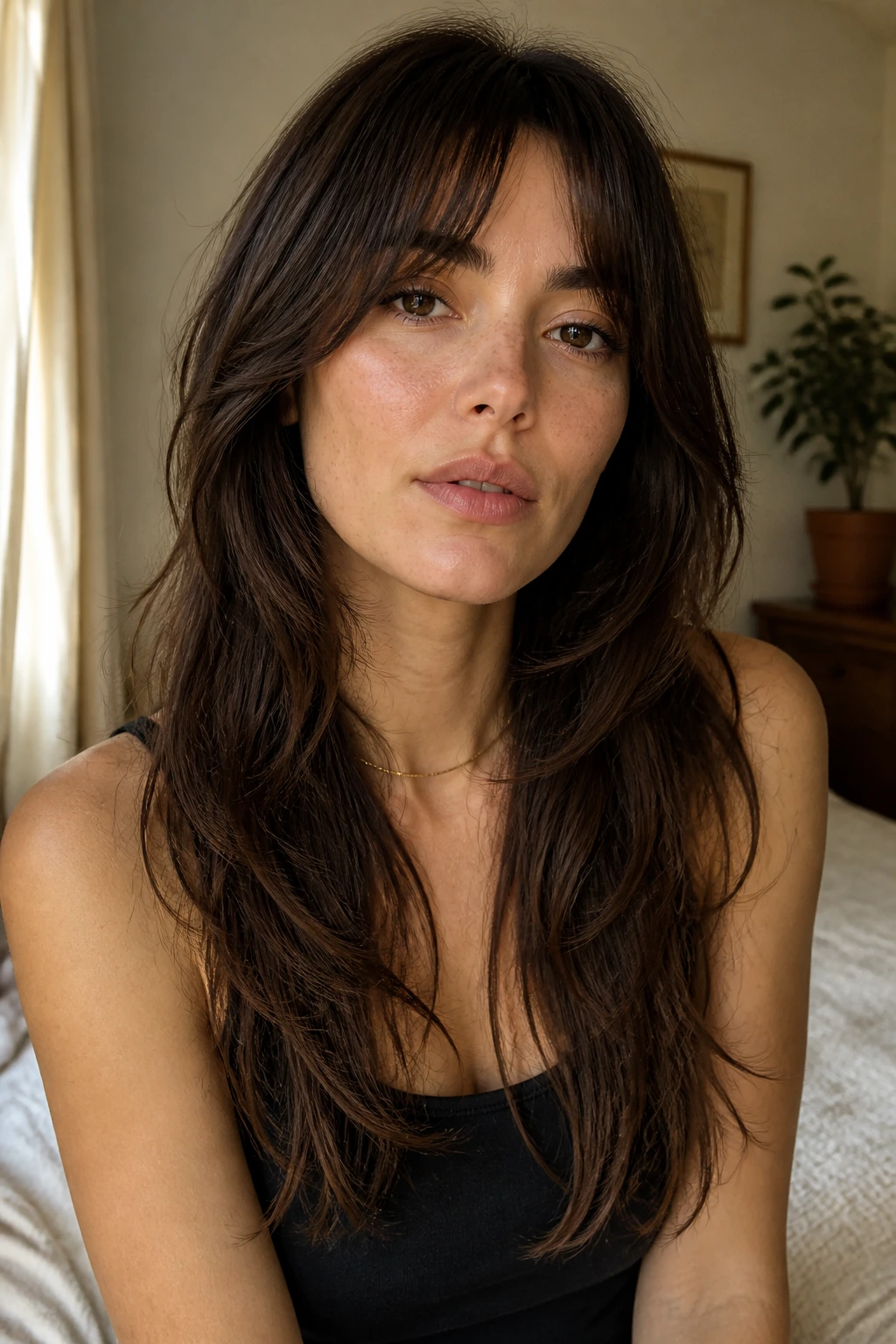
Fine Hair Lift Version: Keep the layers subtle, add a little crown height, and avoid aggressive thinning at the ends. Fine hair needs shape, not subtraction.
Thick Hair De-Bulk Version: Ask for internal weight removal and a long perimeter. That keeps the haircut from ballooning while still letting the bottom line stay full.
Curly Round Version: Let the curls dictate where the layers fall after shrinkage. A good curly shag should feel rounded and airy, never triangle-shaped.
Straight Hair Feather Version: Use soft point-cutting and long face-framing layers so the hair doesn’t sit in one blunt sheet. Straight hair needs movement built into the cut itself.
Low-Maintenance Grow-Out Version: Keep the fringe long, the front blended, and the perimeter below the shoulders. This version ages well between appointments.
Keeping a Long Shag in Shape Between Trims
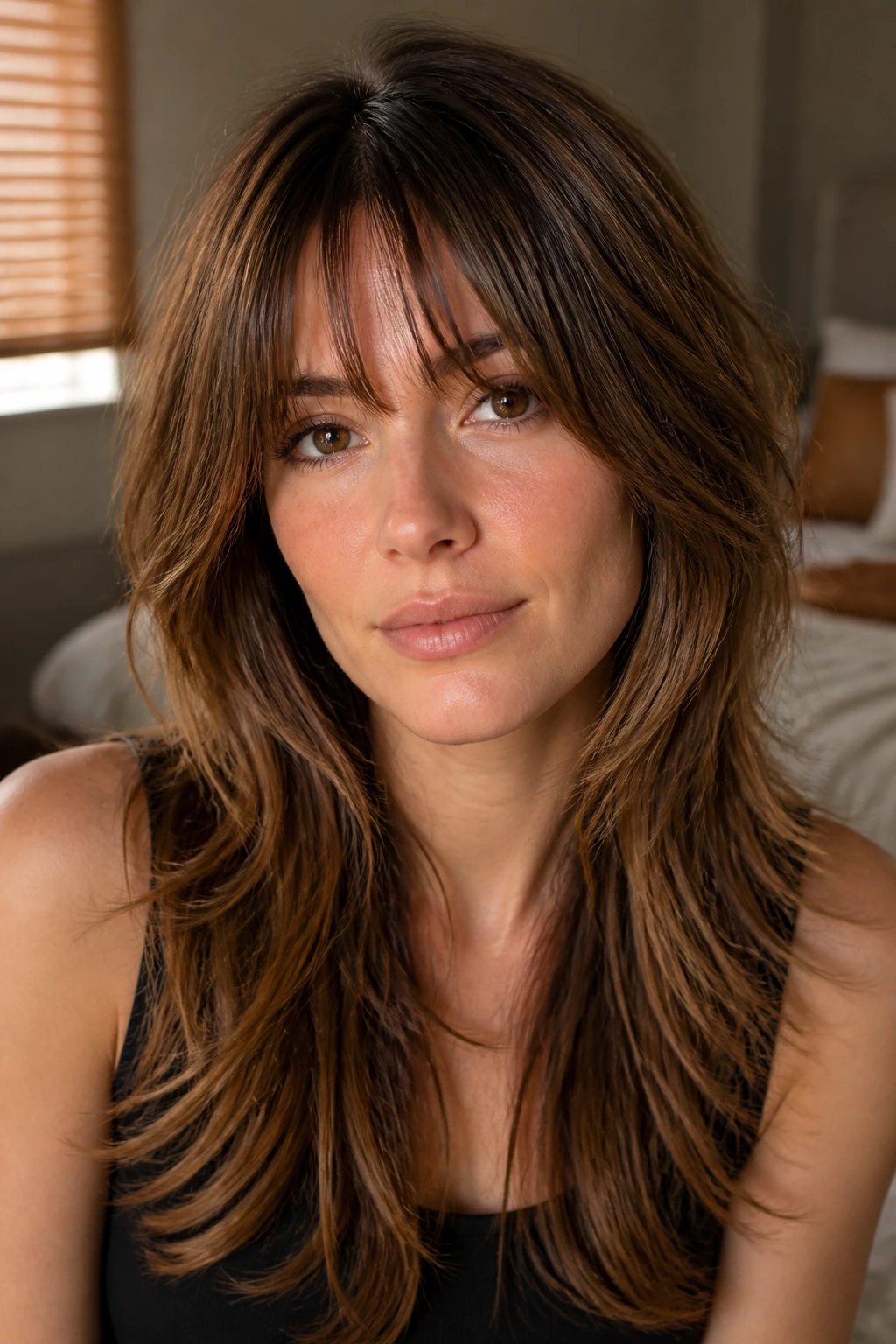
A long shag can last longer than a blunt cut, but the front still needs attention. Bangs usually need a trim every 4 to 6 weeks if you want them to sit neatly. The rest of the cut often does fine with shape cleanup every 8 to 12 weeks, depending on how fast your hair grows and how precise you want the outline to stay.
At home, dry shampoo is more than a volume product. It keeps the roots from getting shiny and flat, which helps the layers stay visible. Use it sparingly at first; too much makes the hair feel dusty and dull.
If the ends start looking rough, a light leave-in on the lower third of the hair can help. Don’t bury the crown in product. That’s where the style loses its lift. For curly versions, a refresh spray or a small amount of curl cream on dampened sections can bring the shape back without a full wash.
One more thing: if you blow-dry the fringe, let it cool in place before touching it. That cooling time is the difference between a fringe that sits and one that flips into your eyes.
Frequently Asked Questions
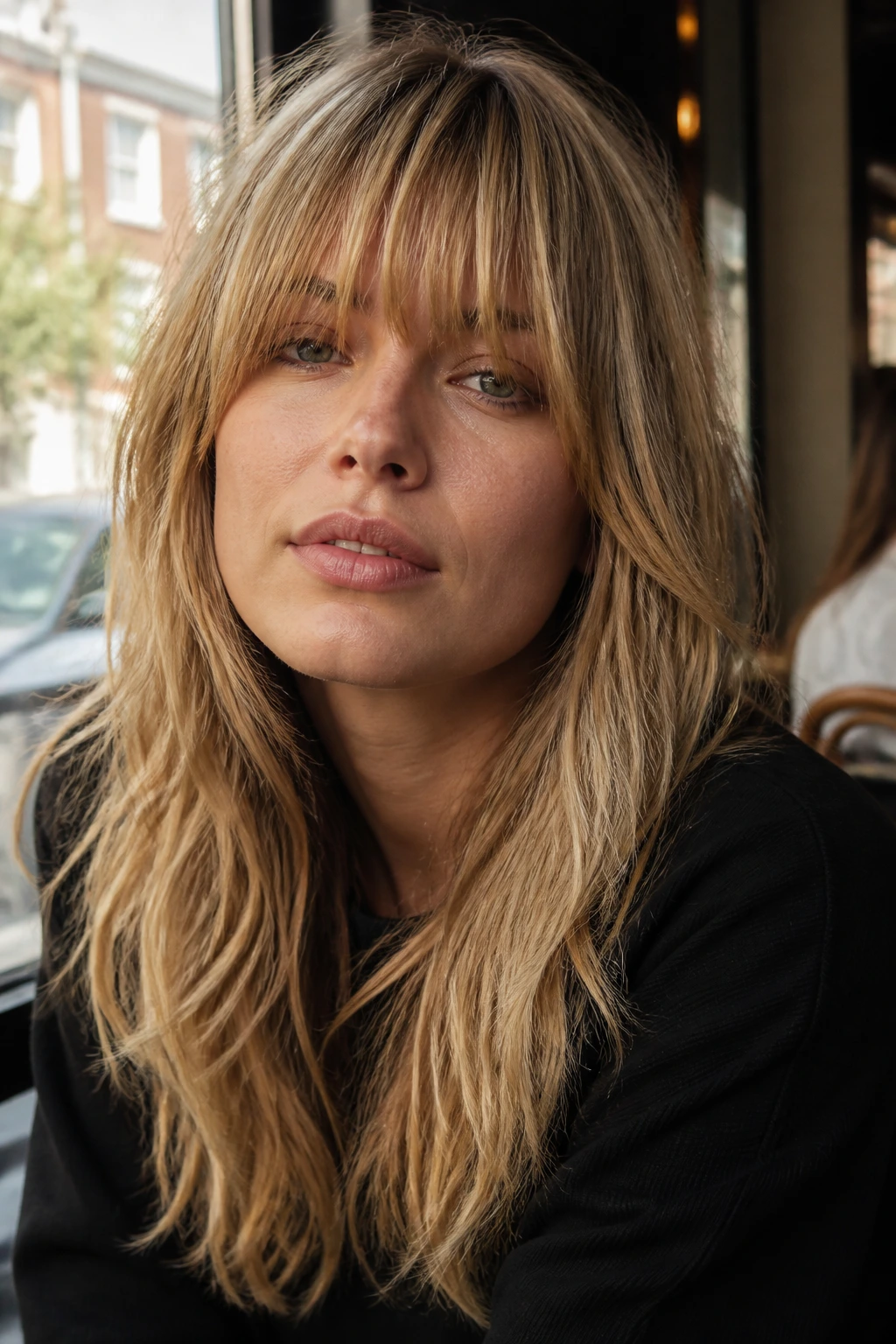
How short should the shortest layers be in a long shag?
Usually somewhere around the cheekbone or jawline is a safe starting point, but that depends on how much face framing you want. If the shortest pieces go much higher than that, the cut can lose its long, vintage sweep.
Can you get a long shag if your hair is straight?
Yes, but the layering has to be precise. Straight hair shows every line, so feathered ends and a soft face frame matter more than they do on wavy hair.
Will a shag make fine hair look thinner?
It can, if the layers are too aggressive. Fine hair needs subtle layering and a full perimeter so the ends keep some weight.
Is a shag good for curly hair?
Very good, if the layers are planned around curl shrinkage. A curly shag can be rounded, airy, and flattering, but it needs a stylist who knows how your curl pattern behaves when dry.
How often do bangs need trimming?
Every 4 to 6 weeks is a practical window for most fringes. Curtain bangs can sometimes stretch longer, but a brow-grazing fringe gets messy fast if you ignore it.
Can I air-dry a shag and still keep the shape?
Yes, especially if your hair already has wave. A little leave-in, some scrunching, and a proper face frame can give you enough movement without a blowout.
What if my shag grows out too much between appointments?
Lean into it. Tuck the front back, use dry shampoo at the roots, and style the face-framing pieces with a small bend. A grown-out shag often still looks intentional if the fringe isn’t too short to cooperate.
Which version is easiest to live with day to day?
The grown-out curtain-bang shag or the low-maintenance wave shag usually cause the least friction. Both let you style fast, and both forgive a little chaos in the morning.
A Vintage Cut That Still Feels Light
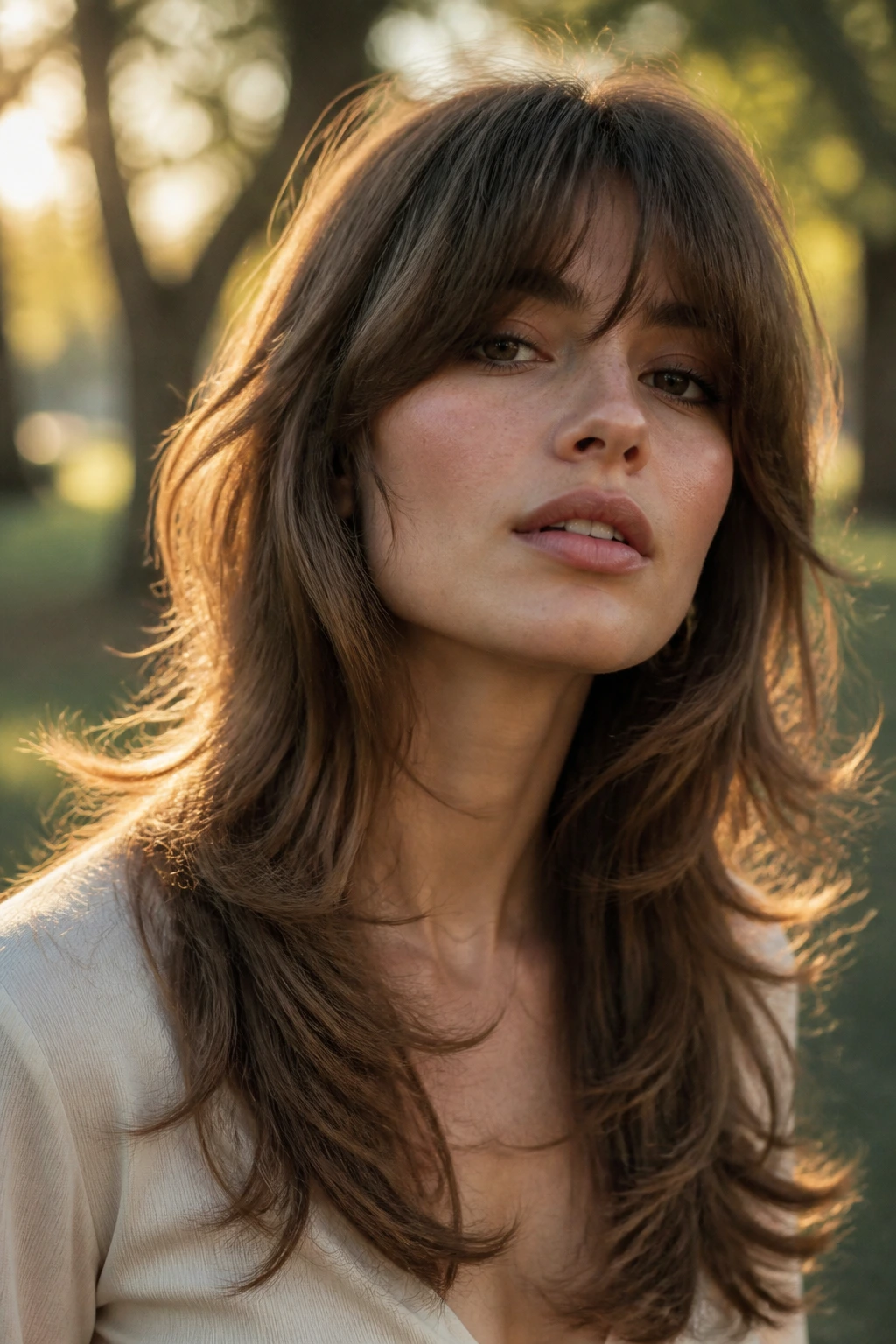
The best shag haircuts for long hair do something slightly magical: they keep the length people love, but remove enough weight that the hair finally moves the way it should. That’s why the vintage vibe works so well here. Feathered layers, soft bangs, and a little flip at the ends give the cut a kind of motion that blunt hair rarely gets.
Pick the version that matches your texture, your patience, and your mirror habits. If you like polish, go for the blowout shags. If you like hair that looks better after some living, the air-dry and razor-cut versions will make more sense. Either way, the best long shag is the one that still looks like your hair — only lighter, freer, and a little more interesting when it catches a breeze.
