



Punk haircuts look best when they seem one step away from trouble. A clipped temple, a jagged fringe, or a strip of spikes standing up at three inches can hit harder than a whole head of sprayed-out volume if the outline is clean. The difference between sharp and sloppy is usually not the color. It’s the silhouette.
I’ve seen this over and over in the chair: the cut that reads strongest is rarely the loudest one. A buzz with etched lines can feel more rebellious than a giant mohawk if the perimeter is exact, and a shag with shredded ends can carry more attitude than a bright dye job if the layers are broken up in the right places. The best versions look deliberate from a few feet away. Up close, they still have bite.
The useful part is that “punk” is not one haircut. It’s a whole family of shapes built on contrast, tension, and a little refusal to behave. Some of them need a weekly trimmer pass. Some need 90 seconds and a tube of paste. Some are wearable enough for Monday and a little more feral by Friday. That range is what makes the style worth knowing.
Why These Cuts Hit Hard
- Shape first: A punk cut lives or dies on outline, so a tight fade, a hard part, or a blunt edge matters more than fancy styling.
- Texture does the work: Choppy ends, point cutting, and razor detail stop hair from lying flat and polite.
- Color is optional: Neon helps, but a sharp buzz with one clean line can look louder than a badly dyed mop.
- Maintenance changes the mood: Some of these cuts stay crisp for two weeks; others need a neck cleanup every seven days if you want them to keep their edge.
- They fit more hair types than people expect: Straight, wavy, curly, and coily textures can all pull off punk haircuts if the shape matches the growth pattern.
- The best ones look chosen, not accidental: If the cut looks like you meant it, the attitude follows.
Why Punk Haircuts Work When the Shape Is the Point
Punk haircuts get their power from contrast. You’re not just shortening hair; you’re creating a break in the silhouette that the eye can’t ignore. That break might be shaved sides against a taller top, a blunt fringe against a cropped nape, or a soft, messy crown against a hard temple line. The cut needs one clear decision. Two, if you’re feeling generous.
The silhouette reads before the details do
A lot of people chase drama in the styling stage and miss the fact that the shape does most of the heavy lifting. A mohawk strip that’s 2 inches wide and a fade that drops cleanly into skin will read stronger than a wider, puffier version that was never sharpened at the edges. Even a buzz cut can feel unmistakably punk when the sideburns, neckline, and temple lines are cleaned with intent.
That’s why a good consultation matters. If the outline is right, the daily styling gets easier. If the outline is wrong, no amount of pomade will save it.
Texture keeps the cut from going flat
Texture is the second language of punk hair. Point cutting, razor work, and choppy layers keep the surface broken up, which gives the hair movement instead of a helmet. On medium or long shapes, that broken surface makes the cut look lived-in rather than salon-smooth. On short cuts, it keeps the top from turning into a shiny block.
I’m partial to texture that looks a little uneven on purpose. Too much blending makes a punk cut read soft. That’s a fast way to lose the point.
Color should frame the cut, not rescue it
Color can be the loudest part, but it should never be the only part. Black sides with a platinum strip, a neon panel under a darker canopy, or a split-dye mohawk all work because the haircut already has bones. If the cut is weak, bright color just highlights the weakness.
So yes, vivid dye helps. But a clean neckline, a tight temple, and a shape that holds when the wind hits are what make the style stick in your head.
What to Tell Your Barber Before the Clippers Start
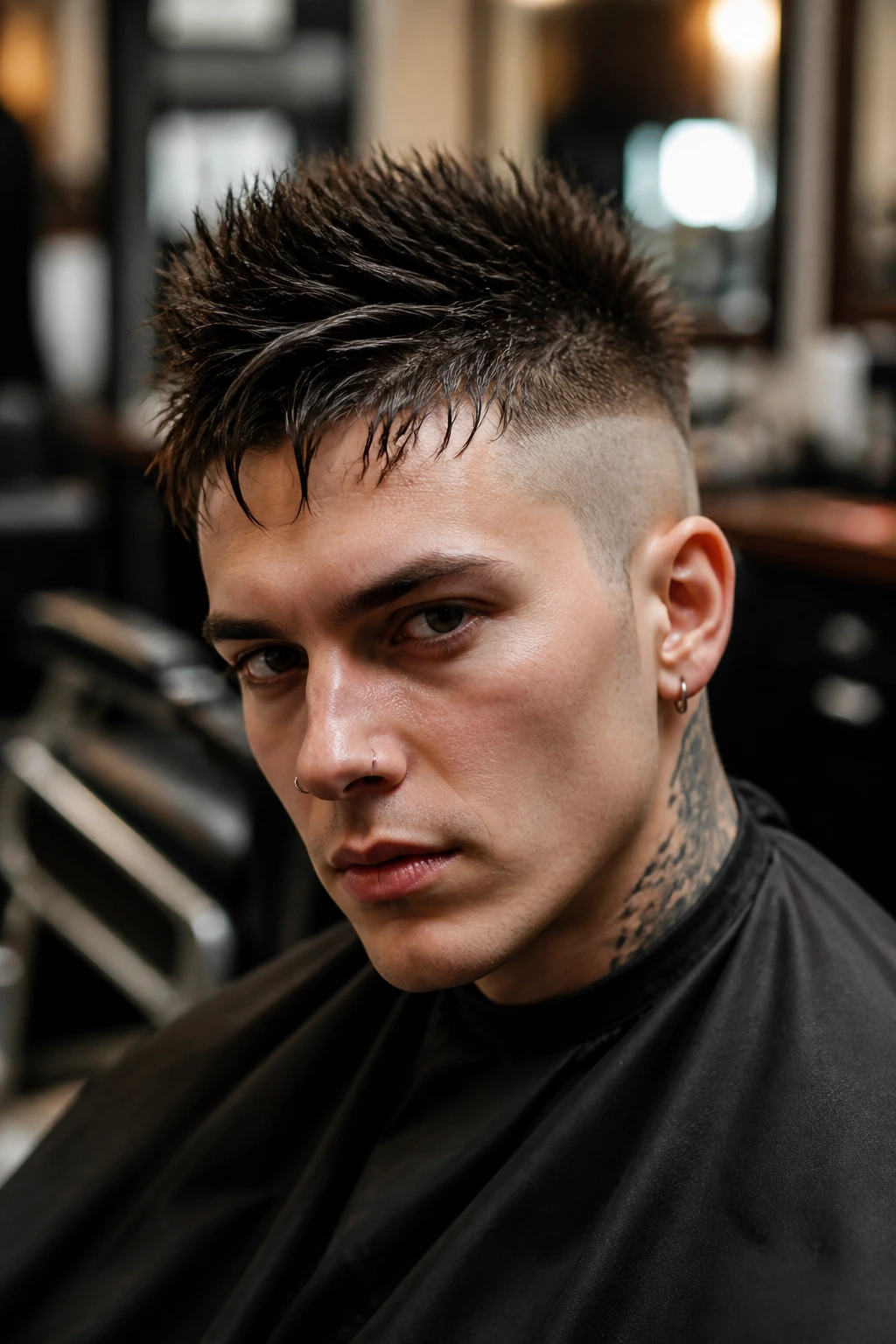
The hardest part of a punk haircut is often not the haircut. It’s the sentence that comes before it.
Tell your barber or stylist exactly where you want the shortest point to live, how wide the top should be, and whether the sides should be shaved, faded, or left softly tapered. “Edgy” is not a usable instruction. Neither is “make it punk.” That’s a mood, not a map.
Bring three photos, not twenty
One front view, one side view, one back view. That’s enough. If all three examples have different vibes, point out the part you want from each one: the fringe from the first, the fade from the second, the neckline from the third. Barbers work faster when they can separate silhouette from decoration.
Use numbers when you can
If you want shaved sides, say whether you mean a skin fade, a #1 guard, or a #2 guard. If you want spikes, say whether you want 2 inches, 3 inches, or 4 inches on top. If you want a mohawk, say how wide the strip should be in the middle. Vague language creates polite surprises. Numbers create the cut you meant to ask for.
Mention your hair’s habits
Cowlicks matter. So does density. So does the way your hair falls when it gets humid or oily. If your fringe splits on the left side every time, say so. If the crown sticks up no matter what, that belongs in the conversation too. A punk haircut can work with stubborn growth patterns, but only if the shape is planned around them.
Matching the Cut to Your Hair Texture and Density
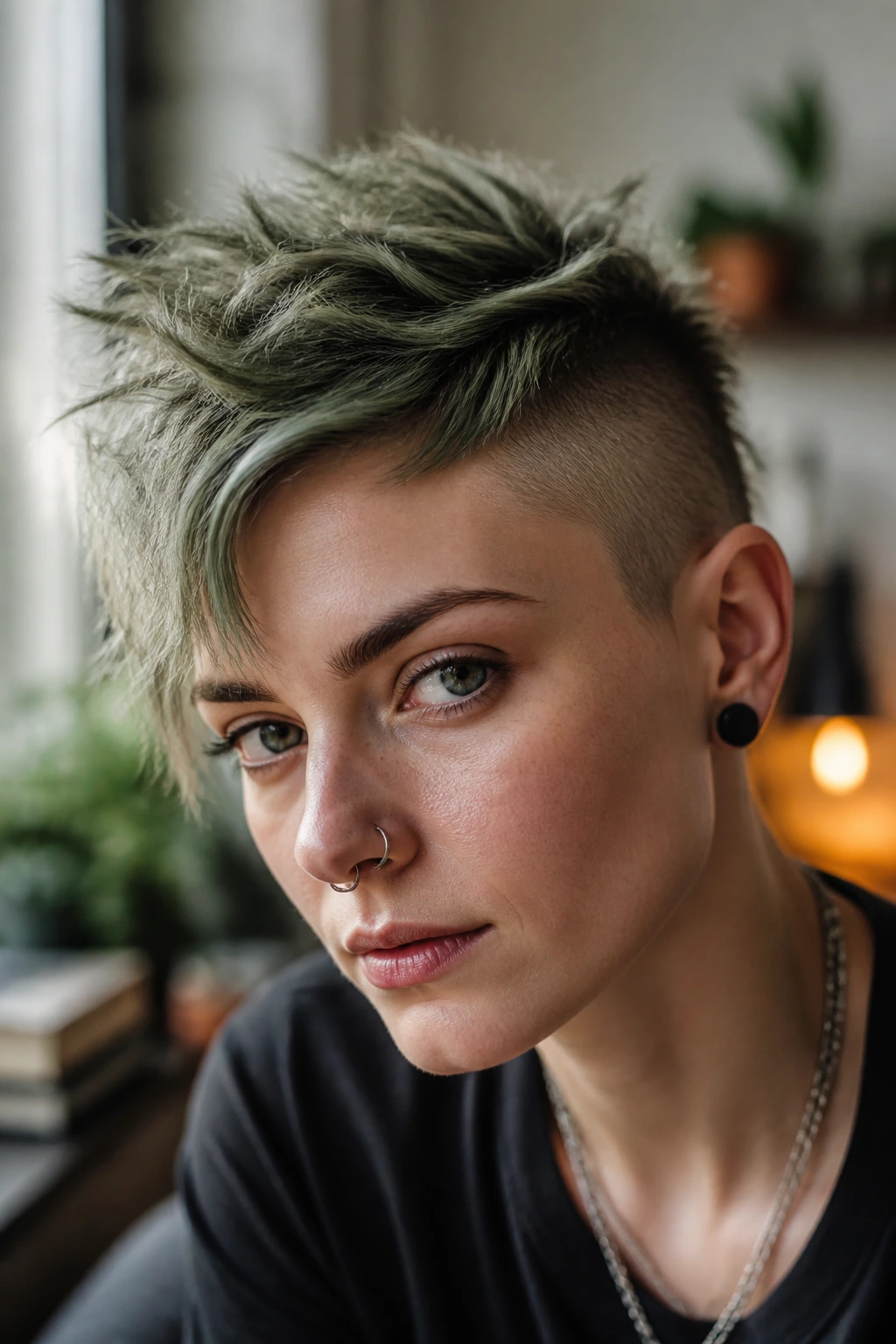
A punk cut that ignores texture usually ends up fighting itself. The sides may be perfect, but the top behaves like it has its own opinions.
Fine hair
Go shorter on the top and lean on height created by product and blow-drying. A spiky crop, faux hawk, or narrow mohawk works better than a long, heavy shag that collapses by lunch. Matte paste, volumizing powder, and a directional blow-dry give fine hair more lift than a heavy gel ever will.
Thick hair
This is where undercuts, internal debulking, and razor texture earn their keep. Thick hair loves to puff outward if it isn’t controlled, which means shapes like side-shaved bobs, mullets, and long rocker layers work best when the bulk is removed under the surface. If the stylist leaves too much weight, the cut becomes a triangle. Not ideal.
Curly and coily hair
Keep the shape respectful of the curl pattern. A punk cut on curls should look like the curls were intentionally arranged, not punished. Shaved sides, cropped temples, and shaped tops can look excellent here, but over-razoring the ends can make the hair frizz out and lose definition. A diffuser, curl cream, and a little hold at the edges usually beat brute-force gel.
Straight hair with stubborn cowlicks
Straight hair can look very clean in a punk cut, but cowlicks can send the fringe sideways or split the crown open. Use that growth pattern to your advantage. A side-shaved bob, hard-part crop, or asymmetric pixie can make the odd direction feel deliberate instead of annoying.
1. Liberty Spike Crop
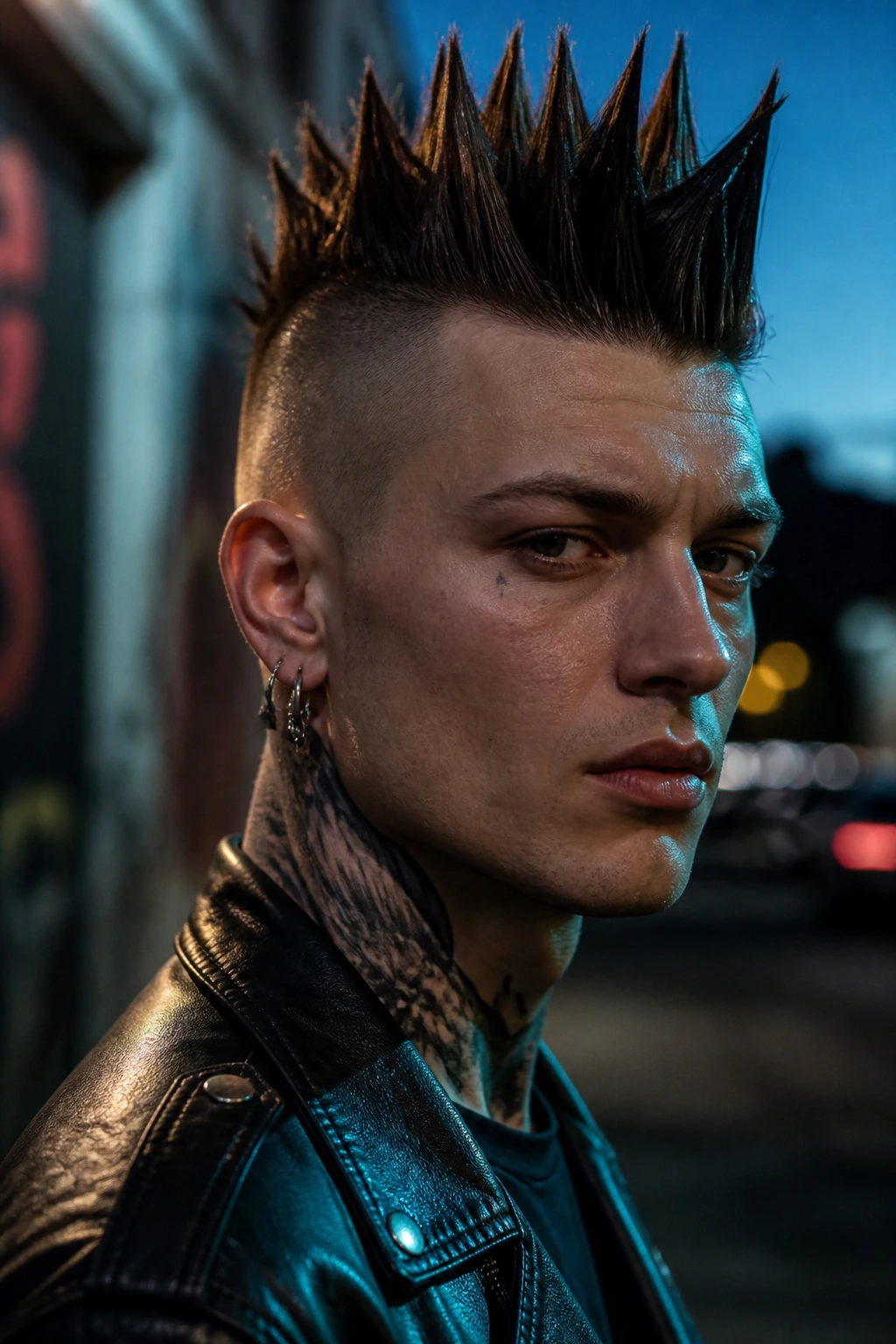
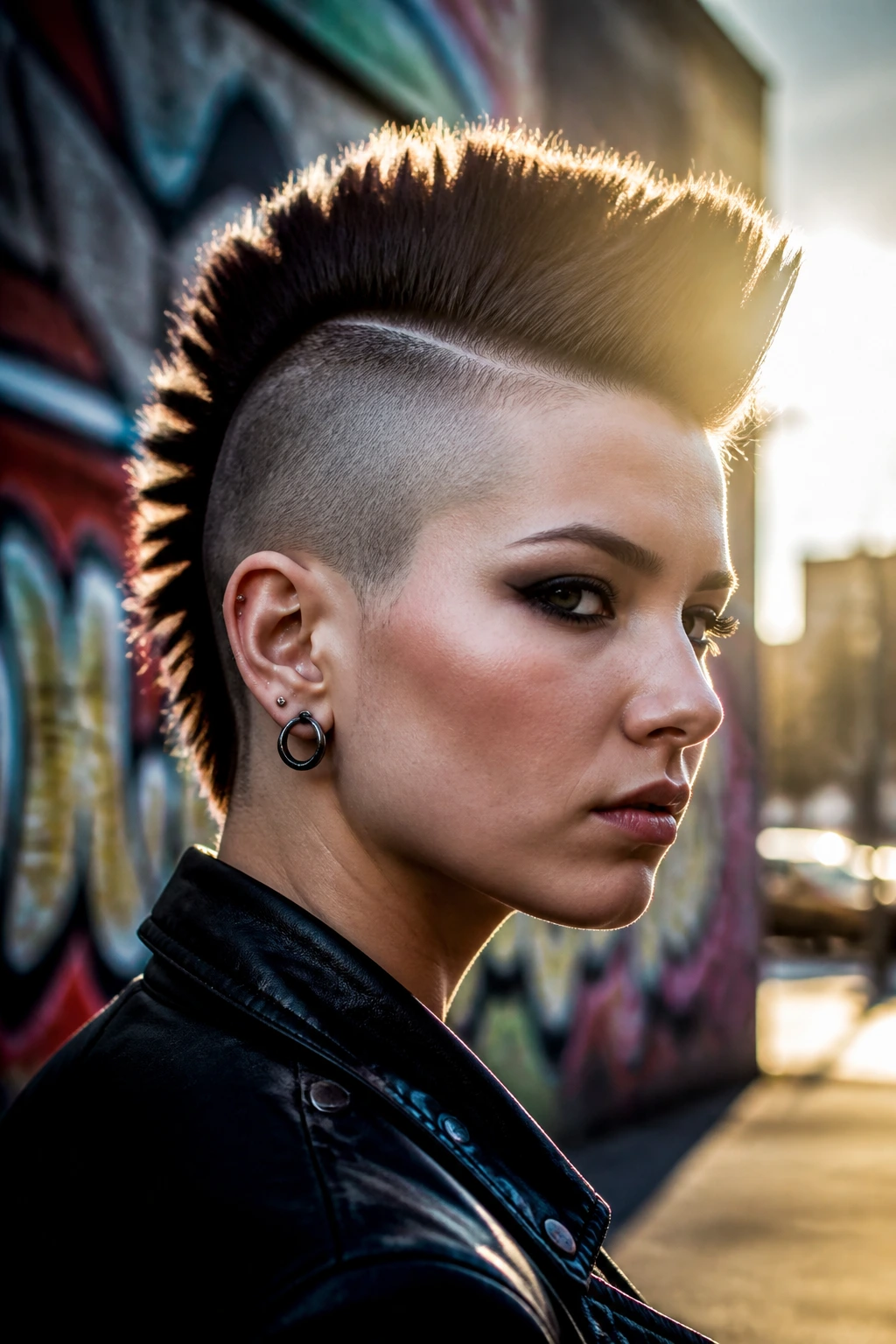
The Liberty Spike Crop is the cut that says it came to the room on purpose. Short sides, a narrow top, and spikes that rise instead of flop give it that old-school punk snap without needing a giant silhouette. On the right head, it looks almost architectural.
Why it lands
This cut works because the shape is blunt and vertical. The spikes don’t need to be perfect; they need to be separated and pointed enough that the top reads as a row of little blades. A #1 or #2 on the sides with 2 to 4 inches on top is enough to make the whole thing register from across the street.
If your hair is straight or only slightly wavy, the styling gets easier. Gel grips better, and the spikes hold their direction instead of folding in on themselves. Coarser hair does especially well here. Soft, slippery hair needs more prep, usually with blow-drying and a stronger product.
How to wear it
Keep the neckline neat. Let the spikes stay a little uneven. That unevenness is what stops the cut from looking like a toy version of punk hair. If you want a harder edge, ask for a clean line-up at the temples and a tighter fade underneath.
2. Narrow Mohawk Fade
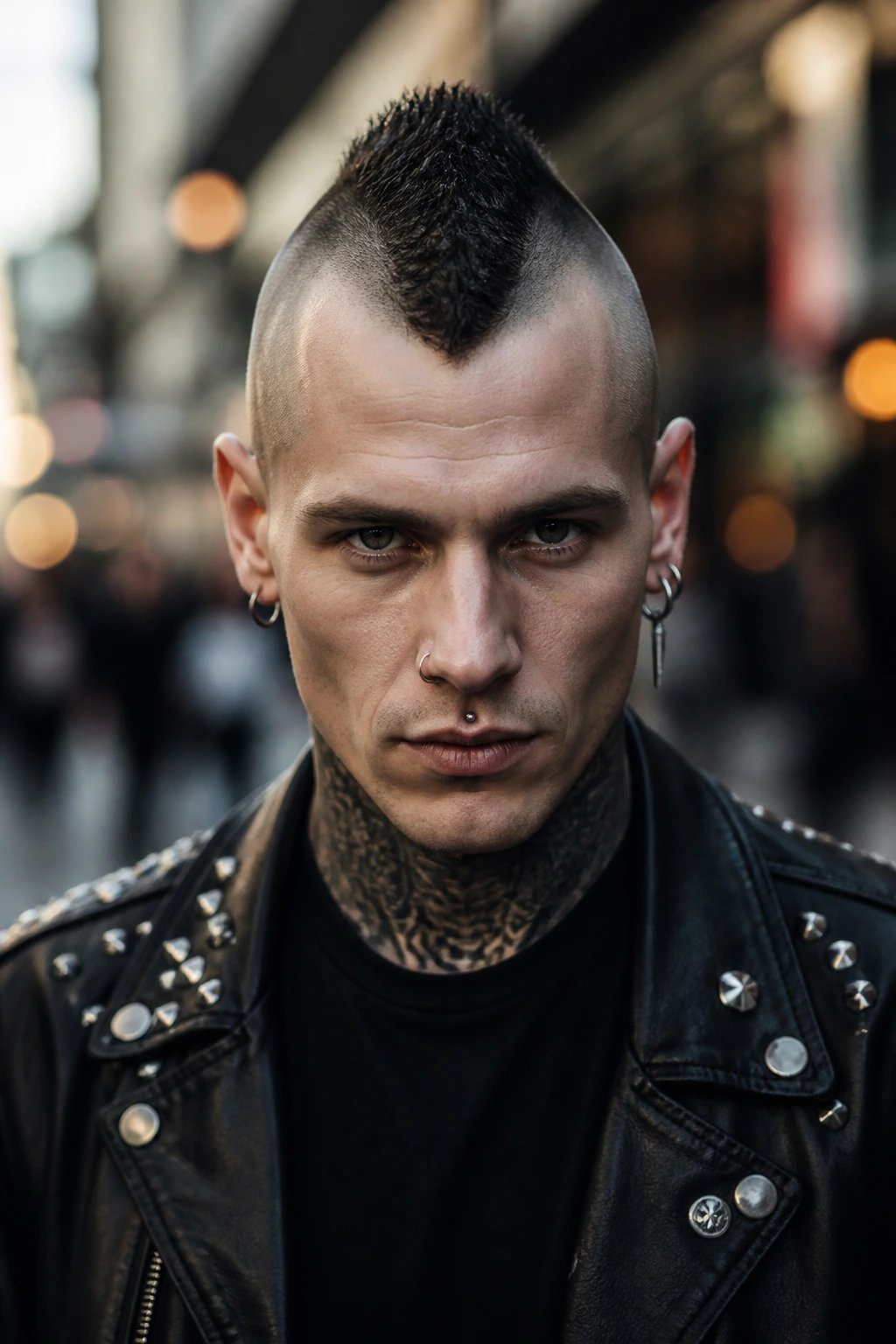
A narrow mohawk fade looks less wild than a sloppy long cut, which is part of why it hits so hard. The strip is tight, the sides are faded low or skinned clean, and the center line keeps the whole look focused. It’s a serious cut with a short fuse.
You can keep the strip 1.5 to 3 inches wide and still get plenty of attitude. Any wider and it starts to lose that sharp, centered punch. Any narrower and it can read more like a strip of uplifted hair than a mohawk. The sweet spot depends on your head shape, but the point is the same: clean sides, no mush, no confusion.
This is a good option if you want a punk haircut that still works with a jacket, a helmet, or a beanie. It styles fast, but it also demands maintenance. The fade grows out visibly, and once the sides lose their clean line, the whole thing softens fast.
3. Faux Hawk With Tapered Sides
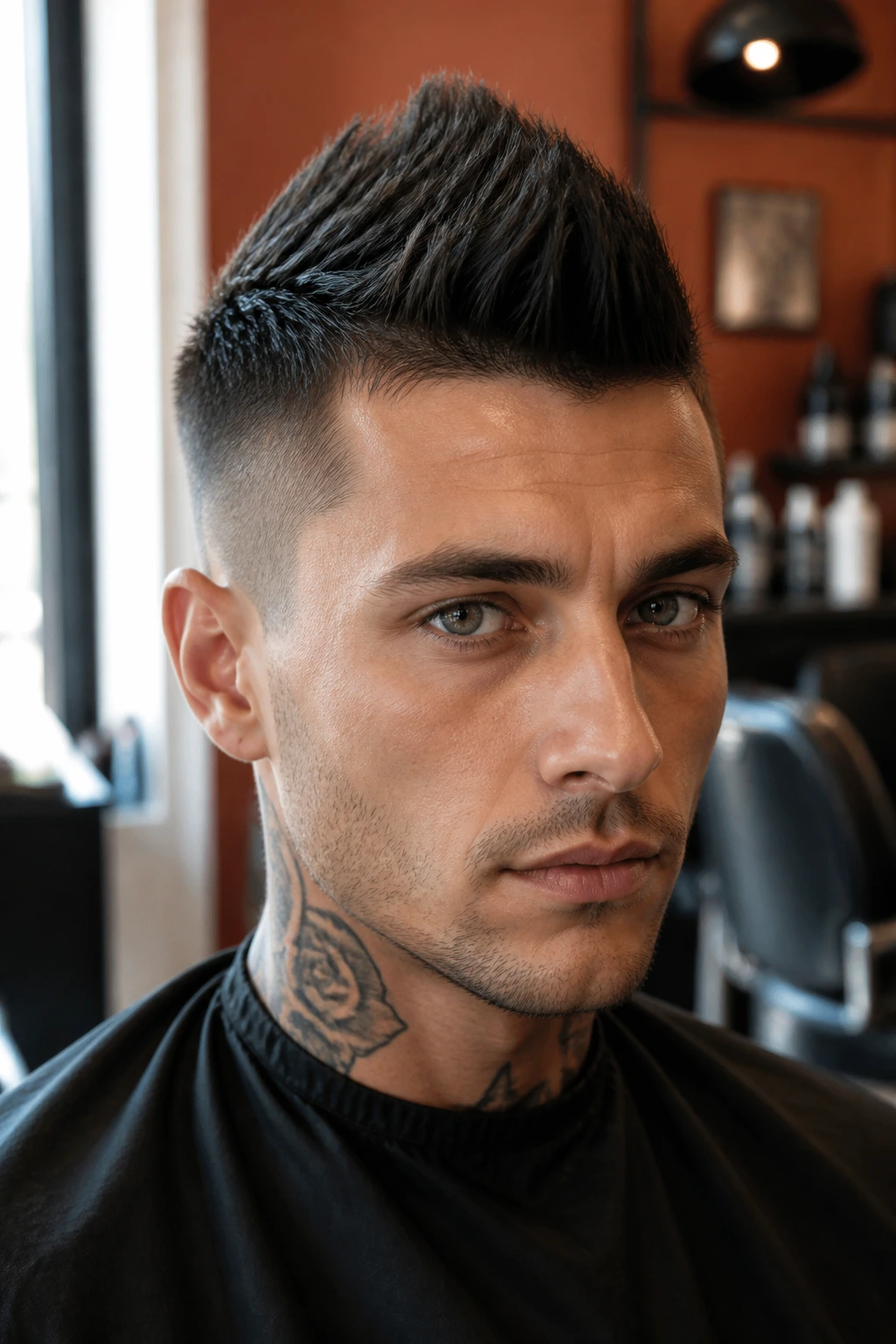
Want the punk edge without the full strip? The faux hawk is the smart answer, and I mean that in the nicest way. It keeps the center lifted, trims the sides down, and lets you move the top forward or upward depending on the day.
The tapered sides matter more than people think. If the taper is too soft, the cut turns into an ordinary short style with a little height. If the taper is too high or too naked, you’ve basically drifted into mohawk territory. The best version sits in the middle, with enough side control to keep the top honest.
I like this cut on medium-density hair because it gives you room to play. You can wear it spikier for a show, flatter for work, and messier when you can’t be bothered. A matte paste or fiber cream keeps the shape piecey without turning it into a helmet.
4. Razor-Edged Shag

A razor-edged shag feels like hair that has been cut mid-conversation. The ends are broken, the layers are uneven in a good way, and the whole thing moves instead of sitting still. If punk hair ever gets poetic, this is where it happens.
This cut loves medium to long lengths. The trick is keeping the layers visibly fractured, especially around the jaw, cheekbones, and collarbone. A clean, heavy blunt line would kill the mood. You want separation, not precision for precision’s sake.
What makes it punk
- Shredded ends stop the cut from looking soft.
- A jagged fringe keeps the front from reading romantic.
- Air-dried texture gives the shape that loose, slightly bitten look.
- A little frizz is fine if it helps the layers move.
It’s a strong choice for wavy hair, and it gets even better when the natural bend shows through. Straight hair can wear it too, but it needs more product and a bit of rough-drying to avoid falling flat.
5. Choppy Mullet
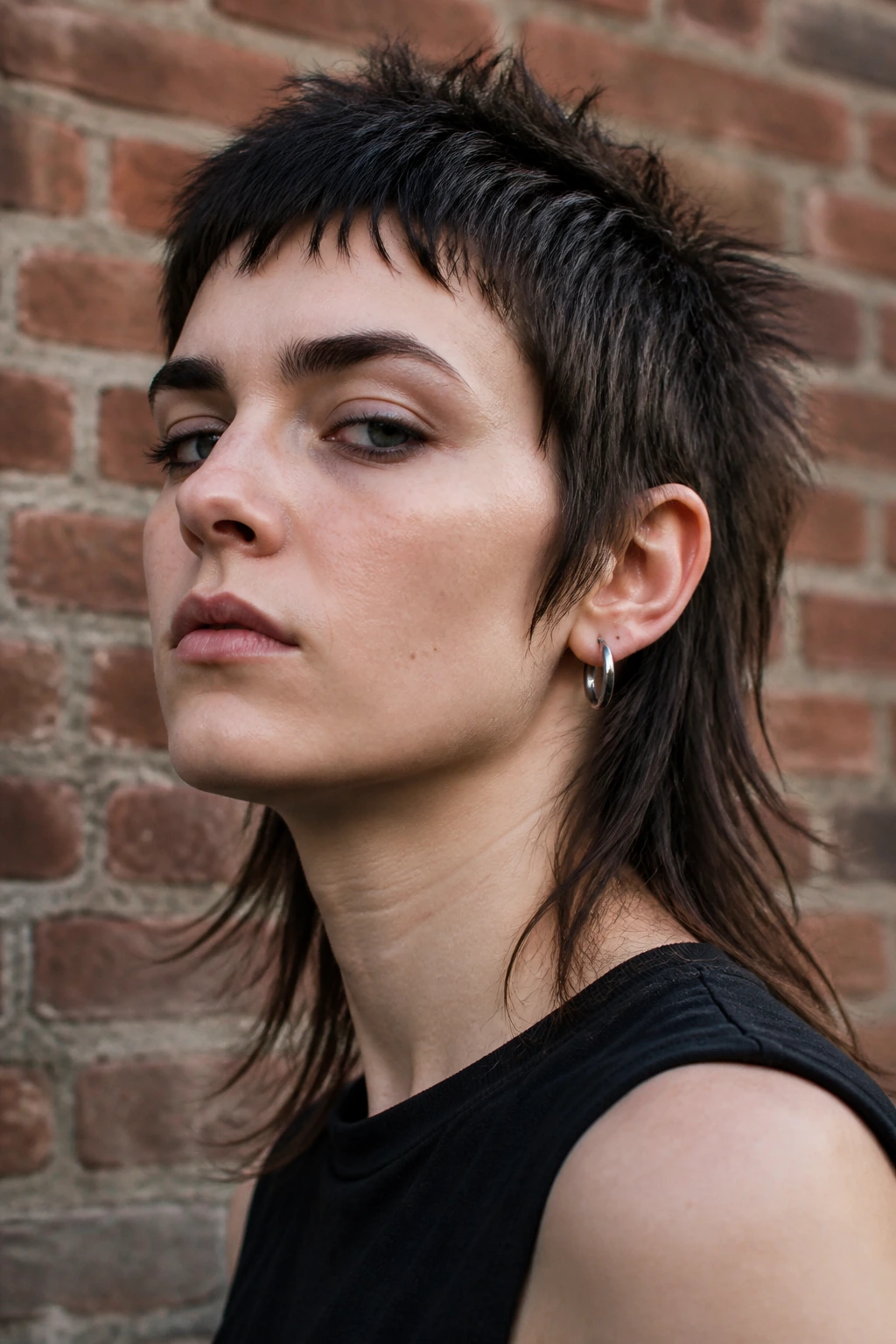
A choppy mullet is not the old joke version of the mullet unless you let it be. The punk version is harsher: shorter up front, broken through the crown, and visibly longer in the back without trying to look polished. It feels like the haircut has been snapped in the middle and left proud of it.
The best choppy mullets have texture all the way through. The back should not look silky and careful. It should look intentionally ragged, with enough separation that the ends are visible instead of clumped. If the top is too tidy, the style loses its teeth.
This cut suits thicker hair and wavy textures especially well because the back can carry some body without going poofy. If your hair is very straight, ask for more choppy internal layering so the shape doesn’t turn into a flat shelf. A bit of matte cream through the ends helps keep the whole thing gritty instead of glossy.
6. Buzz Cut With Etched Lines
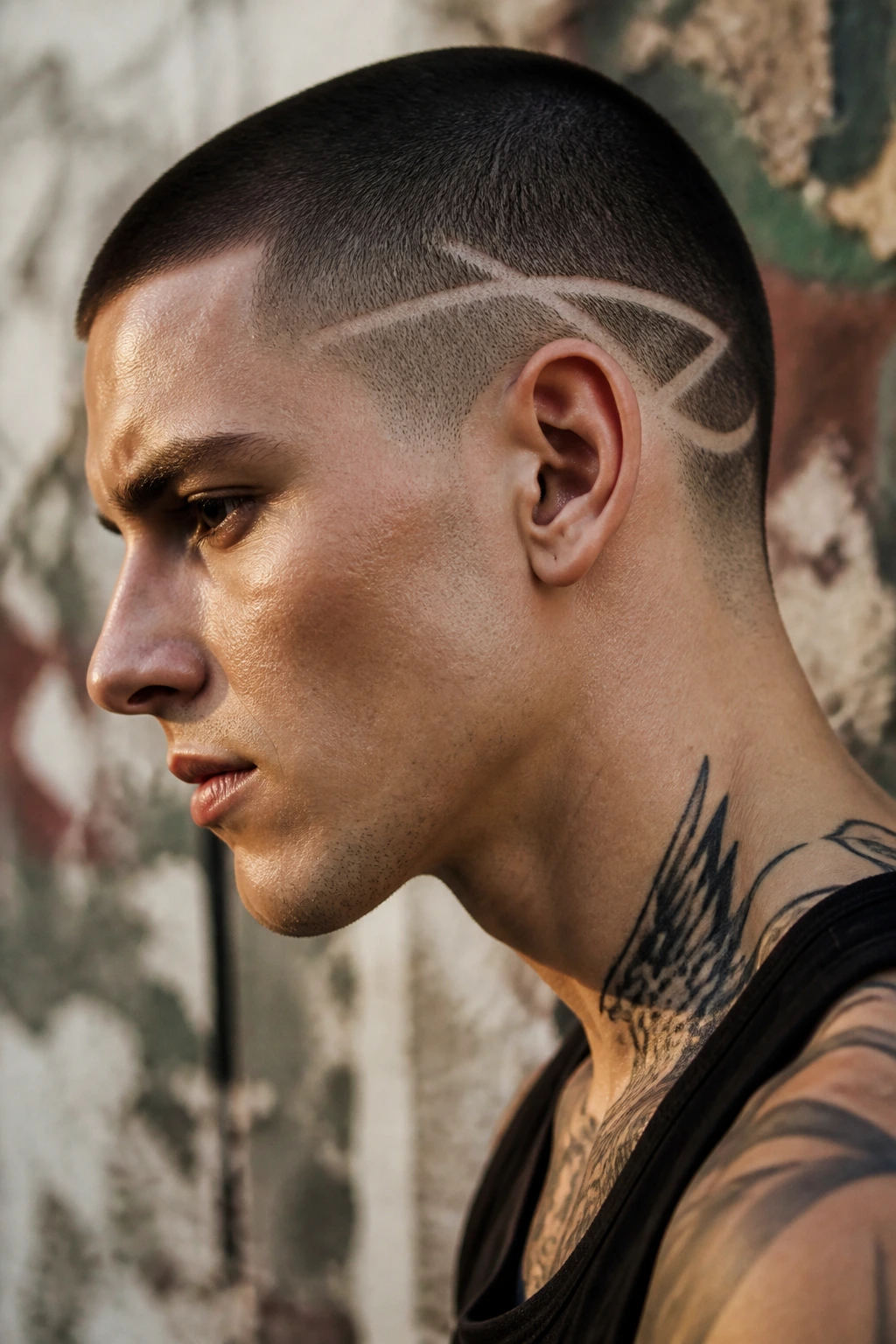
A buzz cut with etched lines is the most unforgiving punk option on this list. That’s why it works. There’s nowhere to hide, which means the design, the fade, and the linework have to be exact.
You can keep the all-over buzz at a #1 or #2 and carve a single line at the temple, two parallel lines along the side, or a small graphic at the nape. Simple wins here. Too many shapes turn into visual noise fast. One clean line can change the entire haircut.
Why it hits
The buzz exposes the head shape, the hairline, and the exact state of the clippers’ work. That level of honesty is part of the appeal. It also means the style grows out quickly. If you like razor-sharp edges, plan on a cleanup every 7 to 14 days.
Use this cut if you want low styling time and a high-contrast look. It’s especially good if your hair grows evenly and your hairline is strong, because the whole silhouette stays crisp longer.
7. Asymmetric Pixie With a Heavy Fringe
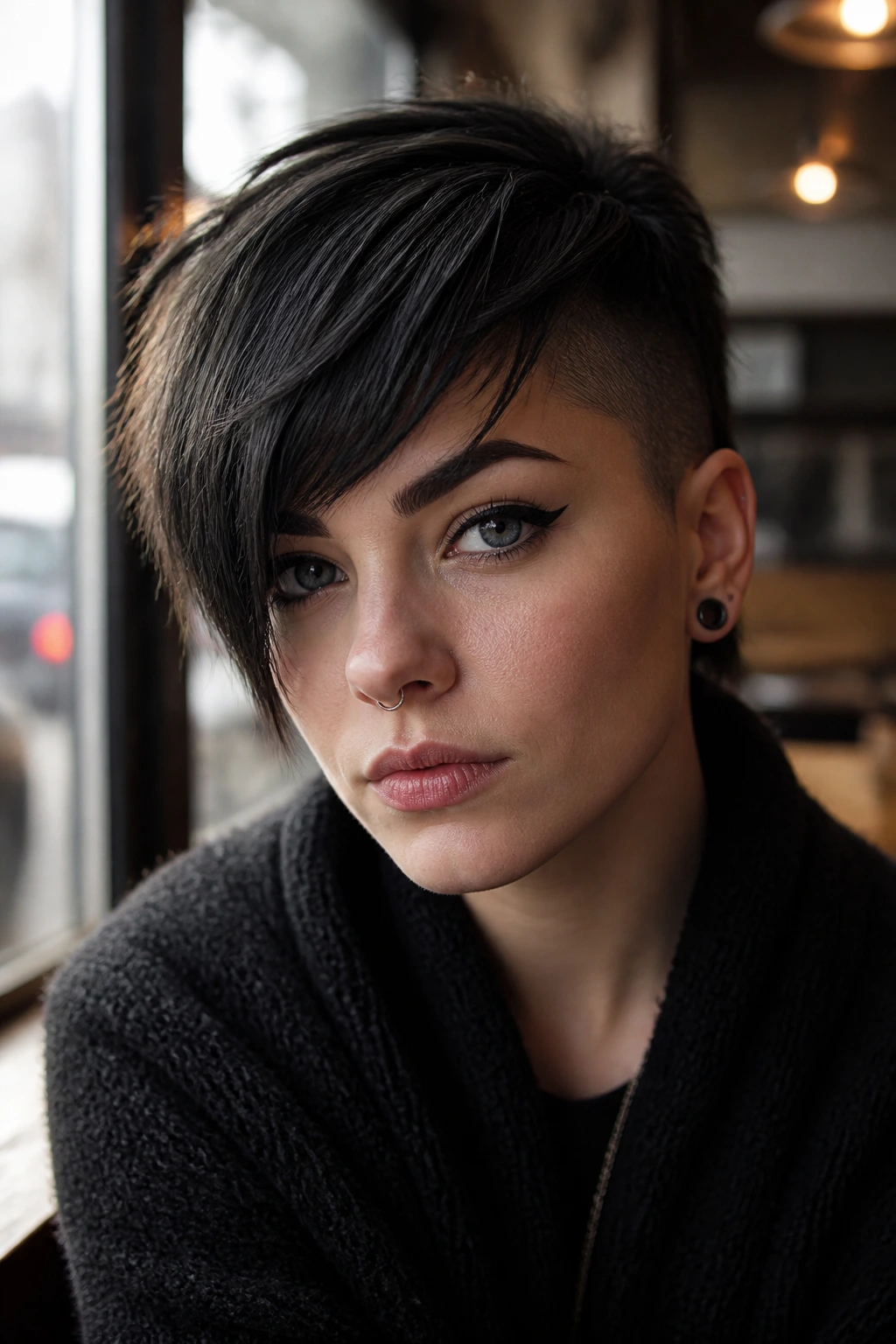
The asymmetric pixie is all about one side refusing to behave. One temple can be cropped tight while the other falls longer, and a heavy fringe sweeps across the forehead like it has made up its mind. It’s sharp, but not severe in the same way a buzz is severe.
This cut has a lot of range. You can keep the nape neat, leave one side tucked behind the ear, and let the fringe fall over one eye if you want a darker edge. Or you can push the front up and forward for a more aggressive shape. Either way, the asymmetry matters. Without it, you’re just left with a short pixie.
I like this on straight or slightly wavy hair because the lines show clearly. Use a small amount of paste or wax, then break the fringe apart with your fingers instead of combing it smooth. The goal is shape, not shine.
8. Side-Shaved Bob
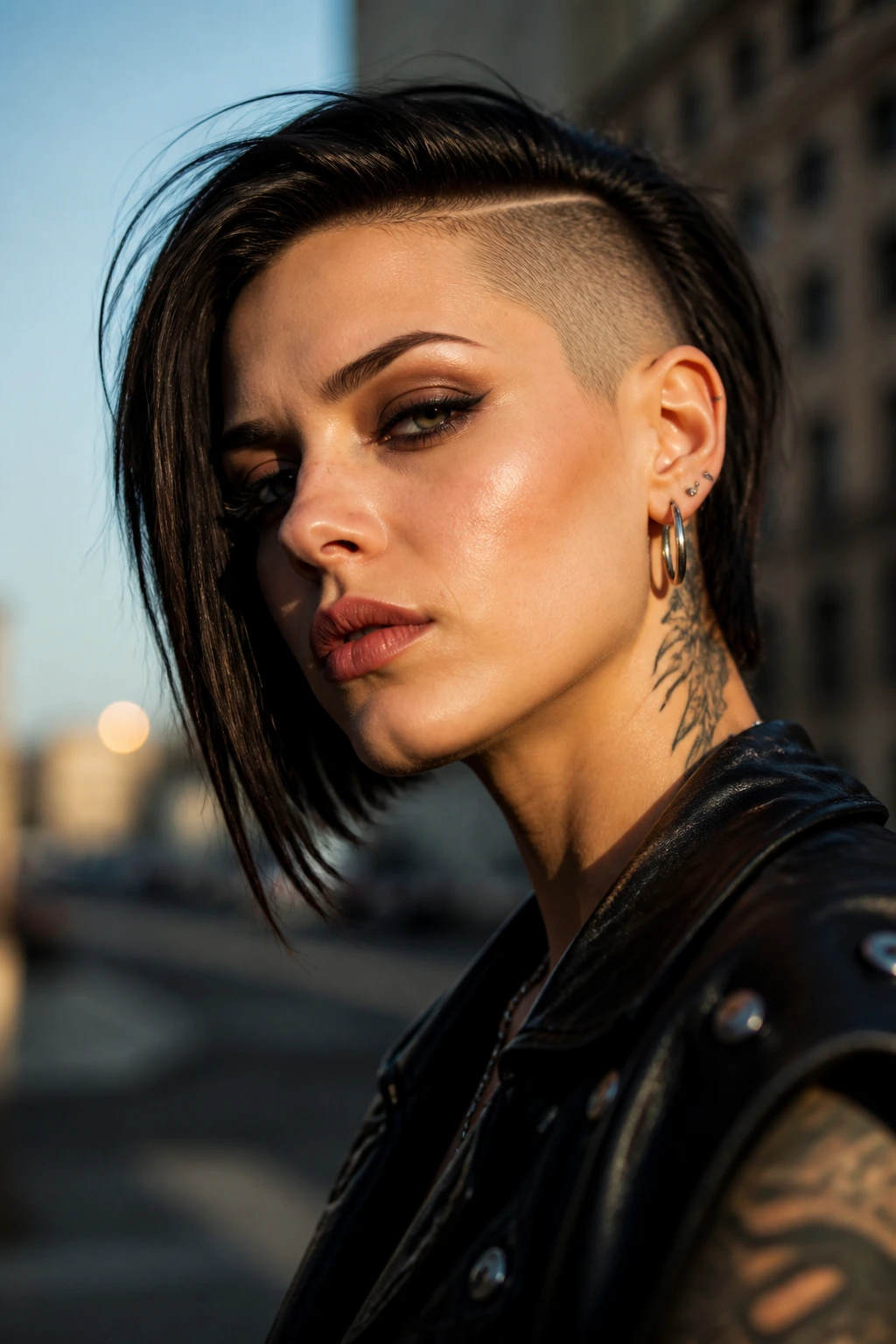
A bob does not have to read soft. A side-shaved bob proves that fast. Keep one side blunt at the jaw or collarbone, shave the other side under the panel or at the temple, and the whole cut turns from neat to sharp in one move.
This works especially well on thick hair because the shave removes bulk where the bob would otherwise balloon. On curly hair, the shaved side gives contrast while the longer side keeps the curl pattern visible. On straight hair, the line can be polished or rough depending on how much styling you want to do.
There’s a nice trick here: tuck the longer side behind the ear when you want the shave to show, or let it drape across the face when you want the cut to feel slightly hidden. That kind of shift gives the haircut two moods without changing the shape.
9. Flat Top With a Punk Finish
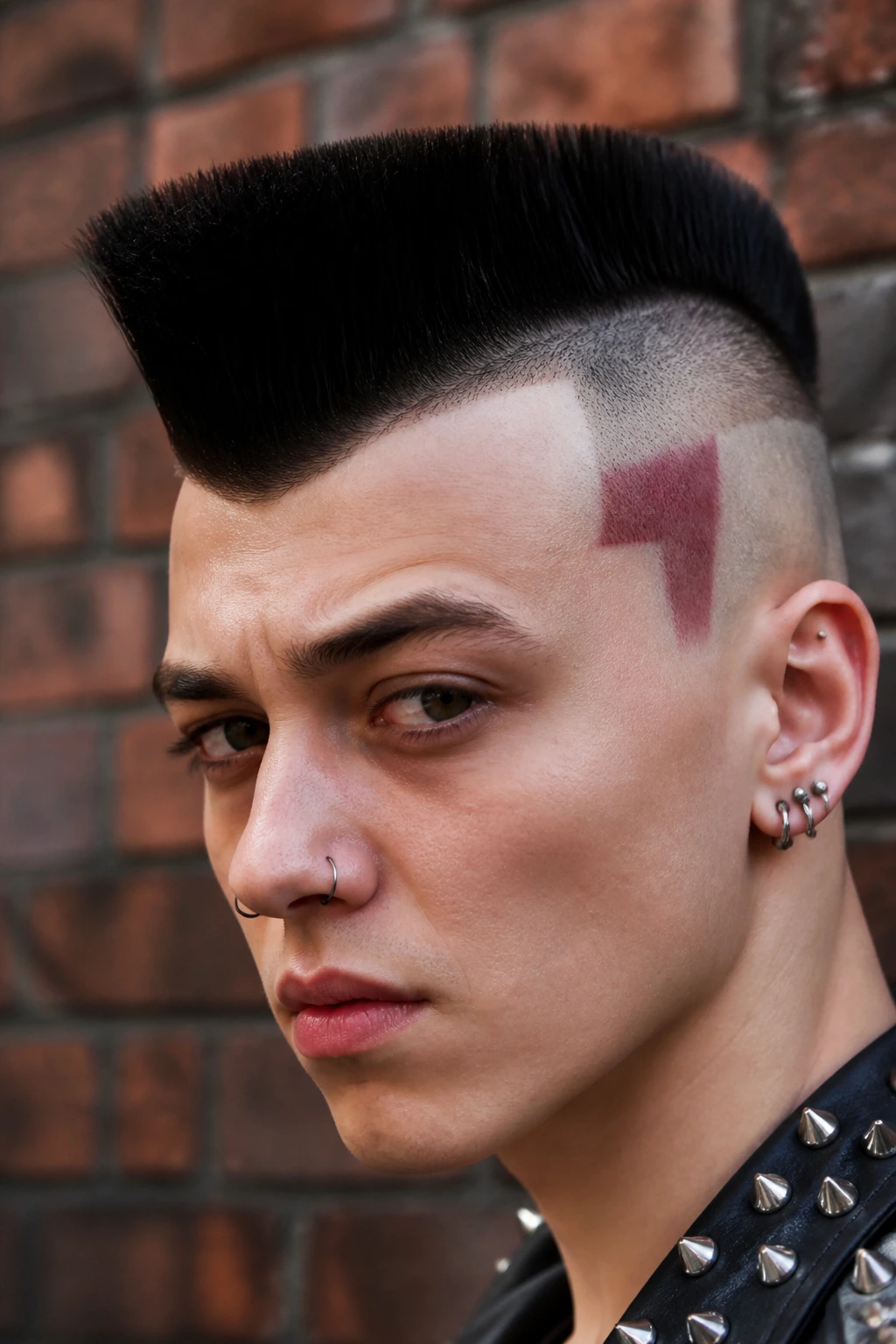
A flat top with a punk finish has a roofline you can almost measure with your eyes. The top is boxy, the edges are controlled, and the sides are short enough to let the shape sit on top like a hard-edged cap. If you like geometry, this is your cut.
The punk part comes from what you do around the structure. A shaved side panel, a bold color block, a hard part, or a slightly broken edge keeps it from reading like a clean retro throwback. That matters. A perfectly nostalgic flat top looks costume-ish. A slightly offbeat one looks deliberate and sharp.
Dense hair is the best canvas here. It holds the top square and keeps the line from collapsing. If your hair is finer, the style can still work, but the top should be shorter and the height more modest, or else the silhouette gets flimsy.
10. Wolf Cut With Shredded Ends

The wolf cut wins when you want movement that looks a little bitten at the ends. It mixes shag and mullet DNA, which is a tidy way of saying the crown gets lift, the perimeter gets length, and the whole thing stays broken up enough to feel rebellious.
The beauty of this cut is that it doesn’t need perfect symmetry. In fact, a little unevenness helps. The layers around the face should feather out instead of sitting as one smooth curtain, and the back should carry a longer line so the silhouette has some drop. That longer back gives the style its bite.
This is one of the best punk-adjacent cuts for wavy hair. It also works on straight hair if you’re willing to use texture spray and a little scrunching. On curls, the shape can get gloriously wild, which is half the fun.
11. Two-Tone Undercut
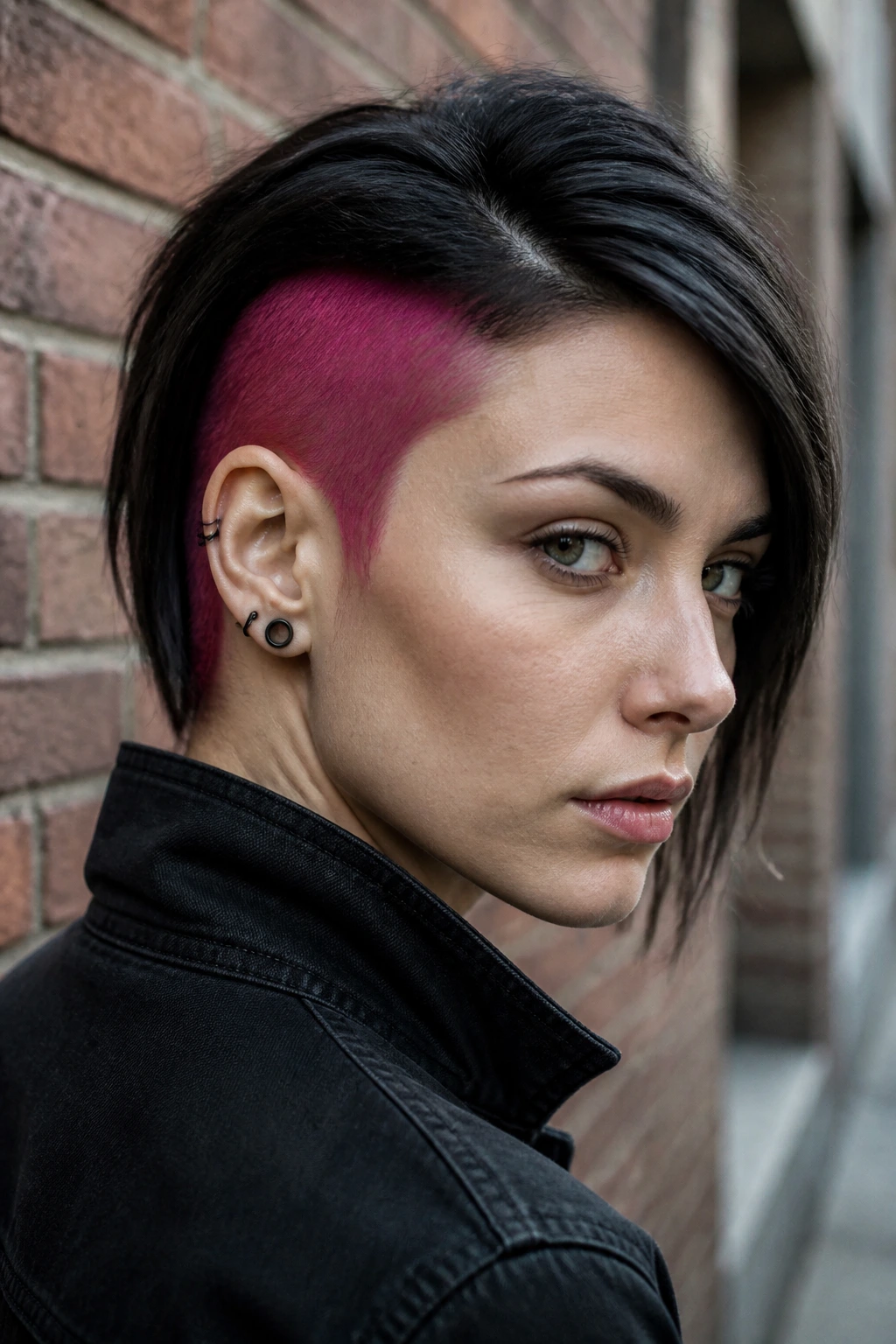
Why does a simple undercut feel louder once the color splits? Because the haircut becomes the frame and the color becomes the shout. The undercut itself can be clean and almost invisible when the top is down, then suddenly show up as a bright contrast when you part, tuck, or flip the hair.
A two-tone version works with black and platinum, copper and black, deep purple under a darker surface, or even a hidden panel that shows only when the top moves. The point is not just color contrast. It’s placement. A hidden slice under the crown or a bold strip through the top changes how the haircut moves.
This is a good pick if you want drama without committing to a full shave. The cut can stay wearable, but the surprise factor is still there. Bleached areas need more care, though. Dry ends and washed-out color will make the whole thing look tired quickly.
12. Long Rocker Layers With Shaved Temples
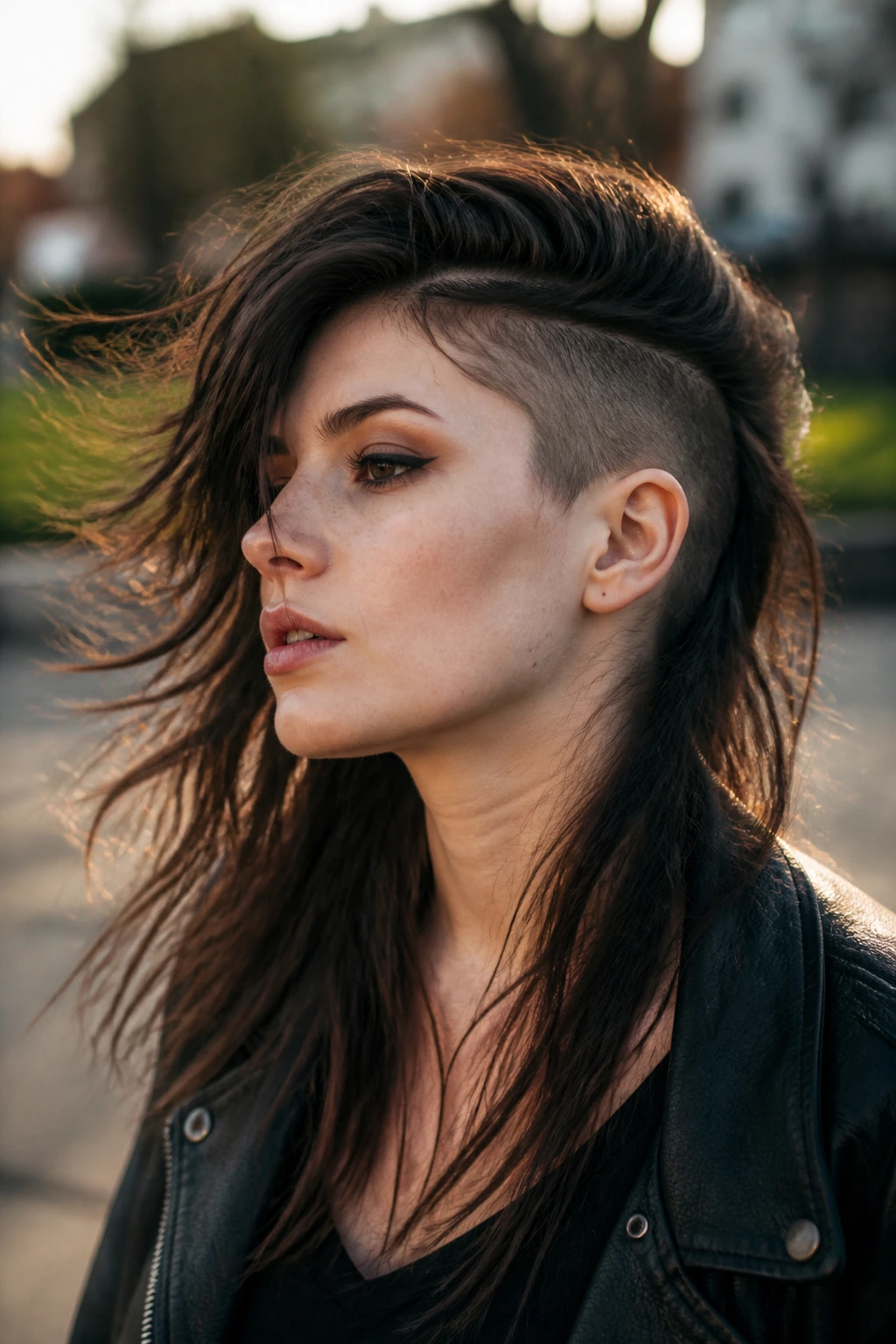
Long hair gets a lot more interesting when the temples disappear. That’s the whole trick here. Keep the length, strip out some of the weight at the sides, and let the top and back move in a way that feels less polite.
This is one of my favorite shapes for people who do not want to chop off length just to look punk. The shaved temples create contrast immediately, and the layered top keeps the long hair from sitting like one solid sheet. If you want, the shaved section can be hidden when the hair is down and revealed when it’s tied back.
It’s also a practical cut for thick hair, because the undercut helps with bulk. If the layered top is cut with enough separation, the whole look can be worn loose, half-up, or pulled back without losing the edge.
13. Micro Bang Crop

Micro bangs do not whisper. They announce the face before the rest of the haircut gets a word in, and that’s exactly why they work so well in punk styling. Keep the fringe short, blunt, and a little severe, and pair it with a cropped top or a tight bob.
The length matters. If the bangs sit too low, they become a normal fringe. If they’re kept above the brows and cut with a straight or slightly jagged edge, they start to feel graphic. That little strip of exposed forehead makes the shape sharper and the eyes louder.
This cut needs regular trimming because bangs grow fast and show it fast. On straight hair, the line stays crisp. On wavy hair, the fringe may need a touch of flat iron or a lighter hand with the cut so it doesn’t kick sideways.
14. Skullet With Clean Sides
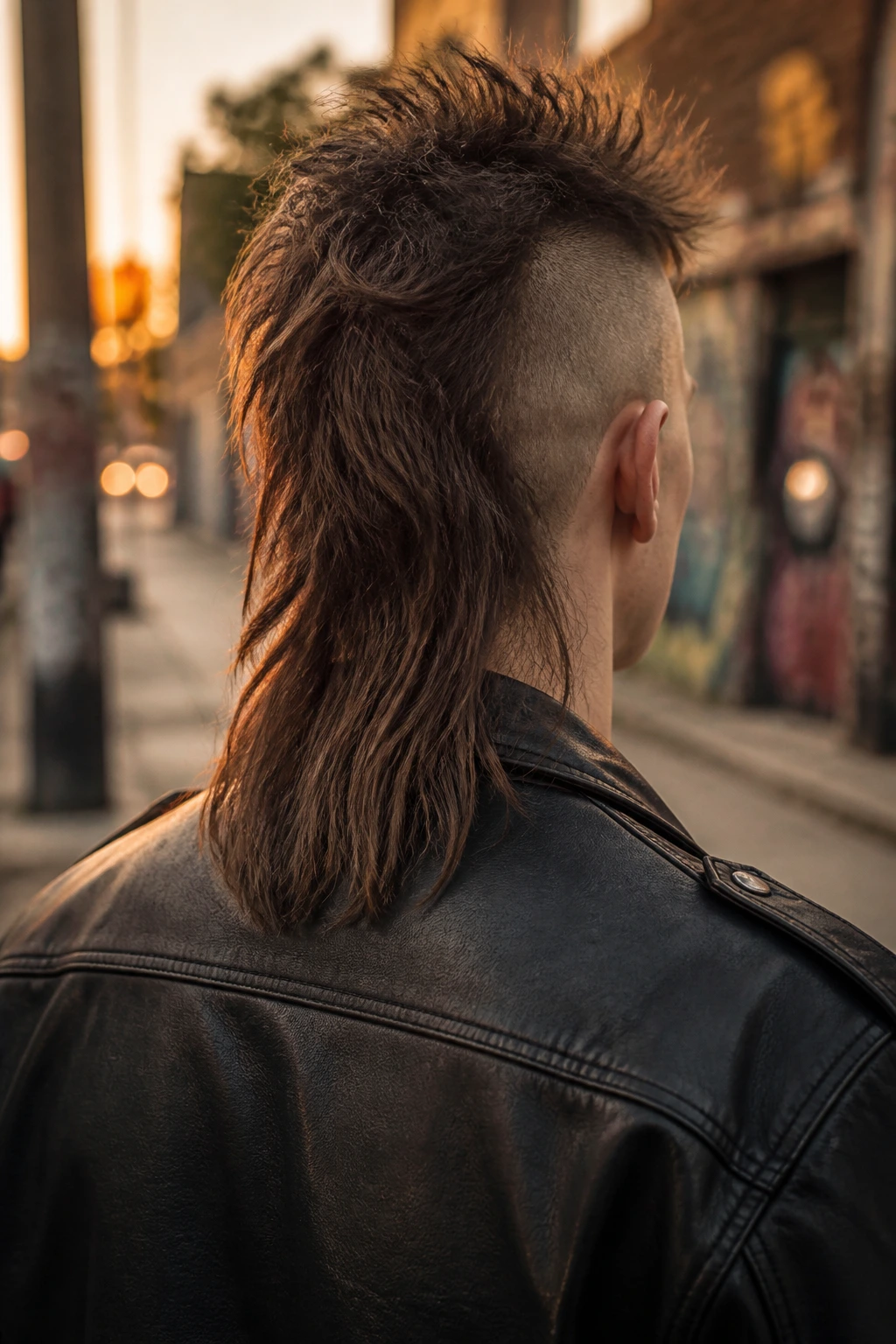
The skullet is not subtle, and that is the whole joke and the whole point. Short or shaved through the front and sides, length left in the back, and the whole shape turns into something that looks both defiant and slightly absurd. That mix is pure punk energy.
It only works when the edges are clean. If the sides are ragged or the transition is accidental, the cut looks like a grow-out that got lost in traffic. But when the neckline is kept tidy and the contrast is intentional, the skullet becomes a statement instead of a mistake.
This is not the cut for someone who wants quiet approval. It’s for people who are happy being looked at twice. It pairs best with strong personal style and a steady maintenance habit, because the back length and the top balance each other only when the trim stays disciplined.
15. Bowl Cut With a Hard Part
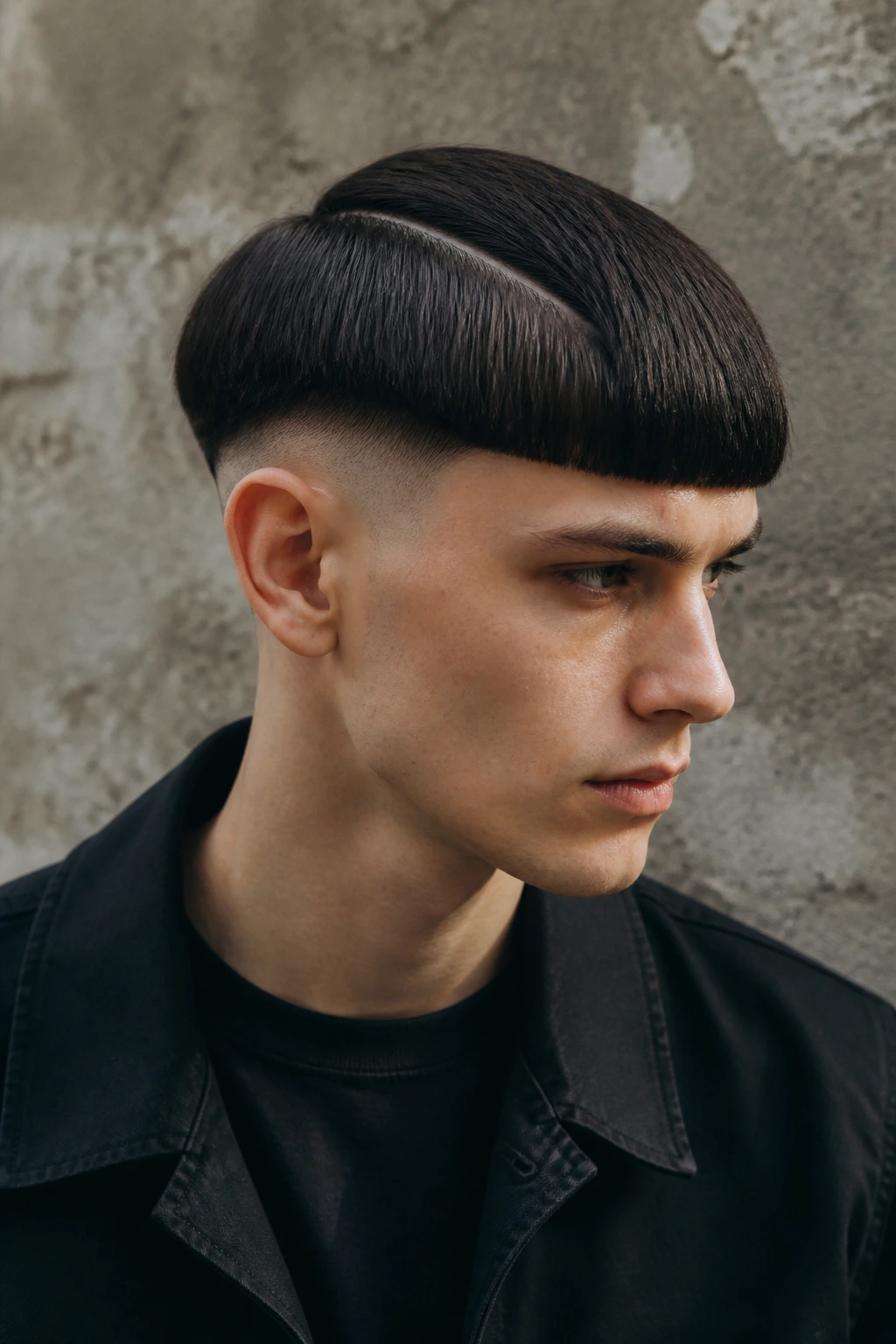
A bowl cut turns punk the second you cut the line harder and remove the sweetness. The round shape is still there, but the perimeter gets sharpened, the part gets shaved or clearly marked, and the overall effect shifts from boyish to architectural.
This cut works best when the curve is blunt rather than fluffy. Keep the bottom line precise and the top compact. If the hair is too soft around the ears and nape, the shape slips into costume. A hard part, especially paired with an undercut underneath, keeps the style from feeling nostalgic in the wrong way.
Straight, dense hair handles this beautifully because it holds the outline. On wavy hair, you’ll need more control from product or a stronger cut through the interior. Either way, the point is the same: the silhouette should look intentional enough to make people stop guessing what they’re looking at.
16. Spiky Crop With a Tapered Nape
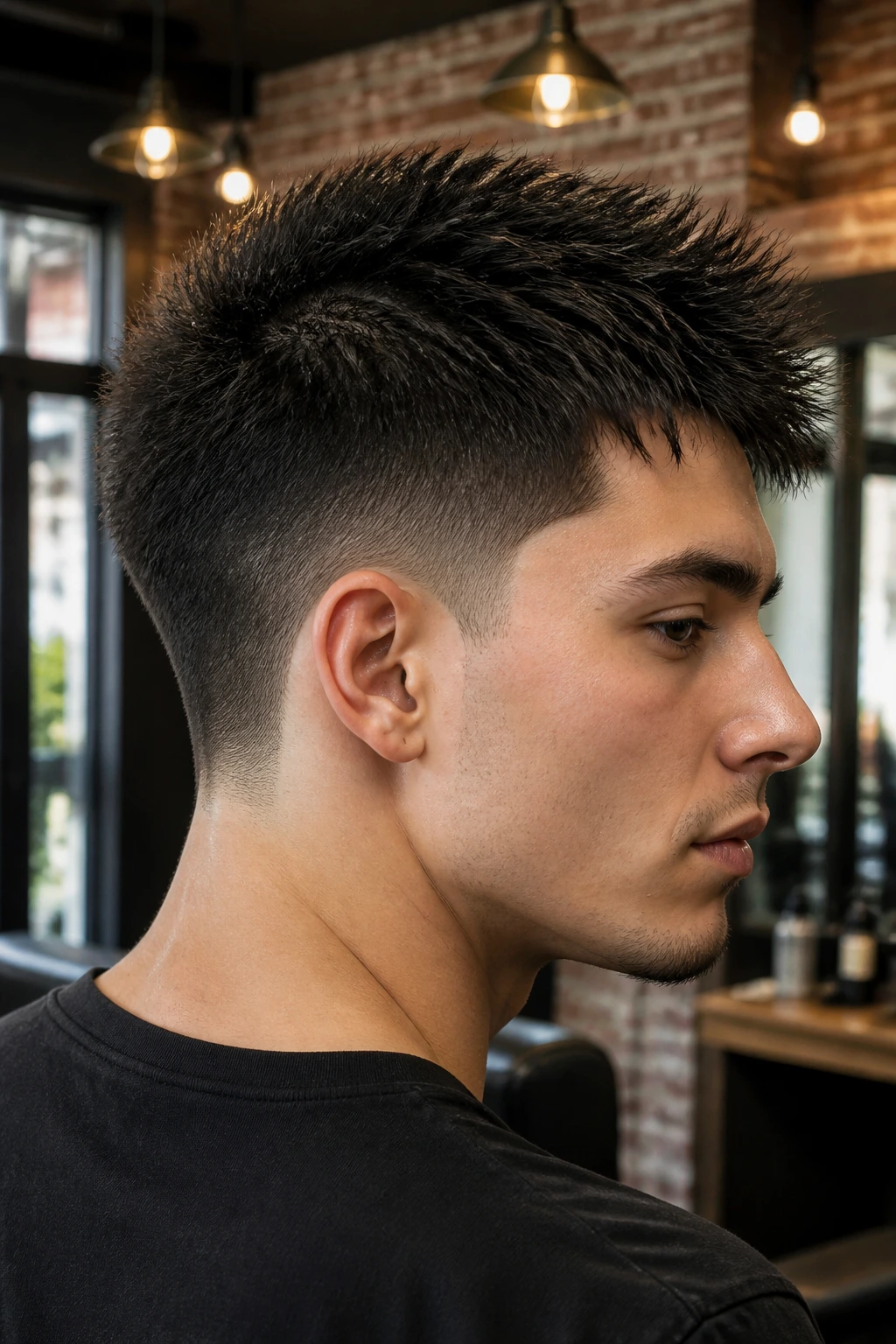
A spiky crop is the practical cousin of the liberty spike. It still stands up, still has attitude, but it’s shorter, calmer, and easier to live with on an ordinary day. The tapered nape keeps the back clean while the top stays textured and directional.
This cut is excellent for fine hair because the spikes don’t need much length to show. About 1 to 2 inches on top is enough if the product is right and the blow-dry points upward. A matte fiber or paste separates the spikes without leaving them shiny or stiff.
I like this shape when someone wants the punk look without turning their whole morning into a styling project. It holds up well under jackets, rain, and everyday life, which is not glamorous, but it matters. A style that can survive a Tuesday is usually a better choice than one that only behaves under perfect lighting.
17. Color-Block Mohawk
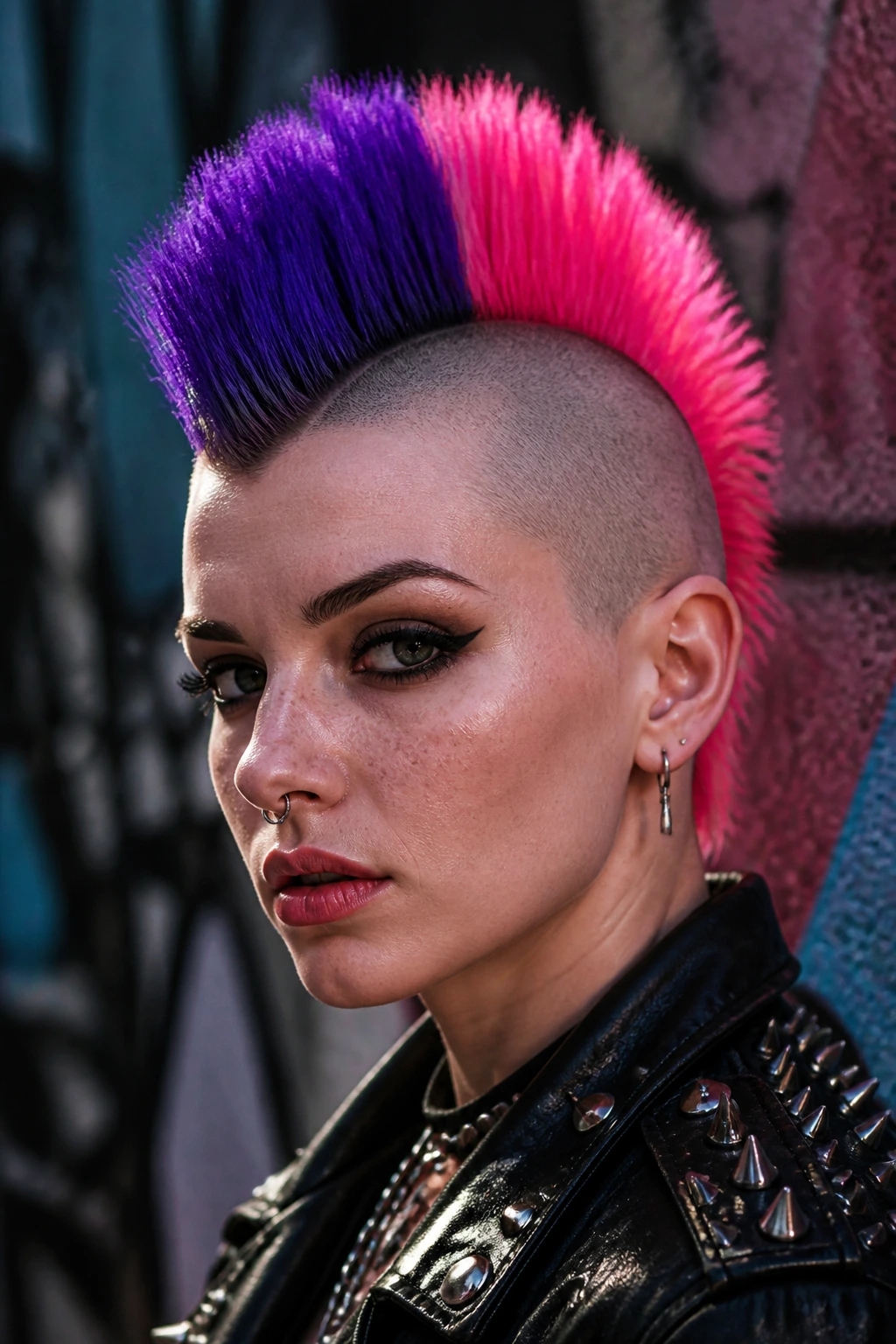
Color-block mohawks look like hair built from warning signs. That’s the appeal. The strip itself is already a statement, and once you divide it into panels or blocks of different color, the cut starts reading like a graphic object rather than just a hairstyle.
You can split the strip into two high-contrast colors or keep the base dark and add a vivid section through the center. Either way, the haircut has to be clean before the color goes on. A messy mohawk with loud color just looks messy. A precise one with color-blocking looks planned down to the millimeter.
This style asks for commitment. Prelightened hair needs care, and vivid shades fade fast if you wash too often or use the wrong shampoo. If you’re willing to maintain it, though, the result has real presence. It doesn’t need extra decoration.
18. Grown-Out Undercut
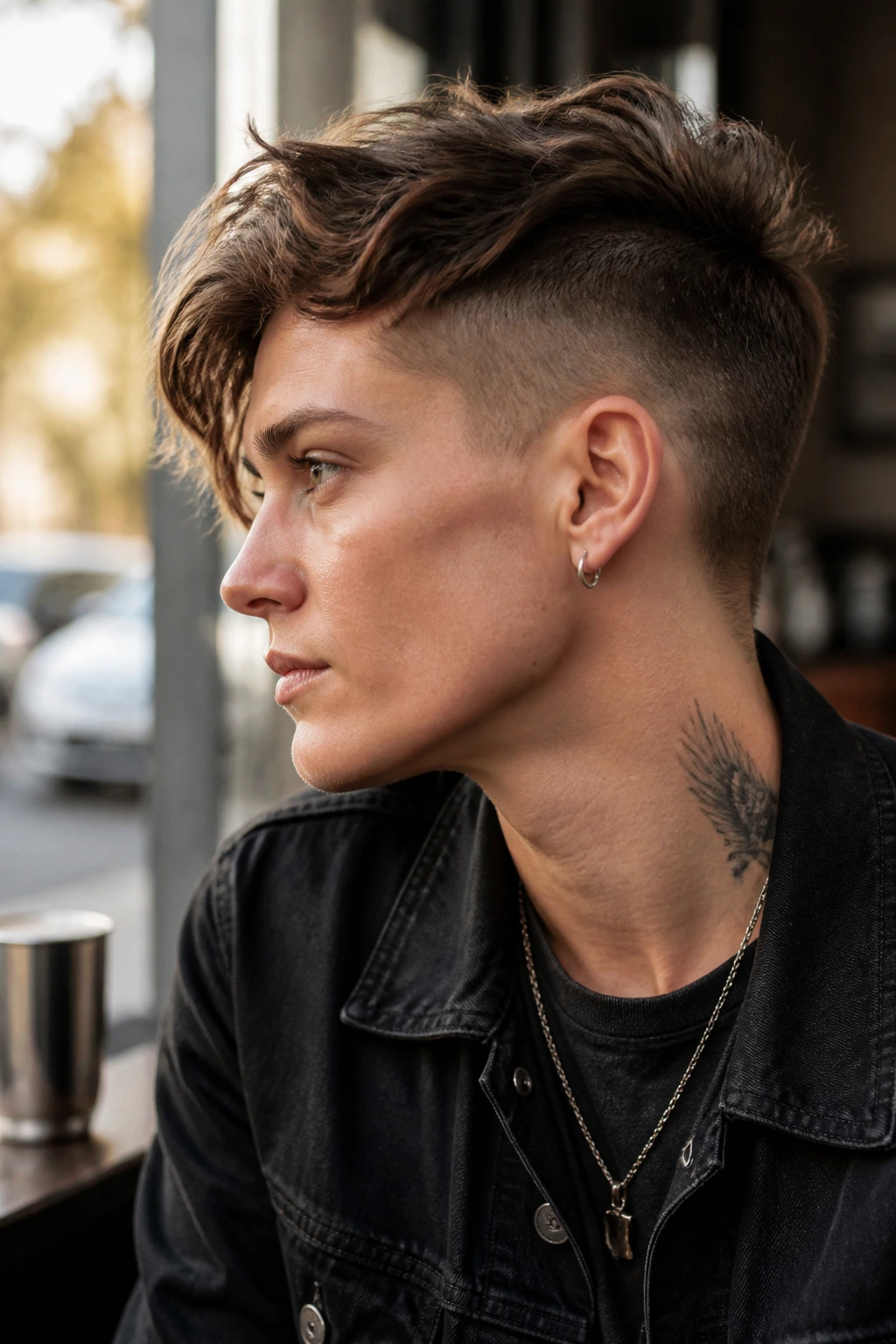
A grown-out undercut is what happens when the sharpest version of the cut starts to soften, and somehow that can look better. The top stays long enough to sweep, spike, or fall messy, while the undercut loses its absolute crispness and turns into a looser outline.
This is a strong option if you want punk hair without constant maintenance. It also works if you’re growing out an older cut and want the in-between stage to feel intentional. The key is to keep the neck, sideburns, and temple edges clean enough that the cut still reads as a choice.
The danger here is drift. If the top grows too long and the sides are left alone too long, the shape can wander into generic grown-out hair. A periodic cleanup keeps the style alive. I’d rather see this cut slightly imperfect on purpose than too tidy and fake.
19. Dreaded Top With Clean Sides
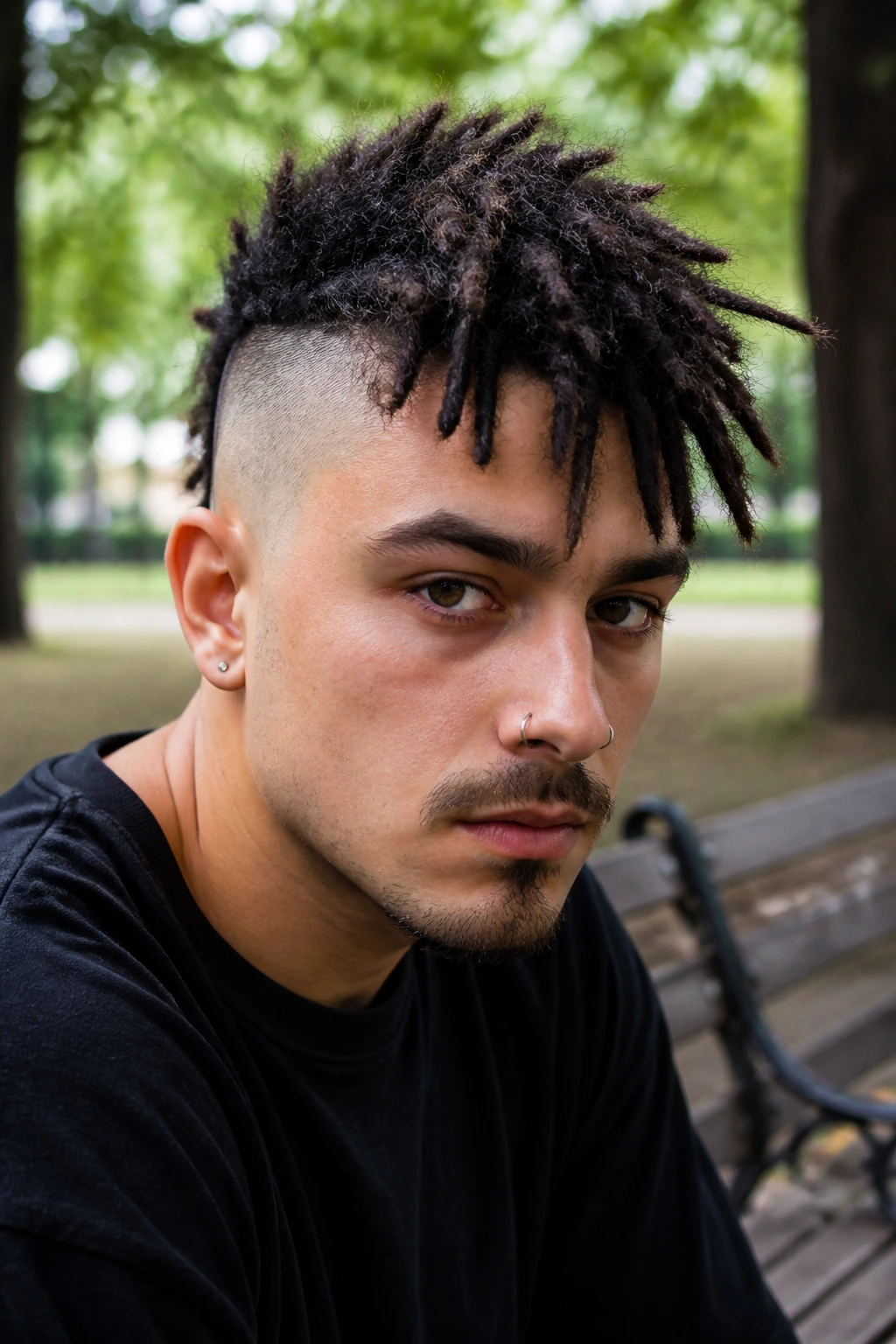
Dreaded tops with clean sides work because the outline stays disciplined. Whether the top is locs, twists, or another structured texture, shaving or clipping the sides creates a strong frame that makes the style read deliberate instead of bulky.
This is one of the smartest punk-adjacent looks for thick, coily, or textured hair because it respects the hair’s natural body. The contrast comes from the perimeter, the height, and the clean edges around the temples and nape. You do not need to flatten the top to make it fit the category. The shape itself does the talking.
A little color accent or wrapped detail can push the style harder, but the haircut already has presence. Keep the sides neat. Keep the scalp cared for. That maintenance matters just as much as the visual punch.
20. Neon Buzz Cut
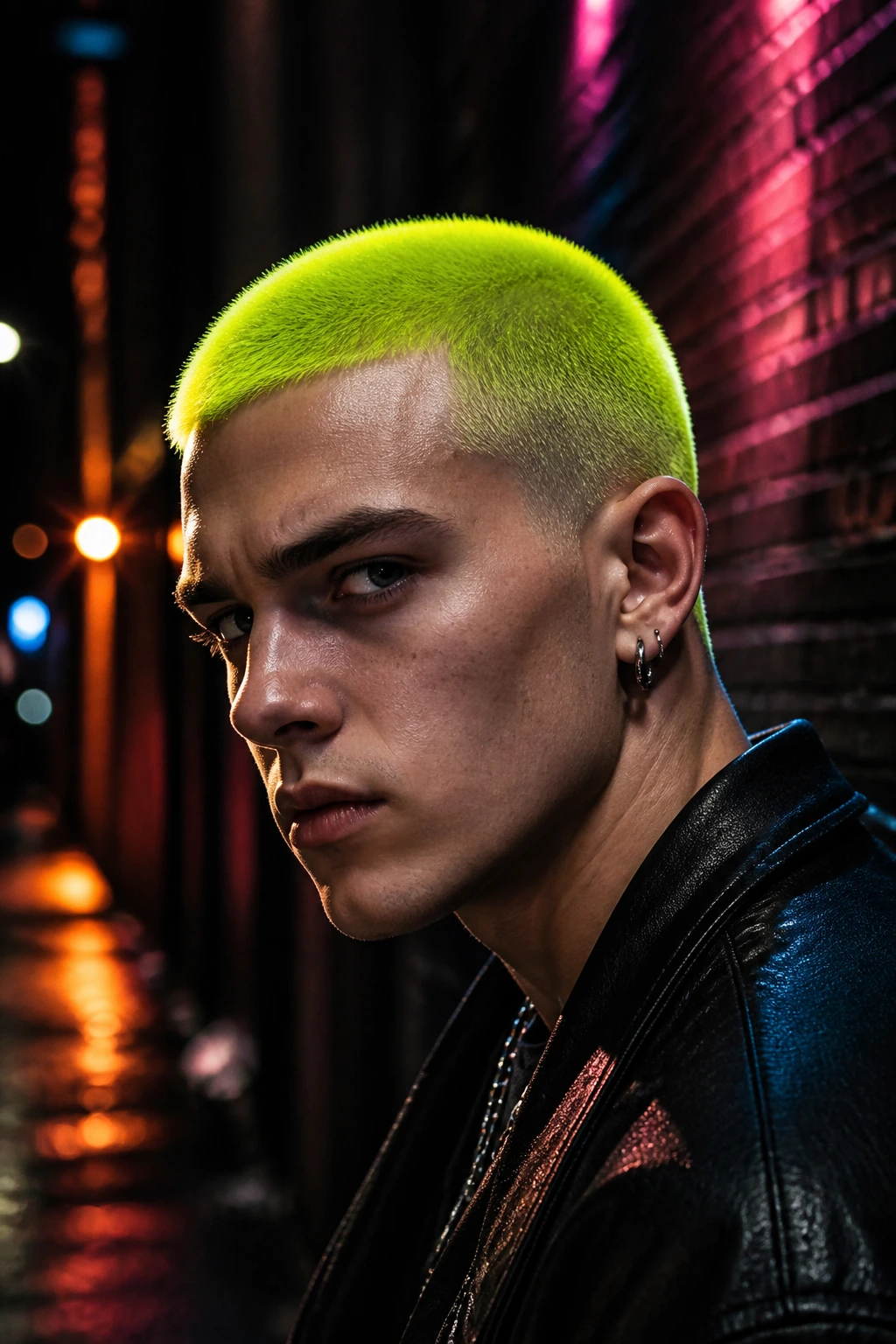
A neon buzz cut is the fastest route to a look that refuses to blend in. The haircut itself is simple—often a #0.5 to #2 guard all over—but the color turns the whole head into a bright, sharp object. It’s the shortest cut here and still one of the loudest.
Because the hair is so short, the scalp becomes part of the look. That means the color has to be clean, the line-up has to be neat, and the skin underneath needs care if the hair has been bleached. Dry scalp and patchy color show immediately at this length. There’s nowhere to hide.
If you want a punk look with almost no styling time, this is hard to beat. The upkeep shifts from styling to color care and regular trims. That’s a trade some people love. I do too, when the color is strong and the outline is exact.
How to Style Punk Haircuts So They Hold Their Shape
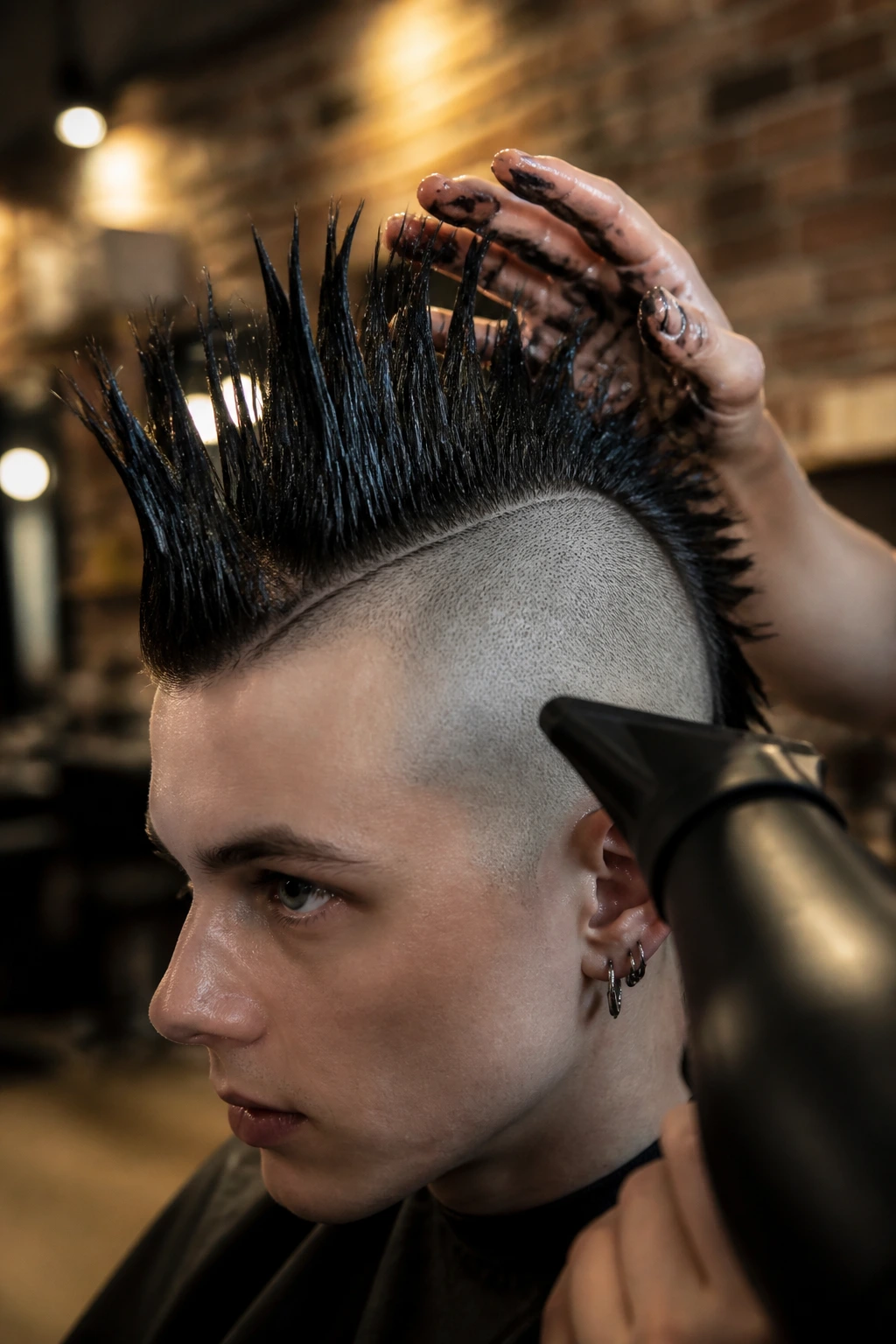
The styling rule here is simple: match the product to the shape, not to your mood. Spikes want structure. Shags want separation. Buzz cuts want clean edges more than product. If you use one giant blob of paste on every cut, you flatten the whole point.
For spikes and mohawks
Start with towel-dried hair that still has a little grip. Work in a strong-hold gel or glue-like styling product in small sections, then blow-dry upward with a nozzle so the strands set where you want them. If the tips are collapsing, pinch and twist them while they’re still warm. That little extra step matters.
For shags, mullets, and wolf cuts
These cuts usually look better with less control. A foam mousse, texture spray, or lightweight cream on damp hair gives the layers some separation, then a diffuser or air-dry lets the shape break apart in a good way. Once dry, use a tiny bit of wax or paste on the ends. Not the roots. The ends.
For buzzes, crops, and etched cuts
Less is more. A matte cream, a touch of scalp moisturizer, and a clean neckline often matter more than styling product. If you want the lines to stay visible, keep the hair and skin around them neat. A buzz cut doesn’t need a lot of help. It needs maintenance and a steady hand.
Tools and Products That Actually Matter
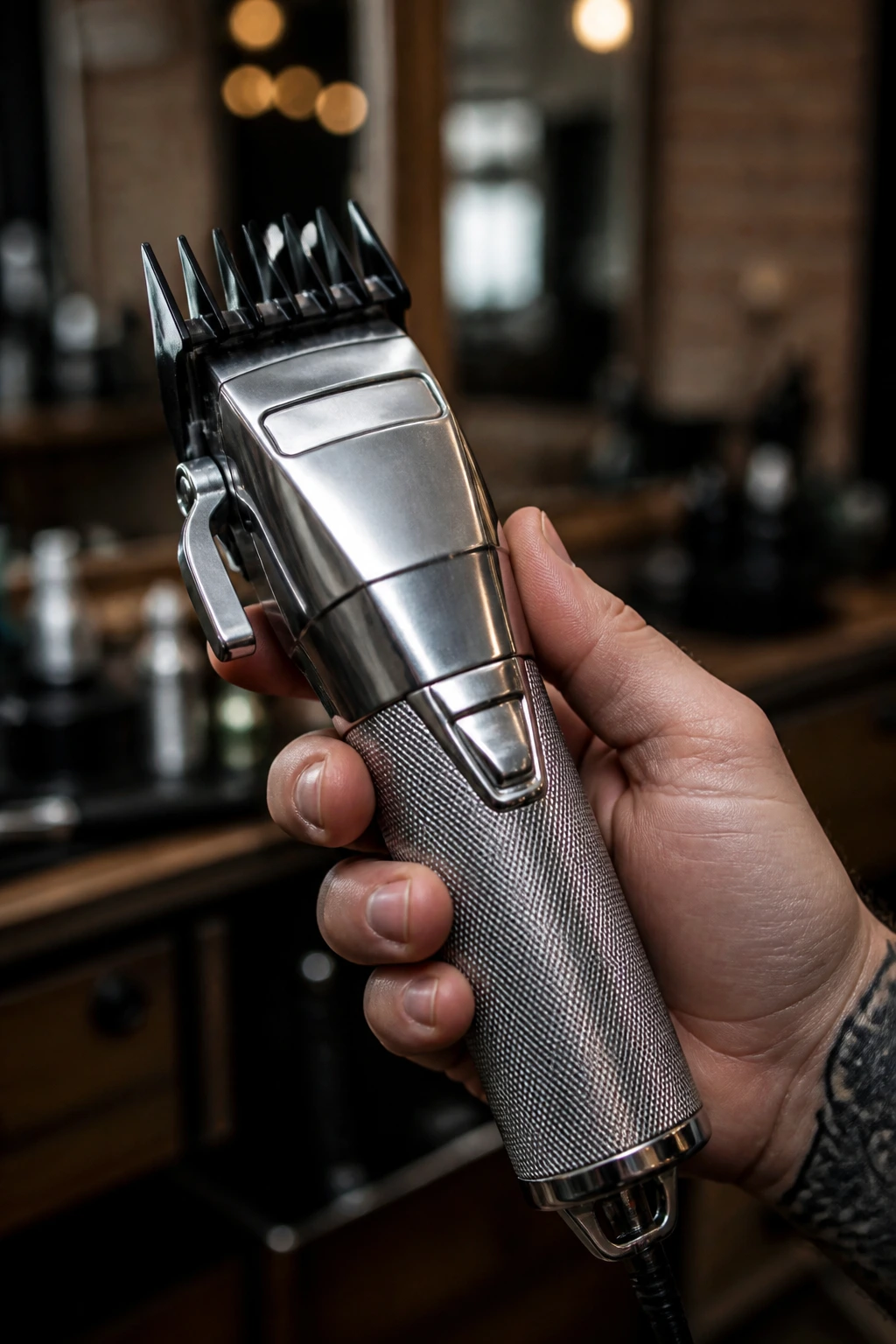
- Clippers with adjustable guards: The backbone of any shaved-side or buzzed punk cut, especially if you plan to maintain it at home.
- Detail trimmer: Essential for temple lines, neckline cleanup, and etched designs that need crisp edges.
- Barber comb: Useful for clipper-over-comb work, especially on flat tops, crops, and undercuts.
- Blow dryer with a narrow nozzle: Helps spikes and faux hawks stand up instead of slumping sideways.
- Diffuser attachment: Worth owning if your punk cut lives on curls or waves and you want texture without frizz.
- Strong-hold gel: Best for liberty spikes, mohawks, and any cut that needs real vertical support.
- Matte paste or fiber: Better for choppy crops, spiky short cuts, and textured layers that should look separated, not wet.
- Texture spray or dry shampoo: Gives shags, wolf cuts, and mullets a little grit and lift between washes.
- Heat protectant: Useful if you’re blow-drying or flat-ironing fringe, layers, or color-treated hair.
- Hand mirror or three-way mirror: Makes the back, nape, and side panels easier to check before you leave the bathroom.
Maintenance, Regrowth, and Color Care for Punk Haircuts
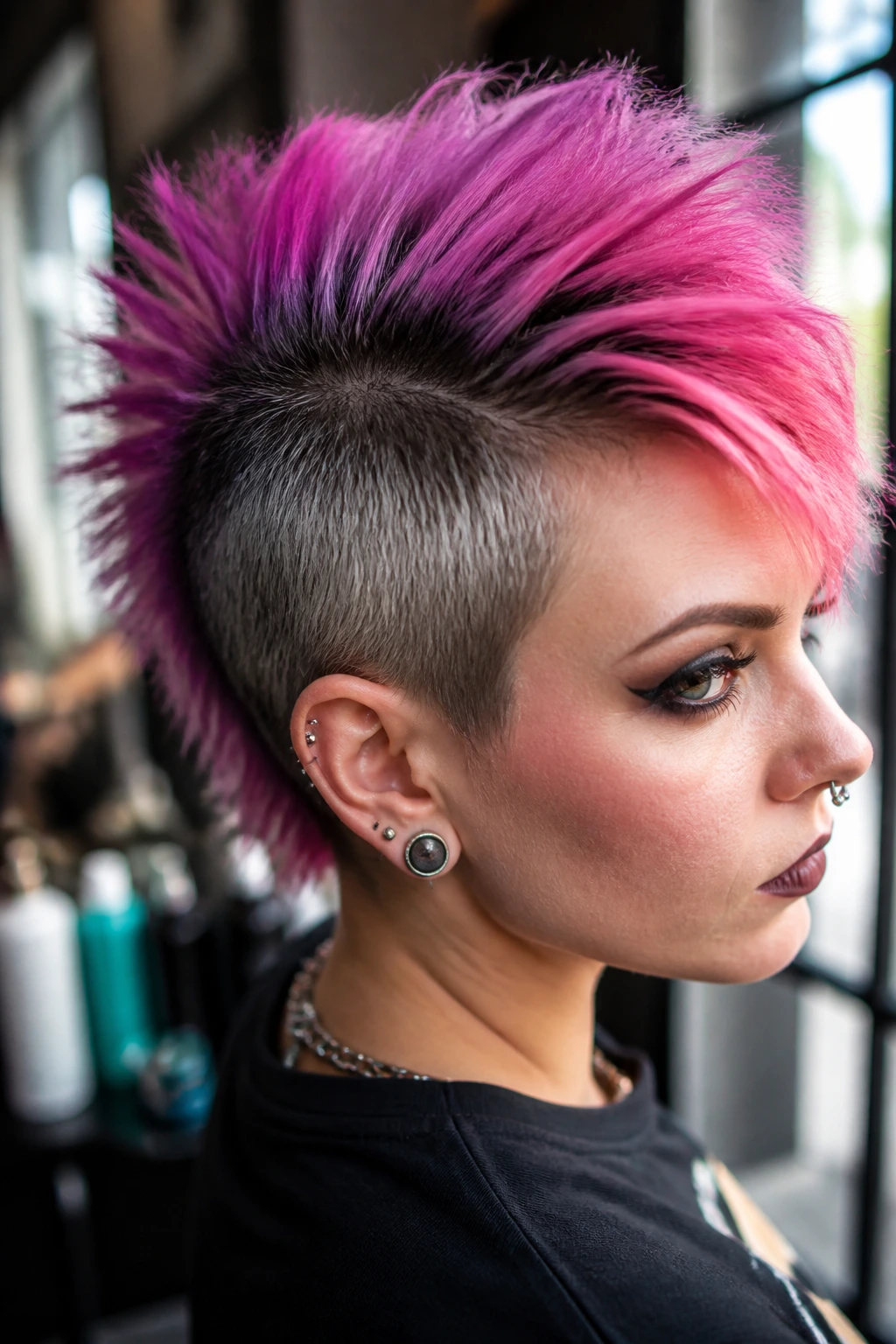
Some punk cuts are generous about grow-out. Others start losing their shape the minute the clippers leave the room.
Short fades and etched lines
If your cut depends on shaved sides, etched lines, or a narrow mohawk, plan on a cleanup every 1 to 3 weeks. The exact timing depends on how fast your hair grows and how dark or coarse it is. Dark, thick hair shows stubble faster. Light or fine hair can stretch a little longer before the edges look fuzzy.
Shags, mullets, and layered cuts
These hold longer, but they drift. Around 4 to 8 weeks is usually when the shape starts to lose its bite, especially at the neck and around the crown. If the layers start clumping or the back gets too heavy, a trim brings the attitude back fast.
Color upkeep
Bright color fades faster than most people expect, especially on bleached hair. Sulfate-free shampoo helps, but so does simply washing less often and using cooler water when you can stand it. If the roots are visible and the contrast is part of the look, touch them up before the grow-out turns accidental. A punk cut should look like a decision, not a delay.
Scalp and skin care
Buzz cuts, shaved sides, and bleach-heavy styles put more scalp on display. That means the skin needs a little care—moisturizer if it’s dry, and sun protection if you’re out in bright weather. An exposed scalp with no care starts looking rough quickly. Not edgy. Rough.
Common Mistakes That Make an Edgy Cut Look Accidental
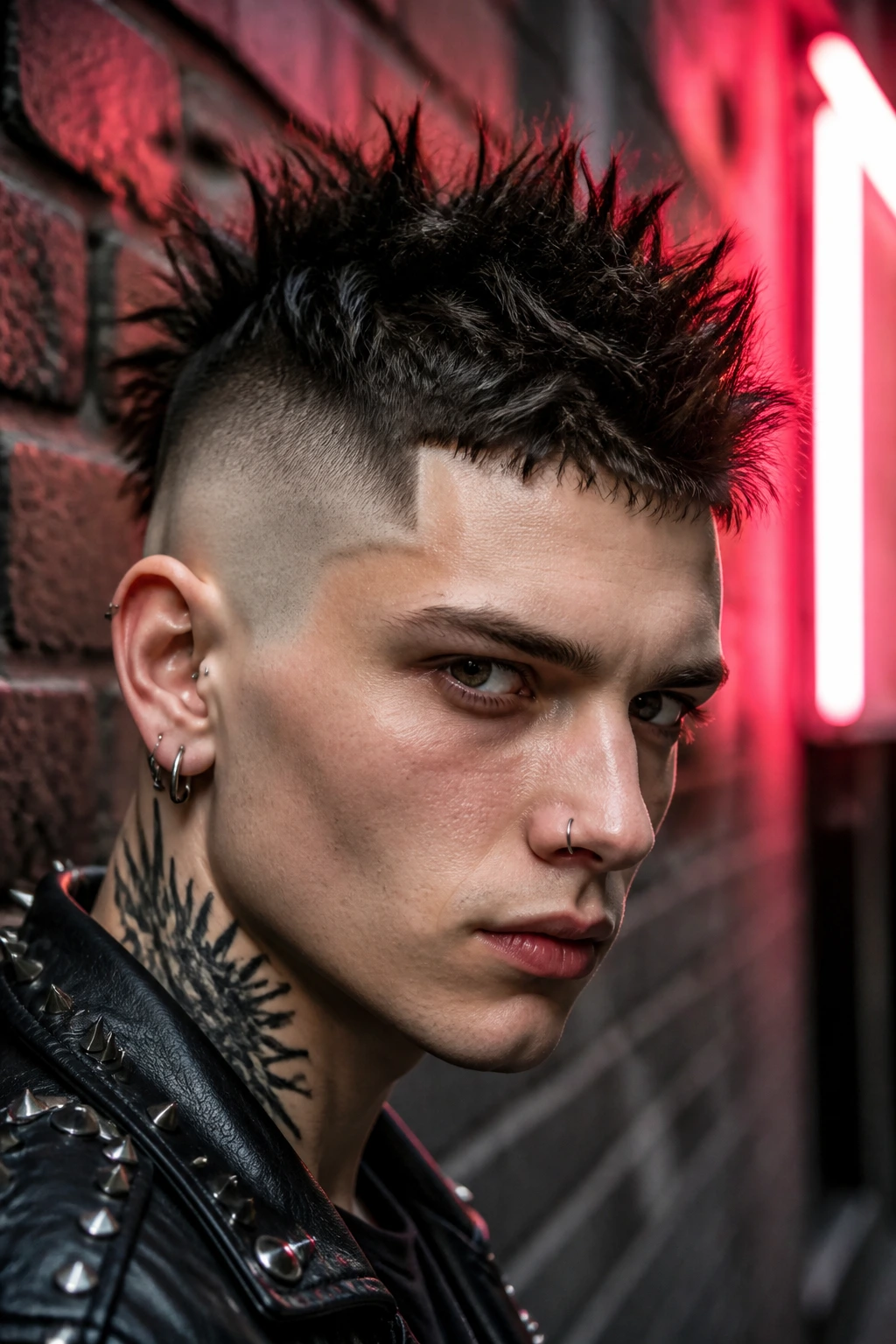
- Asking for “punk” without giving measurements: The symptom is a vague, lopsided cut that looks like a guess. The fix is to name guard numbers, width, and where you want the shortest point to sit.
- Blending too much: When the fade or layers disappear into one soft mass, the cut loses its edge. Keep one hard line, one visible disconnect, or one sharply defined perimeter.
- Using the wrong product for the shape: Heavy cream on spikes makes them fall. Sticky gel on a shag makes it look wet and flat. Use structure for vertical styles and lighter texture products for broken, messy ones.
- Ignoring growth patterns: Cowlicks and whorls can split bangs or puff up the crown. Work with the direction your hair already wants to go.
- Letting the neck and sideburns go too long: A punk haircut starts looking sloppy when the perimeter disappears. A quick cleanup at home or a regular trim keeps it sharp.
- Making color louder than the cut: Bright dye can’t rescue a weak shape. Pick one feature to lead, then let the other support it.
Punk Cuts for Straight, Wavy, Curly, and Coily Hair
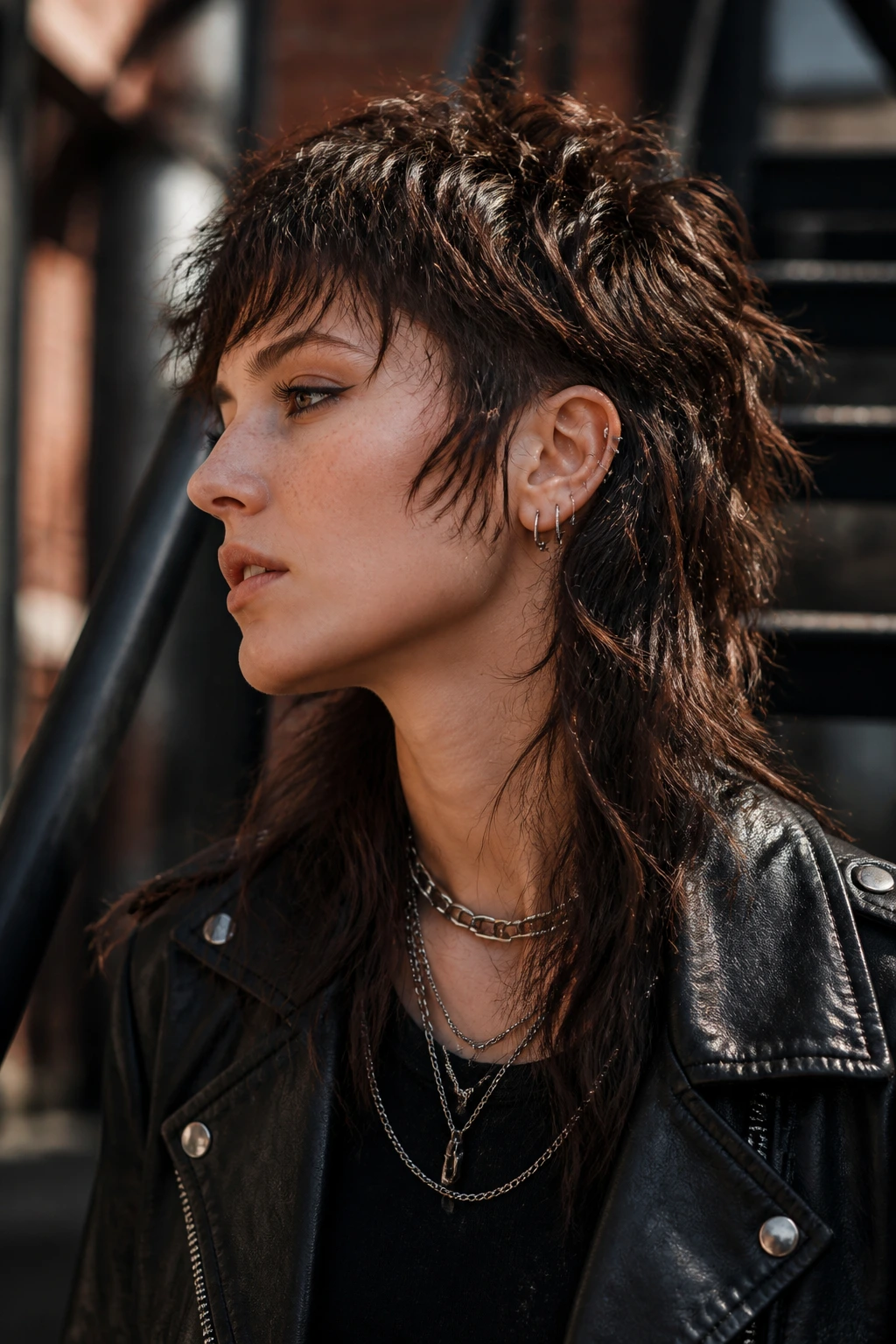
Punk haircuts adapt better than their reputation suggests. The trick is changing the method, not forcing every head into the same silhouette.
Straight Hair Riot
Straight hair shows lines clearly, which is a gift if you want a mohawk, a hard-part crop, or a flat top. It also shows every styling mistake. Keep the product light unless you truly need the hold, and use the blow dryer to push the shape where it belongs.
Curly Texture Clash
Curly hair looks excellent in shaved-side cuts, wolf cuts, and long rocker layers because the texture supplies its own movement. The biggest rule: don’t over-cut the ends into frizz. Keep enough length for the curl to curl, and let the sides do the contrast work.
Coily Shape Control
Coily hair brings height and structure naturally, which makes it perfect for bold silhouettes. Clean sides, shaped tops, and a disciplined neckline matter more here than aggressive styling. If the top is left with enough room, the shape can be loud without becoming bulky.
Fine Hair, Hard Edge
Fine hair needs shorter lengths, stronger root support, and less product weight. Short spikes, buzz cuts, and faux hawks usually work better than long forms that collapse. A little powder at the roots can help, but a good cut is doing most of the work.
Thick Hair, Remove the Bulk
Thick hair needs internal weight removed or the cut balloons. Undercuts, razored layers, and clipped panels are your best friends. If the shape is meant to sit close, the stylist has to cut with that in mind from the start.
Frequently Asked Questions
Which punk haircut is easiest to maintain?
A buzz cut with etched lines, a spiky crop, or a short faux hawk usually takes the least daily effort. The catch is that the clean edges need regular trimming, so the styling is easy even when the upkeep is not.
Do punk haircuts work on curly hair?
Yes, and some of the best ones do. Shaved sides, wolf cuts, and long rocker layers can look especially strong on curls because the texture creates shape without a lot of product. Ask for a cut that respects the curl pattern instead of flattening it.
How short should the sides be for a mohawk or faux hawk?
For a narrow mohawk, many people stay around a skin fade or a very short guard on the sides. For a faux hawk, a taper or a low fade leaves more softness and gives you more styling flexibility. The exact choice depends on how dramatic you want the contrast to feel.
Do I need vivid color to make the cut look punk?
No. A clean silhouette, hard part, shaved temple, or etched line can carry the style on its own. Color adds force, but the haircut should already have shape without it.
How often do shaved sides need a trim?
Usually every 1 to 3 weeks if you want them to stay visibly sharp. The more the cut depends on contrast, the faster it shows regrowth. A tight line around the ears and nape is what keeps the style from blurring.
Can I keep a punk haircut in a conservative workplace?
Yes, if you choose a cut that can be styled flatter or hidden when needed. A grown-out undercut, textured crop, or side-shaved bob can read much more restrained when you wear it down and a lot louder when you push it up.
What’s the best way to grow out a punk haircut?
Keep cleaning the neckline and temples while the top catches up. That prevents the grow-out from turning into an awkward middle stage. Once the silhouette starts drifting, shift it toward a shag or layered crop instead of waiting for it to sort itself out.
Why do my spikes keep falling flat?
Usually because the hair is too wet, too conditioned at the roots, or not dried in the right direction. Towel-dry first, use a strong-hold product in small amounts, then blow-dry upward before the hair fully dries on its own.
Wear the Cut, Not the Costume
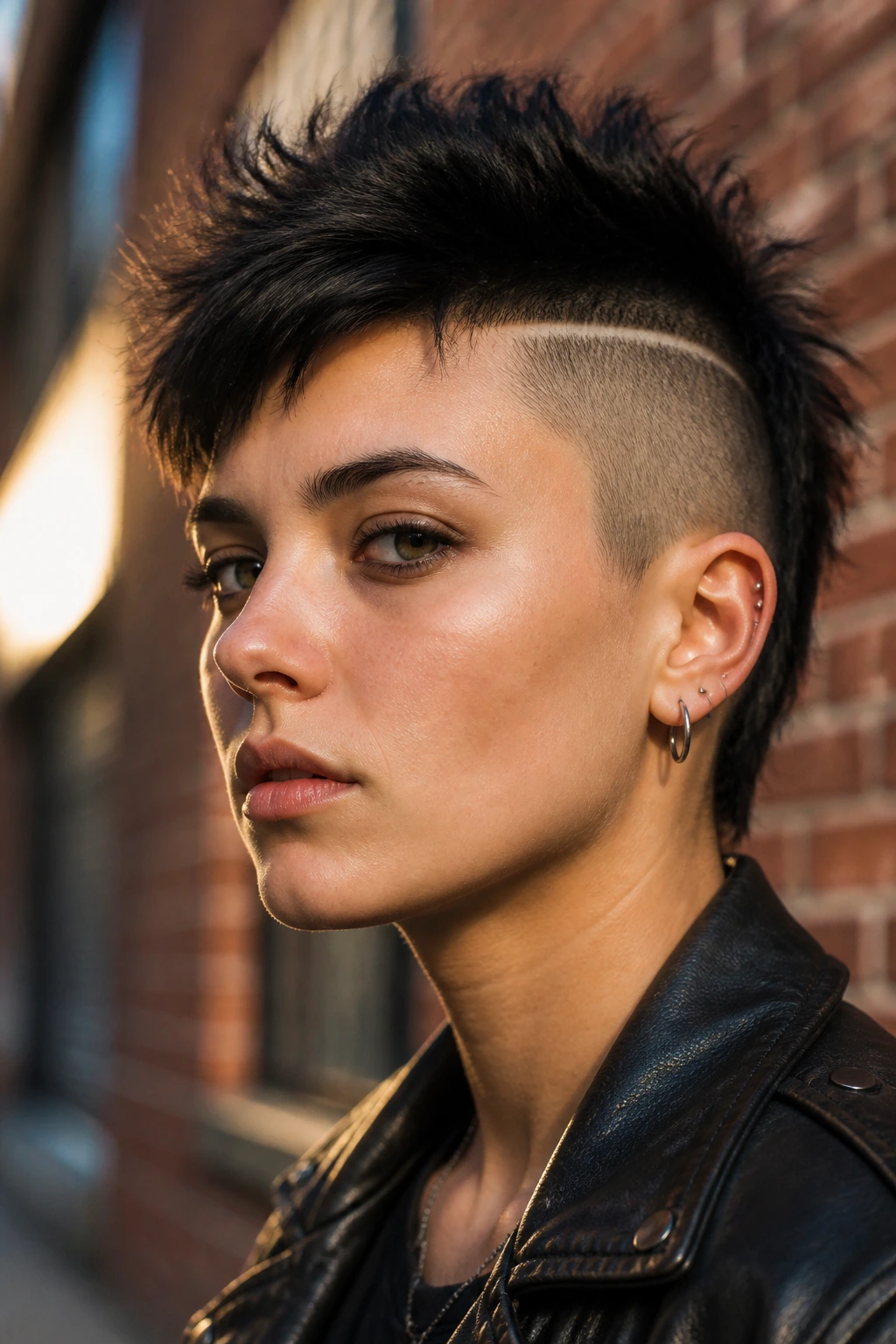
The strongest punk haircuts don’t pile on chaos. They make one or two sharp decisions and leave the rest alone. That’s the part people miss when they chase attitude without a plan. The haircut should look like it belongs to your head, not like it was borrowed from a poster.
Pick the silhouette that matches your texture, your patience, and your willingness to trim the edges back before they blur. A shaved side can be louder than a full head of length. A narrow mohawk can look cleaner than a bigger one. A buzz cut with one hard line can carry more weight than ten inches of hair that never learned where to stand.
Choose the version you’ll actually maintain, then keep the outline sharp. That’s where the style starts to feel real.
